Kalporz X Monolith Cocktail: The Top 7 Suede Songs
September 18, 2025
Our continuing partnership with the leading Italian culture/music site and platform Kalporz. This month, an editorial special on Suede.
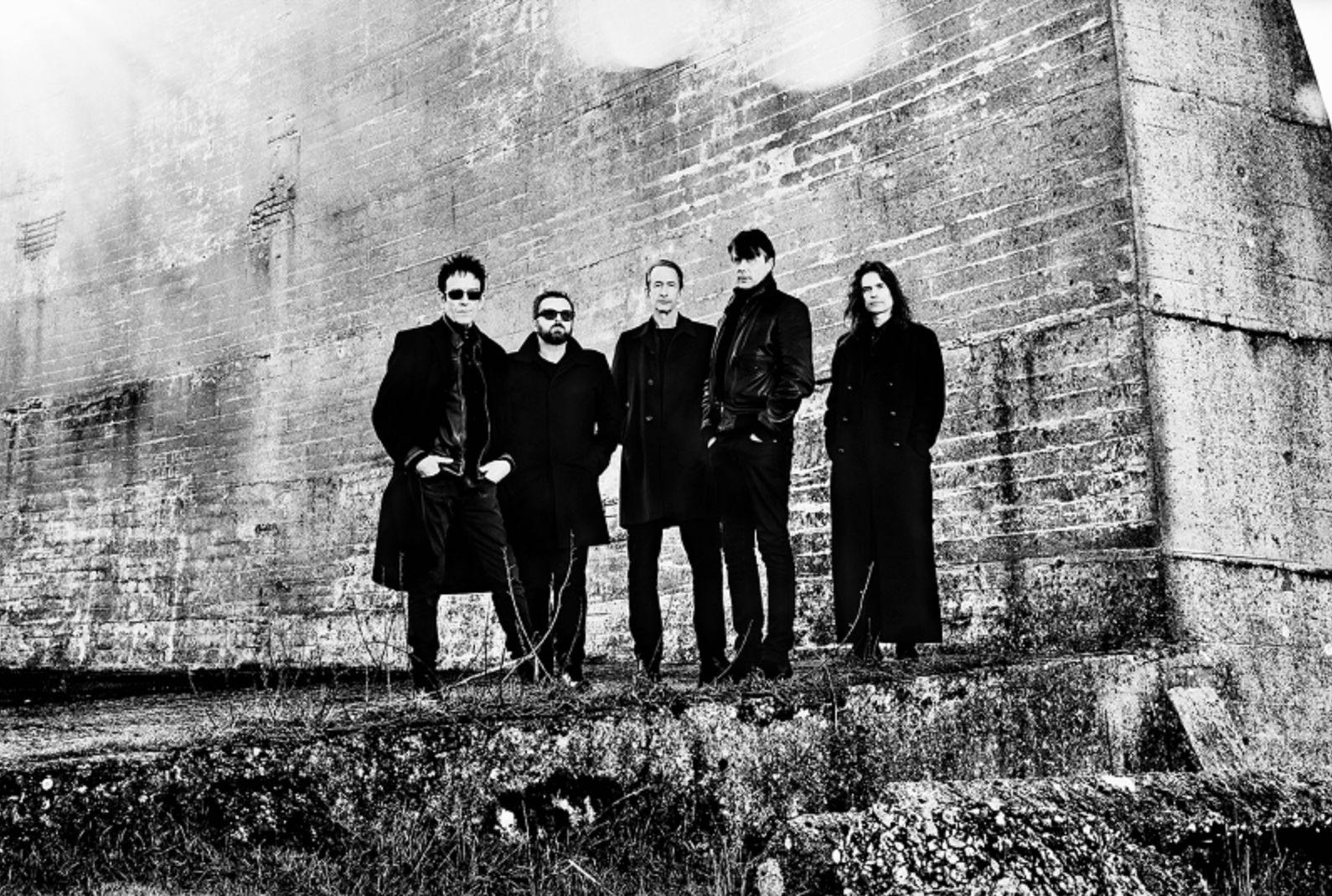
At regular points during the year the Monolith Cocktail shares posts from our Italian pen pals at Kalporz. The site recently celebrated its 25th anniversary – more or less coinciding with our very own 15th anniversary. Here’s to longevity, which isn’t easy in the unstable online world.
For September the editorial team pick and plead their case, selecting a magnificent seven from Britpop darlings Suede, who have just released their tenth album, Antidepressants, this month.
Suede is riding high: their latest album “Antidepressants” was released on September 5th via BMG (a review coming soon), while a few days ago they announced a live show at the Fabrique in Milan, scheduled for Friday March 27th, 2026. It was necessary to draw up a #top7 to establish some fixed points in their career, for the benefit of those who don’t, perhaps, know them fully.
7. “The Only Way I Can Love You” (from “Autofiction”, 2022)
It must be admitted that it was difficult to draw up our top seven, as the material from Suede’s “second life” is as valid as that of the 1990s: songs like “Hit Me”, “Outsiders”, and “Life Is Golden” could be among the best from any other British rock band. Yet I hadn’t yet found the beauty offered by their last two albums, released amid lockdowns and inconclusive wars. The songs become the very blood galloping through our veins, speaking of attachment to life, the importance of the future, and…, yes, human weakness. The frailties of everyday life that, once recognised, would make us feel better. I’m exaggerating they would guarantee world peace. “The Only Way I Can Love You”, track number four on Autofiction, in its splendid four minutes of catharsis and tears, sums up all these feelings: “I pretend I don’t adore you, but I’d take a bullet for you/Yes, it’s a sweet and bitter love”; “I’ll love you as I’m capable of doing it”, I’m not a hero at work, a social media idol, a politician holding the fate of the world in my hands. I have my limits, which are my strength. Today, art and music breathe in a song like this. (Matteo Maioli)
6. “Barriers” (from “Bloodsports”, 2013)
“Barriers” is the first single from Suede’s second half, after their 11-year hiatus, and the opening track on “Bloodsports”. It’s a comeback anthem, epic, triumphant. That’s why it’s so important. It’s a song about “leaping over barriers” because Suede probably needed to dive back into the fray with a song like this, which in terms of pomp has nothing to envy of songs like U2’s “Where the Street Have No Name”. With a comeback like that, the band could only have a radiant rebirth. (Paolo Bardelli)
5. “Trance State” (from “Antidepressants”, 2025)
As Maioli said above, Suede have truly outdone themselves on their last two albums, achieving a quality and clarity of expression that many bands of their era no longer possess: either they’re still sitting on their laurels, touring without any albums coming out (Oasis and Radiohead, the reference was all too easy), or they continue to put out stuff without many ideas (Manic Street Preachers?). Suede, on the other hand, have taken a new path for themselves, that of a darker sound than usual and tending towards the post-punk sound of Joy Division, and “Trance State” is a clear example. A song about alienation, drugs, and emotional survival is supported by a bass so beautiful it could be played by Simon Gallup. What stylistic perfection, guys! (Paolo Bardelli)
4. “Pantomine Horse” (from “Suede”, 1993)
“Pantomime Horse” is one of the most intense moments on an album that introduced Suede to the world. The glossy, glam Britpop of the opening minutes suddenly gives way to a ballad that is a metaphor for fragility, a confession of a constructed, uncertain identity, the tale of a (sexual) awakening that causes a mask to fall. It is also the second longest track on the album (after “Breakdown”), probably the least immediate: a tormented mood permeates the slow pace of a sound with gothic overtones, Brett Anderson’s singing is suspended between falsettos, whispers, and the sensation of a lament that could erupt into tears; Bernard Butler’s guitar expands the sounds and gently distorts them, and in those layers we glimpse the shadow of an almost orchestral crescendo that culminates with the mantra-like question “Have you ever tried it that way? ” The Londoners give in to their darkest and most vulnerable side, giving us a fascinating interlude like few others in their discography. (Piergiuseppe Lippolis)
3. “The Wild Ones” (from “Dog Man Star”, 1994)
The Anderson/Butler wonder duo lasted only two albums, their debut and this, “Dog Man Star”, and not even fully (Butler left before the entire album was finished). One of the most iconic and languid songs on this second, much-loved effort by our guys is this, “The Wild Ones”, which – coincidentally – is about a breakup, but one between lovers not between bandmates.
“And oh, if you stay
I’ll chase the rain-blown fields away
We’ll shine like the morning and sin in the sun”
It’s an evocative piece played as if on Mars, while Anderson’s interpretation is inspired by Scott Walker, Edith Piaf, Frank Sinatra and Jacques Brel, “people with the emotional and musical range to turn a song into a drama. That’s what I wanted for “The Wild Ones”: for it to be a timeless piece of melodic beauty that people would marry and share their first kisses to.” A later released version of this song clearly demonstrates the differences in arrangement between the two, and so you can decide for yourself whether you prefer the original or the variant with Butler’s four-minute solo (! )
2. “Animal Nitrate” (from “Suede”, 1993)
Suede made their recording debut between 1992 and 1993 with a series of killer singles, of which “Animal Nitrate” undoubtedly represents the pinnacle. Brett Anderson’s melodic, feverish vocals draw heavily from Bowie and new wave, while Bernard Butler’s guitar delivers one of the most memorable riffs of the ’90s: chromatic, sharp, and at the same time irresistibly catchy. And to think that the guitarist’s stated inspiration came from an innocuous clarinet-based British TV theme song from the ’70s, transformed here into a murky, sinful theme. Because the song, between allusions to sex and drugs and the suburban atmosphere of the video, transports us to rooms in London suburbs where we imagine all sorts of depravity and repressed desire. The result is a dazzling song, a manifesto of their decadent aesthetic, destined to remain forever among the absolute pinnacles of the British band. (Saverio Paiella)
1.“Beautiful Ones” (from “Coming Up”, 1996)
“Beautiful Ones”, which for the danceable (and tipsy) me will always have “The” in front of it, is Suede’s tenth single and their third—along with “Stay Together” and “Trash”—to land in the UK top ten. I’m not mentioning these other songs randomly, but to highlight the shift in strategy that became necessary with 1996’s Coming Up: catchy melodies, aimed at making inroads on the radio and the charts, introduced by simpler riffs, thanks to the addition of guitarist Richard Oakes, the replacement for Bernard Butler, who was not even twenty at the time. The affinity between the two lies only in their haircut: Bernard was the leading lady, the latter an honest but talented follower. “Beautiful Ones” became the London group’s hit par excellence, fusing the glam drive of T. Rex with the magnetism of David Bowie; I agree with Ricky Jones of Clash Magazine, who describes it as ” a jangly masterpiece with one of the most melancholic sing-along choruses Britpop would ever produce“, and it’s true; the guitar sounds as much like Johnny Marr as it does Mick Ronson. Thirty years on its shoulders, carried magnificently, a hymn to youth. (Matteo Maioli)
 Monolith Cocktail Blog