A WORLD OF SONIC/MUSICAL DISCOVERIES REVIEWED BY DOMINIC VALVONA
(Unless stated otherwise, all releases are available now)

CAN ‘Live in Keele 1977’
(Mute Records) 22nd November 2024
The sixth “live” album in Mute’s series of CAN performances, previously lost in the archives, or left to the bootleg community to post and share in various edited or mixed-up forms over the decades, Live in Keele is the second such live recording from the pivotal year of 1977. The most “requested” live performance yet we’re told, is taken from the band’s Keele University showcase, recorded in March of that year in the Staffordshire town of Newcastle-under-Lyme.
Whilst the legacy label Spoon has already released various versions of live material over the years – specifically the CAN Live 1971 – 1977 album -, and many fans have loaded up their amateur recordings onto Youtube and the like, this will be the first time proper that the Keele set has been released in its most complete, remastered form.
The set list has been argued over, depending on who you listen to and what version you find resurfacing on the net. But it can be agreed that the performance was a mix of refashioned, in-the-moment tracks from their most recent album, Saw Delight, some improvisations and recalls of past glories and themes. One such example lists ‘Fizz’ (as featured on that already mentioned Spoon endorsed Live collection), ‘Animal Waves’, ‘Sunshine Night And Day’, ‘Dizzy Dizzy’, ‘I Want More’, ‘Pinch’, ‘Don’t’ Say No’ and ‘Pellamen’ (an improvisation). And indeed, some of this is right, if only in short passages or bursts. But this release unhelpfully splits the tracks into non-committal numerical titles, ‘Eins’ to ‘Fünf’. Another version has the same performance kicking off with an untitled improv, followed by ‘Pinch’, ‘Don’t Say No’ and ‘Animal Waves’. The latter two’s inclusion is concrete, no argument. And I’m sure that’s a recall of ‘Pinch’ from Ege Bamyasi alongside a transmogrified glimpse of ‘I Want More’ in the mix.
But before we go any further, I feel we should familiarise ourselves with the band’s often dismissed or at least forgotten treasure, and the focal point of reference for this recording, the Saw Delight LP, plus the changes that had taken place in the setup and lineup during this pivotal year.
Traversing influences from around the globe, the ethnography alchemists CAN always effectively absorbed the traditional and authentic music of multiple cultures, including the Middle East, Far East and Turkey. However, it wasn’t until the release of 1977’s Saw Delight LP that the group found themselves lauded as so-called ‘world music’ pioneers. In truth this five track assiduous collection of Afro, Turkish, Arabian, South American and “Fourth World” imbued songs does sound like a precursor to the 80s explosion in ethnically traditional music.
Much of CAN’s later work is often passed over, if not dismissed. Perhaps this can be attributed to the fact that their last couple of albums proved disappointing, the strange proto-glam of Landed and the more disco-esque reggae of the conventional Flow Motion – which spawned their most commercial hit ‘I Want More’ – did little to ingratiate die-hard fans to the cause, with many believing they’d lost their experimental edge. Fortunately, I believe, Saw Delight placed them back on track for a momentary reprise, mainly due to the inclusion of former Traffic bass player Rosko Gee, and percussionist Reebop Kwaku Baah, who both added a touch of African grooves and Caribbean coolness to the Teutonic mix.
Rosko’s arrival changed the dynamics, allowing CAN’s co-founding bassist and producer Holger Czukay to step away from the instrument to concentrate on producing interloping and spontaneous sound effects. Interacting with telephone calls and various radio transmissions, Czukay created the technique of using a Morse code switch to relay the signal and tap out these often-strange sound bite samples.
Vocals at this time were shared by everyone, with Rosko pitching in with lyrics to ‘Call Me’ and collaborator Peter Gilmour (Journalist friend of the band who co-wrote tracks on their last two albums) supplying words for both ‘Don’t Say No’ and ‘Fly By Night’.
The music itself gyrated to a disco and funk fuelled world rhythm, sauntering along most of the time in a kind of infectiously serene fashion. The opening song on that album, ‘Don’t Say No’, springs into action, settling quite rapidly into a taut rhythmic and containable conducted feel-good jam. Oscillating and accelerating keyboard waves of sound shuffle around the wispy delivered vocals that prompt us to, “Do what you feel, what you need to do” in a relaxed Jamaican fashion. ‘Sunshine Day And Night’ featured a rallying conga intro, courtesy of Reebop, whose Ghanaian ancestry comes in quite handy on this West African flavoured jam. Czukay mingles at this point, shoehorning in waves of operator dialled phone conversations and snatches of transistor radio shows, whilst Irmin Schmidt emits a smog thick blanket of effects via his infamous Alpha 77 plaything.
Over on the flip side we find the 15-minute mini-opus ‘Animal Waves’, a moody piece that mixes elements of mysterious whispery windswept atmospherics with a more stirring and emotive melodic soundtrack. Touches of Cuban percussive grooves and African bubbling broody basslines pull at this sad and forlorn instrumental that is full of grandiose cinemascope and erudite musical charm. One of the more beguiling, if not strange, tracks is the sultry Barry White school of soulful disco, ‘Fly By Night’, a peculiar sounding funky balled that is unlike anything the group had ever recorded or where likely to never repeat.
Throughout this LP, the usually prominent and leading protagonist of the group, Michael Karoli, seems somehow restrained, playing the role of a drifter, though always managing to add desideratum moments of floating ark like celestial guitar licks at the right time. Also drumming prodigal magi Jaki Liebezeit moves to the sides, remaining an anchor, but reining in his usual freewheeling floor show of elaborate rolls, instead reverting to his machine accurate timings and leaving enough space for the percussion of Reebop.
The Keele performance must have been one of the group’s earliest stages to showcase the new material and their adopted new band members after Saw Delight’s release in March of that year. Riffing on the album’s highlight tracks, ‘Don’t Say No’ and ‘Animal Waves’, we can hear all the signature elements of groove and rhythm, and licks of the former on ‘Drei’, and the vaped and tunnelled shifts and starlit rays, the cyclonic tribal vocal samples and night flights of the latter on ‘Fünf’. Although, they sound like they’re in a hurry to set up the recognisable ‘Don’t Say No’ feel and beat, emerging suddenly as it does out of the previous Velvets-score-the-Omega-Man, cosmic summoning stained glass galactic organ and Hendrix-invoking performance – elements I’m sure of ‘Pinch’ with a hangover of their Soon Over Babluma period.
Elsewhere the performance is straight into a Turkish vision of whomp-whomp, whacker-whacker Fred Wesley J.B.’s and The Jimmy Castor Bunch, with echoes of Flow Motion. Schmidt’s keys seem to simultaneously invoke the sci-fi, Vincent Price horror show, Arabia, ? & The Mysterians and the acid, whilst Czukay gets the phone lines open, dialling up the operator with prank-like calls that leave the unsuspecting receiver hanging.
Liebezeit meanwhile keeps the groove going, busy but never overdoing his part nor bursting into a silly egotistical drum solo as he makes rhythmic trips from West Coast America to The Levant, Orient and Africa. Acid-rock, jazz, Afrobeat, funk, traditional influences meet as the action circles round the kit, the hi-hat pedal bounces and the cymbals shimmer and splash. Guitar prodigy Karoli has always pulled off a similar merger of influences whilst maintaining a cool aloof presence, rocking, fuzzing, wailing, screeching, and bending with the best of them. From Beefheart to Zappa, Garcia to Hendrix, he finds some incredible licks and riffs that squeal acid and psych rock but could be unconsciously and consciously gathered from all points of the compass and earths. Again, the Turkish, the Arabian, the Persian, the American West Coast scene, the avant-garde and even Eastern European seems to all come together in both tight and rubber banded displays of virtuoso riffage.
Latest recruit, Rosko Gee (Reebop Kwaku Baah isn’t mentioned as playing on this live recording) keeps a cool bass line going throughout. The ex-Traffic bassist adds a less driven and monotonous rhythm with funk, soul, R&B, African and Caribbean influences. These either sit underneath the freeform surface or go on long scale runs, and octave juggles, and sometimes just smoothly bounce around.
A defining period for CAN, the Live in Keele gig recording is a window in on a group that still retained it’s early 70s magic but was also moving on: an experiment with new members, and a freeing up of the long-established setup and sound. If you hated, or to put it less harshly, just aren’t into the Saw Delight LP period than you’ll still find much to excite and enjoy about this ’77 special. But if like me you rate that often missed out and sometimes dismissed entry in the CAN catalogue than you’ll be a little disappointed, as this performance doesn’t go far enough in using that album’s material, nor in breaking with the previous recordings and live shows. Yes, always improvising, and always transforming, often based on how the atmosphere is, where the crowd and vibrations take them, there is still a lot of familiar ground being retrodden. Most will be happy though, but heads and diehards will probably already know this set off-by-heart. Still, a worthwhile contribution to the series, and indeed one of their best captured gigs of that era.
Hackedepicciotto ‘The Best Of Hackedepicciotto (Live In Napoli)’
(Mute)
Responsible, in part at least, to helping shape a certain brooding yearned and dramatic sound over the last four decades in Berlin, the husband and wife creative partnership of Alexander Hacke and Danielle de Picciotto have at any one time, both separately and together, been members of Einstürzende Neubauten, Crime And The City Solution and the Anne Sexton Transformations imbued theatrical Ministry Of Wolves. During that time Danielle was the lead singer for the Space Cowboys and co-founded the famous Love Parade carnival.
As a duo in recent years, under the twinned Hackedepicciotto moniker, they’ve channelled much of that experience into a signature sound that embraces the cabaret and soundtrack gravitas of post-punk, post-industrial, electronica, the esoteric, weird folk and twisted fairytale: which they themselves have described as “symphonic drone”.
Their fifth album, the partial sonic and lyrical autobiography, part photo album scrap book dedication, Keepsakes, was released last year. As with most of their catalogue, the duo’s albums are either recorded in a stirring, inspiring location, or in a different country. The most recent being no exception, recorded as it was at Napoli’s legendary Auditorium Novecento using the famous venue’s stock of various instruments. The spirit of such early recorded crooners and composers as Enrico Caruso, in one of Europe’s first recording studios, hung. And amongst the tubular bells, the brass and grand piano Ennio Morricone’s twinkled and xylophone-like chimed sounding celeste was put to good use across an album of dedications to the partnership’s close friends and influential peers. For Keepsakes is (despite the cliché) the couple’s most personal, intimate album yet.
That album now forms the focal or centre point for this live release of choice bell tolled maladies and drone sonnets from the duo’s back catalogue. Performed over two nights, they’ve chosen to return to the Auditorium Novecento setting that made Keepsakes such an atmospherically rich and momentous, dramatic record. And so, they perform a quartet of songs from that most recent album alongside picks from the Menetekel (2017), The Current (2020), The Silver Threshold (2021) and Perseverantia (2023) albums. After the near hermetic, alchemist hymnal stripped opening a cappella version of The Silver Threshold’s beautified duet ‘Evermore’ – the duo’s first real stab at a love song -, and the Gothic Steppes throat-singer mystical-shrouded post-punk track ‘Awake’, taken from Perseverantia – Cave with shades of Sol Invictus and Brian Reitzell -, there’s a pretty faithful version of Keepsakes’ harder edged, gnarled and classical counterpoint ‘Aichach’. Dedicated to that small Bavarian town’s native electronic dance music pioneer Chrislo Haas – an agitating force behind Liasions Dangereuses, Minus Delta F, D.A.F. and Der Plan (the last three of which he co-founded) – , the late German icon’s proto punk and Tresor techno signature can be heard racing against sorrowful bowed strings on an instrumental that’s both sadly poignant and yet has a scuzzy, heavy attitude of dungeon synth disturbances and scaffold apparatus anvil beating. As an aside, the infamous Ilse Koch, the “concentration camp murderess”, “witch of Buchenwald”, who topped herself was imprisoned for life by the Americans in the late 1940s at that same town’s women’s prison.
After the Amon Düül II bubbling atmospheres and NASA transmissions of the slappy tablas, Celtic airs and apparitional aria ‘Third From The Sun’ (originally appearing on the Irish Sea imbued album, The Current), there’s a pairing of Keepsakes renditions; the female poet friend dedication, creeping and Gothic poetic, ‘Lovestuff’, and the tolled menacing moody chthonian ferryman’s journey ‘Songs Of Gratitude’. Later, with context and inspiration explained by Hacke (dedicated to a friend called Roland, who like Erik Satie before him in another age, but choosing the polar opposite colour, decided to only eat food that was black), there’s another faithful, if not even more sensory, spatial and entrancing version of ‘Schwarze Milch’. Translating as “black milk”, the odd cabaret sifts and brushed, hurdy-gurdy winded and smoky sax circus of the playful, disturbed and animal mask wearing cultish original now sounds more like a meeting of the Weimar Republic and American 1920s Jazz Age via Thomas Truax.
The rest of this twelve-track performance includes the Biblical mystical heralded hardliner symphonic ‘Jericho’ (sounding here, in this setting, like Dead Can Dance sharing the stage with Crime And The City Solution during their most morbidly morose days in 80s Berlin), which appeared on the couple’s debut album Menetekel in 2017; the elementals (from droplet of water to river to mountain and tree) sleigh ride of Carpathian, Celtic and Native Indian channelling ‘The Seventh Day’, taken from The Current album; the steam-punked vortex intense mix of frayed instrumentation and iron ‘The Silver Threshold’, taken from the album of the same name; and the otherworldly broadcast lament and beautified despair of Perseverantia’s twangy tremolo and affected strings brushed ‘Grace’, which here connects itself to and sounds like the reprise twin to the opening ‘Evermore’: a perfect bookend and curtain call.
By now accustomed to each other’s creative sparks, entwined completely, the couple traverse the sulfuric skyline landscapes of uncertainty and lament in perfect synergy. Live they manage to both project intimacy and yet the enormity of the world/worlds they conjure up and inhabit; the magical and Gothic, the chilling and “heaven sent”. This is the perfect showcase, and a more unique approach to showcasing the “best of” your catalogue. Not to mean this is any negative way, but it is only when you hear the vocals that you remember this is all live and performed in front of an audience (well, obviously the claps, whistles and cheers in between each track give it away). Why the couple aren’t more celebrated and known is a mystery to me, but hopefully this latest release will change that. A remarkable event of intensity, drama, the attuned, artful, Gothic, hermitic, industrial and celestial.
Mulatu Astatke & Hoodna Orchestra ‘Tension’
(Batov Records)
East Africa and the Levant merge together in a perfect harmonic invocation of the ancient spirits on this dream ticket, as the Ethio-jazz progenitor Mulatu Astatke matches his signature vibraphone evocations and his homeland’s sounds with those of Tel Aviv’s twelve-member collective the Hoodna Orchestra. Overseen all the while (and pitching in on tenor sax for the album’s ‘Delilah’) by the Dap-Kings instigator and Daptones label co-founder Neal Sugarman, who helped to initiate this album with the Orchestra’s very own guitarist Ilan Smilan (who also plays moonlights as a member of Sababa 5).
Whilst looking for the opportunity for a few years, the stars aligned, as they say, last year: thankfully before the current events that have brought real “tension”, war and an escalation of violence to Israel and its neighbours following the brutal horrific terrorist attacks of October 7th. Formed back in 2012 with a passion for untangling and rooting out African sounds, influences (especially from Ethiopia) that influenced Western musical forms, the Orchestra was well-prepared to embrace the magical vibrating music of the vibraphonist, pianist, organist, percussionist, composer and arranger Astatke.
A legend in spreading Ethiopia’s distinctive jazzy hybrid of traditional scales and rhythms with Western music and the classical, Astatke was among the first African-born artists to study in the US. After leaving his native Jimma birthplace during the early 1940s he trained abroad in London, Boston and New York, where he studied Latin and jazz music. Cultivating his own signature, he went on to collaborate with such luminaries as Duke Ellington and Mahmoud Ahmel. Although acclaimed for his art at the time and over the decades, Astatke was still confined to ethnologist fans, those in the know and crate-diggers of assured tastes. However, leaping forward, his music received a sort of renaissance reprisal off the back of the critically acclaimed Éthiopiques series of showcases put out by the French label Buda Musique during the late 90s. A compilation of songs from various singles and albums that Amha Records, Kaifa Records and Philips-Ethiopia released during the 1960s and 1970s in Ethiopia, this series included all the legends and gave rise to interest in the Ethio-jazz genre. Volume 4, dedicated to the music of Astatke, was featured in Jim Jarmush’s 2005 movie Broken Flower, giving further attention to the icon’s art.
During the new century Astatke found himself in demand, collaborating notably with The Heliocentrics, but many others from across the world. He also found a fanbase amongst the hip-hop set, his music sampled by a who’s who of rap producers and innovators.
Now, with the lightest of touches, his notes floating dreamily, hanging and drifting in the air, or bobbling, twinkling like translucent bulbs, Astatke’s signatures are put to good effect against an orchestra of instruments, from brass to organ, rhythm providing drums and various forms and apparatus of percussion.
Across six original Biblical and Levant reference entitled tracks, this combination raises the ancients, the atavistic and the mystical; merging Hebrew testament with Afrobeat, jazz, soul, funk, R&B and the tribal to evoke old historical Holy Land sites, the seductive enchantress who brought down Samson, and a famous Jerusalem city gateway. The album’s title-track introduces this fusion, with wafts of Pharoah Sanders and Getatchew Mekurya sax, glassy tinkles and shimmies and a constant chord prod of organ. Most surprisingly, it all sounds like a cool Lalo Schifrin chase sequence uprooted to the Tel Aviv coastline. The next, and lighter tune, ‘Major’, seems to channel Memphis soul, New Orleans and the Middle East, whilst the Judean hills archaeological site of ‘Hatula’ has an air of mystery, with the music in a near procession form sounding like The Budos Band being led by Idris Ackamoor. There’s some great piano on the latter, with Astatke’s virtuoso skills and sagacious experience touching on the classical, the Latin, gospel and Ethiopian with ease.
‘Yashan’, which literally translates into Hebrew as “old”, is a real Ethio-jazz imbued track of vibraphone glistened glassy notes – reminding me of the Modern Jazz Quartet -, but also features Afrobeat rhythms and Peter King and Fela-like saxophone rasps, squawks and deeper, near baritone tones. This could be the Wallias Band leading a swinging march through the valley of the kings. The temptress betrayer of the Book of Judges, ‘Delilah’ is scored with a seductive caress of wily flute and snake-charmer like brass, mirage style vibes, veiled sexiness and magical fantasy – imagine The City Champs meets Girma Hadgu.
The finale is a reference to the Jerusalem gate located in the old city, either built by or enlarged and remade by the Ottomans in the 14th century and known as the Gate of Silwan or the Mograbi Gate, or as here, the “Dung Gate” because it served as the dispatch point for the city’s garbage. Whilst contested, in Jewish lore it’s claimed to have been mentioned in the Book of Nehemiah and predates any claims a millennium of more later. Passing through it like a caravan trail of traders and minstrels, this combo of water carriers strikes up a metal hand drum, pots and pans rattling Afro-jazz and Arabian groovy spell. It’s a nice way to bring a harmonious end to the geographical evoked rhythm and soul map. The iconic Mulatu Astatke is neither leading nor following in this democratised union and exchange of cultures, sounds and fantasies, as the Hoodna Orchestra prove organically and instinctively gifted in extending the Ethio-jazz sound and melding with their foil.
Sly & The Family Drone ‘Moon Is Doom Backwards’
(Human Worth)
Incredibly, this is the very first time that I’ve ever written about this dynamic, discombobulation of post-punk-jazz-noise provocation, although members of this changeable collective lineup have appeared under different guises on the blog; just the other month Sly & The Family Drone’s reeds and bass clarinet player James Allsopp popped up on Scarla O’ Horror’s Semiconductor Taxidermy For The Masses exploratory workout.
Steered, if that’s the word, by recurring instigator Matt Cargill, who provides trick noises, various hazardous and dissonance electronic effects, voice and percussion, and with perhaps the best riff on a band name ever, the S&TFD’s provenance is kept mostly obscure. Except for the odd interview (usually with tQ), it is almost impossible to find out anything about them. Even in this day and age, and with the nefarious creep of AI, it seems incredible that there isn’t even a bio online.
But for this release, recorded in the September of 2021 at what sounds like the convivial Darling Buds of May evoked idyllic Larkins Farm, we have Kaz Buckland (on drums, electronics and reeds), Ed Dudley (electronics and voice) and Will Glaser (electronics and drums) joining both Allsopp and Cargill on an album of controlled chaos, pain, Fortean forbode, trauma, and distraught primal soup surveying.
According to the brief accompanying notes, this is perhaps their most ‘measured’, ‘meaningful’ and ‘meticulous’ work to date.
Time is maybe distorted, like an hallucination or fever dream on the finale, ‘Ankle Length Gloves’, which pitches the twinkled mechanisms and oddities of the Aphex Twin’s drukqs with a childlike toy xylophone or piano before paranormal forces take over, but the direction has a theme, a direction (if you can call it that), or at least concept. Not so much lost in the avant-garde, the konk and honk, shrieks and abstract sound manipulation and expressions, as knowing that there is a destination between the light and shade, the more incipient stirrings and the spikes, the barrages and cannonades. And there’s far more of the stirrings, the essence of instruments, the resonated, the echoed, the surface sounds and atmospheres than the full-on bombardments, the contorted and grinded on Moon Is Doom Backwards.
A wrestling match on the barricades between the forces of Marxism, Populism, the consumer culture, nepotism, and encroaching forces of a technological dystopia, the collective forces of this group provide a reification-style soundtrack to the crisis of our times. Often this means escaping via a trapdoor to beyond the ether, or, to off worlds and mysterious alien landscapes. But we’re always drawn back into the horror, stresses and contorted darkness of reality; a sonic PTSD manifested in industrial noises from Capitalism’s workshop.
Within those perimeters of rage, protestation, the menacing, unsettled and strung out there’s signs of Edrix Puzzle, Last Exit, The Bennie Maupin Ensemble’s Neophilia LP (especially the bass clarinet), Fred Frith, Bill Laswell, the live recordings of the Milford Graves, Charles Gayle and William Parker trio, Bill Dixon, Faust, Richard H. Kirk and Chris Corsano’s work with Bill Orcutt. And yet, there’s more, with both a hint of the Latin sound via Anthony Braxton and BAG on ‘Cuban Funeral Sandwich’, and the Art Ensemble of Chicago steered by unseen forces on the traumatic ‘Joyless Austere Post-War Biscuits’ – those two titles sounding like the worst picnic imaginable.
Poltergeist’s jamming activity, fizzles of sound waves and transmissions from the chthonian, ghost ship bristled low horns and higher pitched shrieks, bestial tubular growls, cymbal shaves, disturbances in the matrix, a short melody of pastoral reeds, drums that sounding like a beating. This is the sound of Moon Is Doom Backwards; pushing and striving to score this hideous age through the cerebral and chaotic.
Marcelo D2 & SambaDrive ‘Direct-to-Disc’
(Night Dreamer)
Transforming choice tracks from his back catalogue of solo albums, put out between 1998 and 2013, the influential and acclaimed Brazilian rapper Marcelo D2 replaces the samples, breaks and scratching for a live, reactive Latin-jazz and samba trio.
As part of the championed ‘direct-to-disc’ series overseen by the Night Dreamer label, the South American hip-hop legend laid down ten performed tracks backed by the brilliant SambaDrive direct onto vinyl at the Haarlem Artone Studio in Holland. With no cuts, no edits, as little interference as necessary, these recordings sound near spontaneous, in the moment. Shaped however in a preliminary fashion, by SambaDrive’s improvised performances that prefaced D2’s main act on tour, and by the rapper’s own experiments and congruous weaving of his homeland’s Latin sounds and atmospheres, including his collaborative projects with such legends as the late Sergio Mendes, the two musical worlds connect like a Samaba version of the Guru’s Jazzmatazz. The difference being, as that famous and accolade-carrying project featured samples mostly of the jazz greats it emulated and championed, this record (as outlined earlier) features an actual live act playing something faithful if a little lighter, more natural sounding and sometimes showman like, versions of the original D2 tracks.
A little older, wiser, and a few reinventions later, D2 playfully but still urgently raps lyrics from tracks that appeared on the Eu Tiro é Onda, À Procura da Batida Perfeita, A Arte do Barulho and Nada Pode Me Parar albums. All four were solo ventures that adopted and embraced a clever use of samba and Latin-jazz music that often culminated in the use of live bands and orchestras when performing live. But before that, going right back to the early 90s, D2 was instrumental in fusing hip-hop with other flavours, mostly notably alongside his late foil Skunk who co-founded the Planet Hemp group. A notable outfit in their homeland, they mixed cannabis culture with Californian skate punk and the sound of the Brazilian underground – think Beastie Boys meet Cypress Hill and The Dead Kennedys. But by the late 90s, D2 was ready to go solo, to broaden horizons, and find that international audience that had so far alluded him. By fully integrating the groove and funk, the jazzy and rock sounds of Brazil and the wider continent, his records really started to fly, with invitations from abroad, accolades and awards.
This won’t be the first time either that D2 has reinvented his sound and recorded different versions of his own music. Back in 2004 he was invited by the Brazilian MTV channel to create acoustic versions. Another decade, and the rapper is back recreating, refashioning and in some ways, opening the gates to new possibilities. Working with the talented trio of Mauro Berman on bass, Pablo Lapidusas on keys and Lourenço Monteiro on drums, those hip-hop orientated tracks are now more organic sounding, sauntering, laidback, smoother, and evocative of the lush sun blazed scenes of Rio and the lively shows of Cuba, the Latin theatre and lounge sets.
Stripping away much of the breaks, the hip-hop elements, tracks such as the opening ‘A Maldiçâo do Samba’ (taken from the 2003 album À Procura da Batida Perfeita) now sound more like Oscar Peterson jamming with Mendes, or Chucho Valdes flying down to Rio with Ramsey Lewis. ‘MD2 (A sigla no TAG)’, which originally appeared on the 2013 album Nada Pode Me Parar,sounds like Hemlock Ernst and Alfa Mist reworking Azymuth. And ‘A Procura da Batida Perfeita’, which translates as a Portuguese version of
“The Search for the Perfect Beat”, sounds like Uterco or Kid Frost backed by Gilberto. You can almost hear Lonnie Liston of the rhythm section of the Tamba Trio jamming with the Digable Planets or A Tribe Called Quest. In fact, it could be a rap version of a Jazz Is Dead project.
Elsewhere those bulb-like organ or electric piano notes linger and float over nocturnal lounge suites, the serenaded, playful, scenic and splashed. Though missing from this version, ‘Desabafo’ (the only solo track from 2008’s A Arte do Barulho album) originally featured a sample from Cláudya’s 1973, Lalo Schifrin meets Gilberto, horn blazed, ‘Deixa Eu Dizer’. The trio do a good job of invoking that showstopper, but also romantically entwine it with subtle Bossa hints and a romantic trailed-off piano.
The attitude, the passion, the crammed-in flow and more peppered lyricism is still very much on show, only now lilted towards a jazzier and Latin-fuelled backing that balances the urgency and freewheeling of the rapping with something more pliable, dissipating, funky and stylishly cool. Marcelo D2 & SambaDrive have created something very special; not so much an improvement as an alternative fruitful vision of Samba-rap.
Berke Can Özcan & Jonah Parzen-Johnson ‘It Was Always Time’
(We Jazz)
“It Was Always Time”, and it was always meant to be, for the telepathic readings of both creative partners in this project prove synchronised and bound, no matter how far out and off-kilter their experiments of curiosity go or take them.
The Turkish polymath drummer and sound designer Berke Can Özcan and his foil the Brooklyn-based baritone/alto saxophonist and flutist Jonah Parzen-Johnson, have worked together before, namely on the former’s Lycian atavistic geographical infused and inspired Twin Peaks album, last year. Parzen-Johnson, a featured guest alongside the Norwegian trumpeter Arve Henrikson, helped Özcan map the past lives and walking trials of an old civilisation that once called the Turkish shores its own.
But before even that, back in the April of 2022, Parzen-Johnson found himself boarding a flight to Istanbul to perform a one-off gig with Özcan. Incredibly the two had never met until thirty minutes before going on stage for a soundcheck. The gig must have proved a creative, dynamic success as both musicians have now come together under the equal billing of this new album, recorded for the Helsinki-based hub We Jazz. Parzen-Johnson has already made several records over the years for that label, including the soloist performance of You’re Never Really Alone from March of this year.
In this form they’re both free to operate yet tethered to a vapour, a mizzle and wisp of the atmospheric and the ambient; a substance that isn’t easy to define or describe, but a sonic, atonal and synthesized material that keeps the duo’s art from straying into dissonance or the avant-garde – though some will argue about the latter.
Creative adventurers of their respective instruments, Özcan’s balances his felt, tactile and exploratory drums and percussion and more off-kilter breaks and beats with Parzen-Johnson’s looping undulations, held sustained lingers, shortened reedy vibrations and full-on serenades, swaddles and quicker flutters.
Both the action and the more otherworldly passages extend beyond jazz and electronica into sci-fi and the blues on an album that manages to weave trauma, pain and sadness with wonder and joy. And because of that, there’s some surprising, unburdened performances, like the misty vespers, tubular percussive patterns, fluctuating sax and sweet memories of ‘São Paulo’, which sounds like Ben Vince in a primal South American soup with Tortoise and Albaster DePlume, and the more supernatural surface noise of the finale, ‘The Others’, a near entire electronic and atonal expression of mystique and danger that sounds more like the work of Xqui.
Elsewhere there’s parts that sound vaguely like the spiritual and more freeform jazz percussion of the Art Ensemble of Chicago and Maurice McIntyre; saxophone effected layers and weaving that evokes Colin Stetson and Donny McCaslin; and synthesized beds, patterns, oscillations and waves that orbit the same spheres as the Pidgins, TAU, Frederic D. Oberland (specifically his Solstice album), the Two Lone Swordsman and Etceteral. And when it all kicks off the pair remind me of Krolestwo, or a fantasy pairing of Anna Webber and Peter Giger.
From the dubby to tribal, the esoteric to cloud gazing, Berke Can Özcan and Jonah Parzen-Johnson play out their fears and joys across an exciting album of possibilities and expressive, erring on the heavenly at one point, feelings. A fruitful combination that will endure, and hopefully reconvene in the future.
Sam Grendel, Benny Brock, Hans P. Kjorstad ‘Dream Trio’
(Leaving Records)
Well, the title’s not wrong there, featuring as it does an experienced trio of notable names from the ever-expanding experimental jazz scene. First off, we have the L.A. based saxophonist and producer Sam Grendel, who’s either collaborated with, written for or been a foil to such noted artists and bands as Vampire Weekend, Sam Wilkes, Laurie Anderson, Ry Cooder…and the enviable list goes on and on. Standing one side of Grendal is the Oakland born but now L.A. residing keyboardist, composer, producer and sound designer Benny Bock, who’s been quite a mover and shaker in the electronic field, starting out as he did fixing up iconic synths at a repair shop before going on to work for the American audio engineer and synth designer (and of course, the founder of the no less iconic Oberheim Electronics company) Tom Oberheim. Bock has a wide sonic vocabulary though, which stretches from electronica to the classical and the worldly, and worked with such diverse acts as The Weekend, Feist and Rick Rubin. Completing the triangle, we have the musician and composer Hans P. Kjorstad, who’s speciality, if you will, is the study and use of microtonal music – as informed, so we are told, by Norwegian traditional music and experimental improvisation. As an extension of that study, Kjorstad also has an artistic interest in the audio-visual, working, as we’re also told, towards an increased sensitivity to the sensual potential in subtle tonality changes.
In case this leaves you feeling a little mystified, confused, the microtonal reference can be glibly explained as intervals that are smaller than a semitone, or a note that falls between keys. It’s more complicated than all that, and yet also simpler. And you know it when you hear it, as this dream trio headed project is informed and suffused by it. For it’s the tones of the instruments taking part, from Gendal’s “wind controller” and soprano saxophone to Bock’s UDO Audio synthesizer and Kjorstad’s violin, rather than their musicality that are on show here across ten eclectic expletory, improvised and extemporized recordings – and most importantly, with no overdubs.
The sphere of influences and sense of projecting untold landscapes, realms, fauna rich geography, moods and fantasy is spurred on by the location of this project: Japan. And you will hear the odd moment, passage of Bamboo music and the Japanese environmental music set throughout. But the most obvious international winding stopover is Peru, with the small Andean lute-family stringed ‘Charango’ inspired track. The trio astral plane across the vast ocean to a transformed South American environment of sounds, whilst also somehow evoking Michael Urbaniak’s violin, Sakamoto’s floppy disc mash-up chops and the fourth world no wave of Ramuntcho Matta.
Elsewhere the mood music, the tones, hinging effects, resonance and reverberations could be said to lean towards the most abstract forms of jazz (a touch of Anthony Braxton, Ornette Coleman and Andy Haas). And yet between the spidery rattles, textured and permeant sounding cuts (especially with some of Kjorstad’s style of marking the strings as if he was slowly using a saw rather than a bow, in a “col legno” style), the stumbled electronic drums and near mewling strains there’s a sense of musicality and even a rhythm at times with dreamy bulb-like notes, sounds of a transmogrified country-folky Appalachian mountains and the celestial (I’m thinking of Sun Ra). The near wistful and romantic serenading finale, ‘Everything Happens To Me’, isn’t a million miles away from Lester Young or even Charlie Parker.
And that isn’t even close to defining the album’s eclectic tastes, with the scores of Bill Helms sharing space with the bubbling lunar chemistry of such Library composers as Nino Nardini and Pierre Cavalli, the more melodic avant-garde experiments of Terry Riley, and smoother hybrid-jazz of The Jan Hammer Group and Greg Foat. That’s without mentioning the odd step towards post-rock and the 90s too.
The dream trio balance the challenging with tonal sensibilities and wildness without descending into dissonance, referencing so many ideas, musical memories and unconscious influences on the way to creating a diverse improvised album of real quality.
Orchestre Tout Puissant Marcel Duchamp ‘Ventre Unique’
(Bongo Joe)
A subversion of the beloved Benin Orchestre Poly-Rythmo de Cotonou and mischievous conceptual progenitor Marcel Duchamp, the multi-limbed, sometimes nebulous, Geneva-based collective are synonymous for fusing African sounds and rhythms with post-punk, no wave, psychedelia, jazz and art-rock. Like Duchamp, in an act of creative reappropriation, the “orchestra” take their Western African icon’s celebrated hybrid of obscure Vodoun, Jerk Fon and Cavacha Fon, Afrobeat, and even Bossa Afro and marry to their own rambunctious, sometimes more harmoniously beautiful, and intensified dance beats.
Without regurgitating the entire backstory and history, Orchestre Tout Puissant Marcel Duchamp’s main motivator and founding father, Vincent Bertholet, is also the co-founder of the Swiss label Bongo Joe. His revolving door of a concept and gathering of like-minded souls, has been going since 2006; the initial influences always consistent, but with a lineup that is always changing, engaging with new ideas and embracing a diverse cast of musicians from Europe and beyond. At present, that amounts to twelve musicians, some, returning faces, others forming a new intake of collaborators.
Boasting Western Africa’s “best rhythm section”, the spirt of Orchestre Poly-Rythmo de Cotonou permeates this latest album; the successor to their 2021, COVID epoch, We’re OK But We’re Lost Anyway. As the sleeve art (shoutout to the French painter Dove Perspicacius is in order) mightindicate the newest album, Ventre Unique, has its own weaving of creation, birth myth and dream realism fantasy. Without getting into it, the horse, centre and stuff of so many civilizations own myths and worship, strides an active volcano, whilst inside its stomach or womb figures lie together naked as the day they were born or indeed borne. For this album is all about the “spirit of generosity” and finding “commonality”, but also, I believe, finding a new pathway to shared collective endurance in an age of high anxiety and division.
At the time of recording this album at the Studio Midilive in Villetaneuse near Paris, the international group included Gilles Poizat on bugle, lead vocalist Liz Moscarola, marimba players Aïda Diop and Elena Beder, drummers Gabriel Valtchev and Guillaume Lantonnet, guitarists Romane Millet and Titi, trombonist Gif, viola-player Thomas Malnati-Levier, cellist Naomi Mabanda, and instigator-in-chief, Bertholet on the double bass. Everyone, more or less, pitches in on the vocals too, coalescing in harmonic spiritual accord, or in a worked-up or a more lilting style – catch latest recruit, or passing fancy, François Marry of Frànçois and the Atlas Mountains note, and her euphonious tones on ‘Tout Haut’. You can also hear new vocalist Mara Krastina (who will be more involved with the group in future we’re told) from Swiss band Massicot, sending us out on the finale ‘Smiling Like A Flower’.
You can hear every single note, every contribution and instrument; a united front of sound, even when building to a crescendo, accelerating at speed, or off-kilter. Swimmingly bobbling along on the marimba evocations of West Africa and a no wave dance fusion, the whole crew balance sophisticated coolness, a playfulness and a more humbling yearns for Gaia with agitation and tumultuous stresses. And within the perimeters of their influences, you can (OK, I can) echoes of Crack Cloud, Melt Yourself Down, the HiFiKlub, Robert Wyatt (as covered and transformed by Max Andrzejewski’s Hütte and Guests), Rip Rig & Panic, Family Fodder, Model Citizens, The Pop Group, and Pulsallama. Even then, that merely scratches the surface, as there’s a tint of aloof downtown New York Grace Jones on ‘Coagule’, and oddly, The Cure and The Banshees on the mystical percussive, and creeping double-bass subverted no wave jazzy ‘Petits Bouts’. But throughout, it had me reminiscing of an eclectic, African-infused 80s pop scene.
Lucid serendipities are countered with escalations, a shivering stress of strings, and discombobulating action and grooves, as the cover art horse clops and gallops throughout to remind us of our sentinel friend’s connection to the earth: or something like that. Ventre Unique provides the music of life in an increasingly hostile, traumatic world of woes; dancing to its own fluidity and beat with old and new friends/collaborators.
Hi, my name is Dominic Valvona and I’m the Founder of the music/culture blog monolithcocktail.com For the last ten years I’ve featured and supported music, musicians and labels we love across genres from around the world that we think you’ll want to know about. No content on the site is paid for or sponsored and we only feature artists we have genuine respect for /love. If you enjoy our reviews (and we often write long, thoughtful ones), found a new artist you admire or if we have featured you or artists you represent and would like to buy us a coffee at https://ko-fi.com/monolithcocktail to say cheers for spreading the word, then that would be much appreciated.
Our Daily Bread 586: Hackedepicciotto ‘Keepsakes’
July 25, 2023
ALBUM REVIEW/DOMINIC VALVONA
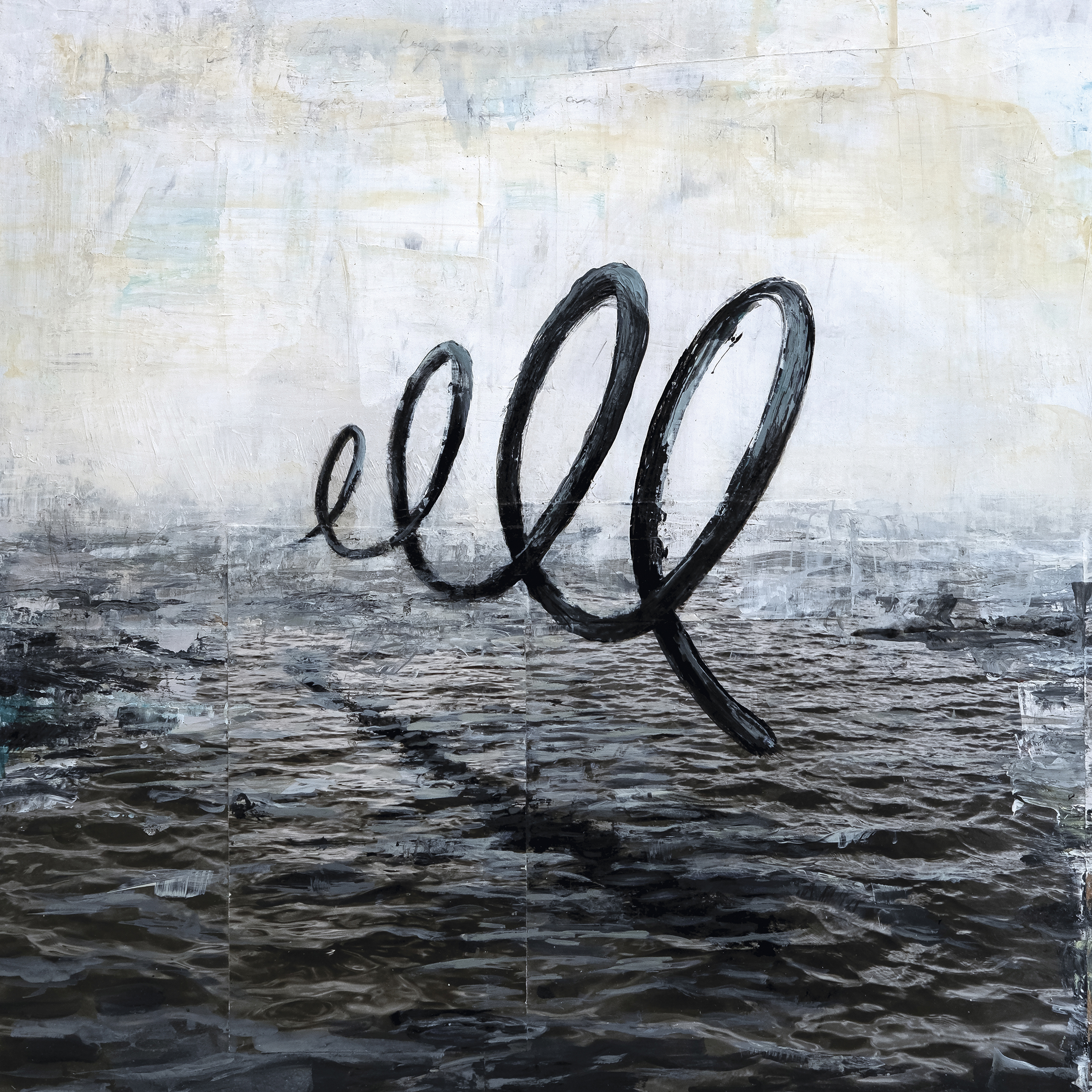
Hackedepicciotto ‘Keepsakes’
(Mute) 28th July 2023
Responsible, in part at least, to helping shape a certain darkened yearned and dramatic sound over the last four decades in Berlin, the husband and wife partnership of Alexander Hacke and Danielle de Picciotto have at any one time, both separately and together, been in Einstürzende Neubauten, Crime And The City Solution and the Anne Sexton Transformations imbued theatrical Ministry Of Wolves. During that time Danielle also co-founded the famous Love Parade carnival. And so it’s unsurprising to find the influence of many of those bands rubbing off on them with this latest album for the highly influential Mute label. It’s a signature sound that could be described as a cabaret and soundtrack gravitas of post-punk, post-industrial, electronica, the esoteric, weird folk and twisted fairytale.
Ministry Of Wolves co-conspirator Mick Harvey (both as a foil to Cave and as a solo artist) and CATCS can be heard suffused throughout with a more distilled taste of Neubauten. However, it’s the history, spectacle of a Neapolitan environment that’s really got to them; the city’s legendary Auditorium Novecento and its stock of various instruments played host to the “symbiotic” entwined duo. The spirit of such early-recorded crooners and composers as Enrico Caruso, in one of Europe’s first recording studios, hangs in the air. And amongst the tubular bells, the brass and grand piano Ennio Morricone’s twinkled and xylophone-like chimed sounding celeste is put to good use across an album of dedications to close friends. For Keepsakes is (despite the cliché) the couple’s most personal, intimate album yet.
Following in the wake of the lockdown epoch produced The Silver Threshold (one of my favourite albums of 2021), which offered heightened snatches of beauty, romance and drama from a backdrop of the Biblical, cinematic and ominous (the last two attributes spilling over into this album), Keepsakes is partially autobiographical in style and content. Like a sonic, musical photo album, except far too cerebral to name or make explicit the people behind each track, they use a lyrical description, language and narration to build those pictures, feelings and terms of endearment. There’s no mention in the accompanying album press, but it didn’t take me long to find that the harder edged, gnarled and classical counterpoint ‘Aichach’ could only be a dedication to that small Bavarian town’s native electronic dance music pioneer, Chrislo Haas – it was either the late provocateur of the German New Wave or the infamous Ilse Koch, the “concentration camp murderess”, “witch of Buchenwald”, who topped herself after being imprisoned for life by the Americans in the late 1940s at that town’s women’s prison to chose from. Haas was an integral agitator as part of Liasions Dangereuses, Minus Delta F, D.A.F. and Der Plan (the last three of which he co-founded), and his own proto punk and Tresor techno signature can be heard racing against sorrowful bowed strings on an instrumental that’s both sadly poignant and yet has a scuzzy, heavy attitude. It must be noted that Haas died in 2004, at the age of only 47. A premature end from where I’m standing.
On the other hand, I’m guessing and stretching the subject of the Weimer jazz age noir and Brecht magic show ‘Schwarze Milch’. Featured last month in the June Digest, I said that the title translated as “black milk” and could be a reference to the German-Mongolian film drama of the same name by the director Uisenma Burchu, who also stars in it. And yet that Steppes liberated tale of culture-clashed sisters couldn’t be further removed from the odd cabaret sift and brushed, hurdy-gurdy winded and smoky sax circus of the playful, disturbed and animal-mask wearing cultish: I really adore it.
Apart from that the bestial, throat song from the bowels of the chthonian ‘Mastodon’, could be evoking the unholy, leviathan-invoking American heavy metal band of that title. The track is certainly darker, ghostly and has shades of John Carpenter and late Scott Walker. Yet there’s also weeping strings, Ennio’s struck bell tolls and a removed vision of the Italian maestro’s Westerns scores.
I’ve deduced that ‘La Femme Sauvage’, or “wild woman”, is a book and a film – also a recurring French storytelling trope of women brought up in the wilds by wolves and such. Sound wise it has more of that Ennio influence, mixed with a poetically spooked version of chanson, and a descriptive autobiographical, numerical, narrated part by Hacke: “three languages”, “four books” and “36 years in Berlin”. The celeste is very nicely chimed, as bulb-like notes ring out in the midst of a theremin dreamy yarn.
The album’s finale, ‘The Blackest Crow’, riffs – as only these two enchanters can – on the old American folk song. An American Gothic transformation, with the sound of waves evoking a bookend farewell, shipped off on tail sails – very much in keeping with the similar atmospheric, lapping tidal ‘Troubadour’ opener – this Appalachian and Ozarks provenance song of departed lovers in a cold, dark world is a perfect curtain call of unified plaint: an esoteric Carter Family. Thought to have emerged after the 1860s Civil War, the main lyrical theme of metaphorical crows, glass breasts, remains after infinite changes, additions and subtractions. Even the title can be different: ‘The Lover’s Lament’ in Carl Sandburg’s 1927 published The American Songbook, but also known as ‘My Dearest Dear’ and ‘The Time Draws Near’ – the former sounding more appropriate in this case. ‘The Troubadour’ itself has an air of something older about it; an essence of Tchaikovsky enchanted celeste with the courtly echoes of the Elizabethan.
In the more menacing stakes, ‘Songs Of Gratitude’ is a dramatic soundtrack of Walker with Sunn O))), Dead Can Dance and Brian Reitzell subterranean and scuzz strains: Hackedpicciotto entering the underworld with a song of yearned thanks.
The sound of Berlin with stopovers across Europe and New York City, Keepsakes conjures up evocative visions, dramas and characters out if the arty, the gothic, the cerebral and surreal; creating an alternative photo album and collection of memories, events. As earthy as it is dreamily floating in a constructed world of fairytale, myth and magic, the creatively sagacious couple draws upon a lifetime of experiences, friendships to produce another captivating album for the Mute label.
Tickling our Fancy 044: Baba Zula, Piano Magic, Dearly Beloved…
January 12, 2017
New Music Reviews Roundup
Words: Dominic Valvona
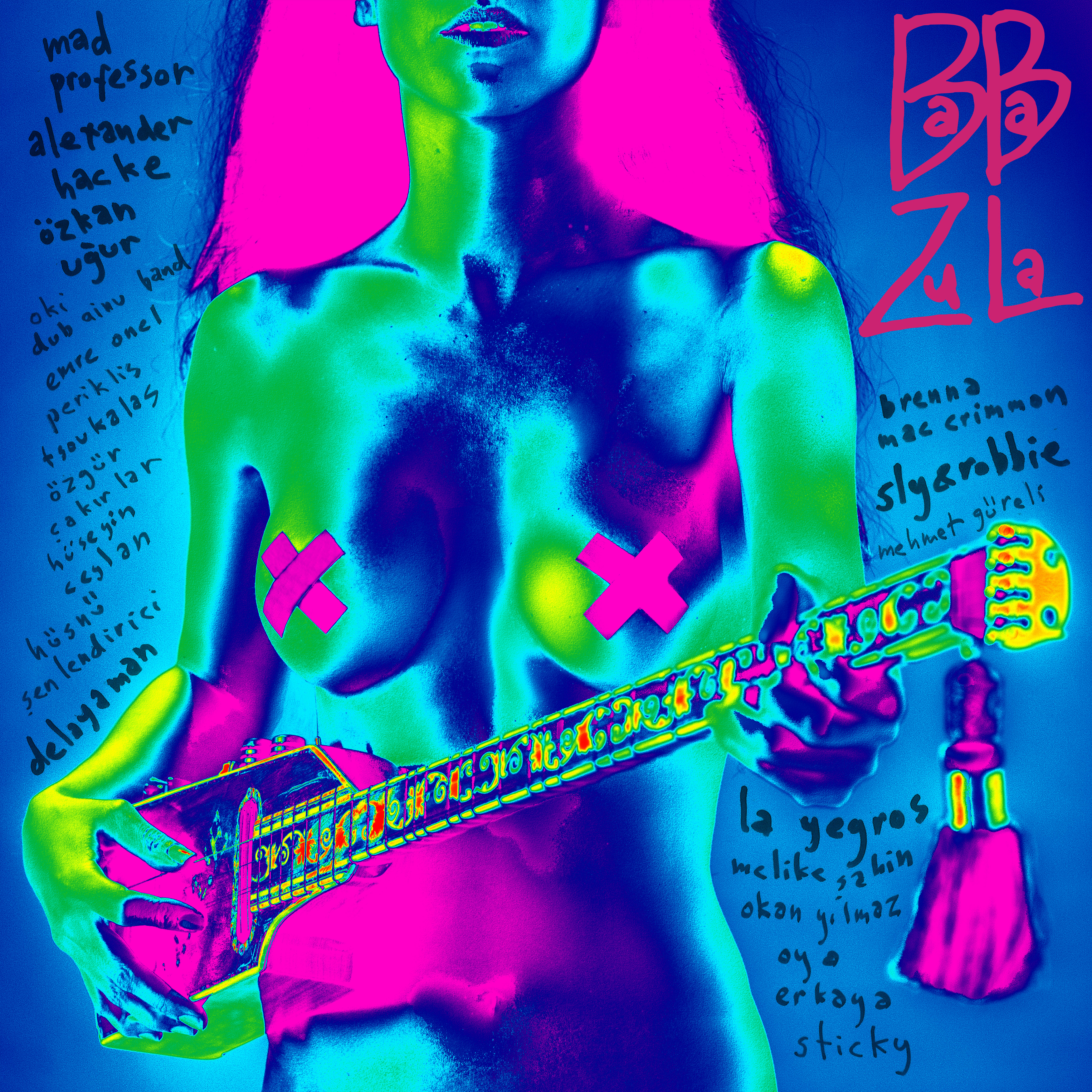
Welcome back to the first review roundup of 2017, which gets off to a grand start with this dazzling cornucopia of new releases from Baba Zula, Dearly Beloved, Hanitra, Mikko Joensuu, Piano Magic, James McArthur and Pawlowski, Trouvé & Ward.
In this edition of my regular review roundup we have the grand sweeping gestures of Mikko Joensuu’s second album in the Amen cycle; the second idiosyncratic folk and country idyllic songbook from James McArthur; some tender sounds “from the heart of Madagascar” in the shape of the Island’s talented songstress Hanitra; plus a bit of hardcore from the Dearly Beloved. There’s also a trio of special anniversary releases, the first, a triumvirate of solo work from Pawlowski, Trouvé & Ward, celebrating the tenth birthday of Jezus Factory Records, the second and third mark the twentieth anniversaries of both the chamber pop dreamers Piano Magic, who have chosen to have one last fling before disbanding this year, and the polygenesis dub Istanbul outfit Baba Zula.
Baba Zula ‘XX’
Released by Glitterbeat Records, 27th January 2017

BABA ZULA. (FOTOGRAF: CAN EROK – 20.09.2016)
Bastions of a psychedelic Istanbul scene, they’ve arguably made their very own, the omnivorous Anatolian Acid Mother Temple of dub-styled Baba Zula have been melding all their many musical inspirations together for twenty years now. Co-founded by Osman Muret Ertel and Levent Akman in 1996, the kaleidoscopic group originally sprung from Ertel’s previous ZeN Outfit as a one-off soundtrack project for a film director friend. Two decades later and we can surely assume that Baba Zula won out.
Inspired by the first wave of Turkish bands, that grew out of a previous generations atavistic folk scene, in the 1960s, notably the psych pioneers Moğollar, Ertel and Akman helped revitalize an age of experimentation, lost during the tumultuous upheavals of Turkey’s coups in the 70s and 80s. Politically acute, challenging the authorities with trance-like joyous expression, Baba Zula are once again finding themselves overshadowed by developments in their own backyard. And so just when we and their comrades need them that discerning label of new musical discoveries from the African continent and beyond, Glitterbeat Records, have decided to celebrate the band’s legacy with a generous double helping of reimagined material and a whole host of transmogrified dub treatments from congruous bedfellows and admirers alike – including the Mad Professor, Dr. Das and Glitterbeat’s quasi in-house band Dirtmusic.
Choosing a unique method of documenting that twenty-year career (and counting), Ertel explains: “None of the pieces here are in their original forms. Instead, we picked remixes, re-recordings, collaborations, live tracks, all the possibilities, but none of these have been released before.”
Transformed but not enough to completely obscure the source, the first of these two CDs (or albums) travels back and forth across the decades, with the earliest example being the feverish female protagonist orgasm over a DJ Shadow backbeat Erotika Hop from 1997, and one of the latest, a nine-minute Tamikrest-on-an-exchange-trip-to Byzantine Aşiklarin Sözu Kalir (otherwise known as “External Is The Word Of Poets”). Elsewhere you’ll find the group’s biggest hit to date, Bir Sana Bir De Bana (“One For You And One For Me”) playfully re-styled as a Gainsbourg-on-the-Bosphorus duet between a French woman and an Armenian man.
Opening this meandering journey, Ozgür Ruh showcases the group’s signature languid dub sound; a free-spirited melting of ascending, whirling electric saz (a long-necked lute-like instrument), accentuated brushed bendir hand drums, longing male and female vocals and a cosmic Jamaica blown off course towards the Adriatic, vibe. However, there’s no mistaking the band’s roots on Biz Size Asik Olduk; a curious dervish romance with the candor and atmosphere of a desert blues serenaded camel caravan trail. The final two tracks are live. There’s, what sounds at first like a tuning-up session, kosmische freestyle Çöl Aslanlari performance from the Bada Bing in Berlin (handed over to Einstürzende Neubauten’s Alexander Hacke to mix) and a nineteen-minute experimental reverb-heavy dub odyssey version of Abdülcanbaz from the Piraeus Resistance Festival In Greece to lose oneself in. Both are great examples of their untethered abandon and float-y transcendental mesmerism.
The accompanying (mis)adventures in dub companion is a veritable feast of the most somnolent drifting mixes. It helps that Baba Zulu’s exotic vapours lend themselves so well to dub, imbued as they are by it. But with no limits set and with a litany of dub explorers allowed a free-reign to remodel, the band’s material is swathed in so much echo that it almost disappears into the ether.
The first few tracks are by the group themselves and someone known as “arastaman”. Reshaping their own catalogue and sound they use the lingering traces of a song and submerge beneath a smog of warbled theremin and phaser effects on Alem and cut up the vocals on a mind-bending Ufak. Guest mixes include the radical Asian Dub Foundations’ Dr Das and his Uncle style heavy shake-up of Iki Alem; Dirtmusic’s mysterious lunar sandscaped ‘Hopche’; and The Mad Professor’s quartet of polygenesis traverses: merging a South American tropical groove to the Istanbul guitar cycles of ‘Baso’ and playing with the convulsing vocals and howling calls of ‘Erotik Adab’.
To a backdrop of continued violence (at the time of going to press there’s been both the shootings at Istanbul’s Reina nightclub and the car bomb/gun attack on the courthouse in Izmir, in just the last two weeks alone) and heightened turmoil, caught in the midst of suppressive regime currently removing dissenting and alternative voices from the street with the most tenuous of reasons it’s hardly surprising that many wish to escape the realities of daily life. Baba Zula know more than most how dire the situation is; Ertel’s own late uncle, a journalist, was tortured and imprisoned for his troubles. Though highly entrancing and mostly destined for psychedelic shindigs this eclectic voyage is every bit the rallying call of protestation; just existing amounts to a form of dissention in the face of increasing nationalism. Here’s to another twenty years of stirring the omnivorous musical stew.
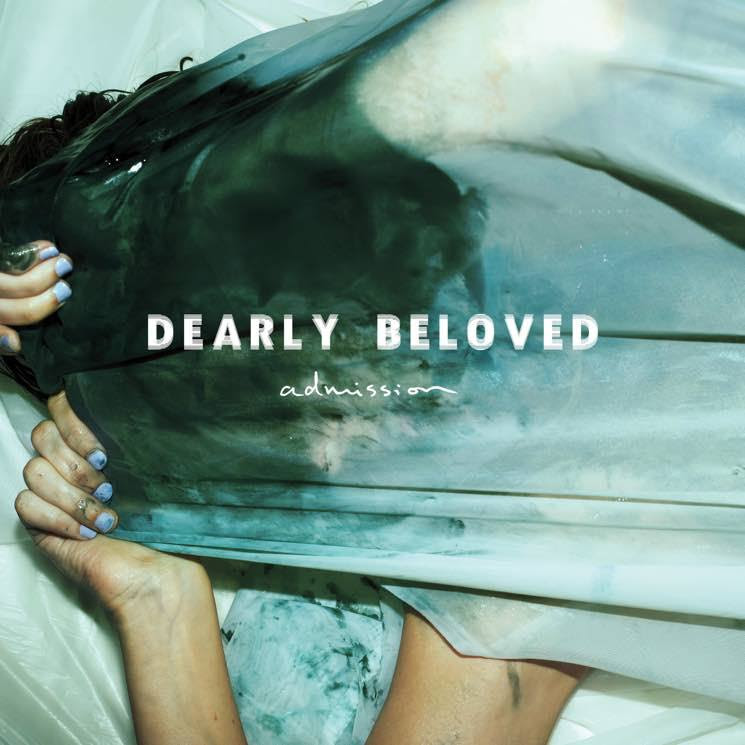
Dearly Beloved ‘Admission’
Released by Aporia Records, January 27th 2017
Recorded through Dave Grohl’s acquired custom-built 70s Neve 8028 analogue console, at his famous Studio 606, the desk that that facilitated Nirvana’s Nevermind has imbued the latest steely hardcore row from the Dearly Beloved duo. Still thundering along at a furious velocity, thrash-powering their way through a scowling mix of Black Flag, Black Sabbath and The Pixies, the dynamic Niva Chow/Rob Higgins gut-thumping and bewailing partnership have acquired an extra, controlled, ingredient of grunge.
More suffused, the light and shade of Admission rages in a thoughtful depth between dystopian drones and full-on esoteric rock’n’roll, ala a Mogadon induced Royal Trux in a switchblade scuffle with The Black Keys – the opening RIP track showing a flair even for southern boogie blues, albeit a very noisy one. For a band that fluidly absorbs a litany of hardcore, punk and doom influences, Admission is surprisingly melodic and nuanced. And so you’re are just as likely to hear echoes of Placebo and the Moon Duo as you are Death From Above 1979, and run through not just broody miasma moods but also fun-thrilled frolics.
Whipped into shape (not literally of course!) by Ramones and Misfits producer Daniel Rey who laid out a relentless schedule that had the duo rehearse in a East L.A. sweatbox for eight hours a day for a week, the Dearly Beloved for the first time entrusted an outsider to sit behind the controls. As it turns out, the road-tested and solid work out sessions have captured the duo’s live energy perfectly, delivering a lean, sinewy, heavy-as-fuck rage with all the indulgences and chaff taken out. That tumultuous, controlled but far from caged performance matches the turbulence of the times we’re living in.
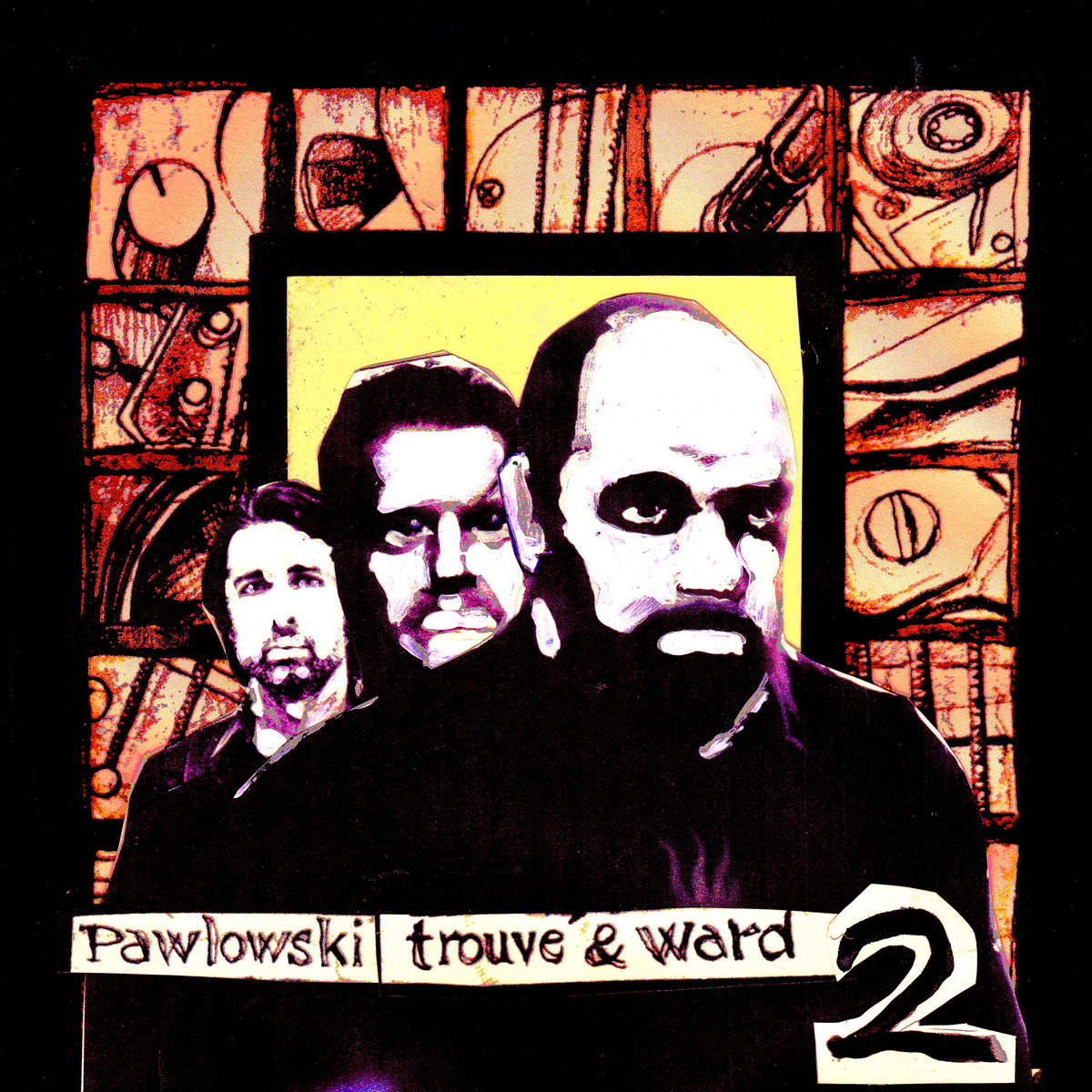
Pawlowski, Trouvé & Ward ‘Volume 2’
Released via Jezus Factory Records, January 20th 2017
A decade on from the last Mauro Pawlowski, Rudy Trouvé and Craig Ward triumvirate compilation of solo work and to celebrate the tenure of the label vassal of so many Belgium borne alternative rock projects, Jezus Factory Records have now released a long-awaited follow up; named simply Volume 2. All at one point or another members of Belgium’s, arguably, most famous export dEUS, all three musicians have also shared a highly complex interlocking relationship; each serving together in a rambunctious myriad of side projects, team-ups and explorations, most notably The Love Substitutes, iH8 Camera and Kiss My Jazz: if anyone could ever be bothered, it would make a convoluted but interesting rock family tree diagram. Crossing over and extending beyond the dEUS hub it feels like the common bond of releasing their material on Jezus Factory could see the trio join forces at any moment.
Showcasing their individual flights of fantasy, this second volume of solo work is sometimes bizarre, often curious and occasionally silly; traversing the more serious glacial suffused drones of Ward’s four-track travail; the guitar and post-punk synth of Trouvé; and the killer-ziller-driller lunacy of Pawlowski’s imaginary 80s movie soundtrack, complete with commercial breaks!
A familiar face on the Monolith Cocktail, the erudite Scottish guitarist/composer Craig Ward was originally invited many moons ago to holiday in the Belgium city of Antwerp by dEUS and Zita Swoon stalwart Stef Kamil Carlens. Somehow instead of returning home, he stayed and signed-up for in a stint in a local band, Kiss My Jazz, before inevitably joining the dEUS fraternity; playing guitar and delivering vocals on the In A Bar Under The Sea and The Ideal Crash albums. Ward subsequently left to form both The Love Substitutes and A Clean Kitchen Is A Happy Kitchen. More recently he’s carved out a solo niche for himself with the suitably evocative ambient suite New Third Lanark whilst also running a guesthouse in his native Scotland. Earlier in 2016 he was awarded a Scottish Arts Council grant to complete his ambitious solo opus Leave Everything Move Out, which was actually recorded in France with the Grammy Award winner David Odlum. Sticking to the same tone of moody strangeness and drawn-out drones, his environmentally descriptive quartet of soundscapes cover the territory of Ash Ra Tempel and Tangerine Dream. Ward circumnavigates with a touch of subtle gravitas the mysterious veiled landmarks, circling the behemoth omnipresence of Mount Betsy; hovering In The Wet Maze; dreamily rowing the topographic ocean from Island To Any Islands; and lurking in the claustrophobic atmosphere of a Sunless compression of resonating guitar notes and heavy-leaden synth modulations. It’s classic Ward at his deepest.
Still holding down the day job as a member of dEUS, Pawlowski has really gone for broke on this compilation with his 80s pastiche soundtrack. A quick run-through of the CV is needed first before we go into the details. Pawlowski originally rose to fame in the Evil Superstars, until they called it quits at the peak of their career. He went on however to release the Dave Sardy produced album Songs From A Bad Hat and launch a string of experimental groups and collaborations, including a Dutch language folk LP under the Maurits Pauwels appellation, and the Hitsville Drunks and Gruppo Di Pawlowski (recorded incidentally by Steve Albini) projects.
Throwing a tongue-in-cheek (I assume) curveball at 80s cinema, his eleven-track mix of Casio demo display crescendos, yapping seal noises, and Carpenter meets John Hughes is pure bonkers. There’s bad acid telly binges and garbled industrial menace aplenty, but the best is saved until last with the finale firework exploding retro tribute to AM college radio rock, Starught: a mix-up of Strangers When We Meet era Bowie, The Cars, Queen and Boston, it is an unashamed punch-in-the-air love song anthem. Pawlowski’s contribution is certainly the most varied and odd, detached from the more serious and dour tones of his album mates.
The final leg, the baton handed over to Trouvé, fluctuates between the stripped guitar sounds of The Durutti Column and a 80s homage of despondent Visage and Soft Cell synth maladies. Originally a founder member of dEUS but tiring of the group’s major label success and all the bullshit that comes with it (the band’s debut was released on Island Records), Trouvé left to form the Heavenhotel Presents label and play in the Ornette Coleman inspired experimental project Tape Cuts Tape, the The Mechanics (with Pawlowski) and the “all star” improvising iH8 Camera.
With a wealth of experience and enough of an eclectic swag of influences behind him, from post-punk to avant-garde jazz, ready to surface at anytime, his twelve-strong contribution of meditative and considered explorations reflects an omnivorous craving. And so one minute you’ll hear a hint of Spiritualized or DAF, the next minute, John Cale, yet the underlying sound remains signature Trouvé.
A decade in, weary and beleaguered with the current Brexit woes (just wait until it’s actually been triggered and unraveled), Andrew Bennett’s showcase label for music from the nation that unfortunately symbolizes both the best and worst excesses of the EU, has a challenging future ahead of it. There’s no signs however of fatigue nor a dip in quality or originality; Pawlowski, Trouvé & Ward still producing the goods no matter what the augurs foretell.
James McArthur and the Head Gardeners ‘Burnt Moth’
Released via Moorland Records, 20th January 2017

Conjuring up an idyllic image of sipping Cider with Rosie on the back of Constable’s Hay Wain, Welsh-born troubadour James McArthur and his Head Gardeners troupe return with another lilting album of bucolic folk and country songs on Burnt Moth.
Following up on the Strange Readings From The Weather Station debut, which announced McArthur’s move from backing Paul Weller on drums to fronting his very own songbook, this second peaceable collection continues to wander a perpetual end of summer into early autumn seasonal landscape. Picking away and plucking attentively in the style of Bert Jansch or Mike Cooper, the serenade-style poetic musicianship on display is effortlessly timeless, yet the often meandering lyrics chime with the contemporary themes of an ever-changing society moving unabated towards a digital, even virtual, immersion: encroaching on the tranquility and earnest pastoral ideals of a slower-paced more personal interactive world, which to all intents and purposes is proving a sanctuary from the fully-connected hum of the internet.
Mostly acoustic, McArthur is also accompanied throughout by an accentuated backing of burnished and dampened drums, slowly released from its quivered tension strings (all co-written and arranged with Jim Willis, who also plays mandolin on the album), rustic pining pedal steel guitar and on the classically leaning yearned To Do the lulling coos of guest vocalist Samantha Whates. Not only assisting McArthur in the making of this album but also chipping in with backing vocals and bass on the roulette wheel of lovelorn fortune, Evens On Green, is Joel Magill of the psychedelic Canterbury band Syd Arthur.
Burnt Moth is a charming sun-dappled tapestry of McCartney-esque, and on the title track finale, Harry Nilsson (fronting a dreamy Morricone romance) idiosyncratic storytelling and musings. McArthur is in no hurry to reveal and unfurl the album’s many nuances and beauty; toiling away gently to create a most enjoyable and thoughtful songbook.
Mikko Joensuu ‘Amen 2’
Released by Svart Records, end of 2016.

The middle of an ambitious all-expansive soul-searching trilogy, the second Amen chapter finds a vulnerable Mikko Joensuu rising from the porch of his cabin retreat to step forth into the radiant majesty of the Finnish landscape. Finding an obvious awe-inspiring beauty in the stunning vistas yet equally overwhelmed, Joensuu attempts to cope with his troubled past. An epiphany if you like, the Finnish troubadour “lost his religion” a while back and has since been attempting to draw back from a mental abyss. Imbued with the candid soul and gospel of Jason Pierce’s Spiritualized and the melodious drone of My Bloody Valentine, Joensuu’s second album in this triumvirate cycle balances the ethereal with a tumultuous chorus of peaks and lows; the opening Drop Me Down opus for example gently builds from the diaphanous to a nosier cacophony of horns. Even when the fuzz, distortion and tribal backbeat dynamics are let loose the dappled light pours in.
An alternative questioning and sincere hymn supported by the North Finnish veranda, Amen 2 is a grandiose stunning visceral work of art.
Hanitra ‘Lasa’
Released by ARC Music, 6th January 2017

An unofficial cultural ambassador for her homeland of Madagascar, the sagacious and much-celebrated talented songstress Hanitra sheds light on both the personal and environmental plights of the unique Indian Ocean Island and the universal suffrage of women in the wider world on her latest album Lasa.
For many, Madagascar continues to be an enigma: Famous unfortunately as the title of a DreamWorks animation franchise, but apart from its reputation as a colourful menagerie for all kinds of exotic wildlife and fauna, it remains a mystery to many. Musically speaking it has attracted a host of composers and musicians, including the recently revived French ethno jazz maestro Jef Gilson with his Et Malagasy masterpiece.
Almost as an anthropological experiment and survey Madagascar’s isolation and history has fascinated many. Lying off the southeastern coast of Africa, it’s strategic position has made it a popular port-of-call for traders and explorers, though many literally bumped into it unaware it existed. Despite a litany of famed travellers, from the Arabs to Marco Polo, recording its discovery over the centuries, it would be France that colonized it. However, whether warranted or not, conquerors and traders alike left traces, resulting in a cross-pollination of influences including music. On Lasa you can hear this legacy well with elements of jazz, the Balearics, Arabia and even the reverberations of an old Afghanistan – resonating from the evocative sound of that country’s lute-like rubab instrument; used to plaintive dreamy effect throughout on this album – entwined with a distinct foundation of Madagascar folk and gentle African rhythms. But it’s the award-winning siren’s vocals, flexing with élan, which encompass this imbued richness. Inherently timeless, fluidly moving between cooing, almost lullaby, and effortless soaring tension, Hanitra’s voice subtly matches the themes of her album without showboating. The double-meaning title song for instance, translated from the Malagasy dialect as to “go past”, is an elegy of a sort to the French-Canadian singer Lhasa de Sela, who passed away in 2010 from breast cancer. Yet this touching tribute to a singer is far from sentimental; its Middle Eastern permutations and tenderness sweet and reflective rather than downcast and lamentable.
Soothingly in an array of colourful hues and tones, Hanitra addresses the themes of maltreatment, meted out both physically and psychologically towards women, on Eka and Avia, deforestation, in particular the devastating environmental costs of cutting down and selling Madagascar’s rosewood, on Mivalo, and another of those tributes, this time to the Vezo fishermens wives on the Island’s southeastern coastlines, eking out a hard living, on the oceanic motion Ampela. There’s celebration, paeans even, with the relaxed, lilting defense of same-sex marriage on Myriam and an invitation to dance in joyful abandon on Lalao. Whatever the emotion, Hanitra articulates her concerns and protestations with a soulful sincerity.
Lasa’s extended title is “from the heart of Madagascar”, and this is very true, yet the Island’s melting pot of musical influences and Hanitra’s own global travels mean this album is in fact universal.
Piano Magic ‘Closure’
Released by Second Language Music, 20th January 2017

Calling time on a twenty-year career with one last swansong, the Anglo-French Baroque indie dreamers Piano Magic echo the sentiments and themes of their 2000 song No Closure on their final majestic and profound album, Closure.
The self-proclaimed purveyors of “ghost rock”, formed at the height of the Britpop, have traversed and mapped out a moody romantic pathway for themselves over the years. Originally starting out as a lo-fi electronica trio in 1996, soon finding favour with John Peel, Piano Magic gradually grew into a full-on tour de force alternative rock band as the millennium drew near; recording amongst their notable cannon both a soundtrack for the Spanish director Bigas Luna’s Son De Mar and the Writers Without Homes album, which famously featured the folk legend Vashti Bunyan – who emerged from a 30-year musical silence to dust off the quelled vocal chords for the band. Still far off his critical-applauded born again renaissance as a “torch singer”, that same album also featured the dour talents of John Grant; just one of many collaborations over the years, the band also working at one time or another with Alan Sparhawk of Low, Brendan Perry of Dead Can Dance, Cornershop and Tarwater. Closure is no different in featuring a suitably congruous number of guest spots, with Peter Milton Walsh, singer of the fellow chamber pop, Australian band, The Apartments channeling Mick Harvey, and Oliver Cheer (aka Dollboy) providing a south of the Rio Grande style swooning brass accompaniment on the Choir Boys-travail-a-literary-rich-Outback Attention To Life. Offering harmonic and atmospheric support on backing vocals, Josh Hight of Irons can be heard wafting about on the album’s opening grandiose and subtle opus title track and the stripped-down electro pop, in a quasi New Order style, Exile.
Drawn to a despondent melancholy, a most diaphanous one at that, the sagacious founder member and songwriter Glen Johnson is aided in this enterprise by Franck Alba (guitars), Jerome Tcherneyan (drums, percussion), Alasdair Steer (bass) and the band’s original drummer from their debut gig at the infamous Wag Club, Paul Tornbohm, now providing keyboards. Wounded and troubled as ever by the lingering traces and ghosts of past relationships and liaisons, Johnson’s resigned poetics attempt to meet head-on those feelings he just can’t seem to lay to rest: as Johnson calls it, the “mythical formal conclusion”, the need to “move on” from broken relationships is not so easy. And so he croons, “Let’s get this thing sewn up” on the Morricone meets Ry Cooder cinematic title track, knowing full well that “…you never get closure.” The supernatural echoes of a lost love, channeled through a dusty answering machine message séance, on Landline leave the singer’s voice paled and weakened; lamenting loss form the far side of the ether. Marooned as a passive onlooker to the goings-on in the backstreets of his southeast London neighbourhood, a voyeuristic, removed Johnson (in Talk Talk mode) vanishes almost completely before our very ears. The song’s sad lyrics it must be said are a most beautiful kind of misery.
Magnificent in their despair, the musicianship poised, purposeful and subtly stirring, Piano Magic’s last ever fling is one of the band’s most accomplished, and definitely one to savour. As near perfect as any Piano Magic suite can be, Closure proves that you can perhaps after all find a satisfactory ending.
 Monolith Cocktail Blog