The Perusal #55: Liraz, Ibelisse Guardia Ferragutti & Frank Rosaly, Ghana Special 2, Bab L’ Bluz…
May 7, 2024
A WORLD OF SONIC/MUSICAL DISCOVERIES REVIEWED BY DOMINIC VALVONA
(Unless stated otherwise, all releases are available now)

Various ‘Ghana Special 2: Electronic Highlife & Afro Sounds In The Diaspora 1980-93’ (Soundway Records) 10th May 2024
The first decade of the new millennium proved a fruitful period for (re) discovering Africa’s rich dynamic and explosive music heritage, with both (through their various Afro-funk and Afro-psych compilations) Soundway Records and Analog Africa (in particular their influential African Scream Contests) spoiling connoisseurs and those with just a curiosity alike to sounds rarely heard outside the continent. The former’s original five album Ghana Special spread was one such indispensable collection from that time; a perfectly encased box set survey of one of Africa’s most important musical junctions.
Now, unbelievably, a full twenty years later Soundway have followed up that “highlife” triumph with a second volume; moving the action on into a new decade. Crossing over, just, from the inaugural edition’s 1968 to 1981 span, Ghana Special 2: Electronic Highlife & Afro Sounds In The Diaspora picks up in the 80s as Ghana’s signature highlife phenomenon went through yet another evolution, incorporating the tech of the time: from drum machines to synths. From marching big bands and tea dances in colonial times to the explosive embrace of wailing R&B and funk, highlife kept on moving through the decades. And as that helpful title makes clear, this eighteen-track survey hones in on the electronic enhanced, augmented phase of that genre’s development during a period in which many of Ghana’s most promising music stars had been forced to leave for Europe and further afield.
The diaspora in this case a result of a particular authoritarian period in Ghana’s post-colonial history. Following Ghana’s promising independence from Britain in the late 50s the political landscape tossed around between the rule of military coups and civil governments: the only constant, Ghana’s impressive musical pedigree and its influence across the continent. In light of particularly damaging and disastrous economic policies in the late 70s, and with the quelling and censorship of musicians – previously so popular that their support or protestations could prove vital in a political leader’s survival – there was a mass exodus of talent.
As the new decade beckoned Ghana became a hostile environment for its artists, many of whom would join the migratory caravan of workers leaving to find jobs in an increasingly welcoming West Germany (a booming economy and desperate need for workers resulted in a relaxation of the immigration laws and work permits). The cities of Berlin, Hamburg and Dusseldorf were havens for this influx of Ghanaians; proving a fruitful network for a new musical fusion between the locals and their new arrivals called “Bürger life”, named after the German word for “citizen”. A hybrid of German new wave, post krautrock loosened dance sounds and modern tech, Bürger life transformed the original Afro-musical trends through such progenitors of the scene as George Darko and Charles Amoah. Both artists feature here, Darko with his sun-hazed fusion of Masekela, Sunny Adé, the Phantom Band and Lounge Lizards ‘Kaakyrie Nva’, and Amoah with the 80s modern R&B pop steal and whistled and tingled starry ‘Fre Me (Call Me)’. Of a similar ilk, Starlife’s cosmic suffused ‘Amoma Koro’ sounds like a tropical soca infused Flow Motion (and Out Of Reach) era CAN at times.
Speaking of soca (the “soul of calypso” shorthand), that Afro-Caribbean style can be found on the funky disco sauntering, “wahoo”, opener ‘Ebe Ye Yie Ni’ by The Godfathers, and on Pat Thomas’s swayed plea ‘Gye Wani’ – the highlife horns all still in attendance, blazed but subdued and more relaxed. The Gold Coast vocalist and songwriter (Ebo Taylor foil to boot) Thomas had previously worked with the iconic Marijata trio back in Ghana, but emigrated to Berlin in 1979, like so many artists on this compilation.
A standout tune (of many) and extensive workout (like many tracks on this compilation, more like a 12” dance mix in duration), the Pepper, Onion, Ginger & Salt ingredients named obscurities turn out a smooth crossover of downtown NYC (think Don Cherry produced by Ramuntcho Matta), Osibisa and the Lijado Sisters – there’s even a sort of quasi-loose rap vocal at one point. Another standout name (as it were), the revitalized in recent years Ghanian icon Gyedu Blay Ambolley is famous for his breakout hit ‘Simigwa-Do’ and early adoption of hip-hop – fusing it with highlife to form the highly influential and inventive “hiplife” genre. Ambolley appeared on the original Ghana Special by the way. But on this occasion, in a new decade and phase, he picks up hints of Grace Jones and Herbie Hancock on the Island life funky ‘Apple’.
At this point I can’t not mention Dadadi’s fun ‘Jigi Jigi’ track, a soca-light flight from Accra to Havana in the mode of a carnival celebrating Kid Creole.
Synthesized and programmed, the old highlife rhythms/percussion is just about audible as the smother 80s technology rounds out much of the rougher signatures, replacing some traditional instruments and sounds with keys and keytar, slap bass and wobbly effects. But the sleekness can’t hide those vibrant roots, even when embracing reggae, boogie and the new wave. Ghana Special part two is a refreshing map of the diaspora fusions and hybrids that spread across Europe during a time of movement and turmoil from Ghana’s hotbed of influential stars and musicians. In highlighting the stories and journeys of Ghana’s émigrés, and in introducing us to those sounds, movements that remain either forgotten or just not as celebrated, Volume 2 will become as indispensable as the first. If you were fortunate enough (and without rubbing it in, I was lucky enough to purchase the original on its release) in acquiring that first box set then this latest compilation will sit beside it very nicely. And that is my way of saying that you should buy a copy.
Bab L’ Bluz ‘Swaken’
(Real World)
An embodiment of the Moroccan “Nayda” (“up”) youth movement for change in the Arab World, the fuzz-toned electrified Bab L’ Bluz launched their debut album in a tumultuous political climate; just as COVID gripped the global newsfeeds and moved the focus away from the fallout from the Arab Spring.
Fronted and built around the playing energy and voice of Yousra Mansour, this female-led troupe embraces the influences of rock-blues gods Led Zeppelin and Morocco’s very own version of The Rolling Stones, Nass El Ghiwane, matching it with a myriad of Arabian sounds and traditions from North and Western Africa; all of which are transformed from their conservative and male dominating roots into a feminist-strong message of empowerment.
Mansour’s protestations for equality – in everything from inheritance laws to the gender wage gap and roles in society – rung out in the wake of civil unrest, governmental crackdowns and censorship to the buzz and clattering/rustled rhythms of acid-garage-blues-psych-rock and Morocco’s age-old Gnawa tradition of spiritualist invocation and trance. Previously the sole (more or less) preserve of the patriarch, and against the odds, Mansour learnt to play many native Moroccan styles: standing out especially for studying the “guembri”, a three-stringed bass-like lute that is then electrified.
That debut album set a blaze, evoking Arabia’s own experiments in the 1970s with rock music fusions, the psychedelic and prog-rock whilst, like a tornado or whirling dervish, spinning through the region and absorbing everything on offer, from Mauritania Griot and Hassani to Chabbi and the Islamic dances, poetry and exalted music of Morocco itself. This same hybrid of sounds continues on the group’s newest album, Swaken, a title that when translated from the region’s Darija dialect (the main language of the Nayda movement) encompasses the transcendent rituals of Morocco’s spiritual possession ceremonies.
Invoking visitations and a dialogue with the past, Bab L’ Bluz (made up of Mansour and band mates Brice Bottin, Ibrahim Terkemani and Jérôme Bartolome) open up their signature edge and buzz to even more influences than usual. After honing their performances on an extensive tour schedule, they’ve taken on a far rockier, even heavier sound. Led Zeppelin at both their loudest and also most acoustic permeate this album’s eleven tracks spread – that and early 70s The Who, especially on the closing roused and riled ‘Mouja’. And with the whistled and airy peul flute making an appearance, there’s even a hint of progressive folk too.
The scope then is wide, taking in echoes of Liraz-style pop, the Sahara and North African desert song of Aziz Brahim, the blowing piped Sufi music of Bargou 08, the evolved Gnawa music of Houssam Gania, trills of Griot, Modern R&B and evocations of Nahawa Doumbia, Dimi Mint Abba, Baba Zulu and Noura Mint Seymali. The lyrical messages sung across the Berber trails, in the cities and in the shadow of the sand dunes are just as varied: anger at inaction and lament for the growing number of suicides and cases of depression in Morocco being just two such subjects.
Bab L’ Bluz scale new heights whilst also reflecting with passages of more acoustic downtime as they once again amplify and kick into touch conformity and restraint. New vices twist and transport Arab traditions and the spiritual communions for a both rock-heavy and electrifying new wave album of polemic, the mystical, cosmic and the blues. Nothing less than an essential album from an essential band built for our times.
Liraz ‘Enerjy’
(Batov Records) 17th May 2024
It’s hardly surprising that with the ongoing conflict between the nefarious Iranian regime and its neighbours, and with the continued oppression of its own population, that attempting to show the Middle Eastern titan in a good light is frustratingly difficult (an understatement in itself). Especially when you’re Jewish and part of that atavistic empire’s age-old Jewish community that stretches right back to Persia’s Biblical entry in the Old Testament: A community originally bound in chains, the spoils of conquest marched into slavery in 727BC, but eventually granted citizenship and even given the right of return to build a new temple in Jerusalem by the more enlightened Cyrus in the 6th century BC. Or that one of your most famous roles on screen is playing a clandestine Mossad agent on a mission to infiltrate the Iranian air defenses so that Israel can disable a nuclear reactor (the Apple+ series Tehran). But the actress, dancer, and electronic pop siren Liraz Charhi was willing to give it a good go, covertly recording several cinematic lensed Middle Eastern fantasies with a myriad of Iranian musicians under the radar of the ayatollah hardliners, over the internet.
In a climate in-which tolerance is scarce, and with most creative forms and freedoms of expression attracting, at the very least, suspicion, and at the worse, imprisonment, even death, trying to make a record with a strong feminine message seems an almost impossibly dangerous task: Liraz’s collaborators on the album’s Zan and Roya remain anonymous indefinitely for their own safety.
Liraz’s family were forced to escape during the tumultuous upheavals of Iran’s revolution in the 70s; setting up home in Israel’s capital, Tel Aviv, a safe haven for those escaping an ever-authoritarian Islamic regime. That city has grown to become an artistic community of foreigners, living cheek-in-jowl with both an older Israeli population and diaspora of Jews from around the globe. Liraz however, still feels bound to that Iranian heritage. And it seems when listening to her evocative soothed and lush bright vocals, she is the latest in a long line of strong outspoken women from that community. A baton has been handed down you could say.
Feeling adrift, Liraz upped sticks to become an actress in L.A. Little did she know that the city would open her eyes to another concentration of Iranian émigrés, including many from the Iranian-Jewish community. Whilst starring in major productions such as Fair Game and A Late Quartet, Liraz would find comfort and a sense of belonging in that diaspora. She’d learn much absorbing both the ancient musical traditions and the pop and disco that filled the clubs in a pre-revolutionary, pro-miniskirt Tehran, including such famed Iranian acts as Googoosh and Mahasty.
It was much in part down to the courage of the women in this astoundingly large community (so large that L.A. is nicknamed “Tehrangeles”) that emboldened Liraz to take up singing. She would record her debut Persian imbued album Naz in 2018, inspired by those whose only outlet and determination of self-identity and freedom was through music. Two years later and once more ingrained in that atavistic land’s richly woven musical history, she enacted a clandestine connectivity between cultures on the “second chapter”, Zan.
Prompted by the death of Mahsa Jina Amini in the custody of the authorities in 2022, an ensuing battle of ideals and freedoms from the women and a new generation in Iran threatened to topple the tyranny. However, the regime has pushed back harder than ever and with an almost unprecedented violence started executing (mainly men so far, with the rapper Toomaj Salehi only just in the last week or so sentenced to death for criticising the regime) supporters and activists on trumped up, tortured confessional charges of treason. Women are routinely taken off the streets by the so-called morality police and raped, whilst only in the last year school age girls from all over the country were poisoned. But even in the face of this bloody repression history is on the side of Iran’s younger more liberal generations. However, with the barbaric, evil attack on Israel by Hamas on October 7th 2023, Iran has weighed in with various proxy attacks. In the last month – after Israel attacked their consulate in Syria – Iran has escalated its campaign, launching, in one night, a 300-plus missile/drone attack on Israel itself. In a less dramatic tit-for-tat, Israel launched a retaliatory missile at the Isfahan region inside Iran.
The unfolding horror in the wake of Hamas’s emboldened sickening attack last year, has seen the IDF level Gaza to near rubble and dust; the casualty and deaths, whether you believe Hamas’s figures or not, are impossible to justify. Battle lines have been drawn across the world; protest marches have now become part of the daily routine.
One of the most scary and depressing consequences of this conflict has been with the record-breaking growth of anti-Semitism across Europe and North America. Division has been sown down political lines of grievance: you either stand with Palestine or Israel it seems, with no room for nuance, the complexities let alone balance. The sheer mindlessness and oblivious lack of decency by many is staggering; with opinions cast, placards held, and slogans shouted by people without the faintest clue or knowledge of what they pontificate. You can quite rightly rile against or denounce both parties in this escalating conflict, but to only take one side is disingenuous at best, at worst, deplorable. Yes, the catalyst argument is trotted out every time, but if we want history lessons and context, we should go back not just 70-odd years but a thousand, two thousand.
It’s with this in mind that Liraz has become just one of the voices behind the #MeTooUnlessYouAreAJew campaign that grew in the face of complete silence and inaction from the world community when Hamas murdered and eviscerated and raped its Israeli victims on that fateful day – they continue to use sexual violence as a weapon against the female hostages that were taken on that same day, a number of which remain in and around Gaza, yet to be handed back. Those hostages that have been freed, made it out alive and been rescued by the IDF, testify to such heinous crimes. Feeling betrayed and abandoned at the lack of any outcry or even a recognition of these events at the UN, in international circles, and on International Women’s Day, a movement was born. Liraz was recently invited to represent that movement at the UK’s House Of Lords, where she read out a poignant, personal (as with so many citizens of Israel, Liraz lost members of her own extended family and friends that day) statement.
“I suffer terribly from all the human pain in this war on both sides. I wish for the abducted to return to their families in Israel. I want the suffering of the innocent Palestinian people to end. I am praying for peace and justice for all.”
And so, her latest EP of dazzling Middle Eastern and Arabian disco and fuzz toned psychedelia arrives with a message of hope, reconciliation. The message: “Now is the time to change the energy (or “Enerjy”) frequency”.
After releasing a couple of albums for Glitterbeat Records, the Persian-Israeli star takes up residence at the Middle Eastern grooves promoting Batov label – perhaps Liraz’s natural home. Working with the highly prolific Israeli singer-songwriter, guitarist & musical producer, Uri Brauner Kinrot, who’s groups include Ouzo Bazooka and Boom Pam – both of which can be picked up across all four tracks on this fantastical dynamic empowered EP – Liraz probably reaches her zenith as a feminist siren of The Levant, balancing pure Egyptian-Moroccan-Lebanese-Israeli glitterball zappy nostalgic exotic disco and pop with Anatolian psych and feminine strength.
Once more in the Farsi language, she sings equally from a position of power and yearning; like an Iranian chanteuse swooning and swirling, mystical and soulful. Liraz bangs the tambourine to Arabian-futuristic grooves, cosmic rays, vapour swirls, wisps of mirages and some of the most danceable music to have left the region in years. Within that framework I’m hearing shades of Altın Gün, Elektro Hafiz, and a host of equally charismatic singers from the Arab world.
You really can’t fault the quality and production, the songs and delivery. The emotional charge, the anguish and lament are unmistakable, even at its most lush and upbeat. Liraz disarms a powerful statement with elan and skill to produce an incredible lively and danceable record of pop excellence.
Ibelisse Guardia Ferragutti & Frank Rosaly ‘MESTIZX’
(International Anthem X Nonesuch)
Transformed and remoulded for a more progressive age the “MESTIZX” title of this partnership’s debut album takes the Spanish term for “mixed person” (namely, a union between those indigenous people in the Latin conquered territories of South America and the Spanish) away from its colonial roots and repurposes it on an album of dream realism duality.
With the multimedia performer and singer Ibelisse Guardia Ferragutti’s Bolivian and the jazz drummer Frank Rosaly’s Puerto Rican heritages, the pre-colonial history of South America is woven into a contemporary revision of magic, organic forms and ritual rhythms mixed with elements and a suffusion of Chicago post-rock, post-jazz and alternative Latin leftfield pop.
Without repeating the storytelling liner notes and various quotes, the duo explore their “outsider”, “other”, status as the ancestors of that mixed ethnicity: neither wholly a part of the atavistic nor Spanish (and to a point, as they crossover into Brazil, Portuguese) lineages they both feel detached, and to some degrees, uprooted from their legacy, and yet take advantage of it to weave such worldly creative perspectives. In a state of certain flux, between worlds, the music and song on this imaginative and explorative album balances the mystical with invocations and the calls of nature. They do this, enabled by an extended cast of friends from both within and outside the International Anthem label community; merging congruously the skills and voices of Matt Lux, Ben LaMar Guy and Bitchin Bajas’ Rob Frye (to name just a few of the many contributors) to expand the remit beyond the Amazon, the Bolivian tin-mined mountains and landscapes to take in mirage evocations of the alien, the sci-fi and naturalistic.
This is music that draws you in; unfurls its depths over time. The vocals are simultaneously beautiful yet split on occasions into a spirit shadow form; a near apparitional invocation that’s separated from its sister, a guide that takes us back to the old phantasmagoria of pre-colonial conquest, when Bolivia was yet to be demarcated, owned and named after its European conquistador’s ancestor and was still separated between the Incas and various independent tribes in the country’s northern and southern lowlands. That voice carries and yet seems at times almost lulled and translucent beside the water carrier percussion, the attentive and descriptive drums (only occasionally breaking out into, well…a sort of jazz breakbeat of a kind) and rainforest canopy of either mimicked or real bird life and exotica. This is a world in which the Afro-rhythms of Höröya, the psychedelic nature of Caetano Veloso and Paebiru find room next to the Sao Paulo Underground, Ale Hop, Cucina Povera, Jaimie Branch, Art Ensemble Of Chicago, Don Cherry’s Organic Music Society and Tortoise. And from that reference pool, you can tell that the lineage goes back far: all the way to the original rituals and folk music of the people that first trod on those sacred grounds.
There’s much to admire in this world of the untamed and wild, with new perspectives, mixed histories and the largely melodious reverberations of the lost exercising a new language of ownership. Ibelisse Guardia Ferragutti and Frank Rosaly perfect and expand their organic explorations, bewitching messages and oracles on an intriguing, moving and dreamily trippy debut album.
Goran Kajfeš Tropiques ‘Tell Us’
(We Jazz)
Through various developments drawn together over the last decade and more, the Croatian heritage Swede trumpeter, composer, producer and bandleader Goran Kajfeš once more sets in motion another “hypno-jazz” opus under his Tropiques exotic moniker.
Those who know, who might recall, the name will have perhaps already heard this branch of his expanded guided ensemble: going since 2011. But there’s also his equally praiseworthy absorption of jazz ideas troupe, the Subtropic Arkestra, and a myriad of other set-ups, including both the Fire! Orchestra and Angles 9.
Goran has an impressive CV as a session player to boot, playing with such luminaries of the form as Lester Bowie, who’s influence rings out on the latest Tropiques’ odyssey.
The first of those groups (and indeed the second) acts as a crossover, a recruiting ground for the Swedish-based make up of Goran’s ensemble; his pianist and keys foil Alexander Zethson, acoustic bassist Johan Berthling and violinist Josefin Runsten all served in the Fire! Orchestra. Runsten was brought in with fellow adroit strings maestro and cellist Leo Svensson Sander to expand the sound and bring a feel of uplift to the dynamics, in so doing, expanding the ranks from a core quartet to a sextet. Each band mate brings with them a convoluted family tree of intersected and separate gigs in other groups, from Trondheim Jazz to Dungen, Oddjob and Sven Wunder. And between them, this sextet covers everything from award-winning jazz recordings to composing for film and the stage.
With a sense of movement and openness that seems to organically unfold, and to unfurl and grow like winter buds opening in the first weeks of spring, the Tropiques’ latest album together is a thing of synthesis and nature balanced with the messages, hopes and celebration of conscious spiritual jazz from another age.
It all begins with the incipient classical feels of Riley and Nyman and an air of sympathetic bowed and “possible musics” Širom-esque Galicia and the Balkans before flowering into those spiritual Alice Coltrane vibes. Goran’s almost drowsy trumpet awakens on this deep dived scene of Afro-spiritualism; it’s sound evoking hints of the already mentioned Lester but early Don Cherry and Jaimie Branch. Meanwhile, Zethson’s tinkled sensations, runs and liquid scales flow reminded me of Nduduzo Makhathini and the keys found on Bobby Jackson recordings. Runsteen and Sander’s violin/cello partnership slowly grows and blloms into a lush light orchestral spell.
But it’s the influence, as stated in the accompanying PR notes, of John Coltrane’s Crescent LP – the incredible luminary’s quartet on that iconic recording including such notable icons as McCoy Tyner, Jimmy Garrison and Elvin Jones – that stands out; a spot-on absorption of that mid 60s record vital, the building blocks of which can be heard being riffed on and off of.
The middle movement, ‘Magmatique’, seems to perhaps take its inspiration from the kosmische instead, starting as it does with the piano ambience of Popol Vuh’s Florian Fricke. The trumpet sounds almost cupped as the bass quietly stretches and mumbles away. That is until the drums take on a more breakbeat style that stirs up the influence of hip-hop. The strings, however, go from muted Skies Of America Ornette to the more drawn and flighty influence of Michael Ubriank. There’s also a certain progressive or sort of post-rock feel; like Radiohead making a jazz album under the tutorage of Ill Considered and the Chicago Underground duo.
On a slow boat to China, or perhaps sailing across the east China seas to land somewhere on blossom canopy Japanese shores, ‘Prije I Posle’ (translated from the Croatian, “before and after”) dreamily embraces Far Eastern signatures; at times, on the wind, replicating near zither-like strokes and brushes, and the bulb-shaped notes of some kind of Oriental glockenspiel. The drums though take on an almost d’n’b rhythm, whilst the kabuki theatre unfolds, and Goran’s trumpet exhales Chat’s woes and sad romantic illusions of yielding yearns. As summer takes hold, this odyssey fades out with the vague caresses of Alice Coltrane and Dorothy Ashby; and a cycle is completed.
Amorphously travelling on an eclectic pathway that includes all kinds of jazz styles, the transcendental, kosmische, lush, classical and the ensemble’s own Swedish homeland’s adoption of prog and pysch, the Goran-led Tropiques prove their mettle with a deep “slow music” rich journey in three movements. Environment counterbalanced by open-ended developments and the inner cerebral make for an impressive opus that proves so easy to take in and enjoy.
Jake Long ‘City Swamp’
(New Soil) 17th May 2024
Stepping out on his own but once more backed by the same who’s who of contemporary UK jazz musicians that formed the eclectic lineup on previous recordings under the Maisha title, the drummer, composer and producer Jake Long conjures up a Bitches Brew of funk, soul, spiritual, Afro and fusion jazz on his debut as a solo artist.
From a pool of talent that includes Nubya Garcia, Binker Golding, Tamar Osborn, Shirley Tetteh, Artie Zaite, Amané Suganami, Al Macsween, Twm Dylan and Tim Doyle – many of whom have crossed paths with each other on projects outside the sphere of the Long led Maisha ensemble – a both cosmic and despairing suffused odyssey of the intuitive and electrifying is formed. In the ruins of societal decay and riled-up division, looking out across an increasingly soulless gentrified London (where all these artists and musicians reside) lost to corporate greed and a breakdown in community relations, Long and his troupe tread the uncertain pathways of the primal city swamp and sift through the “ideological rubble” of dystopian collapse – a term absorbed and borrowed from the political theorist and lecturer in digital media and society Alex Williams, echoed in Mark Fisher’s Capitalist Realism: Is There No Alternative.
Reassembled at a later date from a series of extended recordings at the Lightship 95 studios in the capital, made during 2019, that landscape and decay has only got worse with the further loss of public spaces and supportive networks, arts spaces and music venues. And yet this album is not so much a raging polemic nor untamed and unruly cry from the soul – well, it has its moments of course but nothing so abstract and tortured as to sound angry. In fact, for most of the time golden percussive threads, floated bulb-like organ notes, a mantra trickle and shimmer of Alice Coltrane and spiritual jazz vibrations indicate escapism for the lunar and astral: the spiritual balance much needed in such dire times of avarice, social media validation and the pursuit of fame. But then, as the action picks up, we’re into the territory of Maggot Brain phase Funkadelic, Owen Marshall, Herbie Hancock, Bernie Worrell and Miles Davis’ Lost Septet. An extra thread, or layer, arrives in the form of King Tubby, African Head Charge and the On-U Sound label reverberated and echoed dub; often taking the jazz elements into the hallucinatory and dreamy.
Within those spheres of influence you can also pick up hints of Byard Lancaster, Joe Henderson, Marion Brown, Last Exit, (very specific) Slow Foot era Norman Conners, the Pharoah, and Bobby Hutcherson and Harold Land’s simmered down partnership as the music moves between the strange JuJu vodun Orleans spell of ‘Swamp’ to the more melodious, almost romantically, played horns evoked soul-jazz-on-the-streets-of-70s-NYC vibes ‘Silhouette’ – I’m also hearing signs of The John Betsch Society on this one. With time on their side, movements, passages and direction of travel is performed and assembled without distraction and limits; with some tracks breaking the ten-minute barrier to move through various fluctuations of light and shade, squalling and smashing crescendo and more near ambient vapours and mists of mysticism and reflective soul-bearing.
It’s impossible to pick out any one contribution, any one performer, as the entire ensemble interweave and act as parts in a much greater expansive world of metaphorical expressions, descriptions and atmospheres; all feeding into a haunted magical entwined statement on the symptoms of urban decay and the nightmare of a post-capitalist society with little to offer, little to give and little in the way of answers to all our ills. A Bitches Brew for our end times.
Morgan Garrett ‘Purity’
(Orange Milk Records) 17th May 2024
Daemonic wrenches, caustic slabs of derangement and Fortean paranormal invocations grind against chemically poisoned alternative grunge-country indolence and the unraveling clusterfuck morose mind of Morgan Garrett on his latest collection of both menacing and playfully disturbing experiments.
A “culmination of over a decade’s worth of collaborative and relentless” discombobulations and harrowed heavy-set-to-lo-fi-and-no-fi resignations, torn dispersions and traumatic-drawn cries for help, the Purity album is a troubled trip across a morbidly hallucinated inner and outer landscape, with the age of anxiety, COVID, war, record level cancers, environmental catastrophe, cost of living crisis, societal and generational division, governmental incompetence, lawlessness, drug dependency and technological/AI capitulation being just some of the topics, grievances and stresses to unpick.
Garrett’s status in the American experimental scene is in no doubt as he mines a lifetime of pain and transmogrifies both his own work and that of Scott Walker’s, the Sun City Girls, Swans, Daevid Allen, the Boredoms, Dean Blunt, Fugazi, the Putan Club and others. Within that scope of references expect to hear Garrett speaking in slithery tongues, transmitting from Mina Crandon’s spiritualist parlour whilst twanging away like some scarred deeply troubled and vicious figure from Blood Meridian on LSD, and somehow twinning a fucked-up Pavement with a paranormal screamed Skip Spence. Hell’s fires lap away as nu-metal, the industrial and heavy mental/heavy meta crush all resistance and resolve and those country/American leanings. There’s sure enough a soul in that there slumbered and more beaten-up hallucination; a pained maverick clawing their way out of a opioid languish, stripped of dignity and resilience, across a battlefield they once called home. Then again, I could be reading too much into it all.
Malini Sridharan ‘Tombuex’
(Birdwatcher Records) 10th May 2024
Death is a fairytale, a fantasy, a mythological poetry that’s navigated with almost diaphanous and playful devotional curiosity by the Brooklyn-based composer and multi-instrumentalist Malini Sridharan on her new album Tombeux.
With a title that derives from the French plural for “tomb” or “tombstone” but also refers to a musical commemoration style of composition that was all the vogue back in the 16th century – originally in poet form but later musically transposed with the accompaniment of lute and plucked instruments -, Sridharan assails Ursula K Le Guin’s Earthsea cycle of fantasy novels, the Greek-Roman ideas of Hades, the venerated devotions of the celebrated Indian Hindu mystic poet Mirabai, and the loss of those nearer to home. For this chamber/classical set of vocalized suites deals with that unavoidable fate: death. But with such a lucidity and magic, and candidness that it never seem too elegiac of morbid. Only skirting the chthonian, the suites and song on this album turn more towards yearns of the pastoral, bucolic and courtly: Closer to the fairy-like tapestry weaved folk of Joanna Newsome and the brass-y more sweetened trunk-like low bass-y tones of the euphonium and woodland and bird-like flutiness of Prokofiev, of Elgier and Vaughn Williams.
The mini stories that make up Tombuex are almost shorn of melancholy and mournful dirge. This is both down to Sridharan’s shared entwined influences of both India and Michigan roots, and her diverse range of literary, historical sources – the Indian classical strains that you hear are in some part from her father, and the curiosity for history, archeology and Medieval music that permeates this album, from her mother. And so the brassy resonance of the sitar, twinkles of vibraphone, duck-billed sound of the bassoon and shake of bells (all played by Sridharan) merge perfectly with a full Western-sounding classical woodwind and brass ensemble to elicit the tearful and dramatic, the fantastical and regal, whilst weaving a tale of bereavement in its many forms.
The lasting resting places of both Greek-Roman myth (Hades) and the speculative-fiction writer Le Guin’s Earthsea afterworld (The Dry Land) are invoked by a filmic-like score and Sridharan’s modern day Bhajans and Medieval-style rounds. And through it all, she creates a soft wellspring of personal connections, longings and a sense of loss: A remembrance that exudes lovely dreaminess and certain majesty in the face of pain.
Tombeux is an ambitious work of the classical that bridges both time and worlds to address in its literary, literal and poetic forms the spectre and history of death and how to face it without spiralling into the void. Nothing less than a very impressive work that expands Sridharan’s ambitions further.
Hi, my name is Dominic Valvona and I’m the Founder of the music/culture blog monolithcocktail.com For the last ten years I’ve featured and supported music, musicians and labels we love across genres from around the world that we think you’ll want to know about. No content on the site is paid for or sponsored and we only feature artists we have genuine respect for or love. If you enjoy our reviews (and we often write long, researched and thoughtful ones), found a new artist you admire or if we have featured you or artists you represent and would like to buy us a coffee at https://ko-fi.com/monolithcocktail to say cheers for spreading the word, then that would be much appreciated.
Choice Albums of 2020: Part One (A – E)
December 7, 2020
Dominic Valvona/Matt Oliver/Brian ‘Bordello’ Shea

Dominic Valvona Forward:
Christ what a depressing annus horribilis 2020 was. Putting aside the pandemic, this was another divisive turd of a year, with hyperbolic indignities and the childish naïve persecution of nearly everything and everyone outside the virtue-card carrying trends of “black square” signaling. Whilst many of my peers were casting the aspirations, collecting bracken for the ritual burnings of the faithless, and delivering the most hypercritical of grandstanding statements on diversity, we were continuing as ever as the outsiders to carry on with a normal service of sharing the most eclectic music from artists across the globe. So many of the most voluminous in this regard are the most guilty of not adhering to their own pontifications: I won’t list them here, but they know who they are; the sort of blog/site that hasn’t even featured a black artist, or not many, let alone bother to look outside their myopic viewfinder to Africa, Southeast Asia and beyond.
We also lost many comrades and sisters this year, including the king of rock ‘n’ roll Little Richard, the late great Afrobeat rhythm provider Tony Allen, Bill Withers, Vera Lynn, Betty Wright, Phil May, Emit Rhodes, Andy Gill, Peter Green, Eddie Van Halen, Spencer Davis, Kenny Rogers, Florian Schneider, Genesis P-Orridge Manu Dibango, Andrew Weatherall, Ennio Morricone and even the poor old derided Des O’Conner. A right bastard of a year I think we can all agree on.
A challenging year, the effects of which will be felt for a long time to come, 2020 has nevertheless been a great year for new music (thank god).
Because we’ve never seen the point in arguing the toss over numerical orders, or even compiling a list of the best of albums of the year, the Monolith Cocktail’s lighter, less competitive and hierarchical ‘choice albums’ features have always listed all entrants in alphabetical order. We also hate separating genres and so everybody in these features, regardless of genre, location, shares the same space.
Void of points systems and voting, the Monolith Cocktail team selection is pretty transparent: just favourites and albums we all feel you, our audience, should check out. Alongside my good self, Matt Oliver and Brian ‘Bordello’ Shea have made the selections this year.
Spread over three parts, the inaugural selection runs from 3 South And Banana to Extradition Order.
Numbers.
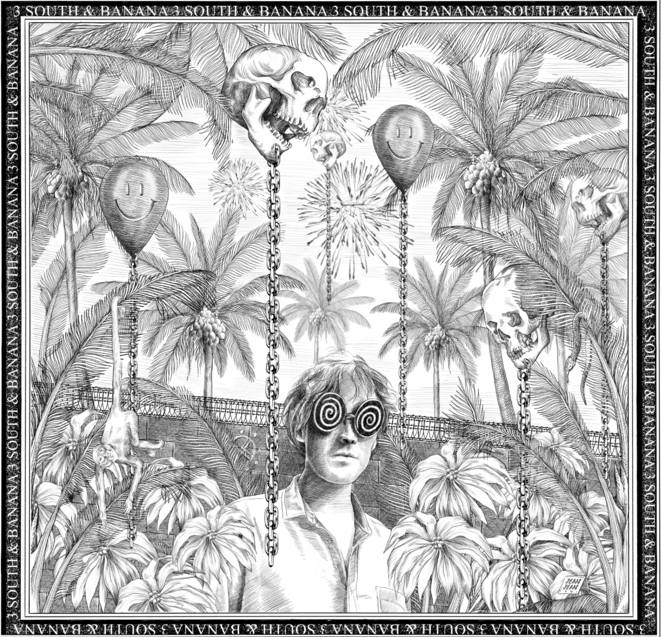
3 South And Banana ‘S/T’
(Some Other Planet)
Bouncing and lolloping onto the psychedelic pop and indie scene like a Francophone Shintaro Sakamoto, Aurélien Bernard brought us a most lightly touched but infectious kaleidoscope jangle of a self-titled debut album this year.
Swapping the drum stool and tenure with the sunny-disposition Vadoinmessico – leaving as the band transitioned into Cairobi – for a polymath solo career, the French born, Berlin-based, Bernard has an idiosyncratic musical style; weaving a cantaloupe gait and a lyrical mix of French and English vocals together in a colourful, often fun, way. Radiant, oceanic, translucent and even cosmic with a Gallic shrug of wistful fatalism, the 3 South & Banana cosmos of rooftop fauna wonderment is a swell place to be in these dark, uncertain times. (Dominic Valvona)
Review In Full
A..
A Journey Of Giraffes ‘Armenia’
(Somewherecold Records)
Seeming to get better with every release, the unassuming maverick ambient and soundscape explorer behind this most picturesque of animalistic monikers, John Lane, has in recent years been highly prolific in churning out the most subtle but deeply effective under-the-radar soundtracks. To be fair it was a toss-up between this, the atavistic Caucasus transverse Armenia, and his “archipelago of the mind” Sunshine Pilgrim Map peregrination: both great albums of ambient and experimental discovery.
Though he couldn’t have foreseen how prescient this part of the world would become in 2020, with an ongoing uneasy truce between modern Armenia and their Azerbaijan neighbours after a recent fight of the disputed Nagorno-Karabakh region, Lane has managed to catch this mysterious land with a 44-track oeuvre of psychogeography, myths, ancient readings and poetry forms. From the air-y and sublime to the more ominous, primal and fraught, minimal evocations sit alongside more churned oblique scrapped moody horrors. Voices from the old religions swirl and echo amongst the hewn stone monuments to Armenia’s ghosts on an outstanding mesmerizing soundtrack of differing stirring soundscapes, traverses, contemplations and ruminations. (DV)
Review In Full
Idris Ackamoor And The Pyramids ‘Shaman!’
(Strut Records)
Serving a worthy musical apprenticeship from and imbued by the masters Coltrane, Rahsaan Roland Kirk and Cecil Taylor, the polymath musician, activist, director of The Pyramids ensemble and torchbearer of spiritual and Afrofuturist jazz, Idris Ackamoor once more makes holy communion with the cradle of civilization on the Egyptology cosmology of conscious political statements, Shaman! Imploring a unified message, a connectivity, a reminder that we can all trace our ancestry back to the same place, Ackamoor follows up on We All Be Africans and the epic sweeping album of Afro-jazz 2-Step “Warrior Dances” and plaintive primal jazz catharsis An Angel Fell, with another masterpiece of the form.
From the burnished Sunbear developing bloodied opus of the Pharaoh Sanders, Brother Ah, Jazz Epistles and Sarah Webster Fabio merging breakout title track to the Afrobeat gospel bolero of ‘Eternity’, an enlightening magical travail of the state of the union is sumptuously paired with the wisdom of the ancients. Narrated and sung howls of anguish are soundtracked and serenaded by a jazz-led voyage of gospel, soul, funk and magic. What an album: an odyssey through the divisive debris of modern America. (DV)
Tony Allen & Hugh Masekela ‘Rejoice’
(World Circuit Records)
Becoming a final bow in the end for both participates in this perfect synergy of Afrojazz, the now late Afrobeat doyen, drummer extraordinaire Tony Allen and his foil trumpet virtuoso, bandleader, activist and South African national treasure, the even later Hugh Masekela, finally got an airing of their 2010 recordings together this year.
With renewed resolution, Allen and producer Nick Gold, with the blessing and participation of Hugh’s estate, unearthed the original tapes and finished recording the album last year at the same London studio where the original sessions had taken place. Allen and Masekela are accompanied on the record by a new generation of well-respected jazz musicians who help lay down a loose Francophone swinging jazz backing to savior: every bit as effortlessly cool, bouncing and smoky as you’d expect. There’s even a nod to Allen’s old bandleader and Afrobeat progenitor Fela Kuti on this smooth bustling, Blue Note in Africa, laidback work of genius.
This album is the sound of two artists in their element, a performance never to be repeated, and sadly one of the final recordings of Allen now. But as the title says: Rejoice! (DV)
Read In Full
Axel Holy ‘WonderWorld’
(Split Prophets)
Given the way Axel Holy’s mind works you just know WonderWorld is gonna turn the distorted, freaky reflections found in the hall of mirrors into reality. This ain’t no Scooby Doo haunted theme park caper: the otherwise Baileys Brown slaloms through the queues of demonic smiles for every ride that’s a trap house of horrors. Knowing he can’t leave anything to chance as to what’s real and what’s a genetically modified mirage, yet well aware that fakes and foes never go into hiding, Holy cocks back and breaks the illusion with all of his sawn-off might, possibly under the influence to heighten the experience. ‘Statement’ induces screams as it goes faster, ‘Let It Go’ does a classic switcheroo of upping the anxiety by withdrawing just a touch, and ‘On The Gram’ craftily dispels social media culture, complete with a chorus simply made for a lip synced reel, though like Brown’s ‘Still Fresh’ from last year, there’s definite loosening up towards the album’s end. Grimy, geared to leave your ears ringing and with fellow misfits Jack Danz and Datkid involved, WonderWorld, as a wise scribe once said, will leave you “Delirious like Eddie Murphy”. (Matt Oliver)
B…
BaBa ZuLa ‘Hayvan Gibi’
(Night Dreamers)
Capturing one of the best performances from the rebellious stalwarts of Anatolian cosmic dub and psych, BaBa ZuLa, the Night Dreamers label’s “direct-to-disc” series proved a congruous creative hothouse for the Istanbul legends.
Fusing the folkloric with solar flares of Krautrock, souk reggae, 60s and 70s Turkish psych and cosmic-blues the rambunctious group come on like a Sublime Porte vision of Can’s Ege Bamyasi and Soundtracks albums, only replacing much of the Teutonic legends setup with more traditional instruments like the “oud” and “saz”: albeit electrified and fuzzed up to the gills.
Recorded before lockdown in the pre-pandemic nightmare, Hayvan Gibi (which means ‘to act with the natural grace of an animal’) includes six almost untethered, unleashed vivid performances from the mavericks. It’s an album that seeks to fulfil the “live” feel and energy that some fans have commented has been lacking on previous studio albums.
A let loose BaBa ZuLa is a most incredible experience; a scuzzed, scuffed, trinket shimmery, rippling and blazing rhythmic energy and dynamism both intense and yet also a mirage of reggae and dub imbued Anatolia mountain gazing. It’s also a reminder of what we’ve been missing in these dragging pandemic restrictive times. (DV)
Read In Full
Bab L’ Bluz ‘Nayda!’
(Real World Records)
The changing (and welcoming it is too) face of Moroccan music, Bab L’ Bluz offers a voice to those previously left marginalized and left out with an electrified and rebellious vision of the country’s Islamic Gnawa dance, music and poetry exaltations; the ululation trills and storytelling of the Mauritania “Griot” tradition; and the popular folk music of Chabbi.
Led by the “guembri” player and leading siren, Yousra Mansou, who has caused quite a reaction for taking up an instrument traditionally the preserve of men in Morocco, they blend Arabian-Africa with a contemporary view of political upheaval and drama in a post Arab-Spring landscape. Reclaiming the heritage but looking forward, the group injects the godly music and romance of Arabian-Africa with a new energy and dynamism. A 21st century blues excursion of dreamy and political vigor. (DV)
Read In Full
Batsauce ‘Helter Skelter’
(Full Plate)
Inevitably beatmakers got busy when it came to making a song and dance out of the pandemic, with Batsauce, the Berlin-based producer and underground stalwart with the all-too-perfect moniker, delivering boom bap bad news from his ‘quarantine beat suite’, Helter Skelter a notable entry in creating a 2020-style instrumental biopic out of a mass of disaster movie samples. From the get-go the assembled cast are under no illusions that a worldwide disease is real and happening – no such silver screen/real world naivety here – starting off slow and tentatively before the fever begins to take hold. Mixing up pensive jazz, soul and psych with drums scooped from the doldrums, twitchy, string-lead horror themes worthy of the album’s title compete with bold flourishes that switch between signifying cometh the hour, cometh the man, and said leading role going in head first without the guarantee of making it back. Crucially the dialogue is strategically placed, never overloaded, so as to let the music really run the narrative of what becomes a titanic struggle, and where tellingly the conclusion throws up some worst case scenarios without completely delivering the Hollywood happy-ever-after. Here’s hoping that Batsauce doesn’t have to have a sequel up his sleeve. (Matt Oliver)
Big Toast & 184 ‘Who Shit In The Sandpit?’
(Revorg)
Not that he needed the trivial matter of 2020 being a complete debacle to fuel his next fed up invective, but Big Toast’s patience reaches dangerously thin levels on this charming titled, eye/nose-gougingly sleeved ode to the money men, privileged elite, ignorant, in-the-flesh stereotypes, Gazza and general ringmasters to the UK circus. Splattered with damning evidence that’s as clear as day but still needs repeating, some might say it’s easy to home on in the obvious targets responsible for the myriad fiascos in these uncertain times. But Toast, eyes rolling to the heavens until his sockets start to fracture, and whose unhurried words mimicking the puppet mastery of those at the lectern, linger like…well, a bad smell, is not the sort of protestor satisfied with just chucking eggs and milkshakes at those who won’t be told. The title track’s lighters-up, all-in-together chorus confirms his man of the people status, and closing track ‘Us/Them’ is a high quality fade to grey conclusion. All to the tune of 184’s claustrophobic, nostalgia-erasing boom bap, equidistant to the edge of doom and foggily attempting a scramble to safety. The fact you can’t help but laugh at such a desperate state of play is an oh-so-British reaction as well. (MO)
Black Josh ‘Mannyfornia’
(Blah)
Bumping beats whiplashed through the windscreen and straight to the point rhymes that are one false look from Falling Down, Black Josh as Manchester’s mayor of Mannyfornia – the “Sweg Lord – you don’t want him living next door” – creates civilisation that avoids the big city of dreams prefix and instantly nails the ain’t-always-what-it-seems kicker instead. Lockdown restrictions get laughed out of town as well, with Metrodome on the electoral boards deconstructing and hotwiring speakers. The likes of ‘Demon’ sees sinkholes open up and swallow all before it, treated by Josh as minor inconvenience – “I’m only living cos I have to” – and the title track is an aggravated state of emergency to endear your neighbours to, like Dizzee Rascal’s ‘Old Skool’ gone rogue “on a highway to Hell, but I’m undertaking”. Wired on substance intake and the need to hit as many killshots as possible, only half-quelled on ‘Smoke’ and ‘Endz’ as the album’s back end begins to conserve energy, Mannyfornia is restless, anti-social and doesn’t play fair, but Josh is not one to change his game just cos circumstances are different. (MO)
Black Taffy ‘Opal Wand’
(Leaving Records)
When filing under hip-hop Opal Wand is the cheat code of this list, particularly when the scope of what is ostensibly an instrumental trap album immediately appears limited. Fear not though – in the hands of Black Taffy aka Dallas alchemist Donovan Jones, Opal Wand perfects the classic axis of massive (and massively rigid) bottom ends, and riffs atop darting like fireflies, unfolding the arms of the screwfaces and feeding them optimism sourced from The Sorcerer’s Apprentice. Subtle vinyl crackle scoring similar Disney-style sources, and sorrowful Eastern Bloc ballets tiptoeing across dark but exotic landscapes, help bring about another educated one-two – that of the album being based on a booming system when the cascades of strings command you to light incense and candles. Jones continues to shift the pre-conceived by blinding you with the fantastical until disquiet begins to percolate in the distance from ‘A Foxes Wedding’. Synth-shone secrets and doubts begin to reveal themselves on the spirit-raising ‘Palms Up’, and when fear of the unknown takes hold, then the basses, still giving nothing away other than fluttering their eyelashes at low-riders, come into their own. With plenty to interpret, let its curiosity consume you on a cold winter’s eve. (MO)
Bloom De Wilde ‘The Heart Shall Be Rewarded By The Universe’
(Self-Release)
If only life could be as wonderfully magical as this album. Bloom De Wilde has an aura about her that emits a certain belief in the beauty of life, with her songs of nature and love she gives one hope in these times of backbiting misery and disease that music and love can be the answer.
Maybe we all need to return to the spiritual freedom of 1967 and not be wrapped up in the junk and social media that clouds up our minds and hearts, for this album casts a mighty spell that is bewitchingly hypnotic, that slowly seeps through the layers of self doubt mistrust and ego and has you smiling again, has you laughing, has you counting your blessings and looking forward to living your life and making the most of it as you only have one life so why not make the most of it. The Heart Shall Be Rewarded By The Universe is one of those rare albums that is made with pure love and should be treated with pure love: a shimmering delight. (Brian ‘Bordello’ Shea)
Read In Full
Brian Bordello ‘The King Of No-Fi’
(Metal Postcard Records)
Oh the irony as Brian Bordello himself picked this one for his choice selection of albums from the year: got to hand it to him, the front of the bloke! But then why not, as it seems nearly all blogs and such are now nothing more than promotional platforms for the advancement of their own writers and clique fan club. For those who aren’t aware, Brian has been contributing to the MC for the last couple of years, so this does seem strange: pop will eat itself and all that. Here though is why you should buy it:
The self-anointed king of no-fi returns with another songbook of quasi-demoed wistful despondency and self-deprecation; a stripped-back one-track display of rough charms that cuts to the heart of the cult St. Helens malcontent’s sardonic, but also extremely vulnerable, annoyances about modern life.
Channeling various maverick troubadours, post-punk poets (Dan Treacy springs to mind) and a Brylcreem of rock ’n’ roll idols (ironically enough the release of this album intentionally fell on the anniversary of the true king, Elvis’ death), Brian postulates on a lack of energy and rage in music, the death of the mutherfucker personalities, a bevy of “scarlet” women and lost innocence. Brian can be a romantic sod at times, even sentimental; writing some real tender poetic lines amongst the scorn and despair, with even a hint of Bacharach on ‘Banana Splits’ (yeah, imagine that!). Various stolen kisses, evocations of less complicated, less divisive magical times permeate the album despite the constant references to the death of this and that and the lamentable resignations and threats to give it all up. Sometimes Brian just tersely pays homage to his icons, such as Lou Reed and Billy Fury. (BBS/DV)
Read In Full
Apollo Brown & Che’ Noir ‘As God Intended’
(Mello Music Group)
The embodiment of up-from-the-bootstraps verve and an advocate of what doesn’t kill making you stronger, Buffalo’s Che’ Noir won’t let anyone or anything get in her way right from the very first bar. Despite the dual billing on As God Intended, this is very much her headline act: Apollo Brown retreats into the role of unspoken mentor, nodding his approval from afar without needing too much to prompt sometimes cold-blooded, always measured actions, just rolling out his usual metronome of warm but wary, street-raised, Detroit soul bumps that have seen it all and done it all before. ‘12 Hours’ is an absolute classic storyteller (no spoilers here), and from finding true financial value (‘Money Orientated’, offset by the pull of ‘Worth Gold’) to how to stand up (‘The Apple’, ‘Freedom’ and its theorem of “what’s worse than being physically dead is mentally dying”) and respecting the architects (‘94’), the ice queen bravado is open to just a hint of vulnerability, so that Noir teeters (‘Daddy’s Girl’ and ‘Winter’ contrast relationship obstacles) but never loses her balance. True grit from a fighter expressing her worth as “just a chick from the ‘hood doing Adele numbers”. (MO)

C….
Lucia Cadotsch ‘Speak Low II’
(We Jazz)
Tripping a light fantastic across a curious and congruous selection of covers and standards, two of We Jazz’s (sort of) house band members, Otis Sandsjo (of Y-OTIS reconstructive hip-hop jazz fame) and Peter Eldh (of the masterful Koma Saxo), once more join forces with the amorphous voiced Lucia Cadotsch to re-shape the unfamiliar familiar under the umbrella of the Berlin-based Swiss singer’s Speak Low Trio. Equally as untethered on a serialism pathway of musical freedom, this broadened set-up that includes both the prestigious ECM label solo pianist Kit Downes and cellist Lucy Railton, meanders, drifts, floats and hovers over a flowing oeuvre of German stage numbers, ancient folk laments, avant-garde troubadour maladies and jazz balladry across a second volume of such loose interpretations.
Songs from artists as diverse as Eno, Duke Ellington, Brecht and Randy Newman are pulled into this beautifully adventurous cosmos. A mirage of bowed, haunted and rasping rhythms and spiraling tonal work Speak Low II is an unburdened songbook of amorphous jazzy reinterpretations that dares to play with the original source material, whilst showcasing the effortlessly gossamer and stretching lush range of Lucia’s magical voice. (DV)
Read In Full
Cambatta ‘LSD: Lunar Solar Duality’
(Mello Music Group)
A dose of ‘LSD’ is perhaps a slight departure for Mello Music Group, who once again have had a calendar year the envy of the hip-hop underground. While Cambatta’s label debut unlocks the power of hallucinogens, the super scientific raised from the sewer breaks down the DNA of life, the universe and everything (the maths behind ‘Nxggxrla Txsla’ and ‘Grand Number TheoRam’ will blow your headphones). His persona is a complex, carnivorously blunt mix of Nostradamus, Mr MFN eXquire and prime era Canibus, street apothecary, religious myth buster and otherworldly being, etched with a grim determination to convince everyone of his gospels, particularly as his backdrop is several hell-like leagues beneath the surface at odds with the radiant sleeve (“only in the midst of chaos am I comfortable”). Entertaining in their encyclopaedic intensity, ‘Fall of Feinix’ is a slow-burning cauldron of drug rage (“my spirit animal is a cold turkey”), and ‘33’ is an exceptional, messianic (and very simply formatted) autobiography, but two ear-openers on an album realigning the sun, moon and stars in a bid you flip your belief system. (MO)
Chouk Bwa & The Ångströmers ‘Vodou Alé’
(Bongo Joe Records)
Like so many others before them, allured to the voodoo hypnotism of the shared Hispaniola Island of Haiti, Belgian production duo The Ångströmers spent a residency immersing and absorbing the local fusion of ‘mizik rasin’, and working with the Gonaïves-borne collective of Chouk Bwa. The results of which prove congruous and electrifying; a synthesis of Soukri voodoo polyrhythms and bassier dub electronica that proves so attuned to both sensibilities and in-sync as to be difficult to separate the natural ritual from the augmented and synthesized.
A primal ceremony of tumbled, fluttered cylindrical rhythms sucked into a vortex of warped dub and ringing oscillations, this union proves just how intoxicating and electrifying the voodoo spell can be. Given a sympathetic undercurrent and resonance of atmospheric electronica, the ritual sound and outpour of Haiti is reframed, guided into the 21st century. Not so much a novel direction as a subtle electronic music boost to tradition. (DV)
Read In Full
COOPS ‘Crimes Against Creation’
(High Focus)
High Focus were found doing High Focus things throughout 2020, making it a tight call on whether to include Light Work by the Duracell-powered creativity of Fliptrix, Onoe Caponoe’s breakneck night terror Invisible War, or The Four Owls’ victorious Nocturnal Instinct (full length review here). Edging past the post is the concise Coops at a skinny eight tracks and twenty five minutes long, that slightly jaded twang between Wretch 32 and Ocean Wisdom both nonchalant and spiteful at once, making him engagingly hard to read between peacekeeping and reacting – at his most relaxed you can still tell that Coops is itching to right wrongs. Holding the streets down under a nice and jazzy shade is producer Talos, who in parallel can turn up the pressure with no discernible tell, hitting the Queensbridge block as Coops knuckles up on the seething ‘Piss Poor’, with a chorus that outdoes any get rich quick-schemers. Picking off opponents with scything simplicity – when annoyed by everyone, Coops calls out all and sundry as per ‘Factory Reared’ passing through a farm for would-be emcees – Crimes is a classy album that won’t wilt in the heat of the moment. (MO)
Julian Cope ‘Self Civil War’
(Head Heritage)
Julian Cope is one of the last living motherfuckers in rock ‘n’ roll. He is the spirit personified. He has the adventure talent and intelligence to realise that music is not just something to hum along to on the radio whilst doing the dishes. He knows that being in a band is not a past time but a crusade; it is a life affirming art force that fires the mind, belly’s and loins of old and young alike, and Self Civil War is his latest quest, his latest crusade.
A man now in his sixties would be expected maybe to put his feet up and look back on the past outpourings of a fine, much underrated back catalogue. But no, Julian goes and makes his best album since Jehovah Kill.
Self Civil War is an album that combines all his musical loves beautifully: Krautrock, Psych, Prog, folk and of course pure undiluted pop. This is an album of pure invention, inspiration and adventure. This is the sound of a whirling dervish sticking his fingers up at the industry, a man who does not have to think outside the box, as he has no box, and hopefully never will have. He is a true one-off and this album is the sound of a true one-off on top of his game. (BBS)
Corticem ‘Planetarium’
(Submarine Broadcasting Company)
Less Holst The Planets magnum opus, more lo fi Krautrock purview of a sinister, mysterious cosmology, beamed from a subterranean bunker in Krakow, Corticem’s Plantetarium dials into the present pandemic dystopia whilst casting a soundtrack of awe at those heavenly bodies. I say from Krakow, and a bunker, but the trio have lost their previous studio/rehearsal space; the loss of which acting as an unfortunate stimulus for the mix of industrial, entrancing, cosmic and experimental exploration on this minor-opus of concentrated malcontent, despondency and rage. Formed by members of the “songs strange and not so-strange” Sawak in the Polish city, Corticem finds the trio of orbital sonic cosmonauts Bogdan Markiewicz, Antonello Perfetto and Greg Nieuwsma looking to escape towards the stars but anchored to the malaise and mounting horrors of terra firma: A world gripped in Covid distress. A liberal dark material contortion of Swans, the faUSt pairing of Jean-Hervé Peron and Zappi Diermeir, Mythos, the satellite refraction broadcasts of Gunther Wusthoff, The Cosmic Range, Itchy-O and Ash Ra Tempel, this caustic and often impending oeuvre offers as dystopian and alarming, alien and otherworldly soundtrack to the end times. What’s not to like. (DV)
Read In Full
Cousin Silas And The Glove Of Bones ‘Kafou In Avalonia’
(Submarine Broadcasting Company)
Reimaging a time when Earth’s landmasses were being reshaped, the atavistic geological inspired futurist dub unit pose a cultural “what if?” with their fourth “set”, Kafou In Avalonia. Wishful dreaming Cousin Silas And The Glove Of Bones picture an alternative reality; one in which Avalonia still existed as a gateway between all Earth’s cultures and peoples. It acts as the crossroads that might have set out an entirely different course for civilization; a more integrated, less fractious one perhaps. In this setting Haitian, Brazilian, Angolan and Nigerian deities, spirits and rituals converge with an experimental soundtrack of post-punk dub, Kosmische and electronica. Invoking a lost world, a quasi-Atlantis, they merge voodoo ceremony and tribal incantation with sonorous throbbing basslines, barracking drums, heavy reverb and craning Manuel Gottsching like guitar. Ancestral ghosts meet synthesized futurism on this mystical transformed aural geography, as recordings of various rituals swirl in and around a cosmic soup. A supernatural and celestial, seeping and vaporous vortex of polygenesis sources are gathered together to create an imaginative cosmology hybrid. If The Future Sound Of London and Ash Ra Tempel recorded an album at Lee Scratch Perry’s black ark studio it might very well have sounded something like this. (DV
Crack Cloud ‘Pain Olympics’
(Meat Machines)
A rambunctious expanded collective of filmmakers, artists, designers, and of course musicians, drawn together through drug addiction, the Vancouver-based Crack Cloud channel recovery through much healthier pursuits; raiding the post-punk and no wave wardrobes to form an ever ambitious agit-art-group of malcontents. Rinsing out both the Arcade Fire and Broken Social Scene along the way, the seven-strong main cohort of this group effort work-in the Gang Of Four, Talking Heads, The Shivers, Officer!, Lydia Lunch, Andy Haas, Pixies and Devo to produce a surprisingly less hostile verdict on the state of the union in 2020.
Pain Olympics is an epic eclectic of torment, frustration and also soaring ethereal voiced scales. The opening diorama ‘Post Truth’ is like a fucked-up, squalid underpass musical on a MGM movie set that moves from a drizzle of industrial Fat White Family post-punk to twinkled These New Puritans dreamy dramatic choral sirens and a performance of electronic Stomp. But changing the makeup, as they do continuously on this album, they go for a creeping merger of La Haine Hip-Hop and Eno on ‘Favour Your Fortune’. All the while the tensions and tawny angulations of PiL, Wire and Crispy Ambulance wane and conspire in the background. Crack Cloud have managed to convey the unease whilst dreaming big on an album I can’t recommend enough. (DV)
The Cult Of Free Love ‘Visions’
(Northern Star Records)
What we have here is the first release from the born again influential underground label Northern Star; a label that released the four CD Psychedelica series of compilations that caught the mood and excitement of the bourgeoning new psychedelic scene of the time. This series of releases influenced many a new band and caught some now very well known and established bands early in their careers. So to kick off the rebirth of the mighty fine label we have the second album from The Cult Of Free Love, and to be honest if this album had been released on the Fruits Der Mer label it would have already sold out and been acclaimed as a modern psychedelic masterpiece. Yes, this album is that good.
Orb like trance and late 80’s acid house mingle with the lost summer of love of ‘67 to weave a spell of blissed out magic. There is no one highlight on Visions as the whole album is one long stream of melody and blissed out splendor. This album I cannot recommend enough to anyone with a love of modern psychedelia or somebody wanting to know what it was like to visit the legendary Hacienda in its pomp: An album to turn this winter of discontent into the third summer of love. (BBS)
D…..
The Dandy’s Boutique ‘Delightful Weirdo’
(Self Release)
I know nothing of The Dandy’s Boutique, an artist I came across being played on the excellent Graham Duff radio show on Totally Radio; the track being the rather wonderful ‘Stay Away’, which has a bass riff and a half part “Girls and Boys”, part grab your handbag put it in the middle of the dancefloor and boogie: Is there anything quite as life affirming as a DIY disco ditty?!
Anyway, ‘Stay Away’ happens to kick off this rather lovely album; an album that combines synth-pop, dance and indie-pop to great effect, and is indeed greatly affecting, especially on the synth ballad ‘Don’t Let Go’. And goes on exploring the virtues of having humour, originality and talent; ‘Pitter Patter’ being a fine instrumental, reminding me what the Great Joe Meek may have done if left alone with a synth for an hour or so. What I like most about this album is the overwhelming atmosphere of melancholy even on the upbeat dance tracks like ‘Passing The Time’. There is a certain feel that I find quite refreshing. I think Dandy’s Boutique might not quite realize how good they actually are, as this is a fine album indeed and people should give it a listen. (BBS)
Read In Full
Miles Davis ‘The Lost Septet’
(Sleepy Night Records)
Those lucky bastards, and I mean the Viennese crowd lucky enough to have experienced this whomping, sleazed, dark and beastly jazz-rock maelstrom from the late great Miles Davis and his Septet troupe, on the night of the 5th November 1971. Of course they didn’t bloody appreciate it, still hung up on old tooting-in-blue Davis, when the maestro had moved on into the well of mental destruction, hauling his crew across Europe in that pivotal year of bad juju.
Capturing the grandee of eclectic jazz futurism and an ark of godly status albums (In A Silent Way, Bitches Brew, Live Evil and Jack Johnson), The Lost Septet (so-called because this magic collection of cats never recorded together in the studio, and so this exists as one of the only testaments to this grouping actually ever happening) simpers, thralls, gushes and boogies in that trumpet genius’s famous “rock phase”. The enviable lineup of Keith Jarrett, Gary Bartz, Michael Henderson, Ndugu Leon Chancler, Charles Don Alias and James Mtume Foreman prowl, skulk, whelp and burble through the riffed-on material, pushing jazz into hard psychedelic heavy rock. Davis’s pal-up with Hendrix was proving a serious influence, and you can hear that throughout this deeply challenging live opus.
From cathouse salacious slinking ‘Honky Tonk’ to a Shamanistic sledge ride through the Ghetto styling of ‘What I Say’, and the sumptuous laidback funk sucker ‘It’s About That Time’, you’d be hard pressed to find anyone sounding this fucking great and dangerously brooding in 2020. Hence why despite being fifty years old, it is still one of the best things you can hope to hear this whole year. Thank Christ it has been saved from bootleg rarity to a proper release in the year of pandemic. (DV)
Dean & Britta ‘Quarantine Tapes’
(Double Feature Records)
Thank god for the diaphanous, hushed pairing of Luna band mates Britta Philips and Dean Wareham (also formerly of Galaxie 500 fame) to lift spirits and offer a hymnal communal in times of anxious uncertainty. The aptly named Quarantine Tapes is made up of cover versions recorded during the first wave of lockdown, some in the home studio, others taken direct from livestream performances.
It helps that the material is so damn good in the first place, yet the duo’s languid and hauntingly beautiful Lee Hazelwood trademark sound gives a certain translucent and touching quality to songs from acts as diverse as Kraftwerk, The Clash and the late (sadly passing away only this year in March) no wave disco icon Christine. Maybe as a gesture to another unfortunate loss this year (Florian Schneider) they perform a magical, advent version of the candescent Kraftwerk hymn ‘Neonlicht’ (or ‘Neon Lights’) that is just lovely. Elsewhere they give The Bee Gees plaintive ‘Massachusettes’ a touch of Laurel Canyon, and perform a languorous cover of Bardo Pond’s ethereal elegy opus ‘Ride Into The Sun’.
Capturing the current mood music well, the lockdown duo offers a most disarming and quite affair of the heart in mentally fatiguing and depressing times. (DV)
Die Wilde Jagd ‘Haut’
(Bureau B)
Birthed into another chthonian landscape of incipient stirrings, Sebastian Lee Philipp’s third such ambitious experimental suite continues where the previous eerie 2018 LP, Uhrwald Orange, left off: Lurking, stalking and disappearing into a recondite mystery of esoteric electronica and Techno. Earthy then, with evocations of a wild, veiled terrain populated by the whispering bewitched, strange rituals and metaphysical forces, Haut is a brilliantly realized slow-burning expansive supernatural soundtrack imbued with elements of Krautrock, Kosmische, the psychedelic, avant-garde, industrial and atavistic.
Once more joined by co-producer foil Ralf Beck and live performance drummer Ran Levari, Die Wilde Jagd’s instigator songwriter/producer channels notions of memory, premonition and birth into a filmic quartet of drawn-out chapters.
It’s certainly an imaginative world that awaits the listener on this third grandiose experiment. One that takes a breather, holding back on the beats and kicks for a more expansive and creeping sound production; those anticipated reveals kept on a tight rein. A sign of real quality and patience, Haut marks both a continuation but slight change in the dynamics as Philipp and Beck further erode and stretch the perimeters of Techno and electronic music. (DV)
The Dupont Circles ‘In Search of the Family Gredunza’
(Beautiful Music Records)
The combination of the majestic jangle of c86 and Beatle boots is and can be a thing of great beauty, especially when it is performed with the vigour and enthusiasm that the – near legendary in some circles – cult band The Dupont Circles gives it. A debut album that has taken 30 years to arrive and now brought to us by the beautiful in name and beautiful in nature and music Beautiful Music Records label.
The Dupont Circles love a good melody and a witty lyric and a 60s garage rock guitar riff: the track ‘Tick Tock’ wouldn’t sound out of a place on a Rubbles comp; a rather marvellous adventure of a track as is the psych tinged Joe Meek like following instrumental, ‘Sputnik’. My Personal favourite track on this album though is the wonderful Television Personalities like ‘53 Bicycles’ – there is also a cover of the TP’S ‘How I Learned To Love The Bomb’. This album is a joyful romp through the magical world of The Dupont Circles; a world where the guitar and Farisa organ is king and the national anthem alternates between “My Generation” and “I Know Where Syd Barrett Lives”. A rather marvellous land I want to move to immediately. (BBS)
Bob Dylan ‘Rough And Rowdy Ways’
(Columbia)
Greyhound bus philosopher, medicine show huckster and Boomer Bible troubadour wanderer, Dylan performs another one of his grand illusions in encompassing a whole generational epoch on his latest songbook. Perhaps among his best work in decades, the “Rough And Rowdy” sagacious chapter in a nigh sixty-year career manages to be both elegiac and playful in equal measures; cramming in every kind of reference point, from historical characters to pop culture and the travails of the Kennedys and their aspirations on the epic eulogy finale ‘Murder Most Foul’: A death knell bookend to the previous fifty years of a dominant America that marks perhaps the failures of a whole generation.
He’s Anne Frank, Indiana Jones and then some (names in lyrics that should elicit groans but somehow don’t sound glib and ridiculous) on an album that’s impact can be measured in swigs from a bottle of fine red wine. A humbled legend accompanied by the subtlest, thinnest of brushed drum shuffles, Hawaiian bowed and bluesy guitar, this is a relaxed Dylan, custodian of the faith, raunchy and statesman like yet juggling resignation with serenaded romance, reverence and death. ‘My Own Version Of You’ runs through a lyrical rasp of persecution, slavery and ideals turned murderous (From Troy to The Crusades to Marx), whilst the hymnal lulled and cooed soothing gospel ‘I’ve Made Up My Mind To Give Myself To You’ sounds like a genuine token of faith and spiritual willingness. Dylan is almost handing down the baton to the sisterhood on the beautiful saving grace attempt at a spiritual anthem on ‘Mother Of Muses’. Yet Dylan strikes up some of that down ’n’ dirty earthy electrified blues, on the homage to the power of the tragic turned-on blues progenitor Jimmy Reed and his influence.
From Elm Street to the Aquarian Age, and across the Rubicon, Dylan seems as weary as he is unapologetic and nostalgic; dragging that (nearly) 80 year old timbre and soul through the mire to once more offer a grizzled but not yet finished Boomer commentary on our sorry arses. This is the record we deserved and needed, as Dylan proves to be a godsend. Yes it’s nostalgic, and there isn’t any pinning of virtues to any particular political angst, but Dylan isn’t going to make it easy for you. A great work of art that just keeps giving. (DV)
E……
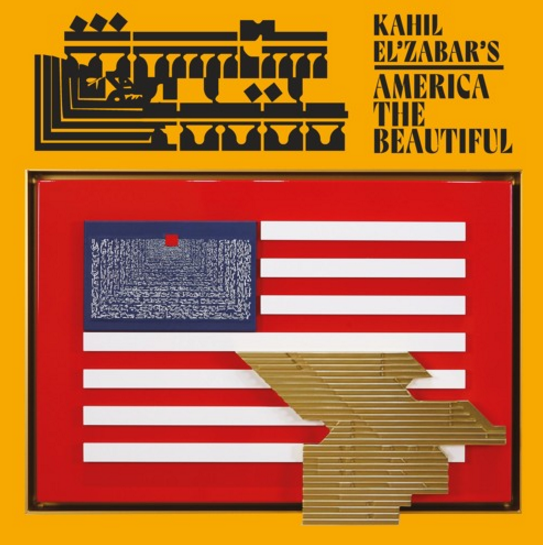
Kahil El’Zabar ‘Spirit Groove Ft. David Murray’ & ‘America The Beautiful’
(Spiritmuse)
Continuing a creative partnership with the Spiritmuse label, Chicago jazz luminary Kahil El’Zabar has released two essential ambitious sweeping titles in 2020; working yet again with an ever changing lineup of fellow visionaries and rising virtuosos from his home city and beyond. The first of which is the Spirit Groove album collaboration with David Murray, the second, America The Beautiful, sees the School of The Association for Advancement of Creative Musicians alumni and five decade jazz veteran piece together a suitable afflatus cry from the despair of modern America.
Spirit Groove, sees a reconnection, a spiritual bound between the Chicago jazz drumming and percussionist doyen El’ Zabar and his tenor sax and bass clarinet maestro foil Murray. Quenching the soul with that “spiritual groove”, they’ve laid down a both swinging and mesmeric alternative jazz service of mediation but also, and above all, they push for a positive change in the most inflamed and dangerous of times. El’ Zabar’s atavistic with a modern pulse soul and jazz experiments are coupled with Murray’s untethered long and short breath saxophone contortions on an album of new, specially written material and expansions of compositions from the back catalogue.
The second title sees him build a fully realized album around the aggrandized anthem, America The Beautiful. An extraordinary portrait of the current mood, El’ Zabar’s conscious divine spiritual jazz opus channels the contorted soul of Chicago’s rich musical heritage; spanning eras as old as ancient Africa, the be-bop, swing eras, leaping through the avant-garde and 80s dance music culture to create a soulful and always grooving purview of the American social-political divide in 2020: Election year. From Coltrane to Bernstein, primitive Chicago House to Charles Wright & The Watts 103rd Street Rhythm Band, this is an expansive dig into the soul, heart and health of a nation in divisive turmoil: A healing process in fact.
Both albums offer a congruous communion of transformative, essential jazz, just when we needed it. (DV)
Extradition Order ‘American Prometheus’
(Blang/Gare du Nord/HLP19/I Blame/Jezus Factory)
Willed on by a whole quintet of labels, the first album in a good few years from the excitable and soulful no wave Warrington troupe Extradition Order is a poignant return to the American history books. Dedicated in part to founding member Nick Boardman who passed away in 2018 (his legacy permeates this album, whether as a guiding influence or through his bass hooks and singing), the Order’s vessel this time around is “the destroyer of worlds”, polyglot genius behind the fateful A-bomb Manhattan Project, J. Robert Oppenheimer.
Taking the album’s title from the Oppenheimer biography of the same name, American Prometheus is a guide to a visceral concept of the lamentable, profane and hysterical. Just as the band did with their both pining and erratic opus to the Kennedy dynasty (on the 2015 Kennedy LP), the extended cast of unfortunate and listless wives, lovers, set adrift family members, rivals and enablers are given a voice in the linear story of this incredible scientist; one who, as it turns out, had quite the checkered and controversial life story. With colliery soul requiems, prowling hints of Blurt, cheerleader Grease rah-rah and bursts of My Life Story, The Pop Group, Style Council and The Mekons, Extradition Order find parallels in 2020 by blowing open the myths and dramas behind the conflicted Oppenheimer: warts and all. American Prometheus is another mini triumph from a band that manages to bridge the fury and wrath of punk with the contorting squawks and funk of no wave and the brassy heralded romantic yearns of northern soul: good going guys. (DV)
Read In Full
Hi, my name is Dominic Valvona and I’m the Founder of the music/culture blog monolithcocktail.com For the last ten years I’ve featured and supported music, musicians and labels we love across genres from around the world that we think you’ll want to know about. No content on the site is paid for or sponsored and we only feature artists we have genuine respect for /love. If you enjoy our reviews (and we often write long, thoughtful ones), found a new artist you admire or if we have featured you or artists you represent and would like to buy us a coffee at https://ko-fi.com/monolithcocktail to say cheers for spreading the word, then that would be much appreciated.
 Monolith Cocktail Blog