THE MONTHLY DIGEST OF ACCUMULATED NEW MUSIC, THE SOCIAL INTER-GENERATIONAL/ECLECTIC AND ANNIVERSARY ALBUMS CELEBRATING PLAYLIST, AND ARCHIVE MATERIAL CHOSEN BY DOMINIC VALVONA

Continuing a series that started in 2023, the Digest is my one-stop column of the new and the old; a secondary home to all those releases I missed out on or didn’t get room to feature in either my Perusal reviews features or singular Our Daily Bread posts, plus a chance to celebrate timely anniversary albums and dip into my own record collection with the a special anything goes playlist, and to, finally, dip into the Monolith Cocktail Archives.
The New: this will be a briefing of a sort, with a short outline, thoughts and reactions to a number of recent albums from my inbox – currently a 1000+ releases a month on average!
The Social Playlist: choice music collected from across the ages, borders and genres, with a smattering of tracks from choice anniversary celebrating albums of worth and cult status. Consider it my unofficial radio show. The Archives: self-explanatory, but each month I chose past pieces from the extensive Monolith Cocktail back pages that have a timely ring to them.
___/NEW\___
Mohammad Syfkhan ‘I Am Kurdish’
(Nyahh)
To do justice to the backstory (one that’s filled with tragedy and yet musically inspiring) of the Syrian-Kurdish surgical nurse and musician-artist Mohammad Syfkhan, I’d need far more room. But in brief, the heralded ‘bouzouki’ (a round bodied, with flat top, long-necked lute with resonating and sharp metal strings strummed and picked with a plectrum, that was brought to Greece from Anatolian refugees) maestro and singer was forced to abandon his family’s home in the city of Raqqa during the senseless apocalyptic Syrian civil war. As various fractions fought against the Assad regime, Islamist’s most feared and brutal cult, ISIS, swooped in and proclaimed that atavistic Euphrates located city their capital: the centre of operations and a new sickening, destructive caliphate. As a minority Kurd, Syfkhan was already in danger, but when one of his son’s was murdered by the terror group, they had to join the growing diaspora of Syrians fleeing the country and region to escape persecution (by not only ISIS but Assad too); splitting the family between Germany and Ireland, where Syfkhan, his wife and young daughter were kindly taken in.
Poured into his debut album (although he started his own band The Al-Rabie Band decades ago back in Syria; and a very popular, sought-after troupe they were too) that loss and upheaval is balanced with certain joyous and romantic gusto. Longing for home mostly certainly, and yet making a new life in his adopted Leitrim sanctuary on the River Shannon; in the moment, spreading the traditional and more contemporary music of his Kurdish and Syrian roots whilst also collaborating with those native musicians and those that have also made that same Irish village their home too (including on this stunning album the composer, improviser, sound artist and saxophonist Cathal Roche, and the composer, improviser and cellist Eimear Reidy).
Like a ascending stairway, or flowing and resonating with evocative melodies magic, lute stirring ruminations sweep over Arabia and surrounding regions; referencing anonymous, collective and some original-penned compositions and dances to Islam’s ‘golden age’ of fairytale (‘A Thousand And One Nights’), Kurdish pride in the face of repression (the title-track of course) and its peoples’ struggle for independence and respect (‘Do Not Bow’), lovelorn enquires (‘Do You Have A Lover Or Not?’), and the missed daily activities, interactions of life back home in Raqqa Across it all the hand drums tab, rattle and roll; the cello arches, weeps and bows in sympathy; and the bouzouki lute swoons and rings out the most nimble and beautiful of ached and more up-tempo giddy tunes. There’s a real weight and energy at times, balanced out with slower emotional reflections; but when they go, they go! All the while you can trace the lineage, the scope of the sound back to the Middle East, to old Anatolia, more modern Turkey, and even the Hellenic; and from weddings parties to the courtly, to the caravan trails and souk. I couldn’t recommend this album enough; already sitting as it does in my favourite choice releases of 2024.
epic45 ‘You’ll Only See Us When The Light Has Gone’
(Wayside And Woodland)
With enervated and evaporated applied washes, and drifting along with a certain despondency, Ben Holton and Rob Glover’s long-running – but due to circumstances beyond their control, interrupted – epic45 project finds much to cover; from Brexit to the lunacy of the housing ladder; the parental cliques of the school gates to the death-by-a-thousands-cuts decline of England’s rural and seaside towns.
Already, unbelievably, four years since the last album (finding a favourable audience at this blog) Cropping The Aftermath (released during the height, more or less, of the Covid pandemic), You’ll Only See Us When The Light Has Gone arrives in the wake of setbacks – from the repercussions of both Brexit and Covid on touring (with the band’s Japanese tour cancelled, but also, Europe for us Brits, no longer part of the free-movement agreement, becoming a major pain-in-the-arse to circumnavigate) – to the on-going issues of Holton’s severe back problems.
But persist they did, and went away to produce this idiosyncratic take on the modern life is rubbish (and expensive) idiom. This is a resigned but rallying push back against life in, what they call, the ‘edgleland’, the ‘nowhere places’; pushed out onto the peripherals of society and inclusion. The very English preoccupations of owning a home permeate, from the ill-planned ‘floodplain’ sites that many are forced to accept, to the grander housing development promises of ‘stepping stones to country homes’. But this is a wider statement on a nation in crisis, and the pressures of keeping heads and minds above the crushing effects of unceasing disillusion; ‘dignity’ in the face of narcissistic cultural and political vacuous, the cost of living and bad health.
A very different record from its predecessor, Holton and Glover bring songwriting and vocals to the forefront; from the near forlorn shoegaze-y and woe of late 80s and early 90s indie, to what I can only describe as higher scale soulful indie and more modern effected R&B aches. But the music hasn’t exactly taken a back seat, with vapours of ‘Oh So’ period Charlatans, Neon Neon, Seefeel and The Last Sound, touches of soft power rock from the 80s and 70s, and the appearance of their former live, and My Autumn Empire, drummer Mike Rowley powering the breaks with evocations of Bloc Party at their most subdued and building a soft momentum when the drive is needed to escape the wispy drifting. Within that framework there are other nice little touches too: the glimpse of surface, environmental ambience and dialed-out conversations, a touch of folksy Iberia guitar here and there, and veil-like chime of the celeste.
epic45 somehow manage to retrieve hope and possibility from the ether of debilitating tiredness on an album that sees them move in more melodious and vocalised direction.
Boštjan Simon ‘Fermented Reality’
(Nature Scene)
Glitches in the cerebral; a coming to terms with the current age of high anxiety and alternative realities of a world in turmoil and flux; the debut solo turn from the Slovenian saxophonist and various electronic apparatus experimentalist Boštjan Simon puts the former instrument through a process of external effects to sound a surprisingly rhythmic vision of explorative jazz, broken beats, breakbeats, library music, kosmische and fourth world music.
Regular readers of the blog might recognize the name as part of the Slovenian trio of Etceteral, but Simon’s CV and involvement also runs to the groups Velkro and Trus!, plus a duo with the percussionist Zlatko Kaučuč. But now, stepping out on his own, he creates a soundboard and environment from a modified sax fitted with sensors to enable the triggering of oscillators in a modular system setup, using a new experimental interactive module called Octosense.
The results of which combine abstract blows, holds and wanes with more melodic and fluty vapours of sax, and Eastern German space programme oscillations with primal lunar bobbles and Asmus Tietchens popcorn. Taking the Jazz Messenger Jackie Mclean’s famous “saxophone is a drum” as a prompt, that instrument is reshaped in the style of Alex Roth and Andy Haas to explore new quadrants and feels of the keen and untethered: remarkably very melodious and tuneful in places, with some beats sounding like Madlib or Farhot at the helm. You can add Thomas De Pourquery to that list of reference points, but also Frédéric D. Oberland, Otis Sandsjö, Laurence Vaney, Joe Meek, Bernard Estardy (the last three in relation to the more playful, retro sounding bobbly liquids and satellite communication moments) and, on the near new age disorientated dance of ‘Gmnoe’, Ariel Kalma. That should be enough to go on for now. A solid, or not so solid but more open-ended and explorative, start to the solo career, Fermented Reality is a unique album of saxophone evocations and environmental probes.
Poppy H ‘Grave Era’
(Cruel Nature Records)
Zombie medication, zombie blades, zombie government: what a world to be dragged into. As the always awake screen lights up another terrible, distressing notification, or yet another crisis to weigh on the mind, the multi-instrumentalist, field recordist and producer Poppy H holds a phone up to society and openly records the decay, the innocuous and fleeting interactions of a world on standby as Rome burns to the ground all around them. Coping for many – and it’s neither their fault nor ours – is to keep keeping on with the daily grind; the one highlight of the day, picking up that mundane “flat white”.
All the commonality and evaporated stains of modern Britain are played out across a simultaneously creepy, lo fi bucolic, planetary, industrial and Fortean soundscape of café orders, snippets of conversations and crackles of interference. The Grave Era is certainly haunting and gray at times, and yet has a sort of reverberation of Andrew Wasylyk and the Cold Spells’ hallucinatory pastoral rusty piano, and a dreamy filter of piped church organ music – there’s even a sort of spell of what sound like the courtly music of Medieval or Tudor England at one point. For the most part, this is an album of chemical and more obscure prompts; a window in on the radioactive, plastic and technological flitching and glitch fabric of a fucked-up culture in turmoil and decline, yet far too inoculated through drugs (both the legal and illegal kinds) and the social media validation cult to face it or indeed change it. The sounds, production and vapours, visitations reminded me in equal parts throughout of the Sone Institute, Belbury Poly, Walter Smetek, Fiocz and Boards Of Canada, but go far further outside this country’s borders on tracks like the drifted passing melodious ‘Shaid & Irfan’, which could be a recording, as the traffic and daily business of others carries on in the foreground and background, of musicians from anywhere in North Africa, the Middle East, Afghanistan or Pakistan.
A country haunting itself, this is England in the dying embers of climatic, societal and political change; scored by a unique theme of recordings that masterfully encompass the erosion of action, living and hope in the “grave era”.
Meiko Kaji ‘Gincho Wataridori’
(WEWANTSOUNDS) 23rd February 2024
Heralding the transition of the cult Japanese actress-singer Meiko Kaji’s move to recording artist in the early 1970s, the vinyl specialists at WEWANTSOUND, in partnership with Teichiku Records, continue to reissue the leading star of B-movie and “ero guro” movie franchises’ back catalogue of influential albums. Following in the wake of last year’s Hajiki Uta LP, and reissued for the very first time, Tarantino’s crush (no Kill Bill’s bride without Kaji’s groundwork as the avenging Lady Snowblood; one of her most iconic roles) and untold influence for many over the decades, the star of many infamous Japanese schlock and brutal revenger horrors and violent killings sprees’ debut LP, Gincho Wataridori is up next in the roster.
Originally coaxed into the studio environment to sing the songs that would appear in and accompany a list of movie franchises (from Female Prisoner Scorpion to Blind Woman’s Curse and Stray Cat/Alleycat Rock), Kaji’s songbook repertoire expanded to include the Enka (a performative traditional form that often carried masked messages of political texts, later on, stylized with modern pop sensibilities in the post-war period), psych rock and Kayokyoku (a Japanese pop style with simple melodies and lyrics easy to play and sing along to).
The first of five albums recorded between 1972 and 1974 for Teichiku, the inaugural songbook in this run features a quartet of softly lush and Vaseline camera smeared dramatic fatale yearns and spindled, gently mallet(ed) funk-whacker and tremolo fuzzed dramas from both the Wandering Ginza Butterfly and Blind Woman’s Curse films – both Yakuza and Bōsōzoku themed revenge twists on the genre. The rest of the songs comprise of signature Oriental riffs on Axelrod, Bacharach, 60s French and Italian pop sirens and smoky cocktail cabaret jazz. Keji’s accompaniments are masterful, if light, and do the trick as her alluring, coquettish and often longed vocals rise to the occasion. Sven Wunder seems to make a Mosaic out of it, and a multitude of Hip-Hop artists have sampled it, but Gincho Wataridori remains a cult album ripe for reevaluation and attention.
Ap Ducal ‘U’
(Weisskalt Records)
Visioning a saturated spectral display of waveforms, moving bass lines and acid turned dials Camilo Palma (under his twelve year running project alter ego Ap Ducal) manages to blend kosmische and early synthesizer music with the German New Wave and post-punk genres, and various other cosmic electronics on his new succinct, minimalist entitled album U.
Collaborating with the Chilean musician Sebastián Román (otherwise known as Persona RS), Palma unites two sounds, two crafts to a fizzled, metallic filament cold wave soundtrack that moves between soft deep curves on the radar to the motorik and interstellar. Amongst the analogue electronics, the synthesized algorithms, the oft four-to-the-floor beat, and the paddled, rotor-bladed and tubular rhythms there’s echoes of Bernard Szajner, Sky Records, Heiko Maiko, Ulrich Schnauss, Michael Rothar, Eat Lights Become Lights, Basic Channel and Leonidas. ‘UUUU’ is a little different however: reminding me a bit of a Goblin Italo-Giallo horror soundtrack merged with the icy distillations and peregrinations of Edgar Froese; a bit of mystique, the occult and cold airy vacuums folded within the cold wave calculations.
Cosmic Couriers of a kind, the sonic partners on this forward propulsion make kosmiche and krautrock influences dance to a filter of tape music and minimalist techno. I’d say it was a successful conversion of all those inspirations/influences; making for a roaming and hypnotic experience.
____//THE SOCIAL VOLUME 83\\____
Continuing with the decade-long Social – originally a DJ club night I’d pick up at different times over the past 20 plus years, and also a café residency from 2012 to 2014 – playlist, each month I literally chose the records that celebrate anniversary albums, those that I’d love to hear on the radio waves or DJs play once and while, and those records that pay a homage and respect to those artists we’ve lost in the last month.
February has been a harsh harbinger of death, taking away from us both the mushroom incantation haiku experimental artist Damo Suzuki and motor city muthafucking jam kicking guitar-slinger antagonist Wayne Kramer. As a front man of a sort for Can during perhaps their most creatively fertile and influential period, from Soundtracks through to the Future Days opus, Suzuki also fronted numerous collaborative projects, his own “network” and “band”, whilst also knocking about with the post-punk-kruatrock legends Dunkelziffer. Tracks from more or less all of these ensembles appear here, alongside a couple of homages to the former MC5 rebel Kramer – ‘Ramblin’ Rose’ from the defining live rallying call for a generation Molotov Kick Out The Jams, something from his Citizen Wayne solo affair, and, just to be different, a track from his drug-addled hangout with Johnny Thunders, ‘They Harder They Come’.
Anniversary spots this month are taken up with covers of songs from Bob Dylan’s 1964 LP, The Times They Are A-Changin’, something off Amon Duul II’s less than celebrated, but much loved by me, Hijack LP from ’74, and tracks from Aretha Franklin’s Let Me In Your Life (50 this month), Mick Ronson’s Slaughter On 10th Avenue (another 50th celebration), Tangerine Dream’s Phaedra (see my archive piece below), Julian Cope’s Fried (40), Pavement’s Crooked Rain, Crooked Rain (30) and Down South’s Lost In Brooklyn (also 30 this month).
Scattered throughout are tracks I just love or dig from across the spectrum of time and genres, and, just recently loaded up onto streaming services and let out of the vaults, the title-track performance from the goddess of sublime mediative vibrations, Alice Coltrane’s Shiva-Loka Live album.
Tracks In Full:::::
Damo Suzuki ‘Wildschweinbraten (Single)’
Amon Duul II ‘Mirror’
Omar Rodriguez-Lopez and Damo Suzuki ‘Please Heat This Eventually Pt. III’
Wayne Kramer ‘Stranger In The House’
Hunger ‘Portland 69’
Aretha Franklin ‘Let Me In Your Life’
Damo Suzuki’s Network ‘Manager Cinderella’
CAN ‘Moonshake’
CAN ‘Don’t Turn The Light On, Leave Me Alone’
Johnny Thunders & Wayne Kramer ‘The Harder They Come’
Pavement ‘Elevate Me Later’
Dunkelziffer ‘Network’
Odetta ‘The Times They Are A-Changin’
Down South ‘Sitting Here’
Julian Cope ‘Me Singing’
Matt Donovan ‘Black Crow’
MC5 ‘Ramblin’ Rose’
Supersister ‘She Was Naked’
Mick Ronson ‘Growing Up And I’m Fine’
Billy Childish ‘Ballad Of Hollis Brown’
The Yankee Dollar ‘Live & Let Live’
Alice Coltrane ‘Shiva-Loka (Live)’
Tangerine Dream ‘Movements Of A Visionary’
Lee Hutzulak ‘Behind The Singing Bush’
Limber Limbs ‘Golden Rust’
James Quell ‘The World Got Taken Over By Billionaire Scum’
Arti & Mestieri ‘Saper Sentire’
PTC ‘Freestyle Na Vrtaci’
CIX ‘Clitor’s Eye’
CAN ‘I’m So Green’
____///ARCHIVES\\\____
Tangerine Dream ‘Phaedra’ Reaches 50 (From my original piece for the now sadly defunct London electronic music and architectural journal Vessel, nearly 14 years ago)
Phaedra the tragic mythological love-torn, and cursed wife of Theseus has lent herself to many plays, poetic prose, operas and even an asteroid. This rebuked siren from Greek tragedy is immortalised for a new epoch as part of the West Berlin synthesizer group’s re-textured sweeping experiments. Covering the entirety of side one, on this their first LP for Virgin, Phaedra is like an acid-trance choral eulogy of incipient multilayer motifs and arpeggiator modulations. The sounds of a ghost ship’s switchboard interlaced with twisting metallic reverb both gravitate and loom over a meandering pan-European work-out on this improvised track, which unintentionally, but rather pleasingly and to great effect, fluctuated in tone and tempo-atmospheric changes that played havoc with the analog equipment. Edgar Froese and his ever-rotating line-up of fellow freethinking cohorts had moved on from their so-called ‘Pink Period’ on the German Ohr label, to a more transcendental and ambient approach on the burgeoning Virgin imprint. Phase three in the Tangerine Dream life cycle saw them showered with, almost, unlimited funds and full use of the famous Virgin Manor Studios in Oxford – where fellow compatriots Faust recorded their IV album, a few months before. Flanking Froese on this adventure were the ex-Agitation Free drummer Chris Franke, and Peter Baumann; who’d already left the trio once before, returning just in time to record this musical suite.
Phaedra would be an album of firsts for the band with the introduction and use of sequencers and the MOOG. Franke would adopt DR. Robert Moog’s invention as a substitute to the bass guitar on the visionary soundscape ‘Mysterious Semblance At The Stand Of Nightmares’ – surely the catalyst and influence behind Bowie’s ‘Warszawa’. The polyphonic Mellotron, used to elegiac effect on the very same track, is tenderly coaxed and teased by Froese, whilst the VCS 3′s battleship pin board decked oscillation generator glides and bubbles throughout the four musical vistas of heavenly orchestrated electronica. Baumann explores the use of tape-echo and filtered effected flute on his own paean composed passage, ‘Sequent C’; a short wistful and haunting soundtrack to some imagined eastern elegy.
Released simultaneously in both Germany and the UK on the cusp of 1974, this album more than any ever by the Dream team cemented their reputation. With scant publicity and sporadic underground radio play, it sold in excess of 100,000 copies overseas and entered the top twenty album charts in Blighty, changing the fortunes of the Virgin label forever. However these prophets failed to drum-up the same exultation and adulation back in their homeland, barely shifting 6,000 records. Considered a sea-change in style and dynamics; a marked departure from their classic ‘Alpha Centauri’, this New Age themed cantata pitches itself somewhere between pantheism, mythology and a nebula traversing flight.
A February Digest: Siavash Amini, Kalia Vandever, John Howard, Stella Chiweshe, Popol Vuh, Kahil El’Zabar Ethnic Heritage Ensemble…
February 3, 2023
New Music on our radar, news and archive spots
Dominic Valvona
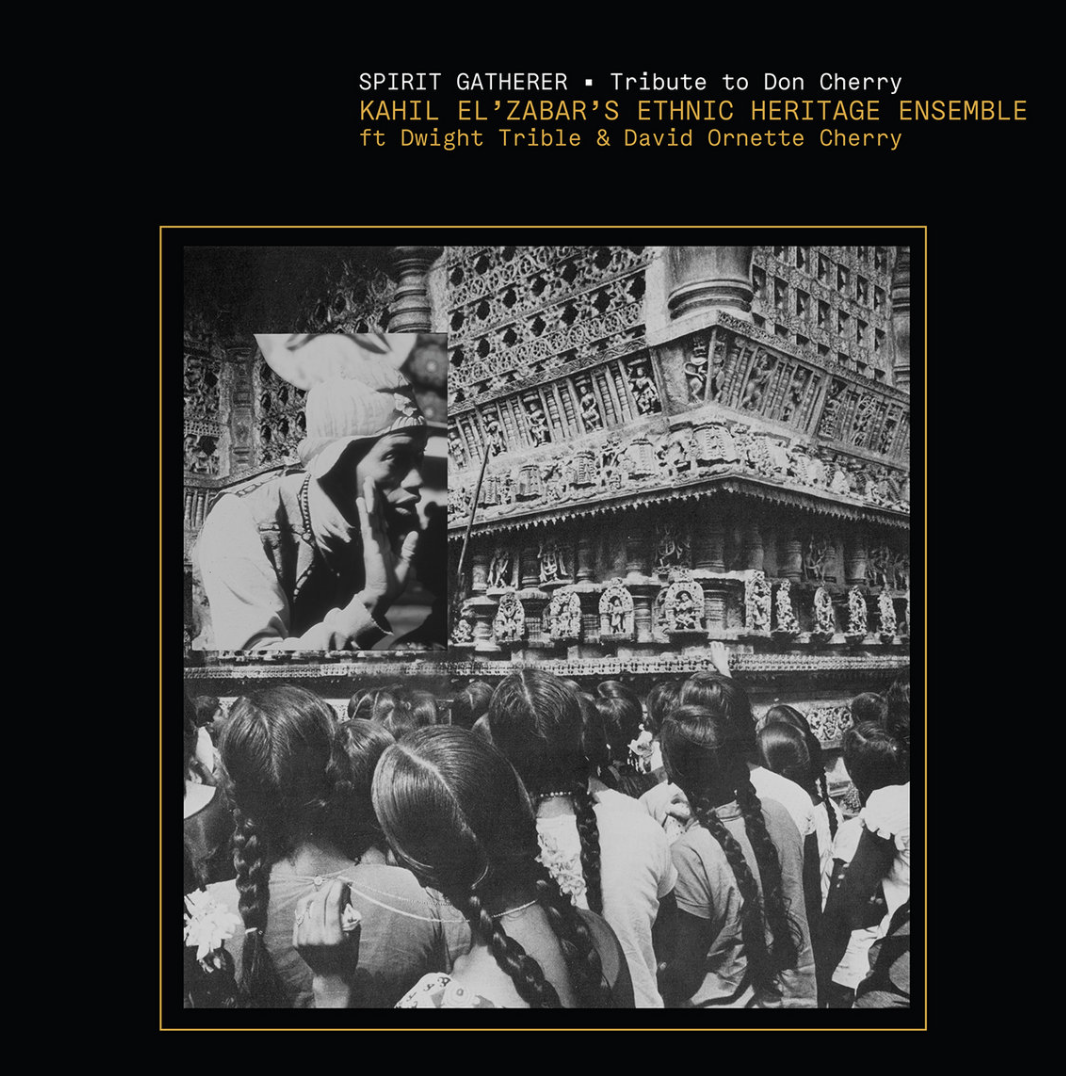
A new thread, feed for 2023, the Digest pulls together tracks, videos and snippets of new music plus significant archival material and anniversary celebrating albums or artists. In the February edition we draw your attention to the upcoming album from the Chicago jazz luminary Kahil El’Zabar and his Ethnic Heritage Ensemble with a live recorded performance of the Pharoah’s ‘Harvist Time’, Brooklyn-based trombonist, composer quartet leader and soloist performer Kalia Vandever manages to make her instrument sing a nuzzled bluesy song of longing and thoughtfulness on his newest tune ‘Temper The Wound’, and the avant-garde Iranian composer Siavash Amini creates a fully immersive, drawn-in electroacoustic suite for State51 Conspiracy’s instigated Singularity Series. In the Archive sections we have tributes to both Tom Verlaine and Stella Chiweshe, look at the re-release of John Howard’s Cut The Wire album on vinyl, and celebrate the 50th anniversary of Popol Vuh’s Seligpreisung LP.
THE NEW
Kahil El’Zabar Ethnic Heritage Ensemble ‘Harvest Time’
(Spiritmuse Records) Youtube Now
Partly as a tribute to and marking the late David Ornate Cherry’s last ever project, the Chicago jazz maestro, percussionist, and band leader Kahil El’Zabar and his ensemble reimagine the late Pharoah Sanders’ spiritually shimmered ‘Harvest Time’, as part of the upcoming Spirit Gatherer • Tribute to Don Cherry opus on Spiritmuse Records.
A celebration, a homage to two icons of the avant-garde and worldly jazz scenes, this album is dedicated to both riffs on such icons as the Pharoah and David’s late, great luminary father Don Cherry. Sadly both the Pharoah and David passed away late last year, David just as he was collaborating, partnering with Kahil on this new record. You can however catch David playing the piano on this video live version of that reinterpretation-in-their-own-image performance, together with Kahil on balafon, Dwight Trible giving divine voice and the pairing of Alex Harding and Corey Wilkes on horns.
Kahil has this to say about his great inspirations:
“Pharoah Sanders was the most popular village griot of the avant-garde jazz movement”, says El’Zabar of the late, great saxophonist. “So, when Pharaoh did songs like ‘Harvest Time’, they became something that the entire community embraced. In the same way, Don Cherry was the griot of the community”, and there’s no better way to pay tribute to these noble ‘warriors’, by connecting their spirit in music.”
I was lucky enough (paid too as well) to write the liner notes of Kahil’s last album, A Time For Healing.
But you can find previous reviews here:-
Spirit Groove Ft. David Murray
Kalia Vandever ‘Temper The Wound’
(AKP Recordings) Out Now
When you need that deep bass, a bow from the ship’s horn kind of low but almost huffed sound then the trombone is the choice instrument to use. The Brooklyn-based trombonist, composer quartet leader and soloist performer Kalia Vandever manages to make it sing a nuzzled bluesy song of longing and thoughtfulness on her newest tune ‘Temper The Wound’.
Released ahead of the upcoming debut solo album We Fell In Turn, this lingered, reedy resonated serenade of gentle breaths, touching reflection and gazing is accompanied by the interdisciplinary NYC artist Fame’s video animation. They had this to say about it:
“The animation expresses the feeling of intimacy, soothing, and healing, which simulates the same sense when listening to “Temper the Wound”. The visuals trigger haptic sense by using gently rubbing gestures from the audience’s point of view. It also reveals a scar on the hand that caresses in the form of memory metaphor to the wound itself has the healing power.”
As a hand brushes a pool of water, wafts in a wild garden, it turns inwards to reveal in its palm a window, portal to a sketched scene of footsteps. It makes for a subtle and gentle set of images to a jazzy-bluesy stirred remembrance.
Siavash Amini ‘Not Yet Plant-Life, No Longer Flesh’
(The State51 Conspiracy Singularity Series) Out Now
Adding his name to the notable roll call of experimental and avant-garde artists taking part in the independent portal State51 Conspiracy instigated Singularity Series, the avant-garde Iranian composer Siavash Amini creates a fully immersive, drawn-in electroacoustic suite of recondite natural sounding string manipulations and more machine-like creaks and whines. A both aural and visual experience, Amini’s slithers, scrapes, hinged and bracketed shifts and drones are heard and seen through the geometric light play vision of Louise Mason’s film, featuring Nathan Sherwood’s “Kaleidobscura” lens.
Across its 18-minute duration ‘Not Yet Plant-Life, No Longer Flesh’ seeks both the light and the alien with passages and suggestions of sonic intensity and calmer pattern shifts of near melodic mystery. Inside this kaleidoscope are evocations of spidery crawls across wires and strings, gleaning metallic surfaces, the slithered, looming and rumbling, and the sound of unwinding, and unraveling or sppeded up tape reels.
‘Not Yet Plant-Life, No Longer Flesh’ is released both as a lathe-cut 12” (limited to only 51 copies) and via digital channels. At a later date (April 14th 2023 to be exact) the lathe series, which also includes releases from Alison Cotton, Shit and Shine, Hey Colossus, Vanishing Twin, and Matmos, will be compiled both digitally and as a special lathe box set.
The facilitators that commissioned these pieces of sonic art, State51 Conspiracy, are a completely independent one-stop music company. Record label duties include dealing with physical and digital distribution, marketing, rights management and monetisation, creative, product design and media production. Intrigued? You can visit them here.
ARCHIVES
John Howard ‘Cut The Wire’
(Think Like A Key Music) Out Now

Recently reissued and given its debut vinyl release by Think Like A Key Music, John Howard’s 2019 album Cut The Wire (originally on You Are The Cosmos label) marks a sort of break and period of reflection for the singer-songwriter, author and pianist of renown. Busier and more productive than at anytime in his forty-plus years career, with new albums every other year since the 2010s, and a trilogy of autobiographies, John can now gaze back at these wonders and take a breath.
As with near enough everything he’s released, I wrote a review on this album on its release – back in the post-Covid heady days as it were. Here’s a reminder of what I had to say at the time:
Returning after the deep cerebral peregrinations of the previous Across The Door Sill album to the shorter romantic balladry and stage show-like songwriting that first garnered such acclaim for the adroit pianist troubadour, John Howard’s first full songbook in three years is a most sagacious beautifully articulated affair of the heart.
Enjoying a renaissance of interest in recent years; choosing projects wisely and wholly on artistic and desirable (enjoyable too) merit, Howard has recorded a well-received collaboration with Andy Lewis, Ian Button and Robert Rotifer, under the The Night Mail moniker, the already mentioned open-ended experimental ATDS, and delivered the first volume in a vivid and travail autobiography (part two to follow anytime soon) that not only deals with Howard’s haphazard rise and misfortunes in the music industry but chronicles the misadventures of a gay artist in a far from understanding world. The star-turn dealt a typical band hand by the industry as a burgeoning artist in the 1970s, the singer-songwriter pianist turned to A&R (quite successfully as it happens) but always seem destined to plow his own unique furrow; decades later and with wised self-belief, fully in control of his own career. Though he’s found congruous labels, including the wonderful You Are The Cosmos, to launch his recent catalogue of new music, Howard is a candid one-man industry, totally in command of his legacy and story.
So far the overall results of this output have been anything but indulgent, the quality maintained, with arguably some of his best work being produced in the previous five or six years. The 16th studio album, Cut The Wire, is the first to be recorded at Howard’s Una Casita hacienda studio oasis in Murcia; surroundings that lend themselves well to the meditative and questioning yearns of Howard’s most rich balladry.
Those familiar with the previous From The Morning EP of inspired cover versions will hear the imbued spirit of The Incredible String Band once more on this album’s percussive jangly and bellow-y Parisian peaceable opener ‘So Here I Go’ and the mobile-trinket twinkly and bowed strings title-track: The first of those homespun-words-of-wisdom sonnets evoking a Krishna Dylan, even Donovan. Intentioned or not, the softened doo-wopish lull of enduring adversity ‘Keep Going, Angel’, the forlorn venerated organ blessed ‘We Are’, and sweetly-laced Baroque-psych autobiographical ‘Remains’ all sound like lost ballads from The Beach Boys Friends and Surf’s Up albums. You can also pick up the scents of prime 1970s Elton John, The Beatles, Jeff Lynne and Nilsson in the sage’s purposeful beatific longing maladies and paean performances.
Decentering with blissful melodic ease, Howard, with signature vulnerability, swells and also glides through various chapters of his life; ‘Remains’ recalling to a chiming harpsichord and swooning harmonies regrets in not standing one’s ground, and the nostalgic dreamy-pop ‘Idiot Days’ reflects on the foolish indulgences of youth and the oblivious-at-the-time harmful consequences. But Howard, in more mournful mood, also ruminates on the divisive topics of Brexit; sailing on an accordion wafting elegiac barge on ‘Pre-Dawn’ with cathartic despondency to the changing political landscape and the lack of generosity.
A thoughtful songbook that returns to the melodious balladry of past triumphs and a nod to the rich tapestry of influences that first inspired him, Cut The Wire is timeless; another beautifully written and sung album from an artists radiant with quality.
You can purchase said album here.
ARCHIVE/ANNIVERSARY
Popol Vuh ‘Seligpreisung’
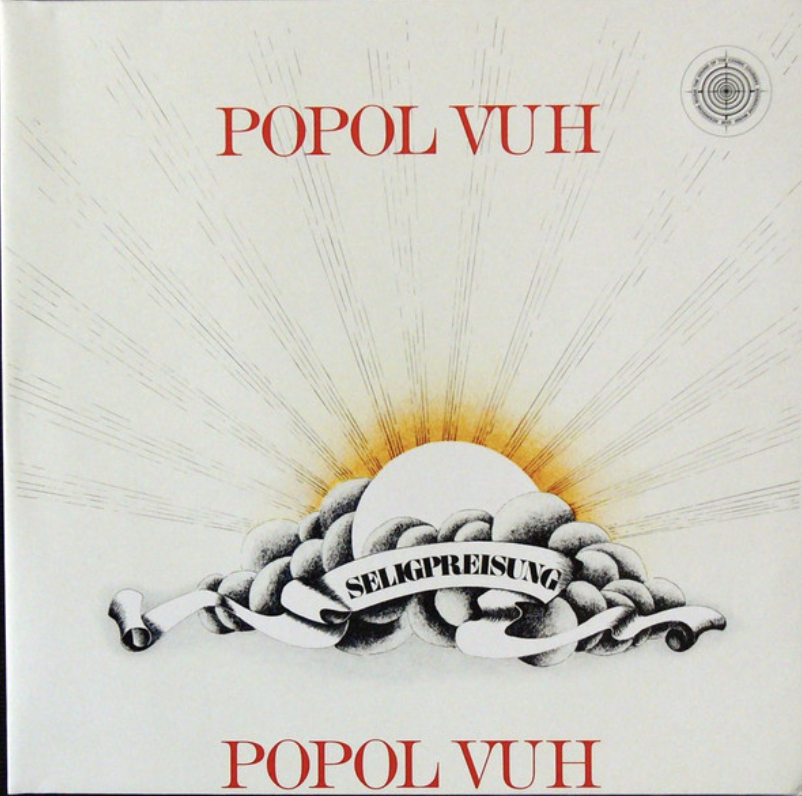
The big 5-0 this year, the Vuh’s fourth album proper was released back in 1973. From my old Krautrock odyssey series, another chance to read my appraisal of this afflatus divine music…
If there is such a reassuring prospect as an afterlife then Popol Vuh‘s divine-styler Florian Fricke would surely have cemented his rightful place in the eternal, empyreal, choir above.
Covering all bases, just in case, Fricke’s reconnoitre’s into the heart of Mayan mysticism, Hinduism, Buddhism and Christianity guaranteed him a fair hearing upon reaching all those nirvanas.
Fricke thumbed through the New Testament for inspiration and solace; falling upon the canonical gospel of Matthew and lifting its blessed text for Popol Vuh’s fourth outing, Seligpreisung. Loosely translated as “beatitude” (‘happiness of the highest kind’) or “song of praise”, Seligpreisung is a continuous 30-minute long service built around Matthew’s profound utterances and writings: Matthew’s gospel – the first book of the New Testament – followed the life of Christ, from his ministry to crucifixion, and resurrection.
Coalesced into adumbrate passages, each of the 8-tracks represents Matthew’s pronouncements and declarations on the worthy; those he considers the righteous: from the meek to the poor. For example the ongoing leitmotif, “Selig sind die, die da hunger. Selig sind die, die da dursten nacho Gerechtigkeit. Ja, sie sollen stat warden” – a right old mouthful -translates as, “Blessed are those which are hungrey. Blessed are those that are after justice. Yes, they are to become fuller”.
Continuing with the same elegiac mellifluous exhalations as on previous releases, Popol Vuh’s diaphanous psalms finally break-out of their suffused ambient constraints into bouts of meditative acid-rock, as the drum-kit is introduced for the first time. Sharing similar spiritual harmonics and builds as Amon Duul II‘s, “stairway-to-OM”, opus Wolf City, Seligpreisung uses a familiar exotic, eastern, musical palette; with reverent pinning oboe and the raga inspired soul-stirring charms of, both, the harpsichord-like cembalo, and lute-toned tamboura all directing us towards the holy calling of Tibet.
Subtly transforming the dynamics with a more progressive, flowing, feel, Fricke also took a step backwards, reverting to a more traditional – if not classical – template; led by the majestic atavistic tones of a grand piano. This shift was partly influenced by the introduction of Amon Duul II’s Daniel Fichelscher, who contributed swathes of plaintive electric guitar and, those newly added élan drums, to the Popol Vuh transient sound.
Whether through mutual appreciation or due to the efflux of ideas criss-crossing between the two bands, Popol Vuh’s resident star-gazer lead-guitarist, Conny Veit, also reformed his dismantled prog-rock band Gila; bringing both Fricke and Fichelscher along to help produce that groups most acclaimed work – the Native Indian history of America inspired tome – Bury My heart At Wounded Knee. Unfortunately Gila broke up again the following year (1974), but for a brief period they functioned as two groups.
Absent from this synthesis hippie-trip are the lilting choral shading vocals of Djong Yin – temporally tied-up at the time, she returned for the next album, Einjager & Seibenjager. Not entirely convinced of his own timbre, Fricke found himself forced to fill-in; yearning and placably sighing numerous hallelujahs at the quasi-alter of worship – though he makes a good job of it. With its, now male, cooing and tentative vocals, Seligpreisung peacefully lifts the spirt over its short duration; altering the main opening theme of “Holy Mountain mystical escapism meets pastoral rock” enough so that each lose bracketed track bleeds into the next; though some of these movements are used as laconic breathers and interregnums before the main narratives.
Every piece is as beautiful as the last, so highlights are difficult to single-out; the atmosphere kept at a constant heavenly quality, and the playing spread evenly: Fichelscher and Veit play some of their most soaring magical guitar paeans, whilst Fricke’s cembalo and piano tenderly weep and dance amongst the climbing melodies and chords.
It might be considered an unfair criterion with which to gauge the music of Popol Vuh by, but this album was my very first purchase of the groups artful poised soundtracking vistas, so I’ve come to love it – I’ve obviously had to work backwards, from full band line-up jamming to minimal ambience. This LP hardly shakes off the ominous trance-like state and translucent stripped blueprint of their last three records – I mean even with a fuller sound, they’re still restrained and kept in check – so consider this as the “letting-their-hair-down” experiment, or Ash Ra Tempel without the Leary-spiked incentives.
ARCHIVE//THOSE WE’VE LOST
Stella Chiweshe
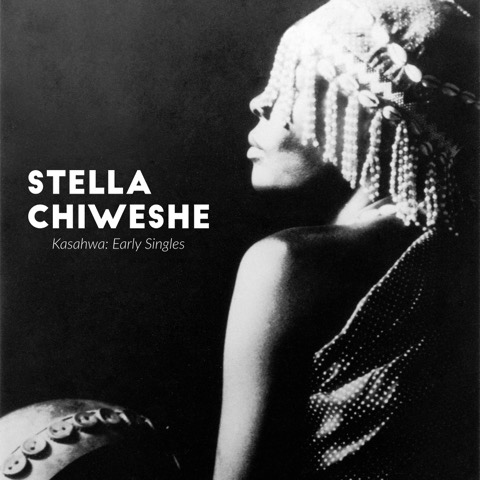
Sad news reached us near the end of last month via the esteemed world label Glitterbeat Records that the Zimbabwean songstress and ‘Queen of Mbira’ Stella Chiweshe had died on January 20th. Back in 2018, the Glitterbeat imprint picked up a compilation of the groundbreaking artist’s early singles: called Kasahwa. As a bio, state of providence here’s my review of that album and purview of Stella’s legacy…
Spearheading a second revival and paving the way to a comeback of a sort, the previously only available as a digital-release version (via that increasingly encroaching behemoth, Bandcamp) of the Zimbabwe music icon and maestro of the mbira instrument Stella Chiweshe’s Kasahwa: Early Singles collection, has been picked up by the award-winning global music label Glitterbeat Records. To be released on the full gamut of formats (both physical and digital) this remastered smattering of previously rare healing paeans and emotional tumults will for many, be an introduction to the diaphanous and earthy roots metal-y springy mbira accompanied soul of Chiweshe.
With her most formative years spent in colonial Rhodesia, before Zimbabwe’s eventual independence in 1980, in an environment that didn’t exactly encourage or foster equality between races let alone sexes, the strong-willed Chiweshe nevertheless pursued a career in music. More attuned to the Western sounds of Rock’n’Roll and Country than the atavistic culture of her native homeland, feasting instead on a diet of Elvis Presley, Ricky Nelson, Jim Reeves and The Everly Brothers (and why not), it would take some time and an epiphany before Chiweshe picked up the mbira: an instrument and style she would soon master; so much so that she would be hailed as the ‘Queen of Mbira’ in the following decades.
Confusingly for the student and novice, mbira refers not only to an instrument – made-up of 22 to 28 metal keys, mounted on a ‘wooden healing tree body’ – but also an all-encompassing Zimbabwean spiritual but also secular culture and way of life. Mbira, which is cultivated by the Shona people of the region, involves the ceremonial ritual practice of invoking contact with deceased ancestors and tribal guardians through musical accompaniment; just one of the influences that imbues the voice and playing style of Chiweshe’s captivating songs.
Showing the independent spirit she’d long be admired and celebrated for, a younger Chiweshe would, despite meeting stoic opposition, overcome the bigotry of her male compatriots and elders to embrace not only the Mbiri heritage but the instrument too. Stiff resistance from teachers and even instrument makers, outright refusing to build her a mbira, wouldn’t stop her from recording a debut single (the one that give’s its name to this compilation) in 1974: even though she would have to borrow an ad hoc thumb piano; unable to lay her hands on a mbira. Chiweshe would not only preserver but flourish.
Trumpeted in our modern virtue-labeling climate as a ‘feminist’, the outspoken star was certainly strong-willed, even a rebel. Making a name for herself overcoming the obstacles of tradition and a patriarchal-dominated society, her obstinacy soon garnered attention, not only in Zimbabwe but further afield. In a decade that saw a surge in Western interest in ‘world music’, thanks in part to (in the UK anyway) such global music explorers and passionate advocates as Andy Kershaw and John Peel (who would play host to two Chiweshe performances on his coveted Radio 1 sessions), the Mbira star would soon be touring internationally: first as a featured soloist with the New National Dance Company of Zimbabwe, and later under her own name. Chiweshe would even make a second home for herself in Berlin, criss-crossing between the German city and her native home for the next 35 years.
Still performing her spiritually soulful intense and trilling vocals and mbira craft, but perhaps not as prominent a figure on the world stage, this re-introduced eight song package of formative years recordings will revive an interest in not only Chiweshe but the music of Zimbabwe: a state that looked to be finally emerging from the grasp of Robert Mugabe, whose role (lets face it) has soured and hidden the true face and culture of the country; though in the aftermath of his resignation and after new elections, his successor in the ZANU-PF party, candidate President Mnangagwa and self-declared winner of those elections, has meted out extreme violence on oppositions supporters (killing a number of them in the process) taking to the streets in protest at the contested results. An uneasy tension exists, even with outside observers presiding over these elections, as Zimbabwe’s Movement for Democratic Change candidate Nelson Chamisa stoically refuses to back down, rejecting the results outright.
With helpful encapsulation style suffixes summing up each song’s theme, the early singles opens with the determined ‘Ratidzo’; a high whistling and trickling stream like mbira melodic accompanied invocation of the lush landscapes of Zimbabwe that pretty much encompasses Chiweshe’s struggle to become a musician with its matter-of-fact subtitle, ‘Managing to do what people considered impossible’. More traumatic themes follow, with the unceasing waterfall cascades of the mbira and earthy lamented ‘Musarakunze’ suddenly making an emotional impact when translated as ‘An orphan seeing what the late elders never saw’; so beautifully played as to almost hide the plight. The ‘Innermost emotional pain is like a fishbone stuck in the throat’ ‘Kasahwa’ has a similar air of beautiful delivery even when kicking up the dust and rotating to a more abrasive and rubbing scratchy percussion; the pained evocations confined to that title rather than performance.
Mbira as a living tradition and healing process is enacted on the grasslands lilted ‘Chipindura’ – ‘The herb that transforms anything’ – and the placeable tubular turning ‘Mayaya’ (in two parts no less; the longest articulation on this entire collection) – ‘The effect of healing herbs’. Both of which, whether it’s intentional or not, feature a percussion that reflects the rubbing, grinding preparation of these herbs. Elsewhere the routine travails of a people kept through colonial oppression and then the misrule, surviving in abject poverty, is evoked on the yodeled sung ‘Nhemamusasa’; a song that describes and articulates ‘Cutting branches for a temporal home’.
Channeling the very soul of Zimbabwe, performing the mbira with energy but also certain serenity, and in a soliloquy manner voicing the empirical, Stella Chiweshe’s early recordings may sound swimmingly diaphanous, yet they serve as a reminder to the struggles of change. Recorded during the Chimurenga – roughly translating from the Shona language as ‘revolutionary struggle’, this, the second such ‘war’ or uprising, pitted African Nationalist groups against the predominantly white minority government; also known by its eventual victors as the Zimbabwe Liberation War, it would lead to independence and the rise of one of the resistance’s key figures, Robert Mugabe – revolution these singles, no matter how lilting, could be celebrated as a testament and clarion call for not only a resistance to the patriarch but seen also as a break from the atavistic status quo, with Chiweshe’s twist laying down the path for those to follow; a more equal rebalance giving voice to the often repressed matriarchal singers and musicians of Africa.
Tom Verlaine

What a shock to the system to see poor old Tom Verlaine pass way last week, the gaunt frontman of pre-punk favourites Television – far too arty and well-read to be part of the dumb nihilistic punk vanguard, but all the same in that initial rush of bands that would crown an entire scene. Although what we call a counter-culture, a in-scene New York phenomena, Verlaine’s unique lyricism and guitar playing would go on to influence possibly as many people as the Velvet Underground and Nico’s infamous Banana LP. If you were in any doubt, just look at the scale of homages, tributes and the Marquee Moon album covers displayed across the worldwide net of social media validation. This is an album that both sailed close to the edge, but was melodic enough to encourage a future new wave scene. In fact it has become such an obvious record, a copy in every record collection. And yet it hasn’t lost any of its power, twists and art school pretensions because of that absorption into popular culture.
There will be extensive eulogies and bios to come or indeed already shared. And so I’m just going to share some favourite clips and tracks; hopefully some you may not have seen or come across. A celebration then:
That’s it from me for another month. You can find January’s edition here...
Hi, my name is Dominic Valvona and I’m the Founder of the music/culture blog monolithcocktail.com For the last ten years I’ve featured and supported music, musicians and labels we love across genres from around the world that we think you’ll want to know about. No content on the site is paid for or sponsored and we only feature artists we have genuine respect for /love. If you enjoy our reviews (and we often write long, thoughtful ones), found a new artist you admire or if we have featured you or artists you represent and would like to buy us a coffee at https://ko-fi.com/monolithcocktail to say cheers for spreading the word, then that would be much appreciated.
 Monolith Cocktail Blog