Kalporz X Monolith Cocktail: The Top 7 Suede Songs
September 18, 2025
Our continuing partnership with the leading Italian culture/music site and platform Kalporz. This month, an editorial special on Suede.
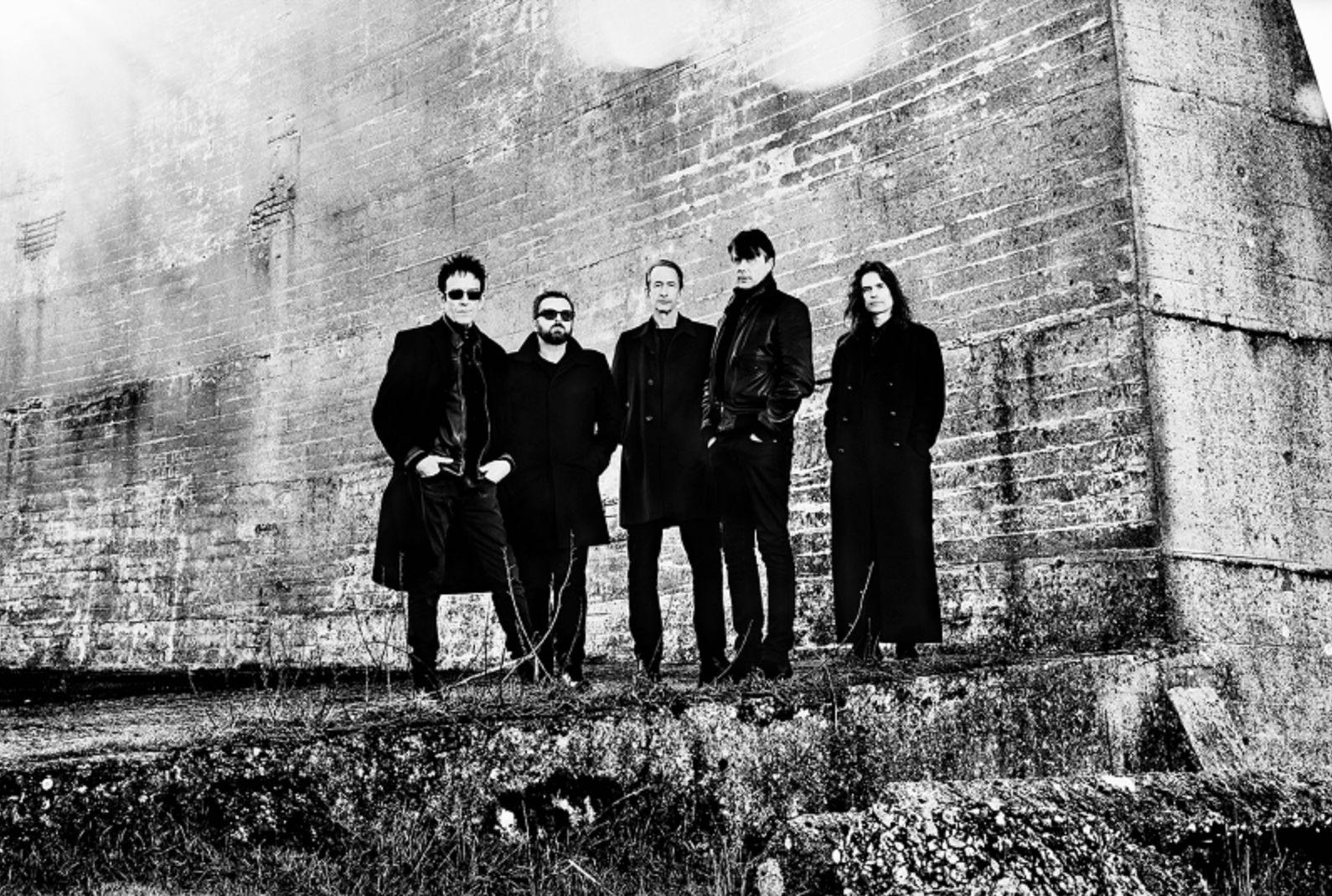
At regular points during the year the Monolith Cocktail shares posts from our Italian pen pals at Kalporz. The site recently celebrated its 25th anniversary – more or less coinciding with our very own 15th anniversary. Here’s to longevity, which isn’t easy in the unstable online world.
For September the editorial team pick and plead their case, selecting a magnificent seven from Britpop darlings Suede, who have just released their tenth album, Antidepressants, this month.
Suede is riding high: their latest album “Antidepressants” was released on September 5th via BMG (a review coming soon), while a few days ago they announced a live show at the Fabrique in Milan, scheduled for Friday March 27th, 2026. It was necessary to draw up a #top7 to establish some fixed points in their career, for the benefit of those who don’t, perhaps, know them fully.
7. “The Only Way I Can Love You” (from “Autofiction”, 2022)
It must be admitted that it was difficult to draw up our top seven, as the material from Suede’s “second life” is as valid as that of the 1990s: songs like “Hit Me”, “Outsiders”, and “Life Is Golden” could be among the best from any other British rock band. Yet I hadn’t yet found the beauty offered by their last two albums, released amid lockdowns and inconclusive wars. The songs become the very blood galloping through our veins, speaking of attachment to life, the importance of the future, and…, yes, human weakness. The frailties of everyday life that, once recognised, would make us feel better. I’m exaggerating they would guarantee world peace. “The Only Way I Can Love You”, track number four on Autofiction, in its splendid four minutes of catharsis and tears, sums up all these feelings: “I pretend I don’t adore you, but I’d take a bullet for you/Yes, it’s a sweet and bitter love”; “I’ll love you as I’m capable of doing it”, I’m not a hero at work, a social media idol, a politician holding the fate of the world in my hands. I have my limits, which are my strength. Today, art and music breathe in a song like this. (Matteo Maioli)
6. “Barriers” (from “Bloodsports”, 2013)
“Barriers” is the first single from Suede’s second half, after their 11-year hiatus, and the opening track on “Bloodsports”. It’s a comeback anthem, epic, triumphant. That’s why it’s so important. It’s a song about “leaping over barriers” because Suede probably needed to dive back into the fray with a song like this, which in terms of pomp has nothing to envy of songs like U2’s “Where the Street Have No Name”. With a comeback like that, the band could only have a radiant rebirth. (Paolo Bardelli)
5. “Trance State” (from “Antidepressants”, 2025)
As Maioli said above, Suede have truly outdone themselves on their last two albums, achieving a quality and clarity of expression that many bands of their era no longer possess: either they’re still sitting on their laurels, touring without any albums coming out (Oasis and Radiohead, the reference was all too easy), or they continue to put out stuff without many ideas (Manic Street Preachers?). Suede, on the other hand, have taken a new path for themselves, that of a darker sound than usual and tending towards the post-punk sound of Joy Division, and “Trance State” is a clear example. A song about alienation, drugs, and emotional survival is supported by a bass so beautiful it could be played by Simon Gallup. What stylistic perfection, guys! (Paolo Bardelli)
4. “Pantomine Horse” (from “Suede”, 1993)
“Pantomime Horse” is one of the most intense moments on an album that introduced Suede to the world. The glossy, glam Britpop of the opening minutes suddenly gives way to a ballad that is a metaphor for fragility, a confession of a constructed, uncertain identity, the tale of a (sexual) awakening that causes a mask to fall. It is also the second longest track on the album (after “Breakdown”), probably the least immediate: a tormented mood permeates the slow pace of a sound with gothic overtones, Brett Anderson’s singing is suspended between falsettos, whispers, and the sensation of a lament that could erupt into tears; Bernard Butler’s guitar expands the sounds and gently distorts them, and in those layers we glimpse the shadow of an almost orchestral crescendo that culminates with the mantra-like question “Have you ever tried it that way? ” The Londoners give in to their darkest and most vulnerable side, giving us a fascinating interlude like few others in their discography. (Piergiuseppe Lippolis)
3. “The Wild Ones” (from “Dog Man Star”, 1994)
The Anderson/Butler wonder duo lasted only two albums, their debut and this, “Dog Man Star”, and not even fully (Butler left before the entire album was finished). One of the most iconic and languid songs on this second, much-loved effort by our guys is this, “The Wild Ones”, which – coincidentally – is about a breakup, but one between lovers not between bandmates.
“And oh, if you stay
I’ll chase the rain-blown fields away
We’ll shine like the morning and sin in the sun”
It’s an evocative piece played as if on Mars, while Anderson’s interpretation is inspired by Scott Walker, Edith Piaf, Frank Sinatra and Jacques Brel, “people with the emotional and musical range to turn a song into a drama. That’s what I wanted for “The Wild Ones”: for it to be a timeless piece of melodic beauty that people would marry and share their first kisses to.” A later released version of this song clearly demonstrates the differences in arrangement between the two, and so you can decide for yourself whether you prefer the original or the variant with Butler’s four-minute solo (! )
2. “Animal Nitrate” (from “Suede”, 1993)
Suede made their recording debut between 1992 and 1993 with a series of killer singles, of which “Animal Nitrate” undoubtedly represents the pinnacle. Brett Anderson’s melodic, feverish vocals draw heavily from Bowie and new wave, while Bernard Butler’s guitar delivers one of the most memorable riffs of the ’90s: chromatic, sharp, and at the same time irresistibly catchy. And to think that the guitarist’s stated inspiration came from an innocuous clarinet-based British TV theme song from the ’70s, transformed here into a murky, sinful theme. Because the song, between allusions to sex and drugs and the suburban atmosphere of the video, transports us to rooms in London suburbs where we imagine all sorts of depravity and repressed desire. The result is a dazzling song, a manifesto of their decadent aesthetic, destined to remain forever among the absolute pinnacles of the British band. (Saverio Paiella)
1.“Beautiful Ones” (from “Coming Up”, 1996)
“Beautiful Ones”, which for the danceable (and tipsy) me will always have “The” in front of it, is Suede’s tenth single and their third—along with “Stay Together” and “Trash”—to land in the UK top ten. I’m not mentioning these other songs randomly, but to highlight the shift in strategy that became necessary with 1996’s Coming Up: catchy melodies, aimed at making inroads on the radio and the charts, introduced by simpler riffs, thanks to the addition of guitarist Richard Oakes, the replacement for Bernard Butler, who was not even twenty at the time. The affinity between the two lies only in their haircut: Bernard was the leading lady, the latter an honest but talented follower. “Beautiful Ones” became the London group’s hit par excellence, fusing the glam drive of T. Rex with the magnetism of David Bowie; I agree with Ricky Jones of Clash Magazine, who describes it as ” a jangly masterpiece with one of the most melancholic sing-along choruses Britpop would ever produce“, and it’s true; the guitar sounds as much like Johnny Marr as it does Mick Ronson. Thirty years on its shoulders, carried magnificently, a hymn to youth. (Matteo Maioli)
Kalporz X Monolith Cocktail: Nourished By Time
August 13, 2025
Our continuing partnership with the leading Italian culture/music site and platform Kalporz. This month, a briefing on Kalporz cover artist Nourished By Time.

At regular points during the year the Monolith Cocktail shares posts from our Italian pen pals at Kalporz. The site recently celebrated its 25th anniversary – more or less coinciding with our very own 15th anniversary. Here’s to longevity, which isn’t easy in the unstable online world.
This month, the editorial team give us a briefing on burgeoning R&B, soul house star Nourished By Time; the cover star and spotlighted artist on Kalporz this August.
Nourished by Time sounds like ’80s music, but it belongs to an alternate timeline, where Reagan’s opulence and carefree attitude give way to a more abrasive, convoluted, and disenchanted interpretation of time and things. Or perhaps it’s simply a highly accomplished postmodern reinterpretation of those sounds and that vast aesthetic—R&B, soul, house—with the curious paradox that the eclectic Baltimore musician never truly lived through that era.
Marcus Brown, the producer who gave life to the Nourished by Time project in 2019, is in fact just thirty years old, and with the release of his next work “The Passionate Ones” (XL Recordings), for which he earned the cover of our August issue, he is destined to make the big leap – the most attentive will have noticed his name among those already announced for the next edition of C2C , and this too must mean something.
But these mere CV issues aside, we’ve been won over by all of the artist’s recent releases, most notably his debut LP “Erotic Probiotic 2” from 2023 and the EP “Catching Chickens” from the following year, which contain timeless tunes like this , this , and this .
With the release of “The Passionate Ones”, scheduled for August 22nd , we can only expect great things. Even judging by the singles released so far, which show Brown in truly dazzling form. Judge for yourself.
Our continuing partnership with the leading Italian culture/music site and platform Kalporz. Words by Monica Mazzoli. Translation by Dominic Valvona.
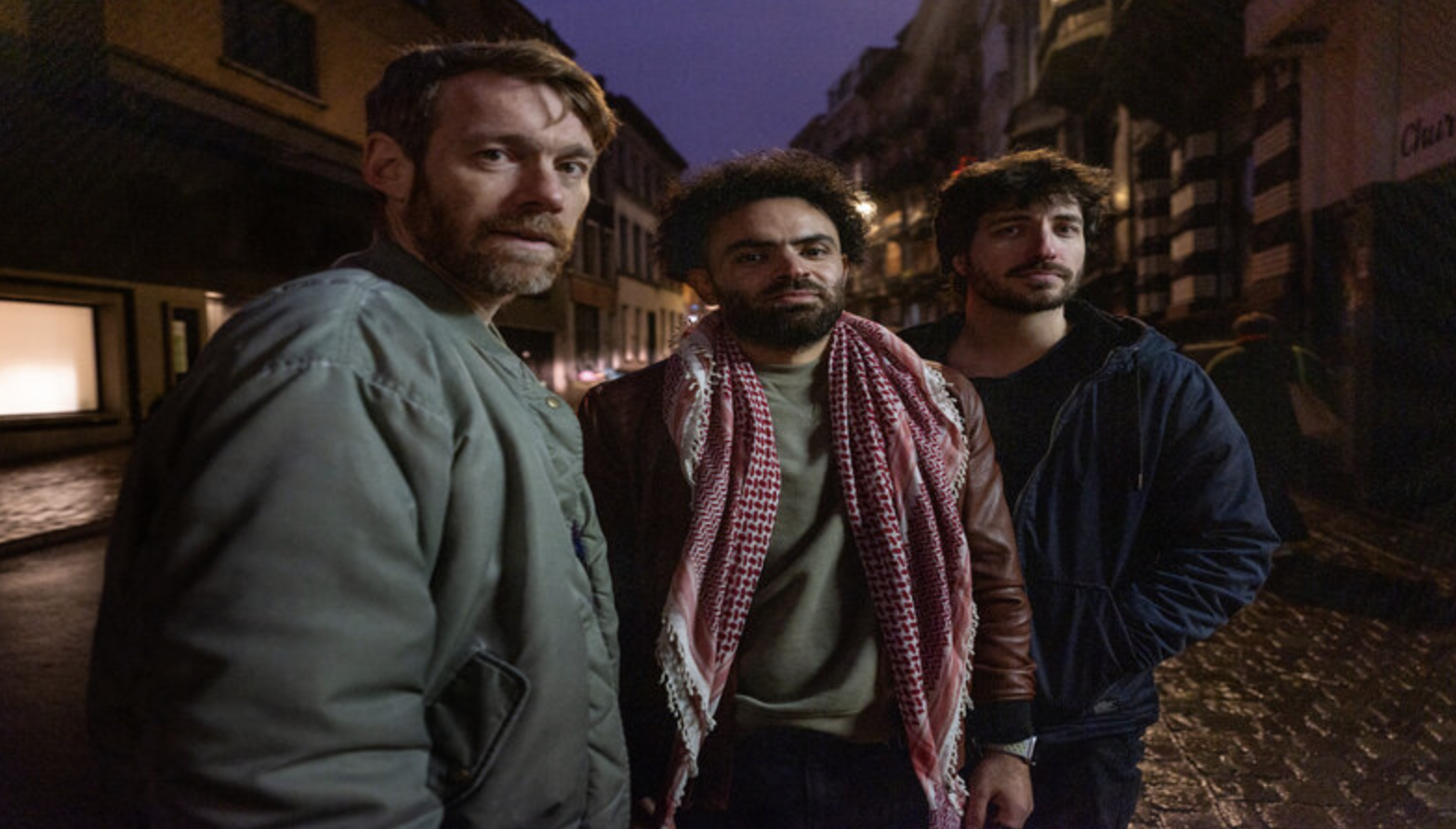
Each month the Monolith Cocktail shares posts from our Italian pen pals at Kalporz. May’s swap finds Monica Mazzoli introducing us to the Belgian-Iraqi trio Use Knife.
“You can’t separate politics from art. […] When we worked together with Saif, that was already a political thing”. With this clear and concise statement released to The Quietus in 2023, Kwinten Mordijck – one of the three minds that gave life to the Belgian-Iraqi trio Use Knife – emphasized the socio-political nature of the artistic project that he was setting up with Stef Heeren and Saif Al-Qaissy . Almost two years have passed and on March 28th, 2025 the second album under the name Use Knife, État Coupable, was released, but Mordijck ’s sentence now rings truer than ever.
The trio’s first album The Shedding of Skin (2022) was born from the meeting of Mordijck, Heeren and Al-Qaissy during a musical research residency at the cultural center of Gent Viernulvier: long sonic jams in which to confront the need to “feel the other’s point of view when making music”, and to think about how “someone from another culture reacts when making music with you” (words in quotation marks by Heeren – always – to The Quietus).
On one side two Belgian musicians who have abandoned their previous sound guise between alt-folk and electroacoustic music ( Kiss The Anus Of A Black Cat ) to experiment with analogue and modular synths and measure themselves against the rhythmic complexity of Arabic and Iraqi music (in this case), on the other, an Iraqi singer and percussionist who left his homeland (Iraq) to escape the war and gives voice to his experiences in music (read the lyrics of “Freedom, Asshole”).
Two distant worlds: neither of the two prevails over the other but a rhythmic magma with many facets is created between West and East. The opening track of État Coupable, the latest album by the trio mixed by Radwan Ghazi Moumneh (Jerusalem in My Heart), “Demain Sera Mieux” is paradigmatic in this sense. In the four and a half minutes of the piece, a 10/6 time signature (popular in Iraq but also in Armenian and Turkish music) is grafted onto a vortex of synths. Or again: the vibrations, the industrial beats of a track like “ Iraqi Drum Set ” are also ignited by the daf percussions (i.e. a frame drum that is part of the Middle Eastern musical tradition) and the chaos of words resulting from sampling the trio’s conversations about Iraqi instruments and their pronunciation.
The sound discourse of Use Knife (the name comes from a verse by Current 93, “the stars spell grammar or use knife”) is sharp and in media res: there are no preambles, we enter into the heart of an artistic creation that wants to become action. MM
Kalporz X Monolith Cocktail: Mount Eerie ‘Night Palace’ Review
January 21, 2025
Partnership with the leading Italian culture/music site and platform Kalporz. Words by Samuel Conficoni. Translation by Dominic Valvona

The Monolith Cocktail shares posts from our Italian pen pals Kalporz each month. A hangover from 2024, Samuel Conficoni reviews the new Mount Eerie album, Night Palace.
Mount Eerie, “Night Palace”
(P.W. Elverum & Sun)
Phil Elverum‘s return under the moniker of Mount Eerie is a double album full of shadows and fog; a dark and mysterious work that looks at the clear sky that we can see in the distance through our binoculars from a due distance and with a certain disillusionment. Monumental and sweetly chaotic, Night Palace is a manifesto of poetics that embraces Phil Elverum’s entire career both as Microphones and as Mount Eerie, the culmination of a climax that now becomes the summa and at the same time the rite of passage of an artistic path that is always courageous and fascinating.
Five years after the collaborative album with Julie Doiron and six years after Now Only, Phil Elverum returns with a double album that moves around the underworld of the human psyche for eighty minutes, trying to re-emerge from the abyss and the fog in which it is born and develops, proceeding on this dirt road with conviction and sincere dedication. Elverum’s production from the monumental A Crow Looked at Me onwards is above all a painful retracing and analysis of the losses that mark us without ever ceasing, however, to be enchanted by the beauty of the world around us and by our difficulty in describing and understanding it. This is why flashes of light are never lacking. Here Elverum, as he has done many times before, asks questions of himself and his own art, trying to investigate what he is and what his music is. After twenty-five years he is still in fieri, he is still moving, he is still uncertain about what to do and where to go.
This wonderful and honest research is present, in a scattered but continuous way, on Night Palace. The imaginative and immersive atmospheres that he paints, so different from each other and all so bewitching, end up trapping the listener and dragging him into a scenic part that involves and alienates him at the same time. Despite this, or perhaps, indeed, precisely because of this, the music of Night Palace sounds direct and fascinating. There are some of Elverum’s sweetest and most emotional songs, such as “Broom of Wind” and “I Saw Another Bird”, both on the first album, that walk in a magma of sounds and enveloping notes. Also standing out on the first part of the album are the gems “I Walk”, which reaffirms Elverum as a singer-songwriter with a unique style and lyrical and melodic abilities, the concise and elegant “Blurred World” and the caustic lo-fi of “Huge Fire”, where Elverum sings that “Nothing but me and all this shattered wood I’ve been pulling / Into a heap of flames and smoke: this is my life.”
The desperate attempt to want to live in that condition of serenity and security that is only proper to gods and wise men, that stoic ataraxia so difficult to achieve, is longed for and sought far and wide by Night Palace. Everywhere, however, it clashes with the tragedies that have always afflicted human beings, such as disease, death, fear and loneliness. The second album seems like a battle cry against these gigantic obstacles and the many injustices that blight the lives of individuals and humanity as a whole. The cries of deliberate chaos of “Breaths” are soon swallowed up by the sobs of “Swallowed Alive”: a certain bloody folk-rock that had already emerged on the first part of the album finds even more space now. The ghosts of the Native Americans on whose genocide the nation in which Elverum was born and raised was built haunt him, and he wants to be a sincere and faithful ally.
The thunderous and disconcerting “Non-Metaphorical Decolonization”, clearly constructed as a diptych, leaves you astonished and almost scared. The same vibrations are also emanated by the sharp and hypnotic “Co-Owner of Trees”, whose electric guitars immediately become suffocating and disturbing. “Now we live in the wreckage of a colonizing force / Whose racist poison still flows”, Elverum sings as if he were reciting a sort of spell. The cathartic power of these songs lets the force of nature enter them: on these songs Elverum tries to reconcile the diabolical seductions towards an inevitable nihilism dictated by the facts with the possibility of taking another direction, more complex and more combative, to rebuild and start again. Whether it is the brief but important presence of his daughter in a song or the pieces dedicated to his new partner, Elverum catalyses the past, present and future around himself and on Night Palace, placing them in a proactive and far-reaching dialogue: a journey in which, fortunately, nothing is already written. (80/100) Samuel Conficoni
Kalporz X Monolith Cocktail: Scoutcloud: Les Sons Du Cosmos: the cosmic routes of Will Miller & Co.
November 15, 2024
ALBUM REVIEW FROM OUR FRIENDS AT Kalporz
AUTHORED BY MONICA MAZZOLI TRANSLATED BY DOMINIC VALVONA

Continuing our successful collaboration and synergy with the leading Italian music publication Kalporz , the Monolith Cocktail shares and translates reviews, interviews and other bits from our respective sites each month. This month, and with a new facelift overhaul of the site (which we love by the way) Monica Mazzoli introduces us to producer and multi-instrumentalist Will Miller’s latest project Les Sons Du Cosmos.
Les Sons Du Cosmos: “the sounds of the cosmos” in Italian. A challenging name for the new group from producer and multi-instrumentalist Will Miller, already the mind behind the soul-jazz project (and much more) Resavoir, a member of Whitney (from 2015 to today always balanced between folk/country/soft pop) and a musician at the service of such notable names as A$AP Rocky (listen to “Back Home” in “At. Long. Last. A$AP”), Mac Miller (his trumpet on “Two Matches” in “GO:OD AM”) and SZA (keyboards, production and co-author of “Blind” in “SOS”).
COOLIDGE and LAUNDRY, the only two tracks under the name Les Sons Du Cosmos released thus far, are the result of a session from September 2023 by Will Miller with Eddie Burns (who already appears on a number of tracks on the latest Resavoir album) and William Corduroy. Miller & Co.’s studio in Little Village – a neighbourhood of Chicago – is the birthplace of two productions that never run idle, and move the coordinates of the Windy City jazz scene – as happens more and more often – into broader sound territories: the first single, released in August 2024, is the perfect combination of groove and flow, and features Semiratruth’s rapping on a track full of soul-funk-jazz textures; the second piece, also featuring Semiratruth, this time on the stylophone, is a two-minute instrumental with an enveloping rhythmic interweaving of cinematic/library (music) flavours.
Author: Monica Mazzoli
Kalporz X Monolith Cocktail: CARIBOU “Honey” Review
October 15, 2024
ALBUM REVIEW FROM OUR FRIENDS AT Kalporz
AUTHORED BY GABRIELE PROSPERO TRANSLATED BY DOMINIC VALVONA

Continuing our successful collaboration and synergy with the leading Italian music publication Kalporz , the Monolith Cocktail shares and translates reviews, interviews and other bits from our respective sites each month. This month Gabriele Prospero reviews the latest album by the Canadian musician Dan Snaith’s alter ego vehicle Caribou.
CARIBOU “Honey”
ALBUM (City Slang, 2024)
Caribou‘s characteristic ability to blend electronics, pop, psychedelia and dance is fully felt in this latest release. “Honey”, released on October 4th, is the artist’s sixth album; 12 tracks that explore various experimental sounds, introspective lyrics and almost futuristic atmospheres, characterised by warm synths, enveloping beats and very well manipulated vocals.
Listening to it seems like a return to the dance floor in the 90s but dressed in 2020s clothes, the touch of current events, with a disparate use of modern sounds and instruments fused with that attitude of the past makes Caribou’s project truly peculiar.
Songs like “August 20/24” and “Climbing” fully highlight a tendency to play with sounds and create truly particular atmospheres, moreover Caribou on this album wants to demonstrate the ability to connect the emotional side of electronic music with elements of everyday life, creating a deep and personal listening experience. “Honey” seems to be a further step in this direction, with themes that explore love, human connections and intimacy.
On his artistic evolution he said: ‘One thing that has never changed for me since the beginning is a maniacal curiosity to see what can be created with sound’. And with these 12 tracks we can see, or rather hear, how what he thinks has been fully put into practice in the creation of the album. Gabriele Prospero
RATING: 77/100
CONVERSATION PIECE/ANNIVERSARY FROM OUR FRIENDS AT Kalporz
AUTHORED BY PAOLO BARDELLI/SAMUEL CONFICONI/RAFFAELE CONCOLLATO
TRANSLATED BY DOMINIC VALVONA
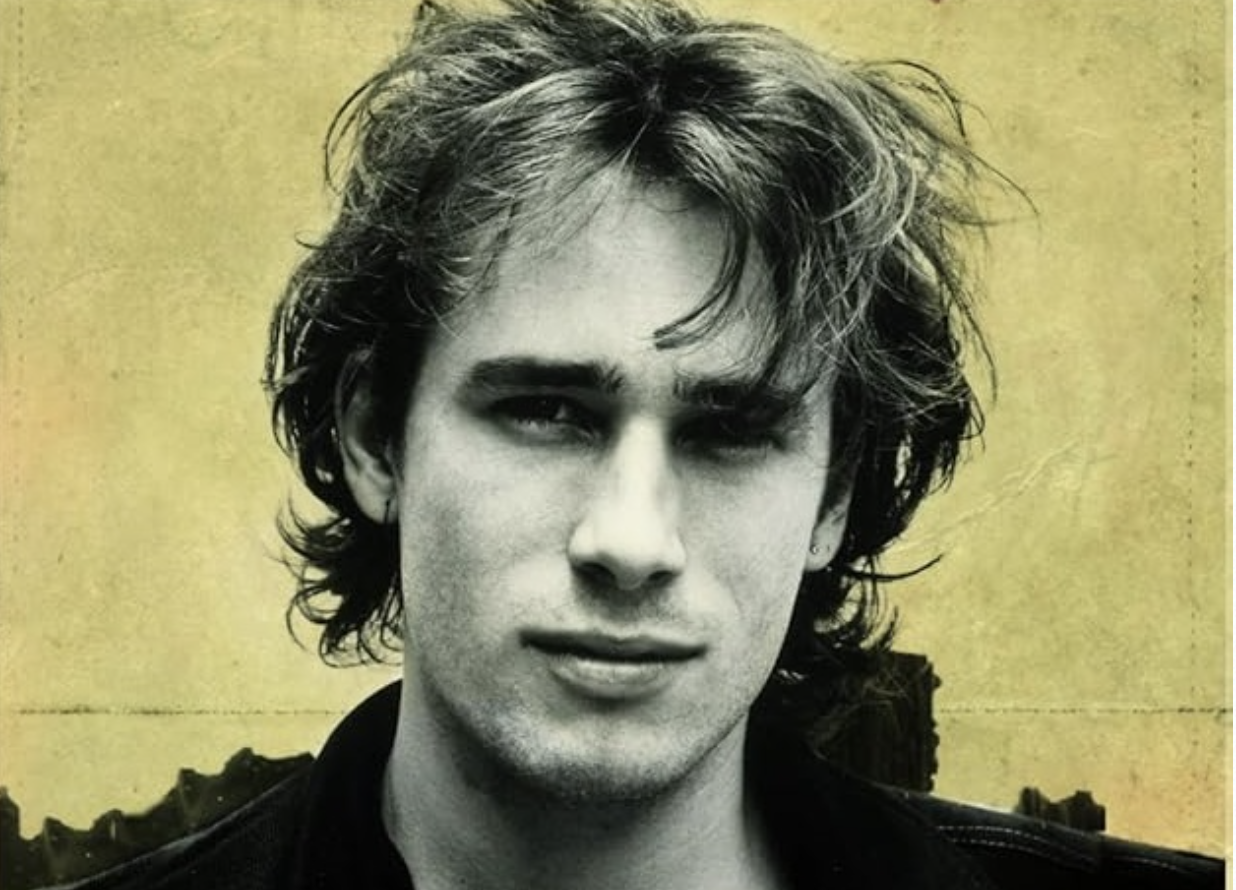
Continuing our successful collaboration and synergy with the leading Italian music publication Kalporz , the Monolith Cocktail shares and translates reviews, interviews and other bits from our respective sites each month. This month the Kalporz editorial team explore the legacy of the late and great tortured troubadour Jeff Buckley, thirty years after the release of his decade defining album Grace.
Jeff Buckley’s “Grace” turns 30 on August 15 [1]. Instead of making a complete analysis of that album ,which we have already done song by song for the 20th anniversary , this time we asked ourselves what remains – today – of Jeff Buckley’s artistic legacy. These are the contributions of Paolo Bardelli, Samuele Conficoni and Raffaele Concollato to the question.
Let’s immediately address the legacy that pisses us off the most: that Jeff Buckley has been transhumed into the collective imagination of talent shows because at least one in three approaches his version of “Hallelujah” , thus reaching us for a song that wasn’t even written by him, is truly a crime. But, as we know, we shouldn’t worry about talent shows and we shouldn’t even consider them, so let’s focus the answer on much more important areas. Like whether there are artists today who can build on his legacy, and whether his memory and importance are well understood today. The fact that there are few artists who demonstrate a talent comparable to Jeff demonstrates his uniqueness: among the many, only that loose cannon that is Tamino would come to mind , but it would be nice to identify someone who has the same fire of passion for music and not someone who is similar on an artistic level.
As for his importance today, we know that music cannot be recomposed and evaluated only with numbers, but sometimes they can help: this month on Spotify Buckley has totalled 3.9 million listeners, against for example Lou Reed’s 5.5 million. If we want to consider that Reed has produced much more, it would seem that there is still a lot of attention on Jeff Buckley, and the streaming numbers should represent the new generations more than the old ones (who have the possibility of physical listening). It is therefore difficult to answer the question we asked ourselves, whether Jeff Buckley is still influential or not, as there are contrasting elements. There is one certainty though: we must stop looking at the new releases that will continue from now on with material pulled out of the drawers, because Jeff Buckley’s legacy is clear with only “Grace” and “Sketches…”, in addition – if you really want to -there are the first official live performances (“Live at Sin-é”, “Mystery White Boy”, “Live A L’Olympia”) and the outtakes “Songs To No One” with Gary Lucas. Last year “Gods And Monsters” was released which is indecent in terms of sound quality, it would be worthy of immediate denunciation.
Personally, to feel close to him, I have been using a tactic for some time: following an Instagram page that only posts photos of Jeff Buckley (among the many I point out this one ) which creates an alienating effect: on the one hand, at first glance, Jeff might seem always present, but it is a fleeting sensation, which disappears immediately to leave room for the awareness of the melancholy of no longer having him with us. We who wait every day for another artist like him (and like Kurt Cobain) with the same desire for redemption, for emotion, for beauty, for anger, to express himself, to unite, to tell, to communicate, to make ourselves better by receiving his notes . That is his legacy.
(Paul Bardelli)
The greatness and relevance of Jeff Buckley, like that of the many artists who have left us too soon, lies not only in what he wrote, said and published, but also in what he could have written , said and published if he had not passed away. “Grace” is a traditional rock album and at the same time seminal and innovative, and this is perhaps its most extraordinary quality and its most surprising merit, which make it a milestone even thirty years after its publication. Without messing up the pages and the history of the novel of American rock which in the meantime continued to be written, adjusted and annotated, Jeff Buckley was able to give his contribution and make that genre his own by emptying it and making it a primitive shell to be filled; to be able to arrive at “Grace” he immersed it in a noble and refined musical tradition whose fil rouge was able to make the jazzy chanson of Nina Simone , the acid rock of Led Zeppelin , the poetic and visionary songwriting of Bob Dylan and Leonard Cohen and even classical music coexist. Where a cacophonous and ungovernable chaos could have arisen, a grace has instead sprouted that which seemed impossible to model from those ingredients, but which in the end succeeded.

It is precisely this gigantic merit of his, which has been able to influence artists of the caliber of Radiohead, Lana del Rey, Adele, Mitski and Phoebe Bridgers , just to name a few, and which has made him recognized as a big name in music by sacred monsters such as Bob Dylan himself, David Bowie and Morrissey, which makes his first and only studio album a room whose doors fold in on themselves and always lead back to that same place: the revolutions that started from there will be captured and in all respects written by others, others who have visited, lived and studied that room deeply. We already know where the others have gone and, as far as the future is concerned, we will know. Where he would have gone, on the other hand, we will never know, even if the never-completed recordings for what would have been his second studio album give us some clues. Unfortunately for us, however, that is a dead-end track, and here we return to the incipit of our discussion: it is as if two paths emerged from “Grace”, one that we have tested – and that, after thirty years, we are still testing – with our hands, and one that we will never know and that perhaps, in a parallel universe, is still being completed. But “this is not for our eyes”.
(Samuel Conficoni)
Despite his short career, Jeff Buckley’s influence on the music of the last few decades is profound. The unclassifiable genre he created, a mix of folk, rock, blues and world music, has left an indelible mark on many artists. His enormous talent in the use of his voice, capable of conveying the delicate vulnerability that inspired a generation of singers and pushed them to explore their vocal abilities in an unconventional way, is proof that he was not just ‘one of many’.
Just think of his cover of Leonard Cohen‘s “Hallelujah”, which became so iconic that it became a point of reference for subsequent reinterpretations. His expressiveness led to a return to authenticity and emotional honesty that left a mark on Thom Yorke, who often cited him as one of his main influences, both for his vocal style and for having pushed him to think outside the box. Damien Rice , whose direct and intimate style he took, also carries his legacy. Of course, Damien then completed the “masterpiece” with poetic lyrics, but the affinities with Jeff’s style are evident. Another artist inspired by Buckley was Justin Vernon (Bon Iver) , where the introspection and songwriting leave no doubts.
From a strictly musical point of view, Buckley can be found in the British band Alt-J, who with their experimental and eclectic sound echo the fusion of different genres mentioned above. Finally, we cannot fail to mention Daughter, with the delicate and desperate voice of Elena Tonra and the haunting melodies of the group, where Buckley’s spirit echoes in almost every song.
Others, perhaps even indirectly or lateral, have inherited Jeff Buckley’s legacy, ensuring him an artistic legacy that places him among the most influential figures in modern music.
(Raffaele Concollato)
OUR FRIENDS AT Kalporz BRING OUR ATTENTION TO A NEW BAND
AUTHORED BY Monica Mazzoli – TRANSLATED BY Dominic Valvona
Continuing our successful collaboration with the leading Italian music publication Kalporz , the Monolith Cocktail shares and translates reviews, interviews and other bits from our respective sites each month. Keep an eye out for future ‘synergy’ between our two great houses as we exchange posts during 2024 and beyond. This month regular Kalporz scribe Monica Mazzoli reviews the newly released album, previously on hold, from the Austrian duo Nový Svět, DeGenerazione.
Nový Svět ‘DeGenerazione’
(Quindi Records)
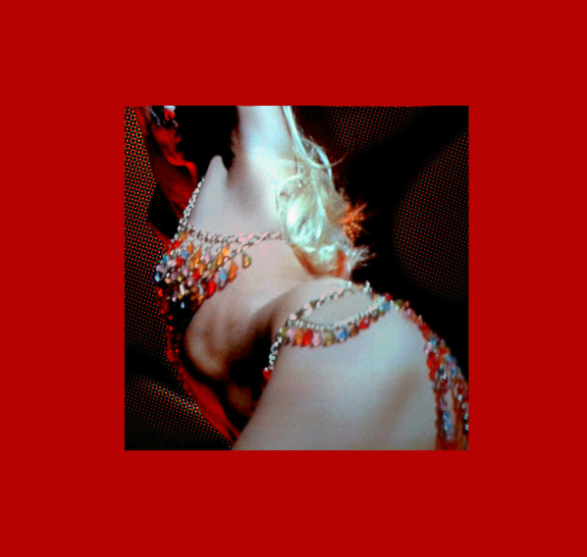
Fifteen songs broken inside by dreams and nightmares, fragments of something that could have been, and wasn’t, degenerating: DeGenerazione by the Austrians Nový Svět, which features a framing of Nelly Bordon’s (Barbara Bouchet ) dance on the cube in Fernando Di Leo ‘s noir Milano Calibro 9 (1972) on the cover, is a work that rises from its own ashes.
The track recordings found on DeGenerazione were originally made in 2007 but abandoned for years. They were later recovered in extremis, ending up online not long ago, and published now, in 2024, on disc by the Florentine label Quindi Records.
Irregular, unfaithful wavering sound fragments with an indefinite and indefinable shape: a derailment from genres – neofolk, dark ambient, post-industrial…? – and consequently a caustic destruction of the latter. The album – we read on Nový Svět ’s Bandcamp – was supposed to be the final part of a Spanish trilogy that began with the 2004 conceived “Fin. Finito. Infinito.” However, deemed “too Spanish” it was put aside.
In reality, this album by the Viennese group is everything and the opposite of everything: an uncontrolled binge of sounds, noises. From the disturbing carillon of “Tibidabo” (with a video inspired by
Aldo Lado ’s 1971 Short Night of the Glass Dolls ) to the claustrophobic guitar loop of “Raja”, and from the alienating rhythmic delirium, lacerating cowbells of “Alarma” and “Tierra (Sanguine II / Noticias)” to the manipulated spoken word of “Torbellinos”.
Rated: 80/100
OUR FRIENDS AT Kalporz BRING OUR ATTENTION TO A NEW BAND
AUTHORED BY Nicola Guerra TRANSLATED BY Dominic Valvona
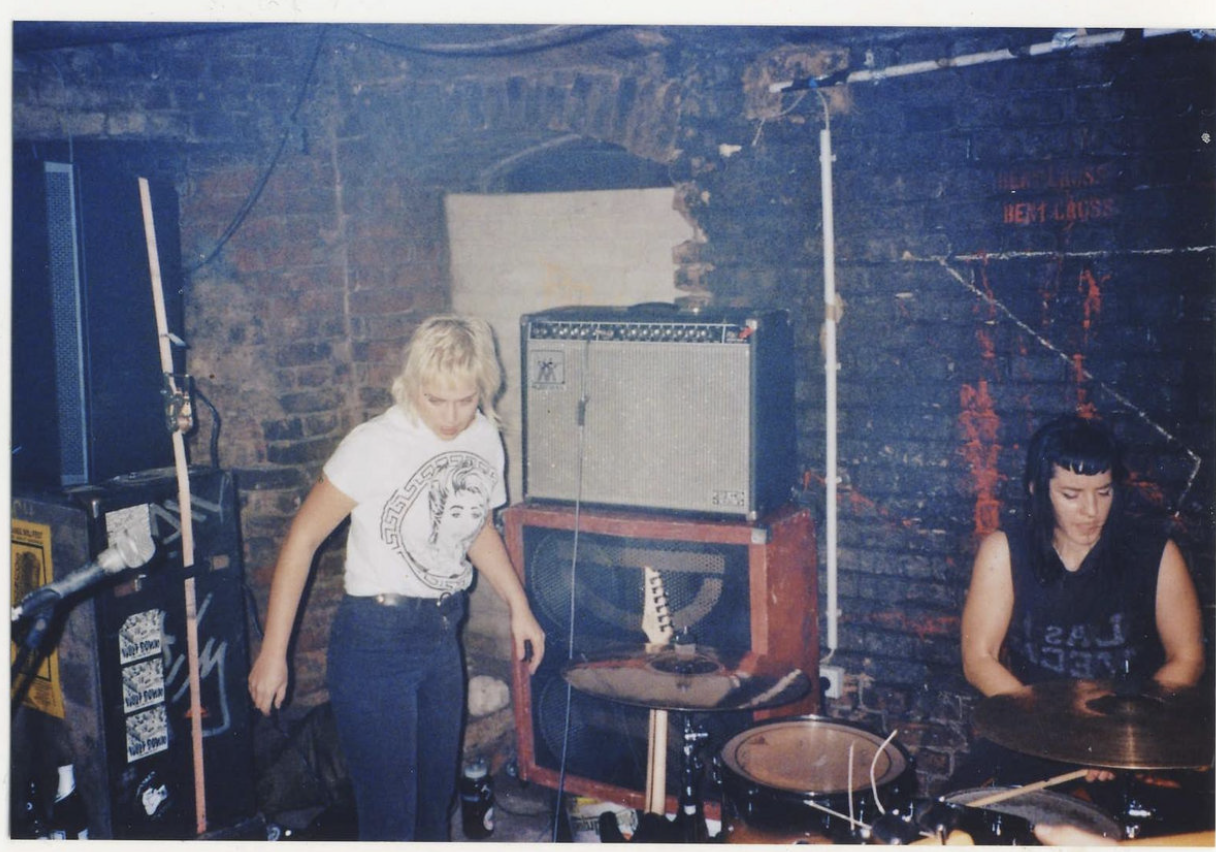
Continuing our successful collaboration with the leading Italian music publication Kalporz , the Monolith Cocktail shares and translates reviews, interviews and other bits from our respective sites each month. Keep an eye out for future ‘synergy’ between our two great houses as we exchange posts during 2024 and beyond. This month regular Kalporz Nicola Guerra introduces us to the noise of cacophony Berlin trio Cuntroaches, who released their debut album back in February.
Cuntroaches ‘S-T’
(Skin Graft)
The name would be enough to include them among the groups that make chaos a reason for living.
Then you listen to these 30 minutes at full volume while life goes on normally around you, and you’ve already fallen in love with it.
Because how can you not love those who commit terrorism without killing anyone? How can you not love those who, in a world of people who are set and all the same, decide to set up a refuge of noise to isolate themselves from it?
Still me and my clique of (music) junkies ask ourselves why we are increasingly attracted to this.
It’s not music. The melody is practically non-existent. Cacophony under the pitch black blanket of noise.
A German trio making their debut that is intimidating to watch.
No, it’s not the attraction towards something ever more extreme, it’s the ability to deal with discomfort by doing something.
Here, it is the action of these groups that makes everything more true.
And taking action is always better than living passively.
SCORE: 77/100
Kalporz X Monolith Cocktail: (Review) James Jonathan Clancy ‘Sprecato’
February 22, 2024
REVIEW FROM OUR FRIENDS AT Kalporz
AUTHORED BY Matteo Maioli – TRANSLATED BY Dominic Valvona
PHOTO CREDIT: Luca Mazzieri

Continuing our successful collaboration with the leading Italian music publication Kalporz , the Monolith Cocktail shares and translates reviews, interviews and other bits from our respective sites each month. Keep an eye out for future ‘synergy’ between our two great houses as we exchange posts during 2024 and beyond. This month regular Kalporz scribe Matteo Maioli reviews the latest album by James Jonathan Clancy on his own Maple Death label.
After the experiences with His Clancyness, A Classic Education, Settlefish and Brutal Birthday and seven years after his last album , the Italian-Canadian James Jonathan Clancy returns with the first album under his own name, released earlier in February by label he founded Maple Death Records.
Sprecato (which translates from Italian into “wasted”), written and recorded between Bologna and London at intervals between 2018 and 2023, presents the first of a visual and graphic collaboration with Michelangelo Setola – borne in an exchange of suggestions between the two artists through music and drawing, in the sharing of an almost apocalyptic idea of ”urban pastoral” with marginality, exploitation and alienation of the individual at its centre.
Across eleven tracks our many musical souls converge, from the role of the cosmic loner folk in “I Want You” to those of the avant-garde on “To Be Me”. But also bucolic minimalism in the opener “Castle Night”, no-wave bathed in electronics for “A Worship Deal” – which fuses together Cabaret Voltaire and Pop Group -, and psychedelia on the splendid “Had It All” – between Tim Hardin and Flying Saucer Attack. Dreamlike dilations combined with Walkerian lyricism thus traces a line of demarcation crossed by a Clancy in constant emotional transport. The setlist effectively alternates imaginative songs that occupy space and then immobilise it, see “Precipice”, with soundtracks from a primordial world (“Fortunate”, the Radioheadian Amnesiac heights of “Immense Immense Wild”).
To complete Sprecato Clancy brought together a cast of friends and international guests including Stefano Pilia, co-producer of the album and true right-hand man of the operation (like a Warren Ellis for Nick Cave perhaps?), Andrea Belfi on drums, Enrico Gabrielli of Calibro 35 and Afterhours fame on flutes and Francesca Bono on both piano and vocals, whilst the core of the band is formed by the Maple Death house musicians Dominique Vaccaro (guitars, aka JH Guraj), Andrea De Franco (synths, Fera) and Kyle Knapp (sax, of Cindy Lee). The curiosity is all about the live performance now, because the album easily ranks among the most successful things in James Jonathan Clancy’s decade, and more, spanning career.
 Monolith Cocktail Blog