Kalporz X Monolith Cocktail: [T4ATF!] The Clientele, The Suncharms, Night Beats, Maiiah & The Angels Of Libra
December 20, 2023
Exchange recommendations from our Italian penpals at Kalporz
Authored By Matteo Maioli

Continuing our successful collaboration with the leading Italian music publication Kalporz , the Monolith Cocktail shares reviews, interviews and other bits from our respective sites each month. Keep an eye out for future ‘synergy’ between our two great houses as we exchange posts during 2023 and beyond. This month, from the site’s [T4ATF!] series, Matteo Maioli recovers four tasty albums that fall between indie-pop, psych vibrations and explosive rhythm’n’blues genres.
The Clientele, “I Am Not There Anymore” (Merge)
It seems incredible, but from their formation in 1997 to today the London-based Clientele have never crossed the Italian borders. Yet the proposal by Alasdair MacLean and associates is among the most original to come out in the new millennium, between reminiscences of Love and the low fidelity experiments of the Pastels. Six discs, one more beautiful than the other, which cite literature (T.S. Eliot), surrealist poetry (Robert Desnos) and arthouse cinema. With bassist James Hornsey and Mark Keen, percussion and piano, as well as the use of celesta, tapes, bouzouki, mellotron and a string and wind ensemble, MacLean brings to life his most sophisticated work, embracing dub (“Garden Eye Mantra”), flamenco (“Stems Of Anise”), orchestral jangle-pop (“Lady Grey”) and modernism in winning refrains as for “Blue Over Blue”. For writing that offers disturbing images, cosmopolitan visions, the beauty of the passing of time. “I Am Not There Anymore” was published by Merge at the end of July but “Claire’s Not Real” suggests spreading it while enjoying the warmth of a fireplace, close to your loved one.
The Suncharms, “Things Lost” (Sunday Records)
The Suncharms were formed in Sheffield between the eighties and nineties, proposing in their first EPs an indie recipe based on equal doses of melody and noise; however, it is only in recent years that they are getting the right feedback, between compilations on Slumberland and new albums such as “Distant Lights” (2021) and the latest “Things Lost” for Chicago’s Sunday Records. Where “Dark Sails” combines sixties and Jesus And Mary Chain noise, with “Satanic Rites” I would lean more towards the lesson of R.E.M., even in Marcus Palmer’s tone not so distant from that of Michael Stipe. Keyboards and harmonica embellish the opener “3.45” while “Red Wine Kisses” will perhaps be the episode destined to remain over the years, to be listened to on loop, dreamy and exciting between The La’s and The Dream Syndicate. My friend Enzo Baruffaldi from Memoria Polaroid conveys the idea perfectly: “If it’s time to close the day on a melancholy note, without giving up feedback and reverberations, Suncharms’ latest album is the one for you (or, at least, mine)”.
Night Beats, “Rajan” (Fuzz Club/Suicide Squeeze)
We had partly forgotten about Danny Lee Blackwell, relegating him to “Who Sold My Generation”, a smash dated 2016 featuring Robert Levon Been of Black Rebel Motorcycle Club. Since then three albums have been released. After “Outlaw R&B”, acclaimed by the international press in 2021, it is the turn of “Rajan”, in which the Texan musician offers a warm interpretation mixing Rock, Jazz, Blues, psychedelia, Anatolian Funk, Chicano Soul and Spaghetti Western. And this is just to mention some of the ingredients of the collage of sounds and impressions sweetly blended with the “Hot Ghee” (peace guys, Tame Impala could hear it…) from Danny’s sizzling pan in a kaleidoscopic sound that merges into a mysterious unity. If “Thank You” points towards “Sunny” by Boney M with acid and gypsy tones, then “Nightmare” travels in the 70s between Brazil, Asia And California. “Rajan is just one of six examples of me doing exactly what I want, and not caring about whether it’s checked out or not. I’m a journey person. I want to make things for the sake of making them.” Holy words.
Maiiah & The Angels Of Libra, “Maiiah & The Angels Of Libra” (Waterfall Records)
Who said that the best soul only comes from America? The debut album by Maiiah, a singer with Balkan roots transplanted to Düsseldorf, has arrived to prove us wrong. Thanks to a phenomenal backing band, the Angels of Libra collective from Hamburg, who return after their success alongside Nathan Johnston: ten instrumentalists with a great affinity for analogue recordings, the concept sixties and the world of Ennio Morricone, Khruangbin and Air. It all started from Maiiah’s meeting with the producer and composer Dennis Rux in times of pandemic: a shared love for good old rhythm & blues united them in making music together with Libra, creating singles with excellent radio appeal such as “Obey” and “No No No (I’m So Broke)”, between fun and social criticism. On “I ‘m A Good Woman” she makes Barbara Lynn’s northern soul hit her own, while “Kava” dresses a Croatian text with boogaloo; “Turn The Page” and “I Wanna Go” finally show the affinity with Makin’ Time, James Taylor Quartet and the garage-pop of the new generation (The Courettes). Spectacular.
Matteo Maioli
Exchange recommendations from our Italian penpals at Kalporz
Authored By Matteo Maioli
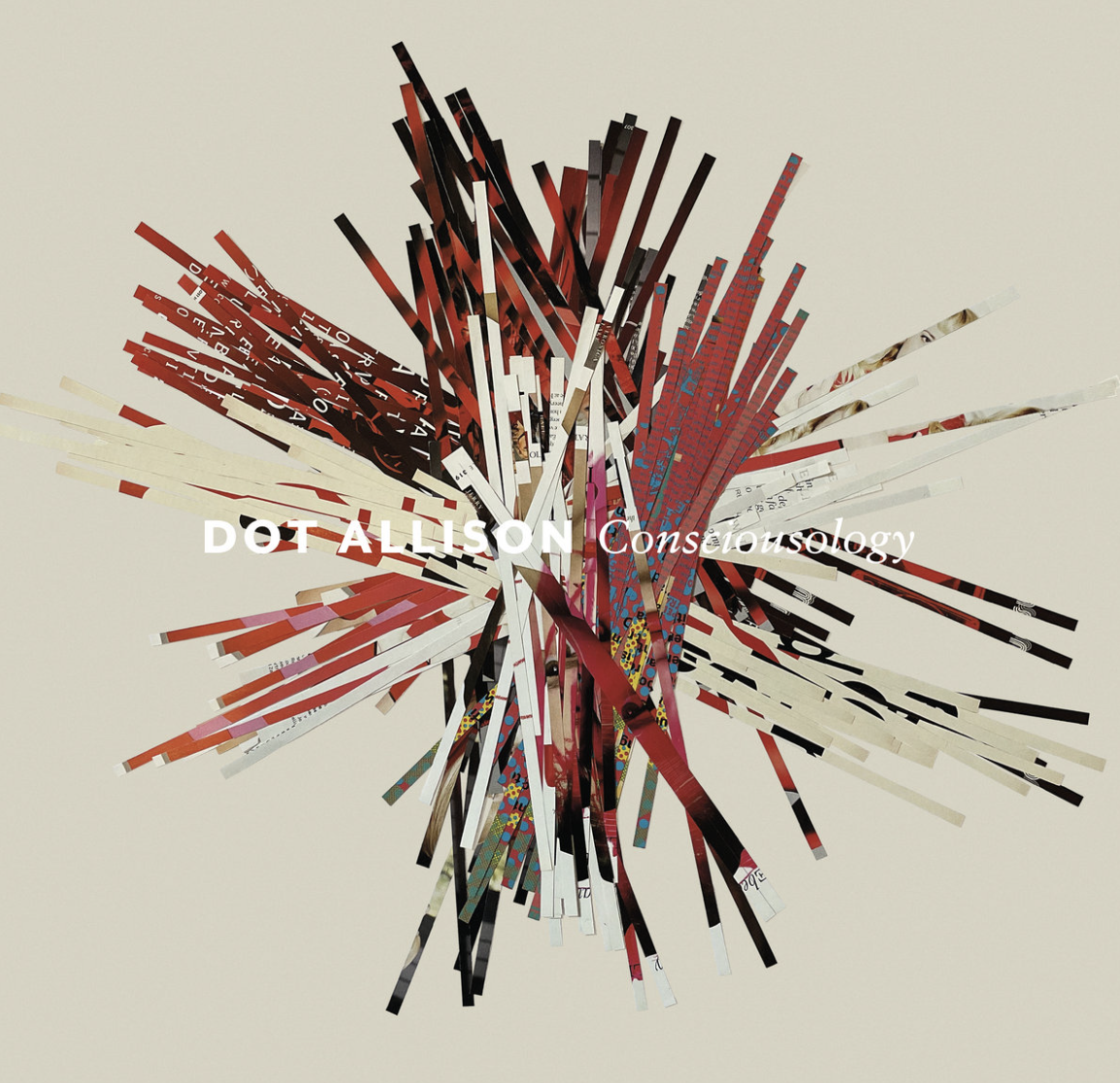
Continuing our successful collaboration with the leading Italian music publication Kalporz , the Monolith Cocktail shares reviews, interviews and other bits from our respective sites each month. Keep an eye out for future ‘synergy’ between our two great houses as we exchange posts during 2023 and beyond. This month, from the site’s This Rocks column, Matteo Maioli sells us on the music of the Scottish artist Dot Allison.
Dot Allison “Consciousology”
(Sonic Cathedral, 2023)
An established cliché in music in recent years is that great records are never released in the summer: well 2023 contradicts the matter wonderfully, from PJ Harvey to the Clientele (without forgetting the new Albarn… pardon Blur) to reach the artist whose least spoken of all but which once discovered never leaves you for life: Dot Allison from Edinburgh . “Consciousology” is her sixth album and comes out on Sonic Cathedral; produced with Fiona Cruickshank it includes collaborations from Andy Bell (Ride, Oasis), Hannah Peel and Zoë Bestel as well as the London Contemporary Orchestra who manage to give the songs a timeless charm.
As told by Sonic Cathedral’s Nat Cramp, “Dot’s voice has been a constant in our lives for the 30 years since One Dove’s “Morning Dove White” was released and we have always dreamed of working with her. We first met back in the early days of the label and she played for us a couple of times, including the legendary Lee Hazlewood tribute night at The Social. The self-effacing title “Consciousology” belies the seriousness of what lies within, and it’s impossible to not be completely consumed by the sheer beauty and intimacy of it all“. The sounds of Tim Buckley of “Starsailor” combined with Joni Mitchell and Van Morrison of “Astral Weeks” can give an idea of the source at the base of a raging and at the same time calm river that flows into the trip-hop and visionary electronics of Andrew Weatherall – a great friend and mentor of Allison -, already from the opener “Shyness Of Crowns”.
The strength of the collection emerges as much in Dot’s elegant and profound writing as in the work on her voice that sounds like the breath of nature; on “Moon Flowers” she whispers words of love transporting us to another dimension: “You reign, you influence the rain/In heaven and beyond you/There is a sunlight around you/You illuminate everything I do“, while with “Weeping Roses”, she returns to the fragile lesson of “Room 7 1/2” (Arthoused, 2009) punctuated by acoustics and piano, “ Bleeding roses they’re all you ever grew for me/I see blood in the spray, on the petals/Now , it’s so plain to see/Do you feel it too, tell me do you feel it too “. The launch piece “Unchanged” thrives on a soul-rock crescendo that explodes in a refrain worthy of Verve and Spiritualized.
Where in “Bleached By The Sun” she makes us miss the Air of “Talkie Walkie”, in the transcendent “Double Rainbow” she invents a cosmic manifesto that wouldn’t sound out of place in Rob Mazurek’s latest release with the Exploding Star Orchestra . And if I haven’t convinced you yet, the sweetness of “Milk And Honey” will take care of making you fly away from the wear and tear and problems of the modern era, starting like this: “I’d walk 10,000 suns/To have you next to me/Bridges I ‘d burn/To give you the rest of me/Lilac-coloured stars that glisten, beckoning/Galaxies of tumbling suns, are blessing me “.
Folks? backstory? Chamber-pop? I do not know. All this and also none of it. Simply: Dot Allison.
Exchange recommendations from our Italian penpals at Kalporz
Authored by Paolo Bardelli
Credit: Aron Lindhagen
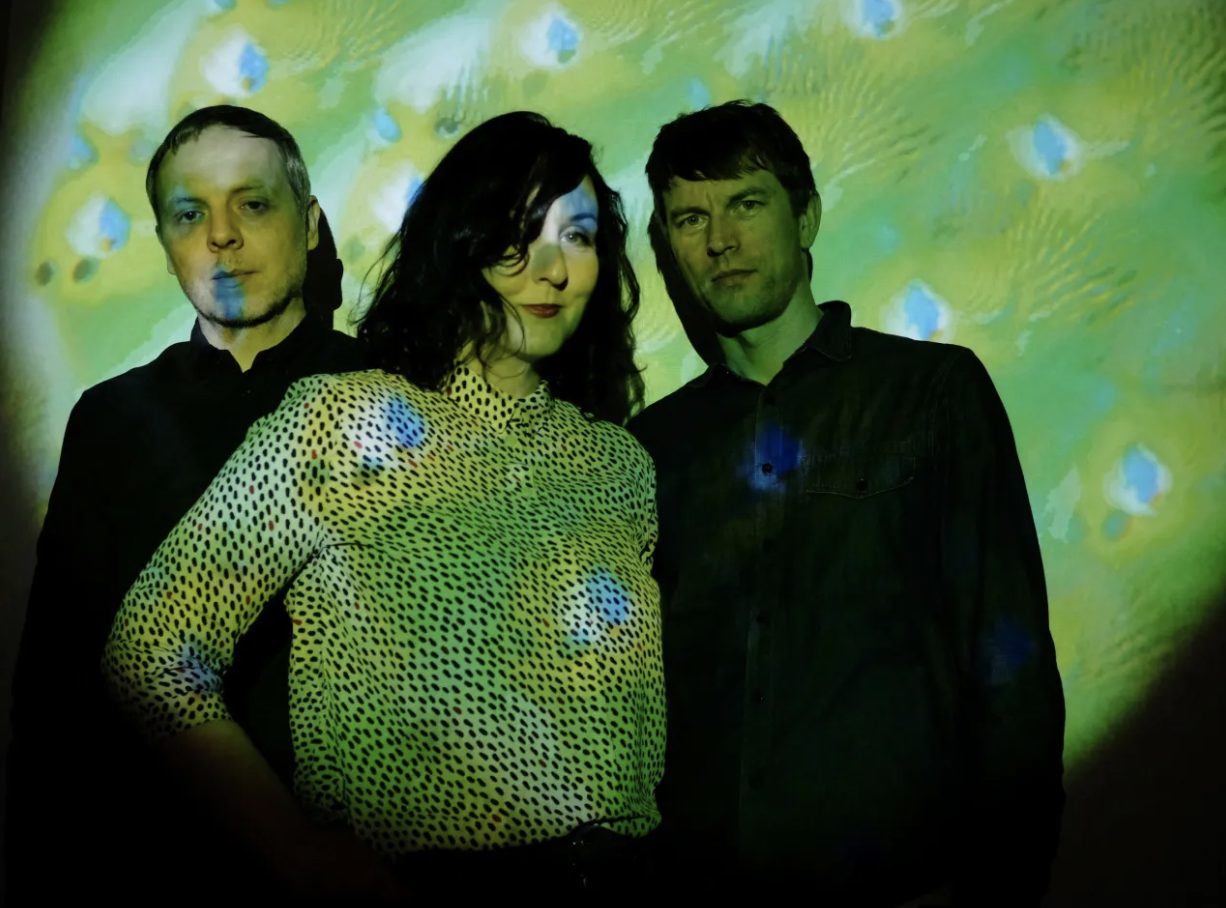
Continuing our successful collaboration with the leading Italian music publication Kalporz , the Monolith Cocktail shares reviews, interviews and other bits from our respective sites each month. Keep an eye out for future ‘synergy’ between our two great houses as we exchange posts during 2023 and beyond. This month, from the site’s Thanks 4 All The Fish! series of recommendation reviews, a quartet of recent finds, brought to us from Paolo Bardelli.
This month we dedicate ourselves to a ThanksForAllTheFish! composed of albums that would have deserved individual reviews, because all of them are beautiful and some are truly impressive, but – you know – we are immersed in a fast-paced world and sometimes we have to adapt. To facilitate the choice we put them in order, from the best (Death And Vanilla) to the least of the four (Gnoomes), which is still a great album.
DEATH AND VANILLA, “Fliker” (Fire Records, 2023)
Death And Vanilla have put all their care and psychedelic imagination into this their “Fliker” after more than a decade of records (this should be the sixth, if we are not mistaken in mathematics, but in any case there are further ep’s on their bandcamp as well): these are delicate psychic digressions seasoned with a distinct and elegant pop in which the cerebrality and dimension of dreams (as in the beautiful “Baby Snakes”, a modern “Riders on the Storm”) is tempered in some passages by a physicality drier (“Find Another Illusion”) that the band refers, as a suggestion, “to the first Cure”.
The trio hails from Malmoè, Sweden, and is made up of musicians Marleen Nilsson, Anders Hansson and Magnus Bodin who play with vintage instrumentation, “to emulate the textures and magical sounds of soundtracks and library music, German krautrock and yèyè French pop from the 60s and 70s”.
Fantastic record in my opinion, which will probably be in my year-end rankings.
Album info: https://www.firerecords.com/product/death-and-vanilla-flicker/
TREES SPEAK, “Mind Maze” (Soul Jazz Records, 2023)
Another spectacular disc is this fifth by Trees Speak, a duo from Tucson (Arizona), composed of Daniel Martin Diaz and Damian Diaz who combine a very strong instrumental taste with a thousand influences and an absolute basic enjoyment. The press notes exaggerate a bit but begin to give coordinates: “Trees Speak is music as a cosmological translation, borrowing from Can and Miles Davis’ Bitches Brew era practice of the studio as a composition tool, in which long improvisations they merge into indelible flights of fancy with razor blade-assisted tape edits. Trees Speak operates between the subconscious and the unconscious, the radiant and the eclipse, the micro and the macro”.
Certainly German krautrock has something to do with it, just as the duo draws from the soundtracks of the 60s and from a certain free and unconstrained psychedelic rock with the cosmos as its destination: the Arizona desert as a universe to land on.
Personally, I have two songs that I wrote down with a handkerchief: “Syndrome” gives me the same anguish as Massive Attack, while “Sospetto” has the influence of the Italian soundtracks of the 70s and, as evident from the title, of Air’s “The Virgin Suicides”: only if you listen to it.
This album is also amazing.
WITCH, “Zango” (Desert Daze Sound, 2023)
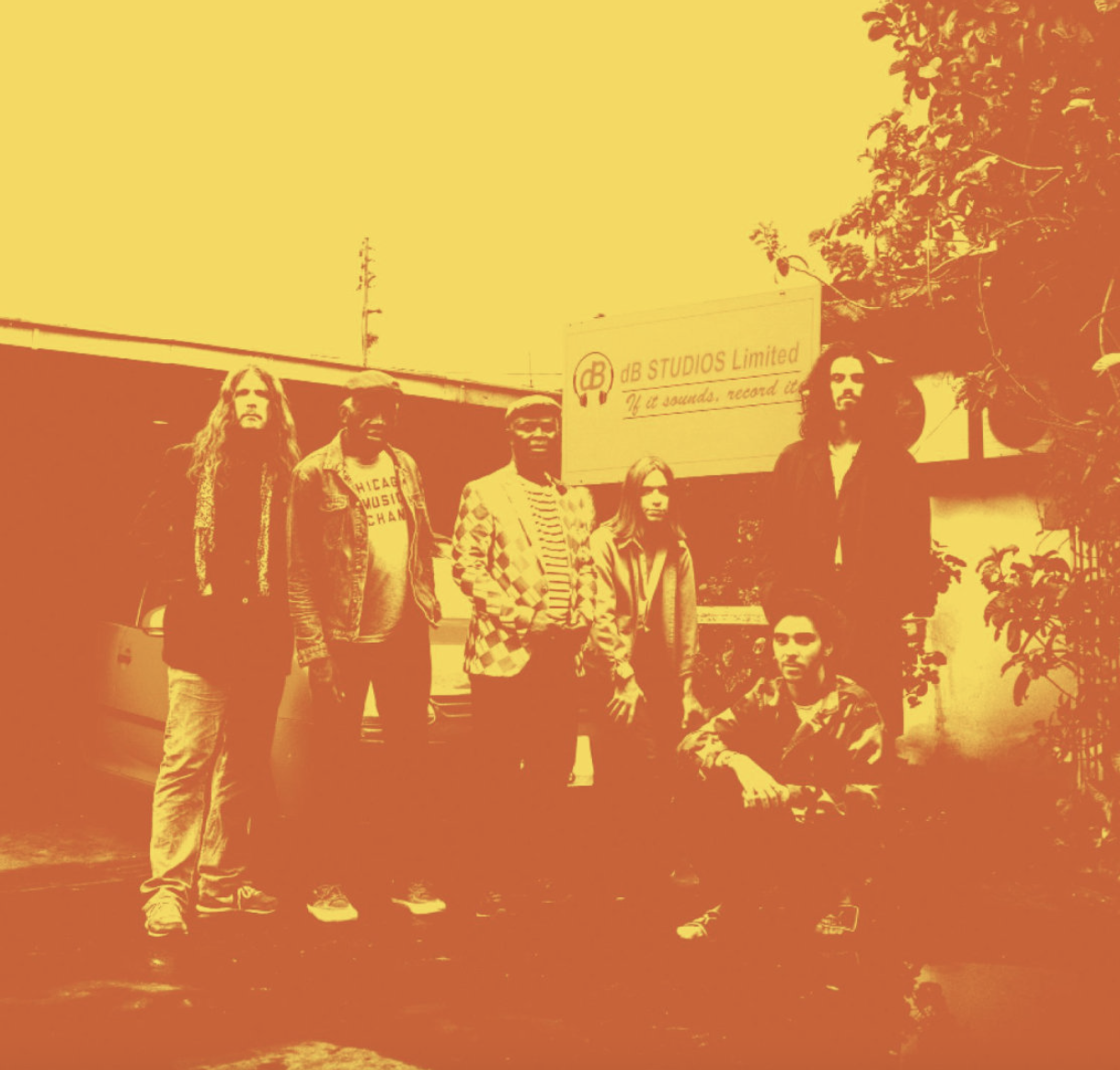
A story à la Rodriguez: between 1972 and ’77 the Witch, a band from Zambia, made five albums that were only released in Zambia. In 2010, reissues appeared in Europe and the United States: the Witch’s African rock-fuzz mix was liked so much that fans supported the tours of a new band that Jagari Chanda – the only survivor, now 71 – assembled six years ago, composed mainly of young European musicians.
Last week the Witch’s first album after four decades was released and Jacco Gardner both plays on it and produced it, a Dutch musician whom I love and about whom I was complaining via social media with my contacts about the long record absence only a few days ago (he had been spotted in Portugal in 2018 with “Somnium“). And yet here it is: he joined and produced the album of this historic band from Zambia and the result is amazing. The group’s African imprint explodes into a fuzz-based rock that is, to say the least, ultra-addictive. Leader Jagari Chanda was joined by new traveling companions Patrick Mwondela, Nico Mauskoviç, Charlie Garmendia, JJ Whitefield and Stefan Lilov.
A story and a record not to be missed.
GNOOMES, “Ax Ox” (Rocket Recordings, 2023)

Who’s Afraid of Russian Psychedelia? The war has erected barricades that music does not have, so here we are to recommend this fourth full-length from the band that comes from Perm who, after 3 albums characterised by the “exclamation point” (“MU!” of 2019, “Tschak! ” of 2017 and “Ngan!” of 2015), removes it from the title as if to normalise a proposal that is not normal . First of all, for the first time the quartet sings in their native language, Russian, and – since the beginning of the conflict with Ukraine – two of the members have fled Russia, which makes us understand the political approach of the band beyond a choice, that of using Russian this time, which would seem rather nationalist.
Musically, “Ax Ox” pushes a kraut direction elevated at times by techno beats (“Loops”) or garage-dark intuitions (“The Neighbor”), or diminished in porthole sensations à la Boards Of Canada (“Mirrors”).
Less recommended than the three albums above, but still out of the usual coordinates.
AUTHOR: Paul Bardelli
Kalporz X Monolith Cocktail: The imaginative slowcore of Bondo: interview with the band
March 8, 2023
EXCHANGE INTERVIEW FROM OUR ITALIAN PENPALS
By Monica Mazzoli
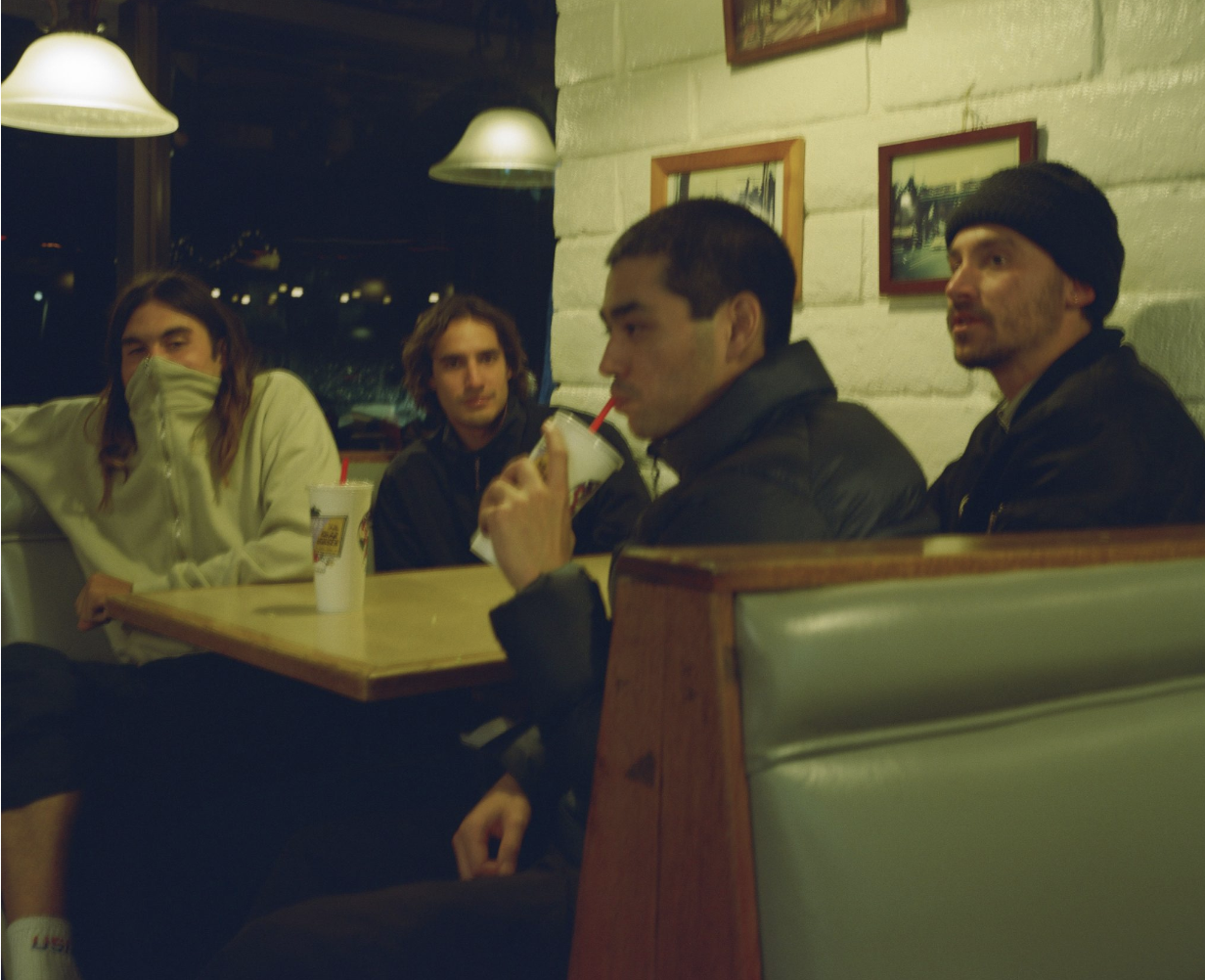
IMAGE: Bondo at Rick’s Drive In & Out, vicino al Dodger Stadium in Los Angeles
Continuing our successful collaboration with the leading Italian music publication Kalporz , the Monolith Cocktail shares reviews, interviews and other bits from our respective sites each month. Keep an eye out for future ‘synergy’ between our two great houses as we exchange posts during 2022 and beyond. This month, and featured in review on these very pages, Monica Mazzoli’s interview with the slowcore band Bondo.
Music often speaks in images. Los Angeles-based Bondo, first with the self-produced debut EP 77 (released in 2021) and then with the album Print Selections (released on February 24 by Florentine Therefore Records ), have succeeded with their imaginative slowcore in designing grainy sound scenarios, sandy: emotions, memories and thoughts become impressionist flashbacks shot in slow motion. A sound, that of the quartet, wavering, fluctuating which finds its emotional climax in minimalism: going beyond rock to embrace atmospheric music, an expression of the sound ideas that go round in the heads of the four members of the band.
We talked to the Bondos about their sound poetics, the group’s approach to composition and many other aspects that intrigued us:
Talking about the name of the band, the word Bondo has many meanings but it can be used to mean the people who live in the hilly regions of the Malkangiri district in southwest Odisha, India. Do you feel like an artistic unit isolated from the rest? What does the word Bondo mean to you?
Bondo in the United States is a product for repairing holes in cars, walls, metal, wood, etc. It is a chemical compound that hardens in 15 minutes and can be sanded. It is quite smelly and sticky, but very useful for its many uses.
The versatile nature of the bondo was part of the reason we thought it was a good name for our music. It is an “adhesive” paste, so it takes the shape you want and once it hardens, it keeps that shape permanently.
The choice of two songs like Egoizing and New Brain as singles doesn’t seem random to me. In my opinion, they represent the creative soul of the disc: the desire not to let the individual self and the mind of the single member prevail within a circle of people (as happens in the Egoizing video).
Sure. The lyrical content scattered throughout the two pieces is all connected by the theme of the dissolution of the individual self. As a band we are focused on collective expression: there is a happy chemistry that takes place within the group dynamics, and we do our best to allow all our different individual opinions to naturally come to a compromise on something again. “The whole is greater than the sum of its parts” or something like that.
The black and white covers of your EP and album are an interesting narrative choice. Is it wanted?
Aesthetically we always thought the music looked a lot like a Xerox printer, or the grainy scans you get in the library using older machines. I think these black and white photos also leave room for the music to speak for itself: when we make this music, we are completely focused on how it sounds in that moment and not how it will present.
As for the “Print Selections” cover, I enjoyed using Google Images to track down the source of the image. I didn’t succeed, but the results made me think. Among the corresponding images appear: “Alien antennas in the abyss”, “Ufiti, the ghost of Nkata bay”, “Twinkle of the sun”, and photographs of the sea by Mario Giacomelli. From a mysterious detail, the perspectives can be multiple. One can see many things in that piece of photo. I think this is an interesting fact, right?
The intention behind the cover image is for it to be very abstract and have a sort of Rorschach test feel. People tend to see different things but the image evokes something subtle on an emotional level. Something like music.
Many of the reference images for the album were black and white scans of UFO books, film photos with lots of light leaks, etc. All evoke similar feelings to what we experienced with music.
The image actually depicts light reflecting off water. We found it very fitting – some very simple things interact in a unique way that is momentarily appealing.
You have been compared to Acetone, and they are probably among the groups that inspired you, but what struck me in Bondo’s music, right from listening to the first EP, was the undulating development of the songs, as if the music were a wave to surf. There is a lot of emphasis on creating sonic atmosphere. The song that best represents this idea is “Pipecleaner”. I think it’s a distinctive trait of your music. What do you think?
I have a lot of respect for Acetones. To me they exemplify the ideal of a true band. Their piece Germs is perhaps the most successful piece ever written and performed. It evokes such a powerful feeling, such a unique and beautiful thing that only those three band members could achieve.
The sound atmosphere is very important to us. Our music (and maybe all music, you can say) has to do with creating an atmosphere, with feelings more than anything else. Feeling is such a subtle thing and to animate the different aspects of feeling one must be both intentional and flexible. That’s all we try to do when we make music, get closer to those sensations and sounds that we imagine in our head.
There are songs like “Container” and “Lo Tek” which, due to their short duration, seem like impressionist paintings: sound brushstrokes in freedom. I am wrong?
I think you are right. Little states of mind, little things that pass and give the sensation of movement without over stimulating.
I find the album title “Print Selections” to be appropriate: I see the songs as sound images printed on the vinyl record. I don’t know if my interpretation is correct.
Well said, I’d say I agree. The name comes from the mixing: our engineer Andrew Oswald sent us the final mixed files, some of which were sent to tape a couple of times and then digitalised again. One folder was titled Print Selections. It seemed to fit the songs well.
Special thanks to Quindi Records
Kalporz X Monolith Cocktail: [Scoutcloud] Metaphysical, dreamlike: the sonic surrealism of the mysterious Russian musician Mitka
February 7, 2023
Exchanging posts with our Italian penpals at Kalporz
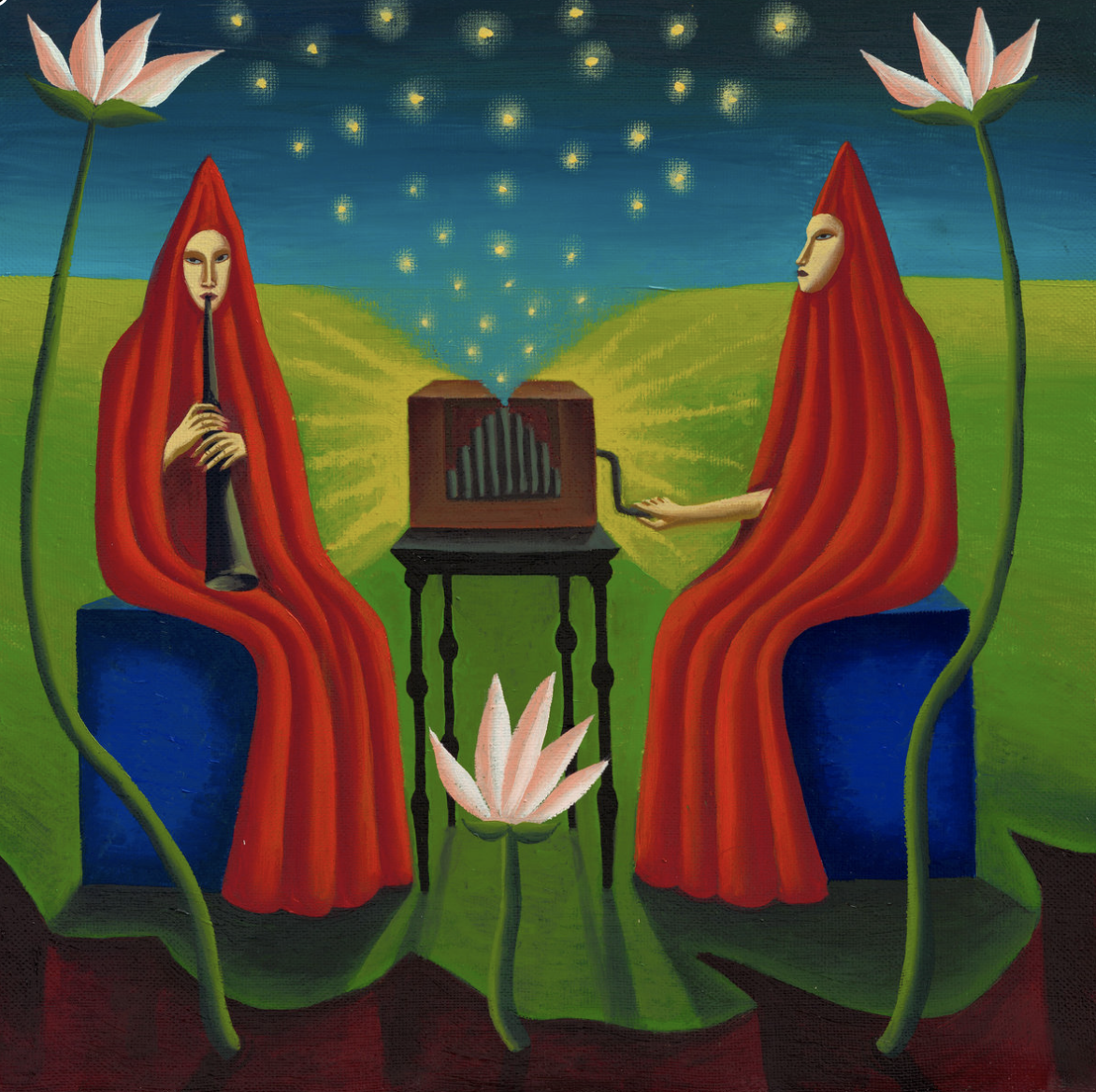
For those new readers/followers in 2023, the Monolith Cocktail has collaborated with the leading Italian culture/music site and festival Kalporz over the last few years. Each month we exchange posts from our respective sites. This month Monica Mazzoli introduces us, via the long-running [Scoutcloud] series, to the “metaphysical” surrealism of Mitka.
An aura of mystery surrounds the biography of Mitka. The sound engineer and musician from Ekaterinburg who works mainly for the film industry, does not give live concerts and is absent from social media having an almost ascetic lifestyle, at least so the press release reads release of his record company DiG Records. The cover of her Sound2 record, by Alina Vinogradova is dreamlike, metaphysical; so much so that it could very well be a surrealist painting by Remedios Varo. The music of the Russian artist is equally so, all the five songs on the album traveling beyond six minutes and sounding like a sort of hallucinated, visionary folk music: it seems that Mitka, for example, has recorded the sounds of drums in the forest, and built his own guitar. Beyond reality: the sense of mystery/dream prevails.
Kalporz X Monolith Cocktail: (Review) Weyes Blood ‘And in the Darkness, Hearts Aglow’
December 2, 2022
EXCHANGE REVIEW FROM OUR ITALIAN PENPALS
By Paolo Bardelli

Continuing our successful collaboration with the leading Italian music publication Kalporz , the Monolith Cocktail shares reviews, interviews and other bits from our respective sites each month. Keep an eye out for future ‘synergy’ between our two great houses as we exchange posts during 2022 and beyond.
This month Kalporz head honcho Paolo Bardelli assesses the new album from Weyes Blood.
Weyes Blood ‘And in the Darkness, Hearts Aglow’
(Sub Pop)
There has been a lot of talk about “lockdown music”: here And in the Darkness, Hearts Aglow could be defined as the first real album in the post-Covid world. More than for the sound, it is the themes addressed by Weyes Blood that make this new work of hers a point of reference for the era we shyly approach, that of overcoming pain in the context of a more or less latent dystopia. Natalie’s mastery is evident because she manages to transfigure the personal plane into the universal one, and more or less everyone has noticed it if it is true that And in the Darkness … was elected album of the month for practically all Italian magazines, print and online (and for us Weyes Blood is the cover artist of the month too).
From a musical point of view Weyes Blood completes that journey towards the sounds of the early 70s of groups such as The Carpenters and Carly Simon, that elegiac soft rock in which the piano and certain evocative atmospheres were the masters, already begun with the sublime Titanic Rising but by subtracting that small synthetic part that was still in the 2019 album. And in the Darkness… therefore becomes a sort of restart where everything is destroyed, with basic if not primordial instrumentation as can be that of pianos and orchestrations of violins to mark the need to build the new world from the ground up. But, be careful, there is an aspect that should be emphasised to those who might dismiss the sound part as a mere reprise of what it was: Mering expresses herself in a fully contemporary way, because, unlike the references we have mentioned, in her a hidden suffering predominates which is different from the fiercely pop humus (we could also define it as “escape”) of The Carpenters and similar artists. Indeed, more than suffering Weyes Blood demonstrates an almost pathological detachment, a medical-legal ability to dissect and analyse life and human relationships as if she were distant from them, as if she were not part of them. And in this sense she fits very well with her statement to The Forty-Five “I like to think that my music, instead of being entertainment, is more of a charm”. Here is the keyword: enchantment. What Mering manages is to make us stand there silent and astonished listening to her musical streams, minimal and majestic at the same time, in a sort of enchanted ecstasy in which her thoughts become ours: in short, an almost religious communion (it is no coincidence that the cover surprises her as a sort of new saint).
From a textual point of view, however, everything should be clear because Weyes Blood published a letter, last September, in which she explained the themes of her new test deals with, to be considered the second of a trilogy that began precisely with Titanic Rising. The central points would be mainly three: (1) being immersed in an era of instability and changes without return, (2) technology that is distancing us from people and (3) the heart, that muscle in our chest that perhaps out of modesty no one mentions it anymore as the meaning of things (but not Natalie, who makes it throb on the cover), as a necessary guide and hope in a dark period. In reality, a journey into the lyrics of And in the Darkness… must be accomplished by immersing oneself completely in them and not limiting oneself to uncritically flattening oneself to what was the intention of the author, albeit so clearly expressed. The works, when they come out from the authors, belong to those who receive them, and are ready to take on their own meanings and to travel autonomously around the world to give their own perspective to those who want to enjoy them. It is a job we cannot shirk.
The initial observation (in ‘It’s Not Just Me, It’s Everybody’) is that all these changes, the pandemic in primis but also the technology well represented by the mobile phone always in hand which is actually a “hole” ( “With this hole in my hand” ), have made us strangers to each other, and perhaps even to ourselves:
Living in the wake of overwhelming changes
We’ve all become strangers
Even to ourselves
But it is the sphere of human relationships, in any case, the one on which we inevitably set out again, trying to transcend the monotony of our daily jobs and our having stopped having fun, more particularly in search of that kindred soul, that ” twin flame” (‘Twin Flame’) that can lead us to have fun “at the Ferris wheel” (from ‘Hearts Aglow’):
Oh, I’ve just been working
For years and I stopped having fun
Oh, but baby, you’re the only one
Who would drive me down to the pier
Take me up on that ferris wheel
Weyes thus becomes like the spokesperson for a generation of thirty-year-olds (she, was born in 1988, and is 34) who are looking for their place in the world, and are always poised between yearning to find “great love” (“Cause I’ve been waiting for my life to begin / For someone to light up my heart again”) or to remain faithful to themselves as in the invocation of being transformed into beautiful flowers that perhaps will never truly blossom (‘God Turn Me Into a Flower’). The reference is to the myth of Narcissus, evidently updated here to the times of Instagram, whose obsession with a reflection in a tub leads him to starve and lose all perception other than his infatuation.
Above all, Mering gives us a truly superb, carnal and vivid text in the song ‘Grapevine’: she remembers a love, an “emotional cowboy with no hat and no boots” that made her burn with passion (“California’s my body / And your fire runs over me” ) but who took his love away like a child with a ball (“He has the power to take his love away” ). In this recalling his nocturnal longing would be to return to the vineyard where perhaps they made love all night long, lying in the meadows, in a bucolic image full of life and love (“But I still think of him at night / Ooh, you know I would go back to the camp” ) and instead now they’re just like “Now we’re just two cars passing by on the grapevine”. The image that I see when reading this closing sentence is of two parallel carts harvesting, on two roads that will never meet, and therefore there is no happy ending.
Mering, with her writing always a bit over the top in that being a bit apocalyptic (perhaps a legacy of having been raised by Pentecostal Christian parents), also very clearly identifies who can improve this stalemate of people “who don’t know where we’re going” (“We don’t know where we’re going” shesings in ‘Hearts Aglow’) and that is only the new generations: in fact on ‘Children of the Empire’she heralds the dawn of a new man (“The dawning of a brand new man”) in which only children can change things (“Children of the empire wanna change”) in search of the “eternal flame”, i.e. the reason why we really live. It’s not about surviving, it’s about burning with life.
And the concluding message is perfectly focused: it has been a “long and strange year” (there are almost three now, to tell the truth), we find ourselves immersed in a different world and we ourselves are different, they say that the worst is over and it’s time to go out, to have fun, to look to the future (from ‘The Worst is Done’) but, in reality, Weyes concludes in a certainly ironic way given that the accompanying music is lively, we are broken, we feel older and the worst is yet to come.
It’s been a long, strange year […] They say the worst is done And it’s time to go out […]
We’re all so cracked after that/ Got kinda old […]
But I think the worst has yet to come
But Weyes Blood doesn’t worry about all this, she observes it, scrutinizes it, analyzes it, but then goes her own way which is inevitably spiritual because her approach appears almost ascetic. The goal, as she says, is “understanding the natural cycles of life and death”, and listening to the album leaves in our souls an awareness that perhaps is taken for granted but which we often forget: that in the darkness, in dark times, hearts light up and shine even brighter.
80/100
(Paul Bardelli)
Kalporz X Monolith Cocktail: (Review) ÉLIANE RADIGUE ‘Occam XXV’
October 10, 2022
ALBUM REVIEW
Edoardo Maggiolo

In a synergy between our two great houses, each month the Monolith Cocktail shares a post (and vice versa) from our Italian pen pals at Kalporz. This month we relay Edoardo Maggiolo erudite piece on the latest project from the pioneering composer Éliane Radigue.
ÉLIANE RADIGUE ‘Occam XXV’
(Organ Reframed, 2022)
If you have ever stopped to look closely at any textile work, you will surely have noticed how, when seen up close, the filaments of the fabric draw textures and arabesques of subtle finesse. The same can be said of music: if we play a note and let it spread in the air, we realise how in reality this is a precious container of harmonics, true filaments of sound.
Few have explored this fundamental acoustic impression like Éliane Radigue, a French composer who has plunged into the study of sound over the course of several decades: first as a student at the Studio D’Essai in Paris, the former place of choice of the French Resistance and then immediately after the war it became both the national radio centre and the electroacoustic and concrete music laboratory of the pioneers Pierre Schaeffer and Pierre Henry; then as a precursor to the study of tape feedback, and finally he was one of the leading voices of experimental electronics of the 70s thanks to her compositions for her modular ARP 2500 synthesiser, which she tenderly baptised with the name of Jules.
Today Éliane is a fresh ninety year old who lives in an apartment in Montparnasse and who for at least ten years has discovered the way to her fourth musical life, which began with the cycle of works dedicated only to acoustic instruments called Occam Ocean. Radigue writes with a particular instrument and a particular performer in mind; she invites the latter into her apartment, the two sniff each other a little and, if they like each other, she starts the job tête-à-tête.
Occam XXV is a composition for organ and features the French organist Frédéric Blondy as performer. Here the instrument is completely stripped of any past sacred majesty, becoming the protagonist of what appears to be an icy stasis, but which in reality, despite its bare structure, is a slow but constant emergence from dark and humid mists until it becomes ineffable flight. . If listened to with a receptive ear and not just lazily reclining, on the one hand you notice how within the timbral staff that makes up the piece there are hidden minimal rhythmic impulses, fluttering harmonics and precious subharmonics that make up the wave movement of the individual notes and that they are the real underwater vegetation of this superficially placid sound lake; on the other hand, how a melodic progression of meticulous musical indolence is slowly drawn which, with wise calm, reaches passages of concretely pure beauty. Only in this way is it possible, albeit with difficulty, to describe how in these forty-five minutes one passes almost imperceptibly from the timbral-oceanic depths of the first part to the sonic ascensions of the finale; and in this journey into the unfathomable, the organ is transfigured, looking as much a bubbling synthesiser as a string section with very acute timbres. An ascent of vibrations markedly faded with the sound that, once it reaches the top, transcends itself becoming silence.
Like a thoughtful walk, in which only when we regain the sense of reality do we realise where we have arrived, Occam XXV is the sound of small steps on an acoustic path of mysterious fullness, which challenges even the totally inexpressive form in which is presented. One of the greatest works of a composer who has lived for a lifetime in the only fundamental element of music: pure sound.
ESSAY/Samuele Conficoni

From our penpals in Italy at the leading online culture magazine Kalporz, a deep read (footnotes and all) on the occasion of Bob Dylan’s 81st birthday. Samuele Conficoni, imbued loosely by the work Derrida and Artaud, looks at the theme of the mask in Dylan’s work.
“Bob Dylan. The Mask and the Songwriter.”
(The title of the essay is loosely inspired by the work Derrida and Artaud: the mask and the philosopher. [1])
To celebrate Bob Dylan‘s 81st birthday, we address an issue that has not been sufficiently studied within the singer-songwriter’s output: the theme of the mask. This long period of crisis and anomalies – two long years of masks in the West that have forced us to experience the other as veiled, and as the mystery increased so did the difficulty of knowing or recognising who was in front of us – has reminded us that we all often wear a mask. The 2016 Nobel Laureate in Literature, in the course of his very long career, has also written and sung about this, a theme that runs through him in art as in life.
1. “I’ve got my Bob Dylan’s mask on”.
“I’ve got my Bob Dylan’s mask on”: this is what Bob Dylan announced on stage at the Philharmonic Hall in Manhattan on 31/10/1964, on a particularly ‘heartfelt’ night for Americans, the night of Halloween, the masquerade festival par excellence. Bob Dylan, then on his fourth album in just over two years, was already at the time considered one of the most relevant songwriters of his generation. He had already released The Freewheelin’ Bob Dylan (1963), The Times They Are A-Changin’ and Another Side of Bob Dylan (both released in 1964), following his 1962 debut of the same name, and was on his way to becoming one of the most extraordinary figures of his time. In truth, that mask – assuming it is only one: director Todd Haynes, in his 2007 film I’m Not There, loosely inspired by the life and work of the singer-songwriter, let six different actors, for six different stages of his career, play him – had first been worn a couple of years earlier, when that promising and energetic young man, born in Minnesota, decided, perhaps also to rewrite his recent and so short past, to legally change his name, Robert Allen Zimmermann, to that of Bob Dylan.
1964. A US tour was underway that saw the singer-songwriter perform some of the most famous songs of his career, a few pieces he had written that had not been officially published, and some traditionals, in full consistency with the musical path he had taken. It should never be forgotten, in fact, that the undergrowth within which the singer-songwriter is formed is that of traditional folk music, of the oldest Anglo-American songs and of blues and gospel, which would remain, in addition to the very broad literary, philosophical and cinematographic influences, the blank page from which he gave life to his compositions. One thinks of the fact that in the 1990s Dylan would record two albums of covers and traditionals and in the 1990s no less than three albums, including a triple album, with reinterpretations of songs from the Great American Songbook, and that some traditional songs or songs from the Great American Songbook would be included in his live sets for decades. Having said this, it is clear that the sentence uttered by the singer-songwriter that night, accompanied by his own and the audience’s laughter, must be correlated with the creative universe that the author had just begun to give life to, in which the very genres he draws on as a source of inspiration serve as a mask, which the singer-songwriter uses to enhance and create his identity rather than to veil it. It is a necessity that has always accompanied the author, [2] when even before choosing the name Bob Dylan he was performing under other pseudonyms, such as Blind Boy Grunt or Elston Gunn.
What we are dealing with is an attitude, if not a forma mentis, that invests his production when, as is traditional in Anglo-American folk music, a certain melody is readapted and combined with new lyrics, written for the occasion, or when certain elements of the text are inserted into the new creation. This is how numerous compositions are born, with procedures that distance the outcome from the original source, sometimes even by a great deal, from “Blowin’ in the Wind”, which takes up the traditional “No More Auction Block”, to “I Was Young When I Left Home”, which looks back to “500 Miles”, from “Girl from the North Country” and “Boots of Spanish Leather” which are built around the chord sequence of “Scarborough Fair“, which “Girl from the North Country” also quotes in the lyrics, to “A Hard Rain’s A-Gonna Fall” which explicitly quotes the ballad “Lord Randall”. This only partially affects his production, but it is a decisive and emblematic point in the author’s creative process. It is clear, therefore, that in Bob Dylan, the concept of wearing a mask, and in particular of wearing Bob Dylan’s mask, is primarily a ploy to shift the focus away from himself with the main purpose of foregrounding his art.
2. Su maschere e trasfigurazioni
In 20th century literature, an author who deals extensively with the theme of the mask is famously Luigi Pirandello. In the Sicilian author’s literary-philosophical system, form cages life: we all wear masks whenever we decide to expose ourselves to the world around us. [3] Appearing and being in this sense are in constant conflict; the mask represents a shattered self that adapts to the contingent situation. Only in very rare moments does life manage to emerge: in those moments the inhibitions and restraints imposed by the social context are removed and instinct prevails. Pirandello often identifies this in the moments of madness and compulsive mania that cross us from time to time, well exemplified by the famous lawyer and law professor who, in the short story The Wheelbarrow, has the fixed habit of making his bitch do the ‘wheelbarrow’ every day, when he is certain that no one sees him. [4] Similarly, a brief moment of authenticity is what Mattia Pascal experiences between the announcement of his (non-)death and the assumption of his new identity, that of Adriano Meis. The comparison with Pirandello, whose system seems to be in opposition to Dylan’s vision, can provide us with an important key to deciphering Robert Allen Zimmermann’s choice to take on a new name (and to adopt, in the course of his long career, many other pseudonyms, which we will discuss in a moment).
The mask placed on Zimmermann’s face since 1962, even before the singer-songwriter began to release official records and obtain engagements for prestigious shows, is a mask that, rather than stopping the flow of ‘life’, to use again a Pirandellian category, and caging it, aims at creating life itself, as if before this stage it were a piece of marble still unworked. It is in an interview a few years ago, which we will examine later, that Dylan argues that life is a journey in which one must create, not find, oneself. As Alessandro Carrera reminds us again, ‘during an interview with CBS [in 2004], Dylan admits that he could never conceive of himself as “Robert Zimmermann”, even before he became Bob Dylan’. [5] The celebrated autobiography Chronicles Volume 1, to date the only published tome of a hypothetical multi-book project, where the singer-songwriter only deals with certain moments of his career, can offer us some examples of self-creation. [6] It is Carrera again who comes to our aid: the scholar, in dealing with Chronicles and what Dylan may or may not have altered or invented in speaking of himself, questions the existence of certain characters or situations, such as that of Ray and Chloe Kiel, a couple of whom we know nothing about but who, according to Dylan himself, would frequently host the singer-songwriter in New York. [7] It is no coincidence that much of the greatness of Chronicles, a literary work of extraordinary value, lies, to quote Carrera again, in ‘what he keeps silent or refuses to say’. [8]
The mask Robert Zimmermann has chosen for himself, Bob Dylan, is the author’s true self. The ‘artefactual memories’ [9] that the singer-songwriter inserts into the work are in perfect harmony with the need to live the story at the moment in which he is writing or singing it and, in some way, partly rewriting it. It is a typical trait of Dylan’s masterful compositional talent, about which the academic and professor of Classical Literature at Harvard Richard F. Thomas has written about in his essays and discussed in an interview published in these pages, [10] a tendency that includes, for instance, again to quote a passage from Chronicles, the attribution to Sophocles of a treatise on the origin of the sexes that the Greek tragedian and politician never wrote and that more than a banal mistake seems to be Dylan’s hope, a ‘might have been’, a ‘would have liked to read it’.
It is impossible, at this point, not to mention, albeit very quickly, the ‘transfiguration’ that Bob Dylan mentions in an interview with Rolling Stone in 2012, on the occasion of the release of the Tempest album, a studio record released by the singer-songwriter in September of that year. [11] Even if transfiguration is not to be understood as a mask, it is still something that veils or completes one’s own nature, rewrites it, transmigrates that of another, makes it something other than it could have been. It is impossible to understand what Dylan really meant in that specific passage, when a certain Bobby Zimmermann of Hell’s Angel who died in 1961 is called into question. Dylan claims that he has transfigured himself into him and adds, addressing the journalist Mikal Gilmore who is pressing him: ‘I’m not like you, am I? I’m not like him, either. I’m not like too many others. I’m only like another person who’s been transfigured. How many people like that or like me do you know?’. Is there something of the ‘poor Bobby Zimmermann’ in Bob Dylan? Or is it a transfiguration that has no impact on who he is? It seems strange, then, that Dylan speaks of this with such transport. Dylan, however, is very reticent and his explanation a little confusing: there is no clear answer. I too, Dylan says, had a near-fatal motorbike accident in 1966. And so, we ask? Dylan advises us and Gilmore to read No Man Knows My History by Mormon Joseph Smith. The ‘mask’ Bob Dylan is telling us about the truths of faith, about eschatology, about being able to ‘fly above [the chaos]’: just like the masks worn by the actors in Greek tragedy, bearers of ultimate truths that the pólis was not to ignore, masks that had replaced face-painting, a feature that would characterise the 1975 Tour, which will be discussed. On the concept of transfiguration Dylan plays hide-and-seek: he veils and unveils without giving us clues, as he has done throughout his career, particularly with those who interview him. If you want to know more about transfiguration, he tells Gilmore and, perhaps, us too, “you’ll have to go and do the work yourself to find out what it’s about.” [12]
3. “Life is about creating yourself”
Some of the characters in Dylan’s musical and literary world also wear masks or are characterised by nicknames that somehow veil the identity behind the nickname. In “Like a Rolling Stone”,[13] for instance, Dylan decides to use some talking names that somehow qualify the characters by giving them a mask. The narrator sees the life of the interlocutor, called, in fact, Miss Lonely, fall into disgrace: Miss Lonely is a young girl who enjoys life and spends and spends her parents’ money until she ends up becoming like the ragged Napoleon (Napoleon in Rags) she once mocked. Both Alessandro Carrera, in reflections conducted in several places, in his non-fiction production on the singer-songwriter and in his translation and annotation of Dylan’s works, and Mario Gerolamo Mossa, author of a monograph with a philological slant on the song in question, [14] have dealt extensively with the song and this is not the appropriate space to take up their reflections. Whether it is the allegory of a girl from Andy Warhol‘s circle with whom Dylan had come into contact, or an alter ego of Dylan himself, or a literary invention that has no contact with the reality surrounding the author, the Miss Lonely ‘mask’ is a parádeigma of all those who, from a situation of success, prosperity and happiness, find themselves slipping into a tunnel of darkness and misfortune through almost no fault of their own. It is not wrong to say, in short, that if today we wanted to refer to a person who has gone through a similar vicissitude, we could undoubtedly call her ‘a Miss Lonely’. Here Dylan, having put on the mask that made him himself many years ago, can now afford to sing these kinds of stories, which are absolutely unique in the world songwriting scene.
Ten years had passed since the recording and release of that song that changed history when, in 1975, Bob Dylan, having returned to live in the Village only a few years earlier and just a few months after the release of the sublime Blood on the Tracks, began to frequent the Other End, a venue where he performed frequently in the spring and summer of that year, and where Ramblin’ Jack Elliott, the late hip Bob Neuwirth, who died a few days ago at the age of 82 and who had been at Dylan’s side like a shadow between 1964 and 1965, Ronee Blakley and the then up-and-coming Patti Smith also took the stage. The singer-songwriter was in New York, where he was composing and recording the songs that would end up on Desire, which was to be released in early 1976. It was during these months that Dylan decided to create the Rolling Thunder Revue project, a bandwagon of artists that brought together Dylan himself, his accompanying band, which he called Guam, and other songwriters and artists who could vary according to the day, among whom were Joan Baez, Joni Mitchell, the aforementioned Ramblin’ Jack Elliott and Bob Neuwirth and, from time to time, even Allen Ginsberg, who would take turns on stage or, in Baez’s case, accompany Dylan in some of the songs of his two sets. Rolling Thunder I began in late October 1975 and ended in December at Madison Square Garden, where Bob was greeted backstage by Muhammad Ali and Bruce Springsteen. Widely studied by critics, Rolling Thunder has been the subject of in-depth coverage in a Bootleg Series, Vol. 5 (2002), a box set entitled The 1975 Live Recordings (2019) and Martin Scorsese‘s documentary released for Netflix in 2019 itself, Rolling Thunder Revue: A Bob Dylan Story by Martin Scorsese, which deals with the 1975 Tour and its preparations. Rolling Thunder II, on the other hand, took place in the spring of 1976, with different features and arrangements from the first but equally original and breathtaking.
In this period, the theme of the mask, and more generally that of hiding behind another self, is systematically and clearly covered ever since Dylan’s decision to appear on stage, in Rolling Thunder I, with his face painted white, a choice that was often accompanied by the wearing of a mask only during the first song of the set, ‘When I Paint My Masterpiece’, which was often sung with the aforementioned Neuwirth. It is a Dylan, that of ’75, who wants to reinvent himself once again. His marriage is in tatters; he has moved back to New York, is explosive and inspired, and has embarked again on extended tours only a year earlier with The Band. Something original and unsettling is what he needs to signal the new artistic phase he is going through. Here, then, in 1975 the mask returns, be it the real one he only wears occasionally in the opening track of his first set or the allegorical one of the face painted white, both covering the Bob Dylan mask he continues to wear. Perhaps it is metatheatre, perhaps it is the Brechtian actor’s estrangement that would become a systematic and increasingly complex and articulated modus operandi from 1988 to the present, in his so-called Never Ending Tour. It is in the interview with Scorsese for his aforementioned 2019 documentary that Dylan utters the phrase, a variation and extension of a gnome attributed to George Bernard Shaw, ‘life isn’t about finding yourself or finding anything: life is about creating yourself’, also mentioned above. This declaration of intent is the perfect manifesto to describe not only the adventure of the two-year Rolling Thunder period but the whole of Dylan’s life, not just his artistic one.
4. Masked and Anonymous
The film Masked and Anonymous, the title of which is already a statement of intent, was released in 2003, directed by Larry Charles and with a screenplay co-written by Charles and Bob Dylan. A first significant element lies in the fact that the two sign the script with fictitious names: Dylan assumes the Russian-speaking name of Sergei Petrov. The masquerade and anonymity intervene, therefore, right from the start, affecting even the most marginal aspect of the credits. In the film, set in a mysterious nation that seems to be located in a dystopian North or Central America and is ruled by a dictator, Bob Dylan plays Jack Fate, the dictator’s son and famous songwriter, who has been in prison for some time. He is released from prison and allowed to give a benefit concert. The plot is in some respects too cerebral, confused and not particularly gripping and the film is cinematically mediocre, but the importance of the work within the singer-songwriter’s ‘artistic context’ should not be underestimated. I use the expression ‘artistic context’ here to reiterate once again that Dylan is a river in flood and can only be (perhaps only partially) understood and understood if one follows, also and above all with a philological slant, every single aspect of his artistic production, in order to try, in this way, to capture his vision of the world and history. Returning to the film, it is appropriate to ask what this story means and what role it plays within Dylan’s musical production, which resonates powerfully throughout the film as Fate performs Bob Dylan songs and some traditionals. Carrera is again the first among Dylan scholars to grasp the centrality of this work, shoddy from a cinematic point of view but lucidly relevant, in the Dylan universe. In an article published online several years ago, [15] Carrera relates the film to Alexandre Dumas‘ The Iron Mask by the father Alexandre Dumas, showing the points of contact between the two narratives, but he takes a decisive step forward when, both in the online article just cited and in a much more recent essay of his own, [16] recalling the scene of the “very painful kiss” [17] between Jack Fate and Angela Bassett, who is his father’s lover but also Jack Fate’s lover, he realises that in Masked and Anonymous a much bigger and more crucial game is being played than a simple remake of The Iron Mask: a new chapter in the relationship between Bob Dylan and the African-American world, characterised by his fascination with black music and his frequentation of black women (he had married one in the 1980s, by whom he had a daughter), and of the complicated, and here impossible even to synthesise, relationship between his Jewish roots and the African-American universe, an issue that emerges in many of the songs he wrote between 1978 and 1986, poetic, hermetic and contradictory pieces that carry within them an obvious inner torment. Only through a new disguise could Dylan return to talk about that intricate and claustrophobic history. “The fundamental gesture behind Dylan’s œuvre is indeed the permanent construction and deconstruction of himself”,[18] writes Cristophe Lebold, and this film proves it once again, if ever there was a need. Despite the premises, Dylan fails to unravel the skein of that complicated story, but, as Carrera points out, “[he did not fail], because he tried, and nothing more than trying could he do”. [19] Finally, it should be remembered, en passant, that the name Jack Fate bears a striking resemblance to that of Jack Frost, another pseudonym behind which Bob Dylan always hides himself, who with this ‘cipher’ signs himself producer of all his studio albums from “Love and Theft” (2001) onwards, including the recent, splendid Rough and Rowdy Ways (2020). Jack Fate and Jack Frost represent yet another mask behind which the artist seeks new shelters.
Bob’s transformations clearly do not end there. Some time before the release of Masked and Anonymous, while playing in Newport on 3 August 2002, thirty-seven years after the famous concert at the Newport Folk Festival in which the singer-songwriter took to the stage accompanied by a band and strumming an electric guitar, Dylan wore a false beard and moustache, a unique feature that does not appear to be accidental, given the circumstances, namely his return to the place of the misdeed, in the same city where he had been booed and challenged by part of his audience decades earlier. In this game of the parts that seems to have no end and in which the Maestro seems to want to play catch-up with us, Shadow Kingdom, the film-concert recorded in May 2021 and released a few months later, in July, is also part of it. On a stage evidently inspired by the sets of Twin Peaks, sets that he would also adopt for the tours of 2021 and 2022, Bob Dylan performs some songs without spectators in front of him and performs others in front of an audience of ‘ghosts’ dressed in full ’40s or ’50s style, smoking, drinking and dancing; his musicians wear masks, an element that brings us back to the present; the audience that appears from time to time, and who seems to come from another era, does not: just as in his songs, the present, the past and the future are a single river, they all flow together, they mingle; the author has no need of ‘concrete’ masks as he always wears the one that makes him and not someone else. As Carrera writes, Dylan ‘does not even need to put on a mask: he has always had it on’. [20]
[1] Various authors, Derrida and Artaud: the mask and the philosopher, Medusa Edizioni, Milan, 2017.
[2] Among the many biographies of Bob Dylan, we recommend Anthony Scaduto’s Bob Dylan, Helter Skelter Publishing, London, 2001 (reprint of 1st edition Grosset & Dunlap, New York, 1971) and Robert Shelton’s recently reprinted and expanded Bob Dylan: No Direction Home (Revised Illustrated Edition), Palazzo Editions, Bath, 2021 (1st edition Beech Tree Books, New York, 1986).
[3] Of Luigi Pirandello see in particular the novels Il fu Mattia Pascal, published serially in the Nuova Antologia in 1904 and in a volume in the same year, and Uno, nessuno e centomila, published serially in La Fiera Letteraria in 1925 and in a volume in 1926, the play Sei personaggi in cerca d’autore, staged in a first draft in 1921, and the essay L’umorismo of 1908. It should also be mentioned that Pirandello gives the title of Naked Masks as the overall title of his theatre production.
[4] The short story, written in 1917, is contained in the Novelle per un anno.
[5] Alessandro Carrera, La Voce di Bob Dylan, 3rd revised and expanded edition, Feltrinelli, Milan, 2021 (1st ed. 2001; 2nd ed. 2011), p. 95. The 2004 interview for CBS can be found at the following link: https://www.youtube.com/watch?v=hOas0d-fFK8. Last accessed: 22 May 2022.
[6] Bob Dylan, Chronicles Volume 1, Simon & Schuster, New York, 2004. The Italian translation, edited by Alessandro Carrera, was published by Feltrinelli, Milan, in 2005.
[7] Alessandro Carrera, La Voce di Bob Dylan, cit., p. 95 and p. 386.
[8] Alessandro Carrera, La Voce di Bob Dylan, cit., p. 385.
[9] Alessandro Carrera, The Voice of Bob Dylan, cit., p. 392.
[10] Richard F. Thomas, Why Bob Dylan Matters, Dey Street Books, New York, 2017. The interview with Richard F. Thomas published in Kalporz in 2021 can be found at the following link: http://www.kalporz.com/2021/05/bob-dylan-at-80-interview-with-professor-richard-f-thomas-author-of-why-bob-dylan-matters/. Last accessed 22 May 2022.
[11] Bob Dylan Unleashed, in Rolling Stone, interview published on 27 September 2012 and available at the following link: https://www.rollingstone.com/music/music-news/bob-dylan-unleashed-189723/. Last accessed: 18 May 2022.
[12] Bob Dylan Unleashed, in Rolling Stone, cit.
[13] The song, whose officially released studio version was recorded on 16/06/1965, opens the album Highway 61 Revisited (Columbia, 1965).
[14] In Alessandro Carrera, La Voce di Bob Dylan, cit., passim, and in Bob Dylan (transl. by Alessandro Carrera), Lyrics 1962-2020, 3 vols., Feltrinelli, Milan, 2021, in the notes at the end of the first volume concerning the aforementioned song; Mario Gerolamo Mossa, Bob Dylan & “Like a Rolling Stone”: Filologia, composizione, performance, Mimesis, Milan, 2021.
[15] Alessandro Carrera, “The Torture of the Iron Mask. On Masked & Anonymous,” available at http://www.maggiesfarm.it/mascheradiferro.htm. Last accessed 22 May 2022.
[16] Alessandro Carrera, “Between the Shulamite and the Queen of Sheba: The Love Poem That Bob Dylan Could Not Write”, in Fabio Fantuzzi, Maria Anita Stefanelli, Alessandro Carrera (ed. by), Bob Dylan and the Arts: Songs, Film, Painting, and Sculpture in Dylan’s Universe, Edizioni di Storia e Letteratura, Rome, 2021, pp. 83-101.
[17] Alessandro Carrera, “The Torture of the Iron Mask. On Masked & Anonymous,” cit.
[18] Christophe Lebold, “A Face Like a Mask and a Voice that Croaks: An Integrated Poetics of Bob Dylan’s Voice, Personae, and Lyrics,” in Oral Tradition, 22/1, 2007, p. 63.
[19] Alessandro Carrera, “Between the Shulamite and the Queen of Sheba: The Love Poem That Bob Dylan Could Not Write”, cit. p. 101.
[20] Alessandro Carrera, “The Torture of the Iron Mask. On Masked & Anonymous,” cit.
COLLABORATION
WORDS: Monica Mazzoli
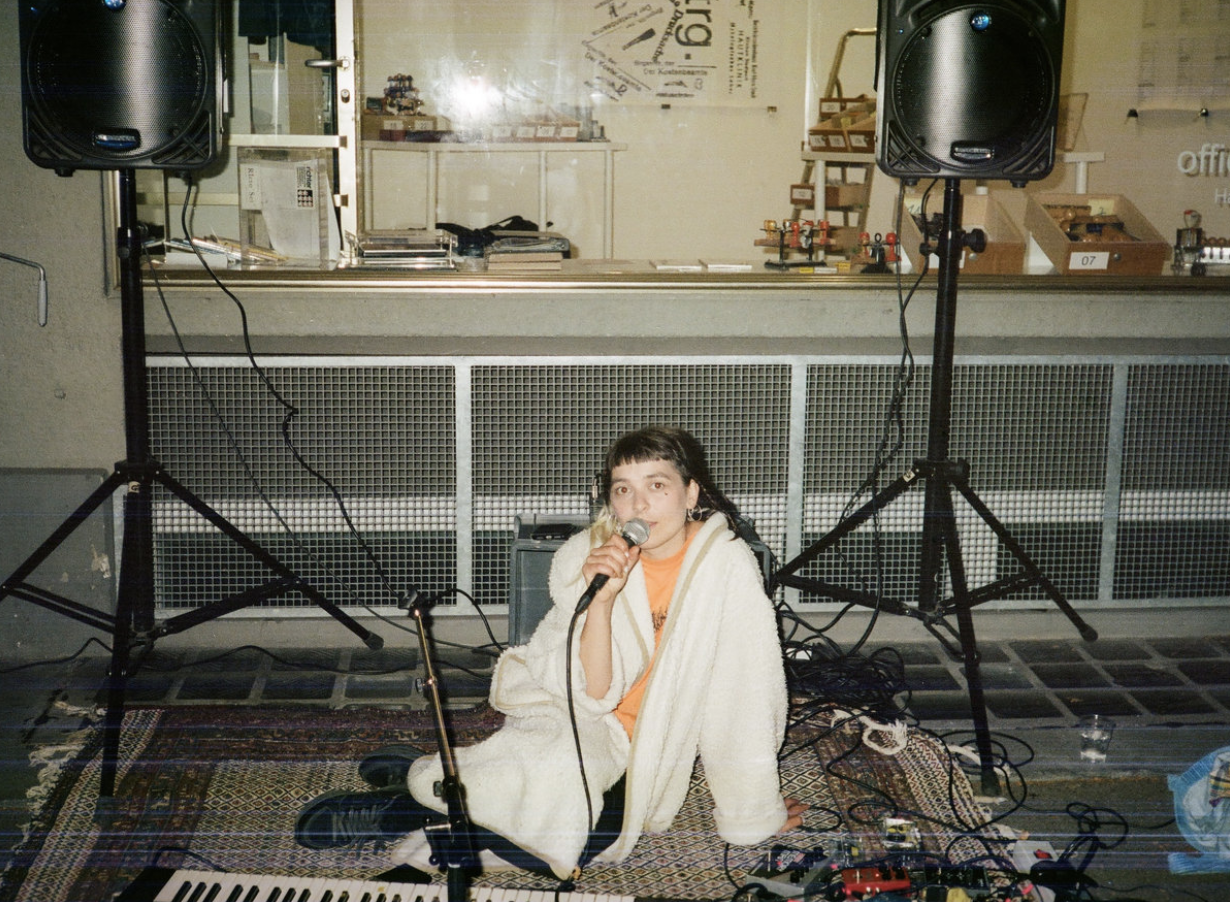
Over the last few years the Monolith Cocktail has been sharing a post each month with the leading Italian culture/music site Kalporz. This month Monica Mazzoli scouts out the sounds of the burgeoning artist, Leoni Leoni.
Bongo Joe Records of Geneva is one of those independent record labels (also a record shop) to always keep an eye on. In June 2022 a new release arrives that promises to be interesting and will make Leoni Leoni , musician, singer and producer from Bern better known to a wider audience: on vinyl and CD a collection dedicated to the Swiss underground artist who in recent years, between 2019 and 2021, produced a series of homemade cassettes: SUPER SLOW, EASY SLEEP, Yellow and Why, Drum Problems. The Bongo Joe compilation collects some of the songs already published on these cassettes where Leoni Leoni experiments with the deconstructed pop song form as if it were the memory, the dream of something else.
To discover.
A Special by Matteo Maioli

Over the last few years the Monolith Cocktail has been sharing a post each month with the leading Italian culture/music site Kalporz. This month Matteo Maioli celebrates the late enigmatic Pat Fish, aka The Jazz Butcher.
How many times does it happen that the legacy of a band becomes important after they break up, or if the artist leaves us prematurely? Pat Fish, a London-based singer-songwriter based in Oxford known to all as The Jazz Butcher, passed away on October 5th at the age of 63.
As soon as he graduated, he devoted himself unconditionally to music with Sonic Tonix by releasing a single on Cherry Red, just before coining (in ‘82) the name of the project for which he will always be remembered – since the other aliases The Jazz Butcher Conspiracy and The Jazz Butcher And His Sikkorskis From Hell are already more difficult. In the first records for the Glass label he played with David J and Kevin Haskins of Bauhaus, while Max Eiderhe will remain Pat Fish’s main collaborator until the last days: a four-year period, that of 1983-1986, best covered by the vinyl of ‘Bloody Nonsense’ that I found years ago at a flea market for two coins but which today is a level artistic testimony and harbinger of jewels such as ‘Big Saturday’, ‘The Human Jungle’ and ‘The Devil Is My Friend’: A mix of worker folk, Velvet Underground and soul music.
The ball then passes to Alan McGee, who with Creation released eight The Jazz Butcher albums, up until 1995. Fish becomes a sparring partner here, as the budget is oriented towards other bands (House Of Love, Primal Scream), amazed at the disorganization and the coarseness of an indie without any connection with the American market: therefore tracks like ‘Next Move Sideways’ and the psychedelic ‘Girl Go’, from ‘Cult Of The Basement’ slide without leaving a trace.
The only exploit comes in spite of himself from the acid-house style cover of ‘We Love You’, the Rolling Stones hit in 1967, which would guarantee him participation on Top Of The Pops; to understand the integrity of the artist Pat Fish it is enough to read the exchange of views he had with McGee in this regard: “Pat, You won’t believe it – 400 kids on the floor punching the air to your record!” “Yeah, right.” Yet even looking at Upside Down: The Creation Records Story we note the pride of Fish in having lived that fundamental period for English music, albeit as a gregarious but with personality, loved and respected by all.
For about ten years there was no news of The Jazz Butcher, when in 2012 he returned with Last of the Gentleman Adventurers, proudly self-produced. His work is characterized by a fervent passion for literature and cinema and social commitment, elements that also permeate the last album released by Tapete on February 4, 2022. The Highest Of The Land joins epitaphs such as Blackstar by David Bowie and Rowland S. Howard’s Pop Crimes, similarly recorded in the last days of life and who do everything not to be: we fight against the end, taking talent over the obstacle.
Between poetry and jazz settings, reverence for Bob Dylan and the new-wave, Pat Fish puts together a collection of splendid songs, including sarcasm (“My hair’s all wrong / My time ain’t long / Fishy go to Heaven, get along, get along” on ‘Time’) and urgency (“I said I would break my stupid life in two / For half an hour alone with you” on ‘Never Give Up’) with a cosmopolitan touch for ‘Sea Madness’. The album produced by Lee Russell (formerly with The Moons and Nada Surf) is the ideal starting point to discover this great songwriter, man of the world bringer of peace.
 Monolith Cocktail Blog