Kalporz X Monolith Cocktail: The Top 7 Suede Songs
September 18, 2025
Our continuing partnership with the leading Italian culture/music site and platform Kalporz. This month, an editorial special on Suede.
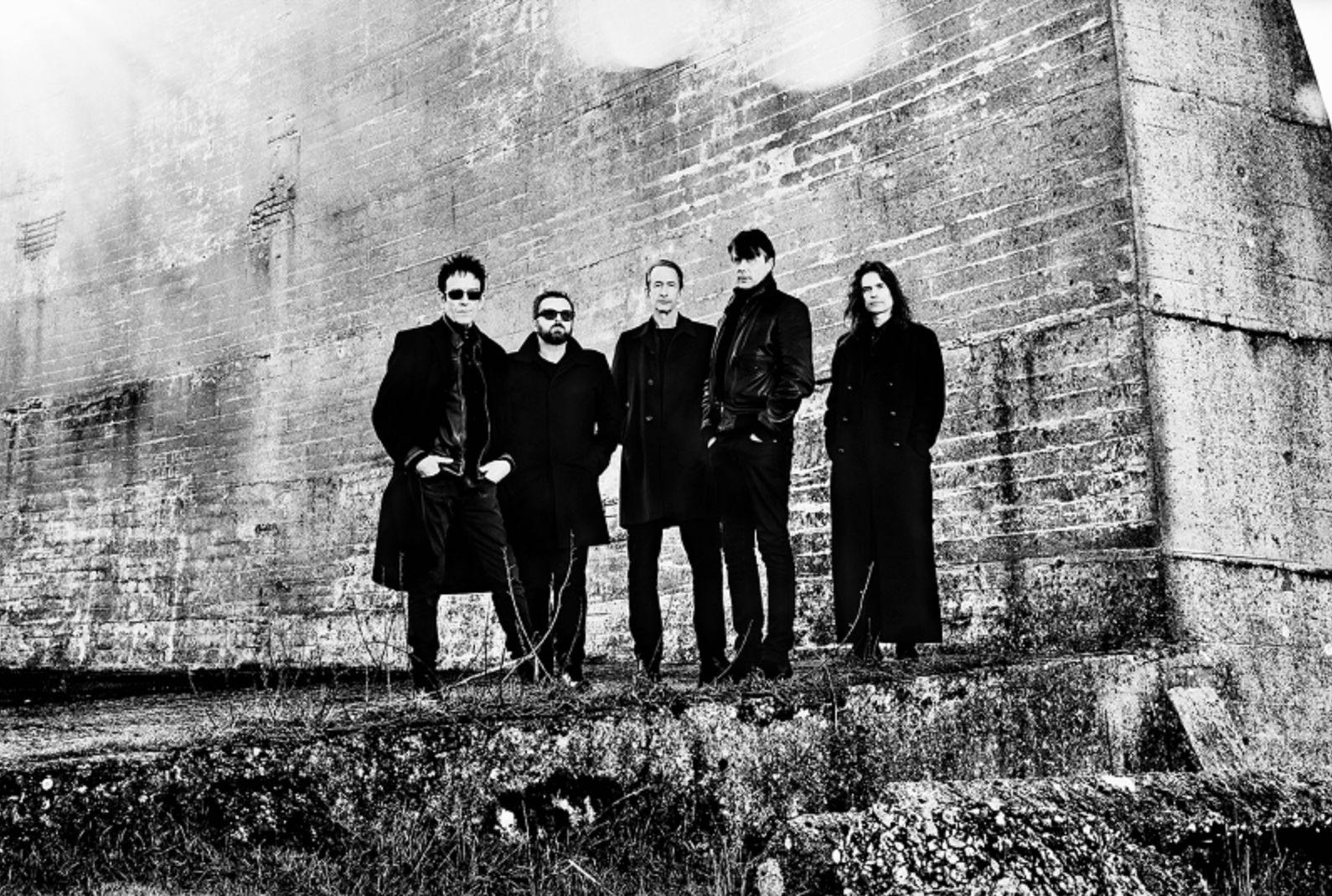
At regular points during the year the Monolith Cocktail shares posts from our Italian pen pals at Kalporz. The site recently celebrated its 25th anniversary – more or less coinciding with our very own 15th anniversary. Here’s to longevity, which isn’t easy in the unstable online world.
For September the editorial team pick and plead their case, selecting a magnificent seven from Britpop darlings Suede, who have just released their tenth album, Antidepressants, this month.
Suede is riding high: their latest album “Antidepressants” was released on September 5th via BMG (a review coming soon), while a few days ago they announced a live show at the Fabrique in Milan, scheduled for Friday March 27th, 2026. It was necessary to draw up a #top7 to establish some fixed points in their career, for the benefit of those who don’t, perhaps, know them fully.
7. “The Only Way I Can Love You” (from “Autofiction”, 2022)
It must be admitted that it was difficult to draw up our top seven, as the material from Suede’s “second life” is as valid as that of the 1990s: songs like “Hit Me”, “Outsiders”, and “Life Is Golden” could be among the best from any other British rock band. Yet I hadn’t yet found the beauty offered by their last two albums, released amid lockdowns and inconclusive wars. The songs become the very blood galloping through our veins, speaking of attachment to life, the importance of the future, and…, yes, human weakness. The frailties of everyday life that, once recognised, would make us feel better. I’m exaggerating they would guarantee world peace. “The Only Way I Can Love You”, track number four on Autofiction, in its splendid four minutes of catharsis and tears, sums up all these feelings: “I pretend I don’t adore you, but I’d take a bullet for you/Yes, it’s a sweet and bitter love”; “I’ll love you as I’m capable of doing it”, I’m not a hero at work, a social media idol, a politician holding the fate of the world in my hands. I have my limits, which are my strength. Today, art and music breathe in a song like this. (Matteo Maioli)
6. “Barriers” (from “Bloodsports”, 2013)
“Barriers” is the first single from Suede’s second half, after their 11-year hiatus, and the opening track on “Bloodsports”. It’s a comeback anthem, epic, triumphant. That’s why it’s so important. It’s a song about “leaping over barriers” because Suede probably needed to dive back into the fray with a song like this, which in terms of pomp has nothing to envy of songs like U2’s “Where the Street Have No Name”. With a comeback like that, the band could only have a radiant rebirth. (Paolo Bardelli)
5. “Trance State” (from “Antidepressants”, 2025)
As Maioli said above, Suede have truly outdone themselves on their last two albums, achieving a quality and clarity of expression that many bands of their era no longer possess: either they’re still sitting on their laurels, touring without any albums coming out (Oasis and Radiohead, the reference was all too easy), or they continue to put out stuff without many ideas (Manic Street Preachers?). Suede, on the other hand, have taken a new path for themselves, that of a darker sound than usual and tending towards the post-punk sound of Joy Division, and “Trance State” is a clear example. A song about alienation, drugs, and emotional survival is supported by a bass so beautiful it could be played by Simon Gallup. What stylistic perfection, guys! (Paolo Bardelli)
4. “Pantomine Horse” (from “Suede”, 1993)
“Pantomime Horse” is one of the most intense moments on an album that introduced Suede to the world. The glossy, glam Britpop of the opening minutes suddenly gives way to a ballad that is a metaphor for fragility, a confession of a constructed, uncertain identity, the tale of a (sexual) awakening that causes a mask to fall. It is also the second longest track on the album (after “Breakdown”), probably the least immediate: a tormented mood permeates the slow pace of a sound with gothic overtones, Brett Anderson’s singing is suspended between falsettos, whispers, and the sensation of a lament that could erupt into tears; Bernard Butler’s guitar expands the sounds and gently distorts them, and in those layers we glimpse the shadow of an almost orchestral crescendo that culminates with the mantra-like question “Have you ever tried it that way? ” The Londoners give in to their darkest and most vulnerable side, giving us a fascinating interlude like few others in their discography. (Piergiuseppe Lippolis)
3. “The Wild Ones” (from “Dog Man Star”, 1994)
The Anderson/Butler wonder duo lasted only two albums, their debut and this, “Dog Man Star”, and not even fully (Butler left before the entire album was finished). One of the most iconic and languid songs on this second, much-loved effort by our guys is this, “The Wild Ones”, which – coincidentally – is about a breakup, but one between lovers not between bandmates.
“And oh, if you stay
I’ll chase the rain-blown fields away
We’ll shine like the morning and sin in the sun”
It’s an evocative piece played as if on Mars, while Anderson’s interpretation is inspired by Scott Walker, Edith Piaf, Frank Sinatra and Jacques Brel, “people with the emotional and musical range to turn a song into a drama. That’s what I wanted for “The Wild Ones”: for it to be a timeless piece of melodic beauty that people would marry and share their first kisses to.” A later released version of this song clearly demonstrates the differences in arrangement between the two, and so you can decide for yourself whether you prefer the original or the variant with Butler’s four-minute solo (! )
2. “Animal Nitrate” (from “Suede”, 1993)
Suede made their recording debut between 1992 and 1993 with a series of killer singles, of which “Animal Nitrate” undoubtedly represents the pinnacle. Brett Anderson’s melodic, feverish vocals draw heavily from Bowie and new wave, while Bernard Butler’s guitar delivers one of the most memorable riffs of the ’90s: chromatic, sharp, and at the same time irresistibly catchy. And to think that the guitarist’s stated inspiration came from an innocuous clarinet-based British TV theme song from the ’70s, transformed here into a murky, sinful theme. Because the song, between allusions to sex and drugs and the suburban atmosphere of the video, transports us to rooms in London suburbs where we imagine all sorts of depravity and repressed desire. The result is a dazzling song, a manifesto of their decadent aesthetic, destined to remain forever among the absolute pinnacles of the British band. (Saverio Paiella)
1.“Beautiful Ones” (from “Coming Up”, 1996)
“Beautiful Ones”, which for the danceable (and tipsy) me will always have “The” in front of it, is Suede’s tenth single and their third—along with “Stay Together” and “Trash”—to land in the UK top ten. I’m not mentioning these other songs randomly, but to highlight the shift in strategy that became necessary with 1996’s Coming Up: catchy melodies, aimed at making inroads on the radio and the charts, introduced by simpler riffs, thanks to the addition of guitarist Richard Oakes, the replacement for Bernard Butler, who was not even twenty at the time. The affinity between the two lies only in their haircut: Bernard was the leading lady, the latter an honest but talented follower. “Beautiful Ones” became the London group’s hit par excellence, fusing the glam drive of T. Rex with the magnetism of David Bowie; I agree with Ricky Jones of Clash Magazine, who describes it as ” a jangly masterpiece with one of the most melancholic sing-along choruses Britpop would ever produce“, and it’s true; the guitar sounds as much like Johnny Marr as it does Mick Ronson. Thirty years on its shoulders, carried magnificently, a hymn to youth. (Matteo Maioli)
Kalporz X Monolith Cocktail: (Review) James Jonathan Clancy ‘Sprecato’
February 22, 2024
REVIEW FROM OUR FRIENDS AT Kalporz
AUTHORED BY Matteo Maioli – TRANSLATED BY Dominic Valvona
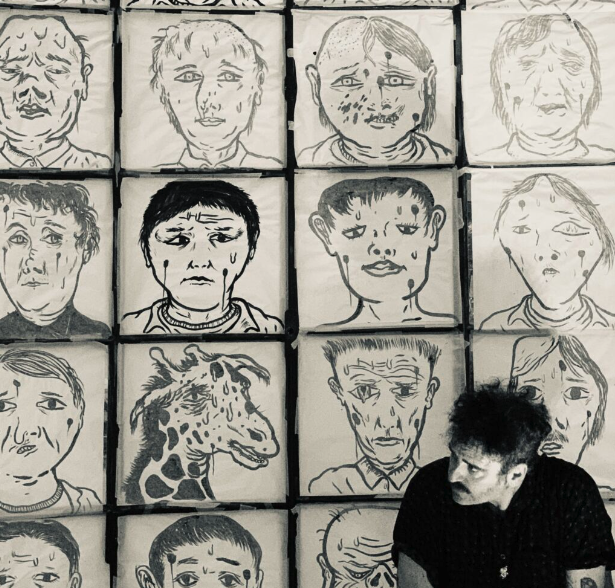
PHOTO CREDIT: Luca Mazzieri
Continuing our successful collaboration with the leading Italian music publication Kalporz , the Monolith Cocktail shares and translates reviews, interviews and other bits from our respective sites each month. Keep an eye out for future ‘synergy’ between our two great houses as we exchange posts during 2024 and beyond. This month regular Kalporz scribe Matteo Maioli reviews the latest album by James Jonathan Clancy on his own Maple Death label.
After the experiences with His Clancyness, A Classic Education, Settlefish and Brutal Birthday and seven years after his last album , the Italian-Canadian James Jonathan Clancy returns with the first album under his own name, released earlier in February by label he founded Maple Death Records.
Sprecato (which translates from Italian into “wasted”), written and recorded between Bologna and London at intervals between 2018 and 2023, presents the first of a visual and graphic collaboration with Michelangelo Setola – borne in an exchange of suggestions between the two artists through music and drawing, in the sharing of an almost apocalyptic idea of ”urban pastoral” with marginality, exploitation and alienation of the individual at its centre.
Across eleven tracks our many musical souls converge, from the role of the cosmic loner folk in “I Want You” to those of the avant-garde on “To Be Me”. But also bucolic minimalism in the opener “Castle Night”, no-wave bathed in electronics for “A Worship Deal” – which fuses together Cabaret Voltaire and Pop Group -, and psychedelia on the splendid “Had It All” – between Tim Hardin and Flying Saucer Attack. Dreamlike dilations combined with Walkerian lyricism thus traces a line of demarcation crossed by a Clancy in constant emotional transport. The setlist effectively alternates imaginative songs that occupy space and then immobilise it, see “Precipice”, with soundtracks from a primordial world (“Fortunate”, the Radioheadian Amnesiac heights of “Immense Immense Wild”).
To complete Sprecato Clancy brought together a cast of friends and international guests including Stefano Pilia, co-producer of the album and true right-hand man of the operation (like a Warren Ellis for Nick Cave perhaps?), Andrea Belfi on drums, Enrico Gabrielli of Calibro 35 and Afterhours fame on flutes and Francesca Bono on both piano and vocals, whilst the core of the band is formed by the Maple Death house musicians Dominique Vaccaro (guitars, aka JH Guraj), Andrea De Franco (synths, Fera) and Kyle Knapp (sax, of Cindy Lee). The curiosity is all about the live performance now, because the album easily ranks among the most successful things in James Jonathan Clancy’s decade, and more, spanning career.
SCORE: 81/100
Kalporz X Monolith Cocktail: [T4ATF!] The Clientele, The Suncharms, Night Beats, Maiiah & The Angels Of Libra
December 20, 2023
Exchange recommendations from our Italian penpals at Kalporz
Authored By Matteo Maioli

Continuing our successful collaboration with the leading Italian music publication Kalporz , the Monolith Cocktail shares reviews, interviews and other bits from our respective sites each month. Keep an eye out for future ‘synergy’ between our two great houses as we exchange posts during 2023 and beyond. This month, from the site’s [T4ATF!] series, Matteo Maioli recovers four tasty albums that fall between indie-pop, psych vibrations and explosive rhythm’n’blues genres.
The Clientele, “I Am Not There Anymore” (Merge)
It seems incredible, but from their formation in 1997 to today the London-based Clientele have never crossed the Italian borders. Yet the proposal by Alasdair MacLean and associates is among the most original to come out in the new millennium, between reminiscences of Love and the low fidelity experiments of the Pastels. Six discs, one more beautiful than the other, which cite literature (T.S. Eliot), surrealist poetry (Robert Desnos) and arthouse cinema. With bassist James Hornsey and Mark Keen, percussion and piano, as well as the use of celesta, tapes, bouzouki, mellotron and a string and wind ensemble, MacLean brings to life his most sophisticated work, embracing dub (“Garden Eye Mantra”), flamenco (“Stems Of Anise”), orchestral jangle-pop (“Lady Grey”) and modernism in winning refrains as for “Blue Over Blue”. For writing that offers disturbing images, cosmopolitan visions, the beauty of the passing of time. “I Am Not There Anymore” was published by Merge at the end of July but “Claire’s Not Real” suggests spreading it while enjoying the warmth of a fireplace, close to your loved one.
The Suncharms, “Things Lost” (Sunday Records)
The Suncharms were formed in Sheffield between the eighties and nineties, proposing in their first EPs an indie recipe based on equal doses of melody and noise; however, it is only in recent years that they are getting the right feedback, between compilations on Slumberland and new albums such as “Distant Lights” (2021) and the latest “Things Lost” for Chicago’s Sunday Records. Where “Dark Sails” combines sixties and Jesus And Mary Chain noise, with “Satanic Rites” I would lean more towards the lesson of R.E.M., even in Marcus Palmer’s tone not so distant from that of Michael Stipe. Keyboards and harmonica embellish the opener “3.45” while “Red Wine Kisses” will perhaps be the episode destined to remain over the years, to be listened to on loop, dreamy and exciting between The La’s and The Dream Syndicate. My friend Enzo Baruffaldi from Memoria Polaroid conveys the idea perfectly: “If it’s time to close the day on a melancholy note, without giving up feedback and reverberations, Suncharms’ latest album is the one for you (or, at least, mine)”.
Night Beats, “Rajan” (Fuzz Club/Suicide Squeeze)
We had partly forgotten about Danny Lee Blackwell, relegating him to “Who Sold My Generation”, a smash dated 2016 featuring Robert Levon Been of Black Rebel Motorcycle Club. Since then three albums have been released. After “Outlaw R&B”, acclaimed by the international press in 2021, it is the turn of “Rajan”, in which the Texan musician offers a warm interpretation mixing Rock, Jazz, Blues, psychedelia, Anatolian Funk, Chicano Soul and Spaghetti Western. And this is just to mention some of the ingredients of the collage of sounds and impressions sweetly blended with the “Hot Ghee” (peace guys, Tame Impala could hear it…) from Danny’s sizzling pan in a kaleidoscopic sound that merges into a mysterious unity. If “Thank You” points towards “Sunny” by Boney M with acid and gypsy tones, then “Nightmare” travels in the 70s between Brazil, Asia And California. “Rajan is just one of six examples of me doing exactly what I want, and not caring about whether it’s checked out or not. I’m a journey person. I want to make things for the sake of making them.” Holy words.
Maiiah & The Angels Of Libra, “Maiiah & The Angels Of Libra” (Waterfall Records)
Who said that the best soul only comes from America? The debut album by Maiiah, a singer with Balkan roots transplanted to Düsseldorf, has arrived to prove us wrong. Thanks to a phenomenal backing band, the Angels of Libra collective from Hamburg, who return after their success alongside Nathan Johnston: ten instrumentalists with a great affinity for analogue recordings, the concept sixties and the world of Ennio Morricone, Khruangbin and Air. It all started from Maiiah’s meeting with the producer and composer Dennis Rux in times of pandemic: a shared love for good old rhythm & blues united them in making music together with Libra, creating singles with excellent radio appeal such as “Obey” and “No No No (I’m So Broke)”, between fun and social criticism. On “I ‘m A Good Woman” she makes Barbara Lynn’s northern soul hit her own, while “Kava” dresses a Croatian text with boogaloo; “Turn The Page” and “I Wanna Go” finally show the affinity with Makin’ Time, James Taylor Quartet and the garage-pop of the new generation (The Courettes). Spectacular.
Matteo Maioli
Exchange recommendations from our Italian penpals at Kalporz
Authored By Matteo Maioli
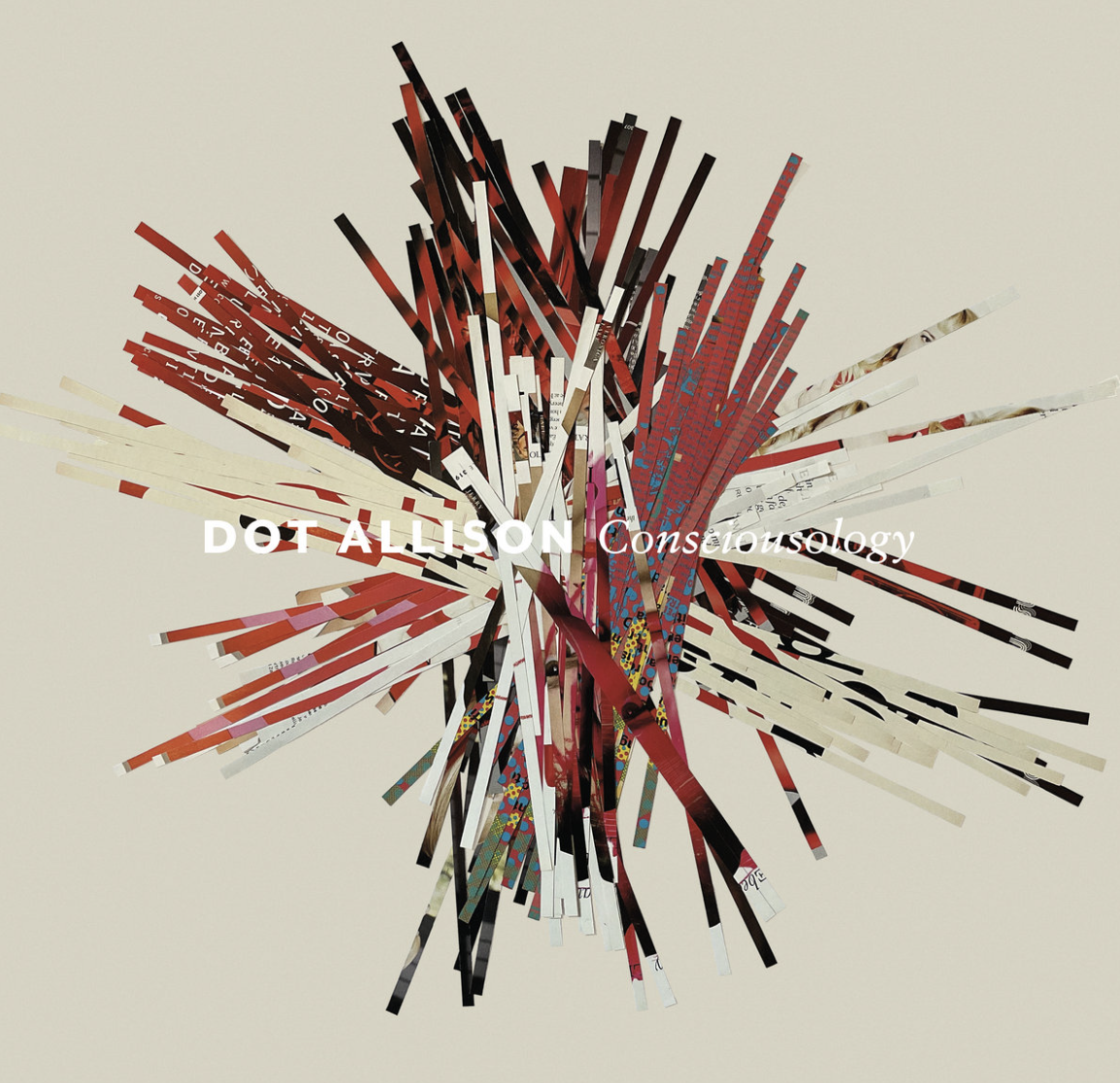
Continuing our successful collaboration with the leading Italian music publication Kalporz , the Monolith Cocktail shares reviews, interviews and other bits from our respective sites each month. Keep an eye out for future ‘synergy’ between our two great houses as we exchange posts during 2023 and beyond. This month, from the site’s This Rocks column, Matteo Maioli sells us on the music of the Scottish artist Dot Allison.
Dot Allison “Consciousology”
(Sonic Cathedral, 2023)
An established cliché in music in recent years is that great records are never released in the summer: well 2023 contradicts the matter wonderfully, from PJ Harvey to the Clientele (without forgetting the new Albarn… pardon Blur) to reach the artist whose least spoken of all but which once discovered never leaves you for life: Dot Allison from Edinburgh . “Consciousology” is her sixth album and comes out on Sonic Cathedral; produced with Fiona Cruickshank it includes collaborations from Andy Bell (Ride, Oasis), Hannah Peel and Zoë Bestel as well as the London Contemporary Orchestra who manage to give the songs a timeless charm.
As told by Sonic Cathedral’s Nat Cramp, “Dot’s voice has been a constant in our lives for the 30 years since One Dove’s “Morning Dove White” was released and we have always dreamed of working with her. We first met back in the early days of the label and she played for us a couple of times, including the legendary Lee Hazlewood tribute night at The Social. The self-effacing title “Consciousology” belies the seriousness of what lies within, and it’s impossible to not be completely consumed by the sheer beauty and intimacy of it all“. The sounds of Tim Buckley of “Starsailor” combined with Joni Mitchell and Van Morrison of “Astral Weeks” can give an idea of the source at the base of a raging and at the same time calm river that flows into the trip-hop and visionary electronics of Andrew Weatherall – a great friend and mentor of Allison -, already from the opener “Shyness Of Crowns”.
The strength of the collection emerges as much in Dot’s elegant and profound writing as in the work on her voice that sounds like the breath of nature; on “Moon Flowers” she whispers words of love transporting us to another dimension: “You reign, you influence the rain/In heaven and beyond you/There is a sunlight around you/You illuminate everything I do“, while with “Weeping Roses”, she returns to the fragile lesson of “Room 7 1/2” (Arthoused, 2009) punctuated by acoustics and piano, “ Bleeding roses they’re all you ever grew for me/I see blood in the spray, on the petals/Now , it’s so plain to see/Do you feel it too, tell me do you feel it too “. The launch piece “Unchanged” thrives on a soul-rock crescendo that explodes in a refrain worthy of Verve and Spiritualized.
Where in “Bleached By The Sun” she makes us miss the Air of “Talkie Walkie”, in the transcendent “Double Rainbow” she invents a cosmic manifesto that wouldn’t sound out of place in Rob Mazurek’s latest release with the Exploding Star Orchestra . And if I haven’t convinced you yet, the sweetness of “Milk And Honey” will take care of making you fly away from the wear and tear and problems of the modern era, starting like this: “I’d walk 10,000 suns/To have you next to me/Bridges I ‘d burn/To give you the rest of me/Lilac-coloured stars that glisten, beckoning/Galaxies of tumbling suns, are blessing me “.
Folks? backstory? Chamber-pop? I do not know. All this and also none of it. Simply: Dot Allison.
A Special by Matteo Maioli

Over the last few years the Monolith Cocktail has been sharing a post each month with the leading Italian culture/music site Kalporz. This month Matteo Maioli celebrates the late enigmatic Pat Fish, aka The Jazz Butcher.
How many times does it happen that the legacy of a band becomes important after they break up, or if the artist leaves us prematurely? Pat Fish, a London-based singer-songwriter based in Oxford known to all as The Jazz Butcher, passed away on October 5th at the age of 63.
As soon as he graduated, he devoted himself unconditionally to music with Sonic Tonix by releasing a single on Cherry Red, just before coining (in ‘82) the name of the project for which he will always be remembered – since the other aliases The Jazz Butcher Conspiracy and The Jazz Butcher And His Sikkorskis From Hell are already more difficult. In the first records for the Glass label he played with David J and Kevin Haskins of Bauhaus, while Max Eiderhe will remain Pat Fish’s main collaborator until the last days: a four-year period, that of 1983-1986, best covered by the vinyl of ‘Bloody Nonsense’ that I found years ago at a flea market for two coins but which today is a level artistic testimony and harbinger of jewels such as ‘Big Saturday’, ‘The Human Jungle’ and ‘The Devil Is My Friend’: A mix of worker folk, Velvet Underground and soul music.
The ball then passes to Alan McGee, who with Creation released eight The Jazz Butcher albums, up until 1995. Fish becomes a sparring partner here, as the budget is oriented towards other bands (House Of Love, Primal Scream), amazed at the disorganization and the coarseness of an indie without any connection with the American market: therefore tracks like ‘Next Move Sideways’ and the psychedelic ‘Girl Go’, from ‘Cult Of The Basement’ slide without leaving a trace.
The only exploit comes in spite of himself from the acid-house style cover of ‘We Love You’, the Rolling Stones hit in 1967, which would guarantee him participation on Top Of The Pops; to understand the integrity of the artist Pat Fish it is enough to read the exchange of views he had with McGee in this regard: “Pat, You won’t believe it – 400 kids on the floor punching the air to your record!” “Yeah, right.” Yet even looking at Upside Down: The Creation Records Story we note the pride of Fish in having lived that fundamental period for English music, albeit as a gregarious but with personality, loved and respected by all.
For about ten years there was no news of The Jazz Butcher, when in 2012 he returned with Last of the Gentleman Adventurers, proudly self-produced. His work is characterized by a fervent passion for literature and cinema and social commitment, elements that also permeate the last album released by Tapete on February 4, 2022. The Highest Of The Land joins epitaphs such as Blackstar by David Bowie and Rowland S. Howard’s Pop Crimes, similarly recorded in the last days of life and who do everything not to be: we fight against the end, taking talent over the obstacle.
Between poetry and jazz settings, reverence for Bob Dylan and the new-wave, Pat Fish puts together a collection of splendid songs, including sarcasm (“My hair’s all wrong / My time ain’t long / Fishy go to Heaven, get along, get along” on ‘Time’) and urgency (“I said I would break my stupid life in two / For half an hour alone with you” on ‘Never Give Up’) with a cosmopolitan touch for ‘Sea Madness’. The album produced by Lee Russell (formerly with The Moons and Nada Surf) is the ideal starting point to discover this great songwriter, man of the world bringer of peace.
 Monolith Cocktail Blog