THE MONTHLY DIGEST OF ACCUMULATED NEW MUSIC, THE SOCIAL INTER-GENERATIONAL/ECLECTIC AND ANNIVERSARY ALBUMS CELEBRATING PLAYLIST, AND ARCHIVE MATERIAL CHOSEN BY DOMINIC VALVONA

Continuing a series that started in 2023, the Digest is my one-stop column of the new and the old; a secondary home to all those releases I missed out on or didn’t get room to feature in either my Perusal reviews features or singular Our Daily Bread posts, plus a chance to celebrate timely anniversary albums and dip into my own record collection with the a special anything goes playlist, and to, finally, dip into the Monolith Cocktail Archives.
The New: this will be a briefing of a sort, with a short outline, thoughts and reactions to a number of recent albums from my inbox – currently a 1000+ releases a month on average!
The Social Playlist: choice music collected from across the ages, borders and genres, with a smattering of tracks from choice anniversary celebrating albums of worth and cult status. Consider it my unofficial radio show. The Archives: self-explanatory, but each month I chose past pieces from the extensive Monolith Cocktail back pages that have a timely ring to them.
___/NEW\___
Mohammad Syfkhan ‘I Am Kurdish’
(Nyahh)
To do justice to the backstory (one that’s filled with tragedy and yet musically inspiring) of the Syrian-Kurdish surgical nurse and musician-artist Mohammad Syfkhan, I’d need far more room. But in brief, the heralded ‘bouzouki’ (a round bodied, with flat top, long-necked lute with resonating and sharp metal strings strummed and picked with a plectrum, that was brought to Greece from Anatolian refugees) maestro and singer was forced to abandon his family’s home in the city of Raqqa during the senseless apocalyptic Syrian civil war. As various fractions fought against the Assad regime, Islamist’s most feared and brutal cult, ISIS, swooped in and proclaimed that atavistic Euphrates located city their capital: the centre of operations and a new sickening, destructive caliphate. As a minority Kurd, Syfkhan was already in danger, but when one of his son’s was murdered by the terror group, they had to join the growing diaspora of Syrians fleeing the country and region to escape persecution (by not only ISIS but Assad too); splitting the family between Germany and Ireland, where Syfkhan, his wife and young daughter were kindly taken in.
Poured into his debut album (although he started his own band The Al-Rabie Band decades ago back in Syria; and a very popular, sought-after troupe they were too) that loss and upheaval is balanced with certain joyous and romantic gusto. Longing for home mostly certainly, and yet making a new life in his adopted Leitrim sanctuary on the River Shannon; in the moment, spreading the traditional and more contemporary music of his Kurdish and Syrian roots whilst also collaborating with those native musicians and those that have also made that same Irish village their home too (including on this stunning album the composer, improviser, sound artist and saxophonist Cathal Roche, and the composer, improviser and cellist Eimear Reidy).
Like a ascending stairway, or flowing and resonating with evocative melodies magic, lute stirring ruminations sweep over Arabia and surrounding regions; referencing anonymous, collective and some original-penned compositions and dances to Islam’s ‘golden age’ of fairytale (‘A Thousand And One Nights’), Kurdish pride in the face of repression (the title-track of course) and its peoples’ struggle for independence and respect (‘Do Not Bow’), lovelorn enquires (‘Do You Have A Lover Or Not?’), and the missed daily activities, interactions of life back home in Raqqa Across it all the hand drums tab, rattle and roll; the cello arches, weeps and bows in sympathy; and the bouzouki lute swoons and rings out the most nimble and beautiful of ached and more up-tempo giddy tunes. There’s a real weight and energy at times, balanced out with slower emotional reflections; but when they go, they go! All the while you can trace the lineage, the scope of the sound back to the Middle East, to old Anatolia, more modern Turkey, and even the Hellenic; and from weddings parties to the courtly, to the caravan trails and souk. I couldn’t recommend this album enough; already sitting as it does in my favourite choice releases of 2024.
epic45 ‘You’ll Only See Us When The Light Has Gone’
(Wayside And Woodland)
With enervated and evaporated applied washes, and drifting along with a certain despondency, Ben Holton and Rob Glover’s long-running – but due to circumstances beyond their control, interrupted – epic45 project finds much to cover; from Brexit to the lunacy of the housing ladder; the parental cliques of the school gates to the death-by-a-thousands-cuts decline of England’s rural and seaside towns.
Already, unbelievably, four years since the last album (finding a favourable audience at this blog) Cropping The Aftermath (released during the height, more or less, of the Covid pandemic), You’ll Only See Us When The Light Has Gone arrives in the wake of setbacks – from the repercussions of both Brexit and Covid on touring (with the band’s Japanese tour cancelled, but also, Europe for us Brits, no longer part of the free-movement agreement, becoming a major pain-in-the-arse to circumnavigate) – to the on-going issues of Holton’s severe back problems.
But persist they did, and went away to produce this idiosyncratic take on the modern life is rubbish (and expensive) idiom. This is a resigned but rallying push back against life in, what they call, the ‘edgleland’, the ‘nowhere places’; pushed out onto the peripherals of society and inclusion. The very English preoccupations of owning a home permeate, from the ill-planned ‘floodplain’ sites that many are forced to accept, to the grander housing development promises of ‘stepping stones to country homes’. But this is a wider statement on a nation in crisis, and the pressures of keeping heads and minds above the crushing effects of unceasing disillusion; ‘dignity’ in the face of narcissistic cultural and political vacuous, the cost of living and bad health.
A very different record from its predecessor, Holton and Glover bring songwriting and vocals to the forefront; from the near forlorn shoegaze-y and woe of late 80s and early 90s indie, to what I can only describe as higher scale soulful indie and more modern effected R&B aches. But the music hasn’t exactly taken a back seat, with vapours of ‘Oh So’ period Charlatans, Neon Neon, Seefeel and The Last Sound, touches of soft power rock from the 80s and 70s, and the appearance of their former live, and My Autumn Empire, drummer Mike Rowley powering the breaks with evocations of Bloc Party at their most subdued and building a soft momentum when the drive is needed to escape the wispy drifting. Within that framework there are other nice little touches too: the glimpse of surface, environmental ambience and dialed-out conversations, a touch of folksy Iberia guitar here and there, and veil-like chime of the celeste.
epic45 somehow manage to retrieve hope and possibility from the ether of debilitating tiredness on an album that sees them move in more melodious and vocalised direction.
Boštjan Simon ‘Fermented Reality’
(Nature Scene)
Glitches in the cerebral; a coming to terms with the current age of high anxiety and alternative realities of a world in turmoil and flux; the debut solo turn from the Slovenian saxophonist and various electronic apparatus experimentalist Boštjan Simon puts the former instrument through a process of external effects to sound a surprisingly rhythmic vision of explorative jazz, broken beats, breakbeats, library music, kosmische and fourth world music.
Regular readers of the blog might recognize the name as part of the Slovenian trio of Etceteral, but Simon’s CV and involvement also runs to the groups Velkro and Trus!, plus a duo with the percussionist Zlatko Kaučuč. But now, stepping out on his own, he creates a soundboard and environment from a modified sax fitted with sensors to enable the triggering of oscillators in a modular system setup, using a new experimental interactive module called Octosense.
The results of which combine abstract blows, holds and wanes with more melodic and fluty vapours of sax, and Eastern German space programme oscillations with primal lunar bobbles and Asmus Tietchens popcorn. Taking the Jazz Messenger Jackie Mclean’s famous “saxophone is a drum” as a prompt, that instrument is reshaped in the style of Alex Roth and Andy Haas to explore new quadrants and feels of the keen and untethered: remarkably very melodious and tuneful in places, with some beats sounding like Madlib or Farhot at the helm. You can add Thomas De Pourquery to that list of reference points, but also Frédéric D. Oberland, Otis Sandsjö, Laurence Vaney, Joe Meek, Bernard Estardy (the last three in relation to the more playful, retro sounding bobbly liquids and satellite communication moments) and, on the near new age disorientated dance of ‘Gmnoe’, Ariel Kalma. That should be enough to go on for now. A solid, or not so solid but more open-ended and explorative, start to the solo career, Fermented Reality is a unique album of saxophone evocations and environmental probes.
Poppy H ‘Grave Era’
(Cruel Nature Records)
Zombie medication, zombie blades, zombie government: what a world to be dragged into. As the always awake screen lights up another terrible, distressing notification, or yet another crisis to weigh on the mind, the multi-instrumentalist, field recordist and producer Poppy H holds a phone up to society and openly records the decay, the innocuous and fleeting interactions of a world on standby as Rome burns to the ground all around them. Coping for many – and it’s neither their fault nor ours – is to keep keeping on with the daily grind; the one highlight of the day, picking up that mundane “flat white”.
All the commonality and evaporated stains of modern Britain are played out across a simultaneously creepy, lo fi bucolic, planetary, industrial and Fortean soundscape of café orders, snippets of conversations and crackles of interference. The Grave Era is certainly haunting and gray at times, and yet has a sort of reverberation of Andrew Wasylyk and the Cold Spells’ hallucinatory pastoral rusty piano, and a dreamy filter of piped church organ music – there’s even a sort of spell of what sound like the courtly music of Medieval or Tudor England at one point. For the most part, this is an album of chemical and more obscure prompts; a window in on the radioactive, plastic and technological flitching and glitch fabric of a fucked-up culture in turmoil and decline, yet far too inoculated through drugs (both the legal and illegal kinds) and the social media validation cult to face it or indeed change it. The sounds, production and vapours, visitations reminded me in equal parts throughout of the Sone Institute, Belbury Poly, Walter Smetek, Fiocz and Boards Of Canada, but go far further outside this country’s borders on tracks like the drifted passing melodious ‘Shaid & Irfan’, which could be a recording, as the traffic and daily business of others carries on in the foreground and background, of musicians from anywhere in North Africa, the Middle East, Afghanistan or Pakistan.
A country haunting itself, this is England in the dying embers of climatic, societal and political change; scored by a unique theme of recordings that masterfully encompass the erosion of action, living and hope in the “grave era”.
Meiko Kaji ‘Gincho Wataridori’
(WEWANTSOUNDS) 23rd February 2024
Heralding the transition of the cult Japanese actress-singer Meiko Kaji’s move to recording artist in the early 1970s, the vinyl specialists at WEWANTSOUND, in partnership with Teichiku Records, continue to reissue the leading star of B-movie and “ero guro” movie franchises’ back catalogue of influential albums. Following in the wake of last year’s Hajiki Uta LP, and reissued for the very first time, Tarantino’s crush (no Kill Bill’s bride without Kaji’s groundwork as the avenging Lady Snowblood; one of her most iconic roles) and untold influence for many over the decades, the star of many infamous Japanese schlock and brutal revenger horrors and violent killings sprees’ debut LP, Gincho Wataridori is up next in the roster.
Originally coaxed into the studio environment to sing the songs that would appear in and accompany a list of movie franchises (from Female Prisoner Scorpion to Blind Woman’s Curse and Stray Cat/Alleycat Rock), Kaji’s songbook repertoire expanded to include the Enka (a performative traditional form that often carried masked messages of political texts, later on, stylized with modern pop sensibilities in the post-war period), psych rock and Kayokyoku (a Japanese pop style with simple melodies and lyrics easy to play and sing along to).
The first of five albums recorded between 1972 and 1974 for Teichiku, the inaugural songbook in this run features a quartet of softly lush and Vaseline camera smeared dramatic fatale yearns and spindled, gently mallet(ed) funk-whacker and tremolo fuzzed dramas from both the Wandering Ginza Butterfly and Blind Woman’s Curse films – both Yakuza and Bōsōzoku themed revenge twists on the genre. The rest of the songs comprise of signature Oriental riffs on Axelrod, Bacharach, 60s French and Italian pop sirens and smoky cocktail cabaret jazz. Keji’s accompaniments are masterful, if light, and do the trick as her alluring, coquettish and often longed vocals rise to the occasion. Sven Wunder seems to make a Mosaic out of it, and a multitude of Hip-Hop artists have sampled it, but Gincho Wataridori remains a cult album ripe for reevaluation and attention.
Ap Ducal ‘U’
(Weisskalt Records)
Visioning a saturated spectral display of waveforms, moving bass lines and acid turned dials Camilo Palma (under his twelve year running project alter ego Ap Ducal) manages to blend kosmische and early synthesizer music with the German New Wave and post-punk genres, and various other cosmic electronics on his new succinct, minimalist entitled album U.
Collaborating with the Chilean musician Sebastián Román (otherwise known as Persona RS), Palma unites two sounds, two crafts to a fizzled, metallic filament cold wave soundtrack that moves between soft deep curves on the radar to the motorik and interstellar. Amongst the analogue electronics, the synthesized algorithms, the oft four-to-the-floor beat, and the paddled, rotor-bladed and tubular rhythms there’s echoes of Bernard Szajner, Sky Records, Heiko Maiko, Ulrich Schnauss, Michael Rothar, Eat Lights Become Lights, Basic Channel and Leonidas. ‘UUUU’ is a little different however: reminding me a bit of a Goblin Italo-Giallo horror soundtrack merged with the icy distillations and peregrinations of Edgar Froese; a bit of mystique, the occult and cold airy vacuums folded within the cold wave calculations.
Cosmic Couriers of a kind, the sonic partners on this forward propulsion make kosmiche and krautrock influences dance to a filter of tape music and minimalist techno. I’d say it was a successful conversion of all those inspirations/influences; making for a roaming and hypnotic experience.
____//THE SOCIAL VOLUME 83\\____
Continuing with the decade-long Social – originally a DJ club night I’d pick up at different times over the past 20 plus years, and also a café residency from 2012 to 2014 – playlist, each month I literally chose the records that celebrate anniversary albums, those that I’d love to hear on the radio waves or DJs play once and while, and those records that pay a homage and respect to those artists we’ve lost in the last month.
February has been a harsh harbinger of death, taking away from us both the mushroom incantation haiku experimental artist Damo Suzuki and motor city muthafucking jam kicking guitar-slinger antagonist Wayne Kramer. As a front man of a sort for Can during perhaps their most creatively fertile and influential period, from Soundtracks through to the Future Days opus, Suzuki also fronted numerous collaborative projects, his own “network” and “band”, whilst also knocking about with the post-punk-kruatrock legends Dunkelziffer. Tracks from more or less all of these ensembles appear here, alongside a couple of homages to the former MC5 rebel Kramer – ‘Ramblin’ Rose’ from the defining live rallying call for a generation Molotov Kick Out The Jams, something from his Citizen Wayne solo affair, and, just to be different, a track from his drug-addled hangout with Johnny Thunders, ‘They Harder They Come’.
Anniversary spots this month are taken up with covers of songs from Bob Dylan’s 1964 LP, The Times They Are A-Changin’, something off Amon Duul II’s less than celebrated, but much loved by me, Hijack LP from ’74, and tracks from Aretha Franklin’s Let Me In Your Life (50 this month), Mick Ronson’s Slaughter On 10th Avenue (another 50th celebration), Tangerine Dream’s Phaedra (see my archive piece below), Julian Cope’s Fried (40), Pavement’s Crooked Rain, Crooked Rain (30) and Down South’s Lost In Brooklyn (also 30 this month).
Scattered throughout are tracks I just love or dig from across the spectrum of time and genres, and, just recently loaded up onto streaming services and let out of the vaults, the title-track performance from the goddess of sublime mediative vibrations, Alice Coltrane’s Shiva-Loka Live album.
Tracks In Full:::::
Damo Suzuki ‘Wildschweinbraten (Single)’
Amon Duul II ‘Mirror’
Omar Rodriguez-Lopez and Damo Suzuki ‘Please Heat This Eventually Pt. III’
Wayne Kramer ‘Stranger In The House’
Hunger ‘Portland 69’
Aretha Franklin ‘Let Me In Your Life’
Damo Suzuki’s Network ‘Manager Cinderella’
CAN ‘Moonshake’
CAN ‘Don’t Turn The Light On, Leave Me Alone’
Johnny Thunders & Wayne Kramer ‘The Harder They Come’
Pavement ‘Elevate Me Later’
Dunkelziffer ‘Network’
Odetta ‘The Times They Are A-Changin’
Down South ‘Sitting Here’
Julian Cope ‘Me Singing’
Matt Donovan ‘Black Crow’
MC5 ‘Ramblin’ Rose’
Supersister ‘She Was Naked’
Mick Ronson ‘Growing Up And I’m Fine’
Billy Childish ‘Ballad Of Hollis Brown’
The Yankee Dollar ‘Live & Let Live’
Alice Coltrane ‘Shiva-Loka (Live)’
Tangerine Dream ‘Movements Of A Visionary’
Lee Hutzulak ‘Behind The Singing Bush’
Limber Limbs ‘Golden Rust’
James Quell ‘The World Got Taken Over By Billionaire Scum’
Arti & Mestieri ‘Saper Sentire’
PTC ‘Freestyle Na Vrtaci’
CIX ‘Clitor’s Eye’
CAN ‘I’m So Green’
____///ARCHIVES\\\____
Tangerine Dream ‘Phaedra’ Reaches 50 (From my original piece for the now sadly defunct London electronic music and architectural journal Vessel, nearly 14 years ago)
Phaedra the tragic mythological love-torn, and cursed wife of Theseus has lent herself to many plays, poetic prose, operas and even an asteroid. This rebuked siren from Greek tragedy is immortalised for a new epoch as part of the West Berlin synthesizer group’s re-textured sweeping experiments. Covering the entirety of side one, on this their first LP for Virgin, Phaedra is like an acid-trance choral eulogy of incipient multilayer motifs and arpeggiator modulations. The sounds of a ghost ship’s switchboard interlaced with twisting metallic reverb both gravitate and loom over a meandering pan-European work-out on this improvised track, which unintentionally, but rather pleasingly and to great effect, fluctuated in tone and tempo-atmospheric changes that played havoc with the analog equipment. Edgar Froese and his ever-rotating line-up of fellow freethinking cohorts had moved on from their so-called ‘Pink Period’ on the German Ohr label, to a more transcendental and ambient approach on the burgeoning Virgin imprint. Phase three in the Tangerine Dream life cycle saw them showered with, almost, unlimited funds and full use of the famous Virgin Manor Studios in Oxford – where fellow compatriots Faust recorded their IV album, a few months before. Flanking Froese on this adventure were the ex-Agitation Free drummer Chris Franke, and Peter Baumann; who’d already left the trio once before, returning just in time to record this musical suite.
Phaedra would be an album of firsts for the band with the introduction and use of sequencers and the MOOG. Franke would adopt DR. Robert Moog’s invention as a substitute to the bass guitar on the visionary soundscape ‘Mysterious Semblance At The Stand Of Nightmares’ – surely the catalyst and influence behind Bowie’s ‘Warszawa’. The polyphonic Mellotron, used to elegiac effect on the very same track, is tenderly coaxed and teased by Froese, whilst the VCS 3′s battleship pin board decked oscillation generator glides and bubbles throughout the four musical vistas of heavenly orchestrated electronica. Baumann explores the use of tape-echo and filtered effected flute on his own paean composed passage, ‘Sequent C’; a short wistful and haunting soundtrack to some imagined eastern elegy.
Released simultaneously in both Germany and the UK on the cusp of 1974, this album more than any ever by the Dream team cemented their reputation. With scant publicity and sporadic underground radio play, it sold in excess of 100,000 copies overseas and entered the top twenty album charts in Blighty, changing the fortunes of the Virgin label forever. However these prophets failed to drum-up the same exultation and adulation back in their homeland, barely shifting 6,000 records. Considered a sea-change in style and dynamics; a marked departure from their classic ‘Alpha Centauri’, this New Age themed cantata pitches itself somewhere between pantheism, mythology and a nebula traversing flight.
Dominic Valvona’s Eclectic Reviews Column
(Unless stated otherwise, all releases are available to buy now)

Samuele Strufaldi ‘Davorio’
(Múscia Mascondo)
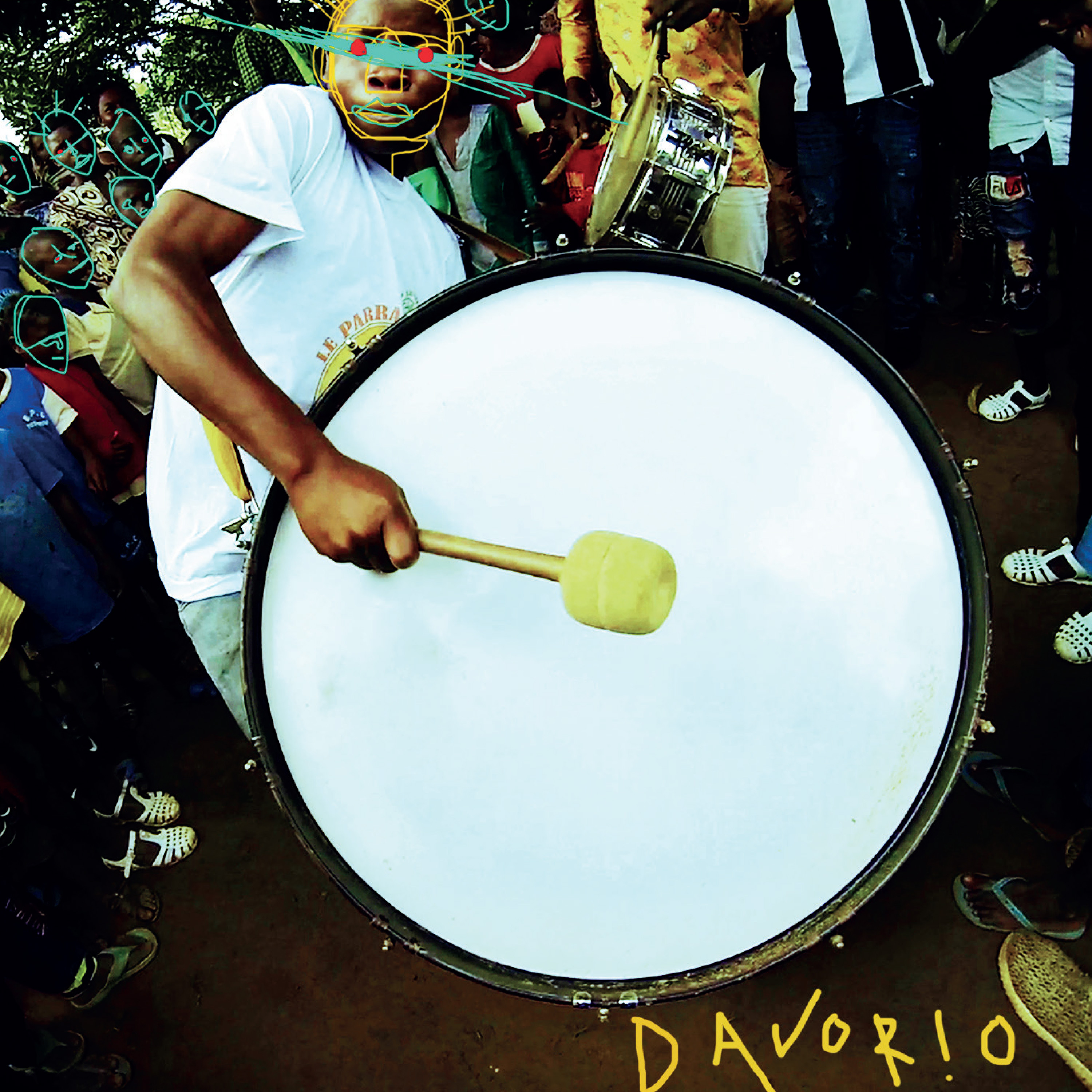
Not many projects of this kind can claim to leave behind something so lasting, practical too, as a community space and library. For the Italian producer, musician Samuele Strufaldi’s collaboration with the good folk of the Ivory Coast village Gohouo-Zagna is a beneficial project that sees the all the proceeds going towards building integral communal connections.
One of a thousand or more “communes” before a decentralized shake-up by the government in 2012 (abolished on the grounds that these areas weren’t “economically governmental units”), Gohouo-Zagna is located within the Western Guemon region of the Ivory Coast; its population part of the Guére culture and greater Kru language group.
The spontaneity of this village’s musical and vocally expressive circle, together with “snapshots” of village life, the scorching heat of an insect chattering environment, the clearing of plates even, is electrified, augmented and effected by Strufaldi to create an otherworldly fusion that amorphously bleeds into both sonic realms.
With a generous offering of tracks and running time, expanded pieces of constant change sit amongst shorter windows in the fabric of a rural existence; the tactile soul of African instrumentation, singers and the rope-tuned goblet shaped Djembe hand drum (some bigger drums too as you can see in the artwork) in surround sound with the hand-slapped rhythmic games and joyful voices of the locals’ children. When amplified, filtered, put through various processes and with the addition of the synthesized, various beats and breaks, flourishes and more dramatic plink-plonk jazzy and classical piano these field recorded performances become untethered: They could end up anywhere musically, culturally. Take the opening ‘Cammino, Senza Sapere Dove’ (“I walk without knowing where”), it begins with atmospheric voices, synth purrs and ripples and late Bowie-esque piano, before passing through soul, jazz and R&B like a J. Dilla production.
The album title itself, just three tracks in, is like a tribal communion of the Young Fathers and BLK JKS, but also features weepy strings, touches of Afrobeat and a free-jazz wild breakout of Peter King saxophone, all before being sucked through a mirror. Those jazz elements permeate the entire album; from hinge-like whines and more Don Cherry spiritual displays on ‘Uccelli/Roberto Baggio’, to echoes of Sonny and Linda Shorrock and the Pharaoh on the township meets Orleans and splish-splash classical ‘Uomini Del Mare’, and touches of Donny McCaslin on the tines resonating, soulful and nimbly-picked guitar 2-Step ‘Obaló’.
Tracks like ‘Non Tradirti’ (“don’t give yourself away”) move from the innocuous sounds of a sweeping brush and the reverberations of children to the techno of Basic Channel and more veiled electronic washes of Boards Of Canada. The finale (if that’s the right word) ‘Dohuo’ sounds like either a talk or lecture, maybe community meeting, being soundtracked by a malady of wind instruments, crackles and touching strings.
Every expression has meaning, a story, which is then transformed by Strufaldi’s production into something almost dream like and cosmic yet still connected to the villagers’ roots. A transistor radio collage here, some Songhoy Blues on a bustling street with a small amp there; a display of rattled and scrapping percussion and hymnal stirrings merge with zaps, warbles and various embellishments. This cultural exchange with the Ivory Coast blurs the lines between worlds; an act of preservation, but much more, as the foundations of this culture prove intoxicating, dynamic and mesmerising.
Various ‘Middle Eastern Grooves’
(Batov Records) 19th May 2023

A sampler showcase, only with a couple of previously unreleased nuggets, the Batov label celebrates its (almost) tenure existence promoting Middle Eastern Grooves overseas with a “handpicked” selection of cuts from their influential 7” singles series.
Originally set-up in London by DJ Kobayashi and Bob Martyn as a home for the former’s multifaceted fusion ensemble, Gypsy Hill, the label soon nurtured a burgeoning revival of Middle Eastern influenced bands and artists from the richly diverse Israeli scene.
A conjuncture itself of untold musical pathways, with artists and musicians congregating in such exciting, lively cities as Tel Aviv from all across the region and much further afield. A hotbed of sounds has been sent out to the world.
With shows on Soho Radio and Worldwide FM, and a rep for selecting a polygenesis array of global sounds, DJ Kobayashi picks out a generous eighteen track compilation of music indebted to the pioneers and luminaries of the 60s, 70s and 80s.
Where to begin with this whirlwind fecund of fusions? Well perhaps with one of the most well-known inclusions on this collection, the constantly evolving Tel Aviv musician, composer, producer and multimedia artist Ophis Kutiel, aka Kutiman. Opening with the Aegean cosmic vibe ‘Badawee’, the Kutiman lays down an eased-in flange-effected wave of fluted hazed sunlight, vapours and lush laidback drums. Following that, and no strangers to the Monolith Cocktail (even making our choice albums of 2022 list), the Yemeni roots, but Israel-based, rambunctious El Khat are kept in check by the Tel Aviv cratediggers Radio Trip, who smooth out the disjointed exciting signature with a clean breaks edit treatment that evokes a horn-swung Arabia and the more soulful jazz-soul breaks of the El Michaels Affair.
Another name that leaps out for me, and a previous Monthly Playlist pick, the Şatellites marry ethereal gauzy Hebrew disco with Liquid Liquid, Altin Gün and real cool Anatolian rock vibes on ‘Deli Deli’. That eclectic-lit funky group’s leader, Itamar Kluger, also appears with his new psychedelic project, Eje Eje. One of the “unreleased” propositions, ‘Saved From Jazz’ is a percussive shimmy of 60s influences and jazz-rock-prog organ that almost sounds like an Israeli Atomic Rooster.
Proving a highly popular (or just highly prolific), Sababa 5 get four goes at impressing us. A well-versed troupe of notable players, previously backing a host of Tel Aviv’s top artists and vocalists, and said to be influenced by everything from the legendary Wrecking Crew sessions ensemble to 70s Middle Eastern icons, the 5 lay a zippy, willowy groove underneath Shiran Tzfira’s upbeat psych-folk and pop-lit vocals on ‘Manginat Mahapeha’; play with ambient gazes, an closed eyes gesture of serenading Egyptian oud (or guitar) and more bouncy beats as the Japanese vocalist Yurika Hanashime sings in a sweetened Oriental romantic way on ‘Nasnusa’; evoke Charlie Megira, Meatraffle and Joe Meek in the shadow of the Sphinx on the tremolo-surf wrangled ‘Baksheesh’; and mix kitsch surf (ala The Ventures) with dot-dash organ (bordering on Ray Charles) on ‘Rosenzweig’.
Elsewhere, gaining my attention, the veteran Israeli bassist and producer, world-traveller and front man of the world music/reggae/funk band Ex-Centric Sound System, Joseph Thomas Fine (aka Yossi Fine) teams up with the African-influenced drummer Ben Aylan on the rock fusion and splashed dance, ‘Peres’. The unfamiliar (to me) Yuz come up with a 80s dry ice Israeli and Balearic spacy disco-electronica mini epic entitled ‘Galgalit’, and the Baharat trio circumnavigate a Mexican surfing Dick Dale, a removed Cumbia and stylophone-like buzzes on the Arabian Shadows reimagined ‘The Egyptian’. “Jewish princess” via Babylon, Cherry Bandora eases dreamy gauzy vocals on the shimmery and zappy synth airy ‘Esy’ (another of those previously unreleased tracks), and the long-running Boom Pam magic up a Hellenic wedding boogie and belly-dancing shimmy on ‘Uniton’.
A wealth of Middle Eastern inspirations from a blossoming epicenter, Batov’s grooving whirlwind spins and saunters, carouses and electrifies across a region of interconnected roots. The borders are eviscerated as the Adriatic, Med, Arabian and Red Seas ebb and flow across a music geography that mixes the sounds Egypt, Syria, the Lebanon, Turkey and Greece with the cosmopolitan buzz of Tel Aviv. If you’re fresh to the scene, this is a great place to start, from a label doing encouraging, exciting things in bringing sounds together.
Marta Salogni And Tom Relleen ‘Music For Open Spaces’
(Hands In The Dark)

A posthumous tribute to one half of this sonic mapping partnership; left however exactly as the late Tom Relleen would have heard and recognized his and Marta Salogni’s site-specific peregrinations before his premature death from cancer in 2020, Music For Open Spaces is an atmospheric gift of subtlety and evocative callings from a geographical triangle of locations.
The leylines of this album spread from the pair’s London home to the Cornish coastline and the mystical Joshua Tree desert, where, inspired by such varied settings, Marta and Relleen conjured up a number of spontaneous atonal and electronic pieces. None of which are so obvious as to directly sonically reference the environment. Well, expect the album’s longest track, the opening mirage ‘Desert Glass’. Refracted light shines off a glass pyramid as airy fluted and hinged mirrored sounds permeate the legendary Joshua Tree located desert scene (a shrine to the late Gram Parsons and draw for various hallucinatory-induced communions). At one point you can pick up a partly obscured Marta (I think, anyway) asking her foil if he’d “heard that?” on tape; a tape that seems to be rewind and played back in real time, as a near-kosmische stillness of Frosse and Ariel Kalma evaporates around them.
This is followed by a more bobbled algorithm of paddled Ping-Pong balls, transformed to elicit a feel for far less mundane activities, on the much shorter ‘piNG poNGS’ passage. Those plastic table tennis balls take on a weight as the track progresses, moving into a techno effects realm of robotic laughing and metallic guiro scrapes. The even shorter ‘Snarls’ is both alien and a little disturbing; evoking the ominous uncertain spaces of Lucrecia Dalt (who I believe Marta has worked with) aboard some propeller-motored and humming craft.
‘Giant Desert Cats’ features, albeit transmogrified through various processes, the titular subjects. Bestial screeches of a kind echo across a strange, removed wilderness of ringing, repeated signals, forewarning and moderate drama. ‘Clocks’ also seems to abstractedly mirror the title, with a tubular plastic paddled and reverberating single repeated tight bass-string pluck denoting a measuring, a metronome-like passing of time. Featured in last month’s Digest column, the more expanded piece ‘Internal Logic II’ is a minimalist alchemy of light drawn and calling undulations and subtle twinkles; felt through a bendy lens of mystery. Staying in the minimal field of inspiration, ‘Furthest Fires’ obscures the flame in a gentle wind, whilst ‘Trains’ is a veiled ghostly blend of field recording, a passing motion of transport and almost nothingness.
Reading things into the ephemeral vapours and applications, I’m sure I can hear bulb-like notes of either a marimba or vibraphone on the wooed gauzy ‘March’. ‘Fauna’ sounds more like Day Of The Triffids than pleasant wild-planted blossom, and the finale, ‘FFXX’, barely registers above a blowing ambient and metallic percussive ebb and purr.
As much a physical and cerebral response to the elements and space (expanded further by the Hands In The Dark label’s Morgan Cuinet, who has illustrated each step on this “internal map” with a collage), Marta and the late Relleen’s geographic concept suggests new horizons, and makes the fleeting now permanent. With added poignancy, this generated soundtrack could be read in part as a fitting tribute. Regardless of the circumstances, this is a really fine album of atmospheric exploration, tactile scored environments and moods.
Adjunct Ensemble ‘Sovereign Bodies/Ritual Taxonomy’
(Diatribe Records)
A behemoth of sonic, worded and performative multi-disciplines, with an eclectic cast to match, Jamie Thompson’s ambitious Sovereign Bodies/Ritual Taxonomy album seems to amorphously cross György Ligeti’s musical hallucinations with sound art, poetry, opera, theatre, jazz, the avant-garde and cinematic.
Under the Adjunct Ensemble title with foundations in the electro-acoustic, Thompson’s immersive but often jarring, somber and glitch-in-the-fabric-of-the-matrix style hallucinations are both riled and strung-out in a dystopian cosmology of Don Cherry, the Art Ensemble of Chicago, Colin Stetson, Andy Haas, Amiri Baraka jazz, Linda Sharrock arias, re-contextualized Benjamin Blake hymnals and national song, Ligeti’s ominous 2001: A Space Odyssey chorales, later Scott Walker histrionics, fleeting passages of Ivor Novello-type nostalgia and A.I. malfunctions. All the while a permeating atmosphere of running water, wind chimes and metallic chills can be heard in the void; one in which Tarkovsky and Kubrick conjure up sci-fi visions of unease, uncertainty and the fear of a great big nothingness.
Running to near on 90 minutes, across twenty often cryptic and questioning, proposed entitled tracks, you’ll hear the opera singer Amy Ni Fhearraigh’s haunted and dramatic vocals, and the spoken word poetry of Felicia Olusanya’s (aka FeliSpeaks) stream of conscious-political-humanistic lyrics, cutting through a feeling of near Orwellian oppression, suffocation.
Composer, writer Thompson can be heard twisting, grappling and oozing sounds, effects out of synths, drum machines, a church organ (in more classical hymnal spells), dictaphones, turntables and other apparatus. This is further affected by the turntablist Mariam Rezaei, the spasmodic, drilling and twirled punkified jazz of the Taupe trio and a load of other notable musicians on tenor sax, drums, percussion and bass. At various conjunctures we’re spat out into a chasm; transported to the graveside of a New Orleans elegy; beamed down to that raining rooftop finale in Blade Runner; lost in an alien terror show; clamed with the sounds of a transcendental water garden; or, gently, dreamingly invited to sip a remedy to chaos on a virtual deck, kitted out to resemble a 60s jazzy cocktail lounge. Phew!
Otherworldly breakdowns one minute, a Zappa-esque entanglement the next, this merger of Tricky’s imagined opera, an unholy vision of English pride and the hermetic, with veils of the Southern Gothic, Voodoo and happening, politically actionist jazz, is an expansive conceptual document for the times we find ourselves in: a time capsule if you like.
Interestingly, one theme brought up in the press notes is that of migration. And, floating in and out of that consciousness of sound and art, lingered traces of travail, of voyages and ethnographical illusions do conjure up futuristic versions the immigrant song. Lost on the high seas, with the ship’s horn blowing amongst the fog of time and place, you could easily imagine the fear, specter of death in pursuit of reaching safer shores, as references to displacement crop up across the album’s continuum of horror, assimilation, accelerated machine-learning, surreal interviewing and resignation.
Certainly challenging, a commitment is needed from the listener to what is essentially one long soundtrack (more or less every track, episode, chapter running into the next without any real pause or hint of dead air, only when in ambient mode); a sort of conceptual art theatre without boundaries, which can replenish as much as stir up a maelstrom of disenchantment and strung-out despondency. Counter-history bleeds over a morose of art forms and freer radical protestations, activism on a very impressive project.
Danûk ‘Morîk’
(Omni Sound) 19th May 2023

The longing, almost bluesy reflections cast on the finale, ‘Lo Șivano’, pretty much sum up and convey this “exiled” Middle Eastern group’s heartache at being forced to leave a war-ravaged Syria: Emotively, musically this, the curtain call from their debut album, is about missing home.
And yet, as that same album title translates, they’ve found a “pearl” of light in the tumult, as they confidently claim their heritage in the face of such distress and upheaval; reconnecting with their roots, imbued by the 1900s phonograph and wax cylinder recordings of Kurdish folklore in both The Berliner Phonogram and Austrian Academy of Sciences’ Phonogrammarchiv collections.
Studied graduates of Syria’s “best fine arts and music programs”; the Danûk ensemble was actually formed across the border in Turkey, in the Bosphorus-straddling metropolis of Istanbul, over seven years ago. Surviving on musical graft as street performers, they were seen and hired by a social enterprise; going on to score music for both films and radio. This though is the group’s first album proper, engineered in part by friend, admirer and musical foil Michael League (of Snarky Puppy fame). He produces but also lends a light touch of bass.
Morîk is the second release for the newly formed Istanbul/NYC connected label, Omni Sound. And what a flowing, dancing beauty of atmospheric Middle Eastern folk, shepherd song and wedding music it is too, from a quartet of Syrian-Kurdish and Turkish-Kurdish musicians steeped in atavistic allure. Traditions and songs on this work date back to the ancient sites of the excavated Sendshirli (now located in present day Northern Turkey) and beyond. From that imaginative channeled setting, the lute (in this case the long-necked “buzuqi”) twirled and trilled, country-like and seriously yearned ‘Xelîlo Lawo’, and roughly brushed and thrashed frame drum (the Persian “erbane-daf”) accentuated ‘Lê Lê Mi Go’ have a real ancestral pull, yet also draw on the veiled resonance of age-old shepherd song.
The opening holy city evoked whistled and fluted, granular-textured stirred frame drum skin swept ‘Axir Zemana’, and the poetically elegant, waves-splashing against the bow of a ship-like ‘Lo Lo Li Mino’ both use the voice of a Syrian priest singing in Jerusalem.
Serenaded and in celebratory form, Danûk spin, dance and ache across a cannon of Kurdish folk and wedding music: ‘De Çêkin’ is a journey of romantic longed allusions cast over a fluty pipe, whilst the more trinkets-sequined and small finger cymbal percussive ‘Finciko’ shimmies and shuffles to the fever of a Middle Eastern gypsy band performing at a nuptial ceremony.
Together, Ferhad Feyssal, Hozan Peyal, Yazan Ibrahim, Tarik Aslan and Ronas Sheikhmous respectively shake and electrify their heritage, breathing a new life into those roots as they reconnect with home t produce something almost timeless.
Kayhan Kalhor & Toumani Diabaté ‘The sky Is The Same Colour Everywhere’
(Real World Records)
In what proves to be a most congruous musical partnership, the renowned Iranian kamancheh player Kayhan Kalhor and leading Malian kora player Toumani Diabaté merge each other’s cultures and the sound of antiquity with a previously untried, untested combination of instruments.
Brought together by the Morgenland Festival’s Michael Dreyer for a performance back in 2016, the pair who’d previously never met let alone play together, conjured up an unrehearsed, intuitive ninety-minute set of both Malian Mandé and Persian inspired beauty, longing and veiled panoramic landscape gazing. Nothing short of an incredible, adroit experience, this union proved successful enough to prompt a short European tour and a recording session in Paris. The results of which can be heard on this woven atmospheric and unifying album, The Sky Is The Same Colour Everywhere.
In a similar vane to Catrin Finch and Seckou Keita’s ongoing harpist and spindled collaboration, Kalhor and Diabaté blend their heritage into a masterful latticework of moods, time and geography.
From the Persian sphere (spreading to the Caucasus; to Azerbaijan and Armenia) Kalhor’s principle instrument, the kamancheh, is a relation of the rebab. Its appearance is somewhat exotic; a truncated inversed cone shape-like fiddle that has a spike to support it whilst being bowed, usually in a kneeling position. The original courtlier silk strings have long since been replaced by metal ones, but the sound is still unmistakably timeless; imbued with Persian romantic poetry, lyricism and spiritualism. Diabaté, who famously partnered with the late Mali icon Ali Farke Touré for a duo of Grammy Award winning albums, plays the resonating-bodied kora from Western Africa; a twenty-one string, harp-sounding (at times) long-necked lute, crafted out of half a gourd and covered with cow skin. Steeped in that region’s Mandé ethnic dialectal culture, Diabaté brings a watery-like cascaded trickle of plucked elegance, of desert rustic spun gilding and emotion to this fusion.
More or less uninterrupted, ninety minutes of both articulate and more dramatic performance flows like chapters in one long journey across mesmerizing, alluded to and deeply felt landscapes. Titles prompt escapism as much as they do attachment to those yearned for Arabian and African scenes, whilst also building common bonds; Sufism at the crossroads with the Griot.
Both instruments are shown to be versatile in application; a thwack woody-bodied rhythm from the kora as the kamancheh flutters like the wind or blows a stirring, airy veil across an imaginary topography. The former can take on a harp-like glide or mbira twanged sound, and the latter, a classical viola plaint or classical violin weepy resemblance. Throughout the album the duo often reach outside their respective disciplines and fields of influence; spinning a hint of Appalachian rural dances on the daintily rural twined ‘Anywhere That Is Not Here’, and branch out into Moorish Spain on the title-track.
To be experienced as if it was being performed live, right there in your living room, The Sky Is The Same Everywhere must be heard in its entirety; neither dipped into nor with interruptions. Sit or lie back with a masterful, intuitive work of artistry and beauty, escapism.
Trad. Attack! ‘Bring It On’

We can take comfort in the fact that in the face of such barbarity, as Russia continues its heinous crimes against Ukraine to the south (and threats to its Baltic neighbours), there’s still so much light, joy and discovery to be found in the world of music. From their Estonian roots the Trad. Attack! trio of Sandra and Jalmar Vabarna and Tönu Tubli reach out across not only to their direct neighbours but to the Caucasus, North America and Yeman to expand their sound, understanding and spirit of collaboration.
Their latest album, a journey in fact, finds the propulsive and explosive trio exploring different musical fusions and playing a raft of new instruments, whilst transforming the rich culture of Estonia itself; especially the Seto ethnic/linguistic population’s (mostly living on the Estonian/Russian border in the southeast of the country) ancient polyphonic style of epic saga telling, which is sometimes improvised, “Leelo”. Multi-instrumentalist and vocalist Jalmar has that same Seto heritage – his great-grandmother was one of Estonia’s most famous folk singers. Here, that beautiful melodious song can be found at a fair pace being repeated and woven on the Block Party-like 2-Step breakbeat fueled ‘Keera’ (“spin it”). But its influence can be heard permeating throughout the entire trip; from woodland to euphoric expelled mountaintop.
The trio kicks things off however, with a burst of phaser electronic-pop and stamped punctuated beats on the “hey yeah” energy-flashed ‘Lase Käia’ (“bring it on”). Featuring the craning, Brian May like rocking guitar of the Estonian legend Laur Joamets (based in Nashville; a regular sideman to the American country artist Sturgill Simpson), a bold Euro-rock and EDM vision of a traditional song is injected with a modern energy and new anthemic brilliance. And so it continues, across an album of guest spotting hybrids with a mixture of Eurovision, dance music, pop, indie-rock and more acoustic instrumental gestures of longing and reflection: pride too I think.
On that journey there’s the earthier, gruffer-voiced (Alexander Hacke-esque) and Estonian bagpipes droned, fiddled gypsy ‘Pidu Lõppeb’ (“the party is ending”); the brokenhearted, metronome rim beat, dreamy trad-folk transformed ‘Makak’ (“sleep”); twinkled and felt, warmer climes Ed Sheeran ‘Liugu-Laugu’ (“glide long”), which features the Canadian East Pointers metaphorically releasing a guided sleigh into the big open world; the Yemen Blues’ Ravid Kahalani featured Baltic-Arabian mirage of challenger verses, marching spiritual workers song and The Knife riled electronics, ‘Öelge Sönnu’ (“say some words”); and longingly rasped ‘Kiigelaul’ (“the swan song”). ‘Tere’ (“hello”) however, is a rawkish, dizzy burst of the Red Hot Chili Peppers dancing around the encampment fire.
A strong show of versatility with a myriad of dialects, instruments and musical partners uniting for a energetic transformation of Estonian folklore and culture, Bring It On is as fierce, highly spirited as it is soulful and kind to those traditions. A simultaneously bombastic, electrified and romantic, deeply felt connection is unleashed on a highly commercial pop and electro produced album that takes the Baltic state from the rural to the dancefloor.
A WEWANTSOUNDS REISSUE DOUBLE-BILL
Meiko Kaji ‘Hajiki Uta’

From what I’ve gained from the press release, despite the Tarantino effect the cult garnered Japanese starlet Meiko Kaji’s iconic run of early to mid 1970s albums have never been reissued on vinyl: until now that is.
With the usual quality control of repackaging such lauded obscurities, WEWANTSOUNDS, in conjunction with both the artist herself and the original label that released this quintet of showcases, Teichiku, between 1972 and 1974, have called upon the services of Hashim Kotaro Bharoocha to interview Kaji, and fill us in on all the background, with insightful linear notes.
A sort of third revival you could say, the star of various “Japanese Exploitation” franchises inspired the one-time golden boy of auteur pulp, who not only loosely based the plot of his Kill Bill doublet on one of Kaji’s most (in)famous roles as the revenging angel of The Lady Snowblood period-drama revenge shlocker series, but placed a number of her songs in the movie too. This obviously shone a spotlight on the star of such cult curios as Female Prisoner Scorpion, Blind Woman’s Curse and Stray Cat/Alleycat Rock.
In more recent years Kaji has popped up with her own Youtube channel. And now, a vinyl reissue run of her 70s move into the recording industry, prompted by the film studios cashing in this icon’s popularity.
Coaxed into the recording booth, to initially sing songs associated with the films she starred in, the Tokyo-born actress nervously and with some trepidation, recorded her first album, Hajiki Uta, with the highly experienced TV, film and incidental music composer Shunsuke Kikuchi. The producer was able to put his charge at ease however, as Kaji recalls: “I told Shunsuke Kikuchi that I couldn’t imagine myself singing the songs. He said I could ignore the melody that he wrote, and just sing it the way I wanted to. That really lifted the pressure off my shoulders, and I decided to sing the song as the character in the film. The director was also happy with that idea.”
Produced to a high quality, the Hajiki Uta songbook covers a myriad of styles. The vibraphone-tinkled, gently rousing and swooned ‘Sounya-Ka Onna No Jumon’, and the yellow rose of Texas, Morricone-inspired canteen mirage ‘Urami Bushi’ (the tune famously used in Tarantino’s Kill Bill 2) are actually the only two direct tracks taken from Kaji’s films; both appearing in the torture-porn, rape revenge series Female Prisoner Scorpion #701. The former in the first film of that franchise, the latter in one of the sequels, Jail House 41, directed by Shunya Itõ. Yet despite that, the musical production sounds cinematic throughout, riffing on the already mentioned Morricone, but also Bacharach and Jean-Claude Vannier too. The opening electric scuzzy guitar buzzed, rattlesnake punctuated and yearned chanteuse serenaded ‘Meikono Futebushi’ is an obvious example: a Japanese(fied) version of a Spaghetti Western theme tune. The smooched saxophone and almost soul-hinted production of ‘Hizumi Moe’ sounds Bond-esque in comparison.
Elsewhere there’s light jazzy cocktail hours; the sweet scent of Japanese blossom; a touch of accordion accompanied walks along the Seine; and softened bouts of thriller and the clandestine. ‘Onna Kawaki Uta’ reminded me of Angela Morley’s string arrangements for Scott Walker’s early solo work (in fact, the bass, drums and feel of songs like ‘The Old Man’s Back Again’). And the harpsichord like, longed ‘Onna Hagure Uta’ sounds not too dissimilar to the Thomas Crown Affair: or something of that vogue.
A fuzz of guitar is there to give it a certain edge, whilst the strings occasionally swirl and well up for dramatic effect. Elements of what’s called Enka are performed with pop sass and kitten heel coquettishness, as traditions are respectfully drawn into the 70s. It must be pointed out that Enka is a kind of performative traditional form but also said to refer to political texts set to music as a means of bypassing government curtails on dissent and activism at the turn of the 20th century in Japan. This form was stylised with modern pop sensibilities in the post-war period, but it’s quite hard to define: many of its leading lights, stars like Hachiro Kasuga and Michiya Mihashi, were themselves very dubious of the tag; if anything distancing themselves from this revived form. Enka, pop, beat music, a little buzz of psych, the string production of the cinema; all forms accompany Kaji’s very fine lulling, but sometimes impassioned poetic, singing voice. Coveting, cozy and in often-romantic swoons, the actress takes on the convincing role of songstress. Subtle and diaphanous yet able to express whatever emotion is needed on an album that shouldn’t be cast off as a mere cult nugget from the vaults, nor dismissed. It seems that Tarantino really was onto something after all.
Harold Land ‘Damisi’
26th May 2023

Continuing a selective reissue program of Bob Shad’s 60s/70s Mainstream Records label catalogue, WEWANTSOUNDS hone in once more on the tenor saxophonist (quite deft on the oboe too) Harold Land with the first ever vinyl reissue of his 1972 spiritual jazz phase Damisi album.
Regulars of the Monolith Cocktail will know that I reviewed the Mainstream Funk compilation early last year, as the title suggests a showcase of Shad’s overseen funkier cuts. A self-proclaimed “broad church”, the label was just one of a myriad of companies the producer and A&R man had worked on; starting out in the 50s with jazz at the prestigious Savoy label, moving to National Records and launching his own subsidiary imprint EmArcy. Shad went on to find the talent for the switched-on psychedelic Mercury label (discovering such luminaries as Janis Joplin, Sarah Vaughen and Dinah Washington), whilst forging his own Mainstream platform in the 60s.
During his early years, Shad had famously recorded such notable artists as the Max Roach and Clifford Brown Quintet. Although it would be a fair time before working with him again in the 70s, Land was a member of that very same ionic hard bop Quintet; coming up through the ranks after leaving his Houston home, and his formative years in San Diego, for L.A.
Time had moved on, and jazz’s evolution was changing once more. Land, moving on himself, had started a fruitful musical partnership with the vibraphone legend Bobby Hutcherson in the late 60s after stints as an in-demand sax freelancer for labels like Contemporary and Pacific Jazz. It’s that partnership which led to a West Coast trip for the N.Y.C. based Shad and his A&R man Ernie Wilkens; touching down to record a series of sessions from both the Land and Hutcherson union, and Land’s own bandleader work with an enviable pool of serious talent on the scene. The results of which can be hear across a trio of albums: the Hutcherson foiled A New Shade Of Blue (reissued by WEWANTSOUNDS already) and the Choma and Damisi albums. The latter is held-up here as a worthy showcase for Land’s developing use of spiritual conscious jazz and his embrace of Coltrane; although all the signatures of that West Coast schooling and the California showmanship of bright and burnished soulful and funky horns is unmistakable.
Land leads a quartet of equally notable players on Damisi (the Swahili word for “cheerful”), with Herbie Hancock’s Mwandishi ensemble bedfellows Buster Williams on double and electric bass and Leon “Ndugu” Chancler on drums (that nickname, bestowed on the Freddie Hubbard and Miles Davis sideman by Hancock, is also Swahili, and translates as the affectionate “earth brother”). On electric piano and keys there’s L.A. pianist William Sydney Henderson, who’s CV includes recordings with the Pharaoh, Bobby Hutcherson, Billy Higgins and Hugh Masekela; and on both blazing trumpet and flugelhorn there’s Count Basie sideman and gun-for-hire (a dizzying roll call too numerous to list, but Sonny Stitt, Dexter Gordon and Quincy Jones are just three notable icons he’s worked with over the decades) Oscar Brashear.
Together, with Land’s heralding, spiraling and brassy tenor blowing away throughout, this highly experienced in-tune troupe lay down a modal-vibe show time of Lalo Schifrin funk action and a swing of Savoy, bop and Lee Morgon on the constantly moving opener, ‘Step Right Up To The Bottom’ – a kind of Hollywood Boulevard takes a turn down desolation road. It’s followed by the cool, hip and more laidback ‘In The Back Corner In The Dark’; a swing time Hollywood funk with shades of serenaded and elephant reeling Miles Davis under a baking sun. Projecting travels further afield, ‘Pakistan’ is the first real spiritual movement; a transcendence shimmer and rattle, bell shaking, snake-charming oboe odyssey that evokes the Pharaoh’s ‘Africa’ (I know, different continent entirely, but similar feel) and a surprising noir-ish Davis. Henderson’s piano really shines on this enchanted, beckoning homage to the country.
Side Two (in old money) features a duo of deeper, long suites; the first of which, ‘Chocolate Mess’, ups the tempo and takes on a funky Latino influence of soul-jazz. Yet, there’s also a strong African influence and smattering of Herbie Hancock on this dynamic sleigh bell shaking, freefalling and dappled electric piano rich jam. The title-track finale reaches once more for Far Eastern climes, perhaps Egypt, but with a West Coast be bop feel and spells of Ike Quebec, Yusef Lateef and Stanley Turrentine. WEWANTSOUNDS have played a blinder reissuing this quality travelogue of soulful, funky jazz from Land. Shy of truly outstanding and iconic, Damisi is nevertheless a great flowing album of notable performances that never loses its groove and swing. A jewel in the Mainstream Records cannon is given another welcome run.
Dyr Faser ‘Karmic Revenge’

Karma can be a bitch they say. Only on this occasion, spun out, weaved and languidly mulled over, karma is a drawn-out process of study in the barely warm rays of an occultist sun. For the Dyr Faser duo of Eric Boomhower and Amelia May stir up hermetic, drowsy and Krautrock arias under slumbered mires, and in esoteric visions of the Laurel Canyon.
The dread and gothic chthonian opener, ‘Suns Of Unseen Revival’, sets the atmosphere with the piped tubular drones of Death In June’s ‘Fall Apart’, sonorous palpitations and hints of Amon Düül II and an unholy Jefferson Airplane fragrant in the Fields Of Napalm. Yet, already by the second cut, the Boomhower voiced ‘Fun In The Sun’, the serious gloom is replaced by a kind of Californian slacker vibe of cymbal splish-splashing, ritualistic toms and a flange of the Velvet Underground, Boyd Rice And Friends, Sonic Youth and Pavement.
‘Keep Talking’ once again has May taking up the vocal mantle; channeling Grace Slick and a downer Besnard Lakes on the melting, intoxicating spell of dream-realism. ‘Symbolized’ however, motors down the BRMC and JAMC highway; thumbing a lift with Suicide’s “Ghost Rider” on a hippie biker kick. Within that leather-clad bohemian framework, there are evocations of The Stooges ‘Search And Destroy’, Jason Pierce and the sustained guitar lines, contours of Ash Ra Tempel.
Almost diaphanous, ‘Silver Night Run’ oozes a hypnotizing hallucination of acid-aria sung enchantment as its siren traces some mysterious metaphorical river trial. ‘Ghostly Vicious Acts’ is an indie-fuzz and gauzy scuzz of tumbled Spaceman 3, whilst ‘This Menace’ squalls and churns up a suitable acid-rock/krautrock mood of doom, as The Black Angels gaze on. Christ weeps from the holy mountain on the woodland fluted, but despondently mused, ‘Dead On The Vine’, and May wafts a plaintive Hackedpicciotto-esque emotive voice over a stylophone buzzing spooked ‘Despite The Party Atmosphere’ vignette. It all ends on the gristle and loose psychedelic, slipped drummed ‘Lifelike Stranger’; a conclusion to a most alluring if doom-imbued album.
It turns out that Dyr Faser are rather good at mixing the esoteric krautrock of the Amon Düül family (especially the Wagnerian acid-wash and otherworldly vocals of Renate Knaup-Krötenschwanz) with grunge, alt/post/space rock and doom; bridging morbid curiosities, spirals of melancholy with black sun fun, fun, fun! A great duo to discover.
Images Of Goo ‘S-T’
(Un Je-ne-sais-quoi) 26th May 2023

Responsible for, and “active members” of, trick noise making projects and alias as Das Hobus, Spiritual Emojis, The Notwist, AloaInput and a myriad of others, the maverick sonic union of Leo Hopfinger (aka LeRoy) and Cico Beck (likewise aka Juasihno) mess around with the proverbial “goo” on this self-titled workout.
As Images Of Goo they knock around in an echo chamber reverberation of drum heavy trip-hop, breakbeat, krautrock and post-krautrock, off-kilter techno, future soul and various electronic formats. This often sounds in practice like Valentino Magaletti on 90s Mo Wax, hanging out with Major Force, DJ Shadow and Matmos. And when emerging from a Joe Meek (if he’d been born much later and signed to Warp Records or the Leaf Label) retro space production of signals, sputniks and oscillations, like International Pony and The El Michaels Affair on the Fun Boy Three vine. Because the beats, the breaks move from hip-hop to Ethno sounding hints of Africa and Java, and more metallic mesh-bounces of tins, pots and pans percussion.
And most surprising, as we reach ‘Image 08’ (all tracks are just numerically entitled by the way) a drowsy tripping vocoder effected set of voices and vocals emerges from the knocking, Afro-wavy beats – imagine Afrikan Sciences, Dunkelzefer, late Can and Matthew Dear on one soulful languid mix. You can throw in Nino Nardini’s cult sounds, MDR-ADM, Gescom, the Aphex Twin and Yuk. into that bit-crush and scrunch, lunar echoed moon unit of psychedelic drum-led collages. The whys and wherefores don’t matter; it just exists as its own body of workings; a sci-fi tripped out production of hip German eclectic rewiring.
 Monolith Cocktail Blog