A world of sonic/musical discoveries reviewed by Dominic Valvona. All entries in alphabetical order.
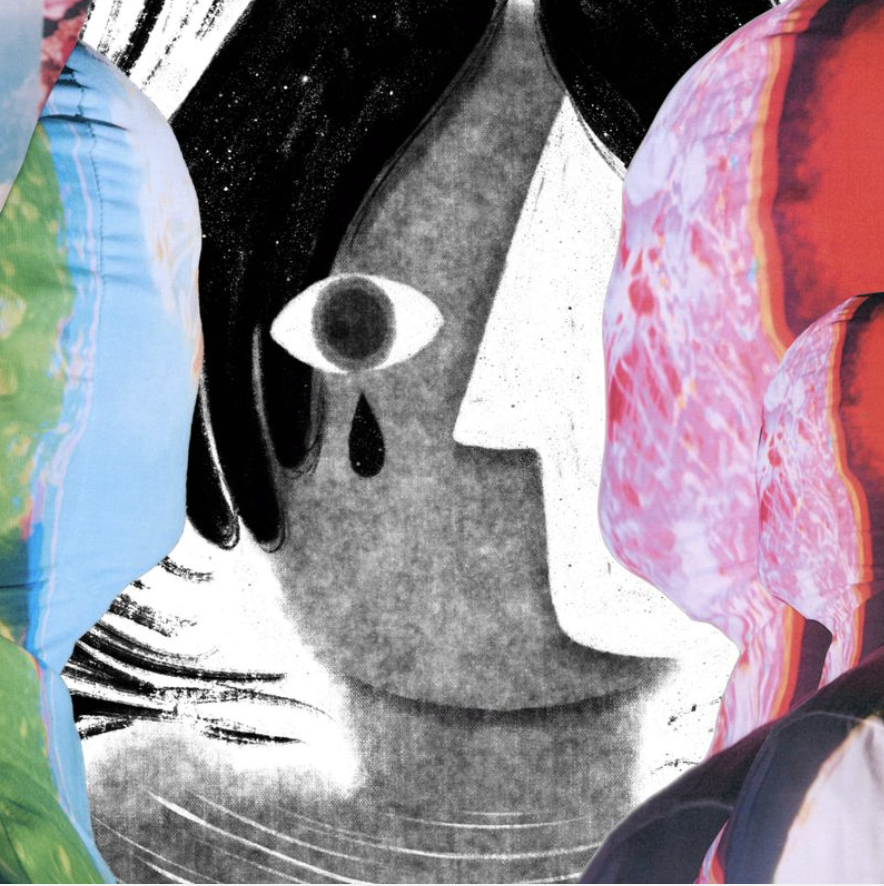
Peter Evans’ Being & Becoming ‘Ars Ludicra’
(More Is More Records) 17th October 2025
Without doubt one of the most exciting, dynamic and explorative trumpet players and band leaders on the avant-garde, psych, hard bop and beyond jazz scenes during the last decade, the New York-based musician and noted improviser Peter Evans once more lends his hallucinogenic, mirage squeezes and spiral climbs and his higher octave pitched, piccolo shrills and freefalls to another inception of the Being & Becoming ensemble: his primary band since its creation back in 2017.
Marking another “chapter”, encapsulating the small evolving group’s extensive touring schedule during the period of 2023 to 2024, the Latinized Ars Ludicra (which I’m sure translates as “sport arts”) captures a quartet (extended to a quintet when including the highly regarded and acclaimed soprano and flutist Alice Teyssier on the album’s finale, ‘Images’) fully trained up on an intensive live regime of flexing, dynamism and experiment. It’s said too that the group have widened their scope and extended their range of instrumentation to embrace sounds previously missing from the last two albums. This is a band, it’s pointed out in the accompanying literature, that has moved on much since their last outing in 2022, under the ‘Ars Memoria’ banner. At least a different energy anyway. But despite splish-splashing with constant resonating and crashing cymbals and the tight rolls and roll offs of Nigerian-American drummer Michael Shekwoaga Ode on the opening oasis promise of ‘Malibu’, there’s a balance struck between moods and action, with some passages and compositions breaching the twilight zone, the astra, a mirage that has more in common with Miles Davis and Wayne Shorter’s more untethered cosmic drifts, and their more abstract feels of transcendence and floating in a psychedelic nothingness on the outer reaches of space.
With the glassy bulb-like play, busy twinkled starry rings and doorbell ding dongs, cascades and translucent vibraphone spells of the Chicago-born but NYC based Blue Note artist Joel Ross these spacy and out-of-body elements recall both a magic and a slipping off into transcendent zones of Bitches Brew and the like. Although Ross could at any one time evoke glimpses of Roy Ayers, Gary Burton and contemporary peer Yuhan Su. There’s the melodious lightness of the Modern Jazz Quartet played against more post-bop and freeform experimentation that often lifts, but also casts out into the near surreal manifestations of dreams. Often it’s played against what I would call anti-music that’s more in keeping with the sound of the Soft Machine and the free-form, and at other times with the jazz-fusion of Weather Report, especially Joe Zawinul (an electronic apparatus and number of synths standing in for organs, electric piano and the like): I’m hearing this on the group’s extended Miles-esque blues-psych-trip and expressively agitated and riled-up cover of the late fateful Siberian poet and punk-folk icon Yanka Dyagilera’s ‘My Sorrow is Luminous’ – a sad tale really, born into the USSR, a fated progenitor of the underground punk scene, Dyagilera sadly died at the age of twenty-four just as the Berlin Wall came crumbling down and the transition from paranoid Cold War empire to free market chaos and oligarch mayhem. Running with the original sentiment, the original lament, and underscored with the historical context, the group nevertheless take it into uncharted territory – like a missing link between Third and Bitches Brew, but with the addition of Toshinori Kondo taking turns with Miles at lead.
The rest of the album features the neutron star electromagnetic radiation beam emitting inspired ‘Pulsar’, ‘Hank’s’ astral trip and the semi-symphonic classical bluesy meta contemplation of ‘Images’. On the latter, as mentioned earlier, guest flute-swapping virtuoso Teyssier provides flutters, flits and the sense of a mysterious woodland universe. ‘Pulsar’ has bounded and stick like Afro-Cubism drums, a hint of Jef Gilson, almost a touch of Chet Baker and vortex hallucinations of the atomised and of science. Evans trumpet all the while is curving and spiralling into infinity or drifting over amorphous borders when not shortened and high pitched, squeezed and tight.
I’d like to just mention the final member of this ensemble, Nick Jozwiak on bass, who moves about quite independently of his foils. Hardly conventional, that bass is flexes but offers little drive or rhythm but bobs up and gives a semblance of direction and timing. The multi-instrumentalist and avant-garde “hired gun” is also credited with synth duties, much like the majority of his colleagues, blending the two instruments together throughout an album that feels cosmic but not so much technological and futuristic, nor electronic.
Evans made our choice albums list last year with his trio (flanked by Koma Saxo and Post Koma instigator and bassist Petter Eldh and New York downtown experimental rock and jazz drummer pioneer Jim Black)and their Extra album. And I got to say, this third album from the Being & Becoming troupe is set to make this year’s list too. Evans is on a roll so to speak, with an album of quality performances and unified dynamics. They’ve managed to capture the live spirit whilst offering plenty of passages of thought, reflection and the cerebral, and to progress ever forward. It says so much about the quality of the group and their latest album, that it was recorded at the rightly venerated Van Gelder studios in New Jersey, with its 60 years plus history and status as a national treasure in the jazz world, home to recordings for Blue Note, Prestige, Impulse! And Verve. A stamp of real excellence, the spirits and vibes of that iconic studio seem to have materialised on the recording: A real recommendation if ever there was one.
Will Glaser ‘Music of The Terrazoku, Ethnographic Recordings From An Imagined Future’ (Not Applicable) 24th October 2025
Opening the door to possible worlds and to possible musics (in the sense of Hassell and his peers’ Fourth World experiments), prompted by climatic disaster/change, Will Glaser’s sprawling ambitious work of eclectic and amorphous, porous and developing peregrinations imagine societal changes through the merging of cultural sonic threads and archeology.
The London-based drummer, electronics manipulator, in-demand foil, and instigator of a multitude or projects has dreamt up an epic double-album format of environments, places and scenes from a world in which all continents seem to have conversed into one super soundscape of influences. Glaser has surmised a backstory, a springboard for his latest project. From a transitional stage in the wake of ecological collapse emerges a new “Earth tribe” network of surviving communities called the “Terrazouku”, resolute on living in harmony with nature whilst resisting the destructive urge to dominate. This vision unfolds over a generous offering of near uninterrupted soundtracks, traverses, expressions and rhythmic workouts.
For the first solo operation – that’s composed and produced entirely by Glaser – in a career that’s filled with collaborations, Glaser has reached out to an enviable who’s who of the current experimental scene in London. Names familiar to Monolith Cocktail readers, such as the composer, bassist and experimental vocalist Ruth Goller, the in-demand reeds player James Allsopp, vocalist Ed Dudley, and reeds experimentalist Alex Bonny, join the French violinist Agathe Max, improvising guitarist, composer Tara Cunningham, extremely busy drummer/percussionist Jem Doulton, Irish vocalist, composer Lauren Kinsella and cellist Kirke Gross. There are crossovers with the revolving lineups of both Sly & The Family Drone and Scarla O’ Horror, but also more than enough connections to each and every artist and musician involved across the album’s sixteen tracks. Some make a fleeting appearance, whilst others linger on for a few tracks. But they all increase the spheres of influence, the scope of the project to take in a near inexhaustible range of musical strands and ideas congruous to the evolution of this story.
Imagined as ethnographic artifacts, it seems that Glaser’s dreamt-up world returns to a primitive-like state of the electro-acoustic for a majority of the album’s length. An amalgamation of tribal naturism, the hermetic, esoteric, mystical and primordial, the album’s four, more or less seamless, sections suggest a real depth and quality.
At the outset we are transplanted and submerged into an environment both recognisable and mysterious. The ‘Then It Wasn’t’ opener manages to evoke gamelan, the go-go rhythms of David Ornette Cherry, the early work of the Aphex Twin, percussive fourth world ideas of Ganesh Anaadan’s Self Made LP with Hans Reichel, Test Dept., Wendy Carlos, the near anti-music drumming splish-splashing of free from jazz, and a taste of Sunburned Hand of Man. The first few tracks are what you might called long form, or at least over seven minutes in length, but tracks constantly vary. And so, all these influences develop in their own time. By the second track (‘Sunshower’), which carries over the ending from the last, the mood changes again with a sci-fi evocation of Komsische music and the Blade Runner score. The disembodied aahing and wooing voice of Ruth Goller can be heard alongside Agathe Max’s searing and stirring violin on a track both otherworldly and yet anchored softly and hauntingly towards classical ambient music. ‘Illusions of Abundance’ meanwhile, takes us into a twittery strange vegetation environment of shuttered and serialism style percussion, before developing into a lumbering Beefheart, Faust and Staraya Derevyna like bluegrass-psych trip through Raymond Boni’s jungle. By the way, the wild languid and out-of-shape guitar is courtesy of Tara Cunningham.
Side B, as it is mapped out, passes through vague suggestions of metal bowls and tubular bell like struck and shimmered Java and Tibet, and blown winds, before the dreamy, drifted and effected bass clarinet of James Allsopp circulates and waddles – duck like – in a style reminiscent of cosmic jazz, John Laurie, Constia Miereanu and Hans Koch on the trio of ‘Howl’, ‘Only The Wind’ and ‘Wrath’ tracks. This phase ends on the pleasantly entitled ‘When The Clouds Pass’; a track that seems to broadcast via the use of transduced bird tweets across an Alejandro Jodorowsky soundscape of mysticism.
The rhythmic phase if you like, Side C starts with a sort of shakers and shackled Afro-Thai type of bounding and bouncing percussive apparatus beat (that’s Jem Doulton’s introduction to this album). Alex Bonney’s flittered, almost digeridoo-like recorder flutters and chuffs over the top, and at times evokes the pan pipes of South America. The following track, ‘Bees’, however, is an entirely different proposition. This is where the electronics really kick in, with a hive mind activity of bees turned into a digital buzz and Germanic techno shutter beat. There’s more of this on ‘Pylons’, which matches lunar birds with dub and the pummelled sound of Room of Wires. I was also picking up hints of Front 242 and the Storm Bugs on this echoey electrified magnetic off-grid fourth world experiment.
Change is in the air and wind again on the final side of this double album spread. Richard H. Kirk like shouts, hysterics reverberate and are funnelled through a static charge and magnetic bombardment of friction and the electrically charged on ‘There’s Shit In The River’. Ed Dudley rages, swears and screams in fits to a distorted crushing of Cabaret Voltaire and Nitzer Ebb industrial primitivism, whilst the waters constantly run by. Copters above the brooding, underscored with menaced tides, continue a wash of the ominous and uncertain over a quartet of tracks steeped in strange jungle vegetation and alien outland mystique. Reimagining tribal gatherings, the convergence of polygenesis communitas unifying on a ravaged Earth that’s been reclaimed by an untamed nature, there’s some very strange and yet recognisable goings on. The near forlorn and sorrowful finale, ‘Dedicated To All Living Beings Who Suffer’, features Lauren Kinsella’s stark and yet grieving and felt reading of a poem by the Chinese poet and activist Yang Licai; played out to the Simon McCorry and Alison Cotton-esque avant-theatre-classical deeply grooved, soulful and wept cello of Kirke Gross. Both beautiful and poignantly full of a harrowed, sacrificial and political language, in the end it all comes down to the life-giving force of “water”. It’s an emotional end to a remarkable and ambitious album, which succeeds in holding the listener’s attention to the end.
Recordings from a Cassandra purported world, the warnings unheeded but with no real knowing grasp on reality, Glaser has built a possible future soundscape and cyber tribal rhythmic primitivism on the sonic fuel and carbon of the world as it is now to great effect and depth. From Mike Cooper to Glove of Bones, Fernando Grillo, John Bergamo, Paul Burwall, Tonto’s Expanding Head Band, Bush Of Ghosts era Eno, Jon Hassell and Jon Appleton’s work with Don Cherry, there’s a vast scope of rich influences on display and environments to absorb. An incredible project with untold possibilities that really does feel like a retrieved artifact from a future yet unmade.
GRABENFUSSS ‘The Horror’
Released 5th September 2025
I’m going blind on this recent submission from the obfuscated Glasgow magi behind this amalgamation, chemistry and incantation of hauntology, hermetic, sci-fi, tech, and righteous horror. Fans of the blog (always a good start with any request for a review) for a while, and materialising in my adopted city home of the last decade, this shrouded invocation deserves its anonymity, its mystique.
Their latest initiated rites drama is very, very good. And despite describing their own sound as lo fi sorcery, there’s nothing that lo fi about this ambitious, grand gestured astral and tormented projection and esoteric vexed minor opus. For there is a scale here that seems large and almost cinematic. From the increasingly agitated and riled language of the shriven and the post-punk acolyte of cryptic Gothic ceremony and spells, there’s both an alien and all too harrowed conjunction of worlds; of our trails and oppression under the spectre of technology, the unkindest of political systems, the threat of austerity, war and violence. At times the vocals, part Cabaret Voltaire, part Pop Group, but all Scottish indignation, summon up the arcane. There’s symbolism, the cryptic, the sacrificial, the moon child and the witchery at play, all with a 21st century twist.
Dealing with death in its many manifestations, there’s a serious theme at the heart of this work as it opens on a seemingly lighter bit of play and the sample/recording of a young kid’s take on the subject: When you die, your head falls off, and, and, your body goes into the attic, and, and, and your head goes off into space.” The accompanying incipient drones, charging of motors and generators give it a sort of Lynchian and creepy edge, however. This is ‘Company Robot’, a track of data, electronic rhythms, persistent horns, up beats, the cursed and brooding, the disconsolate and highly atmospheric. It crosses field recordings, magik and the machine to sound like a communal disturbance of the already mentioned Cabaret Voltaire, Coil, Ramleh and early Luce Mawdsley.
The soundtrack – as it would make a bloody good one – changes between Gothic industrialism to Kosmische, bounced techno and the chaos of a rolling cascade and pummel of real drums, and the echoed, resonated strokes and picks of a recognisable electric guitar. ‘Light Years Away’ is in the twisted techno camp, bobbing almost to a transformed recall of the Sabres of Paradise and Renegade Soundwave casting down fire and brimstone before a cathedral of lit rays takes over from a clash of drums and the growing noise of transmitted interference. ‘Broken Kingdoms’ starts off with a farty, flutter and sonorous drones, and yet is what I’d call ambient. There’s arching bends and the pierced sounds of hidden alarm, a shake of wind chime blown by esoteric winds, and the near munching of ariels. There could be a UFO present, oscillating overhead, its magnetic fields vibrating. But all of this is interrupted by the roll and smash collider of punk-Kraut-psych-rock drums and an unhinged vocal that repeats in a deranged mantra on “dignified death”. ‘Space Death’ is switch-manipulated percolation of the Pop Group in chthonian mood: Death haunts this doomed orbital convulsion of tongues, utterances and pain as tentacles thrash. Suddenly there’s a broadcast snippet from the news; a riot, police called as the audience at a musical behave with vulgar selfishness: the growing problem of decorous behaviour, chatting away and singing louder than the actors. This being Glasgow reimagined as a portal to unknown dimensions, there’s even a mention of the city’s football legacy with a Celtic Vs Rangers match.
In amongst the more extended tracks, there’s a number of vignette duration recordings coded and numbered under the ***PLSVHF*** headings. Of these, ‘No. 19’ features electronic arpeggiator, visitation transmissions and the odd snatch of a broadcast (something that repeated throughout the album) and a sort of quasi concrete manipulation of the orchestral, whilst ‘No. 31’ has more of a lunar rippled belch and guttural cosmic feel to it – this is where that guitar I mentioned appears.
Overall, imagine a horror show combination of Conrad Schnitzler, Locrian, Hunting Lodge, Yellow Swans and Escupemetralla evocations. Oh, and by the way, GRABENFUSSS is German for “Trench Foot”: make what you will of that; a harbinger of discomfort and agony. A thoroughly curious and tormented work of cosmic-harrowed wrath.
Amira Kheir ‘Black Diamonds’
(Sterns Music/Contro Culture Music) 10th October 2025
An offering of love, respect and homage to her roots, Amira Kheir re-energizes, makes anew and personalises traditional songs from a number of admired songwriters and crafts new magical mirage-style material on her incredible new studio album Black Diamonds. The fourth such self-production, released under her own Contro Culture label in union with the specialist UK label Sterns Music (responsible for introducing the music of such luminaries as Salif Keite, Youssou N’Dour and Franco & OK Jazz to these shores), offers up a dreamy and atmospheric songbook that seamlessly flows between musical styles and across the porous borders of Eastern and Western Africa and the Middle East. All to the benefit of Kheir’s ancestral homeland of Sudan, which positively shines like both the material and proverbial diamonds of the title.
Projecting connections to an afflatus and poetically envisioned land, Kheir beckons the listener into a world of positive vibes, of sweetness, of the lilted, and yet no less yearned, hungered and passionate. And so, the music and scene-setting lyricism of Fadl Almula, Abdel-Gadir Talodi, Abdel-Rahman Alrayyah and Isa Barwi are woven into fresh perspectives on the country and its surrounding neighbours, cultures. Paeans of a kind to the loved sit side-by-side with lyrical magical descriptions of Sudan’s topography and its fauna (the comforting recollected mentions of the neem and palm trees on the longing, dry rattled and spiritual Afro-jazz, with classical strains, ‘Ard Alafrah’, which translates as “land of happiness”), and such important city links as Umdurman, which sits on the western banks of the replenishing Nile (the often spelt or referred to as Omdurman, a major city in the Sudan located within the famous state of Khartoum, is mentioned on the rustically spindled, Tuareg-like and quasi-reggae riffed ‘Sundani’, “my Sudan”). I must add at this point, the piano that appears across these songs reminded me in part more of the South African jazz pianists Nduduzo Makhathini and Abdullah Ibrahim.
Vitally important to the Sudanese-Italian singer-songwriter, is language, with songs sang in Arabic, English and Italian; the links to cultures African, Arabian and European, and the blending of all three, setting her music and vocals apart. Winning a heap of plaudits for that unique eclectic voice, Kheir merges the influences of desert song with jazz, neo-soul, R&B, funk, desert-rock (you can feel the sand itself beneath your feet on the drifted ‘Zenuba’, which sounded in part like the brilliant harmonious dune-shifting mirages of Tinariwen), the Persian and the more traditional styles birthed in the Sudan. Ranging between the earthy and ethereal, the soulful and encapsulating, each song shows a variation of tone, performance and charged emotion: relaxed and beckoning, floating and encapsulating.
The depth is hardly pushed or forced, and yet there is a well of passion and stirring endorsement for a country she obviously loves and beautifies. There are some songs that pass the eight-minute mark, allowed to unfurl gently, soul searching and weaving a dream blanket of atmospheres that are magical and almost hypnotising. Perhaps more than ever, a celebration of such idyllic climes is needed, especially when faced with the devastating humanitarian crisis in the country right now.
But by lifting spirits, revitalising the beauty, grandeur, the magic and the atavistic, Kheir lightens up her vision of an enduring, fascinating, homely, nurturing and enchanting Sudan on a magnificent album of diaphanous and yearning beauty. There’s every chance this will make the end of year lists as one 2025’s most special and captivating albums. This is real soul, reimagined and once more connected to its original roots.
Elsio Mancuso & Berto Pisano ‘Nude Per L’Assassino’
(Four Flies Records) 17th October 2025
I’m sure many fans of the pulp Italian Giallo phenomenon will disagree, but as with most examples of this shock and gore, salacious and voyeuristic exploitation genre, it’s usually the soundtrack that has the quality and not the cinematography and storylines: as influential as they both are, a bridge to the slasher cult in both the US and UK. If wrapped up in some pseudo-European style, and in a foreign language, with film directors, screenwriters and actors alike pulled from more discerning productions, many of the films that were produced during the “golden age” (we’re talking the 60s and 70s) of Giallo were pretty crummy, exploitative and titillating.
There was of course the odd example of female revenge, or a female led cast that didn’t just lose their clothes, or graphically meet the most creatively lurid death. And many leading directors to this day pontificate about its iconic cinematography, its style and its influence. In the former camp, the latest Italian cult favourite to be lifted up by its far superior score, under the facilitation of the Four Flies Records label, Nude Per L’Assassino is one such revenge style flick (spoiler alert), with its racing leathers and motorcycle crash helmet wearing murderer exacting bloody vengeance on both the doctor responsible for the bodged abortion of a fellow model, and all those that either aided, abetted or showed callous disregard for the victim: this included a number of male photographers from the film’s Albatross Modelling Agency and some of its models too. To be fair, most of the victims are incredulous perverts, rapists, and vacuous individuals out to climb the slippery pole.
If researching this title, buried deep within the psyche of cult film buffs, you will find a repeated criticism: that by the date of this film, originally released in cinemas on the August 26th 1975, the genre had become stale, and that this movie was more or less an exercise in Giallo bingo card checklist ticking, with the style now “codified” (as someone else put it) and chiselled in crypt stone. The label describes the film as “the most sexist, sleaziest, and most unhinged Giallo film of the decade.” That reads like an endorsement if anything; a real temptation if ever I heard one.
But worry not, for the soundtrack carries more weight, and features connections and threads that link back to some of Italy’s top pioneering composing talent.
Believed lost but recently found and dusted off by the specialist Italian label, remastered from the original tapes, packaged too in a new “lavish” vinyl edition, Nude Per L’Assassino (or as it’s more well-known in the English-speaking world, stripped of its romantic Italian language, reduced to the blunter and creepier Strip Naked For Your Killer) is now being released just in time for its 50th anniversary. Why should we be excited? Well, probably because it’s pretty cool, and that this occult, hallucinogenic, romantic even, and funky surreal soundtrack is a rarefied find from some of Italy’s most notable composers and musicians of the period. Well, one of the names that adorns the title, Berto Pisano is at least in the running for that status. Pretty much carrying the credit, the only name acknowledged on the film itself, whilst erstwhile partner Elsio Mancuso’s name only previously appeared on the Italian Public Performance Rights Organization (PRO) registered paperwork. There’s very little about Mancusco however online; mostly references to collaborations with other notable composers working in the fields of suspense and that most Italian of Italian genres, the Western – namely the very un-Italian but synonymous with its cinema during the 60s and 70s, composer Vasco Vassil Kujucharov. Pisano, however, has a very well documented CV and history. The Sardinian born composer, conductor, arranger and musician started out as a double bass player on the burgeoning post-war jazz scene, playing with such movers as the Quartetto Astor (later the Asternovas), but also appearing in fellow Italian luminary Peiro Umiliani’s famous octet. He’d also cross creative paths with another of the revered Italian composer’s Armando Trovajoli. Outside jazz, and mostly famously perhaps, Pisano began a successful collaboration with the popular three-octave stretching soprano singing sensation Mina (Mina Anna Mazzini). His most highly prolific career move was in the realms of TV and film, composing around 50 scores and soundtracks across two decades: a mere sampler of titles being A Game Of Crime, Django Kills Softly, Kill! Kill! Kill! Kill! and Naughty Nun.
Making an appearance on both smooched, lilted jazzy serenading and cupped trumpet is the Italian flugelhornist and trumpeter Oscar Valdambrini. Bringing some much-needed class, Valdambrini’s resume includes stints with Rex Stewart, Gianni Basso and Freddie Hubbard (who’s influence I believe can be heard suffused amongst the reeds on this score), and arrangements with the already mentioned Trovajoli. It’s claimed the Turin-born maestro was a pivotal figure in the birth of modern jazz in his home country. His wafted pines, tender declarations, cornet-like swaddles, early Miles-esque passages and more Euro-Latino Herb Alpert spells add a certain jazz tinge to the supernatural suspense and spine-tingled dramatics.
And yet, this soundtrack’s opener kicks off proceedings with the bass and hi-hat of a Temptations or Curtis Mayfield record. Near Orleans and NYC back dropped Bondian with funk and soul influences, plus a hint of Lalo Schifrin thrown in on the horns, the film’s title track features scaling strings and tight breaks more in keeping with Motown than Italian slasher vogue. And yet, the second track, ‘Fotomodelle’ (the not so difficult to translate “photo model”) is almost reminiscent of Bacharach: albeit in a dippy Euro kitsch of lush romantic serenades and wooing female voices and skin flick signatures. For the record, so to speak, this package includes a number of variations on each of the main themes and pieces of incidental music, including the ‘Studio Fotografico’ bracketed version of the former, which has a little more sass and sexiness, a Hammond organ and lilt of Alpert trumpet, and the ‘Lounge’ version, which is just that, a jazzy and Bossa-like lounge smoochy take of bub-a-bub female vocals and deliciousness.
In the surrealist forbode category, and nightmarish zone, ‘Follia Omicida’ (“homicidal madness”) rolls in the timpani and tumultuous warnings, and ‘Occhi Senza Sguardo (Voce e Organo)’ (“eyes without gaze: voice and organ”) sets an elegiac funeral scene with its slumber church organ creeps. There are shivers on the psychologically dark prompted ‘Scivolando Nel Buio #2’ (“slipping into the dark”), and something bordering on sci-fi hypnotising terror on the female gasped earlier version of that same track. You can also pick up the use of Hitchcockian blade striking strings and other scares along the way. But for much of the soundtrack, it’s an uneasy entwined harmony of dreamy, even druggy, death and beautified satin thriller.
There’s a melancholy, a sadness, and yet friction of that Giallo signature creeping and stalking menace. But the quality is pretty good, the sound surprising in places. Each track is played with professional skill and respect and the art of description. And rather handily, it’s being released in time for Halloween. Four Flies have saved a classic from the snatches of obscurity whilst showcasing a killer soundtrack.
Sebastián Rojas ‘En La Orilla’
(Buh Records) 17th October 2025
Under crimson skies on the metaphorical, allegorical shoreline, bathed in a synthesized production of synth-wave, cold-wave, new wave pop and at least the spirit of Bolero, of South American experimental and roots pop, the Mexico City scene composer, musician and singer-songwriter Sebastián Rojas plots a solo journey from emotional maelstrom to stability on his debut album. Having previously played guitar in a number of bands from the homeland, straddling the downtown rock, post-punk and art-punk scenes, and collaborated with various artists, Rojas has decided to go it alone. Well, to a point, as he’s asked a few friends to play on that burgeoning venture.
Bringing along his The Americojones Experience foil Américo Hollander on bass, the Demencia Infantil’s Emiliano Tinajero on saxophone, the polymath Nicolás Fernández on synths (he also co-wrote the album track ‘Míranos’, which translates as “look at us”) and key Mexico indie scene figure Hugo Quezada (of Exploded View note) to produce, Rojas is backed by a congruous ensemble of sensitive, attuned and explorative musicians whilst navigating the choppy waters and emotionally blue tide that both beckons and backs away in languorous retreat. In addition to that lineup, there’s such a breadth of subtle instrumentation at use throughout the new album; from machines to the more organic use of acoustic guitar, percussion and the vibraphone (well, it could be a marimba too, but it sounds like the glassy bulb notes of Japanese environmental music meets The Thompson Twins and Cage on the magnetic ‘Marea’ (“tide”).
Informed by a run of bad luck, and a low point in his life, En La Orilla (“on the shore”) was born from a chain of events that began when Covid hit in 2020. Rojas was at the time on tour with his former band, just as they were about to take off, but for obvious reasons as the pandemic’s lockdowns curtailed international travel, was left high and dry, forced to return home broke from Berlin. To add to all the uncertainty, the career limbo, his mother fell gravely ill. And yet, Rojas, we are told, found love and the impetus to rebuild from the setbacks of the Covid crisis. The results of which are unfurled, wrapped in the enigmatic, and more obviously emotionally charged, spread across an album of atmospherics, balladry and the synthesized.
References in the PR literature point out the influences (in spirit) of different Bolero forms, and such icons of the genre as Pedro Infante and Los Panchos, plus the music of Benny Moré, an idol from the Cuban homeland of Rojas’ father. It’s not like you can easily detect it in what is a more contemporary embrace of the 80s, but the saxophone often, in its brassier form, often recalls its use in Central and Southern American music – at other times, it’s a mix of both new wave, Hansa studio and the mirage evoking. There are of course lyrically and most probably insider references to Mexico City and its surroundings, and the continents at large. The finale for instance, borrows a line, phrase from the late award-winning Chilean novelist, short story writer, poet and essayist Roberto Bolaño Ávalos. “Pulmón del trópico”, or “lung of the tropics”, finishes the album with breathing, living and airy abstract feelings played out to mysterious shadowy synths, plastic tubular bass and the psychedelic.
From vague echoes of Memory Tapes to China Crisis, Central Unit, Tiempo 55, Chromatics, Robert Wyatt, Japanese environmental music, imaginary 80s Miami and UK Fairlight synth wave pop and Factory pop, there’s a philosophical but also sentimental ease that permeates both the more stripped back and more atmospheric built songs. Bathed in rays and vapours, or dreamily sailing close to disconsolate abandon, Rojas and his fine ensemble of friends’ drift and lurk between the shadows and the light on an album of both nostalgic leaning and yet contemporary inventive pop music with a depth, sophistication and swimmingly bluesy feel. The Mexico City scene is rewired, re-articulated and made anew.
Cosimo Querci ‘Rimane’
(Quindi Records) Released 4th October 2025
Whilst the name may suggest connotations of the Renaissance, and the ancient valley of Casentino – its rich oval shaped landscape dotted with Medieval villages – location in which this debut solo album was made reinforces ideals of that period from Italy’s history, Cosimo Querci seems to send his idyllic surroundings into a swimming reverberated circulation of post-punk-dub, Krautrock, neo-psych, the baggy, new age and the possible music peregrination territory of both Jon Hassell and Finis Africae.
Certainly, attuned to his Italian roots and a particular period of more experimental, countercultural and leftfield music from the 70s and 80s, the psychedelic troubadour of looping flange and various echoed, dreamy filters and effects takes a core songbook of ideas and marries them to something subtly surprising and fresh, with evocations of the tropics, the Caribbean and the Fourth World. Ebbing in a constant reverberated cycle, with as much groove and rhythm as flights and passages of more atmospheric or light projected neo-spiritualist and cosmic feels, Rimane (“remains”) features five kaleidoscopic and light bathed tracks of differing length journeys. All of which could be said to have a hypnotic and wavy vibrated quality about them, soaked in reverb, resonance and soft spectrums of trippy gauze.
Almost entirely created by Querci (who not only sings but plays the electric 12-string guitar and the bass, an electric organ and flute) with his drumming and percussive foil Walter Bellini, the album progresses through the dreamy evocations of soundsystem culture and hints of Arthur Russell, Careless Hands, Phantom Band and Wild Havana before ending up in a light bringing union between Susumu Yokata and Sergius Golowin on the opening ‘Telepatica Pretesa’ (which I think translates as “telepathic claim”).
‘Rimanemai’ (“never stayed”) carries on the vibe, but this time with a dreamy trippy wash of Panda Bear, Sam Flex and CAN via the Stone Roses – here’s the baggy sound I mentioned earlier. There’s also a slight step change of the Latin on the beat.
‘Nina Ferale’ (“wild Nina”) inhabits the “possible musics” projects of Hassell and likeminded artists of that fourth world exploration; a touch of Malaysia perhaps, something off world too. But once the drums come in, we are in the territory of the Secret Machines and Neu! (using, if stumbling to catch a different timing, the famous motoik beat) and Stereolab.
‘Caotico Drammatico’ (“chaotic dramatic”) starts off very differently, to a sort of preset-like bossa Der Plan electronic shimmy: a little also like Kriedler. The light fills in from both sides as that synchronised rhythm carries through to an airy heavenly haze of indie and new age techno ala Banca de Gaia.
The finale, ‘Manina Nera’ has a very psychedelic, cavernous start with its echoey ricochet like shots off a circus snare and what sounds like a sustained melodica hanging in the ether. Sort of shoegaze, baggy and shuttering.
As debuts go, Rimane is a winner with cult status written all over it; the artist leaving us wanting more of this musical world that he’s created in the ancient valley region of Casentino. Those Italian roots have been taken to far off and imaginative places; a psychedelic world of possibilities.
If you’ve enjoyed this selection, the writing, or been led down a rabbit hole into new musical terrains of aural pleasure, and if you can, then you can now show your appreciation by keeping the Monolith Cocktail afloat by donating via Ko-Fi.
For the last 15 years both me and the MC team have featured and supported music, musicians and labels we love across genres from around the world: ones that we think you’ll want to know about. No content on the site is paid for or sponsored, and we only feature artists we have genuine respect for /love or interest in. If you enjoy our reviews (and we often write long, thoughtful ones), found a new artist you admire or if we have featured you or artists you represent and would like to say thanks or show support, than you can now buy us a coffee or donate via https://ko-fi.com/monolithcocktail
 Monolith Cocktail Blog