Kalporz X Monolith Cocktail: The Top 7 Suede Songs
September 18, 2025
Our continuing partnership with the leading Italian culture/music site and platform Kalporz. This month, an editorial special on Suede.
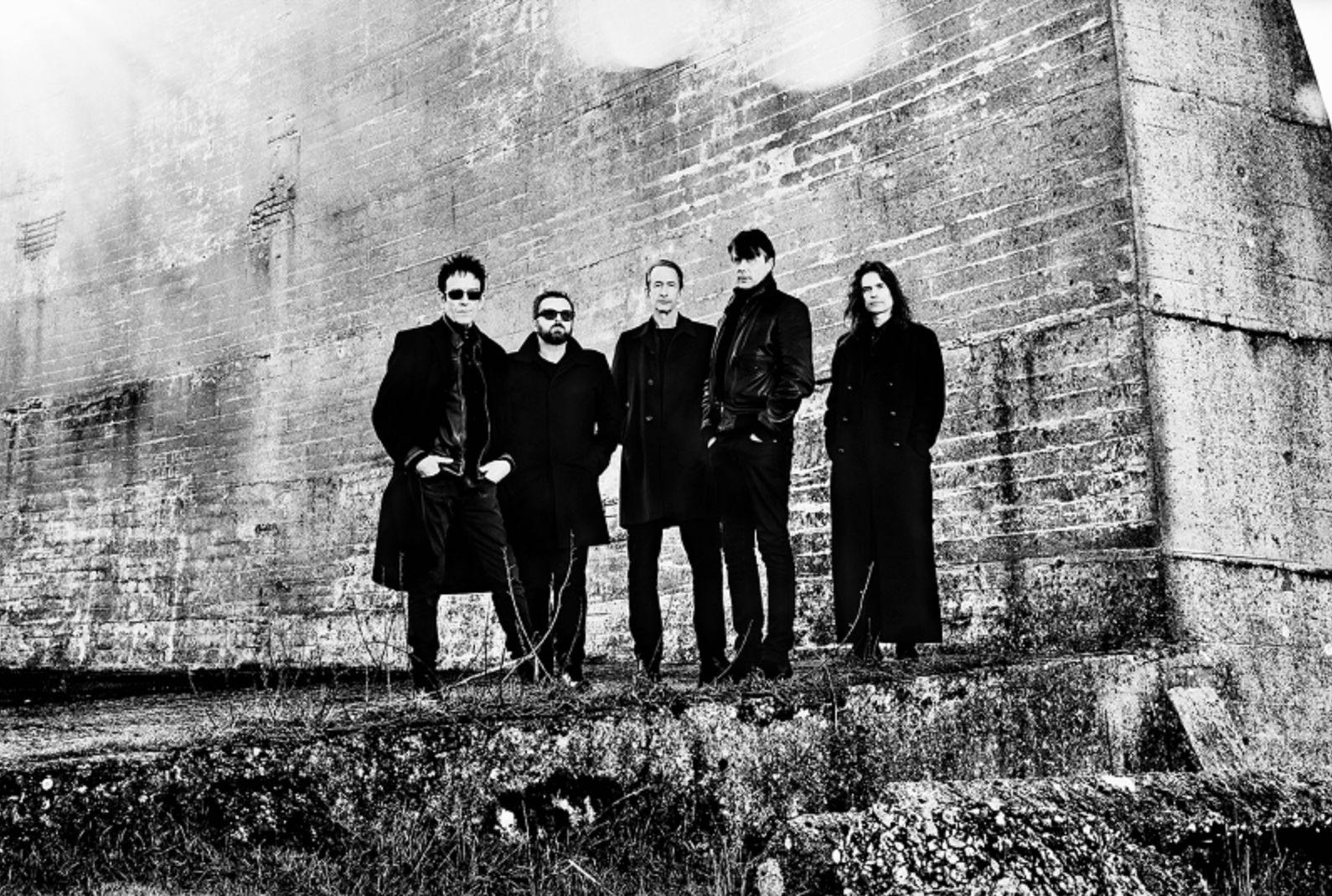
At regular points during the year the Monolith Cocktail shares posts from our Italian pen pals at Kalporz. The site recently celebrated its 25th anniversary – more or less coinciding with our very own 15th anniversary. Here’s to longevity, which isn’t easy in the unstable online world.
For September the editorial team pick and plead their case, selecting a magnificent seven from Britpop darlings Suede, who have just released their tenth album, Antidepressants, this month.
Suede is riding high: their latest album “Antidepressants” was released on September 5th via BMG (a review coming soon), while a few days ago they announced a live show at the Fabrique in Milan, scheduled for Friday March 27th, 2026. It was necessary to draw up a #top7 to establish some fixed points in their career, for the benefit of those who don’t, perhaps, know them fully.
7. “The Only Way I Can Love You” (from “Autofiction”, 2022)
It must be admitted that it was difficult to draw up our top seven, as the material from Suede’s “second life” is as valid as that of the 1990s: songs like “Hit Me”, “Outsiders”, and “Life Is Golden” could be among the best from any other British rock band. Yet I hadn’t yet found the beauty offered by their last two albums, released amid lockdowns and inconclusive wars. The songs become the very blood galloping through our veins, speaking of attachment to life, the importance of the future, and…, yes, human weakness. The frailties of everyday life that, once recognised, would make us feel better. I’m exaggerating they would guarantee world peace. “The Only Way I Can Love You”, track number four on Autofiction, in its splendid four minutes of catharsis and tears, sums up all these feelings: “I pretend I don’t adore you, but I’d take a bullet for you/Yes, it’s a sweet and bitter love”; “I’ll love you as I’m capable of doing it”, I’m not a hero at work, a social media idol, a politician holding the fate of the world in my hands. I have my limits, which are my strength. Today, art and music breathe in a song like this. (Matteo Maioli)
6. “Barriers” (from “Bloodsports”, 2013)
“Barriers” is the first single from Suede’s second half, after their 11-year hiatus, and the opening track on “Bloodsports”. It’s a comeback anthem, epic, triumphant. That’s why it’s so important. It’s a song about “leaping over barriers” because Suede probably needed to dive back into the fray with a song like this, which in terms of pomp has nothing to envy of songs like U2’s “Where the Street Have No Name”. With a comeback like that, the band could only have a radiant rebirth. (Paolo Bardelli)
5. “Trance State” (from “Antidepressants”, 2025)
As Maioli said above, Suede have truly outdone themselves on their last two albums, achieving a quality and clarity of expression that many bands of their era no longer possess: either they’re still sitting on their laurels, touring without any albums coming out (Oasis and Radiohead, the reference was all too easy), or they continue to put out stuff without many ideas (Manic Street Preachers?). Suede, on the other hand, have taken a new path for themselves, that of a darker sound than usual and tending towards the post-punk sound of Joy Division, and “Trance State” is a clear example. A song about alienation, drugs, and emotional survival is supported by a bass so beautiful it could be played by Simon Gallup. What stylistic perfection, guys! (Paolo Bardelli)
4. “Pantomine Horse” (from “Suede”, 1993)
“Pantomime Horse” is one of the most intense moments on an album that introduced Suede to the world. The glossy, glam Britpop of the opening minutes suddenly gives way to a ballad that is a metaphor for fragility, a confession of a constructed, uncertain identity, the tale of a (sexual) awakening that causes a mask to fall. It is also the second longest track on the album (after “Breakdown”), probably the least immediate: a tormented mood permeates the slow pace of a sound with gothic overtones, Brett Anderson’s singing is suspended between falsettos, whispers, and the sensation of a lament that could erupt into tears; Bernard Butler’s guitar expands the sounds and gently distorts them, and in those layers we glimpse the shadow of an almost orchestral crescendo that culminates with the mantra-like question “Have you ever tried it that way? ” The Londoners give in to their darkest and most vulnerable side, giving us a fascinating interlude like few others in their discography. (Piergiuseppe Lippolis)
3. “The Wild Ones” (from “Dog Man Star”, 1994)
The Anderson/Butler wonder duo lasted only two albums, their debut and this, “Dog Man Star”, and not even fully (Butler left before the entire album was finished). One of the most iconic and languid songs on this second, much-loved effort by our guys is this, “The Wild Ones”, which – coincidentally – is about a breakup, but one between lovers not between bandmates.
“And oh, if you stay
I’ll chase the rain-blown fields away
We’ll shine like the morning and sin in the sun”
It’s an evocative piece played as if on Mars, while Anderson’s interpretation is inspired by Scott Walker, Edith Piaf, Frank Sinatra and Jacques Brel, “people with the emotional and musical range to turn a song into a drama. That’s what I wanted for “The Wild Ones”: for it to be a timeless piece of melodic beauty that people would marry and share their first kisses to.” A later released version of this song clearly demonstrates the differences in arrangement between the two, and so you can decide for yourself whether you prefer the original or the variant with Butler’s four-minute solo (! )
2. “Animal Nitrate” (from “Suede”, 1993)
Suede made their recording debut between 1992 and 1993 with a series of killer singles, of which “Animal Nitrate” undoubtedly represents the pinnacle. Brett Anderson’s melodic, feverish vocals draw heavily from Bowie and new wave, while Bernard Butler’s guitar delivers one of the most memorable riffs of the ’90s: chromatic, sharp, and at the same time irresistibly catchy. And to think that the guitarist’s stated inspiration came from an innocuous clarinet-based British TV theme song from the ’70s, transformed here into a murky, sinful theme. Because the song, between allusions to sex and drugs and the suburban atmosphere of the video, transports us to rooms in London suburbs where we imagine all sorts of depravity and repressed desire. The result is a dazzling song, a manifesto of their decadent aesthetic, destined to remain forever among the absolute pinnacles of the British band. (Saverio Paiella)
1.“Beautiful Ones” (from “Coming Up”, 1996)
“Beautiful Ones”, which for the danceable (and tipsy) me will always have “The” in front of it, is Suede’s tenth single and their third—along with “Stay Together” and “Trash”—to land in the UK top ten. I’m not mentioning these other songs randomly, but to highlight the shift in strategy that became necessary with 1996’s Coming Up: catchy melodies, aimed at making inroads on the radio and the charts, introduced by simpler riffs, thanks to the addition of guitarist Richard Oakes, the replacement for Bernard Butler, who was not even twenty at the time. The affinity between the two lies only in their haircut: Bernard was the leading lady, the latter an honest but talented follower. “Beautiful Ones” became the London group’s hit par excellence, fusing the glam drive of T. Rex with the magnetism of David Bowie; I agree with Ricky Jones of Clash Magazine, who describes it as ” a jangly masterpiece with one of the most melancholic sing-along choruses Britpop would ever produce“, and it’s true; the guitar sounds as much like Johnny Marr as it does Mick Ronson. Thirty years on its shoulders, carried magnificently, a hymn to youth. (Matteo Maioli)
CONVERSATION PIECE/ANNIVERSARY FROM OUR FRIENDS AT Kalporz
AUTHORED BY PAOLO BARDELLI/SAMUEL CONFICONI/RAFFAELE CONCOLLATO
TRANSLATED BY DOMINIC VALVONA
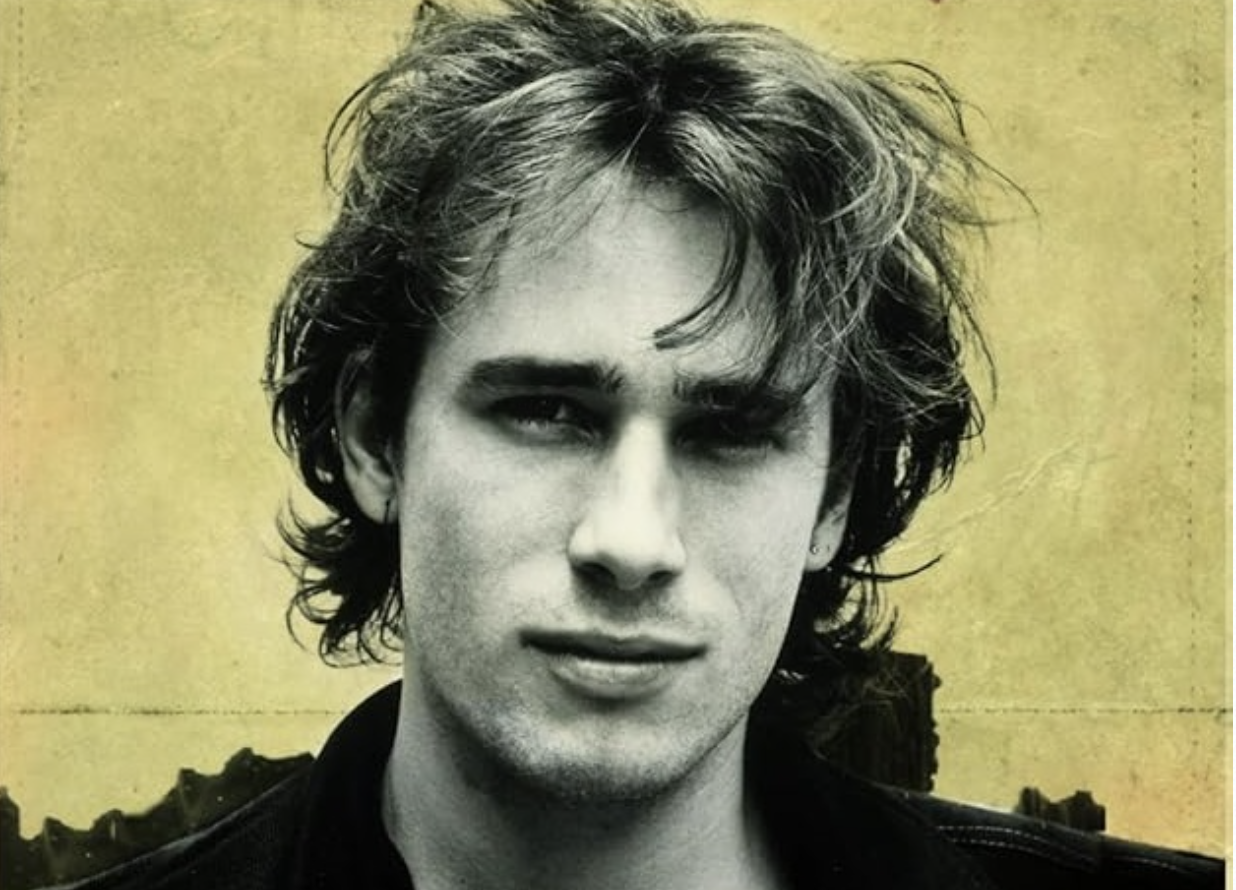
Continuing our successful collaboration and synergy with the leading Italian music publication Kalporz , the Monolith Cocktail shares and translates reviews, interviews and other bits from our respective sites each month. This month the Kalporz editorial team explore the legacy of the late and great tortured troubadour Jeff Buckley, thirty years after the release of his decade defining album Grace.
Jeff Buckley’s “Grace” turns 30 on August 15 [1]. Instead of making a complete analysis of that album ,which we have already done song by song for the 20th anniversary , this time we asked ourselves what remains – today – of Jeff Buckley’s artistic legacy. These are the contributions of Paolo Bardelli, Samuele Conficoni and Raffaele Concollato to the question.
Let’s immediately address the legacy that pisses us off the most: that Jeff Buckley has been transhumed into the collective imagination of talent shows because at least one in three approaches his version of “Hallelujah” , thus reaching us for a song that wasn’t even written by him, is truly a crime. But, as we know, we shouldn’t worry about talent shows and we shouldn’t even consider them, so let’s focus the answer on much more important areas. Like whether there are artists today who can build on his legacy, and whether his memory and importance are well understood today. The fact that there are few artists who demonstrate a talent comparable to Jeff demonstrates his uniqueness: among the many, only that loose cannon that is Tamino would come to mind , but it would be nice to identify someone who has the same fire of passion for music and not someone who is similar on an artistic level.
As for his importance today, we know that music cannot be recomposed and evaluated only with numbers, but sometimes they can help: this month on Spotify Buckley has totalled 3.9 million listeners, against for example Lou Reed’s 5.5 million. If we want to consider that Reed has produced much more, it would seem that there is still a lot of attention on Jeff Buckley, and the streaming numbers should represent the new generations more than the old ones (who have the possibility of physical listening). It is therefore difficult to answer the question we asked ourselves, whether Jeff Buckley is still influential or not, as there are contrasting elements. There is one certainty though: we must stop looking at the new releases that will continue from now on with material pulled out of the drawers, because Jeff Buckley’s legacy is clear with only “Grace” and “Sketches…”, in addition – if you really want to -there are the first official live performances (“Live at Sin-é”, “Mystery White Boy”, “Live A L’Olympia”) and the outtakes “Songs To No One” with Gary Lucas. Last year “Gods And Monsters” was released which is indecent in terms of sound quality, it would be worthy of immediate denunciation.
Personally, to feel close to him, I have been using a tactic for some time: following an Instagram page that only posts photos of Jeff Buckley (among the many I point out this one ) which creates an alienating effect: on the one hand, at first glance, Jeff might seem always present, but it is a fleeting sensation, which disappears immediately to leave room for the awareness of the melancholy of no longer having him with us. We who wait every day for another artist like him (and like Kurt Cobain) with the same desire for redemption, for emotion, for beauty, for anger, to express himself, to unite, to tell, to communicate, to make ourselves better by receiving his notes . That is his legacy.
(Paul Bardelli)
The greatness and relevance of Jeff Buckley, like that of the many artists who have left us too soon, lies not only in what he wrote, said and published, but also in what he could have written , said and published if he had not passed away. “Grace” is a traditional rock album and at the same time seminal and innovative, and this is perhaps its most extraordinary quality and its most surprising merit, which make it a milestone even thirty years after its publication. Without messing up the pages and the history of the novel of American rock which in the meantime continued to be written, adjusted and annotated, Jeff Buckley was able to give his contribution and make that genre his own by emptying it and making it a primitive shell to be filled; to be able to arrive at “Grace” he immersed it in a noble and refined musical tradition whose fil rouge was able to make the jazzy chanson of Nina Simone , the acid rock of Led Zeppelin , the poetic and visionary songwriting of Bob Dylan and Leonard Cohen and even classical music coexist. Where a cacophonous and ungovernable chaos could have arisen, a grace has instead sprouted that which seemed impossible to model from those ingredients, but which in the end succeeded.

It is precisely this gigantic merit of his, which has been able to influence artists of the caliber of Radiohead, Lana del Rey, Adele, Mitski and Phoebe Bridgers , just to name a few, and which has made him recognized as a big name in music by sacred monsters such as Bob Dylan himself, David Bowie and Morrissey, which makes his first and only studio album a room whose doors fold in on themselves and always lead back to that same place: the revolutions that started from there will be captured and in all respects written by others, others who have visited, lived and studied that room deeply. We already know where the others have gone and, as far as the future is concerned, we will know. Where he would have gone, on the other hand, we will never know, even if the never-completed recordings for what would have been his second studio album give us some clues. Unfortunately for us, however, that is a dead-end track, and here we return to the incipit of our discussion: it is as if two paths emerged from “Grace”, one that we have tested – and that, after thirty years, we are still testing – with our hands, and one that we will never know and that perhaps, in a parallel universe, is still being completed. But “this is not for our eyes”.
(Samuel Conficoni)
Despite his short career, Jeff Buckley’s influence on the music of the last few decades is profound. The unclassifiable genre he created, a mix of folk, rock, blues and world music, has left an indelible mark on many artists. His enormous talent in the use of his voice, capable of conveying the delicate vulnerability that inspired a generation of singers and pushed them to explore their vocal abilities in an unconventional way, is proof that he was not just ‘one of many’.
Just think of his cover of Leonard Cohen‘s “Hallelujah”, which became so iconic that it became a point of reference for subsequent reinterpretations. His expressiveness led to a return to authenticity and emotional honesty that left a mark on Thom Yorke, who often cited him as one of his main influences, both for his vocal style and for having pushed him to think outside the box. Damien Rice , whose direct and intimate style he took, also carries his legacy. Of course, Damien then completed the “masterpiece” with poetic lyrics, but the affinities with Jeff’s style are evident. Another artist inspired by Buckley was Justin Vernon (Bon Iver) , where the introspection and songwriting leave no doubts.
From a strictly musical point of view, Buckley can be found in the British band Alt-J, who with their experimental and eclectic sound echo the fusion of different genres mentioned above. Finally, we cannot fail to mention Daughter, with the delicate and desperate voice of Elena Tonra and the haunting melodies of the group, where Buckley’s spirit echoes in almost every song.
Others, perhaps even indirectly or lateral, have inherited Jeff Buckley’s legacy, ensuring him an artistic legacy that places him among the most influential figures in modern music.
(Raffaele Concollato)
Exchange recommendations from our Italian penpals at Kalporz
Authored by Paolo Bardelli
Credit: Aron Lindhagen
Continuing our successful collaboration with the leading Italian music publication Kalporz , the Monolith Cocktail shares reviews, interviews and other bits from our respective sites each month. Keep an eye out for future ‘synergy’ between our two great houses as we exchange posts during 2023 and beyond. This month, from the site’s Thanks 4 All The Fish! series of recommendation reviews, a quartet of recent finds, brought to us from Paolo Bardelli.
This month we dedicate ourselves to a ThanksForAllTheFish! composed of albums that would have deserved individual reviews, because all of them are beautiful and some are truly impressive, but – you know – we are immersed in a fast-paced world and sometimes we have to adapt. To facilitate the choice we put them in order, from the best (Death And Vanilla) to the least of the four (Gnoomes), which is still a great album.
DEATH AND VANILLA, “Fliker” (Fire Records, 2023)
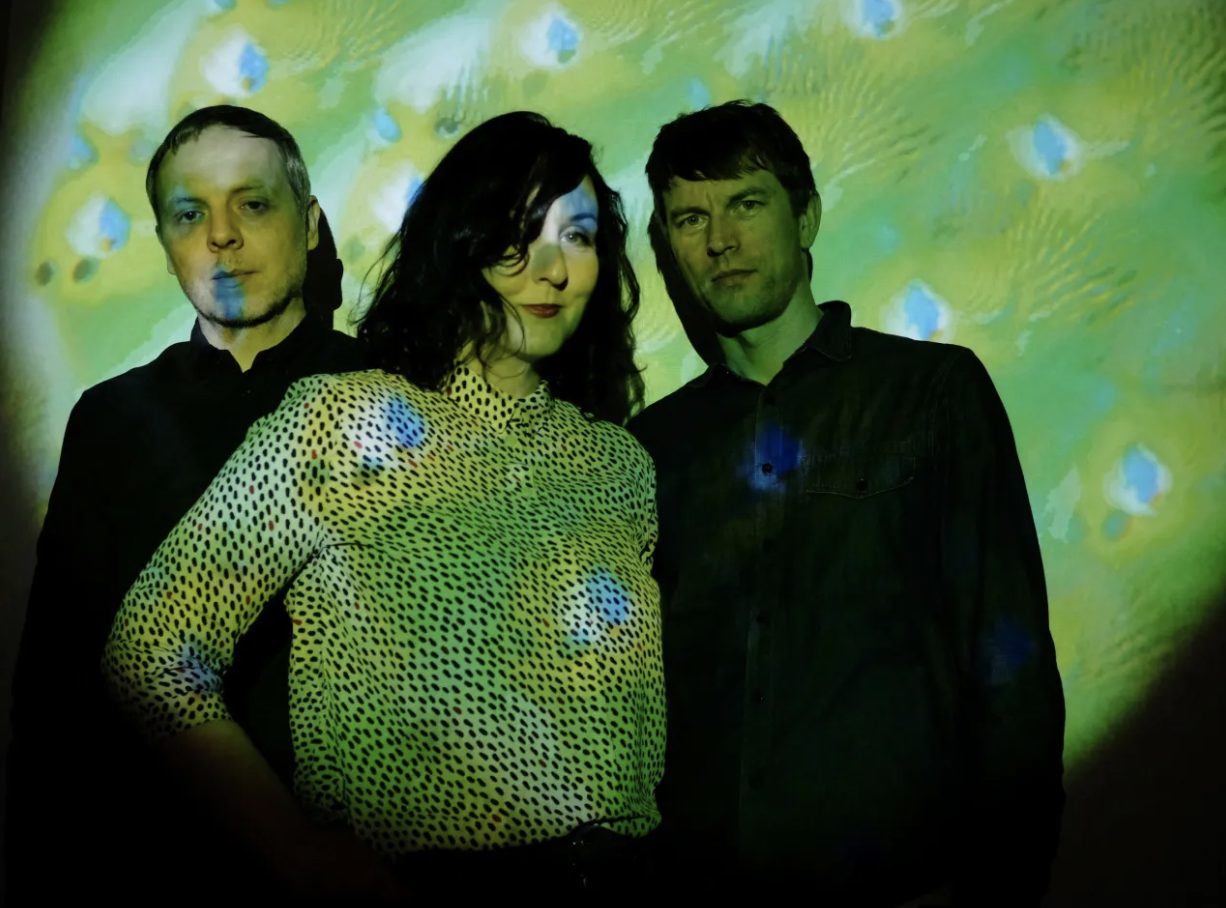
Death And Vanilla have put all their care and psychedelic imagination into this their “Fliker” after more than a decade of records (this should be the sixth, if we are not mistaken in mathematics, but in any case there are further ep’s on their bandcamp as well): these are delicate psychic digressions seasoned with a distinct and elegant pop in which the cerebrality and dimension of dreams (as in the beautiful “Baby Snakes”, a modern “Riders on the Storm”) is tempered in some passages by a physicality drier (“Find Another Illusion”) that the band refers, as a suggestion, “to the first Cure”.
The trio hails from Malmoè, Sweden, and is made up of musicians Marleen Nilsson, Anders Hansson and Magnus Bodin who play with vintage instrumentation, “to emulate the textures and magical sounds of soundtracks and library music, German krautrock and yèyè French pop from the 60s and 70s”.
Fantastic record in my opinion, which will probably be in my year-end rankings.
Album info: https://www.firerecords.com/product/death-and-vanilla-flicker/
TREES SPEAK, “Mind Maze” (Soul Jazz Records, 2023)
Another spectacular disc is this fifth by Trees Speak, a duo from Tucson (Arizona), composed of Daniel Martin Diaz and Damian Diaz who combine a very strong instrumental taste with a thousand influences and an absolute basic enjoyment. The press notes exaggerate a bit but begin to give coordinates: “Trees Speak is music as a cosmological translation, borrowing from Can and Miles Davis’ Bitches Brew era practice of the studio as a composition tool, in which long improvisations they merge into indelible flights of fancy with razor blade-assisted tape edits. Trees Speak operates between the subconscious and the unconscious, the radiant and the eclipse, the micro and the macro”.
Certainly German krautrock has something to do with it, just as the duo draws from the soundtracks of the 60s and from a certain free and unconstrained psychedelic rock with the cosmos as its destination: the Arizona desert as a universe to land on.
Personally, I have two songs that I wrote down with a handkerchief: “Syndrome” gives me the same anguish as Massive Attack, while “Sospetto” has the influence of the Italian soundtracks of the 70s and, as evident from the title, of Air’s “The Virgin Suicides”: only if you listen to it.
This album is also amazing.
WITCH, “Zango” (Desert Daze Sound, 2023)
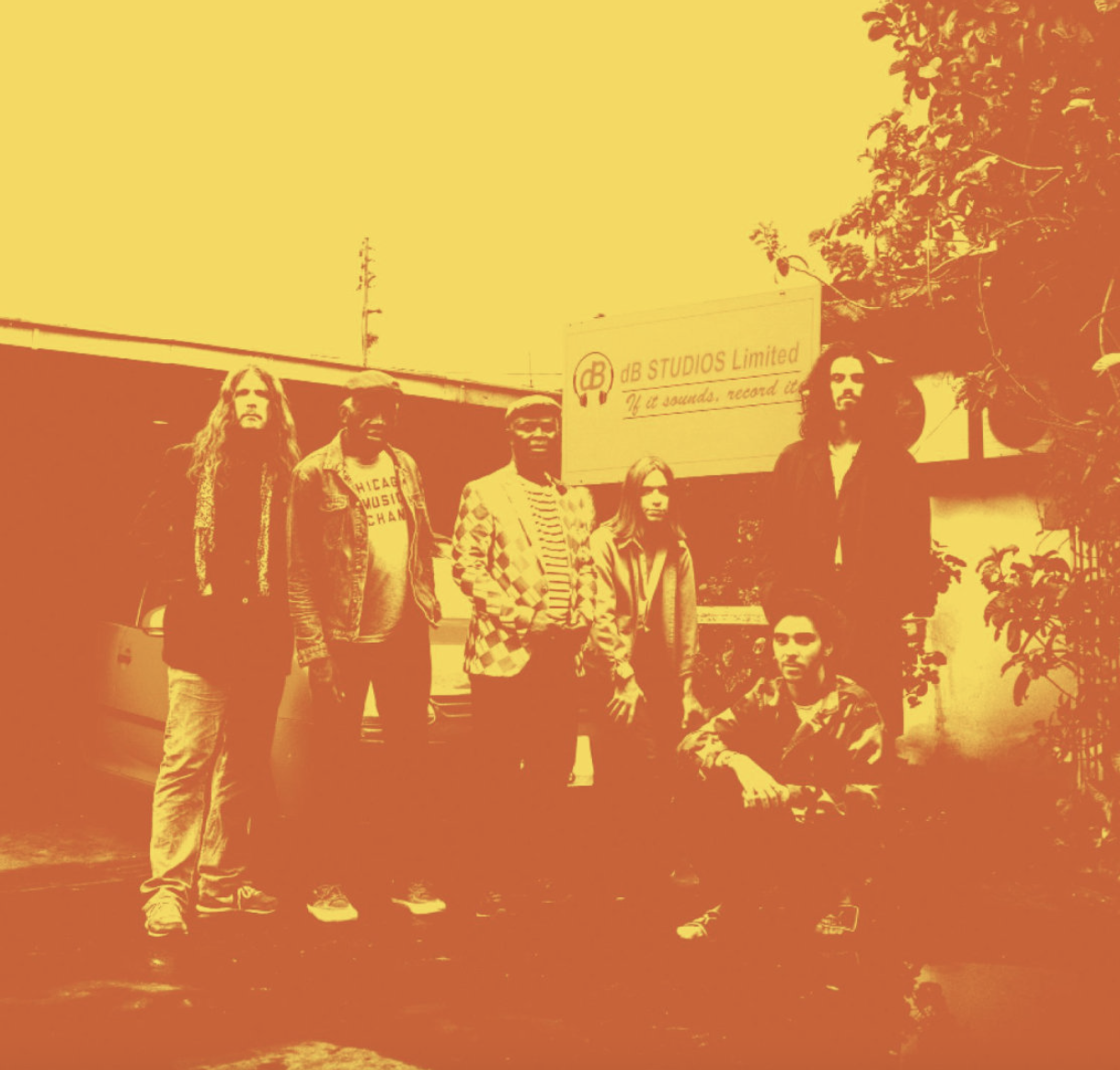
A story à la Rodriguez: between 1972 and ’77 the Witch, a band from Zambia, made five albums that were only released in Zambia. In 2010, reissues appeared in Europe and the United States: the Witch’s African rock-fuzz mix was liked so much that fans supported the tours of a new band that Jagari Chanda – the only survivor, now 71 – assembled six years ago, composed mainly of young European musicians.
Last week the Witch’s first album after four decades was released and Jacco Gardner both plays on it and produced it, a Dutch musician whom I love and about whom I was complaining via social media with my contacts about the long record absence only a few days ago (he had been spotted in Portugal in 2018 with “Somnium“). And yet here it is: he joined and produced the album of this historic band from Zambia and the result is amazing. The group’s African imprint explodes into a fuzz-based rock that is, to say the least, ultra-addictive. Leader Jagari Chanda was joined by new traveling companions Patrick Mwondela, Nico Mauskoviç, Charlie Garmendia, JJ Whitefield and Stefan Lilov.
A story and a record not to be missed.
GNOOMES, “Ax Ox” (Rocket Recordings, 2023)

Who’s Afraid of Russian Psychedelia? The war has erected barricades that music does not have, so here we are to recommend this fourth full-length from the band that comes from Perm who, after 3 albums characterised by the “exclamation point” (“MU!” of 2019, “Tschak! ” of 2017 and “Ngan!” of 2015), removes it from the title as if to normalise a proposal that is not normal . First of all, for the first time the quartet sings in their native language, Russian, and – since the beginning of the conflict with Ukraine – two of the members have fled Russia, which makes us understand the political approach of the band beyond a choice, that of using Russian this time, which would seem rather nationalist.
Musically, “Ax Ox” pushes a kraut direction elevated at times by techno beats (“Loops”) or garage-dark intuitions (“The Neighbor”), or diminished in porthole sensations à la Boards Of Canada (“Mirrors”).
Less recommended than the three albums above, but still out of the usual coordinates.
AUTHOR: Paul Bardelli
Kalporz X Monolith Cocktail: (Review) Weyes Blood ‘And in the Darkness, Hearts Aglow’
December 2, 2022
EXCHANGE REVIEW FROM OUR ITALIAN PENPALS
By Paolo Bardelli

Continuing our successful collaboration with the leading Italian music publication Kalporz , the Monolith Cocktail shares reviews, interviews and other bits from our respective sites each month. Keep an eye out for future ‘synergy’ between our two great houses as we exchange posts during 2022 and beyond.
This month Kalporz head honcho Paolo Bardelli assesses the new album from Weyes Blood.
Weyes Blood ‘And in the Darkness, Hearts Aglow’
(Sub Pop)
There has been a lot of talk about “lockdown music”: here And in the Darkness, Hearts Aglow could be defined as the first real album in the post-Covid world. More than for the sound, it is the themes addressed by Weyes Blood that make this new work of hers a point of reference for the era we shyly approach, that of overcoming pain in the context of a more or less latent dystopia. Natalie’s mastery is evident because she manages to transfigure the personal plane into the universal one, and more or less everyone has noticed it if it is true that And in the Darkness … was elected album of the month for practically all Italian magazines, print and online (and for us Weyes Blood is the cover artist of the month too).
From a musical point of view Weyes Blood completes that journey towards the sounds of the early 70s of groups such as The Carpenters and Carly Simon, that elegiac soft rock in which the piano and certain evocative atmospheres were the masters, already begun with the sublime Titanic Rising but by subtracting that small synthetic part that was still in the 2019 album. And in the Darkness… therefore becomes a sort of restart where everything is destroyed, with basic if not primordial instrumentation as can be that of pianos and orchestrations of violins to mark the need to build the new world from the ground up. But, be careful, there is an aspect that should be emphasised to those who might dismiss the sound part as a mere reprise of what it was: Mering expresses herself in a fully contemporary way, because, unlike the references we have mentioned, in her a hidden suffering predominates which is different from the fiercely pop humus (we could also define it as “escape”) of The Carpenters and similar artists. Indeed, more than suffering Weyes Blood demonstrates an almost pathological detachment, a medical-legal ability to dissect and analyse life and human relationships as if she were distant from them, as if she were not part of them. And in this sense she fits very well with her statement to The Forty-Five “I like to think that my music, instead of being entertainment, is more of a charm”. Here is the keyword: enchantment. What Mering manages is to make us stand there silent and astonished listening to her musical streams, minimal and majestic at the same time, in a sort of enchanted ecstasy in which her thoughts become ours: in short, an almost religious communion (it is no coincidence that the cover surprises her as a sort of new saint).
From a textual point of view, however, everything should be clear because Weyes Blood published a letter, last September, in which she explained the themes of her new test deals with, to be considered the second of a trilogy that began precisely with Titanic Rising. The central points would be mainly three: (1) being immersed in an era of instability and changes without return, (2) technology that is distancing us from people and (3) the heart, that muscle in our chest that perhaps out of modesty no one mentions it anymore as the meaning of things (but not Natalie, who makes it throb on the cover), as a necessary guide and hope in a dark period. In reality, a journey into the lyrics of And in the Darkness… must be accomplished by immersing oneself completely in them and not limiting oneself to uncritically flattening oneself to what was the intention of the author, albeit so clearly expressed. The works, when they come out from the authors, belong to those who receive them, and are ready to take on their own meanings and to travel autonomously around the world to give their own perspective to those who want to enjoy them. It is a job we cannot shirk.
The initial observation (in ‘It’s Not Just Me, It’s Everybody’) is that all these changes, the pandemic in primis but also the technology well represented by the mobile phone always in hand which is actually a “hole” ( “With this hole in my hand” ), have made us strangers to each other, and perhaps even to ourselves:
Living in the wake of overwhelming changes
We’ve all become strangers
Even to ourselves
But it is the sphere of human relationships, in any case, the one on which we inevitably set out again, trying to transcend the monotony of our daily jobs and our having stopped having fun, more particularly in search of that kindred soul, that ” twin flame” (‘Twin Flame’) that can lead us to have fun “at the Ferris wheel” (from ‘Hearts Aglow’):
Oh, I’ve just been working
For years and I stopped having fun
Oh, but baby, you’re the only one
Who would drive me down to the pier
Take me up on that ferris wheel
Weyes thus becomes like the spokesperson for a generation of thirty-year-olds (she, was born in 1988, and is 34) who are looking for their place in the world, and are always poised between yearning to find “great love” (“Cause I’ve been waiting for my life to begin / For someone to light up my heart again”) or to remain faithful to themselves as in the invocation of being transformed into beautiful flowers that perhaps will never truly blossom (‘God Turn Me Into a Flower’). The reference is to the myth of Narcissus, evidently updated here to the times of Instagram, whose obsession with a reflection in a tub leads him to starve and lose all perception other than his infatuation.
Above all, Mering gives us a truly superb, carnal and vivid text in the song ‘Grapevine’: she remembers a love, an “emotional cowboy with no hat and no boots” that made her burn with passion (“California’s my body / And your fire runs over me” ) but who took his love away like a child with a ball (“He has the power to take his love away” ). In this recalling his nocturnal longing would be to return to the vineyard where perhaps they made love all night long, lying in the meadows, in a bucolic image full of life and love (“But I still think of him at night / Ooh, you know I would go back to the camp” ) and instead now they’re just like “Now we’re just two cars passing by on the grapevine”. The image that I see when reading this closing sentence is of two parallel carts harvesting, on two roads that will never meet, and therefore there is no happy ending.
Mering, with her writing always a bit over the top in that being a bit apocalyptic (perhaps a legacy of having been raised by Pentecostal Christian parents), also very clearly identifies who can improve this stalemate of people “who don’t know where we’re going” (“We don’t know where we’re going” shesings in ‘Hearts Aglow’) and that is only the new generations: in fact on ‘Children of the Empire’she heralds the dawn of a new man (“The dawning of a brand new man”) in which only children can change things (“Children of the empire wanna change”) in search of the “eternal flame”, i.e. the reason why we really live. It’s not about surviving, it’s about burning with life.
And the concluding message is perfectly focused: it has been a “long and strange year” (there are almost three now, to tell the truth), we find ourselves immersed in a different world and we ourselves are different, they say that the worst is over and it’s time to go out, to have fun, to look to the future (from ‘The Worst is Done’) but, in reality, Weyes concludes in a certainly ironic way given that the accompanying music is lively, we are broken, we feel older and the worst is yet to come.
It’s been a long, strange year […] They say the worst is done And it’s time to go out […]
We’re all so cracked after that/ Got kinda old […]
But I think the worst has yet to come
But Weyes Blood doesn’t worry about all this, she observes it, scrutinizes it, analyzes it, but then goes her own way which is inevitably spiritual because her approach appears almost ascetic. The goal, as she says, is “understanding the natural cycles of life and death”, and listening to the album leaves in our souls an awareness that perhaps is taken for granted but which we often forget: that in the darkness, in dark times, hearts light up and shine even brighter.
80/100
(Paul Bardelli)
Kalporz X Monolith Cocktail: Interview with Rival Consoles
January 26, 2022
Interview/ Paolo Bardelli
Photo/ Courtesy of Ozge Cone (autorizzate dall’ Ufficio Stampa JA.LA MEDIA ACTIVITIES IG: @ozgecone)
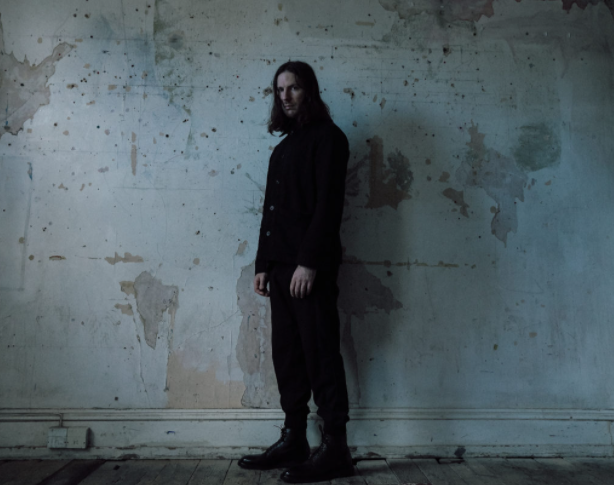
In a synergy between our two great houses, each month the Monolith Cocktail shares a post (and vice versa) from our Italian pen pals at Kalporz. This month, we relay Paolo Bardelli’s interview with Erased Tapes artist and electronic music composer Ryan Lee West, aka Rival Consoles.
The electronica of Rival Consoles, the stage name of London-based Ryan Lee West (on the Erased Tapes label), is striking because it floats in a world that remains suspended between the mental and the physical: yours truly considers him one of the most lucid composers in the world of electronica, and adores his third album “Howl” (2015). His is an evolved electronic artist, moving from IDM to “other” landscapes, such as the cinematic ones in “Persona” (2018). Consistent with this evolution, Rival Consoles has now turned to composing for contemporary dance, as we reported back in October, which was reason enough to interview him (by email).
Paolo Bardelli: I’ve always considered your music, perhaps mistakenly, to be more mental than physical, perhaps because of your predilection for broken tempos rather than linear ones: was the arrival at composing a contemporary dance soundtrack a challenge in this sense, or was it natural because you’ve always considered “dance” a modality that can always be associated with your music?
In the club world I would say my music isn’t “dance music” but in the bigger picture: including contemporary dance, ballet etc. It is a mistake to assume dance has to be repetitive and rhythmic in the way that house/techno is, for example ‘rite of spring’ by Stravinsky is music to dance and that is one of the most wild unhinged pieces of music ever. There are many points on the sonic spectrum to explore, and really anything is possible to experiment with and become relevant to dance.
In the press notes it says that you spent a lot of time with the dance troupe and the production, creating, perfecting and tailoring the music: since this certainly influenced “Overflow”, do you think that having experienced, live, a manifestation of bodily expressiveness associated with music will also influence your composition in the future?
I have worked several times with contemporary dance and it definitely does influence how you shape and change music over time, in a similar way to composing for film – once you set music against image or moving image everything changes and things which didn’t seem interesting now maybe became very interesting and things which seemed powerful perhaps now sound false/overpowering – it is a great refreshing world – where the senses are renewed.
The project was based on the contemporary philosophical work ‘Psychopolitics: Neoliberalism and New Technologies of Power’ by Byung-Chul Han which is, from what I read in the abstracts, a critique of neoliberalism and the regime of technological domination: do you agree with the book’s theses and is there anything that struck you most about his thought?
I agree with huge amounts of the book, the way the social media is exhausting our psychology by creating a never ending, never tiring need to contribute to it. We are constantly being influenced to be active and present online; even exercise, yoga and healthy diets are often just a means to be more productive, to be seen a certain way and to share that constantly online. The internet with its incredible fast-moving speed makes doing nothing seem guilty and illogical but constant self-optimisation is very dangerous for us as we are animals and not machines.
Will that very corporeality we mentioned at the beginning be a greater necessity in a necessarily technological and pandemic future?
I’m not certain what will be necessary in the future, I think right now there is already so much to confront and try to change for the better bit by bit.
Your electronics still seem to me to have a very strong human side: how much do you like the use of analogue instrumentation, I mean synths and the like, as opposed to PC programming?
I find I can get various things from all types of equipment and it’s not that analogue instantly makes more human sounding things; it can very easily sound too perfect and ordered. It’s more about the relationship between the ideas and the sounds, and the taste of the composer. I am interested in having tension always in music, and then I can explore resolve from that tension – and this is of course one of the oldest most used techniques, as used in almost all classical music and indeed techno. With analogue instruments you mainly get a beautiful restriction of what you will actually do and then makes you commit more to something in the moment.
‘Overflow’ premiered in May 2021 in London and is scheduled for a European tour in 2022. You’ve been busy with a series of headlining gigs in the UK this autumn and in North America in the new year: will gigs change forever after this pandemic or do you think it will go back to pre-2020 as far as live shows are concerned?
I am not totally sure, I do think if the pandemic were to reduce and be a minor thing in society, live shows would return as normal, because I think music and witnessing music is far too deep a human desire than something like a pandemic to change. But we do seem to be in a world where we are unsure from month-to-month, not even year to year. I try not to think about it too much because it isn’t something I can control.
Kalporz X Monolith Cocktail: When Helmet was the symbol for the conquest of the majors.
August 26, 2021
Feature/Literature/Paolo Bardelli
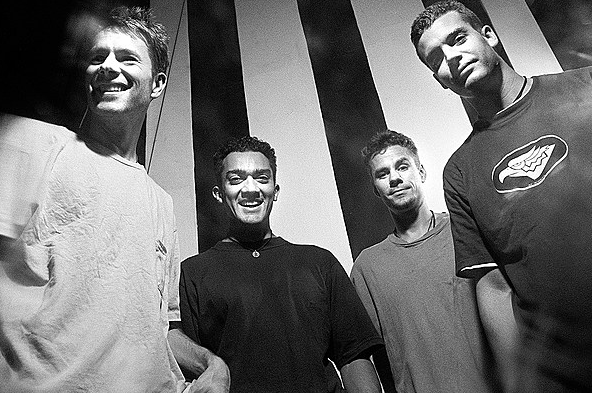
Continuing our successful collaboration with the leading Italian music publication Kalporz , the Monolith Cocktail shares reviews, interviews and other bits from our respective sites each month. Keep an eye out for future ‘synergy’ between our two great houses as we exchange posts during 2021 and beyond.
This month Kalporz head honcho Paolo Bardelli tells us how a recent radio spot promotion of his new book, 1991: The awakening of rock – Brit pop, trip hop, crossover, grunge and other exciting music, sparked off a discussion on the alternative-metal band Helmet, and the travails of being swallowed whole by the majors: hungry to sign up anything rock music; any band of guitar welding hopefuls in the light of Nirvana’s success.
Recently, in promoting my latest book, I found myself mentioning Helmet on the radio, and listeners called to thank me for mentioning a band that is often, and unfairly, forgotten.
And they’re right.
Helmet were one of the symbols of that period, and of that year to which I dedicated the book, 1991, when the majors signed anyone, even my aunt, as long as they did grunge or heavy rock. It didn’t matter what genre – metal, crossover, noise, shoegaze, etc. etc. – the important thing was that there was a lot of grunge. As long as there was a lot of guitar, played loud and powerful.
And there is a song, perhaps the most famous of the New York noise band’s catalogue, which shows – in its history – the plastic representation of that transition: ‘Unsung’. The first album of Page and associates (Strap It On, 1990) was released on an independent label, Amphetamine Reptile Records, which specialised in noise, but AmRep couldn’t keep their thoroughbreds in the stable for long. They were flailing. Just before Helmet made the jump to Interscope, in May 1991, on the 26th, they recorded the Peel Sessions and played the new ‘Unsung’. Such a song did not go unnoticed: Amphetamine Reptile hastened to release it, and so it was still 1991, in the live version played by Peel, as a 45 rpm, and to provide it with a video that I thought was wonderful and still respected independent standards: you see Helmet on a disused stage in an amphitheater abandoned to weeds and cockroaches.
“Unsung” was a business card that was too greedy: among all the majors that wanted to get them and that wanted to turn them into the “new Nirvana”, Interscope Records got the better of them (for a million dollars!), immediately re-releasing Strap It On (and it was still 1991, but how fast did things happen?) and brought Helmet into the studio to give a follow-up to that album, which would then be represented by the “famous” Meantime (1992). And “Unsung” was also re-recorded and given a video more in line, in theory, with the band’s new image.
Notwithstanding that ‘Unsung’ kicks ass in its first and second versions, I much prefer the video with the cockroaches. Well, at the time when the majors were grabbing these bands, maybe they were also sucking some soul out of them, and this comparison of two videos can be a clear illustration of that. But the majors also made these bands better known to most people, and that was a good thing, something Kurt Cobain also always pointed out, happy that unlike before, a teenager could find Nevermind in a Walmart store. Today the 1991 video has 15,000 views on YouTube, the official 1992 video over 11 million. Just to give you the idea.
Even selling your soul “to the devil” has its advantages.
(Paolo Bardelli)
More info on Paolo’s book can be found here: “1991. Il risveglio del rock. Brit pop, trip hop, crossover, grunge e altra musica eccitante” (Arcana)
News/Review/Paolo Bardelli

Continuing in 2020 with our collaboration with the leading Italian music publication Kalporz, the Monolith Cocktail will be cosying up and sharing reviews, interviews and other bits from our respective sites each month. Keep an eye out for future ‘synergy’ between our two great houses as we exchange posts.
This month Paolo Bardelli brings news of Zoe Polanski’s upcoming LP, and previews her brand new single, ‘Pharaoh’s Island’.
The new album by Israeli singer Zoe Polanski, who we already know as a performer for the Spark O project, will be titled Violent Flowers and will be released on July 17 on the New York label Youngbloods. The Israeli singer, currently based in Haifa, spent last summer in New York recording with the band Ketamine and completing a film course at the School of Visual Arts, where she also found her label.
Zoe Polanski’s charm is not limited to her evocative voice, but to the same post-new age settings as on the new single ‘Pharaoh’s Island’. The song is inspired by the island located in the Gulf of Aqaba, and Polanski said: “What enchanted me about the place was the fact that under this militarized land there is a parallel universe that exists underwater, namely a colony exceptionally rich in corals and marine life.”
An anticipation that makes us anxiously await the full length, and that makes us be sure that this girl has so many ideas in her head and so much musically to express.
Exchange Article/Gianluigi Marsibilio

Continuing in 2020 with our collaboration with the leading Italian music publication Kalporz, the Monolith Cocktail will be cosying up and sharing reviews, interviews and other bits from our respective sites each month. Keep an eye out for future ‘synergy’ between our two great houses as we exchange posts.
This month, Gianluigi Marsibilio looks into the phenomenon of “Spotification” as he explores the evolution of music’s fruition through streaming with Prof. Rasmus Fleischer.
Spotify is a giant metaphor for the entire cultural sector. From music to podcasts, which have changed the way of radio and storytelling, Swedish society since 2008 has fostered a new way of interacting with users and people, and with the whole cultural production, not just music.
“Spotifisation” then is a fundamental theme and we talked about it with the theme expert Rasmus Fleischer, who wrote an interesting publication on the theme of cultural “universal spotification” (“Universal Spotification? The shifting meanings of “Spotify” as a model for the media industries”). Fleischer is a researcher in economic history at the University of Stockholm: his academic work has mainly focused on media history and political economy, with a particular focus on music. He was also co-author of the book Spotify Teardown (MIT Press, 2019).
The Spotify model, although not unique, hides many criteria that have been taken up by various startups to promote a similar model, applying it to news, books, magazines and every aspect of the cultural sector.
At the heart of this business model is certainly the concept of hype, i.e. the establishment of a flow of news, rumors and anticipations that shift attention and expectation to a particular element. An interesting definition comes directly from Professor Fleischer’s paper, in which this process is identified as a mechanism for “shaping the future from the present”.
However, in order to understand this circularity Spotify has shaped one has to remember how it all came about: “At least in Sweden, the process has been closely linked to social and political conflicts over file sharing and copyright enforcement, including the legal case against The Pirate Bay (a popular file sharing site in Sweden and active in 2003). The music industry,” Fleischer explained, “would probably not have agreed to license the tracks if it hadn’t been so desperate.
With the passing of the years and the development of the model everything has become much more complex, until what we can define in 2010 as “Spotify’s curatorial turning point”, in fact Fleischer insists on this point: “Before then, Spotify was basically conceived as a big archive”.

The breakthrough that came in the early 2010’s was important and defined streaming as we use it and know it today: “Starting in 2013, the service has been rethought in order to give more importance to the recommendations. This no longer assumes that the listener knows what to look for, in fact an endless stream of music is presented”.
A change, a revolution of this kind, offers important insights and perhaps brings back to the question that Kalporz’s very own Paolo Bardelli asked himself in the site’s My2Cents column: “Isn’t it time for Spotify, Deezer and the other platforms to become record labels? The change of direction has in fact given another kind of influence to Spotify on the way people listen to music and it would be interesting to see how this kind of reasoning has led to the development and growth of some genres over others. Fleischer pointed out for example that: “Music described as “chill” is particularly well suited to the new paradigm”.
There is no single model to describe and encompass the infinite facets of the cultural and music industry: “At first it was thought that the “Spotify model” was linked to free access, leaving everything to be financed only by advertising”. Over the years, however, everything has been designed and structured in the form of monthly subscriptions and today, thanks to the care and management of Big Data, we are able to have reliable predictions about the music industry. The change of strategy has also been reported in an article published in Wired that indicates how: “Consumers have become more and more accustomed to the idea of paying for access to digital media that they once received for free” and in fact, data from 2018 shows how now only 10% of Spotify’s revenue comes from advertising.
To get into a purely musical discourse, you can see that Spotify and co. have contributed to “destroy the album, now count the singles made to enter the playlist”. Over the years, however, “it’s also conceivable that Spotify will try to integrate the playlists by directly releasing music. In any case – recalled Fleischer – we must not forget that there are important movements developing outside Spotify and even in opposition to it. An example could be the rise of the so-called Soundcloud Rap”.
The phenomenon of Spotify and streaming platforms in music can then be linked to the deeper analysis of a media landscape moving towards an algorithmic culture. From this point of view among the various services, Fleischer explained: “Netflix dealt with algorithmic recommendations long before Spotify”. The music streaming service, on the other hand, has started to take care of this, particularly expected by its “curatorial” turning point. This phenomenon of playlist care, through algorithms, comes out of a whole series of choices made by services such as Songza, which used music experts to target listeners already in the early 2000s, or Pandora, which first introduced a system of keywords to categorize music.
The theme of a culture of the algorithm then surely will be a fundamental step to be taken, maybe in one of the next “investigations”, to understand how music is changing, because it is out of the question that the way to enjoy music changes and directly influences its sound and cultural connotation.
In this moment of lockdown culture, in particular music and cinema, have migrated to digital platforms and at the time it seemed right to reflect on “Spotification” and offer a cue for future insights into the process of digitization and its mechanisms in the music industry.
Related posts from the Archives:
[Scoutcloud]: Brianstory
Photo Roll: Gig: Yussef Dayes
Listen To The Enemy: The Sound Of Covid-19
 Monolith Cocktail Blog