The Digest for September 2025: New Music/The Social Playlist/And Archives
September 22, 2025
The monthly Digest includes a clutch of accumulated new music reviews; the social inter-generational/eclectic and anniversary albums celebrating playlist; and choice timely pieces from the archives.
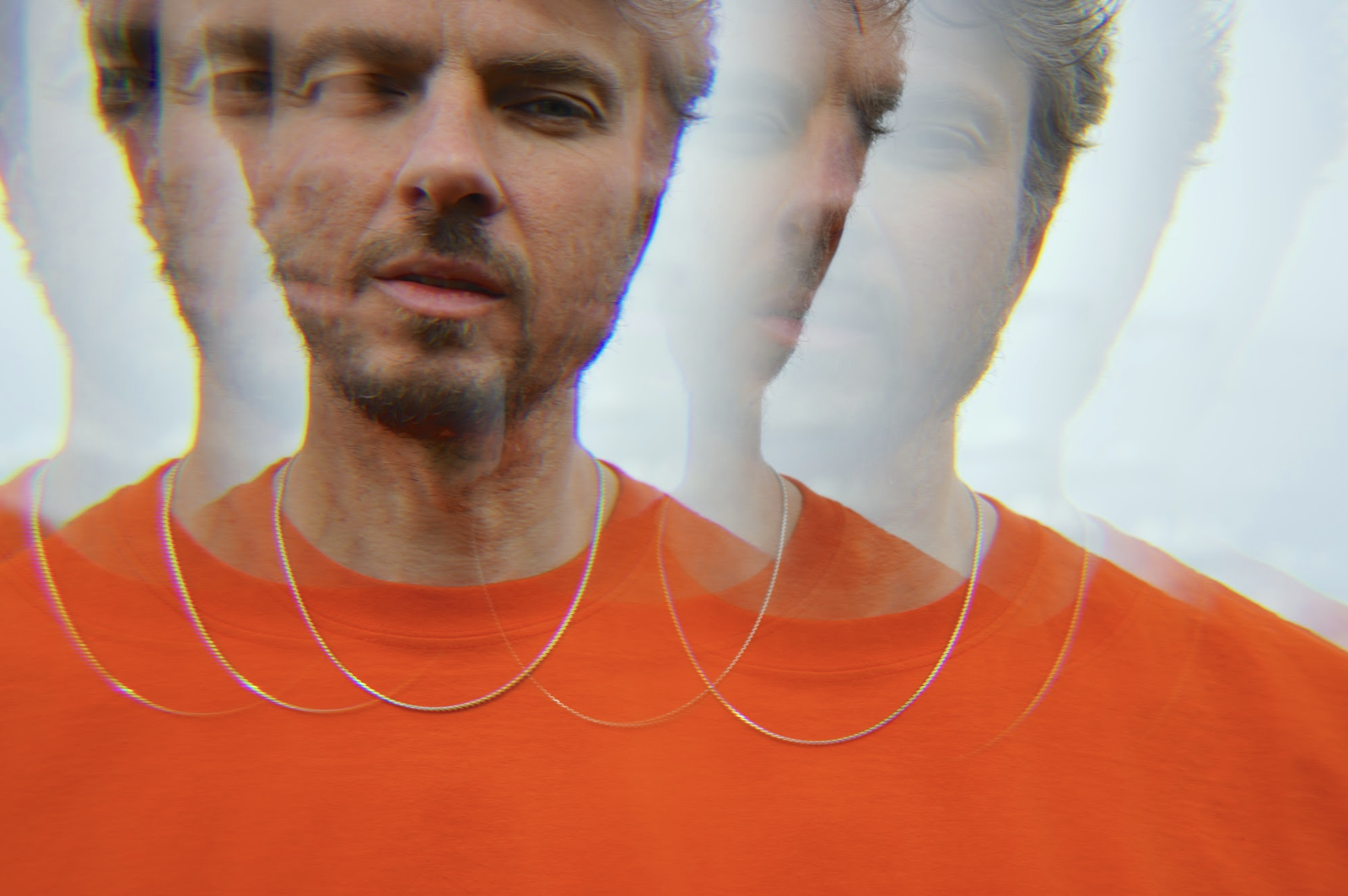
Tom Skinner photograph courtesy of Jason Evans.
___THE NEW___
Group Modular ‘The Tunnel/Lonely Pylon’
Reissue Special Released 19th September
The first transmission (or rather a retransmission if you like) from the Group Modular duo of Mule Driver and Marky Funk in three years, marks the inaugural chapter in a new series of special 7” releases “powered” by the duo’s alter ego Confused Machine and Delights labels. Those lucky enough to have grabbed original copies (sold in separate splits editions, both sold out almost immediately) of ‘The Tunnel’ and ‘Lonely Pylon’ will know that the former was part of Norman Records’ 2021 25th Anniversary split release by Polytechnic Youth, and that the latter was recorded exclusively for the third instalment in Russian Library’s L series of split 7” EPs back in 2022.
Back on the radar, with the chance to own these hauntological sci-fi suites and dramatization soundtracks, the self-described “Outer space sounds from Jerusalem-Tel Aviv route” library music makers reacquaint us all with their brand of analogue period cult space age influences and their taste for atmospheres and theme tunes that emit something that’s near supernatural. ‘The Tunnel’ is a curious Pietro Grossi like rocket ship steam and gas fusion of soft timpani, Roy Budd and Greg Foat-esque barque sci-fi harpsichord, and d ‘n’ b like dub beats. And the electric field throbbed ‘Lonely Pylon’ is a Library music imbued psychogeography of paranormal nature and unnerving children’s sci-fi TV of the 70s and early 80s – imagine Brian Hodgson, Sapphire and Steel and bygone public broadcasted information warnings resurrected by The Advisory Group or My Autumn Empire.
Hopefully this latest 7” series will prove a catalyst for more new recordings from the duo, who haven’t released anything together since Per Aspera Ad Astra in 2022. You’d better be quick, as I have a feeling it will sell out pretty sharpish.
Lt. Headtrip & Steel Tipped Dove ‘Hostile Engineering’
(Fused Arrow Records) 23rd September 2025
The gristle, outpoured thoughts, observations, protestations and glue between the oppressive urban structures of our dysfunctional, unworkable society both poetically and rhythmically twist and flow over a counterculture haunted psychedelic-prog, Krautrock and jazz-soul production on this debut project collaboration.
From the experimental, leftfield platform of Fused Arrow Records and its stalwart producer, engineer, beat maker and artist in his own right, Steel Tipped Dove, a new partnership with rapper, producer and instigator Lt. Headtrip.
Dove’s production and various studio skills can be heard on releases from such notable talent as Fatboi Sharif & Roper Williams, billy woods & Messiah Musik, Darko The Super, MC Paul Barman and Zilla Rocca. He’s also collaborated with the most dope and pioneering Dose One. The Lieutenant’s CV is no less impressive, setting up the ‘we are the karma kids’ label, organizing projects and events in the Brooklyn, Manhattan and Queens areas, and either collaborating or sharing stages with Armand Hammer, Open Mike Eagle, Quelle Chris, Beans, Backwoods Studioz, Reservoir Sound and Uncommon Records.
A magic combination of old hands from the underground scene then, the Hostile Engineering environment that engulfs them is twisted, churned, inhaled and transformed into a sometimes gothic, sometimes industrial, and sometimes more soulfully halo-lit arena for the spoken and rapped lyrics; the cadence of which reminded me at any one time of the Antipop Consortium, Rob Sonic, dalek, and when humorously and from a self-aware but confident in their own skin way, addresses the issues of sexuality, sex and the tired old tropes of rap machismo on the smoochy drifted saxophone and crunched drum beats produced ‘We Got The Sugar’, comes across a little like Homeboy Sandman: a sample of the lyrics being, “last week I was helpin’ his girl find her panties. This week I’m his bro’s new daddy. Just cause I can rap along to Liquid Swords don’t mean my dick’s boring.”
There’s more than enough clever ideas here, with samples I’ve yet to recognize, and an atmosphere that seems to channel all kinds of musical influences; from zappy Kraftwerkian synth and drum pads electro to the Floydian, Roy Ayers, Soul cuts, cult soundtracks (of suspense, horror and sci-fi futurism), heavy rock and prog – I think I’m overthinking it, but alongside what could be a sample from Sabbath or their ilk, it sounds like a short miraged shiver of cymbal resonance and slow drums from Neu!’s ‘Weissensee’ on the automation for the people, insurance servitude and dead-end careers themed polemic ‘0 Days Since Last Accident’.
Bot factories, the nightmarish promises of constant bodily cosmetic regeneration and the self-absorbed legacies that go with hanging on to the bullshit zenith of eternity, high anxiety, and on the repurposed halcyon soul Kayne-Jay-Z-Biggie fantasy “money, money, money” ‘Fund Don’t Stop’, a backslap to rampart consumerism and unsignifying spectacles of Black Friday (“We been shoppin’ since we bought that serpent’s product in the garden.”) – a lifetime of spending, from the womb to the tomb.
At thirty minutes long, there’s no fat on the bones, and yet plenty of tempo, musical changes, and a fresh rap style that neither preaches nor sits back in a nonchalant pose. A really successful pitch, bringing both talents together to fuse and articulate the present depressing miasma of the times in which we all live; glued to this rock, with no anchor, no compass, attached to the screen and validation culture of social media and its puppet masters. One of the freshest hip-hop releases of 2025.
Tom Skinner ‘Kaleidoscopic Visions’
(Brownswood/International Anthem) 26th September 2025
Reaching the midlife point, the UK drummer and composer Tom Skinner finds time to reflect and take stock with a mature kaleidoscope of culminated visions pulled and drawn from a highly prolific career and enviable CV of performances, collaborations and recordings (from Sons of Kemet to The Smile, David Byrne Floating Points…. the notable list goes on).
Arriving a few years after Voices Of Bishara (an album inspired by the American jazz and classical cellist Abdul Wadud and his seminal privately pressed cult masterpiece ‘By Myself’), the follow up weaves the former into a rich, often cinematic, psychedelic and floated meditation and dialogue of jazz, neo soul, cult soundtracks and the contemporary classical. At 45 years of age, the time felt right for such an undertaking. A culmination of experiences, of influences now coming together; a bond that embraces not only Skinner’s vaguely Middle Eastern entitled Bishara live band but a number of congruous international collaborating foils: neo-soul doyen, and right acclaimed, award-wining polymath (but you can list the main qualifications as singer-songwriter, poet and bassist) Meshell Ndegeocello; the self-described multifaceted Charleston musician, score composer, film and radio programmer and vocalist Khari Lucas, otherwise known as Contour; London born and raised but now Berlin-based keyboardist and vocalist Jonathan Geyevu, aka Yaffra; and on electric guitar for a couple of tracks, Adrian Utley of trip-hop luminaries Portishead.
That group of friends is split between two sides of a traditional vinyl format: a moiety of instrumental material and vocalist starring peregrinations, with side A featuring the electric-chamber-jazz Bishara quartet of bassist Tom Herbert, cellist Kareem Dayer, and woodwind and reeds players Robert Stillman and Chelsea Carmichael, and Side B, a cosmic mirage of sung and spoken discourse, soliloquy and healing. Described as “distinct sonic landscapes”, both parts are harmoniously conjoined, with leitmotifs, recurring sounds and an overall feel that draws upon a cosmology of Afro, spiritual, conscious, spacey, psychedelic and experimental jazz.
It begins with the promise of comfort; a putting of the mind at ease so to speak. ‘There’s Nothing To Be Scared Of’ begins with an incipient jingle-jangle and stirring drones of woodwind and the cello before hitting a peak of what can only be descried as Lalo Schifrin meets Bobby Hutcherson and Lonnie Liston Smith and the Cosmic Echoes on a 1960s filmset. From then on out, this jazz-chamber match the flighty, craned and fantastical with amorphous hints of Nicole Mitchell, Village Of The Sun, Kibrom Birhane, the Ancient Infinity Orchestra, Coltrane, Matana Roberts and Sven Wunder. You could call it a cross-generational sound, with the first half of the album feeling itself out across an evocative landscape and more abstract metaphysical space full of reflections on emotional states and those people held either dear or inspirational. That includes the late New Jersey born and raised novelist, writer, memoirist, poet and filmmaker Paul Astor (author of the loose New York Trilogy, Moon Palace and The Music Of Chance), and Skinner’s mother, the former classical concert pianist and victim of the arts misogyny, Anne Shasby.
There are some beautiful moments captured amongst the often-slow momentum, and the gander and bird-like flexes; a sense of the mellow and unfurled: the soulful too. And yet there’s a certain drama to be found, and even mystery to this section of instrumental description, of roots and spiritual emotions.
The second section features the vocal talents and essences of Skinner’s collaborative foils; starting with the soul, funk, jazz, hip-hop, reggae and rock spanning polymath Meshell Ndegeocello, who soulfully and dreamily oozes and woos a sense of both the ancestral therapy and a mirage feeling of homely comfort. Ndegeocello’s voice emerges from a hallucinatory wilderness, floating across a nine-minute cosmic-soul and R&B jazz suite of horn snozzles and soft burbles, glassy bulb vibraphone notes, and gentle plucks.
Taking a sadder, more pained discourse-like tone, Contour’s R&B neo-soul voice aches and yearns on the bluesy chamber-jazz piece ‘Logue’. The language is one of rise and fall, trauma and endurance, survival and striving in a ruthless landscape. And yet, again, there is a kind of near diaphanous beauty about some of the music, the flutier parts and delicate bulb-like notes that seem to float around in a slow ponderous rhythm. It’s the feeling of being drained, and the attempts to break free of the malaise.
The finale, ‘See How They Run’, features the soulful poetic spoken tones of Yaffra both responding to a secondary voice and speaking out loud his thoughts, enquires to the promise of eternal enlightenment, in an almost winding, untethered fashion. It reminded me in part of Andy Hay, Diggs Duke and even Tricky, playing out over another neo-soul leaning dreaminess.
Informed and prompted by middle age (a youthful middle age of experience rather than depressing aging pains), Skinner offers a retrospective pause whilst looking towards a creative future. Cross-generational concerns, references, influences converge in a mature work of feelers, reflections and freedom. Consolation in an age of accelerated isolating atomisation and introspective anxiety.
Water Damage ‘Live At Le Guess Who?’
(Cardinal Fuzz in Europe/12XU in N. America) Released 5th September 2025
In the venerated surroundings of the Medieval city of Utrecht, the religious epicentre of the Netherlands (or so it is said), as part of the Le Guess Who? Festival lineup, the Water Damage ensemble preached their own unique fire and brimstone of monotonous locked-in drones, the wailed and frayed, the squalled and resonant.
Whilst following no recognisable domination on this plane, the Austin collective of like-minded acolytes to all things underground, invoked some kind of near religious sonic experience as they went to work on the opening track, ‘Reel 28’, from their most recent album, Instruments (released back in May of this year). Without a break or let-up, they relentlessly, but slowly, created a mesmerising lumber of the avant-garde, of Motor City, Jap, Kraut and Doom rock. Enslaved to the rhythm you could say, for a full 45 minutes both the group and their audience are caught in the hypnotic flay and sway of the scuzzed and intense bowed needling and sawing momentum that is created.
Absorbed into the core for that performance, guests Ajay Saggar (a serial offender, featured untold times on this site over the years under various collaborative and solo guises: Bhajan Bhoy, Deutsche Ashram, King Champion Sound and University Challenged) and fellow astral traveller Patrick Shiroishi (the Japanese-American multi-instrumentalist and composer, based in L.A., last appeared on this site playing foil on saxophone to Dave Harrington and Max Jaffe on the Speak, Moment collaborative album) take up the mantle on guitar and “free-reeds”. Their contributions are equally as mystical, magical, intense and droning; with Shiroishi especially summoning both a Mogadon Hawkwind and Sam Rivers simultaneously.
With the “Maximal Repetition, Minimum Deviation” motto and mantra, they conure up a monster; a ceremonial rite; even, as the accompanying press release describes it, an exorcism. And yet it is quite melodic. Reference points, for me, would be Tony Conrad and Faust’s seminal Outside The Dream Factory, but also Tony’s Transit Of Venus collab with Hangedup, Glenn Branca, La Monte Young (these last two actually referenced by in the press release), Earth, Boris, Swans, Hala Strana, France, Smote, Pharoah Overlord and Amon Düüls I and II, and The Black Angels. But like the old city that played host to the festival and the Water Damage performance, there’s an almost otherworldly summoning of the Medieval: a sort of mythologised or transmogrified evocation of an abstract atmosphere from that period; it sounds at times almost like a hurdy-gurdy is being wound up like some kind of ancient transmitter; plugged in to a mystical and harrowing age.
I must add, for once, the sound is really good. You can hear every part, every contribution, and even the bass line (you wouldn’t believe how few recordings ever get the bass right, or let you hear anything more than just a mumble of bass; live recordings are often even worse, almost bass free). The bass here is integral to keeping up that never ending rhythmic sway; and despite its repetition, is such a great little riff that is never grows tired. Compliments to the sound engineer, and who ever mastered this performance, then, for instead of a block intensity of lost instruments you get a clear production, with every cog, every drone and note audible.
I’d say an improvement on the album track, and a really intensive yet hypnotic hermetic experience that feels untethered to any particular time, age or period.
___/The Monolith Cocktail Social Playlist Vol. 101___
For the 101st time, the Social Playlist is an accumulation of music I love and want to share, with tracks from my various DJ sets and residencies over the years and both selected cuts from those artists and luminaries we’ve lost on the way and from those albums celebrating anniversaries each month.
Last month we celebrated the 100th edition of this series, which originally began over 12 years ago. The sole purpose being to select an eclectic and generational spanning playlist come radio show, devoid of podcast-esque indulgences and inane chatter. In later years, I’ve added a selection of timely anniversary celebrating albums to that track list, and paid homage to some of those artists lost on the way. In the former camp this month, and to tie in with the Archive spots on Bowie and CAN, there’s a 30th anniversary nod to 1. Outside – a tour I actually witnessed, I kid thee not: Wembley Arena if you must know – and 50th nod to Landed. Joining this celebration there’s also tracks from Kate Bush’s Hounds Of Love (40 this year), The Fall’s This Nation’s Saving Grace (also 40), Blur’s The Great Escape (30), Dexter Gordon’s One Flight Up (60), Wolf Parade’s Apologies to the Queen Mary (20) and Mew’s And The Glass Handed Kites (also 20).
Each month I also like to add a number of newish/recentish tunes (more or less anything from the last year): those that either missed out on the regular Monthly Playlist of brand-new music releases, or only just come to my attention. We have Monde UFO, Lukid, the El Maryacho team up with Nowaah The Flood, Penza Penza, the Tone Of Voice Orchestra, Elkotsch (thanks to blog friend and supporter Andy Haas for recommending this one) and the triumvirate collaboration of Phew, Erika Kobayashi and Moebius. Oh, and something not so much new but surfaced from Dylan this week.
The rest of the playlist is an anything goes selection of stuff I’ve accumulated, loved, treasured, wanted to own or played out during my sets over the decades. In that category there’s music from the Walker Brothers, the Jazzpoetry Ensemble, Mother Lion, Garybaldi, A Tent, The Barrino Brothers, Departmentstore Santas, Gene Martin, and Akofa Akoussah.
Track List:::::
Wolf Parade ‘Shine A Light’
Butterglory ‘She Clicks The Sticks’
Blur ‘Entertain Me’
Mew ‘The Zookeeper’s Boy’
David Bowie ‘We Prick You’
Kate Bush ‘The Big Sky’
Garybaldi ‘Maya desnuda’
The Fall ‘I Am Damo Suzuki’
CAN ‘Vernal Equinox’
The Jazzpoetry Ensemble ‘Motherless (Live)’
Dexter Gordon ‘Darn That Dream’
Polyrhythm Addicts ‘Big Phat Boom’
Akofa Akoussah ‘Sumga Ma Bacci’
El Maryacho & Nowaah The Flood ‘SOAPS’
The Barrino Brothers ‘Born On The Wild’
Tone of Voice Orchestra ‘Tourist at God’s Mercy’
Penza Penza ‘Dusty’
Los Darlings De Huanuco ‘Lobos Al Escape’
Elkotsh ‘Da’a Adeema’
Monde UFO ‘Sunset Entertainment 3’
Phew, Erkia Kobayashi & Moebius ‘Katherine’
The Detroit Escalator Co. ‘Manuel Transmission’
A Tent ‘Seven Years – part 2 (Abundance)’
Lukid ‘The Secret of Bell Making’
Bob Dylan ‘Rocks And Gravel (Solid Road)’
Mother Lion ‘Simple House’
The Walker Brothers ‘Walkin’ in The Sun’
Departmentstore Santas ‘Play in the Sun’
Gene Martin ‘We Shall Be Like Him’
The Hitchhikers ‘Feel A Whole Lot Better’
___/Archives___
From the exhaustive Archives each month, a piece that’s either worth re-sharing in my estimates, or a piece that is current or tied into one of our anniversary-celebrating albums.
This month there’s my previous pieces on CAN’s Landed (50 this year) and Bowie’s 1. Outside (30 years old this month).
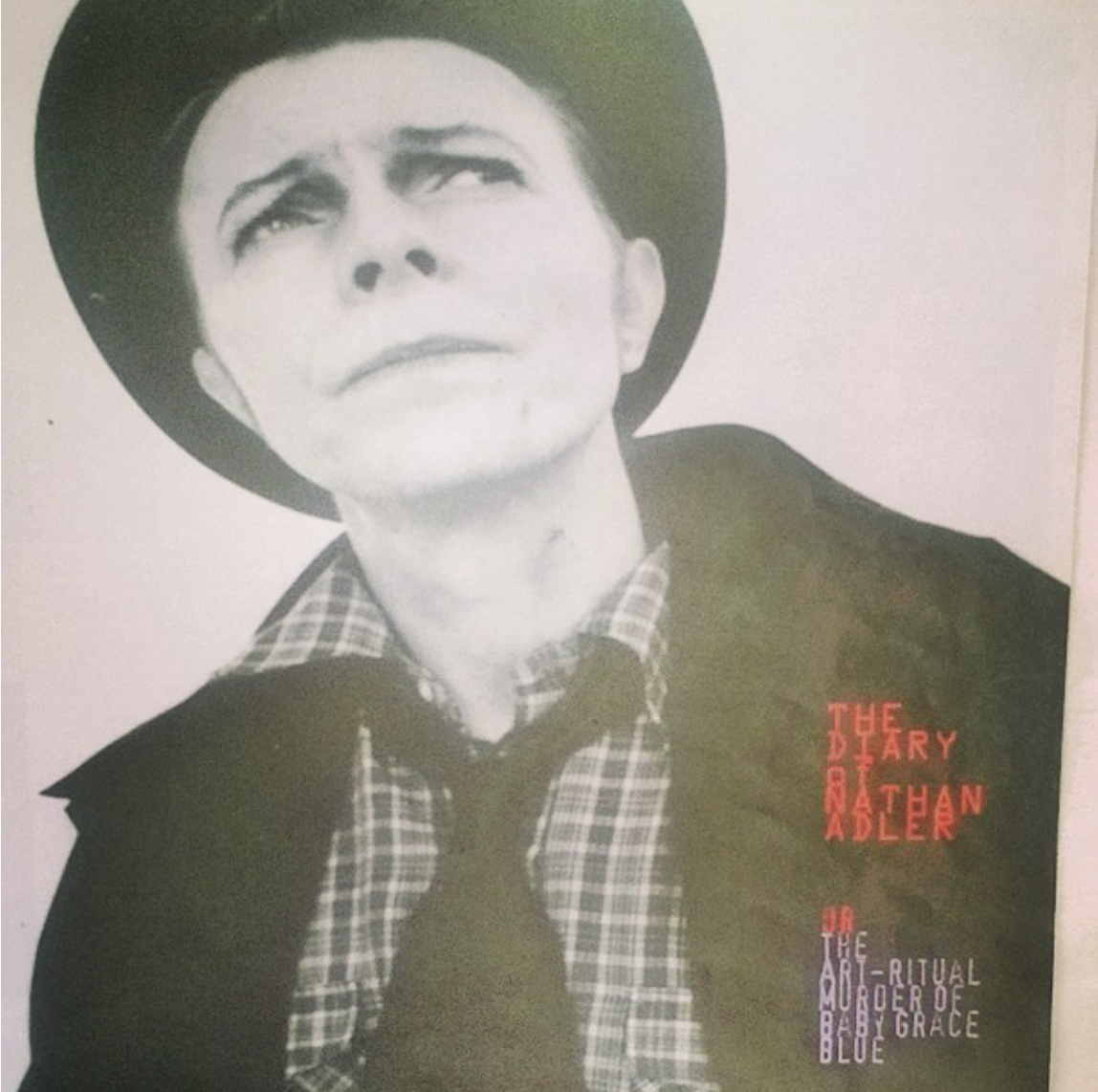
David Bowie 1.Outside (Arista/BMG) 1995
With ‘five years’ remaining until the new millennium, Bowie, tapping into the anxiety and quest for spiritual relief, returned to his first passion: contemporary art.
Back with his most innovative collaborator, Brian Eno, he dredged the bottomless pit of morose and despair. Dreaming up a morbid tale of future sacrificial performance art gone wild and taboo breaking cybernetics he narrated a woeful diegesis through a series of ‘verbasier programmed’ characters.
Disturbing to say the least, our ‘cracked actor’ pitches an avant-garde ‘whodunnit?’, set in a parallel bleak world where the self-mutilated gestures of Günter Brus (the patriarchal figurehead of body art) and ‘the orgiastic mystery theatre’ of Hermann Nitsch have been taken to new, hyper, extremes of bloodletting.
Led by the investigative diary of art crime detective Nathan Adler, a cryptic cut-up of Burroughs/Burgess language is used to not just explain the circumstances that befell the poor victim Baby Grace, but also delve into the collective psyche.
Out on a limb musically, Bowie’s home life may have been content, yet something suddenly propelled him to bravely create a depressive requiem. Easily the best, if not most original, material since Scary Monsters, 1.Outside was entirely written in the studio as the band extemporized: motivated by Eno’s synonymous oblique strategy cards.
Scott Walker lost in cyberspace; the industrial melancholy is at its most anguished on ‘A Small Plot Of Land’ (a version was used on the, Bowie as Warhol starring, tragic biopic of Basquiat directed by Julian Schnabel), yet a more revved-up, pummelling bombastic variant is used on ‘Hallo Spaceboy’ and ‘The Heart’s Filthy Lesson’ (perfectly playing out David Fincher’s Seven).
Leaving many fans bemused (as I myself witnessed on the Outside tour, the baying audience pleading for the greatest hits package), the philosophical snuff opus seemed puzzling to those familiar with the pop-lite Bowie. Thankfully Bowie cut loose the shackles of commerciality for a contemporary blast of shock and dread.
CAN ‘Landed’ (Virgin) 1975
Richard Branson’s pastoral record label Virgin hooked our Cologne ‘seven-day sonic avant-garde evangelists’ in early 1975, tempting them away from the clutches of their former masters United Artists, whose relationship with the band had been tenuous at best. They now joined the hippie-idealistically run, free thinking label of choice – at least that’s how it appeared to the onlooker-, sharing the stable with both fellow countrymen Faust, Tangerine Dream and Slapp Happy, the psychedelic progressive band Gong, and the million zillion selling Mike Oldfield, Virgin’s biggest selling artist by miles – whose Tubular Bells behemoth had reined in a load of money and success, paving and paying the way for most of the roster.
Branson may have looked like he’d stepped off the cover of a Jethro Tull album, but he turned out to be a shrewd businessman. After all, he managed to propel Faust into the album charts with their Faust Tapes mesh-mash classic: albeit that the said album was put on sale for a paltry 49p and probably didn’t actually net the group much money, but hell, it sold over 100,000 copies, so they became a household name in the head community for a while at least.
Business wise, sister label Harvest – equally rich in allusions to the Woodstock ethos – would distribute CAN’s records in their homeland, whilst EMI, who owned both labels, would just count the cash it hoped would now roll in. One of the stipulations in the Virgin contract was that the band would have to use superior recording equipment for their next album. A multi-tracking desk was delivered to their own sacred Inner Space studio HQ, which they were still allowed to use though the records would now be mixed elsewhere. Unfortunately, a deep sense of forlorn began to creep in, mixed with paranoia, the arrival of the new technology now making it possible for the band to record their parts separately if they so wished. Until this point Holger Czukay had masterminded all the recording and editing on just a two-track recorder. He had also always encouraged the group to play together in the spirit of improvisation. But now, the band could successfully overdub and add parts at a higher quality then had previously been possible before, taking a more insular approach to recording.
In scenes not too far removed from the Beatles fractured shenanigans on the White Album, the group began to play some of their own parts in secrecy, the thought of being scrutinized and criticized by their fellow band members filling them with dread.
Again, like The Beatles, they invited an outside musician into the studio to lift the tension and scrutiny. This fortunate man was Olaf Kubler, who had served as producer on both Amon Duul and Amon Duul II albums, although he dramatically fell out with one of AD II’s bandleaders John Weinzierl, who made his feelings towards him pretty clear in recent interviews. Kubler was called in for his saxophone prowess, being asked to lay down some cool sultry cuts on the track ‘Red Hot Indians’ for what would be the Landed LP.
Sessions for what would be the band’s Landed album began in the first few months of 1975, in-between tour commitments, which included a couple of gigs with the troubled American folk troubadour Tim Hardin, who it’s rumoured was asked to join the band full time.
Hardin didn’t really front CAN in these gigs, instead, he would merely leap on stage to perform one of his own tunes, usually something like ‘The Lady Came From Baltimore’, and maybe front a couple of the groups own tracks before exiting stage right. Whether he ever considered seriously joining the band, Hardin’s deadly heroin habit put a damp squib on things, finally getting the better of him in 1980 with one overdose too many.
Anyhow, Karoli had so far done a good job of semi-fronting the band, going on to lead all the vocals on this album; delivering some softly inspired dream like performances throughout.
Landed in some ways directly follows on from their previous effort Soon Over Babaluma, especially in the sound collage experiments of this album’s ‘Vernal Equinox’ centre piece and ‘Unfinished’, both of which re-work similar themes and threads found on ‘Chain Reaction’ and ‘Quantum Physics’. The rest of the LP consists of far rockier progressive tones, with allusions to their contemporaries, particularly Pink Floyd. To a point there is also an attempt towards the glam-rock of both Roxy Music, Bowie and Mott The Hopple – all influences CAN’s peers, Amon Duul II, also breathed-in on the 1974 album Hijack, though to a less successful degree.
‘Full Moon On The Highway’ and ‘Hunters And Collectors’ relish in the glow of these new influences, though remain slightly more conventional compared to CAN’s usual free roaming exploratory material. Most of the seven tracks now run in at under six minutes and sound much more formulated, the exceptions being the already mentioned two saga driven soundscape pieces, which combined, make up three quarters of the overall albums running time.
The lyrics themselves seem to be full of references to mysterious alluring women, clad in leathers, who turn up at ungodly hours on celestial described highways. Analogies run riot, the open road acting as a metaphor for following certain paths, Karoli constantly encouraging the listener to cut loose and float away. Journalist and friend to the band, Peter Gilmour, co-wrote both ‘Full Moon On The Highway’ and the lazy sedate ‘Half Past One’. Peter would also go on to write CAN’s biggest hit, the disco chugger ‘I Want More’.
Many critics have panned Landed, seeing it as the beginning of the end for the group. It does seem a slight exaggeration. Certainly, the dynamics were slowly ebbed away, the production becoming much more polished, though it suffers from some very messy trebly moments at times.
Footage of them performing ‘Vernal Equinox’ on the Old Grey Whistle Test at the time sees Irmin Schmidt wearing a fetching bondage inspired chain mail waistcoat whilst theatrically commits Hari Kari on his keyboards, whilst Czukay, all ten-yard stare, sports white gloves and a sheriffs’ badge. A mid-life crisis beckoned with all this new pomp and strange fashions, turning off many fans, including the disdain of Julian Cope who states that this act of regalia wearing extravagance ended his relationship with the band. So, in a way CAN did seem to be heading over the precipice, the best days behind them, but this album is viewed way too harshly.
Landed for what it’s worth is a decent album, with enough ideas and demonstrations of superb musicianship, Karoli alone performing some of his most sublime guitar work yet.
The albums artwork, by the curiously alluding Christine, displays a collection of passport photo sized images of the band. Each individual photo is covered in graffiti or scribbled on, lending silly moustaches, cartoon glasses and an array of comical hats and hairstyles to the now light-hearted looking band. Peering out from under the heavy de-faced images they pose in a manner that lets us know they still have much to give- also, am I imagining perhaps a Carlos the Jackal type reference here, the many disguises and such.
CAN shifted back towards the Afro-beat and World music styles on their next couple of releases and also brought in ex-Traffic members Rosko Gee on percussion and Reebop Kwaku Baah on the bass to great effect. Czukay moved away from his bass guitar duties so that he could explore radio short wave editing and cutting up techniques in greater detail. He would of course go on to leave the band in 1977, leaving Liebeziet, Schmdit and Karoli to carry on for a while before everyone split for good to pursue their own solo projects, a reunion in 1989 included Malcolm Mooney and resulted in a new album titled Rite Time.
The year is 1975 and CAN have laid down their 7th album, after being together for nearly eight years. To get this far they have travelled an etymological musical odyssey, that has taken in the dark esoteric voila seeped mood of The Velvet Underground, the psychedelic spiritual enlightenment of America’s west coast, the African dance style rhythms of Nigeria and Ghana, the dreamy hypnotic Turkish flavored folk music, the otherworld tour of the nebula emitted from Hendrix and the lessons learnt from Stockhausen and Von Biel. CAN had surpassed all their peers and become possibly one the greatest assembled bands of musicians that the west has ever seen – seriously these guys could out play anyone, though they never had time to wallow in ego and always looked towards experimentation rather than dwelling on their skills.
There now follows a run-through of the album:
Dropping in with an up-tuned arching guitar fuzz and treble heavy hi-hat, ‘Full Moon On The Highway’ leaps straight into action. Jaki Liebezeit sets down an incessant workman like beat, hammering away on the bass drum as Michael Karoli casually begins his salacious vocals –
‘I made it hard today,
For I had to do it to me.
And if it’s only to hold her,
She’s gonna get it today’
A certain sense of portend fear hangs in the air, Karoli in his full Germanic romantic disdain rattles off omnivorous statements about taking to the highway, where star crossed lovers may unlock some inner meaning and truth.
Rock hard screaming lead guitar hooks run rampant, exercising no sign of restraint and sprinting ahead as though in a 100-meter sprint. Piano flourishes and honky tonk bravado light up the mood as those bawling guitars and Alpha 77 effects wail away like banshees. Czukay takes his bass on free roaming tour of run downs, slides and felicitous infused funk workouts, never staying put in one place for too long, always running his fingers all over his instrument. An intense burst of exuberant searing drums, keyboards and clashing turmoil all culminate into a finale furore, that threatens to end in a mess but is saved by the rallying cry of Karoli riding in on his gleamed-up guitar. He transposes glam via Pink Floyd to produce something unheard, a riff from the other side.
Taking a more serene path, ‘Half Past One’ begins with some archaic ethnographically seductive Spanish guitar and heavy tub tapping drums. A dozy laid-back vocal pronounces –
Over the beach,
Into the sun,
Wake again by half past one,
Alright’
The last word being some kind of reassurance amid the strangely relaxed drug induced soirée, that peers at some snapshot of the protagonists’ relationships, a casual affair on the beach in this case.
Schmidt interjects with some delightful mandolin sounding oscillations and yowling alarmed synths, whilst Czukay adds some chuggering engine bass lines, sliding around the neck as though revving it up.
The general breathless ambiance begins to wash ashore, like a lapping tide, meandering its way towards some welcoming gypsy encampment. Quacking wah-wah and folk tale violins add to the general malaise, building towards a newfound intensity as the song picks up momentum: The final 30 seconds bathing in the now pressured final crescendo.
Now steps forward the ambiguous and genre dodging ‘Hunters And Collectors’, with its almost glam postulations and Afro- funk grooves, this four minute Floyd gesturing dose of mayhem ducks any formal categorisation.
A doom-laden piano emphasis each intro chord, like an operatic indulgence. Karoli in magi pose announces the chorus –
‘Hunters and collectors, all come out at night.
Hunters and collectors, never see the light’
The song now kicks in with some sky rocketing theatrics. Dense melodies of climbing synth lines and evocative sexed up Teutonic choral backing adding to the melodrama. Czukay and Liebezeit cook up a fine jumped-up funky backing, with double shimmering hi-hat action and posing bass guitar. They all soon break down into a more stretched out segue way, taking in the early years of Parliament and some Afro highlife.
Karoli now dabbles with the vocals, as they take on some added menace; he conjures up images of leather clad biker gangs, savage sexual degradation and drugs –
Thirty leather kids, on the gang ban trail,
Get your big brown man with the snakes in bed.
Dirty bother me now, it soaks into a cup,
She says “if you don’t start at all, you never have to stop”.
Other worldly radio signals and snippets of conversation from the ether add to the esoteric atmosphere that is entrenched in seedy tales of chemical indulgences.
The opera swoops back in before what sounds like the set-piece breakdown brings the curtain down, as strange broken cogs, ratchets and springs all produce a comical ending, just before the swept in majestic intro of ‘Vernal Equinox’ is brought in.
As the ambivalent last track on side one, ‘Vernal Equinox’ continues the dynamism and piano melody from the previous track, but runs rough shot and fancy free, producing an eight-minute omnivorous jam or epic narrative.
It all begins with a search light introduction of space age doodling, with a chorus of sonar equipment and lasers shooting off in all directions, all played out over a heavy laden piano, hurtling towards a cacophony of destruction.
Rabid lead guitar rips into the track, Karoli literally plays for his life in a fit of feverish exhaustion, running through the full collection of riffs and chord rushes that he’s picked up over the years.
Flailing drums explode like a barrage of mortars, as UFO’s crash land all around, Czukay finds some cover and rattles off his defensive bass.
That Alpha 77, the exulted secret box of tricks, spits out havoc. Crazed wrecking layers of multiplying textures take the drama back to the cosmos soul searching of Soon Over Babaluma, but with a now more invigorated pumped-up stance. The raging narrative falls into one of those accustomed breakdowns. Liebezeit and his meteoric rhythm accompany arpeggiator sonic waveforms and metallic sounding drips during this break in the pace. The full swing returns in style, turning the jamboree into a jazz funk quest, as what sounds like Robert Fripp battling it out with an alien horde from the planet of Sun Ra, delivers a belting finale of elation.
Side two opens with the bongo tribal reggae of ‘Red Hot Indians’, a jaunty slice of infectious pigeon-toed dance rhythms and cool wistful chant like grooves. Karoli goes all faux-Caribbean with his laid-back vocals, he casually lays down some lines in an almost staccato fashion –
‘It’s the DNA song, DNA song, it’s the DNA song.
Strike mess, hole mess, shadow mess’.
Kubler Olaf blurts out an effortlessly uber cool prompting saxophone melody, liberally peppering the track, whist Liebezeit just reclines back on his sun lounger, knocking off some tom rolls and sipping a pina colada.
Mixing in some more African highlife and even-tempered down Roxy Music, this track flows along in its own serenity. The second wind of extra rhythms start to sway in an hypnotic motion, like some kind of mantra as Karoli mumbles recollection of some cryptic halcyon memories –
‘Then you took me back, steam machine.
Dreamt my way into a daydream.
Let me vanish into yesterday,
And my night drops fade away’.
As though to ratify the shambling theme, the song naturally fades out on its own breezy demeanour.
We now come to the soundscape behemoth of ‘Unfinished’, which by its title remains to be determined by the listener as to whether or not this maybe the case.
A set piece of sound cutting and masking that harks back to Future Days, with its reverential cinema scope builds and gliding synths this track could just yet be one of CAN’s finest moments.
Opening with what sounds like an orchestra tuning up, we hear a noisy interlude of violins, strings, brass and unfamiliar instruments all preparing themselves for the performance. That looming ever-present box of tricks, the Alpha 77, fires up and screeches over the top of our orchestra pit, launching bolts of lightning along with the odd spark of lush melodic wonder.
Breathing in the same aroma found on their soundtrack piece ‘Gomorrha’ and the melodic beauty of ‘Bel Air’, our macabre galactic Schmidt now unleashes some welcoming felicitous doses of extreme perturbation, underpinned by some humbling broody but magisterial bass.
All of a sudden, a series of gory effects and sounds enters the stage, as the demonic bound trip to the nebula goes all pants messing chaotic. Squealing guitars, that evoke the sounds of distressed souls pleading, cut through the heightened tense mire.
Factory steam powered machinery like the sort found on the Forbidden Planet, is ratcheted up, bashing away and powering up some monstrous life form. Some tumbling toms are given a swift kicking, the occasional crash of a cymbal unsettling the air as Liebeziet desperately tries to carry on playing whilst his space craft flies into the sun: holding on for dear life he is soon saved by his comrades who now work towards an uplifting final stretch.
Whistling sounds fly overhead, and gongs gently shimmer in the background, Schmidt throws in everything even the studios sink, as a build towards some sort of journey to the upper echelons of the solar system begins.
Escapist melodies and angelic ethereal guitars all scale the dizzying heights, like the dark side of the moon played by Stockhausen and backed by Ornette Coleman. A dream- like vaporous empyrean utopia opens out as our Cologne astronauts now proceed to save the best till last. Pulchritude swathes of divine beauty flow with delight as a lavishly rich melody of heavenly choral opulence raises us to some higher plain. The final few minutes being amongst the most sublime that CAN ever laid down, a spiritual guiding stairway to the universe.
Here’s the message bit we hate, but crucially need:
If you’ve enjoyed this selection, the writing, or been led down a rabbit hole into new musical terrains of aural pleasure, and if you able, then you can now show your appreciation by keeping the Monolith Cocktail afloat through the Ko-Fi donation site.
For the last 15 years both me and the MC team have featured and supported music, musicians and labels we love across genres from around the world: ones that we think you’ll want to know about. No content on the site is paid for or sponsored, and we only feature artists we have genuine respect for /love or interest in. If you enjoy our reviews (and we often write long, thoughtful ones), found a new artist you admire or if we have featured you or artists you represent and would like to say thanks or show support, than you can now buy us a coffee or donate via https://ko-fi.com/monolithcocktail
THE MONTHLY DIGEST OF ACCUMULATED NEW MUSIC, THE SOCIAL INTER-GENERATIONAL/ECLECTIC AND ANNIVERSARY ALBUMS CELEBRATING PLAYLIST, AND ARCHIVE MATERIAL CHOSEN BY DOMINIC VALVONA

___/NEW\___
Jonah Parzen-Johnson ‘You’re Never Really Alone’
(We Jazz)
The soloist is never alone it seems, when on stage. And the highly prolific, serial collaborator and in-demand Chicago born, but Brooklyn-based, alto and baritone saxophonist and flutist Jonah Prazen-Johnson (regular followers will recognize the name from his trio partnership appearance with the Lycia inspired Berke Can Özcanon the Twin Rocks album from late last year) stands in the spotlight reacting to, feeding off of, and giving it all back to his audience and the wider community: hence the “We made this together” statement included on the album cover.
In the age of high anxiety, division and unwilling compromise, Jonah finds both the space to let go of the strains on the mind, the worries and concerns. In a nutshell, with just the use of his polytonal saxophone holds, wanes and drones (between higher trills and deeper bass-y vibrations; often together simultaneously) and willow-y, natural blossom garden flute, he projects invocations of regret and rumination whilst offering support, and even “courage” to see through the worst of it. To the undulating waves, near bristled distortions and more melodious tones, to the didgeridoo-like circles, fog horns, honks and drawn-out, Jonah evokes melodic traces of his native home (Chicago), the avant-garde, explorative and pastoral. If names and luminaries such as Sam Rivers, Marshall Allen, Coltrane, Roscoe Mitchell (especially his partnership with Anthony Braxton), John Zorn, Peter Brötzmann and Jeremy Steig grab you, then make the commitment and purchase a copy a.s.a.p.
ZA! + Perrate ‘Jolifanto’
(Lovemonk) 22nd March 2024
Bonding together on one Dadaist inspired transmogrified cross-pollination of sonic and musical ideas, the Spanish collaboration of the duo ZA! (No strangers to this blog; first featured in my highly popular Spanish Underground piece from more than a decade ago) and the experimental vocalist Perrate come together on an extraordinary album of sound assaults and hybrids that turn Iberian traditions and cultures on their heads.
Both partners in this enterprise have spent two decades or more transforming the traditional music of their native land; the critically applauded Perrate exploring the “outer edges” of Flamenco, his identity and heritage entwined with the age-old Gitano Iberian Romani community of which he is descended – a culture abundant with the stars and progenitors, innovators of Flamenco -, and ZA! often crazily and imaginatively merging a variety of Spanish styles, folk music, with anything from the African beats to the psychedelic, electronic, Balinese polyrhythms, thick distortion, free jazz and the shepherds of Tuva.
Taking the first word from Hugo Ball’s exhaustive Dada recited ‘Karawane’ phonetic poem, “Jolifanto” is packed with ideas and flights of fantasy; yet never loses its Iberian foraged roots, with plenty of recognizable Flamenco guitar frills and intimate quivery entwined attentive and descriptive accompaniment – sometimes sounding like a cross between Raül Refree and Jeff Buckley. You can also pick up the atmospheric settings of the dance, the performance throughout the album. The original performance of that poem, performed at the famous iconic Cabaret Voltaire, put Hugo in a trance; the captivated audience compelled to rush up on stage before the Dadaist luminary was dragged away. A certain lunacy, this spirited experimentalism and performance is transcribed to a lot of ZA!’s music, but it somehow makes perfect sense when combined with the poetic longing calls, mewling, whoops, mantra, assonant and almost muezzin-like vocals of Perrate. At any one time you are likely to hear echoes of Moorish Andalusia, oscillated dub, elephant horns, percussive scuttles, krautrock, Vodun invocation, post-punk, no wave and Afro-Cuban, and pick out bursts of Jah Wobble, Anthony Braxton, Zacht Automaat, CAN, Greco and Cambuzat, African Head Charge, the Reynols, Mike Cooper & Viv Cooringham’s ‘A Lemon Fell’, Harry Belafonte (I kid you not), Sakamoto and the Gypsy Kings.
From the cosmic and unsettling to near terrifying, there’s a lot to process in this slightly madcap collaboration. And yet in saying that, this album has soul and a seriousness about it in revaluating, pushing at the boundaries and ideas of what Iberian culture means in the 21st century; finding connections across the borders with music from as far away as Arabia, South America and the original roots of the region’s Romani communities. A great work of art and brilliance from the partnership that will excite, wrong foot and entrance in equal measures.
Leonidas & Hobbes ‘Pockets Of Light’
(Hobbes Music)
Expanding upon their sonic partnership with a debut album of epic cosmological proportions, Leonidas & Hobbes reach further than ever before into both the cerebral and outer limits of space to channel a litany of anguish woes.
Between them, this pairing of like-minded curious and lauded electronic musicians/DJs/club night instigators, cover the capitals of London and Edinburgh with their enviable CVs and provenances in everything from house to techno, the ambient, Balearic and dance music genres. Making good on previous EPs (2017’s Rags Of Time and 2021’s Aranath) they now face the philosophical quandaries of humanity, technology, climate change, extinction and metaphysics across thirteen movements, dance grooves, soundtracks and celestial symphonies.
A self-proclaimed ‘lockdown album’, the pandemic and stretches of time spent apart from socializing and giging, have had a deep impact on both artists; combine that with becoming parents and breakups, and you’ll find a pair of minds concentrated on finding the ‘light’ in a universe of emptiness and apocalypse. With effected dialogue snatches of ground control communications and alternative pseudo drug escapes from authoritarian mind control and conditioning speeches, and broadcasted weather reports from the eye of the storm (in Charleston, North Carolina to be exact) smattered throughout, the concerns, enquires and philosophies of both partners on this odyssey are made clear.
Like one long set, a voyage of peaks, beats and more trance-y and contemplated ambient pieces, this album goes from literal takeoff to drifting untethered in the void and back to the inner mindscape. Production and style wise there’s retro-space and kosmische hints of Vangelis, La Dusseldorf, Iasos and Klaus Schulze next to more acid zapping old school evocations and breaks of Wagon Christ, Orbital, Luke Slater, Mo Wax and Howie B, plus a Balearic vision of The Orb and echoes of the 303 drum sounds of Mantronix and Man Parrish. Vapours and wisps mystify certain suites, whilst others bounce along on more kinetic waves as mindscapes are mixed with technology, science and the sci-fi. Pockets of Light channels Leonidas and Hobbes’ worries and prophecies into a reflective existential soundtrack.
Their Divine Nerve ‘The Return Of The Lamb’
(Staalplaat)
A second inclusion this year for the Ukrainian trick noise maker Dmytro Fedorenko, his last Variát collaborative venture with Masami Akita (under his Merzbow alias), Unintended Intention, was featured in this year’s inaugural Digest. A brutal, scarred abrasion of twisted steel and concrete that same atmospheric heavy set of dark META electronica is now stripped almost entirely of the human touch for something altogether more esoteric and alien.
With the Washington DC experimental artist Jeff Surak (who has a CV far too numerous and varied to list here, but in brief, he made his first tape manipulations in the 80s under the 1348 moniker on his own Watergate Tapes imprint, lived in Russia in the early 90s, and after returning home, directed the annual Sonic Circuits Festival of Experimental Music in DC for thirteen years…the list goes on) as his foil, Dmytro finds yet another vehicle for expelling demons, the bestial, the apparitions in the machines and unearthly. Under the afflatus/supernatural imbued Their Divine Nerve title both accomplished participants retune the Fortean radio set for a corrosive, fizzled, buzzing unholy noisy embrace of the pained, hurt, mystical and chthonian.
Generous with the amount and duration of the material, this is a serious set of discordant and more hermitic vibrations, spread over ten (thirteen tracks if you buy the “bonus” version, which does actually include the title-track) post-industrial strength hauntings of the soul and psyche. The action varies, however, from invocations of early Richard H. Kirk to Basic Channel, Bernard Szajner, SEODAH, Coil, Alejandro Jodorowsky’s Holy Mountain score, and Spain’s underground tape culture in the 80s. And within that sound-off board, portals and channels open up to the slithered tentacles of the Cthulhu and other leviathans from the depths, as dark matter is resourced to build a haunted factory of unidentified operative machinery and tools. Phantoms are everywhere in this fuckery of scrunched marches, square bladed sawing, needle sharp scratches of surfaces and iron materials.
Axes to grind, metaphors for the growing unease and trepidations of unimpeded violence, the continuing evil invasion of Ukraine, you could easily read the sonic tealeaves on this immersive experiment. All I know is that the biblical inspired The Return Of The Lamb offers analogies to the Christian symbol of sweetness, forgiveness, meekness, gentleness, innocence and purity, but it’s also a representation of both Christ himself and that of a sacrificial animal – when depicted with the Lion it can mean a state of paradise. Make what you will of that liturgy, but hope and salvation might yet arise from the distresses and savagery. In short, Their Divine Nerve is a successful debut in noisy art forms, horror, alien visitations and mystery.
Dave Harrington, Max Jaffe and Patrick Shiroishi ‘Speak, Moment’
(AKP Recordings)
An enviable trio of acclaimed and highly prolific musicians pulls together their talents and experiences for an improvisational album of both suffused gazing/reflection and wilder, unbound avant-garde extemporized entanglements. Dave Harrington, Max Jaffe and Patrick Shiroishi’s CVs, appearances and collaborations are lengthy and varied: far too numerous to list here anyway. But suffice to say this triumvirate of contemporary jazz explorers covers more or less all avenues of that genre’s legacy and penchant for change, experiment – from the more pliable to wielding and addressing the abstract evocations of trauma.
In the spirit of improvisation, all three players dashed this recording off in a single afternoon (as it happens, a couple of years back in an LA studio on the 25th October, my birthday!) having only met that same day for the first time. Astonishingly, Speak, Moment is a very sophisticated, cohesive album that gels together perfectly: even during its more untethered and intense passages of abandon.
The performances move loosely from the near ambient undertones of Jaffe’s incipient and resonating textural cymbal and sieved-like snare washes, the subtle twangs and psychedelic mirages of Harrington’s guitar, and the lilted tonal flutters and more tuneful rises of Shiroishi’s saxophone, to the near cacophony of staccato breaks of later tracks like ‘Ship Rock’ – a sort of stormy tempest rock-jazz fusion that sounds like The Jim Black Trio tied to a maelstrom tossed raft with Chris Corsano, Pat Metheny and the Red Crayola.
The traversed dreamy opener, ‘Staring Into The Imagination (Of Your Face)’, seems to allow the trio all the time and space needed to eloquently and in a more gauzy manner, express a soliloquy to the processing of feelings, environment and the unsaid – Harrington’s guitar reminding me in part of Fernando Perales and Myles Cochran, whilst Patrick Shiroishi’s sax has touches of Dexter Gordon, Roscoe Mitchell and Sam Rivers. Talking of Harrington, I did read that his own influences range from Bill Frisell to John Zorn and Jerry Garcia. The latter is very much channeled on the spiritual percussive trinket rattled and leviathan looming ‘How To Draw Buildings’, with guitar parts that sound almost late 60s Woodstock acid-rock in inspiration (almost Hendrix-like in his more restrained and meditative mode). You can also hear the aria-theremin higher voice-like notes of Sonny Sharrock amongst the wilderness and mizzle and sizzled resonance of Jaffe’s drums on that same track.
The next track, ‘Dance Of The White Shadow And Golden Kite’, reminded me of Ariel Kalma – that and Ornate Coleman in an exotic Afro-jazz bobbing dance with the Art Ensemble Of Chicago.
The atonal sensitivities shift amongst the ambiguous presence of other forces and introspective moods across a quintet of spontaneous explorations on an accomplished gathering of talented musicians. If you have an ear and like for the Cosmic Range, Tumi Mogorosi, Yonatan Gat and the Gunn-Truscinski Duo then you have to own this traversing improvised experiment.
Twin Coast ‘To Feel’
Back with another enveloped in guitar feedback sculpted and layered vision, the Chicago shoegazers and noiseniks Twin Coast get pulled into a paranormal alternate dimension: A static TV set cell that seems to be at least languidly comfortable and dreamy. Almost numbed to the whole sorry state of it all, the duo lose themselves in an unholy hallucinogenic white noise of static fuzz and crystal shimmers and flange reverberations. I’m calling erased apparitional shoegaze.
The traditional B-side as it were, is handed over to diy electronic artist Isaac Lowenstein, aka Donkey Basketball (a EDM project that apparently started off a joke but quickly grew into a very real act, mixing and merging everything from acid to jungle and techno). Isaac, a fellow Chicago resident, transform the original into a kinetic, machine and mechanics switching, twisting, ratcheting and spring-loaded minimalist techno percussive tunneled and vaporous space-trip. I’m hearing a touch of Mike Dred, Mouse On Mars, Ritchie Hawtin, Basic Channel and Autechre added to the mere essence of the original shoegaze immersion from the ether.
___/THE SOCIAL PLAYLIST: VOLUME 84\___

Continuing with the decade-long Social – originally a DJ club night I’d pick up at different times over the past 20 plus years, and also a café residency from 2012 to 2014 – playlist, each month I literally chose the records that celebrate anniversary albums, those that I’d love to hear on the radio waves or DJs play once and while, and those records that pay a homage and respect to those artists we’ve lost in the last month.
Anniversary spots this month go to the Style Council’s ’84 special Café Bleu (I’ve chosen to kick the whole playlist off this week with the more dance-funk, WAR impressionist ‘Strength Of Your Nature’, from an album that slips mostly into more Post-MOD, Jazz Café piano), RUN-DMC’s self-titled holler from the same year and Scott Walker’s menacing, out-there Climate Of The Hunter masterpiece. From a decade before, I’ve added a glam pop-gun tune from T. Rex’s Zinc Alloy And The Hidden Riders Of Tomorrow – the LP that must have been on Bowie’s mind when recording Young Americans. Leaping ahead twenty years and there’s a smattering of ’94 releases from the Hip-Hop royalty Gang Starr (Hard To Earn), Main Source (Fuck What You Think), The Auteurs (Now I’m A Cowboy) and the Aphex Twin (Selected Ambient Works 2; so good I’ve included two tracks). From more recent(ish) times, there’s a choice track from the late metal face don of leftfield Hip-Hop MF Doom and the equally revered Madlib, under their partnership guise of Madvilliany – I’ve chosen the Sun-Ra anointing ‘Shadows Of Tomorrow’, which pulls in the aardvark Quasimoto. And, as featured below in this month’s archive spot, a track from the Ministry Of Wolves ensemble cast of fairytale weavers album Republik Der Wölfe: subtitled ‘A Fairytale Massacre With Live Music’, a joint enterprise between the Dortmund Theater’s production director Claudia Bauer and musical director Paul Wallfisch, with the unholy musical alliance of Bad Seeds co-founder and adroit solo artist Mick Harvey, one time Einstürzende Neubauten, Crime And The city Solution grizzled maverick and one half of the Hackedepicciotto duo Alexander Hacke and fellow Crime and the City band mate, Berlin Love Parade co-instigator and the better half of that Hackedepicciotto partnership, Danielle De Picciotto, providing the suitable nursery grime soundtrack.
We can’t pass the month without marking the sad death of Karl Wallinger, the master songwriter behind hits for others, but also sole instigator of World Party – after leaving The Waterboys in the mid 80s. I guess ‘She’s The One’ will be rotated extensively, but I’ve chosen the just as popular and more soulfully blusy ‘Ship Of Fools’.
From the new to old past gloires, missives and curiosities, making up the rest of the playlist are tracks from Fat Francis, Dalla Diallo, Alamo, Trips And Falls, De La Soul, Heldon, MIZU, Gary Clail, Incentive and more….
TRACK LIST IN FULL:::::::::::::::::::::::::::::
The Style Council ‘Strength Of Your Nature’
Vampire Rodents ‘Trilobite’
Gang Starr ‘Code Of The Streets’
Run-DMC ‘Hollis Crew (Krush Groove 2)’
Madvillian (MF Doom/Madlib FT. Quasimoto) ‘Shadows Of Tomorrow’
Dalla Diallo ‘Sinde M’bobo’
T-Rex ‘Painless Persuasion V. The Meathawk Immaculate’
Metamorfosi ‘Caronte’
World Party ‘Ship Of Fools’
Walpurgis ‘Disappointment’
Fat Francis ‘It’s Not Rock and Roll’
Alamo ‘Got To Find Another Way’ We Cut Corners ‘Three People’
In Time ‘This Is Not Television’
The Wizards From Kansas ‘Hey Mister’
Eyes Of Blue ‘Largo’
Trips And Falls ‘I Learned Sunday Morning, On A Wednesday’
Kevin Vicalvi ‘Song From Down The Hall’
The Auteurs ‘Chinese Bakery’
Scott Walker ‘Rawhide’
The Ministry Of Wolves ‘Rumpelstiltskin’
MIZU ‘prphtbrd’
Heldon ‘Ballade Pour Puig Antich, Révolutionnaire Assassiné en Espagne’
Aphex Twin ‘#24’
Stringmodulator ‘White Noise’
Aphex Twin ‘#12’
Liz Christine ‘Two Seconds’
Heldon ‘Ouais, Marchais, Mieux Qu’en 68’
Incentive ‘Time Flows Beyond You’
Gary Clail ‘A Man’s Place On Earth’
Okay Temiz ‘Galaxy Nine’
De La Soul ‘What’s More’
Main Source ‘F*CK WHAT YOU THINK’
___/ARCHIVE\___
TEN YEARS OLD THIS MONTH: THE MINISTRY OF WOLVES ‘MUSIC FROM REPUBLIK DER WÖLF’
The Ministry Of Wolves ‘Music From Republik Der Wölfe’(Mute) 10th March 2014
Pre-dating the Viennese totem of the subconscious but already a Freudian labyrinth of analogy, metaphor and augury, the Gothic fairytale fables of the Brothers Grimm have just got a hell of a lot more unsettling and personal. Given a Pulitzer Prize winning overhaul by the esteemed award winning, self-confessional American poet Anne Sexton in her 1971 book ‘Transformations’, these same tales were brought back into the realm of the adults. Her candid, revisionist take, from the point of view of a ‘middle-aged witch’, on these standard stories is a beat poetic vivid survey on human nature: those all too familiar idiosyncrasies and failures set to a contemporary (for its time) miasma of inner turmoil.
Proving to be just as poignant forty odd years later, those reinterpretations are revitalized in a brand new multimedia stage production, debuting at the Theater Dortmund. To be performed tonight (15th February 2014) the Republik Der Wölfe, subtitled ‘A Fairytale Massacre With Live Music’, is a joint enterprise between both the Dortmund’s production director Claudia Bauer and musical director Paul Wallfisch, with the unholy musical alliance of Bad Seeds co-founder and adroit solo artist Mick Harvey, one time Einstürzende Neubauten and now Crime And The city Solution grizzled maverick Alexander Hacke and fellow Crime and the City band mate and Berlin Love Parade co-instigator Danielle De Picciotto, providing the suitable nursery grime soundtrack. Detached however from the visual spectacle, that very same soundtrack is due its own inaugural release next month; its loose narrative a series of congruous chapters, easily followed without any other stimulated aide to guide you.
Original characters that we’ve grown to love, hate, revile or recoil from, are transposed into the darker parts of our psyche. Those parable like lessons and auguries of danger get kicked around in a quasi-junkie Burroughs nightmare of cynicism and surreal terror. Tucked into a all too knowing grown ups world of jealousy and greed, Picciotto plays the part of storyteller – in this case switched, as I’ve already mentioned, from the usual young, naïve heroine into a middle-aged witch – on the opening account, ‘The Gold Key’. It’s followed by the Teutonic heavy drawling gusto of Hacke’s ‘Rumpelstiltskin’; played up to full effect, as the poisoned dwarf is revealed to be our doppelganger, ‘the enemy within’, and the spilt personality waiting to cut its way out of all of us. Sounding quite like a missing Amon Duul II number from the Hi Jack era, the song’s maligned and mischievous protagonist elicits a kind of sympathy: ‘No child will ever call me Papa’. Condemned to play the part of cruel interloper, poor old Rumpelstiltskin exists to remind us of our demonic, primal nature: a nagging inner soul tempting us to commit hari-kari on restraint.
The fabled ‘Frog Prince’ is a slithery customer, made to sound like an odious creep pursuing his very turned-off love interest. Mick Harvey moons and croaks with relish in recalling the bizarre tale of doomed romance; the moral, though dark and disturbing, can be summed up as: be careful what you wish for, the law of averages doesn’t exist and in this case turned out to be a dud, the frog was certainly no prince.
Happy endings become even more blurred with the triumvirate of leading ladies ‘Cinderella’, ‘Rapunzel’ and ‘Snow White’. ‘Cinders’ is a Casio pre-set piece of waltzing lullaby, dreamily led by our protagonist chanteuse, whilst Rapunzel and Snow White are given a fluid pained Leonard Cohen treatment. The latter a roll call of ‘seven’ inspired symbolism and metaphor, the former an idolised plaintive requiem to the exiled and ill-fated American dancer, Isadora Duncan – forced to leave the States for Europe because of her pro-Soviet sympathies, Duncan died rather ironically at the hands of the famous scarves she used to so great an effect in her dances, after one become entangled around the open-spoked wheels and rear axle of a car she was travelling in, breaking her neck.
Other notable tales of woe include the opium-induced, somnambulist ‘Sleeping Beauty’ – literally a languid sleepwalk through some Tibetan flavoured labyrinth – and lurid Harvey sung ‘Hansel & Gretel’ – the apparent naïve, saintly, twins getting the better of a cannibalistic old crone. But its ‘Little Red Ridding Hood’ who inhabits the most contemporary street hustling environment, transported from the danger lurking Black Forests into a world of creeps, junkies and ‘transmorphism’. The levels of macabre are amped up and the underlying psychosis adroitly delivered with atmospheric relish; our cast of ‘make-believe’ characters all too fallible human traits and sufferings enriched with a Murder Ballads style makeover, part Gothic part horrid histories.
FIFTY YEARS OLD THIS MONTH: T-REX ‘ZINC ALLOY AND THE HIDDEN RIDERS OF TOMORROW’
T-REX ‘Zinc Alloy And The Hidden Riders Of Tomorrow’ 1st March 1974
Whilst we are, or should be, aware of Bowie’s flirtatious lifting of Marc Bolan ideas, it’s the Zinc Alloy And The Hidden Riders Of Tomorrow: A Cream Cage In August album’s experiment with soul, a full eighteen months before the Thin White Duke’s own Young Americans, that proves to be the most obvious example of this latent influence (or if you want to be less generous, theft).
Swelling the ranks with the seductive, sumptuous tones of Gloria Jones – who evidently became Bolan’s love interest and partner till he died in 1977; a relationship that resulted in the birth of their son, Rolan – Bolan’s music opened out into yet greater velvety, blue-eyed soulful panoramas; a mix of plastic R&B, glamorous strutting and quasi-New York candy pop. From the bomp and shoop of the Gloria(fied), ‘Truck On’, to, in Bolan’s mind, one of T.Rex’s most ambitious singles, ‘Teenage Dream’, there’s an almost salacious knowing sophistication at work.
Already being regarded in some circles as washed-up, the ‘Zinc’ alter ego was an attempt to concentrate resources on the UK, as he’d spent considerable time attempting to crack the US market. He would continue to adapt the soul train, jingle-jangle sound with various other ‘boogie-woogie’ styles, including swamp rock; as he demonstrates with zeal on the poorly received LP, Bolan’s Zip Gun – at this point he may have thought seriously about sticking that ‘zip gun’ to his head as the album didn’t even chart.
 Monolith Cocktail Blog