REVIEW BY DOMINIC VALVONA

Various ‘Wagadu Grooves: The Hypnotic Sound Of Camara 1987-2016’
(Hot Mule)
Shedding light on a rarely told story, the latest showcase compilation from the Paris label Hot Mule unfolds the backstory and “hypnotic” sounds of Gaye Mody Camara’s iconic label; a story that encompasses the West African Soninke diaspora and legacy. The entrepreneur turn label honcho and umbrella for those artists both from the mainland French migrant community and from across swathes of what was the atavistic kingdom of the Soninke ethnic groups’ Wagadu, Camara, through various means and links, helped create a whole industry of music production in Paris during the 80s, 90s and new millennium.
Playing the part of project facilitators Hot Mule now provide the platform for a selection of infectious and languidly cool hypnotic and dipping, bobbing tracks from the Camara back catalogue: all chosen by Gaye himself and with the assistance of Daouda N’diaye, one of A.P.S’ (Association pour la Promotion de la langue et de la culture Soninké) historical members – bringing this project into the sphere of support, with the intention of drawing attention to this community; many of which have suffered under migration laws and been shoved unceremoniously into poor served housing schemes (the liner notes go into far more detail and context than I have room for, but are a highly, illuminating read).
But before we dive in a little background is needed, starting with the Wagadu of that title, by all accounts – even for these times – an opulent kingdom at the centre of the ivory, copper, bronze and gold trade across Western Sahel and beyond: linking to much of the known world a millennia ago. Ruled by the Mande-speaking Soninke ‘ghanas’ (when translated this title means war chiefs or warriors), with its capital in Mauritania, and its people spread across what we now know as Senegal and Mali, this regal palatial kingdom impressed all those who visited it, including the Arab trader Al-Bakri who witnessed its abundance of riches firsthand: ‘Gold was everywhere: even the ghana’s dogs had collars of gold and silver studded with a number of balls of metal’ – thanks to Simon Sebag Montefiore’s The World: A Family History tome for that quote and enlightening information on the subject. He also witnessed the more dreadful practices of human sacrifice; victims intoxicated with fermented drinks buried with their dead ghana and his treasures. But as laid out in the opening to the compilation’s liner notes, the mythical blood ties of this community are linked to the legend of the hydra-like serpent Biida; paid for his protection of prosperity and the providential with the offering of the life of the most beautiful virgin in the kingdom. This practice lasted it is said, right up until the 13th century when one such feted sacrifice, Siya Yatabéré, was thankfully championed by her faithful love interest Maamadi Sehedunxote, who armed with a large sword and astride his stallion cut off the head of this serpent, from which sprouted seven great gold mines and a curse: “With my end begins a period of calamity for you and your people. For seven years, seven months and seven days, not a drop of water will fall on Wagadu and your gold will turn to dust”.
This serpent’s tale is a lesson, we’re told, on the pratfalls of decadence, but also a fable about the start of this community’s decline, as this was the period in which the Soninke people on mass abandoned the ancestors customs and worship for Islam. Well-placed for conversion, the word of Islam spread and indeed started by caravan traders on the Sahel routes, both by the constant engagement with and by the sword, the Soninke joined the Muslim sweep across Africa. Although, according to Montefiore’s account, by the 11th century the self-titled Amir al Muslim (‘Commander of the Muslims’), Abu Bakr had pushed south and broken Wagadu and its lineage of ghanas – I must stress at this point, Ghana is not to be mixed up with what would eventually be the country of Ghana, which is further south and east of this original empire. Bakr was however killed, lucky shot it’s said, by a blind Soninke warrior’s arrow. His nephew, and co-ruler, Yusef Ibn Tashfin finished of the job before famously going on to attempt a conquest of Spain – just his luck that a certain El Cid was his contemporary and rallying point for a staunch defense of the region.
Despite achieving such a status as rulers of a much envied and powerful empire – fielding, it’s believed, an army of 200,000 – they were very much a nomadic people, spreading, as I’ve already mentioned, across Senegal and Mali, but further afield too. Considered a hardworking if reserved body of traders and farmers, they formed a reliable workforce: especially for the French who centuries later would come to colonize much of Western Africa and the Sahel. Moving forward in time, the Soninke proved vital as laborers and soldiers for France and its ambitious programe of conquest. A number were recruited in 1857 to the “tirailleurs Sénégalais” (although many of course weren’t from Senegal at all), the first regiment of black riflemen in the French colonial army. In the 20th century at least 135,000 black Africans fought on European soil in the most brutal campaigns of WWI. Tens of thousands of would later go on to join the Free French Forces and Resistance in WWII. Not the most encouraging and congruous of situations to migrate, but many would settle in mainland France, with different flows back and forth over the ensuing decades; right up, that is, until the more restrictive and prohibited changes in the mid 70s, when this easy travel between Africa and France was made much harder. Before this time, it would be mainly the men folk of the Soninke that made the journey to find prospects and employment abroad, keeping their earnings saved up, and either returning home at intervals or sending it back to their families. A shift in migration policy would mean that now the whole family would repatriate to France, bringing in far more women and children to the mix.
Music would be the bond however, as pioneers such as Gaye Mody Camara, who lends his name to the successful label he set up in the French capital during the later 70s, built up their own little business empires amongst the diaspora communities. The story of his ascendance on the music scene is laid out in the liner notes, and far too lengthy to outline here in full. But during the course his stewardship Gaye would rub shoulders with various iconic figures (such as the internationally renowned Guinean musician and producer Bonkana Maïga and owner of the Syllart Records label and the main distributor of tapes at the time, Ibrahima Sylla) on the scene as he moved between originally buying releases from others to resale in his own chain of establishments to producing and setting up his own cassette tape production facilities.
In-house and a label in its own right, the Camara imprint broke new Soninke acts and artists from across a wide range of countries in the Western African region. And as you will hear, fanned a four decade period of innovation and trends whilst still maintaining the essential essence and roots of tradition. Each and everyone represented on this collection has a story to tell about how they were discovered or how they came to Gaye’s attention; from the migrant housing centre to hearsay, the word-of-mouth and the gentlemen who insisted that Gaye listen to his wife’s cassette tape recordings and take charge of her career. The latter was the husband of Halime Kissima Touré, who went on to have a ‘fruitful’ collaboration with the label; so popular and integral to the story as to have three (if you manage to buy the digital bonus track edition) tracks showcased. A kind of younger Aby Ngana Diop desert queen of pop and admonition, Halime has a powerful, but not loud, voice that carries over a sauntering 80s style marimba-like rhythm and fluty synth on the cool-as-you-like ‘Koolo Fune’; scorns those parents who’d interfere in the upbringing of their peers’ children to a more Tuareg sand dunes dipping caravan trial rhythm, and vaporous synth, on ‘Alla Da Fo Ña’; and rather fatefully, to a laidback funky-lite clean groove, reminds us all, in accordance with the values of Islam, that ‘all life will one day come to an end’ on ‘Duna’.
Another of the many incredibly female voiced artists on this compilation, the gifted Malian songstress Babáni Kone comes from a lineage of Griot storyteller-musicians. To a languid elliptic-like hypnotizing groove, she evokes both Mariam Amadou and Fatim Diabte Haute Gamme, soaring and lilting across another of those glassy bulb notes marimba bobbles, on the knocked and rim clattered ‘Soyeba’.
If not the lead singer, there’s usually a chorus of female harmonies accompanying the various male compatriots of the Soninke ancestry; especially the opening phaser-effected and threaded kora (I think it’s a kora anyway), smoke machine synthesized, 90s R&B-lite ‘Kori’. The unifying themed, effortlessly hip languorous funk-pop number finds the thankful (giving a nod to his mentor Camara in the lyrics) Mamadou Tangoudia on warbled-vibrato duties, backed by an Ljadau Sisters-style chorus of soothed female accomplices. Tangoudia was apparently introduced to his champion by his landlady in the Mauritanian capital of Nouakchott; ‘seduced’ no less by his singing skills, Camara financed a trip to the Malian capital of Bamako to record the burgeoning star’s eponymous album in 2007; and this is the ‘stand-out’ track from it (so good that the label has added the instrumental version as a bonus to the collection; a great way to fully take in and absorb the sophisticated and just cool production). ‘Kori’ is a brilliant shoehorn into the modern era Soninke sound and production; one that subtly merges a familiar African soundtrack with the trends and various available innovations of the times; from French new wave disco (I’d argue that Ami Traoré’s exotic menagerie of whistles and tweets spotted discothèque-light ‘Tenedo’ fits the bill in that regard) to synth-pop and reggae (Diobe Fode’s trumpet blared, Acayouman-esque ocean view slink ‘Yexu’). The old country is very much still a major part of the source and rhythm, with Naïny Diabaté’s soulful ‘Sankoy Djeli’ sounding like there’s nimble-fingered Seckou Keita on the track soloing to an R&B production; and the guitar (if it is indeed that; again could be a kora or lute) on Mah Kouyaté’s ‘Soso’ sounds not a million miles away from a bendy, turned-over and spindly Lobi Traoré solo – imagine if Niles Rodgers had camped down in Bamako instead of Studio 54.
The sound is at all times amazing, and the voices commanding; a mix of those inherited Griot roots, the club, pop and caravan trial. And yes, most importantly, Wagadu does have the eponymous ‘grooves’ of the title: the ‘hypnotic’ bit too.
Hot Mule and partners have produced an essential introductory showcase/revitalisation of Soninke sounds: the very epitome of ‘cool’ and enlightenment. And with it, shed that metaphorical light on a story that needs shouting about. I can’t really fault the collection. And so recommend you make room for it, add to your listening list, and better still, purchase a copy ahead of the rush: I’m anticipating it will sell out fast.
Hi, my name is Dominic Valvona and I’m the Founder of the music/culture blog monolithcocktail.com For the last ten years I’ve featured and supported music, musicians and labels we love across genres from around the world that we think you’ll want to know about. No content on the site is paid for or sponsored and we only feature artists we have genuine respect for /love. If you enjoy our reviews (and we often write long, thoughtful ones), found a new artist you admire or if we have featured you or artists you represent and would like to buy us a coffee at https://ko-fi.com/monolithcocktail to say cheers for spreading the word, then that would be much appreciated.
ALBUM REVIEW/Dominic Valvona
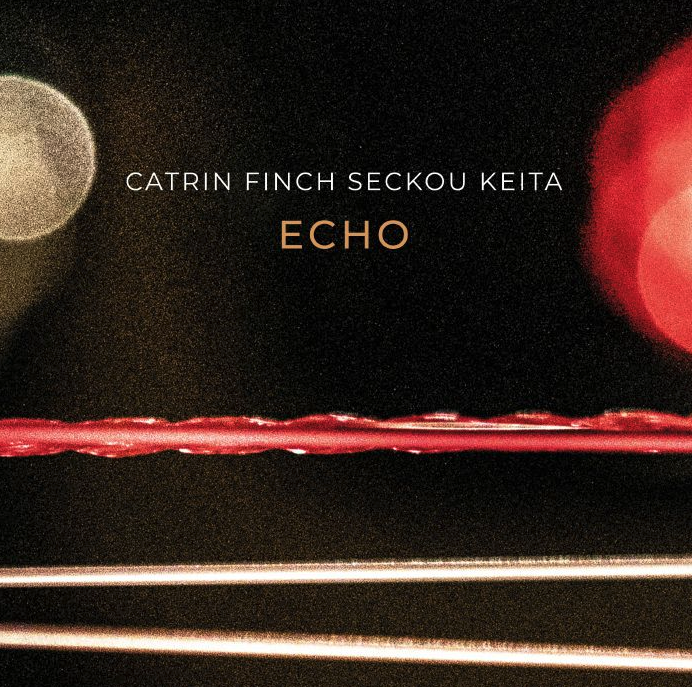
Catrin Finch & Seckou Keita ‘Echo’
(bendigedig) 27th May 2022
Marking a decade-long collaboration, the harmonic pairing of Welsh harpist Catrin Finch and Senegal kora player and vocalist Seckou Keita are back with the third in a trilogy of cross-lineage, cross-cultural and cross-border gilded rich albums.
Imbued by traditions that go back centuries, Finch’s legacy includes Celtic folklore, the classical and the harp’s age-old reverence – Finch was at one time the UK’s Royal Harpist to Prince Charles, a revered title revived at the turn of the millennium, last used during the Autumn years of Queen Victoria’s reign. Keita can trace his lineage back to a long line of Griot bards and kings, and through his father, right back directly to the Medieval Malian Empire’s founder Sunjata Keita.
Garnering much critical and creative praise for their previous SOAR (2018) and Clychau Dibon (2013) records, the duo, caught up like the rest of us obviously in the pandemic, suffered the travails of social-distancing to complete this latest shared experience of loss, reflection and hope. Unable to work this incredible, adroit collaboration of instruments remotely however, both partners in this international union managed to book a conference room in a hotel on the outskirts of Birmingham, in the UK.
Possibly not the most inspiring of locations, both removed artists found themselves having to reconnect, as if from scratch, separated as they had been by distance, and of course with lockdowns: concentrating on those closer to home and pursing more localized projects.
As sparks and prompts, accumulated projects as varied as a ballet score to TV commissions, festival collaborations and work-in-progress sketches offered a framework on which to build new ideas. It helps that both maestros of their disciplines have an enviable CV and plenty of experience, awards and concert performances (more than 200) to their names. And so this distance, break in the creative period couldn’t hold the partnership back from picking up on where they left off, pre-Covid.
The backstory to this partnership, a bringing together of musical spheres and instrumentation from, what looks on the surface unrelated, suddenly makes sense; a harmonious connection, fueled by the duo’s last two albums together. For the very first time, Echo welcomes the addition of a strings; a couple of violin, viola, cello and double-bass players from Cardiff. The initial idea was inspired by the partnerships work in 2021 with the Royal Liverpool Philharmonic Orchestra. Here it offers a whole new layer, and a swell of moving classicism and a cinematic score quality to the weaved and enchanted sounds of the harp and kora.
As always, each composition tells a story, is motivated by the personal and organically showcases a particular unique tuning and skill without losing sight of the melody. Devoid of soulless displays of virtuoso Echo draws the listener right into the moment.
Despite the horrendous last two years, the album actually starts with a peaceable, charmed and gliding display of hope. Originally the ‘overture’ score for the ballet Giselle, and a “scrap of a tune” that surfaced during a sound-check jam before a 2019 gig in Manchester, ‘Gobaith’ (which means “hope” in Welsh) us remolded, turned into a lushly blessed performance of subtle filmic strings, lilted lattice work kora and gently sparkling harp.
Lifting the emotional pull, the string ensemble-free ‘Dual Rising’ weaves a groove out of quickened caresses, flourishes and undulations. With a dash of the Latin, even some Greco antiquity, that liquid – with only some softened small stamps – rhythmic workout takes its inspiration from the duo’s past collaboration with the ‘breackneck’ speedy style of Edmar Castañeda’s Colombian harp.
In a display of the lightened and sweetened, ‘Tabadbang’ has a spring in its step, a sense of happy adventure. In keeping a restless kid busy, hanging around as the adults wish to discuss something far too important for prying ears, back in Keita’s homeland they’d send the youngsters on a wild goose chase of distraction. Here that memory is turned into a lifted, hummed-like lullaby amble.
A testament to this duo’s hybrid of languages, craft and inspirations the enervated pulse setting, spindled and soaring ballad ‘Jeleh Calon’ brings together the Mandinka work for ‘smile’ and Welsh for ‘heart’. It was actually sparked off by Finch’s NHS research into tinnitus, which led to investigating the yoga of sound and, in particular, – hence the heartbeat-like rhythm – the practice of synching one’s heartbeat to a specific timing, or ‘entrainment’ as it’s known.
Though every composition feeds on that hybrid and the counterbalance of cultures, the harmonious qualities of each artist’s particular instrument, ‘Julu Kuta’ challenges both, but especially the kora, with a tricky chromatic scale. As a tribute to innovation, inspired by Keita’s experiment in 2007 to construct a double-necked kora (which he managed to successfully pull-off with the help of his cousin), the Db to D to Eb to E to A scale sounds like a beautiful spell being unfurled. Despite being difficult, Finch’s heaven-calling brushes and waves and Keita’s dainty spirals and spins sound melodically reminiscent and very much at ease.
As a timely reminder of loss and remembrance, there’s the sweetly pronounced ‘Chaminuka’ dedication to Keita’s late friend and fellow musician, the mbira player Chartwell Dutiro. Instead of a mournful elegy, this is a beautifully sung (both in Dutiro’s native Zimbabwean dialect of Shona and in Keita’s own Mandinka) and soothingly played homage.
The journey from West Africa to Wales has never seemed shorter; the difference in cultures never so close. Finch and Keita perform wondrous parallels together, further elevated by the subtle but evocative additional classical strings. Echo moves this combined strength further along the road, adding depth to the duo’s sound and showing that despite the hardships, distancing, everything still comes together in a unified brilliance of forms and shared experiences.
music/culture blog monolithcocktail.com For the last ten years I’ve featured and supported music, musicians and labels we love across genres from around the world that we think you’ll want to know about. No content on the site is paid for or sponsored and we only feature artists we have genuine respect for /love. If you enjoy our reviews (and we often write long, thoughtful ones), found a new artist you admire or if we have featured you or artists you represent and would like to buy us a coffee at https://ko-fi.com/monolithcocktail to say cheers for spreading the word, then that would be much appreciated.
 Monolith Cocktail Blog