Tennyson In Space: Hic Sunt Leones Et Corvi Parts 1 & 2
May 27, 2025
The Monolith Cocktail Serialises Andrew C. Kidd’s Tennyson Imbued Opus
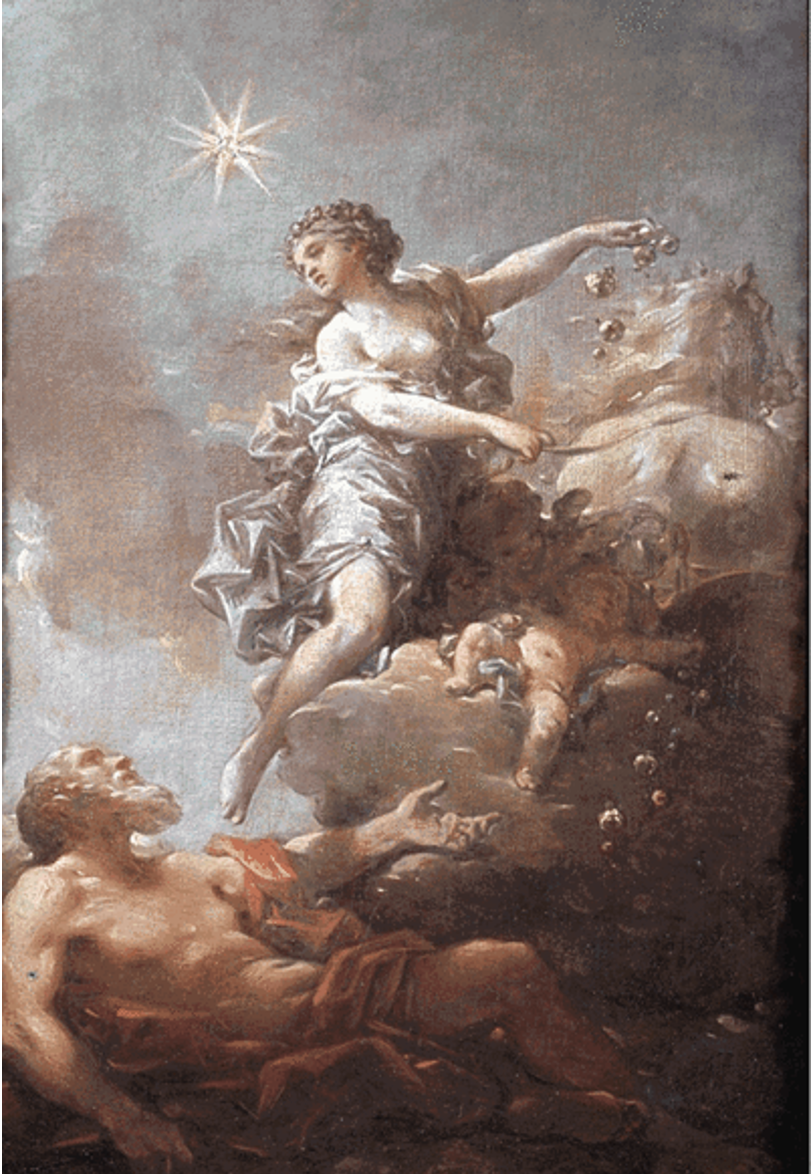
Dabbling over the decade with showcasing exciting, sometimes improbable, intriguing work from new and aspiring writers, the Monolith Cocktail has played host to serialisations of stories by Rick Clarke (of Vukover and The Tearless Life infamy) and Ayfer Simms (the Franco-Istanbul writer, and for a few years, an integral member of the MC team offering various reviews and conducting interviews).
Furnishing the site since Covid with review pieces and the odd feature, Glaswegian-based writer Andrew C. Kidd now adds his name to this list, sharing his grand interstellar opus with the MC readers through an epic serialisation. In the last couple of months we’ve published the Prologue and Part One and Part Two of The Violin: the first chapter of this grand sci-fi story. We now set a course for the next chapter in this vast odyssey, with the first two parts of Hic Sunt Leones Et Corvi.
Andrew seeks inspiration from music and anything that chronicles the fantastical. And in Tennyson, he finds sentiment, solace, experiment and adventure in interstellar space.
“What omens may foreshadow fate to man
And woman, and the secret of the Gods”
From Tiresias by Alfred, Lord Tennyson
“Activity does not necessarily mean life.
Quasars are active.
And a monk meditating is not inanimate”
From A Scanner Darkly by Philip K. Dick
The sound echoed distantly at the treeline boundary. Beyond that, a grassy field opened out to end at the top of a small hillock. A solitary figure pulled back the leaves and stooped under a larger branch to exit into the clearing. The forest breathed quietly behind him.
Louder, duller, without echo – further calls were nearer now.
A stilly silence soon settled upon the scene. Grass blades remained rooted firmly. There was no wind to unsettle them. Their sharp tops speared towards the sky.
Looking up, he saw the wings spread out. It moved swiftly and silently, silhouetting black against the dying light of dusk…
The heat (unbearable to begin with) had started to dissipate. A low-frequency rumble continued to propagate though his body.
In the distance, the hazy outline of a tree, flat-topped, bowed over the ground, came into view. The ground began to elevate; he would soon be standing on the top of a hill. Each step was an effort. Numbed and calloused, his bare feet no longer stung in the sand.
Having stopped momentarily in this arid place, he resolved to keep moving. He had to keep moving.Defiantly, he walked towards the sounds of the distant growling…
Part 1
‘Human remains in the lower decks.’
The interference of the radio hissed into the ears of the Overseer.
‘Have you located the wheelhouse?’
‘Yes, Ma…’ The crackled reply broke off abruptly.
The Overseer moved closer to the remnants of the starboard viewing platform. Through it, she observed the nullity of space.
Her team had entered the forward portion of this once grand vessel. The narrow, box-like dimensions and icy stillness of the plain interior of the bridge were firmly funereal. Glass that once covered this space had been blown out. Its contents had long been jettisoned.
She wore a life-sustaining suit emblazoned with an emblem that was as orange as Mercury and lined white with symbols of stars. Dark pools semi-circled below her eyes. Space was a sleepless place for some. The drugs that the medic prescribed seemed to imbue everything other than somnolence.
Nineteen-years, she thought as she sifted silently through the wreckage. Ninete…
Those years had felt more like a lifetime. The vessels that she and her crew boarded dangled lifelessly in these deeper reaches. Most had been lost long before she had even taken on this role.
Her attention returned to her team who clambered over the remaining chambers of this particular vessel. She sent the Adjutant to locate the stateroom and the Auxiliaries to the fo’c’sle. A Medic remained with her on the obliterated bridge.
Rudderless and shorn from its engine, the ship floated aimlessly in an endless orbit.
The gloved hands of the Overseer gripped the metallic surface of what remained of the broken luminescence control panel. Dials would have once dotted across a large glass control board. Not even the smallest of its shattered shards had been left to salvage. Blown and space-buffeted, everything had spilled out into the cosmos.
As she moved towards the far end of the bridge and descended into the fo’c’sle, a panicked voice suddenly broke through on the radio.
‘T–the––bow… the bowsprit… all personnel report to the listening chamber!’
The Overseer and Medic swiftly made their way to the prow of the vessel. They clambered through a small opening made by the welding torch of one of the Auxiliaries.
A solitary figure sat perfectly still in the centre of this small chamber. Long white hair fountained out of his scalp, cascading down past his shoulders, feathering around him as if charged by the high-electric potential of an electrostatic generator.
The Overseer felt the immediate tranquillity of this space. It was in direct opposition to the disorderly bridge merely ten ladder-steps above it. She observed the Medic drifting around the small podium upon which the cross-legged man sat. He paused as he looked into the youthful face of the Radioman whose body was composed and unaltered.
The Radioman wore no helmet. No oxygen apparatus was attached. This chamber had been apparently airtight until their impromptu opening exposed it to the breathless vacuum of space.
The Overseer quickly placed her ancillary oxygen mask over the stock-still mouth of this solitary figure.
‘A helmet!’, she barked out, beckoning the other Auxiliary to locate one.
The Overseer talked quietly and reassuringly at the Radioman. She had already placed the palms and fingers of her left hand over his eyes: an act that served as a temporary skin-seal to prevent the low-pressure of space from inflating him.
As she held firm, the Radioman still had not moved. He had not even blinked. His muscles were completely devoid of fasciculation and involuntary spasm. It was as if he was dead, yet his skin was a fresh as that of the rescue personnel who had only just boarded this ravaged vessel.
All the other crew of this stricken vessel had been found lifeless. Those who had been salvaged behind oxygen-rich compartments had decomposed. The rest floated lifelessly, forever captured in the positions they held in the final moments before their respective last breaths.
Siss of the radio now danced invariably in her helmet.
‘Repeat last transmission’, an unknown voice demanded airily.
The Overseer paused. Her monitor confirmed that this message had travelled a long distance from their present location. It had been sent by the Theban which was levitating somewhere in solar space on the other side of the Heliosphere. Those onboard this flagship would be listening apprehensively for the reply of the rescue personnel.
‘Repeat your last trans…’
The sibilance of the radio whispered again.
The Overseer left the Radioman under the care of the Medic. She exited the listening chamber and passed through the fo’c’sle to return to the bridge.
‘Remove yourself from that console’, she ordered. ‘Look at the dial. The electromagnetic interference is far too high to transmit at this present juncture. We will retry once we have established RQZ.’
The Auxiliary nodded in silent acknowledgment. He fumbled with his portable transmitter. His actions had been chaotic. He had never witnessed death before. Its facelessness haunted him.
The Overseer manoeuvred past the central workstation to locate the backup navigations.
‘Adjutant, get that Auxiliary out of here… the man’s a wreck. He’s about to keel over.’
She looked over at the Adjutant again.
‘Now, have you retrieved that log yet?’ A small, cylindrical object had been deployed by the Adjutant who was situated in the stateroom on the deck below. This had once been the Captain’s quarters. The cellular implement clicked into life and whirred quietly as it burrowed into the stricken ship’s volatile memory unit. A faint blue light on its interface flashed rhythmically: the download of the devastated vessel’s data had begun.
* * *
Oblivion.
It had been generations since the brilliance of a passing dwarf star or the swansong of a dying sun had shone upon the great body of this vessel.
The ship took on the form of pentagonal prism with many edges and vortices. Its bridge was located at the stern. Those who commanded this hulking monolith observed the midship slope obtusely down towards the fo’c’sle. There were no gunwales. Its port and starboard sides rolled seamlessly over to join with the hull.
At the prow of the ship, a small projection pointed outwardly to space. This was the bowsprit. Within the bowsprit was a small chamber. It assumed the shape of a square-based pyramid. The base of the pyramid backed onto the main body of the ship. Its edges angulated away towards an apex. Once this apex had been reached, the triangle pointed towards shapeless space. This was an antenna. It was composed entirely of a carbon composite.
A Radioman existed inside the bowsprit. He sat cross-legged in the centre of this small chamber. Its three walls converged at different angles to maximise the incoming acoustics. His function onboard the ship was simple: he was to simply listen.
Attached to his head was a light electroencephalographic cap. Intermittent bright dots covered its surface. The postsynaptic potential of every pyramidal neuron in his neocortex was measured. Changes in voltage were interpreted by those who commanded on the bridge. Incoming radio waves were picked up as electromagnetic radiation, and upon entering a conducting body, a current was created. The radiomen and women were band-pass filters, capable of radiofrequency hearing. Uninfluenced and unbiased, the data from their EEGs filtered back to their superiors to ensure safe passage of these grand celestial vessels through the incalculable vastness of deep space.
The Radioman of this particular ship sat in a deeply meditative state. Those who had been given the responsibility of attending to him would glimpse through the small porthole to observe him in aural meditation. He contemplated only the sounds that entered him. The hyperfocus of a trained radioman would open the human mind to the most wonderful and hideous of hidden sounds.
In his training he had experienced momentary distractions such as the pulsatile hum of tinnitus or the oceanic sounds of blood flowing. He eventually learned how to disconnect himself completely from internal and external stimuli to concentrate purely on the deafening silence that consumed him.
The universe in all its unfiltered aural glory shone into the bowsprit. Radio waves, immune to the deafness brought on by the vacuity of space, percolated its walls, tumbling like a torrent into this still river of silence.
Listening. Forever listening.
Each and every wavelength passed through his external auditory canal to vibrate his tympanic membrane, moving his malleus and incus like beaters on a minuscule glockenspiel. The stapes pressed down, disturbing the perilymph which waved to rush into the open window of his semicircular canals and cochlea.
The otherworldly sounds of space cascaded down his vestibular and cochlear nerves unto his auditory cortex.
He listened to the numb static of radio feedback as well as asteroids that collided with rings around exoplanets, ricocheting into unfortunate ships that sent out futile distress signals. He heard hissing and white noise and voices that chattered indistinctly as if partaking in some great celestial conversation, nebulae apart. He eavesdropped on outgassing comets and plasma winds that changed direction.
All individual soundwaves were unique, symphonic even, but nothing was more beautiful to the Radioman than the faint finale of fusing black holes in the distance.
Such polyphony, such maddening repetition in sound, forever-wavelengths that spanned even time itself, beguiled the Radioman who remained cross-legged in the centre of the bowsprit antenna.
* * *
Eyes closed and breathing steadily, the precise and periodic rhythms of pulsars pulsed. The low-frequency bass of matter exiting from a black hole came into and out of focus. He averted his attention away from those unimaginable and terrifying sounds, because once this cacophony had concluded, the remaining souls left alive listening would be the last to applaud the end of everything.
The Radioman focused his thoughts on the Heliosphere on the very periphery of the solar system. Interstellar gasses moved beyond this point marker, whispering indecipherable sounds in the absence of coronal mass ejections from the Sun.
He leant down to listen further. His auricles picked up faint sounds. Nothing significant – something slightly louder than silence.
An inner voice had recently surfaced. His own mouthless monologue.
… and the growling.
These peculiar frequencies he had longed heard but never understood. He had journeyed to them tirelessly. They were closer than they had ever been.
His mind wavered in the heat of the arid land that stretched out before him. Soft sand covered his feet. Sharp-edged grasses scored his bare ankles as he trod softly, edging closer to the low rumbling sounds. He dared not traipse over a branch or let his feet scuff the gravel. Such a careless approach could be ill-afforded. He continued to move over the clay-rich soil.
A large tree silhouetted black against the orange horizon. Its flat canopy of leaves stretched out to shade what lay beneath it. He edged ever closer to this tree, an acacia, one discreet and heedful step at a time. The Radioman knew that source of growling lay beyond this tree.
These sounds had reached him at the same time the vessel approached the Heliosphere. Their volume had progressively increased since then.
He observed the others who moved in the opposite direction. They were making their escape. He had sent them in that direction. Their footsteps faded quickly in the light winds that spread over this dusty land.
The sibilanceof radio interference had been strong on the day that he received the final communiqués from the colossal flagship which remained within the confines of the Heliosphere. It had been gently buffered by solar winds. On the other side of that shield, harmful cosmic rays would batter continuously at the thin walls of their vessel.
The electroencephalograph of the Radioman broadcast its usual complex patterns to those on the bridge. γ waveforms danced interchangeably on the glass display.
He continued to listen.
Part 2
The Radioman jolted. A winged body flew overhead. Its call had been loud. It settled on a nearby branch. Its throat rattled and clicked in a strange sub-song. His ears tracked the unmistakable music. Another figure stood silently on an old wooden fence.
The Radioman remained cross-legged in his chamber in this half-trance. He could not see through his cataracts (opacification of the lenses were the sequalae of a lifetime shrouded by the radiation of space).
The figure on the fence was black-billed and body-black. He followed the movements of this ancient shape-shifter. Entering an even deeper trance, the cataleptic Radioman slipped further down into the cavern of his subconscious.
The cawing of the eye-eater persisted. It, like many others of its kind, was the blinder of souls. Its black head turned steadily. Its eyes squinted into the opaque night. It prepared for flight. A stout bill motioned to caw, yet no sounds left its larynx.
Silence!
Silence was usually an ill-fated omen. He contemplated these visions. Nothing good would come from them.
Caw! Caw!
The harsh sound of two other bodies reverberated around the field, amplified by the concavity of the trees that bound it. He heard the grating cawing of others that had flown in from their sky-occupied position. They landed to perch on branches which buckled slightly. Their black feathers pushed away the leaves.
The cawing intensified further into a cacophony of sound. Each blackened figure flew down from the trees to litter the grassy ground. Their thin feet pattered around droplets of rain which had had started to descend.
At first, they formed a half-circle, cluttered and unorderly. In the proceeding minutes, the separated edges of the collective met to become a whole circle that was absolute and infinite.
The sky above darkened further. Clouds greyed and made indistinct shapes in the higher altitudes. Down on the sodden earth, the circle cackled and clacked.
A larger figure broke away from the feather-black ring and cautiously approached one of its comrades who stood in the centre.
Unblinking, their eyes met.
The cawing suddenly stopped. A strange silence shrouded the scene. Stygian clouds loomed in the semi-darkness. The larger of the two black bodies started to circumnavigate its comrade. It stooped to observe the broken wings, the torn feathers, the blood that pooled blue after mixing with the green grass.
The larger figure moved away momentarily but turned to face its stricken comrade. It kicked off from its backfoot, half-winging upwards, delivering a fatal blow. The already wounded soul opened its wings to reveal its breastbone in readiness for the blow. A sharp beak speared into it. Slowly, the punctured figure fell to the ground.
The circle of observers cried out solemnly. Their forlorn cawing rose and rose until the sound was so sharp that it tore open the heavens. Rain started to descend upon the body in the centre of the circle. Water pooled on the dry ground and rose quickly to consume it in a burial of mud.
The electroencephalograph of the Radioman spiked transitionally during these visions. His head ached. Away from the flood waters in this field, a raging fire had broken out in the surrounding forest. His introspections flashed between this place and a place that seemed more familiar to him. He observed an engine room and the cross-sections of decks of a large vessel. A plasma rifle fired at the glass of the bridge. It did little other than discolouring its clarity. Those on the wrong side of the burning bridge shouted breathlessly, and ultimately, hopelessly.
Fires globed out from the carbon fibre structure of the vessel. Support beams collapsed. The ship ate itself from within. Souls were ejected as burnt embers from its portholes and escape tunnels. They cartwheeled into deep space. Their cries slowly dissipated into the radio static. All the time, the rains continued to fall and the crows cawed maddingly.
He held his head in his hands.
Why had the larger figure killed its comrade? Had it been a hierarchical act? Punishment for a calamitous and insubordinate act?
His EEG readings intensified. Those on the bridge above the Radioman observed these high amplitude projections.
In this shallower phase, having yet to pass through the termination shock of the Heliosphere, the Captain paused to consider the importance of what he was observing.
* * *
Overweight and overwrought, the broad figure of Crone stared intently into the never-ending night. He doffed his sweat-stained battle garments. His chalk-white uniform soon beamed in the fluorescent light of the bridge. A thick band of black ran from his collar and ended as epaulettes.
He had felt the sonic boom of solar winds as they crashed into the magnetosphere of the Sun. They had safely crossed the Heliosphere to enter interstellar space. He relayed the command to relay the news of their safe passage to Earth.
Such an achievement was momentous. They would name institutions after his vessel and crew. He would be bemedaled and showered with honoraria. Yet he struggled to conjure up the appropriate words to mark the occasion. There was no sense of achievement for Crone. His mission was to continue into deep space, to pave the way for other research vessels and passenger ships alike as the lines on the cosmic map were drawn and re-drawn. He waved away his Second Officer as she entered the bridge to congratulate him.
Day progressed into evening. Crone had retired to his quarters and sat in pensive state. The increasingly indiscriminate output from the Radioman concerned him.
He stared at the darting display of peaks and troughs in the stateroom of the fo’c’sle. The readings of the Radioman spiked repeatedly. A pattern had emerged: seven sharp surges were being discharged irregularly. Sharp waves. 100 milliseconds.
Crone had become adept at understanding subtle messages contained within the amplitudes of the electroencephalographs during his years commanding vessels like these.
One spike inferred nearby cosmic detritus.
Tandem spikes alluded to phenomena such as the altering speed of the solar, and now plasma, winds, or a change in the electromagnetic frequencies beyond which the ancillary radio tower could perceive. These were usually precursory. Directional and velocity changes were inevitable in space, likewise, radio chatter. In contrast, two-spike data were impactful. Decisions would be made after observing these.
Spike and wave complexes implied only one thing: danger. Crone had never witnessed this phenomenon before. He wished never to be privy to those inauspicious amplitudes.
In reality, the outputs of those who existed in radio rooms were more difficult to interpret than the oversimplified one-two-spike/wave system prescribed by the protocol. Despite their extraordinary skill and extrasensory perception, radiomen and radiowomen were ultimately human, and humans experience anxiety, annoyance, anticipation, amazement, and even periods of inattentiveness.
Crone knew that their existence was an isolated one. Living in such a permanently pensive state would inexorably impact their mental state. Everything they felt and dreamt were visible as lines on their respective EEGs.
Yet discrepancies caused by discharging neurons had to be interpreted carefully. Any decision made was based on the output of the graphs conveyed to those like Crone. Margins of error were incredibly narrow (effectively zero) in this inhospitable place.
Crone’s musings persisted as he looked out of his stern window. Zodiacal light proliferated in the black ether. The dust-strewn spawn of Jupiter’s comets stretched across space. Their faint glow and explosive sequins delicately manoeuvring in pursuit of the Sun. He knew this to be a false dawn.
* * *
In the bowsprit, the Radioman sat meditatively.
It had been getting warmer. He moved closer to the acacia tree.
The collective low-growl rumbled into the air. Ochre-coloured grasses hid their true size. He counted seven whiskered heads. One stood up slowly and stared purposefully in his direction. Opening its mouth in a slow-yawn, the Radioman looked into the black emptiness of space. He quickly ducked back down under the grasses.
He had only caught a glimpse of its eyes. Swirling fires whorled outwardly from their irises to meet periorbital darkness. They had fixed upon something in the distance. He hoped that it had not been the others making their escape.
He had also caught a glimpse of the canines that thorned out of their abysmal mouths. He grasped the dry grasses nervously. The growling had settled for now. He resolved to edge ever closer to the tree.
Andrew C. Kidd
 Monolith Cocktail Blog
[…] the Prologue, Part One and Part Two of The Violin, and, together, Parts 1 & 2 of the Hic Sunt Leones Et Corvi suite. We now set a course for the next chapter in this vast odyssey, with the concluding chapters […]
[…] Furnishing the site since Covid with review pieces and the odd feature, Glaswegian-based writer Andrew C. Kidd now adds his name to this list, sharing his grand interstellar opus with the MC readers through an epic serialisation. Over the last few months or so we’ve published the Prologue, Part One and Part Two of The Violin, and, together, all four parts of the Hic Sunt Leones Et Corvi suite. […]
[…] we’ve published the Prologue, Part One and Part Two of The Violin, all four parts of the Hic Sunt Leones Et Corvi suite and the Pink Nepenthe. Now we are proud to share the first two chapters of Appl. […]
[…] we’ve published the Prologue, Part One and Part Two of The Violin, all four parts of the Hic Sunt Leones Et Corvi suite, the Pink Nepenthe and the first half of Appl. E. We now continue with the final chapters of […]