A world of sonic/musical discoveries reviewed by Dominic Valvona. All entries in alphabetical order.
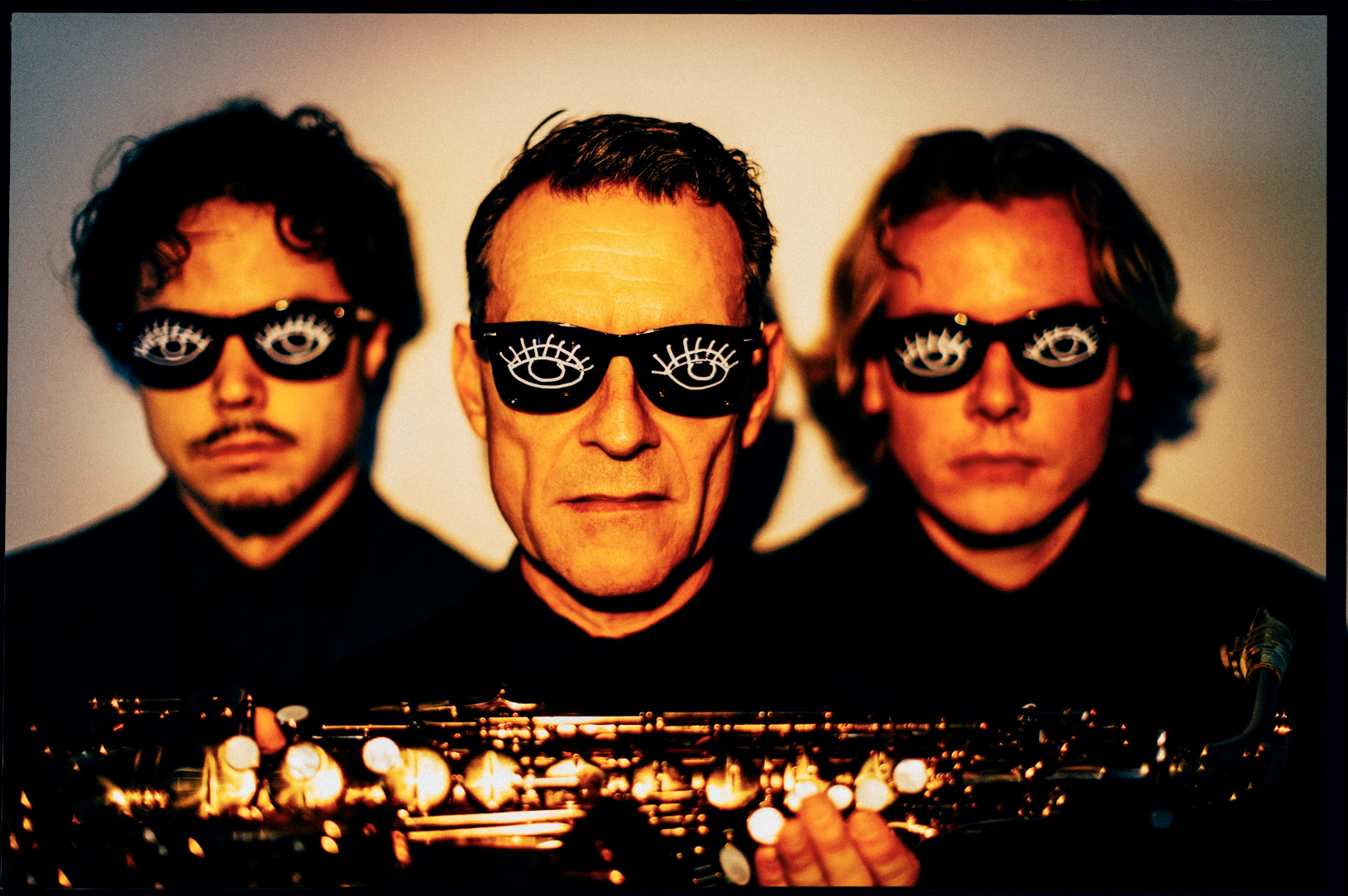
Image Credit: Jonathan Herman
Andy Haas ‘In Praise Of Insomnia’
(Resonantmusic) Released 1st February 2026
I’ve been saddled with insomnia for years, but unlike the highly talented and explorative, and curious saxophonist Andy Haas, I’ve found it difficult to put those waking hours to good use creatively; let alone on the auspicious seasonal occasion of the Winter Solstice, the date on which all these recordings were played and then saved for posterity. I must say, since the double whammy of a kidney autoimmune disease and a minor stroke, my own personal problems of insomnia have pretty much disappeared – I don’t recommend it however! But put to good use here, Andy ushers in the light changes, the almost religious and spiritual emotions and feels of the environment. His sax mirrors the fluctuations and expressions of playing without the hindrance, burden or weight of expectation; just one guy expressing himself and current moods, his experiences of life in the moment on a special day.
Whilst not wishing to repeat myself, I struck up an online and postal friendship with Andy after first writing about the highly experimental saxophonist, trick noise maker and effects manipulator’s turn touring as a band member with Meg Remy’s Plastic Ono Band-esque U.S. Girls a few years before Covid. The former Muffin, NYC side man to the city’s attracted maverick luminaries of the avant-garde and freeform jazz, and prolific collaborator with Toronto’s most explorative and interesting artists, has sent me regular bulletins (and physical copies) of his various projects ever since. Some have been in the solo mode, others with friends, foils and collectives. In Praise Of Insomnia is free of artifice and augmentation; the sound of a singular saxophone and circular breaths (the only other apparatus or consideration is Andy’s stereo manipulations of each track once its finished) alive with a language that admirers and followers of such luminaries as Sam Rivers, Jonah Parzen-Johnson, Evan Parker and Roscoe Mitchell will recognise. It has history and roots, but exists in the now with its squalls, shrills, the fluted, drones, curves, peaks and reedy vibratos that often sound like a mizmar – in fact I sometimes pictured minarets when closing my eyes and just letting the playing transport me from my boring surroundings at home in a dreary, wet Glasgow.
Free and wild, and yet also thought through, almost considered and concentrated, each track (prompted by descriptive and personalised titles) shows purpose; the subject matters often plaint, questioning or disheartened at the metaphorical darkness of the age, but also noting the artist’s own mood changes, and his battles with insomnia itself. It would also make a great soundtrack.
Benjamin Herman ‘The Tokyo Sessions’
(P-Vine Records in Japan/Roach Records & Dox Records the rest of the world) 27th March 2026
Though this is possibly the first time I’ve ever featured the London born but Netherlands raised alto-saxophonist Benjamin Herman on the site, his influence across the European arena of jazz looms large. With over fifty albums and untold thousands of the live gigs (either as a solo artist or as the frontman of the New Cool Collective troupe) to his name during the last thirty or so years, Herman has pretty much convincingly expanded his talents to play foil, collaborator and instigator to projects that span the musical and creative genres – from hip-hop to poetry, to rubbing alongside pop stars and embracing everything from Afrobeat to Latin and film, to the more anarchic and wild.
Venturing out to the far East with double-bassist Thomas Pol and drummer and producer of this album Jimmi Jo Hueting, Herman and his musical partners absorbed everything that was on offer from the eclectic Tokyo hothouse districts of Shimokitazawa and Koenji. Expanding the ranks to include a rich ensemble of guest from the Japanese jazz scene and beyond, they recorded these inspired sessions at the well-known “recording sage” Akihito Yoshikawa’s equally famous Studio Dede hotspot.
Paying homage, spiritual recognition and cultivating the mystique and mystery of Japan’s landscape, its culture, its traditions and abundance of talented jazz players, there’s haywire-like chops of floppy disk experimental Sakamoto, the shrouded misty sounds of Shinto and fluted and blown bamboo music amongst an abundance of reference points from elsewhere. With accomplished musicians like Ko Ishikawa on the Sho (a mouth organ), Tomoaki Baba on sax and Shinpei Ruike on trumpet (bringing a blue shade reminisce of Miles Davis sadness to the studio referenced ‘Dede’) there’s tributes to the Japanese scene and one of its capital’s most famous jazz nightspots, the NRFS abbreviated “no room for squares” – as borrowed from Hank Mobley’s iconic Blue Note released LP of 1964, and more than an inspiration here I believe.
But amongst those cultural appeals, a distillation of the Japanese scene and environment, there’s literal blurts of no wave and post-punk jazz, the noirish and cinematic, show tunes, swing, funk, the wired, colourful, willowy and many examples of mirages and swamp-like veiled mysterious.
At any one time then, you can expect to hear a free flow and agitation of downtown NY, the city skyline jazz scenery of the 50s and 60s, Last Exit, Snapped Ankles, John Zorn, Biting Tongues, Mats Gustafason, Donny McCaslin’s work with Bowie, Jimi Tenor, Comet Is Coming, the Nordic school of jazz, Tong Allen, Lalo Schifrin and John Barry! (in the closing moments of the spy soundtrack does Blue Note ‘Tokyo Moon’ you can hear what sounds like a riff on the 007 theme). Yes, I think we can agree a lot to take in. But with a generous offering of 13 great tracks and no fillers, this Tokyo session is going to appeal to many.
Ombrée ‘Calvaire’
(I Shall Sing Until My Land Is Free) Released 2nd February 2026
Seemingly apt if in an entirely different geographical setting, far from the torn-up battlefields, this album is tied via its facilitator to the Ukraine supporting I Shall Sing Until My Land Is Free label, and its founders own sonic manifestations of doom-laden scared environments: In the case of both Dmyto Fedorenko and Kateryna Zavoloka it’s their native and brutalised country, now in its fifth year of defensive action against the barbaric invasion forces of Putin’s Russia. Meanwhile, coming to terms with their own loss, Ombrée uses a similar soundboard and apparatus of industrial noise, metal machine music, sonorous bass guitar frequencies and slabbed vibrations and crackled pylon charges to process the death of his father, who passed away in February of 2025.
Prompted or set in motion by the sounds of the surroundings and the village’s church bells, Calvaire invokes memory through both field recordings and expressions of death’s many manifestations. Ombrée’s father, we’re told, would have probably hated this musical invocation, illusion and dark meta-built encapsulation of that mourning process, but for its creator and us the album is both a guttural and sophisticated response to its subject.
To the distant echoes of tolled bells and a Gothic atmosphere of an older rural France – the toil of the land, the echoes perhaps of old wars and tragedies still very much of the everyday scenery and psyche – Ombrée scratches the needles of detectors and equipment over the terrain to produce a death noise industrial slab of static, the paranormal, the razored and ghostly. Apparitions in the shadows at every turn; the venerable sounds and atmospheres of the funeral and wake; the coarse fibres of broken electricity and magnetic forces; the Fortean radio set tuned into the afterlife; and the dark materials of trauma uncovered by the plough and spade all come together in one suitably unsettling memorial.
Rocé ‘Palmier’
(Hors Cadres) Released 20th March 2026
With a softer and more melodious flair for an ever-widening use of music references and inspirations, the French-international hip-hop veteran Youcef Kaminsky (better known as Rocé) seamlessly blends new compositions of Latin, French, Italian, North African and South American flavours with modern spells of R&B, rap and electronica on his incredible new album Palmier (“Palm Tree”).
On a disarming pathway, Youcef taps into his roots and his mixed heritage (born in Algeria with his formative years spent in Paris) to rap, sing, report and recall with both emergency and poetic conscious fluidity. And whilst learning of his parents own extraordinary stories and backgrounds – his dad’s history within various anti-colonist resistance movements around the world (Adolfo Kaminsky, as that family name may suggests, are Russo-Algerian French in origin), and his checkered career as a photographer and master forger – and the depth to Youcef’s own studies and extensive recording output, this album has less of a revolutionary zeal and more a sense of real warmth and beauty to it. Listeners will find a sound that’s just as open to the embrace of Morricone as café society jazz, Issac Hayes, cool classical French maladies and American vocoderised soul. In other words: pure class. And yet there’s still an edge to it, a realism and sense of suspense, of the shadows, of current concerns in the search for balance, harmony and identity.
There’s seldom been much like it; the attempt to merge so many cultural markers and ideas and experiences; to recall those innocent and important feelings and places that matter – not in hip-hop anyway. The musicianship and contrast between rapping and a band of jazzy and classical or chamber musicians did remind me a little of Marcelo D2 & SambaDrive ‘Direct-to-Disc’ LP from a couple of years back. But it remains rather unique, crossing over as it does into so many classy and fully lush genres.
You can certainly, even if you don’t understand the French dialect and language, gauge the emotion and the intensity, the themes and scenes conjured out of the notebook and from each instrument. It also helps that guest vocalist, the worldly, Natacha Atlas does much to soothe and dreamily invoke a certain romantic plaint of North Africa to the deft electric piano-like tinged ‘La Voie Laactee’. And whilst we are at it, a shout out to Nathalie Ahadji’s dreamy, wafted and mizzle-like saxophone; to Cisko Delgado’s soulful and light jazzy cosmic keys (though also credited with bass and on arrangements); and to Samy Bishi’s sweeping, near cinematic in places, violin – Youcef can be heard himself picking up the violin on one of the album’s airy mirage-like interludes.
Compositions and songs are mapped out like a personal cosmology of jazzy suites, neighbourhood reportage, frank discussion and more sympathetic articulations and dreams. A great album in short that entertains as much as it educates and impresses.
Nicolas Remondino ‘Hieratico’
(OOH-sounds) 27th March 2026
Scrapes, shavings, rubs, carvings, tangles of tin and metal; various percussive and drum apparatus timbres, textures along with the unidentified sound of spokes are all used to illuminate crepuscular observed moments and experiment in a soundscape of almost silent disturbances, shadows and observations on Nicolas Remondino latest album. Filed under the solo name this time around, Hieratico includes a host of cameos and an appearance from one of the many groups he’s founded over the years, the Dròlo Ensemble. Many voices and musicians join the fold, appearing often for a brief moment, or suffused amongst the avant-garde, explorative and minimalist passages, churns, circular brushing movements of a simultaneously venerable, supernatural and esoteric nature.
Appearing, I believe, for the very first time on the site, Remondino studied under the improvising luminary of classical and jazz piano, Stefano Battaglina. Remondino appears variously under the LAMIEE moniker when in the solo guise but also founded the Tabula Rasa and Silentium ensembles. There’s also been an extensive list of collaborations, some of which appear on this album. And as if to reflect these various foils and their homelands, track titles seem to be in multiple languages: Italian, Spanish, Portuguese, Corsican, but also as far away as Japan. There are some solid names with renowned reputations on the abstract, avant-garde and musique concrète fronts, including the highly respected and experienced musician and vocalist Limpe Fuchs, who’s mantric “no formalism” approach to soundscaping and fluctuated peaks and meandered twisted spoken words can be heard on the strange ching and chimed gamelan-esque ‘Blue Hymn’. The trio of Pierre Bastien (perhaps best known for the Meccano machine Mecanium orchestra), Massimo Silverio (singer-songwriter and composer) and Marco Baldini (a Florence-based composer) manifest some unease amongst the low tuba-like Close Encounters calls and cathedral organ permeation of ‘Tombal’. You could call it an inter-generational balance of ideas, or just feeling out the right sound, the right atmospheres.
Dialects traced back to the time of the Romans, with the Carnic region of the Alps, can be heard in abstracted forms alongside mountain goat trails into, what sounds like, the various ranges that surround Tibet and a reification of the I Ching. Sounds like felt and various materials are wrapped or brushed over the mic, and bottles are rattled, sheets of metal wobbled to resemble a strange thunder, and spoken passages, poems of s sort are pronounced with both wistful resignation and disturbing disquiet.
At times it reminds me of cLOUDEAD and at others of Walter Smetek, but also a whole load of experimental Italian contemporaries too. But at its heart, the album seems unique in its surroundings and processes; the atmosphere and mood personal yet dealing with abstract ideas in a nocturnal climate of freedom and textural experiment. That’s a recommendation by the way!
Snake De ‘Alla Sorrentina’
(Kythibong) 27th March 2026
The results of emptying out an assemblage of hard drives, Dictaphones, mobiles and other assorted devices and units of storage, the collaborative duo of Maxime Canelli and Aymeric Chaslerie put together a less linear and more abstracted, surreal and sci-fi album of eroded fragments, passages, extemporised hauntings and sci-fi interiors.
With a bilingual language of prompted and descriptive titles, each piece seems to have manifested from the ether or the recalled. Like La Monte Young playing exquisite corpses with the Olivia Tremor Control, Basic Channel and a host of kosimsiche innovators, Alla Sorrentina merges the concrete with the tubular, the kinetic, the alien and avant-garde: and many points between. There are touches of the melodic and tuneful amongst the collage and the fragments of data, voices (even continental laughter), static, cosmic bells and the varied jingles and jangles, the hanging and scrapes of the Zodiak and Swiss Cabaret Voltaire art-theatre percussion.
An enervated Faust Tapes perhaps, the album also reminded me in places of playful Cluster and Roedelius. The remnants of near church-like keys are placed with the alpine, the galactic and spells of hallucinatory dream weaving. You could catch something Japanese, something of the Fluxus composers and those working in early electronica as the carousal of sonic ideas and influences circulates. And you can read a lot into the oscillations, the staccato signals, hums, harmonic pings, the indigestive-like masked voices, and the metallic visions of extraterrestrial life.
It’s the sound of liquid bowls; it’s a world both underwater and luna; an hallucination of accumulated sounds, atmospherics, field recordings, tunings, hidden percussive objects, whistled and blown tubes, a baby’s cry and removed surroundings. Something a little different anyway, worthy of investigation and absorption.
Gregory Uhlmann ‘Extra Stars’
(International Anthem) Released 6th March 2026
The innocuous, those meandered thoughts, incidents and gestures magnified, and the noted observations witnessed of nature and its interactions are transformed into a unique musical language by the composer and guitarist (though should really say multi-instrumentalist at this point) Gregory Uhlmann.
A rightly celebrated and held in esteem regular of the L.A scene and constant presence on the rightly revered and much liked International Anthem label, with turns in the collaborative SML collective, a foil to both Perfume Genius (who appears on this album) and to Josh Johnson and Sam Wilkes (last year’s Uhlmann Johnson Wilkes album made my choice release of the year roundup) and to fellow label mate Anna Buterss (anther collaborator who makes an appearance, popping up on bass), Uhlmann has finally found time to go solo with an enriching synthesis of luminescent and ruminated quandaries, descriptions and serendipitous wonders.
Extra Stars inhabits a familiar if now made dreamy, lunar, sometimes oddly and beautifully world and environment; some of it used as prompts and reference points, like Lucia, which refers to the lodge where both Uhlmann and his partner stayed out on the famous Cabrille Highway that runs between San Francisco and Santa Barbara. Less an innocent Beach Boys-like celebration of Big Sur culture and more a tine’s ticking and Mulatu Astatke and Getatchew Mekurya embraced mizzled and snozzled hum of languid unease, the field recorded waves that crashed all around during that stay appear more like tape hiss and noise and point towards the “unnerving”. Though, with Alabasters deft wistful and near serenaded touches it is a beauty of a track. Actually, there’s a feel of that near Ethiopian influence, mixed with something further east and oriental on the beautifully Matmos does cosmic Joe Meek and Django ruminating Days – what a dreamer of a lulled tune that one is. I’m hearing the composition and playing of Emahoy Tsege Mariam Gebru too, but a lot of the calculus of flutters, bulb-like notation, cascades, harmonic twangs, numbers and multi-layered techniques of such luminaries as Riley, Cage, Reich and Spiegel; all made that more appealing, magical, sparkled, lunar and dotty!
There’s a good and transformative use of the guitar, the mellotron and organ, amongst other expanded instrumentation. And even a use of the voice, with guest Tasha Viets-Vanlear’s “bah” voice put through different pitches and sequences on Voice Exchange.
This really is a most delightful and imaginative album, a whirly trip of modulations, sequences at ease, quirks and warbles. Touching on everything from new age avant-garde to the kosmische (some hints of Cluster and their peers), the American school of pioneering electronics, the post-whatever it is that bands like Tortoise do, echoes of Sakamoto at his most loose and experimental, ambience and cosmic shimmered atmospheres. It makes for an intriguing, often woozy and dreamily transformative listening experience.
Here’s the message bit we hate, but crucially need:
If you’ve enjoyed this selection, the writing, or been led down a rabbit hole into new musical terrains of aural pleasure, and if you able, then you can now show your appreciation by keeping the Monolith Cocktail afloat through the Ko-Fi donation site.
The Digest for March 2026: New Music/The Social Playlist
March 9, 2026
The monthly Digest includes a clutch of accumulated short new music reviews and the social inter-generational/eclectic and anniversary albums celebrating picks.
Image: Credited to the Asian Arts Initiative
Something a little different this month after missing February’s Digest deadline. In case readers/followers and those new to the site haven’t heard or seen on some of the blog’s social media platforms, I’ve been in the wars, spending a lot of time this year in hospital. Earlier this year after being ill for a while, I was diagnosed with an autoimmune kidney disease, but then was struck down, out of the blue (and totally unrelated) by a minor stroke. This has meant untold tests, appointments, and treatments, of which I’m merely just beginning to get my head around. I won’t lie, and whilst the stroke is still a mystery with no actual diagnoses as to why I had one yet, it has been a very frightening and confusing time. This will affect the site and my writing going forward, so I ask for some patience and understanding.
I’ve gathered together a number of reviews, pretty much completed before much of this happened for the new(ish) releases section. And for the archives and social playlist have decided to share videos of tracks taken from those albums enjoying various anniversaries this month (or thereabouts), from those dear artists/producers that have left our mortal realm.
___THE NEW (All those latest & upcoming releases in brief) ___
Camille Baziadoly ‘Skin On Fire EP’
(PinDrop) 6th March 2026
Somehow simultaneously intimate yet panoramic and universal, a whole emotive register of vulnerabilities emanates from the both aria-like cutting and yet also diaphanous breathed voice of the French-born, but Oxford-based, singer-songwriter Camille Baziadoly. The new EP, following on from last year’s favourably reviewed and received Fifteen album, opens with the former single and title-track, and from there, unfurls its beauty, its reverence and pained prangs of fragility across a quartet of newly written songs in the key of slowed-trip-hop-crunching-and-mechanized-winding dreampop and Gothic cinematic allurement.
Skin On Fire EP feels like a score; the soundtrack to what’s lyrically alluded to, an abstract feeling of recovery, therapeutic healing and self-care. From the very first line of declaration (“Skin is all I am”) to the loss and grief, the despondency and aches of the transfixed beatific yearned ‘Trial’ and the even more reverent, steamed and mirrored beat cranked ‘Under Water’. The former reminded me of a little of the dreamy, veiled music and voice of Celestial North, but the synths of Chromatics, whilst the latter, recalled the production of Julee Cruise and the submersible aquatic poetry and voice of Nino Gvilia and the atmospheres of This Mortal Coil. The final act, ‘Around You’, is perhaps the most tenderly if plaintive song of them all. Whether stepping outside and removed from this particular relationship, looking in from the ether and from behind the most minimalistic of backings, or lamenting someone else’s, Baziadoly fills the vapours with a real yearning.
Despite the care, gentleness and its subtleties in the use of both instrumentation and the electronic (from minimal but no less evocative piano and organ to various well-placed effects), the production has an air of gravitas and drama about it: of scale too if you like, and of ambition. Much of this is down to the highly prolific (and a constant presence on the Monolith Cocktail) Sebastian Reynolds, who in a producer’s role articulates, emphasis whilst also allowing Baziadoly’s voice to shine, resonate and breath. That production can at any time invoke the influence of Beach House, Air, and the Cocteau Twins.
It is the voice that truly makes this EP however, and its ability to soar towards the birds but also navigate the harsh realities, troubles and traumas of life, love and hurt. Baziadoly brilliantly and cerebrally emerges from the other side having shown such vulnerability and sang such heartaches of balladry to claim another transfixing success.
Márcio Cunha ‘Imaginary Soundtrack’
(Nostril Records) Released 8th January 2026
A sonic showreel collating a year’s worth of recordings made throughout the period of 2019 and 2020 – just as the world lurched fatally over the cliff edge of Covid -, the Portuguese experimental musician, composer and multidisciplinary artist Márcio Cunha’s newest release is a CV of possibilities. As a calling card and sampler of his obvious eclectic and omnivorous influences and talents, this generous thirty-six track work mines, traverse and explores a portfolio’s worth of stand-alone ideas, passages, vignettes, filmic scores, cosmic mirages and electronic motions, and comes together as one loose soundtrack.
Either submerged and muffled or clean and crystal, the overall atmosphere and sound is one of familiar Earth-bound electronica, instances of tangly and strung-out guitar and marching snares, and the buzz, fuzz and static generator force field charges of machines and the alien. For Cunha projects towards the stars, but often toward unseen, mysterious forces beyond our reaches.
Within that universe and orbit you can expect to hear techno, d ‘n’ b, kosmische, all kinds of beat-bouncing electronic, various mechanics, the more tribal, vapour waves, a roll of hand drums, liquidated electro, oscillations, the plastique, Basic Channel, Room Of Wires, Aphex Twin, Mouse On Mars, Sven Vath, Conrad Schnitzler, the industrial, music of the spheres, lunar indolent shimmies, wonky bell-ringing, the burbling, and the tubular. Some come with an added drama and celestial voiced airs, whilst others almost recall the post-punk. But there’s a general signature to be found throughout, connecting all these numerous experiments together; a sort of oeuvre with a general purpose and theme, guided or inspired by the unknown elements of the cosmos.
You’re bound to find something interesting, absorbing or able to send you off on some space adventure from this veritable CV of electronic experiments. A prolific range that will keep you invested for an hour or two.
The Early ‘I Want To Be Ready’
(Island House Recordings) 27th February 2026
Transposing a newly invested language of sonic, musical and extemporised ideas over the last five or six years together, the most recent version of an idea that was formed back in 2004, imbued by many of the Chicago undergrounds’ most enduring post-rock and post-jazz doyens (Tortoise being the most obvious glowing influence), sees guitarists and synths operator Alex Lewis and drummer and electronics manipulator Jake Nussbaum take inspiration from improvised dance.
Taking a lead from the central tenets of the choreographer, researcher and author Danielle Goldman’s 2010 published work I Want To Be Ready: Improvised Dance as a Practice of Freedom, the duo enact the book’s outlined “state of readiness for whatever’s to come”. As repeated and lifted from Goldman’s study, “A skilled improviser will be intimately familiar with her habitual ways of moving, as well as the shifting social norms that gives these movements meaning. Then, on a moment-to-moment basis, she figures out how to move.” This is a distillation of course, whittled down from years and acres of research enquiry. But as a starting point for The Early foils, this demonstratable exploration of improvisation proves a successful prompt to investigate or just let a feel lead the various forms of instrumentation towards interesting, tactile, multilayered and stirring spaces and horizons; some that melt, others that are near otherworldly or like mirages.
From the cluttering to reverberating and shuttering, the off jazzy breaks to post-rock mirages of wrangled, melting and spikier guitar entanglements and loops, meaning is transcribed via the caresses, the resonated touches, scuffs, the subtle streaks of movement up and down the nickel guitar strings, moments of melody, the drifted, the bending and various generated waves of electronica effects. Time itself falls freely in this space, the passing of it almost suspended for the duration as the duo feel their way with a kind of musical telepathy. From Tortoise-style blues to the Fourth World and the redolent explorations of Pacha Wakay, the sound of The Cosmic Range, the Zacht Autommat, of Daniel Lanois, the guitar work of Jeff Parker, Yonatan Gat, Steve Gunn and Christopher Haddow, and the pendulous near swung and thumping drumming of Werner ‘Zappi’ Deirmaier (especially on the Faust-like ‘SandClock’), there’s vague echoes of ethnic sounds and dreamt landscapes. It reminds me of a relatively obscure duo called Pidgins, and the way they stir up such familiar and yet almost unique soundscapes, horizons and atmospheres built from a stream of always evolving sources. And yet, once in the space, once together with the feelers spreading out, can magic up both dreams and the mysterious with equal skills. The non-musical and serial join together with passages of the rhythmic and melodious on an album that will unfurl its full creative expanses and oeuvre over numerous plays. A scion of the Chicago hothouse of such experiment, even if it was made in Philly, The Early pick up the baton and run with it.
MMBTUPM ‘Meditation Music Beyond The Unsleeping Psychopathic Mind’
(Hidden Harmony) 28th February 2026
Directed or merely amorphously suggested a direction by the multi-instrumentalist (mainly focused on the alto sax, the drums and synths, but I guess generally can get a sound out of anything) and prolific instigator Davin Brahja Waldman, the newly brought-together Meditation Music Beyond The Unsleeping Psychopathic Mind troupe of like-minded twisted and untethered artists/musicians invoke various apparitions, paranormal, spiritualist and new age vibrations from the Fortean transmitter on their inaugural session together.
Drawing from an ensemble that includes a triple-threat of saxophonists covering all the tones (Devin himself on alto of course, joined by Adam Kinner on tenor and Conner Bennett on soprano), another triple bill of keys, synth and vocalists (Annie Shaw, Sarah Good and Devin tour mate Nadah El Shazly), and various guitarists and drummers (Vicky Mettler and Alexei Orechin in the former camp, Daniel Gélinas and Philippe Melanson in the latter), Devin stirs up an improvised smog and hauntology of a both damaged and solace-finding bluesy psyche.
From stoking up supernatural atmospheres to charging up meditative pulsations fed through various generators, the atmosphere is heightened by a simultaneously feeling of unease and the unknown in equal measure. Redolent wafts, dried exhales and the pipe strains of jazz and such saxophone luminaries as Julius Hemphill, the Pharoah and Donny McCaslin are woven into a fabric of old RKO ghost scores, the wails, soars and apparitional otherworldly evoking vocal expressions and mewls of Matana Roberts, the synthesized calculus and data of esoteric technology, the brainwave experiments of Nehan, and the body movement mechanism rhythms of David Ornette Cherry. And even within that framework of the extemporised you’ll hear what can only be described as passages of New Orleans dockyard smog and procession, and a near child-like apparatus of ghost house toy instruments on the march.
A peculiar place and vibe are envisioned from an enviable pool of talent (Devin alone has performed with or played foil to Patti Smith, Thurston Moore, Lydia Lunch, his famous poet aunt Anne Waldman, and Malcom Mooney, but also steered his own Brahja band and been a member of Heroes Are Gang Leaders and Land of Kush) on their first outing together. A baptism of strange no wave jazz, the séance, the transcendental and paranormal cross streams in an improvised state awash and circulated by bellowed and wooden mechanised movements, bellows, roulette-like spins of bearings and the spellbound.
Phew & Danielle de Picciotto ‘Paper Masks’
(Mute) 20th February 2026
Whilst unassumingly stuck out in the hinterlands of experiment and electronica, a collaboration between Phew and Danielle de Picciotto proves an unmissable and intriguing phenomenon to experience and savour.
Phew’s own entry into this field of explorative and manipulated investigation and inquiry started with the instigation of the Osaka psychedelic-punk group Aunt Sally in 1978, which she fronted until their brief but influential burnout just a couple of years later. During the next decade Phew would work with an enviable cast of experimental doyens including Ryuchi Sakamoto, DAF’s Christo Haar, and, as if to tie in with this latest union, Danielle’s husband and foil Alex Hacke of Einstürzende Neubauten fame. Fast-forwarding to the noughties and the underground pioneer has performed live and recorded with The Raincoats’ Ana Da Silva, Jim O’Rourke and Ikue Mori and Yoshimi of the OOIOO/Boredoms/Saicobab arc of ensembles. Her solo work tends to err towards amorphous sonic sensibilities that exist both in the metallic gauze of space and in more concentrated earthly reverence.
Danielle meanwhile, is the co-founder of the Love Parade, the lead singer of the Space Cowboys, for a longtime, a stalwart member of Crime And The City Solution and member of Ministry Of Wolves. But for the last nine-years Danielle has been making some her most sublime and interesting work together with her husband Hacke under the “symbiotic” coupled Hackedepicciotto banner – standing at five albums thus far. Mixing anything from heightened snatches of beauty, romance and drama to a backdrop of the Biblical, cinematic and ominous, the Morricone, the Weimer and heavy meta, their sound and performances have proven as captivating as they are dream-like, Gothic and otherworldly.
Produced “quietly” we’re informed over the course of five years, the futuristic, alien and sci-fi contextualised, discombobulated and manipulated Paper Masks finds Danielle’s vocalised and spoken interests, stories, observations, fairy tales and inquisitive announcements transformed via Phew’s various apparatus of effects and minimalistic
Drawing on decades of experience whilst always responding to the now, both partners in this latest enterprise combine forces to create a unique space and soundscape; a cyber ecological plane of archaeology filled with the ghosts, traces, messages, and cerebral memories. Phew envelopes, wraps or places a factory of unseen mysterious alien machines and tech, acid squiggles, looming piercing arcs, code and high pitches and frequencies around, above and under Danielle’s both surreal and evocative wordage. From furry philosophers and ghosts to the tundra and fog, and the flights of whispered thoughts that are prompted by personalised memories and incidents, a transformed language of mewls, phrases, narration, song, the untethered and unshaped is now woven into a dialect both humanly distorted and droid-esque, mournful and ominous. And yet, at times, it feels or sounds like a fairy tale transposed to off-worlds and the age of technological symbiosis.
Simultaneously as haunting and mysterious as it is Intelligent and challenging, Paper Masks wears its many faces well to straddle the worlds of art, theatre, electronica, the spoken word and cyber. A signature Mute experiment and listening experience, and yet something very different and original. Let’s hope the two partners bring their talents together more often in the future.
Toshi Tsuchitori and Ryuichi Sakamoto ‘Disappointment–Hateruma’
(WEWANTSOUNDS) 27th February 2026
Whether it was building a unifying electronic music post-war future with the Yellow Magic Orchestra, building Bamboo houses of colour with David Slyvain, scoring the harrowing tragedy of war with Merry Christmas Mr. Lawrence, or winning gold at the Oscars/Grammys for his innovative soundtrack work, Ryuichi Sakamoto reworked neoclassical and electronica into a most influential new language – not totally at odds with its past, yet constantly evolving and probing at the edges of the undiscovered. But rewinding back further, to the incipient days of the early and mid 70s, whilst still a student at the Tokyo National University of Fine Arts and Music and a contributor to such influential outliers as Transonic Magazine, Sakamoto was navigating his way freely and untethered as a member of the multimedia group Gakushudan alongside future collaborative percussionist and ethnomusicologist Toshi Tsuchitori.
Crossing paths in those burgeoning days, the pair quickly worked upon their obvious musical/sonic chemistry to release a new language and interacted experience devoid of solid foundations and free of boundaries. Tsuchitori had recently returned from New York having imbued himself and embraced the philosophy of free form jazz luminary Milford Graves. For those unfamiliar with Graves natural fused approach, he drew upon Indian, African and Asian rhythms, playing with and for such icons as Sun Ra, Albert Ayler and Anthony Braxton. And if you have been following my Monolith Cocktail Social playlists over the years and months, will perhaps recognise Graves as the drummer totem alongside Arthur Doyle and Hugh Glover in the obscure but highly influential Children of the Forest trio.
Breaking from convention, the duo transmogrifies Shinto spirits and traditions and various other Japanese forms from across the centuries into a hurtled, collapsing, often racing and wild convergence of Western avant-garde forms, abstract-classical, free form jazz and the ambient. Certainly not music in any serial or familiar sense, these experiments, improvisations or whatever you wish to demarcate them are mostly devoid of rhythm and form; more expressive unyielding clashes and quietened passages of air, skying and the wind – passed through vents and metallic contraptions. Taking up a whole side, the opening ‘綾 (Aya)’ is one such climatic acceleration of drums, percussion and running, dashing and scuttling piano that recalls Graves and Billy Cobham stirring up voodoo spells, rituals and an entanglement of scrapes and rattles.
Later on, there’s what sounds like the marimba, the steel drums and more zippy prangs and hinged springs of piqued percussion. ‘a / Φ (musique differencielle 1°)’ however, sounds like something you’d expect to hear on an early Richard James album, and seems almost hypnotic: an early attempt in my mind at combining minimalist techno and mysticism. Playing with their lips and tongues at times, especially on the finale, ‘∫ / 𝔷 (musique differencielle 2°’, there’s another attempt to break away into something highly experimentally weird as, and I’m not sure who it is, puffs, shoos, exhales steam-like breaths and swats whilst the sticks roll across skins and rims, or sometimes fall imaginatively across an apparatus of world drums and percussive tools.
Released for the very first time on vinyl, this original 1976 LP (put out by the notable producer Yukio Kojima on his equally notable imprint label ALM Records) will find room with fans of Sakamoto, but also those craving something highly avant-garde and experimental, just with enough touches of African/Afro-Cuban/Asian and free form jazz drumming. Sakamoto wouldn’t dwell long on this phase of exploration, of breaking entirely from tradition and form, so get your fix whilst you can as I’m sure this highly sought-after vinyl package from the guys at WEWANTSOUNDS (one of my favourite such platforms over the last decade) will fly.
/ALBUM ANNIVERSARIES SECTION_______
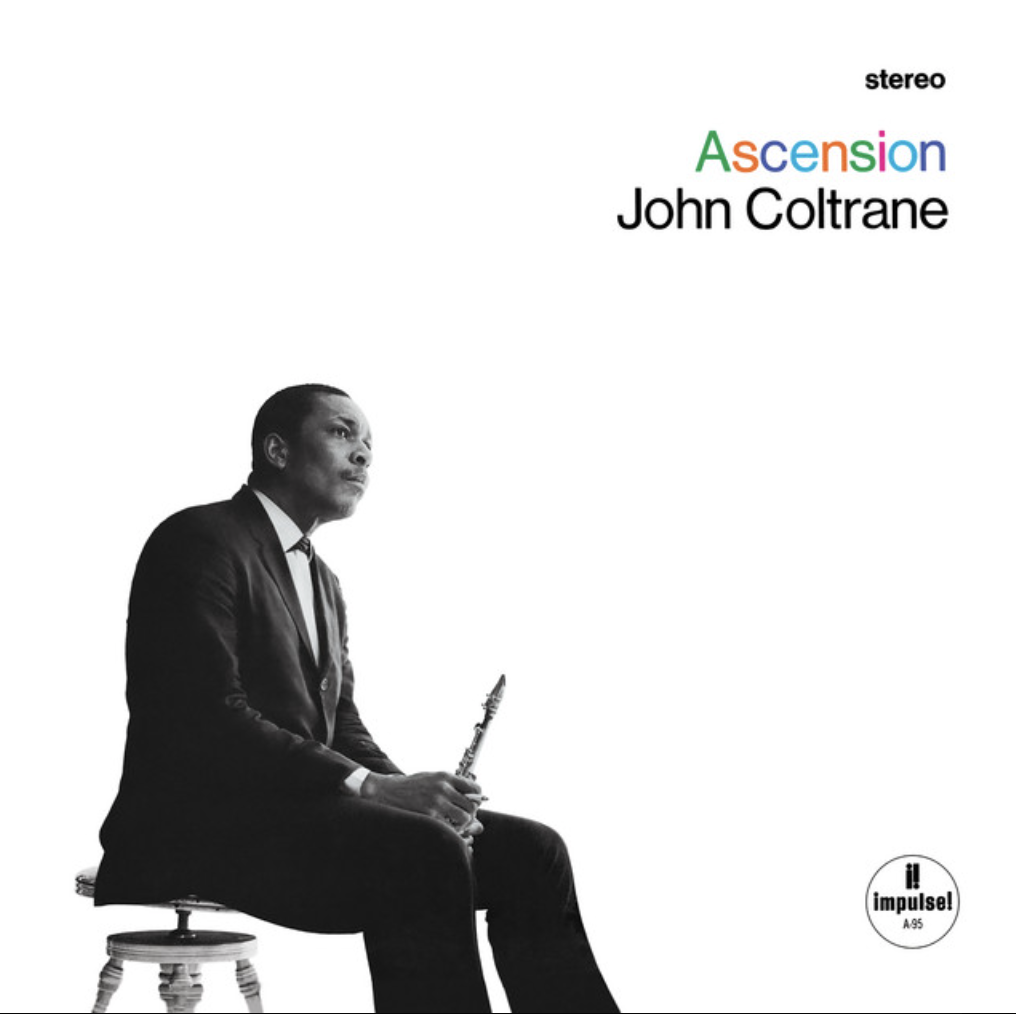
No playlist this month, but video selections tied to those albums celebrating anniversaries this month (and some from February too). Starting with demigod jazz sublime progenitor Coltrane and his 1966 LP Ascension.
Placebo meets Radiohead on the peripherals of Britpop, one of those unique bands form the period that should have been much bigger than they were: accumulating plaudits but not the sales and fame. Subcircus delivered one of the better LPs of that era with their debut Carousel.
Sparks Hello Young Lovers reaches its twentieth anniversary. The Gilbert And Sullivan of cerebral pop music takes the form to ever-new intelligent heights of absurdity and revelation. Daring to merge intellectual ideas and themes into an art form; yet never laborious, condescending or aloof, every song on this theatrical rock and pop suite features an infectious melody, satirical but heartfelt clever lyricism and the usual Noel Coward piano witticisms (updated for the modern age of course).
Time to rip it up with the screamin’ tantrum boom of The Sonics; Garage band proto-punk miscreant royalty, the band’s era defining Boom LP is unbelievably sixty years old.
One of Cope’s muthafuckers and idols, the Arthur Lee led Love dared to dream bigger with their Baroque flourishes, jangles and lamentable love requests. The tapestry songbook that is Forever Changes is also sixty years old this month.
Fast-forwarding to the 90s, and Howie B‘s influential LP, Music For Babies is thirty this month. In that Mo Wax trip hop way, here’s one of my faves, the title track:
Prince time. Parade is forty in March. And here’s my fave of all time video and track, Mountains. The man was incredible. How do you make the shakers effortlessly cool? Or running on the spot in Casanova Rose of Texas gear look cheekily sexy and sassy? Could be naff in anyone else’s hands, but works in the hands of such a singular talent. I miss the conceptual planning, the whole effort from pop stars today as AI does the heavy lifting, and most artists seem totally devoid of ideas. “Guitars and drums on the one!”
Mock 21st century terrordome meets art-punk new wave. Does anyone remember Sigue Sigie Sputnik? Well Flaunt It is forty this month, an LP perhaps ahead of its time or maybe not.
Something more cerebral and experimental now with a live version of the title cut from jazz guitarist progenitor Pat Metheny’s 1976 LP Bright Size Life. Still going strong, with recent releases, we hail back to the 70’s era of fusion-jazz.
__THE DEARLY DEPARTED/___
Pete Dello: Baroque scrolls and flourishes of yearned love, Pete Dello is best remembered as the lead singer of Honeybus during the 60s and for the hit single I Can’t Let Maggie Go. Which is enough in itself to be inducted into great hall of fame and pantheons. But growing up in my household it was Pete’s remarkable And Friends effort Into Your Ears that really resonated and led to my appreciation of his songwriting talents. Quintessentially English, forged from the worlds of Lewis Carroll and T.H. White, this cultish psychedelic Baroque folk songbook uses various characters (including the knightly earwig Harry) to imagine disarming songs of regret, the lovelorn, yearned and fantastical. If in raising a glass to Pete you explore any of his work, this is a great place to start.
John Maus: You got to feel for poor old Maus. Any other vocal pop group of the 60s era may have seen his rep fly. But unfortunately for Maus, he shared the stage with the genius baritone Scott Walker, who’s tones better suited the arrangements and the sense of scale and moodiness of sullen unrequited and dramatic love affairs. Both changed their names to better fit their newly formed Walker Brothers aggrandisement with third member and garage band royalty Gary Leeds (a former Standell no less). But whilst despite his own self-inflicted sabotages, Scott’s star rose, John’s merely fizzled out. And despite attempts to go solo after the Walkers first split in the late 60s, the trio in mosey mode donned cowboy denims and reformed in late ’74. Staying together until the dawn of the next decade before finally drifting aimlessly apart, they did manage to produce the coveted and extremely influential Nite Flights LP, which though unsuccessful in terms of sales is critically up there. In between regular jobs John knocked out the odd recording, but never returned to the heady days or success of the Walkers triumphant period in the 60s. And never really connected with his old foil Scott.
Simon Harris: Almost going unnoticed, but not to an old Britcore Hip-Hop head like me. Producer and Music of Life founder Simon Harris passed away last month. Its’ his highly influential and memorable comps from the 80s that cement the rep for me; platforming early raw tracks from the Demon Boyz, She Rockers, Derek B, Asher D & Daddy Freddy, Hijack, M.C. Duke and many others: part of the original stable of UK talent that fought back against the US wave of hip-hop, giving it a distinct UK twang and even harder edge at times. A real progenitor and leading light in the scene that deserves our full respect.
Country Joe McDonald: I couldn’t not mention counterculture figurehead Country Joe, who literally died in the last couple of days (as I write this). Obvious choice, but his famous crowd-led rendition of THE Vietnam protest song at Woodstock in ’69 – at the age of 17 he enlisted in the US Navy, stationed over in Japan. The Boomer journals will go in overdrive, so I’m not wasting time with obituaries or list of accomplishments. But suffice to say, Country Joe released a hell of a lot of quality protestations, rebellious yells, most notably with his The Fish comrades. Go seek out.
 Monolith Cocktail Blog