DOMINIC VALVONA’S MONTHLY RECCOMEDNATIONS AND DISCOVERIES
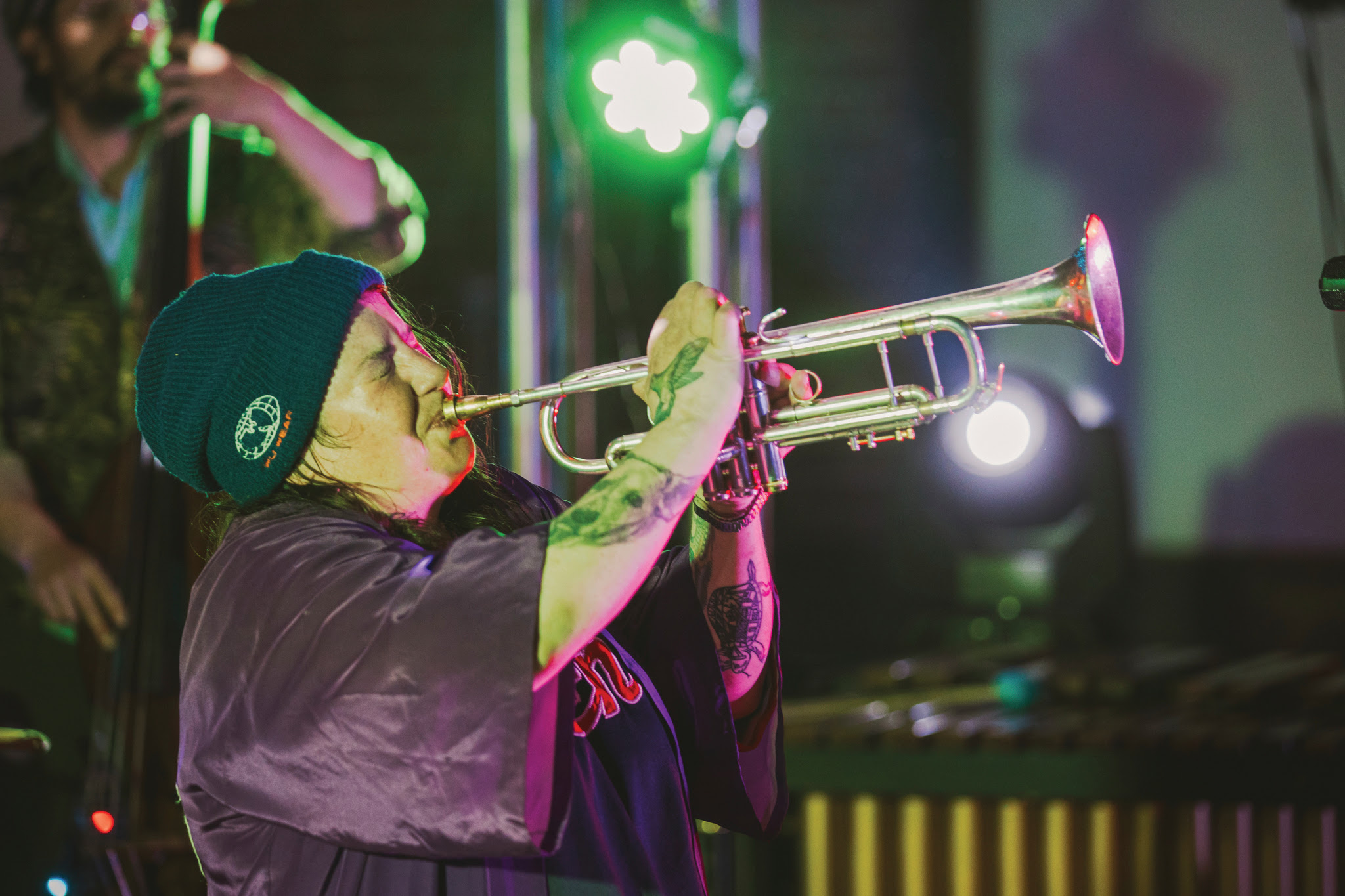
(Photo credit: Ben Semisch, courtesy of Bemis Center for Contemporary Arts)
Jaimie Branch ‘Fly Or Die Fly Or Die Fly Or Die ((word war))’
(International Anthem) 25th August 2023

As an unwittingly last will and testament, the late experimental trumpeter Jaimie Branch’s final led album with her Fly Or Die ensemble is a beautiful collision of ideas and worldly fusions that pushes and pulls but never comes unstuck. In fact, despite the “world war” suffix backdrop this album of both hollered and more disarming protestation colourfully embraces the melodic, the groove and even the playful.
Whilst the “avant-garde” label sticks, this rambunctious, more ambitious, more demanding minor opus flows and swings to a polygenesis mix of spiritual, conscious, Afro, Latin and Ethio-jazz, the great American songbook, no wave, noise and the psychedelic. And yet, on the other hand, is almost punk in attitude; a sort of anything goes in the pursuit of the message: an embodiment of challenging the boundaries.
In light of her untimely death at the age of just thirty-nine last year (the release of this album tying in with the first anniversary of her passing), this incredible statement can be read as a sonic monument; a legacy project left behind as a blueprint for a whole movement. The lyrics to the actionist rumpus ‘Burning Grey’, delivered more like Ariel Up or Polystyrene, to a swinging protest march of Phil Cohran, the Pan Afrikan Peoples Arkestra and Cab Calloway, seem almost prophetic: “Wish I had the time” and the lasting sign-off, “Don’t forget to fight”.
The final album is one Branch would recognize; more or less musically complete, recorded as it was back in April of 2022 during an artist residency at the Bemis Center For Contemporary Art in Omaha, Nebraska. However, Branch’s sister Kate and a cast of collaborators rallied round to finish the artwork and production; the final article a proud achievement encouraged on by well-wishers and friends alike.
Alongside “Breezy” Branch, who not only masters the trumpet but pushes her voice like never before and picks up on the percussion and some keys, is her stalwart troupe of Lester St. Louis (cello, flute, keys, marimba and voice), Jason Ajemian (double bass, electric bass, marimba and voice), and Chad Taylor (bells, drums, mbira, timpani and, you guessed it, marimba). That quartet is expanded further by an array of guests, including a trio of notable Chicago-hailed innovators (the city, one of Branch’s biggest influences and home for a period), the arranger/composer/engineer/trombonist Nick Broste, musician/vocalist Akenya Seymour and fellow International Anthem label mate, the drummer Daniel Villarreal (he released his debut, Panama ’77 on the imprint last year). Rounding that worthy impressive list off is the American multi-instrumentalist, Cave/Exo Planet/Circuit des Yeux (the list goes on) instigator Rob Frye.
Not so much a surprise, the album opens with a sort of stained glass bathed organ overture: part the afflatus, part pastoral hallowed ELP, part new age kosmische. A roll of bounded controlled thunder and gravitas is added to a crystal bellow and squeeze of radiant notes and the thinly pressured valves of Branch’s trumpet, which makes a brief appearance after the Ariel Kalma-like transcendence. ‘Aurora Rising’ lays down a short ceremonial communion with nature’s light before changing gear and spheres of influence. ‘Borealis Dancing’ now adds Mulatu Astake Ethio-jazz, a touch of Fela Kuti, Don Cherry and Yazz Ahmed to the ephemeral Northern Lights show as Branch toots long and softly at first before changing to higher pitch shrills. The rhythm, timing changes at the halfway mark towards a slinking groove of funk and Afro-jazz, the trumpet now cupped and echoing.
By the fourth track, ‘The Mountain’, there’s a complete sea change in mood, direction as Branch and her foils transform The Meat Puppets quickened country yin ‘Comin’ Down’. A dueting Branch and Ajemian bring it back home (so to speak) to the Ozarks and Appalachians via Paul Simon, Dylan, 60s West Coast troubadour traditions and a reimagined Sun Records. A brassy-sounded trumpet repeats the tone and springy country vocals as a gurgle of drawn-out cello plays a more somber rumination of hardy travail. To be honest, I was unaware of The Meat Puppets original, but this is a welcome meander in a different direction.
A full lineup joins in on the marimba heavy carnival turn mysterious swamp ether ‘Baba Louie’. Francis Bebey swerves to Satchmo New Orleans, whilst taking a dance around Masekela’s Soweto on a bustled bounce of joy and triumph, before succumbing to the voodoo psychedelic vapours; enticed by a cooing R&B flavoured misty Seymour. This bleeds into the bluegrass fiddled stirrings of ‘Bolinko Bass’, another Orleans evoked, almost regimental drummed bayou Mardi Gras of David Byrne, Funk Ark and Phil Ranelin. Almost mournful, ‘And Kuma Walks’ is more bluesy sounding, yet estranged at the same time; skulking amongst the spirits as someone saws through a fiddle as the trumpet aches in elegiac plaint.
Single, ‘Take Over The World’ is a hyped-up rattle and untethered excitement of no wave, punk jazz. Branch repeats a wild mantra and plays a burning bright thrill of trumpeted blasts whilst a controlled chaos spins all around her. Protest and partying converge for an electrifying, and later on, psychedelic bending stretched act of defiance.
The album ends by simmering down to a period of Afro-spiritual lament and reflection, on the sloganist berating ‘World War (Repirse)’. There’s serious bowed strings, trilled and forewarned trumpet, a sustained organ and windy, desolate enacted atmosphere on this weary actionist swan song: Branch urging caution at “false flags” and encouraging the fight.
For me Branch’s main instrument burns bright, and yet never seems to dominate, lead or overstay its welcome at any point on the album. Not for nothing is her own quote of “…meaning every note”, with not one rasp, trill, toot and cycle out of place; nothing is pushed but just felt and right at that moment. It feels to me, despite such a rich and diverse back catalogue, that Branch had so much more to give, her best still to come. And her gift was not just in crossing and mixing styles, influences, but also in pushing others to reach their own full potential as musicians. Fly Or Die Fly Or Die Fly Or Die ((word war)) is an accomplished album that channels the legacies of Chicago, New Orleans and New York to create an eclectic modern adventure in protest jazz.
Knoel Scott Ft. Marshall Allen ‘Celestial’
(Night Dreamers)
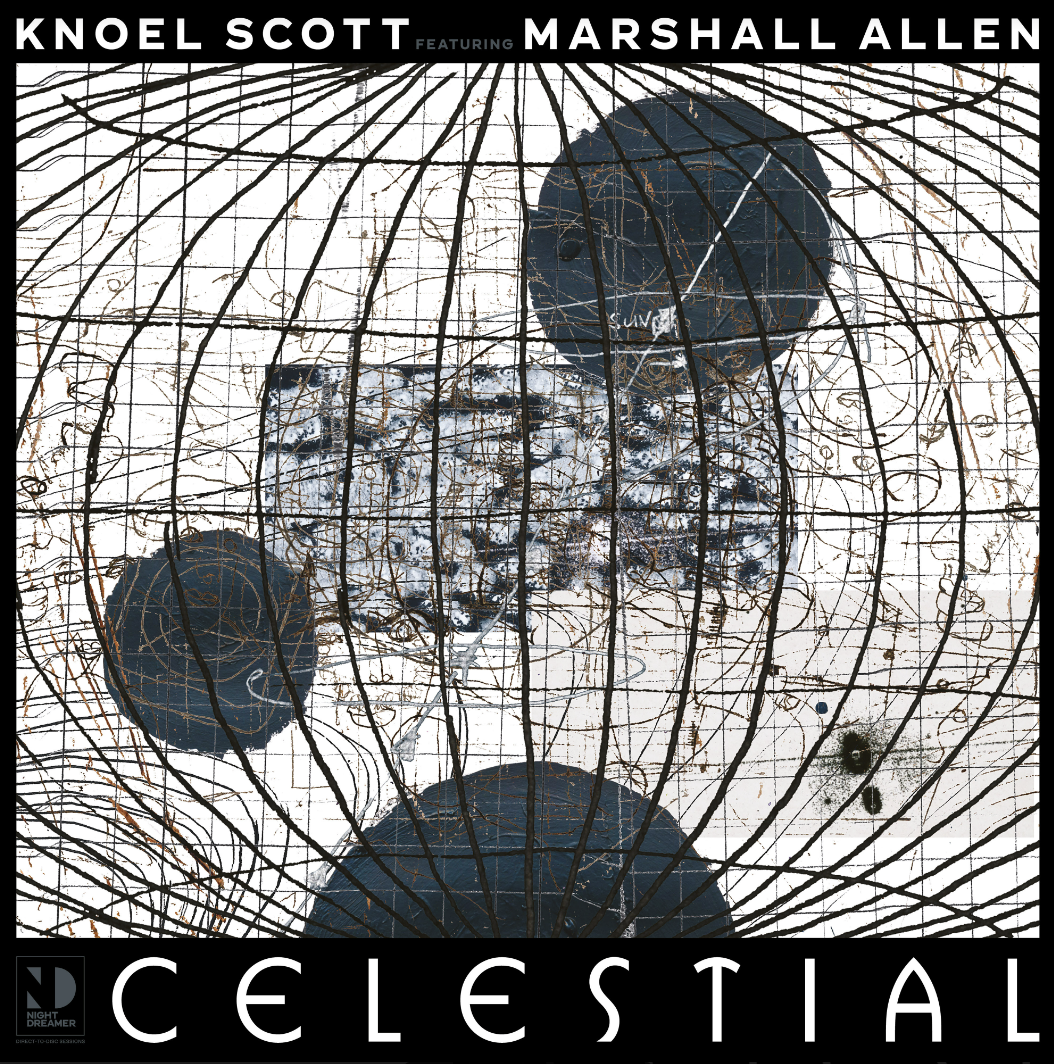
A leading light in the Sun Ra cosmology since auditioning for the Saturn jazz ambassador’s famous Arkestra ensemble in 1979, the baritone saxophonist, composer, vocalist and, when the occasion arises, dancer Knoel Scott amasses a lifetime of experience and musicianship on his debut solo-headed album. I say debut and solo, and without the extension of his previous KS Quintet named release, but the reeds specialist shares his Celestial project title with the Arkestra’s freeform progenitor, Marshall Allen.
Allen’s relationship with Sun Ra, on an album positively radiant and lunar with his guardianship and influence, goes back much further than Knoels; a stalwart since the ensemble’s formation in the 1950s, leading the troupe, the baton passed down as it were, after the cosmic Afrofuturist titan’s death in 1993. Unbelievably still in fine fettle, despite almost celebrating his centenary (that’s next May by the way), the avant-garde, inter-dimensional alto saxophonist, flutist, oboe, piccolo and EWI (that’s Electronic Wood Instrument) synthesist can be heard lending the latter’s strange sci-fi arcs, bends and space dust to the album’s title-track. It’s unsurprising to find that ‘Celestial’ has all the hallmarks of Ra too, written as it was originally with strings for the Arkestra, but never recorded.
The Arkestra family is extensive with celestial poetry taken from the late Arnold “Arto” Jenkins, recited on this universal lullaby. Art stuck with the Arkestra for thirty-six years, right up until his death in 2012. You can hear him and his “space megaphone” delivered offerings to the galaxy on Secrets Of The Sun, way back in 1962. As a homage to that universal-spiritualist’s wanton guidance, Knoel trips the radiant light fantastic, giving praise to the wisdom of the ancients and star people on a seeker’s performance of UFO oscillations, serenaded sentiments and dreamy translucence. It sounds like Cab Calloway and 50s wings being beamed up into Sun Ra’s off-world paradise.
The influence continues with the presence of the Paris scene stalwart and multifaceted (from Dancehall to Makossa, and of course jazz) drummer Chris Henderson, who’s experiences lend a both studied and more untethered freeform feel that moves between swing, big band, Latin, bop and the experimental.
This however is an inter-generational album, with fresher faces of the London scene, the very much in-demand UK keyboardist and versatile pianist Charlie Stacey and Verona-bred electric bassist and oft Arkestra and Knoel Quartet foil, Mikele Montolli. Hailed, quite rightly, as an advanced player, able to adapt to a wealth of styles, Stacey’s touch can evoke the best of those sublime 50s Blue Note recordings, touches of Oscar Peterson and Allen collaborator Terry Adams. The piano both flows with a tinkled busy lightness or strikes the heightened and jarring near-dissonance of freeform jazz; a descending off-tune part here, Cuban show time and bluesy or smoky lounge parts elsewhere: Unstated, yet moving along the action, or taking a soft stroll down the scales.
It’s another musician, part of the luminary brethren, that inspires the Afro-Cuban via Saturn’s rings ‘Makanda’. Paying tribute to a late mentor, Dr. Ken “Makanda” McIntyre, Knoel cooks up a Latin flavoured cool breeze of Havana, Harold Land vibes and R&B grooves: all undulated by sci-fi warbles and flits. A pivotal figure and influence for Knoel, “Makanda” (a name bestowed upon the reeds maestro and composer when playing in Africa, it translates from the Ndekele language as “many skins”, and in the Shona as “many heads”) founded the first ever African American music program in the States in 1971, and had worked with such notable talent as Eric Dolphy, Cecil Taylor and Nat Adderlay. Knoel and friends up the funk and balmy rhythms on this soulful homage to the late great man.
On his part, Knoel’s saxophone squawks, strains, honks and squeaks, and yet also serenades: even soothes. Wilder higher registered beak pecks turn into a near chaos, a cacophony, on the improvisation piece ‘Conversation With The Cosmos’. Coltrane, Sam Rivers and Anthony Braxton wail in zero gravity, whilst those wild rasps feel almost smoldering and lounge-like on the final mid paced twelve-bar slinky ‘Blu Blues’.
What a stellar set from the Arkestra acolyte, the Marshall and inner circle; and well done to the Night Dreamers for coaxing out this cosmic marvel. The process if you’re new to this label project, is to record the performances direct to tape before cutting on a Sally lathe the final vinyl artifact. In mono, recorded in an analogue studio, the sound is alive, inviting and, well, “celestial”. The experience speaks, communicates, and pushes the perimeters on every note, as a culmination of African American jazz styles are attuned to the stars.
Andrew Hung ‘Deliverance’
(Lex Records) 11th August 2023
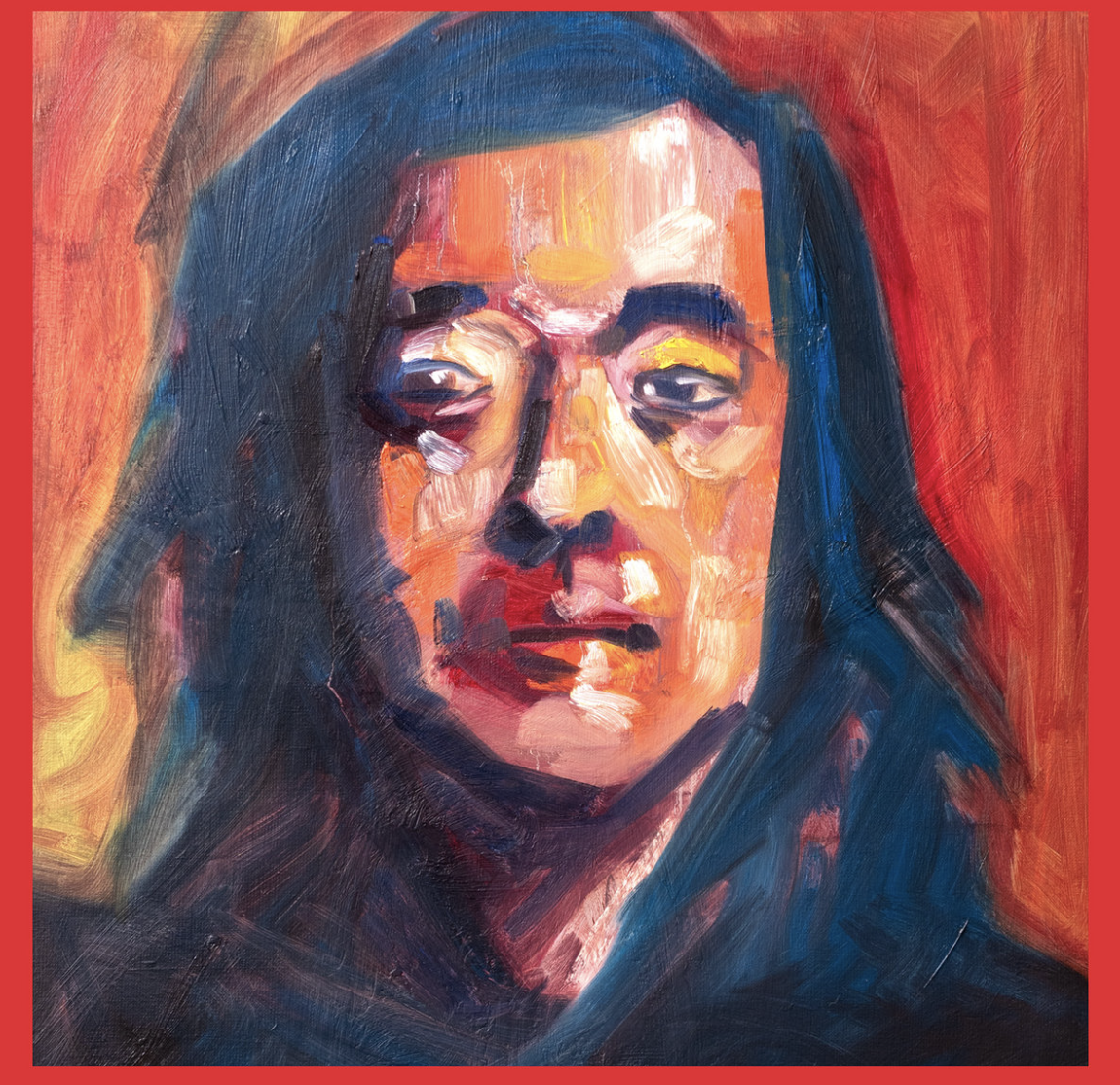
With pain, suffering and anguish former Fuck Buttons trick noise maker Andrew Hung finds a cathartic release on his third solo outing, Deliverance. But as that title suggest, the anxieties and sense of isolation and belonging now seem to have slowly dissipated as Hung feels he’s been delivered from the morose and dark fog of depression; although there’s plenty of broody, moody despair and darkened thoughts to wade through before catching the light of hope.
Hope, being set free, the constantly developing artist and producer does seem to have found his creative peace; likening this album to “the end of the chrysalis stage, like breaking free from a previous life.” Not so much reincarnation as a new incarnation, pushed on during lockdowns to mine the deep well of his soul, to face regrets and failings, but also find what’s missing.
An act of self-realization perhaps, Hung conducts a therapeutic session both unflinching and revealing. If the lyrics of ‘Don’t Believe It Now’ are anything to go by, thoughts and mental anguish at one point were truly dark. However, that filtered vapour counters the resigned with a reviving build up. And on the opening tunneled, Sister Bliss and Underworld like, moody turn freedom spin, ‘Ocean Mouth’, Hung faces a list of disappointing traits head on: Almost like taking a breath as the Robert Smith-like palpitations and rave-y Bloc Party velocity of the production avoids suffocation and gravitates towards the techno cathedral of light. Submerged at every turn with recurring references to water, Hung swims and navigates the torrents and tides to find a number of revelations about himself: conquering fear.
The previous solo album, Devastations (a choice album no less in my end of year lists for 2021) looked to the cosmos with a propulsion of electronic, kosmische, motorik, Madchester and synth pop influences, and featured Hung the self-taught singer evoking a mix of Robert Smith (some very cure-esque touches musically too), Karl Hyde, Mark Hollis and The Cry’s Kim Berly. More distressed, gasping and wrenching Hung takes some of those same influences forward on Deliverance, whilst also seeming to whip up a touch of Minny Pops, New Order, Soft Cell and John Foxx on the struggles of isolation and need to belong themed neo-romantic ‘Find Out’.
In another honest cycle of shedding shame and casting away the pain in favour of finding that alluded love “saturation”, ‘Never Be The Same’ builds from synthesized drum pad elements of the 80s German new wave, Factory Records and industrial synth-pop into another unshackled escape towards the light of revelation. I’d throw in Martin Dupont, Tears For Fears and Yazoo to that both pumped and vapourous mix.
Floundering no more, Hung looks to have found his place, his voice too. Deliverance finds him channeling his lamentable, pained, and unsure emotions into something positive and bright with another candid confessional solo album of rave-y synth-pop indie brilliance.
Various ‘Intended Consequences’
(Apranik Records)
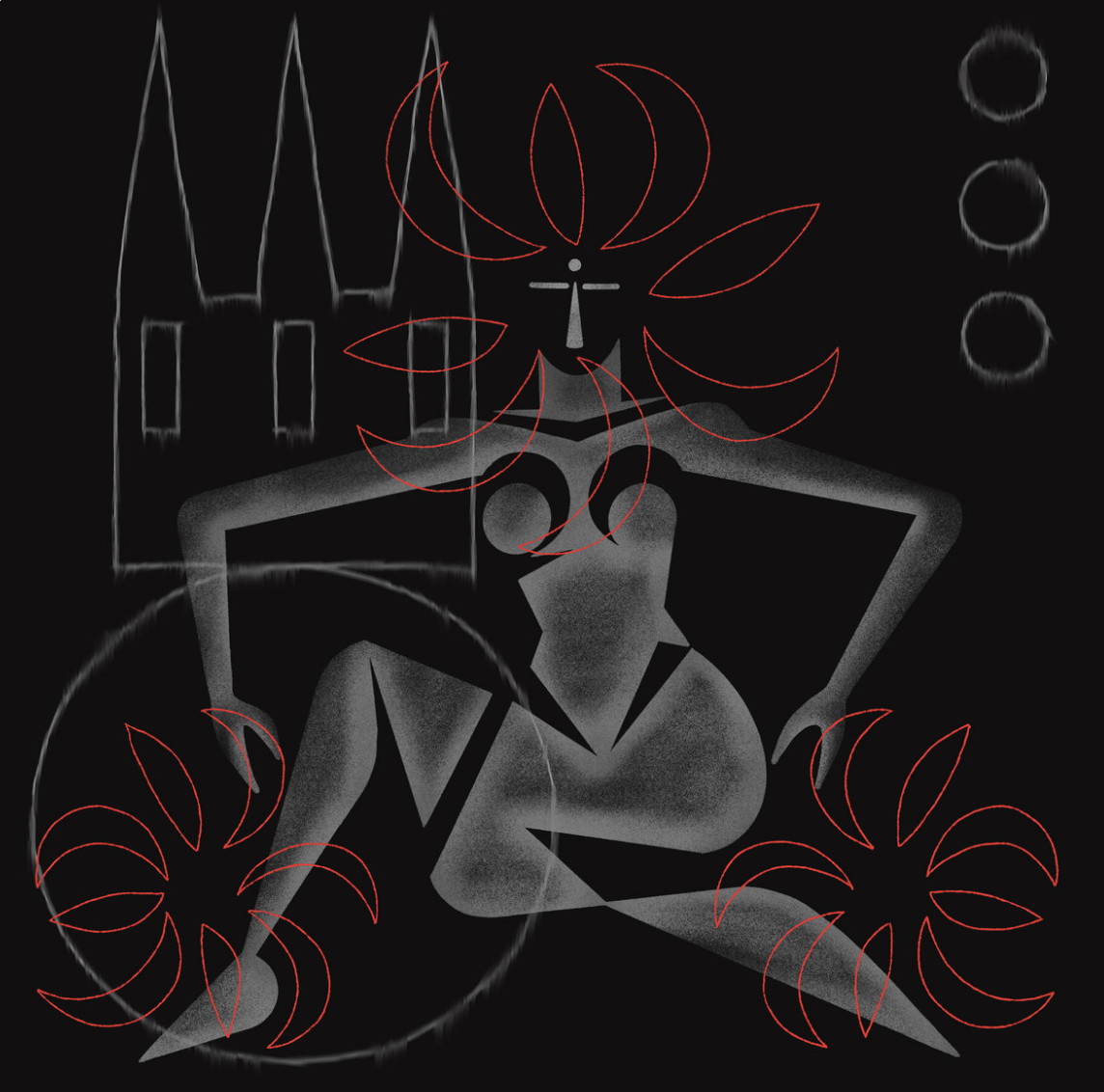
With a hellish multitude of flashpoints and distractions across the globe keeping the continuing fight for women’s liberation in Iran off the news rolls, it has become apparent that the Iranians themselves have been left to carry on the struggle with little support. In an ongoing war between the forces of the authoritarian religious state and a younger generation demanding an end to the erosions of there civil liberties and freedoms, the crisis in the country entered a dark bloody chapter last year with the murder in custody of Masha Zhina Amini by the “morality police”.
After a rightful campaign of protest and action at such a heinous crime, a brutal crackdown by the state led to mass arrests and even executions (mostly of male supporters, activists, and usually on trumped up charges). Further restrictions were invoked. And just as horrifying, in the last year, and right up to the last few months, there has been a nationwide spate of deliberate poisonings of schoolgirls (one of the groups who mobilized against the authorities in the wake of Amini’s cruel death) on mass. Defiant still, even in the face of such oppression, the brave women of Iran have strengthened their resolve only further.
In the face of such attacks, clampdowns, the music scene has responded with a strong message of resistance and solidarity. Despite everything, cities like the capital of Tehran have a strong music scene of contemporary artists, composers, DJs and performers working across all mediums, including art (which is probably why so much of the music is also so visceral, descriptive and evocative of imagery). One such collaborative force of advocates, AIDA and Nesa Azadikhah, co-founded the Apranik Records label, a platform for female empowerment. Following this year’s earlier Women Life Freedom compilation, a second spotlight volume delves further into not only the Tehran scene but picks out choice tracks from those female Iranians working outside the country, in such epicenters as London (AZADI.mp3) and Berlin (Ava Irandoost).
Sonic wise it covers everything from d’n’b, trance, deep house and techno to sound art experimentation. The range of moods is just as diverse in that respect, from restlessness to the reflective and chaotic.
Contributions from both Azadikhah (the hand drum rattled d’n’b breaks and spacy, airy trance ‘Perpetual’) and AIDA (the submerged melodious and dreamy techno ‘Ode To Expectations’, which features the final love-predicament film sample, “You know that I love you, I really do. But I have to look after myself too.”) can be found alongside a burgeoning talent pool. The already mentioned London-based producer and singer AZADI.mp3 opens this collection with a filtered female chorus of collective mantra protest, set to a sort of R&B, 2-step and bass throbbed production, on ‘Empty Platform’– just one of many tracks that uses the sounds of a more traditional Iran, especially the daf drum, alongside modern and futuristic warped effects. The sound artist and composer Rojin Sharafi likewise features the rattled rhythms of hand drums and some hidden spindled instrument – like running a stick across railings – on her entrancing kinetic techno ritual of “trauma”, ‘dbkk’.
Abji_hypersun allows the sounds of the environment to seep into her slow-building track of field recordings, collage and breaks (two-stroke scooters buzz by as distant female conversations reverberate on the street). Part jungle breaks pirate radio, part Matthew David, Jon The Dentist and LTJ Bukem, ‘Resist The God Trick’ evokes a tunneled vision of haunted reminisces and resistance in the shadows.
Emsho’s ‘Down Time’ is a rotor-bladed electro mix of Basic Channel and The Chemical Brothers, and Aida Shirazi’s mysterious wind of dark meta ‘R.E.V.O.L.U.T.I.O.N’ spells out the rage with a shadowy, near daemonic scripture of wrath and revenge – a gothic synth sinister avenging angel promises that the women of Iran will neither “forget” nor “forgive” their oppressors, torturers and murderers. Farzané seems to evoke the alien, the sci-fi on her experimental, sometimes disturbing dial twisting and crackled ‘Quori’ transmission, and the Berlin-based DJ, video artist and music producer Ava Irandoost draws on Laraaji-like dulcimer tones for her dream mirrored kosmische evocation ‘CINEREOUS’. The Tehran composer, pianist and bassist Ava Rasti draws a close to the compilation with a classical-tinged, harmonic ringed, saddened piano-lingering performance, entitled ‘Eight Night’ – an atmospheric troubled trauma is encapsulated with the deftest of touches.
It might be my own nostalgic penchant for 90s electronic music (my formative years of course), but this series (if we can call it that) could be an Iranian version of the Trance Europe Express compilations brought out during that decade; a treasure trove of discoveries and whole scenes that opened up a world of previously unknown music to many of us not living in the epicenters of North America, the UK and Europe and beyond. Hopefully this latest platform of innovative artists from across the arts will draw the attention it deserves; the message hardly virtuous, in your face, but sophisticated: the very act of female Iranians making a name for themselves despite censorship and bans a sign of empowerment and resistance in itself. Few groups deserve our support (which in the West has been sadly absent) more, but don’t just purchase for the cause but for the musical strives being awakened and produced under tyrannical oppression, and because this is a solid collection of great electronic music.
Nagat ‘Eyoun El Alb’
(WEWANTSOUNDS) 25th August 2023

Renowned as one of the greatest, most exceptional voices to have emerged from the golden 40s/50s/60s epoch of Egyptian and the greater Arabian songstresses and divas, Nagat El Seghirah was a rightly revered performer, who’s career spanned more than half a century.
Even in an age rich with accomplished, influential and groundbreaking singers Nagat held her own against such icons as Oum Kalthoum, Fairuz, Warda and perhaps the most celebrated of the lot, the anointed “voice of Egypt” Umm Kulthum. The latter, hailed the “star of the east”, was an influence on the early starter during the burgeoning years of imitation, when Nagat was a child, barely in her teens. Her affectionate appellation, “El Seghirah” or “El Sagheera”, can be translated as “the small”, “the young”, and marks the singer, performer and film star’s young apprenticeship; from entertaining the notable guests that gathered at her father’s (the famed calligrapher Mohamad Hosny) home at the age of five onwards, to her first role in cinema at the age of eight, starring in the 1947 film Hadiya. Hosny was known to push his extensive brood of children from two marriages, sometimes excessively, into various creative careers: Nagat’s half-sister was the famous actress Soad Hosny, her older brother, Ezz Eddin Hosni, a notable composer who helped her own development and natural talent.
During those initial years of development Nagat would interpret songs by such legendary figures as Mohamed Abdel Wahab, Baligh Hamdy and Kamal Al Taweel, but would find both her true and distinctive voice when interpreting the work of the Syrian diplomat-poet Nizar Qabbani. She gained adulation and fans after performing the esteemed poet’s tragic ‘Irja Ilyya’ (“Return To Me”), which is based on his sister who committed suicide rather than enter into an arranged marriage. Plaintive, stark, it rightly struck a chord with the public at the time, with its feminist lyrics and spotlight on forced marriages. It would be become a torchlight for freedom and injustice, with Nagat adding her own improvised original lines during the 1970s.
Born in 1938 but already gaining plaudits by the end of the next decade, into the next, Nagat released her first actual song ‘Why Don’t You Allow Me To Love You’ in 1955; the year she would also be married, for the first time, to a friend of one of her brothers: still only sixteen. It’s no surprise, although in no way a forced marriage, that she could, with a commanding voice, perform Qabbani’s tragedy. That marriage would only last however until the turn of the 1960s; when Nagat went on to marry the Egyptian film director Houssam El-din Mustafa in 1967 (a marriage that lasted an even shorter time). Nagat would remain, in fact seeing as she is still alive, in her eighties, remains unmarried. In recent years, since her singing retirement over twenty years ago, living a semi-reclusive life in Cairo but in poor health, there’s been some contact, even projects floated. Only last year she was featured on the official soundtrack for the streaming service series Moon Knight.
From concert to soundstage with starring roles in the films Black Candles, Beach Of Fun, My Dear Daughter and Dried Tears, Nagat gradually moved from shorter songs to ever more lengthy performances, some of which would last an hour. As time went on the songstress actress would find it harder to find those inspired works to perform. Retiring from film in 1976, Nagat would still persevere with music. And by the time she reached her early forties, in the 1980s, would release this four-track showcase of matured talented performances entitled Eyoun El Alb.
Originally brought out exclusively on cassette (like so much of the Egyptian music market), forty odd years later the reissue vinyl specialists of impeccable tastes (releasing a myriad of jazz titles and nuggets from across the Arabian world and Japan), WEWANTSOUNDS in conjunction with the Arabia and North African crate-digger Disco Abrabesquo (the moniker of the Egyptian, Amsterdam-residing DJ, Moataz Rageb), have pressed it onto vinyl for the first time. If you are a regular reader, or in fact a regular WWS’s follower and buyer, then you will be aware of that label’s previous collaboration with DA, last year’s (although they’ve also released a smattering of Egyptian focused records too over the years) Sharayet El Disco compilation. One notable inclusion on that eye-opening compilation (reviewed by me in May’s Perusal column) was from the legendary Al Massrieen. A much sought after recording outfit, the group’s Hany Shenouda produced the scenic, romantic ‘Ana Bashaa El Bahr’ (or “I Adore The Sea”) finale on this Nagat album. Adoration and yearned dreaminess for a place and time are evoked to Shenouda’s trebly near-psych tremolo guitar and light hand drum patters. Alongside the more lilting and fluted ‘Bahlam Meeak’ (“I Dream With You”), this is one of those examples of Nagat’s shortened form of storytelling romance and heartache. ‘Bahlam Meeak’ is also an example of Nagat’s more lightened, honeyed approach to what is a tinkled serenaded, wafted vision of blossom scented sand dune balladry. It evokes the music of Bacharach and the cool soundtracks of early 60s French and Italian new wave cinema.
Taking up the entirety of Side One, there’s the long form titular performance of heightened drama and searing swirled strings oboe and scuffled trinkets. Over eighteen-minutes of longed romantic gestures, the action pauses repeatedly between undefined sections; allowing the auditorium audience to show its appreciation, encouragement, which they do constantly, even when the music starts back up again. On a Matinee scale, this mini-story, unveiling of lovelorn exultations, but vulnerability and occasional lament, moves like a desert caravan across an Egyptian set, or, sumptuously glides into a Persian court. A fantastic display of sagacious craft, Nagat’s voice never has to rise or push to convey a class piece of theatre and effective yearn of love.
Only half that duration, but still a long track, ‘Fakru’ (“Do You Remember”) is a rumination; the vibrating pools of memoary reflected in the dreamy wobbled effects that permeate this fluctuating lead vocal delivery and prompting chorus of female voices. Classical Cairo, there’s a chink and tinkle of percussion and shimmy-shaking, belly dancing rhythm that luxuriantly accompanies a yearning poetic and sometimes coquettish Nagat on her reminisces. As I said already, this album represents various sides of the enchanting, soulful and also distinctive icon’s vocal presence and range. The long and short: the unmistakable sound of Egypt, but also those influences from abroad too, are melded together on a classy piece of cinematic and poetic mastery. Make room again on those creaking shelving units for another vinyl addition to the collection.
CHELA ‘Diagonal Drift’
(Echodelick – USA, We Here & Now – CA, Ramble Records – Aus, Worst Bassist Records – EU)
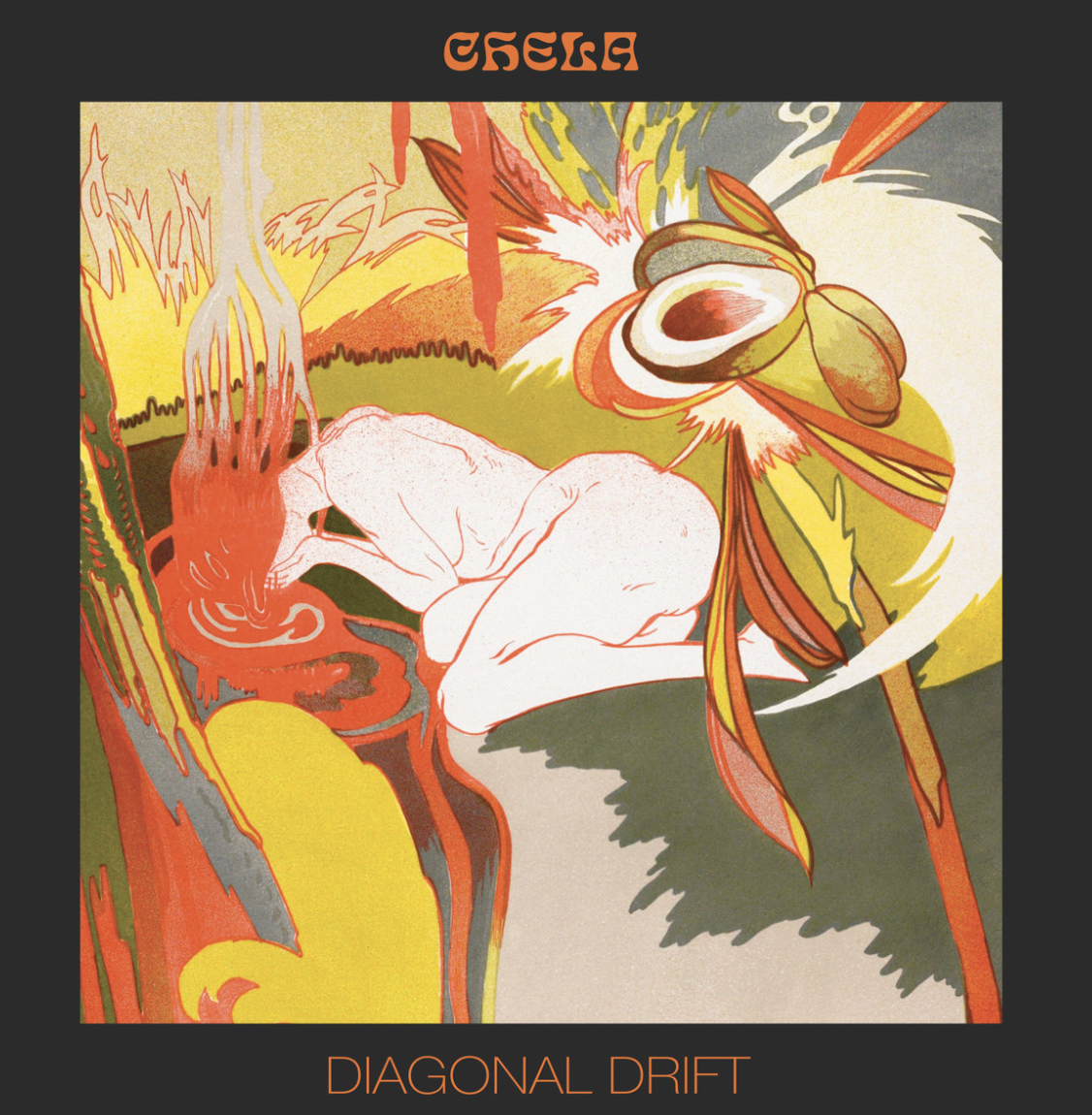
In communion with his long-time friend and collaborative foil in the University Challenged trio (alongside Oli Heffernan) Kohhei Matsuda, Ajay Saggar extends his blessed travels along the astral highways and byways with a new venture, CHELA.
Absorbed, imbued and inspired by Indian spiritualism, history and travails, its psychogeography and trauma, both partners in the new direction come together under the Sanskrit word for “disciple”; taken from the verb and root “to serve”, the “Chela” is similar in concept to a student, but implies a more loyal closeness with their teacher. In Hinduism this bond is considered sacred: An apt moniker for such inter-dimensional, afflatus dreamers and acolytes of raga, the new age, psychedlia and kosmische music.
Divine styler Saggar (who is also a member of King Champion Sounds, solos under the Bhajan Bhoy alias, and collaborates with Merinde Verbeck in the Deutsche Ashram duo) and Japanese noisenik Matsuda (most notably a member of the Bo Ningen quartet) spent much of 2022 putting this inaugural baptism together. And so with dedication to their art, the duo have sonically and melodically taken time, given depth to their new mysterious broadcast; that is, broadcasts from the ether, supernatural, uncertain, Fortean and cosmic. Different yet not entirely detached from previous incarnations, fans of both artists will pick up on past signatures, sounds and conceptions. However, they’ve managed to realign those same signatures, tuning into the mystical but often with trepidation and a sense that the noisier elements could consume all in their path.
Think Julius Eastman meets Fennesz we’re told; a good succinct summary. But I’d add a hell of a lot more, including Taylor Deupree and a cosmology of cosmic couriers. The opening ripple in the fabric of time, ‘Flyspray’, is an expanded peregrination of Beautifully tinkled Florian Fricke-like piano hauntings, Ariel Kalma and Syrinx new ageism and various Sky Records pioneers (Asmus Tietchens and Riechman spring to mind), all caught up in analogue wispy wind cacophony of divine rays, the esoteric and Eastern drones. Trippy warped reversals and folds, generator and processors nearly overwhelm the vague evocations of Tony Conrad, Schultz and a springy, but also spoke splayed banjo (which in itself seems to vaguely evoke the Balkans, Greece and strangely, India) on the reverberating ‘Appalachjo’.
In what could be a suggestion of “peace” and “harmony”, or reference to the Japanese town, ‘Heiwa’ is a hummed raga-like hymnal. A stand-up barrel-type piano plonks away from the ether, whilst ambient waves and traces of Dyzan invite heavenly reflection. ‘Ticker’ is a very different proposition. An intense chemistry of signals, beeps, quickened arrpegiator, moody signs of Faust and the sound of the Heart Of Darness are melted with Günter Schickert guitar, heavy acid Gong and various calculations.
‘Tanker’ feels like the most obvious attempt to score the sound of the title’s overbearing object; sounding like a alien freighter, both foreboding and mysterious. A scrawl and flapped ripple of radar and sonar bites into a resonating field of drones and sound waves, fog and guitar.
The final, spiritual and otherworldly track, ‘Worship’, features ghostly Indian voices and visitations from an event, service or chapter in time and history. A melodious piano chimes away in wisps of fanned cosmic mystique and cyclonic radio effects, whilst shades of FSOL, King Creosote (From Scotland With Love period) and Boards Of Canada linger. The video is more illuminating, a sepia film of bedside “worship”, healing for a leader, martyr, and a travelling funeral cortege that takes in rows of witnesses moved to touch, or just be in the essence of a distinguished teacher.
Once again with the cosmic and afflatus, Saggar and Matsuda expand their sound further. Diagonal Drift’s transcendental projection is just that, despite the building intensity and uncertainty, the broadcast noise of krautrock and kosmische styled aerial bends and radio tunings. CHELA is another welcome addition to the two artists oeuvre: one more step on the astral journey of mind-expanding experimentation.
A May Digest: August Cooke, Andrew Hung, Amon Düül II, Julian Cope, Social Playlist #76…
May 25, 2023
New Music on our radar, archive spots and now home to the Monolith Cocktail “cross-generational/cross-genre” Social Playlist – Words/Put Together By Dominic Valvona

PHOTO CREDIT:: ZOE DAVIS
A new thread, feed for 2023, the Digest pulls together tracks, videos and snippets of new music plus significant archival material and anniversary celebrating albums or artists -sometimes the odd obituary to those we lost on the way. From now on in the Digest will also be home to the regular Social Playlist. This is our imaginary radio show; an eclectic playlist of anniversary celebrating albums, a smattering of recent(ish) tunes and the music I’ve loved or owned from across the decades.
May’s edition features new music from Andrew Hung, Laraaji & Kramer, Chocolate Hills, August Cooke and Läuten der Seele. And in the Archives there’s the 50th anniversary of Amon Düül II‘s Vive La Trance and 10th anniversary of Julian Cope’s Revolutionary Suicide to celebrate and look back on.
NEW MUSIC IN BRIEF
Andrew Hung ‘Ocean Mouth’
(Taken from the upcoming Deliverance album, released the 11th August on Lex Records)
Still envisioning hope in the expanses of what is a purer future constellation, former Fuck Button foil turn soundtrack composer and trick noisemaker producer (a pretty deft portrait painter too as it happens: see the Frank Auerbach-like artwork that accompany his solo releases) Andrew Hung is back with another candid, if universally reaching, album of diy methodology big sounds. Yes big, as in anthemic, with tracks that build towards cathartic outpourings. None more so than the first track to be aired from the upcoming Deliverance album (released by Lex again, later on in August) ‘Ocean Mouth’. A rave-y Bloc Party and White Lies in a hopeful union with a Robert Smith fronted Freur, Hung is both humbled and in heartfelt consolatory spirit as he progresses from fear to love whilst facing a litany of truths, anxieties and realisations: A therapy session of the highest musical quality. As with all Hung’s material, it only gets better and better, and this album looks set to be every bit as connective and reaching as 2021’s Devastations (a Monolith Cocktail choice album of that year no less).
Laraaji & Kramer ‘Submersion’
(Taken from the BAPTISMAL – Ambient Symphony #1album, released 2nd June by Shimmy Disc)
Divine styler of radiant ambiance zither spiritualism Laraaji can be found in communion with no less a pioneer than Shimmy Disc founder and downtown no wave doyen Mark Kramer, on this latest release from the New York label. Two pioneers of their form together over four movements of immersive, deeply affected mood music, draw on their extensive knowledge and intuition to create suites rich in the mysterious, the afflatus and more supernatural. Cycle One in this collaboration is a Baptismal symphony, the first part of which, ‘Submersion’, I’m sharing with you all today.
See also my review of Laraaji’s iconic ‘Ambient 3: Day Of Radiance’
Chocolate Hills ‘Mermaids’
(Taken from the Yarns from the Chocolate Triangle album, released by Orbscure on the 16th June)
Floating a fantastic voyage into the Bermuda Triangle, the long-running collaborative duo of Paul Conboy (Bomb The Bass, Metamono) and The Orb‘s Alex Paterson conjure up signature lost sounds and immersive languid soundscape on their new album together, Yarns from the Chocolate Triangle. Under the lunar and ether inhaled Chocolate Hills alias, the foils mine their vast experience and CVs of electronic, ambient, analogue cult sounds, library music, kosmische and new age to navigate that forbidden zone phenomenon of lost ships, aeroplanes and people. It makes for an interesting cartography, as this short teaser, ‘Mermaids‘, shows. Expect to hear more at a future date: maybe even a review.
See also my piece on Metamono’s Creative Listening
August Cooke ‘FLYING SWIMMING DREDGING’
(Single release via Poets Studio)
As debut’s go, this beautifully subtle chamber-pop draw from the London-based cellist, singer and composer George Cooke is a stunner. A tastefully orchestrated evocation of such luminaries as He Poos Clouds, Arthur Russell and Surfjan Stevens, Cooke (going under the August Cooke alias) slowly builds up an emotive momentum of understated lush hymnal magnificence. He’s aided by the full choir chorus and harmony of pupils from the West London Free School and the accentuated clarinet and saxophones of the Mumbai-based multi-instrumentalist Shirish Malhotra (Zakir Hussain, Symphony Orchestra of India). Theme wise, Cooke directly challenges the listener: if our planet was radically different, would our principles remain? A promising start indeed.
Läuten der Seele ‘Schlupfzeit’
(Taken from the Ertrunken Im Seichtesten Gewässer album, released 7th July on World of Echo)
A magical. mysteriously unveiled, often in childlike awe, world emerges on the latest recording from Christian Schoppik (aka Läuten der Seele); a fantastical peregrination of environmental changes on a particular spot.
“Somewhere in the Lower-Franconian vineyards lies a hidden and mostly unknown canyon, a place that often returns to the thoughts and dreams of Läuten der Seele’s Christian Schoppik. Though a much rarer occurrence now as a consequence of environmental change, chance encounters upon the area in the past would sometimes reveal small ponds amongst the reeds, teeming with life and populated by colonies of newts and the now endangered yellow bellied toad. The transience of the water and the wildlife it hosts, dependent on season or climate, lends the area an almost fantastical, dream-like quality. Was it ever even there at all? A secret place that may or may not be present holds vast appeal to some enquiring minds… Ertrunken Im Seichtesten Gewässer, the third Läuten der Seele album in two years, is inspired directly by these experiences. Translating as ‘drowned in the shallowest stretch of water’, a title as pregnant with dread as it is wonder, the themes present speak both to personal memories and a wider understanding of place and time, and how we might interpret our own position within an ever-changing, sometimes disappearing world.
The record is presented as two long-form pieces divided into four separate movements, each titled so as to reflect this natural environment and its intersection with imagination, relying on processes of collage that draw from myriad indeterminable samples, field recordings and various recorded instruments. Those familiar with Schoppik’s work, both as Läuten der Seele and with Brannten Schnüre, will find present many of his signature tropes – the way deeply layered collages render abstracted visions of the past alive in the present – though what is always significant about his approach is not so much aesthetic as the wider concepts it attempts to express and emote. Indeed, emotional response is key to the Läuten der Seele sound, how overlapping notions of nostalgia, memory and identity calibrate experience and understanding of who we are and the world around us, whether it’s a world that’s gone or another imagined into being. If you observe the artwork closely enough, you may find a clue as to the canyon’s location, though such specifics are beside the point. The music itself infers a wider sense of the impermanence that characterises hidden worlds, wherever they might be or whoever they might belong to.”
ARCHIVES/ANNIVERSARY
Amon Düül II’s Vive La Trance Reaches Its 50th Anniversary

Admittedly not one of Amon Düül II’s best, Vive La Trance embraced a weird concoction of Roxy/Bowie glam and earnest sincerity bordering on the whimsy at times. And yet, it had its moments too as my original essay on this much discounted album in the Bavarian band’s cannon will testify: especially almost debauched Weimar Republic punk hysterical ‘Ladies Mimikry’ and Renate Krötenschwanz-Knaup prophetic Kate Bush performance on ‘Jalousie’.
Grounding:
1972 to 1973 proved bumper years for the Duul, with five albums in total being released across that timespan.
Vive La Trance was the last album of what might be argued their most productive period: though it came with some derision. To be truthful, in part, this record is the sound of a band worn-out and fatigued, with its wide genre-spanning catalogue of songs and its rather awkward Euro rock clichés. The band now more than ever flittering with commercialism.
Recorded in the spring of ’73 Vive La Trance contains many highlights despite its more structured songwriting approach. Saying that though, they did manage to maintain an ear for the esoteric, and also still conveyed their political leanings.
Songs such as ‘Mozambique’ acted as a rallying testament to the man and his raping of both a nation and a continent in the name of colonisation. Furthermore it carries a dedication to Monika Ertl, who was killed by Bolivian security forces in Hamburg that same year – Ertl was a member of the Marxist revolutionary group alleged to have taken part in the assassination of the general responsible for capturing and killing Che Guevara. At the time she was bringing a former Nazi war criminal to justice and was leapt on by South American agents whilst back in her homeland.
This move away from their more pagan and Gothic sounding heyday didn’t lead them away from the harsh realities of the upheavals in society – oh no! Whilst in the UK we were dressing up in glitter and having a jolly good time with glam rock, Germany was still gripped with the Baader Meinhof fall-out and the political right still crushing those who didn’t toe the line. Amon Duul II remained resolute in their ideals.
This album has some more touching and less establishment baiting moments on it with songs like ‘Jalousie’, a Kate Bush sounding lament built on a wordplay of surveillance – using the double meaning translation of the title it describes a touching but fateful meeting of minds in a fleeting moment, an affair of sorts watched on by a third party.
The tune ‘Manana’ has another warm and glowing feeling to it as a mariachi backed band ambles its way pleasantly enough through a quick three minute little ditty.
Also featured on here is what can only be described as proto punk with the track ‘Ladies Mimikry’: an attempt at both Bowie and Roxy Music, which ends up sounding like none of them. Instead they create an entirely new genre.
The players on this album are made up of the usual hardcore that played on Wolf City and the UK tour; though they lost Danny Fichelscher on permanent loan to Popol Vuh.
Lothar Meid hung on in the background, though he now joined the lesser-known side act Achtzehn Karat Gold from whom Keith Forsey also joined.
New member Robby Heibl made a huge contribution to the new line up, playing seven different instruments throughout the record.
Falk U Rogner upped his contribution as now most of the band received writing credits and swapped around instruments. The vocals were shared mostly between Chris Karrer and Renate; backing came from a number of affiliates.
The albums artwork was provided by both Falk and Jurgen Rogner this time round with what looks like a drying out photo hung up by a clothes peg surrounded by a strange electrical storm background. Amon Duul II’s moniker is made up of machine looking letters, which are made to appear as if they are in motion, the albums title sits between the two undisturbed and rather plain.
Turning over to the back cover and you are met with a number of photos depicting the band in various states of dressing up. Their costumes look Elizabethan except for one member who’s dressed up in a lion’s costume. Renate gets away with being dressed in a floppy hat though one guy looks like the guitarist from Slade has dressed him.
They are all photographed in the middle of a road, no it’s not an analogy to the music found within.
Review
A Morning Excuse’ opens the album with a bird-call effect delivered from Falk’s VCS3, as a repetitive guitar riff slowly jars away in the background. Chris Karrer sings in a semi mock disdain at first before dropping to an emotional lament in the chorus; his attempts at holding on to some lost love are conveyed in this warming little pop song. This tune slightly boxes in any attempts for the free flowing musicianship of Amon Duul II to really let go, the plodding rhythm treads water until we hear the quirky twist half way through which emphasis that there is still ingenuity at work.
‘Fly United’ falls back on the previous folk echoes of Carnival In Babylon as Weinzierl plays some prime cuts of bass and adds some great lead guitar work. Renate and new boy Robby take on the vocals with a forlorn poetic series of spiritual slogans lifted from the headier days of the commune. The middle section breaks out in a nod to Wolf City before drawing to its conclusion: clocking in at a healthy three minutes.
Renate is given centre stage to perform a proto Kate Bush style vocal on ‘Jalousie’. This track is a slice of the fantastical, delivered as a soft focus ballad – it’s among the most endearing Duul tracks of all time. The title translates as both French for jealousy and is a type of Venetian blind window. This is a play on words then, which conjures up some romantic meeting of minds behind closed doors, whilst secrets are brought to the boil in a fleeting moment of connection: break out the fucking Mills & Boon.
A song of two parts, the middle section builds to a rolling rally cry with some subtle but moving melodies that cleverly encapsulates the affair as its being unveiled.
The long German titled ‘Im Krater Bluhn Wieder Die Baume’ roughly translates as “in the grater again Bluhn Baume”: nope still none the wiser!
A pastoral old folk like medieval canter that does its best to sound interesting but merely acts as an instrumental segue way. Falk’s organ is surrounded by light drum breaks and rock guitar licks as it merrily dawdles along on its short journey. It makes way for the classic three-part side one climax ‘Mozambique (Dedicated To Monika Ertl)’; a return to the past glories of Yeti.
The intro starts off with a pleasant enough African humming choir accompanied by a chorus of hand drums before being cut off and making way for some power folk. Renate on lead vocals sings quite literally of the white man’s rape of the continent; Mozambique has a history of civil war and rebellion, dealt a particularly harsh horrid blow from their old colonial masters. The chopping off of hands and other such ghoulish details follow as freedom is advocated through the good fight against the Westerners’ tyranny. The pace is picked up as it really starts motoring along and turns into some kind of space rock jam; the vocals become more harassed as Renate with shocking disdain makes us all feel bad. An eerie whispered message of “good night and fight” emerges from the fade out at the end of the epic seven-minute opus.
The Monika Ertl dedication in the title was for the daughter of Hans Ertl, a well-known German cameraman who was involved in the early Nazi Propaganda films before immigrating to Bolivia. There was a program of emigration to South America during the thirties, call it a colonisation of sorts, as thousands of Nazi sympathisers bought land and set up farms there. Monika turned against her father’s ideology to embrace Marxism, joining the Bolivian underground movement before being involved in the murder of the man thought responsible for the death of Che Guevara. In the same year that Amon Duul II recorded this album Monika was ambushed by Bolivian security force agents in Hamburg, at the time she was bringing a former wanted Nazi to trail. I think the band gave her a good send off. A fascinating women who if you ever get a chance you should look up.
Flipping over to side 2, the dry witted entitled ‘Apocalyptic Bore’ seeps through the speakers with its swirling UFO effects emulating from Falk’s faithful VCS3 and Harmonium. A voice over from Saturn via Sun Ra announces some cosmic slop before a sweet melodic acoustic 12- string perks up with a laid-back groove.
The story unfolds as higher beings decide to visit and make all our dreams come true, a paradise is created where anyone can do anything. This is backed up with at times a cringe worthy Euro rock shtick lead guitar solo. Of course time traveling becomes the norm as a time continuum is invented or something. People can live at any period in history at the same moment; let’s leave the crazy type Hawkings calculations aside.
No love, no war, no angst what a tiresome place.
Well what do you know! The kids hate it and get rather bored so the aliens decide to bugger off (“leaving for the great bear”): there’s gratitude for you!
‘DR’ is a tale of pills and bellyaches as prescription drugs are handed out willy nilly for all our ills. The music is awkward Bowie, and features some violin stabs to break up the track, though it eventually runs out of steam.
‘Trap’ lets Reante sing a tale of a credit card paying lover who obviously misread the signals somewhere down the line. Again a heavier structured track that almost has the first signs of the pub rock movement that was later to turn into punk emerging. The ending starts to get interesting but finishes in a predictable cut short manner.
‘Pig Man’ starts with a quasi-Lynyrd Skynyrd sounding intro before it breaks out into a lively little ditty. The jauntiness evokes some kind of unusual influences and doesn’t fit into any conventions I can think of. The lyrics stick it to those who left their conscience back in 69.
‘Manana’ means tomorrow, or it could be a reference to the Peruvian town. That aside it’s a slightly odd sounding song, which has a mariachi style band turns up to throw its lot in. Karrer does a good job on the vocals as some exotic type percussion accompanies him. It does grow on you over time.
The finale is the spiky titled ‘Ladies Mimikry’, a brooding bass line and melody sound, like the band is hauling themselves up a steep slope. Karrer’s vocals are at their most startled as he slowly loses his mind over the course of the track. A grinding punk like strutting backing sounds like a Gang Of Four in limbo. John Weinzierl on bass gets more and more angry as Karrer reaches the refrain of ladies mimicry; a loony inspired spitting delivery that sounds like he’s having electric shock therapy. A saxophone left over from Roxy Music’s debut album provokes a reaction akin to The Mothers Of Invention. Some serious hardcore theatrics at play; I can fully understand where punk came to take a breather before rearing its ugly head again in 1977.
Called the glam album by both fans and critics alike, it doesn’t really fall into any specific category and sounds distinctly German throughout.
Bowie and Roxy Music can be heard in here but not in the often derided way, I mean I’m sure Amon Duul II didn’t really want to sound like early art school glam rock.
Structured little tracks of the three minute length make this 11 track LP almost a commercial concern, the number of songs on display amount to more then the number found on the first two albums put together. This LP actually combines some very strange influences and falls into the Euro rock movement rather too well at times.
There are plenty of great moments on this album and it is still one of the best to come out of the period, unfortunately the next record Hijack even went further to confuse us all and upset many fans.
Julian Cope’s Revolutionary Suicide Is Ten This Month

Despite its promise of caustic spit and harmonious melodic nature, Julian Cope‘s ‘call-to-arms’ doesn’t hold back on the condemnation. As the title of both the leading track and album alludes, Cope’s revolutionary pride leaves the listener in no doubt. Not so much hectoring, or even bombastic, the arch druid of modern counter culture picks apart his prey with élan; attacking both failed revolutions from the here and now; lambasting the church; and bravely taking issue with the perceived – though the evidence does suggest that there is indeed a silent conspiracy – erasing from the history books, media and political stage of the horrific Armenian genocide of 1915, by the than Ottoman government: an episode, it must be said, that is hotly contested and hushed up to this day; the organised extermination of the country’s christian minorities – which also included numbers of Assyrians and Greeks too.
A middle age crisis told from Cope’s kitchen sink, or from his loft, Cope’s message may be confrontational and often blunt, yet its delivered via the influence of rebellious Detroit rock, quasi-Love and even the Sunset Strip – circa 1967. But also there’s more than enough of that 80s sound that Cope helped invent in the first place too. Actually, this is a really great little record. Almost idiosyncratic with an Englishness of a certain kind, and deprecation: despite the talk of storming the barricades, Cope is limping to man them and writing music with a real melodious and softened quality.
The Social Playlist #76

Anniversary Albums And Deaths Marked Alongside An Eclectic Mix Of Cross-Generational Music, Newish Tunes And A Few Surprises.
Just give me two hours of your precious time to expose you to some of the most magical, incredible, eclectic, and freakish music that’s somehow been missed, or not even picked up on the radar. For the Social is my uninterrupted radio show flow of carefully curated music; marking anniversary albums and, sadly, deaths, but also sharing my own favourite discoveries over the decades and a number of new(ish) tracks missed or left out of the blog’s Monthly playlists.
Volume 76 of this long-running playlist series pays tribute to those dear souls we’ve lost in the last month, including Ahmed Jamel, Andy Rourke and this month’s cover star Mark Stewart of the irrepressible Pop Group. There’s also a myriad of anniversary marked albums to make you feel very old; Deerhunter’s Monomania celebrates its tenth with the already mentioned Revolutionary Suicide album by Julian Cope, whilst Funkdoobiest‘s debut, Which Doobie U B?, the Guru‘s Jazzmatazz Volume 1 hip-hop-jazz imbued game changer and Blur‘s (perhaps one of the best named albums of all time) Modern Life Is Rubbish are all 30 years old this month. New Order‘s Power, Corruption And Lies is 40, and George Harrison‘s Living In The Material World, Paul Simon‘s There Goes Rhymin‘ Simon and the already referenced (see above) Amon Düül II album Vive La Trance have all reached the half century milestone.
Added to that list is music, recent and old from Barel Coppet, Tresa Leigh, Pavlov’s Dog, Bonnie Dobson, The Reds and more…(FULL TRACK LIST BELOW)
TRACKLIST
The Smiths ‘What Difference Does It Make? (John Peel Session 18/05/83)’
George Brigman And Split ‘Part Time Lover’
New Order ‘Ultraviolence’
The Pop Group ‘Thief Of Fire (Live At The Electric Ballroom 1979)’
Julian Cope ‘Paradise Mislaid’
Deerhunter ‘Dream Captain’
Barel Coppet ‘Missie L’abbe’
Ahmed Jamel ‘Speak Low’
Guru & N’Dea Davenport ‘Trust Me’
Thandii ‘Give Me A Smile’
Tresa Leigh ‘I Remember’
George Harrison ‘Try Some Buy Some’
Amon Duul II ‘Jalouise’
Julian Cope ‘Hymn To The Odin’
Bill Hardman & the Jackie McLean Quintet ‘Sweet Doll’
Ahmed Jamal ‘Footprints’
Funkdoobiest ‘Un C’mon Yeah!’
Ahmed Jamal ‘Feast’
Armando Trovajoli ‘Le notti dei Teddy Boys’
Pavlov’s Dog ‘Valkerie’
Bonnie Dobson ‘I Got Stung’
Ella Washington ‘Sweeter And Sweeter’
Paul Simon ‘One Man’s Ceiling Is another Man’s Floor’
The Smiths ‘William, It Was Really Nothing’
Blur ‘Chemical World’
Sunless ’97 ‘Illuminations’
Bomis Prendin ‘French Passport’
The Pop Group ‘The Boys From Brazil’
Andy Rourke ‘The Loan’
The Reds ‘Beat Away’
The Pop Group ‘St. Outrageous’
Des Airs ‘Ling’
Amon Duul II ‘Ladies Mimikry’
Sirokko Zenekar ‘Tukorember’
The Jimmy Castor Bunch ‘Psyche’
Sam Rivers ‘Hope’
Hi, my name is Dominic Valvona and I’m the Founder of the music/culture blog monolithcocktail.com For the last ten years I’ve featured and supported music, musicians and labels we love across genres from around the world that we think you’ll want to know about. No content on the site is paid for or sponsored and we only feature artists we have genuine respect for /love. If you enjoy our reviews (and we often write long, thoughtful ones), found a new artist you admire or if we have featured you or artists you represent and would like to buy us a coffee at https://ko-fi.com/monolithcocktail to say cheers for spreading the word, then that would be much appreciated.
Our Daily Bread 452: Andrew Hung ‘Devastations’
June 16, 2021
ALBUM REVIEW/Dominic Valvona

Andrew Hung ‘Devastations’
(Lex Records) 18th June 2021
Celestial hymnal choirs and star-lit corridors to the cosmos Andrew Hung dreams big on his first solo album in four years. The once in a lifetime, if not century, events of this pandemic have sparked something almost epic, all encompassing from the former Fuck Button foil turn soundtrack composer and trick noisemaker producer.
Whilst many are riven with anxiety and even anger, Hung looks to the universal, making awe-inspired scientific and personal connections as he gazes in wonder at the deep expanses of a space. That’s not to say there isn’t an air of longing, yearning and an almost Lydon like petulant sneer at times in Hung’s vocals too: a voice that often summons up hints of solo Mark Hollis, Karl Hyde, Eno and even The Cry’s Kim Berly. But this is essentially an emphatic-voiced release from Hung’s psyche; a reconciliation of ‘the dark and light within’ we’re told, played out to the gravitas of an anthemic cosmology.
Learning a thing or two about building up to the climax as a musical partner to Benjamin John Power in the progressive-Techno come Kosmische soundtracks (like Sven Vath in communion with Ash Ra Tempel, transmogrified by a noisy Basic Channel) Fuck Buttons duo, Hung now creates something far more organic and personal on Devastations. Much of this is down to the warmth of real instruments, from a vague Mediterranean flair and twirl of acoustic guitar, to the transient tingles of piano and live sounding slipped, cymbal splashed resonating drum kit. This is coupled with the spectral synthesized rays, tubular mechanics, light refractions and bended warps of the technological machine age to perfection on an album that navigates the inner mind and outer reaches of exploration. It seems a lot like escapism; a search for something: On the soaring star-bound wonder ‘Space’ Hung sings that, “perfection exists in space”. And it would be hard to argue with that, especially as he conjures up such epic journeys towards it.
The final frontier of course is a near blank canvas, still beyond comprehension. Hung plays to that scale and uncertainty whilst firmly attached to the all-too worrying stresses of terra firma. Different thematic frustrations, the changing of the guard, are cried out as the inevitabilities of time marching on regardless are breached with sympathetic wistfulness.
Hung creates soundtracks that both traverse sea-voyaging bobbing cosmic-Americana (‘Colour’) and dreamy candid soliloquies (on the Flaming Lips pal up with The Cure finale, ‘Goodbye’). A grandiose vision that esacapes the current miasma, Devastations, despite its title, is full of light emitting love and philosophical yearning; the propulsion of which is woven together from the fabric of the motorik, the kosmische , the Madchester crowd marooned in Ibiza during the late 80s, Freur, The Amorphous Androgynous and the best in progressive electronica.
Digging deep, Hung plows the universal and comes up with a most stunning, expansive solo album; a unifying call to reach beyond ourselves for what connects us. A sentiment we all need more than ever.
Hi, my name is Dominic Valvona and I’m the Founder of the music/culture blog monolithcocktail.com For the last ten years I’ve featured and supported music, musicians and labels we love across genres from around the world that we think you’ll want to know about. No content on the site is paid for or sponsored and we only feature artists we have genuine respect for /love. If you enjoy our reviews (and we often write long, thoughtful ones), found a new artist you admire or if we have featured you or artists you represent and would like to buy us a coffee at https://ko-fi.com/monolithcocktail to say cheers for spreading the word, then that would be much appreciated.
 Monolith Cocktail Blog