The Monthly Digest includes a clutch of accumulated new music reviews, this year’s Halloween Playlist selection, a piece from the Archives and jukebox selection of anniversary celebrating LPS.
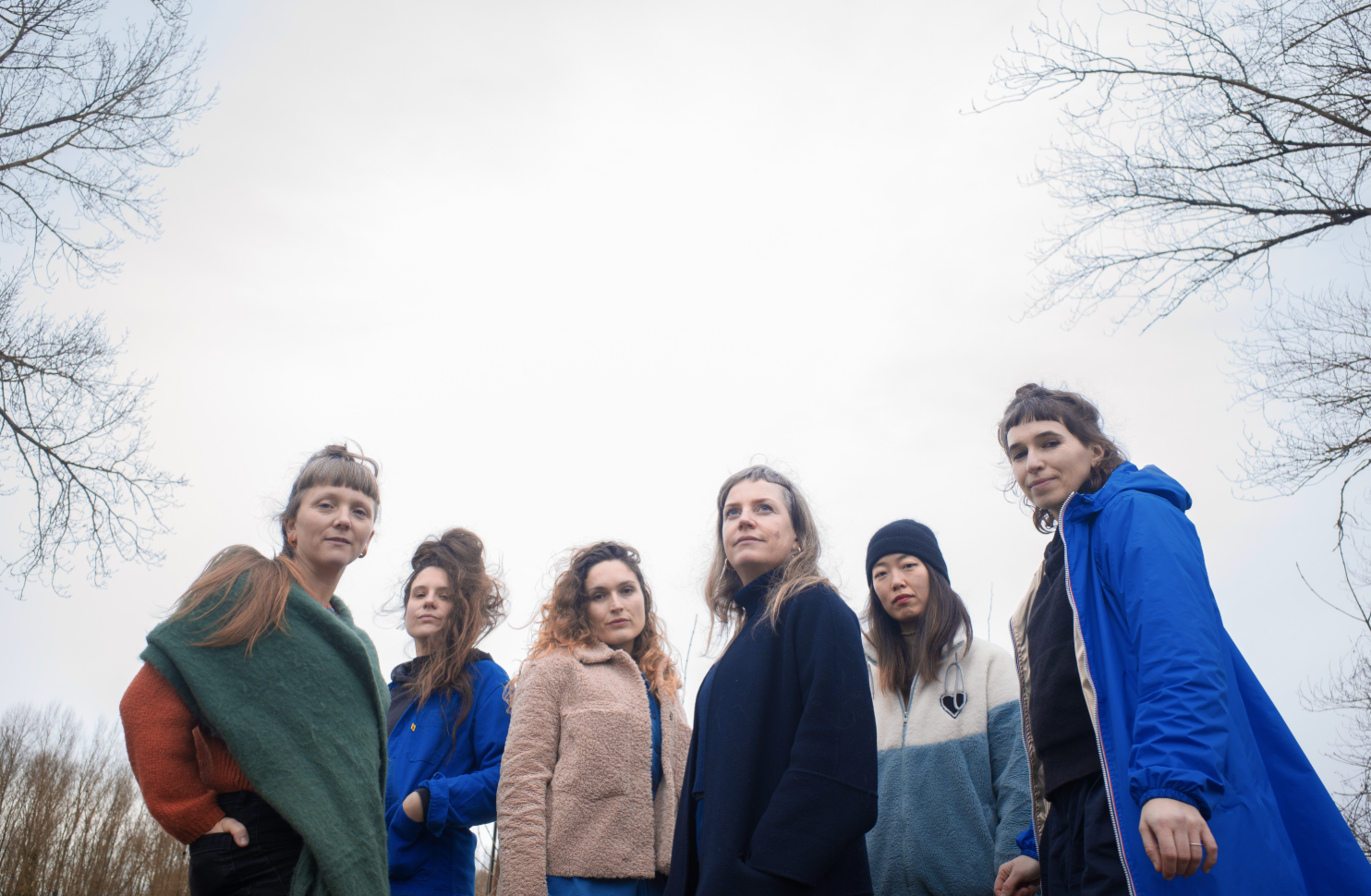
Photo Credit: Seismes photographed by Flavie Herbreteau
___/NEW MUSIC REVIEWS____
(All Entries in Alphabetical Order)
Brian Bordello ‘Who Killed Kurt Cobain’
(Metal Postcard Records) 6th October 2026
So, I was wondering with such a propounded rather than questioning title (the ? being missing from the title) if Brian Bordello was going to join in with the ghoulish online obsessive conspiracy set who cry foul play, nee murder about their iconic martyr, or, was going down the same vivid but multilayered route as the artist Sandow Birk and his gruesome, near cartoonish, depiction of Kurt Cobain’s death. Brian has gone for something even less clear, disarmed by the manner in which he’s recorded his first single in a long while, and more than a bit muggy and muddy.
Birk’s The Death of Kurt Cobain, Seattle oil on canvas artwork, painted not long after Cobain’s suicide in April of 1994, leaves little to the imagination – a riff on, and inspired by Harry Wallis’s 1856 painting of The Death of Chatterton, an even younger poet who famously committed suicide. Sensationalist even, Birk, brought up on the punk surf culture and street life of Southern California in the 70s and 80s, was influenced by the docudramas and the intrusive TV of the times. Brian doesn’t so much as follow this line but is candid and does play on the obsessions of fans who just can’t accept the most simple or plausible answer to their musical idol’s death: contrary to all the evidence.
Cobain’s fatalistic choices seemed inevitable after untold overdoses, and several earlier suicide attempts (according to Courtney Love). It’s a convoluted history, filled with contradictory accounts: inevitably coming to Netflix soon. And leaves room to doubt Kurt’s intentions. Though the facts as they stand support Kurt asking his old pal Dylan Carlson to obtain the shotgun that finally did him in, but for “self-protection” purposes. Whatever the motivation, a shotgun is some statement to make; the police photos, some only released to the public gaze decades later, are horrific and vivid; the effects of shooting your face off only too sickening to gawp at. Such a violent dispatch for a sensitive soul; perhaps knowing that there would be no way to turn back, and a small chance of survival, after already taking various concoctions of pills only to be saved by medics, and on one occasion, with an injection of naloxone by Love. And yet, it seems such a nasty way to go: the shock and cleanup for those he must have known would eventually find him denotes either an incredibly twisted fucked-up mind or someone making a disturbing and callous statement. It must be noted the police had been called on another occasion, confiscating both pills and a gun from Kurt: though Kurt vehemently denied he was trying to commit suicide.
It’s said via so many sources that Kurt was on the verge of splitting the band, pulling out of that year’s Lollapalooza, and yet Michael Stipe was adamant that Kurt was formulating a new Nirvana LP and direction, only to cancel the making of a demo – Stipe, from what I’ve read, seems to stick with the suicide narrative; almost finding it inevitable with the person he not only saw as a peer but friend.
On that tragic day in 1994, Kurt was found by an electrician who’d come to the house to install a security system. A note, addressed to his imaginary childhood friend Boddah, was found amongst the mess, part of it shared on Wiki and elsewhere stated that Kurt had not “felt the excitement of listening to as well as creating music, along with really writing…. for too many years.” Plausible…a statement that the creative will, and the love had run dry. It didn’t help that Kurt was only 27 when he died, feeding into the whole infamous “27” death cult of stars conspiracy.
Choosing a sad chapter from grunge rock’s front pages with which to make a solo return – Brian’s day job family band of a sort, The Bordellos recently released the ‘Oh Nora’ single, reviewed on these pages earlier this month – ‘Who Killed Kurt Cobain’ is yet another lower than lo-fi home recording on rudimental apparatus. The production, part of its charm and rawness, threatens to distort or break down at any second, as Brian’s Daniel Johnston meets John Shuttleworth vocals, Half Man Half Biscuit wit and wordplay, and the C86 jangled guitar prove both lamentable and shitty. It starts off well if you like, almost in sympathy (“Was he killed by too much love?” as one line goes, could be read with a double meaning: a clue, the Love part, the generic word or name of a certain suspect put forward by the naysayers), before eventually and near dreamily declaring the whole affair wasn’t a suicide at all, dialling into the whole conspiratorial discourse. And yet as I’ve already said, there’s a touch of sweetness and a lull to the coarser and dissonant aspects of this recording.
A difficult figure to sympathise with I grant you, but poor old Love comes in for the harshest criticism, her name as one of the most favoured candidates in a bizarre hotbed of murderous plots; although herself a heroin addict and right handful, staving off attempts to take their child into care because of their actions and drug dependency, Love come out alive and flourishes even despite setbacks and her poor behaviour, whilst arguably the real talent (and so the narrative goes) and golden ticket Kurt ends up with a blown-off face, dead at just 27 years of age. Perhaps he really was just drained, lacking the will to go on, stuck in a cycle of melancholic tragedy.
Sceptics will never be satisfied their idol left them high and dry and will never be happy with the manner of Kurt’s death or the investigation that surrounded it. And with no end of armchair experts, analysts – the boon of the internet age – on hand to refute and counterclaim against the evidence, Kurt’s suicide will remain forever suspicious. (I happen to not care but can’t see why Kurt wouldn’t just pull the trigger on his life and hurt from everything I’ve read; from the music I’ve experienced and the hectic fuss and self-destructive nature of his life).
Brian promises or threatens (depending on your view) to release a full songbook at some point in the near future; this time through the Cruel Nature Records label as opposed to dropping from out of nowhere with no fanfare nor any publicity at all, on Metal Postcard Records. Expect a full review when the time comes.
The Clean Crime Scene ‘Raw Cuts’
(Blank Verse/Brothers Club) 30th October 2026
Finally arriving after years of cultivation, the debut album from John Simek’s scuzzed and fuzzed and purposely muddied produced The Clean Crime Scene project is here. From its earliest foundations during the summertime family vacations of childhood reminisces on the Jersey Shore in 2021, where John recruited fellow Richmond, Virginia musicians Jay Wilder (the lead guitarist of this outfit, who also offers up some bass chops and plays keys) of Contraption and The Venus Explosion note, Ralph Nicastro (playing drums and some bass) of Sam Tropez, wreaths and Sparks Fly From A Kiss, and Colin Carhart (sharing drumming duties) also of wreaths, to the follow up recordings involving his wife Diana Simek, who layed down vocals back home in their own studio, and further contributions on violin and keys from Will Pattie (of The Fossil Collection note), Raw Cuts took some time to formulate and mold into its final shape.
Even then, with ‘fatigue’ setting in, during 2024-2025 John enlisted the help of John Trainum, whose eclectic credits include Kayne West, Kate Bolinger and Destructo Disk. Credited however, with providing keys on this album’s second track, ‘Elevator To Nowhere’, it was Trainum’s more professional Spacebomb studio in Richmond that provided the space needed to boost this vision. But this was still not quite done, and earlier this year John ‘relinquished’ the job of mastering to the Grammy Award winning engineer Alan Douches; quite the coup, as Douches’ own CV of credits includes some staggeringly incredible names from the noughties renaissance of indie and dance music – the LCD Soundsystem to Animal Collective and Sufjan Stevens – alongside established bands of previous decades – like Misfits and Motorhead. As I mentioned already that production has a muddy film that envelopes the sound in almost mono-like lo-fi quality, one that fuzzes and buzzes and murkily adds something creepy, dungeon-like, drudge-like to the ambitious indie-grunge-garage-rock-punk-shoegaze chemistry of the band’s songs.
With all that in mind, the album’s reference points, contacts mention everyone from Ty Segall to the Brian Jonestown Massacre and Mazzy Star: all good calls…no arguments from me. But I’m not sure if it is intentional or not, but nothing is made of the band’s almost fuzzed-up country-rock sound, with songs like the already mentioned ‘Elevator To Nowhere’ reminding me of a more spiky Long Ryders – albeit sharing the stage with the leather clad biker chic The Raveonettes and a less languid and needle sharing Royal Trux (especially vocal wise, when both John and Diana are either in a sort of grunge-y duet or calling and responding to each other’s lines). The flick-knife back-alley opener, ‘Backstabbers & Moneygrabbers’ reminded me in part of Neil Young’s Crazy Horse revival of the 90s and modern day, mixed with a subtle bit of R.E.M., the Throwing Muses and the two Kim’s (that’s Kim Deal and Kim Gordon).
A full-on grunge-y mood fest of relationships, street level grime and more sinister creepy material, Raw Cuts goes on to evoke PJ Harvey and The Pixies (‘Black Ice Blackout’), Some Girls era Stones and candy indie-country rock (‘In The Ground’), an Iggy fronting The Dandy Warhols (‘Don’t Mind At All’) and at many other times, the Spacemen 3.
The group mange to reconcile the dirge-y and gnarl with the more softened female tones of Mazzy Star and their ilk to slumber and indolently find some balance between the chalk outlined forensic scars of our ungovernable times and hushed voiced requited love reciprocations. Dirty as much as it is dreamily gazing at the criminal enterprise that is modern life, Raw Cuts is a simultaneously mucky and melodic surprise.
August Cooke ‘On The Line’
(Poets Studio) 20th October 2026
It might have taken a while (three years to the date…well, almost) to follow up the “sublime” (as I called it at the time) debut EP, Like Rivers, from the obviously talented London-based cellist, singer and composer August Cooke, but the wait has been more than worthwhile.
Studied and yet brilliantly dreamy in its echoes of theatre, of matinee movie scores, of the post-classical, of the psychedelic and diaphanous, the On The Line EP further plunges into a magical soundscape and musical songbook of the yearned and vulnerable. But before we go any deeper, a little background info is warranted, and a brief note on the EP’s participants and foils:
The nom de plume of one George Cooke, the August moniker was debuted back in 2023. Before that, Cooke trained as a cellist and completed his undergraduate degree in music at St. Peter’s College, Oxford University in 2013. Further studies in 2015 led to Cooke completing a post-graduate degree in Musical Performance from the Royal College of Music. Alongside this formal training he formed and toured with his inaugural band, Marvellous Medicine. The press release goes on to inform us that he was mentored by such luminaries as the cellist Alexander Chaushian in London and sarangi maestro Sarwar Hussain in Kolkata.
Cooke is joined on his second release by the versatile musician, producer and composer Felix Higginbottom (who works across both the jazz fields and the TV/Film scores landscape), clarinet player Benjy Sandler and the bassist and composer Daniele Gulino. Mostly appearing on the odd track but providing additional scope and attentive rises and falls to Cooke’s overall mastery of filmic quality set pieces and maladies. Benjay offers a classical swell on the Animal Collective communes with Dhani Harrison ‘Nila’. In the dreamy mode, this small epic sets off with filtered echoes of gamelan of something more Indian in source, but languidly chuffs to piped-like rhythms. I may be off, but I thought the title reminded me of something more mythological, so I looked it up. Nila is Sanskrit in etymology, the name of a Vanara (usually represented as monkeys, apes or forest dwellers) chieftain in the army of the Hindu deity Rama, who appears in the Hindu epic poem Ramayana, leading in battle against the malevolent supernatural rakshaska and King Ravana of Lanka. Whatever this has to do, allegorical, metaphorical or story wise is anyone’s guess, but I’m sure that its Indian influence is there.
Gulino meanwhile, offers a heavy but lovely dubby-style bass to the Panda Bear soft bulletin drama ‘Mountain Down’. There’s elbowed intense cello that reminds me of Fran & Flora, maybe Alison Cotton too, and an overall sound that recalls C Duncan.
The rest of the EP is magnificent in its diaphanous and near foggy mystery, with the title-track quavering through a magic picturesque forest of psych-folk and Parachute era Pretty Things, and Fearless era Pink Floyd. But then you suddenly catch a strange resemblance of the Lynchian in the form of a voiceless Twin Peaks-like score. The finale, ‘Gasoline’ could be an Italo-Arabian dream match between Jack Nietzsche and David Arnold but reproduced by The Music Tapes. It has, well like most of the EP, a cinematic quality, but then again it all sounds intimate despite the scale that’s softly revealed.
Possibly one of my favourite listening experiences of 2026, A most pleasant if stirring, even near elegiac in places, immersion into the lucid feelings and poetically clothed metaphors of memories, recalls and reminisces that threaten to tear apart or break. If the current timescale is repeated, expect the next EP, or an album indeed, in October of 2029: I joke of course, we’d like something far earlier please. Still the burgeoning star of his own project, Cooke breaths life into familiar sounds and genres, yet seems to hold up well as he offers something uniquely individual and introspective.
Josh Johnson ‘Animative’
(International Anthem/Nonesuch) 23rd October 2026
A second release from a member of the International Anthem family this month (albeit in conjunction with fellow congruous label partners Nonesuch), the saxophonist, composer, producer, synthesist, sideman and collaborator Josh Johnson, in “animative” style, draws in a reputable and enviable cast of guests on his latest untethered experiment in both the synthesised and electroacoustic.
Whilst dropping in from time-to-time on the Monolith Cocktail for analysis and review – his 2023 collaborative trio with Gregory Uhlmann and Sam Wilkes made my choice albums of that year -, I’ve hardly touched upon Johnson’s resume: which includes being also part of Jeff Parker’s ETA IVtet, the Small Medium Large ensemble; on the production side he’s credited with producing the singer-songwriter, poet and outstanding bassist Meshell Ndegeocello’s Grammy Award-winning The Omnichord Real Book album, as well as Chilli Pepper Flea’s Honore project. As it happens, the eclectic traversing Ndegeocello makes an appearance on this new album; lending a fat quivery bass line that crosses between soul, funk and R&B to the Herbie Hancock vibed ‘High Step’ (from my own backyard and days of making music in the backwaters of the Isle of Wight, it also reminded me of Paul Butler’s early Pnu Riff experiments, Herbie being a major influence on that project). That near conventional, when laid alongside the rest of the album (though I don’t mean that in a bad or disrespectful way), funky jazz track also brings in the talents of both the multi-instrumentalist, audio engineer, mixer, highly prolific producer and International Anthem stalwart Ben Lumsdine and the drummer, programmer and producer Brandon Combs on the, near flat-like, filtered drums. Lumsdine gets another chance before that on the near fuzzy tubular Chicago skyscape musing of ‘Reece’. Beneath Johnson’s saxophone – which has a kind of spray effect and spiralling frequency to it -, Lumsdine splashes on the cymbals and plays another kind of flattened nice roll of a beat.
Whilst we are talking about those guests, yet another talented drummer and percussionist, Aaron Steele, is credited with additional production chops and samples on the reverberated piano focused, flat tubular paddled, and vaporising bass purred ‘Mill’; a near 80s-like TV score of lament and mystique that, later on, features a turn towards the Latin percussive and rhythm wise. The second appearance this month (see Jeremiah Chiu’s album review nearer the beginning of this column), Chicago jazz trumpeter, composer and bandleader Marquis Hill can be heard alighting fourth world like trumpet to the golden jangly cosmic ‘Upstairs 2021’ – staircase to the spiritual? The universal? The inspired? Extending the roll call, IA label artist Macie Stewart (the multi-instrumentalist has worked with everyone from Rob Mazurek to Bex birch and Damon Locks, and partners up with Lia Khol in a duo project) floats violin on the Ariel Kalma and Phillip Glass-like circulating and filtered sax blown ‘It Can Be Everywhere’.
Yet another one of the multi-tasking polymaths involved on the album is the Grammy Award-winning arranger, bassist, composer and producer Paul Bryan, who applies subtle bass to the old spiritual swanned bluesy and Egyptologist jazz stirred ‘Close’ – think Leon Thomas via the Pharoah and Kahil El’Zabar. Joining Bryan and Johnson is the drummer, engineer, producer and bassist of some repute, Marlon Patton, who sloshes and jangles around on shuffled bop-style drums.
Covering most of the album already with those guest spots, Johnson is credited as the solo performer on four tracks, his multi-instrumental palette extending from sax to synth, sampler, piano, Rhodes keys, percussion and bass clarinet. The opener, ‘Idiofone’ – I’m not sure if this is a reference to the triangular vibrated idiophone -, sets the Reich/Glass/Gasper tone of hollowed tubular rhythmics and gated lopped saxophone, a distillation of Chicago electro-jazz and house music – more of that later on -, and the aquatic. ‘Jazz Chord Possession’ sounds like a transmogrified Kraftwerk via Mantronix and the Information Society, and ‘Aughts Hymnal’, just like its title, is a Penguin Café hymn of futurism and the spiritual.
Animative is a great word for this album’s rhythms of life and musings, its cross-germination of art music, jazz, trance, minimal techno, house and electronica; the fuel for which namechecks the late great Eddie Harris and Mal Waldron amongst the sagacious conjured and “transportive” teachings of the genius Wayne Shorter, and the West African philosophical writings and non-Western ideas of time and being of Dagara diviner, teacher and author Malidoma Patrice Somé, and, most surprisingly, the “dreamlike fiction” of Italo Calvino. This indicates a real depth at play, and yet this music is so accessible and inviting indeed, animated. A successful culmination of influences and personal growth, wisdom and the measuring of time by an artist simultaneously as experimental as they are immersed in musicality and encapsulating an abstract feel.
Ocean Moon & Silver Ley ‘Prismatic Fields’
(Open Universe) 16th October 2026
A benevolent union and blossoming of organic meta and foliage from Jon Tye and Bethany Ley; both appearing under their respective guises of Ocean Moon and Silver Ley for a diaphanous and dreamy abstract articulation of both untethered and more functional traverses of nature and the ‘metaphysical’.
Under the descriptive encapsulation of Prismatic Fields, the two foils travel freely, floating ideas and congruously head towards sparkles of light on a most beautifully constructed album.
The seeds were planted for this collaboration between the Cornwall-based artist and multi-tasker Tye and the Bristol-based producer, composer, harpist and vocalist Ley when the former was invited to ‘envision a series of releases for the German production music library Sonotan.’ That same platform then launched the experimental outlet and subsidiary label, Ocean Universe: of which this is its ‘inaugural release’, I believe.
They’ve interestingly dedicated the album to the botanist, author, and former director of the Centre for Native Peoples and the Environment at the State University of New York College of Environmental Science and Forestry Robin Wall Kimmerer; taking a leaf (excuse the pun) from her writings and teachings on her propounded Traditional Ecological Knowledge approach – which, according to Wiki, ‘she describes as a “way of knowing”.’ TEK is described as ‘an empirical approach based on long-term observation and relationship.’ Which also includes those cultural and spiritual considerations often marginalised by the Western scientific community.
In almost heavenly realms, crossing between the bamboo and lotus music of Asia, and drawing (especially) upon Ley’s talents of merging classical studies and learning with the electronic, floated Fourth World musical evocations prove gauzy manna for watery cascades, glistened harp, circulated, wafted, cooed, lulled and dabbed luminous vocals, and softened rhythms of life and fauna organic beats.
On a spectrum that takes in everything from the Future Sound of London and Amorphous Androgynous to Cuushe, Laaraji, Catrin Finch, Susumu Yokota, Sakamoto and Zoe Polanski, magical mulled moments and amorphous horizons converge to build an inviting oasis of the lunar and goldenly cascaded, a world of both rainbows and enervated mystery and exploration.
Qualm ‘Let’s Find Those Parrots In The Clouds’
(Zinnober Records) 23rd October 2026
Despite the unease and doubt that’s suggestive of this undefined troupe’s name, there’s next to no qualms about the direction of travel: free form jazz that probes at, and in a toppling fashion, freefalls towards poetic descriptive cerebral and more sky bound inquires.
Recruited from a number of criss-crossing and shared bands, including members of the Horse Lords, DRNTTCKS and ZEMENT, Qualm is an ever-developing project of players pulled from both America and Europe. Founded and steered (if that’s the word in a thoroughly democratic lineup of amorphous unfixed improvisors) by saxophonist, guitarist, synth operator and vocalist Philipp Hager, the group has seen various changes since its formation in 2020. This however is Qualm’s debut ‘full-length’ album; a showcase of their signature improvised form, given the time and the breadth to unfurl a menagerie of imbued metaphorical open-ended entitled “qualms”.
Across a quartet (quintet if you purchase the digi versions) of medium and longer form pieces/performances all recorded in a one day session, composer, saxophonist and sound artist Andrew Bernstein, drummer and percussionist Christian Büdel and electronic musician and bassist Sebastian Dyrschka draw upon their respective resources and influences to evoke everyone from the Pharoah to Peter Brotzmann, Sam Rivers, Nucleus, the Flow Trio, Polish free-jazz of a Biblical nature (see the near esoteric , wisped and vibrato-like breaths saxophone haunted ‘It Takes Not Much To Light The Fuse On The Powder Keg, Which We’ve Built Ourselves, Just To Avoid Dealing With Our Own Demons’) and Robert Dick’s Third Stone From The Sun LP.
As I described earlier, and on the opener, the group literally topple forward, splishing and splashing through a free-spirited vision of Iris Ackamoor style Afro-jazz as they sun worship The John Batsch Society and Prince Lasha whilst contemplating analogies to uncompromising zebras. That introduction track runs to twelve minutes in length and picks up various ideas as it moves constantly forward in a hurried flustering fashion: shooed percussive parts, changes to the drums from rattled sticks across rims to scrapes and brushes across deadened metals, a touch of Embryo krautrock and the Pharoah piping. But there’s a distinct recall of swing on the second performance, ‘A Sudden Qualm Of Sickness Overcame Us, While We Were On A Tub Riding Down To The River To find A Place To Dream’ (I’ve read shorter poems than that title), which also features, later on, more hysterical piques of Brotzmann and Mats Gustafasson.
‘Holy Smoke, It Flies High In The Sky’ reminded me in part of a Hugh Masekela vibe, but the swanned, bird-like flights of Wayne Shorter and an overgrown with wildlife and foliage boardwalk dance of 60s New York City jazz. Bonus track, ‘Sometimes You Have To Cut Things Here And There’ has a more willowy, greenery touch of the whistled and fluted, the fluttery and vibrating as the saxophone’s brass materials are coaxed and blown in a more Andy Haas fashion. Eventually, after both moments of theatre and dissonance, the synthesized vapours and rituals probe towards something like the new age, pagan and cosmic.
We may just have found those parrots of the title, floating up there in a dream-like suspended animation, as the Qualm quartet and friends let their skills do the metaphorical and allegorical talking. A great debut full of ideas and a well-balanced show of improvised musicianship from the free-form school of experiment and dynamics.
Séismes ‘SeùlSeùl’
(Carton) 30th October 2026
Without upsetting anyone’s preferred pronouns, I’m assuming that its ok to state this is an all-female sextet working within – but very loosely – the free jazz and fourth world fields of experimentation and both magical and mysterious abstractions. And it shouldn’t be the case in 2026, but this is extremely rare.
Felt via healing balms of the near new age and exotic, and by passages of intensity, the Séismes (translates as “earthquakes”) lineup of Mélanie Loisel (on double bass), Tatiana Paris (guitar), Léa Ciechelski (saxophone, flute), Aline Bissey (also on flute), Yurie Hu (keyboard, viola) and Marine Flèche (drums) also all contribute vocals and electronic effects to an improvised recorded debut album that combines both European and Korean influences and cultural sources.
Encouraging the geographic, scenery and projections of dramatic introspection and bathos, the “alone” aspects of the SeùlSeùl album title describe both standing amongst the exotic foliage and moving in unison with the rhythms of nature: at peace and yet also animated and fidgety. The troupe’s scope of influences and improvised exploration draws (to these ears anyway) upon Jon Hassell, Roberto Musci, Nicole Mitchell, Laraaji, Alice Coltrane and Walter Smetek, but delves even further and broadly to conjure up some surprises along the way. In practice this means nature’s rustles, the air and breeze act as a backdrop to the group’s atonal wind and brass instrument huffs, chuffs, hinges, dreamy drifts and articulations; to the scratchy, textural, scrapes and chinks of the tin and metal percussion; and the flexed but also sensitive combination of scuttled stick rolling and more rhythmic drums. And then you have the electronic aspects – that’s various oscillations, generator like Fortean crackles and plastique resonance – and the voices, which can be either in a singing fashion or delivered through the duet of flutes and the saxophone – sometimes sounding very vocally cooed and at others like some odd cuckoos.
There’s much to pick out from this imaginative and stirring assemblage performance; the familiar recall of Max Andrejewski’s Hutte & Guests take on Robert Wyatt on the Nordic-sounded and deliciously blurry fresh look at the world ‘Glasses’, and the near Krautrock momentum built up on the plastic pipped and Metheny guitar harmonics tweeting, percussive shaking and intense climatic ‘Du Jaune’ (“yellow”). There’s a John Zorn dimension to the title-track, and a mix of Franco-Hawaii, the magically rural, and the Balkans on the vocoder-effected vocalised ‘Pasteque’ – the parting vocals sound very folksy, almost Celtic. And you could almost suggest a touch of Staraya Derevnya on the poetically abstract ‘Cheveux au Vent’ (“hair blowing in the wind”).
All in all, an impressive debut of the ecological vibed, the organic fused with the electronic pulses and generators of modernity and dreamy lofty aspirations of untethered free sonic, atonal and rhythmical experimentation. Deerhoof meets Tortoise and Sam Rivers in a hinterland balanced somewhere on the astral panes between France and South Korea. In other words: this is for those who wish to immerse themselves in new soundscapes and visions.
_____/HALLOWEEN PLAYLIST FOR 2026____
Something different this month on the Digest, as I suspend the Social Playlist until November for this year’s Halloween Playlist: Manly P. Hall’s Secret Jukebox. Hoots and larks aplenty alongside psychic sonic defences and the disturbed.
This year’s gruesome track listing in full:
White Reaper ‘Friday The 13th’
Wovenhand ‘Dead Dead Beat’
Shriekback ‘Nemesis’
SHITNOISE ‘Whine In A Coffin’
Electric Sandwich ‘Devil’s Dream’
The Breedling ‘Torn Asunder’
Peter Evans ‘Witchcraft’
Sum of R ‘Waltz Of Death’
Dry Ice ‘Mary Is Alone, Pt. 1’
Dr. Doom ‘Body Bag’
Super Grupa Bez Falszywej Skromnosci ‘Satan’s Concept’
Bernard Szajner ‘Execute’
Wjerstean ‘Creature’
The Tryp ‘The Lizard Sheds It’s Skin’
The Flatliners ‘Gravelinerz’
Okay Temiz & Johnny Dyani ‘The Night – Gece’
From Nursery To Misery ‘The Fatal Bite’
Nolan Potter’s Nightmare Band ‘Bad Vibes’
Dyr Faser ‘Taste Of Blood’
Sonic Youth ‘Death to Our Friends’
Double Happys ‘Moss Monster’
Schizo Fun Addict ‘Tease Murderess’
Society of the Silver Cross w/ Blood And Sun ‘Unraveled’
Xqui w/ Lynn Gerrard ‘From The Crypt’
Cowboy Junkies ‘Me and the Devil’ Trifle ‘Devil Comin’’
And if you’re still not satisfied; totally wound up still, here’s a smattering of past sacrileges:
___/ARCHIVES____
Again, something different this month, and due to a suspension of the long running Monolith Cocktail Social Playlist series, a chance to still share choice tracks from those artists and bands celebrating particular LP anniversaries this October.
Sixty this month:
A live free form vision of Cecil Taylor’s ‘Steps’, originally released on record in 1966 as part of the jazz pianist luminary’s Unit Structures LP.
A supposedly live version of ‘Fire Engine’ by the acid freak 13th Floor Elevators. The original of course appears on their 1966 LP the Psychedelic World Of…, which is also sixty this month.
Let’s have some fun now, as we celebrate The Monkees self-titled debut LP, released this month back in ’66. A version of ‘Last Train To Clarksville’ by the Damnation of Adam Blessing.
And…a TV show mimed ‘Sweet Young Thing’….
Fifty:
Lester Bangs might not have had a kind word for it, but Patti Smith’s 1976 follow up to Horses, Radio Ethiopia undeniably has its moments. Right? Anyway, I’ve gone for the opener, ‘Ask The Angels’ which may or may not reinforce your prejudices.
Nearing the end (or over the finishing line) of CAN’s creatively pioneering epoch, 1976’s Flow Motion LP of cod-reggae lilted undulations is rarely held dear in even the heads hearts. Never mind that it was perhaps most people’s introduction to the band, through that album’s preening flux-disco hit single of ‘I Want More’. Personally Saw Delight, released just the next year, recovered their global traversing credentials and reputation – though many will argue with me on this, I think it’s one of their best late albums after Future Days.
In celebratory mode, and originally featured on the 1997 released triple remix album Sacrilege – various hip and Mute related and imbued artists taking turns to turn in and out, transmogrify and pay humble respect to CAN’s back catalogue – Air Liquid did a visitation transference remix of the Flow Motion title-track.
The modestly prolific Sparks nearly always have some anniversary or other, having straddled and released LPs during every decade from the 70s onwards – the Gilbert & Sullivan of pop are still at it over fifty years later, still recording and still out on the road. From 1976’s Big Beat LP, a live rendition of ‘Nothing To Do’, taken from the Lil Beethoven album tour, of which the Mael brothers also released a DVD – essential purchase!!!
Forty:
Something very Oar(ish) Skip Spence and the Jefferson Airplane about this. Yes, believe it or not, and despite its 60s sound, the Cowboy Junkies ‘Baby Please Don’t Go’ and the White Off Earth Now!! LP it appears on is forty years old!! This debut announces the Canadians-do-midwestern-esque drowsy drugged-up new country indie group to the world.
Thirty:
From the Wu-Tang Clan’s dojo of adjacent extended solo member headed albums, careering on to a scene that needed refreshing in ’96, Ghostface Killah’s Ironman shadow superhero persona. The obligatory team-up ‘Daytona 500’ features both Raekwon and Cappadonna keeping the Wu signature going.
Also this month, plucked from the Archives, my October 2016 review of Orkesta Mendoza’s Mexican deep dive ¡Vamos A Guarachar! album.
Orkesta Mendoza ‘¡Vamos A Guarachar!’
LP released by Glitterbeat Records on the 7th October 2016
A scion of the Calexico-Giant Sand-Xixa axis of Arizona/South and Central American cultural exchange, Okestra Mendoza keep the faith in these tumultuous times. Whilst President Trump certainly seems a possibility, thankfully the blowhards proposed border control wall is presently only a threat. Not that that will stop the Galexico band member and co-producer Sergio Mendoza from inhaling the intoxicant thrills, exotica and voodoo of Mexico and beyond. The multi-instrumentalist bandleader grew up in the “hinterlands” of Arizona after all, listening to the sounds emanating from the Mexican AM/FM radio stations. This heady mix of cumbia, mambo, mariachi, big band orchestras and the salacious swaggered ranchos was eventually channelled into a cornucopia of collaborative projects and bands. Merging these traditional forms with tremolo twanged rock’n’roll, psychedelia and electronic vibes Mendoza has created a timeless junction between neighbours on both the previous Orkesta LP (Mambo Mexicano) and the latest ¡Vamos A Guarachar!
Inhabiting a supernatural imagination of the cactus-strewn borderlands, where the otherworldly amorphously interchanges with ritual and reality, ¡Vamos A Guarachar! is both mysterious and fantastical yet equally kitsch. Imbued with the cumbia rhythm, which has enjoyed an electrified renaissance over recent years, Mendoza weaves both the dance styles sauntering hip swivel and more galloping raciness into the rich melting pot. ‘Cumbia Volcardora’ is a perfect example of this; wafting in the southern breezes with its cantina serenaded horns, ? And The Mysterians style ghost house organ, theatrical voodoo narration and Spanish vocals. A similar pattern of cross-pollination continues throughout the album: on the two-speed ‘Redoble’ the band fluctuate between a more up-tempo chase to Brazilian rocksteady and evoke both the feverish Mambo of the title but also a Balkan polka on ‘Mambo A La Rosano’.
Between ages with a penchant for a strange nostalgia, as seen through an esoteric lens, ‘Misterio’ is a curious tango crooned matinee that sounds like a lost theme tune from the 1950s. There is a Mexican film of the same name from 1980, which starred Juan Ferrara as a TV star who blurs reality with the plot of a soap opera he’s filming. It’s quite conceivable that this could be the band’s inspiration, the lamentable enchantment a good fit for the movie’s fantastical waltzing premise.
Though the esoteric and alien quivering magnetism atmosphere casts a spell over the album, there’s a host of quirky turns and a lot of fun to be had. For a starter there’s a kooky homage, or augur, to the spirit of the racoon on ‘Mapache’, and the zappy, rock guitar gnarling candy treat ‘Caramelos’. The times may be changing for the worse in Mendoza’s backyard, but the Orkesta put a raucous, colourful and upbeat shine on the political miasma, defending and celebrating the “honest cultural exchange” between both sides of the divide with relish and a certain oddness.
If you’ve enjoyed this selection, the writing, or been led down a rabbit hole into new musical terrains of aural pleasure, and if you able, then you can now show your appreciation by keeping the Monolith Cocktail afloat through the Ko-Fi donation site.
In review: a world of sonic discoveries. Dominic Valvona
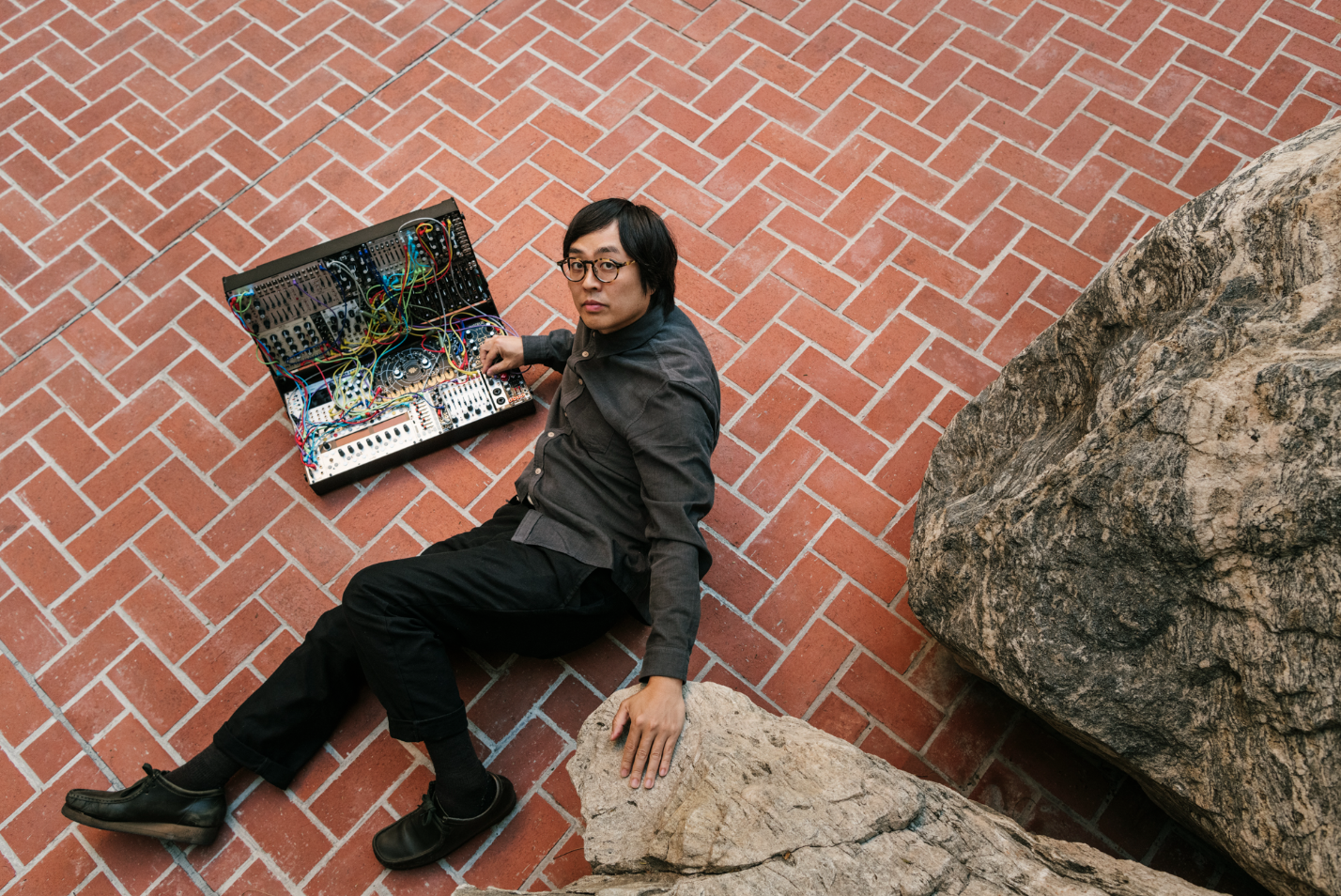
Photo Credit: Jeremiah Chiu by Brian Guido
Beat Keller & Jorge Espinal ‘El Agua Es Lava’
(Defkaz Records) 16th October 2026
Two lone swordsmen of their guitar art in combative experimental mode, the collaboration between the Swiss musician Beat Keller and his Peruvian-born foil Jorge Espinal is an exercise in instrumental transmogrification and the avant-garde.
Aligning respective disciplines with alarming, jarring and haywire results, the composer, sound engineer and, importantly and most demonstrably in this case, guitarist Keller entangles and tabs away to the meta contributions of his Buenos Aires-based trick noise maker. In a serial mode of a kind, with barely anything that would constitute the musical or the rhythmic, El Agua Es Lava (which I believe translates as “the water is lava”) skewers reference points from the most technically fucked-up of jazz guitar sparring and hysterics to the art school performances of Fluxus and their ilk, hardcore music, the industrial and erratically uncategorised.
Hi-pierced squalls and babbles of recognisable electric guitar shredding and fret gymnastics career or scramble across beaten metallics, workshop tools percussion, data coded squeals and thrusted oscillations. From the factory to volcanic explosive backdrops and the spine-chilling, distressed musicianship of a strange and alien kind builds up a crazy exploration of collaborative energies. Interesting sounds emerge: the growl of a revved-up guitar, the distorted coarse wiring and the belted drum kit that sounds like its being shoved down an iron fire escape.
But if you want a summary, and one of my descriptive go-tos, then imagine Gunter Schickert, Bill Orcutt, Steve Vai and Don Fiorino going to work like samurai guitar wielding mavericks against Glenn Branca, Fennesz and Last Exit.
Brama ‘La Raive’
(Airfono) 25th September 2026
Part of a much championed (including on this site) dynamic celebration of the Occitan language and it’s haphazard and continuously hampered cultural ties, the four-piece psychedelic-rock band Brama follow in the footsteps of fellow revivalists Cocanha this year in releasing their very own album.
I reviewed the latter earlier this summer, detailing or at least dipping into the context and foundations of the Occitan scene. So, excuse me if this does seem familiar, but here goes a very brief outlining of that history.
Playing on France’s foundations, pulled together in dominating fashion from various connected but distinguished former independent kingdoms and regions, and the erosion or indeed forced erasure of languages and cultures like the Occitan, the Clermont Ferrand quartet of Brama whisk and conjure up a “path between dream and reality, memory and imagination, where dance becomes a space vivid with memory.” They title this convergence “La Raive” or “The Rave” – an indication of direction and mood.
Though some nationalistic movements seem more in favour than others, France’s flirtations with fascism during the time of the Vichy regime’s collaboration with their Nazi overlords during WWII infamously, and most dangerously, used various folk traditions as state and ideological propaganda. Wrestling those same traditions now, and within the context of attacks in more recent decades on Occitan speakers and its alliance or take-up by activist groups locking horns with the French government, the recent musical forces behind this revival wish to free it from the forces of conservatism, misogyny and the stain imposed upon it by the tyrannical.
Whilst a far more in-depth and researched take is needed on all the ramifications, the nuances and the political outcomes, the strife and acts of resistance that have been imbued within this group’s sound and lyrics can be traced back to the patchwork of Medieval realms in what is now Southern France. A romantic language porously spreading out from its geographical namesake (loosely, I believe, formed on the model of Aquitaine, which is now known as Languedoc) into pockets of the Pyrenees (and so Spain too) and further afield into Italy, Occitan is roughly still in use, spoken by at least (depending on where you get your stats) a couple of million people. It’s poetic and lyrical turns, its polyphonic harmonies now, in part, provide manna and liturgy for Brama’s new album. And though I’m not sure if this instrument can be solely attributed to Occitan culture, the band use that most evocative of wound-up strung and drone intense instruments, the hurdy gurdy – credited to band member Amandine Pauvert.
But as this is, at least in part, a rave-up, the music is at least vibrant and animated; a danceable spell of Occitan etymology and ethnology twinned with excursions of motorik (Neu! via Beak> and The Soundcarriers) Krautrock and the electrified microtonal frills, dotting, dabbing and tabbing of Franco-Arabia. In fact, and I really wasn’t expecting this, Brama would be a great live partner to Qubec’s Angine de Portrine.
They begin, however, with an almost entirely vocal arrangement opener: save for a subtle hurdy gurdy drone that becomes one with the tones of the chorus of voices. Spanning the ages on short waves of passionate harmonious resonance, the quartet offer up a sort of vocalised liturgy come shoe-in for the next track, ‘Belou de jorn’, a more animated burst of motored lively dance-rock; a mix of the already mentioned AdP but also, strangely, Stereolab.
There are songs that groove and songs with a message, all mesmeric and hypnotic. The signature sound of souk-rock disco, the more fuzzed-up, and the near cosmic and starry is experimented with further on every track; as its title suggest, ‘Luminar’ seems to be transmogrifying a borrowed 70s Bee Gees tune and mixing it with the Arcade Fire whilst gazing at passing satellites and shooting stars, and ‘Belou de Nuech’ projects an astral journey to Java via Faust. ‘Niurada’ is like a cross between Alice Dona and Ladytron, played out to the pastoral sound of the cabrette and scrunchy guitar pedal effects.
The hurdy-gurdy drones evoke everything from medieval Occitan and the group France to the Celtic and psychedelically rural, whilst that microtonal guitar and the vocals fit the North African French diaspora. Imagine that all wrapped up in an electrifying Krautrock cornucopia of dancing and raving, and of motoring, and you’ll nearly there. For this is a pop-y like accessible cosmic renaissance of the “d’Oc” culture delivered with fuzzed and scuzzed energy and plastique tubular rhythmic finesse.
Jeremiah Chiu ‘Edge Conditions’
(International Anthem) Physical Release: 9th October 2026/Digital 27th October 2026
Modulating away from and decoupling, and yet once more working alongside his foil of recent years Marta Sofia Honer and band mates from the Small Medium Large ensemble, synthesist imbued composer and multi-instrumentalist Jeremiah Chiu unveils a soloist titled architectural and environmental inspired textural and rhythmic project that’s one part electronica of a 80s and 90s vintage pedigree, another part body music, and yet another that evokes the electronic, the floppy disk cut-ups and environment luminaries of Japan.
Edge Conditions features a pool of talented West Coast and Chicago hot-housed musicians; many of which have either released records on or been a loose part of the International Anthem label family. Whilst drawing upon the amorphous threads of Chiu’s previous collaborations with Honer, but also with the grandee of new age experimentation and fourth world peregrinations, Ariel Kalma, the former Chicago breed and L.A. based artist calls in favours from the Japanese musician, composer and artist of note, Takako Minekawa; the Japanese-American multi-instrumentalist, saxophonist, composer and poet Patrick Shiroishi (previous projects that I’ve reviewed include a match-up with Dave Harrington and Max Jaffe, plus involvement with the underground super group, Water Damage); Chicago jazz trumpeter, composer and bandleader or repute and influence, Marquis Hill; producer, multi-instrumentalist, trumpeter and instigator of the band Whitney, the alter-ego Resavoir and the Les Sons Du Cosmos trio, Will Miller; and the all-rounder percussionist and drummer with untold sessions and collaborations under his belt, plus a quartet of solo albums, and appearance’s in the already referenced SML troupe, Booker Stardum.
Possibly Chiu’s most unique foray into the rhythmical, Edge Conditions combines the plastique with the organic; the synthesized with the electroacoustic; and the concrete with the materials of space. Beats and tempos run out through an apparatus of effects merge with ease with more live or studio played drums, an essence of viola and hazy airs, breaths of trumpet; all of these sounds, patterns and wave forms meeting with the titular edge of both the abstract and the very real buildings, the public and shared spaces, and the places that converge glass and metal with a constant shimmered, bobbled and springy interactive dances and movements of either celebration, joy, introspection and cosmic mystique.
Futuristic and yet retrospective in recalling everything from the Yellow Magic Orchestra and its members various solo projects (I’m reminded of Sakamoto’s Esperanto LP on this album’s earlier tracks), plus their Japanese peers of Yasuaki Shimizu, Hiroshi Yoshimura, Susumu Yokota. This is layered up with shades of Lukid, μ-Ziq, Richard James in both his Aphex Twin and Polygon Window guises, Casino Versus Japan, Robert Hood, various House music and minimalist techno pioneers, and on the album’s metallic acid-house dance number ‘Night Fog’ a meeting of minds between Carl Graig and Felix da Housecat on an imaginary DJax Upbeat 12”.
You have the serious juxtaposed smoothly with club rhythmic body movements; and an assortment of instruments and effects that are often relieved from their serious avant-garde origins or loftier aspirations to just, well…dance around like Richie Hawtin’s Plastik “Men” or polygons and shapes lifted from their staid stasis as materials holding up the edifice of the city. Tracks like ‘Interface’ sound like a calculus centre of Tortoise and Holy Fuck quivery and chemistry wobbled body-rocking popping, whilst ‘Non-narrative’ is like some kind of techno funk from the Warp label of the early 90s. A contrast to both would be the sci-fi operatic VHS score of the fallen, ‘Sentimental Object’ and the Japanese garden wistful lingers, the metal scaffold tapping and the John Zorn like electronic valve instrument (performed by Miller) effected discombobulations and warps of the Fourth World and Ariel Kalma starring vapour thruster title-track. ‘A.M. Fuses’ is another danceable wavey number; worth mentioning for its Aphex and Sakamoto floppy disc cut-up breaking and paddled metallic tubular currents. This is one of those albums you’ll need to revisit often, with its true potential, its magic and groove revealing itself over time; on the fourth play through I’m still picking up on and noticing more modulations, clever interplay and sounds. It won’t light the world on fire but is none the less impressive and immersive for it. A really cool album of possibilities that dances to a mood and rhythm that many of us will find familiar but inviting.
The Corrupting Sea ‘Longing’
(Somnimage Records) 7th October 2026
At the helm, navigating the release of ambient and electronic music from the peripherals for the last decade (anniversaries looming) through his Somewherecold Records label venture whilst also spearheading his very own alias vehicle, The Corrupting Sea, Jason Lamoreaux once more sets both his measured philosophical quandaries and abstracted landscapes and scenes of personal joy, meditation and the existential to a subtle, immersive ecological ambient score.
Before we delve in, I must show my gratitude to Jason and his highly prolific label for offering room and a platform for two of this blog’s biggest champions and American pen pals, John Lane (masquerading wonderfully for years as A Journey Of Giraffes) and Violet Nox. It’s in this role alone that Jason can be held in high regard; offering up a vital showcase for those underground artists staggeringly ignored by the mainstream and even some of the snottier media outlets. I’ve merely dipped in from time-to-time but reviewed quite a haul of those albums over the years; some I’d suggest were every bit as important and good as anything turned out by Warp, Mute and the usual crowd of more celebrated and trumpeted labels.
Twenty-four albums in, with number twenty-five on the horizon (marking another anniversary, and the release of a very special collected works edition of the sonic saga so far), Longing draws on Jason’s own plaintive reminisces, the pains of missing out on exploring the environments, both the awe inspiring and the more intimate spots in nature, that have now become prohibited to hm due to illness. Candid if you ask him, and in the notes to this particular album, Jason has suffered for a long time with physical and mental disabilities; ones that cause extreme exhaustion and fatigue, and for obvious reasons make these youthful treks and communions of the past seem out of reach or difficult to replicate: There’s a specific recall in the notes of summer vacations spent in Yosemite National Park, scored aurally and sonically through the Andrew Heath-like lower-case trickles of piano notes, the churned vapours, the turbine like atmosphere and the language of the aviary on the rhetorical ‘Where Does One Go When One Can Go Nowhere’.
Through the main usage of ambient moods and feelings, Jason ponders with the prompt of descriptive, inquiring titles, the places held dear; scenes and locations of great importance, ones that evoke episodes from his life of safety, curiosity and encouragement. Incipient beginnings of near nothingness gradually take on a soft melodic quality as they grow and build upon the tunnelling rays and tubular synthetic wave forms that seem to convey a real depth and expression of the ecological set pieces, or the memories reflected in each track title.
Surveying a wondrous, mysterious and almost alien-sounded typography, Jason merges cleaner synthesised sounds and hidden sourced machine constructed atmospherics with field recordings of water sprays, moist dripping caverns, and the reverberated song and communications of birds. Some tracks sound more natural than others, whilst some could be said to be almost sci-fi, a touch off-world. Veils descend across fabled lakes with crystallised notation; what could be described as blizzardy specks move cyclonically in a synth-made whiteness; bucketed waters are scooped up in a fashion under the dripped dampness of a cave; and Forest Robots vibes are recalled in the gentle joyfulness and electronica celebration of ‘Tree Swings and Climbing Trees’. All the while that central sensibility of longing is drawn upon to create an album that’s simultaneously as pining as it is aspiring: the mood music of someone forced to watch from a distance, yet feeling some of the vitality, the enormity and inspiration of those landscapes and specific sites, memories that hold a special place in his life.
Allison de Groot & Rich Ruth ‘S-T’
(Western Vinyl) 2nd October 2026
Who knows what a Rich Ruth (the persona alias of Michael Ruth) produced Allison de Groot project would have sounded like in the end; that original remit and plan instead evolving into a shared titular collaboration of equals, with both creative sparks writing together, sharing and developing ideas conjured up in a Nashville studio over the course of a year.
The solo endeavour of the clawhammer banjo maestro of repute de Groot, this traversing work has grown from its incubator southern rooted projection into something, perhaps, much larger in expansive scale and deeper in layered immersive soundscapes. If much of the inspiration derives from that instrument of choice, the introduction of Ruth’s own multi-instrumental rack, plus the contributions of the Canadian and Berklee hot-housed violinist Patrick M’ Gonigle, and the erred wavy mirage-like steel peddle phrases and lines of Ruth’s oft Shrunken Elvis bandmate Spencer Cullum, have all added to the stirring evocations and scored environments that materialise from a reimagined Americana and abstract ambience.
Associated with ‘old-time tunes’, traditional American music and bluegrass, the clawhammer banjo takes its name from the claw-like posture that’s used by the player to ‘hammer’ the strings. This technique is said to emit a gentler and more melodic sound overall, and in this case, effortlessly blend an essence of its country origins with something both transcendent and cosmic: carrying the listener off to planes and places that exceed the borders of the American South and the home of country music itself.
Hear and Be Yonder David Casper and the tubular cascades of Mike Oldfield are transported to the prairie and wheat fields of a more abstract Nashville environment, as a synthesis of neo-classical and chamber dreams are woven together with the hallucinatory, and the more recognisable invocations of flowing, running rivers (the opening Oldfield-esque and dawn awakened light emitting Daniel Lanios golden rayed score ‘Nervion’ is named, I believe, after the Spanish river that runs along the ports and shipyards of Bilbao, out into the Bay of Biscay). Tracks like ‘New Intervention’ reminded me of Glass and Cage relocated to the old West, whilst ‘10-14’ was more like Tortoise panning for gold on the reservation with The Green Kingdom and Laraaji. But the banjo arpeggiator ‘Sorgin’ has a certain Japanese sound of paddled spokes and dulcimer-like woody bobbles, whilst ‘Rocks From The Moon’ could be Suzanne Ciani catching solar flares with Cluster. Imagine, if you will again, that Eno had produced Andrew Tuttle’s Fleeting Adventure, or Marisa Anderson had got together with Bruce Langhorne, for that’s about as close as I can get to describing this transportive new album from the collaborative partnership of de Groot and Ruth. And it must be one of the first albums of its nature to lift the clawhammer banjo from its origins and purpose to different heights, moods and fourth world-esque visions.
Miska Lamberg ‘presage’
(Discreet Archive) 2nd October 2026
And it all amounts to this: the minimalistic but deeply conveyed melodic score that builds into a haunted and sad dreaminess of the Boards of Canada and there like. Yes, the latest sound art or installation-like enveloped immersive experience from Miska Lamberg takes its long-form time to reach a certain gravitas of sound waves melody and feels that make the whole journey worthwhile.
Aptly released via the Discreet Archive platform – a label synonymous for allowing artists with such grand explorations the scope and time to breathe – Lamberg’s forewarned omens on presage use the environment, the hidden and obscured background field recordings of movements, the uncertainty and anticipation of various shortwave radio transmissions, and atonal drones and hums to conjure up a mysterious, sometimes near supernatural and alien landscape.
Lamberg’s biographical blurb states that, ‘pieces have been featured by record labels Sawyer Spaces, Dragons’ Eye Recordings, Falt and PRESQUE TOUT, and in exhibitions and performances at Museum of Technology, Urban Apa X Ateneum, Lighting Mind, Kamara, Swedish International Film Festival, Galleria Kalleria, Penthouse Collective’s gallery space, modern dance festival Tanssivirtaa Tampereella, and KATOAVA Collective’s various events and projects.’ And so, from the conceptualism of the art world to the studio and site specific, Lemberg has covered quite an array of sound experiments and sonic projects to build whole worlds out of not much more than the atonal and recondite. But this time around, prompted or indeed inspiring the stanzas of Minja-Milia Ikonan – which you can find included in the bandcamp description -, Lemberg’s presage evokes an assemblage of Helsinki environmental sourced recorded weather fronts and more disturbing ominous going ons.
Stormy but weightless winds, as noted by Ikonan, billow in across what could be described as cliff tops like synthesised airs: a mist even. Like early Kluster causing a venerable imbued mystique or even cathedral era Tangerine Dream, the atmospherics are liminal: between the otherworldly, the esoteric and sci-fi. Giant strides and brushed walks through grass and upon concrete are interspersed amongst the percolation of something boiling on the stove and the buzz of unidentified insects and those shortwave blizzards of crispy radio waves and radioactivity. This is track one by the way, which suffuses each strand, each tonal layer slowing and gradually over nearly twenty minutes.
Track two starts with an interference in the fabric, hisses and the looming presence of something from beyond. Again, hidden generators and machinery are obscured underneath a sort of greyish film, right up until that descriptive build-up of saddened but moving melodic sound waves that I described in the introduction.
As an experience its certainly an immersive one; a 4-D surrounded environment of the alien and yet familiar, reimagined through an apparatus and process that invokes the descriptive.
Light Conductor ‘Sequence Three’
(Constellation) 25th September 2026
Vapour trails and the luminescent heat patterns of distant planets are conjured up alongside soft hues of abstracted circular colours and amorphous transcended spiritualism on the latest and final sequence from the Montreal partnership of Stephen Ramsey and Jace Lasek: with Lasek’s Besnard Lakes band mate Olga Goreas orbiting as a third moon to the duo’s planetary base camp emissions of synthesised and vintage analogue psychedelic ambient slow-release space rock.
After two previous volumes, Light Conductor (a sort of vessel for the Young Galaxy’s Ramsey and his Besnard Lakes’ foil, Lasek, to pursue visionary drone scapes on distant planets) envision a diaphanous and mysterious escape to off-worlds; the utopia of World Expos and astrophysicists channelled into a long form kosmische and shoegaze imbued immersive experience in which the duo “…apply rockiest sound design to minimalist tracks.”
Through prisms of Fairlight synth, hints of 80s sci-fi VHS scores, Vangelis, Tangerine Dream, Zoon Van Shook, Iasos, new age music of a certain vintage, burbled submerged bass lines and touches of Moebius, our astronautic musicians follow the cosmic rays, watch for visitations from mystical aviators, pray at the altar of sci-fi, and make concrete the abstract perimeters of celestial feels and horizons. All the while they teether themselves to earthly concerns and dystopian crisis with the apparition broadcasts of financial ruination and the crash on the album’s middle marker, ‘Ghost City Radio’; a near Cassandra ominous Evangelistic rebuttal of Wall Street, the Stock Markets and Capitalism as par the course for the millennial generation, put to a saddened vapour, some sharp lifts, bobbed bass, and synthesised pre-set rhythms: a union between John Michal Jarre and University Challenged.
There’s some beautiful, and again, spiritual like expansions to this five-track suite of space dust particle shimmers, curvatures and spectral rainbows. And when Goreas’ signature wispy and husked shoegaze-y vocals emerge on the lush space aviary ‘Omenize’, those lunar mirages transform into a healing balm. The truly long form finale, ‘Supercontinent’, as epic as its title, features another cosmic menagerie alongside its drones, evocations of Cluster, Eat Lights Become Lights, and its plastique shuttled rhythms and metallic language
An immersive experience and cosmic opus of kosmische inspired slow-psychedelic and shoegaze rock from this Canadian collaboration; the perfect ending to a triptych sequence of such materialised interplanetary and otherworldly peregrinations and slow-burn releases of transcended escapism.
Mousecunt ‘Orgasmic Mouse’
(Infibulate Records) 25th September 2026
The inaugural release from the newly orchestrated Infibulate Records label, seeks to make its mark with a most controversially reactionary piece of Goth-synth-barbarity and industrial-EDM bad taste-riven polemics. Torture porn for the lugholes; repulsive lyricism aimed at unsettling; the anonymous Iranian band must have had to dodge the authoritarian camarilla’s morality police (surely) to unveil such filth, bloodiness and sexual depravity.
Information wise, we know that this group features “a woman” performing on Nord synths and vocals; “a man” performing on a Gibson guitar, Hofner bass and sharing vocals; and one more “man” on Tama drums. An anonymous line-up is mixed and mastered by another anonymous engineer in the USA; their task, to produce a sonic assault upon the senses from fortnight session played at a private studio in Azerbaijan earlier this year. They’ve been working under the anonymity cloak of darkness, we’re told, since 2022: and for good reason.
Explosively digging and wrestling in the dirt with themes of extreme artistry practice, domestic violence, volatile (to say the least) relationships, religion, humiliation and abandonment (through the most harrowing of Freudian prisms), the trio let loose with the obscenest lyrics I’ve heard since “GG” Allin or Throbbing Gristle.
Told through an “unreliable narrator” in an autobiographical-like (though it also says “from different perspectives”) style of protestation, name calling and accusation, and with barbed slugged shots of the near physical, Orgasmic Mouse could be deemed a quasi-concept album of a sort. At least joined together in a very abstract form; threaded together by a similar if changing moody production of dungeon abusing vulgarity, maximalist scopes, knife sharpened synths, both death metal guttural and more ghoulish coquettish vocalisation, and horror cult EDM.
It can be an uneasy and even vilely offensive if not dodgy listen lyrically wise – the opening gratuitous perversive analogies and troubling descriptive rage of ‘Fucking The Mirror’ being the worst -, but seems to indulge in the swamps of such criminality and extremism to reach the pit of hellish confession, and to rattle the foundations: In grappling with their subject matters they’ve dredged up the most caustic, spiteful and disturbing dialogues and poetry.
Because of their provenance, it’s impossible not to connect the dots: An Iranian goth-metal-synth-EDM-metal-art band dangerously sailing close to enraging the Islamic Republic’s sensibilities and rule of law. I can’t imagine, considering the recent bombardments from the USA, and the possibility of regime change, and the years since the Arab Spring of continuous opposition against this same regime by a sizeable (often young) part of its population have made it any easier to exist making this kind of music – so many artists, and protestors of recent years have ended up raped, tortured, disappeared or executed (and it must be said, with fuck all help, support or protest by the same brigades marching against Israel and the West week in, week out). Of course, it’s easy to see how reality being referenced and played out on the ghoulish, horror of this album – perhaps mirroring it far too well; the violence is everywhere: from the physical to insulting and sexual.
For a reference, imagine Ministry or Revolting Cocks going toe-to-toe with Xmal Deutschland, Alien Sex Fiend, Mercy Girl, Rosaceae and Nine Inch Niles.
How this will go down is anyone’s guess, but from a label built on provocation and the extremities of contemporary music, it’s a successful launch of offending, violent and more sensory punkified gothic dance music and tortured art performance.
Antonio Raia ‘Σ [sigma]’
(Kohlaas Records) 1st October 2026
Not the focal draw, but as part of his collaborations with fellow Neapolitan artist Renato Fiorito, the body, soul and environment amalgamated – like a united flow – saxophonist, composer and improvisor Antonio Raia has both appeared and been mentioned on the Monolith Cocktail twice: firstly with a premiere, shared with our Italian pen pals at Kalporz, of the eighteen minutes long ‘‘Too Many Reasons’, and then a couple of years later, as part of the greater contextual piece on Fiorito’s Lustra album
The former saw the amorphous saxophonist Raia and his sound artist foil join together to capture the abstract atmospheres of cerebral reconnection; a sonic field in which to escape the stresses and weight of the Covid pandemic. Produced in lockdown, in the partnership’s native Napoli, this imagined space, in which a faded, fuzzy pining and wandering saxophone wafts around a rotated motorised humming and propeller purred windy and airy isolated soundtrack, brought together two experimental composers looking to create an ‘intimate and visceral experience’.
The latter of those two pieces was described at the time as ‘a votive offering of gratitude and devotion’ to that same city; attributed to Fiorito this time around, the track and album was promoted as his ‘personal vision of Naples’. Raia on his part, popped up on the crackling fireside, faint melodic and reflective softly rasped saxophone memory of ‘3694’.
As resumes go, Raia’s includes the critically applauded 2018 debut solo album, Asylum, and the 2023 published soliloquy book, La memoria bucata –a project developed through the sonic manipulation of archival materials by the theatre director Antonio Neiwiller, who passed away prematurely in 1994. In 2024, at the invitation of filmmaker Béla Tarr, a key figure in radical contemporary European cinema, he conceived and realised Facing Béla Tarr, a sound action for saxophone and waterphone based on the film Prologue. Two years later, and bringing us right up to date, in early 2026 he composed and released the soundtrack for [campanamuta], a six-act radio work by Martin Errichiello produced by the Italian National broadcaster Rai Radio3. During that time, he’s also managed collaborations with Alvin Curran, Elio Martusciello, Mike Cooper, Chris Corsano, and David Ryan and others.
Merging once more with his environment – this time the former Wasserturm Berlin water tower, located in Prenzlauer Berg -, Raia uses the architectural acoustics within this long-since decommissioned space to form a bond with the atmospherics and his instruments of choice – in this case both the baritone and alto saxophones and the Japanese Koshi wind chimes. Almost uninterrupted, recorded without overdubs by the Grammy and Emmy Awards-winning producer Francesco Donadello, Raia lets his feelings being roused and stirred, prompted by this peculiar utility turn studio – the oldest such water tower of its kind in the city, built in 1877 and still in operation up until 1952.
But just to draw from further afield too, the album’s title is borrowed from the Greek alphabet, and the album’s only sax-free performance, ‘Veils of Echo’, has a decidedly Morricone-y feel to it – the chimes brushed and swept in glissando style like crystal glass are accompanied by an Alessandro Alessandroni-like reverberated whistle.
Invoking the blues, the noirish, an essence of the 1960s New York jazz scene, and the venrable, Raia’s soundings and dialogues with the reverberations and echoes traverse the lower register honks of a ship’s funnels to the near amplified blows of a near dry spittle and the cyclonic spirals of bird-like higher tones that fly towards the studio’s ceiling. I’m reminded of Jonah Parzen-Johnson’s own solo soliloquies, the explorations of Timo Lassy, and John Buckingham’s parts on Bill Dixon’s Son of Sisyphus album. Also, the Instagram video uploaded and shared soloist musings and outpourings performed by Andy Haas in the gardens of the Modern Art Museum in NYC during covid – just an individual playing and conversing, sending vibrations out into the environment.
You get to hear (I’m assuming) Raia’s voice on the album’s finale, ‘Body and Cipher’. Taking a near liturgy turn of religious holy mantras and cantos, venerated choral voices meet with the deeper and bigger sound of low honked, near tuba-like, sax.
Suffused amongst those instruments, which can be quite melodic and even tuneful at times, even sympathetic, yearned and responsive, are sounds that can only be described as paddled, or full of texture.
The sounds of extrospection, of mystery, of the mournful and the dreamy can be heard across this album’s various ruminative wanderings and reverberations; a combination of the physical and improvised, all prompted by that site-specific recording space.
If you’ve enjoyed this selection, the writing, or been led down a rabbit hole into new musical terrains of aural pleasure, and if you able, then you can now show your appreciation by keeping the Monolith Cocktail afloat through the Ko-Fi donation site.
The End of the Month Playlist For September 2026
September 29, 2026
Our Monthly Playlist selection of choice music from the last month. Curated by Dominic Valvona & Matt Oliver.
Choice music and sonics from the last month (or so) picked from our reviews, but also featuring the tunes we missed out on or didn’t get the room to feature at the time.
Curated by Dominic Valvona with choice hip-hop cuts selected by Matt Oliver and some tunes lifted from reviews by Brian ‘Bordello’ Shea. Includes entries from the Ukraine to Turkey to Somalia, the Americas and Europe. This month’s courtesy of featured artist Juga-Naut.
Please note: The Monolith Cocktail has given up its accounts on both Instagram and bluesky. You can find the blog on WordPress, in every search engine going, or on Facebook and X. Or if you don’t want to miss anything, you can sign up to email notifications.
If you’ve enjoyed this selection, the writing, or been led down a rabbit hole into new musical terrains of aural pleasure, and if you able, then you can now show your appreciation by keeping the Monolith Cocktail afloat through the Ko-Fi donation site.
The Track List For September 2026:
Dragonflies ‘Slower’
megiapa ’11.11’
Your Old Droog & Evidence ‘Brighton Beach’
Pastense ‘Colors in the Puddles’
Al-Khemetic, Sa-Roc & Dezarie ‘Power Bars’
Regina Collage ‘First New Place’
Crystal Eyes ‘Pretending To Be People’
American Motors ‘no horses’
Devon Church ‘Vast As Space’
Boycalledcrow ‘mantis man’
Baba Zula ‘Kutsal Zeytin Halayi’
Juga-Naut ‘Never Nothing’
Che Noir & The Uce ‘Urban Essence’
Jam Baxter ‘Whole Sky’
Dur-Dur Band ‘Adigaa I Dhalanrogey (You’ve Changed Me)’
The Male Pattern ‘Charlie (The Robbery)’
The Bordellos ‘Oh Nora’
Greg Freeman ‘Cahokia’
Party Dozen ‘Euro Stomper’
White Ring ‘CATATONIC’
Blu & Sndtrak ‘LA’
Michael Christmas, Chris Crack & Girl Talk ‘Garfield Hated Mondays But Didn’t Have A Job’
Blockhead, Proleter & Arms and Sleepers ‘Garbage Time’
Datkid, Illinformed & Dumb Logic ‘Narcotic Athletics’
Dollar Brand, Don Cherry & Carlos Ward ‘Bra Joe From Kilimanjaro’
Hieroglyphics, Casual, Opio, Phesto, Pep Love & Del The Funky Homosapien ‘Hard Numbers’
Curly Castro, shemar, Blackchai, Sunmundi ‘New Mutants’
Super Scintillant ‘Phase IV’
Xqui & Pyramids of Phobos ‘Progressive Modernism – Strings Version’
Mike Gale ‘Our Place’
Jon Tye, Amine Mesnaoui & Cubenx ‘Morning Glow’
For The Curious and Those Wishing To Catch Up On The Last Month’s Posts, Here’s The Links:
Perusal #83 – Super Scintillant, Érick d’Orion’s ‘Mes fantômes’, The Bordellos, Devon Church, Dragonflies, Leenalchi, megiapa, Stylianos Ou
Our Daily Bread 661 – Fran Ashcroft, bigflower, Cut Chord, The Free Four, Herb DiamantE, The Male Pattern, Minot, Neon Kittens, Spygenuis
The End of the Month Playlist For August 2026
August 31, 2026
Our Monthly Playlist selection of choice music from the last month. Curated by Dominic Valvona & Matt Oliver.
Choice music and sonics from the last month (or so) picked from our reviews, but also featuring the tunes we missed out on or didn’t get the room to feature at the time. Curated by Dominic Valvona with choice hip-hop cuts selected by Matt Oliver and some tunes lifted from reviews by Brian ‘Bordello’ Shea. Includes everything from galloping jazz and underground rap cuts to a lamentable anniversary tie-in with the disastrous withdrawal of US troops from Afghanistan and all that’s rough and new in the gnarled guitar department.
Please note: The Monolith Cocktail has more or less given up its accounts on both Instagram and bluesky. You can find the blog on WordPress, in every search engine going, on Facebook, and still, on X. Or you can of course sign up to email notifications.
If you’ve enjoyed this selection, the writing, or been led down a rabbit hole into new musical terrains of aural pleasure, and if you able, then you can now show your appreciation by keeping the Monolith Cocktail afloat through the Ko-Fi donation site.
August’s track list:
Gentles ‘My Fugue, My Greek, My Brahms’
Neon Crabs ‘Invisible’
Origami Horses ‘Vultures’
SPAER ‘The Express’
Nonturn ‘Indicate’
Kaja Draksler, Petter Eldh & Christian Lillinger ‘Granular Navigation’
Homeboy Sandman & Jack Splash ‘Gas’
Serengeti ‘Dennehy’
Lee Scott, Black Josh, B-Movie Millionaires & Sly Moon ‘HEX’
Apollo Brown ‘Stovepipe Stuffing’
Hadja & Nils Kacirek ‘Hasrat (Shnsucht)’
bu.re_ ‘ii – Heat shimmer’
Motohiro Nakashima Ft. Marucoporoporo ‘Sea of Thought’
King Kashmere, Confucius MC & Jazz T ‘Classic Style’
Doc Da Mindbenda & IAMGAWD ‘Double Nickle In The Garden’
Open Mike Eagle & Kenny Segal ‘Trying to Remember What I Aimed At’
Von Pea ‘The Goof’
Declaime & SaltChunkJerry ‘Breakend Legs Man’
Occult Character ‘Unrequited Vibrations’
Enofa ‘Retire on That’
The Breedling ‘Stalker’
Raymond Roussel ‘the other side of the other side’
Bity Booker ‘The Ballad of Lost Town’
Becca Bartlett ‘Cicadas’
John Howard ‘Abbey Road, April 1974’
Leah Neale ‘Slip Away’
Pozi ‘Hale-Bopp’
Stuart Turner & Rob Grigg ‘For God’s Sake Burn It Down’
Beans ‘Remember’
Resavoir & Gregory Uhlmann ‘4th Cloud’
Enofa ‘Life Flower Town’
The End of the Month Playlist For July 2026
July 30, 2026
Our Monthly Playlist selection of choice music from the last month. Curated by Dominic Valvona & Matt Oliver.
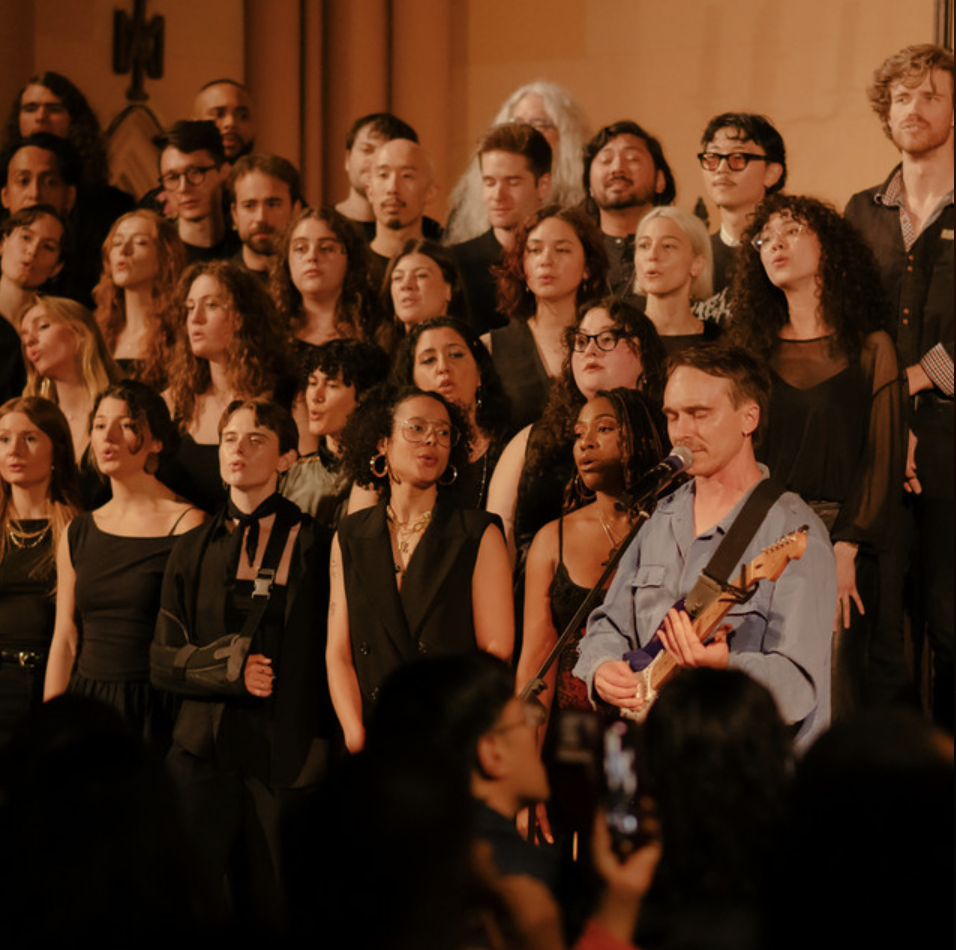
Choice music and sonics from the last month (or so) picked from our reviews, but also featuring the tunes we missed out on or didn’t get the room to feature at the time. Curated by Dominic Valvona with choice hip-hop cuts selected by Matt Oliver.
The Track List:
THAO & The Get Down Stay Down w/ Tune-Yards ‘Sick of the Times’
A Certain Ratio ‘Knife Slits Water (EM) 12” Version’
foamboy ‘FAR AWAY’
Homeboy Sandman & Jack Splash & CeeLo Green ‘World On Fire’
ECID ‘Break Up Insurance’
Space Afrika & Tony Njoku ‘MLN’
Skyzoo ‘Short Money’
Peter Evans ‘Genesis/Schismogenesis – Stage 4’
A-F-R-O & MotionPlus ‘Labor of Fruit’
Brian Ennals & Blockhead & Defcee & Mikie Mayo ‘Yellow School Buses’
King Kashmere & Genesis Elijah & Killa P & Dabbla ‘Big[Bad]’
Chuck Strangers ‘L2LL2C’
Post Elvis ‘Luna (Evil’s Ballad)’
Simon Klein ‘Don’t Leave Me Alone’
Robyn Hitchcock ‘My Dead Astronaut’
Babe Rainbow ‘Acid and Honey’
John Howard ‘Abbey Road, April 1974’
Skyjack ‘Shozi’
Richard Spaven & Wildchild ‘Finders’
The God Fahim ‘GFY’
Distant Fires Burning & Autistici ‘Scalar (Reverend Basstorius Remix)’
hackedepicciotto ‘Zeitwende’
Aisha Vaughan ‘Frozen’
August Cooke ‘On The Line’
Biita Houdei ‘The Ground Here’
Tristan Da Cunha ‘Preludio’
Feverdreamt ‘Shadow Catching Up’
Sir Richard Bishop ‘They Shall Take Up Serpents’
Park Jiha ‘Summer Illusion’
Los Orientales de Paramonga ‘Viajando Con Un Loco’
EYE WITH AN EYE (Bloom de Wilde & Nick Trepka) ‘flow.’
Tōth ‘Easy – Live With the Brooklyn Choir Project’
Our Daily Bread 657: Boards Of Canada ‘Inferno’
June 15, 2026
Thirteen years after Tomorrow’s Harvest, Boards of Canada return with Inferno – a dense, haunting and deeply rewarding record. Glasgow local Mikey McDonald explores the duo’s long-awaited comeback.
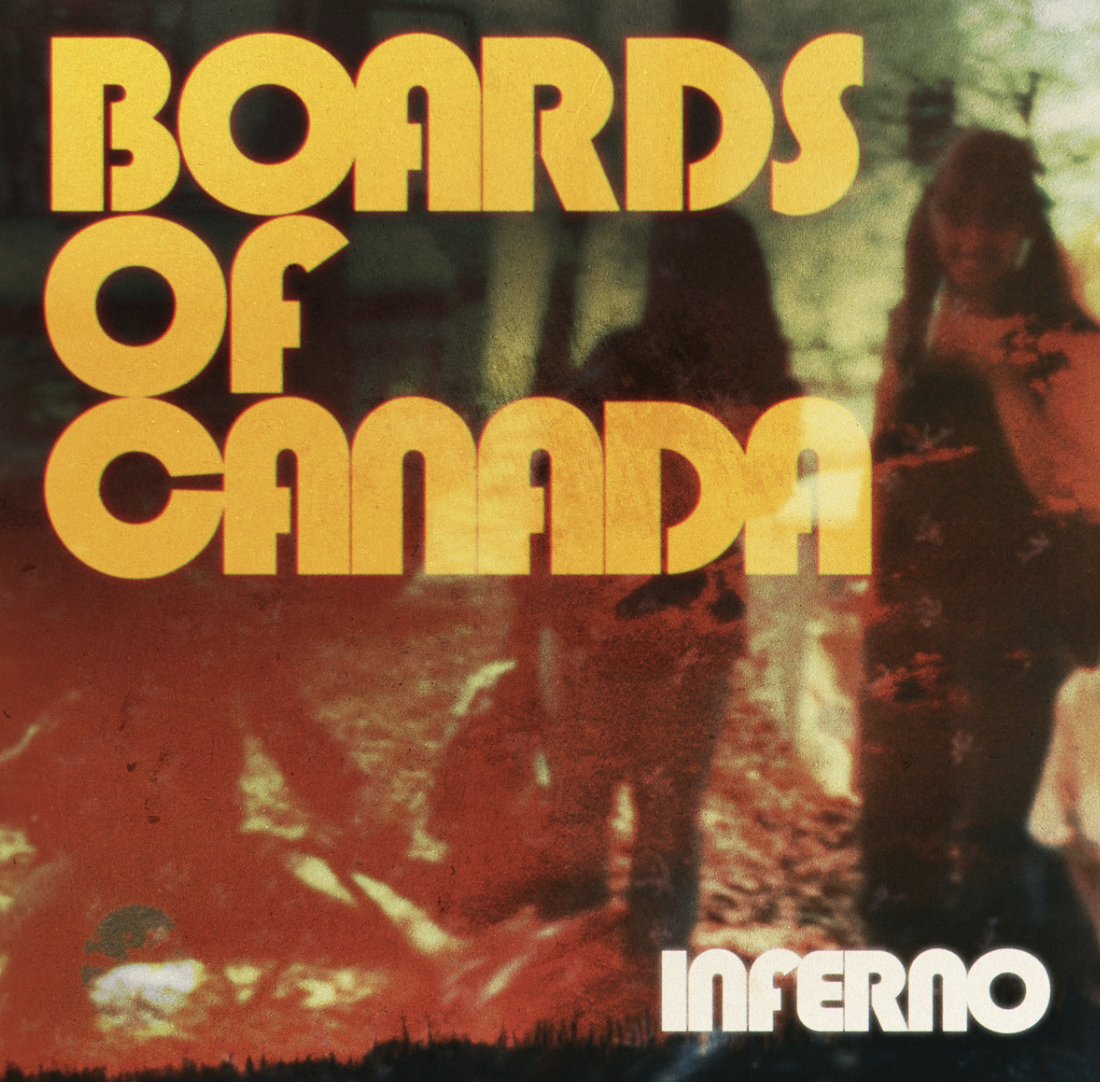
Boards of Canada ‘Inferno’
(Warp) Released 29th May 2026
Boards of Canada are brothers Michael and Marcus Sandison who, contrary to popular belief, are in fact Scottish, not Canadian. They make music from their own studio, somewhere in the hills in the middle of nowhere (postcode N/A). The best compliment I can pay Boards of Canada is that they’re masters of their craft, pioneers of electronic music, and true visionaries. For decades they have dazzled us by blending the analogue and digital worlds, creating melodies and soundscapes that could belong only to them.
And yet, the brothers have always carried an air of mystery. In fact, if you dig deep enough into the internet, you’re likely to find only one interview (approximately a minute and a half) when they were invited onto The John Peel Show back in 1998, shortly after the release of their groundbreaking debut Music Has the Right to Children, one of the most influential albums in contemporary music. In the interview, one of the brothers informs us that his favourite letter of the alphabet is ‘M’ before remarking, “we’re off to the pub actually” – a phrase that should be all too familiar to us Scots.
I was first introduced to Boards of Canada way back in high school when a friend (thanks Tino) put me on to none other than Dayvan Cowboy from The Campfire Headphase. I was pretty blown away. Not just by the track itself, but by the way electronics were fused with acoustic guitars throughout the album. I hadn’t really heard anything quite like it. That record in particular is home to some of my favourite tracks of all time, including Macquarie Ridge, Peacock Tail and Tears from the Compound Eye.
Anyway… It’s 2026, and after a 13-year hiatus, the duo are back with their latest album, the forebodingly titled Inferno, which marks their fifth full-length under Warp Records. It’s natural to draw comparisons to Music Has the Right to Children, Geogaddi or their last release, Tomorrow’s Harvest, but the truth is that Inferno exists within its own world, quietly blazing from within. I’m going to use that old cliché that it’s a difficult listen but a highly rewarding one, and it’s true.
Hydrogen Helium Lithium Leviathan, besides being a mouthful to say, references the three elements that started this whole universe thing – a theme the album isn’t shy about exploring. And then there’s Leviathan, the biblical sea monster. On a good set of headphones, you can actually detect an inhuman groan buried deep in the mix, and I can’t help but wonder if this is the creature stirring beneath the surface.
Age of Capricorn continues the zodiac thread running through their discography, after Aquarius on Music Has the Right to Children and Gemini on Tomorrow’s Harvest. Spiritual chants and religious broadcasts intertwine throughout the track before a voice confesses, “I’m a sinner. All have sinned. You bore my sin. You shed your blood for me”. The contrast between the track’s warm glow and its uneasy spiritual undertones feels entirely deliberate.
Memory Death features swarms of bugs and ominous bleeps – we’re alive, but for how long? Out of nowhere, breathtaking vocal samples emerge and offer some much-needed space to breathe.
Inferno is one of those rare albums that changes depending on how you hear it. Through speakers it expands outward, filling the room with warmth, static and shadow. Through headphones it collapses inward, revealing hidden voices, tiny details and fragments of memory buried beneath the surface. Both experiences are rewarding: one lets you inhabit the world, the other lets the world inhabit you.
Elsewhere, Blood in the Labyrinth sounds sick. Not just ‘sick bro’, but actually infected. To say this track is eerie and capable of haunting your dreams would be an understatement. Perhaps most surprising is the inclusion of a sitar, which shouldn’t really work with everything else around it, but somehow it does.
Disturbing male vocal samples can be heard, but you’d be doing well to decipher those without Googling. Perhaps most heart-wrenching is when a young female recalls a harrowing moment in her life:
“You know, and I- when I finally did dive in and get her she was already dead, and um, after that I just ran off screaming”
Unlike the former, there’s nothing hazy or muffled about these words, and maybe we’re meant to feel her pain. It does make me feel a little sad, so I turn into the sad me. The juxtaposition between these samples is true mastery, and it’s hard not to feel shivers.
Anyway… What’s quite memorable is how the album closes. Penultimate track You Retreat in Time and Space feels like the album’s true closer, but Boards of Canada wouldn’t let us off the hook that easily. The track twinkles and shines, and where Age of Capricorn feels triumphant, Retreat radiates serenity, hope, and optimism. The track is both lush and divine, featuring angelic vocals and what sounds like boats docking in the latter half, perhaps offering a chance to escape.
Unfortunately, or fortunately, it’s not over.
I Saw Through Platonia feels like one of the most important tracks the duo have ever written. If Retreat offers a place to rest, then Platonia brings us crashing back down to Earth. It’s a track so utterly terrifying that it could soundtrack the end of the world. And if it did, you’d have to applaud – no end could ever be this beautiful. It sounds windy, but even those winds feel as though they’ve been lifted from the hostile atmosphere of Venus, and only Boards of Canada could make a piano sound so utterly morbid. It’s painfully magnificent.
Bells drift in and out of the mix, though they sound less like a Sunday church service and more like waiting to ride the escalator to hell. An unnerving heartbeat pulses beneath everything before abruptly stopping, leaving the listener with six long seconds to contemplate what they’ve just encountered. Is this the end? Is Inferno Boards of Canada’s farewell fire?
Now that the review is almost over, and we have jointly exercised our constitutional rights, I would like to leave you with one very important thought. Sometime after reading this, you may have the opportunity to listen to Boards of Canada.
Do it.
You know, there’s a lot of fucked up shit going on in the world we live in. Sometimes it’s overwhelming, and that chaos, that darkness can feel unbearable and contagious. Yet somehow Boards of Canada continue to find beauty in the static. Thirty-one years on, they’re still dazzling us in ways nobody else can.
So go on, hit play, and open the light.
They must be so fucking proud.
And there’s a proud me too…
Mikey McDonald
The End of the Month Playlist Revue for May 2026
May 29, 2026
Our Monthly Playlist selection of choice music from the last month. Picked by Dominic Valvona, Matt Oliver & Brian ‘Bordello’ Shea.
The Track list is as follows:
Sub Hop Collective ‘Hundred and One’
Konono No1 ‘Volta’
Sunk Giants ‘Radio Problems’
Party Dozen ‘Special Unit’
Occult Character ‘Anti-Human Hate Machine’
Spirit Level ‘Forest Lagoon’
Khalab & Baba Sissoko ‘Denifurla’
Dumama ‘No Abiding City’
Cocanha ‘Forabanda’
Stik Figa & Heather Grey ‘All Is Fair’
The Allergies ‘Dig It Up’
7X3=21 & Pruven Ft. Masai Bey & Fred Ones ‘Woven Fabric’
Black Milk ‘Crash Test Dummy’
Meiko Kaji ‘Tokyo Nagare Mono’
Farma G & Relense ‘The Circus’
Juga-Naut ‘Scratch The Surface’
Whait/More Eaze/Wendy Eisenberg ‘Suffer Less’
Yazz Ahmed ‘A Moment To Be Free’
J Scienide ‘Stay Tuned’
Von Pea ‘The Goof’
Termanology/Royal Flush/Dru Hoffa ‘Angel Whispers’
Vic Spencer/BlaQ Chidori/J Wade/Aakeem Eshu/Lil Kydd ‘The Becomers’
A-F-R-O ‘The Hangman’
The Bordellos ‘Hop To It Bunny Girl’
Thomas Dollbaum ‘Pulverize’
Kyivite ‘test cylinder’
Neuro…No Neuro ‘Doubting’
Arab Strap ‘You You You’
Opus Kink ‘The Sweet Goodbye’
Double Francoise ‘Allumer’
The Legendary Ten Seconds ‘A Universe That Has No End’
Upupayama ‘Mystic Chords of Memory’
Lunar Bird ‘Sinderesi’
SUO ‘Lightening Strikes’
Here’s the message bit we hate, but crucially need. Help us to keep the forces of AI at bay; to continue bringing you human reactions to the most eclectic spread of releases
If you’ve enjoyed this selection, the writing, or been led down a rabbit hole into new musical terrains of aural pleasure, and if you able, then you can now show your appreciation by keeping the Monolith Cocktail afloat through the Ko-Fi donation site.
The End of the Month Playlist Revue for April 2026
April 30, 2026
Our Monthly Playlist selection of choice music from the last month. Picked by Dominic Valvona, Matt Oliver & Brian ‘Bordello’ Shea.
The Track list is as follows:
Lone & Juga-Naut ‘Throw The Ember’
Horse Lords ‘Brain of the Firm’
Thrust The Mask & Mai Mai Mai ‘VULTURES’
Da Flyy Hooligan & Guilty Simpson ‘GUILTY VERDIX’
Rapswell, SQ & Dood Computer ‘Steampunk!’
Blu & Exile Ft Rome Streetz & ICECOLDBISHOP ‘Crumbs’
Tangients ‘Void’
Opus Kink ‘Come Over, Do Me Wrong’
Yazz Ahmed ‘Dawn Patrol’
Nduduzo Makhathini ‘Imvunge KaNtu’
Rave At Your Fictional Borders ‘Spoonbill’
Sulaf ‘Naada’
Hannah Peel & Beibei Wang ‘Awaken The Insects’
Morita Vargas ‘La Llave’
B Dolan Ft. Widowmaker ‘Wilhelm Scream’
Deeq ‘True Intentions’
The Gatekeepers Ft. Henry Kaiser ‘The End of Man’
The Conspiracy ‘Dungeness’
Ex Norwegian ‘I Want To See The Bright Lights Tonight’
Frog ‘All The Things You Got’
Stephane C Cotti ‘Sunkissed Nina’
King Kashmere & BVA ‘I Smoke’
Andreas Tschopp ‘The Poetry of the In-Between’
The Three Seas ‘Prithibi’
Shye Ben Tzur, Johnny Greenwood & The Rajasthan Express ‘Shemesh’
Lisa Kohl, Macie Stewart & Whitney Johnson ‘cough | laugh’
HOWL, Fran & Flora & Erin Robinsong ‘Weed Canticle’
Xqui ‘Dead City’
Carol Maia & Jeremy Gustin ‘Aloe’
Your Brother’s Keeper & Gary Bartz ‘Cauldron’
Our Monthly Playlist selection of choice music and Choice Releases list from the last month.

We decided at the start of the year to change things a little with a reminder of not only our favourite tracks from the last month but also a list of choice albums too. This list includes both those releases we managed to feature and review on the site and those we just didn’t get the room for – time restraints and the sheer volume of submissions each month mean there are always those records that miss out on receiving a full review, and so we have added a number of these to both our playlist and releases list.
All entries in the Choice Releases list are displayed alphabetically. Meanwhile, our Monthly Playlist continues as normal with all the choice tracks from July taken either from reviews and pieces written by me – that’s Dominic Valvona – and Brian ‘Bordello’ Shea. Our resident Hip-Hop expert Matt Oliver has also put forward a smattering of crucial and highlighted tracks from the rap arena.
CHOICE RELEASES FROM THE LAST MONTH OR SO:
Alien Eyelid ‘Vinegar Hill’
(Tall Texan) Review
Darko The Super ‘Then I Turned Into A Perfect Smile’
Eamon The Destroyer ‘The Maker’s Quilt’
(Bearsuit Records) Review
Ike Goldman ‘Kiki Goldman In How I Learned To Sing For Statler And Waldorf’
The Good Ones ‘Rwanda Sings With Strings’
(Glitterbeat Records) Review
Headless Kross/Poundland ‘Split Album’
(Cruel Nature Records) Review
John Johanna ‘New Moon Pangs’
(Faith & Industry) Review
The Last Of The Lovely Days ‘No Public House Talk’
(Gare du Nord) Review
Lt. Headtrip & Steel Tipped Dove ‘Hostile Engineering’
(Fused Arrow Records) Review
Pharoah Sanders ‘Love Is Here – The Complete Paris 1975 ORTF Recordings’
(Transcendence Sounds)
SCHØØL ‘I Think My Life Has Been OK’
(GEOGRAPHIE) Review
Tom Skinner ‘Kaleidoscopic Visions’
(Brownswood/International Anthem) Review
Theravada ‘The Years We Have’
Ujif_notfound ‘Postulate’
(I Shall Sing Until My Country Is Free) Review
Visible Light ‘Songs For Eventide’
(Permaculture Media) Review
THE PLAYLIST::
Star Feminine Band ‘Mom’lo Siwaju’
A-F-R-O, Napoleon Da Legend, PULSE REACTION ‘Mr Fantastic’
Pharoah Sanders ‘Love Is Here (Part 1) (Live)’
Tom Skinner ‘Margaret Anne’
Holly Palmer & Jeff Parker ‘Metamorphosis (Capes Up!)’
Matt Bachmann ‘TIAGDTD’
Darko the Super, Andrew ‘The Bounce Back (Heaven Bound)’
Verb T, Vic Grimes ‘Anti-Stress’
Cymarshall Law, Ramson Badbonez ‘Emerald Tablet’
Datkid, Mylo Stone, BVA, Frenic ‘Poundland’
Verbz, Mr Slipz ‘What You Reckon?’
Theravada ‘Doobie’
The Expert, Buck 65 ‘What It Looks Like’
Lt Headtrip, Steel Tipped Dove ‘0 Days Since Last Accident’
Ujif Notfound ‘Postril’
Lael Neale ‘Some Bright Morning’
Alien Eyelid ‘Flys’
John Johanna ‘Justine’
Ike Goldman ‘Land Of Tomorrow’
Ananya Ashok ‘Little Voice’
Rezo ‘Nothing Else’
Howling Bells ‘Unbroken’
The Good Ones ‘Kirisitiyana Runs Around’
Jacqueline Tucci ‘Burning Out’
Dyr Faser ‘Control Of Us’
The Last Of The Lovely Days ‘Runaway’
Frog ‘SPANISH ARMANDA VAR. XV’
The Bordellos ‘The Village People In Disguise’
The Jack Rubies ‘Are We Being Recorded?’
The Beths ‘Ark Of The Covenant’
SCHOOL ‘N.S.M.L.Y.D’
Neon Kittens ‘Own Supply High’
ASSASSUN ‘The Sons Of The United Plague’
Pelts ‘Don’t Have To Look’
Visible Light ‘Purple Light’
Wayku ‘Suchiche’
Here’s the message bit we hate, but crucially need:
If you’ve enjoyed this selection, the writing, or been led down a rabbit hole into new musical terrains of aural pleasure, and if you able, then you can now show your appreciation by keeping the Monolith Cocktail afloat through the Ko-Fi donation site.
For the last 15 years both me and the MC team have featured and supported music, musicians and labels we love across genres from around the world: ones that we think you’ll want to know about. No content on the site is paid for or sponsored, and we only feature artists we have genuine respect for /love or interest in. If you enjoy our reviews (and we often write long, thoughtful ones), found a new artist you admire or if we have featured you or artists you represent and would like to say thanks or show support, than you can now buy us a coffee or donate via https://ko-fi.com/monolithcocktail
Wayside And Woodland Recordings Ben Holton shares his latest album as The Balloonist, Dreamland, and a specially curated accompanying playlist with our Monolith Cocktail readers. Author: Ben Holton and Dominic Valvona.
A week on from the release of Ben Holton’s latest stunning and mesmerising hazy album under The Balloonist appellation, the Monolith Cocktail is pleased to have been asked to share a specially curated accompanying playlist palette of musical and atmospheric influences chosen by the co-founder of the South Staffordshire and West Midlands based record and print platform Wayside And Woodland Recordings.
Thematically, through the delicate and gauzily floated and sparkled, Dreamland is inspired by Holton’s ‘childhood memories’ and ‘how they echo and ripple through adolescence, young adulthood and beyond.’ Retrieved and conjured up into spells of ambient ghostly resonance, the more hypnotising and hazily filtered, these visitations from the past are both magical and oblique. The Balloonist’s oeuvre of recollected memories prompted by landmarks on the environment, and the more abstract formed dreamscapes of his imagination form an understated but no less stunning, visualised soundtrack.
Holton’s Bandcamp entry offers up ‘shades of The Caretaker, July Skies, Basinski etc but also ghostly echoes of Prefab Sprout, Pet Shop Boys and other smudged 80s/early 90s sounds…’ All of which I’d concur with, but also offer a touch of the Durutti Column and Mark Hollis. Most of those inspirations, or at least congruous bedfellows, can be found in the playlist that Holton has specially compiled for the blog below.
From sisters with transistors to new age ambient composers, 80s art pop and school TV soundtracks, the journey that Holton has laid out for our readers and followers is sublime and majestic: a rich compilation of crystallised heralding, synthesised bells and tender sweeps.
I now hand you over to Ben who has written an insightful accompaniment that informs and offers a window in on his and that of The Balloonist’s processes and inspirations:
‘For this mix I’ve included music that hovers in and around the last three The Balloonist albums and, in some ways, has been feeding into my subconscious over the last 43 years. This is music I never thought, when I first started making music, would be influencing the sounds I made myself.
Specific to Dreamland, though, and the only ‘song’ featured on the playlist, we begin with ‘Wild Horses’ by Prefab Sprout. There are actually a fair few 80s pop songs I could have included here but that wasn’t quite my aim for this mix. ‘Wild Horses’ is a spectacular production, one which teeters on the edge of a dream and, at points, falls right in (maybe it’s when we hear the breathy voice of Jenny Agutter?). This is the exact kind of song I was imagining falling in and out of sleep listening to, whilst be driven around the warm summer lanes in the late 80s/early 90s. It’s all about those warm pads and chimes.
Ray Russell is an English session musician and Jazz player and it’s very likely you’ve heard some of his soundtrack and incidental music on one of the many TV shows he appears in. The album ‘Childscape’ is my particular favourite and features many glistening, chiming pieces that transport me back to childhood (as I’m guessing was at least *part* of his aim?).
More library music now, with the legendary Trevor Bastow of Bruton Music fame etc. It’s his late 80s and 90s work that fascinate me the most though. Seen by some as a little sterile (maybe?), to me, it’s the soundtrack to childhood intrigue and the subtle beauty of the every day. ‘Preservation’ is a perfect example of this.
Watching the ITV Schools programming of the 80s and early 90s, either in school on a massive telly on wheels or at home feeling ‘slightly unwell’ was an absolute delight (for some strange reason I can’t quite put my finger on!). One of my favourite bits though was the in-between segments, during which we waited for a programme to start, literally watching a chrome ITV logo slowly rotate. To aid our anticipation, were treated to Brian Bennett’s wonderfully exploratory ‘The Journey’, lulling us into a hazy daydream. Then, to snap us out of it and gently rouse us for the ‘main feature’, we’d have the cheery ‘Just A Minute’ (not included here). Both classics.
I only discovered Suzanne Ciani a couple of years ago and it may have been the cover that caught my eye. A soft-focus image of a lady in white, in front of a big mixing desk. And behind her, a couple of lovely big synthesisers in front of a nice big window. It put me in mind of a living room from the early 80s, all wood panelling and afternoon sun. The album is an absolute beauty and ‘Malibuzios’ blew me away when I first heard it. The descending synth chimes were so familiar and connected with something deep inside, something that, you’ve guessed it, whisked me back to the warmth of childhood. In particular the quiet weekdays on which I reflected on the ‘A Quiet Day’ album.
Will Ackerman is an artist I’ve only recently delved into properly, after dipping my toe into the world of his California based Windham Hil label (now sadly defunct) a little over the years. His is a sound I feel very familiar with. Not just the folk inspired acoustic guitar, a sound I grew up hearing, but the fretless bass, synth pads and crisp reverb that accompanies and enhances it. Again, it’s a sound that takes me back to my 80s childhood, listening to tapes in my parent’s car. The way folk music, such as Fairport Convention adapted to the popular pallet of times is where I can trace this familiarity back to, I think. Also, as with Suzanne Ciani, there’s the aspect of New Age music here that, as a kid, being exposed to it by my mum, kind of annoyed and infuriated me. However, those sounds stayed in my head and I’m becoming more and more open to those sounds as time goes on.
My good friend Antony Harding of July Skies introduced me to (Genesis founder member) Anthony Phillips a few years ago and I am eternally grateful to him for that. I mainly love Anthony’s home recorded ‘Private Parts and Pieces’ series that started in the late 70s. Dreamlike snapshots that can lull one into a nostalgic revery at the drop of a well-timed key change. ‘Summer Ponds and Dragonflies’ is a good example of this.
I’m not sure how I stumbled onto the work of Kuniyuki Takahashi, but it was definitely via Bandcamp. I don’t really know any of his other music other than his ‘Early Tape Works’ compilations to be honest but was captivated, totally, the first time I heard them. There’s something about the saturated warmth of these tape recordings that, especially on headphones, just completely encapsulates me. Cocoon-like. I think some of this definitely seeped into certain tracks on Dreamland.
I’ve been listening more and more to artists on the German ECM label over the past few years and Eberhard Weber is one of my favourites. Again, like the New Age music I detested as a kid, Jazz is something I’ve grown to absolutely adore, especially the stuff that borders on ambient and New Age. It’s definitely something I’m leaning into with The Balloonist. As I’m by *no means* a jazz proficient guitarist, it’s fun to pretend I am and, as a result, it pushes me into unfamiliar territory. Which is important as an artist, I think.
Staying with the ambient Jazz theme I’ve chosen another of the greatest exponents of the genre, Pat Metheny. His chord phrasing, tone and melodic sense is just magical I think.
And to end, we go back to pop music. But this time it’s a drifting, dreamlike deconstruction of ‘Everybody Wants To Rule The World’ by Tears For Fears. I heard this many moons ago on the b-sides compilation CD ‘Saturnine Martial & Lunatic’ which I’d borrowed from a friend of mine. I was enjoying the gently swaying rhythm and synth pads and then I was hit by that beautiful pirouetting guitar line. Eventually it resolved into the familiar cyclical pattern we all know and love and I realised it was some kind of meditation on the original theme of the song. I was quietly blown away. In some ways it’s the ultimate reference point for Dreamland, as it’s literally a piece of drowsy ambience with disembodied elements of pure pop threaded and weaving through it like ribbons of memory.
So, in short, with The Balloonist, I’m leaning into sounds that informed my childhood in ways that other music didn’t. The less obvious sounds. Half heard smooth radio pop, incidental TV music and 80s folk. Also, sounds that I actively *didn’t like* as a young teenager, namely Jazz and New Age which have taken on a deeper resonance and poignance over time, further opening my ears and mind to the infinite possibilities of making music.’ Ben Holton
Hi, my name is Dominic Valvona and I’m the Founder of the music/culture blog monolithcocktail.com For the last ten years both me and the MC team have featured and supported music, musicians and labels we love across genres from around the world: ones that we think you’ll want to know about. No content on the site is paid for or sponsored, and we only feature artists we have genuine respect for /love or interest in. If you enjoy our reviews (and we often write long, thoughtful ones), found a new artist you admire or if we have featured you or artists you represent and would like to say thanks or show support, than you can now buy us a coffee at https://ko-fi.com/monolithcocktail

