The Perusal #65: The Young Mothers, Inturist, Nickolas Mohanna, A Journey Of Giraffes…
March 5, 2025
A World of Sonic/Musical Discoveries Reviewed by Dominic Valvona

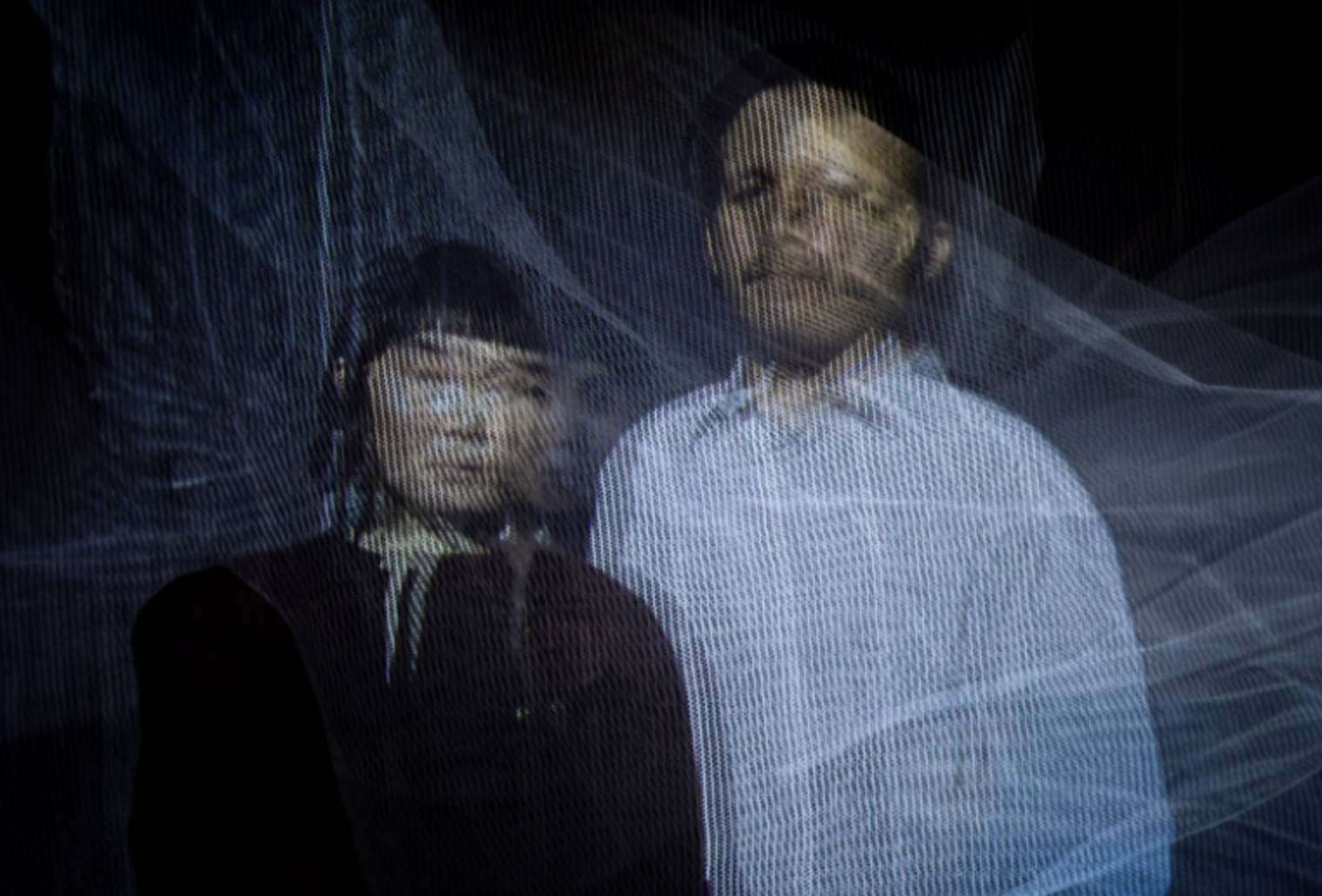
Photo Credit: The Young Mothers shot by Malwina Witkowska
The Young Mothers ‘Better If You Let It’
(Sonic Transmissions) 21st February 2025
Those (Young) Mothers of reinvention transform crate digging reminisces and nostalgic hummed melodies from the age of the Great American Songbook on their new album, Better If You Let It.
Whilst maintaining the freeform principles and eclectic range that has come to define them; cut loose from obligation, any burden, and so free to roam and extend their scope of influences as they please, The Young Mothers return after an interregnum of setbacks, relocation and both forced and unforced breaks: some of that time can be blamed on the global inconvenience of Covid and the resulting lockdowns.
Corralling such a loose configuration of able and notable musicians and artists together is no mean feat; especially with the diversity of schedules, with every willing collaborator and band member in such high demand or leading their own projects. But all six players managed to commune in 2022; coming together to record the group’s third album in Oslo, the capital of TYM’s founding instigator and electric/acoustic bassist Ingebrigt Håker Flaten. The group was actually first conceived when Flaten moved in the opposite direction from Norway – after sojourns with such noted groups as the Norwegian Ornette Coleman imbued trio Neon – to Austin, Texas, back in 2009. Not wasting much time, Flaten’s rich Nordic legacy of contemporary jazz met head-on with the arid Southern state’s burgeoning scene of experimental and leftfield polygenesis collaboration. But after a decade or more of improvising both live and in the studio, Flaten decided to move back home: hence the location of this new album.
But there is a secondary connection to the Nordic scene and homeland through the sextet’s vibraphonist, drummer, percussionist and voice Stefan González, who’s late father, the revered Texan jazz trumpeter Dennis González, recorded an album in Oslo together with some of Norway’s most notable musicians in the early 90s: By the way, that González musical legacy also includes bassist brother Aaron; both siblings play together in various setups, most notably as Akkolyte. Stefan and the group pay tribute to Dennis’s memory, that time and location, on the sombre and mysteriously whispery track, ‘Song For A Poet’. Taking a near esoteric, near Sufi mystical and wild turn with the use of collaborating voices from Klara Weiss and Malwina Witkowska, the mood is at first chthonian, shadowy and near foreboding until the tints and bulb-like vibraphone notes of Milt Jackson and the Modern Jazz Quartet tinkle and hover, and digeridoo-like blows merge with bristled reed breaths in an amorphous dimension of feeling-it-out-jazz and exploration of abstract commemoration and recall.
I must at this point mention the rest of TYM’s lineup, which includes a name Monolith Cocktail regulars will hopefully be familiar with, Frank Rosaly. The attuned, experimental drummer extraordinaire appeared alongside his foil the multimedia performer and singer Ibelisse Guardia Ferragutti on last year’s enriching MESTIZX album – one of my favourite and choice albums of 2024. Sharing the drums with González, but also switching to electronic programming,he’s joined by the Shape of Broad Minds polymath Jawwaad Taylor on trumpet, rhymes and electronic programming, accomplished player Jason Jackson on both tenor and baritone saxophone, and Plutonium Farmer and Flaten regular sparring partner Jonathan F. Horne on guitar.
Between them, they cover everything from post-rock to freeform jazz, hardcore, hip-hop and death metal – I presume its González’s daemonic black metal-esque growling on the album finale ‘Scarlet Woman Lodge’, as he is credited in the liner notes with “voice” duties alongside drumming, percussion and vibraphone.
I think I’m right in saying that this is the first album in which all the participants share writing duties. The inspiration and source, a “whimsical” ballad, behind the opening title-track for instance, was first brought to the band by Jackson as a sort of tribute to the Great American Songbook. In turn inspired by rifling through old records from another age, this original idea, the melody, was transformed, deconstructed, reinvented and fused with the rap style rhyming of the Freestyle Fellowship, The Roots, Death Grips and Talib Kweli, the fuzz scuzz guitar of Monster Movie period Michael Karoli, the soulfulness and vibraphonic twinkle of Isiah Collier and the already referenced Modern Jazz Quartet, and the feels of old time Art Pepper, but all performed by Madlib remixing in real time Isotope 217 and Zu.
There’s a whiff still of nostalgia on the next track, ‘Hymn’, which recalls the Savoy label, the sound of Gillespie, but reconfigured by the Pan Afrikan Peoples Arkestra. As that title suggests, this is a spiritual of a kind that twangs and stirs until reaching a climatic passage of buzzing, croaking, straining saxophone pleads. ‘Lijm’ glues together elements of Q-Tip, clipping., Rahsaan Roland Kirk, Trenchmouth and Sault, with the pulse and current this time being more tuned towards the electronic: flips, mechanical devices and data sit with and underneath the action and the activist coaching.
Engaging and embracing past influences and inspirations, the eclectic ensemble pushes further in stretching the boundaries. And despite the range and scope, the many musical threads, it all comes together quite congruously to produce the perfect rounded album of nostalgic and free jazz, hip-hop, no wave, hardcore and acid rock, and electronica. A definite choice album for March and 2025.
Inturist ‘Tourism’
(Incompetence Records) 14th March 2025
Engaging at the best of times with a wealth of regional cultural/musical/sonic influences and passions, the producer, musician, former Glintshaker instigator and multidisciplinary artist Evgeny Gorbunov continues to transform his various exiled travails and more pleasing creative pilgrimages into magical, playful and odd adventures under the Soviet era borrowed Inturist guise: itself a reference to the sole Soviet era tour operator and travel agency for foreign visitors to the country before the fall of the Berlin Wall.
Sparked by an interest for Southwest Asia and North Africa, Gorbunov’s latest travelogue is a curiosity of mirages, bendy sun-bleached guitar, elastic and rubbery pliable plastic and tubular rhythms, morphed Salyut space programme soundboards, library music oddities and psychedelic primitivism. More attuned to the abstract and both vapoured and hallucinatory transformations of his travels beyond the Russian homeland to the Balkans and Israel than the geopolitical crisis of our times, the worldly sonic traveller finds a balance between the strange and bejewelled. An entire voyage of aural discovery awaits like an escape from the destructive carnage unfolding in real time, with Gorbunov caught between both the Russian invasion of Ukraine and Israel’s fight with Hamas.
Originally in forced exile, having left Russia as it menaced and then set in motion one of the most cruelling and horrifying conflicts of the age, Gorbunov moved to Belgrade, the capital of Serbia – a country fraught with its own history of war and the cracking down in recent times of civil liberties and a free media. However, there would be journeys made further afield, including the city of Tel Aviv (Trump take note, there is already a Middle Eastern Rivera of a kind, and this is it), where he recorded and produced some of the tracks on this fifteen-track travel guide. Luckily not on the frontline of the murderous Hamas insurgency that led to an ever-widening revenge of score-settling by Israel (they’ve been very busy, clearing up a lot of the mess for the West in the process; fighting on at least four different fronts; weakening Iran’s grip and influence; and eradicating much of that empire’s proxies in the bargain), the very last Tel Aviv studio session in 2023 took place on the fatalistic date of October 7th . But this is an album of intriguing, idiosyncratic peculiarities; of sound invention and engagement with a landscape both imagined and real.
Moving seamlessly across that map, influences from the avant-garde, kosmische, psychedelic, ethnic, new age, trance, otherworldly, tropical and no wave cross paths to form a novel retro-futuristic and transmogrified vision of exotic and folkloric ethnography and etymology. As part of that cosmopolitan project, there’s references to the Russian dance and driving-horses harness of “Troika” to the French dialect phrase for “winter landscape” “Paysage d’Hiver”. The former, and opener, is said to include a dance that mimics the prancing of horses puled by a sled or carriage. Musically there’s little to reference this, as the bandy ripping effects of lightly torn felt, the lunar effects of a Soviet era sci-fi movie and padded rhythms amorphous conjure up a movement and direction of a kind. The latter sure has some vague dull sun sparkle of light sharply hitting the wintery scape as a loose spring and twangy Charlie Megira guitar flicks over another cosmonaut lunar spell of retro-space sounds.
The Soviet underground meets Überfällig era Gunther Schickert and Finis Africae on the huffed and mewing voiced, valve opening effects twiddling ‘Special Offer’; and there’s something Malaysian, albeit very removed, sounding on the fluted, piped and tubular blown ‘Reminder’. But if you were looking to get a hold on the overall sound, which changes constantly as it vaguely picks up percussive and rhythmic, folksy and traditional hints of Afro-Brazil, the Balkans and Asia, then imagine Populäre Mechanik booking a surreal tour of those regions with Ramuntcho Matta, Gene Sikora, Sun City Girls, Ganesh Anandan, Moebius & Plank and Aksak Maboul in tow.
A great approach to sound collage and the transference of special held scenes, memories – especially those that offer nostalgia for the cold war period optimism of Soviet technology and the space programme – and trippy dreams, the Tourism album envisions oscillated, melting, animated and cult flights of fantasy that repurpose the terrain and topography. In short: one of my favourite albums of 2025.
Gregory Uhlmann, Josh Johnson, Sam Wilkes ‘Uhlmann Johnson Wilkes’
(International Anthem) 14th March 2025
Hot-housed in various creative incubators both in Chicago and L.A., the triumvirate gathering of guitarist, composer and producer Gregory Uhlmann, saxophonist, composer, multi-instrumentalist and award-winning producer Josh Johnson and bassist, arranger, composer and producer Sam Wilkes can all draw upon a wealth of experience and influences from the jazz world and beyond.
Crossing paths on numerous occasions – only last October both Uhlmann and Johnson appeared on fellow International Anthem artist Anna Butterss’ Mighty Vertebrate album –, all three exceptional musicians and artists congruously join together for an extraordinary attuned, sensitive and improvisational project that fuses the electroacoustic with a removed vision of chamber jazz, Americana and the experimental.
As a most tantalising prospect, this trio was conceived and set in motion by a couple of live shows – you’ll hear the polite but encouraging audience on the first two tracks – and a session at Uhlmann’s pad in L.A. And from that, a near organic growth of both attentive and stirring moods and ideas prompted an evocative language of harmonics, carefully placed twitches and plucks, sustained serenity, moving melodious hallucinations, strained misty breathes, subtle ambient and trance-y beds and wisps, vapours of synthesized effects, and plastique and pad pattered tubular rhythms.
With references to a brand of especially creamy and luxuriously textural toothpaste, the Armenian name for “sunshine” and a Mexican turnip, an international and abstract world of motivations is transduced into a mood music of the dreamy, introspective, soulful, ebbing and amorphous. From landscape gazing with Daniel Vickers, Myles Cochran and 90s David Sylvian (‘Unsure’) to floating in a warbling dreamy alien mirage (‘Shwa’), the performances, interactions effortlessly convey images, emotions as they both daintily and like a vapour of steam seem to drift or chirp along in an almost shapeless form.
In keeping with a theme of introspection, of the loner seeking a moment away from the onslaught of noise and distraction, the trio have chosen to loosely cover McCartney’s wistful break away from the idiosyncratic surreal, music hall and madcap rambunctiousness of the Magical Mystery Tour coach trip, ‘The Fool On The Hill’. It’s a lovely gesture; an indulgent mizzle and long exhaled alto sax breath of hazy and watery trickling finery that blends echoes of healing balm Alice Coltrane and Kamasi Washington with an ambient tremulous and beautiful haze. They’ve pretty much kept the signature melody but stretched it out and dispensed with the whistled flute and felt capped folksy magic for something more in the spiritual mode. A lovely finish to a sympathetically attentive and masterfully felt album that balances the unhurried with the prompted, playful and abstract.
A Journey Of Giraffes ‘Emperor Deco’
(Somewherecold Records) 7th March 2025
I’m taking it personal now. For after years and years of trying to sell the adroit, visionary ambient, neoclassical, electronic works of John Lane, and showcasing the American’s prolific catalogue of explorative opuses, he remains largely ignored: cast out on the fringes. Not that I give a shit about validation, but it would be nice if bandcamp at least wrote a feature, or that his work was played across the airwaves internationally and more regularly.
I’ve championed the unassuming composer since the very start, going back to the very inception of this blog fifteen years ago. From the early days of experimentation and the beachcomber bedroom transformations of Pet Sounds under the Expo guise to his various projects under the A Journey Of Giraffes moniker, I’ve pretty much covered everything John has ever transmitted. And after all this time, I find it bewildering that his music hasn’t managed to cut through.
Arguably John’s most enduring partnership in recent years has been with the North American label Somewherecold Records, who’ve released around eight of his albums, including this concomitant partner to 2023’s Empress Nouveau. There’s been other releases in between, but planned at the time, and now seeing fruition, is his masculine answer to that feminine album’s subtle and decorative qualities, Emperor Deco.
A change musically as he balances the tactile and the refined crafted filigree of that previous conceptual work, the curves and softer lines of Art Nouveau are now replaced by the geometric crystals, the harder light catching shapes and lines of Art Deco – there’s even a reference, title-wise, to famous the Bohemia makers/manufacturers of crystal Art Deco-styled glassware “Karl Palda”. Playing with those era defining art movements, in a literal and metaphorical sense but symbolically too, John now emphasis the noirish and bluesy, the brooding and remunerative.
For Nouveau, arriving during the Belle Epoque of a golden age that soon crumbled during the onset of World War I, its applied softened ideals and art is identified by John as feminine. Whilst Deco is synonymous with the roaring 20s: the feelgood period that despite everything was soon caught up in the Great Depression and then the rise of European Fascism. And this art form, from the design of products to architecture, is defined as masculine by John. Both now converge to form a whole.
Still very much in the ambient field of exploration. And still showing signs of the subtle craft and influence of John’s musical guru Susumu Yokoto. The mood music now embraces a soft layer of smoky, wafted, cuddled, strained, blown, accentuated saxophone and carefully placed synthesized drumbeats and rhythms: of a kind. For John has essentially created a removed version of a jazz album; something more akin to Alfa Mist or Jacek Doroszenko transforming the essence of Pharoah Sanders, Sam Gendel (both are referenced in the accompanying notes), Petter Eldh and Archie Shepp.
You could suggest there was also a “spiritual jazz” vogue to the sound, especially with the shake of trinkets, the amorphous echoes of bells and percussion that could be from the Far East, Tibet and North Africa, and of course the spindled sounds that could have been caressed and woven by Alice Coltrane or Laraaji. And that’s without mentioning the jazzy bulb-like electric piano notes and, what could be, the vibraphone, which has more than an echo of the Modern Jazz Quartet about it.
Add to this noirish, spiritual jazzy feel another subtle layer of Jon Hassell fourth world musics and a resonance of Nyman, Glass, Finis Africae and Sylvain and the perimeters are further expanded, his range growing ever more expansive. We can also hear the odd memory recall from those seashells collecting Brian Wilson-like Expo experiments of old, which when mixed with the jazz elements makes for a winning combination.
John inhabits this space at times like a mizzle, a gauze, effortlessly absorbing references, sounds and moods as he languidly and beautifully captures his concerns, moods and offerings of escapism from the full-on assault of the daily grind. There’s depth, a touch of sadness, but for the most part this is like a mirage or dream that repurposes the sound of jazz.
After last year’s long form Retro Porter (one of my choice albums of 2024) John’s deco-imbued, romantic and smoky album returns to the shorter track format with a generous offering of twenty-two musical pieces, experiences and evocations that never drag, seem indulgent or test the patience: You could say John has found the perfect length of time in which to express himself on an album in which each track is perfectly realised and executed; existing both as a singular moment, passage of time, and yet also forming part of a one whole experience of repeating signatures. This could (should) be the album that finally cements John’s reputation as one of the most imaginative and prolific artists working in this, or these, fields of compositional experimentation.
Nour Symon ‘I am calm and angry • e’
(Magnetic Ambiances) 7th March 2025
Nour Symon’s orchestrated and instigated reification of angst, rage and activism speaks just as much about the present decade’s movement against authoritarianism, the State commodification of education and health, and the erosion of civil rights as it does about this work’s main inspiration, the “Printemps érable” protests of 2012.
You could say that the expressions, the sonic and orchestral devices, the use of voices and poetry, of manifesto and barricade rattling are all just as prescient in the aftermath of the pandemic as they were thirteen years ago when a groundswell of support grew up around demonstrations against the proposed doubling of tuition fees in the province: increasingly expanding the remit, widening the disgruntlement, everyone from labour unions to environmentalists, leftists and marginalised groups ended up supporting a growing resentment, the ranks of which numbered around 250,000 at its peak.
Despite various setbacks – the lockdowns had a knock-on effect for this project, forcing an abandonment of the original plan to work with the Montérégie Youth Symphony Orchestra – the Egyptian-Quebec composer transforms the energy and directs an abstract despair into an avant-garde electroacoustic and experimental voiced theatre of the absurd, dramatic, expressionist and pained. In many ways a cross-generational grief and pull of despair, political activism and action, this album’s notable contemporary poet collaborator Roxanne Desjardin draws upon the 1980s and 1990s countercultural writings of the iconic Quebec poets Denis Vanier and Josée Yvon.
Ambitious and covering a multitude of disciplines from visual and text art (a graphic score was conceived to communicate the concept) to performance, orchestral transmogrification, opera and video, I am calm and angry • e uses a host of renowned, prize nominated poets, soloist musicians and ensembles; far too many to mention in detail here, but all integral to conveying the very real emotional maelstrom and rage of protest. Across six tracks, divided liberally into the Supermusique Ensemble and Collective Ad Lib groupings, mewling, contorting, accented, untethered, enunciated and experimental theatre-like voices circle and ride the contours, rises and quirks of a fusion between the classical avant-garde, experimental arts, Musique concrète, and, of all things, a removed version of freeform jazz.
Recognisable instruments from the wind, strings and brass sections join together with artistic impressionistic symbolism, percussion and electronic elements to evoke forebode, the unearthly, dramatic, mooning, unbalanced and abstract. Reference points within that overlapping sphere of influences and musical threads/connections includes (to these ears anyway) Charlie Morrow, Stockhausen, Cage, György Ligeti, Xenakis, the Art Ensemble of Chicago, Don Cherry and on the heralded, whip-cracked and concertinaed collective agonised ‘I will die in a closed room’, a strange fusion of Alex North and The Drift era Scott Walker.
Unbalanced with the ground constantly shifting below, the tumultuous and agitated are invoked and revoked in a musical experiment of plummets, falls and rises. A mix of French, amorphous and descriptive languages is adopted in a successful attempt to merge the poetic arts with protest, manifesto and performance, whilst physically stimulating the emotions and trauma of such protest.
Nickolas Mohanna ‘Speakers Rotations’
(AKP Recordings) 7th March 2025
A study in time, of impermanence, this uninterrupted continuous work from the New York based artist/composer emits miraged rippling vibrations across amorphous futurist Americana panoramas; stirs up the presence of alien craft overhead; and cloaks mysterious voices and sounds in an ever-changing sonic reverberation and feedback of instrument transmogrification and effected loops and field recordings.
As each track merges into the next, this adroit and evocative survey of a concept both atonally and rhythmically conjures new worlds of fourth world music, the kosmische and shadowy. Mohanna breaths futuristic sci-fi propeller-like zip-lines and long drawn air into the trombone, evokes the guitar drones and hanging astral mind-scaping and astral mysticism of Ash Ra Tempel, and plucks and pulls subtly in a resonating echo the tines of some hidden stringy apparatus. Grand gestures of a kind are made as the visionary scope of fogged and gauzy inner and outer space manifestations sits on a liminal border between the Cosmic Jokers, Daniel Lanois, Faust, Chuck Johnson, the Droneroom and Bill Orcutt.
I’ve now sat through this album over three times, and fully appreciate its skills in evoking not just the hypnotic but the near ominous, and for the way it seems to seamlessly keep changing the mood and the stay intriguing.
Ships of many kinds prowl the metallic fissures and beds of guitar sustain, and the doomish rumbles of the leviathan elements resemble the Lynchian and Bernard Szajner’s alternative score for Dune. And as one sound, one wave dissipates into the ether, or is left behind a weather front, something even more curious, sometimes beautiful, emerges: the brassy saloon bar-like chiming, trembling and spindled piano that starts to take hold in the last part of ‘Hollow In The Rock’ and continues into the finale, ‘Past Light Cone’, reminded me of the heavenly Laraaji.
This is AKP Recordings inaugural release of 2025, and it is of the highest quality. An improvisational soundtrack that vaguely shapes imaginative terrains and textures via the art of speaker rotation, manipulation and the use of the electronic and tactile, this album merges the interplanetary looming hovers of UFOs and sound generators with the cerebral and mystical: the voices, if that is indeed what they are, equally evoking throat-singers and something more hermitic and paranormal. I’d happily recommend this album to anyone wishing to immerse themselves for three quarters of an hour and will be highlighting it as one of my choice picks from the month.
he didnt ‘Distraction Threshold’
(drone alone productions) 14th March 2025
After a sideways venture under the newly conceived guise of i4M2 last year, the mysteriously kept secret Oxfordshire-based electronic musician, guitarist and producer returns under his main he didnt moniker; a project he’s honed over the last few years and across several albums of granular gradients, frazzled fissures, currents and thick set walls of drones.
Creating a certain gravitas that demands more from the listener, his latest album of concreted contours, ripples, movements and metallurgical sonics opens with a fifteen-minute statement of noisy concentrated filaments and machine-made purrs and propellers. Not so much industrial as a longform immersion of drones and cryptic soundscaping, there’s elements of hallowed organ from the church of the Tangerine Dream and early Kluster meeting with the sustained guitar waves of The Spacemen 3 and The Telescopes.
An ominous rippling effect of sci-fi conjures up a frozen tundra ghost world on the album’s title-track. Carrying over that troubling set of propellers from an overhead alien presence or supernatural dimension, the mood is chilling. ‘I Realise Now How It Is Connected To My Youth’ is even darker and menacing; like Jóhann Jóhannsson’s soundtrack for Mandy sharing room on the ghost ship’s bow with Coil and Svartsin. Harrowing images of supernatural psychogeography are dredged up from the recall of the artist’s past on a troubled doom mission.
A little different sonic wise, ‘Luminescent Medium’ brings in a slow deadened drum and a semblance of repurposed dreamy synth-pop. A singular reverberated and echoed hit is all that is needed to change the mood here, as the Cocteau Twins meet the BoC, Cities Aviv and the Aphex Twin in a fizzled arena of helicopter-like rotor blades, Matthewdavid-like real and unreal transmogrified field recordings and broadcasts, and a most out-of-place gallop of horses. It is as hallucinogenic as it is churningly moody and serious.
Distraction Threshold is very much slow music for the masses hooked up to their devices, unable to concentrate for more than a nanosecond let alone make any sort of deep connection or form a relationship with the sounds emanating from their tinny speakers. The aural equivalent of finding profound prophecy and divination from entrails or seaweed, this heavy meta gloomed and movable pull of uncertainty, trauma and metal machine chills focuses the mind with answers and questions to our present and past disturbed natures, as it builds or prompts deeply felt and evoked images and moods. he didnt continues to mine for drone-inspired gold on yet another successful atmospheric work of both the abstract and vivid.
Sporaterra ‘Seven Dances To Embrace The Hollow’
(Präsens Editionen / La Becque Editions) 14th March 2025
Multimedia spheres of sound and performance art, of theatre, of sonics and various forms of music merge on this latest fully realised album from the Italian-Polish duo Sporaterra. Convening under this guise since 2019, artists Magda Drozd and Nicola Genovese roam the catacombs, the psychogeography, the halls and lands of a reimagined Europe and beyond to conceptualise a dream realism of mystery, invocation and intelligent aural archaeology. They uncover and then transform their curiosities and inquiry into something both hermetic and disturbing; old ghosts retrieved from across time, going back as far as the primal, through to ancient Rome, the Renaissance and Baroque époques.
The time-travelling Seven Dances To Embrace The Hollow album unveils itself over seven suites of Mummers parades, Dante imbued evocations, hauntings, mystical disturbing bestial gargles and snarls, and fairytale. Under that Sporaterra entitled partnership – a name that translates as “above the ground” –, the two artists inhabit some strange timelines as they dance to both the heralded and otherworldly manifestations of frame drummed and foggy sonorous cornu accompanied procession and arcane ritual (think Dub Chieftain and Sharron Kraus), the crystal cut dulcimer and glassy bulbs twinkled evocations of Southeast Asia (Park Jiha), the suffused and swaddled atmospheric sax tones of Colin Stetson and Donny McCaslin, and the stirrings of These New Puritans, Italian prog and Sproatly Smith.
Whether it’s the fate of the scaffold, reverberations from the coliseum, Medieval merriment, monastic choral drama, and vocal mewling and mooning, there’s signs of some esoteric presence to be felt throughout. Old lives and movements, actions conjured from beneath are brought to the surface, with the recognisable made anew and slightly estranged. In short: an electroacoustic sonic archaeological dig into the phantom layers of the conceptual, intuitive and imaginative.
Hi, my name is Dominic Valvona and I’m the Founder of the music/culture blog monolithcocktail.com For the last ten years I’ve featured and supported music, musicians and labels we love across genres from around the world that we think you’ll want to know about. No content on the site is paid for or sponsored and we only feature artists we have genuine respect for /love. If you enjoy our reviews (and we often write long, thoughtful ones), found a new artist you admire or if we have featured you or artists you represent and would like to buy us a coffee at https://ko-fi.com/monolithcocktail to say cheers for spreading the word, then that would be much appreciated.
A WORLD OF SONIC/MUSICAL DISCOVERIES AND POSSIBILITIES REVIEWED BY DOMINIC VALVONA
(Unless stated otherwise, all releases are available now)
Credit: Hanne Kaunicnik
Poeji ‘Nant’
(Squama)
In shrouded chambers polygenesis cultures and roots cross paths and open up an amorphous portal to a unique world of redolent Asian percussion and Mongolian “urtyn duu” vocal soundings.
Making good on their cryptically coordinate-like coded 031921 5.24 5.53 EP from 2022, German drummer extraordinaire Simon Popp and the Ulaanbaatar born vocalist Enkhjargal Erkhembayar (shortened to Enji) have combined their individual disciplines and scope of influences to venture even further into uncharted territory.
For his part, the Bavarian Popp uses an extensive apparatus of hand drums and worldly sourced percussion to conjure up an atmosphere of both atonal and rhythmic (sometimes verging on a break or two) West Africa, Tibet, gamelan Indonesia and Japan. This in turn evokes a transmogrified vague sense of the avant-garde, of Kabuki theatre, of Shinto and Buddhist mysticism and mystery.
Popp’s collaborative foil Enji is a scion of the old Mongolian tradition of the Long song, a form of singing that emphasis and extends each syllable of text for long stretches of time. It’s said that a song with only ten actual words can last hours. Strong on the symbolism of the Mongolians much dependable horse, the long song form can be philosophical, religious, romantic or celebratory. Now, in a different century, Enji channels this heritage to voice, utter, accent, assonant, woo, and like breathing onto a cold glassy surface, exhales the diaphanous, gauzy, ached and comforting – the truly mysterious hummed ‘Buuwein Duu’ sounds like a lullaby.
Although much of the wording is linked to those roots, there’s an ambiguity to much of the carrying style vocals. For instance, the duo’s appellation of Poeji was chosen because it can be translated into various languages: meaning “sing” in Slovenian and roughly “poetry” in Japanese. The album title, Nant, is itself old Welsh in derivation, and can be translated as both “stream” and “valley”.
A fourth world dialect is achieved; a communication that needs no prior knowledge or understanding as the meaning is all in the delivery, emotion the cadence and largely extemporized feels and mood of the moment.
Described as working in the vernacular of post-dub and the downtemp, Nant reminded me in parts of the “tropical concrete” of the Commando Vanessa label pairing of Valentina Mag aletti and Marlene Riberio, Hatis Noit, Steve Reich and Werner “Zappi” Diermaier’s various drumming experiments as part of the faUSt duo with fellow original Faustian Jean Harve-Pèron. It is a unique conjuring of tones, textures, atmospheres, the avant-garde, the spontaneous (wherever the mood takes them) and the esoteric that won’t scare the horses. Instead, it sets a wispy, shrouded course to ventures into new realms of improvised communication; a bridging of cultures that reaches into new spheres of worldliness and the realms of new dimensions.
Raymond Antrobus & Evelyn Glennie ‘Another Noise’
30th August 2024
So tangible and effective is the clever – if taking a leap into the unknown and by chance – union between the two accomplished deaf artisans of their artistic forms that each pin-like sharp spike, each metallic shave, rattle and atmospheric undulation that builds around the unflinching candid delivery really hits hard and marks: leaves an audible impression.
The musicality, the rhythm is all in the poet Raymond Antrobus’ voice and often put-upon and sometimes self-doubting, cadence. It can’t all be put down to his deafness, but it offers something unique – although the William Blake professor of the album’s final bittersweet sign-off was both condescending and embittered-sounding in his succinct dismissal of Antrobus. I guess what I’m trying to say, is that sure the deafness is crucial, and that it opens up new or different ways of creating and circumnavigating the loss of this sense, but there is so very much more to both partners in this venture’s art form and genius that transcends the deaf condition.
Framed as it is, this inaugural collaboration between the poet and the virtuoso percussionist/composer Evelyn Glennie pushes the boundaries of poetry and sound; causing us to reevaluate our own perceptions. And with the equally acclaimed – and no stranger to this blog, as probably its most prolific featured artist/producer – in-situ producer Ian Brennan on board there’s an authenticity to what develops from the readings and mostly improvised percussive soundscapes.
Both partners on this evocative project can hardly be said to have a condition, a disability, or suffer for it. Glennie especially, through her old teacher Ron Forbes during her formative years, learnt to hear sound through different parts of her body: a physical response and channeling of sound that has helped and shaped the star percussionist to become one of the world’s greatest living musicians.
Unencumbered, the poetic language conveys, describes that unique relationship with sound, music and noise. The opening tubular shaken and spindled ‘The Noise’, which features the wooing, near ethereal sweet hummed undulations of guest artist Precious Perez, is the most obvious example of this. Rather importantly, the classically trained but eclectic Latin singer/songwriter/educator Perez, who is herself blind, is the president of the RAMPD.org charity fighting for disabled performers in the arts and more access. But it is her evocative voice that is called upon to offer something approaching a subtle wooing-like hum.
Giving each poetry performance a shiver of avant-garde, concrete and abstract sound art (even near Dadaist and Fluxus), Glennie (who had no prior knowledge of the material she was contextualizing or sounding) uses an apparatus of spokes, chains, tubes, bells and metallic-sounding brushes to articulate but also dramatically jolt and jar the alien, the unknown, but also the disturbing. She can also emphasis a state of isolation very well too; her foil’s themes often touching on a feeling of dislocation, not only because of his own deafness but because of his mixed ethnic roots: a feeling of the other you could say; of feeling adrift of both his English and Caribbean heritage.
Antrobus is unflinching on the topic of ancestral Black trauma and legacy. ‘Horror Scene As Black English Royal’ is a vivid example of slavery and that heritage that the Black community feels it can never leave behind or unshackle; prompted, I take it, by the whole Meghan Markle debacle and her fleeting acceptance into English royalty before the deluge of perceived outsider, and skin colour muddied the calm waters of stiff upper lipped etiquette in the White establishment. Glennie scores this poem with an atmosphere of horror and hurt; the sound of what could be an animalistic growl and pain striking out from the torture of slavery. ‘Ode To My Hair’ meanwhile, deals with the kinks and prejudice of a said Black “throw”, with Antrobus underlying dislocation once more emphasized as Black enough to be the victim of racism, but not Black enough for some in the Black community itself. There’s also a secondary theme of reconnection, using a haircut to talk about his relationship with his father. There are a few poems like this, where the touching relationship to a loved one, a child and even a cat is poignantly open and candid without resorting to the saccharine or to platitudes.
Talking of animals, birds, with all their various connotations, feature at various points on the album; cleverly linked to the learning of signing and to the very rhythm of city life on the visceral and incredible ‘Resonance’. I love some of the descriptions on this reading, especially the lyrically language used to describe their movement, like an “uncharted astronomy”, and the way Antrobus describes city birds as a whole different species to their country cousins.
Affectionate, personal as much as near dystopian, unnerving and hurting, Another noise is unlike anything you may have heard or felt in some time. For both artists sound and speech is near tangible; something you can almost touch. A sensory experiment, this collaboration does much to push, probe and explore perceptions of language, timbre, performance and delivery. This album is nothing less than a genuine work of artistic achievement from two of the UK’s most important artists.
The Mining Co. ‘Classic Monsters’
(PinDrop Records) 9th August 2024
Continuing to mine his childhood the London-based singer-songwriter Michael Gallagher once again produces a songbook of throwbacks to his formative adventures as a kid growing up in Donegal in Ireland.
His previous album almanac, Gum Card, touched upon a silly fleeting dabble with the occult, but this latest record (his sixth so far) is filled with childhood memories of hammy and more video nasty style supernatural characters, alongside a whole host of “weirdos”, “freaks” and “stoners”.
Once more back in his childhood home, frightened to turn the lights off, checking for Christopher Lee’s Dracula and the Wolfman under his bed, yet daring himself to keep watching those Hammer house of horror b-movies, Salem’s Lot and more bloody shockers, Gallagher links an almost lost innocence with a lifetime of travails, cathartic obsessions and searching desires.
A recurring metaphor, analogy and theme of blood runs throughout Classic Monsters, whether it’s the Top Trumps ghoulish kind of youth, or the more mature, adult-themed kind found on the taking-stock, trying not to run away, ‘Rabbit Blood’. The life force is both a reminder of immortality and the source of adolescent frights.
As always Gallagher’s lyrics are layered with references and meaning, and stretch the loose concept to open-up about anxieties, growing up and both the bliss and pains of love; the alum finale, ‘Planetarium’, sets a near ethereal astrological scene from the said title’s stargazer observatory, as two star-crossed in stoned awe and wonder look up to the celestial heavens to a retro-lunar, Theremin-like voiced and ballad style piano soundtrack. Songs like that evoke Gallagher’s sci-fi passions, and alternative Dark Star songbook score fixations (see the brilliant Phenomenology album). But even though there’s a smattering of space dust, and no matter what, a musical signature that runs throughout all his work – enervated cosmic cowboy troubadour, soft rock and evocations of the Eels, The Thrills, Josh T Pearson, Rezo and The Flaming Lips – Gallagher has changed his set-up a little.
Recording back in the Spanish studio environment that has served him so well, and once again working with the musician and producer Paco Loco (credits and highlights include working with the outstanding Josephine Foster, the Jayhawks’ Gary Louris and The Sadies), Gallagher is now also backed by the Los Jaguares de la Bahía band, who bring subtle psychedelic country and alternative rock influences to the sound. The cover art, especially the lettering style, signals The Flying Burrito Brothers or The Byrds – both of which you may detect – but there’s an almost distinct CAN-style drum on the opening sparse and wisped ‘Failure’, and a touch of Bonnie Prince Billy, Phosphorescent and Fleet Foxes.
Step forward Pablo Erra on bass, Patri Espejo on piano, Esteban Perler on drums and Loco on synths and ambient effects, for they manage to seamlessly evoke Bill Callahan one minute and Lou Reed the next. And yet also sound like Joe Jackson teaming up with Nick Lowe and the Boomtown Rats – to be honest, that last reference is largely down to the piano sound. They make the vampiric and howling themed ‘Blood Suckers’ sound disarmingly like a Scarlet’s Well fairytale of sweet dreams, soothed from beneath a baby’s calming mobile hanging over the cot. Weirdly (or not) both the band and Gallagher reminded me of Elbow and David Gray on the very 90s upbeat tempo’d ‘Killer Sun’.
It’s a winning combination that expands Gallagher’s musical scope without altering his signature style and voice, feel and intimacy. I’ve said it before about Phenomenology, but I really do think this is now his best album to date. And I’m still astounded by the lack of support for his music or exposure, as Gallagher’s The Mining Co. vehicle is worthy of praise, airplay and attention. Hopefully it will be sixth album lucky for the Irishman.
Jessica Ackerley ‘All Of The Colours Are Singing’
(AKP Recordings) 16th August 2024
Gifted guitarist, composer, bandleader and soloist Jessica Ackerley adds even more colour (sometimes vivid and striking, at other times, more pastel or muted) to their pliable sonic/musical palette. Seamlessly crossing over into art – inspired in part by the arid desert outdoor symbolic and metaphorical flowerings and abstracted landscapes of Georgia O’ Keefe – the now Honolulu-based musician turns markings and sketches into both untethered performative compositions that traverse the avant-garde, jazz, blues, experimental rock, R&B and the virtuoso. O’ Keefe’s “to see takes time” wisdom is used almost like a catalyst for the album’s articulation and more energetic ways of seeing.
Recorded in the unceded territory of the indigenous Kanaka Maoli, in the Mānoa Valley (one of Hawai’i’s venerated mythological creation story landscapes) All Of The Colours Are Singing filters an inspiring geography, sense of time and place whilst also channeling Ackerley’s synesthesia – hence that title.
With a rich CV of performances (from John Zorn’s The Stone to The Metropolitan Museum of Art) and projects behind them (from their extensive catalogue of eclectic work with such notable musicians as Marc Edwards, Tyshwan Sorey and Patrick Shiroshi), it’s no wonder that Ackerley manages to attract a talented pool of collaborators or foils. Step forward Walter Stinson on upright bass, Aaron Edgcomb on drums and Concetta Abbata on alternating violin and viola. Boundaries are crossed and blurred with this ensemble on an album of varying beauty and wilder improvisations; an album in which subtle sensibilities are comfortably followed by challenging free expressions of fusion and freeform progressive jazz. If there was an underlying genre or influence sound wise, then it must be jazz in its many forms, with echoes of the Sonny Sharrock Band and Philip Catherine, but also shades of the noirish, the smooth and more impressively quickly played and bent-out-of-shape kinds. Edgcomb’s drums can add to the jazzy feel, but also sieves, brushes and sweeps across the snare in a more tactile fashion – almost like applying brush strokes at times. It might just be me, but he reminded me of Guru Guru’s Mani Neumeier on the changeable in tempo and style, jazz-fusion ‘The Dots Are The Connection’.
But then there’s the near sweetly hummed and dreamy intro to that O’ Keefe borrowed title quote, and then what sounds like Tuareg desert or Songhoy blues guitar on the first part of the ‘Conclusion: In Four Micro Parts’ finale – this soon develops into a bout of buzzy intense Yonatan Gat experimental physical rock. That use of strings obviously steers the music away from the jazz sound towards the classical and chamber. Abbato, subtly reinforcing or emphasising the moments of grief, mourning and thoughtfulness, can both articulate dew being shaken off fluttered shaken feathers and stretch, strain and fray the violin and viola in a more avant-garde fashion – reminding me of Alison Cotton, Alex Stölze and, although she is a cellist, Anne Müller. Ackerley uses the guitar like an artist’s brush stroke, whether it is in a frenzy or blur of abstract or rapid markings and swishes, or more placed and calming. Invoking such refined and experimental bedfellows as Joe Pass, Marisa Anderson, Bill Orcutt, Chuck Johnson and the Gunn-Truscinski Duo, they walk a unique personalised pathway between medias and art forms to showcase and push at the boundaries of artful guitar-led performance and inner emotional workings.
Drew Mulholland & Garden Gate ‘Night Blooming Flowers’
(Subexotic Records) 23rd August 2024

Serial offenders of occult sounds and more nostalgic early analogue and library music, the transatlantic sonic conjuring sparring partners Drew Mulholland and Timmi Meskers have coalesced their individual disciplines for a suitably atmospheric esoteric soundtrack of retro horror novelties and pastoral chamber folkloric magik.
By candelabra light Meskers’ Garden Gate alter ego is called upon to bring a certain ethereal apparitional siren allure, enchantment and vintage, and bowed classical heightened spine-tingles and spooks to Mulholland’s BBC Radiophonics Workshop and his very own Mount Vernon Arts Lab project style electronics.
The University of Glasgow lecturer and composer-in-residence and his American “Baroque psych/horror savant” foil don’t do things by halves, having written a mini synopsis storyline of a kind for the protagonist of this horticultural paranormal and dream-realism tale. The title more or less tells you all you need to know: that is, a search and waylaid adventure to find the rarest of flowers, the botanist’s precious treasure, that only bloom’s at night. In between the start of a expedition and the final unveiling of this sought-after flower, there’s many a misstep along the pathway, as the dark arts merges with pagan and idyllic folklore to drag our main character into various spellbound jeopardies, fairytales and hallucinations.
Imbibed and inspired by a number of sources, one of Meskers most notable is the late British historian Emma Wilby’s Cunning Folk And Familiar Spirits: Shamanistic Visionary Traditions In Early Modern British Witchcraft And Magic tome; the central propound argument of which is that early modern beliefs and witchcraft were influenced by a substratum of shamanistic beliefs found in pockets of Europe – of which they are many detractors. You can throw in the Tarot and what musically sounds like to me the cult British horror soundtracks of the Amicus and Tigon studios, Dennis Wheatley, Isobel Gowdrie and a whole woodland of sprites, fairies and mythical beasts.
Altogether, with both partners’ range of influences, the soundtrack shivers, creeps and in both a supernatural and merrily manner merges the otherworldly analogue-sounding atmospheres of Belbury Poly, The Focus Group, Pye Corner Audio and Bibio with the pastoral willowy tapestries and bewitching spells of Tristram Cary, Marc Wilkinson, James Bernard, Harry Robinson and Sproatly Smith.
From dramatic stiletto piano and meanderings amongst the grass snake foliage and Piltdown Man decorated hilltops, to more hallucinatory passages of enticement, each piece of music conjures up a scene or chapter in a larger idiosyncratic tale from the pages of the Fortean Times, King James’s Daemonologie or pulp supernatural fiction. As Hauntology projects go, Night Blooming Flowers is a retro-styled success of subtle but effective storytelling, mystery and cult references; a soundtrack that now needs a film to go with it.
Asteroide & Fiorella16 ‘Suni A Través Del Espejo’
Downtime ‘Guts’ (Cruel Nature Records)
Through the various sonic peregrinations, noises and protestations of their extensive roster, the Northumberland diy label Cruel Nature travels between the hard bitten dystopias of life in a modern fractured state to more fantastical climes out in the expanses of space. Keeping up a steady prolific schedule each month, the label covers everything from the psychedelic to riled punk and societal angst.
Just dipping into the July haul of releases, I’ve picked out two albums from the mysteriously cosmic and krautrock imbibed camps; the Peruvian pairing of the Asteroide duo and Fiorella16’s Suni A Través Del Espejo and Downtime’s seemingly uninterrupted one-take Guts jam.
The former channels the psychogeography (both atavistic and otherworldly) of the Andean Altiplano, which spans Boliva, Chile and Peru. A natural phenomenon, the Altiplano (from the Colonial Spanish for “high plain”) is the most extensive high plateau on the planet outside of Tibet. It encompasses a whole high altitude giddy biosphere of pristine environments: from the famous Salar de Uyuni salt plains to Lake Titicaca – one of the main hubs along its banks, Puno, is where one half of this collaboration, the indy rock siblings Asteroide, hail from. “Through the looking glass” (as that album title translates), alongside sonic foil José María Málaga, aka Fiorella16, they magic up a highly mysterious communion with the elements and the forms, the ghosts and the extraterrestrial bodies that flicker in and out of the consciousness; that appear like dizzy, lack of oxygen and air, hallucinations and mirages.
A biomorphic score created in-situ, the properties of water, the season of Spring and a hilltop suddenly sound like the cosmic whirrs of UFOs, alien transmissions and caustic stirrings from the belly of volcanic chambers. A mixture of Steve Gunn and The Howard Hughes Suite-like post-rock Americana and harder Sunn O))) and Gunter Schickert guitar and synthesised atmospherics, generators, oscillations, satellites and Throbbing Gristle coarseness build up a near esoteric, primal communication with the plateau’s guardians. The finale, ‘PRIMAvera’, with its ‘Jennifer’ style reverberated throbbing wobbled bass, sulfur waves and data exchanges, finds the collaborative partners finally beamed-up via the tractor beam to some subterranean alien dimension.
A little bit different, though there are some krautrock-style overlaps, the “power duo” Downtime orbit head music space on their latest just-let-the-tape-record-whatever-emerges-from-an-intense-heavy-jam-like-session. Over forty minutes of edited thrashing, kraut/heavy/acid/doom rock, the participants in this expulsion of energy channel everything from the Boredoms, Acid Mothers Temple, Zeni Geva, Hawkwind, Ash Ra Tempel and Boris.
In a cosmic vacuum, near virtuoso fuzzy and scuzzy soloing and ripping phaser and flange guitar and tempo-changing beaten, crashed, squalling drums and acid galactic effects create a heavy meta(l) space rock behemoth of interstellar proportions.
A mere whiff of what to expect from this label’s catalogue, both albums are worthy of your credit and spare change.
Zack Clarke ‘Plunge’
(Orenda)
The critically hailed pianist-composer, New York improvised jazz scene stalwart, and bandleader Zack Clarke finds ever more inventive and omnivorous ways to push both the jazz form and his studied instrument on his latest album for the Orenda label.
“Building” (to paraphrase the album notes) bridges between groups of people, and cleverly merging the intelligent dance music movements with cosmic-funk-jazz, hip-hop breaks, prog and both classical and avant-garde forms, Clarke takes the proverbial “plunge” and resurfaces with a sometimes fun and at other times intense serialism of either spasmodic and stuttering or free-flowing discombobulating performative fusions.
Using modern production methods and a whole kit of tech, Clarke takes the idea of jazz in its earliest incarnation as dance music and runs with it; aping the minimalist techno and electronic rhythmic off-kilter mayhem of such iconic labels as Warp through an effects transforming removed version of the piano.
Dashed, chopped and cross-handed sophisticated modal runs and the piano’s very guts (its inner wiry stringy workings played at times almost like a splayed mallet(ed) chiming dulcimer) work with varied combinations of breakbeats, clattered, rattled, splashing and electronic padded drums and what sounds like 303 or 808 electro synths across a generous sixteen tracks.
At times all this sounds like Keith Jarrett corrupted by Drukqs era Aphex Twin; or like µ-Ziq fucking around with zappy-futuristic Herbie Hancock; or even Zappa jamming with Chick Corea. But then certain compositions (if that’s the appropriate word) reminded me of The Bad Plus, of Radiohead In Rainbows, of Mantronix, Squarepusher and Andrew Spackman’s Sad Man alter ego. It might only be me, but album finale ‘ANTHEM’ sounds like Abdullah Ibrahim transduced through d’n’b and breakbeat filters.
There’s a lot to unpick, to absorb, but weirdly enough Clarke’s inventive intentions are successfully accomplished as he bridges the avant-garde and jazz with a spectrum of fusions and experimental technology to produce a unique vision of dance music for a new century.
___/+ THESE RECOMMENDATIONS IN BRIEF
Any regular readers will know that I pride myself in writing more in depth purview-style reviews with a wider context. This means I naturally take more time and effort. Unfortunately, this also means that I can only ever scratch the surface of the thousands of releases both the blog and I get sent each month. As a compromise of sorts, I’ve chosen to now include a really briefly written roundup of releases, all of which really do deserve far more space and context. But these are recommendations, a little extra to check out of you are in the mood or inclined to discover more.
Poppy H ‘Good Hiding’
ALBUM (Adventurous Music)
In a constant artistic flux, the idiosyncratic trick noise maker and musical statements composer Poppy H always manages to embody a whole new sound with each release and project. The latest is no different for being different in that regard. A Good Hiding (a reference to taking a good beating or kicking, or just literally a “good hiding place”) is both a studied and beautifully evocative chamber haunting of removed folk and traditional ideas, windy funnelled atmospheres, low key padded bobbling and spinning electronics, voices and whispers from the air, ghostly classical piano and suffused ambient drama. To truly articulate the elegance, near Gothic mystery and dreaminess of it all would need far more words and depth: a real long form reading. But hopefully this will be enough to whet the appetite, as this is a very good album indeed.
Cumsleg Borenail ‘Broadmoor Time’
TRACK/VIDEO
Prolific instigator of phantasmagoria electronica Cumsleg Borenail is at it again with another fucked-up nightmare of sonic disturbance. As you may have rightly guessed from the title, this ominous, scary score channels the abusive, harrowing pained psychogeography of the infamous high-security psychiatric hospital in Berkshire, England. A right rogue’s gallery of inmates has occupied this facility over the decades; some of the UK’s very worst and unhinged offenders and murderers. And you can read much into the reasons behind the subject matter, the mental health care aspects and treatment especially, but it is a very haunted soundtrack of the recognisable made otherworldly, scaly and metallic.
Pauli Lyytinen ‘Lehto/Korpi’
ALBUM (We Jazz) 30th August 2024
Conjuring up a whole eco system of forest canopy menageries and lush greenness, the Finnish saxophonist Pauli Lyytinen sets out a “deep forest grove” biosphere of fertile heavenly auras and bird-like reedy probes on his solo debut for the We Jazz label.
A moiety of Don Cherry, both 60s hippy idealistic eco-friendly and more divine Biblical MGM sound studios soundtracks, cylindrical Fourth World blasts, and hints of Stetson and Brötzmann, Lyytinen’s saxophone positively sings on the wing whilst opening a blessed environment. Mentioned in the references, and on the nose, our fluttered, feathery saxophonist has Evan Parker’s own bird songs down to a tee. An unassuming charmer and yet full of experiment and organic untethered freedoms, Lehto/Korpi is far too good an album to be missed or overlooked.
Hi, my name is Dominic Valvona and I’m the Founder of the music/culture blog monolithcocktail.com For the last ten years I’ve featured and supported music, musicians and labels we love across genres from around the world that we think you’ll want to know about. No content on the site is paid for or sponsored and we only feature artists we have genuine respect for /love. If you enjoy our reviews (and we often write long, thoughtful ones), found a new artist you admire or if we have featured you or artists you represent and would like to buy us a coffee at https://ko-fi.com/monolithcocktail to say cheers for spreading the word, then that would be much appreciated.
Kalporz X Monolith Cocktail: (Review) ÉLIANE RADIGUE ‘Occam XXV’
October 10, 2022
ALBUM REVIEW
Edoardo Maggiolo

In a synergy between our two great houses, each month the Monolith Cocktail shares a post (and vice versa) from our Italian pen pals at Kalporz. This month we relay Edoardo Maggiolo erudite piece on the latest project from the pioneering composer Éliane Radigue.
ÉLIANE RADIGUE ‘Occam XXV’
(Organ Reframed, 2022)
If you have ever stopped to look closely at any textile work, you will surely have noticed how, when seen up close, the filaments of the fabric draw textures and arabesques of subtle finesse. The same can be said of music: if we play a note and let it spread in the air, we realise how in reality this is a precious container of harmonics, true filaments of sound.
Few have explored this fundamental acoustic impression like Éliane Radigue, a French composer who has plunged into the study of sound over the course of several decades: first as a student at the Studio D’Essai in Paris, the former place of choice of the French Resistance and then immediately after the war it became both the national radio centre and the electroacoustic and concrete music laboratory of the pioneers Pierre Schaeffer and Pierre Henry; then as a precursor to the study of tape feedback, and finally he was one of the leading voices of experimental electronics of the 70s thanks to her compositions for her modular ARP 2500 synthesiser, which she tenderly baptised with the name of Jules.
Today Éliane is a fresh ninety year old who lives in an apartment in Montparnasse and who for at least ten years has discovered the way to her fourth musical life, which began with the cycle of works dedicated only to acoustic instruments called Occam Ocean. Radigue writes with a particular instrument and a particular performer in mind; she invites the latter into her apartment, the two sniff each other a little and, if they like each other, she starts the job tête-à-tête.
Occam XXV is a composition for organ and features the French organist Frédéric Blondy as performer. Here the instrument is completely stripped of any past sacred majesty, becoming the protagonist of what appears to be an icy stasis, but which in reality, despite its bare structure, is a slow but constant emergence from dark and humid mists until it becomes ineffable flight. . If listened to with a receptive ear and not just lazily reclining, on the one hand you notice how within the timbral staff that makes up the piece there are hidden minimal rhythmic impulses, fluttering harmonics and precious subharmonics that make up the wave movement of the individual notes and that they are the real underwater vegetation of this superficially placid sound lake; on the other hand, how a melodic progression of meticulous musical indolence is slowly drawn which, with wise calm, reaches passages of concretely pure beauty. Only in this way is it possible, albeit with difficulty, to describe how in these forty-five minutes one passes almost imperceptibly from the timbral-oceanic depths of the first part to the sonic ascensions of the finale; and in this journey into the unfathomable, the organ is transfigured, looking as much a bubbling synthesiser as a string section with very acute timbres. An ascent of vibrations markedly faded with the sound that, once it reaches the top, transcends itself becoming silence.
Like a thoughtful walk, in which only when we regain the sense of reality do we realise where we have arrived, Occam XXV is the sound of small steps on an acoustic path of mysterious fullness, which challenges even the totally inexpressive form in which is presented. One of the greatest works of a composer who has lived for a lifetime in the only fundamental element of music: pure sound.
Our Daily Bread 488: Acid Mother Reynols ‘Volume 2’
January 24, 2022
ALBUM REVIEW/Dominic Valvona
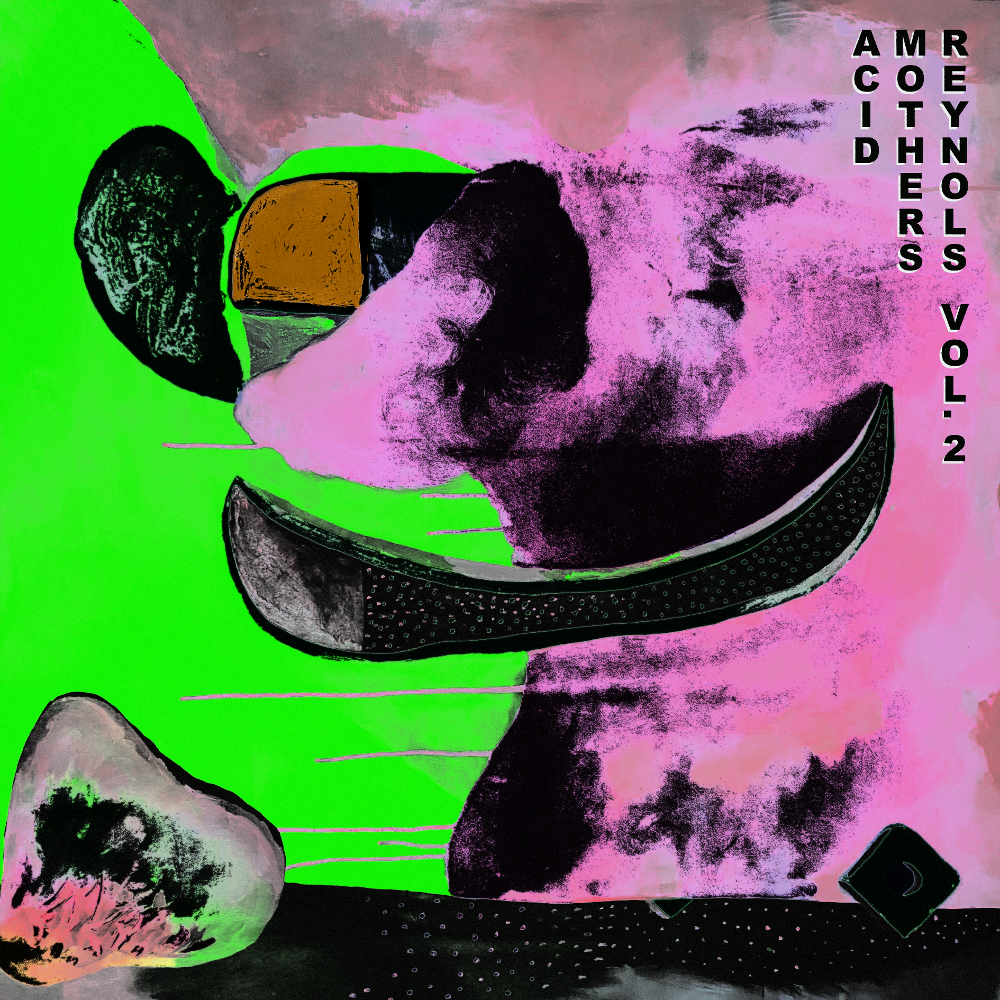
Acid Mothers Reynols ‘Vol. 2’
(Hive mind Records) 27th January 2022
Interstellar overdrive time once more as the long-standing Krautrock replicants, torchbearers Acid Mothers Temple join forces with the Argentine avant-garde rock leftfielders the Reynols for a second volume of mushroom incantation space, acid-rock psych and outer limits tripping.
The constantly regenerative Acid Mothers collective, who’s only mainstays, guides are the founding members Kawabata Makoto and Higashi Hiroshi (though it should be noted that one-time Boredoms founding guitarist, the Japanese legend and serial Acid Mothers offender Tabata Mitsuru appears on this invocation of the group), embarked on an extensive tour of the South American continent back in 2017. It was during this sojourn, a year before the Mothers 2018 Reverse Of Rebirth personnel change, that the collective also took time out to record and play shows with the Reynols, whose own haywire provenance dates back decades, with the group formulating their outsider credentials from the outset in 1993; dropping the original ‘Ensemble’ from their name three years later.
The fruits of this kool-aid venture fill up another record of enlivened experimenting, both groups coalescing into what sounds like a barely contained freak-out on untethered lunar surfaces of blancmange: an improvised communion in the light of a melted moonbeam primal soup.
Acid Mothers Temple fans won’t be surprised to hear that their contributions sound like the creeping stirrings of Phallus Dei era Amon Düül II, a bit of Guru Guru (who they have of course collaborated with in the past), the Cosmic Couriers, Xhol Caravan and Ash Ra Tempel. Meanwhile the Reynols loudest, most obvious contribution comes from Miguel Tomasín’s erratic and excitable, hard-hitting piano improvs. Sharing room on the piano stool with Anton Webren, György Liget, Cage. Mike Garson and Oscar Peterson, the free-range pianist goes to work in conjuring up the avant-garde, Fluxus and crashing chords show time Brecht on Broadway. This is all in contrast to the gravity-less atmospherics, more comfortable rhythm section and mumbo-jumbo mantra vocals on the second jam, ‘Antimatter-Sound Milkshake’ – I’ll order just the one of those please. Chaos is somehow kept together: although the drums occasionally seem to slip timings and lose the feel, preempting where this 18-legged beast is going.
Speedball rushes and highs are the order of the day as whistling shooting stars cross the astral charts and warped guitars provide a shifting mood of cosmic cowboy blues, space bird rock, post-punk, heavy meta(l) and of course Krautrock magnificence.
The Acid Mothers, more than willing to open up the sound and mind to let in this Argentine chapter of the universal acid avant-garde lodge to feast on the cosmic soup, trade blows with the Reynols who offer up piano mayhem, transmogrified flute and obscure sounds to an already fuzzed and gnarled hallucination.
The good folk at Hive Mind (yet to release anything that’s not essential in my opinion) have guided this one to vinyl. So, do yourselves a favour and add it to the psychedelic mind melt section of your collection.
From The Archives:
Acid Mothers Temple & The Melting Paraiso U.F.O. Ft. Geoff Leigh ‘Chosen Star Child’s Confession’ (2020)
Acid Mothers Temple & The Melting Paraiso U.F.O. ‘Reverse Of Rebirth In Universe’ (2018)
Acid Mothers Temple & The Melting Paraiso U.F.O. ‘In C’ & ‘La Novia’. (2018)
In these troubled times, with so much stacked against independent, unsponsored voices, you can help us to continue probing and delivering great new music:
Hi, my name is Dominic Valvona and I’m the Founder of the music/culture blog monolithcocktail.com For the last ten years I’ve featured and supported music, musicians and labels we love across genres from around the world that we think you’ll want to know about. No content on the site is paid for or sponsored and we only feature artists we have genuine respect for /love. If you enjoy our reviews (and we often write long, thoughtful ones), found a new artist you admire or if we have featured you or artists you represent and would like to buy us a coffee at https://ko-fi.com/monolithcocktail to say cheers for spreading the word, then that would be much appreciated.
 Monolith Cocktail Blog