Jointly by Andrew C. Kidd and Ross Perry

Black Dog Productions ‘Bytes’ [1993]
The Black Dog ‘Spanners’ [1995]
(Warp Reissues)
Intelligent dance music. IDM. A difficult-to-define genre (if it even was one). Experimentation in dance music? The awkward shoehorning of ambience and danceable music? Flawed nomenclature aside, pinpointing the start of the movement is an even trickier task.
To dance is to move rhythmically. Ussachevsky and Stockhausen were creating electronic music in the 1950s, albeit it is difficult to argue that their creations were ‘danceable’. There are danceable moments on Spiral (Vangelis, 1977) and Équinoxe (Jean-Michel Jarre, 1978). Then there was the electro-pop Kraftwerk and the danceable synth-pop sounds of the likes of OMD, Moroder, Numan and Cabaret Voltaire. Yet, the sound that we most associate with modern-day IDM probably arrived in the very early 1990s. Utd. State 90 by 808 State (ZZT Records, June 1990) is an early example of the abstraction which underpins IDM, albeit that album was palpably more familiar as a resident in acid house. Tricky Disco by Tricky Disco (Warp, July 1990), Frequencies by LFO (Warp, July 1991) and Analogue Bubblebath by Aphex Twin (Mighty Force, September 1991) were IDM pathfinders. The public were probably exposed to IDM through Accelerator by Future Sound of London in April 1992 (released on Jumpin’ & Pumpin’). Warp can take credit for the naming of IDM on the compilation album, Artificial Intelligence, in July 1992.
Bytes (originally released in March 1993) is one of the most influential works in the intelligent dance music scene (it is regarded by some as the seminal work of IDM). The first iteration of the track Clan (Mongol Hordes), the work of I.A.O, an early moniker of Ken Downie (one of three aliases used on Bytes), featured on Warp’s AI compilation. Although Bytes is a compilation album, it has always been more synergistic than that – a musical Megazord of sorts (if such an obviously ‘90s reference can be afforded!). It was the third album in the Artificial Intelligence series and is thirty this year. When it was first released, it was a promise of futurity. Akin to the golden age of science fiction, there was experimentation, and comparatively difficult-to-differentiate narratives – the listener is drawn in and out of various sequences, some real, others fanciful.
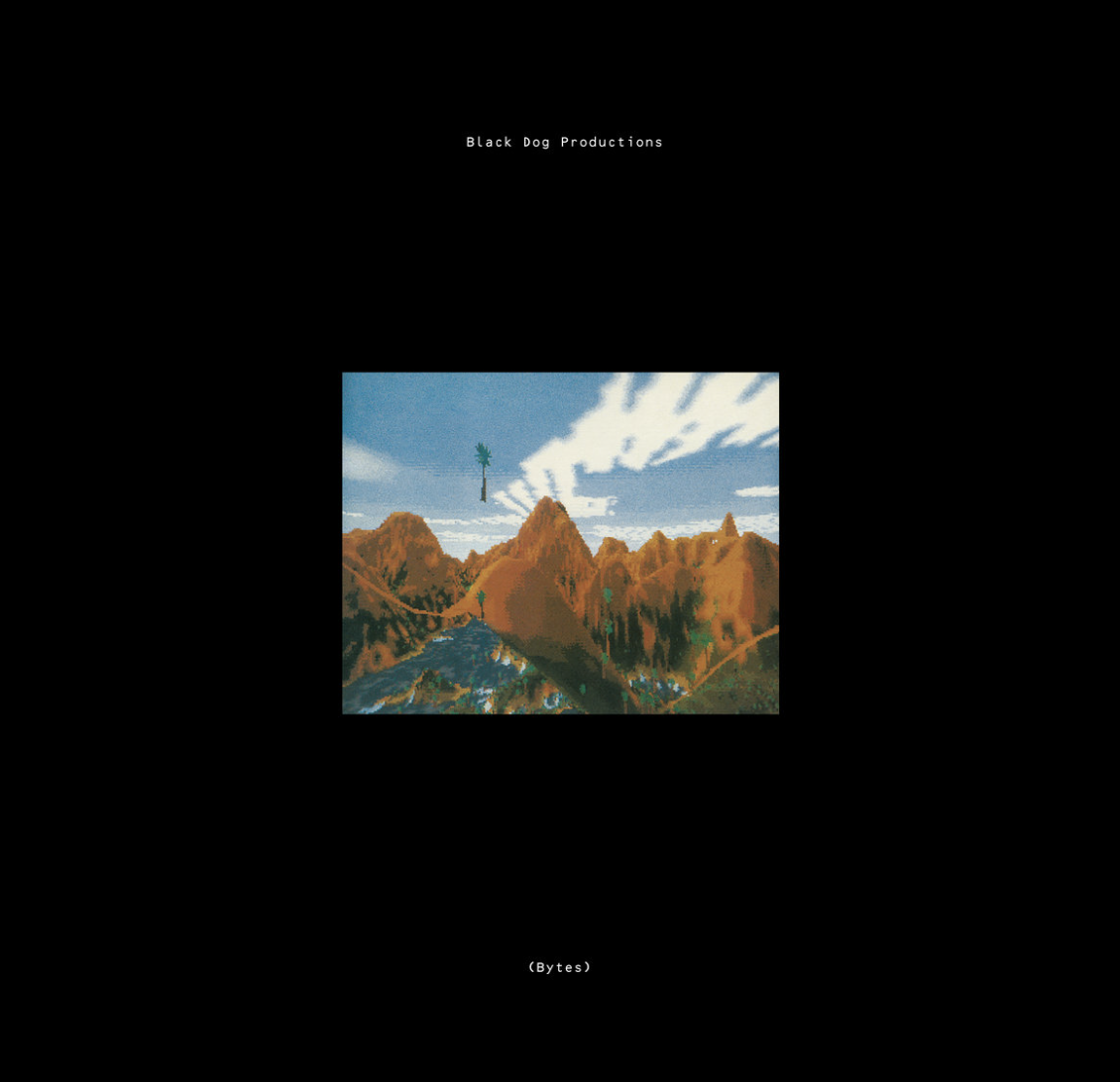
There is no doubting the influence of the Detroit techno scene of the mid-1980s and its dramatis personae: the joyful R-Tyme; the villainy of Suburban Knight; the realism of Model 500; and of course, Derrick May. Listen to the analog crunch and pulsing rhythm on the opening Object Orient (Plaid) – two hallmarks of that sub-genre. It railroads through the sonic journey with playfully synthetic melodies, slowing only occasionally for brief vinyl cuts. It is a deconstruction of what preceded it, like time folded up in slow motion. Similarly, the repetitive four-four chops on Merck are akin to a Mayday track; the keys, syncopated at times, improvised later, dance their macabre dance. The Phil 5 interlude that precedes Fight The Hits harkens back to The Art of Stalking by Suburban Knight; the same could also be said for Atypic’s masterpiece Otaku which sadly did not appear on Bytes – this featured on the Black Dog Productions E.P. released in May 1992.
Bytes is fantastically congruous. After Merck (Balil) fires off high-frequency plasma rifle shots in rapid succession, its latter half is mesmeric and glistens into the orchestral opening of Jauqq (Close Up Over)*. As the syncopated rhythm fades, a metallic beat enters, and the sound is progressed. Another fine example of this is Olivine (Close Up Over) – IDM in the definitive sense – and its light synths that dot around the checked squares of some strange sonic chessboard. Here, the rhythm progresses up and down like opposing rooks; the L-shapes of the syncopated synth are warring knights. The lithe ending is regal, and heralds Clan (Mongol Hordes) (I.A.O.)– queenly, like the multidimensional chess piece, it serves to take the rest of the board out. It is IDM ex-animo. Its movements pitch-alter. This is music from the soul. It sounds as genre-buckling now as it will have done in the early 1990s. The alarm-like initial melody initially hides the subtle breakbeat that builds into the piece. The 4-4 rhythm doubles up, almost rolling over itself. The four-key synth melody stirrups. The melody changes. A deeper bass commandeers.
Futurism: lasering zaps and string stabs on Caz (Close Up Over) and the steely undertones of Jauqq (Close Up Over). Sporadic canons also unload on Focus Mel (Atypic) in a manner that is not too dissimilar to early Subotnick and Nu-Sound II Crew (nearly a half-century later), or an A. Bertram Chandler hero travelling ahead to save us, the listeners in the present day. Its outro is an echoing aftershock from another place – the future is being told by Xeper as he knocks hard on the other side of the great glass door of time. The track preceding it – Carceres Ex Novum (Xeper) – underpins the experimentation which defines Bytes.
Fight the Hits (Discordian Popes) is an awesome percussive assault (similar to Polygon Window’s Quoth) which serves as a bit of a palate cleanser and a much-needed bridge between the chaotic Yamemm and Handley’s magisterial three-track denouement. Yamemm (Plaid) itself is fragmented and perhaps anomalous in this album†.
Bytes concludes with 3/4 Heart (Balil). The stock-heavy modulations are polyrhythmic. A Vangelis-esque synth is organ-like at points. The melody is snappy – danceable even! A half-clap effect – perhaps an imagined crowd – heralds the vocal line, “we must surf the universe”. The sound at this juncture is more refined, the narrative complex – the listener revolves around in a full-circle. Oneness is achieved.
At this point, it is worth mentioning how instrumental Ed Handley is to the legacy of Bytes as a groundbreaking album in IDM’s naissance. Atypic(Turner)’s Focus Mel is excellent, but it his only solo track on the entire record, and Downie’s three contributions are dynamic detours in their own right. Handley absolutely dominates this album with five solo tracks and two as part of Plaid. Whether it is Balil or Close Up Over, his mastery of clever arpeggios, countermelodies and otherworldly harmonic pads married with second-wave Detroit rhythms give the album a melodic heart, which beats all the way through from Object Orient to 3/4 Heart.
Bytes (and by extension, The Black Dog Productions moniker) also acts as an important milestone in Plaid’s evolution as a duo. Before it, we can hear on disc one of Trainer (Warp, July 2000) – an excellent compilation of Plaid’s early career output – that the group were more experimental, sample-happy, willing to genre-hop. Take the Latin-infused breakbeat stylings of Scoobs In Columbia, the jazz-tinged Slice of Cheese, or even the proto-jungle of Perplex (all these tracks were originally released from the oft-forgotten debut album Mbuki Mvuki, released on The Black Dog Productions label in 1991). Bytes on the other hand showcases a more focused pair, albeit a little lop-sided, that fills the record with top-tier ambient techno (which yes, will always get the IDM treatment!).
Spanners (originally released in January 1995), their first release on Warp, was the hit LP of The Black Dog – and for good reason. It is great to think that ‘way back then’ albums that clocked in at 75-minutes were charting (imagine that nowadays when albums are often sub-30-minutes). Admittedly, we live in a different time where attention spans are shorter. Most tracks on Spanners feel like a tug-of-war between Plaid as a duo and Downie as a solo artist. Plaid in 1994/95 had their more functional IDM/ambient-techno sound figured out, whilst Ken Downie remained somewhat of a wild-card: his trappings being more cinematic, sample-based and experimental, drawing from a much broader spectrum of influences. One of the elements we most enjoy about the output from the original Black Dog has been trying to surmise not only who did what in each track, but also which members were involved in certain outings. This is no more rewarding than on Spanners where some tracks seem like the work of a sole member (usually Downie), whereas other tracks feel like the work of a tag-team, either consisting of a Plaid member and Downie, or in the case of Tahr and Frisbee Skip, Plaid on their own. Frisbee Skip could very well double as a bonus track on the duo’s first (mainstream/Warp) full length, Not for Threes, released in October 1997.
The opening to Spanners is Raxmus, a classic in the downtempo repertoire; its sawing introductory synth leads into a horizontally relaxed beat. Raxmus feels like one of the more seamless tracks on the album, and we speculate that it is possibly a Downie/Handley duet: Downie providing the trip-hop template; Handley layering in his Balil-style harmonics.
The heavily-syncopated rhythm on Barbola Work (which disintegrates towards the end of the track) is interspersed with boings and hits and twizzles. It follows the formula that many of the early tracks on this album have: Downie providing the track’s introduction, throwing a wide range of vocal samples and/or exotic instruments at you, before Plaid build the track up with their infectious basslines, whirring clicks, zapping sound effects and magical synths. The Sugarhill Gang-laced explosion of an intro on Barbola Work is Downie through and through. Plaid then takes over to put down the melodic scaffolding and beat-work. The transition admittedly does not work quite as well on this occasion as it does on the proceeding track, Psil-Cosyin, perhaps coming off as a little dissonant.
Arguably the most cohesive three-track sequence (or four if one includes Bolt 3) follows. A major Locrian scale surfaces on Psil-Cosyin and scintillates in scaling brightness as the piece progresses. This is one of two clear highlights of the album where all three members of The Black Dog play to their individual and collective strengths and produce a definitive masterpiece. As an early Spanners track, the song structure is as described in the last paragraph. One can consider Psil-Cosyin as being composed of three suites: in the first, Downie arrests your attention with a mysterious intro of odd vocal samples and pipes; the second is signature Plaid with a slow and progressive build-up; the third is a roaring crescendo which serves as a climax. Here, all three members of the group function as a rare and perfect whole: Turner’s acid synths; Downie’s eclectic sampling; Handley’s Balil-esque angelic arpeggio. The concluding higher-rpm of the track serves perfectly to lead-in the membranophonic beat that anchors the light synth swathes on Chase The Manhattan, which may be a Downie solo venture or a collaboration between Downie and Turner. It is tribal-house-infused. The spacey pads are those that we often associate with Downie’s Xeper alias; Turner possibly contributes with acid licks and humming bass lines.
Tahr is an amalgam of the latter two tracks: a polymer-pungi weaves around a 4-4 beat. In this piece we hear a lot of Turner’s percussive sensibilities, addictive basslines and frantic trance-like synths (these can also be heard on Atypic’s Jolly on Trainer). Handley comes in later with another Locrian melodic flourish. Although Tahr is a short track, it is a great example of Plaid’s symbiosis.
One criticism we have of Spanners is its length. The 19 tracks are not an issue (the Bolt skits are sometimes only seconds long); rather, it is the occasional meanderings of the trio. Perhaps this is because thirty years have passed and listeners of the present day are used to more perfunctory albums clocking in at sub-30-minutes. Take Further Harm as an example. It is an expansive piece, one that stretches in and out, starting in the realms of downtempo, ending in synth-plopping abstraction. That said, it is one of the greatest examples of the stylistic fork-in-the-road (or tug-of-war) between Plaid and Downie. All three members are involved here, and the stop-start industrial breakbeat combined with the odd mantra of a vocal sample gives it a ‘train that is meandering down the track and picking up steam’ feel. More samples are layered in as well as all the sonics that Downie brings to the table, and then, two minutes in, the signature Plaid-synths, pads and basslines play out to give the track a melodic grounding that it did not have before. The hip-hop breakbeat is replaced entirely by a more industrial one in its later stages. As a piece that starts off travelling in one direction, Further Harm changes tracks, and an unpredictable journey ensues – it is a microcosm of Spanners.
Utopian Dream is similarly frequentative. It is one of the most leftfield pieces on the album. We have never heard anything like this from the Plaid members (was this a Downie solo?); imagine a harsher version of Boards of Canada’s Zoetrope on In A Beautiful Place Out In The Country (Warp, November 2000). The elegiac Nommo and its modulated synth stanzas and bassline climb their respective octaves – sequentially. It could have featured in a fictional Xeper album along Carceres Ex Novum on Bytes. Could the track idea have been consolidated, or even progressed like Olivine or Clan On Bytes? Regardless, Nommo remains cinematic.
The right balance between track length and monoinstrumention is achieved on Chesh, the other album highlight (it feels like more of a Handley solo piece, or mostly Handley with (possibly) Turner adding in a background layer). Pseudo-mythical modulations ascend and descend masterfully – imagine Ransom first exploring Malacandra (an Out Of This Silent Planet by C. S. Lewis reference), or the space sequence in the 1950 film, Destination Moon. There are echoes of Andreas Vollenweider too. The Balil style countermelodies and light airy synths interplay with the heavier reverb-laden keys – it is a magnificently poignant closer.
Spanners is a work of subtly in both melody and rhythm. Take the lithe key flourishes on Pot Noddle, ceilinged by the quiet clarion of higher synths; the guitar is indistinct, and the rhythm section almost organic. Fast forward to the sounds of Four Tet. The start-stop breakbeats we heard on Further Harm, albeit slower. The frantic ‘western saloon piano’ sample serves as a mid-point alarm clock. End of Time thunderously drums around penetrating synthetics. It is punchy, echoing the head nodding thrums of Fight the Hits (Discordian Popes) on Bytes. It is also trancey, and chaotically space-like (imagine the Starship Enterprise on an intentional suicide mission!). The time-warping synths are magnificent and reminiscent of early Black Dog tracks like Ambience With Teeth and Virtual, both released on the Virtual EP (Black Dog Productions, April 1989).
The skits Bolt 1 – 7 appear at varying intervals on Spanners. Some are simply white noise and filtered static, others almost wheezy. Their purpose is unknown – are they the voices of pulsars, or the sounds one would experience in the belly of an exploratory spaceship? Bolt 3 harks back at the Phrygian Psil-Cosyin and the chaotic goblet drum effect that thrums on Chase The Manhattan. Bolt 7 slides into obliquity, and onwards to Frisbee Skip. Listening to the Bolt skits again, their darker and more intense aesthetic share a similarity to Allegory 1 [Red], which Downie et al dropped in 2020. The third track on that release – Bar 331 – is metallic and off-key, an eerie transmission that has resurfaced 25-years later. Unlike the Phil interludes on Bytes, which serve as key intros and outros and transitions between certain tracks, the Bolt skits feel more like aural non-sequiturs. After listening to them again, they remind us of the more experimental segments of tracks we would hear on later Plaid albums such as Rest Proof Clockwork (Warp, June 1999) and Double Figure (Warp, May 2001).
Perhaps due to it being released on General Production Recordings rather than Warp, we consider it interesting that The Black Dog’s second album – Temple Of Transparent Balls – has not been reissued. It split their audience down the middle. We still enjoy listening to the ‘progenitor’, almost stock sounds that feature on that release. It had a machine-like quality, an insight into the deeper engineering works of IDM: a sonic forge with the anvil strikes on display.
On Spanners and Temple Of Transparent Balls, Downie’s approach and sound is definitely more unpredictable and harder to pin down than the Plaidsters’ experimentations and manipulation. We feel that the Plaid duo provide the two Black Dog albums‡ with less experimentation and a lot of the more conventional beat-work, basslines and melodic structure that would soon form the foundations of their Warp-era work, whilst Downie, the aforementioned wild-card of the trio, added in an off-the-cuff sample here, some industrial Meat Beat Manifesto-esque breakbeats there, or some bizarre and dissonant sound effects out of nowhere. He also seems to be the more cinematic of the three; his sounds are often themed on science fiction, and past and future landscapes.
So, in 2023, where do Bytes and Spanners sit in the pantheon of intelligent dance music? Well, Handley, Turner and Downie are rightly the archetypes of the IDM sound in the same way that Richard D. James (as The Dice Man), B12 (as Musicology), Autechre and Alex Paterson (as Dr Alex Paterson) are by their participation on the first Artificial Intelligence release. Having been forged out of the molten ambient techno and fiery rave scenes, the joy in returning to Bytes has been its rhythmic experimentation. Although not perfect, Spanners achieved what it set out to do. It is expansive, and labyrinthine – it washed away the harsh melodia of Detroit techno to toy with its listeners.
After the synergy, the separation. We are left with The Black Dog Mk.2 (Downie and the Dust brothers) and Plaid. The subsequent releases of The Black Dog marked a departure in sound in some regards, yet their output remains as heterogenous and experimental as it did all those years ago. The ambience of Music For Photographers (2021) is one for the musical aesthetes of this world; as an album inspired by the slab-grey brutality of the concrete architecture of Sheffield, it is wonderfully light.
The work of Turner and Handley continued as the dynamic Plaid. The duo would go on to become a permanent fixture with electronic giants Warp, starting with the ambitious and guest-heavy Not For Threes in 1997, consistently putting out records with the label to this day, a very impressive feat indeed. But how does Spanners fit in with Plaid’s break-away from The Black Dog? From what we can hear on Spanners, Plaid had become an almost-finished article with both members Handley and Turner comfortable in their respective roles. Handley clearly had already found his niche as the melodic heart of the group under his Balil alias on Parasight EP (Rising High Records, November 1993) and Bytes. We hear this consistently again and again on the most melodic segments on Spanners. By this point, Turner had also spread his wings under the Tura alias, switching to this from Atypic around 1994 (his work as Tura can be heard on the earlier-mentioned Trainer). This cemented his role as the more technical of the two: a master of infectious basslines, staccatic synths and dissonant zaps. Interestingly, Handley and Turner’s decision to move on as a duo also led to them re-embracing the genre-bending experimentalism that marked their earliest Plaid material, particularly Mbuki Mvuki. Nevertheless, no matter what sub-genre they would delve into on subsequent albums, Bytes and Spanners provided the blueprint for what would become Plaid’s core sound.
Those who listen to Bytes and Spanners in the present day will enter a sonic-time capsule: a time when a new world was burgeoned upon the drawing of the hip hop, electro and early Detroit techno influences of the late 1980s. This was a time of innovation, and deeply intelligent composition.
Footnotes:
* On the original Bytes release, this opening was actually an interlude titled Phil(7), the final of the Phil interludes. These interludes (mysteriously credited to Echo Mike, a handle to whom the identity has never been revealed) are not listed as separate tracks on the re-issue, yet they are vital elements ensuring that Bytes as an album works as a cohesive whole.
† This feels like something from Plaid’s 1989–1992 phase when they were experimenting with different sounds and styles, particularly hip-hop, early ‘90s industrial-breakbeat and house. These styles are also evident on the early EPs of The Black Dog.
‡ We are careful not to classify Bytes as a Black Dog album as it was released under Black Dog Productions, the name of their label, and a sort of holding company of all three members of the group’s respective aliases. We have also been careful in differentiating between this and The Black Dog which was the name used for their group efforts as a trio.
 Monolith Cocktail Blog