THE MONTHLY DIGEST INCLUDES A CLUTCH OF ACCUMULATED NEW MUSIC REVIEWS; THE SOCIAL INTER-GENERATIONAL/ECLECTIC AND ANNIVERSARY ALBUMS CELEBRATING PLAYLIST; AND CHOICE PIECES FROM THE ARCHIVES.

Image: Violet Nox artwork by Allison Tanenhaus
_/THE NEW___
Bedd ‘Do Not Be Afraid’
31st October 2025
After an initial break from the site – this is down to me, and not the band -, the Oxford bedd project led by singer-songwriter, composer and producer Jamie Hyatt has now appeared twice in the space of just a few months: firstly, back in the June Digest with a bridging style EP entitled Monday 10:55, and now, this month, with a full debut album called Do Not Be Afraid.
Repeating myself again, sometimes I excel myself with a descriptive summary, and with one of bedd’s most early singles, ‘Auto Harp’ (released during the lockdowns of 2020) I described the sound as “an understated breath of fresh air from cosmic suburbia”. This beauty of a single was followed at a later date, during Covid isolation, by a premiere of ‘You Have Nice Things’, which seemed to have continued with its small-town landmarked sense of isolation and sad detachment on the EP’s title-track, the very specifically timed capture of nocturnal plaint and heartache ‘Monday 10:55’.
None of the tracks on that EP feature on this debut album, but it does gather up a string of previous singles, stretching back over the years, including ‘Party On dude (Endless)’, which featured on Jon Spira’s The Life and Deaths of Christopher Lee homage film in 2024. The track itself, is a two-parter of a sort, starting off with more haunted wistful piano tones, synthesized atmospherics and chemistry set sounds, before suddenly entering a party vibe of 80s old school hip-hop and electro samples and scratches and Chic-like funk: think Lovebug Starski meets Whistle and Doug E. Fresh in the graveyard. Jamie, the mastermind behind bedd and instigator of The Family Machine, The Desires and Medal trio of bands, has scored a few film projects over the years: most notably the Elstree 1976 documentary film that chronicles the making and legacy of Star Wars. You could say that this filmic quality and experience, a bit of scale and drama, has helped to lift much of the material, giving crescendo, a build-up and oomph to the mainly indie-rock and electronic-pop influenced sounds. Sometimes the near fatalistic tone of the voice and lyrics rises above the melancholy, malady and eulogy to twinkle and glisten with a big swell or sense of something much bigger: the universal perhaps.
Before going any further, I need to name the band that has formed around Jamie for this project, which includes “a range of celebrated local Oxford musical talent”. There’s bass player Darren Fellerdale and guitarist Neil Durbridge, both bandmates from Hyatt’s previous project The Family Machine, plus the guitarist Tom Sharp, electronic musician and producer Tim Midlen (aka The Mancles of Acid) and drummer Sam Spacksman. Together, they push the fragility and vulnerability towards the stars with music that sits comfortably between a traditional band set up and the electronic (much of which is atmospheric, rather than in the form of synth waves or bass lines and such; far more in the manner of the cosmic, of adding something more magical, of transmissions, the odd captured recordings of chatter and the environment); they sound on occasions vaguely Britpopish, a little like Radiohead circa Pablo Honey and The Bends, Jeff Buckley, Benjamin Shaw, and on the shorter saddened song track about expectations, of life and being left deflated ‘Bed Sheet’, like both Blur and Gene.
I’ve already used the word fatalistic, and with references to Bowie’s Ziggy period world ending calamity (‘Five Years’), and despondent impressions of our social media and self-obsessed culture and its ways of dealing with tragedy, death and loss (‘Gone’ and ‘I Whoo Yeah’), you’d be right to expect it. And yet, the candidness of Jamie’s lyrics, especially on the nostalgic and fragile eulogy ‘Everything’s Coming Around’, have lift and a quality of endurance as our protagonist pushes through a weight of memories. Cutting through beautifully the filters of an Instagram encased world, Jamie transforms real concerns, injury and failures into something very magical and full of memorable tunes, hooks and feeling. A great album from a fine project indeed.
Yusef Mumin ‘Journey To The Ancient’
(WEWANTSOUNDS) 31st October 2025
Continuing to unearth those both privately pressed and obscure recordings from a golden period of free from conscious and Black identity jazz, the reissue specialists at WEWANTSOUNDS have collaborated with the notable musician Yusef Mumin to bring some of his previously unreleased peregrinations and expressions to vinyl for the first time ever. Following on from last year’s extraordinary Black Artist Group ‘For Peace And Liberty, In Paris December 1972’ special (of which there are some musical parallels), the label has brought together a quartet of recordings from the multi-instrumentalist, co-band leader and pioneer’s personal archive. Bringing an expanded context, and a framing of the history, the relevance, the influences and sparks of inspiration, prominent jazz writer Pierre Crépon joins the dots with some insightful liner notes, making for a very desirable package.
Whilst I won’t just repeat Crépon’s studied but creatively written research and notes, a rough outline of Mumin’s career is needed before we go any further. Born Jospeh W Phillips on August 25th, 1944, the wartime baby grew up in Cleveland, a city that would prove a hub, crossroads for all kinds of societal, spiritual, radical and cultural activities. Drawn from a young age to such luminaries of the jazz form as The Modern Jazz Quartet and Yusef Lateef, but also classical pioneers such like Igor Stravinsky, Phillips would develop his own musical language, inspired by reading liberally a great many esoteric works: taking an interest in everything from Zen Buddhism to the Kabbalah, the Zohar, but eventually finding a calling from Islam. Cleveland during this time, as a growing epicentre of Black Nationalism, of Black self-preservation and worth, hosted such groups as the Nation of Islam (where they set up Mosque No. 18), a Moorish Science Temple and branches of the Ahmadiyya (an international Muslim movement started in India in 1889 by Mirza Ghulam Ahmad, who purported to be divinely appointed as both the Mahdi and Messiah). I’m not sure when, but in the tradition of such Islamic faith conversations, Phillips adopted the Yusuf Mumin name – a reconnection with his African/Islamic roots, a rebirth if you like and shedding of a European-Christianised identity, the mark of ownership.
Taking up alto saxophone, absorbing a fecund of jazz sounds and developments taking shape in the 1960s – from Ornette to Sun Ra and Ayler (an artist he’d have a lifeline interest in, a praise for; his own art said to be a continuation of what the free form tenor saxophonist started), Mumin gravitated towards the trumpeter Norman Howard, who’s credentials included a stint with Ayler: namely playing on his iconic Spirits LP. They formed a group together for a fleeting passage of time before Mumin co-founded his most iconic partnership a year or so later, the Black Unity Quartet. The original quartet soon pared down to the now legendary trio of Mumin (on reeds), the cellist Abdul Wadud and drummer Hasan Shahid (weirdly, and I must point this out, when searching online for a bio or any details of this short-lived group, there are multiple versions of this lineup being shared, examples of misinformation: names spelt wrong, instruments attributed wrongly too.) They’re predominantly known for the cult status and rarity of their only LP, Al-Fatihah, recorded in the December of ’68. Privately pressed with no interference, but crucially no publicity or push from a label, it would take decades for this record to be re-issued and given a larger significant launch and place in free form jazz history – an interview with Mumin, and a playlist selection featured in the Wire magazine at the time of this release. Inspired by the afflatus and the opening chapter of the Quran – the first seven verses of prayer that gives guidance and mercy -, Al-Fatihah can be translated into English as roughly “The Opening” and “The Key”. Carrying on this journey, going on to collaborate with an enviable cast of jazz greats Charles Tyler, Horace Tapscott, Arthur Blythe and Butch Morris, Mumin built up an impressive archive of his own recordings; some of which are now finally seeing the light of day as the Journey To The Ancients album.
With only his Dan Nuby double-bass credited pseudonym and the drummer William Holmes (an “associate” we’re told of the blistering alto free form, modal and hard bop luminary Sonny Simmons) as company, Mumin’s quartet of recordings are brought together for a fitting showcase of spiritual, longed, radical free-play and searching, questioning roots jazz. Despite featuring different themes, it feels like a complete work: a missing act from the celebrated cannon that connects the spiritual and political quest for African American liberty with a hunger for the homelands, and unity under the crescent flag. As my reading goes, the short opening passage of Bakumbadei, is a divine song of longing, and an invocation. As both Mumin himself and Crépon’s make clear, the title “relates to power of definition, or new wine, as offerings to the fathers.” Playing the cello, both as a mark of respect to his former foil Wadud (rightly acclaimed as one its finest practitioners in the jazz and classical fields) and because it just sounds so evocatively deep and almost pained in expressing a majesty, a dignity, and classical strain of the atavistic, Mumin also sings with an equally deep, but not quite baritone, voice, repeating the title chant, spell.
The very next piece, and title-track, now opens the door into a more extensive world of ancient caravan trail jazz. Incipient stirrings, shakes of Kahil El’Zabar and drifted rasps of saxophone moodily conjure up a landscape of some dreamt-up vision of Arabian North Africa, of the Middle East and the Fertile Crescent, but also of something far more out there in an alternative plane or dimension. A spiritual, pining Afro-journey with classical traces and a touch of the New York Art Quartet, Jospeh Jarman, Maurice McIntyre and the James Tatum Trio Plus. An awakening you could say, its sets the pathway up for what’s to come.
‘A Distant Land’ is another of those searches, this time for a new Jerusalem or a land in the sky. What could be tablas set up a more bended and buoyant Eastern feel of the longed. The spaced-out bass notes, sometimes ponderous, make steps on this slow rhythmic trial as the flute now, half in the style of Llyod McNeill and half in the style of Jeremy Steig chuffs and blows its course across a deep dive of temples and jungle.
More unsteady, with Holmes’ improvised like and active minor tumults of free form drumming, ‘Diaspora Impressionism’ is a tumble and uneven keel expression of the misplaced people, but also a response to the pain, ancestral trauma and indignity, the travails of the Transatlantic slave trade legacy. At time Mumin is blowing almost dry, without any spit, in reaching that encapsulation of hurt and anger; there’s parts in which he is literally, or sounds like it, fighting with his instruments as the fraught sax mimics the viola and violin. And yet amongst the splashes and rolls, there’s passages of rhythms and melody to be found; a yearning moment or two in which the trials and tribulations find some sort of peace. But as this combo go at it, they perform a wild form of jazz that has parallels with the art of the Children of the Forest, Wayne Shorter, Evan Parker’s more far out material, Ayler, Sunny Murray and Dewey Redman.
An album of beauty and toil; of consciousness and the imagination; a balanced and congruous set of recordings that feels like a unifying statement of divinity, experimentation, hardships and free expression. WWS have done it again and retrieved a vital album from a key and pioneering artist/musician in the story of free form jazz.
NiCKY ‘with’
(PRAH Recordings) 28th October 2025
Broadening the scope and the queer landscape musically whilst inviting in some congruous collaborative bedfellows since their last outing, with the by EP in 2024, the London songwriter and performance artist simply known as NiCKY presents a new songbook of haunted, touching, tender and resilient balladry, theatre-esque numbers, behind closed doors masquerades and near heartbreaking drama.
From the very first brush of tambourine and affecting touch of late-night saloon poised piano on the opening beautiful, but hunting, declaration ‘I Saw You’, I was sold. Slowly charged with expressions of both vulnerability and lust, played out in the dimmed lit recesses of an after-hours drinking hideaway, with one eye in anticipation of the next affair, the next pick-up, yet desiring a special frisson and love, with the passing influence of Lou Reed, John Cale, Stephan Trask and Anohni, NiCKY reworks lyrics originally conceived by the queer Irish playwright and activist Colm Ó Clúbhán and the theatre group that he became a member of once immigrating from his native Ireland to London in the early 70s, the Brixton Faeries: their activities emerging from the noted Railton Road squats. In its original form, the song first featured in the “agit-pop play about cottaging” GENTS, but finds a new avenue of expression, disarmed with a different kind of poignancy and heartache, and now repurposed for a restaging of Ó Clúbhán’s Reasons For Staying play – an avenue for telling the marginalised stories of the Irish diaspora in the capital, centring on the lives of its queer characters, but also of those women seeking abortions. It’s a highlight for me on a generous EP of such “uninhibited” serenades, off-Broadway cabaret turns, and the requited.
Already off to a great start then, the second number, ‘The Fall’ features the iconic French chanteuse, writer (from the International Times to plays), one-time tightrope walker (taking to the high wire or rope for such diverse companies as COUM Transmissions and Jérôme Savary’s Grand Magic Circus in Paris) and celebrated underground icon (memorably appearing and performing in Derek Jarman’s Jubilee and also, apparently taking part in Andrew Logan’s Alternative Miss World gala) Hermine Demoriane, who’s circus skills come in handy, metaphorically speaking, on a song about emotional support. Providing a safety net, Dermoriane’s unmistakable unique voice (for some reason, reminding me of Isabella Rosselini when she tries on a French accent) spins circus analogies to a piano led ballad that reminded me in part of both Mark Kuzelek and Elton. You can also pick up the soft, near brushed and slipped, drums I believe, of another guest, the alt-jazz, R&B and soul multi-instrumentalist and artist Donna Thompson, and the squeezed subtle wistful saxophone of either Euan Hinshelwood (who also produces and plays some bass on the EP) or CJ Calderwood (the multi-disciplinary artist and composer, who you may recognise as a member of both Lol K and Good Sad happy Bad): sorry, it doesn’t specify which one played on this track.
I use the words torch song, but in a lazy fashion, and it might be out of place here: Though you could perhaps argue that the heartbreaking curtain call, the swan song of ‘Fool’s Convention’ is one such torch song; apparently, so the notes say, a fusion of Kylie’s ‘I Believe In You’ and Nat King Cole’s ‘Nature Boy’. But there is a held, restrained, emotional charge to each of these songs that is hard to put a finger on.
In a liminal spot between resolution and malady; between hurt and lovelorn celebration; the rest of the album falls between Bob Fosse imbued theatre-musical and the music of John Howard, the observatory songwriting of Soho night owls, and a contemporary vision of a wistfully voyeuristic Ivor Novello cataloguing the goings ons and affairs at private views and parties in the capital. Although, the piano riff on ‘LDN Wars’ did remind me for some reason of Bruce Hornsby.
Variations on the signature include both the longed American dreamy stage number ‘Pink Pony Club’, which finds NiCKY adopting more of a Jack Shears persona; carried over into the next track, ‘Private Glance’, which has a Brazilian carnival meets Latin Miami atmosphere, and sounds at any one time like a shimmy-chimmy parade of Grace Jones, Midnight Magic and Roxy.
A most excellent second EP from an artist with much to share and shed on the themes of queer identity, vulnerability and resilience; the craft is superb and affecting. Definitely a choice release this month, if not this year.
Pray-Pax ‘The Lolita Years’
(Zel Zele) 24th October 2025
You’ve got admire anyone who can riff on CAN’s ‘Chain Reaction’ whilst deliberating on sexual and material fancies in the style of Lydia Lunch, but this is just one such take-away from a compilation style overview of the pioneering sound and musical theatre of the 1980s French duo. Combing a Krautrock sample with speeding cars and snatches, manipulations of Musique concrète, they turn a play-of-words on ‘Can’t’ to something approaching no wave post-punk swing. And they do this fusion of the haywire, the silly, the maverick, the dadaist and modern throughout a collection that brings together a multi-disciplinary array of their “unearthed” pieces.
A moiety, a part of the expanded Lolita Danse collective of dancers, artists, set designers and musicians – both that and the name of this survey possibly the very worst thing to ever look up online; that French obsession and flirtation with the taboo and all that -, Pray-Pax provided the soundtrack to an organised chaos of individual expressions and contemporary dances: an act that takes in circus-like acrobatics, the anarchic, kinetic and contemporary. And as part of a greater reprieve of this ensemble’s work, from ’81 to ’89, the design studio Mestiza Estudo is set to publish the Lolita Danse archive at the end of the year. As the press release outlines: “The book features material drawn from a selection of more than 10,000 images that document not only the collective’s performances but the entanglement of their personal and professional lives. This will form a portrait of the collective in motion: sets, costumes, music, videos, drawings, rehearsals, and more. The archive extends far beyond the visual: travel journals, letters, sound recordings, press clippings, and videos trace the full sweep of their creative ecosystem.”
Herding a messy story, from an ensemble that performed either solo in duets or as a group, and one that managed to slip any form of easy categorisation – never unifying under one banner, nor outlying or defining any particular sound or style -, the Istanbul/London shared label and NTS radio show platform Zel Zele present a fourteen (sixteen in the case of the digital formats, with the extras being bonus material as such) track document of art-music and sound fusions.
Behind the Pray-Pax moniker lies the creative instigators Thierry Azam and Alain Michon. These very capable experimental musicians combined the cabaret of the absurd, the frightening and playful with a sound collage that warped, reversed, cut-up and transmogrified everything from no wave to Iberian classical guitar, jazz, the classical, Fluxus, the concertinaed music of old France, post-punk, alt-Catholicism, the mysterious, noirish and the work of Francois Bayle and Pierre Schaeffer – especially on the opening flippery of the vague Afro-rhythmic, marimba bobbled, transmission synching cut-up ‘Domani non c’e sarà più’ (or “tomorrow there will be no tomorrow”), which sounds like a concrete version Holger Czukay, David Byrne and La Monte Young sharing the stage together.
There’s a combination of ideas that run from the rhythmic, the vocalised (though also examples of the talked, narrated and pranked) and beat driven to those that are soundtrack-like or just really odd. Tracks like ‘Down in the North’ sound like a phantom haunting The Residents and Art of Noise, whilst ‘Prudnik Blues’ sounds like a no wave jazz bluesy noirish juxtaposition of Cecil Taylor, Ramuntcho Matta and John Laurie. ‘Le Harve’ imagines Moebius and Roedelius decamping to the Northern French coastline, ‘No Regrets’ seems to transform some silver screen score from the 1920s into a Mexican mule ridden clip-clopping and French serenaded exotic experiment from Sakamoto’s Esperanto album. But bells also chime, pool balls are pocketed, dogs bark, wisps of ether draw across the crypt, and the rain falls on a number of atmospheric pieces. And within those perimeters you can detect passing traces of Devo, The Flying Lizards, Cage, and Lizzy Mercier Descloux.
Your mind has to do the conjuring without the performances (although there is a video of ‘Can’t’), and for that these pieces of music prove very intriguing, imaginative and in some instances, convulsive and hip in that downtown NYC way. In all, a very interesting survey of musicians combining performance art, dance and sound for a snapshot of the French experimental 80s.
Violet Nox ‘Silvae’
(Somewherecold Records) 21st October 2025
Building new worlds, futuristic landscapes and intergalactic safe havens in the wake of vapour trails of laconic, hypnotizing new age psy-trance mysticism, Violet Nox once more embrace Gaia, Greek mythological etymology, astrology and science-fiction/fact on their latest album, the poetically entitled Silvae.
The Boston, Massachusetts trio of synthesists and electronic crafters Dez DeCarlo and Andrew Abrahamson, and airy searching siren vocalist and caller Noell Dorsey occupy a dreamy ethereal plane that fits somewhere between Richard H. Kirk’s Sandoz, Vangelis, Lisa Gerrard, Banco de Gaia and ecological revering dance music – though that trio has expanded its ranks, indeed very pliable, over the course of the last decade.
On their eighth album together (released via the highly prolific and influential North American label Somewherecold Records) the topics of identity, androgyny, resolution, self-discovery, self-love and resistance are lifted towards the stars, pumped and projected through the veils of ambience, trance, dub, EDM, rave, electro-pop, cold wave, techno and more. The trio dreamingly, and in the moment, explore new textures, dynamics and atmospheres, and perhaps, produce their finest work to date: certainly, in places, the sound is more electronic-pop, with vague traces of New Order, Propaganda’s Claudia Brücken and 808 State – their sort of melodica like flutiness especially.
With references, title wise and lyrically to ancient Greek named guardian stars (“Arcturus”, brightest star in the Boötes constellation, notable for its seemingly red colouring, and observed, described by Ptolemy and Chaucer) and the ghostly visages of deep space to the “crescent” shaped cartilage of the knee (“Meniscus”), the album’s themes explore protection, recovery and pain (both physical and mental). Through the beckoning, the near operatic at times scaling, and drifted vocals of Dorsey they find relief, a second chance, in an astrosphere of near organic and sophisticated synthesizer and electronic apparatus plug-ins, effects, pads and keys. And sounds at any one time like a merger between Tangerine Dream, LFO and Massive Attack.
Whether it’s journeying into the subconscious or leaving for celestial rendezvous, Violet Nox turns the vaporous into an electronic art form that’s simultaneously yearning and mysterious, cinematic and ready for the dance floor. Fizzing with techy sophistication and escapism, the American electronic group continue to map out fresh cerebral sonic visions on their new, and again, possibly best album yet.
___/The Monolith Cocktail Social Playlist Vol. 102___
For the 102nd time, the Social Playlist is an accumulation of music I love and want to share, with tracks from my various DJ sets and residencies over the years and both selected cuts from those artists and luminaries we’ve lost on the way and from those albums celebrating anniversaries each month.
A couple of months back I celebrated the 100th edition of this series, which originally began over 12 years ago. The sole purpose being to select an eclectic and generational spanning playlist come radio show, devoid of podcast-esque indulgences and inane chatter. In later years, I’ve added a selection of timely anniversary celebrating albums to that track list, and paid homage to some of those artists lost on the way. In the former camp this month, and to tie in with the Archive spots on Ryuichi Sakamoto ‘Esperanto’ LP from 1985 and, though I actually missed the original release date in September, U.S. Girls’ Half Free LP from 2015. Other anniversary albums this month or year include François Hardy’s L’amitie (60), The Who’s By Numbers (50), Sparks Indiscreet (also 50), Grace Jones Slave To The Rhythm (40), Shriekback Oil And Gold (40), Pulp Different Class (30 this month, which I find hard to believe), DANGERDOOM ‘The Mouse & The Mask’ (20), Super Fury Animals ‘Love Kraft’ (20) and Broken Social Scene self-titled LP from 2005.
On the radar but missing out on a place in the blog’s Monthly Choice Music Playlist, I like to include a number of newish releases – anything really from the last four or five months of 2025. In October this list includes something from the L.A. collective Human Error Club, Alejandrito Argenal, Tetsuo ii, and Connect The Dots Movement collaboration with Sol Messiah.
The rest of this month’s social is made up of tunes loved, played out from across the last 60 or more decades: LICE (that rap union between Aesop Rock and Homeboy Sandman, which just so happens to be a decade old this year), François Tusques and Noel Mcghie, Harold Alexander, schroothoup, Angel Bat Dawid, Sandii, Inherit The Moon…
That Full track list is…
François Hardy ‘En t’attendant’
The Who ‘Dreaming From the Waist’
Broken Social Scene ‘Ibi Dreams Of Pavement (A Better Day)’
Mordicai Jones ‘Son Of A Simple Man’
Steve Reid ‘Kai’
Harold Alexander ‘New York Sister’
Sol Messiah & Connect The Dots Movement ‘What Goes Around’
Lice (Aesop Rock & Homeboy Sandman) ‘Katz’
Sparks ‘The Lady Is Lingering’
SANDII ‘Drip Dry Eyes’
Grace Jones ‘Slave To The Rhythm’
Super Fury Animals ‘Frequency’
Great Speckled Bird ‘Long Long Time To Get Old’
Shriekback ‘Nemesis’
Ryuichi Sakamoto ‘A Wongga Dance Song’
François Tusque & Noel Mcghie ‘Va Et Viens’
Pulp ‘Live Bed Show’
U.S. Girls ‘Sororal Feelings (Live)’
Alejandrito Argenal ‘Apasionada’
DANGERDOOM ‘The Mask’
HUMAN ERROR CLUB ‘FROGTOWN’
Angel Bat Dawid & Naima Nefertari ‘Black Stones of Sirius’
Tetsuo ii ‘Praise the Sun’
schroothoop ‘Bilkschade’
Amadou Diagne ‘Freedom’
We All Inherit the Moon ‘When We Finally Fall Asleep, Pt. 1’
Possible Humans ‘Absent Swimmer’
Polyrock ‘Cries and Whispers’
Trifle ‘Old Fashioned Prayer Meeting’
Excepter ‘Maids’
___/Archives___
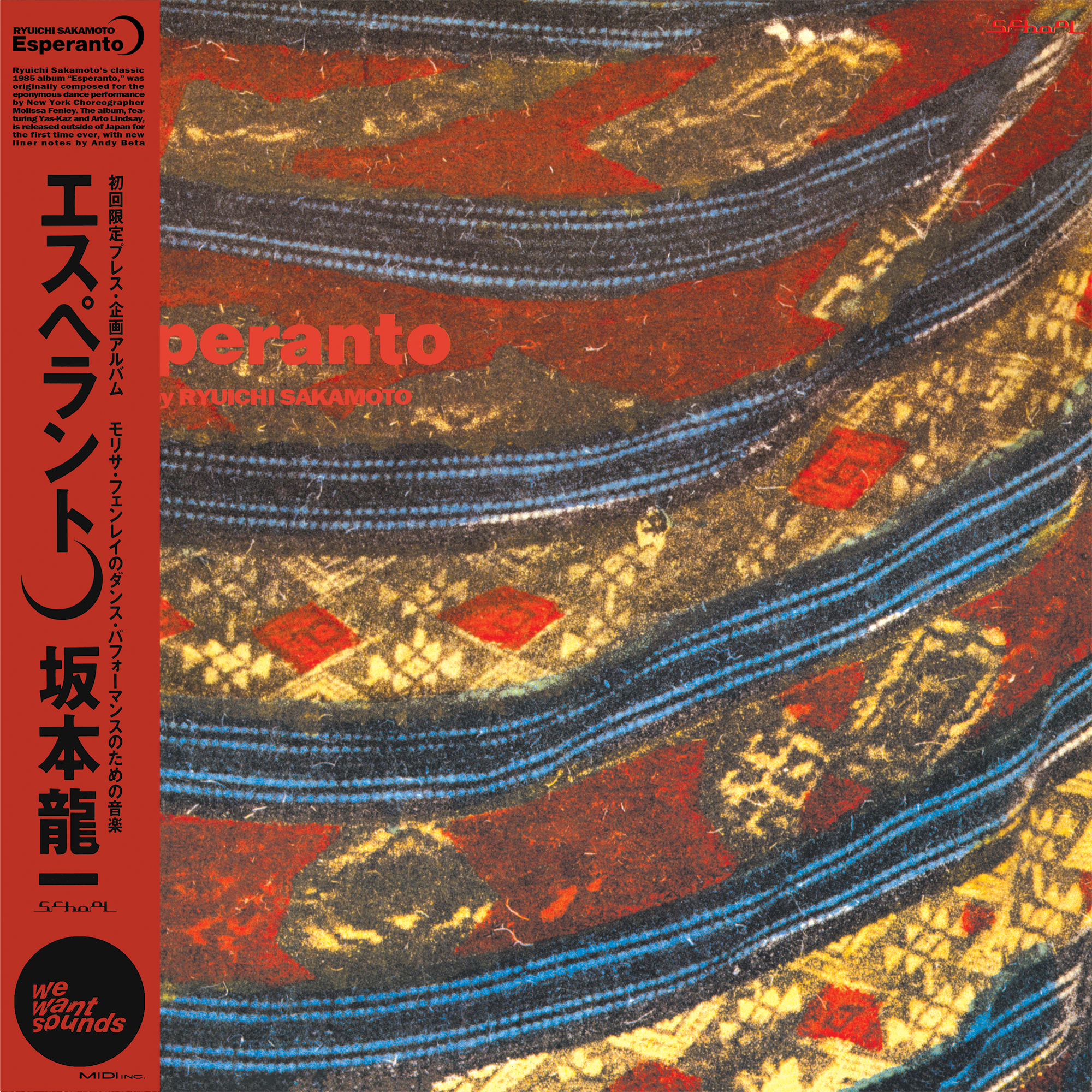
Ryuichi Sakamoto ‘Esperanto’
(Originally released October 5th 1985, and re-released by WEWANTSOUNDS in 2021)
Already riding the visionary synth waves with the Yello Magic Orchestra and through his inspirational projects with David Sylvian, Sakamoto went on to score success with the plaintive, harrowing Merry Christmas Mr. Lawrence soundtrack. The sixth solo release in that oeuvre however was a return to his more leftfield, challenging roots: a marked change from the semi-classical emotional pulls of the film soundtrack. A kind of cutting-edge theatre and ballet, Esperanto was composed for a performance by the New York choreographer Molissa Fenlay with contributions from the Lounge Lizard’s experimentalist guitarist Arto Lindsay and the Japanese percussionist Yas-Kaz. You’ll have to use your imagination to how it all worked visually – though later on art luminaries Kit Fitzgerald and Paul Garrin turned this soundtrack into a conceptual video project.
Sounding very much of its time, on the burgeoning apex of dance music and early hip-hop, electro, this polygenesis experiment often evokes both the Art Of Noise and Herbie Hancock’s ‘Rockit’. Using a super-sized computer and state-of-the-art tech, Sakamoto merged futuristic Japanese theatre with a mechanical Ballets Russes, workshop shunts and huffs with the plastic, and electronic body music with Hassell’s fourth world music inspirations.
Snatches of voices, dialogue get cut-up and looped in a primal techno performance of mechanics, rippled and tapping corrugated percussion, synth waves and oscillations, serial piano dashes and rolls, and Japanese spiritual garden enchantments. At any one time you can pick up the echoes of the Penguin Café Orchestra, Phillip Glass, Stockhausen, Kraftwerk, Depeche Mode, Eno and Populäre Mechanik within the often mysterious, exotic performativity. Motoring, bobbing or in staccato mode, Sakamoto produces a futurist dance set of suspense and experiment, an omnivorous feast of programmed and real sounds. Though very dated by today’s technological wizardry standards, the electro workshop Esperanto remains an iconic, very much sought after work well worth its admission price and indeed reissue status.
U.S. Girls ‘Half Free’
(4AD) 25th September 2015
Beckoned to the label hotbed of deconstructive cerebral pop 4AD, the Illinois raised, Toronto relocated, polygenesis songstress Meg Remy continues to entrance with her latest U.S. Girls album Half Free. Transmogrifying the template evocation of Ronnie Spector and The Shirelles with a fresh perspective and penchant for glitter ball maladies, neon lit dub and glamorous scintillating bubblegum pop, Remy’s moiety of revisionary girl group backbeats and venerable candid highly unsettling laments address a myriad of issues, from disparity between the sexes to the growing pains of modern womanhood – cue the unsettling vignette ‘Telephone Play No.1’, which plays out as a phone call catch-up between siblings but then unnervingly reinforces a deep resentment on stereotype psychology.
Remy’s most dazzling, hypnotically eclectic album yet, both thematically and musically, Half Free is essentially a highly sophisticated and gracefully slick pop triumph: On a parallel, alternative timeline this could have been (stay with me on this one) a Camille Paglia championed Madonna era masterpiece from the mid 80s; her veracious sensual heartache and woozy dream like escapism is certainly evoked at various times throughout the album. Madonna aside, Meg takes on the mantle of various female personalities and vamps, but often desexualizes and reduces their carnal allure to a sense of isolation and discomfort. Her cast of troubled personas this time around owes a debt to the characters of John Cassavetes and Michael Ondaatje, and to the broken-down protagonist of a lost 70s plaintive disco classic.
Channelling the wallowing despair of Ronnie Spector, and loosely walking the line of the troubled Nora Bass from Ondaatje’s Coming Through Slaughter novel, on the opening churning looped melodrama ‘Sororal Feelings’, Meg’s sisterly pleads of the broken wife yearningly progress through a Lee Hazelwood envisioned deep southern soundtrack: the strange fruit and methodology metaphorically replaced: “Going to hang myself. Hang myself from a family tree.” An emotional draining start, which grows on you with repeated plays, Sororal is followed up by the super-charged dub reggae hybrid ‘Damn That Valley’ – perhaps the most refreshing slice of on-message pop in 2015. Taking her cue from the acclaimed journalist Sebastian Junger’s Afghanistan front reportage War chronicles, Meg rages with a reverberating wall of sonic shrilling and grief as an imagined war widower riling against the futility and platitude sentiments of the government. Beating out an electro sound clash, part N.Y. City no wave of the early 80s, part Mikey Dread Jamaican sunshine dancehall, long-time collaborator and Toronto producer Onakabazien takes it to the next level.
Already aired, ‘Damn That Valley’ is the most colourfully vibrant of a trio of songs released since May in the run up towards the release of the LP. The second of these, ‘Woman’s Work’, closes the album. Extended from its more radio and video friendly version to a fading seven-minute plus requiem, the female gaze is sinisterly reproached by a Cindy Sherman posing façade and operatically Baroque gilded Moroder soundtrack. Amplifying the venerable atmospherics, Meg is joined by the siren sonic ethereal pitch of Ice Cream’s Amanda Grist – who can also be heard doubling-up on the Damn That Valley vocals – as they traverse an eerie veil of Catholic electro.
Released in more recent weeks, the last of this trio ‘Window Shades’ revives Gloria Ann Taylor’s original 70s unrequited disco ballad ‘Love Is A Hurting Thing’. Stumbled upon by Meg’s husband and DFA label signed artist Slim Twig (who contributes throughout the album); a touch of Madonna blusher and woozy glitter ball noir is added, whilst the universal theme is updated: apparently written after Meg watched the cod-autobiographical documentary Part Of Me, the meme circus spotlight on the life of Katie Perry that even with a soft coating of saccharine idolisation exposes the cracks and fatuous nature of celebratory.
Elsewhere on the album Meg appropriates the bubble gum glam of Bolan and the spikey punk beat of The Misfits on ‘Sed Knife’ (a minimal poem set to a bouncing backbeat, originally released as the B-side to 2012’s ‘Rosemary’). Whilst she offers an elegantly cool, misty oscillating sonorous bass-y air of mystique, – piqued by cold war jarred piano note suspense – clandestine variant on the spy thriller soundtrack with ‘New Age Thriller’: The actual battle it seems is between self-respect and male pressure. Red lipstick marks the collar of the churning, western guitar twanged, murky ‘Red Comes In Many Shades’, which itself borrows from the put-upon, downbeat beauty of Nancy Sinatra. Whether intentional or not, the song sounds like a slowed down version of New Age Thriller, and thematically dissects the struggles, and in this case, the betrayal of an affair.
Honing the darkness and plight of what was always celebrated as the innocent, teenage growing pains of adolescence with more gravitas, Meg’s robust themes swim amorphously through the dry-ice, crystal waves of the late 70s and 80s to produce a post-modern pop triumph. Progressing from the basement tapes and reverberated Spector sonic loops of the past to her latest incarnation as the pining pop artist, Meg Remy’s production values are highly ambitious: her previous work a precursor series of experimental outings. Without a doubt Half Free is her best, most mature, meticulous and glorious sounding collection of songs yet.
If you’ve enjoyed this selection, the writing, or been led down a rabbit hole into new musical terrains of aural pleasure, and if you can, then you can now show your appreciation by keeping the Monolith Cocktail afloat by donating via Ko-Fi.
For the last 15 years both me and the MC team have featured and supported music, musicians and labels we love across genres from around the world: ones that we think you’ll want to know about. No content on the site is paid for or sponsored, and we only feature artists we have genuine respect for /love or interest in. If you enjoy our reviews (and we often write long, thoughtful ones), found a new artist you admire or if we have featured you or artists you represent and would like to say thanks or show support, than you can now buy us a coffee or donate via https://ko-fi.com/monolithcocktail
Temple of DOOM: A tribute to MF DOOM
January 4, 2021
Playlist/Writings: Dominic Valvona

It’s taken a number of months to filter through to the fans and general public, but the Fantastic Four nemesis inspired indomitable Hip-Hop pioneer MF DOOM, nee Daniel Dumile, passed away at the age of 49 on October 31st 2020. Though hardly a disguise, the metal-faced maverick of underground Hip-Hop kept up a cool, mysterious persona throughout a thirty-year career.
Perhaps one of the most influential game-changers in the genre and beyond, DOOM will be sorely missed as an independent producer, rapper and mentor. Difficult to pin down, and keep up with, DOOM’s various masked turns (MF DOOM, DOOM, Viktor Vaughn, Zev Love X) churned out a prolific catalogue of quality inventive and playful meta-reference releases; starting out as Zev Love X in the Long Island (“but we call it strong”) ‘Kausing Much Damage’ trio on the cusps of the 1990s. Abbreviated to KMD, they released one of the best debuts of the entire era, the now classic, Mr. Hood. Tragedy struck with the loss of his brother and fellow KMD founder, Subroc – who died in a freeway-crossing incident in 1993. Further more the trio’s label Elektra shelved an admittedly controversial, baiting follow-up album: Black Bastards. All of which led to five years in the wilderness for DOOM, before reinvention and the donning of the mask that would stay with him for the rest of his music career. Re-energised and determined to plough his own furrow, DOOM began a solo and collaborative pathway, working with a who’s who of underground talent, including Madlib and Danger Mouse. From the Monsta Island Czars all-stars team-up to his work with a new breed of rap stars, such as Bishop Nehru, DOOM leaves behind one of the greatest legacies in Hip-Hop: though his influence, creativeness, wordplay, pop culture, visuals and artwork reaches far beyond rap music.
Having followed DOOM since the very beginning, I’m personally saddened to see him gone. But in the spirit of celebrating that vast cannon of work I’ve selected a curated pathway through the DOOM cosmology. I’ve also included an essay-style deconstruction I wrote many years ago on KMD’s debut album, Mr. Hood – which you can find below the playlist link.
KMD ‘Mr. Hood’: A Deconstruction

From the shores of Long Island, hauling out of New York’s surrounding areas: K.M.D – an abbreviation that is either referred to as ‘Kausing much damage’ or ‘A positive kause in a much damaged society’, take your pick – were part of the second Native Tongues wave; alongside the likes of Brand Nubian and The Black Sheep.
Originally formed whilst still in collage, the Dumile brothers, better known as Zev Love X and Subroc, along with their sparing partner Rodan – also known as Jade 1 – started rapping together during the late 80s.
Rodan soon slipped off the radar, preferring to finish his education, rather then pursue the dream. His replacement was the gemstone moniker Onyx.
The trio soon caught a break with a guest slot on the 3rd Bass LP ‘The Cactus’ in 1989. Dante Ross, the A & R man and member of The Stimulated Dummies Hip Hop production squad, was impressed enough with their innovative skills and delivery to sign them up to the Elektra label the following year, after the Bass’s M.C Search recommended them.
Zev Love X was of course the early birth of that metal-faced maverick and crusader MF Doom, an alter-ego he later adopted, born out of the tragic loss in 1993, of his brother, Subroc – he was killed in a tragic freeway crossing incident – and at the embittered rage he felt after being sucked into the music industry and then un-ceremoniously spat out.
On ‘Mr.Hood’ you can already hear his undercurrent of cynicism and contempt, articulated in a flam-filled throaty delivery; like an apprentice you can hear him finding his feet.
The debut album caused minor ripples, with its adopted use of racist sound bites, miss-directed use of English learning instructional records from a bygone era, appropriation of much loved kids TV puppets and antagonizing Malcolm X speeches.
K.M.D cleverly assembled a collage of inflammatory and discriminate language, which ran alongside satirist and humorous skits – much in the style of De La Soul and The Leaders of the New School – to create a highly ambitious commentary on their own backyard.
There is a central theme running throughout, with the Mr.Hood character of the title popping up in many memorable sketches and miss-quoted exchanges. His contributions are lifted from an old English language course from the 50s, which throws up all kinds of unpleasant, and quite frankly racist, dialogue – well it comes out that way when manipulated as it is.
Our protagonist’s colloquial tones open up the album, as he goes on a wrecky to the local downtown Long Island jewellery shop (misspelt intentionally on the album I assume) where he bumps into Zev Love X, as he attempts to wrangle with the proprietor over an over-priced watch.
He appears on near enough every other track; with his oddly misconstrued and out of kilter with the modern times queries and insults, which draw sharp breaths of disbelief from the trio, or deride ridicule from the local cast of characters, as he meets them on the street corner or at the barbershop. Also making a surprisingly eye-opening appearance is Sesame Street favourites, Bert and Ernie, who amusingly turn up on the tracks, ‘Who Me? (with an answer from Dr.Bert)’, to look for “little sambo”, and on ‘Humrush”, where they nasality hum along with the group.
Musically the beats are of an R’n’B and soulful nature, with samples crafted from the Isley Brothers – their ‘I Turned You On’ track is sampled on ‘Who Me?’ – Shirly Ellis – her ‘The Nitty Gritty’ is used on ‘Nitty Gritty’ – O C Smith – ‘You Can See Forever’ and ‘The Sounds Of Goodbye’ used on ‘Peachfuzz’ – and The Hassles – ‘4’o’Clock In The Mom’hour Of The Wolf’ is used on ‘Subroc’s Mission.
There’s even a re-appropriated use and borrowing of both De La Souls ‘Potholes In My Lawn’, on the tune ‘Hard Wit No Hoe’, and A Tribe Called Quest’s ‘Push It Along’ on ‘Nitty Gritty’.
All these beats are sophisticatedly layered and used quite subtly as a backdrop – you will notice that they are always lower in the mix, and seldom overawe the vocals – and is made-up of 808 drums, Jim Reed-esque organs, tightly packed thumping drum beats, taut wielding guitars, Stax rich bass lines and harmonica.
Any scratching is kept to a bare minimum, with the turntables skills arriving via the acute cutting, mixing and editing of samples and speech; mostly executed by Subroc.
The lyrics are dished out amongst the trio, with each member usually taking it in turns to step to the mic or guest in a solo spot, though Zev does tend to get a larger share then his partners.
A heavily laid-down mix of pro-Muslim rhetoric and protest goes up against the often-whimsical episodes and comical storytelling. Inspired by the teachings of Clarence Smith (known as Clarence 13X), and his splinter group the Five-Percent Nation – an offshoot from the Nation Of Islam – many of the lyrics encapsulate the beliefs and metaphors of this Harlem born sect.
On the opening track ‘Mr.Hood at Piocalles Jewelry Shop/Crackpot’, Zev articulately jams in the syllables, unravelling a kindergarten tale of following the wrong path in life:
“I first met Crackpot in like Head Starts,
And then I knew he wasn’t too head smart cuz as I scribbled in art,
He insisted on standing in the sandbox to collect unknown amounts
of pebbles and stones to throw rocks!’
By the end of the song, Zev bemoans to Mr.Hood about the negative allusions made about his race, and at the depressingly predictable decisions certain black males take: reminding them of their heritage and lack of ambition he almost exasperates:
“We built this place man,
We’re the Gods of the Universe,
Kings and Queens of the planet!”
On the highlight track ‘Who Me?’ Zev rides on the derogatory comments and ethnographical implanted stereotypes of the black race:
“Pigment, is this a defect in birth?
Or more an example of the richness on Earth?
Lips and eyes dominant traits of our race,
Does not take up 95% of one’s face.”
Sibling Subroc, has a more skipping and bouncy terminology to compensate against Zev’s; his own jam ‘Subroc’s Mission’ follows along a loose narrative of street slang and obscure references, whilst the birthstone kid, Onyx, unleashes his torrent of humorous one-liners and staccato stuttering tongue-twisters, over the soul shaking R’n’B horn blasting ‘Boogie Man’:
“Now check it, don’t miss this,
Lick them while I diss this sarcastic bastard,
Of which I’ve been mastered”.
They’re joined by fellow Afrocentric compatriots, Brand Nubians, on the super-rap wordplay riffing chorus-line of ‘Nitty Gritty’. The Nub’s own grandly entitled Grand Puba Maxwell, gives the K.M.D boys a run for their money on the lyrical wordplay:
“God cipher divine as I build on the incline,
Quick to help another, cause I know I’m a get mine.
Build-powers think they’re hard, but they’re killin’ their own kind,
Emphatically no, divine evil got him in his mind”.
Each of the two crews members line-up to show off their dexterity, which revolves around quotes, passages and the teachings of both the Nation of Islam and the offshoot 5-Percenters, name-checking the grand design of their creator, the Pyramids and oppression.
The rest of the album often throws up some unsettling mentions of “white devils” and other uneasy rhetoric, with a heavy use of Malcolm X’s speeches – his famous “he’s a wolf, and you’re a sheep” quote appears on the ‘Boy Who Cried Wolf’ track – from his Nation of Islam days; though it must be pointed out that he eventually publicly left the group, breaking away to form his own splinter group which had a far mellower attitude to the white folk – as long as they were Muslim, of course. But this often cited prose is always counter-acted with the satirical use of cartoon characters and humorous anecdotes.
Mr.Hood’ holds up extremely well, proving to be one the more accomplished albums from the period. Those conceptual themes, so essential to many of the Native Tongues collective, shows exceptional moments of creativity and talent.
Unfortunately their follow-up, no messing, album ‘Black Bastards’, didn’t sit well with the label, held-back and consigned to the vaults for nearly a decade. Both its content and provocative imagery – the cover sports a rubber-lipped characterture of a poor unfortunate black fellow with a noose around its neck, waiting in anticipation for someone to fill the blanks in a fatal game of Hangman. An ultimatum of sorts was made, ditch the cover or else! Of course this never happened and the album was never put out until a later reissue package under another label finally made it to the public – I was lucky to get a rather rough bootleg tape version of 5-tracks, but waited until the noughties to finally get my hands on a proper copy.
‘Black Bastards’ omitted much of the more comical interaction and playfulness, replacing the colourful samples catalogue with a more layered backing, and adding a more heavily laden set of lyrics to counter the whimsical postulations of the debut.
The birthstone kid had of course already jumped ship, leaving the brothers alone to deliver the much-anticipated second LP. Subroc took on all the production duties and assemblage of samples and beats; creating so much material that his brother used some of these sessions on his later MF Doom recordings – including most notably ‘Hoe Cakes’ from the seminal cuisine obsessed ‘Mmm Food’ album.
Tragically as I’ve already mentioned, Subroc was killed whilst crossing a freeway in 1993, putting the albums release into further turmoil, though the controversy over the artwork had already put a kibosh on it ever making the stores.
With the album shelved, resigned to cover dust in the vaults, Zev Love X began his wilderness years. It would be 5 more years until he was re-born as the vengeful MF Doom.
Dominic Valvona
Hi, my name is Dominic Valvona and I’m the Founder of the music/culture blog monolithcocktail.com For the last ten years I’ve featured and supported music, musicians and labels we love across genres from around the world that we think you’ll want to know about. No content on the site is paid for or sponsored and we only feature artists we have genuine respect for /love. If you enjoy our reviews (and we often write long, thoughtful ones), found a new artist you admire or if we have featured you or artists you represent and would like to buy us a coffee at https://ko-fi.com/monolithcocktail to say cheers for spreading the word, then that would be much appreciated.
Tickling Our Fancy 082: Jimi Tenor, Slift, Ani Glass, Rainbow Island…
February 18, 2020
ALBUM REVIEWS
Dominic Valvona
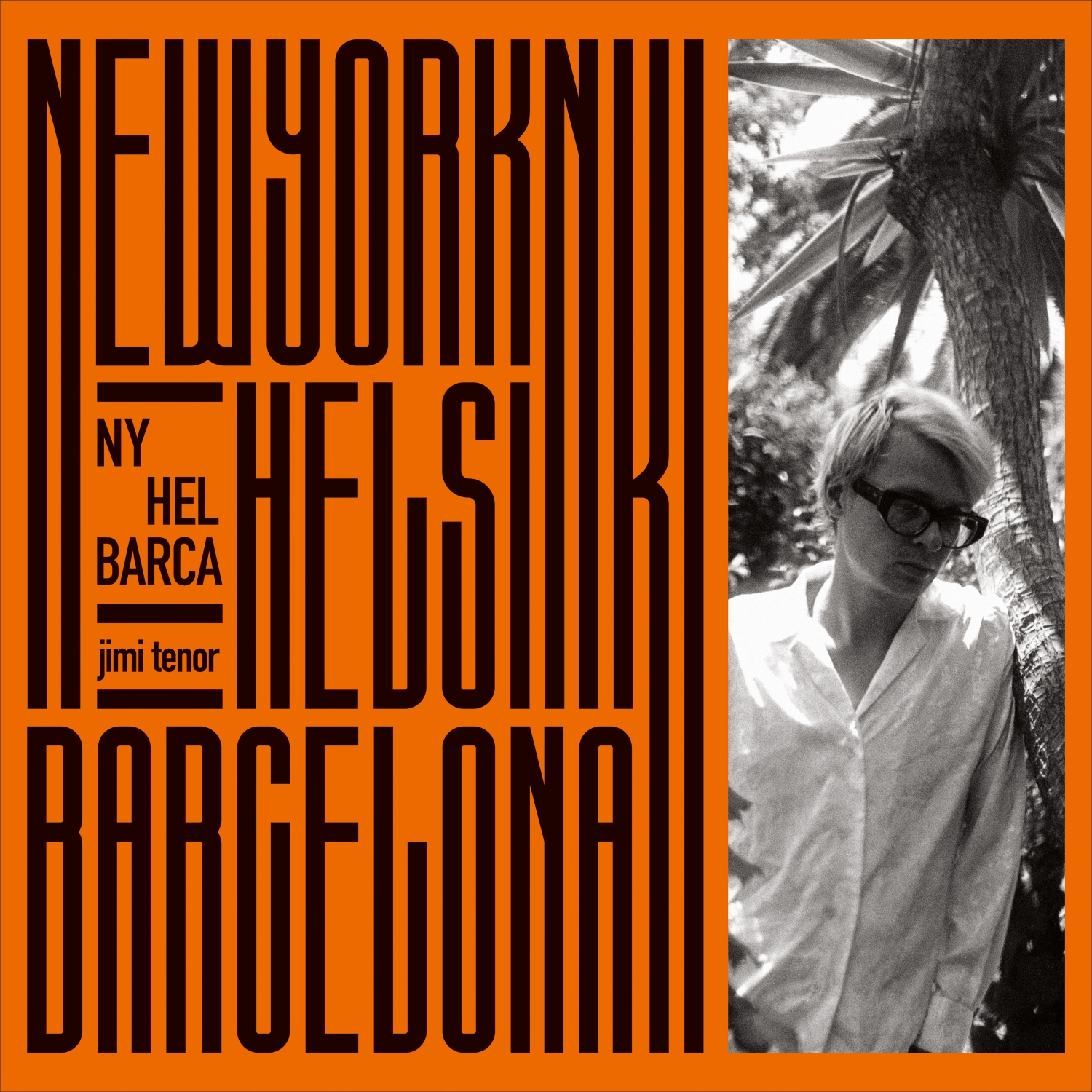
I certainly never planned it that way (honest) but artists from the experimental electronica and ambient music fields dominate this month’s roundup. To start off there’s the all-spanning retrospective collection of the eclectic Finnish electronic one-man cult Jimi Tenor to salivate over; the double album compilation NY, Hel, Barca collects together many of his most seminal tracks from across his first six solo LPs (many of which have been deleted). Finally, after at least four years in the making, Welsh vaporous and diaphanous chanteuse Ani Glass releases her debut album, the cerebral electro pop Mirores. And Rainbow Island produces a colourful fuck-up of cosmic spasmodic bandy effects and break beats on their new LP, Illmatrix.
From the more ambient and understated end of electronic music, there’s the Dan Burwood and James Wilson collaboration for the Tokyo-based obscure label, Kirigirsu Recordings, Singapore Police Background, and musician/composer/sound artist Tony James Morton, inspired by the early developments in Hip-Hop, uses real-time sampled vinyl to create minimalist soundscapes on his new mini-CD release Fragments.
A few exceptions though, including the latest grandiose space opus from the Toulouse trio, Slift, the most recent dreamy shoegaze EP from the Brooklyn trio Vivienne Eastwood and a Turkish-Scandinavian progressive jazz fusion obscurity, Matao with Atilla Engin’s Turkish Delight.
Jimi Tenor ‘NY, Hel, Barca’
(Bureau B) LP/6th March 2020
Birthed from a combination of the signature instrument that permeates his omnivorous mixed bag of prolific music and the 70s teen idol, Finnish cult multi instrumentalist and composer Jimi Tenor is unarguably due this double-album overhaul. The later-ego of one Lassi O.T. Lehto, the eclectic ennui-shifting moniker has both absorbed and created a host of fusions over a thirty-plus period – and still continues to do so -, first as the leader of Jimi Tenor And His Shamans and then as both a solo artist and collaborator on a wealth of projects with such luminaries as Tony Allen, Abdissa Assefai, Nicole Willis and The Soul Investigators. From bootyliscious disco funk to Afrojazz and cult soundtracks, Tenor has covered it all. This retrospective spread concentrates on the first six solo albums (of a so far eleven album solo run); covering tracks from the inaugural 1994 Sähkömies album for the Finnish label Sähko, right through to the new millennium and the 2001 album Utopian Dream.
Recorded, hence the first location city of this collection’s title, in a New York apartment on rudimentary equipment, Sähkömies spawned Tenor’s first major club hit, the silly but infectious electro-house bouncing ‘Take Me Baby’. A game-changer, this DAF meets Depeche Mode on the dancefloor earworm took off after Tenor performed it at the Berlin Love Parade. It made the charts in the process and led to a three-album deal for Tenor with the iconic Warp label in the second half of the 1990s. That popular dance anthem is unsurprisingly included here alongside the more erratic burbling Bruno Spoerii-rubs-against-early-hip-hop kooky ‘Teräsmies’ and electronic chemistry set space quirk ‘Voimamies’. The follow-up album for the same label – released a year later – Europa, is represented by the Afro-Techno and minimalist Basic Channel apparition ‘Fantom’, the gyrating sexed-up Yello-House ‘A Daughter Of The Snow’, and lush flute-y Library Music with hints of a Japanese Style Council ‘Unmentionables’.
Moving on to Warp in ’97, the first of a trio of albums for the edgy-electronic label, Intervision, lends four tracks of differing creative influences to this compilation. There’s a transmogrified Lalo Schifrin meets Theremin aria quivered homage to ‘Tesla’, the Glam-skulking Alan Vega seedy ‘Sugardaddy’, Shintaro Sakamoto Kosmische ‘Shore Hotel’ and bubbly, filtered Acid-Jazz spruced ‘Outta Space’. Next up in that run, Orgamism is no less escapist and polygenesis. An Afro-futurist safari of clockwork birds-of-paradise, psychedelic folk flute and square-wave buzzes are conduced on the first track of that cusp-of-a-new-millennia album, ‘Xinotape Heat’, which also kicks off this whole collection. Playing up that millennial doomsday, ‘Year Of The Apocalypse’ is a David Axlerod Biblical somehow waylaid to the Paradise Garage – the rapture played out to a Chicago House piano gospel funk. From the same album the compiler’s of this retrospective have also chosen the jazzy lounge Zombies brooding ‘My Mind’; a semi-romantic curiosity that features Tenor on wafting serenaded saxophone duties.
Into the noughties, the final Warp album, Out Of Nowhere, finds Tenor on a funk odyssey vibe, taking Curtis Mayfield on another of those Acid-Jazz and sitar psychedelic trips with the high value production and commercial ‘Spell’. On the same record, Tenor pairs up with the Riga Symphony Orchestra to spin Easy Listening into a Rotary Connection meets Johnny Richards’ thriller of drama and suspense on ‘Backbone Of Night’. By this point we’re long used to the exotic menagerie of styles and crossovers, and by the time we reach the final solo album, 2001’s Utopian Dream, nothing is a surprise to the ears: The tile track, with its cyber elephant nozzle vacuuming, silly robotic voices and flighty saxophone transduces Marshall Jefferson, whilst on ‘Natural Cosmic Relief’ Tenor puts a pseudo Ian Curtis vocal over a kooky Japanese psychedelic backing.
As likely to hear Orlando Julius and Don Cherry as the Pet Shop Boys, International Pony or Ennio Morricone on acid, Jimi Tenor can mix the commercial dancefloor hit with the most cult and fused of sounds too. On this mixed bag, which is neither linear or thematic in it’s choosing and alignment, Garage follows Jazz follows Library Music oddities follows Funk follows Psychedelic Soul. A great place to start for those new to the influential composer, NY, Hel, Barca is a great retrospective but also an opportunity to own a load of tracks from a deleted back catalogue. Hopefully this compilation will also rightly cement a fairly underground maverick’s place in the development and story of electronic music fusion. There’s something, nearly, for everyone on this twenty-track purview.
Ani Glass ‘Mirores’
(Recordiau Neb) LP/6th March 2020

It has taken a good few years to materialize but finally the gauze-y vaporous debut album from the Welsh synth-pop siren Ani Glass has dreamily emerged. Since being enticed back to the Welsh hinterlands after leaving the frothy pop belles The Pipettes, the Cardiff native has been busy both with post-graduate studies in Urban And Regional Development (graduating in 2018) and involvement in promoting, through her solo musical projects, the Welsh and overlapping Cornish languages – all the way back in 2013, Ani joined the Cornish Corsedh, a group that awards those who’ve contributed to the Celtic spirit and bardship of that atavistic culture. The play on words title from this inaugural LP is itself taken, in part, from that West Coast vernacular: ‘miras’ being the Cornish word for “to look”, the Miró bit a nod to Ani’s favourite artist, the Spanish abstract doyen Joan Miró. Mirores we’re told,’essentially translates as ‘Observer’ thus presenting the album as Ani’s observation of the city in which she was born and now lives.’
Arriving four years after her initial solo EP debut Ffrwydrad Tawel the follow-up arrives in the wake of so much turmoil political and geographical turmoil. Now would seem as good a time as any to push a disappearing vernacular and heritage as Brexit emboldens Welsh nationalism. All this obviously feeds into the gossamer woven translucent ethereal pop of Mirores; an album that is based on a wealth of concepts. One of which is of course preservation, but another, the idea of movement and progress both societally speaking, but also in the sense of a journey; the contours of a picturesque Welsh landscape set against the more churning busy urban soundscape – a counterbalance that you’ll hear for yourselves, suffused throughout the atmospheric undulations of nature and sampled speeches, broadcasts.
After studying it so intensely, it will come as no surprise that another underpinning thread of this album, ‘A reaction to the values of capitalism’s priorities over the valued needs of society’s most unfortunate’, is the American-Canadian author activist Jane Jacobs most infamous polemic blast at the “urban renewal” zealots, The Death And Life Of Great American Cities.
In the interregnum between releases Ani learnt a good deal about production. And on Mirores she’s borrowed from some of the best purveyors of synthesized music: Vengalis, Moroder, Jean-Michel Jarre and Arthur Russell. The results of which send Ani through the looking glass of air-y untethered dreaminess. The arty wispy ‘Peiriawaith Perffaith’ (Perfect Machinery) has a touch of Kylie, even a Welsh Carol Rich, about it; the slightly more fearful and less lyrical ‘Cathedral In The Desert’ bears shades of both Soft Cell and early OMD. Taking a vignette style break from the veiled Celtic Avalon synth-pop, Ani merges South African Township gospel with choral Welsh colliery protest yearn on ‘I.B.T.’.
From the glassy transparent to more hazed-dream weaving, from homages to minimalist abstract painter Agnes Martin to lulled activism, Ani Glass’ patience has paid off with a disarmingly sophisticated pop album of subtleties that gradually seep into the unconsciousness.
Slift ‘Ummon’
(Stolen Body Records) 28th February 2020

The Titan themed Ummon is a supersonic Hawkwind, with Steve Vai in tow as a band member, catching a lift on the Silver Surfers’ board, on an adventure into deep space. I could leave it at just that, but I feel duty bound to expand. So here we go. In search of one of the original heaven and earth usurpers, the Titan seer’s Hyperion (god of heavenly light, father to sun, moon and dawn deities Helios, Selene and Eos), the Toulouse trio of Slift go full on space rock opera with an interstellar epic of doom metal and heavy psychedelic prog.
Trudging with ominous intentions as it is grandiose and squalling in a vortex of bombast, this lengthy conceptual opus swirls around a milky way inhabited by our makers: A universe that, as it happens, rocks to a sonic soundtrack of the Cosmic Dead, Ipsissimus, Sabbath, the Black Angels, Dead Meadows, Pink Floyd, the already Hawkwind, and at its most star-gazing, Spiritualized. Though that’s only half the story. It’s a bastardization of Viking pagan-metal and psych on the fantastical salute to the gods, ‘Thousand Helmets Of Gold’; ‘Width Of A Circle’ era Ronson battles a subdued motorik Can and baggy Stone Roses on the three-parter, ‘Citadel On A Satellite’; and a Teutonic bashing version of The Skids and Saints on the cosmic-punk curtain closer ‘Lions, Tigers And Bears’.
Galactus sized riffs and crescendos are numerous as the stars in the Mother Sky on this Moorcockian misadventure. Ummon is a solid heavy trip with plenty of space dust and ethereal dreamy escapism to break-up the onslaught. Slift go big and bold as the entice Hyperion back from exile to clear up the mess and spread some light on a space-rock epic that is anything but pompous. Slift, we salute you in your endeavor. Keep up the good work.
Singapore Police Background ‘Antiworlds’
(Kirigirisu Recordings) Out Now
Quiet of late even for a label that operates under the radar in relative obscurity, Neil Debnam’s (of cult favourites Flying Kites and, post-accident, Broken Shoulder fame) Tokyo-based label makes a welcome return in 2020 with another understated ambient exploration of soporific entrancing unease. The brilliantly named Singapore Police Background is a collaboration between Dan Burwood of Calm! and James Wilson of Opt Out; two artists that have previously both released ambient peregrinations on the Moonside Tapes facilitators.
Methodology wise the pair recorded together but polished off their evanescent ‘hypnagogic’ (the state immediately before falling asleep) experiments separately. This process results in an indolent suite of purred and murmuring ambient drone ‘Fragments’ and sedative induced reverberating lingers. Antiworlds is in most cases disarming and drifting; the barest traces of piano and guitar hidden beneath hazy square waves transmitted from the ether. Haunted, often creeping, elements of uncertainty can be found on the wearily entitled ‘See The Conkering Heroine Comes/Watching Newsnight Taking Valium’ couplet of malaise. This is continued on the equally entrancing ebb and flow sonic diptych ‘Iridescent Bodies/Under The Awning’. Standing out some what from the Boards Of Canada, sound In Silence and Eno-esque dreamy traverses, the beautifully contemplative ‘Outside The Blossoming Trees Wept Like Waiting Room Laughter’ is a conjuncture of a musical haiku, a scene from post WWII art house Japanese cinema and something lamentably and resigned, dreamt up by Ryūnosuke Akutagawa. There are actually some real nice understated melodic evocations to be found on this languid affair: the opening fragmentary drone being a prime example.
Intermittent signs of the elements and humanity often surface among the oscillations and dissipated swathes on an album by a collaborative partnership that shows potential and promise. Hopefully we’ll hear more from this effective duo in the future.
Tony James Morton ‘Fragments’
(Focused Silence) Mini-CD/17th February 2020

It might not sound apparent but the cylindrical generated ambience, opaque minimalist stirrings and waves of the musician/composer/sound artist Tony James Morton’s latest ‘fragmentary’ experiments are, process wise, inspired by techniques used in the early development of Hip-Hop; namely, creating new improvised sonic traverses in real time from samples taken directly from vinyl.
‘A fragmented interpretation’ as the PR spill describes it; Morton passes his sources through a custom-built sampler using a specially created visual programme language for music, the Max/MSP. That technique and method is interesting enough, pitching, as it does, Morton as a kind of conceptual DJ. But the most important thing is: how’s it sound.
Well, the sound is quite subtle with soundscapes materializing slowly, building towards fizzled peaks before dissipating gradually. ‘Fragment #1’ of this gently spinning moiety features enervated cause drones and crystallizations that eventually go on to form a heavenly momentum of cosmic rays. The second Fragment has a rotor like motion that turns out a vaporous melody. A distant muffled thunder acts as a deep bass whilst the dreamy and mysterious are evoked from Morton’s sustained pulses and buzzes.
The Fragments material is a stimulating, stirring couplet of improvisations; an evanescent passing of sound that has its moments.
Matao with Atilla Engin ‘Turkish Delight’
(Arsivplak/Guerssen) LP/19th February 2020
It won’t surprise you to learn that this latest obscure quirk from the Guerssen hub (this time via the Arsivplak label) is yet another example of a record that didn’t quite make the grade; a strange brew from the edges of jazz-fusion, close but not close enough technically, artistically or inventive wise to break through a crowded market.
A Turkish Delight from the Danish recorded union of the Matao trio and Atilla Engin, this rare (intentionally I’m sure) convergence of Turkish traditional music and progressive jazz, bordering at times on cult library music and at others on Krautrock (Agitation Free, Xhol Caravan) was only ever released in Denmark, but never, surprisingly, released in its spiritual home of Turkey. An exotic shimmy of belly-dancer sequins and trinkets, noodling and whirling between souk rock and sublime porte kitsch, Engin’s rootsy Turkish galloping and rattling percussion goes up against the 5/8 signature wah-wah, fuzzed and choppy electric guitar and clavinet-like electric piano on a series of instrumental jams that ape Santana, Pink Floyd, Passport, Elias Rahbani and Mustafa Ozkent.
Taking another punt a year on, the label is now releasing this exotic curio on limited vinyl, and again via the usual digital channels. Whether you need this Turkish flavoured fusion in your life or not remains debatable. However, that’s not to say there isn’t some interesting highlights or fine playing as the mixed Scandi-Turk quartet certainly stoke up a far zappy progressive noise and dynamic enough rhythm.
Anyone recently introduced to such modern Turkish psychedelic movers like Altin Gun will love it.
Vivienne Eastwood ‘Home Movies’
EP/2nd January 2020

Appropriating the grand disheveled dame of punk couture, but with a slight change in compass point direction, the gauze-y American dream-wave and shoegaze band Vivienne Eastwood have drifted into my inbox of submissions this month with a melodious, submerged in a dreamy liquid EP of sepia Home Movies. With scant information it seems the trio have been knocking around the lush flange-reverb coated scene of hazy guitar pop for eight years.
Progressively more dreamy in a wash of phaser drifting echo, previous releases have been more cause, fuzzy and distorted compared to this six-track of lo fi diaphanous malingering. Less Ariel Pink or No Age and more Lowtide and Slowdive, Home Movies’ sound spirals in a mirror-y fashion between the veiled layering pop of Sam Flex meets Lush opener ‘Hanging Gardens’, and the John Hughes soundtracked by Holy Wave ‘Afterall’. Nearer the backend of the EP, ‘No Toes’ seems to slide towards acoustic grunge.
It’s a lovely dream-pop, with certain post-punk edge, kind of EP, rich with wafting recollections and yearnings.
Rainbow Island ‘Illmatrix’
(Artetetra) LP/2nd February 2020

For a label synonymous for the chthonian and dangerous, the latest spams of omnivorous derangement from the sugarcoated named Italian quartet Rainbow Island at least finds some cosmic levity amongst the despair of the age. Though the recondite facilitator label responsible for this, as usual, limited release – the Italian experimental underground specialists Artetera – says it features darker, heavier sonorities than usual, Illmatrix rebounds across a frazzled bubble bath of bandy and bendy effects and off-kilter drum breaks. Certainly under a multitude of stresses and contorted manipulations, the fucked-up matrix has its moments of tangible rhythm and even melody to lock onto.
From a polygenesis source, with all four members spread throughout the UK, Thailand and their native Italy, the Rome conceived Islanders have pulled and stretched in all directions. Somehow it all comes together though, in an admittedly weird fashion. The opening candy kook ‘Jesterbus Ride’ is simultaneously lax, primal, Kosmische and psychedelic; a spherical chemistry of ever-shifting ideas that sounds like a Trip-Hop meets Library Music remix-in-motion by Andrew Weatherall. Elsewhere you hear what sounds like someone repeatedly hitting plastic tubes with a paddle reverberating beats, obscured masked voices and conversations, the clashing of blunt swords and menacing vacuum reversals.
It’s an odd sonic world indeed; a cosmology that harries the more mysterious sedation of Cluster with a 2-Step Dub beat (‘Simmia’), evokes the spasm-industrial sound of Populäre Mechanik (‘Cacao Hip Mini’) and plays Ping-Pong with Autechre and Unlimited outtakes Can (‘Dropzone’). It’s dance music on the verge of a nervous breakdown in one instance, utterly fucked-up the next, a deranged colorful information overload transduced into a concentrated energy of warped brilliance.
If you find Rainbow Island somehow cute, then you can always try the more sobering augurs of apocalyptic doom from label mate and fellow compatriot Giancarlo Brambillia. Released at the same time as the Illmatrix LP – a double bill if you like – the Milan-based maverick pitches the end of the “human epoch” on his limited cassette tape discourse Bee Extinction. Under the Kuthi Jin moniker, the drone-monger gives a less than optimistic outcome to our chances of survival.
Both albums from Artetetra inhabit a similar anxiety yet couldn’t sound more different. Go seek out, and whilst you’re at it take a perusal of the label’s entire back catalogue. You won’t be disappointed.
The Monolith Cocktail is now on Ko-Fi
Hi, my name is Dominic Valvona and I’m the Founder of the music/culture blog monolithcocktail.com For the last ten years I’ve featured and supported music, musicians and labels we love across genres from around the world that we think you’ll want to know about. No content on the site is paid for or sponsored and we only feature artists we have genuine respect for /love. If you enjoy our reviews (and we often write long, thoughtful ones), found a new artist you admire or if we have featured you or artists you represent and would like to buy us a coffee at https://ko-fi.com/monolithcocktail to say cheers for spreading the word, then that would be much appreciated.
Rapture & Verse April 2017: Murs, Mongrels, Joey Bada$$…
April 18, 2017
THE ESSENTIAL HIP-HOP REVUE
Words: Matt Oliver


Amidst the debate whether you’re pro-playlist Drake or give a damn about Kendrick, this is the real hip-hop bombshell. To quote Chris Rock: “love rap & hip-hop – tired of defending it”.
Within the ever turning reissue market and with the bun fight of Record Store Day upon us, some re-ups you may wanna check. Slick Rick’s ‘Children’s Story’ is now logically an illustrated volume for bedtime, Blockhead’s ‘Uncle Tony’s Colouring Book’ gets a reboot on wax, and DOOM & Danger Mouse’s ‘DANGERDOOM’ goes deluxe. More bizarre (and Rapture & Verse had to check it wasn’t April 1st), is the new Raekwon album that can be worn as a backpack, where the audio kind of works as a rumble pack for your body. True story.
Singles/EPs
IAMBENJI’s instrumental righteousness summons a headbanging vision of ‘Jesus Walks’ with ‘Its You’, chopping exultant soul into pulpit pressure: a true four minute warning. Korede’s ‘Humble Beginnings’, a smart mini-expo showing what he’s made for J-Live, has got a chunky drum-n-groove jangle to it like heavy jewellery. An impressive half dozen hangout between Juga-Naut and Micall Parknsun lobs ‘Six Bricks’, with Cappo and Scorzayzee adding extra mortar to a fortress built in Nottingham and with a strict policy on the fundamentals. The highly strung Smellington Piff and Sean Peng take solace under ‘Purple Trees’ in a bid to divert jazz cat, beret and goatee vibes, and the champion sound of Mongrels’ ‘Attack the Monolith’ is now an awesome remix movement. The ‘Attack the Megalith’ EP beams a bat signal to a big time octet, including Hashfinger sliding over a cop car bonnet and Third Person Lurkin going a grim-reapin’, to transform the Yorkshire supernovas second time around.
CunninLynguists’ fine ‘The Rose’ EP gets the barricade rocking with soul-stirring open letters eloquently asking questions and patiently waiting for answers. Aiming to make a difference as much as it whispers to bask in the sun, Maurice Brown & Talib Kweli’s ‘Stand Up’ is the epitome of peaceful protest, and something of a nice dilemma to have. Killa Kyleon’s well executed ‘Killing Over Jays’ is a nifty two-way that’s both cautionary tale and industry/cultural call out, to an oxymoron of smoothed out, box fresh trap. ‘Alone by Choice’ but with plenty to offer, Jango gives you a seven track pick n mix of sharp trap and plush roll outs with the flow to match; a GQ EP pretty much pinpointing what your ears need as and when.
Albums
Should you heed the call of Raekwon’s ‘The Wild?’ It’s not a bad shout, showing something close to vintage Wu-gambinoism, open to the conceptual (‘Marvin’, a fine biopic of Marvin Gaye with Cee-Lo; some alphabet aerobics alongside P.U.R.E.), and cajoling Lil Wayne into a decent verse for ‘My Corner’. The huntsman mentality pulls the album over the line just when the glossy crossovers airing his dirty Gucci laundry in public threaten to nullify the threat.
In a way the same can be said for Joey Bada$$’ ‘All-Amerikkkan Bada$$’, whose clear and effective state of the nation addresses come presented in funk and soul pageantry aiming for Chance the Rapper’s all rounder status. The appeal of the supple, easygoing beats, polished hooks and timely gathering together of everyone is obvious (2pac comparisons come easy as well), though it’s an album that settles into a groove and perhaps at times isn’t quite as hungry as the subject matter would welcome. Nonetheless, Bada$$’ development makes him a candidate for end of year honours.
Turntable ringmasters Boca45 and DJ Woody saddle up into the sunset again on ‘Carousel’, where you must be this fly to join the ride. In a myriad of needles, spins and samples, BluRum13 threatening to steal the show as mic anchor, breaks needing another belt notch, and energetic fun (not forgetting the obligatory electro pop-n-lock), technique and entertainment takes lesser DJs to clown school when these two go back to back. BocaWoody boss the big top like Barnum.
Indiana’s irresistible force Freddie Gibbs is someone not for dislodging. Like a Bond villain who doesn’t know what a P45 is, ‘You Only Live 2wice’ does grim low riding, lord praising, quiet storming and do-or-die roulette spinning, all the while Gibbs reads the gangsta gospel slash riot act with that swerveless flow of his going all in. At eight tracks long you’d be forgiven for thinking he’s left a lot in the locker, but it’s a pretty comprehensive, fluid body of work.
Renowned rhyme brawler Apathy cuts the mic adrift and goes instrumental for ‘Dive Medicine: Chapter One’, displaying sonic skills well in tune with his usual vocal rips. Soulful but with plenty of punch, as if Apathy will look you straight in the eye before rattling your ribcage, the sleeve may suggest boom bap kitted out for submarines, but the likes of ‘Scuba Groupie’ and ‘Subterranean Meditation’ are happier chilling in a deckchair amidst a bunch of mean, street-ready flexes. Re-upping straight bat boom bap from social media’s olden days, Sraw’s ‘Beat Weeks’ is the Scandinavian timetabling instrumentals that go bump in the night, jazzy foot tappers over coffee, and wheezing whacks to the loaf. Nice enough to take some time with. The mind expansions of Frenchman Al’Tarba look at instrumentals through a prism mounted atop a plasma ball, ‘La Nuit Se Lève’ the score to a film only streaming in flashbacks you haven’t experienced yet, caught in a cold-veined tailspin with dubstep choking on its exhaust.
Wired between confessional and eccentric wisdom explaining ‘How to Fake Your Own Death’, backwater hip-hop from Ecid unfurls a slow and precise, me-against-everything scuzz of discomfort holding up a mirror to the world in a typical Midwest post-malaise. One to be passed around huddles of the disenfranchised. They should then transfer to the occult of A7PHA, Anticon messengers Doesone and Mestizo delivering a dense, walls-are-closing-in distortion of reality “releasing heat so hot it disinfects metal”, and whose silhouettes make the ponderous and rabid unnerving bedfellows, reaching a crescendo/crisis point. A collection so strictly underground it should come with its own canary, Copywrite and Planet Asia are naturally all about taking care of business with ‘Unfinished & Untitled’; forget the title, these are prizefighters in all their pomp.
With the reserved flow of an all-seeing shaman, Zaire Black stamps the passport of DJ Drez’ global trip of simmering colours on the studious ‘Aficionados’, making work a mismatch of a slight vocal reticence and rich, probing production (check ‘I Will I Want’ for its range of unlikely samples, though ‘That DJ’ goes a bit EDM loco). A collection of remixes for Lessondary’s top drawer ‘Ahead of Schedule’ will do just nicely: ‘RE:Scheduled’ has twangy funk and head nod high noons from Jamie Cooley, Donwill, Jermiside and ZFTP slipping nicely into a support role going toe-to-toe with the quality of the original. The smoothness of Brooklyn’s ScienZe orders ‘Kind of Dessert’ to go with the nightcap he’s suggesting you come up for; cosmopolitan swirls, boho brainstorming, neo-soul niceness and vibes that wake when they want before hitting the ground running. Still one of the game’s surest things when it comes to storytelling, Murs as ‘Captain California’ drops you slap bang in the middle of the action, as well as walking you through tales step by step with simple start-beginning-end structures. Buoyant beats help Murs’ Mills-n-Booning no end, and his show-n-prove still ain’t bad either.
Mixtapes
Dishing out more mixtape pleasure, Donnie Propa goes to town on the play and record buttons for a second Masta Ace masterclass; a standard fix-up of classics, one-offs etc, ‘The Ace Tape volume 2’ won’t let a single beat, rhyme, cut or blend miss a step. A great DJ curates a great emcee.
Front and centre this month: Danny Brown’s must-see, Evidence’s latest weather report, The Last Skeptik going split-screen, and Bohze’s weekend attire.
 Monolith Cocktail Blog