THE MONTHLY DIGEST INCLUDES A CLUTCH OF ACCUMULATED NEW MUSIC REVIEWS PLUS VOLUME 97 OF THE SOCIAL INTER-GENERATIONAL/ECLECTIC AND ANNIVERSARY ALBUMS CELEBRATING PLAYLIST.

Cosmic Ear
___/THE NEW___
LIUN + The Science Fiction Band ‘Does It Make You Love Your Life?’
(Heartcore Records) 23rd May 2025
In the making for five years the latest release from the alliance between the vocalist, artist, bandleader Lucia Cadotsch, producer and saxophonist Wanja Slavin and an ensemble of woodwind, strings and brass and electronic foils, is a magic electroacoustic trip of fantasy and fairytale.
With a voice that floats over contours, swirls, piques, spins, scales, plunges and drops, the dreaminess of Cadotsch is enhanced by an attentive soundtrack that is simultaneously dramatic, theatrical and musical. And yet it’s all somehow tethered to the urban, with its use of electronica (from synth pop to breakbeat and trip-hop) and often subtle but deep bass vibrations and near alien and imposing atmospheres.
Questioning and testing the boundaries without ever falling apart nor sounding incongruous, every turn and sound is perfectly balanced; from the near swells of orchestration that wouldn’t sound out of place in a Hans Zimmer or David Arnold score, to the jazzy woodland spritely breakbeating woodwind evocations of Otis Sandsjö found on the orbital progressive-jazz celestial ‘Bloody Breakup’ – the latter reference is unsurprising, as one of Cadotsch’s other projects, the Speak Low Trio, includes both Sandsjö and Peter Eldh amongst its ranks.
Everything is channelled into a concrete tripsy fusion of contemporary dance and the balletic, with the themes, the language translucently yet deeply connective; a yearn or near wistful set of observations on modern romance, attachment/detachment, place, belonging, and finding your feet and legacy in an increasingly cold and hostile environment. Titles include a reference to the iconic movie dame Faye Dunaway, who has gone through the mill herself, a unique tough singular talent hampered by travails aplenty, mental health, alcoholism, and the focus last year of a major (and candid) documentary, and an innocuous but curiously and inspired observed daddy longleg.
Though Swiss herself, most of Cadotsch’s partners in this union are from or work in Berlin, where this album was forged. The groundwork and ideas of which began back at the start of this decade. Does It Make You Love Your Life? was ushered in and helped on its way by Kurt Rosenwinkel, the American jazz guitarist and polymath who not only plays the synth on this album but also releases it on his own label Heartcore Records.
The talent pool is in no question, the enablers and musicians that join the mizzle and fuzzed, the blizzard-like chuffs, the lifting and raspy saxophone odes, etudes, cycles and sentiments of Slavin’s cinematic, stage and jazzy saxophone, and Cadotsch’s often melisma vocals adding an extended flavour of the playful, the worldly, the sentimental, the classical and avant-garde. At times this sound palette invokes a touch of Southeast Asia, of Indonesian Gamelan, and at others, like a strange version of a Satie music box.
Stirrings of the Tara Clerkson Trio, Qrauer, Ruth Goller, Kreidler, Alex Stolze, Nyman and Glass are transduced into urban pop and trip-jazz for an accomplished, often understated but impactful, album that has soul and magic in equal parts. Well worth the wait.
Your 33 Black Angels ‘Eternities II’
Released last month
Generously gifting us a vinyl version of their eighth album, the second ‘eternities’ volume (arriving six years after the first), the simultaneously pumped, glammed, moody and near psychedelic three-decade spanning New York kissed angels prove able and dynamic at integrating a fusion of electronic genres and ideas into their sound.
Sophisticated and lively, from the dancefloor to the darker creeping recesses of the underground and strip-light flickered underpasses, Dan Rosato, Josh Westfal and Daniel Bombach seem fresh and in an experimental mood. Considering the amount of time they’ve been producing their signature mix of “bubble house”, “acid pop wonder”, “electro” and “dream-pop”, they sound neither jaded nor tired. In fact, as familiar as the elements and various inspirations are, this is a dynamic record of the brooding and near euphoric. This is electronic pop with a certain, sometimes menacing, edge and depth of quality seldom heard in much synth-pop or electronic-indie music. For there is a range of effects, of influences and references both human and near otherworldly and alien – cosmic celestial sounds alongside more twisted and creepy affected voices; dystopian sci-fi against the cool chrome possibilities of Moroder-like arpeggiator.
The difference in mood and style is almost on a track-by-track basis; the atmospheric scene-setting ‘Test_Run’ opener of digital metaphor and cyber dread is from the underpass, or the Tresor bunker, with its pulsated broody beats, hints of Fad Gadget, a less bombastic Muse and Brian Reitzell, whilst the very next track, the surrealist novel inspired ‘Macunaíma’, has a strange, removed Latin electronica feel of vocoder lyrics, tripping memories and touch of Banco da Gaia new age trance. The latter of those two is a reference to the surrealist polymath Mário de Andrade’s famous novel, which I said to have either ushered in or been in the first flourish of what’s termed Brazil Modernism. Far too convoluted to get into here in the form of a music review, the protagonist, “a hero without any character”, stands as magical-realist metaphor for Brazil’s three races origin myths – the white, the black and the native. Director Joaquim Pedro de Andrade made a loosely based film of the story in 1969, changing some of the plot, with our main character near corrupted after leaving his Amazonian home for the city (Rio in the film, Sao Paulo in the book), and undergoing a transformation, changing his very race, meeting terrorists and birthing his only child – his own birth a really strange miracle, emerging fully formed as an adult from his elderly mother. Read into it what you will, but here there is a vibe that is swimmingly tripsy and soaring.
Further on, ‘Light Life’ seems to ape early Richard James and his Polygon Windows phase on Warp, and yet shimmers with globules and digital trails to emerge as a sci-fi pop version of Daft Punk and Beat Connection. ‘It’s In’ reminded me of 80s NYC electronic and synth collage experimentation, post-punk-disco, Front 242, Cabaret Voltaire and the Yellow Magic Orchestra. And ‘Shaggy & Joe’ could be a quirky kiss-off of Foster The People, Apparat and Reflektor era Arcade Fire. They finish off the album on a sort of Cathy Pacific serenade of glissando and plucked gilded beautifully reflective strings. But they really reminded me in places of Barbarian era Young Knifes. The grit and energy perhaps, and the acceleration. Computerised synthesisers, the drum pad fuzzes, breaks and machine-made beats and something of the kinetic is balanced by more humanistic-played instruments and vocals – although at times this voice is filtered, transformed through R&B pop-style vocoder and twisted into the near demonic. A constant thread of lip smacked rebuttals, of breakup and the machine is interlocked into a futuristic dance catalogue of eternal footprints.
Spelterini ‘Hyomon-Dako/Magnésie’
(Kythibong) 20th May 2025
Well-received last time on the Monolith Cocktail (back in 2022 as part of my Perusal #36 column with their ‘Paréidolie’ drum and drone journey) the French quartet are back with a “diptych” style album of longform rhythmic trances and squalling focused intensities.
Named in honour of the 19th century Italian tightrope walker, Maria Spelterini, who’s death-defying stunts included numerous handicapped (blindfolded, manacled or with weighted peach baskets strapped to her feet) walks across the Niagara Falls, the Spelterini pairing of Papier Tigre, La Colonie de Vacances and Chasusse Trappe members likewise walk a similar path, balancing between influences from the post-punk, minimalist, drone, kosmische and krautrock spheres. Once again keeping balanced whilst straddling the rhythmic, the droning, the hypnotising and wilder and more industrial, Pierre-Antoine Parois, Arthur de la Grandière, Meriadeg Orgebin and Nicolas Joubo emerge from their arts lab incubator to progress over what used to be in old money, the equivalent of two sides of a standard LP format.
Covering Side One, if you like, is the staccato turn cymbal splashed motoring (but not motorik) ‘Hyomon-Dako’. The starting point is a Stereolab magnetic bounce and paddled-like drums and dwindled guitars, with an essence of more modern faUSt and Beak>. You’d have to throw in Nurse With A Wound and This Heat as the action seems to build subtly over an entrancing beat that’s one part post-punk and another part locked-in kosmische hypnotism. The finale is a crescendo of harsher, near hardcore and industrial noise and static.
The white powder of magnesium oxide inspired ‘Magnésie’ is another twenty-minute build-up of similar influences but sounds like a transmogrified Velvets at times. Dot-dash-like Morse Code and heavier strains of wielding and welding work in and out of a looping-like concentration of psych-post-punk and needle-registering frequencies.
Spelterini combine their source, influences to create another hypnotising concentration of neo-krautrock and post-punk intensity and an ever-changing progressive trajectory.
Cosmic Ear ‘Traces’
(We Jazz) 25th May 2025
Traces of the Don Cherry sound imbue the debut album from the newly formed Cosmic Ear troupe of celestial and fourth world journeying accomplished intergenerational players. Referencing benchmarks, both familiar sounding and near amorphous geographical points of inspiration, this ensemble embark on the ancient trade routes that connect exotic mirages to straddle a number of inspired jazz soundscapes, rhythms and atmospheres.
No one is more able to carry on the legacy of this album’s spiritual guardian than the Swedish musician, composer and visual artist Christer Bothén, who collaborated frequently with Cherry back in the 70s. Expanding his own skills of instrumentation, and after learning hunter music and taking instruction from the Malian master musician Broema Dombia, Bothén introduced the innovative cornetist to the West African n’goni, a canoe-shaped, dried-animal skin wrapped lute favoured in Mali and its bordering regions. That same instrument now appears here, alongside the Angolan berimbau (a gourd resonating instrument used in Brazilin music) the Malian karignan (a metal scraper) and range of signature jazz instruments, from tenor sax to trumpet (of course), contra bass, clarinets, double bass, piano, various metal and tin sounding percussive tools and the congas.
Furthering the musical scope with Afro sounds (from Afro-jazz to Afro-Brazil and an essence of North Africa and Arabia) the group seamlessly meld flavours and spices, the “brown rice” ingredients, to conjure up their own worldly visionary sound that feeds on Cherry’s explorative work in the 1970s and 1980s; taking in, as referenced on the album’s finale ‘TRACES of Codona and Mali’, Cherry’s Codona triumvirate world fusion and free-jazz crossroads experiment with foils Colin Walcott and Nana Vasconcelos. The echoes ring exotically loud on not only this suite of spindly dulcimer-like threads, both calling and wilder expressions of Albert Ayler-like sax and Miles trumpet, and an overall essence of Alice Coltrane and fourth world possibilities, but across all the album’s six variant mood pieces, travels and motions.
With the leading sideman and instigating Swedish tenor saxophonist Mats Gustafsson, the Croatian roots composer, bandleader and trumpeter force behind the Tropiques, Fire! Orchestra, Angles 9 and Subtropic Arkestra projects Goran Kajfeš, South American studied noted percussionist Juan Romero and bassist and multi-instrumentalist extraordinaire Terbjorn Zetterberg (appearing here under his Kansan Zetterberg alias) completing the circle, the range of experiences is infinite. The quintet expands to include special guest Marianne N´Lemwo, adding a touch more of the West African sound to the varied peregrinations and feel. Within that lineup there’s plenty of crossovers, with various players at various points in their career joining forces: notably Bothén and the reeds experts Gustafsson and Kajfeš, all three Scandinavians having collaborated in various setups over the years.
In practice, this interchange of ideas summons up images of jungles, grasslands, sand dune processions, the cerebral, pining and cosmically mysterious and lunar. On the opening ‘Father and Son’ movement Cherry’s percussive elements – tubular metal instruments, dried beans and rice being shaken like slow waterfalls – mate with bristled and elephant trunk brass and Afro-jazz groove that wouldn’t sound out of place on an Orlando Julius or Peter King track. The near obligatory and worldly free-jazz explorers go to source of inspiration, ‘TRACES of Brown Rice’, draws from the Cherry wellspring but also recalls The John Betsch Society as the group move from the blues to mirage.
A sort of removed, or at less more oblique version of the romantic, ‘Love Train’ certainly has its dreamy evocations and serenades, but progresses from a classical but just off and contemporary enough to slightly jar Abdullah Ibrahim and McCoy Tyner style piano part to echoes of Tangiers and Salah Ragab style Cairo. That is until the horns bleat and scream, cry and climax in near hysterical fits of tumult and emotional discharge. ‘Right Here, Right Now’ features the already mentioned n’goni, but merges a Malian landscape with elements of the AEoC, Andy Haas and the oscillating shimmers of Irmin Schmidt. Sympathetically, and highly atmospheric, the hallucinatory serenades and longing conveyed on ‘Do It (Again)’ once more call upon Cherry’s spirit percussively: the general signature beads that shake and rattle, the textural sounds of instruments unfamiliar to Western ears, forming a lived-in but also fresh and exotic backdrop. There’s a suffix title, “For Sofia Jernberg”, which I believe is a nod to the Ethiopian-born and Swedish adopted singer, improviser and composer, and noted collaborator with her homeland’s most famous export, Hailu Mergia. Whilst nothing is so obvious as to reflect those roots, the track does have a certain vibration and bluesy gauze that could be said to have borrowed from that part of the world, and from Jernberg’s own cross-pollination embrace of the chamber, of jazz, the classical.
A new chapter. A new break. A new legacy-charged and inspired setup from some of Scandinavia’s most important and exploratively adroit players, Cosmic Ear is an open experiment of free, Afro, spiritual, bluesy, rootsy jazz that traverses all points of the African Continent (from South to the West, East and North), South America, the Indian Subcontinent and Arabia, whilst seeking the limitless expanses of the cosmos. A brilliant debut from a mighty fine ensemble of gifted sagacious but playful and experimental artists.
The Mining Co. ‘Treasure In Spain EP’
(PinDrop Records) 30th May 2025
More or less back in the present, or at least with recollections from a much more recent past, the Irish troubadour Michael Gallagher finds gold in his creative home-from-home of Andalusia in Spain. As the title suggests, this is a metaphorical, allegorical treasure of romantism and tender reflections on his muse and partner, but also another chance to bathe in the suffused warmth of Southern Iberia and the inspiring studio of his chosen producer Paco Loco.
Once more in the wings as overseer and foil, Loco (who has worked with the outstanding Josephine Foster, the Jayhawks’ Gary Louris and The Sadies) pitches in on bass and with a touch of glimmered and shimmering sustained Muscle Shoals spiritual organ and what sounds like an opened-up Exiles On Main Street piano – echoes of that iconic dishevelled album can be heard on the EP’s finale, ‘We Are Not Alone’, a country burred amalgamation of the Stones, Josh T Pearson and the Tindersticks in a sort of country-rock séance. That same track carries on the familiar theme of apparitions, spirits, and the supernatural that ran throughout last year’s Classic Monsters album – one of our choice albums 2024 no less –, and to a lesser extent on Gum Card. A creepy invocation, the dead walk amongst us, accompanied by flange effected guitar, harmonies and a full band feel of shambled, breaky heart Stones influences.
Filling out the role of Gallagher’s band is both Rober García and a returning Esteban Perles on drums, and Pablo Errea and Laia Vehí on backing vocals/harmonies. With the feel more or less a comfortable conjuncture of soft Southern soul, R&B backbeats as reimagined by Mick Ronson, Americana and country-rock. Perhaps the most fully realised performance yet, this four-track songbook is the most radio friendly too: which isn’t a bad thing.
With a mix of touching declarations of love and support to his muse and mini dramas, observations and reflections that play with analogies to scarred environments and plaintive souvenir collectors that hide a much deeper, troubling trauma, Treasure In Spain reminded me in parts of John Craigie, the Brakes, the Style Council and Boomtown Rats. Essentially, a well-crafted congruous production of rounded songs that balance paean with the lamented and lilting.
Gallagher’s most commercial, melodiously warm and fully communicated release yet is still rich with his Mining Co. signatures, tweaks, idiosyncrasies, turn-of-phrase and personality. Americana meets the Donegal diaspora after returning to Earth from his cosmological spells and more rooted autobiographical statements. Hopefully after plugging this man’s talents for so many years now, Treasure In Spain will finally shine more light on a under-appreciated songwriting treasure.
___/The Social Playlist Vol. 97___
The Social Playlist is an accumulation of music I love and want to share; tracks from my various DJ sets and residencies over the years; and both selected cuts from those artists, luminaries we’ve lost and those albums celebrating anniversaries each month.
Running for nearly 12 years now, Volume 97 is the latest eclectic and generational spanning playlist come radio show from me – the perfect radio show in fact, devoid of chatter, interruptions and inane self-promotion.
One of the pillars of that playlist series is the anniversary celebrating albums slots: usually 10th, 20th, 30th, 40th, 50th and 60th anniversaries. This month I’ve selected tracks from Albert Ayler’s supernatural apparition sprouting divine styled Spiritual Unity (60 this month); Minnie Riperton’s melliferous and slinking soul fantasy Adventures In Paradise (50th this month); New Order’s third album, the Kraftwerkian, German new waver Lowlife (40 this month); Scott Walker’s harrowed-by-thou-name Tilt (30 this year); and Teenage Fanclub’s Big Star and Crazy Horse imbued Grand Prix (dropping right in the middle of the Britpop phenomena in ‘95).
I always like to select a smattering of recentish releases each month, usually those tunes I missed or didn’t get the room to feature in the site’s exclusively new Monthly Playlist selections: consider it a second chance. May’s edition includes 2025 tracks from MIEN, the Natural Information Society with Bitchin Bajas, Occult Character, The Body, Dis Fig, and Peter Cat.
The rest of the playlist is made-up of tracks I rate, love, wish I owned or indeed do own, from decades of music collecting and DJing. So find RJ Payne, The God Fahim and Knowledge The Pirate on the spook vibes plus Shyheim, Joe Gibbs, Railroad Jerk, Howie B, The Black Lips, Captain Beefheart, Doris, Andre Williams, Kool Kim, Saar Band, The Mice, Toys That Kill, Luke Jenner, The Models, Docteur Nico, Charles Gayle, The Jean-Paul Sartre Experience, Mappa Mundi and French TV.
Tracks in full for Vol. 97 are:::
The Jean-Paul Sartre Experience ‘Einstein’
MIEN ‘Evil People’
Railroad Jerk ‘Don’t Be Jealous’
The Mice ‘Not Proud of the USA’
Captain Beefheart & His Magic Band ‘Click Clack’
Minnie Riperton ‘Feelin’ That The Feeling’s Good’
Saar Band ‘Double Action’
Andrew William’s Velvet Hammer ‘I Miss You So’
Shyheim ‘Here Come The Hits’
Natural Information Society & Bitchin Bajas ‘Nothing Does Not Show’
The Body, Dis Fig ‘Holy Lance (Audiotree Live Version)’
Scott Walker ‘Tilt’
Doris ‘You Never Come Closer’
Albert Ayler ‘Ghosts: First Variation’
RJ Payne, The God Fahim & Knowledge The Pirate ‘THE UGLINESS’
Occult Character ‘She’s A Reptile’
New Order ‘This Time of Night’
Luke Jenner ‘About to Explode’
Docteur Nico ‘Toyei Na Songo’
Joe Gibbs ‘He Prayed Version’
Howie B. ‘How To Suckie’
Kool Kim ‘The Heavenly Sword’
Teenage Fanclub ‘Don’t Look Back’
The Models ‘Bend Me, Shape Me’
Peter Cat ‘Starchamber’
Toys That Kill ‘Psycho Daisies’
Black Lips ‘You’re Dumb’
Charles Gayle ‘Compassion I’
French TV ‘The Kokonino Stomp’
Mappa Mundi ‘Sexafari’
Hi, my name is Dominic Valvona and I’m the Founder of the music/culture blog monolithcocktail.com For the last 15 years both me and the MC team have featured and supported music, musicians and labels we love across genres from around the world: ones that we think you’ll want to know about. No content on the site is paid for or sponsored, and we only feature artists we have genuine respect for /love or interest in. If you enjoy our reviews (and we often write long, thoughtful ones), found a new artist you admire or if we have featured you or artists you represent and would like to say thanks or show support, than you can now buy us a coffee or donate via https://ko-fi.com/monolithcocktail
PLAYLIST/ARCHIVES: DOMINIC VALVONA

The Monolith Cocktail Digest is both home to Dominic Valvona’s long-running eclectic, cross-generational Social Playlist, and a platform for celebrating significant anniversary albums and, more sadly, commemorating those artists we’ve lost in the last month, with pieces from the Archives.
Starting with the 81st edition of that playlist, Dominic has curated a selection of past glories, music from his own collection, reissues, newish tracks and a smattering of choice tunes from albums that have reached either a 60th, 50th, 40th, 30th, 20th or 10th anniversary. In that camp, there’s nods to Yoko Ono’s Feeling The Space, John Lennon’s Mind Games, Alejandro Jodorowsky’s Holy Mountain Soundtrack (see the archive spot piece further down the post) and one of the crowning achievements in documentary, The World At War. All of which have reached the 50th landmark, released and aired as they were in 1973.
A decade later and the electronic/synthesized progenitor Dieter Moebius released both the solo Tonspuren offering and, in communal partnership with krautrock/kosmische pioneer producer Conny Plank and Guru Guru’s maverick drummer-leader Mani Neumeier, the Zero Set albums: both of which have been repackaged and reissued this month. From the same year of 1983, there are tracks from The Rolling Stones’ patchy Undercover and The Fall’s rambunctious magnificent Perverted By Language LPs.
Into the 1990s, and Dominic has chosen representative choices from the Staten Island branch of the shaolin school of kung-fu hip-hop, the Wu-Tang Clan’s classic debut Enter The Wu-Tang (36 Chambers); A Tribe Called Quest’s seminal Midnight Marauders; Bowie’s less than universally championed The Buddha Of Suburbia; and Ritchie Hawtin’s highly influential Plastikman alter-ego intelligent techno masterpiece, Sheet One – another recent reissue, repackaged release.
The rest of the Social features a couple of recent-ish tracks from Lisa Butel and foil Brent Cross, and Royal Flush. And from across the decades and genres, music by Tyvek, Ron House, Mircea Florain, Kong Ney, Crossbones, Lazy Smoke and more… In the Archive section this month, there’s a short piece on Jodorowsky’s alchemist tapestry of esotericism, the Holy Mountain Soundtrack, and from a decade ago, plucked from the back pages, a review of M.I.A.’s Matangi.
TrackList:::
The Rolling Stones ‘Undercover’
The Fall ‘Neighbourhood Of Infinity’
Voluntarios da Patria ‘Io Io’
Tyvek ‘Circular Ruins’
Ron House ‘New Maps Of Hell’
John Lennon ‘Tight A$’
A Bolha ‘E So Curtir’
Yoko Ono ‘Woman Power’
Mircea Florian ‘Harap Alb A Treia Oara Ratacit In Padure’
Jackson Conti ‘Nao Tem Nada Nao’
Moebius/Plank/Neumeier ‘All Repo’
Plastikman ‘Koma’
A Tribe Called Quest ‘We Can Get Down’
Wu-Tang Clan ‘Method Man’
Royal Flush ‘B.O.B.’
Crossbones ‘You Always Get Me Wrong’
Alejandro Jodorowsky ‘Trance Mutation’
Kong Ney ‘Bom Pet’
Luiz Eca ‘La Vamos Nos’
Dick Khoza ‘WD 46 Mendi Road’
Travel Agency ‘Cadillac George’
Danny & Dusty ‘Baby We All Gotta Go Down’
Baker Gurvitz Army ‘The Dreamer’
Under Milkwood ‘Empty Room’
Kaira Ben ‘Mousso Loule’
Moebius ‘Contramio’ Piotr Figiel ‘Skrawek Przestrzeni’
David Bowie ‘Ian Fish UK Heir’
Baaska & Scavelli ‘The Green Hills Of Earth’
Lazy Smoke ‘Sarah Saturday’
Lisa Butel & Brent Cross ‘Vox Canon’
The City Of Prague Philharmonic Orchestra ‘End Theme From The World At War’
ARCHIVE SPOTS

Alejandro Jodorowsky, Don Cherry and Ronald Frangipane ‘Holy Mountain Soundtrack’ 1973
Never formally released at the time of the film itself, the soundtrack to Alejandro Jodorowsky‘s esoteric kool-aid psychedelic movie, The Holy Mountain, has since languished in folklore, only to be bundled out at a later date as part of subsequent DVD reissues. I myself have relied upon the good-nature of others to obtain my copy.
Though the ins-an-outs of musical accreditation remain somewhat recondite and obscure – Jodorowsky taking the lions share –, the well-revered avant-jazz cornetist, Don Cherry, and composer Ronald Frangipane (credits include playing on The Midnight Cowboy and Barberella scores) both played an integral and major part in playing and producing this potted spiritual and alchemical mind trip. Meandering eastern dirges and fluted love swanned serenades meet cult funky B-movie cuts and the less memorable vignettes, used to create the enlightened scenes and atmospherics. ‘Trance Mutation’ for my money, entrancing and ritualistically Kabbalah and Eastern arts/Tibetan hums as it is, cries Cherry. But don’t expect anything close to revelatory; as this soundtrack is for the most part mediocre.

M.I.A. ‘Matangi’ 2013
(Taken from Our Daily Bread 022)
Not so much a klaxon sounding clarion call as a reaffirmation of the voracious M.I.A. manifesto, the latest ‘hyperbolic’ riot of polygenesis colour and sound, Matangi, is quite a measured, translucent, and sparkly in places, personal affair. Mellowed somewhat by the delay in its release by more than a year (at one point M.I.A. threatened to leak the record online, frustrated at the label’s negative response – apparently it wasn’t dark enough for them!).
But fear not as that same explosive ennui driven mix of earth-shaking bhangra, boombox subversion and Arabian chic – as evidenced on the last three records – still permeates and threatens to piss on the apathetic parade: Indecorous to a fault, yet dangerously alive and exciting.
Following in the family name tradition of the last three albums, Mathangi ‘Maya’ Arulpragasam explores the etymological source of her own namesake, the Hindu goddess Matangi. Found amongst the ‘untouchables’ – the poor and destitute – in the slums, Matangi chose to live away from the temples of the gods, to gain a deeper understanding and knowledge of the lower castes: the salt of the earth so to speak. The goddess of inner thought as well as music, her mythical presence and attitude are used as a reference and guide throughout, channeled in the more meditative escapist passages.
A perfect figurehead and encapsulated spirit of the times, a cross-pollinated artist-musician-polymath character seemingly congruous with the Internet, M.I.A. is both an advocate and fierce foil of the digital world. The burgeoning promise of a carefree, interconnected, community, richly educated and informative, has rather disappointingly been hijacked by a camarilla of ‘facilitators’, corporations and an over-zealous state. Intent it seems on eroding free speech and free movement, imposing instead a military style control and surveillance on our lives. In short…. we’ve been sold down the river.
None of this is new to M.I.A. of course, already a well publicised supporter of Wikileaks and its defacto – exiled to the Ecuadorian embassy in London – leader Julian Assange (who recently opened for a M.I.A. performance in New York, via a skype link, and is said to have contributed to the schizoid dubstep Matangi LP track, ‘atTENTion’). But with the ongoing revelations of Edward Snowdon and the increasing torrid of abusive vitriol from her detractors (mostly it must be said from America), there’s more than enough material to transduce into anger, even if M.I.A. and her augury warning, ‘THE MESSAGE’ (the opening gambit from the 2010 MAYA LP), pretty much summed it all up: “iPhone connected to the internet/ Connected to the Goggle/ Connected to the government.”
Using a similar template then, M.I.A. begins with a mantra of intent, delivered over a stuttering electric current: “Ain’t Dalai Lama, Ain’t Sai Baba/ My words are my armour, and you’re about to meet your kharma.” From then on in she amorphously twists and turns, from protestation to romantic stomp, cutting up and reworking R&B, pop and Hip Hop into ringside swagger (‘Only 1 U!’), bombastic gangsta strut (‘Warriors’) and bubblegum dancehall (‘Come Walk With Us’).
Hardly light on rhetoric – whether collecting all the data of hate and criticism, leveled against her (including the ‘one-finger’ Super Bowl debacle, N.Y. Times spread and accusations of provocation), or banging heads on the lack of originality in culture and railing against our failure to fight the systems that seek to turn everything into a humongous pile of shit: “If you only live once, why keep doing the same shit?”
‘Bad Girls’, ‘Bring The Noize’ and ‘Y.A.L.A.’ have all previously been made public in the long run-up to this fourth LP – the original Bad Girls in incubated form was first aired on the 2010 mixtape, Vicki Leeks, later to be accompanied by a car-crazy, Sheiks-do-Hip Hop wild video in 2012. This triumvirate of revved-up ‘nasty’ tracks more or less gives the album its most hardened, prowling highlights. But as the smoke from those riotous, sophisticated joints clear, M.I.A. choses a more indolent swaying direction (well less threatening anyway), her rhyming couplets smoothed and laid back on the neon lit, Siam charmed, ‘Come Walk With Me’, and lamentably swinging on the bookended pairing of ‘Exodus/Sexodus’.
In case you never got the admonitory memo or understood the ‘Lady of Rage’ the first, second and third time around, she once again rattles off another dictate and denunciation for you, whilst raising the game for those who seek to follow in the vapour trail. M.I.A. proves to be the most exhilarating, provocative artist to crossover into the general psyche, without losing their soul; able to roll with the punches and at least stand for something in a mixed-up world of contrary stifled debate and fucked-up moral objection to all the wrong things.
Hi, my name is Dominic Valvona and I’m the Founder of the music/culture blog monolithcocktail.com For the last ten years I’ve featured and supported music, musicians and labels we love across genres from around the world that we think you’ll want to know about. No content on the site is paid for or sponsored and we only feature artists we have genuine respect for /love. If you enjoy our reviews (and we often write long, thoughtful ones), found a new artist you admire or if we have featured you or artists you represent and would like to buy us a coffee at https://ko-fi.com/monolithcocktail to say cheers for spreading the word, then that would be much appreciated.
The April Digest 2023: Voodoo Drummer, African Head Charge, Marta Salogni and Tom Relleen, Social Playlist #75, Bowie, Sakamoto…
April 11, 2023
New Music on our radar, archive spots and now home to the Monolith Cocktail “cross-generational/cross-genre” Social Playlist
Words/Put Together By Dominic Valvona

A new thread, feed for 2023, the Digest pulls together tracks, videos and snippets of new music plus significant archival material and anniversary celebrating albums or artists -sometimes the odd obituary to those we lost on the way. From now on in the Digest will also be home to the regular Social Playlist (this month reaching its 75th edition); this is our imaginary radioshow, an eclectic playlist of anniversary celebrating albums, a smattering of recent(ish) tunes and the music I’ve loved or owned from across the decades.
April’s edition also features new music from the VOODOO DRUMMER, Peggy Seeger, Marta Salogni & Tom Relleen, Gabrielle Ornate, African Headcharge and Vukovar. And in the Archives there’s a trio of Bowie album celebrations; the 50th anniversary of Aladdin Sane, 40th of Let’s Dance and 30th of Black Tie White Noise (all released in the April of their respective years).
NEW MUSIC IN BRIEF
VOODOO DRUMMER ft. Blaine L. Reininger & Martyn Jacques ‘Aristophanes’ FROGS’
Inspired by he Ancient Greek playwright Aristophanes’ comedic play of the same title, Antiquity beckons on a new triumvirate set of movements from the Greek artist VOODOO DRUMMER and his contributing foils. On this Athenian mythological imbued single of neoclassical, the atavistic, avant-garde, theatrical and yet hopping playfulness, the drumming alter ego is joined by Stavros Parginos on cello, Blaine L. Reininger (of Tuxedomoon note) on violin and Martyn Jacques (Tiger Lillies) echoing the famous line from the play.
The microcosm style odyssey follows the liberating God Dionysus who, despairing of the state of Athens’ tragedies, travels to the underworld of Hades to bring the playwright Euripides back from the dead. And so we begin this adventure to the sounds of rattlesnake percussion, Hellenic pitter-patters, rolling drum rhythms and the plucks of 5th century BC Athens, before rowing across a splish-splashing pizzicato and majestically bowed lake (complete with a croaking frogs chorus), and a sort of Faust meets strangely quaint experimental late 60s vocal. The final movement strikes up a controlled tumult of screaming and harassed viola and “Afro-Dionysus” drums as Hades opens up and swallows whole. An inspired musical, sound experiment performance.
Peggy Seegar ‘The First Time Ever I Saw Your Face’
Of course they’ve all tried, some convincingly, others less so, but the rightly venerated doyen Peggy Seegar is the muse behind this iconic love yearn. And at the age of 87, with all the travails of age and loss, but wisdom and reflection it brings, Peggy reclaims this masterpiece for a new era. ‘The First Time Ever I Saw Your Face’ was originally written for Seeger by her then-estranged lover Ewan MacColl in early 1957. He sang it down a crackling transatlantic phone line to Peggy who had returned to the USA, unwilling to continue an affair with a married man. That was the only time he ever sang the song, but it went on to be covered by most of the greats, and become one of the great standards.
Simplistically stripped to just a piano accompaniment, Peggy’s gracefully works the magic.
Peggy says; I’ve had two life partners, one male and one female, and I have three children and 9 grandchildren. I’ve come to realise that the lyrics can be interpreted in so many ways. Ewan wrote the tune to mimic the heartbeat of someone wildly in love and I used to feel like a soaring bird when I sang this song. Now I’m grounded within it and that makes me happy.
The 2023 recording – released for the 67th anniversary of verse 2 (The first time ever I kissed your mouth…..) – arrives alongside the first segment of a new documentary about Peggy, Scenes From A Life, which details the history of the song.
Marta Salogni and Tom Relleen ‘Internal Logic II‘
A mirage; a twinkle of refractions and calling undulations; the alchemist’s stone drawing light through a filtered bendy lens. Yes, the surroundings found on the new sonic peregrination by Marta Salogni and Tom Relleen invite evocative visions, and convey ambiguous, mysterious settings, landscapes. ‘Internal Logic II’ is just one of a myriad of such electronic cartography inspired traverses from the duo’s upcoming album Music For Open Spaces (released 11th May 2023). If you don’t know the story, Relleen died from cancer just after recording this album, and so this is a posthumous tribute to the late experimental seeker, as a dreamy, deep listen showcase for his foil Salongi.
Conceived between the triangle of the reverent Joshua Tree shrine and desert, the Cornish coastline and London, award winning artist, producer and engineer Marta Salogni (Björk, Holly Herndon, Lucrecia Dalt) and the much missed musician and artist Tom Relleen (Tomaga, Oscillation) conjure alternative road trips, destinations and geography. The first track to be aired, ‘Internal Logic II’ ushers in a promising expanded work.
Gabrielle Ornate ‘Delirium’
Turning on the rawkish rock mode of St. Vincent, but in a 90s invoked musical setting of bohemia, the free-spirited Ornate is back with another full-on maximalist confident pop explosion of “delirious” empowerment. Delirium is just another strong dream spell statement from the versatile artist, who’s currently drawing attention through her Instagram account, the good old word-of-mouth and blogs like mine (although Ornate has also recently featured on the BBC Introducing platform). After a run of equally bestridden pop-rock gems, with hints of Prince and Christina Aguilera, Ornate must be contemplating that first album. I for one will be looking forward to that.
African Head Charge ‘Microdosing’
(On-U Sound)
Taking me back to the toking days of idle youth, splayed out around the Phibb’s house listening to the wafting smoking waves of reggae and dub emanating from Eric’s sound system, one of the most popular choice soundtracks to wile away those 90s hazed evenings was African Head Charge. Of course so very much more, and though generally in a languid intoxication from drugs or booze that iconic project had a lot going on, multilayered in the mix than we first appreciated: Proving highly influential in fact; that sound resonating with subsequent generations, regenerating my decade of the 90s.
After a twelve year layoff, the titans of that UK scene, On-U Sound, have announced the news of a new album entitled A Trip To Bolgatanga. That cult label’s instigator Adrian Sherwood once more joins AHC founding member Bonjo Iyabinghi Noah on another evolving, developing dubby-laden, amorphous Afro trip. Extending that partnership multi-instrumentalist Skip McDonald and fellow Tackhead co-conspirator Doug Wimbish. Drummer Perry Melius, whose involvement in the project dates back to the early 90s, adds a righteous rhythmic heft to a trio of tunes. In addition there are a number of notable fresh recruits. The horns and reeds of Paul Booth, Richard Roswell, and David Fullwood; Ras Manlenzi and Samuel Bergliter on keys; Vince Black on guitar. There’s additional percussion from Shadu Rock Adu, Mensa Aka, Akanuoe Angela, and Emmanuel Okine, strings from Ivan “Celloman” Hussey, plus the voice of the mighty Ghetto Priest. Very special guest, and one of Ghana’s foremost kologo players, King Ayisoba also provides vocals, and demonstrates his dexterity on the traditional two-stringed lute.
From that upcoming album (released July 7th) a taster of the album’s Ghanian roots odyssey, with ‘Microdosing’.
Vukovar ‘An Invisible Prison II/Eternally Yours’
And so the final death knell has been announced for Vukovar. After eight years – despite numerous wrangles and bust-ups, episodes of self-flagellation/self-destruction – the hermetic romantics of cold wave and all its musical bedfellows have signed their fate. The perron foundations are still strong however, with news of a new birth and direction (of a kind). This is a digest of course, so far too much water has flowed down the River Styx to cover in this brief feature, but I feel like a champion for this underground phenomenon – the Monolith has even played host to band members Rick and Dan and their various posts, serialisations over the last few years. And have pretty much covered near enough every release – which in that short period covers at least ten full albums, live ones too, singles and various other releases. And so I will leave you with links to the numerous reviews I’ve penned below.
Vukovar leave one last memento however: the final single, leaving present ‘An Invisible Prison II’ and a B-side of a sort, ‘Eternally Yours’. Treasure them both, as the funeral pyre burns, the alchemists of esoteric new wave are no more.
Vukovar/Michael Cash ‘Monument’
Vukovar ‘The Great Immurement’
Rick Clarke’s The Great Immurement
Rick Clarke ‘Astral Deaths & Astral Lights’
Dan Shea ‘Jukebox Lockdowns/Tribute to Simon Morris’
ARCHIVES/ANNIVERSARY
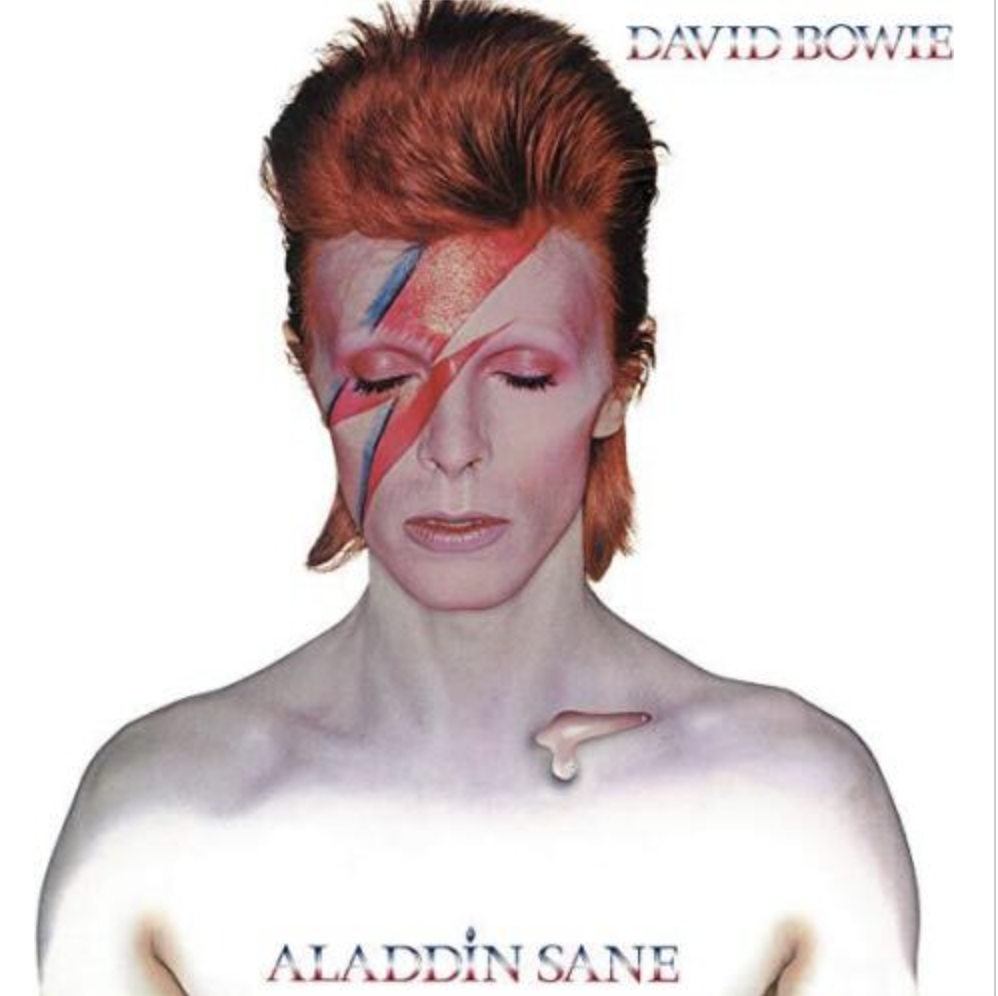
A trio of Bowie album anniversaries of one kind or another this April. The oldest of which, Aladdin Sane is unbelievably 50! Whilst Lets Dance is 40, and Black Tie White Noise is 30 this month.
Killing off Ziggy Stardust to assume the lightning anointed role of Aladdin Sane, Bowie’s split personality only partially moved on from its precursor. If Hunky Dory pretty much alluded to the USA from a distance, then Sane is living it.
From the scuzzed rock’n’roll chugging riffs to the Latin-Cuban styled piano flourishes and ‘give my regards to Broadway’, Bernstein/Brecht passing fancies (thank you Mike Garson on phenomenal pianist chops and theatrical duties), Bowie is cast adrift, absorbed in the aroma of the Americas as an unbalanced gender bending dame, trying to make sense of it all.
Fantastical, yet nostalgic in equal measure, the backlot of 50s drive-ins, Che Guevara styled revolution on the streets of Detroit and heart-crushing laments, effortlessly turn from tears to swaggered rock, with ‘Time’ hanging over proceedings as a monolithic reminder of death: the stereotype rock star death in particular, in the case of the New York Dolls‘ Billy Murcia, as immortalised in the song’s lyrics. That’s all without even mentioning the aching, plaintive malady of ‘Lady Grinning Soul‘; perhaps one of the best things Bowie had ever written to that point.
An ott full-on glamified version of the Stones‘ ‘Let’s Spend The Night Together’ signals Bowie’s intent, a precursor to his love letter to the British ‘beat group’ (1964-67) era, and the covers album Pin Ups – released later in the same year, as the final-finale death knell of Stardust and his alter egos. Glorious, one of Bowie’s greatest fantasies and never out if my top five, if occasionally making the number one spot.
Protesting his innocence, rather too strongly, the $17.5 million dollar-richer Bowie inadvertently struck commercial gold with his 15th studio album Lets Dance. The formative RCA years were replaced with an uneasy transition to EMI, whose pricey acquisition would at least boost the label’s coffers during the mid to late 80s.
Undervalued and inappropriately shafted, Bowie’s long-time collaborator Tony Visconti was dropped at the eleventh hour in favour of Chic’s Nile Rodgers.
What Rodgers brought to the table was a vibrant, polished, more swaggering sound. MTV friendly and able to rouse the masses to their feet – just listen to the infectious gilding that turned a simple backbeat and Kenny Logan-esque guitar lick into something way beyond pop on ‘Modern Love’.
Apart from a few well-meaning but dawdling numbers, this album was really a collection of potential, and in the case of ‘Cat People’, previously successful singles. A jumbled coherence of themes permeate however, as a faux-colonial, abroad in WWII backlit Singapore or Macao, mixed with sharp lemon meringue zoot suit, Bowie launched into a diatribe on domestic abuse, racism and oppression. Taking a special interest in the aborigines cause, he dedicated the eponymous title track to their struggle.
For every guarded metaphorical attack, there was a counterbalanced slide onto the dance floor – ‘Shake It’ one of the thin white duke’s less challenging but contagious soulful paeans to courtship. Presented as a ‘singers’ album, Bowie concentrated on honing his electric-blues vocal delivery, relinquishing the usual playing duties.
Despite selling six million copies and attracting a newfound audience, he resented the attention and increased pressure, especially as Let’s Dance was at odds with his original intentions. He’d blame Rodgers’ varnished production – though this never stopped them from working together again years later on Black Tie White Noise – for sending him in a commercial, but aridly dry artistic direction. However, it’s an impressive work of spritely charming and neon-glowing pop. Just the opening global hot-steeping trilogy of ‘Modern Love’, ‘China Girl’ and ‘Let’s Dance’ would be enough to justify Bowie’s tumultuous decade alone.
Bowie the glowing groom was above the trivial of platitude wedding vowels and practicing special moves for the couple’s signature last dance. For his marriage to Iman Abdulmajid, he composed a typically nuanced musical suite in lovesick tribute.
Part of this ceremonial accompaniment (the opening moiety of ‘The Wedding’ and bookended ‘The Wedding Song’) was integrated, in to what would be, his heralded solo comeback LP, Black Tie White Noise.
Meant as a representation of two entwined cultures, the vaguely eastern romantic saxophone and western backbeat were used as a leitmotif: seeping into a fair share of the album’s twelve tracks. Tied-in with a return to a city that had dominated his songbook with themes of isolation and drug addiction (from Young Americans to Lodger), L.A, would settle for Bowie’s take on the race issues of the day. Jetting in as the whole Rodney King episode sparked off an apocalyptic raging inferno, Bowie both scared and exhilarated, breathed in the toxic air for inspiration.
Eager to refrain from sounding too glib, he wrote the album’s title track as a counterbalance to the grinning, smug optimism found on the “United Colours of Benetton” billboards. Angling his wit at the ethnocentric MOR, Bowie himself liberally drops in slogans and motifs from Marvin Gaye, faux-reggae and New Jack Swing, as he duets with one of the scenes passing stars, Al B Sure!
Mixing it up in the ‘ghetto’, Bowie once again ropes in Niles Rodgers to add some funky gristle and sheen to the jazzy, soulful template. He also took notes from Miles Davis’s late 80s/early 90s adoption of street sounds and be bop; bringing in the revered former Art Ensemble of Chicago’s trumpet player, Lester Bowie, to blow the sort of signature-plaintive squeals and trapped bumble bee solos commonly found in Davis’s repertoire.
The influence works both ways of course, but the omnipresent Scott Walker has always forced Bowie to…well, improve himself. Not so much a competition – Bowie would never quite reach the stripped avant-garde morose of his American rival – the two artists nevertheless spur each other on. Paying back a favour, Bowie covers Walker’s 1978, traversing grown-up, ‘Nite Flights’ (attributed to The Walker Brothers, their last album together as a reformed trio), aping but doing it justice. Whether intentionally imbued by the Walker spirit, the original intended Tin Machine song, ‘You’ve Been Around’ (written with Reeves Gabrels) sounds even more like one of his than Nite Flights.
Former glorious foil, Mick Ronson is heard on the placid, smooth, cover of Cream’s ‘I Feel Free’ (instigated as a result of Ronson’s work on Morrissey’s Your Aresnal) and illusionary rich, autobiographical ‘Jump They Say’: the first time Bowie addresses his half-brother Terry’s suicide in the 80s, by equating his own metaphorical artistic leap.
The odd ‘pop-lite’ tune, Caribbean warbling karaoke ditty (‘Don’t Let Me Down & Down’) and garish, over-egged, rendition of Morrissey’s ‘I Know It’s Going To Happen Someday’ threw spanners into the works, yet Black Tie White Noise pointed towards a wider Bowie renaissance, as it triggered an impending tenure of solid, experimental releases.
Tracks and a few cover version surprises await on the Social Playlist below:
The Social Playlist #75
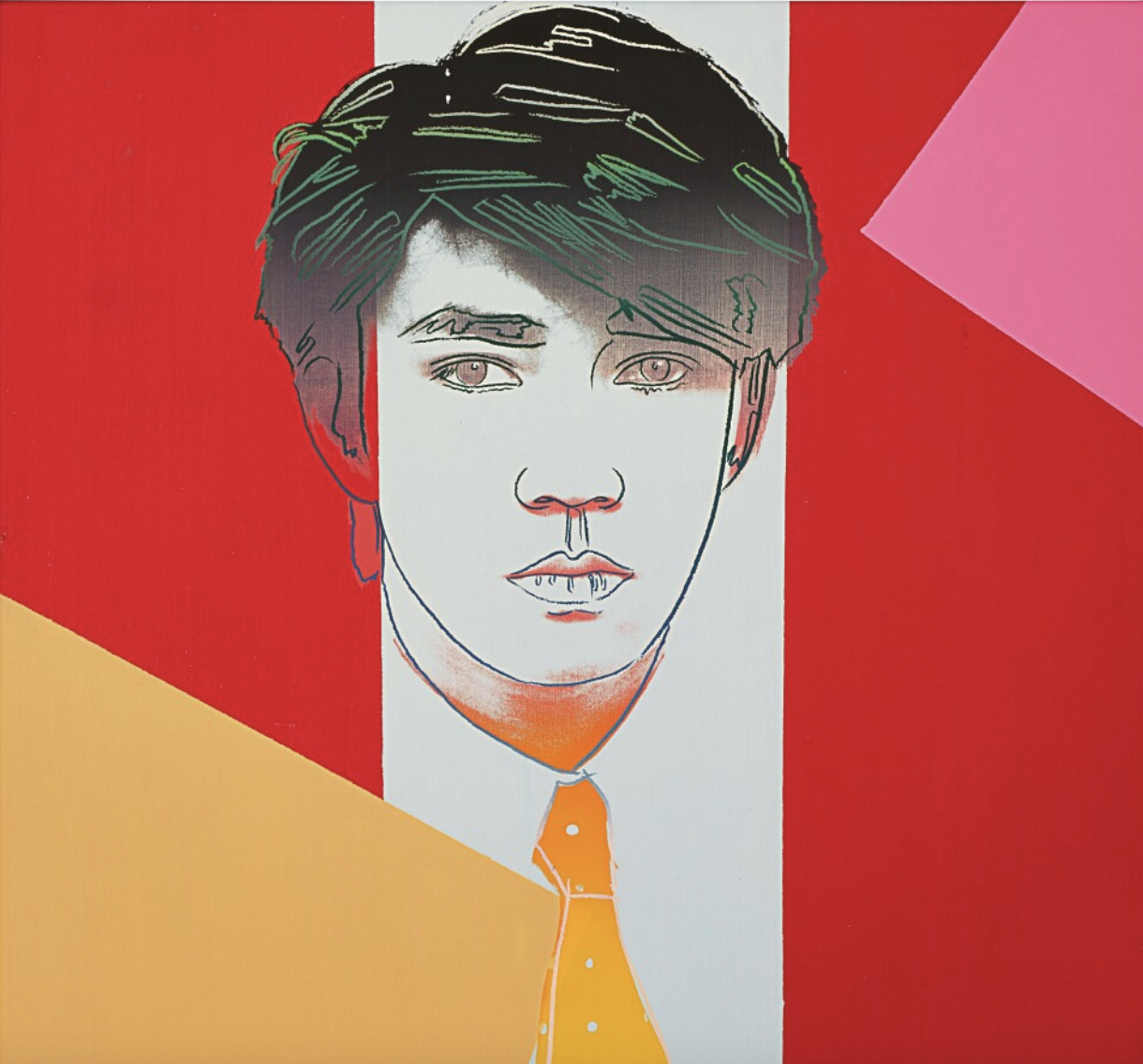
Anniversary Albums And Deaths Marked Alongside An Eclectic Mix Of Cross-Generational Music, Newish Tunes And A Few Surprises.
Just give me two hours of your precious time to expose you to some of the most magical, incredible, eclectic, and freakish music that’s somehow been missed, or not even picked up on the radar. For the Social is my uninterrupted radio show flow of carefully curated music; marking anniversary albums and, sadly, deaths, but also sharing my own favourite discoveries over the decades and a number of new(ish) tracks missed or left out of the blog’s Monthly playlists.
Volume 75 of this long-running playlist series pays a humble, but sizeable, elegy to the recently departed Japanese genius Sakamoto. Whether it was building a unifying electronic music post-war future with the Yellow Magic Orchestra, building Bamboo houses of colour with David Slyvain, scoring the harrowing tragedy of war with Merry Christmas Mr. Lawrence, or winning gold at the Oscars/Grammys for his innovative soundtrack work, the iconic composer reworked neoclassical and electronica into a most influential new language – not totally at odds with its past, yet constantly evolving and probing at the edges of the undiscovered. With over 50 albums, probably a lot more to pick from, I’ve purely chosen personal favourites from a mere smattering of his cannon.
As I mentioned in my Bowie archive spot, and part of this month’s anniversary celebrating albums selections, there’s a healthy dose of original versions and covers from Aladdin Sane, Let’s Dance and Black Tie White Noise. Joining the thinned white duke in the anniversaries are R.E.M. (Murmer is 40 this month), the Freestyle Fellowship (Intercity Griot‘s 30th) and the Yeah Yeah Yeahs (Fever To Tell‘s 20th).
Recent editions to Spotify include Don Cherry and foil Jean Schwarz paying homage to the deity Ornette Coleman on the ’77 Live special Roundtrip, ‘Cat Nip‘ from Levoit‘s Sharav album, and butt end of 2022 tracks from Raw Poetics and Elizabeth M. Drummond. Plus a real catch of choice music from across the ages and genres by New Young Pony Club, Sunny & The Sunliners, Oswald D’Andrea, Fred Pallem, Sweet Tee, Shira Small and others.
THAT TRACK LIST IN FULL________
Octopus ‘Panic In Detroit’
David Bowie ‘Shake It’
New Young Pony Club ‘Hiding On The Staircase’
Ryuichi Sakamoto ‘Just About Enough’
Pralo Ormi e la sua Orchestra ‘Black Pipe’
Ryuichi Sakamoto ‘The Garden Of Poppies’
Leslie Winer ‘John Says’
HEC ‘The Prettiest Star’
R.E.M. ‘West Of The Fields’
Yeah Yeah Yeahs ‘Black Tongue’
Alejandro Bravo ‘Naranjita’
Lulu ‘Watch That Man’
Sunny & The Sunliners ‘I Can Remember’
Oswald D’Andrea ‘Bambou Jump’
Harold McKinney ‘Freedom Jazz Dance’
Freestyle Fellowship ‘Heavyweights’
Ryuichi Sakamoto ‘ADELIC PENGUINS’
Elizabeth M. Drummond ‘Congratulations’
Metro ‘Criminal World’
Terry Riley & John Cale ‘Church Of Anthrax’
Leviot ‘Catnip’
Don Cherry & Jean Schwarz ‘Tribute To Ornette (Live)’
Fred Pellam & Le Sacre du Tympan ‘Stratageme 34’
Ryuichi Sakamoto ‘ISLAND OF WOODS’
David Bowie ‘Miracle Goodbye’
Sweet Tee ‘On The Smooth Tip’
Raw Poetic & Damu The Fudgemunk ‘A Mile In My Head’
Joe Mensah ‘Happy Beat’
Shira Small ‘Lights Gleam Lowly’
David Bowie ‘Nite Flights’
Ryuichi Sakamoto & David Slyvian ‘Heartbeat’
Cheval Sombre ‘Time Waits For No One’
Ryuichi Sakamoto ‘Before The War’
Shukar Collective ‘Calling Tagomago’
Ryuichi Sakamoto ‘riot in Lagos’
Our Daily Bread 472: David Ornette Cherry’s Organic Nation Listening Club (The Continual)
October 4, 2021
ALBUM REVIEW/Dominic Valvona
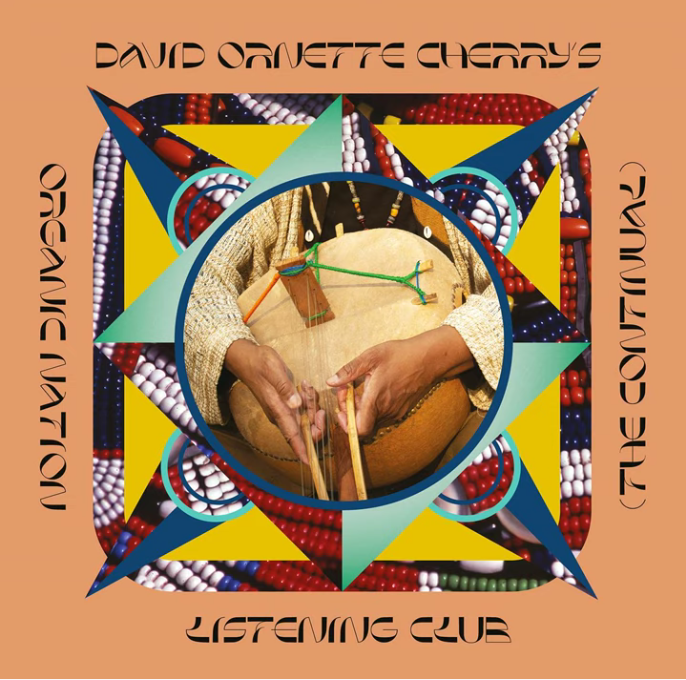
David Ornette Cherry’s Organic Nation Listening Club (The Continual)
(Spiritmuse) 15th October 2021
What providence. What two outstanding luminaries to live up to. David Ornette Cherry’s name marks the extraordinary point in time when his trumpet-pioneering father Don Cherry joined forces with jazz deity Ornette Coleman on the 1958 free jazz defining Something Else!!! LP. It was also the year the musical polymath David was born.
Thankfully taken under his father’s wing, nurtured with the same freewheeling ‘cosmic nomad’ spirit, this sagacious scion of an enviable lineage continues to tread a polygenesis pathway on his latest album of on-message peregrination and rhythmic dances. Attuned to the universal vibrations, channeling the ancients and both his father’s African-American and Choctaw roots, the Organic Nation Listening Club bandleader, prompter and navigator lays out an atavistic form of electronic body movement, echoes of Hassell’s amorphous ‘fourth world’ explorations, the astral and, of course, spiritual jazz on the parenthesis entitled The Continual journey.
David leads a fourteen strong ensemble of global instrument-playing musicians and voices, which includes his niece Tyson McVey (daughter of the no less famous musical sibling, Neneh Cherry) performing vocal soundscape harmonization and wandering siren duties on the diaphanous courtly Indian accompanied, part conscious, part mindfulness yoga session, ‘So & So & So And So’ (imagine Prince joining forces with Linda Sharrock and Brother Ah).
Almost meandering across continents, you’ll hear the resonated echoes, impressions, twine and spindled sounds of North and West Africa, the Asian sub-continent (a lovely brassy reverberation of sitar and the rhythm of tablas can be heard throughout), the Fertile Crescent and an 80s NYC melting pot on this spiritually enlivened trip. The keen-elbowed viola and tapping beat groove ‘Parallel Experience’, with its West African dun dun drum beat suggests that continent’s mood, yet also spreads its scope towards echoes of Farhot’s reimagined breakbeat visions of Afghanistan. The majestic mountain crust positioned ‘Eagle Play’ takes in musical views of not only the recurring spiritual Indian leitmotif but also Anatolia and Harilu Mergia’s Ethiopia (if put together by J Dilla that is).
Elsewhere David and his human, as well as nature’s chorus of ‘hummingbird’ singing cast embody the untethered soul of Don Cherry’s Om Shanti Om and Eternal Now works (and even a touch of the musical microbe calculus of building blocks and life that you’ll find on Don’s collaboration with Terry Riley, Köln). There’s also the fluted presence of Jeremy Steig, and with the more free jazz, almost improvised interactions between David and his drummer John L. Price, electric piano player Naima Karlsson and trumpeter Paul Simms, a touch of Sam Rivers and the Chicago Underground. Meanwhile, in what is an especially expansive field of instrumentation and influence, Gemi Taylor’s guitar straddles krautrock, jazz and drifted cries of a more ambiguous nature.
From the cosmos to the age of the Pharaohs, the garden of earthly delights to dancing through the tumult of our modern times, the rhythms of life merge with more avant-garde performances of serialism, free jazz and even the psychedelic.
All the while the mood is electric, both of the moment and the past; a both sporadic and flowing set of reincarnations existing in a timeless scene under the guidance of an outstanding musical traveller. Anchored in the history of jazz, but so much more beyond that, David lives up to the family name on another eclectic album of borderless healing and wisdom. Be sure to check in at the global retreat and take heed of the advice.
Dominic Valvona’s Reviews Roundup
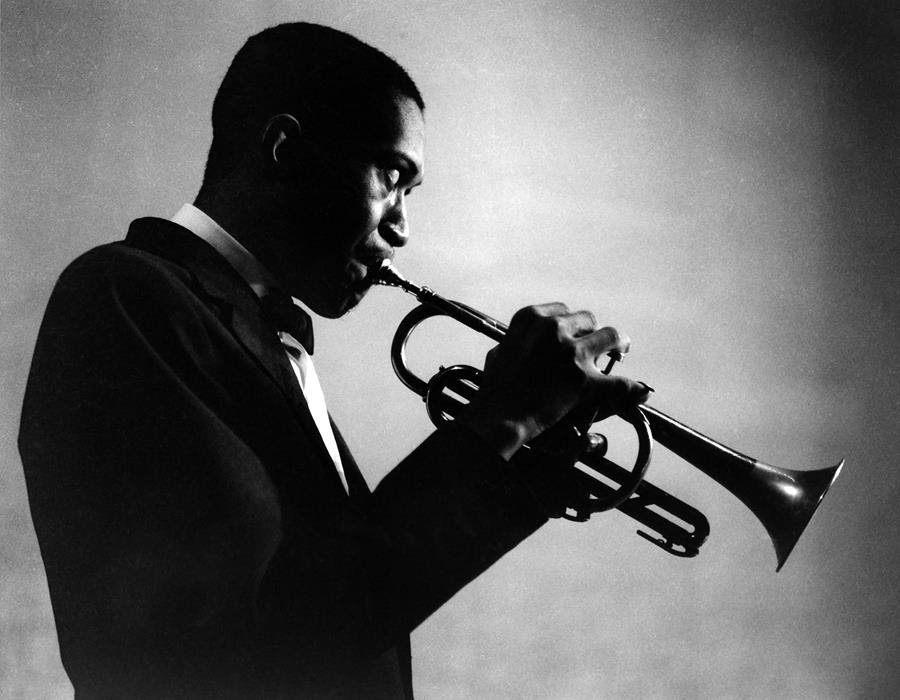
The Invisible Sessions ‘Echoes Of Africa’ (Space Echo) 29th January 2021
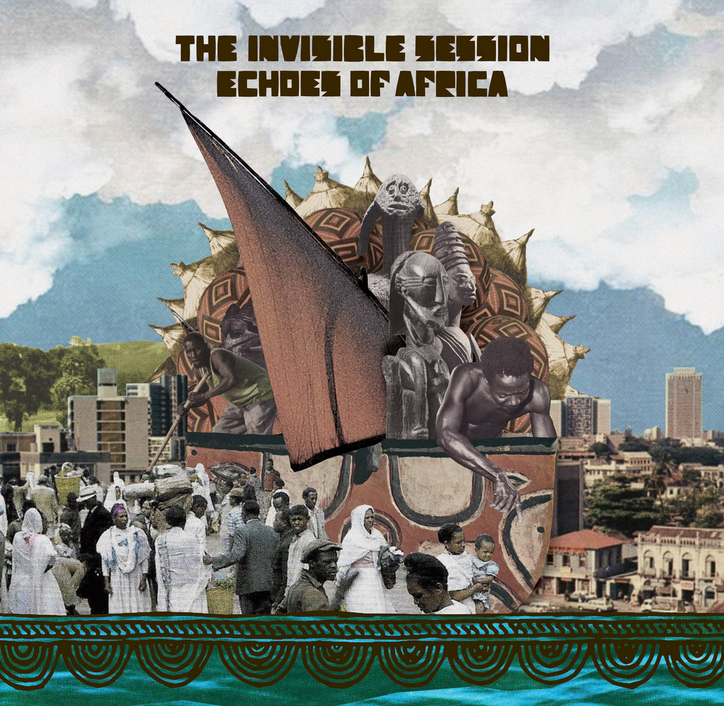
The very first sounds you hear on the long awaited follow up to The Invisible Sessions last album in 2006 are those of an aircraft touching down on the runway, somewhere between a straddled geography of Lagos and Addis Ababa. From then on in those compass points of inspiration permeate the collective’s first album for the newly launched Space Echo imprint.
An odyssey across the motherland, The Invisible Sessions instigator Luciano Cantone (also the co-founder of the Schema label) is joined by the multi-instrumentalist and trombonist Gianluca Petrella, poet, rapper/MC, lyrist Martin Thomas Paavilainen, and a host of respected players on this respectful homage to African music, culture and consciousness. A congruous display of riches, from Egypt 80 Afro-beat epiphany to trinket shimmering spiritual jazz, the extended ranks of this group benefit from the stirring spindled and spun weaving of the Gambian kora maestro Jalimansa Haruna Kuyatech and the rhythm setting Ethiopian drummer and percussionist Abdisa “Mambo” Assefato.
In the intervening years, busy with other projects, running a label and sow forth, Cantone has taken note of all the world’s ills and woes, from BLM to the climate change emergency: two themes that dominate what is a loose drift, limped and brassy heralding strut through the continent’s rich musical heritage. Ethio-jazz, and more specifically, the vibraphone spells, reverberations of the iconic Mulatu Astake inspire tracks like the bandy, bendy guitar lolloping reggae gait motioned ‘Journey To The East’, the more quickened, sprouted ‘Breathe The Rhythm’, and the Addis Ababa version of The Shadows casting dreamy vibrato and twanged shapes over the city ‘Entoto’. Elsewhere it’s a fluency of Kuti and Tony Allen that is suffused throughout the simmering upbeat ‘West Island’ and funkier, skipping, knowing ‘Pull The Handbrake’. Both of which also evoke hints of Orlando Julius and The Heliocentrics recordings.
It’s soul music that sumptuously seeps into the tunes with either a conscious stream of narration or repeated silkily voiced enforced message of social commentary action. In that mode there’s the Issac Hayes in Africa, or even a touch of Curtis Mayfield and The 4th Coming, echo-peddle dreamy ‘Ideas Can Make The World’, the Undisputed Truth affirmation, horns rising ‘People All Around The World Can Make It’, and Gil Scott-Heron (at a pinch), earthly plaint ‘Mother Forgive Me’. Paavilainen is joined in his loose style of spoken wake-up calls, despair and half-sung laments by fellow stateside vocalist Joyce Elaine Yuille, who shadows, harmonizes and wafts along.
A conscious ark of funk, jazz and soul; a homage and thank you to a continent that has heard, inspired Cantone and his sparring partners, Echoes Of Africa is a travelogue of protestation, spiritualism and love performed by a most impressive tight unit of African music acolytes.
Don Cherry ‘Cherry Jam’
(Gearbox Records) 26th February 2021
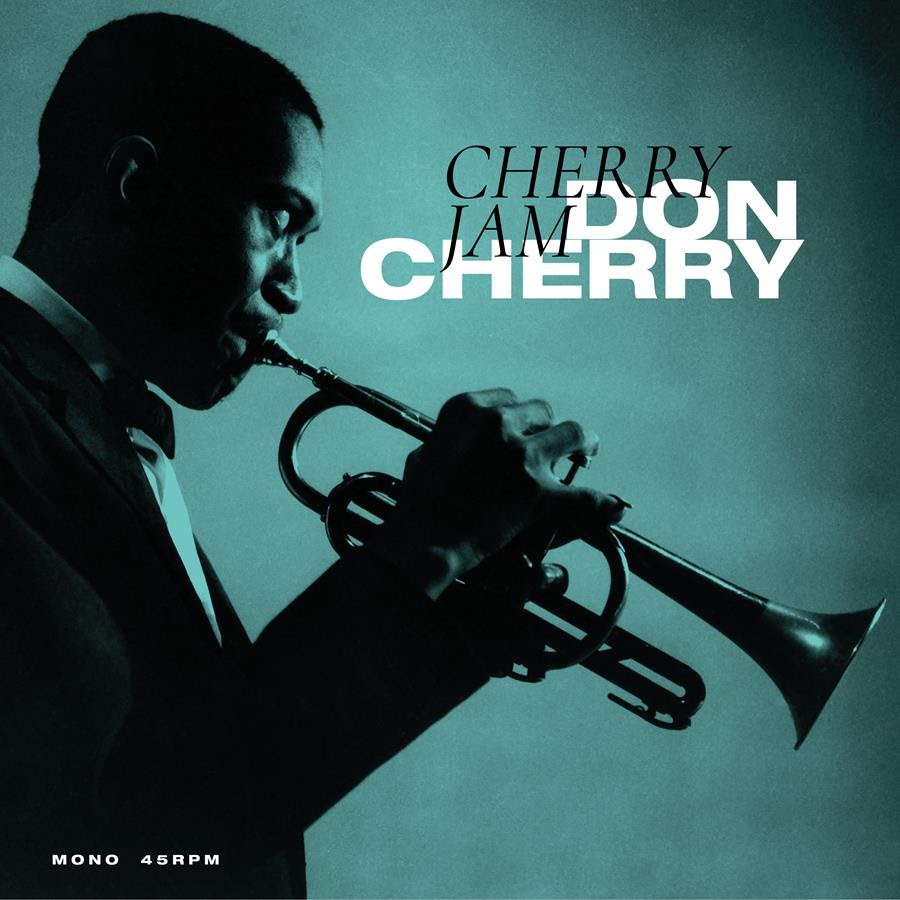
On his way to becoming the restless musical nomad of jazz lore, the mid 1960s Don Cherry was already well acquainted with Scandinavia, especially Denmark. The burgeoning trumpeter and cornet star played in the country’s capital of Copenhagen in ’63 with Archie Shepp, and in ’64 with Albert Ayler before returning in the pivotal year of ’65 to record a quartet of original and standard performances for Denmark’s national radio station. Though often dismissed by cats like Miles Davis for a lack of technical proficiency, Cherry’s constantly evolving visceral style had gained him an envious apprenticeship, partnering up as a foil to a litany of be-bop, hard-bop and free jazz doyens: from Sonny Rollins to John Coltrane and Ornate Coleman, appearing in the pioneer’s groundbreaking Shape Of Jazz To Come quartet of ’59.
Just a short time from releasing his first album as band leader – the “landmark” Complete Communion for the prestigious seal-of-approval Blue Note – Cherry once more found himself in the northern European hub of jazz, collaborating in a jam session mode with the Danish pianist Atli Bjørn. It was this set up and communal that attracted local attention, leading to the session recordings that until recently lay dormant in the radio station vaults: only ever heard when first broadcast over the airwaves in ’65.
Those sessions was collected together as the Cherry Jam EP by Gearbox Records;originally for Record Store Day. Now in 2021 and to tie-in with the recent opening of offices in the land of the jazz obsessive collector, Japan, the label is making this record more widely and worldly available – previously part of the Japanese Edition series that GB launched exclusively for the far east.
Mastered from the original tapes and showcased in the label’s customary well-furnished style and linear notes, this four track EP is neither wholly rehearsed nor spontaneous in the way it sounds; capturing as it does a still reasonably tethered Cherry, yet to completely immerse himself in those out-there traverses and world fusions.
Working with the Danish quartet of tenor saxophonist Mogens Bollerup, double-bassist Benny Nielson, drummer Simon Koppel and the already mentioned, and future Dexter Gordon foil, Bjørn on piano, Cherry toots, pipes, trills and spirals through a trio of his own compositions and the Broadway legend Richard Rodgers alternative, sassy stage ballad ‘You Took Advantage Of Me’.
In an expressive, playful mood Cherry and his troupe provide a disarming, bluesy rendition of ‘The Ambassador From Greenland’ – written by Cherry in his youth. Too light to be bumbling, there’s a certain hang low like noodling, descending feel to this one. The sax and cornet almost override, bump into each other at certain moments, with even a few muffed notes and a piano style that moves between stage and striking, struck high notes.
The second Cherry original, ‘Priceless’, has a bop-like swing to its jamming candor. Duel horns contort, swan and blurt as the drums bounce and double-bass runs away with it. Everyone gets at least a spotlight opportunity on a track that sends the listener back to NYC. ‘Nigeria’ is the most obvious example of Cherry’s Marco Polo spirit of embracing international sounds: a more freely flowing bluesy performance that saunters along to Afro-Cuban influences.
To finish it off, the cover of Rodgers stalwart theatre number is soulfully handled, the playing like a sort of mating-call serenade: a dinner jazz sorbet.
There’s nothing especially dynamic about this captured performance, but as a lost recording chapter in the development of Cherry’s time in Denmark and his craft it is an intriguing link in the story; and a testament to the icon’s abilities in the run-up to his first album as a band leader.
Omar Khorshid ‘With Love’
(Wewantsounds) 26th February 2021

It seems there were few styles the dashing and tragic Middle Eastern hot-trotting Omar Khorshid wouldn’t weave into his Egyptian imbued guitar-led music; from the cinematic to rock and roll, Arabia to the giddy spindled Hellenic chimes of Zorba the Greek.
As it would seem in the land of his birth, most of Egypt’s stars diversified as matinee screen idols, singers, musicians for hire, and Khorshid was no different; pursuing a career in the film business before dying in a motorbike accident at the age of only 36, in 1981 – apparently speeding down Giza’s El Haram Street, his pillion passenger, the third of four wives, Dina miraculously surviving the head-on collision with a pole.
Born in 1945 and wasting no time in picking up the violin and piano, it would be a third instrument, the guitar that would make him famous. By the mid 60s he had attracted wide attention as part of the Western-influenced, pop(ish) act Les Petits Chats, invited to play with fellow compatriot and legend Abdel Halim Hafez, who in turn led him to the country’s most celebrated, accomplished and rated of divas, Umm Kulthum.
A new decade brought civil and international strife for Egypt and its neighbours: war with Israel, the oil embargo. Khorshid upped and left the homeland for the Lebanon in ’73, where he began recording records for the Voice Of Lebanon and Voice Of Orient labels. As peace was finally agreed between Egypt and Israel later that decade, the Egyptian president Anwar El-Sadet invited the roaming guitarist to play at the celebrations that came after the famous Camp David peace treaty, taking part at the White House. For a brief time during that same period he hopped over into Syria, where he acted and soaked up even more musical influences, before once again returning to his roots in ’78: the year that this instrumental classic, now remastered and reissued for the first time on vinyl by those Arabian specialists Wewantsounds, was originally released.
A rich tapestry of Egyptian and extended Arabian fusions, With Love offers up a serenade and desert-romance camel led caravan of transformed timeless cover versions from some of the regions greats. Mohamed Abdel Wahab’s ‘Ahwak’ in the deft hands of Khorshid sounds like some undersea enchantment with its mermaid-like sung aria high quivers and submerged production. But then just when you think you have this song pegged, this beautifully ethereal composition suddenly comes up for air in a sort of Joe Meek version of Egyptian rock and roll.
An interpretation of Farid El-Alrache’s ‘Hebbina Hebbina’ (a favourite we’re told of Eno), with its tambourine trinkets, heavy flange and galloping tremolo, could be an Arabian Shadows. Whilst the Rahbani Brothers’ ‘Rahbaniyat’ slides towards rattled hand drums, synthesizer laser bobbing Arabian disco.
I’ve already referenced that famous Greek signature evocation, ‘Zorba’, which Khorshid plays with dizzying skill, spindling that original into a sort of mix of Anton Karas zither and an old fashioned fairground ride. Unfamiliar as I am with much of the remaining material, ‘Habibati’ saunters and trots between romantic thriller and a Wurlitzer matinee soundtrack, and ‘Beyni Ou Beynak puts vibrato siren like spooks amongst cult Italian 60s cinema.
Almost at odds with the times it was made, yet ahead in adopting subtle hints of synth and Western musical influences, this gift from the Egyptian icon swoons in and out of the decades that preceded it. With Love is a dreamy fantasy of balladry, surf-y twanged cult rock and roll and film scores; an Arabian adventure amongst the sand dunes and Cairo discothèques that serves as a showcase for an artists able to flip between Mambo, music hall orchestration, the blues and even psychedelic. A tribute to an Egyptian musical innovator that can now, at last, be yours to own.
His Name Is Alive ‘Hope Is A Candle: Home Recordings Vol.3’
(Disciples) 12th February 2021
His Name Is Alive with the sound of beatific abrasive reversals on the third such collection of untethered incipient sonic renderings from Warren Defever’s creative process archives. Part of a much wider survey of the prolific HNIA appellation Detroit artist, producer, engineer and remixer that now includes (with this latest volume) a trio of albums of home-recorded developing material, Help Is A Candle features much of the nucleus of music that was duplicated on the “infamous” tape that first caught the ear of Ivo Watts-Russell, leading to a seven album run for the 4AD label in the 90s. Elements of which were reworked for the album Livonia: the title a reference to his birthplace in Michigan.
Circulated in a bootleg form for many years, Defever now showcases this archival scrapbook of sonic ideas in a new light; remastered from the original tape reels so that the quality now shines through.
Guides, impressions and slowly, gently unfolding, the candle light is never in danger of blowing out as atmospherics and ascending tones emerge from blessed post-punk ambience and industrial, coarser reverberations. You’re going to hear many comparisons to both This Mortal Coil and The Cocteau Twins, and that’s more than fair. But much of this material remains cut adrift of either example, neither dissonant nor vaporous. Traces and lingers of familiarity offer a semblance of Daniel Lanois, Eno, and the collection’s most caustic, sharpened knife cutting reversal of dark matter, ‘Halo’, evokes a vision of a fuzztone Hendrix as lead guitarist in The Telescopes.
Murky, lurking moods sit alongside tingled enchantments and even country music ragas, as hints of rattled, transformed hand drums, spindled zither-like spiritual crystal shimmers, slapped and crying, waning bass guitar and mechanical tic-tocking devices resonate.
Envisioned as his very own Reichian Music For 18 Musicians, though falling short at the first hurdle having few friends let alone 18 to enact such a grand scale performance, Defever instead contributed to developing a rafter of music scenes off the back of his 80s home recordings. You can hear the seedlings, inspiration in the work of artists as diverse as Godspeed You! Black Emperor, Dean Blunt, Inga Coupland and Land Observation. It’s no wonder he was on Bowie’s radar and playlist.
Following on from All The Mirrors In The House and Return To Never, and part of a greater light shedding exercise in evaluating, elevating Defever’s formative experiments, Hope Is A Candle is subtle and minimal. This album points the way to some of the more developed pieces in the series. It works though as a showcase for the visions to come; tracks that you can take a lot away from; tracks that evoke; tracks to mull over.
Camera ‘Prousthuman’
(Bureau B) 19th February 2021

Third, fourth generation disciples of Krautrock, the decade-old Berlin instigators of “guerilla” tactic performance art-rock Camera once more shed band members for a new intake (well, partly) of idea-bouncing reciprocators on the fifth studio album, Prousthuman.
With all the connotations and baggage that title’s titan of prose holds, the newest conception of the trio thrash, jerk, limber and lollop through familiar influences in the Teutonic cannon. Anchored by the only original, remaining, founding member Michael Drummer, Camera moves away from the dual keyboard dynamics of the previous album (Emotional Detox) for a more squealing, flange and phaser swirled new wave, psot-punk and even C86 guitar suffusion. Drummer, who unsurprisingly is the band’s drummer, but also weighs in on the guitar riffs, ropes in the composer and musician Alex Kozmidid as a six-string sparring partner. To finish this trio off and informally first joining Camera for their 2017 USA tour as a performance and video artist, Tim Schroeder unveils a talent for the synth.
Locked down in self-isolation for at least some of the recording sessions and jams for this latest Krautrock replica, the trio’s methodology and process has obviously been affected by the raging pandemic. Rather then claustrophobic, the latest chapter contorts or glides out of confinement in the search for space, room. Even when coming on like the sound of Island Records ’79 new wave meets the Gang Of Four, Wire and Neu! on the opening guitar squall and no-wave disco hi-hat action jam ‘Kartoffelstampf’ (that’s “mashed potatoes” in English).
They’ve already changed the timings and mood style by the album’s next track, ‘Alar Alar’; bounding to a stretched quasi-dub gait that also features the drifting melodies of something Egyptian or Turkish: plus loads of dial bending Kosmische fun.
It’s a soundtrack that weaves motorik Klaus Dinger with the solo Kosmische scores of his brother Thomas; the Au Pairs with Sky Records’ greats; Dunkelziffer with Holgar Czukay; and Faust radio broadcasts with Cluster and early 80s Tangerine Dream soundtracks. Though at its most spiky, wrangling and fuzzy, tracks like the buzzy ‘Schmwarf’ mash NIN with Kriedler and Can. Skying in synthesized harpsichord mirrored circles, grinding out a submerged woozy and gauzy dream envelope, and tuning into old frequencies, Camera emerge from their basement studio and the pandemic with a brilliant and knowing post-punk-krautrock-kosmische trip.
Mapstation ‘My Frequencies, When We’
(Bureau B/TAL) 26th February 2021
A second album on the Bureau B imprint roster this month that benefits from and taps into the Hamburg label’s ever-expanding catalogue of Kosmische and neu-electronica explorers: even some of the form’s progenitors, from Roedelius to his early foil Conrad Schnitzler. Both of these doyens can be heard permeating this, the 8th album under Stefan Schneider’s Mapstation alias, the former, prolific soloist and co-founder of the Kluster/Cluster/Qluster arc and mini Kosmische supergroup Harmonia, Roedelius even paired up with Schneider for an eponymous entitled collaborative album in 2011: A very congruous union as it turned out.
The Düsseldorf artist and label honcho (running the Tal label) channels that Kosmische first, and second, generation influence on a highly sophisticated minimalist traverse if Sci-Fi, futuristic and tubular metallic looping and warping environments. An album for the times we find ourselves in – at least methodology and production wise -, for the first time in years Schneider flies solo. This stripped down, undulated pulsing and rhythmic album is marked by an absence of collaborators and guests.
Simplification is key it seems, with Schneider aware that the intensity of some of his past productions may have got lost in the enthusiasm to add too many instruments and sounds. My Frequencies, When We then is very considered sparse production of lo fi futurism; rich with reverberations, signals, squelches and the chiming acid-techno rings of early Warp Records, 90s Seal Phuric and Kreidler; even touches of Matthew Dear and a stripped Boris Dzanck.
On the opening mused ‘No No Staying’ Schneider adds Eno-esque hushed voices to a pared down form of techno. Whilst tracks like ‘My Mother Sailor’ evoke images of Tangerine Dream standing in front of a large patch bay apparatus, plugging leads into various holes as gaseous and reversed loops swirl around them. Elsewhere you’ll hear the motor buzzing hum and throb of Affenstunde era Popol Vuh, synthesized bells, 808 drum machine pre-set percussion, slithered electronic magnetics and Schneider’s whispered underpass anxieties about the, now distant, movement, bustle of cities.
I’d suggest that Schneider has found a good balance in creating intensity, and setting moods with a more sparse, minimalist intelligent sound. Lean but just as expressive, this new Mapstation album might be amongst his most sagacious and sophisticated; a coming together of various strands in the electronic music sphere that soundtracks the current emptiness and unsure atmospherical moods of the present.
Julia Meijer ‘The place Where You Are’
(PinDrop Records) 26th February 2021

A consolidation if you like of recent singles and the self-titled song from the debut album, Always Awake, the Swedish singer-songwriter and guitarist’s latest EP seems a good opportunity to catch up with Julia Meijer’s tactile songbook.
From glacial enormity to the more intimate; the hymnal to indie-pop; Meijer has proved a very interesting artist over the last few years, and this showcase offers a full oeuvre.
The glimpse into a dream EP opener is sparse but full of depth and moving atmospherics. It’s a lushly conceived slice of folk and pop, with Kate Nash-esque tones and an air of Fairfield Parlour about it. Next we have the first of a couplet of singles to feature ex-Guillemot and regular foil Fyfe Dangerfield. ‘Under Water’ is submerged in a suffusion of both lulling and sighed harmonies, dreamy undulations (again) and splashes of cymbal. The song melts between two rhythm signatures on a snorkeling meditation beneath an aquatic expanse.
Scandinavian illusions are cast on the EP’s third song ‘Skydda Dig’; a song originally even more intimate, performed as a solo live that’s now given a steady and minimal augmentation by guests, guitarist Andrew Warne and bassist Jamie Morris, who actually turns to the keyboard for this recorded version. A protective plaint theme wise, Julia’s Swedish evocation resonates with haunted sorrow and almost otherworldly trembles as turns over a sort of late 80s, early 90s, American indie riff.
The finale, and second song to see Julie accompanied by Dangerfield, ‘The Place Where You Are’ expresses loss to an ebb and flow of subtle organ and Irish folk lament. Beautifully conceived as ever, flowing between a never world of dreams and indie guitar music reflections, Julia’s latest showcase serves her talent for experimenting without the loss of melody and songwriting craft well. I recommend you seek her back catalogue out.
Obay Alsharani ‘Sandbox’
(Hive Mind Records) 19th February 2021
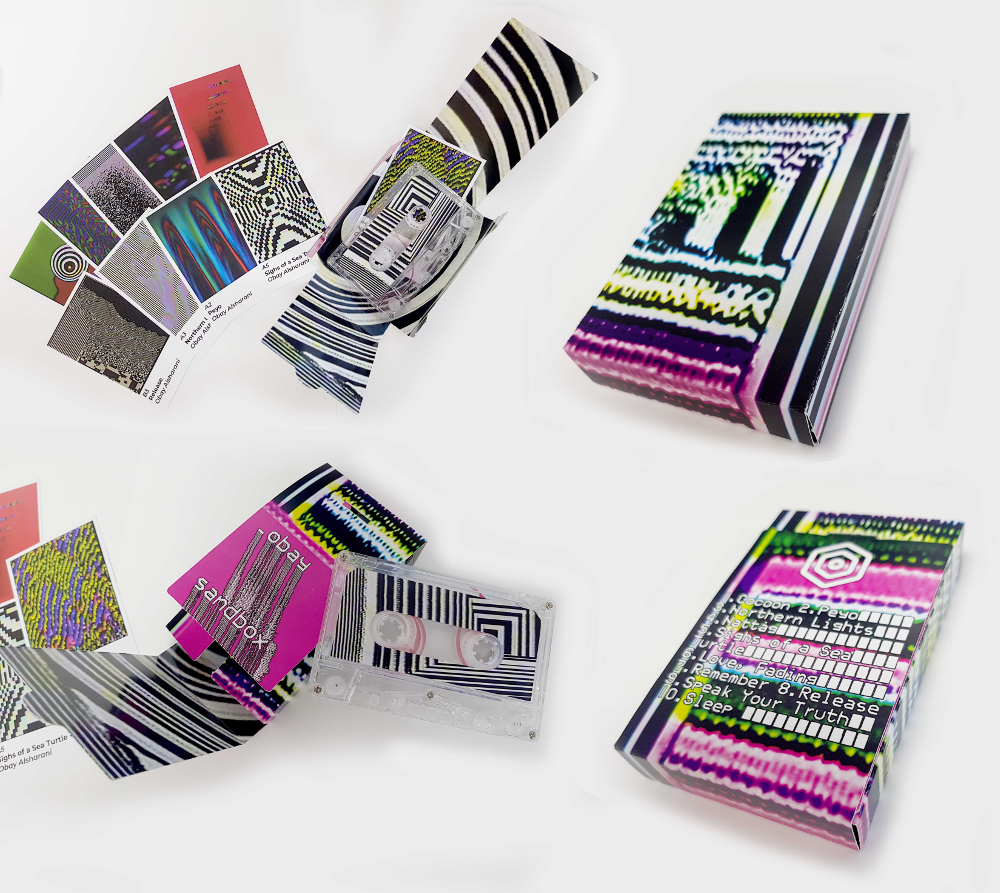
Finding solace and escapism in equal measures in the colder Baltic air of Sweden, Syrian migrant and beat-maker Obay Alsharani, forced to leave behind the chaos of an imploding homeland, takes in the awe and beauty of his Scandinavian refuge on the debut album Sandbox.
For despite a background in composing lo fi productions of dusty Arabic samplers under the Khan El Rouch moniker, Obay now reaches out into more glacier tonal ambient soundscapes; finding sanctuary in icy snow-covered and woodland gladded environments on an album geographically remote from the heat and sandy horizons of the Middle East.
It’s good to hear a success story in the convoluted tumult of the Syrian crisis. A decade on from the civil war that has now engulfed almost the entire region, and grown into the most complicated of proxy wars, Syria’s ruling Bashar al-Assad regime may yet collapse due to an economic fall out prompted by neighbouring Lebanon and the catastrophic failure off its government and banking crisis. As it stands, and now with the global pandemic just another tier of burden upon a region and population that’s suffered beyond any of our imaginations, Russia now has that foothold it always wanted on the Mediterranean coastline of Syria; Turkey has widened its own borders, unopposed in threatening the Kurds in the south, who are fighting for autonomy; and ISIL have been all but beaten, with fragmenting survivors scurrying away to spread panic and their death cult into Eastern and Central Africa. Those resistance groups that grew from the oppressive clamp down by the Syrian government remain in small clusters, holding on, whilst Iran without its nebulous mastermind and death-bringer general Qassim Suleiman, remain in the area holding up Bashir’s regime.
The fallout has resulted in eye-watering numbers of displaced people, with more than six million Syrians forced into neighbouring safe havens or further overseas into Europe and North America. Obay gained a lifeline himself through a scholarship in Sweden, leading to an extended period of stay in refugee accommodation in the far north of the country. After finally gaining a permanent residency, Obay was able to resume his music, whilst also experimenting with visual art (providing the colourful-feedback cover art for the limited edition cassette format of his debut album).
Branching out sound wise, Obay now captures the breath-taking spectacle and calmness of his new home. Literally, those breath-chilled winds of the far north can be heard channeled through often majestic, gliding and crackled static textured ambient suites: all of which evoke a certain stillness and sense of spaciousness. Less sandbox and more Artic, frozen tubular and piped notes, haunted but lovely church music and icicle-like droplets drip, drift and are cast across a snowy pine-covered land as the Northern Lights shimmer and play with the refractive light overhead. ‘Release’ evokes a far breezier scene though, out on the porch of some woodland cabin, with birds chirping away in the noisy movement of branches and leaves. Added to this weather recording are glassy piercing bulbs of synthesized music and what sounds like a lingering electric-organ. From coarser static grains and blowing, to soft bellows and concertinaed wisps, and even a bestial landscape of unidentified wildlife, Obay subtly creates a moving scenic and reflective study of a very different horizon to the one that he was forced to abandon. It sounds as if the Syrian beat-maker turned assiduous composer has at least sonically found a semblance of solace and a safe environment in which to reflect and heal. Music almost as therapy, Sandbox without any context is really just a deeply affected fine example of minimal and ambient mood music: A most beautiful conception.
Hi, my name is Dominic Valvona and I’m the Founder of the music/culture blog monolithcocktail.com For the last ten years I’ve featured and supported music, musicians and labels we love across genres from around the world that we think you’ll want to know about. No content on the site is paid for or sponsored and we only feature artists we have genuine respect for /love. If you enjoy our reviews (and we often write long, thoughtful ones), found a new artist you admire or if we have featured you or artists you represent and would like to buy us a coffee at https://ko-fi.com/monolithcocktail to say cheers for spreading the word, then that would be much appreciated.
 Monolith Cocktail Blog