Kalporz X Monolith Cocktail: [T4ATF!] The Clientele, The Suncharms, Night Beats, Maiiah & The Angels Of Libra
December 20, 2023
Exchange recommendations from our Italian penpals at Kalporz
Authored By Matteo Maioli

Continuing our successful collaboration with the leading Italian music publication Kalporz , the Monolith Cocktail shares reviews, interviews and other bits from our respective sites each month. Keep an eye out for future ‘synergy’ between our two great houses as we exchange posts during 2023 and beyond. This month, from the site’s [T4ATF!] series, Matteo Maioli recovers four tasty albums that fall between indie-pop, psych vibrations and explosive rhythm’n’blues genres.
The Clientele, “I Am Not There Anymore” (Merge)
It seems incredible, but from their formation in 1997 to today the London-based Clientele have never crossed the Italian borders. Yet the proposal by Alasdair MacLean and associates is among the most original to come out in the new millennium, between reminiscences of Love and the low fidelity experiments of the Pastels. Six discs, one more beautiful than the other, which cite literature (T.S. Eliot), surrealist poetry (Robert Desnos) and arthouse cinema. With bassist James Hornsey and Mark Keen, percussion and piano, as well as the use of celesta, tapes, bouzouki, mellotron and a string and wind ensemble, MacLean brings to life his most sophisticated work, embracing dub (“Garden Eye Mantra”), flamenco (“Stems Of Anise”), orchestral jangle-pop (“Lady Grey”) and modernism in winning refrains as for “Blue Over Blue”. For writing that offers disturbing images, cosmopolitan visions, the beauty of the passing of time. “I Am Not There Anymore” was published by Merge at the end of July but “Claire’s Not Real” suggests spreading it while enjoying the warmth of a fireplace, close to your loved one.
The Suncharms, “Things Lost” (Sunday Records)
The Suncharms were formed in Sheffield between the eighties and nineties, proposing in their first EPs an indie recipe based on equal doses of melody and noise; however, it is only in recent years that they are getting the right feedback, between compilations on Slumberland and new albums such as “Distant Lights” (2021) and the latest “Things Lost” for Chicago’s Sunday Records. Where “Dark Sails” combines sixties and Jesus And Mary Chain noise, with “Satanic Rites” I would lean more towards the lesson of R.E.M., even in Marcus Palmer’s tone not so distant from that of Michael Stipe. Keyboards and harmonica embellish the opener “3.45” while “Red Wine Kisses” will perhaps be the episode destined to remain over the years, to be listened to on loop, dreamy and exciting between The La’s and The Dream Syndicate. My friend Enzo Baruffaldi from Memoria Polaroid conveys the idea perfectly: “If it’s time to close the day on a melancholy note, without giving up feedback and reverberations, Suncharms’ latest album is the one for you (or, at least, mine)”.
Night Beats, “Rajan” (Fuzz Club/Suicide Squeeze)
We had partly forgotten about Danny Lee Blackwell, relegating him to “Who Sold My Generation”, a smash dated 2016 featuring Robert Levon Been of Black Rebel Motorcycle Club. Since then three albums have been released. After “Outlaw R&B”, acclaimed by the international press in 2021, it is the turn of “Rajan”, in which the Texan musician offers a warm interpretation mixing Rock, Jazz, Blues, psychedelia, Anatolian Funk, Chicano Soul and Spaghetti Western. And this is just to mention some of the ingredients of the collage of sounds and impressions sweetly blended with the “Hot Ghee” (peace guys, Tame Impala could hear it…) from Danny’s sizzling pan in a kaleidoscopic sound that merges into a mysterious unity. If “Thank You” points towards “Sunny” by Boney M with acid and gypsy tones, then “Nightmare” travels in the 70s between Brazil, Asia And California. “Rajan is just one of six examples of me doing exactly what I want, and not caring about whether it’s checked out or not. I’m a journey person. I want to make things for the sake of making them.” Holy words.
Maiiah & The Angels Of Libra, “Maiiah & The Angels Of Libra” (Waterfall Records)
Who said that the best soul only comes from America? The debut album by Maiiah, a singer with Balkan roots transplanted to Düsseldorf, has arrived to prove us wrong. Thanks to a phenomenal backing band, the Angels of Libra collective from Hamburg, who return after their success alongside Nathan Johnston: ten instrumentalists with a great affinity for analogue recordings, the concept sixties and the world of Ennio Morricone, Khruangbin and Air. It all started from Maiiah’s meeting with the producer and composer Dennis Rux in times of pandemic: a shared love for good old rhythm & blues united them in making music together with Libra, creating singles with excellent radio appeal such as “Obey” and “No No No (I’m So Broke)”, between fun and social criticism. On “I ‘m A Good Woman” she makes Barbara Lynn’s northern soul hit her own, while “Kava” dresses a Croatian text with boogaloo; “Turn The Page” and “I Wanna Go” finally show the affinity with Makin’ Time, James Taylor Quartet and the garage-pop of the new generation (The Courettes). Spectacular.
Matteo Maioli
Kalporz X Monolith Cocktail: [#tbt] Music for growing houseplants
October 26, 2023
A FOCUS ON THE JAPANESE COMPOSER HIROSHI YOSHIMUR FROM OUR FRIENDS AT Kalporz
AUTHORED BY Viviana D’Alessandro

Hiroshi Yoshimura (1940-2003)
Continuing our successful collaboration with the leading Italian music publication Kalporz , the Monolith Cocktail shares reviews, interviews and other bits from our respective sites each month. Keep an eye out for future ‘synergy’ between our two great houses as we exchange posts during 2023 and beyond. This month, Viviana D’Alessandro hones in on the music of electronic minimalist progenitor Hiroshi Yoshimura for the site’s #tbt series.
The Japanese 80s gave music history one of the pilot moments in the formation of ambient music. If we have recently worked in this space to understand the experimental roots of relaxed music , this week’s #tbt has the ambition of setting sail towards the Rising Sun.
Artists such as Hiroshi Yoshimura , Midori Takada , Satoshi Ashikawa are spurious children of the rampant economic growth of post-war Japan, but produce soundscapes that are introverted and aesthetically averse to the urban imagination, directly taking up or simulating the complex relationship of Japanese culture with the natural world.

Kankyō Ongaku: Japanese Ambient, Environmental, & New Age Music 1980-1990 (Light in the Attic Records)
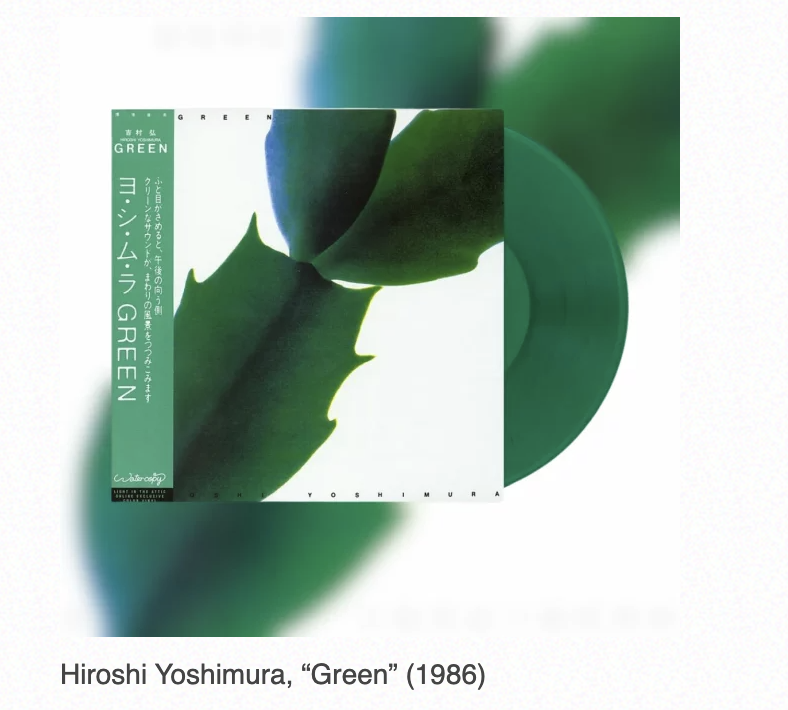
An example above all is Green (1986), the fifth work by composer Hiroshi Yoshimura and a founding pillar of minimal ambient. Recorded amidst the hustle and bustle of what we imagine to be a rapidly changing Tokyo, the record’s pristine stillness offers a line of escape to the noise of heavy vehicles, jackhammers and clanging metal objects that would have dominated the natural soundscape at the time of the city. Even the album cover – a beautifully photographed apartment Schlumbergera – conveys this purity of sound.
Yoshimura identified his work as “kankyō ongaku” ( environmental music ), which we could certainly define as the Japanese version of ambient but with a very different slant: where Brian Eno , for example, created music for a constructed and imaginary environment as in Music For Airports (1978), Yoshimura and his contemporaries created music for extremely specific and tangible places.
A good example is Surround from 1986 (soon to be reissued by Temporal Drift), born at the request of the real estate company Misawa Home and designed to curate the soundscape of their model homes. Or the debut Music For Nine Postcards (1982), composed in direct response to the Hara Museum of Contemporary Art. Like Eno, however, Yoshimura rooted his approach in French composer Erik Satie ‘s concept of musique d’ameublement (furniture music) , music that fits into the sonic context of the environment and does not require careful listening. Eno made direct reference to Satie in Discreet Music (1975), while among these artists it was Satsuki Shibano in 1983 with Erik Satie (France 1866-1925) who traced a more explicit Paris-Tokyo axis.
While these records were designed for particular spaces, they were also deeply evocative. The simulation of an idyllic-bucolic place is definitely something very present in these works, and it becomes almost saturating when returning to Yoshimura’s “Green”. A noteworthy aesthetic position considering that the album was composed mostly using a Yamaha DX7 , a synthesizer commonly known for its artificiality. “The DX7 is not a natural sounding instrument at all, it’s very digital. The way he can make something sound so natural on that instrument is amazing” – says Allen Wooton (aka Deadboy), interviewed about the record for FACT magazine – “it’s as if someone had studied the world natural was then able to somehow replicate its aesthetics”. It is interesting to note, by the way, that the reference to the colour green in the album’s title refers not to a chromatic nuance, but rather synaesthetically to a phonetic imagery, a natural extension of sound space through the inclusion of natural sounds in modern life. The album cover itself reads GREEN as a double acronym: Garden / River / Echo / Empty / Nostalgia; Ground / Rain / Earth / Environment / Nature.

It is perhaps no coincidence therefore that “Green”, despite being conceived in a period of rampant industrialisation, still preserves an underlying optimism. All eight compositions on this album present sublime layers of character and tones suspended with a minimalist resistance that survives the nuances of modern reality, but doesn’t complain about it. A prescient anti-Luddism considering that until the end of the 1910s the works of Yoshimina, Takada and Ashikawa were practically unknown to posterity and were resurrected thanks to the Youtube algorithm. Spencer Doran of the electronic duo Visible Cloaks, of all people, has taken it upon himself as a great collector of Japanese music to curate an incredible series of mixes for Root Strata.
For now we’re inclined to take this as a good sign, given that the appeal of these ’80s ambient LPs is their focus on improving and changing existing ecosystems. Rather than offering respite in the form of escape – as a classic interpretation of ambient music would have it – many of these Japanese artists practiced sound design as a way to integrate or alter physical locations into spaces of serenity, stillness, and infinite possibility.
Exchange recommendations from our Italian penpals at Kalporz
Authored By Matteo Maioli
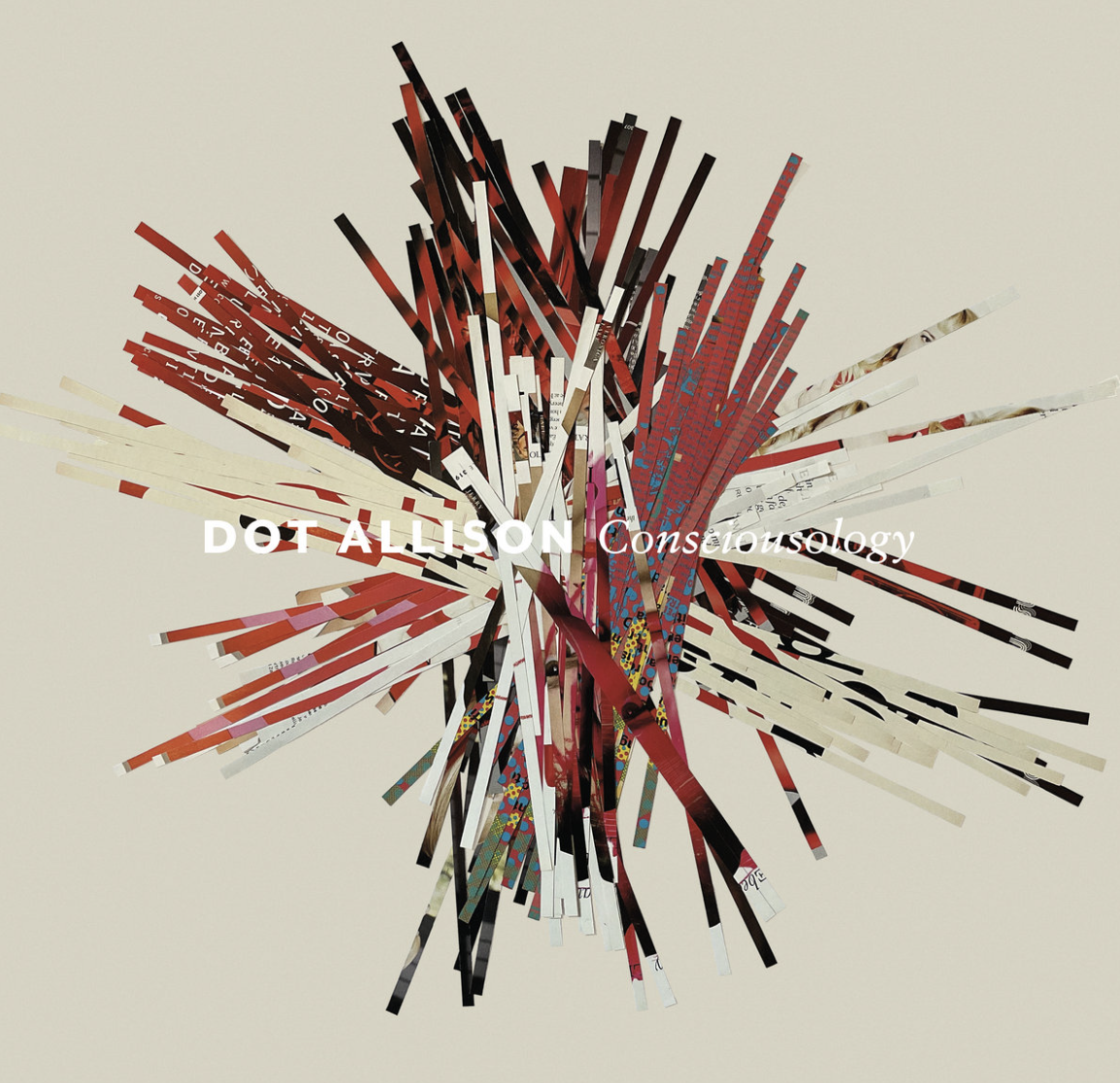
Continuing our successful collaboration with the leading Italian music publication Kalporz , the Monolith Cocktail shares reviews, interviews and other bits from our respective sites each month. Keep an eye out for future ‘synergy’ between our two great houses as we exchange posts during 2023 and beyond. This month, from the site’s This Rocks column, Matteo Maioli sells us on the music of the Scottish artist Dot Allison.
Dot Allison “Consciousology”
(Sonic Cathedral, 2023)
An established cliché in music in recent years is that great records are never released in the summer: well 2023 contradicts the matter wonderfully, from PJ Harvey to the Clientele (without forgetting the new Albarn… pardon Blur) to reach the artist whose least spoken of all but which once discovered never leaves you for life: Dot Allison from Edinburgh . “Consciousology” is her sixth album and comes out on Sonic Cathedral; produced with Fiona Cruickshank it includes collaborations from Andy Bell (Ride, Oasis), Hannah Peel and Zoë Bestel as well as the London Contemporary Orchestra who manage to give the songs a timeless charm.
As told by Sonic Cathedral’s Nat Cramp, “Dot’s voice has been a constant in our lives for the 30 years since One Dove’s “Morning Dove White” was released and we have always dreamed of working with her. We first met back in the early days of the label and she played for us a couple of times, including the legendary Lee Hazlewood tribute night at The Social. The self-effacing title “Consciousology” belies the seriousness of what lies within, and it’s impossible to not be completely consumed by the sheer beauty and intimacy of it all“. The sounds of Tim Buckley of “Starsailor” combined with Joni Mitchell and Van Morrison of “Astral Weeks” can give an idea of the source at the base of a raging and at the same time calm river that flows into the trip-hop and visionary electronics of Andrew Weatherall – a great friend and mentor of Allison -, already from the opener “Shyness Of Crowns”.
The strength of the collection emerges as much in Dot’s elegant and profound writing as in the work on her voice that sounds like the breath of nature; on “Moon Flowers” she whispers words of love transporting us to another dimension: “You reign, you influence the rain/In heaven and beyond you/There is a sunlight around you/You illuminate everything I do“, while with “Weeping Roses”, she returns to the fragile lesson of “Room 7 1/2” (Arthoused, 2009) punctuated by acoustics and piano, “ Bleeding roses they’re all you ever grew for me/I see blood in the spray, on the petals/Now , it’s so plain to see/Do you feel it too, tell me do you feel it too “. The launch piece “Unchanged” thrives on a soul-rock crescendo that explodes in a refrain worthy of Verve and Spiritualized.
Where in “Bleached By The Sun” she makes us miss the Air of “Talkie Walkie”, in the transcendent “Double Rainbow” she invents a cosmic manifesto that wouldn’t sound out of place in Rob Mazurek’s latest release with the Exploding Star Orchestra . And if I haven’t convinced you yet, the sweetness of “Milk And Honey” will take care of making you fly away from the wear and tear and problems of the modern era, starting like this: “I’d walk 10,000 suns/To have you next to me/Bridges I ‘d burn/To give you the rest of me/Lilac-coloured stars that glisten, beckoning/Galaxies of tumbling suns, are blessing me “.
Folks? backstory? Chamber-pop? I do not know. All this and also none of it. Simply: Dot Allison.
 Monolith Cocktail Blog