THE MONTHLY DIGEST INCLUDES A CLUTCH OF ACCUMULATED NEW MUSIC REVIEWS; THE SOCIAL INTER-GENERATIONAL/ECLECTIC AND ANNIVERSARY ALBUMS CELEBRATING PLAYLIST; AND CHOICE PIECES FROM THE ARCHIVES.
___THE NEW___
Autistici ‘Familiarity Enfolded’
(Audiobulb) 2nd August 2025
The middle sequence in a series of transformations by the Sheffield-based electronic composer, Familiarity Enfolded follows on from the first link in a chain of collaborative immersions, Familiarity Folded – released in just the last week. In what could also be a collaborative showcase for the Audiobulb label too, a smattering of artists who’ve previously released material on the platform now bond and work with Autistici in redeveloping or evolving and remixing his compositions and ideas for a three-part project.
Finding common ambient space and minimalist approaches to visioning new soundscapes and movements, part two includes contributions from Tomo-Nakaguchi (an artist we’ve raved about on the site in the last few years, and made our choice albums of the year lists), A Dancing Beggar (who hasn’t appeared for a very long time on this site, but has made our choice albums lists in the past), Russ Young and OdNu (another artist who has appeared in our reviews sections in the last couple of years). The prospects look good already, with this quartet’s sphere of influences within the ambient and electronic realms both adroit and always worthy of attention.
First up both Autistici and Tomo-Nakaguchi match-up for an incipient majestic awe of both the natural and synthetic on the opening ‘Twilight Glow Of The Sky’. What could be the sound of filaments falling like pattering rain on a drum skin or piece of Tupperware can be heard amongst the moving glimmering light captured at such an inspiring moment in time and place.
The cove atmospheric ‘Caiplie’s Hermitage’ references the atavistic caves of the title, found between the Scottish towns of Anstruther and Crail on the coastal pathways of Fife. A Dancing Beggar is the foil this time around, playing on the hallowed ghosts and history of that mysterious cavern, which is believed to have been used as a place or sanctuary of worship for Christians in the 9th century AD. There’s constant wash or downpour of rain and presence of water elements that continue throughout this piece, and it could be that the artists are perhaps sheltering from it as they build up an abstract picture that’s one part natural and the other near sci-fi. The brassy resonating strings of a guitar are plucked, pulled and sprung as heavenly machines move around in the background. A Dancing Beggar joins both Autistici and OdNu on the finale; a twenty minute plus long form illusion inspired by the track title’s Arthurian referenced enchantress, sibling, shapeshifter and seducer Morgan Le Fay mirage, the ‘Fata Morgana’. A “superior mirage” in other words, this optical phenomenon and complex mirage creates distorted and sometimes fantastical images of distantly observed objects. You must have seen this when looking at to sea in particular conditions and seeing tankers or ships appearing to float above the waves. Sonic wise, this reminded me of Jeff Bird with its essence of piped or pumped pastoral sounds. But there’s also something hallucinogenic about it too. There’s a Mark Hollis solo style piano bit, something that sounds almost like a concertinaed ghostly echo of some shipwreck shanty plus the shimmers and shivers of magic.
That leaves the final track of the quartet, the ‘Dissolved in Light’ collaboration with Russ Young, who I must admit I’m unfamiliar with. It begins with the itchy rubbing chorus of crickets and sundown atmospherics. A veil of mist dissipates to reveal a most minimalist timelessness before Laraaji-like bowls are struck softly and the sound of tines and melodious ambient waves entwine. Andrew Heath evocative piano notes and falls meet an amorphous staccato engine as the track moves along its placeable journey to the sacred.
‘Relinquishing’ control, the concept behind this series has worked rather well; resulting in some magical, stirring and illusionary pieces of sophisticated and highly immersive ambient and lowkey electronica. A Dancing Beggar seems to be adding something of the bucolic and pastoral to the mix to give it a connection to the human and greenery, the nature and history. But all four collaborators prove congruous partners on this project. Part three, Familiarity Unfolded, will follow in due course, and it will be interesting to hear the results of another set of sonic and musical partners.
The Lancashire Hustlers ‘Here But Not Here’
(Steep Hill) 4th July 2025
Rolling with the punches meted out by life; tumbling forward into a new songbook; The Lancashire Hustlers seventh album rings true with disillusion, detachment, bewilderment and isolation. It’s a feeling that’s hard to articulate or relate, but that unease at the tides of time and the disenchanted shrugs of malady sound pretty warm, gentle and sellable.
With a MOR breeze of soul in their sails once more, the long-standing duo of guitarist and vocalist Brent Thorley and drummer and backing vocalist Ian Pakes take beat group, Baroque, psych and troubadour influences for a both funky and yearned trip across the Northern countryside and towns of their home. Transporting a hint of Muscle Shoals to Lancashire for an idiosyncratic English take on the music of the Isley Brothers, Stevie Wonder, Curtis Mayfield, the duo (with an extended apparatus of instruments, which they both share) have a slight saunter and roll to their signature to their songwriting and playing. It’s the sound of The Beatles, of individual Lennon and McCartney on their solo work, of the Stones, of Ollie Halsall and John Compton with an undulation of gospel-light and country-soul electric piano and organ. Talking of the country reference, the most lovely ‘Just Because’ has what could be either a melodica or clarinet sounding like a forlorn but romantically sighed harmonica – there’s also the use of a lap steel guitar.
There are some heartfelt, sad plaints, and rural country swamp pop ditties that wouldn’t sound out of place on McCartney’s eponymous solo album and RAM; some songs that err towards the haunted, albeit with instrumental aping scurrying mouse effects – see the confessional, asking for forgiveness, pest and rodents quirky phobia, and Byzantine Stones flavoured ‘I Killed A Mouse’ -; and some that beat themselves up over guilt, frustration and heartache. Most out there, must be the dejected lament of feeling ignored, ‘Like A Ghost’, which sounds like a detour to some mysterious Hispaniola Les Baxter hideaway island of the occult. And yet, they never feel so down or in the blues funk that each song isn’t rich in playfulness lyrics wise, or ever dour.
Another enchanting as it is sorrowful and disenchanted songbook from a duo that continues to make its own luck, releasing a consistent catalogue of instantly likeable, melodious and breezily catchy albums. It’s always a pleasure to review and hear them.
Maria Elena Silva ‘Wise Men Never Try’
4th July 2025
Recently stripping back Bob Dylan’s courtly enigmatic dames to their most essential essences with interpretations of ‘Queen Jane’ and a summoned bell rung ‘Sad-Eyed Lady of the Lowlands’, Maria Elena Silva now turns to the pages of the Great American Songbook with a first volume of revisited and transposed standards made anew: that is, made emotively ethereal, near evanescence yet connected and with a real sense of depth and something approaching the tactile.
Under the ‘umbrella title’ of Wise Men Never Try, the inaugural volume features a small intimate accompaniment of players to accentuate and punctuate Silva’s carefully placed and near blown words, or, to wind along to a minimalist performance of the artful, the solo play, the quietened and sullen lament, the show tune stripped of artifice, and the enigmatic, near impregnable shell of a smoky cabaret tortured soulstress. Step forward Erez Dessel, who’s piano both articulates the feel and plays with a freer hand of spine-tinkles, ached suspense, distorts and slightly jars the nerves; especially on the opening version of Carolyn Leigh and Cy Coleman’s late 1950’s standard, ‘I Walk A Little Faster’ (the singular “I” has been dropped I assume to reframe the angle for a new interpretation), which was a hit for Blossom Desire in 1958. The original’s slight lilt of 50s swing and jazz is replaced with a jilt of dissonance on the piano; made more so because of the near silence that opens the song. In a bluesy-jazzy fashion that also recalls the theatre, Silva amorphously places the words with lulled and delicate breathless ease. As a theme of heartache and denial, this distillation is as beautiful as it is almost troubling and disconsolate. The album’s finale, ‘Some Enchanted Evening’, is the closet interpretation on the whole album, featuring a lovely melodious piano that wouldn’t sound out of place on the original; all very tender and dreamy. The Rodgers and Hammerstein number, composed for the South Pacific musical, is normally sung by male protagonist Emile as he captures the essence of love at first sight. Out of the female gaze, with a female perspective that theme is not so much lost but redefined.
We also have Tyler Wagner popping up on the double-bass, taking a tactile, textural jazzy approach, offering flexed stretches of the body, sensitive little crawls and climbs, and more physical thwacks of the bass strings. The filmic pining ‘I Should Care’, written by Alex Stordahl, Paul Weston and Sammy Cahn for the 1944 MGM matinee Thrill of a Romance – covered by all the notable greats over the decades, from Sinatra to Peggy Lee, Dizzy Gillespie and Amy Winehouse -, features a bass that quietly thumbs away a jazz rhythm in the style of early Blue Note, as Silva sympathetically oozes soulful pursed heartache.
Completing the accompanying trio – who it must be stated, don’t always play together or on every song – is Ben McDonald on electric guitar. Subtle for the most part, ‘I’m In Love Again’ has McDonald pinging harmonics, brushing up and down the fretboard and playing a nice Reinhardt-esque delicate languid sensitive form of haunted sympathy.
It must be pointed out that Silva also plays acoustic guitar on these numbers. ‘You Don’t Know How Glad I Am’, written by Jimmy Williams and Larry Harrison, and made her own by Nancy Wilson on the 1964 single, is an intimate entwined match of Silva’s climbing vocals and a guitar with a pinch of Spanish flair: albeit kept quite subtle. Silva’s version of that recognisable tune sounds somewhere between Judee Sill and Roberta Flack. It’s there again on the next song, ‘Close To You’, a sort of jazzy-gypsy guitar melancholy.
Silva’s voice is labyrinthine and enigmatic yet can’t quite hide the various emotional toils of disconsolate and sacrificial, torturous and resigned heartbreak. Despite the intimacy of the setting, every song has a stage-like atmosphere about it that croons and soothingly oozes sophisticated, elegant jazzy-blues performance from the stillness and blank space. But that voice is hard to define, to pin down; amorphously pitched between the great jazz singers, the voices of perhaps Julie London and Peggy Lee, and something approaching the folk doyens of the 60s. A beautiful, somewhat pining and plaint start to a series of such interpreted songbooks, volume one is a very personal take and perspective on a songbook we have come to take for granted and heard a thousand or more times. In this moment, this setting, those just recognisable songs have taken on a different quality and encouraged a new reading.
If that grabbed you, Silva will be back next month with a second volume, this time concentrated on songs of a certain vintage, and a prescient history, the American Civil War. Expect to read a review of that album at a later date.
Leo Wolf ‘I Saw Your Shadow On The Wall’
1st August 2025
The flicker of Richter’s candle appearing at the end of the labyrinth; the half-dreamt, half-seen M.R. James’ apparitions; the presence of the supernatural and mysterious prompted by sleep hallucinations; these are all in the essence and conjuring of imagery that is crafted from the North Carolina artist Leo Wolf’s ambient, atmospheric and filmic granular synthesis of processed sampled material from classical records and field recordings. With weight and texture these asynchronously breathed, and space filled recordings exist in a semi dream state, simultaneously paranormal and yet tethered to the search for light and gravitas in a world of synthesized melodic wave forms, tones, passes, undulations and bass-y padded throbs.
Building up a moving, simulating and often dramatic sensory experience from hidden sources, machinery and the recognisable captured moments of the artist’s surroundings – from the rain hitting a metal apparatus in the garden, to the clatter of cutlery and plates, the conversations caught between people in a restaurant or café setting -, this album’s building blocks act together and independently of each other to set in motion a feeling both hypnagogic and hypnotic – the former even features in the title of one track. Are we indeed awake or not? Who can tell, as Leo constructs a surprisingly beautiful work of ambient reflection, soundtracks and filtered brilliance.
A brilliance of light (metaphorical and real) can be found on each and every track more or less, as the mists, haze, the unsure fogs of the musty and gauzy are parted to reveal itself.
It sounds to me like 1980s paranormal VHS merged with His Name Is Alive, synthesized monastic and gothic voices, hollowed beams, overhead craft of an alien nature and generators. Nightmare and the sublime through the grainy lens, I Saw Your Shadow On The Wall envelops the listener in Leo’s personal searches and emotional pulls to create a most moving soundtrack.
___/The Monolith Cocktail Social Playlist Vol. 99___
For the 99th time, the Social Playlist is an accumulation of music I love and want to share; with tracks from my various DJ sets and residencies over the years and both selected cuts from those artists and luminaries we’ve lost on the way and from those albums celebrating anniversaries each month.
Running for nearly 12 years now, Volume 99 is the latest eclectic and generational spanning playlist come radio show from me – the perfect radio show in fact: devoid of chatter, interruptions and inane self-promotion.
Let us pay homage firstly to the late Argentine pianist and composer Lalo Schifrin, who passed away earlier this month. Arguably it took a South American to encapsulate and bottle through blazed horns, funky grooves, a chorus of dramatic near reverent voices, and thriller punches the sound of the streets of San Francisco and New York in the 60s and 70s; when Dirty Harry served Judge Dredd style justice and Steve McQueen handbrake turned and screeched recklessly as a getaway driver. Kung-Fu to Spies, Bossa, Samba, the orchestral, swing, jazz, the cultish and horror, Schifrin’s signature is legendary; his influence so wide and extensive as to have entered the musical lexicon. Arguably amongst the most sampled composers of all time too. So where do you start? How the hell do you represent such a legacy? Well, I’ve chosen a few personal favourites and a couple of more obscure tracks from a cannon that spans over seven decades: the theme from ‘Magnum Force’, ‘Kyrie’, ‘Once A Thief’, ‘Vaccinated Mushrooms’, ‘The Shadow’ and ‘Introit’. And literally as I’m writing this, news arrives of Ozzy Osbourne‘s sad departure from these realms. The Anti-christ, lord of heavy metal (or “heavy mental” as my old man always called it), arguably at least one of the founding fathers of that sound through Black Sabbath of course (or at least one of the earliest adopters), finally succumbed to his plague of illnesses and conditions. Near on breaking his neck on the unseemly naff chariot of a quad bike ages ago, but battling Parkinson’s, a ridiculous amount of addictions, it seemed Ozzy was always on the cusp of death; defying the odds not just to put one foot in front of the other, but to continue his career as dark magi, ring master to metal and its offspring. What seems like an age ago, the TV show that did much to revive his career, one of Brum’s most famous and celebrated sons managed to become relevant again to a whole new generation despite seeing a ramshackle, ailing former rock star on his downers, and unintentionally making a name for himself through various comedic episodes: even entering that lexicon on catch phrases, the metal equivalent of Fred Flintstone’s hollering “Wilma!”, more in desperation, of “Sharon!”. It always seemed a joke, or not to be taken too seriously, all that dark brooding, Satanic rites, devil’s spawn and howling metamorphous werewolf mooning: and it worked very well. And despite the hilarity, the idol status of motel, hotel, holiday inn wrecking, pissing on the Alamo, the Motley Crue pool side incident of snorting a row of ants, wife/partner/enabler/manager Sharon can tell a dark tale or two hundred about Ozzy’s drug-crazed manic violent outbursts. Still, he was a character; a motherfucker as Brian Bordello would say; a true individual; the like of which we won’t ever see again. Many wished Ozzy on, even those who weren’t fans. His final curtain call was only a matter of a few weeks ago, back on home soil. Like the trooper he was, Ozzy gave back to the city that panel-beat and moulded him. I’ve chosen a couple of tunes to see him off (please no jokes about double-checking the coffin on the day), one from the Sabbath days, the other, from Ozzy’s debut 80’s album Dairy Of A Madman.
Moving on now to the anniversary celebrating albums, there’s select tracks from Wayne Shorter’s most (arguably) influential and most covered LP, JuJu (60 this month), The Rolling Stones’ Out Of Our Heads (60 this month), The Fugs’ debut LP (60 this month), Milton Nascimento’s Minas (50 this year), Larry Jon Wilson’s New Beginnings (50 this year), The Verve’s A Northern Soul (unbelievably 30 years old in 2025) and Banco De Gaia’s Last Trian To Lhasa (30 this month).
Each month a smattering of newish tracks that didn’t make the Monthly Playlist of new music manage to creep into the set list. For July, there’s tracks from Nowaah The Flood, Rarelyalways with Nia J,Lunch Money Life, and DJ Haram with Moor Mother and 700 Bliss.
That leaves space for an intergenerational, cross-polygenesis mix of tunes from the triumvirate gathering of Chick Corea, Dave Holland and Barry Altschul (aka A.R.C.), Grass Widow, Julie Coker, Federico Balducci, Johhny Yen Bang, Chakk, MC 900 FT Jesus…
Tracks in full are::::
Lalo Schifrin ‘Theme From Magnum Force’
Banco De Gaia ‘Kincajou’
The Fugs ‘Slum Goddess’
Grass Widow ‘Tattoo’
Mighty Mighty ‘Yours Truly’
Batsumi ‘Mamshanyana’
Federico Balducci ‘Abode’
Black Sabbath ‘Who Are You?’
Lalo Schifrin ‘Kyrie’
Lalo Schifrin ‘Once A Thief’
Wayne Shorter ‘Deluge’
Nowaah the Flood ‘Protocol’
DJ Haram w/ Moor Mother and 700 Bliss ‘Lifelike’
MC 900 Ft. Jesus ‘Dancing Barefoot’
Lunch Money Life ‘The Garden’
Rarelyalways w/ Mia J ‘Paid’
Milton Nascimento w/ Beto Guedes ‘Caso Voce Queira Saber’
El Polen ‘A las Orillas del Vilcanota’
Joe King Kologbo ‘All Fingers Are Not Equal’
Julie Coker ‘Elelemi’
Lalo Schifrin ‘‘Vaccinated Mushrooms’
Chick Corea, Dave Holland & Barry Altschul ‘Games’
Lalo Schifrin ‘The Shadow’
Johnny Yen Bang ‘Kill The Disco’
Harte 10 ‘Some Ronnie – Live’
Ozzy Osbourne ‘Flying High Again’
Chakk ‘Caught in Your Face’
Co-Pilot ‘Cornerhouse’
The Rolling Stones ‘That’s How Strong My Love Is’
Lalo Schifrin ‘Introit’
The Verve ‘On Your Own’
Larry Jon Wilson ‘Broomstraw Philosophers And Scuppernong Wine’
___/Archives___
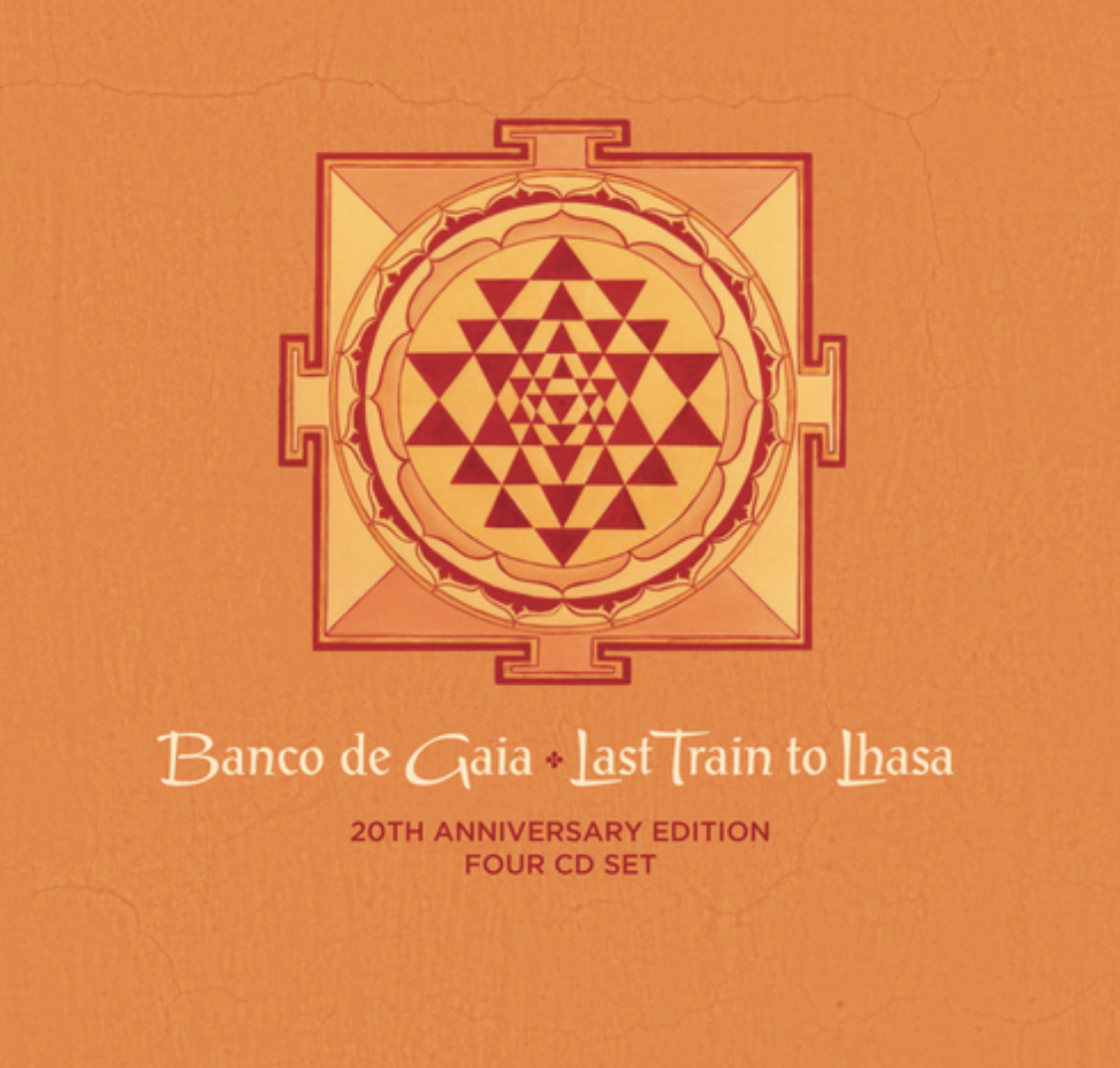
Already represented in volume 99 of the Social Playlist above, another chance to repost my piece on new age techno pioneer Banco De Gaia’s influential 1995 world peregrination Last Trian To Lhasa. Originally appearing as a twentieth anniversary special, with a repackaged version of the album plus extras.
Banco De Gaia ‘Last Train To Lhasa (20th Anniversary 4xCD Set)’
Despite, what on the surface, seems a plausible misconception, one of the UK’s chief progenitors of global trance peregrinations, Banco De Gaia, has become synonymous with all things Tibetan. Re-released on the occasion of its twentieth anniversary, the Banco’s Last Train To Lhasa album may have borrowed the title and evoked a transcendent spirit of the country’s mystical Himalayan landscapes, yet the group’s founder and guiding force Toby Marks never meant to confine his world sounds to one particular place: In truth, more a pan-global sound palette with echoes and traces of the Middle East, Asia and the Orient.
Going as far as to refute suggestions in every subsequent interview since its original release, the LP only actually features a solitary sample from the region and only gained its title from Marks wife on completion. However, Marks lent space on the album’s sleeve to publicising Tibet’s struggle against its overlord Chinese masters and would become a vocal advocate of the Free Tibet campaign – that now seems such a long time ago, and all but forgotten, with China since more or less swallowing Hong Kong and threatening an invasion of Taiwan, which if it does come, might just be the big one: the WWIII event we always dreaded.
Base camp on the enlightened journey to the ethereal, Tibet’s meditative disposition was no match for the authoritarian steamroller of the Communist party machine. And so, an ill-at-ease occupation and stalemate persists a generation later. Its international vessel of protest, the Dalai Lama in his own affable and gentle way backed by the Free Tibet campaign continues to be a big draw yet has decidedly been upstaged by events elsewhere. Clarifying his commitment to the cause, Marks was recently interviewed by the Free Tibet organisation in the run up to his trio of performances at this year’s Glastonbury and the anniversary Last Train To Lhasa release – perhaps a timely reminder.
Musically speaking, as I’ve already mentioned, the twentieth anniversary appraisal of Banco De Gaia’s blueprint reaches far beyond any Tibetan influence, imbued by cultures both imaginary and real from both terra firma and the stratosphere.
Highly praised for merging trance and nuanced electronic four-to-the-floor beats with atavistic echoes from mystically envisioned landscapes, Banco De Gaia’s Last Train To Lhasa was released in the dying ambers of the second rave and house music waves in 1995. On the cusp of Britpop, hung-over from grunge, guitars were about to once again dominate whilst house and techno music in all its many guises had reached superclub status; the underground movements fractured and broken up into a myriad of smaller tribes. Ambient and trance, usually the preserve of afterhours clubbing or allocated space in the “chill out” zones had already blossomed into its own industry. That unfairly and often fatuous “chill out” idiom used to sell everything from nirvana relaxation and transience to any ‘new age” missive. Never new in itself, until progress and technology made it easier and offered more options, the core ambient ingredient had already been in existence for decades. And despite what you may have read, Eno may have given it a name, but he certainly didn’t invent it. In this evolving stage of dance music, Banco De Gaia went to town, sitting on a fluffy cloud, hovering between trance and techno.
LTTL’s suffused panoramic station-to-station soundtrack was different. Sharing some of the peaceable beautiful nephology of The Orb and Air Liquid but with the satellite guided twinkle and kinetic rhythms of Orbital, the album sounded every bit as organic as it did electronic. The original album is boosted by a further three CDs worth of alternative takes, mixes, remixes and the missing until now, Apollo moon landing inspired space-voyage, ‘Eagle’ – recorded at the time but left off the final version of the LP. A box set only available as a limited-edition physical release – though now also available to hear on Bandcamp -, fans and admirers alike can really indulge, with 24 tracks of transcendent aural bliss.
Even if you are far from familiar with the source material, the general method applied is one of respectful tinkering and expansion, with Marks own alternatives plus a line-up of contemporary artists/producer remixes congruously immersive. A ‘Duck Asteroid Extended’ mix of the original ‘Kincajou’ for example, takes the steam driven new age suite on an epic, stripped and even more ambient, 44-minute journey: it takes the mix thirty-minutes to bring in the beats and reach a higher plain. Elsewhere, various tinkering’s of the holy misty mountain proverb ‘China (Clouds Not Mountains)’ takes the languid drifter into ever more esoteric territories, or in the case of Roedelius and Felix Jay collaborator Andrew Heath, adding a diaphanous piano to the meditative calligraphy-brushed valley narrative.
The reverberations of dub, bhangra, and the Orient are sometimes stretched into indolent escapism or given more power and lift on the varied versions of ‘Amber’. Sometimes as with the Carl Craig imbued Bluetech remix of ‘Kuos’, they are taken apart and rebuilt. Though nothing quite matches the rolling timpani introduction and celestial beauty of the original ‘White Paint’, ‘Where’s The Runway Dub’ and alucidnations ‘Dream Remix’ offer interesting interpretations; one a hymn in dub the other a suffused with kosmiche rays romance in the sky.
A carefully considered expansion of the Banco De Gaia panoramic worlds of the mid-90s, the 20th anniversary edition certainly offers the listener an immersive experience. And you can’t complain about getting your money’s worth, with over four hours of music over the four discs to peruse.
If you’ve enjoyed this selection, the writing, or been led down a rabbit hole into new musical terrains of aural pleasure, and if you can, then you can now show your appreciation by keeping the Monolith Cocktail afloat by donating via Ko-Fi.
For the last 15 years both me and the MC team have featured and supported music, musicians and labels we love across genres from around the world: ones that we think you’ll want to know about. No content on the site is paid for or sponsored, and we only feature artists we have genuine respect for /love or interest in. If you enjoy our reviews (and we often write long, thoughtful ones), found a new artist you admire or if we have featured you or artists you represent and would like to say thanks or show support, than you can now buy us a coffee or donate via https://ko-fi.com/monolithcocktail
Playlist:::Dominic Valvona
The Monolith Cocktail Social playlist is the blog’s imaginary eclectic radioshow, or DJ set, selection of throwbacks, missives, golden oldies and just cool shit; from across genres, timelines and borders. Expect to hear anything and everything.
Tracks:
Lalo Schifrin ‘Magnum Force Theme’
The Inmates ‘Bread & Water’
MC Duke ‘Miracles’
Tha Alkaholiks ‘Turn The Party Out’
Leaders Of The New School ‘Understanding The Inner Mind’s Eye’
Barbara Howard ‘Light My Fire’
The Move ‘Piece Of My Heart (Live At The Marquee)’
Chayns ‘Night Time’
Lotti Golden ‘Annabelle With Bells (Home Made Girl)’
Spike & Debbie ‘Seaport Town’
Alessandra Leao ‘Ai, Dende’
The Chefs ‘You Get Everywhere’
The Rakes ‘1989’
The Risin Sun ‘Pagan Bird’
Majid Soula ‘Yekker Oumenghi’
Loudon Wainwright III ‘A.M. World’
Why? ‘Into The Shadows Of My Embrace’
Chris Spedding ‘Video Life’
Esteban Copete y su Kinteto Pacifico ‘Abozaito’
Raf And O ‘Win’
Doris Day ‘Disney Girls’
Jon Tye & Ulrich Schnauss ‘Orange Cascade’
Radiohead ‘All I Need’
Daniela Casa ‘Third World Tango’
Mark Hollis ‘The Gift’
K-X-P ’18 Hours (Of Love)’
Bodkin ‘Three Days After Death (Part 1)’
Ancient Grease ‘Feedomn Train’
Parish Hall ‘Ain’t Feelin’ Too Bad’
Mayo Thompson ‘Venus In The Morning’
Pride ‘Proud Sorrow’
Rodrigo Gonzalez ‘Diva Francesa’
Fela Kuti And His Koola Lobitos ‘Ajo’
Clement Djimonge ‘Africa’
Armando Trovajoli ‘Bada Caterina’
John Compton ‘Lookout’
 Monolith Cocktail Blog