The Perusal #50: Lea Bertucci, Universal Harmonies & Frequencies, June McDoom, Kenneth Jimenez, George Demure…
December 6, 2023
A WORLD OF DISCOVERIES REVIEWED BY DOMINIC VALVONA
(Unless stated otherwise, all releases are available now)
Universal Harmonies & Frequencies ‘Tune IN’
(Yeyeh)

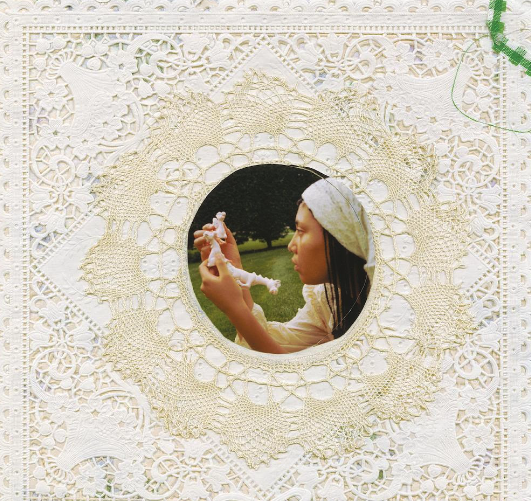
Recorded in a five day window before their collaborative performance at the electronic music Dekmantel Festival (held in the Amsterdamse Bos, in the Netherlands), Jamel “Hieroglyphic Being” Moss and foil Jerzy Maczyński’s improvised sessions cover a lot of eclectic ground.
Marshall Jefferson meets Marshal Allen; jazz transduced through an electronic wave of electronic body movement, house, techno, trance and ambience, the project reconfigures, transforms and resets the perimeters with a spontaneous search for answers, realms, spaces and spiritual inquiry.
From an original soundboard of twenty-six long form peregrinations, whittled down and either left in their improvised form or reworked and reproduced under the guidance of recording engineer Rein De Sauvage Nolting (known on the scene as RDS), twelve finalized tracks emerged, selected by label facilitator Pieter Jansen. Each track finds a more exotic, mysterious and sometimes chaotic way to follow the rhythm and groove. For this is a strange and refreshing vision of dance music; an acid shooting laser beam and Artificial Intelligence album series imbued trip of whirly birds, alchemist mysticism, sci-fi and Pynchon metaphysics.
There’s fun to be had too, but a considered, sophisticated freedom of experience and influences that puts a diverse range of saxophone contours, breathing lungs-like expulsions of ruminated air, rasps, quacks and spirals with synthwaves, counter flows, various synthetic apparatus and a whole electronic ecology. Just the opening titular-track (running to twelve minutes) alone progresses through a shimmy-shimmer polygon analogue score of Sky Records kosmische, Lukid, psy-trance, house, Basic Channel, Beaumont Hannant and warbled synth-funk. Changing course, ‘Can U Hear The Hum’, which follows, marries Amazonian foliage and a squirreling Harmonia with the Inre Kretsen Grupp. And when we get to hear Moss and his motivational speeches on ‘Multidimensional Transformations’, it’s like Ramuntcho Matta go-going to early Chicago house music.
The fantasy mystery, ‘The Book Of Forbidden Knowledge’, reminded me of Bowie and his last ever foil, Donny McCaslin, and the tubular reed strained and piped ‘The Fifth Science’, has a touch of Matthew “Doc” Dunn’s Cosmic Range and his work with the saxophonist Andy Haas.
Within that stretch of the imagination, there’s moments of controlled tumult, the faraway sounds of a removed North Africa, crystallised visionary vistas, beautifully constructed mists, and waterside meditations. To put it another way, this partnership is like Floating points meets The Black Dog, Klaus Schulze, Benjamin Lew and Rebecca Vasmant in the most unique, transported of dance clubs: And that’s a very inviting proposition indeed.
June McDoom ‘With Strings EP’
(Temporary Residence Ltd.) Out Now Digitally/Vinyl Arrive February 24th 2024

Credit: Bella Newman
Despite the diaphanous, wispy and hushed delivery, June McDoom’s voice is anything but evanescent or forgettable. Because just like one of her most cherished heroines, Judee Sill, every word and expression is believable as a lived experience of heartbreak, yearning and a close relationship with the elementals of an ethereal, but deeply felt, nature.
On the follow-up to her debut EP, the burgeoning McDoom leads with a watery replenished and droplet-mimicking rendition of Sill’s environmental devotional, ‘Emerald River Dance’. The tragic, resurrected to cult status in recent years, troubadour’s fatalistic life was like something out of the gospels: updated in the bohemia of the Laurel Canyon. Forced into prostitution and petty crime to feed her drug addiction, and with a string of coerced and unhealthy marriages/relationships, Sill first came into contact with the afflatus sound that would become her trademark when in reform school during the 1960s; spending time learning the liturgy and gospel music whilst picking up the church organ. In a similar vein to the no less unfortunate Karen Dalton – a peer with an equally ill-fated car crash of failed marriages and addiction, and who’s stripped-back, unpretentious folk style is echoed on this EP -, Sill, despite her obvious talent and the circles she moved in (signed to Geffen’s Asylum Records, with a song bought and made famous by The Turtles no less, and her debut single, ‘Jesus Was A Cross Maker’, produced by Graham Nash), remained an obscure cult figure on the peripherals of the folk music scene. Possibly garnering more attention forty odd years later than she did in her own time. Every song, recording, newly discovered demo is heavily loaded, and yet transcendent.
McDoom has her work cutout, and yet breathes a new life into this near Southern spiritual hymn of softened beatific poetry. The original words remain intact, but with the added “I will hear what it is” line; McDoom placing herself within the sentiment of this aquatic and pastoral embrace. A favourite song for years, part of McDoom’s live repertoire, it proves the perfect congruous opener.
A second cover, and age-old standard of the Celtic set that translates across cultures and time, the traditional ballad, ‘Black Is The Colour Of My True Love’s Hair’, has roots (it’s believed) in Scotland. Nina Simone performed an impressionable version, and the American-in-Paris Tia Blake recorded an incredible minimalistic rendition. Both inspired McDoom to record a version; channeling in particular Blake, who is another interesting, fleeting artist from the folk cannon that disappeared off the radar, recording only one album of traditional songs at the age of nineteen in the French capital. Traversing, rather effortlessly I’d say, the Baroque, Appalachians and old Iberia, McDoom conjures up an apparitional-style mist of lament and dreaminess on her near-filmic and airy heaven-bound transformation.
As that EP title makes clear, With Strings doesn’t so much embellish as sympathetically accentuates and carefully brings home the emotional, touching and longed sentiment of McDoom’s stripped-down style with the small, intimate introduction f chamber strings and harp. Reimagining both ‘On My Way’ and ‘The City’ with this magnificent accompaniment that’s one part semi Baroque classical, and one part Alice Coltrane and cosmic, the vocals are further enhanced with the otherworldly three-part harmonies of Cécile McLorin Salvant and Kate Davis: Between them, their CVs and voices are imbued by jazz, French choral music, Creole, pop and the classics. Together it all reaches a near ethereal magic of the untethered and gauzy, with a semblance of the blues, country, and folk and spiritual. And yet, it’s all so modern sounding. ‘The City’ especially, has a breathless air and the space to progress: to confess too. Like a long list Lomax recording born anew, mixed with the beauty of Mercury Rev and The music Tapes, McDoom’s lacey arts and crafts vulnerability is soothed through a gauzy yesteryear. This city plaint is nothing short of sublime.
McDoom’s inspirations are worn on the sleeves, and yet I keep racking my brain to fathom who she reminds me of. An American Maria Monti? A softer Natalie Ribbons? Maybe a passing resemblance to Connie Converse perhaps? McDoom settles somewhere in-between them all as a refreshing, heavenly talent as she disarms the hurt and depth of emotional turmoil, inquiry and wonder with the most beautiful and impressive of deliveries. Certainly, one to watch.
Kenneth Jimenez ‘Sonnet To Silence’
(We Jazz)

Taking a leap into the untethered realms of Kenneth Jimenez’s dreams, the jump off point for his newest album literally takes flight. The Brooklyn-based bassist, composer and quartet bandleader runs for the mountains and sprouts wings; flying over the valley and the versant contours of free jazz and hard-bop: ala New York style.
This bird-like weightless journey often takes in the bustle, chaos of the city, and the excitable energy of his southern neighborhood (or “barrio” in this case) and ports. As the titles suggest, there’s a reference to Jimenez’s Costa Rican roots, and more than a spirit of that Central American’s oasis diverse landscape and bird life. But off the beaten track, Sonnet To Silence truly roams free between mirages and the strains of concentrated expression.
With Angelica Sanchez on piano, Gerald Cleaver on drums and Hery Paz on saxophone, the action is in a constant, almost restless state of movement: of the flighty, swanned, rolling, sprung, stretched, chuffed, pulled and heightened. Between them the quartet invoke Liberty era Jeremy Steig and Prince Lasha & Sonny Simmons on the whistled and wiry drawn-out and busy ‘Dia Laboral’ (“working day”), and Roscoe Mitchell and the Art Ensemble Of Chicago on the frayed taut double-bass stretched (Jimenez is an obvious talent in this department), turn bluesy and tumultuous, ‘El Patio’ (“the backyard”).
The dockyard 50s and 60s New York evoked ‘Mr. Shipping’ has a slight swing, plus a touch of both Marion Brown and Cecil Taylor – Sanchez in full flow, switching effortlessly between the melodious and experimental with almost jarred prods and block chords; reminding me at times, of Alice Coltrane accompanying Pharoah Sanders, but a little resonance of Oscar Patterson too.
So much is happening on this incredible, engaging and sometimes challenging (in the best possible way) album, which draws you in and then ups or changes the tempo, mood and direction. This is free jazz at its most promising; certainly encouraging and with dreamy quality that lifts you up into an imaginative vision of soaring and more complicated expression. Kenneth Jimenez and his quartet have produced one of the leading jazz albums of 2023.
Unwavering ‘Songs From A Tomb EP’
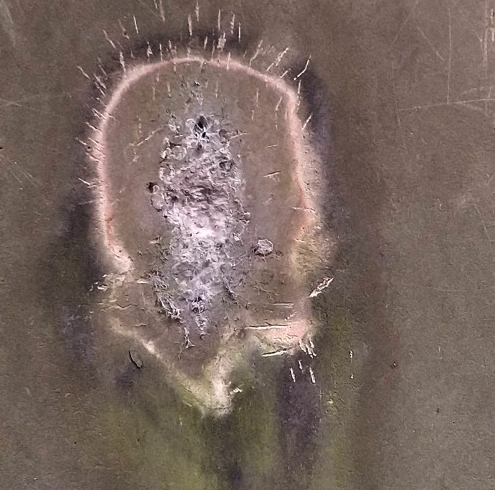
The solo moniker of one Matt Bennett, Unwavering has made an impact with now three of the blog’s writers. Before me, both Graham Domain and Brian ‘Bordello’ Shea pretty much nailed this atmospheric project of indie-folk: as difficult as it is to describe.
Following on from the debut album, Freeze/Thaw/Chorus, and last year’s Ley Lines In The Forth (great title by the way) EP, the Lothian winter’s mists and ‘dreich’ dampness seep into the new EP of acoustic evocations, blessings and stirrings. From the crypt, mausoleum to the nave, Bennett sends out both resonating roused rhythm guitar strikes and quieter, almost ambient in parts, passages of mediation and near despondency.
A hauntology of the downbeat – Brian ‘Bordello’ Shea described it as akin to a downcast Stone Roses, without Mani and Reni – and capture of the abstract environments – catching floating dust particles in a weakened beam of light, shining in through the cellar’s iron gridded window – from which it seems he is performing, there’s a real strange, cultish and sometimes hallowed beauty to the music. His guitar fills the cavern, the church and basement; resounding and loud but always melodious and effecting.
And through it all, he channels centuries of psychgeography; the marks left upon the landscape’s he’s trawled; the erosions and evaporated essences of what were. All of this is merged with personal inner feelings, remembrance and wounded modern travails, written, so it sounds, with a quill by candlelight.
At times it sounds like fellow Scot, Ali Murray, and at other times like the Cocteau Twins pairing with Steve Mason and Parachute era Pretty Things (that’s especially so on the hallucinatory, ambient textural and foggy ‘Slow Digression’), but also a hint of stripped 80s acoustic Goth and even Joan Of Arc. Bennett himself name-checks Kurt Vile, Harold Budd and Low, all of which ring true. But this EP is really quite idiosyncratic, between realms, time and spaces; a unique folk-indie inspired songbook that works outside the usual perimeters, length and borders of song writing. A really interesting discovery waits.
George Demure ‘Ear Candy Dandy + Bonus Album Dandy In Dub’
(Hobbes Music)

On a bobbled and float-y, light sunbeam dappled vapor of deep house, garage, electro, kosmische, leftfield pop electronica, dub and new wave (both the German and UK’s), the Edinburgh DJ/producer and singer-songwriter George Thomson continues the good work he laid down on the last EP: 2021’s well-received The Record Store.
With the same self-imposed limitations that he set back then, his latest George Demure alias album (expanding to a eighteen-track package with the addition of the Dandy In Dub bonus) makes a sophisticated use of a drum machine, two analogue synths (a mono and poly version) and a computer (to record upon). And yet, as sparse as that sounds, Thomson manages to fully expand his subtle sonic, musical, rhythmic and effects universe even further; channeling four decades of experience in both the Scottish and English capitals.
The CV is impressive and varied, starting out (roughly at the same time as myself, but geographically 500 miles away) in the burgeoning techno and house scenes of the early 90s in Edinburgh. After building up a reputation for producing his own music under the George T moniker, he made a move to London in the 2000s. The ‘T’ was put on hiatus however, and George Demure was born. This still gave Thomson ample time to collaborate with others, namely in recent years as one half of the Jeanga And George partnership. Facilitators and labels for those multiple projects and appellations include NRK, Stickman, 2020 Vision, Crosstown Rebels, Tirk, Greco-Roman, Optimo, Output Recordings and, now, Hobbes Music.
It shouldn’t come as any surprise to find Thomson well versed and full of ideas; using this album, in a fashion, to rediscover and connect with his formative years. A culmination if you like, of his years in the scene. But this is a very fresh projection of that, with both vocal tracks and instrumentals that bob about with the lightest of touches and skill. That’s not to say there isn’t depth, as no matter how soft they are, the bass does thump and the machinery and generators add something concrete and textural to the music.
Of one production, there’s still a wide variety of ideas and genres across the original album’s ten tracks and the bonus moiety’s further eight variants of sung, instrumental and ‘beat’ tracks. The opening, ‘Hello Mr. George’, offers an awakening rural scene, complete with bird song. Bouncing drum pads patter out a gentle bip-bop beat enveloped by light chords on a dappled electronic piano-like synth across a morning idyllic scene. By the time we reach the chimmy new wave-esque ‘Dub In Your Bubble’, and the opening crooned vocal of “Johanna”, we’re almost in the yearning schmooze territory of the crooner. Though as the song progresses, it becomes apparent that it’s more Robin Scott than Scott Walker; mixed I might add with a touch of the Sabres Of Paradise. Another vocal track, ‘Circles’, sounds more like a soulful leftfield downcast Matthew Dear.
An after hours downtime serenade, ‘Late Again’, that features Stevie ‘Chicago’ Christie whizzing Felix Da Housecat vibes past satellites, is a particular highlight – imagine Eno and Scott’s M persona making pop music together. By contrast, the therapy session, ‘Blah De Blah’, sounds like Polygon Windows lost in a haze of Bowie and Level 42! All the vocals have a real drift to them; almost languorous and untethered; a kind of free association soul-house-pop vibe that gives.
Elsewhere, the impeccable production mixes rotor-bladed Moroder with EDM; Kriedler with the melodica dub cloud operations of The Orb and FSOL; and the outdoor environments of epic45 with Roedelius and Thomas Dinger. Within that scope kinetic sounds are matched with the cosmic, vaporous and far out ‘jack-your-body’ moves. It’s a most lovely, swimmingly blend of motivations, feels and deep grooves that effortlessly comes together in a generous offering of electronic music: the very epitome of the Hobbes label’s remit in delivering leftfield unique visions of now techno, house and club sounds.
Lea Bertucci ‘Of Shadows And Substance’
(Cibrachrome Editions)
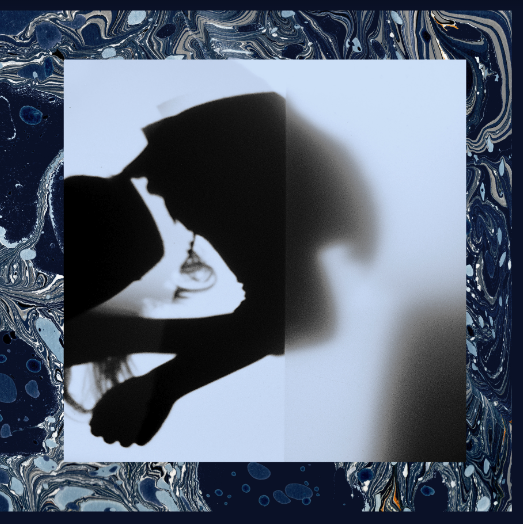
From the chthonian bowels of the geological to the vaporous airs of archaic pseudo-scientific sexism, the New York-based composer, producer, performer, saxophonist and label founder (of the Cibrachrome Editions imprint, under which this album is being released) Lea Bertucci continues to capture the intangible and abstract on her latest work, Of Shadows And Substance – a title borrowed from an episode of the Twilight Zone.
Two scored performances; two separate commission; each atonal experiment is an avant-garde and prompted reaction to a theme that simultaneously hides its sources, instrumentation, sense of place and time, yet evokes a certain recognisable mood.
Covering what used to be two sides of the traditional vinyl LP, these congruous long form pieces tap into Bertucci’s research methodology and serialism of composition and interpretation; stimulating the actions and atmospherics, but granting a form of autonomy to the musicians taking part. This includes an “intonation” tuning structure, the textural and semi-improvisational, and the use of the cello, double bass, harp, percussion and electronic apparatus.
As the album title might suggest, Side One’s ‘Vapours’ piece is, in part, informed by the literal description of the word: that is, a molecule existing on the verge of a liquid, gaseous or solid state. But it’s also a reference to the, far from sympathetic and almost dismissive, term to diagnose types of hysteria in women from a bygone age. Commissioned and played by the Italian Quartetto Maurice, these two interpretations mask the familiar with a highly experimental treatment, strain, stretching whining and searing atonal performance that conjures up shades of Walter Smetek, John Cale, Simon McCorry, Cale, Riech and Fluxus. At one point, when the intensity builds towards an otherworldly, unnerving drama of sawing and heightened tensions, there’s more than a trace of György Ligeti.
Maintaining a constant resonance of metallic sheens, rubs and refraction – in some manner, almost melodic, in the most removed sense of the word -, there’s a permeating connection that carries on throughout the various stages of drones, drawn-out bows, frictions, chaffs and didgeridoo-like blows. Neither vapourous nor hysterical, but somewhere in between, the Quartetto summon some unique visions of distress and abstracted classicism.
In a similar vein, the title-track sonically conveys the arse-end, final days of the anthropogenic epoch. Commissioned this time by the Philadelphia creative foundation, the ARS Nova Workshop, and performed by Henry Fraser, Lester St. Louis, Lucia Stravros and Matt Evans, this twenty-minute plus movement digs deep into the Earth. Like Scott Walker mining an atavistic psychogeography, layers of crust are removed to reach the present state of geological trauma: Or as Bertucci puts it, ‘a meditation on time-travel’ and ‘measure of accumulated events over glacial periods of time’; ‘a metaphor for social and environmental shifts’. This translates into shimmery vibrated cymbals, barely recognized saxophone rasps, the thump of primordial creatures chained to the bedrock, and spooked piano. By the close, the hovered instrumentation is in the airy realms of a calmer, more settled gauze.
Challenging in the best possible way, this couplet of performances is so textural that you could grasp it in your hands. A gateway, window into an experimental atonal world, Of Shadows And Substance is an inventive and intriguing proposition from a unique and adventures artist.
Xqui ‘Melting With Ice’

In the time it takes me to cast my critical mind and ear over this release from Xqui, there will most certainly have been at least another, if not more, projects cast out from the experimental creator’s hothouse studio: such is the abundant output from this highly prolific artist. Across an array of labels and facilitators, and in both a solo and collaborative capacity, Xqui occupies a liminal space between ambient music, sound art, musique concrete, transformed field recordings, hidden source material and voice exploration/transmogrification. Anything recognisable is made anew, strange and alien within this amorphous blending of the synthesised and technological – which isn’t to say these ideas aren’t organic, or that they lose that connection with their environmental, atmospherics settings. It’s safe to say that you never quite know what to expect with each release, such is the diversity and range.
Leaning more towards synthwaves and a chemical, scientific, numerical calculus of sum-parts and references, Melting With Ice draws us into an alternative futuristic and space-searching world of veiled machinery hums, generators, percolators and soft pulses; a sci-fi odyssey of Ligeti, Richard H. Kirk and the Theremin-like arias and apparitional sirens of Star Trek. But this is balanced out with a more naturalistic alchemy of watery elements, an exotic aviary of birds, and subtle hints of the pastoral.
Playing with voices, speech, annunciation and phonetics, Xqui uses a range of effects to convey just the mysterious, curious essence of conversations, whispers, breaths, expulsions of air, the choral and informed. ‘Cherry Red, Neon Blues’ is different in that regard. Here we find a Simon Armitage type poetically inhabiting a Gary Numan-like Blade Runner cybernetic set of neon-buzzed, hummed and lit removed romanticisms and forebode.
There’s a ghost in the matrix, aboard the cosmic flights of deep space probing, and under the Earth, as the ice caps melt and everything from the molecular to most expansive chasms changes: for the better or worse.
The minimalistic, with shades of Twin Peaks and Vangelis, ‘Pygmalion Effect’ references the famous psychological phenomenon in which high expectations lead to improved performances/outcomes in any given area, whilst low expectations lead to the opposite. Its name of course comes from the sculptor in Greek mythology who fell so in love with his ‘perfectly beautiful’ sculpture that it came to life. Make what you will of that. But as usual, based on the quality labyrinth of past creations, expectations are usually high for an Xqui album. And this is no exception; another highly evolved sound world that somehow makes even the innocuous more sci-fi or otherworldly, and attaches a deeper meaning, an experience to it: for example, the passing traffic driving through puddles as the rain hits the pavements to cause its own splash-back tide on ‘Sunrise Waves’; a recording enveloped in the thoughtful and searching. I recommend you check this one out, and the entire catalogue for that matter.
Alessandro Alessandroni ‘Alessandroni Proibito Vol. 2 (Music From Red Light Films 1976-1980)
(Four flies Records)
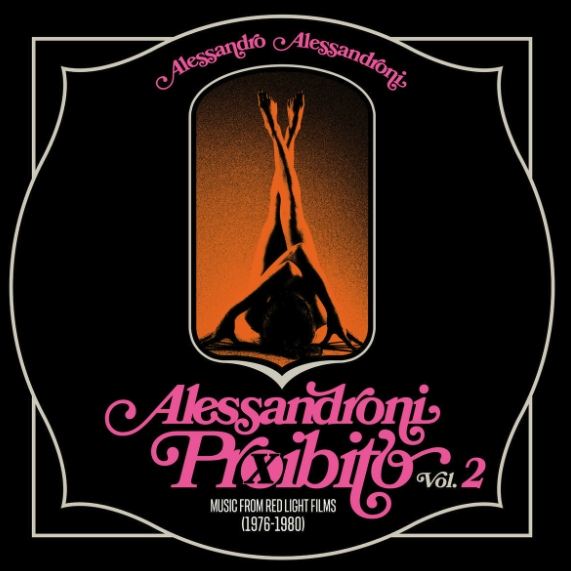
The stellar talent of over forty film scores, part of the great Italian composers epoch of the 1960s and 70s, and owner of one of the most iconic whistles and guitar riffs in cinematic history, really deserved so much more; putting his name to the forgettable skin-flick exploitation movies that don’t even get named on this second volume of obscurities from the Alessandro Alessandroni vault.
The dire schlock smut quintet of movie scores that inform this latest Italo-soundtrack maverick limited edition run from the Italian Four Flies label, have disappeared off a cliff. However, Alessandroni’s modest home studio scores remain, with a smattering of tracks from each now spread over a quintet of 7” vinyl singles, collected together in an alluring box set.
A peer, foil, mentor and friend to such luminaries as Morricone and Piero Umiliani, the Rome born composer, multi-instrumentalist maestro and artist must have hit the skids by the time these red light movies were released. For despite making a name for himself with that Spaghetti Western twang-y Duane Eddy signature and his highly influential work for Sergio Leone, by the the late 70s he was scoring more and more mondo trash, erotica and garish S&M horror – see Lady Frankenstein and Killer Nun. And yet, the quality of his work is never in doubt; often elevating such tawdry, amateurish affairs to cultish status by the music alone.
Although far from serious, it seems Alessandroni’s craft is likened to playing with an amusement park of ideas, sounds and instruments: entertaining but also captivating in equal measures. With an ear attuned to the contemporary fashions, but the classical and traditional too, a lot of musical ground is covered in his compositions: from Italian folkloric standards to disco, library music and the salacious. The second Proibito volume is no exception, with soft-pop-lit dalliances with the blues and Turkish-sounding guitar (the desire prowled sleazy, deep heat floor show, ‘Luci Rosa’: translating as “pink lights”), 10cc soft rock erotic body contouring (the lulled, wandering fingers caress down the spine ‘Tahiti Joint’), and Gallo humping orgasms (the weird spooked, moist-dripped cave (oh-ah!) and piano wire malarkey shivered ‘Climax’). Some of those tracks feature erotic wordless allurements and enticements, with Alessandroni’s wife, the fellow Roman and singer-actress Giulia De Mutiis, providing the sexy coquettish trapeze artist vibe expressions of dizziness on the Broadway stage circus act, ‘Ticket’. I think she also provides the Betty Davis-like oozed erotica on the smoky and funky ‘Miss X’.
In case you’re interested, Mutiis has credits for roles in 15 Scaffolds For A Murderer, The Laughing Woman and Any Gun Can play, but also joined her husband’s octet vocal group, The Modern Choristers (in 1961), which specialized in those choral wordless calls and atmospheres: appearing on many a film score. Apparently other family members were also corralled into Alessandroni’s experiments, although no one else is specially mentioned in the notes, and there are plenty of those siren voices to be heard throughout this compilation. The main man appears himself, delivering the “do-doing” and “bah-bahs” on the new wave discotheque and art-rock ‘Racing’.
As a member of the Italian set of pioneers and new wave, it’s unsurprising to hear echoes of the already mentioned Umiliani (both partners in the supposed anonymous rock group Braen’s Machine in the 70s), Giuliano Sorgini, Roberto Pregadio and Paolo Casa (especially his clavichord and electric piano, Stevie Wonder-esque moments). But with the use of the mandolin, accordion and melodica too, plus that famous guitar twang, you could be mistaken for thinking you’ve been transported to any port on the Med, South America and further East – especially when that spindled guitar starts to ape the resonating rings of a sitar. There’s a craft. There’s fun. There’s a swerve of soul-funk and frolicking titillation in these previously unreleased on vinyl recordings that make it worth the admission price. For those fans of Trunk Records and Finders Keepers, but also anyone with a penchant for the cult and Italian cinema, you’ll love this collection of smut recordings with élan.
Don Fiorino & Andy Haas ‘Accidentals’
(Resonantmusic)

After two decades of intermittent collaboration, Don Fiorino and Andy Haas have found a common language of challenging, free-expressive experimentalism and exploration together. Speaking that sonically, atonal and often non-musical dialect fluently across the previous albums of Death Don’t Have No Mercy and (the monolith cocktail profiled) American Nocturne, these two highly impressive musicians/artists have pushed thresholds and boundaries to emit a tumult of squeezed, pulled, squealed, entangled, gabbling, whistled and indescribable sounds from a host of stringed instruments and the saxophone. The duo’s third album is no exception, with eighteen descriptive, indicated and playful titles of the pressurized, near-distorted, flutter, fizzed, bandy and bended.
But before we go any further, a little CV check. Former Muffin, saxophonist maestro and transformer Andy Haas first blazed and scorched Martha’s ‘Echo Beach’ hit in ’78, before relocating from Canada to New York City in the early 80s; making a name for himself in the post-punk, no-wave and avant-garde scenes, and collaborating with such luminaries as John Zorn, Ikue More, Marc Ribot, Ken Aldcroft (which comes the closet to Haas’ improvisations with Fiorino)…the list goes on. Nearly two decades later and Haas relocated back to Toronto, just in time to prove an in-demand foil to a new generation of artists and producers; firstly joining the orbit of collaborators around Matthew ‘Doc’ Dunn’s head music super group, The Cosmic Range, and then Meg Remy’s U.S. Girls led vehicle, performing on 2018’s In A Poem Unlimited and on the subsequent tour – I personally witnessed Haas blowing up a storm on the tiniest sax I’d ever laid eyes on! A multitude of projects, solo albums fill the gaps in-between; many of which were released on this album’s label, Resonantmusic.
Likewise, Fiorino’s backstory spans the decades with a diverse range of improvisational projects as an incredible guitarist and painter – the latter informing the former. This expands to the glissentar, lap steel, bass, banjo, lotar and mandolin, and covers a host of influences from across the globe. You can find him filed under the Radio I-Ching trio and The Hanuman Sextet, but he also appears on the late drummer Dee Pop’s various projects, and with Daniel Carter, John Sinclair and Adventures In Bluesland.
It all amounts to a lifetime of experimentation for both partners in this venture.
Accidentals isn’t the easiest of listens; rooted by the sounds of it, and by that title, to the accidental results of close quarter improvised wrangling and inquisitiveness; the captured, freeform and untethered results recorded in-between longer performances perhaps? An intimate reaction to downplay perhaps?
By chuffing, rasping, stretching out and releasing tensions on the saxophone, and with Fiorino switching between his racks of stringed instruments, there’s some wild and crazy far-out flexed, physical contortions. Valves let out the steam slowly, as unrecognizable sources trill, flutter, suck, ripple and resonate. When on the fretless bass, it sounds like Bunny Bruen or Percy Jones or Mohini Dey thwacking, patting, tabbing and slapping full-trebled thickened strings. Haas meanwhile channels everyone from Antony Braxton and Roscoe Mitchell to Marshall Allen and Jeremy Steig. Within that sphere of inspiration, his sax finds moments of melody, serenade and the heralded.
Whilst there are evocations of jazz-fusion, La Monte Young, Walter Semtek, Federico Balducci, Zappa, the Middle and Far East, the personal ‘Eulogy 4 Dee’ (that’s Fiorino’s foil and band mate, the drummer Dee Pop) crosses Mali with Louisiana Delta Blues and Mardi Gras for a purposeful goodbye. And the flit, flighty and reed-squeezing ‘Curled Time’ merges Stooges Fun House with the sort of uncoying, stripped of artifice stringed recordings found on Ian Brennan’s recordings from forgotten parts of the world. But for the majority of the time, Accidentals is an album of abstraction, extraction and free-play, performed by two musicians at the height of their perceptive and explorative skills; the language now almost telepathic, with no prompts needed for expressing the chaos, tumult and stresses of the environment and greater geopolitical climate.
Cándido ‘La Muerte de Occidente’
(Natural Sciences)

On the face of it, nothing could be more incongruous than a practicing, bona fide Hare Krishna making gothic-punk house music. And yet, Cándido has done just that. Gone are the mantra chants, yoga and tambourines for an embrace of 80s underground electro Streetsounds, 303s and 808s, post-punk industrial S&M, the German new wave, EBM and jack-your-body early house music. For despite the opening Laraaji-like spiritual chimes and trinkets, this is an occultist club scene rave-up back dropped by the spiraling ‘death of the western world’.
A lively sound clash from the Buenos Aires underground, this album (Cándido’s debut for the Manchester imprint Natural Sciences) is less Zen and more dungeon; a dance music vision permeated by radio waves and samples of the reaper’s prophecy, film clips, cults, political epitaphs and a salacious Latin vamp (courtesy of the featured Contacto). In practice that all sounds like Mantronix, Cabaret Voltaire and Steve ‘Silk’ Hurley bruising it with Meat Beat Manifesto, or, an ashram soundtracked meeting between Nitzer Ebb, the Revolting Cocks, Rockit era Herbie Hancock, Farley Jackmaster Funk, Executive Slacks and Rammellzee.
It’s a unique take that has more in common with the Spiral Tribe, Chicago house scene, and Catholic guilt kinks than spreading the word of karma. In fact, it can all sound more gothic and illicit then blessed and spiritually enlightening. The only reincarnation going on here is in the beats. Cándido’s electro funeral pyre proves an infectious beat-driven 80s collider of underground dance music and industrial cut-and-shunt: An alternative route to transcendence.
Hi, my name is Dominic Valvona and I’m the Founder of the music/culture blog monolithcocktail.com For the last ten years I’ve featured and supported music, musicians and labels we love across genres from around the world that we think you’ll want to know about. No content on the site is paid for or sponsored and we only feature artists we have genuine respect for /love. If you enjoy our reviews (and we often write long, thoughtful ones), found a new artist you admire or if we have featured you or artists you represent and would like to buy us a coffee at https://ko-fi.com/monolithcocktail to say cheers for spreading the word, then that would be much appreciated.
A LOOK AT WHAT’S OUT THERE: Dominic Valvona’s Reviews Roundup
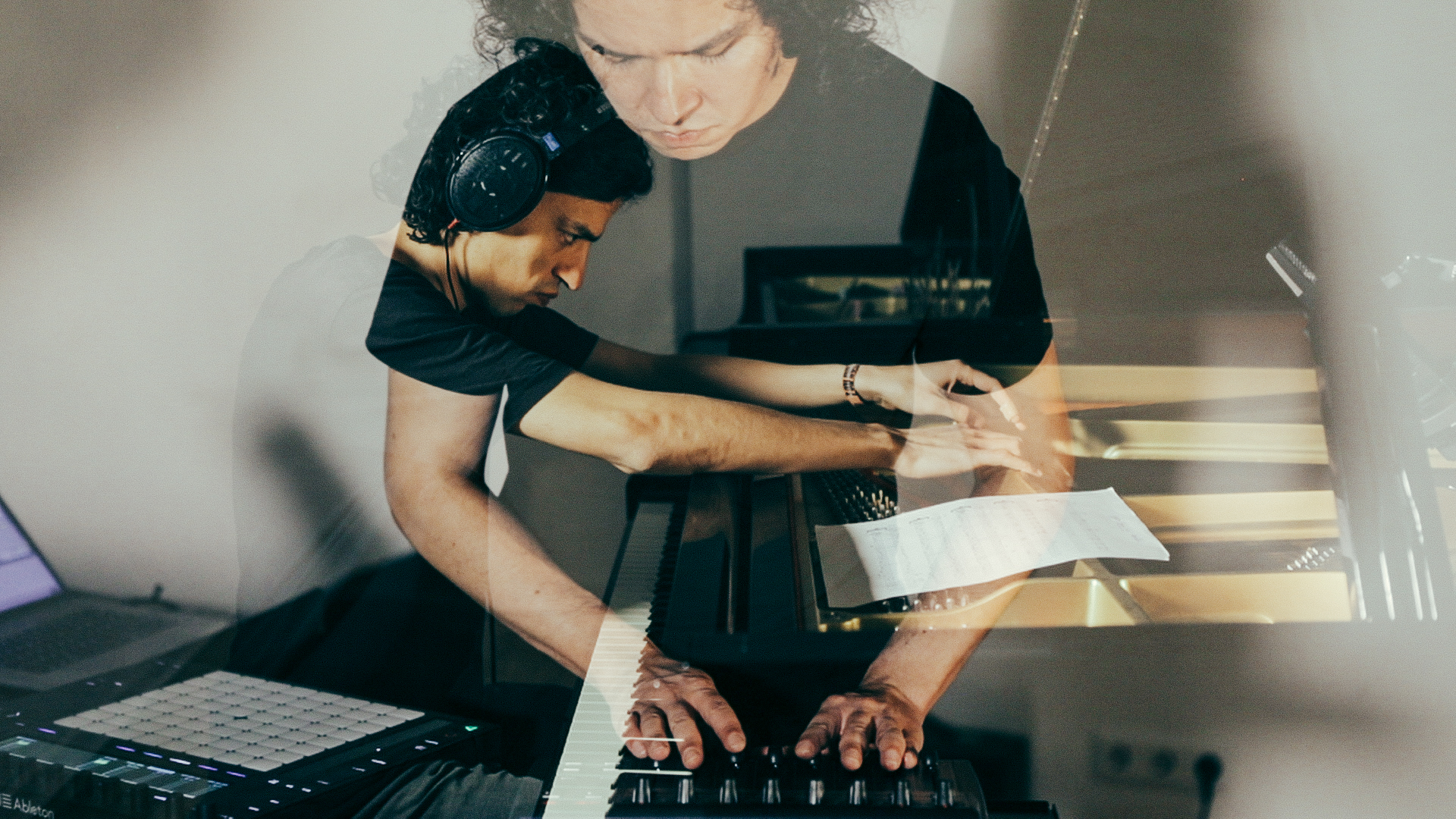
Amine Mesnaoui & Labelle ‘African Prayers’
(Lo Recordings) 1st April 2022

Back again conducting wonders, Jérémy Labelle finally makes the album he always dreamed of with friend and musical partner, the Moroccan-in-Paris pianist, Amine Mesnaoui, 15 years after first crossing paths on the Seine riverbank. As backstories go it’s a fated one, Labelle DJing a Techno set (just one of many musical genres under his belt) suddenly leaping into action to save his future collaborator and party attendee, drowning in the iconic river. Thrown together under the most insane conditions, both musician-composers formed a bond, which is now transduced into a most atmospheric mood suite of atavistic ritual, ceremony and futurism.
Already riding high this year off the back of his expansive universal vision of Maloy music and the classical, this January’s Éclat album, Labelle now appears alongside his classical and jazz studied foil on a both electroacoustic and avant-garde transformation of the North African, but more specifically Moroccan, Gnawa Ritual of the Seven Colours liturgy.
Performed traditionally with the entrancing music of the ‘maâlem’ masters and the spiritual guidance of a ‘shuwafa’ (a clairvoyant, of a kind) this important communion, invocation of the seven main manifestations of the divine ‘demiurgic’ activity calls for the seven saints and ‘mluk’ who are all represented by various shades of colour – hence the name. To go deeper into the meaning, this ritual represents a prismatic decomposition of the original light/energy; the first sacrifice and genesis of the universe as outlined in this Islamic belief and form of religious songs, rhythms, poetry and dance.
However, instead of the signature hypnotic scratchy, scrapped energy of the ‘guembri’ we instead have Mensnaoui’s modified brassy, buzzy resonating piano, which has various objects, props inserted into its strings, and Labelle’s array of electronic interactions and effects to stimulate the mystery and ethereal prayer of that arcane ritual. The mood is every bit as mystical and venerable, only those colourful representations now extend into Cage-style modern classical experimentation, deconstructive spiritual jazz and electronica.
‘Lueur’, ‘white” the colour of the Gnawa religion itself, does have a hint of spindled desert contouring Arabia yet features softened but deep bass stamps and thuds and quivery trills of something otherworldly. Those ‘celestial spirits’ are invoked on the “dark blue” shaded ‘Pérjastre’, stirred up by both chimed and spidery runs up and down the piano’s strings, the sound of softened foot pedal movements, percussive shimmers and breaths from the ether.
The rhythms really get moving on the colour ensemble of ‘Krazé Muneataf Tanzen’, the tribal and avant-garde coming together in a reimagined dance that evokes a meeting between Jeff Mills and Afrikan Sciences. On the aquatic, liquid ‘Bleu Noir’ (the album’s lead single, and in case you didn’t guess, represents the colour “light blue”, a symbol of the ocean and sky) Mesnaoui plays freely with trickled and cascading notes, sounding not that far off from the experimental works of Abdullah Ibrahim.
Familiar African percussion, cattle and long tubular bells and piano turn into electrified forms of futurism. It’s certainly a different perspective, playful, explorative yet attuned to the source material, inspiration. This is Gnawa music and ritual as you’ve never heard it; moving into new realms of sonic enterprise. Just don’t wait so long next time guys, as this is a match made in the elementals.
Nicolas Zullo ‘Credendoti Montagna’
(Ibexhouse) 18th March 2022
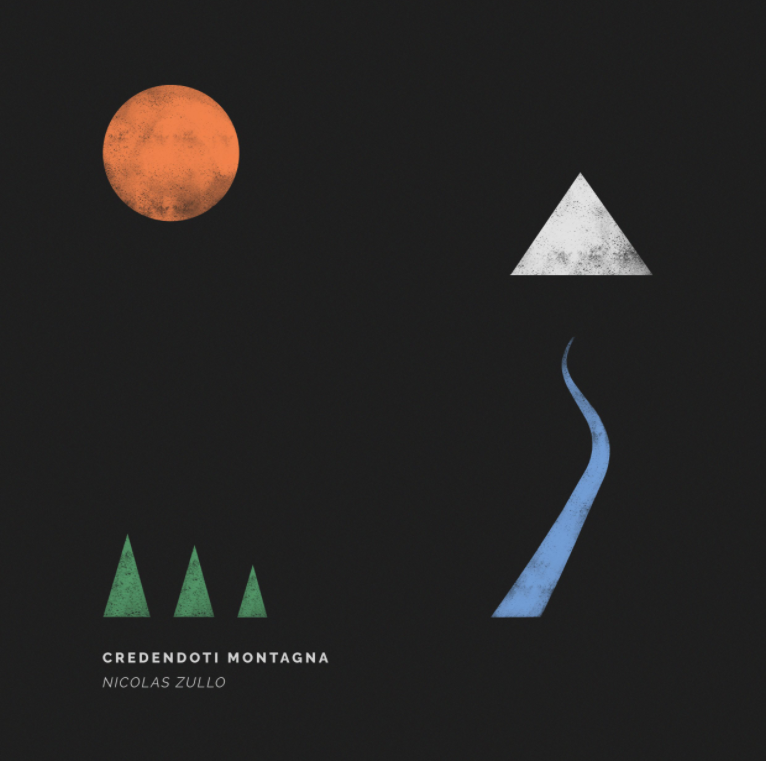
The Italian philosophy student turn songwriter Nicolas Zullo interprets and translates a fertile imagination into a lucid dream theatre on his debut solo album, Credendoti Montagna: that’s “believing you are a mountain” to my non-Italian speaking friends.
Unravelling a most poetic psyche, Zullo is aided by Mirko Bianchini on bass, Eduardo Dinelli on drums, Umberto Ciccarelli on keys and the notable Alessandro Fiori on synths, violin and choirs; he also helps to record these enigmatic songs, journeys of the mind, which gently unfurl to traverse the Renaissance, psychedelic, folk, prog, Britpop, 70s soft rock and spells of 60s troubadourism.
Imbued with the bellissimo diverse splendours of the Viareggio, with its gorgeous coastlines, lakes and mountains, these softened studies move with ease through a magical world: simultaneously Freudian and Flyodian! That’s both a Syd-era Pipers At The Gates Of Dawn and a post-Syd Dark Side Of The Moon meets The Wall versions of the Floyd I might add. Unconsciously perhaps, though Zullo name checks a list of artists he grew up absorbing, there’s a light of touch lean towards the Floyd across at least half this album. That and beatified echoes of 10cc, Tame Impala, The Beatles, Ralph McTell, Donovan, Dylan’s harmonica, and 60s/70s Italian cinema soundtracks. Although the part cabaret, part circus trippy ‘Se Fussi’ (“if I were”) is like a Sgt. Pepper Jacques Brel.
Submerged into an enchanted songbook and subconscious of swoons, swirls, romanticism and reflection the listener will find the soft, almost pop-lit with touches of the neoclassical, just quirky enough to hold the attention. Throughout a bathos and pathos of interpretation, and an escape from the ugly machine, there’s a lovely fluid lyricism – OK I’m going on the timbre, candour, feeling, as despite my name and roots I cannot speak Italian. Zullo has crafted a spellbinding, impressive debut, a magnificent, sensory dream-realism of scale and erudite musicianship.
Bart Davenport ‘Episodes’
(Tapete Records) 25th March 2022
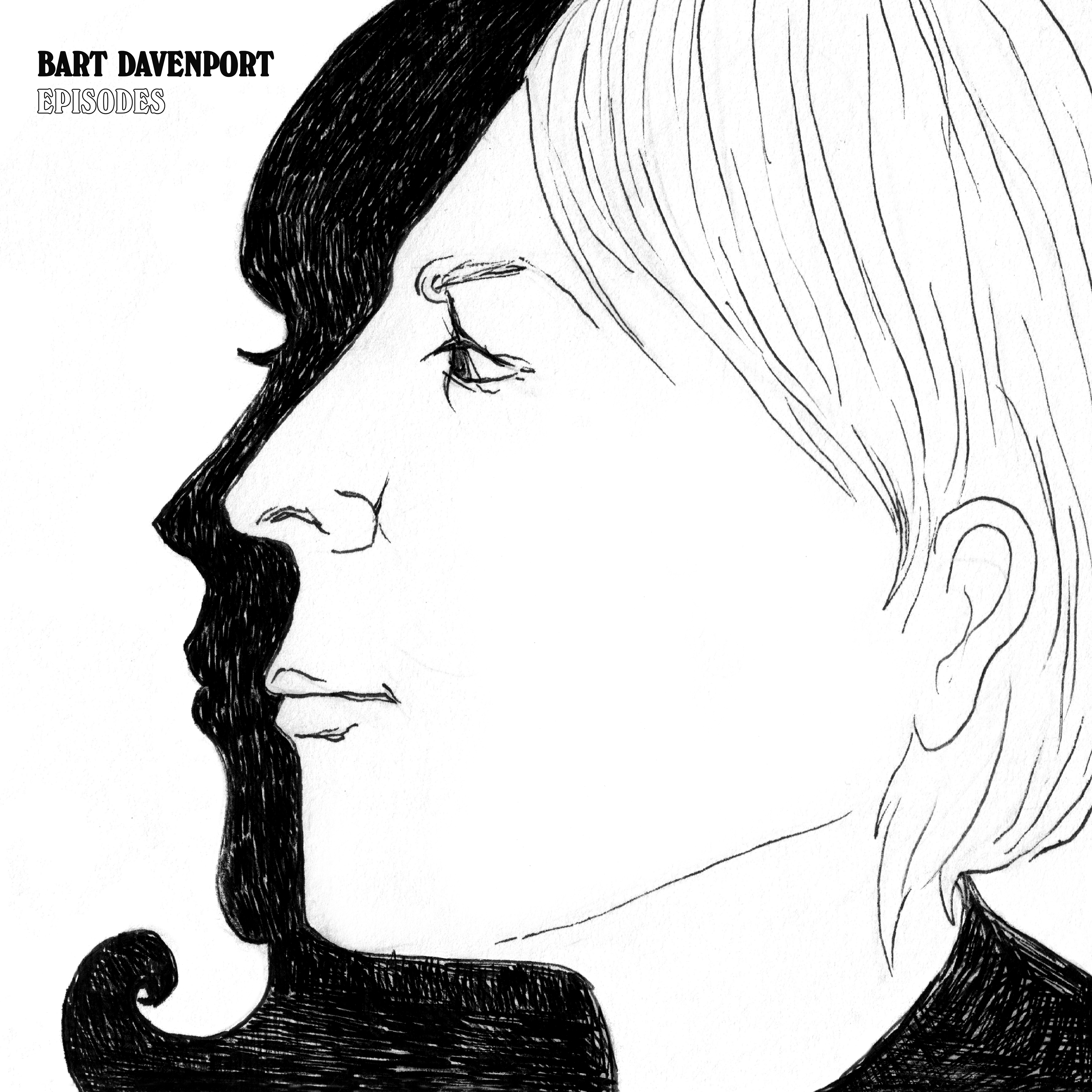
A revolving door of labels, from mod to blues singer and soft rock troubadour, Bart Davenport seems to inhabit them all, and many others, on his new episodic songbook.
There’s a certain 60s backbeat in evidence, and chinks and brassy rings of The Beatles and The Byrds, Powerman era Kinks, crooning swoons from the Scott Walker playbook (a sort of reminiscence of ‘Deadlier Than The Male’, removed to Turkish shores, on the eastern psych Ipcress Files scored ‘Naked Man’)and 70s singer/songwriter vibes. Fans of the L.A. artist will feel comfortable anyway, as Bart, in a disarming, melodically timeless fashion, immortalises idiosyncratic characters, lovelorn remiss and more psychedelic episodes from an everyday diorama.
Bart’s joined in this enterprise by regular band mates Jessica Espeleto (on bass) and Wayne Faler (on lead guitar). The invitation is however extended beyond those two regulars. Complimenting the Davenport combo is drummer Graeme Gibson, who eases that backbeat I mentioned on the album’s wanton Baroque and Glenn Tilbrock-like ‘It’s You’ (one of my favourites by the way); percussionist Andres Renteria (of Jose Gonzales and Roderigo Amaranto note), providing sauntered shakers and (I take it) the quasi-Curtis Mayfield soft soul hand drums on the tropicola-like George Michael on AM radio ‘Easy Listeners’; and Aaron M. Olson, adding inspiral suffused organ to the second eastern-psych, with Spanish flourishes and deft Rolling Stones guitar scales, ‘Strange Animals’. Aaron has already, in the past, produced the Bart & The Bedazzled’s previous album Blue Motel, so he knows this set-up well. Swelling with subtle cinematic, romantic and sentimental strings, Dina Macabee lays down a number of original arrangements; notably on the Greek/Med serenaded ‘Billionaires’ and more acoustic folk-psych yearn ‘Alice Arrives’. The first of those is a quite forlorn, if laughable wistful window in on the tech giant oligarchs: messers Bezos, Gates and Zuck radiating a deep sadness and emptiness, as witnessed by our troubadour. They soon have the last laugh as they board a rocket bound to some new idyllic utopia they can fuck up. The second of these songs uses a befitting psychedelic language of paisley and flowery acid-folk, a mix of Fairport Convention acoustic backing and Ralph McTell delivery.
Bart proves he has an ear for a familiar tune, as he regales heartfelt declarations, ambles through modern life and interacts with a strange cast. His melodious craftsmanship often hides, at least some, of the deeper social tragedy and lamentable ills of a world in deep shit. Yet, it’s all there in full comical glory. Episodes will really grow on you as a first rate songbook from an artist who knows how to write a good tune.
Harry Christelis & Pedro Velasco ‘Scribbling’
(Ubuntu Music) 25th March 2022

It’s a title that suggests the mere scribbled doodles, unplanned accumulations of two musicians idling away their time until something more meaningful, better comes along to focus on. In fact the congruous (as it would appear) and adroit partnership of acclaimed guitarists Harry Christelis and Pedro Velasco is anything but: improvise most certainly but skilfully measured and crafted all the same.
Both based in London – though of course Pedro is originally from Portugal – and so crossing paths over the years (actually first coming together to play at a concert in 2016 in the capital) via their respective improvised experimental and jazz set-ups (from Harry’s part in the Walrus Trio, Jamie Doe’s The Magic Lantern and his very own Moostak Trio, to Pedro’s own trio, Akimbo and Machimbombo led turns), this pairing once more teamed-up, just before lockdown restriction in the December of 2020. As the pandemic (hopefully) ebbs and life in the UK gradually starts to look more normal, those mental strains of isolation and themes of disconnection now seem almost to pale insignificance to the onset of war in Eastern Europe. Scribbling’s intentions remain just as relevant, important, to find solace, a space in which to escape the distractions of our modern overpowering Internet age. As a platform to ‘focus, to develop’ and measure time in a more serene way this album of both shared and individual composed mood music gently evokes and mines each artist’s state of mind and musings at that particular point in time.
Chimes, gestures, subtle phrases and caresses of the blues, jazz, neoclassical, Iberian evoke everything from late Clapton and Ferderico Balducci to Myles Cochran and Pink Floyd. Pedro’s off world hovered ‘Nos Entrentos do Silênco’ (“In between the silence”) even has an air of the Kosmische about it: a bit of Ash Ra Tempel perhaps. Laidback jazzy summer wine melodies share the space with atonal mirages and more abstract vignettes; tracks that concentrate more on the effects, spidery finger tabs on buzzing electrified guitar strings and the sound manipulation, contouring of amp hums and reverb.
Both guitarists never seem to indulge themselves, nor overfill that special emotive space with excessive soloing. There’s even room for the synthesized, with a constant presence of ambient waves, drones, tape reversals, tubular metals and more sci-fi computerised sums. Together these elements, atmospheres add mystery, calculation, and the cosmic to proceedings: the electronic bits on the opener, ‘Paul’s Closet’, even reminded me of a very early Aphex Twin.
A fine balance of contemplation, the measuring of time in a reflective way, and pedal board hardware trickery is struck. The artful and obvious articulate skills of both Harry and Pedro emote far deeper connections, descriptions and horizons than mere daubing’s. Scribbling is a fine piece of sagacious, subtle musicianship.
Yamash’ta & The Horizon ‘Sunrise From West Sea Live’
(WEWANTSOUNDS) 1st April 2022
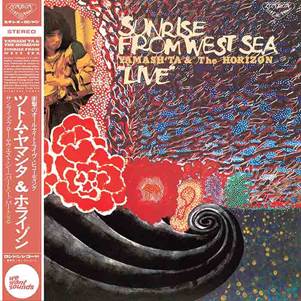
Reissue specialists WEWANTSOUNDS (their caps lock signature not mine) continue to drop rarities, cult favourites and avant0garde eccentricities with the first ever reissue of Yamash’ta & The Horizon’s ’71 dream team live special, Sunrise From West Sea. This edited down spilt peregrination of freefrom jazz, kool-aid and Fluxus-like classical deconstruction, performed at the Yamaha Hall in Tokyo on April 18th of that year, can now be yours on vinyl; remastered, it should be added, from the original tapes.
The Julliard and Bekrlee alumni and Japanese genius Stomu Yamash’ta assembles an enviable cast, joined in this far-out improvisation by fellow jazz pianist compatriot and Berklee student Masahiko Satoh, the Julian Cope Japrocksampler noted and Fluxus instigator/composer/violinist/artist Takehisa Kosugi on electric violin, and electrified shamisen player (a traditional three-string Japanese instrument played with a ‘bachi’ plectrum) Hideakira Sakurai. All together, untethered from reality and the rules of composition this Japanese quartet inhabits an alien soundscape of the submerged and wildly bendy!
From the depths of Atlantis to the South China Seas into an archipelago of Pacific Island native drumming circles, the associations are free and loosely ethnological and yet beyond any real tangible geography that exists.
As you might expect from a critically renowned percussionist (hailed no less by John Cage, who he worked with on occasion, as one of the world’s best) there’s plenty of hand-drumming and rasps, thrashes of obscured percussive instrumentation to be found, both serial and galloping or, slapped into something that resembles a rhythmic propulsion. In the meantime Satoh seems to scratch and physically pull at the inner workings of his piano; occasionally tinkling with actual recognisable notes. Taj Mahel Traveller Kosugi pinches, strains and bows away at the catgut; somehow making the electric-violin sound otherworldly, wailing and quivered. In a similar vein Sakurai transports us to some abstract, primordial vision of the Far East, again, only now and then offering his shamisen instrument an easy ride with recognisable frayed stirrings and yearns.
‘Part 2’ is almost filmic in places, which is unsurprising as both Yamash’ta and Satoh were engaged in or, about to score some movies. Yamash’ta already well versed having a collaborative relationship with the English conductor Peter Maxwell Davies, who’s score for Altman’s 1972 Images movie would feature his contributions, also instigated, ran the Red Buddha Theatre and had his music used in Roeg’s The Man Who Fell To Earth and later, the BBC’s Hitchhiker’s Guide To The Galaxy. Satoh would most notably go on to provide the score for the 1973 cult erotic psychedelic anime Bellodonna of Sadness.
Four avant-garde travellers cross paths and dream about the life-giving forces on the West Sea horizon in a show of explorative mania, trepidation, supernatural and cosmic hovering. This is a weird performative space of tightrope walked resonated string instrument drama, whale song, shuttled percussion and abstract forces. The sort of thing Cope would lap up and recommend to the head music community.
Ben Vida And Lea Bertucci ‘Murmurations’
(Cibachrome Editions) 1st April 2022
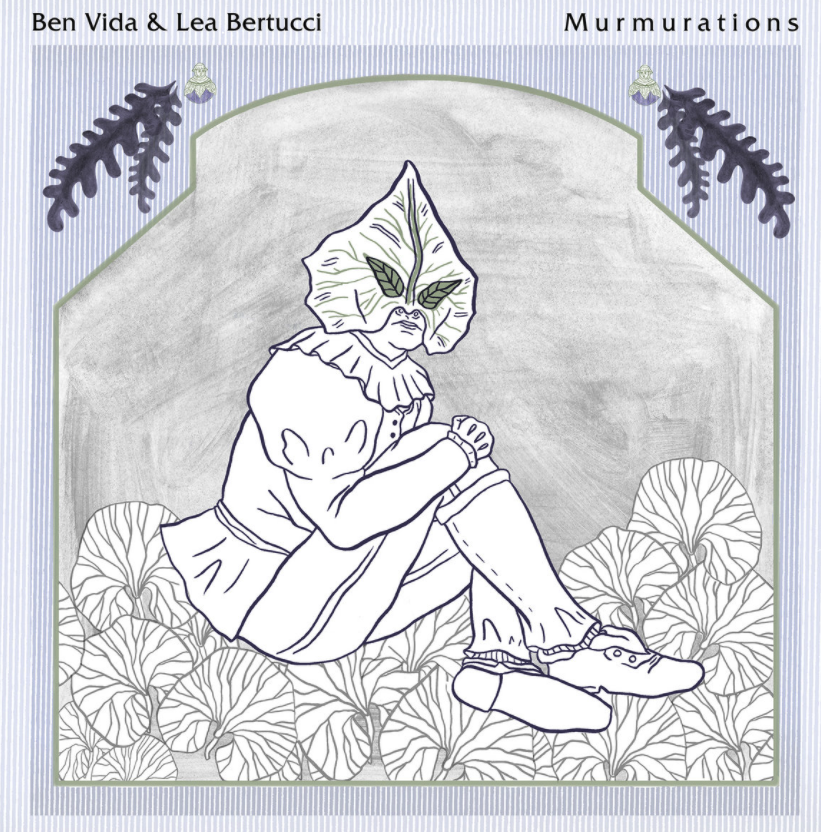
Stalwarts of the NYC experimental scene Ben Vida And Lea Bertucci appear together for the first time as an electroacoustic and transformed voice duo. At opposite sides of the same mountain in the famous arts and music retreat of Woodstock, both artists initially began conversing as friends before taking the plunge and developing a special ‘non-hierarchical’ improvised collaboration.
Although more or less obscuring, coating in various effects each other’s contributions, murmurs of Lea’s wind instruments and rasped, reedy saxophone can just be detected amongst the magnetic fizzles and slithery, tentacle tape thrashing. Live tape manipulation, modular synth, sampling, real-time instrumental and vocal improvisation are all set in motion to create an often alien, avant-garde and often low-grade industrial atmosphere; a cosmic soundtrack and art gallery installation score.
It constantly feels as intimate as it does expansive, with the looming and hovering presence of some kind of extra-terrestrial craft. There are hums, pulses that could be motors, and the sound of rippled propellers in the air. Some passages even evoke the lunar. Yet there’s also the resonance of some eco-system: strange bird echoes, insects chatter and the most humid of sub-tropical heats buzz – think A.I. exotica of Clarke’s Rendezvous With Rama.
Fluted hinged and solar windy funnelled real instruments blow across a sulphur spool of vapour and wispy ghostly waves. Occasionally you can hear the most un-rhythmic of tub patters in that atmosphere.
Both artists work with the human voice too, offering Cuushe-like utterances of an undefined language, and on the album’s title-track, a transformed, broken-up conversation between Ben and Lea. Phonetic breakdowns, sucked up and reversed snippets of dialog turn into harped arias and the giggles.
This could be a static-charged paradise or a virtual existence in the bubble, whatever it is Murmurations has some strange, explorative sonic worlds and new esoteric-like communication processes to draw the listener in.
Kumo ‘Three Tigers’
(Self Release)
Unless you’re Chinese or a student of that country’s culture or, like the electronic polymath Jono Podmore, an acolyte of its martial arts (in this case the Taoist-imbued Tai Chi), it may very well have escaped your notice that 2022 is the year of the ‘Tiger’.
Born under that Chinese Zodiac cycle myself I was always curious to its omens, augurs. Of which, the Tai Chi teaching Jono seems to have predicated an omen, a very bad one, when asked by a student back in February (the official start of the Chinese calendar) what to expect in the year of the Tiger. His answer: war! And so perhaps we can blame him now for what’s happened in light of the invasion of Ukraine – only kidding.
However, we’re informed that despite this magnificent animal’s more dangerous attributes, ‘there are many tigers’ to decipher, to draw meaning from: the ‘strength’ to overcome problems, its beauty, even calmness.
Exploring all these aspects, traits and metaphorical quandaries, symbols Jono draws from the atavistic Tai Chi teachings on his latest Kumo alias release. And just like that regal big cat’s dualism – ‘a force for peace and reconciliation as a harbinger of war’ – the trio of electronic encapsulations, calligraphy brushed evocations, are a surprising mix of the experimental and dynamic.
In a more serene setting the opening ‘Tiger Lies Down’ surveys an electrified Spring landscape of lush flowing, cascaded waters, our magnificent beats wandering an ambient-charged calm that encourages tranquillity and meditative pause: at least a moment to retract those claws anyway. Undulating this natural scene is a subtle, nuanced bobbing Orb and Banco da Gaia like trance beat, synthesized percussive shimmers and dissipating steam. Things do turn a little wild at the end with a contortion of transmitted wiry signals; a sound that will return later on.
Upping the energy, ‘(Retreat To) Ride Tiger’ prowls a techno and house infused bob and bounce beat of Jeff Mills, Juan Atkins and Felix Da Housecat coming together for Basic Channel. Representing the tiger’s reluctance to take passengers, but taking that wild ride anyway, the waves, dance pulses, glints of spiritual mystery and danger keeps on coming.
The final push to holy peaks brings our subject to the mountains for perhaps the most serial, explorative track of the three. Edging through tubular bamboo and undergrowth, Jono guides us through an arching, bendy and looming electronic terrain. Oscillating spirits, the echoes of a sacred space envelope a sensory tread. Those signal frequencies from the fist track make that return I mentioned, as the tone become more otherworldly, mythical and cosmic.
Neither in the spirit of Eno’s own Tiger mountain excursions nor in the manner of Orientalism, Jono surprises with a soundtrack representation devoid of those Chinese musical signatures. Instead, traversing ambient, techno, soundscaping and the kosmische he paints a unique homage, respectful acknowledgment to China’s ancient symbolism and the most majestic, powerful (unfortunately endangered; much of which is down to the Chinese themselves hunting them down to extract their magical properties for medicines) of creatures. Juts please don’t act the Cassandra again! We have enough on our plates already without more predictions!
Adams, Dunn & Haas ‘Future Moons’
New York postcard penpal Andy Haas (you can find Andy’s Covid years series of regular Museum of Modern Art imbued postcards on our Instagram account) with regular Toronto foil Matthew ‘Doc’ Dunn and Kieran Adams travel untethered to one of our nearest constellations and beyond on the starry Future Moons.
A contortion of wailed avant-garde, galactic freeform jazz, cosmic courier kosmische and far-out peregrinations, each sonic astronaut brings something both different and explorative to the far-flung outer limits.
But before we travel any further, a little provenance is needed. Adams CV includes the synth pop group DIANA and various stints alongside Bonjay, the Weather Station, and Joseph Shabason. His latest project is Vibrant Matter. Dunn’s been a chief instigator in the experimental Canadian scene, most notably as the driver behind The Cosmic Range collective. Haas’ near five-decade career includes the Canadian new wave trailblazers and international hit makers Martha And The Muffins, and an enviable catalogue of collaborative ensemble projects with Mar Ribot, Zeena Parkins, John Zorn, Ikue Mori, Don Fiorino, U.S. Girls plus Dunn’s Cosmic Range. Here and now, Haas’ fluted, spiralled and wild signature saxophone contours and trilling blowouts veer off like a mirage of Sam Rivers, Pete Brützmann and former foil Zorn as Adams and Dunn’s drums and electronic apparatus run amok in hyper space, hinting at Ilhan Mimaroglu, Anatoly Vaprirov and Dzyan.
Within that swanned nebula and astral worship there’s oboe-like sounds from a removed Arabia, strangled screams, flailed wails and cries and library music like leaps, bubbly chemistry, space gate light speed tripping, holy disorder and modal jazz blues: sonnets, screaming declarations and flowery offerings to majestic universal bodies. Strung-out in the highest heavens of space this exploratory, expressive trio navigate an abstract starry passage to new dimensions.
How You Can Help Us Continue In 2022:
Hi, my name is Dominic Valvona and I’m the Founder of the music/culture blog monolithcocktail.com For the last ten years I’ve featured and supported music, musicians and labels we love across genres from around the world that we think you’ll want to know about. No content on the site is paid for or sponsored and we only feature artists we have genuine respect for /love. If you enjoy our reviews (and we often write long, thoughtful ones), found a new artist you admire or if we have featured you or artists you represent and would like to buy us a coffee at https://ko-fi.com/monolithcocktail to say cheers for spreading the word, then that would be much appreciated.
 Monolith Cocktail Blog