The Monolith Cocktail Serialises Andrew C. Kidd’s Tennyson Imbued Opus
Dabbling over the decade with showcasing exciting, sometimes improbable, intriguing work from new and aspiring writers, the Monolith Cocktail has played host to serialisations of stories by Rick Clarke (of Vukover and The Tearless Life infamy) and Ayfer Simms (the Franco-Istanbul writer, and for a few years, an integral member of the MC team offering various reviews and conducting interviews).
Furnishing the site since Covid with review pieces and the odd feature, Glaswegian-based writer Andrew C. Kidd now adds his name to this list, sharing his grand interstellar opus with the MC readers through an epic serialisation. In the last couple of months we’ve published the Prologue and Part One and Part Two of The Violin: the first chapter of this grand sci-fi story. We now set a course for the next chapter in this vast odyssey, with the first two parts of Hic Sunt Leones Et Corvi.
Andrew seeks inspiration from music and anything that chronicles the fantastical. And in Tennyson, he finds sentiment, solace, experiment and adventure in interstellar space.
“What omens may foreshadow fate to man
And woman, and the secret of the Gods”
From Tiresias by Alfred, Lord Tennyson
“Activity does not necessarily mean life.
Quasars are active.
And a monk meditating is not inanimate”
From A Scanner Darkly by Philip K. Dick
The sound echoed distantly at the treeline boundary. Beyond that, a grassy field opened out to end at the top of a small hillock. A solitary figure pulled back the leaves and stooped under a larger branch to exit into the clearing. The forest breathed quietly behind him.
Louder, duller, without echo – further calls were nearer now.
A stilly silence soon settled upon the scene. Grass blades remained rooted firmly. There was no wind to unsettle them. Their sharp tops speared towards the sky.
Looking up, he saw the wings spread out. It moved swiftly and silently, silhouetting black against the dying light of dusk…
The heat (unbearable to begin with) had started to dissipate. A low-frequency rumble continued to propagate though his body.
In the distance, the hazy outline of a tree, flat-topped, bowed over the ground, came into view. The ground began to elevate; he would soon be standing on the top of a hill. Each step was an effort. Numbed and calloused, his bare feet no longer stung in the sand.
Having stopped momentarily in this arid place, he resolved to keep moving. He had to keep moving.Defiantly, he walked towards the sounds of the distant growling…
Part 1
‘Human remains in the lower decks.’
The interference of the radio hissed into the ears of the Overseer.
‘Have you located the wheelhouse?’
‘Yes, Ma…’ The crackled reply broke off abruptly.
The Overseer moved closer to the remnants of the starboard viewing platform. Through it, she observed the nullity of space.
Her team had entered the forward portion of this once grand vessel. The narrow, box-like dimensions and icy stillness of the plain interior of the bridge were firmly funereal. Glass that once covered this space had been blown out. Its contents had long been jettisoned.
She wore a life-sustaining suit emblazoned with an emblem that was as orange as Mercury and lined white with symbols of stars. Dark pools semi-circled below her eyes. Space was a sleepless place for some. The drugs that the medic prescribed seemed to imbue everything other than somnolence.
Nineteen-years, she thought as she sifted silently through the wreckage. Ninete…
Those years had felt more like a lifetime. The vessels that she and her crew boarded dangled lifelessly in these deeper reaches. Most had been lost long before she had even taken on this role.
Her attention returned to her team who clambered over the remaining chambers of this particular vessel. She sent the Adjutant to locate the stateroom and the Auxiliaries to the fo’c’sle. A Medic remained with her on the obliterated bridge.
Rudderless and shorn from its engine, the ship floated aimlessly in an endless orbit.
The gloved hands of the Overseer gripped the metallic surface of what remained of the broken luminescence control panel. Dials would have once dotted across a large glass control board. Not even the smallest of its shattered shards had been left to salvage. Blown and space-buffeted, everything had spilled out into the cosmos.
As she moved towards the far end of the bridge and descended into the fo’c’sle, a panicked voice suddenly broke through on the radio.
‘T–the––bow… the bowsprit… all personnel report to the listening chamber!’
The Overseer and Medic swiftly made their way to the prow of the vessel. They clambered through a small opening made by the welding torch of one of the Auxiliaries.
A solitary figure sat perfectly still in the centre of this small chamber. Long white hair fountained out of his scalp, cascading down past his shoulders, feathering around him as if charged by the high-electric potential of an electrostatic generator.
The Overseer felt the immediate tranquillity of this space. It was in direct opposition to the disorderly bridge merely ten ladder-steps above it. She observed the Medic drifting around the small podium upon which the cross-legged man sat. He paused as he looked into the youthful face of the Radioman whose body was composed and unaltered.
The Radioman wore no helmet. No oxygen apparatus was attached. This chamber had been apparently airtight until their impromptu opening exposed it to the breathless vacuum of space.
The Overseer quickly placed her ancillary oxygen mask over the stock-still mouth of this solitary figure.
‘A helmet!’, she barked out, beckoning the other Auxiliary to locate one.
The Overseer talked quietly and reassuringly at the Radioman. She had already placed the palms and fingers of her left hand over his eyes: an act that served as a temporary skin-seal to prevent the low-pressure of space from inflating him.
As she held firm, the Radioman still had not moved. He had not even blinked. His muscles were completely devoid of fasciculation and involuntary spasm. It was as if he was dead, yet his skin was a fresh as that of the rescue personnel who had only just boarded this ravaged vessel.
All the other crew of this stricken vessel had been found lifeless. Those who had been salvaged behind oxygen-rich compartments had decomposed. The rest floated lifelessly, forever captured in the positions they held in the final moments before their respective last breaths.
Siss of the radio now danced invariably in her helmet.
‘Repeat last transmission’, an unknown voice demanded airily.
The Overseer paused. Her monitor confirmed that this message had travelled a long distance from their present location. It had been sent by the Theban which was levitating somewhere in solar space on the other side of the Heliosphere. Those onboard this flagship would be listening apprehensively for the reply of the rescue personnel.
‘Repeat your last trans…’
The sibilance of the radio whispered again.
The Overseer left the Radioman under the care of the Medic. She exited the listening chamber and passed through the fo’c’sle to return to the bridge.
‘Remove yourself from that console’, she ordered. ‘Look at the dial. The electromagnetic interference is far too high to transmit at this present juncture. We will retry once we have established RQZ.’
The Auxiliary nodded in silent acknowledgment. He fumbled with his portable transmitter. His actions had been chaotic. He had never witnessed death before. Its facelessness haunted him.
The Overseer manoeuvred past the central workstation to locate the backup navigations.
‘Adjutant, get that Auxiliary out of here… the man’s a wreck. He’s about to keel over.’
She looked over at the Adjutant again.
‘Now, have you retrieved that log yet?’ A small, cylindrical object had been deployed by the Adjutant who was situated in the stateroom on the deck below. This had once been the Captain’s quarters. The cellular implement clicked into life and whirred quietly as it burrowed into the stricken ship’s volatile memory unit. A faint blue light on its interface flashed rhythmically: the download of the devastated vessel’s data had begun.
* * *
Oblivion.
It had been generations since the brilliance of a passing dwarf star or the swansong of a dying sun had shone upon the great body of this vessel.
The ship took on the form of pentagonal prism with many edges and vortices. Its bridge was located at the stern. Those who commanded this hulking monolith observed the midship slope obtusely down towards the fo’c’sle. There were no gunwales. Its port and starboard sides rolled seamlessly over to join with the hull.
At the prow of the ship, a small projection pointed outwardly to space. This was the bowsprit. Within the bowsprit was a small chamber. It assumed the shape of a square-based pyramid. The base of the pyramid backed onto the main body of the ship. Its edges angulated away towards an apex. Once this apex had been reached, the triangle pointed towards shapeless space. This was an antenna. It was composed entirely of a carbon composite.
A Radioman existed inside the bowsprit. He sat cross-legged in the centre of this small chamber. Its three walls converged at different angles to maximise the incoming acoustics. His function onboard the ship was simple: he was to simply listen.
Attached to his head was a light electroencephalographic cap. Intermittent bright dots covered its surface. The postsynaptic potential of every pyramidal neuron in his neocortex was measured. Changes in voltage were interpreted by those who commanded on the bridge. Incoming radio waves were picked up as electromagnetic radiation, and upon entering a conducting body, a current was created. The radiomen and women were band-pass filters, capable of radiofrequency hearing. Uninfluenced and unbiased, the data from their EEGs filtered back to their superiors to ensure safe passage of these grand celestial vessels through the incalculable vastness of deep space.
The Radioman of this particular ship sat in a deeply meditative state. Those who had been given the responsibility of attending to him would glimpse through the small porthole to observe him in aural meditation. He contemplated only the sounds that entered him. The hyperfocus of a trained radioman would open the human mind to the most wonderful and hideous of hidden sounds.
In his training he had experienced momentary distractions such as the pulsatile hum of tinnitus or the oceanic sounds of blood flowing. He eventually learned how to disconnect himself completely from internal and external stimuli to concentrate purely on the deafening silence that consumed him.
The universe in all its unfiltered aural glory shone into the bowsprit. Radio waves, immune to the deafness brought on by the vacuity of space, percolated its walls, tumbling like a torrent into this still river of silence.
Listening. Forever listening.
Each and every wavelength passed through his external auditory canal to vibrate his tympanic membrane, moving his malleus and incus like beaters on a minuscule glockenspiel. The stapes pressed down, disturbing the perilymph which waved to rush into the open window of his semicircular canals and cochlea.
The otherworldly sounds of space cascaded down his vestibular and cochlear nerves unto his auditory cortex.
He listened to the numb static of radio feedback as well as asteroids that collided with rings around exoplanets, ricocheting into unfortunate ships that sent out futile distress signals. He heard hissing and white noise and voices that chattered indistinctly as if partaking in some great celestial conversation, nebulae apart. He eavesdropped on outgassing comets and plasma winds that changed direction.
All individual soundwaves were unique, symphonic even, but nothing was more beautiful to the Radioman than the faint finale of fusing black holes in the distance.
Such polyphony, such maddening repetition in sound, forever-wavelengths that spanned even time itself, beguiled the Radioman who remained cross-legged in the centre of the bowsprit antenna.
* * *
Eyes closed and breathing steadily, the precise and periodic rhythms of pulsars pulsed. The low-frequency bass of matter exiting from a black hole came into and out of focus. He averted his attention away from those unimaginable and terrifying sounds, because once this cacophony had concluded, the remaining souls left alive listening would be the last to applaud the end of everything.
The Radioman focused his thoughts on the Heliosphere on the very periphery of the solar system. Interstellar gasses moved beyond this point marker, whispering indecipherable sounds in the absence of coronal mass ejections from the Sun.
He leant down to listen further. His auricles picked up faint sounds. Nothing significant – something slightly louder than silence.
An inner voice had recently surfaced. His own mouthless monologue.
… and the growling.
These peculiar frequencies he had longed heard but never understood. He had journeyed to them tirelessly. They were closer than they had ever been.
His mind wavered in the heat of the arid land that stretched out before him. Soft sand covered his feet. Sharp-edged grasses scored his bare ankles as he trod softly, edging closer to the low rumbling sounds. He dared not traipse over a branch or let his feet scuff the gravel. Such a careless approach could be ill-afforded. He continued to move over the clay-rich soil.
A large tree silhouetted black against the orange horizon. Its flat canopy of leaves stretched out to shade what lay beneath it. He edged ever closer to this tree, an acacia, one discreet and heedful step at a time. The Radioman knew that source of growling lay beyond this tree.
These sounds had reached him at the same time the vessel approached the Heliosphere. Their volume had progressively increased since then.
He observed the others who moved in the opposite direction. They were making their escape. He had sent them in that direction. Their footsteps faded quickly in the light winds that spread over this dusty land.
The sibilanceof radio interference had been strong on the day that he received the final communiqués from the colossal flagship which remained within the confines of the Heliosphere. It had been gently buffered by solar winds. On the other side of that shield, harmful cosmic rays would batter continuously at the thin walls of their vessel.
The electroencephalograph of the Radioman broadcast its usual complex patterns to those on the bridge. γ waveforms danced interchangeably on the glass display.
He continued to listen.
Part 2
The Radioman jolted. A winged body flew overhead. Its call had been loud. It settled on a nearby branch. Its throat rattled and clicked in a strange sub-song. His ears tracked the unmistakable music. Another figure stood silently on an old wooden fence.
The Radioman remained cross-legged in his chamber in this half-trance. He could not see through his cataracts (opacification of the lenses were the sequalae of a lifetime shrouded by the radiation of space).
The figure on the fence was black-billed and body-black. He followed the movements of this ancient shape-shifter. Entering an even deeper trance, the cataleptic Radioman slipped further down into the cavern of his subconscious.
The cawing of the eye-eater persisted. It, like many others of its kind, was the blinder of souls. Its black head turned steadily. Its eyes squinted into the opaque night. It prepared for flight. A stout bill motioned to caw, yet no sounds left its larynx.
Silence!
Silence was usually an ill-fated omen. He contemplated these visions. Nothing good would come from them.
Caw! Caw!
The harsh sound of two other bodies reverberated around the field, amplified by the concavity of the trees that bound it. He heard the grating cawing of others that had flown in from their sky-occupied position. They landed to perch on branches which buckled slightly. Their black feathers pushed away the leaves.
The cawing intensified further into a cacophony of sound. Each blackened figure flew down from the trees to litter the grassy ground. Their thin feet pattered around droplets of rain which had had started to descend.
At first, they formed a half-circle, cluttered and unorderly. In the proceeding minutes, the separated edges of the collective met to become a whole circle that was absolute and infinite.
The sky above darkened further. Clouds greyed and made indistinct shapes in the higher altitudes. Down on the sodden earth, the circle cackled and clacked.
A larger figure broke away from the feather-black ring and cautiously approached one of its comrades who stood in the centre.
Unblinking, their eyes met.
The cawing suddenly stopped. A strange silence shrouded the scene. Stygian clouds loomed in the semi-darkness. The larger of the two black bodies started to circumnavigate its comrade. It stooped to observe the broken wings, the torn feathers, the blood that pooled blue after mixing with the green grass.
The larger figure moved away momentarily but turned to face its stricken comrade. It kicked off from its backfoot, half-winging upwards, delivering a fatal blow. The already wounded soul opened its wings to reveal its breastbone in readiness for the blow. A sharp beak speared into it. Slowly, the punctured figure fell to the ground.
The circle of observers cried out solemnly. Their forlorn cawing rose and rose until the sound was so sharp that it tore open the heavens. Rain started to descend upon the body in the centre of the circle. Water pooled on the dry ground and rose quickly to consume it in a burial of mud.
The electroencephalograph of the Radioman spiked transitionally during these visions. His head ached. Away from the flood waters in this field, a raging fire had broken out in the surrounding forest. His introspections flashed between this place and a place that seemed more familiar to him. He observed an engine room and the cross-sections of decks of a large vessel. A plasma rifle fired at the glass of the bridge. It did little other than discolouring its clarity. Those on the wrong side of the burning bridge shouted breathlessly, and ultimately, hopelessly.
Fires globed out from the carbon fibre structure of the vessel. Support beams collapsed. The ship ate itself from within. Souls were ejected as burnt embers from its portholes and escape tunnels. They cartwheeled into deep space. Their cries slowly dissipated into the radio static. All the time, the rains continued to fall and the crows cawed maddingly.
He held his head in his hands.
Why had the larger figure killed its comrade? Had it been a hierarchical act? Punishment for a calamitous and insubordinate act?
His EEG readings intensified. Those on the bridge above the Radioman observed these high amplitude projections.
In this shallower phase, having yet to pass through the termination shock of the Heliosphere, the Captain paused to consider the importance of what he was observing.
* * *
Overweight and overwrought, the broad figure of Crone stared intently into the never-ending night. He doffed his sweat-stained battle garments. His chalk-white uniform soon beamed in the fluorescent light of the bridge. A thick band of black ran from his collar and ended as epaulettes.
He had felt the sonic boom of solar winds as they crashed into the magnetosphere of the Sun. They had safely crossed the Heliosphere to enter interstellar space. He relayed the command to relay the news of their safe passage to Earth.
Such an achievement was momentous. They would name institutions after his vessel and crew. He would be bemedaled and showered with honoraria. Yet he struggled to conjure up the appropriate words to mark the occasion. There was no sense of achievement for Crone. His mission was to continue into deep space, to pave the way for other research vessels and passenger ships alike as the lines on the cosmic map were drawn and re-drawn. He waved away his Second Officer as she entered the bridge to congratulate him.
Day progressed into evening. Crone had retired to his quarters and sat in pensive state. The increasingly indiscriminate output from the Radioman concerned him.
He stared at the darting display of peaks and troughs in the stateroom of the fo’c’sle. The readings of the Radioman spiked repeatedly. A pattern had emerged: seven sharp surges were being discharged irregularly. Sharp waves. 100 milliseconds.
Crone had become adept at understanding subtle messages contained within the amplitudes of the electroencephalographs during his years commanding vessels like these.
One spike inferred nearby cosmic detritus.
Tandem spikes alluded to phenomena such as the altering speed of the solar, and now plasma, winds, or a change in the electromagnetic frequencies beyond which the ancillary radio tower could perceive. These were usually precursory. Directional and velocity changes were inevitable in space, likewise, radio chatter. In contrast, two-spike data were impactful. Decisions would be made after observing these.
Spike and wave complexes implied only one thing: danger. Crone had never witnessed this phenomenon before. He wished never to be privy to those inauspicious amplitudes.
In reality, the outputs of those who existed in radio rooms were more difficult to interpret than the oversimplified one-two-spike/wave system prescribed by the protocol. Despite their extraordinary skill and extrasensory perception, radiomen and radiowomen were ultimately human, and humans experience anxiety, annoyance, anticipation, amazement, and even periods of inattentiveness.
Crone knew that their existence was an isolated one. Living in such a permanently pensive state would inexorably impact their mental state. Everything they felt and dreamt were visible as lines on their respective EEGs.
Yet discrepancies caused by discharging neurons had to be interpreted carefully. Any decision made was based on the output of the graphs conveyed to those like Crone. Margins of error were incredibly narrow (effectively zero) in this inhospitable place.
Crone’s musings persisted as he looked out of his stern window. Zodiacal light proliferated in the black ether. The dust-strewn spawn of Jupiter’s comets stretched across space. Their faint glow and explosive sequins delicately manoeuvring in pursuit of the Sun. He knew this to be a false dawn.
* * *
In the bowsprit, the Radioman sat meditatively.
It had been getting warmer. He moved closer to the acacia tree.
The collective low-growl rumbled into the air. Ochre-coloured grasses hid their true size. He counted seven whiskered heads. One stood up slowly and stared purposefully in his direction. Opening its mouth in a slow-yawn, the Radioman looked into the black emptiness of space. He quickly ducked back down under the grasses.
He had only caught a glimpse of its eyes. Swirling fires whorled outwardly from their irises to meet periorbital darkness. They had fixed upon something in the distance. He hoped that it had not been the others making their escape.
He had also caught a glimpse of the canines that thorned out of their abysmal mouths. He grasped the dry grasses nervously. The growling had settled for now. He resolved to edge ever closer to the tree.
Andrew C. Kidd
Tennyson In Space: The Violin Part 2
April 4, 2025
The Monolith Cocktail Serialises Andrew C. Kidd’s Tennyson Imbued Opus

Dabbling over the decade with showcasing exciting, sometimes improbable, intriguing work from new and aspiring writers, the Monolith Cocktail has played host to serialisations of stories by Rick Clarke (of Vukover and The Tearless Life infamy) and Ayfer Simms (the Franco-Istanbul writer was an integral member of the MC team for a good few years, offering various reviews and conducting interviews).
Furnishing the site since Covid with review pieces and the odd feature, Glaswegian-based writer Andrew C. Kidd now adds his name to this list, sharing his grand interstellar opus with the MC readers through an epic serialisation. Last month we published the Prologue and Part One of The Violin: the first chapter of this grand sci-fi story. We now continue with the concluding part of that inaugural chapter.
Andrew seeks inspiration from music and anything that chronicles the fantastical. And in Tennyson, he finds sentiment and solace.
Part 2
Half-aware in a half-dream, the young Commodore roused from her stupor. Tito was drifting silently beside her.
‘W-where… am I?’ Her speech was slurred.
Tito’s teeth took on a yellow hue through his white beard. He grinned inertly before his gaze slowly returned to the porthole.
‘Where are the other Commodores?’, she continued to enquire. ‘AURORA?’ Her voice ascended quietly.
‘Are you not able to hear their voices?’, Tito muttered after a short pause.
The young Commodore strained her neck forward, but a strap crossed over her forehead. She was being kept firmly supine on a board that had been secured to the living quarters wall. Her hair wafted around her head and face in zero-gravity.
Tito plucked at one of the thin cables on the box relic. His dry fingertips scraped against it in a coarse strumming motion.
‘They sing to us, melodiously!’ He laughed a little. ‘Listen…’
Loose hair hung limply from the straightened form of the longer relic.
‘P-please don’t!’, she pleaded upon realising that she was unable to raise her hands in self-defence. They were bound to the board she lay on.
‘Calm now!’, his voice rasped in command. ‘I implore you to listen–’
The straightened relic touched the box-like form which he had rested under his chin. A small clatter occurred when it touched a black board with cables that ran up its body. The young Commodore wondered if this was a simple circuit board. She had been trained in interstellar survival, yet nothing had prepared her for this. The pupils of her eyes remained pint-pointedly fixed on Tito. A mephitic musk clung to the air; it was nauseating.
The hair of the long relic made a wretched whispering sound as it glided across the cables on the box form. As he pressed down on these wires with his other hand, Tito uttered a sharp curse. Initially she wondered if this related to the indelible impressions the cables left on his fingertips. But she soon realised that another one of the hairs of the long relic had snapped. Its lithesome form collapsed over the box relic. Tito placed it down on a white surface next to where she lay. He floated thoughtlessly away into the darkness of the long passageway, mumbling indistinctly to himself.
* * *
During the earliest days of his depression, Tito did not eat. He remained unmoved in his living quarters for hours upon end, eventually only leaving his sleeping compartment when his bodily functions required servicing.
His muscles ached, and after a while, his body started to waste. His limbs disappeared. They flailed gently in his deep sleep like those skeletal satellites that floated endlessly in their tombs in the lower decks.
Long days became even longer months. AURORA had long been forgotten. Tito would have to service the ship and its systems manually.
Electrolysis, the running of electricity through water, had to be adjusted depending on the background oxygenation levels. Ambient temperature settings continuously altered according to the electromagnetism of his location. The wheelhouse manned to manoeuvre its circular form in the direction he wished to travel. These automated tasks had been inherited by Tito, yet he partook in none of these. The ship sailed onwards in its rudderless voyage.
Another cosmic storm had rocked the vessel on the day that he should have succumbed to his inadequate handling of the Pathfinder.
He lay face-down on the floor. The straps that held him vertically in his sleeping compartment had failed to secure him. He coughed into the pooled blood that blebbed around him. A scalp wound stung.
He managed to float to feel the narrow walls of the passageway that led down from his dormitory to the bridge. A red background light blinkered and hampered his vision. Critical warnings flashed in a lightshow of doom.
It had only been a matter of months since he had corrupted the machine learning algorithms of the murderous AURORA. Years of survival training on the mother ship kicked in instinctively. He went to the bridge and opened up a schematic view of the vessel. All systems were deemed ‘critical’.
His hierarchical assessment of what needed repairing made the reality even grimmer. The electrical circuitry would have to be salvaged. If he was without power, he was without life.
Next, the system that made oxygen from water. Finally, he secured the navigational platform upon which this hulking metal ship pivoted. This would come at the expense of other systems: radioactive protection; waste disposal; gravity.
All of the lights except one small lamp in the living quarters were switched off. This had been the blessing of a miswiring at the time of its creation.
The radio was kept disabled. He elected to keep the ship silent. The ambling and pregnant mother ship would have conceived and birthed his replacement by now. He or she would arrive in another 25-years, preserved in silence, ice-enshrouded inside their pod.
Relief pods would always find their respective Pathfinder. No storms or mutinies or mishaps could dislocate this tracking signal from the mother ship. The wandering Tito was aware of this. He also knew that once he had been located, a communiqué would be sent from the docked pod to its mother ship. This message would take years to reach her.
A few years passed after Tito had regained control of the now crippled ship. He had been gazing endlessly at the inky nothingness streaming past the vessel. He navigated himself in weightless movement to one of the store rooms located in the deck immediately below the one he inhabited.
It was a filthy space. He had been depositing his bodily waste in used ration crates. He wished to jettison these into deep space, however malfunctions in the air-locking system had meant that everything contained within the Pathfinder had been hermetically sealed.
Nothing could be released from the inside; the manual lever that opened the exterior doors was located on the outside.
Tito had stockpiled the soiled ration crates in various store rooms on this deck. As he navigated through the main passageway of the ship, the sickly fluorescence of his cabin light only provided faint illumination.
His eyes squinted into the tunnelling black. Using his fingers, he cautiously felt round the darkened hollow of the hatch that led down to the lower decks. He pushed himself off and let his body float weightlessly onto the next level.
Tito moved down the lower passageway to a new room which he had recently cleared to make way for more used crates. He laughed quietly at the irony in the microcosmic life cycle of these containers that had once contained his food.
As he entered the cleared store room to open a new crate, a smaller container floated into his field of vision. His attempts to catch it in the darkness had resulted in his arm striking it. His body leapt forward through the hatch to catch it before it floated down into the ghastly lower reaches of this vessel.
The old container felt like nothing he had touched before. It was old and bound in a taught hide. He was rendered fatigable after a mere few attempts to break open the latch to reveal its contents. The pulp of his hands had been long-wasted.
He eventually prized upon its lock after pressing it forcibly down on the corner of the one of the tables. This sudden downward movement had resulted in his palm catching its sharp edge. Life-blood spilled onto the casing of the old container which absorbed it immediately. He wiped the remainder of the blood onto his white spacesuit.
Tito peered down into its open contents. There, strapped down by two bands, was a box relic. White dust scattered across a black board that ran up its middle. An ornate headpiece curled at its peak.
The carbonised form matted against his bright torchlight. Unconsciously, his index finger pressed against one the cables that travelled up half the length of its ancient form. A catgut-sharp twang echoed even after its vibration had ceased.
He quickly closed the old container and took it to his living quarters.
Sound!
He had not heard a sound like that for a very long time. Deep in his cavernous subconscious, fragments of a melancholic G minor theme of an old canzonetta played out. He hummed it imaginatively in adagietto rather than its original andante tempo.
In the days that passed, Tito remained in a trance, a state away from the present.
Where have I heard this sound before?
He sought restorative retrospection, eventually finding an answer to his question.
He had been a child when he last heard this sound. It remained as distantly familiar as when he first heard it on his mother ship. Melodies played on box relics like this funnelled out through the many speakers during their teachings of the old ways.
Tito had never really listened to the mundane AI voices and their musings about these relics and those that played them. He had only ever cared for the melodious beauty of these ancient harmonies; they had echoed up the vast corridors of his mother ship as it carried him into immensity.
After this realisation, Tito had a joyous reawakening.
It can be played!
He re-opened the old container to find an accompanying stick-like longer relic. Its straightened form and taught hair could make the longer sounds, the sounds that floated endlessly in harmony. He remained awake for many days on end as he tried to work out how to recreate the sounds of his childhood.
It happened on the third or fourth day after his discovery of the mysterious container. He had been hovering out its form, plucking frustratedly at the cables. This blunt sound was one of two sounds that the box relic could make. He wished to forge the longer noise, a sound that would reverberate around this vessel.
That day, his hand had grasped at the end of the long relic. Having moved it towards the box relic, the languishing hairs accidently slid across its cables. Tito listened to the sound that levitated up from the box relic. They travelled into ethereal realms. He bore a broad smile under his dark beard as his tired eyes settled to close after his endeavours.
Finally, in this dark and desolate place, he had found light.
* * *
Outside the vessel, galaxies spiralled, contorting into moving mountains that hung in crownless majesty. She dreamt of conquests and bold discoveries; of bountiful life on planets similar to the one her ancestors had vacated. Light soon blinded her visions. She woke to a man’s voice.
‘We have a need to personify everything’, Tito mused rhetorically. ‘Take the so-called Caryatid. A hand reaching out to touch the untouchable – as told to me in my infancy.’
He grasped at the empty space in front of him.
‘Hah! It is a void, merely a star formation in a multiverse of cosmoi. An asterism in a sea of stars–’ his hand compressed into a ball ‘–a simple trick of blue and yellow light ceding into the altered infrared of viewing ports. But its comparison to a hand is baffling.’
He sighed loudly.
‘What could a human hand possibly reach, never mind grasp!’, he concluded animatedly.
The pulp of his closed fist thumped the white interior of the ship. His hand, having now opened up, slid slowly down to drop limply by his side. He moved away from the wall weightlessly. The volume of his voice decreased to a deep rumble. His eyelids were heavy.
‘What are you going to do to me?’, the young Commodore slurred helplessly.
‘Why – I shall play you more music…’
His voice continued to dwindle. The young Commodore saw that his eyes were now closed.
‘Without it’, he proceeded tiredly, ‘I was but a grey shadow of a man. Lo! Its compositional form, its notation, its beauty… it is quite simply transcendent… outshining the very light of the stars… within which we dwell…’
His eyelids remained shuttered. He mumbled some more.
‘But alas… we must wait a while before we can hear such harmony again–’
The thrum of the engine quavered in the background. Above this, a quiet snoring sound grumbled along in unison. Tito had fallen asleep.
The young Commodore woke to the stiflingly heat of the living quarters. Her lips separated to reveal a dry mouth. Many hours had passed since she had last had fluids.
Unsteadily, and sleepily, Tito was fumbling at the table in the far side of the living quarters. He rummaged around in a locked box, eventually picking up a sharp object. Unmistakably sharp edges gleamed in a sudden show of brilliance.
He approached her slowly. Having failed in his first few attempts to secure his thumb and middle finger in the obturating handles of the object, he now held this steady. She felt the steely coolness of its metal on her warm face. Sobbing loudly, her chest rose up in panic. She thrashed and thrashed within the confines of the taught straps secured across her head, torso and legs. Above the loud wailing and panic, a faint sound next to her right ear went snip.
Tito manoeuvred backwards.
Breathing hard, he leaned over her, presenting her with a lock of her own hair.
‘You see, it’s too short.’ His head shook.
‘This is why we have to wait–’
* * *
The young Commodore lay laxly, still bound. Her muscles had made their long retreat inwards, leaving only bones and skin that veiled thinly over her body. A languid greyness masked her once youthful face. She stared vacantly at the ceiling. Tito had captured not only her body, but, finally, her spirit.
He plucked at the cables on the box relic mournfully as the vessel sank deeper into the vacuum of space. His gaze remained fixed upon the porthole. Out there, time warped, so much so that light shifted red in the endless abyss. These were the colours of stars that bled out in a slow haemorrhage as they reddened in their journey to eternity.
It was here, in this space, in these ungodly living quarters, that Tito and his prisoner had conversed only a few months ago. The young Commodore had interrupted his same, senseless contemplation when she asked him if he was going to kill her.
Tito had looked reposeful, reverential even, as he held up the thread-bare longer relic that she had once observed him press against the cables of the ancient sound box. His face bore a gleeful grimace.
‘My dear, if I were to kill you, how would your tresses grow to the length needed to re-hair my bow?’
Andrew C. Kidd
Tennyson In Space: Prologue/Part One
March 10, 2025
The Monolith Cocktail Serialises Andrew C. Kidd’s Tennyson Imbued Opus
Dabbling over the decade with showcasing exciting, sometimes improbable, intriguing work from new and aspiring writers, the Monolith Cocktail has played host to serialisations of stories by Rick Clarke (of Vukover and The Tearless Life infamy) and Ayfer Simms (the Franco-Istanbul writer was an integral member of the MC team for a good few years, offering various reviews and conducting interviews).
Furnishing the site since Covid with review pieces and the odd feature, Glaswegian-based writer Andrew C. Kidd now adds his name to the list, sharing his grand opus with the MC readers through an epic serialisation: starting with the Prologue and Part One proper, as it were. Andrew seeks inspiration from music and anything that chronicles the fantastical. And in Tennyson, he finds sentiment and solace.
Prologue
His father disappeared as a smouldering reek on the funeral pyre.
Crimson copper and sallow gold glowed brightly against the stark stillness of the night. Flames fluttered and flapped, occasionally leaping up to touch the sky.
His transformation into light was peaceful – a crackling, fire-pop peace.
After the fire had dissipated, once the fuel had been burnt down to ashes, the heat of the pyre cooled. Nothing was left of his father and the wooden pile. The charred ground took on a vaguely rectangular shape. There was no indentation of the man who once was.
As his son gazed into the faceless sky, so many thousands of silent coruscations blinked down at him.
A rheumatic finger pointed unsteadily.
‘–ero…’ [Proto-Celtic: eagle]
Another figure nodded.
‘…next to it, gal-s-ā…’ [swan]
An arm reached out and held him. The grip was firm.
‘…and your father, kruttā–’ [harp]
The youth turned round and observed the Elders who smiled coldly.
He looked away again.
Branches wavered along the tree line. A breeze had descended.
There was rain in the air.
“Come, my friends,
‘Tis not too late to seek a newer world”
From Ulysses by Alfred, Lord Tennyson
The Violin
“Here at the quiet limit of the world,
A white-hair’d shadow roaming like a dream”
From Tithonus by Alfred, Lord Tennyson
Part 1
Ascending into eternity, desolate colours were filling the deepest hollows of his sleep. Gas clouds whorled and pillared into evanescent apparitions that appeared and disappeared, only to reappear altogether different, endlessly anomalous, and utterly alien.
Galaxies spiralled, contorting into moving mountains that hung in crownless majesty. Their unceasing conquest was considered admirable, so much so that ships were sent to join them on their grand campaigns. These malformations of nature inhabited a place on a spectrum far beyond humankind’s understanding of what constituted that which is natural, and that which is not.
Tenebrae cedunt luci: darkness gives way to light.
The sickening fluorescence gradually absorbed into his eyes. He woke up in the same semi-circular space that he always had. Its luminescence infiltrated his consciousness, splitting him open in a never-ending diorama of brightness.
Peering into the inanimate tenebrosity, he caught the briefest sight of himself in reflection. He saw a long-beard and white hair that veiled to assimilate with his spacesuit. It partly hid his angular face, under which was a cavernous mask.
Osteoporotic, his thoracic kyphosis slowed his movement onboard this vessel. His fingers spindled out to latch on to the edges of surfaces to counter his weightless balance.
The ship had maintained its acceleration into the deepest extremities of the universe. The compressor coils of its engines hummed silently. This indefinite acceleration had made a mockery of maps, pushing humankind into cosmic peripheries.
Before the existence of nuclear fusion, travelling a mere 1.3-light-seconds had been considered to be a scientific advancement. Space shuttles took 3-days to reach our closest natural satellite only 384,400-kilometres away. Early iterations of fusion-powered projection had moved humankind to within 365-days of the Oort cloud. Alpha Canis Majoris would be reached in 1,800-days. Approximately 4,000 sunrises would pass on a voyage to Delta Pavonis.
In this age, anti-proton-catalysed pulse propulsion brought men and women to the very fringes of the known universe in times equating to under half their lifespan.
The destination of this fleet was GN-z11, a distance insurmountable to their ancestors. They had set a trajectory that was further than anyone from Earth had ever travelled to. The light from GN-z11 was 13.4-billion light-years away; yet, the distance that had to be traversed was much further than that, approximating 64-billion light-years. One light-year is 9.4-billion kilometres, so a gargantuan 6×10²⁰ kilometres was being journeyed.
A voyage of this magnitude had one important caveat: those who embarked upon it would not be able to return home, for there would be nothing to return to. Humankind’s reign over Earth had come to an inevitable end. Humans had to extend their long limbs outwards in search of new conquests; they sought a contemporary kingdom.
Earth’s populace had launched great ships like this one in staggered succession. Hundreds travelled upwards to the unknown, each one having taken off behind the other in a sequential time-trial.
The first wave of ships that ascended were known as Pathfinders. These vessels would map the cosmos, informing their trailing compatriots of inhabitable places or forewarning danger.
The second wave of ships were mother ships – ‘mother’ in the most literal sense. Hundreds of thousands of children would be conceived onboard their towering decks. Their offspring would progress from childhood to adulthood and receive training in sub-disciplines to become pilots and soldiers, doctors and nurses, engineers, astrophysicists and heliophysicists.
The first Pathfinders had been captained by an artificial intelligence algorithm. But a series of disasters had led those in command of this colossal conquest to have each of these vessels inhabited by a man or woman. Known as Commodores, they were second-in-command to the AI.
These trailblazing ships were replenished with humans every 25-years. Small pods were dispatched from the mother ships, approaching velocities close to light-speed to rendezvous with their respective frontrunners. Each pod would deliver a new Commodore to replace the last.
This was a relay race of the ages. Every pod sent out was a life-sustaining baton. Each successful transfer was a victory for humankind in the fight for self-preservation.
The chest of the Old Man rose in breathless double time with the rhythmic thrum of the fusion engine.
He lifted a container from underneath the chair, unfastening the lock to remove a stick-like relic from inside it. As he lifted it up, a fine hair spindled down from its length. The hair eventually touched the gleaming white of the soft-padded seat, landing in weightless abandon. He remarked that it would have been equally unsubstantial on Earth.
The tips of his fingers pincered at the thread. This maladroit fumbling finally concluded with a wisp of it in his hand. He held it out in front of him; his eyes widened as he observed its organic beauty.
Hair, he thought. Strands of dead tissue growing from mammalian epidermis, hanging lifelessly from rooted follicles. In this blinding space, the fair-coloured strands of the stick-like relic appeared far from perished.
As his eyes tracked down the length of the relic, he eventually caught sight of his hand. It was scored and filled with broken lines. Age spots dotted on its dorsum. All these blemishes were enhanced by this infernal light. He hid his hand from view and moved his attention to what lay beyond the large window before him.
Lux facit tenebras. Light makes way for darkness.
As always and forever more, there was nothing to see except a characterless blackness. In aeternum.
He let the stick-like relic go so that it hovered gently beside him. A cloth that covered the separate box-shaped relic in the container was unravelled. He lifted it up carefully and eyed the depth of the infinite holes that were bored into its body. His eyes continued to track up the neck of the box relic to its fossil-like crown. The design was uniquely ornamental. Nothing compared to it on this ship.
As he leaned over to grasp the levitating long relic, a glint of reflected light in an adjacent window caught his attention. A small shuttle was approaching. Its thrusters had already started to brake silently. Many years had passed since the last one had docked. He smiled absently and continued to toy with the box and stick-like relics.
The pod approached the starboard side of his vessel. An automated gangway that would normally have connected these two craft did not reach out to it.
The inhabitant of the pod had traversed star systems to arrive at this point. Her radio transmissions had been met with silence. She sat waiting patiently for a connection. The exterior door of the much larger Pathfinder was within touching distance.
‘AURORA, I am ready to embark.’ She spoke confidently and steadily at the exterior convexity of the ship.
Nothing. Vacuity reigned.
AURORA, the acronym for the AUtomated Registered OpeRating Algorithm, captained the Pathfinder vessels. Each new Commodore would become acquainted with the operating system. Each had their own personalities. They would do all in their power to keep their human occupants breathing.
Her pod remained stationary.
‘Confirm command: embarkation.’
Silence was the reply. She detected impertinence.
Had the Pathfinder been compromised?
Her gloved hands slid across the air-tight door to feel for a potential opening. Her fists thumped dully against it.
‘You must pull the release lever’, a voice suddenly boomed into her headset.
The young Commodore was startled. A male voice? She had been trained to expect feminine tones from AURORA.
The lever was located at the base of the entranceway. She pulled it and the hatch opened.
After entering an antechamber, the internal air-lock lever was moved to a closed position. The pressure inside did not normalise as expected. She and everything around her continued to float.
A second door which led into the main body of the ship was opened. Using the wall grips, she hauled herself along a pitch-black passageway. It was as dark as the abyss outside. Pausing for a moment, she thought she could hear a high-pitched screeching sound. It seemed to be emanating from the end of the narrow passageway. As she got closer to the living quarters, the pitched heightened causing the hairs on her neck and arms to bristle.
Grappling with the wall grips, she manoeuvred down the passageway to locate its source, stopping abruptly. An emaciated and withered soul was levitating before her. He was wearing the same type of uniform as hers. She remarked internally that he must be over a hundred years old.
He held some form of relic – an organic box of sorts, as well as a longer relic made of the same material. They had a tokenistic quality. He was staring intently at her with blood-shot eyes; they were made even redder by periorbital pigmentation that served as a blackened mount to this thin-framed and frightfully hung portrait.
The young Commodore continued to scan her surroundings, moving youthfully through the labyrinthine spaceship, opening one hatch at a time. These vessels were meant to be cold, yet the heat she felt inside this one was immense.
‘Where is the Commodore of this ship?’, she enquired.
Her tone was not as confident as when she had barked at AURORA. She had taken on a feigned assuredness. Looking down at his worn identification badge, she could not determine its characters with certainty. It read: C—m–e –n T–o.
‘AURORA, where is the Commodore?!’, she enquired loudly, ignoring the apparitional figure next to her.
‘Please – please, you have travelled such a tremendous distance to be with me today. I must insist that you sit down. I shall prepare you a drink…’
‘Where is the–’
‘AURORA is currently rebooting’, the Old Man interrupted politely. ‘And this process will take some time. As such, she cannot answer you at the moment.’
He floated over to the culinary station.
‘Protocol stipulates that the Commodore assumes temporary command in such an event’, she dictated. ‘I shall ask you again – where is the Commodore?’
‘The impatience of youth’, he mused openly, sighing into a toothless smile. ‘I am the current Commodore, and as such, I am presently in command. And I only have one order for you… to please, sit down over here, and enjoy a cup of white tea with me.’
The young Commodore, sent ready in replacement, remained irresolute. She looked at him and thought that at least two generations must have passed for this man to be the age he was. Reluctantly, and under his playfully informal command, she made the decision to join him for tea, albeit on the far side of his malodorous living quarters.
* * *
Many years ago, a Commodore had decided that in to order to retain her sanity in this confined and cold place, she would do so by feeling the warmth and presence of something that could touch her soul. She requested that a relic, built an even longer time ago on Earth and handed down through her genetic line, be brought onboard this ship. It would remain with her as she carried out her 25-year mission, and this relic she would take with her in retirement.
On these Pathfinder ships, retired Commodores were unable to return to their respective mother ships that sailed behind them. The pods that had brought them here were long jettisoned. Their small fuel cells were such that they only had enough to transport them one-way.
Instead, in their autumn years, they were afforded a place in the lower decks of the vessel. Each brave spacefarers was gifted a private space in which they could live out the remainder of their lives in peace.
Shun Tito had taken over this vessel from a tall and ashen-haired Commodore. They had shaken hands and carried out the protocolised handover. The retired Commodore made her way to the lower decks. She took the relic with her.
The Pathfinder was now Tito’s for the next 25-years. He felt a great honour to have been given this role and quickly adapted to AURORA and her unique way of working.
It had been an eventless voyage in the first months. He had been alerted to minor malfunctions in the electrical system. AURORA’s algorithms had provided a prognostic summary. They were of low significance. Standard spacefaring issues. Something easily rectifiable.
When looking back in retrospect, Tito remarked that these herald events were the precursor to the near-fatal incident that occurred in his fifth month onboard the ship.
To this day, he remained unsure if it had been a divine intervention or sheer chance that had saved him.
A forceful electromagnetic storm had rocked him from sleep. Upon waking, the ship had been rendered powerless. AURORA was silent.
He remembered the survival principles of his training. An emergency protocol deviation would allow him to enter the lower decks of the vessel. He had quickly donned his anti-radiation suit and carefully descended the long ladder to locate the distribution board of the nuclear fusion-fuelled ship.
The system had been mostly intact, but its reset, and subsequent reawakening of AURORA, would take several hours. He made his way back to the bridge where he sat patiently.
A thought suddenly exploded in his head. The previous Commodore!
After making his second descent to the lower decks, he found the retirement deck. The communication system of the ship would remain ineffective until the reboot had finished. There was no way he could contact those who inhabited this deck.
Retired Commodores were to live out their lives in peace, the protocol stipulated. Post-retirement interruption was not compatible with this maxim.
Current Commodores, with the assistance of AURORA, were responsible for maintaining this peace.
Having secured his grip on the ladder, Tito used one hand to slowly thump at the thick door. Nothing echoed back in return.
The airlock which had previously sealed this section of the ship from the rest of its contents was unlocked. It required little effort in the absence of electricity and gravity to release the hatch.
Tito entered a dark room measuring five square metres. It opened up to reveal a small passageway with doors on each side. He entered the first door to his right. The name of the previous Commodore was emblazoned on it.
The photoreceptors of his shoulder torch which had been activated by the deepening darkness introduced a steady stream of revealing light. Tito reactively clambered back in horror.
There, circling in front of his glass visor, was the decomposing face of the previous Commodore. She hung in suspended weightlessness. A disappearing grimace revealed a partly moth-eaten mandible. Tendons and tissue unfurled in naked exodus. Her skin was departing.
Tito remembered that her white cap had remained aslant on her head. It was an act of silent protest. The body of the last Commodore continued to orbit as a putrefying satellite around the petrified Tito.
Failed attempts to secure the body had resulted in Tito manoeuvring awkwardly around this room. His shoulder struck the edge of a wall corner. He exited into another corridor. His fingers caught hold of the edge of the doorway and he pulled himself out.
Tito explored the multiple other rooms on this deck. Each contained skeletons of varying ages. They all levitated in disunity. He lamented that this was a truly macabre scene. These were not retirement quarters, but tombs. Mausoleums for those who had once manned this Pathfinder.
A frightened Tito sought refuse in one of these empty stellar sepulchres. His torchlight scanned the walls to look for sensors or apertures to point to a mechanism of death of these unfortunate spacemen.
Nothing.
All he could see were four plain walls with an air-tight entranceway.
Air-tight!
A cold wave of horror washed over him. The realisation that suffocation was the mode of death. A further nauseating wave struck him. His heart pulsed and jumped. This very room was his predestined resting place!
He clambered haphazardly up the ladder and back onto the bridge.
It was dark and cold. AURORA had still not been reactivated. Tito deliberated quickly. He would set himself a new mission: to commandeer the ship.
He refused to meet the same fate as those who preceded him. AURORA would be overridden. Disabled, destroyed if it had to be that way.
He spent hours reprogramming her algorithm, inserting innumerable stop sequences: blind ends in her maze of endlessly sinuous circuitry. Another hour would pass before the Pathfinder powered up again after its storm-imposed hiatus. This rare event of super-charged cosmic electromagnetism had been his salvation.
Yet the successful disablement of AURORA meant that a lifetime of functioning through algorithmic reliance would end abruptly, and albeit welcome, he would have to learn to live without her.
Tito set reminders as to when he should eat and drink. At times he gorged on his rations. There were other times when he almost starved.
Any injury sustained could be fatal. He took painful precautions to prevent this. His movements all but ceased on the vessel. He confined himself to his living quarters. Only on occasion would he venture to the bridge.
Months progressed to years.
Tito dropped the title of Commodore. Captain Shun Tito executed command of this vessel.
At first, he lived in relative comfort, and for the first time in his life, he felt warmth. Beta decay of tritium in the nuclear fusion engines produced helium-3. Although shadow shields around these great engines had absorbed most of its radiation, low-intensity ultraviolet light had started to seed into the compartments of this ship.
He designated safe areas after measuring the radioactivity on the ship; uncontrolled levels could quite easily shroud him in a blanket of cancerous death.
And so, Tito lived like this for many years. Yet, he felt a profound sense of isolation. It ate away at him slowly. AURORA and her systems had been designed to sustain their carbonised passengers. Without her mental stimulation and pseudo-intellectual interaction, he descended into a deep melancholy, and eventually, depression.
Andrew C. Kidd
Our Daily Bread 585: An Experiment with Myuthafoo
July 21, 2023
LITERATURE/ANDREW C. KIDD
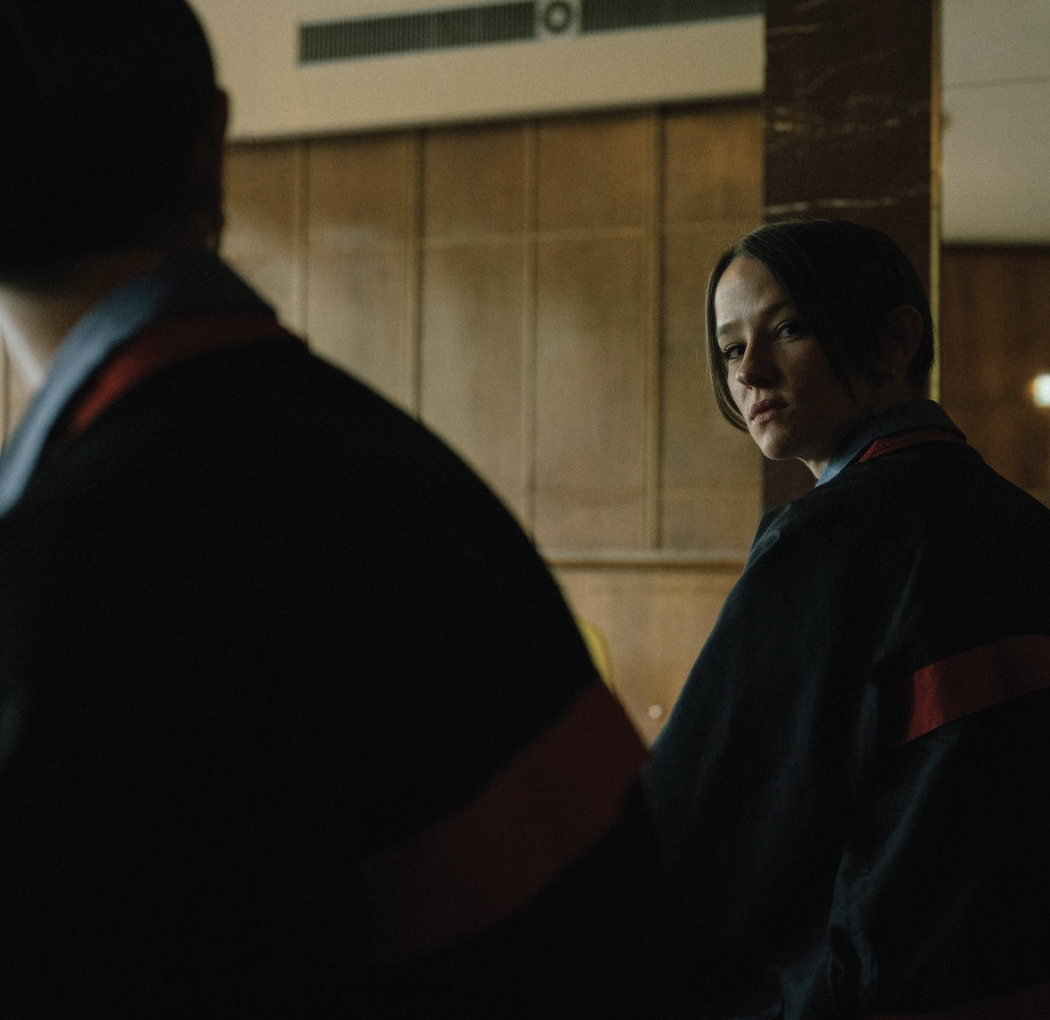
Caterina Barbieri explores the mutability of time on Myuthafoo, a 6-track piece released on the Light-Years label on 16th June 2023. It was composed in the same period as Ecstatic Computation (Editions Mego, 2019).
I have written a short story which references the broad-themed narrative of time. The two characters in the story are connected through a transient common consciousness, independent of time, each sharing their own respective experiences millennia apart. They are unconscious of this at first, but gradually develop insights into the event.
The first character is a cosmometeorologist (denoted as *) who exists in the distant future, returning from an interstellar mission, repeating his observations of TOI-2180 b, the Jupiter-like planet located 379 light-years away in the Draco constellation. The second character is a taikonaut (denoted as ∆) who is the first person to enter the orbit of Mùxīng. Mùxīng is the Mandarin word for Jupiter, translating as ‘Star of Wood’. They both listen to Myuthafoo on their respective journeys.
*
After a rapid deceleration, the long body of the survey vessel made an uncomfortably abrupt stop. A single occupant was jolted forward in his harness. The monitor projecting inside his helmet blinked the characters TOI-2180 b. The red writing of the display flooded through his visor as the synthesisers of Memory Leak sawed and played out triumphantly in his headset.
Finally!, he gleamed inside, the Draco constellation. The journey had been a long one, and
not without challenge.
Steely synths arped and orbited on Math of You in a manner not too dissimilar to his own trajectory around the exoplanet. He smiled witlessly at this reference.
He vacated the lead-lined safety of his survival pod and immediately felt the stifling heat within the grand archways and long corridors of the ship – this was the unintended transference of heat through the protective shields of its fusion reactors. His heart rate still bounded away at a fast-tempo; it held steady as he glimpsed out of the bow window.
The familiar rubor of this exoplanet reddened the white suit of the cosmometeorologist in pinkish projection. He observed its clouds that banded and danced in linear synergy as they rapidly rotated upon its axis. Their formations and morphology were recorded perfunctorily. Superstorms he named after other nebulae because that was easier than remembering the names of men and gods that he had never known or cared to know. The cloud vortices expanded and contracted in eternal rage. He marvelled at their fury.
This visit to Draco was a routine one: a simple stop-off to allow the hot heat exchanger to cool on his return from the recesses of intermediate space. Soon, his palm would hover over the propellant injector control, releasing the fusion pellet to send the ship forward, and him homeward.
After collating the new data, he made arrangements to have these safely stored for future analyses. During this process, he had started to feel uneasy: an unnerving sensation was propagating through him. He turned off the music blaring loudly in his headset, beckoning silence and space to breathe. The dizzying modulations of the synths had reached a pinnacle of inorganic arrhythmicity – perhaps this had been the cause for his unsettling?
He stared out silently at the hulking exoplanet for a while longer, pondering whether the way he felt had something to do with its magnetic energy. He peered into the dense orb in an act of mindfulness, imagining what metals and minerals its core contained. This had little effect. The discomforting feeling had become more pervasive.
What is this!? His mind called out in internal inquisition.
It was as if an invisible force was streaming slowly through him, illuminating not only his body, but his very being.
∆
A white-suited taikonaut was sitting at a seemingly incommodious 45-degree angle. Yet he sat quite comfortably, completely weightless in space, shuffling through the alphabetically-stored sounds that he had brought with him on this momentous journey.
Don Buchla – not today…
A reading of Golden Apples of the Sun…
No, no… it’s under ‘m’… ah, m…
The North Shanxi Suite by Ma Ke…
Moon, Silver Apples of…
Yes… here it is…
Myuthafoo
He pressed the play button on his receiver, smiling broadly because the celebratory opening track embodied the spirit of adventure. Minutes later, the shorn cross-section of the wooden planet came into view through the bow window.
Mùxīng, he declared to himself.
*
Mùxīng? I… I… what is this? I have never been here before – the star system, it… it is completely unrecognisable. It seems… illusory – a déjà vu, but…
Moving his hand away from the propellant injector control, he turned around to look through the observation aperture on the starboard side.
Barked appearance; ringed by age; gaseous whorls; circular and impermeable –
He paused to observe the ever-changeability of the line-like clouds that wrapped around the planet. They moved in opposing directions like some great puzzle that would eventually split open to reveal its hidden contents.
He left the observation station and made the short walk to the bridge; there, he would recalibrate the cartograph.
Red words continued to blink TOI-2180 b in his visor. He knew that the co-ordinates of the ship would have already been checked and double checked by the on-board neural network; still, he manually validated these in accordance with protocol. His location had been confirmed: he remained within the confines of Draco.
The cosmometeorologist had already passed through this constellation on his forward voyage. He compared the measurements of the specific gravity that he had obtained those short years ago with his updated readings.
It is much lighter… three-times lighter on this occasion!
His stomach had started to churn and a mild nausea built up inside him – invocations of the unexpected sight of this strange planet. For the first time in his life, he experienced the nervous excitement of uncertainty, the heavy weight of expectation. It was quite a remarkable achievement: he was the first to…
He stopped himself.
I have not been the first to observe this.
He sat down guardedly. Thoughts oscillated in his head. Eventually he calmed his mind by visualising absolutely nothing. He inhaled and exhaled four times a minute, repeating internally:
I am a cosmometeorologist. I am recording the density of TOI-2180 b. The presence of this exoplanet is undeniable. I knew it was here. I observed it only a few short years ago. This is a routine mission. My forward and return data should be the same.
I am not here to discover. There are vessels for that purpose situated in deep space.
I cannot discover something that has already been discovered!
I… I have discovered nothing here!
∆
‘Are you getting this, Control?’
The taikonaut remained suspended in pseudo-weightlessness, the padded shoulder straps securing him to the modular seat. He had already pressed the blue ‘load’ button on the grey panel in front of him. The dimly-lit red display blinked in confirmation that his message had been sent.
‘Affirmative. We have your location. Aphelion: 816 Gm. Perihelion 740 Gm. Location confirmed as Mùxīng.’ The static in his receiver crackled in return. It continued.
‘Commander, Mùxīng marks a colossal milestone in our celestial journey!’
This congratulatory statement had washed over the taikonaut. The reference had made no sense: he had trodden on nothing. His focus remained firmly on the readings on his monitor. He leant forward and pressed the blue button again.
‘Control, it is…’.
‘Repeat…’, Control broke in. ‘We could not make out your last transmission.’
‘The exoplanet…’, the taikonaut paused momentarily. ‘It is… much denser than I imagined. Also, it has far fewer moons than we had previously considered’.
‘Exoplanet?’, the static of Control enquired.
*
Am I truly conscious of this? Has the arduous journey unlocked some deeper awareness within me?
My vital signs are normal.
What is this feeling that… no, it is not fleeting because I can still feel it – it is… fading.
I must be imagining it. Yes, it is in my imagination.
But how can I be imagining something that I already knew was there.
The cosmometeorologist had closed his eyes to enter the deeper reaches of his mind.
I cannot be experiencing this… it… it is as if someone else has already lived in this moment… transf–… transference of thought… that would be improbable… impossible, even!
The cloud-ringed planet continually resurfaced in his consciousness. He opened his eyes to stare at its globular shape, the Great Spot, its barge, its moons –
The moons! Hah! the radius of its moons and their respective orbits – yes, the moons… I will use them to calculate its density.
The cosmometerologist peered through his viewing apparatus, eventually recoiling in shock.
How can that be?! 95 moons!
As he leant back in his chair, his headset clipped the edge of its protective padding, switching the music suddenly back on. The step-like cyclisms of Alphabet of Light played unhurriedly. He listened to the organic sound. It was oxymoronic. The pioneering excitement still fluttered within him. He turned around as the Gas Giant momentarily left his visual field: the window pillar of the ship had blocked out its unfamiliar appearance in quiet orbit.
∆
A soulful symphonia continued to play with the starlight: the two-toned lightness of Sufyosowirl echoed back the title track. It was organ-like as it entered another modular sequence. The taikonaut remained poised in controlled weightlessness.
‘I can confirm my last transmission as being correct. Exoplanets. I repeat: exoplanets, and exomoons. I am visualising something truly marvellous here. A Mùxīng-like planet, Jovian in stature; yet, something on a wholly grander scale.’
‘According to our readings, your present location is Mùxīng’, Control hissed into his receiver. ‘Please relay your bearings.’
The taikonaut remained silent: he had sunk into a deep introspection.
Am I imbalanced because I am listening to a contrapuntal melodia, one that holds its notes before stepping down the next rung of the polyphonic ladder? Disorientation through some form of sonic imbibement…
‘Please repeat’, Control rasped.
A new sound for a new vision – synthetic and tom-tom like, steadily moving me further away from the reality of this moment.
The taikonaut observed the exoplanet long after his vessel had escaped its magnetic pull. He moved slowly away on his mission to reach the dust-ringed world of Saturn.
*
The image of the gaseous clouds slowly dissipated into the ether of the cosmometeorologist’s mind. Swirls of You crackled indistinctly in his headset, bringing him back to the present. He knew that this would fade into a calming niente.
His monitor repeatedly blinked out the characters TOI-2180 b. His hand moved down to prime the nuclear fusion engines. He returned to the sanctity of the lead-lined survival pod during this pre-propulsive state. Glancing one last time at the disappearing planet, his ship lurched forward to leave a long and vapour-like trail of plasma that stretched far enough to traverse infinity.
NOVEL SERIALISATION
AUTHOR: RICK ACV
Following in the wake of his debut novel THE GREAT IMMUREMENT, which we serialised during the summer of 2020, Vukovar helmsman Rick ACV now follows up with the surreal, esoteric and challenging Astral Deaths & Astral Lights. Playing with format, language, font, with half-thoughts of waking hours and occult merge with dream-realism and a languid sense of discomfort: a sorry state of existence. William Blake and Austin Osman Spare meet Kōbō Abe in the hotel lobby portal of the never-world: personal and universal.
Part One now follows:
THE ASCENDER/DESCENDER
I am The Ascender/Descender of the Lord’s ladders. I get no closer nor further away from Him and His glory; these steps go sideways.
I am an angel, continually changing the affairs of man.
I die nightly and daily there is less of me.
This will continue until there will be less than nothing left.
I
The conscious part of the mind is useless; it only serves to reinforce the separation between ourselves and that which we desire.” – Austin Osman Spare.
This is how to misinterpret and misunderstand someone and something.
Then:
“Rest uneasy.
Consciousness as a forfeit-too-far.
The body’s surrender to silent sleep is not something to underestimate nor un-understand.
____ has begun to experience something disarming in its simple explicity and with an overwhelming lack of disturbation to make this a truly unpleasant experience:
Faces appear. Faces appear in the mind’s eye. Faces unrecognized. Faces constantly morphing into each other, hundreds in number, maybe more. They are as detailed as if they were in the extreme presence.
The faces start to bring a warm feeling of familiarity – the process of the passing of awareness. Lulled. Now. Now it comes. Now as the faces change and interfere with one another’s faces, sleep is on its way.
Only it isn’t sleep.
How can it be?”
This is what I found on a piece of paper in some forgotten pocket. I say forgotten but for how long it has been neglected I have little-to-no-idea. There are those places that drift into view through the mist and the grey-light and you have little clue as to where from and what for they came. You will tell yourself that they are a portal to another world. They must be, as they give something that alters your world-view so drastically that they cannot exist permanently within this world. That’s what the neglected pocket is. And that’s from where the paper did come. Only now, it isn’t paper. It is a recollection of something that is happening right this second, even. As this is being read by whoever’s eyes may be reading, it is also being written by the author long dead. The literal sense of the author being long dead will far outlast the metaphysical.
“It’s a fundamental flaw in the human condition that we appreciate beauty only in absence. We are stars that died centuries ago and our love and light is only fully absorbed after the final fade out. A pin prick in the night sky, a microscopic peephole into heaven. I find myself looking up at the sky in the kind of cold winter night that briefly recharges my belief in the value of existence hoping that through one of these peepholes I will catch a glimpse of your face.” – Daniel Shea.
Every night is the changing of the faces before ascending/descending into the other lands, other places – other people.
Maybe just as an observer, but it doesn’t feel that way.
This is exhausting.
This is all consuming.
This is life-threatening; as The Ascender/Descender, I become far removed from the usual world, to reside in the constant present.
The Constant Present:
A place with no consequence no matter the action. The past cannot be rewritten through changing eyes nor waves of fury. All futures remain an imaginary and far away world.
THE LADDERS
I awake in the body of the dejected and in the mind of the cunning.
I recall the conversation with my blind Father from yesterday and I move with ease from the scorched ground, away from his bitterness and into the bright sunlight that forms a halo around this Earth. The promise that the Holy warmth fills me with is sudden and I know I will one day be the victor.
I have a feeling that my victory will soon be of little consequence.
The first steps upon my journey are undertaken and the hard ground feels welcoming underfoot, I have reassurance from the single, solitary trees that line the path also, as I know there will be place-to-rest within their shade should I need it. A shade within their shade, a sculpture by the sculptor.
Things quickly change, as though in a dream.
What sets this feeling off and the feeling of inconsequential victory is a sudden glimmer in the sky, as though the clouds are glinting and sparkling and shimmering.
It can’t be a dream. I know I am not myself but I know that this self is Their self. There is no disconnect.
This must be a visitation.
The destination moves towards me and I needn’t approach.
I look more closely at the shimmering sky and the little bursts of light; it begins to form waves of awe, waves of silver-white Godly brilliance and I am moved to almost-tears. I cry out, a noise that I have never before heard from myself. His compassion rains and reigns down over and upon my sacrificial spirit, as right before me appears and disappears a Great Ladder. Its shape and form can only be made out by the agitated atmosphere that surrounds it, and I notice the world that was around me has melted away into the unveiling.
Everything comes into focus and the spectre of His love comes clear; the extent of his intent of creation is now known within me and the purpose of his Angels brightens the flesh under my flesh as I observe the moving up and down, passing through their other selves.
Blessed be the path between Heaven and Earth.
Blessed be the Angels, ascending and descending to and from bodies and lives.
Blessed be Me; I understand now that I am one amongst the many Angels Of Light that give cause to the lives of all, the perpetual movement between bodies, the constant Hand in the Constant Present.
I don’t forget the argument with my Father as I am armed with more than just my cunning now.
II
To sleep and to never have to wake. To wake and to never have to sleep. That would be the dream. To be in a constant, secure state and to be exempt from eternal flux is a set of circumstances, I imagine, that would yield a lifetime of peace and contentment.
I do not have a care for the unambition behind this.
I have little enough feeling on anything in the usual world as it is that the idea of having to fake guilt and guiltiness seems too much like an inconvenience.
My absence in the usual world may well be with its setbacks – mostly minor. I’m aware but have such little interest that I’d much prefer to defer to another note. I don’t really know where they come from, but they handily explain my ascensions and descensions. The ladder itself and the actual Astral Dances are fine within my control. These scraps, however, assist the very Innerself to easily given and easily forgotten unexplanations.
This note:
“The ladder is not a physical image and thing and device, but metaphysical.
That said, a literal interpretation is best suited.
It can’t be explained why.
…
In fact, this makes no sense whatsoever.
…
When _____ slept, was his vision of those angels on that path so on-the-nose?
It is hard to believe a creation that touches the Glory Of God can be so unimaginative and so plain.
What are these steps, then, and how do they appear to _____ as they are traversed?
The Death Of The Author will hereby be leaned on (again and always), as perfect an excuse as there Ever-Was and Ever-Will and Ever-Is.
And now
After all this straying
The path becomes lit once more with a fantastical and strictly Holy sense of wonder.”
I am so alone. I stare at the ceiling. I can’t understand the time of the day. You’re so alone. We’re all so, so alone.
This house is a home but I feel like vermin. I didn’t wash today. Again. And now the day is over. Again. I don’t want to sully the fresh-scented sheets. That could be my excuse.
I could just sit and wait and pass through the darkness at the close of day and avoid the coming transformation.
Light or dark, it will still happen, I remind Ourselves.
Myself.
“Lie back and take it like a man.”
Here are the faces.
Here comes the shift.
Here is Thee Transformation.
Hi, my name is Dominic Valvona and I’m the Founder of the music/culture blog monolithcocktail.com For the last ten years I’ve featured and supported music, musicians and labels we love across genres from around the world that we think you’ll want to know about. No content on the site is paid for or sponsored and we only feature artists we have genuine respect for /love. If you enjoy our reviews (and we often write long, thoughtful ones), found a new artist you admire or if we have featured you or artists you represent and would like to buy us a coffee at https://ko-fi.com/monolithcocktail to say cheers for spreading the word, then that would be much appreciated.
Novel Preview: Ayfer Simms
Contributing regularly to Monolith Cocktail for the last six or more years, cosmopolitan writer Ayfer Simms has posted countless music/film reviews (Ouzo Bazooka, Pale Honey, Gaye Su Akyol, Murder On The Orient Express, The Hateful Eight) and conducted a far amount of interviews (Sea + Air, The Magic Lantern) – she’s even appeared, alongside her daughter, in the video of one of our featured artists (Blue Rose Code).
Taking time away from the blog to pursue dreams of writing a novel, Ayfer has spent the last 18 months busily working away at a story that encompasses not only the personal (including the death of her father) but the wider psychogeography and geopolitics of her native home of Istanbul.
Born in the outlier pastoral regions of Paris to Turkish parents, Ayfer spent her formative years in France dreaming about following in the travelling footsteps of her great literature love, Agatha Christie. After studying for a degree in literature (writing music reviews on the side for a number of popular French fanzines), Ayfer moved to Ireland for six years before alighting aboard the famous Trans Siberian railway as she made her way east towards Japan. Initially visiting her sister, Ayfer not only stayed indefinitely but also got married and had a daughter. Deciding to attempt a life in Turkey, where the family is originally from, they moved into Ayfer’s great-grandmother’s house in the Üsküdar district, on the Asian banks of the sprawling Istanbul metropolis.
A Rumor In Üsküdar is in some ways autobiographical, the first chapter, which we previewed back in March, was inspired by the death of Ayfer’s father, a few years back. A familiar setting is given a slightly dystopian mystique and ominous threat by Ayfer who reimagines the Üsküdar neighbourhood of that title being isolated and quarantined by the government, as they test out a piece of (propaganda orchestrated) news on the population.
That’s just the umbrella story though; within that setting we have the main character confronted by the country where she originated from imprisoned but ready to face it all and hoping for a wind of change.
Translated into English from the original French and Turkish language versions, an extract from chapter two, ‘Back For Good’, arrives just as the authoritarian controlled Erdoğan government seeks to overturn or re-run the recent Mayoral elections (which his AKP party lost) in Istanbul. How this will pan out is anyone’s guess, with tensions running high.
Chapter 2- Back For Good
The neighbors, the passers-by, the baker, the hairdresser, the grocer, are puzzled to why I am in Turkey.
Once upon a time, a Turk coined the phrase, “to come back for good” – probably in the 1980s, when the first people started to tiptoe back (a small percentage no doubt).
Did you know that he who returns never leaves? Says a voice to me. That’s because moving between countries is not to be taken lightly for these “migrants”.
Well, I say, to that invisible person, this is why you are curious about me. I move like a feather in the barn. With no intentions or plans.
That question pounds in my head: “did you come back for good?” Why?
In the 1980s the French government offered emigrants the chance to give up all their rights in exchange for a sufficient amount of money to buy an apartment in Turkey (under the conditions of the economy of the time). Most of my friends’ parents have seized the opportunity, the chance for a new start in their home countries. My parents shrugged: why block the future of our children?
Turks of that wave are forever hybrids. Their emerging personality got thrown into another world. None of them accept to reveal their secret. None of them admit why they are here. Money or a fake sense of nationalist flattery. Stuck between monuments, caught like seagulls in the net. (Seagulls are monstrous animals, pierce kitten eyes, and defy crows, cats, and humans).
“I have never lived here”. I simply add. I can’t say anything else in truth.
The idea that the experience of being here or there is immutable seems to me incongruous. I get tangled in my explanations of my deep complex sentiments. I am in moving sand facing people who’ve never left this ground. Do they care? They are not listening.
“Well”, I say, “I’m not a clairvoyant, and I can not now say that I will not leave again. I may, or may not.”
– Do you want to leave?
– I did not say that”.
Confusing explanations.
Their eyes are floating in the air as if I did not speak Turkish.
“If it were me, I would have stayed there,” they say dreamily.
The country is bleeding, especially in recent years. The Turk takes to one’s heels, those who can anyway. I can, and I did take to one’s heel for lesser troubles. I’d rather not, leave behind my father’s house.
Others continue to vote for Veysel. Who are they?
We are in a decadent Eldorado.
Those who support Veysel from abroad are too comfortable in Europe. They have no wish to settle back here. We, on the other hand, are raving mad. The Turk drinks tea and surveys the Bosphorus and the seagulls, the currents could take him far.
I envied these people for a long time, the chant of the birds above their heads. I imagined they had a sense of belonging. I did not know then seagulls sounded like a baby’s tormented shrieking cries.
“Why undo what your parents did?” Someone once said to me.
“I am after the seagulls”, I said.
It’s better if I don’t answer these remarks because I can flee when I wish; I am a bird with a crooked leg (hard for landing).
“Of the two countries, which one is the most beautiful?”
I hasten to praise the merits of Turkey, to please them, and I pierce in the looks a sign of relief while heavy sweat runs down my neck. I look like a cripple. “We may not be able to leave, but at least we have a nice village”, that’s the message.
My house is surrounded by five historical mosques, all equipped with loudspeakers, and every morning and noon, afternoon, evening and dawn, it begins to sizzle before the pugnacious verve of a young religious preceptor compresses the air of his lungs as if to tear it better before unleashing his chant. Powerful cries erupt, wild animals land in the middle of a city after a hundred years’ war. He is imposing himself like a farmyard rooster. Some old-people-as well as the most devout-rise up, mumbling prayers on the way to their ablutions. The woman: with a samovar from the East boils the tea in the early morning. The call to prayer follows the movements of the sun, tea, that of the Turkish soul. When calm returns, the far-flung mosques scattered throughout Istanbul complete their tunes in turn and descend on us like a whisper.
Yet this morning the call is late. Instead of falling asleep, I look at the time. I have to take the Marmaray for my Judo class. Yesterday the Great Wealth Party proudly occupied Üsküdar’s Square to make speeches about its glory and shook small flags there. There were women in bright scarves. Under these scarves, something shaping the skulls in a rather wide form, giving them the look of praying mantises and the comparison has nothing to do with the name of the insect. This is it seems the official fashion of the women of the party.
When I go down Uncular Street, it’s still dark, but an electric blue rises from the depths of the night. The streets are deserted. Most gray buildings sprawl on twisted sidewalks. I dreaded taking this street dominated by men, when I came on summer vacations growing up. Today it’s different. I am no longer afraid and those who intimidated me at the time are dead. Sadly this is valid for my father.
In front of the stone market with the rusty shutters, at the intersection of the street overlooking the Marmaray, a man fails to overthrow me. He rushes towards the wall that surrounds the Mosque, pressing the pace; he hastily wraps a scarf over his head. The fabric floats in his legs and barely hides his belly emerging like an island in the middle of the ocean. He runs up and does not apologize for almost tearing my arm out.
He disappears in the big yard. Several men in a lively discussion jostle me again on the steps that lead to the train. One is short of breath, his cheeks are red and his headdress is in his hand. He follows the others with great difficulty. I hold in my mouth dry comments. Do not be angry in Istanbul because there are so many opportunities.
Living space in the public arena is as hard to find as cherries in winter. We push each other to the detriment of others: those before us, old people, pregnant women: no other rules than one self apply.
Sometimes I lose control. I hurry, I breathe, I push with my elbow through an aggressive mass, ready for anything, to get on the train or be in the elevator first, aiming for free places, rushing. A movement then, before sinking in the seat satisfied.
Once I did a crooked-foot. I realized the gravity of my act when I saw my ogre profile in full edge on the train window.
On the platform, a man from the railway company blocks me: the trains are canceled for the day, because of a “generalized breakdown”. The last travelers from the European side come down. Men in robes flock. Something is happening in the city this morning.
Words: Ayfer Simms
 Monolith Cocktail Blog