The Perusal #55: Liraz, Ibelisse Guardia Ferragutti & Frank Rosaly, Ghana Special 2, Bab L’ Bluz…
May 7, 2024
A WORLD OF SONIC/MUSICAL DISCOVERIES REVIEWED BY DOMINIC VALVONA
(Unless stated otherwise, all releases are available now)

Various ‘Ghana Special 2: Electronic Highlife & Afro Sounds In The Diaspora 1980-93’ (Soundway Records) 10th May 2024
The first decade of the new millennium proved a fruitful period for (re) discovering Africa’s rich dynamic and explosive music heritage, with both (through their various Afro-funk and Afro-psych compilations) Soundway Records and Analog Africa (in particular their influential African Scream Contests) spoiling connoisseurs and those with just a curiosity alike to sounds rarely heard outside the continent. The former’s original five album Ghana Special spread was one such indispensable collection from that time; a perfectly encased box set survey of one of Africa’s most important musical junctions.
Now, unbelievably, a full twenty years later Soundway have followed up that “highlife” triumph with a second volume; moving the action on into a new decade. Crossing over, just, from the inaugural edition’s 1968 to 1981 span, Ghana Special 2: Electronic Highlife & Afro Sounds In The Diaspora picks up in the 80s as Ghana’s signature highlife phenomenon went through yet another evolution, incorporating the tech of the time: from drum machines to synths. From marching big bands and tea dances in colonial times to the explosive embrace of wailing R&B and funk, highlife kept on moving through the decades. And as that helpful title makes clear, this eighteen-track survey hones in on the electronic enhanced, augmented phase of that genre’s development during a period in which many of Ghana’s most promising music stars had been forced to leave for Europe and further afield.
The diaspora in this case a result of a particular authoritarian period in Ghana’s post-colonial history. Following Ghana’s promising independence from Britain in the late 50s the political landscape tossed around between the rule of military coups and civil governments: the only constant, Ghana’s impressive musical pedigree and its influence across the continent. In light of particularly damaging and disastrous economic policies in the late 70s, and with the quelling and censorship of musicians – previously so popular that their support or protestations could prove vital in a political leader’s survival – there was a mass exodus of talent.
As the new decade beckoned Ghana became a hostile environment for its artists, many of whom would join the migratory caravan of workers leaving to find jobs in an increasingly welcoming West Germany (a booming economy and desperate need for workers resulted in a relaxation of the immigration laws and work permits). The cities of Berlin, Hamburg and Dusseldorf were havens for this influx of Ghanaians; proving a fruitful network for a new musical fusion between the locals and their new arrivals called “Bürger life”, named after the German word for “citizen”. A hybrid of German new wave, post krautrock loosened dance sounds and modern tech, Bürger life transformed the original Afro-musical trends through such progenitors of the scene as George Darko and Charles Amoah. Both artists feature here, Darko with his sun-hazed fusion of Masekela, Sunny Adé, the Phantom Band and Lounge Lizards ‘Kaakyrie Nva’, and Amoah with the 80s modern R&B pop steal and whistled and tingled starry ‘Fre Me (Call Me)’. Of a similar ilk, Starlife’s cosmic suffused ‘Amoma Koro’ sounds like a tropical soca infused Flow Motion (and Out Of Reach) era CAN at times.
Speaking of soca (the “soul of calypso” shorthand), that Afro-Caribbean style can be found on the funky disco sauntering, “wahoo”, opener ‘Ebe Ye Yie Ni’ by The Godfathers, and on Pat Thomas’s swayed plea ‘Gye Wani’ – the highlife horns all still in attendance, blazed but subdued and more relaxed. The Gold Coast vocalist and songwriter (Ebo Taylor foil to boot) Thomas had previously worked with the iconic Marijata trio back in Ghana, but emigrated to Berlin in 1979, like so many artists on this compilation.
A standout tune (of many) and extensive workout (like many tracks on this compilation, more like a 12” dance mix in duration), the Pepper, Onion, Ginger & Salt ingredients named obscurities turn out a smooth crossover of downtown NYC (think Don Cherry produced by Ramuntcho Matta), Osibisa and the Lijado Sisters – there’s even a sort of quasi-loose rap vocal at one point. Another standout name (as it were), the revitalized in recent years Ghanian icon Gyedu Blay Ambolley is famous for his breakout hit ‘Simigwa-Do’ and early adoption of hip-hop – fusing it with highlife to form the highly influential and inventive “hiplife” genre. Ambolley appeared on the original Ghana Special by the way. But on this occasion, in a new decade and phase, he picks up hints of Grace Jones and Herbie Hancock on the Island life funky ‘Apple’.
At this point I can’t not mention Dadadi’s fun ‘Jigi Jigi’ track, a soca-light flight from Accra to Havana in the mode of a carnival celebrating Kid Creole.
Synthesized and programmed, the old highlife rhythms/percussion is just about audible as the smother 80s technology rounds out much of the rougher signatures, replacing some traditional instruments and sounds with keys and keytar, slap bass and wobbly effects. But the sleekness can’t hide those vibrant roots, even when embracing reggae, boogie and the new wave. Ghana Special part two is a refreshing map of the diaspora fusions and hybrids that spread across Europe during a time of movement and turmoil from Ghana’s hotbed of influential stars and musicians. In highlighting the stories and journeys of Ghana’s émigrés, and in introducing us to those sounds, movements that remain either forgotten or just not as celebrated, Volume 2 will become as indispensable as the first. If you were fortunate enough (and without rubbing it in, I was lucky enough to purchase the original on its release) in acquiring that first box set then this latest compilation will sit beside it very nicely. And that is my way of saying that you should buy a copy.
Bab L’ Bluz ‘Swaken’
(Real World)
An embodiment of the Moroccan “Nayda” (“up”) youth movement for change in the Arab World, the fuzz-toned electrified Bab L’ Bluz launched their debut album in a tumultuous political climate; just as COVID gripped the global newsfeeds and moved the focus away from the fallout from the Arab Spring.
Fronted and built around the playing energy and voice of Yousra Mansour, this female-led troupe embraces the influences of rock-blues gods Led Zeppelin and Morocco’s very own version of The Rolling Stones, Nass El Ghiwane, matching it with a myriad of Arabian sounds and traditions from North and Western Africa; all of which are transformed from their conservative and male dominating roots into a feminist-strong message of empowerment.
Mansour’s protestations for equality – in everything from inheritance laws to the gender wage gap and roles in society – rung out in the wake of civil unrest, governmental crackdowns and censorship to the buzz and clattering/rustled rhythms of acid-garage-blues-psych-rock and Morocco’s age-old Gnawa tradition of spiritualist invocation and trance. Previously the sole (more or less) preserve of the patriarch, and against the odds, Mansour learnt to play many native Moroccan styles: standing out especially for studying the “guembri”, a three-stringed bass-like lute that is then electrified.
That debut album set a blaze, evoking Arabia’s own experiments in the 1970s with rock music fusions, the psychedelic and prog-rock whilst, like a tornado or whirling dervish, spinning through the region and absorbing everything on offer, from Mauritania Griot and Hassani to Chabbi and the Islamic dances, poetry and exalted music of Morocco itself. This same hybrid of sounds continues on the group’s newest album, Swaken, a title that when translated from the region’s Darija dialect (the main language of the Nayda movement) encompasses the transcendent rituals of Morocco’s spiritual possession ceremonies.
Invoking visitations and a dialogue with the past, Bab L’ Bluz (made up of Mansour and band mates Brice Bottin, Ibrahim Terkemani and Jérôme Bartolome) open up their signature edge and buzz to even more influences than usual. After honing their performances on an extensive tour schedule, they’ve taken on a far rockier, even heavier sound. Led Zeppelin at both their loudest and also most acoustic permeate this album’s eleven tracks spread – that and early 70s The Who, especially on the closing roused and riled ‘Mouja’. And with the whistled and airy peul flute making an appearance, there’s even a hint of progressive folk too.
The scope then is wide, taking in echoes of Liraz-style pop, the Sahara and North African desert song of Aziz Brahim, the blowing piped Sufi music of Bargou 08, the evolved Gnawa music of Houssam Gania, trills of Griot, Modern R&B and evocations of Nahawa Doumbia, Dimi Mint Abba, Baba Zulu and Noura Mint Seymali. The lyrical messages sung across the Berber trails, in the cities and in the shadow of the sand dunes are just as varied: anger at inaction and lament for the growing number of suicides and cases of depression in Morocco being just two such subjects.
Bab L’ Bluz scale new heights whilst also reflecting with passages of more acoustic downtime as they once again amplify and kick into touch conformity and restraint. New vices twist and transport Arab traditions and the spiritual communions for a both rock-heavy and electrifying new wave album of polemic, the mystical, cosmic and the blues. Nothing less than an essential album from an essential band built for our times.
Liraz ‘Enerjy’
(Batov Records) 17th May 2024
It’s hardly surprising that with the ongoing conflict between the nefarious Iranian regime and its neighbours, and with the continued oppression of its own population, that attempting to show the Middle Eastern titan in a good light is frustratingly difficult (an understatement in itself). Especially when you’re Jewish and part of that atavistic empire’s age-old Jewish community that stretches right back to Persia’s Biblical entry in the Old Testament: A community originally bound in chains, the spoils of conquest marched into slavery in 727BC, but eventually granted citizenship and even given the right of return to build a new temple in Jerusalem by the more enlightened Cyrus in the 6th century BC. Or that one of your most famous roles on screen is playing a clandestine Mossad agent on a mission to infiltrate the Iranian air defenses so that Israel can disable a nuclear reactor (the Apple+ series Tehran). But the actress, dancer, and electronic pop siren Liraz Charhi was willing to give it a good go, covertly recording several cinematic lensed Middle Eastern fantasies with a myriad of Iranian musicians under the radar of the ayatollah hardliners, over the internet.
In a climate in-which tolerance is scarce, and with most creative forms and freedoms of expression attracting, at the very least, suspicion, and at the worse, imprisonment, even death, trying to make a record with a strong feminine message seems an almost impossibly dangerous task: Liraz’s collaborators on the album’s Zan and Roya remain anonymous indefinitely for their own safety.
Liraz’s family were forced to escape during the tumultuous upheavals of Iran’s revolution in the 70s; setting up home in Israel’s capital, Tel Aviv, a safe haven for those escaping an ever-authoritarian Islamic regime. That city has grown to become an artistic community of foreigners, living cheek-in-jowl with both an older Israeli population and diaspora of Jews from around the globe. Liraz however, still feels bound to that Iranian heritage. And it seems when listening to her evocative soothed and lush bright vocals, she is the latest in a long line of strong outspoken women from that community. A baton has been handed down you could say.
Feeling adrift, Liraz upped sticks to become an actress in L.A. Little did she know that the city would open her eyes to another concentration of Iranian émigrés, including many from the Iranian-Jewish community. Whilst starring in major productions such as Fair Game and A Late Quartet, Liraz would find comfort and a sense of belonging in that diaspora. She’d learn much absorbing both the ancient musical traditions and the pop and disco that filled the clubs in a pre-revolutionary, pro-miniskirt Tehran, including such famed Iranian acts as Googoosh and Mahasty.
It was much in part down to the courage of the women in this astoundingly large community (so large that L.A. is nicknamed “Tehrangeles”) that emboldened Liraz to take up singing. She would record her debut Persian imbued album Naz in 2018, inspired by those whose only outlet and determination of self-identity and freedom was through music. Two years later and once more ingrained in that atavistic land’s richly woven musical history, she enacted a clandestine connectivity between cultures on the “second chapter”, Zan.
Prompted by the death of Mahsa Jina Amini in the custody of the authorities in 2022, an ensuing battle of ideals and freedoms from the women and a new generation in Iran threatened to topple the tyranny. However, the regime has pushed back harder than ever and with an almost unprecedented violence started executing (mainly men so far, with the rapper Toomaj Salehi only just in the last week or so sentenced to death for criticising the regime) supporters and activists on trumped up, tortured confessional charges of treason. Women are routinely taken off the streets by the so-called morality police and raped, whilst only in the last year school age girls from all over the country were poisoned. But even in the face of this bloody repression history is on the side of Iran’s younger more liberal generations. However, with the barbaric, evil attack on Israel by Hamas on October 7th 2023, Iran has weighed in with various proxy attacks. In the last month – after Israel attacked their consulate in Syria – Iran has escalated its campaign, launching, in one night, a 300-plus missile/drone attack on Israel itself. In a less dramatic tit-for-tat, Israel launched a retaliatory missile at the Isfahan region inside Iran.
The unfolding horror in the wake of Hamas’s emboldened sickening attack last year, has seen the IDF level Gaza to near rubble and dust; the casualty and deaths, whether you believe Hamas’s figures or not, are impossible to justify. Battle lines have been drawn across the world; protest marches have now become part of the daily routine.
One of the most scary and depressing consequences of this conflict has been with the record-breaking growth of anti-Semitism across Europe and North America. Division has been sown down political lines of grievance: you either stand with Palestine or Israel it seems, with no room for nuance, the complexities let alone balance. The sheer mindlessness and oblivious lack of decency by many is staggering; with opinions cast, placards held, and slogans shouted by people without the faintest clue or knowledge of what they pontificate. You can quite rightly rile against or denounce both parties in this escalating conflict, but to only take one side is disingenuous at best, at worst, deplorable. Yes, the catalyst argument is trotted out every time, but if we want history lessons and context, we should go back not just 70-odd years but a thousand, two thousand.
It’s with this in mind that Liraz has become just one of the voices behind the #MeTooUnlessYouAreAJew campaign that grew in the face of complete silence and inaction from the world community when Hamas murdered and eviscerated and raped its Israeli victims on that fateful day – they continue to use sexual violence as a weapon against the female hostages that were taken on that same day, a number of which remain in and around Gaza, yet to be handed back. Those hostages that have been freed, made it out alive and been rescued by the IDF, testify to such heinous crimes. Feeling betrayed and abandoned at the lack of any outcry or even a recognition of these events at the UN, in international circles, and on International Women’s Day, a movement was born. Liraz was recently invited to represent that movement at the UK’s House Of Lords, where she read out a poignant, personal (as with so many citizens of Israel, Liraz lost members of her own extended family and friends that day) statement.
“I suffer terribly from all the human pain in this war on both sides. I wish for the abducted to return to their families in Israel. I want the suffering of the innocent Palestinian people to end. I am praying for peace and justice for all.”
And so, her latest EP of dazzling Middle Eastern and Arabian disco and fuzz toned psychedelia arrives with a message of hope, reconciliation. The message: “Now is the time to change the energy (or “Enerjy”) frequency”.
After releasing a couple of albums for Glitterbeat Records, the Persian-Israeli star takes up residence at the Middle Eastern grooves promoting Batov label – perhaps Liraz’s natural home. Working with the highly prolific Israeli singer-songwriter, guitarist & musical producer, Uri Brauner Kinrot, who’s groups include Ouzo Bazooka and Boom Pam – both of which can be picked up across all four tracks on this fantastical dynamic empowered EP – Liraz probably reaches her zenith as a feminist siren of The Levant, balancing pure Egyptian-Moroccan-Lebanese-Israeli glitterball zappy nostalgic exotic disco and pop with Anatolian psych and feminine strength.
Once more in the Farsi language, she sings equally from a position of power and yearning; like an Iranian chanteuse swooning and swirling, mystical and soulful. Liraz bangs the tambourine to Arabian-futuristic grooves, cosmic rays, vapour swirls, wisps of mirages and some of the most danceable music to have left the region in years. Within that framework I’m hearing shades of Altın Gün, Elektro Hafiz, and a host of equally charismatic singers from the Arab world.
You really can’t fault the quality and production, the songs and delivery. The emotional charge, the anguish and lament are unmistakable, even at its most lush and upbeat. Liraz disarms a powerful statement with elan and skill to produce an incredible lively and danceable record of pop excellence.
Ibelisse Guardia Ferragutti & Frank Rosaly ‘MESTIZX’
(International Anthem X Nonesuch)
Transformed and remoulded for a more progressive age the “MESTIZX” title of this partnership’s debut album takes the Spanish term for “mixed person” (namely, a union between those indigenous people in the Latin conquered territories of South America and the Spanish) away from its colonial roots and repurposes it on an album of dream realism duality.
With the multimedia performer and singer Ibelisse Guardia Ferragutti’s Bolivian and the jazz drummer Frank Rosaly’s Puerto Rican heritages, the pre-colonial history of South America is woven into a contemporary revision of magic, organic forms and ritual rhythms mixed with elements and a suffusion of Chicago post-rock, post-jazz and alternative Latin leftfield pop.
Without repeating the storytelling liner notes and various quotes, the duo explore their “outsider”, “other”, status as the ancestors of that mixed ethnicity: neither wholly a part of the atavistic nor Spanish (and to a point, as they crossover into Brazil, Portuguese) lineages they both feel detached, and to some degrees, uprooted from their legacy, and yet take advantage of it to weave such worldly creative perspectives. In a state of certain flux, between worlds, the music and song on this imaginative and explorative album balances the mystical with invocations and the calls of nature. They do this, enabled by an extended cast of friends from both within and outside the International Anthem label community; merging congruously the skills and voices of Matt Lux, Ben LaMar Guy and Bitchin Bajas’ Rob Frye (to name just a few of the many contributors) to expand the remit beyond the Amazon, the Bolivian tin-mined mountains and landscapes to take in mirage evocations of the alien, the sci-fi and naturalistic.
This is music that draws you in; unfurls its depths over time. The vocals are simultaneously beautiful yet split on occasions into a spirit shadow form; a near apparitional invocation that’s separated from its sister, a guide that takes us back to the old phantasmagoria of pre-colonial conquest, when Bolivia was yet to be demarcated, owned and named after its European conquistador’s ancestor and was still separated between the Incas and various independent tribes in the country’s northern and southern lowlands. That voice carries and yet seems at times almost lulled and translucent beside the water carrier percussion, the attentive and descriptive drums (only occasionally breaking out into, well…a sort of jazz breakbeat of a kind) and rainforest canopy of either mimicked or real bird life and exotica. This is a world in which the Afro-rhythms of Höröya, the psychedelic nature of Caetano Veloso and Paebiru find room next to the Sao Paulo Underground, Ale Hop, Cucina Povera, Jaimie Branch, Art Ensemble Of Chicago, Don Cherry’s Organic Music Society and Tortoise. And from that reference pool, you can tell that the lineage goes back far: all the way to the original rituals and folk music of the people that first trod on those sacred grounds.
There’s much to admire in this world of the untamed and wild, with new perspectives, mixed histories and the largely melodious reverberations of the lost exercising a new language of ownership. Ibelisse Guardia Ferragutti and Frank Rosaly perfect and expand their organic explorations, bewitching messages and oracles on an intriguing, moving and dreamily trippy debut album.
Goran Kajfeš Tropiques ‘Tell Us’
(We Jazz)
Through various developments drawn together over the last decade and more, the Croatian heritage Swede trumpeter, composer, producer and bandleader Goran Kajfeš once more sets in motion another “hypno-jazz” opus under his Tropiques exotic moniker.
Those who know, who might recall, the name will have perhaps already heard this branch of his expanded guided ensemble: going since 2011. But there’s also his equally praiseworthy absorption of jazz ideas troupe, the Subtropic Arkestra, and a myriad of other set-ups, including both the Fire! Orchestra and Angles 9.
Goran has an impressive CV as a session player to boot, playing with such luminaries of the form as Lester Bowie, who’s influence rings out on the latest Tropiques’ odyssey.
The first of those groups (and indeed the second) acts as a crossover, a recruiting ground for the Swedish-based make up of Goran’s ensemble; his pianist and keys foil Alexander Zethson, acoustic bassist Johan Berthling and violinist Josefin Runsten all served in the Fire! Orchestra. Runsten was brought in with fellow adroit strings maestro and cellist Leo Svensson Sander to expand the sound and bring a feel of uplift to the dynamics, in so doing, expanding the ranks from a core quartet to a sextet. Each band mate brings with them a convoluted family tree of intersected and separate gigs in other groups, from Trondheim Jazz to Dungen, Oddjob and Sven Wunder. And between them, this sextet covers everything from award-winning jazz recordings to composing for film and the stage.
With a sense of movement and openness that seems to organically unfold, and to unfurl and grow like winter buds opening in the first weeks of spring, the Tropiques’ latest album together is a thing of synthesis and nature balanced with the messages, hopes and celebration of conscious spiritual jazz from another age.
It all begins with the incipient classical feels of Riley and Nyman and an air of sympathetic bowed and “possible musics” Širom-esque Galicia and the Balkans before flowering into those spiritual Alice Coltrane vibes. Goran’s almost drowsy trumpet awakens on this deep dived scene of Afro-spiritualism; it’s sound evoking hints of the already mentioned Lester but early Don Cherry and Jaimie Branch. Meanwhile, Zethson’s tinkled sensations, runs and liquid scales flow reminded me of Nduduzo Makhathini and the keys found on Bobby Jackson recordings. Runsteen and Sander’s violin/cello partnership slowly grows and blloms into a lush light orchestral spell.
But it’s the influence, as stated in the accompanying PR notes, of John Coltrane’s Crescent LP – the incredible luminary’s quartet on that iconic recording including such notable icons as McCoy Tyner, Jimmy Garrison and Elvin Jones – that stands out; a spot-on absorption of that mid 60s record vital, the building blocks of which can be heard being riffed on and off of.
The middle movement, ‘Magmatique’, seems to perhaps take its inspiration from the kosmische instead, starting as it does with the piano ambience of Popol Vuh’s Florian Fricke. The trumpet sounds almost cupped as the bass quietly stretches and mumbles away. That is until the drums take on a more breakbeat style that stirs up the influence of hip-hop. The strings, however, go from muted Skies Of America Ornette to the more drawn and flighty influence of Michael Ubriank. There’s also a certain progressive or sort of post-rock feel; like Radiohead making a jazz album under the tutorage of Ill Considered and the Chicago Underground duo.
On a slow boat to China, or perhaps sailing across the east China seas to land somewhere on blossom canopy Japanese shores, ‘Prije I Posle’ (translated from the Croatian, “before and after”) dreamily embraces Far Eastern signatures; at times, on the wind, replicating near zither-like strokes and brushes, and the bulb-shaped notes of some kind of Oriental glockenspiel. The drums though take on an almost d’n’b rhythm, whilst the kabuki theatre unfolds, and Goran’s trumpet exhales Chat’s woes and sad romantic illusions of yielding yearns. As summer takes hold, this odyssey fades out with the vague caresses of Alice Coltrane and Dorothy Ashby; and a cycle is completed.
Amorphously travelling on an eclectic pathway that includes all kinds of jazz styles, the transcendental, kosmische, lush, classical and the ensemble’s own Swedish homeland’s adoption of prog and pysch, the Goran-led Tropiques prove their mettle with a deep “slow music” rich journey in three movements. Environment counterbalanced by open-ended developments and the inner cerebral make for an impressive opus that proves so easy to take in and enjoy.
Jake Long ‘City Swamp’
(New Soil) 17th May 2024
Stepping out on his own but once more backed by the same who’s who of contemporary UK jazz musicians that formed the eclectic lineup on previous recordings under the Maisha title, the drummer, composer and producer Jake Long conjures up a Bitches Brew of funk, soul, spiritual, Afro and fusion jazz on his debut as a solo artist.
From a pool of talent that includes Nubya Garcia, Binker Golding, Tamar Osborn, Shirley Tetteh, Artie Zaite, Amané Suganami, Al Macsween, Twm Dylan and Tim Doyle – many of whom have crossed paths with each other on projects outside the sphere of the Long led Maisha ensemble – a both cosmic and despairing suffused odyssey of the intuitive and electrifying is formed. In the ruins of societal decay and riled-up division, looking out across an increasingly soulless gentrified London (where all these artists and musicians reside) lost to corporate greed and a breakdown in community relations, Long and his troupe tread the uncertain pathways of the primal city swamp and sift through the “ideological rubble” of dystopian collapse – a term absorbed and borrowed from the political theorist and lecturer in digital media and society Alex Williams, echoed in Mark Fisher’s Capitalist Realism: Is There No Alternative.
Reassembled at a later date from a series of extended recordings at the Lightship 95 studios in the capital, made during 2019, that landscape and decay has only got worse with the further loss of public spaces and supportive networks, arts spaces and music venues. And yet this album is not so much a raging polemic nor untamed and unruly cry from the soul – well, it has its moments of course but nothing so abstract and tortured as to sound angry. In fact, for most of the time golden percussive threads, floated bulb-like organ notes, a mantra trickle and shimmer of Alice Coltrane and spiritual jazz vibrations indicate escapism for the lunar and astral: the spiritual balance much needed in such dire times of avarice, social media validation and the pursuit of fame. But then, as the action picks up, we’re into the territory of Maggot Brain phase Funkadelic, Owen Marshall, Herbie Hancock, Bernie Worrell and Miles Davis’ Lost Septet. An extra thread, or layer, arrives in the form of King Tubby, African Head Charge and the On-U Sound label reverberated and echoed dub; often taking the jazz elements into the hallucinatory and dreamy.
Within those spheres of influence you can also pick up hints of Byard Lancaster, Joe Henderson, Marion Brown, Last Exit, (very specific) Slow Foot era Norman Conners, the Pharoah, and Bobby Hutcherson and Harold Land’s simmered down partnership as the music moves between the strange JuJu vodun Orleans spell of ‘Swamp’ to the more melodious, almost romantically, played horns evoked soul-jazz-on-the-streets-of-70s-NYC vibes ‘Silhouette’ – I’m also hearing signs of The John Betsch Society on this one. With time on their side, movements, passages and direction of travel is performed and assembled without distraction and limits; with some tracks breaking the ten-minute barrier to move through various fluctuations of light and shade, squalling and smashing crescendo and more near ambient vapours and mists of mysticism and reflective soul-bearing.
It’s impossible to pick out any one contribution, any one performer, as the entire ensemble interweave and act as parts in a much greater expansive world of metaphorical expressions, descriptions and atmospheres; all feeding into a haunted magical entwined statement on the symptoms of urban decay and the nightmare of a post-capitalist society with little to offer, little to give and little in the way of answers to all our ills. A Bitches Brew for our end times.
Morgan Garrett ‘Purity’
(Orange Milk Records) 17th May 2024
Daemonic wrenches, caustic slabs of derangement and Fortean paranormal invocations grind against chemically poisoned alternative grunge-country indolence and the unraveling clusterfuck morose mind of Morgan Garrett on his latest collection of both menacing and playfully disturbing experiments.
A “culmination of over a decade’s worth of collaborative and relentless” discombobulations and harrowed heavy-set-to-lo-fi-and-no-fi resignations, torn dispersions and traumatic-drawn cries for help, the Purity album is a troubled trip across a morbidly hallucinated inner and outer landscape, with the age of anxiety, COVID, war, record level cancers, environmental catastrophe, cost of living crisis, societal and generational division, governmental incompetence, lawlessness, drug dependency and technological/AI capitulation being just some of the topics, grievances and stresses to unpick.
Garrett’s status in the American experimental scene is in no doubt as he mines a lifetime of pain and transmogrifies both his own work and that of Scott Walker’s, the Sun City Girls, Swans, Daevid Allen, the Boredoms, Dean Blunt, Fugazi, the Putan Club and others. Within that scope of references expect to hear Garrett speaking in slithery tongues, transmitting from Mina Crandon’s spiritualist parlour whilst twanging away like some scarred deeply troubled and vicious figure from Blood Meridian on LSD, and somehow twinning a fucked-up Pavement with a paranormal screamed Skip Spence. Hell’s fires lap away as nu-metal, the industrial and heavy mental/heavy meta crush all resistance and resolve and those country/American leanings. There’s sure enough a soul in that there slumbered and more beaten-up hallucination; a pained maverick clawing their way out of a opioid languish, stripped of dignity and resilience, across a battlefield they once called home. Then again, I could be reading too much into it all.
Malini Sridharan ‘Tombuex’
(Birdwatcher Records) 10th May 2024
Death is a fairytale, a fantasy, a mythological poetry that’s navigated with almost diaphanous and playful devotional curiosity by the Brooklyn-based composer and multi-instrumentalist Malini Sridharan on her new album Tombeux.
With a title that derives from the French plural for “tomb” or “tombstone” but also refers to a musical commemoration style of composition that was all the vogue back in the 16th century – originally in poet form but later musically transposed with the accompaniment of lute and plucked instruments -, Sridharan assails Ursula K Le Guin’s Earthsea cycle of fantasy novels, the Greek-Roman ideas of Hades, the venerated devotions of the celebrated Indian Hindu mystic poet Mirabai, and the loss of those nearer to home. For this chamber/classical set of vocalized suites deals with that unavoidable fate: death. But with such a lucidity and magic, and candidness that it never seem too elegiac of morbid. Only skirting the chthonian, the suites and song on this album turn more towards yearns of the pastoral, bucolic and courtly: Closer to the fairy-like tapestry weaved folk of Joanna Newsome and the brass-y more sweetened trunk-like low bass-y tones of the euphonium and woodland and bird-like flutiness of Prokofiev, of Elgier and Vaughn Williams.
The mini stories that make up Tombuex are almost shorn of melancholy and mournful dirge. This is both down to Sridharan’s shared entwined influences of both India and Michigan roots, and her diverse range of literary, historical sources – the Indian classical strains that you hear are in some part from her father, and the curiosity for history, archeology and Medieval music that permeates this album, from her mother. And so the brassy resonance of the sitar, twinkles of vibraphone, duck-billed sound of the bassoon and shake of bells (all played by Sridharan) merge perfectly with a full Western-sounding classical woodwind and brass ensemble to elicit the tearful and dramatic, the fantastical and regal, whilst weaving a tale of bereavement in its many forms.
The lasting resting places of both Greek-Roman myth (Hades) and the speculative-fiction writer Le Guin’s Earthsea afterworld (The Dry Land) are invoked by a filmic-like score and Sridharan’s modern day Bhajans and Medieval-style rounds. And through it all, she creates a soft wellspring of personal connections, longings and a sense of loss: A remembrance that exudes lovely dreaminess and certain majesty in the face of pain.
Tombeux is an ambitious work of the classical that bridges both time and worlds to address in its literary, literal and poetic forms the spectre and history of death and how to face it without spiralling into the void. Nothing less than a very impressive work that expands Sridharan’s ambitions further.
Hi, my name is Dominic Valvona and I’m the Founder of the music/culture blog monolithcocktail.com For the last ten years I’ve featured and supported music, musicians and labels we love across genres from around the world that we think you’ll want to know about. No content on the site is paid for or sponsored and we only feature artists we have genuine respect for or love. If you enjoy our reviews (and we often write long, researched and thoughtful ones), found a new artist you admire or if we have featured you or artists you represent and would like to buy us a coffee at https://ko-fi.com/monolithcocktail to say cheers for spreading the word, then that would be much appreciated.
Our Daily Bread 383: Bab L’ Bluz ‘Nayda!’
June 3, 2020
Album Review/Dominic Valvona
Photo Credit/Benjamin Astier

Bab L’ Bluz ‘Nayda!’
(Real World Records) Digital: 5th June 2020/Physical: 24th July 2020
Injecting a “nayda” of generational energy into an electric rustle, rattle and dreamy assortment of Moroccan and North West African traditions, the French “power” quartet rev-up ancestral sounds on their debut album for Peter Gabriel’s Real World label. A reclamation in fact, the transmogrified blues act have a fresh take on the Islamic dance, music and poetry exaltations of their homeland’s famous “Gnawa”, the ululation trills and storytelling of the Mauritania “Griot” tradition, and the popular folk music of Chabbi as they blend Arabian-Africa with a contemporary view of political upheaval and drama.
The exclaimed album title takes its name and seed from the youth movement that rose up in part from the concatenate protests that followed the initial Arab Spring. Less violent, Moroccans peacefully demonstrated against the Islamic Kingdom’s stasis; asking for certain concessions and freedoms. Elections as a result of the mounting discontent only maintained the country’s regal authority, King Mohammed VI. True, certain reforms have been tabled, some of which met with anger by more conservative and fundamentalist parties. And the country’s political status is a hybrid of constitutional parliamentary and monarchy. Fast forward to last year, and an uneasy younger generation are immigrating at an alarming rate. Regime change that same year saw upheavals in neighboring Algeria and also Sudan.
Coming to grips with that turmoil, the country’s “nayda” generation has found freedom creatively, amping up that heritage and the roots of blues whilst emphasizing the contemporary political situation. It’s a fresh vision, especially when you factor in the band’s electrified “guembri” player and leading siren, Yousra Mansour. Traditionally the preserve of men, the three-stringed lute like guembri, an instrument that goes hand-in-hand with Gnawa music, is given a new lease of life by Yousra: a new angle and energy; a thoroughly modern vision of inclusivity in a thoroughly conservative culture.
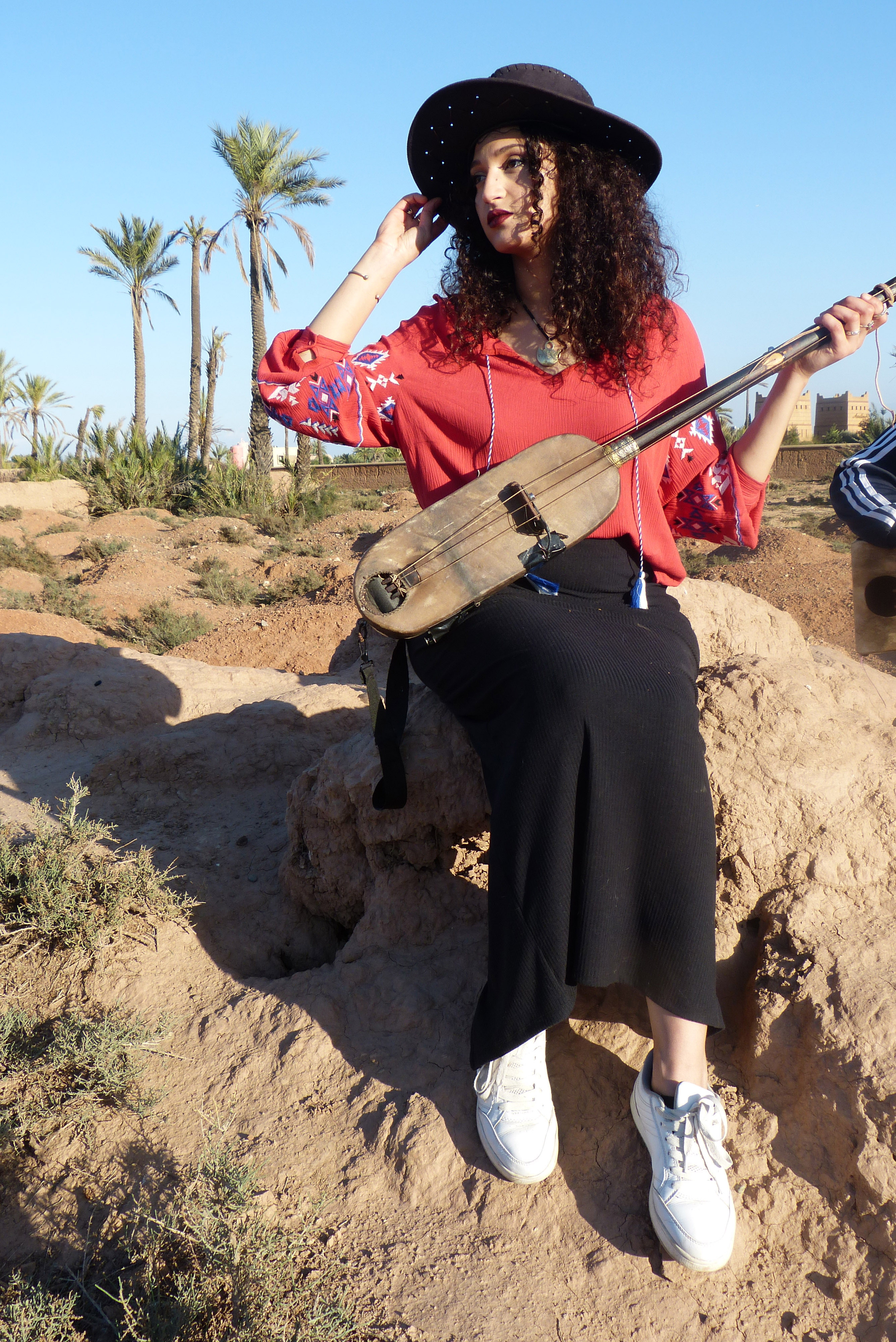
For the most part using the common Arabic spoken dialect of “darija”, both protestations and romantic allusions are given an exotic lyricism and swirling poetic cadence. Opening this inaugural pitch, a battle cry and set-up for the band’s take on the ‘Gnawa Beat’. “Welcome to the truth that can be told” is the mantra on this opening account that features languid desert swoons and the clutter-clatter of the iron “karhab” castanets chattering away over a riding rhythm that leads us all the way to the Medina gateway.
It’s said that crashing waves from the fishing port of Essaouira – a town proficient in Gnawa – can be heard lapping as a percussive sample on the album’s next song, ‘Illa Mata’. Buoyant throughout, this dreamy dusky affair bobs and shimmers along in a mesmeric fashion. Bedouin song meets the blues in a drifting fusion.
In praise of the moon and “her restorative powers”, ‘El Gamra’ both rocks and lulls that “chabbi” atavistic folk sound. It reminds me in some ways of Bargou 08. Spindlier, echoing hints of the late gnawa doyen Maalem Mahmoud Gania, the next track, ‘Glibi’, is based on a love letter written in the style of Moorish women’s ‘Tebra’ poetry; traditionally sung in the Western Sahara and parts of Southern Morocco. Floating and once more dreamily romantic, the band plays this one loosely and joyfully. Two more paeans follow in that song’s swooned wake; the first, ‘Oudelali’, transcribes a true love ode to a silky-veiled desert song of warm backbeats and spiraled longing, the second, ‘Waydelel’, is a cover version of the revered Mauritanian siren Dimi Mint Abba and her husband Khalifa Ould Eide’s spiritual yearn to Mohammed. The latter features the first of he album’s guest spots, with Amazigh Berber folk enthusiast Aziz Ozouss sitting in on the “ribab”.
Angry but delivered with a fluty and electrified sass, ‘Africa Manayo’ pays tribute to the African continent and potential whilst also condemning the actions of the despots. A second tribute, ‘Yamma’, which goes hand-in-hand with the previous song, is paid to the “patience and fortitude” of mothers: a theme that seems to be a staple of most releases I’ve reviewed from the continent.
Vocalist and gnawa music star Mehdi Nassoul weighs in on the scrappy percussive, gauzy ‘El Watane’. His earthy soulful voice lingers in unison with the cradling harmonies on this dreamy swim. The band name titled and musical signature, ‘Bab L’ Bluz’, appears right at the very end of this both relaxed and electric fuzz panorama. “Bab” means “gate”; a literal reference to the group’s raison d’etre of opening up a musical, cultural gate(way), The guembri and electric guitar are wild and scuzzed on this dirtmusic blues offering that blends a vast geography of influences, depths and ideas together. Essentially it buzzes and rocks, and offers something refreshing, revitalized: as does the rest of this vigorous, mesmerizing and alluring Arabian sweep.
The changing face of Moroccan music, Bab L’ Bluz offer a voice to those previously left marginalized and left out. Initially guimbra adept Yousra was met with resistance for daring to pick the instrument up, an instrument so strongly bonded with the Islamic tradition; an instrument usually passed down the generation, from father to son. Well that’s certainly changing. Reclaiming the heritage but looking forward, the group injects the godly music and romance of Arabian-Africa with a new energy and dynamism. A 21st century blues excursion of dreamy and political vigor.
Related posts from the Archives:
Houssam Gania ‘Mosawi Swiri’ Review
Maalem Mahmoud Gani ‘Colours Of The Night’ Review
Hi, my name is Dominic Valvona and I’m the Founder of the music/culture blog monolithcocktail.com For the last ten years I’ve featured and supported music, musicians and labels we love across genres from around the world that we think you’ll want to know about. No content on the site is paid for or sponsored and we only feature artists we have genuine respect for /love. If you enjoy our reviews (and we often write long, thoughtful ones), found a new artist you admire or if we have featured you or artists you represent and would like to buy us a coffee at https://ko-fi.com/monolithcocktail to say cheers for spreading the word, then that would be much appreciated.
Tickling Our Fancy 072: Katie Doherty & The Navigators, Abdesselam Damoussi & Nour Eddine, 3 South & Banana, Günter Schickert…
February 14, 2019
Reviews Roundup: Dominic Valvona
Each month Dominic Valvona brings us the most eclectic recommendations roundups, with reviews of albums, singles and EPs from across the globe and genres.
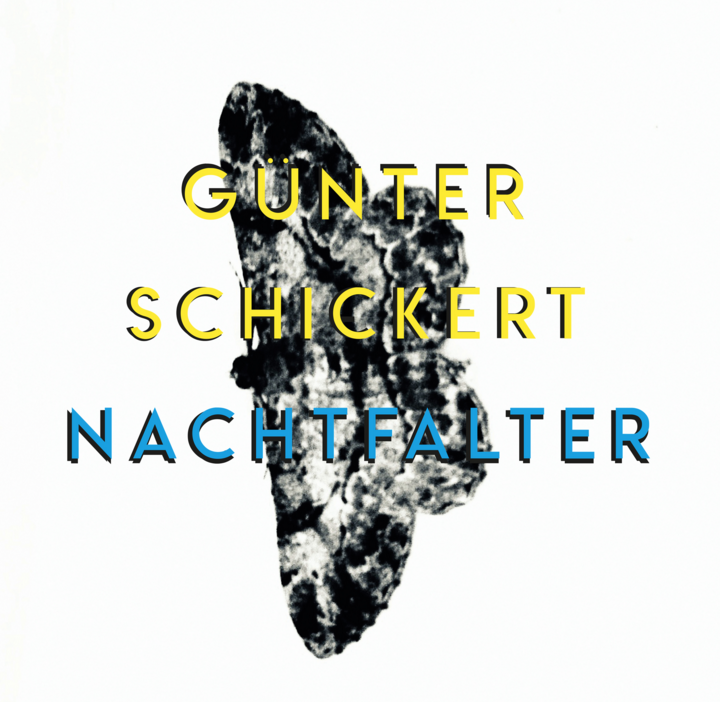
This latest edition includes a brand new album of unsettling cosmic traverses from Krautrock and Berlin guitar legend Günter Schickert – working with Ja, Panik main man Andreas Spechtl – based around the concept of his home city’s transport system and a moth; the return of the peaceable voiced folk maiden Katie Doherty and her The Navigators pals; the debut album of Latintronica, psych, prog and Kosmische peregrinations from the Argentine artist Santiago Córdoba, ‘En Otres Lugares’; a trio of World Music showcases from the prolific ARC Music catalogue, with collections from the Vietnamese zither maestro Tri Nguyen, the co-production and musical Sufi mystical transforming partnership of Abdesselam Damoussi & Nour Eddine and traditional Thrace mythological imbued Rodopi Ensemble; the debut solo album of ‘attic noise’ from Benelux alt-rock scenester Heyme Langbroek; and the brilliant new album of sentimental dreampop from Toronto musician Charlie Berger, under his newest incarnation With Hidden Noise.
There’s also the upcoming playful psychedelic pop and tropical lilted dance around the Berlin architecture EP, Rooftop Trees, from Aurélien Bernard – under his 3 South & Banana alter ego; the latest in a line of singles from the Oxford-based Swedish angulated indie pop songstress Julia Meijer;and the profound afflatus elegiac opener, ‘When You’re Gone’, from the marital fronted Settle band Society Of The Silver Cross.
Albums
Günter Schickert ‘Nachtfalter’
(Bureau B) 15th February 2019
Notable progenitor of flanging echo-pedal guitar, free-jazz instigator of the traversing cosmic GAM, No Zen Orchestra and Arumaruma (among the least obscure succession of groups), the Berlin Krautrock legend Günter Schickert continues, like so many of his surviving WWII born and Boomer generation comrades, to circumnavigate the sonic unknown; probing for tears in the fabric, looking to penetrate new horizons.
An extension of Schickert’s previous solo flights of guitar exploration – the 1975 Brain label debut Samtvogel, and the Sky label follow-up of 1980 Überfällig – Nachtfalter features all the signature echo-y reverberations and waning searching guitar accentuations. Recorded back in the summer of 2018, in collaboration with Ja, Panik navigator Andreas Spechtl, who refashioned Schickert’s untethered live performances, adding his very own drum accompaniments and loops, this instrumental album evokes both the cosmic mysticism of Ash Ra Tempel and the more haunting, ominous deep space Kosmische of Tangerine Dream. Spechtl’s production, drum patterns and effects however, add a touch of tubular metallic sheen, futuristic tribal percussion and nuanced Techno to the otherworldly, often threatening, mood.
There are two inspirations at work on this LP; the naturalistic progress and presence, and then demise, of the moth that this album is named after (this said moth also features in the artwork) and the motion, rhythm of public transport in the city of Schickert’s birth. As the artist himself says, “I was born in Berlin and I am a true city child.” And like so many before and after, the city has left it’s indelible mark; the beat (not to be confused with the Dusseldorf birthed ‘motorik’ rhythm of Klaus Dinger) on Nachtfalter mirrors the industrious clang, rattle and cycle of Berlin’s metro and buses to an extent, though the northern European atmosphere of the city’s psychogeography attracts a more darker, eerie misaim throughout. The opening ‘Nocturnus’ (as the title might imply) is especially creepy with its Kubrick monolith pulse and unsettling conch shell horn – imagine Faust and Tangerine Dream invoking the arrival of a cosmic Viking long ship, emerging from the mists. The final all-encompassing merging of Schickert’s full gamut of guitar manipulations and strides, ‘Reflections Of The Future’, even evokes moments of John Carpenter’s synth-tracked horrors.
Despite the heart-of-darkness moods and craning instrumental eulogies to the moth that by happenstance entered the studio (clinging to the ceiling all night before dropping dead the next morning) during recordings, there are occasional bursts of energetic thumping rhythm: bordering on juddering Electro on the gliding, county bowed guitar arching and leaning ‘Wohin’ (which translates as ‘Where’: indeed where?!!). There are glimmers of light to be found amongst the darkened unknowing mystery, and far from suppressive and heavy, Schickert’s guitar roams freely, drifting, wafting and expansively has he accents the spaces before him.
An impressive cool transformation of the guitar innovator’s echoed enveloping signatures and traverses, Nachtfalter benefits enormously from Spechtl contemporary and energetic production. A dynamism and touch of modern electronica is added to the Krautrock messenger’s articulations to produce a most unsettling, interesting of musical experiences.
https://soundcloud.com/bureau-1/sets/gunter-schickert-nachtfalter/s-U0Dbo
Santiago Córdoba ‘En Otros Lugares’
(Sounds And Colours) 8th February 2019
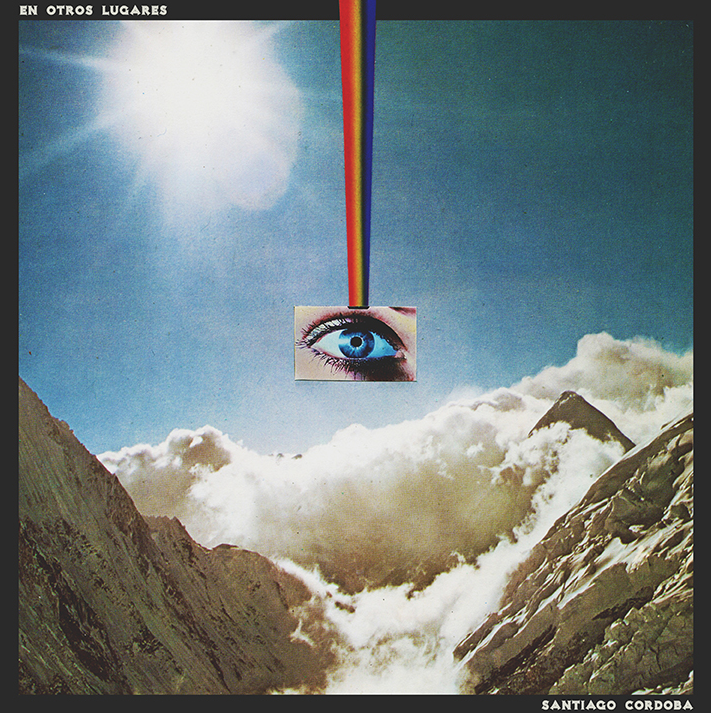
A gateway to everything worth celebrating (as much as it might also be confounding and a mystery to many) about the South American and Central American continent, the Sound And Colours hub, which includes one of the most in-depth of reference and news sites, guide books and events, has proved a rich essential source for me. Whether it’s through the site’s cultural, political and historical purview style series of accessible guides to Peru, Brazil and Colombia, or their considered catalogue of music projects, I’m kept up-to-speed and introduced to some of the continent’s most interesting artists and scenes. The latest of which is the emerging and burgeoning solo artist Santiago Córdoba, who releases his panoramic multi-city composed suite En Otros Lugares on the site’s in-house label this month.
ormerly a percussionist band member of the ‘revolutionary’ Tango outfit Violentango, the Argentine born Córdoba left his native home in 2016 for a ‘peripatetic’ life, moving from one place to the next; making a fleeting base of operations for himself in Madrid, Italy and Beirut. Backpacker travails and the sounds of each short-stay imbue this eclectic travelogue; though these often free-spirited peregrinations also stir up cosmic, magical and transcendental horizons as much as the Earthly: As the album title itself alludes, En Otros Lugares translates as “in other places” or “elsewhere”.
Both geographically and musically diverse, the opening panorama, ‘La Llamada’ (“the flamed”), traverses an amorphous Andean outback landscape, filled with ghostly echoes, arid hums and a trance backing, whilst Fuck Buttons meet School Of Seven Bells astral planning over the Amazon on the progressive psychedelic ‘A Dos Leagues’ (“two leagues”).
Post-rock influences merge with Latintronica, 2-Step, free-jazz crescendos, the Kosmische, Refree like harmonic plucks and brushed guitar, and radio transmissions tuned to poignant past figures of interest on a condor flight of fantasy and mystical voyage of thoughtful meditation.
The former Tango agitator expands his tastes and picks up a host of new instruments to fashion an impressive ambitious slow-burner of a debut album. Another brilliant South American export.
Katie Doherty & The Navigators ‘And Then’
(Steeplejack Music) 25th January 2019

Sidetracked, in a positive and inspiring way, by a detour into stage production, folk maiden Katie Doherty has probably taken a lot longer than she envisioned to release another album.
The award-winning songwriter released her debut, Bridges, to favorable reviews back in 2007 and went on to share the stage with such luminaries as Karine Polwart, the McGarrigle Sisters and Ray Davis on a giddying trajectory, before (as Doherty herself puts it) ‘life got in the way’. In that time Doherty, far from idle, took on roles as both a composer for a number of Northern Stage productions and as a MD for a Royal Shakespeare Company production. It is these roles, and ‘broadening’ of horizons that now inform Doherty, her Navigators (Shona Mooney on fiddle and vocals and Dave Gray on the button accordion melodeon) and wider backing group (which includes more chorus vocalists, a cellist, percussionist and double bassist) on the concertinaed pastoral theatrical And Then.
Three tracks specifically sound like they were plucked from the stage. And in a roundabout way they were; the peaceable air-y bellowed shanty dedication to ‘leaving a beloved city behind’ ‘Yours’ and gentle-building lulled symphony finale ‘We Burn’ were both originally commissioned by the November Club for ‘Beyond The End Of The Road’, and the enchanting picturesque scene-setting waltz ‘Heartbeat Ballroom’ was commissioned by the Wallsend Memorial Hall for the reopening of the town’s grandiose ballroom.
Marking ‘change’ in various forms and analogies Doherty’s themes encompass the change of the seasons, the life-altering change of bringing up a child in a changing society hooked-up 24 hours to, an often, poisonous internet, and the rapidly escalating changes in society as a consequence of the equality debate: Doherty, in the shape of an enervated ‘anti-apology’ framed protest, takes a dignified stance on the album’s title track, giving a more considered intensity to a R&B pop-folk backing as she reassures us that “This is not war music. This is not a fighting song.”
Such heavy important anxieties, such as the pressures of expectation (epically in our validation age of social media shaming, easy inflamed indignity and virtue signaling) and responsibility are woven into a lovely songbook, as Doherty’s lightly caressing vocals waft and dance to a mix of Celtic tradition, snow flurry landscape malady, buoyant sea motion affairs of the heart and Eastern European travails.
After years spent away from the studio, Katie Doherty emerges with a purposeful and composed reflective collection of distilled folk.
Heyme ‘Noise From The Attic’
(Jezus Factory) TBA

Spending much of his formative musical education in the Benelux, playing with a litany of alternative underground rock and experimental angulated Antwerp bands (Kiss My Jazz, IH8 Camera and Lionel Horowitz & His Combo), the Dutch-born musician Heyme Langbroek now sets out on a solo mission with his curious debut, and self-explanatory entitled, album Noise From The Attic.
Settling (for the last six years at least) in Poland Heyme puts all his past experiences into an understated album of songs and instrumentals created by the use of a loop station; Heyme using this unit to build a basic track which he then plays over the top of with various overlapping melodies, rhythms and improvisations. A quaint routine, Heyme’s attic noises, as the title makes clear, were all recorded in the said attic garret of his house, mostly on alternate Sundays. It might be nothing but by choosing the traditional day of liturgy worship to record his music on, it could be read as a metaphor for cathartic release; unburdening ideas, sentiments and regrets at the altarpiece of a home-recording studio.
Tethered to the past as much as moving forward experimentally, Noise From The Attic is imbued by many of the same performance recording techniques as used by the Antwerp collective of Kiss My Jazz; a group that Heyme served with alongside members from, perhaps Belgium’s most revered and recognized alt-rock group, dEUS. Heyme even reprises one of the band’s estranged songs, ‘Burn In Hell’; a woefully mooning ‘fuck you’ break-up submerged beneath a vacuum of Hawaiian rock’n’roll warbles. On the remainder of the LP he despondently wanes to a suffused template of Casio keyboard like presets, snozzled oozing Roxy Music and Hansa Studio Bowie saxophone, forlorn northern European melodies and chugging guitar. Within those perimeters the moody attic troubadour of alternative lo fi brooding pop does a Sparks, on ‘Klara’, evokes 70s era Floyd, on the mentally fatiguing ‘Paranoid’, adopts Blixa Bargeld’s tonsils and trans-European malady, on ‘Where She Goes (She Goes)’, and channels Eno’s ‘Another Green World’, on the far from discordant row, ‘Noisz’.
Showing the ‘proverbial’ Dutch courage, unloading worn, grizzled sentiments the solitary Heyme provides one of the year’s most peculiar reflective solo experiments. Fans of the solo work of the former dEUS guitar triumvirate of Rudy Trouve, Mauro Pawlowski and Craig Ward will find a fourth such inspired maverick to add to the list.
With Hidden Noise ‘Beside The Sea’
(Loss Leader Records) 18th January 2019

Rising with a certain languid tremble from the nocturnal wintery Canadian frontiers before dissipating back into the ether of a somnolent dreampop soundscape, Charlie Berger under the guises of his newest project, White Hidden Noise, wafts in and out of a fluxes state of pining and sighed romanticism.
Well versed in the dreampop, shoegaze and slowcore departments the Toronto musician-singer-songwriter’s diaphanous brooding album is a congruous continuation in a career that includes stints with Soft Wounds, Slowly and Tone Mirrors, and the launch of his own diy label, Loss Leader Records – of which this LP is released through. In that mode, with influences like Low (a huge influence in fact), Cigarettes After Sex and The Red House Painters lingering throughout the wistful fabric, the veiled Beside The Sea opus dreams big. Berger woos expansive heartache across the panoramas; meditating on the loss of memory to a considered purposeful backing that builds from suffused lulls to gradually built-up and swelled indie-shoegaze choruses.
The album title and gentle prompts, including the artist’s own guidance that this eight-track suite could be “moody late night driving music”, pretty much sets the listener up as to the mood, environment and sentiment. Amongst the bendy tremolo flanges and placid rhythms of the brushed cymbal and echo-y forlorn, the trio of songs, ‘The Other Korea’, ‘Close The Door’ and ‘Look’, placeably break out from their dreamy state into beautiful shoegaze-y Britpop anthems – hues of Slowdive, Gene and Sway drift around in the general absorption of influences.
It could just be me, but I can even hear a touch of early REM in the fanned-drift and soft pained harmony of ‘Further More’ and The Bends era Radiohead on the opening tenderly swooned ‘Window’ metaphor heavy plaint.
Berger’s yearned and pined ‘drive time’ soundtrack beckons the listener into a moody dreamy atmosphere of emotive outpourings; the subject of these songs remaining a lingering presence, lost, with only the traces of those memories remaining. Beside The Sea is a beautiful album – ok, some tracks do overstay their welcome – that reimagines Low as a British 80s dreampop combo.
Rodopi Ensemble ‘Thraki-Thrace-The Path Of Dionysus’
(ARC Music) 25th January 2019
Abdesselam Damoussi & Nour Eddine ‘JEDBA-Spiritual Music From Morocco’
(ARC Music) 25th January 2019
Tri Nguyen ‘The Art Of The Vietnamese Zither-Đàn Tranh’
(ARC Music) 22nd February 2019

Among the most prolific of world music and folk labels the ARC Music catalogue spans eras, genres and geography: In-depth surveys, collections and performances from the Welsh vales to Andean Mountains, from the South African veldts to Arctic Tundra. Probably sending us the most CDs of any label on a weekly basis, ARC’s diverse schedule is always worth further inspection, even if the cover art and packaging suggests the kind of CD you might pick up from a garage – filed under ethnocentric muzak. Far from it, each release is always a showcase of adroit musicianship with only the best examples of every style and tradition covered.
Usually built on the foundations of each respective artists or troupe’s heritage, these albums offer a contemporary twist on occasion: even a fusion.
Not so much randomly but just taking a trio of recent releases from the ARC stable we find three very different examples of this with the music of the atavistic recalled Thracian imbued Rodopi Ensemble, the masterful Vietnamese zither expert Tri Nguyen and Sufi-inspired advocates of Moroccan spiritual music partnership, Abdesselam Damoussi & Nour Eddine. All three commit a new energy to very old forms, and merge with influences outside their source material.
The first of this trio reverts back to the ancient moniker of what was straddling region that encompassed Southern Bulgaria, North West Turkey and the tip of Greece, Thrace; an area dominated by the 240 Km stretching mountain range behemoth that lends its name to this quintet’s ensemble, Rodopi. Steeped in Greek mythology, the Rodopi is synonymous for being the final resting place of Queen Rhodope and her husband King Haemus of Thrace; the lovers, so it is told in legend, rather unwisely offended the Gods Zeus and Hera, and were punished by being turned into the said mountain range.
Inspired by this homeland, Rodopi musically travel through Ottoman dervish, fluting Egyptian and Balkan folk on an erudite and immaculately performed collection of matrimonial, free form and scarf-waving giddy dances. Providing a swirling, but when acquired equally poised forlorn performance, the spindled spiraling lute and Kanun, heavy range of percussion (from the exotic ‘riqq’ to ‘dara-bakka’ and bendir’), swooned clarinet and weeping violin conjure up a vivid homage to a continuously changing landscape. In dual-language, songs and titles cross between Greek and Turkish; wrapped up in the obvious history of the two former dominant Empires: whether it’s in the traditional romantic flower and fauna metaphorical accompaniment of Asia Minors Greek refugees ‘Menexédes Kai Zouboulia’ (Violets And Hyacinths), or, in the tribute to the ensemble’s late clarinetist, Sol Hasan, on the improvisational ‘Roman Havasi’ (The Air Of Gypsies).
A wonderful dance of yearning remembrance and tradition, the music of Thrace is brought back to life with a touch of contemporary dynamism, flair and love.
Presenting the Vietnamese Zither, otherwise known as the sixteen-string Đàn Tranh, in a new light, ‘bi-cultural’ practitioner Tri Nguyen uses both his classical Western training and Vietnamese ancestry to delicately accentuate a collection of poetically brush-stroked scenes and moods. This congruous marriage of forms and cultures often results in moments and swells that evoke the gravitas of the opera or ballet, yet seldom drown out the light deft touches of the lead instrument.
Just as renowned for his adroit pianist articulations as he is for bringing the Đàn Tranh – a cousin of the Chinese ‘guzheng’, Japanese ‘koto’ and Korean ‘gayageum’ – to a wider international audience, Nguyen caresses a diaphanous web of descriptive quivers over classical strings and percussion on this latest showcase.
Emphasizing his native homeland and the countries that border it he mirrors the elements (the flow of a stream; the droplets of gentle rain), wildlife (the blackbird singing proudly; a galloping stoic horse) and moods (a contemplative sad refrain that ushers in a seasonal and metaphorical change; the joy of returning home after a sojourn spent away).
From lullaby to the Imperial, whether it’s a picturesque meditation or a tale from the time of China’s Three Kingdoms, the musical performances are beautifully immaculate. In truth, too classical and varnished for my taste, I have to admire the faultless musicianship.
Personally the more interesting for me of these three ARC titles is the co-production partnership of Moroccan composers Abdesselam Damoussi and Nour Eddine, who bring together a cast of authentic Sufi singers and musicians on the dynamic Jedba album showcase.
With backgrounds in everything from Hip-Hop to Jazz, Rock, Electronica, World Music and (in Eddine’s case) the Vatican’s vaults of Classical music, both musician-producers provide an exciting backing of bombastic percussion and hypnotizing rhythms to the venerable spiritual mystique of the Sufi tradition. Literally invited and transported into the studio from their impromptu performances in the famous walled marketplace of Jemaa el-Fnaa, located in the heart of Marrakech, a cast of mystics, poets and players from various tribes and disciplines gathered together for one collective exchange: The “Jedba” of the title referring to a collective dance in which people from multi faiths including Jewish, Christian and Muslim hold hands in a symbol of harmony and friendship; “united in love of the divine”.
The magic is in the fusion, as instruments as exotic and diverse as the wind equivalent of the Scottish bagpipes, the ‘ghaita’, rasps over a swanning break beat like percussion on the opening title-track, or, Arabian female tongue trills excitably warble in divine celebration over a dramatic filmic bounding accompaniment on the song-of-praise ‘Allah Hay’. Encompassing Berber desert rock, the adoring commanding vocals of Yemdah Selem (the ‘diva’ of desert music as Damoussi puts it), the solitary prayers of the bred and born Sufi and imam of a mosque in Tangiers, Said Lachhab, and giddy dance, the chants and exaltations of these Marrakech street performers is given a new dynamism and energy via the dual purpose of preservation and in beaming this entrancing mystical tradition to a new audience.
EPS
3 South & Banana ‘Rooftop Trees’
(Some Other Planet Records/Kartel) 1st March 2019

Stepping-out from the sunny-dispositional ranks of the psychedelic indie and tropical lilted London-based Cairobi – formerly, for a decade previous to the name-change in 2017, Vadoinmessico – the group’s drummer Aurélien Bernard follow’s up on his last two singles with a new EP of bright disarming soft-shoe shufflers.
The French-born but Berlin-based all rounder uses his adoptive home as inspiration, though musically the compass is pointing towards the tropical equator. The angulated skip and catchy opening track, ‘Magdalen Eye’, treats Berlin as a jump-off point; its architecture and history (where do you start?!!) echoing and reverberating in what sounds like a psychedelic dream pop with Nirvana grunge drop Ariel Pink. It also reminds me of the recent brilliance of fellow French new wavers, grunge and indie sensations Brace! Brace! The very French-esque float-y and whistle-y ‘Soleil’, sung in the native tongue, wistfully bids farewell to the long Berlin winter as the “first warmer sunny days of April” ease in.
Named after one of Bernard’s previous singles, the four-track EP includes 2018’s ‘Rooftop Trees’ and ‘Fake Jungle’ records. The first of which poses a meditation on the tensions between man-made and natural structures to a woozy psychedelic jaunt: Literally dancing to architecture, Bernard dapples the catchiest of psych and cool Gallic pop on a concrete environment. The latter, rather unbelievably, was inspired by a one-off jam session with James Brown (a throwback to Bernard’s days as a session drummer in Las Vegas), and sounds like a swimmingly Malian Syd Barrett produced by Nino Ferrer.
Light and jaunty but with a depth and sense of concern, Bernard’s oddly entitled 3 South & Banana alter-ego delivers a sumptuous cantaloupe lolloping EP of playful catchy brilliance.
Singles
Julia Meijer ‘Train Ticket’
15th March 2019

It seems almost obligatory, at least in the last decade, to affix the fatuous term of Scandi-pop to every single artist or band emerging from Sweden: whether they play guitars or programme synths. Native Swede songstress-musician Julia Meijer is no different. Even though she lives in Oxford her taciturn, slightly skewed angulated indie-pop sound falls easily into the Scandi-pop fold of classification.
With a string of singles behind her, Meijer is finding her feet; trying out new things on every one, with the only real consistency being quality and depth.
The latest, Train Ticket, is no different. A collaborative affair that features a couple of Guillemots in the ranks (Greig Stewart on drums and Fyfe Dangerfield on suffused low-ray burnished Hammond organ) and Oxford’s busiest polymath of the moment Sebastian Reynolds (Flights Of Helios, the Solo Collective, Mahajanaka project) on swallow undulated synth duties, Meijar’s musical partners construct a counterbalance between a Kate Nash fronted New Young Pony Club version of art school indie and looser, almost, quasi-Talking Heads African lilted mirage-y chorus.
Every bit as taut and tense as Meijer planned – reflecting the lyrical anxious sentiments of uncertainty, expectations and disappointments –yet bendy and supple when that same tension is lifted, the page-turning autobiographical Train Ticket proves to be yet another sophisticated slice of unsure protagonist yearned pop, and wrangled, just raw and edgy enough, indie.
Still adapting and evolving, Julia Meijer has laid down a quality series of singles thus far, all slightly different. We’ll be able to soon experience the full effect when she delivers that debut album, Always Awake, in May.
Society Of The Silver Cross ‘When You’re Gone’

Feasting out on the strength of their most afflatus (and only) single, ‘When You’re Gone’, the venerable marital-fronted Society Of The Silver Cross have built up quite a momentum and drawn some considerable weighty acclaim. Wafting on to my radar at the end of last year – included on the last Monolith Cocktail ‘choice’ playlist of 2018 – this bellowed harmonium and zither-droned esoteric profound elegy reimagines the Velvet Underground led by a lapsed-Catholic Kurt Cobain.
Achingly diaphanous despite its forlorn succinct wise cycle of lyrics (“When you’re gone, you’re gone, you’re gone. We’re only here for a while. We’re only here for a day.”), this humbled sea shanty-motion mystery was in part inspired by the band’s husband and wife protagonists’ travels across India; part of that Velvet imbued sound enacted by the Indian auto-harp, the shahi baaja.
With the spotlight drawn towards this Seattle outfit’s Joe Reineke and Karyn Gold-Reineke partnership, the Society Of The Silver Cross does also include a small but extended cast of enablers on an accompaniment that features the mellotron, accordion and host of similar evocative instruments.
Vividly dreamy in a plaintive humbled atmosphere filled with various visual references of haunting iconography, Society Of The Silver Cross’s inaugural single is a most sagacious opener; a stark but confident creation of real quality and depth that merges the underground with Gothic Americana. Brilliant.
Words: Dominic Valvona
Our Daily Bread 299: Houssam Gania ‘Mosawi Swiri’
February 4, 2019
Album Review: Dominic Valvona

Houssam Gania ‘Mosawi Swiri’
(Hive Mind Records) 22nd February 2019
Already established as both an accomplished student and innovator of the traditional Islamic dance, music and poetry exaltation ‘Gnawa’ and the three-stringed lute-like instrument that goes hand-in-hand with it, the ‘Guimbri’, the twenty-three year old Houssam Gania has fused his Moroccan roots with artists as diverse as James Holden, and on this latest album, a troupe of lively young musicians from the country’s fishing port town of Essaouira.
A chip-off-the-old-block, Houssam follows in the footsteps of his legendary father Maalem Mahmoud Gania. A stalwart master of Gnawa, famous the world over, a repackaged special reissue of Maalem’s sublime venerable Colours Of The Night performances kick-started the Hive Mind label in 2017 – a label I might add, with a considered taste in some of the more understated, lesser known recordings of world-class artisans. This youngest scion of the virtuoso Maalem has obviously inherited all the right attributes, performing as he does, a remarkable adroit soulful ritual of off-kilter spring trances both earthy and transcendental on this new collection.
Aping the North African street market store trade of cassette tapes – artwork wise too; influenced by the packaging of Maalam’s legendary Tichkaphone tape – Houssam’s inaugural recording for the Brighton-based imprint will be limited to only a 100 copies on cassette, though there will, as usual, be a digital version. Though only on its, official, fourth release Hive Mind makes a concession for Houssam’s Mosawi Swiri LP; the label’s original intention being to release everything on vinyl, which on previous releases they have.
Made up of six tracks, Mosawi Swiri takes its inspiration from the ceremonial Musawiyin Suite, the blue-section (we’re informed) of the trance ritual during which the participating musicians invoke Sidi Musa, the master of the sea and sky spirits. As I’ve already mentioned, connecting to the ‘sea’ part of that evocation, Houssam works with a number of aspiring – and as it proves rhythmically locked-in and elliptically elastic – musicians from the coastal Essaouira town and region of Morocco. Fusing together two different disciplines the opening ‘Moulay Lhacham’ track combines an overlapping groove of desert blues, effortless cool polyrhythmic Mali struts, offbeat drum splashes, melodic heavenly synth and deft ‘guimbri’. Cross patterns seem to connect to produce interesting nodes and riffs in a shuffling jam of masterful pan-African musicianship. It stands out as the album’s most electric and eclectic number, the rest of the ‘suite’ settling in for a trance-y meditation and prayer.
Accompanied by his brother Hamza Gania, Mohammed Benzaid, Khalid Charbadou and Amine Bassi the rest of the album springs and canters through a rattling stringy-rhythm of constantly itching lute and a scuttling, scraping tin-like percussion. Following a similar pattern throughout it is the timings and lead and chorus of excitable, soaring and in reverence vocals that offer variation to the untrained ear.
The second album of Moroccan holy music I’ve reviewed this month (look at for the electric-Sufi Moroccan treatment, Jedba, by Abdesselam Damoussi and Nour Eddine, in my upcoming roundup this month), it seems the spotlight is honing in more and more on North East African region – the emphasis in recent years thrust upon the funkier, psychedelic desert rock and Afrobeat of the Central and West African belts. Subtler in impact, the Islamic divine trance of artists such as Houssam Gania is no less dynamic and encapsulating. Mosawi Swiri is another sagacious ‘choice’ release from Hive Mind; an introduction to new voices and sounds, usually lost in the noise of the Internet hubbub.
Words: Dominic Valvona
Our Daily Bread 285: Moulay Ahmed El Hassani ‘Atlas Electric’
November 2, 2018
Album Review: Dominic Valvona
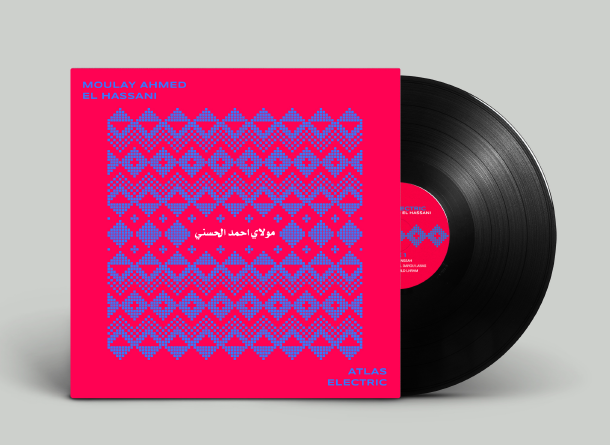
Moulay Ahmed El Hassani ‘Atlas Electric’ (Hive Mind Records) 30th November 2018
Returning to the stimulating landscapes of North Africa after a brief excursion to the visceral South American horizons of Rodrigo Tavares Congo, Marc Teare’s burgeoning tactile Hive Mind label rests in the shadows of the Titanic straddling Atlas Mountains with its third release, Atlas Electric.
Paying tribune to the atavistic folk music forms of the Amazigh people (the Izlan and Ahidous) of Morocco meets modern synthesized pop fusions of the celebrated Moroccan polymath Moulay Ahmed El Hassani, Teare’s latest labour-of-love repackages a double album’s worth of material that was originally released on Hamid’s own label, Sawt el Hassani, during a decade timespan between 2004-2014.
Relatively unknown outside his homeland, the prolific doyen of modern Moroccan pop music has knocked out over fifty albums (mainly confined to cassette tape and CD) during a thirty-year career. Though crate-diggers, samplers and admirers of cult Arabian music will know the name, this lavishly illustrated and compiled collection acts as an introduction for the rest of us: A showcase if you like.
A sprawling musical odyssey that immediately evokes the romanticized escapism and exotic fantasy of the Atlas Mountain landscape it was produced in, Ahmed’s swirling paeans and lyrical social commentaries trot and canter on air like a magical camel trail through the rugged canyon and desert terrains. Like the Bedouins, this electrified pop hybrid moves lightly and freely across an expanse, weaving the traditional with a taste of modernity: The dramatic, sauntering and gliding mirages of tradition, in this setting, are countered by Casio keyboard pre-set rhythms, fizzled drum pads and warbled auto-tune. This melding of forms, a bridge between generations, gives it a twist. Though undoubtedly the technology is lagging behind a little, elongated thumbed strings and psychedelic, Tuareg-like, blues guitar are undulated by 1980s style balladry synth and programmed drums throughout.
Joining Ahmed on this adventure is the richly voiced trio of dueting Arabic and Amazigh language sirens, Karima, Hind and Khadija, who lull, trill and accentuate the heavenly and romantic gestures of these delightful sonnets: Often sounding like the Arabian equivalent of a Bollywood musical.
Electrifying the landscape with a strange beguiling fusion of R&B and pop (the sort of sound clash M.I.A. soaks up), yet staying true to tradition, Ahmed’s Moroccan musical fantasies soar and flutter above the travails and toils of the modern world; representing, even if plaintive at times, the beauty and dreamy lovelorn desires of those who live in the shadows of the Atlas Mountain. It’s a marvelous release and an education.
Our Daily Bread 257: Maalem Mahmoud Gania ‘Colours Of The Night’
September 1, 2017
REVIEW
WORDS: DOMINIC VALVONA

Maalem Mahmoud Gani ‘Colours Of The Night’
Hive Mind Records, September 8th 2017
Adding its name to an already crowded but all the same welcome market of world music reissues and contemporary undiscovered obscurities, Brighton based label Hive Mind Records announces its intentions and presence with an album of Gnawa trance recordings from the late great Maalem Mahmoud Gania.
The near-exulted star of the Moroccan honed Gnawa – a style of traditional Islamic dance, music and poetry with roots spread across the sub-Saharan crescent of Africa; considered by many to be one of the origins of the “blues” rhythm – and artisan of the genre’s key instrument, the camel-skin covered three-string lute like “guimbri”, released an extensive catalogue of recordings for labels such as Tichkaphone, La Voix El Maaraf and Sonya Disques.
Colours Of The Night however, the final studio recording by Gania, will be the first solo release by the artist outside his native homeland to be released on vinyl: six performances spread over four sides of vinyl to be exact.
For the uninitiated, Gnawa is a highly hypnotic experience based around the repetition of a musical phrase, a few succinct lines of poetic devotion or a communion with the spiritual for a duration that can last hours. Performances tend to bleed into each other, and so what can seem like one uninterrupted piece of music are, often, three or four different songs strung together. Building up an entrancing rhythm of spindly plucked vibrating guimbri and metallic scratchy percussion (courtesy of the iron castanets, the “krakebs”), call and response vocals in paean and lament break the instrumental monotony. Though there’s room for nuanced fleches and riffs to add variety, intonation and intensity. These are all the key components then; of a style that evokes both the sound of Arabia and desert blues traditions.
Equally influencing others whilst, it seems, also embracing and exploring sounds from further afield himself, during his illustrious career Gania worked with artists as diverse as Pharaoh Sanders, Bill Laswell and Carlos Santana. Enriching his own recordings perhaps, the suffused mirage-like synthesizer that hovers over the horizon on this album’s Sidi Sma Ya Boulandi track shows a late penchant for electronic keyboards and ambient waves of atmospheric soundscaping: though this is the only time the instrument is used on these specific recordings.
Stringy, wiry, occasionally a tone or two lower and played like a quasi-bass guitar, Gania’s playing style is raw, deep and always infectious: from blistering solos to slower and lighter ruminating descriptive articulations; this is equally matched by his atavistic soulful voice and the chorus of swooning, venerated female and male voices and harmonies that join him on each track.
As an introduction, Colours Of The Night would be better experienced in sections – a side at a time perhaps. After a while it can all sound a little tiring. Gania advocates will however find this a worthy addition to the legacy.
Hive Mind start as they mean to go on, with the full sanctioning of the Gania family and artists who appear on this album, releasing a most brilliant set of recordings that could so easily have disappeared off the radar. As inaugural releases go, this one is definitely a winner.
 Monolith Cocktail Blog