THE MONTHLY DIGEST OF ACCUMULATED NEW MUSIC; THE SOCIAL INTER-GENERATIONAL/ECLECTIC AND ANNIVERSARY ALBUMS CELEBRATING PLAYLIST; AND ARCHIVE MATERIAL.ALL WRITTEN & CHOSEN BY DOMINIC VALVONA

___/NEW\___
Leah Callahan ‘Curious Tourist’
29th April 2024
Still channeling The Glass Set’s The Sundays and My Bloody Valentine vibes, Bostonian singer-songwriter Leah Callahan continues the musical journey under her own name. The fourth album since leaving behind the group she once fronted in the mid 2000s, Callahan works hand-in-hand with foil Chris Stern of The Sterns fame. A fan of Callahan’s former band, Stern’s congruous contributions including co-writing, arranging, producing and playing a number of instruments on Curious Tourist: a title that more or less sums up both partners on this songbook’s exploration and revival of various music scenes and sounds; like a re-energized flick back through the record collection, picking out and giving a contemporary take on the new wave, power pop, C86, alt-synth-pop, shoegaze and Britpop genres.
Callahan’s voice has already been compared to a female Morrissey, whilst the flange reverberations and chimes of Johnny Marr’s guitar riffs can be heard ringing out across a number of the tracks on the newest album. But I also detect more modern echoes of the Sparrow & The Workshop’s Jill O’ Sullivan and a touch of LoveLikeFire. However, every track seems to take a different turn from the one before; from the cathedral organ intro that soon turns into an indie anthem of languid yearned vocals and strings – evoking both Lush and Echobelly – ‘Nowhere Girl’, to the indie-country espionage merger of Howling Bells, Interpol and Blondie ‘No One’. Those Western twangs are made even more obvious and atmospheric on the next song and title track, with rattle snake tambourine shakes, cinematic vistas and melting heat mirage guitar bends and tremolo – imagine a more subtle Heartless Bastards. Taking yet another turn on the highroad, ‘Ordinary Face’ was written as an answer to the Bronski Beat’s ‘Smalltown Boy’, but I’m picking up Beatles and early Floyd, mixed with 90s Dubstar, light psych-pop vibes.
Often such pick ‘n’ mix attempts can sound incoherent and incongruous, but Callahan and Stern make each excursion their own; keeping a momentum and signature that is all theirs. I hope Callahan stays “curious”.
Sarah/Shaun ‘It’s True What They Say?’
(Hobbes Music)
A sprinkled stardust statement of heartbreak and yearned romanticism from the Edinburgh wife and husband team of Sarah and Shaun McLachlan, making their debut on the Scottish capital’s leftfield electronic (and beyond) label, Hobbes Music. Shaun’s previous highlights with Delta Mainline (a band we have reviewed in the past, comparing them to an angelic Jesus And Mary Chain, OMD, Wilco and Spiritualized) put him in good stead, working arm-in-arm with Sarah on their duo’s first EP, with that band’s expansive epic ambitions and big horizons carried over into this more cosmic alluded project.
The lovelorn voiced pair, who duet together or back each other up harmoniously throughout and play and arrange a multitude of instruments between them, are joined by complimentary friends and foils Jaguar Eyes (a band mate of Shaun’s in Delta Mainline, contributing guitars and synths and arranging strings, programming drums and on engineering duties), Darren Coghill (of Neon Waltz fame, providing some percussion and drums, effects and, rather strangely, credited on “fire extinguisher”), Daniel Land (The Modern Painters’ instigator helps out on guitar), Chris Dixie Darley (the oft Father John Misty guitarist offers touches of slide guitar), Bruce Michie (brass) and Gavin King (the longtime collaborator and pal provides keys, and offers his pre-production and engineering skills). Altogether, this ensemble cast open up the sound: dreamily in a shoegaze fashion, but big.
With an affinity for the ending of the Star Man movie, and its romantic allusions, but in particular the score, Sarah and Shaun paly star-crossed lovers across a constellation of diaphanous synth and dream pop, of waned country music and Sarah Records influences. Imbued with memories, the almost impossible to describe feelings of everything from hope to family and community, the EP changes course from soft electronic pumped reminisces of the 80s to star-gazing from a range in the old West. Lulled, soothed and other times almost lamented, the vocals voice lyrical fancies of love but also heartbreak and concern at veiled loss and breakups.
Musically, sonically, the duo and their contributing partners touch upon Beach House, Ladytron, The Sundays, The Mining Co., The Field Mice, Sparklehorse, Duke Spirit and Cocteau Twins. From moseying across the open plains to following vapour trials; from electronica to starry strings arranged dreamy indie; and from the filmic to the personal; the scale is epic and feels nostalgic. I’m looking forward to more from this duo over the coming year: if only to see how expansive and enveloped in twinkled space dust it can get.
Nicolas Cueille ‘Curiositi’
(Un je-ne-sais-quoi)
As that title – one amongst a number of phonetically broken down prompts and descriptions of the artist’s headspace, direction of travel – translates, the French composer and multi-instrumentalist Nicolas Cueille let’s his curiosity run loose on the first album he’s ever released under his “birth” name.
A magical, and as stated, “discombobulated” realm of field recordings, digital and analogue synths, Cueille’s gentle succinct vocals settle amongst a wonderment of strangely constructed yet organic wildernesses and liquid primordial cup-poured and water-mill turning exotic atmospheres. The voice is almost soulfully indie (like a cross between Douglas Dare and Panda Bear) compared to the synthesized springy and sprung oddities, the textural transmogrified tin and string stretched sounds, rustles in the undergrowth, ambiguous workshop tools and machinery and waves of arpeggiator.
Abstractions of Walter Smetak, Fabbrica Vuota, David Slyvian (his music not voice in this instance), Heiko Maile, Eno, The Books, abstract works era Aphex Twin, µ-Ziq, neo-romantic synth and Library Music inhabit this quirky see-saw balance of softly put questions and emotions. The sounds of a cup-and-ball, knocks, nocturnal wildlife, plops and cheek slapping are transformed across Cueille curious musical terrains, his yins and whims and inquiries, to create something quite unique: the machine integrating with the biosphere.
Alexander Stordiau/The Stordiau Revolution ‘Skin Of Salt’
Breathing in the coastal airs, conversing with the local seagulls, and ruminating about such existential enquires as the circle of life and the still lingering traces of those loved-ones that passed on, the Belgium-based electronic composer, DJ and producer Alexander Stordiau returns with his revolutionary-suffix moniker to provide a new soundtrack to the motions and questions circling around in his consciousness.
Featured on the Monolith Cocktail over the years, through his partnerships with the Edinburgh label Bearsuit Records and Tokyo label Pure Spark, Stordiau has been constantly evolving his sound into various categories, split into the fields of ambience, trance, analogue sounding early electronica, minimal techno and kosmsiche. All of which are now enacted on his newest release, Skin Of Salt; a sophisticated retro soundtrack of fluctuating synthesized, arpeggiator movements and wave forms both shooting through the galaxy and articulating matters closer to home.
Covering millenniums, as humanity left the “salty water” and primordial soup to live on land, and articulating the abstract, almost impossible to describe traces and sounds left behind in the family home after parents pass away – the comforting sound, in this case, of fond memories of mum opening drawers in the corridor cupboards -, Stordiau uses a sound palette of Roedelius, Vangelis, Tangerine Dream, Sky Records, Jarre, Schulze and stripped back techno to build his thematic tracks. Alpha waves and knocked beats pass by the Twilight Zone, as theremin-like kooky waves evoke the lunar and supernatural on what sounds like a soviet era space programme documentary soundtrack on the opener ‘Fear Merges Easily’, whilst the title-track travels back to the dawn of time and back in state of near transcendental mystique of cathedral Tangerine Dream and retro-synth dramas.
Over four tracks the electronic fields vary, with even moments of 303 hi-hats and claps that wouldn’t sound out of place on early Ritchie Hawtin records, and there’s always a touch of Library music to be found in the more quirky parts. Supernatural breathes, lunar spells, the vaporous and visitations are all involved on this sophisticated electronic sound suite, as Stordiau transduces his environment and thoughts into another class retro-synth journey.
Distropical ‘Jaguarundi’
19th April 2024
As diverse and numerous as their globally sourced sounds and field recordings, the new EP from the Milan duo of Govind Singh Khurana and Stefano Greco borrows from nature, the landscape and ethnographical. Taking inspiration from an amorphous map of possible worldly fusions, the electronic partnership warp, effect and morph the sounds and vegetation of India, South America, the Far East and Africa, merging them with sophisticated dance beats, bounced bass, and diamond crystalized synth rays – there’s also an effect that sounds like the slow reassembling of broken glass.
From Asian monkeys (‘Astral Langur’) to the tiny Japanese town that hosts a remarkable small shrine (‘Birds of Toi’) and a famous Venezuelan cacao-producing village that can only be reached by boat (‘Chuao Chuao’), reference points on the compass are brought to sonic life. Traditional sounds and in-situ recordings from these navigated locations are amplified and given a House, Psy-Trance and Techno spin. Rainforest raves meet clattering tribal rhythms in the dense lush undergrowth, whilst futuristic tech is overgrown with the fertile vines. Chuffed blows from Castaneda’s fantastical shaman are pumped along by a combination of Basic Channel, Anteloper, Lion’s Drum, Bonobo, Ammar 808 and Mr. Ozio. Authenticity – from the recordings of Afro-Venezuelan drums to the unforgettable South American sounding acoustic guitar used on the wild ‘cougar-esque’ feline referenced title-track, ‘Jaguarundi’ – is still at the root of these electronic propulsive transformations; two worlds, two histories, coming together in a congruous dance-fueled exotic combination.
Empty House ‘Bluestone’
(Cruel Nature Records) 26th April 2024
The megalithic period “cromlech” (frequently interchanged with and referred to a “dolmen” too) construction of large stone blocks that stands within the borders of the Pembrokeshire Coast National Park, in the village of Pentre Ifan, acts as a gateway to the imagination for the Blackpool-based musician Fred Laird, who goes under the moniker of Empty House.
Theories as to the purpose, significance of these stones vary: A monument perhaps? A communal burial chamber, maybe? Or perhaps an elaborate demonstration of its builders’ skills? Whatever that purpose, in the right light, the right season this atavistic assemblage evokes the mysterious, mystical, and otherworldly. Even the stones’ geological make up, providence is used as a soundboard; the album title of Bluestone even references it – one now long debunked theory suggested that the local bluestone was used and carted all the way to build Stonehenge. That same bluestone is thought to have been hewn and moved from Pembrokeshire’s Preseli Mountains (also often referred to as the less imposing “hills”) region which surrounds the cromlech at the centre of this complimentary partner album to February’s “brighter sounding” The Golden Hour – recorded in a similar fashion, but during the Spring/Summer of 2023. Its “lunar sister” (recorded last November) is a field trip of atmospheric psychogeography; an empirical soundtrack that channels the emanating signals that either exist or remain mere fantasy.
It’s one of Wales’s most impressive and largest structures of that age and kind (we’re talking more than 5000 odd years ago here). If it could talk/communicate, what stories it could tell. Laird gives it a suitable antiquarian, new age and megalithic ambient go anyway; telling or implying and evoking a veiled timeline of Druidic initiations, of magic, of pagan rituals, of long dead spirits invoked, of Medieval pastoral processions, and of the more ominous and near doomed.
Traversing and absorbing various elements, from the supernatural to Wiccan, the ancients to the kosmische music of the 70s, Laird uses sonorous guitar drones, sustained e bow feedback, suitably evocative synthesized melodies, the pastoral spindled movements and folk sounds of the Irish bouzouki (an adopted version of the original Greek long-necked and pear-bottomed shaped plucked instrument, introduced to Irish music in the mid 60s, most notably by the Sweeney’s Men folk group), tinkled piano notes, a crackling fire and subtle bellows to magic up a soundscape illusion. Introduced into that sphere, Nick Raybould and his West African rope-tuned goblet drum, a djembe, make a guest appearance on the fire-lit crackled hybrid ‘Fires At Midnight’ – a scene that merges the relaxed hand drum patters of the djembe with kosmische oscillations, a Fortean transmitter and hints of sci-fi.
Avalon mists descend across a communication with the landscape, whilst shriven archaic reenactments stir-up the hallucinatory and esoteric. Old vacuums of air blow through the spaces in between the stones as a haunted geology shrieks, howls, mourns and swirls. And a wispy passage of monastery choral voices carries on the wind as children giggle and the neolithic generator revs up vibrations and pulses from the afterlife. The Incredible String Band makes merry with Julian Cope; Steve Hillage joins Ash Ra Tempel; and Affenstunde period Popol Vuh invokes ghostly parallel histories with Xqui and Quimper on a tour of Ley lines. Atmospheres and scenes from a long history of settlement, of the spiritual, envelope the listener on a most subtle but rich field recording trip.
___/THE SOCIAL PLAYLIST VOLUME 85\___
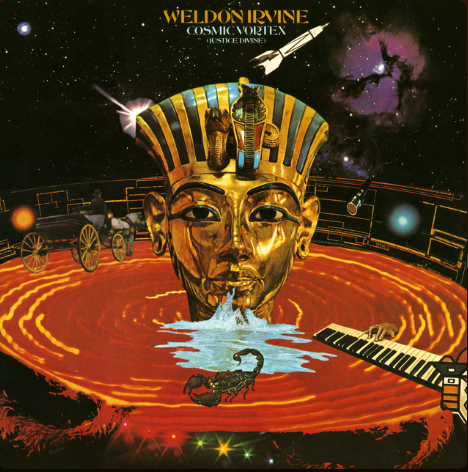
Continuing with the decade-long Social – originally a DJ club night I’d pick up at different times over the past 20 plus years, and also a café residency from 2012 to 2014 – playlist, each month I literally chose the records that celebrate anniversary albums, those that I’d love to hear on the radio waves or DJs play once and while, and those records that pay a homage and respect to those artists we’ve lost in the last month.
Anniversary picks this month include a big 60th shoutout to The Rolling Stones debut (see a little piece on my thoughts further down the page), 50th call outs to jazz-funk-soul greats Calvin Keys (Proceed With Caution!) and Weldon Irvine (Cosmic Vortex (Justice Divine)), Funkadelic (Standing On The Verge Of Getting It On). Moving into the 80s, REM’s Reckoning is unbelievably now 40 years.
Pulp’s His ‘N’ Hers LP, and Britpop’s near zenith with it, reaches the 30th milestone. An album that couldn’t be more different from the same year, Nas’ decade defining Illmatic is also 30 this month.
We now reach the unfortunate part of the playlist selection: the deaths or death in this case of the one of the last mavericks, John Sinclair. Synonymous for steering and kicking out the jams in his short role as manager of Detroit’s renowned rebel rousing motherfuckers The MC5, renegade poet, scholar, activist and establishment rattler John Sinclair is also remembered for his free radical zeal and dalliances with the law.
Even too hardcore for the MC5, Sinclair’s foundation of the anti-racist socialist White Panthers, and his countless associations with equally revolutionary counterculture players and shakers, marked him out; leading as it did to the now infamous drug bust for marijuana possession in 1969. Whilst his love for the herb and gesticulations, whether through poetry or diatribes, is in no doubt, the way this particular bust was set-up (for what was a very insignificant amount of drugs) is considered heavy-handed and unjustifiable. Handed an initial ten-year sentence, Sinclair’s status in the “heads” and political agitators’ communities had singled him out as a poster child for deterring the like-minded boomer generation from stepping out of line. Fortunately (to a degree) this sentence and media furor galvanized support and sympathy and reduced that ten-year stretch to two, with Sinclair emerging from jail in 1971.
Keeping his hand in so to speak but taking up residency in Amsterdam – a much safer bet -, the beatnik jazz sage continued to perform, write, and record. I’ve chosen a mere smattering of his recordings.
I always sprinkle a few newish tracks into the cross-generational mix. This month it’s the turn of the Neon Kittens, Mick Harvey, Nduduzo Makhathini and Forest Swords.
The rest of the playlist, well, it’s just tunes I played out, own or just rate. In that vein, there’s Mary Wells, Nefertiti, The 3, The Mad’s, Okay Temiz, Danny Arakaki, Ilous and more….
Calvin Keys ‘Aunt Lovey’
Weldon Irvine ‘Love Jones’
Jean Wells ‘Somebody’s Been Loving You (But It Ain’t Me)’
Funkadelic ‘Sexy Ways’
Nefertiti ‘Miss Amutha Nature’
3 Melancholy Gypsys ‘The 3’
Nas ‘It Ain’t Hard To Tell’
John Sinclair ‘When Will The Blues Leave’
The Mad’s ‘Feels Like Love’
The Rolling Stones ‘Little By Little’
Eulenspygel ‘Menschenmacher’
Okay Temiz ‘Galaxy Nine’
The Monkees ‘Time And Time Again’
Donnie Fritts ‘Prone To Lean’
Danny Arakaki ‘All Thanks’
Samadi ‘La Luna Llena’
Coumba Sidibe ‘Djagolla’
Ilous ‘Chanson Chagrin’
John Sinclair ‘Ain’t Nobody’s Business’
R.E.M. ‘Little America’
Neon kittens ‘Schrodinger’s Party Animal’
Virna Lindt ‘Shiver’
Pulp ‘Joyriders’
The Twilights ‘Sorry, She’s Mine’
Mick Harvey ‘When We Were Beautiful & Young’
Clancy Eccles ‘I Need You’
Gerardo Manuel & El Humo ‘Where Did You Go’
Nduduzo Makhathini ‘Libations: Omnyama’
Forest Swords ‘Torch’
John Sinclair ‘Sitarrtha’
__//ARCHIVES\\__

50th Anniversary to Guru Guru’s Dance Of The Flames and a staggering 60th to The Rolling Stones’ Debut.
Guru Guru ‘Dance of The Flames’
(Atlantic Records)
Trawling around Europe – and wherever they found a door that was laid open to them – like a ragtag gypsy caravan convoy, Guru Guru took their 1973 album, Don’t Call Us (We Call You), out on the road. With most of their monies funneled into purchasing a solid and heavy monolithic ballsy sound-system, they bled dry the ears of many a ‘head’.
The trios imbued in sonic genius and omnivorous lynch-pin guitar gunslinger, Ax Genrich, somehow managed to disappear from this mad procession, leaving the group and heading into nigh obscurity. His difference of opinion on which direction the ennui band of lunatics should progress resulted in a split, with Mani Neumaier hell bent on creating improvisational material against Genrich’s more delineate structured compositions – though it must be made clear that Genrich always threw himself unwieldy into every track, regardless of who wrote it or what form it took. For a scene that produced an abundance of over-qualified, sickeningly gifted, innovative, and erudite guitarists – West Germany spewed them out like an ever-efficient Volkswagen production line – it was, you could say, a job to stand out from the mighty throngs of erudite axe welders. Yet Genrich with his re-wired Hendrix and deconstructed rock’n’roll space licks, managed to leave an indelible footprint in the Krautrock canon, and hall of fame.
To plug this gaping chasm, and before embarking on the next LP, the one-time member of the progressive jazz outfit Eliff and exotically named Houchäng Nejadepour – half German, half Persian – joined the one-album veteran Hans Hartmann and founding father Neumaier to become part of Guru Guru mark III. Talented in many disciplines including guitar and sitar, alongside both compositional and technical production skills, Nejadepour added a more Popol Vuh-esque flavour to the band’s sound, lending Guru Guru a Balearic and far eastern quality. Such was his contribution – though this could also be partially down to Neumaier’s lack of new material – that the well-talented troubadour composed half of all the tracks on their next album, Dance Of The Flames. Unfortunately, that listless and cold-footed obligation to move on, led to Nejadepour’s departure soon after the LP’s recording in the Spring of 1974 – his replacement was Gila axe man Conny Veit, who himself only managed a short sojourn of a few months.
Dance Of The Flames, the second release on Atlantic, not only saw a wider and more cosmopolitan influence and catchment, but it also grew fat on a robust hard rock sound, which at times plunged into the dark recesses of Gothic heavy metal. Andalusian vistas and South American themed Sambas cut the collection of eight-songs into two camps. Neumaier, as chief patriarch, tends to either brood on or veer towards folly. Take the opening grandstanding ‘Dagobert Duck’s 100th Birthday’, a paean ode to Donald Ducks tight-beaked Uncle Scrooge, that could also be a reference to the last Merovingian king of the Franks, but then maybe not. The track features a display of fatuous duck-call kazoos and outlandish gestures of both The Edgar Winter Bands ‘Frankenstein’ and King Crimson, on showboating duties. But then there are also ethereal opuses, such as the romanticized ‘The Girl From Hirschhorn’ – a lament to the mysterious figure of affection, who resides in the nearby German town of the title – to balance it all out.
Production values are high, and slickly executed with every note, no matter how drenched in echo, reverb, or fuzz, all audible and separated apart. Those erratic rolling time signatures and unruly voracious drum solos of Neumaier are all still in evidence, as usual, as are the dependable assiduous bass runs and jazz riffs, favored by Hans Hartmann who’d joined the Guru Guru family the previous year. The high-plain astral traveler, preparing us for a meeting with visitors from beyond the stars, is almost erased from the groups original founding musical manifesto, replaced by a sturdier rock and, world music, agenda.
From the start:
Kazoo twitching gonzo trumpets announce the extravagant goof-off rock opus that is ‘Dagobert Duck’s 100th Birthday’ party anthem. This flitting Alice Cooper muscling rocker features a jovial, if under the surface portentous, ode to Donald Duck’s disparaging money grabbing capitalist Uncle Scrooge – known in Germany as Dagobert. Macho feats of savage and squalling guitar solos brand scorch marks across the stonking, stalking monster backing track; Nejadepour hurtling through the scales at a rabid rate of knots, hoping to erase the hovering presence of Ax Genrich, with his own blistering blurry-eyed fret work. Gratuitous and highly ridiculous in equal measure, this slab of over-cooked mega prog, is used as some kind of showcase, just to prove their mettle.
An inexorable ethereal and lightly laid-back gallop of a groove rolls into view over a harmonic pinpoint sweeping introduction. The diaphanous love pinning tryst, ‘The Girl From Hirschhorn’ – placed highly in my all-time top 100 Krautrock tunes, just in case you were wondering – floats in on the dreamy breezy melody. Hans Hartmann builds up a repetitive pounding bass line, as a gliding quivering lead guitar preens and majestically swoons along to the rousing pleasing and drifting backing. After seven-minutes of proto-Amon Düül II Wolf City era bliss, and dashes of love-in Acid Mother Temple – you can see why Neumaier went on to work with them – a vocal relief sublimely transcends the soundtrack, as Neumaier exhales joyfully –
“I can’t stop thinking of you.
Where could you be, little babe,
Why I am gently playing this song for you?”.
With his querying display of lament finally let out, the band hyper-drive towards a lunar wah-wah stop/starting outré; shimmering in reverb and slipping into a jazz-rock sporadic free-for-all, that spills over and onto side one’s closing track, a bombastic spasmodic odyssey.
‘The Day Of Time Stop’ is Sun Ra, Beefheart and Santana all sharing a pleasure voyage to the 5th Dimension. Staccato timings create a jump and off-kilter raging loop, that acts as a cyclonic spiraling blast for Nejadepour to launch another blast of light-speed attacking pomp, searing from his bewildered guitar. Stumbling drums and octave hurling bass brew up a right shitstorm before the trio use the Arthur. C. Clarke galactic elevator to the stars, disappearing into some distant cosmological whirlpool of depravity. Like Edger Winter, our maddened guitar alchemist, runs wild, flipping through key changes and reeling off utterly fanciful and one-fingered licks – total filth.
Side two begins with the album’s title track. Neumaier promptly rattles off a smashing cymbals introduction, as Hartmann slaps his bass around some bending rhythms. Everything is coated in a strange reverberated and, reversed effect, flipping backwards and forwards, stretching out the instrumental and whipping it into a twisted carcass of a song, with the very air itself sucked out into some kind of vacuum.
A taste of the Samba is up next, albeit an Hieldberg etymological version of the sun-kissed exotic dance. Nejadepour’s sprightly jazz-tinged composition sounds like a happy-go-lucky Yes, twinned with the be-bop indulgences of Herb Albert. Hartmann twangs and bounces along on the contra bass, as a cheerful Neumaier taps away on the congas, each of them enjoying the succinct distraction that is ‘Samba Dos Rosas’ – just one of Hejadepour’s Balearic enthused joints that make up most of side two’s track list.
‘Rallulli’ is cast from the same mold, but steers closer to home, as the musical accompaniment melds together fits of acoustic jamming and hidden-in-the-attic sound effects. Tablas, congas, and a trapped jar of hornets produce a strange old avant-garde miss-mash, the final word going to a flushed toilet – perhaps a critique of the track, or more of that Neumaier humor.
Those Andalusian plains and mountains come a calling, as pranged delicate harmonies add to a pained melancholic mood-piece entitled ‘At The Juncture Of Light And Dark’. Hemmingway-esque Death In The Afternoon allusions are cast, with resplendent flamingo flourishes and a suspense filled air of Spanish mystery – file under evocative musical narrative.
Bringing the album to a dramatic close is the doom lit curtain call of ‘God’s Endless Love For Man’, a Gothic heavy metal droning and throbbing prowling instrumental that stabs a fork in the eye of the creator. More like an attempt to soundtrack the works of Bosch then a hymn to the divine, this bubbling cauldron of a stonker takes over from Amon Düül II’s Phallus Dei quest and drags Black Sabbath through the killing fields. This is indeed some scary shit: Guru Guru on a fuck-rock satanical crusade, summoning up some kind of end-plan Armageddon. Interspersed in the mire, bursts of rapid-fire jazz rich breaks and tangled glorious guitar solos add a glimpse of hope to this one-way helter skelter ride into the abyss.
The Rolling Stones ‘S-T’
(Decca) 1964
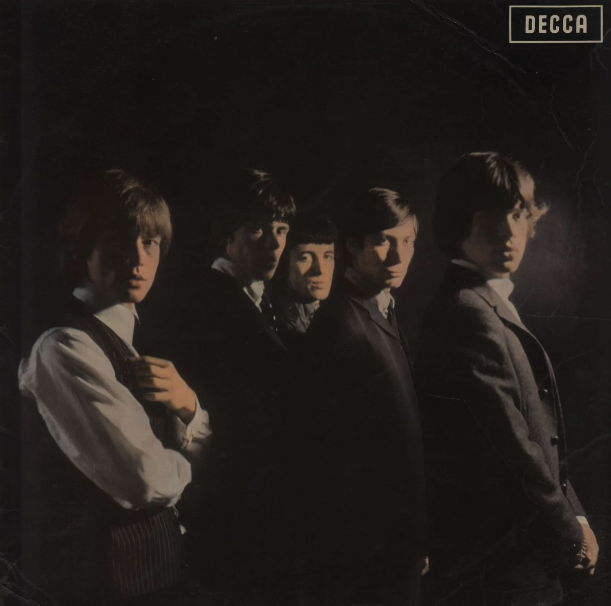
Those sulky near petulant straight-faced punks stare out from their dark shadowed album with a look that means business. Made-up almost entirely of cover versions, grabbed from the patron black blues and r’n’b characters of Chicago, The Mississippi and Tennessee, the debut LP is almost an exalted tribute to their heroes.
Rambunctious and loud, the pure rawness and bleed over of the instruments (something that no-one seemed concerned about in the studio at the time; encouraged by their manager Oldham) as they filled each other’s space, was a mixture of giddy adulation and blue-eyed indecorous rebellion. From the frayed, proto-punk amateurish sound of ‘Route 66’ to the gospel ye-ye of ‘Can I Get A Witness’, this album shambles along and offers up some convincing attempts to sound like Jimmy Reed, Willie Dixon and Slim Harpo. Of course, they fail but the results are better than the intention in many ways; the vital kick start to a whole scene and call for a generation. Can it really be sixty years old this month?!
THE MONTHLY DIGEST OF ACCUMULATED NEW MUSIC, THE SOCIAL INTER-GENERATIONAL/ECLECTIC AND ANNIVERSARY ALBUMS CELEBRATING PLAYLIST, AND ARCHIVE MATERIAL CHOSEN BY DOMINIC VALVONA

___/NEW\___
Jonah Parzen-Johnson ‘You’re Never Really Alone’
(We Jazz)
The soloist is never alone it seems, when on stage. And the highly prolific, serial collaborator and in-demand Chicago born, but Brooklyn-based, alto and baritone saxophonist and flutist Jonah Prazen-Johnson (regular followers will recognize the name from his trio partnership appearance with the Lycia inspired Berke Can Özcanon the Twin Rocks album from late last year) stands in the spotlight reacting to, feeding off of, and giving it all back to his audience and the wider community: hence the “We made this together” statement included on the album cover.
In the age of high anxiety, division and unwilling compromise, Jonah finds both the space to let go of the strains on the mind, the worries and concerns. In a nutshell, with just the use of his polytonal saxophone holds, wanes and drones (between higher trills and deeper bass-y vibrations; often together simultaneously) and willow-y, natural blossom garden flute, he projects invocations of regret and rumination whilst offering support, and even “courage” to see through the worst of it. To the undulating waves, near bristled distortions and more melodious tones, to the didgeridoo-like circles, fog horns, honks and drawn-out, Jonah evokes melodic traces of his native home (Chicago), the avant-garde, explorative and pastoral. If names and luminaries such as Sam Rivers, Marshall Allen, Coltrane, Roscoe Mitchell (especially his partnership with Anthony Braxton), John Zorn, Peter Brötzmann and Jeremy Steig grab you, then make the commitment and purchase a copy a.s.a.p.
ZA! + Perrate ‘Jolifanto’
(Lovemonk) 22nd March 2024
Bonding together on one Dadaist inspired transmogrified cross-pollination of sonic and musical ideas, the Spanish collaboration of the duo ZA! (No strangers to this blog; first featured in my highly popular Spanish Underground piece from more than a decade ago) and the experimental vocalist Perrate come together on an extraordinary album of sound assaults and hybrids that turn Iberian traditions and cultures on their heads.
Both partners in this enterprise have spent two decades or more transforming the traditional music of their native land; the critically applauded Perrate exploring the “outer edges” of Flamenco, his identity and heritage entwined with the age-old Gitano Iberian Romani community of which he is descended – a culture abundant with the stars and progenitors, innovators of Flamenco -, and ZA! often crazily and imaginatively merging a variety of Spanish styles, folk music, with anything from the African beats to the psychedelic, electronic, Balinese polyrhythms, thick distortion, free jazz and the shepherds of Tuva.
Taking the first word from Hugo Ball’s exhaustive Dada recited ‘Karawane’ phonetic poem, “Jolifanto” is packed with ideas and flights of fantasy; yet never loses its Iberian foraged roots, with plenty of recognizable Flamenco guitar frills and intimate quivery entwined attentive and descriptive accompaniment – sometimes sounding like a cross between Raül Refree and Jeff Buckley. You can also pick up the atmospheric settings of the dance, the performance throughout the album. The original performance of that poem, performed at the famous iconic Cabaret Voltaire, put Hugo in a trance; the captivated audience compelled to rush up on stage before the Dadaist luminary was dragged away. A certain lunacy, this spirited experimentalism and performance is transcribed to a lot of ZA!’s music, but it somehow makes perfect sense when combined with the poetic longing calls, mewling, whoops, mantra, assonant and almost muezzin-like vocals of Perrate. At any one time you are likely to hear echoes of Moorish Andalusia, oscillated dub, elephant horns, percussive scuttles, krautrock, Vodun invocation, post-punk, no wave and Afro-Cuban, and pick out bursts of Jah Wobble, Anthony Braxton, Zacht Automaat, CAN, Greco and Cambuzat, African Head Charge, the Reynols, Mike Cooper & Viv Cooringham’s ‘A Lemon Fell’, Harry Belafonte (I kid you not), Sakamoto and the Gypsy Kings.
From the cosmic and unsettling to near terrifying, there’s a lot to process in this slightly madcap collaboration. And yet in saying that, this album has soul and a seriousness about it in revaluating, pushing at the boundaries and ideas of what Iberian culture means in the 21st century; finding connections across the borders with music from as far away as Arabia, South America and the original roots of the region’s Romani communities. A great work of art and brilliance from the partnership that will excite, wrong foot and entrance in equal measures.
Leonidas & Hobbes ‘Pockets Of Light’
(Hobbes Music)
Expanding upon their sonic partnership with a debut album of epic cosmological proportions, Leonidas & Hobbes reach further than ever before into both the cerebral and outer limits of space to channel a litany of anguish woes.
Between them, this pairing of like-minded curious and lauded electronic musicians/DJs/club night instigators, cover the capitals of London and Edinburgh with their enviable CVs and provenances in everything from house to techno, the ambient, Balearic and dance music genres. Making good on previous EPs (2017’s Rags Of Time and 2021’s Aranath) they now face the philosophical quandaries of humanity, technology, climate change, extinction and metaphysics across thirteen movements, dance grooves, soundtracks and celestial symphonies.
A self-proclaimed ‘lockdown album’, the pandemic and stretches of time spent apart from socializing and giging, have had a deep impact on both artists; combine that with becoming parents and breakups, and you’ll find a pair of minds concentrated on finding the ‘light’ in a universe of emptiness and apocalypse. With effected dialogue snatches of ground control communications and alternative pseudo drug escapes from authoritarian mind control and conditioning speeches, and broadcasted weather reports from the eye of the storm (in Charleston, North Carolina to be exact) smattered throughout, the concerns, enquires and philosophies of both partners on this odyssey are made clear.
Like one long set, a voyage of peaks, beats and more trance-y and contemplated ambient pieces, this album goes from literal takeoff to drifting untethered in the void and back to the inner mindscape. Production and style wise there’s retro-space and kosmische hints of Vangelis, La Dusseldorf, Iasos and Klaus Schulze next to more acid zapping old school evocations and breaks of Wagon Christ, Orbital, Luke Slater, Mo Wax and Howie B, plus a Balearic vision of The Orb and echoes of the 303 drum sounds of Mantronix and Man Parrish. Vapours and wisps mystify certain suites, whilst others bounce along on more kinetic waves as mindscapes are mixed with technology, science and the sci-fi. Pockets of Light channels Leonidas and Hobbes’ worries and prophecies into a reflective existential soundtrack.
Their Divine Nerve ‘The Return Of The Lamb’
(Staalplaat)
A second inclusion this year for the Ukrainian trick noise maker Dmytro Fedorenko, his last Variát collaborative venture with Masami Akita (under his Merzbow alias), Unintended Intention, was featured in this year’s inaugural Digest. A brutal, scarred abrasion of twisted steel and concrete that same atmospheric heavy set of dark META electronica is now stripped almost entirely of the human touch for something altogether more esoteric and alien.
With the Washington DC experimental artist Jeff Surak (who has a CV far too numerous and varied to list here, but in brief, he made his first tape manipulations in the 80s under the 1348 moniker on his own Watergate Tapes imprint, lived in Russia in the early 90s, and after returning home, directed the annual Sonic Circuits Festival of Experimental Music in DC for thirteen years…the list goes on) as his foil, Dmytro finds yet another vehicle for expelling demons, the bestial, the apparitions in the machines and unearthly. Under the afflatus/supernatural imbued Their Divine Nerve title both accomplished participants retune the Fortean radio set for a corrosive, fizzled, buzzing unholy noisy embrace of the pained, hurt, mystical and chthonian.
Generous with the amount and duration of the material, this is a serious set of discordant and more hermitic vibrations, spread over ten (thirteen tracks if you buy the “bonus” version, which does actually include the title-track) post-industrial strength hauntings of the soul and psyche. The action varies, however, from invocations of early Richard H. Kirk to Basic Channel, Bernard Szajner, SEODAH, Coil, Alejandro Jodorowsky’s Holy Mountain score, and Spain’s underground tape culture in the 80s. And within that sound-off board, portals and channels open up to the slithered tentacles of the Cthulhu and other leviathans from the depths, as dark matter is resourced to build a haunted factory of unidentified operative machinery and tools. Phantoms are everywhere in this fuckery of scrunched marches, square bladed sawing, needle sharp scratches of surfaces and iron materials.
Axes to grind, metaphors for the growing unease and trepidations of unimpeded violence, the continuing evil invasion of Ukraine, you could easily read the sonic tealeaves on this immersive experiment. All I know is that the biblical inspired The Return Of The Lamb offers analogies to the Christian symbol of sweetness, forgiveness, meekness, gentleness, innocence and purity, but it’s also a representation of both Christ himself and that of a sacrificial animal – when depicted with the Lion it can mean a state of paradise. Make what you will of that liturgy, but hope and salvation might yet arise from the distresses and savagery. In short, Their Divine Nerve is a successful debut in noisy art forms, horror, alien visitations and mystery.
Dave Harrington, Max Jaffe and Patrick Shiroishi ‘Speak, Moment’
(AKP Recordings)
An enviable trio of acclaimed and highly prolific musicians pulls together their talents and experiences for an improvisational album of both suffused gazing/reflection and wilder, unbound avant-garde extemporized entanglements. Dave Harrington, Max Jaffe and Patrick Shiroishi’s CVs, appearances and collaborations are lengthy and varied: far too numerous to list here anyway. But suffice to say this triumvirate of contemporary jazz explorers covers more or less all avenues of that genre’s legacy and penchant for change, experiment – from the more pliable to wielding and addressing the abstract evocations of trauma.
In the spirit of improvisation, all three players dashed this recording off in a single afternoon (as it happens, a couple of years back in an LA studio on the 25th October, my birthday!) having only met that same day for the first time. Astonishingly, Speak, Moment is a very sophisticated, cohesive album that gels together perfectly: even during its more untethered and intense passages of abandon.
The performances move loosely from the near ambient undertones of Jaffe’s incipient and resonating textural cymbal and sieved-like snare washes, the subtle twangs and psychedelic mirages of Harrington’s guitar, and the lilted tonal flutters and more tuneful rises of Shiroishi’s saxophone, to the near cacophony of staccato breaks of later tracks like ‘Ship Rock’ – a sort of stormy tempest rock-jazz fusion that sounds like The Jim Black Trio tied to a maelstrom tossed raft with Chris Corsano, Pat Metheny and the Red Crayola.
The traversed dreamy opener, ‘Staring Into The Imagination (Of Your Face)’, seems to allow the trio all the time and space needed to eloquently and in a more gauzy manner, express a soliloquy to the processing of feelings, environment and the unsaid – Harrington’s guitar reminding me in part of Fernando Perales and Myles Cochran, whilst Patrick Shiroishi’s sax has touches of Dexter Gordon, Roscoe Mitchell and Sam Rivers. Talking of Harrington, I did read that his own influences range from Bill Frisell to John Zorn and Jerry Garcia. The latter is very much channeled on the spiritual percussive trinket rattled and leviathan looming ‘How To Draw Buildings’, with guitar parts that sound almost late 60s Woodstock acid-rock in inspiration (almost Hendrix-like in his more restrained and meditative mode). You can also hear the aria-theremin higher voice-like notes of Sonny Sharrock amongst the wilderness and mizzle and sizzled resonance of Jaffe’s drums on that same track.
The next track, ‘Dance Of The White Shadow And Golden Kite’, reminded me of Ariel Kalma – that and Ornate Coleman in an exotic Afro-jazz bobbing dance with the Art Ensemble Of Chicago.
The atonal sensitivities shift amongst the ambiguous presence of other forces and introspective moods across a quintet of spontaneous explorations on an accomplished gathering of talented musicians. If you have an ear and like for the Cosmic Range, Tumi Mogorosi, Yonatan Gat and the Gunn-Truscinski Duo then you have to own this traversing improvised experiment.
Twin Coast ‘To Feel’
Back with another enveloped in guitar feedback sculpted and layered vision, the Chicago shoegazers and noiseniks Twin Coast get pulled into a paranormal alternate dimension: A static TV set cell that seems to be at least languidly comfortable and dreamy. Almost numbed to the whole sorry state of it all, the duo lose themselves in an unholy hallucinogenic white noise of static fuzz and crystal shimmers and flange reverberations. I’m calling erased apparitional shoegaze.
The traditional B-side as it were, is handed over to diy electronic artist Isaac Lowenstein, aka Donkey Basketball (a EDM project that apparently started off a joke but quickly grew into a very real act, mixing and merging everything from acid to jungle and techno). Isaac, a fellow Chicago resident, transform the original into a kinetic, machine and mechanics switching, twisting, ratcheting and spring-loaded minimalist techno percussive tunneled and vaporous space-trip. I’m hearing a touch of Mike Dred, Mouse On Mars, Ritchie Hawtin, Basic Channel and Autechre added to the mere essence of the original shoegaze immersion from the ether.
___/THE SOCIAL PLAYLIST: VOLUME 84\___

Continuing with the decade-long Social – originally a DJ club night I’d pick up at different times over the past 20 plus years, and also a café residency from 2012 to 2014 – playlist, each month I literally chose the records that celebrate anniversary albums, those that I’d love to hear on the radio waves or DJs play once and while, and those records that pay a homage and respect to those artists we’ve lost in the last month.
Anniversary spots this month go to the Style Council’s ’84 special Café Bleu (I’ve chosen to kick the whole playlist off this week with the more dance-funk, WAR impressionist ‘Strength Of Your Nature’, from an album that slips mostly into more Post-MOD, Jazz Café piano), RUN-DMC’s self-titled holler from the same year and Scott Walker’s menacing, out-there Climate Of The Hunter masterpiece. From a decade before, I’ve added a glam pop-gun tune from T. Rex’s Zinc Alloy And The Hidden Riders Of Tomorrow – the LP that must have been on Bowie’s mind when recording Young Americans. Leaping ahead twenty years and there’s a smattering of ’94 releases from the Hip-Hop royalty Gang Starr (Hard To Earn), Main Source (Fuck What You Think), The Auteurs (Now I’m A Cowboy) and the Aphex Twin (Selected Ambient Works 2; so good I’ve included two tracks). From more recent(ish) times, there’s a choice track from the late metal face don of leftfield Hip-Hop MF Doom and the equally revered Madlib, under their partnership guise of Madvilliany – I’ve chosen the Sun-Ra anointing ‘Shadows Of Tomorrow’, which pulls in the aardvark Quasimoto. And, as featured below in this month’s archive spot, a track from the Ministry Of Wolves ensemble cast of fairytale weavers album Republik Der Wölfe: subtitled ‘A Fairytale Massacre With Live Music’, a joint enterprise between the Dortmund Theater’s production director Claudia Bauer and musical director Paul Wallfisch, with the unholy musical alliance of Bad Seeds co-founder and adroit solo artist Mick Harvey, one time Einstürzende Neubauten, Crime And The city Solution grizzled maverick and one half of the Hackedepicciotto duo Alexander Hacke and fellow Crime and the City band mate, Berlin Love Parade co-instigator and the better half of that Hackedepicciotto partnership, Danielle De Picciotto, providing the suitable nursery grime soundtrack.
We can’t pass the month without marking the sad death of Karl Wallinger, the master songwriter behind hits for others, but also sole instigator of World Party – after leaving The Waterboys in the mid 80s. I guess ‘She’s The One’ will be rotated extensively, but I’ve chosen the just as popular and more soulfully blusy ‘Ship Of Fools’.
From the new to old past gloires, missives and curiosities, making up the rest of the playlist are tracks from Fat Francis, Dalla Diallo, Alamo, Trips And Falls, De La Soul, Heldon, MIZU, Gary Clail, Incentive and more….
TRACK LIST IN FULL:::::::::::::::::::::::::::::
The Style Council ‘Strength Of Your Nature’
Vampire Rodents ‘Trilobite’
Gang Starr ‘Code Of The Streets’
Run-DMC ‘Hollis Crew (Krush Groove 2)’
Madvillian (MF Doom/Madlib FT. Quasimoto) ‘Shadows Of Tomorrow’
Dalla Diallo ‘Sinde M’bobo’
T-Rex ‘Painless Persuasion V. The Meathawk Immaculate’
Metamorfosi ‘Caronte’
World Party ‘Ship Of Fools’
Walpurgis ‘Disappointment’
Fat Francis ‘It’s Not Rock and Roll’
Alamo ‘Got To Find Another Way’ We Cut Corners ‘Three People’
In Time ‘This Is Not Television’
The Wizards From Kansas ‘Hey Mister’
Eyes Of Blue ‘Largo’
Trips And Falls ‘I Learned Sunday Morning, On A Wednesday’
Kevin Vicalvi ‘Song From Down The Hall’
The Auteurs ‘Chinese Bakery’
Scott Walker ‘Rawhide’
The Ministry Of Wolves ‘Rumpelstiltskin’
MIZU ‘prphtbrd’
Heldon ‘Ballade Pour Puig Antich, Révolutionnaire Assassiné en Espagne’
Aphex Twin ‘#24’
Stringmodulator ‘White Noise’
Aphex Twin ‘#12’
Liz Christine ‘Two Seconds’
Heldon ‘Ouais, Marchais, Mieux Qu’en 68’
Incentive ‘Time Flows Beyond You’
Gary Clail ‘A Man’s Place On Earth’
Okay Temiz ‘Galaxy Nine’
De La Soul ‘What’s More’
Main Source ‘F*CK WHAT YOU THINK’
___/ARCHIVE\___
TEN YEARS OLD THIS MONTH: THE MINISTRY OF WOLVES ‘MUSIC FROM REPUBLIK DER WÖLF’
The Ministry Of Wolves ‘Music From Republik Der Wölfe’(Mute) 10th March 2014
Pre-dating the Viennese totem of the subconscious but already a Freudian labyrinth of analogy, metaphor and augury, the Gothic fairytale fables of the Brothers Grimm have just got a hell of a lot more unsettling and personal. Given a Pulitzer Prize winning overhaul by the esteemed award winning, self-confessional American poet Anne Sexton in her 1971 book ‘Transformations’, these same tales were brought back into the realm of the adults. Her candid, revisionist take, from the point of view of a ‘middle-aged witch’, on these standard stories is a beat poetic vivid survey on human nature: those all too familiar idiosyncrasies and failures set to a contemporary (for its time) miasma of inner turmoil.
Proving to be just as poignant forty odd years later, those reinterpretations are revitalized in a brand new multimedia stage production, debuting at the Theater Dortmund. To be performed tonight (15th February 2014) the Republik Der Wölfe, subtitled ‘A Fairytale Massacre With Live Music’, is a joint enterprise between both the Dortmund’s production director Claudia Bauer and musical director Paul Wallfisch, with the unholy musical alliance of Bad Seeds co-founder and adroit solo artist Mick Harvey, one time Einstürzende Neubauten and now Crime And The city Solution grizzled maverick Alexander Hacke and fellow Crime and the City band mate and Berlin Love Parade co-instigator Danielle De Picciotto, providing the suitable nursery grime soundtrack. Detached however from the visual spectacle, that very same soundtrack is due its own inaugural release next month; its loose narrative a series of congruous chapters, easily followed without any other stimulated aide to guide you.
Original characters that we’ve grown to love, hate, revile or recoil from, are transposed into the darker parts of our psyche. Those parable like lessons and auguries of danger get kicked around in a quasi-junkie Burroughs nightmare of cynicism and surreal terror. Tucked into a all too knowing grown ups world of jealousy and greed, Picciotto plays the part of storyteller – in this case switched, as I’ve already mentioned, from the usual young, naïve heroine into a middle-aged witch – on the opening account, ‘The Gold Key’. It’s followed by the Teutonic heavy drawling gusto of Hacke’s ‘Rumpelstiltskin’; played up to full effect, as the poisoned dwarf is revealed to be our doppelganger, ‘the enemy within’, and the spilt personality waiting to cut its way out of all of us. Sounding quite like a missing Amon Duul II number from the Hi Jack era, the song’s maligned and mischievous protagonist elicits a kind of sympathy: ‘No child will ever call me Papa’. Condemned to play the part of cruel interloper, poor old Rumpelstiltskin exists to remind us of our demonic, primal nature: a nagging inner soul tempting us to commit hari-kari on restraint.
The fabled ‘Frog Prince’ is a slithery customer, made to sound like an odious creep pursuing his very turned-off love interest. Mick Harvey moons and croaks with relish in recalling the bizarre tale of doomed romance; the moral, though dark and disturbing, can be summed up as: be careful what you wish for, the law of averages doesn’t exist and in this case turned out to be a dud, the frog was certainly no prince.
Happy endings become even more blurred with the triumvirate of leading ladies ‘Cinderella’, ‘Rapunzel’ and ‘Snow White’. ‘Cinders’ is a Casio pre-set piece of waltzing lullaby, dreamily led by our protagonist chanteuse, whilst Rapunzel and Snow White are given a fluid pained Leonard Cohen treatment. The latter a roll call of ‘seven’ inspired symbolism and metaphor, the former an idolised plaintive requiem to the exiled and ill-fated American dancer, Isadora Duncan – forced to leave the States for Europe because of her pro-Soviet sympathies, Duncan died rather ironically at the hands of the famous scarves she used to so great an effect in her dances, after one become entangled around the open-spoked wheels and rear axle of a car she was travelling in, breaking her neck.
Other notable tales of woe include the opium-induced, somnambulist ‘Sleeping Beauty’ – literally a languid sleepwalk through some Tibetan flavoured labyrinth – and lurid Harvey sung ‘Hansel & Gretel’ – the apparent naïve, saintly, twins getting the better of a cannibalistic old crone. But its ‘Little Red Ridding Hood’ who inhabits the most contemporary street hustling environment, transported from the danger lurking Black Forests into a world of creeps, junkies and ‘transmorphism’. The levels of macabre are amped up and the underlying psychosis adroitly delivered with atmospheric relish; our cast of ‘make-believe’ characters all too fallible human traits and sufferings enriched with a Murder Ballads style makeover, part Gothic part horrid histories.
FIFTY YEARS OLD THIS MONTH: T-REX ‘ZINC ALLOY AND THE HIDDEN RIDERS OF TOMORROW’
T-REX ‘Zinc Alloy And The Hidden Riders Of Tomorrow’ 1st March 1974
Whilst we are, or should be, aware of Bowie’s flirtatious lifting of Marc Bolan ideas, it’s the Zinc Alloy And The Hidden Riders Of Tomorrow: A Cream Cage In August album’s experiment with soul, a full eighteen months before the Thin White Duke’s own Young Americans, that proves to be the most obvious example of this latent influence (or if you want to be less generous, theft).
Swelling the ranks with the seductive, sumptuous tones of Gloria Jones – who evidently became Bolan’s love interest and partner till he died in 1977; a relationship that resulted in the birth of their son, Rolan – Bolan’s music opened out into yet greater velvety, blue-eyed soulful panoramas; a mix of plastic R&B, glamorous strutting and quasi-New York candy pop. From the bomp and shoop of the Gloria(fied), ‘Truck On’, to, in Bolan’s mind, one of T.Rex’s most ambitious singles, ‘Teenage Dream’, there’s an almost salacious knowing sophistication at work.
Already being regarded in some circles as washed-up, the ‘Zinc’ alter ego was an attempt to concentrate resources on the UK, as he’d spent considerable time attempting to crack the US market. He would continue to adapt the soul train, jingle-jangle sound with various other ‘boogie-woogie’ styles, including swamp rock; as he demonstrates with zeal on the poorly received LP, Bolan’s Zip Gun – at this point he may have thought seriously about sticking that ‘zip gun’ to his head as the album didn’t even chart.
 Monolith Cocktail Blog