The End of the Month Playlist Revue for June 2026
June 30, 2026
Our Monthly Playlist selection of choice music from the last month. Curated by Dominic Valvona & Matt Oliver.
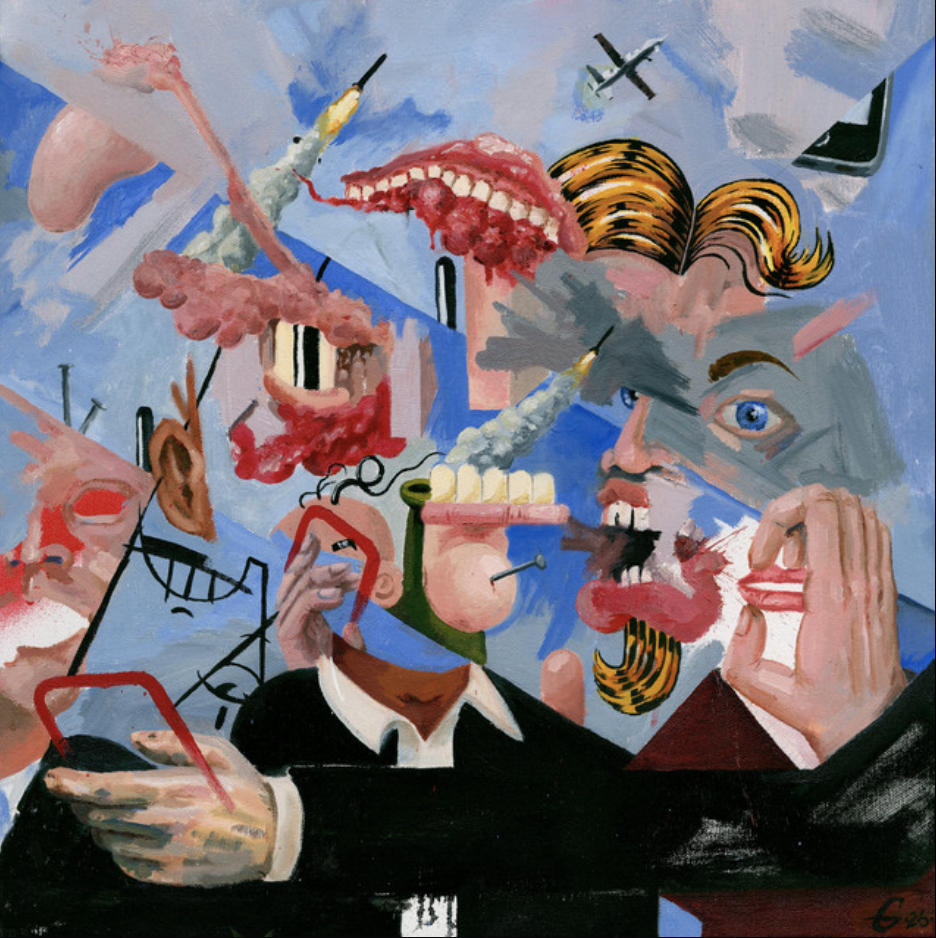
Track Listing is as follows:
Ferg’s Imaginary Big Band ‘Do The Right Thing’
Pussy Riot ‘PAIN/БОЛЬ’
Parallel Thought ‘Casus Belli’
Sam Krats, Edo. G, Jeru The Damaja, El Da Sensei & DJ Rougue ‘360’
Wiki Ft. Your Old Droog ‘All in The Lining’
The Difference Machine, Day Tripper, Dr. Conspiracy & GRETZKY DA ‘Star Children’
Baba Zula ‘Kutsal Zeytin Halayi’
The Taps of the Holy Trinity ‘Most Of Them Were Ghost’
Movie Star Junkies ‘Hard To Beat’
Mick Harvey & Amanda Acevedo ‘Perfect Storm’
Tele Novella ‘Ring Of Stones’
Claptrap ‘Shrug Emoji’
Oopsie Daisies ‘HAGS’
Schizo Fun Addict ‘Scent Of Heather’
BLEU REINE ‘Cavalier Seul’
Leah Callahan ‘Driving’
The Loft ‘Sad Comedian’
Max Knouse ‘Cavalrain’
Suzanne Ciani, Metropole Orkest & Simon Dobson ‘Section 4: Animal Kingdom’
The Moose Funk Squad & The Primitive One ‘Freaks of Nature’
Wish Master ‘Think About It’
Awon and The Other Guys ‘Ice Rink’
Kong the Artisan, J Littles & Blak Twang ‘Know About Me’
Qewl & Nightwalker ‘On My Mama’
Supreme Cerebral & The Beat Junkies ‘Supreme Junkies’
Boards of Canada ‘Blood In The Labyrinth’
Fatoumata Diawara ‘Massa’
Puce Moment ‘Tehuano’
DJ Grzyb, Tamten, Maysia Osu, Silky Oolong ‘Trombita Dub’
Tomat ‘Blue Reverie’
Here’s the message bit we hate, but need:
If you’ve enjoyed this selection, the writing, or been led down a rabbit hole into new musical terrains of aural pleasure, and if you able, then you can now show your appreciation by keeping the Monolith Cocktail afloat through the Ko-Fi donation site.
Dominic Valvona’s world of sonic/musical discoveries reviewed by Dominic Valvona. All entries in alphabetical order. Proudly AI Free.
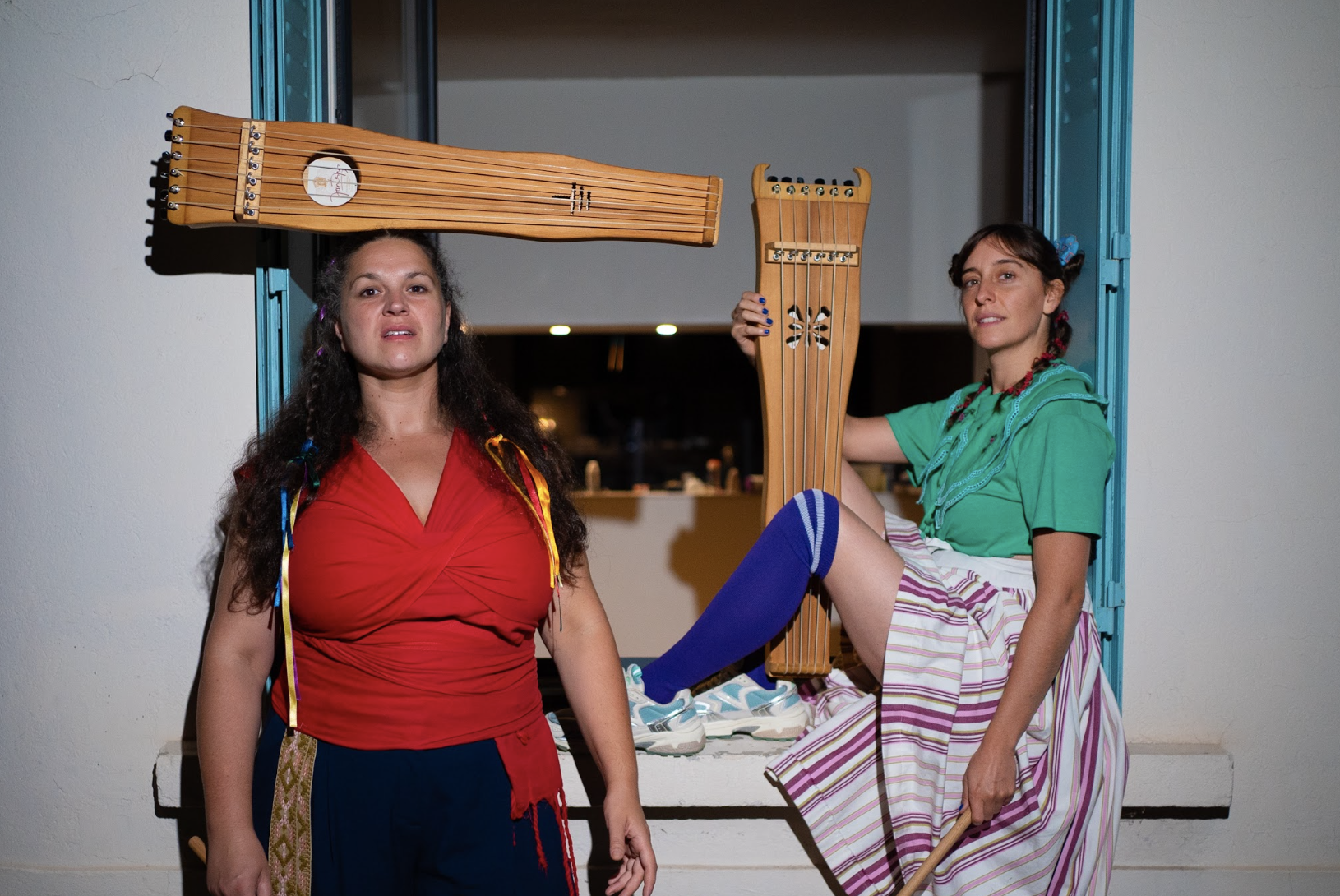
Cocanha Photo Credit: Amic Bedel
Leah Callahan ‘Our Lady Of The Sad Adventure’
1st June 2026
Between affirmation and the sacred initiations of confirmation, and with a title that evokes something of the saintly modernist poetry of Bob Dylan, Leah Callahan takes a road trip back through her Boston hometown with a songbook of previously unresolved heartaches, breakups and vulnerabilities.
Although once part of the Glass Set band, the Bostonian singer-songwriter Callahan has already released five former solo efforts. Her sixth (and 13th studio album thus far), Our Lady Of The Sad Adventure, sees a continued partnership with foil Chris Stern of The Sterns fame, and a continued adoption of the new wave/Brit-pop/power-pop/punkish/shoegaze/C86/psychedelic sound that has served so well.
As with each chapter, there’s further extensions, roads taken to newish destinations and newish horizons breached; for example, there’s a softened punky-pop 80s vibe take on the late English poet and musician Molly Drake’s (famously the mother of the tragic Nick Drake and the actress Gabrielle Drake) “gut-wrenching sad tally of broken-hearted memories” loaded ‘I Remember’, and glitterball indie-dance and synth pop influences on the funkier title-track and, most surprising of them all, the Japan in Art Deco Xanadu Hollywood ‘Clouds’.
With equal power and tenderness Callahan throws another dime in the Boston jukebox, referencing neighbourhood haunts and scenes of both epiphany and abuse whilst evoking Bends era Radiohead, The Misfits, Blondie, The Cars, and on the opening apocalyptic dazed ‘Fall In Love With Your Mind’ a throwback of the Madchester scene of the early and later 80s (some Stone Roses meets The Smiths action), a touch of outlaw country and early R.E.M..
The driven and the hazy both converge on songs dedicated to support networks, the harrowing accounts of abuse victims read in the news, and an anecdotal bar room scene that features Gloria Gaynor’s most resilient anthem. If Johnny Marr joining Interpol or Echobelly is up your proverbial street, or indeed, appeals to you, then Callahan’s distinctive and unique takes are essential.
Cocanha ‘Flame Folclòre’
(Bongo Joe) 15th May 2026
Playing on France’s foundations, pulled together in dominating fashion from various connected but distinguished former independent kingdoms and regions, and the erosion or indeed forced erasure of languages and cultures like the Occitan, the now parred down to a duo of Cocanha set out a manifesto of radical-folk resistance against the domineering forces of nationalism. Though some nationalistic movements seem more in favour than others, France’s flirtations with fascism during the time of the Vichy regime’s collaboration with their Nazi overlords during WWII infamously, and most dangerously, used various folk traditions as state and ideological propaganda. Wrestling those same traditions now, and within the context of attacks in more recent decades on Occitan speakers and its alliance or take-up by activist groups locking horns with the French government, the Toulouse-birthed Cocanha pairing of Caroline Dufau and Lila Fraysse wish to liberate this music and its songs, its lyrics, from the forces of conservatism, misogyny and the stain imposed upon it by the tyrannical: They bring, as the title roughly translates, a politically motivated vision of “flamboyant folklore”.
Whilst a far more in-depth and researched take is needed on all the ramifications, the nuances and the political outcomes, the strive and acts of resistance that have been imbued within this, the group’s third, album, the main Occitan culture that has been adapted and woven into the fabric of this contemporary take can be traced back to the patchwork of Medieval realms in what is now Southern France. A romantic language porously spreading out from its geographical namesake (loosely, I believe, formed on the model of Aquitaine, which is now known as Languedoc) into pockets of the Pyrenees (and so Spain too) and further afield into Italy, Occitan is roughly still in use, spoken by at least (depending on where you get your stats) a couple of million people. It’s poetic and lyrical turns, its polyphonic harmonies now provide the foundations of this latest songbook and movement of redress.
With the departure of Maud Herrera, the newly adapted duo has had a creative rethink; one that involves the input of two producers (mostly notably Raul Refree, who’s known for his “incendiary” collaborations and productions with the flamenco artist Rosalia and Fado revivalist Lina) and five mixing engineers.
The vocals are as beautiful and ethereal as ever, like some kind of spiritual religious invocation at times from the side of the mountain holy sanctuary, and at others like a breaching of the barricades and a near riotous almost spontaneous wildness. You could call it a rustic form of punk or the diy spirit that’s been merged with age old forms like the Rondeau (or rondo) and polyphonic harmonies of a traditional bent. You can hear the former on the linked-together trio of ‘Diuré tremblar’, ‘Diuré samsir’ and ‘A l’amistat’. The first part pulls us straight into the contemporary climate of activist revengeful violence, with a broadcast news snippet on the murder of the UnitedHealtcare CEO Brian Thompson before tunning or changing the station to a broadcast of the duo beginning their rondo form of a principal refrained theme that alternates with contrasting episodes and couplets. During this triumvirate of clapped and smacked rhythmic performances and buzzy stringy guitar (almost African in style I’d suggest) they also draw upon on the activities and disobedient protests of the “ecoterrorists” charged Les “Soulèvements de la Terre and story of Occitan speakers and their experiences in 1970s Paris.
Changing the clattering, shuttering and springy rhythms, introducing various instruments and sounds and experimenting with phonetics and the cadence, the duo invokes old Occitan myths – the “drac” amphibian dragon of lore that lures its victims from beneath the waters of the Southeastern French River that bares its name – alongside urgent strikes against the current regime and its campaign of environmental destruction and erosion of old cultures and languages.
And throughout it all the crossovers or at least echoes of further afield influences, whether on purpose or just coincidental, seem to recall the Basque, the North African, South American and even Eastern European folk borders of Ukraine. It’s as if Staraya Derevyna, Širom, The Raincoats, Walter Smetek, the Red Crayola and Tarta Relena had been born in a Southern French mountainside village together.
From arenas to the placard waving streets of modern France, the Cocanha duo liven up and breathe a new impetus into an age-old tradition of resistance and independence.
Column of Trout/Partager ‘Split/Lop’
(DAAM) 29th May 2026
The inaugural release in a new split series dedicated to experimental songwriting, the shared experience of Kerchiefs and One Eyed Ancestors’ Ben Wiggs and his latest side-project Column of Trout, and label-boss Distant Animals’ more musically orientated project, Partager. DAAM have brought this pairing together for a surprisingly congruous, complimentary experience; the perimeters of which are pliable, bleeding into an untold range of styles and ideas.
First up, Wiggs bendy and loopy hallucinated slacker-indie-psych Split offering of despondency and lament. A quartet of wallowed and also enervated woes and lovelorn gestures, like Skip Spence and Jeff Buckley being drawn under and into the whirlpool, there’s parts in which the music recalls Ed Penfold, Pavement and The Unicorns, and other times, The Books, and on the stuttered grungy and fuzz rocked ‘Ear’ a lo fi Squeeze.
Wavey and wobbled throughout there’s both lucidity and staccato-like sticks on this mirage of bandy, plaintive songs.
Siding up to Wiggs on this split EP, Partager expands musical horizons further with a non-vocalised songbook of instrumental strangeness that never rests on any particular style. And so, you have musical excursions of the soundtrack variety, recalling Bunny And the Invalids if they’d met Babybird in the mid 90s (‘Heaven Room’); David Sylvain’s backing meets an Indian Talk Talk (‘Lesser Ex’); melodica-like dub pulled through the metal-marching reverberations of grunge and progressive rock (‘Sea Dive’); and a bell-tolled and clanged ghostly and creepy vision not unlike the work of Belbury Poly (‘Earth Turn’). It’s like the most unlikely score to a work of imagination, forewarning and the unsettled.
Recommended for those seeking something different, familiar but very strange and out on the boundaries.
Furcloy ‘Purple Sage’
(Adventurous Music) Released 9th April 2026
Adventurous Music for a reason, the highly prolific ‘micro-label’ platform and magazine (under the EX! Exclamation moniker) facilitates the latest project of ebbs, loops, cycles and oscillation effected guitar absorptions and evocations by David Bradley.
Although now a mainstay of Michigan, Bradley developed this electroacoustic and drone layered work whilst living in the Eastern European city of Prague and playing in his duo Wailstrom.
Thanks to the RHS Plants website for the following description, the purple sage of the title is, ‘an attractive, upright perennial with aromatic, grey-green foliage, which is initially flushed with a reddish-purple as it emerges. From early summer the branching stems are topped with spires of lilac-blue, two-lipped flowers, which are particularly loved by bees.’ Not so much a natural blooming wonder as applied tones, drones and wave forms that form a mist over various methods of guitar playing, dwelling, dwindling, hovering, sustain and melting, the flora inspires a both mechanised and sci-fi-like vision of the landscape and sense of place and feel.
A mirage or hallucination that subtly tracks the horizon, the set scenes, Purple Sage features near languid melodious guitar touches with the evaporated and, on occasion, a sense of the rhythmic. Hidden below and inside the electricity, the magnetic and ghostly I was reminded of a very eroded and obfuscated Jesus And Mary Chain, the Spacemen 3 (that will be the first of two references in this reviews haul), Daniel Fichelscher and Conny Veit’s guitar work for Popol Vuh (although the synthesized parts, and the atmospherics recalled Popol Vuh’s Affenstunde debut), Daniel Vickers and Eno.
For those with daring tastes but who also wish to be immersed in a very different vision of scenery, of pylon and analogue-like currents manifesting into patterns and prompts of the haunted and the illusionary, then feel free to pick this perfectly crafted discovery.
Meiko Kaji ‘Otoko Onna Kokoro No Aika’
(Wewantsounds) 22nd May 2026
In trouble of repeating myself after reviewing a string of such revived LPs from the iconic Japanese actress and singer, from what I’ve gained from the press release, and despite the so-called Tarantino effect, the cult garnered Japanese starlet Meiko Kaji’s iconic run of early to mid 1970s albums have never been reissued on vinyl until the last few years by the specialists at Wewantsounds – one of our favourites in this regard.
With the usual quality control of repackaging such lauded obscurities (including usually the original artwork) the label, in conjunction with both the artist herself and the original label that released this quintet of showcases, Teichiku (between the years of 1972 and 1974), have called upon the services of Hashim Kotaro Bharoocha to interview Kaji, and fill us in on all the background, with insightful, informative linear notes to each song and chapter in the life story.
A sort of third or even fourth revival you could say, the star of various “Japanese Exploitation” franchises inspired the one-time golden boy of auteur pulp, who not only loosely based the plot of his Kill Bill doublet on one of Kaji’s most (in)famous roles as the revenging angel of The Lady Snowblood period-drama revenge shlocker series but also placed a number of her songs in the movie too. This obviously shone a spotlight on the star of such cult curios as Female Prisoner Scorpion, Blind Woman’s Curse and Stray Cat/Alleycat Rock.
In more recent years Kaji has popped up with her own Youtube channel and been coveted and once more invited to various galas and events in light of renowned interest. And as I’ve already stated, and in recent years, a vinyl reissue run of her 70s move into the recording industry, prompted by the film studios cashing in this icon’s popularity.
Coaxed into the recording booth, to initially sing songs associated with the films she starred in, the Tokyo-born actress nervously and with some trepidation, recorded her first album, Hajiki Uta, with the highly experienced TV, film and incidental music composer Shunsuke Kikuchi. The producer was able to put his charge at ease however, as Kaji recalls: “I told Shunsuke Kikuchi that I couldn’t imagine myself singing the songs. He said I could ignore the melody that he wrote, and just sing it the way I wanted to. That really lifted the pressure off my shoulders, and I decided to sing the song as the character in the film. The director was also happy with that idea.”
Following in the wake of the Hajiki Uta LP, reissued for the very first time by Wewantsounds, Tarantino’s crush and untold influence for many over the decades, the star of many infamous Japanese schlock and brutal revenger horrors and violent killings sprees’ debut LP, Gincho Wataridori was the next LP to be revitalised and given a special reissue.
In a similar mode, style and production wise, Otoko Onna Kokoro No Aika (that’s “Lament of Man, Woman and Heart”) showcases the beautifully heartachingly effortlessness of Kaji’s voice across a number of softly connected and layered styles: from the performative traditional form of Enka (a style that often carried masked messages of political texts, and was later on stylized with modern pop sensibilities in the post-war period), both lounge and theatrical balladry, Kayokyoku (another Japanese pop style with simple melodies and lyrics easy to play and sing along to) and quasi- Bacharach Western maladies and horizon gazing sentimental yearnings.
Throughout Kaji inhabits each role, telling the story of each song with swanned, soaring and plaintive hunger and unrequited sorrow. The roles of actor and songstress merge into one.
The album (originally released in 1974), once translated, makes it abundantly clear the intentions and themes. But despite the lament, each song is pretty in its cooed, wooed and subtly dramatized delivery. Notable songs include a rendition of the theme song from Siejun Suzuki’s 1966 Yakuza themed movie Tokyo Drifter, ‘Tokyo Nagare Mono’, sung to a soundtrack of Ennio-like Italian Western meets the glow of sixties era Tokyo city snazzier pop vibes and a faint use of electric guitar fuzz and rattle snake percussion. And a Mexican border town scene meets Mediterranean-like woozy take on the popular pre-World War II ditty of ‘Uramachi Jinsei’, originally made famous by Bin Uehara and Michiko Yuuki; banned as it happens by the government of the day. From a similar era, another throwback modelled in the glow of the 60s and early 70s, ‘Sake Wa Namida Ka Tameika Ka’ (“Alcohol turns into tears and sighs”) is retuned with the sensibilities of Enka and a softened 60s backbeat and the concertinaed swoons of the accordion.
Elsewhere, the production stirs up friendly and warm echoes of John Barry’s dreamy bulb-shaped and chiming spindles (‘Meiko No Yuma Wa Yoru Hiraku’); an enervated fuzzy-soul-funk version of The Temptations sound (‘Ginza No Cho’); and soothed senorita coddled accompaniments (‘Shiretoko Ryojo’).
Theatrical, showy and filmic at every turn, this album further showcases the finely attuned and sentimental heart aches, plaints and touchingly delivered songs of a Japanese star and luminary of the cult film world, who manages to blur the boundaries between styles and disciplines with such effortless timeless grace.
Alex Roth ‘(Dis)possessed’
Released 1st May 2026
Back on familiar sacred ground you could say, Alex Roth continues to capture both the abstract and all-too tragic consequences of his ancestors in the Eastern Europe Jewish diaspora.
A member of the MultiTraction Orchestra multiverse of musicians that draws in members from GoGo Penguin, Supersilent, Melt Yourself Down, Crash Ensemble, Sly & The Family Drone, Hen Ogledd and beyond, Roth made a personal odyssey and album a couple of years back with the Cut The Sky trio of Wacłew Zimpel and Hubert Zemler. Informed by Roth’s artist-in-residence spell at the Galicia Jewish Museum in Krakow, the Esz Kodesz album found a troubling absence in a land once awash with its vibrant Jewish culture. Only emancipated in 1867, when ruled under the Austrian-Hungarian Empire, that community which had given so much to this region of Eastern Europe, were victims of numerous pograms and even extermination – from the tumultuous fall-out of post WWI Ukraine to hostility under the Soviets, and then by the Nazi’s. A sizeable majority of that Jewish community would end up in Israel (another major destination being neighbouring Poland, but further afield too, and on to America) fleeing persecution. Where once those thriving bastions stood, only the ghosts now remain; the imagery accumulation of left objects and the remnants, as displayed in that museum’s main exhibition, can’t help but evoke a deep sadness; commemorating as it does, 800 years of a Jewish presence in Western Galicia. The titles of each section of that main exhibit drive home that tragedy and loss: ‘Jewish Life In Ruins’, ‘Jewish Culture As It Once Was’, ‘The Holocaust Sites Of Massacre And Destruction’. They also make clear the act of remembrance, of never forgetting what went before: ‘How The Past Is Being Remembered’ and ‘People Making Memory Today’.
With a different process and methodology at work, under the project title of a sound installation but in a similar same vein, Roth was commissioned by the Warsaw located POLIN Museum of the History of Polish Jews in 2024 to celebrate the educational hub’s tenth anniversary; invited to respond to objects in the collection that were made out of “(mis)appropriated” Torah parchment during and after WWII. Quantifying a sense of desolation, and yet shared universal commonality, Roth conjures up metaphors of “dispassion” and “repossession”, drawing upon Moses famous/infamous possession of the promised land (Canaan) as laid out in the Book of Deuteronomy; driving out the indigenous King Sihon of Hebron led Ammonite people in the process – although arguably before being assembled under the Israelites banner, those same people, returning from generations of enslavement in Egypt, were also indigenous to those lands too; hostile neighbours but closely related to the Semitic Ammonite who ruled east of the River Jordon, alongside the Moab and Edomites. The Bible describes them as being descendants of Ben-ammi, the son of Lot (Abraham’s nephew) and Lot’s younger daughter.
But let’s pan out before we start getting all scholarly.
With anti-Semitism at an all-time high across Europe and North America in the wake of the barbaric terrorism of Hamas on October 7th, and the ensuing destructive retaliation, obliteration of Gaza by Israel, and the ever expanded war that has led to the USA’s destruction of the heinous Iranian regime, and attacks on Hezbollah in the Lebanon, division has been sown down political lines of grievance: you either stand with Palestine or Israel it seems, with no room for nuance, the complexities let alone balance. The sheer mindlessness and oblivious lack of decency by many is staggering; with opinions cast, placards held, and slogans shouted by people without the faintest clue, knowledge of what they pontificate. You can quite rightly rile against or denounce both parties in this escalating conflict, but to only take one side is disingenuous at best, at worst, deplorable. Yes, the catalyst argument is trotted out every time, but if we want history lessons and context, we should go back not just 70-odd years but a thousand, two thousand. Conspiracy theories, fuelled by social media, have been left to rally and even prompt acts of violence and terror against the Jewish communities in the West, especially here in the UK.
With this in mind, it’s either a brave or dangerous move that will neither appease nor gain much in the way of sympathy depending on which side of the activist division you stand to release a sonic work of such complexity and emote certain passages from a history that many would now vocally and emboldened, knock or dismiss. But Roth has produced a work of ambience, sound art, atmospherics and field recordings that would suit the soul of the late divine styler Florian Fricke; one continuous forty-minute piece that finds passages of melody and expresses the hallowed from the reverberations of artifacts and musical instruments “(mis)appropriated” from pieces of parchment of the Torah. A sacrilegious act in itself, Roth gained permission and guidance by the Chief Rabbi of Poland to employ his special technique of capturing the sounds from these objects without touching them; recording using contact microphones, Roth would attempt to pick up the very vibrations or pick up their resonating frequencies when laying boxed in storage. Amplified of course from their metaphorical burial, and ritualised further with the help of the accomplished Cantor Rachael Weston and her vocal Cantorial melodious prayer – the Cantor leads this form of Jewish vocal prayer, which blends together elements of Eastern European folk with ancient modes, and is used as a display of powerful Jewish spiritualism – and a MIDI keyboard transferred palette of virtual instruments, Roth invokes the very passages of the Torah still visible despite their misuse. Another layer, and one that feeds into a message of not only remembrance and historical record, is of co-existence; the technique of “radical acceptance”, as used in dialectical behaviour therapy to manage painful situations outside one’s control, finding its way in an abstract fashion on this immersive experience.
Surface noise acts as a bed as mystique grows from the hum, the tubular and pipe-like blows of air and wind, the dust caught floating in beams of light and the long sinewaves-like forms that take shape in the sanctified space. There’s a real beauty here amongst the glints and signals, the recording equipment and the cylindrical vapours. But then, after a time, distorted frazzled and near vaporizing bass hits like the toll of a funeral procession making its way in an esoteric and plaintive motion towards the final burial spot. Other spots feature shuttered-like wooden percussion, intermittent rhythms and the obscured sounds of a Frame drum. But then strangely we hear what sounds like a rusty buzz saw and various tools, further removing us from or maybe bringing us closer to those misappropriated uses of the Torah parchments.
We are privy to a moving experience; a burial of a kind and documented abstracted sound experiment that transcribes fate and the scares of the missing. And yet, this abstraction provides sanctuary and relevance to objects that would normally, through religious beliefs and rules, be destroyed or buried and hidden from sight. Transformed and taken in a different direction, this installation soundtrack is far more subtle with its Jewish roots, creating something sonically and performance wise quite unique.
Solar Seas ‘Kraken’
(Somewherecold Records) Released 1st May 2026
An oceanic convergence of myth and legendary sonnet in an alternative sci-fi dimension, the sonic pairing of Mark Cross and Mark Skelton prompt shapes, forms, feelings and themes from a squall and drone-operation of reverberance, resonance, sustain and barely contained tubular vacuums of noise on their debut album as the Solar Seas.
Brought together by a mutual respect for each other’s projects and bands (for Cross that’s 9-Volt Velvet, Viva Voce and The Northern Lights, and for Skelton, Aberrations Of Light, Alpine Slides and Youth Club), and facilitated by the highly prolific North American countercultural label Somewherecold Records, this freshly instigated partnership uses a particular methodology informed by the use of that affordable diy bedroom and rudimental but vital godsend, the four-track recorder, and by extension the cassette tape. Creatively invigorated by such barriers, the pair limited themselves to just two tracks each, which they then swapped between their respected homes in Tennessee and Georgia. And under the “less is more” mantra, and with a theme set in aquatic motion, they’ve gone all submersible and contemplated the many metaphors, readings of Tennyson’s famous Sea monster imbued sonnet/poem The Kraken.
Depending on sources, of which there are exhaustively many, Tennyson was harking on about either the Victorian’s own anxieties of the time (geology, evolution and Biblical literalism), the prospect of the working classes rising up, the apocalypse, or reflecting on his own struggles with the creative process. What warnings, augurs and premonitions are awakened here is left to speculation. As that fabled Nordic legendary beast of the deep sea is invoked and evoked to draw upon a soundtrack like experience of ambient electricity, metallic blocks of heavy meta(l), tubular shaped underwater beams amongst the murky light and noisy squalls.
Influenced in part by that much forgotten (or at least rarely if ever referenced) Bristol band Flying Saucer Attack, Sonic Youth and Medicine, I’d like to throw in the Spacemen 3, and even a passing of Ash Ra Tempel. On the synth preset-like drum programmed and flange guitar mirage ‘Washed’ I’m picking up Gary Numan and the Cocteau Twins. And on the otherworldly, near Lovecraftian ‘Starfish and the Seadragon’ it’s the FSA doing a Hawkwind impression to the flail of distressed guitar trills and distorted screams.
There’s much to deduce and pick up on from the balance of slabbed and more cosmic ray-like breaks from below the heavy surfaces of water: various communications and readings, obfuscated on purpose; the sonar-like rings of guitar imitation; the melodies that emerge from the static and fuzz and scuzz; and the oscillations and portal draws towards alternative worlds.
A great start to a debut project that offers up a suitable alien and electrified vision of a great work; once more awakened, the Kraken has a taste for downer, shoegaze, heavy droning and explorative guitar effects on a lo fi but no less epic scale.
Here’s the message bit that we hate, but crucially need:
If you’ve enjoyed this selection, the writing, or been led down a rabbit hole into new musical terrains of aural pleasure, and if you able, then you can now show your appreciation by keeping the Monolith Cocktail afloat through the Ko-Fi donation site.
THE MONTHLY DIGEST OF ACCUMULATED NEW MUSIC; THE SOCIAL INTER-GENERATIONAL/ECLECTIC AND ANNIVERSARY ALBUMS CELEBRATING PLAYLIST; AND ARCHIVE MATERIAL.ALL WRITTEN & CHOSEN BY DOMINIC VALVONA

___/NEW\___
Leah Callahan ‘Curious Tourist’
29th April 2024
Still channeling The Glass Set’s The Sundays and My Bloody Valentine vibes, Bostonian singer-songwriter Leah Callahan continues the musical journey under her own name. The fourth album since leaving behind the group she once fronted in the mid 2000s, Callahan works hand-in-hand with foil Chris Stern of The Sterns fame. A fan of Callahan’s former band, Stern’s congruous contributions including co-writing, arranging, producing and playing a number of instruments on Curious Tourist: a title that more or less sums up both partners on this songbook’s exploration and revival of various music scenes and sounds; like a re-energized flick back through the record collection, picking out and giving a contemporary take on the new wave, power pop, C86, alt-synth-pop, shoegaze and Britpop genres.
Callahan’s voice has already been compared to a female Morrissey, whilst the flange reverberations and chimes of Johnny Marr’s guitar riffs can be heard ringing out across a number of the tracks on the newest album. But I also detect more modern echoes of the Sparrow & The Workshop’s Jill O’ Sullivan and a touch of LoveLikeFire. However, every track seems to take a different turn from the one before; from the cathedral organ intro that soon turns into an indie anthem of languid yearned vocals and strings – evoking both Lush and Echobelly – ‘Nowhere Girl’, to the indie-country espionage merger of Howling Bells, Interpol and Blondie ‘No One’. Those Western twangs are made even more obvious and atmospheric on the next song and title track, with rattle snake tambourine shakes, cinematic vistas and melting heat mirage guitar bends and tremolo – imagine a more subtle Heartless Bastards. Taking yet another turn on the highroad, ‘Ordinary Face’ was written as an answer to the Bronski Beat’s ‘Smalltown Boy’, but I’m picking up Beatles and early Floyd, mixed with 90s Dubstar, light psych-pop vibes.
Often such pick ‘n’ mix attempts can sound incoherent and incongruous, but Callahan and Stern make each excursion their own; keeping a momentum and signature that is all theirs. I hope Callahan stays “curious”.
Sarah/Shaun ‘It’s True What They Say?’
(Hobbes Music)
A sprinkled stardust statement of heartbreak and yearned romanticism from the Edinburgh wife and husband team of Sarah and Shaun McLachlan, making their debut on the Scottish capital’s leftfield electronic (and beyond) label, Hobbes Music. Shaun’s previous highlights with Delta Mainline (a band we have reviewed in the past, comparing them to an angelic Jesus And Mary Chain, OMD, Wilco and Spiritualized) put him in good stead, working arm-in-arm with Sarah on their duo’s first EP, with that band’s expansive epic ambitions and big horizons carried over into this more cosmic alluded project.
The lovelorn voiced pair, who duet together or back each other up harmoniously throughout and play and arrange a multitude of instruments between them, are joined by complimentary friends and foils Jaguar Eyes (a band mate of Shaun’s in Delta Mainline, contributing guitars and synths and arranging strings, programming drums and on engineering duties), Darren Coghill (of Neon Waltz fame, providing some percussion and drums, effects and, rather strangely, credited on “fire extinguisher”), Daniel Land (The Modern Painters’ instigator helps out on guitar), Chris Dixie Darley (the oft Father John Misty guitarist offers touches of slide guitar), Bruce Michie (brass) and Gavin King (the longtime collaborator and pal provides keys, and offers his pre-production and engineering skills). Altogether, this ensemble cast open up the sound: dreamily in a shoegaze fashion, but big.
With an affinity for the ending of the Star Man movie, and its romantic allusions, but in particular the score, Sarah and Shaun paly star-crossed lovers across a constellation of diaphanous synth and dream pop, of waned country music and Sarah Records influences. Imbued with memories, the almost impossible to describe feelings of everything from hope to family and community, the EP changes course from soft electronic pumped reminisces of the 80s to star-gazing from a range in the old West. Lulled, soothed and other times almost lamented, the vocals voice lyrical fancies of love but also heartbreak and concern at veiled loss and breakups.
Musically, sonically, the duo and their contributing partners touch upon Beach House, Ladytron, The Sundays, The Mining Co., The Field Mice, Sparklehorse, Duke Spirit and Cocteau Twins. From moseying across the open plains to following vapour trials; from electronica to starry strings arranged dreamy indie; and from the filmic to the personal; the scale is epic and feels nostalgic. I’m looking forward to more from this duo over the coming year: if only to see how expansive and enveloped in twinkled space dust it can get.
Nicolas Cueille ‘Curiositi’
(Un je-ne-sais-quoi)
As that title – one amongst a number of phonetically broken down prompts and descriptions of the artist’s headspace, direction of travel – translates, the French composer and multi-instrumentalist Nicolas Cueille let’s his curiosity run loose on the first album he’s ever released under his “birth” name.
A magical, and as stated, “discombobulated” realm of field recordings, digital and analogue synths, Cueille’s gentle succinct vocals settle amongst a wonderment of strangely constructed yet organic wildernesses and liquid primordial cup-poured and water-mill turning exotic atmospheres. The voice is almost soulfully indie (like a cross between Douglas Dare and Panda Bear) compared to the synthesized springy and sprung oddities, the textural transmogrified tin and string stretched sounds, rustles in the undergrowth, ambiguous workshop tools and machinery and waves of arpeggiator.
Abstractions of Walter Smetak, Fabbrica Vuota, David Slyvian (his music not voice in this instance), Heiko Maile, Eno, The Books, abstract works era Aphex Twin, µ-Ziq, neo-romantic synth and Library Music inhabit this quirky see-saw balance of softly put questions and emotions. The sounds of a cup-and-ball, knocks, nocturnal wildlife, plops and cheek slapping are transformed across Cueille curious musical terrains, his yins and whims and inquiries, to create something quite unique: the machine integrating with the biosphere.
Alexander Stordiau/The Stordiau Revolution ‘Skin Of Salt’
Breathing in the coastal airs, conversing with the local seagulls, and ruminating about such existential enquires as the circle of life and the still lingering traces of those loved-ones that passed on, the Belgium-based electronic composer, DJ and producer Alexander Stordiau returns with his revolutionary-suffix moniker to provide a new soundtrack to the motions and questions circling around in his consciousness.
Featured on the Monolith Cocktail over the years, through his partnerships with the Edinburgh label Bearsuit Records and Tokyo label Pure Spark, Stordiau has been constantly evolving his sound into various categories, split into the fields of ambience, trance, analogue sounding early electronica, minimal techno and kosmsiche. All of which are now enacted on his newest release, Skin Of Salt; a sophisticated retro soundtrack of fluctuating synthesized, arpeggiator movements and wave forms both shooting through the galaxy and articulating matters closer to home.
Covering millenniums, as humanity left the “salty water” and primordial soup to live on land, and articulating the abstract, almost impossible to describe traces and sounds left behind in the family home after parents pass away – the comforting sound, in this case, of fond memories of mum opening drawers in the corridor cupboards -, Stordiau uses a sound palette of Roedelius, Vangelis, Tangerine Dream, Sky Records, Jarre, Schulze and stripped back techno to build his thematic tracks. Alpha waves and knocked beats pass by the Twilight Zone, as theremin-like kooky waves evoke the lunar and supernatural on what sounds like a soviet era space programme documentary soundtrack on the opener ‘Fear Merges Easily’, whilst the title-track travels back to the dawn of time and back in state of near transcendental mystique of cathedral Tangerine Dream and retro-synth dramas.
Over four tracks the electronic fields vary, with even moments of 303 hi-hats and claps that wouldn’t sound out of place on early Ritchie Hawtin records, and there’s always a touch of Library music to be found in the more quirky parts. Supernatural breathes, lunar spells, the vaporous and visitations are all involved on this sophisticated electronic sound suite, as Stordiau transduces his environment and thoughts into another class retro-synth journey.
Distropical ‘Jaguarundi’
19th April 2024
As diverse and numerous as their globally sourced sounds and field recordings, the new EP from the Milan duo of Govind Singh Khurana and Stefano Greco borrows from nature, the landscape and ethnographical. Taking inspiration from an amorphous map of possible worldly fusions, the electronic partnership warp, effect and morph the sounds and vegetation of India, South America, the Far East and Africa, merging them with sophisticated dance beats, bounced bass, and diamond crystalized synth rays – there’s also an effect that sounds like the slow reassembling of broken glass.
From Asian monkeys (‘Astral Langur’) to the tiny Japanese town that hosts a remarkable small shrine (‘Birds of Toi’) and a famous Venezuelan cacao-producing village that can only be reached by boat (‘Chuao Chuao’), reference points on the compass are brought to sonic life. Traditional sounds and in-situ recordings from these navigated locations are amplified and given a House, Psy-Trance and Techno spin. Rainforest raves meet clattering tribal rhythms in the dense lush undergrowth, whilst futuristic tech is overgrown with the fertile vines. Chuffed blows from Castaneda’s fantastical shaman are pumped along by a combination of Basic Channel, Anteloper, Lion’s Drum, Bonobo, Ammar 808 and Mr. Ozio. Authenticity – from the recordings of Afro-Venezuelan drums to the unforgettable South American sounding acoustic guitar used on the wild ‘cougar-esque’ feline referenced title-track, ‘Jaguarundi’ – is still at the root of these electronic propulsive transformations; two worlds, two histories, coming together in a congruous dance-fueled exotic combination.
Empty House ‘Bluestone’
(Cruel Nature Records) 26th April 2024
The megalithic period “cromlech” (frequently interchanged with and referred to a “dolmen” too) construction of large stone blocks that stands within the borders of the Pembrokeshire Coast National Park, in the village of Pentre Ifan, acts as a gateway to the imagination for the Blackpool-based musician Fred Laird, who goes under the moniker of Empty House.
Theories as to the purpose, significance of these stones vary: A monument perhaps? A communal burial chamber, maybe? Or perhaps an elaborate demonstration of its builders’ skills? Whatever that purpose, in the right light, the right season this atavistic assemblage evokes the mysterious, mystical, and otherworldly. Even the stones’ geological make up, providence is used as a soundboard; the album title of Bluestone even references it – one now long debunked theory suggested that the local bluestone was used and carted all the way to build Stonehenge. That same bluestone is thought to have been hewn and moved from Pembrokeshire’s Preseli Mountains (also often referred to as the less imposing “hills”) region which surrounds the cromlech at the centre of this complimentary partner album to February’s “brighter sounding” The Golden Hour – recorded in a similar fashion, but during the Spring/Summer of 2023. Its “lunar sister” (recorded last November) is a field trip of atmospheric psychogeography; an empirical soundtrack that channels the emanating signals that either exist or remain mere fantasy.
It’s one of Wales’s most impressive and largest structures of that age and kind (we’re talking more than 5000 odd years ago here). If it could talk/communicate, what stories it could tell. Laird gives it a suitable antiquarian, new age and megalithic ambient go anyway; telling or implying and evoking a veiled timeline of Druidic initiations, of magic, of pagan rituals, of long dead spirits invoked, of Medieval pastoral processions, and of the more ominous and near doomed.
Traversing and absorbing various elements, from the supernatural to Wiccan, the ancients to the kosmische music of the 70s, Laird uses sonorous guitar drones, sustained e bow feedback, suitably evocative synthesized melodies, the pastoral spindled movements and folk sounds of the Irish bouzouki (an adopted version of the original Greek long-necked and pear-bottomed shaped plucked instrument, introduced to Irish music in the mid 60s, most notably by the Sweeney’s Men folk group), tinkled piano notes, a crackling fire and subtle bellows to magic up a soundscape illusion. Introduced into that sphere, Nick Raybould and his West African rope-tuned goblet drum, a djembe, make a guest appearance on the fire-lit crackled hybrid ‘Fires At Midnight’ – a scene that merges the relaxed hand drum patters of the djembe with kosmische oscillations, a Fortean transmitter and hints of sci-fi.
Avalon mists descend across a communication with the landscape, whilst shriven archaic reenactments stir-up the hallucinatory and esoteric. Old vacuums of air blow through the spaces in between the stones as a haunted geology shrieks, howls, mourns and swirls. And a wispy passage of monastery choral voices carries on the wind as children giggle and the neolithic generator revs up vibrations and pulses from the afterlife. The Incredible String Band makes merry with Julian Cope; Steve Hillage joins Ash Ra Tempel; and Affenstunde period Popol Vuh invokes ghostly parallel histories with Xqui and Quimper on a tour of Ley lines. Atmospheres and scenes from a long history of settlement, of the spiritual, envelope the listener on a most subtle but rich field recording trip.
___/THE SOCIAL PLAYLIST VOLUME 85\___
Continuing with the decade-long Social – originally a DJ club night I’d pick up at different times over the past 20 plus years, and also a café residency from 2012 to 2014 – playlist, each month I literally chose the records that celebrate anniversary albums, those that I’d love to hear on the radio waves or DJs play once and while, and those records that pay a homage and respect to those artists we’ve lost in the last month.
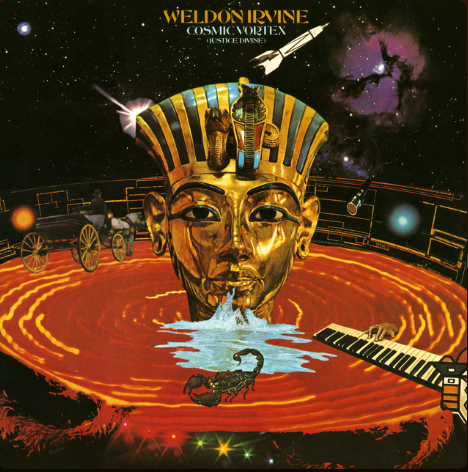
Anniversary picks this month include a big 60th shoutout to The Rolling Stones debut (see a little piece on my thoughts further down the page), 50th call outs to jazz-funk-soul greats Calvin Keys (Proceed With Caution!) and Weldon Irvine (Cosmic Vortex (Justice Divine)), Funkadelic (Standing On The Verge Of Getting It On). Moving into the 80s, REM’s Reckoning is unbelievably now 40 years.
Pulp’s His ‘N’ Hers LP, and Britpop’s near zenith with it, reaches the 30th milestone. An album that couldn’t be more different from the same year, Nas’ decade defining Illmatic is also 30 this month.
We now reach the unfortunate part of the playlist selection: the deaths or death in this case of the one of the last mavericks, John Sinclair. Synonymous for steering and kicking out the jams in his short role as manager of Detroit’s renowned rebel rousing motherfuckers The MC5, renegade poet, scholar, activist and establishment rattler John Sinclair is also remembered for his free radical zeal and dalliances with the law.
Even too hardcore for the MC5, Sinclair’s foundation of the anti-racist socialist White Panthers, and his countless associations with equally revolutionary counterculture players and shakers, marked him out; leading as it did to the now infamous drug bust for marijuana possession in 1969. Whilst his love for the herb and gesticulations, whether through poetry or diatribes, is in no doubt, the way this particular bust was set-up (for what was a very insignificant amount of drugs) is considered heavy-handed and unjustifiable. Handed an initial ten-year sentence, Sinclair’s status in the “heads” and political agitators’ communities had singled him out as a poster child for deterring the like-minded boomer generation from stepping out of line. Fortunately (to a degree) this sentence and media furor galvanized support and sympathy and reduced that ten-year stretch to two, with Sinclair emerging from jail in 1971.
Keeping his hand in so to speak but taking up residency in Amsterdam – a much safer bet -, the beatnik jazz sage continued to perform, write, and record. I’ve chosen a mere smattering of his recordings.
I always sprinkle a few newish tracks into the cross-generational mix. This month it’s the turn of the Neon Kittens, Mick Harvey, Nduduzo Makhathini and Forest Swords.
The rest of the playlist, well, it’s just tunes I played out, own or just rate. In that vein, there’s Mary Wells, Nefertiti, The 3, The Mad’s, Okay Temiz, Danny Arakaki, Ilous and more….
Calvin Keys ‘Aunt Lovey’
Weldon Irvine ‘Love Jones’
Jean Wells ‘Somebody’s Been Loving You (But It Ain’t Me)’
Funkadelic ‘Sexy Ways’
Nefertiti ‘Miss Amutha Nature’
3 Melancholy Gypsys ‘The 3’
Nas ‘It Ain’t Hard To Tell’
John Sinclair ‘When Will The Blues Leave’
The Mad’s ‘Feels Like Love’
The Rolling Stones ‘Little By Little’
Eulenspygel ‘Menschenmacher’
Okay Temiz ‘Galaxy Nine’
The Monkees ‘Time And Time Again’
Donnie Fritts ‘Prone To Lean’
Danny Arakaki ‘All Thanks’
Samadi ‘La Luna Llena’
Coumba Sidibe ‘Djagolla’
Ilous ‘Chanson Chagrin’
John Sinclair ‘Ain’t Nobody’s Business’
R.E.M. ‘Little America’
Neon kittens ‘Schrodinger’s Party Animal’
Virna Lindt ‘Shiver’
Pulp ‘Joyriders’
The Twilights ‘Sorry, She’s Mine’
Mick Harvey ‘When We Were Beautiful & Young’
Clancy Eccles ‘I Need You’
Gerardo Manuel & El Humo ‘Where Did You Go’
Nduduzo Makhathini ‘Libations: Omnyama’
Forest Swords ‘Torch’
John Sinclair ‘Sitarrtha’
__//ARCHIVES\\__

50th Anniversary to Guru Guru’s Dance Of The Flames and a staggering 60th to The Rolling Stones’ Debut.
Guru Guru ‘Dance of The Flames’
(Atlantic Records)
Trawling around Europe – and wherever they found a door that was laid open to them – like a ragtag gypsy caravan convoy, Guru Guru took their 1973 album, Don’t Call Us (We Call You), out on the road. With most of their monies funneled into purchasing a solid and heavy monolithic ballsy sound-system, they bled dry the ears of many a ‘head’.
The trios imbued in sonic genius and omnivorous lynch-pin guitar gunslinger, Ax Genrich, somehow managed to disappear from this mad procession, leaving the group and heading into nigh obscurity. His difference of opinion on which direction the ennui band of lunatics should progress resulted in a split, with Mani Neumaier hell bent on creating improvisational material against Genrich’s more delineate structured compositions – though it must be made clear that Genrich always threw himself unwieldy into every track, regardless of who wrote it or what form it took. For a scene that produced an abundance of over-qualified, sickeningly gifted, innovative, and erudite guitarists – West Germany spewed them out like an ever-efficient Volkswagen production line – it was, you could say, a job to stand out from the mighty throngs of erudite axe welders. Yet Genrich with his re-wired Hendrix and deconstructed rock’n’roll space licks, managed to leave an indelible footprint in the Krautrock canon, and hall of fame.
To plug this gaping chasm, and before embarking on the next LP, the one-time member of the progressive jazz outfit Eliff and exotically named Houchäng Nejadepour – half German, half Persian – joined the one-album veteran Hans Hartmann and founding father Neumaier to become part of Guru Guru mark III. Talented in many disciplines including guitar and sitar, alongside both compositional and technical production skills, Nejadepour added a more Popol Vuh-esque flavour to the band’s sound, lending Guru Guru a Balearic and far eastern quality. Such was his contribution – though this could also be partially down to Neumaier’s lack of new material – that the well-talented troubadour composed half of all the tracks on their next album, Dance Of The Flames. Unfortunately, that listless and cold-footed obligation to move on, led to Nejadepour’s departure soon after the LP’s recording in the Spring of 1974 – his replacement was Gila axe man Conny Veit, who himself only managed a short sojourn of a few months.
Dance Of The Flames, the second release on Atlantic, not only saw a wider and more cosmopolitan influence and catchment, but it also grew fat on a robust hard rock sound, which at times plunged into the dark recesses of Gothic heavy metal. Andalusian vistas and South American themed Sambas cut the collection of eight-songs into two camps. Neumaier, as chief patriarch, tends to either brood on or veer towards folly. Take the opening grandstanding ‘Dagobert Duck’s 100th Birthday’, a paean ode to Donald Ducks tight-beaked Uncle Scrooge, that could also be a reference to the last Merovingian king of the Franks, but then maybe not. The track features a display of fatuous duck-call kazoos and outlandish gestures of both The Edgar Winter Bands ‘Frankenstein’ and King Crimson, on showboating duties. But then there are also ethereal opuses, such as the romanticized ‘The Girl From Hirschhorn’ – a lament to the mysterious figure of affection, who resides in the nearby German town of the title – to balance it all out.
Production values are high, and slickly executed with every note, no matter how drenched in echo, reverb, or fuzz, all audible and separated apart. Those erratic rolling time signatures and unruly voracious drum solos of Neumaier are all still in evidence, as usual, as are the dependable assiduous bass runs and jazz riffs, favored by Hans Hartmann who’d joined the Guru Guru family the previous year. The high-plain astral traveler, preparing us for a meeting with visitors from beyond the stars, is almost erased from the groups original founding musical manifesto, replaced by a sturdier rock and, world music, agenda.
From the start:
Kazoo twitching gonzo trumpets announce the extravagant goof-off rock opus that is ‘Dagobert Duck’s 100th Birthday’ party anthem. This flitting Alice Cooper muscling rocker features a jovial, if under the surface portentous, ode to Donald Duck’s disparaging money grabbing capitalist Uncle Scrooge – known in Germany as Dagobert. Macho feats of savage and squalling guitar solos brand scorch marks across the stonking, stalking monster backing track; Nejadepour hurtling through the scales at a rabid rate of knots, hoping to erase the hovering presence of Ax Genrich, with his own blistering blurry-eyed fret work. Gratuitous and highly ridiculous in equal measure, this slab of over-cooked mega prog, is used as some kind of showcase, just to prove their mettle.
An inexorable ethereal and lightly laid-back gallop of a groove rolls into view over a harmonic pinpoint sweeping introduction. The diaphanous love pinning tryst, ‘The Girl From Hirschhorn’ – placed highly in my all-time top 100 Krautrock tunes, just in case you were wondering – floats in on the dreamy breezy melody. Hans Hartmann builds up a repetitive pounding bass line, as a gliding quivering lead guitar preens and majestically swoons along to the rousing pleasing and drifting backing. After seven-minutes of proto-Amon Düül II Wolf City era bliss, and dashes of love-in Acid Mother Temple – you can see why Neumaier went on to work with them – a vocal relief sublimely transcends the soundtrack, as Neumaier exhales joyfully –
“I can’t stop thinking of you.
Where could you be, little babe,
Why I am gently playing this song for you?”.
With his querying display of lament finally let out, the band hyper-drive towards a lunar wah-wah stop/starting outré; shimmering in reverb and slipping into a jazz-rock sporadic free-for-all, that spills over and onto side one’s closing track, a bombastic spasmodic odyssey.
‘The Day Of Time Stop’ is Sun Ra, Beefheart and Santana all sharing a pleasure voyage to the 5th Dimension. Staccato timings create a jump and off-kilter raging loop, that acts as a cyclonic spiraling blast for Nejadepour to launch another blast of light-speed attacking pomp, searing from his bewildered guitar. Stumbling drums and octave hurling bass brew up a right shitstorm before the trio use the Arthur. C. Clarke galactic elevator to the stars, disappearing into some distant cosmological whirlpool of depravity. Like Edger Winter, our maddened guitar alchemist, runs wild, flipping through key changes and reeling off utterly fanciful and one-fingered licks – total filth.
Side two begins with the album’s title track. Neumaier promptly rattles off a smashing cymbals introduction, as Hartmann slaps his bass around some bending rhythms. Everything is coated in a strange reverberated and, reversed effect, flipping backwards and forwards, stretching out the instrumental and whipping it into a twisted carcass of a song, with the very air itself sucked out into some kind of vacuum.
A taste of the Samba is up next, albeit an Hieldberg etymological version of the sun-kissed exotic dance. Nejadepour’s sprightly jazz-tinged composition sounds like a happy-go-lucky Yes, twinned with the be-bop indulgences of Herb Albert. Hartmann twangs and bounces along on the contra bass, as a cheerful Neumaier taps away on the congas, each of them enjoying the succinct distraction that is ‘Samba Dos Rosas’ – just one of Hejadepour’s Balearic enthused joints that make up most of side two’s track list.
‘Rallulli’ is cast from the same mold, but steers closer to home, as the musical accompaniment melds together fits of acoustic jamming and hidden-in-the-attic sound effects. Tablas, congas, and a trapped jar of hornets produce a strange old avant-garde miss-mash, the final word going to a flushed toilet – perhaps a critique of the track, or more of that Neumaier humor.
Those Andalusian plains and mountains come a calling, as pranged delicate harmonies add to a pained melancholic mood-piece entitled ‘At The Juncture Of Light And Dark’. Hemmingway-esque Death In The Afternoon allusions are cast, with resplendent flamingo flourishes and a suspense filled air of Spanish mystery – file under evocative musical narrative.
Bringing the album to a dramatic close is the doom lit curtain call of ‘God’s Endless Love For Man’, a Gothic heavy metal droning and throbbing prowling instrumental that stabs a fork in the eye of the creator. More like an attempt to soundtrack the works of Bosch then a hymn to the divine, this bubbling cauldron of a stonker takes over from Amon Düül II’s Phallus Dei quest and drags Black Sabbath through the killing fields. This is indeed some scary shit: Guru Guru on a fuck-rock satanical crusade, summoning up some kind of end-plan Armageddon. Interspersed in the mire, bursts of rapid-fire jazz rich breaks and tangled glorious guitar solos add a glimpse of hope to this one-way helter skelter ride into the abyss.
The Rolling Stones ‘S-T’
(Decca) 1964
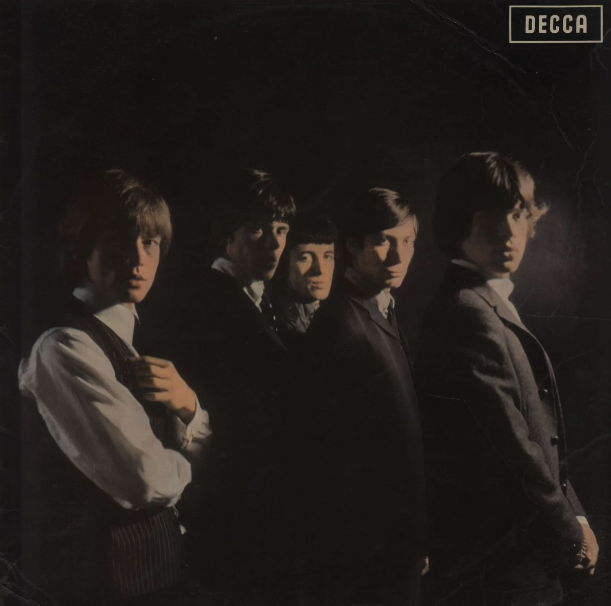
Those sulky near petulant straight-faced punks stare out from their dark shadowed album with a look that means business. Made-up almost entirely of cover versions, grabbed from the patron black blues and r’n’b characters of Chicago, The Mississippi and Tennessee, the debut LP is almost an exalted tribute to their heroes.
Rambunctious and loud, the pure rawness and bleed over of the instruments (something that no-one seemed concerned about in the studio at the time; encouraged by their manager Oldham) as they filled each other’s space, was a mixture of giddy adulation and blue-eyed indecorous rebellion. From the frayed, proto-punk amateurish sound of ‘Route 66’ to the gospel ye-ye of ‘Can I Get A Witness’, this album shambles along and offers up some convincing attempts to sound like Jimmy Reed, Willie Dixon and Slim Harpo. Of course, they fail but the results are better than the intention in many ways; the vital kick start to a whole scene and call for a generation. Can it really be sixty years old this month?!

