The Perusal #57: Hannah Mohan, Black Diamond, Society Of The Silver Cross, Passepartout Duo & Inoyama Land…
July 3, 2024
A WORLD OF SONIC/MUSICAL DISCOVERIES REVIEWED BY DOMINIC VALVONA
(Unless stated otherwise, all releases are available now)

Photo credit: George Rae Teensma
Hannah Mohan ‘Time Is A Walnut’
(Egghunt Records) 12th July 2024
Geographically settling long enough to pen this solo songbook offering, but anything but settled emotionally, the former And The Kids vocalist-songwriter Hannah Mohan attempts to process the break-up of all break-ups.
After leaving home at the age of sixteen, restless and curious, Mohan spent her formative years on the road, crisscrossing North America, busking and honing a creative craft. On returning home, after five years of travel and travail, Mohan formed And The Kids with a school friend. After a trio of albums between 2014 and 2019, and with the global pandemic’s nefarious effects on the music industry and wellbeing, the band unfortunately came to an end. Throw in the heartache, the confusing cross-signals of a fateful relationship, and you’ve suddenly accumulated a whole sorry mess of emotional pain and a lot of questions that need addressing or analyses.
Luckily Mohan is a highly talented musician and songwriter, able to turn sorrow and reflection into gold. For Time Is A Walnut is a rich album full of familiarity and yet melodically and lyrically idiosyncratic, shaped as it is to Mohan’s particular cadence, timbre and way-with-words.
Less moping and more a full gamut of hurt, weariness, despondency, incriminations and plaint, Mohan travels full circle on her break-up journey: from shock to vented indignation, from losing one self in the moment to escaping from reality. All the feelings of resentment, the pulling apart of a fragile soul, and decoupling sound surprisingly melodious and disarmingly anthemic throughout: even during the bitterest exchanges and grievances.
Hand-in-hand with producer and musician Alex Toth (of Rubblebucket and Tōth fame), working away with little sleep in Mohan’s basement, the resulting thematic songbook is filled with great alt-pop songs; some with a country lent, others suddenly mystified and misty with an air of atmospheric Celtic vibes, or, channeling 80s new wave German synth music – Toth, I assume, almost in DAF mode on the darker-lit, hurting ‘Peace Be The Day’.
Almost breezy in parts, there’s tunes galore as Mohan evokes the Cowboy Junkies, Angel Olsen, Tanya Donelly, Madder Rose, Sophie Janna (especially on the vapour-piped Ireland illusion ‘Runaway’) and Feist. But you can also throw in a touch of dry-ice 80s synth-pop and a touch of Bacharach on the whistle-y saddened beauty that is ‘Upside Down’.
In sympathy and often softly lifting, there’s a fair use of trumpet on the album. Less jazzy – although saying that, there’s vague suggestions of Chet Baker – and more Southern, nee Mexican serenade and atmosphere, that instrument’s suffused and occasional enervated brassy blazes is a perfect fit with Mohan’s candid, sanguine delivery.
A congruous choice of guest, working in a similar mode, songwriter-musician Lady Lamb features on the 60s troubadour echoed, vibrato-trilled sing-a-long anthem ‘Hell’. The details and the unforeseen circumstances, the ‘messy eroticism’ and loss, disconnection from someone else’s life are all lay bare in a melodious beauty.
Hannah Mohan rides the roller coaster of a drawn-out break-up with quirkiness and vulnerability, turning tortuous heartache into one of the best and most rewarding songbooks of the year. Mohan may have let her soul sing out, as she comes to accept an emotional turbulent period of stresses and anxieties and pain. But whether she’s finally pulled through the other side or not is up to you the listener.
Black Diamond ‘Furniture Of The Mind Rearranging’
(We Jazz)
Transported back in time, and then propelled forward into the now via Chicago’s musical legacy, its rich heritage of innovators and scope in the world of jazz, Artie Black and Hunter Diamond’s dual saxophone and woodwind focused vehicle can trace a line from the Windy City’s smokestack bluesy outlines of the 50s through the icons Sun Ra, Roscoe Mitchell, Eddie Johnson, Lester Bowie, Art Ensemble Of Chicago, Anthony Braxton and the hothouse of undeniable influence and talent, the Association For The Advancement Of Creative Musicians.
Across an ambitious double-album spread of both quartet and duo mode formations, those Black Diamonds don’t so much shine as smolder and fizzle to a smoky and simmering resonance and metropolis backdrop encroached by wild jungles and fertile growth.
The majority of this moiety evolution is handed over to the quartet ensemble, with Artie and Hunter joined by the softened taut but flexing and always on the move double-bassist Matt Ulery and the constant cymbal splashing and rolling, fills and tight woody rattling drum breaking drummer Neil Hemphill. That set both swells and finds pause to a certain lowness and more weighted pull of the freeform and melodic, the rhythmic.
Saxophones sound willowy as they either entwine, take turns on the climb, exhale drawn-out mizzles or drizzles; all the while the action recalls every formative era from the 1920s onwards, from the blues to the African, the spiritual, bop and the serenaded. All those cats mentioned in the opening paragraph pop up alongside the Pharoah, Ornette, Evan Parker (I’m thinking of the woodwind elements, which both Hunter and Artie switch between throughout), Mingus and on the opener, ‘Carrying The Stick’, Lalo Schfrin of all people.
From concrete to near pastoral dustings, a menagerie of bird-like brass and woodwind sings and stretches, often letting the steam out of those valves with a bristle and rasp. The drum and bass combo keep it all moving forward, developing, with Ulery’s slackened bass even opening a couple of tracks.
In a more stripped-down and even more experimental mode, Side D (in old money vinyl terms) of the album is given over to the duo format of sax and woodwind.
Leaning towards Braxton, John Zorn and Andy Haas in near-non-musical freedom of expression, they probe new, amorphous spaces without clear signage or reference to environments or moods. The saxophone often sounds reedier, more rasping, and is enveloped with the very sound of its brassy metallic resonance and surface makeup. Every exhaled breath is used to conjure up the mysterious, the onset of some unease, but also a pauses for certain moments of reflection.
Perhaps a mizmar played at dusk, an ominous peace or a meditative haze, these experiments, forms of tonal, timberical evocation are difficult to describe or catalogue. Only that they fit in with the freedoms, the expressions and language of the Chicago school of freeform inventiveness and exploration, deconstruction of an instrument.
Black Diamond run with the ‘stick’ or baton passed on by the Chicago hothouse of jazz notables and luminaries, proving themselves to be a quality, dynamic act ready to push forward. Rearranging the cerebral and musicality furniture as never sounded both so classy and explorative.
Damian Dalla Torre ‘I Can Feel My Dreams’
(Squama Recordings) 12th July 2024
Subtle in approach and process, the cross-fertilization of South American and European cultures, prompts and environments on Damian Dalla Torre’s second album, I Can Feel My Dreams, is a tangible synthesis of abstract feels, moods and an exchange of musical ideas.
Nodes, points in a larger dream-realism canvas reference the Leipzig-based multi-instrumentalist, composer and producer’s footprints across both continents.
Sparked by a residency to teach, write and practice his craft in the Chilean capital of Santiago, Torre absorbed all that city and its surroundings had to offer: the vistas, colours and art. With a certain amorphous guaze that magical landscape of rainforest canopy enveloped menageries, flowing waters, Andean fluted heights and valleys, and exotic lushness is merged effortlessly with complimentary vocal harmonies and assonant arias, dewy and caressed extended dainty picked harp, quivers of guitar, trembles of piano and spells of electronica. The realms of jazz, sparse techno, ambience, voice experiment, nature, futurism, sound art and the new age seamlessly yield and relent.
The haul of notable guests invited to play on the album is staggering, and in no way distracts from the main leitmotifs and direction of drifted, wispy travel. Instead, each guest enhances with a certain gracefulness and calm each musical expedition and piece of mood music. Unsurprisingly given Leipzig’s musical history and legacy (home to an enviable catalogue of classical music giants over the centuries; perhaps one of the biggest most impressive concentrations in that genre’s history of iconic composers and musicians), but also its more modern burgeoning jazz and electronic music scenes, there is a host of musicians and artists from or based in the German city taking part on the album; cue the blossoming ‘genre traversal’ Jan Soutschek, ensemble singer and soprano soloist Viola Blanche, guitarist and composer Bertram Burkert and jazz improviser, pianist and composer Jonas Timm. Add to that the Austrian-Ethiopian harpist Miriam Adefris, the Danish composer and arranger Christian Balvig, pianist Felix Römer and the range and influences probe even further and deeper. Altogether, from the replenishing waters of renewal to the generator and manipulated electronics of modernity, all these contributions prove beneficially harmonious and complete.
This is a biomorphic world in which echoes of Eno, Alice Coltrane, Talk Talk, Oh No Noh, and Lara Alarcon all coalesce and dream. The architect, Torre, manages to keep everything constantly green and lush; showcasing a flair for pulling together a myriad of sources to create something almost familiar by new.
Society Of The Silver Cross ‘Festival Of Invocations’
(8668 Records)
Stepping from the shadows after abstaining from the material world for the last five years, the matrimonial partnership of Joe Reinke and Karyn Gold-Reinke return with a second rebirth, regeneration of Indian, Byzantium, Egyptian and Gothic imbued pathos and bathos.
Harnessing the themes of fate, the eventual and unavoidable specter of death and its harbingers, its demons, and even its angels, the Seattle couple walks the path of hermetic cults, atavistic Indian spiritualism and magik to induce cosmic awakenings and transformations. With all of mortality’s connotations and meanings, death is also seen as a renewable force on this couple’s second album under the occultist Society Of The Silver Cross heading.
But there’s no escaping the atmospheric dread and the curiosity of deathly rituals invoked by the Indian-style drones, harmonium-pumped sustains and concertinaed bellows – part ‘Venus In Furs’ Velvets, part Alan Edgar Poe shipwreck hauntology shanty, and part courtly mysticism. And yet Karyn’s siren-esque duets with boa Joe can lift towards the light at times, escaping the Fortean broadcasting waves, the splashed crashed tumultuous sea-like cymbals and gongs, Book of the Dead mantras and distressed Andy Haas-like geese pecked sax (if it is indeed even a saxophone) hauntings.
But for a majority of the time the couple’s counterbalancing act of apparitional, bewitching and more baritone, from the bowels of the deep and human soul, vocals muster spiritualist visitations, a theatre of sorrow, past incarnations and an unbreakable multi-levelled circle of added magic both heavy and foreboding.
I was picking up spells of Death In June, Nick Cave’s duet with Kyle, Mick Harvey’s time with P.J. and Amanda Acevedo, Backworld, David Lynch, Dead Can Dance, Current 93 and Angels of Light. The folksy Gothic-art-music-shanty-motioned ‘When You Know’ (with my imagination) sees Serge Gainsbourg laying flowers on Jim Morrison’s alter in the Cimeti ére du Père-Lachaise. The mystical finale, ‘Rajasthan’, not only features those synonymous Indian tones but also has an air of the Spanish-Baroque guitar and a touch of The Limiñanas about it. Shrouded in rousing tribal dramatics and ether visions, the couple’s lasting nod to the land in which they spent much time absorbing the cultural-musical spiritualist vibes before making their debut singles and album (Verse 1), is steeped in the mists of time; invoking India’s largest state before eventual unification, and its history of early Vedic and Indus civilizations. “Rajasthan” is a portmanteau of words, but can be translated as the “Land of the kings”; its courtly, royal verbose and stately reputation echoes as the final word on this album of rebirth and the coming to terms with death. Making true on their previous chapter, Joe and Karyn once more follow the call of the silver cross-societal allure. Atmospheres, processions and possession that are more than just songs, you don’t so much liberally catch, or, casually listen to each propound and chant-like forewarning as enter a fully constructed world of elementals and alchemist mystique. These are drones, dirges and more opened-up astral projections that will stay with you days after first hearing them. A Festival Of Invocations is a chthonian play of supernatural, spiritualist and funeral parlor riches; a successful follow-up after a five year hiatus.
Droneroom ‘As Long As The Sun’
(Somewherecold Records) 19th July 2024
Amorphous Western sun-cooked melting mirage panoramas are stoked and drawn from the Droneroom’s long form guitar peregrinations. The sixth (I believe) alt-country drone-cowboy album from Blake Edward Conley’s singular experiment for the Somewherecold label, As Long As The Sun is a filmic soundtrack-like conjuncture of Paris, Texas, Blood Meridian and a myriad of supernatural and alien visions of the ‘big country’.
The Western sounds of the twang, rattle and bends is unmistakable, and the sounds we’ve taken for granted, like the freight train convey that hurtles down the tracks and with it’s velocity and size shakes the passing dinging and ringing rail barrier junction, but Conley’s familiar markers, references make them near hallucinogenic under the sun’s powerful debilitating rays. I can imagine Ry Coder fronting Ash Ra Tempel, or early Popol Vuh relocated to the arid planes of outlier Texas, or a mule-riding Don Quixote tilting at the shadows of cacti.
A contemplation of all life’s spiritual quandaries and fate no less, all elicited from the magnified and amplified reverberations, quivers, strokes, gestures, brushes and more driven rhythmic passages of the guitar. Fuzzed-up with flange and sustain, these descriptive lines, resonated waves and vibrations are like drawn-out echoes of Michael Rother, Gunn-Truscinski, Jason Pierce (in his Spaceman 3 days) and Yonatan Gat. On the searing, razored and heated coil moody ‘Last Train To Soda Spring’ (the small Idaho city which gets its name from the 100s of carbonated water springs that dot the landscape) there’s a build-up of layering and rhythms that breaches the hazy space rock barriers – Hawkwind crosses fully into Motorhead. Whilst the shamanic marooned, railroad vision, ‘East Facing Window’ has a kind of krautrock generator field around it that hums and pulsates, invoking both alien and paranormal activity – I’m thinking a little of Roedelius’s experimentation on Sky Records.
As Long As The Sun beats down upon Conley’s cowboy hatted noodle, its gravitas, life force and heat inspiring serious abstract empirical vistas, atmospheres and the soundtrack to a movie yet to be made.
Luke Elliott ‘Every Somewhere’
(AKP Recordings) 12th July 2024
Composing a more inclusive biosphere and exchange of cultures, influences and sounds, the Amsterdam-based, Leeds born, sound artist Luke Elliott transforms his source material of field recordings (from what could be acts of making in a workshop to tramples through the undergrowth of Moat Farm in Somerset and the windy tubular sea organ of Zadar in Croatia) into a fully working lunar off-world vision.
A new world no less, Every Somewhere’s vague, recognizable, or by happenstance, playful tastes of gamelan and Southeast Asia, early analogue modulations and patterns, tape music experiments and sonic land art (that already mentioned Zadar organ, which was built as a large scale land art instrument to bring some sort of random melodious colour to the Dalmatian coastal town’s monotonous concrete wall scape, rebuilt with haste after the devastations of WWII) are sampled then re-sampled, fed through effects and an apparatus to build a more sympathetic, attentive environment.
At least influenced in part by a fascination with Alfred W. Crosby’s ‘Colombian Exchange’ theory, as outlined in his 1972 propound book, which gave a now fashionable name to the legacy of colonialism and the destructive and loaded exchanges between the Western hemisphere and the then ‘New World’, Elliott’s imaginative world is more nurtured towards a beneficial exchange of cultures.
In a liminal zone between the earthly, otherworldly, near cosmic, dreamy and liquid, the kinetic, algorithmic, arpeggiator and magnetic atoms and transparent notes bobble and squiggle about over atmospheric ambience and to the rounded rhythms of paddled tubular obscured instruments. And then, once the guitar is introduced to tracks like the glassy delicate ‘Objects Of Virtue’, the mood changes towards a bluesy post-rock vibe.
Magical escapes, stargazing from the observatory, solar winds, near operatic cloudscaping and various gleams, glints and globules recall Goo Ages’s Open Zone album, Tomat, Raymond Scott, Edgar Froese and Zemertz.
Elliott’s debut for the astute AKP Recordings label maps tactile environments both intriguing and melodically mindful. It paves the way for new visions of a more equal future.
Passepartout Duo & Inoyama Land ‘Radio Yugawara’
(Tonal Union) 26th July 2024
The freely geographical traversing Passepartout Duo find congruous partners with collaborative foils Inoyama Land – those fine purveyors of Japanese Kankyō Ongaku, or environmental ambient new age music – on their latest balance of the tactile, organic and synthesized.
A free association of cultures and musical processes, despite laying down loose perimeters, the Italian/US duo of Nicoletta Favari and Christopher Salvito combine explorative forces with the Japanese musical partnership of Yasushi Yamashita and Makoto Inoue for a remarkable interaction with their surroundings, a mix of children’s instruments and percussive and wind apparatus.
Favari and Salvito have already appeared on the Monolith Cocktail, with reviews of both the Chinese art platform-backed Vis-à-Vis and Daylighting albums. Those experiments in the timbrical, rhythmic and melodic, imbued by the Meili Mountains, Lijiang and fabled imaging’s of Shangri-La, were created during and in-between the restrictions of the Covid pandemic. A year before news broke of that global crisis the duo travelled to Japan. Connecting with the Inoyama Band, a duo that had transformed the abstract feelings, magnetism, sublime transcendence and peace of the landscape since the 1980s, they were invited in to their host’s shared space sanctum – an auditorium inside Inoue’s family-run kindergarten in Yugawasa that doubles-up on Sundays as a studio.
Set out on tables for all participants, a myriad of playful and more studied instruments and a set of “game rules”. The quartet could only use the mix of electronic and acoustic instruments separately or altogether for ‘revolving duets’, with each taking turns to play through a cycle of ‘four duos’. But then ‘anything’ was permitted in that session, which lasted three hours. In this complete state, that long improvisation and set of prompts has been distilled into eleven more digestible parts. Within the sonic, contextual and languid peaceable realms of the Kankyō Ongaku genre and greater scope of Japanese acoustic-electronic music, there’s an air of Satoshi Ashikawa, Yasuaki Shimizu, Yoshio Ojima and Tomo-Nakaguchi about this album. You could add hints of Slow Attack Ensemble, Eno, the Hidden Notes label and Bagaski to a subtle layering environment that takes in all points of the compass, with chimed bulb-like notes and the ringing, searing and chimed bamboo music of Java, Tibet, Vietnam and the dreamy.
The recognizable sound of soft-mallet patterned and paddled glockenspiel and xylophone merge fluidly with hand bells, higher-pitch whistled recorders, concertinaed wafted melodica and harmonicas, and racks of wind chimes. Whilst atmospheric elements and the use of electronic devices create mysterious vapours, oscillated wisps, knocked rhythms and floppy disc sampled voices.
Gazing at diaphanous beamed and lit cloud formations from a comfortable snug in the landscape, or, submerged below Mexican waters inhabited by the strange aquatic Axolotl salamander, each part of this performance is somehow similar and yet variably different. Between the illusionary, dreamy, sonorous, see-through and swimmingly, two sets of adroit partnerships create organic meta and a sublime near-nothingness of slow musical peacefulness and environmental absorbed transience.
Myles Cochran ‘You Are Here’
(9Ball Records) 26th July 2024
Unhurried and once more placable, the all-round embracing American composer, songwriter, multi-instrumentalist and producer Myles Cochran follows up his 2021 debut album (Unsung) with another carefully spun canvas of subtle emotive pulls, TV and filmic-like soundtrack scores, ruminations and mirages.
Traversing an amorphous palette of Americana, the blues, classical, folk, experimental, Baroque and traditional, Cochran integrates his Kentucky roots with spells in New York City and the UK (where he’s lived for some time) whilst letting his unprompted imagination travel to more exotic climes and cerebral dreamscapes.
Although an adroit player of many instruments, Cochran’s work is mostly led, directed, informed and suffused by both the acoustic and electric guitar. Understated but keen and expressive, his choice of guitar is once again left to stir up visions of a celluloid panoramic and more mystifying melting Western America, the Appalachians, Ozarks and home. Only this time around he’s also invited in the accomplished cellist Michelle Packman and bassist Reggie Jones to add a transported subtle semblance of chamber music, period drama and jazz. Jones, playing a stand-up (or upright) bass throughout, emphasizes rhythm, a pace and sense of travel – especially so on the shaky rhythmic travelogue ‘Making Something Out Of Nothing’, which, by its title, indicates a conjuring of a composition, performance out of just playing or fiddling around, but evokes (for me) the imagined title sequences of some wintery Northern American drama, out on the road with the harsh, snowy landscape passing by the window of our protagonist’s truck. Meanwhile, the following countrified-meets-the-pastoral-and-renaissance crafted ‘Signs And Symbols’ has an air of Fran & Flora about it with the sounds of a breathy and fiddle-like cello.
Widening the vistas, the quiet inner battles of turmoil and conflict, sympathetic bowing and pining cello enhances the mood and subtle expressions of Cochran’s compositional style, which both ebbs and flows between the echoes of Chuck Johnson, Ry Cooder, Bill Frisell, John Fahey, Martin Renbourn and Jeff Bird.
There’s a pick up in the pace with dusty brushed drums, but for the most part it’s a quivery horizon gaze of sophisticated slow to mid-tempo observations and introspection. None more so then on the mature vocalized jazzy-bluesy and dusty ‘The Deepest Sea’, which sounds like Hugo Race or Chris Eckman in questioning Leonard Cohen mode backed by Chris Rea.
A culmination of travels, thoughts, hopes and fears, You Are Here further expands Cochran’s musicianship and influence. Those Americana roots are being pushed further into new pastures, helped by his cellist and bassist foils and freshly attuned ear. Eroded, waned, giving and dreamily melting in the heat, his guitar parts overlap and transmute into piano, strings and the ambient. Each track is like a short score, the qualities of which offer sensibilities and a way of following or telling a story, a moment in time or scene. In all: a very sensitive work of maturity and unrushed reflection.
___/+ THESE RECOMMENDATIONS IN BRIEF
Any regular readers will know that I pride myself in writing more in depth purview-style reviews with a wider context. This means I naturally take more time and effort. Unfortunately this also means that I can only ever scratch the surface of the 4000+ releases both the blog and I get sent each month. As a compromise of sorts, I’ve chosen to now include a really briefly written roundup of releases, all of which really do deserve far more space and context. But these are recommendations, a little extra to check out of you are in the mood or inclined to discover more.
Pocket Dimension ‘S-T’
(Cruel Nature Records)
Exploratory voyages into the kosmische and sci-fi, straight from the illustrated pages of Stewart Cowley’s Spacecraft 2000 – 2100 AD, the Lanarkshire-based artist Charlie Butler doesn’t so much launch as fire the languid thrusters into the mesmerizing, enticing and dream like voids of a soundtracked cosmos. On many levels, through four continuous stages, the drifted and wonder of space is balanced with fizzled raspy electronica and eventual IDM, siren wailing bends, shoots, and a rotating centrifugal force that seems to envelope the whole trip in both mystery and the presence of unknown forces hovering in the galactic ether.
Various ‘TRÁNSITOS SÓNICOS – Música electrónica y para cinta de compositores peruanos (1964-1984)’ (Buh Records)
Filling in the blanks in the story of South America’s experimental and avant-garde scenes, Buh Records throws the spotlight on Peru and a host of experimental boffins working to cross indigenous sounds with the new and yet to be discovered.
Off-world, futuristic, UFOs, tape manipulation, the shrills of something magnetic, steely industrial tools, reel to reel melting, mind bending and rattling old atavistic bones, assonant female voices, and shamen augers, this compilation includes examples from the likes of Arturo Ruiz del Pozo, Luis David Aguilar, and Corina Bartra; a wealth of cult composers struggling to explore new sonic boundaries in a country devoid of the apparatus, foresight and laboratory conditions. And so most of the atmospheric – sometimes heading towards chilling alien – and transmogrified Peruvian environmental peregrinations were recorded in private studios. The story and scope needs way more room than this piffy, glib little piece. Suffice to say, I highly recommend it.
Rehman Memmedli ‘Azerbaijan Guitara Vol. 2’
(Bongo Joe)
The history and travails of the fecund oil rich country of Azerbaijan are atavistic. This is a nation that has striven to gain independence from a string of empires: both Tsarist and Soviet Russia, Iran, Albania, and much further back, the great Mongol Khan Timur. Desired not only for its abundance in fossil fuels but for its geographical corridor to its fellow Transcaucasia neighbours of Georgia and Armenia in the west, to the south, Iran, in the north, Russia, and to the west, the vast inland lake, the Caspian Sea. And although at various times at war with its direct neighbour Armenia (recent flare ups have led to a startup in violence, and accusations of ethnic removal), the country’s close proximity to a mix of cross-cultural and geographical influences has led to an absorption of all kinds of musical styles.
Bongo Joe‘s second volume of ‘guitara’ music showcases is fronted by another Azerbaijan legend, Rehman Memmedli (the first volume was handed over to the equally iconic Rüstəm Quliyev), who first learnt the accordion and harmonica before picking up a relative’s guitar – but also the region’s synonymous traditional tar instrument too (an ornate curvy looking waisted long-necked lute). Suitably eclectic in styles, from belly dancing Turkey and Arabia to shimmy Bessarabia and local wedding music, Memmedli scores and scorches up and down the fretboard at speed. Spindling, bending, skirting and wobbling, and even sounding at times like an erratic stylophone, vistas and ruminating sonnets are conjured up from a nibble-fingered maverick: Persia, the Caucasus, and beyond are summoned forth from electrified scuzz and fuzz and drama.
Cumsleg Borenail ‘Fragile And Adaptive’
Video – Taken from the new album Time Is A pˈætɚn Of Shifting d͡ʒiˈɑːmətɹiz
Proving incredibly impossible to pin down, whilst impossible to fully keep a track of, such is the prolific output, the artist formerly known as Cumsleg Borenail has released a host of albums, EPs over just the last few months alone.
The latest, and discombobulating entitled, Time Is A pˈætɚn Of Shifting d͡ʒiˈɑːmətɹiz,will officially go live a week or so after this column. As a teaser, Borenail has fucked around with AI to produce this strange, biomorphic, tumorous metamorphous of metallic clay dancers, bound together in some super fucked up hallucinatory creepy body assimilation style video. I will admit that I fucking hate AI – ‘artificially inflated’ as someone has already quipped – so it is lost on me – for those who want the tech, ‘all models’ were ‘created in blender, then whapped into ADOBE to AI generate backgrounds and randomly alter model edges.’ But musically we are talking about whippy body music that channels Detroit mechanic funk techno and the sound of grooving over broken glass. Derrick May, Suburban Knight, Ron Trent in the mechanics of the surreal and industrial. As artificial as it all is, there’s a certain soul in this machine. I look forward to hearing the rest of the album later in the month.
Neon Kittens ‘In The Year Of The Dragon (You Were A Snake)’
(Metal Postcard Records)
System of downer sinewy post-punk, like the Pop Group falling on top of PiL, the latest video output from the ridiculously prolific Neon Kittens is another semi-metal-guitar-string buzz and grind of gnashing venom and risk. The vocals sound like a toss off and up of honey trap glossed fake AI and taking no crap no wave female provocateur in the mode of Michi Hirota, unimpressed by the snake-like actions of a former lover; the action, like a lost grated down stroke of Fripp(ery) from the Scary Monsters And Super Creeps LP.
Keep an eye out next week for Brian ‘Bordello’ Shea’s review of the band’s EP.
Dyr Faser ‘Crime Fever’
(Self-release)
Boston, Massachusetts duo of Eric Boomhower and Amelia May previously skirted the krautrock dreaminess of Amon Duul II on their hermetic, drowsy Karmic Revenge. They seem to change their sound, if only subtly, on each new album, and Crime Fever’s haunted, scuzzed playfulness leans more towards Lou Reed this time around – but only if he’d jammed with Dinosaur Jnr. Jefferson Airplane and Ty Segall.
Still, they maintain a buzzy, fuzzy, and even Byrds-like loose dusting of the psychedelic and a backbeat throughout, with those ether-giddy vocals tones of May invoking Blonde Redhead, Beach House, and of course a little of a slacker rock, shoegaze vision of Renate Knaup-Krötenschwanz.
Needs far more attention than I have the capacity to manage but have a read of my piece on their KR album from a while back to get enthused.
Hi, my name is Dominic Valvona and I’m the Founder of the music/culture blog monolithcocktail.com For the last ten years I’ve featured and supported music, musicians and labels we love across genres from around the world that we think you’ll want to know about. No content on the site is paid for or sponsored and we only feature artists we have genuine respect for /love. If you enjoy our reviews (and we often write long, thoughtful ones), found a new artist you admire or if we have featured you or artists you represent and would like to buy us a coffee at https://ko-fi.com/monolithcocktail to say cheers for spreading the word, then that would be much appreciated.
Tickling Our Fancy 083: Awale Jant Band, JZ Replacement, Ville Herrala, Passepartout Duo, Orkesta Mendoza…
March 18, 2020
ALBUM REVIEWS
Dominic Valvona
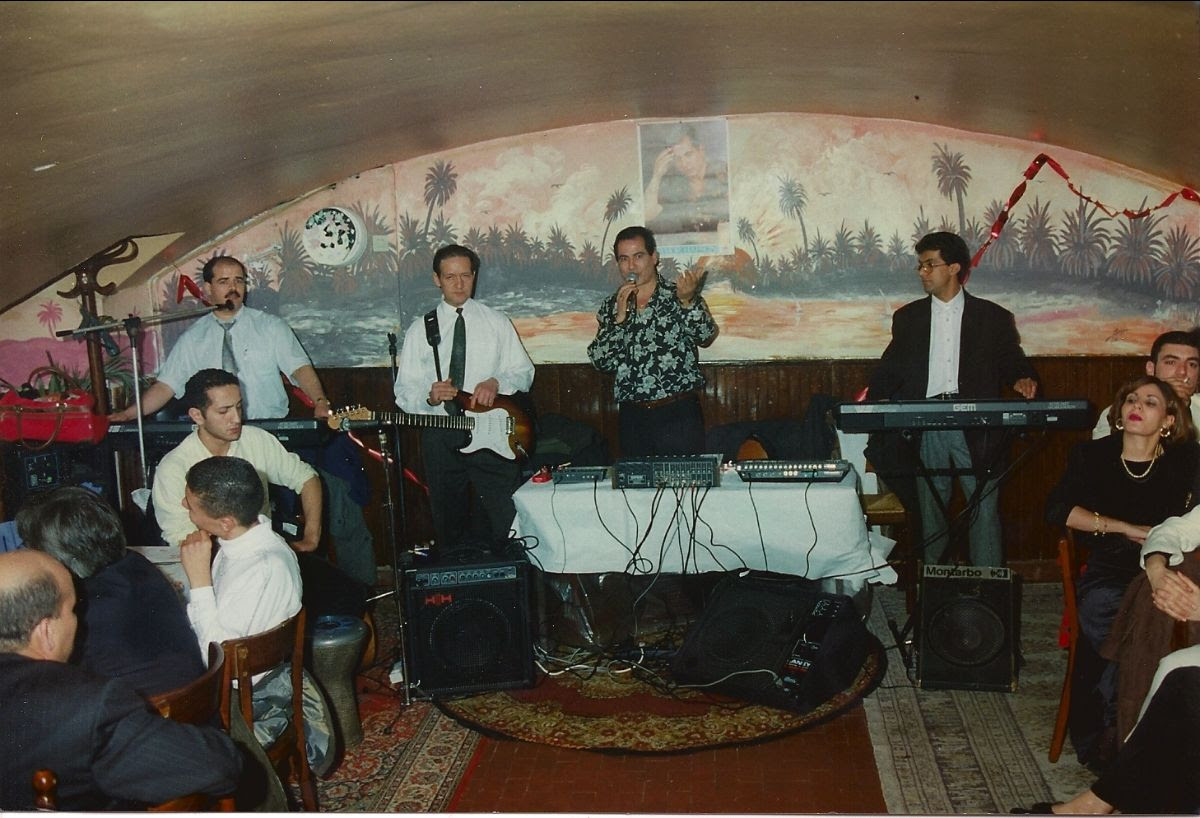
Easing the boredom of coronavirus lockdown, join me from the safety of your own home on a global journey of discovery. Let me do all the footwork for you, as I recommend a batch of interesting and essential new releases from a myriad of genres, which I hope you will support in these anxious times. With all live gigs and events more or less quashed for the foreseeable future, buying music (whether it’s physical or through digital platforms such as Bandcamp) has never been more important for the survival of the bands/artists/collectives that create it.
From Java, there’s the latest project from the Hive Mind label in collaboration with Indonesian music digger Kai Riedl, a showcase of 2007 recordings from Idjah Hadidjah & Jugala Jaipongan plus a number of reworked transformations from a host of sonic and electronic artists. Various Maghreb artists from the 80s and 90s Lyon café and club scene can be heard for the first time on vinyl with a new compilation from Bongo Joe, the electrified Raï, Chaoui and Staifi K7 Club collection. Formed in London, the combined talents of Senegal singer/songwriter Biram Seck and French guitarist foil Thibaut Remy come together once more under the Awale Jant Band umbrella for another Afrobeat and soul showcase, Yewoulen. I also take a look at the Passepartout Duo of Nicoletta Favari and Christopher Salvito’s amorphous travelogue peregrination through Switzerland, the Caucasus, former Soviet Asiatic satellites and China performances, Vis-à-Vis; available next month on vinyl and digitally.
There’s also the upcoming Mexican cross border fraternization musical odyssey from Sergio Mendoza and his Orkesta, Curandero.
Back in Europe jazz bassist extraordinaire Ville Herrala is doing inventive things as a solo artist with the double bass; releasing his debut experimental LP for the Helsinki label We jazz. Still in a European jazz setting, there’s the debut LP from the disruptive JZ Replacement pairing of Zhenya Strigalev and Jamie Murray; the saxophonist and his drummer foil collide together with a myriad of rhythms and ideas to kick jazz into a new decade. We also have the most recent ambient voyage across graph paper from Moonside Tape’s founder Jimmy W, Midi Canoe.
Idjah Hadidjah & Jugala Jaipongan ‘Javasounds Vol.1: Jaipongan Music Of West Java’ (Hive Mind) LP/6th March 2020
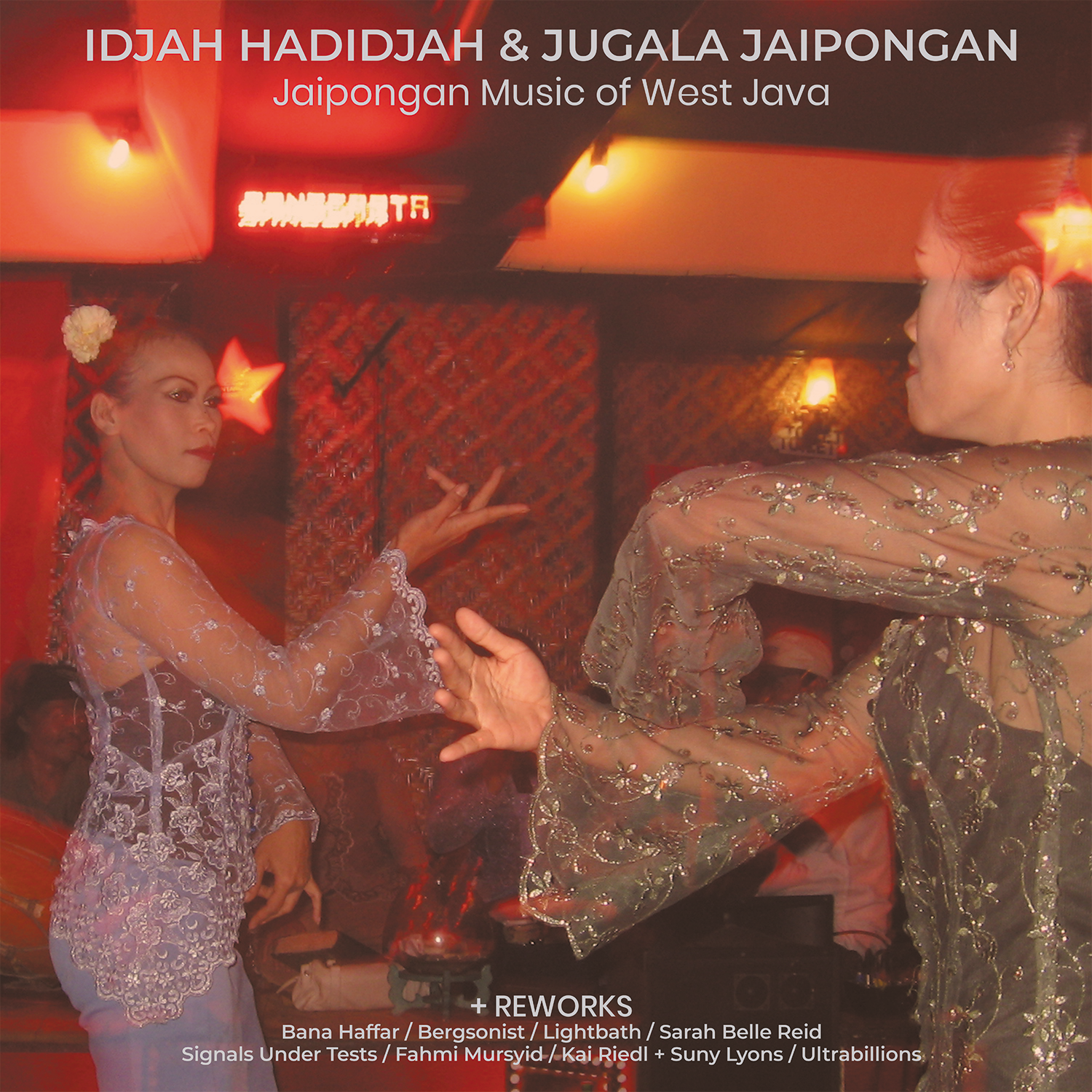
Borne from a dire situation, Indonesian composer and choreographer Gugum Gumbira circumnavigated the country’s authoritarian ban on rock and roll by creating the traditional infused Jaipongan style. Hidden beneath a hybrid of honest harvesting ritual music and atavistic gamelan lay a more sensual spark that encouraged dancing intimacy and a rapid, galloping rhythm that pushed this musical form towards rock: seen by those who made it and loved it as a rebellious gesture. The authorities seemed to have been unaware of its creator’s motives, as the dynamic sound spread throughout the country, unabated, finding favour amongst both the working classes and more affluent.
Mesmerizing with its quickened, often complicated, rhythms – which either flow constantly like a trickle or tumble in a sporadic fit – and bowed quivers, Jaipongan percussion and undulated metallophones are counterbalanced by untethered vocals of romantic and humbled wooing; sung, in this case, on this new edition of Gumbira recordings by the beautiful aria fluctuating Idjah Hadidjah. Gumbira met his muse in the early 80s, luring the iconic singer away from the Sundanese Shadow Puppet Theatre to join his Jugala Orchestra troupe; a collaboration that would go on to last the decade. They would reunite in 2007, recording at the Jugala Studios in Bandung, Java, backed by the studio’s house band. That session now forms the basis of this new vinyl/digi release from Hive Mind and the Indonesian music evangelist Kai Riedl, who present six original tracks from that reunion and a second disc of ‘reworks’ from a variety of contemporary artists in the field of soundscaping and sonic transformations. Riedl, of the Indo-influenced Macha band, has plenty of experience in this sector having made trips to the island of Java with sound engineer Suny Lyons in the noughties to record everything from solo string players to thirty-member gamelan orchestras, in locations as diverse as a darkly-lit nightclub to off-the-grid hideaways. As facilitators they offer up a showcase of the genre’s most entrancing siren and backing group.
Transporting the listener towards the gateway of an exotic unfamiliar geography, the resonating chimes, trinkets, gongs and clapping woody undulations, in fits and starts, playfully evoke both the earthy and ethereal in equal measure. Songs like ‘Sanja’ have a rustic, ritualistic vibe, yet the accelerating rhythm and beat suggests the club dancefloor.
Those Javanese intonations and accentuate sounds are transformed with this package’s Riedl instigated ‘reworks’, an extension of his project to open-up access to the music of Indonesia to western musicians. A range of assemblage inventive artists takes the source material on a journey of variously successful experiments: a music that lends itself well to this treatment as it happens. The North Carolina based artists Bana Haffar turns in a slow trance-y skying vision of the tumbling ‘Hiji Catetan’. N.Y. based musician Bergsonist transduces gamelan into signaled code on her dreamy Orbital-esque remembrance transformation, and Indonesian composer, sound-designer Fahmi Mursyid ratchets up the material with a Autechre breakdown of rewiring, buzz saw beats, dropped metallic ball bearings and zapped bass. For the most part these reworks wander in a serialism and ambient fashion of transcendence; the use of Hadidjah’s startling vocals especially lends itself well to these float-y deconstructions: It’s Jaipongan, but not as we know it.
This latest well-chosen project from the label and friends is another enticing, captivating window into a musical world few of us are even aware of: A great discovery eastwards, with more to follow hopefully.
JZ Replacement ‘Disrespectful’
(Rainy Days Record) LP/13th March 2020

Positively disruptive rather than ‘disrespectful’ to the fundamentals of jazz, the ‘symbiosis’ (as they call it) pairing of saxophonist Zhenya Strigalev (Ambrose Akinmusire, Eric Harland) and drummer Jamie Murray (Sun Ra Arkestra, Native Dancer) play hard and frantically fast with the genre on their latest union, JZ Replacement.
Crossing paths regularly on the London jazz stage, Strigalev has already made an appearance on Murray’s solo project, Beat Replacement. Pooling that talent once more for a new iteration, the JZ duo flex, bounce and distort an abundance of contemporary influences, from trip-hop to d’n’b, on their debut album. Recording with the very much in demand bass guitar maestro Tim Lefebvre – a member of Donny McCaslin’s troupe that famously backed Bowie on his last curtain call -, who brings yet another eclectic layer of dynamism to the polygenesis stew, the JZ pile full-throttle through off-kilter accelerations, breakbeats, hard-bop and vague Eastern European folk traditions to knock jazz into a new decade.
They’re as connected to Roni Size’s own transformative 90s fusions as they are to both modern North American and European jazz, and the explorative deconstructions of Ornette Coleman; blending in a dramatic, sometimes hardcore, fashion a spiraling vortex of squawking bleats with rattling erratic drumming. The previously featured ‘Tubuka’ is an example of those wide-ranging influences; skulking along as it does to a Massive Attack like broody bass line and a dubby post-punk menace before being harried by Murray’s drums and the spooked elephant heraldings of Strigalev’s saxophone. Wavering between a number of rhythmic and intense step-changes, the duo deftly react with both a rush and relaxed vigor. ‘Marmalade For Radhika’ changes that dynamic again with a sweetened drifting exploration that wafts through lingering traces of Savoy label jazz, the blues and the Cuban. But you’re just as likely to hear staccato jerks, short bursts of no wave Blurt and Liquid Liquid, hovering flange, space echoes and piercing squalls in a suffusion of ever-progressive performances.
Two artists at the height of their imaginative prowess, the JZ show a healthy disrespect for conventions as they blast apart the jazz scene; yet somehow make the intensity and waywardness flow. More please!
Awale Jant Band ‘Yewoulen (Wake Up)’
(ARC) LP/27th March 2020

Predominantly imbued by the Senegalese heritage and ‘gawlo’ storyteller tradition of this London-formed polygenesis collective’s songwriter/singer Biram Seck, and by some of its drumming/percussionist circle, the Awale Jant Band effortlessly broadens its musical horizons with another loose fusion of Afrobeat, soft heralded horn section soul and bustled funk. A merger of the Dakar-born dynamic Jant band and French guitarist foil Thibaut Remy’s Awale group, the lilted unison of West African and European musicianship once more leaps into action on the debut follow-up Yewoulen.
It’s a title which when translated from the Wolof people’s language – the dialect that Seck mostly sings in – of Senegal, Gambia and Mauritania encourages a “wake up” call. A unifying wake up call that is, with many of the both expressively joyful and sadder yearns driven by injustice and a need for understanding in a morosely hostile society. First though, there’s romanticism of a sort in the form of the album’s ascendant, snozzled horn and soft rolling, rattled and skipping ‘Sope’; a tender love paean that features a soulful trilling Seck vocally crossing paths with Al Green and Youssou N’Dour – which is handy, as the group’s Senegalese percussionist Medoune Ndiaye was a member of his backing group. Equally as loving, even sweet, is the Highlife with echoes of South America celebration ‘Amandine’; written by Remy as a dedication his first daughter. Staying with the upbeat (musically speaking), there’s what sounds like a busy groove-generated stopover in Lagos with the mellow Kuti vibes funk ‘Domi Adama’; a live feel track with plenty of swirling horns and bobbing sabra drumming action, courtesy of Fofoulah’s Kaw Secka). It’s followed by the Accra vibe and Stax Watts’s horn blasting song of happiness ‘Cubalkafo’.
In the more poignant and societal-political vane, Seck pays a plaintive jazzy lament to an old friend on the two-speed cantaloupe ‘Jules’, and comments on the sensitive issue of ritual circumcision on the African-rock lilted ‘Kassak’.
The message though is one of shared ancestry and a coming together for the benefit of others in an increasingly unsympathetic and dangerous world. This combined force of musicians does it with a real swerve on a groove that is constantly, gently moving between the spiritual and the soulful and funky. The Awale Jant Band turns in another great showcase of cross-fertilized rhythms.
Ville Herrala ‘Pu:’
(We Jazz) LP/21st February 2020
The Helsinki label of We Jazz is one that excels in pushing and remixing the boundaries of contemporary jazz; especially the role of the soloist, turning out vividly dexterous breathing experiments in counter-flow looped saxophone with Jonah Parzen-Johnson’s Imagine Giving Up, and now a suite of taut and quivering string and rhythmic slapped bodywork miniatures played using only the double-bass, by the Finnish bassist Ville Herrala.
A mainstay of the much admired Scandinavian jazz scene, the Turku born native has lent his adroit skills to such scene-setters as PLOP, Otto Donner, U-Street All Stars, Jukka Eskola Orquesta Bossa and the UMO Helsinki Jazz Orchestra. Stepping out from the group set-up, the conservatoire graduate goes solo for his debut LP Pu:. Herrala knocks, pads and bends out-of-shape the familiar bass sound to often take on the characteristics of a distressed cello. Consisting of fourteen vignettes split between the bowed and rhythmic, Pu: balances the springy and elasticated with the spindled and ponderous on an album of various moody experiments. ‘Pu:2’ (all the track titles by the way have this suffix) has the sort of quivery sustain intro you might expect to hear on a Hendrix record – hanging on an air-string before launching into a wild psychedelic scream – whilst ‘Pu:6’ has the double-bass almost mooing. In the minimalist, more sound experiment camp, the pendulous ‘Pu:3’ sounds like something scuttling in the attic, and the pitter-patter ‘Pu:5’ sounds like Herrala’s rolling a ball-bearing across the spider-like strings.
There’s oblique runs up the fretboard, bows across the bridge and saw-motioned tautened frictions throughout an LP that is equally as morose and haunted as it is mysteriously avant-garde. Semi-classical, semi-jazz, semi-minimalist and semi-soundscape, Pu: is an inventive suite of articulations, tones and atmospheres fashioned from a double bass in discomfort; stretched to its limits. Herrala proves a congruous edition to a most explorative jazz label on the fringes of reinvention.
Jimmy W ‘Midi Canoe’
(Moonside Tapes) LP/22nd February 2020

Featured recently in the last Tickling Our Fancy revue with his Kirigirisu Recordings enabled Singapore Police Background collaboration with fellow ambient peregrination explorer Dan Burwood, James Wilson is back this month with an equally minimal atmospheric solo under the Jimmy W appellation. Released via his own brilliant limited cassette specialist label Moonside Tapes, his latest ebb and flow traverse, Midi Canoe, flutters and drifts across crackling graph paper. A concatenate collection of vignettes, passages and extracts, Wilson builds a evanescent soundtrack of static fields, snozzled foggy wafts and air flows; pricked by bendy space warbles, metallic shivers and a gliding piano. There’s also a masked twinkled chime that sounds like a marimba, falling like droplets on a bedding of gauzy washes.
Tracks like ‘Unnameable Little Broom’ are given a Casio preset choral effect lull, whereas the poetically surreal evoked ‘It Was Evening All Afternoon’ has an air of early Cluster.
Showing just how well read this ambient composer is, there’s a third-note emphasized chiming mirage with space birdy warbled piece entitled ‘Mr. Cogito’s Last Dream’; a reference to the Polish author-poet Zbigniew Herbert’s philosophical canvas everyman of the title, the protagonist of a number of reflective, questioning dialogues and poems written under the despair of Communism. Getting technical, there’s an overlap of ghostly trailing notes and repeated nice piano motifs piece that refers to the white notes ‘Lydian’ scale. A mode as it were, this particular scale includes all the notes of an F scale without the Bb.
A suffused wash of enervated motorization and dreamy resonance, Wilson’s Midi Canoe is a mysterious voyage of inner meditation and the otherworldly that’s well worth seeking out. And whilst you are at it, take a look through the whole Moonside catalogue, especially the 2018 abstract hand-painted Mhva LP Scend, a concentrated vapour of sublime ambience.
Passepartout Duo ‘Vis-à-Vis’
(AnyOne) LP/10th April 2020

A project that sadly now seems inconceivable in the face of a growing coronavirus pandemic, the freely traversing duo of Nicoletta Favari and Christopher Salvito use the sounds and discoveries of a journey they made from Switzerland, via the Caucasus and former Soviet Asiatic satellites, to China. In conjunction with the AnyOne Beijing arts company label and curatorial platform to promote experimental and contemporary classical music to a ‘budding’ Chinese audience, the Passepartout Duo collaboration is a transportive album of scrap-built instruments and synthesized peregrinations, split into two separate seventeen-minute amorphous soundtracks.
The first part of these cross-panoramic sound adventures, ‘Heartwood’, expresses a sense of time passing; the metronome ticking away as the cycles of chimed strikes, sonorous drones and scuttling wooden undulations make way to crystalized gleams, spindled mechanisms and vague echoes of gamelan. The final section of this journey moves through uninterrupted duel divided melodies, glassy tubular drops and low veiled foghorn bass until ending on a trance-y spell.
The titular track begins with a busier sonic language of clanging and mallet metallics, overlapped with what sounds like an avant-garde video arcade of speed shifts, trickles and pattered Orientalism.
You’re never really sure of which terrain you might be passing through at any given time on this exploratory project of neo-classical travelogues, and that’s what’s so magical about it: anticipating what sonic landscape might come next, or where the duo will take us. In the process Vis-à-Vis flows through an undefined geography to create something fresh and different; a soundtrack untethered, if you will, to a particular time and place.
Orkesta Mendoza ‘Curandero’
(Glitterbeat Records) LP/10th April 2020

Another crisscrossing romp over the southern border, scion of the Calexico-Giant Sand-Xixa axis of Arizona-Mexican fusions, Sergio Mendoza once more leads his Orkesta out across a fertile musical geography on his new LP, Curandero.
And yet again, Mendoza pays a special homage to the sounds and myriad of styles he heard growing up between his two homes of Nogales, Arizona and Sonora, Mexico on an album that is playful and varied.
With an emphasis on pop, this guest heavy follow-up to 2016’s ¡Vamos A Guarachar! Has a more commercial and light sound. Recorded at a breakneck pace, without much planning. Mendoza and his collaborators go with the flow and mood on a Latino odyssey of reinvigorated musical staples. Songs like the 50s rock’n’roll tonk and cowbell tapping ‘Eres Official’ are meant to evoke the ghost of Buddy Holly, but also stir-up Ritchie Valens. US singer of Latin soul, violinist and fellow Arizona native Quetzal Guerrero makes one of many appearances on this low-rider wolf-whistle of a song. Mendoza says he was thinking about Stuart Copeland of The Police and his loud up the front in production style of drums when recording the bubbly undulated heatwave ‘Head Above Waters’. It sounds though like a jolly trek across the desert with Paul Simon in tow. The strangest flash of inspiration is with the broody love song ‘Little Space’, which features Nick Urata of Devotchka crooning like a mix of the Big O and Chris Isaak. Supposedly starting out like The Jam, Mendoza seems to have instead transformed The Beatles ‘I’m Looking Through You’ with the popular folk tradition of cumbia – a style that has had a renaissance in the last decade; modified, transmogrified to fuse with anything going, including electronica and dance music.
From the rambunctious to sauntering, cumbia is just one of the many Central and South American genres to make this LP. Expect to also hear concertina and raunchy ‘rancho’, blasted and serenaded ‘mariachi’, echoes of Joey Bataan and Andrew Sisters, the ‘boogaloo’ and matinee idol Mexican R&B on this sprawling songbook.
Mendoza is having a great time with all this, as he builds a musical escapism that one minute offers the corney, the next, a Ska like gallop across the border towards the Amazon. It’s a whistle-stop tour of lo fi Casio preset shimmy accompanied cruise ship lounge bars, wistful pining Western savannahs and Tijuana parties; a pop and rock celebration of a multifaceted and inspiring cross border melting pot, with something for everyone.
Various ‘Maghreb K7 Club: Synth Raï, Chaoui & Staifi 1985-1997’
(Sofa Records & Bongo Joe) LP/27th March 2020
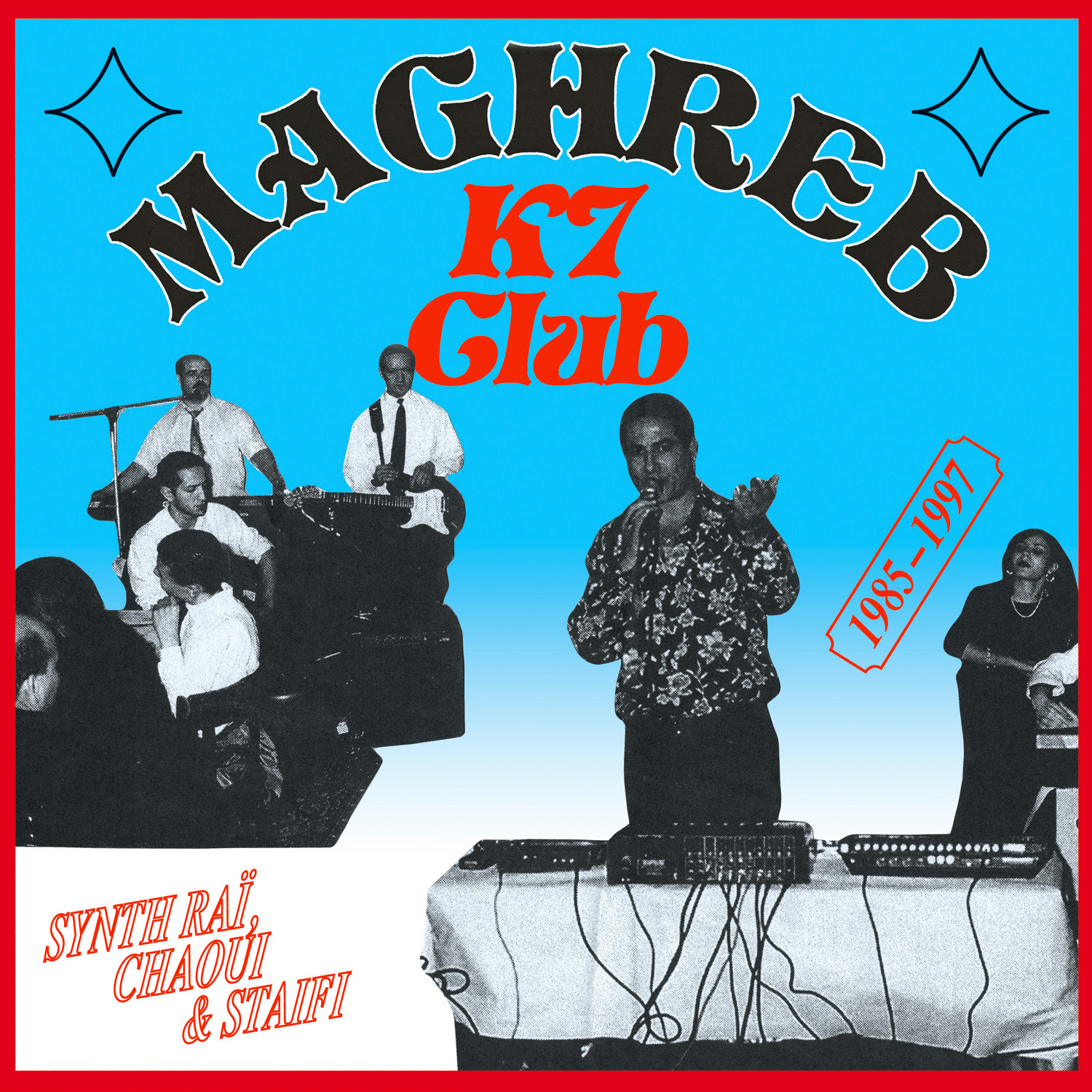
Music from the North African geography of the Maghreb as you’ve probably never heard it; shimmying with Arabian trinkets, rapid tabbing hand drums and exotic sand dune fantasy certainly, yet made otherworldly cosmic and electro-fied for the burgeoning democratized age of affordable low end tech: welcome to the Arabian expat scene in 80s and 90s Lyon.
From the assured collators Bongo Joe and, on this compilation, their partners Sofa Records a eight-song collection of Casio-preset and synthesized transformed musical poetry and lovelorn heartache from a myriad of Algerian artist’s that congregated around the French city’s North Eastern African café and bar hub. Joints such as the Le But Café, the Croix-Rousse and Guillotière were home to a social network hive of activity for conducting business and booking appearances for weddings, galas and studio sessions.
Musically a crossover of the Oran City folk Raï tradition and Zendari rhythm festive Staifi style from back home, the electrified sounds that emanated from this fertile scene were mostly distributed on cassettes, released by facilitators like Top Music, Édition Merabet and SEDICAV. Extraordinarily, and the reason for this collection, vinyl was discarded for the cheap and flexible culture of tape sharing at the time. The fast turnover, not only in recording these tracks but also in getting them on the market, cut out the middleman and helped foster a thriving local distribution network. Still, the power seemed to be with the publishers who could not only modify the lyrics but tamper with the style itself – adding synthesizer and drums – without seeking consent or even running it by the artists that recorded them. This led to some interesting results, as you’ll hear.
For the first time ever, the Maghreb K7 Club LP makes available a smattering of tracks on vinyl; tunes like the Arabian milky way swish ‘Maliky a Malik’ by Zaidi El Batni – which has a strange intro; someone’s footsteps walking through a cheap echo-chamber effect and some slapping – and the bandy, slinky liquid pop mirage with soothing female sighs ‘Goultili Bye Bye’ by funk-disco maestro Nordine Staïfi. Nordine gets two bites of the dancefloor glazed cherry on this album; his second feature, the infectious whistle-and-clap ‘Zine Ezzinet’ is a standout highlight – imagine an Arabian Nile Rodgers mixing down an Orange Juice funk.
Elsewhere, 808 rattles and harmonium merge with spirited song, whilst heavy accentuated Algerian romanticism is augmented by a Miami soundclash of electro beats. Though the most blatant use of that synthesizer influence is found with Salah El Annabi’s Francophone ‘Hata Fi Annabi’, which unexpectedly drops in a whole chunk of Jean-Michel Jarre’s famous ‘Oxygene’ to the mix.
The 90s sourced tracks in this collection are for obvious reasons more polished, but there’s a certain innocence and fuzzy sheen that I quite like about those older, 80s recordings.
Worth a punt just to own ‘Zine Ezzinet’ – fast becoming one of my favourite, essential movers of the year -, this compilation from Bongo Joe and friends is a wonderful platform to discover another bit of ear-opening musical history.
The Monolith Cocktail is now on the micro-payment donation site Ko-Fi:
Hi, my name is Dominic Valvona and I’m the Founder of the music/culture blog monolithcocktail.com For the last ten years I’ve featured and supported music, musicians and labels we love across genres from around the world that we think you’ll want to know about. No content on the site is paid for or sponsored and we only feature artists we have genuine respect for /love. If you enjoy our reviews (and we often write long, thoughtful ones), found a new artist you admire or if we have featured you or artists you represent and would like to buy us a coffee at https://ko-fi.com/monolithcocktail to say cheers for spreading the word, then that would be much appreciated.
 Monolith Cocktail Blog