THE MONTHLY DIGEST OF ACCUMULATED NEW MUSIC; THE SOCIAL INTER-GENERATIONAL/ECLECTIC AND ANNIVERSARY ALBUMS CELEBRATING PLAYLIST; AND CHOICE PIECES FROM THE ARCHIVES.

_____/THE NEW
Ainon ‘Within’
(We Jazz) 6th September 2024
A pastoral suite from the Helsinki-residing “avant-garde chamber jazz” Ainon ensemble, Within is an expressive rites and abstracted conveyance of nature, the environment and the elements. This is the quartet’s second album for the reputable Finnish label We Jazz, following on from their 2020 Drought debut.
Enhancing and honing their craft live in recent years, they’ve managed to both beautifully and exploratively match various jazz forms and influences with the classical, the instruments of saxophone with woodwind and strings. Led by cellist Aino Juutilainen and flanked in a constant movement on all sides, at all angles, by Merimaija Aalto on violin, viola and lofty diaphanous airy voice duties, Milo Linnovaara on saxophone, clarinet and flute, and Joonas Leppänen (who you might recognize from fellow We Jazz travellers Alder Ego) on drums and various percussive tools, apparatus, the Ainon ensemble find inspiration from the beautiful avant-garde taciturn and textual jazz cellist recordings of Abdul Wadud and the often cool West Coast free improvisations of the much underappreciated swing veteran with a romantic sentimental lean, Jimmy Giuffre.
Amongst the undergrowth and fauna, and through the “komorebi” Japanese ideal of sunlight filtered through the leaves of a tree, both of those influences permeate every corner of the ensemble’s musicianship. Expanding further, the melancholic pain of Eastern European classical music, the more pleasing suffused gravity and evergreen pastorals of Vaughn Williams and the woodland magic, the animal clops of Prokofiev are bonded with the waddled and geese-like pecked avian impersonating, resonating, reedy and more fluttered sax, clarinet and flute of Roscoe Mitchell, Anthony Braxton and Jeremy Steig, and the percussion of the Art Ensemble Of Chicago (I’m sure there’s a typewriter dinging away in there somewhere; just one of the many hidden percussive sounds and evocations that don’t seem to have come from an actual instrument).
Bendy and dreamy, detuned and mournful, aspects of the landscape, whether imagined or real, are conveyed in an abstract manner, yet evoke a sprung suite of outstanding beauty and sensory elements. The ensemble match the avant-garde, with the blues (for there is a subtle touch of it to be found throughout), freeform jazz and the classical to find a perfect balance and harmony, yet stretch the perimeters.
Jan Esbra ‘Suspended In A Breath’
(Spirituals) 30th August 2024
A Colombian in Brooklyn, the guitarist, composer and improviser Jan Esbra amorphously merges worlds and a sense of release on his third solo album Suspended In A Breath.
Finding an “emotional outlet” during a time of inner most reflection, Esbra’s daily practice of personal growth was translated into an ambient language of prompted feels, near lunar and unspoiled vague geography and cloud gazing. Fed through the multi-purpose box of tricks known as the Organelle (a toy-like looking combination of synth, sampler, drum machine, sequencer, effects unit and looper), guitar lines and hidden musical sources are transduced and transformed into vapours and the biomorphic.
Within a Venn diagram of early electronic experimentation, the ambient and new age, there’s an echo of Laraaji, Boards Of Canada, Eno, Terry Riley, Beaumont Hannant and, as referenced in the PR notes, Manuel Göttsching’s iconic and highly influential E2-E4 – an album that set a catalyst and template, informing early techno through such progenitors of the form as Carl Craig, who famously remixed Göttsching’s signature.
Over near misty primal coasts and swamps, where old ancestral creatures roam in a lost world, glassy bulb-shaped notes dance and crystalized forms take shape. Various passages of liquid, of water, can be heard in and outside the resonating and gleamed metal tank, feeding softened blossoms as the stars barely shine from above, through a thin gauze of cloud cover. In a liminal zone between the synthesized and organic the merest application of a filter, an enervated loop iteration, satellite data broadcast, loom or oscillation can set a contemplative mood; can prompt thoughts on such subjects as the artificial and human; and can conjure up imaginative locations.
A equilibrium of a kind is found, as Esbra morphs his source material and compositions into something that’s as calming as it is searching and probing. Each subsequent listen reveals more subtle layers, more melodic touches; a slow release of inventiveness.
David Vickers & Sergio Mariani_MRN ‘New Dawn’
(Audiobulb Records) 24th August 2024
A placeable union between the Gloucestershire bred but Seoul-based composer, guitarist, producer Daniel Vickers and Argentine but living in the USA for the past thirty-odd years composer and producer Sergio Mariani (appearing here with the attached underscore _MRN tag), the New Dawn release evokes fourth world visions of ambient America’s interior, its borderlands with Mexico and night time desert vistas.
The most subtle of mirage bendy, tremolo-like trembles and waning arching guitar, obscured field recordings, synthesized glassy gleams and undulations, and toy twinkled xylophone shape moments of time, the sense of a vague panorama and the elements. It’s like setting up a transformed sonic documentation of a quiet, unspoiled environment; the devices picking up the passing of time in a particular landscape.
There’s no getting away from the Americana campfire feels and desert mysticism contours of Ry Cooder, and yet, the tine-like picking, the sound of softened metallic textured rhythms and water carrier, jug-poured percussion denote vague Southeast Asian influences: even Japanese environment music.
Following the day, from dawn until a final night time scene back home, with the shower running in the background as mellow, melted ambience stirs up subtle collected thoughts, Vickers and Mariani describe and emote normally unrecorded daily routines and places for a peaceable, empirical Daniel Lanois-style meditation. New Dawn is a successful collaboration between two artists articulating a sense of “latent” and “natural” with adroit understatement.
Aidan Lochrin ‘Ritual Incantation’
(Submarine Broadcasting Company)
Through unidentified coastal currents and waves and the transformed field recordings taken at both Queens Park in Glasgow’s South Side and Kelvingrove Park in the city’s West End, Aidan Lochrin conveys an abstract, emotive and ghostly veiled sense of the ephemeral on a new album of ambient, minimalist techno and electronic psychogeography and meditative atmospheres.
Written during the year’s “dark winter” months – the Scottish summer thus far will have done little to abate the winter blues – in a period of aimless “ennui”, Ritual Incantation deals with faded memories and past lives through transportive vapours, hidden, or at least barely recognisable, instruments, tools, the captured activities and movements of those in a gauzy background scene and machinery (sounding at times like Popol Vuh’s debut album generators and chambers, and at one point, like fluttered strips of paper being blown about by an air conditioning unit), and spells of Iberian-reminiscent classical guitar and tubular percussion.
Mirage, hallucinations and the near paranormal, each suite is like a Fortean shipping forecast, or ebbing movement of either soothing shadow-gazing or the uneasy. And amongst the filaments, fizzles and fuzzy static, tangible stirrings of Basic Channel, Forest Swords and Mills emerge until once more enveloped or dissipating into ether.
Lochrin is supported by the Glaswegian artist Jude Norton-Smith on the city parks prompted ‘In The Ruins Of No Specific Place’, the Dunfermline composer Somer on the opening seascape of ringing, bobbing buoys and seagull hovering ‘Fragments’, and Christopher Manning on the Tbilisi twinned with Glasgow transmission ‘Mercy IV’. I’m not entirely sure, but on the latter it sounds like there’s a shivered, pained and mournfully bowed violin, viola or cello at work that’s slightly reminiscent of Alison Cotton or perhaps Simon McCorry.
There’s much scope as Lochrin ties together all the various threads of sonic and music from his oeuvre – the Glasgow-based artist mentions both the “noises” and “harsher” sounds of The Death Of Arcadia and the softer synths of that album’s sister Chalkydri in an artist’s statement. And so you find the most minimalist ambient touches and shades of kosmische sharing space with what can only be described as hauntology Baroque on the submerged light bearing antiquarian ‘Divine Sunlight’ – imagine a supernatural transmogrification of Handel by Wendy Carlos or Belbury Poly.
In coastal and abandoned settings, in machine workshops and more alien scenes, Lochrin conjures up the erasure and the half-recalled, the traces of what once existed or what or who passed through this way, with an ephemeral statement of subtle engineering, reification and meditative spiritual pastoralism.
Michèle Bokanowski ‘Cirque’
(Kythibong) 23rd August 2024
It’s a seldom-shared fact, or piece of trivia, but way back in the late 18th century ex-cavalryman and attributed progenitor of the modern circus, Philip Astley, worked out the optimum diameter (42 feet) needed for balancing atop of a horse as it galloped round the circus ring – it’s all to do with centrifugal forces; an inch either way and you’d probably end up being thrown into the audience.
With that mathematical nugget of circus lore in mind, let me bring the Nantes-based label Kythibong’s re-release special of Michèle Bokanowski’s 1995 Cirque LP to your attention; an experimental suite of movements that transmogrified, looped, cut-up and transported the French composer’s various field recordings of the circus – both inside and out of the big top – during a five-year period between 1988 and 1993. All the fun of the fair, the wild excitement and applause of the circus theatrics, clowning buffoonery, high wire suspense was passed through Michèle’s music concrete practice to create juxtapositions of shade and light, fun and the unsettled: imagine Degas circus impressions merging with Ensor’s more disturbing, often macabre, carnival imagines to the serialism composed spectacle of the recognizable and surreal.
Before we move on, a little context and history is needed. For much of her life, living and working out of the French capital, Michèle’s formative years were spent in Cannes: born into a household of music and writing. Although originally imbued by and studying the classical, at the age of twenty-two she ventured into the experimental world of music concrete, inspired by the teachings, writings of such luminaries of the unbounded form as Pierre Schaeffer and René Leibowitz. It was through the Polish and French composer Leibowitz that she was opened up to the iconic progenitor of serialism, Arnold Schönberg.
Michèle would go on to serve a two-year internship in the study of sound synthesis, under the direction of Schaeffer at the famous ORTF Research Department in the early 70s. At a similar time, the burgeoning composer would also study music computing at the Faculty of Vincennes. Periods in the company of Ellane Rodigue led to a pathway in electronic music. But the CV is expansive, with concert intended compositions (including Cirque) appearing alongside pieces for theatre, dance productions and cinema. Collaborations are also numerous; from working with Catheringe Dasté to the choreographers Hideyuki Yano, Marceline Lartigue and Bernardo Montet, and her film director husband Patrick Bokanowski – namely on the score for his art-house film The Angel.
And so, with all those reference points the Cirque album sets an avant-garde mood. The central or recurring feature of which, across a number of classical musical entitled speeds and feels (“Allegro”, “Andante” and “Scherzo”) is a reverberated saw dust kicking horse that gallops into view, emerging out of a loop: vanishing back into an eerie darkness once it has passed us by on a lap of the ring. From the darkness, the shadows, an audience of delighted children and adults shower the performers with applause, whistles and near operatic shrills. But those same sounds are gradually changed and transformed into loops and iterations more maniacal and strange: like a hiccupping cuckoo, a hallucinatory hoot, and in one case, near orgasmic.
A snare roll announces an impressive acrobatic feat to climatic cheers, but a second phase morphs everything into a freak show hall of mirrors. In a whirl, a cylindrical lantern show, real sounds and the generated coalesce in an unsettling and dizzying experiment of magic and illusion; a removed vision of the familiar reactions of an audience caught out in an entirely different kind of sonic experiment. The circus as you’ve never heard it before, but just about recognisable, takes on whole “other” properties under Michèle’s inventive compositional hand; setting the colourful spectacle of the circus in a unique timeless realm.
__/THE SOCIAL PLAYLIST VOLUME 89

Anniversary choices this month are in the form of tracks from Another Side Of Bob Dylan (a staggering 60 years old this month), Portishead’s decade defining trip-hop masterpiece, the Dummy LP, a throwdown from the horrorcore Gravediggaz power team (the Prince Paul, RZA, Frukwan, Poetic supergroup with countless additional pop-ups of hip-hop’s finest) and their 6 Feet Deep LP, and Merchandise’s After The End album from 2014. Re-released, resurrected if you like in 2014, and although it isn’t officially an anniversary, I’ve chosen to include a cut from ZED’s, aka Bernard Szajner, Visions Of Dune LP – my original review from 2014 can be found in the Archive section below.
From across eras, borders and genres the rest of this month’s playlist features recentish additions from Khalab (a remix by Admiral of ‘Drone Ra’) and Lewis Spybey’s Dead Voices On Air project (‘Gray Bay Play Watch’), another revived soundtrack fill from the cult Italian composer Piero Umiliani (‘Basso Nuovo’), and inter-generational tracks from Neuschwanstein, Mad Flava, Koko, Halasan Bazar, Creation Rebel, Renaldo & The Loaf and more…
TRACKLIST:
Koko ‘Grama Graphtos’
Rättö ja Lehtisalo ‘Viisi ystävää’
Pipes You See, Pipes You Don’t ‘Karaoke Free’
Shelagh McDonald ‘Look Over The Hill And Far Away’
Blackburn & Snow ‘Yes Today’
Bob Dylan ‘Black Crow Blues’
Halasan Bazar ‘Live Without Love’
Merchandise ‘Green Lady’
Cee-Rock ‘Linden Boulze’
Gravediggaz ‘Constant Elevation’
Mad Flava ‘From The Ground Unda’
Khalab ‘Drone Ra (Admiral Remix)’
Roland Haynes ‘Kirstn’s Place’
Neuschwanstein ‘Intruders And The Punishment’
Bernard Szajner ‘Harkonnen’
Linear Movement ‘Hydrogens’
Tom Dissevelt, Kid Baltan ‘Vibration’
John Tchicai, Cadentia Nova Danica ‘Fodringsmontage’
Brian Davison’s Every Which Way ‘The Light’
Creation Rebel ‘Conspiring’
Portishead ‘Biscuit’
Dead Voices On Air ‘Gray Bay Play Watch’
Piero Umiliani ‘Basso Nuovo’
K.K’s No. 2 Band ‘Ninim Saa Ka Akyi’
Brahim Izri ‘A Wid Ur N Ehric’
Dschinn ‘I’m In Love’
Donatella Bardi ‘Perche Dovrei Credere’
Renaldo & The Loaf ‘Hambu Hodo’
The Molesters ‘I Am’
Hagar The Womb ‘Dressed To Kill’
___/ARCHIVES

From the vast archives of the Monolith Cocktail, two choice picks from August of 2014; the first, Tampa Bay’s lost boys Merchandise and their album After The End, and the second, Andy Votel’s resurrected release of Bernard Szajner’s 1979 homage to Dune, Visions of Dune.
Merchandise ‘After The End’
(Mute) August 2014
Moping around the darkened swamplands and back lots of a southern sunshine state in existential, switchblade, angst, Tampa Bay’s lost boys once again shift closer to a subtler, rounded and cerebral pop ascetic.
Despite all the talk of their DIY punk and hardcore roots – living and recording together in communal bliss – Merchandise have always flirted with a Howard Deuth and John Hughes vision of 80s adolescence. On their latest transmission from the margins they effortlessly slip between the intellectual aloof alternative rock – the Athens, Georgia scene in particular – of that decade’s college radio stations, and the ray ban donned pop of more recent times as they peruse an imaginary teen doom film set.
Since their inaugural baptism with the mostly applauded 2012 album, Children Of Desire (depending who you listen to, their first album proper), the band have pulled a few surprises from their kit bag – the skulking panoramic moiety of ‘Begging For Your Life/In The City Light’, from the beginning of the year, sounded like Chet Baker teaming up with Gene Vincent at a Velvet Underground happening Boho -, making it difficult to either venerate or write them-off: prone to procrastination and sulky indulgence at times.
Their last hurrah, 2013’s Total Nite, marked the end of another cycle, as the group left their last label to sign with 4AD (home to Scott Walker, tUnE-yArDs and Deerhunter), expanding their ranks in the process and enlisting outside help from producer Gareth Jones. Presumably Jones was picked for his work with the lords of morose, Depeche Mode (moving to the iconic Hansa Berlin studio and recording the bands Bowie mirrored trilogy of Construction Time Again, Some Great Reward and Black Celebration), and for notable duties carried out on albums by Interpol, These New Puritans and, the lighter and disarming Grizzly Bear.
With a far more patient, effortless and breezy demeanour, those maladies remain less intensive, drawn-out from a mostly melodic envelope of multiple guitar tracks. A case in point is the rattlesnake tambourine accented and Gothic Talk Talk piano spanked title track, appearing as the penultimate, frayed emotional downer. At the opposite end of the spectrum, Merchandise adopts – and the jury’s out on this one – a palm tree patterned short-sleeved wearing Mott The Hopple guise for the kooky ‘awaiting on a call’ love sick phaser-beamed ‘Telephone’. A most peculiar, almost old-fashioned vernacular roll back, that once again recalls some hazy 80s high school drama (more Rumble Fish than Ferris Bueller).
But the pulse mainlines a sophisticated accentuated blend of The Smiths (languidly lost in a protestation merry-go-round on ‘Looking Glass Waltz’), the Psychedelic Furs (on the richly melodic, interplaying acoustic and electric guitar, pretty in pink, ‘Enemy’ and broody heart pranged ‘True Monuments’) and early REM. There’s even a quasi-bass line and twisted lick from Bowie’s Scary Monsters period on the group’s most dynamic and catchy standalone, ‘Little Killer’.
As pop becomes the default setting, even for many alternative bands, Merchandise lend it a certain introspective swoon and quality; they may lounge around in moody reflection, but they know how to write a meandering congruous melody.
Not quite as adventurous as their label mates, Deerhunter, or even Bradford Cox’s – though both frontmen share the same surname, their vocal delivery couldn’t be more different, the Merch’s Carson Cox curl-lipped with a subtle southern drawl, sounding like the Tampa Springsteen – solo Atlas Sound side project, the two bands have returned to a harmonic abstract form of rock’n’roll.
Regulated to a point, toned down and spaced evenly throughout, After The End demands repeated plays and attention, before it unveils its multilayers of nuanced and deftly touched craftsmanship. Far from a leap of faith for the ever evolving and experimental band, the move isn’t as drastic or bombastic as we’ve perhaps been led to believe; the hype and numerous interviews and band quotes harking towards a dramatic plunge into the unknown. Like many before them, that progression, both musically and ambitiously from DIY to, potentially, populism, without fatally compromising the spark that set you apart in the first place, has been on this occasion a successful one.
ZED aka Bernard Szajner ‘Visions Of Dune’
(InFiné Music) August 2014
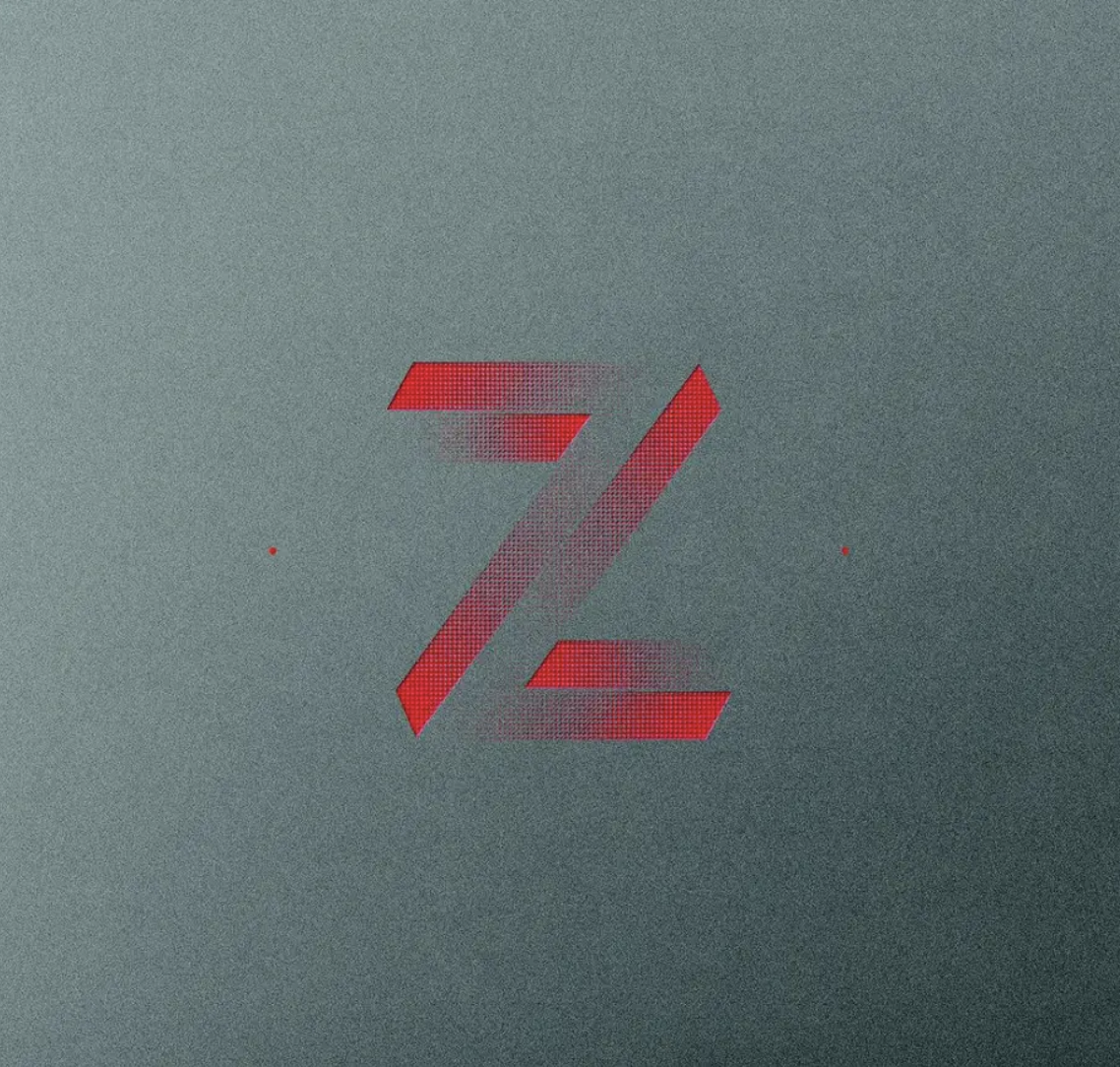
Sealed with an excitable descriptive, cosmic dreamy, forward and minimix teaser by DJ and renowned anthropologist of the most odd and obscure music from across the far flung reaches of the globe (and sometimes, so out there as to sound from another dimension), Andy Votel, a case is enthusiastically made for the resurrection of the French artist, inventor and composer Bernard Szajner’s 1979 homage to Dune.
Esteemed by Votel as a ‘Gallic-magnetic conceptual synth-pop classic’, Szajner’s manipulated Oberheim sequencer led flights of fantasy was essentially a work in progress, its creator self-taught, learning on the job so-to-speak. Under the neon-flickered, Boorman-esque, mystique of ZED, Szajner’s visionary series of loops were produced in a short timeframe: reliant to a point on borrowing equipment from friends, originally requiring an Oberheim for eight days along with a Revox two-track tape recorder, and when that had to go back or had served its purpose, was replaced with an Akai four-track. Transforming his intuitive sense of exploration and experimentation further by introducing the prog-acid-rock journeyman drummer Clément Bailly and Magma’s vocalist Kluas Blasquiz to the mix, the minimalistic Krautrock style synths and vaporised sizzling sonics moved into the realms of space rock and futuristic jazz.
Spending his formative years both designing and performing lights show spectaculars for The Who, Gong and the already mentioned Magma, the conceptual artists Szajner couldn’t help but absorb and channel some of their spirit, though he would also find a certain affinity with the cerebral ambient soundscapes of Brian Eno too.
Remastered by the adroit specialist Rashad Becker from the original tapes (of course), Visions Of Dune conceptually occupies the space between the lunatic Chilean auteur Alejandro Jodorowsky’s epic, if messy, unrealised film version and David Lynch’s mid-eighties space operatic/esoteric soap opera effort.
Of course, we only have one of these soundtracks, though Jodorowsky’s surrealistic magnum opus envisioned a soundtrack that would feature bands such as Pink Floyd. Lynch chose, rather bizarrely, Toto to compose his soundtrack; compensating by offering Eno a solitary and suitably soul-searching ambient ‘Prophecy Theme’ to break up the agonized pomp rock and classicism.
Szajner’s epic was sourced from Frank Herbert’s Dune trilogy of sci-fi novels: a metaphoric futuristic paradigm of Lawrence Of Arabia’s instigated Arab revolt, the Bible and Koran, Zen Buddhism, the fight for resources (oil replaced by the made-up spice mélange, though the sanctity and scarcity of water is echoed in the stories central and most important location, the desert planet of Arrakis) and the all too obligatory intrigues of competing Empires. A subtle amorphous theme is created for the stories most important characters – be it the House Atreides who spawn a messianic liberator or the miscreant maleficent led House Harkonnen -, rituals and notable plot lines, whilst a repeating desert theme permeates throughout.
An almost uninterrupted soundtrack, each passage bleeding into the other, only demarcated by the track titles themselves, the main electro gliding, whooshing magnetic charged foundations signpost Tangerine Dreams own nebular voyages – especially their acid-trance elegiac Phaedra. The opening quartet of ‘Dune’, ‘Bashar’, ‘Thufir Hawat’ and ‘Sardauker’ flow from ponderous exploration via the retro/futuristic generator pulses of the Forbidden Planet powered soundscape, used to represent the foreboding Imperial Guard, to the staccato style rolling drum breaks that kick-in as we’re introduced to the calculative super brain Mentat.
By the end of the first of two acts the mood alters, growing ever more ominous as the spice world of Arrakis’s monstrous sized ‘Shaî Hulud’, sand worms, prompt a squirming and looming otherworldly response. The fateful ‘Duke’ is accorded a shadowy, almost ghostly eulogy style augur of impending doom; his eventual fate alluded to by a hidden snarling beastly presence.
Act two continues with wave after wave of algorithms and arpeggiator patterns, tubular chimed rings but adds menacing alien breaths (Blasquiz’s distorted and masked vocals no doubt) and Goblin style horror show prog.
Tamed and enervated by a flood of similar sequencer-manipulated soundtracks, both before and after Visions Of Dune, it beggars belief that Szajner’s label, Pathé Marconi/EMI, were worried that two of these tracks (the previously mentioned ‘Duke’ and ‘Spice’), were ‘too futuristic’; a crazy reaction, even for in the 70s. Initially left off the original pressing, they’re both included for the first time in this new repackaged, adorned with ‘reimagined’ artwork by Barcelona-based designer Arnau Pi, classic.
Obviously resonating with the recent attention and re-examined Jodowsky project and arriving, perhaps a little too soon, before the 50th anniversary of Herbert’s novel in 2015, Visions Of Dune is certainly a more favorable soundtrack than anything that has gone on before or since, faithful to the wondrous, and sometimes trippy, mystery and evil present in the interstellar epic expansive plot without the bombast and over-indulged operatics.
Hi, my name is Dominic Valvona and I’m the Founder of the music/culture blog monolithcocktail.com For the last ten years I’ve featured and supported music, musicians and labels we love across genres from around the world that we think you’ll want to know about. No content on the site is paid for or sponsored and we only feature artists we have genuine respect for /love. If you enjoy our reviews (and we often write long, thoughtful ones), found a new artist you admire or if we have featured you or artists you represent and would like to buy us a coffee at https://ko-fi.com/monolithcocktail to say cheers for spreading the word, then that would be much appreciated.
Monolith Cocktail Social Playlist: #XLI: Atomic Forest, The Exploding Budgies, Hardnoise, Ibo Combo…
November 26, 2019
PLAYLIST
DOMINIC VALVONA
GRAPHICS: GIANLUIGI MARSIBILIO

Cool shit that the Monolith Cocktail founder and instigator Dominic Valvona has pulled together, the Social playlist is a themeless selection of eclectic tracks from across the globe and ages. Representing not only his tastes but the blogs, these regular playlists can be viewed as an imaginary radio show, a taste of Dominic’s DJ sets over 25 plus years. Placed in a way as to ape a listening journey, though feel free to listen to it as you wish, each playlist bridges a myriad of musical treasures to enjoy and also explore – and of course, to dance away the hours to.
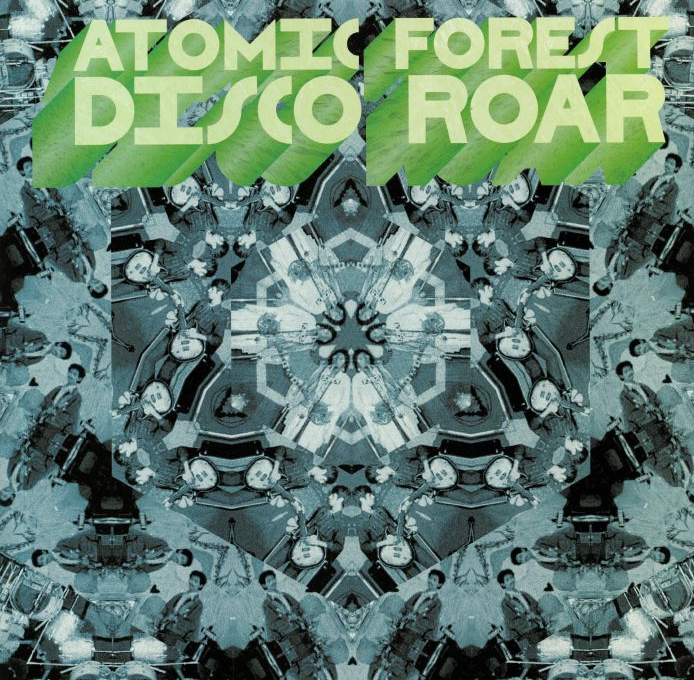
As you can see, volume XLI of this regular playlist selection is accompanied by Gianluigi Marsibilio‘s new snazzy graphics. As diverse in scope as ever, we start of this jamboree with some rough and ready post punk and spunk rock (The Exploding Budgies, The Real Kids, Iceage) before sliding into some sweet soul music (Wilson Pickett, Jimmy Castor) and a short boogie down Bronx stopover (D-Nice). Later on there’s Krautrock royalty (Kraan), maverick Italian soundtracks (Piero Umiliani), psychedelic flights of fantasy (The Tangerine Zoo, J.K & Co.) and a sauntered funked out vision of 2001: A Space Odyssey (Atomic Forest).
Starring in selection XLI:
The Exploding Budgies ‘Kenneth Anger’
The Pale Fountains ‘Shelter’
The Real Kids ‘I’d Rather Go To Jail’
Iceage ‘Everything Drifts’
The Blue Magoos ‘I Can Hear The Grass Grow’
Paul Revere & The Raiders ‘Him Or Me – What’s It Gonna Be?’
Wilson Pickett ‘Born To Be Wild’
Jimmy Castor ‘Rattle Snake’
D-Nice ‘Straight From The Bronx’
Souls Of Mischief ‘Make Your Mind Up – Rock On Mix’
Hardnoise ‘Bongo Attack’
Ernesto Djedje ‘Dogbohone’
Ersen ve Dadaşlar ‘Garip Gönlüm’
Ibo Combo ‘Pour Elle’
Pasteur Lappe ‘Sanaga Calypso’
Sir Victor Uwaifo ‘Ebos De Gaiza (Ekassa)’
Matata ‘I Need Somebody’
Letta Mbulu ‘Gumba Gumba’
Ema Franklin ‘You’ve Been Cancelled’
Koushik ‘Roller Combat’
Piero Umiliani ‘Produzione’
Black Randy & The Metrosquad ‘I Wanna Be A Nark’
The Aurora Pushups ‘Victims Of Terrorism’
Bush Tetras ‘Cowboys In Africa’
Kraan ‘Silver Wings’
Marc Benno ‘Welcome To Hollywood’
The Tangerine Zoo ‘Trip To The Zoo’
Jean-Claude Vannier ‘L’Ours Paresseux’
Gary McFarland & Gabor Szabo ‘Cool Water’
Dzyan ‘Khali’
J.K. & Co. ‘Fly’
Atomic Forest ‘2001: A Space Odyssey’
 Monolith Cocktail Blog