A world of sonic/musical discoveries reviewed by Dominic Valvona. All entries are in alphabetical order.
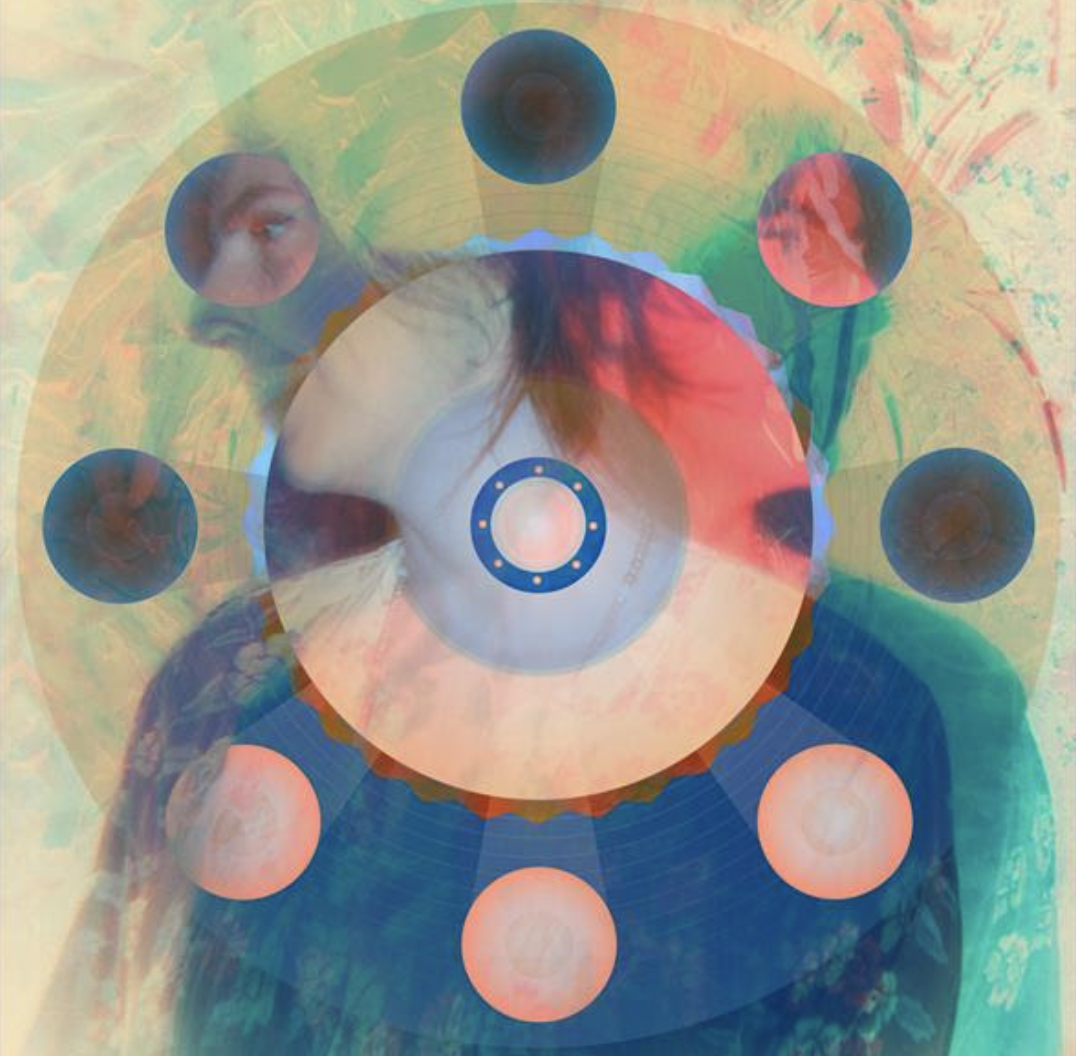
Geologist ‘Can I Get A Pack Of Camel Lights?’
(Drag City) 30th January 2026
Owing to their inarguable influence and impact on the American and international indie and underground scenes of the noughties, any release from a member of the Animal Collective fraternity is news. No less a debut solo, the inaugural album from the collective’s original founding member Brian Weitz, under the Geologist nickname that stuck since collage (apparently a friend misheard his major, but it also refers to the headlamp he wears to see his electronic apparatus during live shows) proves transitional; a step away almost entirely for the material he’s known for with his foils David Portner (better known as Avey Tare) and Noah Lennox (Panda Bear).
Incidentally, and still working in one way of another with his former band mates, Portner, another piler of the long since hibernated Animal Collective, pops up on bass alongside a host of contributions and help from Adam McDonald, Emma Garau, Alianna Kalalal, Ryan Oslance, Shane McCord, Micky Powers and Adam Lion. There’s also an intergenerational appearance from Wietz’s son Merrick on acoustic guitar, playing something resembling an indie-grunge rhythm on the strange bird hooting and whirly ‘Government Job’.
Under a throwaway entitled line, used repeatedly over time as a kind of in-joke, a winking aphorism, Weitz instrumentally and sound wise soundtracks his observations, traverses, reflections, the places he recalls and moments of both retrospection and introspection. But musically, this album is very different, taking as it does inspiration from the noted inventive guitarists Bill Orcutt and Susan Alcorn – though both artists, musicians’ talents extend beyond just that instrument. The steel pedal-like atmospheric and more wiry freeform Americana playing of these influences can be heard throughout, coupled also with Bill’s more gnarly free-post-punk-blues-jazz contortions and distortions (a touch of Bill Frith too for that matter). The second main influence is that of the hurdy-gurdy, its droning windups more in line with Ethan James’ reimagined Medieval tapestries and ceremonies, and Dorothy Carter, Le Tene, and GOAT. Its signature conjures up all sorts of imaginary landscapes, plateaus and scenes; from Tibet and the Himalayan holy valleys to the mirage arid dry lands of the America’s West and a dreamt-up revision of olde pastoral Europe.
With variations on each track, the mood and direction changes often: even if it inhabits an overall thematic musical world of drones, frequencies, circular blows, Chris Corsano-like free drums, the electrified, walking basslines, the hypnotic and near mystical. Period pieces via the Velvet Underground, Matthias Loibner and Emmanuelle Parrenia sit or run into wrangled post-punk post-rock tracks that sound more like a toss-up between PiL and Tortoise, and soundscape scores that wouldn’t sound out of place on a Daniel Lanois production. And then there’s the near native dances of tracks like glittery dusted, hurdy-gurdy wound, and padded foot stomping drummed ‘Pumpkin Festival’, and despite its title, ‘Not Trad’.
From highway oracles to dust bowls and soundtracks paid to the late repeated Altman player and Kubrick whipping girl ‘Shelly Duvall’ and the final desert peregrination turn splashing cymbal dusted and electric band motivated moving ‘Sonora’, the Can I Get A Pack Of Camel Lights? album is an open-ended enquiry of moods and memories; of exploration and the time spent in various places, landscapes. An interesting turn from the member of a band I once called a postmodernist noughties Beach Boys. A very different, unique direction indeed.
Clémentine March ‘Powder Keg’
(PRAH Recordings) 9th January 2026
The French-British chanteuse Clémentine March effortlessly swoons, coos, waltzes, saunters and hovers between the French and South American art pop decades with a multilingual ease on her latest, and third, album. And although its title, Powder Keg, was taken from a lyric out of Bonnie Tyler’s 80s power ballad, a ‘Total Eclipse of the Heart’, the inspiration and music sounds less sentimental big hair belter and more like a freed-up chamber-pop, alt-folk, country waned and glitterball hybrid of gathered thoughts, romantic encounters and introspections voiced by Brigitte Fontaine, Cate Le Bon and Gina Birch.
But that’s only really one part of this album’s scope, with the repertoire and influences opening up even more once March’s cast of friends and foils alike is brought in. Take the former Goat Girl band member turn solo folk singer Naima Bock, who March supported on a tour of the UK. Taking in some of Bock’s shared Greek-Brazilian heritage and folk signature March pays a bit of a homage on the opening song, ‘After The Solstice’; though to my ears, I’m picking up hints of John Cale, Aldous Harding and Dana Gavanski – it’s one of my favourites by the way. The latter of those names on this feathered country art-folk number, Gavanksi, is actually present as one of the many congruous ensemble members of March’s expanding circle. March is flanked throughout by Ollie Chapman on bass and Sophie Lowe on drums, but at any one time you’ll hear pop up a famous artist or musician across this songbook of the heart-pranged, fun, wistful and more driven. For after also paying a tribute of a kind to the Os Mutantes turn three-decade solo Brazilian icon Rita Lee on the suitably South American lilted ‘Lixo Sentimental’, March duets, in a style, with Evelyn Gray on the disco-indie spun ‘Fireworks’. Gray seems the ideal vocal partner on a more upbeat dizzy turn under the glitterball whilst alluding to “romantic encounters” at the Green Man Festival. The song takes in a Come Dancing Blancmange, Postcard Records, Lizzy Mercier Descloux Mambo Nassau and Hercules & The Love Affair.
The title-track itself sounds like a missing McCartneys family song whipped up by the SFA and Stereolab, and ‘Honestly’ sounds like Susana Vega borrowing an old Neil Young number. Little touches cause the ear to wander: the sax on ‘The Power Of Your Dreams’ reminded me of Don Weller’s sessions with 80s Bowie, and the faint Appalachian/bayou stirs of maverick bluegrass and Cajun ‘You Are Everything’ conjured up images of Isabelle Pierre or Karen Dalton fronting The Band. And then you get the more fuzzed-toned and powered-up indie-rock blast of ‘Upheaval’, which sounds like a cross between Husker Du and The Misfits.
As open as always, imbued by but never quite adopting the aloof coolness of the French new wave and its art pop existential chanteuses, March finds a personal, less cloying way of navigating sentiment, romance, the passing of time and how we measure it, the recall of memories and joy. A unique voice, constantly expanding and trying things out, March’s latest magical tour de force is both escapism and a dance around issues that both plague and enrich her life. Already one of my favourite albums of 2026.
Foster Neville ‘Through Lands Of Ghosts’
(Subexotic) 16th January 2026
Imbued by the late travel writer progenitor H.V. Morton and his quest to unearth, contextualise and celebrate the “mythical soul of England” from the 1920s to the 1940s, experimental musician (also the role of sound editor for the digital copy of the Trebuchet contemporary arts magazine) Foster Neville navigates his own sound map of these islands; atmospherically and unnervingly crossing national borders by starting his journey in Scotland before moving south throughout Northern England and the Southwest.
Morton’s never-out-of-print series of guides, written and often an accumulation of his columns for the Daily Express newspaper, have arguably influenced generations. Responsible for around forty such books, the topics covering not only England and Scotland but his numerous journeys throughout the Holy Land, Morton’s idiosyncratic English manners (often travelling in his typically unfussy and understated English motor, a bull-nosed Morris) and vignettes style embodied a near spiritual but difficult to encapsulate essence that bonded old England and its people. His reputational stock has however taken a severe knock ever since the publication of Michael Bartholomew’s biography. Through old dairy entries and letters Morton’s more distasteful and outright disgustingly racist prejudices came to light, most notably his Anti-Semitism but also slights on democracy (not a fan) and various other nationalities – he once described the US, dismissively, as “that craven of Jews and foreigners”. The famed journalist scooper, there at both the famous and infamous opening of Tutankhamen’s tomb, held not just questionable views but unfortunately seemed to flirt with fascism in the run up to the war, declaring that he found many of Hitler’s ideas appealing.
Parking that controversy aside, Foster is personally interested in Morton’s most famous totem, and much lauded In Search Of England, which could be said to lay some of the groundwork for the future study of “psychogeography”. A problematic term that now connects with Foster’s latest work, and pretty much one that is now dismissed by those who are said to embody it, the leading light of such dense readings and speculation of the land, or specific sites and communities (in this case, the Eastend of London) is the rightfully hailed Iain Sinclair. Preferring such terms as “deep topography” (as coined by the “London perambulator”, Nick Papadimitriou), detaching himself from an overused tag, one made almost redundant and often out of context, Sinclair’s own works merge old ghosts with history through the ages, the occult and multiple layers of cultural text. It’s why he was asked to pen an “appreciation” of Foster’s album, or rather the limited-edition vinyl version of Through Lands Of Ghosts – I’ve not had access to this by the way.
Tying together such esteemed authors, Foster’s album carries some weight; a touch of the studied even. And, despite the dismissal by some, uses the psychogeography description in the label’s press briefing; although they also use the more appropriate term of “hauntology” to describe this mystical ghostly and whispered, wisped and Kosmische-style take on the lie of the land.
Foster now builds his own picture; one steeped in the supernatural, of the memories and tracings and scars of locations marked by either death or the movements of time. These places seem empty of everything except its apparitions, its left recordings of voices and the sound and apparatus of subtle atmospheric and ambient equipment. A presence exists throughout; the haunted visitations that occupy a liminal space between the paranormal and more settled visions of an intriguing past and its elementals; of how it speaks to us now.
Sonically capturing something throughout this circumnavigation that seems to wander from the antler framed Highlands of Scotland and its most southern point on the Mull of Galloway and across the border to the site of a rail accident in Derbyshire, a nameless abandoned village and the neolithic chambered tombs of West Kennet’s famous long barrow excavations. Somewhere between the near sci-fi, séance, ambient music and Vangelis Olympian, new agism and apparitional vocals, Fowler engineers an often-veiled mystery of forgotten time and chapters from a both atavistic and more present age: The haunted “residue” of the Chapel-en-le-Firth freight train wreck tragedy, immortalised by Ewan McCall and Peggy Seegar in ‘The Ballad of John Axon’, the train driver who gave his life to avert an even greater disaster (posthumously awarded the George Cross for his actions) is invoked through the spectre aria shoos and coos and movements of sounds and what could be the environment around it.
From observing the dying flickers of lives once lived in the rural villages of WWI England and the absorption of an unseen ancient people who once roamed and buried their dead into the barrow mounds of that same countryside more than three millennia before, Foster connects various epochs, various events and the ebb and flow of time to conjure a 21st century quest to unearth the soul of the UK. I’d recommend this album to attentive listeners with an ear for the works of Oliver Cherer, Cold Hands Warm Heart, Ancient Plastix, Pye Corner Audio, Bagski and Tangerine Dream. A most successful, and I’m going to say it despite myself, psychgeography experience that could well lead to further exploration and investigation of the subject matter and locations mapped out sonically.
Sarah/Shaun ‘In Silence Love Speaks Loudest (EP)’
(Hobbes Music) Digitally Released December 2025/Physical Release 30th January 2026
The Lee Hazelwood and Nancy Sinatra of synthesized dream-pop, the Edinburgh wife and husband team of Sarah and Shaun McLachlan finish of an 18-month triptych run of EPS with this year’s simultaneously optimistic but ached and plaintive In Silence Love Speaks Loudest. Like a space-chartered St. Etienne, the couple’s latest four track showcase for the Scottish capital’s leading leftfield electronic and dance label Hobbes Music is another celestial bound flight of diaphanous pop and trip-hop break-like and trance-y electronica: stepping out on to the neon lit dancefloors on occasion too.
Making their debut in 2024 with the highly rated It’s True What They Say? (see my review of the stargazing EP), followed up by last year’s Someone’s Ghost, the duo has been busy on the live circuit making new allies and fans. And now ahead of the debut album, promised sometime this year, they’ve released this stardust sprinkled songbook of both heartache and romantic reassurances.
You might well recognize Shaun from his previous band, Delta Mainline. Coupling up with the missus, and most wooing of vocalist’s, Sarah, Shaun has concentrated all his efforts on expanding those musical horizons further. When we reviewed his band in the past, we compared them to an angelic Jesus And Mary Chain, OMD, Wilco and Spiritualized. And as it turns out the latter of those references now pops up here, with the group’s Tony ‘Doggen’ Foster adding some subtle sentimental rainbow arcs and bendy guitar/slide guitar to the dry-ice trapped-in-a-French-noir-movie-like floated ‘Desperation Looks Ill (From The Other Side)’. Appearing alongside Foster on that same track is Bruce Michie on Eno/Hansa Studio type romantically alluding saxophone duties and supplying the introductory French wafts of dialect Rebecca Growse.
As always there’s an extended cast number of foils ready to join the ranks, with both serial offenders Jaguar Eyes (a band mate of Shaun’s in Delta Mainline, contributing guitars and synths and arranging strings, programming drums and on engineering duties as well as co-producing the last three records by the coupling), and Darren Coghill (of Neon Waltz fame, providing some percussion, drums and effects) both cropping up. But also, this time around the addition of Roy Molloy (the Alex Cameron mucker appears with a soft toned saxophone sentiment on the finale, ‘Who Just Wants To Survive?’) and Exterior (a fellow Hobbes Music signing adding synths to ‘Heart Started Beating (Backwards)’).
As I’ve said before, the couple have an affinity for the ending of the Star Man movie, and its romantic allusions, but in particular the film’s score, twinned with, to my ears, the sound of dream pop, of waned country music, 80s electro-pop and Sarah Records. With songs that stretch right back to the Covid pandemic (the reassuring, despite the travails, ‘When We Dance’), or at least their inception, to songs written during the most tumultuous of periods, as the world falls apart around us, this third EP in the beautiful cosmic saga recalls hints of Air, The Tara Clerkin Trio, Beach House, The Sundays and the Cocteau Twins.
Tethered to the Earthly pains of the heart but looking towards the stars and the escape hatch, both co-writers, multi-instrumentalists and vocalists draw emotions of desperation and love from an understated but no less ambitious and anthemic production. The mood music of which varies between the near melancholic to the airy and wisped; the sad and more wistfully dreaming. Keeping up the quality, a congruous bookend to the series, In Silence Love Speaks Loudest further expands the sound and scope; an indicator perhaps of what to expect with that near future album.
Sis and the Lower Wisdom ‘Saints and Aliens’
(Native Cat) 9th January 2026
Disarmingly enchanting with the healing balm, the pliable near weightless songstress and multi-instrumentalist Jenny Gillespie Mason once more inhabits the role of generous light-bringing sister or Sis on a most beautiful album of hippy pop excellence.
Surrounded once more with a friendly circle of artis/musicians (named the Lower Wisdom) – you can hear the reassuring thumbs up from the recording studio sound desk on a couple of tunes, but feel a general support system of musical encouragement throughout -, Jenny weaves Alice Coltrane vibes with Fleetwood Mac and Alabaster DePlume to create a sort of jazz-pop-light magic version of new age 70s/80s songwriting.
Alighting the celestial staircase into a yoga retreat of snuggled and drifty serenaded and wafted saxophone, airy mystique and mirages, Saints and Aliens is a poetically descriptive album of both moods and songs. Bringing visitors from the stars to a world imbued by Jenny’s spiritual studies, the philosophical teachings of Sri Aurobindo and the Sanskrit language are called upon once more: or at least referenced on tracks like the near ethereal floaty jazzy calling ‘Yasholipsa’ – which translates into the desire for glory, the aspiration for fame, victory and power, and a spiritual striving for achievement and deep yearning for renown or divine accomplishment.
Away from the Gaia, the Indian divinities and the Gnosticism there’s a lovely blooming of soulful pop free-flowing singles like ‘Luce’ and the almost trippy and poetic opener ‘Crocus Man’: a sample of which is, “Quicksilver clown, you’ve been through hell”.
As diaphanous as it all is, there’s an undulating tone of travail; the lyrics often referring to overcoming various obstacles and finding a way out, the air to breath once more or height to elevate towards: Salvation awaits once you learn that the key is inside all of us.
The Sis alias delivers once more with a near faultless album of dipsy, sprite-like free pop and spiritual altruism. A great start album to start of the new year with.
Wilson Tanner Smith ‘Perpetual Guest’
(Sawyer Editions) 13th January 2026
Tying together the omnipresence, both in the past and in the now, of conflict, the Helsinki-based composer, improvisor/artist Wilson Tanner Smith uses site-specific performance art and music to evoke an essence of what was contained within the walls of the long since disused Kreenholm Textile Factory in Estonia’s Narva region. To be exact, located on an island in the middle of the river that gives its name to the city, slap bang in the middle too of the border with a threatening, overreaching expansionist Russia.
A flashpoint in what’s described as NATO’s most eastern flank, it has been breached in recent months by Russian soldiers – possibly testing reaction and defences. Narva has the largest Russian-speaking population, proportionally, in the EU at 97% (its total population is around 60,000). This is down to a legacy of historical invasions and the transporting of thousands of workers from Russia to work in its factories over time. Sitting across from its Russian counterpart of Ivangorod, the city is fatefully targeted as one of the starting points, if it ever comes, for WWIII: Putin has already mused in that sly threatening way he has that Narva was historically part of Russia and would be “taken back”. The city was of course under Czarist rule for a time until the revolution and Estonia’s fight for independence between 1918 and 1920.
Fast forward a generation and Soviet Russia invaded Estonia at the start of WWII. They lost it to Nazi Germany a short time later, before once more taking it back behind the Iron Curtain after Hitler’s catastrophic failure to invade and knock Russia out of the war. This situation remained right up until the fall of the Berlin Wall and the Soviet Union’s collapse at the start of the 1990s. For a long time after that period, Russians and Estonians moved freely between the two borders; the influx of Russian workers, as I mentioned earlier, living in a now industrialised Estonian city would frequently hop over that same border for shopping trips to St. Petersburg and the like.
With the heinous invasion of Ukraine in the last four years, and ramped-up – despite the talks of bring the conflict to an end – rhetoric of Putin and his expansionist plans to march right into Europe, that all came to a divisive halt. An uneasy situation prevails, with Estonia distancing itself from Russia – Estonia’s first female prime minister Kaja Kallas has been on the front-foot in supplying weaponry to Ukraine and fought to implement sanctions on Russia whilst also offering asylum to Russians escaping conscription. Kallas was at one point, put forward as a possible candidate to lead NATO; an organisation that Smith’s adopted country of Finland joined in 2023 following a rapid policy shift from military non-alignment to alliance membership in response to Russia’s aggression. Finland, which until that point had never countenanced joining, has prior aggrievances with Russia of course: a history that goes back to the Finnish War of 1808-1809, when Alexander’s Imperial Russia, allied with Napoleon, invaded and conquered Finland from Sweden, turning it into the autonomous Grand Duchy of Finland, and much later when fighting off Russia during both the Winter War of 1939 and 1940, and the Continuation War of 1941-44. Despite being heavily outnumbered on all fronts, the Finns managed to fight them off, albeit with a loss of some land. Their example may prove an omen, as Russia have likewise failed to steamroll the Ukrainians; the initial invasion planned to take months if not weeks to fully capture the country and force it back into Russian hands.
Before this becomes a geopolitical, military essay on the state of Eastern Europe and Russia, I should really focus now on Smith’s project; a series of performances created using both instruments brought to the space and the dust, the accumulation of memories of the environment itself. The prompts, the reference points as such or indicators and sparks for creativity reference the various scrapes of signage and other detritus found lying around, or reference and tie together both a shared bond between Finland and Estonia; the closing performance of ‘Läksin minä kesäyönä käymään’ (which can be translated into English as “I went out into the groove on a summer’s night”) is a kosmische-style beamed cathedral wonder of magic that features a melody borrowed from an obscure suite on Finnish Themes by the Russian composer and pianist Dmitri Shostakovich. Embarrassingly for the Soviets, it was meant to be played in Helsinki once it had been conquered during the first of those wars between the two countries. It never happened of course, and now acts in a manner as a reminder of overreached aggression and expansionism coming unstuck.
In this theatre, Smith performs a number of pieces of conceptual and environmental imbued and motivated musical and atonal art. Seeming to speak much of the times, and yet evoke a history of Eastern European malady, toil and travail.
Smith has connected the space and columns that hold it up the factory’s huge celling’s with rope and string, which he pulls on at points in this performance; dragging lightly, fragments of glass or what looks like metal along the floor to elicit a serial percussive sound. At other times, Smith is part of an avant-garde chamber trio of strings and woodwind and apparition vocalist calls from the ancestors; drawing on the labour, the emotive pulls of those that once worked this factory, whilst also referencing the geographical and looming presence of its neighbouring behemoth, Russia. But primarily, Smith is seated in front of the album’s most permeating instrument, a well-used antique harmonium that he found and repaired on site; and itself, handed and passed down from a church to a school, a living room and basement. It’s used to produce some of the most venerable of bathed pastoral drones, resonated chords, concertinaed waves and evocative reverberations. But its frame and lid is used too; the picking up of the hands as they press on the keys, or the foot pedal pump. And yet there’s also passages in which those bellowed-like breaths and airs, beds of layered tones, produce vibrations that are more unsettling (not quite Krzysztof Penderecki-like but getting there), and at other times, closer to psychedelic-folk.
Fluctuating at a slow pace between suggestions of the neo-classical, the work of Cage, Cale and Conrad, and brought forward into to the realms of Colin Stetson, Alison Cotton and Jeff Bird (I’m thinking of his more recent Cottage Bell Peace album), all the instruments and apparatus involved are simultaneously as harmonic as they are expressive in describing the abstract psychogeography of the factory, a location now standing on the edge of potential conflict; perhaps, but lets hope not, about to once more witness Russian expansionism.
Strangebird–Sounds ‘Minerals From The Crust’
(Audiobulb Records) 16th January 2026
Inspired by the natural jewels and gem-like minerals that lie beneath the Earth’s crust, the Belgium experimental composer Gregory Geerts, under the Strangebird–Sounds guise, transforms those crystallised forms into a most pleasant, subtle ambient-techno soundtrack and set of movements.
Materialising, metamorphosing and breathing each track is built around sonically capturing the abstract colourisation, the way the light plays, reflects or gleams on each chosen subject; add to that the soft use of environmental field recordings, the enervated veils of the surroundings and the just as subtle use of the everyday world in the form of various undulating captured voices, of play and people going about their business.
From the more commonly found Calcite to the rare quartz of Ametrine found almost exclusively centuries ago in just one mine in Bolivia, Geerts amplifies a sense of allure and mystery; but also feeds into the marvel of each element as it glistens and grows; pulses and vibrates. In doing so he opens up to the etymology and history, covering a millennia of usage: The atavistic Egyptians used to carve Calcite, relating it to their goddess Bast – hence part of the origins of the word alabaster -, and Ametrine, though long discovered by the native peoples of what would later become Bolivia, was, it’s been documented and said, to have made its way to Europe as part of the dowry between a local Ayoreo princess and Spanish conquistador in the 1600s. Sometimes these references are mythological: see the silicate mineral Neptunite, which is named after the Roman god of the sea of course, though because of its origins and locality of discovery is associated with the Scandinavian god of the sea, Ægir.
With the innovative use, we’re told, of a Eurorack modular apparatus our sound geologist presents an often lush, semi-tropical world of exotic birds, botanical foliage and replenishing life-giving waters. The underground is brought to the surface you could say, out into the open as it meets with the celestial and radiating. This is a subterranean world brough to life.
Both arpeggiator and freed-up notes bobble and bounce, or float like bulb-shaped and translucent particles and gentle specks against the biosphere; the synthesized; the occasional paddled tubular rhythms (on one occasion, almost like a Jeff Mills minimalist techno samba). The sounds of techno at its most sophisticated and ambient music, polygons and crystals, needles and sulphites all merge wonderfully to draw comparisons with the work of Xqui, Boards of Canada and Japanese environment music. Audiobulb continues to release some of the best work in this field, under the radar, out on the peripheral. Geerts Strangebird-Sounds vehicle is no exception; experimental without losing the listener; finding a most pleasant, inviting but also intriguing method, from the ground to the orbital, of giving sound to geological abstracts. `
Leo Wolf ‘Veiled In Light’
(The Oldest River) 13th January 2026
Following up on last year’s excellent I Saw Your Shadow On The Wall, North Carolina artist/musician Leo Wolf once more captures the abstract through the use of ambient, atmospheric and filmic granular processes, sampled material from classical records and field recordings and acoustic instruments; this time focusing on bringing the light in a range of descriptive, atonal and evocative ways.
Secular and venerated, stained glass anointed, veiled light sources cast circular-like beams and impressions on suitably invocative surfaces, columns and precious objects to capture a scenic and textural form of sonic and cinematic mysticism. Like longform and short form scores, a gradual slow movement of whispered and wispy disembodied and scaly voices, tubular machines, generators, apparitions and aliens, the sounds of hive-like buzzes and flies are echoed and reverberated to great descriptive effect. It reminded me in part of Ambient Works Aphex Twin, but also His Name Is Alive and Laraaji’s Baptismal collaboration with Kramer. And on a couple of occasions, when oscillating to an unsettling otherworldly vision of supernatural sci-fi György Ligeti.
Titles give some reference point; although I’m not sure if on the briefly gothic-like announcer’s tone narrated ‘Blood Meets The Iris’ if it is a reference to the revered Iris Murdoch’s The Sandcastle, which mentions some of the descriptive language of the track; especially the ritual part. They could be used of course just to set in motion an idea, theme or initial spark before opening up to be interpreted by the listener.
In ecclesiastical settings, in wet subterrains, from the centre of divination and various rituals, and out on cerebral planes of contemplated life and death cycles, I love how Wolf builds such plays between the venerated and unknown. Ebbing away or in constant motioned waves, the veiled presence and concrete inspirations are exaggerated or made new on an album that challenges as much as envelopes. Is something reaching out to us from the gauze, the soft and wispy shrouds? Only you can work that out. Another sophisticated and immersive ambient score from a deeply engaging composer.
Here’s the message bit we hate, but crucially need:
If you’ve enjoyed this selection, the writing, or been led down a rabbit hole into new musical terrains of aural pleasure, and if you able, then you can now show your appreciation by keeping the Monolith Cocktail afloat through the Ko-Fi donation site.
THE MONTHLY DIGEST OF ACCUMULATED NEW MUSIC; THE SOCIAL INTER-GENERATIONAL/ECLECTIC AND ANNIVERSARY ALBUMS CELEBRATING PLAYLIST; AND ARCHIVE MATERIAL.ALL WRITTEN & CHOSEN BY DOMINIC VALVONA

___/NEW\___
Leah Callahan ‘Curious Tourist’
29th April 2024
Still channeling The Glass Set’s The Sundays and My Bloody Valentine vibes, Bostonian singer-songwriter Leah Callahan continues the musical journey under her own name. The fourth album since leaving behind the group she once fronted in the mid 2000s, Callahan works hand-in-hand with foil Chris Stern of The Sterns fame. A fan of Callahan’s former band, Stern’s congruous contributions including co-writing, arranging, producing and playing a number of instruments on Curious Tourist: a title that more or less sums up both partners on this songbook’s exploration and revival of various music scenes and sounds; like a re-energized flick back through the record collection, picking out and giving a contemporary take on the new wave, power pop, C86, alt-synth-pop, shoegaze and Britpop genres.
Callahan’s voice has already been compared to a female Morrissey, whilst the flange reverberations and chimes of Johnny Marr’s guitar riffs can be heard ringing out across a number of the tracks on the newest album. But I also detect more modern echoes of the Sparrow & The Workshop’s Jill O’ Sullivan and a touch of LoveLikeFire. However, every track seems to take a different turn from the one before; from the cathedral organ intro that soon turns into an indie anthem of languid yearned vocals and strings – evoking both Lush and Echobelly – ‘Nowhere Girl’, to the indie-country espionage merger of Howling Bells, Interpol and Blondie ‘No One’. Those Western twangs are made even more obvious and atmospheric on the next song and title track, with rattle snake tambourine shakes, cinematic vistas and melting heat mirage guitar bends and tremolo – imagine a more subtle Heartless Bastards. Taking yet another turn on the highroad, ‘Ordinary Face’ was written as an answer to the Bronski Beat’s ‘Smalltown Boy’, but I’m picking up Beatles and early Floyd, mixed with 90s Dubstar, light psych-pop vibes.
Often such pick ‘n’ mix attempts can sound incoherent and incongruous, but Callahan and Stern make each excursion their own; keeping a momentum and signature that is all theirs. I hope Callahan stays “curious”.
Sarah/Shaun ‘It’s True What They Say?’
(Hobbes Music)
A sprinkled stardust statement of heartbreak and yearned romanticism from the Edinburgh wife and husband team of Sarah and Shaun McLachlan, making their debut on the Scottish capital’s leftfield electronic (and beyond) label, Hobbes Music. Shaun’s previous highlights with Delta Mainline (a band we have reviewed in the past, comparing them to an angelic Jesus And Mary Chain, OMD, Wilco and Spiritualized) put him in good stead, working arm-in-arm with Sarah on their duo’s first EP, with that band’s expansive epic ambitions and big horizons carried over into this more cosmic alluded project.
The lovelorn voiced pair, who duet together or back each other up harmoniously throughout and play and arrange a multitude of instruments between them, are joined by complimentary friends and foils Jaguar Eyes (a band mate of Shaun’s in Delta Mainline, contributing guitars and synths and arranging strings, programming drums and on engineering duties), Darren Coghill (of Neon Waltz fame, providing some percussion and drums, effects and, rather strangely, credited on “fire extinguisher”), Daniel Land (The Modern Painters’ instigator helps out on guitar), Chris Dixie Darley (the oft Father John Misty guitarist offers touches of slide guitar), Bruce Michie (brass) and Gavin King (the longtime collaborator and pal provides keys, and offers his pre-production and engineering skills). Altogether, this ensemble cast open up the sound: dreamily in a shoegaze fashion, but big.
With an affinity for the ending of the Star Man movie, and its romantic allusions, but in particular the score, Sarah and Shaun paly star-crossed lovers across a constellation of diaphanous synth and dream pop, of waned country music and Sarah Records influences. Imbued with memories, the almost impossible to describe feelings of everything from hope to family and community, the EP changes course from soft electronic pumped reminisces of the 80s to star-gazing from a range in the old West. Lulled, soothed and other times almost lamented, the vocals voice lyrical fancies of love but also heartbreak and concern at veiled loss and breakups.
Musically, sonically, the duo and their contributing partners touch upon Beach House, Ladytron, The Sundays, The Mining Co., The Field Mice, Sparklehorse, Duke Spirit and Cocteau Twins. From moseying across the open plains to following vapour trials; from electronica to starry strings arranged dreamy indie; and from the filmic to the personal; the scale is epic and feels nostalgic. I’m looking forward to more from this duo over the coming year: if only to see how expansive and enveloped in twinkled space dust it can get.
Nicolas Cueille ‘Curiositi’
(Un je-ne-sais-quoi)
As that title – one amongst a number of phonetically broken down prompts and descriptions of the artist’s headspace, direction of travel – translates, the French composer and multi-instrumentalist Nicolas Cueille let’s his curiosity run loose on the first album he’s ever released under his “birth” name.
A magical, and as stated, “discombobulated” realm of field recordings, digital and analogue synths, Cueille’s gentle succinct vocals settle amongst a wonderment of strangely constructed yet organic wildernesses and liquid primordial cup-poured and water-mill turning exotic atmospheres. The voice is almost soulfully indie (like a cross between Douglas Dare and Panda Bear) compared to the synthesized springy and sprung oddities, the textural transmogrified tin and string stretched sounds, rustles in the undergrowth, ambiguous workshop tools and machinery and waves of arpeggiator.
Abstractions of Walter Smetak, Fabbrica Vuota, David Slyvian (his music not voice in this instance), Heiko Maile, Eno, The Books, abstract works era Aphex Twin, µ-Ziq, neo-romantic synth and Library Music inhabit this quirky see-saw balance of softly put questions and emotions. The sounds of a cup-and-ball, knocks, nocturnal wildlife, plops and cheek slapping are transformed across Cueille curious musical terrains, his yins and whims and inquiries, to create something quite unique: the machine integrating with the biosphere.
Alexander Stordiau/The Stordiau Revolution ‘Skin Of Salt’
Breathing in the coastal airs, conversing with the local seagulls, and ruminating about such existential enquires as the circle of life and the still lingering traces of those loved-ones that passed on, the Belgium-based electronic composer, DJ and producer Alexander Stordiau returns with his revolutionary-suffix moniker to provide a new soundtrack to the motions and questions circling around in his consciousness.
Featured on the Monolith Cocktail over the years, through his partnerships with the Edinburgh label Bearsuit Records and Tokyo label Pure Spark, Stordiau has been constantly evolving his sound into various categories, split into the fields of ambience, trance, analogue sounding early electronica, minimal techno and kosmsiche. All of which are now enacted on his newest release, Skin Of Salt; a sophisticated retro soundtrack of fluctuating synthesized, arpeggiator movements and wave forms both shooting through the galaxy and articulating matters closer to home.
Covering millenniums, as humanity left the “salty water” and primordial soup to live on land, and articulating the abstract, almost impossible to describe traces and sounds left behind in the family home after parents pass away – the comforting sound, in this case, of fond memories of mum opening drawers in the corridor cupboards -, Stordiau uses a sound palette of Roedelius, Vangelis, Tangerine Dream, Sky Records, Jarre, Schulze and stripped back techno to build his thematic tracks. Alpha waves and knocked beats pass by the Twilight Zone, as theremin-like kooky waves evoke the lunar and supernatural on what sounds like a soviet era space programme documentary soundtrack on the opener ‘Fear Merges Easily’, whilst the title-track travels back to the dawn of time and back in state of near transcendental mystique of cathedral Tangerine Dream and retro-synth dramas.
Over four tracks the electronic fields vary, with even moments of 303 hi-hats and claps that wouldn’t sound out of place on early Ritchie Hawtin records, and there’s always a touch of Library music to be found in the more quirky parts. Supernatural breathes, lunar spells, the vaporous and visitations are all involved on this sophisticated electronic sound suite, as Stordiau transduces his environment and thoughts into another class retro-synth journey.
Distropical ‘Jaguarundi’
19th April 2024
As diverse and numerous as their globally sourced sounds and field recordings, the new EP from the Milan duo of Govind Singh Khurana and Stefano Greco borrows from nature, the landscape and ethnographical. Taking inspiration from an amorphous map of possible worldly fusions, the electronic partnership warp, effect and morph the sounds and vegetation of India, South America, the Far East and Africa, merging them with sophisticated dance beats, bounced bass, and diamond crystalized synth rays – there’s also an effect that sounds like the slow reassembling of broken glass.
From Asian monkeys (‘Astral Langur’) to the tiny Japanese town that hosts a remarkable small shrine (‘Birds of Toi’) and a famous Venezuelan cacao-producing village that can only be reached by boat (‘Chuao Chuao’), reference points on the compass are brought to sonic life. Traditional sounds and in-situ recordings from these navigated locations are amplified and given a House, Psy-Trance and Techno spin. Rainforest raves meet clattering tribal rhythms in the dense lush undergrowth, whilst futuristic tech is overgrown with the fertile vines. Chuffed blows from Castaneda’s fantastical shaman are pumped along by a combination of Basic Channel, Anteloper, Lion’s Drum, Bonobo, Ammar 808 and Mr. Ozio. Authenticity – from the recordings of Afro-Venezuelan drums to the unforgettable South American sounding acoustic guitar used on the wild ‘cougar-esque’ feline referenced title-track, ‘Jaguarundi’ – is still at the root of these electronic propulsive transformations; two worlds, two histories, coming together in a congruous dance-fueled exotic combination.
Empty House ‘Bluestone’
(Cruel Nature Records) 26th April 2024
The megalithic period “cromlech” (frequently interchanged with and referred to a “dolmen” too) construction of large stone blocks that stands within the borders of the Pembrokeshire Coast National Park, in the village of Pentre Ifan, acts as a gateway to the imagination for the Blackpool-based musician Fred Laird, who goes under the moniker of Empty House.
Theories as to the purpose, significance of these stones vary: A monument perhaps? A communal burial chamber, maybe? Or perhaps an elaborate demonstration of its builders’ skills? Whatever that purpose, in the right light, the right season this atavistic assemblage evokes the mysterious, mystical, and otherworldly. Even the stones’ geological make up, providence is used as a soundboard; the album title of Bluestone even references it – one now long debunked theory suggested that the local bluestone was used and carted all the way to build Stonehenge. That same bluestone is thought to have been hewn and moved from Pembrokeshire’s Preseli Mountains (also often referred to as the less imposing “hills”) region which surrounds the cromlech at the centre of this complimentary partner album to February’s “brighter sounding” The Golden Hour – recorded in a similar fashion, but during the Spring/Summer of 2023. Its “lunar sister” (recorded last November) is a field trip of atmospheric psychogeography; an empirical soundtrack that channels the emanating signals that either exist or remain mere fantasy.
It’s one of Wales’s most impressive and largest structures of that age and kind (we’re talking more than 5000 odd years ago here). If it could talk/communicate, what stories it could tell. Laird gives it a suitable antiquarian, new age and megalithic ambient go anyway; telling or implying and evoking a veiled timeline of Druidic initiations, of magic, of pagan rituals, of long dead spirits invoked, of Medieval pastoral processions, and of the more ominous and near doomed.
Traversing and absorbing various elements, from the supernatural to Wiccan, the ancients to the kosmische music of the 70s, Laird uses sonorous guitar drones, sustained e bow feedback, suitably evocative synthesized melodies, the pastoral spindled movements and folk sounds of the Irish bouzouki (an adopted version of the original Greek long-necked and pear-bottomed shaped plucked instrument, introduced to Irish music in the mid 60s, most notably by the Sweeney’s Men folk group), tinkled piano notes, a crackling fire and subtle bellows to magic up a soundscape illusion. Introduced into that sphere, Nick Raybould and his West African rope-tuned goblet drum, a djembe, make a guest appearance on the fire-lit crackled hybrid ‘Fires At Midnight’ – a scene that merges the relaxed hand drum patters of the djembe with kosmische oscillations, a Fortean transmitter and hints of sci-fi.
Avalon mists descend across a communication with the landscape, whilst shriven archaic reenactments stir-up the hallucinatory and esoteric. Old vacuums of air blow through the spaces in between the stones as a haunted geology shrieks, howls, mourns and swirls. And a wispy passage of monastery choral voices carries on the wind as children giggle and the neolithic generator revs up vibrations and pulses from the afterlife. The Incredible String Band makes merry with Julian Cope; Steve Hillage joins Ash Ra Tempel; and Affenstunde period Popol Vuh invokes ghostly parallel histories with Xqui and Quimper on a tour of Ley lines. Atmospheres and scenes from a long history of settlement, of the spiritual, envelope the listener on a most subtle but rich field recording trip.
___/THE SOCIAL PLAYLIST VOLUME 85\___
Continuing with the decade-long Social – originally a DJ club night I’d pick up at different times over the past 20 plus years, and also a café residency from 2012 to 2014 – playlist, each month I literally chose the records that celebrate anniversary albums, those that I’d love to hear on the radio waves or DJs play once and while, and those records that pay a homage and respect to those artists we’ve lost in the last month.
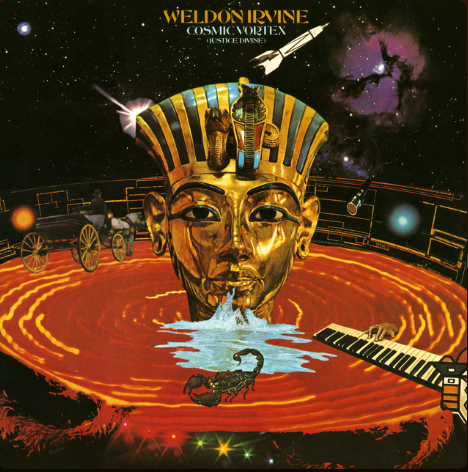
Anniversary picks this month include a big 60th shoutout to The Rolling Stones debut (see a little piece on my thoughts further down the page), 50th call outs to jazz-funk-soul greats Calvin Keys (Proceed With Caution!) and Weldon Irvine (Cosmic Vortex (Justice Divine)), Funkadelic (Standing On The Verge Of Getting It On). Moving into the 80s, REM’s Reckoning is unbelievably now 40 years.
Pulp’s His ‘N’ Hers LP, and Britpop’s near zenith with it, reaches the 30th milestone. An album that couldn’t be more different from the same year, Nas’ decade defining Illmatic is also 30 this month.
We now reach the unfortunate part of the playlist selection: the deaths or death in this case of the one of the last mavericks, John Sinclair. Synonymous for steering and kicking out the jams in his short role as manager of Detroit’s renowned rebel rousing motherfuckers The MC5, renegade poet, scholar, activist and establishment rattler John Sinclair is also remembered for his free radical zeal and dalliances with the law.
Even too hardcore for the MC5, Sinclair’s foundation of the anti-racist socialist White Panthers, and his countless associations with equally revolutionary counterculture players and shakers, marked him out; leading as it did to the now infamous drug bust for marijuana possession in 1969. Whilst his love for the herb and gesticulations, whether through poetry or diatribes, is in no doubt, the way this particular bust was set-up (for what was a very insignificant amount of drugs) is considered heavy-handed and unjustifiable. Handed an initial ten-year sentence, Sinclair’s status in the “heads” and political agitators’ communities had singled him out as a poster child for deterring the like-minded boomer generation from stepping out of line. Fortunately (to a degree) this sentence and media furor galvanized support and sympathy and reduced that ten-year stretch to two, with Sinclair emerging from jail in 1971.
Keeping his hand in so to speak but taking up residency in Amsterdam – a much safer bet -, the beatnik jazz sage continued to perform, write, and record. I’ve chosen a mere smattering of his recordings.
I always sprinkle a few newish tracks into the cross-generational mix. This month it’s the turn of the Neon Kittens, Mick Harvey, Nduduzo Makhathini and Forest Swords.
The rest of the playlist, well, it’s just tunes I played out, own or just rate. In that vein, there’s Mary Wells, Nefertiti, The 3, The Mad’s, Okay Temiz, Danny Arakaki, Ilous and more….
Calvin Keys ‘Aunt Lovey’
Weldon Irvine ‘Love Jones’
Jean Wells ‘Somebody’s Been Loving You (But It Ain’t Me)’
Funkadelic ‘Sexy Ways’
Nefertiti ‘Miss Amutha Nature’
3 Melancholy Gypsys ‘The 3’
Nas ‘It Ain’t Hard To Tell’
John Sinclair ‘When Will The Blues Leave’
The Mad’s ‘Feels Like Love’
The Rolling Stones ‘Little By Little’
Eulenspygel ‘Menschenmacher’
Okay Temiz ‘Galaxy Nine’
The Monkees ‘Time And Time Again’
Donnie Fritts ‘Prone To Lean’
Danny Arakaki ‘All Thanks’
Samadi ‘La Luna Llena’
Coumba Sidibe ‘Djagolla’
Ilous ‘Chanson Chagrin’
John Sinclair ‘Ain’t Nobody’s Business’
R.E.M. ‘Little America’
Neon kittens ‘Schrodinger’s Party Animal’
Virna Lindt ‘Shiver’
Pulp ‘Joyriders’
The Twilights ‘Sorry, She’s Mine’
Mick Harvey ‘When We Were Beautiful & Young’
Clancy Eccles ‘I Need You’
Gerardo Manuel & El Humo ‘Where Did You Go’
Nduduzo Makhathini ‘Libations: Omnyama’
Forest Swords ‘Torch’
John Sinclair ‘Sitarrtha’
__//ARCHIVES\\__

50th Anniversary to Guru Guru’s Dance Of The Flames and a staggering 60th to The Rolling Stones’ Debut.
Guru Guru ‘Dance of The Flames’
(Atlantic Records)
Trawling around Europe – and wherever they found a door that was laid open to them – like a ragtag gypsy caravan convoy, Guru Guru took their 1973 album, Don’t Call Us (We Call You), out on the road. With most of their monies funneled into purchasing a solid and heavy monolithic ballsy sound-system, they bled dry the ears of many a ‘head’.
The trios imbued in sonic genius and omnivorous lynch-pin guitar gunslinger, Ax Genrich, somehow managed to disappear from this mad procession, leaving the group and heading into nigh obscurity. His difference of opinion on which direction the ennui band of lunatics should progress resulted in a split, with Mani Neumaier hell bent on creating improvisational material against Genrich’s more delineate structured compositions – though it must be made clear that Genrich always threw himself unwieldy into every track, regardless of who wrote it or what form it took. For a scene that produced an abundance of over-qualified, sickeningly gifted, innovative, and erudite guitarists – West Germany spewed them out like an ever-efficient Volkswagen production line – it was, you could say, a job to stand out from the mighty throngs of erudite axe welders. Yet Genrich with his re-wired Hendrix and deconstructed rock’n’roll space licks, managed to leave an indelible footprint in the Krautrock canon, and hall of fame.
To plug this gaping chasm, and before embarking on the next LP, the one-time member of the progressive jazz outfit Eliff and exotically named Houchäng Nejadepour – half German, half Persian – joined the one-album veteran Hans Hartmann and founding father Neumaier to become part of Guru Guru mark III. Talented in many disciplines including guitar and sitar, alongside both compositional and technical production skills, Nejadepour added a more Popol Vuh-esque flavour to the band’s sound, lending Guru Guru a Balearic and far eastern quality. Such was his contribution – though this could also be partially down to Neumaier’s lack of new material – that the well-talented troubadour composed half of all the tracks on their next album, Dance Of The Flames. Unfortunately, that listless and cold-footed obligation to move on, led to Nejadepour’s departure soon after the LP’s recording in the Spring of 1974 – his replacement was Gila axe man Conny Veit, who himself only managed a short sojourn of a few months.
Dance Of The Flames, the second release on Atlantic, not only saw a wider and more cosmopolitan influence and catchment, but it also grew fat on a robust hard rock sound, which at times plunged into the dark recesses of Gothic heavy metal. Andalusian vistas and South American themed Sambas cut the collection of eight-songs into two camps. Neumaier, as chief patriarch, tends to either brood on or veer towards folly. Take the opening grandstanding ‘Dagobert Duck’s 100th Birthday’, a paean ode to Donald Ducks tight-beaked Uncle Scrooge, that could also be a reference to the last Merovingian king of the Franks, but then maybe not. The track features a display of fatuous duck-call kazoos and outlandish gestures of both The Edgar Winter Bands ‘Frankenstein’ and King Crimson, on showboating duties. But then there are also ethereal opuses, such as the romanticized ‘The Girl From Hirschhorn’ – a lament to the mysterious figure of affection, who resides in the nearby German town of the title – to balance it all out.
Production values are high, and slickly executed with every note, no matter how drenched in echo, reverb, or fuzz, all audible and separated apart. Those erratic rolling time signatures and unruly voracious drum solos of Neumaier are all still in evidence, as usual, as are the dependable assiduous bass runs and jazz riffs, favored by Hans Hartmann who’d joined the Guru Guru family the previous year. The high-plain astral traveler, preparing us for a meeting with visitors from beyond the stars, is almost erased from the groups original founding musical manifesto, replaced by a sturdier rock and, world music, agenda.
From the start:
Kazoo twitching gonzo trumpets announce the extravagant goof-off rock opus that is ‘Dagobert Duck’s 100th Birthday’ party anthem. This flitting Alice Cooper muscling rocker features a jovial, if under the surface portentous, ode to Donald Duck’s disparaging money grabbing capitalist Uncle Scrooge – known in Germany as Dagobert. Macho feats of savage and squalling guitar solos brand scorch marks across the stonking, stalking monster backing track; Nejadepour hurtling through the scales at a rabid rate of knots, hoping to erase the hovering presence of Ax Genrich, with his own blistering blurry-eyed fret work. Gratuitous and highly ridiculous in equal measure, this slab of over-cooked mega prog, is used as some kind of showcase, just to prove their mettle.
An inexorable ethereal and lightly laid-back gallop of a groove rolls into view over a harmonic pinpoint sweeping introduction. The diaphanous love pinning tryst, ‘The Girl From Hirschhorn’ – placed highly in my all-time top 100 Krautrock tunes, just in case you were wondering – floats in on the dreamy breezy melody. Hans Hartmann builds up a repetitive pounding bass line, as a gliding quivering lead guitar preens and majestically swoons along to the rousing pleasing and drifting backing. After seven-minutes of proto-Amon Düül II Wolf City era bliss, and dashes of love-in Acid Mother Temple – you can see why Neumaier went on to work with them – a vocal relief sublimely transcends the soundtrack, as Neumaier exhales joyfully –
“I can’t stop thinking of you.
Where could you be, little babe,
Why I am gently playing this song for you?”.
With his querying display of lament finally let out, the band hyper-drive towards a lunar wah-wah stop/starting outré; shimmering in reverb and slipping into a jazz-rock sporadic free-for-all, that spills over and onto side one’s closing track, a bombastic spasmodic odyssey.
‘The Day Of Time Stop’ is Sun Ra, Beefheart and Santana all sharing a pleasure voyage to the 5th Dimension. Staccato timings create a jump and off-kilter raging loop, that acts as a cyclonic spiraling blast for Nejadepour to launch another blast of light-speed attacking pomp, searing from his bewildered guitar. Stumbling drums and octave hurling bass brew up a right shitstorm before the trio use the Arthur. C. Clarke galactic elevator to the stars, disappearing into some distant cosmological whirlpool of depravity. Like Edger Winter, our maddened guitar alchemist, runs wild, flipping through key changes and reeling off utterly fanciful and one-fingered licks – total filth.
Side two begins with the album’s title track. Neumaier promptly rattles off a smashing cymbals introduction, as Hartmann slaps his bass around some bending rhythms. Everything is coated in a strange reverberated and, reversed effect, flipping backwards and forwards, stretching out the instrumental and whipping it into a twisted carcass of a song, with the very air itself sucked out into some kind of vacuum.
A taste of the Samba is up next, albeit an Hieldberg etymological version of the sun-kissed exotic dance. Nejadepour’s sprightly jazz-tinged composition sounds like a happy-go-lucky Yes, twinned with the be-bop indulgences of Herb Albert. Hartmann twangs and bounces along on the contra bass, as a cheerful Neumaier taps away on the congas, each of them enjoying the succinct distraction that is ‘Samba Dos Rosas’ – just one of Hejadepour’s Balearic enthused joints that make up most of side two’s track list.
‘Rallulli’ is cast from the same mold, but steers closer to home, as the musical accompaniment melds together fits of acoustic jamming and hidden-in-the-attic sound effects. Tablas, congas, and a trapped jar of hornets produce a strange old avant-garde miss-mash, the final word going to a flushed toilet – perhaps a critique of the track, or more of that Neumaier humor.
Those Andalusian plains and mountains come a calling, as pranged delicate harmonies add to a pained melancholic mood-piece entitled ‘At The Juncture Of Light And Dark’. Hemmingway-esque Death In The Afternoon allusions are cast, with resplendent flamingo flourishes and a suspense filled air of Spanish mystery – file under evocative musical narrative.
Bringing the album to a dramatic close is the doom lit curtain call of ‘God’s Endless Love For Man’, a Gothic heavy metal droning and throbbing prowling instrumental that stabs a fork in the eye of the creator. More like an attempt to soundtrack the works of Bosch then a hymn to the divine, this bubbling cauldron of a stonker takes over from Amon Düül II’s Phallus Dei quest and drags Black Sabbath through the killing fields. This is indeed some scary shit: Guru Guru on a fuck-rock satanical crusade, summoning up some kind of end-plan Armageddon. Interspersed in the mire, bursts of rapid-fire jazz rich breaks and tangled glorious guitar solos add a glimpse of hope to this one-way helter skelter ride into the abyss.
The Rolling Stones ‘S-T’
(Decca) 1964
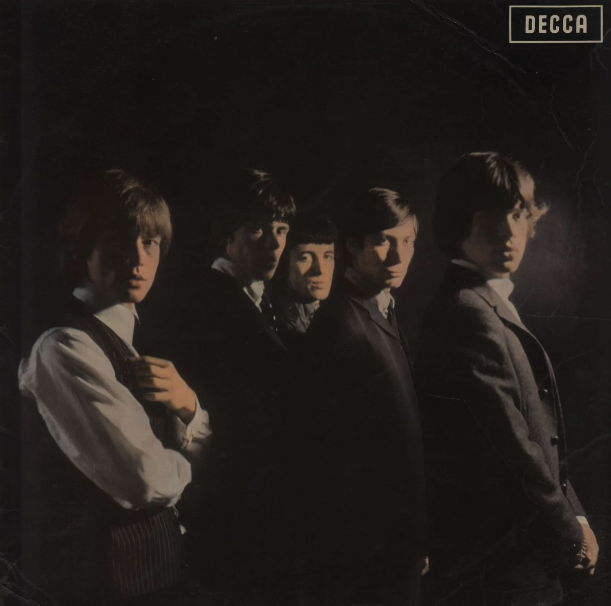
Those sulky near petulant straight-faced punks stare out from their dark shadowed album with a look that means business. Made-up almost entirely of cover versions, grabbed from the patron black blues and r’n’b characters of Chicago, The Mississippi and Tennessee, the debut LP is almost an exalted tribute to their heroes.
Rambunctious and loud, the pure rawness and bleed over of the instruments (something that no-one seemed concerned about in the studio at the time; encouraged by their manager Oldham) as they filled each other’s space, was a mixture of giddy adulation and blue-eyed indecorous rebellion. From the frayed, proto-punk amateurish sound of ‘Route 66’ to the gospel ye-ye of ‘Can I Get A Witness’, this album shambles along and offers up some convincing attempts to sound like Jimmy Reed, Willie Dixon and Slim Harpo. Of course, they fail but the results are better than the intention in many ways; the vital kick start to a whole scene and call for a generation. Can it really be sixty years old this month?!
 Monolith Cocktail Blog