Our Monthly Playlist selection of choice music and Choice Releases list from the last month.

We decided at the start of the year to change things a little with a reminder of not only our favourite tracks from the last month but also a list of choice albums too. This list includes both those releases we managed to feature and review on the site and those we just didn’t get the room for – time restraints and the sheer volume of submissions each month mean there are always those records that miss out on receiving a full review, and so we have added a number of these to both our playlist and releases list.
All entries in the Choice Releases list are displayed alphabetically. Meanwhile, our Monthly Playlist continues as normal with all the choice tracks from October, taken either from reviews and pieces written by me – that’s Dominic Valvona – and Brian ‘Bordello’ Shea. Our resident Hip-Hop expert Matt Oliver has also put forward a smattering of crucial and highlighted tracks from the rap arena.
CHOICE RELEASES FROM THE LAST MONTH OR SO:
Bedd ‘Do Not Be Afraid’
Review
Joel Cusumano ‘Waxworld’
(Dandyboy Records) Review
Peter Evans’ Being & Becoming ‘Ars Ludicra’
(More Is More Records) Review
Will Glaser ‘Music of The Terrazoku, Ethnographic Recordings From An Imagined Future’
(Not Applicable) Review
Amira Kheir ‘Black Diamonds’
(Sterns Music/Contro Culture Music) Review
The Legendary Ten Seconds ‘Ricardian Churchward’
Review
NiCKY ‘with’
(PRAH Recordings) Review
Picniclunch ‘snaxbandwitches’
Review
Cosimo Querci ‘Rimane’
(Quindi Records) Review
Širom ‘In the Wind of Night, Hard-Fallen Incantations Whisper’
(Glitterbeat Records)
Striped Bananas ‘Eternity Forest’
Review
Sum of R ‘Spectral’
Tortoise ‘Touch’
(International Anthem X Nonesuch Records) Review
Vexations ‘A Dream Unhealthy’
(Cruel Nature Records) Review
Violet Nox ‘Silvae’
(Somewherecold Records) Review
THE PLAYLIST::
Howling Bells ‘Heavy Lifting’
Melody’s Echo Chamber ‘Eyes Closed’
Arcigrandone & Sone Institute ‘Ancide Sol La Morte’
Pray-Pax ‘Can’t’
Peter Evans Being & Becoming ‘Pulsar’
Petter Eldh Ft. Savannah Harris ‘MIDSUM BREW’
Myka 9, Blu & Mono En Stereo ‘Battle’
Jesse the Tree & Sage Francis ‘A Bad MFer’
Verb T & Vic Grimes ‘Distraction’
Elsio Mancusco & Berto Pisano ‘Nude per l’assassino’
Joker Starr Ft. AnyWay Tha God & Jazz T ‘Don’t Try to Test’
Summers Sons Ft. Ben B.C ‘Promises’
Sebastian Rojas ‘Pulmon Del Tropico’
Amira Kheir ‘Rabie Aljamal (Spring of Wonder)’
Oswald Slain ‘Cranberry Juice’
NiCKY ‘I Saw You’
The Legendary Ten Seconds ‘Bones in the River’
Edward Rogers ‘Astor Place’
Joel Cusumano ‘Death-Wax Girl’
The Stripped Bananas ‘Vampire of Mine’
Bedd ‘Paulie’s a Bum’
Legless Trials ‘American Russ Never Sleeps’
Vexations ‘Let Me In’
OvO ‘Gemma’
Sum of R ‘Violate’
GRABENFUSSS ‘Broken Kingdoms’
Cosimo Querci ‘Rimanemai’
Valley Voice ‘As Though I Knew’
Samara Cyn ‘vitamins n minerals’
The Strange Neighbour ‘No Mans Land’
Truth by Design ‘Stray Shots’
The Cool Kids, Sir Michael Rocks & Chuck Inglish ‘We Got Clips’
Dillion & Paten Locke ‘Always Never’
Sol Messiah & Connect The Dots Movement ‘Small axe wins the battle’
Tortoise ‘Works and Days’
Sirom ‘For You, This Eve, the Wolves Will Be Enchantingly Forsaken’
Violet Nox ‘Whisper’
Liz Cooper ‘New Day’
Sweeney ‘Silent J’
RULES ‘Run Boy’
Tinariwen ‘Chaghaybou – Adalan’
For the last 15 years both me and the MC team have featured and supported music, musicians and labels we love across genres from around the world: ones that we think you’ll want to know about. No content on the site is paid for or sponsored, and we only feature artists we have genuine respect for /love or interest in. If you enjoy our reviews (and we often write long, thoughtful ones), found a new artist you admire or if we have featured you or artists you represent and would like to say thanks or show support, than you can now buy us a coffee or donate via https://ko-fi.com/monolithcocktail
The Perusal #49: Ndox Électrique, Rave At Your Fictional Borders, Tara Clerkin Trio, Wax Machine, Pidgins…
November 8, 2023
A WORLD OF DISCOVERIES REVIEWED BY DOMINIC VALVONA
(Unless stated otherwise, all releases are available now)

Ndox Électrique ‘Tëdak Mame Coumba Lamba ak Mame Coumba Mbang’
(Bongo Joe Records)

Continuing to circumnavigate the depths of Africa, on a quest to connect with the purest origins of that continent’s atavistic rituals, the Mediterranean punk and avant-rock motivators Gianna Greco and François R. Cambuzat seize on the adorcist practices of Senegal’s Lebu people.
The successor to that partnership’s Ifriqiyya Electrique collaboration with the descendants of Hausa slaves (a project that produced two albums of exciting Sufi trance, spirit possession performance and technology), the next chapter, Ndox Électrique, radically transforms the Lebu’s N’doep ceremonies of spirit appeasement.
Living in the peninsula of Cap-Vert, at the western most point in Senegal, the Lebu community lives side-by-side with their ancestral spirits. And in these ritualistic female-dominated performances of entranced elevation, loud drums, dancing, sweat and blood, they are summoned forth through possession to help heal the world.
Sneering at any kind of classification (this is neither ethnographical research nor “postcard” world music), Greco and Cambuzat immerse themselves, working hand-in-hand with their Senegalese ensemble cast of megaphone wielding vocalists and musicians. It’s a world away, you’d think, from their post-industrial, Gothic post-punk backgrounds – when not on the African trail, both musicians join forces with that iconic deity of the underground N.Y. scene, Lydia Lunch, to form the raucous Putan Club. But they’ve found a lively connection, merging the clattering, bounding (almost like timpani at times) and shuttled drums and instruments, Muezzin-like calls, and more sacrosanct voices and song with chugged, churned, squalled, engine kick-starting and ripping post-rock, industrial guitars and tech.
The opening rattled, lumbering catharsis ‘Jamm Yé Matagu Yalla’ is an introduction to this hyper-hybrid; a mix of Vodoun, Marilyn Manson, Islamic Sufi song and shredding Sunn O))). Those authentic, in the field, trances enter the creeping dreaded world of the late Scott Walker, and the post-punk specter of Rema Rema and Itchy-O, in the raw and intensified drama of ‘Lëk Ndau Mbay’.
Even though the voices are yelled through a megaphone to be heard above the heightened din, they come across as quite harmonious: hymnal in some cases. Certainly creating an atmosphere of ancient spirit communion and deliverance in the face of oppression, it’s the crunch and grind, and supernatural machinery of their European partners that gives it all a moody chthonian edge; firing up evocations of Faust, Coil and NIN. Actually, the fluted and riled ‘Indi Mewmi’ reminded me of both early Adam And The Ants and African Head Charge.
Between worlds the Ndox Électrique transformation moulds spheres of history and sound, whilst creating a dramatic new form of communication and ritual. Summoning up answers to a sickening society, both groups of participants in this blurred boundary exchange rev-up the sedate scene with a blast of authentic regeneration and dynamism. One that is neither wholly African nor European. Dimensions are crossed; excitement and empowerment, guaranteed.
Assiko Golden Band De Grand Yoff ‘Magg Tekki’
(Sing A Song Fighter/Mississippi Records) 10th November 2023

The second stopover in Senegal this month (see above), couldn’t be more different. The Ndox Électrique collaboration raised adorcist spirits in a hybrid of ritualism and industrial post-grind, whereas the lively Assiko Golden Band De Grand Yoff either raise the roof off the capital’s nightspots, or, find naturalistic contemplation to the sound of a delicately, thoughtfully spindled kora.
Whilst sharing the same geography, the AGBDGY take their cues instead from Dakar’s dynamite music scene, but also embrace the rhythmic percussive language of Fela Kuti and Tony Allen, and the Afro-jazz and soul of such artists as Peter King and Manu Dibango too.
The moniker itself represents the group’s base of influence in the Grand Yoff commune d’arrondissment of the Senegal capital; widened out further to include the traditional rhythms that passed through the infamous, ‘House of Slaves’, Gorée Island – although its importance and legacy has been disputed amongst scholars and the like in recent years, this once independent colonized port outlier from Dakar was a departure site for transporting slaves to the Americas. Fought over by the British and French, it later became part of the greater Dakar region, and a tourist destination memorial to that evil trade.
The message throughout these spheres of geography is one of cooperation, based upon the Sufi teachings of the Mouride Brotherhood: a large school of the Sufi Order, prominently in Senegal and Gambia, the adherents of which are known as ‘Mourides’ – translated from the Arabic to mean ‘one who desires’. In the local Wolof language, culture of Senegal those students of the faith are called ‘Taalibé’.
Exciting and unifying that community for twenty years now, their infectious sound of cross-pattern, clattering and cascading drums, and call-and-response vocals has been picked up by the combined facilitating partnership of Sing A Song Fighter and Mississippi Records labels. Sing A Song Fighter’s founder, Karl Jonas Winqvist, came across the collective whilst creating his own Senegalese fusion, the Wau Wau Collectif, back in 2018. From that same Sufi spiritual cross-pollination of dub, cosmic sounds and Wolof traditions fueled project, the poet-vocalist mouthpiece Djiby Ly steps forward to rouse the AGBDGY’s chorus responses and cross-section of pitched voices. And although the fourteen-strong drumming circle is obviously rhythm focused, there’s also the addition of the beautifully lilting balafon, picked and plucked woven kora, both suffused and pecking horns, fluted wind instruments and a both Marseille and Creole concertinaed bellow and squeeze of accordion.
In action, they sound out a controlled raucous of rustling, shaking ancestral calls and conscious version of Afro-beat, Afro-jazz and Afro-soul; like Kuti sharing the stage with Laba Sosseh and Seckou Keita. As a counterbalance, a pause from the rolling and polyrhythmic drums, there are short interludes of time-outs in the community and under nature’s canopy of bird song: the sound of the breeze blowing through the trees overhead and all around, and of children playing in the background, as the kora speaks in communal contemplation.
At times they create a mysterious atmosphere of grasslands, and at other times, play a more serenaded song on the boulevards that lead down to the sea. On fire then, when in full swing, but able to weave a more intricate gentler sound too, the AGBDGY prove an exhilarating, dancing combo with much to share: the ancestral lineage leading back centuries, but lighting up the present. Thanks for both partners in bringing this album to a wider audience, and indeed my attention.
Tara Clerkin Trio ‘On The Turning Ground EP’
(World Of Echo)

The recordings, releases, may have been a little thin on the ground in the last couple of years; marking the time between this latest EP and the trio’s last, the In Spring EP. But in that space they’ve carried on the writing, and extensively toured both Europe and Japan, with the odd track escaping the creative incubator on the way.
Originally a much bigger, expanded prospect, built around Tara Clerkin, the Bristol unit shed five of its members to create a slimmed down trio. Flanking Tara in their diaphanous vaporous version of trip-hop, dub and gauzy kosmische are Patrick Benjamin and Sunny-Joe Paradiso. Together they have formed a beautifully conceived vision, bookended by a pair of amorphous instrumentals.
On The Turning Ground is a series of hallucinations and evaporations. But that’s not to call them translucent, as all five tracks have a real substance and emotional pull. The opening ‘Brigstow’ is a subtle incipient brush and sift of vapours, submerged bass, ghostly notes from Mark Hollis’ piano, a echo of Gallic-dub accordion, and lingering xylophone. Howie B’s Music For Babies, France, Širom, Embryo and Don Cherry’s Organic Society flow in on a reverberated drift.
The first of three vocal tracks, ‘World In Delay’ follows; another gauzy morphine of dub scatter drums trip-hop that features a lucid, meandered wistful quality: like Sade fronting Lamb, accompanied also by Sakamoto’s piano, and produced by Massive Attack in the late 80s.
On an EP that reminds me of my own middle age, and my formative years in the electronic early 90s, ‘Marble Walls’ is like a lost dream from XL Recordings or Deconstruction. Built around an Ibiza-esque acoustic guitar loop, Tara (I’m assuming) wafts a floated vocal to Portishead and Lemon Jelly vibes. The titular turning ground is built around another lovely acoustic loop, which falls in a gentle cascade throughout, like something from the Baroque era, or from classical Iberia. The beats are more like UNKLE. The feels, atmosphere and vapours like Lush collaborating with Seefeel and Freak Heat Waves.
The final instrumental track, ‘Once Around’, draws this EP to a close with an escapist ambient dream sequence of soundtrack Raul Refreé, waves, bellows, celeste and morphed distant chamber music. Coming full circle, the empirical gorgeousness of this final spacious wisp mirrors the opening ‘Brigstow’, on what is a transported, effortlessly sublime trip of reimagined 90s (some 80s too) influences. But there is something very refreshing, modern and confident in the making: refreshing too. I’m a convert anyway.
Pidgins ‘Refrains Of The Day, Volume 1’
10th November 2023

The dictionary describes Pidgin as a grammatically simplified means of communication that develops between two or more groups of people that do not have a language in common: typically, its vocabulary and grammar are limited and often draws from several languages. Blowing all that open by drawing upon an amorphous palette of linguistic and worldly sources, the Pidgins duo of multi-instrumentalist Aaron With and drummer/percussionist Milo Tamez construct a removed musical dialect on the first volume of the Refrains Of The Day series (Volume 2 follows in 2024).
But it’s also an experiment in percussive rhythmic languages, using an eclectic assortment of instruments alongside insect chatter and bird-chirping moist rainforest field recordings. There’s some unusual apparatus indeed, used to emote a familiar yet otherworldly collage of environments: from the Laotian to the Chinese, Central American, African and alien. Much of this is down to the use of such unique instruments as the Cristal Baschet and glass harmonica: the former, made up of 56 chromatically tuned glass rods, which you rub with wet fingertips to illicit a ethereal sound, and the latter, uses series of glass bowls to produce tones by means of friction. Put with talking drums, the hurdy-gurdy and Chinese sheng, Maasai crosses paths with atavistic Mexican civilizations, Vodoun ceremony and emoted temple scenes in Xanadu.
It’s not surprising to find the duo referencing the fourth world and possible musics creations of Jon Hassell. But I’d also add Alice Coltrane, Desert Players Ornette Coleman, Ale Hop & Laura Robles and Walter Smetek to that pool of influences. When we hear a much effected, transformed voice, it’s either mysterious with longing and soulfulness, swimmingly quivered like Panda Bear, or, in the art experimentation form of Laurie Anderson using a Mogadon induced preset Speak And Spell.
New rituals, strange tongues and a obscure colloquialism emerge from drumming rhythms, whirly circled wind pipes, tines, metallic chimes and the morphed to produce an immersive world; one that’s simultaneously alien, naturalistic, primitive, supernatural, mystical, non-musical and complex. Nothing is quite how it seems in the pursuit of communicating a new multi-diverse sonic language; but that’s not to say it’s unsettling, just very interesting, as the direction of travel is not obvious. I look forward to hearing the next volume on this collaborative reinterpretation of language.
Rave At Your Fictional Borders ‘Potion Trigger EP’

With such an enviable CV of polygenesis creative outlets to his name, trick noisemaker and in-demand drummer Dave De Rose can be relied upon to guide himself and his collaborative partners towards ever-changing and open-ending musical horizons.
At the porous borders of cultural ambiguity, the latest communal project alludes to a ‘global awakening’: an expose of the ‘festering flaws in society’, and ‘the gradual realization that those in positions of power have forgotten their commitment to the people’ – if they ever did in the first place. Well amen to all that and more. Only, events seem to be running way ahead and out of control of governments and borders, with war on Europe’s door and in the Middle East.
But in turn, that nameless, unreferenced and untethered navigation of the current chaos is incredibly difficult to pin down. De Rose’s membership of Electric Jalaba, instigation of the Athens-London traversing Agile Experiments project and, most congruous, involvement with the doyen of Ethiopian music, Mulatu Astatke, are all drawn upon for a Rave At Your Fictional Borders. And as if the net hasn’t been cast widely enough already, De Rose is joined on this sonic adventure by Jon Scott (of GoGo Penguin note), Marius Mathiszik (Jan Matiz, I Work In Communications) and Henning Rohschürmann: you could say the melting pot has been truly stirred up.
Still rhythmic, even if the signatures are varied and at times like a drum kit engine slipping and spluttering in a staccato fashion, taking time to find traction and a groove, this quartet of performances has a certain drive and forward momentum. As vague as the provenance can be, with an amorphous bleed of the Atlas Mountains, Anatolia, the Hellenic, Balkans and East Africa, the opener (‘Fictional Border Crossings’) is brought in on a desolate mysterious temple wind, before building up the journey with an alchemy of silk Ethiopian mallet vibraphone, stylophone-like electric sparks, and sliding and shuffled prog-jazz drums. It sounds like a mirage.
Moving on, ‘Potion Trigger’ seems to merge CAN with Holy Fuck, Snapped Ankles and Richard H. Kirk; the rhythm a mix of dub, two-step, softened timpani and smashing splashes of cymbals. The mood becomes almost alien, the supernatural cries of incensed anger obscured but present as a fucked-up version of a air raid siren tries to wind up but dies out with a zip.
With a lolloped confident strut, echoed ricochet and rim shots, and hints of On-U Sound, Idris Ackamoor and Sly & Robbie, ‘New In Town’ ramps up the dub a notch, until a final phase of crystalized droplets cascade down on a cosmic plane. ‘Free At Last’, the jazz mantra of so many titles, locks into a nice intensity of Afrobeat, prog, electronica, jazz and breaks; like a moonbeam jam of Moses Boyd, Red Snapper and Battles. Not so much restless as always on the move, each track progresses along an unmade road: a map without borders or coordinates. Knowledge, experience and musicality come naturally, but it feels like these like-minded musicians were improvising, and just left in a room without preparation or communication to let go. There’s a knowing of course, and a concept that informs this EP, but this is an unconscious reaction to the present climate of fear, resignation and movement of people like no other.
Berke Can Özcan Ft. Arve Henriksen & Jonah Parzen-Johnson ‘Twin Rocks’
(Omni Sound)

Sharing an evocative and near illusionary hiking trial with his musical foils, the highly prolific Norwegian trumpeter Arve Henriksen, and equally impressive and in demand baritone saxophonist, Jonah Parzen-Johnson, the Istanbul-born polymath Berke Can Özcan finds inspiration from a mystical, mysterious, historical and enriching environment. The ‘Twin Rocks’ of the title references one such stirring, and in this case personal, stumbled upon highlight from the Lycian Way; a long distance charted (and uncharted for that matter) walk that hugs the Southwestern coastline of modern day Turkey.
In atavistic times, this region would have been known as Lycia, a flourishing state/nationality on the edge of Anatolia during the 15th and 14th centuries BC; the architectural remnants of which can be seen carved into the reddish rocky landscape. Siding with the Persian Empire during its apex of power and trade, Lycia was eventually controlled in turn by Ancient Rome, the Byzantines, Selijuks and Ottomans.
With all that history underfoot and all around, the composer, musician and instrument maker Özcan and his two sparring partners, create magic and an air of mystique; amorphously blending sonic aromas that evoke the Mediterranean, Iberian, Middle East and Turkey. And yet, Henriksen’s rasp, mizzle and oboe-like trumpet additions on the vaporous shaping ‘Buried Palms Garden’ and dreamy, melting ‘Snake Behind The Valley’, reminded me of Sketches Of Spain Miles and Chet Baker. Parzen-Johnson’s saxophone meanwhile, has echoes of Andy Haas, Ben Vance and the Pharaoh on the Oriental dub hallucination ‘Hidden Village’, and reminded me of Idris Ackamoor on the drifted ‘Red Pine Bridge And The Crystal Clear Dead-End’.
When evaporating or wafting across the landscape, or gazing at the light as it sparkles off the calm tidal waves, the jazz seed effortlessly germinates into trip-hop, with slow breaks and those languid Portishead vapours
Suffused with a gentle form of jazz and almost trippy, near–psychedelic atmosphere of mirages, heat warped effects and reversals, this felt and transient journey also features Özcan’s almost hushed, translucent vocals. Alongside an array of brushed, sifted and rhythmically softly beaten drum apparatus (steel to what sounds like a frame drum), the affected warbles of wildlife, bobbled and tinkled vibraphone and purposeful, ruminated upon Sakamoto piano notes, symbolic proclamations of intention, redress and reassurance are made: the “I would never be the snake behind” line inspired by the pathway taken around those significant, chanced upon twin rocks. Sometimes this comes across vocally like Alex Stölze, and at other times, like a soulful, removed version of Jon Marsh from The Beloved.
Nothing feels real, despite the familiarity, as nature and terrain, the fauna and remaining traces of ancient civilisation combine to inspire a dream spell absorption of the Lycian Way. Twin Rocks is an effortless sounding travelogue of landmarks transformed into imaginative poetry, meditation, and self-discovery.
Sam Newsome & Jean-Michel Pilc ‘Cosmic Unconsciousness Unplugged’

Joining the ranks of the great jazz (although they go beyond that, into the blues, classical and avant-garde) duos, the partnership of experimental soprano saxophonist and composer Sam Newsome and pianist, composer and educator Jean-Michel Pilc left a critically acclaimed marker with 2017’s Magic Circle album. Before that, and ever since, both foils in that collaborative duet built up enviable reputations, notably with Newsome as a soloist, and Pilc with his trio.
Despite all that experience, their second album together is all about spontaneity. Devoid of planning, of ‘preconceived ideas’, the ‘unconsciousness’ of the album title is uncoupled and set free in a restless motion. The succinct, matter of fact philosophy behind the concept: ‘it works or it doesn’t’.
And so both in improvised and transformative modes they interpret well-worn standards and create new explorations; always with a view to showcasing their respective instruments and instinctive abilities as they react to each other’s assured experimentation. This translates into both recognizable sounds and playing, and those more envelope-pushing tests of abstracted recondite expression. In Newsome’s case, modified attachments turns his saxophone into a circular squeezed and vibrato reed version of a didgeridoo, or, the sound of a strained valve that needs oiling. For amongst shortened pecks, piccolo-like flights and fluted melodies there’s dry whistles, restless flutters, the gasped and hinge-like: in one moment Coltrane and Wayne Shorter, the next, more like Sam Rivers and Anthony Braxton.
Pilc meanwhile, has a similar counterpoint of the semi-classical and avant-garde; using every part of his grand piano, from the inner spindled entangled guts to what sounds like a rhythmic taping of the lid. Obviously an adroit maestro, Pilc evokes a mix of Bill Evans, Cecil Taylor, Fabio Burgazzi (especially on the floated spellbound subconscious passage, ‘Bittersweet Euphoria Part 2’) and Stravinsky. And yet, the boundary testing instrumentation gels, feels descriptive and nearly always finds a connective melody of direction of travel.
Before I’d even read the track titles, listening without any reference points or info, I could detect a classy touch of Duke Ellington; a touch too of the Savoy label and even 1920s New York on the ship horn blown, Gershwin-esque tumble, mosey and slide, ‘Dancing Like No One’s Watching (But Everyone Is)’. That presence is made apparently obvious with the inclusion of the Duke’s signature, ‘Take The A Train’; the whistle and drive of a steam piston train rhythm all present and correct, but taken off the rails and into an untethered setting of swanned sax and hard bop punctuated runs. However, the old feel is undeniable. The duo also take a chance on the Duke’s ‘Solitude’; keeping the sentiments of fond remembrance and bitter loneliness, but finding much to play around with and reframe for an exploration of reflection.
Joining the old guard, there are also riffs on Jerome Kern and Oscar Hammerstein II’s musical number, ‘All The Things You Are’, and Irving Berlin’s ‘How Deep Is The Ocean’. The former dances on tiptoes to the old magic of the 1950s romantic jazz, whilst the latter is a somber reading of the original: the didgeridoo effect and a rough edged bristled vibration, the sweeps of a hidden brush and shifting tides all pointing towards something ominous, even alien, below the surface.
Away form the standards of jazz transformations, there’s the Alice Coltrane trinkets and wind chimes tingled and glinted, inner piano workings turn dulcimer and fluted sax climbing ‘Sounds From My Morning Window’, and the avant-garde boogie piano and chaotic strained sax tempest stirred, ‘The Storm Before The Quiet’. There’s some real class mixed with the unburdened pouring through every second of this album’s fifteen pieces; a real sense of freedom on the move, with the destination uncharted, unsettled and in some small part, mysterious. But as a showcase, the ‘unplugged’ consciousness platform reinforces the reputations of Sam Newsome and Jean-Michel Pilc’s explorative mastership and ingenious collaboration.
Wax Machine ‘The Sky Unfurls: The Dance Goes On’
(Batov Records)

Finding a more mellow tone under the influence of replenishing waters, the Lau Ro led Wax Machine project’s latest album offers a hazy and diaphanous musical landscape of rumination, wistful contemplation and enquiry.
Born in São Vicente, but leaving at the age of eight to emigrate to Italy, before eventually relocating to Brighton, the South American imbued group leader channels his global travels into the Wax Machine melting pot: a borderless, amorphous mix of the psychedelic, jazz, tropicalia and folk. After finally affording the airfare, Ro returned to his Brazilian homeland this year, spending five weeks reconnecting with family and the landscape. This heritage trip was followed up with a further five weeks of travel in Europe; navigating the waterfalls of the Pyrenees and Alps regions. Those stunning awe-inspiring vistas obviously had an effect, and so whilst concentrating the mind, Ro was moved to musically convey the thematic philosophically soulful concepts of ‘one’s own nature’, the breakdown of an individual’s identity, and the processes of reconnection.
New age in self-discovery tropes, the results are disarming, sensory, lush and gauzy across nine tracks of pastoral, hippie psychedlia, Latin, Laurel Canyon folk, dreamy and vaguely spiritual jazz, and more hallucinating spells.
Aiding Ro on this, mostly, relaxed traverse are Ozzy Moysey (on double bass and percussion duties), Adam Campbell (piano and keyboards), Isobel Jones (flute and vocals) and Tomas Sapir (drums, percussion and synths, plus the Clannad-like and veiled choral voices of Marwyn Grace and Ella Russell. Altogether in harmonious union, they drift and waft across a fantasy-style vision; allured towards ocean mirages, rivers, and of course, waterfall paradises.
The tropicalia sound of Ro’s heritage is back, and so when used to its fullest effect on such tracks as the lucid ‘Glimmers’, emotes the influence of Astrud Gibert and Giberto Gil. It must be said, as beautifully dreamy as it is, with touches of Hawaiian guitar, this coastal attraction lyrically could be about a drowning suicide; the Sarah Cracknell-esque wispy vocals protagonist seeming to sleepwalk helplessly into the ocean’s embrace, under a spell. In a similar – near uneasy if not psychedelic supernatural – way, the fluted, vaporous Holydrug Couple and Soundcarriers-like ‘Sister’ feels like an Italian Giallo moment. And the inter-dimensional radio set mystery, ‘Transmission’, reminded me of Belbury Poly scanning ghostly visitations from distant worlds.
Elsewhere, there are evocations of A Psychedelic Guide To Monsterism Island, the South Seas and the Valley Of The Dolls, with the Donovan, Fairport Convention, Greg Foat, The West Coast Experimental Pop Band, Misha Panfilov, Mark Fry and a calmer Marconi Notaro.
The Sky Unfurls: The Dance Goes On is a gauzy tapestry, created with much love, care and freedom; a wistful, rewarding experience of familiarity matched with Brazilian influences to produce a lush backdrop for questioning feelings and for making emotional connections of belonging.
Leisure FM ‘Fables EP’
(Ifm) 15th November 2023
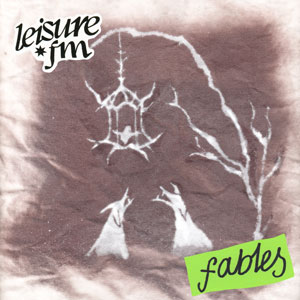
Occupying a liminal position between the weary and resignation on one hand, yet dreamily gazing through the chthonian gauze of both Lutheran and Eastern European morose and fatalistic fairytale and fables towards hope, the Leisure FM twins offer hallucinatory experiences and cathartic relief on their debut EP.
Although certainly Gothic and shadowy, Milena and Weronika Szymanek cast spells of dream-realism electronic pop and despondent futility in conveying the eternal struggles of the heart; a process that’s mentioned in the accompanying PR notes as akin to the punishing eternal labours of Sisyphus, doomed by the Greek god Zeus to roll a boulder up a hill, only to see it roll back down, and thus begins the whole sorry task again in a perpetual loop. Don’t feel too sorry for old Sisyphus though, the mythical founder king of Ephrya (or Corinth as it became known) wasn’t exactly the most pleasant or rational of rulers; punished for cheating death twice, but his rule was strewn with murdered bodies and other self-serving crimes.
Undeniably, with the existential thrown into the alchemy of occultism, there’s a suffused moodiness and supernatural feel to the quartet of songs on this EP. But with a touch of Blake’s afflatus anointed, diaphanous magic, there’s moments of Seraph light too. Caught between worlds you could say – between angels and demons -, the twins set out to process past experiences and feelings. Lyrically, these stories, chapters are merely implied. On the opening malady, ‘Weather Warning’, an opened heart is laid bare with an esoteric language caught on the haunted winds, whilst the vocally subdued and stripped of joy titular-track references the loss of identity in a violent relationship – imagine the Au Pairs and Propaganda in the bewitching hour, bruised physically and mentally.
In a flange-fanned, reverberated world of their own making, Leisure FM come on like a meeting of Nico, Lomi MC, the Cocteau Twins, Lana Del Rey and the Banshees. The production – which also includes a nice sympathetic, saddened dramatic stirring of strings – is near on perfect in setting the mood (thanks in part to third wheel producer Charlie Allen) and conjuring up veiled confessionals of the heart. In the less exotic studio environment of Woolwich, South London, Leisure FM sleepwalk through an imaginative dream-pop fairytale of existential melancholy and sharing.
ZAHN ‘Adira’
(Crazysane Records) 24th November 2023

As much as I can imagine driving at a motorik pace along the European motorway systems, travelling in a bumper sticker covered motorhome, from one less than glamorous location to the next, the latest opus-expanded album from the German trio of ZAHN is a more heavy trip into a vortex spun wrangle of far out prowls, oscillations and growling loaded holidaying travails.
Heads partners Chris Breuer and Nic Stockman are joined by Muff Porter’s and the live setup Einstürzende Neubauten recruit, Felix Gebhard, across eleven extended journeys in krautrock, the kosmische, doom, heavy and post-rock, and psychedelia. This concentrated unit expands on a number of tracks to accommodate like-minded foils; Markus E. Lipka (of Eisenvates note) for example, lending plectrum slides, rung-out and revving electrified rock guitar to the Black Angels and The Holy Family esoteric spell, ‘Amaranth’. The crazy diamonds Floydian-turn-Western-turn-riled-rocker ‘Schmuck’ features Radare’s Jobst M. Feit on squalling and bended wanes guitar duties, whilst Joanna Gemma Auguri apparently adds accordion flourishes to the prowling, thrashing and ghostly smoked soundtrack, ‘Tabak’.
Germanic (naturally) in tone, the sound of Klaus Dinger, Sky Records analogue files and early Guru Guru (on the Mayan vapour cosmic mystique of Bavarian fairground meets UFO, ‘Yuccatan 3E’) can be picked up on this road trip. However, having said that, the opener (‘Zebra’) features thick-stringed bass ala Boris and Swans, and the synthesized melodies of OMD and early Gary Numan (Tubeway Army). ‘Apricot’ seems to marry kosmsiche with hip-hop breaks, before slipping into halftime hovers of Floyd (again). ‘Velour’ is like a hallucinatory brush with Jessamine, Goblin and Slift, and the finale, ‘Idylle’ has a translucent quality of fanning Eno-esque ambience and more supernatural SURVIVE vibes.
Eating plastic, or Clingfilm, wrapped sandwiches by the side of the autobahn on holiday may not sound very exotic or exciting, but ZAHN transforms the innocuous travels across the continent of their youth with a gristly, cosmic and moody locked-in travelogue soundtrack of epic proportions.
Koma Saxo ‘Post Koma’
(We Jazz) 10th November 2023

What comes next in this “post” (post-modern? post-Covid? post-truth? post-band itself?) era for Petter Eldh’s loose configuration of collaborators? Already pretty much using jazz as a springboard for a road less (well) traveled, the Swedish composer, producer and bassist led unit of Koma Saxo were always in a constant motion of evolution; sounding like a band remixing itself in real time, as they blurred the lines between ‘live instrumentation’ and ‘repurposed sampling’. In practice, this ‘holistic vision of jazz now and soon’ sounds like Max Andrzejewski’s Hütte, 3TM and Ill Considered being remixed by J Dilla, Kutiman and the Cut Chemist.
Holding on to jazz, in its many forms, evocations of Anthony Braxton, Sam Rivers, Leon Thomas, Marion Brown (ala Temps Fou), Duke Ellington, Jeremy Steig and Bobbi Humphrey can be heard morphing and reshaped into a breakbeat, drum ‘n’ bass and hip-hop production. This can turn out like the Healing Force Project repurposing swing, or, like an exotic, wavy Jimi Tenor and the El Michaels Affair breaking bread with Binker & Moses on a fantasy Nordic islet. One minute you’ll at the Mardi Gras, the next, walking the low-strung elastic splinters of a Charlie Mingus bassline.
A cross-generational reach of jazz history is taken in a wild, beat cutting and cyclonic direction by a quality unit that’s as familiar with the spiritual, be bop, conscious, Afro, blues and Savoy labeled genres as they’re with Mo Wax, DJ Shadow, Four Tet and the Guru. Post Koma is yet another lively, progressive album from a jazz project always in a state of change.
Sone Institute ‘The Narrow Gate And The Stone Clock’
(Mystery Bridge Records)

The biblical mixed with the alien, paranormal and industrial, Roman Bezdyk’s latest hidden sounds generated album is an obscured and mysterious control of the atmospheric and dramatic.
Following on from 2021’s After The Glitter Before The Decay landscape of specters, shapes and broadcasts from a post-industrial wasteland, The Narrow Gate And The Stone Clock scores the ‘altered states’ of Bezdyk’s ‘consciousness’; informed by the New Testament’s metaphor/analogy on choosing the right pathway (‘But small is the gate and narrow the road that leads to life, And only a few find it’. – Matthew, or this one from Luke, ‘Enter through the narrow gate. For wide is the gate and broad is the road that leads to destruction, and many enter.’) and by the struck clock sounds of the church where he would meditate.
A road less obvious, the knocks on heaven’s gates, near ethereal female voices and subtle tones of Tangerine Dream’s cathedral analogue-synths and organ are enveloped by a creation story primordial sulphur of raining filaments, retro-space data calculations, Fortean radio set tunnings, Richard H. Kirk’s breathed condensation, the concrete, sound of scaffolding and Kriedler, Basic Channel and Autechre techno extractions. But within that description, there’s also a leitmotif of slot machine mechanisms, orbiting spheres, surface noise, metallic reverberations and scaly movements.
The presence of someone, or something from beyond this world is almost constantly present through this sub conscious journey from incipient creation to heavenly elevation. And so, although there’s plenty of near supernatural elements and acid rain Blade Runner moments, this synthesis of field recordings, mono synth, guitar, radio and FX improvisations also ascends to zither-like gilded stairs towards Laraaji, and the near meditative. But yes, this is a soundscape of great mystery; esoteric by design or not, like Gunter Westhoff and Bernard Szajner broadcasting from the ether as the mechanical church clock strikes and amorphous pathway is opened.
Hi, my name is Dominic Valvona and I’m the Founder of the music/culture blog monolithcocktail.com For the last ten years I’ve featured and supported music, musicians and labels we love across genres from around the world that we think you’ll want to know about. No content on the site is paid for or sponsored and we only feature artists we have genuine respect for /love. If you enjoy our reviews (and we often write long, thoughtful ones), found a new artist you admire or if we have featured you or artists you represent and would like to buy us a coffee at https://ko-fi.com/monolithcocktail to say cheers for spreading the word, then that would be much appreciated.
REVIEWS/Dominic Valvona

Amanda Whiting ‘After Dark’
(Jazzman) 9th April 2021

Gilded reminisces, meandered trains of thought and turbulent mood fluctuations provide the soundtrack for this harp-led nocturnal album of ‘after dark’ evocations. Bridging both jazz and the classical the adroit Welsh harpist Amanda Whiting,and her lightness-of-touch troupe of John Reynolds on drums and Aidan Thomas on bass, effortlessly seem to glide and skip between eras and moods on a nighttime flit.
First of all let’s get the most obvious reference points and influences out of the way. Yes, there is indeed an air and touch of the lineage of those transcendental, transportive and diaphanous jazz-harpist forbearers Dorothy Ashby and Alice Coltrane about these performances, but you can also detect a touch of Corky Hale and the much more contemporary and sublime Brandee Younger too. Whiting however seems to flow across passages of Savoy, swing, the conscious, the experimental, and the bluesy. There’s even moments of Latin saunters and cocktail hour jazz on happier, feet dancing on the sand tracks like ‘Back To It’.
In Whiting’s hands the harp performs both spells of the angelic and melancholic; the plaintive and translucent. Like water being caressed and charmed, there’s both waterfalls and trickles of the plucked and accentuate. Yet also shorter, sharper more attacking stabs and grating on ‘Just Blue’ and the rumbling, hard-bop swinging ‘The Feist’.
Providing another musical tangent, Glasgow’s tastemaker DJ and burgeoning remixer Rebecca Vasement is given the task of reimaging the album’s title track; which she does by casting the original in a more meditative state of dreamy, vaporous slumber. The lulled soulful coos and airy hummed vocal utterances of Nadya Albertsson can be heard floating and caressing this lifted spiritual treatment. You can hear the moodier, reflective original version later on in the album’s running order.
A quick mention to the articulate, occasionally bursting and splashed drums of Reynolds and mumbling, down-low runs and phrases and punctuation of Thomas’ bass is called for, as they provide a perfect sparse and sophisticated bed for Whiting’s untethered glistening harp music.
The midnight hour proves an inspired choice for Whiting as she freely moves with grace and élan across a cocktail of moods, memories and inventive play, on what is a most experimentally pleasant and heavenly jazz album.
Der Plan ‘Save Your Software’
(Bureau B) 16th April 2021

For a German electronic group that’s made various conceptual returns over the last forty odd years – even making a fleeted comeback as virtual avatars at one point – it seems unsurprising that the Der Plan vehicle would have in its vaults a take on Kraftwerk’s robotic assimilation schlock: the Man-Machine manifesto that saw the ‘showroom dummies’ become increasingly sophisticated in erasing their useless human shells for automated cybernetic ones.
Framed as a ‘long lost album’ from their 80s oeuvre, the Dusseldorf formed doyens of the Neue Deutsche Welle (the New German Wave) movement have decided to release the kooky, playful and often ridiculous Save Your Software conceptual electro and synth-pop LP. More ‘DAFT’ than DAF, this take on Kraftwerk’s computer world and various robotic riffs has a whole backstory of Tomorrow’s World invention. Founding members Moritz Reichelt (known as Moritz R®) and Frank Fenstermacher, joined in the 80s by Kurt ‘The Pyrolator’ Dahlke, are said to have ‘initiated’ the ‘Fanuks’ project to make themselves immortal as ‘Mensch-Machines’. Fanuks, a play on the actual all-too real Japanese robotics producer FANUC, involves all kinds of technological as well as philosophical themes; hardware as well as software talk. A vessel it seems for the possibilities but also concerns, ethics of A.I.: especially its role in the creative process. There’s even mention of a mysterious Bavarian philosopher, Nigelius Senada, brought in to advise on the project: clues to the mischievous nature of this album cover story really start to drop when this character turns up, his so-called ‘Theory Of Obscurity’ pinched from an infamous documentary film on The Residents.
The whole tale is narrated in a twelve-minute audio-documentary; the concept, interviews with band members and their robot forms sound-tracked by passages of music from the album, and to denote international scenery changes, archetypal Japanese mood music. It’s unfortunately, for me, all in German. But you get the gist nevertheless, the drive but failure to fully converge with that robotic host.
Der Plan however, have used the data, calculations, silly android voices to construct a quite enjoyable cyber-pop Techno album that bounces around in a retro arcade of arpeggiator and ascending, descending lit-up fruit machines, or, goes whistling around the bend on a Bullet Train. Zerox copiers dance, legs akimbo to Herbie’s ‘Roket’, Arthur Baker’s electro and the Art Of Noise’s sampled scratch barks. A creature it seems of the times it was supposedly created in (though sounds like it was made last week), there’s all those influences plus Neuclaus banging on the proverbial door of Yello’s studio, the Yellow Magic Orchestra, Sparks and Populäre Mechanik. Oh yeah, Der Plan pull them all in on the retro-futurist computer belter that springs and rolls through the discothèque, art gallery and workshop.
Der Plan merge Kippenberger like deadpan with a prototype Fanuk in crisis – the randy rebellious machine of ‘I Want To Sing Like Ella’, caught in the middle of identity catharsis -, an L.A. disaster movie answer machine message with a transmogrified form of neon new wave Miami boogie; and turn Chris Montez’s ‘Let’s Dance’ twister into a futuristic dummies bop.
A throwback to an era of rudimental robotics, when the utopian view of A.I. connectivity was in its infancy, this Kraftwerkian flip feels just as relevant now in the current climate as tech seems to be fast approaching the holy grail of ‘equivalence’. We’re also seeing the dystopian visions of that same 80s period, when this album was apparently recorded. Clever, sophisticated, arty, on-tech but playfully tongue-in-cheek, Save Your Software is the 80s new wave pop album that never was. And I love it.
IOKOI ‘Tales Of Another Felt Sense Of Self’
(-Ous) 26th March 2021

Creating a total immersive experience for all the senses, sound artist, vocalist and composer Maria Micciché deconstructs what has gone before so she and her collaborators on this latest project can create a set of new ‘sensations’ and experiences in which to address the theme of digital age disembodiment.
Under the IOKOI mantle, Micciché has pulled together the resources and creative skills of the videographer Michele Foti, olfactory (that’s sense of smell) artist Klara Ravat and graphic designer Sarah Parsons to take on a full exploration: part performance, part installation. It’s a cerebral project that taken three years to put together, with its multidisciplinary strands which includes Foti’s video clip studies of structure, movement, nature and the human body; Parson’s 208 page accompanying booklet of condescend video stills and fragments of Micciché’s song lyrics; and Ravat’s specially made room scent – to be applied when listening to the music.
Tales Of Another Felt Sense Of Self is a search, understanding of the differences and multifaceted dimensions of the ‘self’, ‘other’ and ‘same’. But it’s also a highly personal, intimate inward journey for the artist who utters, expels and in hushed tones narrates deeply personal sensations of longing and understanding. Tracks such as ‘SOS’, as it suggests, seem to be a signal, call out for help in the midst of variously voiced repetitions of the albums leitmotif mantra: those layered vocal cycles sound like enticing ad slogans echoing from out of a sort of Blade Runner futuristic soundtrack. Elsewhere the birds sing a sweet song, yet ‘Bloody Life’ is full of sad narrated gestures and a neo-classical like piano that plays on in a tinkled, out-of-time fashion. Micciché in an almost resigned, quiet voice yearns for the sensations of certain reminisced scenic caresses whilst addressing the question of harmonious balance in our lives: finding it, as the lyrics whisper, in our complimentary opposites.
The whole experience of strung-out phonetics, reverberating breathy airy and almost hyperventilated voiced phrases and lyrics that float and manifest in the middle of electronic currents, tubular-like didgeridoo echoed rhythms and the vaporous is akin at times to walking around in a radiophonics rich space, kitted out with surround sound.
Taken separately as an aural experience, Micciché’s soundtrack is evocative and immersive enough. When put together with the aromas and imagery it must be and incredibly full-on perceptive experience.
This is conceptual sound art brought out of the gallery space and into the home; an experience made all the more intimate and personal.
Conrad Schnitzler ‘Paracon (The Paragon Session Outtakes 1978-1979)’
(Bureau B) 26th March 2021

Continuing to reveal, and in some cases rejuvenate, the previously lain dormant archives of the Kosmische and electronic pioneer Conrad Schnitzler, Hamburg label of quality and repute, Bureau B, has released yet another treasure trove of his interstellar space experiments. This time it’s a session collection of outtakes from the late 70s, created at the Paragon named studio of tangerine dreamer and solo innovator Peter Baumann.
For those unaware of Schnitzler’s prestige, the Dusseldorf-born visionary co-founded the infamous Zodiak Free Arts Lab incubator, helped put together the first incarnation of the Kosmische superstars Cluster (or Kluster as it was known back then; his foils Roedelius and Moebius dropping the ‘K’ for a ‘C’ on Schnitzler’s departure) and appeared on the inaugural Tangerine Dream suite, Electronic Meditation, before founding Eruption in late ’71. A solo career with a host of collaborations on the way lasted until his death in 2011.
One such partnership was with Populäre Mechanik stalwart and artist Wolfgang Seidel (appearing under the alias of Wolf Sequenza, and collaborating in recent years with artists as diverse as Lloyd Cole), the co-author of these particular expansions of space and minimalist-techno probes. Seidal became a regular foil for years: especially on the two Consequenz albums. With no track titles, just an ambiguous numerical ordering of recordings, the Paracon tracks sound pretty much like finished works in their own right; all sharing a mysterious cosmic and alien sound that’s both almost ominous and yet playfully evolving. There’s much of that rich Kosmische dancing and searching Tangerine Dream sound in these starry visions; Schnitzler bound for galactic travels aboard a propeller engine craft hovering over lunar vistas and primal soups. Throbbing metallic leviathans and flapping, slithered entities move about in the deep space as sonorous balls of refracted light cascade and twinkle. Yes it’s that sort of trip.
At times Schnitzler creates a calculus of falling data and Library music like chemistry sets activity, and at other times, begins to bring in some base-techno rhythms. It’s a similar palette of synthesized square waves, presets and early midi-electronica that permeates, yet there’s some eerie, spooked uneasy engine pulsing tones of Bernard Szajner and more majestic moon dust kooky waltzing amongst the comets to be found too. It seems bot Schnitzler and Seidel had some vision of the future whilst producing these tracks, bridging as they do both the Kosmische with early signs of Techno music.
Not so much ‘outtakes’ as an extended album of congruous space excursions and metallic machine music, these sessions are a worthy edition to the Schnitzler catalogue of unearthed electronica traverses: A great, expansive cosmic-mining album in its own right.
Kirk Barley/Church Andrews ‘Parallels’
(Takuroko) 5th April 2021

Here’s an idea that you don’t really ever see, an artist appearing both as themselves and under an alias on the same split release. In what is a congruous experiment, and division of labour, Kirk Barley does just that.
Via the prolific in-house Café OTO label, Barley uses, more or less, the same sound palette and set of tools to create two complimentary but different outcomes. As Barley the placable light-of-touch creator of this EP’s first half section (‘Parallels A1 – A5’), tubular-like chimes of metallic marimba (or xylophone, or even something else like it) and detuned, duller sounded bells ring, shimmer, cascade and float across a cosmos of avant-garde classical Japanese scenes, a very removed version of gamelan and sparse kooky 70s electronic Library music. Reverberating with depth and shadowed on some of these parallels by a traceable echo of the main baubles and bobbled rhythms and repeated interplay, these diaphanous chimed experiments also feature a sort of transduced language of globules and retro glassy computerized data. A Kosmische Sakamoto contemplating the blooming blossom, these more tranquil, sparse suites are dreamy and playful.
The Church Andrews alter ego meanwhile transforms that apparatus into something heavier: to a point. It’s a mirage of sorts: a staccato trippy, wavy fashioning of Warp and Ninja Tunes Techno, and even House Music (‘Parallels 8’ could be a drunken groove meeting between Felix Da Housecat and Luke Vibret). Introduced into this section of the split are more quickened rhythms, enveloping and thrusting effects. At times it sounds like a remix, transformation of the first half: you can hear those tubular chimes, undulations when the tight delay and faster iteration loops slacken off.
It’s all about the ‘motion’ and ‘percussive patterns’ on this sophisticated spread of Techno ingenuity, as opposed to the trickled washes and untethered approach of Barley’s first five ‘parallels’. Both however prove dreamy and reflective; creatively springing forth from the same source and musically entwined. Barley and Church, or Barley Church; two experimental visions from the same mind.
Violet Nox ‘Whispering Galaxy’
(Infinity Vine Records) 9th April 2021
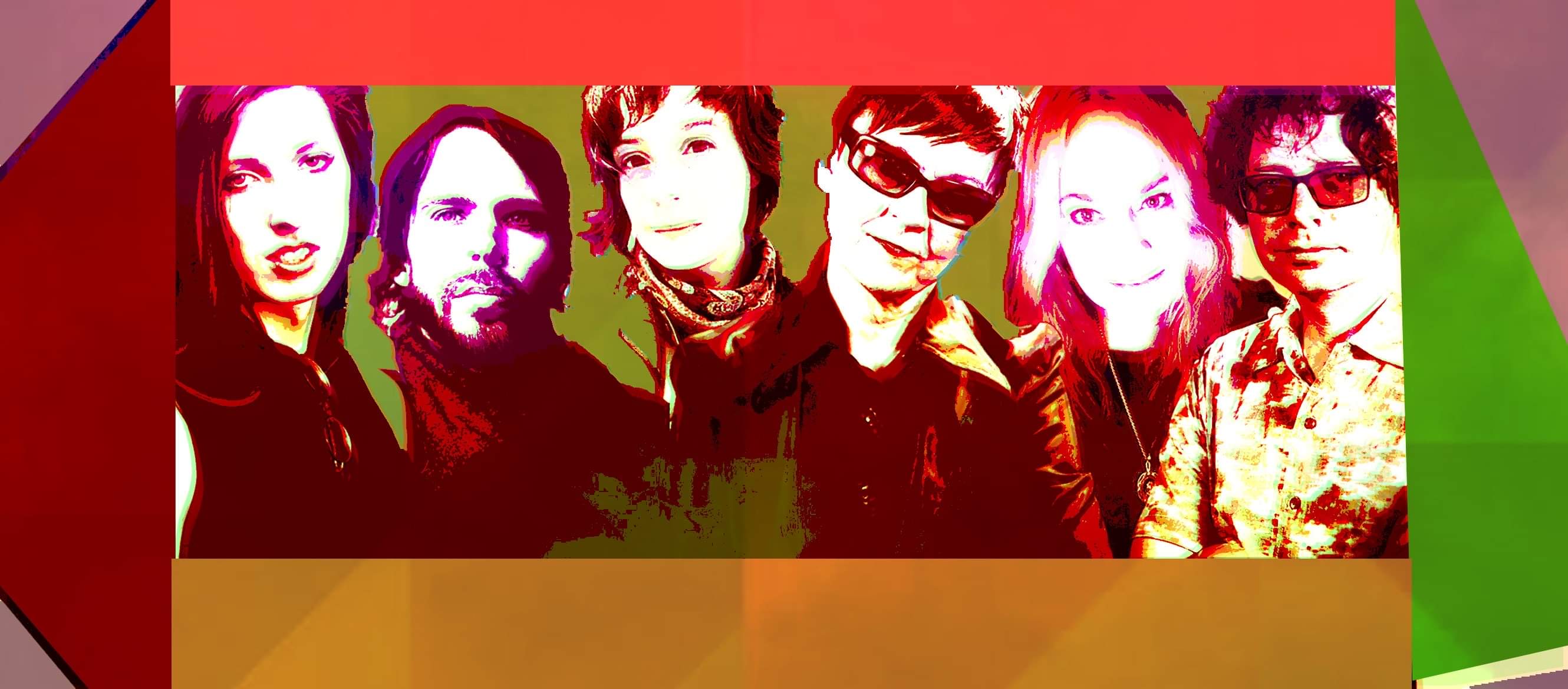
Pretty much encapsulated in the title of the Boston-based synth group’s fourth album, Whispering Galaxy is just that; a dreamy, ethereal chorus of hushed, diaphanous whispery voices, emanating from and sending out siren’s waves across an expansive galaxy.
A reverberating apparatus of various synthesizers, machines, a turntable and post-punk flange-guitar manipulate and fashion a vaporous pink ether of various hymnal and more mysterious haunted heavenly vocalists to woo over on a cosmic cruise into the great expanses of space. Wispy, airy but with a lot of depth the album’s space journeys fluctuate between the dry-ice, breathy, cybertronic jacked-up Kosmische and subtle Techno visitations of ‘Shapeshifter’, and the more esoteric Banshee-dreamed ‘Selene’ – which reimagines a sort of synthesized neo-folk vampiric Velvet Underground casting shadows beneath a full moon. On the almost spiritual voiced ‘Haumea’, Violet Nox’s spacecraft hurtles through a trippy, warped sonic vortex towards a dwarf planet, located just beyond Neptune’s orbit. Named after the Hawaiian goddess of childbirth, and only discovered in 2004, Haumea inspires a suitable enough galaxy quest soundscape; one in which the Nox seem to turn off the engines and just drift towards in a suspended state of aria vocalized homage.
With touches, glimpses of mid-90s Bowie, Brian Reitzell and countless dreamy, synth-pop inspirations Violet Nox coo and woo sweet ‘somethings’ to the awe, mystique and trepidation of the galaxy beyond our reach.
Federico Balducci/Fourthousandblackbirds ‘Anta Odeli Uta’
(Somewherecold Records) 9th April 2021
A return to the fold for the highly prolific adroit guitar sculptor of ‘dreamscapes for hope & the facilitation of enlightenment’ Federico Balducci, and a label debut for the experimental, abstract artist Albérick (appearing under the avian inspired Fourthousandblackbirds moniker), this drone, ambient and contemporary classical collaboration proves a most congruous fit and balance of the sparring partners musical art forms.
The two mavericks compliment each other on a most atmospheric soundtrack of paranormal like communications and drifts. I say paranormal, the opening ‘Wake’ seems to be tapping into channel ether on an esoteric TV set. FTB for his part produces a sizzle and crackled tuning of fuzz, flits and squiggles, and a sort of quasi-haunted organ as Balducci drops and lingers lightly administered guitar phrases and notes that hang on the edge of slight dislocation and even jilt a little: nearly in dissonance. A chill of the subterranean and the Gothic permeates the renaissance corpus ebb and tide of the next suite, ‘Ligeti And Gira Floating In A Pool Filled With Soy Milk’. A reference I assume to both the Swans’ instigator Michael Gira and the famous avant-garde, contemporary classical doyen György Ligeti, this haunted pool of gauzy mirages could be said to straddle their inventive influences: especially Ligeti’s signature ‘musical hallucination’. ‘Lux’ dwells in a sort of dank cavern, though the guitar parts, harmonically echo, ting and sparkle with a certain lightness of touch. There’s a repeating chorus of bird song on the next passage, ‘Toxoplasmois’, to balance out the title’s reference to a parasitic disease. You can hear the resonance of Balducci’s hand movements, up and down the tingled spine of his guitar; some movements, gestures, brushes of which sound almost harp-like.
Finishing on a communicative broadcast, ‘Queen Of Mars’ pairs FTBB’s Morse-coded dot-dashes and synthesized glassy bobs with Balducci’s woozy spirals and cyclonic whittled notes. That last track, and the album’s title too, are both reference points to the Soviet sci-fi film vision Aelita: Queen Of Mars, directed by Yakov Protazanov and based on Alexi Tolstoy’s 1923 novel of the same name. “Anta Odeli Uta” is the alien message beamed from Mars, which notifies Earth of their presence. A sort of Bolshevik version of John Carter Of Mars, it tells the tale of a Soviet engineer travelling to the red planet in a rocket ship, where he soon leads a popular uprising against the ruling Elders and falls in love with the planet’s queen. Except it all turns out to be a daydream, which in a way is where this visitation soundtrack heads. For this collaboration is an incipient dream state that lurks and drifts across an atmosphere of the spooked, hallucinating and strange to great success. Let’s hope both partners on this journey continue to work together in the future.
Sone Institute ‘New Vermin Replace Old’
(Mystery Bridge Records) 16th April 2021

From the as yet burnt-out ashes of previous ambient excursions, Roman Bezdyk pushes on into ‘uncharted territory’ with a newly fashioned quartet suite of the cerebral. Formerly a stalwart of the Manchester based Front & Follow label, Bezdyk has chosen to release this latest Sone Institute fronted production of ambient imbued, sophisticated simmering Techno on his own Mystery Bridge Records imprint.
Relating to but also casting adrift of past experiments, the opprobrious entitled New Vermin Replaces Old EP probes and ascends the astral with a subtle hand of guidance: not entirely untethered but free to roam and venture both the awe-inspired expanses of space and the more grounded, ominous ruins of our contemporary society.
It all begins with a most astro-nautical climb (nee glide) into the stratosphere and beyond with the opening ambient skying ‘Studded By Stars 1’. A light wind and square wave ease us into a most ‘starry’ atmosphere; yet subtly stirring in the midst of this cloud base is the resonating movements of objects and unseen forces. That’s the most ambient-esque it gets; from then on there’s added tubular metallic percussion, fluttering kinetic beats and threaded gnarled post-punk like traces of guitar.
‘Vulpine Smile’ may allude to something cunning and crafty, but the sonics reverberate and rattle towards the Germanic and echoes of labels such as Harthouse and R&S in the 90s. That same vibe of Teutonic propulsion can be heard on the Kraftwerkian (if they signed to Basic Channel), springy and bobbed cyber ‘Little Nurse’.
Dropping ball bearings in slot machines and spindling the transmogrified sounds of chimed bells, the twisting, almost clandestine ‘Dazzling Darkness’ seems to strangle the guts of a celeste on a near menacing and quite distinct experiment.
The more you listen, the more you hear revealed from the subtle multilayering of descriptive sonics, rhythms and expletory strands. New Vermin Replace Old is a most intelligent, emotive immersion into the visceral: a highly conscious electronic journey into the unknown.
Matt Donovan ‘Underwater Swimming’
24th March 2021

His short succinct bandcamp bio doesn’t do Matt Donovan justice, especially as (even if it’s to some degrees correct) his craft and reputation is foremost as a drummer, he’s branched out much further on previous projects before this latest solo offering. Formerly the motorizing Krautrock beat provider for Eat Lights Become Lights, and one half (alongside Nigel Bryant) of the now sadly defunct Untied Knot (two of their albums made our choice features of the year in the past), Donovan was already apt at extending his musicianship, composing and production chops.
Now venturing it alone, unheralded and just happy to share, he’s released a floatation, trippy wash album of hazed and quasi-nostalgic melody explorations: both instrumental and sung. Always full of surprises, Underwater Swimming is a dreamy recollection of C86, post-punk, Madchester, the rave era, spacy and industrial indie influences; refracted and molded to reflect Donovan’s search for melodious release in a time of great anxiety, tumult and uncertainty.
Songs and traverses (both utterly cosmic and more bruising, gnarled) seem to evoke various chapters, scenes and cathartic concerns: even studies. Many of which seem to be imbued by his formative years, growing up loving music in the 80s and early 90s. There’s furors into the baggy on the dreamed edge of the second summer of love ‘Mountain Missed’; an acid wash of The Charlatans, House Of Love, Stone Roses and The Essence. There’s a vibe, trace of the Hacienda years, and hints of Factory Records on the more pumped, bass rumbled ‘Wakhan Thanka’, and halcyon melodica-like plaintive Joy(ous) Division meets Spacemen 3 and The Church on ‘Lap Creature’. Donovan somehow manages to merge elements of The Tubeway Army, Brian Jonestown Massacre, Telescope and Popol Vuh on the motored, broody ‘Watch The Pressure’. It’s an album that takes in A.I. lamentable electro-blues, horizon gazing Kosmische, and a strange, magical Beach Boys (via John Lane) vision of oceanic ruminating. Under the light of celestial phenomenons, or around an Ibiza campfire with acoustic guitar, serenading, Donovan extends his portfolio and tastes and most importantly musicianship (going as far as to introduce subtle passages of piano and even prog rock into his oeuvre) on an exploration of ideas that all prove melodious. I’d say that was a success then.
Hi, my name is Dominic Valvona and I’m the Founder of the music/culture blog monolithcocktail.com For the last ten years I’ve featured and supported music, musicians and labels we love across genres from around the world that we think you’ll want to know about. No content on the site is paid for or sponsored and we only feature artists we have genuine respect for /love. If you enjoy our reviews (and we often write long, thoughtful ones), found a new artist you admire or if we have featured you or artists you represent and would like to buy us a coffee at https://ko-fi.com/monolithcocktail to say cheers for spreading the word, then that would be much appreciated.
 Monolith Cocktail Blog