THE MONTHLY DIGEST INCLUDES A CLUTCH OF ACCUMULATED NEW MUSIC REVIEWS PLUS VOLUME 97 OF THE SOCIAL INTER-GENERATIONAL/ECLECTIC AND ANNIVERSARY ALBUMS CELEBRATING PLAYLIST.

Cosmic Ear
___/THE NEW___
LIUN + The Science Fiction Band ‘Does It Make You Love Your Life?’
(Heartcore Records) 23rd May 2025
In the making for five years the latest release from the alliance between the vocalist, artist, bandleader Lucia Cadotsch, producer and saxophonist Wanja Slavin and an ensemble of woodwind, strings and brass and electronic foils, is a magic electroacoustic trip of fantasy and fairytale.
With a voice that floats over contours, swirls, piques, spins, scales, plunges and drops, the dreaminess of Cadotsch is enhanced by an attentive soundtrack that is simultaneously dramatic, theatrical and musical. And yet it’s all somehow tethered to the urban, with its use of electronica (from synth pop to breakbeat and trip-hop) and often subtle but deep bass vibrations and near alien and imposing atmospheres.
Questioning and testing the boundaries without ever falling apart nor sounding incongruous, every turn and sound is perfectly balanced; from the near swells of orchestration that wouldn’t sound out of place in a Hans Zimmer or David Arnold score, to the jazzy woodland spritely breakbeating woodwind evocations of Otis Sandsjö found on the orbital progressive-jazz celestial ‘Bloody Breakup’ – the latter reference is unsurprising, as one of Cadotsch’s other projects, the Speak Low Trio, includes both Sandsjö and Peter Eldh amongst its ranks.
Everything is channelled into a concrete tripsy fusion of contemporary dance and the balletic, with the themes, the language translucently yet deeply connective; a yearn or near wistful set of observations on modern romance, attachment/detachment, place, belonging, and finding your feet and legacy in an increasingly cold and hostile environment. Titles include a reference to the iconic movie dame Faye Dunaway, who has gone through the mill herself, a unique tough singular talent hampered by travails aplenty, mental health, alcoholism, and the focus last year of a major (and candid) documentary, and an innocuous but curiously and inspired observed daddy longleg.
Though Swiss herself, most of Cadotsch’s partners in this union are from or work in Berlin, where this album was forged. The groundwork and ideas of which began back at the start of this decade. Does It Make You Love Your Life? was ushered in and helped on its way by Kurt Rosenwinkel, the American jazz guitarist and polymath who not only plays the synth on this album but also releases it on his own label Heartcore Records.
The talent pool is in no question, the enablers and musicians that join the mizzle and fuzzed, the blizzard-like chuffs, the lifting and raspy saxophone odes, etudes, cycles and sentiments of Slavin’s cinematic, stage and jazzy saxophone, and Cadotsch’s often melisma vocals adding an extended flavour of the playful, the worldly, the sentimental, the classical and avant-garde. At times this sound palette invokes a touch of Southeast Asia, of Indonesian Gamelan, and at others, like a strange version of a Satie music box.
Stirrings of the Tara Clerkson Trio, Qrauer, Ruth Goller, Kreidler, Alex Stolze, Nyman and Glass are transduced into urban pop and trip-jazz for an accomplished, often understated but impactful, album that has soul and magic in equal parts. Well worth the wait.
Your 33 Black Angels ‘Eternities II’
Released last month
Generously gifting us a vinyl version of their eighth album, the second ‘eternities’ volume (arriving six years after the first), the simultaneously pumped, glammed, moody and near psychedelic three-decade spanning New York kissed angels prove able and dynamic at integrating a fusion of electronic genres and ideas into their sound.
Sophisticated and lively, from the dancefloor to the darker creeping recesses of the underground and strip-light flickered underpasses, Dan Rosato, Josh Westfal and Daniel Bombach seem fresh and in an experimental mood. Considering the amount of time they’ve been producing their signature mix of “bubble house”, “acid pop wonder”, “electro” and “dream-pop”, they sound neither jaded nor tired. In fact, as familiar as the elements and various inspirations are, this is a dynamic record of the brooding and near euphoric. This is electronic pop with a certain, sometimes menacing, edge and depth of quality seldom heard in much synth-pop or electronic-indie music. For there is a range of effects, of influences and references both human and near otherworldly and alien – cosmic celestial sounds alongside more twisted and creepy affected voices; dystopian sci-fi against the cool chrome possibilities of Moroder-like arpeggiator.
The difference in mood and style is almost on a track-by-track basis; the atmospheric scene-setting ‘Test_Run’ opener of digital metaphor and cyber dread is from the underpass, or the Tresor bunker, with its pulsated broody beats, hints of Fad Gadget, a less bombastic Muse and Brian Reitzell, whilst the very next track, the surrealist novel inspired ‘Macunaíma’, has a strange, removed Latin electronica feel of vocoder lyrics, tripping memories and touch of Banco da Gaia new age trance. The latter of those two is a reference to the surrealist polymath Mário de Andrade’s famous novel, which I said to have either ushered in or been in the first flourish of what’s termed Brazil Modernism. Far too convoluted to get into here in the form of a music review, the protagonist, “a hero without any character”, stands as magical-realist metaphor for Brazil’s three races origin myths – the white, the black and the native. Director Joaquim Pedro de Andrade made a loosely based film of the story in 1969, changing some of the plot, with our main character near corrupted after leaving his Amazonian home for the city (Rio in the film, Sao Paulo in the book), and undergoing a transformation, changing his very race, meeting terrorists and birthing his only child – his own birth a really strange miracle, emerging fully formed as an adult from his elderly mother. Read into it what you will, but here there is a vibe that is swimmingly tripsy and soaring.
Further on, ‘Light Life’ seems to ape early Richard James and his Polygon Windows phase on Warp, and yet shimmers with globules and digital trails to emerge as a sci-fi pop version of Daft Punk and Beat Connection. ‘It’s In’ reminded me of 80s NYC electronic and synth collage experimentation, post-punk-disco, Front 242, Cabaret Voltaire and the Yellow Magic Orchestra. And ‘Shaggy & Joe’ could be a quirky kiss-off of Foster The People, Apparat and Reflektor era Arcade Fire. They finish off the album on a sort of Cathy Pacific serenade of glissando and plucked gilded beautifully reflective strings. But they really reminded me in places of Barbarian era Young Knifes. The grit and energy perhaps, and the acceleration. Computerised synthesisers, the drum pad fuzzes, breaks and machine-made beats and something of the kinetic is balanced by more humanistic-played instruments and vocals – although at times this voice is filtered, transformed through R&B pop-style vocoder and twisted into the near demonic. A constant thread of lip smacked rebuttals, of breakup and the machine is interlocked into a futuristic dance catalogue of eternal footprints.
Spelterini ‘Hyomon-Dako/Magnésie’
(Kythibong) 20th May 2025
Well-received last time on the Monolith Cocktail (back in 2022 as part of my Perusal #36 column with their ‘Paréidolie’ drum and drone journey) the French quartet are back with a “diptych” style album of longform rhythmic trances and squalling focused intensities.
Named in honour of the 19th century Italian tightrope walker, Maria Spelterini, who’s death-defying stunts included numerous handicapped (blindfolded, manacled or with weighted peach baskets strapped to her feet) walks across the Niagara Falls, the Spelterini pairing of Papier Tigre, La Colonie de Vacances and Chasusse Trappe members likewise walk a similar path, balancing between influences from the post-punk, minimalist, drone, kosmische and krautrock spheres. Once again keeping balanced whilst straddling the rhythmic, the droning, the hypnotising and wilder and more industrial, Pierre-Antoine Parois, Arthur de la Grandière, Meriadeg Orgebin and Nicolas Joubo emerge from their arts lab incubator to progress over what used to be in old money, the equivalent of two sides of a standard LP format.
Covering Side One, if you like, is the staccato turn cymbal splashed motoring (but not motorik) ‘Hyomon-Dako’. The starting point is a Stereolab magnetic bounce and paddled-like drums and dwindled guitars, with an essence of more modern faUSt and Beak>. You’d have to throw in Nurse With A Wound and This Heat as the action seems to build subtly over an entrancing beat that’s one part post-punk and another part locked-in kosmische hypnotism. The finale is a crescendo of harsher, near hardcore and industrial noise and static.
The white powder of magnesium oxide inspired ‘Magnésie’ is another twenty-minute build-up of similar influences but sounds like a transmogrified Velvets at times. Dot-dash-like Morse Code and heavier strains of wielding and welding work in and out of a looping-like concentration of psych-post-punk and needle-registering frequencies.
Spelterini combine their source, influences to create another hypnotising concentration of neo-krautrock and post-punk intensity and an ever-changing progressive trajectory.
Cosmic Ear ‘Traces’
(We Jazz) 25th May 2025
Traces of the Don Cherry sound imbue the debut album from the newly formed Cosmic Ear troupe of celestial and fourth world journeying accomplished intergenerational players. Referencing benchmarks, both familiar sounding and near amorphous geographical points of inspiration, this ensemble embark on the ancient trade routes that connect exotic mirages to straddle a number of inspired jazz soundscapes, rhythms and atmospheres.
No one is more able to carry on the legacy of this album’s spiritual guardian than the Swedish musician, composer and visual artist Christer Bothén, who collaborated frequently with Cherry back in the 70s. Expanding his own skills of instrumentation, and after learning hunter music and taking instruction from the Malian master musician Broema Dombia, Bothén introduced the innovative cornetist to the West African n’goni, a canoe-shaped, dried-animal skin wrapped lute favoured in Mali and its bordering regions. That same instrument now appears here, alongside the Angolan berimbau (a gourd resonating instrument used in Brazilin music) the Malian karignan (a metal scraper) and range of signature jazz instruments, from tenor sax to trumpet (of course), contra bass, clarinets, double bass, piano, various metal and tin sounding percussive tools and the congas.
Furthering the musical scope with Afro sounds (from Afro-jazz to Afro-Brazil and an essence of North Africa and Arabia) the group seamlessly meld flavours and spices, the “brown rice” ingredients, to conjure up their own worldly visionary sound that feeds on Cherry’s explorative work in the 1970s and 1980s; taking in, as referenced on the album’s finale ‘TRACES of Codona and Mali’, Cherry’s Codona triumvirate world fusion and free-jazz crossroads experiment with foils Colin Walcott and Nana Vasconcelos. The echoes ring exotically loud on not only this suite of spindly dulcimer-like threads, both calling and wilder expressions of Albert Ayler-like sax and Miles trumpet, and an overall essence of Alice Coltrane and fourth world possibilities, but across all the album’s six variant mood pieces, travels and motions.
With the leading sideman and instigating Swedish tenor saxophonist Mats Gustafsson, the Croatian roots composer, bandleader and trumpeter force behind the Tropiques, Fire! Orchestra, Angles 9 and Subtropic Arkestra projects Goran Kajfeš, South American studied noted percussionist Juan Romero and bassist and multi-instrumentalist extraordinaire Terbjorn Zetterberg (appearing here under his Kansan Zetterberg alias) completing the circle, the range of experiences is infinite. The quintet expands to include special guest Marianne N´Lemwo, adding a touch more of the West African sound to the varied peregrinations and feel. Within that lineup there’s plenty of crossovers, with various players at various points in their career joining forces: notably Bothén and the reeds experts Gustafsson and Kajfeš, all three Scandinavians having collaborated in various setups over the years.
In practice, this interchange of ideas summons up images of jungles, grasslands, sand dune processions, the cerebral, pining and cosmically mysterious and lunar. On the opening ‘Father and Son’ movement Cherry’s percussive elements – tubular metal instruments, dried beans and rice being shaken like slow waterfalls – mate with bristled and elephant trunk brass and Afro-jazz groove that wouldn’t sound out of place on an Orlando Julius or Peter King track. The near obligatory and worldly free-jazz explorers go to source of inspiration, ‘TRACES of Brown Rice’, draws from the Cherry wellspring but also recalls The John Betsch Society as the group move from the blues to mirage.
A sort of removed, or at less more oblique version of the romantic, ‘Love Train’ certainly has its dreamy evocations and serenades, but progresses from a classical but just off and contemporary enough to slightly jar Abdullah Ibrahim and McCoy Tyner style piano part to echoes of Tangiers and Salah Ragab style Cairo. That is until the horns bleat and scream, cry and climax in near hysterical fits of tumult and emotional discharge. ‘Right Here, Right Now’ features the already mentioned n’goni, but merges a Malian landscape with elements of the AEoC, Andy Haas and the oscillating shimmers of Irmin Schmidt. Sympathetically, and highly atmospheric, the hallucinatory serenades and longing conveyed on ‘Do It (Again)’ once more call upon Cherry’s spirit percussively: the general signature beads that shake and rattle, the textural sounds of instruments unfamiliar to Western ears, forming a lived-in but also fresh and exotic backdrop. There’s a suffix title, “For Sofia Jernberg”, which I believe is a nod to the Ethiopian-born and Swedish adopted singer, improviser and composer, and noted collaborator with her homeland’s most famous export, Hailu Mergia. Whilst nothing is so obvious as to reflect those roots, the track does have a certain vibration and bluesy gauze that could be said to have borrowed from that part of the world, and from Jernberg’s own cross-pollination embrace of the chamber, of jazz, the classical.
A new chapter. A new break. A new legacy-charged and inspired setup from some of Scandinavia’s most important and exploratively adroit players, Cosmic Ear is an open experiment of free, Afro, spiritual, bluesy, rootsy jazz that traverses all points of the African Continent (from South to the West, East and North), South America, the Indian Subcontinent and Arabia, whilst seeking the limitless expanses of the cosmos. A brilliant debut from a mighty fine ensemble of gifted sagacious but playful and experimental artists.
The Mining Co. ‘Treasure In Spain EP’
(PinDrop Records) 30th May 2025
More or less back in the present, or at least with recollections from a much more recent past, the Irish troubadour Michael Gallagher finds gold in his creative home-from-home of Andalusia in Spain. As the title suggests, this is a metaphorical, allegorical treasure of romantism and tender reflections on his muse and partner, but also another chance to bathe in the suffused warmth of Southern Iberia and the inspiring studio of his chosen producer Paco Loco.
Once more in the wings as overseer and foil, Loco (who has worked with the outstanding Josephine Foster, the Jayhawks’ Gary Louris and The Sadies) pitches in on bass and with a touch of glimmered and shimmering sustained Muscle Shoals spiritual organ and what sounds like an opened-up Exiles On Main Street piano – echoes of that iconic dishevelled album can be heard on the EP’s finale, ‘We Are Not Alone’, a country burred amalgamation of the Stones, Josh T Pearson and the Tindersticks in a sort of country-rock séance. That same track carries on the familiar theme of apparitions, spirits, and the supernatural that ran throughout last year’s Classic Monsters album – one of our choice albums 2024 no less –, and to a lesser extent on Gum Card. A creepy invocation, the dead walk amongst us, accompanied by flange effected guitar, harmonies and a full band feel of shambled, breaky heart Stones influences.
Filling out the role of Gallagher’s band is both Rober García and a returning Esteban Perles on drums, and Pablo Errea and Laia Vehí on backing vocals/harmonies. With the feel more or less a comfortable conjuncture of soft Southern soul, R&B backbeats as reimagined by Mick Ronson, Americana and country-rock. Perhaps the most fully realised performance yet, this four-track songbook is the most radio friendly too: which isn’t a bad thing.
With a mix of touching declarations of love and support to his muse and mini dramas, observations and reflections that play with analogies to scarred environments and plaintive souvenir collectors that hide a much deeper, troubling trauma, Treasure In Spain reminded me in parts of John Craigie, the Brakes, the Style Council and Boomtown Rats. Essentially, a well-crafted congruous production of rounded songs that balance paean with the lamented and lilting.
Gallagher’s most commercial, melodiously warm and fully communicated release yet is still rich with his Mining Co. signatures, tweaks, idiosyncrasies, turn-of-phrase and personality. Americana meets the Donegal diaspora after returning to Earth from his cosmological spells and more rooted autobiographical statements. Hopefully after plugging this man’s talents for so many years now, Treasure In Spain will finally shine more light on a under-appreciated songwriting treasure.
___/The Social Playlist Vol. 97___
The Social Playlist is an accumulation of music I love and want to share; tracks from my various DJ sets and residencies over the years; and both selected cuts from those artists, luminaries we’ve lost and those albums celebrating anniversaries each month.
Running for nearly 12 years now, Volume 97 is the latest eclectic and generational spanning playlist come radio show from me – the perfect radio show in fact, devoid of chatter, interruptions and inane self-promotion.
One of the pillars of that playlist series is the anniversary celebrating albums slots: usually 10th, 20th, 30th, 40th, 50th and 60th anniversaries. This month I’ve selected tracks from Albert Ayler’s supernatural apparition sprouting divine styled Spiritual Unity (60 this month); Minnie Riperton’s melliferous and slinking soul fantasy Adventures In Paradise (50th this month); New Order’s third album, the Kraftwerkian, German new waver Lowlife (40 this month); Scott Walker’s harrowed-by-thou-name Tilt (30 this year); and Teenage Fanclub’s Big Star and Crazy Horse imbued Grand Prix (dropping right in the middle of the Britpop phenomena in ‘95).
I always like to select a smattering of recentish releases each month, usually those tunes I missed or didn’t get the room to feature in the site’s exclusively new Monthly Playlist selections: consider it a second chance. May’s edition includes 2025 tracks from MIEN, the Natural Information Society with Bitchin Bajas, Occult Character, The Body, Dis Fig, and Peter Cat.
The rest of the playlist is made-up of tracks I rate, love, wish I owned or indeed do own, from decades of music collecting and DJing. So find RJ Payne, The God Fahim and Knowledge The Pirate on the spook vibes plus Shyheim, Joe Gibbs, Railroad Jerk, Howie B, The Black Lips, Captain Beefheart, Doris, Andre Williams, Kool Kim, Saar Band, The Mice, Toys That Kill, Luke Jenner, The Models, Docteur Nico, Charles Gayle, The Jean-Paul Sartre Experience, Mappa Mundi and French TV.
Tracks in full for Vol. 97 are:::
The Jean-Paul Sartre Experience ‘Einstein’
MIEN ‘Evil People’
Railroad Jerk ‘Don’t Be Jealous’
The Mice ‘Not Proud of the USA’
Captain Beefheart & His Magic Band ‘Click Clack’
Minnie Riperton ‘Feelin’ That The Feeling’s Good’
Saar Band ‘Double Action’
Andrew William’s Velvet Hammer ‘I Miss You So’
Shyheim ‘Here Come The Hits’
Natural Information Society & Bitchin Bajas ‘Nothing Does Not Show’
The Body, Dis Fig ‘Holy Lance (Audiotree Live Version)’
Scott Walker ‘Tilt’
Doris ‘You Never Come Closer’
Albert Ayler ‘Ghosts: First Variation’
RJ Payne, The God Fahim & Knowledge The Pirate ‘THE UGLINESS’
Occult Character ‘She’s A Reptile’
New Order ‘This Time of Night’
Luke Jenner ‘About to Explode’
Docteur Nico ‘Toyei Na Songo’
Joe Gibbs ‘He Prayed Version’
Howie B. ‘How To Suckie’
Kool Kim ‘The Heavenly Sword’
Teenage Fanclub ‘Don’t Look Back’
The Models ‘Bend Me, Shape Me’
Peter Cat ‘Starchamber’
Toys That Kill ‘Psycho Daisies’
Black Lips ‘You’re Dumb’
Charles Gayle ‘Compassion I’
French TV ‘The Kokonino Stomp’
Mappa Mundi ‘Sexafari’
Hi, my name is Dominic Valvona and I’m the Founder of the music/culture blog monolithcocktail.com For the last 15 years both me and the MC team have featured and supported music, musicians and labels we love across genres from around the world: ones that we think you’ll want to know about. No content on the site is paid for or sponsored, and we only feature artists we have genuine respect for /love or interest in. If you enjoy our reviews (and we often write long, thoughtful ones), found a new artist you admire or if we have featured you or artists you represent and would like to say thanks or show support, than you can now buy us a coffee or donate via https://ko-fi.com/monolithcocktail
The Perusal #36: Liraz, Tau & The Drones Of Praise, Can, Montparnasse Musique, Carl Stone…
October 6, 2022
Dominic Valvona’s Reviews Roundup

A Glitterbeat Records Double-Bill:-
Liraz ‘Roya’
(Glitterbeat Records) 7th October 2022
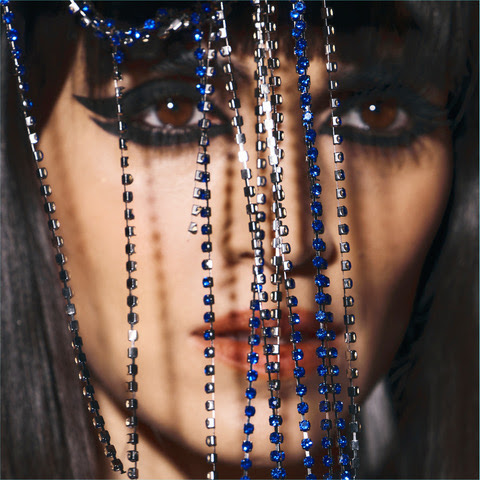
With one foot on the nostalgic dance floors of, a pre-revolutionary, Tehran, Cairo, Beirut and Tel Aviv, and another, sweeping a fantastical Persian landscape, pop princess Liraz oozes passionate yearns and diaphanous delivered protestations on her third album, Roya. In the adopted Farsi-tongue that title translates as ‘fantasy’. And this latest harmonious Israeli-Iranian traverse has plenty of it; swirled in vaporous whispers, veils and the airy across matinée romantic swoons and the yearning.
It’s a fantasy in the fact that Liraz has once more recorded an album in a clandestine manner, with musicians from Iran in Istanbul – a flavor of that city’s age-old cultural wellspring is evident in the music. Out of the shadows of Tehran’s secret police and having to remain anonymous, this form of fantasy imagines peace throughout the Middle East and good relations specifically between Liraz’s ancestral Iranian and adopted Israeli homes. The daughter of Sephardic Jews who left Iran at a time of cordial relations with Israel, in the time since, both countries have locked horns in a both cold and hot war. Although being Jewish in what was once the heartlands of the atavistic Persian Empire has never been exactly easy, with persecutions going back generations and a millennia or three. And so the ensemble cast of ‘tar’ lute, wasp-waisted wooden Iranian flute, viola and violin players and voices have taken a big risk in fraternizing and making an album with an Israeli citizen; especially one of Jewish heritage. It probably doesn’t help that Liraz also starred as a Farsi-speaking Mossad operative in the semi-successful Apple TV espionage series Tehran. And in light of the tragic death of Mahsa Amini, demonstrations and civil unrest is being met with extreme violence and subjugation by the state. We could even being seeing the catalyst of regime change, with talk of what comes next, power and administration wise, daring to be aired and seriously challenged by a more liberal generation of young Iranians: such has been the outcry.
As an actor, now in the role of her life, Liraz builds bridges across those barriers as she imagines and retells in song the stories and yearnings of women silenced in Iran, banned from singing. A union is formed between a life and ancestry she can only be a part of in the Iranian diaspora.
Musically this translates into exotic sweeps, bouncy and retro disco zapped pop with a Middle Eastern suffusion of familiar panovison framed fantasies. With a swell and weeping of moving strings it could even be a musical reference to the classical strained beauty and lament of the Eastern European Jewish community – although Liraz’s ancestry is connected to the Iberian Sephardic Jews.
The album’s bookended by two versions of the title-track. The first is a lifting of veils Arabian Kate Bush, galloping up that hill of sand, the second, a tearful, stripped of electronics traditional and classical-bowed farewell. Between those points there’s an incredibly voiced stirring of disco, pop, psychedelic and Middle Eastern fusions; the near-halcyon against retro throwbacks to more liberated freer times in the region. Yet all thoroughly invigorated, refreshed and given a suitably contemporary electric feel.
Contouring the piques and lows there’s a dance of disco-funk (with even the fuzz whacker-whacker buzz of Fred Wesley & The J.B.s) and kitsch Franco-Arabian pop, soulful longing and Moroder-esque synth-electro pop. Liraz is all the while the perfect enchantress or moving vocalist, with a beautiful voice, cadence and articulation.
By far Liraz’s greatest adventure and sound, this is a fantasy with an all too real, alarming undercurrent of suppressed voices, forced to go underground in the act of creating some magical pop music. Please venture further than the myopic pop cliques and commercial output of the UK, America and Europe, as Roya is a stunning, sublime electro-charged album imbued with a myriad of forbearers from the Iranian, Egyptian, Turkish disco, psych, funk and balladry scenes of better times.
Tau & The Drones Of Praise ‘Misneach’
(Glitterbeat Records) 21st October 2022
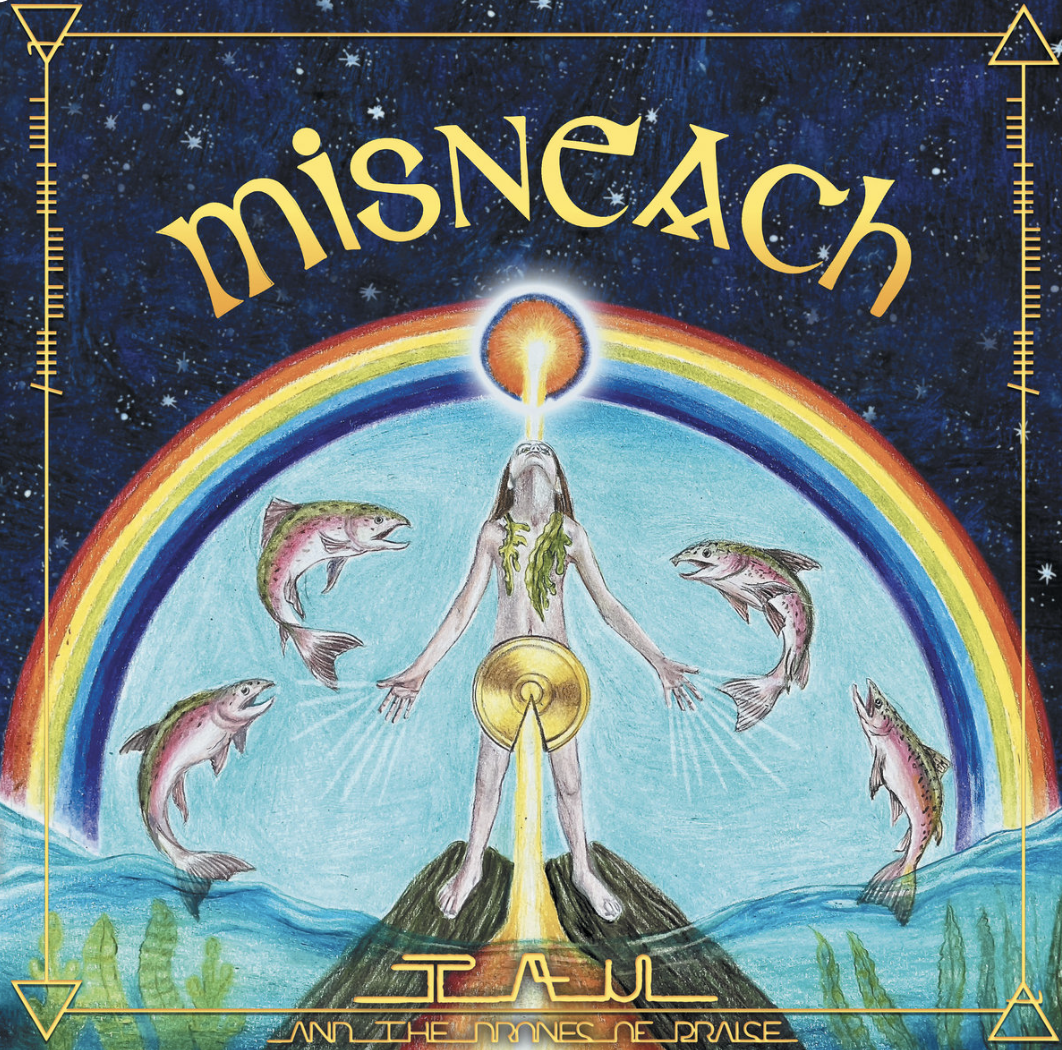
The second in a Glitterbeat Records double-bill and another fantasy-inspired spell of ancestry and magic, Seán Mulrooney’s led Tau & The Drones Of Praise band reconnect with their Celtic roots.
A return to an Ireland of myth, fables, enchantment and allurement, Mulrooney and his core of foils Robbie Moore (who also recorded this, the band’s third album, at the Impression Studios in Berlin), the Tindersticks’ Earl Harvin and Iain Faulkner (who ‘helmed additional recording at the Sonic Studios in Dublin’) are bolstered further by a large cast of musicians and voices. None more congruous and influential to the overall Celtic feel as the new age misty Irish veiled Clannad, who lend Damien Dempsey and Pól Brennan to this ensemble piece of folk and beyond theatre and reconnection.
Like a Mummers troupe, a merry procession, this harmonious bunch pay reverence to the tree spirits; homage to the ancestors; and fall at the feet of enchantress muses. With a concertinaed air of Breton, a Men Without Hats vibe and a singer who sounds like an Irish Michael Stipe or Alasdair Roberts, they invoke nature’s children making amends with the evergreen sprites on the opening, and brilliant, chorus call of alms, ‘It Is Right To Give Drones And Praise’.
From then on in we’re pulled into a world and across timelines: from atavistic Ireland to the Medieval, Georgian and Present. Old traditions via the folk-psych of The Incredible String Band, Pentangle and Sproutly Smith merge with the already mentioned misty-mystique of Clannad – but also their former ethereal siren Enya too –, The Polyphonic Spree, Flaming Lips and Octopus. Although the group’s lasting message and finale, ‘Hope’, reminded me of both Echo And The Bunnymen and The Mission. An atmosphere of bucolic wistfulness and idyllic idling prevail as the rhythm and soft marches change between the dreamy and courtly, the folksy and anguished. Always melodious in whatever realm, there is however a moment on ‘The Sixth Sun’ when the beautiful if longed female choral voices swim against a more wild, dissonance of noise. But that is the exception. Yet despite the challenges, the history Misneach (from the Old Irish lexicon, it translates as ‘courage’ and ‘spirit’) is a fantastical wilding, droning mélange of Celtic influences, the psychedelic, ancient and folk. And at its heart is a story of reconnection and an environmental yearn.
And A We Jazz Double-Bill:
Carl Stone ‘We Jazz Reworks Vol.2’
(We Jazz) 21st October 2022

Three years on and out the other side of the pandemic, my favourite contemporary jazz label is releasing a second volume of “reworks”.
The Helsinki label, festival and magazine has once more opened up its back catalogue to reinvention/transformation, inviting in the reputable and noted American artist/electronic composer Carl Stone to work his magic on another chronologically ordered stack of ten albums from their growing discography. Inaugural guest Timo Kaukolampi of K-X-P fame conjured up an ambiguous cosmic mix of We Jazz’s first ten albums on Volume 1 of course. And now Stone likewise takes familiar phrases, riffs, rhythms and performances somewhere entirely new and out there. Although both exciting and equally daunting, overwhelmed by a sizeable chunk of material at his disposal, Stone favoured intuition and feel over everything else. That process (re)works wonders as the already experimental and brilliant music of acts and collaborations like Terkel Nørgaard (his album with Ralph Alessi), OK:KO (Syrtti), Jonah Parzen-Johnson (Helsinki 8.12.18) and traces of 3TM, Ilmiliekki Quartet, Peter Eldh and Timo Lassy & Tappo Mäkynen are sent out towards the stars, expanse or morphed into gauzy states of untethered freeform hallucinations.
The opening circular-wafted peregrination ‘Umi’ is more like a mirage of snozzled and snored saxophone cycles, undulated piano and space vapours: Pharaoh Sanders, Donny McCaslin transmogrified by Brown Calvin on the edge of the Milky Way.
A suffusion of drifted, woozy and more hysterical horns, submerged double-bass runs and noodling sporadic and more rhythmic rolling, crescendo drums and ghostly tinkled, hazed piano is handled differently on each track. On the quickened to slow counterbalance timed skiffle and stuttered ‘Sasagin’ Zorn and Haas skit-scat and dream with Tortoise on the NYC underground jazz scene of the 80s, whereas the strange ‘Hippo’ sounds like some kind of Baroque holy ritual piece as reimagined by some kosmische act on Sky Records.
The action is often chaotic and in freeform discourse: like Chat Baker on speed or Oscar Peterson running out of notes. Yet somehow these transformations keep moving in the right direction; finding a rhythm and even a touch of melody on occasions. Avant-garde, free jazz, the cosmic and electronic converge on another alternative vision of the We Jazz catalogue. Stone creates some incredible, even beautiful, experiments; probing the ether, void and hyper-stellar realms of his imagination.
Say What ‘S-T’
(We Jazz) 7th October 2022
Shrouded with a certain mystery, the second We Jazz label release this month is tight-lipped in the information department. There’s very little to go on other than that this was a never to be repeated, existing just at that specific time in that arena (Austin, Texas’ Sonic Transmissions festival), performance, the trio’s defacto leader and saxophonist luckily names his bassist and drummer partners on this wild, contorted free jazz with a punk and no wave attitude recording. The Black Myths partnership of Luke Stewart and Warren ‘Trae” Grudup III join forces with our unnamed saxophonist across riled, spiritual funking, post-rock and avant-garde frenzy growled, swinging and dynamic performances. Taking no breaks, but sorted into seven Roman numeral marked tracks, the obviously versatile/talented trio turn our idea of jazz music inside out.
With the welcoming pleasantries out of the way we’re straight out smacked-up with a badass merger of Miles’ The Last Septet whomp, the sinewy rage of a wrangled Fugazi and the whelp, wail and manic expressive experiments of Roscoe Mitchell doing ‘Ornate’ doing Ornate Coleman, Sam Rivers and The Chicago Underground. That’s only the opening number. It gets even more free range and hysterical with Stewart’s blurred bass slides, crazy frictions and thick-stringed scuttles and slippery entanglements up against Grudup’s splashes, crescendos, tight rolls, slips and smashes all growing ever more experimental and probing.
Track ‘III’ finds a sort of strut and attitude with sax toots, trills and stresses over a busy drums and gnarly bass. It changes from a warped Red Hot Chilli Peppers and Zappa to something approaching the spiritual. That spiritual, almost oboe-like sax carries over into track ‘IV’, like some kind of Pharaoh Sanders Egyptian odyssey. But then Stewart descends his instrument like a scratching spider, sliding in tandem with Grudup’s quickened drumming until both synchronize in a quivered blur before imploding.
With some of these parts running to well over thirteen minutes in length, it’s an incredible energy that keeps the gig continuously moving and bursting into the purely psychical. Say What enters and exits on a high; an energetic, moody and powerfully adroit expression of riled-up tensions, rage and the explorative. One of the best slices of jazz you’ll hear all this year.
Aucoin ‘Synthetic: A Synth Odyssey Season 1’
19th October 2022

Given an enviable access to The National Music Centre in Calgary’s extensive archive of rare and historically iconic synthesizers, Rich Aucoin as artist-in-residence models the first chapter in an ambitious seasonal project.
A Synth Odyssey Season 1is the maverick composer’s latest magnum opus; a four-part work released in six month intervals over the next two years.
Such ventures have been tried before, although a decade ago with his debut album proper, the orchestral rocking We’re All Dying To Live, which included untold collaborators. Ten years on with a grand project interrupted by the Covid pandemic, the first fruits of his synth palace residency are about to be released.
Originally conceived and let loose in 2020 on a synth collection that features such prized and cult apparatus as the Supertramp-owned Elka Rhapsody 610 String Machine, the ARP 2600, Selmar Clavioline CM 8 and Oxford Synthesizer Company Oscar (analogue boffins’ wet dreams), the pandemic restrictions, lockdowns and such put the project on hold. In the meantime, Aucoin carried on producing film scores, most notably for the No Ordinary Man documentary about the trans-masculine jazz musician Billy Tipton. Picking up again in 2021, he was finally able to finish this wonderful synth cosmology.
No doubt enthusiasts will know every waveform, arpeggiator, knob-tweaking signature but as a handy guide of a sort, some of the tracks on this inaugural seasoned album are named after the synths used in the process. It all starts with the multitimbral polyphonic analogue synth, the TONTO (or ‘The Original New Timbral Orchestra’). On the opening suite it turns from a moody kosmische shimmer into a more upbeat Orbital acid dance track. During that transformation you can pick up the German New Wave, early Warp and R&S Records.
A bit later on and it’s the turn of a Buchla Electronic Musical Instruments company synth – named after its Californian innovator Don Buchla. In this capacity it sounds suitably retro-futuristic, crossing towards a cosmic void on fanned rays, orbiting bit-crush handclaps and bobbing synth tom rolls.
Elsewhere Aucoin slips into, or surges towards moments of EDM euphoria, Vangelis peregrinations of gravitas, simmered techno, electro and House music – especially on the female vocal N-R-G club track ‘456’. However, the vapourous, prowled and cinematic ‘Space Western’ theme teleports a Moroder vision of the Blood Meridian to a venerated chorus Arrakis.
Sophisticated and well crafted throughout, these aren’t so much experiments or synth showcases as hopeful and more moody traverses and cerebral dance tracks. Iconic synths are given a contemporary feel both playful and adroit, a balance of both serious knowledgeable musicianship and welcoming levity. I look forward to next season’s accomplishments in the field synth escapism.
Montparnasse Musique ‘Archeology’
(Real World Records) 7th October 2022

What was a chance encounter on the busy Montparnasse-Bienvenüe subway interchange has led to a far wider Pan-African sonic adventure. From Paris to mother Africa, the sophisticated dance music production of South African House DJ Aero Manyelo and his foil, the French-Algerian producer Nadjib Ben Bella, transforms the street cultural electronic and more traditional sounds of the continent for a congruous fusion of collaborative polygenesis energy and warmth.
Wiring into the various electrifying movements of the D.R.C. and South Africa, the burgeoning duo met and worked with the leading lights of Kinshasa and Johannesburg. Members from such trailblazing combos and collectives as the Kasai Allstars, Konono No. 1, Mbongwa Star, Bantou Mentale and Kokoko weave, bob and express themselves over and to the attuned but deeply felt synthesized House beats, Acid burbles and squelches, polygon Techno evocative vapours, and pulsating dance music.
The familiar sounds of Congolese rock-blues-soul guitar, voices both earthy and pure, the lilt of sunny joy and a constantly moving assemblage of African percussion meet synthesised, sub-bass throbbing and zapping electronica in a almost perfect synchronicity.
At times it reminded me of Khalab’s similar African productions, at others, like a remixed Francis Bebay, some Clap! Clap! and Four Tet. The Menga Waku featured ‘Makonda’ evoked the early Detroit House and Techno scenes of a toned-down Kevin Saunderson, whilst the following, more moody, piped and experimental ‘Plowman’ (featuring the voice of Cubain Kaleya) had me thinking of Black Mango. However, all things change on the sand dune Arabian fantasy score ‘Chibinda Ilunga’, which moves to Northern African and a romanticised, mysterious Bedouin court; the music more like a film score, or Finis Africae traversing a trinket-percussive and synthesised Arabia.
Whatever the methodology the results are as welcoming as they are entrancing, with a pathway formed towards the dance floor. Archeology is neither an ethnography-type dig or revived language of sonic forms, but a lively and inviting great fusion of Congotronics, more traditional sounds and the European club scenes. Definitely an album for the end of year lists.
CAN ‘Live In Cuxhaven, 1976’
(Mute/Spoon) 14th October 2022
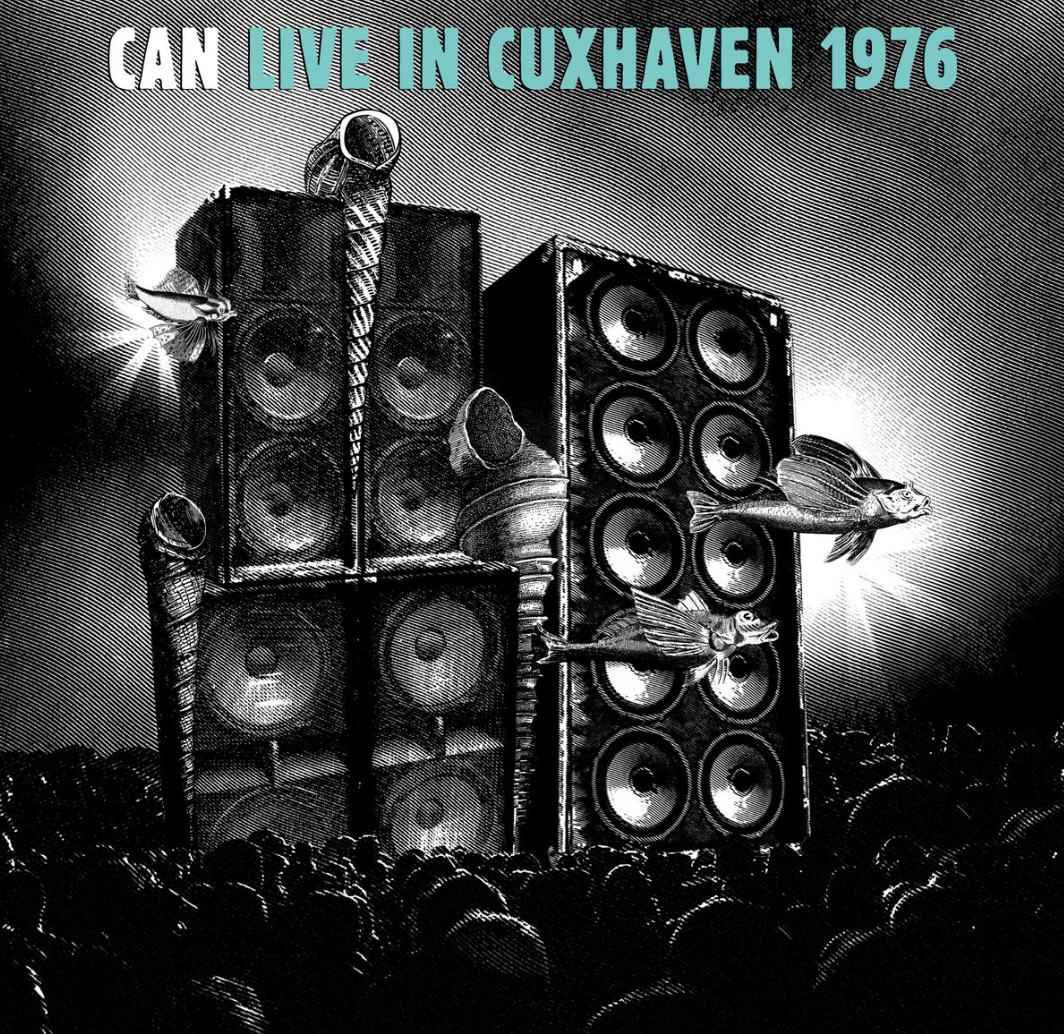
1976 the year of the bandy reggae waltzing, discothèque probing Flow Motion album, and CAN’s only bonafide hit, ‘I Want More’. It’s also a treasure trove year of bootleg material if Youtubes anything to go by, with countless live dates across Europe and the UK.
Almost two albums into their 1975 contract with Virgin, recording wise, the Cologne band were loosening up with a sound that moved ever closer to world music fusions and even the commercial: well, of a kind. Not universally a welcoming move with diehards and the head community however, the results were mixed at best. Performance wise, in concert, CAN still riffed off an admirable, innovative and experimental legacy, right up until the end of that year.
Although no gig is the same, you can find transformed, explorative version jams of material that stretches right back to the Galactus sported Monster Movie debut. Popping up like a signature anthem, ‘Dizzy Dizzy’ from the 1974 space-programmed trip Soon Over Babluma appears as a staple groove and prompt on the latest, and third, CAN Live album. Officially sanctioned by the band’s Spoon and Mute label custodians, this previous sneaky bootlegged recording captures them on stage in the German (Lower Saxony to be exact) seaside town of Cuxhaven, on the North Sea coastline – as a bit of useless trivia, its twinned with, amongst others, the English port town of Penzance.
I don’t think this time, like previous bootlegs, it was recorded by the sadly, recently, departed Andrew Hall, who’s handed over a bounty of such material to CAN’s sole survivor Irmin Schmidt and producer/engineer René Tinne to be brushed-up and mastered to acceptable aural pleasures. But why the need for this bootleg series? Well, as I lay out in previous CAN Live reviews, the band were always victims of bad luck when attempting to record any sort of official, legitimate “live” album performance. Gremlins in the works – once failing to record someone’s entire part – the technical glitches meant that there was never a proper live CAN record as such. Mind you, this was a band that more or less played live in the studio setting, making albums out of countless hours of extemporised or improvised sessions. And, as I’ve already said, CAN never quite played the same thing twice, let alone an entire set.
Here on the ’76 special you will hear a once more transformed, in-the-moment vision of tracks from Future Days (‘Bel Air’), Soon Over Babluma (‘Dizzy Dizzy’, ‘Splash’, ‘Chain Reaction’) and Landed (‘Full Moon On The Highway’). There may very well be even traces of Tago Mago, and the yet to be released, Flow Motion albums too in that heady mix.
Across four Germanic-numerical sections it’s the lunar, wailed, bendy, squalling whacker-whacker guitar contours, licks, chops and phrases of Michael Karoli that win out. Ten Years After blues meets the whomp-whomp of Miles Davis’ Bitches Brew live band and the psychedelic, Karoli transforms familiar album cut riffs into fuzz-scorched, garbbled, loose and seared cosmic acid rock magic.
Other live performances from the same year include far more vocals, with Karoli having to take over after the departure of the mushroom haiku incanting Damo Suzuki after Future Days. Here his barely audible enervated whispers can just about be detectable during one bout of locked-in grooving.
Keyboards chopping aviator Schmidt offers up another suitable chemistry of the celestial, tubular and avant-garde, going as far as to start laying down something approaching gospel, or Southern Blues on the first track, ‘Eins’. As always, Jaki Liebezeit keeps that human metronome ticking, holding flights of fantasy, tangents and spacey ascendance all together with his impeccable sense of rhythm and time. Dare I say, he ventures into funk at times, and during part of track ‘Drei’ bobs and rattles out a tin and bottle percussive Latin-soul passage: the sort Santana would happily embrace.
Unfortunately I couldn’t hear all that much of the designated bassist Holger Czukay; it’s there but very much lost against a louder Karoli, Schmidt and Liebezeit, the frequencies a bit foggy.
Still, this is yet another example of a band in total synchronicity, no matter how wild or off the beaten tracks the direction taken. Though to be honest, this is nowhere near CAN at their wildest or avant-garde, nor most dynamic and interesting. In fact the performances are a little more composed and tight. Not disappointing, just not so amazing.
A different time, a different version of CAN, Live In Cuxhaven offers yet another side to the feted band; a bridge towards Flow Motion for a start. It will be interesting to see what follows: my own particular interest being their expansion of the lineup and the Saw Delight album period.
Puppies In The Sun ‘Light Became Light’
(Buh Records)
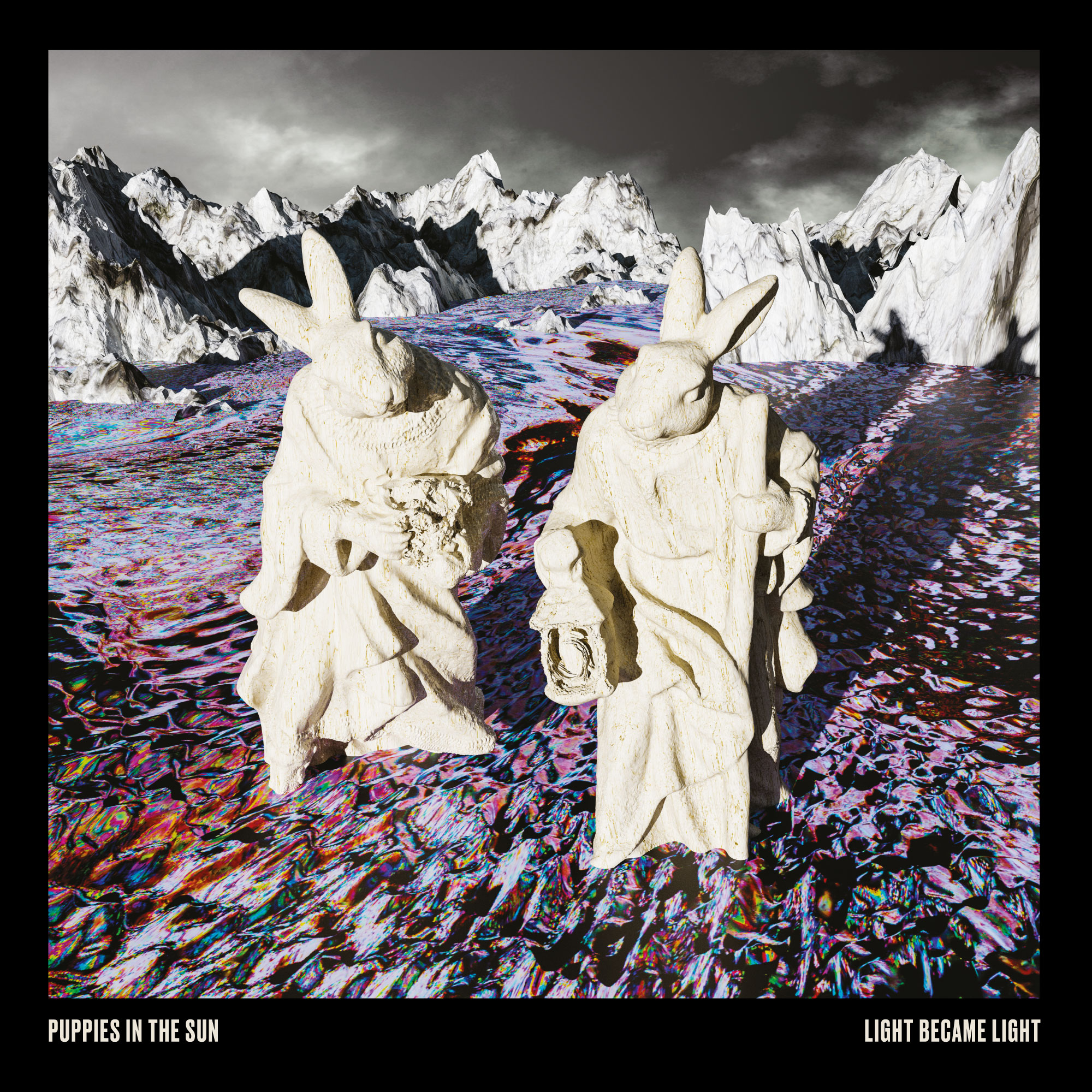
A slow release of maximalist energy and cosmic explosions the Puppies In The Sun duo conjure up a big sound on their debut album, Light Became Light.
Buddies since childhood back in Peru, but serendipitously crossing paths a longtime later in Barcelona, Alberto Cendra and Cristóbal Pereira made base camp together in Rotterdam. But despite the European-wide travelling it’s the great universal void and expanses of space that they’ve chosen to sonically navigate and transcend, with just the use of a drum kit, apparatus of synths and open mind.
The notes, quotes however mention the duo’s noise rock credentials, which despite a lack of any guitar or bass is nevertheless present on these peregrinations, vortex hyper-drives and odysseys.
Locked in to each track of starry wonder and languorous crescendo, the pace of direction is often in slow motion. Dissipated crashes and rolls, slow dives and frazzled oscillations head towards the explored and unexplored realms of Mythos, Embryo, Adam’s Castle, LNZNDRF, Angels Die Hard and the Secret Machines. Although the N-R-G pumped ‘Raging’, They Came To Dance’ sounds more like Cabaret Voltaire and FSOL at a space cowboy hoedown.
Space is deep, as Hawkwind once aggrandised. And so it is too on this light travelling discover of a big-sounding kosmische. Krautrock, prog and controlled noise rock score.
Spelterini ‘Paréidolie’
(Kythibong) 4th October 2022

Named in honour of the 19th century Italian tightrope walker, Maria Spelterini, who’s death-defying stunts included numerous handicapped (blindfolded, manacled or with weighted peach baskets strapped to her feet) walks across the Niagara Falls, the quartet Spelterini pairing of Papier Tigre and Chasusse Trappe members do a bit of their own tightrope walk on this new peregrination and driving motorik long form performance. Keeping balanced whilst straddling modes, chapters and movements, Pierre-Antoine Parois, Arthur de la Grandière, Meriadeg Orgebin and Nicolas Joubaud embrace kosmische. Krautrock, psych and the esoteric on a continuous, thirty-five minute opus.
After the phenomenon in which the brain creates optical illusions of familiar faces or shapes where there is only abstraction, “Paréidolie” progresses from hymnal drones and rays to something far more haunted, uneasy and razored – the notes reference the Lynchian (think the most recent Twin peaks series return mixed with The Land Of Ukko & Rauni era live documented Faust). And so, incipient and building from the kosmische and reverent ambient the direction begins to drive towards rhythmic and totem ritualistic evocations of both Embryo and ‘Rainy Day’ and later Just Us/Is Last Faust (them again). This in turn sees a real physical weight start to embody the hypnotising knocks, hi-hat scuffs and beat.
Elements of The Velvets, avant-garde, France and Neu! all get drawn into the pummeled march before the portal opens up a far more ominous world of shadows, metallic abrasions and bestial industrial squalls. It’s Bernard Szajner holding a cosmic séance with Emptyset and Jóhann Jóhannsson if you like.
That alien leviathan suite passes as a reverberated cacophony of percussion shimmers and splashes away until a final crescendo-like beat of a thousand butterfly wings.
Spelterini mystify and invoke a locked-in rhythm across a half hour of probed illusion, disillusion and inter-dimensional abstraction. Imbued with krautrock they magic up an impressive drum and drone journey.
No Base Trio ‘II’
(Setola di Maiale) 14th October 2022
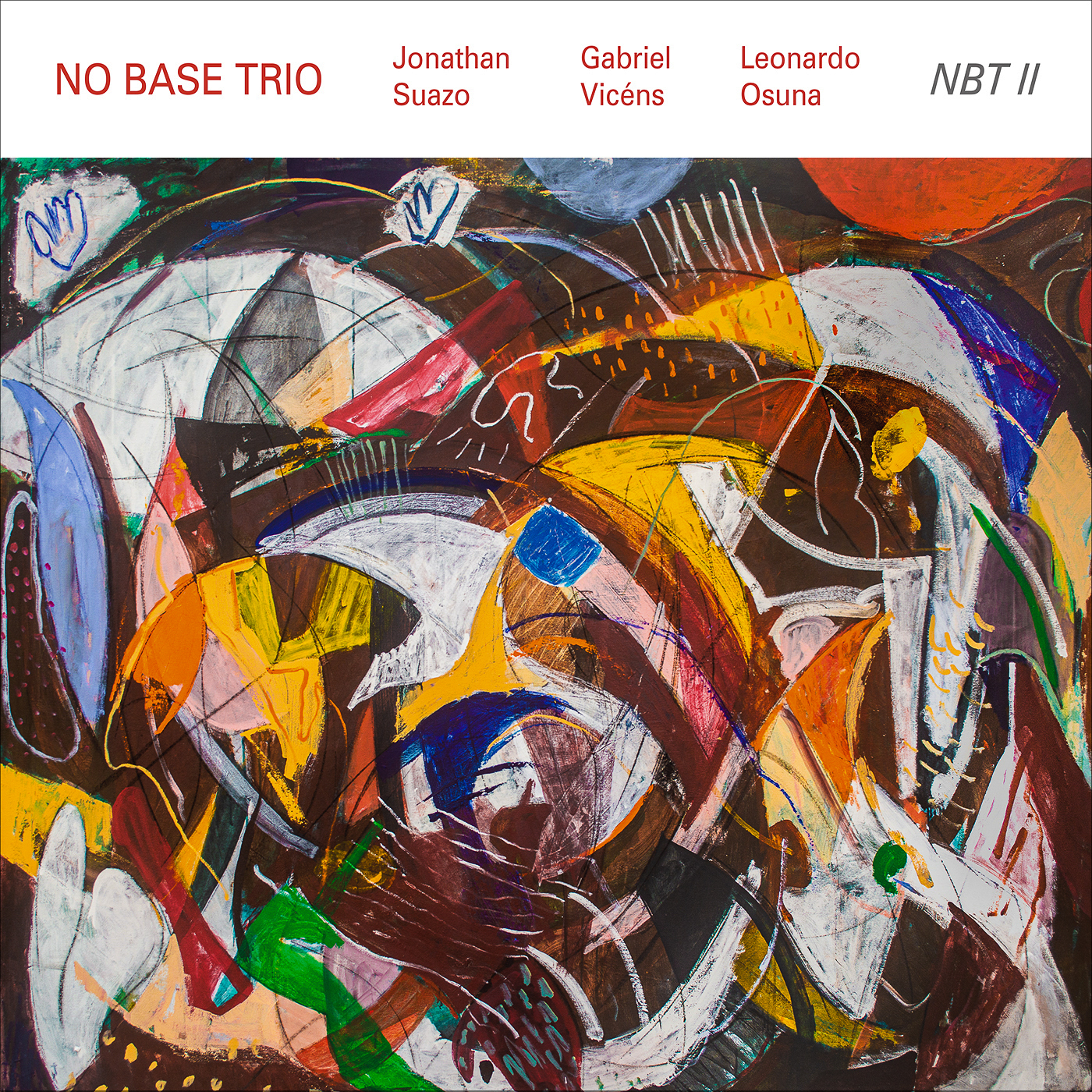
It’s a port we at the Monolith Cocktail have seldom sailed to, but Puerto Rico boasts an impressive contemporary jazz scene; one that the adroit and accomplished No Base Trio endeavor to export to the global community.
In the field for twelve years as a unit, horns and EWI practitioner Jonathan Suazo is flanked by the versatile guitarist Gabriel Vicéns and drummer Leonardo Osuna on another intuitive, fully improvised work of free jazz, jazz rock, fusion and beyond.
A grandiose, nigh two hour extemporized septet of performances – recorded the day after a highly successful concert at the El Bastión in Old San Juan – work II finds the trio in perfect synchronicity ready to probe and venture forth with atonal, tactile and juddered rhythmic explorations.
Across passages that last over twenty minutes in length, the recognisable jazz elements are stretched, repurposed and entangled in various bendy mirages and naturalistic atmospheres as ascending and descending patterns and more serialism type abstract musicality takes shape.
Suazo moves between flighty flute and windy spiraled alto/tenor saxophones like some sort of expressive natural force, caught up in mysterious soundscapes that evoke both fertile environments and more arid landscapes. Vicéns guitar accents, twangs and nimble finer work reminded me a little of the South American jazz guitarist Rodrigo Tavares, and on ‘ST 4’, a little bit of Ry Cooder articulating a mysterious psychedelic desert setting. Osuna’s drums meanwhile, sound out the tribal, spiritual and freeform, often sophisticated, quiet and spindled, or, taking time to find a rhythm. In action, all together, the trio varies the mood from the more abstract and avant-garde to built-up dynamic tumultuous climaxes: that translates as croaked and plectrum scratched guitar and industrial detuned sounds on ‘ST 2’, and a Hobby Horse meets head-on with Irreversible Entanglements in a rock-jazz crescendo squall on ‘ST 5’.
Each track is like a score in itself, cast adrift of a subject, theme or visual inspiration; a mix of jazz with various percussive influences and sources that swings between Buh label outsiders to the ACT label, Donny McCaslin, an avant-garde Americas and Ornate Coleman. It’s an impressive album of synergy that manages to probe the wilds without bombast and total dissonance; kept together at all times with the most intuitive of unsaid musicianship and deft foresight.
 Monolith Cocktail Blog