The Digest for January 2026: New Music/The Social Playlist
January 16, 2026
The monthly Digest includes a clutch of accumulated short new music reviews and the social inter-generational/eclectic and anniversary albums celebrating playlist.
___THE NEW (All those latest & upcoming releases in brief) ___
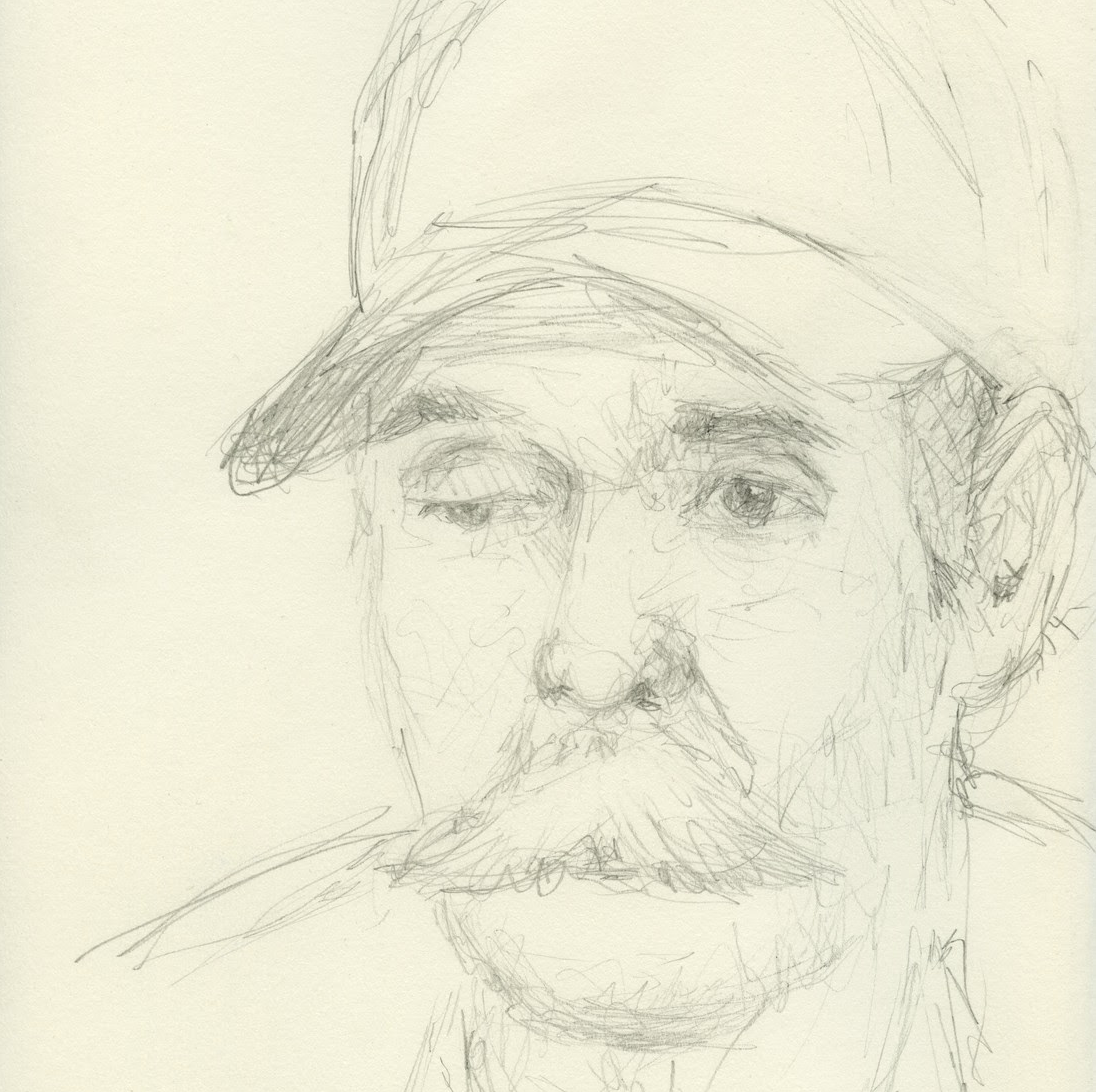
The Bordellos ‘Who Do you think You Are? Paul McCartney?’
Single – (Metal Postcard Records) 7th January 2025
More The Rutles’ Stig than The Beatles’ McCartney, the latest self-depreciated, no-fi buzzing guitar string strummed piece of “silliness” from The Bordellos family (that’s Brian Shea and his brother Ant, and Brian’s son Dan) pays a handsome tomfoolery homage to good ol’ Paul.
The Bordellos were behind Half Man Half Biscuit and the Cleaners From Venus in the dole queue of the 1980s; powered by aphorism, a ridicule of the current industry, and a litany of muthafuckers from across the golden age of rock ‘n’ roll, punk and post-punk, psych and garage. Brian will be no stranger to followers of the Monolith Cocktail, having regaled us with his reviews over the years, and of course gracing these pages as a solo performer: think John Shuttleworth meets Sparklehorse.
This latest single to be released by the Metal Postcard Records hub was influenced (I quote) “by [Brian’s] love of Paul McCartney and memories of walking up to Dead Fly Rehearsal rooms in the 80’s with my guitar and every time an old man in his garden would shout “Who Do You Think You Are? Paul McCartney”. As I walked past…it never got old for both him and me…I was tempted occasionally to buy a gun and shoot him and shout who do you think you are? John Lennon!”
If skiffle-indie-punk was a thing, then here it is in all its rudimental, near distorted jangled and sprung glory. It actually sounds less Paul and more like a sarky Lennon…that and a touch of Frank Sidebottom. No one quite manages to summarise a feeling, an era, a memory like The Bordellos, nor sound so brilliantly shambolic and devoid of even the rubber bands to replace the long loosened/slackened and fucked bands in their Tascam 4-track recorder. Off to a fine rambling start in 2026.
Greg Stasiw ‘Guesswork’
Album – (Hidden Harmony Recordings) 2nd February 2026
Greg Stasiw could quite rightly be called a polymath with a worldly scope of influences, having travelled and spent time in New York, Tokyo, Toronto, Paris, Boston, and Bratislava. Home, I believe, is New England on America’s Northeastern edge. The CV includes the occupations of experimental musician, visual artist and writer, but also include the study of anthropology, animation and illustration. Channelling all that into a musical sonic practice and the results are less happenstance than that title might suggest.
Guesswork was actually intended as a collaboration, a response to a visual stimulus created by the artist Phillipe Shewchenk. For one reason or another it was shelved, but Stasiw decided to continue experimenting and formulating a ponderous biomorphic set of ideas relating to a range of subjects, from plumbing systems for plants, to real locations and adjective prompts; many of which seem to point to nature, geography and the weather.
Ending up as Stasiw’s debut album, this amorphous blending of vignettes, studies, semi-improvised experiments sounds like a field trip conducted by Walter Smetek, Nicolas Gaunin and Hiroshi Yoshimura. It’s both recognisably trudging through the lush, the humid and exotic environments of Earth, yet simultaneously otherworldly and near sci-fi. To label it ambient would be a mistake, but minimalist all the same with its airs and the skying sound-scaping, the synth effects of kosmische and the new age combined with Harold Budd and his like.
Real sounds, like the bird life under a rich canopy, mix with percussive tools like a pestle and mortar, the knocks of heavy objects, the drawing of chains and desert sonar-like signals. A shuddery and often lovely reflective piano can be heard alongside a church-like organ producing the most melodic of paused moments. Thrusting gleams of light on the horizon; tunnelled chutes to new worlds; windy tundra’s; playful landscapes of bulb-like shaped notes; Stasiw magics up a stimulating, often pretty and with a sonorous depth, soundscape of possibilities and artistic mystery.
Tachube ‘Mincminc’ (Inverted Spectrum Records/PMGJazz)
Album – Released 4th January 2026
An international combination of band members and album facilitators/labels makes for a truly ambiguous and amorphous experiment with the latest moody and wild post-jazz exploration from the improvisational trio of Tachube. Based in the Serbian city of Novi Sad, a culmination of various musical strands and influences brings together Saint Petersburg electroacoustic/noise musician and founder of the Intonema label Ilia Belorukov (who performs on both the alto sax and rudimental, playful fluteophone), plus two active members of the Novi Sad free and ambient jazz and psychedelic dub scenes, Marko Čurčić on effects pedals and electric bass, and Nemanja Tasić on a minimised drum kit.
Their third collaborative release, platformed in conjunction with the independent boutique label and booking agency that spans in Hungary, Serbia and Turkey, Inverted Spectrum Records and the Macedonian label PMGJazz, Mincminc sounds like Anthony Braxton, Andy Haas and Sam Rivers creeping, prowling and consumed on a mysterious plain with Krononaut. It’s a combination of the improvised Polish and American freeform jazz schools, but also an emotional fit and squeeze of mythology, the darkness and the arid; enveloped as it all is by meta and the depth of the trio’s expanded spheres of influence and skills.
Incipient stirrings and jangles create the right mystique, with blows and the driest of alto expressions, quivered and shivered and shaved cymbals, busy undulated and descending bass runs and the knocks and mulch sounds of hidden sources building a serial and abstract atmosphere that vaguely invokes the Balkans and its geographical history, psychogeography and mystery. Something different in the jazz field; an expansion of ideas and moods and the extemporised.
Roudi Vagou & Läuten der Seele ‘Taghelle Nacht’
Album – (Quindi) 6th February 2026
Once more stepping out behind their aliases, the collaborative union of German artists Matthias Kremsreiter and Christian Schoppik (respectfully reimagined as Roudi Vagou and Läuten der Seele) transduce and manipulate ripples in time to invoke both blissfully dreamy and more mysteriously haunting sonic and musical ideas of nostalgia, German nationalism and geography.
Drawing upon their personal connections, their relationship to the lands and the city that moulded and influenced them both, this latest union could be filed under the hauntology label – a very good label as it happens, one that perfectly, if overused and misdirected on occasions, fits this interdimensional album of filmic score passages, vignettes and looped hallucinations. For Taghelle Nacht captures the “day-bright night” character of a simultaneously pastoral Heimatfilm era vision of German cinema, of the surreal, of fairytale and mirages whilst providing a suitably ghostly and occultist atmosphere.
It’s as if Roedelius and Moebius, or even Popol Vuh, fed the movie scores of Hans J. Salter, Philip Martell, Harry Robinson and Ronald Stein into a German time machine. Old matinee and classical suites, songs of the romanticised, the near ethereal coos of apparition sirens and angels, a fairground Bavarian Wurlitzer, the call of an esoteric nature (the field recordings of trampled walks across the land, the birds in the trees), and the sound of woodwind and brass are looped or obfuscated by the sounds of hidden whirly, unoiled sound sources, of Fortean machines and valves, folksy horror soundtracks, the concertinaed and bellowed and surface noise of old wax cylinders. Melodies and the wistful embrace of that old age are embraced and then somehow made more unreal and otherworldly as if transmitted through a séance or played on a possessed record player from an earlier age. And then again, you can pick out hints of Belbury Poly and their ilk, Martin Denny and Drew Mulholland across a haunting backdrop stepped in historical values, horrors and the mystical.
Charles ‘Poppy Bob’ Walker ‘Double-Wide’
Album – (Castle Dome Records) 10th February 2026
Outsider art from the 1980s, the left behind recordings of the fabled Charles ‘Poppy Bob’ Walker have already filled one such album of haunted imaginings, of mirages and dusty Western peregrinations. Released back in 2024, the Dirt Bike Vacation collection platformed a near secret archive of desert renderings, of loosened and ambient-esque country sketches. It reads however like one of those concocted projects, the alias of a very much still-breathing silent partner hiding behind anonymity. But reassuringly, this “normal guy”, who worked hard, kept some friends, though never married or had kids, liked nothing more than to drive off on various recording adventures in his old, yellow Datsun pickup.
The remembrance of an unassuming outsider, articulating or washing or crafting or letting his inner thoughts and observations and meditations of places in and around his Yuma, Arizona home ghostly emit through the lo fi amplified strings of his Martin D-28 guitar, onto his trusty and rudimental Tascam 4-track recorder. And as such an unassuming amateur working in the field, Walker’s music has, refreshingly, no one to please, no one to serve other than its creator’s own vision and perhaps improvised musings and contouring’s of the landscape, the thoughts and reification of mood and place.
At one turn taking on the mantle of a hidden Ry Coder soundtrack, or indeed invoking certain passages and refrains from Dylan’s Pat Garrett and Billy the Kid soundtrack, this latest collection’s controlled, mediated and shortened cinematic qualities build towards an alternative country-waned and mirage-like score. From incorporating a rustic banjo to the electrified vapours and more concrete panning and splayed strums and strikes of his guitar and the chorus of hidden sounds (from the railroad barrier’s bell-rung-like signal to the occasional use of reverberated lo fi synthetic drums, the esoteric rattle snake shaken ceremonies of the second cut, the windbreakers and even the sound of the tape’s hiss and surface sounds) Double-Wide feels like we’re watching a dreamy, hallucinating film of the surreal American West.
If you dig the art and experiments of such alt-country company as Myles Cochran, The Droneroom, the Gunn-Truscinski duo, Daniel Vickers and Chuck Johnson, then Walker should be as much a revelation as a familiar companion on the transformed leftfield road of such maverick artists.
___/The Monolith Cocktail Social Playlist Vol. 104___
The Social Playlist is an accumulation of music I love and want to share, with tracks from my various DJ sets and residencies over the years and both selected cuts from those artists and luminaries we’ve lost on the way and from those albums celebrating anniversaries each month.
In the latter camp we have the following anniversaries to mark:
The oldest celebration this month falls to Them’s mighty garage R&B raver I Can Only Give You Everything, taken from their 1966 LP Them Again. Van the man Morrison in full on maximum R&B glory; turn it up you muthafuckers! Still the best, guaranteed to get every dancefloor riotously jumping. The whole LP is peerless.
David Bowie’s Station To Station is 50 this month, and I’ve picked the Word On A Wing version used in Brett Morgen’s Moonage Daydream spectacular. Bowie’s epitaph Blackstar is 10 in January. I’ve decided on Sue (Or In A Season Of Crime).
Bob Dylan’s Desire is also 50 this month. Not the most sympathetic of subjects to mythologise, what with equal opportunities pain-in-the-neck Mafia types like Joey Gallo, but there’s merit with Oh Sister and its sublime backing vocals by Emmylou Harris (apparently, and very rare, overdubbed a day later). The musical attempt to clear the former middleweight boxer Rubin “Hurricane” Carter on Hurricane is overlong and sanctimonious in comparison.
Another 50th anniversary special, Cheyenne Fowler’s Cheyenne’s Comin’ boards the funky Stevie Wonder goes indigenous funk train. I was nice enough to give this original LP to my old pal James Bull a number of years; it probably now sits in his collection, getting an occasional airing on his turntable making in California.
Lou Reed’s country bar room bell-ringers Coney Island Baby is another LP celebrating the half century mark this month. I’ve gone for the opener, Crazy Feeling, not the best track, but still a favourite.
Only just making our albums of the year list last month with their first album in a decade (Touch), Tortoise’s Millions Now Living Will Never Die is unbelievably 30 this month. An album that defined a post-everything scene and year. And so, what to pick. How about the various gears-changing Glass Museum.
Very different, but from the same era. Britpop’s The Bluetones‘ Expecting To Fly is an unmistakable example of that era’s sound. Slight Return was the single, and track that made them, and still their best moment on wax.
Beth Ditto’s Gossip fired up the noughties, arriving with the vanguard of attitude post-no-wave, funk punk and such titans as the Yeah Yeah Yeahs. Some incredible fiery matriarchs stamped all over the sensibilities of the male dominated indie and rock scenes. The trio’s debut Standing In The Way Of Control is twenty this month, and I could have picked anything from an album that is almost a perfect encapsulation of the times it was made. But here’s Jealous Girls.
I never really need an excuse to feature Serge Gainsbourg, but to honour the memory of that French muse, chanteuse of new age French cinema and 60s starlet Brigitte Bardot here’s Initials B.B and the outlaw duet Bonnie & Clyde. Remarkably still such an icon, despite her best and most of her work being in the 1960s: retiring more or less early to concentrate on animal welfare for the next sixty years of her life.
From the newer section, or those recentish tracks that missed out on a place on the site’s Monthly Playlists, a smattering of tracks released in the last few months (occasionally a little further back). From the Live In Mestre Venezia series of outstanding performances, Get Happy by the ’84 union of sax and jazz pianist icons Sam Rivers and Mal Waldron; made available near the end of 2025. Also, and I’d bet a very popular choice amongst my peers, The House That Doesn’t Exist from Melody’s Echo Chamber’s Unclouded album, released last month; Leave by NEDA, released back in September; Volcano by Penza Penza, released last month; Pete Evans and Mike Pride’s exploratory alchemy of Substance X, also put out last month; Deanna Petcoff’s Not Too Proud, another December release; and Papernut Cambridge’s I’m A Photograph Of You, released just in the last couple of weeks.
From across time, across genres, across geography, a number now of tracks I either played in my various DJ sets over the years, wished I’d owned, or just came across in my research. This includes the mellotron imbued prog-rockers Gracious and Introduction; another prog obscurity, Kingdom Come and Spirit of Joy; American jazz trumpeter Kamal Abdul Alim and Al Nafs; German electronic and kosmische luminary and progenitor Conrad Schnitzler and Convex 4; the Memphis snot rocking garage thumping R&B outfit Compulsive Gambler’s and The Way I Feel About You; the Chicago post-rock-avant-garde Shrimp Boat and Pumpkin Love; the Cleveland garage-prog troupe Damnation ( their name whittled down for some reason by their label from The Damnation of Adam Blessing) and their funky-psych-Hammond cover of The Monkees’ Last Train To Clarksville; hip-hop royalty from the golden age, Showbiz & A.G. with Silence Of The Lambs; strange sampled fruit from Ether Bunny with the Bunny Jump; and because I was recently reminded of this song through Apple TV’s Palm Royale series, Moonshot by the dodgy, or found out, Buffy Saint Marie – not so indigenous American as she had us all believe, and yet, the music is just as sublime, the lyrics incredible.
As a special this time around, and to show at least some support for those bravely taking to the streets of many of Iran’s cities to protest against its authoritarian theocracy, and the crippling cost of living crisis (burdened by Western sanctions), I’ve chosen to include some choice music from the country’s inspiring female underground. Written – and just to show how these protests have continued since the pandemic, flaring up after brutal crackdowns, executions and state murder – back in 2023 my review of AIDA and Nesa Azadikhah’s co-founded Apranik Records compilation platform of Iranian artists is receiving another airing today (read below, with some modifications in light of recent events).
I’m also adding a number of tracks to this month’s social – the least I can do. The left’s moral compass seems stuck at outright condemnation. In fact, it has fallen completely silent on the matter, as thousands of body bags mount up on the Iranian streets. Whilst American influence, and Trump’s threats to strike at the regime if it doesn’t stop murdering its citizen protesters all feed into the conspiracy theories of Western interventionism, it must be pointed out that all previous protests – and we are talking a sizable percentage of the population that are fed up with the hardline authoritarianism; a whole younger generation wishing to have the same freedoms enjoyed in the West, the same opportunities – have failed under heavy handed suppression and sanctioned violence.
Let’s hope the Iranian people can make that change for a much better future.
Various ‘Intended Consequences’
(Apranik Records)
With a hellish multitude of flashpoints and distractions across the globe keeping the continuing fight for women’s liberation in Iran off the news rolls, it has become apparent that the Iranians themselves have been left to carry on the struggle with little support; that is until late last year and early 2026, with Trump weighing in with threatening strikes upon the regime and those that keep them there. In an ongoing war between the forces of the authoritarian religious state and a younger generation demanding an end to the erosions of their civil liberties and freedoms, heavily impeded by sanctions that began as a consequence of the country’s nuclear programme, the crisis in the country entered a dark bloody chapter in 2022 with the murder, in custody, of Masha Zhina Amini by the “morality police”.
After a rightful campaign of protest and action at such a heinous crime, a brutal crackdown by the state led to mass arrests and even executions (mostly of male supporters and activists, usually on trumped up charges). Further restrictions were invoked. And just as horrifying, in 2023 there was a nationwide spate of deliberate poisonings of schoolgirls (one of the groups who mobilised against the authorities in the wake of Amini’s cruel death). Defiant still, even in the face of such oppression, the brave women of Iran have strengthened their resolve only further.
In the face of such attacks, clampdowns, the music scene has responded with a strong message of resistance and solidarity. Despite everything, cities like the capital of Tehran have a strong music scene of contemporary artists, composers, DJs and performers working across all mediums, including art (which is probably why so much of the music is also so visceral, descriptive and evocative of imagery). One such collaborative force of advocates, AIDA and Nesa Azadikhah, co-founded the Apranik Records label, a platform for female empowerment.
Following 2022’s earlier Women Life Freedom compilation, a second spotlight volume delves further into not only the Tehran scene but picks out choice tracks from those female Iranians working outside the country in such epicenters as London (AZADI.mp3) and Berlin (Ava Irandoost).
Sonic wise it covers everything from d’n’b, trance, deep house and techno to sound art experimentation. The range of moods is just as diverse in that respect, from restlessness to the reflective and chaotic.
Contributions from both Azadikhah (the hand drum rattled d’n’b breaks and spacy, airy trance ‘Perpetual’) and AIDA (the submerged melodious and dreamy techno ‘Ode To Expectations’, which features the final love-predicament film sample, “You know that I love you, I really do. But I have to look after myself too.”) can be found alongside a burgeoning talent pool. The already mentioned London-based producer and singer AZADI.mp3 opens this collection with a filtered female chorus of collective mantra protest, set to a sort of R&B, 2-step and bass throbbed production, on ‘Empty Platform’– just one of many tracks that uses the sounds of a more traditional Iran, especially the daf drum, alongside modern and futuristic warped effects. The sound artist and composer Rojin Sharafi likewise features the rattled rhythms of hand drums and some hidden spindled instrument – like running a stick across railings – on her entrancing kinetic techno ritual of “trauma”, ‘dbkk’.
Abji_hypersun allows the sounds of the environment to seep into her slow-building track of field recordings, collage and breaks (two-stroke scooters buzz by as distant female conversations reverberate on the street). Part jungle breaks pirate radio, part Matthew David, Jon The Dentist and LTJ Bukem, ‘Resist The God Trick’ evokes a tunneled vision of haunted reminisces and resistance in the shadows.
Emsho’s ‘Down Time’ is a rotor-bladed electro mix of Basic Channel and The Chemical Brothers, and Aida Shirazi’s mysterious wind of dark meta ‘R.E.V.O.L.U.T.I.O.N’ spells out the rage with a shadowy, near daemonic scripture of wrath and revenge – a gothic synth sinister avenging angel promises that the women of Iran will neither “forget” nor “forgive” their oppressors, torturers and murderers. Farzané seems to evoke the alien, the sci-fi on her experimental, sometimes disturbing dial twisting and crackled ‘Quori’ transmission, and the Berlin-based DJ, video artist and music producer Ava Irandoost draws on Laraaji-like dulcimer tones for her dream mirrored kosmische evocation ‘CINEREOUS’. The Tehran composer, pianist and bassist Ava Rasti draws a close to the compilation with a classical-tinged, harmonic ringed, saddened piano-lingering performance, entitled ‘Eight Night’ – an atmospheric troubled trauma is encapsulated with the deftest of touches.
It might be my own nostalgic penchant for 90s electronic music (my formative years of course), but this series (if we can call it that) could be an Iranian version of the Trance Europe Express compilations brought out during that decade; a treasure trove of discoveries and whole scenes that opened up a world of previously unknown music to many of us not living in the epicenters of North America, the UK and Europe and beyond. Hopefully this latest platform of innovative artists from across the arts will draw the attention it deserves; the message hardly virtuous, in your face, but sophisticated: the very act of female Iranians making a name for themselves despite censorship and bans a sign of empowerment and resistance in itself. Few groups deserve our support (which in the West has been sadly absent) more, but don’t just purchase for the cause but for the musical strives being awakened and produced under tyrannical oppression, and because this is a solid collection of great electronic music.
If you’ve enjoyed this selection, the writing, or been led down a rabbit hole into new musical terrains of aural pleasure, and if you can, then you can now show your appreciation by keeping the Monolith Cocktail afloat by donating via Ko-Fi.
For the last 15 years both me and the MC team have featured and supported music, musicians and labels we love across genres from around the world: ones that we think you’ll want to know about. No content on the site is paid for or sponsored, and we only feature artists we have genuine respect for /love or interest in. If you enjoy our reviews (and we often write long, thoughtful ones), found a new artist you admire or if we have featured you or artists you represent and would like to say thanks or show support, than you can now buy us a coffee or donate via https://ko-fi.com/monolithcocktail
Our Daily Bread 651: From the Archives: A David Bowie Special
January 9, 2026
Anniversary Albums/Playlist: Dominic Valvona
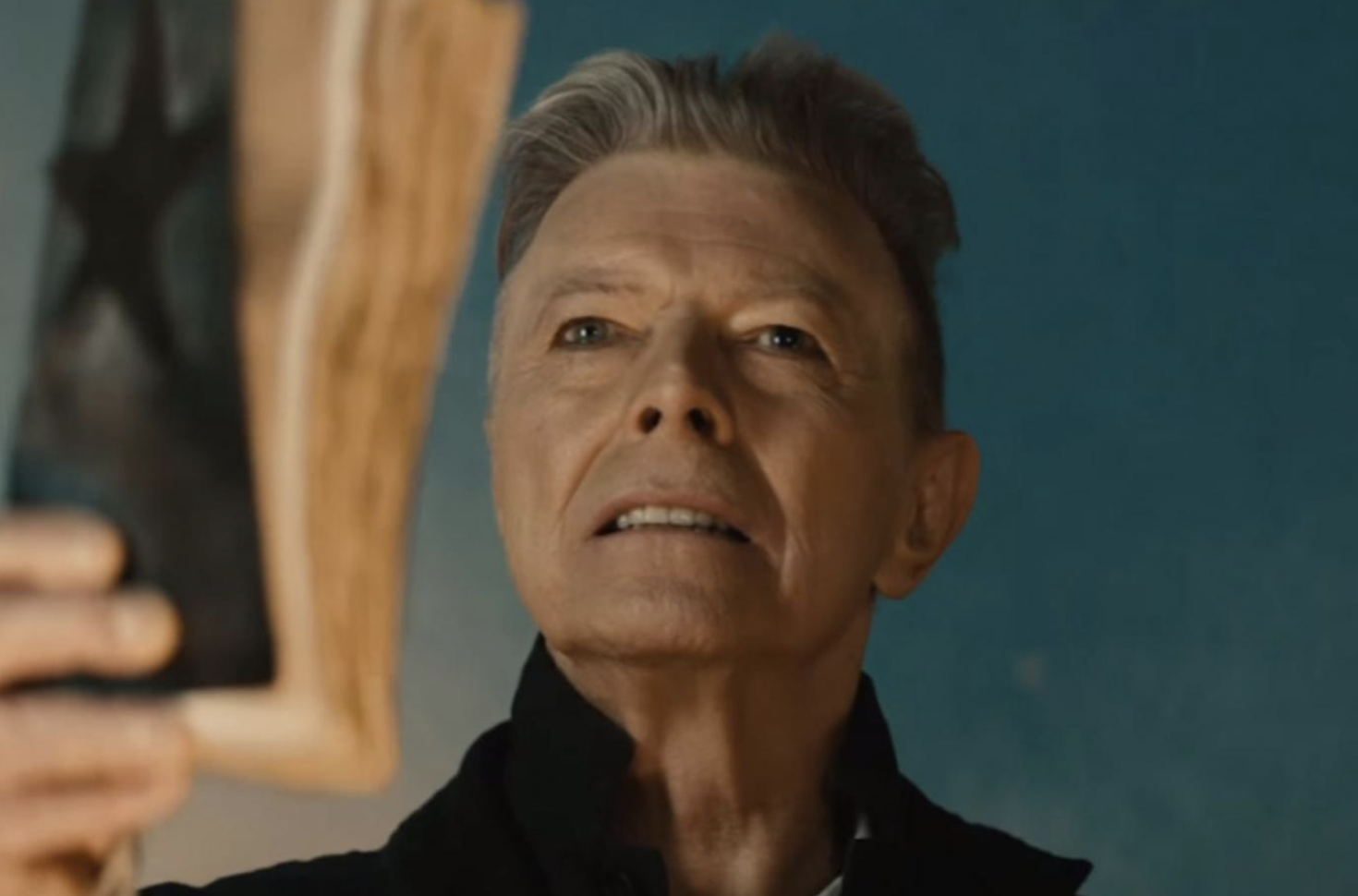
It’s now been a decade since the passing of David Bowie. A decade that can only be described as depressingly bleak and hugely divisive in the extreme.
Alexander Larman’s Lazarus : The Second Coming of David Bowie biography, complete with, we’re told, the inside information on Bowie’s health scares over that same decade (apparently, as we are led to believe, and through inner circle confidents, he had an unnatural amount of heart attacks before being diagnosed in 2014 with the cancer that finally killed him two years later) was released at the start of the year. Pretty much the final word, or at least most comprehensive catalogue of not only the latter half of Bowie’s career, but also the events that led up to his death.
But rather than dwell on the subject, the eulogy, I wish to celebrate and honour; to escape from societal breakdown and the anguished age of high anxiety. And so, I once more want to share my original piece on Bowie’s last act: ‘★’ from 2016. I originally wrote a review like so many others, not knowing about Bowie’s fate – this isn’t entirely true; a musician friend, who’s father somehow was a pal or knew one of Bowie’s oldest school friends, relayed the info of Bowie’s cancer diagnosis to me at the time, but with no way of following that news up, of clarifying or getting confirmation, I left it at that. Just after the album’s release, and with the death of Bowie, I added a preface: my original review however did obviously pick up on the obsession and themes of mortality and death. It felt like he was leaving us a testament.
A special in fact, not only is Bowie’s epitaph ten years old this month but Station to Station is fifty years old this January. Both of my pieces on these albums can be found below, backed up with the playlist I made on hearing of his death and links to my long love letter, album guide in four parts.
‘★’ (ISO/RCA) 2016
A Preface
With hindsight, ‘★’ now seems an obvious epitaph. The clues where all there. The afterlife, resurrection and a string of final farewells hang over the album like a ticking countdown to David Bowie’s death. He did it all of course with a grand flourish, and in some cases, beautifully.
Not wholly plaintive and morose, his eulogy dared to offer up intriguing and ambiguous thoughts. The music itself both referencing some of his most experimental and edgy work, from Diamond Dogs to Outside, and up until the last daring enough to experiment as he adopted a West Village jazz troupe to play rock music in off-kilter, cerebral manner. And if it is true, Brian Eno’s tribute in recent days referred to a possible return to the duo’s Outside project: “About a year ago, we started talking about Outside – the last album we worked on together,” Eno wrote. “We both liked that album a lot and felt that it had fallen through the cracks. We talked about revisiting it, taking it somewhere new. I was looking forward to that.” Muted it seems as a serious potential, the often morbid, avant-garde and industrial art school concept album feels like it did seep into the fabric of, or at least influence ★. I for one will be gutted that he never made it. Cancer got there first. And so, we will never know how that Eno reunion would have turned out.
Looking back now, only actually a week on, at my review I was properly a little harsh on poor Bowie. Songs I mostly dismissed have seduced me since. Though, as I unfortunately pointed out, it did feel like a eulogy, an obsession with mortality. And now we all know why. Yet I will stand by it, as Bowie’s death shouldn’t change, what I believe was a balanced critique. So here it is again in full in case you missed it or need reminding:
Review
Still preoccupied with that old messiah complex and the anxieties of the times, David Bowie unveils his latest ode to resurrection ★ (pronounced Blackstar). Preoccupied with jazz, though as we’re told like a mantra, “This isn’t a jazz album. It’s a rock album played by jazz musicians”. There is a fundamental difference. Off-kilter leanings and daft nuances from the progressive jazz catalogue permeate this album, but that is all. There is no sudden embrace of be or hard bop, or spiritual, modal or psychedelic consciousness. There aren’t even any traces of that much maligned and cringe worthy offshoot “fusion”. Instead, Bowie’s recently recruited hip West Village jazz troupe, led by Donny McCaslin, adds an inventive, fresh lilt to the favoured rock and pop music tropes to create something unique.
It shouldn’t come as a surprise however, Bowie’s very first musical stirrings being on the saxophone as the young Mod about town in the early 60s before he changed his name from the one his mother gave him, David (Davy) Jones, to the immortal Bowie. The long hairs of the psychedelic age beckoned, and Bowie cut loose the restraints of jazz to wear dresses, take on mime and reinvent himself as a cerebral vaudeville troubadour.
He raises, he soars and then he falls, Bowie’s usual cycle of creativity builds and then wears out each new character he adopts. Yet left to his own devices, somewhere out in a metaphysical space, Major Tom is still causing Bowie sleepless nights it seems. The title track from his ‘Wide Eyed Boy’ meets Outside, ‘Blackstar’, was accompanied by a video that featured an unnamed astronaut, fallen and lain dormant covered in dust in Bowie’s apocalyptic cryptic world. Whether he comes to bury old ghosts or inject life into them, the leitmotif of resurrection once again looms large. Mortality preys upon his mind, and why wouldn’t it, as his own trifles with death and the rate of ageing starts to take its toll. Despite the shuffling but tight jazz drum breaks and mourning on a New York dock scene saxophone, these elements are attentive, dampened even, and composed. The title-track a flat beat ten-minute minor opus, rich with hints of Black Tie White Noise, Diamond Dogs (6:50 minutes in) and some melodious reverent classicism, is a song in more or less three parts. Strewn with those obligatory clues and references (which have nothing to do with ISIL and the present Syrian crisis we’re told) it is an ambitious if ambiguous start, and like many songs from the Bowie cannon, its cunning and complexity unveils itself on repeated plays.
So far meeting with worldwide acclaim from critics – the ones allowed to actually hear the LP in its entirety before the official release – Blackstar is musically an improvement on the straighter laced rock songbook of The Next Day. That record is now considered a songbook of nostalgic reminisces; yet he apes if not carries on with the same concerns on this short – more a Station To Station in length and track numbers – follow up. He has even brought back or decided to return and finish the story of The Man Who Fell To Earth, revisiting the tragic alien stuck in exile figure of Thomas Jerome Newton for a Broadway play entitled Lazarus – see, again with the resurrections! Stupefied with the vices and almost resigned languid resentments of Earth, Walter Tevis’s original character made pallid flesh by Bowie in Nicholas Roeg’s stunning, evocative movie adaptation, was last seen in a near somnolent state, more or less beaten, his mission failed and his loved ones dying in the drought that parched his native homeland. The second track to be shared from the album, ‘Lazarus’ features that recurring sweetly forlorn saxophone – found throughout the back catalogue – played over a maudlin, and at first very stark, indulgent wallowing backing track. With usual ambiguity, Bowie once again croons about scars, heaven and breaking free, his slow building indulgence unfurling its depth and maladies at a crawl. Closer to Heathen and Reality, ‘Lazarus’ is influenced to a degree by the critic’s darlings of the music scene Kendrick Lamar and Death Grips but sounds more like TV On The Radio and The XX.
Already gaining airplay and floating around for a while, ‘Tis A Pity She Is A Whore’ is golden Bowie, and the track that gave life to the rumours of his acquired penchant for jazz. Riffing on the infamous 17th century John Ford tragedy of the same name, a forlorn crooning Bowie sings oblique lines over a plaintive saxophone and heavy drum barrage on the fieriest track from the album. In a similar mode, a new punchier version of 2014’s ‘Sue (Or In A Season Of Crime)’ is a less shaky untethered rock and speedy break beat hurtling improvement. And once again features a resigned downcast Bowie taking on the role of a sucker-punched sap. This leaves a trio of material that hasn’t until the album’s release been aired or teased out over the net. ‘Girl Loves Me’ has a harassed Bowie yodelling, wistfully sighing and yearning with his Berlin trilogy style vocals to a methodical striding march, as he converses in a mix of Polari and A Clockwork Orange. Quite a change in tempo and style, ‘Dollar Days’ is again a reflective take, perhaps even a regrettable lament. Plaintive in a ballad style, Bowie almost eulogising, the lyrics are delivered and beautifully caressed. In a similar vein, the album’s finale ‘I Can’t Give You Everything’ is another wistful dip back into the Black Tie White Noise album. Repeating a most poetic set of verses that both unravel and confound, it is a majestic, diaphanous if sad curtain call.
Despite the gloom, Bowie is still a sprightly creative artist, celebrating his 69th birthday with a new album that stretches the imagination and puts most of his peers to shame. Of course, it still isn’t as daemonic, unsettling and untethered to the boundaries of pop and rock music as we’re led to believe; Scott Walker it ain’t, Bowie still transmogrifying his Crowley/Kabbalah/Nietzsche/Occult/Norse and beyond cycle of references into a more sellable pop format no matter how many genres he absorbs. Walker has gone into the abyss in comparison and almost removed any earthly links to melody and song structure. Can the same be said for Bowie despite his recent long-winded jazz influenced opuses?
Saying that, this could be the purest, at least concerned, version of Bowie yet. Resurrected free of his characterisations, the gilded “Blackstar” is just as uneasy and scared at the anxieties, stresses and daunting prospects of the future as the rest of us. Fame, celebratory is mere smoke after all and offers little in the way of comfort and safety in the face of the impending end times. Yet despite being easily his best album since Earthling, it’s still underwhelming and falls short of being a classic. It isn’t even as experimental as Outside, which is a criminally underrated album, and lacks a real punch. But it is moving in the right direction, and instead of listening to those younger hip cats, he’d be better off paying more attention to that other famous Capricorn, Scott Walker.
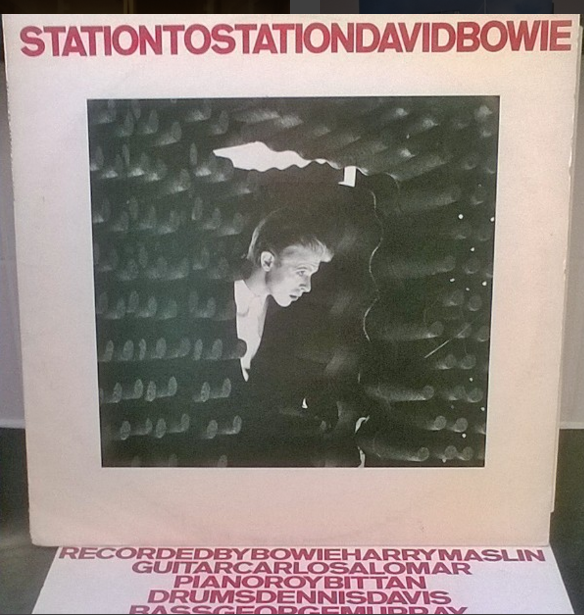
Station To Station (RCA) 1976
A distressed primal howl for the alpine air and culture of Europe were the main motivations for Bowie’s Station To Station LP. It may have been recorded in L.A, but the intention was to reach out across the Atlantic: an escapist gesture of hope to crack the drug habit.
Imbued, or just unashamedly sucking up the innovative vapours of the Teutonic music scene, those previous soul allusions were now entwined with the pan-European express of Cluster/Harmonia (and all the various Roedelius and Dieter Moebius projects), Kraftwerk and Neu!
The autobahn was already spoken for, so it would be the allure of continental train journeys that oiled the wheels of the album’s minor opus title track. Heralding the “return of the thin white duke”, Station To Station traversed disco boogie funk (‘Stay’), doo-wop futurism (‘TVC15’) and featured Bowie the Shakespearian glib, warbled crooner (‘Word On A Wing’, ‘Wild Is The Wind’). Oh yes, the note register was high all right, a resounding plaintive cry before that all-immersive dip into the Berlin years.
The Playlist
A Most ‘Fantastic Voyage’, my eulogy to Bowie still stands. Added to sporadically since putting it together on news of his death, alt takes, live versions, sessions and those favourites of mine are all collated and curated for a most pleasing fashion/experience.
PS:
Links to my Bowie guide, written to celebrate the oeuvre.
A Celebration Part 1: Debut to Pin Ups
A Celebration Part 2: Diamond Dogs to Scary Monsters
A Celebration Part 3: Let’s Dance to Black Tie White Noise
A Celebration Part 4: Outside to Black Star
Here’s the message bit we hate, but crucially need:
If you’ve enjoyed this selection, the writing, or been led down a rabbit hole into new musical terrains of aural pleasure, and if you able, then you can now show your appreciation by keeping the Monolith Cocktail afloat through the Ko-Fi donation site.
 Monolith Cocktail Blog