The End of the Month Playlist For September 2026
September 29, 2026
Our Monthly Playlist selection of choice music from the last month. Curated by Dominic Valvona & Matt Oliver.
Choice music and sonics from the last month (or so) picked from our reviews, but also featuring the tunes we missed out on or didn’t get the room to feature at the time.
Curated by Dominic Valvona with choice hip-hop cuts selected by Matt Oliver and some tunes lifted from reviews by Brian ‘Bordello’ Shea. Includes entries from the Ukraine to Turkey to Somalia, the Americas and Europe. This month’s courtesy of featured artist Juga-Naut.
Please note: The Monolith Cocktail has given up its accounts on both Instagram and bluesky. You can find the blog on WordPress, in every search engine going, or on Facebook and X. Or if you don’t want to miss anything, you can sign up to email notifications.
If you’ve enjoyed this selection, the writing, or been led down a rabbit hole into new musical terrains of aural pleasure, and if you able, then you can now show your appreciation by keeping the Monolith Cocktail afloat through the Ko-Fi donation site.
The Track List For September 2026:
Dragonflies ‘Slower’
megiapa ’11.11’
Your Old Droog & Evidence ‘Brighton Beach’
Pastense ‘Colors in the Puddles’
Al-Khemetic, Sa-Roc & Dezarie ‘Power Bars’
Regina Collage ‘First New Place’
Crystal Eyes ‘Pretending To Be People’
American Motors ‘no horses’
Devon Church ‘Vast As Space’
Boycalledcrow ‘mantis man’
Baba Zula ‘Kutsal Zeytin Halayi’
Juga-Naut ‘Never Nothing’
Che Noir & The Uce ‘Urban Essence’
Jam Baxter ‘Whole Sky’
Dur-Dur Band ‘Adigaa I Dhalanrogey (You’ve Changed Me)’
The Male Pattern ‘Charlie (The Robbery)’
The Bordellos ‘Oh Nora’
Greg Freeman ‘Cahokia’
Party Dozen ‘Euro Stomper’
White Ring ‘CATATONIC’
Blu & Sndtrak ‘LA’
Michael Christmas, Chris Crack & Girl Talk ‘Garfield Hated Mondays But Didn’t Have A Job’
Blockhead, Proleter & Arms and Sleepers ‘Garbage Time’
Datkid, Illinformed & Dumb Logic ‘Narcotic Athletics’
Dollar Brand, Don Cherry & Carlos Ward ‘Bra Joe From Kilimanjaro’
Hieroglyphics, Casual, Opio, Phesto, Pep Love & Del The Funky Homosapien ‘Hard Numbers’
Curly Castro, shemar, Blackchai, Sunmundi ‘New Mutants’
Super Scintillant ‘Phase IV’
Xqui & Pyramids of Phobos ‘Progressive Modernism – Strings Version’
Mike Gale ‘Our Place’
Jon Tye, Amine Mesnaoui & Cubenx ‘Morning Glow’
For The Curious and Those Wishing To Catch Up On The Last Month’s Posts, Here’s The Links:
Perusal #83 – Super Scintillant, Érick d’Orion’s ‘Mes fantômes’, The Bordellos, Devon Church, Dragonflies, Leenalchi, megiapa, Stylianos Ou
Our Daily Bread 661 – Fran Ashcroft, bigflower, Cut Chord, The Free Four, Herb DiamantE, The Male Pattern, Minot, Neon Kittens, Spygenuis
Perusal #83: megiapa, Stylianos Ou, Devon Church, Dragonflies…
September 16, 2026
In review: a world of sonic discoveries. Dominic Valvona

Photo by Robert Macaisa for Off the 405, Courtesy of Getty Museum
An Ambiances Magnétiques Label Double-Bill
Super Scintillant ‘Tarot’
Érick d’Orion’s ‘Mes fantômes’
(Ambiances Magnétiques) Both Released 25th September
Two similar(ish) spheres of influence and conceptual works from artists aligned with the Canadian label’s “adventurous music-making” aesthetic this month. Only appearing recently on my radar, the Ambiances Magnétiques platform is based on and around the province of Québec; it’s stock in trade to showcase interesting, explorative and avant-garde releases from both some heavy hitters in the form and burgeoning fresh talent.
Firstly, the debut collaboration between the performer, electronic musician and artist Nicolas Bernier and his foil, the notable bass clarinettist, lecturer and professor Mélanie Bourassa, Tarot. With everything that title might allude to, from its Kosmische and early analog conceptual traditions to its hermetic and esoteric connotations, its symbolism and prophetic omens and warnings, that umbrella is used amorphously to explore and shape electroacoustic and modular apparatus conjured atmospheres and descriptions manipulated, or so it sounds, in real time.
Both partners on this sonic mystery and sci-fi adventure, draw upon their extensive backgrounds; Bernier with both his merging of musical and artistic projects, and his extensive prolific catalogue of collaborations, including with leftfield underground hip-hop Antipop Consortium con-founder Beans, and Bourassa with her study and teaching, and depth of experiences working with the Québec Symphony, the Metropolitan Orchestra, the Montreal Symphony and Violons du Roy.
Crossing the classical, the avant-garde, even hints of jazz with that “super scintillant” of electronic sparks and effects, the signal from Bourassa’s bass clarinet is routed directly into Bernier’s “rig”, allowing him to control the parameters of his system using her output. That’s the underlying method that sets in motion a both alien and reimagined pastoral investigation of the instrument; transduced and transformed from its familiar bass-y tones and higher flutiness and cyclonic flutters to sound both of its tradition and yet astral and part of the Fourth World legacy of Hassell and Roberto Musci too.
Fibres, metallics, space craft mechanisms, counterflows, the tubular plastique and unsettling whispers move around or directly reverberate off the bass clarinet’s audible finger work, its space bird-like cries, duck billed croaks, its squeezes and piped melodic spirals and song.
There’s one point where the clarinet travels almost to Egypt – not without diverting via NYC Gershwin and a stalk in the bush -, another where the instrument reminded me of Park Jiha’s work, Sakamoto and Arve Henrikisen.
It’s a both kinetic and improvised entwinning of the two disciplines and their scopes to perform a contemporary ballet of machine engineering and the acoustically amplified and breathing. A stellar futuristic whisk and more majestically adroit collaboration of mystique and atmospheric stirrings that can sometimes being near hymnal and other times unsettling or at least filled with a sense of in trepidation.
Delving much further into a metaphorical Venn diagram of supernatural and paranormal alluded untethered jams, Érick d’Orion‘s septet assemble of eclectically concentrated musicians’ tune into the psychic to communicate with old and new apparitions. I say apparitions, but this is a live (by the sounds of the audience appreciation) draw of influences, inspirations and record collections plucked from the ether or pulled from past experiences to march and rollick all over any semblance of preparation.
The multi-disciplinary audio artist, composer and improviser of note has shared his skills and exploratory travelling mind with such notable company as Evan Parker, Martin Tétreault, Otomo Yoshihide, Robin Fox, Ilpo Vaisanen, Alexandre St-Onge, Sam Shalabi, Günter Müller, and eRikm. An enviable and diverse list that now comes in handy on this expedition beyond the paranormal.
Gathering together Marie-Pierre Brasset on synths, Émile Boucher Cloutier on percussion, Michel Potiron on electric guitar, Réal Gagnon on drums, Stéphane Beaulieu on electric bass and Nicolas Gobeil on trumpet for an invocation and dance with the phantoms of past musical excursions and memories (both the conscious and unconscious kinds), Érick plugs into a Fortean amplifier to create an Acid Mothers Temple-Last Exit scuff and splash of Poltergeist activity at a Sly & The Family Drone punch up with Fugazi and The Pop Group.
Over two sides (though my edition came with an unnamed bonus track) the troupe of sonic psychic investigators communicate with feedback and foldback invoked ghosts, unholy disorder and knocked transmissions from beyond even Mina Crandon’s imaginative cons, before the tempo, the direction of travel changes towards a sudden lilted sympathetic echo of Don Cherry’s cornet trumpet that soon apes the bugle call of some lost fort in a matinee film. But then, just as you get a pause in the action, a handle, we roll up into the freeform drumming prowess and wild kit turnouts of Milford Graves and Tatsuya Yoshida. But again, we then leap into the gargled revved-up attitude of hardcore and jazzgrind, of a leaderless and instrumental live Black Flag and the Dead Kennedys pulling out a knife on the Red Hot Chilli Peppers.
And that’s only track one, ‘Spectres’: which to be fair is over twenty minutes plus in duration. ‘Ectoplasm’ is shorter but no different in its mix of ideas and improvised scope, starting with occultist atmospherics, Faust-like ceremonial ominous punctuations, and metal shredded guitar. However, it takes hold of a groove of a kind, or a momentum; a space rock flight of fantasy over Tangiers, with elements of Hawkwind and Amon Düül II and the Arabian desert trumpet evocations of Lee Morgan and Chet Baker. Metallic whips lash at the spectacle, whilst electronic apparatus concoct zips, the bass a growl, and the drums scuff and gallop towards the demonic icon.
I will just mention that third track, which begins with a hand drums and group effort embrace of Afro-funk before switching to the esoteric procession and ending up once more in the hardcore and jazzcore realms of free enterprising dread: it actually reminded me weirdly of Wicked Lady, and also has an air of prog and metal about it too.
If Ill Considered and Scarla O’Horror spent more time skateboarding in the late 1980s or hooked up for a musical collaboration with Laddio Bolockos and Massacre than this might well be the result. And if that doesn’t pique your interest then nothing will.
The Bordellos ‘Oh Nora’
(Metal Postcard Records) 11th September 2026
No, not a tribute (as I initially thought when seeing the title) to Nora Batty the pinny wearing, wrinkled stockings and hair nut costumed stoic and hard-faced muse of Compo in that quintessential English comedy of life in a Northern town, Last Of The Summer Wine, the protagonists of this latest song from the maverick family band, The Bordellos, are two star crossed lovers/singers sharing the same name; neither of whom are aware of each other’s romantic infatuation with the other. Both Nora’s – one an aspiring younger singer trying to crack the music industry, the other, in her mid-sixties, finding a newfound cult status after her 1970s flopped LP is picked up by a new generation, and once again appearing on stage – love one another from a far without knowing it. And it’s that relationship, or the simultaneously tantalising and both hand-wrung agonising over the prospects of what could be that are so movingly and whimsically sung about on this latest single.
Taken from what could be (if the band’s co-founder and the vocalist and acoustic guitar player of this song, Brian ‘Bordello’ Shea, ever gets the time) a larger planned musical entitled ‘Oh Nora – A Small Town Story’, this single sets the lo fi sympathetic plaintive tone; a sort of grim up North version of folkish-country Dylan with a lilted lean towards Simon & Garfunkel’s ‘Mrs. Robinson’, and yet unmistakably low rent English kitchen sink romance. Brian’s son, Dan Shea (of Vukovar and Beauty Stab fame, also known to have penned the odd piece for this site over the years) can be heard weeping a haunted malady of steel pedal wanes and quavers, whilst Uncle and brother Ant Shea completes this disenchanted but romantic trio on harmonica and vocal harmonies.
Perhaps one of the band’s most charming, less acerbic and jokey polemics on the state of the nation, yet set to small town suspicions, bigotries and the unwillingness of some to accept change, Oh Nora’s central characters are used to demonstrate a continued sneering and outright homophobic prejudice to same sex relationships and of openly gay people in close-nit communities: especially in towns long since left to rack and ruin by not only Tory policies but Labour’s too.
There’s a real tenderness here, even nostalgia (though not for the 60s of homosexual criminality, nor the early 70s when artists were obliged if not forced to hide their sexuality even in a supposed “gender-bender” age), yet it’s saved from being truly saccharine by The Bordello’s signature lyrical takes on the everyday detritus of pop culture, of fumbled love affairs and the innocuous habits that immediately conjure up life in a Northern town of old: This is a liaison that is quintessentially both English and Northern.
It remains to be heard what can be expanded upon, but The Bordellos certainly have the groundings for a sweetened if self-depreciating propounded musical.
Devon Church ‘The Shame Of Winnipeg”
(Ruination Records) 18th September 2026
Taking its cue, I’m sure, from Leonard Cohen’s (written with his collaborative foil Sharon Robinson) languorous rile at the rotten state of the world, ‘Everybody Knows’, NY producer and songwriter Devon Church encapsulates the underlying sour and the disenchantment of that 1988 anthem to despondent protestation and cynical beguilement.
Originally released on Cohen’s I’m Your Man LP, and if anything, a resounding triumph of the poet’s disgruntled take on the stench of the times and the decades previous (a contemporary chime with the AIDs epidemic of course, but also with long held musings on both relationships and religion, thrown in with corruption), it’s since become a totem; a go-to for wised-up film producers and directors on the hunt for that one song that so sums up the times.
But Devon doesn’t just write a long love letter to that iconic tune, nor just snatch its sound, but delves deeper into the catalogue to reprise that sort of Med Greek Island holidaying and retreated Cohen vibe too; a subtle breezy adoption of sun-kissed adult louche new wave, rock and troubadour vibes that called be described in some instances as yacht rock. Then again, inspired by his early adoption analog, mic and keyboard purchases during the Covid pandemic, Devon also adopts a shimmy chimmy sound of swimming and faux-Latin presets, a flange-y and phaser-ed embrace of Isaak and Lynchian noir and a subtle borrow of the Aussie sound that became synonymous with Crime And The City Solution, and some of the Bad Seeds work during the later 80s.
Despite hanging out with the Millennials, feeling their pains and carrying their withering gripes – as laid down by the Frankfurt School, Reductionist and Deconstruction theorists –, Devon’s tone seems more boomer, or even Generation X; his influences obviously for the music and activist poetics and polemics of the ageing Boomer class of Cohen, Scott Walker and even Dylan (really hearing some chimed evocations of his 80s works). But it’s actually executed with a smoothness and maturity that might be beyond Devon’s years. He certainly seems to thread if not make obvious connections across the generations and years like Dylan; his reference points and slogans in a lucid if sometimes vague coalesce that attempts to wrap up the last century and the slow collapse of humanity and society in the face of capitalism’s battle with feudal technocratic authoritarianism, globalism, the drag of neo-liberalism and both a crash that still hasn’t ever been resolved and a pandemic that pretty much destroyed everything we know and hold dear (form our jobs to relationships, most obviously our health mentally, and our suspicions about those who hold high office).
How this pans out can be summed up on the open ‘Back From The Grind’ salvo at the rich, the multinational companies, the online titans, and the unedifying prospects of having to earn one’s own living in very discouraging and bleak roles: well, earning your paltry, just living salary to feather the beds of those at the very top pf the chain – that old adage that money trickles down, which might have been true decades ago, doesn’t cut it in the 2020s. I say a salvo, but Devon has turned his (I quote) “The body is the engine of the economy” mantra into a cooly and sexy indolent and disarming Marxist despondent grudge at those who would force him to leave his lover’s embrace (and more) and his own bed to clock in. To a signature cool wave and the pad drums and pre-sets of his Korg Mini Pop analog drum machine (if we’re being specific for tech heads, a SR-120 wooded panelled edition of the Japanese’s companies early drum machine, brought out in 1976) and that Isaak noirish ‘Wicked Game’ borrow, one of Devon’s many guests pull up to offer sighed breathless harmonies and confessions.
In a similar mode, albeit recalling for me, vocally, Babybird and both voice wise and musically Aldo Struyf’s Belgian psycho-killer super project Creature With An Atom Brain, ‘Neon Genesis Fidel Castro’ and its Western-Gothic mood weaves the Communist’s muses and champions in with a loose connective spook of apportions and UFOs. Paying metaphorical gratitude’s and reparations to the Civil Rights heroine of the desegregation crisis of November 1960, ‘Ruby Bridges’ is tied together with further lyrical broadsides at capitalism’s failures, and the narcissist crisis of our online era; An American almanac that reaches from the start of one decade – starting off with Bridges place in history, bang in the middle of policy and racial changes as the first African American student to attend the previous “Whites-only” William Frantz Elementary School in Louisiana – to finish on the dying embers of a civil rights and generational uprising at the other – referencing the pied piper of alt-counter-culture malevolence and chemical fuelled Manchurian candidate bloody sacrifice, Charlie Manson. Musically it all sounds a bit like a lo fi Spector Girl Group in bed with Dylan at a Black Panthers benefit.
I could easily write about every single track on this album, such is the abundance of musical layering and topics to unpick, but will briefly just mention the cooed caressed feminine accompaniments on the Heyme recalled and shimmied diaphanous new age curtain call title-track – a reference maybe to Kent Monkman’s exhibition of the same name in that city, or just because it’s yet another rile against those pesky colonists that took the land from its indigenous folk -, and the definitely Yacht Rock vibes of the Mediterranean lovesick Cohen-esque ‘Jamie Joins The Priesthood’. The latter is a story of protagonists, and the disappointments and despondent fatalistic chasms of expectation – a kind of Millennial Catcher in the Rye perhaps? There’s one bit where the female voices seem to mimic a reimagining of the Stones’ ‘Paint It Black’, though with all the medicinal meds I’m taking these days to stay alive, I could be hallucinating this.
There’s a mention of the Durutti Column’s Vini Reilly in the press notes and briefing; his signature flange-y and dreamy guitar pining’s and playing style being compared to Devon’s. A good call, but I’d throw in Kevin Ayers perhaps too, a little of Crime And The City Solution and of course the new wave school.
Biblical propositions, fables and bad omens are grafted to a louche and languorous spectre and cerebral backing that Cohen would possibly smile at. It’s a deep listen on some levels, but tuneful and pleasant at every turn; less a whine really and more a sophisticated, mature (that voice both often gravelly and filled with life experiences of and wry knowing; not so much miserable as making sense of how society came to its current crisis) observation to these trying times and the cultural malaise.
Dragonflies ‘S-T’
(Dark Horse Records/BMG) 18th September 2026
Drawn together under the fluttered magical and dreamy wings of Dragonflies, foils Dhani Harrison and Nigel Godrich make hay as the dream collaboration.
Touching base at different points in their respective careers, Harrison originally reached out to Godrich for “guidance” on what would become his second solo album, Innerstanding. This was during the concentrated, time-on-their-hands, period of the Covid pandemic. Fast forward a few years and invited by Godrich to shape a collaboration together in his Brixton studio, Harrison channelled his inner light whilst his creative partner shaped the results in real time. All of which was augmented or accompanied by the sensitive swells and lower case scored strings of the famed Canadian composer and arranger David Campbell, and the added shaken and shimmered percussion of Godrich’s Ultraísta and Atoms for Peace bandmate Joey Waronker.
Just a cursory glance at the enviable CVs on paper is more than enough to whet the appetite and rally anticipation. Godrich with his producing and engineering prowess, working and guiding everything from Radiohead’s highly influential and experimental catalogue to records by Beck, R.E.M., Pavement, U2, Arcade Fire, and Paul McCartney. As a musician in his own right Godrich has helped instigate both the cross-Atlantic experimental rock trio of Ultraísta with Waronker and Laura Bettison, and the international supergroup Atoms For Peace with oft foil Thom Yorke, Flea, Waronker (again) and Mauro Refosco – God knows how the dairies and commitments align for that one.
Dhani….well, apart from the near obligatory mention of his late iconic father and former Beatle, George – perhaps also proving a pressure to bear on those slim shoulders; to live up to that legend would fuck with anyone’s confidence – , the musician, composer and singer-songwriter has carved out a solo career for himself, whilst also fronting his own thenewno2 band, and joining another supergroup lineup, the Fistful of Mercy, with Ben Harper, Joseph Arthur, Jim Keltner and Jessy Greene.
Lauded quite rightly by the industry, at this point in both their careers they could choose or dismiss whatever projects they want. So, it’s encouraging to see – wished on by fans alike – that they’ve pulled together their talents, their aspirations, as well as more bluesy plaintive woes and concerns for a fragilely and honestly projected psychedelic trip-hop experience: a balance of organic intuition and the synthesized that works rather well.
Their titular debut opens with the dreamily Floydian via Radiohead ‘Slower’, which also recalls a softer and more trippy‘Sätt att se’ by Dungen and both the suspended slow “tiss” sounded drums of Portishead and the vocal delivery style of their frontwoman Beth Gibbons (credited as one of the trip-hop inspirations for this album). At this point Harrison’s voice is in a psychedelic mode, but they can also sail close to the delivery, cadence, mood (and production wise, the electronic accompaniment too) of early 90s David Sylvain, especially on the more minimalist step-padded and ghostly Radiohead-esque piano drifted ‘Straight Line’: you could throw in an essence of Mark Hollis to that equation too. It’s an amalgamation of spiritual yin, plaint vulnerabilities, disarming polemics against the material world, and the feminine; interwoven with the instinctive, near organic if synthesized and electronic backing of Godrich.
I found the whole thing surprisingly soulful, with touches of modern R&B to be found permeating amongst the very on-trend 90s influences (UNKLE for sure, but as I already referenced Radiohead, and also Lamb and some of the early Mo Wax releases). Harrison’s sensitive soul gives it a unique direction and when needed a certain elevation above the wallowed dystopian lament of signature trip-hop: I’m aware it’s not always like that, but anything Portishead wise, or that features Thom Yorke, could be said to encourage such moody inspection and a certain sorrowful tone.
Anyway, as a collaborative project Dragonflies seems both confidently experimental but also bankable and appealing enough to crossover the generations and fractured scenery of the present leftfield genre. I’d call that a success and expect to hear more from both Godrich and Harrison in the future.
Leenalchi ‘Sugungga’
(Luka Bop) 2nd October 2026
K-pop’s saccharine and vacuous domination eclipses all, delivered through its TikTok friendly vessel. And it would seem, as we are led to believe in the West, that this is all South Korea has to offer creatively and culturally at present. But there are thankfully many alternatives, including the ensembled septet of Leenalchi (very important so as not to multilingually astute and respectful in the company of South Koreans or your international friends that you drop the “L” and pronounce the moniker as “EEE-nal-chi”) who transform the age-old traditional form of pansori with a taste of the eclectic and hot-wired wildness and funk of the contemporary. You could say it was a colourful alternative to the performative pop music of K-pop, which leaves many of its acts’ soulless throwaways, exhaustively worn out and replaced by the next shiny and ever younger next big thing.
Instigated or led by composer extraordinaire (incredibly successful career at the vanguard of South Korean cinema with scores for Train to Busan, Sympathy for Mr. Vengeance and The Wailing) and indie scenester of repute (one such band, SsingSsing apparently “clocking up” nearly ten million views for their Tiny Desk Concert) Jang Young Gyu, the Seoul-based septet merge playfulness with the theatrical on their fantastical reinvention of storytelling, poetic yearning and surrealist posed tapestries of allegory and metaphor.
Jang (just to complicate matters further, its occasionally written as Youngkyu Jang) corrals the talents of singer, songwriter, and artist EJae on bass, Oh Hyung Suk on drums, and the quartet of Park Soo Bum, Ahn Yi Ho, Ra Seo Jin and Choi Su In on vocals. And together, this big sound can both bombastically or in more sophisticated strains inhabit both visceral worlds of influence; from stage acted folk, the unveiling plays of yesteryear, to the slicker finger-snapping funk and electronica R&B of a more contemporary climate.
Firstly, a little background on the band’s main focus and sound. Pansori’s etymology can be broken down thus: the “pan” part can be translated as an open space or a place where many can gather, whilst “sori” could be interpreted as singing, a sound, or song. The form itself dates back to the 17th century, with its settings, characters and situations rooted in Korea’s Joseon period (the longest and very last imperial dynasty in that region’s history, a period that ran from 1392 until 1910), set, at that time, in the capital of Hanyang (present day Seoul). It’s believed to have evolved from the expressions and narrative songs of the shaman; remaining for much of its existence as a purely oral tradition until the 19th century pansori acquired ever more sophisticated literary layers: A popular form by then with the urban elite. But through increasing rapid industrialisation and modernization in the next century and the explosion of Western influences on the musical culture this ancient storytelling tradition began to fade. However, there would be a revival in the 1960s with pansori securing its survival and posterity as a National Intangible Cultural Property.
Over the course of that history, pansori has retained, if evolved, its original performance set-up: stories are both sung or spoken by a single female or male performer called either a “gwangdae” or a “sorigun”, accompanied by a seated drummer (called a “gosu”). The spoken parts are called “aniri” and the sung parts, “chang”, and both are usually mixed into each performance, which can last anywhere up to eight hours in duration! The double-headed barrel shaped drum (a “buk”) can be said to emit a rattling sound, played as it is with a drumstick in one hand whilst the opposite hand maintains the rhythm.
With stylised speech, narrations and gesticulations both cyclical tales of love across class divides mix with more satirical and witty observances of the fantastical and surreal. Updated and thrust into a new millennium no less, Leenalchi home in on the anthropomorphism aspects; namely with the album’s leading single, ‘Crying Softshell Turtle’, the tale of the titular character’s quest to cure the dragon king. Through a thumped backbeat, synthy zaps, 90s indie vibes and tribal voices, a magical, if gory in places, fairytale unfolds: our protagonist turtle brings a sacrificial rabbit filled with medicinal greatness to the court with a beseeched implored promise and contract: “I beg you to open his belly, and I pray to God there is a liver there. But if there isn’t a liver, you can execute my whole family and tear me to pieces, and I won’t have any regrets.”
From the symbolism of courtly fairytales to the ridiculous, Sugungga opens with the silly mantra of ‘Mao Mao Mao’: more “mewl” “mewl” “miaow” than communist chairman propagandist. Sliding M People-esque soul-pop sidles up to guttural theatre and the paddled plastique. In a similar mode, yet far more disco and funkier, ‘Tiger Is Coming’ sounds simultaneously like kabuki and something from the Mongolian steppes. ‘A Fish Map’, with its funky duck bass lines, could be a toss-up between Bootsy Collins, Basement Jaxx and International Pony.
Touches of psych, a very removed vision of R&B, rock ‘n’ roll, electronica and pop match with a diverse register of vocals either agitated, dramatically acted, hysterical, throaty, bluesy, mulled and heavily accented. It’s different for sure. A harmonious funkified union that congruously revives an old tradition, still breathing and most importantly, still relevant in a technological divisive, anti-humanist world of AI and screen time indoctrination. It’s possibly even best experienced with friends and a dancefloor; its playful spirit whimsical yet showing depth without losing its energy and infectious call to shake that booty.
megiapa ‘Intentions’
(International Anthem) 25th September 2026
A match made in the heavens of soulful humanistic futurism and beat-making, the linguist, producer, visual artist and vocalist megiapa seemed destined to join Chicago’s renowned International Anthem label family. Making an album debut on that community hub’s platform, the Ohio-born soulstress gathers together material imbued, inspired and brought together on the Chicago underground beat scene; sounds forged and created through regular spots at the Push Beats, Open Beats and Fresh Roasted showcases, and from sharing the stage with such notable company as Sev Seveer, Radius ETC, Elijah Jamal Asani and DJ Moppy.
Leaving Chicago for L.A. in 2023, megiapa was soon embedded in that city’s “low end theory” imbued underground and leftfield hip-hop and jazz scenes; namely in the enviable company of such luminaries of the form as Madlib, Flying Lotus, Daedelus and Georgia Ann Muldrow – I can hear the latter’s signature to a degree laced throughout Intentions. And so, this becomes an album born of both cities, the finishing touches galvanised on the West Coast but starring a cast of contributions from across state lines, brought into the studio as both an additional band and chorus of voices and vocalists.
That relationship with International Anthem was originally inaugurated by the community leader, curator, radio broadcaster and DJ, King Hippo (the alias of Alejandro Ayala) who wove megiapa’s beat making soulful sounds into the label’s live presentations. There would be subsequent openings for the roster’s recording artists Makaya McCraven, Bottle Tree and Ben LaMar Gay.
From initially creating music in headphones at home and through the use of the popular audio editing and recording app Audacity, that sound has blossomed and expanded to now incorporate a full band of musicians (more or less) and host of networked foils. Step forward bassist (though a multi-instrumentalist too) and artist The Growth Eternal; Sudan Archives collaborator and pianist Ahmed Muhammad (aka Kafari); the cross-generational L.A. community institution, Pan Afrikan People’s Arkestra musical director and drummer Mekala Session; producer, composer and artist Telemakus; trumpeter, producer and composer Will Miller (who goes under the Resavoir project); and percussionist Allakoi “Mic Holden” Peete. Completing that gathered ensemble is the vocal pool of Aankha Neal (of the notable eclectic spiritual Voice of Creation choir), Blvck Spvde, 10.4 ROG and others.
Fluidly congruous with vocals both diaphanously porous and soulfully experimental, megiapa’s sound is floated and chicly layered up with melodious R&B, jazz, hip-hop, funk and celestial. From not so straight-shooting smooth soul of either a 90s or a further back 70s vibe to crystalised fantasies aboard sci-fi funkified UFOs and beat manipulations of the already mentioned Madlib but also Madegg and J Dilla kind, there’s an abundance of lyrical and musical ideas expressed and played with throughout the album’s fifteen-track running order (track number fifteen, a beautifully marooned pop-soul electronic love paean entitled ‘Together Forever’, in this case, and on the version I was sent, is marked down as a bonus).
That voice, which is at the centre of this whole enterprise, can change from soul diva to just the echoed reverberations of the non-worded, an essence in fact at times, or the multi-layered; sometimes reminding me of Khruangbin and Janelle Monáe, and at other times of NicoTheGodess and Martina Topley-Bird. In fact one voice or voices that came to mind was the Rotary Connection, who happen to be covered effortlessly well and dreamily on this album with a steel drums-like and willowed fluted oasis lush take on their most famous psychedelic-spiritual-soul tune ‘Black Gold of the Sun’ (for the pedantic, this gold-standard neo-soul classic originally featured on the 1971 LP Hey, Love; the inaugural airing of the group’s The New Rotary Connection change in moniker).
Cascades and the sprung are cross-patched with Prince and slick noodled funk, as perfectly floated bulb-shaped crystal notes from a jazzy electric piano, a distant hand drum rhythm reminiscent of Curtis Mayfield and Marvin Gaye, the sound of futurism, the laughter and sampled memories, recalls, healing balm and reassurance of friends, and both ends of the romantically alluded spectrum (from declarations of love to plaintive soul yearns of coping with and enduring bad relationships and the self-absorbed personalities of old lovers). Every single element, ingredient of which is all just so; placed to near perfection in its flow: and that’s despite the more staccato and not so much broken up but eloped and changing beats and rhythms that add a subtle friction or point towards more exotic and off-world planes.
In short: astral soul for the beats’ generation. A most satisfactory organic ear, attuned to the stars, the cerebral and the soul, and perfectly settled within the International Anthem family.
Stylianos Ou ‘Moodtoxicosis’
(Jollies Records) 10th September 2026
Nothing concentrates the mind or leads to anxious panics like a cancer diagnosis. But the Athens published author, article contributor, visual artist and trick sonic experimentalist Stelios Papagrigoriou has transduced his treatment (the ordeal of a thyroidectomy) for thyroid cancer into dadaist and fantasy arcade game symphonic spurt and cut-up of manipulation and discombobulation.
In no way wishing to make this about my own pains and travails, I can sympathise having been diagnosed at the start of the year (and spent much time in hospital) with an autoimmune disease that had attacked and damaged my kidneys, and then on release suffering a stroke. Just like Stelios completing and wishing to capture the exact moments of the worst and most hallucinogenic abstract pains of his illness on his laptop in hospital, hooked up to monitors, I was writing and trying to keep this site afloat and running whilst recovering from a biopsy, prodding, tests and various medicated experiments: unlike our Greek patient, my writings stayed within the lines of the barely coherent despite my cognitive issues and the constant exhaustion.
In an avant-garde mode, Moodtoxicosis processes and then releases the procedure and its effects like crazy sonic and vocalised microbes and cells bursting to escape and wreck mischief, havoc and tricksiness. With title references to adjacent or causal conditions (the ‘Hashimoto’ of ‘Hashimoto’s Cave’ namechecking a deliberating autoimmune disorder that attacks the thyroid gland) and medicines used to alleviate it (the ‘Levothyroxine’ of the ‘Levothyroxine Lament’ used to treat an underactive thyroid) fitted alongside various described metaphorical fortresses of the mind state and beastly phantoms, the tripping illusions and hallucinations of a time spent fighting off and repairing the inner and physical vessel that’s gone through hell are turned into a both near cartoon and Fluxus musical mania.
The Art of Noise meets Taito on a drug bender; the Aphex Twin’s own form of sound drukqs makes play time with Zappa; the haphazard sporadically bursts into song against a soundscape of scanners and distorted signals. Yes, this is both a crazy and fitting experiment in bubble gum game boy platforming, conceptual sound forms, floppy disc voices, the dreamy and tine plucked – coming unstuck or in a spindly condition of chirped and pinged chimes. And within that description there’s an abundance of unusual and transmogrified noises and tonsil gymnastics and hysterics.
Get well Stelios (that should be Stylianos Ou if we are to be true to the alias), and never lose that zest for experimental reinvention that’s served you so well.
Here’s the message bit we hate but crucially need to keep going:
If you’ve enjoyed this selection, the writing, or been led down a rabbit hole into new musical terrains of aural pleasure, and if you able, then you can now show your appreciation by keeping the Monolith Cocktail afloat through the Ko-Fi donation site. You can buy us the equivalent currency of a simple coffee, or maybe more if you are inclined. Thank you.
BRIAN ‘BORDELLO’ SHEA’S REVIEWS ROUNDUP – INSTANT REACTIONS. ALL ENTRIES IN ALPHABETICAL ORDER
Beans ‘Remember’
Single (Fuzz Club Records) Out Now
Ah, I admit I am not really a huge fan of Fuzz Club Records on the whole as I think that they have a certain sound, and I find that sound a bit dull on the whole nowadays: lots of bands with nice looking vintage guitars and sunglasses. I like Jesus and Mary Chain and Brian Jonestown Massacre as much as the next man, but do I want to listen to lots of bands that are not quite as good…even Jesus And Mary Chain sound like a not quite as good JAMC now.
But this single, ‘Remember’ by the Beans, is indeed very good and has an arch quality normally not associated with Fuzz Club. If Fuzz Club was The James Bond Franchise this would be its Roger Moore which we all can agree is a very good thing indeed.
Bity Booker ‘There’s No Song About Stones’
Released 5th June 2026
There’s No Songs About Stones is an album of sublime solo psych folk whimsy, just Bity and her classical acoustic guitar singing songs about sadness, birds, love and life but none about Stones Rolling or otherwise, just nine beautifully written and performed songs full of melancholy, melody and a magical sprinkling of fairy dust which draws one into Bity Bookers strange and wonderful world.
Eye With An Eye ‘Flow’
Single – Out Now
‘Flow’ is the debut single by Eye with An Eye, and quite a fetching affair it is to, all post punk moodiness with an aura of jazzy reflection, dark and reflective and deep like diving into the waters of somebody’s thoughts and dreams, and floats in a heaven like state awaiting the whirlpool of contemptable love to drag you in and smother you with contentment.
The Fox ‘For Fox Sake (2026 Remaster)’
Album (Think Like A Key Music) 14th August 2026
For Fox Sake was recorded overnight in 1970; the band thinking this would be the demo, but the record label thought differently and released it as the album. The album sadly sank without trace and The Fox survived not much longer.
But 56 years later Think Like A Key has thankfully re-released the album, and what an album it is. Wonderfully magical in all its psych rock glory, it captures the wonderful mood and excitement of the time: an aural time machine if you like. An album that captures a band having the time of its life and it being recorded mostly live captures the excitement of a young and talented band having the time of its life…the word groovy was invented just for albums like this believe me.
Gentles ‘Nation’
(Metal Postcard Records) Released 18th July 2026
Nation is the latest and final album by the Gentles in their current incarnation as their vocalist Brendan Parkes sadly died earlier this year. There is a punk psych art pop vibe to this album that reminds me of Blur in their Modern Life is Rubbish era, which can only be a good thing I think you might agree; maybe they have the same influences as there is definitely a Syd Barrett and Swell Maps, Buzzcocks and even Jilted John about them. An album that I would advise fans of the aforementioned could do worse than to check the Gentles out.
John Howard ‘Overnight Bags’
Album – Released 7th August 2026
With Overnight Bags I feel John Howard has just made his own The Boys From Dungeon Lane, an album of memories wrapped in melody and pop genius. Neil Hannon would sell his collection of Scott Walker albums to have written any one of these eleven gems, for John Howard has a wonderful talent of painting aural pictures, telling musical tales of love and sadness: I bet john is a hell of a people watcher.
Overnight Bags finds John, as I have said, looking back at his eventful life; from the plague of aids that took away too many of his friends in “What God Is This?” to the first time in Abbey Road recording his debut album in 1975, to him wondering what happened to his old teenage friends (“Josie, Do You Remember?”).
Overnight Bags is quiet the masterpiece, filled with melancholy, love and remembrance. This album is so good in fact I should have started with Paul McCartney has made his own Overnight Bags with his The Boys From Dungeon Lane.
Kevin ‘It Is What It Is’
Album (Riot Season) Released 24th July 2026
Chaotic Krautrock experimental psychedelic noise rock: “It Is what It Is”. I suppose that sums up the album, and lovers of the aforementioned will no doubt love this: and there is plenty to enjoy.
At times it reminds me of the excellent Poundland, especially vocal wise, and Potters Wheel has a rather wonderful hypnotic riff as does the Fall like “Murphy Is Buried” and “Wood Kill” could easily be off Julian Copes Masterpiece Jehovah Kill. Kevin takes all their influences and makes a fine engrossing soundtrack to delve into the mis-workings of the human psych.
Man & Machine ‘Earthman’
EP (Fruits Der Mer) Released 1st August 2026
This is a six track EP or mini album as we of a certain age like to call them (if it has more than four tracks, I would prefer to call it a mini LP). Well, this Mini LP is a lovely sounding affair; it has a beautiful airy sheen about it reminding me of the lovely slightly folkish pop rock from the seventies with just that dash of psych. Yes, it has a bewitching summerlike warmth, even one that one would find emitting from the BBC radio in those glory days of radio. This is quite a wonderful record, available as a lovely 10inch vinyl EP/mini-LP released on the Fruits De Mer Record label or as a download from Man & Machine’s Bandcamp page.
Neon Crabs ‘Big Dumb Racket’
EP (Metal Postcard Records) Released 28th July 2026
There is nothing big or dumb about this 4 track EP, unless being big and dumb is the sound of a galaxy of guitars storming up a post punk frenzy whilst the singer cajoles the inner demons into more demon like activity by out stooging the Stooges; if popping the Iggy was a Olympic event the Neon Kittens would be gold winners knocking Iggy Pop into second place: they just have the same grace like anger and fractured humour. Yes indeed, The Neon Crabs are very cool.
Occult Character ‘Unrequited Vibrations’
(Metal Postcard Records) Released 3rd August 2026
We have another fine single from Occult Character, Unrequited Vibrations is actually quite commercial and with the wind blowing in the right direction I could imagine this getting some radio play: and it would be well deserved. It certainly has lots of the odd ball charm that the Occult Character specialises in but the oddball ness is soundtracked by a rather wonderful catchy keyboard riff: let’s call it an ‘Einstein A Go Go’ for the now children.
Origami Horses ‘Vultures’
(Metal Postcard Records) Released 19th July 2026
A blast of alt pop/rock is good for you, so the Doctor tells me. And ‘Vultures’ is indeed a blast: a blast of screwed up alt pop perfection like Radiohead used to give us before they went all prog like and snarled at the beauty of the three-minute pop single. No worries on that score from The Origami Horses, they remember the magic of melody and the angry guitar wrapped in a velvet blazer.
Present Electric ‘My Heart Is Filled With A Hundred Knots Of Sorrow And A Thousand Knots Of Resentment’
Album – (Paisley Shirt Records) Released 31st July 2026
My Heart Is Filled With A Hundred Knots Of Sorrow And A Thousand Knots Of Resentment is probably the longest album title of the year and one I won’t be typing out again. Yes, it is an album of lo-fi experimental pop misadventure and a rather fine one at that; at times reminding me of Skip Spence’s OAR album, and at other times like the Velvet Underground – when in funny bugger mode – and also quite fascinatingly like Lennon’s Plastic Ono Band LP, especially on the beautiful “The Ring Is On The Phoenix’s Head”.
There is a hauntingly beautiful feel to the album, one that skips from melancholy to sunny delight with a natural graceful ease that one can only stand back and admire. Another winner as always from the Paisley Shirt Records label.
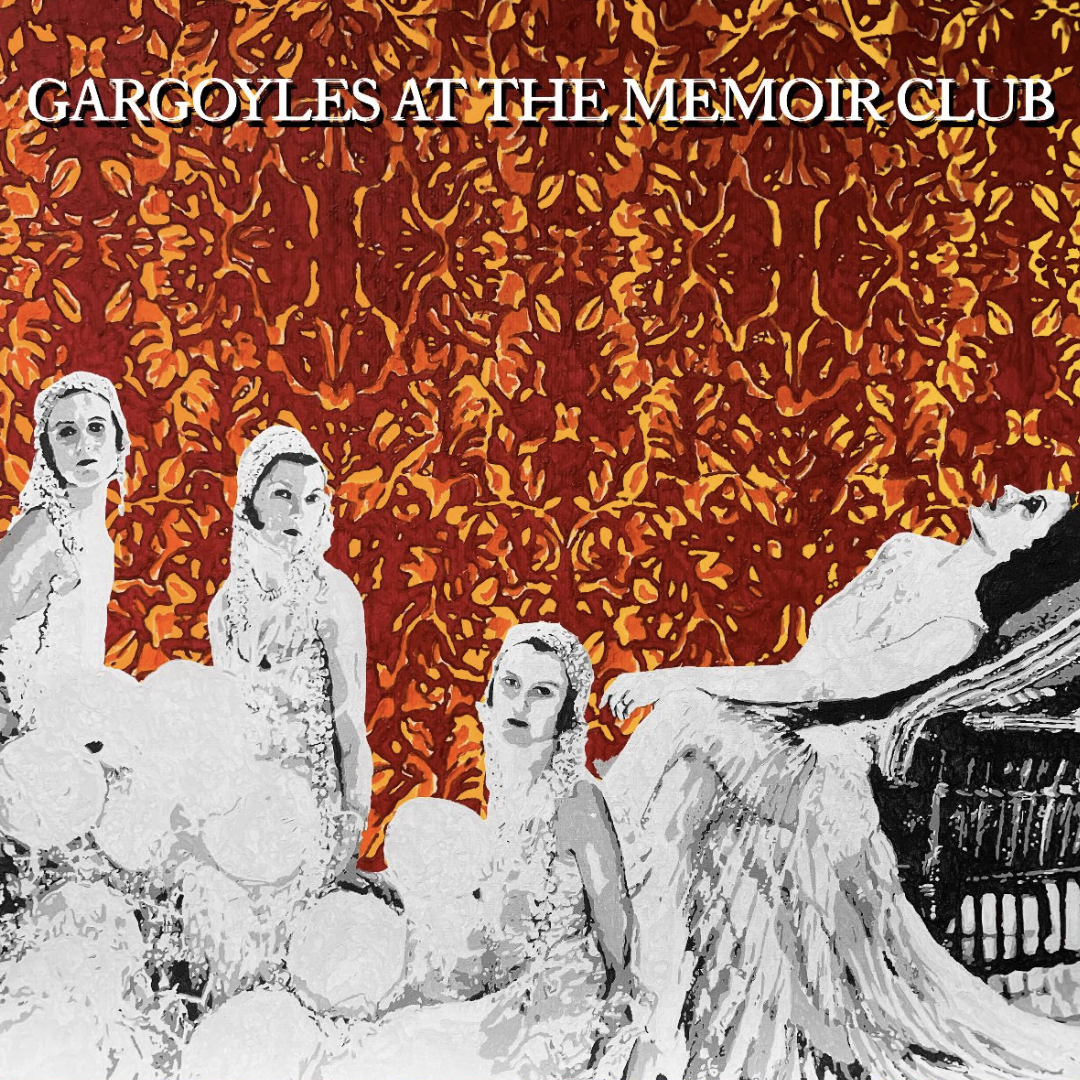
Stuart Turner and Rob Grigg ‘Gargoyles at the Memoir Club’
(Gare du Nord) Released 15th August 2026
Gargoyles At The Memoir Club is what Captain Beefheart might have sounded like if he recorded for Postcard records. Yes, it’s a strange old brew of guitar jangle, garage punk and Bad Seeds like blues madness. It is a musical exorcism, a bobsleigh ride through hell whilst swigging on a bottle of Thunderbird and recanting tales of previous misdemeanours.
Yes, this is a strange old album; an open mic night where Lloyd Cole and Tom Waites duet whilst Nick Cave juggles peanuts trying to attract the attention of the barmaid who really should know better but cannot help but smile at the velvet suited bare chested Australian.
Winter At Sea ‘Hearts’
EP – (A Cheery Wave Records) 28th August 2026
Post Rock atmospheric instrumental beauty. If that is your thing then this could well be just what you want to soundtrack your evening with…well, 20 minutes of it anyway; I suppose you could always put it on repeat and let the waves of emotion keep on covering you with the warmness and emotional stillness that this fine EP provides.
Yes, if you want a relaxing evening and not quite in the mood for Dark Side Of The Moon put this on instead. I have two good reasons for that, one, Dark Side Of The Moon is shit and, two, this isn’t.
Here’s the message bit we hate, but crucially need:
If you’ve enjoyed this selection, the writing, or been led down a rabbit hole into new musical terrains of aural pleasure, and if you able, then you can now show your appreciation by keeping the Monolith Cocktail afloat through the Ko-Fi donation site.
The End of the Month Playlist Revue for May 2026
May 29, 2026
Our Monthly Playlist selection of choice music from the last month. Picked by Dominic Valvona, Matt Oliver & Brian ‘Bordello’ Shea.
The Track list is as follows:
Sub Hop Collective ‘Hundred and One’
Konono No1 ‘Volta’
Sunk Giants ‘Radio Problems’
Party Dozen ‘Special Unit’
Occult Character ‘Anti-Human Hate Machine’
Spirit Level ‘Forest Lagoon’
Khalab & Baba Sissoko ‘Denifurla’
Dumama ‘No Abiding City’
Cocanha ‘Forabanda’
Stik Figa & Heather Grey ‘All Is Fair’
The Allergies ‘Dig It Up’
7X3=21 & Pruven Ft. Masai Bey & Fred Ones ‘Woven Fabric’
Black Milk ‘Crash Test Dummy’
Meiko Kaji ‘Tokyo Nagare Mono’
Farma G & Relense ‘The Circus’
Juga-Naut ‘Scratch The Surface’
Whait/More Eaze/Wendy Eisenberg ‘Suffer Less’
Yazz Ahmed ‘A Moment To Be Free’
J Scienide ‘Stay Tuned’
Von Pea ‘The Goof’
Termanology/Royal Flush/Dru Hoffa ‘Angel Whispers’
Vic Spencer/BlaQ Chidori/J Wade/Aakeem Eshu/Lil Kydd ‘The Becomers’
A-F-R-O ‘The Hangman’
The Bordellos ‘Hop To It Bunny Girl’
Thomas Dollbaum ‘Pulverize’
Kyivite ‘test cylinder’
Neuro…No Neuro ‘Doubting’
Arab Strap ‘You You You’
Opus Kink ‘The Sweet Goodbye’
Double Francoise ‘Allumer’
The Legendary Ten Seconds ‘A Universe That Has No End’
Upupayama ‘Mystic Chords of Memory’
Lunar Bird ‘Sinderesi’
SUO ‘Lightening Strikes’
Here’s the message bit we hate, but crucially need. Help us to keep the forces of AI at bay; to continue bringing you human reactions to the most eclectic spread of releases
If you’ve enjoyed this selection, the writing, or been led down a rabbit hole into new musical terrains of aural pleasure, and if you able, then you can now show your appreciation by keeping the Monolith Cocktail afloat through the Ko-Fi donation site.
The monthly Digest includes a clutch of accumulated short new music reviews, the social inter-generational/eclectic and anniversary albums celebrating playlist, and a piece celebrating the 60th anniversary of Pet Sounds from the Archives.
___/NEW MUSIC IN REVIEW____
The Bordellos ‘Let’s Play Lo-Fi’
(Metal Postcard Records) Released 8th May 2026
Marking our own homework so to speak, regular contributor to the site Brian Shea and his family band The Bordellos have released a new album on the unsuspecting public. Well, I say new, but it is in fact another chance to hear a compilation of older tunes recorded over 26 years, mostly over the course of a drunken Friday night at Ant Shea’s abode.
Almost silently slipped out, unheralded and with absolutely jack-shit in the way of promotion, it’s as if it never happened. A campaign run out of embarrassment, or perhaps in the manner of their lo-fi(ish) credentials, dropped out of the ether without a thought. This compilation sounds like it could have in fact been recorded at any time over the last forty odd years. Pop songs saved from obscurity however, we are grateful for this opportunity to rave about the lost band.
A band that revels in self-sabotage, The Bordellos walk a line between notoriety and truth. But they need to unshackle from the lo fi prison they’ve built for themselves, as many of the aphorisms and self-deprecated songs on this new album are far too good to lay languishing in irrelevance and indifference. They are better than many of the bands they emulate, and a damn sight more witty, true and sharp than the overrated Jesus And Mary Chain, who they sometimes evoke – the buzzy and flange indie tune ‘Sleeptight’ sounds like a much more genuine and earnest version of the Scottish band’s Psychocandy era. Dan Shea’s vocals are a highlight as always, but that’s not to do down Ant and Brian Shea. With the bonus of youth, but just as malcontent, Dan isn’t quite as despondent and dispassionate as his dad and uncle, and recalls the very best of Sarah Records, Postcard, and umpteen great indie labels from the golden period of the C86 phenomenon. In contrast, his older generation X relations sound like John Shuttleworth (“Can I borrow Batman Forever? No, you got to bring it back tomorrow”)of John Cooper Clarke over a backing that despite the buzzes, the low rent apparatus, the chirping at one point of a budgie, and the distortion, could be off a New Order demo or The Sundays. Then again, you can’t not pick up on The Fall vibes; the love of beat groups and the garage music of the 1960s; all filtered through the hazy recollections of a Northern town in England during the 80s and 90s.
Appearing on bass, for at least some of the songs, is good old Gary Storey, who emphasis the band’s pop and post-punk credentials with a twang of Hooky and some C86 inspired lines.
An album filled with declaration to that age old trope of unrequited love, or lost love, or a love that cannot survive the class divides of a grimy life spent at the coalface of modern Britain – which is as Blur correctly pointed out, if in an actual halcyon age compared to now, on their famous LP of the early 90s. In the vape shop, nail salons and chicken takeaways dominate arcades and precents of shitty England, the band find something worth putting to song, as they praise, desire and court a string of both unsuitable and suitably uninterested muses. That and the odd drug addict; those that have fallen to the wayside in an age of despair and high anxiety. ‘Driftwood’ is an ode to the high jinks’ tragedy of Dennis Wilson, spooked by a Manson and heavy bass.
The lyrics make the album as usual. Far too many to quote, they could fill a book of modern toss age poetry with observational dark humour, despondent asides and gripes. But love is never far from the sneering captured lines that perfectly sum up the age in which we are unlucky to be living through. Heartfelt, lovelorn and yearning, you get a sense that the band really means it. And that’s where that truth comes to the forefront.
As I said already, this songbook is way too good to be lost on bandcamp amongst the millions of releases dolled out each day. Or indeed on Spotify, where it will be lucky to reach the proscribed limit to receive any compensation of a thousand plays. If this was released over forty years ago, we’d be speaking about The Bordellos in the same breath as the BMX Bandits and their ilk. As it is, this cult release will probably need every push it can get. Then again, the playfulness of the title, the silly snowman dress up costume that Brian adorns on the cover point towards a confliction of amateurish fucking around and finding the audience and acclaim they deserve: that’s showbiz. I’ve done my bit, the rest is up to you, kind followers/readers.
In The Labyrinth ‘Worlds On Fire’
Released 2nd May 2026
Across Nepalese mountain ranges at the heights of nirvana, then seamlessly blending into the Afghan valleys before taking the troubadour’s journey to Turkey and ending up in a fantastical vision of olde Europe, In The Labyrinth’s latest album collection of past material saved from the vaults and remade anew, of original new compositions and transformed covers takes its Nordic roots on a geographical music tour. From Arabia to Peshawar and Iran; from Tudor England to India, there’s musical absorptions that all fans of prog and psych-rock will be familiar with and various signature stopovers on the hippie trail: a Kabul of a very different era, the holy sanctuaries of Varanasi.
Orbiting around the Swedish version of Mike Oldfield – playing an exhaustive and too long to list assortment of instruments -, Peter Lindahl since the early 90s, but born out of the previous Aladdin’s Lantern in the 1980s, In The Labyrinth opens its doors to a wide range of foils and accomplices. So many people are involved, including former band members and acquaintances, over this album’s span of at least forty years of material refashioned or revived and newly augmented. There’s too many to name individually anyway, with various international musicians and voices – including the ethereal, soothing, near spirit-like backing vocals and harmonies of Helena Selander and Natalie Knutsen. One such mirror-y Krishna-vibe atmospheric soundtrack of replenished waters and Yeti era Amon Düül II-esque, ‘Varanasi Sunrise’, is recalled back from the late 90s, just before band member and drummer Feri (Fereidoun Nadimi) returned back to his native Iran.
Pulled through Lewis Carroll’s mirror both forwards and backwards, there’s a spectrum of psychedelic influences at play on this fantasy of tumultuous ills and more dream-like and healthy meditations.
The album opens with a revival of the Catholic litany, as made so cultishly famous by Axelrod’s Electric Prunes project on the Mass In F Minor LP of ’67. Here it’s given an almost pastoral feel that’s somewhere between a Medieval Yes, Clannad and The Far East Family Band sunning it in the Byzantine Court. ‘Kabul’ is very much of its inspiration but reminded me of that electric-saz vamped up Turkish-Anatolian configuration of Baba Zula, whilst the psychedelic posed ‘Disillusion’ – partly a new arrangement of a song from the turn of the 21st century about losing one’s self-esteem during a relationship gone sour – has a touch of Head era Monkees, Van Der Graaf Generator and the Strawberry Alarm Clock. One of the album’s covers/interpretations, ‘Golden Hair’ reimagines the Madcap Laughs Syd Barret in Rapunzel’s Indian acid-fairy tale tower, and the brassy sitar resonated ‘Sagarmatha’ – initially released back in ’99, the song was first featured on the Floralia Volume 3 compilation by Wot 4 Records – once more talks to Yogi on the ADII and Aphrodite’s Child, projecting in a trance-like state to mystical India.
Just when you think you may have the measure of this group, along comes the strange bass heavy and phaser, flange and vapour trip ‘The Endless City’; a mix of Steve Hillage, post-punk, and Hawkwind, this track is, I believe, an amalgamation of the 90s tracks ‘The Black Plague’ and ‘Lovecraft’ originally made under the Lovecraft moniker. The sword and sorcery of ‘Nightriders’ reminded me in part of Jefferson Airplane, whilst the hallucinogenic Alice In Wonderland-ish ‘The Mirror’ somehow reminded me of Bryan Ferry, but partnering up with Steve Hackett and Floyd. There’s also takes on the Swedish prog and rock scene of the 70s with versions of tracks based on or inspired by Gregg Fitzpatrick (the American bred musician slipped the Vietnam War ending up in India, before navigating back west to first Finland than his eventual home of Sweden, where he performed under various Nordic pseudonyms to escape detection, but managed to form many bands and have an eventful career) and Kebnekajse. The former, and the album’s title piece, takes the maverick American’s plaint and Medieval-like folkish lament and adds a mystifying layer of the Indian subcontinent, the Celtic and the environments of a bustling street. The later reprises a traditional Swedish folk song made famous by the “foremost” Swedish folk-rock band, amping up the fuzz and Queen-ish rock postures.
Each song has a story you could say. Each one a chapter in a particular period of the band and its offshoot’s career arcs. But all fit together rather well on this fantastical new age acid trip of evergreen troubadour folkery, prog, the regal, the enchanted and worldly musical.
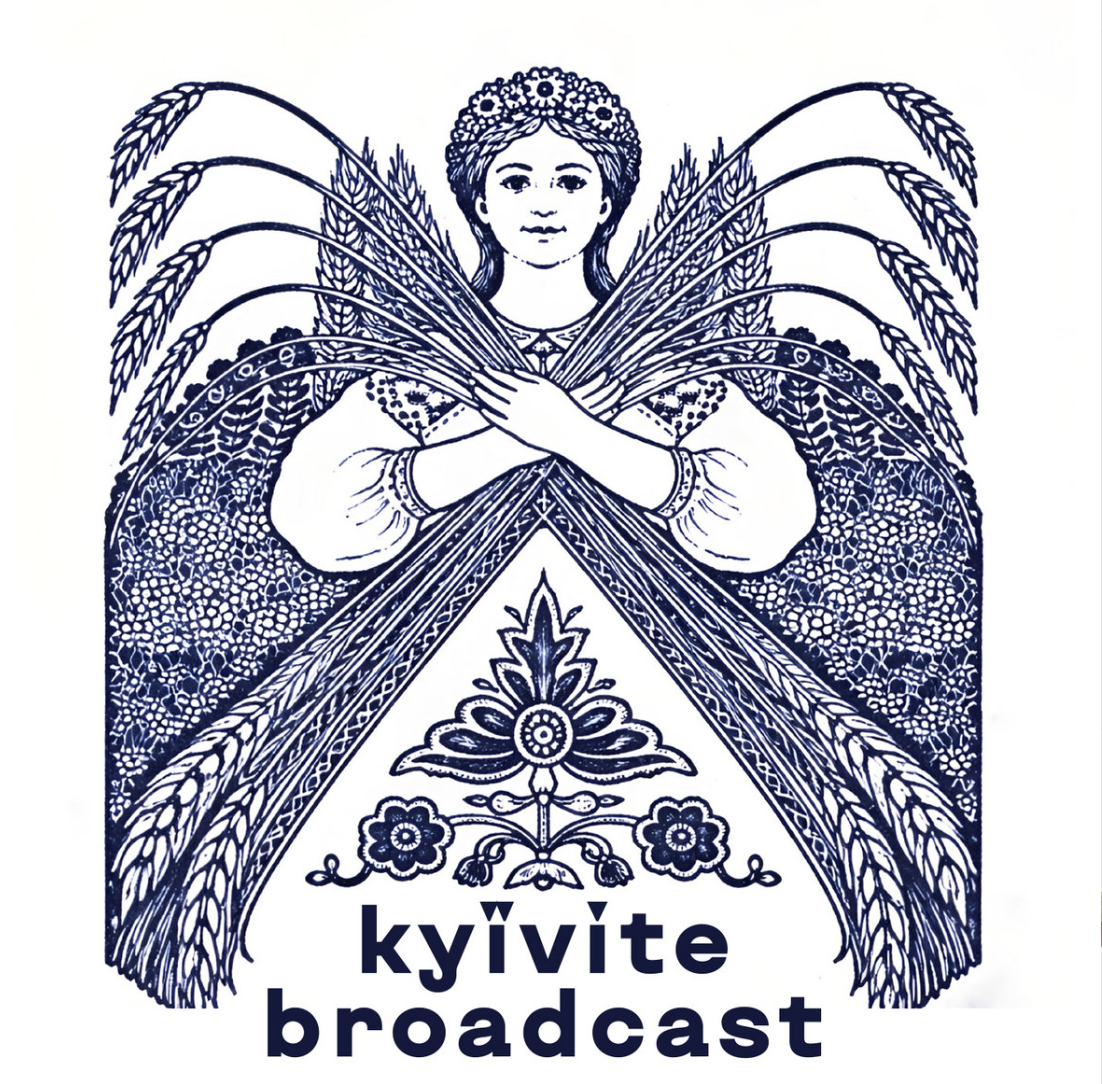
Kyïvite ‘Broadcast’
(Staalplaat) Released 24th April 2026
As Putin’s increasingly unhinged invasion of Ukraine continues, now stretching into yet another year – a war period so long now that volumes and untold books about it have been published, but been found wanton or made redundant by the escalations and constant changing landscape of events both in Europe and outside it –, the survival of the country’s culture, its music, hasn’t just been left to those fighting on the extensive frontlines but its army of archivists, its radio stations still broadcasting under the frightening threat of drone and missile attacks and its many independent labels.
Despite it all, Putin’s previous cold steely determination and tyrannical unapologetic resolution has taken a battering. His war is all but check-mated, stalled and in fact losing ground. As untold thousands return to home from the front, with limbs missing, psychologically damaged, Russia’s people have seen the Vietnam effect– that and the hundreds of thousands of coffins – and realised the implications and realities of this unjust invasion. And as yet another peace deal, or at least break in the ongoing destruction is tabled, it will take some convincing in making the Ukraine give up any land or concessions, just as the tide has turned and they look to have made significant ground up and penetrated and set fear into the minds of Russia’s ruling regime.
One such conservationist of the country’s musical legacy is the Kyïvite, a Kyïv-based ambient-radio experimental music project that merges electronics with Ukrainian folk, archival recordings and minimalist sound design. Embodying erasure, the loss and way in which we remember fragments and scrapes of the past, the people behind this latest release recall and reprise filtered and deliberately made gauzier and obscured archival material from the country’s renowned Transcarpathian Folk Choir.
Led for a time between the years of 1954 and 1969 by the Kyïv Conservatory hot-housed conductor, composer and vocalist Mykkhailo Krechko, the professional artistic collective and recognized folk choir was founded in the Ukrainian city of Uzhgorod in 1945. Sitting by the Uzh River in Western Ukraine, the city is close to the country’s border with both Hungary and Slovakia; famous for its Medieval castle, its holy places and diverse cross-border mix of cuisines. Enduring the Soviet years, a range of the choir’s beatified and ethereal performances have had new life breathed back into them at a time when the country, suffering unimaginably, is working to save its independency, its spiritual nationalist identity and its very survival against an Empire bent on domination if not erasure of Ukraine and its history. Broadcast, then, isn’t just a creative, artistic exercise but an act of preservation.
Connecting old recordings with a contemporary interference of minimalist techno, broken beats, various sound effects of reverberation and the spectre of war, Kyïvite work a Fortean-like radio set to invoke ghostly visions. A hauntology of a kind, but one that churns, recycles and loops some truly beautifully sung and impressively voiced evocations of remembrance, loss, historical record and pastoral romantism. Holding on to that culture, each track merges its timelines whilst being submerged under a constant soundtrack of wax cylinder-like crackles, record scratches, static, retuning and a signalled calculus of buzzes and oscillations. Some titles prompt more elegiac and serious matters, whilst others reference traditional dances (track eight, ‘dudochka (pipe) dance’, is, I believe, a fast-paced Ukrainian folk dance performed in pairs, lines or solo; moving with lightness and flow) and draw on the country’s diverse historical peoples (a reference to the famed Cossacks of Ukraine; one strand of which can be rooted back to the famous western Zaporizhia Cossacks who were centred near the Dnieper River).
As with the terrain and focus there’s many an elegiac example to be found on this album: ‘ballad of a soldier’, ‘ballad of a widow’, ‘ballad of a Cossack’s death’. But all are as supernatural as they are evocative and near esoteric. Elsewhere there’s spells of what can only be described as dub, and other times, when the choirs are less obfuscated, some passages of the stately, the gospel and filmic.
The machine against the naturalistic vocals of a different time adds up to an experimental broadcast steeped in historical documentation, lament and the beautiful. Time is drawn back and forth in an alternative dimension, as Soviet era Ukraine, very much under the cosh and finding its former independence and sperate culture erased for that of tyrannical Communist ideals, connects with a country once more threatened with the very same erasure. At the time of writing this however, the tide has turned in Ukraine’s favour. Putin looks far less stable, and cracks are emerging. Let’s hope this conflict does end soon in Ukraine’s favour, and that we really don’t have to foresee the eradication of its culture and rich musical heritage.
Neuro…No Neuro ‘Memloss’
(Audiobulb) Released 2nd May 2026
Having had to face a debilitation of my cognitive capabilities, of memory erasure and problems with speech since being hit out of nowhere by a stroke this year (still waiting, still being tested to find out exactly why) I can sympathise and relate to the ongoing work of the Tucson, Arizona synthesist and electronic artist Kirk Markarian. Coming to terms with, or rather as a result of increasingly noticing that his own speech and memory has become inconsistent, Markarian (under his micro-inspired cerebral Neuro…No Neuro alias) finds that everything from articulating his emotions, thoughts and instructions to remembering steps in his various daily tasks are disappearing into the ether and fog. Those aren’t the words he’s using, but I get the sense that, and especially as demonstrated by the small sounds on this latest album, his grip on holding on to such memories is slowly being tested, and that his grasp on the routine tasks is being eroded.
To compensate, or to prompt and kick-start the neurological charges, Markarian has linked together the various detritus and fragments of life through producing a soundtrack of softened bulb-shaped notes, musical microbes and atoms, ambient waves and spheres and the tubular. If it was a colour (as demonstrated by the artwork) it would be a washed-out rose red or an enervated pink.
Using titles as prompts and reference points, a new language is created that hopes to remind or jog a memory in decline. Sometimes almost like illusions or mirages, and at other times like more saddened passages of loss, each track plays with the building blocks a little differently; from searching spheres of pretty notation bouncing or bobbling over vapours, to the glassy, the sticky, the licked and pinged. Sometimes there’s points in which it feels the artist has remembered something only for it to then fade away; a smack of this, a gamelan like pattern suddenly of metallic percussion, and a spacy fur of remembrance.
Tiny steps on the road to recovery of memories and the cognitive, Markarian’s latest work of erasure and recollective gravitas is suddenly more serious; a blueprint to sonically cataloguing and hanging on to what’s been lost.
___/THE SOCIAL PLAYLIST VOLUME 106
The Social Playlist is an accumulation of music I love and want to share; tracks from my various DJ sets and residencies over the years; and both selected cuts from those artists, luminaries we’ve lost and those albums celebrating anniversaries each month.
The series has been running for over a decade or more now. Volume 106 is the latest eclectic and generational spanning playlist come radio show from me – the perfect radio show in fact, devoid of chatter, interruptions and inane self-promotion.
Manic Street Preachers ‘Elvis Impersonator: Blackpool Pier’ – Taken from Everything Must Go album, released this month 30 years ago.
Super Fury Animals ‘Frisbee’ – Taken from the Fuzzy Logic album, released this month 30 years ago.
NOV3L ‘To Whom It May Concern’ – angular no wave funk dance from the Canadian collective.
High Pass Filter ‘Eat System’ – Melbourne electro-dub group, from the mid 90s to the early 2000s; once supported the likes of Tortoise, Fugazi and the Beasties.
Hamburger All-Stars‘One Million Hamburgers’ – Post-punk dub and funk no wave band from the West London squat scene of the early 80s. A shifting lineup as such that featured at any one-time members of Alternative TV, Blue Midnight, The Impossible Dreamers and The Pretenders.
Sleeper ‘Dress Like Your Mother’ – Taken from The It Girl album, released this month 30 years ago.
Dwi ‘Reanimate’ – just love this from the alter ego of Dwight Abell, the Vancouver-based multi-instrumentalist and bassist with The Zolas A newish track.
Nine Days Wonder ‘Hovercraft Queen’ – Sax-honked and squeezed, cow bell rock from the German group.
The Beach Boys ‘You Still Believe In Me (Mono)’ – Taken from the Pet Sounds 60th Deluxe anniversary edition; see also my piece on Pet Sounds in the Archives spot.
Beverly Martin ‘Get To The One I Want To’ – paying homage this month to the late folk icon (left somewhat in the shade by her famous husband), who died earlier this month.
The RDF ‘He Is Coming’ – An abbreviation of the band members, “Russ, Fred, and Dan”, a bluegrass down country Christian outfit.
The Difference Machine ‘Orange Lazarus’ – Futuristic Cosmic dystopian hip-hop from the counterculture Atlanta collective and friends.
Run-D.M.C. ‘Proud To Be Black’ – Taken from the Raising Hell album, released forty years ago this month.
Geeker-Natsumi ‘Advertiser’ – New tune from the Japanese maverick of odd pop and bitcrush game machine electronica shunts.
The Beach Boys ‘I Know There’s An Answer (Stack-O-Vocals)’ – Taken from the Pet Sounds 60th Deluxe anniversary edition; see also my piece on Pet Sounds in the Archives spot.
Keith Jarrett ‘Solara March (Dedicated To Pablo Casals And The Sun)’ – Originally released this month, fifty years ago.
Delired Cameleon Family ‘Le bouef’ – prog-electronica peregrinations from the obscurest 1970s French band.
Beverly Martin ‘Reckless Jane’ – paying homage this month to the late folk icon, who passed away earlier this month.
Nick DeCaro And Orchestra ‘Caroline, No’ – a cover version tribute this month, paying tribute to one of the most complete and perfect album’s ever made: Pet Sounds.
Susan Alcorn ‘Mercedes Sosa’ – new spiritualism suite from the iconic pedal steel guitarist, bandleader, improviser and composer.
The Jerry Hahn Brotherhood ‘Early Bird Café’ – One from the American jazz guitarist of repute and notable sessions star’s 1970 country-rock ensemble.
Electric Sandwich ‘China’ – Very much on topic this month, a hand-drum electrical rock jam from the Krautrock era group.
Pip Pyle ‘Hannello’ – Prog-jazz from the journeyman drummer and Canterbury scenester.
The Beach Boys ‘I Just Wasn’t Made For These Times (Stack-O-Vocals)’ – Taken from the Pet Sounds 60th Deluxe anniversary edition; see also my piece on Pet Sounds in the Archives spot.
Vincent Over The Sink ‘Number Theory’ – psychedelic mirage from the Australian duo.
The Tryp ‘I Dream In Black And White’ – British revivalist psych band.
Sonic Youth ‘Green Light’ – Taken from the Evol album, released forty years ago this month.
Scott Walker ‘Psoriatic’ – Taken From The Drift album, released 20 years ago this month.
The Butthole Surfers ‘Space’ – Taken from the Electriclarryland album, released forty years ago this year.
John Saturley and The Slumber Party ‘Midnight Deathbed’ – North Carolina outfit I believe, with scant information nor any real bio. Kind of spacy Human League meets Numan and Hercules & The Love Affair.
___/ARCHIVES______
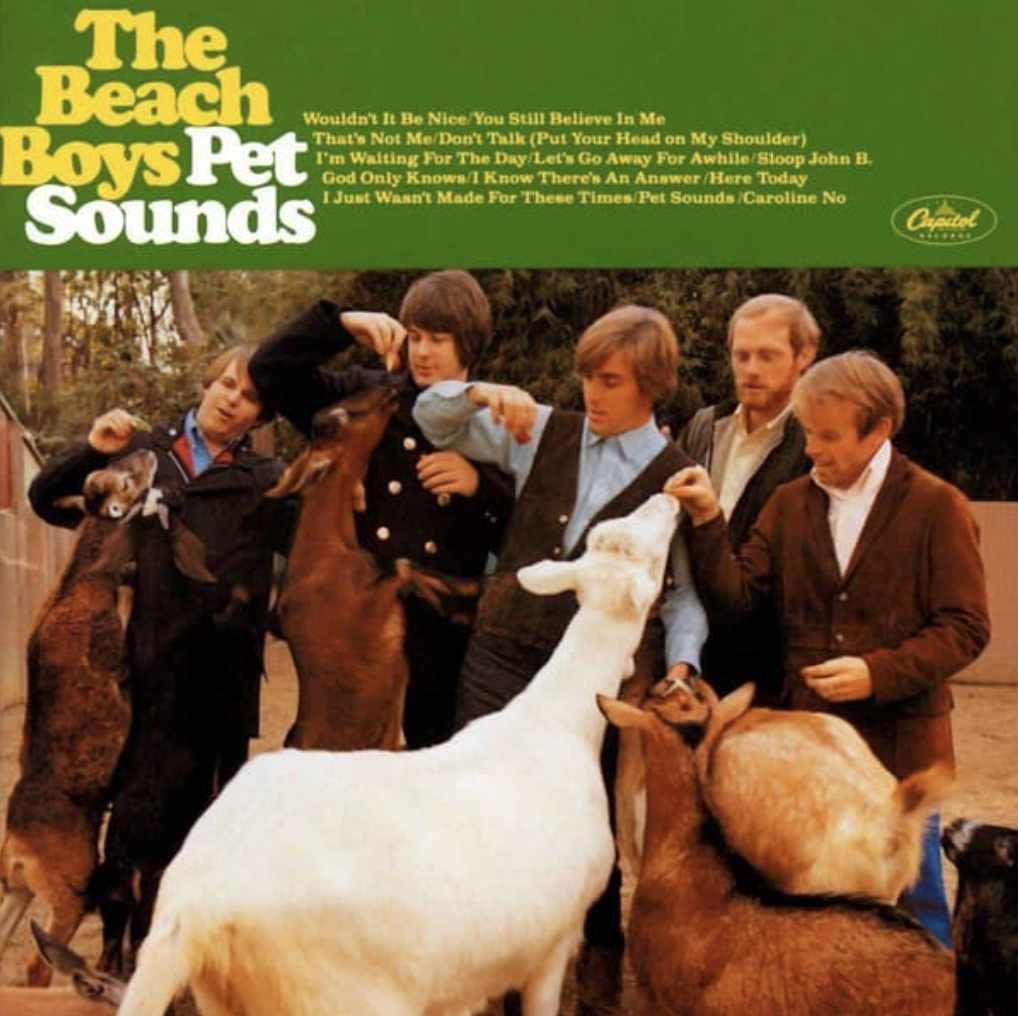
To coincide with the 60th anniversary of Pet Sounds (possibly one of the most complete and greatest albums in the rock/pop cannons), another chance (yet again, having already reprised it after the death of Brian Wilson) to read my review and purview of the 50th anniversary celebrations and tour that stopped off in Glasgow, back in 2016.
Brian Wilson presents Pet Sounds 50th Anniversary Celebrations
Friday 27th May 2016 at the Glasgow Royal Concert Hall
In a soft power, musical arms race with The Beatles, Brian Wilson more or less now mastering the known limits of the studio, was nudged towards ever more ambitious levels of creativity. As the old adage, music history folklore if you like, goes it was The Beatles Rubber Soul that finally did it for Brian. The retort to this foil would not only be The Beach Boys first masterpiece, but one of pop and rock music’s most enduring triumphs, Pet Sounds. No longer happy with the California high school, deuce coupe cruising, beach party spirit that had so far made the group world famous, cast even further adrift, introspective and all but retired from playing live with the his brothers and comrades, Brian was moving on from the fancy-free and footloose sound of the 45s that had always guaranteed a top ten place in the Billboard charts for something more…well, grown up. Voicing a growing anxiety – or the growing pains – of youth, Brian would compose the sound of young adulthood. As the world came to terms with the idea of the ‘teenager’, Brian began encompassing and articulating a new uneasy transition.
As much about the times as about the heartache and pains of being pure of heart, Pet Sounds marked a growing resentment towards the previous generation. At the beginning of a revolutionary change in attitudes, but a year before the ‘free love’ hippie idealism that brought in the psychedelic epoch, these former golden tanned beachcombers were breaking from their parent’s traditions and rules to set their own course: a life mapped out, from education to career and marriage. But at the very heart of all Brian’s work, even today, was a sense of innocence. An innocence lost as the lovesick but married Brian now in his mid-twenties, was coming to terms with the anxieties of that adulthood, and his growing mental anguish. Undiagnosed for years, left at the mercy of countless well-wishers and confidence tricksters, quacks and pseudo-therapists, Brian’s meticulous obsessive production of Pet Sounds and its subsequent, but not satisfactorily finished until 40 years later, magnum opus SMiLE, tipped him over the edge.
Pet Sounds would also mark a shift in lyricism, with Brian collaborating with his friend the lyricist and copywriter Tony Asher. A task of reification, Asher would take the often abstract and difficult expressions that roamed around inside the troubled mind and put them into song. Not exactly the most unified of atmospheres, Cousin Mike Love a constant daddy-o stuck-in-the-mud character, ready to pour a cold bucket of egotistic sick over anything that he felt would compromise or trouble the calm waters of The Beach Boys, so far, winning formula. To be fair, Love would be right to question this new shift towards melancholic, almost philosophical anguish. Asher at that time was but a burgeoning talent with little to back up his credibility as a top pop songwriter. Replacing previous writers and solid contributors with an unproven lyricist would however prove to be genius decision. But the success of the album was slow. Its renaissance and rebirth as one of the greatest albums of the twentieth century was down to the audiences overseas. The change in direction had unsettled the market, as America baulked at this sadder, more cerebral tone. Yet, the UK loved it, buying it in droves and sending it to the number 2 spot in the charts – compare that with its 106 placing in the Billboard. Pet Sounds could have been a disaster, but it was saved, becoming a cult, an iconic masterpiece. And though it would take a while to pick up the desirable sales, its legacy grew and grew years after its original release.
Arriving almost in tandem The Beatles Revolver was released just a couple of months later. Brian’s answer: SMiLE. If Pet Sounds had not only threatened but also sent Brian into a funk, then this grand American musical tour through the ages, from Plymouth Rock to the shores of the Spanish Peninsula, would all but consume and nearly destroy him. So ambitious was the vision that despite the near godlike genius of his assiduous sessions ensemble The Wrecking Crew, the social, political and historically woven rich tapestry lyrics of new songwriting partner Van Dyke Parks, and his own production prowess, the project stalled. Numerous mixes, snippets, vignettes and even completed songs made it onto various albums and compilations over the decades, including the enervated and rushed out – to appease and bring in some much-needed revenue – Smiley Smile. It would take decades for SMiLE to be eventually completed, albeit (sadly and for obvious reasons) without his brothers Dennis and Carl’s near ethereal soulful compassionate voices, and missing any input from Mike Love – now more or less carving the Beach Boys brand up, sporting it like a trophy as he has carte blanche and ownership of the name when touring with his own cabaret version of the group’s back catalogue. Brian did however manage, after spending the longest amount of time and money in recording history on a single, to release the perfectly epic pop rhapsody ‘Good Vibrations’.
Documented, quite favourably and sympathetically, by the Love & Mercy movie, Brian’s wilderness years lasted throughout the 80s and into the 90s, before the most accomplished of L.A. bands and Beach Boy fans The Wondermints helped lure Brian back on the road, performing a Pet Sounds extravaganza in 2000. Just four years later the band would join Brian in the studio to finish that nigh mystical, greatest album there never was, SMiLE, before taking it out on the road. Following in 2011 the eventual hidden away, locked in some fabled vaults, SMiLE Sessions of original material was finally released to the public.
A near renaissance, a scarred and troubled but blooming Brian Wilson is back once again on the road. This time he celebrates the 50th anniversary of Pet Sounds, arriving in my new hometown of Glasgow on a nationwide tour. Billed as an ‘anniversary celebration’ – the final performance of the iconic album in its entirety – tonight’s performance is a generous one. Split into two performances of greatest hits and Pet Sounds, with an encore of good time classics, Brian was backed by members of the Wondermints and flanked by special guests, Al Jardine and honouree Beach Boy Blondie Chaplin: a set up that has been repeated on many occasions.
As a steady presence for the vulnerable Brian, Al was on hand to soften the odd tremors of quivered uncertainty. But who was on hand to back up Al? Well as it happens his son Matt Jardine, proving himself the most apt of Beach Boy scions, was there to to aid his old man and Brian with the most adroit and sweetest of falsetto voices. A counterpoint to the now – and for good reason – limited vocal range of Brian, Matt took on the high notes with aplomb and even performed lead on one of the evenings early highlights, ‘Don’t Worry Baby’. He would play the role of a younger Brian during the entirety of the Pet Sounds album suite, almost seamlessly, taking on each alternating verse. However, and it seems almost too disingenuous to point out, there were a few wobbles and miscues throughout that just couldn’t be patched over. Yet we all willed Brian on, and when he took lead on the most diaphanous of love declarations, ‘God Only Knows’, the entire audience stood to their feet in adulated applause – the first of many rapturous ovations that night.
Directed and conducted by Paul ‘Von’ Mertens the entire ensemble began the evening with the heavenly choral warm-up ‘Our Prayer’; featured on 20/20 but originally the lead-in to the album version of SMiLE’s grand trans-American tour ‘Heroes And Villains’, which followed. We were then treated to a litany of favourites from the bobby sox high school daze back catalogue of hits, including a swinging, swayed medley of ‘California Girls’, ‘I Get Around’ and ‘Little Deuce Coupe’. Handing over the spotlight, Al performed centre stage with renditions of ‘Wake The World’, ‘Add Some Music To Your Day’ and ‘Cotton Fields’ – all songs plucked from the Brian breakdown period, when the rest of the Band were prompted to take over the creative reins. As lithe and energetic as ever, former Flame and Beach Boy band member (on tour and in the studio during the early 70s) Blondie Chaplin sprouted onto the stage to add some light-hearted theatrics and rock’n’roll vigour. The much-accomplished Durban guitar maestro, looking more and more like a cross between Jagger and Richards (all that time he spent touring with the Stones in the late 90s has worn off on him), launched into a strutting version of ‘Wild Honey’. Expanded from its soulful howled original setting, Chaplin went into bohemian guitar solo overdrive; showboating across the front of the stage and playing to the audience, who lapped it up. From The Beach Boys’ troubled but most brilliant 1973 album Holland, Chaplin picked up the ocean current waltz ‘Sail On Sailor’. The original vocalist on that recording, he returns to it with carefree élan, adding a wild guitar solo to the end, which sends Brian off into the wings in playful mock exasperation.
Back out for act two, the band minus Chaplin for now, begin the reverent Pet Sounds album. Largely enduring because it encapsulated a particular age and time in Brian’s genius, but mostly for capturing the love tribulations and torments of young adulthood in the most perfect pop songs, the album still chimes deeply with audiences fifty years later. Intricate and multi-layered but never ever laboured or strained – witness the Bond-esque Tropicana lounge instrumental suite title track -, each purposely-poised ballad, paean and tryst says all it needs to in less than two minutes. The rousing ‘Wouldn’t It Be Nice’, shared vocally by the Jardines and Brian, opens proceedings of course, followed by a gentler, more serene ‘You Still Believe In Me’. Highlights from the album set included an Al led version of the sea shanty in the manner of a doo wop Ivy League bruiser, with a reference to a particular paranoia plunged bad acid trip thrown in, ‘Sloop John B’, and flipping over the B-side, a poignant and encouraged Brian led ‘Caroline, No’.
The encore promised a “fun, fun, fun” package of hits. But first the band introductions, each band member receiving a musical signature tune as they came back out onto the stage after the interval. It was then straight into a full cast version of ‘Good Vibrations’, including the gesticulating tambourine wielding Chaplin who turned his percussive role into an art form. Rewinding back through the songbook, we were treated to the sing-along classics ‘Help Me Rhonda’, ‘Barbara Ann’, ‘Surfin USA’ and ‘Fun Fun Fun’. By now the audience were up and out of their seats, dancing where they could in the face of the po-faced security and attendants. From our balcony seats looking down on the main auditorium we witnessed hundreds swaying and weaving in almost perfect timing: the atmosphere couldn’t have been better. On a poignant, perhaps paused note Brian finished the evening with a version of the song that spawned the title of the recent movie, Love & Mercy. Written in more recent times, a reminder of the anxieties and anguish that once crippled Brian, the song’s central tenet is a perfect theme to finish on: a great sentiment for the audience to carry with them as they head home into the night. A joy to witness, the Pet Sounds legacy is in safe hands, especially here in Glasgow; a city twinned with Big Sur for one night only. Simply magical.
Here’s the message bit we hate, but crucially need:
If you’ve enjoyed this selection, the writing, or been led down a rabbit hole into new musical terrains of aural pleasure, and if you able, then you can now show your appreciation by keeping the Monolith Cocktail afloat through the Ko-Fi donation site.
The Digest for January 2026: New Music/The Social Playlist
January 16, 2026
The monthly Digest includes a clutch of accumulated short new music reviews and the social inter-generational/eclectic and anniversary albums celebrating playlist.
___THE NEW (All those latest & upcoming releases in brief) ___
The Bordellos ‘Who Do you think You Are? Paul McCartney?’
Single – (Metal Postcard Records) 7th January 2025
More The Rutles’ Stig than The Beatles’ McCartney, the latest self-depreciated, no-fi buzzing guitar string strummed piece of “silliness” from The Bordellos family (that’s Brian Shea and his brother Ant, and Brian’s son Dan) pays a handsome tomfoolery homage to good ol’ Paul.
The Bordellos were behind Half Man Half Biscuit and the Cleaners From Venus in the dole queue of the 1980s; powered by aphorism, a ridicule of the current industry, and a litany of muthafuckers from across the golden age of rock ‘n’ roll, punk and post-punk, psych and garage. Brian will be no stranger to followers of the Monolith Cocktail, having regaled us with his reviews over the years, and of course gracing these pages as a solo performer: think John Shuttleworth meets Sparklehorse.
This latest single to be released by the Metal Postcard Records hub was influenced (I quote) “by [Brian’s] love of Paul McCartney and memories of walking up to Dead Fly Rehearsal rooms in the 80’s with my guitar and every time an old man in his garden would shout “Who Do You Think You Are? Paul McCartney”. As I walked past…it never got old for both him and me…I was tempted occasionally to buy a gun and shoot him and shout who do you think you are? John Lennon!”
If skiffle-indie-punk was a thing, then here it is in all its rudimental, near distorted jangled and sprung glory. It actually sounds less Paul and more like a sarky Lennon…that and a touch of Frank Sidebottom. No one quite manages to summarise a feeling, an era, a memory like The Bordellos, nor sound so brilliantly shambolic and devoid of even the rubber bands to replace the long loosened/slackened and fucked bands in their Tascam 4-track recorder. Off to a fine rambling start in 2026.
Greg Stasiw ‘Guesswork’
Album – (Hidden Harmony Recordings) 2nd February 2026
Greg Stasiw could quite rightly be called a polymath with a worldly scope of influences, having travelled and spent time in New York, Tokyo, Toronto, Paris, Boston, and Bratislava. Home, I believe, is New England on America’s Northeastern edge. The CV includes the occupations of experimental musician, visual artist and writer, but also include the study of anthropology, animation and illustration. Channelling all that into a musical sonic practice and the results are less happenstance than that title might suggest.
Guesswork was actually intended as a collaboration, a response to a visual stimulus created by the artist Phillipe Shewchenk. For one reason or another it was shelved, but Stasiw decided to continue experimenting and formulating a ponderous biomorphic set of ideas relating to a range of subjects, from plumbing systems for plants, to real locations and adjective prompts; many of which seem to point to nature, geography and the weather.
Ending up as Stasiw’s debut album, this amorphous blending of vignettes, studies, semi-improvised experiments sounds like a field trip conducted by Walter Smetek, Nicolas Gaunin and Hiroshi Yoshimura. It’s both recognisably trudging through the lush, the humid and exotic environments of Earth, yet simultaneously otherworldly and near sci-fi. To label it ambient would be a mistake, but minimalist all the same with its airs and the skying sound-scaping, the synth effects of kosmische and the new age combined with Harold Budd and his like.
Real sounds, like the bird life under a rich canopy, mix with percussive tools like a pestle and mortar, the knocks of heavy objects, the drawing of chains and desert sonar-like signals. A shuddery and often lovely reflective piano can be heard alongside a church-like organ producing the most melodic of paused moments. Thrusting gleams of light on the horizon; tunnelled chutes to new worlds; windy tundra’s; playful landscapes of bulb-like shaped notes; Stasiw magics up a stimulating, often pretty and with a sonorous depth, soundscape of possibilities and artistic mystery.
Tachube ‘Mincminc’ (Inverted Spectrum Records/PMGJazz)
Album – Released 4th January 2026
An international combination of band members and album facilitators/labels makes for a truly ambiguous and amorphous experiment with the latest moody and wild post-jazz exploration from the improvisational trio of Tachube. Based in the Serbian city of Novi Sad, a culmination of various musical strands and influences brings together Saint Petersburg electroacoustic/noise musician and founder of the Intonema label Ilia Belorukov (who performs on both the alto sax and rudimental, playful fluteophone), plus two active members of the Novi Sad free and ambient jazz and psychedelic dub scenes, Marko Čurčić on effects pedals and electric bass, and Nemanja Tasić on a minimised drum kit.
Their third collaborative release, platformed in conjunction with the independent boutique label and booking agency that spans in Hungary, Serbia and Turkey, Inverted Spectrum Records and the Macedonian label PMGJazz, Mincminc sounds like Anthony Braxton, Andy Haas and Sam Rivers creeping, prowling and consumed on a mysterious plain with Krononaut. It’s a combination of the improvised Polish and American freeform jazz schools, but also an emotional fit and squeeze of mythology, the darkness and the arid; enveloped as it all is by meta and the depth of the trio’s expanded spheres of influence and skills.
Incipient stirrings and jangles create the right mystique, with blows and the driest of alto expressions, quivered and shivered and shaved cymbals, busy undulated and descending bass runs and the knocks and mulch sounds of hidden sources building a serial and abstract atmosphere that vaguely invokes the Balkans and its geographical history, psychogeography and mystery. Something different in the jazz field; an expansion of ideas and moods and the extemporised.
Roudi Vagou & Läuten der Seele ‘Taghelle Nacht’
Album – (Quindi) 6th February 2026
Once more stepping out behind their aliases, the collaborative union of German artists Matthias Kremsreiter and Christian Schoppik (respectfully reimagined as Roudi Vagou and Läuten der Seele) transduce and manipulate ripples in time to invoke both blissfully dreamy and more mysteriously haunting sonic and musical ideas of nostalgia, German nationalism and geography.
Drawing upon their personal connections, their relationship to the lands and the city that moulded and influenced them both, this latest union could be filed under the hauntology label – a very good label as it happens, one that perfectly, if overused and misdirected on occasions, fits this interdimensional album of filmic score passages, vignettes and looped hallucinations. For Taghelle Nacht captures the “day-bright night” character of a simultaneously pastoral Heimatfilm era vision of German cinema, of the surreal, of fairytale and mirages whilst providing a suitably ghostly and occultist atmosphere.
It’s as if Roedelius and Moebius, or even Popol Vuh, fed the movie scores of Hans J. Salter, Philip Martell, Harry Robinson and Ronald Stein into a German time machine. Old matinee and classical suites, songs of the romanticised, the near ethereal coos of apparition sirens and angels, a fairground Bavarian Wurlitzer, the call of an esoteric nature (the field recordings of trampled walks across the land, the birds in the trees), and the sound of woodwind and brass are looped or obfuscated by the sounds of hidden whirly, unoiled sound sources, of Fortean machines and valves, folksy horror soundtracks, the concertinaed and bellowed and surface noise of old wax cylinders. Melodies and the wistful embrace of that old age are embraced and then somehow made more unreal and otherworldly as if transmitted through a séance or played on a possessed record player from an earlier age. And then again, you can pick out hints of Belbury Poly and their ilk, Martin Denny and Drew Mulholland across a haunting backdrop stepped in historical values, horrors and the mystical.
Charles ‘Poppy Bob’ Walker ‘Double-Wide’
Album – (Castle Dome Records) 10th February 2026
Outsider art from the 1980s, the left behind recordings of the fabled Charles ‘Poppy Bob’ Walker have already filled one such album of haunted imaginings, of mirages and dusty Western peregrinations. Released back in 2024, the Dirt Bike Vacation collection platformed a near secret archive of desert renderings, of loosened and ambient-esque country sketches. It reads however like one of those concocted projects, the alias of a very much still-breathing silent partner hiding behind anonymity. But reassuringly, this “normal guy”, who worked hard, kept some friends, though never married or had kids, liked nothing more than to drive off on various recording adventures in his old, yellow Datsun pickup.
The remembrance of an unassuming outsider, articulating or washing or crafting or letting his inner thoughts and observations and meditations of places in and around his Yuma, Arizona home ghostly emit through the lo fi amplified strings of his Martin D-28 guitar, onto his trusty and rudimental Tascam 4-track recorder. And as such an unassuming amateur working in the field, Walker’s music has, refreshingly, no one to please, no one to serve other than its creator’s own vision and perhaps improvised musings and contouring’s of the landscape, the thoughts and reification of mood and place.
At one turn taking on the mantle of a hidden Ry Coder soundtrack, or indeed invoking certain passages and refrains from Dylan’s Pat Garrett and Billy the Kid soundtrack, this latest collection’s controlled, mediated and shortened cinematic qualities build towards an alternative country-waned and mirage-like score. From incorporating a rustic banjo to the electrified vapours and more concrete panning and splayed strums and strikes of his guitar and the chorus of hidden sounds (from the railroad barrier’s bell-rung-like signal to the occasional use of reverberated lo fi synthetic drums, the esoteric rattle snake shaken ceremonies of the second cut, the windbreakers and even the sound of the tape’s hiss and surface sounds) Double-Wide feels like we’re watching a dreamy, hallucinating film of the surreal American West.
If you dig the art and experiments of such alt-country company as Myles Cochran, The Droneroom, the Gunn-Truscinski duo, Daniel Vickers and Chuck Johnson, then Walker should be as much a revelation as a familiar companion on the transformed leftfield road of such maverick artists.
___/The Monolith Cocktail Social Playlist Vol. 104___
The Social Playlist is an accumulation of music I love and want to share, with tracks from my various DJ sets and residencies over the years and both selected cuts from those artists and luminaries we’ve lost on the way and from those albums celebrating anniversaries each month.
In the latter camp we have the following anniversaries to mark:
The oldest celebration this month falls to Them’s mighty garage R&B raver I Can Only Give You Everything, taken from their 1966 LP Them Again. Van the man Morrison in full on maximum R&B glory; turn it up you muthafuckers! Still the best, guaranteed to get every dancefloor riotously jumping. The whole LP is peerless.
David Bowie’s Station To Station is 50 this month, and I’ve picked the Word On A Wing version used in Brett Morgen’s Moonage Daydream spectacular. Bowie’s epitaph Blackstar is 10 in January. I’ve decided on Sue (Or In A Season Of Crime).
Bob Dylan’s Desire is also 50 this month. Not the most sympathetic of subjects to mythologise, what with equal opportunities pain-in-the-neck Mafia types like Joey Gallo, but there’s merit with Oh Sister and its sublime backing vocals by Emmylou Harris (apparently, and very rare, overdubbed a day later). The musical attempt to clear the former middleweight boxer Rubin “Hurricane” Carter on Hurricane is overlong and sanctimonious in comparison.
Another 50th anniversary special, Cheyenne Fowler’s Cheyenne’s Comin’ boards the funky Stevie Wonder goes indigenous funk train. I was nice enough to give this original LP to my old pal James Bull a number of years; it probably now sits in his collection, getting an occasional airing on his turntable making in California.
Lou Reed’s country bar room bell-ringers Coney Island Baby is another LP celebrating the half century mark this month. I’ve gone for the opener, Crazy Feeling, not the best track, but still a favourite.
Only just making our albums of the year list last month with their first album in a decade (Touch), Tortoise’s Millions Now Living Will Never Die is unbelievably 30 this month. An album that defined a post-everything scene and year. And so, what to pick. How about the various gears-changing Glass Museum.
Very different, but from the same era. Britpop’s The Bluetones‘ Expecting To Fly is an unmistakable example of that era’s sound. Slight Return was the single, and track that made them, and still their best moment on wax.
Beth Ditto’s Gossip fired up the noughties, arriving with the vanguard of attitude post-no-wave, funk punk and such titans as the Yeah Yeah Yeahs. Some incredible fiery matriarchs stamped all over the sensibilities of the male dominated indie and rock scenes. The trio’s debut Standing In The Way Of Control is twenty this month, and I could have picked anything from an album that is almost a perfect encapsulation of the times it was made. But here’s Jealous Girls.
I never really need an excuse to feature Serge Gainsbourg, but to honour the memory of that French muse, chanteuse of new age French cinema and 60s starlet Brigitte Bardot here’s Initials B.B and the outlaw duet Bonnie & Clyde. Remarkably still such an icon, despite her best and most of her work being in the 1960s: retiring more or less early to concentrate on animal welfare for the next sixty years of her life.
From the newer section, or those recentish tracks that missed out on a place on the site’s Monthly Playlists, a smattering of tracks released in the last few months (occasionally a little further back). From the Live In Mestre Venezia series of outstanding performances, Get Happy by the ’84 union of sax and jazz pianist icons Sam Rivers and Mal Waldron; made available near the end of 2025. Also, and I’d bet a very popular choice amongst my peers, The House That Doesn’t Exist from Melody’s Echo Chamber’s Unclouded album, released last month; Leave by NEDA, released back in September; Volcano by Penza Penza, released last month; Pete Evans and Mike Pride’s exploratory alchemy of Substance X, also put out last month; Deanna Petcoff’s Not Too Proud, another December release; and Papernut Cambridge’s I’m A Photograph Of You, released just in the last couple of weeks.
From across time, across genres, across geography, a number now of tracks I either played in my various DJ sets over the years, wished I’d owned, or just came across in my research. This includes the mellotron imbued prog-rockers Gracious and Introduction; another prog obscurity, Kingdom Come and Spirit of Joy; American jazz trumpeter Kamal Abdul Alim and Al Nafs; German electronic and kosmische luminary and progenitor Conrad Schnitzler and Convex 4; the Memphis snot rocking garage thumping R&B outfit Compulsive Gambler’s and The Way I Feel About You; the Chicago post-rock-avant-garde Shrimp Boat and Pumpkin Love; the Cleveland garage-prog troupe Damnation ( their name whittled down for some reason by their label from The Damnation of Adam Blessing) and their funky-psych-Hammond cover of The Monkees’ Last Train To Clarksville; hip-hop royalty from the golden age, Showbiz & A.G. with Silence Of The Lambs; strange sampled fruit from Ether Bunny with the Bunny Jump; and because I was recently reminded of this song through Apple TV’s Palm Royale series, Moonshot by the dodgy, or found out, Buffy Saint Marie – not so indigenous American as she had us all believe, and yet, the music is just as sublime, the lyrics incredible.
As a special this time around, and to show at least some support for those bravely taking to the streets of many of Iran’s cities to protest against its authoritarian theocracy, and the crippling cost of living crisis (burdened by Western sanctions), I’ve chosen to include some choice music from the country’s inspiring female underground. Written – and just to show how these protests have continued since the pandemic, flaring up after brutal crackdowns, executions and state murder – back in 2023 my review of AIDA and Nesa Azadikhah’s co-founded Apranik Records compilation platform of Iranian artists is receiving another airing today (read below, with some modifications in light of recent events).
I’m also adding a number of tracks to this month’s social – the least I can do. The left’s moral compass seems stuck at outright condemnation. In fact, it has fallen completely silent on the matter, as thousands of body bags mount up on the Iranian streets. Whilst American influence, and Trump’s threats to strike at the regime if it doesn’t stop murdering its citizen protesters all feed into the conspiracy theories of Western interventionism, it must be pointed out that all previous protests – and we are talking a sizable percentage of the population that are fed up with the hardline authoritarianism; a whole younger generation wishing to have the same freedoms enjoyed in the West, the same opportunities – have failed under heavy handed suppression and sanctioned violence.
Let’s hope the Iranian people can make that change for a much better future.
Various ‘Intended Consequences’
(Apranik Records)
With a hellish multitude of flashpoints and distractions across the globe keeping the continuing fight for women’s liberation in Iran off the news rolls, it has become apparent that the Iranians themselves have been left to carry on the struggle with little support; that is until late last year and early 2026, with Trump weighing in with threatening strikes upon the regime and those that keep them there. In an ongoing war between the forces of the authoritarian religious state and a younger generation demanding an end to the erosions of their civil liberties and freedoms, heavily impeded by sanctions that began as a consequence of the country’s nuclear programme, the crisis in the country entered a dark bloody chapter in 2022 with the murder, in custody, of Masha Zhina Amini by the “morality police”.
After a rightful campaign of protest and action at such a heinous crime, a brutal crackdown by the state led to mass arrests and even executions (mostly of male supporters and activists, usually on trumped up charges). Further restrictions were invoked. And just as horrifying, in 2023 there was a nationwide spate of deliberate poisonings of schoolgirls (one of the groups who mobilised against the authorities in the wake of Amini’s cruel death). Defiant still, even in the face of such oppression, the brave women of Iran have strengthened their resolve only further.
In the face of such attacks, clampdowns, the music scene has responded with a strong message of resistance and solidarity. Despite everything, cities like the capital of Tehran have a strong music scene of contemporary artists, composers, DJs and performers working across all mediums, including art (which is probably why so much of the music is also so visceral, descriptive and evocative of imagery). One such collaborative force of advocates, AIDA and Nesa Azadikhah, co-founded the Apranik Records label, a platform for female empowerment.
Following 2022’s earlier Women Life Freedom compilation, a second spotlight volume delves further into not only the Tehran scene but picks out choice tracks from those female Iranians working outside the country in such epicenters as London (AZADI.mp3) and Berlin (Ava Irandoost).
Sonic wise it covers everything from d’n’b, trance, deep house and techno to sound art experimentation. The range of moods is just as diverse in that respect, from restlessness to the reflective and chaotic.
Contributions from both Azadikhah (the hand drum rattled d’n’b breaks and spacy, airy trance ‘Perpetual’) and AIDA (the submerged melodious and dreamy techno ‘Ode To Expectations’, which features the final love-predicament film sample, “You know that I love you, I really do. But I have to look after myself too.”) can be found alongside a burgeoning talent pool. The already mentioned London-based producer and singer AZADI.mp3 opens this collection with a filtered female chorus of collective mantra protest, set to a sort of R&B, 2-step and bass throbbed production, on ‘Empty Platform’– just one of many tracks that uses the sounds of a more traditional Iran, especially the daf drum, alongside modern and futuristic warped effects. The sound artist and composer Rojin Sharafi likewise features the rattled rhythms of hand drums and some hidden spindled instrument – like running a stick across railings – on her entrancing kinetic techno ritual of “trauma”, ‘dbkk’.
Abji_hypersun allows the sounds of the environment to seep into her slow-building track of field recordings, collage and breaks (two-stroke scooters buzz by as distant female conversations reverberate on the street). Part jungle breaks pirate radio, part Matthew David, Jon The Dentist and LTJ Bukem, ‘Resist The God Trick’ evokes a tunneled vision of haunted reminisces and resistance in the shadows.
Emsho’s ‘Down Time’ is a rotor-bladed electro mix of Basic Channel and The Chemical Brothers, and Aida Shirazi’s mysterious wind of dark meta ‘R.E.V.O.L.U.T.I.O.N’ spells out the rage with a shadowy, near daemonic scripture of wrath and revenge – a gothic synth sinister avenging angel promises that the women of Iran will neither “forget” nor “forgive” their oppressors, torturers and murderers. Farzané seems to evoke the alien, the sci-fi on her experimental, sometimes disturbing dial twisting and crackled ‘Quori’ transmission, and the Berlin-based DJ, video artist and music producer Ava Irandoost draws on Laraaji-like dulcimer tones for her dream mirrored kosmische evocation ‘CINEREOUS’. The Tehran composer, pianist and bassist Ava Rasti draws a close to the compilation with a classical-tinged, harmonic ringed, saddened piano-lingering performance, entitled ‘Eight Night’ – an atmospheric troubled trauma is encapsulated with the deftest of touches.
It might be my own nostalgic penchant for 90s electronic music (my formative years of course), but this series (if we can call it that) could be an Iranian version of the Trance Europe Express compilations brought out during that decade; a treasure trove of discoveries and whole scenes that opened up a world of previously unknown music to many of us not living in the epicenters of North America, the UK and Europe and beyond. Hopefully this latest platform of innovative artists from across the arts will draw the attention it deserves; the message hardly virtuous, in your face, but sophisticated: the very act of female Iranians making a name for themselves despite censorship and bans a sign of empowerment and resistance in itself. Few groups deserve our support (which in the West has been sadly absent) more, but don’t just purchase for the cause but for the musical strives being awakened and produced under tyrannical oppression, and because this is a solid collection of great electronic music.
If you’ve enjoyed this selection, the writing, or been led down a rabbit hole into new musical terrains of aural pleasure, and if you can, then you can now show your appreciation by keeping the Monolith Cocktail afloat by donating via Ko-Fi.
For the last 15 years both me and the MC team have featured and supported music, musicians and labels we love across genres from around the world: ones that we think you’ll want to know about. No content on the site is paid for or sponsored, and we only feature artists we have genuine respect for /love or interest in. If you enjoy our reviews (and we often write long, thoughtful ones), found a new artist you admire or if we have featured you or artists you represent and would like to say thanks or show support, than you can now buy us a coffee or donate via https://ko-fi.com/monolithcocktail
End of the Year Revue For 2025: Part One: A to M
December 11, 2025
Choice Highlights From The Last Year
I said I wasn’t going to do it this year. And this may be the last. But here is the first part of a comprehensive revue listing of choice albums (some extended EPs too) from 2025 that we returned to the most, enjoyed or rated highly. See it as a sort of random highlights package if you will.
As usual a most diverse mix of releases, listed alphabetically – numerical orderings make no sense to me unless it is down to a vote, otherwise what qualifies the placing of an album? What makes the 25th place album better than the 26th and so on…
Whilst there is the odd smattering of Hip-Hop releases here and there, our resident selector and expert Matt Oliver has compiled a special 25 for 25 revue of his own, which will go out next week.
Without further ado….the first half of that selected works revue:
A.
A Journey Of Giraffes ‘Emperor Deco’ (Somewherecold Records)
Review by Dominic Valvona
Alien Eyelid ‘Vinegar Hill’ (Tall Texan)
Review by Brian ‘Bordello’ Shea
Allen, Marshall ‘New Dawn’ (Week-End Records)
Review by Dominic Valvona
Armstrong ‘Handicrafts’
Review by Brian ‘Bordello’ Shea
Audio Obscura ‘As Long As Gravity Persists On Holding Me to This Earth’
Review by Dominic Valvona
Aus ‘Eau’ (Flau)
Review by Dominic Valvona
B..
Balloonist, The ‘Dreamland’ (Wayside & Woodland)
Review/Piece by Dominic Valvona
Barman, MC Paul ‘Tectonic Texts’
Picked by Dominic Valvona
Bedd ‘Do Not Be Afraid’
Review by Dominic Valvona
Bird, Jeff ‘Ordo Virtutum: Jeff Bird Plays Hildegard von Bingen, Vol 2’
(Six Degrees Records) Review by Dominic Valvona
Blanco Teta ‘‘La Debacle las Divas’ (Bongo Joe)
Review by Dominic Valvona
Bordellos (with Dee Claw)/Neon Kittens, The ‘Half Man Half Kitten’
(Cruel Nature Records) Review by Dominic Valvona
Braxton, Anthony ‘Quartet (England) 1985’ (Burning Ambulance)
Picked by Dominic Valvona
Brody, Jonah ‘Brotherhood’ (IL Records)
Review by Dominic Valvona
Brother Ali ‘Satisfied Soul’ (Mello Music Group)
Picked by Dominic Valvona
Burning Books ‘Taller Than God’ (Ingrown Records)
Reviewed by Dominic Valvona
C…
Cindy ‘Saw It All Demos’ (Paisley Shirt Records)
Reviewed by Brian ‘Bordello’ Shea here
Craig, Kai ‘A Time Once Forgotten’ (Whirlwind Recordings)
Review by Dominic Valvona
Crayola Lectern ‘Disasternoon’ (Onomatopoeia)
Review by Dominic Valvona
Cross, Theon ‘Affirmations: Live at Blue Note New York’ (New Soil)
Review by Dominic Valvona
Cubillos, Julian ‘S-T’ (Ruination Record Co.)
Review by Dominic Valvona
Cumsleg Borenail ‘10mg Citalopram’ (Cruel Nature Recordings)
Review by Dominic Valvona
Joel Cusumano ‘Waxworld’ (Dandyboy Records)
Review by Dominic Valvona
D….
Dammann Sextet, Christopher ‘If I Could Time Travel I Would Mend Your Broken Heart aka Why Did The Protests Stop’ (Out of Your Head Records) Review by Dominic Valvona
Darko The Super ‘Then I Turned Into A Perfect Smile’
Picked by Dominic Valvona
Dyr Faser ‘Falling Stereos’
Picked by Dominic Valvona
E…..
Eamon The Destroyer ‘The Maker’s Quilt’ (Bearsuit Records)
Review by Brian ‘Bordello’ Shea
Expose ‘ETC’ (Qunidi)
Reviewed by Brian ‘Bordello’ Shea here
F……
Farrugia, Robert ‘Natura Maltija’ (Phantom Limb/Kewn Records)
Reviewed by Dominic Valvona here
Fir Cone Children ‘Gearshifting’ (Blackjack Illuminist Records)
Review by Brian ‘Bordello’ Shea
Fortunato Durutti Marinetti ‘Bitter Sweet, Sweet Bitter’ (Quindi Records/We Are Time)
Review by Dominic Valvona
G…….
Goldman, Ike ‘Kiki Goldman In How I Learned To Sing For Statler And Waldorf’
Review by Brian ‘Bordello’ Shea
Good Ones, The ‘Rwanda Sings With Strings’(Glitterbeat Records)
Review by Dominic Valvona
H……..
Haas & Brian g Skol, Andy ‘The Honeybee Twist’
Review by Dominic Valvona
Howard, John ‘For Those that Wander By’(Think Like A Key)
Review by Brian ‘Bordello’ Shea
I………
Ishibashi, Eiko ‘Antigone’ (Drag City)
Picked by Dominic Valvona
iyatraQuartet ‘Wild Green’
Review by Dominic Valvona
J……….
Jay, Tony ‘Faithless’
Review by Brian ‘Bordello’ Shea
Johanna, John ‘New Moon Pangs’(Faith & Industry)
Review by Dominic Valvona
K………..
Kheir , Amira ‘Black Diamonds’(Sterns Music/Contro Culture Music)
Review by Dominic Valvona
Khodja, Freh ‘Ken Andi Habib’(WEWANTSOUNDS)
Review by Dominic Valvona
Kweli, Talib & J Rawls ‘The Confidence Of Knowing’
Picked by DV
L…………
Lassy Trio, Timo ‘Live In Helsinki’ (We Jazz)
Picked by Dominic Valvona
Last Of The Lovely Days, The ‘No Public House Talk’(Gare du Nord)
Review by Brian ‘Bordello’ Shea
Lt. Headtrip & Steel Tipped Dove ‘Hostile Engineering’ (Fused Arrow Records)
Review by Dominic Valvona
LIUN + The Science Fiction Band ‘Does It Make You Love Your Life?’
(Heartcore Records) Review by Dominic Valvona
Locks, Damon ‘List Of Demands’ (International Anthem)
Reviewed by Dominic Valvona here
M………….
Mikesell, Emily & Kate Campbell Strauss ‘Give Way’ (Ears & Eyes Records)
Reviewed by Dominic Valvona here
Mirrored Daughters ‘S/T’ (Fike Recordings)
Review by Dominic Valvona
Mohanna, Nickolas ‘Speakers Rotations’ (AKP Recordings)
Review by Dominic Valvona
If you’ve enjoyed following and reading the Monolith Cocktail in 2025, and if you can, then please show your appreciation by donating to our Ko-Fi account. The micro donation site has been vital in keeping us afloat this year.
For the last 15 years both me and the MC team have featured and supported music, musicians and labels we love across genres from around the world: ones that we think you’ll want to know about. No content on the site is paid for or sponsored, and we only feature artists we have genuine respect for /love or interest in. If you enjoy our reviews (and we often write long, thoughtful ones), found a new artist you admire or if we have featured you or artists you represent and would like to say thanks or show support, than you can now buy us a coffee or donate via https://ko-fi.com/monolithcocktail
Brian ‘Bordello’ Shea’s Reviews Roundup – Instant Reactions. All entries in alphabetical order.

Joel Cusumano ‘Waxworld’
Album (Dandyboy Records) 24th October 2025
I like this album. I was expecting the typical power pop tuneful bombast, which it does to a certain extent have, but with a slightly tattered heart that at times reminds me of what Blondie might have sounded like if they were fronted by Pete Perrett instead of the lovely Debbie – especially on “Through A Darkened Glass“. Waxworld is an entirely enjoyable listening experience, one I would recommend to all those power pop aficionados out there, as Joel Cusumano performs like he is Joel Cusumano and not a stars in the eyes Mathew Sweet.
John Howard ‘Kid In A Big World (The Prof Stone Remaster)’
Album (Think Like A Key Records) Released back in August 2025
Autumn is upon us and is the perfect season to discover or even rediscover this 50-year-old classic debut from one of Britain’s finest hidden treasures. Yes, John Howard‘s excellent debut has been remastered by Prof Stone, available from Think Like A Key Records Bandcamp as a download only.
Do I need to pontificate about the magic of this much written about debut. Probably not, but I will anyway. If Elton John was as good as people think he is, he would sound like this album. And John does not feel the need to sing in a phoney American accent or share Dame Edna’s stylist. Why he never made it as a chart regular and enlightened the screens of Saturday night tv in the seventies can only really be put down to the homophobia that existed in the 70’s especially in the upper offices of The BBC and as John never felt the need to hide the fact that he was gay (as Elton wisely career wise did).
Kid In A Big World is a wonderful record and should a hold a place both in all music lovers record collections and hearts … and if I was Amazon or Spotify or Youtube I would say if you enjoyed this album you might enjoy Hunky Dory, or Goodbye Yellow Brick Road or Year Of The Cat. And it deserves mentioning in the same breath.
The Legendary Ten Seconds ‘Ricardian Churchward’
Album – Released 2nd October 2025
I love Musical British Eccentrics (it takes one to know, so they say), and here we have a wham doozy of a release by The Legendary Ten Seconds. Imagine if you will, that Julian Cope had not taken drugs and only read Horrible Histories books and was influenced by The Monochrome Set, then he could well have made this album.
This is the kind of album that could one day (if enough people get to hear this gem of a release) become a bit of a cult classic. For it is a fine collection of psych folk Medieval indie-pop (is there such a thing). The only bad thing I can say about this release is that it’s not available as a CD, as it is one that I would happily add to my collection.
Legless Trials ‘American Russ Never Sleeps’
Single (Metal Postcard Records) Released 13th September 2025
More post punk glory from the Legless Trials. American Russ Never Sleeps pt 1 and pt2 is two tracks of Public Image Ltd styled smooth discord with an air of dubby splendour and chaotic lyricism that once again pokes holes into the flimsy facade of shittery that currently engulfs the world: like a bedtime story read to you by Michael Myers.
Picniclunch ‘snaxbandwitches’
Album – Released 13th October 2025
snaxbandwitches is an album of supreme post punk noisery, experimental fun and undoubtedly surprisingly tuneful. Think the Fall, early Pavement, Morphine (the band not the drug) and early Talking Heads but only if they had been in the pub since opening time and David Byrne had been replaced with someone less annoying.
This is the sound of the true alternative; the sound of a band who would not use a Rickenbaker guitar but an old Woolworths copy battered and played through a borrowed amp. Yes, this is the true spirit of the garage band; the true spirit of rock ‘n’ roll. This is a band who should join forces with The Legless Crabs and do a double headline tour of all the dives in America, and influence the current American underground. If I had a record label, I would sign them up.
Edward Rogers ‘Astor Place’
Album – Released 10th October 2025
I love warm sounding timeless, slightly unusual sounding pop albums and Astor Place is an unusual sounding pop album. Unusual in its joyful mash of psychedelia and rose tinged eloquent nostalgia, at times sounding like a true English gentleman narrating over a backdrop of a huge love-in from ‘67 and believe it or not, sadly it’s not ‘67 and that’s what is so unusual about this album that it would not sound out of place if it was, but not in a retro way just in its feeling and atmosphere, screaming guitars and cucumber sandwiches is it seems a match made in heaven. Hippy heaven even.
If Noel Coward made a psych album, I believe this is what it may have sounded like. And me being a huge Noel Coward fan and a lover of the whole fairytale of the summer of ‘67 I love it. He also name checks Tommy Steele in the lyrics, which for me makes this album slightly more fabulous than it already is.
Smash Palace ‘87’
Album – Released 10th October 2025
87 was supposed to be the second album from Smash Palace in 1987, but their label Epic dropped them before they got around to recording it and releasing it. So, what we have here is a strange beast: 5 of the songs have been rerecorded by the original band and the other five songs are the original studio demos recorded in the 80s. The five freshly recorded songs are bright and chirpy covered with an old MTV sheen, with guitars that jangle and guitars that strut like they are going out on a date with Keith Richards; songs, at times, that remind me of The Hoodoo Gurus and the Smithereens and other bands from the 80s of that ilk – the kind of bands VJ’S with mullets would introduce wearing shiny leather jackets and being all hip to go.
The other five are the real deal from the 80s recordings, not as shiny and bright but have the advantage or disadvantage, depending on how you feel about 80s major label production values, of having the atmosphere of that strange decade. The five 80s tracks one can imagine not being out of place on the Pretty In Pink soundtrack or The Breakfast Club or The Lost Boys…yes indeed, an album to soundtrack Molly Ringwald looking gorgeous.
Striped Bananas ‘Eternity Forest’
Album – Released 3rd October 2025
I always imagine that the married couple that make up the Striped Bananas live in a thatched cottage just outside some enchanted forest in upper Connecticut and spend their time weaving magic. For their music has a fairytale cartoon quality to its Psychedelia; it’s as if Lou and Nico had discovered and became addicted to candyfloss instead of Heroin.
Eternity Forest is a joyful beatastic trip of wonder and delight, an album full of melody, invention and fun; an album where guitars, Hammond organs and Theremin weave together to make one heavenly cartoon album of pure adventure. It’s like going on a daytrip to the fairground with the Banana Splits while having a playlist made up of Buffalo Springfield, The June Brides, The Velvet Underground the Archies and Strawberry Alarm Clock playing in transit. As the Beach Boys once eloquently put it: “it’s Fun Fun Fun”.
Vexations ‘A Dream Unhealthy’
Album (Cruel Nature Records) 17th October 2025
Vexations could well be your new favourite band. “A Dream Unhealthy” is a rather impressive beast of an album, five tracks of pure post psychedelic rock n roll, off kilter as hell and probably as hot, with almost spoken screamed vocals surfing on an explosion of noise frenzy. This album is worth hearing for the drumming alone, which is not to say that everything else about the band is not as equally as wonderful. They produce such a cavalcade of cavernous hypnotic spine-tingling beat poetry.
Brian ‘Bordello’ Shea and the Shea family house band, the Bordellos, have a new single out on Metal Postcard Records this month called ‘The Village People In Disguise‘.
If you’ve enjoyed this selection, the writing, or been led down a rabbit hole into new musical terrains of aural pleasure, and if you can, then you can now show your appreciation by keeping the Monolith Cocktail afloat by donating via Ko-Fi.
For the last 15 years both me and the MC team have featured and supported music, musicians and labels we love across genres from around the world: ones that we think you’ll want to know about. No content on the site is paid for or sponsored, and we only feature artists we have genuine respect for /love or interest in. If you enjoy our reviews (and we often write long, thoughtful ones), found a new artist you admire or if we have featured you or artists you represent and would like to say thanks or show support, than you can now buy us a coffee or donate via https://ko-fi.com/monolithcocktail
Our Daily Bread 645: James Brett, Hyacinth, The Neon Crabs, The New York Salsa Company…
August 25, 2025
Brian ‘Bordello’ Shea’s Reviews Roundup – Instant Reactions. All entries in alphabetical order.

The 1981 ‘Soft Goodbye’
Single (Dandy Boy Records) Released 29th August 2025
‘Soft Goodbye’ is an example of the jingle-jangle joy of a fine guitar riff, and it really is a fine guitar riff and well worth giving a listen just for the joy that the magic of the riff emits from your listening device.
James Brett ‘Torrential Rain’
Single Released 15th August 2025
I’m not really a fan of the hot weather, but I’m a fan of Torrential Rain, and as I write this it’s pushing 29 degrees. This blast of indie dance is indeed refreshing; it comes across like I imagine what a Shaman demo may have sounded like in the late 80’s or an EMF demo. There is a somewhat home recorded slightly off-centre quality about it that I feel very appealing indeed.
The Jimmy C ‘Refreshing’
Vinyl Album Edition (Think Like A Key) 5th September 2025
Refreshing is an album of mostly extremely short pop songs performed with so much vim and vigour that a 70’s tv advert would be embarrassed by its vigorous vim. And indeed, it is a fine album of home recorded power pop, Americana and indie rock n roll that at times reminds one of both Red Kross and Jellyfish. And I’m sure it will find itself in the record collections of all those sun-hugging guitar loving power pop aficionados out there.
The Cords ‘I’m Not Sad’
Single Released 13th August 2024
How on earth could anybody be sad when this under two-minute rambunctious slice of indie guitar pop reverberates into your jolly old lugholes; sounding not unlike The Primitives when they were young and carefree and did not have mortgage worries, and whether you were too old to wear denim shorts that did not reach your knees…ah those where the days.
Flea ‘Sick Bake’
Single, released 1st August 2025
‘Sick Bake’ is a fine single. It has the sound of 80’s Manchester before Baggy took over. It’s all grumbled vocals and harsh guitars: a little like that fine, and now rarely mentioned band the Inca Babies. It reminds me of the days of trawling around Afflecks Palace shopping for clothes, records and whatever else grabbed our fancy back in the day. Great days, great music and ‘Sick Bake’ is a great single.
Four Day Beard ‘Stay’
Single (Dark Fur Records) Released 23rd July 2025
There is no need for me to proclaim not to be confused with Rhianna‘s ballad ‘Stay’ because it is a blinking blimey cover version of the blighter. And a lovely charming, beautiful cover version it is as well, all deep yearning and heartfelt vocals performed no doubt by a gent with a fading twinkle of fond memories and lustful regrets, as sweet as a young child dipping their licked finger into a bag of their older sisters Sherbert.
Hyacinth ‘In Heaven’
Album (Cruel Nature Records) Released 1st August 2025
Have you ever drunkenly danced in the early hours of the morning to the soundtrack of the Teletext music on the television, if not why not? Obviously, that only applies to people of a certain age when teletext on tv was such a thing…those who probably remember the Hitman and Her, or hazily remember it anyway. Why I hear you probably ask yourself, as you think what is this old duffer pontificating about now. Well, it’s because that is what this quite enjoyable forage into the midstream of ambiance dance reminds me of. The warm bewitching sound of the blissful memory of youth entwining the thought of only hours before sharing time with your friends and old lover over more than a few bottles/pints of the demon brew, and as you both sway in a staggered like out-of-it-Travolta way (or in my case an out-of-it-Jarvis Cocker) you gently sway in the memory of the laughter and goodnight kisses.
Monogroove ‘Popsicle Drivethru’
Vinyl Album Edition (Think Like A Key) 29th August 2025
I wonder if Monogroove have listened to an album not made after 1966, as Popsicle Drivethru is an album of 60’s beat music, all very poppy and jangly like, the kind of thing you hear on a documentary about The Beatles made by a cable tv station that can’t afford to license the actual music by The Beatles so have music by a band playing in the background with a similar energy. Monogroove indeed are full of pop energy 60’s Beat style with songs of borrowed melodies and a certain charm. Popsicle Drivethru is indeed an enjoyable album especially if you are all consumed with the British beat pop between the years of 1963 and 1966.
The Neon Crabs ‘Drop It On Ya!’
Album (Metal Postcard Records) Released 28th July 2025
The cold steel flash of post-punk genius is once again wafted in by the rather excellent Neon Crabs. Iggy and The Stooges, Atari Teenage Riot and early Adam and The Ants collide in this misadventure of dark humour influenced by the world and the ridiculous life we are all living.
It is only a matter of time before the Neon Crabs are blasting on a daily basis from BBC 6 Music and getting write ups from the Blogs that people read, and being name dropped by influencers, and Matt is being touted as one of the great lyricists in modern underground music today (which he indeed is), and Andy supplies the ideal soundtrack with his incendiary shrapnel chord meanderings. The Neon Crabs are the ideal band to soundtrack life in a not ideal world. Also, every time Matt says, “Lets Rock”, it makes me grin from ear to ear.
The New York Salsa Company ‘This Machine Won’t Stop’
Single (Bad Soup Records) Released 27th August 2025
If sinister Garage rock Psych is the bag you are carrying, then this rather fetching blast of noise plumage is just for you. Short and sweet and sensual like a sexy primetime Fuzztones but with artier leanings; like a strawberry dipped in chocolate with imagined lipstick yearnings.
Soft Speaker ‘Rippling Tapestries’
Album (Cruel Nature Records) Released 1st August 2025
Rippling Tapestries is an album of hazy psychedelic indie rock songs covered in a warm blissed out sadness. Not unlike the first House Of Love album Motion Sensor (it could have stepped right off it in fact), the Soft Speaker have the same qualities as the afore mentioned band but with very subtle Americana undertones – but that could well be because they are indeed American and in fact they do produce Rippling Tapestries of songs: so a band that live up to their name in a very good way.
Some Brian Bordello News:
If you are currently suffering from Oasis hyperbole derangement, and need the antidote, then you can purchase our Brian and his dysfunctional family band The Bordellos’ Liam Gallagher EP diatribe via Bandcamp now:
The very same label, Metal Postcard Records, will soon be releasing the latest single ‘Village People’ in due course (no link or pre-order as yet, but keep checking out the label’s bandcamp page). However, the band showcased the track at the recent Preston Pop Festival jamboree, and you can now view that performance below:
If you’ve enjoyed this selection, the writing, or been led down a rabbit hole into new musical terrains of aural pleasure, and if you can, then you can now show your appreciation by keeping the Monolith Cocktail afloat by donating via Ko-Fi.
For the last 15 years both me and the MC team have featured and supported music, musicians and labels we love across genres from around the world: ones that we think you’ll want to know about. No content on the site is paid for or sponsored, and we only feature artists we have genuine respect for /love or interest in. If you enjoy our reviews (and we often write long, thoughtful ones), found a new artist you admire or if we have featured you or artists you represent and would like to say thanks or show support, than you can now buy us a coffee or donate via https://ko-fi.com/monolithcocktail
The Monthly Playlist selection of choice music, plus our Choice Albums list from the last month.

We decided at the start of the year to change things a little with a reminder of not only our favourite tracks from the last month, but also a list of choice albums too. This list includes both those releases we managed to feature and review on the site and those we just didn’t get the time or room for.
All entries are displayed alphabetically.
Meanwhile, our Monthly Playlist continues as normal, with all the choice tracks from May selected by Dominic Valvona, Matt Oliver and Brian ‘Bordello’ Shea.
CHOICE RELEASES FROM THE LAST MONTH OR SO:
A Single Ocean ‘S-T’
Review
The Balloonist ‘Dreamland’
(Wayside & Woodland) Review/Piece
Black Liq & Dub Sonata ‘Much Given, Much Tested’
The Bordellos ‘Liam Gallagher’
(Metal Postcard)
Cumsleg Borenail ‘It’s Your Collagen Not Your Conversation I Desire, My Pretty’
Famo Mountain ‘For Those Left Behind’ – This month’s cover art
Fir Cone Children ‘Gearshifting’
(Blackjack Illuminist Records) Review
LIUN + The Science Fiction Band ‘Does It Make You Love Your Life?’
(Heartcore Records) Review
Neon Crabs ‘Make Things Better’
(Half Edge Records) Review
SAD MAN ‘Art’
(Cruel Nature Records) Review
Staraya Derevyna ‘Garden Window Escape’
(Ramble Records/Avris Media) Review
Tomo-Nakaguchi ‘Out Of The Blue’
(Audiobulb Records) Review
Zavoloka ‘ISTYNA’
AND NOW, THE MONTHLY PLAYLIST::
LIUN + The Science Fiction Band ‘SPEAK TO ME’
SISTER WIVES ‘YnCanu’
Neon Crabs ‘J Spaceman’s Blues’
Fir Cone Children ‘Madness!’
A Single Ocean ‘White Bright Light’
Your 33 Black Angels ‘Your Sickness Solution’
Dabbla, Ghosttown, Dubbledge ‘Karate Good’
Black Liq & Dub Sonata ’10 Black Commandments’
Homeboy Sandman & Brand The Builder ‘Infinite Pockets’
Milena Casado ‘Yet I Can See’
Wildchild ‘Change For 2 Cents’
The Strange Neighbour & L One ‘625’
Pan Amsterdam & Leron Thomas ‘Evening Drive’
Famo Mountain ‘My Struggle To Survive’
Orain ‘Tangerine’
Smashing Red ‘Dark Eyed Girl’
Meggie Lennon ‘Running Away’
Dyr Faser ‘Sinister Dialogue’
Battle Elf ‘Stops Pretty Places’
Violet Nox ‘Strange Remix by Jonathan Santarelli’
Tomo-Nakaguchi ‘Indigo Line’
Tom O C Wilson ‘Better Off’
The Mining Co. ‘Treasure in Spain’
Oliver Earnest ‘Directionless’
The Bordellos ‘Cabbage Patch Doll Kiss’
Mama Oh No ‘Samba De Janeiro’
Zavoloka ‘Vesnianka’
Cumsleg Borenail ‘Signus Vectors’
OvO ‘Scavo’
Fatboi Sharif & Driveby ‘Swim Team Audible Function’
Cosmic Ear ‘Father and Son’
Staraya Derevnya ‘Tight-Lipped Thief’
Operation Keep The monolith Cocktail Afloat:
Hi, my name is Dominic Valvona and I’m the Founder of the music/culture blog monolithcocktail.com For the last 15 years both me and the MC team have featured and supported music, musicians and labels we love across genres from around the world: ones that we think you’ll want to know about. No content on the site is paid for or sponsored, and we only feature artists we have genuine respect for /love or interest in. If you enjoy our reviews (and we often write long, thoughtful ones), found a new artist you admire or if we have featured you or artists you represent and would like to say thanks or show support, than you can now buy us a coffee or donate via https://ko-fi.com/monolithcocktail

