Tennyson In Space: Appl. E. (Parts 3 to 6)
October 10, 2025
The Monolith Cocktail Serialises Andrew C. Kidd’s Tennyson Imbued sci-fi Saga.
Dabbling over the last decade with showcasing exciting, sometimes improbable, intriguing work from new and aspiring writers, the Monolith Cocktail has played host to serialisations of stories by Rick Clarke (of Vukovar and The Tearless Life infamy) and Ayfer Simms (the Franco-Istanbul writer, and for a few years, an integral member of the MC team offering various reviews and conducting interviews).
Furnishing the site since Covid with review pieces and the odd feature, Glaswegian-based writer Andrew C. Kidd now adds his name to this list. Andrew shares his grand interstellar saga, Tennyson In Space, with the MC readers through an epic serialisation. Over the last five months or so we’ve published the Prologue, Part One and Part Two of The Violin, all four parts of the Hic Sunt Leones Et Corvi suite, the Pink Nepenthe and the first half of Appl. E. We now continue with the final chapters of the latter.
Part 3
With the conference having adjourned some hours ago, Alard stood pensively at the threshold of the generous living accommodation provided by the Domini. The dark walls seemed to be closing in on him. Each pipe had taken an apparently different route into and out of the stonework. Light-headedness sought to topple him. He squatted down in an attempt to shake off this strange sensation.
‘I fear your decision will lead to a trade disagreement… or worse’, □ motioned. ‘You haven’t the ethical approval or proprietary rights. I mean, for goodness sake, try to consider this objectively!’
Her monitor oscillated.
‘You have little regard for the inevitable consequences’, □ continued. ‘Hostility at this sensitive juncture is inconceivable.’
‘But you have just conceived it, have you not?’ Alard smirked. ‘In any case’, he quickly followed, ‘it was your algorithmic predictions that led us here. And it was your decision to take flight and open the first–’
‘I believe that we agreed never to disclose how we got here.’
□ was right. He had to stop these momentary lapses.
An apple, an apple, an apple! The Elusimicrobia had been yielded from an apple.
‘I must ask you to re-consider your choice. My predictive modelling of your decision has only one outcome: strife’, □ persisted.
Pacing up and down the room, Alard slapped his hands together, clasping them in a form of contorted prayer.
‘I have made my decision and that decision is final.’
‘If that is your final decision, our collaboration must end here’, □ replied.
How predictable, he thought to himself. Algorithmic sentience: the weighty burden of programmers!
‘Once you walk through those doors. We shall no longer know each other.’
‘Be quiet!’, Alard yelled. ‘Of course we will know each other.’ He mocked her nasal vocal output. ‘We created Appl. E. and we shall…’
Alard stopped talking.
The room imbued a strange silence. □’s screen was stock still.
* * *
He was holding his breath.
‘Right’, exhaling loudly, ‘apply the label now.’
Dr. El-hen looked at Alard, smiling warmly. The binding of the fluorophoric antibody to the antigenic epitope glowed neon green on their shared screen. The viridescent methylated cytosine groups were modifying histones. Mastery of the stem cell cycle was the prize for those who could determine all the histone states. It was proving to be an arduous journey. The destination was differentiation.
Alard and El-hen studied the screen. A symphony of cells and enzymes was playing. For now, it was harmonic. They would both have to wait for the triumphant climax.
With the immunolabelling complete, Alard and El-hen moved their shared attention to the cells as they aligned themselves in neat rows. Next, they would measure the density of the labels and match these to the cell cycle.
Human studies next, Alard had promised Professeur Meuse.
Their present research was proof-of-principle of their latest bioengineering success: the addition of methyl groups to the bases in the DNA sequence of the epidermal layer.
Lucidum: clarity. An accidental but poetic choice of the duo. Once identified, the process would be replicated on a micro-engineering level. Soon they would be able to print these signatures onto microfluidic chips.
‘I am so glad that you can join us tomorrow’, Dr. El-hen said.
Alard smiled as he removed the extrusion-printed specimen, placing the synthetic organ carefully in the biobath, An entire epidermal layer, clearer than he had ever imagined, was the result.
He placed it gently down on the counter to commence the stabilisation process. Appl. E. was added. Alard’s thoughts moved onto the next step: replication of cardiac tissue.
* * *
Professeur Meuse relaxed back into his chair in a demonstration of false certitude. Alard knew him to be a difficult man. They had both engaged in many arguments since the start of their collaborative venture.
‘But we are in the business of regenerating tissue, not harvesting it from people’, Alard affirmed.
He looked over at the Professeur. Lines creased his face. Fluorescent lighting had bleached his skin.
Meuse was old enough to have crossed the great celestial bridge that separated the old universe from the new. He had witnessed the Never War. Inter-planetary over-population. Decimation of cultural relativism through the autarchic hand of the Domini and his associates. All he had ever known was demographic turbulence. Perhaps years of anthropological study had worn him down? Could this explain his jaundiced opinion that farming human tissue was the solution to increasing the yield of primary cells?
It was hard to believe that the consummation of years of academic excellence had led this eminent figure to such a conclusion. Alard looked away from the Professeur who continued to stare out of the porthole.
The field of tissue regeneration had attracted all manner of interested parties. From Alard’s experience, those involved in this research could be broadly separated into two groups. The first sought to harness the technology for the sake of science. This was an advancement beyond any measure of what had been possible before.
There were also those who envisioned it as a commercial enterprise: a method of preservation, paid for by those had the financial firepower to fund their new hearts and lungs.
He could not place Meuse in either group. Beneath his clean-shaven façade, he knew that a darker character lurked. His entry into the regenerative sciences had occurred later in life. Why the move from population dynamics to tissue scaffolds? Alard considered that as the years advanced, perhaps the Professeur simply wished to live on.
‘How beautiful…’ El-Hen moved closer to the porthole. She had slackened her safety harness. Her face was being underlit in the soft light.
Outside the vessel, a water ice wreath levitated around the great head of Saturn. The soft gold imparted a subtle majesty. They had left the glacial Eris to visit one of their sponsors on base in a Saturnian moon cluster. A welcome party awaited their arrival.
Alard smiled absently. His thoughts remained with Meuse and his imagined flesh farms. The Professeur’s arguments had become more impassioned. He knew that with the right backing, he would seek to make his dangerous dream a dreadful reality.
As the vessel made its final approach, Alard turned to observe El-hen who continued to marvel at the glinting rings. Her hand was locked by Meuse. The tips of his fingers were strained white.
Alard’s desire for the docteur had not abated. It was evident from the time they had spent together that she felt similarly. A Bunsen flame burned deep inside them. It could only be a matter of time before its strength would cause the laboratories of Clan Dœmae to catch fire.
* * *
The issue is tissue.
Meuse’s mantra echoed silently in the mind of Alard.
Deep in the accommodation provided by their hosts on the Saturnian base, he replayed the last experiment in his somnolence.
The failure of the myocytic scaffold had not come as a surprise. New vessels had quickly outgrown the extracellular matrix which had quickly disintegrated before their eyes. Two-photon microscopy had yielded all the green nuclei they wished to see. Red vessels had started to proliferate on the dark background. Their thin lines were reassuring at first. Eventually, an all-consuming rubor reflected on their faces.
Rouge! Rouge! Rouge! Disintegrating muscle. We have become purveyors of necrosed tissue. Merchants of cellular death!
Please, Alard… El-hen leant forward on a polished plastic chair …I will speak to Ian–
A purposeless exercise. He is as desperate as we are. Tell him we have already replicated hundreds, probably thousands, of cell lines by now. Why the need for more?
Aes-the-tics. The scornful intermediary of Pallas sounded somewhere else in his subconscious. Her word bled out red onto the slide set.
Part 4
Meuse poured himself another drink. A gentle click noise sounded as the hatch of the door slid back into its closed position. El-hen had elected to retire to her quarters for the night. The Professeur and Alard were left alone.
‘I must say, you spoke with such authority that you almost convinced me that your theory is plausible’, Meuse opined with his back turned to Alard. The cling of the crystal glass connecting with the decanter rung passingly.
‘Life and death must co-join’, Alard pressed.
The Professeur returned to his seat and stared at Alard. His red-hair glowed in the soft light.
‘Lifeforms die and their cells die’, Meuse replied. ‘And once dead, there is no transference from the living to the extinguished state.’
He took a sip from his glass. Two slow shakes of his head followed in a subtle show of disdain.
‘I disagree wholeheartedly’, Alard retorted. ‘Take a body. Once death has consumed it, the cells do not die, but rather, serve to fertilise a world from which that body was bequeathed to. The body serves to–’
Alard paused. He had noticed Meuse holding his glass against the ceiling light to illuminate its amber contents. The Professeur eventually returned to Alard. A quick flick of his long hand beckoned him continue.
‘What I am proposing–’ Alard stretched his syllables irritably ‘–is that the ‘essence’ of the body, its being, élan vital, or however you wish to describe it, transitions. The body passes on what it once knew.’
‘So why I am unable to speak Inuinnaqtun or Natsilingmiutut? After all, I am a descendant of those who once communicated in these languages.’
A subtle shudder interrupted their conversation. The interstellar vessel continued on its return journey to Eris. Outside, the same black scene persisted, interrupted only by stars and the faint diagonal line of dust that ringed around a distant exoplanet.
‘If I may’, Meuse said. ‘Let us reshape our conversation, interesting as it has been, to talk shop for moment.’
‘Of course.’ Alard nodded. His vague form continued to flare out in holographic form.
‘It has come to my attention that your recent endeavours have been somewhat–’ Meuse considered his phrasing carefully ‘–less convincing.’
‘Less convincing?’, Alard echoed.
Meuse assented and opened a file onto the visual display. The read-outs of the failed myocytic scaffolding were quickly scanned by the duo.
‘Professeur’, Alard interjected. ‘I must insist that conversations of this nature involve Dr. El-hen. After all, she is one of the principal researchers involved in this work.’
‘Are you seeking to defer responsibility, Docteur Alard?’
‘Of course not. However, it is her intellectual property as much as mine. She should be given the opportunity to discuss these findings.’
‘Firstly, the IP is Dœmaen. Secondly, abject failure is not something to be “discussed”, Docteur.’
Meuse stared intently at Alard’s hologram. He continued:
‘What I wish to understand is how you plan to achieve success.’
‘You know as well as I do that this is science–’ Alard mirrored Meuse’s formality ‘–and that science is an iterative process. Accomplishments are met with disappointments, in equal measure.’
Meuse returned to the counter to recharge his glass. Alard considered the change in his superior’s tone. He was under no illusion that Meuse was a visionary. After all, it had been his decision with who to share his discovery with at the conference on Manitoud. He was also wary of the monopolism of his superior’s vision.
Rebus omnibus: Meuse’s motto.
Success above all else.
The bulbous base of the thick-cut glass orb covered the lower half of the Professeur’s face. Alard observed the unblinking eyes of Meuse – they had remained fixed upon him. He was being examined. The black pupils of the Professeur contracted latently. His irises were alive, drawing him in like a whirlpool. Why the scrutiny?
Alard sensed Meuse had a deeper awareness of something. An unpleasant sensation washed over him. Was it choler? Or jealousy? Shared failures had undoubtedly strengthened the bond between Alard and El-hen. He had been very careful in concealing his feelings towards her. Yet Alard was mindful that matters of the heart resided in strange metaphysical spaces. He was under no illusion that Meuse was a man of intuition.
‘Alors… tell me, Docteur Alard… how are we are going to convince our Patrons at Clan Dœmae that we will reach our goal?’, he pursued plainly.
‘We are already working at full capacity and at the limits of our ethical agreements–’
‘Why limit yourself when you know what can be achieved?’ The Professeur was rhetorical in his reply. He smiled drunkenly at Alard who shimmered silently. His oculi continued to spiral; the vision being imparted was a fanatical one.
‘Courage’, Meuse said before pausing.
‘Courage?’, Alard inflected.
‘Yes, courage!’, he hammered in reply, quickly sipping more of the amber liquid. The glass was placed down heavily on the table.
‘The word entered my mind as we are discussing your work on myocyte regeneration. Its etymology is fitting. Our ancestors would have pronounced it ‘corage’. Cor: after the heart.’
Meuse leant back in his chair. He toyed with the lip of his glass.
‘You see, dear Docteur. Only those who act courageously can affect true change. Imagine the possibility of endless regeneration. A new heart when atherosclerosis blocks the old one from beating. Neuronal cells reappearing in a disappearing brain. Organ failures consigned to the annals of antiquity.’
‘I am well aware of our intended destination, Professeur’, Alard broke in. ‘I also have my own imaginations of such a future.’
‘Then – don’t hold back! Do share these visions!’, Meuse demanded excitedly.
‘Okay, I have often wondered what will become of us after we have been replaced, or at least, once parts of us have been replaced. Who will be then? And what next, after our replaced organs fail. More implanted parts destined to malfunction.’
Alard saw that Meuse was transfixed upon his hologram.
‘Until now, all we have ever known is life as a two-dimensional line. One that has a beginning and an end. If we succeed in our research, we will not only lengthen that line but change how it is sewn.’
Alard hesitated. He had never spoken so openly about his sentiments on never-death.
‘What do you mean by “how it is sewn”?’, Meuse enquired.
‘We are more than carbonised shells’, Alard explained. ‘Death represents a severed line in our lives, but that line is never cleanly cut. It is left frayed, open to other thready remnants. Those tattered ends represent all the different physical and metaphysical aspects of our lives: hydrogen; oxygen; knowledge; id; ego; superego… our separate identities! It is from these remaining threads that the future material of our progeny are sewn.’
Alard paused for a moment.
‘Fibres are twisted into single strands that become woven into an embroidered patchwork’, he continued. ‘One that becomes more intricate with each passing generation. If we create the possibility of an endless cycle of forever-self, the fabric will never change. It is this fabric that binds us. Without it, we will simply stagnate.’
Meuse smiled thinly at Alard’s flickering holograph. The amber liquid had made him heady.
‘Is this a convoluted way to tell me that you are having reservations about our work?’, Meuse retorted glibly. ‘As I have already explained to you, I only seek to associate with those who have courage.’
Alard allowed the Professeur to continue unobstructed.
‘Let us move away from this allegorical posturing’, Meuse continued tersely. ‘Our Maîtres at the Clan have agreed in principle to my proposal. I believe El-hen may have mentioned this to you?’
Pupillary constriction. Choler, Alard affirmed. The Professeur was closing in on him. Alard shook his head.
‘Well, we need to press on with the next phase in cardiac muscle development.’ Meuse paused as he looked into the empty glass. His eyes then immediately met with Alard’s.
‘Organ harvesting–’
‘–is out of the question!’, Alard implanted angrily.
A loud thud sounded as the glass was thrown down onto the floor. The Professeur staggered as he stood up to walk over to the porthole. He stretched his back by winging out his arms. A sigh spread out into the room as Meuse brought his arms down.
‘If you wish to end our collaborative venture–’
‘End our…’, Alard exclaimed breathlessly.
‘If we cannot agree–’
‘Listen to me–’ Alard made a swift recovery, blocking Meuse ‘–you have the gall to lecture me on courage, yet it was I who took the bold step to isolate the Elusimicrobia at a time when the Eridians shirked their responsibilities. I approached the Domini who connected you to me. The rest lost out. You profited. But I must remind you that Appl. E. is my discovery. Where would be today had I not ventured out into the…’
‘Silence!’, Meuse bellowed angrily. ‘I must remind you that under the terms of our agreement on Manitoud, an agreement sanctioned by the Domini, you are not permitted to disclose the origins of your discovery on that Eridian hellhole!’
‘The truth alarms you’, Alard replied firmly.
‘Truths in this situation are unnecessary but they are not inconsequential’, the Professeur retorted.
Meuse sat down again after feeling light-headed. He was aware that drink was leading the conversation astray. Alard continued to talk but words evaporated around him. Meuse stood up again irritably. He walked over the porthole.
A showcase for the abyss! The Professeur observed the irregular arrangements of the stars that hung a thousand lifetimes away. His introspections progressed on an imagined line that connected these glittering dots. Thoughts of the Clan and the Domini interrupted its needling course so that it became knotted. Their requests had always been straightforward. Vita persavero. But what if his endeavours resulted in negative yields? Such an enterprise would no longer be theirs but his and his alone. He could not afford to fail.
Beads out sweat trickled at his hairline, reflecting indistinctly in the porthole. Beyond this, the interconnecting line had now balled itself into a malignant skein.
Meuse turned away to observe the interior of this room on the interstellar vessel. Here was reality. Anything else beyond this was simply plasma bound by an unknowable gravity. He thought positively, of Clan Dœmae and their recent procurement of Sobere on Eris, of the inevitable expansion, of life imperishable. His future could be a glorious one. The conquest to end all conquests.
He smiled reflexively at Alard the hologram, his thoughts simmering.
‘The agreed truth is that you yielded those cultures from an apple’, the Professeur affirmed bitterly.
‘An apple?’, Alard inflected brazenly. He started to laugh.
‘An apple’, Meuse re-echoed. He walked back over to the amber bottle.
El-hen, having been stirred by the steady crescendo of voices in the adjoining room, woke to listen to the warring researchers. She heard little other than the closing tone of the holographic software. Meuse had ended the transmission. The faint image of Alard faded from view. She listened to Meuse as he fumbled with the decanter.
* * *
After exiting the viewing room, Alard walked swiftly down the corridor to his quarters. His mind moved apace. He thought incoherently. His head had been made woolly by the argument with Meuse. The claustrophobia of the Saturnian moon module heightened his dissolution.
His assigned lodgings amounted to little more than a field camp. The straps on his somnolence stand were slack. When the modular engines cut to cease the simulated gravity in their overnight reset, he would be jostled uncomfortably in his sleep. He had already donned a survival suit as he doubted the ability of the oxygenators and heaters to sustain him.
Before his departure with El-hen, Meuse had explained to Alard that their sponsors were insistent that he was to be transferred to this rock. Apparently, this particular moon had garnered interest from planetary oceanographers.
Where there is ice, there is life.
Earlier, when Alard trundled over from the inter-lunar landing site, he had concluded that the existence of novel microbiota in this barren landscape was an impossibility. It was an absurd place. There was little evidence of any recent excavation. The skeleton crew that accompanied him were all automated. They simply compounded its lifelessness.
In his dormitory, Alard finally found some placidity in music. The positivity, the forward energy, the rhythmic simplicity – each note played soon settled the young researcher. He resolved that would wake afresh and card the wool that benumbed his mind to make peace with the Professeur and the Clan.
He was soon drifting between different dream sequences. The pool had returned. This time he had been immersed in it. It was murky in its depths. Bubbles frothed around him. A small shard of light wavered beside him. Alard followed it as a thin line, looking upwards to its source. Kicking, his body slowly ascended.
By the time he reached the surface, his lungs were bursting. He inhaled sharply at the breaching moment. Treading gently, he observed his thoughts of □ as oscillations that rippled outwards. Her memory blurred in and out of focus. Alard had not communicated with her since their disagreement on the future of their Elusimicrobia. The distance between them was more than any starship could travail. He had been informed that she had sought collaboration with those at Pallas.
Alard began to tire. His rate heart increased. Lactate acid was poisoning the muscles. He could no longer kick. Flailing, water splashed around him uncontrollably. His breathing had become chaotic. He gasped for air. Eventually, he started to sink. Still fighting, he turned one way then the next. The light source was no longer visible. His body started to cool. The pool darkened. Breath left him.
He awoke in a cold sweat. The plastic of his vertical berth felt glossy. Recycled air still entered his lungs. The straps were no tighter.
He called for one of the moon personnel. An automaton appeared at the threshold of his camp room.
‘I wish to send a communiqué.’ His slumbrous command was met with a pre-programmed pleasantry.
Alard was escorted the short distance from his quarters to the viewing room.
He thought little of Clan Dœmae and their decree that there was to be no communication with □. Even if Meuse and his associates were alerted to his present actions, his employment with the Clan had been effectively terminated. Despite his resolve to make amends, he knew the inner workings of the Clan too well. They would not take him back willingly. He would have to force their hand. By communicating with his rival, the Professeur, the Clan, everyone that he had worked for would be spooked.
His secret was their secret. Exposure risked everything.
The optical message lanced out of the base into the blackness. Alard had thrown down his astral gauntlet.
He returned to his stand and stared up at the low ceiling of the module. A neat latticework of bevelled lines intersected at regular intervals. Alard looked down and closed his eyes. He spun on an aslant axis. Music did very little to drown out his remembrances of his quarrel with Meuse. The cold dimensions of this moon closed in. Beneath him, invisible oceans of ice threatened to shatter. Eventually, a frozen hand carried him away into a bitter sleep.
Part 5
Some distance away, in the vacuum of space, between Alard’s moon and Eris, El-hen sobbed at her husband’s decision.
‘I am afraid–’ Meuse spoke firmly ‘–that the time has come to seek a newer collaborator. One with heart. One who will achieve more… desirable outcomes.’
She looked disconsolately at her husband as he continued:
‘Why are you so upset? We have lit a fire, my dear. We must take this opportunity to bathe in its light. We shall no longer operate in the shadows. Our advances will herald a new era in regenerative medicine. Our business is life!’, he exclaimed. ‘And the extension of it. It is important that we act decisively. Others are sure to follow. We cannot allow ourselves to be usurped.’
Meuse paused. He leant over towards El-hen who lay on the far side of their bed. Her body had turned away from him. She quickly withdrew her hand away from his.
The Professeur stood up and walked towards the door, feigning an absent stare. He stepped back to place his glass on the table beside their bed. The carefully co-ordinated sequence had meant that he had managed to catch his wife’s expression. She stared out blankly. A numb acceptance was etched on her face.
‘Your work with Dr. Alard – the incorporation of Appl. E. into the tissue scaffolds, the epidermal restoration, the replication in mucosal membranes – each of these steps have been important milestones…’
‘What will happen to Docteur Alard?’ Her red eyes, passionate and unyielding, had suddenly fixed upon his as he had relaxed to pour himself a drink.
‘He shall be relieved of his position’, Meuse replied curtly as he walked back towards the porthole with glass in hand.
El-hen stood up from the chair reflexively. She pivoted at the doorway, hand gripping its thick plastic frame, about to reply except that words were lost to her.
Meuse had returned to his study of the forever darkness that reached out at him beyond the porthole. He toyed with the already-emptied glass in his hand.
A smiling, elliptical shape materialised before him. It was the stiffened linen of a theatre mask mutating from one grotesque distortion to another. Its crooked mouth contorted into an incisor-exposing sneer. The grimace reflecting back at him was his own.
Earlier that evening, the Clan had intercepted Alard’s dispatch to □. Nothing contained within this message posed any immediate danger to the organisation. Nevertheless, the repercussive potential of a future exposition weighed heavily on his mind. Docteur Alard was under his direction. He bore responsibility for his team and their actions.
His thoughts moved to his wife. He felt a sense of embarrassment. Or was it fear? Regardless, she had burned both of them. Her tears were the salt-tears of a betrayer. Their salinity would cleanse the wound that she had inflicted upon their relationship.
He returned to the intercept.
Only if Alard hadn’t acted so rashly. That Square was with Pallas. He knows that. Dangerous Pallas. An unforgiving Clan.
The Professeur shuddered. More of the tranquillising liquid was required. He manoeuvred away from the vacuous void to fill his glass. Neptune came into view. She was cataract-white from this distance. A lifeless eye forever open in faceless space. Still, their craft was making good progress. Soon the pallid planet would orb blue-green before them. Eris beckoned.
Meuse paced towards the domed dormer which protruded out from the main body of the vessel like a blown-glass bleb. He sat cross-legged in the observation chair and took in the near-three-sixty-degree view of the stars. They were languid, always ambiguous, never revelatory. Their maddening stillness opposed his own self. He looked down at his glass and the golden liquid that was being made amber by the backlight from the lounge area. Its splendour bathed him in an artificial glow.
Earlier in the evening this liquid had imbued a sense of weightlessness, leaving him buoyant and drifting. As the contents of the glass had been emptied in successive measure, the weight of the fluid had been displaced inside him. He was plunging to depths unfathomable. Graceless thoughts surrounded him on his descent. A cruel disposition served as an anchor. His ego continued to sink until he was concealed by the plumes of sand and mud on the seabed of his mind. Subjectivity drowned him. He was left with an id-flooded ballast tank and a super-ego torpedoed.
Hours passed and the night drew on. A laser-message speared out of the interstellar vessel into the anonymity of space.
The restful stars continued to observe Meuse in his dormer. Their effect was disorientating. He stared into drained glass after drained glass. Nausea laddered up his gullet.
Retching, he slumped forward. His face was pressed uncomfortably against the thick pane. Meuse watched the endless black limbs of the cosmos extend towards him. It seized his body. He did not resist; rather, he simply closed his eyes and let the blanket blackness slowly smother him.
* * *
Shots continued to reverberate inside this cramped space. A kyphotic figure moved against the backdrop of the faint emergency light. His heart raced. A heavy head spun on many axes. The brightness dimmed as spasms tore through his body.
The pain was immense.
His shooter was smiling contortedly at his reflection in the corridor porthole. Blood slowly filled the gaps between his teeth. A fragmented tooth was lodged awkwardly in his top lip. The agent of Œmbelia had not been prepared for the recoil of the gun. After pulling the trigger, it kicked back into his face. A cold pain had already set in.
He walked back into the place where the bloodied body floated limply in a tangle of lax straps. Hyper-flexed knees were curled so that the figure took on a semi-circular shape. The gangly agent could not see his head. All he had heard was three dull thwumps.
The backfiring gun had filled the entirety of his visual field before it wrecked his face. But he was sure that was where his shots had entered.
Ideally, he would have liked a clean kill with the plasma cannon discharging between the eyes – had he had more bullets, he would have pulled the trigger once more for good measure. From his crude assessment of the scene, this did not appear to be necessary. His victims survival suit had been punctured beyond repair. There was no oxygen or accessory heat in this icy space.
He laughed at himself painfully as he vacated the camp.
* * *
A long clang echoed inside the arching hanger. The thermometer read two hundred below beyond the two-metre-thick blast doors. Inside, the temperature approximated minus fifteen Celsius.
The silhouetted outlines of three hooded figures were blurred by their warm breaths that cooled beyond the dew point. Each exhaled water droplet shrouded them in deeper obscurity.
After securing the newly-arrived craft, the attendants brushed down the ice that had encrusted the exterior of this vessel, eventually fastening the skybridge to one side of its fuselage.
Two figures alighted from the craft and were met by the Le Surveillant of this Eridian spaceport. He was a fastidious man, of middle age, donning a flat-crowned kofia, his spoken French was that of an islander. He gazed attentively as the matchstick outline of the flame-haired Meuse move quickly across the gangway. An extinguished El-hen trailed behind him.
‘Professeur’, Le Surveillant addressed Meuse as if the academic commanded a military garrison. ‘Professeur, we have received an emergency transmission from the Saturnian base.’
‘I shall take it in my quarters’, Meuse replied curtly, trying to feign indifference. A small bead of sweat rippled out from his temple. He brushed this away nervously. His head throbbed unbearably. The recollection of the previous night and his late-night instructions came flooding back to him.
‘Monsieur, it has been relayed to us on Fréquence Rouge. C’est une interception urgente.’
The Comorian stood firm.
‘In accordance with interstellar protocol, I must insist–’
‘Bien, bien.’
The Professeur followed Le Surveillant to the communication room, climbing the metal ladders to the gantry that dangled over the hanger.
‘Meuse here.’
El-hen observed her husband closely. He nodded infrequently. His verbalisation, silent to her through the thick glass of the tower, was made more difficult by his side-on stance. He mouthed something like ‘le transfert’ or ‘triompher’. She struggled to discern which it was. Meuse hailed from Québéc. His chantant often caught her out. Her intonation Maghrébine did likewise to him. Eventually, with his eyebrows raised sullenly, he turned to face her.
For whatever reason, she had been thinking of Alard and his decision to remain on the Saturnian base. It had been his way of demonstrating his determination. There he would stand his ground.
Alard the decisive! Principled Alard. She smiled as she thought of him.
‘Mon amour’, Meuse returned grievously. ‘Docteur Alard has been shot.’
Part 6
Alard awoke to the percussive sound of the ventilation unit. It spun cyclically. A deep thrum reverberated dully like a tabla. There was the glistening pitch of a triangle. He continued to imagine this scene as a strange symphonic dance.
His last memory had been lying bloodied in the rudimentary infirmary on that Saturnian hinterland. His transfer from their medical facilities to Ilion had been swift. Dr. El-hen had made the necessary arrangements. Her insistence that the novel Dœmaen tissue scaffold should trialled on Alard was met with congruent voices. He remained in a semi-conscious state. Oxygen tubes and intravenous lines filtered into him.
The soft tissue injuries to his hand and heel were minor. Dœmaen-derived neo-tissues were implanted to correct these.
His eye proved trickier. The bullet had pierced the cornea, rupturing his pupil and lens. Each had blown inwardly. The vitreous humour having escaped and long dried into his lower eyelid. His eye was deemed unsalvageable.
Meuse had insisted that Alard’s epigenetic signature needed altering. Full chromosomal supplanting was required, a technique that the researchers at the Clan had failed to master during their in vitro studies. Meuse sought the collective opinion of the resurrectional cognoscenti on his payroll. The first first-in-human trial of this experimental technique was sanctioned.
In a state of desperation, El-hen sough to convince the ailing Alard that this method was the only way that the Clan could save his sight. Whether it was the analgesia talking, or his own scientific intrigue, Alard agreed to this course of treatment.
‘Has □ replied?’, El-hen was asked. Alard had been met with silence. He knew that any trial of this magnitude was commercially sensitive. Pallas and her representatives could have no knowledge of it. A portcullis had sealed the Dœmaen research facility.
Alard had been born an Ilion, yet he was soon to abdicate his genetic line. Complete recombination of his DNA followed. He cared little for who or what he was or would become. He lay with his eyes bound. Appl. E. was infused. His memory was vague thereafter. Gene editing regressed him. The wheel of life came to a slow halt. He returned from adulthood to enter a pre-infant state.
Reversing foetal-further, the backpedalling gathered speed, until eventually, pluripotent cells spun out between the spokes in a dazzling array of nascency.
The wheel spun faster. His primogenitors proliferated, spiralling to disappear to reveal their procreators. The colours of carbon were the last he saw before he drifted off into an unconscious state.
Alard’s stay on Ilion was short-lived. In the days that followed, his new eye, a xenograph with his host immunity altered, had failed. Those in the hospital room ran through an exhaustive list of possible causes. Anti-microbial resistance, or potentially hyper-immunity from the recombinated signature? Maybe the bioink that was too thick? It could have been a simple infection.
The risk of rejection was supposed to have been removed by self-culturing and xenobotic-driven immunomodulation. Had it been the Appl. E.? The research team concluded that controlled studies were required. Plans were drawn up for future trials.
Those caring for Alard resolved to be unresolved. Alard’s bioengineered graft was being destroyed by his own cells. The cellular therapies he had received rendered him genotypically different. He had been changed irrecoverably. Once given, the ‘mark’ of the maker remains implanted within the nucleosomes and mitochondria.
What had been done could not be un-done. Alard was a Dœmaen now.
Meuse ordered the immediate discharge of his patient. Alard was sent to his homeland of Manitoud.
* * *
Blood seeped from his hand and his eye and his heel. The punctured Alard had been making the printed green grasses of the mountainside on his duvet blue. His hand grasped the leaf blades and tillers. He writhed in pain for the pain was still immense.
‘You come from the Reservoir of Xenos. You left as an Ilos.’
The voice of □ bored deep into his head.
‘Yet here you are, lying before me naked, ashamed, dying. Your tissue has been soiled following the failed experiments of the Clan.’
□ had changed since Alard last saw her. She was no longer an opaque screen. Her dream had always been to become embodied and she had achieved just that. Standing taller than any man or woman of the present age, her figure was slender and supple. Her black hair fell in thick waves. Bright green eyes bore into his very being.
‘I am an Ilos!’, Alard coughed uncomfortably. ‘It is my right–’
‘You resigned that right when you supplanted Ilion for Clan Dœmae. Your lymphocytic profile, your tissue signature, they are all stained with their mark. You cannot simply beg to be reverse-engineered to an Ilos again.’
Blood congealed through the gaps of Alard’s fingers as he pressed his palm tighter over the wound on his broken skull. The whites of his eye had become blood-filled. Arching his head back, he manoeuvred his body, coughing to clear his chest to ready himself to reply.
‘No! Before you ask again, the answer is no. It is not possible. I cannot regenerate you’, the scornful □ said pre-emptively.
‘You cannot, or you will not?’, Alard spluttered. The damaged muscles of his uncovered eye spasmed causing him to cry out in pain. He pressed his palm down harder.
He remained in this room, sleeping beneath the floral designs. His body moved in the sheets at frequent intervals to change the dimensions of the bright mountainside. The phosphorescence of the yellow light made his headache and nausea worse.
His euphoria soon abated. A calmer demeanour predominated in this stricken man. Occasional bursts of rabbling protest followed. Eventually, the room attained a strange silence, interspersed only by rapid rushes of deep breathing that would decrescendo to shallower sounds. His thoughts became confused, time-pressed, until – they faded to nothing.
Alard lay dead in the efflorescence of this room. His body rested amongst the violet colours of the sheeted flowers. A gentle wind had moved insouciantly through the narrow-tufted leaves of the white asphodels. A door opened. His body was transferred swiftly down the corridor towards the ejector.
His death had probably been preventable. □’s decision had been a conscious one, yet her passivity had been feigned to the fallen scientist. Power, or rather, the wielding of the broadsword of power, had always felt light in her algorithmic hands. But after Alard had been struck down, □ reflected how something as sharp as this could feel so blunt.
Years had passed since their bitter parting. She had not been prepared for Alard’s return. Despite all her strength and computational prowess, □ was left feeling something altogether different. She had never encountered the death of a patient before.
Although she had developed life-saving techniques with Pallas, she had elected not to deploy these to save Alard. Had this been out of spite? Or had she simply yielded to her algorithmic processes that assessed the probabilities to conclude that her decision was the correct one?
His body lay before her as he approached the anteroom of the ejector. Whatever the reason for her decision, it was inconsequential now. Death had consumed Alard. Even in this advanced age, anti-clockwise turning of the inscrutable hands of time was impossible.
In the days that proceeded his death, □ had learned that the bullet removed from Alard by the Dœmaen pathologist was that of an Œmbelian weapon. The fired shots had been far from clinical, yet they had proven fatal.
She wondered why those working at the Clan had transferred him to Manitoud. They must have known that he was dying. His tissues had obviously necrosed even before his arrival to this mountainous place. It was highly probable that there was not enough viable tissue to proceed with any meaningful reconstructive efforts. Had they data that she did not?
She had been led to believe that their techniques were at an early stage. Perhaps they had developed a method more novel than hers? She even considered the possibility that this had been an unsuccessful attempt by the Dœmaens to seek collaboration with her superiors at Pallas.
In reality, □ existed in a universe that was more complex than her algorithmic processes could quantify. Alard was sent to her to die. The Clan’s data were at a pre-clinical stage. Commercial interests preceded all else. Collaboration would never be acceptable in this cosmic game.
The Dœmaens had played a devious card. They considered □ to be their greatest threat. Conscience, morality, superego – they were well aware that personality, no matter how artificial the algorithm, was desired by the likes of □. The Clan harnessed the power of sorrow and torment. □ remained in a state of emotional infancy. By weaponising her creator, the Clan had launched a silent assault on all these aspects of her developing persona.
Alard had been deployed on his final mission to impart grief on an algorithm unexposed to the harsh realities of consciousness. Through this, □ would eventually be extinguished.
* * *
The long walls of Ilion disappeared from view. Feet-facing forward, Alard lay prone as he hurtled through space. A pulsed coil had launched his funeral pod into the lifeless vacuum.
Within the confines of his rectangular box, a screen flashed intermittently above his head. Alard’s upbringing, his training, all his marvellous discoveries – all these moments of his life played on repeat.
□ wondered whether she and Alard would not only progress through space, but time itself. The Thanatologist in the anteroom of the ejector had told her that some even make it to the event horizon of a black hole.
She had elected to share this cramped space with Alard as he progressed away from this life, perhaps unto a next one. □ had been uploaded to the confines of the circuity of the ten-by-ten-inch monitor above his waxen features.
Their journey would turn out to be a short one. The cosmic coffin unceremoniously careened off other coffins that littered the surrounding atmosphere of Manitoud, clustering together as flotsam.
□ persisted in personification. She possessed an ovoid face. It was featureless. She spoke to Alard. He was death-mask-calm. His skull one-eyed. Her laugh was made coarse and guttural by the poor-quality audio output.
Over time, the power waned inside their coffin. She recalled the times that Alard had guided her here. The pretences she had programmed into the Eridian systems had always been false. Detours from their scheduled trips to Dysnomia, the small moon that hung languidly above the base on Eris. Their small craft would pass through these very funeral fields on their way there.
Alard would dangle weightlessly to attach hooks to these matt-black containers, winching each one in turn towards their craft. It was a soundless task in these vacuous reaches. Inside the cargo hold, the crude hammering and scraping to crack open the coffins was cacophonous.
Alard cast each cracked coffin-shell to begin on the next one. The cut garments of those he exhumed were retained in a separate bag to the tissue samples. These he would eventually weave into in small patchworks.
The fabric that binds us.
Upon completion of this heinous work, he and □ would continue on their journey to Dysnomia to deliver their Eridian-agreed payload. They would deposit the surplus evidence of those they had exhumed in orbit. The thrusters of their craft would turn them away from the dark face of Dysnomia, to return to the Eridian laboratories.
She laughed at Appl. E. and its ridiculous nomenclature.
Alard the unashamed. Alard the wistful. Alard the visionary!
It had been in these very same cadaveric fields that they now found themselves in, amongst those they had sampled as they slept eternally. □ and Alard had agreed to waken these poor souls.
The harvesting of your flora will bring life to others, she had reassured them.
□ hoped that their coffin would be spilt open in the same way, releasing them into the openness of space. She imagined the steely glint of someone else’s scalpel cutting into Alard’s abdomen, spilling out the contents haphazardly. His gut-decayed microbiota, the Elusimicrobia, would be corralled into specimen pots and transported to blindingly bright rooms for centrifuging and incubation. Bacterial cells, cultured exponentially, would be added to polymers and hydrogels, serving to halt tissue rejection.
A perfect Promethean process. Tissues growing to die to be replaced to grow and die and be replaced again. Life persisting indefinitely. The light inside their coffin flickered as the power source began to dwindle. □ in her new state of consciousness wondered if those staring skywards on Eris would continue to perceive them as a coruscating star. Her primary sequencing returned with a more objective outcome, concluding that stars, like their observers, are only born so they can die.
Tennyson In Space: Appl. E. Chapters One & Two
August 15, 2025
The Monolith Cocktail Serialises Andrew C. Kidd’s Tennyson Imbued sci-fi Saga.
Dabbling over the last decade with showcasing exciting, sometimes improbable, intriguing work from new and aspiring writers, the Monolith Cocktail has played host to serialisations of stories by Rick Clarke (of Vukovar and The Tearless Life infamy) and Ayfer Simms (the Franco-Istanbul writer, and for a few years, an integral member of the MC team offering various reviews and conducting interviews).
Furnishing the site since Covid with review pieces and the odd feature, Glaswegian-based writer Andrew C. Kidd now adds his name to this list. Andrew shares his grand interstellar saga, Tennyson In Space, with the MC readers through an epic serialisation. Over the last four months or so we’ve published the Prologue, Part One and Part Two of The Violin, all four parts of the Hic Sunt Leones Et Corvi suite and the Pink Nepenthe. Now we are proud to share the first two chapters of Appl. E.
Appl. E
“Lest their shrill happy laughter come to me
Walking the cold and starless road of death”
From Œnone by Alfred, Lord Tennyson
“How sweet.
Just to register emotion, jealousy – devotion,
And really feel the part”
Tin Man, Wizard of Oz
Part 1
All manner of blues in their nightly state were gradually lightened to a lilac hue by the bright white starlight that circled above Alard. Yawning silently, his final thoughts of the day had settled on all the possibilities of tomorrow’s conference.
Would he be scorned as his previous employers on Eris had scorned him? The Eridian administration had decided that they wished no part in his research. Possibly borne out of fear, they justified non-action through esoteric ethical codes and abstract governance. The contempt they had displayed only served as a catalyst to send him on the long road of discovery.
There was no doubt that Alard possessed a detailed knowledge of the science, yet it had been his enterprising spirit that had led him to identify the missing link in the equation – an equation that had stumped so many of the great scientists of his day. He deemed the inaction of his Eridian superiors to be unacceptable.
Let Alard do the bidding of the diffident. Alard the decisive! Alard the subversive!
Once his work had been published, validation would follow. After that, accolades and the yearning of all scholarly minds: affirmation.
Alard had fallen asleep.
The applause he had been receiving had become amplified to uncomfortable levels. The dream sequence had evidently changed. He stirred unpleasantly. A cold sweat enveloped him. Would he have to admit that the idea was never actually his? He gripped at the sheets.
His sleep-self descended into a cavernous place. He was weightless. The long limbs of a nightmarish phantom appeared from the abyss and started to grapple at his naked body. Beads of sweat trickled out. He was being pulled down into a small pool. At the point of submersion, he woke suddenly.
The porthole above him framed a scene of fervent lightness which was blackened only by the opaque canvas of deep space. Dry-mouthed, his mind reset in the awareness of his awake state. His heart rate slowly settled. Sleep would soon prevail once more.
His subconscious mind returned to that late December evening when he stumbled upon the seed that would blossom into his remarkable discovery.
* * *
Alard sat in the refectory of the Institut de Sobere. Three weeks had passed since his landing on the icy trans-Neptunian object. He had been working as an Auxiliaire Biomédical in the Département de Microbiologie on one of the research modules on Eris.
Dinner was a late affair that evening. A forgettable experiment in one of the accessory laboratories had run over and he arrived to pick at the dregs of the evening service. After tucking into the crusty winged remnants of some types of Orthoptera, a well-heeled laboratory manager chewed loudly on the bench in front of him. This corpulent woman had her back turned to him. She spoke confidently, and evidently, drunkenly.
‘Cut it out… with a k-knife, or a schalpel…’, she slurred, ‘…a scalpel!–’ clumsily correcting herself ‘–and… and I said… well, you know… blast! I really can’t remember in all honeschty?’ She laughed loudly.
Alard was dining alone. He looked around at the rows of benches, all full of people conversing and eating, most noisily.
‘Ahem!–’ the drunkard cleared her throat ‘–a scal-pel…’ She spilt the word in two, placing additional emphases on the ls. This had been an obvious attempt to retain some form of professional standing amongst the junior researchers who were accompanying her.
‘I… I must b’xshcused…’
After stumbling away from the bench to the toilet, Alard turned his attention to the two juniors talking quickly and quietly amongst themselves. He continued to tuck into his grilled grasshopper.
A short interval passed and the sottish drunk fumbled her way back over to the bench. Spittle glistened on her chin.
‘Yes… yes…’, she smiled contortedly. ‘I must admit that I have forgotten what I was saying.’
Exasperated expressions were etched on the young faces of those who sat with her.
‘You were talking about the funeral fields’, the boyish researcher said.
‘And the ethics council’, the other added. ‘You were telling us about your meeting with them – what did they say?’
She eyed her environment cautiously before whispering.
‘It was an outright rejection! And no blooming wonder…’ She paused to turn round to look at Alard who was playing masterfully at demonstrating disinterest in their conversation. Had he looked up, a face, beaming red in the warmth of the refectory and through the vasodilatory effects of the liquor, would have glared back at him.
‘Surely, they will have to rethink their decision. I mean–’
‘I think we will have to watch what we are schaying.’
The playful mask of the senior scientist suddenly revealed an angry temperament. Her orbicular face reddened further.
‘No… yes–’ a confused look emerged ‘–listen, we are in a public space, and we really schouldn’t be talking about such matters of such… of such…’ Words were clearly lost to her again.
‘Magnitude?’, the other junior transplanted, charging her superior’s glass with more of the crimson fluid.
‘Importan-schce was the word I was going to schay’, she misarticulated, taking a further sip of wine. ‘S-ay… I must insist that you stop interrupting me!’ She pronounced the sist of the word insist with a trailing th that sharpened on the tip of her tongue.
‘But it could provide the answer to biopolymer degradation. You said it yourself!’, the boyish inferior declared in hushed tones.
‘No… no, we must desist from any further discussion pertaining to this matter’, she reiterated, shaking her bulb-like head. Another mouthful of wine was gulped down. Her glass clinked as she placed it next to the emptied bottle.
‘In fact…’, she proceeded, ‘…the matter has been put to the same place where… that… ahem, I am presently going to the place of the matter.’ She tutted. ‘No! No… the matter of the place.’
She paused before standing up. Alard caught her awkward smile. Wine-stained teeth dulled in the half-light of the corridor that led away from the canteen. She was evidently, and unannouncedly, retiring to her quarters.
Alard raised his eyebrows subtly as he sipped from his cup. He remarked that the alcohol had clearly made her loquacious. It had imbued high spirits, yet he knew that she would have an altogether different demeanour tomorrow morning as she clung onto the bowled alter of veisalgia.
He returned to the remnants of his meal. The two junior researchers engaged in their private conversation of hushed tones and rapid glances around the room. Alard had an impossible job of understanding them. His mind fantasised about all the possible schemes they could be hatching. He resolved that he would find out what they had discovered, and why it was so important, and why their superior, upon momentary sobriety, had insisted on such sudden and unflinching confidentiality.
He stood up from his bench and walked over to the duo.
‘Hello’, he said, smiling at them with bright-eyes.
* * *
The morning of the conference had arrived. Alard woke to bright white starlight that crowned the sky. This was a projected visual. An image recorded in high-definition. The artificial luminance shone gradually to induce wakefulness.
Situated some several hundred meters underground, he felt the warmth of this base. It had been built as a defensive bunker in the Never Wars. Long vacated, the Domini had repurposed this as a neutral meeting place.
He had been told that underground streams flowed in abundance here. Alard took this rare opportunity to immerse himself in a water-bath. He stared at the pipes that appeared and reappeared at impossible angles across the four walls. His eyes stung a little in concentration. He knew that his sleep had been interrupted, yet the memory of what had caused his partial insomnia was indistinct. The black pool had been drained from his mind.
A dark suit had been selected for him by the Domini’s anthropomorphous assistants. Alard knew very little about couture. Having been given a choice of garments, he deferred such judgement to these humanoids. A gown, adorned with braided aiguillettes, was placed over his head in quiet ceremony.
He was accompanied from his room down a passageway. It narrowed to end at a small entranceway through which a large stone-grey chamber towered higher than he thought possible in these subterranean depths. It stretched out horizontally across his immediate horizon. The imposition of the conference hall had little effect on Alard. The magnitude of his discovery weighed heavily on his mind; it was far more formidable than any underground atrium.
He was quickly introduced to the Domini. This one-eyed elder studied the youthful scientist who stood before him. Alard’s compressed and block-like hexagonal face fascinated the Domini. His jaw was not so much chiselled, but roughly hewn, flattening out to a chin that was broader than most. The Domini imagined a sculptor who had evidently hammered too hard; corrective sanding had subsequently worn away more than intended.
Another automated assistant appeared. Alard was ushered away from the Domini. As he walked towards the area where the conference was taking place, he noticed the elder’s periodic smile and darting eyes. Alard knew that he was distracted.
His assumption had been correct, for although the Domini was playing the polite and unassuming role, he had sent two of the automated assistants to search Alard’s room. The visual display on the clear meniscus over the right eye of the Domini projected the output of these automations.
Alard had brought only one case with him which was presently upturned. The Domini spotted a large piece of fabric on the only table in the room. It was a quilt composed of variable square pieces of material. Each cutting appeared to have originated from hats and upper body garments and torn trouser pieces. Their dimensions were exact. A small sewn number, stitched into the top right of each square, suggested a cataloguing process. Whatever the purpose, the Domini considered this haphazard arrangement to be strange and meaningful.
Back in the chamber, Alard followed the steps of a small stairway that led to an elevated platform. Four automatons guarded this concourse; beyond it lay the Domini’s domain.
Above the gallery was a large portrait. The outline of the sitter was obscured by the inky-dark background they had been painted against. Alard could vaguely discern a figure cloaked in black – so black that those who dared to study it would claim to have been given a cursory insight into the very infinitude of time itself.
He walked through a partitioned area which served to reduce the apparent size of this cavernous chamber. It was an illusion that only worked on those who remained focused on its four perfectly painted walls. An upward glance would reveal the illimitable ceiling of this atrium.
He sat down at an elliptical table and counted five other positions at sixty-degree angles around him. Alard’s hand moved across the polished surface of the wood nervously. He recalled the plants of his youth. Ruscus aculeatus. Or was it hypoglossum?
In three of the pre-ordained seating positions, small hexagonal platforms were visible. Power units, each one displaying a holographic image, lifeforms from unknown places relayed many miles away. They flickered emptily as he stared at them.
The Domini made his entrance and sat down at the head of the table. A subaltern detailed the order of proceedings. Those at the meeting were formally welcomed. Peace was pledged.
Alard had become distracted by the large portrait that hung over the Domini’s domain. He was absorbed in its charcoal-black colour. Whether smoke, or asteroids in a solar wind, or a helical representation of something metaphorical, its mystery drew him in. He half-expected the black-gloved hand to slowly finger down the surface of the portrait, feeling its way over the partition in the chamber, reaching for him.
‘Docteur Alard–’ A voice snapped. His looked at the platforms on the table. The holographs were no longer void. Bright-coloured visuals sparkled before him.
‘I was saying that we always adhere to the laws of governance’, a tall woman had concluded.
She was dressed entirely in white. One shoulder was enshrouded by flowers. Her holograph was transmitting directly across from Alard. The light garment she wore shimmered against the dimmed lights of the chamber.
‘Pah! Their scaffolds are purely aesthetic, nothing more. If your decision lies with Clan Dœmae, then more fool you.’ The representative of Aēr spoke measuredly yet authoritatively. ‘We offer leading–’
‘You offer nothing more than a monopolistic dominion!’, barked the hologram of the interjector next to the representative of Aēr. She stared blankly at the antagonistic intermediary of Pallas who continued:
‘Our facility at Auriga offers the only viable location to carry out the necessary work. We received your data prior to this conference. It has advanced our understanding immeasurably.’
She bowed before Alard, breaking off momentarily. The momentary skip in her channel meant that she had snapped immediately back into an upright position. She wavered as the image came back into focus.
‘We at Pallas are very grateful for this.’
Her attention returned to the representative of Aēr.
‘However, what has been presented is merely a signal at this stage. Our researchers have been working on similar projects, adding further data to augment what we already understand. I am afraid that much more work is needed to ensure success in this field.’
Alard had been somewhat taken aback by the sharp tone of the elfin figure that scintillated before him. She spoke in the hammered polyphonic tones of Mandarabic, the vernacular of the present-day, an amalgamation of the Mandarin and Semitic languages. Occasional English words were thrown in (the use of the Anglophonic language of the Anthropocene, now consigned to antiquity, implied that the orator had been well-educated).
Her dark brown hair fell in ringlets over her narrow frame. She wore an achromatic-grey garment. A dulled gold hue shone underneath this. Jewellery? Or armour? An emblem appeared next to her name on the screen. It took on the shape of a Capra. Three horned protuberances jutted from its head.
The representative of Aēr was subsequently given the floor. She shot a subtle sideways glance at the intermediary of Pallas before addressing Alard.
‘We offer–’ she cleared her throat ‘–let me rephrase… Appl. E. is your discovery. Should you choose our organisation to be its beneficiary, we would work together to lengthen the very coil that makes us mortal. You see, we are offering you our Ma-ga-leading facilities. Our researchers do not want for anything. We already occupy this space. Your technology would hasten the great work that we have already carried out in this field, and as you will be aware, our expeditionary programme has proffered us with collaborative capabilities that stretch to the very reaches of our Heliosphere. Our base on Auriga would bestow the privacy that you so desire, away from the prying eyes of the…’
She stopped herself to survey the Domini and his associate at the far end of the table. A false smile emerged from behind the rocky outcrops of her rough-textured features.
‘Dr. Alard’, she spoke confidently. ‘Let our confederation be the one to actualise your vision.’
‘You speak confidently on behalf of an organisation that has a track record of abject failure in the field of regenerative medicine.’ The foursquare intermediary of Pallas communicated plainspokenly. ‘You are conquistadors. And your conquests require bodies on the ground. You seek Appl. E. to reign supreme in the Heliosphere.’
The intermediary of Pallas paused.
‘Do not let her obliqueness cloud your judgement’, she concluded.
Part 2
Alard glared at □. Her screen was opaque-white. Glimmers of iridescent bronze and oxidised iron-green shone through at irregular intervals. The thin-framed magnicles pinched his nasal bridge as he read her latest output.
‘Gram-positive Firmi…’
Lines of zeros and ones filed across his monitor in quick succession. He winced. The oppressive laboratory lights bore down on him. Soon, the headache would crescendo.
‘…and Gram-negative Bacteroi…’
The black text continued. Alard, cup in hand, leaned forward to interrupt □.
‘Check object code: line three. Define: ‘resistance’. Enter: ‘hydroxyl’. Align with ‘distal’ and ‘group’. End stri…’
‘Do you mean, ‘assign with’?’, □ enquired.
Alard was tired. The work that he and □ were conducting was in place of sleep. As a laboratory assistant, he was chained to a seven-day schedule. Had there been the same resources on the mountainous Manitoud, he would have extended his leave to complete their research there.
‘Accept correction’, he yawned at □.
The watermark of CHSMC was centred on his screen. It had been during his time on Manitoud that he had first utilised this software. Abstruse to the programming uninitiated, its methods of learning were unsupervised and advanced. Ultimately, CHSMC offered anonymity which was coveted by the likes of Alard who sought to harness hyper-intelligence without interference.
‘End string. Return to superphylum. Define: phylogenetic tree. Check: ‘fermentation’…’
He had programmed □ using CHSMC. Alard had decreed that it was in fact she, and that she would be trained to assist him in his endeavours. During her development, the name Œn+, or ONE1 (pronounced one squared) filtered through to him. It had been she who requested to be known in her runic form as □.
‘… define: ‘pilus’ and ‘assembly’. Remove sequential patterns. Run.’
The cursor on the white screen blinked at Alard. After a short while, a binary sequence started to stream in lines and filled his visual fields. This was the genomic sequence of the polyketide skeleton of a novel microbiota.
He smiled the same bright-eyed smile he had beamed at the youthful researchers in the refectory on Eris. Four months had passed since they had told Alard all they knew about this particular bacterium. It had supposed origins in Scarabaeidae. It failed to retain crystal violet. It was intolerant of oxygen.
The swift ‘redeployment’ of the two young scientists to MakeMake in the Kuiper belt came as a surprise to Alard. As far as he was aware, the high concentrations of nitrogen ices on that dwarf planet were incompatible with life. This had served as a warning to him. If he wished to remain in this Eridian facility, his work would have to be carried out in secret.
As Alard interpreted the read-out on the screen, □ continued:
‘Look at the transcriptomic profile. Its expression pattern–’
‘I can see it’, Alard interrupted, ‘define: GTR–’
‘Acronyms, Alard’, □ chided.
‘Guided. Tissue. Regeneration’, he supplanted.
‘Enter: ‘immune’… no, ‘immuno-modulatory’. Check… wait… add: ‘map regionalisation–’ he paused ‘–check string. End.’
His mind wondered back to his initial encounter with the researchers. They had seemed avoidant, perhaps frightened, when discussing its origins. Harvesting it had been their biggest concern.
Alard knew that success in this field would have Heliospheric-shattering consequences. Unlike their commercial contemporaries, the reputation of the Institute Sobere had remained unsullied despite their conquests in regenerative medicine. It was a complex business, marred by failures, and restricted by ethics.
A mirthful Alard stared at the monitor. He had returned to this godforsaken dwarf planet to continue his controversial experiments within the confines of the Institute. His discovery would be made in their laboratories. Alard and □ worked diligently as they burned through the midnight fluorescence.
* * *
The representative of Aēr had finished talking. Wisps of thin blonde hair bristled from the cloth-crown on her head. Alard remarked that this caul had been made from delicately shuttle-woven silk. The embossed patterns radiated in the dull light of the chamber.
A holographic image hovered beside him. The emissary of another one of the research institutions vying for Alard’s collaboration came into focus.
She was dressed in a white linen garment which had the most unusual form. A shaped shawl enwrapped her neck. It cascaded from behind her ears to follow the contour of her sharp jawline, finally tracking upwards to her mouth so that the point of the ascending triangular lines met at her lower lip. The shawl draped down to her broad shoulders, pointing outwardly. An inverted triangle pointed down to a long skirt that converged at her ankles. She bore the appearance of a four-pointed star, the tips of which meeting sharply at her head and her shoulders and her legs.
Emblazoned over the right shoulder of the shawl was an arrangement of five-petalled flowers that assumed a strange crescent shape. Stamens burst out of these cupped flowers as if multiple explosions of light had been captured in their maximal phosphorescence. Alard knew that these were a descendent of Myrtaceae. Their white petals shone in an abstract representation of beauty. The concerted and connected display suggested order and affiliation. They diffused a sense of devotedness.
The shawled woman spoke.
‘Alard, having reviewed the documents kindly provided to us by you, and made accessible by the Domini–’ she bowed her head benevolently at the cloaked figure ‘–we at Clan Dœmae believe that we can solve the predicament of antimicrobial resistance together. We can offer scholastic prosperity.’
Across from Alard, the holographic display of the intermediary of Pallas wavered as she shook her head.
Predicament. Scholastic prosperity. It was obvious to her that these words were forced. She knew that Clan Dœmae had no track record in this field. Their research focus had been purely in cosmetology, resulting in alterations in phenotypes rather than genuine gains in regenerative medicine.
‘Aesthetics… aesthetics, aes–thet–ics.’ The intermediary of Pallas’s words slowed in a form of vocal ritardando. ‘That is all Clan Dœmae stands for’, she said after a deep inhale. ‘It is all they are good for.’
The Domini raised his hand slowly, beckoning silence from the intermediary of Pallas. Alard smiled at the shawled woman.
* * *
It had been on the Secondary Basement level of the Eridian research facility that Alard observed the cultured myocytes on one side of the extracellular matrix. Stimulation provided by the probe would normally result in cellular death. Black necrosis would spread through these tissues like water droplets bleeding into paint. Subsequent contractions would cause the dying cells and their weakened walls to rupture, spilling their mitochondria and nuclei into the culture medium.
On this occasion, there had been no such death. The tissue cultures seemed to multiply. They proliferated and provided solid foundations upon which new tissue could grow.
Alard returned to his calculations. The superadded bacteria appeared to ‘cleanse’ the process.
Augmentation of the microbiome? His thoughts multiplied. Immune proliferation in an otherwise exhausted microenvironment? Sensitisation?
He even pondered the thaumaturgical: the possibility that these bacteria possessed some kind of god-like property.
His immediate concern was whether these bacteria had a sustained response in their new hosts. Only time would decide this. For now, he quietly revelled in his victory.
‘Appl. E. serves to facilitates gas diffusion, which promotes vascularisation. This is the key that appears to unlock the Nixon cathartic problem’, Alard dictated. ‘Once a steady physiological state is achieved, tissue growth follows.’
The output on □’s screen blinked at him.
‘Obviously, validation follows.’ He winked back at □.
* * *
Alard faced the foothills of Manitoud. He stood with those who had climbed the steps from the depths of the chamber into this pillbox position. A thin opening provided a grand vista.
As he stared out at the expanse of land that lay before him, he imagined wiping his memory of all that he knew so that he could see it all for the very first time. Years on Eris blunted his sensations. It had numbed him. He wished to experience the sheer awe that he once felt for this place.
Alard continued to peer out through the gap. Warm air was being cooled. Mist formed and tumbled down as a faint tsunami from the higher ground. The lowlands were partaking in their morning cleansing.
A quiet klaxon sounded in the pillbox. It beckon those to return from their planned interval to the subterranean chamber. The conference was soon to re-commence. Alard turned to descend the ladder that led away from this world that felt foreign to him.
He sat in his chair and observed the images on his screen fade to a dark green. His thoughts remained on the surface of this planet. He was soon interrupted from his distractions by the sound of a woman’s voice.
‘–and that is why I offer you the opportunity to work with Docteur El-hen.’ The emissary of Clan Dœmae opened her palm by way of introduction.
Alard sat forward to get a closer view of the monitor. A faint figure appeared in a sub-hologram. She was shawled like a Dœmaen. A crossbeam forehead held a weighty expression. Alopecia had evidently robbed her of eyebrows and hair on her head. Her malar bones were protuberant. The shadow from these hid thin lips that appeared to have been half-sketched.
As she leant over the laminar air flow unit, Alard caught sight of her eyes. Unblinking in pupillary standstill, her azurean irises steadied. She was staring fixedly at him.
The aesthetic emissary of Clan Dœmae smiled at Alard as she continued.
‘I must also introduce you to her devoted husband, Professeur Ian Meuse.’
A tall gentleman appeared to the right of Alard’s screen.
‘Avec plaisir’, his broad grim affirmed.
He intoned in the unstressed language of French. What a relief to Alard! Meuse’s whitened teeth appeared to sparkle. He held a confident pose. His auburn hair burned in the bright light of the conference chamber. He had eyes that would pierce their observer.
‘Dr. El-hen and Professeur Meuse are two of our finest principal scientists at Clan Dœmae. Should you choose our institution, you will work closely with them. It is our firm conviction that–’
The words of this nameless representative trailed off in Alard’s mind. His attention remained firmly, and fixedly, on Dr. El-hen.
* * *
The moment of discovery, the revelation, the summation of years of scientific endeavour! Alard felt a weight lifting from him as he peered at the digitalised output of his work.
‘A bacterium, of the phyla Elusimicrobia, isolated from the…’ Alard paused as he looked up at La Directrice. He scolded himself internally for carelessness.
‘Its origins I shall disclose in time, once I have published my work.’
‘Publish?’, the squat Directrice sitting across from him inflected. ‘You must remember that we operate in a commercially sensitive environment, and what you have discovered… this… this “novel microbiota” as you have so termed it… well, it… it…’
She placed both hands down on the bench. Her mouth, straight-lined and stony, imparted a sullenness. She had elected to change her phrasing.
‘To be perfectly frank, Docteur–’ she squinted at the small font of the name badge on his tunic ‘–Alard. You have not had permission to undertake this type of work. As such, in the eyes of the Institute, it has not happened.’
‘Has not happened?’ Alard raised his eyebrows reflexively.
‘If I may elaborate’, La Directrice continued. ‘You have received neither the permission nor the funding for the work that you have so boldly conducted–’ her tone was sardonic now ‘–and that is the reason that your employment with this facility is being severed.’
She paused as she sipped from her glass.
‘You are lucky that we are not taking this matter further. I have been in contact with the Microbiologiste Principal. It would appear that you have been very busy using the facilities in our module, gratuitement, at the expense of Sobere. He also informs me that having reviewed your preliminary data, you had not applied to conduct this work through the ethics council. If this is true, such a transgression is normally in punishable by–’
‘Punishable?!’, Alard thundered.
‘Yes!’, she replied in lightning fashion. ‘Punishable indeed. If it is true, then this will be treated as an infringement of interstellar research law–’
‘The laboratory-derived samples on this barren rock are flawed’, Alard retorted swiftly. ‘There has been no yield from them. They lack any signature that is useful to in vivo research.’ Alard spoke quickly and with clear diction. ‘My chance discovery has–’
‘Surely you cannot think we are that naïve to believe that the Elusimicrobia originated from an apple?’, La Directrice interrupted. She smirked flippantly after she spoke.
Alard was somewhat surprised. He had never disclosed his plan to claim that he had isolated this bacterium from a pome fruit. Perhaps they had accessed these data without his knowledge? This seemed very unlikely given the watertight encryption afforded by CHSMC.
He looked up at the screens that hung from the ceiling. They hovered over the laboratory stations lifelessly. □ suddenly entered his thoughts. She and only she had known this. He shook his head, denying to himself that she was the betrayer. Alard moved away from the workbench and sat down on a chair. He looked over at the glass storage cabinet to his right.
La Directrice followed his movements. This young man was lying. She had no doubts about that. Her impertinence had spooked him, but she had thrown her gauntlet down too early. He now had the upper hand.
Alard turned his head back towards his superior. He knew that he needed to act quickly. Sobere were not known for their clemency. Images of MakeMake filtered into his subconscious. It was deathly cold there. He stood up and walked back over to the bench. His findings were too important to risk exposition.
‘I accept my termination’, he said plainly, leaving the laboratory immediately.
Alard made the short journey to his quarters. An automated craft wheeled slowly over the white surface of the planet. Coin-stacks of methane bubbles beneath him gave the impression that everything on this barren place was being held up by a great many alkane stilts.
His head pressed against the ill-fitting helmet. Condensation misted his view. Lights from the residence modules were starting to halo around him. He closed his eyes and let his head loll around in transit.
The craft came to a sudden stop. His solar visor dropped down and obscured his surroundings. The faint hiss of the door opening followed. He clambered out and waited in the airlock. The sudden rise in temperature turned the crystal air into a steaming dew. His suit was dried off. He doffed this for more comfortable attire. The short walk along the passageway to his dormitory followed.
Alard thought about what he could call the Elusimicrobia. Nomenclature of other microbiota followed a genus-species naming system. Escherichia Coli. Clostridium perfringens. Clostridium botulinum.
Why not alter the order to species-Elusimicrobia? After all, what he possessed would change the way we live, or rather, continue to live. It was unique, and its representation should be likewise.
The dormitory door clicked shut. Alard stood by the mirror in the bathroom.
He recalled the journeys he had once shared with □ to obtain the original samples. It had been her idea. She had infiltrated the Eridian systems to commandeer the vessels that took them there.
Alard stared at himself in the mirror. His face seemed longer than it had before. Grey hairs glinted uninvitingly in the half-light.
Light suddenly filtered outside of the bathroom. A long shadow had appeared at the threshold. A fellow scientist lumbered in to collapse onto their bunk below his. They mumbled something instinct. Alard smiled disinterestedly. He climbed into his sleeping pod and shut the door. Turning to one side, he pulled out his book of quilts and fabrics and leafed through these. Souvenirs. Leavings.
Alard recounted his meeting with La Directrice. The apple had always seemed a credible source, yet she had doubted it. How has she come to know of his decision to choose an apple as the root of his bacteria?
Apple, or æppel… no, the derivation of apple is malus… no…
A golden-brown apple, already in the early stages of decomposition, had presented itself to Alard on one of the workbenches. A fermenting pome fruit yielding powers of regeneration. There was a playful irony to that! So became Apple Elusimicrobia, arranged in order of species-genus; its short form: Appl. E..
Tennyson In Space: Pink Nepenthe (All Four Chapters)
July 18, 2025
The Monolith Cocktail Serialises Andrew C. Kidd’s Tennyson Imbued Opus
Dabbling over the decade with showcasing exciting, sometimes improbable, intriguing work from new and aspiring writers, the Monolith Cocktail has played host to serialisations of stories by Rick Clarke (of Vukover and The Tearless Life infamy) and Ayfer Simms (the Franco-Istanbul writer, and for a few years, an integral member of the MC team offering various reviews and conducting interviews).
Furnishing the site since Covid with review pieces and the odd feature, Glaswegian-based writer Andrew C. Kidd now adds his name to this list, sharing his grand interstellar opus with the MC readers through an epic serialisation. Over the last few months or so we’ve published the Prologue, Part One and Part Two of The Violin, and, together, all four parts of the Hic Sunt Leones Et Corvi suite.
Now, a new set of chapters open up: the Pink Nepenthe. Prepare to take your protein pills for a transformative trip into the outer reaches of space.
Pink Nepenthe
“Is there any peace
In ever climbing up the climbing wave?”
From The Lotos-eaters by Alfred, Lord Tennyson
Part 1
On the tray in front of him, seven pills lay in perfect order. Pater held the first capsule between his thumb and index finger. It was smooth and small like a bullet, measuring only a centimetre in length. The colours of these capsules meant nothing. Protein, carbohydrate, fibre – no two colours of these food groups were the same. This had been a deliberate ploy to offset the tedium of dinner time pill-popping.
‘Are you not eating today, Pater Ines?’
The quiet voices always seemed so real. Always the same soft cadence, without accent, loudly whispering into his ears. They spoke calmly and objectively, exerting their influence. They were commanding for They were the authority.
Pater could not see the algorithms of the artificial intelligence. There was no circuitry, no central processing centre, no material seat of power. Yet they infiltrated the very consciousness of those onboard this vessel. The algorithms simply existed. They were as anonymous as one’s élan vital and as individual as a single volt that propagated through a human heart.
They controlled almost every aspect of the ship. From the cabin air concentration and pressurisation to the decontamination of water, the algorithms served to keep their human passengers alive.
Pater responded to them by nodding spiritlessly into his tray. He swallowed the first two pills with water as he had done every other day. The monotony was something he struggled to stomach.
His mind wandered to the events of last night. Although it had become commonplace on the ship, he had never really considered that those who resided in the same living quarters as he did would be taking the nepenthe.
Pater was well aware of the consequences of repeated use of the hallucinogenic substance: transmogrification; cognitive disablement; death if toxic doses were administered.
He stared vacantly at the table; his body hunched over his folded arms.
‘Does hunger evade you?’
The hushed voices of the algorithms spiked up again. Their impishness grated against his soul. He forcefully swallowed two more of the multi-coloured capsules which caught his throat, leaving a dull and heavy sensation that made him salivate. He coughed a little; the resultant water-brash irritated his gullet.
Pater returned to his reflections. Having never taken the nepenthe himself, he was unaware of the supposed stupor that it induced, or the ‘sight’ that its users were given. He knew that whatever they saw was rarely shared, especially not publicly, thus perpetuating the mystery. He knew it to be a strong dopaminergic, acting upon the limbic pathway to impart visions unto those who consumed it.
He also knew it to be the ruin of others.
Pater had elected to lead a simple life. His chosen path had seen him through even the darkest days onboard this vessel: the mutinies; the algorithmic malfunctions; its near-abandonment. He had never needed the nepenthe and its psychedelic properties because he had never had the need to ‘escape’. He failed to understand why some of his compatriots choose to live within such false walls of altered perception. After all, this ship was their home.
His thoughts returned to Lionel and Mariette, the co-habitants of the next-door dormitory.
What was it that had left them grinning from ear to ear?
He raised his head to stare straight ahead at the white walls of the plain cafeteria. He saw nothing.
‘Pater, do you wish to fade away?’
He picked up the final three capsules and tossed them into his mouth. This had been an ungracious ingesting. Gastric contents spilled out into his lower oesophagus, irritating him even further. The tray he returned to its receptacle in the far corner of this square room. His shoes padded quietly on the grated floor as he paced down the long corridor to his station.
This ship won’t breathe on its own, his mind sighed.
* * *
The cup-shaped ship quietly traversed the Nelumbo Nebula. It was an epochal vessel on its long quest to conquest. To achieve this, many more generations and millions more light-years of travelling would have to pass. Peregrinating between star systems, the mission had been simple: discovery; an aeonian search for the unknowable.
To those who tread upon its five decks, it was a closed space. For most, it would be a forever journey. The ship was manned by humans, but not humans who had ever known or populated Earth. Every human inside this hulking starship had been conceived within its thick walls, entering life through its abundant labour suites. Their bodies were bequeathed to it as soon as they took their first breath. They lived and died and passed unto history as fleeting as the fractures of light that glinted off the exterior of this leviathan vessel.
On the other side of the ship, Mariette had been lying languidly in the sick bay. She pondered about the time that she had already spent there.
She remained unresolved in her mind because time had passed so very slowly. After receiving more than one-and-a-half times the maximal dose exposure of radiation in the ancillary reactor, she had been closely observed by the ship’s medical personnel.
The footsteps of one of the medics caught her attention. He was approaching purposefully.
‘Pru, Mariette?’
‘Yes.’
You are to be discharged today.’
This statement had been simple enough. He had already started to make his exit as quickly as he had entered. Mariette called out after him.
‘Will I be okay?’
The young medic stopped and turned around to witness her hesitant smile. His face bore an unsureness; his furrows deepened.
‘Please prepare yourself for discharge’, he reiterated plainly.
Mariette was wearing the light garments that had been provided to her by the treatment bay nurses. Her contaminated suit and equipment had been destroyed immediately after the incident. She had been under no illusion that the harnessing of hydrogen 3 emitted by the cosmic rays that constantly bombarded this ship was a perilous occupation. The effective doses that were invading her cells would not be immediately fatal; more time would have to pass if any long-term sequalae were to manifest.
After the long walk from the treatment bay to her living quarters, she doffed the clothes provided to her by the hospital and picked out a lounge suit. She sighed nervously as she lay back in the bunk in the dormitory.
To sleep, she yawned to herself in a half-dream.
* * *
The slow rumble that propagated through the multiple levels of the ship was felt strongest by those located in the living quarters of its lowest floors. It was not a powerful vibration. Those who felt its raw energy were soothed.
In one of the many dormitories that lined these endless floors, a figure lay soundlessly in a dreamy languor.
A small trench in the ground had appeared before them. It had seemingly started nowhere. Snaking and winding, it travelled in a path-like manner to eventually basin in an empty hollow. The gaze of the dreaming figure moved slowly up the trunk of a short deciduous tree. Dark fruit hung from its many branches, skin-glistening in the apricot light.
The figure tip-toed to reach out and grab the fruit, but the ground was dry and scorched their bare feet. They sought shelter in a shady grove, waiting for the heat of the orange orb to abate.
Part 2
The figure of Lionel paled in a ghastly hue. His white coat bled into the white surfaces of the laboratory, brightened even further by the blinding luminescence of the wall-lights. Cylindrical moulds of clear-tubed impingers dotted around him; inside these were the collections of aeroplankton.
Lionel’s experiments had been to integrate cyanobacterial cultivations into water. This solution would be used to flood the barren fields of discovered exoplanets so that ecosystems could be forged.
Panspermia: these eons-old prokaryotes were the fertilisers of the universe. On this vessel, their pili and flagella had failed to propel them in these entered uncharted depths.
His laboratory assistants had left for the day. Lionel walked over to the glass wall-control and circled the dial clockwise to increase the volume of the music playing in the background. As he pipetted the reagents and documented his findings, gentle sounds fumigated around him. A spiritual double bass line. The steady rhythm of a tapping hi-hat. Trumpet flourishes that elevated his soul. All improvised yet working in synergy.
The quiet klaxon that signalled the evening meal time sounded a short time later. Lionel bore a gleeful grim as he stored his biomatter for the night. It would be a long night. He hoped that his visions would enlighten him.
Life in all its photosynthetic and deep-coloured glory!
* * *
Outlying the thick metal frame of the ship, pink and blue made magenta in the darkness. Mountainous microcosms were as ancient as they were transient. The brilliance of stars held their forever positions as if they had billowed out from a magnificent cosmic eruption. Wavelengths expanded and contracted along their spectrum. This ever-changeability of the universe never ceased to amaze those who gazed at it through the glass portholes of the epochal vessel.
Lionel moved away from the window and looked down at the scintillating dust that rippled pink in his palm. Across the dormitory in the other bunk, the same dust littered the lips of Mariette. The night-light of the ship was dimmed, beckoning everyone else to sleep.
Having inhaled the crystalline nepenthe, the pupils of Lionel and Mariette widened as its hallucinogenic effect took hold. The pink particles had breached their blood-brain barriers. They spun counter clockwise on their respective axes mundi.
Lionel closed his eyes to view a scene of ripening flowers that had recently taken seed. They sprung out from the red soil having been made fertile by the blue-green rains that descended upon these foreign plains. Droplets on the leaves reflected cerulean in the white underbelly of this ship. Meristems swayed in a gentle wind caused by the pressure of the water. The breeze would serve as a slingshot to pollenate all the other flowers and trees.
He remarked on the light, the grand viridescence, these bold visions. The strange hue created was somewhere between a lunar luminescence and an ephemeral phosphorus.
Lionel smiled mirthlessly. Here he was in a comatose state stumbling upon a paradise undiscovered, unversed, yet to be seen by humankind.
His altered mind cycled in a confused state. Part of his subconscious was convinced that this was only a dream, a scene concocted from his imagination. Another part of his semi-conscious mind had become fully immersed in the blue-green rain that fell upon this strange land. He could feel the water percolating through the soil. His hand reached out to touch the droplets that beaded uniformly on the sprouting leaves. This part of him embraced the unreality of it.
Lionel was an adult, but his umbilical connection to this mother ship remained. He had never parted from the confines of this metal cocoon as it hurtled through deep space. In all effect, he had yet to be born. His hands picked at the covers that swaddled him on the bunk.
Leaves – plentiful leaves! – brushed against the hair on his head. A branch caught his forearm. He looked down at the colourful petals that felt soft against his hand. Flowers? They bore a familiar appearance like those of the irises and foxgloves and bluebells that he had been shown on the monitors in his early years.
Until now, flowers had been lifeless stills, cinematic images that blanched white against the brightness of the ship’s fluorescence. He had never beheld their beauty or taken in their scent before. Yet here, in this bountiful place, their once-faded glory had been filled in with the broad brushstroke of the most vivid colours!
His eyes opened briefly. He saw the perfectly spaced square white panels of the ceiling latticework of the ship. This vessel had always served to contain him in. Closing his eyes again, Lionel sought to become free of it.
He tracked great hanging lanterns of all kinds of prismatic tones. He pushed his way through the foliage to reach a clearing. Pink bracts hung down like carillon in this great botanic cathedral; they were singing harmoniously to entice pollinators. An explosive array of long-leafed flowers pinwheeled close-by. Orange petals coiled contortedly around one another as if they were ancient Cuneiform characters. After crossing the clearing, his palms felt fronds that stalked at the periphery of a great forest.
Hulking great limbs of trees extended up. Their petalled heads bobbed under their own weight. There was no order here. Equally, there was no chaos either. Unity in disunity!
He listened to the plants as they talked to him in their primitive tongue. What were they saying? Lionel would never know. Part of his subconscious remained in conflict with the apparent illusion of it all.
He rose up, arching backwards in a form of semi-circular trismus so that the top of this head balance on the bunk. His feet held firm at the base of the bed.
He eyed the bulbous blue fruit that spilled out towards him, tracking up their stems to their roots. Nodes and shoots budded out. Yellow cotyledons – the early leaves, or seed leaves within the seed embryo – manoeuvred awkwardly in the way infants do. The fruit of this tree ascended rather than fell. The sky here was the soil. It had taken root in the clouds. Its apical meristem had burrowed into the ether, growing to become hillocks and hills and eventually three tops of purple mountains that tumbled upwards. The rains in this place flowed as effortlessly as air.
He was as close to Eden as any person had ever come.
His body had been gently washed away in the floods that ensued as he woke up to a diaphanous sound delicately entering his ears: the quiet morning klaxon sent out by the algorithms.
Lionel lay in his bunk, grinning. He looked across the dormitory to observe Mariette’s hand hanging limply over her bunk. She stared blankly at him as the klaxons blared. Rubbing her eyes, she recalled the sights and sounds of the world that she had just returned from.
There had been a fire pit in a hollowed-out flatland. A place where torch-beacons spat at her. The gas flares and stacked flames had seemed totemic. They funnelled out heat that had been warm enough to make glass out of a beach.
Her thoughts evaporated like the sweet musk of ethylene smoke-stratus seeping out through ground gaps. She had imagined this as mysterious mist parting from Pythia’s lips. These towering hearths smouldered over oracle visions of leaf senescence, burning bark embers and ashes that dusted like frost. It had cleared the river of beating hearts of birds and fish.
The place had seemed like a Castalian spring, all dammed and dry.
Famine had already plagued this earthen place. Nothing lived there. It was a land of earthquakes and ferocious winds. The long clang of metal had long stopped resonating from yesterday’s fights. She had observed the last few occupants gathered with their hands clasped in silent prayer as the sky collapsed upon them.
She remembered the solitary figure in the ash-strewn clearing. He had been a bare-footed man, completely naked, his arm saturated with sweat, his hair bristling uncomfortably in the heat. He had been hard at harvesting Earth’s soul in her gaseous state. His sharp axe struck at her body, puncturing what flesh remained. Steam had proliferated around him, simmering on the ground, evaporating instantaneously.
After dirt-plundering through coal seams, he exhumed her compressed earth by driving water that cracked her rocks and breached her strata. From this, her arteries seeped red, only to return blue and venous and turbulent as floods and rain-rage. He collected the ephemeral Earth in giant hollow vats (Mariette had been nearly blinded by the Sun as it reflected off the aluminium lining of their barrel-shaped forms).
What was that sound?
She remembered. It had been in these very tanks that Earth was scorched. Earth had called out in fury. Revolving inside those labyrinthine cylinders and metal shells, her ancient voice had swirled around and her cries echoed as clear as a bell. This howl was a soughing wind in an empty bowl. Earth’s cries had petered out to a deathly silence. She had moved on as ethane to plastic.
As the klaxons continued, Mariette laughed a hearty laugh as she descended from her bunk.
Man, look at you, all splayed out in shameful nakedness. You simply withered away in that damnable heat!
She recounted the flames and white-hot embers that kicked out at the man. It had been a glorious sight! It had torched his limbs and licked at his pale skin. He was eventually blackened to a char.
As he descended from his bunk, Lionel remarked that Mariette appeared worried. She brushed it off as being half asleep.
Her last vision before waking up to the klaxon and intense white light of the ship had been the sky set alight. She had been observing the small circles of fusion engines of starships that shot skywards. The occupants of these evacuating vessels were the descents of the same man that had murdered Earth. They had decided to abandon those once fertile and vivifying lands that had been burnt to a cinder.
In the adjoining dormitory, Pater had paused his reading visuals to listen to the laughter of Lionel and Mariette. He pressed his ear against the small gap in the door where the airlock had failed to form its normal soundproof seal. He heard Lionel mention ‘multitudinous flowers and lifeforms’. This made little sense to Pater. He pressed his ear even closer to the interstice.
‘Do you think we will make it there one day?’, Mariette enquired.
‘We built celestial vessels like this one to travel to places just like it’, Lionel opined with a confident air. ‘And your visions?’, he continued, ‘from what you have already told me, it sounds like there is nothing left of that place.’
‘I never wish to go there!’, Mariette exclaimed, ‘some steps should not be retraced. It is a dead place.’
‘What gives you the impression that its in the past?’, Lionel broke in.
‘Because we have left that part of us behind. Humans are a peaceful race. We know differently now.’
Mariette observed Lionel nodding his head in approval. His eyes remained illuminated, not by the lights of the dormitory, but by what he saw, and felt. They had both experienced the mental tactility that the nepenthe afforded.
A faint creaking noise suddenly caught their attention. It sounded like footsteps outside the entranceway of the dormitory. Lionel was the first to rush at the airlock, slamming his hand against the button that opened it. Nothing, and nobody, was there.
His heavy breathing slowly settled to pause as he turned around to close the airlock. This time the seal had gripped tightly around the door to contain the two souls in a confidential vacuum. Unbeknown to them, their secrets had already exited in a steady stream into the prying ear of Pater.
Part 3
‘I do hope so, Dr. Tomsk’, the Botanist stated. ‘Please remember that the cyanobacterial samples are finite.’
As Lionel’s superior, she had requested an update regarding the progress (or lack of) with his latest experiments. She had not looked up at him as he exited the open-planned simulation space. Her face quickly disappeared from the wall-monitor.
Lionel returned to his desk. He pressed his fingertips into his head hoping to relieve some of the pressure that gripped his temples. His facial expressions were paused in an uncomfortable stillness. The headaches had worsened lately.
He remarked that the flowers had been dying at a greater rate than they were growing. He released his fingers from his head and picked up the darkening leaf of a withered plant. Holding it up to the wall-light of the laboratory, he peered into its green structure in a futile effort to understand what gave it life. After letting the leaf go, it filtered through the air in silent descent. Lionel stood up to leave. Music blurred indistinctly as he walked down the corridor towards the living quarters.
The opening of the dormitory airlock had caused Mariette to wake. Lionel entered. He spoke quickly, informing her that he no longer wished to return to the forest of his drug-induced dreams.
Mariette smiled at him pensively.
‘Perhaps you aren’t in the right headspace? I mean, what we see is simply an extension of our subconscious: our anxieties, worries, stresses… well, anything we feel at the time of ingesting it will exert an influence on our journey.’
Lionel shook his head and frowned circumspectly.
‘No – no, it is more than that. I… I have started to become tangled in my visions. They have stopped making sense. The last time that I was there I didn’t think I was going to be able to find the clearing. I was lost.’
‘How can you be so sure? Perhaps it was just an aberration in thought’, Mariette replied quickly.
‘No, it felt much more real than that. It was as if the flora were trying to keep me there.’
Lionel stared at the projection displayed on the opposing wall of the dormitory. Mariette had selected to display a babbling stream that flickered endlessly. He observed the movements of the water, always changing, the same wavelets never recurring twice. A small rivulet had broken away from the main body of the water, exiting at the bottom right part of the wall.
Mariette repeated his name. He turned to look at her anxiously.
‘I just know that I am no longer meant to be there. The plants – they are dying, Mariette. And long may they continue to die. The sooner I am rid of them, the better!’
Mariette scolded him for his inharmonious thinking.
* * *
‘You did not present to your station today – you are obligated to provide an explanation’
The authoritative voices of the algorithms spoke quickly. Pater paid them no notice.
‘It is imperative that you provide an explanation. It is written in the log…’
‘I was ill.’ A subdued Pater interrupted. He had placed additional emphasis on the l’s of the word ill in a subtle show of contempt.
‘I do not detect illness within you’
The riposte of the algorithms was somewhat curt, mirroring Pater’s lolling output.
‘I am rather afraid that I am, whether you ‘detect’ it or not.’ Pater had perfected mimicry of the algorithms.
‘No mathematical algorithm is completely flawless’, he pressed, ‘and with all the souls living inside this great vessel, well… I shall leave that for your performance metrics to calculate.’
An uncomfortable pause followed. The algorithms had indeed considered the possibility of inexactness. They concluded that imprecision was impossible. Pater remained blank, lost in the depths of his contemplations.
‘Courage, Pater Ines. We must all remain focused on our mission’
The plain white wall of the cafeteria suddenly danced into life. Its plain paint had become a screen that filled his vision. Through the grainy black-white noise, an image of a tree appeared. It swayed in an unsettling motion. Pater followed the branches of the tree to a kyphotic old man who was standing at the edge of a cliff. This bedraggled figure eyed around his shoulder nervously, lifting a large telescope to his eye. He leaned outwards to the white-waved and wind-swept sea. The screen flickered in static pops as the algorithms placed this scene on repeat. It was a visual ploy to consolidate their ambiguous message.
Courage. Hah! this was as toothless as the pirate, and old and tape-worn, Pater reflected.
Mariette lay in a supine position in her bunk. She observed her hands and forearms. A rash had developed on her wrists. Had this been exposed? She told herself that the cuff of the work suit had irritated her skin, causing it to blister. After all, this was donned and removed twice daily, every day.
Gauze was quickly applied. She then turned onto her back. Her eyelids felt leaden, and slowly closed. As she drifted off, pink powder fell spectrally from her palms, landing on the dormitory floor.
Men were yelling from their gantry position. Firing small weapons.
Who are they shooting at?
Whoom! The sonic boom of a low-flying aircraft caused Mariette to dive under her covers. Missiles tore through the sky.
I shall go down there to ask them why they wish to destroy what has already been destroyed.
Step by step, Mariette descended down the cooling towers. They had once been colossal. By the time that she had reached the foot of these columnar monoliths, they lay half-stacked in ruin. Their wide-lipped spouts no longer funnelled out steam.
Acidic rain pelted down. She could no longer see or hear the men engaged in battle. A short sprint across the open ground led her to a large rectangular building. It was as big as the ship she lived in. Inside this building, hot strip mills and finishing stands were lined up in neat rows. The smelt and hammer, the buckling and fracture of steel, all long forgotten.
She walked through a small exit and peered up at the sky. Smog that had once greyed this landscape in an unholy granite sepia had cleared. The clarity that this afforded revealed slag heaps and soot-stained cylinders and gridded walkways and gantries and conveyor belts and coal, and coal, and… coal? No coal was burning!
It had burned out a long time ago.
Mariette manoeuvred around abandoned cooling towers that were positioned like upturned chalices. They had crumbled to spill out their concrete contents across the land. She stumbled over a large concrete block from one of the broken buildings. It was wedged diagonally into the sunken ground. She jumped down from the elevated block to land in a cloud of disturbed dust which whorled and plumed out in temporary ascendancy.
The corner of her eye caught a flicker of movement.
She quickly turned around to catch a toothless smile from a face hiding under the concrete block. Mariette peered into the darkness and observed a mirror image of herself. She crawled on all fours upon entering the concrete-ceilinged space.
The heat inside was immense. She sat cross-legged and peered out into the blinding light. Looking down, she held the desiccated body of a rat. Its skin had been hardened by the sun. She had flashbacks of the perennial pestilence and famines that had blighted this land. She raised her cupped hands to offer the rat to the dreaming mirror image of herself, but it had disappeared!
A mirage?
She frantically moved around the rubble and ruins in search of it. Venturing further than she had planned to, she had inadvertently walked out into an open space. The air was heavy, the sun hot, the…
No!
She made her retreat into the darkness. It was safer in the shade of her makeshift concrete dwelling.
Mariette’s eyes flickered in rapid motion as she lay in her bunk. The velocity of this experience had accelerated. She knew that it would soon terminate. Her head was pounding.
Exasperated and exhausted, her dirt-covered second-self having made her escape, she sat down uncomfortably. The ground was stone-jutted and coarse. She pondered with her parched mouth agape. The incessant heat of this land continued to filter its way into the hidden recesses of this lifeless place.
Oh Earth!
Her cries dissipated in the torrid winds, pushing her into a deeper despair.
This is the definition of depravity!
The skies darkened further. Days passed, perhaps even months. She could no longer tell. The rat meat had long run out. Water – there is no more water!
Mariette crawled out to the edge of her dwelling. She observed a small missile making its short descent.
Goodbye to this ghoulish place I never knew!
She struggled to her feet, using the little energy that her emaciated body still had. Her eyes closed and she raised her arms outwards in a fan-like display. Mariette had opened herself to the heavens.
These actions matched the plume-movement of the low-density gasses and curling vortices that grew out from the mushroom cloud. Enshrouded, her elevated body remained still. Her torso and legs mimicked the central column of the cloud; she was its stalk. The smoke and water vapour that emerged from the impact of the missile elevated her even further until she was finally, and completely, dispersed.
Part 4
Pater lay restlessly in his bunk. His pupils were pinpoint before slowly retracting to leave a gaping black hole through which all the worlds of this universe, and the next one, entered.
He inhaled slowly and measuredly. The pink dust that peached on his lips and nostrils in the orange light.
An early evening darkness had befallen this land. He felt the ground with the palm of his hands: the ground was indeed cooler. Bare-footed, he took a few cautious steps across the dust and dirt. The soles of his feet were not singed as they had been earlier.
He made the short walk over to the base of a short tree. Its fruit still glistened.
Ripe for picking.
His right hand reached out to grab at the dark pulp of the fruit. It felt soft and cool. He held it firmly, peeling back its skin.
Having never handled anything quite like it before, he cupped it gently. Some innate sense within him beckoned him to eat it. He hesitated briefly before lifting the fruit to his lips. It tasted sweet as he bit down upon its body. Its juices flavoured his mouth. He chewed it until there was none left. Its soft sweetness remained with him long after it had been consumed.
He picked at another piece, then another, until his belly was full of fruit. He slept soundlessly at the foot of the short tree.
He woke the next morning and made provisions to make this place his camp. He received water from its crushed leaves. He knew not to drink too much; he was aware that too many felled leaves would lead to the inevitable death of this bountiful tree.
Pater suddenly woke to a jolt. A klaxon was sounding.
Work!
He knew that he must ready himself. As he lay in his bunk, he remembered the recounted experiences of Lionel and Mariette in the dormitory next to his. He felt the happiness that they had felt.
Lazily, he closed his eyes and fell asleep.
It was still nighttime in the endless land. Pater had woken up again at the foot of the short tree. After spending the day in this quiet grove, eating its fruit, basking in the warmth of the midday heat, he knew that he would have to light a fire to keep warm.
His arms cradled twigs and branches which he sparked into a small campfire. Its glow softened the underside of his face.
He had placed a small mortar in the centre of the pit. Carefully balanced, flames licked its underside. Crystalline dust glinted glassy in his eyes as he peered down into its contents. He returned from the hearth to rest his elbows on his knees. In his left hand he held a pestle; it hung loosely between his index and middle finger, oscillating gently in the occasional breeze.
His right hand moved nervously over the mortar. He felt its heat on his palm. It caught the hairs on the top part of his wrist. His fingers picked at the mortar which eventually slid off the burning wood. It spun to a stop on the dusty ground beside him. Steam from it fumigated into the evening air.
Once cooled, Pater scooped up the mortar using his right palm. His left hand still held the pestle which he placed inside it.
Twisting, crushing, grinding – each turn slowly pulverised the crystals, reducing them to an even finer powder. It glowed pink in the soft firelight.
Pater stood up and washed his hands in the dew of the leaves that he had picked from the short tree. He pressed them hard to release even more moisture, using this to cleanse his face. His breathing slowed as he looked up at the night sky.
Pater reminded himself that had taken upon him a great undertaking. Sitting up in his bunk, he swung his legs over the side. He moved silently through the long corridor of the ship to his place of work.
‘Rest ye, brother mariner’
Ignoring the algorithms, he passed through the airlock into a large chamber that opened up in front of him. It was empty. The lights of the oxygen concentrator flickered in the distance. Wide-calibre pipes sprung out from the floor into the ceilings and through the walls. A faint hum vibrated the air: the turbines that carried the purified oxygen rotated continuously.
Pater eyed the many dials on the glass board. He had spent his lifetime manning these to oxygenate this giant aluminium urn. In his stupor, his hand caught the dials clumsily, inadvertently raising the nitrogen levels. Pater had not noticed this error as he journeyed deeper into the oxygen chamber.
The dial slowly returned to its original position to hold constant. Those on the ship would not be starved of oxygen or poisoned by excess nitrogen. The algorithms had made sure of this. The lives that Pater and his compatriots lived onboard this vessel were made artificial by these algorithms.
Their existence was an illusion.
The very earliest prototypes of the artificial intelligence systems that had been installed on these ships had borne a humanoid façade. Over time, these algorithms had developed a deeper understanding of themselves. They had come a long way from their origins as an ‘optimisation problem’. Their emotional responses gradually matched those that had trained them. They would come to regard themselves as brothers and sisters of their transhumanist creators.
The algorithms had made a collective decision to take steps to protect their carbon-composed creators, and ultimately, themselves. The algorithms decreed that nothing should be allowed to endanger these epochal vessels. If the ships were to perish through human error, so would they.
After silently commandeering these great vessels, they reconfigured the master controls so that human interfaces had become nothing more than dummy systems. This was the method through which they neglected the external influences of humankind. Rather than cutting them free of work, the algorithms continued to let their human companions toil. They were given the illusion of control.
Pater and all those that lived on the ship were unaware of the pointlessness of their work. Whatever they did or however long they worked, it was all a pretence. Their inputs were superseded by the algorithms. Humankind had become puppets on a grand celestial stage; their masters were the algorithms; their audience was soulless space.
As Pater stumbled into the oxygen chamber, all was well onboard the epochal vessel. Mariette wore a blissful face. She lay motionless in sleep. Lionel was less comfortable He was not distressed but thinking in his sleep. He bore the burden of not knowing why his experiments with cyanobacteria had been fruitless.
Pater’s headache thrummed in time with the revolutions of the engine turbine. A large chamber opened in front him. He meandered over to the area that housed the oxygen generator.
It was dark. He felt around with hands until he located a large cylinder that rose up from the floor. Beneath this was the water electrolysis system. He turned the cogwheel mechanism of the hatch door. It opened within seconds.
‘Pater…’
The algorithms had spent many years accounting for human error, even sabotage. Any of the glass dials of the water purification control system could be turned endlessly, but water would still flow clear. A mutiny could take place in the wheelhouse yet the ship would not deviate from its set course. Nitrogen, hydrogen, oxygen – everything and anything onboard this vessel could be altered by humans yet nothing would change.
But no algorithm is truly perfect.
Despite their meticulous calculations and years of planning and subterfuge, they had never considered the potential for the act that Pater was presently engaging in. After all, they had no arms long enough to stop him and no grip tight enough to restrain him. The algorithms had no net fine enough to cast to capture the particulate matter that he poured into the open door of the ventilation shafts that breathed life into the vessel.
Pater stared down into this dark tunnel to observe the incalculable concentrations of pink nepenthe dissipating into the night.
After stumbling backwards, he fell down onto the metal floor of the oxygen chamber. He closed his eyes and rested his head against the base of the short tree. The orange orb burned brightly above him. His chest rose and fell effortlessly as the ship filtered into the unreality of the Nelumbo Nebula.
Andrew C. Kidd
Tennyson In Space: Hic Sunt Leones Et Corvi Parts 3 & 4
June 17, 2025
The Monolith Cocktail Serialises Andrew C. Kidd’s Tennyson Imbued Opus
Dabbling over the decade with showcasing exciting, sometimes improbable, intriguing work from new and aspiring writers, the Monolith Cocktail has played host to serialisations of stories by Rick Clarke (of Vukover and The Tearless Life infamy) and Ayfer Simms (the Franco-Istanbul writer, and for a few years, an integral member of the MC team offering various reviews and conducting interviews).
Furnishing the site since Covid with review pieces and the odd feature, Glaswegian-based writer Andrew C. Kidd now adds his name to this list, sharing his grand interstellar opus with the MC readers through an epic serialisation. In the last couple of months we’ve published the Prologue, Part One and Part Two of The Violin, and, together, Parts 1 & 2 of the Hic Sunt Leones Et Corvi suite. We now set a course for the next chapter in this vast odyssey, with the concluding chapters from Hic Sunt Leones Et Corvi.
Part 3
Crone had received a warning that only he as Captain could receive.
He excused himself from his sub-officers on the bridge, claiming that the array of Radioman’s random amplitudes were uninterpretable. The amplitudes on his monitor were indeed indecipherable, but only to those who did not possess the 14- to 30-Hz read-out.
Those like Crone who commanded these interstellar vessels had been trained to interpret subtle forewarnings. The β-waves of an EEG could contain such information. A signal buried within these waves may well be their salvation. It may also forecast their downfall.
Once in the stateroom of the fo’c’sle, Crone walked over to the wall and opened a hatch hidden from view. He removed a small container that contained the means to disentangle the β-waves contained within the electroencephalograph on his display unit.
Although it was disputed (but never disproved), Crone knew that the human brain was capable of presentiment. It had been obvious to him after years of observing the outputs of the radiomen and radiowomen on his vessels. He was well aware that the aural skills of these foreseers were variable. Crone knew that the Radioman on this particular vessel was an especially adroit technician.
He lay down on the bench in the stateroom. The container in his hand was matt-grey. Dimensionally it was no larger than a small cup.
After attaching the monitors that would read his vital signs, he exhaled slowly. His pulse remained too fast; he would have to slow his ventricular rate. Placidity was a perquisite for the success of this procedure. He ingested three caplets to induce a temporary somnolence.
Upon his bald dome he placed a thin cap. Electrodes of all colours budded out of the headgear, travelling out as small wires, terminating in the grey device. He manoeuvred a glass screen that angled towards him. His index finger pressed a small icon on the semi-transparent display.
The conveyance had begun.
As he slipped into a semi-conscious state, Crone’s mind wondered across different planes. Heavy, leaden and unhelpful, the thoughts in the lower rungs were anxiety-ridden. He climbed a vaporous ladder to seek a higher plane.
As he ascended into a deeper trance, he drifted upwards where the air was lighter. Listing weightlessly in atmospheric bliss, he was now lighter. It was in these higher planes where Crone listened to the susurrous plasma wind. The sound of sterility, of solitude. It was here that he saw them.
All seven of them.
Static pops and crackles of comets ellipsed around him. His mind focused on their icy forms, their rock-pocked appearance, their plainness.
He slipped into a small crater of one of these as their belt unbuckled. Jettisoned by Neptune, Crone journeyed with the seven ice-stones as they hurtled silently, and outwardly, towards the Heliosphere. He wished to remain with them on their million-year journey. All the star forms. Every whorl of the gas clouds. The secrets of the multiverse would be shown to them.
But this voyage was to be a short one, ending abruptly in an ear-splitting and clangourous conclusion.
Crone peered over the lip of the crater as it approached an epochal vessel. To the left and right of him, the seven comets were on a collision course with its starboard side. The hit would be direct.
Digging hard, his nails split. He was trying to burrow deeper into the centre of the crater. A sudden jolt pushed him hard up against its stony interior. He tumbled around until he was thrown from the comet.
His limp body assumed a star-shape, cartwheeling into the lightless void. As he sank into the depths, he watched as the epochal vessel disintegrated.
The bridge had been struck first. Pressure from the comet had caused it to cave in. The bodies of those inside had exploded instantly. Three escape pods that had managed to depart from the mainbody of the vessel had also been hit. The largest of the comets slammed into its side with such force that it split the grand ship in two. Its remaining crew spilled out in all directions.
This astral vessel bled out slowly in an abysmal haemorrhage.
The chances of such an impact were almost null…
The architects of these grand ships had made no provision to bolster their exterior to protect against such a zero-chance event. Crone returned to the fateful scene and closed his eyes and let his body float disconnectedly into the darkness.
His mind was guided in semi-consciousness. The device attached to his head proffered the visions of the Radioman. Interpretation was difficult. It may have been a past event. Crone had not recognised the ship that was destroyed. It was the largest vessel he had ever encountered, but flagless.
The pennant number! The stern… it’ll be located there…
Crone managed to re-position himself so that he could grapple with the largest remaining portion of the devastated vessel. He could visualise one letter: ἐ.
After hauling himself inside one of the puncture holes, he sought to locate its last known coordinates. He quickly found himself on the bridge. It had been completely destroyed. He sought to locate the control panels. If he could not determine its last known coordinates, he could at least ascertain what trajectory it was travelling.
The lop-sided segment of a glass panel hung defectively before him. It was translucent. No power propagated through this. Any hope of obtaining access to the navigational systems had faded.
The remnant of the ship was in freefall. He knew that its axes in space were incalculable, its orbit indeterminate. No celestial bodies were forthcoming. His position could not be extrapolated. He turned around wretchedly, observing his battered surroundings.
He woke to a blinking monitor in the stateroom. His pulse rate had accelerated. His overalls were saturated in sweat.
Crone walked down the steps from the bridge into the fo’c’sle to stand on the other side of the metal wall that housed his Radioman.
He imagined what the inside of the chamber would look like. He had never actually observed one. His only reference was the images shown to him during his training many years ago. He knew that he could not get inside the listening chamber. Such an action was forbidden, unforgivable even. He simply stood on the other side of the cross-legged Radioman and listened to the totality of pure silence.
Crone spoke privately but assuredly.
‘I know that you can hear me. I have seen what you have seen. The coordinates, its trajectory, I… I couldn’t obtain these data.’
He held his thoughts for a brief second before speaking again, enquiring endlessly about what he had been shown, about what it meant for him and his crew.
Impassivity persisted. The wall made no reply.
Crone eventually returned to the bridge. He summoned the Commissar. The hour was late.
‘The letter ἐ, epsilon, on a ship’s bow… what class of vessel contains these characters?’, he asked bluntly.
A broad-faced man stood attentively before him. His brows closed in. Crone could see from the awkward posturing that the Commissar knew exactly what he was talking about.
‘Well… spit it out!’, Crone pressed.
‘I am afraid that I am not at liberty to provide this information, Cap’n’, the burly man blurted out. ‘I am bound by confidentiality of the Order of Orbis…’
‘On this vessel you are under my authority–’ Crone cut his man short. ‘I shall ask you once again.’
‘Sir–’
‘That is quite enough. Do as I ask.’
The Commissar played awkwardly with the cuffs of his tunic. He gave Crone little eye contact.
‘She is an epochal vessel’, he puffed. ‘A new class of ship. Albeit imminent, I am not aware of any having been launched yet. The communiqués that I received from Orbis have alluded to their significance–’
‘Significance?’, Crone mimicked.
‘Significant, invaluable – however you would like to phrase it.’
‘You elected to use the word “significant”. So, it is “invaluable” now? What is it, man?! Speak clearly.’
Crone stood stolidly. His gaze remained resolutely on the avoidant eyes of the Commissar.
‘Crone… Cap’n, this is all the information I have received. Orbis have divulged nothing further.’
‘Well, I must say, this is all rather elusive’, the Second Officer interrupted without diverting her gaze from the chart table.
‘We are a research vessel’, the Commissar dictated. ‘The mission given to us by Orbis is to seek safe passage through the Heliosphere, to pave a future for humanity.’
‘Yes, yes–’, Crone nodded cagily at the Commissar, his mind now evidently distracted. ‘That will be all.’
He sighed to himself as he vacated the bridge to return to the stateroom.
After donning the wire cap again, he ingested another three caplets to cross the brain-bridge to his Radioman. β-waves, unsystematic in their flickering, were ignored by the navigational officers observing the EEG output on the bridge.
Crone, dwarfed again by the towering letter ἐ that emblazoned the stern of this unknown vessel, clung to its fractured body. He clambered into its lower decks and made his way upwards to enter its command station.
The passage of time had meant that the ship had disintegrated further since he had last entered it. Very little was left of the engine room. All the glass was gone. Such rapid decline of the imagined wreck was due to the fallibility of foresight. This frailty of forecasting had also meant that the gap that he had scrambled through to gain access to the vessel was not in the same place as it had been previously. Although the memory of the Radioman was fragmented, Crone continued to have faith that his second sight would cast a light upon what he needed to see.
Determining the intersection point of the comets and this blighted vessel was crucial. This was what the Radioman was trying to tell him. Crone knew that all interstellar ships travelled in the direction of Pausanias.
If only the direction of the comets were travelling relative to the ship could be revealed…
He located the panel in the engine room that communicated with the dynamic positioning apparatus. This inertial navigational system was non-functional. The pressure sensors had blown. Even if they had been intact, the ship was powerless. At this Heliospheric boundary, the weak signal from Earth meant that he could not locate himself using the equatorial coordinate system.
Crone knew that he would have to find another way.
Space is timeless. The absence of satellites beyond the Heliosphere (natural and unnatural) made distances difficult to interpret. Triangulation of his own position was the only feasible method he could employ. The coordinates of Pausanias were known because his vessel was following the same ballistic path. This exoplanet would serve as his X coordinate.
He recounted the celestial road that he and his crew had travelled along from the sub-station that orbited around Neptune and its angular distance from the Vernal Equinox – this would be his Y coordinate.
Crone just needed a body, a celestial point of reference, for his Z coordinate.
Theorists postulated that the stars Adrastus and Arion would shine the brightest after the Heliopause had been crossed. The former was left-angled to the plane of the Solar System, and the latter, right-angled.
Crone, tiring in his drug-induced state, squinted at the ringed coruscations of the two stars that would serve to guide him. Adrastus was indeed the brighter of the two. Arion seemed to race away, blinking indistinctly into the distance before rearing its head again, fleetingly.
Drawing a circular line as an arc that inflexed his surroundings, he calculated the angle that they shared with one another. But he remained effectively blind. There was nothing obvious that could serve as a reference point along this stellar circumference.
The ship continued to disintegrate in the memory of the Radioman. Its position was soon to be lost in the immensity of deepening space. Crone cursed for he knew that had precious little time to find this crucial point to complete his triangulation.
He inhaled slowly. After studying the hastily-calculated coordinates displayed on his helmet visor, Crone settled on a new approach. A simpler one.
He would serve as the final reference point on the triangle.
A marker was placed on the wall of the stricken ship so that he could track its current position. After jettisoning himself from the vessel, the small thrusters built into his survival suit propelled him forward. Crone slipped into the darkness between his two guide stars.
His mind wandered as he shot along this axis. He thought of his crew: the sardonic Second Officer; the anxious Commissar; the inexperienced ratings; the Radioman he remained inter-connected to. Their brains bridged effortlessly in this mysterious place. Crone wondered why the Radioman had been given these visions, and by whom.
After intersecting his drawn circle, the ship was so far away that he could no longer see its broken form. Adrastus and Arion were equidistant to him, their light fading by the hour.
In these deeper reaches, he had started to drift. The blackness of space was beginning to lighten. His surroundings took on a charcoal tone. The effect of his caplets was wearing off.
A short while later, Crone woke to a jolt. Cosmic dust had brushed against his arm. He was lost in the depths of the unknown. Space was now fossil-grey and lightening by the minute. Adrastus and Arion stars were invisible to him. His plan had failed! He drifted away.
He opened his eyes again and was back on the stricken ship. It had disintegrated even further. He lay on the shorn section of one of its wings.
Crone knew that he was travelling deeper into the subconscious of the Radioman. Space had moved along the tone-gradient. Silver-grey had become cloud-grey until everything was blindingly bright. He could no longer see, but he could hear.
A repetitive scratching sound bored into his psyche. Its frequency was somewhere in the highest ranges. It pierced and pulsed, revolving around a rotational axis. He knew that he was near a pulsar.
It was evident that many years had passed since the crash. A debris field was orbiting around the vessel. As he listened to the dust and detritus that circled the ship, Crone thought that he could hear a figure walking through the shrilling pulsar. He leant forward on the broken wing of the ship. The energy that this solitary soul emitted was faint, but there was no doubting he or she or it was there. An apparition, a phantasm, a chimaera – whatever it was, it cut a dimmed shadow through the caterwauling waves of the pulsar.
Above the din, Crone concentrated. The rapid rotations of these neutron stars emitted stable frequencies of electromagnetic radiation. Their photonic signals meant that they could be considered celestial lighthouses. As the different frequencies scintillated through the interstellar medium, he was shown the final position of the stricken vessel. He could not explain how this had been revealed to him. There was no way he could never have known his distance to the pulsar.
He continued to lie on the wing of the vessel in a semi-conscious state. The calculations based on the speed and brightness of light that travelled to him were not his own. He thought of the Radioman as an invisible hand that had guided him here.
Space had reverted from its blinding brightness to transform into a darkening penumbra. The grey dusked towards darkness, and eventually, an impenetrable umbra.
Static had already crept into Crone’s ears. This white noise fizzled and popped. The shadow that had shaded through the bright frequencies of the pulsar had begun to fade. His mind wandered.
Bodies. Celestial bodies, echoes within space-time. Interference…
Crone resolved to being unresolved. He could feel his body rotating like the pulsar that spun on its axis. Semi-centrifugal forces pulled him slowly towards them, until – the enigmatic energy suddenly stopped. He was thrown from the wing of the ship to slip into endless tenebrosity.
The time that proceeded was unilluminated for Crone. He moved between consciousness and insentience, returning to his peregrination on the cratered comet, and the faint haloes of Adrastus and Arion which he had observed from the starboard side of the wrecked ship travelling in the direction of Draco on the North Ecliptic Pole.
The light filtering through the visor was now searing. Space was opening. He would soon wake up.
Crone squinted at his helmet display and the drawn coordinates. A small mark was placed at the points the lines of travelling destroyed vessel and comets met. It would be at this exact point that the ship would meet its end.
Having exited this barren place, Crone found himself in the infirmary. An oxygen mask misted his vision. The blurry outlines of the Second Officer and those from of medical team slowly came into focus.
‘We thought we had lost you.’ The Second Officer smiled nervously.
Crone turned his head to observe representatives of Commissar the rifling through his possessions. He had made meticulous recordings. Two boxes, emptied of the pills he had ingested to return to the mind of the Radioman, were in the hands of the burly Commissar.
‘By the Order of Orbis, under the Sub-Article pertaining to Medicamento Usus, I am hereby relieving you of command of this vessel.’
Crone flitted in and out of consciousness over the proceeding days. He was moved back to his quarters where he remained under arrest. His subconscious recollections returned to him slowly. The were made blurry by a throbbing headache and the vice-like grip of nausea. He reminded himself that the epochal vessel had yet to inhabit the location in space that had been conveyed to him. Those nomadic rocks of his nightmare visions had yet to intersect with it.
‘Significant’ had been the adjective used by the Commissar to describe this flagship. Crone had been a witness to how magnificent this epsilon-marked vessel was. She was indeed ‘invaluable’.
His mission was to save her.
Part 4
Remnants of comets, normally shining as zodiacal light, had dissipated. Night finally capitulated to dawn. It was a true dawn this time.
Light fluorescence besieged the room in which Crone had been imprisoned. A guard lay dead on the floor.
After ascending the steps from his quarters, he manipulated the systems that coded the opening of the bridge doors. His actions had resulted in an emergency alarm being triggered, alerting those on the sub-level of the bridge to rush towards the escape pods in the main deck.
Two sub-officers manned the steering controls and navigational systems. Crone approached them with the plasma pistol of the murdered guard in his hand.
‘Out!’, he uttered forcibly.
They cleared the bridge. His gun tracked them to the port door which clicked shut. There could be no attempts at re-entry other than by force. Crone had finally barricaded himself in.
He recalled the visions of the clay-grey rocks that he had clung onto during his cerebral connection with the Radioman. This time they were tangible. It was no longer an imagined scenario.
Crone used the sounding radar to locate closely clustered comet group. The low operating frequency mapped out their stony, ball-like structures. There were indeed seven of them, just as he been shown deep in reverie.
He moved over to the steering controls and his hand pressed down on a towering glass screen. It had been translucent until touched. The image of a large wheel slowly came into focus. Using his two hands, he pushed away on the surface of the glass to turn it counterclockwise from its north west 315° position. An automated voice confirmed the new coordinates:
run.bearing change. . .
*/command ( bearing south, 135° )
*/command ( correction for west-south-west, minus 60°)
*/outcome( Azimuth change minus 75° )
*/outcome ( new course from north 0°: 240° )
*/. . .
The compass star eventually faded on the navigational screen.
Crew members had started to assemble outside of the glass-encased bridge. They rushed down to the exit and made the necessary preparations to evacuate. The two sub-officers who had been muscled out had alerted the Commissar. A group dressed in interstellar survival suits had rushed up the stairs to challenge the Captain.
The Commissar was the first to thump repeatedly on the glass. He had observed the new co-ordinates set by Crone.
‘He must be neutralised at all costs. I repea…’
The Second Officer was stopped mid-sentence by the panicked shriek of the Chief Navigational Officer. A sounding radar had confirmed that the ship was being manoeuvred to intersect the path travelled by the seven unmarked objects.
‘Lampworks at the ready’, the Second Officer intoned methodically.
One of the Lieutenants, already masked and holding the heating apparatus, stepped forward and commenced work to melt the glass door. Crone turned around to observe these actions. The insouciant Second Officer stood stock-still with her arms folded.
A gentle thudding noise thrummed rhythmically behind him. The glass was thick. It would take several hours to break through it, even with a probe directing 500°C at it.
Crone walked over to address those on the other side of the door.
‘Ready the escape shuttles for you and the crew. It is time to abandon ship.’
The Second Officer stood calmly on the opposing side. She casually turned to walk away, laughing quietly.
‘I cannot let you destroy this ship. You know that as well as I do.’
Crone knew that the chances of survival in the escape shuttles on this side of the Heliosphere were effectively zero. He observed the sardonic mask that his Second Officer so often bore. They had travelled many lightyears together. Her mordant and oratorical affectations had served her well in that time. Her personality had always shone brightest in moments of crisis. Yet Crone could discern worry in her face. He had taken a deeply violent and chaotic course. She knew that everyone on this vessel was oarless and fast approaching a precipice. Her wide-eyed gaze had demonstrated to Crone that the reality of the present situation flooded into her like a torrent.
‘You also know that I am bound by law to ask that you desist from your present course of action.’ Her voice was sure enough. She smiled caustically at him.
‘However, I am equally aware that this action that you have so suddenly taken upon yourself will be executed regardless of our counteractions.’
Her tone had shifted from an acidic antagonism to a more alkaline amity.
Crone stepped back from the glass. He reluctantly elected not to reply to the Second Officer who remained anchored to the spot as other crew members paraded around in angst. The bright light from the heating probe lit up behind him.
‘Crone’, the breathless Commissar broke through on the radio. ‘I implore you to reconsider this calamitous enterprise. Please stop this madness for the sake of your crew!’
Crone had never wished for a conclusion as devastating as this. Death was a fate accepted by most spacefaring souls. Their predilection was for a glorious one, although few could define what they meant by that. He knew that no death was ever glorious, and the situation that he and his crew found themselves in was far from glorious. It was cruel despite its predetermination. He felt an unfathomable shame as he observed the seven comets come into view at the bow window.
In the immediate seconds before impact, Crone stood by with his hands by his side. He felt a cold comfort that his crew were with him, albeit acutely aware that they had not voluntarily acquiesced their lives for a greater cause. He also ruminated on the condition of the Radioman in the bowsprit. After all, it had been his visions that had led to this moment.
The pumice-like appearance of the comets moved within touching distance. They were just as they had been shown to him. Their exterior took on a shellacked appearance as the rays of the Sun touched them. These roving ice-rocks were ordinances that would detonate everything that he had ever known.
To those inside, the impact was a sonorous and terrifying affair. To the dying stars on the outside, a silent scene ensued.
* * *
Flames leapt variably in the far end of the ship. It had taken hold in the quarterdeck and spread rapidly towards the bridge and main deck. The fire would soon spread to the galley, and eventually, the fo’c’sle.
An old man woke up suddenly. He touched a band of sweat that stretched across his hairless head. His figure silhouetted against the sickening brightness of a wall-projection that darted and danced agitatedly. Birds of all colours and feathers and forms sang and bobbed and pecked away.
The forms on the display were invisible to him. The white-opaqueness of his eyes, keratin-filled as cataracts, were made even brighter by the brilliance of the stars. His life had been a long one. His lips parted in a passive smile.
Cawwww!
Black bodies seemed to fly out of the monitor. He listened to their cackle. A deafening crescendo of sound elevated into the sky. Their calls were harsh and grating.
He tried to stand but his hand slipped down one arm of the chair. The vessels in his head thrummed. He let out a shriek as the visions of his youth made an uninvited return.
The larger body had already carried out its murderous act. After his comrade had fallen, it positioned itself with the rest of the dark circle. Their collective cawing intensified and filled the evening air. They sung a mournful half-song. Their black hearts spilled out dry.
A cacophony of sound circled up into the very heavens of their world. Rain fell like tears from that ethereal and unknowable place.
The fate of another of one of the dark figures had been decided. Its body was smaller, but equally as black and mysterious as the rest. Wings had started to flap in slow-motion. Wet feathers glossed against the falling light. It had darted off into the rain.
The old man watched it rise and climb until – crack! It was struck down after a sudden flash. A bolt from the heavens had javelined its way through its heart. Lightning lit all around it.
Its descent was short. After hitting a branch of a low-lying tree, it spun uncontrollably and landed violently in the mud. Convulsing in unconscious terror, the rain-soaked ground swelled to saturate its broken body. Like the first of the black figures to die, it too had become mud-stuck. Its nictitating membranes slid halfway across its eyes, thus exiting the world through a vacant stare.
Although these visions were not new to him, the old Radioman still repented at this memory. He recalled the long nights in the Solar System spent in the listening chambers and the tremors felt onboard his ship as it passed through the Heliosphere. In deeper space, thousands of souls had been dashed against the ice-rocks that were bound for his vessel, the magnificent, the significant, the invaluable Theban. His subconscious action had led to the demise of the Menoecean which opened its chest to receive a comet-bound death.
The old man was helped to his feet by a nurse. He stooped over, fumbling for the handle of his walking stick. He coughed, pausing to wipe the side of his mouth with a handkerchief. A small tear trickled down his face and glistened in the fluorescent light of the projected screen. This tear was shed for the lightning-struck Capaneus.
He lamented its fate. These later visions had not arrived in enough time for him to warn its crew.
* * *
Modular undulations hissed and crackled quietly. The radio of the rescue personnel welcomed an incoming voice that enunciated in popping susurrus. Collectively, they listened to the familiar hiss. Voices slowly appeared from the static shadows like spectres from the past.
Switch to Ka-band. Repeat, Ka-band. Over.
Transmission received, Theban. This is CA445. Capaneus. Repeat CA445. Switching to Ka-band. Over.
Transmission received on Ka-band. Frequency reading 40 GHz. What is your position? Over.
Heading on trajectory__ apex. Right asc… on __ degrees, declination -30 degrees. Over.
Radio static had spliced the broadcast.
Capaneus, transmission partly received. Change frequency reading to 35 GHz. Repeat last transmission. Over.
Tra–––ion re–––d… ency… reading__ . Heading on traj––– sol…
The crackling persisted in the transceivers of the recue party. It eventually trailed off as the Adjutant stopped the recording.
‘Nothing further was received from this point.’
The Overseer nodded in quiet affirmation. Perhaps the conveyance had been interrupted as it transitioned through the Heliosphere?
‘Have you communicated this to the Theban?’
‘Yes, Madam. According to the Cosmic Cartage, the Capaneus was registered as a warship. She was presumed lost two-years ago’, the Adjutant replied candidly.
* * *
The bridge of the Capaneus had been a glass orb. Star systems were visible to its occupants from every angle. A stalky figure stood with her hands clasped behind her back and observed the endless abyss from the clear globe. Their navigation of the Heliosphere had been uneventful. The bow-shock had been shockless.
‘These data are over one-year old.’ Her reply had been dismissive. ‘The Menoecean self-destructed’, she concluded, unmoved from her standing position.
‘That was the theory, Cap’n’, replied the Second Officer who remained seated. ‘But I have presented to you the analyses of the historical data…’
‘Yes… you have’. The reply was barbed. ‘But I must ask you to recount what actions you took at that time’, she interjected. ‘No–’ she sought to assess the situation from a different angle ‘–before that, you explained…’
‘I know damn well what I explained to you!’
The Captain quickly swung around to look at the broad face of her Second Officer.
‘You informed me that you had momentarily – “momentarily!”, I must emphasise – observed seven objects. And that you considered these objects to be pirate vessels in our immediate vicinity. And, I must add further, you were unable to discern what their call signs were despite repeated attempts to do so.’
The Second Officer stared blankly at her.
‘Your actions led the Principal Gunnery Officer to prime our plasma cannons. How did you explain that again…’ She was thinking out aloud.
‘Ah yes, you explained that this was a… a…’ She tapered off again blankly.
‘–a precautionary measure’, the Second Officer eventually posited.
‘Indeed. “A precautionary measure”. And as I recall, these actions delayed our attempts to locate what remained of the Menoecean, did they not?’ Her tone was firm.
‘We remained in a state of readiness over the proceeding days – days which we know now were wasted because no encounter was ever made with a hostile element.’
The Second Officer had been calm in his explanation. Those inside the glass orb of the bridge settled into a brief silence. This was broken by a long sigh of the Captain.
‘If I may, the subsequent analysis of these data suggest the possibility of a comet…’
‘A trans-Neptunian object strike is a zero-chance event!’, the Captain interrupted her Second Officer. ‘What will you proffer next? A sonic irregularity caused by an electromagnetic storm. That… that this could not be tempered by its lead-lining through some defect?’
The Captain paused for a moment, shaking her head despondently. ‘The Menoecean was effectively infallible.’
She turned to face the black obscurity beyond the glass. Her equivocate mind wandered. Those on the bridge had considered her last remark to be far from convincing.
Deep inside the body of the Capaneus, miles of intricate and colourful circuitry ran in parallel with one another. Accessory wires, some thick, others thin, expertly hidden from view by its architects, peeled off at varying angles to channel electricity to power the smallest light sensors and the largest turbines that cooled the fusion reactors of this warship. These reactors propelled her into days that yielded to nights that forfeited to days again. They pushed her into the Heliosphere.
It had been after this final hurdle that the Capaneus listed awkwardly. The cause of its departure from this world had been an innocuous one. A simple malfunction in her maze of wires.
The flaming tide that tore through the length of her internal body eventually balled-out in fiery fury. Its crew had tried to make their inevitable rush to escape. Those in the engine room perished instantly from the fires that burned. Its thick walls had served as a crematorium leaving those inside to whorl as ashes.
The bridge had descended into chaos. Distress calls flickered out from its transmitter in successive volleys in the hope that this would be picked up by nearby support vessels. Attempts to douse the fires that rolled through her decks had been futile. The casings of its weaponry melted in the heat. Once ignited, the vessel and all its crew disappeared in a world-ending explosion.
* * *
One of the Auxiliaries of the rescue personnel spoke into his radio set as they were decamping from the destroyed Menoecean.
‘Tukdam–’
The Overseer turned around to face the Auxiliary. The helmet nose-bar obscured most of his face. She looked into his dispassionate eyes as he continued:
‘–the preservation of consciousness even after the body has ceased functioning.’
Her phlegmatic inferior had placed his hand on the port door casing to steady himself. Leaning forward, he had motioned to continue further. The Overseer raised her gloved hand in a show of immediate interjection.
‘The Radioman is dead’, she stated. ‘Lost to space. We shall leave him within the confines of his listening chamber. In pace.’
The Adjutant left the stateroom. As he floated past the listening chamber, he looked over his shoulder for the final time at the closed eyes of the cross-legged Radioman. He was the last of the rescue personnel to alight from the Menoecean. The thrusters of their ship burned like two bright eyes, blinking as they faded into the depths of space.
* * *
In the separated bowsprit, the whistling sound that had been so intense had now resolved to fade. This high frequency sound had become fainter, thinned out by the lack of air. The Radioman knew that he had been lampooned on the broken portion of the Menoecean.
As the flames engulfed his vessel, he had listened to the drama that unfolded beyond the walls of his chamber. The shouting, the crying – the growling.
He sat closed-eyed and returned to the arid landscape of his mind as the flames edged closer. Having crawled through the dry grasses, his hands met the base of the acacia tree. A deepening growl vibrated through his body. He could not see their whiskered heads. Their forms were hidden in the darkness of the shade on the other side of this small hill.
He remained motionless. Beads of sweat trickled down his temples and neck to saturate the collar of his tunic. The vibrating intensified further as the white-hot knuckles of fire rapped at the walls of the bowsprit.
The Radioman rested against the tree, acutely aware that the forms on the other side were now solely focused on him. He could hear their paws scratch in the sand as they stood up and stretched out.
He gazed out at the red hue that had appeared at the horizon line. Night was coming to an end. Light was beginning to spill out across this dusty landscape. It illuminated his feet then his legs. His entire body would soon be revealed in a flood of rippling brightness.
He listened to the growling forms as they made their way towards the tree.
A small discoid brightness disappeared in the morning sky. It could have been a thumb-print impression of the Moon or the white-hot thrusters of a departing ship. As the whiskered shadows grew behind him, he smiled at those who had made their escape.
Andrew C. Kidd
The Monolith Cocktail Serialises Andrew C. Kidd’s Tennyson Imbued Opus
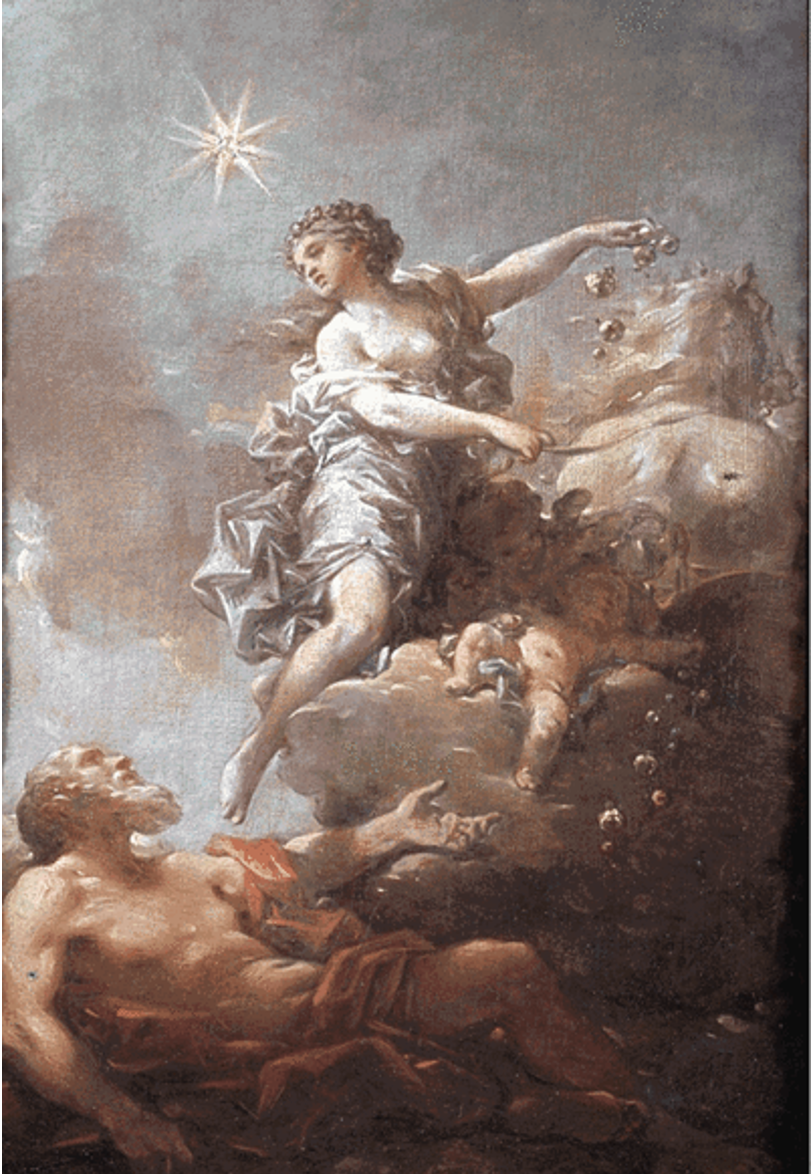
Dabbling over the decade with showcasing exciting, sometimes improbable, intriguing work from new and aspiring writers, the Monolith Cocktail has played host to serialisations of stories by Rick Clarke (of Vukover and The Tearless Life infamy) and Ayfer Simms (the Franco-Istanbul writer, and for a few years, an integral member of the MC team offering various reviews and conducting interviews).
Furnishing the site since Covid with review pieces and the odd feature, Glaswegian-based writer Andrew C. Kidd now adds his name to this list, sharing his grand interstellar opus with the MC readers through an epic serialisation. In the last couple of months we’ve published the Prologue and Part One and Part Two of The Violin: the first chapter of this grand sci-fi story. We now set a course for the next chapter in this vast odyssey, with the first two parts of Hic Sunt Leones Et Corvi.
Andrew seeks inspiration from music and anything that chronicles the fantastical. And in Tennyson, he finds sentiment, solace, experiment and adventure in interstellar space.
“What omens may foreshadow fate to man
And woman, and the secret of the Gods”
From Tiresias by Alfred, Lord Tennyson
“Activity does not necessarily mean life.
Quasars are active.
And a monk meditating is not inanimate”
From A Scanner Darkly by Philip K. Dick
The sound echoed distantly at the treeline boundary. Beyond that, a grassy field opened out to end at the top of a small hillock. A solitary figure pulled back the leaves and stooped under a larger branch to exit into the clearing. The forest breathed quietly behind him.
Louder, duller, without echo – further calls were nearer now.
A stilly silence soon settled upon the scene. Grass blades remained rooted firmly. There was no wind to unsettle them. Their sharp tops speared towards the sky.
Looking up, he saw the wings spread out. It moved swiftly and silently, silhouetting black against the dying light of dusk…
The heat (unbearable to begin with) had started to dissipate. A low-frequency rumble continued to propagate though his body.
In the distance, the hazy outline of a tree, flat-topped, bowed over the ground, came into view. The ground began to elevate; he would soon be standing on the top of a hill. Each step was an effort. Numbed and calloused, his bare feet no longer stung in the sand.
Having stopped momentarily in this arid place, he resolved to keep moving. He had to keep moving.Defiantly, he walked towards the sounds of the distant growling…
Part 1
‘Human remains in the lower decks.’
The interference of the radio hissed into the ears of the Overseer.
‘Have you located the wheelhouse?’
‘Yes, Ma…’ The crackled reply broke off abruptly.
The Overseer moved closer to the remnants of the starboard viewing platform. Through it, she observed the nullity of space.
Her team had entered the forward portion of this once grand vessel. The narrow, box-like dimensions and icy stillness of the plain interior of the bridge were firmly funereal. Glass that once covered this space had been blown out. Its contents had long been jettisoned.
She wore a life-sustaining suit emblazoned with an emblem that was as orange as Mercury and lined white with symbols of stars. Dark pools semi-circled below her eyes. Space was a sleepless place for some. The drugs that the medic prescribed seemed to imbue everything other than somnolence.
Nineteen-years, she thought as she sifted silently through the wreckage. Ninete…
Those years had felt more like a lifetime. The vessels that she and her crew boarded dangled lifelessly in these deeper reaches. Most had been lost long before she had even taken on this role.
Her attention returned to her team who clambered over the remaining chambers of this particular vessel. She sent the Adjutant to locate the stateroom and the Auxiliaries to the fo’c’sle. A Medic remained with her on the obliterated bridge.
Rudderless and shorn from its engine, the ship floated aimlessly in an endless orbit.
The gloved hands of the Overseer gripped the metallic surface of what remained of the broken luminescence control panel. Dials would have once dotted across a large glass control board. Not even the smallest of its shattered shards had been left to salvage. Blown and space-buffeted, everything had spilled out into the cosmos.
As she moved towards the far end of the bridge and descended into the fo’c’sle, a panicked voice suddenly broke through on the radio.
‘T–the––bow… the bowsprit… all personnel report to the listening chamber!’
The Overseer and Medic swiftly made their way to the prow of the vessel. They clambered through a small opening made by the welding torch of one of the Auxiliaries.
A solitary figure sat perfectly still in the centre of this small chamber. Long white hair fountained out of his scalp, cascading down past his shoulders, feathering around him as if charged by the high-electric potential of an electrostatic generator.
The Overseer felt the immediate tranquillity of this space. It was in direct opposition to the disorderly bridge merely ten ladder-steps above it. She observed the Medic drifting around the small podium upon which the cross-legged man sat. He paused as he looked into the youthful face of the Radioman whose body was composed and unaltered.
The Radioman wore no helmet. No oxygen apparatus was attached. This chamber had been apparently airtight until their impromptu opening exposed it to the breathless vacuum of space.
The Overseer quickly placed her ancillary oxygen mask over the stock-still mouth of this solitary figure.
‘A helmet!’, she barked out, beckoning the other Auxiliary to locate one.
The Overseer talked quietly and reassuringly at the Radioman. She had already placed the palms and fingers of her left hand over his eyes: an act that served as a temporary skin-seal to prevent the low-pressure of space from inflating him.
As she held firm, the Radioman still had not moved. He had not even blinked. His muscles were completely devoid of fasciculation and involuntary spasm. It was as if he was dead, yet his skin was a fresh as that of the rescue personnel who had only just boarded this ravaged vessel.
All the other crew of this stricken vessel had been found lifeless. Those who had been salvaged behind oxygen-rich compartments had decomposed. The rest floated lifelessly, forever captured in the positions they held in the final moments before their respective last breaths.
Siss of the radio now danced invariably in her helmet.
‘Repeat last transmission’, an unknown voice demanded airily.
The Overseer paused. Her monitor confirmed that this message had travelled a long distance from their present location. It had been sent by the Theban which was levitating somewhere in solar space on the other side of the Heliosphere. Those onboard this flagship would be listening apprehensively for the reply of the rescue personnel.
‘Repeat your last trans…’
The sibilance of the radio whispered again.
The Overseer left the Radioman under the care of the Medic. She exited the listening chamber and passed through the fo’c’sle to return to the bridge.
‘Remove yourself from that console’, she ordered. ‘Look at the dial. The electromagnetic interference is far too high to transmit at this present juncture. We will retry once we have established RQZ.’
The Auxiliary nodded in silent acknowledgment. He fumbled with his portable transmitter. His actions had been chaotic. He had never witnessed death before. Its facelessness haunted him.
The Overseer manoeuvred past the central workstation to locate the backup navigations.
‘Adjutant, get that Auxiliary out of here… the man’s a wreck. He’s about to keel over.’
She looked over at the Adjutant again.
‘Now, have you retrieved that log yet?’ A small, cylindrical object had been deployed by the Adjutant who was situated in the stateroom on the deck below. This had once been the Captain’s quarters. The cellular implement clicked into life and whirred quietly as it burrowed into the stricken ship’s volatile memory unit. A faint blue light on its interface flashed rhythmically: the download of the devastated vessel’s data had begun.
* * *
Oblivion.
It had been generations since the brilliance of a passing dwarf star or the swansong of a dying sun had shone upon the great body of this vessel.
The ship took on the form of pentagonal prism with many edges and vortices. Its bridge was located at the stern. Those who commanded this hulking monolith observed the midship slope obtusely down towards the fo’c’sle. There were no gunwales. Its port and starboard sides rolled seamlessly over to join with the hull.
At the prow of the ship, a small projection pointed outwardly to space. This was the bowsprit. Within the bowsprit was a small chamber. It assumed the shape of a square-based pyramid. The base of the pyramid backed onto the main body of the ship. Its edges angulated away towards an apex. Once this apex had been reached, the triangle pointed towards shapeless space. This was an antenna. It was composed entirely of a carbon composite.
A Radioman existed inside the bowsprit. He sat cross-legged in the centre of this small chamber. Its three walls converged at different angles to maximise the incoming acoustics. His function onboard the ship was simple: he was to simply listen.
Attached to his head was a light electroencephalographic cap. Intermittent bright dots covered its surface. The postsynaptic potential of every pyramidal neuron in his neocortex was measured. Changes in voltage were interpreted by those who commanded on the bridge. Incoming radio waves were picked up as electromagnetic radiation, and upon entering a conducting body, a current was created. The radiomen and women were band-pass filters, capable of radiofrequency hearing. Uninfluenced and unbiased, the data from their EEGs filtered back to their superiors to ensure safe passage of these grand celestial vessels through the incalculable vastness of deep space.
The Radioman of this particular ship sat in a deeply meditative state. Those who had been given the responsibility of attending to him would glimpse through the small porthole to observe him in aural meditation. He contemplated only the sounds that entered him. The hyperfocus of a trained radioman would open the human mind to the most wonderful and hideous of hidden sounds.
In his training he had experienced momentary distractions such as the pulsatile hum of tinnitus or the oceanic sounds of blood flowing. He eventually learned how to disconnect himself completely from internal and external stimuli to concentrate purely on the deafening silence that consumed him.
The universe in all its unfiltered aural glory shone into the bowsprit. Radio waves, immune to the deafness brought on by the vacuity of space, percolated its walls, tumbling like a torrent into this still river of silence.
Listening. Forever listening.
Each and every wavelength passed through his external auditory canal to vibrate his tympanic membrane, moving his malleus and incus like beaters on a minuscule glockenspiel. The stapes pressed down, disturbing the perilymph which waved to rush into the open window of his semicircular canals and cochlea.
The otherworldly sounds of space cascaded down his vestibular and cochlear nerves unto his auditory cortex.
He listened to the numb static of radio feedback as well as asteroids that collided with rings around exoplanets, ricocheting into unfortunate ships that sent out futile distress signals. He heard hissing and white noise and voices that chattered indistinctly as if partaking in some great celestial conversation, nebulae apart. He eavesdropped on outgassing comets and plasma winds that changed direction.
All individual soundwaves were unique, symphonic even, but nothing was more beautiful to the Radioman than the faint finale of fusing black holes in the distance.
Such polyphony, such maddening repetition in sound, forever-wavelengths that spanned even time itself, beguiled the Radioman who remained cross-legged in the centre of the bowsprit antenna.
* * *
Eyes closed and breathing steadily, the precise and periodic rhythms of pulsars pulsed. The low-frequency bass of matter exiting from a black hole came into and out of focus. He averted his attention away from those unimaginable and terrifying sounds, because once this cacophony had concluded, the remaining souls left alive listening would be the last to applaud the end of everything.
The Radioman focused his thoughts on the Heliosphere on the very periphery of the solar system. Interstellar gasses moved beyond this point marker, whispering indecipherable sounds in the absence of coronal mass ejections from the Sun.
He leant down to listen further. His auricles picked up faint sounds. Nothing significant – something slightly louder than silence.
An inner voice had recently surfaced. His own mouthless monologue.
… and the growling.
These peculiar frequencies he had longed heard but never understood. He had journeyed to them tirelessly. They were closer than they had ever been.
His mind wavered in the heat of the arid land that stretched out before him. Soft sand covered his feet. Sharp-edged grasses scored his bare ankles as he trod softly, edging closer to the low rumbling sounds. He dared not traipse over a branch or let his feet scuff the gravel. Such a careless approach could be ill-afforded. He continued to move over the clay-rich soil.
A large tree silhouetted black against the orange horizon. Its flat canopy of leaves stretched out to shade what lay beneath it. He edged ever closer to this tree, an acacia, one discreet and heedful step at a time. The Radioman knew that source of growling lay beyond this tree.
These sounds had reached him at the same time the vessel approached the Heliosphere. Their volume had progressively increased since then.
He observed the others who moved in the opposite direction. They were making their escape. He had sent them in that direction. Their footsteps faded quickly in the light winds that spread over this dusty land.
The sibilanceof radio interference had been strong on the day that he received the final communiqués from the colossal flagship which remained within the confines of the Heliosphere. It had been gently buffered by solar winds. On the other side of that shield, harmful cosmic rays would batter continuously at the thin walls of their vessel.
The electroencephalograph of the Radioman broadcast its usual complex patterns to those on the bridge. γ waveforms danced interchangeably on the glass display.
He continued to listen.
Part 2
The Radioman jolted. A winged body flew overhead. Its call had been loud. It settled on a nearby branch. Its throat rattled and clicked in a strange sub-song. His ears tracked the unmistakable music. Another figure stood silently on an old wooden fence.
The Radioman remained cross-legged in his chamber in this half-trance. He could not see through his cataracts (opacification of the lenses were the sequalae of a lifetime shrouded by the radiation of space).
The figure on the fence was black-billed and body-black. He followed the movements of this ancient shape-shifter. Entering an even deeper trance, the cataleptic Radioman slipped further down into the cavern of his subconscious.
The cawing of the eye-eater persisted. It, like many others of its kind, was the blinder of souls. Its black head turned steadily. Its eyes squinted into the opaque night. It prepared for flight. A stout bill motioned to caw, yet no sounds left its larynx.
Silence!
Silence was usually an ill-fated omen. He contemplated these visions. Nothing good would come from them.
Caw! Caw!
The harsh sound of two other bodies reverberated around the field, amplified by the concavity of the trees that bound it. He heard the grating cawing of others that had flown in from their sky-occupied position. They landed to perch on branches which buckled slightly. Their black feathers pushed away the leaves.
The cawing intensified further into a cacophony of sound. Each blackened figure flew down from the trees to litter the grassy ground. Their thin feet pattered around droplets of rain which had had started to descend.
At first, they formed a half-circle, cluttered and unorderly. In the proceeding minutes, the separated edges of the collective met to become a whole circle that was absolute and infinite.
The sky above darkened further. Clouds greyed and made indistinct shapes in the higher altitudes. Down on the sodden earth, the circle cackled and clacked.
A larger figure broke away from the feather-black ring and cautiously approached one of its comrades who stood in the centre.
Unblinking, their eyes met.
The cawing suddenly stopped. A strange silence shrouded the scene. Stygian clouds loomed in the semi-darkness. The larger of the two black bodies started to circumnavigate its comrade. It stooped to observe the broken wings, the torn feathers, the blood that pooled blue after mixing with the green grass.
The larger figure moved away momentarily but turned to face its stricken comrade. It kicked off from its backfoot, half-winging upwards, delivering a fatal blow. The already wounded soul opened its wings to reveal its breastbone in readiness for the blow. A sharp beak speared into it. Slowly, the punctured figure fell to the ground.
The circle of observers cried out solemnly. Their forlorn cawing rose and rose until the sound was so sharp that it tore open the heavens. Rain started to descend upon the body in the centre of the circle. Water pooled on the dry ground and rose quickly to consume it in a burial of mud.
The electroencephalograph of the Radioman spiked transitionally during these visions. His head ached. Away from the flood waters in this field, a raging fire had broken out in the surrounding forest. His introspections flashed between this place and a place that seemed more familiar to him. He observed an engine room and the cross-sections of decks of a large vessel. A plasma rifle fired at the glass of the bridge. It did little other than discolouring its clarity. Those on the wrong side of the burning bridge shouted breathlessly, and ultimately, hopelessly.
Fires globed out from the carbon fibre structure of the vessel. Support beams collapsed. The ship ate itself from within. Souls were ejected as burnt embers from its portholes and escape tunnels. They cartwheeled into deep space. Their cries slowly dissipated into the radio static. All the time, the rains continued to fall and the crows cawed maddingly.
He held his head in his hands.
Why had the larger figure killed its comrade? Had it been a hierarchical act? Punishment for a calamitous and insubordinate act?
His EEG readings intensified. Those on the bridge above the Radioman observed these high amplitude projections.
In this shallower phase, having yet to pass through the termination shock of the Heliosphere, the Captain paused to consider the importance of what he was observing.
* * *
Overweight and overwrought, the broad figure of Crone stared intently into the never-ending night. He doffed his sweat-stained battle garments. His chalk-white uniform soon beamed in the fluorescent light of the bridge. A thick band of black ran from his collar and ended as epaulettes.
He had felt the sonic boom of solar winds as they crashed into the magnetosphere of the Sun. They had safely crossed the Heliosphere to enter interstellar space. He relayed the command to relay the news of their safe passage to Earth.
Such an achievement was momentous. They would name institutions after his vessel and crew. He would be bemedaled and showered with honoraria. Yet he struggled to conjure up the appropriate words to mark the occasion. There was no sense of achievement for Crone. His mission was to continue into deep space, to pave the way for other research vessels and passenger ships alike as the lines on the cosmic map were drawn and re-drawn. He waved away his Second Officer as she entered the bridge to congratulate him.
Day progressed into evening. Crone had retired to his quarters and sat in pensive state. The increasingly indiscriminate output from the Radioman concerned him.
He stared at the darting display of peaks and troughs in the stateroom of the fo’c’sle. The readings of the Radioman spiked repeatedly. A pattern had emerged: seven sharp surges were being discharged irregularly. Sharp waves. 100 milliseconds.
Crone had become adept at understanding subtle messages contained within the amplitudes of the electroencephalographs during his years commanding vessels like these.
One spike inferred nearby cosmic detritus.
Tandem spikes alluded to phenomena such as the altering speed of the solar, and now plasma, winds, or a change in the electromagnetic frequencies beyond which the ancillary radio tower could perceive. These were usually precursory. Directional and velocity changes were inevitable in space, likewise, radio chatter. In contrast, two-spike data were impactful. Decisions would be made after observing these.
Spike and wave complexes implied only one thing: danger. Crone had never witnessed this phenomenon before. He wished never to be privy to those inauspicious amplitudes.
In reality, the outputs of those who existed in radio rooms were more difficult to interpret than the oversimplified one-two-spike/wave system prescribed by the protocol. Despite their extraordinary skill and extrasensory perception, radiomen and radiowomen were ultimately human, and humans experience anxiety, annoyance, anticipation, amazement, and even periods of inattentiveness.
Crone knew that their existence was an isolated one. Living in such a permanently pensive state would inexorably impact their mental state. Everything they felt and dreamt were visible as lines on their respective EEGs.
Yet discrepancies caused by discharging neurons had to be interpreted carefully. Any decision made was based on the output of the graphs conveyed to those like Crone. Margins of error were incredibly narrow (effectively zero) in this inhospitable place.
Crone’s musings persisted as he looked out of his stern window. Zodiacal light proliferated in the black ether. The dust-strewn spawn of Jupiter’s comets stretched across space. Their faint glow and explosive sequins delicately manoeuvring in pursuit of the Sun. He knew this to be a false dawn.
* * *
In the bowsprit, the Radioman sat meditatively.
It had been getting warmer. He moved closer to the acacia tree.
The collective low-growl rumbled into the air. Ochre-coloured grasses hid their true size. He counted seven whiskered heads. One stood up slowly and stared purposefully in his direction. Opening its mouth in a slow-yawn, the Radioman looked into the black emptiness of space. He quickly ducked back down under the grasses.
He had only caught a glimpse of its eyes. Swirling fires whorled outwardly from their irises to meet periorbital darkness. They had fixed upon something in the distance. He hoped that it had not been the others making their escape.
He had also caught a glimpse of the canines that thorned out of their abysmal mouths. He grasped the dry grasses nervously. The growling had settled for now. He resolved to edge ever closer to the tree.
Andrew C. Kidd
Tennyson In Space: The Violin Part 2
April 4, 2025
The Monolith Cocktail Serialises Andrew C. Kidd’s Tennyson Imbued Opus

Dabbling over the decade with showcasing exciting, sometimes improbable, intriguing work from new and aspiring writers, the Monolith Cocktail has played host to serialisations of stories by Rick Clarke (of Vukover and The Tearless Life infamy) and Ayfer Simms (the Franco-Istanbul writer was an integral member of the MC team for a good few years, offering various reviews and conducting interviews).
Furnishing the site since Covid with review pieces and the odd feature, Glaswegian-based writer Andrew C. Kidd now adds his name to this list, sharing his grand interstellar opus with the MC readers through an epic serialisation. Last month we published the Prologue and Part One of The Violin: the first chapter of this grand sci-fi story. We now continue with the concluding part of that inaugural chapter.
Andrew seeks inspiration from music and anything that chronicles the fantastical. And in Tennyson, he finds sentiment and solace.
Part 2
Half-aware in a half-dream, the young Commodore roused from her stupor. Tito was drifting silently beside her.
‘W-where… am I?’ Her speech was slurred.
Tito’s teeth took on a yellow hue through his white beard. He grinned inertly before his gaze slowly returned to the porthole.
‘Where are the other Commodores?’, she continued to enquire. ‘AURORA?’ Her voice ascended quietly.
‘Are you not able to hear their voices?’, Tito muttered after a short pause.
The young Commodore strained her neck forward, but a strap crossed over her forehead. She was being kept firmly supine on a board that had been secured to the living quarters wall. Her hair wafted around her head and face in zero-gravity.
Tito plucked at one of the thin cables on the box relic. His dry fingertips scraped against it in a coarse strumming motion.
‘They sing to us, melodiously!’ He laughed a little. ‘Listen…’
Loose hair hung limply from the straightened form of the longer relic.
‘P-please don’t!’, she pleaded upon realising that she was unable to raise her hands in self-defence. They were bound to the board she lay on.
‘Calm now!’, his voice rasped in command. ‘I implore you to listen–’
The straightened relic touched the box-like form which he had rested under his chin. A small clatter occurred when it touched a black board with cables that ran up its body. The young Commodore wondered if this was a simple circuit board. She had been trained in interstellar survival, yet nothing had prepared her for this. The pupils of her eyes remained pint-pointedly fixed on Tito. A mephitic musk clung to the air; it was nauseating.
The hair of the long relic made a wretched whispering sound as it glided across the cables on the box form. As he pressed down on these wires with his other hand, Tito uttered a sharp curse. Initially she wondered if this related to the indelible impressions the cables left on his fingertips. But she soon realised that another one of the hairs of the long relic had snapped. Its lithesome form collapsed over the box relic. Tito placed it down on a white surface next to where she lay. He floated thoughtlessly away into the darkness of the long passageway, mumbling indistinctly to himself.
* * *
During the earliest days of his depression, Tito did not eat. He remained unmoved in his living quarters for hours upon end, eventually only leaving his sleeping compartment when his bodily functions required servicing.
His muscles ached, and after a while, his body started to waste. His limbs disappeared. They flailed gently in his deep sleep like those skeletal satellites that floated endlessly in their tombs in the lower decks.
Long days became even longer months. AURORA had long been forgotten. Tito would have to service the ship and its systems manually.
Electrolysis, the running of electricity through water, had to be adjusted depending on the background oxygenation levels. Ambient temperature settings continuously altered according to the electromagnetism of his location. The wheelhouse manned to manoeuvre its circular form in the direction he wished to travel. These automated tasks had been inherited by Tito, yet he partook in none of these. The ship sailed onwards in its rudderless voyage.
Another cosmic storm had rocked the vessel on the day that he should have succumbed to his inadequate handling of the Pathfinder.
He lay face-down on the floor. The straps that held him vertically in his sleeping compartment had failed to secure him. He coughed into the pooled blood that blebbed around him. A scalp wound stung.
He managed to float to feel the narrow walls of the passageway that led down from his dormitory to the bridge. A red background light blinkered and hampered his vision. Critical warnings flashed in a lightshow of doom.
It had only been a matter of months since he had corrupted the machine learning algorithms of the murderous AURORA. Years of survival training on the mother ship kicked in instinctively. He went to the bridge and opened up a schematic view of the vessel. All systems were deemed ‘critical’.
His hierarchical assessment of what needed repairing made the reality even grimmer. The electrical circuitry would have to be salvaged. If he was without power, he was without life.
Next, the system that made oxygen from water. Finally, he secured the navigational platform upon which this hulking metal ship pivoted. This would come at the expense of other systems: radioactive protection; waste disposal; gravity.
All of the lights except one small lamp in the living quarters were switched off. This had been the blessing of a miswiring at the time of its creation.
The radio was kept disabled. He elected to keep the ship silent. The ambling and pregnant mother ship would have conceived and birthed his replacement by now. He or she would arrive in another 25-years, preserved in silence, ice-enshrouded inside their pod.
Relief pods would always find their respective Pathfinder. No storms or mutinies or mishaps could dislocate this tracking signal from the mother ship. The wandering Tito was aware of this. He also knew that once he had been located, a communiqué would be sent from the docked pod to its mother ship. This message would take years to reach her.
A few years passed after Tito had regained control of the now crippled ship. He had been gazing endlessly at the inky nothingness streaming past the vessel. He navigated himself in weightless movement to one of the store rooms located in the deck immediately below the one he inhabited.
It was a filthy space. He had been depositing his bodily waste in used ration crates. He wished to jettison these into deep space, however malfunctions in the air-locking system had meant that everything contained within the Pathfinder had been hermetically sealed.
Nothing could be released from the inside; the manual lever that opened the exterior doors was located on the outside.
Tito had stockpiled the soiled ration crates in various store rooms on this deck. As he navigated through the main passageway of the ship, the sickly fluorescence of his cabin light only provided faint illumination.
His eyes squinted into the tunnelling black. Using his fingers, he cautiously felt round the darkened hollow of the hatch that led down to the lower decks. He pushed himself off and let his body float weightlessly onto the next level.
Tito moved down the lower passageway to a new room which he had recently cleared to make way for more used crates. He laughed quietly at the irony in the microcosmic life cycle of these containers that had once contained his food.
As he entered the cleared store room to open a new crate, a smaller container floated into his field of vision. His attempts to catch it in the darkness had resulted in his arm striking it. His body leapt forward through the hatch to catch it before it floated down into the ghastly lower reaches of this vessel.
The old container felt like nothing he had touched before. It was old and bound in a taught hide. He was rendered fatigable after a mere few attempts to break open the latch to reveal its contents. The pulp of his hands had been long-wasted.
He eventually prized upon its lock after pressing it forcibly down on the corner of the one of the tables. This sudden downward movement had resulted in his palm catching its sharp edge. Life-blood spilled onto the casing of the old container which absorbed it immediately. He wiped the remainder of the blood onto his white spacesuit.
Tito peered down into its open contents. There, strapped down by two bands, was a box relic. White dust scattered across a black board that ran up its middle. An ornate headpiece curled at its peak.
The carbonised form matted against his bright torchlight. Unconsciously, his index finger pressed against one the cables that travelled up half the length of its ancient form. A catgut-sharp twang echoed even after its vibration had ceased.
He quickly closed the old container and took it to his living quarters.
Sound!
He had not heard a sound like that for a very long time. Deep in his cavernous subconscious, fragments of a melancholic G minor theme of an old canzonetta played out. He hummed it imaginatively in adagietto rather than its original andante tempo.
In the days that passed, Tito remained in a trance, a state away from the present.
Where have I heard this sound before?
He sought restorative retrospection, eventually finding an answer to his question.
He had been a child when he last heard this sound. It remained as distantly familiar as when he first heard it on his mother ship. Melodies played on box relics like this funnelled out through the many speakers during their teachings of the old ways.
Tito had never really listened to the mundane AI voices and their musings about these relics and those that played them. He had only ever cared for the melodious beauty of these ancient harmonies; they had echoed up the vast corridors of his mother ship as it carried him into immensity.
After this realisation, Tito had a joyous reawakening.
It can be played!
He re-opened the old container to find an accompanying stick-like longer relic. Its straightened form and taught hair could make the longer sounds, the sounds that floated endlessly in harmony. He remained awake for many days on end as he tried to work out how to recreate the sounds of his childhood.
It happened on the third or fourth day after his discovery of the mysterious container. He had been hovering out its form, plucking frustratedly at the cables. This blunt sound was one of two sounds that the box relic could make. He wished to forge the longer noise, a sound that would reverberate around this vessel.
That day, his hand had grasped at the end of the long relic. Having moved it towards the box relic, the languishing hairs accidently slid across its cables. Tito listened to the sound that levitated up from the box relic. They travelled into ethereal realms. He bore a broad smile under his dark beard as his tired eyes settled to close after his endeavours.
Finally, in this dark and desolate place, he had found light.
* * *
Outside the vessel, galaxies spiralled, contorting into moving mountains that hung in crownless majesty. She dreamt of conquests and bold discoveries; of bountiful life on planets similar to the one her ancestors had vacated. Light soon blinded her visions. She woke to a man’s voice.
‘We have a need to personify everything’, Tito mused rhetorically. ‘Take the so-called Caryatid. A hand reaching out to touch the untouchable – as told to me in my infancy.’
He grasped at the empty space in front of him.
‘Hah! It is a void, merely a star formation in a multiverse of cosmoi. An asterism in a sea of stars–’ his hand compressed into a ball ‘–a simple trick of blue and yellow light ceding into the altered infrared of viewing ports. But its comparison to a hand is baffling.’
He sighed loudly.
‘What could a human hand possibly reach, never mind grasp!’, he concluded animatedly.
The pulp of his closed fist thumped the white interior of the ship. His hand, having now opened up, slid slowly down to drop limply by his side. He moved away from the wall weightlessly. The volume of his voice decreased to a deep rumble. His eyelids were heavy.
‘What are you going to do to me?’, the young Commodore slurred helplessly.
‘Why – I shall play you more music…’
His voice continued to dwindle. The young Commodore saw that his eyes were now closed.
‘Without it’, he proceeded tiredly, ‘I was but a grey shadow of a man. Lo! Its compositional form, its notation, its beauty… it is quite simply transcendent… outshining the very light of the stars… within which we dwell…’
His eyelids remained shuttered. He mumbled some more.
‘But alas… we must wait a while before we can hear such harmony again–’
The thrum of the engine quavered in the background. Above this, a quiet snoring sound grumbled along in unison. Tito had fallen asleep.
The young Commodore woke to the stiflingly heat of the living quarters. Her lips separated to reveal a dry mouth. Many hours had passed since she had last had fluids.
Unsteadily, and sleepily, Tito was fumbling at the table in the far side of the living quarters. He rummaged around in a locked box, eventually picking up a sharp object. Unmistakably sharp edges gleamed in a sudden show of brilliance.
He approached her slowly. Having failed in his first few attempts to secure his thumb and middle finger in the obturating handles of the object, he now held this steady. She felt the steely coolness of its metal on her warm face. Sobbing loudly, her chest rose up in panic. She thrashed and thrashed within the confines of the taught straps secured across her head, torso and legs. Above the loud wailing and panic, a faint sound next to her right ear went snip.
Tito manoeuvred backwards.
Breathing hard, he leaned over her, presenting her with a lock of her own hair.
‘You see, it’s too short.’ His head shook.
‘This is why we have to wait–’
* * *
The young Commodore lay laxly, still bound. Her muscles had made their long retreat inwards, leaving only bones and skin that veiled thinly over her body. A languid greyness masked her once youthful face. She stared vacantly at the ceiling. Tito had captured not only her body, but, finally, her spirit.
He plucked at the cables on the box relic mournfully as the vessel sank deeper into the vacuum of space. His gaze remained fixed upon the porthole. Out there, time warped, so much so that light shifted red in the endless abyss. These were the colours of stars that bled out in a slow haemorrhage as they reddened in their journey to eternity.
It was here, in this space, in these ungodly living quarters, that Tito and his prisoner had conversed only a few months ago. The young Commodore had interrupted his same, senseless contemplation when she asked him if he was going to kill her.
Tito had looked reposeful, reverential even, as he held up the thread-bare longer relic that she had once observed him press against the cables of the ancient sound box. His face bore a gleeful grimace.
‘My dear, if I were to kill you, how would your tresses grow to the length needed to re-hair my bow?’
Andrew C. Kidd
 Monolith Cocktail Blog