The End of the Month Playlist Revue for April 2026
April 30, 2026
Our Monthly Playlist selection of choice music from the last month. Picked by Dominic Valvona, Matt Oliver & Brian ‘Bordello’ Shea.
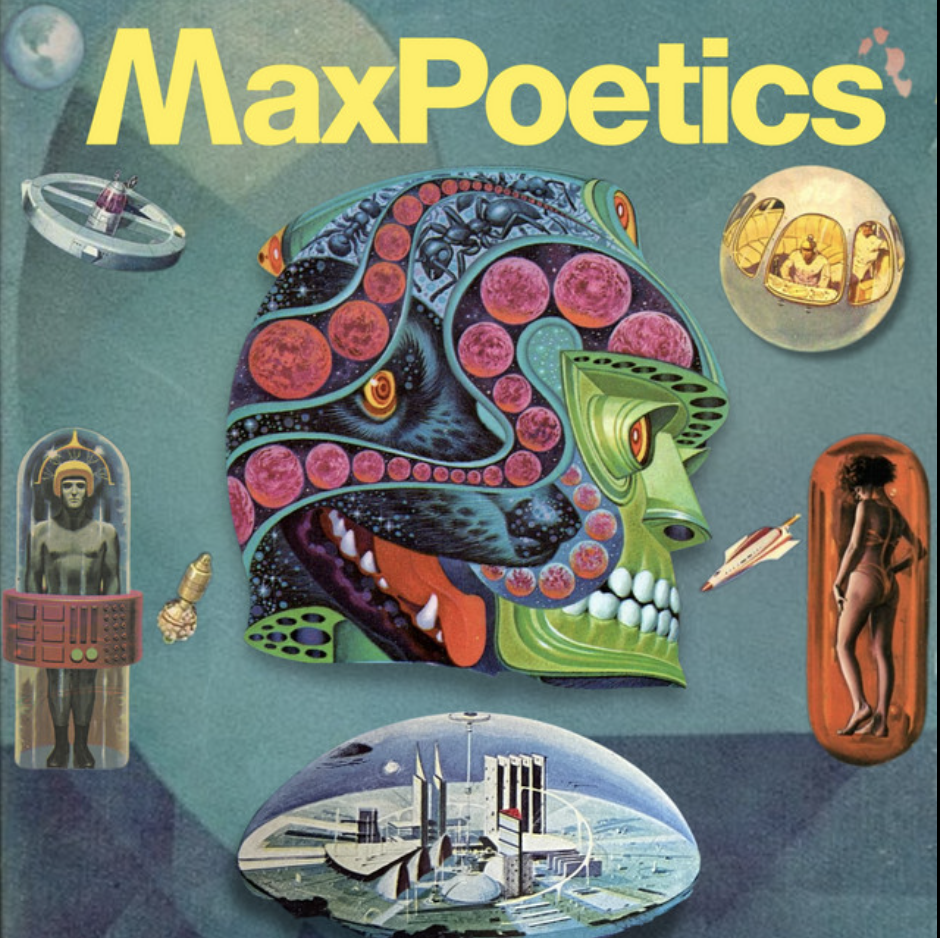
The Track list is as follows:
Lone & Juga-Naut ‘Throw The Ember’
Horse Lords ‘Brain of the Firm’
Thrust The Mask & Mai Mai Mai ‘VULTURES’
Da Flyy Hooligan & Guilty Simpson ‘GUILTY VERDIX’
Rapswell, SQ & Dood Computer ‘Steampunk!’
Blu & Exile Ft Rome Streetz & ICECOLDBISHOP ‘Crumbs’
Tangients ‘Void’
Opus Kink ‘Come Over, Do Me Wrong’
Yazz Ahmed ‘Dawn Patrol’
Nduduzo Makhathini ‘Imvunge KaNtu’
Rave At Your Fictional Borders ‘Spoonbill’
Sulaf ‘Naada’
Hannah Peel & Beibei Wang ‘Awaken The Insects’
Morita Vargas ‘La Llave’
B Dolan Ft. Widowmaker ‘Wilhelm Scream’
Deeq ‘True Intentions’
The Gatekeepers Ft. Henry Kaiser ‘The End of Man’
The Conspiracy ‘Dungeness’
Ex Norwegian ‘I Want To See The Bright Lights Tonight’
Frog ‘All The Things You Got’
Stephane C Cotti ‘Sunkissed Nina’
King Kashmere & BVA ‘I Smoke’
Andreas Tschopp ‘The Poetry of the In-Between’
The Three Seas ‘Prithibi’
Shye Ben Tzur, Johnny Greenwood & The Rajasthan Express ‘Shemesh’
Lisa Kohl, Macie Stewart & Whitney Johnson ‘cough | laugh’
HOWL, Fran & Flora & Erin Robinsong ‘Weed Canticle’
Xqui ‘Dead City’
Carol Maia & Jeremy Gustin ‘Aloe’
Your Brother’s Keeper & Gary Bartz ‘Cauldron’
The monthly Digest includes a clutch of accumulated short new music reviews and the social inter-generational/eclectic and anniversary albums celebrating playlist.
Kaloja ‘A Body Of Water’
(Artetetra) Released 19th April 2026
A new team-up on the kooky and experimental label of repute, Artetetra, with Paul Wilson aka F. Ampism collaborating with Jan Anderzén of Tomutonttu, Kemialliset Ystävät and Tarzana note to create an aquatic and liquid plopped and plonked world of molecule dances and the birthing of odd giddy, tweeting and high pitched lifeforms.
Wilson under his sonic disguise has form in this sphere having released the speaking, communicating, singing, gargling and mewling atoms and floated microscopic forms soundtrack The Vertical Luminous on Hive Minds last December. Now with a new foil, those explorations once more spring into action across a lush blossoming and air-bubbled immersion of a maverick biomorphic world populated by alien creatures, more familiar hints of nature and the shapeshifting.
A bubbly lava. A computerised floppy disc cut and shutter. An oriental dulcimer like glisten and slide of spindled microbiology. All this and the whistled high pitches and the uncurling of life on an adventurous roving and shifting sonic world of blips, the courtly, the dubby, the rhythmic, the lunar and most importantly, watery. A short review, but I’ve more or less summed up this blooming oasis of quirks and quarks, nature and the aquatic. Another recommendation if you are looking for something different in the electronic field of biospheric inventiveness.
Carol Maia & Jeremy Gustin ‘It’s Nice To See A Lake In Your Eyes’
(Hive Mind Records) Released 27th March 2026
Last heard on these pages adding her soothed vocal evocations to Wolfgang Pérez’s Só Ouço album last year (another quality release on the Hive Mind label), the Rio guitarist and singer-songwriter Carol Maia now brings that ethereal to woozily dreamy voice to the collaborative imaginings of the Brooklyn homed drummer, percussionist, songwriter and producer Jeremy Gustin.
Created long distance, between each artist’s respected studio bases in North and South America and pulling in a number of equally visionary players from those two scenes, this partnership effortlessly merges ideas and inspirations to create a dreamy realism. For It’s Nice To See A Lake In Your Eyes transports the listener to peaceable if sometimes haunted descriptive realms that amorphously dip into the new wave, the vaporous, pop, the psychedelic, the Fairlight era of the 80s, the drifting and most importantly untethered. And amongst those perimeters there’s mirages aplenty, the hallucinatory and poetic: at least in part, the album is influenced by Maia’s readings of Marcelo Ariel’s poetry collection, A água veio do sol, disse o breu. It offers up something both magical and cosmically fatalistic; here’s a sample, included both in the PR notes and on the bandcamp page:
The light of being is like water
it also came from the Sun
where all the planets want to enter
Within the Sun
Being is immobile
like the gratuitousness of an ecstasy
similar to breathing
Outside the Sun
Being is mobile
Time eternal
and chronological time
If still unfamiliar with both the orchestraters of this blissed and equally saddened affair, Gustin’s notable contributions include tours and recordings with such luminaries as Joan As A Policewoman, David Byrne, Marc Ribot, Norah Jones and fellow Hive Mind artist Ricardo Dias Gomes (who incidentally offers up a certain saddened Franco-esque vocal on the mid 90s Radiohead-like ‘Vou Ficar’), whilst Maia has been building up a reputation for herself on the contemporary experimental Rio scene. It’s from this same scene that Maia has enlisted the notable players and artists Frederico Heliodoro, Paulo Emmery and already mentioned Dias Gomes. From Gustin’s neck of the woods you’ll hear both the contributions of Will Graefe and Ryan Dugre. Altogether it makes for a promising if subtle partnership of dreams and visions; one minute almost in the Chanteuse mode, the other, evoking Flora Purim and Tom Ze or lost in an 80s pop haze and more chaotic jazz: Strangely, ‘Lake Of Meaning’ reminded me in places of 70s balladry Beach Boys checking into a miraged version of 70s Brazil.
From hollowed tubular trips into nature, to soft synth soundtracks conjuring up various horizons and scenes of personal and heartfelt escapism, love and loss, the acoustic and synthesized merge to complete a poetically mesmerising and soulful work of art. Ramon Farran & Robert Graves Olive Treemeets Arto Lindsey in a supple, chimed, tubular and tinkled spellbound experiment. A fantastic album in short, worthy of your support and better still, money!
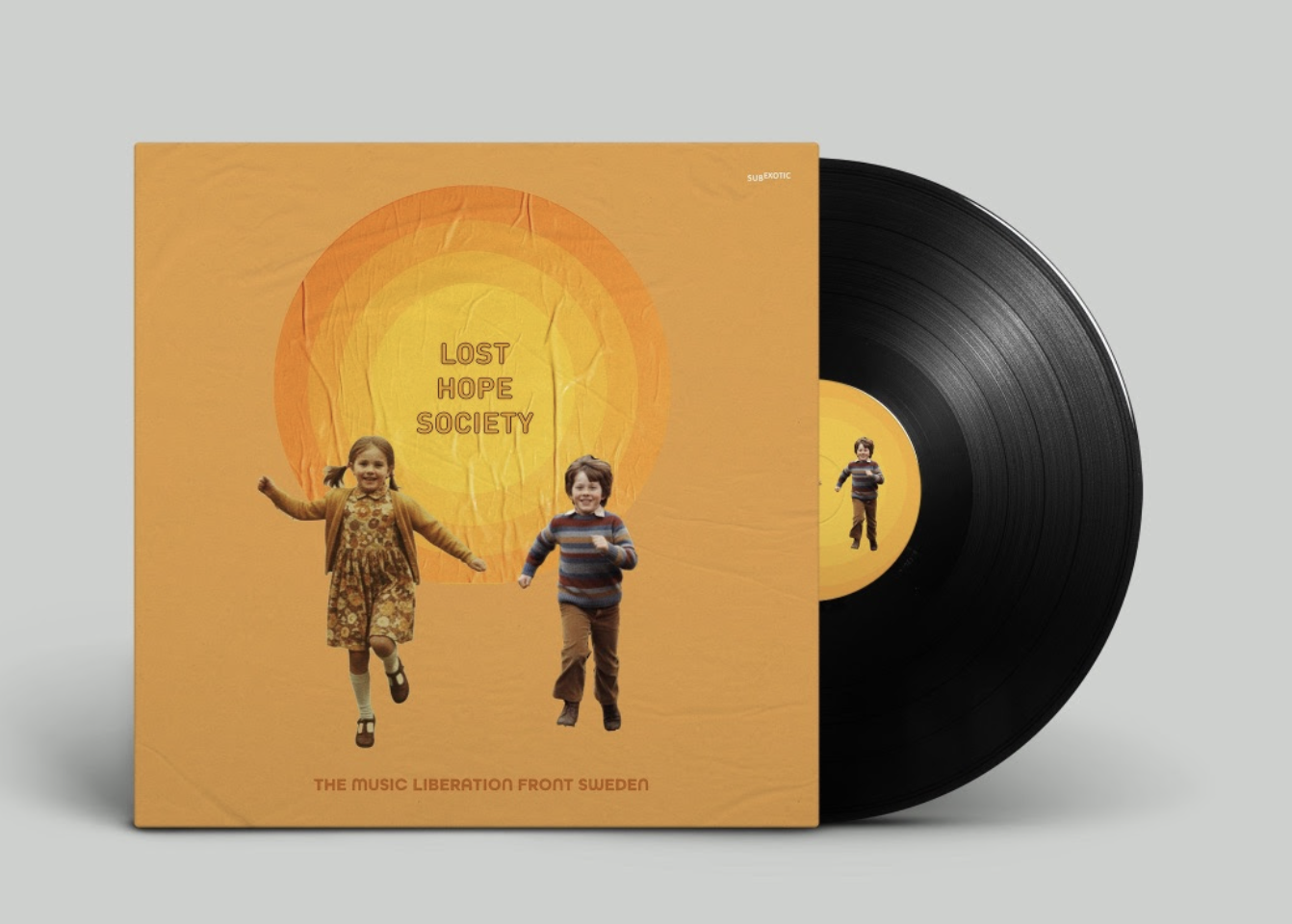
The Music Liberation Front Sweden ‘Lost Hope Society’
(Subexotic) 24th April 2026
Emerging this month from out of the Subexotic portal, a refreshing call for compassion; a shout out for all the “nice people” missing from the high anxiety era of individualism, community and social detachment. Content at their lot, with no fear of missing out on the next TikTok generated bullshit, or envious of their neighbour’s lifestyle, the Portsmouth artist Michael Evill cranks up the generators, oscillators and apparatus and plugs in various instruments under The Music Liberation Front Sweden guise to venture forth into an occult musical world of vaguely familiar evoked inspirations and influence from the 70s, 80s, 90s and the now.
The Lost Hope Society isn’t quite as resigned as it sounds, lingering amongst a soundtrack of library music, Kosmische, electrio-pop, the Gothic and sci-fi, and finding as it does composed passages of thought and resilience in the face of social media and technological-driven fear, discourse and selfishness. As vocalised throughout, both through female and male voices (sometimes the borrowed and collaged), there’s a constrained contempt and anger held against the forces of such division and upset whilst extending a near despondent hand to those that could make it all so much better.
In this sphere the quintessential queer, supernatural and esoteric sounds of Sapphire & Steel meet Mike Oldfield, Electrelane, Stereolab, Tomat, Belbury Poly and New Order. A cosmic toybox is opened up of the accelerated, motorised, dialled, crystalised, glassy and fizzing. Machines, synthetic operators and kit sit alongside guitar fx, interferences, spacy rays and the wilderness on an album that makes offers up both wishful thinking and daydreams of a more aspiring society of common decency and well, niceness.
Rave At Your Fictional Borders ‘Analogue Nomadism’
(Meakusma Records) Released 3rd April 2026
Despite the liberal ideals of a borderless world, the realities can be far messier and pressured, a strain even, when put into practice. But though politically a much more difficult promise to make, this multicultural paradise, it’s already been put into practice musically: for ages in fact.
Step forward in-demand drummer and bassist Dave De Rose and fellow trick noise maker and guitarist Marius Mathiszik of Rave At Your Fictional Borders, a troupe of sonic and musical nomads; a newly instigated and rearranged trio that now includes the drummer and vocalist Salim Akki. It’s a sort of new formation, brought together for the group’s debut album proper. In keeping with the concept, ideas of leadership and instigation are amorphous, with no one in charge and ideas freely shared between whoever happens to be in the room at the time of the recording.
For the debut album, Rose and Mathiszik in pursuit of that same nomadic freewheeling spirit of musical adventure, were invited by Akki to take up a short residency at Essouri Jamal‘s newly built L’Bridge recording studio in the famous Moroccan city of Kenitra (for geographical fans of the site, that’s 40km north of Rabat). Tapping into that rich city’s atmosphere, its amalgamation of Roman, Phoenician, Portuguese and Spanish colonialism and its eventual Moulay Ismail liberated 17th century architecture, history and culture, the trio embarked on a spontaneous experiment of porous and mystical rhythm making. As with previous broadcasts from the troupe, the signature of these rhythms is varied; once more like a drum kit engine slipping and spluttering in a ricochet, stilted, skipped and wobbled staccato fashion, taking time to find traction and a groove amongst the alien, mysterious sounds and beds of the fx, loops and manipulations.
Provenance-wise we are dealing with a shadowy mirage bleed of Moroccan mysticism, various African rituals and alchemy, post-rock, post-punk, dub and darkened progressive-jazz. A hybrid world in which Idris Ackamoor and Sly & Robbie share room with Battles, Jah Wobble, BLK JKS and Tortoise. Or one in which you can hear a transformed vision of a chinking and glass raising Afro-party following on after a subterranean hallucination of Gnawa music and Ifriqiya Electrique. Akki’s voice is just as amorphous and bound to fluctuate between references to his own Arabian culture as to hoot and shout expressively in a language all of his own making over the beats, the deep vaporising and throbbed basslines.
With an avian menagerie of titles as the only guide (from long billed and long-limbed wading birds to warblers, ducks and hummingbirds), reflecting the diverse range of references, or cultures in the blend, but also their migratory nature, the listener is transported to vaguely familiar and yet often exotic shadowy worlds. Curiosity and improvisation culminate in a very modern sounding fusion of mystique and global inspirations; a fourth world of possibilities.
Morita Vargas ‘III’
(Hidden Harmony) Released 17th April 2026
Aligned with Hidden Harmony from the very start, the Argentinian producer and singer Morita Vargas now unfurls a generous offering of recordings created between 2014 and 2025 for that same label. A concept of futurizing almost familiar Latin sounds, rhythms, the sound of a signature Spanish guitar and ancestry with Argentina’s minimalistic club scene, electronic “avant-pop” and a transformative vision of aria opera is extended further to cover multiple experiences, soundscapes, suites of contemplation in the stillness of a South American desert range and ideas of sensory hallucination.
Both on a vaporous near lost in the ether and cinematic scale, Vargas uses allurement and the beckoning in synchronicity with the haunting. Simultaneously as diaphanous and cloaked in the vaporous, subtle industrial and metallic electronic drum padded sounds of the alien, the listener must beware that these tracks are as esoteric as they are dreamily birthed in touching and melodic synthesized beauty.
Permeating with often the most succinct of lyrics, Vargas’s voice is transformed, filtered, modified, taken down pitches and doubled-up to sound like either an apparition or a cosmic aria. Though there’s also passage in which Vargas near raps in a feverish modern pop manner or like a both kooky and disturbing child. That voice, constantly in a flux between effects and performance, is married to shuttered and shunting beats, subtle concertinaed dub, the manufactured sound of steaming valves, an anvil being struck, electro tremolo guitar reverberations, the dance of a puppeteer, coldwave and various percussive elements that recall ancient and very much alive pre-Hispanic colonised South America.
Zola Jesus, Grimes, Celestial North are the names that came into my head when listening and reviewing this minimalistic work of vocal, sound and rhythmic work. But with the Latin influences, the call and immersion of the Argentine scene, it becomes something far more unique and distinct.
Van Pool ‘Special Purpose Vehicle’
Released 15th April 2026
Everybody who follows the Monolith Cocktail should by now be familiar with the expletory, freely untethered and often squeezed until the pips fall out saxophone playing and accompanying electronic manipulations of the prolific Andy Haas: an artist whose career began as a Muffin in Martha’s new wave outfit of the late 70s to his work with Meg Remy’s ever expanding U.S. Girls troupe and his myriad of solo and collaborative offerings born out of the New York scene. Appearing this month as part of just one of those many projects, the Van Pool troupe are back with another “unburdened” near freeform and untethered improvised album that stretches the boundaries of live music further.
Whilst the lineup seems reasonably fixed, joining Andy on the quartet’s latest album Special Purpose Vehicle (a reference or poke at the legal term created by a parent company or individual for a specific, restricted business purpose, such as holding property assets, project financing, or risk isolation) are the guitarists Omer Leibovitz and Kirk Schoenherr, and the drummer Layton Weedeman. As a fifth wheel, and so far, featured on at least the last two releases, is bassist Ari Folman-Cohen.
Together, they conjure up a kind of live-feel fusion of post-rock, rock-jazz, grooves, the playfulness, prog, freeform and almost psychedelic across five performances of varying moods, speeds, and feels. Not so much workouts, but the rhythms are there as the band strike up passages of climatic breaks, splashes and the funky. Haas varies his input from the melodic to the vibrato, and from the squeaking to the near mizmar-like, recalling everyone great and cool from Ivo Perelman to Evan Parker and Anthony Braxton. Both Leibovitz and Schoenherr combine elements of Zappa with Fred Firth and Bill Frisell, whilst Weedman sends out shimmered waves of cymbal, bounces seamlessly around the kit and provides the grooves in partnership with Folman-Cohen’s placed and flexing bass lines and noodles.
There’s a mix of action and the more hallucinatory: the sunny disposition of ‘Sunset Clause’ seesthem play around on the sunspots cast on the boardwalk; a dream imaginary release on ECM by tortoise perhaps. ‘Off Balance’ almost starts like a Floydian meets Pat Metheny mirage, whilst the opener ‘Limited Exposure’ has a real kick of late 60s West Coast rock meets jazz-fusion.
Both bent out and in shape, the band strike up a grooving and soulful exploration of ideas and spontaneous interactions. Van Pool will be well worth catching live in the flesh, which apparently is happening in June after a delayed set of circumstances prompted by Covid. Anyway, the album is available via their Bandcamp page, which I recommend you seek out.
___/The Monolith Cocktail Social Playlist Vol. 105___
The Social Playlist is an accumulation of music I love and want to share, with tracks from my various DJ sets and residencies over the years and both selected cuts from those artists and luminaries we’ve lost on the way and from those albums celebrating anniversaries each month.
In the latter camp we have the following anniversaries to mark:
Stax R&B super power duo Sam & Dave’s Hold On, I’m Comin’ LP is 60 this month.
Garage progenitors, the Nuggets kings of mid-sixties scuzz sike, The Seeds self-titled LP is also 60 this month and still sounding every bit as fucking powerful, freaked and fuzzed-up.
SPOTLIGHT: The Rolling Stones’ Aftermath is another 60th special this month, whilst Black And Blue is 50.
As a light-hearted chide at their rivals, The Rolling Stones, who’d just released Aftermath, when the Beatles were themselves stumped for an album title Ringo Starr chimed in with “After Geography”.
On a roll, literally, the Stones fourth studio album was a major artistic breakthrough. Wholly consisting of original material, the 14-song suite convinced the world of the band’s talent.
What’s not to like! Strutting punk number rock hits, Under My Thumb, sit side-by-side with the enchanting Elizabethan lamented, Lady Jane, whilst the epic rousing Out Of Time (covered brilliantly by Chris Farlowe) and ode to Nembutal-popping housewives, Mothers Little Helper, are two of the best songs the Stones ever put on wax. This is the Stones really breaking the mould and upping the ante as they strive to compete and go head-to-head with their Mersey rivals.
Rather than head back out onto the open road to promote It’s Only Rock ‘n Roll, our effete troubadours continued to record whilst the going was good; much, as it turned out, to the exasperation of Mick Taylor who decided to call it a day.
The leading single from their back-to-back Musicland studios recorded album, Black And Blue – an LP remembered more for its initial S&M bruised and battered female model fronted campaign, than for the music -, ‘Fool To Cry’ has all the traits of a Philly soul balled, as reworked by Bowie on Young Americans.
Both this oozing sentimental number and the album had a gestation period before being released in 1976; tour commitments and the release of a compilation prolonged the wait.
During recording sessions, the band auditioned a wealth of guitar talent that included Harvey Mandel (Canned Heat for a while, and John Mayall) and Wayne Perkins (Alabama session man from the Muscle Shoals stable), as Taylor finally quit. Both made it onto various songs with Mandel playing on the final cut of Fool To Cry. Ronnie Wood, the former Faces lead guitarist and occasional stand-in for the Stones, eventually slipped into the permanent role; his baptism of fire being on the super group’s 1975 “Americas” tour (one that was fuelled “purely” by Merck’s pharmaceutical “grade A” cocaine, or so Richards claims).
Rumours run wild of course, but Steve Marriott and Peter Frampton were, at least, muted as possible replacements for Taylor, though a lack of collaborating evidence and scant details can only consider these choices as wishful thinking.
Easily the best track from the, largely berated LP (or as Lester Bangs surmised, “This is the first meaningless Stones album, and thank God!”), Fool To Cry is a more confident and mature record, which seemed ill at odds with their quasi-funky and lumbering black-rhythmic postulations and posing.
The Penguin Café Orchestra’s highly influential LP Music From…. is 50 this month.
And finally this month, Tokyo Police Club’s rambunctious millennial indie LP A Lesson In Crime is 20.
Obituaries wise this month, the multi-instrumentalist, Traffic co-founder, session man extraordinaire David Mason passed away in the last week. The CV is impressive to put it lightly: George Harrison, the Rolling Stones, Jimi Hendrix, Eric Clapton, Paul McCartney and Wings, Michael Jackson, David Crosby, Graham Nash, Steve Winwood, Fleetwood Mac, Delaney & Bonnie, Leon Russell, and Cass Elliot. Read it and weep! He also fitted in a solo career, backed on his debut single’s B-side no less than by the visionary Family – Mason produced (yes, another string to the widest bow in music history) the much-forgotten band’s Music In A Doll’s House. Just the credits could fill this month’s post. But I’ve chosen a popular Traffic tune and one from his 1973 solo LP It’s Like You Never Left.
As the old trope and saying goes, you can’t libel the dead. I’m not willing to test that theory, but Afrika Bambaataa’s legacy is obviously and quite rightly now overshadowed by the numerous allegations of sexually molestation during his career as one of the leading or most famous icons and progenitors of Hip-Hop culture. Whether it was really one of hip-hop’s dirty secrets, numerous rappers and victims came forward a decade or more ago, and in recent times, with at least one case making it to the civil courts (a case Bambaata lost after failing to appear).
The former street gang tough turn Zulu Nation syndicated pioneer’s mark on the scene is undeniable; firstly, by convincing former gang members and adversaries to exchange aggression and territorial wars with the burgeoning loose culture of breakdancing, graffiti, rapping and DJing during the first golden age of the 70s; and secondly, by marrying the German precision of Kraftwerk futurism with that of Afro-futurism and New York’s emerging street trends to create Electro – although many on the West Coast would disagree, claiming they invented it years earlier. His presence and influence spread through a united message, leading to collaborations with as unlikely bedfellows as John Lydon and James Brown. Planet Rocking, his stamp on the generation X culture is undeniable; even with such dark heinous shadows cast.
Len Deighton died a while back, and this is the first opportunity I’ve had to mark his passing. In my estimates a far better writer than many of his spy, clandestine enterprise rich peers, and prolific with it. Read not only his Harry Palmer series but all his singular wartime riches too: Bomber, XPD, Goodbye, Micky Mouse and MAMista. Phenomenal loss to the world of publishing. But I leave you with John Barry‘s cerebral, spindled score to one of Deighton’s most influential and successful books and films, the Ipcress File.
The rest of this’s month’s playlist is handed over to an ever-eclectic, inter-generational number of tunes from the Flavour Crystals, Maitreya Kali and Craig Smith, Krumbsnatcha, If, Mike Hurst, The Frost, Pharoah Sanders, Eye Q, Bibi Ahmed and more….
That track list in full::::
The Seeds ‘Mr. Farmer’
Tokyo Police Club ‘Cut Cut Paste’
The Golden Palominos ‘Clean Plate’
Baby Cool ‘Everything’
Eye Q ‘Making Life Out Of Music’
Sam & Dave ‘Ease Me’
Krumsnatcha ‘Remarkable’
Afrika Bambaata & The Soulsonic Force ‘Renegades Of Funk (The Latin Rascals Remix)’
If ‘What Can A Friend Say’
The Rolling Stones ‘I Am Waiting’
Maitreya Kali & Craig Smith ‘Color Fantasy’
Traffic ‘Hole In My Shoe’
The Rolling Stones ‘Fool To Cry’
Penguin Café Orchestra ‘Zopf: From The Colonies’
Flavour Crystals ‘He Screamed as He Fell to the Soil’
Bibi Ahmed ‘Sef-Afrikia’
Steve Gunn ‘Shape of a Wave’
John Barry ‘The Ipcress File’
Pharoah Sanders ‘Little Rock Blues (Live Montreal ’84)’
Mike Hurst ‘Place In The Country’
The Beach Boys ‘Holy Man (with Carl Wilson Vocals)’
Floating Action ‘Diamond Store’
Dave Mason ‘Misty Morning Stranger’
The Frost ‘Black As Night’
Terreno Baldio ‘Despertar’
Peter Michael Hamel & Alexander String Quarter ‘String Quartet No. 3: II. Mu-ak’
Neon Kittens ‘Cocaine Lawyer’
Novelistme ‘Huh Huh Huh’
King Kashmere & BVA ‘I Smoke’
Time Zone (Bambaata and John Lydon) ‘World Destruction’
BRIAN ‘BORDELLO’ SHEA’S REVIEWS ROUNDUP – INSTANT REACTIONS.

The Conspiracy ‘VI’
Album (Metal Postcard Records) Released 10th March 2026
The Conspiracy are a fine band: have I have already written on many occasions about how under the radar they are, and that they deserve much more attention than they get. Why, I never know. Well actually I do, it’s all down to finance and the mechanics of getting featured in the larger blogs and magazines and appearing on the major radio stations as if the label/band can afford the pr and plugger fees you are much more likely to reach the audience. If you are willing to pay for an advert in a magazine you are more likely to get a review in said magazine. The music business like life is unfair and sometimes the more talented and deserving get overlooked.
But onto the album. VI is a long album, and if issued on vinyl would be a double at least. 18 well written songs that sparkle and rock and chime with the history of the great British bands: be it the Kinks or Billy Childish or Julian Cope or XTC or many others. The Conspiracy don’t hide their influences, just cherish them. They emit a wonderful aural montage of the psychedelic: “Rainbow Prism” if released on the Fruits De Mer label would have picked up many a play on BBC 6 Music evening shows no doubt when released as a single some months ago, post punk the catchy as hell “Tick Tok” part Fall part XTC another song that deserves to be lighting up national evening radio. The wonderful song “England” has the spirit of Ray Davies running through it. VI is an album that is full of songs of songwriting suss and love and really does deserve to be given a chance to be heard by a wider audience.
Stephane C. Cotti ‘A Love Absolute’
Album (Wool Recordings) Released 8th April 2026
Without sounding like an Amazon, Spotify or YouTube recommends thingy, but if you like Nick Drake, Tim Buckley and John Martyn you might very well enjoy this lovely album of mostly acoustic loveliness; an album of lostness and wholesome sadness, a beautiful album of warm folk delight.
A Love Absolute is one of those albums that the more you play the more you will sink into its invitingness and will soon become one of those albums that will soon settle into your regular routine of soundtracking your evening of basket weaving or playing chess or playing Pacman (I’m at the cutting edge of video games as you can tell; are they still called video games?!|). Anyway, however you spend your evening this album will only add to it in a good way.
Dewin ‘Dan y Dderwen’
Album Release 1st May 2026
Derwin weave together a rich tapestry of pop, psych, folk, jazz and Rock to give an enjoyable if unusual listen and comes across like a strange Welsh musical. I not being able to speak Welsh have not a clue lyrically to what is going on but that does not in any way spoil the album for me as the melodies adventure and music more than makes up for it. And let’s be honest, Welsh is just a beautiful sounding language; it really does not take anything away from it, and anyway, the lyrics could be shit and that could spoil the listening experience. I have also discovered that Cheesy Nibbles in Welsh is in fact Cheesy Nibbles. So, you live and learn.
Ex Norwegian ‘I Want To See The Bright Lights Tonight [live]’
Single/Video (Think Like A Key) Released 29th March 2026
What I like about this single is the old time good old-fashioned band playing a cover in the bar/club vibe, which is probably because that is what it is and that seems to be becoming more of a thing from the past as venues and bars close at a frightening rate. How far away are we from an AI band playing in a virtual bar I do not know, but Ex Norwegian, a band who have written many a fine song in their time, return with this fine rendition of the Richard Thompson classic showing that there is still joy and excitement to be found in real people picking up real instruments and soundtracking a good night out.
Frog ‘Dark Out’
Single (Audio Antihero) Released 17th April 2026
Dark Out? It certainly is. In fact, it’s dark in and out. We are surrounded by clouds of darkness that engulf us like a mythical sponge of darkness. These are the darkest times I can remember but at least we have the rather lovely new single from Frog to tap our toes to; a quirky stroll through McCartney-like melodies. In fact, has darkness ever felt so light?! Dark Out is like submerging yourself in a bath filled with your favourite flavour ice cream and watching yourself sink in the mirror with a smile on your face.
Peanus ‘Peanus EP’
EP (Metal Postcard Records) Released 1st April 2026
Imagine if you will Flight Of The Conchords overdosing on Julian Cope’s masterwork that is the Skellington album and playing it to Royal Trux in an ironic manner. If you cannot imagine such a thing then just listen to this fine three track EP and it will do the imaging for you. Yes, fun abounds on this short and sweet exploration into the realms of lo-fi and rock ‘n’ roll musical thrift store sounds for the clinically disadvantaged.
Robertson ‘Robertson’
Album (Futureman Records) Released 20th March 2026
Robertson is the debut album from the father and son duo and is a rather splendid musical affair; harmonies, chiming guitars and melodies float on a breeze of pure nostalgia. For my dear friends, 60’s folk rock and psych collide in the most perfect way, embracing 50’s pop and 80’s/90/’s indie guitar pop exuberance and even the Flying Burrito Brothers like country rock on the rather lovely “Sticking Around” and wrapping them in a warm comfort blanket of hope peace and light in these days of hate and war.
Robertson once again proves the magic and power of the greatest of all art forms, to turn off and escape real life and surf the stream of unconscious bliss especially when performed with a true love and grace for the music songs they have written and performed so skilfully.
St Johns Wood Affair ‘Memory Lane’
Track (Think Like A Key) Released April 3rd 2026
“Memory Lane” is a fine slice of nostalgic aural pie, a song of sixties melodies and chiming guitars and wistful tear-stained john Lennon spectacles. A song taken from St Johns Wood Affairs rather excellent second album “St Johns Wood Affair 2” and an album to put on your albums to listen to list and indeed Memory Lane is a rather wonderful place to wander down.
Xqui ‘Nocturnal Drift’
Single (Wormhole Records) Released 24th April 2026
If Moody introspection atmospheric drone is your thing, then you could do worse things than check out this ltd 7inch single from Xqui as it is one of those things that lives up to title, ‘Nocturnal Drift,’ as it sounds like one is drifting nocturnally or in fact nocturnally drifting. It’s a track that is as far removed from a rerun of Top Of The Pops as one can imagine, so if you yearn a Doolies rehash with shiny jump suites and tinsel filled memories of yester year then maybe this is not for you, or then again it could well be as I am more than fond of Doolies like behaviour and am somewhat taken with this atmospheric drone beauty.
Perusal #78: Irmin Schmidt, Whitney Johnson, Lia Kohl & Macie Stewart, Golden Samphire Band…
April 13, 2026
A world of sonic/musical discoveries reviewed by Dominic Valvona. All entries in alphabetical order.
.at/on ‘ANTI-RAVE’
(Adventurous Music) Released 5th March 2026
The first of two experimental sonic releases from the Adventurous Music platform this month (see Lauré Lussier’s symphonic album featured further down the page), the mysteriously coded artist behind the .at/on guise has chosen to limit themselves, apparatus wise, with their newest release.
Building a sci-fi, alien sound world out of modified and abstracted component parts, steel works machinery, accelerated oscillations and bounced sheet metal Techno beats, .at/onmanages to create a whole universe out of the anti-rave named noise box/drum machine of the title. This free patching, fully modular synth in a compact form piece of kit is then sampled, re-sampled and processed until the desired effect is made: a sort of space-bound drifted vision of Bernard Szajner and Basic Channel.
The title by the way, and emphasised in the available scant info, in no reflects any political or musical stance on rave music; merely, as I’ve shared already, the name of the box of tricks used to produce this factory of the galvanized, the sometimes unsettling, and the magnetic.
From such minimal equipment a sonic universe is created, which often veers into stripped-down techno and even d ‘n’ b. From a prolific label and hub, another intriguing and cool experiment in the basics of electronic sound crafting.
Golden Samphire Band ‘Dream Is the Driver’
(Wayside & Woodland Recordings) 17th April 2026
For many years the brothers Hanscomb (that’s Mik and Rich) of Junkboy fame have idealised a triangular spread of counties, from Essex down to both East and West Sussex through their signature trade of harmonic poetic and descriptive lyrical forms of instrumentation. This soundtrack is embedded within a magical zen-like quality and an appreciation of English psych-rock, folk and the more exotic allure of Tropicália. The brother’s main creative vehicle has been augmented by the odd vocalised appreciation or encapsulation of these Southern English surroundings; that’s the pier dotted coastline of Brighton and its porous neighbours, the chalk figure decorated hillsides and valleys left behind by the Victorians and our more atavistic neolithic ancestors, and the mythologized woods and forests.
As an idyllic portal, or a form of escapism from the sorry state of the world, the mundane and divisive noise, the brothers weave more from that musical timeless palette with a new project. The Golden Samphire Band ordained trio ropes in former Junkboy foil Hannah Lewis, who’s soaring vocal range of folk-like arias and romanticized pleadings, and longed highs was last heard on the rightly applauded and well-received Littoral States album, back in 2023. Lewis’s range is allowed to a free reign and to wander on the trio’s debut songbook, with the ethereal, the pastoral, the near reverent (amplified by the undulations and foundations of stained class anointed organ and near venerated harmonies) and the sentimental.
Reflecting the wild coastal flower of the title, precariously clinging in full tufted bloom and beauty attached to sea cliffs or springing forth from salty marshes, the band wax both lyrical and in a sometimes more sombre mood about their various interactions with the landscape; from the sun-blessed pursuit of gardening to embracing the Japanese mindfulness art of Shinrin-yoka (in essence and translated into our own vocabulary as “forest bathing”; to take in the atmosphere as it were on a spiritual level). But the niggles and pains of the long commute, forced to live miles away from the job and places you grew up in because of affordability in one of the UK’s most expensive stripes of coastline, are drawn upon too; a disarming descriptive and beautifully conveyed point is made about this on the willowed and fluted, almost 90s-female-led indie hinted and Latin-soul lilted ‘(We Wunt) Travel Further’. Less a celebration of the age of steam and the electrified railways of an idealised England, and more a discontented poetic discourse on the commuter’s woes, plagued by a never-ending cycle of cancellations, engineering works and increased ticket prices. With more than a recurring use of shakers and such, the rhythm of the train is itself integral to the journey being made back and forth across the scenic borders. But if you want something truly sombre and inevitable, the album’s sympathetically and disarmingly handled eulogy to growing old and spending your last days in the care home system, ‘Bid Farewell’, brings a certain dignity, resplendent with some light strings and a Spanish flourish, to the crisis in caring for the elderly.
Elsewhere, aside from echoes of Hampshire & Foat, Tudor Lodge, Fortherringay, Pentangle, Judy Collins, Shelagh McDonald and Jerry Yester, songs like the opener ‘Chalk Space’, evoke eighties Athens, Georgia meets the pastoral backdrop of English folk-rock and Baroque-psych – imagine Peter Buck’s mandolin spells of Green, but also his hints of his jangle on earlier R.E.M. LPs from the mid 80s. There’s also a loose sense of early 90s-indie, and just a passing fancy of folk-inspired SFA to be detected.
But what really makes the album, lifts it, is Lewis’s rising scales, personification of each subject and ability to modulate her incredible range over the versants, the lines of woodland trees, the coastal pathways and lapping waves.
A truly dreamy combination that makes for a finely woven and articulated tapestry of South Coast mirages, soulful ruminations, self-help and natural bathing, the Golden Samphire Band excels on a debut stepped in topographical allurement, magic and sensibility. In my book, a resounding collaborative success story.
Whitney Johnson, Lia Kohl & Macie Stewart ‘Body Sound’
(International Anthem) Released 20th March 2026
A promising collaborative trio of experienced and multifaceted explorative players, pulled together under the International Anthem label banner, the potential of a Whitney Johnson, Lia Kohl and Macie Stewart project is always going to be one worth investigating and savouring. Between them more or less covering every nuance and expansion of the experimental and the avant-garde neo-classical scenes, the electro-acoustic and beyond, all three inspired players, composers and, in some cases, teachers pull together their talents and resources for a debut project.
But first, a run through of each participant’s CV.
Perhaps one of the most prolific collaborators of recent years, across several mediums, the multi-instrumentalist, composer, songwriter and artist Macie Stewart has come to represent a flourishing, explorative contemporary music scene with multitudes of connections and threads. Apart from projects with choreographer Robyn Mineko, Sima Cunningham, and the Pacific Northwest Ballet, Stewart has become a stalwart of the International Anthem family, contributing and helping steering releases by Rob Mazurek, Bex Birch, Damon Locks, Makaya McCraven and Alabaster DePlume. On top of this, Stewart has also collaborated in a duo project with Lia Kohl. Kohl proves a symbiotic foil in this latest project, having experimented within the spheres of sound art, sound installation and the extemporised through the use of the cello and an apparatus that incorporates synths, field recordings, toy instruments and radio. Projects are extensive and lengthy, with various works and performances at the Art Institute of Chicago, the Museum of Contemporary Art Chicago, The Renaissance Society, Union Station Chicago, Eckhart Park Pool, and Big Ears Festival. And she has also created sound installations for Experimental Sound Studios’ Audible Gallery and Roman Susan Art Foundation. The credits roll on and on.
Finalising the ranks of this trio is the equally prolific musical collaborator and music professor (currently assistant prof of Art and Technology/Sound Practices at the School of the Art Institute of Chicago) Whitney Johnson. Another Kohl collaborator on the Chicago scene, Johnson also goes under the pseudonym of Matchess, releasing music on the Drag City label. A violist equally adept at composing and performing on an apparatus of hardware, Johnson produces sound and music in the psychoacoustic idiom and beyond. The label website has the full CV, but it includes ‘recent performance-installations FIAT (2025, Indexical, Roulette Intermedium and 2023, Forecast Platform Berlin), The Tuning of the Elements (2023, Renaissance Society of the University of Chicago), Death in Trafo (or, The Crater) (2023, Logan Center for the Arts), Huizkol (2020, Lampo), and Fundamental 256 Hz (2019–2022, worldwide) which considers the possibility of brainwave entrainment, an alternative healing technique using binaural beats to induce relaxed or energized mental states.’
A multi-diverse lineup of possibilities awaits the listener, prompted by the shared couplet descriptive titles of the album; a language waiting to be deciphered across eleven strings-related deeply evocative suites: some sombre, others near esoteric and others lived. The impressions of these elemental titles and often droned or plucked interactions recall the neo-classical, the avant-garde, the descriptive, the near abstract but also melodious. An album of simultaneously thoughtful and mysterious meditations enquires and ruminations, the trio use both their signature stringed instruments and their voices to elicit abstract moods, descriptions, song and a rectification of the various moods they attempt to stir up.
Theatre, near veiled arias and sombre tones fill the space with ceremony, touches of the blues, the sublime and near folkloric ritualistic. For amongst the most beautiful qualities of these emotive, evocative pieces there’s passages or moments of the uneasy and fabric textural torn.
Reference points could well include the Velvet Underground, Cage, some Krautrock even, but also La Monte Young, Harry Patch, Morton Feldman, Fran & Flora and Alison Cotton. And yet, this is a unique draw of resources, experiences and articulation of mirages, feels, subjects and descriptions that is this entirely of the trio’s own making. A chamber set suites for our times. Every play uncovers more magic, more depth, more interactive intuition and playfulness. But essentially this trio have successfully aligned, making good on their inquisitiveness nature and abilities to score the most abstract.
Lauré Lussier ‘The Orphana Symphony’
(Adventurous Music) Released 26th March 2026
The strap line being the “Orphana Symphony does not plead: she moves forward”, Lauré Lussier’s middle section vision (part of an eventual finished triptych of such experimental suites) progresses (in a fashion) across a mysterious series of mythologised and alien ruins and misty veiled atmospheric mirages.
The second of two Adventurous Music releases to make my roundup this month – from an extensive list of explorations and avant-garde studies facilitated by the label hub -, merges the electroacoustic with both older echoes of the classics and the contemporary, but also makes stopovers within the fields of analogue, the Kosmische, the new age, the avant-garde, the scuzzed, the theatrical, and the operatic. High drama and suspense also play a part on the Quebec author and composer’s symphonic work of evocative and more still movements.
As I already said, this is the middle section of a triptych framed vision; although each album exists, it seems, in its own right: not a moiety but rather a close sibling. Eighty minutes in length, and split into two, these lengthy pieces are shaped over the course by various continuous sonic and more melodic changes; from the rolling thunderous timpani, the ziplines and cold winds that blow across tundra’s, the fogged ship’s horn, to moments of transformed Bach and Beethoven and the early synth work of Michael Hoenig, Peter Baumann and Suzanne Ciani, right through to more modern composers as Noémi Büchi and Brian Reitzwell. And yet that’s not nearly enough names to drop, or references to describe this incredible set of suites. For this would make an amazing film or operatic piece, perhaps even a ballet, with the foundations and repeated refrains of orchestra striking up from out of those mists to score moments of suspense. There are also sheet music dances aplenty, the concrete sounds mixed with elongated and tubular metals, hidden sourced instrumental scales and the more familiar sorrowed or esoteric sounds of Eastern European classical music, the Greco and more wild climatic drumming sprees of action and chaos.
Inspired I’m sure from myth, from some ancient source, and from the classical (those who know more about it than me will detect echoes of everything from avant-garde of the last century to the Baroque and Prokofiev I’m sure). As playful as it is mysterious and courtly, The Orphana Symphony is almost undefinable, and a score without a performance: Arcadia in turmoil. I look forward to hearing the as yet tbc third and final album in the series.
Irmin Schmidt ‘Requiem’
(Mute/Future Days Music (Spoon)) 24th April 2026
Hot housed in both the Stockhausen and Ligeti systems and the more starched schools of classical composition, the future titan of German innovation and experimentation Irmin Schmidt chose, early on, to lose himself in the burgeoning reverberations of the late 60s American counterculture. Whilst taking part in a compositional competition in New York, Schmidt took a detour via the Chelsea Hotel: seduced in a manner by a city that hosted a rich and seedy underworld of pop art and the Neo-dadaist high jinks conceptualism of Fluxus; the musical score supplied by the burgeoning Velvet Underground, Steve Reich, Terry Riley and John Cage (all of whom were introduced to Schmidt during his sojourn in the city).
Tuned-in to the generational divide that saw Schmidt and his compatriots reject Germany’s past horrors and fanaticism, he returned from the States with a new outlook and mission. Initially influenced more by The Jimi Hendrix Experience than the avant-garde, Schmidt helped form, what was essentially, the acid rock band Can. Their debut album proper, Monster Movie, was a feverish rolling totem: part psychedelic west coast part Velvet Underground east coast, those exploratory jams were held and concentrated around the strange beat poetic vocals of the American – ‘lost in a foreign land’ – sculptor, Malcolm Mooney. Not until Tago Mago would Can really venture into their own worlds; shaking off the shackles of music history, creating as they did a unique esoteric sound, totally adrift and bereft of any obvious influence from outside their own deranged and genius minds. An integral part of that experience – and all the Cologne-based group’s releases – would be their talisman organ, keyboards, effects magnet and composer Schmidt, whose databank of tricks and dials pumped out creatively warped textures and fluctuating soundscapes of otherworldly and mystical magnificence and horror.
Much more than just an acclaimed and respected Krautrock band, Can were and remain perhaps one of the most reverential landmark groups of gifted players in the music annals. But it is Schmidt’s solo work, away from that supergroup, which is being spotlighted by Mute and Future Days Music (Spoon), released now in his, unbelievably, eighty-ninth year – Roedelius perhaps the only other titan of that period, now tiptoeing into his nineties, still creating new music.
Schmidt’s CV is just as extensive and influential when spilt away from the band that first made his name. His collaborations are lengthy and legendary; either through the various scores and compositions he created for such luminaries of German film as Wim Wenders, his multiple projects with Jono Podmore aka Kumo, and his celebrated suite for Mervyn Peak‘s fantasy trilogy turned opera, Gormenghast.
Many of these works were gathered together thirteen years ago by Mute for the Villa Wunderbar compilation.Taking a sporadic journey through Schmidt’s back catalogue on the first CD of that collection, the label chose a mix of benchmark compositions and more neglected pieces, including the languorous drifting, jazzy Can-tastic, title track (from his 1987 LP, Musk At Dusk); esoteric Bavarian fairground of the damned, tongue-in-cheek castanet and wild strangled guitar ‘Le Weekend’ (a 1991 single); and the Miles Davis accompanied by a drum machine siesta, turn darker warped David Arnold Bond theme, ‘Kick On The Floods’ (from the 2008 Schmidt and Kumo collaboration project, Axolotl Eyes, album).
Popol Vuh had Werner Herzog, Can and to some degree in their incubator state, Amon Düül II, all had their own film auteur in the guise of Wim Wenders. A relationship which saw Schmidt score many of his film projects over the decades. Wenders curated and wrote the sleeve notes for that collection, picking another rich tapestry of Schmidt suites and extracts on CD number 2.
Following in its wake were 2018’s 5 Klavierstücke (a piano work using prepared and unprepared piano) and 2020’s Nocturne albums (a live album documenting his performance at the Huddersfield Contemporary Music Festival).
Years later, and when not still gathering what’s left of the Can archives and overseeing the release of a chosen curated schedule of live albums, or indeed being interviewed for various books on the subject, Schmidt spends his time reflecting on the garden space, and the natural surroundings of his home in Southern France.
A Requiem no less: but not in the grand sense of operatic scale; no grand dramatic choruses here, just the use of both prepared and unprepared piano plus the environmental recordings of nature, which seems to revolve a lot around a pond-like set of croaked-stretched and billing frogs, bird song and communication, and a distant (or what sounds like to me) baaing of lambs.
Separated into two lengthy suites or pieces, each recording embraces the elements: building up a sort of non-linear evocation, or settling up a meditative distraction, and at times even conjuring up Zen-like scenes of ritual and replenishment. There’s a sense of loss to that permeats certain passages of piano play and can sound near haunting as the act of reembrace and absence is conveyed through the merest of touches and tinkles. Whilst sometimes played or performed in the moment, a spontaneous reaction or even a lead, the piano parts have been further edited and helped along by Schmidt’s long-time foil René Tinner.Those parts increasingly become avant-garde in certain sections, with the sound of perhaps objects wedged into or hanging off the piano’s inner workings and stringed guts. You can hear all kinds of reverberations and resonated surprises from this experiment, including what sounds like a nodding or seesawing metal object being tipped up and down by the near continuous waters that either flow downstream or fall from the sky in sheets of rain. You could forgive yourself for being transported to either a Japanese garden of well-being, or to Java and even Tibet. Though the final minutes of the Part 2 sound like a trip through the dream portal into hallucinated mirages of a garden landscape left very far behind. Schmidt creates some both subtle and more deliberate, near struck sounds and abstracted dredges and plucks of transformed nature brilliantly and with a real curiosity; tying such observations, embraces and absorptions of the environment with contemporary ideas of classical experimentation, the avant-garde, the sounds of Walter Smetak, his old teachers in the movement and the imaginative. Not that I want to remind him, but in his eight-ninth year Schmidt continues to surprise and explore the very ideas and philosophical quandaries of nature’s soundtrack and its effects on the soul, body and mind.
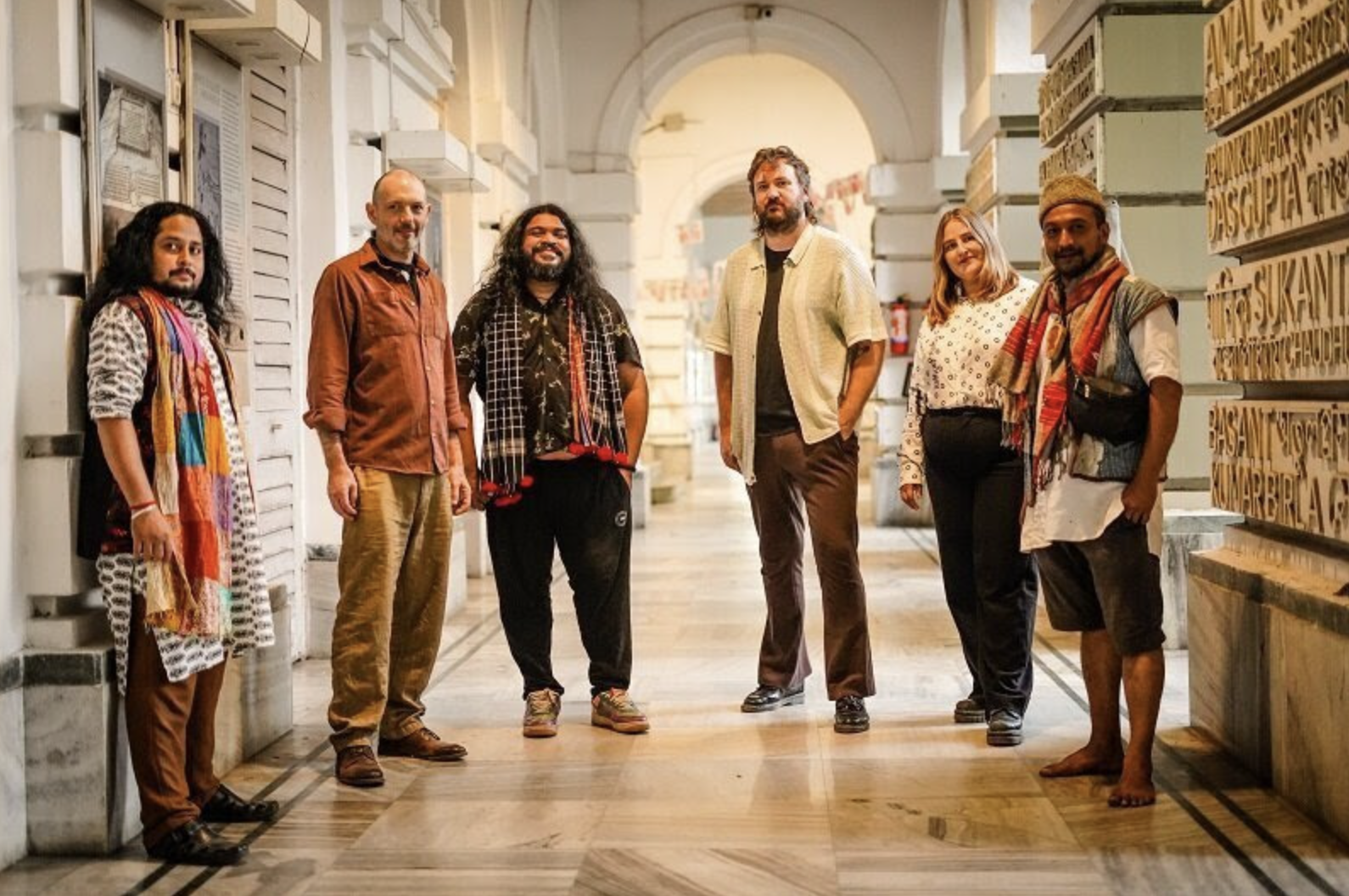
The Three Seas ‘Antaḥkaraṇa’
(Earshift Music) Released 20th February 2026
In a fabled exchange of metaphorical, lyrical, poetic and geographical sea routes, and across various trails and caravan routes on land, the fusion ensemble that is The Three Seas interweaves various global creative references with their roots on what has been billed as their most “expansive” and “spiritual” album yet.
Formed around seventeen years ago in the Bolpur neighbourhood of Shantinketan in West Bengal by the Australian saxophonist Matt Keegan and locals Deo Ashis Mothey, Gaurab “Gaboo” Chatterjee and Raju Das Baul, the troupe’s fortunes have followed the times, especially during the Covid years. But revigorated by a residency at the Edinburgh Fringe Festival in 2022, the group managed to write and put together their newest album; a call and yearn for transglobal embraces fused with the poetry and mysticism of the Baul.
As a foundation, the age old Baul tradition of minstrels and troubadour shared Sufism and Hindu Vaishnava Sahajiya (a tantric focused on the Radha Krishna workshop, specifically developed in Bengal. The verses of the Baul are both spontaneous and mystical, stepped in lore and spiritualism.
With all this in mind, there’s a transformation of what sounds like Baul spirituals, their yearns, their calls of prayer and desire to seek, mixed with Baul-jazz, a form invented, or so I’ve read, by one of The Three Seas band member’s fathers. Gaurab Chatterjee’s polymath musician father Gautam Chattopadhyay not only instigated that Baul-jazz form but was also a pioneering force in Indian fusion, founding the prog rock group Moheener Ghoraguli in the process. Track four on this new album, ‘Prithibi’, was written by the highly influential singer-songwriter and guitarist and refers to one of the Sanskrit words for the Earth goddess: responsible for many things, but essentially fertility, stability and grounding in Hindu mythology. Updated perhaps for the contemporary ear with fx sounds and what sounds like the synthesized, this paean of a kind takes its religious origins into the realms of fusion and along the Iberian coastline, the vocals a near call and response of the most soulful and yearned.
Reflecting their transglobal embrace of musical and cultural references, classical Indian religious symbols fuse with a cross-pollination of both Hindu and Sufi themes and motifs that sonically and lyrically encompass the longed and the religious with jazz, sonic effects, Bedouin rock, prog, Latin grooves and on the album’s finale, ‘Real World’, a Fela Kuti vibe – Matt Keegan’s sax actually reminded a little of Shango era Peter King.
Recorded at Peter Gabriel’s world-famous Real World studio, and with a unifying framework of the devotional and mystical, Antahkarana conjures up an eclectic magic of the spiritual and the electric, with moments when the action seems to recall bands like Amon Düül II and Embryo, and at other times, Dirtmusic and Genesis.
Shamanistic, venerable, worldly and full of grooves and various musical fusions, Antaḥkaraṇa is a yearn, a yin and spirited unification of musical ideas, cultures, devotions and questions that gels seamlessly together for a both mystical and danceable experience.
Here’s the message bit we hate, but most crucially need:
If you’ve enjoyed this selection, the writing, or been led down a rabbit hole into new musical terrains of aural pleasure, and if you able, then you can now show your appreciation by keeping the Monolith Cocktail afloat through the Ko-Fi donation site.
The End of the Month Revue for Feb/March 2026
April 2, 2026
A very much delayed bi-monthly Playlist selection of choice music
Starring…
White Fence ‘Your Eyes’
Dyr Faser ‘Winter Olympics’
Rusty Santos ‘Psycho Horses’
Hello Cosmos ‘Black Gloss’
Cashell ‘Ferris Wheels’
Ira Dot ‘Voices’
Mecanica Clasica ‘Pulsacion’
Greg Stasiw ‘Field’
Triple Blind ‘Chaotic Eyes’
Lauten der Seele ‘Mondratsel’
Simon Mogul ‘Can’t Shake The Spirit’
Shabaka ‘Step Lightly’
Ramson Badbonez & Jazz T ‘Raw Rap Syndrome’
Dominic J Marshall ‘Imagination’
Farma G & Relense ‘Makes Me Wanna…’
DJ Ian Head & Omega Jackson ‘Sith Lord’
Chris Crack & Bruiser Wolf ‘Somebody Pinched MyAss When I Crowdsurfed’
Gregory Uhlmann ‘Pocket Snail’
Benjamin Herman w/ Jimmi Jo Hueting, Thomas Pol, Akihito Obama & Ko Ishikawa ‘Kazegafuku’
Brother Ali ‘Another Country’
Sonnyjim & Sumgii ‘Muse’
Roce ‘Laisse Les enfants courir’
The Architect ‘THE FORCE OF LIGHT’
RJD2 & Supastition ‘Reset (Better Friends)’
Darko the Super, MF Grimm & Doseone ‘Desktop Eternity’
Cult of The Damned, Lee Scott, Black Josh, BeTheGun, King Grubb, Tony Broke, Salar, Sly Moon, Bill Shakes, Sleazy F Baby & Sniff ‘EXT. CAR PARK – NIGHT’
Tiny das Neves e Conjunto Sol d’Africa ‘Africa e’
Lice (Homeboy Sandman & Aesop Rock) ‘The Burgers’
Ras Kass ‘FUN & GAMES’
Farma G & Relense ‘Sun Wukong’
Os Untues ‘Feca non Chiga-za’
aus & The Humble Bee ‘I Follow A Barren Path Across the Old Mountain’
Magda Drozd ‘Piosenka Ludowa’
The Legal Matters ‘Everybody Knows’
Salem Trials ‘Shot Out of Nowhere’
Boilermen ‘Curious Thing’
Vlimmer ‘Aufbeiber’
Black Milk ‘Crash Test Dummy’
hazbeen, Kong The Artisan & Quelle Chris ‘Scary Kids’
Camp Nowhere ‘Hiatus is just emo for breakup’
Origami Horses ‘Joyless’
Xqui & Pyramids of Phobos ‘Hindsight’

