Our Daily Bread 623: Tetsüo ii ‘Menagerie’
August 16, 2024
ALBUM REVIEW/ANDREW C. KIDD
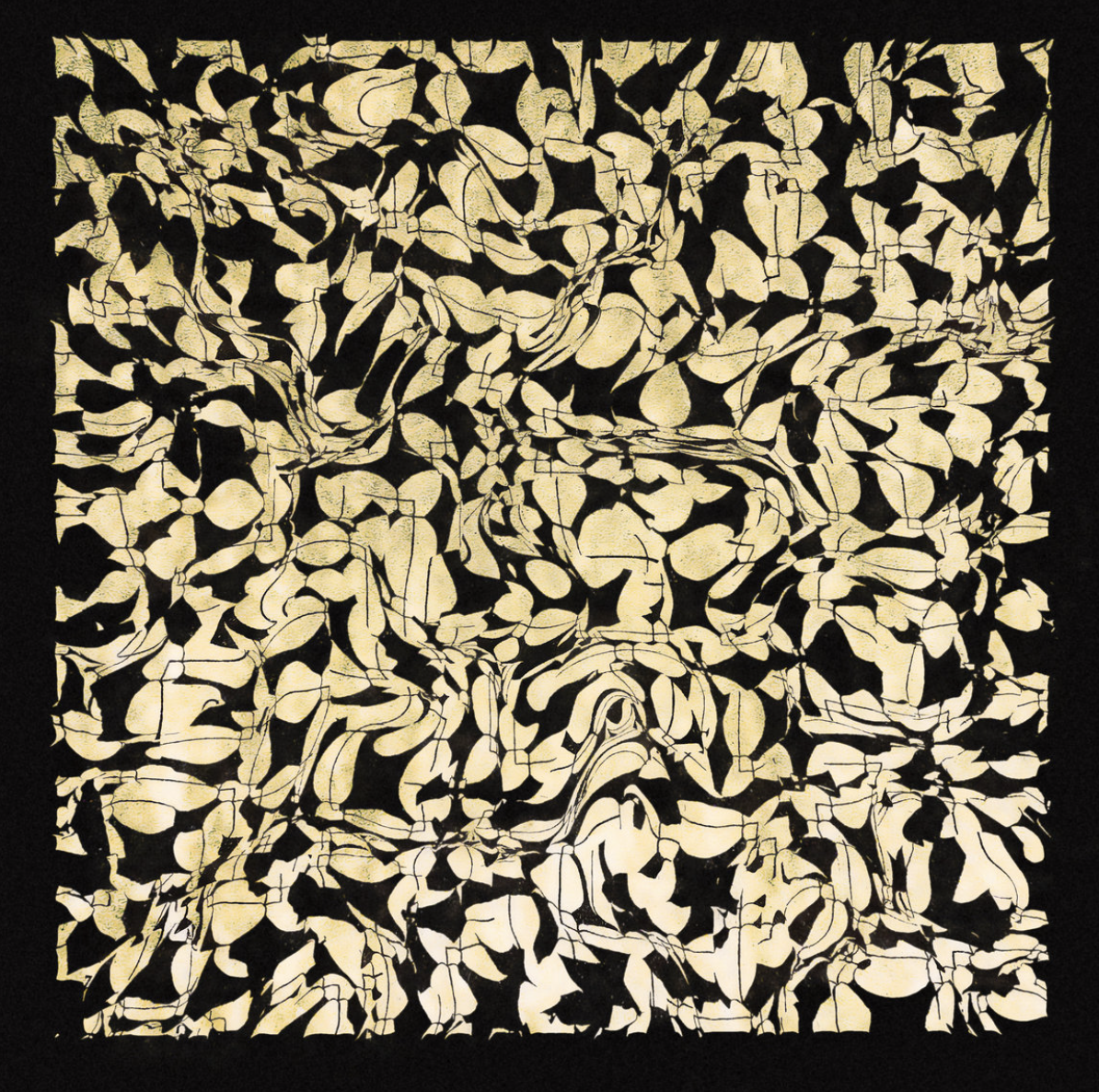
Tetsüo ii ‘Menagerie’
Available Now
You have emerged from a deep dive with eyes still blurry from the salt water. Silhouetted figures stand on a smoke-brimmed horizon. Rather than focusing on the outlines of the indistinct entities that come slowly into view, observe their shadows that coalesce into transient forms. Embrace the illusory. Meet the unperceivable as Tetsüo ii do. Sonically (and thematically), Dave Duval and Scott Saad reside in these foggy realms. Their musical introversions are often brief, but when listened to sequentially, each piece becomes part of a greater whole.
There are hallmarks of the duos previous works on Menagerie. Every semibreve, every cadence, every rest note is deliberate and measured. They continue to locate discreet spaces within the phonic interstitium. The synth patches are still carefully woven into a complex, three-dimensional quilt. The listener experiences synaesthesia on Summer’s Veil. Sustained pads play out on Getting Late. A lithe, piccolo-high melody aerates the beatless and breathy Pale Blue. The step-like, almost cinematic pattern that emerges on Heart of the Oak yields to a fixed tonality that cuts right through the piece, severing it in two. This funnelled distortion in the opening act serves to test the listener.
The experimentation continues on Whose Roots are Stars in the Human Mind (the title presumably inspired by the guttered glistening of the half-painted, half-photographic patchwork of images of Yggdrasill by avant-gardist filmmaker, Stan Brakhage). Here, Morton Subotnick meets LFO-circa-1995. There are: circling analogue sounds; minor key pseudo-melodia; glistening silver-like sounds. Akin to the Brakhage footage, I start to envisage static shots of sun glitter bursting out between the clouds.
The musical theme on Menagerie is not a melodious one. And neither is it confluent. One or two keyed synth notes sink and echo and play out in a repetitive refrain; each one is inkier than the last. The demonic horn on Molten Synapse (another nod to Brakhage) are future sirens. These are wavelengths that serve to warn. Perhaps they are the final sounds that enter the last auditory meatus there ever was. A similarly low-frequency waveband emerges between the swathes of CS-80-sounding pads that key a mournful melody on the title track. A strange electro-woodwind solo whistles. A whirling, grey-noise outro serves as an intermission.
What noises do clouds make when they move? Is there a symphonic kinesia? The undercurrent that rumbles and whirrs and distorts on Hungry Skies proffers one theory. The synth-work is arpeggiated, contrapuntal even. There is a reprise of Whose Roots are Stars in the Human Mind. Clangs and analogue splashes are perhaps indicative of precipitation. Where do these raindrops fall? The organ-inspired synths of Terra carefully bellow the longest melody of the album. And like organs, they expand and breathe. From the mid-way point on this piece, there is sonic diffidence. I imagine the droplets being absorbed into the earth, saturating the seeds that take root. In some respects, this mirrors the structure of the opening piece Heart of the Oak; yet here, in the deeper reaches of the album, there is no reprise of the organ that came before it. We are left in a cold place – a lightless space. Or perhaps we are simply deaf to the symphony of soil-concealed germination.
Coarse crackles like thunder introduce the The Swimmer. There is a bright, almost chromatic opening that edges upwards. The first sprouts peek out and gain height. Their stalks extend like limbs to touch an uncertain world. Bassy undertones provide rhythmic stability. Each stalk is anchored and made unmovable in their firmly-rooted positions. A deep synth note continues to play. The oscillating broken sounds – again, a little like a siren – would normally serve as a background; yet, at this point in the denouement of the piece, I concentrate on it almost entirely. Here, the listener is reminded that the fruits of the growing plants will eventually be threatened. As the wizened voice on the title track stated earlier in the album: “Even the most prolific species cannot be controlled by the sheer variety of life in the bush…and the variety of appetites they possess.”
Duval and Saad pen concept works. Menagerie is to be considered their ‘deep earth’ album, somewhat contrasting their previous ‘deep space’ releases (Tetsüo ii, released by Dagger Forest, and !!, self released, both in October 2023). Menagerie ends with Summer’s Veil (Reprise) which is a fragmented version of its former self. Nature seems to prosper here, but only temporarily. The light melody soon disappears into the umbra of the deep earth.
Our Daily Bread 599: Tetsüo ii ‘S-T’
November 6, 2023
AN ALBUM PURVIEW BY ANDREW C. KIDD
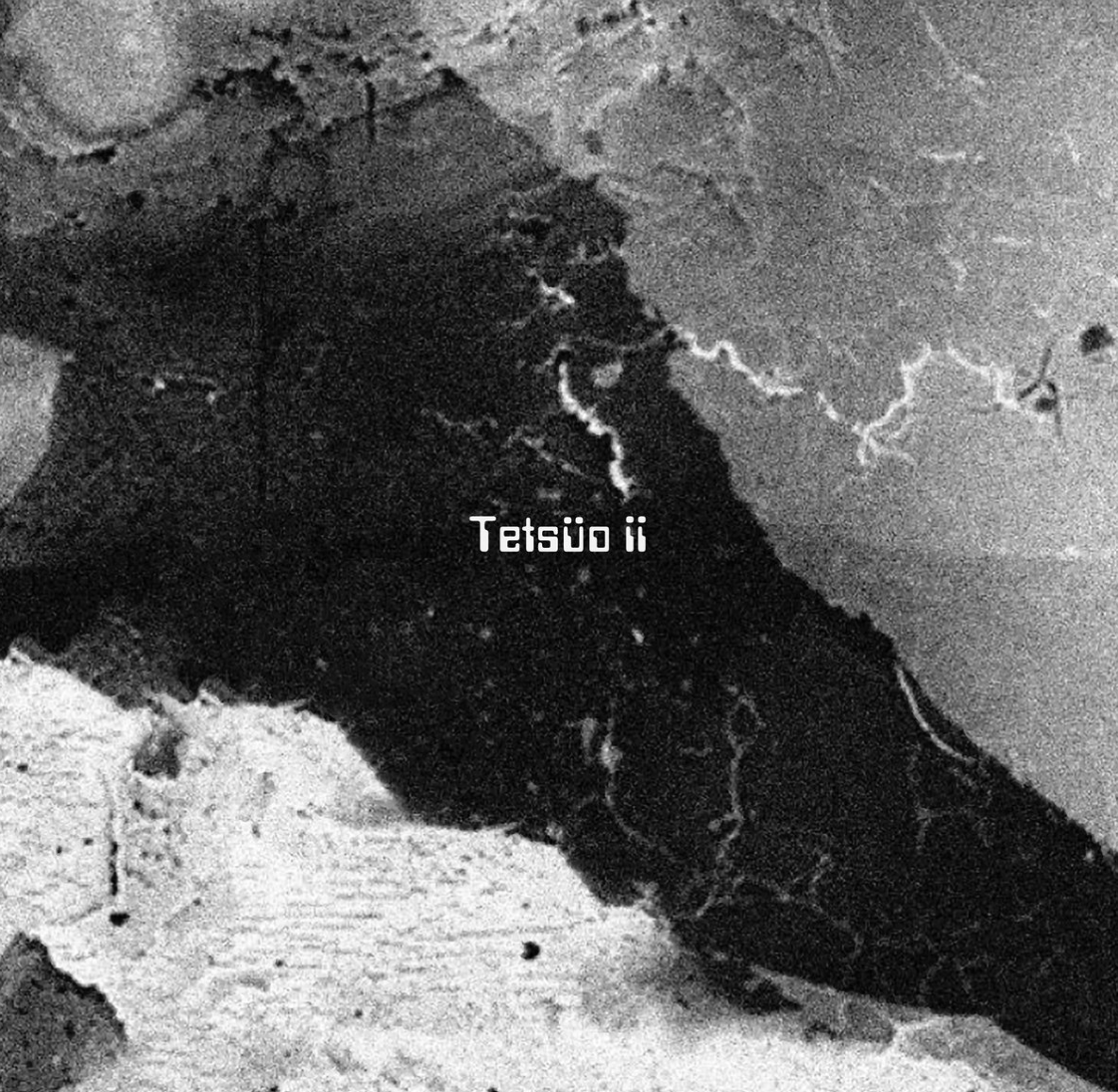
Tetsüo ii ‘Tetsüo ii’
(Dagger Forest)
The London-based tape label Dagger Forests boasts “sounds of dreaming and nightmares, dark and pop”. Theirs is an eclectic library of sound: vaporwave (Odours『香水』, July 2015); footwork (the track I Am, If You Want Me To Be on Heaven’s Night by Edith Underground, December 2022); and, witchhouse (Haunted by PVNDV, released in August 2023). The 2014 promo is a fine listen: the wonderful TUUTH – Fake Flowers (Draft 2) echoes the finest microhouse of DJ Koze and Gold Panda.
One half of Tetsüo ii is Dave Duval, also one half of, alongside Scott Nemeth, Zeit. His cryptic, often medieval-themed artwork beguiles; he references the gothic on his track Carmilla (ZEIT collection, released on NB Noise Brigade in July 2018). The other half is Scott Saad, a.k.a. Void Ant. The colourful Roswell aliens (some hooded, others revealed) on his cover art since 2015 are entertaining. Has the duo’s nom de guerre been borrowed from Tsukamoto’s Tetsuo science fiction horror flicks (Tetsuo: The Iron Man in 1989 and Tetsuo II: Body Hammer in 1992)?
From the droning litheness of the opener, Spectral Return, which ascends in a cycle of forever-sustain, to the pulsing repetitiveness of Charades, the self-titled album of Tetsüo ii is abstract. It is also exoteric: the motif from Spectral Return recurs at regular intervals throughout the LP, and somewhat less lithely on Spectral Return (Reprise), which – in a manner not too dissimilar to Kubrick’s 2001: A Space Odyssey and the sequential menace of Strauss’s Also sprach Zarathustra – decomposes. Blurry vocals enter on this reprise. Zaps pass by distantly. There is modulation, which oozes harmony and bleeds discordantly. We hear the motif again in Colors of the Dark, which I make further reference to later.
Lament plays out into a large glass bowl: the reverberation-less Vangelis synths matt against the steely and charcoal-grey drones that echo away in descent. The modular-style synths of Wight play in harmony as if some giant cosmic organ pipes out its flourishes and metallic embellishments. Again, there is clever use of repetition; there are few notes, but each contribute. There is a now signature diminuendo.
I will interject at this juncture to highlight my main criticism of Tetsüo ii: the curtailment of some of its pieces. Take Charades: the duo expand their sonic repertoire with a downtempo stock beat drumming in the background; the hi-hat taps are increasingly intricate; the narrative has only really taken fruition, when, all of a sudden – it stops. This is less of an issue on Slough* which is short but achieves totality. This same completeness plays out on In Space There is No Law. White-noise pulsations cut in and out like thrusters of a spaceship making its final approach to dock. Subtle sounds clamour like metal. A keyed melody twinkles. Its outro chimes.
Colors of the Dark is the penultimate piece on the LP. It is a speculative minor masterwork. As the motif from Spectral Return is reprised, I am a passenger in deep space considering what colours constitute darkness. Darkness: the absence of illumination. Yet, this track is far from being light-doused. Its ambient drones lift the listener. It is thematically cosmic. Red shifts appear. Blinking starlight is referential. Across its length of 16-minutes, synth layers build and expand. There are discordant moments such as low-frequency notes (perhaps asteroids striking different planets?). Sustained synths are suspenseful; these prolonged treble-heavy passages offer glimpses into the unknown. The shimmering notes that enter at the 8-minute mark are warm, almost reed-like, breathing out into the swarms of passing synth notes that filter through as muons and anti-muons and neutrinos and other elements that have yet to be discovered and named. The organ-like sounds that cascade after 9-minutes elevate the listener; this disappears to reappear in step-like descent after 12-minutes – this time, a minor key proliferates. Each note progresses through their respective scales, always achieving harmonic balance. It counterbalances the more discordant Wight and In Space There is No Law. Colors of the Dark is devoid of any discernible time signature, which is good – time is only an imagined construct after all. The thrumming notes in the denouement of the piece allude to thrusters being primed in a pre-propulsive state: onwards to vacuity – we who occupy this great vessel are shuddered and jolted in a forward-fling to an even deeper unknown.
Tetsüo ii concludes with Glossolalia (translation: tongue-talking). The tone on this piece is quite different to the rest of the LP. Voices emerge from the counterpoint synths as they did on Spectral Return (Reprise). It is at this point that a perfunctory narrative becomes clear. We emerge from the merging of black holes, a place where all the ancient languages and cultures have been pulled into a place of celestial merging lasting billions of years. The outcome: communicative enlightenment. These were the strange visions I had when listening to Tetsüo ii.
* Did I hear a subtle reference to the late Ryuichi Sakamoto at 1 minute 34 seconds? Perhaps a refrain from Merry Christmas, Mr. Lawrence. I tip my hat to the Tetsüo ii duo if that is the case.
 Monolith Cocktail Blog