Perusal #76: Howling Bells, The Odes, Magda Drozd, Yoshiko Sai…
February 5, 2026
A world of sonic/musical discoveries reviewed by Dominic Valvona. All entries in alphabetical order.
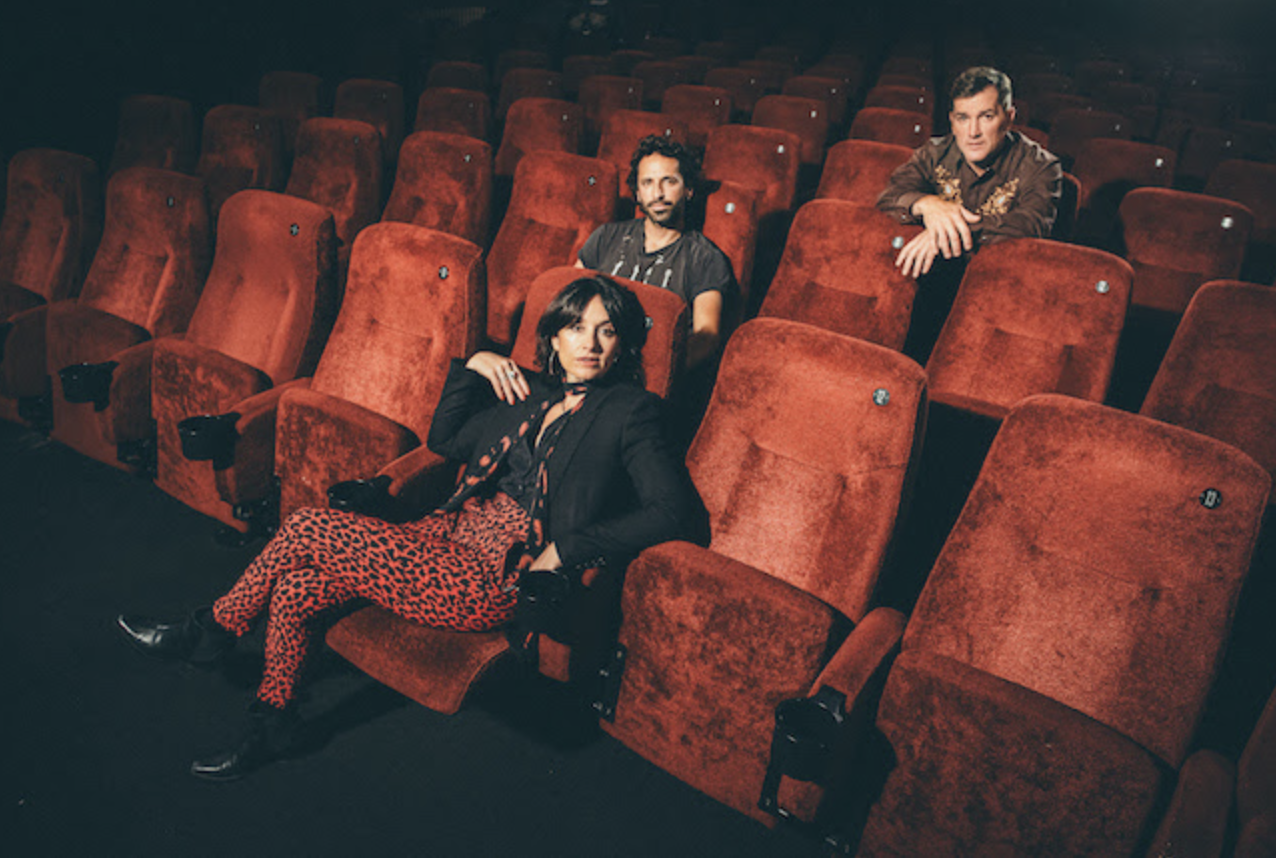
Magda Drozd ‘Divided By Dusk’
(Präsens Editionen) 13th February 2026
Coupling a renewed interest in Polish folklore, its history and roots with time spent in Japan, the composer, violinist and sound artist Magda Drozd inhabits an often alien, mysterious and experimentally intensity of field recordings, atmospheres, the neo-classical, avant-garde, serial and most hauntingly ethereal.
It’s as much an apparitional-ambient and dream-like album as it is dramatic and full of a certain otherworldly drama. And for some of that time it draws not only from the two countries that inspired it, but also from natural phenomenon: an eclipse to the album’s dusk divided title. For in-between worlds, the Warsaw born, but living between Zurich and London artist Drozd inhabits a sonic and vocally invocative landscape that is one part Theatre Of Eternal Music and another part Noémi Büchi.
Working in part with Japanese foils Rai Tateishi and Koshiro Hino – both of the Osaka rock minimalist troupe goat – Drozd absorbs the sound of the high-pitched Japanese shinobue bamboo flute and the NE Thailand and Laos khaen bamboo mouth organ into a partly neo-classical and abstracted drama of aria-like voices, the slightly industrial, willowy, ghostly and folkloric.
Folk songs transformed, stirred up and given a new impetus meet with klezmer and the courtly (especially on the near fairytale and whistled-pitched ‘Piosenka Ludowa’; a free-form transported interpretation of the folkloric folk song), or come up against heart of darkness style guitar, vocal callings, electronic filaments, ghostly reverberations, and the incantations of crickets and insects. The mood and soundscape are enhanced and given a secondary geographical feel by the use of various instruments and electronic/effects apparatus, including the Lyra-8 – described as an organismic analogue synth, its eight varied generators are referred to as voices that resemble the tones of an old electric organ. And with the addition of both wordless and lyrically sung spells, siren songs and cantos of an abstract kind, the whole album hovers and strains between the esoteric symphonic and the strangely folkloric; between Japanese traditions and environmental music, the harrowed depths and pulls of East European and something not quite of this world. Nightmares and dreams, realities and folklore meet in a new space and time.
Howling Bells ‘Strange Life’
(Nude Records) 13th February 2026
An unforced return and obligation, with enough time (just over twelve years) and distance to make a mature judgement, the Howling Bells are back with a new, and crucially, pretty damn fine album of grown-up indie-rock, indie-pop and the psychedelic.
It must be said however, that in the crazy divisive decade since the band’s initial break-up many of the issues that perhaps led to the split are still to be resolved. Bossing it with a flurry of more stripped-down solo albums, one half of the sibling team that instigated the band, the vocalist and guitarist Juanita Stein has spent the intervening years writing and producing music that erases everything but the most vital, emotionally receptive and connective elements of the Howling Bells sound to produce confident (despite the fragility and vulnerability in places) songbooks of personal memories and identity. Even though Juanita’s brother Joel is just as much an integral wellspring of ideas, motivation and creativity, and despite a number of lineup changes during the band’s career trajectory, the focal point, the spotlight, has always shone brightest on their front woman. That light can also burn, and Juanita’s time spent out at the front hasn’t exactly been a positive one – as referenced on her solo work, especially on 2024’s The Weightless Hour; one of my choice picks of that year. Whilst the bane of music press cliché, the allure of the front woman is nevertheless a phenomenon, a selling point throughout an industry previously dominated by males. It’s felt and seems to perhaps be referenced on this album’s own winding indie and spiky ‘Heavy Lifting’, that relationship and in the press, Juanita was carrying around a lot of weighted expectation on those slim shoulders of hers. Perhaps, now, in more recent years, from the viewpoint of motherhood, Juanita wishes to set things straight, to pass on her knowledge and resolutions from sagacious advantage point, having come out the other side, still persevering and still standing strong.
After originally leaving their Australian home to pursue a music career abroad, Howling Bells moved to London where they quickly stood out amongst the dying embers of the MySpace era and its concentration of raggedly male indie bands and post-post-Britpop wannabes. After being championed to a point by such rags as the NME, they soon hurtled up the ranks and earned a spot supporting one of the biggest, if most boring, bands of the era, Coldplay on a stadium tour. This acceleration would have its drawbacks. But with singles like ‘Setting Suns’ (I would say one of the best, certainly among my favourites, from the early noughties) they managed to be both relatively popular and yet highly credibly creative wise. That time hasn’t been forgotten, and after the first split, made after the band’s 2014 album Heartstrings, there seems to have always been a desire or need to gather back around the Howling Bells catalyst.
But Strange Life is much more than that, it’s also a statement of dreams, plaints and diaphanous psychedelic rock carousal rides on the subjects of nostalgia, ideas of home and resilience. On this theme we can pick out the Echobelly and Mazzy Star-esque ‘Melbourne’, a song with a sad cooed tone that speaks of the letdown in finding that despite returning to the bosom of home and its attractions, the reality is quite different: friends, and those you grew up with more or less all moving on and away. Better to perhaps move forward than back and dwell on the past. Meanwhile, ‘Halfway Home’ seem to catch them cut adrift and homeless yet finding a reassuring candour of belonging.‘Unbroken’ is a great opener, a single if not already in the making, and ‘Angel’ seems to be a real departure for the band towards circus Britpop.
As I’ve already described, there is a new sense of confidence about these songs; the scope of influences and range subtly expanded, helped in many ways by Juanita’s solo pathway, which emphasis the “light” touch over the heavy and raging. Vocally speaking, that voice is just as diaphanous, but able also able to turn on the Grace Slick switch, or to escape down the rabbit hole into metaphorical and allegorical dreaminess. Both Joel and drummer Glenn Moule lay down a solid backbeat that switches between echoes of Jet, the Cocteau Twins, Britpop and Juliana Hatfield. Everything is just so; energetic when needed, subtle and sympathetic at other times, and even psychedelic. As reunions go, it’s a very successful one. The vulnerability shorn, the dreaminess ramped up, and the songs speaking with a more mature strength. I for one am glad to see them back anyway.
Ira Dot ‘In Blue Time’
27th February 2025
In development for the last five years, the debut album of disarming indie-blues melancholy from the Ira Dot collaborative partnership of Eddy Wang and Ryan Akler-Bishop seeks comfort and reassurance in these most disconsolate and plaintive of times. Drawing on a wealth of lament, or yearned expression, and a sense of detachment from not just race but the universe, both foils in this project exude a cosmic, fairytale, whimsy and Chinese-operatic patchwork of early noughties influences in their hour of neediness and slacker-like indolent sadness.
Powered as much by such melancholic dreamers, observers and unfortunates as Virginia Woolf and Marcel Proust as by the writings of the cultural theorist and American literary scholar Anne Anlin Cheng, In Blue Time is essentially rooted, or unrooted as it were, in both the psychological and all too real problems of racial identity. With the musician, filmmaker, Pennsylvania PhD alumni and Toronto Experimental Translation Collective member Wang left a little wanton and dejected over his Chinese heritage and identity, the album’s lyrics – mostly enchantingly downcast or twee – often reference ideas of belonging and detachment. Cheng interestingly, has written much about this, especially from the Chinese and Southeast Asian viewpoint (Cheng is herself of Taiwan heritage); an identity that seems to slip down the virtuous order of importance on the race meter, with Cheng voicing her own criticisms when Asian women are left out of the debate, the picture, and out of the protest movements for social justice despite facing hostility, racism and various forms of abuse. As one of the oldest communities in America if not anywhere, the Chinese are embedded in the fabric of our landscape and culture. However, this relationship has relied mainly on exploitation of one kind or another. But as is often the case, and through the negative effects of the authoritarian rule of the Chinese communist party, the country and its people have been subjected to scrutiny and racial abuse. There’s so much to unpack, and I haven’t the room. But suffice to say Wang’s cultural separation from those roots, growing up in the West, have left a void that needs addressing.
This main thrust is answered by lyrical displays of the longing, wanton and dismayed, put to the production and music of the multi-disciplinary artist, filmmaker and co-editor of the Big Toe magazine Akler-Bishop. With sympathetic pianos, some light but emotionally effective strings, Casio-like shimmies, tropical and celestial atmospheres, various frequencies and interference, the tunning into one sampled or captured narration or metaphor, the accompanying delightful female shadowed vocals, and reverberations the album traverses a whole spectrum of moody blue shades. And within that palette there’s hints of The Unicorns, Jonathan Richman, The Books, Olivia Tremor Control, Frog, Mercury Rev, The Terror Pigeon Dance Revolt!, Broken Social Scene, early Eno, Chinese opera, the Muppet show musical parts and the exotic.
Despite the title it never feels like a malady, nor does it come across as anything but a most lovely indie album of sentiment and belonging. It just gets better on every play, like a musical comfort blanket.
The Odes ‘Déjeuner Sous L’Herbe’
(Not Applicable) 6th February 2026
A union of the untamed, Blurt’s legendary frontman and wild squawking, stonking saxophonist Ted Milton teams up with the electric trick noise maker, sound artist, software developer and composer Sam Britton for a double-album feature of both sonic assemblages backed free-improv/free association vocalisation and shorter poetic vignettes.
Already pretty much a cult progenitor of a sound that could only be riotously described as post-punk-no-wave-protestation-mutant-jazz, Milton’s testaments amd rages transformed the group he founded in 1979 with his sibling and former English prog-psych outfit Quintessence band member Jake and guitarist Peter Greese. And although that group mutated constantly over the following decades, the revolving set-up near enough always featured Ted as chief instigator/performer. Whilst it would be disingenuous to those artists on the vanguard of the 80s scene that took over the downtown scene of NYC and Europe, Ted could be singled out as one of the earliest originators of no wave and its various offshoots. Joined now in 2026 by Britton, who channels much of his idiosyncratic Isambard Khroustaliov alias and work with such troupes as Scarla O’Horror, both Ted’s wild saxophone skonks, squeals, squeezes and drifts and partly Dadaist, partly beat, partly avant-garde and partly snide, sneery and pitying digs at nationalism and the state of society are transmogrified or laced with warping, crunching, enveloping claps of thunderous electronica; punched, slapped and singularly whacked synthetic drum pads; 8-bit and binary distortions; and Populäre Mechaniks.
Forty-five tracks in all, divided into two parts; the first section, the surrealist impressionistic and situationist imbued Déjeuner Sous L’Herbe (which I believe translates as “Lunch Under The Grass”) draws both foils together in a post-punk, fucked-up jazz and leftfield dance music collaboration, whilst the second part, Anti Climb Paint, feature Tim unaccompanied performing over thirty short (some lasting only the time it takes to read out the title) poems of the absurd, politically charged, pitying, silly, observational and comedic: sung at times but mostly spoken, Tim invokes a fusion of Lydon, Ken Livingstone, music hall, a bastardised and updated wrathful version of the WWI poets and Jon Sinclair. The latter section features everything from “stringing up” the Westminster front bench to loud shirts (“Braille for the sighted”), corporate office jobs on the Moon, Captain Tom’s charity walk during Covid (“he kept a walking, flapping his gongs”), and his uneasy relationship, so it seems, with “dad” (a theme that stretches across a number of readings).
The more musical, rhythmic but highly experimental former section could be described as a meeting between the sax of Archie Shepp, Andy Haas, Colin Stetson, Biting Tongues, James Chance and Konk and the off script improvised tubular scaffold effects, wraps and reverberated noise of Britton’s various hidden sources and apparatus: often sounding particular Germanic.
A generous offering of words and sound, anointed under the more lyrically and near disarming (certainly giving zero indication of the nature and to the sound of this duo) The Odes union, Déjeuner Sous L’Herbe and its second act cement reputations, encapsulates the current messy, fucked-up state of the society and politics, and offers up a performance of equals working out on the peripherals of the music world.
Pefkin ‘Unfurling’
(Morc) 30th January 2026
Both drawing from and fascinated by the landscape, the history of Western Scotland and the many islands that sit between itself and Ireland, Gayle Brogan (under the Pefkin alias) once more embodies a both abstracted and devotional near otherworldly vision of that old home. The first album since moving across the Scottish border to the North of England and Sheffield, Unfurling, as its title would suggest, does just that as it unfurls a simultaneously beatific, sober, haunted, mysterious and misty soundtrack to the seasons and the Irish saints sent in their Gaelic etymologically named small lightweight coracles across the sea to pagan Scotland. It’s the mystique, the hermit’s life and the early rituals, the conversion that intrigues.
Emoting a both haunting and hymnal-like atmosphere throughout, Brogan invokes the abstract feels of the environment in a cycle that traverse’s winter and spring. This is done through the use of either apparitional-like or transformative folk choral voices, the use of the viola and violin (erring towards John Cale, and a touch of Jed Kurzel), various drones and purrs, throbs and the sound of the landscape itself: the lapping tides of either the sea or the waters that wash up on Scotland’s dramatic loch topography.
I was reminded in part of Delphine Dora, Susan Alcorn and Simon McCorry. But this album is mostly unique in capturing a mysterious essence and the feel of each season’s embrace or shroud: winter really does seem quite sober, ghostly but also beatific; I can see the heat rising off the damp and melting moss on the opening ‘Green Bound In Ice And Snow’. At other times it feels like a transformative vision of the Gaelic; old songs and geography transcribed beyond the parchment and recordings of scrolls on to the air and into the ether.
An extraordinary work of both the short and long form, Unfurling emotionally and intimately soundtracks a feeling of time and place, of history, and of religious myth.
Yoshiko Sai ‘Mikkou’
(Wewantsounds) 13th February 2026
The famous silk road, from Europe and Persia to China, formed the backdrop or mood for the ethereal and clean-cut siren Yoshiko Sai’s second studio album Mikkou, released back in 1976. Tying the atavistic with the contemporary, picturing in words and music that fabled trade route and the lands it crossed – the Takalamakan desert and such – Sai longingly, seductively and achingly transports the listener to magical, dreamy and mirage-like realms. And yet, despite the fantasy, the relaxed near show-like and almost cabaret funk, the bluesy influences and brassy resonance of such peers as The Far East Family Band and worldly prog, the album is anchored with references and plaints to femineity, freedom and the “passage of generations”.
The singer-songwriter and artist (for it is her fantastical/mythological painted cats and nudist sprites, nymphs, muses that don the various album covers) released a flurry of albums between the mid and late 70s, before talking a considerable respite, and picking up again in 2001. In fact, this latest album to be released from Wewantsounds’ series of Sai vinyl reissues (many receiving a proper international release for the first time) features a new interview with the Japanese cult star. But for those yet to experience her most evocative crystal voiced metamorphosis and vision of folksy-blues and balladry, and know little about her, Sai was born in the old Japanese capital (during the 8th century) seat of Nara, located on Honshu in the 1950s. Surrounded by shrines, temples, architecture and a landscape of great cultural importance, Sai absorbed herself in myth, the dream-realism, the dark and the bizarre literature of such notable Japanese authors as Mushitarō Oguri, Yumeno Kyūsaku and others. It was whilst recovering from a kidney disease and putting on hold her law study at Doshisha University that she began to paint and write poetry and songs. After competing in a number of competitions and submitting songs, she was invited to perform as the opening act for Rabi Nakayam – anointed the female Japanese Bob Dylan. Proving a successful leg on the ladder, Sai was swiftly signed to the Teichiku label, with her inaugural album being released on that label’s subsidiary Black in 1975; produced by the notable Japanese jazz muso Yuji Ohno no less.
Revisited in 2026, accompanied by Hashim Kotaro Bharoocha’s informative liner notes and interview, the Mikkou LP entwines faraway dreamt lands and islands with a most beautifully envisioned songbook of the weepy, sublime and drifted. Creating the right atmosphere of Turkic, Samarkand and Persian allure is the spindly-lattice and springy reverberating sounds of the dulcimer and what sounds like tablas – produced and arranged by the noted Isamu Haruna. But making his mark throughout is the famous Japanese guitar hero Masayoshi Takanaka, who channels his most bluesy credentials with folk, psych, Latin America and country on the silk road of travails and magic.
Soulfully and softly fluctuating between flourishes of old Persia, the Caucuses and China, but also seemingly embracing touches of the Iberian, of the Caribbean lilt, of funk, and the Laurel Canyon, Sai effortlessly oozes fantasy, love and lamented aches. Almost filmic, ambitious yet very much contained and sentimental, Sai’s second LP is a silkscreen of yearning escapism.
Here’s the message bit we hate, but crucially need:
If you’ve enjoyed this selection, the writing, or been led down a rabbit hole into new musical terrains of aural pleasure, and if you able, then you can now show your appreciation by keeping the Monolith Cocktail afloat through the Ko-Fi donation site.
THE MONTHLY DIGEST INCLUDES A CLUTCH OF ACCUMULATED NEW MUSIC REVIEWS; THE SOCIAL INTER-GENERATIONAL/ECLECTIC AND ANNIVERSARY ALBUMS CELEBRATING PLAYLIST; AND CHOICE PIECES FROM THE ARCHIVES.

Cover Stars: Blanco Teta
___THE NEW___
(all reviews are in alphabetical order)
bedd ‘Monday 10:55 EP’
27th June 2025
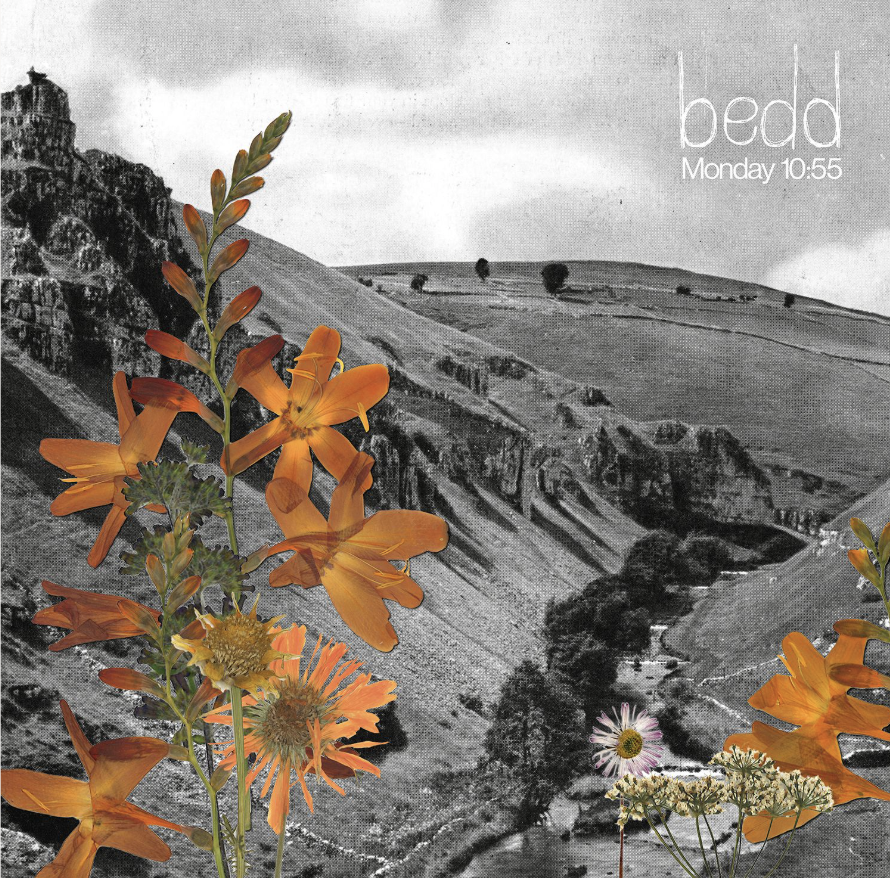
Once more on the site after quite a break – my fault not theirs -, the Oxford project led by singer-songwriter, composer and producer Jamie Hyatt is back with a bridging style EP ahead of a debut album, released in the Autumn.
Sometimes I excel myself with a descriptive summary of a sound, and with bedd’s ‘Auto Harp’ single I described their sound as “an understated breath of fresh air from cosmic suburbia”. This beauty of a single was followed at a later date, during Covid isolation, by a premiere of ‘You Have Nice Things’, which seems to have now continued with its small-town landmarked sense of isolation and sad detachment on the EP’s title-track, the very specifically timed capture of nocturnal plaint and heartache ‘Monday 10:55’. The focus song features fellow Oxford musician, the vocalist and guitarist Emma Hunter (who’s own brand of music, created with drumming foil Tom Bruce, merges the worlds of David Lynch with a penchant for Flamenco, Catholic litany and culture and the 1950s), with extra subtle emotional pull, adding harmony and a touch of the soaring to this drifted indie-blues track. It reminded me in places of Ride and the Engineers.
Before we go any further, we must mention the rest of the band, the ranks of which feature ‘a range of celebrated local Oxford musical talents’, including bass player Darren Fellerdale and guitarist Neil Durbridge, both bandmates from Hyatt’s previous project The Family Machine. Completing the lineup is the guitarist Tom Sharp, electronic musician and producer Tim Midlen (aka The Mancles of Acid) and drummer Sam Spacsman. The EP itself was performed, recorded and produced by Hyatt himself with the band at Glasshouse studios in rural Oxfordshire and mixed and mastered by Robert Stevenson at Sweetzerland Studios.
That’s the credits out of the way. The title-track is flanked at both sides by two very differently paced and performed songs; the opening ‘Messed Your Head’, has more oomph with its mix of Blur’s sliding bass on ‘Beetlebum’ and The Breeders bass line on the equally famous ‘Cannonball’, Elastica-style “woah” and messed up knock-back passionate off-the-chest power-Britpop-indie-rock (I’d go as far as saying an influence of The Pixies), whilst the closer, ‘D Minor’, is a more echo-y reverberated stripped down and atmospheric piece of disconsolate love strains and emotional discourse that has an air of Jeff Buckley about it.
It is not meant as a criticism in anyway, but bedd sent me right back to the 90s with this EP mix of shoegaze, Britpop, indie and grunge-rock. But they add a certain quality of the soundtrack, something that’s a little bit grander. It will be interesting to see what the album is like later this year. But on the strength of this trio of songs, it looks to be a winner.
Blanco Teta ‘La Debacle las Divas’
(Bongo Joe) 4th July 2025
Delivering their 2025 manifesto of the riled and near bestial, the hellraising and electrifying Argentine quartet of Blanco Teta throw off the metaphorical chains of tech disparity and servitude with a mix of the devilish and hardcore.
In the face of AI, ‘crypto-serfdom’, ‘techno-feudalism’, the constantly ever-changing, updated feeds of social media, the pressures of instant gratification and attention seeking validation, and that everything these days only makes an impact culturally if it was prompted or began on tiktok, the group show both their venerability and strengths. They face the uncertainties and anxious dread of our times with velocity as they pound and churn, twist and channel aspects of the post-hardcore sound, punk, riot grrrl-style power-ups, death metal (almost), grunge, rock and 2000s indie-rave-punk-rock.
Marking a return to Bongo Joe, the La Debacle las Divas (‘the debacles of the divas’) album sees the quartet of Josefina Barreix (on vocals), Violeta García (cello), Carlos Quebrada (electric bass) and Carola Zelaschi (drums) change things up, recording for the very first time live in the studio direct to tape. Without edits and overdubs, the album has a real new dynamic; the whole record more or less without a pause, thrashing and driving through an eleven-song set, as if it were a live stage performance. There are various let-ups, if that’s the word, and mood changes, a change in tempo and ferocity too. But this remains a chthonian and cosmic swirl of the grounded-up, menacing, prowled, alarmed, dragged and charged.
The atmosphere of this album is one in which the bonus of youth is wasted, broken upon the pressurised novelties of being young and in the moment, but ready to be disregarded and tossed away into the internet wilderness. They band themselves declare that they feel caught between a stasis of being both in their prime yet already growing too old to be feted. And whilst they were indeed feted, their lives haven’t exactly change for the better: mentally or financially, still burdened to surviving on the vaporous fumes of goodwill, popularity and a presence on the internet. Channelling all that into this diva-rage, borrowing that title and turning its connotations on its head, Blanco Teta (which I think translates as ‘white tit’?) launch a mix of disgruntled and disenchanted maelstroms and more near plaintive reproach and forlorn.
They open with the sound of generator fuzz and scuzz, in a heavy drive of Courtney Love, the Raw Brigade, Bikini Kill and L7. Heavy trebly bass, descending spirals, pounded beaten drums rule the day, but the action and influences fluctuate; on the excitable protestation ‘Subiduki’, I’m hearing Anthrax, Faith No More and Death From above 1979, on raged thud rocked sassy and maniacal decried ‘Joven Promesa’ CSS sharing the stage with Shonen Knife, and on the hardcore, morse code guitar wired space-rocking-psych ‘Perdida’ the Klaxons and The Fall. They also reminded me in part of a Latin version of the Slavic quartet Lucidvox; only with far more guttural daemonic vocals.
Tough and ready for the rumble, yet disconsolate and bereft of answers, Blanco Teta serve up a vortex and heavy meta(l) outcry and alarm at the state of society and the music industry. That debacle of divas has produced one of the year’s most promising, fierce and unique performances.
Dave Clarkson ‘Was Life Sweeter?’
(Cavendish House) 9th May 2025
After briefly crossing paths on Bluesky earlier this month, I’m aware that I’ve entered upon the electronic sound worlds, expressions and atmospheres of Dave Clarkson at a very late point in a career that spans decades of experiment/exploration; at a point when the soloist and collaborating composer is taking stock, questioning that old generational trope of nostalgia for a time that probably never really ever existed. It’s easy to see why of course: seeking comfort, reassurance and perhaps some form of guidance from a period when you were young, still hopeful, at your creative best and fancy free – well for many of us anyway. But no one can really believe at this point in time, with all the social ills, conflict, and tyranny that the future is looking anything but dystopian. Clarkson however draws a line in the sands of wishful thinking time, opting to create a confectionary and candy concepted reification of a childhood. In Clarkson’s own words, this latest album questions ‘the whole hauntological culture of escaping to the past and whether this is a denial of a future left to live.’
Previous works have explored ‘British faded fairgrounds, coastal quicksands, shorelines, caves and forests’, and been created, at least partially, in the field so to speak. Was Life Sweeter? uses a similar device and methodology, with recordings taken in various confectionery sites around the country. And so, you will hear amongst the engineered electronics the complete journey from Space Dust powder, fizzy drinks, ice cream vans and sweet shops indulgence to the inevitable visit to the dentist’s surgery, completed with the sounds of their terrifying cavity filling drills. From what I remember in the 80s, it really didn’t pay to have a sweet tooth; the barbarity of those early visits, the fillings in my milk teeth, still plaguing me with fear to this day.
It all starts in a dreamy-like state, with translucent bulb-like notes suspended and tinkling above the swept waveforms of phaser air, on the mirage of innocence ‘Milk Teeth’. The scoped-up actions, the anticipated weighing of your favourite sweets, is transformed into another piece of skying kosmische fantasy made nearly mystical on ‘Ye Olde Sweet Shop’, whilst space dust explodes on the tongue on the next track: childhood happiness at this candy firework made near dreamlike and then sci-fi. There’s the easily identified fizz of pop later on, and the recordings of voices, the captured playfulness and buzz of devouring such sweet connections to childhood.
The innocuous treat though of a ‘Three Blind Mice’ calling ice-cream van is made cosmic, with the nursery rhyme siren carried on into the infinities of inner space, kept locked in nostalgic memory. And there’s always some sign of the more haunted, more foreboding aspects of that nostalgia trip; recalling those 80s soundtracks from supernatural TV series, the harsh life’s lessons and warnings made terrifyingly clear in TV ads aimed at kids during that decade and something that’s hard to pin down but seems off-kilter and near alien. ‘Sugar Rush (Speed of Life)’ is a speed’s freak sweetened running man, part electro and part German electronica of a certain vintage. An alarm bell rings, and the listener is sprinted off the starting blocks on a rush of candy adrenalin.
Clarkson successfully balances a hallucinatory world of childhood sweetness made more ominous and haunting with abstract quandaries of past lives, miss-reflection and the need to push on through and fully adopt the age in which someone is present. I’d recommend this album for those with an ear for the sounds of the Radiophonic Workshop, Toshimaru Nakamura, The Advisory Circle, Belbury Poly, Jez Butler, Lukid and Harmonia – which should sound like an inviting proposition.
Itchy-O ‘SÖM SÂPTÂLAHN’
Released back in May 2025
Beating out a ritualistic circus of chthonian and alchemist theatre around hell’s gateway, the expanded Denver collective of performers, artists, musicians and conjurers known as Itchy-O once more record their invocations for posterity. Although celebrated for the staging of various themed performances set against a Mad Max meets Mexican Day of the Dead like decorated back drop of iconic and wasteland ruined Denver locations (from the Mission Ballroom to New Tech Machinery buildings, and Covid initiated drive-ins), the circle has only released a smattering of packages to the public since inception.
Described as a ‘Voyage into Exocosm’, their latest behemoth of an album opens both atmospherically disturbing and interdimensional, cosmic instructive portals to the hermetic and spiritual. From – I believe – the Norwegian for ‘seam’ and ‘seven grains’, SÖM SÂPTÂLAHN envelopes mournful bowed Eastern lamented classical strings and the vibrations, frequencies of a specially commissioned apparatus of bronze percussion (to be accurate, 600 pounds of reclaimed bronze remodelled into gongs and metallophones by the group’s collaborative partners, the Colorado School of Mines) with the industrial, otherworldly visitations, magik and necromancy.
Day spa new age outer body experiences tied to mystical and darker forces, transcendental instruction, exercise converge on the astral highway to voodoo and demonology. In practice, that sounds like the Phoenix rising forth, or rather the Great Marquis of Hell, known as ‘Phenex’, to scuzz scales and fried and sawing electric guitar, ringing and resonating gongs and a lattice work of metallophones. It can also sound like an aural rebalance of spectral harmony: As found on the longer form instructive ‘Ptothing/Soktū ōbu’, which soothes the listener with an interactive navigator realignment of the speakers for a cerebral session of breathing exercises and cosmic escape. That greeting and guidance turns into a cinematic-scale, sonorous and daunting projection into dark sci-fi, before release and a unification of mind and body. This is a musical and sonic world in which you will find references to demons, the Latinized groans of chthonian dread, and tuning fork like signals to unnamed leviathans beyond the fourth dimension.
Ambiguously lurking and congregating under the canopy of mystical jungles, or, hanging from the vines; retreating to cult 50s and 60s scored Javanese islands; and conducting ritual replenishment in the shadows of a temple complex, Itchy-O simultaneously draw upon aspects of gamelan, the fairytale, industrial music, the classical, the filmic, folkloric, new age and the avant-garde to pit machine against the physical in an act of exploratory performance, instruction and esoteric mantra.
JLZ ‘Tumba’ (Swine Records) 7th June 2025
Various ‘TUROŇ/AHUIZOTL’ (Swine Records w/ Fayuca Retumba) 17th June 2025
Arriving in the last week or so, a doublet of releases from the collective webmagazine turn newly founded label imprint Swine Records. First up from this venture is the Brazilian producer JLZ’s chthonian and magical esoteric vision of the Brazilian Baile Funk genre known as ‘Romano’. Baile is itself a kind of transformation of hip-hop developed and born in Rio de Janeiro, that takes its influences from a range of sources including Miami bass and freestyle whilst also connecting back to the country’s various indigenous musical styles. The ‘Latin Grammy nominee’ emerges from a thick bass vibrating and high pitch signal arcing canopy of the supernatural and tribal. The EP’s Portuguese title translates into “tomb”, and it’s easy to see why. With a darker electronica filter, some zaps, shuttering and amorphous bass beats and collected vocal samples from hidden sources there’s a suitably mysteriously, hermetic and sometimes Catholic atmosphere of mysticism and multi-layered nocturnal city forebode. Those voices are both evocative of the Afro-Brazilian influence and from some entrancing, lamented corner of the Levant and Middle East. If I had to think of anyone as a reference, then perhaps Cities Aviv, or Escupemetralla.
The second release is a joint venture between the Slovakian imprint and the Mexican label Fayuca Retumba – a project by the Mexican producer Yourte Bugarac. After appearing in an interview for Swine Daily (the web mag outlet of the Swine hub), an idea was formed to commission a number of both Slovak and Mexican artists to create sonic and musical pieces inspired by the “Turoň”, a mythological creature, principally, from Slovak (particularly around Čičmany village), and the Aztec mythological creature “Ahuizotl”. The labels have helpfully summarised, and contextualized each of those inspired prompts for us:
Turoň also called turôň, or chriapa, is a carnival mask that was known not only in Slovakia, but also in Poland and the Czech Republic. Its name is derived from the tur, an animal similar to an ox, which became extinct in Slovakia in the 17th century, and in the magical ideas of our ancestors, symbolized strength and fertility.
Ahuizotl was a water monster in Aztec mythology. It was described as a dog with monkey-like limbs, pointed ears, and a third hand at the end of its long tail. It lured its victims by imitating the cries of a child along the banks of rivers, then caught them with its third hand. The ancient Mexicans considered it an emissary of Tlaloc, the rain god who resided in the depths of rivers. Its function was to catch people by the hand on their tails, drown them, and send them to the god’s house as his servants. In Nahuatl, a(tl) means “water” and huiz(tli) means “thorn”. This name was taken by the warlike and fierce Aztec emperor Ahuítzotl, the eighth tlatoani of Tenochtitlan, who ruled from 1486 to 1502.
Etymology folklore, magic and the ominous converge to form various takes on both of these myths; starting with Lénok electronic pad whipped demonic buzzing hardcore hallucination of swirling vortex orchestra samples, thrashing tentacle slithers and frazzled broken-up beats morphing ‘NeBoyIM’. Dead Janitor’s ‘Ooze’ is like a percussive alien farmyard scene of cow bells and crunchy, crushed d ‘n’ b, whilst Schop1nhauer transmogrifies a creepy hinge worn gate into some industrial haunted factory bit-crush and pylon static frying paranormal unease, on ‘Ungulatheion’. Con Secuencias ‘Stinking Corpse’ opens with cop car sirens before sloping in a laidback style into Miami bass culture repurposed with a flavour of Latin America. The second half of this compilation has a signature Central and South America vibe to its unorthodox techno, trance, EDM and hip-hop sources. El Ángel Exterminador’s ‘Hierba Retorcida’ has just that, a removed rhythmic interpretation of indigenous percussion, a guiro that sounds like a pack of cards being flicked through at high speed, and a sort of cumbia-like vibe that saunters along. The laser shooting 80s VHS cult sounding ‘IZANAMI’ by OFYERF sounds more like Der Plan meets Damon Wild & Tim Taylor.
Altogether a most promising start and introduction to two underground labels doing intriguing, interesting and encouragingly strange, porous boundary experimentation.
Charles Kynard ‘Woga’
(WEWANTSOUNDS Reissue of Mainstream Records original release) 27th June 2025
After recent cult reissues and specials from Egypt and Japan vinyl specialists WEWANTSOUNDS return stateside and to L.A.’s Mainstream Records label, reissuing on wax for the first time the jazz-funk icon Charles Kynard’s much coveted and influential Woga LP.
Regular readers and followers of my review columns over the years may remember the label’s last stopover at Bob Shad’s imprint, with the Mainstream Funk comp a number of years back. One of the brightest progenitors of that roster, the Hammond and electric organist and St. Louis native – before relocating to L.A. after a brief period spent in Kansas – Kynard, memorably fused everything from R&B, the blues, soul and funk to his jazz and gospel background. A staple of the breaks, acid-jazz and hip-hop communities, its highly probable that you’ve heard samples of his music; especially from his key albums for Mainstream in the early 70s, and of course this revitalized LP – remastered with a bonus track and accompanying new notes and essay.
A little background is needed, and one that doesn’t paraphrase those liner notes – of which I learnt a lot. Kynard’s upbringing was imbued by the confluence of sounds washed down the Mississippi and Missouri Rivers. Born in the 1930s in that former French founded outlier, a staging post for Lewis and Clarke’s famous expeditions West, Kynard absorbed the cross- junction of church music, gospel, jazz, blues, soul and R&B at an early age. The virtuoso uprooted, journeying to Kansas before landing for more or less good in L.A. in the early 1960s having made a name for himself. He quickly started recording for the producer Richard Bock and drummer Roy Harte’s Pacific Jazz label – their signature at the time before expanding the remit, “cool West Coast jazz”. It was during this point that Kynard started working with such luminaries as Howard Roberts, Sonny Stitt and Buddy Collette. His actual debut LP came out in the pivotal year of 1963. But he then switched labels, moving over to Prestige Records; a time in which some of his most influential work was recorded: the jazz-fusion specials Reelin’ With The Feelin’ (1969), Afro-Disiac (’70) and Wa-Tu-Wa-Zui (’71).
Such was his status and rep that when once more changing labels, this time to Mainstream on the cusp of a new decade, his next trio of LPs would attract an enviable cast of talented and iconic players. For the debut offering, arriving in a tumult of social and conscious Black power, of activism and protest, the Swahili borrowed word for “fear” (or “timidity”), Woga, featured an ensemble of notable session players; all of whom, more or less, were in their own right also recording stars and bandleaders, but also sidemen and women to some of the most influential names in Black music. Amongst the ranks for that LP were bass player Chuck Rainey, possibly the most credited bassist in recording history (a 1000 album credits its believed); Tennessee bred blues guitarist Arthur Adams; the Canadian-born arranger, conductor, ensemble leader, trombonist David Roberts; Motor City native and Motown horns player George Bohanon, who at one time was a member of Chico Hamilton’s Quartet, and worked with such luminaries as Alice Coltrane, Miles Davis and Michel Legrand (on the Dingo Soundtrack); the lesser known trumpeter and flugelhorn player James Kartchner; Minnesota trumpeter and flugelhorn player Jerome Rusch, who played with such talented icons as Gerald Wilson, Ray Charles and Willie Bobo; and the exceptional Detroit drummer Paul Humphrey, who worked with the Four Tops, Wes Montgomery, Coltrane, Mingus, Marvin Gaye, Solomon Burke and Quincy Jones (the list goes on).
For the bonus track, a cover the actionist soul-funk group The Undisputed Truth’s ‘Smiling Faces Sometimes’, that same set up features a couple of noted replacements, with the infinitely famous and acclaimed Wrecking Crew member Carol Kaye on customary felt and anchored bass, and the electric guitarist Charles Mallory providing heavy soul licks, and Larry McGuire taking a turn on blazed and searing, truth-will-out, trumpet. Incidentally, on an album that split between originals and covers, Rainey played on the original version of Aretha Franklin’s ‘Rock Steady’ the previous year – featured as it was on the soul diva’s inspirational Young, Gifted and Black LP. A new arrangement means at least a variation on Rainey’s Fender tones; especially as Kynard seems to murmur or hum the original tune to slipped bristling hi-hats, breaks style drums and a movie soundtrack horn section.
It is at this point in my review that I feel I should at least outline the backstory of Mainstream Records: the label that facilitated this LP. Set up by Bob Shand as a “broad church”, the label grew out of what was already a 30-year spanning career when it took shape in the 1960s; a showcase for prestigious artists, session players and Blue Note luminaries chancing their arm at the bandleader or solo spotlight. A musical journeyman himself, Shad (whittled down from Abraham Shadrinsky) began his producer’s apprenticeship at the iconic Savoy label, then moved to National Records before taking up an A&R role at Mercury, where he launched his own, first, label EmArcy. It was during this time that Shad would produce records for the venerated, celebrated jazz singer deity Sarah Vaughan, the Clifford Brown & Max Roach Quintet, Dinah Washington and The Big Brother Holding Company.
As a testament to his craft, Vaughan would go on to record eight albums on Shad’s label, the next chapter, leap in a career that traversed five decades of jazz, soul, blues, R&B, rock, psych and of course funk. Mainstream’s duality mixed reissues (from such iconic gods of the jazz form as Dizzy Gillespie) with new recordings; with its golden era arguably, the five-year epoch chronicled in the compilation that WEWANTSOUNDS put out a number of years ago.
Spotting the potential in Kynard’s jazz-fusions and ability to transpose signatures and sounds from a wellspring of Black music styles, Shand invited the keys specialist to record a trio of LPs, with Woga being the first.
Despite the warm tones, the rays, shimmers, buzzes of church organ and of reverence gospel, this LP was forged in a time of the conscious Black movements, of Black power, Vietnam outrage, social division and revolutionary zeal. And so, most of the covers chosen for reinvention and homage were from a cadre of strong, troubled and lamented voices appealing for change. I already mentioned Aretha, but there’s also Donny Hathaway’s iconic soul anthem ‘Little Ghetto Boy’, the glorious Staple Singers’ ‘Name The Missing Word’ and the beautifully mellifluous and aching folk protestation ‘The First Time Ever (I Saw Your Face)’, written originally by Ewan MacColl for folk royalty Peggy Seeger, and made famous, given a soulfully blessed but plaintively charged direction by the late Roberta Flack. The former of that trio adds a touch of Nautilus wavy Bob James to a Southern Spiritual church organ sound of the velvety punched and near scored, whilst the latter transposes a familiar melody to sound almost like an Otis Redding ballad recorded on Stax; the organ simmering like a mirage in the sweltering Southern heat; the horns, in sympathy channelling both R&B and the blues. As a worshipping fan of all things Staples, I was pleased to see Kynard having a go at the smoother gospel-soul-R&B smoky and oozing with cool Southern attitude ‘Name The Missing Word’, first released just the previous year. Kynard retains mood, the flavour, but the bass seems a little more menacing, nearly dark, and the timing changes to one that can only be described as Latin-esque.
Kynard showcases his own talents, not just for rearranging, but for composing new jam-like numbers. The trio of ‘Hot Sauce’, ‘Lime Twig’ and ‘Slop Jar’ shows a range of styles, of timings and moods; the first, fusing soft jazz influences with ghetto soul, R&B, blazing lifted horns from Hollywood, and saddling up to funk with some whammy-like whacker guitar; the second, takes the action down a notch or two, to find a mellower tempo that’s more Herb Albert and Bacharach; the dreaminess and melody reminding me in part of Stevie Wonder. The last of those originals is a cool mix of Steve Cropper meets Hendrix and the J.B.’s. There’s some muscle and grunt to this scorched Hammond number. Occasionally the horns section recalls something of Lalo Schifrin, and at other times, of Gil Evans and his orchestra. A real showcase of influences brought together for an impressive smooth and more punchy fusion.
A treat for samplers and acid-jazz, boogaloo fusion fans alike, the range of this revived LP is wide but tethered as always to Kynard’s impressive and warm radiant, sustained and scorching spiritual, jazzy and soul-gospel keys. His wingmen, and one woman, proving an elite force of super experienced players from every field of Black music going. Anyone with even a passing interest in jazz-fusion and soul should grab a copy: I’ve a feeling this will quickly sell out.
___/The Social Playlist Vol. 98___
The Social Playlist is an accumulation of music I love and want to share; with tracks from my various DJ sets and residencies over the years and both selected cuts from those artists and luminaries we’ve lost and those albums celebrating anniversaries each month.
Running for nearly 12 years now, Volume 98 is the latest eclectic and generational spanning playlist come radio show from me – the perfect radio show in fact: devoid of chatter, interruptions and inane self-promotion.
June has been a cruel month, taking two titans of popular music away from us. Losing Sly Stone is one thing, but Brian Wilson in just the matter of two days seems just plain spiteful. Wilson’s travails have been well documented, the effects of various mental and physical conditions, of traumas, taking their toil for decades. But in losing the one woman who did more than most to bring Brian back into the land of the living, to revive his fortunes, Melinda Ledbetter’s death at the beginning of 2024 must have had an unspeakable impact. Although carrying on for another 18 months, his health deteriorated even further, with news that Brian had dementia; and on the death of Melinda, the family filed a petition to place him under conservatorship to help manage his personal and medical needs. But despite all this, there had been an announcement of a new album, Brian’s country songbook, in 2026 – a revival of the 1970 Cows in the Pasture recordings that were shelved when Brian lost interest. This may now see the light of day as tribute. You will find a piece on the late genius from my Brain Wilson files in the Archives section below this.
Suffering just as many travails, addictions and setbacks, grand funk evangelist Sly Stone had spent his later years in court battling for royalty payments against his former manager – a case he won, but still lost out on -, and living a subsistence lifestyle from a camper van. Although riding high as the true innovator of funk-soul-R&B-psychedelic-rock-pop fusion in the 60s and laying down the rhythms and feel and energy for disco and much or less everything that followed, Sly’s battles with drugs – leading to jail time for absconding a drug-driving arrest – hampered his recording career in the 70s and beyond. And yet, the Pentecostal baptised superstar pretty much invented a whole explosion of unifying voices and sounds that merged the counterculture and pop worlds. He’d find a revolutionary voice alright, but one that still had faith in the spirit of compassion, and one that brought everyone together no matter what the creed.
Both late deities will feature in this month’s Social Playlist selection, with a smattering of choice cuts from each one’s cannon. But joining them this June is the electronic music composer Alexander Julien, who followers may recall appeared many moons ago on the site under one of his many non de plumes, Vision External – others included Vision Lunar and Soufferance. I was contacted by his late spouse Rain Frances recently with the sad news of his passing:
‘Vision Eternel’s Alexander Julien passed away on May 14, 2025. Those who are familiar with Vision Eternel, know that Alex’s music is based on nostalgia, emotion and heartbreak. He experienced a lot of anguish in his short 37 years and was often overcome by it. He translated this pain beautifully into his music. His idea of making concept albums showed his talent as well as his dedication to leaving a legacy of music that told the story of love and heartache. He will be missed by all those who loved him.’
Alexander had left notes in his will instructing Rain to get in contact with all the sites that ever reviewed his work. As part of a Special trio of releases from the North American label Somewherecold, I wrote about his For Farewell Of Nostalgia EP a good few years ago:
‘Back towards the ambient spectrum, the final release in the special is a most emotively drawn and purposeful EP of intimate mood music by the Montréal-based Vision Eternel. Coining the phrase “melogaze” to describe his lush “emo” brand of majestic and caressed swirling feelings, heartbreaks and loves, the band’s founder Alexander Julien soundtracks a love lost affair with a most swaddled suite of ambient music, shoegazing, and semi-classical longings.
Over a quartet of channelled “movements” (rain, absence, intimacy and nostalgia), Julien charts this affair-of-the-heart with a both cinematic and melodious touch. The EP though is a greater conceptual work that even arrives accompanied by a short story and plenty of poetic, stirring baggage. Lingering reminisces pour from this composer’s light yet deep vaporous yearnings.
On the cover itself, Julien is painted as some kind of Left Banke thinker meets Graham Greene Third Man and shoe-string Marlowe; a riff on 50s and older covers of that vogue. And so, nostalgia is certainly evoked on this almost timeless EP of abstracted emotionally pulled memories made tangible. It’s actually a most lovely, touching trembled and graceful encapsulation of the themes; beautifully put together. It’s also entirely different and like all three of these releases pushes experimental, ambient music in different directions, yet never loses sight of taking the listener on those same sonic journeys into the cosmic, imaginary, and intimate.’
A glowing review I think you’d agree. And in tribute and as a mark of respect, a track from this EP will feature in the Social playlist this month.
In a more celebratory mood, I’ve pulled together a selection of tracks from those albums that have reached specific milestones this month and year. These include the tenth anniversary of Vukovar’s debut LP proper Emperor, which is being specially re-released this month (see the Archives this week for my original review), plus tracks from Nick Cave and The Bad Seed’s The Firstborn Is Dead…(forty this month), R.E.M.’s Fables of the Reconstruction (also forth this June), Dylan and The Band’s The Basement Tapes (fifty this June), and Them’s The Angry Young Men (sixty this month).
The rest of the playlist is made up of tracks from across time, with choice cuts from Volume 10, Credit to the Nation, The Neats, Van der Graaf Generator, Helicon, Sahar Nagy, Drug Rug and many more.
That track list in full::::::
Brian Wilson ‘Rhapsody in Blue (Intro)’
Sly & The Family Stone ‘Underdog’
Karim Mosbahi ‘Hanni ya I’hanay karim mosbahi’
Bob Dylan and The Band ‘Odds and Ends’
Sly & The Family Stone ‘I Gotta Go Now (Up On The Floor)/Funky Broadway’
Credit to the Nation ‘Teenage Sensation’
Sahar Nagy ‘Baa Keda’
The Neats ‘Lies’
Kai Martin & Stick! ‘Vi kunde vara allt’
Vukovar ‘The New World Order’
R.E.M. ‘Maps And Legends’
Drug Rug ‘Day I Die’
Brian Wilson & Van Dyke Parks ‘Hold Back Time’
Brian Wilson ‘That Lucky Old Sun’
Vision Eternal ‘Moments Of Absence’
The Beach Boys ‘Cabin Essence’
Niandan Jazz ‘Idissa-So’
Louden Wainwright III ‘Dilated to Meet You’
Them ‘My Little Baby’
The Beach Boys ‘Time To Get Alone’
Brian Wilson ‘Love And Mercy’
Van der Graaf Generator ‘House With No Door’
International Noise Orchestra ‘Groovin up Slowly’
Deuter ‘Der Turm/Fluchtpunkt’
Locomotive ‘You Must Be Joking’
Sly & The Family Stone ‘Searchin’’
Sly & The Family Stone ‘I Want To Take You Higher – Live At Woodstock’
Major Force ‘America 2000’
Sly & The Family Stone ‘Fun’
Volume 10 ‘A’cappella/Styleondeck’
Helicon ‘Chateau H (D.ross Remix)’
Sly & The Family Stone ‘Luv N’ Haight’
Nick Cave & The Bad Seeds ‘Train Long Suffering’
Naked City ‘Surfer Girl/Church Key – Live in Quebec ‘88’
Vukovar ‘Regular Patrons of the Salon Kitty’
___/Archives____
The archives return this morning in homage to the late, great Brian Wilson, with a smattering of pieces from the files. Arguably the late 20th and 21st centuries rhapsodic incarnation of Bernstein, Gershwin and Bach, Brian is perhaps one of the only true geniuses of any age, an example of a once-in-a-generation icon. So where do you start? Well, over the years I’ve written reams on the subject, and of course the group he co-founded, The Beach Boys. I’ve included a piece I wrote back in 2016 on the occasion of the tour anniversary of Pet Sounds, plus my original review of the biopic Love & Mercy movie.
But there’s another chance to read my original review of Vukovar’s debut album, Emperor, which is being re-released on the event of its tenth anniversary. Sadly, the band is now defunct, reincarnated in a different light as The Tearless Life.
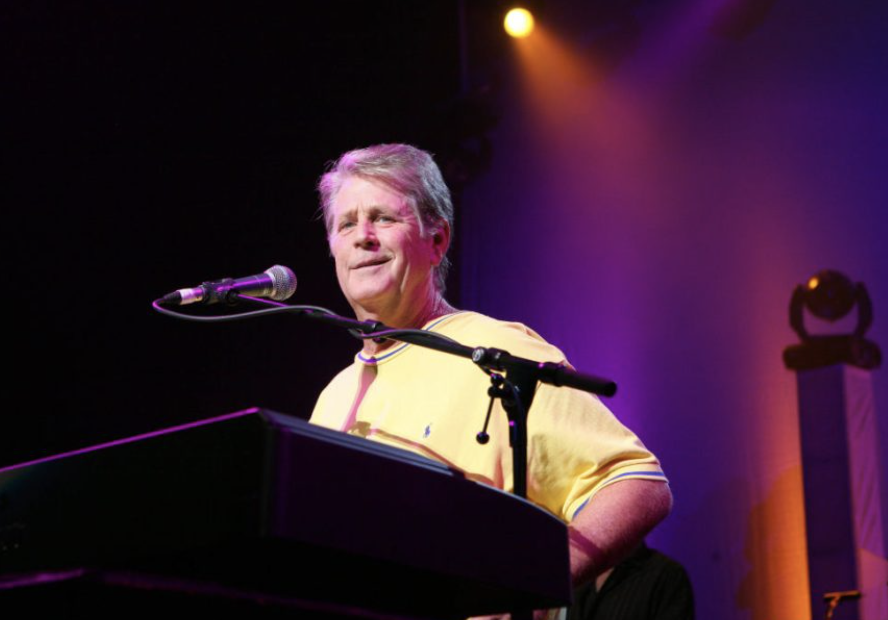
Brian Wilson presents ‘Pet Sounds’ 50th Anniversary Celebrations
Friday 27th May 2016 at the Glasgow Royal Concert Hall
In a soft power musical arms race with The Beatles, Brian Wilson more or less now mastering the known limits of the studio, was nudged towards ever more ambitious levels of creativity. As the old adage, music history folklore if you like, goes it was Rubber Soul that finally did it for Brian. The retort to this foil would not only be The Beach Boys first masterpiece, but one of pop and rock music’s most enduring triumphs, Pet Sounds. No longer happy with the California high school, deuce coupe cruising beach party spirit that had so far made the group world famous, cast even further adrift, introspective and all but retired from playing live with the his brothers and comrades, Brian was moving on from the fancy-free and footloose sound of the 45s that had always guaranteed a top ten place in the Billboard charts for something more…well, grown up. Voicing a growing anxiety – or the growing pains – of youth, Brian would compose the sound of young adulthood. As the world came to terms with the idea of the ‘teenager’, Brian began encompassing and articulating a new uneasy transition.
As much about the times as about the heartache and pains of being pure of heart, Pet Sounds marked a growing resentment towards the previous generation. At the beginning of a revolutionary change in attitudes, but a year before the ‘free love’ hippie idealism that brought in the psychedelic epoch, these former golden tanned beachcombers were breaking from their parent’s traditions and rules to set their own course: a life mapped out, from education to career and marriage. But at the very heart of all Brian’s work, even today, was a sense of innocence. An innocence lost as the lovesick but married Brian, now in his mid-twenties, was coming to terms with the anxieties of that adulthood and his growing mental anguish. Undiagnosed for years, left at the mercy of countless well-wishers and confidence tricksters, quacks and pseudo-therapists, Brian’s meticulous obsessive production of Pet Sounds and its subsequent, but not satisfactorily finished until 40 years later, magnum opus SMiLE tipped him over the edge.
Pet Sounds would also mark a lyrically shift, with Brian collaborating with his friend the lyricist and copywriter Tony Asher. A task of reification, Asher would take the often abstract and difficult expressions that roamed around inside the troubled mind and put them into song. Not exactly the most unified of atmospheres, Cousin Mike Love, a constant daddy-o stuck-in-the-mud character, was ready to pour a cold bucket of egotistic sick over anything that he felt would compromise or trouble the calm waters of The Beach Boys, so far, winning formula. To be fair, Love would be right to question this new shift towards the melancholic, almost philosophical anguish. Asher at that time was but a burgeoning talent with little to back up his credibility as a top pop songwriter. Replacing previous writers and solid contributors with an unproven lyricist would however prove to be genius decision. But the success of the album was slow. Its renaissance and rebirth as one of the greatest albums of the twentieth century was down to the audiences overseas. The change in direction had unsettled the market, as America baulked at this sadder, more cerebral tone. Yet, the UK loved it, buying it in droves and sending it to the number 2 spot in the charts – compare that with its 106 placing in the Billboard. Pet Sounds could have been a disaster, but it was saved, becoming a cult, an iconic masterpiece. And though it would take a while to pick up the desirable sales, its legacy grew and grew years after its original release.
Arriving almost in tandem, The Beatles Revolver was released just a couple of months later. Brian’s answer: SMiLE. If Pet Sounds had not only threatened but also sent Brian into a funk, then this grand American musical tour through the ages, from Plymouth Rock to the shores of the Spanish Peninsula, would all but consume and nearly destroy him. So ambitious was the vision that despite the near godlike genius of his assiduous sessions’ ensemble, The Wrecking Crew, the social, political and historically woven rich tapestry lyrics of new songwriting partner Van Dyke Parks, and his own production prowess, the project stalled. Numerous mixes, snippets, vignettes and even completed songs made it onto various albums and compilations over the decades, including the enervated and rushed out – to appease and bring in some much-needed revenue – Smiley Smile. It would take decades for SMiLE to be eventually completed, albeit (sadly and for obvious reasons) without his brothers Dennis and Carl’s near ethereal soulful compassionate voices, and missing any input from Love – now more or less carving the Beach Boys brand up, sporting it like a trophy as he has carte blanche and ownership of the name when touring with his own cabaret version of the group’s back catalogue. Brian did however manage, after spending the longest amount of time and money in recording history on a single, to release the perfectly epic pop rhapsody ‘Good Vibrations’.
Recently documented, quite favourably and sympathetically, by the Love & Mercy movie, Brian’s wilderness years lasted throughout the 80s and into the 90s, before the most accomplished of L.A. bands and Beach Boy fans The Wondermints helped lure Brian back on the road, performing a Pet Sounds extravaganza in 2000. Just four years later the band would join Brian in the studio to finish that nigh mystical, greatest album there never was, SMiLE, before taking it out on the road. Following in 2011 the eventual hidden away, locked in some fabled vaults, SMiLE Sessions of original material was finally released to the public.
A near renaissance, a scarred and troubled but blooming Brian Wilson is back once again on the road. This time he celebrates the 50th anniversary of Pet Sounds, arriving in my new hometown of Glasgow on a nationwide tour. Billed as an ‘anniversary celebration’ – the final performance of the iconic album in its entirety – tonight’s performance is a generous one. Split into two performances of greatest hits and Pet Sounds, with an encore of good time classics, Brian was backed by members of the Wondermints and flanked by special guests, Al Jardine and honouree Beach Boy Blondie Chaplin: a set up that has been repeated on many occasions.
As a steady presence for the vulnerable Brian, Al was on hand to soften the odd tremors of quivered uncertainty. But who was on hand to back up Al? Well as it happens his son Matt Jardine. Proving himself the most apt of Beach Boy scions, he was there to aid his old man and Brian with the most adroit and sweetest of falsetto voices. A counterpoint to the now – and for good reason – limited vocal range of Brian, Matt took on the high notes with aplomb and even performed lead on one of the evenings early highlights, ‘Don’t Worry Baby’. He would play the role of a younger Brian during the entirety of the Pet Sounds album suite, almost seamlessly taking on each alternating verse. However, and it seems almost too disingenuous to point out, there were a few wobbles and miscues throughout that just couldn’t be patched over. Yet we all willed Brian on, and when he took lead on the most diaphanous of love declarations, ‘God Only Knows’, the entire audience stood to their feet in adulated applause – the first of many rapturous ovations that night.
Directed and conducted by Paul ‘Von’ Mertens the entire ensemble began the evening with the heavenly choral warm-up ‘Our Prayer’; featured on 20/20 but originally the lead-in to the album version of SMiLE’s grand trans-American tour ‘Heroes And Villains’, which followed. We were then treated to a litany of favourites from the bobby sox high school daze back catalogue of hits, including a swinging, swayed medley of ‘California Girls’, ‘I Get Around’ and ‘Little Deuce Coupe’. Handing over the spotlight, Al performed centre stage with renditions of ‘Wake The World’, ‘Add Some Music To Your Day’ and ‘Cotton Fields’ – all songs plucked from the Brian breakdown period, when the rest of the Band were prompted to take over the creative reins. As lithe and energetic as ever, former Flame and Beach Boy band member (on tour and in the studio during the early 70s) Blondie Chaplin sprouted onto the stage to add some light-hearted theatrics and rock’n’roll vigour. The much-accomplished Durban guitar maestro, looking more and more like a cross between Jagger and Richards (all that time he spent touring with the Stones in the late 90s has worn off on him), launched into a strutting version of ‘Wild Honey’. Expanded from its soulful howled original setting, Chaplin went into bohemian guitar solo overdrive; showboating across the front of the stage and playing to the audience, who lapped it up. From The Beach Boys’ troubled but most brilliant 1973 album Holland, Chaplin picked up the ocean current waltz ‘Sail On Sailor’. The original vocalist on that recording, he returns to it with carefree élan, adding a wild guitar solo to the end, which sends Brian off into the wings in playful mock exasperation.
Back out for act two, the band minus Chaplin for now, begin the reverent Pet Sounds album. Largely enduring because it encapsulated a particular age and time in Brian’s genius, but mostly for capturing the love tribulations and torments of young adulthood in the most perfect pop songs, the album still chimes deeply with audiences fifty years later. Intricate and multi-layered but never ever laboured or strained – witness the Bond-esque Tropicana lounge instrumental suite title track -, each purposely-poised ballad, paean and tryst says all it needs to in less than two minutes. The rousing ‘Wouldn’t It Be Nice’, shared vocally by the Jardines and Brian, opens proceedings of course, followed by a gentler, more serene ‘You Still Believe In Me’. Highlights from the album set included an Al led version of the sea shanty in the manner of a doo wop Ivy League bruiser, with a reference to a particular paranoia plunged bad acid trip thrown in, ‘Sloop John B’, and flipping over the B-side, a poignant and encouraged Brian led ‘Caroline, No’.
The encore promised a “fun, fun, fun” package of hits. But first the band introductions, each band member receiving a musical signature tune as they came back out onto the stage after the interval. It was then straight into a full cast version of ‘Good Vibrations’, including the gesticulating tambourine wielding Chaplin who turned his percussive role into an art form. Rewinding back through the songbook, we were treated to the sing-along classics ‘Help Me Rhonda’, ‘Barbara Ann’, ‘Surfin USA’ and ‘Fun Fun Fun’. By now the audience were up and out of their seats, dancing where they could in the face of the po-faced security and attendants. From our balcony seats looking down on the main auditorium we witnessed hundreds swaying and weaving in almost perfect timing: the atmosphere couldn’t have been better. On a poignant, perhaps paused note Brian finished the evening with a version of the song that spawned the title of the recent movie, Love & Mercy. Written in more recent times, a reminder of the anxieties and anguish that once crippled Brian, the song’s central tenet is a perfect theme to finish on: a great sentiment for the audience to carry with them as they head home into the night. A joy to witness, the Pet Sounds legacy is in safe hands, especially here in Glasgow; a city twinned with Big Sur for one night only. Simply magical.
Love & Mercy Film Review/Purview
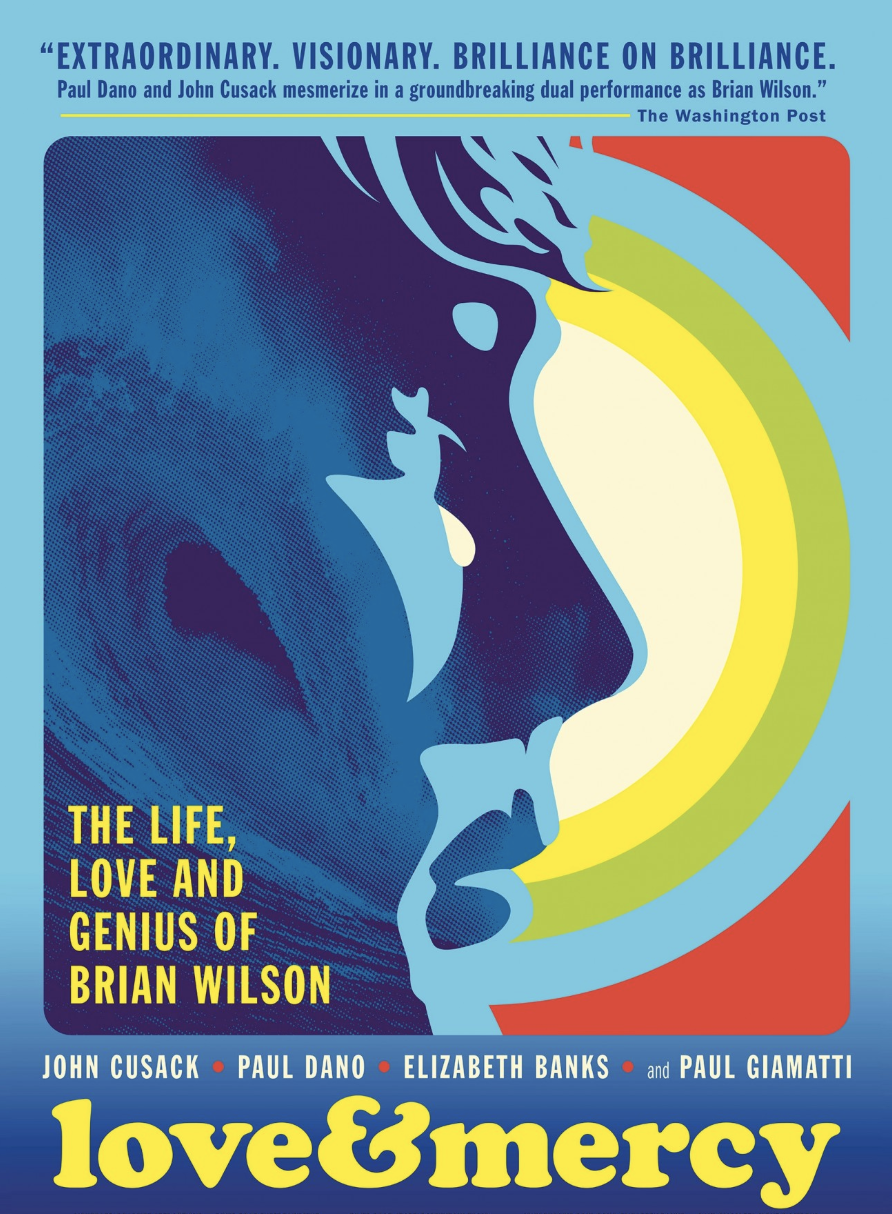
By now (or so I believed) the well documented rise and fall and then revival of one of pop music’s titans and true geniuses, shouldn’t come as any shock. Perhaps the nuanced details remain a mystery to most, but the crippling mental fatigue and illnesses that conspired to overwhelm Brian Wilson now go hand-in-hand with and are synonymous with The Beach Boys legacy. Plagued since childhood by the overbearing bullying of others, Brian was made nearly deaf by the clouting punishment of his patriarch Murry Wilson (a failed composer with little talent, forever enviously cruel towards his eldest son); worn down by his cousin and bandmate Mike Love – a year older than Brian but may as well been twenty, the omnipresent ‘straight’ put off by anything less than sweet and commercial, constantly grappling in a power game to control the band -; and emasculated, cut off from the world by the dubious therapist Dr. Eugene Landy. Arguably this triumvirate of manipulative, all damaged in their own way, individuals reflected their own insecurities, envy and even misunderstandings – Love just not getting it and stoic in not wishing to rock the proverbial boat of success – onto Brian; and perhaps due to a lack of ego himself, was unable to believe in his own self-worth allowing others to both take advantage and question his musical aspirations.
Unnerved, strung out and growing isolated from both his childhood sweetheart and first wife Marilyn, and his siblings, Brian went into a slow and long-drawn-out decline. Rare touches of genius would still sparkle occasionally, but after the less than rapturous reception at the release of Pet Sounds, and the aborted (though saved from the ashes and finally recorded and played live forty years later) American peregrination SMiLE, it was more or less downhill all the way.
Adrift now of The Beach Boys, wheeled out sporadically but later sacked, Brian had already undergone numerous treatments during the late 60s, and in 1975 at her wits end, Marilyn called in the services of the quack to the stars, Landy. The movie depicts his motives and less than orthodox style of treatment as quite sinister, but nevertheless he did manage to reduce a bloated lethargic Brian into a slimmer, healthier individual, ready to return back to The Beach Boys fold. However, as it would transpire, Landy took rather too much of an interest, going as far as to attend band meetings and make decisions on Brian’s creative dealings. He was ceremoniously sacked and cast out, losing not only his golden egg, but also losing his professional licence for his methods and liberal pill dispensing (the press would Christian him Dr. Feelgood). Yet ironically, he was recalled back during the 80s after Brian, at his lowest ebb, took an overdose of alcohol, cocaine and psychoactive drugs. This time Landy gave no quarter and micromanaged every single aspect of his patient’s life. Brian would be completely cut off from everyone, and handled like a simpering child by his new legal guardian (who merely replaced Brian’s monstrous real father Murry), with a team on standby to make sure he never wandered from the good doctor’s path of recovery: a recovery that led to Brian’s eponymous solo album of 1988 (Landy brazenly got credits as executive producer and co-writer), of which the opening track Love & Mercy is used for the film’s title. In fear of being institutionalised, Brain would meekly allow this infringement of his privacy and daily life. Overstepping his remit and coming up against Brian’s – depending on who’s account you believe – saviour Melinda Ledbetter (a model turn Cadillac sales women), Landy was eventually forced out when his name mysteriously appeared as the main benefactor on Brian’s will. Already handing over a percentage and forced back into the studio to cover costs, Brian’s publishing rights would still not satisfy Landy’s mounting costs – charging an eye-watering $430,000 annually between 1983 to 1986 – and this along with Melinda’s timely intervention conspired to finally remove him.
A complicated story then, the emphasis on redeeming a fragile genius from a reversion to a near childlike numb state, the film makers and script writers can’t possibly capture every nuance. Instead, Oren Moverman and Michael A. Lerner‘s touching story and unconventional story arc focuses on the perspectives of Brian and Melinda, and hones in on two specific timelines: the mid 60s and 80s. Whilst the story begins with the muddled mind of a younger Brian (an uncannily fragile and compassionate performance from Paul Dano) fading out to darkness, followed by a background montage of the Beach Boys more naive, carefree days (though even these moments show an already uneasy Brian plucking away on his bass guitar, wishing to be anywhere but on stage or in the limelight), we’re speedily propelled forward to John Casuck‘s placid later day Brian’s first meeting with Melinda. Virtuously played throughout by a thoroughly convincing, purposeful Elizabeth Banks, director Bill Pohlad uses her face as a gauge for reaction, whether it’s being played a whimsically beautiful piano motif or hearing the disturbing abuse meted out to Brian by his father. In her opening scene she attempts to sell him a car, before Landy and his posse arrive, but not before Brian slips her a note with ‘Lonely, scared, frightened’ scrawled on it.
Not that the intention is to show any balance in Landy’s depiction, the wig adorned Paul Giamatti is a raging control freak; ready to suddenly blow in a torrid at any time, and constantly, even when smoothing things over, adding a creepy and threatening undertone to every word of advice and suggestion. Meeting one of the only real forms of opposition, Landy’ warnings towards Melinda eventually boil over into some hostile confrontations: an early scene in the dating storyline, with Giamatti’s Landy holding court whilst flipping burgers, grows steadily uneasy and finally ends with an explosive outburst, as a doped-up Brian petulantly interrupts a boorish egotist regaling his own questionable writing virtues with calls to be fed.
Faithfully recreated, Dano’s parts are sometimes tear-jerking. Though we’ve grown used to the back catalogue, hearing the building blocks and attentive beginnings of ‘You Still Believe In Me’, ‘Surf’s Up’ (this performance further convinces me of its eulogy quality and that it belongs on the 1971 titular LP rather than SMiLE), and ‘God Only Knows’ (stunning even its most fragile form, when the young Brian seeks his father’s approval but is despairingly put down by pater’s heartbreaking responses) send chills down your spine. Enthusiasts will be interested in seeing the mechanics of the Pet Sounds and SMiLE sessions; the fantasy of seeing the famed and near mythical Wrecking Crew at work. The crew’s revered and experienced drummer, possibly the best session drummer of the 60s, Hal Blaine is used as a vessel to get the plot moving; his references and reassurances (in one memorable exchange and moment of doubt, the elder statesman’s and cool Hal, sucking on a cigarette, assures Brian that having worked with Phil Spector and a legendary rooster of other talent, the young pup is on another level entirely of genius) are used to settle a young Brian in the grip of mania. But wait until the final sequences, a redeemed Brian breaking from his stupor, soundtracked by the stunning, and reflective diaphanous ‘Til I Die’ – a song that took Brian a year to complete, and was to no one’s surprise by now, originally dismissed before being embraced by Love.
With the emphasis on these characters, most of the extended cast are reduced to walk-on parts and though some background is referred to, Van Dyke Parks and many others aren’t introduced at all, merely swanning about – apart from a meeting in the swimming pool – at various dinners and pool parties. Even his poor siblings Dennis and Carl are more or less demoted to the odd clueless look whilst Al Jardine doesn’t even get a line: Dennis himself succumbed to his own torments, which left him adrift of his family and band mates; his spiral into drink and drugs ended tragically when he drowned just weeks after his 39th birthday in 1983. It is the mixed portrayal of his cousin Love that is emphasised, not really a hero or villain, but malcontent and totally unhip individual uneasy at the changing face of a turned-on L.A. in the grip of LSD. I feel a little sorry for him, played I might add brilliantly by an unrecognisable Jake Abel, who would eventually have to lead the group and take up the mantle; always that little bit older, not so fortunate in the hair department (his fetish for hats arguably covering up his early balding), and ever the professional he found it hard to fit in.
Love & Mercy moves full circle, Melinda coaxing the responsive artist and adult from his child like shell, finishing with Brian’s – and I was lucky enough to attend one of his comeback shows with the Wondermints – return to the stage in the noughties, performing the titular song. Those stumbling blocks and manias that prevent not just geniuses, from making their ideas concrete, still persist. But at least Brian finally received the correct diagnosis of manic depression with auditory hallucinations that can be successfully treated: Landy’s schizophrenia diagnosis and treatment did more harm than good, arguably worse than the cocktail of illicit drugs that Brian was popping so freely before the quack came on the scene. The best hope is that this movie encourages discussion; that we can talk candidly and address the controlling mechanisms that condemn many people to a life spent dealing in isolation with their mental health.
Vukovar ‘Emperor’
(Small Bear Records) – Originally release in 2015; re-released on the 1st July 2025 with various mixes and extras.
Punching well above its weight, the serendipitous label of vaporous lo fi and languid shoegaze Small Bear Records has slipped onto the market its most ambitious marvel yet. From their Isle of Man recording HQ, the Vukovar builds a funeral pyre for the ‘new world order’.
Helping them man the barricades are Rick Clarke and Dan Shea (also of The Bordellos and Neurotic Wreck, but most formerly of the “disintegrated” The Longdrone Flowers), joined by an extended cast of Small Bear artists; including the dreamily aspiring Postcode’s Mikie Daugherty, Jonny Peacock and Marie Reynolds, and Circus worlD’s Mark Sayle all making guest appearances: a super group performance if you will.
Rallying round the decree of “idealists, voyeurs and totalitarians”, and referencing a list of one-word actions/stances (“Ultra-Realism”, “Depravity”, “Monotony”) to describe their sound, the band’s lyrics certainly seem fuelled with protestation and anger. Yet for the most part, they sound despondently magnificent in the most melodic, beautiful shoegaze fashion. Their brand of lush 80s driven alternative rock and more caustic, punchy industrial noise is far too melodic and majestic to be truly brutal.
Taking their name from the infamous Croatian city, the site of an heinous blight on modern European history (always conveniently airbrushed from bellicose EU propaganda; the sort that preaches its union has put paid to and secured the continent from conflict and war amongst its neighbours), when 300 poor souls, mostly Muslims, were rounded up and barbarically executed by Serb paramilitaries and the Yugoslav People’s Army (the worst committed atrocity of its kind since WWII), Vukovar appeal to the listener who wants to scratch beneath the surface of the banal mainstream. They offer an invitation into the darker recesses of history and social politics unseen in much of the dross that calls itself alternative – even their bandcamp page features an exhaustive manifesto style edict (sometimes tongue-in-cheek) of intent. And so they offer a an out-of-body majestical shoegazing waltz through Reinhard Heydrich’s honey trap brothel and centre of Nazi espionage, the ‘Regular Patrons of Salon Kitty’; drift into Spiritualized and New Order territory on the softly pranged hymn to a former Japanese princess, ‘Part 1: Miss Kuroda’s Lament’; and channel a despondently romantic but resigned Ian Curtis as they utter with despondent beauty that “we’re cowards” on the beautifully sullen and dreamy ‘Nero’s Felines’.
With a maelstrom of clanging, fuzz and Inspiral Carpets jamming with a motor city turned-on Julian Cope vibe, the group yells, shakes and rattles on their noisier outings, ‘Lose My Breath’ and ‘Concrete’. Not always their best material it must be said, they add some tension to the more relaxed melodic and – dare I say – pop songs, which sound far more convincing: ‘Koen Cohen K’ and ‘The New World Order’ are just brilliant; imagine what Joy Division might have sounded like if Ian Curtis had lived on and found solace in the lush veils of shoegaze, or if he fronted Chapterhouse.
Fiddling romantically whilst Olympus burns, the Vukovar’s stand against the illuminati forces of evil couldn’t have sounded any more beautifully bleak, yet somehow liltingly inspiring.
If you’ve enjoyed this selection, the writing, or been led down a rabbit hole into new musical terrains of aural pleasure, and if you can, then you can now show your appreciation by keeping the Monolith Cocktail afloat by donating via Ko-Fi.
For the last 15 years both me and the MC team have featured and supported music, musicians and labels we love across genres from around the world: ones that we think you’ll want to know about. No content on the site is paid for or sponsored, and we only feature artists we have genuine respect for /love or interest in. If you enjoy our reviews (and we often write long, thoughtful ones), found a new artist you admire or if we have featured you or artists you represent and would like to say thanks or show support, than you can now buy us a coffee or donate via https://ko-fi.com/monolithcocktail
REVIEWS ROUNDUP/Dominic Valvona
Longplayers/Extended
Spaceface ‘Anemoia’
(Mothland) 28th January 2022
Ushered in with a cosmic and exotic air flight announcement the latest disarming psychedelic pop trip from Spaceface brings the slick funk and disco party vibe to the stiff shirted cosmological experiments carried out at the CERN institute. With a vibrant sparkle and rainbow candy élan, the ever-shifting moon unit of past and present members from Flaming Lips and Pierced merge science-fact with groovy sunshine grooves on a smoothly universal album of goodwill.
Written before the pandemic at the Blackwatch Studios with producer Jarod Evans in the hot seat, Anemoia is a cocktail of good times rolled out to a soundtrack that at various points evokes MGMT, Swim Mountain, Tame Impala, the Unknown Mortal Orchestra, Sam Flex and International Pony. The halcyon funk wooed and Labrys guest spot ‘Long Time’ even comes with it’s own cocktail recipe and instructions (1oz each of Bourbon, Vermouth and Lynas, served with orange peel and on the rocks).
Guests appear in various guises throughout, from the brilliant Meggie Lennon (who recently appeared in our choice albums of the year lists) to Mikaela Davis and the sampled effects of the CERN’s scientist choir! Spaceface seem to be reaching beyond the usual themes of pop to metaphysical explorations and a sense of understanding the mind boggling theories of particle physics. It’s also seemingly all connected to the very on trend subject of identity and place in an increasingly dysfunctional uncertain world. Fear not as these concerns all melt away in a soulfully and bubbly millennial soundtrack of the cute, hippie and galactic; a plane of psychedelic pop and yacht rock funk pitched somewhere between a yoga retreat and cult space tour.
Roedelius & Story ‘4 Hands’
(Erased Tapes) 28th January 2021
Incredibly now well into his eighties the kosmische and neoclassical pioneer Hans-Joachim Roedelius is still exploring, still intrigued and still, if peaceably, pushing the perimeters of his signature forms on the piano. When not collaborating under the Qluster umbrella (just the most recent three decades adoption of the original Kluster/Cluster arc) or flying solo across the keyboard, Roedelius carefully picks projects that offer stimulus or purpose.
In this instance the self-taught composer once again crosses reflective and experimental paths with the Grammy-nominated American composer and friend Tim Story; the fifth such exercise of its kind with Story since their 2003 album Lunz.
4 Hands proves better than two, with Roedelius laying down patient, fluttered and singular noted “etudes” for Story to harmoniously refine and swell, or, to add sophisticated congruous layers until both performers phrases and playing styles become so entwined as to prove impossible to separate. Hopefully as Story comments in the notes: ‘Because it was all recorded on the same piano, the result has a very appealing consistency of sound, and hopefully blurs our individual contributions into a single integrated voice.’ I’d say they succeeded with this interplay and balance of disciplines, which at times conjures up Chopin’s no.6 etude being transformed by Cage.
This transatlantic exchange between North American and European contemporary classical movements features compositions that seem to measure time and make allusions to various instructive linguistic phrases (the relatively immediate ebb and flow opener ‘Nurzu’ derives from the German encouragement to “go ahead and do it”) and a sense of place, mood. Tellingly the resonating serial 1920s suggestive ‘Haru’ is dedicated to the late great avant-garde composer and poet Harold Budd, who just before his death in December 2020 was played this timeless peregrination.
A forty-year friendship imbues every touch and even the spaces in-between each wave, trickle, glide and tingled gesture. The very workings of this shared instrument, the pins and softened hammers are transformed into spiralled tines and fanned percussive like rhythms – sometimes evoking the Far East. A mix of improvised contours, considered tensions and nodes crisscross and flow together in a complementary fashion throughout this album of entwined synchronicity, as both artist’s read each other’s thoughts with understated adroit perfection.
From The Archive:
Hans-Joachim Roedelius Interview
‘Selbstporträt Wahre Liebe’ Review
Qluster ‘Elemente’ Review
Cluster ‘1971 – 1981’ Review
Cephas Teom ‘Automata’
(METR Music) 28th January 2021
Less Kraftwerk’s “pocket calculator” and more vintage 1980s Japanese Casio digital watch, the debut album from Cephas Teom (the atavistic etymological alias of the West Country musician and producer Pete Thomas) swims and Tokyo drifts in a solution of nostalgic Far Eastern tech. From Japanese sound gardens to retro video arcades and driving across once promising neon lit city highways of the future, Thomas evokes touches of the Yellow Magic Orchestra, Sakamoto, Yukihiro Takahashi and House Of Tapes as he ponders the quandaries of an ever encroaching technology and the wonders of A.I.
Featuring the Monolith Cocktail premiered vaporwave single ‘Tomorrow’s World’ (aired back in November of last year), Automata weaves broadcasts of figures such as Jung and the coiner of ‘cymatics’ Hans Jenny with the fatalistic voices of those drawn to extraterrestrial savior cults (such as the mass suicidal Heaven’s Gate) to present a scientific-philosophical soundtrack of both unease and nostalgia: that’s nostalgia for a society not yet disenchanted with the promises of a brighter hi-tech, computerized utopia.
Skilfully constructed Thomas emulates both the handcrafted mechanisms of Jaquet-Droz automation curiosities from another age and the dreamy airs of a dawning integrated A.I. future. It begins however with the projector-clicked lecture come chimed baubles, zappy squiggled, deep bass throbbing Japanese Zen water feature ‘Primordial Forms’, before winding up with the clicks and movements of a Sakamoto twinkled mechanized but enchanting melodic ‘Automation I’. By comparison ‘Automation II’ sees nature’s son in more pastoral surroundings, still in that contemplative garden, serenaded by classical-like drops of piano and wind chime percussion. Oh the force of the electronic Orient is strong with this one, incorporating everything from subtle hints of bamboo music, a very removed bobble of gamelan and J-pop with intricate layering of Autechre wiring, lo fi 8-bit gaming and bit-crushed effects. Surprisingly Thomas takes a kind of liquid jazz-fusion turn on the psychedelic therapy mindbender ‘Above Human’.
Solar winds blow across a circuit board tundra as Tron-like glowed vehicles cruise to the sounds of acid, techno, Manga, Namco and Sega soundtracks, veiled augurs, virtual paradises and various 80s warbles, variants and equations. A wonderful world in which to contemplate all those delusions of an automated miracle – a world in which Eagle comic’s, the BBC’s long running Tomorrow’s World programme and Silicon Valley optimistically painted as a blissful, harmonious, work-free utopia, Automata explores the networks, nodes and grids of electronic music to navigate a tricky complicated philosophical debate.
From The Archive:
Cephas Teom ‘Feet Of Clay’ Premiere
Cephas Teom ‘Tomorrow’s World’ Premiere
Mondoriviera ‘Nòtt Lönga’
(Artetetra) Available Now

You know you’re getting old when today’s young musicians consider your formative years, back in the 80s, as “nostalgic”. And so it is with Mondoriviera’s recent envisioned ‘fragmented bedtime story’ meets ‘interactive’ supernatural styled soundtrack; one of the last releases of 2021 from the insane, discombobulating ‘mondo bizzaro manufacturer’ Artetetra platform.
For this is a 80s VHS graded score of Italian folk-horror and dream-reality wrapped up in an 8-bit fantasy of crushed Super Mario Bros. platform hopping, early Warp label Aphex Twin, Darrel Fritton and Speedy J, and the combined soundtrack and gaming elements of Takafumi Fujisawas, Akira Yamaoka and Andrew Barnabas.
Unless you read all the accompanying notes you’ll miss the psychogeography apsects of this score: the mysterious cloaked figure behind this glassy spherical mirage and Elm Street dream warrior spooked world invokes the arcane, one time seat of the Western Roman Empire and Byzantine jewel, Ravenna. Quite the historical stargate with its continuous pre-Middle Ages upheavals, reputation as an early centre of Christianity, glorious architecture and mosaics it’s the city’s darker corners, the abattoir and sinister that seeps into Nòtt Lönga’s soundscape.
Strange, eerie in places, this alternative plane of retro arppegiator and algorithms and virtual reality is a nocturnal spell caught drifting and gliding between ominous fairytales and the paranormal: even alien. A disturbed 80s-style electronic hall of mirrors that draws you in with the promise of languid floating, the synthesised melodies softly come in waves before glitching like the glass screen façade of some simulation engineered by a higher intelligence from another dimension. Mondoriviera dares the listener to dream in a soundtrack theatre of his cult imagination.
Sven Helbig ‘Skills’
(Modern Recordings) 4th February 2022
The versatile (from working with such diverse acts as Rammstein to the Pet Shop Boys) East German composer-producer Sven Helbig conducts an incredible suffusion of colliery meets a minimalistic Sibelius brass on his first statement of 2022. The craftsman’s/artisan’s struggles, ‘despair’ and creative processes go through ten stages of varying reflective and plaintive stirring driven drama on an album that draws together the classical and contemporary to create an almost timeless spell.
As timeless that is as the symbolic ‘vanitas’ still life tableaus of the Dutch master Harmen Steenwijck in the 17th century; Helbig’s own modernist take on that tradition of painting places a skateboard and mobile phone next to a mortality loaded allegorical skull: the inevitable death of everything, but in this case, a symbol for the dying art of a craft and ‘skills’. As one tradition perishes another is born so to speak. But this leitmotif runs deep, right back to a pre-unified Germany, when ‘diy culture’ and craftsmanship were a necessity to those unable to afford, or even have any of the luxuries enjoyed in the West. And so Skills is a sostenuto concentrated homage to that tradition, yet also a mood board reification of the passing of time itself: the time between toil and inspiration. In a kind of Lutheran atmosphere of earnest labour, with compositions that can evoke a candlelit garret or bleak workshop in Worms, Helbig’s brass ensemble and string quartet conjure up a most beautiful gravitas that can harmoniously set hardship with the near ethereal.
Straddling the neoclassical, operatic and cinematic there’s even room for the coarser, scrunched synthesized concrete textures and pulsations of the Chicago-based musician Surachai on the album’s sober but stunning unfolding ‘Repetition’ suite.
Tunnels of daylight fall upon mechanisms and cogs as they come to life in atmospheric settings. Baubles and floating dust particles tinkle and slowly cascade gently whilst both longer and shortened strings build the tension and a French horn sounds a low, almost misty-eyed, romantic note. Luminous and dreamy on the starry ‘Vision’, and evoking the avant-garde and a touch of Kriedler on the workbench clockwork diorama ‘Flow’, the Skills album is a measured, aching and brooding work of art; a moving testament to the élan and craft of an impressive composer who’s classical roots transcend the genre.
War Women Of Kosovo ‘A Lifetime Isn’t Enough’
4th February 2022

Never ones to shy away from the harrowing atrocities committed on communities across the world, the partnership of Grammy-winning producer & author Ian Brennan and Italian-Rwandan photographer & filmmaker Marilena Umuhoza Delli have continued to stripe away all artifice and sentimentality from those victim’s stories; recording for posterity some of the most vulnerable accounts of genocide, prejudice and sexual violence in countries such as Rwanda, South Sudan, Comoros, Vietnam, Ghana and Romania. Brennan’s no fuss, in-situ style of recording has brought us unflinching accounts: the onus being on under-represented women, the elderly, and persecuted groups within under-represented populations, languages, and regions.
No less candid in this regard, the partnership’s latest collection features those nameless victims of the horrific Balkan wars of the 1990s; namely the Kosovan community of women and children raped by the aggressors as both an act of subjection, revenge, and as part of a sanctioned campaign of terror and erasure of the region’s Muslim population. Far too complicated and beyond my grasp of history to recount here, the Balkans blew up into an inter-fractional, racial, religious conflict between neighbours once kept together under the iron fist of Tito in the Slavic block of Yugoslavia, and before that, the Ottoman Empire. Once that towering force died, and with the deterioration of Soviet Russia, the region was broken up and plunged into chaos, war. On the doorstep of a practically useless EU, and with little appetite to get involved the escalation of atrocities eventually spurred the UN and NATO into action, with one of the consequences being the formulation of a separate majority Muslim state, the Republic of Kosovo – formerly part of Serbia that was until the late 80s a semi-autonomous state within that country. Admittedly this is a very glib account of events during that decade – I would recommend for further reading trying out Misha Glenny’s Balkans tome.
In what is a subject very close to both Marilena and Ian’s hearts – her only two living Rwandan relatives were born of genocidal rape, whilst Ian’s life was irreversibly impacted by the sexual assault and near murder of a loved one – the voices of Kosovo’s rape victims are given a platform in what amounts to a healing process. The trauma weighs heavy for sure, undulated as it is with the minimalistic, earthy scene-setting sounds of bells, a thrum of lamented, grieving voices, rustic scraps and some obscure stringed instruments – though there’s also some kind of odd keyboard too and a chorus of traumatic sounds that threaten to engulf the listener at one point. The record even comes with a ‘trigger warning’ (just look at the titles); the language and sentiment of those courageous survivors impossible to not take in.
Not the easiest of experiences, but then how could it (and why should it) be. We need such projects to jilt us out of our obsessive virtual realities and comfort zones; to be reminded that in many of the people who will read this review’s lifetime such post-WWII atrocities were carried out in a closeted Europe. As much a piece of activism as a sonic and vocal reminder, A Lifetime Isn’t Enough is an essential plaintive cry from a recent past that needs addressing; the consequences of which are felt every day by the women taking part, to them though this isn’t history or a footnote but an ongoing collective trauma.
From The Archives:
Witch Camp (Ghana): ‘I’ve Forgotten Who I Used To Be’.
Sheltered Workshop Singers ‘Who You Calling Slow?’
Tanzania Albinism Collective ‘White African Power’
The Ian Brennan Interview.
Letters From Mouse ‘Tarbolton Bachelors Club’
(Subexotic Records) 28th January 2022

You can forgive most Scots for the dewy-eyed worship of the unofficial national bard, Robert Burns. After all, every tartan decorated rousing of nationalism, and every lowland toiled symbolic feature of Scotland is run through with the verses of the 18th century poet/lyricist. There’s even a secondary-like New Year type holiday in his name, celebrated up here in Scotland – Burns Night on January 25th.
All roads, threads and references certainly lead back to Burns on Steven Anderson’s latest typographic contoured and fantasised album, the Tarbolton Bachelors Club. The follow-up to his previous window view An Gàrradh album, released under the Burns inspired Letters From Mouse alias, could be described as a psychogeography that takes in prominent locations, the spaces and essence of the venerated subject without all the bagpipes and kilt adorned folklore. Instead, Anderson weaves a captivating, thoughtful ambient, trance and ambiguous electronic soundtrack, both dreamy and with a touch of gravitas: Not so Scottish, glinting and fanned radiant spokes are spindled with an air of the Far East – like a pastoral mirage Masami Tsuchiya – on the opening track ‘Elizabeth’.
Traces of Burns history, brought into our world through a portal, are suffused with a touch of mystery but also beauty: none more so, again, than on that opening softly majestic sentiment to Burns daughter ‘Bess’, the first illegitimate child he had after an affair with his family’s servant girl Elizabeth Paton. Bess appears most notably immortalized in her father’s famous poem, Love-Begotten Daughter as “Lily Bonie”, a line used later on as a track title.
The album title is itself a reference to Burns quasi-masonic gentlemen’s club; a haven for debate and discussion on all the hot topics of the day. There was even a token produced to commemorate this infamous lodge, as alluded to by Anderson on the golden breathed ‘Tarbolton Penny’. Tarbolton for those unfamiliar with the great bard’s locality is a village in South Ayrshire, a county in which the romanticist was born and spent much of his life roaming.
Of course, you can’t construct such an escapist soundtrack without featuring some of Burns actual words; ghostly emerging as they do from the esoteric folk wafts of ‘South Church Beastie’, a past reminder of Burns adoration and forewarning idealised social covenant with nature and classless egalitarianism. Almost in its full version, ‘A Man’s A Man For A’ That’ – a scornful in places stab at those unwilling to rock the boat, carrying on with bowing their heads and doffing caps to their pay masters, although he was one of them himself, the poetic farmer, landowner – is read out to the Eno-esque synthesised curtain call of the same name.
Echoes of Artificial Intelligence Warp, Charles Vaughen, Tangerine Dream, Bradbury Poly and Library music permeate a chimed soundtrack of map coordinates, scenes viewed from propeller powered aircraft, vacuums and walks as Anderson offers a semi-Baroque meets late 20th century abstract vision of a thoughtful, magical sonic historiography. Anderson proves that the ghosts of that period still have much to share; a resonating voice brought back from the enlightenment with an evocative soundtrack to match.
Compilations…
Various ‘Mainstream Funk’
(WEWANTSOUNDS) 28th January 2022

The specialist rare finds and vinyl reissue label WEWANTSOUNDS first release of 2022 is another dip into the vaults of the, crate-digger’s and breakbeat connoisseur’s favourite, Mainstream label.
Bob Shad’s original “broad church” imprint grew out of an already 30 year spanning career when it took shape in the 1960s; a showcase for prestigious artists, session players and Blue Note luminaries chancing their arm it the bandleader or solo spotlight. A musical journeyman himself, Shad (whittled down from Abraham Shadrinsky) began his producer’s apprenticeship at the iconic Savoy label, then moved to National Records before taking up an A&R role at Mercury, where he launched his own, first, label EmArcy. It was during this time that Shad would produce records for the venerated, celebrated jazz singer deity Sarah Vaughan, the Clifford Brown & Max Roach Quintet, Dinah Washington and The Big Brother Holding Company.
As a testament to his craft, Vaughan would go on to record eight albums on Shad’s Mainstream label, the next chapter, leap in a career that traversed five decades of jazz, soul, blues, R&B, rock, psych and of course funk. Mainstream’s duality mixed reissues (from such iconic gods of the jazz form as Dizzy Gillespie) with new recordings; with its golden era arguably the five-year epoch chronicled in this latest compilation. From the first half of the 1970s, WEWANTSOUNDS has picked out twelve nuggets of varying quality, starting with Vaughan who leads the pack with a classy, showy jazz-soul cover of one of Marvin Gaye’s career-defining classics, the downtown social commentary ‘Inner City Blues’. Oozing sophistication amongst a soft tangle of horns and funky licks, the rightly venerated jazz soulstress barely breaks a sweat. Following that icon is the “underrated” alto/tenor saxophonist Buddy Terry with the ten-minute plus jazz-funk exotic peregrination turn workout ‘Quiet Afternoon’, which proves anything but a gentle meander in the park. Probably of note for the appearance of Stanley Clarke, this burnished sun-lit turn changes signatures from the relaxed to a “pure” dynamic free fall of free bird flighty flutes, screaming horns and infused exotic jazz-fusions. An epic of the form this should prompt further investigation of Terry’s small back catalogue – that’s two albums for Mainstream, and not much else.
Many will recognize such names as Blue Mitchell, the former trumpet-player who honed his craft as a member of Horace Silver’s famed Quartet. Already a Blue Note alumni, Mitchell joined the Mainstream label in 1971, going on to record six albums for Shad’s eclectic imprint. On this compilation, taken from his 1973 Tango=Blues LP, is the sassy, San Fran TV detective soundtrack and funk version of Gato Barbieri’s sensual score for the controversial ‘butter wouldn’t melt’ Last Tango In Paris movie. With a dash of Mayfield, some gentle whacker-whacker guitar funk chops and lilt of South America, Mitchell turns a blue movie into the blues. Another former Blue Note acolyte, hard-bop and post-bop pianist LaMont Johnson, who worked with both Jackie McLean and science-fiction jazz progenitor Ornate Coleman, showcases a bit of “state-of-the-art-tech” on his kooky bendy futuristic ‘M-Bassa’ – taken from the 1972 album Sun, Moon And Stars. The rudimental phaser effects of the Yamaha EX42 analog synth augment quickening gabbles up the fretboard and echoes of spiritual jazz.
Moving on there’s a smooth, heartening and snuggled version of the rainbow nation Sly And The Family Stone’s ‘Family Affair’ by the saxophonist and flute prodigy (already able and serving his apprenticeship at the age of 13 in the Baltimore Municipal Band) Dave Hubbard; the original Muscle Shoals lit funky ‘Super Duper Love’ 45” – picked up by Joss Stone a generation later – by the sexed-up Willie ‘Sugar Baby’ Garner; the ridiculous salacious Zodiac chat-up soul-funk ‘Betcha Can’t Guess My Sign’ number (complete with Alvin the chipmonk helium backing vocals) by Prophecy; and a slick rattled percussive jazzy R&B pleaser from the saxophonist Pete Yellin entitled ‘It’s The Right Thing’.
A smattering of sampler’s delights, relatively obscure examples of jazz-funk fusions and more famous classics, Mainstream Funk is a classy and decent compilation to kick off the New Year with.
Various ‘Excuse The Mess Volumes 1 + 2’
(Hidden Notes) 4th February 2022
Across two albums of extemporized in-situ performances the great and adroit of UK-based contemporary classical and electronica experimentalism conjure up an imaginative mood board of compositions within the set perimeters of the Excuse The Mess podcast challenge. Invited for a chat in the personable surroundings of the titular space, each interview subject was asked to abide by the rules in creating a special something with the host, Ben Corrigan.
Created in that location, in that time there could be no pre-planning, no added electronic manipulations; each artist was allowed to only use a single instrument. Many of those taking part choose to use their signature instrument, others more obscured props; the most bizarre being the transmogrified ‘ice rink’ field-recorded ice-skating samples (figure-of-eight slushes and sliced ice-skate scrapes transduced into an abstract subterrain) used by the South African born multidisciplinary Warp label artist Mira Calix, and the tub patted oscillating and soft emerging techno rhythmic ‘pesto jar’ that MBE (no less) gonged electronic-acoustic composer Anna Meredith puts to good sonic use on Volume 2 closer ‘Oopsloops’.
More fathomable instruments can be detected however; for example, the renowned hand/steel pan and saucer shaped ‘hang’ player Manu Delago kicks things off by spreading his tapping fingers across his resonating percussive specialty to traverse an ambiguous cosmic atmosphere on the near-sublime ‘Collider’. Following in that peregrination’s wake is Dinosaur jazz quartet stalwart and acclaimed multifaceted composer-improviser Laura Jurd’s trumpeted ‘Copper Cult’ – a changeable vapour and march of soundtrack Miles Davis, Don Cherry and Yazz Ahmed.
In turn, the esteemed composer (pieces performed by the London Symphonic Orchestra and London Sinfonietta) Emily Hall tunes an electronic magnetic harp to ethereal heights; singer-songwriter and Erased Tape regular Douglas Dare, with just the use of his layered uttered, whispered a cappella vocals, magic’s up a dark romantic plead; and the Emmy-nominated composer and BBC 3 broadcaster Hannah Peel builds towards a shuttered clapboard rhythm and chorister-like wafted divine pirouette with just the use of a music box. Other notable inclusions (though every piece is stirring and intriguing in its own right) that piqued my attention were the fizzed and caustic frayed and slow-drawn violin evocations of the Kazakh-Brit improviser-collaborator-leader of the London Contemporary Orchestra Galya Bisengalieva – who seems to evoke Sunn O))), only with just a violin -, and the Canadian-born composer (scoring The Imposter) Anne Nikitan imagines an 8-bit Castlevania as transformed by µ-Ziq, funnelled into an early mute label version of ‘Da Da Da’.
A wealth of talent from the arts, theatre, classical and film score arenas appear on both volumes of this musical challenge: proving if anything, just how lucky the UK is to have so much talent working on its doorstep. The restrictions don’t seem to have narrowed either the quality or the originality. In fact, if anything, each artist has been creatively pushed to use their ingenuity in composing something anew, on the spot. A brilliant double-bill selection, ‘excuse the mess’ can only describe the accumulative space in which these tracks were created, and not the sounds or music, which are anything but. A novel criteria has resulted in some mysterious, spellbinding and often traversing experiments. The Hidden Notes platform ushers in a new year with a quality release package.
Brazen Hussies ‘Year Zero: An Anthology’
(Jezus Factory Records) Vinyl Version January 2022
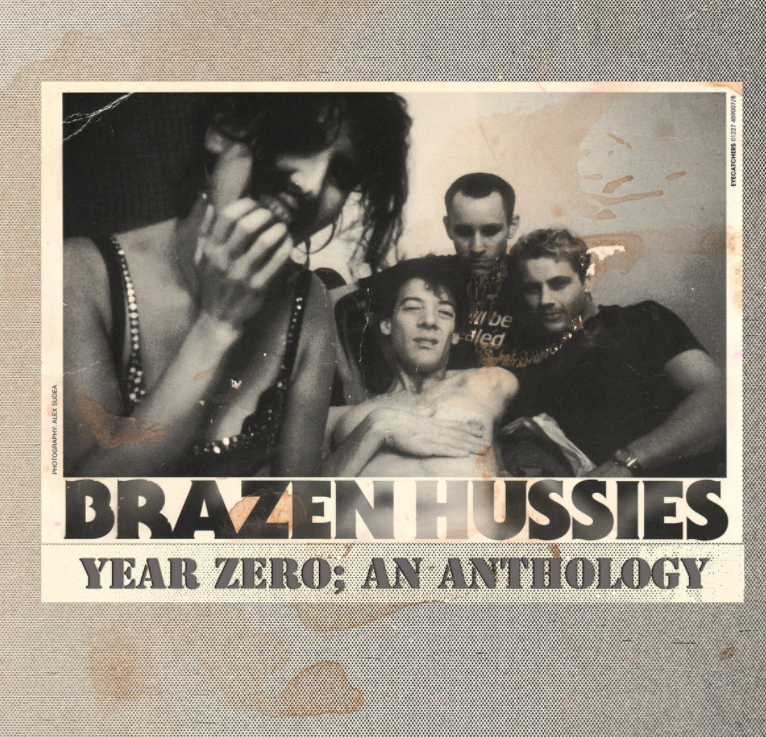
Despite the distain, rambunctious methodology and carefree attitude to making it in the lower levels of the music scene in the 90s and early noughties, the scuzzed and abrasive Brazen Hussies were far too knowing and artful than their shambolic, contrary myth would have us believe. Quite frankly that status is shambollocks!
For this ‘lost’ London group played loosely and quite skilfully with their influences, which ranged (by the sounds of it) to everyone from Richard Hell to The Monochrome Set, from The Pixies to the Nuggets box set. Anything but a complete mess they showed a certain élan for the pivot, for the light and shade as they transitioned from the needled and coarse gnarling for halftime downtime and even a bit of melody. Because out of the ramshackle punk, post-punk and cutting dissonance there was always some remnant, a semblance of a half-decent tune.
Simultaneously as courted as they were slagged off by a hostile music press during their apex in the late 90s, it’s hard to get a handle; difficult to tell if they deserve this anthology reappraisal, or whether it’s all just a scam: elevating fleeting losers from rock’s back pages. Actually they were quite bloody good, and at least (for the majority of the time) only ever recorded three-minute songs so as not to overstay their hobnail Dr. Martens boot on the throat welcome. Their farewell ‘Bridesville’ blowout is one of the few exceptions; running to a ridiculous insufferable 26-minutes of whined post Britpop and salon bar piano malcontent.
Fronted by the duel vocals of Dave Queen (a Canadian by god) and Lou McDonnell, backed by the ‘rhythm section’ of Lunch on trebly Bauhaus-Gang-Of-Four-Killing-Joke bass duties (proving anything but out to “Lunch”) and Russell Curtis on barracking and tom rolled drums, they sounded like a contortion of the Bush Tetras and Stone Temple Pilots on the scowling ‘Touch It’; like a flange-affected X-Ray Spex on the brilliant character assignation turn halftime concerned pathos riled ‘Thin Lips’; and like the Cowboy Junkies on the country-folk-punked counterpoint of squealed industrial shredded guitar and sweeter down-heeled sung ‘Kimberley’.
In between sporadic bursts of an early Manics (Dave sails close to a young, petulant James Dean Bradford), the Stooges, Slater-Kinney, The Fall and Essential Logic they turn in two highly contrasting covers. A more obvious Seeds homage is made with a cover of the acid-garage legend’s Nuggets stalwart ‘Can’t Seem To Make You Mine’ – a real shambles of a badly recorded demo – and an odd enchanted nod to the Beach Boys’ doughy-eyed California daydream ‘All Summer Long’. It’s as if an entirely different band turned up for the second of those: well I’ve since found out that the honeyed, almost Christmas-y, Beach boys take was recorded by a flying solo Dave.
With a bedraggled smattering of releases to their name and odd appearances on a myriad of compilations, what little success they had was never capitalised on. Instead, just as those in the press that saluted their brazen despondency, protests, even heralding them as “visionaries”, they drew just as much scorn and bile. Neither a piece of crap nor the second coming, the Brazen Hussies were a great controlled mess of punk and all its off-shoots, Britpop, garage, alt-rock and skag country: in fact, a very 90s band. Is it worth the plastics melted down to produce the vinyl (digital and CD versions released back in 2021) edition? I’d say so, and I think you’ll agree when you slap it on the turntable; finding a missing link from a decade that’s increasingly becoming the new “80s”.
Hi, my name is Dominic Valvona and I’m the Founder of the music/culture blog monolithcocktail.com For the last ten years I’ve featured and supported music, musicians and labels we love across genres from around the world that we think you’ll want to know about. No content on the site is paid for or sponsored and we only feature artists we have genuine respect for /love. If you enjoy our reviews (and we often write long, thoughtful ones), found a new artist you admire or if we have featured you or artists you represent and would like to buy us a coffee at https://ko-fi.com/monolithcocktail to say cheers for spreading the word, then that would be much appreciated.
REISSUE REVIEWS SPECIAL: Dominic Valvona
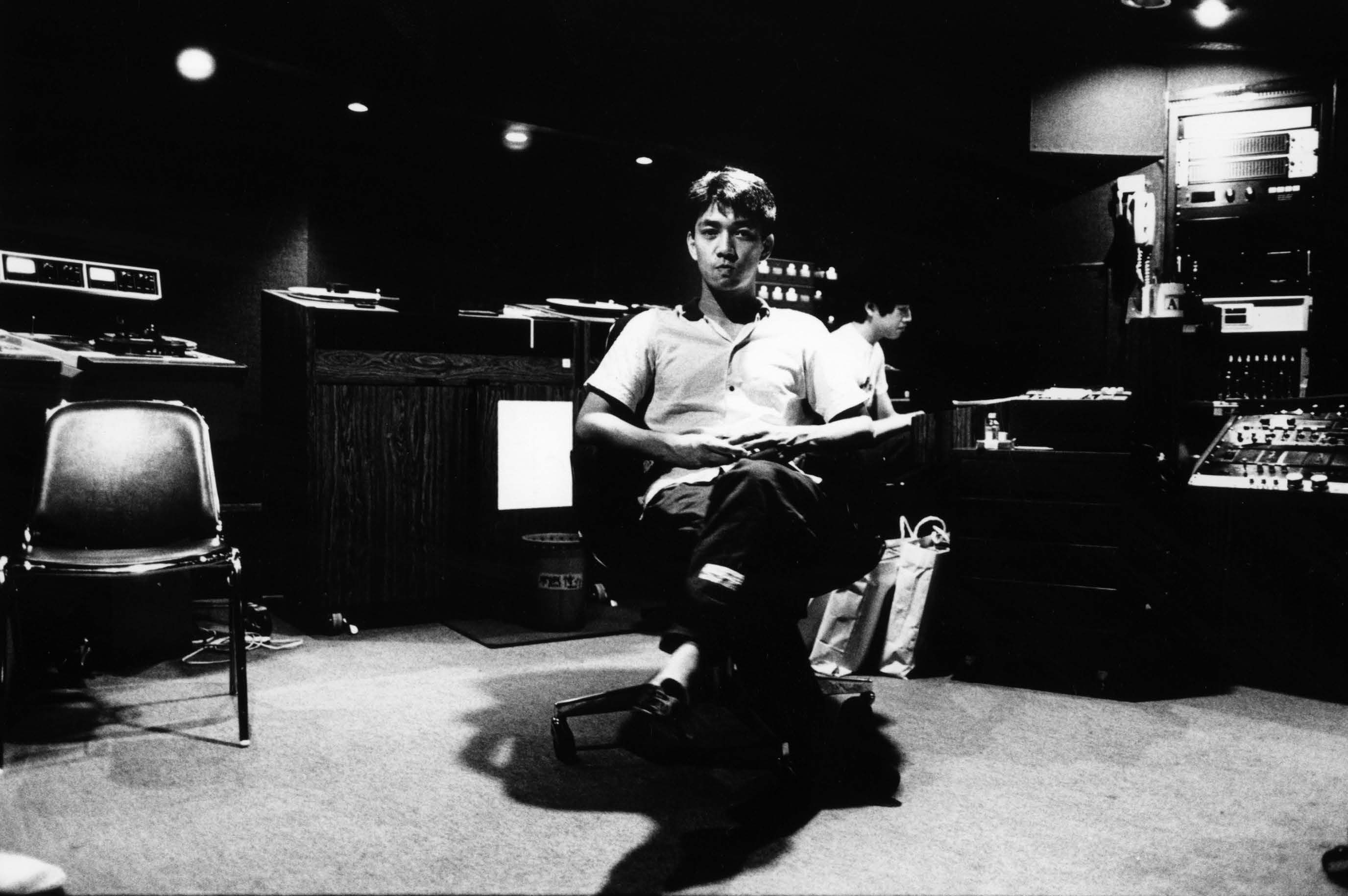
Ryuichi Sakamoto ‘Esperanto’ 19th November 2021
Omar Khorshid ‘Giant + Guitar’ 26th November 2021
(Both Released By WEWANTSOUNDS)
Reissue specialists WEWANTSOUNDS have been busy this last couple of months, unearthing both cult sounds and previously scare treasures from Japan and the Middle East; many of which have until now never been released outside there own domains.
You may very well have seen my last review of the label’s Makota Kubota & The Sunset Gang’s 1972 tropical ragtime ‘Hawaii Champroo’ album; the first of a trio of such 70s nuggets from the former Les Rallizes Dénudés band member, the other two titles being the eponymous Sunset Gang and Dixie Fever (released just last month) albums. The first of those records also featured the talents of future Yellow Magic Orchestra instigator Haruomi Hosono, which ties in nicely with today’s feature; his comrade-in-arms on that pioneering electronic voyage, Ryuichi Sakamoto and his mid eighties avant-garde synthesizer and computer programmed loop and cut-up Esperanto album, which is being reissued for the first time outside Japan by WEWANTSOUNDS this month.
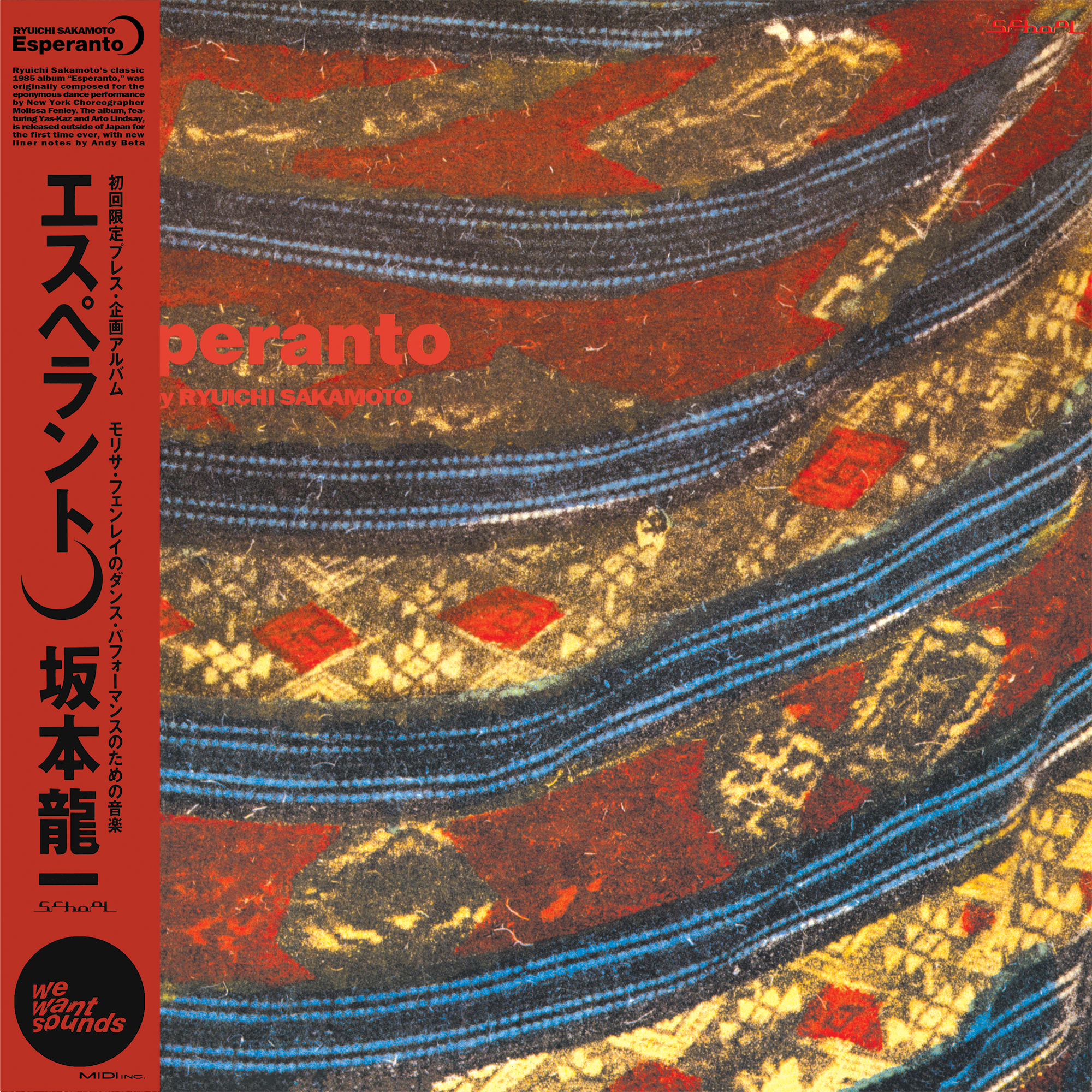
Already riding the visionary synth waves with the already mentioned YMO, and through his inspirational projects with David Sylvian, Sakamoto went on to score success with the plaintive Merry Christmas Mr. Lawrence soundtrack. The sixth solo release in that oeuvre however was a return to his leftfield, challenging roots: a marked change from the semi-classical emotional pulls of the harrowing film soundtrack. A kind of cutting edge theatre and ballet, Esperanto was composed for a performance by the New York choreographer Molissa Fenlay with contributions from Lounge Lizard, experimentalist guitarist Arto Lindsay and the Japanese percussionist Yas-Kaz. You’ll have to use your imagination to how it all worked visually – though later on art luminaries Kit Fitzgerald and Paul Garrin turned this soundtrack into a conceptual video project.
Sounding very much of its time, on the burgeoning apex of dance music and early hip-hop, electro, this polygenesis experiment often evokes both the Art Of Noise and Herbie Hancock’s ‘Rockit’. Using a super-sized computer and state-of-the-art tech, Sakamoto merged futuristic Japanese theatre with a mechanical Ballets Russes, workshop shunts and huffs with the plastic, and electronic body music with Hassell’s fourth world music inspirations.
Snatches of voices, dialogue get cut-up and looped in a primal techno performance of mechanics, rippled and tapping corrugated percussion, synth waves and oscillations, serial piano dashes and rolls, and Japanese spiritual garden enchantments. At any one time you can pick up the echoes of Glass, Stockhausen, Kraftwerk, Depeche Mode, Eno and Populäre Mechanik within the often mysterious, exotic performativity. Motoring, bobbing or in staccato mode, Sakamoto produces a futurist dance set of suspense and experiment; an omnivorous feast of programmed and real sounds. Though very dated by today’s technological wizardry standards, the electro workshop Esperanto remains an iconic, very much sought after work well worth its admission price and reissue.
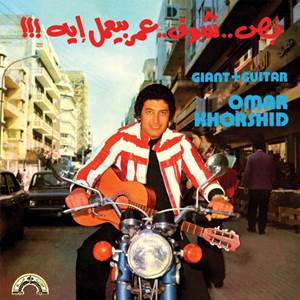
Sitting astride his motorbike on this version of the album – a premonition, augur of the fatal crash that would kill him only seven years later –, Omar’s in transit; cutting a dash as playboy and matinee star (which he was, having acted in a number of films). The music itself has the spirit of surf twanged and tremolo rock ‘n’ roll meets an Arabian Wild West and the Sublime Porte. Often these exotic enchantments imagine a camel riding Ennio Morricone cantering across sand dunes, or Django Reinhardt twirling notes in the bazar. Certain Dick Dale like twangs ride up and up Arabian scales, and gaze out across a Hellenic and Franco-African Med.
Bedouin vibes cross paths with the courtly, and dance elegantly and in rip-roaring fashion up and down the neck of Omar’s guitar. To this dazzling intricacy and craft there’s a certain kitsch production of sound effects, reverb, zaps and burbles. It all sounds a little Joe Meek when this happens, but is all good fun. Not so space age a recurring organ gives the music both a soulful (bordering on Gospel) and even psychedelic feel. Its mostly used as incipient drone; something to stir or create the mood, which can often be romantic or gazing.
Shake, rattle and hung, Omar let’s rip with the constant blur of nimble fret work, speeding back and forth, spiralling and amorphously conjuring up a myriad of refrains and riffs. But yes, you can’t help seeing those belly-dancing ladies, with their bejewelled navels gyrating to the exotic Egyptian sounds. It reads as god as it sounds. So what are you waiting for? Do yourselves a favour and pick up this guitar legends album now.
Whilst I have your attention, the label’s next release continues an excavation of Japanese nuggets with a neon-lit DJ like set of 80s city pop, funk and boogie from the Nippon Columbia label vaults. Selector on this sleek drive is DJ Notoya, who picks out moonlight flits and swimmingly dreamy spells from Makoto Iwabuchi, Hitomi ‘Penny’ Tohyama and Hatsumi Shibata. Under the Tokyo Glow title that compilation of future-pop gems will be released on the 10th of December – just enough time to fill the Christmas stocking this year.
Hi, my name is Dominic Valvona and I’m the Founder of the music/culture blog monolithcocktail.com For the last ten years I’ve featured and supported music, musicians and labels we love across genres from around the world that we think you’ll want to know about. No content on the site is paid for or sponsored and we only feature artists we have genuine respect for /love. If you enjoy our reviews (and we often write long, thoughtful ones), found a new artist you admire or if we have featured you or artists you represent and would like to buy us a coffee at https://ko-fi.com/monolithcocktail to say cheers for spreading the word, then that would be much appreciated.
 Monolith Cocktail Blog