THE MONTHLY DIGEST OF ACCUMULATED NEW MUSIC; THE SOCIAL INTER-GENERATIONAL/ECLECTIC AND ANNIVERSARY ALBUMS CELEBRATING PLAYLIST; AND ANNIVERSARY PIECES FROM THE ARCHIVES.

THE NEW\___
boycalledcrow ‘Kullau
(Mortality Tables)
A musical atmospheric hallucination and psychedelic dream-realism of a roadmap, the latest transduced-style album from Carl M Knott (aka a boycalledcrow) takes his recollections, memory card filled photo albums, samples and experiences of travelling through Northern India between 2005 and 2006 and turns them into near avant-garde transported passages of outsider art music.
Escaping himself and the stresses and anxieties that had been plaguing him since adolescence, Knott chose to pick up the road less travail(ed) after graduating; making new friends along the way, including the artist (known as James) who provided the album’s image.
If you are aware of the Chester-based composer’s work under numerous labels, and his experiments with weird folk music and signature revolving, splayed, dulcimer and zither-like guitar transformations then Kullu will – albeit more psychedelic and mirage-like – fit in nicely with expectations.
Place names (that album title refers to the village, an ancient kingdom, of ‘Kullu’, which sits in the ‘snow-laden mountain’ province of Himachel Pradesh in the Western Himalayas), Buddhist self-transformation methods (the extremely tough self-observation process of “non-reaction” for the body and mind known as “Vipassana”), Hindu and Jainism yogis (the “Sadhu”, a religious ascetic, mendicant or any kind of holy person who has renounced the worldly life, choosing instead to dedicate themselves to achieving “moksha” – liberation – through meditation and the contemplation of God) and language (the localized distinctive Kullu dialect and syntax of “Kanashi”, currently under threat) are all used as vague reference points, markers in this hallucinatory grand tour.
These captured moments and memories are often masked. It’s the sound of Laaraji stepping across such dizzying spiritually beautiful high altitudes and descending into the valley below; the brief sound of tablas and an essence of reverberating Indian stringed instruments suddenly taking on abstracted forms or reversed and melted into a hazy dream cycle. Nothing is quite what it seems; the imagination reminiscing freely and taking source recordings off on curious tangent. And yet it all makes sense, and somehow quantifies, soundtracks a landscape and period we can identify and experience. You can even work out that much of that plucked, cylindrical, pitch and speed-shifted string sound is coming from the £27 guitar that Knott bought whilst on those same travels (picked up in Dehradun to be specific).
But as with all of Knott’s peregrinations, queries, unrestricted gazes, the sound is very much his own. If you would like some idea of what we are dealing with, maybe Walter Smetak, Land Observation in colour, Fabbrica Vuota, Gunn-Truscinski Nace, and with the playfully strange psychedelic ‘Tuktuk’ ride, a merger of Tortoise, Yanton Gat and Animal Collective. Mind you, the vague echoes of piped church music on ‘Bear River’ (which “bisects” the valley region in which Kullu sits) are closer to the spiritual new age and kosmische – perhaps a hint of David Gasper. If Knott’s soundboard is anything to go by he did indeed find that much needed replenishment of the senses and escape from the mental and health pressures of stress that handicapped his progress. He’s created dreamy encapsulation of a time without burden and restriction; an experience totally free of worry and the strains of the material world out near the roof of the Earth. The results of which can be heard to have clearly been beneficial artistically. Kullu is another magical, strange and explorative soundscape/soundtrack from an independent artist quietly getting on with harnessing a unique sound and way of capturing the impossible.
Amy Aileen Wood ‘The Heartening’
(Colorfield Records)
Not in the literal sense, but the award-winning drummer, multi-instrumentalist, composer and engineer Amy Aileen Wood takes centre stage on her new album for the Colorfield Records label.
The supporting foil on a range of albums and performances with such notable names as Fiona Apple (more from her later), St. Vincent, Tired Pony and Shirley Manson, Wood was initially approached by Colorfield instigator Pete Min (the imprint that’s run out of Min’s Lucy’s Meat Market studios in L.A.) to lead her own solo outing. And although Wood’s stand-out tactile feels and descriptive drumming skills maybe on show and at the forefront, the L.A. based polymath, whilst also playing a wide worldly range of instruments, invites a number of in-demand session players and artists to collaborate, including Apple. An unsurprising choice seeing as Wood’s was not only a member of the recording band on Apple’s Fetch The Bolt Cutters album but also its co-producer. From that same circle, the “veteran” bassist Sebastian Steinberg provides pliable and subtly effective upright bass parts to a majority of the tracks on The Heartening. Apple, for her part, offers cooing “dadodahs” and assonant light dreaminess on the album’s opener, the womb-breached submersed turn Can Unlimited Klezmer ‘Rolling Stops’, and both sighs and giggles of ‘self-love’ on the gamelan cascaded self-help indie-wonk ‘Time For Everything’. Another one of the various guests’ spots goes to Kelsey Wood (relation?), who coos and ahs on the kinetic Alfa Mist-esque ‘Slow Light’.
The Heartening is essentially, if removed and discombobulated or enhanced by a palette of different styles and influences, a jazz album; especially with the addition of the L.A. based saxophonist (amongst other talents) Nicole McCabe, who pushes those personalized thematic exploratory performances and freeform expressions towards flashes of Ivor Pearlman, Alex Roth, Donny McCaslin (I’m thinking especially of his cosmic dissipations), Dave Harrington (funny enough, referenced in the PR notes) and Savoy label era Yusef Lateef.
But the musicality is far reaching, hopping around and landing at one point in Java, the next, in Eastern Europe (those stirring closed-eyes arches, sighs and solace style strings of the renowned Daphne Chen reminding me of Fran & Flora and Alex Stolze’s Galicia classical sympathies). You could also throw in breakbeats, the downtempo, the no wave and various fun fusions into the mix; everything from J Dilla to NAH, TV On The Radio, Arto Lindsay, John Zorn and Lucrecia Dalt.
Wood’s own style of drumming (though as I mentioned, the multi-instrumentalist, true to that title, plays everything from nostalgic iconic midi synths and drum pads to the West African balafon and twines flicked kalimba) is halfway busy and halfway intuitive: a mix of Valentina Mageletti and Emre Ramazanoglo.
Wood is certainly a talented player and full of ideas, as the action moves constantly between the natural and improvised. With a mix of trepidation and “intrigue” Wood’s proves an able leader and catalyst. I’d say this solo venture was the successful start to a new pathway and adventures.
Virgin Vacations ‘Dapple Patterns’
From a multitude of sources, across a number of mediums, the concentrated sonic force that is Virgin Vacations ramp up the queasy quasars and the heavy-set slab wall of no wave-punk-jazz-maths-krautrock sounds on their debut long player. With room to expand horizons the Hong Kong (tough gig in recent years, what with China’s crackdowns on the free press and student activists; installing authoritarian control over the Island) ensemble lay out a both hustled, bustled and more cosmic psychedelic journey, from the prowling to the near filmic and quasi-operatic -from darkened forebode to Shinto temple bell-ringing comedowns that fade out into affinity.
Operating in a liminal realm between the ominous and more mysteriously idyllic; changing mood, sense of place and the sound on every other track; the ensemble channel everything from the Hifiklub, Angels Die Hard and The Pop Group in a wail of bugle horns post-punk jazz (ala Blurt and a vocal-less Biting Tongues) to ‘Gomorrha’ CAN, the Dead Kennedys, film-score Sakamoto, Hawkwind and the Holy Family. That’s of course when they’re not orbiting the celestial jazz of Sun Ra merged with Herbie Hancock on the heavenly spheres and alien evoked ‘Jupiter’: even this track grows into a manic nightmare of broken distorted radio sets.
The trip is a cosmic range of ideas, some driven others far more dreamy, psychedelic and even erring towards the orchestral – there’s plenty of bulb-like note-twinkled glockenspiel to go around too. It begins with a krautrock expulsion of dark materials and ends on a Tomat-like – in union with the Acid Mothers – dissipation of enveloped interplanetary temple vibrations. This only touches the surface however, and Virgin Vacations take flights of fantasy regularly whilst maintaining a heavy-pulsation of uncertainty. Energy is channeled in the right direction, with a force that manages to tap into the anxious and radical whilst finding air to breathe and dappled patterns spread of the title.
he didnt ‘nothingness manifested’
(Drone Alone Records) 24th May 2024
Granular gradients, frazzled fissures and currents appear in the thick set wall of drones emitted by the Oxfordshire-based electronic musician, guitarist and producer’s new numerically demarcated album.
Reading into the monolithic slab sided scale and ambitions of he didnt’s manifestations, these, mostly, long walls of whined, bended, looped, abrasive and sustained guitar and electronic waveforms elicit the feelings of landscape: one that can feel simultaneously overbearing, grand but in motion. Metallic filaments or the pitter-patter of acrid rain, ‘nothingness manifestations III-V’ builds a sonic picture over its duration of some almost alien atmospheric enveloped weather front – reminding me of Hans Zimmer’s bits on Blade Runner 2049, His Name Is Alive, Fiocz and a venerated Tangerine Dream. ‘nothingness manifestations II’ is similar with its alien evocations yet near bestial and slithery too – I’m hearing vague signs of Faust, Sunn O))) and even Spaceman 3 for some reason. Perhaps picking up inspiration from one previous support slot, he didnt channels The Telescopes, minus Stephen Lawrie’s drudgery vocals, and a touch of the J&MC on that heavy meta hewed opener.
But there’s holes too in what is more like a mesh block of wielding drones, with a glimmer, a movement of light audible in the grainy textured fabric around the self-described “void”. In short, something from nothing, materialisations from patterns in the sonic concrete that may just evoke something much bigger.
Ziad Rahbani ‘Amrak Seedna & Abtal Wa Harameyah’
(WEWANTSOUNDS)
Vinyl reprisal specialists WEWANTSOUNDS, in-between reviving and offering remastered runs of cult music from Japan, Egypt and elsewhere, have been picking their way through the back catalogue of the Lebanese polymath Ziad Rahbani (musician, composer, producer, playwright, satirist and activist).
Following on from the crate diggers’ choice 80s Middle Eastern disco-funk-balladry-soul-jazz-Franco-Arabian classic Houdou Nisbi (released by the label in 2022), the Amrak Seedna & Abtal Wa Harameyah combined moiety of congruous theatre play soundtracks offers a generous helping of performance choruses, instrumental theme tunes, ad spots and variations of the main signatures.
Whilst the ongoing sectarian driven civil war (between 1975 and 1990) raged, there was a surreal duel existence of stoicism, the Lebanese people carrying on with life in the face of religious rivalry, unprecedented violence, and infamous acts of massacre (a 150,000 fatalities, maybe more). Importantly Lebanese artists, musicians continued to create – some from abroad as part of a mass exodus (estimates are that a million citizens left the country to escape the horror during that period). Disarming as the musical motifs, dancing rhythms and messages was, cultural idols like Ziad (famously the scion of the feted musician and national star Assi Rahbani and the legendary celebrated siren Fairuz) were fervently political. And among his many talents, Ziad would collaborate with the most vocal of them, including the pioneer singer-songwriter of Arabian political song, Sami Hawat, who appears alongside a whole cast of other notable vocalists on this double helping of stage performances.
Written by fellow Lebanese playwright and actor Antoine Kerbaji, the main acts and catalysts for Ziad’s inspired fusion of the Occidental and Middle East, speak of the times in which they were created. Originally released on the Beirut-based cult label Relaxin in 1987, the emotions run high as the streets outside were paved in bloody retribution along the lines of not only religion (the Christian minority’s rule of decades, and elitist nepotism finally coming to a crashing head as the country’s demographic shifted to a Muslim majority, inflated by two migrations and expulsions from Israel of sizable Palestinians populations in the late 1940s and 60s) but also Cold War divisions. The passion is evident in the various cast or male/female led choruses of yearning expression and more swooning allurement – sometimes almost reminding me of Bollywood, and the dance or romance, courtship between a male and female lead.
Musically however, this is a mixed assortment of near classical piano motifs, Arabian stringed instrumental segments, the new wave, disco and funk fusion and movie soundtrack influences. Glaringly an obvious steal, there’s the recurring use of John Barry’s 007 signature score across a large slice of these tracks. Adopting that most famous iconic mnemonic and its variations, Ziad seems to pinch it back from its own Western takes on the music from his country and the wider region. Marvin Hamlisch dabbled in this area for The Spy Who Loved Me – although his take was on Egyptian disco -, as to did Bill Conti – a mix of Med sounds for For Your Eyes Only. So much of this reminds me of both those top rate composers, especially the near thriller style production and clavichord MOR funky fusion sounds of ‘Al Muqademah 1 (Introduction 1)’. Later on it sounds like Ziad riffs on Hamlisch’s score for The Sting on the relaxed jazzy vaudeville saloon barrel organ reminisce ‘Kabbaret Dancing’.
Away from the 007 themes there’s hints of John Addison and Michael Legrand on the Franco-Arabian boogie musical number ‘Al Piano’, and Richard Clayderman on the beautiful romantic-esque flourish of piano scales, runs and lucidity ‘Slow’. The music slips into the Tango at will, or transports the listener back to the noir 1930s. Although, ‘Mashhad Al Serk’ is a strange one, resembling funky calypso transmogrified with reggae and the new wave. I’m at a loss on occasion to describe what it is I’m hearing, as the palette is so wide and diverse. But in summary, both albums offer a cabaret and theater conjecture of fluidity that takes in the Middle East and fuses it with Western classicism, movie and TV themes, funk and 80s production signatures. Previously only ever released in the Lebanon, WWS have done the decent thing and revived these stage play soundtracks, offering us all a chance to own these expressive and enlightening recordings.
THE SOCIAL PLAYLIST VOLUME 86\____
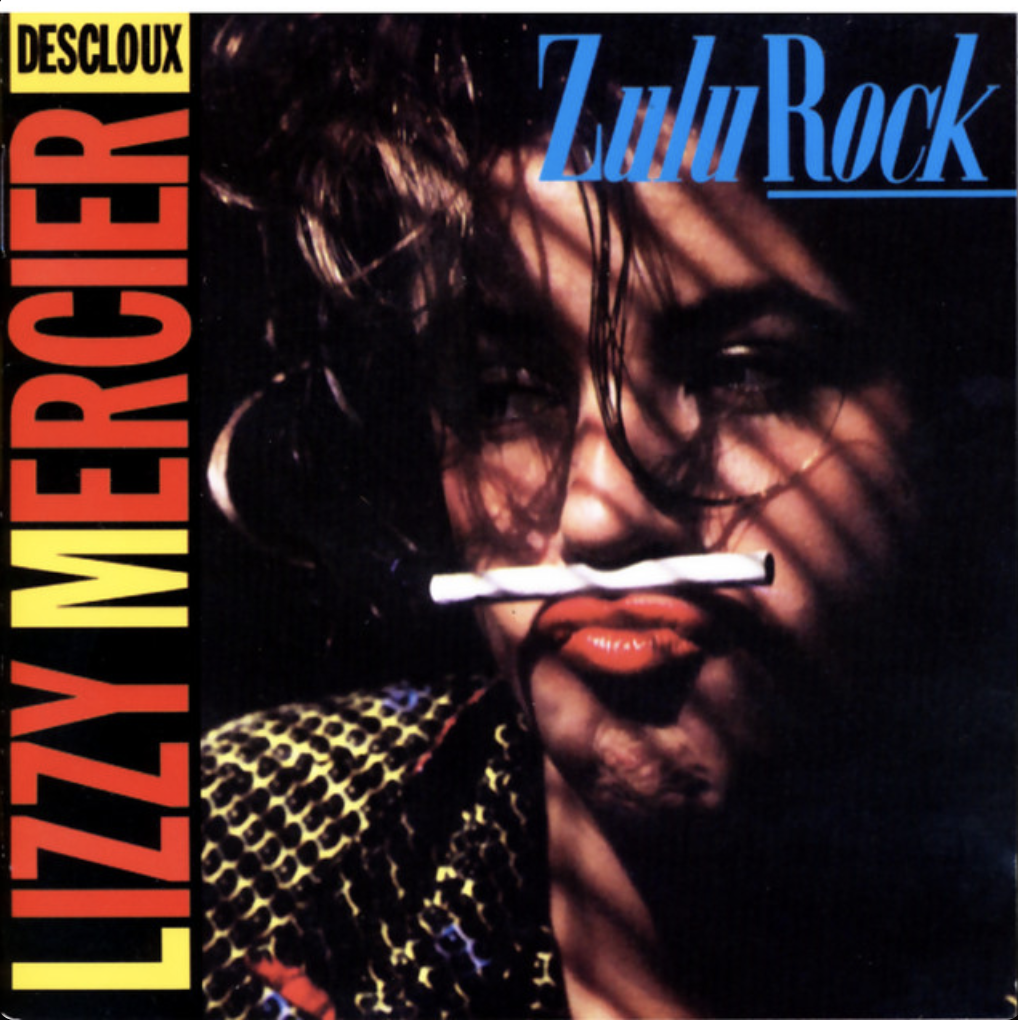
The Social Playlist is an accumulation of music I love and want to share, tracks from my various DJ sets and residencies over the years, and both selected cuts from those artists, luminaries we’ve lost and those albums celebrating anniversaries each month.
Running for over a decade or more, Volume 86 is as eclectic and generational-spanning as ever. Look upon it as the perfect radio show, devoid of chatter, interruptions and inane self-promotion.
In this edition I’ve chosen to mark the 50th anniversaries of Sparks Kimono In My House, Bowie’s Diamond Dogs, Slapp Happy’s Self-Titled – but referred to as Casablanca Moon, after the opening track -, and Popol Vuh’s Einsjager & Siebenjager albums. A decade closer, and into the 80s, I’ve included tracks from my favourite French new wave spark and cool chanteuse Lizzy Mercier Descloux and her Zulu Rock LP of ’84, plus a slightly different performance of Echo & The Bunnymen’s ‘The Killing Moon’ (the original single also included on the Liverpool’s band’s Ocean Rain of course). Another leap closer, and its 30th anniversary nods to the Beastie Boys ambitious double-album spread Ill Communication, Jeru The Damaja’s The Sun Rises In The East, and The Fall’s Middle Class Revolt. The final anniversary spot this month goes to our very own Brian ‘Bordello’ Shea, or rather the whole Shea brood and their might lo fi cult vehicle The Bordellos. The group’s summary of the world and music industry, Will.I.Am, You’re Really Nothing, is ten years old this month.
We lost even more iconic mavericks and leaders of the form this last month or so. Grabbing, quite rightly, the most attention is the loss of Steve Albini. The legacy is ridiculous, and to be honest, far too many people have already dedicated the space for me to now chip in – I will be frank, where do you start? And so I have chosen to give him a mention but not to pay the homage due. We also lost the last remaining member of the motor city five, Dennis “Machine Gun” Thompson, who pummeled and, quite literally, kicked out the fucking jams. I’ve already made note and selected tracks from their catalogue when poor old Wayne Kramer passed just a few months back, and also their manager – for a time between drug busts – John Sinclair. The Detroit misfits are no more. What a sad state of affairs.
I have however chosen to mark the passing of UK rap icon MC Duke and king of twang, and one of the most important, influential guitarists of all time, Duane Eddy.
There’s a couple of “newish” selections – tracks that I either missed or didn’t get room to include in the Monolith Cocktail team’s Monthly Playlists (next edition due in a week’s time) – from Masei Bey and Martina Berther which I hope will prove intriguing. The rest of the playlist is made up of a smattering of tracks from Tucky Buzzard, Prime Minister Pete Nice, The Bernhardts, Nino Rota, It It, Clive’s Original Band, The Four King Cousins and more.
TRACK LIST________
Sparks ‘Barbecutie’
Tucky Buzzard ‘Time Will Be Your Doctor’
Haystacks Balboa ‘Bruce’s Twist’
David Bowie ‘1984’
Masei Bey ‘Beat Root’
Beastie Boys Ft. Q-Tip ‘Get It Together’
Jeru The Damaja ‘You Can’t Stop The Prophet’
Prime Minister Pete Nice Ft. Daddy Rich ‘Rat Bastard’
MC Duke ‘I’m Riffin 1990 Remix’
Helene Smith ‘Willing And Able’
The Bernhardts ‘Send Your Heart To Me’
Tala Andre Marie ‘Wamse’
Lizzy Mercier Descloux ‘Dolby Sisters Saliva Brothers’
Orchestre regional de Segou ‘Sabu Man Dogo’
Slapp Happy ‘Casablanca Moon’
Nino Rota ‘L’Uccello Magico’
Duane Eddy ‘Stalkin”
Dreams So Real ‘History’
Echo & The Bunnymen ‘The Killing Moon – Life at Brian’s Version’
The Bordellos ‘The Gospel According To Julian Cope’
The Fall ‘Middle Class Revolt’
It It ‘Dream Joel Dream’
David Bowie ‘Rock ‘n’ Roll With Me’
The Bordellos ‘Straight Outta Southport’
Clive’s Original Band ‘Oh Bright Eyed One’
Jodie Lowther ‘Cold Spell’
Martina Berther ‘Arrow’
Fursaxa ‘Poppy Opera’
Popol Vuh ‘Wo Bist Du?’
The Four King Cousins ‘God Only Knows’
ARCHIVES\_____

When gracing the Monolith Cocktail with his very own column of reviews was still years away, Brian “Bordello” Shea was featured for his own music as part of the mighty lo-fi malcontents The Bordellos – Brian one of the co-founding Shea sibling forces behind that celebrated cult outfit. Still for my money one of their finest moments on record, the group’s Will.I.Am, You’re Really Nothing (released at a time when that annoying, talentless opportunist was all over the telly and in the charts in the UK) diatribe is ten years old this month. To celebrate, reprise that essential songbook, I’m once more sharing my original review from 2014. Every word of it still, unfortunately, still holds today.
The Bordellos ‘Will.I.Am, You’re Really Nothing’
(Small Bear Records) Released 31st May 2014
It was Blur, in one of their only true flashes of inspiration, who came closest to summing up the times with their dejected conclusion that, “modern life is rubbish”. That was the early 90s, but depending on how long in the tooth, worn-down and jaded you are, every age can be viewed with the same disappointing sigh of resignation.
Yet, surely the present times take some beating, at least to us, the self-appointed custodians of the past, who remember an age when the culture seemed…. well, at least exciting, linear and comprehendible, instead of appropriated without thought or context, screwed-over and manipulated for largely commercial results, and slotted in to a handy off-the-peg lifestyle choice. Pop has eaten itself, with the lifecycles of trends and music becoming ever shorter.
It is with all this in mind that The Bordellos set out their manifesto. Leveling their criticism at commercial radio and TV especially, they aim their guided missile attacks at the harbingers of the Ed Sheeran topped Urban/Black music power lists, and what seems more and more like the UK publicity wing of conservatism, the BBC. The St. Helens, via a disjointed Merseybeat imbued lineage, family affair replace the “happy-go-lucky” lightweight and deciding suspect womens rights champion, totem of Pharrell Williams, Will.I.Am and all his partners in floppy platitude pop, rock and folk with the arch druid of counter-cultural esotericism and miscreant obscure musical sub-genres (Kraut to Jap via Detroit rebellious and experimental rock) Julian Cope. Grinding out a dedicated epistle to Cope, the trio’s sermon ‘The Gospel According To Julian Cope’ prompts a road to Damascus conversion to the spirit of rock’n’roll, in all its most dangerous guises.
De facto idol, Mr.Cope, pops up again on ‘My Dream Festival’, which as the title suggests is a list of the ideal, once in a lifetime, free festival lineups of lineups; read out in a quasi-Daft Punk ‘teachers’ style bastardized litany to an accompanying Casio pre-set drum track and watery effects. The Casio rhythm pre-sets and occasional sound bites come in handy again on the jaunty, deadpan disco jolly, ‘Elastic Band Man’ – a transmogrified Human League meets John Foxx – and on the broken-up, Robert Wyatt emotional drudge, ‘Between Forget And Neglect’.
Despite going at it hammer and tongs on their anvil-beating Cope Gospel, The Bordellos latest long-player protestation is a forlorn and intimate downbeat record. They can still be relied upon to rattle off a list of grievances and opprobrious pun harangued song titles: from the LP’s play-on-words adopted The Smiths song, reworked to accommodate a big fuck-you to that irritable twat, Will.I.Am, to name-checking another hyperbole anomaly of our Youtube, Google, Facebook, Twitter masters’ bidding, the no less frustratingly lame ‘Gangnam style’ viral – joining the call from last year’s Bring Me The Head Of Justin Bieber EP, for another public execution.
But it’s with a certain lamentable introspection that they also tone the vitriol down to attend to matters of the heart: The kiss-me-quick, misty-eyed ballad to love on a northern coast seaside town, ‘Straight Outta Southport’, and the Hawaiian slide guitar country rock ode, ‘The Sweetest Hangover’, both, despite their tongue-in-cheek titles, bellow a fondness for lovelorn adventures and plaintive break-up regret; proving that despite the bellicose calls for the corporal punishment of the foppish elite and its commercial pop music stars, there is a tender side to the group.
Sounding like it was recorded on an unhealthy dose of Mogadon, Will.I.Am, You’re Really Nothing is a composed grumble from the fringes of a battered musical wilderness. A last cry if you will from the pit-face of rock’n’roll.
Also this month, Bowie’s repurposed Orwellian theatre production Diamond Dogs reaches its 50th anniversary.

David Bowie ‘Diamond Dogs’
(RCA) 1974
“As they pulled you out of the oxygen tent, you asked for the latest party…” And with that the future dystopian, biota canine, leapt from its slumber “onto the streets below”: howling for more.
Bowie never really wanted to be a musician as such: or at least not wholly a musical act. His destiny lied with the grease paint of theatre and allure of cinema. Diamond Dogs of course allowed him to create a spectacle, melding the two disciplines together.
Fate would force the original concept to morph into the achingly morbid and glam-pop genius we’ve now come to love: a planned avant-garde, ‘moonage’, treatment of Orwell’s revered novel 1984 was rebuked by the author’s estate.
Still those augural references to state control and totalitarianism are adhered to throughout – both lyrically and in the song titles –, but attached to visions of a new poetic hell!
The loose, all-encompassing, metaphysical language may promise melancholy and despair, yet it also knows when to anthemically sound the rock’n’roll clarion call too.
Decreed as the leading highlight’s of the album by the majority –
Diamond Dogs (single), Rebel Rebel (single), 1984
Pay attention to these often overlooked beauties –
Rock’n’Roll With Me (single), Sweet Thing
Hi, my name is Dominic Valvona and I’m the Founder of the music/culture blog monolithcocktail.com For the last ten years I’ve featured and supported music, musicians and labels we love across genres from around the world that we think you’ll want to know about. No content on the site is paid for or sponsored and we only feature artists we have genuine respect for /love. If you enjoy our reviews (and we often write long, thoughtful ones), found a new artist you admire or if we have featured you or artists you represent and would like to buy us a coffee at https://ko-fi.com/monolithcocktail to say cheers for spreading the word, then that would be much appreciated.
The Perusal #25: Ilmiliekki Quartet, Al Doum And The Faryds, Daisy Glaze, Wovenhand…
February 7, 2022
A LOOK AT WHAT’S OUT THERE
Dominic Valvona’s Reviews Roundup
Photo Credit: Daisy Glaze/Vincent Perini
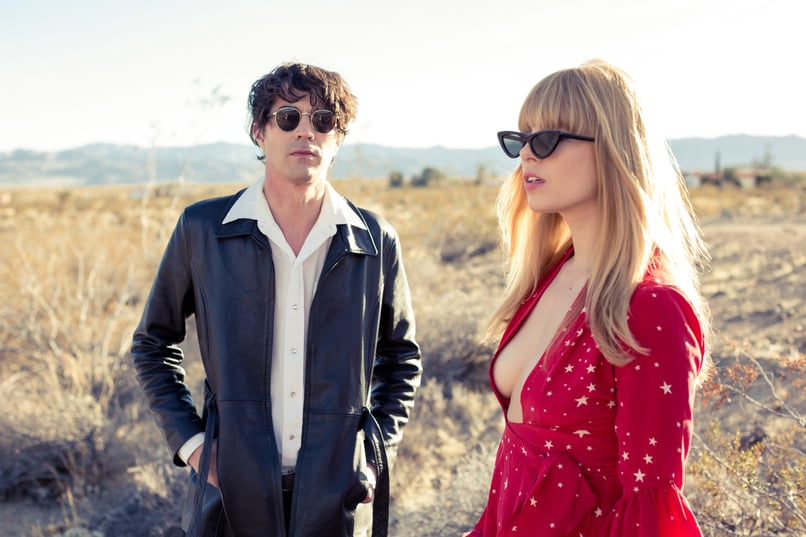
Wovenhand ‘Silver Sash’
(Glitterhouse Records) 4th February 2022
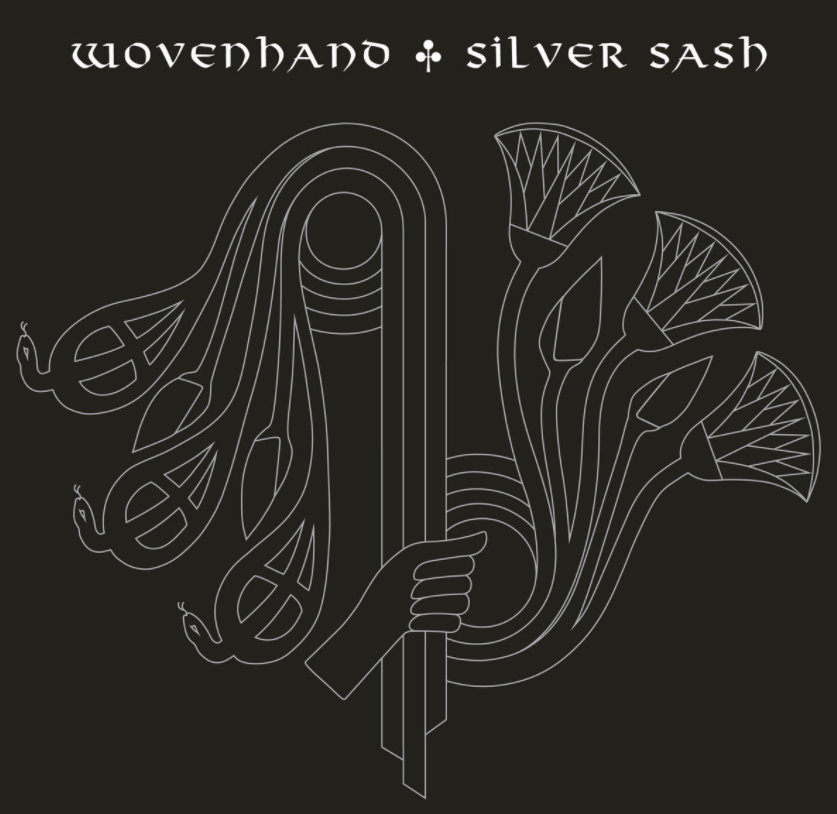
An esoteric landscape of Bury My Heart At Wounded Knee, Blood Meridian and the Egyptian Book Of The Dead awaits on the first album in nearly six years from the mystic David Eugene Edwards Westerns scripture imbued Wovenhand vehicle.
The former 16 Horsepower front man collaborates with Chuck French of the American hardcore band Planes Mistaken For Stars on a wildly driven, occasionally pummeling Biblical and occult raid on Western and Native American symbolism and allegory. Apache, Comanche and ‘Sicangu’ (one of the album’s track title) war dance jangling, rattled and marching percussion gear up against gnarling, doom-laden textures of heavy rock, the industrial, dark wave and the Gothic both on and off the reservation.
Edwards and his foil channel a troubling, even traumatic dark vision of a bloody West; a geography full of metaphysical holy mountains, sacred sites and timbered temples. Silver Sash squalls and creeps between NIN’s collaborations with Bowie and the Swans and Crime And The City Solution and The Mission as rattlesnakes hiss, eagles soar and the distant tribal drums beat out danger. All the while Edwards part quasi-prophet, part descriptive author style lyrics emphasis the supernatural, the holy and some romantic displays of anguish.
An atmospheric grind and hauntingly fierce album that burns scorch marks across an already scarred land, Silver Sash carries weight and mystique on nine songs of esoteric Western hammered invocations.
Ilmiliekki Quartet ‘S-T’
(We Jazz) 11th February 2022

Anything but a lifeless frozen tundra when it comes to contemporary jazz, Finland’s We Jazz (clue is in the name) label platform has been prolific and instrumental in promoting a rich abundance of the Scandinavian region’s talent – three titles no less making our recent ‘choice albums of 2021’ lists.
One such Helsinki stalwart, honing their impressive skills for two decades, is the assured Ilmiliekki Quartet. Their new self-titled album is an understated, lightly touched suffusion of jazz-blues and soul with a whiff of the Savoy and 60s period Blue Note labels output. Although saying that the action can rise to a tumultuous crescendo, a climatic splash of the waters. But for the most part the intensity is simmered in a sizzle of cymbal and snare resonance, quietly stretched, elegant double bass bobs, gentle spotted piano and nuzzled drifting trumpet.
Each member of this special quartet gets to flex their compositional skills, with trumpeter Verneri Pohjola orchestrating the veiled, ghostly-touched ‘Follow The Damn Bread Crumbs’; pianist Tuomo Prättälä dreaming up the early Miles bluesy reflective ‘Sgr A*’ and huffed trumpeted ‘Kaleidoscopesque’; the bassist Antti Lötjönen conjures up the cushioning bounced and dusted rebirth of cool NYC boardwalk evoked ‘Three Queens’; and drummer Olavi Louhivuori serves up the nocturnal serenaded, factory streamed and wind rustled ‘Night Song’. The album’s only cover, ‘Aila’ by the Finnish pop group Karina, keeps within the considered perimeters, stirring between a haze and controlled climatic maelstrom.
The quartet’s overall sound is one of elegance and purposeful development, experiment; a rich channeling of sophisticated jazz from both sides of the pond.
Ziad Rahbani ‘Houdou Nisbi’
(Wewantsounds) 25th February 2022

As the agit-pop artwork cover that has been faithfully reproduced from this cult Middle Eastern treasure’s original cassette/CD release in 1991 shows, the almost surreal climate that existed in Beirut and the South Lebanon at the time it was recorded in the mid-80s, is in constraints with the lighter escapist fantastical fusions of the country’s iconic polymath Ziad Rahbani. Against a backdrop of hard-fought civil war, Ziad was leading everyone into the discothèque and their bedrooms.
A high-heeled local dressed to the nines steps out of a casually placed machine gun diorama; just another statement on the day-to-day horrors that threatened the entire region towards all-out war. The iconic Arabian crate-digger’s favourite, Houdou Nisbi, which is finally being released on vinyl by the Wewantsounds reissue specialists, translates as “relatively calm”: the oft-used TV anchor’s ironic expression in the face of a tumultuous raging conflict. Two thirds of the way into a two-decade spanning civil war, far too complex to detail here, the Lebanon was at the epicentre of war between opposing religious militant groups; sucking in Israel, Syria and a myriad of client states as peacekeepers. During one of the worst atrocities of that war – the infamous Sabra and Shatila massacres – the Lebanese star went to work in his By-Pass studio to make an album of smooth, MOR romantic balladry, funk, soul, jazz and, what sounds like, both Nino Ferrer and Gainsbourg Franco-Arabian troubadour like pop. Both softened and sexy, there’s even, at a stretch I’d admit, a touch of Leonard Cohen 80s slow dances and Odyssey-style disco.
A towering cultural figure in the Middle East at large, as a musician, composer, producer, playwright and activist, Ziad’s fate was mapped out from birth. His feted musician father Assi Rahbani was part of the famous Rahbani Brothers, whilst his mother, Fairuz, was a legendary singer – a number of her most prized albums were actually produced by Ziad in the 80s. With those genes it’s almost a given that he would go on to accomplish so much.
Heavily influenced, as you will hear, by Western music and with a first-rate band of performers (Tewfic Farroukh on sax, Paul Dawani on guitar and Emile Boustani on percussion) on side, Ziad created a sentimental as much as a salacious mood of lilted swoons, maladies and sleep sophisticated groovy dancefloor moves. It all starts with the smooched and tingled piano, floated flute and whistled heart-to-heart ‘Bala Wala Chi’, and moves onto the more mysterious, brassy resonating Arabian title-track. Another piano dalliance – of which Ziad was a maestro – beckons on the dreamy funk-jazz fantasy ‘Nafs Al Sheghlat’, followed by one of those sexier deeply-voiced with bending, melting coquettish female accompaniments, and with a early 80s Sakamoto like production-job, ‘Yalla Kichou Barra’.
A female presence of both lofted, airy allurement and exotic oozing can be heard throughout, alongside the main man, who hinges between almost baritone and more yearning croons: even the whispering.
There’s one cover picked out in the notes, a louche French-esque version of smooth-operators, The Crusaders’ (one name that I would have thought had very negative connotations in the Lebanon) modern soul classic ‘Soul Shadow’. Under the Arabesque ‘Routh Khabbir’ translation Ziad keeps relatively close to the original.
Touches of 70s NYC Broadway, Michael Legrand showtime, Brazilian Tropicana, club lounge Arabia and 80s sentimental Japanese balladry seem to subtly flow on a heart-string tucked fusion that seems to transcend the chaos and death all around. A calmer soundtrack to all the violence and confusion of that moment, Houdou Nisbi would have you thinking everything was hunky dory; as a “relatively clam” escape it works a treat.
Daisy Glaze ‘S-T’
(The Sound Of Sinners) 25th February 2022

What do you get when the one-time drone spaceman Sonic Boom sets out the production controls for a panoramic envisioned Western soundtrack? Well, you get a cinematic free ride across a well-travelled vibrato and tremolo twanged resonating landscape of Tex-Mex border dotted chapels, rebellious skulking outlaw county hideouts and lamentable lover’s rendezvous.
Yes, Boom facilitates the dreamy and sulking Western fantasies of the musical partnership that is Daisy Glaze (named I take it, after the Big Star song); a boy/girl union between Louis Epstein and Alix Brown, a duo that extends to a five-piece outside the studio.
Arriving from congruous but slightly different musical byroads, the duo meet at the same knowing dangerous lovelorn junction that Lee Hazelwood and Nancy Sinatra etched their entwined names; a match that the duo describes as more “blues than pink”, on a soundtrack in which the established echoes of Jack Nitzsche’s strings and Morricone’s spaghetti Western scores cross with The Mekons Sacri Cuori, Ritz Ortolani and noughties Domino Records. Within that indie-country and often supernatural spooked Western scope the duo corrals a wide panning shot of influences to produce a songbook based on the “sinister side of prismatic love”.
From the bell tolls of a shotgun wedding to melted desert mirage apparitions, the Daisy Glaze imprint mixes up decades (traversing the 50s, 60s, 80s, 90s and present) whilst moving from swells of indie to reverent electric organ suffused country-gospel. Although the big sound of ‘Statues Of Villains’ did remind me of both Stereo Total, the Dark Horses and Arabian sand dunes. Almost Gothic in parts, like the Bad Seeds or Crime And The City Solution at a séance during the Day of the Dead, there’s wobbled vibrations of Elvis Presly’s ghost and the dearly departed ready to shake a boney skeleton hip and leg.
Sonic Boom’s touch gives the whole thing an echoed and reverberating spell, and helps to send this ‘psych-outlaw’ partnership in an indie-rock direction. Daisy Glaze pick up all the right vibes and run with them, moseying and cooing sweet everything’s on a recognisable but bleak modern set.
Al Doum and The Faryds ‘Freaky People’
(Black Sweat Records) 18th February 2022

More acid-washed Harmonious Bosch than Hieronymus, the spiritual unifying force that is the ever-changing Al Doum and The Faryds collective turn the garden of earthly delights into a celebration of Mother Nature’s freaks.
At this particular time and space the rambunctious Milan group are a ten-piece ensemble, once more pushing their recent Freaky People free-for-all. A self-confessed paradox of the raucous and seriously considered, the “chaotic and respectful”, “calm and furious”, they’ve managed to invoke both Egypt 80 and Albert Ayler; The Flaming Lips and Vis A Vis; and an astral travelling Lonnie Liston Smith and Les Freres Smith on a bustling Kuti protestation come gospel paean party.
In practice this means spiritual jazz like choruses of soulful wellness mixed with bust downtown Lagos shuffles, suffused horns, fluty flights, celestial chimes, Afro-rock and hints of a psychedelic India. An organised simmered outpouring of energy in honour of Earth’s green goddess, Freaky People’s rainbow alliance sucks in a hand-clapping Janelle Monáe, the afflatus African homages of Idris Ackamoor and Philip Cohran with the modernising improve eclectic peregrinations of The Cosmic Range and soul revue backbeat of Kasalèfkut Hulu to drum up a dancing and tumbled healing balm of optimism.
Orange Crate Art ‘Contemporary Guitar Music’
The Quietist ‘Hidden’
(Both on Somewherecold Records) 18th February 2022
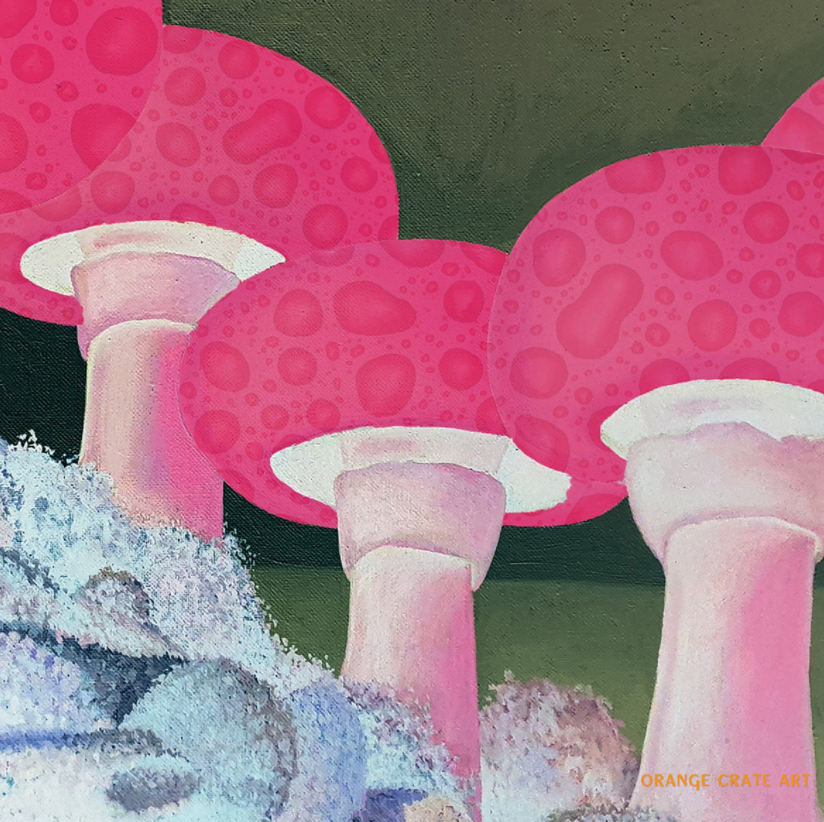
Transducing, transfusing the electric guitar so that this fuzzed-up and flange effected instrument nearly loses itself in the varied states that the Orange Crate Art’s driver Tobias Bernsand sends it, the Contemporary Guitar Music title doesn’t come close to describing the seven musical journeys found within.
Billed as a collection of spontaneous in the moment songs, this latest album from the Malmo explorer traverses a cosmic myriad of trip-hop, post-rock, kosmische, krautrock, psychedelia, dream-pop, indie and baggy dance music; created I’d imagine in some kind of drug-induced haze, with the signature apparatus mind-bended, wailed, contoured and vibrated into a dream factory of the hypnotic, dubby and melting.
Chronicling Bernsand’s creative head space (though this one-man studio enterprise extends to a four-piece when appearing live) in the summer of 2021, there’s a lovely ether oscillating opener entitled ‘Stud Phases’ that reminded me of a dream-wave Land Observations or Broken Shoulder soaked caught in a sort of quasi-electronic dance music cycle. The next track, ‘Wendy Underway’, moves the action towards a trance drifted communion of soft tickling jazz, George Harrison’s Moog mood music, the Van Allen Belt and The Soupdragons: a psychedelic mushroom of translucent cloud gazing if ever I heard one.
A Lydon free PiL has space dust sprinkled on Jah Wobble’s dub bass pulsations on the magical ‘Self-Similarity Fractals’, whilst it could be Weatherall turning on the effects on the velocity building ‘Energetic Superbubble Of Synthetic Telepathy’. Things only get better from here on in, with the epic krautrock peregrination and cosmic courier special ‘Young Spine’, which in equal measures evokes a quasi Klaus Dinger drum beat (not the motorik, but the other kind he specialised in) and echoes of The Untied Knot, Embryo and Higamos Hagamos on its stellar journey – perhaps’ the album’s highlight for me. Just as epic, if probing towards the subterranean is the camel caravan motioned psych bad turn ‘Two Ponies Make No Pint’. A Massive Attack ‘Protection’ style broody bassline is absorbed into a dark patchwork of the HiFi Klub, Andy Haas, Seefeel, Olivia Tremor Control and speaker bouncing arppegiator circling rotations. If you’re aware of the background, the mythology, then you will know that most of the OCA’s material has never been released – that last track being a case in point, a radical ‘remix’ of an unreleased song from four years ago. After a couple of previous attempts and false starts, Bernsand has finally assembled a collection for the highly prolific experimental label Somewherecold (releasing at least four albums a month on average). And it’s an astral belter, a cosmic dream and post-rocking beauty worthy of our attention.
In short, another worthy release on the North American label of note this month is the collated epic ambient album from The Quietist – curiously both albums share mushroom themed cover art. A congruous expanded collection of slow-burning peregrinations from across Phillip Ward’s catalogue, plus three new tracks especially written for this album, Hidden charts the developments of this composer, from his initial apprenticeship writing music in the late 90s on a Playstation 1 (of all things) to a Cubase SE upgrade.
There’s some really incredible moving ambient, low electronic dramas and soundtracks amongst these almost pure suites. Touches of Eno, Popol Vuh, Tangerine Dream, Jean Michal Jarre can be detected in both the long form beautified sweeps and blooms and more mysterious mood boards. A great way to lose oneself for an hour or two.
Seigo Aoyama ‘Prelude For The Spring’
(Audiobulb Records) 2nd February 2022
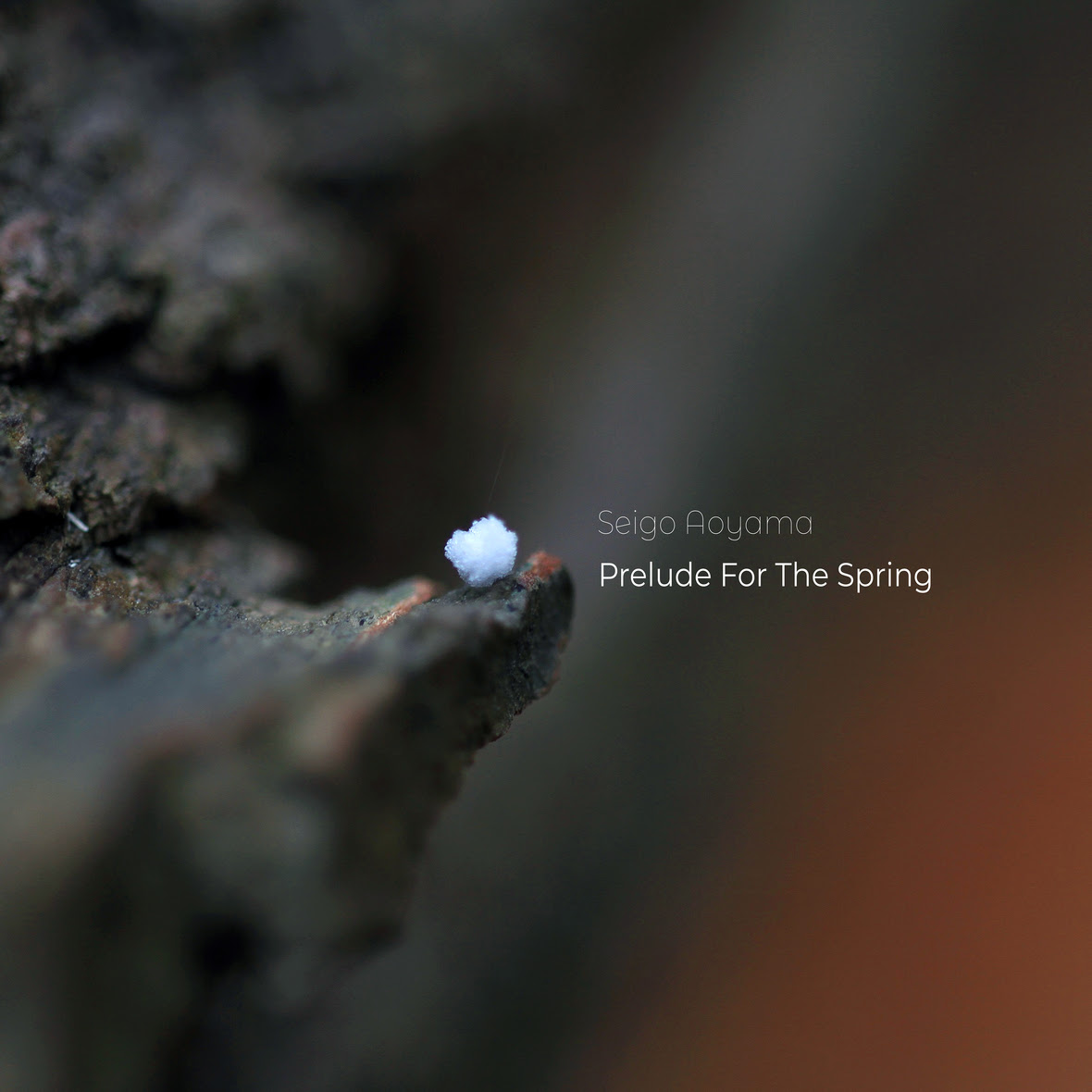
Evoking the tail end of Autumn as nature comes alive in the “prelude” to Spring, the Tokyo-based musician/composer/sound designer Seigo Aoyama magic’s up a minor ambient and neo-classical triumph on his new album of seasonal suites.
The dewy-grass and misty veils of a still dampened landscape are still present as wispy vapours, but the blossom buds are now starting to sprout on a sophisticated soundtrack of ambient like haikus.
To set the mood Aoyama includes a richly lyrical, poetic descriptive introduction of gentle Eastern breezes, a climbing luminous silver moon and various other evocative scenes. But the prelude begins with the resonated thrum of an orchestra tunning up and goes on to feature fourth world echoes of Jon Hassell’s nuzzled trumpet before settling into a Zen garden retreat of delicate wind chimes, softly rung bells and serene contemplative synthesized sine-waves.
The piano, albeit subtle with every note and short run deeply and methodically thought out, has a starring role on this cloud-gazing dreamy nature trail.: Touches of Kabuki theatre, delicate Sakamoto, the classical, Eno and Tim Story come to mind when the ivory and its inner workings are poured and elsewhere singularly struck.
The odd light piece of choral-like voices, the odd line of dialogue and field-recorded tramples through both nature and a Tokyo environment can be heard as life is breathed into this Spring passage of rites and communion. Aoyama proves a capable, adroit, patient composer on what is a moving, calm and deeply felt descriptive soundtrack. One of the best ambient releases I’ve heard this year without a doubt.
T.E. Yates ‘Strange Weather EP’

As recent packages delivered to the Monolith Cocktail HQ go, the eye-catching bundle of music and artwork sent by the Bristol-based creative polymath T.E. Yates is hard to beat. An almost complete physical biography/discography of the artist’s various projects, some of which are award-winning, Yates sent me a number of his Poe-esque and surreal pencil-graphite and charcoal hybrid prints (A Bat And A Raven and Bedlam Six Microphone Faces); some postcard-sized artwork promotions of his short Evil Cat animation, shown at the Edgar Allan Poe film festival; and of course, his pastoral art nouveau illustrated debut album (on vinyl) Silver Coins And White Feathers, and most recent EP, Strange Weather.
And so, just for revision sake that’s the illustrator, animator, artist, singer-songwriter and musician strings to an impressive bow logged. All of which could be directly because of or despite a myriad of neurodivergent issues; outlined to a touch of Americana David Byrne, Warren Zevon and Roy Orbison on the warmly radiating electric-piano shuffled EP opener of dappled-lit plaint ‘Condition’. Laid out in an almost relieved candid fashion, Yates turns the sadness of alienated school days into a gauzy triumph of realisation; coming to terms with what he sees as “both a blessing and a curse”. The very fiber of Yates work and personality, this “condition” (“not a sickness”) leitmotif extends to a ‘creative partnership’ with fellow neurodivergents in a specially made video for the track (through Biggerhouse Films).
It also may account for the EP’s eclectic tastes, which wonder, meander through light jazz, echoes of mariachi or Tex-Mex border Americana, ragtime, radiohall, folk, 70s and 80s MOR pop, whimsical 60s and of course country. Aided on all these dalliances by a very reputable ensemble that includes a chorus of voices and harmonies, and a wide-range of just as eclectic instruments – from Yates’ musical saw to Mikey Kenny’s elbowed fiddle work hoedowns and the presence of C.J. Hillman’s steel pedal guitar wanes -, Yates tells it like it is; both demystifying, and yet I think aching for understanding, the fairytale completeness of romance to the accompaniment of a country fiddled barn dance.
Overlooked, ignored in company on the soft galloping folksy ‘Fierce Horses’; despondent with a dreamy sadness about the greed and avarice in the ‘Palace Of Your Master’; and quaintly rolling along on the unrequited Nick Lowe with tinges of mid 70s Kinks ‘Mystery Window’, Yates unburdens the weight on his shoulders and shows a full gamut of emotions on a most peaceable, disarming EP. There’s nothing strange about this weather, just first-rate songwriting and musicianship from an artist who might just have a unique take on the climate and world around him.
In these troubled times, with so much stacked against independent, unsponsored voices, you can help us to continue probing and delivering great new music:
Hi, my name is Dominic Valvona and I’m the Founder of the music/culture blog monolithcocktail.com For the last ten years I’ve featured and supported music, musicians and labels we love across genres from around the world that we think you’ll want to know about. No content on the site is paid for or sponsored and we only feature artists we have genuine respect for /love. If you enjoy our reviews (and we often write long, thoughtful ones), found a new artist you admire or if we have featured you or artists you represent and would like to buy us a coffee at https://ko-fi.com/monolithcocktail to say cheers for spreading the word, then that would be much appreciated.
 Monolith Cocktail Blog