ALBUM/Dominic Valonva
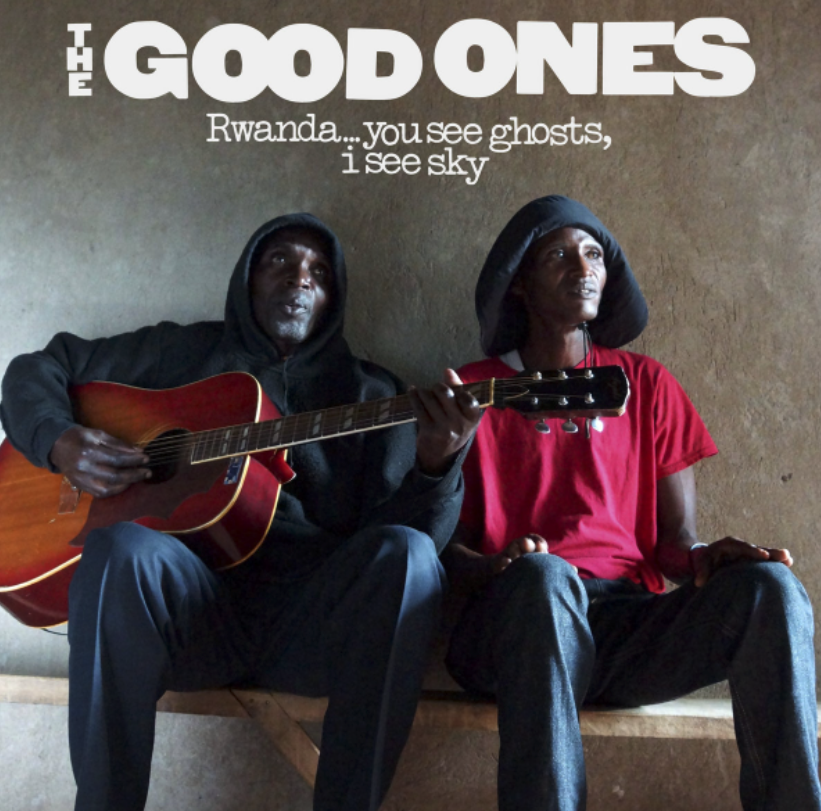
The Good Ones ‘Rwanda…You See Ghosts, I See Sky’
(Six Degrees Records) 8th April 2022
Once more returning to the rural farmlands of a genocide scarred Rwanda, producer polymath Ian Brennan presses the record button on another in-situ, free-of-artifice and superficial production. The fourth such album of unimaginable stirred grief, heartache and reconciliation from the country’s nearest relation to American Bluegrass, The Good Ones latest songbook arrives in time to mark the 28th anniversary of the Rwanda genocide in the mid-90s; a 100 days of massacre, the fastest ever recorded of its kind in the 20th century with the true figures disputed but believed to be around the million mark.
Triggered, its argued even to this day, by a history of tribal warfare, insurrection, civil war, foreign interventions and the assassination of the then president Juvénal Habyarimana, the events of that three month period in 1994 saw a sudden death cull, ethnic cleansing of Rwanda’s Tutsi minority at the hands of the majority Hutus: though even moderate Hutus, along with Rwanda’s third main tribe the Twa were also far from safe, with many caught-up, trapped in the ensuing bloodbath.
Barbaric beyond any semblance to humanity, victims were brutalized, raped, cut to ribbons or herded together in buildings, churches, and schools and burnt alive. Unlike so many previous genocides however, most of those victims were murdered by hand with machetes, rudimental tools, weapons and gallons of Kerosene. No family was left untouched, with both The Good Ones dual roots vocalist set-up of Adrien Kazigira and Janvier Havugimana both losing loved ones, siblings and relatives.
On the remote hilltop farm where he was born and still continues to work, but record too, Adrien managed to hide and survive. But Janvier lost his older brother, a loss felt considerably by the whole trio who looked up to him as an early musical mentor. As a healing balm all three members, including the as yet unmentioned Javan Mahoro, all represent one of Rwanda’s main three tribes: Hutus, Tutsi and Twa. And so bring each culture together in an act of union, therapy and as a voice with which to reconcile the past.
Instantly drawn to the band during a research trip in 2009, Ian recorded their debut international album and the subsequent trio of records that followed: 2015’s Rwanda Is My Home, 2019’s Rwanda, You Should Be Loved, and now in 2022, Rwanda…You See Ghosts, I See Sky. Ian’s wife and longtime partner on both this fourteen-year recording relationship and countless other worldly projects, the filmmaker, photographer, activist, writer Marilena Umuhoza Delli was the one to instigate this Rwanda field trip. Marilena’s mother herself ended up immigrating for refuge to Italy, her entire family wiped out..
In between numerous productions in dangerous and traumatized spots (from Mali to Cambodia and Kosovo) the partners recorded the fourth volume of Glitterbeat Records Hidden Musics series in Rwanda (back in 2017); bringing the incredible stirring songs, performances of the country’s Twa people (or pygmy as they’re unfortunately known; bullied and treated with a certain suspicion by others) to a wider audience.
Back again on Adrien’s farm and haven, this quintet was reunited to record a thirty-song session. Already receiving accolades aplenty in the West, working with an enviable array of admirers, from Wilco to TV On The Radio, Gugazi, Sleater-Kinney and MBV, it’s extraordinary to think that these earthy harmonic songs were produced in an environment without electricity; music that’s made from the most rudimental of borrowed farm tools in some cases.
The true spirit of diy, raw emotion, The Good Ones speak of both love and the everyday concerns facing a population stunned and dealing with the effects of not only that genocide but the ongoing struggle to survive economically. The album begins on a reflective tone of disarming hope however, with the tinny scrappy cutlery drawer percussive and rustic natty-picking bluegrass leaning, ‘The Darkness Has Passed’. From the outset those beautiful of-the-soil sagacious and honest vocals and harmonies prove moving and powerful. Whilst songs like the Afro-Cuban and bluesy bandy turn ‘Columbia River Flowers’ sound positively romantic; a sentiment that also permeates the almost childlike abandon of ‘Happiness Is When We Are Together’, which sounds not too dissimilar to a sort of African version of Beefheart or Zappa. ‘Berta, Please Sing A Love Song For Me’ is another lovely romantic smooch, which features the Orlando Julius like serenades of the noted NYC saxophonist Daniel Carter.
Often, the outdoors can be heard as an integral, fourth band member, with the farmyard, cowshed gates struck like a percussive metal rhythm, as on the poetically romantic ‘Beloved (As Clouds Move West, We Think Of You)’.
Considering the themes of the last three albums, the fourth is said to be the group’s most personal yet. ‘My Son Has Special Needs, But There’s Nowhere For Him To Go’ has a more edgy tone, featuring a sort of post-punk dissonant electric guitar – almost Stooges like – and relates to Janvier’s struggle to get educational assistance for his son who has special needs. ‘My Brother, Your Murder Has Left A Hole In Our Hearts (We Hope We Can Meet Again One Day)’ makes reference to those lost in the genocide, and in this most personal of cases, a sibling but also musical mentor. Again, the sound of the rural escape can be heard, its chorus of chirping birds mingling with a banged tambourine.
Existing almost in its own musical category, its own world, The Good Ones play real raw but also melodic, rhythmic roots music that sways, resonates with vague threads of folk, bluegrass, rock, punk and even a touch of the Baroque. Ian, a man with an enviable catalogue of productions behind him, from every region of the globe, considers Adrien ‘one of the greatest living roots writers in the world, in any language’. That’s some praise; one I’m willing to believe and repeat.
The Rwanda trio expand their sound and bolster their artistic merits to produce another essential album of honest graft, heartache and longing for better times on the most incredible of songbooks.
Our Daily Bread 508: Matt Donovan ‘Habit Formations’
April 6, 2022
ALBUM REVIEW/Dominic Valvona

Matt Donovan ‘Habit Formations’
Through a semi-nostalgic lens and to a baggy, languid, synthesized throbbing and snarled beat and rhythm, Matt Donovan escapes the current tumult and lost years with captured reflections and dreamy moments of a better time.
Holding on in an almost hallucinatory manner to fondly recollected connections and romantic gestures, the in-demand drummer/percussionist turn multi-instrumentalist, composer and solo artist lyrically conveys both the personable and universal whilst still experimenting with a unique eclectic musical palette of influences from his formative years, on the follow-up album to 2021’s Underwater Swimming.
A continuation of that album’s Ibiza and dreamy haze of C86, Madchester, industrial indie and cosmic feels, only much richer, layered and broader in scope and death, Habit Formations is anything but habit forming; the ideas and music flowing freely, and often finishing somewhere completely different to where they started.
The former motorising and propulsive drum beat behind Eat Lights Become Lights and one half (alongside Nigel Bryant) of the psych-Krautrock-post-punk-folk-industrial duo The Untied Knot, Matt distils past sonic ventures with the sounds of the 70s, 80s and 90s. This sophisticated but dynamic imbued source of sounds can be heard brilliantly on the album’s opener, ‘Black Crow’. The nagging ominous feathered symbol of that song, shrugged off the shoulder on which it drip feeds an unending chorus of doubt and negativity, slinks in on a trippy dub mirage of Jah Wobble, Crime And The City Solution, BAD, Renegade Soundwave and Sensations Fix. Despite that looming harbinger of Norse mythological bad omens, Matt encourages love, unity and connectiveness all the way.
Already by the second swimmingly track, ‘We Learn’, Matt borrows Numan’s synth whilst spaced-out Johnny Marr flange guitar riffs envelope shades of Syd Barrett era Flyod, Andrew Hung and Karl Hyde on an exercise in unburdening pent-up frustrations. In a more new wave mood, ‘Dappled Light’ draws together searing film score strings and the Killing Joke in a corridor of progressive light. With a heavy leaning towards the German’s vision of new wave this time, the time-delayed drumming ‘Grasshopper’ imagines Moroder producing Front 242.
It wouldn’t be a Matt album however without at least some Krautrock inspired offering. ‘The Focus’ finds our cosmic courier motoring with the Dinger Brothers, Camera and Minami Deutsch. Vocally this could be a languorous Düsseldorf incarnation of Mark E. Smith or Ian Curtis, offering less morose and more enlightened words of self-discovery.
A pleasant surprise lies with the semi-acoustic numbers; the mentally fatigued, forlorn mythological entitled ‘Erebus’ (named after the primordial personification of darkness, born out of chaos) and the fireside evocation ‘A Quiet Goodbye’. The former, despite its title and lyricism, transforms from a wistful gentle rhythm and shakers accompanied psych-folk sentiment on the mental strains to a beautifully synthesized choral escape into Vangelis’s clouds. The latter could be a lost John Martyn or Mike Cooper cymbal shimmering rattled reminisce about holding onto those warm romantic empirical moments: “No need for conversation, just a loving warm hand.” Matt Donovan’s new album offers a sanctuary in which to process the dramatic grinding gears of so-called progression, whilst holding on to the magic of a recent past now fondly missed.
Hi, my name is Dominic Valvona and I’m the Founder of the music/culture blog monolithcocktail.com For the last ten years I’ve featured and supported music, musicians and labels we love across genres from around the world that we think you’ll want to know about. No content on the site is paid for or sponsored and we only feature artists we have genuine respect for /love. If you enjoy our reviews (and we often write long, thoughtful ones), found a new artist you admire or if we have featured you or artists you represent and would like to buy us a coffee at https://ko-fi.com/monolithcocktail to say cheers for spreading the word, then that would be much appreciated.
A Special by Matteo Maioli

Over the last few years the Monolith Cocktail has been sharing a post each month with the leading Italian culture/music site Kalporz. This month Matteo Maioli celebrates the late enigmatic Pat Fish, aka The Jazz Butcher.
How many times does it happen that the legacy of a band becomes important after they break up, or if the artist leaves us prematurely? Pat Fish, a London-based singer-songwriter based in Oxford known to all as The Jazz Butcher, passed away on October 5th at the age of 63.
As soon as he graduated, he devoted himself unconditionally to music with Sonic Tonix by releasing a single on Cherry Red, just before coining (in ‘82) the name of the project for which he will always be remembered – since the other aliases The Jazz Butcher Conspiracy and The Jazz Butcher And His Sikkorskis From Hell are already more difficult. In the first records for the Glass label he played with David J and Kevin Haskins of Bauhaus, while Max Eiderhe will remain Pat Fish’s main collaborator until the last days: a four-year period, that of 1983-1986, best covered by the vinyl of ‘Bloody Nonsense’ that I found years ago at a flea market for two coins but which today is a level artistic testimony and harbinger of jewels such as ‘Big Saturday’, ‘The Human Jungle’ and ‘The Devil Is My Friend’: A mix of worker folk, Velvet Underground and soul music.
The ball then passes to Alan McGee, who with Creation released eight The Jazz Butcher albums, up until 1995. Fish becomes a sparring partner here, as the budget is oriented towards other bands (House Of Love, Primal Scream), amazed at the disorganization and the coarseness of an indie without any connection with the American market: therefore tracks like ‘Next Move Sideways’ and the psychedelic ‘Girl Go’, from ‘Cult Of The Basement’ slide without leaving a trace.
The only exploit comes in spite of himself from the acid-house style cover of ‘We Love You’, the Rolling Stones hit in 1967, which would guarantee him participation on Top Of The Pops; to understand the integrity of the artist Pat Fish it is enough to read the exchange of views he had with McGee in this regard: “Pat, You won’t believe it – 400 kids on the floor punching the air to your record!” “Yeah, right.” Yet even looking at Upside Down: The Creation Records Story we note the pride of Fish in having lived that fundamental period for English music, albeit as a gregarious but with personality, loved and respected by all.
For about ten years there was no news of The Jazz Butcher, when in 2012 he returned with Last of the Gentleman Adventurers, proudly self-produced. His work is characterized by a fervent passion for literature and cinema and social commitment, elements that also permeate the last album released by Tapete on February 4, 2022. The Highest Of The Land joins epitaphs such as Blackstar by David Bowie and Rowland S. Howard’s Pop Crimes, similarly recorded in the last days of life and who do everything not to be: we fight against the end, taking talent over the obstacle.
Between poetry and jazz settings, reverence for Bob Dylan and the new-wave, Pat Fish puts together a collection of splendid songs, including sarcasm (“My hair’s all wrong / My time ain’t long / Fishy go to Heaven, get along, get along” on ‘Time’) and urgency (“I said I would break my stupid life in two / For half an hour alone with you” on ‘Never Give Up’) with a cosmopolitan touch for ‘Sea Madness’. The album produced by Lee Russell (formerly with The Moons and Nada Surf) is the ideal starting point to discover this great songwriter, man of the world bringer of peace.
Our Daily Bread 507: Violet Nox ‘Eris Wakes’
April 4, 2022
ALBUM REVIEW/Dominic Valvona
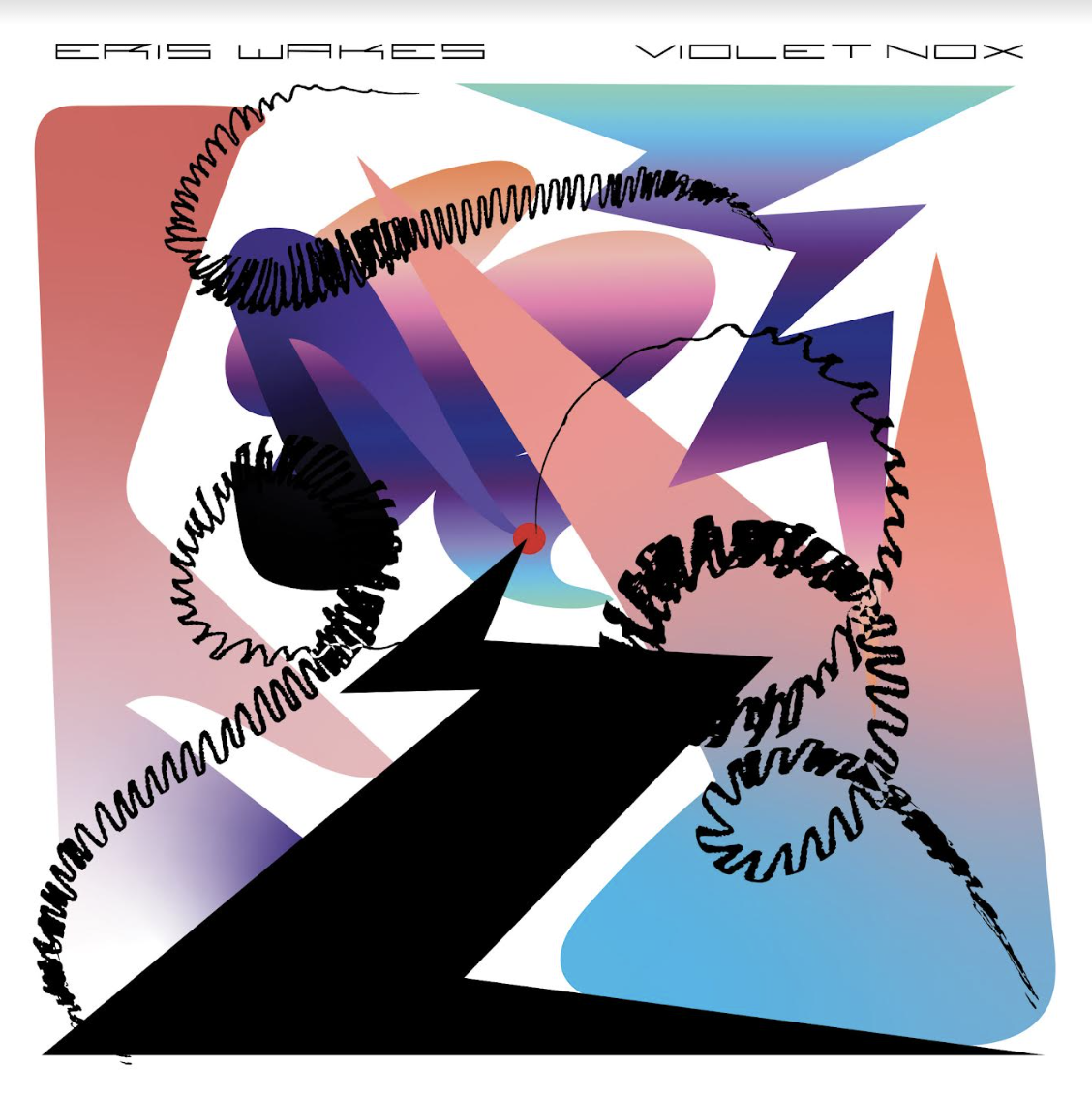
Violet Nox ‘Eris Wakes’
Infinity Vine Records (USA)/Aumega Project (GER)
Attuned once more to Gaia, the universe and the subconscious state of being in an ever infringing technological epoch, the electronica-ambient Boston duo of Dez De Carlo and Andrew Abrahamson send waveforms, fluctuations and cathartic evocations out into the cosmos.
More an ensemble, collective consciousness than dup though, Violet Nox’s astral synth pilots open up and out to embrace the transformed saxophone, guitar and thumbed tine Kalimba of Alexis Desjardins and the ethereal dreamy vocals of Fen Rotstein (also credited for offering sampling and digital turntable contributions), Noell Dorsey and Karen Zanes. That last couplet also, between them, wrote the often siren-in-the-machine, new age lyrics for four of the Eris Wakes album’s quintet of astrological, mythological imbued tracks.
Offering the more ‘granular’ cyber voices, a sort of post-punk style of guitar, some vocals and synth, Dez and foil Andrew, with a synthesis of apparatus and ‘clocked machines’, draw all the various elements together across a cerebral-dreamt, symbolic exploration of the inner mind and outer space.
Landing in the hallucinatory force fields of ‘Spaceport 5’, the ensemble clock-up algorithms, geometry and particles whilst A.I. robots talk, whisper to an enchantment allure of wispy veiled vocals. Sophisticated subtle palpitations of Techno undulate this Orb-like matrix.
In tribune to the goddess warrior of discord and chaos, also the mythological name that was bestowed upon one of the largest known objects in the solar system, ‘Eris’ oscillates in a tumult state that mirrors the chaotic developments below, on Earth. Vague suggestions of Sven Vath and Ippu Mitsui Trance and Techno converge with Celtic water goddess maidens, Moroder and Synth-Pop to produce another fusion of Mother Earth eco and machine music.
Another astral name-check, ‘Bellatrix’ is the third brightest star in the Orion Constellation, and originally, another Greco-Latin figure: the female warrior. Here, in this sonic form, Dez voices reassuring lyrics of spiritual wellbeing; floated in a gauze of trance-y rave beats, circa 1989. The neutron star ‘Magnetas’, with its extremely powerful magnetic field, is given a House music rhythm, buoyant drum-pad bobbles and plenty of suckable airflow. Finally, the ‘Ghost Star’ brings concertinaed cybernetic voices, Djax Upbeat and The Future Sound Of London into a halcyon, gaseous realm; a heavenly celestial viewing platform.
Violet Nox circumnavigate the subconscious whilst astral-planning a N-R-G, Techno, Trance, Rave, and Synth-Pop cosmology of sounds. Most importantly, these futurist visions of spaceports, machine intelligence, and incredible science fiction never lose sight of the spiritual, the soul. And feel organic rather than machine-engineered: well, to a point. Electronic music made by humans.
Our Daily Bread 506: David J ‘What The Patrons Heard’
April 3, 2022
ALBUM REVIEW/Graham Domain

David J ‘What the Patrons Heard’
(GIVE/TAKE)
The new album by David J (one-time bassist with Bauhaus and Love and Rockets) is a collection of 10 songs recorded over the past 34 years and now released for the first time on CD, Vinyl and download. It is a mixture of original and cover version songs that cover a variety of musical styles from folk, country to punk, goth, blues, and poetry.
The first song ‘Lay Over And Lay’ sounds like the Clash or the Pogues. It has the brashness of an alternative song from the early 1980’s with its punky folk-country charge along!
The second song ‘(I Don’t Want to Destroy) Our Beautiful Thing’ sounds uncannily like Mark Lanegan in both voice and musical accompaniment: sounding not unlike the songs on Whisky for The Holy Ghost. Never the less it is an accomplished song and performance and is perhaps the best song on the album.
The next song is a rendition of Neil Youngs ‘Vampire Blues’ with funeral organ and drums underpinning intermittent heavy guitar chords and resonance. The vocals sound worn and tired like an old blues-singing preacher.
John Lennon’s ‘Gimme Some Truth’ follows sounding like a cross between Barry Adamson and The Eels. It is an interesting twisting version that adds to the original.
‘His Majesty The Executioner’ is an original song that begins like an ambient David Sylvian piece of music with acoustic guitar and looped piano before being overtaken by a storied narration, part horror, part mystery. Unfortunately, the voice is not engaging enough and the words too repetitive to sustain repeat listens.
Track 6 is ‘The Shadow’, a kind of gothic folk song, part murder ballad. It sounds like a folk song from the late 60’s or early 70’s and is reminiscent of such folk singers as Fred Neil or Nick Garrie. Perhaps it will be covered by other artists in the future.
‘The Rape of The Rose Garden’ follows and is a melancholy tale using a Rose Garden in decline as a metaphor for the decline of the American dream after the death of JFK. Musically it is a folk-country piano ballad and is successful in its telling and construction.
In ‘Scott Walker 1996’, an acoustic guitar figure repeats creating an air of mystery, suspense and drama as David J recites a poem about Scott Walker living in Holland Park, 1996, the album Tilt had been released and had put him back in the spotlight once again, but he still craved his anonymity, invisibility, wearing his baseball cap as disguise, ‘dark blue glasses for eyes’…
‘Down In the Tenderloin’ is another original song that David J sings in a higher register sounding a bit like David Bowie with the acoustic guitar somehow reminiscent of Blue Oyster Cults ‘Don’t Fear the Reaper’.
‘A Girl in Port’ – is a cover version of a song written by Will Sheff for his band Okkervil River. David J here sounds like a cross between John Bramwell (I Am Kloot) and Richard Ashcroft (The Verve). A nice countryfied version of the song.
Overall, a good album. However, given the time period over which the songs were recorded, it does lack cohesion. Nevertheless it has some good songs, ‘(I Don’t Want to Destroy) Our Beautiful Thing’, ‘A Girl in Port’ and ‘Lay Over And Lay’ being the stand-out tracks.
 Monolith Cocktail Blog