Our Monthly Playlist selection of choice music and Choice Releases list from the last month.
We decided at the start of the year to change things a little with a reminder of not only our favourite tracks from the last month, but also a list of choice albums too. This list includes both those releases we managed to feature and review on the site and those we just didn’t get the time or room for – time restraints and the sheer volume of submissions each month mean there are always those releases that miss out on receiving a full review, and so we have added a number to both our playlist and list.
All entries in the Choice Releases list are displayed alphabetically.
Meanwhile, our Monthly Playlist continues as normal, with all the choice tracks from June taken either from reviews and pieces written by me – that’s Dominic Valvona – or Brian ‘Bordello’ Shea. Our resident Hip-Hop expert Matt Oliver has also put forward a smattering of crucial and highlighted tracks from the rap arena.
CHOICE RELEASES FROM THE LAST MONTH OR SO:
Armstrong ‘Handicrafts’
Review
Audio Obscura ‘As Long As Gravity Persists On Holding Me to This Earth’
Review
Francis Bebey ‘The African Seven Edits’
Jeff Bird ‘Ordo Virtutum: Jeff Bird Plays Hildegard von Bingen, Vol 2’
(Six Degrees Records) Review
Che`Noir ‘The Color Chocolate 2’
Dave Clarkson ‘Was Life Sweeter?’
(Cavendish House) Review
Half Naked Shrunken Heads ‘Let’s Build A Boy’
(Metal Postcard Records) Review
Novelistme ‘Fabulous Nonsense’
Review
Nowaah The Flood ‘Mergers And Acquisitions’
Luiz Ser Eu ‘Sarja’
(Phantom Limb)
Various ‘TUROŇ/AHUIZOTL’
(Swine Records w/ Fayuca Retumba) Review
Voodoo Drummer ‘HELLaS SPELL’
Review
The Wants ‘Bastard’
(STTT) Review
Warda ‘We Malo’
(WEWANTSOUNDS) Review
THE PLAYLIST
Bedd ‘Messed up Your Head’
Dragged Up ‘Clachan Dubh’
John Johanna ‘Seven Hunters’
Vlimmer ‘Gleichbau’
Heavenly ‘Portland Town’
Novelistme ‘I Want You Here’
Half Naked Shrunken Heads ‘Let’s Build A boy’
Juppe ‘Woozy’
Noura Mint Seymali ‘Guereh’
Francis Bebey ‘Agatha – Voilaaa Remix’
Anton de Bruin & Fanni Zahar ‘Running On Slippers’
Chairman Maf ‘Wild Turkey’
Lord Olo & TELEVANGEL ‘BEAT EM!”
Masta Killa Ft. Raekwon & Cappadonna ‘Eagle Claw’
Aesop Rock ‘Movie Night’
Oddisee ‘Natural Selection’
Nowaah The Flood ‘Protocol’
Ello Sun ‘River’
Luiz Ser Eu ‘O Sol Nas Suas Pestanas, Adora’
Elena Baklava ‘Kamber’
Jason van Wyk ‘Remnants’
Mary Sue & Clementi Sound Appreciation Club ‘Horse Acupuncture’
Evidence ‘Different Phases’
Vesna Pisarovic ft. Noël Akchoté, Tony Buck, Greg Cohen, Axel Dörner ‘Vrbas vodo, što se često mutiš?’
Itchy-O ‘Phenex’
Tom Caruana Ft. Dynas ‘Aisle 9’
C-Red & Agent M ‘Godspeed’
Scienze & NappyHIGH Ft. Benny The Butcher and Elaquent ‘Capt. Kirk’
Charles Edison ‘No Love Lost’
Parallel Thought & Defcee ‘Graduation Picture’
Fashawn & Marc Spano Ft. Blu ‘No Comply’
Che Noir ‘Blink Twice’
Saadi ‘Homo sapiens’
Charlie Hannah ‘St. Gregor the Good’
HighSchool ‘149’
Swansea Sound ‘Oasis v Blur’
The Wants ‘Data Tumor’
Tigray Tears ‘Wishing for Peaceful Times to Return’
Jeff Bird ‘Shining White Lillies’
The Good Ones ‘Agnes Dreams of Being an Artist’
Briana Marela ‘Value’
The Still Brothers & Vermin the Villain ‘Alright’
LMNO & D-Styles ‘Best to Lay Low’
The High & Mighty Ft. Breeze Brewin ‘Super Sound’
Slick Rick & Nas ‘Documents’
If you’ve enjoyed this selection, the writing, or been led down a rabbit hole into new musical terrains of aural pleasure, and if you can, then you can now show your appreciation by keeping the Monolith Cocktail afloat by donating via Ko-Fi.
For the last 15 years both me and the MC team have featured and supported music, musicians and labels we love across genres from around the world: ones that we think you’ll want to know about. No content on the site is paid for or sponsored, and we only feature artists we have genuine respect for /love or interest in. If you enjoy our reviews (and we often write long, thoughtful ones), found a new artist you admire or if we have featured you or artists you represent and would like to say thanks or show support, than you can now buy us a coffee or donate via https://ko-fi.com/monolithcocktail
THE MONTHLY DIGEST INCLUDES A CLUTCH OF ACCUMULATED NEW MUSIC REVIEWS; THE SOCIAL INTER-GENERATIONAL/ECLECTIC AND ANNIVERSARY ALBUMS CELEBRATING PLAYLIST; AND CHOICE PIECES FROM THE ARCHIVES.

Cover Stars: Blanco Teta
___THE NEW___
(all reviews are in alphabetical order)
bedd ‘Monday 10:55 EP’
27th June 2025

Once more on the site after quite a break – my fault not theirs -, the Oxford project led by singer-songwriter, composer and producer Jamie Hyatt is back with a bridging style EP ahead of a debut album, released in the Autumn.
Sometimes I excel myself with a descriptive summary of a sound, and with bedd’s ‘Auto Harp’ single I described their sound as “an understated breath of fresh air from cosmic suburbia”. This beauty of a single was followed at a later date, during Covid isolation, by a premiere of ‘You Have Nice Things’, which seems to have now continued with its small-town landmarked sense of isolation and sad detachment on the EP’s title-track, the very specifically timed capture of nocturnal plaint and heartache ‘Monday 10:55’. The focus song features fellow Oxford musician, the vocalist and guitarist Emma Hunter (who’s own brand of music, created with drumming foil Tom Bruce, merges the worlds of David Lynch with a penchant for Flamenco, Catholic litany and culture and the 1950s), with extra subtle emotional pull, adding harmony and a touch of the soaring to this drifted indie-blues track. It reminded me in places of Ride and the Engineers.
Before we go any further, we must mention the rest of the band, the ranks of which feature ‘a range of celebrated local Oxford musical talents’, including bass player Darren Fellerdale and guitarist Neil Durbridge, both bandmates from Hyatt’s previous project The Family Machine. Completing the lineup is the guitarist Tom Sharp, electronic musician and producer Tim Midlen (aka The Mancles of Acid) and drummer Sam Spacsman. The EP itself was performed, recorded and produced by Hyatt himself with the band at Glasshouse studios in rural Oxfordshire and mixed and mastered by Robert Stevenson at Sweetzerland Studios.
That’s the credits out of the way. The title-track is flanked at both sides by two very differently paced and performed songs; the opening ‘Messed Your Head’, has more oomph with its mix of Blur’s sliding bass on ‘Beetlebum’ and The Breeders bass line on the equally famous ‘Cannonball’, Elastica-style “woah” and messed up knock-back passionate off-the-chest power-Britpop-indie-rock (I’d go as far as saying an influence of The Pixies), whilst the closer, ‘D Minor’, is a more echo-y reverberated stripped down and atmospheric piece of disconsolate love strains and emotional discourse that has an air of Jeff Buckley about it.
It is not meant as a criticism in anyway, but bedd sent me right back to the 90s with this EP mix of shoegaze, Britpop, indie and grunge-rock. But they add a certain quality of the soundtrack, something that’s a little bit grander. It will be interesting to see what the album is like later this year. But on the strength of this trio of songs, it looks to be a winner.
Blanco Teta ‘La Debacle las Divas’
(Bongo Joe) 4th July 2025
Delivering their 2025 manifesto of the riled and near bestial, the hellraising and electrifying Argentine quartet of Blanco Teta throw off the metaphorical chains of tech disparity and servitude with a mix of the devilish and hardcore.
In the face of AI, ‘crypto-serfdom’, ‘techno-feudalism’, the constantly ever-changing, updated feeds of social media, the pressures of instant gratification and attention seeking validation, and that everything these days only makes an impact culturally if it was prompted or began on tiktok, the group show both their venerability and strengths. They face the uncertainties and anxious dread of our times with velocity as they pound and churn, twist and channel aspects of the post-hardcore sound, punk, riot grrrl-style power-ups, death metal (almost), grunge, rock and 2000s indie-rave-punk-rock.
Marking a return to Bongo Joe, the La Debacle las Divas (‘the debacles of the divas’) album sees the quartet of Josefina Barreix (on vocals), Violeta García (cello), Carlos Quebrada (electric bass) and Carola Zelaschi (drums) change things up, recording for the very first time live in the studio direct to tape. Without edits and overdubs, the album has a real new dynamic; the whole record more or less without a pause, thrashing and driving through an eleven-song set, as if it were a live stage performance. There are various let-ups, if that’s the word, and mood changes, a change in tempo and ferocity too. But this remains a chthonian and cosmic swirl of the grounded-up, menacing, prowled, alarmed, dragged and charged.
The atmosphere of this album is one in which the bonus of youth is wasted, broken upon the pressurised novelties of being young and in the moment, but ready to be disregarded and tossed away into the internet wilderness. They band themselves declare that they feel caught between a stasis of being both in their prime yet already growing too old to be feted. And whilst they were indeed feted, their lives haven’t exactly change for the better: mentally or financially, still burdened to surviving on the vaporous fumes of goodwill, popularity and a presence on the internet. Channelling all that into this diva-rage, borrowing that title and turning its connotations on its head, Blanco Teta (which I think translates as ‘white tit’?) launch a mix of disgruntled and disenchanted maelstroms and more near plaintive reproach and forlorn.
They open with the sound of generator fuzz and scuzz, in a heavy drive of Courtney Love, the Raw Brigade, Bikini Kill and L7. Heavy trebly bass, descending spirals, pounded beaten drums rule the day, but the action and influences fluctuate; on the excitable protestation ‘Subiduki’, I’m hearing Anthrax, Faith No More and Death From above 1979, on raged thud rocked sassy and maniacal decried ‘Joven Promesa’ CSS sharing the stage with Shonen Knife, and on the hardcore, morse code guitar wired space-rocking-psych ‘Perdida’ the Klaxons and The Fall. They also reminded me in part of a Latin version of the Slavic quartet Lucidvox; only with far more guttural daemonic vocals.
Tough and ready for the rumble, yet disconsolate and bereft of answers, Blanco Teta serve up a vortex and heavy meta(l) outcry and alarm at the state of society and the music industry. That debacle of divas has produced one of the year’s most promising, fierce and unique performances.
Dave Clarkson ‘Was Life Sweeter?’
(Cavendish House) 9th May 2025
After briefly crossing paths on Bluesky earlier this month, I’m aware that I’ve entered upon the electronic sound worlds, expressions and atmospheres of Dave Clarkson at a very late point in a career that spans decades of experiment/exploration; at a point when the soloist and collaborating composer is taking stock, questioning that old generational trope of nostalgia for a time that probably never really ever existed. It’s easy to see why of course: seeking comfort, reassurance and perhaps some form of guidance from a period when you were young, still hopeful, at your creative best and fancy free – well for many of us anyway. But no one can really believe at this point in time, with all the social ills, conflict, and tyranny that the future is looking anything but dystopian. Clarkson however draws a line in the sands of wishful thinking time, opting to create a confectionary and candy concepted reification of a childhood. In Clarkson’s own words, this latest album questions ‘the whole hauntological culture of escaping to the past and whether this is a denial of a future left to live.’
Previous works have explored ‘British faded fairgrounds, coastal quicksands, shorelines, caves and forests’, and been created, at least partially, in the field so to speak. Was Life Sweeter? uses a similar device and methodology, with recordings taken in various confectionery sites around the country. And so, you will hear amongst the engineered electronics the complete journey from Space Dust powder, fizzy drinks, ice cream vans and sweet shops indulgence to the inevitable visit to the dentist’s surgery, completed with the sounds of their terrifying cavity filling drills. From what I remember in the 80s, it really didn’t pay to have a sweet tooth; the barbarity of those early visits, the fillings in my milk teeth, still plaguing me with fear to this day.
It all starts in a dreamy-like state, with translucent bulb-like notes suspended and tinkling above the swept waveforms of phaser air, on the mirage of innocence ‘Milk Teeth’. The scoped-up actions, the anticipated weighing of your favourite sweets, is transformed into another piece of skying kosmische fantasy made nearly mystical on ‘Ye Olde Sweet Shop’, whilst space dust explodes on the tongue on the next track: childhood happiness at this candy firework made near dreamlike and then sci-fi. There’s the easily identified fizz of pop later on, and the recordings of voices, the captured playfulness and buzz of devouring such sweet connections to childhood.
The innocuous treat though of a ‘Three Blind Mice’ calling ice-cream van is made cosmic, with the nursery rhyme siren carried on into the infinities of inner space, kept locked in nostalgic memory. And there’s always some sign of the more haunted, more foreboding aspects of that nostalgia trip; recalling those 80s soundtracks from supernatural TV series, the harsh life’s lessons and warnings made terrifyingly clear in TV ads aimed at kids during that decade and something that’s hard to pin down but seems off-kilter and near alien. ‘Sugar Rush (Speed of Life)’ is a speed’s freak sweetened running man, part electro and part German electronica of a certain vintage. An alarm bell rings, and the listener is sprinted off the starting blocks on a rush of candy adrenalin.
Clarkson successfully balances a hallucinatory world of childhood sweetness made more ominous and haunting with abstract quandaries of past lives, miss-reflection and the need to push on through and fully adopt the age in which someone is present. I’d recommend this album for those with an ear for the sounds of the Radiophonic Workshop, Toshimaru Nakamura, The Advisory Circle, Belbury Poly, Jez Butler, Lukid and Harmonia – which should sound like an inviting proposition.
Itchy-O ‘SÖM SÂPTÂLAHN’
Released back in May 2025
Beating out a ritualistic circus of chthonian and alchemist theatre around hell’s gateway, the expanded Denver collective of performers, artists, musicians and conjurers known as Itchy-O once more record their invocations for posterity. Although celebrated for the staging of various themed performances set against a Mad Max meets Mexican Day of the Dead like decorated back drop of iconic and wasteland ruined Denver locations (from the Mission Ballroom to New Tech Machinery buildings, and Covid initiated drive-ins), the circle has only released a smattering of packages to the public since inception.
Described as a ‘Voyage into Exocosm’, their latest behemoth of an album opens both atmospherically disturbing and interdimensional, cosmic instructive portals to the hermetic and spiritual. From – I believe – the Norwegian for ‘seam’ and ‘seven grains’, SÖM SÂPTÂLAHN envelopes mournful bowed Eastern lamented classical strings and the vibrations, frequencies of a specially commissioned apparatus of bronze percussion (to be accurate, 600 pounds of reclaimed bronze remodelled into gongs and metallophones by the group’s collaborative partners, the Colorado School of Mines) with the industrial, otherworldly visitations, magik and necromancy.
Day spa new age outer body experiences tied to mystical and darker forces, transcendental instruction, exercise converge on the astral highway to voodoo and demonology. In practice, that sounds like the Phoenix rising forth, or rather the Great Marquis of Hell, known as ‘Phenex’, to scuzz scales and fried and sawing electric guitar, ringing and resonating gongs and a lattice work of metallophones. It can also sound like an aural rebalance of spectral harmony: As found on the longer form instructive ‘Ptothing/Soktū ōbu’, which soothes the listener with an interactive navigator realignment of the speakers for a cerebral session of breathing exercises and cosmic escape. That greeting and guidance turns into a cinematic-scale, sonorous and daunting projection into dark sci-fi, before release and a unification of mind and body. This is a musical and sonic world in which you will find references to demons, the Latinized groans of chthonian dread, and tuning fork like signals to unnamed leviathans beyond the fourth dimension.
Ambiguously lurking and congregating under the canopy of mystical jungles, or, hanging from the vines; retreating to cult 50s and 60s scored Javanese islands; and conducting ritual replenishment in the shadows of a temple complex, Itchy-O simultaneously draw upon aspects of gamelan, the fairytale, industrial music, the classical, the filmic, folkloric, new age and the avant-garde to pit machine against the physical in an act of exploratory performance, instruction and esoteric mantra.
JLZ ‘Tumba’ (Swine Records) 7th June 2025
Various ‘TUROŇ/AHUIZOTL’ (Swine Records w/ Fayuca Retumba) 17th June 2025
Arriving in the last week or so, a doublet of releases from the collective webmagazine turn newly founded label imprint Swine Records. First up from this venture is the Brazilian producer JLZ’s chthonian and magical esoteric vision of the Brazilian Baile Funk genre known as ‘Romano’. Baile is itself a kind of transformation of hip-hop developed and born in Rio de Janeiro, that takes its influences from a range of sources including Miami bass and freestyle whilst also connecting back to the country’s various indigenous musical styles. The ‘Latin Grammy nominee’ emerges from a thick bass vibrating and high pitch signal arcing canopy of the supernatural and tribal. The EP’s Portuguese title translates into “tomb”, and it’s easy to see why. With a darker electronica filter, some zaps, shuttering and amorphous bass beats and collected vocal samples from hidden sources there’s a suitably mysteriously, hermetic and sometimes Catholic atmosphere of mysticism and multi-layered nocturnal city forebode. Those voices are both evocative of the Afro-Brazilian influence and from some entrancing, lamented corner of the Levant and Middle East. If I had to think of anyone as a reference, then perhaps Cities Aviv, or Escupemetralla.
The second release is a joint venture between the Slovakian imprint and the Mexican label Fayuca Retumba – a project by the Mexican producer Yourte Bugarac. After appearing in an interview for Swine Daily (the web mag outlet of the Swine hub), an idea was formed to commission a number of both Slovak and Mexican artists to create sonic and musical pieces inspired by the “Turoň”, a mythological creature, principally, from Slovak (particularly around Čičmany village), and the Aztec mythological creature “Ahuizotl”. The labels have helpfully summarised, and contextualized each of those inspired prompts for us:
Turoň also called turôň, or chriapa, is a carnival mask that was known not only in Slovakia, but also in Poland and the Czech Republic. Its name is derived from the tur, an animal similar to an ox, which became extinct in Slovakia in the 17th century, and in the magical ideas of our ancestors, symbolized strength and fertility.
Ahuizotl was a water monster in Aztec mythology. It was described as a dog with monkey-like limbs, pointed ears, and a third hand at the end of its long tail. It lured its victims by imitating the cries of a child along the banks of rivers, then caught them with its third hand. The ancient Mexicans considered it an emissary of Tlaloc, the rain god who resided in the depths of rivers. Its function was to catch people by the hand on their tails, drown them, and send them to the god’s house as his servants. In Nahuatl, a(tl) means “water” and huiz(tli) means “thorn”. This name was taken by the warlike and fierce Aztec emperor Ahuítzotl, the eighth tlatoani of Tenochtitlan, who ruled from 1486 to 1502.
Etymology folklore, magic and the ominous converge to form various takes on both of these myths; starting with Lénok electronic pad whipped demonic buzzing hardcore hallucination of swirling vortex orchestra samples, thrashing tentacle slithers and frazzled broken-up beats morphing ‘NeBoyIM’. Dead Janitor’s ‘Ooze’ is like a percussive alien farmyard scene of cow bells and crunchy, crushed d ‘n’ b, whilst Schop1nhauer transmogrifies a creepy hinge worn gate into some industrial haunted factory bit-crush and pylon static frying paranormal unease, on ‘Ungulatheion’. Con Secuencias ‘Stinking Corpse’ opens with cop car sirens before sloping in a laidback style into Miami bass culture repurposed with a flavour of Latin America. The second half of this compilation has a signature Central and South America vibe to its unorthodox techno, trance, EDM and hip-hop sources. El Ángel Exterminador’s ‘Hierba Retorcida’ has just that, a removed rhythmic interpretation of indigenous percussion, a guiro that sounds like a pack of cards being flicked through at high speed, and a sort of cumbia-like vibe that saunters along. The laser shooting 80s VHS cult sounding ‘IZANAMI’ by OFYERF sounds more like Der Plan meets Damon Wild & Tim Taylor.
Altogether a most promising start and introduction to two underground labels doing intriguing, interesting and encouragingly strange, porous boundary experimentation.
Charles Kynard ‘Woga’
(WEWANTSOUNDS Reissue of Mainstream Records original release) 27th June 2025
After recent cult reissues and specials from Egypt and Japan vinyl specialists WEWANTSOUNDS return stateside and to L.A.’s Mainstream Records label, reissuing on wax for the first time the jazz-funk icon Charles Kynard’s much coveted and influential Woga LP.
Regular readers and followers of my review columns over the years may remember the label’s last stopover at Bob Shad’s imprint, with the Mainstream Funk comp a number of years back. One of the brightest progenitors of that roster, the Hammond and electric organist and St. Louis native – before relocating to L.A. after a brief period spent in Kansas – Kynard, memorably fused everything from R&B, the blues, soul and funk to his jazz and gospel background. A staple of the breaks, acid-jazz and hip-hop communities, its highly probable that you’ve heard samples of his music; especially from his key albums for Mainstream in the early 70s, and of course this revitalized LP – remastered with a bonus track and accompanying new notes and essay.
A little background is needed, and one that doesn’t paraphrase those liner notes – of which I learnt a lot. Kynard’s upbringing was imbued by the confluence of sounds washed down the Mississippi and Missouri Rivers. Born in the 1930s in that former French founded outlier, a staging post for Lewis and Clarke’s famous expeditions West, Kynard absorbed the cross- junction of church music, gospel, jazz, blues, soul and R&B at an early age. The virtuoso uprooted, journeying to Kansas before landing for more or less good in L.A. in the early 1960s having made a name for himself. He quickly started recording for the producer Richard Bock and drummer Roy Harte’s Pacific Jazz label – their signature at the time before expanding the remit, “cool West Coast jazz”. It was during this point that Kynard started working with such luminaries as Howard Roberts, Sonny Stitt and Buddy Collette. His actual debut LP came out in the pivotal year of 1963. But he then switched labels, moving over to Prestige Records; a time in which some of his most influential work was recorded: the jazz-fusion specials Reelin’ With The Feelin’ (1969), Afro-Disiac (’70) and Wa-Tu-Wa-Zui (’71).
Such was his status and rep that when once more changing labels, this time to Mainstream on the cusp of a new decade, his next trio of LPs would attract an enviable cast of talented and iconic players. For the debut offering, arriving in a tumult of social and conscious Black power, of activism and protest, the Swahili borrowed word for “fear” (or “timidity”), Woga, featured an ensemble of notable session players; all of whom, more or less, were in their own right also recording stars and bandleaders, but also sidemen and women to some of the most influential names in Black music. Amongst the ranks for that LP were bass player Chuck Rainey, possibly the most credited bassist in recording history (a 1000 album credits its believed); Tennessee bred blues guitarist Arthur Adams; the Canadian-born arranger, conductor, ensemble leader, trombonist David Roberts; Motor City native and Motown horns player George Bohanon, who at one time was a member of Chico Hamilton’s Quartet, and worked with such luminaries as Alice Coltrane, Miles Davis and Michel Legrand (on the Dingo Soundtrack); the lesser known trumpeter and flugelhorn player James Kartchner; Minnesota trumpeter and flugelhorn player Jerome Rusch, who played with such talented icons as Gerald Wilson, Ray Charles and Willie Bobo; and the exceptional Detroit drummer Paul Humphrey, who worked with the Four Tops, Wes Montgomery, Coltrane, Mingus, Marvin Gaye, Solomon Burke and Quincy Jones (the list goes on).
For the bonus track, a cover the actionist soul-funk group The Undisputed Truth’s ‘Smiling Faces Sometimes’, that same set up features a couple of noted replacements, with the infinitely famous and acclaimed Wrecking Crew member Carol Kaye on customary felt and anchored bass, and the electric guitarist Charles Mallory providing heavy soul licks, and Larry McGuire taking a turn on blazed and searing, truth-will-out, trumpet. Incidentally, on an album that split between originals and covers, Rainey played on the original version of Aretha Franklin’s ‘Rock Steady’ the previous year – featured as it was on the soul diva’s inspirational Young, Gifted and Black LP. A new arrangement means at least a variation on Rainey’s Fender tones; especially as Kynard seems to murmur or hum the original tune to slipped bristling hi-hats, breaks style drums and a movie soundtrack horn section.
It is at this point in my review that I feel I should at least outline the backstory of Mainstream Records: the label that facilitated this LP. Set up by Bob Shand as a “broad church”, the label grew out of what was already a 30-year spanning career when it took shape in the 1960s; a showcase for prestigious artists, session players and Blue Note luminaries chancing their arm at the bandleader or solo spotlight. A musical journeyman himself, Shad (whittled down from Abraham Shadrinsky) began his producer’s apprenticeship at the iconic Savoy label, then moved to National Records before taking up an A&R role at Mercury, where he launched his own, first, label EmArcy. It was during this time that Shad would produce records for the venerated, celebrated jazz singer deity Sarah Vaughan, the Clifford Brown & Max Roach Quintet, Dinah Washington and The Big Brother Holding Company.
As a testament to his craft, Vaughan would go on to record eight albums on Shad’s label, the next chapter, leap in a career that traversed five decades of jazz, soul, blues, R&B, rock, psych and of course funk. Mainstream’s duality mixed reissues (from such iconic gods of the jazz form as Dizzy Gillespie) with new recordings; with its golden era arguably, the five-year epoch chronicled in the compilation that WEWANTSOUNDS put out a number of years ago.
Spotting the potential in Kynard’s jazz-fusions and ability to transpose signatures and sounds from a wellspring of Black music styles, Shand invited the keys specialist to record a trio of LPs, with Woga being the first.
Despite the warm tones, the rays, shimmers, buzzes of church organ and of reverence gospel, this LP was forged in a time of the conscious Black movements, of Black power, Vietnam outrage, social division and revolutionary zeal. And so, most of the covers chosen for reinvention and homage were from a cadre of strong, troubled and lamented voices appealing for change. I already mentioned Aretha, but there’s also Donny Hathaway’s iconic soul anthem ‘Little Ghetto Boy’, the glorious Staple Singers’ ‘Name The Missing Word’ and the beautifully mellifluous and aching folk protestation ‘The First Time Ever (I Saw Your Face)’, written originally by Ewan MacColl for folk royalty Peggy Seeger, and made famous, given a soulfully blessed but plaintively charged direction by the late Roberta Flack. The former of that trio adds a touch of Nautilus wavy Bob James to a Southern Spiritual church organ sound of the velvety punched and near scored, whilst the latter transposes a familiar melody to sound almost like an Otis Redding ballad recorded on Stax; the organ simmering like a mirage in the sweltering Southern heat; the horns, in sympathy channelling both R&B and the blues. As a worshipping fan of all things Staples, I was pleased to see Kynard having a go at the smoother gospel-soul-R&B smoky and oozing with cool Southern attitude ‘Name The Missing Word’, first released just the previous year. Kynard retains mood, the flavour, but the bass seems a little more menacing, nearly dark, and the timing changes to one that can only be described as Latin-esque.
Kynard showcases his own talents, not just for rearranging, but for composing new jam-like numbers. The trio of ‘Hot Sauce’, ‘Lime Twig’ and ‘Slop Jar’ shows a range of styles, of timings and moods; the first, fusing soft jazz influences with ghetto soul, R&B, blazing lifted horns from Hollywood, and saddling up to funk with some whammy-like whacker guitar; the second, takes the action down a notch or two, to find a mellower tempo that’s more Herb Albert and Bacharach; the dreaminess and melody reminding me in part of Stevie Wonder. The last of those originals is a cool mix of Steve Cropper meets Hendrix and the J.B.’s. There’s some muscle and grunt to this scorched Hammond number. Occasionally the horns section recalls something of Lalo Schifrin, and at other times, of Gil Evans and his orchestra. A real showcase of influences brought together for an impressive smooth and more punchy fusion.
A treat for samplers and acid-jazz, boogaloo fusion fans alike, the range of this revived LP is wide but tethered as always to Kynard’s impressive and warm radiant, sustained and scorching spiritual, jazzy and soul-gospel keys. His wingmen, and one woman, proving an elite force of super experienced players from every field of Black music going. Anyone with even a passing interest in jazz-fusion and soul should grab a copy: I’ve a feeling this will quickly sell out.
___/The Social Playlist Vol. 98___
The Social Playlist is an accumulation of music I love and want to share; with tracks from my various DJ sets and residencies over the years and both selected cuts from those artists and luminaries we’ve lost and those albums celebrating anniversaries each month.
Running for nearly 12 years now, Volume 98 is the latest eclectic and generational spanning playlist come radio show from me – the perfect radio show in fact: devoid of chatter, interruptions and inane self-promotion.
June has been a cruel month, taking two titans of popular music away from us. Losing Sly Stone is one thing, but Brian Wilson in just the matter of two days seems just plain spiteful. Wilson’s travails have been well documented, the effects of various mental and physical conditions, of traumas, taking their toil for decades. But in losing the one woman who did more than most to bring Brian back into the land of the living, to revive his fortunes, Melinda Ledbetter’s death at the beginning of 2024 must have had an unspeakable impact. Although carrying on for another 18 months, his health deteriorated even further, with news that Brian had dementia; and on the death of Melinda, the family filed a petition to place him under conservatorship to help manage his personal and medical needs. But despite all this, there had been an announcement of a new album, Brian’s country songbook, in 2026 – a revival of the 1970 Cows in the Pasture recordings that were shelved when Brian lost interest. This may now see the light of day as tribute. You will find a piece on the late genius from my Brain Wilson files in the Archives section below this.
Suffering just as many travails, addictions and setbacks, grand funk evangelist Sly Stone had spent his later years in court battling for royalty payments against his former manager – a case he won, but still lost out on -, and living a subsistence lifestyle from a camper van. Although riding high as the true innovator of funk-soul-R&B-psychedelic-rock-pop fusion in the 60s and laying down the rhythms and feel and energy for disco and much or less everything that followed, Sly’s battles with drugs – leading to jail time for absconding a drug-driving arrest – hampered his recording career in the 70s and beyond. And yet, the Pentecostal baptised superstar pretty much invented a whole explosion of unifying voices and sounds that merged the counterculture and pop worlds. He’d find a revolutionary voice alright, but one that still had faith in the spirit of compassion, and one that brought everyone together no matter what the creed.
Both late deities will feature in this month’s Social Playlist selection, with a smattering of choice cuts from each one’s cannon. But joining them this June is the electronic music composer Alexander Julien, who followers may recall appeared many moons ago on the site under one of his many non de plumes, Vision External – others included Vision Lunar and Soufferance. I was contacted by his late spouse Rain Frances recently with the sad news of his passing:
‘Vision Eternel’s Alexander Julien passed away on May 14, 2025. Those who are familiar with Vision Eternel, know that Alex’s music is based on nostalgia, emotion and heartbreak. He experienced a lot of anguish in his short 37 years and was often overcome by it. He translated this pain beautifully into his music. His idea of making concept albums showed his talent as well as his dedication to leaving a legacy of music that told the story of love and heartache. He will be missed by all those who loved him.’
Alexander had left notes in his will instructing Rain to get in contact with all the sites that ever reviewed his work. As part of a Special trio of releases from the North American label Somewherecold, I wrote about his For Farewell Of Nostalgia EP a good few years ago:
‘Back towards the ambient spectrum, the final release in the special is a most emotively drawn and purposeful EP of intimate mood music by the Montréal-based Vision Eternel. Coining the phrase “melogaze” to describe his lush “emo” brand of majestic and caressed swirling feelings, heartbreaks and loves, the band’s founder Alexander Julien soundtracks a love lost affair with a most swaddled suite of ambient music, shoegazing, and semi-classical longings.
Over a quartet of channelled “movements” (rain, absence, intimacy and nostalgia), Julien charts this affair-of-the-heart with a both cinematic and melodious touch. The EP though is a greater conceptual work that even arrives accompanied by a short story and plenty of poetic, stirring baggage. Lingering reminisces pour from this composer’s light yet deep vaporous yearnings.
On the cover itself, Julien is painted as some kind of Left Banke thinker meets Graham Greene Third Man and shoe-string Marlowe; a riff on 50s and older covers of that vogue. And so, nostalgia is certainly evoked on this almost timeless EP of abstracted emotionally pulled memories made tangible. It’s actually a most lovely, touching trembled and graceful encapsulation of the themes; beautifully put together. It’s also entirely different and like all three of these releases pushes experimental, ambient music in different directions, yet never loses sight of taking the listener on those same sonic journeys into the cosmic, imaginary, and intimate.’
A glowing review I think you’d agree. And in tribute and as a mark of respect, a track from this EP will feature in the Social playlist this month.
In a more celebratory mood, I’ve pulled together a selection of tracks from those albums that have reached specific milestones this month and year. These include the tenth anniversary of Vukovar’s debut LP proper Emperor, which is being specially re-released this month (see the Archives this week for my original review), plus tracks from Nick Cave and The Bad Seed’s The Firstborn Is Dead…(forty this month), R.E.M.’s Fables of the Reconstruction (also forth this June), Dylan and The Band’s The Basement Tapes (fifty this June), and Them’s The Angry Young Men (sixty this month).
The rest of the playlist is made up of tracks from across time, with choice cuts from Volume 10, Credit to the Nation, The Neats, Van der Graaf Generator, Helicon, Sahar Nagy, Drug Rug and many more.
That track list in full::::::
Brian Wilson ‘Rhapsody in Blue (Intro)’
Sly & The Family Stone ‘Underdog’
Karim Mosbahi ‘Hanni ya I’hanay karim mosbahi’
Bob Dylan and The Band ‘Odds and Ends’
Sly & The Family Stone ‘I Gotta Go Now (Up On The Floor)/Funky Broadway’
Credit to the Nation ‘Teenage Sensation’
Sahar Nagy ‘Baa Keda’
The Neats ‘Lies’
Kai Martin & Stick! ‘Vi kunde vara allt’
Vukovar ‘The New World Order’
R.E.M. ‘Maps And Legends’
Drug Rug ‘Day I Die’
Brian Wilson & Van Dyke Parks ‘Hold Back Time’
Brian Wilson ‘That Lucky Old Sun’
Vision Eternal ‘Moments Of Absence’
The Beach Boys ‘Cabin Essence’
Niandan Jazz ‘Idissa-So’
Louden Wainwright III ‘Dilated to Meet You’
Them ‘My Little Baby’
The Beach Boys ‘Time To Get Alone’
Brian Wilson ‘Love And Mercy’
Van der Graaf Generator ‘House With No Door’
International Noise Orchestra ‘Groovin up Slowly’
Deuter ‘Der Turm/Fluchtpunkt’
Locomotive ‘You Must Be Joking’
Sly & The Family Stone ‘Searchin’’
Sly & The Family Stone ‘I Want To Take You Higher – Live At Woodstock’
Major Force ‘America 2000’
Sly & The Family Stone ‘Fun’
Volume 10 ‘A’cappella/Styleondeck’
Helicon ‘Chateau H (D.ross Remix)’
Sly & The Family Stone ‘Luv N’ Haight’
Nick Cave & The Bad Seeds ‘Train Long Suffering’
Naked City ‘Surfer Girl/Church Key – Live in Quebec ‘88’
Vukovar ‘Regular Patrons of the Salon Kitty’
___/Archives____
The archives return this morning in homage to the late, great Brian Wilson, with a smattering of pieces from the files. Arguably the late 20th and 21st centuries rhapsodic incarnation of Bernstein, Gershwin and Bach, Brian is perhaps one of the only true geniuses of any age, an example of a once-in-a-generation icon. So where do you start? Well, over the years I’ve written reams on the subject, and of course the group he co-founded, The Beach Boys. I’ve included a piece I wrote back in 2016 on the occasion of the tour anniversary of Pet Sounds, plus my original review of the biopic Love & Mercy movie.
But there’s another chance to read my original review of Vukovar’s debut album, Emperor, which is being re-released on the event of its tenth anniversary. Sadly, the band is now defunct, reincarnated in a different light as The Tearless Life.
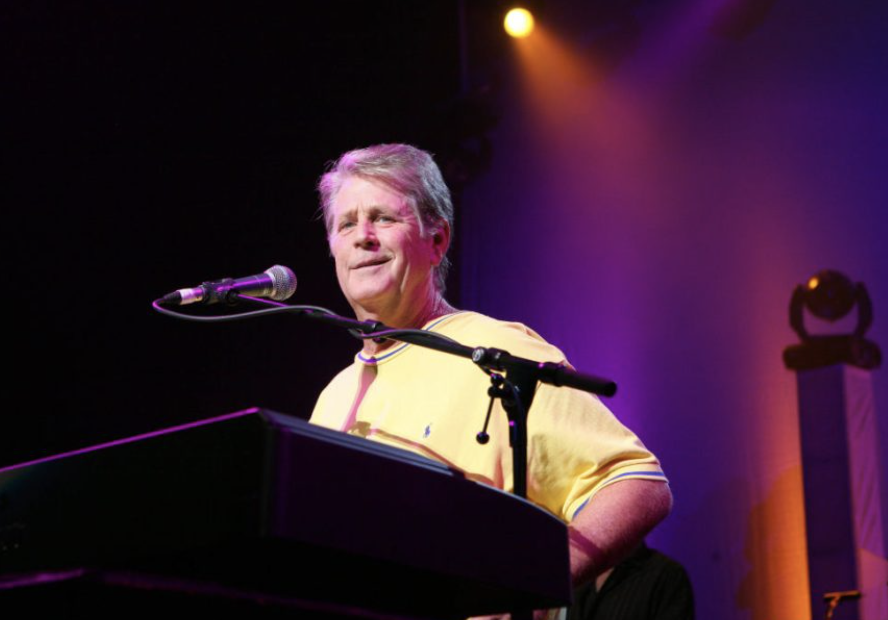
Brian Wilson presents ‘Pet Sounds’ 50th Anniversary Celebrations
Friday 27th May 2016 at the Glasgow Royal Concert Hall
In a soft power musical arms race with The Beatles, Brian Wilson more or less now mastering the known limits of the studio, was nudged towards ever more ambitious levels of creativity. As the old adage, music history folklore if you like, goes it was Rubber Soul that finally did it for Brian. The retort to this foil would not only be The Beach Boys first masterpiece, but one of pop and rock music’s most enduring triumphs, Pet Sounds. No longer happy with the California high school, deuce coupe cruising beach party spirit that had so far made the group world famous, cast even further adrift, introspective and all but retired from playing live with the his brothers and comrades, Brian was moving on from the fancy-free and footloose sound of the 45s that had always guaranteed a top ten place in the Billboard charts for something more…well, grown up. Voicing a growing anxiety – or the growing pains – of youth, Brian would compose the sound of young adulthood. As the world came to terms with the idea of the ‘teenager’, Brian began encompassing and articulating a new uneasy transition.
As much about the times as about the heartache and pains of being pure of heart, Pet Sounds marked a growing resentment towards the previous generation. At the beginning of a revolutionary change in attitudes, but a year before the ‘free love’ hippie idealism that brought in the psychedelic epoch, these former golden tanned beachcombers were breaking from their parent’s traditions and rules to set their own course: a life mapped out, from education to career and marriage. But at the very heart of all Brian’s work, even today, was a sense of innocence. An innocence lost as the lovesick but married Brian, now in his mid-twenties, was coming to terms with the anxieties of that adulthood and his growing mental anguish. Undiagnosed for years, left at the mercy of countless well-wishers and confidence tricksters, quacks and pseudo-therapists, Brian’s meticulous obsessive production of Pet Sounds and its subsequent, but not satisfactorily finished until 40 years later, magnum opus SMiLE tipped him over the edge.
Pet Sounds would also mark a lyrically shift, with Brian collaborating with his friend the lyricist and copywriter Tony Asher. A task of reification, Asher would take the often abstract and difficult expressions that roamed around inside the troubled mind and put them into song. Not exactly the most unified of atmospheres, Cousin Mike Love, a constant daddy-o stuck-in-the-mud character, was ready to pour a cold bucket of egotistic sick over anything that he felt would compromise or trouble the calm waters of The Beach Boys, so far, winning formula. To be fair, Love would be right to question this new shift towards the melancholic, almost philosophical anguish. Asher at that time was but a burgeoning talent with little to back up his credibility as a top pop songwriter. Replacing previous writers and solid contributors with an unproven lyricist would however prove to be genius decision. But the success of the album was slow. Its renaissance and rebirth as one of the greatest albums of the twentieth century was down to the audiences overseas. The change in direction had unsettled the market, as America baulked at this sadder, more cerebral tone. Yet, the UK loved it, buying it in droves and sending it to the number 2 spot in the charts – compare that with its 106 placing in the Billboard. Pet Sounds could have been a disaster, but it was saved, becoming a cult, an iconic masterpiece. And though it would take a while to pick up the desirable sales, its legacy grew and grew years after its original release.
Arriving almost in tandem, The Beatles Revolver was released just a couple of months later. Brian’s answer: SMiLE. If Pet Sounds had not only threatened but also sent Brian into a funk, then this grand American musical tour through the ages, from Plymouth Rock to the shores of the Spanish Peninsula, would all but consume and nearly destroy him. So ambitious was the vision that despite the near godlike genius of his assiduous sessions’ ensemble, The Wrecking Crew, the social, political and historically woven rich tapestry lyrics of new songwriting partner Van Dyke Parks, and his own production prowess, the project stalled. Numerous mixes, snippets, vignettes and even completed songs made it onto various albums and compilations over the decades, including the enervated and rushed out – to appease and bring in some much-needed revenue – Smiley Smile. It would take decades for SMiLE to be eventually completed, albeit (sadly and for obvious reasons) without his brothers Dennis and Carl’s near ethereal soulful compassionate voices, and missing any input from Love – now more or less carving the Beach Boys brand up, sporting it like a trophy as he has carte blanche and ownership of the name when touring with his own cabaret version of the group’s back catalogue. Brian did however manage, after spending the longest amount of time and money in recording history on a single, to release the perfectly epic pop rhapsody ‘Good Vibrations’.
Recently documented, quite favourably and sympathetically, by the Love & Mercy movie, Brian’s wilderness years lasted throughout the 80s and into the 90s, before the most accomplished of L.A. bands and Beach Boy fans The Wondermints helped lure Brian back on the road, performing a Pet Sounds extravaganza in 2000. Just four years later the band would join Brian in the studio to finish that nigh mystical, greatest album there never was, SMiLE, before taking it out on the road. Following in 2011 the eventual hidden away, locked in some fabled vaults, SMiLE Sessions of original material was finally released to the public.
A near renaissance, a scarred and troubled but blooming Brian Wilson is back once again on the road. This time he celebrates the 50th anniversary of Pet Sounds, arriving in my new hometown of Glasgow on a nationwide tour. Billed as an ‘anniversary celebration’ – the final performance of the iconic album in its entirety – tonight’s performance is a generous one. Split into two performances of greatest hits and Pet Sounds, with an encore of good time classics, Brian was backed by members of the Wondermints and flanked by special guests, Al Jardine and honouree Beach Boy Blondie Chaplin: a set up that has been repeated on many occasions.
As a steady presence for the vulnerable Brian, Al was on hand to soften the odd tremors of quivered uncertainty. But who was on hand to back up Al? Well as it happens his son Matt Jardine. Proving himself the most apt of Beach Boy scions, he was there to aid his old man and Brian with the most adroit and sweetest of falsetto voices. A counterpoint to the now – and for good reason – limited vocal range of Brian, Matt took on the high notes with aplomb and even performed lead on one of the evenings early highlights, ‘Don’t Worry Baby’. He would play the role of a younger Brian during the entirety of the Pet Sounds album suite, almost seamlessly taking on each alternating verse. However, and it seems almost too disingenuous to point out, there were a few wobbles and miscues throughout that just couldn’t be patched over. Yet we all willed Brian on, and when he took lead on the most diaphanous of love declarations, ‘God Only Knows’, the entire audience stood to their feet in adulated applause – the first of many rapturous ovations that night.
Directed and conducted by Paul ‘Von’ Mertens the entire ensemble began the evening with the heavenly choral warm-up ‘Our Prayer’; featured on 20/20 but originally the lead-in to the album version of SMiLE’s grand trans-American tour ‘Heroes And Villains’, which followed. We were then treated to a litany of favourites from the bobby sox high school daze back catalogue of hits, including a swinging, swayed medley of ‘California Girls’, ‘I Get Around’ and ‘Little Deuce Coupe’. Handing over the spotlight, Al performed centre stage with renditions of ‘Wake The World’, ‘Add Some Music To Your Day’ and ‘Cotton Fields’ – all songs plucked from the Brian breakdown period, when the rest of the Band were prompted to take over the creative reins. As lithe and energetic as ever, former Flame and Beach Boy band member (on tour and in the studio during the early 70s) Blondie Chaplin sprouted onto the stage to add some light-hearted theatrics and rock’n’roll vigour. The much-accomplished Durban guitar maestro, looking more and more like a cross between Jagger and Richards (all that time he spent touring with the Stones in the late 90s has worn off on him), launched into a strutting version of ‘Wild Honey’. Expanded from its soulful howled original setting, Chaplin went into bohemian guitar solo overdrive; showboating across the front of the stage and playing to the audience, who lapped it up. From The Beach Boys’ troubled but most brilliant 1973 album Holland, Chaplin picked up the ocean current waltz ‘Sail On Sailor’. The original vocalist on that recording, he returns to it with carefree élan, adding a wild guitar solo to the end, which sends Brian off into the wings in playful mock exasperation.
Back out for act two, the band minus Chaplin for now, begin the reverent Pet Sounds album. Largely enduring because it encapsulated a particular age and time in Brian’s genius, but mostly for capturing the love tribulations and torments of young adulthood in the most perfect pop songs, the album still chimes deeply with audiences fifty years later. Intricate and multi-layered but never ever laboured or strained – witness the Bond-esque Tropicana lounge instrumental suite title track -, each purposely-poised ballad, paean and tryst says all it needs to in less than two minutes. The rousing ‘Wouldn’t It Be Nice’, shared vocally by the Jardines and Brian, opens proceedings of course, followed by a gentler, more serene ‘You Still Believe In Me’. Highlights from the album set included an Al led version of the sea shanty in the manner of a doo wop Ivy League bruiser, with a reference to a particular paranoia plunged bad acid trip thrown in, ‘Sloop John B’, and flipping over the B-side, a poignant and encouraged Brian led ‘Caroline, No’.
The encore promised a “fun, fun, fun” package of hits. But first the band introductions, each band member receiving a musical signature tune as they came back out onto the stage after the interval. It was then straight into a full cast version of ‘Good Vibrations’, including the gesticulating tambourine wielding Chaplin who turned his percussive role into an art form. Rewinding back through the songbook, we were treated to the sing-along classics ‘Help Me Rhonda’, ‘Barbara Ann’, ‘Surfin USA’ and ‘Fun Fun Fun’. By now the audience were up and out of their seats, dancing where they could in the face of the po-faced security and attendants. From our balcony seats looking down on the main auditorium we witnessed hundreds swaying and weaving in almost perfect timing: the atmosphere couldn’t have been better. On a poignant, perhaps paused note Brian finished the evening with a version of the song that spawned the title of the recent movie, Love & Mercy. Written in more recent times, a reminder of the anxieties and anguish that once crippled Brian, the song’s central tenet is a perfect theme to finish on: a great sentiment for the audience to carry with them as they head home into the night. A joy to witness, the Pet Sounds legacy is in safe hands, especially here in Glasgow; a city twinned with Big Sur for one night only. Simply magical.
Love & Mercy Film Review/Purview
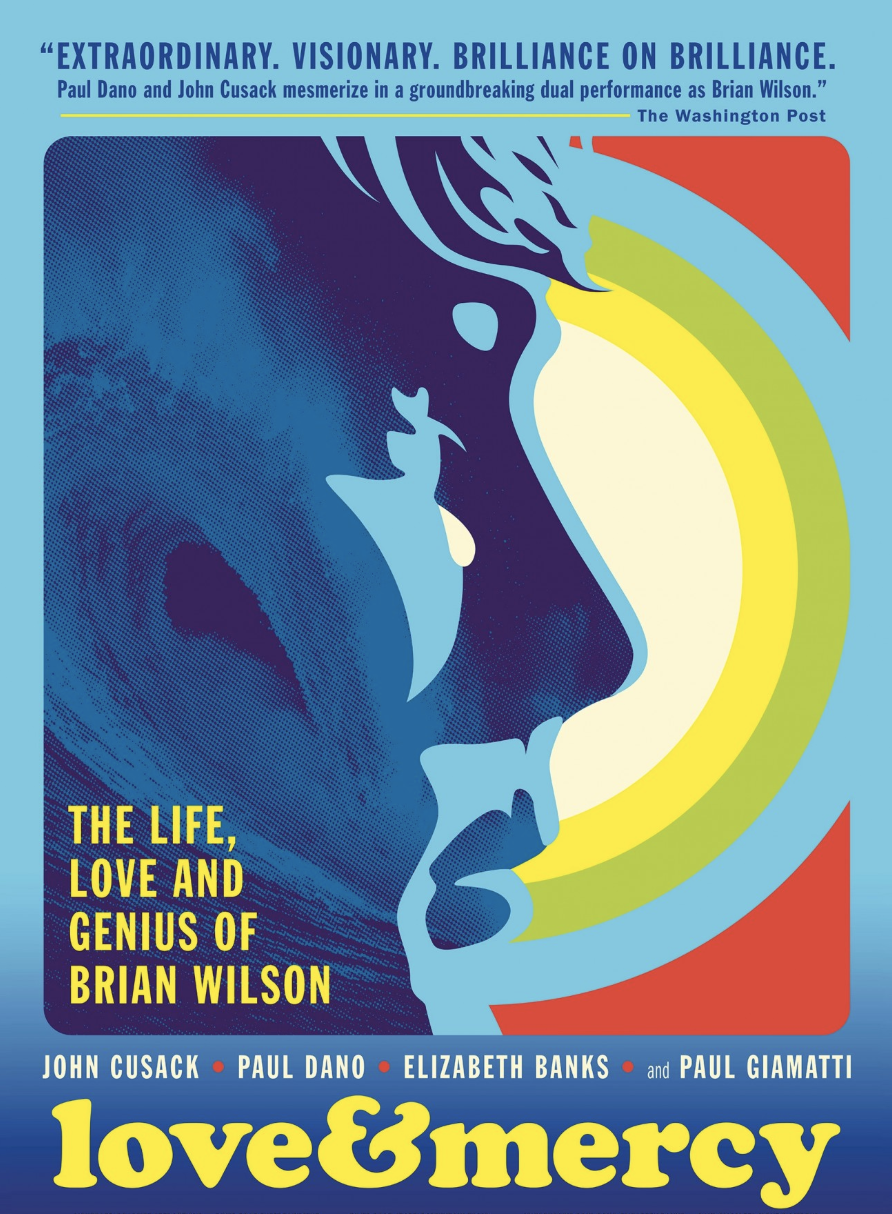
By now (or so I believed) the well documented rise and fall and then revival of one of pop music’s titans and true geniuses, shouldn’t come as any shock. Perhaps the nuanced details remain a mystery to most, but the crippling mental fatigue and illnesses that conspired to overwhelm Brian Wilson now go hand-in-hand with and are synonymous with The Beach Boys legacy. Plagued since childhood by the overbearing bullying of others, Brian was made nearly deaf by the clouting punishment of his patriarch Murry Wilson (a failed composer with little talent, forever enviously cruel towards his eldest son); worn down by his cousin and bandmate Mike Love – a year older than Brian but may as well been twenty, the omnipresent ‘straight’ put off by anything less than sweet and commercial, constantly grappling in a power game to control the band -; and emasculated, cut off from the world by the dubious therapist Dr. Eugene Landy. Arguably this triumvirate of manipulative, all damaged in their own way, individuals reflected their own insecurities, envy and even misunderstandings – Love just not getting it and stoic in not wishing to rock the proverbial boat of success – onto Brian; and perhaps due to a lack of ego himself, was unable to believe in his own self-worth allowing others to both take advantage and question his musical aspirations.
Unnerved, strung out and growing isolated from both his childhood sweetheart and first wife Marilyn, and his siblings, Brian went into a slow and long-drawn-out decline. Rare touches of genius would still sparkle occasionally, but after the less than rapturous reception at the release of Pet Sounds, and the aborted (though saved from the ashes and finally recorded and played live forty years later) American peregrination SMiLE, it was more or less downhill all the way.
Adrift now of The Beach Boys, wheeled out sporadically but later sacked, Brian had already undergone numerous treatments during the late 60s, and in 1975 at her wits end, Marilyn called in the services of the quack to the stars, Landy. The movie depicts his motives and less than orthodox style of treatment as quite sinister, but nevertheless he did manage to reduce a bloated lethargic Brian into a slimmer, healthier individual, ready to return back to The Beach Boys fold. However, as it would transpire, Landy took rather too much of an interest, going as far as to attend band meetings and make decisions on Brian’s creative dealings. He was ceremoniously sacked and cast out, losing not only his golden egg, but also losing his professional licence for his methods and liberal pill dispensing (the press would Christian him Dr. Feelgood). Yet ironically, he was recalled back during the 80s after Brian, at his lowest ebb, took an overdose of alcohol, cocaine and psychoactive drugs. This time Landy gave no quarter and micromanaged every single aspect of his patient’s life. Brian would be completely cut off from everyone, and handled like a simpering child by his new legal guardian (who merely replaced Brian’s monstrous real father Murry), with a team on standby to make sure he never wandered from the good doctor’s path of recovery: a recovery that led to Brian’s eponymous solo album of 1988 (Landy brazenly got credits as executive producer and co-writer), of which the opening track Love & Mercy is used for the film’s title. In fear of being institutionalised, Brain would meekly allow this infringement of his privacy and daily life. Overstepping his remit and coming up against Brian’s – depending on who’s account you believe – saviour Melinda Ledbetter (a model turn Cadillac sales women), Landy was eventually forced out when his name mysteriously appeared as the main benefactor on Brian’s will. Already handing over a percentage and forced back into the studio to cover costs, Brian’s publishing rights would still not satisfy Landy’s mounting costs – charging an eye-watering $430,000 annually between 1983 to 1986 – and this along with Melinda’s timely intervention conspired to finally remove him.
A complicated story then, the emphasis on redeeming a fragile genius from a reversion to a near childlike numb state, the film makers and script writers can’t possibly capture every nuance. Instead, Oren Moverman and Michael A. Lerner‘s touching story and unconventional story arc focuses on the perspectives of Brian and Melinda, and hones in on two specific timelines: the mid 60s and 80s. Whilst the story begins with the muddled mind of a younger Brian (an uncannily fragile and compassionate performance from Paul Dano) fading out to darkness, followed by a background montage of the Beach Boys more naive, carefree days (though even these moments show an already uneasy Brian plucking away on his bass guitar, wishing to be anywhere but on stage or in the limelight), we’re speedily propelled forward to John Casuck‘s placid later day Brian’s first meeting with Melinda. Virtuously played throughout by a thoroughly convincing, purposeful Elizabeth Banks, director Bill Pohlad uses her face as a gauge for reaction, whether it’s being played a whimsically beautiful piano motif or hearing the disturbing abuse meted out to Brian by his father. In her opening scene she attempts to sell him a car, before Landy and his posse arrive, but not before Brian slips her a note with ‘Lonely, scared, frightened’ scrawled on it.
Not that the intention is to show any balance in Landy’s depiction, the wig adorned Paul Giamatti is a raging control freak; ready to suddenly blow in a torrid at any time, and constantly, even when smoothing things over, adding a creepy and threatening undertone to every word of advice and suggestion. Meeting one of the only real forms of opposition, Landy’ warnings towards Melinda eventually boil over into some hostile confrontations: an early scene in the dating storyline, with Giamatti’s Landy holding court whilst flipping burgers, grows steadily uneasy and finally ends with an explosive outburst, as a doped-up Brian petulantly interrupts a boorish egotist regaling his own questionable writing virtues with calls to be fed.
Faithfully recreated, Dano’s parts are sometimes tear-jerking. Though we’ve grown used to the back catalogue, hearing the building blocks and attentive beginnings of ‘You Still Believe In Me’, ‘Surf’s Up’ (this performance further convinces me of its eulogy quality and that it belongs on the 1971 titular LP rather than SMiLE), and ‘God Only Knows’ (stunning even its most fragile form, when the young Brian seeks his father’s approval but is despairingly put down by pater’s heartbreaking responses) send chills down your spine. Enthusiasts will be interested in seeing the mechanics of the Pet Sounds and SMiLE sessions; the fantasy of seeing the famed and near mythical Wrecking Crew at work. The crew’s revered and experienced drummer, possibly the best session drummer of the 60s, Hal Blaine is used as a vessel to get the plot moving; his references and reassurances (in one memorable exchange and moment of doubt, the elder statesman’s and cool Hal, sucking on a cigarette, assures Brian that having worked with Phil Spector and a legendary rooster of other talent, the young pup is on another level entirely of genius) are used to settle a young Brian in the grip of mania. But wait until the final sequences, a redeemed Brian breaking from his stupor, soundtracked by the stunning, and reflective diaphanous ‘Til I Die’ – a song that took Brian a year to complete, and was to no one’s surprise by now, originally dismissed before being embraced by Love.
With the emphasis on these characters, most of the extended cast are reduced to walk-on parts and though some background is referred to, Van Dyke Parks and many others aren’t introduced at all, merely swanning about – apart from a meeting in the swimming pool – at various dinners and pool parties. Even his poor siblings Dennis and Carl are more or less demoted to the odd clueless look whilst Al Jardine doesn’t even get a line: Dennis himself succumbed to his own torments, which left him adrift of his family and band mates; his spiral into drink and drugs ended tragically when he drowned just weeks after his 39th birthday in 1983. It is the mixed portrayal of his cousin Love that is emphasised, not really a hero or villain, but malcontent and totally unhip individual uneasy at the changing face of a turned-on L.A. in the grip of LSD. I feel a little sorry for him, played I might add brilliantly by an unrecognisable Jake Abel, who would eventually have to lead the group and take up the mantle; always that little bit older, not so fortunate in the hair department (his fetish for hats arguably covering up his early balding), and ever the professional he found it hard to fit in.
Love & Mercy moves full circle, Melinda coaxing the responsive artist and adult from his child like shell, finishing with Brian’s – and I was lucky enough to attend one of his comeback shows with the Wondermints – return to the stage in the noughties, performing the titular song. Those stumbling blocks and manias that prevent not just geniuses, from making their ideas concrete, still persist. But at least Brian finally received the correct diagnosis of manic depression with auditory hallucinations that can be successfully treated: Landy’s schizophrenia diagnosis and treatment did more harm than good, arguably worse than the cocktail of illicit drugs that Brian was popping so freely before the quack came on the scene. The best hope is that this movie encourages discussion; that we can talk candidly and address the controlling mechanisms that condemn many people to a life spent dealing in isolation with their mental health.
Vukovar ‘Emperor’
(Small Bear Records) – Originally release in 2015; re-released on the 1st July 2025 with various mixes and extras.
Punching well above its weight, the serendipitous label of vaporous lo fi and languid shoegaze Small Bear Records has slipped onto the market its most ambitious marvel yet. From their Isle of Man recording HQ, the Vukovar builds a funeral pyre for the ‘new world order’.
Helping them man the barricades are Rick Clarke and Dan Shea (also of The Bordellos and Neurotic Wreck, but most formerly of the “disintegrated” The Longdrone Flowers), joined by an extended cast of Small Bear artists; including the dreamily aspiring Postcode’s Mikie Daugherty, Jonny Peacock and Marie Reynolds, and Circus worlD’s Mark Sayle all making guest appearances: a super group performance if you will.
Rallying round the decree of “idealists, voyeurs and totalitarians”, and referencing a list of one-word actions/stances (“Ultra-Realism”, “Depravity”, “Monotony”) to describe their sound, the band’s lyrics certainly seem fuelled with protestation and anger. Yet for the most part, they sound despondently magnificent in the most melodic, beautiful shoegaze fashion. Their brand of lush 80s driven alternative rock and more caustic, punchy industrial noise is far too melodic and majestic to be truly brutal.
Taking their name from the infamous Croatian city, the site of an heinous blight on modern European history (always conveniently airbrushed from bellicose EU propaganda; the sort that preaches its union has put paid to and secured the continent from conflict and war amongst its neighbours), when 300 poor souls, mostly Muslims, were rounded up and barbarically executed by Serb paramilitaries and the Yugoslav People’s Army (the worst committed atrocity of its kind since WWII), Vukovar appeal to the listener who wants to scratch beneath the surface of the banal mainstream. They offer an invitation into the darker recesses of history and social politics unseen in much of the dross that calls itself alternative – even their bandcamp page features an exhaustive manifesto style edict (sometimes tongue-in-cheek) of intent. And so they offer a an out-of-body majestical shoegazing waltz through Reinhard Heydrich’s honey trap brothel and centre of Nazi espionage, the ‘Regular Patrons of Salon Kitty’; drift into Spiritualized and New Order territory on the softly pranged hymn to a former Japanese princess, ‘Part 1: Miss Kuroda’s Lament’; and channel a despondently romantic but resigned Ian Curtis as they utter with despondent beauty that “we’re cowards” on the beautifully sullen and dreamy ‘Nero’s Felines’.
With a maelstrom of clanging, fuzz and Inspiral Carpets jamming with a motor city turned-on Julian Cope vibe, the group yells, shakes and rattles on their noisier outings, ‘Lose My Breath’ and ‘Concrete’. Not always their best material it must be said, they add some tension to the more relaxed melodic and – dare I say – pop songs, which sound far more convincing: ‘Koen Cohen K’ and ‘The New World Order’ are just brilliant; imagine what Joy Division might have sounded like if Ian Curtis had lived on and found solace in the lush veils of shoegaze, or if he fronted Chapterhouse.
Fiddling romantically whilst Olympus burns, the Vukovar’s stand against the illuminati forces of evil couldn’t have sounded any more beautifully bleak, yet somehow liltingly inspiring.
If you’ve enjoyed this selection, the writing, or been led down a rabbit hole into new musical terrains of aural pleasure, and if you can, then you can now show your appreciation by keeping the Monolith Cocktail afloat by donating via Ko-Fi.
For the last 15 years both me and the MC team have featured and supported music, musicians and labels we love across genres from around the world: ones that we think you’ll want to know about. No content on the site is paid for or sponsored, and we only feature artists we have genuine respect for /love or interest in. If you enjoy our reviews (and we often write long, thoughtful ones), found a new artist you admire or if we have featured you or artists you represent and would like to say thanks or show support, than you can now buy us a coffee or donate via https://ko-fi.com/monolithcocktail
Tennyson In Space: Hic Sunt Leones Et Corvi Parts 3 & 4
June 17, 2025
The Monolith Cocktail Serialises Andrew C. Kidd’s Tennyson Imbued Opus
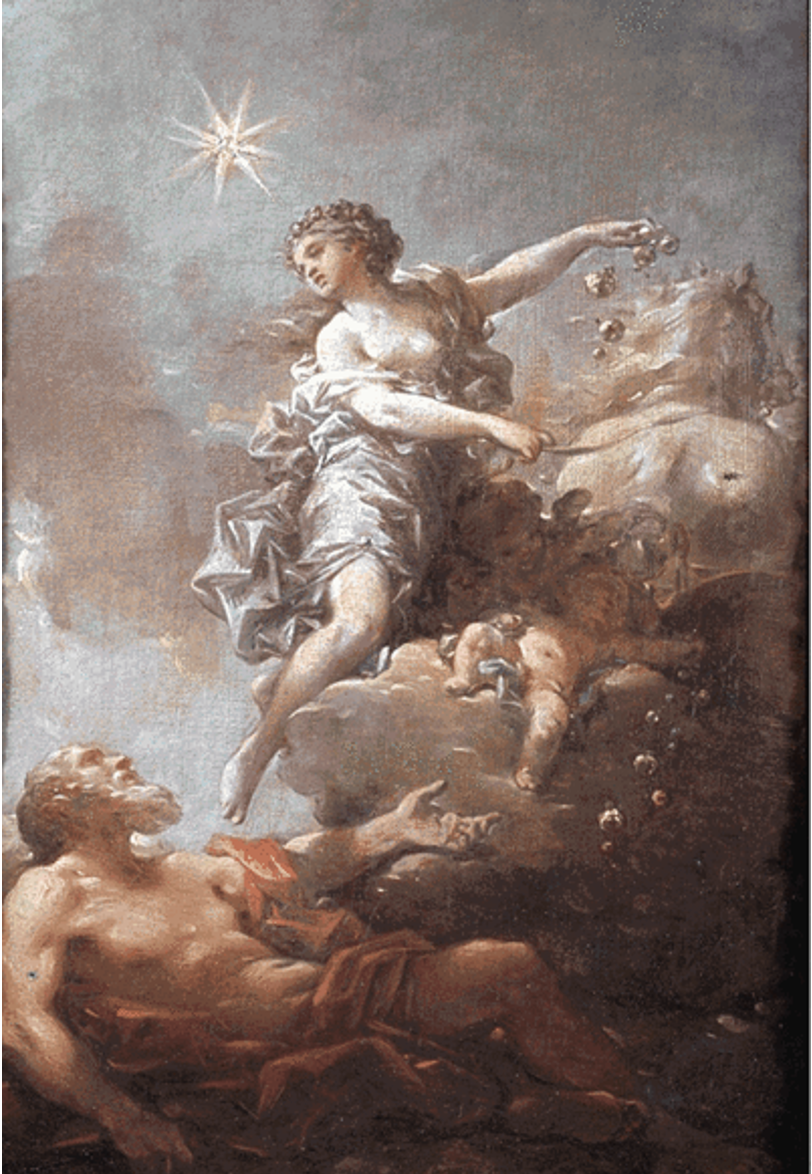
Dabbling over the decade with showcasing exciting, sometimes improbable, intriguing work from new and aspiring writers, the Monolith Cocktail has played host to serialisations of stories by Rick Clarke (of Vukover and The Tearless Life infamy) and Ayfer Simms (the Franco-Istanbul writer, and for a few years, an integral member of the MC team offering various reviews and conducting interviews).
Furnishing the site since Covid with review pieces and the odd feature, Glaswegian-based writer Andrew C. Kidd now adds his name to this list, sharing his grand interstellar opus with the MC readers through an epic serialisation. In the last couple of months we’ve published the Prologue, Part One and Part Two of The Violin, and, together, Parts 1 & 2 of the Hic Sunt Leones Et Corvi suite. We now set a course for the next chapter in this vast odyssey, with the concluding chapters from Hic Sunt Leones Et Corvi.
Part 3
Crone had received a warning that only he as Captain could receive.
He excused himself from his sub-officers on the bridge, claiming that the array of Radioman’s random amplitudes were uninterpretable. The amplitudes on his monitor were indeed indecipherable, but only to those who did not possess the 14- to 30-Hz read-out.
Those like Crone who commanded these interstellar vessels had been trained to interpret subtle forewarnings. The β-waves of an EEG could contain such information. A signal buried within these waves may well be their salvation. It may also forecast their downfall.
Once in the stateroom of the fo’c’sle, Crone walked over to the wall and opened a hatch hidden from view. He removed a small container that contained the means to disentangle the β-waves contained within the electroencephalograph on his display unit.
Although it was disputed (but never disproved), Crone knew that the human brain was capable of presentiment. It had been obvious to him after years of observing the outputs of the radiomen and radiowomen on his vessels. He was well aware that the aural skills of these foreseers were variable. Crone knew that the Radioman on this particular vessel was an especially adroit technician.
He lay down on the bench in the stateroom. The container in his hand was matt-grey. Dimensionally it was no larger than a small cup.
After attaching the monitors that would read his vital signs, he exhaled slowly. His pulse remained too fast; he would have to slow his ventricular rate. Placidity was a perquisite for the success of this procedure. He ingested three caplets to induce a temporary somnolence.
Upon his bald dome he placed a thin cap. Electrodes of all colours budded out of the headgear, travelling out as small wires, terminating in the grey device. He manoeuvred a glass screen that angled towards him. His index finger pressed a small icon on the semi-transparent display.
The conveyance had begun.
As he slipped into a semi-conscious state, Crone’s mind wondered across different planes. Heavy, leaden and unhelpful, the thoughts in the lower rungs were anxiety-ridden. He climbed a vaporous ladder to seek a higher plane.
As he ascended into a deeper trance, he drifted upwards where the air was lighter. Listing weightlessly in atmospheric bliss, he was now lighter. It was in these higher planes where Crone listened to the susurrous plasma wind. The sound of sterility, of solitude. It was here that he saw them.
All seven of them.
Static pops and crackles of comets ellipsed around him. His mind focused on their icy forms, their rock-pocked appearance, their plainness.
He slipped into a small crater of one of these as their belt unbuckled. Jettisoned by Neptune, Crone journeyed with the seven ice-stones as they hurtled silently, and outwardly, towards the Heliosphere. He wished to remain with them on their million-year journey. All the star forms. Every whorl of the gas clouds. The secrets of the multiverse would be shown to them.
But this voyage was to be a short one, ending abruptly in an ear-splitting and clangourous conclusion.
Crone peered over the lip of the crater as it approached an epochal vessel. To the left and right of him, the seven comets were on a collision course with its starboard side. The hit would be direct.
Digging hard, his nails split. He was trying to burrow deeper into the centre of the crater. A sudden jolt pushed him hard up against its stony interior. He tumbled around until he was thrown from the comet.
His limp body assumed a star-shape, cartwheeling into the lightless void. As he sank into the depths, he watched as the epochal vessel disintegrated.
The bridge had been struck first. Pressure from the comet had caused it to cave in. The bodies of those inside had exploded instantly. Three escape pods that had managed to depart from the mainbody of the vessel had also been hit. The largest of the comets slammed into its side with such force that it split the grand ship in two. Its remaining crew spilled out in all directions.
This astral vessel bled out slowly in an abysmal haemorrhage.
The chances of such an impact were almost null…
The architects of these grand ships had made no provision to bolster their exterior to protect against such a zero-chance event. Crone returned to the fateful scene and closed his eyes and let his body float disconnectedly into the darkness.
His mind was guided in semi-consciousness. The device attached to his head proffered the visions of the Radioman. Interpretation was difficult. It may have been a past event. Crone had not recognised the ship that was destroyed. It was the largest vessel he had ever encountered, but flagless.
The pennant number! The stern… it’ll be located there…
Crone managed to re-position himself so that he could grapple with the largest remaining portion of the devastated vessel. He could visualise one letter: ἐ.
After hauling himself inside one of the puncture holes, he sought to locate its last known coordinates. He quickly found himself on the bridge. It had been completely destroyed. He sought to locate the control panels. If he could not determine its last known coordinates, he could at least ascertain what trajectory it was travelling.
The lop-sided segment of a glass panel hung defectively before him. It was translucent. No power propagated through this. Any hope of obtaining access to the navigational systems had faded.
The remnant of the ship was in freefall. He knew that its axes in space were incalculable, its orbit indeterminate. No celestial bodies were forthcoming. His position could not be extrapolated. He turned around wretchedly, observing his battered surroundings.
He woke to a blinking monitor in the stateroom. His pulse rate had accelerated. His overalls were saturated in sweat.
Crone walked down the steps from the bridge into the fo’c’sle to stand on the other side of the metal wall that housed his Radioman.
He imagined what the inside of the chamber would look like. He had never actually observed one. His only reference was the images shown to him during his training many years ago. He knew that he could not get inside the listening chamber. Such an action was forbidden, unforgivable even. He simply stood on the other side of the cross-legged Radioman and listened to the totality of pure silence.
Crone spoke privately but assuredly.
‘I know that you can hear me. I have seen what you have seen. The coordinates, its trajectory, I… I couldn’t obtain these data.’
He held his thoughts for a brief second before speaking again, enquiring endlessly about what he had been shown, about what it meant for him and his crew.
Impassivity persisted. The wall made no reply.
Crone eventually returned to the bridge. He summoned the Commissar. The hour was late.
‘The letter ἐ, epsilon, on a ship’s bow… what class of vessel contains these characters?’, he asked bluntly.
A broad-faced man stood attentively before him. His brows closed in. Crone could see from the awkward posturing that the Commissar knew exactly what he was talking about.
‘Well… spit it out!’, Crone pressed.
‘I am afraid that I am not at liberty to provide this information, Cap’n’, the burly man blurted out. ‘I am bound by confidentiality of the Order of Orbis…’
‘On this vessel you are under my authority–’ Crone cut his man short. ‘I shall ask you once again.’
‘Sir–’
‘That is quite enough. Do as I ask.’
The Commissar played awkwardly with the cuffs of his tunic. He gave Crone little eye contact.
‘She is an epochal vessel’, he puffed. ‘A new class of ship. Albeit imminent, I am not aware of any having been launched yet. The communiqués that I received from Orbis have alluded to their significance–’
‘Significance?’, Crone mimicked.
‘Significant, invaluable – however you would like to phrase it.’
‘You elected to use the word “significant”. So, it is “invaluable” now? What is it, man?! Speak clearly.’
Crone stood stolidly. His gaze remained resolutely on the avoidant eyes of the Commissar.
‘Crone… Cap’n, this is all the information I have received. Orbis have divulged nothing further.’
‘Well, I must say, this is all rather elusive’, the Second Officer interrupted without diverting her gaze from the chart table.
‘We are a research vessel’, the Commissar dictated. ‘The mission given to us by Orbis is to seek safe passage through the Heliosphere, to pave a future for humanity.’
‘Yes, yes–’, Crone nodded cagily at the Commissar, his mind now evidently distracted. ‘That will be all.’
He sighed to himself as he vacated the bridge to return to the stateroom.
After donning the wire cap again, he ingested another three caplets to cross the brain-bridge to his Radioman. β-waves, unsystematic in their flickering, were ignored by the navigational officers observing the EEG output on the bridge.
Crone, dwarfed again by the towering letter ἐ that emblazoned the stern of this unknown vessel, clung to its fractured body. He clambered into its lower decks and made his way upwards to enter its command station.
The passage of time had meant that the ship had disintegrated further since he had last entered it. Very little was left of the engine room. All the glass was gone. Such rapid decline of the imagined wreck was due to the fallibility of foresight. This frailty of forecasting had also meant that the gap that he had scrambled through to gain access to the vessel was not in the same place as it had been previously. Although the memory of the Radioman was fragmented, Crone continued to have faith that his second sight would cast a light upon what he needed to see.
Determining the intersection point of the comets and this blighted vessel was crucial. This was what the Radioman was trying to tell him. Crone knew that all interstellar ships travelled in the direction of Pausanias.
If only the direction of the comets were travelling relative to the ship could be revealed…
He located the panel in the engine room that communicated with the dynamic positioning apparatus. This inertial navigational system was non-functional. The pressure sensors had blown. Even if they had been intact, the ship was powerless. At this Heliospheric boundary, the weak signal from Earth meant that he could not locate himself using the equatorial coordinate system.
Crone knew that he would have to find another way.
Space is timeless. The absence of satellites beyond the Heliosphere (natural and unnatural) made distances difficult to interpret. Triangulation of his own position was the only feasible method he could employ. The coordinates of Pausanias were known because his vessel was following the same ballistic path. This exoplanet would serve as his X coordinate.
He recounted the celestial road that he and his crew had travelled along from the sub-station that orbited around Neptune and its angular distance from the Vernal Equinox – this would be his Y coordinate.
Crone just needed a body, a celestial point of reference, for his Z coordinate.
Theorists postulated that the stars Adrastus and Arion would shine the brightest after the Heliopause had been crossed. The former was left-angled to the plane of the Solar System, and the latter, right-angled.
Crone, tiring in his drug-induced state, squinted at the ringed coruscations of the two stars that would serve to guide him. Adrastus was indeed the brighter of the two. Arion seemed to race away, blinking indistinctly into the distance before rearing its head again, fleetingly.
Drawing a circular line as an arc that inflexed his surroundings, he calculated the angle that they shared with one another. But he remained effectively blind. There was nothing obvious that could serve as a reference point along this stellar circumference.
The ship continued to disintegrate in the memory of the Radioman. Its position was soon to be lost in the immensity of deepening space. Crone cursed for he knew that had precious little time to find this crucial point to complete his triangulation.
He inhaled slowly. After studying the hastily-calculated coordinates displayed on his helmet visor, Crone settled on a new approach. A simpler one.
He would serve as the final reference point on the triangle.
A marker was placed on the wall of the stricken ship so that he could track its current position. After jettisoning himself from the vessel, the small thrusters built into his survival suit propelled him forward. Crone slipped into the darkness between his two guide stars.
His mind wandered as he shot along this axis. He thought of his crew: the sardonic Second Officer; the anxious Commissar; the inexperienced ratings; the Radioman he remained inter-connected to. Their brains bridged effortlessly in this mysterious place. Crone wondered why the Radioman had been given these visions, and by whom.
After intersecting his drawn circle, the ship was so far away that he could no longer see its broken form. Adrastus and Arion were equidistant to him, their light fading by the hour.
In these deeper reaches, he had started to drift. The blackness of space was beginning to lighten. His surroundings took on a charcoal tone. The effect of his caplets was wearing off.
A short while later, Crone woke to a jolt. Cosmic dust had brushed against his arm. He was lost in the depths of the unknown. Space was now fossil-grey and lightening by the minute. Adrastus and Arion stars were invisible to him. His plan had failed! He drifted away.
He opened his eyes again and was back on the stricken ship. It had disintegrated even further. He lay on the shorn section of one of its wings.
Crone knew that he was travelling deeper into the subconscious of the Radioman. Space had moved along the tone-gradient. Silver-grey had become cloud-grey until everything was blindingly bright. He could no longer see, but he could hear.
A repetitive scratching sound bored into his psyche. Its frequency was somewhere in the highest ranges. It pierced and pulsed, revolving around a rotational axis. He knew that he was near a pulsar.
It was evident that many years had passed since the crash. A debris field was orbiting around the vessel. As he listened to the dust and detritus that circled the ship, Crone thought that he could hear a figure walking through the shrilling pulsar. He leant forward on the broken wing of the ship. The energy that this solitary soul emitted was faint, but there was no doubting he or she or it was there. An apparition, a phantasm, a chimaera – whatever it was, it cut a dimmed shadow through the caterwauling waves of the pulsar.
Above the din, Crone concentrated. The rapid rotations of these neutron stars emitted stable frequencies of electromagnetic radiation. Their photonic signals meant that they could be considered celestial lighthouses. As the different frequencies scintillated through the interstellar medium, he was shown the final position of the stricken vessel. He could not explain how this had been revealed to him. There was no way he could never have known his distance to the pulsar.
He continued to lie on the wing of the vessel in a semi-conscious state. The calculations based on the speed and brightness of light that travelled to him were not his own. He thought of the Radioman as an invisible hand that had guided him here.
Space had reverted from its blinding brightness to transform into a darkening penumbra. The grey dusked towards darkness, and eventually, an impenetrable umbra.
Static had already crept into Crone’s ears. This white noise fizzled and popped. The shadow that had shaded through the bright frequencies of the pulsar had begun to fade. His mind wandered.
Bodies. Celestial bodies, echoes within space-time. Interference…
Crone resolved to being unresolved. He could feel his body rotating like the pulsar that spun on its axis. Semi-centrifugal forces pulled him slowly towards them, until – the enigmatic energy suddenly stopped. He was thrown from the wing of the ship to slip into endless tenebrosity.
The time that proceeded was unilluminated for Crone. He moved between consciousness and insentience, returning to his peregrination on the cratered comet, and the faint haloes of Adrastus and Arion which he had observed from the starboard side of the wrecked ship travelling in the direction of Draco on the North Ecliptic Pole.
The light filtering through the visor was now searing. Space was opening. He would soon wake up.
Crone squinted at his helmet display and the drawn coordinates. A small mark was placed at the points the lines of travelling destroyed vessel and comets met. It would be at this exact point that the ship would meet its end.
Having exited this barren place, Crone found himself in the infirmary. An oxygen mask misted his vision. The blurry outlines of the Second Officer and those from of medical team slowly came into focus.
‘We thought we had lost you.’ The Second Officer smiled nervously.
Crone turned his head to observe representatives of Commissar the rifling through his possessions. He had made meticulous recordings. Two boxes, emptied of the pills he had ingested to return to the mind of the Radioman, were in the hands of the burly Commissar.
‘By the Order of Orbis, under the Sub-Article pertaining to Medicamento Usus, I am hereby relieving you of command of this vessel.’
Crone flitted in and out of consciousness over the proceeding days. He was moved back to his quarters where he remained under arrest. His subconscious recollections returned to him slowly. The were made blurry by a throbbing headache and the vice-like grip of nausea. He reminded himself that the epochal vessel had yet to inhabit the location in space that had been conveyed to him. Those nomadic rocks of his nightmare visions had yet to intersect with it.
‘Significant’ had been the adjective used by the Commissar to describe this flagship. Crone had been a witness to how magnificent this epsilon-marked vessel was. She was indeed ‘invaluable’.
His mission was to save her.
Part 4
Remnants of comets, normally shining as zodiacal light, had dissipated. Night finally capitulated to dawn. It was a true dawn this time.
Light fluorescence besieged the room in which Crone had been imprisoned. A guard lay dead on the floor.
After ascending the steps from his quarters, he manipulated the systems that coded the opening of the bridge doors. His actions had resulted in an emergency alarm being triggered, alerting those on the sub-level of the bridge to rush towards the escape pods in the main deck.
Two sub-officers manned the steering controls and navigational systems. Crone approached them with the plasma pistol of the murdered guard in his hand.
‘Out!’, he uttered forcibly.
They cleared the bridge. His gun tracked them to the port door which clicked shut. There could be no attempts at re-entry other than by force. Crone had finally barricaded himself in.
He recalled the visions of the clay-grey rocks that he had clung onto during his cerebral connection with the Radioman. This time they were tangible. It was no longer an imagined scenario.
Crone used the sounding radar to locate closely clustered comet group. The low operating frequency mapped out their stony, ball-like structures. There were indeed seven of them, just as he been shown deep in reverie.
He moved over to the steering controls and his hand pressed down on a towering glass screen. It had been translucent until touched. The image of a large wheel slowly came into focus. Using his two hands, he pushed away on the surface of the glass to turn it counterclockwise from its north west 315° position. An automated voice confirmed the new coordinates:
run.bearing change. . .
*/command ( bearing south, 135° )
*/command ( correction for west-south-west, minus 60°)
*/outcome( Azimuth change minus 75° )
*/outcome ( new course from north 0°: 240° )
*/. . .
The compass star eventually faded on the navigational screen.
Crew members had started to assemble outside of the glass-encased bridge. They rushed down to the exit and made the necessary preparations to evacuate. The two sub-officers who had been muscled out had alerted the Commissar. A group dressed in interstellar survival suits had rushed up the stairs to challenge the Captain.
The Commissar was the first to thump repeatedly on the glass. He had observed the new co-ordinates set by Crone.
‘He must be neutralised at all costs. I repea…’
The Second Officer was stopped mid-sentence by the panicked shriek of the Chief Navigational Officer. A sounding radar had confirmed that the ship was being manoeuvred to intersect the path travelled by the seven unmarked objects.
‘Lampworks at the ready’, the Second Officer intoned methodically.
One of the Lieutenants, already masked and holding the heating apparatus, stepped forward and commenced work to melt the glass door. Crone turned around to observe these actions. The insouciant Second Officer stood stock-still with her arms folded.
A gentle thudding noise thrummed rhythmically behind him. The glass was thick. It would take several hours to break through it, even with a probe directing 500°C at it.
Crone walked over to address those on the other side of the door.
‘Ready the escape shuttles for you and the crew. It is time to abandon ship.’
The Second Officer stood calmly on the opposing side. She casually turned to walk away, laughing quietly.
‘I cannot let you destroy this ship. You know that as well as I do.’
Crone knew that the chances of survival in the escape shuttles on this side of the Heliosphere were effectively zero. He observed the sardonic mask that his Second Officer so often bore. They had travelled many lightyears together. Her mordant and oratorical affectations had served her well in that time. Her personality had always shone brightest in moments of crisis. Yet Crone could discern worry in her face. He had taken a deeply violent and chaotic course. She knew that everyone on this vessel was oarless and fast approaching a precipice. Her wide-eyed gaze had demonstrated to Crone that the reality of the present situation flooded into her like a torrent.
‘You also know that I am bound by law to ask that you desist from your present course of action.’ Her voice was sure enough. She smiled caustically at him.
‘However, I am equally aware that this action that you have so suddenly taken upon yourself will be executed regardless of our counteractions.’
Her tone had shifted from an acidic antagonism to a more alkaline amity.
Crone stepped back from the glass. He reluctantly elected not to reply to the Second Officer who remained anchored to the spot as other crew members paraded around in angst. The bright light from the heating probe lit up behind him.
‘Crone’, the breathless Commissar broke through on the radio. ‘I implore you to reconsider this calamitous enterprise. Please stop this madness for the sake of your crew!’
Crone had never wished for a conclusion as devastating as this. Death was a fate accepted by most spacefaring souls. Their predilection was for a glorious one, although few could define what they meant by that. He knew that no death was ever glorious, and the situation that he and his crew found themselves in was far from glorious. It was cruel despite its predetermination. He felt an unfathomable shame as he observed the seven comets come into view at the bow window.
In the immediate seconds before impact, Crone stood by with his hands by his side. He felt a cold comfort that his crew were with him, albeit acutely aware that they had not voluntarily acquiesced their lives for a greater cause. He also ruminated on the condition of the Radioman in the bowsprit. After all, it had been his visions that had led to this moment.
The pumice-like appearance of the comets moved within touching distance. They were just as they had been shown to him. Their exterior took on a shellacked appearance as the rays of the Sun touched them. These roving ice-rocks were ordinances that would detonate everything that he had ever known.
To those inside, the impact was a sonorous and terrifying affair. To the dying stars on the outside, a silent scene ensued.
* * *
Flames leapt variably in the far end of the ship. It had taken hold in the quarterdeck and spread rapidly towards the bridge and main deck. The fire would soon spread to the galley, and eventually, the fo’c’sle.
An old man woke up suddenly. He touched a band of sweat that stretched across his hairless head. His figure silhouetted against the sickening brightness of a wall-projection that darted and danced agitatedly. Birds of all colours and feathers and forms sang and bobbed and pecked away.
The forms on the display were invisible to him. The white-opaqueness of his eyes, keratin-filled as cataracts, were made even brighter by the brilliance of the stars. His life had been a long one. His lips parted in a passive smile.
Cawwww!
Black bodies seemed to fly out of the monitor. He listened to their cackle. A deafening crescendo of sound elevated into the sky. Their calls were harsh and grating.
He tried to stand but his hand slipped down one arm of the chair. The vessels in his head thrummed. He let out a shriek as the visions of his youth made an uninvited return.
The larger body had already carried out its murderous act. After his comrade had fallen, it positioned itself with the rest of the dark circle. Their collective cawing intensified and filled the evening air. They sung a mournful half-song. Their black hearts spilled out dry.
A cacophony of sound circled up into the very heavens of their world. Rain fell like tears from that ethereal and unknowable place.
The fate of another of one of the dark figures had been decided. Its body was smaller, but equally as black and mysterious as the rest. Wings had started to flap in slow-motion. Wet feathers glossed against the falling light. It had darted off into the rain.
The old man watched it rise and climb until – crack! It was struck down after a sudden flash. A bolt from the heavens had javelined its way through its heart. Lightning lit all around it.
Its descent was short. After hitting a branch of a low-lying tree, it spun uncontrollably and landed violently in the mud. Convulsing in unconscious terror, the rain-soaked ground swelled to saturate its broken body. Like the first of the black figures to die, it too had become mud-stuck. Its nictitating membranes slid halfway across its eyes, thus exiting the world through a vacant stare.
Although these visions were not new to him, the old Radioman still repented at this memory. He recalled the long nights in the Solar System spent in the listening chambers and the tremors felt onboard his ship as it passed through the Heliosphere. In deeper space, thousands of souls had been dashed against the ice-rocks that were bound for his vessel, the magnificent, the significant, the invaluable Theban. His subconscious action had led to the demise of the Menoecean which opened its chest to receive a comet-bound death.
The old man was helped to his feet by a nurse. He stooped over, fumbling for the handle of his walking stick. He coughed, pausing to wipe the side of his mouth with a handkerchief. A small tear trickled down his face and glistened in the fluorescent light of the projected screen. This tear was shed for the lightning-struck Capaneus.
He lamented its fate. These later visions had not arrived in enough time for him to warn its crew.
* * *
Modular undulations hissed and crackled quietly. The radio of the rescue personnel welcomed an incoming voice that enunciated in popping susurrus. Collectively, they listened to the familiar hiss. Voices slowly appeared from the static shadows like spectres from the past.
Switch to Ka-band. Repeat, Ka-band. Over.
Transmission received, Theban. This is CA445. Capaneus. Repeat CA445. Switching to Ka-band. Over.
Transmission received on Ka-band. Frequency reading 40 GHz. What is your position? Over.
Heading on trajectory__ apex. Right asc… on __ degrees, declination -30 degrees. Over.
Radio static had spliced the broadcast.
Capaneus, transmission partly received. Change frequency reading to 35 GHz. Repeat last transmission. Over.
Tra–––ion re–––d… ency… reading__ . Heading on traj––– sol…
The crackling persisted in the transceivers of the recue party. It eventually trailed off as the Adjutant stopped the recording.
‘Nothing further was received from this point.’
The Overseer nodded in quiet affirmation. Perhaps the conveyance had been interrupted as it transitioned through the Heliosphere?
‘Have you communicated this to the Theban?’
‘Yes, Madam. According to the Cosmic Cartage, the Capaneus was registered as a warship. She was presumed lost two-years ago’, the Adjutant replied candidly.
* * *
The bridge of the Capaneus had been a glass orb. Star systems were visible to its occupants from every angle. A stalky figure stood with her hands clasped behind her back and observed the endless abyss from the clear globe. Their navigation of the Heliosphere had been uneventful. The bow-shock had been shockless.
‘These data are over one-year old.’ Her reply had been dismissive. ‘The Menoecean self-destructed’, she concluded, unmoved from her standing position.
‘That was the theory, Cap’n’, replied the Second Officer who remained seated. ‘But I have presented to you the analyses of the historical data…’
‘Yes… you have’. The reply was barbed. ‘But I must ask you to recount what actions you took at that time’, she interjected. ‘No–’ she sought to assess the situation from a different angle ‘–before that, you explained…’
‘I know damn well what I explained to you!’
The Captain quickly swung around to look at the broad face of her Second Officer.
‘You informed me that you had momentarily – “momentarily!”, I must emphasise – observed seven objects. And that you considered these objects to be pirate vessels in our immediate vicinity. And, I must add further, you were unable to discern what their call signs were despite repeated attempts to do so.’
The Second Officer stared blankly at her.
‘Your actions led the Principal Gunnery Officer to prime our plasma cannons. How did you explain that again…’ She was thinking out aloud.
‘Ah yes, you explained that this was a… a…’ She tapered off again blankly.
‘–a precautionary measure’, the Second Officer eventually posited.
‘Indeed. “A precautionary measure”. And as I recall, these actions delayed our attempts to locate what remained of the Menoecean, did they not?’ Her tone was firm.
‘We remained in a state of readiness over the proceeding days – days which we know now were wasted because no encounter was ever made with a hostile element.’
The Second Officer had been calm in his explanation. Those inside the glass orb of the bridge settled into a brief silence. This was broken by a long sigh of the Captain.
‘If I may, the subsequent analysis of these data suggest the possibility of a comet…’
‘A trans-Neptunian object strike is a zero-chance event!’, the Captain interrupted her Second Officer. ‘What will you proffer next? A sonic irregularity caused by an electromagnetic storm. That… that this could not be tempered by its lead-lining through some defect?’
The Captain paused for a moment, shaking her head despondently. ‘The Menoecean was effectively infallible.’
She turned to face the black obscurity beyond the glass. Her equivocate mind wandered. Those on the bridge had considered her last remark to be far from convincing.
Deep inside the body of the Capaneus, miles of intricate and colourful circuitry ran in parallel with one another. Accessory wires, some thick, others thin, expertly hidden from view by its architects, peeled off at varying angles to channel electricity to power the smallest light sensors and the largest turbines that cooled the fusion reactors of this warship. These reactors propelled her into days that yielded to nights that forfeited to days again. They pushed her into the Heliosphere.
It had been after this final hurdle that the Capaneus listed awkwardly. The cause of its departure from this world had been an innocuous one. A simple malfunction in her maze of wires.
The flaming tide that tore through the length of her internal body eventually balled-out in fiery fury. Its crew had tried to make their inevitable rush to escape. Those in the engine room perished instantly from the fires that burned. Its thick walls had served as a crematorium leaving those inside to whorl as ashes.
The bridge had descended into chaos. Distress calls flickered out from its transmitter in successive volleys in the hope that this would be picked up by nearby support vessels. Attempts to douse the fires that rolled through her decks had been futile. The casings of its weaponry melted in the heat. Once ignited, the vessel and all its crew disappeared in a world-ending explosion.
* * *
One of the Auxiliaries of the rescue personnel spoke into his radio set as they were decamping from the destroyed Menoecean.
‘Tukdam–’
The Overseer turned around to face the Auxiliary. The helmet nose-bar obscured most of his face. She looked into his dispassionate eyes as he continued:
‘–the preservation of consciousness even after the body has ceased functioning.’
Her phlegmatic inferior had placed his hand on the port door casing to steady himself. Leaning forward, he had motioned to continue further. The Overseer raised her gloved hand in a show of immediate interjection.
‘The Radioman is dead’, she stated. ‘Lost to space. We shall leave him within the confines of his listening chamber. In pace.’
The Adjutant left the stateroom. As he floated past the listening chamber, he looked over his shoulder for the final time at the closed eyes of the cross-legged Radioman. He was the last of the rescue personnel to alight from the Menoecean. The thrusters of their ship burned like two bright eyes, blinking as they faded into the depths of space.
* * *
In the separated bowsprit, the whistling sound that had been so intense had now resolved to fade. This high frequency sound had become fainter, thinned out by the lack of air. The Radioman knew that he had been lampooned on the broken portion of the Menoecean.
As the flames engulfed his vessel, he had listened to the drama that unfolded beyond the walls of his chamber. The shouting, the crying – the growling.
He sat closed-eyed and returned to the arid landscape of his mind as the flames edged closer. Having crawled through the dry grasses, his hands met the base of the acacia tree. A deepening growl vibrated through his body. He could not see their whiskered heads. Their forms were hidden in the darkness of the shade on the other side of this small hill.
He remained motionless. Beads of sweat trickled down his temples and neck to saturate the collar of his tunic. The vibrating intensified further as the white-hot knuckles of fire rapped at the walls of the bowsprit.
The Radioman rested against the tree, acutely aware that the forms on the other side were now solely focused on him. He could hear their paws scratch in the sand as they stood up and stretched out.
He gazed out at the red hue that had appeared at the horizon line. Night was coming to an end. Light was beginning to spill out across this dusty landscape. It illuminated his feet then his legs. His entire body would soon be revealed in a flood of rippling brightness.
He listened to the growling forms as they made their way towards the tree.
A small discoid brightness disappeared in the morning sky. It could have been a thumb-print impression of the Moon or the white-hot thrusters of a departing ship. As the whiskered shadows grew behind him, he smiled at those who had made their escape.
Andrew C. Kidd
Brian ‘Bordello’ Shea’s Reviews Roundup – Instant Reactions. All entries in alphabetical order.
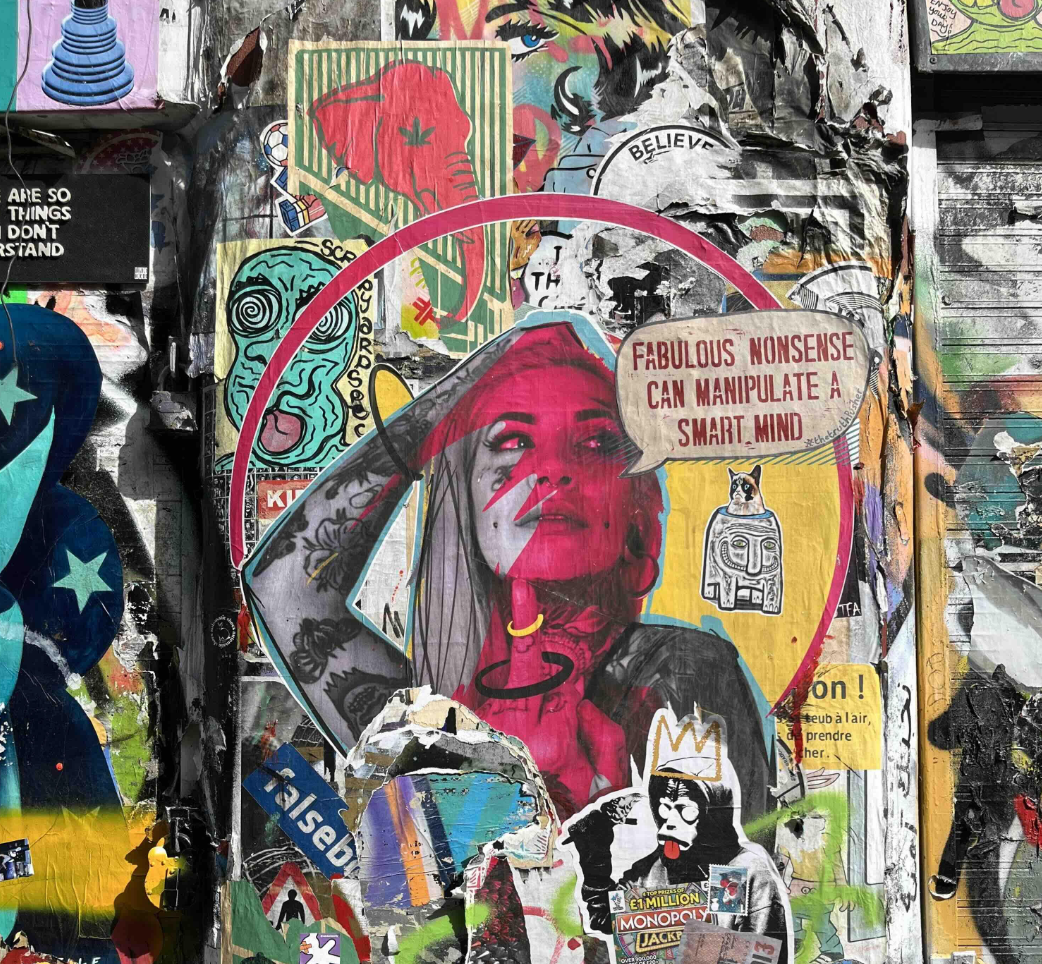
Nash Albert ‘Kingdom Of Love’
Album – 6th June 2025
Now then my dearies what do we have here…well, an album by Nash Albert, an artist I admit I’d never come across before, and his third album called “Kingdom Of Love”. It sounds to me like the kind of album that would have been released in the 1980’s by a major label pretending it was an indie. It has a mixture of 80’s rock bombast with a slight tinge of goth and folk and psychedelic goodness and AOR pop. And all in all an enjoyable listen for an album that could have been released anytime in the last 40 years.
Armstrong ‘Handicrafts’
Album – 1st June 2025
Armstrong (or Julian Pitt) as I have mentioned so many times in my past reviews of his work has a God given gift for melody that is rather quite a rare and marvellous thing, and one that really deserves to be heard by more people and hopefully these 43 songs that make up this double CD comp of his wonderful gift for melody will go some way to putting that right. For we have 43 slices of home recorded sunshine pop, from the Housemartins meets Joe Meek Pop Splendour of “Sunday Walking” to the seventies Bacharach and David late tv shine of “Cosmos World” fed through the mind of Brian Wilson circa “The Beach Boys Love You” sessions.
So many aural delights: “The Wonderful Sweetest Girl” is a fine 4 track wonder of lo-fi post punk jangle pop and “Yesterdays Over” is a rather sweet piano ballad worthy of the Zombies, or the mid to late sixties magic of the Hollies or the Smiths like “Let’s Be Decisive”. I could honestly just go on and on listing the tracks and writing about how beautiful and wonderful they all are, so instead of doing that I just advise you buy the CD, and you will not be disappointed.
Dragged up ‘Blakes Tape/ Clachan Dubh’
Single
Ah, more indie guitar rock to tempt me with. I admit, I get sent way too much indie guitar rock to listen to, but when it is as fun and as well done as this I really do not mind. What we have here are two tracks of sublime indie chuggery: is chuggery a word? And if so, have I spelt it right? Anyway, Dragged Up do it all very well and hopefully will find themselves on the BBC6 music playlists and maybe even one day finding themselves guesting on Jools Holland (if so, please kick him in the groin for me), as I find the distant whispers of the mainstream calling their name.
Half Naked Shrunken Heads ‘Let’s Build A Boy’
EP – (Metal Postcard Records) 16th May 2025
Metal Postcard Records is becoming the record label to go to if you require some discordant post punk in your life. Not only do they offer us the Neon Kittens, The Salem Trials and the Legless Crabs but now their latest band of jagged angular post punk the wonderfully named Half Naked Shrunken Heads. This their debut ep is four tracks of Public Image Ltd /Bow Wow Wow extravaganza, experimental mixture of punk, dub and rather fetching kicking your heals downtown filthy art filled rock ‘n’ roll…. yes, another gem. One day Cherry Red Records are going to release a series of box sets of Metal Postcard releases and people will marvel how they never heard it first time around.
Heavenly ‘Portland Town’
Single – Digital Release 6th June 2025
The first new single from Heavenly in 20 years, and a fine single it is as well, all charming indie guitar strum and melody filled harmony bliss. A beautiful ode to Portland Town, a song that captures and enraptures and makes me want to pop on a plane with my guitar and busk away till my heart is content. A lovely summer single.
Majken ‘A Siren’
Single – (Sing A Song Fighter) 12th June 2025
“A Siren” is a rather beautiful atmospheric unusual ballad filled with rising sunsets and falling dew drop, a journey into the life and minds of a wistful muse. For Majken has a rare and sweet musical talent that emits warmth and tenderness.
Novelistme ‘Fabulous Nonsense’
Album – 10th June 2025
I like this album. Novelistme is obviously a talented songwriter and musician, and “Fabulous Nonsense” is a fine album made up of good songs and some fine melodies and some great guitar riffs; an album that will appeal to all lovers of indie rock legends GBV and Graham Coxan’s solo recordings. But there is a something that I have to mention, that I find the production and sound of the album just a little to clean and clinical for my tastes, and lacking a little warmth; the same problem I have with XTC, which is my problem and not Novelistme, and is the only thing that is stopping me loving the album, but really is a good listen.
Swansea Sound ‘Oasis V Blur’
Single – 6th June 2025
Oasis Or Blur, now that is a question that really needs to be answered even after all these years. Obviously, I am well known for my hatred of Oasis, so Blur is the obvious answer, and this lovely blast of indie is good fun with its Fall like riffage and radio friendly melody. If I was on jukebox Jury I would be holding up the Hit card…. I would probably be wrong, but it’s all good fun.
The Twirlies ‘Think That I Am In Love’
Single – (Café Superstar Recordings) 23rd May 2025
This single is a rather beautiful summery pop song. The word charming was indeed invented to describe this charming slice of indie pop. The Twirlies could well be a band worthy of further investigation; any band that can remind me of both the Zombies and Belle and Sebastian doing a summer shimmer is indeed a band worthy of further investigation. I Think That I Am In Love with this single.
The Wants ‘Bastard’
Album (STTT) 13th June 2025
There is something quite Go Betweens-ish about The Wants, but a more experimental Go Betweens, a more jagged angrier experimental colder sounding Go Betweens. I think it might be the Grant McLennan-like vocals. Although I could be completely wrong about this. If so, please ignore my opening sentence. It might be because my wife is listening to the Go Betweens in the other room and there might be a cross contamination of musical genius.
Anyway, I like this gang of post punk musical miscreants. They have a lovely 80’s psychedelic undercurrent to their sound that combines with the coldness of their post punk energy, and the whole album is an enjoyable emulsion into darkness and angular sadness. A fine album.
If you’ve enjoyed this selection, the writing, or been led down a rabbit hole into new musical terrains of aural pleasure, and if you can, then you can now show your appreciation by keeping the Monolith Cocktail afloat by donating via Ko-Fi.
For the last 15 years both me and the MC team have featured and supported music, musicians and labels we love across genres from around the world: ones that we think you’ll want to know about. No content on the site is paid for or sponsored, and we only feature artists we have genuine respect for /love or interest in. If you enjoy our reviews (and we often write long, thoughtful ones), found a new artist you admire or if we have featured you or artists you represent and would like to say thanks or show support, than you can now buy us a coffee or donate via https://ko-fi.com/monolithcocktail
A world of sonic/musical discoveries reviewed by Dominic Valvona. All releases are featured in alphabetical order.

Audio Obscura ‘As Long As Gravity Persists On Holding Me to This Earth’
20th May 2025
Slipping in and out of realities and consciousness, between field recordings of nature with its birdcall choruses and the metallics, oscillations of the electronically engineered and synthesized, Neil Stringfellow – aka Audio Obscura – offers a liminal balance of sound collage, melody, and the alien drawn to a both felt and metaphorical gravitational pull on his first album in just over a year.
Returning after a fallow period of sonic recording with a new creative impetus – spending a good part of last year gigging heavily, with notable performances in Poland and at Switched On in Whitby –, As Long As Gravity Persists On Holding Me to This Earth is just the first of a number of releases due out this year – the Mortality Tables label has offered Stringfellow a platform for a new project in September. And it at least in part maintains a connection to last year’s brilliant hagiography album, Acid Field Recordings: the avian signatures and passages that seem near hallucinogenic; the subtle use of underlying or undulated soft beats. The elements of electro and trippy trance-y dub however are not so obvious: don’t get me wrong, you can still pick out evocations of The Orb, FSOL and Amorphous Androgynous. Instead, there is a new found beauty of moving classical strings, more piano and melodious qualities to be found in an amongst the tangible and intangible ambient dreaminess of magic, mystery, inquiry and the universal.
Held together by an ether and a sense that there is something that’s bigger than all of us out there in the expanses beyond these tethered gravity fields, Stringfellow’s expletory recordings seem to drift and linger in an ambience that is one part sci-fi, another organic, and another near cosmically holy. Choral voices, again in the classical mode between the pastoral, spiritual and otherworldly near aria work of György Ligeti and Popol Vuh swell and ascend as ghostly notes and lower-case Andre Heath style piano deeply and softly tinkle or draw into focus, and sonorous low sounds pulsate or throb in the wispy airs of the cerebral.
Despite the ambience and leitmotif of nature, the walks through the meadows and environmental field recorded scenes, some of these tracks offer drama, a gravitas, or break into electronic passages of beats and tubular patterned, plastique padded rhythms: to these ears a touch of Luke Slater, Wagon Christ, Air Liquide and Richard H. Kirk. You could venture to suggest sophisticated, but always felt and evoking, influences of trip-hop, downtempo, minimalist techno, even club electronica. It offers some surprising directions and turns from the spells of dream-realism and amorphous gravitational anchor: you would be hard pressed to plant your feet on ground in this constantly floated mirage, despite that gravitational force that bounds you to it.
A track such as ‘The Weight Of The World’ can throw us off balance with its brilliant and subtle dissonance and giddiness; a sound collage of layers, both found and collected and made anew, includes a kind of Revolution No.9 style Stravinsky type tune-up heightened fit of excitable and swirling orchestra, Don Cherry and Booker Little style cornet trumpet, a trudge through the grass, piques of reality and the beats of Howie B. I’m hearing hints of Fran & Flora, Xqui, Greg Nieuwsma & Antonello Perfetto and Alison Cotton converging with Bernard Szajner and Richard H. Kirk on an album of differing but congruous moods. For this feels like one long conceptual piece: Sure, each track begins as it also finishes as a separate vision, but without much effort they could more or less run seamlessly together with no pauses or interruptions into one ambitious movement of essence and reverberated fantasy.
You’ll be hard pressed to find a better, more complete vision in this field of musical, sonic and field recorded experiment this year: I say experiment, but this is a most lovely if sometimes mysterious and alien work of art to lose yourself in for an hour.
Jeff Bird ‘Ordo Virtutum: Jeff Bird Plays Hildegard von Bingen, Vol 2’
(Six Degrees Records) Released last month
Both outside itself with a certain gravity and majesty and sense of presence that isn’t wholly religious and divine, and yet very personal and sensitive to its creator, Jeff Bird’s second volume of harmonica, organ pump and Fron initiated compositions transposes the liturgies of the venerated historical European polymath figure of Hildegard of Bingen, taking her famous Order of Virtues play and transporting its glorious Benedictine stained-glass chorales and an essence of the anointed versant landscapes of Medieval Europe, to a vision of both of America’s Old West and southern borders.
Essentially, this is a further study and celebration of Bird’s love for the transcendent music of the 12th century abbess, whose talents stretched to practicing medicine, writing, philosophy and mysticism: often referred to as the “Sibyl of the Rhine”. A visionary to boot, she was also just as importantly an influential composer of “monophony”, the simple musical form typically sung by a single singer or played by a single instrumentalist – In choir, or choral form, it usually means the ensemble of voices all singing the same melody. She is indeed the patron saint of musicians and writers – although, her official canonization by the church would take over 800 years. One of her most established, noted works is a collection the Symphonia armonie celestium revelationum, an ordered liturgy of 77 sacred songs. On his previous beatified volume, Bird took another work, the O Felix anima, a piece written in poetry and music as a response to the relatively localised and obscured St. Disibod.
Ordo Virtutum – to give it its Latin name – is an allegorical morality play, or sacred music drama, composed during the construction of Hildegard’s abbey at Rupertsburg in 1151. Theme wise, a lyrical, choral and also more discordant struggle for a human soul, in a theosophy battle between the Virtues and the Devil, the story can be divided into five parts. Each part, character is represented by a singing voice or chorus; only the devil, who Hildegard says cannot produce divine harmony, is missing such a beautiful voice, his parts delivered in grunts or yells. Depending on sources, it has been suggested that the “soul” of that struggle refers to Richardis von Satde, a fellow Benedictine nun and friend, who left to become the abbess of another convent. Richardis was upset by this appointment, attempting to have it revoked. Unsuccessful, Richardis departed only to die some time shortly after – October 29th, 1151, to be precise. It has been also suggested that just before her untimely fateful death, she old her brother Bruno that she wished to return to Hildegard in an act similar to the “repentant soul” of the Ordo Virtutum.
Whatever the allusions, the allegory, it is a beautiful work; one of the first of its kind. Inspiring devotion, touched by the afflatus, Bird now transports the listener from its origins to vistas, reflections and environments that at first seem quite a distance away from that Medieval period struggle and drama. This is mostly down to the choice of instrumentation, with new arrangements created for a string orchestra, a pump organ, the harmonica and the more recently invented Fron – named after its inventor, the clockmaker and woodwork specialist Fron Reilly, this strange looking apparatus is essentially “a cylindrical instrument with a frame drum suspended in the centre of 10 strings. To play it, you have to turn a crank handle to make the instrument spin while using a bow or wand to vibrate its strings.”
A long-time foil within the Cowboy Junkies circle and multi-instrumentalist performer with an enviable list of notable artists over the decades, the founder member of the Canadian folk band Tamarack, who also scores music for TV and Film, sure has a rich CV to draw upon and channel into this project. Mastering an eclectic range of instruments, on last year’s Cottage Bell Peace Now Bird got to grips with a grand imposing pipe organ; a gift that he refurbished over time. I said at the time, when reviewing this highly recommended work, that in his hands the “pumped waves and layers emote spatial lenses, dusted beams of light, the concertinaed, ripples and spells of near uninterrupted cycles of abstract soul searching and peaceful inquiry.” And now back again, entwinned at times with the hinge-motion, country pining, mirage-invoked and concertinaed harmonica, this organ lays down breaths and sonorous deeply moving empyreal and elegiac beds and melodic directions to folkloric warriors, spiritual transcendence, redemption and the solace.
This is music that is both relenting and deeply moving; a sensitive but powerful score that twins alternative Western scores and music with the pastoral, classical and blessed. I’m picturing Bob Dylan Portraits, old Missouri, the southern borders of America in the 19th century, the work of Daniel Vickers, Laaraji and Bruce Langhorne; the lone bugle caller at a fort, a Colliery band, a Lutheran Popol Vuh. There’s just a passing evocation of the Cantonese on the spindled and string pulled ‘The Old Serpent Has Been Bound’; Bird creates a sort of shivered, scaly-like mythical dragon description from his chosen instrument that conjures up esoteric and supernatural illusions.
Dreamily merging various worlds into an hallucination of church parable and the more personal, Bird has pitched this album perfectly between swelling gravitas and the ambient and calming. Hildegard’s original is given a new impetus, a new direction, a living breathing embodiment of Bird’s Western visions and beyond. In one word: superb. And one of my favourite immersive experiences in a long time. The Devil it turns out, doesn’t always have the best tunes.
Dope Purple ‘Children In The Darkness’
(Riot Season Records) 20th June 2025
Seeing the light two years on from its inception in March of 2023, the midnight hour recording sessions that make up this mystical, supernatural album conjure up temple lurked spirits, an expressive cry from the shrouds, and monastic Shinto apparitions. All of which is consumed and enveloped within an acid-psych space-rock and fee-jazz rock out of the contorted, squeezed and wailed.
The Taiwanese group with feelers that extend out towards much of Southeast Asia, were joined on that fateful night by the Malaysian saxophonist Yong Yandsen and the British, but Singapore-based, drummer Darren Moore, and an audience of head music acolytes.
Just the sort of thing you’d expect from the mighty Riot Season camp, the trio of tracks that make up Children In The Darkness sound like Nic Turner going full welly on the saxophone whilst his Hawkwind band mates whip up a cosmic cacophony. But there’s far more to process than just that glib one-liner description, as the group also bleat, go wild, score, screech, peck, spin and whip up evocations of Bill Dixon, the ZD Grafters, Last Exit, Acid Mothers Temple, Ghost, Anthony Braxton and John Sinclair’s Beatnik Youth recordings with Youth.
Whilst unbound to a particular theme or a concept as such, the title was invoked by the atmosphere and mood of that session, recorded at Revolver in the Taiwan capital of Taipei City. And though it summons forth certain allusions to the chthonian, to the esoteric, and to the metaphorical, I can’t help feeling there is something in it about the uncertain, dreaded shadow of China and the limbo of the geopolitical events that could result in an invasion of that sovereign island nation: A new young generation used to freedoms and liberty on the precipice of a tyrannical struggle. For it is certainly near a horror show in places, summoning up the old spirits. But this album seems like a pained whelp from the shadows and an interstellar oscillation, ariel bending motherboard of escapist space projections that go both hard and more sensitively, with plenty of incipient starry passages, the odd near tender, mournful moment and some parts which seem more languid and emotionally drawn.
A great trip from a dope name play on the progenitors of dark and harrowed heavy meta(l), the Purple host go full on cosmic-occult.
Tigray Tears ‘The World Stood By’
13th June 2025
As attention spans seem to contract and the 24-hour newsfeed cycle is forced to update and move on every nanosecond in the battle to retain minds and lock in followers for monetary gain and validation, or to offer up a hit of dopamine, many geopolitical events – once seen as cataclysmic and about to push the world into climate crisis or war – seem to be quickly forgotten about. Usurped for the most part and replaced by the next teetering-into-the-abyss flashpoint, the next outrage. And so, as I’ve said before about the Rohingya genocide in a previous review, do you remember the humanitarian crisis, the large-scale deaths in the conflict between Tigray and Ethiopia? Of course you don’t. That’s old news. Slipped from the public gaze. We’ve had the aftereffects of COVID to contend with, the cost-of-living crisis and high inflation, Russia’s barbaric invasion of Ukraine, the continuing incursions of Islamic terrorism in Africa, and now, since the horrific vile attacks on Israel on October 7th by Hamas, another ongoing escalating conflict in the Middle East. Chuck in Trump’s return to power, and the ensuing appeasement of both Putin and China (will they, won’t they, soon invade Taiwan), the huge mess that is the Tariff wars, civil unrest and disillusionment, and what could be a full scale war between India and Pakistan and there just doesn’t seem to be enough room or bandwidth to take it all in, let alone worry and press for solutions.
Once again, the producer extraordinaire, writer and musician Ian Brennan is on hand to wake us from our stupor and ignorance; this time setting up his in-situ style recording equipment to record the pleaded, sorrowful, longed and outraged but just as magical and astonishing voices and music of exiled Tigray living in the Ethiopian capital of Addis Ababa and the Amhara region; forced to leave their disputed home in what many describe as a civil war, others a conflict over autonomy and rights, and others still, a battle between ethnic groups for dominance in the region.
To be honest, it’s far beyond my own knowledge and scope of specialism, the conflict fought in the Tigray region (the most northern state within the borders of Ethiopia) is convoluted and has a long history stretching back generations. But to be brief, this two-year conflict pitted forces allied to the Ethiopian federal government and Eritrea against the Tigray People’s Liberation Front (TPLF). The TPLF had previously been a dominant force politically in Ethiopia before conflict with its neighbours, unrest within the country, and disputes over leadership spilled out into horrific violence. But during this particular and most recent chapter, between the 3 November 2020and 3 November 2022, it is estimated that two million people were displaced from the region, and 600,000 killed. Tigray was itself left in ruins; its capital turned over to the federal government. Reports began to emerge in the aftermath of ethnic cleansing and war crimes. And the situation is no more stable now, a few years along, with conflict once more looming with Eritrea.
Loosened and set free from the archetypal studio, Ian’s ad hoc and haphazard mobile stages have included the inside of a Malawi prison, disputed regions of the Mali deserts, and the front porches and back rooms of Southeast Asia: one of which was on the direct flight path of the local airport. And yet that is only a tiny amount of the forty plus releases Brennan has recorded over the last two decades.
As if being a renowned producer of serious repute wasn’t already enough, he could also be considered a quality author; so far publishing four digestible tomes on a range of music topics and regularly contributing to a myriad of publications. He’s turn of phrase and candid nature brings music, the relationships, and journeys to vivid life, whilst never blanching from describing the harrowing, disturbing and traumatic realities of the geo-political situations, the violence – each release features a brilliant vivid travelogue written by Brennan to set the mood.
As a violence prevention expert and advocate, Brennan’s recordings can be said to act as both a testament and a healing process. It has taken him and his partner, foil on many of these recording projects, the Italian-Rwandan photographer, author and filmmaker Marilena Umuhoza Delli, who documents each trip, to some of the most dangerous places in the world; many of which have had little or no real coverage by the wider media.
The partnership now turns attention to the injustice and plight of the Tigray, perhaps one of the most forgotten or ignored groups in recent times – although the Rohingya of Myanmar (Brennan released a project on this very topic last year), the Uyghurs of China, and various other ethnic groups that have faced or are facing similar acts of violence, of ethnic cleansing and displacement could argue their cases just as strongly. The exiled are given an opportunity to reach the audience that so ignored them, with various voices conveying their fears and hopes, but also asking, pleading why it was allowed to happen. As Brennan says in the intro, “The majority sang plaintively and with unerring directness. As so often proved the rule, the person with the worst attitude proved the best singer. They were unburdened by any seeming eagerness to please.” But in saying that, there’s not really one example of the angered, the riled rand enraged; seldom any political redress but instead, either humbled and soulfully yearned expressions of the reconciliatory, some with heartache, and others, with voices that carry and echo. You only have to read those titles to gauge the mood here: ‘Wishing For Peaceful Time To Return’, ‘I Want My Mother To Be Happy And At Peace’, ‘Please Speak Kindly To Avoid Arguments (People Should Live In Love)’. All of which, staying connected to their roots and homeland, are sung in the Tigrinya language: from the soul.
Brennan doesn’t normally go in for editing much, nor does he usually add filters or effects, but this time around he seems to have congruously reverberated and played with some of the original organic recordings to give them an experimental and contemporary feel: something that transcends the location, heading towards the otherworldly, cosmic and the atmospheric. None more so than track ‘No Matter Where I Am, I Miss Tigray’, which fades into a gathering of various interlayered high and lower pitched vocals and a near trill but ends up enveloping the participants into some cosmic wind tunnel. And vocal on ‘My Heart Pleads For Your Forgiveness’ is undulated by shooting ray beams and quasi-spacey vibes.
Most of these singers are accompanied by the rustically struck, brushed and rhythmically stringy Krar, a five or six-stringed lyre tuned to the pentatonic scale (that’s five notes per octave) that was used to “adulate feminine beauty, create sexual arousal, and eulogize carnal love”. The Derg military junta that ruled the region and Eritrea between the mid 1970s and 1980s banned its use: going as far as to imprison those who played this popular instrument. The Wikipedia entry states that the krar had been “associated with brigands, outlaws, and Wata or Azmari wanderers. Wanderers played the krar to solicit food, and outlaws played it to sing an Amhara war song called Fano.” Brennan calls it the “sonic core for the [Tigray] culture”.
Sound wise, what is interesting and revelatory is the connections, the similarities and evocations between this region of East Africa and that of Southeast Asia (I’m thinking Cambodia and Vietnam), the Tuareg and actually many of Brennan’s other recordings: a connective sense of roots music, the origins of the blues, but also the theme of processing trauma, a troubled history, the longing for a return – endurance is another.
“What is the world saying about Tigray?” Not much, especially with the crisis in next door Southern Sudan overshadowing all events in East Africa – the humanitarian tumult putting as many as nine million people at jeopardy of starvation in the tumult that has followed that country’s independence and self-determination. But in a small way, Brennan at least tries to draw attention to this plight, and I so doing, introduces many of us to unique, magical, evocative and poetic voices.
Jason van Wyk ‘Inherent’
(n5MD) 13th June 2025
From the very start the subtleties, vapours and tubular notes on the South African composer and producer’s latest album imply a certain gravitas: even in their most serene, quiet and ambient moments. For this is a work of air and wind, but substance and depth that is capable of stimulating and evoking something beyond its both melodic and textural wave forms, its hidden sources of movement and a presence that is difficult to describe.
Said to be ‘a clear evolution of its predecessor’, and striking a balance between melody and atmosphere, Jason van Wyk manages to add drama to the merest of electronic wisps and breaths, and to conjure up feelings, contemplations and yearns. Both futuristic and yet identifiable to our times, with touches of the cosmic and the cerebral, Inherent is both an album that feels connected to self-exploration and the abstract, difficult to describe senses of something greater, an undefined force of nature, of space and emotions.
What’s more, Wyk manages to artfully build some of these fields of cloud and more granular passages into the rhythmic with the introduction of sophisticated beats, throbbing and deep bass, and undulations of the tubular and magnetic. For example, ‘Inner’ evolves from its fading ambience into a trance-like amalgamation of Moroder, Sven Vath and Eastern European techno, whilst ‘Remnants’ starts off with those melodic ambient waves, stirrings of a deeper hummed bass and engine, and builds into a near club-like sound, with echoes also of Emptyset and the Bersarin Quartet. ‘Cascades’ is similar in this regard but feels more like an epic movie soundtrack.
Thrushes of wrapped electronica and static merge with gauze, melodic fluctuations and drifts and a prism of projected light sources on a beautifully produced work of mystery, exploration and reflection.
Voodoo Drummer ‘HELLaS SPELL’
Was Released on the 11th May 2025
A kind of Odyssey, weaving and transposing into something weird, otherworldly and dadaist Greek myth, tragedy, atavistic verse and the classical whilst interrupting both iconic and traditional compositions by various idiosyncratic mavericks along the way, the debut album from the Athenian duo (and contributing friends) of Chris Koutsogiannis and Stavros Pargino takes us on a both fun and evocative theatrical journey in which all roads lead back to the underworld and “hell”.
Referencing all things Greco-absurdist and mythological, the self-anointed VOODOO DRUMMER – a name that formulated after participating, we’re told, in a Benin funeral, and from his appearances on the esoteric New Orleans scene – and his cellist foil fuse lofty aspirations with a spirit of playfulness across an album of original and transmogrified material that, for the most part, relates to Hellenic culture. And yet, off the beaten track, the roots of “rebetiko” Greek music from another age, the ancient scales and poetry of that Mediterranean civilization are crossed with early 20th century America, Western and Eastern European classical music from the 19th century, the avant-garde, the stage and the counterculture.
Those Greek references include a Dionysus leitmotif. The fecund god of wine, vegetation, orchards, fruit, fertility, theatre, religious ecstasy also dealt in ritual madness and insanity, and is featured as the drunken swaying Bacchus, complete with hiccups, unsteady feet and wordless murmurs and mumbles on his namesake track. He then appears as the wicked fickle punisher of the fated mythological king, Pentheus of Thebes, in the ‘Bacchae’ tragedy. In this lamentable tale, written by the famous Euripides during his late flourishing in Macedonian court of Archelaus I, Dionysus drives poor Pentheus mad for rejecting his “cult”: rather grimly, the orgiastic frenzied women of Thebes tear him apart in the final act.
Inspired by the Ancient Greek playwright Aristophanes’ comedic play of the same title, Antiquity beckons once more as Dionysus enters stage left on ‘Aristophanes’ Frogs’; a triumvirate set of movements under one roof. With prompts, scales and falls, the liberating god, who despairing of the state of Athens’ tragedies, travels to the underworld of Hades to bring the playwright Euripides back from the dead. And so, we begin this chthonian adventure to the sounds of rattlesnake percussion, Hellenic pitter-patters, rolling drum rhythms and the plucks of 5th century BC Athens, before rowing across a splish-splashing pizzicato and majestically bowed lake (complete with a croaking frogs chorus), and a sort of Faust meets strangely quaint experimental late 60s vocal. The final movement strikes up a controlled tumult of screaming and harassed viola and “Afro-Dionysus” drums as Hades opens up and swallow’s whole. Koutsogiannis andParginosare joined on this Dionysus inspiration by Blaine L. Reininger (of Tuxedomoon note) on violin and Martyn Jacques (of the Tiger Lillies) echoing the famous line from the play.
At this point, it must be pointed out that the duo expands the ranks to include contributions from a pair of Tiger Lillies and a Malian virtuoso. Koutsogiannis toured with the former in a previous life. Here, he brings in the already mentioned Jacques to narrate the final outro on the L.A. salacious dirty-mouthed referenced figure of countercultural pulp-poet-writer Charles Bukowski – in a somewhat dry, solemn but authoritarian cadence, Jacques echoes the literary badnik’s words, “We’re here to drink beer/We’re here to kill war/To laugh and live our lives so well/that death will tremble to take us.” Tiger foil Adrian Stout takes to the quivering aria apparitional saw on the opening partnership of ‘Pink Floyd in 7/8/John Coltrane’. A Saucerful of Secrets’ ‘Set The Controls To The Heart Of The Sun’ acid-cosmic trip is somehow given a new timing signature (the original is in 7/4 timing I believe) and smoothly twinned with Coltrane’s most beloved influential work, ‘A Love Supreme’ (a more conventional 4/4 time for the most part). It starts with a recurring frame drum or military ritualistic beaten drum, has the chimed ring of tubular-like bell soundings, and features retro Library sci-fi bends and theremin like warbles before changing the rhythm to one of light shuffling jazz. Something familiar of the two separate tracks can be heard, estranged as they are. Featuring on warm and humming, almost ambled bass guitar is another cast member, Tasos Papapanos.
Coining the description of “Afro-Dionysian”, the duo’s Hellenic tastes, reinventions bond with those of West Africa on occasion; especially when the kora marvel and artist Mamadou Diabaté makes an appearance on the ragtime dadaist, boozy cup poured and rattled, shaken voodoo inebriated “Drunk Dionysus”. The Malian virtuoso plays a one octave, out-of-tune version of the African metallophone, the metal balafon (reclassed as the “Weirdofon” by the Voodoo Drummer); sounding out vibes that are one part Roy Ayers, another part bobbing chimes and tinkling tines in the style of the Modern Jazz Quartet on a field trip to Bamako.
Back to those Greek references and allusions, and the second pairing of agreeable – when the timings are changed, the originals transported to Athens – covers, ‘Erik Satie In 7/8/Milo Mou Kokkino’ pulls together the first movement of the French composer’s famous Gnossiennes pieces and a traditional melody and song from Greece. Part of the original Trois Gnossiennes (followed by a further series) that Satie composed in the later years of the 19th century, these iconic and influential piano experiments were based around what is termed a free time method (devoid of time signatures or bar divisions) that plays with form, rhythm and chorded structures. Already etymology wise – and this is very interesting as it ties in with this album’s culture themes – in use before Satie coined the term, “Gnossiennes” could be found in French literature as a reference to the ritual labyrinth dance created by Greek mythological hero Theseus to celebrate his victory over the Minotaur. It was first described in the ‘Hymn to Delos’ by Callimachus, the ancient Greek poet, scholar and librarian, who resided in 3rd century BC Alexandria. Musically those dried bones rattle once more over dainty plucks, dissipated cymbals and a courtly dance. But then the cello, punctuated by a booming beaten drum, both strikes and laments like a siren performing a gypsy folk dance.
Taken in another direction, has is the way of things by this duo, there’s a transformed version of the street poet shaman Moondog’s ‘Elf Dance’, which has a certain classical gravity, a drama, a romantic bluesy feel and touch of Eastern European Klezmer. A very interesting take on an album that transposes the familiar to different climes.
HELLaS SPELL is a Hellenic chthonian voodoo vision in which Cab Calloway, 20s jazz radio hall, the far away influences of Appalachia and New Orleans meet dada and performative conceptual theatre. An intriguing debut that deserves attention.
Warda ‘We Malo’
(WEWANTSOUNDS) 13th June 2025
Continuing to unearth and showcase recordings from those defining sirens and chanteuses of the Arabian world during a golden age, the vinyl specialists WEWANTSOUNDS once more home in on the captivating performances of the late diva Warda Mohammed Ftouk. Simply Warda as she was known to a not only North African, Middle Eastern and Levant audiences but across the world, her name became a totem, and synonymous with the fight for not only Algerian independence in one age, but also as the voice for the soundtrack to the later Arab Spring. Invited as the voice of a nation on the eve of celebrating Algeria’s fiftieth anniversary as an independent country in 2012, right in the middle of the demonstrations, Warda was meant to sing the anthemic ‘We’re Still Standing’. Sadly, it wasn’t to be, as she suffered a fatal heart attack just a couple of months before the performance. Health problems, from a liver transplant in the 1990s to heart surgery in the early 2000s, often hampered Warda’s career, more so in the decades when she returned from her hiatus in the 1960s – her husband of the time, the former FLN (Algerian National Liberation Front) militant, now army officer, Djamel Kesri forbid her to sing, and so she spent a decade concentrating on raising a family before being invited to return to singing once more, in part at the bequest of Algeria’s president Houari Boumédiène who wished her to commemorate the country’s tenth anniversary of independence from France; which she did, performing in Algiers with an Egyptian orchestra. But both sampled liberally by the hip-hop fraternity and beyond, that voice, alongside its stirring, swirled, buoyant and undulating musical accompaniment, seems even more prescient in these troubled times, with conflict and the changing tides of politics in the Middle East and further afield.
Though born in Paris, Warda’s roots were both Algerian and Lebanese. Fate however, due to the ramifications of support for the former’s independence struggle by her father, would see the family expelled from France.
Whilst only a child in the 1950s Warda made her singing debut at her father Mohammed Ftouki’s renowned cabaret and North African diaspora hotspot, La Tam-Tam (the name derives from an amalgamation of Tunisia, Algeria and Morrocco). Here she was soon discovered by Pathé-Marconi’s Ahmed Hachlaf (the artistic director, programmer and radio host charged with looking after the famous studio and label’s Arabic catalogue), who quickly managed a recording session for the nascent star. But after the club was used to hide a cache of weapons bound for the fight against the French state in Alegria (La Tam-Tam and Ftouki tied, it is said, to the FLN and the political Movement for the Triumph of Democratic Freedoms), Warda’s father was imprisoned. After his release, and now denounced by the French authorities, the family left France to live in Beirut, in the Hamra Quarter of the city. Now concentrating his efforts on both Warda and her talented brother Messaoud (a renowned percussionist and composer), Ftouki dedicated his time to training the siblings for artistic success.
A hit on the Beirut cabaret scene, in 1959 Warda’s star would rise further when she met the legendary famous Egyptian composer, screen idol, crooner and songwriter Mohammed Abdel Wahab at a casino in the Lebanon city of Aley. Wahab took the burgeoning siren under his wing, teaching her classical techniques and writing for her: famously adapting the poet Ahmed Shawqi’s ‘Bi-Omri Kullo Habbitak’ “qasida” (an ancient Arabic word for poetry, often translated as “ode”). A leading light, able to rub shoulders with the great and impressive, Wahab’s name could open doors across the board, especially with the Arab leadership of the time, including Gamel Abdel Nasser. The infamous Egyptian leader suggested that Warda be cast in a pan-Arabian opera and perform Wahab’s ‘Al Watan Al Akbar’ song. She was duly signed by Helmy Rafla, the Egyptian director of musicals. A career on stage and the silver-screen followed, with Warda starring in both the Almaz We Abdo El-Hamouly and Amirat al-Arab films.
However, in a new decade, the 1960s, she married Kesriand took a forced break from her singing. Warda would divorce Kesri on the cusp of the 1970s (rather amicably we’re told), once more making a move and taking up permanent residence in Egypt, where she resumed her career once more. During this next chapter, she would remarry the Egyptian composer of note Baligh Hamdi, who went on to compose Warda’s most famous song. Working now with many of the country’s top composers, Warda would however fall foul of Egypt’s leader Anwar Sadat, who banned her from performing after she praised Arab rival leader, and dictatorial Libyan tyrant Muammar Gaddafi in the song ‘Inkan el-Ghala Yenzad’. Egypt’s First Lady and fan, Jehan Sadat, would thankfully soon lift this ban.
Warda’s career hit its peak during that decade, seeing her make a return to France for a famous recital at the iconic Olympia. And during the 80s and 90s, despite numerous health problems, some near fatal, Warda would cement her reputation as one of the Arabian world’s most beloved, respected divas.
This latest release from the vinyl revivalists both honours and goes some way to capturing the star at her peak during the 1970s. Partnering with her husband Hamdi, she created a series of albums filled, as the notes describes, ‘with lengthy, hypnotic compositions that showcased her commanding voice”. WEWANTSOUNDS and their partners have chosen to revive one such album, We Malo (or “So What”); a mesmerising, dramatic and near theatrical live recording from 1975. Backed by an Egyptian orchestra of signature rousing, stirred and attentive strings and the fluted, and by buoyant, dipped hand drums, an organ of some kind and the contemporary addition of a both trebly and bassy electric guitar, Warda, unsurpassed, holds the audience’s attention with a superb performance that runs through the emotions.
As story, declaration, or ode, Warda is as strong as she is venerable, reciting and playing with an appreciative audience, who clap, shout out, whistle and join in like for passages of call-response. She can be as coy and near flirtatious as she can be emotionally rousing and commanding. From plaintive heartache to vocally dancing over the attuned orchestral accompaniment, the nightclub atmospheric performance shimmies, swirls and lifts to a signature Egyptian matinee score. Warda is on a musical or film set, as she flows the contours of the sand dunes and embodies the spirited pull of an exotic land.
Repeating certain parts, musically and vocally, the whole five sectioned alum is essentially one long piece with pauses and sections when the music is wound down ready to strike up again for the next part. From the opulent regal and cabaret stage instrumentation and exotic belly-dancing-like trinkets shaking to the prominent in the mix sliding and plucked guitar notes of the later parts, you can easily hear why so many samplers, crate diggers form the hip-hop community have picked up on Warda’s back catalogue: you’ve probably never even realised that you’ve heard her reverent, romantic pleads and intonation sustained undulations before, cut-up and repurposed for a new generation.
Both very much of her age and yet timeless, stretching back to the atavistic soul of North Africa, but just as relevant for the age of cinema, and propelled forward, the voice of struggle, of self-determination in a tumultuous upended Arabian world, Warda’s voice cuts right through to hit you both hard and softly. But this album is like a familiar friend, welcomed and applauded back into the spotlight; a both fun and emotionally charged drama of falls, sweeps, swoons, the held and powerful. What a talent.
An essential purchase for those with a penchant for revered sirens of the Arabian world, We Malo is a gift of an album. Dominic Valvona
If you’ve enjoyed this selection, the writing, or been led down a rabbit hole into new musical terrains of aural pleasure, and if you can, then you can now show your appreciation by keeping the Monolith Cocktail afloat by donating via Ko-Fi.
For the last 15 years both me and the MC team have featured and supported music, musicians and labels we love across genres from around the world: ones that we think you’ll want to know about. No content on the site is paid for or sponsored, and we only feature artists we have genuine respect for /love or interest in. If you enjoy our reviews (and we often write long, thoughtful ones), found a new artist you admire or if we have featured you or artists you represent and would like to say thanks or show support, than you can now buy us a coffee or donate via https://ko-fi.com/monolithcocktail
 Monolith Cocktail Blog