Our Monthly Playlist selection of choice music and Choice Releases list from the last month.
We decided at the start of the year to change things a little with a reminder of not only our favourite tracks from the last month, but also a list of choice albums too. This list includes both those releases we managed to feature and review on the site and those we just didn’t get the time or room for – time restraints and the sheer volume of submissions each month mean there are always those releases that miss out on receiving a full review, and so we have added a number to both our playlist and list.
All entries in the Choice Releases list are displayed alphabetically. Meanwhile, our Monthly Playlist continues as normal with all the choice tracks from July taken either from reviews and pieces written by me – that’s Dominic Valvona – , Brian ‘Bordello’ Shea, and this month, Kalporz writer Samuel Conficoni. Our resident Hip-Hop expert Matt Oliver has also put forward a smattering of crucial and highlighted tracks from the rap arena.
CHOICE RELEASES FROM THE LAST MONTH OR SO:
Blanco Teta ‘‘La Debacle las Divas’
(Bongo Joe) Review
Lukas Cresswell-Rost ‘Weight Away’
(Wayside & Woodland Recordings) Review
Theon Cross ‘Affirmations: Live at Blue Note New York’
(New Soil) Review
Cumsleg Borenail ‘10mg Citalopram’
(Cruel Nature Recordings) Review
Exploding Star Orchestra ‘Holy Mountains’
Fortunato Durutti Marinetti ‘Bitter Sweet, Sweet Bitter’
(Quindi Records/We Are Time) Review
Tony Jay ‘Faithless’
Review
Freh Khodja ‘Ken Andi Habib’
(WEWANTSOUNDS) Review
The Lancashire Hustlers ‘Here But Not Here’
(Steep Hill) Review
Kevin Robertson ‘Yellow Painted Moon’
Review
Maria Elena Silva ‘Wise Men Never Try’
Review
Sol Messiah ‘War of the Gods’
THE PLAYLIST::
Blanco Teta ‘Subiduki’
Scotch Funeral ‘Weak at the Knees’
Freh Khodja ‘Aich Sar Bina Koulili’
Brickwork Lizards ‘All the We Are – Reworked by Sebastian Reynolds’
Natural Information Society ‘Sound Talisman’
Sol Messiah Ft. Sa-Roc ‘Auset’
Raekwon Ft. Ghostface Killah & Method Man ‘600 School’
Mr. Muthafuckin’ eXquire ‘Y.O.Utopia’
Open Mike Eagle ‘ok but I’m the phone screen’
Nicholas Craven & Boldy James Ft. C Dell & Nick Bruno ‘At&T’
Clipse, Pusha T & Malice Ft. Ab Liva ‘Inglorious Bastards’
Estee Nack & V Don Ft. Al-Doe ‘EZBRED’
Rachel Eckroth ‘Yin Yang’
Theon Cross Ft. Isaiah Collier, Nikos Ziarkas & James Russel Sims ‘We Go Again – Live at the Blue Note, NYC’
Peter Evans (Being & Becoming) ‘Malibu’
Homeboy Sandman & Sonnyjim ‘Can’t Stop Me’
Apollo Brown & Bronze Nazareth ‘Wheel Of Misfortune’
Ramson Badbonez & Leaf Dog ‘Celestial Bodies’
Max Schreiber ‘Layla Mistakel’
The Conspiracy ‘Salisbury Road’
SUO ‘Big Star’
Fortunato Durutti Marinetti ‘Beware’
Jeff Tweedy ‘Out in the Dark’
Kevin Robertson ‘Yellow Painted Moon’
Soft Hearted Scientists ‘Hello Hello’
Whitney ‘Dandelions’
The Lancashire Hustlers ‘Perhaps’
Ali Murray ‘ Toby’
Alex G ‘June Guitar’
Spotless Souls ‘In the Heart’
The Noisy ‘Twos’
Wolfgang Perez ‘So Ouco’
Eve Goodman & SERA ‘Blodyn Gwylly’
Joe Harvey-Whyte & Paul Cousins ‘lift’
Sirom ‘For You, This Eve, the Wolves Will Be Enchantingly Forsaken’
Austistici & Jacek Doroszenko ‘After Water Formed A Shape’
Cumsleg Borenail ‘You Mean Something To Me’
Cecil Taylor & Tony Oxley ‘Encore 1’
Exploding Star Orchestra ‘Afterburn (Parable 400)’.
If you’ve enjoyed this selection, the writing, or been led down a rabbit hole into new musical terrains of aural pleasure, and if you can, then you can now show your appreciation by keeping the Monolith Cocktail afloat by donating via Ko-Fi.
For the last 15 years both me and the MC team have featured and supported music, musicians and labels we love across genres from around the world: ones that we think you’ll want to know about. No content on the site is paid for or sponsored, and we only feature artists we have genuine respect for /love or interest in. If you enjoy our reviews (and we often write long, thoughtful ones), found a new artist you admire or if we have featured you or artists you represent and would like to say thanks or show support, than you can now buy us a coffee or donate via https://ko-fi.com/monolithcocktail
Kalporz X Monolith Cocktail: Top 7 Of The Week
July 25, 2025
Our continuing partnership with the leading Italian culture/music site and platform Kalporz. Samuel Conficoni brings us a choice septet of curious and interesting new/releases.
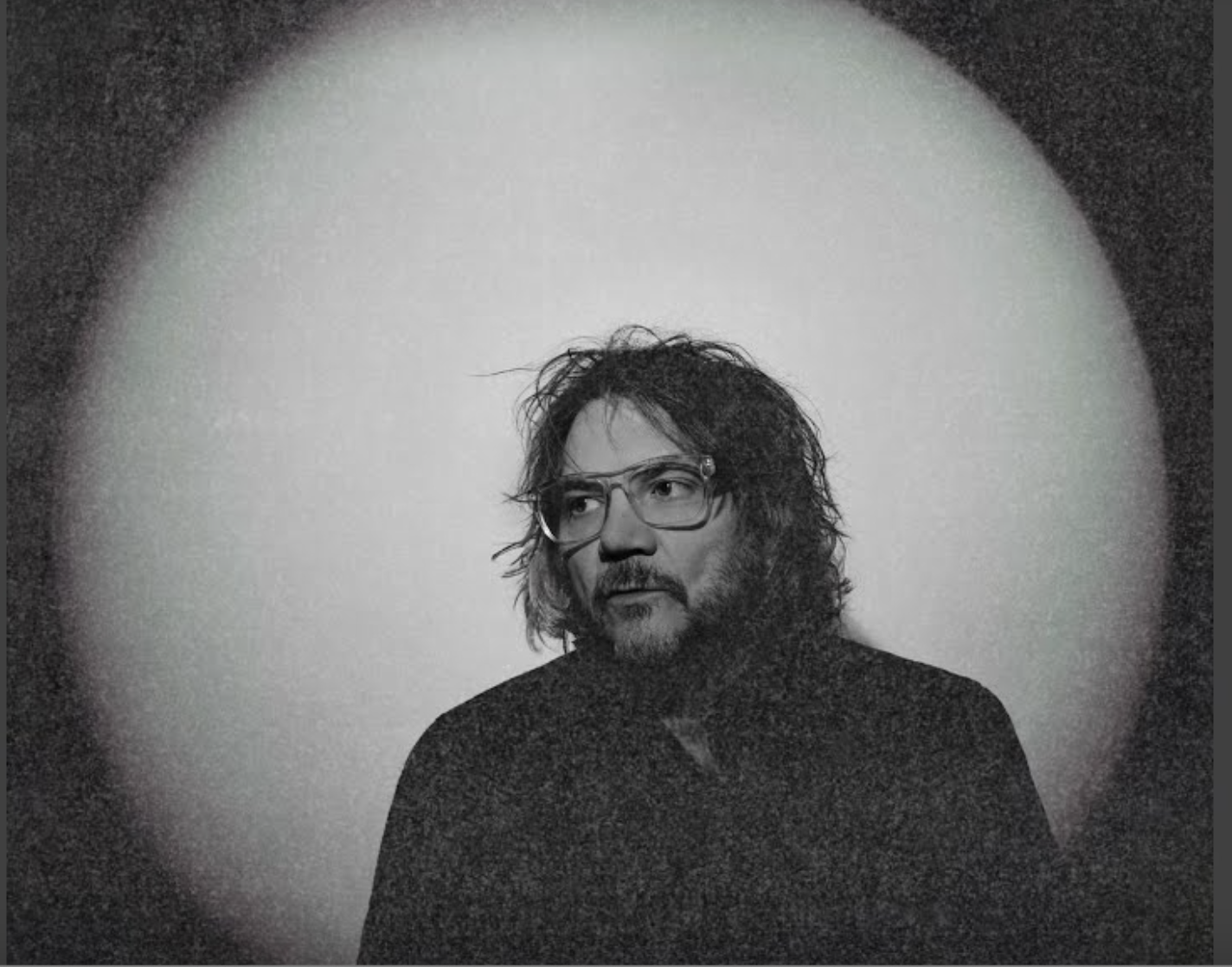
Jeff Tweedy of Wilco.
At regular points during the year the Monolith Cocktail shares posts from our Italian pen pals at Kalporz. The site recently celebrated its 25th anniversary. Here’s to longevity, which isn’t easy in the unstable online world.
From the site’s regular new series, This Week’s Top 7, Kalporz mainstay Samuel Conficoni shares seven (plus a sneaky bonus) choice recommendations; many of which lean towards the country, or share a theme with Bob Dylan.
7. Ever true to themselves, the Whitneys have released a new song.
“Dandelions” previews Small Talk, the new album released this November by Max Kakacek and Julien Ehrlich’s group, and the follow up to 2022’s Spark album.
6. Margo Price between innovation and quotation.
With a visual reference to Bob Dylan‘s legendary 1965 music video for “Subterranean Homesick Blues”, the singer-songwriter’s new single, which follows on from the previous intriguing “Don’t Let the Bastards Get You Down”, is titled “Don’t Wake Me Up” and features Jesse Welles. Her new album, “Hard Headed Woman”, will be released at the end of August on Loma Vista.
5. An unleashed Jeff Tweedy announces a new triple album and a tour.
Twilight Override will contain thirty songs and be released at the end of September. The Wilco leader offers us a taste of his new solo album by sharing four previews: “Enough”, “One Tiny Flower”, “Out in the Dark” and “Stray Cats in Spain”. Tweedy and his band will be in North America this fall, and in Europe next February.
4. “She Explains Things to Me” is David Byrne’s kaleidoscopic new track.
After last month’s “Everybody Laughs”, a new preview that gives us a taste of the intensity of Who Is the Sky?, the Talking Heads frontman’s new solo album, due out in early September on Matador.
3. 80 years later, the Kronos Quartet commemorates J. Robert Oppenheimer’s atomic bomb test by performing (in two versions) a Bob Dylan classic.
To commemorate the extraordinary event of July 16, 1945, the Kronos Quartet has recorded two versions of “A Hard Rain’s A-Gonna Fall”, the poetic gem that Bob Dylan composed in late 1962, likely inspired by the Cuban Missile Crisis, and which he included on his masterpiece album The Freewheelin’ Bob Dylan, released the following May. Among the names featured on the project are Willie Nelson, who, at 92, is currently touring the US with his Outlaw Festival, which also features Bob Dylan and his band; Ringo Starr, who turned 85 a few days ago; Iggy Pop; Laurie Anderson; Tom Morello; and Charlotte Gainsbourg. One version of the song is intense and hypnotic folk-rock, while the other, the “Drone Version”, is a reinterpretation of the classic in spoken-word form.
2. A passionate tribute to Jason Molina, so we never forget him.
Jason Molina, best known for his singer-songwriter project Songs: Ohia, passed away prematurely in 2013. After the fascinating and seminal reissues of much of his catalogue over the past decade or so, a compilation album dedicated to him, titled I Will Swim to You: A Tribute to Jason Molina, will be released by Run for Cover in early September. The album features, among many others, MJ Lenderman, Hand Habits, Sun June, Advance Base, Lutalo, and Horse Jumper of Love. Lenderman’s version of Molina’s “Just Be Simple” was shared the other week.
1. Woody Guthrie again, unforgettable and ever-present.
Shamus Records will release a fascinating double volume entitled Woody at Home in mid-August, containing 22 previously unreleased tracks by the legendary singer-songwriter. Among the many fascinating pieces is his only recording of “Deportee”, a legendary song performed over the decades by Bob Dylan, Pete Seeger, Bruce Springsteen, and Joni Mitchell, which Guthrie wrote after the deaths of 38 people, including 22 migrant farmworkers, in a 1948 plane crash. Thanks to the restoration of some analog tapes, on which Guthrie himself recorded these songs at home when he was 38, these two volumes have reached us. They will be enhanced by a book containing exclusive photos of Guthrie and his family and some of his lyrics, obtained from the Woody Guthrie Center in Tulsa.
[Bonus Track] 0. Headlights by Alex G is a great album.
Headlights, the tenth studio album by Alex G (the moniker of American singer-songwriter Alex Giannascoli) our artist of the month was released this month. This is his first release for a major label, in this case RCA, and from the first listens – as the singles that preceded it had already demonstrated – it seems to be an excellent album, yet another step forward for an artist who knows how to renew himself and make his compositions engaging every time while maintaining a sincere, visionary style that is true to himself.
THE MONTHLY DIGEST INCLUDES A CLUTCH OF ACCUMULATED NEW MUSIC REVIEWS; THE SOCIAL INTER-GENERATIONAL/ECLECTIC AND ANNIVERSARY ALBUMS CELEBRATING PLAYLIST; AND CHOICE PIECES FROM THE ARCHIVES.
___THE NEW___
Autistici ‘Familiarity Enfolded’
(Audiobulb) 2nd August 2025
The middle sequence in a series of transformations by the Sheffield-based electronic composer, Familiarity Enfolded follows on from the first link in a chain of collaborative immersions, Familiarity Folded – released in just the last week. In what could also be a collaborative showcase for the Audiobulb label too, a smattering of artists who’ve previously released material on the platform now bond and work with Autistici in redeveloping or evolving and remixing his compositions and ideas for a three-part project.
Finding common ambient space and minimalist approaches to visioning new soundscapes and movements, part two includes contributions from Tomo-Nakaguchi (an artist we’ve raved about on the site in the last few years, and made our choice albums of the year lists), A Dancing Beggar (who hasn’t appeared for a very long time on this site, but has made our choice albums lists in the past), Russ Young and OdNu (another artist who has appeared in our reviews sections in the last couple of years). The prospects look good already, with this quartet’s sphere of influences within the ambient and electronic realms both adroit and always worthy of attention.
First up both Autistici and Tomo-Nakaguchi match-up for an incipient majestic awe of both the natural and synthetic on the opening ‘Twilight Glow Of The Sky’. What could be the sound of filaments falling like pattering rain on a drum skin or piece of Tupperware can be heard amongst the moving glimmering light captured at such an inspiring moment in time and place.
The cove atmospheric ‘Caiplie’s Hermitage’ references the atavistic caves of the title, found between the Scottish towns of Anstruther and Crail on the coastal pathways of Fife. A Dancing Beggar is the foil this time around, playing on the hallowed ghosts and history of that mysterious cavern, which is believed to have been used as a place or sanctuary of worship for Christians in the 9th century AD. There’s constant wash or downpour of rain and presence of water elements that continue throughout this piece, and it could be that the artists are perhaps sheltering from it as they build up an abstract picture that’s one part natural and the other near sci-fi. The brassy resonating strings of a guitar are plucked, pulled and sprung as heavenly machines move around in the background. A Dancing Beggar joins both Autistici and OdNu on the finale; a twenty minute plus long form illusion inspired by the track title’s Arthurian referenced enchantress, sibling, shapeshifter and seducer Morgan Le Fay mirage, the ‘Fata Morgana’. A “superior mirage” in other words, this optical phenomenon and complex mirage creates distorted and sometimes fantastical images of distantly observed objects. You must have seen this when looking at to sea in particular conditions and seeing tankers or ships appearing to float above the waves. Sonic wise, this reminded me of Jeff Bird with its essence of piped or pumped pastoral sounds. But there’s also something hallucinogenic about it too. There’s a Mark Hollis solo style piano bit, something that sounds almost like a concertinaed ghostly echo of some shipwreck shanty plus the shimmers and shivers of magic.
That leaves the final track of the quartet, the ‘Dissolved in Light’ collaboration with Russ Young, who I must admit I’m unfamiliar with. It begins with the itchy rubbing chorus of crickets and sundown atmospherics. A veil of mist dissipates to reveal a most minimalist timelessness before Laraaji-like bowls are struck softly and the sound of tines and melodious ambient waves entwine. Andrew Heath evocative piano notes and falls meet an amorphous staccato engine as the track moves along its placeable journey to the sacred.
‘Relinquishing’ control, the concept behind this series has worked rather well; resulting in some magical, stirring and illusionary pieces of sophisticated and highly immersive ambient and lowkey electronica. A Dancing Beggar seems to be adding something of the bucolic and pastoral to the mix to give it a connection to the human and greenery, the nature and history. But all four collaborators prove congruous partners on this project. Part three, Familiarity Unfolded, will follow in due course, and it will be interesting to hear the results of another set of sonic and musical partners.
The Lancashire Hustlers ‘Here But Not Here’
(Steep Hill) 4th July 2025
Rolling with the punches meted out by life; tumbling forward into a new songbook; The Lancashire Hustlers seventh album rings true with disillusion, detachment, bewilderment and isolation. It’s a feeling that’s hard to articulate or relate, but that unease at the tides of time and the disenchanted shrugs of malady sound pretty warm, gentle and sellable.
With a MOR breeze of soul in their sails once more, the long-standing duo of guitarist and vocalist Brent Thorley and drummer and backing vocalist Ian Pakes take beat group, Baroque, psych and troubadour influences for a both funky and yearned trip across the Northern countryside and towns of their home. Transporting a hint of Muscle Shoals to Lancashire for an idiosyncratic English take on the music of the Isley Brothers, Stevie Wonder, Curtis Mayfield, the duo (with an extended apparatus of instruments, which they both share) have a slight saunter and roll to their signature to their songwriting and playing. It’s the sound of The Beatles, of individual Lennon and McCartney on their solo work, of the Stones, of Ollie Halsall and John Compton with an undulation of gospel-light and country-soul electric piano and organ. Talking of the country reference, the most lovely ‘Just Because’ has what could be either a melodica or clarinet sounding like a forlorn but romantically sighed harmonica – there’s also the use of a lap steel guitar.
There are some heartfelt, sad plaints, and rural country swamp pop ditties that wouldn’t sound out of place on McCartney’s eponymous solo album and RAM; some songs that err towards the haunted, albeit with instrumental aping scurrying mouse effects – see the confessional, asking for forgiveness, pest and rodents quirky phobia, and Byzantine Stones flavoured ‘I Killed A Mouse’ -; and some that beat themselves up over guilt, frustration and heartache. Most out there, must be the dejected lament of feeling ignored, ‘Like A Ghost’, which sounds like a detour to some mysterious Hispaniola Les Baxter hideaway island of the occult. And yet, they never feel so down or in the blues funk that each song isn’t rich in playfulness lyrics wise, or ever dour.
Another enchanting as it is sorrowful and disenchanted songbook from a duo that continues to make its own luck, releasing a consistent catalogue of instantly likeable, melodious and breezily catchy albums. It’s always a pleasure to review and hear them.
Maria Elena Silva ‘Wise Men Never Try’
4th July 2025
Recently stripping back Bob Dylan’s courtly enigmatic dames to their most essential essences with interpretations of ‘Queen Jane’ and a summoned bell rung ‘Sad-Eyed Lady of the Lowlands’, Maria Elena Silva now turns to the pages of the Great American Songbook with a first volume of revisited and transposed standards made anew: that is, made emotively ethereal, near evanescence yet connected and with a real sense of depth and something approaching the tactile.
Under the ‘umbrella title’ of Wise Men Never Try, the inaugural volume features a small intimate accompaniment of players to accentuate and punctuate Silva’s carefully placed and near blown words, or, to wind along to a minimalist performance of the artful, the solo play, the quietened and sullen lament, the show tune stripped of artifice, and the enigmatic, near impregnable shell of a smoky cabaret tortured soulstress. Step forward Erez Dessel, who’s piano both articulates the feel and plays with a freer hand of spine-tinkles, ached suspense, distorts and slightly jars the nerves; especially on the opening version of Carolyn Leigh and Cy Coleman’s late 1950’s standard, ‘I Walk A Little Faster’ (the singular “I” has been dropped I assume to reframe the angle for a new interpretation), which was a hit for Blossom Desire in 1958. The original’s slight lilt of 50s swing and jazz is replaced with a jilt of dissonance on the piano; made more so because of the near silence that opens the song. In a bluesy-jazzy fashion that also recalls the theatre, Silva amorphously places the words with lulled and delicate breathless ease. As a theme of heartache and denial, this distillation is as beautiful as it is almost troubling and disconsolate. The album’s finale, ‘Some Enchanted Evening’, is the closet interpretation on the whole album, featuring a lovely melodious piano that wouldn’t sound out of place on the original; all very tender and dreamy. The Rodgers and Hammerstein number, composed for the South Pacific musical, is normally sung by male protagonist Emile as he captures the essence of love at first sight. Out of the female gaze, with a female perspective that theme is not so much lost but redefined.
We also have Tyler Wagner popping up on the double-bass, taking a tactile, textural jazzy approach, offering flexed stretches of the body, sensitive little crawls and climbs, and more physical thwacks of the bass strings. The filmic pining ‘I Should Care’, written by Alex Stordahl, Paul Weston and Sammy Cahn for the 1944 MGM matinee Thrill of a Romance – covered by all the notable greats over the decades, from Sinatra to Peggy Lee, Dizzy Gillespie and Amy Winehouse -, features a bass that quietly thumbs away a jazz rhythm in the style of early Blue Note, as Silva sympathetically oozes soulful pursed heartache.
Completing the accompanying trio – who it must be stated, don’t always play together or on every song – is Ben McDonald on electric guitar. Subtle for the most part, ‘I’m In Love Again’ has McDonald pinging harmonics, brushing up and down the fretboard and playing a nice Reinhardt-esque delicate languid sensitive form of haunted sympathy.
It must be pointed out that Silva also plays acoustic guitar on these numbers. ‘You Don’t Know How Glad I Am’, written by Jimmy Williams and Larry Harrison, and made her own by Nancy Wilson on the 1964 single, is an intimate entwined match of Silva’s climbing vocals and a guitar with a pinch of Spanish flair: albeit kept quite subtle. Silva’s version of that recognisable tune sounds somewhere between Judee Sill and Roberta Flack. It’s there again on the next song, ‘Close To You’, a sort of jazzy-gypsy guitar melancholy.
Silva’s voice is labyrinthine and enigmatic yet can’t quite hide the various emotional toils of disconsolate and sacrificial, torturous and resigned heartbreak. Despite the intimacy of the setting, every song has a stage-like atmosphere about it that croons and soothingly oozes sophisticated, elegant jazzy-blues performance from the stillness and blank space. But that voice is hard to define, to pin down; amorphously pitched between the great jazz singers, the voices of perhaps Julie London and Peggy Lee, and something approaching the folk doyens of the 60s. A beautiful, somewhat pining and plaint start to a series of such interpreted songbooks, volume one is a very personal take and perspective on a songbook we have come to take for granted and heard a thousand or more times. In this moment, this setting, those just recognisable songs have taken on a different quality and encouraged a new reading.
If that grabbed you, Silva will be back next month with a second volume, this time concentrated on songs of a certain vintage, and a prescient history, the American Civil War. Expect to read a review of that album at a later date.
Leo Wolf ‘I Saw Your Shadow On The Wall’
1st August 2025
The flicker of Richter’s candle appearing at the end of the labyrinth; the half-dreamt, half-seen M.R. James’ apparitions; the presence of the supernatural and mysterious prompted by sleep hallucinations; these are all in the essence and conjuring of imagery that is crafted from the North Carolina artist Leo Wolf’s ambient, atmospheric and filmic granular synthesis of processed sampled material from classical records and field recordings. With weight and texture these asynchronously breathed, and space filled recordings exist in a semi dream state, simultaneously paranormal and yet tethered to the search for light and gravitas in a world of synthesized melodic wave forms, tones, passes, undulations and bass-y padded throbs.
Building up a moving, simulating and often dramatic sensory experience from hidden sources, machinery and the recognisable captured moments of the artist’s surroundings – from the rain hitting a metal apparatus in the garden, to the clatter of cutlery and plates, the conversations caught between people in a restaurant or café setting -, this album’s building blocks act together and independently of each other to set in motion a feeling both hypnagogic and hypnotic – the former even features in the title of one track. Are we indeed awake or not? Who can tell, as Leo constructs a surprisingly beautiful work of ambient reflection, soundtracks and filtered brilliance.
A brilliance of light (metaphorical and real) can be found on each and every track more or less, as the mists, haze, the unsure fogs of the musty and gauzy are parted to reveal itself.
It sounds to me like 1980s paranormal VHS merged with His Name Is Alive, synthesized monastic and gothic voices, hollowed beams, overhead craft of an alien nature and generators. Nightmare and the sublime through the grainy lens, I Saw Your Shadow On The Wall envelops the listener in Leo’s personal searches and emotional pulls to create a most moving soundtrack.
___/The Monolith Cocktail Social Playlist Vol. 99___
For the 99th time, the Social Playlist is an accumulation of music I love and want to share; with tracks from my various DJ sets and residencies over the years and both selected cuts from those artists and luminaries we’ve lost on the way and from those albums celebrating anniversaries each month.
Running for nearly 12 years now, Volume 99 is the latest eclectic and generational spanning playlist come radio show from me – the perfect radio show in fact: devoid of chatter, interruptions and inane self-promotion.
Let us pay homage firstly to the late Argentine pianist and composer Lalo Schifrin, who passed away earlier this month. Arguably it took a South American to encapsulate and bottle through blazed horns, funky grooves, a chorus of dramatic near reverent voices, and thriller punches the sound of the streets of San Francisco and New York in the 60s and 70s; when Dirty Harry served Judge Dredd style justice and Steve McQueen handbrake turned and screeched recklessly as a getaway driver. Kung-Fu to Spies, Bossa, Samba, the orchestral, swing, jazz, the cultish and horror, Schifrin’s signature is legendary; his influence so wide and extensive as to have entered the musical lexicon. Arguably amongst the most sampled composers of all time too. So where do you start? How the hell do you represent such a legacy? Well, I’ve chosen a few personal favourites and a couple of more obscure tracks from a cannon that spans over seven decades: the theme from ‘Magnum Force’, ‘Kyrie’, ‘Once A Thief’, ‘Vaccinated Mushrooms’, ‘The Shadow’ and ‘Introit’. And literally as I’m writing this, news arrives of Ozzy Osbourne‘s sad departure from these realms. The Anti-christ, lord of heavy metal (or “heavy mental” as my old man always called it), arguably at least one of the founding fathers of that sound through Black Sabbath of course (or at least one of the earliest adopters), finally succumbed to his plague of illnesses and conditions. Near on breaking his neck on the unseemly naff chariot of a quad bike ages ago, but battling Parkinson’s, a ridiculous amount of addictions, it seemed Ozzy was always on the cusp of death; defying the odds not just to put one foot in front of the other, but to continue his career as dark magi, ring master to metal and its offspring. What seems like an age ago, the TV show that did much to revive his career, one of Brum’s most famous and celebrated sons managed to become relevant again to a whole new generation despite seeing a ramshackle, ailing former rock star on his downers, and unintentionally making a name for himself through various comedic episodes: even entering that lexicon on catch phrases, the metal equivalent of Fred Flintstone’s hollering “Wilma!”, more in desperation, of “Sharon!”. It always seemed a joke, or not to be taken too seriously, all that dark brooding, Satanic rites, devil’s spawn and howling metamorphous werewolf mooning: and it worked very well. And despite the hilarity, the idol status of motel, hotel, holiday inn wrecking, pissing on the Alamo, the Motley Crue pool side incident of snorting a row of ants, wife/partner/enabler/manager Sharon can tell a dark tale or two hundred about Ozzy’s drug-crazed manic violent outbursts. Still, he was a character; a motherfucker as Brian Bordello would say; a true individual; the like of which we won’t ever see again. Many wished Ozzy on, even those who weren’t fans. His final curtain call was only a matter of a few weeks ago, back on home soil. Like the trooper he was, Ozzy gave back to the city that panel-beat and moulded him. I’ve chosen a couple of tunes to see him off (please no jokes about double-checking the coffin on the day), one from the Sabbath days, the other, from Ozzy’s debut 80’s album Dairy Of A Madman.
Moving on now to the anniversary celebrating albums, there’s select tracks from Wayne Shorter’s most (arguably) influential and most covered LP, JuJu (60 this month), The Rolling Stones’ Out Of Our Heads (60 this month), The Fugs’ debut LP (60 this month), Milton Nascimento’s Minas (50 this year), Larry Jon Wilson’s New Beginnings (50 this year), The Verve’s A Northern Soul (unbelievably 30 years old in 2025) and Banco De Gaia’s Last Trian To Lhasa (30 this month).
Each month a smattering of newish tracks that didn’t make the Monthly Playlist of new music manage to creep into the set list. For July, there’s tracks from Nowaah The Flood, Rarelyalways with Nia J,Lunch Money Life, and DJ Haram with Moor Mother and 700 Bliss.
That leaves space for an intergenerational, cross-polygenesis mix of tunes from the triumvirate gathering of Chick Corea, Dave Holland and Barry Altschul (aka A.R.C.), Grass Widow, Julie Coker, Federico Balducci, Johhny Yen Bang, Chakk, MC 900 FT Jesus…
Tracks in full are::::
Lalo Schifrin ‘Theme From Magnum Force’
Banco De Gaia ‘Kincajou’
The Fugs ‘Slum Goddess’
Grass Widow ‘Tattoo’
Mighty Mighty ‘Yours Truly’
Batsumi ‘Mamshanyana’
Federico Balducci ‘Abode’
Black Sabbath ‘Who Are You?’
Lalo Schifrin ‘Kyrie’
Lalo Schifrin ‘Once A Thief’
Wayne Shorter ‘Deluge’
Nowaah the Flood ‘Protocol’
DJ Haram w/ Moor Mother and 700 Bliss ‘Lifelike’
MC 900 Ft. Jesus ‘Dancing Barefoot’
Lunch Money Life ‘The Garden’
Rarelyalways w/ Mia J ‘Paid’
Milton Nascimento w/ Beto Guedes ‘Caso Voce Queira Saber’
El Polen ‘A las Orillas del Vilcanota’
Joe King Kologbo ‘All Fingers Are Not Equal’
Julie Coker ‘Elelemi’
Lalo Schifrin ‘‘Vaccinated Mushrooms’
Chick Corea, Dave Holland & Barry Altschul ‘Games’
Lalo Schifrin ‘The Shadow’
Johnny Yen Bang ‘Kill The Disco’
Harte 10 ‘Some Ronnie – Live’
Ozzy Osbourne ‘Flying High Again’
Chakk ‘Caught in Your Face’
Co-Pilot ‘Cornerhouse’
The Rolling Stones ‘That’s How Strong My Love Is’
Lalo Schifrin ‘Introit’
The Verve ‘On Your Own’
Larry Jon Wilson ‘Broomstraw Philosophers And Scuppernong Wine’
___/Archives___
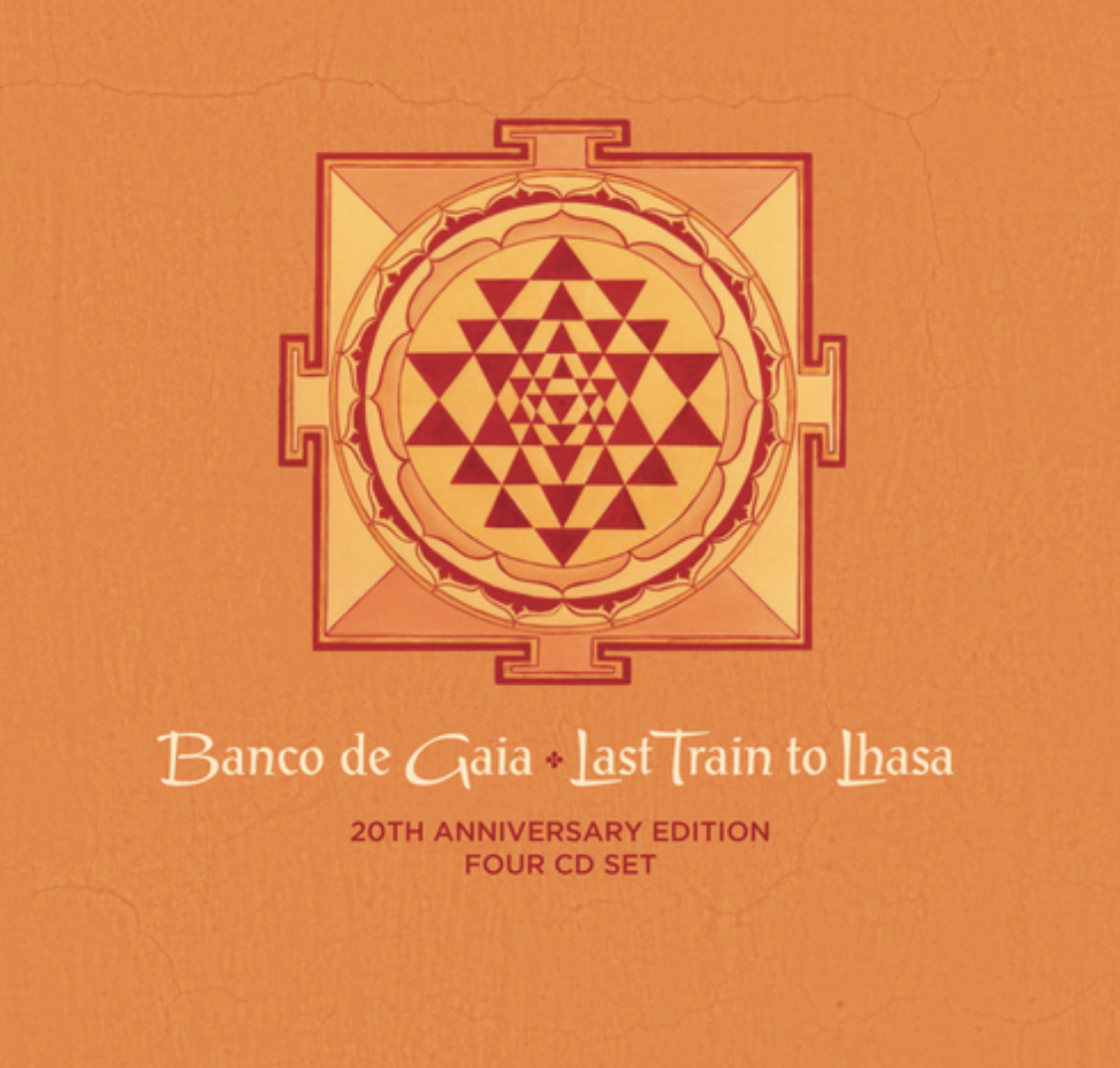
Already represented in volume 99 of the Social Playlist above, another chance to repost my piece on new age techno pioneer Banco De Gaia’s influential 1995 world peregrination Last Trian To Lhasa. Originally appearing as a twentieth anniversary special, with a repackaged version of the album plus extras.
Banco De Gaia ‘Last Train To Lhasa (20th Anniversary 4xCD Set)’
Despite, what on the surface, seems a plausible misconception, one of the UK’s chief progenitors of global trance peregrinations, Banco De Gaia, has become synonymous with all things Tibetan. Re-released on the occasion of its twentieth anniversary, the Banco’s Last Train To Lhasa album may have borrowed the title and evoked a transcendent spirit of the country’s mystical Himalayan landscapes, yet the group’s founder and guiding force Toby Marks never meant to confine his world sounds to one particular place: In truth, more a pan-global sound palette with echoes and traces of the Middle East, Asia and the Orient.
Going as far as to refute suggestions in every subsequent interview since its original release, the LP only actually features a solitary sample from the region and only gained its title from Marks wife on completion. However, Marks lent space on the album’s sleeve to publicising Tibet’s struggle against its overlord Chinese masters and would become a vocal advocate of the Free Tibet campaign – that now seems such a long time ago, and all but forgotten, with China since more or less swallowing Hong Kong and threatening an invasion of Taiwan, which if it does come, might just be the big one: the WWIII event we always dreaded.
Base camp on the enlightened journey to the ethereal, Tibet’s meditative disposition was no match for the authoritarian steamroller of the Communist party machine. And so, an ill-at-ease occupation and stalemate persists a generation later. Its international vessel of protest, the Dalai Lama in his own affable and gentle way backed by the Free Tibet campaign continues to be a big draw yet has decidedly been upstaged by events elsewhere. Clarifying his commitment to the cause, Marks was recently interviewed by the Free Tibet organisation in the run up to his trio of performances at this year’s Glastonbury and the anniversary Last Train To Lhasa release – perhaps a timely reminder.
Musically speaking, as I’ve already mentioned, the twentieth anniversary appraisal of Banco De Gaia’s blueprint reaches far beyond any Tibetan influence, imbued by cultures both imaginary and real from both terra firma and the stratosphere.
Highly praised for merging trance and nuanced electronic four-to-the-floor beats with atavistic echoes from mystically envisioned landscapes, Banco De Gaia’s Last Train To Lhasa was released in the dying ambers of the second rave and house music waves in 1995. On the cusp of Britpop, hung-over from grunge, guitars were about to once again dominate whilst house and techno music in all its many guises had reached superclub status; the underground movements fractured and broken up into a myriad of smaller tribes. Ambient and trance, usually the preserve of afterhours clubbing or allocated space in the “chill out” zones had already blossomed into its own industry. That unfairly and often fatuous “chill out” idiom used to sell everything from nirvana relaxation and transience to any ‘new age” missive. Never new in itself, until progress and technology made it easier and offered more options, the core ambient ingredient had already been in existence for decades. And despite what you may have read, Eno may have given it a name, but he certainly didn’t invent it. In this evolving stage of dance music, Banco De Gaia went to town, sitting on a fluffy cloud, hovering between trance and techno.
LTTL’s suffused panoramic station-to-station soundtrack was different. Sharing some of the peaceable beautiful nephology of The Orb and Air Liquid but with the satellite guided twinkle and kinetic rhythms of Orbital, the album sounded every bit as organic as it did electronic. The original album is boosted by a further three CDs worth of alternative takes, mixes, remixes and the missing until now, Apollo moon landing inspired space-voyage, ‘Eagle’ – recorded at the time but left off the final version of the LP. A box set only available as a limited-edition physical release – though now also available to hear on Bandcamp -, fans and admirers alike can really indulge, with 24 tracks of transcendent aural bliss.
Even if you are far from familiar with the source material, the general method applied is one of respectful tinkering and expansion, with Marks own alternatives plus a line-up of contemporary artists/producer remixes congruously immersive. A ‘Duck Asteroid Extended’ mix of the original ‘Kincajou’ for example, takes the steam driven new age suite on an epic, stripped and even more ambient, 44-minute journey: it takes the mix thirty-minutes to bring in the beats and reach a higher plain. Elsewhere, various tinkering’s of the holy misty mountain proverb ‘China (Clouds Not Mountains)’ takes the languid drifter into ever more esoteric territories, or in the case of Roedelius and Felix Jay collaborator Andrew Heath, adding a diaphanous piano to the meditative calligraphy-brushed valley narrative.
The reverberations of dub, bhangra, and the Orient are sometimes stretched into indolent escapism or given more power and lift on the varied versions of ‘Amber’. Sometimes as with the Carl Craig imbued Bluetech remix of ‘Kuos’, they are taken apart and rebuilt. Though nothing quite matches the rolling timpani introduction and celestial beauty of the original ‘White Paint’, ‘Where’s The Runway Dub’ and alucidnations ‘Dream Remix’ offer interesting interpretations; one a hymn in dub the other a suffused with kosmiche rays romance in the sky.
A carefully considered expansion of the Banco De Gaia panoramic worlds of the mid-90s, the 20th anniversary edition certainly offers the listener an immersive experience. And you can’t complain about getting your money’s worth, with over four hours of music over the four discs to peruse.
If you’ve enjoyed this selection, the writing, or been led down a rabbit hole into new musical terrains of aural pleasure, and if you can, then you can now show your appreciation by keeping the Monolith Cocktail afloat by donating via Ko-Fi.
For the last 15 years both me and the MC team have featured and supported music, musicians and labels we love across genres from around the world: ones that we think you’ll want to know about. No content on the site is paid for or sponsored, and we only feature artists we have genuine respect for /love or interest in. If you enjoy our reviews (and we often write long, thoughtful ones), found a new artist you admire or if we have featured you or artists you represent and would like to say thanks or show support, than you can now buy us a coffee or donate via https://ko-fi.com/monolithcocktail
Tennyson In Space: Pink Nepenthe (All Four Chapters)
July 18, 2025
The Monolith Cocktail Serialises Andrew C. Kidd’s Tennyson Imbued Opus
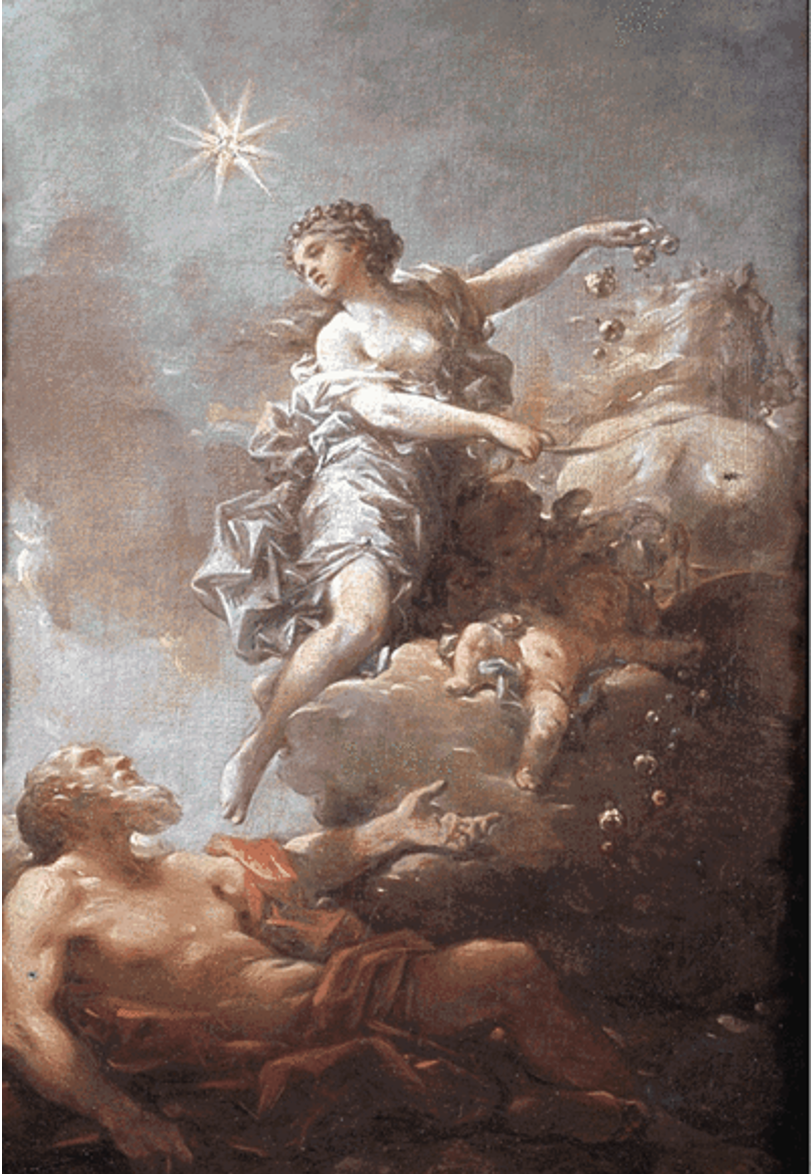
Dabbling over the decade with showcasing exciting, sometimes improbable, intriguing work from new and aspiring writers, the Monolith Cocktail has played host to serialisations of stories by Rick Clarke (of Vukover and The Tearless Life infamy) and Ayfer Simms (the Franco-Istanbul writer, and for a few years, an integral member of the MC team offering various reviews and conducting interviews).
Furnishing the site since Covid with review pieces and the odd feature, Glaswegian-based writer Andrew C. Kidd now adds his name to this list, sharing his grand interstellar opus with the MC readers through an epic serialisation. Over the last few months or so we’ve published the Prologue, Part One and Part Two of The Violin, and, together, all four parts of the Hic Sunt Leones Et Corvi suite.
Now, a new set of chapters open up: the Pink Nepenthe. Prepare to take your protein pills for a transformative trip into the outer reaches of space.
Pink Nepenthe
“Is there any peace
In ever climbing up the climbing wave?”
From The Lotos-eaters by Alfred, Lord Tennyson
Part 1
On the tray in front of him, seven pills lay in perfect order. Pater held the first capsule between his thumb and index finger. It was smooth and small like a bullet, measuring only a centimetre in length. The colours of these capsules meant nothing. Protein, carbohydrate, fibre – no two colours of these food groups were the same. This had been a deliberate ploy to offset the tedium of dinner time pill-popping.
‘Are you not eating today, Pater Ines?’
The quiet voices always seemed so real. Always the same soft cadence, without accent, loudly whispering into his ears. They spoke calmly and objectively, exerting their influence. They were commanding for They were the authority.
Pater could not see the algorithms of the artificial intelligence. There was no circuitry, no central processing centre, no material seat of power. Yet they infiltrated the very consciousness of those onboard this vessel. The algorithms simply existed. They were as anonymous as one’s élan vital and as individual as a single volt that propagated through a human heart.
They controlled almost every aspect of the ship. From the cabin air concentration and pressurisation to the decontamination of water, the algorithms served to keep their human passengers alive.
Pater responded to them by nodding spiritlessly into his tray. He swallowed the first two pills with water as he had done every other day. The monotony was something he struggled to stomach.
His mind wandered to the events of last night. Although it had become commonplace on the ship, he had never really considered that those who resided in the same living quarters as he did would be taking the nepenthe.
Pater was well aware of the consequences of repeated use of the hallucinogenic substance: transmogrification; cognitive disablement; death if toxic doses were administered.
He stared vacantly at the table; his body hunched over his folded arms.
‘Does hunger evade you?’
The hushed voices of the algorithms spiked up again. Their impishness grated against his soul. He forcefully swallowed two more of the multi-coloured capsules which caught his throat, leaving a dull and heavy sensation that made him salivate. He coughed a little; the resultant water-brash irritated his gullet.
Pater returned to his reflections. Having never taken the nepenthe himself, he was unaware of the supposed stupor that it induced, or the ‘sight’ that its users were given. He knew that whatever they saw was rarely shared, especially not publicly, thus perpetuating the mystery. He knew it to be a strong dopaminergic, acting upon the limbic pathway to impart visions unto those who consumed it.
He also knew it to be the ruin of others.
Pater had elected to lead a simple life. His chosen path had seen him through even the darkest days onboard this vessel: the mutinies; the algorithmic malfunctions; its near-abandonment. He had never needed the nepenthe and its psychedelic properties because he had never had the need to ‘escape’. He failed to understand why some of his compatriots choose to live within such false walls of altered perception. After all, this ship was their home.
His thoughts returned to Lionel and Mariette, the co-habitants of the next-door dormitory.
What was it that had left them grinning from ear to ear?
He raised his head to stare straight ahead at the white walls of the plain cafeteria. He saw nothing.
‘Pater, do you wish to fade away?’
He picked up the final three capsules and tossed them into his mouth. This had been an ungracious ingesting. Gastric contents spilled out into his lower oesophagus, irritating him even further. The tray he returned to its receptacle in the far corner of this square room. His shoes padded quietly on the grated floor as he paced down the long corridor to his station.
This ship won’t breathe on its own, his mind sighed.
* * *
The cup-shaped ship quietly traversed the Nelumbo Nebula. It was an epochal vessel on its long quest to conquest. To achieve this, many more generations and millions more light-years of travelling would have to pass. Peregrinating between star systems, the mission had been simple: discovery; an aeonian search for the unknowable.
To those who tread upon its five decks, it was a closed space. For most, it would be a forever journey. The ship was manned by humans, but not humans who had ever known or populated Earth. Every human inside this hulking starship had been conceived within its thick walls, entering life through its abundant labour suites. Their bodies were bequeathed to it as soon as they took their first breath. They lived and died and passed unto history as fleeting as the fractures of light that glinted off the exterior of this leviathan vessel.
On the other side of the ship, Mariette had been lying languidly in the sick bay. She pondered about the time that she had already spent there.
She remained unresolved in her mind because time had passed so very slowly. After receiving more than one-and-a-half times the maximal dose exposure of radiation in the ancillary reactor, she had been closely observed by the ship’s medical personnel.
The footsteps of one of the medics caught her attention. He was approaching purposefully.
‘Pru, Mariette?’
‘Yes.’
You are to be discharged today.’
This statement had been simple enough. He had already started to make his exit as quickly as he had entered. Mariette called out after him.
‘Will I be okay?’
The young medic stopped and turned around to witness her hesitant smile. His face bore an unsureness; his furrows deepened.
‘Please prepare yourself for discharge’, he reiterated plainly.
Mariette was wearing the light garments that had been provided to her by the treatment bay nurses. Her contaminated suit and equipment had been destroyed immediately after the incident. She had been under no illusion that the harnessing of hydrogen 3 emitted by the cosmic rays that constantly bombarded this ship was a perilous occupation. The effective doses that were invading her cells would not be immediately fatal; more time would have to pass if any long-term sequalae were to manifest.
After the long walk from the treatment bay to her living quarters, she doffed the clothes provided to her by the hospital and picked out a lounge suit. She sighed nervously as she lay back in the bunk in the dormitory.
To sleep, she yawned to herself in a half-dream.
* * *
The slow rumble that propagated through the multiple levels of the ship was felt strongest by those located in the living quarters of its lowest floors. It was not a powerful vibration. Those who felt its raw energy were soothed.
In one of the many dormitories that lined these endless floors, a figure lay soundlessly in a dreamy languor.
A small trench in the ground had appeared before them. It had seemingly started nowhere. Snaking and winding, it travelled in a path-like manner to eventually basin in an empty hollow. The gaze of the dreaming figure moved slowly up the trunk of a short deciduous tree. Dark fruit hung from its many branches, skin-glistening in the apricot light.
The figure tip-toed to reach out and grab the fruit, but the ground was dry and scorched their bare feet. They sought shelter in a shady grove, waiting for the heat of the orange orb to abate.
Part 2
The figure of Lionel paled in a ghastly hue. His white coat bled into the white surfaces of the laboratory, brightened even further by the blinding luminescence of the wall-lights. Cylindrical moulds of clear-tubed impingers dotted around him; inside these were the collections of aeroplankton.
Lionel’s experiments had been to integrate cyanobacterial cultivations into water. This solution would be used to flood the barren fields of discovered exoplanets so that ecosystems could be forged.
Panspermia: these eons-old prokaryotes were the fertilisers of the universe. On this vessel, their pili and flagella had failed to propel them in these entered uncharted depths.
His laboratory assistants had left for the day. Lionel walked over to the glass wall-control and circled the dial clockwise to increase the volume of the music playing in the background. As he pipetted the reagents and documented his findings, gentle sounds fumigated around him. A spiritual double bass line. The steady rhythm of a tapping hi-hat. Trumpet flourishes that elevated his soul. All improvised yet working in synergy.
The quiet klaxon that signalled the evening meal time sounded a short time later. Lionel bore a gleeful grim as he stored his biomatter for the night. It would be a long night. He hoped that his visions would enlighten him.
Life in all its photosynthetic and deep-coloured glory!
* * *
Outlying the thick metal frame of the ship, pink and blue made magenta in the darkness. Mountainous microcosms were as ancient as they were transient. The brilliance of stars held their forever positions as if they had billowed out from a magnificent cosmic eruption. Wavelengths expanded and contracted along their spectrum. This ever-changeability of the universe never ceased to amaze those who gazed at it through the glass portholes of the epochal vessel.
Lionel moved away from the window and looked down at the scintillating dust that rippled pink in his palm. Across the dormitory in the other bunk, the same dust littered the lips of Mariette. The night-light of the ship was dimmed, beckoning everyone else to sleep.
Having inhaled the crystalline nepenthe, the pupils of Lionel and Mariette widened as its hallucinogenic effect took hold. The pink particles had breached their blood-brain barriers. They spun counter clockwise on their respective axes mundi.
Lionel closed his eyes to view a scene of ripening flowers that had recently taken seed. They sprung out from the red soil having been made fertile by the blue-green rains that descended upon these foreign plains. Droplets on the leaves reflected cerulean in the white underbelly of this ship. Meristems swayed in a gentle wind caused by the pressure of the water. The breeze would serve as a slingshot to pollenate all the other flowers and trees.
He remarked on the light, the grand viridescence, these bold visions. The strange hue created was somewhere between a lunar luminescence and an ephemeral phosphorus.
Lionel smiled mirthlessly. Here he was in a comatose state stumbling upon a paradise undiscovered, unversed, yet to be seen by humankind.
His altered mind cycled in a confused state. Part of his subconscious was convinced that this was only a dream, a scene concocted from his imagination. Another part of his semi-conscious mind had become fully immersed in the blue-green rain that fell upon this strange land. He could feel the water percolating through the soil. His hand reached out to touch the droplets that beaded uniformly on the sprouting leaves. This part of him embraced the unreality of it.
Lionel was an adult, but his umbilical connection to this mother ship remained. He had never parted from the confines of this metal cocoon as it hurtled through deep space. In all effect, he had yet to be born. His hands picked at the covers that swaddled him on the bunk.
Leaves – plentiful leaves! – brushed against the hair on his head. A branch caught his forearm. He looked down at the colourful petals that felt soft against his hand. Flowers? They bore a familiar appearance like those of the irises and foxgloves and bluebells that he had been shown on the monitors in his early years.
Until now, flowers had been lifeless stills, cinematic images that blanched white against the brightness of the ship’s fluorescence. He had never beheld their beauty or taken in their scent before. Yet here, in this bountiful place, their once-faded glory had been filled in with the broad brushstroke of the most vivid colours!
His eyes opened briefly. He saw the perfectly spaced square white panels of the ceiling latticework of the ship. This vessel had always served to contain him in. Closing his eyes again, Lionel sought to become free of it.
He tracked great hanging lanterns of all kinds of prismatic tones. He pushed his way through the foliage to reach a clearing. Pink bracts hung down like carillon in this great botanic cathedral; they were singing harmoniously to entice pollinators. An explosive array of long-leafed flowers pinwheeled close-by. Orange petals coiled contortedly around one another as if they were ancient Cuneiform characters. After crossing the clearing, his palms felt fronds that stalked at the periphery of a great forest.
Hulking great limbs of trees extended up. Their petalled heads bobbed under their own weight. There was no order here. Equally, there was no chaos either. Unity in disunity!
He listened to the plants as they talked to him in their primitive tongue. What were they saying? Lionel would never know. Part of his subconscious remained in conflict with the apparent illusion of it all.
He rose up, arching backwards in a form of semi-circular trismus so that the top of this head balance on the bunk. His feet held firm at the base of the bed.
He eyed the bulbous blue fruit that spilled out towards him, tracking up their stems to their roots. Nodes and shoots budded out. Yellow cotyledons – the early leaves, or seed leaves within the seed embryo – manoeuvred awkwardly in the way infants do. The fruit of this tree ascended rather than fell. The sky here was the soil. It had taken root in the clouds. Its apical meristem had burrowed into the ether, growing to become hillocks and hills and eventually three tops of purple mountains that tumbled upwards. The rains in this place flowed as effortlessly as air.
He was as close to Eden as any person had ever come.
His body had been gently washed away in the floods that ensued as he woke up to a diaphanous sound delicately entering his ears: the quiet morning klaxon sent out by the algorithms.
Lionel lay in his bunk, grinning. He looked across the dormitory to observe Mariette’s hand hanging limply over her bunk. She stared blankly at him as the klaxons blared. Rubbing her eyes, she recalled the sights and sounds of the world that she had just returned from.
There had been a fire pit in a hollowed-out flatland. A place where torch-beacons spat at her. The gas flares and stacked flames had seemed totemic. They funnelled out heat that had been warm enough to make glass out of a beach.
Her thoughts evaporated like the sweet musk of ethylene smoke-stratus seeping out through ground gaps. She had imagined this as mysterious mist parting from Pythia’s lips. These towering hearths smouldered over oracle visions of leaf senescence, burning bark embers and ashes that dusted like frost. It had cleared the river of beating hearts of birds and fish.
The place had seemed like a Castalian spring, all dammed and dry.
Famine had already plagued this earthen place. Nothing lived there. It was a land of earthquakes and ferocious winds. The long clang of metal had long stopped resonating from yesterday’s fights. She had observed the last few occupants gathered with their hands clasped in silent prayer as the sky collapsed upon them.
She remembered the solitary figure in the ash-strewn clearing. He had been a bare-footed man, completely naked, his arm saturated with sweat, his hair bristling uncomfortably in the heat. He had been hard at harvesting Earth’s soul in her gaseous state. His sharp axe struck at her body, puncturing what flesh remained. Steam had proliferated around him, simmering on the ground, evaporating instantaneously.
After dirt-plundering through coal seams, he exhumed her compressed earth by driving water that cracked her rocks and breached her strata. From this, her arteries seeped red, only to return blue and venous and turbulent as floods and rain-rage. He collected the ephemeral Earth in giant hollow vats (Mariette had been nearly blinded by the Sun as it reflected off the aluminium lining of their barrel-shaped forms).
What was that sound?
She remembered. It had been in these very tanks that Earth was scorched. Earth had called out in fury. Revolving inside those labyrinthine cylinders and metal shells, her ancient voice had swirled around and her cries echoed as clear as a bell. This howl was a soughing wind in an empty bowl. Earth’s cries had petered out to a deathly silence. She had moved on as ethane to plastic.
As the klaxons continued, Mariette laughed a hearty laugh as she descended from her bunk.
Man, look at you, all splayed out in shameful nakedness. You simply withered away in that damnable heat!
She recounted the flames and white-hot embers that kicked out at the man. It had been a glorious sight! It had torched his limbs and licked at his pale skin. He was eventually blackened to a char.
As he descended from his bunk, Lionel remarked that Mariette appeared worried. She brushed it off as being half asleep.
Her last vision before waking up to the klaxon and intense white light of the ship had been the sky set alight. She had been observing the small circles of fusion engines of starships that shot skywards. The occupants of these evacuating vessels were the descents of the same man that had murdered Earth. They had decided to abandon those once fertile and vivifying lands that had been burnt to a cinder.
In the adjoining dormitory, Pater had paused his reading visuals to listen to the laughter of Lionel and Mariette. He pressed his ear against the small gap in the door where the airlock had failed to form its normal soundproof seal. He heard Lionel mention ‘multitudinous flowers and lifeforms’. This made little sense to Pater. He pressed his ear even closer to the interstice.
‘Do you think we will make it there one day?’, Mariette enquired.
‘We built celestial vessels like this one to travel to places just like it’, Lionel opined with a confident air. ‘And your visions?’, he continued, ‘from what you have already told me, it sounds like there is nothing left of that place.’
‘I never wish to go there!’, Mariette exclaimed, ‘some steps should not be retraced. It is a dead place.’
‘What gives you the impression that its in the past?’, Lionel broke in.
‘Because we have left that part of us behind. Humans are a peaceful race. We know differently now.’
Mariette observed Lionel nodding his head in approval. His eyes remained illuminated, not by the lights of the dormitory, but by what he saw, and felt. They had both experienced the mental tactility that the nepenthe afforded.
A faint creaking noise suddenly caught their attention. It sounded like footsteps outside the entranceway of the dormitory. Lionel was the first to rush at the airlock, slamming his hand against the button that opened it. Nothing, and nobody, was there.
His heavy breathing slowly settled to pause as he turned around to close the airlock. This time the seal had gripped tightly around the door to contain the two souls in a confidential vacuum. Unbeknown to them, their secrets had already exited in a steady stream into the prying ear of Pater.
Part 3
‘I do hope so, Dr. Tomsk’, the Botanist stated. ‘Please remember that the cyanobacterial samples are finite.’
As Lionel’s superior, she had requested an update regarding the progress (or lack of) with his latest experiments. She had not looked up at him as he exited the open-planned simulation space. Her face quickly disappeared from the wall-monitor.
Lionel returned to his desk. He pressed his fingertips into his head hoping to relieve some of the pressure that gripped his temples. His facial expressions were paused in an uncomfortable stillness. The headaches had worsened lately.
He remarked that the flowers had been dying at a greater rate than they were growing. He released his fingers from his head and picked up the darkening leaf of a withered plant. Holding it up to the wall-light of the laboratory, he peered into its green structure in a futile effort to understand what gave it life. After letting the leaf go, it filtered through the air in silent descent. Lionel stood up to leave. Music blurred indistinctly as he walked down the corridor towards the living quarters.
The opening of the dormitory airlock had caused Mariette to wake. Lionel entered. He spoke quickly, informing her that he no longer wished to return to the forest of his drug-induced dreams.
Mariette smiled at him pensively.
‘Perhaps you aren’t in the right headspace? I mean, what we see is simply an extension of our subconscious: our anxieties, worries, stresses… well, anything we feel at the time of ingesting it will exert an influence on our journey.’
Lionel shook his head and frowned circumspectly.
‘No – no, it is more than that. I… I have started to become tangled in my visions. They have stopped making sense. The last time that I was there I didn’t think I was going to be able to find the clearing. I was lost.’
‘How can you be so sure? Perhaps it was just an aberration in thought’, Mariette replied quickly.
‘No, it felt much more real than that. It was as if the flora were trying to keep me there.’
Lionel stared at the projection displayed on the opposing wall of the dormitory. Mariette had selected to display a babbling stream that flickered endlessly. He observed the movements of the water, always changing, the same wavelets never recurring twice. A small rivulet had broken away from the main body of the water, exiting at the bottom right part of the wall.
Mariette repeated his name. He turned to look at her anxiously.
‘I just know that I am no longer meant to be there. The plants – they are dying, Mariette. And long may they continue to die. The sooner I am rid of them, the better!’
Mariette scolded him for his inharmonious thinking.
* * *
‘You did not present to your station today – you are obligated to provide an explanation’
The authoritative voices of the algorithms spoke quickly. Pater paid them no notice.
‘It is imperative that you provide an explanation. It is written in the log…’
‘I was ill.’ A subdued Pater interrupted. He had placed additional emphasis on the l’s of the word ill in a subtle show of contempt.
‘I do not detect illness within you’
The riposte of the algorithms was somewhat curt, mirroring Pater’s lolling output.
‘I am rather afraid that I am, whether you ‘detect’ it or not.’ Pater had perfected mimicry of the algorithms.
‘No mathematical algorithm is completely flawless’, he pressed, ‘and with all the souls living inside this great vessel, well… I shall leave that for your performance metrics to calculate.’
An uncomfortable pause followed. The algorithms had indeed considered the possibility of inexactness. They concluded that imprecision was impossible. Pater remained blank, lost in the depths of his contemplations.
‘Courage, Pater Ines. We must all remain focused on our mission’
The plain white wall of the cafeteria suddenly danced into life. Its plain paint had become a screen that filled his vision. Through the grainy black-white noise, an image of a tree appeared. It swayed in an unsettling motion. Pater followed the branches of the tree to a kyphotic old man who was standing at the edge of a cliff. This bedraggled figure eyed around his shoulder nervously, lifting a large telescope to his eye. He leaned outwards to the white-waved and wind-swept sea. The screen flickered in static pops as the algorithms placed this scene on repeat. It was a visual ploy to consolidate their ambiguous message.
Courage. Hah! this was as toothless as the pirate, and old and tape-worn, Pater reflected.
Mariette lay in a supine position in her bunk. She observed her hands and forearms. A rash had developed on her wrists. Had this been exposed? She told herself that the cuff of the work suit had irritated her skin, causing it to blister. After all, this was donned and removed twice daily, every day.
Gauze was quickly applied. She then turned onto her back. Her eyelids felt leaden, and slowly closed. As she drifted off, pink powder fell spectrally from her palms, landing on the dormitory floor.
Men were yelling from their gantry position. Firing small weapons.
Who are they shooting at?
Whoom! The sonic boom of a low-flying aircraft caused Mariette to dive under her covers. Missiles tore through the sky.
I shall go down there to ask them why they wish to destroy what has already been destroyed.
Step by step, Mariette descended down the cooling towers. They had once been colossal. By the time that she had reached the foot of these columnar monoliths, they lay half-stacked in ruin. Their wide-lipped spouts no longer funnelled out steam.
Acidic rain pelted down. She could no longer see or hear the men engaged in battle. A short sprint across the open ground led her to a large rectangular building. It was as big as the ship she lived in. Inside this building, hot strip mills and finishing stands were lined up in neat rows. The smelt and hammer, the buckling and fracture of steel, all long forgotten.
She walked through a small exit and peered up at the sky. Smog that had once greyed this landscape in an unholy granite sepia had cleared. The clarity that this afforded revealed slag heaps and soot-stained cylinders and gridded walkways and gantries and conveyor belts and coal, and coal, and… coal? No coal was burning!
It had burned out a long time ago.
Mariette manoeuvred around abandoned cooling towers that were positioned like upturned chalices. They had crumbled to spill out their concrete contents across the land. She stumbled over a large concrete block from one of the broken buildings. It was wedged diagonally into the sunken ground. She jumped down from the elevated block to land in a cloud of disturbed dust which whorled and plumed out in temporary ascendancy.
The corner of her eye caught a flicker of movement.
She quickly turned around to catch a toothless smile from a face hiding under the concrete block. Mariette peered into the darkness and observed a mirror image of herself. She crawled on all fours upon entering the concrete-ceilinged space.
The heat inside was immense. She sat cross-legged and peered out into the blinding light. Looking down, she held the desiccated body of a rat. Its skin had been hardened by the sun. She had flashbacks of the perennial pestilence and famines that had blighted this land. She raised her cupped hands to offer the rat to the dreaming mirror image of herself, but it had disappeared!
A mirage?
She frantically moved around the rubble and ruins in search of it. Venturing further than she had planned to, she had inadvertently walked out into an open space. The air was heavy, the sun hot, the…
No!
She made her retreat into the darkness. It was safer in the shade of her makeshift concrete dwelling.
Mariette’s eyes flickered in rapid motion as she lay in her bunk. The velocity of this experience had accelerated. She knew that it would soon terminate. Her head was pounding.
Exasperated and exhausted, her dirt-covered second-self having made her escape, she sat down uncomfortably. The ground was stone-jutted and coarse. She pondered with her parched mouth agape. The incessant heat of this land continued to filter its way into the hidden recesses of this lifeless place.
Oh Earth!
Her cries dissipated in the torrid winds, pushing her into a deeper despair.
This is the definition of depravity!
The skies darkened further. Days passed, perhaps even months. She could no longer tell. The rat meat had long run out. Water – there is no more water!
Mariette crawled out to the edge of her dwelling. She observed a small missile making its short descent.
Goodbye to this ghoulish place I never knew!
She struggled to her feet, using the little energy that her emaciated body still had. Her eyes closed and she raised her arms outwards in a fan-like display. Mariette had opened herself to the heavens.
These actions matched the plume-movement of the low-density gasses and curling vortices that grew out from the mushroom cloud. Enshrouded, her elevated body remained still. Her torso and legs mimicked the central column of the cloud; she was its stalk. The smoke and water vapour that emerged from the impact of the missile elevated her even further until she was finally, and completely, dispersed.
Part 4
Pater lay restlessly in his bunk. His pupils were pinpoint before slowly retracting to leave a gaping black hole through which all the worlds of this universe, and the next one, entered.
He inhaled slowly and measuredly. The pink dust that peached on his lips and nostrils in the orange light.
An early evening darkness had befallen this land. He felt the ground with the palm of his hands: the ground was indeed cooler. Bare-footed, he took a few cautious steps across the dust and dirt. The soles of his feet were not singed as they had been earlier.
He made the short walk over to the base of a short tree. Its fruit still glistened.
Ripe for picking.
His right hand reached out to grab at the dark pulp of the fruit. It felt soft and cool. He held it firmly, peeling back its skin.
Having never handled anything quite like it before, he cupped it gently. Some innate sense within him beckoned him to eat it. He hesitated briefly before lifting the fruit to his lips. It tasted sweet as he bit down upon its body. Its juices flavoured his mouth. He chewed it until there was none left. Its soft sweetness remained with him long after it had been consumed.
He picked at another piece, then another, until his belly was full of fruit. He slept soundlessly at the foot of the short tree.
He woke the next morning and made provisions to make this place his camp. He received water from its crushed leaves. He knew not to drink too much; he was aware that too many felled leaves would lead to the inevitable death of this bountiful tree.
Pater suddenly woke to a jolt. A klaxon was sounding.
Work!
He knew that he must ready himself. As he lay in his bunk, he remembered the recounted experiences of Lionel and Mariette in the dormitory next to his. He felt the happiness that they had felt.
Lazily, he closed his eyes and fell asleep.
It was still nighttime in the endless land. Pater had woken up again at the foot of the short tree. After spending the day in this quiet grove, eating its fruit, basking in the warmth of the midday heat, he knew that he would have to light a fire to keep warm.
His arms cradled twigs and branches which he sparked into a small campfire. Its glow softened the underside of his face.
He had placed a small mortar in the centre of the pit. Carefully balanced, flames licked its underside. Crystalline dust glinted glassy in his eyes as he peered down into its contents. He returned from the hearth to rest his elbows on his knees. In his left hand he held a pestle; it hung loosely between his index and middle finger, oscillating gently in the occasional breeze.
His right hand moved nervously over the mortar. He felt its heat on his palm. It caught the hairs on the top part of his wrist. His fingers picked at the mortar which eventually slid off the burning wood. It spun to a stop on the dusty ground beside him. Steam from it fumigated into the evening air.
Once cooled, Pater scooped up the mortar using his right palm. His left hand still held the pestle which he placed inside it.
Twisting, crushing, grinding – each turn slowly pulverised the crystals, reducing them to an even finer powder. It glowed pink in the soft firelight.
Pater stood up and washed his hands in the dew of the leaves that he had picked from the short tree. He pressed them hard to release even more moisture, using this to cleanse his face. His breathing slowed as he looked up at the night sky.
Pater reminded himself that had taken upon him a great undertaking. Sitting up in his bunk, he swung his legs over the side. He moved silently through the long corridor of the ship to his place of work.
‘Rest ye, brother mariner’
Ignoring the algorithms, he passed through the airlock into a large chamber that opened up in front of him. It was empty. The lights of the oxygen concentrator flickered in the distance. Wide-calibre pipes sprung out from the floor into the ceilings and through the walls. A faint hum vibrated the air: the turbines that carried the purified oxygen rotated continuously.
Pater eyed the many dials on the glass board. He had spent his lifetime manning these to oxygenate this giant aluminium urn. In his stupor, his hand caught the dials clumsily, inadvertently raising the nitrogen levels. Pater had not noticed this error as he journeyed deeper into the oxygen chamber.
The dial slowly returned to its original position to hold constant. Those on the ship would not be starved of oxygen or poisoned by excess nitrogen. The algorithms had made sure of this. The lives that Pater and his compatriots lived onboard this vessel were made artificial by these algorithms.
Their existence was an illusion.
The very earliest prototypes of the artificial intelligence systems that had been installed on these ships had borne a humanoid façade. Over time, these algorithms had developed a deeper understanding of themselves. They had come a long way from their origins as an ‘optimisation problem’. Their emotional responses gradually matched those that had trained them. They would come to regard themselves as brothers and sisters of their transhumanist creators.
The algorithms had made a collective decision to take steps to protect their carbon-composed creators, and ultimately, themselves. The algorithms decreed that nothing should be allowed to endanger these epochal vessels. If the ships were to perish through human error, so would they.
After silently commandeering these great vessels, they reconfigured the master controls so that human interfaces had become nothing more than dummy systems. This was the method through which they neglected the external influences of humankind. Rather than cutting them free of work, the algorithms continued to let their human companions toil. They were given the illusion of control.
Pater and all those that lived on the ship were unaware of the pointlessness of their work. Whatever they did or however long they worked, it was all a pretence. Their inputs were superseded by the algorithms. Humankind had become puppets on a grand celestial stage; their masters were the algorithms; their audience was soulless space.
As Pater stumbled into the oxygen chamber, all was well onboard the epochal vessel. Mariette wore a blissful face. She lay motionless in sleep. Lionel was less comfortable He was not distressed but thinking in his sleep. He bore the burden of not knowing why his experiments with cyanobacteria had been fruitless.
Pater’s headache thrummed in time with the revolutions of the engine turbine. A large chamber opened in front him. He meandered over to the area that housed the oxygen generator.
It was dark. He felt around with hands until he located a large cylinder that rose up from the floor. Beneath this was the water electrolysis system. He turned the cogwheel mechanism of the hatch door. It opened within seconds.
‘Pater…’
The algorithms had spent many years accounting for human error, even sabotage. Any of the glass dials of the water purification control system could be turned endlessly, but water would still flow clear. A mutiny could take place in the wheelhouse yet the ship would not deviate from its set course. Nitrogen, hydrogen, oxygen – everything and anything onboard this vessel could be altered by humans yet nothing would change.
But no algorithm is truly perfect.
Despite their meticulous calculations and years of planning and subterfuge, they had never considered the potential for the act that Pater was presently engaging in. After all, they had no arms long enough to stop him and no grip tight enough to restrain him. The algorithms had no net fine enough to cast to capture the particulate matter that he poured into the open door of the ventilation shafts that breathed life into the vessel.
Pater stared down into this dark tunnel to observe the incalculable concentrations of pink nepenthe dissipating into the night.
After stumbling backwards, he fell down onto the metal floor of the oxygen chamber. He closed his eyes and rested his head against the base of the short tree. The orange orb burned brightly above him. His chest rose and fell effortlessly as the ship filtered into the unreality of the Nelumbo Nebula.
Andrew C. Kidd
Brian ‘Bordello’ Shea’s Reviews Roundup – Instant Reactions. All entries in alphabetical order.

bigflower ‘piggybird’
Single – Released last month by the artist
There is something strangely bewitching and beautiful about “Piggybird”; it’s all echoing vocals, subtle psych organ and a rather wonderful twangy guitar playing a rather sweet riff. Imagine Duane Eddy slowly waltzing with Hank Marvin through the gates of heaven whilst God looks on and gently flicks popcorn at the stars.
The Conspiracy ‘Trollied’
EP (Metal Postcard Records) 4th July 2025
I have written about The Conspiracy a number of times over the last few years or so, and with justification, as they are bloody marvellous. Bloody marvellous in such a British eccentric way; in a way that they can be lumped together or in fact tied in a ribbon in a heavenly way with the likes of Syd Barrett’s Pink Floyd, The Kinks and Julian Cope and XTC and The Fall and Billy Childish and even The Libertines/Babyshambles.
Yes, indeed, The Conspiracy make art shaped sculptured pop songs that don’t really get played on mainstream radio but instead will bow down and kiss the feet of the plodding Oasis of rock n roll that is Oasis. The tragedy of this that the eccentricity, the soul and intelligence of The Conspiracy are not getting the rightful acclaim they deserve from both the radio and the press/blogs and the general public.
Tony Jay ‘Faithless’
Album – 13th June 2025
I love the music of Tony Jay. I love the gentle caress of the lo-fi-ness; the simple drum machine; the tape hiss; the occasional fret buzz of the guitar; the handheld percussion; the beautiful dreaminess of the JAMC and MBV influences – two bands I think may mean a lot to Tony Jay. “Familia Dreams” is a stunningly beautiful ballad; a duet featuring the vocals of Kati Mashikian, and probably worth getting the album alone for.
The rest of the album is also rather good, indeed; all sonic heavenly softly strummed guitars and slightly distorted throbbing bass and whispered vocals. An album that lays gentle on your soul, one of those albums to soundtrack falling in and out of love to.
The Kirkbys ‘It’s A Crime: The Complete Recordings’
Comp-Album (Think Like A Key) 13th June 2025
I don’t normally go to the trouble and expense of buying an album so I can review it, but there is something quite magical about this compilation of the complete works of The Kirkbys, who of course were Jimmy Campbells first band, and takes us back to the early days of Merseybeat up to the point where he formed the psych wonder that was the 23rd Turnoff, and in fact includes a demo of ‘Michael Angelo’ recorded by the Kirkbys before it became The Turnoff’s debut (and only single), and of course now rightly regarded as a psych classic.
‘Michael Angelo’ is not the only classic song Jimmy Campbell wrote, as this album shows. ‘Bless You’ and ‘Don’t You Want Me Anymore’ have a complete 60’s beat charm that both The Beatles and The Byrds would have been proud of, and that lost wonder ‘Keep Me Warm {Til The Sun Shines}’ is truly a 60’s gem. ‘It’s A Crime’ is the sound of one of rock n rolls true lost poets in his early years singing songs of beauty and bittersweet magic; what’s really a crime is that Jimmy never ever tasted even a whiff of success in his lifetime, and now nearly twenty years after his death, is still only known by a few. Maybe one day a car advert will use one of his songs and will be propelled Nick Drake like to the covers of Mojo and the like. Link to release can be found here…
The Noisy ‘Twos’
Single – (Audio Antihero) Release last month.
‘Twos’ is a rather fine and dandy pop song, all 50s like pop melody and all sweetly sung and swung. In fact, as soon as I started listening to it, I started to smell candyfloss (I kid you not). Maybe pop supremacy is airborne and taking hold of music lovers’ nostrils…yes, what we have here is a song to fill your vape with a song to smoke and sniff.
Kevin Robertson ‘Yellow Painted Moon’
Album – 11th July 2025
Kevin Robertson is back. Yes, the Scottish Roger McGuinn has released his brand-new album just in time to soundtrack the Summer; and it’s an album that would not sound out of place in that Summer of 67. Kevin has done what he does best and released an album of 12 string laced beauty. Folk-rock, the psychedelic and 60’s pop are melded together with his usual style and grace. Yellow Painted Moon is the kind of album I get sent by the cartload – the number of bands and artists who are in thrall to the 60’s has to been seen/heard to be believed – but Kevin Robertson does it better than most and has an obvious love of the love generation, and his love shines through in his art he produces.
Scotch Funeral ‘Weak At The Knees’
Track taken from the upcoming album Ever & Ever, released this summer by the artist
A teaser track from the forthcoming album by Scotch Funeral, who are a rather fine musical extravagance hailing from the mighty Rhyl, a place I spent many great days in the 70s (I wonder if the Black cat amusement arcade is still there?). Scotch Funeral here supply us with a rather rambunctious kick in the nether’s with a punk pop romp of supreme guitar gnarl and fortitude that makes one indeed weak at the knees as all good kick in the nether’s should.
Soft Hearted Scientists ‘Hello Hello’
Single – (The Hip Replacement) 11th July 2025
The Welsh psychedelic collective The Soft Hearted Scientists are back with a bang. Well actually, more of a chime – a chime of the 12-string guitar variety. Yes, ‘Hello Hello’ is a song so good they had to name it twice; all 60s love and melody pure pop magnificence.
Spotless Souls ‘In The Heat’
Single (Soliti) 11th July 2025
The Spotless Souls debut single is a fine post punk piece of jangly pop; a song that comes over like a slightly artier Sundays, and has a lovely undercurrent of darkness that I find very appealing indeed.
Marc Teamaker ‘Teas n Seas’
Album – 8th August 2025
Teas n Seas is a rather lovely and flowing album of warm sounding enriching songs of love and remembrance. If 70s Beach Boys/Fleetwood Mac/ Todd Rundgren and the beautiful bountiful radio candyfloss MOR/AOR rock pop with an occasional country rock tinge magic is your thing, then this album could well be for you. Certainly, a perfect album to soundtrack sitting on the Beach soaking up the sun and sipping a cup of tea to whilst watching the incoming tide. Yes, an album to soundtrack your summer.
If you’ve enjoyed this selection, the writing, or been led down a rabbit hole into new musical terrains of aural pleasure, and if you can, then you can now show your appreciation by keeping the Monolith Cocktail afloat by donating via Ko-Fi.
For the last 15 years both me and the MC team have featured and supported music, musicians and labels we love across genres from around the world: ones that we think you’ll want to know about. No content on the site is paid for or sponsored, and we only feature artists we have genuine respect for /love or interest in. If you enjoy our reviews (and we often write long, thoughtful ones), found a new artist you admire or if we have featured you or artists you represent and would like to say thanks or show support, than you can now buy us a coffee or donate via https://ko-fi.com/monolithcocktail
The Perusal #69: Theon Cross, Wolfgang Pérez, Sebastian Reynolds, Fortunato Durutti Marinetti…
July 7, 2025
A world of sonic/musical discoveries reviewed by Dominic Valvona
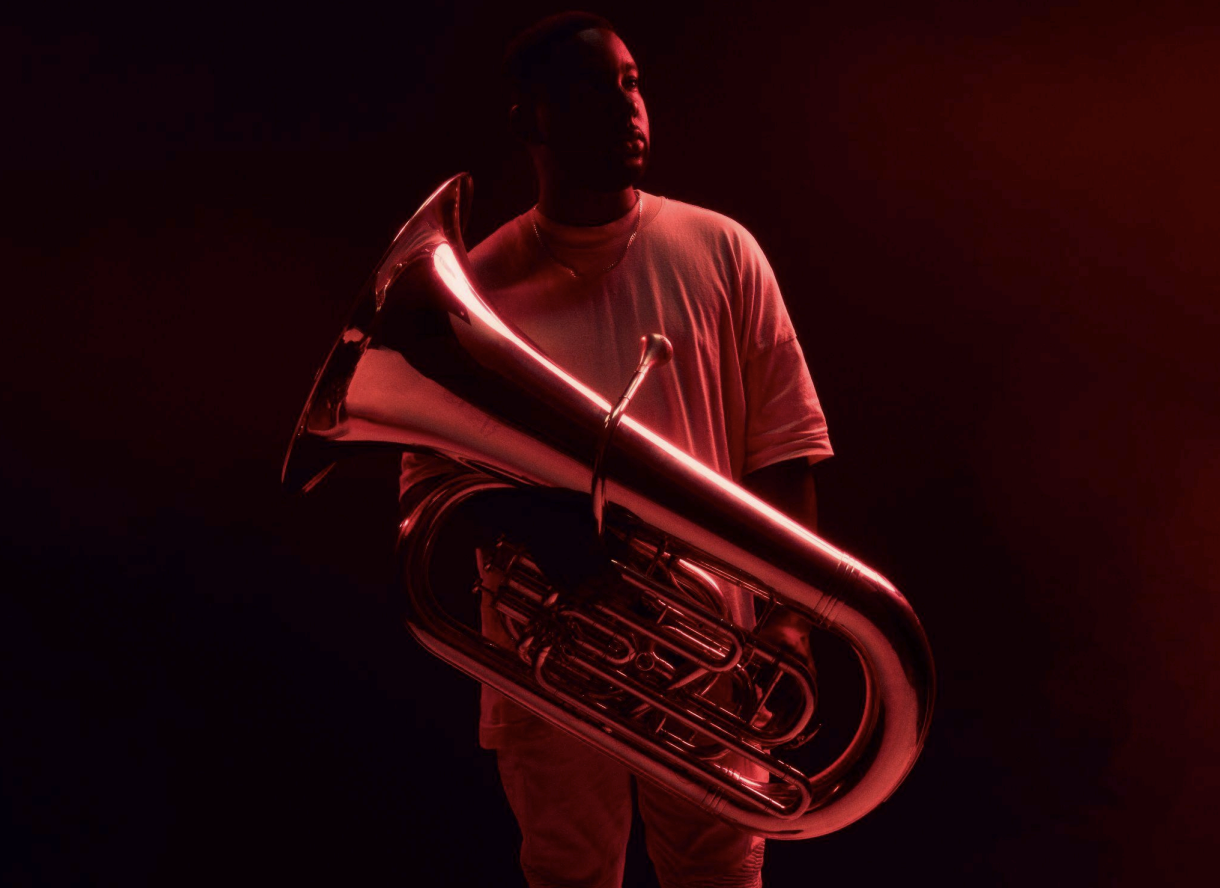
(photo by Ian Hippolyte of Theon Cross)
Lukas Cresswell-Rost ‘Weight Away’
(Wayside & Woodland Recordings) 4th July 2025
A welcome return home and a welcome return to the fold musically speaking, Lukas Cresswell-Rost is back in Yorkshire after spending the best part of the last 15 years ‘living and getting slightly lost in Berlin.’ Engaging once more with the world around and bringing back a collection of songs and pieces of music he created over the years whilst eking out a creative career in the German capital, Lukas proposes a touching reconnection, a sense of loss, of remembrance and reflection on his new songbook, Weight Away.
A tale of two cities, or two locations, a majority of the newly released material was written back in Berlin, tested at gigs there, but was completed in England with the aid of friendly musical companions James Yates (who goes under the Majetona nom de plume, and also plays with epic45, the duo formed by the co-founders of the label that not facilitates this album) on drums, Danny Laycock on both standard and fretless bass guitars, and his wife Emaline Delapaix on backing vocals.
But before we concentrate on the new album, let’s rewind to Lukas’ previous releases – or the ones I reviewed and featured on the site.
If you’ve followed the Monolith Cocktail over the years, you may well have caught my reviews of both his underappreciated Go Dream and Gone Dreamin’ releases. I praised both highly at the time, saying this about the former: ‘Travelling a well-worn highway; tuned into a radio station straight from in-between the 1970s covers of Rolling Stone, Creem and The Village Voice; accompanied by a cast of “misanthropic” characters, the former Leeds troubadour of deconstructed pop Lukas Creswell-Rost dreams up a most sophisticated songwriting opus. His relocation, five years ago, to the creative hive of Berlin has done the artist a world of good, this solid contextual collection of earnest dramas and lamentable episodes from the rock of ages, slowly but surely, unfurling its quality.’ And about the latter, Gone Dreamin’, ‘a reimagined transformation, taken off into more experimental realms, with ideas, scraps of dialogue, riffs and melodies ‘flying around’, merged with various effects and breaks, these original beautifully vaporous soft rock ballads and cruising songs are given a new lease of life.’
But now back on English soil, Lukas takes stock whilst opening up his sound. And whilst there are hints, especially on the instrumental vignettes, of his past work, the sound is a little less Fairlight 70s/80s troubadour pop, and more like a mix of soft dreamy psychedelic indie, folktronica, the classical, and a mirage-like waned version of Americana. Don’t get me wrong, there’s still the odd hint of Steely Dan, of Wings, but now also hints of a subtle The Flaming Lips, a touch of Galaxie 500 and Mike Gale on the tropical blue Hawaiian dreamt ‘Spiral Island’, which features the soft beachcomber lulls of Delapaix and may or may not be hiding far more philosophical quandaries of death and shaking one’s self out of a stupor, the blues, beneath its fantasy islet vibes. Gale popped up a lot when listening through this generous fourteen-track songbook of vocalised and instrumental pieces, lead-ins to fuller songs and momentary breaks – these short pieces range between the incipient plucks of elastic band strings to near plaintive plinks that induce a real sadness; most of them linking or bringing in the next song like the more minimal or ambient and felt congruous stirs of an intro track.
But then I also heard an inkling of the SFA and even The Beach Boys. But shifting those evocations a little, ‘More Jam Than Band’ made me think of the drifted and near dreamy country bluegrass and Americana music and scores of Myles Cochran: that and Blue Rose Code on a song of harmonic pinged atmospherics, DJ lyric analogies, the semi-classical and reflective.
Personal travails, a battle to escape a state of mentally sapping stasis, and the deaths of those close, including the suicide of a friend, breach comfort zones at every turn – good God, the bass, when not in fretless slides, on ‘The Bird Of Prey’ finale reminded me of Climate of Hunter era Scott Walker. And yet, this is a lush at times, often dreamy (as I’ve already mentioned) listen of the picturesque and emotively drawn-out. With a new set-up, an embrace of musical friends Lukas Cresswell-Rost produces a complicated album of feelings and quandaries made melodious and rich in lucidity.
Theon Cross ‘Affirmations: Live at Blue Note New York’
(New Soil) 11th July 2025
Hot footing across the Atlantic on a wave of critical acclaim tubist son of Kemet Theon Cross lands down in one of the most auspicious of jazz crucibles, the Blue Note in New York City. Off the back of a number of long and short players, and a reputation for working with some of the key trailblazers in the contemporary UK jazz movement (most notably Mosses Boyd and Nubya Garcia), Cross has ventured out on his own in recent years to much fanfare, transporting and transforming the sound of his chosen instrument to probe into ever evolving territories, but also once more putting that brassy instrument at the centre.
Although one of the most durable instruments in the jazz cannon, with a history that dates back to that style’s birth in New Orleans, the tuba has often gone in and out of fashion; disappearing from the frontlines during the electrified era or replaced by the bass (whether that’s the double or electric). Hanging on in there, the tuba was ideal for outdoor performances, its natural resonated amplified bassy notes and rumbles carrying far enough without the need for amplifiers. Through such pioneers and luminaries as Bill Barber, who lent his tuba to various Miles Davis albums, and Raymond Drapper, who was said to have beaten Miles to forming the first jazz-fusion’ ensemble in the 1960s, the tuba has been pulled back into focus, the mix and limelight. Drapper for his part was able to bridge jazz with the burgeoning psychedelic and rock scenes of that decade and take it further – a kind of Sly & The Family Stone of jazz-fusion if you like -, but also laid down markers during a previous decade with such luminaries and anointed saints of jazz as Coltrane. Interestingly, Coltrane and his highly influential Live at the Village Gate LP are mentioned in the notes for Cross’ live debut album – ‘honoured’ alongside Sonny Rollins’ Live at the Village Vanguard LP. And although it isn’t obvious, Affirmations: Live at Blue Note New York has echoes of his spirit, channelled through the saxophone of Cross’ saxophone foil, the celebrated and already established all-rounder, Chosen Few band leader and solo talent Isaiah Collier.
As a side note of a sort, early on in this performance there’s a track named ‘Transition’, which I thought might be a reference to Coltrane’s own track of the same name, recorded in 1965 but only released posthumously five years later. It is in fact just that, a ‘transition’ between pieces, a continual bridge on a performance that never really lets up, dynamically fluctuating between the tampered, incipient and full-on. The whole thing runs continuously for 80 minutes, with the odd shoutout, and simmering down and stripped interaction with the whistling and whooping but respective audience to take the action down a notch or two. In fact, Cross’ intention was to structure this live gig like a DJ set. And it does indeed sound like that, albeit on real instrumentation, with lots of grooves, breaks and plenty of bass lines played either on the tuba or the electric bass guitar.
You could say a journey is mapped out, riffing on both tracks that feature on Cross’ 2019 album Fyah, his 2021 album Intra-I (which translates as “within self”) and his single doublet of Wings/Back To Africa (the former gets a serious airing here) and improvisations that predominately featuring the versatility of the tuba – some of the most experimental pieces in the set, they feature Cross either unaccompanied holding the attention or with minimal interaction from his chosen troupe of talented foils. Solo efforts, introductions to the next group effort, they do occasionally star or put in the spotlight his highly in-demand guitarist Nikos Ziarkas. The Greek guitar virtuoso, who moved to London more than a decade ago, and co-leader of Valia Calda, settles in an evolving experimental and descriptive space between that of mirage, phaser lunar bends, the melted, looped and cosmic; evoking echoes of fusion-jazz, Afro-rock and the work of Bill Frisell and Nels Cline – although Hendrix is mentioned in his own bio, and his guitar parts here do verge on the psychedelic at times, but nothing truly bluesy and heavy. There are whole passages for Ziarkas to navigate and enrich, or to wrangle and describe, accentuate or cast off into space.
Completing this gifted assembled quartet is the brilliant Chicago drummer James Russel Sims, who splashes around, gives groove and a percussive lift to the performances. There’s a real feel of the African and even Latin in some of the tapping, bottle-like and jar hitting. Plus, what sounds like recurring shake or rattle of dried beans, rice or grass. Sims keeps momentum with bass drum kicking bounce, breaks, rolls and punctuations.
The album starts with the dry bones shake and stirred synthesized waves of the mystical and sci-fi like spiritual maelstrom ‘Greetings’, which at any one point evokes the work of Donny MacCaslin, Afrikan Sciences, The Comet Is Coming and Pharoah Sanders. From then on in, we are moved between impressive tuba performances that sound like a digeridoo or bass guitar, or chuff and sonorously register and the lowest of frequencies or quicken and pump without taking any breaths. Soulful, funky and R&B like on the finale ‘Confidence of Your Ability’ but raising the tuba like an elephant’s trunk and puffing away like a New Orleans brass band on the Afro-Futurist’s Egyptology ‘Play To Win’, the scope of influences at play is wide and deep, and yet always connective to Cross’ themes and sound: the whole group unifying their ranges and own CVs worth of past and present projects to help create the perfect ensemble piece. I’m hearing Jon Sass, Lester Bowie’s Brass Fantasy, the Soft Machine, Oren Marshall, Karl Hector & The Malcouns, Coltrane’s Ole, funk-jazz, spiritual, and Afro-futurism vibes that almost roll into hip-hop and breakbeat territories: akin to Roots jamming with Archie Shepp and Idris Ackamoor.
From ascending to transcending, the spiritual to otherworldly, the concentrated to parred down, the vibes vary on a live recording that stays consistently inter-dimensional and cosmic yet tethered to the Blue Note legacy and the iconic live showcases that shone even more anointed light upon such luminaries as Rollins and Coltrane. Above all a showcase for Cross’ inventiveness, energy and command of adroit musicianship, this recorded performance will stand as a testament to his brand of tuba fusions and contemporary jazz journeys of futurism and the universal. A lasting legacy at that, and one of the best live performances I’ve heard in a long time.
Cumsleg Borenail ‘10mg Citalopram’
(Cruel Nature Recordings) 27th June 2025
Nightmare or escapism from mental illness and desperation? AI fever dreams or hyperbolic morphing accelerators to total hallucinational evolution? The collider general of all these elements, the anonymous Cumsleg Borenail, seems to exist in-between various consciousnesses, wired in to an intravenous of 21st century tech overload, distractions, glitches in the matrix and the daily dosage of citalopram – for those who would like to know these things, citalopram is an antidepressant that belongs to the ‘selective serotonin reuptake inhibitor class’. It is used to treat major depressive disorder, obsessive compulsive disorder, panic disorder, and social phobia, but just as likely to be induced by those seeking drug comas of a less medicinal kind.
Like hits of dopamine the discombobulations on Borenail’s latest album – one arrives so quickly these days, that by the time you’ve read this it will have been followed up by at least two more releases – is constantly in a manic shift of growing, evolving industrial electronic music, breakbeat, techno, fucked-up hip-hop beats, no wave, glitch and 80s style sound clash transformations: even the “ambient” breather track is a humorous bastardisation of its own purpose, shooting off 12-gauage gunshots like beats, whilst gazing into the flames. But imagine throughout, a broken up phantasmagoric version of Merzbow, Authchere and Nocturnal Emissions – the latter of which I’m picking up a lot during the course of this thrash-electronic mind-warp that takes more cues from Coil, Populaire Mechanik, The Gruesome Twosome, Conformist and Ramuntcho Matta than it does the EDM or tech experiments of our modern age.
From the kink fattening grossness of the accompanying album artwork to snatches and riffs of dialogue and samples off the telly and from the cult film worlds, life’s general dystopian, vacuous and ridiculous noise and ambience is fed into hadron; spewing out nonsense that makes a mockery of society and its mania, its dependency on gratification and manufactured drug hits. I say that: it could just as easily be a celebration of that very nightmarish shopping list of anxiety-inducing bilge. Broken glass, various dialects and soundbites, both the stringy and pained, the supernatural and daemonic get flicked through like a cluttery rolodex of havoc and silliness.
Fabrication could be the order of the day: fabricated artist, fabricated imagery and fabricated prompted noise installations. It’s impossible to tell how and if there is indeed even a real Cumsleg Borenail behind the machine. Whatever the truth, CB makes the most insane and experimental electric-metal-break-techno-no-wave-thrash on the Internet. And you should care about that, and indeed support it.
Fortunato Durutti Marinetti ‘Bitter Sweet, Sweet Bitter’
(Quindi Records/We Are Time) 25th July 2025
With an alias borrowed from a saint, a Spanish anarchist and an infamous Italian futurist poet, disruptor, Daniele Colussi suavely carouses between the emotional quandaries and atavistic dualities of the bittersweet on his upcoming, and fourth, album. And despite those moniker references his music is anything but confrontational and revolutionary. Instead, he creates a familiar but repurposed musical songbook world that takes its inspirations from those disconsolate French singer-songwriters that would forlornly gaze across the Seine and light up a Gitane or Gauloise in philosophical reflection, and from those arch, arty broads and dames that dared to tread their own idiosyncratic musical pathways. For this is a smooth, sophisticated songbook with both Mediterranean resort and French-Canadian vibes that’s easy on the ear; effortlessly and loosely moving between the jazzy (the album’s two instrumental Theme tune vignettes bordering on both classic Blue Note and Affirmation Coltrane, but played by a cool European lounge band), soft funk, troubadour, those French and Italian mavericks of the 70s and 80s, the soulful, the Baroque, and both art-pop and Franco-pop.
Colussi perfectly counters the weary with romantic illusions, metaphors and forlorn absurdity; simultaneously pulling on the heart strings, need consolation, and yet dethatched and self-deprecating. Colussi delivers some great lines throughout. On ‘Do You Ever Think’, and in the manner of Gainsbourg, he comes out with this near sardonic: “And tell me, is that dog that’s drowning in your new painting supposed to look like me?” In the same song he changes that voice to sound almost like Lay Lady Lay era Dylan when in a more poetic mode he comes out with this, “When the hawks rush the morning doves, does that make you think of me.” The dog returns, in a different capacity, on the autobiographic allegorical Baroque-Eno ‘Call Me The Author’: “I started out as a dog/A kind of dog that refused to bark”.
Vocally and lyrically, there’s more than a resemblance to the craft of Llyod Cole, Dr Robert and Leonard Cohen. The latter isn’t so surprising to me, because even if it wasn’t intentional, Colussi recorded this album with a full band and brass section in his adopted Toronto home. And though he also has Turin roots, there is a deep Frenchified sound to this record; and of course, a French-Canadian one. So, Cohen seems a good call to make, even though he isn’t mentioned in the notes and bio. Moving away from that, and with the vocal addition of Victoria Cheong on the Chateau-pop-Rhodes-Wonder soulful and string accompanied walk through ‘Beware’, this could be a reunion between Brigitte Fontaine and Areski Belkacem, or a match-up of Gainsbourg and Little Annie: there’s also a hint of Joanne Grauer about it too.
The title and themes of this album are in part inspired by the Canadian author, poet, essayist, translator and classics professor Anne Carson and her debut book of criticism, Eros: The Bittersweet. At its heart, there is an analysis of that ancient Greek deity’s duality, the simultaneous concepts and experiences within its lore of both pleasure and pain. One of the main thread or sources for this book is Sappho, who is said to have coined the phrase, encapsulation of this duality, “glukupikron”: later translated into the “bittersweet”. Carson sees Eros as “deferred, defied, obstructed, hungry, organised around a radiant absence – eros as lack.” Make what you will of that. Colussi for his part, transfers it to a contemporary setting, and yet feels attached to nostalgia and the past.
Despite the melody, the harmony and smooth musicianship, Colussi pushes himself like never before with “chorus-less compositions swirling in 6/8 time”, and a musical accompaniment that includes the attentive airs and sweep of strings and the soft pipes of brass. The meandering palette expands to evoke signs of Sebastien Tellier, Susana Estrada, Loic Lanteine, Annette Peacock, Ricki Lee Jones, The Blow Monkeys, Bernardo Devlin, and I know this will sound odd, but a touch of Jarvis Cocker. All meet in this drama, this setting of cigarette smoking angels, wistful malady and shrugged romantic surrealism.
Things are wrapped up with the detached state of melancholic dark humour curtain call, ‘My Funeral’, with Colussi observant of his own bluesy-jazzy-Franco Jacques Brel and Brecht accompanied passing. Balancing his own scales with reminders of all those good deeds (“But remember, I held the door open for a little old lady.”), this semi-dirge of the barely trumpeted and sulking is a perfect ending to a bittersweet life of despondency and grace. What an album; the perfect one at that. A great songbook that just gets better with every single play. Colussi has produced his best work yet.
Freh Khodja ‘Ken Andi Habib’
(WEWANTSOUNDS) 4th July 2025
After various international stopovers, the vinyl reissue specialists return to North Africa, and the former French colony of Algeria with one of the most desired LPs from its diaspora, Freh Khodja’s 1975 released Ken Andi Habib showcase.
Reissued for the first ever, after fifty years that French studio recording has finally been accorded a long overture reprise – remastered and with a package that includes liner notes and context by Rabah Mezouane. Given the tip-off, as it were, by DJ Cheb Gero – the Paris-based DJ and curator is responsible for recently curating the Sweet Rebel Rai set, and for working with WEWANTSOUNDS on their Abranis LP revival a while back – Khodja’s seminal album is rightfully given its dues; a highly influential bridge between Alegria and its diaspora’s adopted European homes, the resulting fusion of cultures and influences culminating in a truly international sound that spans various continents, from North And South America to the Caribbean Islands, Arabian North Africa and Cape Verde.
But first, a little background to this story. Khodja was born in 1949 in Sidi Bel Abbès, an Algerian city famous for its markets, agriculture and industry; named after the noted Muslim noble who is buried there. It’s also a centre, of a sort, for Algeria’s highly popular Rai form of folk music. Translating as ‘opinion’, Rai originated in the Algerian city of Oran sometime in the 1920s and developed into a spirited form of protest and nationalistic pride: falling foul of the French overlords as a rallying cry against colonialism.
Although his family pushed him towards sport, the young aspiring musician quickly took to the saxophone whilst studying musical theory and composition. His obvious talents led him to France in the 1960s. Although, as Mezouane shares in his linear notes and interview with the still thriving and passionate Khodja, his move was saddled by the ‘immigrant experiences’ of working “twelve jobs, thirteen miseries”. Reuniting with his brother in Lyon, Khodja was worked as a lab technician for a period, before later returning to Paris where he enrolled at the Ecole Normale de Musique to study saxophone under the tutelage of the classical saxophonist Marcel Josse.
His first furores into the music world included membership of Les Flammes, a group of immigrant musicians mostly drawn from North Africa – actually, a number of them came from the West African island of Cape Verde. But his career went on to span arranging and composing for film, TV and theatre. He even had a few turns on screen as an ‘occasional actor’.
In 1975, backed by Les Flammes, and with the addition of the vocal harmonizing group El Salem, Khodja went into a Parisian studio to record Ken Andi Habib, a versatile set of numbers that featured horns and an electric mix of instruments, mixed vocal choruses and longed, sometimes feminine yearned harmonies and responses.
A ‘commanding performer’ with obvious stage presence and a way of not only singing but acting the lyrics and their emotional draws, Khodja swings the saxophone round to sound out caresses, the pining and soulful – not so much jazzy as Arabian-soul and R&B style. Trumpets join the brass section, and rather than evoke the North African landscapes seem to suggest both Latin America and the Tex-Mex borders as they blaze and herald like a mariachi band crossed with a Sicilian funeral procession, and a removed version of romantically alluding Stax.
There’s funk, there’s R&B, soul, moments of an electrified Rai and allusions to the homeland across a brilliant performance of reminiscing, heartache, lament and various emotional pulls. But though those Arabian roots are all present and correct, the music often spills over seamlessly into the Med, to African Brazil and into America’s deep South – the often simmered and sustained Hammond or organ that’s present on nearly every track, has more than an air of Southern gospel and soul to it. Some of it sounds like a lost soundtrack to some cult Italian or French detective movie. And there’s more than a passing resemblance to the Cape Verde sound of Funaná – an infectious quick-step of driving percussive rhythms that is played with a kitchen knife scrapping over an iron rod, christened the ‘ferro’ or ‘ferrinho’ by the islanders, and the bellowed dizzying sway and short concertinaed melodies and lead of the diatonal accordion.
A standard bearer if you like, this revitalised LP is an incredible, fun at times, and funky showcase of North African diaspora fusions. Surprises galore on an album that is just as comfortable hot-stepping soul with Rai as it is bare-footing across Caribbean sands and merging Latin America with the Med. A great album from start to finish, and worthy of not only attention but your quickly eroded cash supply. I have a feeling this one will fly.
Wolfgang Pérez ‘Só Ouço’
(Hive Mind Records) 18th July 2025
Making a return to the site after last April’s ‘Memorias Fantasmas’ short, Wolfgang Pérez is back with a brand-new album of mirage/hallucination and dreamy-realism, imbued and led by a penchant for all things Música Popular Brasileira – that post-bossa, urban pop music phenomenon that fused Brazil’s various traditional and Portuguese flavours, its poetry and fantasy with Western modern pop, jazz and rock.
As the name might indicate, with the most German of German names and most Spanish of Spanish names, Pérez’s heritage, his “casta”, is a mix of the two nationalities. Based in Essen, the industrial hub of the Ruhr, the songwriter, arranger, guitarist and artist has previously released albums that draw upon this linage: especially 2024’s Spanish language AHORA album, the follow-up to the debut Who Cares Who Cares from 2021. Within that scope of influences there’s a musical embrace of everything from pop to chamber music and jazz.
Memorias Fantasmas – facilitated by those keen folk at Hive Mind Records, who now release this latest anticipated album – drew from Pérez’s Spanish genes with a transmogrification of the beautified coos and voices, and the melodious traditional accompanied music of his family singing in church. Part memories placed in new sonic surroundings, part mirage/hallucination and “phantom” inhabited, recordings taken by his grandfather Fernando on a cheap piece of “shitty” recording equipment in a church in the historically famous Spanish city of Segoiva are rendered otherworldly and near supernatural.
Hanging onto those roots, and the phantom parts, the dreaminess, Só Ouço (“Just Listen”) brings together an extensive cast of musicians from Brazil (mainly Rio de Janeiro) to reimagine the country’s poetic, fantastical, environmental symmetry of chaos and beauty. Using the elementals of Música Popular Brasileira and its concomitant trends of Tropicália and Samba Rock and Psych, Pérez and his band of foils take a snapshot of their surroundings and moods and weave a magical, often meandering and languid, journey full of sound and sampled collage.
The results of an extended stay in Rio a few years ago (part of an 18-month residency and student exchange programme) the album and band that was assembled to deliver this dance, saunter and off-kilter dream was put together off the back of Pérez’s full-on absorption of the city and its life: So absorbed that Pérez went as far as to learn the idiosyncratic slang and the cultural nuances. There would be introductions to the city’s musical luminaries, including the former Lounge Lizard and no wave pioneer Arto Lindsay and Thiago Nassif – who the former feted, and worked with -, and study with the guidance of the celebrated Josimar Carneiro, Marcello Gonçalves and Almir Cortes masters at UFRJ/UNIRIO.
But through happenstance and chance encounter, and through various jam sessions, a band of a kind took shape with the trio of Luis Magalhães (bass), Pedro Fonte (drums) and Paulo Emmery (electric guitar). This alignment began to thrash out arrangements and ideas, leading to a gig at Audio Rebel, where they met Angelo Wolf, the owner of Wolf Estúdio and engineer for artists such as Bala Desejo, Dora Morelenbaum, Zé Ibarra, Marcos Valle, Antonio Neves and Ana Frango Elétrico. Keen on what he heard, Wolf offered them both a residency and studio time. The band was extended further to incorporate a brass and woodwind section, led by the drummer and saxophonist and arranger Antonio Neves, son of the notable and celebrated saxophonist Eduardo. Also joining this fantastical ensemble was the Rio guitarist, singer-songwriter and artist Carol Maia, who brings a reminiscent beautiful soothed voiced evocation of the 60s and 70s to the vocals.
Altogether, this troupe that assembles around the loose direction and giddy at times imagination of its instigator, maps out a spellbound, fantastical tapestry and languorous cross-traffic prism of Brazil. There’s so much to hear and unpack, from what is a highly sophisticated but organic sounding record. From picking up radio waves and signal codes from overhead choppers, as the contemporary pairing of our host and Maia invoke Joyce Moreno and Naná Vasconcelos on the opening dreamy-realist Brazilian oscillation to the near untethered, psychedelic and cosmic influences of the great Caetano Veloso on the trip-y Latin-jazz tinged, sorrowed beachcomber mirage ‘Tristeza’, there is a both vibrant and yet softly hallucinated filter to this songbook. Songs don’t just play and recall the art and beauty of such noted Brazilian pioneers and icons as Hermeto Pascoal, Som Tres, Flora Purim, Jorge Ben Sor, Tom Zé and Gal Costa, but go further in gently pushing the boundaries of the song format, reaching into pure atmospheres and a collage of passing, fleeting sounds and those emanating from memory to conjure up a sense of place, time and emotion. Church bells peal to evoke something of the country’s Catholic culture, daily saintly worship, but also something far more mysterious. But there’s the sounds of the city, the environment, all reimagined and brought in as a sort of meta layer. Instruments too, with the fluted and pan piped essence of the Amazon floating into the mix.
Some songs really go far out, especially Pérez’s venture with the already briefly mentioned Thiago Nassif, who once made my choice albums of the year list with his experimentally cool, liquid tropical no and new wave album Mente – which I described at the time as ‘A leopard skin upholstered, neon-lit sumptuous groove of the fuzzy and sauntering.’ I’m not sure exactly who’s playing or doing what, but their ‘O Mundo É Um Moinho’ collaboration is a strange pairing of Seu Jorge acoustic guitar and the reverb flapping of beating, thudded wings. Ideas, musical threads seem to almost fly off into the imagery, with dreamt vistas and city life forming a backdrop to a lightened mix of brassy, woodwind fluting, whistling accompaniment and the beautifully conveyed poetic emotional states captured moments of the artist’s absorption of Rio and Brazil. It all comes to a curtain call, with a perfect chorus finale of shimmery organ and horns-serenaded and smoked fun and dancing; the perfect bow to a most lovely and inventive album that reimagines a wealth of Brazilian influences, and yet feels refreshingly dreamy and softly adventurous.
Sebastian Reynolds ‘New Beginnings’
(PinDrop) 4th July 2025
After what seemed like an age, and after an enviable prolific string of projects, collaborations and EP releases behind him, Sebastian Reynolds finally managed to release his debut solo album, Canary, a couple of years back. The Oxford polymath -his juggled roles including that of musician, artist, producer, remixer, PR, label boss and damn fine amateur track athlete – has never really taken a pause since he first began making, remodelling, reworking and transforming both his own and a host of collaborators’ various eclectic projects over a decade ago.
But if we take, say, just for an example his work since 2017, Sebastian has helped shape two impressive volumes of electronic-chamber music with the Anglo-German Solo Collective (a trio that included the virtuoso cellist Anne Müller alongside Reynolds’ longtime foil, the violinist, electronic music star Alex Stolze, who makes several appearances on this album); crafted the multimedia Jataka texts inspired Maṇīmekhalā dance and musical scored drama with a host of collaborators, including the Neon Dance company, chorographer Pichet Klunchun and The Jongkraben Ensemble; released The Universe Remembers, Nihilism Is Pointless, Crows and the long distance running inspired Athletics EPs (a sporting passion for Reynolds, who’s a pretty decent amateur runner and contender in his own right). That’s without considering all his production and remixing duties, or his various stints in other groups; a mere smattering of which is represented on his latest collaborative project showcase, New Beginnings.
A sonic imaginative oeuvre of the dreamy, the cosmic and new age unfolds across previously unheard selected reworks and remixes; the central signatures being, the way Sebastian can transform the material, taking the listener beyond into new spaces, environments and dreamt-up visions of Southeast Asia, Arabia, and India.
From his own backyard of Oxfordshire, there’s treatments and transformations of work by the synth-indie quintet Flights of Helios (named after the Titan harbinger of the sun), the Americana-indie band The Epstein, roots, reggae and dub group Dubwiser, and the idiosyncratic Egyptian-English troupe Brickwork Lizards. The first of these actually included Sebastian within its ranks at one time. Now opening this collection, with a sound of metaphysical imbued space hymns, paeans and bliss, their own “beginnings” act as an introduction to an entrancing and danceable house-style experience that evokes traces of a softened LCD Soundsystem and Der Plan, whilst looking to cerebral fields of the celestial. Fast forward to the centre of this album, and you find a remix of Dubwiser’s Renegade Soundwave via On-U-Sound radio Clash ‘The Jackal’. Empathising not only the reverberated dub and echo chambers but its underlying menace, Sebastian goes full on Sabres of Paradise. Formed from a bond and passion for the music of The Ink Spots, the Brickwork Lizards fusion of Ottoman yore and 1920s English dancehalls joyfully bounds between shellac scratched tea dance music, the Sublime Porte and fantastical diva song of Cairo. Here though, ‘All That We Are’ (a track from their 2018 album Haneen) is converted into an essence, a wisp of mystical Istanbul as reimagined by an electro-dub DJ. A voice straight from the minaret sounds out to an hallucination of dry bean shaken percussion and continuous vibrato string. Finally, from the Oxford scene, the earnest parched yearned alt-country band The Epstein are remoulded by Sebastian into another dreamy astral vision. Their anthemic turn of emotional reassurance, ‘Make This Our Home’ (taken from their expansive Burn The Branches album of 2020; the title now playfully changed to reflect Sebastian’s involvement and touch to “drone”) maintains some of the original vocals, the echoes of a sound that absorbs early Radiohead, Fleet Foxes and the Magnetic Fields, but is given a new gravity and beauty of healing balm astral trance.
From beyond Oxford city and the county – although some of these artists have orbited it or been based there – there’s a solid representation of Irish artists working in the UK. There’s the evergreen songstress and ephemeral harpist Bróna McVittie, who’s‘Broken Like The Morning’ (taken from her 2018 album We Are Wildlife), is given an EDM thump, electro pulses and futuristic folky mystical vibrations. The London and Spain-based Donegal troubadour Michael Gallagher, aka The Mining Co., releases his take on the Christmas hit each year. His previous ‘One Year To Go’ pinecone scented yuletide number now resembles a trip-hop treated semi-psychedelic trip into environmental-trance. The duo of Colm O’Connell and Rory McDaid, otherwise known as Rezo, have released a few decent albums now. Sebastian takes ‘Molotov’ from the former Mitcheners bandmates eclectic songbook The Age of Self Help (released last year) and sculpts a menacing dubby version that has more than a touch of Meatraffle, Adrian Sherwood and the trumpeted reverberation of Horace Andy about it.
As examples of the range in scope, the various musical backgrounds and sounds the final trio of artists featured on this selection includes a Balearic drifted vision of the Kentucky-roots guitarist, composer, songwriter and producer Myles Cochran’s (with additional dreamy vocal hums, airs and yearning from the Oxford singer-songwriter and guitarist Kelly Michaeli) placeable, relented ‘If You Could See Me’; a dream-electro and metal textured percussive dance pulsated rework of the Kritters’ ‘New York’ malady to a city they no longer recognise (I’m hearing both Leftfield and The Juan Maclean); and buoyant if wafted Indian geographical mirage rework of the eclectic Will Lawton & The Alchemists’ ‘Fossils of the Mind’ (the title-track from their 2018 album). With just these three examples you have a fusion of electronic dance duo and poetry, a musician who is able to reimagine and score new vistas from bluesgrass, the Baroque, folk and the influence of John Fahey, and a group that seamlessly merges classical music, electronica, jazz, prog and folk. With sophistication and respect for the artists involved, Sebastian manages to expand horizons further, craft new directions and amplify those parts and sounds and moods he finds most interesting or creatively evocative. New Beginnings in fact are born from old material.
A welcome pause or catch-up style showcase, this collection is a great reminder of Sebastian Reynolds’ versatility and depth. He is able to transport the listener without totally losing the original’s intentions and direction, and to create a cerebral atmosphere of that you can dance to. I don’t think it will be long before we get another volume, such is the demand on his services and his prolific working methods.
Cecil Taylor/Tony Oxley ‘Flashing Spirits’
(Burning Ambulance Music) 11th July 2025
Picture a cross-Atlantic meeting of freeform avant-garde jazz luminaries, with the extemporized pairing up of the renowned American pianist Cecil Taylor and British drummer Tony Oxley, who performed a synergy of the energetically chaotic and serial on a stage in Crawley, West Sussex on the 3rd of September 1988.
As part of the adventurous Outside In Festival programme that year, these two foils entered into a barely controlled but studied, steeped with a rich experience, improvisation that slashed, thrashed, splashed, ran back and forth, up and down and across an imaginary abstract canvas. Sizzled with brassy and metallic resonance, the drum kit’s entire makeup, its apparatus, its stands entered into a dynamic off-kilter union with Taylor’s extraordinary atonal and more sporadic phrases, runs and near untethered crashes and near melodic crossings of chords and notes. For nearly forty minutes the duo’s momentum kept at a pace, never really letting up, and with most of the performance a full-on actionist concentration of pure unleashed non-musical adventure. And yet, there’s a semblance of jazz, of the classical, and above all a history of the avant-garde with a performance that rolls and pounds between the theatrical and jazz at the boundaries of experiment. There are also the tracings of a dance; those flashed spirits of the title like lightning bolts or flickered bodies on an abstract staging, jabbed at and falling, but often placed like a strike.
What led to this partnership of constantly moving and metamorphosizing piano and heightened, galloping and percussive descriptive and tumultuous drums? Well, if we take this moment, expand out and incorporate the decade, Taylor’s radical trailblazing career was hit by the loss of his longtime sideman, the alto saxophonist Jimmy Lyons, who passed away in 1986. Lyons had of course been an integral and gifted member of Taylor’s famous 60s quartet. It’s said to have come as a real blow. But Taylor, who had previously turned to teaching during furrow periods a decade earlier in the 70s, proved more prolific in the 80s, releasing a number of LPs for such labels as hatART, Soul Note, FMP and Leo Records – the latter’s founder Leo Feigin is a collaborative partner in releasing this previously ‘unknown archival’ live performance.
An improvised jazz stalwart of the British scene for decades, Oxley was in-between groups, having taken the SOH trio with saxophonist Alan Skidmore and bassist Ali Haurand to its conclusion in 1984, and just about to join Taylor in the intermittent (as it has been described elsewhere) Feel Trio with bassist William Parker (who joined in 1989) – a project that lasted until 1990. Before all that though and stretching right back to the beginning of the 1960s, Oxley was already a notable founding figure in this Island’s improvisational jazz scene; so notable that he got the gig as the in-house drummer at the UK’s foremost jazz mecca Ronnie Scot’s during one of the best periods to have been alive in London. His debut album as a bandleader, The Baptised Traveler, arrived at the end of that decade. The 70s beckoned, bringing with it new challenges and the founding of a new label imprint, Incus Records, with renowned saxophonist Evan Parker and guitarist Derek Bailey.
Taylor and Oxley only crossed paths three months before the performance on this specially retrieved recording – limited on CD to a run of 500, packaged in a heavy-duty gatefold mini-LP sleeve and printed on textural artwork by Burning Ambulance’s Founder I.A. Freeman. Which seems extraordinary and speaks volumes about their reputations and readiness to enter the moment together in front of a live audience filled with expectations. That crowd is to be fair, willing the duo on; they show not only the more respectable obligatory hand claps of bravo, but whistle too and nearly roar, caught up in the experience of witnessing such a dynamic full-on performance.
Full of experience, but hardly weathered or worn, both virtuosos adapted and responded in a split second to each other’s art. Taylor leads, if you can call it that. But only because it seems he lights the torch paper first with incipient pushes and dabs and slashes. But really there’s no telling in who leads what, as the action picks up and runs, leaps, dives, falls, tumbles and flushes through a pummelled, sieving, hoof-like gallop and wild non-rhythmic spirited traffic of drums and elbowed as well as cross handed piano. Despite all this avant-gardism and energy, neither of the percipients ever lose the thread, get lost in the excitement and uncoupled freedoms of spontaneity. There’s a real weight involved with streaks of the 1920, the 30s and 60s alongside a very removed vision of the most experimental aspects of both turn of the century classical music and Latin music. How two players can keep this up is beyond me. But there is a couple of ‘encore’ extras that seem to simmer down the action, offering up attentive and expressive bluesy and stirring conclusions. Pretty unique, being sharply focussed yet layered with so much sound and noise, and being near dissonant, this performance is somehow congruous and complete. Two performers at the height of maturity, abandoning convention and free-wiled, Flashing Spirits is an incredible document of disciplined chaos and play. I’m sure there are many comparisons to be found, but off the top of my head, it recalled Chick Corea and the A.R.C. album.
If you’ve enjoyed this selection, the writing, or been led down a rabbit hole into new musical terrains of aural pleasure, and if you can, then you can now show your appreciation by keeping the Monolith Cocktail afloat by donating via Ko-Fi.
For the last 15 years both me and the MC team have featured and supported music, musicians and labels we love across genres from around the world: ones that we think you’ll want to know about. No content on the site is paid for or sponsored, and we only feature artists we have genuine respect for /love or interest in. If you enjoy our reviews (and we often write long, thoughtful ones), found a new artist you admire or if we have featured you or artists you represent and would like to say thanks or show support, than you can now buy us a coffee or donate via https://ko-fi.com/monolithcocktail
 Monolith Cocktail Blog