The Perusal #35: Al-Qasar, Forest Robots, Clear Path Ensemble, Lampen, Noah, Yara Asmar…
September 7, 2022
DOMINIC VALVONA’S ECLETIC REVUE
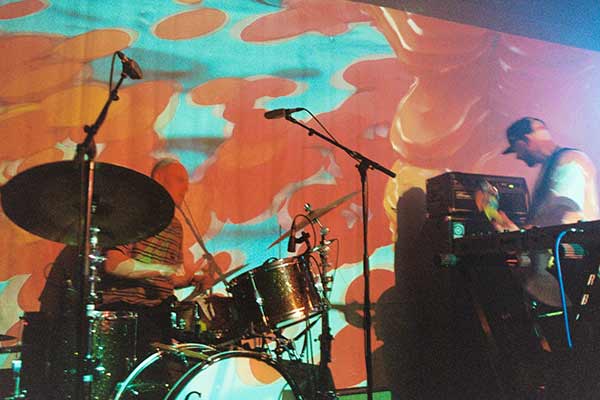
Al-Qasar ‘Who Are We?’
(Glitterbeat Records) 16th September 2022

Bubbling up from the Barbès Algerian enclave of Paris (the 18th Arrondissment boulevard that’s home to the yet to be gentrified and tourist-friendly passed Little Algeria community) and crisscrossing continents, the Al-Qasar group fuzz-up and electrify the sound of Arabia and its diaspora.
Helmed by instigator-in-chief Thomas Attar Bellier that neighborhood bustle is elevated and blasted back out into the world at large, absorbing and picking up sonic waves, spikes from Northeast Africa to a hardcore California and a rich tasting Sublime Porte.
It all helps of course that Attar Bellier is a global nomad, having lived in New York, Lisbon and Paris, but also having worked in the recording studios of L.A. during that circumnavigation of multicultural living he produced enough tracks of his own, releasing the well-received Miraj EP.
I get the impression that this is a fluid project, but at the time of this, the debut longplayer, Attar Bellier has opened up the ranks to include Jaouad El Garouge on vocals and a number of instruments synonymous with Moroccan Gnwa and North African traditions, Guillaume Théoden on bass and sub-bass duties, Nicolas Derolin on a myriad of percussive and hand drum instruments and Paul Void on drums. That seems the core anyway, but in this electric saz tangling and psychedelic post-punk rich sound there’s a cast of guest pioneering musicians to add yet another layer, another sonic perspective.
From the start there’s Sonic Youth’s guitar-sculptor Lee Ranaldo providing multi-layers of sustain, whines and abrasions to both the opening Swans meet Faust squall turn spindled and more familiar Middle Eastern electric fez intro ‘Awtar Al Sharq’, and the second, dervish-spun spirited and phlegm-voiced tour of Anatolia, The Balkans and Arabia, ‘Awal’.
That legend of the California punk scene, miscreant Dead Kennedys founder Jello Biafra goes free-radical on the staccato jangling ‘Ya Malak’. In a kind of John Sinclair mode, he reads out a poignant translation of a poem by the famous Egyptian revolutionary poet Ahmed Fouad Negam, updated for the cataclysmic state of the world in 2022, and the crumbled, violently oppressed post Arab Spring. This is where, despite the Cairo-futurism, the rattled and slapped hand drum energy, that the political motivations, the despair and anger comes to the fore; all that history, the post-colonial tumult and also fall-out from an Arabian-wide protest movement seeking modernization, the right to earn and end to greed. Read through a tiny transistor style radio Biafra’s agitator spirit turns this into a sort of Arabian Fugazi.
Moving on, but just as political, the New York-based Sudanese vocal doyen Alsarah (of Alsarah & The Nubatones renown) brings her impressive expressive outpourings and trill to the rattlesnake desert song ‘Hobek Thawrat’. In that soulful, rising loved-yearned voice there’s a protest against the coup on her homeland, the chorus itself repeating a slogan from the recent demonstrations. A sound of the Sahel, the women folk of Tinariwen and a little Bab L’Bluz Gnawa hover over this beautifully delivered protestation.
It runs throughout, this sound’s birthplace, but Al-Qasar pay a special homage on the (so good they name it twice) ‘Barbès Barbès’, which also features the electric oud pioneer Mehdi Haddab (of Speed Caravan note). Metal work drums, a nice rolling groove and souk candour prove a friendly hustled soundtrack for a meander in the heavily African outpost. Haddab gets a solo of a kind, providing a romanticized, poetic and folksy oud, with bursts of blurred quickened neat fretwork that borders on Baba ZuLu style psychedelic rock.
The finale, ‘Mal Wa Jamal’, features the longing ached vocals of the Egyptian singer Hend Elrawy soaring over an inspirial organ and almost post-punk push. Elraway’s beautiful wails prove disarming as the song’s lyrics concern a female-centric outlook on prostitution and its consequences. There’s attitude certainly, but it’s all wrapped up in a fizzled, fuzzy and mystical film of Arabian dance and fantasy. No surprise that they’ve been added to the Glitterbeat Records label roster, an imprint for just this sort of fusion; one in which you’ll hear an Arabic Muscle Shoals merging with Anatolian psych, a touch of Electric Jalaba and Şatellites if remixed by Khalab. A brilliant package of transformed traditions wrapped up in electrifying futurism; the sounds of Arabia, North Africa and beyond are thrust into a dynamic, unifying and eclectic direction.
Clear Path Ensemble ‘Solar Eclipse’
(Soundway Records) 9th September 2022

Out of the Wellington jamming session hothouse incubator and blossoming jazz scene in New Zealand Cory Champion rides the sun-birched rays and waves to cook-up a congruous album of many flavours. From a knowing position the jazz percussionist flows freely between a 70s ECM back catalogue of inspirations and the funk, fusion, spiritual and more freeform genres of his chosen art form.
Under the Clear Path Ensemble alias – his second such alias, also going under the Borrowed CS title when making leftfield deep house and techno cuts – Champion channels both Latin and Uniting Of Opposites style brassy Indian reverberations on the golden ‘Kihi’; offers up an acid jazz turn retro zippy-zappy late 70s disco funk fusion on ‘Drumatix’; and magic’s up a post-Bitches Brew Mile Davis band mystery of African-flavoured marimba and jug-poured, lava-lamp liquid cosmic spiritualism on ‘Revolutions’. But the mood, musicality changes again when we reach the jazzy-suspense score ‘Absolvo’: an early 70s cool cult vision of a Lalo Schifrin thriller.
The finale, ‘Tennis Ball’, could be said to have taken Liquid Liquid’s percussion, beats and a bit of the Style Council’s laidback washy soul-funk. And the dreamy seasonal solstice ‘Sunrise Motif’ finds a blend of the Modern Jazz Quartet, the willowy fluted bucolic and Nate Morgan. All the while translucent bulb-like notes flow or float from the vibraphone as other light-footed percussive vibrations dance and softly quicken the pace.
A harp run here and muffled, mizzle sax or trumpet there; a touch of electric piano and pining strings on anther track; all elements that come together across a changing groove.
Clive Zanda meets a less busy Michael Urbaniek on a minor jazz odyssey of nostalgic but very much alive and contemporary fusions, Champion’s second album in this role is a sophisticated, smooth but also freeform set of moods, visions and counterflows. It proves a perfect fit for the eclectic and much-praised Soundway label.
Forest Robots ‘Supermoon Moonlight Part Two’
(Subexotic)

After an initial redolent arpeggiator wave of Roedelius, a rainbow of trance, vapoured breathed coos and transience follows, marking what will be an entirely different kind of record for the Californian electronic artist and topographical trekker Fran Domingeuz.
Under the Forest Robots alias/umbrella, Fran has produced numerous adroit, studied and evocative ambient and neoclassical soundtracks to the myriad of landscapes and forest trials he’s traversed over the years. As the world dramatically succumbed to a global pandemic, and the chance to escape to the wilds became scarce, the signature form stayed but now the music was suddenly a therapy and a vehicle for channeling the anxiety, stresses of such uncertain times.
Now (thankfully) with the worse behind us, Fran emerges with the ‘long gestating’ follow-up to Part One of his Supermoon Moonlight suites from 2018. Although recording sessions for Part Two started back in 2019 it has taken a while to finally process the last couple of years and to finish and release this beautifully conceived album of suffused and uplifting hope.
The geography and National Geographic almanac proverb-like and Zen titles remain (‘All The Rivers Born In The Mountains’, ‘Wind Always Runs Wilder Along The River’s Current’) but the underlying theme has Fran exploring the complexities of parenthood and the ‘kind of spiritual and emotional legacy a father would wish to leave for his kids.’ A warming sentiment and inspired prompt makes for a very different kind of album though. From the same gifted mind and ear yet swimming in the sine waves of trance, synth-pop, 90s techno and dance music this is relatively a new but welcoming direction, expansion on his signature sound.
Upbeat as much as reflective, the feel is often dreamy; the gravity and awe of nature gently present; cut-out mountainsides, flowing connective rivers and a canopy of redwoods, the stage is set as stars shoot across the night skies and moonbeams illuminate.
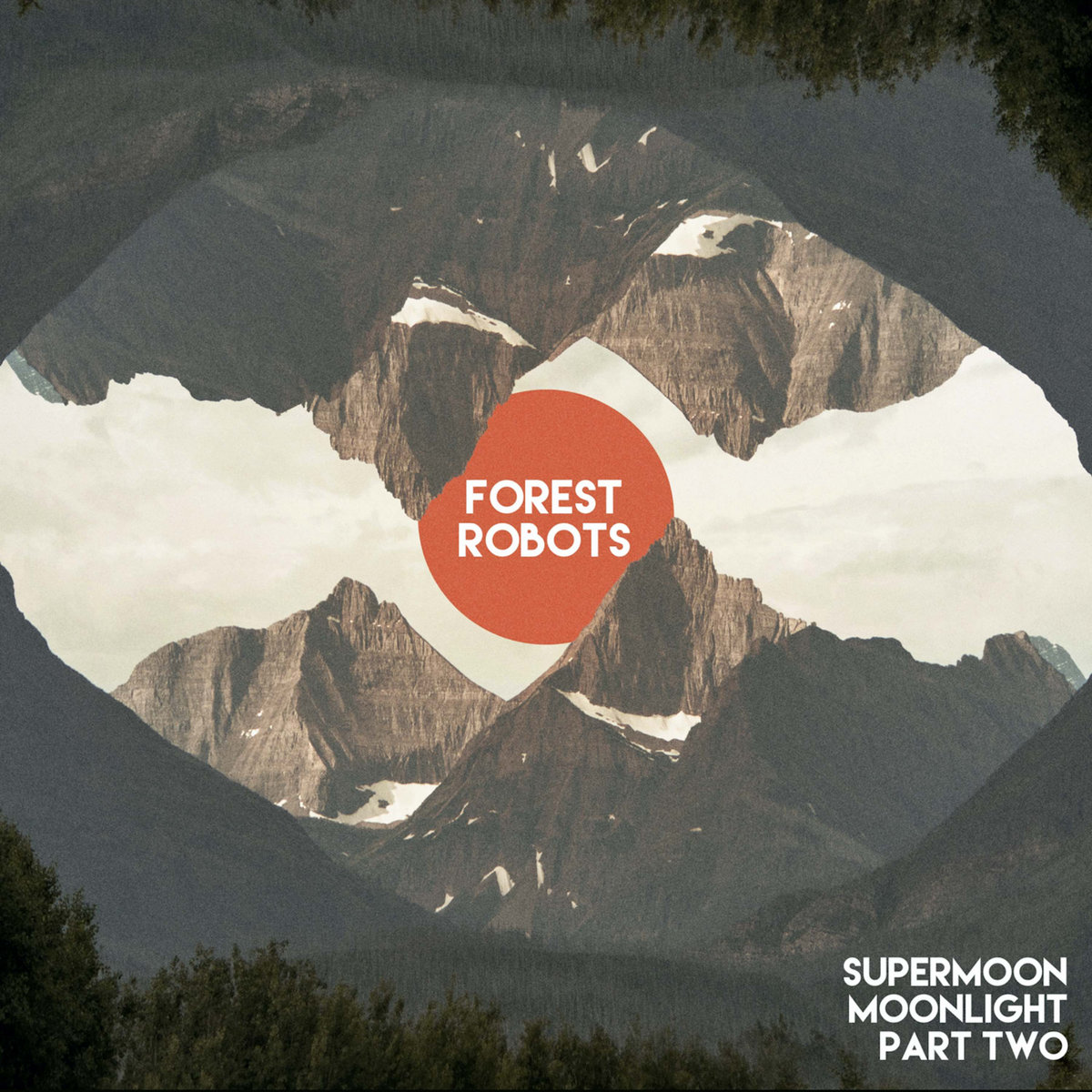
In the slipstream and bubbled undulations The Beloved shares space with The Orb, Stereolab, 808 State, Sakamoto, Vince Clarke, Boards Of Canada, I.A.O., the Aphex Twin and Ulrich Schnauss. This is a beautiful combination that filters the aftermath of the rave culture, the burgeoning British minimal techno scene of the early 90s Warp label, 80s synth-pop and electronic body music. Yet there’s room for a certain crystallised chilled sparkle of the Chromatics and the Drive time moody, ruminated dry-ice scores of Cliff Martinez within that beat-driven glow. And the elements of charcoal fires crisply burning and flickering, and the poured waters have a certain Luc Ferrari influence – albeit far less avant-garde.
Playful and sophisticated with a surprising dance-y pulse and radiant outlook, Part Two should act as a testimony to an inspired and inspiring composer. I think his kids will be rightly proud of their dad and his musical legacy: electronic music with a soul and purpose.
Machine ‘S-T’
(WEWANTSOUNDS)

Back again in The Perusal (becoming a 2022 regular) those vinyl specialists at WEWANTSOUNDS have remastered and pressed that rarest-of-rare conscious-soul-funk LPs, the obscure assembled Machine’s self-titled debut (and only) album from 1972.
The rumour-mill is strong on this one; the cause of its £500 plus price tag on Discogs believed to be a result of either a very limited release or no release at all – shelved as it were. It could be down to the sheer quality of the competition, arriving as it did in the wake of similar social-political soul as Marvin Gaye’s What’s Going On and Curtis Mayfield’s Superfly (but also his albums previous to that). Both prove a massive influence on this smooth and funky eight-track showcase.
What we do know however is that the make up of this group included a trio of well-rehearsed session players from the All Platinum Studios stable in New Jersey. That included main man Michael Watson on vocals and guitar, bass-player Curtis McTeer (also playing with labelmates The Rimshots) and drummer Donald McCoy, who were then fattened out with the organist/pianist Ray Jones, another bassist, Frank Prescod, and both Dee and Cordy Pridges on horns. On the same label and one of the most established, successful acts The Whatnauts lent both their backing vocalists and, rather oddly, their manager (credited on percussion) Bunch Herndon to this widening lineup. And on top of all that, the notable Sammy Lowe (arranging for such distinguished company as Nina Simone, Sam Cooke and James Brown) offers a subtle suite of strings to the mix, taking it down the Rotary Connection route.
The Whatnauts prove a pretty integral ingredient to the Machine track list, lending both the ‘Only People Can Save The World’ and ‘Why Can’t People (Be Color Too?)’ songs to the album. Machine keep the sentiment of both, but add both an almost bucolic and pastoral gospel-rayed yearn to the first, and up the Gator funk and Stevie Wonder boogie on the Sly Stone on-message second.
They open on the relaxed but simmered Southern-funk-hits-the-streets-of-NYC style ‘Time Is Running Out’. Fred Wesley & The J.B.’s buzzy licks meet Maxayn attitude sass, sweet sax and touch of ‘Brotherman’ The Final Solution on a conscious-political workout – the repeated vocal refrain apparently ad-libbed.
Very much of its time and again on-message, ‘World’ tunes into the Vietnam War and its impact on and confliction with the African-American community. The actual groove is quite percussive with a touch of The Temptations Psychedelic Shack, Mayfield and The Meters.
There’s a seagull hovering harbor scene, not a million miles away from Otis’ wistful gaze, on the gear-changing ‘Trails’. It starts with that atmospheric rumination, a hint of the Latin and some romantic allusions before quickening into a banjo-rhythmic strumming West coast jive. It then goes on to wail and cry with a sequel of electric guitar. ‘Lock Your Door’ however could be a lost Northern Soul dancer, and the balladry pined ‘Boots In The Snow’ is another of those Marvin Gaye try-outs, with a touch of 70s Motown.
An enervated Nat Turner, Undisputed Truth, Mary Jane Hooper, Johnny Pate with those Mayfield and Gaye inspirations, Machine stepped-out to lead their own socially conscious project. But whilst the elements are all present, the sound isn’t quite unique enough, overshadowed as they were by a multitude of bands/artists working in the same groove and message. Still, at least you can now own a real rarity without forgoing this month’s rent, gas or mortgage payment. And it’s well worth a spin at that.
Noah ‘Noire’
(Flau Records) 26th August 2022

Ever the diaphanous siren of soothed vaporous experiments and song, the Hokkaido-born artist Noah once more drifts and floats across a sophisticated combination of futuristic etudes and distilled electronica. Following on from the beautiful balletic-inspiredÉtoile (given a glowing review by my good self), this latest emanation of whispered and cooed translucence is just as lovely and swathed in dreamy effects.
A collection of tracks from between a pre-Covid era of 2015-2020, the Noire album is awash with studied yet effortless sounding sonic theme variations; a nine-track congruous suite that riffs on Noah’s signature of ghostly plinky-plonked semi-classical piano (occasionally an electronic one by the sounds of it) and minimal 808-style synthesized waves, percussion and bobbled beats.
Noah’s breathless vocals and atmospherics seem to be reaching us from the ether: often just the reverberations of some distant hazy whisper. The opening transparent slow spiral ‘Twirl’ could be a distant relation to Julee Cruise; an enchanted but haunted echo from a palatial ballroom, yet still highly intimate. ‘Odette’ oozes languorous modern soul and R&B, like Solange drifting over the Boards of Canada.
Undulated by softened kinetic ratchets, screws and turns there’s a coming together of purposeful techno and more rhythmic retro house beats, enervated as to never overpower the general woozy and beautifully longing mood.
Shorter reflections, pieces are balanced by extended tracks and the heavenly, bobbing and echoed looped single ‘Gemini – Mysterious Lot’; the sound relaxing as it moves from transformed Sakamoto to cool dreamy pop.
Remaining something of an enigma Noah appears and then floats away, leaving a lingering presence with music created in a dream. Noire is another great, captivating showcase for that talent.
Lampen ‘S-T’
(We Jazz) 9th September 2022

A re-release of a kind, in case you both missed it the first time around or because of its limited run on CD, the free and post-jazz Finnish duo Lampen are now offering their 2020 self-titled album on vinyl for the first time – a very nice package it is too.
I would be one of those people that did miss it the first time around, and so I now find myself discovering its highly experimental, explorative qualities, imbued as they are by the Japanese art of “kintsugi” (or “golden joinery”), the repairing art of mending areas of breakage with lacquer dusted or mixed with powdered gold, silver and platinum. As much a philosophy as a method of repair, the breaks and cracks are treated and documented rather than disguised or thrown away.
The binding metal dust is like a woven vein and testament to that object’s knocks and history. With all its obvious metaphors the Lampen lads are less than careful, seeming to deconstruct and rebuild simultaneously in an act of free-spirited concentration: if that makes sense. For they break and stretch the performances yet, because their craft is obviously brilliant, they seem to always be in unison, synchronicity throughout.
Across five crawling and more crescendo splashed tracks, guitarist Kelle Kalima and percussionist/sampler Tatu Rönkkö rattle and wane; bend and set in motion a tumult of krautrock, progressive, industrial, post-punk, psychedelic and avant-garde workouts and soundtracks. In abandoned rusted turbine dominated factories, mysterious chambers but also hovering over lunar terrains Lampen evoke hints of Rhyton, Peter Giger, Krononaut, The Mount Fuji Doomjazz Orchestra, King Crimson, Faust and The Mosquitoes. All good and appealing to those like me longing to hear jazz pushed into such directions.
Rather surprisingly, amongst the sustained drones, harmonic pings and sculpting Kalima’s guitar bursts into acid-country indie-rock territory – think, of all people, John Squire on the Stone Roses second album. There’s even spots of no wave and dub to be found emerging from various tangents and untethered directions.
Impressive throughout, whether that’s in slow motion or more maelstrom driven bursts, Lampen’s debut album is a barely contained, unnerving in places, cranium-fuck of excellent moody jazz and industrial resonating experiment. Second time around then, the duo offer us another chance to indulge in their brand of unbridled post-jazz. I think you should take them up on the offer.
Qrauer ‘Odd Fazes’
(Nonostar) 22nd September

Following on from their debut Heeded showcase for Alex Stolze’s burgeoning Nonostar label back in April, arrives an extended debut album from the German electronic duo Qrauer, who transduce chamber music, the semi-classical and percussive into a sophisticated transformation of minimalist-techno and intelligent EDM suites.
The combined, refined but ever open skills of percussionist, producer and remixer Christian Grochau and his foil the pianist, multi-instrumentalist and composer Ludwig Bauer come together to fluidly remodel their chosen instruments into a both mindful and danceable work of electroacoustic moods and soundscape sonic worlds.
Instead of a pulled-together album of 12”’s and mixes and the like, Odd Fazes feels like a complete journey from beginning to end, with shorter more ambient gazing vignettes alongside longer more evolving pieces. And so you have the trance-y, droned and transformed glitch-y orchestral spell of the incipient stirring ‘Reg. Capture’ followed immediately by the polyrhythmic, clean percussive and galvanized EDM noirish ‘Drumthrives’. Or the Drukqs era Aphex Twin piano – played on a distant echo-y stage – beautifully, but slightly off-kilter, resonating ‘Fuq’ following on from the Artificial Intelligence series trance and suspense soundtrack ‘Cool Edit’. This offers a variation and nice set of breaks between the more techno pumped movers and sonic imaginations.
Later on, Nonostar labelmate Anne Müller adds her swoonstress cello to a couplet of evocative tracks. The first of which, ‘Rund’, has an air of the Aphex Twin (again) about it. Circling bowl rings, kinetic twists and percussive itches are woven into a mild tempo EDM pulse as Müller’s trembled and attentive cello saws and plucks are turned into repeating, recontextualized beats or motifs. On ‘Oval’ the adroit, experimental cellist seems to revive some of her stirring, pining gravitas from the Solo Collective project she shares with both Nonostar founder Stolze and, another labelmate, Sebastian Reynolds. There’s also a hint, I think, of fellow cellist and experimental artist Simon McCorry too on this deeply felt mournful piece.
Multi-textured with a constant movement and undulated beat that builds and builds yet never settles for the predictable euphoric, anthem moment, there’s a lot of clever, purposeful work at play. I haven’t even mentioned the layers of satellite and moon-bending refractions, nor the cosmic flares, the droplets of notes, cooed waveforms, fizzes and experimental recondite sound sources that have been meticulously thought-out. Again, just like the Heeded EP, the debut album is another cerebral rework of electronic body music, techno, EDM and the classical; a complete dancefloor-ready and mindful journey.
Simon McCorry ‘Scenes From The Sixth Floor’
(Shimmery Moods)

Turning the worries and mental strains of ill health into something creatively rewarding, the highly prolific cellist sound sculptor and composer Simon McCorry is thankfully back on the experimental electronic scene after a stay in hospital last Christmas. After a period of healing, recuperation, McCorry assembles a sort of soundtrack to that worrying, anxious period.
Following a loose ‘mental thread’ (as he puts it) Scenes From The Sixth Floor is an evocative and ruminating work of both studied ambient peregrinations and post-club techno comedowns; beginning with the cult kosmische drop through Tarkovsky’s glass portal, ‘Falling Through The Mirror Backwards’. Part illusion, part Moebius scores Hitchcock’s Spellbound, it’s the sound of our composer freefalling through a gauzy blanket, unable to latch onto the sides or gain traction as he spirals in sedated state to earth. Yet this there’s also no panic, rather a hallucinatory feel.
The next track, ‘Fragmentation’, is the first of two pieces developed from previous commissions/projects. Originally, albeit loosely, based on a Mad Hatter’s Tea Party dance piece, the landscape on this piece is less Lewis Carroll surrealism and more an evolving soundtrack that absorbs Bleiche Brunnen period Asmus Tietchens, Bernard Szajner sci-fi, Tangerine Dream, John Carpenter and Sven Vath. From the primal liquid blobs to the supernatural and futuristic, McCorry creates a whole atmospheric world before building steadily towards a patter beat of early 90s set techno (R&S/Harthouse).
Another developed idea, ‘The Sea Of Stories’ takes its cue from Philip Ridley’s feted Moon Fleece book – an intense and thrilling exploration of memory and identity. One of the only tracks with which you can hear a mostly untreated, transformed as it is, cello, McCorry’s instrument of virtuoso choice aches and arches movingly whilst a constant arpeggiator waterfall cascades onto shimmered, light catching waves. Be careful, if you close your eyes you could just find yourself carried away on the tide.
Up above now to the skies and the stirring and soaring ‘The Secret Life Of Clouds’. A beautiful if almost little mysterious, unsure passage, I picked up Schulze, Frosse and even a touch of Air Liquide on this natural phenomenon. But it’s Roedelius’ fairground piped style of playfulness and new classical analogue electronica that’s felt on the arpeggiator-bounced ‘Surfacing’; although this mood changes with another of those post-club undulations, pitter-pattering way at the end.
Tubular marimba and small thrusts of Kriedler and Pyrolator make up the mid-temp techno styled ‘Earth Best’, and the angrier entitled ‘Day Of Wrath’ has a certain European yearn and another echo of Roedelius’ whistled Bavarian fairground vibes. The cello, which remains pretty much hidden throughout the album, now starts to materialize, producing a weepy bowed melody and sense of purpose. Constantly enriching the ambient genre and beyond McCorry has bounced back with a reflective and developed soundtrack of perfectly crafted and moving compositions, some of which contain a certain mystery, dreamy-realism that remains to be deciphered. Proving the cello still has some way to go as an imaginative and explorative tool, the gifted player finds new tones, textures and spells of magic to further that instrument’s sound, use and reach. It’s good to have him back is all I can say. And this album further cements an already impressive reputation as a true innovator and master of the form.
REZO ‘Sew Change’
30th September 2022

Shy of just eighteen months the Irish duo of REZO follow up last year’s debut album Travalog with another relaxed, gentle-of-touch songbook, Sew Change. The seeds of this particular brand of disarming but deeply moving craft were sown from a distance, with both partners in this project recording their parts in separate locations on that debut. Nothing quite concentrates the mind as an epidemic and its confinement, and so the introspection flowed on that record, which despite the distance geld perfectly: in keeping with both musician’s Ireland and Med environments, the music effortlessly blended a touch of the Balearics with more soft-peddled Americana and singer-songwriter material.
As a sort of bridge back to Travalog, the spoken-word return down memory lane family themed ‘You Are What You Wear’ repurposes the sleepy, laidback rolled and Damon Alban-esque with a lick of Baxter Dury ‘Life During Lockdown’ backing. Only this time there’s an additional soulful female cooed chorus and the subject is Colm O’Connell’s family-run knitwear factory in the city centre of Dublin. Within that idyllic-natured return to a more carefree childhood, the whole gamut of life, death and remembrance is narrated both fondly and poignantly.
Concentrating on what’s most important, attempting to right some wrongs and holding one’s hands up to past mistakes, Colm and his foil Rory McDaid ease through some highly sensitive subjects to a musical accompaniment of Americana (once more), synthesized shading and gentle spacey takeoff sparkles, enervated bobbing dance music, piano-led balladry and wistful acoustics. However, within that scope they evoke a Muscle Shoals spiritual Rolling Stones, and a little Billy Preston, on the gospel organ sustained (with a cheeky hint of ‘Let It Be’ I might add) ‘I’m Not Enough’.
Talking of the sensitive, and careful not to cancel themselves in the process, the duo filter their concerns on the increasingly problematic and volatile theme of cancel culture on the Med-twanged, gauzy ‘Erays’. Like passing through gargled spacy waters and a dry-ice machine they make sure to carefully word their take; misspelling “Erase” as a nod to rays of sunshine and hope in this struggle over censorship. They also seem to tackle teenage suicide and mental health issues on the iconic Dublin Nine Arches set drama ‘Boy On A Bridge’, and explore the grief of dementia by marrying solo McCartney to the Eels on the synth undulating ‘Sometimes’.
Already included on July’s monthly playlist, ‘Your Truth’ still stands out as one of the album’s best offerings. On a song about the cost of “freeing your mind”, or the indulgences of going too far, that Americana feel is taken in a novel direction with softly padded congas, a smooth bass and veil of psychedelic-indie ala later MGMT – I’m also positive I can also hear a touch of TV On The Radio.
In its entirety Sew Change is a completely realised album of reminisces, reflections and softly hushed reconciliations, set to a gentle wash of the spiritual, Irish snug and saloon bar piano, a lilted Dylan-esque lyrical cadence (see the nativity-evoked ‘Hiding In Plain View’) and hazy suffusion of synth. The duo expand the palette without upsetting the formula to produce a complimentary follow-up every bit as slowly captivating.
John Howard ‘From The Far Side Of A Far Miss’
(Kool Kat) 9th September 2022
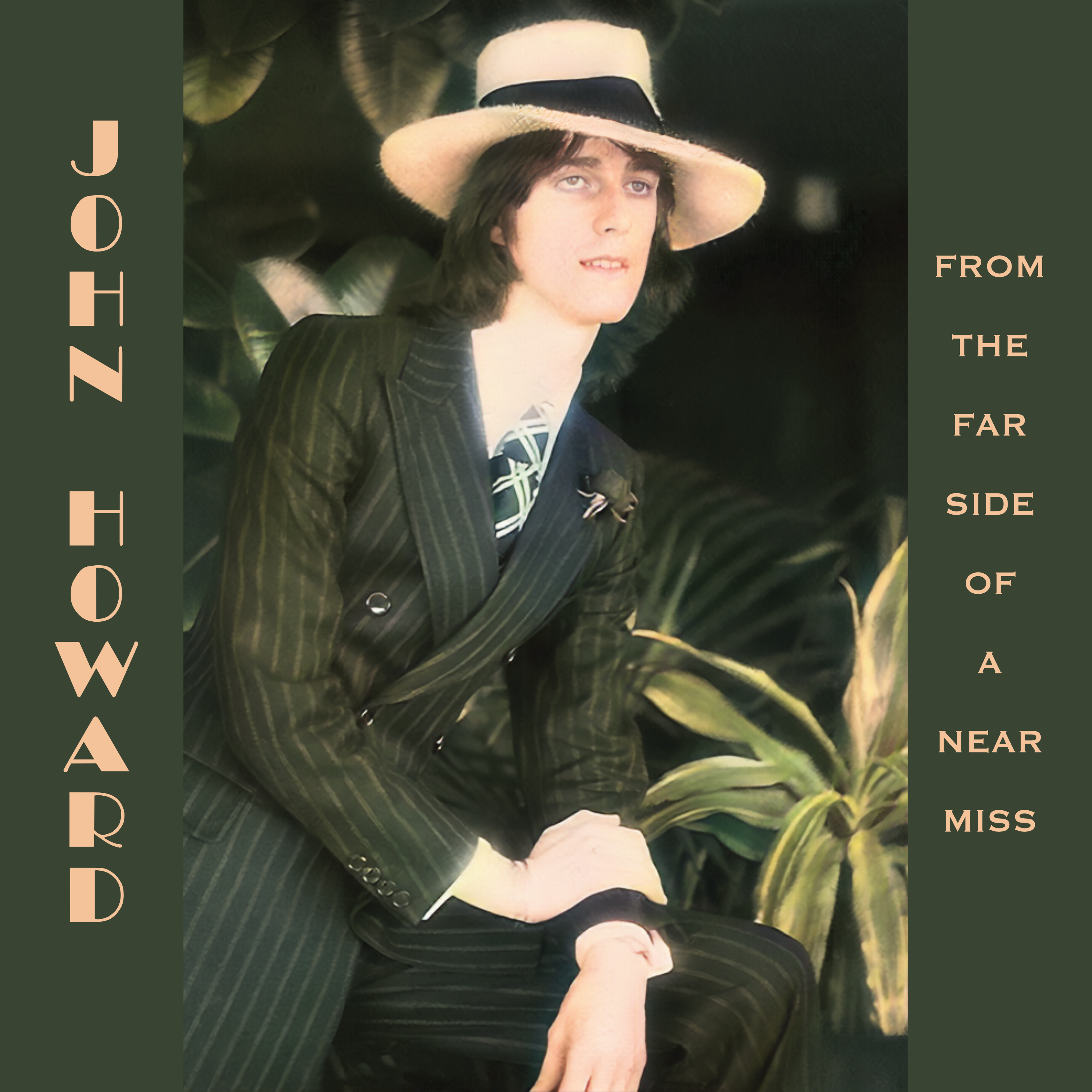
Following in the slipstream of his third and final volume of memoirs (In The Eyeline Of Furtherance) the singer-songwriter John Howard, with the wind in his sails, is back with yet another album. But instead of the usual songbook formula this is a continuous one-track work of disarming, gentle brilliance that runs to over thirty-five minutes.
You could say it was a return to Howard’s long form songwriting experiments of 2016 and the Across The Door Sill album, or perhaps even a reaction to (one of his heroes of the form) Bob Dylan and his Boomer odyssey ‘Across The Rubicon’, which more or less charts an entire epoch. Howard is a bit younger than Dylan of course, but both artists seem to be making some of their best work at this stage in their lives: uncompromising and unburdened by expectation or the need to suck up to fashions, labels, even the public they share an envious position. That Dylan mini-opus only lasted a mere seven-minutes in comparison, whilst Howard’s grand effort runs and runs, covering as it does a lifetime as a proxy soundtrack to his series of autobiographies.
Far more melodious than his hero’s reflections, this scrapbook photo album reminisce features Howard’s signature balladry-troubadour and stage musical verve of poetically candid prose, sung both wistfully and with a certain yearn.
Love is all though as Howard sets scene after scene, analogy after analogy; reconciling his past to a watery-mirrored piano-led score that’s constantly moving, picking up suffused strings, Dylan’s harmonica, a bucolic burnished harpsichord, a planetarium mood piece starry synth and light dabbing’s of congas and shaker. In what could be a reference to his own semi-cover version album Cut The Wire, there’s a hint of the Incredible String Band and also Roy Harper about this extended performance; especially Howard’s version of the former’s ‘In The Morning’. Later on it’s a lilt of The Beach Boys, bobbing on the “ripples of forever” line. Yet it’s unmistakably a John Howard sound, a lovingly executed piece of songwriting that more than holds its own across thirty-five minutes plus of ebbing drama.
But this is also a two-way conversation with Howard playing both sides of a long affair; the part of old lovers and new, friends, acquaintances and family, their words echoing now in the mists of the time that’s left. Dylan, that recurring idol, acts as a silent partner in one such discourse, as Howard sings about artistic integrity and his inspirations, a pantheon of uncompromising doyens. And in that same particular passage we also have Monroe and the Fab Four popping up; a Hard Days Night Beatles name-checked in what is both a celebrated yet fraught with delusion and remembrance chapter on this long winding road.
I particularly enjoyed the more salt-of-the-earth café scene diorama; Howard in voyeuristic mode describing a very unlikely cast, using both a kid who’s reading a Russian literary titan and a priest faraway in reflective thought (perhaps regret) as conduits for naming even more idols and favourites: “The kid who’s reading Tolstoy, listening to The Rolling Stones; I can hear old Jagger’s laughter floating from his phone.” Great lines by the way. The priest is “remembering Bowie’s Low”, which could of course be a reference to the same priest featured in the lyrics to ‘Five Years’ now contemplating a life that’s perhaps not all it seems.
Addressing, redressing whilst swanning through fantasies of a swish Ritz, 5th Avenue and Caesars Palace, imaging an alternative stratospheric career trajectory, headlining the Albert Hall, Howard takes us on a rolling, fluctuating journey through of his thoughts, dreams (realized and abandoned), regrets and hurt. By the end of this epic piece the final phrase, sung in a lasting glow, says it all: “It simply is what it always was”. Dylan couldn’t have put it much better.
An ambitious undertaking, From The Far Side Of A Far Miss is the work of an artist still willing to take chances and explore. Whilst his peers rely on the back catalogue, or drum out the same music they made over fifty plus years ago, Howard seems entirely comfortable in his own skin as a wiser yet still spritely young-at-heart artist composing music on his own terms. Fresh new introspections, concepts abound as he shows there’s still so much more to share and create.
Yara Asmar ‘Home Recordings 2018-2021’
(Hive Mind Records) 16th September 2022
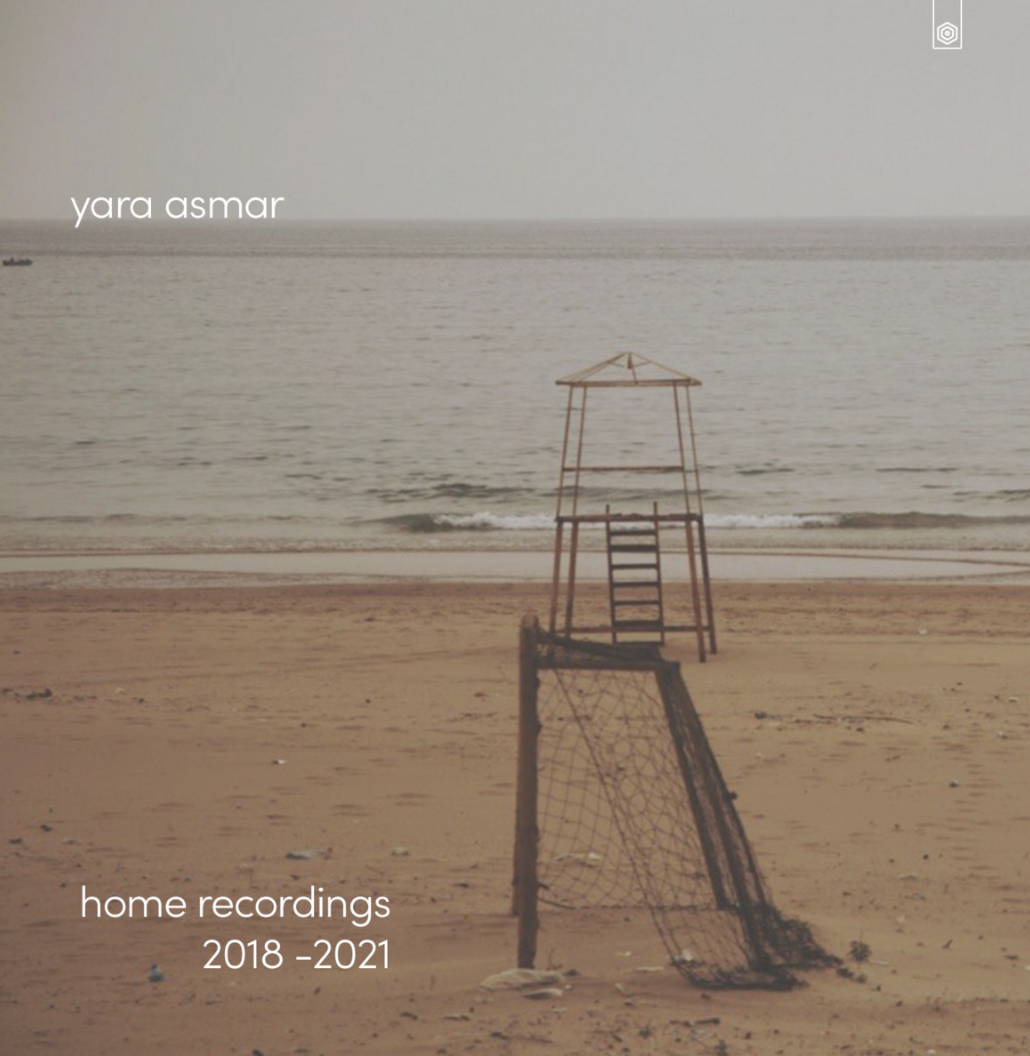
The latest discovery on the Hive Mind radar emanates from Beirut, with the serialism and tonal atmospheres, ambient and minimal semi-classical melodies of Yara Asmar.
In a tumultuous climate, referenced in a sampled conversation piece on ‘Is An Okay Number’ and in the unsaid but moody reflections and vaporous drifts that push out into the unknown and untethered, the twenty-five year old multi-instrumentalist, video artist and puppeteer manages to often leave the earthly mess of a region in crisis and float out above the city.
From an airy viewing platform we can identify swirls, waves, gauzy veils and echoes of the concertinaed (courtesy of Asmar’s grandparents’ accordion), tubular metallic rings and tingles (that will be the metallophone), a serious but graceful piano, a music box, hinges and searing gleams and a beatified magical spell of Christian church liturgy. The latter source was recorded by Asmar from church hymnal services around the Lebanon; transduced into the hallowed yet otherworldly and mysterious, given a gentle waltz-like ghostly quality and only sense of a presence. A reference to country’s much troubled religious turmoil? The art of remembrance? Spiritualism? Or the familiar sounds of an upbringing? Whatever the reason it sounds both equally as ethereal, as it does supernatural: passages into other realms.
Tracks like ‘We Put Her In A Box And Never Spoke Of It Again’ are almost lunar in comparison to those hymns; lending a moon arc of Theremin-like UFO oscillations and cult library cosmic scores to this set of peregrinations and field-recordings. Yet for the most part this is a truly dreamy, translucent and amorphous album of delicate classicism, explorative percussion and ambient; an ebb and flow of reverberations and traces of moods, thoughts that literally floats above the clouds and out beyond the Lebanese borders. These home recordings recorded onto cassettes and a mobile phone capture something quite unique, in what are the most unique of times.
Valentina Magaletti & Yves Chaudouët ‘Batterire Fragile’
(Un-Je-Ne-Sais-Quoi) 23rd September 2022
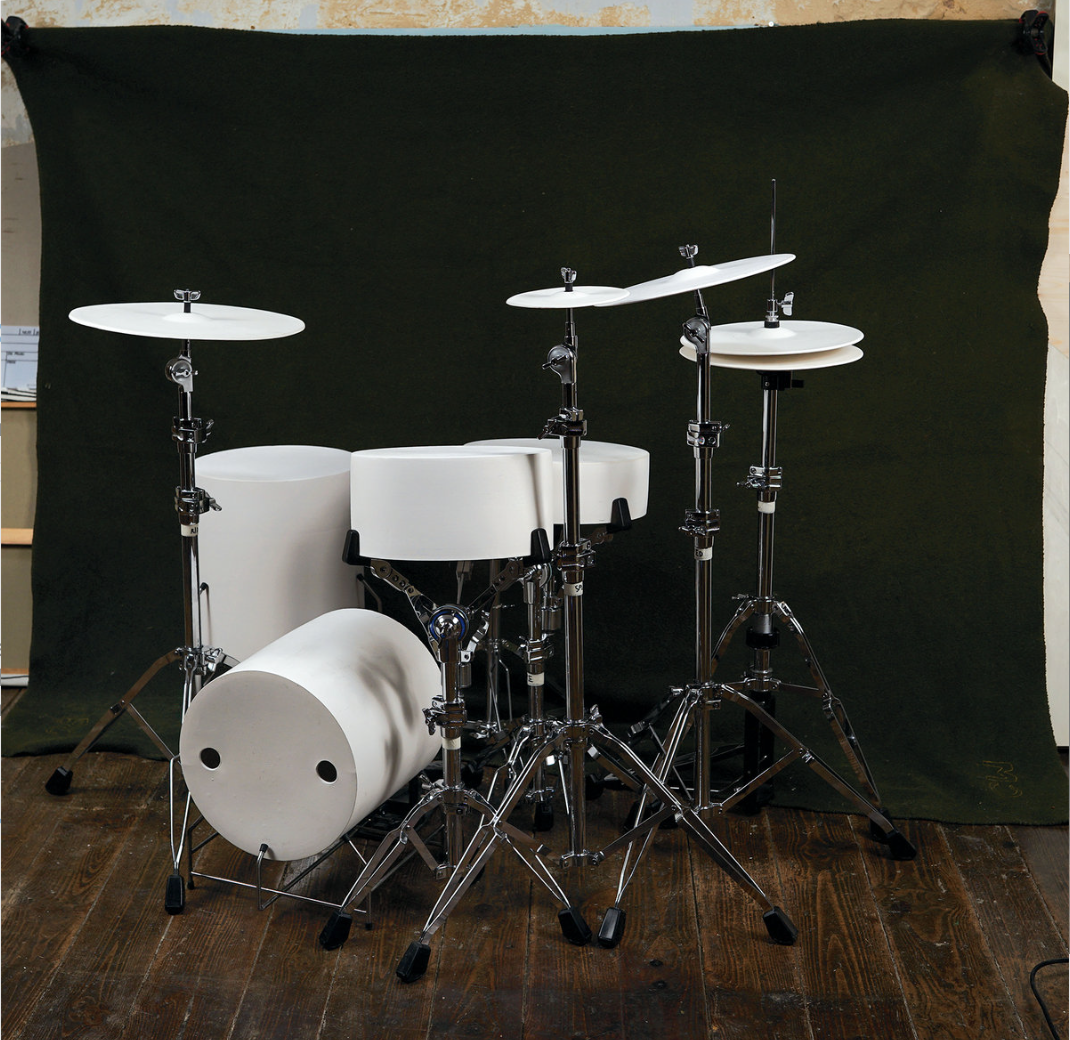
Is it performance art or just performance? Probably both as the lauded drummer extraordinaire Valentina Magaletti once more sits behind the artist Yves Chaudouët’s conceptualized porcelain drum kit.
If you follow either of these artists then you’ll know that this is the second installment of recordings to be taken from the original project back in 2017. Conceived by the painter turn multimedia artist Chaudouët as an exploration in texture and friction, wood, metal and rubber were all added to the porcelain kit; the effects of which, in the hands of such an accomplished musician traverse the concrete, avant-garde, art rock, breakbeat, the classical and freeform and dark jazz.
It’s been a couple of years since I last featured the highly prolific composer/producer and percussionist Magaletti, featuring her ‘tropical concrete’ communal with Marlene Riberio, Due Matte. In this space Magaletti continuously rattles, rolls, skids, skiffles, dusts and lays spidery tactile rhythms and strokes down as mooning, wailed and frayed bowed primal supernatural atmospherics stir.
We could be in Southeast Asia, Tibet or West Africa, even the Caribbean with passages that sound like steel drums bouncing away. We could also be in a subterranean chamber as resonating echoes of this tinny, metallic and deadened kit ricochet of the walls. Reductionist theatre, ceramic jazz, a paranormal drumming séance, the mood isn’t always easy to gauge. But as experimental as it is Magaletti is constantly rhythmic throughout; switching yet always hitting a beat, and even in some parts something that resembles a groove. An exercise on concept but also percussive, drumming performance, this collaboration straddles both the art and musical camps to bring us something quite different yet always engaging, interesting and virtuoso.
Hi, my name is Dominic Valvona and I’m the Founder of the music/culture blog monolithcocktail.com For the last ten years I’ve featured and supported music, musicians and labels we love across genres from around the world that we think you’ll want to know about. No content on the site is paid for or sponsored and we only feature artists we have genuine respect for /love. If you enjoy our reviews (and we often write long, thoughtful ones), found a new artist you admire or if we have featured you or artists you represent and would like to buy us a coffee at https://ko-fi.com/monolithcocktail to say cheers for spreading the word, then that would be much appreciated.
BRIAN ‘BORDELLO’ SHEA’S REVIEWS ROUNDUP
SINGLES/TRACKS
Alexander Stordiau ‘Nothings Ever Required’
(Timeless Music Records)
‘Nothings Ever Required’ is a gem of a aural discovery; a moody piece of John Carpenter-esque solitude over five minutes of pure instrumental poetry. The kind of mood piece to soundtrack the passing daylight by watching passing strangers walk past the old coffee house window trying to read the faces, read their thoughts, lost in your memories, and hopes slowly making the coffee last, cusping it in your warms to keep in the warmth, with Alexander Stordiau gently caressing the shifting time of loneliness.
It’s Karma It’s Cool ‘A Gentle Reminder’
‘Gentle Reminder’ is a in fact a gentle reminder that pop music is a wonderful thing, as this tuneful little ditty shows three and a half minuets of perfectly formed guitar pop rock, with a Peter Holsapple guesting on keyboards – that is in fact one of the highlights of the track – giving this perfectly formed pop rock of a song a slight new wave sense of danger.
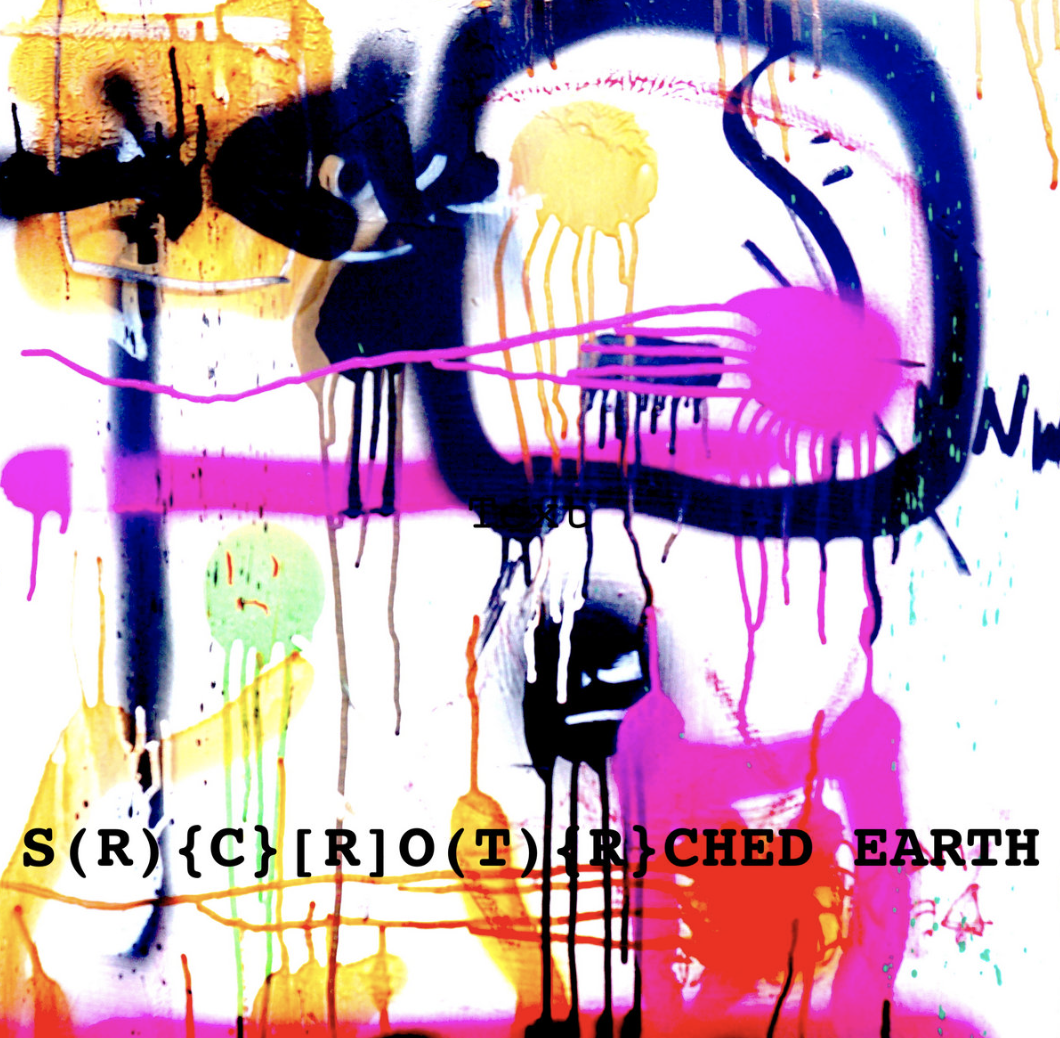
Anxiolytics ‘S{R}[C]O[{T}[R]CHED EARTH’
Anxiolytics are an experimental synth duo from North Wales and have an evil but lovingly portrayed glint in their eye I bet, this single being a strange and haunting affair that takes me back to the post punk early 80s of the Passage and Soft Cell and offers something both original and different; a song that has a cold warmness that will smother and intoxicate you with a germ ridden freshness that has not been inhaled since the passing of the great David R Edwards and the wonder that was Datblygu. Once again I am left awaiting the debut album.
Floorbrothers ‘Drive’
(Ikarus Records)
Ahh Mr Floorbrothers, ‘Fade Into You’ by Mazzy Star is one of my favourite tracks as well. So slowing it down and making it into a drug induced waltz, adding new lyrics and making it sound like Mott The Hoople needing a good night’s sleep is a pretty nifty idea and one I stand and applaud. A good single then.
Bigflower ‘Tried To Care’
The first new track from the mighty bigflower in a few months I think, and yes, they have once again supplied a dark piece of dense guitar magic; a track to help soundtrack these dark, dark frightening days and months that lie ahead in the UK; the kind of track we need to be blasted from car radios as we head to work knowing after a week of hard slog we will still not be able to afford to pay our bills and put food on the table. Although this is not an out and out political lambasting of our uncaring and failing government it is a song to capture the intensity and hopelessness of these worrying times.
EP
Rob Clarke And The Woolltones ‘Rubber Chicken B-Sides’
(Aldora Britain Records)
This is an enjoyable little forage into the dim and distant past. Four songs that take the hip swinging beatitude of the sixties, all beat chords and “What’d I Say” riffage songs your nan would have curled her hair to in her youth before going down the ballroom to watch the local beat band. Four songs that are all enjoyable and warm sounding and with the final track, ‘Love And Haught’, being especially splendid, a track worthy of the final days of the wonderful Escorts: close your eyes and you are back in 1966 heaven. A beautiful release and only 50p to download: that is 12 and a half pence a track. Yes this EP does take you back when half a pence was such a thing.
ALBUMS
The Pixies ‘Doggeral’
(BMG) 30th September 2022
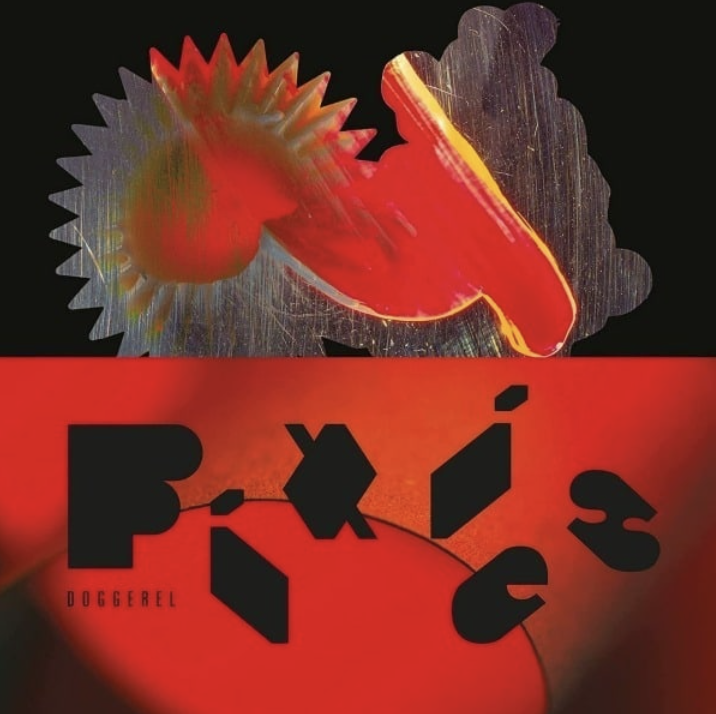
I used to love The Pixies back in the day when they first appeared, and to be honest I’ve not really listened to them much since they got back together. I’ve not really listened to them since Indie Cindy, and I think I might have been missing out if this album is anything to go by; although they are obviously missing the divine Kim Deal. But that is all they seem to be missing. They still have quite a loud thing going on (‘Haunted House’), are still masters of distorted surf guitar (‘Vault Of Heaven’), and have not lost their knack for a catchy strange pop tune, (‘Get Stimulated’). The lovely charmingly charming pop beauty that is ‘The Lord Has Come Back Today’ might just be my favourite track on this rather fine enjoyable album. They even have a whistling solo on ‘Pagan Man’, which there is certainly not enough of in the history of rock ‘n’ roll. So, the eighth Pixies album is in fact quite a musical treat.
Keiron Phelan & The Peace Signs ‘Bubblegum Boogie’
(Gare Du Nord) 23rd September 2022

What we have here my lukewarm fluffy bunny fetishists is an album of sophisticated polite pop – and we all need a little sophistication and politeness in our lives. Remember children always say please and thank you afterwards [ooeer missus]. And this album of melody rich pop could be your injection of sophistication for the day.
‘Trojan Pony’ kicks off the album with a fine Harry Nilsson like pop ditty that would not sound out of place on any of his early 70s pop masterpieces. Kieran Phelan is obviously a fan of the seventies laid-back pop as we find a tribute to the lovely gentleman and cult favourite John Howard with ‘Song For John Howard’, a lovely short piano ballad that not just recalls the music of the great man but also Brian Wilson as well, which indeed cannot be a bad thing.
The whole album is awash with gentle laid-back slightly quirky songs that have a layer of sadness and memories, and sometimes, sad memories are the most beautiful. And Bubblegum Boogie is indeed a beautiful little sophisticated bubble gum pop album.
Grave Goods ‘Tursday. Nothing Exists’
(Tulle) 9th September 2022
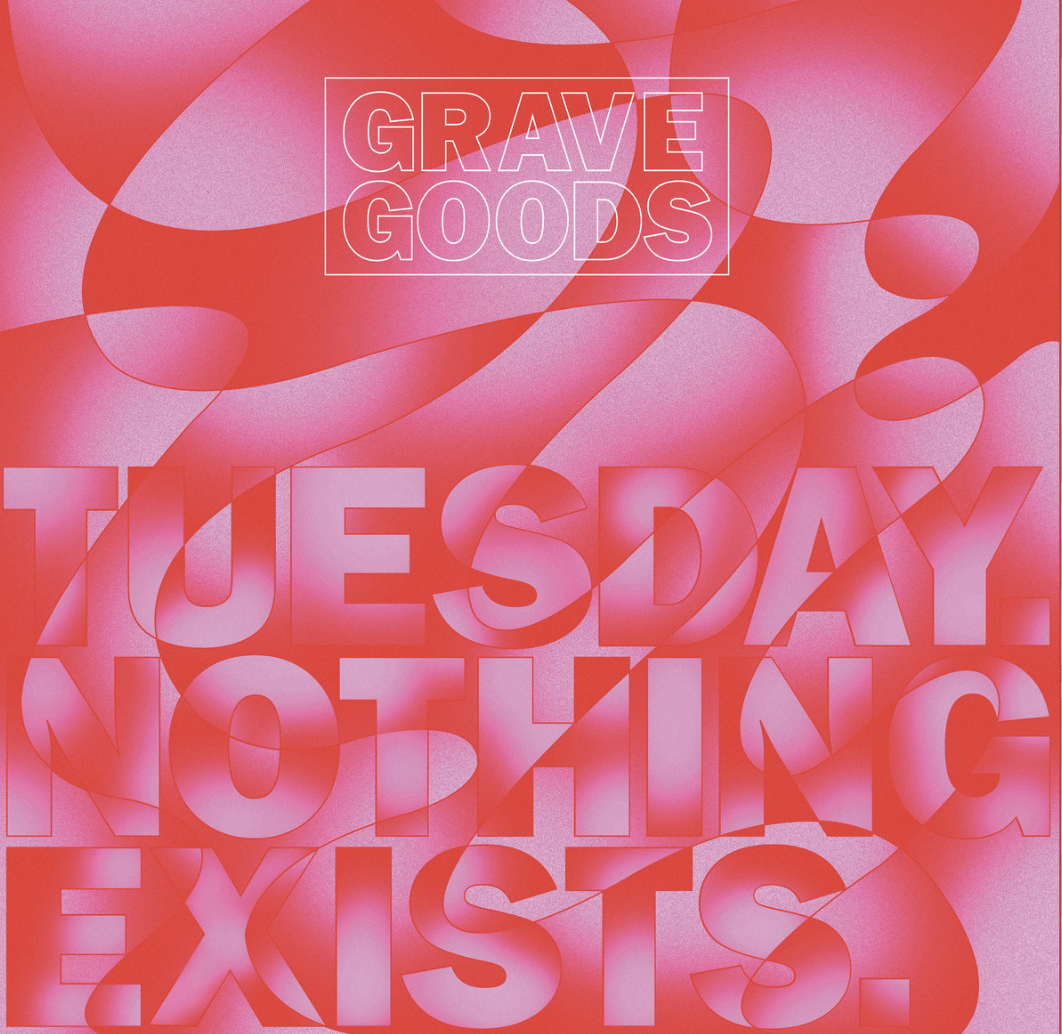
“Step softly into the new world of the underground” is the opening line from the opening track ‘Come’ from this rather fine post-punk album of clattering guitars and such malarkey. And it’s an invitation I would readily advise all fans of clattering guitars and such malarky to well accept. For they will be treated to seven tracks of aggressive alternative rock post-punk that takes some rather fine lyrics [which I am very taken with] and guitar riffs that put Grave Goods a step up from the usual gallop of the many many other post-punk bands. An album well worth investigation dear readers.
The Legless Crabs ‘And If You Change Your Mind About Rock ‘n’ Roll’
(Metal Postcard Records)
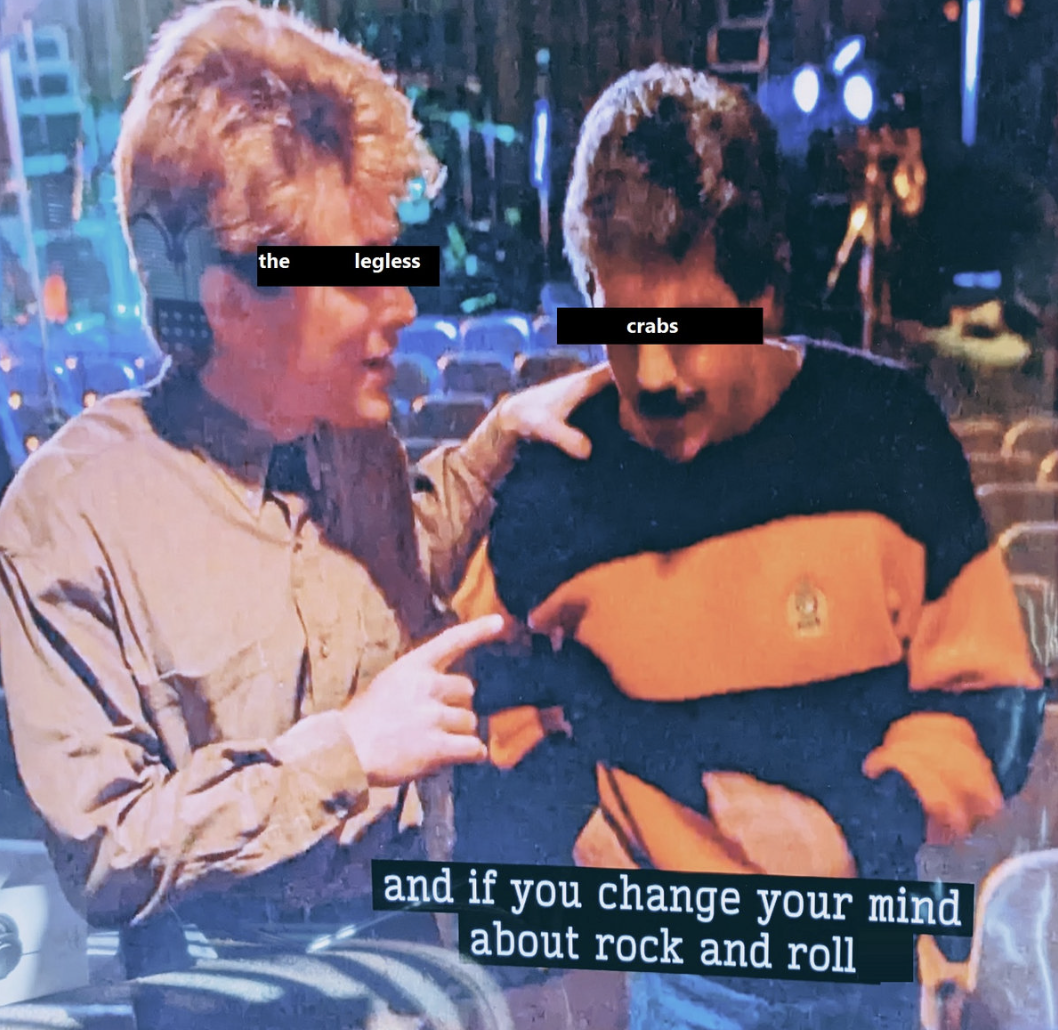
Thank the fuck for the Legless Crabs. After spending over an hour going through my emails to see what delights I could pontificate about and tell you lovely readers all about, I was left bereft. I had listened to loads of power pop with shite lyrics; shoegaze which in itself stands alone as why I have not reviewed it: anything that describes itself as shoegaze is enough to put me off, we all know what shoegaze is, music that reaches for the stars but very rarely manages not to leave the ground. So thank fuck for the rock ‘n’ roll un pc digs at modern life the Legless Crabs on a regular basis release. And If You Change Your Mind About Rock ‘n’ Roll’ is up to their normal high standard.
Guitars that fuzz and buzz and on this occasion form layers of pure confusion that take you back to the golden age of watching loud guitar bands in dingy clubs. ‘Piss Lake’, ‘Anti -Christian Scientists’ and every other track on this album are filled with an anger and disgust at the way modern life is shaping up.
This album is a much more serious and mature sounding album of rock ‘n’ roll. They no longer sound like the slap dash young noise merchants that overdosed on JAMC and the Cramps and Pussy Galore and now sound like they have had to grow up and get jobs. And that has just made them even angrier.
This is an album of darkness like their others, but the others came with a cheeky wink this with just a terrifying blank stare.
Salem Trials ‘Postcards From The Other Side Of The Sun’
(Metal Postcard Records)

A triple album by the Salem Trials: well it would be a triple LP if it were released on vinyl. There are 29 tracks and each and everyone is filled with the whip snap guitar madness that the Salem Trials deal in.
Songs that echo the world we live in full of dark humour, nostalgia, darkness and T Rex riffs. ‘Black Flash’, which imagine instead of David Bowie guesting on the Marc Bolan Show you had Mark E Smith, and instead of it being in a TV studio it was on a small boat that was slowly sinking below the waves, slowly lapping around Marc and Mark E’s knees; a song of pure and beautiful magic and maybe my fave ever Salem Trials song. Pure brilliance. But there are so many. Andy and Russ are quite incapable of not doing anything that is not at least very good; they have their own sound; they have their own feel; they have their own magic.
The Salem Trials are one offs. They take their influences of post-punk, psych, seventies glam, no wave, indie pop and merge into what can only be described as a unique and rewarding listening experience.
Andrei Rikichi ‘Caged Birds Think Flying Is A Sickness’
(Bearsuit Records)
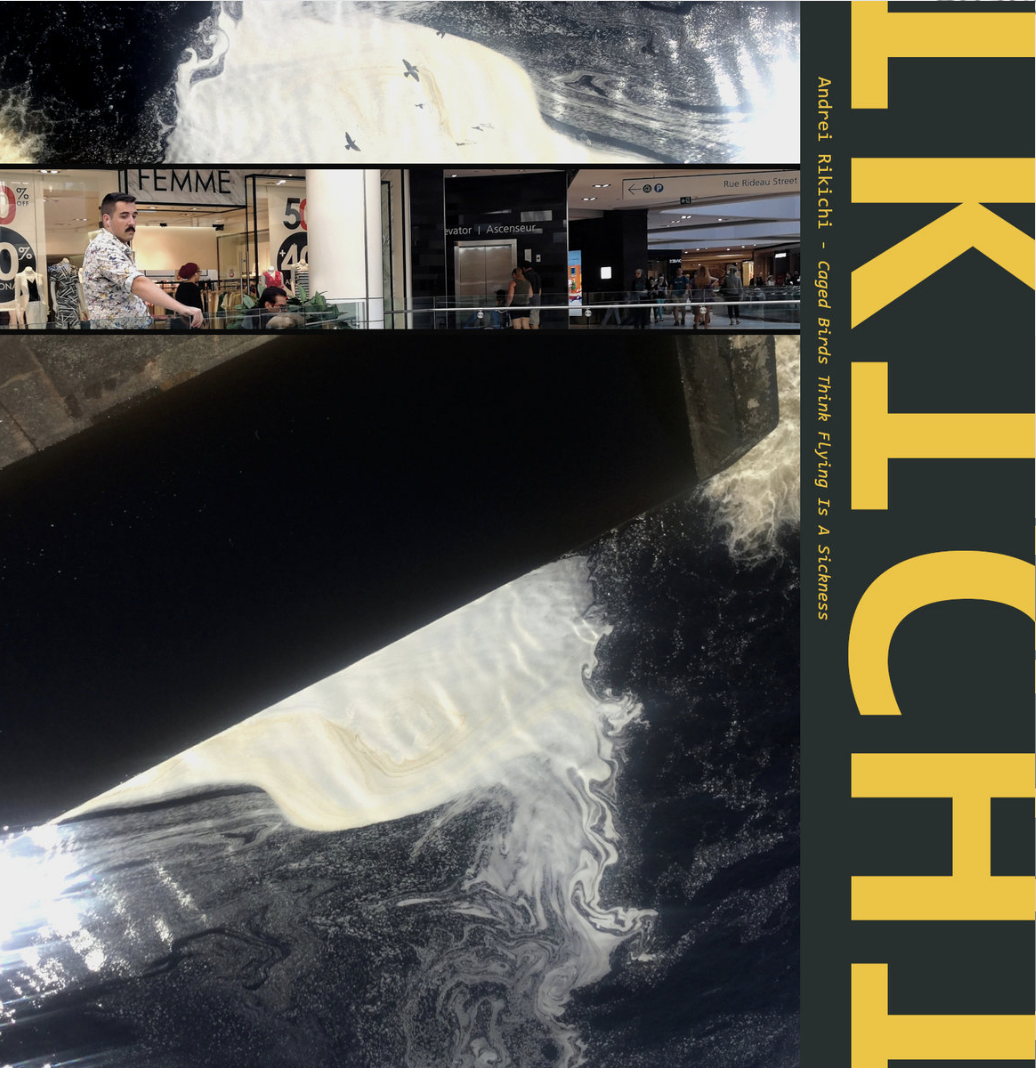
Apart from Caged Birds Think Flying Is A Sickness being a great album title it is also a fine album; an album that takes electronica, dance and cinematic sculptures to a new and experimental place, a place where white noise and James Bond soundtracks collide to great and unusual effect. ‘What Happened To Whitey Wallace’ sounds like monks playing on a old ZX 90 computer game and ‘Bag, Lyrics, New Prescription’ could be on a soundtrack to an Alfred Hitchcock movie set in a colourful but black and white jazz world.
Yes, indeed once again Bearsuit Records have released an album crammed with original thought-provoking music that is both experimental but also very listenable; an album to soundtrack the spin of a roulette wheel and the shadow-stained wet pavement of a neon signed littered night time street.
Our Daily Bread 539: Tess Tyler ‘Fractals Vol. 1 & 2’
September 2, 2022
ALBUM REVIEW
GRAHAM DOMAIN
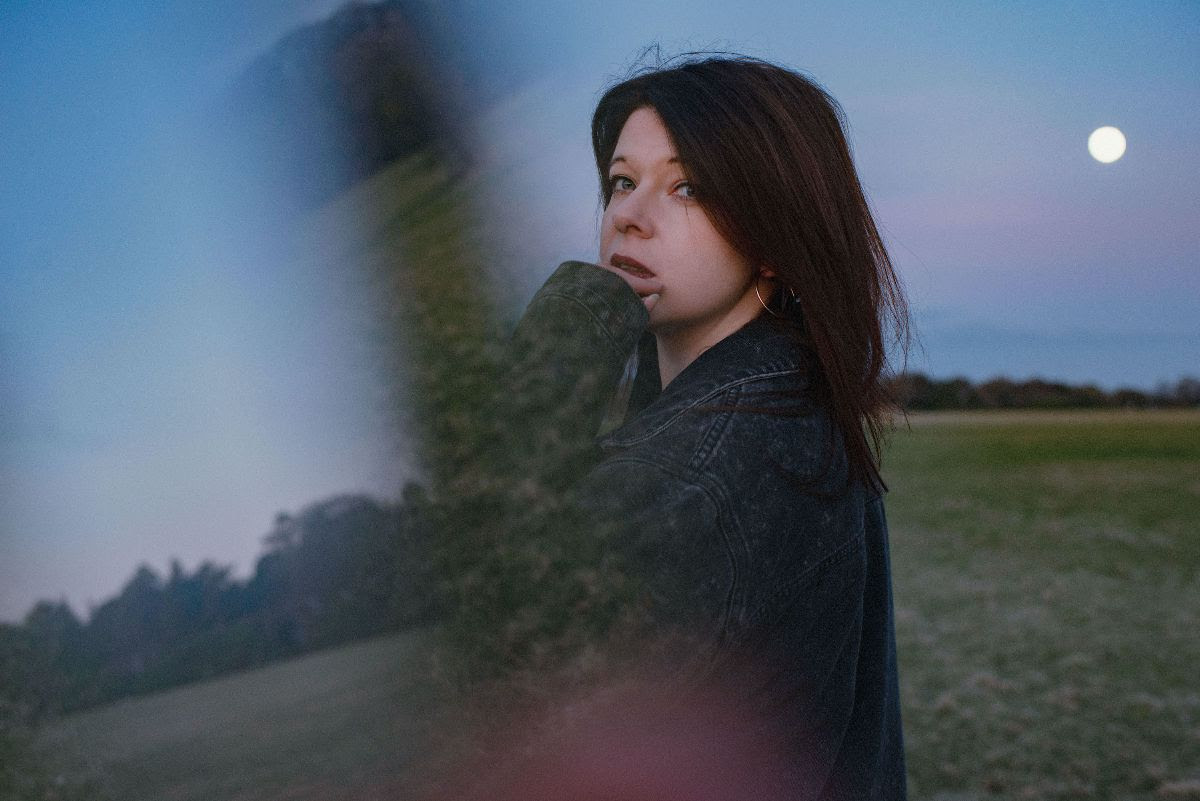
Tess Tyler ‘Fractals Vols. 1 & 2’
9th September 2022
Fractals is the wonderful debut album by Bristol based composer Tess Tyler. It works well, both as an artistic statement and also as a shop window for what the composer can do. Having composed already for film and video game soundtracks, the album includes dark sci-fi experimental electronic soundscapes such as ‘Overture’ and ‘Interlude 1’ and also neoclassical pieces that have an expansive cinematic quality used to conjure up a whole range of emotion. Undoubtedly many of the pieces will be used in films, documentaries and adverts and cause the viewer to wonder who has created this incredible music and hence track down the album.
Individually, there are some incredibly exciting tracks, such as ‘Sell the Sky’, which has all the energy and thrill of a Bond film action sequence but with its own individual sound and quirkiness! Most notably, the incredibly propulsive, expressive, explosive drumming that stop, starts and erupts into euphoria! It is so joyful, that it almost has its own transcendent trans-dimensional reality! Existing, as it does, outside of time and space and, only in the moment!
Beginning with processed electronic orchestral strings, ‘Origami Dogs’ is another propulsive, forward- moving, tribal, dark exciting cinematic piece that builds via sequencers and minimalist piano before rhythmically abstract drums and power chord guitars drive it to its climax.
Black disturbed noise begins ‘Not Mine’ before a minimalist piano motif and sequencers combine with sad brass and off-kilter drums to produce a sublime jazz in-flecked late night moonlit masterpiece!
Dark electronic noise gives way to minimalist piano, synth, white noise and backward drums in ‘7ero’ to produce a melodically sad refrain and Japan-like melody.
‘Instinct’ begins with drones of guitar, synth arpeggios and computer babble before a minimalist, expressive piano motif takes over, augmented by plucked strings creating an air of anticipation. The track builds with driving drums and guitar propelling the song to its conclusion.
One of the best tracks on the album is ‘The Nothing Cycle’ which begins with a cyclical, minimal Steve Reich piano and electronically manipulated orchestral noise before evolving into a Mike Oldfield type moody piano refrain with heavy guitar chords. A mad drum and pummelling bass soon kick in and build to a crescendo of noise that suddenly stops to leave just a bass and drum pulse and piano chords before a sequencer adds to the sense of drama and anticipation and rapidly builds momentum to a mad rock drum and tense guitar finale!

The studio album is augmented by a second album of one-off live re-imaginings of five of the pieces by The Spindle Ensemble with their interpretations of Tyler’s graphic score. (A graphic score being a way to represent the music outside of traditional notation, using visual symbols. Each instrument being assigned a different symbol). Thus, we get radically different versions of ‘Sell the Sky’, ‘Origami Dogs’, ‘7ero’, ‘Instinct’ and ‘The Nothing Cycle’. It is an interesting concept and one that reveals a different side to each composition. ‘Sell the Sky’ appears here as decidedly more downbeat, almost gloomy compared to the original studio version. Cello and violin are employed to bring out the melancholy in the music, which is augmented by disturbed orchestral dissonance with piano strings being hit and plucked to maximum effect! Similarly, ‘Origami Dogs’ employs violin, slow strings and piano to convey feelings of sadness, anxiety and loneliness.
‘7ero’ meanwhile, employs a descending marimba motif while a disturbed violin plays a lonely refrain, conveying feelings of intrigue and unease. When the piano comes in the music portrays feelings of alienation and mental imbalance before the marimba and bass play a single note to fade.
Violin overshot with minimal marimba provides the setting and a sense of space on ‘The Nothing Cycle’. The music resonates with a sadness almost verging on despair. The marimba conveys anxiety and resignation with its minimal note runs while a depressed violin conjures up the ghosts of regret.
In its reworked format, ‘Instinct’ is transformed into a beautiful melancholic piece with violin and one note marimba giving way to ascending piano arpeggios and two note double bass creating tension and suspense. Plucked guitar strings and ruminating marimba improvisations combine with violin to create feelings of sadness and regret – a lament for something lost, a missed chance. Beauty in sadness.
A debut album of beauty, versatility, energy and vision. Outstanding!
The Monolith Cocktail Monthly Playlist Revue: Future Kult, Your Old Droog, Baby Cool, Drug Couple, Brown Calvin…
August 31, 2022
PLAYLISTS SPECIAL
TEAM EFFORT/ CURATED BY DOMINIC VALVONA

All the choice tracks from the last month, selected by the entire Monolith Cocktail team: Dominic Valvona, Matt Oliver, Brian ‘Bordello’ Shea, Graham Domain and Andrew C. Kidd.
For the past couple of months we’ve been experimenting with both Spotify version and Youtube (track list will vary) versions of the playlist. Whatever your preference found both below:
TRACKLIST
Future Kult ‘We’
Grooto Terazza ‘Tropische Krankheiten’
Speech Debelle Ft. Baby Sol ‘Away From Home’
Joe Nora & Mick Jenkins ‘Early’
A.G. ‘Alpha Beta’
Your Old Droog & Madlib ‘The Return Of The Sasquatch’
Gabrielle Ornate ‘The Undying Sleep’
Yumi And The Weather ‘Can You Tell’
Baby Cool ‘Magic’
Claude ‘Turn’
Lunar Bird ‘Venilia’
Imaad Wasif ‘Fader’
Legless Trials ‘X-Tyrant’
Dearly Beloved ‘Walker Park’
Staraya Derevnya ‘Scythian Nest’
Short Fuze & Dr. Kill ‘Me And My Demons’
Group ‘The Feeling’ JJ Doom ‘Guv’nor’ (Chad Hugo Remix)
DJ Nappa ‘Homeboys Hit It’
DJ Premier Ft. Run The Jewels ‘Terrible 2’s’
Zero dB ‘Anything’s Possible’ (Daisuke Tanabe Remix)
Underground Canopy ‘Feelm’
Revelators Sound System ‘George The Revelator’
Montparnasse Musique Ft. Muambuyi & Mopero Mupemba ‘Bonjour’
The Movers ‘Ku-Ku-Chi’
Yanna Momina ‘Heya (Welcome)’
Vieux Farka Toure & Khruangbin ‘Savanne’
Barrio Lindo ‘Espuma De Mur’
Brown Calvin ‘Perspective3’
Nok Cultural Ensemble Ft. Angel Bat Dawid ‘Enlightenment’
Li Yilei ‘A Hush In The Dark
Celestial North ‘Yarrow’
Andres Alcover ‘White Heat’
Nick Frater ‘Aerodrome Motel’
Drug Couple ‘Lemon Trees’
Cari Cari ‘Last Days On Earth’
Ali Murray ‘Passing Through The Void’
Diamanda La Berge Dramm ‘Orangut The Orangutan’
Your Old Droog ‘The Unknown Comic’
Jesse The Tree ‘Sun Dance’
TrueMendous & MysDiggi ‘Talkk’
STS & RJD2 ‘I Excel’
Jester Jacobs & Jack Danz ‘HIT’
Oliver Birch ‘Docile Healthier’
GOON ‘Emily Says’
Lucy & The Drill Holes ‘It’s Not My War’
Apathy, Jadekiss & Stu Bangas ‘No Time To Waste’
Verbz & Mr Slipz ‘Music Banging Like’
Sly Moon ‘Back For More’
Guilty Simpson Ft. Jason Rose & DJ Ragz ‘Make It Count’
Hi, my name is Dominic Valvona and I’m the Founder of the music/culture blog monolithcocktail.com For the last ten years I’ve featured and supported music, musicians and labels we love across genres from around the world that we think you’ll want to know about. No content on the site is paid for or sponsored and we only feature artists we have genuine respect for /love. If you enjoy our reviews (and we often write long, thoughtful ones), found a new artist you admire or if we have featured you or artists you represent and would like to buy us a coffee at https://ko-fi.com/monolithcocktail to say cheers for spreading the word, then that would be much appreciated.
NOVEL SERIALISATION
AUTHOR: RICK ACV

Following in the wake of his debut novel THE GREAT IMMUREMENT, which we serialised during the summer of 2020, Vukovar helmsman Rick ACV now follows up with the surreal, esoteric and challenging Astral Deaths & Astral Lights. Playing with format, language, font, with half-thoughts of waking hours and occult merge with dream-realism and a languid sense of discomfort: a sorry state of existence. William Blake and Austin Osman Spare meet Kōbō Abe in the hotel lobby portal of the never-world: personal and universal. Parts One & Two were debuted earlier this week. We continue with the next chapter, HOTEL NOTHING/III, below:
HOTEL NOTHING
I’m stooped and my joints don’t seem to want to acknowledge my directions for them.
I gather my thoughts. All there is, is nothing to me.
A phone rings and I answer it, but for a few moments the words spoken appear in vision as a series of symbols and guttural colours. Flashes from the language axis. The world has spun in a new direction without me and I’m left behind; in a strange place and a strange time, now I can reach towards something new.
Then I am comforted as everything falls into place. Those symbols I saw before me, as that mysterious voice spoke, shift into something I understand a little easier and then turn to vapour, finally vanishing as I reach out with a curious finger.
Almost suddenly, I fall back out of a comforting understanding into something terrifying as I actually listen to the voice. This is a panicked unknowing. I have never felt this way before.
In response to my ‘hello’ the voice says “Good afternoon. I hope you are well.” I see strange flashes of someone and something. “I hope you are well.” it repeats and continues “I assume I am speaking to Mr Hanshiro?”
“Yes.” I utter, in the almost-exact same voice as from the phone, only mine isn’t as deep.
The voice continues to tell me about an important letter I will receive and to make sure I deal with it immediately.
The someone and something I see without seeing is a man in a back room. I recognise the man as myself for some reason, though his features are obscured by bright light.
I am aware of this self as though I have lived it all my life. My stomach turns.
“May I ask to whom I am speaking?” I say with as little suspicion as I can muster. My opposing line responds with a polite ‘of course’ then on to “
XXXXXXXXXXXXXXXXXXXXXXXXXXXXXXXXXXXXXXXXXXXXXXXXXXXXXXXXXXXX
My ears may bleed. My brain may catch fire. My limbs may collapse in on themselves.
The answer was drowned out by a bell sound so abrasive…. I briefly lost myself.
I come back to myself, This Self.
A letter drops to the floor in this neat, bare office-house. As I read it, the inner voice is one I don’t recognise and the disturbing biloquism only further serves to disrupt my adaptation to my new surroundings.
The letter:
Dear Mr Hanshiro,
I write to inform you of the regrettable and unfortunate death of your dear insert family name. In his her will, he she passed on to you the UNRESTRICTED ownership of the Hotel Nothing in the [REDACTED] district in [REDACTED].
Under his her instruction, the keys will be passed to you by ourselves, [REDACTED], on his her behalf. Please come to us at your earliest convenience in order to conclude this matter. We are situated on [REDACTED]. I look forward to meeting you.]
Yours Sincerely,
[REDACTED].
***
I arrive as a recipient of a substantial inheritance outside the vast building. There are swarms of people around the entrance. I make my way through the crush, passing hot flashes of hot fleshes. I come to a corridor full of people only occasionally moving forwards – I spot the door behind the reception. Only one sweating, stinking shape of human is permitted through at a time.
I need some water.
I am old and tired and hot. This airless hole will be the death of me, I begin to not-even-worry, and instead just accept the fact. The noise is deafening.
***
The receptionist and I shout to no avail as she allows me through the door.
There is only one chair in here and another door. I make to sit down but a young woman, drenched in sweat, angered and flustered points to the door.
“I’ve been sent this letter…”
My voice is weak and pathetic before it’s cut off by her simple, straight-to-the-soul statement:
“Yes, that’s why you’re here, you have no more relatives, go through the door.”
I do so and find inside a cavernous room an empty desk, atop of which is the keys to my new empire. I am so tired.
I am so tired of being close to death that I ignore my own hesitation, take the keys and make my exit. There is no-body and no-thing and I am back in the cool rain that has shifted here from another day.
X X X
I arrive at the place. It’s an imposing, pristine concrete thing, looking for all the world like a Las Vegas hotel stripped totally bare, picked up and left to just simply exist in some industrial wasteland purgatory. There are well-tended gardens that are clear boundaries between two worlds, from the Hotel Nothing to the wild and overgrown wasteland that surrounds and suffocates all else. The extreme and striking border forms a perfect square around the hotel, even taking in some woodland, and I can’t help but allow my mind to wander and wonder about halos… their meaning… what shapes they may take and any significance of any of this.
Taking a slow and ambling walk around the grounds, stopping to smell the roses, it crosses my mind; an old creaky man such as this-myself is just as easily pleased by the gentle and pleasant as the ease of the confusion that comes to the limbs at the end of their use. There is a remarkable freshness inside the Lines and I could swear that it’s brighter than I have ever experienced, whereas as the whole of the sky, all within and without it, was pitch grey just a few metres and moments previous.
There is a pond and marsh which I cross over on an immaculate wooden walkway, feeling no effort in my movements and have to check I am not floating into the day. I haven’t felt this graceful for years. The path I am on takes me back towards the back of the hotel, but in my way is a maze.
There is no way around; all-ways seem to lead up to and then away from the building so I reluctantly enter this maze that has somehow bloomed from nowhere. I walk and walk and walk and I encounter no Dead Ends. I do-not and can-not understand. I am walking in circles, the length of which are undeterminable. I think as quickly as my slowing mind will allow: I put down my hat on the ground and walk on.
I carry on for several minutes, still gliding, effortless, and can feel panic rising from the very soul of me. Suddenly my joints ache, my breathing is hard and the Glory Of The Day becomes as a recurrence of a terrible memory. I go to lean upon the hedge-wall and find myself going through a door right to the centre of the maze. All centres. All things must have a centre or they are unthinkable. I have found this one. In this centre, a strange man is sitting at a small table with an empty chair facing him. Upon spotting me he pours us both a cup of tea and beckons me to join. I shuffle forwards. His face is powdered white. A brilliant white. Total white. I want to feel apprehensive but can’t. I feel nothing. I decide I will decline the tea, remain standing and simply ask for directions.
Now I am sat opposite him.
Now he stares. His features seem to change.
Now he speaks.
The Mystery Man greets me. I ask him for directions.
“In time. Why not take the tea? It’s hot and delicious.” He smiles. “I insist you join me.”
I ask about the maze and its impenetrable nature. Or actually, the ease in which it is penetrated but the difficulty of getting out.
“Surely the new owner is not in a rush? The place and employees take care of themselves.”
His smirk bothers me now. Feelings, all feelings, are slowly returning.
I agree in supposition and ask how he knows who I am, careful to mask my un-nerve.
“May I ask how it is that you already had the keys? Or how it is that two versions of you held a coherent telephone conversation; both in the present but one in the past and one still in the future?”
I take notice of his voice. Something about the thick-lightness makes my stomach knot in almost-nausea.
I can no longer mask anything and I make my confessions to Him, of how bizarre I found his question and how confused – to the point of fear – I am. All of this without saying a word.
“I may not. Drink your tea, Mr Hanshiro.”
I do so and it’s delicious and warming. Just as he said. I tell him.
“It’s a recipe I’ve had for hundreds of years.”
I suggest he misspoke and assume he means his family have had it for hundreds of years.
“If you would prefer, sir.”
I wish he would not speak. That voice. That voice of all-substance and no-substance.
I put all thought out of my mind ask how to get to the Hotel Nothing from here once again.
“Look to your right.”
I open my mouth to speak but the mystery man so forcefully stares into my eyes and it feels he is controlling them, directing them to where he instructed.
The maze is no longer there. Well, it is, but it’s nothing more than a painting upon the ground. An optical illusion. I turn back to the Mystery Man, dumbfounded, but find nobody there. I sit in silence. I do not care for how long. I go to put the cup on the table. There is no table.
The table is not a table. That, too, is a painting on the ground.
Along with both chairs.
I’m squatting mid air and at this realization I recognise the agony most of my body is in.
I slowly make my way to the hotel.
A SHIFT.
Huge, open hotel lobby. There isn’t anybody. Any-Body at all.
A pressed bell.
A deafening noise.
The noise down dark corridors. The noise in the hidden staff spaces. The noise everywhere.
Abandon hotel lobby.
A story of an old, disfigured ex-prostitute on a radio.
Sleep.
A RETURNING AND RECURRING SHIFT.
I enter my hotel and find a row of people all in a line awaiting my arrival. All are hotel staff it seems and all are ignoring the growing, silent queue behind and beyond them.
A man with a young face and an old body approaches me.
“Welcome back Mr Hanshiro! Glad to see you’re better.”
His eyes widen with horror.
Everything but his face is old, decrepit almost, in ways that are obvious yet these ways I cannot process.
I have to ask what he means. I have to. So I do.
Please forgive my ignorance, sir, I meant to simply say ‘welcome’. I am the manager of your Hotel Nothing, my name is Mr John; you may call me Mr Manager if you find it difficult to recall names.”
I do not like these people.
I assure him I can recall names perfectly well. I ask Mr John to show me to my quarters.
He seems affronted.
He pleads.
“Well, that really isn’t part of my job… besides, there are things we must see-to before anything else.”
His suit is sharp and expensive looking. It appears to me as funeral attire. I understand nothing of business. For now, I’ll agree to whatever I’m told. I just want to rest.
His countenance is changed and becomes abrupt and impatient. He storms to the employees and angrily urges me to follow.
One at a time the employees bow to me and walk away without saying a word and without looking back. This takes a long time and then all is finished.
I ask Mr John how useful this time was spent without learning their names.
“Mr Hanshiro, please, that introduction was just fine. You will learn the names over time, and even if not, you probably won’t need to anyway.
I nod.
I have no energy, none to waste on further questioning.
I’m taken into the office behind the front desk. Here, there is a familiar looking young woman; she seems shy and speaks to me in a language My-Self in This-Self understands. She tells me her name – Catherine – and that she is the junior manager. This exchange is easy and welcome.
“I will show you around and to your room if it pleases you, sir.”
I would be pleased to go straight to my room and gather in my rapidly fracturing being.
She looks unsure and explains they aren’t the orders she has received, but will make an exception.
I should think so.
We make our own way without Mr John and come upon a lift, into which I happily step, thinking of a time in the coming futures where I will be well-rested. Catherine tells me of how she rose to her position through merit and excellency, whereas…
“Mr John took advantage of your absence to seize control of the running of this place…”
There is a blackout for less than negligible amount of time. Or maybe it was just me. Or maybe nothing at all.
“Mr John took advantage of The Owner’s absence to seize control of the running of this place.”
I do not feel this is appropriate.
“I hasten to speak ill of my colleagues – or indeed anybody at all – especially if they are not present, sir. But this may be my only chance.”
This is too much stress for today. I try to tell her she may see me first thing tomorrow and tell all so I may sort all.
“Please! Mr John is a degenerate and a deviant. He claims to love me, that he can’t be without me. He is probably watching and listening in to us. Right now. He just wants to control me. He spies on my everywhere I go. There are cameras everywhere. Everywhere!”
I’m aware of Catherine adjusting her breasts but I ignore it and tell her I will sack the disgusting pig.
“You can’t.”
“Why not?”
“He is… irreplaceable… it isn’t possible.” She says this with a disarming nonchalance. Just a few seconds ago she was begging for my sympathetic ear and now she is completely and totally resigned to her treatment. “A necessary evil.”
I start to press her further on this but notice she has now bared her breasts and I become enraged. I express my contempt.
“He’s watching even now. My flesh will blind him to our discussion, blind him to his own fury. I think he’s gone. Would you like to touch?”
She turns to me with sparkling eyes.
I am filled with horror.
No…
Please no…
She approaches and presses up against me. I weaken. I try to push her away and in doing so I touch her naked skin. It burns me. I retch and cower in the corner. Catherine is concerned and strokes my hair, unknowing of the panic I am stricken with. Her breasts are in my face. The air is unbreathable and I can no longer cope.
The lift doors open.
I run.
I am in a room with only one door. Catherine is looking on, uncomprehending.
I force my way into the darkened space. Harsh pulsating lights begin to flash on and off, strobe-like, as a gently throbbing music plays, quietened, as though through water. The room is covered from floor to ceiling with breasts. I vomit uncontrollably. It lands on the ceiling. It stays there. I see a door and crawl towards it, pulling myself along, wishing for nothing but the retching and heaving to subside. The door is a towering vagina and I have no choice but to have to go through it.
I am birthed into a blinding whiteness.
My senses come to me intermittently.
A crowd of women.
They fuss over me.
They clean me.
They cut the newly attached umbilical cord from me and I scream in agony.
I am put onto a moving surface and am carried away into The White.
I drift.
I am moved.
My existence is vapour-light.
I am in yet another room. Everything is monochrome. Empty but for two small tables, each with a telephone atop. An old man. I think of him as Il Duce. He is at the furthest one. He faces me.
Il Duce indicates towards the phone on my table.
Pick it up.
His lips do not move but his voice comes to me down the phone.
He stares into the whites of my eyes. He stares into the total depths of me as he un-talks.
“Do no fear me.”
Who are you?
“I will not answer.”
Why not?
“There could be any number of reasons, but I am not here to discuss them.”
How come you have appeared to me?
“I am to recite to you a warning, from a different story, from a different time, but it applies to all human life at some point in different ways and the point has now come in yours. Will you listen?”
I will.
I awake in my room.
I think about what he said.
There was a story of a gatekeeper and a man seeking passage through the gate. The gatekeeper denied the man entry on unknowable and unchangeable grounds.
I recognised this as a story from deep within another story.
X X X
I arise, I dress, I stop; I feel eyes upon me. I allow them to continue for a few moments and I begin to hear a rising, heavy breathing which digs its way just so into the centre of me, forcing itself through ears, through mind, as though this is all I have ever heard. It becomes piercing as I search for the source and I in turn become manic as it turns to pain. This is unbecoming of me. I burst out of my room and with this expense of my energies I fall to my face in a silent living area in a confused St Vitus dance. Catherine is sitting on a couch, looking me over.
“Come here Mr Hanshiro.”
I respond with a blank look.
“Come on, it’s okay.” She is insistent and I lose myself to her maternal authority. I go over to her, childlike and pathetic.
“Rest your head upon my lap. Shh. I’ll make it all better for you.”
Catherine starts to sing softly a lullaby as I comply and, soon, she is stroking my hair.
I tell her I think I am getting a cold.
She leans down and starts to kiss me sensually. Paralysis and transfixion.
“Poor baby. Do you want a feed?”
…
“Do you want a feed from mummy?”
This is not what I want. She begins to take out her breasts. Again. What does this life, this myself mean? Why is she starting with this indecent nonsense again?
The shift.
“Mr Hanshiro?”
…
“Mr Hanshiro?”
We are sitting on the couch, together but apart, still in this silent living area that is nowhere.
“Do you want to get some food? From the bar?”
Confused and erring to begin with, I respond in agreement. I want to get out of this dark room.
Catherine smiles.
“I’ll organise some company for us.”
I’d much rather you didnt, Catherine.
“I’ll organise some company for us.”
I am so taken aback by the strength in her will in just those six simple words that I don’t argue.
These people have total control over me.
This place has total control over me.
And every-thing and every-one else.
Total Body Control, whether in-body or out-body.
Hotel Restaurant:
This is viewed from outside this myself, at times.
Catherine and myself sit at a table with a couple that look exactly the same as us. The setting changes from time to time between two places. It starts as normal, smoky restaurant and bar, high-ceilinged and large with constant chatter, waiters milling about busily and there is a band playing some unintrusive music on a stage. The other place is a tiny, perfectly square room that contains only our table and a bar that isn’t quite right. On the wall in front of us is a projection showing the ‘rest’ of the restaurant and all its inhabitants.
Catherine: I’ll do the introductions then shall I, darling? (I see myself begin to stir as though woken from daydreams long and old) I’m Catherine and this is my husband Mr Hanshiro. Nice to finally meet you.
Mirror Catherine: It’s lovely to meet you, too. I’m Catherine and this is my husband, Mr Hanshiro.
Catherine: (Turning to me) Catherine and dear Mr Hanshiro live in the hotel. They’re high up in a sub chain of command here.
The constant state of confusion I am mired in within my hotel is starting to become tedious.
I view ourselves and theirselves through tired eyes slowly burning as they discuss how it is that both sets own and run the place in parallels without any knowledge of each other’s domain. This goes on for a while until Mirror Catherine suggests and hints at things of a sexual nature, before Catherine confirms it without me understanding the real meaning. We are all turned towards the idea of going to our room under the pretence, in my unaware understanding, of continuing our meal there.
Catherine violently rides me in a rape that I cannot and do not fight against. I watch this and can do nothing.
X X X
This is now the next day or the next time or the next whenever it is. I seek out Mr John and try to make a complaint about Catherine. He calls me a liar and we argue until he tells me she has already been removed and hidden away somewhere. I am ill and I am tired and I care little for any of this. I dismiss him. The room behind the office simply marked ‘Manager’s Bedroom’ appeals to me.
Inside the tiny room is a human sized nest on the floor. There is little to describe about the rest. It feels so empty and so bare that I cannot help but question its existence and quantum lack-of-presence.
There is a phone. I am drawn to it. I pick it up. The voice on the other end sounds familiar.
“Hello?”
Good afternoon. I hope you are well. I assume I am talking to Mr Hanshiro?
“Yes that’s correct. What is the nature of the call?”
Information. You will receive a letter in the post today that carries with it some weight of importance. Please pay it with your upmost attention.
“May I ask who I am speaking to?”
I do not know. This Self is no longer My Self. I watch myself disappear from my own view as I slip away.
III
The partner sits upon a step.
The partner is upset.
The partner weeps and lets the realism that THEIR partner is less and less present become the biggest prescience.
I am further and far removed from the usual world and it has its effects and affects. I understand that there are consequences to every action as I am not a moron.
However, which place is it whereby the actions count for anything? Even something… It feels less and less like the usual world.
I must try and make it up to the partner in this world. Just in case.
Singles Night At The Monolith Cocktail HQ: Montparnasse Musique, Lunar Bird, Gabrielle Ornate, Future Kult…
August 24, 2022
SINGLES/VIDEO TRACKS ROUNDUP
BY DOMINIC VALVONA
PHOTO CREDIT: ERIC BECKMAN

A one-off revue of recent and upcoming singles and videos being dropped that I didn’t have room for in my perusal roundups, I’m trying something very new with this post, as the blog’s never specifically done this sort of thing before.
Montparnasse Musique ‘Bonjour’
(Real World Records)
A welcoming polygenesis, South African lilted and woozy pattered beat teaser for the forthcoming album from the duo Montparnasse Musique, ‘Bonjour’ is full of pan-African essences, rhythms and goodwill. A collaborative affair, the new single features both Muambuyi and Mopero Mupemba of the Congotronics outfit, the Kassai Allstars. Another layer to this complimentary electric mix, a congruous, scene-setting music video has been created – shot on the streets of Kinshasa – by the renowned filmmaker Renaud Barrett (Systeme K!, KOKOKO!).
Carrying on from where they left off with their self-titled EP, Aero Manyelo and Nadjib Ben Bella combine their South African and Algerian roots with both the old and new to create a 21st century African hybrid that mixes ritual, ceremony and ancient mysticism with what’s happening on the streets and dancefloors of the continent now. The debut album dig, Archeology is due out on the 11th November 2022. Expect a review in the coming months.
Future Kult ‘We’
(Action Wolf Records/AWAL)
One of my favourite renegade soundclashs of 2022, the Berlin-based Welsh-Austrian sonic-visual partnership of Sion Trefor and Benjamin Zombori pump out their fourth and newest single ‘We’ this week.
In the wake of their highly recommended self-titled pan-global sounds album (by us), arrives another eclectic, omnivorous power grab that drags the vacuous, soul-destroying and destructive selfish, image obsessed malignant hyperbole of the 21st century onto the dance floor. Moodily bouncing to the sound of barricade drums and climatic EDM, with shades of Battles, Front 242, The Juan Maclean and Midnight Juggernauts, the Future Kult duo and friends turn anguish and riled-up anger into an infectious broody anthemic electronic flashpoint. It gets better on every play I’m telling you. And Benjamin’s visual effects add a cosmic energy to the sound.
Lunar Bird ‘Venilia’
Excuse my ignorance for one second, but I did think the title of this latest diaphanous, magical enchantment from the Joan Miro-inspired Lunar Bird was just another spelling of the word ‘vanilla’. It is of course ‘Venilia’ the Roman deity associated with the winds and the sea that proves a both lofty and atavistic poetic subject for another dreamwave wisp of a song from the band. Allured hallucinatory towards that goddess, the lush Beach House-like soundtrack of synthesised fizz, gauzy psychedelic breathlessness and swimmingly vibed restlessness entwines mythology with a beautiful language of rebirth and longing; an Italian cinematic beach paradise in song – even if it is probably the band’s claimed home of Wales.
Celestial North ‘Yarrow’
Like a muse siren from the canvases of the Pre-Raphaelites or the cooed breathless yearns of a chivalry medieval tapestry depicting some magical garden of escapism, Celestial North once more steps over into the ethereal realms with this enchanted botanical themed suite. A meditative fauna dwelling score of beautiful piano tinkled reflection and sentiment, misty synthesised dreamy atmospherics and diaphanous sighed voices, has the air of something magical and sublime. ‘Yarrow’ then is something of a healing balm; nature’s ways distilled into a most stirring but pleasant mirage.
The Edinburgh artist, now based in the Lake District, has been graciously releasing tracks in the run up to the debut album, earmarked for this September. I suggest you keep an ear out for that album.
Violet Nox ‘Magnetar’
(Aumega Project Records – Germany/Infinity Vine – USA)
Available since the end of July 2022
From the Gaia attuned Eris Wakes album, another colourful, textural exploration visualisation to accompany an aria voiced (courtesy of the trained opera singer and guest vocalist Noell Dorsey) electronic state of consciousness. Yes, the Boston synth collective (working around and off the core of Dez De Carlo and Andrew Abrahamson) send out more positive if mysterious vibes with Chris Konopka’s magnetic filings turn psychedelic corrosion video for the ticking House rhythmic, phaser waves and buoyant drum pad bobbled ‘Magnetar’. Artist Konopka manages to add allure and to entrance a track that is already fairly wispily cosmic and trance-heavy.
Gabrielle Ornate ‘The Undying Sleep
Proving quite the prolific artist, the colourful mélange imbued Gabrielle Ornate has just released her seventh single, The Undying Sleep. More pop, slightly less bohemian, the language remains but the trance and maximalist production is upped another level with a slow release of cosmic fizzled star bursts, churned trip-hop like beats and St. Vincent-style guitar licks. Teardrops fall into the ether under the hippie eye of Horus on another hit record from the burgeoning artist. One to watch as they say.
Barrio Lindo ‘Espuma de Mar’
(Shika Shika)
A move by the Latin American folktronica artist Barrio Lindo (alias of Agustín Rivaldo) to create music for the listener to get lost in, this new wafted, dreamy project was made with friends on the outskirts of Buenos Aires in early 2020. The sea foamed imbued Espuma de Mar album is filled with refined, studied evocations of a jazzy tinged, ambient and woozy South America, Africa and the Caribbean, and chamber orchestral music.
The title-track traverse features the hazy blows, lingers and spells of Mariana Iturri (on flute and vocals), Nicolás Lapine (on trumpet), Ignus on drums and Rumbo Tumba and removes Latin lilted moves to somewhere entirely different, even ethereal. The album is due out on the 23rd September 2022.
Hi, my name is Dominic Valvona and I’m the Founder of the music/culture blog monolithcocktail.com For the last ten years I’ve featured and supported music, musicians and labels we love across genres from around the world that we think you’ll want to know about. No content on the site is paid for or sponsored and we only feature artists we have genuine respect for /love. If you enjoy our reviews (and we often write long, thoughtful ones), found a new artist you admire or if we have featured you or artists you represent and would like to buy us a coffee at https://ko-fi.com/monolithcocktail to say cheers for spreading the word, then that would be much appreciated.
NOVEL SERIALISATION
AUTHOR: RICK ACV
Following in the wake of his debut novel THE GREAT IMMUREMENT, which we serialised during the summer of 2020, Vukovar helmsman Rick ACV now follows up with the surreal, esoteric and challenging Astral Deaths & Astral Lights. Playing with format, language, font, with half-thoughts of waking hours and occult merge with dream-realism and a languid sense of discomfort: a sorry state of existence. William Blake and Austin Osman Spare meet Kōbō Abe in the hotel lobby portal of the never-world: personal and universal.
Part One now follows:
THE ASCENDER/DESCENDER
I am The Ascender/Descender of the Lord’s ladders. I get no closer nor further away from Him and His glory; these steps go sideways.
I am an angel, continually changing the affairs of man.
I die nightly and daily there is less of me.
This will continue until there will be less than nothing left.
I
The conscious part of the mind is useless; it only serves to reinforce the separation between ourselves and that which we desire.” – Austin Osman Spare.
This is how to misinterpret and misunderstand someone and something.
Then:
“Rest uneasy.
Consciousness as a forfeit-too-far.
The body’s surrender to silent sleep is not something to underestimate nor un-understand.
____ has begun to experience something disarming in its simple explicity and with an overwhelming lack of disturbation to make this a truly unpleasant experience:
Faces appear. Faces appear in the mind’s eye. Faces unrecognized. Faces constantly morphing into each other, hundreds in number, maybe more. They are as detailed as if they were in the extreme presence.
The faces start to bring a warm feeling of familiarity – the process of the passing of awareness. Lulled. Now. Now it comes. Now as the faces change and interfere with one another’s faces, sleep is on its way.
Only it isn’t sleep.
How can it be?”
This is what I found on a piece of paper in some forgotten pocket. I say forgotten but for how long it has been neglected I have little-to-no-idea. There are those places that drift into view through the mist and the grey-light and you have little clue as to where from and what for they came. You will tell yourself that they are a portal to another world. They must be, as they give something that alters your world-view so drastically that they cannot exist permanently within this world. That’s what the neglected pocket is. And that’s from where the paper did come. Only now, it isn’t paper. It is a recollection of something that is happening right this second, even. As this is being read by whoever’s eyes may be reading, it is also being written by the author long dead. The literal sense of the author being long dead will far outlast the metaphysical.
“It’s a fundamental flaw in the human condition that we appreciate beauty only in absence. We are stars that died centuries ago and our love and light is only fully absorbed after the final fade out. A pin prick in the night sky, a microscopic peephole into heaven. I find myself looking up at the sky in the kind of cold winter night that briefly recharges my belief in the value of existence hoping that through one of these peepholes I will catch a glimpse of your face.” – Daniel Shea.
Every night is the changing of the faces before ascending/descending into the other lands, other places – other people.
Maybe just as an observer, but it doesn’t feel that way.
This is exhausting.
This is all consuming.
This is life-threatening; as The Ascender/Descender, I become far removed from the usual world, to reside in the constant present.
The Constant Present:
A place with no consequence no matter the action. The past cannot be rewritten through changing eyes nor waves of fury. All futures remain an imaginary and far away world.
THE LADDERS
I awake in the body of the dejected and in the mind of the cunning.
I recall the conversation with my blind Father from yesterday and I move with ease from the scorched ground, away from his bitterness and into the bright sunlight that forms a halo around this Earth. The promise that the Holy warmth fills me with is sudden and I know I will one day be the victor.
I have a feeling that my victory will soon be of little consequence.
The first steps upon my journey are undertaken and the hard ground feels welcoming underfoot, I have reassurance from the single, solitary trees that line the path also, as I know there will be place-to-rest within their shade should I need it. A shade within their shade, a sculpture by the sculptor.
Things quickly change, as though in a dream.
What sets this feeling off and the feeling of inconsequential victory is a sudden glimmer in the sky, as though the clouds are glinting and sparkling and shimmering.
It can’t be a dream. I know I am not myself but I know that this self is Their self. There is no disconnect.
This must be a visitation.
The destination moves towards me and I needn’t approach.
I look more closely at the shimmering sky and the little bursts of light; it begins to form waves of awe, waves of silver-white Godly brilliance and I am moved to almost-tears. I cry out, a noise that I have never before heard from myself. His compassion rains and reigns down over and upon my sacrificial spirit, as right before me appears and disappears a Great Ladder. Its shape and form can only be made out by the agitated atmosphere that surrounds it, and I notice the world that was around me has melted away into the unveiling.
Everything comes into focus and the spectre of His love comes clear; the extent of his intent of creation is now known within me and the purpose of his Angels brightens the flesh under my flesh as I observe the moving up and down, passing through their other selves.
Blessed be the path between Heaven and Earth.
Blessed be the Angels, ascending and descending to and from bodies and lives.
Blessed be Me; I understand now that I am one amongst the many Angels Of Light that give cause to the lives of all, the perpetual movement between bodies, the constant Hand in the Constant Present.
I don’t forget the argument with my Father as I am armed with more than just my cunning now.
II
To sleep and to never have to wake. To wake and to never have to sleep. That would be the dream. To be in a constant, secure state and to be exempt from eternal flux is a set of circumstances, I imagine, that would yield a lifetime of peace and contentment.
I do not have a care for the unambition behind this.
I have little enough feeling on anything in the usual world as it is that the idea of having to fake guilt and guiltiness seems too much like an inconvenience.
My absence in the usual world may well be with its setbacks – mostly minor. I’m aware but have such little interest that I’d much prefer to defer to another note. I don’t really know where they come from, but they handily explain my ascensions and descensions. The ladder itself and the actual Astral Dances are fine within my control. These scraps, however, assist the very Innerself to easily given and easily forgotten unexplanations.
This note:
“The ladder is not a physical image and thing and device, but metaphysical.
That said, a literal interpretation is best suited.
It can’t be explained why.
…
In fact, this makes no sense whatsoever.
…
When _____ slept, was his vision of those angels on that path so on-the-nose?
It is hard to believe a creation that touches the Glory Of God can be so unimaginative and so plain.
What are these steps, then, and how do they appear to _____ as they are traversed?
The Death Of The Author will hereby be leaned on (again and always), as perfect an excuse as there Ever-Was and Ever-Will and Ever-Is.
And now
After all this straying
The path becomes lit once more with a fantastical and strictly Holy sense of wonder.”
I am so alone. I stare at the ceiling. I can’t understand the time of the day. You’re so alone. We’re all so, so alone.
This house is a home but I feel like vermin. I didn’t wash today. Again. And now the day is over. Again. I don’t want to sully the fresh-scented sheets. That could be my excuse.
I could just sit and wait and pass through the darkness at the close of day and avoid the coming transformation.
Light or dark, it will still happen, I remind Ourselves.
Myself.
“Lie back and take it like a man.”
Here are the faces.
Here comes the shift.
Here is Thee Transformation.
Hi, my name is Dominic Valvona and I’m the Founder of the music/culture blog monolithcocktail.com For the last ten years I’ve featured and supported music, musicians and labels we love across genres from around the world that we think you’ll want to know about. No content on the site is paid for or sponsored and we only feature artists we have genuine respect for /love. If you enjoy our reviews (and we often write long, thoughtful ones), found a new artist you admire or if we have featured you or artists you represent and would like to buy us a coffee at https://ko-fi.com/monolithcocktail to say cheers for spreading the word, then that would be much appreciated.
Our Daily Bread 538: Ali Murray ‘Passing Through the Void EP’
August 18, 2022
EP REVIEW
GRAHAM DOMAIN

Ali Murray ‘Passing Through the Void EP’
The loneliness, the isolation of mind. Where are we headed? What’s round the corner? The doubts, the fears, forever gnawing away! No-one survives? We all survive? Eternity never ending? So why am I wasting time on the mundane? The daily routine! The useless, pointless, never-ending nonsense! The soulless celebrity culture as a means of escape? Or eternal imprisonment? We all have a life sentence! Better make the most of it! Transient beauty, youth vanished too soon! The temporary bliss of love before the tsunami of devastation! Pain! Longing! The landscape forever changed! Eroded! What is important? Don’t sweat the small things! Go for the Big One! Go for It! Go for it! Go for it! Go for It! What is it?
Three songs! Howls in the dark! Cries to the abyss! The dark poetry echoing in the blackness! The guitars garrotted! Nailed to the cross! The sound bleeding out on a canvass of emotion! Colours seen in the mind! The soul connecting with Spirit! Healing! Healing energy! Positivity! There is Light! Life continues as it has always done. The once impenetrable darkness recedes! Melancholy as a means of redemption – coming through the other side – into the light, once more. Passing through the Void that is life in the material world! The journey is important, the learning, the experience, the empathy gained, the understanding and knowledge. To stand in another’s shoes. To reach out to each other and connect. Love. That’s what’s important. That’s the Big One! The test, everyday! To think and act with love. It is hard! Human kindness! Love! Why do we find it so difficult? Never give up! Each small step is worth the effort! Music for the soul!
Hi, my name is Dominic Valvona and I’m the Founder of the music/culture blog monolithcocktail.com For the last ten years I’ve featured and supported music, musicians and labels we love across genres from around the world that we think you’ll want to know about. No content on the site is paid for or sponsored and we only feature artists we have genuine respect for /love. If you enjoy our reviews (and we often write long, thoughtful ones), found a new artist you admire or if we have featured you or artists you represent and would like to buy us a coffee at https://ko-fi.com/monolithcocktail to say cheers for spreading the word, then that would be much appreciated.
Our Daily Bread 537: Yanna Momina ‘Afar Ways’
August 16, 2022
ALBUM REVIEW
Dominic Valvona
Images: Marilena Umuhoza Delli

Yanna Momina ‘Afar Ways’
(Glitterbeat Records) 26th August 2022
Crisscrossing a number of the world’s most dangerous and often remote locations for the Glitterbeat Records label since 2014, the renowned Grammy Award winning polymath-producer Ian Brennan has repeatedly remained hidden as his subjects open up and unload a lifetime of trauma, or, candidly lay bare some of the most stripped, free of artifice performances you’ll ever likely to hear.
For many of the participants in this near decade running Hidden Musics series have rarely, if ever, been recorded before Brennan turned up. Many of them have held on for decades to the fall-out and legacy of war (in the case of this series’ inaugural volume, the Hanoi Masters War Is A Wound, Peace Is A Scar), genocide (the Khmer Rouge survivors They Will Kill You, If You Cry) and persecution (Abatwa – The Pygmy ‘Why Did We Stop Growing Tall?); their voices, as the title encapsulates, remaining hidden, neglected.
But there’s also been a theme of preservation too; capturing such local legends as the Pakistan spiritual doyen Usted Saami, the last one of his particular musical style left. As it stands, the label has released three volumes of that sagacious figure’s music.
The highly prolific Brennan has probably appeared more times than anyone else on the Monolith Cocktail. I even interviewed him a number of years back, on the occasion of not just another volume in the Hidden Musics series but his book of the time, How Music Dies (or Lives). Oh yes, amongst an enviable CV of skillsets, he also writes incredibly well: as the accompanying liner notes testify. His anecdotes and art of setting a scene always prove entertaining and informative. No one quite sums up the ridiculous dangers of recording in some of the worlds less than inviting environments like Brennan does. But he doesn’t do it alone, his partner, the renowned photographer and activist Marilena Umuhoza Delli captures a visual documentation of each recording project: a complete package.

And so it’s always a treat, an eye and ears opener to hear about the latest travelogue-rich production. On the occasion of the tenth release in this cannon, Brennan lands down in Djibouti, on the horn of Africa, to capture the evocative voice and music of the enigmatic Yanna Momina and ‘rotating cast of friends’, who passed around a couple of guitars and the slapped, struck percussive Calabash as the only means of accompaniment. Our producer’s usual hands-off approach allows this 76-year-old star to let rip; unleashing an incredible, unique vibrato trill and excitable expressive vocal that resonates loudly and deeply. There’s also a playful improvised outburst of primal-rap to enjoy on the animal-cooee hollered ‘The Donkey Doesn’t Listen’; the only backing on this occasion a wobbled human beatbox and bass thump. Yet a real groove is struck when it gets going, a sort of stripped ESG meets Funkadelic in the surroundings of ‘Aunt’ Momina’s stilted hut.
A member of the Afar people, an atavistic ancestry that spreads across the south coast of Eritrea, Northern Ethiopia and of course Djibouti (early followers of the prophet, practicing the Sunni strand of the faith), Momina is a rarity, a woman from a clan-based people who writes her own songs. This honoured artist – though not in the myopic, over-celebrated way in which we in the West would recognise the word – also plays the two-stringed ‘shingle’, an instrument played with nails. This is complimented – if you can call it that – by an improvised version of the maracas: basically a matchbox. But you would never guess it.
Recorded in a thatched hut, with the surrounding waters threatening to wash up into the ad-hoc studio, the outdoor sounds can’t help but bleed into the recordings: a distant crowing of birds, the fluctuation of creaks and a lapping tide. Intentionally this is an all-encompassing production that discards nothing and invites in the elements, the un-rehearsed, all to spark spontaneity and the magical moments that you’d never get if they were forced. It’s what Brennan is known for, a relaxed encouraging setup that proves free of the artificial and laboured.
The results are more akin to eavesdropping than a recording session, a once in a lifetime performance. And so nothing on this album feels pushed, composed or directed. Songs like the dancing ‘Honey Bee’ seem to just burst out of nowhere – a more full-on rhythmic joy of the Spanish Sahara bordering on the Balearic; an Arabian Gypsy Kings turn of loose and bendy-stringed brilliance.
This method also lends itself to coaxing out some of the most special if venerable performance, the heartbroken a cappella ‘My Family Won’t Let Me Marry The Man I Love (I Am Forced To Wed My Uncle)’ is Momina at her most intimate and lamentably fragile.
With a murmured hum turn loudly expressed vocal, Momina’s opening evocation ‘Every One Knows I Have Taken A Young Lover’ seems to stir up something both mystical and magical in its performer: a glow even. With a repeated thrummed strummed note and a barely rhythmic movement of percussion we’re transported to some very removed vision of deep-fried Southern blues. There’s more of that feel on the slap-y clap-y ‘Ahiyole’, this time though, of the Tuareg variety. And the beaten hand drummed ‘For My Husband’ has an air of voodoo Orleans about it.
Momina’s voice is however absent on the Andre Fanazara lead, ‘Heya’ (or “welcome”); another Spanish guitar flavoured soulful turn that features a collective male chorus of soothed, inviting harmonies.
Despite her years, Momina sounds full of beans; excited, fun and even on the plaintive performances, so alive. This isn’t a dead music, a version of the ethnographical, but a life affirming call of spontaneity in a world suffocated by over-produced pap and commercialism. Just when you think you’ve heard everything, or become somehow jaded by it all, Brennan facilitates something extraordinary and astounding. Cynicism died as soon as the first notes and that voice struck; this isn’t an exercise nor competition to see who can find the most obscure sounds, but a celebration and signal that there is a whole lot of great performers, musical performances that exist if you’d only look.
Hi, my name is Dominic Valvona and I’m the Founder of the music/culture blog monolithcocktail.com For the last ten years I’ve featured and supported music, musicians and labels we love across genres from around the world that we think you’ll want to know about. No content on the site is paid for or sponsored and we only feature artists we have genuine respect for /love. If you enjoy our reviews (and we often write long, thoughtful ones), found a new artist you admire or if we have featured you or artists you represent and would like to buy us a coffee at https://ko-fi.com/monolithcocktail to say cheers for spreading the word, then that would be much appreciated.
BOOK REVIEW
DOMINIC VALVONA
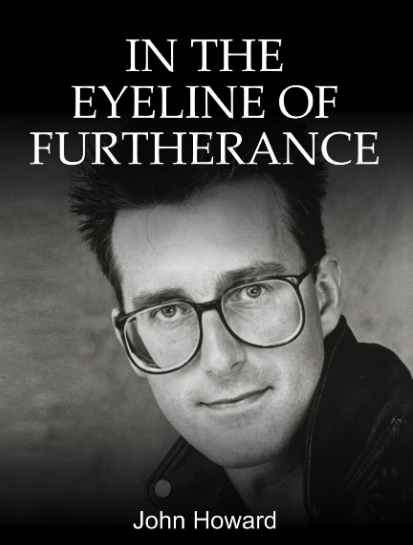
John Howard ‘In The Eyeline Of Furtherance’
(Fisher King Publishing)
Correlating more or less with the singer-songwriter John Howard’s relatively un-chronicled decades, from the 70s to the dawn of a new millennium, the third and final (though there is room for a fourth volume to chart, what is perhaps, Howard’s most prolific period) autobiography covers an illuminating time spent navigating the corporate shit show of A&R and licensing in the music industry’s MOR departments.
After an almost meteoric rise to fame off the back of his accomplished piano-driven Kid In A Big World songbook in 1975, it soon became apparent, as the first honest account in this series Incidents Crowded With Life documents, that the adulation and glitter would quickly fade. Though never written-off as such Howard was, like a magnitude of artists before him and ever since, continuously hampered and screwed-over; the records ever far and few between as time went on.
The next “big thing” at one point Howard’s real troubles began after a life-changing accident in 1976. In an attempt to escape the mad raging clutches of his Pilipino house mates bit of rough (a violent maniacal Russian sailor as it turned out), Howard jumped from a flat window, breaking his back in the process. Despite this horrific chapter there was still the CBS contract, recording at the fabled Abbey Road studios, the theme song to a Peter Fonda movie and countless promises to lift the mood. But by the end of the 70s and early 80s the music career had all but stalled, with only brief flashes of ill-advised makeovers and one-off songwriting projects. Book two in this life story, Illusions Of Happiness picked up that period, documenting a post recovery Howard on the cusp of a new decade and mounting a comeback. Again, even with such future big names as Trevor Horn and Steve Levine in his corner, nothing really took off. Frustrated by various ill-thought out and misplaced marketing ploys Howard gallivanted to a soundtrack of synthesised Eurovision pop and overproduced easy listening balladry.
Volume three finds a not so much disillusioned Howard as a waning artist making the most of it; playing the cards dealt, moving from front stage to a role behind the scenes in music licensing. Making perfect sense really, keeping a hand in the game so to speak, Howard began this career change of a sort at Pickwick Records in 1986. As it turns out, even this corner of the industry is riven by egos and petty one-upmanship, bitter jealousies. And so there’s a number of “jump ships”, with stints at MCA and Readers Digest to follow. Sorry tales of bad bosses and greed follow as In The Eyeline Of Furtherance fills in the blanks of a decade in which Howard really swam against the tide of the bean-counting petty executives in charge. Even when successful (and Howard was constantly that) his actions would rile whoever was in charge it seems.
Incognito, the heady and potential brilliance of a creative career all but hidden, Howard takes all the shit that’s thrown at him with a smile: such is life and all that. For what soon becomes apparent is that the travails, knocks haven’t diminished that wry humour and ear for a good anecdote or two; this third book almost like a warm, inviting chat then linear history.
As he is in life, on record, Howard proves a sweet, open and wise companion on a journey bookended by successful (creatively speaking) periods of songwriting. But it’s the bit in the middle that’s regaled here.
What on paper might not exactly seem the most star-studded, glittering or exactly “with-it” of times in the music business, there is however a lot of famous or once-famous names to whet the appetite. Semi-success and what ifs litter the book as Howard attempts to reinvigorate back catalogues and reinvent former stars, setting up a myriad of new recording sessions on the way; the budget always a problem, and the negotiations always needing Howard’s disarming and candid manner, his ability to douse the flames of drama, and sensitivity. That list includes Connie Francis, Lonnie Donegon, Bert Weedon, Buddy Holly’s surviving Crickets, Dusty Springfield, Elkie Brookes and Des O’Conner. Personally of interest to me, with a massive Beach Boys crush, is Howard’s brief L.A. run-in with Bruce Johnston. Anyone who can write both the wistful ‘Disney Girls’ and heart-wrenching ‘Tears In The morning’ is a gifted genius in my books. A chance meeting, pleasantries exchanged, and it’s all over in just a paragraph, but coincidently enough, Doris Day would record her own distinctive version of Johnston’s McCarthy age of innocence lament, ‘Disney Girls’. And in time, we read of Howard’s attempts to try and coax the grand dame into recording a new album in the 80s. I’ve tried myself to prompt Howard to cover some of the more doleful, tearjerker Beach Boys moments – the deeper cuts too. Although Howard did record a pre-Johnston period Pet Sounds spell of magic, ‘Don’t Talk (Put Your Head On My Shoulder)’, for his own solo album in the 90s – more of that later. Day never did record that album though, but did hand over an astonishing vault of previously left dormant recordings that proved just as fruitful.
There’s a rather less fortunate (in hindsight) run-in with Gary Glitter however. The yet to be exposed sex-offender and former glam titan was on the comeback trial again (again!). And yes, he is a pompous creep and as self-deluded as you’d expect. I have to feel sorry for the poor idiot who brought Glitter’s back catalogue, for what he believed was a bargain (the millions still), only for the story of Glitter’s pedophile offences to break days later in all the national papers.
During this stint Howard’s former life as a rising star is uncovered after he’s corralled into one of the office bands; little knowing just what a talent they had in their midst. That is until Howard opens his mouth, dust’s off the valves. A long story short Howard is gently pushed into the studio. The results, his first solo album in a long while; a songbook of covers that includes standards by Lou Reed, K.D. Lang, and a version of George Harrison’s ‘Something’ from the perspective of a gay man: “Something in the way ‘he’ moves….”
The music, important as it is, counts as just half the story. For like previous volumes in this saga, In The Eyeline Of Furtherance also tells the story of gay life in Britain. That’s its liberation, the AIDS crisis and the prejudice that comes with it. A series of friends we met in previous books pass away in one especially candid but sensitively handled chapter; Howard chronicling tiny biography style, part obituary, paragraphs on the deaths from the epidemic in his close circle. Obviously tragic, and painful, it proves a poignant and timely focus on the damage done, the loss of a gay generation to an apocalyptic, doomsday disease. Howard does also write about the advancement in medication and the lifting of the AIDS stigma, and so there is a reasonably positive future outlined too.
We also find our narrator stalked by his obsessive, violent ex, Bayliss; going as far as to even beat up Howard’s friends to get at him. From following Howard in the street, outside his haunts and even pestering him at work, the escalation becomes increasingly dangerous. In a most self-deluded, creepy and outright crazy way, this is all to get Howard back. Sensibly of course, our narrator has a new man in his life: a life partner in fact. Neil the stage actor of some modest repute becomes a confidante, lover and, eventually, Howard’s husband. The road to happiness didn’t exactly start out well, the pair, initially, meeting in a rather seedy, sticky-floored backstreet emporium of illicit sex. But I won’t spoil that particular eye-opening hook-up.
Unfortunately we are witness to the detrition and eventual passing of Howard’s father, in what are some of the most revealing passages in the book. A strong figure of old is reduced to the controlling and outright hostile prejudices of a second wife; either totally unaware of her racism and homophobia, or a particular bitter character. Though these days cuddled in “trigger warnings”, Howard takes such things more in his stride, whilst clearly and without bearing his own prejudices, calls out such acts of verbal and aggressive vitriol.
Having enough of the whole sorry A&R business after losing his job at Readers Digest in the late 90s, the book’s opening paragraph begins at the end of this cycle, with Howard and Neil sunning it up poolside abroad: the G & T’s poured and lubricating a sense of relief but satisfaction and optimism about the future.
Howard is at peace with himself, with little left to prove: or even the need. Yet the next twenty years, right up to the very present, would prove to be his most prolific period; a revival turn recording career unburdened by labels or management interference. In fact there’s even a new album, a long-form one-track album at that, waiting in the wings to drop.
Howard’s life will for many, only have existed, or started, since the noughties. But this third volume will remedy that, showing a whole other life, a whole other side. Full of experiences, from the thoroughly unmodernised corridors of music licensing and management in the executive power-grabs of the late 80s and 90s to the period when Howard turned “Muscle Mary” and pumped iron – going from his delicate whip of a frame to full-on 15 stone plus Charles Atlas, scaring many of his circle of friends in the process, such was the transformation -, everything that happened in that decade plus arc shaped him into a rather sagacious and adroit artist. Whilst that initial stardom faded quite quickly, Howard’s alternative pathway still led to a creatively successful career; maybe a trip round the houses but he got to an enviable position in the end; on his own terms, making the music he wants, whenever and however he wants, and always finding an willing audience. This latest volume should be, if anything, a testament to staying power, and also a guide to surviving the business without necessarily playing its games or beholden to it. New artists, musicians could learn a lot.
Hi, my name is Dominic Valvona and I’m the Founder of the music/culture blog monolithcocktail.com For the last ten years I’ve featured and supported music, musicians and labels I love across genres from around the world that I think you’ll want to know about. No content on the site is paid for or sponsored and I and the blog only feature artists we have genuine respect for /love. If you enjoy the reviews (and we often write long, thoughtful ones), found a new artist you admire or if we have featured you or artists you represent and would like to buy us a coffee at https://ko-fi.com/monolithcocktail to say cheers for spreading the word, then that would be much appreciated.
 Monolith Cocktail Blog