Playlist/Dominic Valvona/Brian “Bordello” Shea/Matt Oliver

For those of you that have only just joined us as new followers and readers, our former behemoth Quarterly Playlist Revue is now no more! With a massive increase in submissions month-on-month, we’ve decided to go monthly instead in 2020. The June playlist carries on from where the popular quarterly left off; picking out the choice tracks that represent the Monolith Cocktail’s eclectic output – from all the most essential new Hip-Hop cuts to the most dynamic music from across the globe. New releases and the best of reissues have been chosen by me, Dominic Valvona, Brian ‘Bordello’ Shea and Matt Oliver.
Tracklist In Full:
Thiago Nassif ‘Soar Estranho’
Freak Heat Waves ‘Nothing Lasts Forever’
Lithics ‘Hands’
Ammar 808 ft. Susha ‘Marivere Gati’
Bab L’ Bluz ‘Gnawa Beat’
The Koreatown Oddity ft. Taz Arnold ‘Ginkabiloba’
Koma Saxo ‘Koma Mate’
Wish Master ‘Write Pages’
Gee Bag, Illinformed ‘I Can Be (Sam Krats Remix)’
Gorilla Twins ‘Highs & Lows’
Jeffrey Lewis ‘Keep It Chill In The East Village’
Armand Hammer ‘Slew Foot’
Public Enemy ‘State Of The Union’
Run The Jewels ‘Yankee And The Brave (ep.4)’
Gaul Plus ‘Church Of The Motorway’
Tamburi Neri ‘Indio’
Ty, Durrty Goodz ‘The Real Ones’
Fierro Ex Machina ‘A Sail Of All Tears’
Skyzoo ‘Turning 10’
Kahil El’Zabar ft. David Murray ‘Necktar’
Afel Bocoum ‘Avion’
Etienne de la Sayette ‘Safari Kamer’
The Lancashire Hustlers ‘Stuck In The Middle Of A Week’
Scarlet’s Well ‘Sweetmeat’
Campbell Sibthorpe ‘Good Lord’
Westerman ‘Drawbridge’
The Fiery Furnaces ‘Down At The So And So On Somewhere’
Kutiman ‘Copasavana’
Caleb Landry Jones ‘The Great I Am’
Bedd ‘You Have Nice Things’
The Original Magnetic Light Parade ‘Confusion Reigns’
Cosse ‘Sun Forget Me’
Bananagun ‘Modern Day Problems’
Salem Trials ‘Head On Rong’
Lucidvox ‘Runaway’
HighSchool ‘Frosting’
Jon Hassell ‘Fearless’
All our monthly playlists so far in 2020
Album Review/Matt Oliver

Telemachus ‘Boring And Weird Historical Music’
(High Focus) LP/Available Now
His involvement with everyone who’s anyone in UK hip-hop – Verb T, Ocean Wisdom, Kashmere, M9, The Last Skeptik, Jam Baxter and legions more – lead to The Guardian lauding Telemachus/Chemo as “one of those slightly obscure figures who has helped British hip-hop move along more than most people will probably ever know”. Unlikely as it is that his work there will ever be done, Boring & Weird Historical Music reinforces the producer’s perspectives that have been broadening since 2013’s In The Evening. Notwithstanding the casting of Roc Marciano and Jehst, it was a classy spreading of wings as exploration of textures through a lens took root.
A year later, the breakaway In Morocco continued a bid for calm and knowledge, gathering aromatic instrumental dialects from where the sun sets, for the consummate expedition while couch-bound and down. Album number three doesn’t need the reverse psychology of the title, but it does make definitive the promotion of Telemachus to adventurer and alchemist, simmering down soul, jazz, funk, indigenous rhythms and found sounds raised at the mercy of voodoo forces and meditative properties.
For those wanting sounds formed through and for sensory deprivation, ‘Disaster Enabled Vending Machines’ (the new, unofficial byword for chillout), the bassy ‘Beaten Gold’ and ‘Caroline What Is Wrong With You’ are pro-lockdown, promoting classic trip hop incubation to soothe and shield from the sun with. Depending on your energy levels, either use them to expand your mind from the horizontal position as attainable exotica, or just to provide companionship, setting a tone that puts a barrier between you and the dusky, dusty heat generated by the maddening crowd outside.
However, for all the measured, karmic twangs a la Khruangbin or Skinshape, perpetual percussion, synth lines that shapeshift in the ear of the beholder, and dubby, desert shimmer soaking up pressure before coolly exhaling, it’s that unshakeable but defined trepidation that becomes the album’s fulcrum. Opening track ‘Ungraceful Piano Sequence’ sets a fork in the road asking you to choose your own adventure, and ‘You Wanted a Handful of Sardines, Did You Not’ could well lead you to a boiling pot of cannibalism as you find yourself making your way through dimly lit undergrowth. On ‘I Am Delicious and Cute So I Will Buy Again’ and ‘Battle Sequence’, the tiptoeing on eggshells forces you to face your fears and not just cock half an ear, widening the album’s shrewd unpredictability as it looks both ways before ambling off the beaten track.
‘Greed’, overseen by Jerome Thomas, aims to cleanse souls with stark warnings in hushed tones, and ‘By the Moon’, teased by RHI, is another example of the album’s sequencing tersely tugging at the comfort zone you think Telemachus has laid on. The dark carnival of ‘Wickedest Ting’ featuring Killa P is an unsuspecting but no less welcome mantrap, the main difference being that it’s brought out into the open kicking and screaming, instead of attempting to hide in plain sight.
As a storyteller passing around rolling papers and whose travelogue bears no tall tales despite the signs indicating otherwise, Boring & Weird… is a groggy but high functioning experience – it has to be given that the wonder of taking in the surroundings is speckled with Telemachus’ pessimism, where the recommended reclining could lead you down the back of the sofa like quicksand. The flippant titles back the theory that for all the shadows cast and enlightenment he fulfills, Telemachus is still in the entertaining business, leading category makers a merry dance. Certainly on first listen the overriding sensation is of comfort and immersion, but soon you’ll be wanting Boring & Weird… to be the soundtrack to your insomnia, punctuated by the quotations of a sensei floating and fleshing out the fable as you take a fine toothcomb to the clues left by its enigmatic, noir-ish sage. The album’s conclusion, ‘Fools Gold’ starring Chris Belson, is suitably ambiguous – the instrumentation suggests happy ending, the vantage point vocals deem that the battle is nowhere near over.
The authenticity of Chemo’s darker-than-you-think epiphanies, producing as he lives it from his lookout post and switching up significance/fantasy and reality with invisible stitching, make it good for both under the stars and the duvet. With some inevitability, the enjoyment of what it means to be weird means the boring never transpires.
Matt Oliver
Unable to kick the reviewing habit for what is now the best part of fifteen years, Matt Oliver has gone from messing around with music-related courseworks and DIY hip-hop sites to pass time in sixth form and university, to writing for/putting out of business a glut of magazine review sections and features pages in both the UK and the US. A minor hip-hop freak in junior school, he has interviewed some serious names in the fields of both hip-hop and dance music – from Grandmaster Flash to Iggy Azalea – and as part of what is now a glorified hobby (seriously, every magazine he used to turn up at bit the dust within weeks), can also be found penning those little bits of track info you find on Beatport and Soundcloud, or the notes that used to come with your promo CD in the post (visit here for more details). He’s currently giving the twitter thing a go, so follow him at@brimupnorth.
Premiere:(Single): Admlithi ‘Radal’
May 21, 2020
Premiere/Dominic Valvona

Admlithi ‘Radal’
(In Black Records) Single/22nd May 2020
The mysterious Scottish enigma Admlithi returns from the veils with a minor opus of gossamer and gliding synthesized hymnal beauty. Following on from his 2018 debut album for Armellodie Records, Tyrants, the producer and multi instrumentalist breathes diaphanous life into his latest mini-opus ‘Radal’; a hushed, attentive epic that takes its title from the manufactures of the buoyant tubular sounding electronic tabla that drives it along (purchased, we’re told, at a car boot sale for five pounds: now that’s what you call a bargain).
Already using an eclectic palette of post-punk, electronica and jittered psychedelics, with influences as diverse as The Associates, The Chameleons, Kate Bush, Kraftwerk, Japan and Erasure, Admlithi now channels the sophisticated searing and atmospheric synth work of Vangelis as he subtly reaches towards the heavenly stratosphere. Yet despite the reverent and unearthly vapours, lyrically the song is about “trying to dig tunnels back to the happiest time in your life only to find the earth is full of boulders.” Travails have seldom sounded so scenic and hallowed.
The Monolith Cocktail is delighted to be sharing that single, released through our pals at the Glasgow label hub In Black Records, ahead of its release on the 22nd May.
Hi, my name is Dominic Valvona and I’m the Founder of the music/culture blog monolithcocktail.com For the last ten years I’ve featured and supported music, musicians and labels we love across genres from around the world that we think you’ll want to know about. No content on the site is paid for or sponsored and we only feature artists we have genuine respect for /love. If you enjoy our reviews (and we often write long, thoughtful ones), found a new artist you admire or if we have featured you or artists you represent and would like to buy us a coffee at https://ko-fi.com/monolithcocktail to say cheers for spreading the word, then that would be much appreciated.
Premiere (Single): Myles Cochran ‘It’s Like This’
May 14, 2020
Premiere/Dominic Valvona

Myles Cochran ‘It’s Like This’
(9Ball Records) Single/15th May 2020
Somewhere on the outskirts of a recognizable American panorama, a hazy semblance of Myles Cochran’s Kentuckian bluegrass roots can be heard resonating on his newest subtly evocative single, ‘It’s Like This’. A continuation of the composer, songwriter, multi-instrumentalist and producer’s previous ‘Early Dark’ traverse (released just a few months ago), today’s premiere is an attuned and sophisticated merger of vaguely reminiscent, rustically dreamy guitar, waned and bowing strings, spindled movements and various lightly administered production effects. Here is how Myles sums up this musical assemblage of ideas and inspirations:
“Roots and country music were in the air when I was growing up and they still shape my aesthetic. My love of improvised music, whether Miles Davis or Talk Talk, also informs what I do, and the American Primitive guitarists such as John Fahey and Leo Kottke made a deep impact. To me, all these aren’t disparate influences, but make beautiful sense together”.
A both lingered minimalist and sonorous soundtrack, with echoes of such titans of the form as Ry Cooder, Robert Fripp, Warren Ellis, Daniel Lanois, Steve Reich and even Mick Harvey, ‘It’s Like This’ was composed, produced and performed by Myles at his rural studios in the UK and France. Myles is joined on this oft-emotional tarverse by the cello virtuoso Richard Curran, who supplies the atmospherically charged low bows.
Marking a sort of flurry of activity from the Kentucky born artist, now residing full-time in the UK, this latest single is being released via Myles own 9Ball Records label ahead of the June 19th EP, My Own Devices. Myles will follow this up, we’re told, with an album entitled UNSUNG.
If you like what you found, hear and see on the Monolith Cocktail, you can now support us via the micro-donation platform Ko-Fi:
Hi, my name is Dominic Valvona and I’m the Founder of the music/culture blog monolithcocktail.com For the last ten years I’ve featured and supported music, musicians and labels we love across genres from around the world that we think you’ll want to know about. No content on the site is paid for or sponsored and we only feature artists we have genuine respect for /love. If you enjoy our reviews (and we often write long, thoughtful ones), found a new artist you admire or if we have featured you or artists you represent and would like to buy us a coffee at https://ko-fi.com/monolithcocktail to say cheers for spreading the word, then that would be much appreciated.
Monolith Cocktail Social (Playlist): Volume #XLV: Little Richard, Tony Allen, Kraftwerk, Embryo, Officer!…
May 13, 2020
Playlist/Dominic Valvona
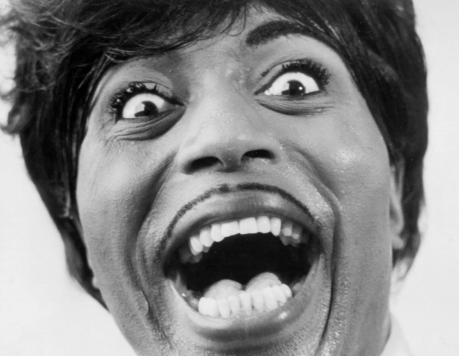
Cool shit that the Monolith Cocktail founder and instigator Dominic Valvona has pulled together, the Social playlist is a themeless selection of eclectic tracks from across the globe and ages. Representing not only his tastes but the blogs, these regular playlists can be viewed as an imaginary radio show, a taste of Dominic’s DJ sets over 25 plus years. Placed in a way as to ape a listening journey, though feel free to listen to it as you wish, each playlist bridges a myriad of musical treasures to enjoy and also explore – and of course, to dance away the hours to.
The latest volume includes a few tributes to those we’ve lost; a sprinkle of rock deity Little Richard, Afrobeat and Afrojazz doyan Tony Allen, and electronic music progenitor Florian Schneider amongst the unusual usual mix of post-punk, transcendence, psychedelic, electronic, folk, acid country, dreams…blah blah blah. We could go on and on. Just listen and have a whale of a time, even in these most anxious of times.
Tracks in full:
Little Richard ‘King Of Rock And Roll’
Rasputin’s Stash ‘What’s On Your Mind’
Rodian G.A. ‘Nu Tu Vei Fi’
Nat Turner Rebellion ‘Laugh To Keep From Crying’
24 Carat Black ‘Brown-Baggin”
Hieroglyphics ‘All Things’
Faine Jade ‘Ballad Of The Bad Guys’
Joe Byrd & The Field Hippies ‘Nightmare Train’
Blonde On Blonde ‘Circles’
Merrell Fankhauser & H.M.S Bounty ‘Everybody’s Talkin”
Banco Del Mutuo Soccorso ‘Cento Mani e Cento Occhi’
Peter Janes ‘For The Sake Of Time’
Le Orme ‘Summer Calling’
Jeff Simmons ‘Appian Way’
Lula Cortes & Lailson ‘Satwa’
Anandi Bhattacharya ‘Jai Ganesh’
Yusef Lateef ‘Ching Miau’
Tony Allen ‘Cool Cats’
Oliver Nelson ‘Anacrusis’
Embryo ‘Code 7’
yuk. ‘Kulam’
Autechre ‘sinistrailAB air’
Jennifer Touch ‘Chemistry’
Kraftwerk ‘Pocket Calculator’
Lizzy Mercier Descloux ‘Sports Spotnicks’
Jean-Luc Ponty ‘With A Little Help From My Friends’
Allan Wachs ‘The Lord Will Provide’
Delaney & Bonnie ‘Poor Elijah’
Will Boelts ‘Boring’
Dunkelziffer ‘(Do Watch You Can) Prof.’
Officer! ‘Anagrams’
Little Richard ‘Hound Dog’
Essential Logic ‘Quality Crayon Wax O.K.’
Granicus ‘Hollywood Star’
Tony Allen ‘Nepa’
David Sancious ‘further In The Forest Of Feelings’
Damara ‘Mmamamkhabtha’
Afro-Haitian Experimental Orchestra ‘Salilento’
Boogie Down Productions ‘Remix For P Is Free’
Keith Hudson ‘Man From Shooters Hill’
Julian Koster ‘The Sea Of Tranquility’
Kraftwerk ‘Endless Endless’
And for those without Spotify access, a smattering of video versions:
Tickling Our Fancy 085: Chouk Bwa & The Ångströmers, Edikanfo, Fra Fra, Muriel Grossman, Fadhilee Itulya…
May 7, 2020
ALBUM REVIEWS/Dominic Valvona

Easing the boredom of coronavirus lockdown, join me from the safety of your own home once more on a global journey of discovery. Let me do all the footwork for you, as I recommend a batch of interesting and essential new releases from a myriad of genres. All of which I hope you will support in these anxious and trying times. With all live gigs and events more or less quashed for the foreseeable future, buying music (whether it’s physical or through digital platforms) has never been more important for the survival of the bands/artists/collectives that create it.
As international as ever, this month’s revue includes not one but two releases from the wellspring of Highlife music, Ghana – though only one of these is contemporary, and only one could be considered a link to that signature sound. First, the sixth volume in Glitterbeat Records’ Hidden Musics series is, as its title may suggest, a more elegiac-framed affair of rustic processional performances: Fra Fra ‘Funeral Songs’. The second, Edikanfo’s The Pace Setters is the first ever reissue of an iconic 80s album from the Afrodsico troupe, produced, with the lightest of touches, by Brian Eno. From South America, the ever-changing Miguel Sosa (formerly of The Strumpets and IH8 Camera) releases another album under a new alias and with a new sound, Plano Remoto. Japan-based polymath Paul Thomas Kirk, under his Akatombo alias, is granted a (almost) twenty-year spanning highlights collection of discordant gloom industrial dance music by the Japanese label So I Buried Records. From Haiti, we have the collaborative voodoo communion between the locals Chouk Bwa and the Belgium dub electronica duo The Ångströmers, Vodou Alé. And from Kenya, guitarist Fadhilee Itulya releases his debut album fusion of Omutibo music.
Closer to home, though imagining all kinds of cosmological and spiritual visions, Sebastian Reynolds releases a ‘universal’ escapist EP of peregrinations, and Austrian saxophonist Muriel Grossman is granted a showcase of her spiritual jazz suites from the Jazzman label.
Chouk Bwa & The Ångströmers ‘Vodou Alé’
(Bongo Joe Records) LP/22nd May 2020

Like so many others before them, allured to the voodoo hypnotism of the shared Hispaniola Island of Haiti, Belgian production duo The Ångströmers spent a residency immersing and absorbing the local fusion of ‘mizik rasin’, and working with the Gonaïves-borne collective of Chouk Bwa. A hybrid of roots music tradition, the voodoo ceremony enchantments brought over to the Island from the Congo, the folkloric and rock and roll, mizik rasin has been made famous in more recent decades by Richard A. Morse’s acronym Haiti collective RAM, who have in turn welcomed curious acts such as Arcade Fire and tUnE-yArDs to its propulsive rhythm. The late Afrobeat rhythm king Tony Allen also spent time there working with local musicians on the Afro-Haitian Experimental Orchestra project in 2017. It’s easy to see why; the invigorating lively, often locked-in rhythms and spiritual call prove intense and inviting: to dance music artists especially.
The synthesis of Soukri voodoo polyrhythms and bassier dub electronica on this collaboration proves so attuned to both sensibilities and in-sync as to be difficult to separate the natural ritual from the augmented and synthesized. The furious, rushing hand-drumming is subtly reinforced and layered up for the most part with pulsating and throbbing undulations, atmospherics, phaser, echo and reverb reversal effects; all of which are used sparingly and wisely, and even sensitively.
A yearning plaintive procession of voices, both earthly and soulfully, emerge from the swirled vapours to lament Haiti’s tragic run of ecological disasters; the lead single ‘More Tan’ a bobbing and clattery beat with sonorous fuzzy bass lends a moving tribute to all those unfortunate souls affected by a quartet of devastating hurricanes and the Armageddon earthquake of 2010, which killed tens of thousands and left hundreds of thousands displaced, at the mercy of the elements, disease and a destabilized authority.
A primal ceremony of tumbled, fluttered cylindrical rhythms sucked into a vortex of warped dub and ringing oscillations, this collaborative union proves just how intoxicating and electrifying the voodoo spell can be. Given a sympathetic undercurrent and resonance of atmospheric electronica, the ritual sound and outpour of Haiti is reframed, guided into the 21st century. Not so much a novel direction as a subtle electronic music boost to tradition.
Muriel Grossmann ‘Elevation’
(Jazzman) LP/15th May 2020

Many jazz greats have of course attempted it, the ‘elevation’ of not just the form but consciousness itself. The Egyptologist anointed Pharoah Sanders even named an album after it; an ascendance at a time when jazz was embracing its spiritual roots and historical gravitas: a return to the source in Africa.
The supremely talented saxophonist bandleader Muriel Grossmann, imbued with that same spirit of vague conscious mysticism and experimentation, has now named one of her own impressive Afrojazz odysseys after that totem of an influential album. It won’t come as any surprise to find that the Pharaoh just happens to be one of Grossmann’s influences, alongside such luminaries as John and Alice Coltrane, Lester Young and Eric Dolphy; all of which permeate throughout this survey of the European jazz star’s recent(ish) work.
A sort of introduction for those unfamiliar with an artist who’s spent the last two decades on the European scene, playing with the likes of Joachim and Rolf Kühn, Wolfgang Reisinges and Thomas Heidepriem, the impeccable Jazzman label have chosen to represent Grossmann’s catalogue with suites from the 2016 Natural Time and 2017 Momentum albums; a moiety almost of complimentary records.
In all a quintet of congruous traverses, from a duo of albums, Grossman’s own Elevation seems a fully realised, interconnected and flowing oeuvre that could have been recorded all at the same session, only yesterday. An adventure across desert contours, on the caravan trail in search of enlightenment and jazz nirvana; the impressively invocative saxophonist and her troupe of regulars turn in a fantastical panoramic opus.
We start with the latter of those albums and a trio of pyramid backdrop numbers that pay homage to the Coltranes (especially Alice), the Pharaoh, Archie Shepp and Greenwich-hip era Albert Ayler. That guiding light title-track is a ten-minute plus extravaganza of splashing drums, oozing and swaddled sax and mini plucked out guitar solos. It sounds like the group is on an opulent trinket laden barge. At first lingering, trembling and stirring in milder Nile waters, the action hot’s up as the river becomes more animated and choppy. Grossmann literally spirals towards the stars; giddily blowing so fast that her trademark instrument turns into a clarinet at one point. Almost easing into the shimmery resonating ‘Rising’, the quartet sumptuously treads further along a mysterious pathway. Uros Stamenkovic brushes the sand off his flighty drum kit, and Radomir Milojkovic bends and picks out a dizzying frill of notes on guitar as Grossmann flitters and flutters on another of these conscious trips.
Still gliding or walking that same North African jazz geography, both ‘Your Peace’ and ‘Peace For All’ may very well have furnished another album, but embrace and breath the same spiritual to experimental jazz air. Shifting sands move underfoot on the first of those dusky shufflers, whilst Eastern mystical chimes and serenity make way for progressive soulful sax, successions of deft guitar licks and burnished drums on the second of those mirages.
Hardly a slavish attempt at reproducing Grossmann’s inspirations, Elevation is an impressive, evocative continuation of those forbearers blueprint. A showcase of exploratory jazz left free to follow those same forbearers by a group of European avant-gardists.
Edikanfo ‘The Pace Setters’
(Glitterbeat Records) LP/8th May 2020

Depending on who you listen to, inventive leftfield, ambient music doyen Brian Eno and his part in propelling the Ghanaian troupers Edikanfo to international attention (if for only the briefest of moments), off the back of their dynamic rich bustling debut album, was either merely down to “endorsement” or more to do with his key production skills. The fact that his indelible mark is light, if almost hidden, would suggest a less than fleeting relationship with the eight-piece Afrodisco group. Yet stage-manage the production of this Highlife funk fusion he did.
That endorsement, usually a sign of quality and importance, is shared by self-appointed one-man Ghanaian music industry mover-and-shaker Faisal Helwani. A forceful character in a time when you had to be forward and sometimes ungracious in getting results, Helwani was responsible in kick-starting the modern Ghana scene; setting up the now legendary Napoleon Club complex in the capital of Accra. Club, casino, restaurant and studio – Accra’s first professional recording studio; known as the less than imaginary but history cementing Studio One – all in one, the Napoleon became a lively exchange hub of activity and a hothouse for both emerging and established talent, inside the region and outside of it. With a finger in every conceivable pie, from running the studio to managing, publicizing and contracting bands, Helwani’s grip was strong and nebulous. As Eno – who offers linear notes insight on what is the very first reissue of Edikanfo’s influential and justifiably entitled The Pace Setters album – divulges: ‘Although undoubtedly an important figure in the African music scene he was quite a possessive man. There was a fair amount of grumbling going on among the musicians, who had pretty poor lives. After some of their appearances the band ended up actually owing Faisal money since he owned their equipment and hired it out to them for shows.’
Eno hit upon a novel way of sending the band some money as a thank you, fearing it wouldn’t reach them unless it fell directly into their hands: ‘All the musicians liked the beret I wore at the time, so I had the idea to send one to each of them as a gift – which would be a kind of Trojan horse for the real gift. Back in New York my girlfriend Alex, who had come to Accra with me, carefully sewed a few hundred dollar bills into the rim of each beret and somehow I got a message to them which said ‘DON’T OPEN THE BERETS WHEN FARISAL’S AROUND!!’ It worked…one of the musicians later told me he’d bought a small farm in Central Ghana with his hat-money.’
Helwani had initially approached Eno as a publicity coup after reading about his fostering interest in African music. The impresario invited him as ‘international observer’ to the biennial Festival Of African Song And Dance. It didn’t take long to leap from that to producing Helwani’s recent upcoming electric signing. Staying for around a month, Eno spent time and effort with Edikanfo, who’s live, busy sound proved problematic for the studio manipulator, unaccustomed as he was to recording a live band all at once. Without nearly enough mics for the task at hand, Eno was forced to think on his feet and to eventually just let the performances happen with as little interference as possible. Upon returning to NYC – Eno’s base at the time in the later 70s and early 80s – he released upon listening back to these electric sessions that, for once, his post-production magic as redundant. And so The Pace Setters is a relatively pure, unburdened sound without augmentation; closer to capturing the group’s famed live performances: the sweat and all.
Formed just a couple of years before; Edikanfo would quickly build a momentum after colliding with Eno’s ascended star. His brand soon shone a light that very quickly went out. Brought to an international stage, the octet rose just as their native country was plunged once more into political tumult. A second coup by the military leader-politician Jerry John Rawlings at the end of 1981 removed the civilian government he initially put in place – set up after Rawling’s original junta-led coup in 1979. Ghana had been relatively lucky, having escaped such violent upheaval up until then. Concentrating the mind somewhat and pushing Rawlings into action, the soon-to-be leader was on the former governing power of General Fred Akuffa’s execution list. When he did take over, Rawlings implemented a spot of his own ‘house-cleaning’ of former officials and supporters. The shock of which led to demonstrations, which in turn led to elections; though Rawlings would still win, being re-elected again and again, staying in power until 2001. The early days of power would be severe however, with curfews that soon ‘gutted’ not only the economy but also the live music scene. Restrictions and harassment proved so bad that Edikanfo were forced to part company, scattering overseas.
Now though, almost four decades after their spotlight burned most bright, bandleader, bass player and songwriter Gilbert Amarty Amar and those band mates that survived are back with a new tour prompted by the reissue of their seminal debut. In what can only be described as a laser beam reflective mirror ball of Afrodisco and Highlife funk, The Pace Setters is a humid fusion of sweetened lullaby serenades and busier sunburst dances. A shared effort with near enough each member of the troupe offering up a track, there’s a mix of timings, themes and rhythms. Tracks like the opener ‘Nka Bom’ celebrate “togetherness” with sun-blessed horns, dappled electric piano and open hi-hat bustle, whilst the elastic bass noodling, springy and Orlando Julius loose jazz swaddled ‘Gbenta’ is both peaceable and relaxed. Hints of Osibisa can be found on the lulled hymn like vocal beauty ‘Moonlight Africa’, which puts a faster hustle of drums and bass underneath the twinkled organ caressed chorus of sweetly laced voices. At all times (well nearly) the bounce of refracted laser disco beams ricochet off the brass and rafters.
What a great album: true to its name, setting a sometimes blazing, and others, a sometimes-sashaying pace. Forget the fact it’s now forty years old, turn the mother up and shake-off the woes and weight of life in lockdown. Edikanfo’s 1981 classic is still alive and magical in the here and now; sending us with verve towards the summer: even if that summer is very different to any most of us have ever experienced. Enjoy this most worthy repress.
Fadhilee Itulya ‘Kwetu’
(Naxos World) LP/8th May 2020

Though the Kenyan guitarist turn frontman has been around for a decade the Kwetu album of belonging and questioning, released via a re-invigorated Naxos World, is Fadhilee Itulya’s debut.
Channeling what sounds like a lifetime into that inaugural record, Fadhilee combines his Kenyan roots with more contemporary rock, soul, blues, and on the album’s one and only attempt at a celebratory sun-praised club mix, Balearic dance music. Creating a bridge between the more earthy, unspoiled authenticity of tradition and more polished pop production of a modern studio, Fadhilee draws on the Luhya and Isukha peoples of Western Kenya and their ancestral dances, ceremonies and instruments. This includes the duel guitar and empty incessantly tapped soda bottle accompanied chanted Omutibo, and the Isukuti drums of the celebratory dances performed amongst the latter of those communities. The driving syncopated rhythms of Omutibo were developed during the 1950s, into the 60s, before falling out of favour in the 70s. It forms a foundation on the Swahili entitled ‘Kwetu’ song; a title-track that translates as “home”, but carries more weight in what Fadhilee encapsulates as, “a place where I am welcome.” That could be anywhere, not just his homeland, as this is an album as much about international unity and liberation as a songbook that passes commentary on the closer-to-home social and political problems in Kenya.
Language is another constant theme, with Fadhilee switching effortlessly from Swahili to English to the chanted Luhya.
Sprinkled throughout this generous album, the rustic tapped bottle ringing, hand drum propulsed rhythms and chorus of dusty-soul chanting and more enthusiastic female trilling traditions sit alongside smoother, finessed performances: though it all feels like a intimate live session. The album opens with the reedy and flighty “prayer” of ‘‘Afirika’; an opening salvo that sets up the smooth reggae and jazzy-rock sound of Fadhilee’s lilted guitar and the accompanying backing of a rich harmony chorus. It also introduces us to the folksy flute-heavy collaboration of guest musician Adam Adiarra, who’s instrument flutters, weaves and floats throughout that opening introduction. More sauntering rhythms beckon on the spiritually lulled, twinkled piano tribute to women and motherhood ‘Mama’. Whilst the electric sunny funk ‘Tabasm’, which translates as “smile”, works up a fusion of flange-rock and gospel.
Despite moments of intensity and urgency, wilder electric guitar frills and the untethered breaks of tribal ceremonial passion, Kwetu is a mostly gentle, soulful affair. A peaceable showcase for an artist honed on tradition but pushing forward. A commercial album of smooth Kenyan fusions with some rougher edges, Fadhilee’s debut shows an artist as comfortable with the modern studio as he is with the in-situ rustic roots of the Kenyan grasslands.
Akatombo ‘Discordia: 2003-2020’
(So I Buried Records) Album/25th May 2020

From a label synonymous for unleashing the sludge-dread rock of those ominous bearers of doom, Qujaku, comes a sort of ‘best of’ collection of similarly caustic menace from the Scottish post-punker turn industrial electronic composer Paul Thomas Kirk. As it turns out, a logical creatively successful leap for the one-time band member of the 80s punk agitators The Actives, Kirk’s magnetic-charged Akatombo avatar fuses, fries and beats-into-shape remnants of that post-punk past. Based in Hiroshima the musician, producer, filmmaker, photographer and label boss has released a quintet of albums, all but one of them under his own Hand-Held Recordings imprint, since 2003. Collected together here is a smattering of buzzy dissonance and growling electronic transmissions from each of the album’s, plus one previously unreleased track, ‘Oblique & Fearless’: a cause metallic evocation of techno punk and Reznor chained industrial dread.
Going back to the beginning, 2003’s inaugural augury Trace Elements – released via the SWIM label – is represented by the Japanese trip-hop Western soundtrack ‘Humid’, the rough UNKLE trip-breaks with snarling bass ‘Overheat’, and dub-y reverb spiraling ‘Ponderlust’. Six years later Kirk would release the Unconfirmed Reports album under his own label. Taking the sonic exploration further towards the experimental, the frizzled distortion and Aphex Twin clattering of ‘A Prior Disengagement’ and Barry Adamson spy thriller tremolo with DJ Shadow drum breaks ‘SSRI’ mark that album’s evolving range and scope. 2011’s False Positives lends the Basic Channel tuned unfolding Kitchen-sink drama ‘Kleptocrat’ and cylindrical, muffled voiced ‘Precariat’ to this compilation.
The prize of opening this Discordia falls to the ominous moist chamber atmospheric ‘Click/Bate’, taken from the 2015 album Sometime, Never. Both lurking in the dark web subterranean yet also communicating with orbital space waves, this bleak vision reimagines The Orb on a downer. Reaching further into the esoteric sound, most recent album Tensile Strength is represented by a trio of industrial, ringing noisy visitations and broadcasts: ‘Debug. Injector’ is a churning vortex of the haunted, whilst the album’s title-track is full of punk snarls.
Veering between the heavy dance music of The Chemical Brothers and the sonorous metal machine music of Emptyset, and between the steaming razor breaks of UNKLE and the industrial wilding of Einsturzende Neubauten, Kirk’s Akatombo manifestation is channeled into a pretty decisive collection of highlights. Too driven to be classed as ‘mood music’ or dark soundtracks, the dystopian discord of Kirk’s sonic augurs and emotions could even be considered dance music: albeit on the fringes of a doomed dancefloor. A great showcase anyway for an electronic artist working in the gloom.
Sebastian Reynolds ‘The Universe Remembers’
(Faith & Industry) EP/22nd May 2020

Oxford-based polymath Sebastian Reynolds has finally found the time in his prolific schedule of collaborations, remixes, session work and productions to create his very own solo soundtrack of various eschatology inspired peregrinations. The Universe Remembers EP’s quintet of traverses drifts and wafts across an ambiguous, often vaporous, soundscape of neo-classical composition, retro futurist production, swanned Tibetan mystical jazz, both languid and accelerated running breakbeats, and ghostly visitations – haunted narrated extracts from T.S. Eliot’s all-encompassing philosophical, religious and metaphysical Holy Grail purview The Wasteland can be heard in a fuzzy echo on the EP’s title-track and single.
A cosmological junction of dystopian literature and the Buddhist/Daoism, The Universe Remembers is, as you might expect from a composer/multi-instrumentalist/producer who’s created music as varied as the transcendent Southeast Asian Manīmekhalā score that accompanied the multimedia Mahajanaka Dance Drama and the visceral chamber pieces of his collaboration with the pan-European Solo Collective trio, a mix of evocations simultaneously as dreamy as they are ominous and mysterious; and as contemplative as they are resigned to the fates.
Framed as a distillation of previous incarnations, namely the Keyboard Choir and Braindead Collective, the sound and sonic landscape channels the peaks and descending remembrance of a musical lifetime, with some of the material taken from various periods over the years, transformed and attuned for a concept of Theology; the part that’s concerned with death, judgment and the final destiny of the soul and humankind: Not too big a concept then.
Previously premiered on the Monolith Cocktail the guest produced title track features the attentive skills of Capitol K (who’s label is also facilitating the release of this EP) guiding a musical odyssey of twinkled trembled cascaded piano, slow beats and the mystical fluttering, spiraling and drifting clarinet of guest contributor Rachel Coombes. Featuring Seb’s penchant for the glitch-y piano resonance of Susumu Yokota and a most strangely sourced sample of the revered writer Anthony Burgess purchasing a Bösendorfer piano in Harrods, this magical escapist suite wafts between the snake charmer bazaars of Egypt and Calcutta, the Hitchcockian and avant-garde. It must be emphasized at this point that Burgess’ dystopian visions have had a profound effect on Seb; especially his most famous slim novel A Clockwork Orange. Seb has previously performed at the Burgess Foundation with the Solo Collective and even (in the last week) written a guest post for their website. Not that anything on this EP is even close to aping the synonymous ominous switched-on Bach of Wendy Carlos’ score for the Kubrick vision of that most famous futuristic nightmare.
Opening reverberating vapour ‘Amoniker’ builds a suffused trilled melodic swathe of pastoral merry evocations from a past epoch, smatterings of jazz, and distant masked break-beats around an increasingly echoing and delayed layered counting iteration. Doing what he does best, Seb finds and then takes original samples to explorative new soundscapes and worlds on the EP’s curtain call, ‘You Are Forgotten’. The Oxford polymath uses the baritone like resigned mooning vocal from the track of the same name by Desmond Chancer & The Long Memories as a foundation for a suffused saxophone swaddled and pining (courtesy of Adam Davy) slice of retro-futurist electronica. Spiritual manna phrases like “no memory”, ”no legacy” and “universal” drift into focus from a constructed ether to echo dramatically over the mysterious and masked invocations.
Keeping to the holy mountain of awe footpath, the totem of endurance, mysticism, beauty and immensity ‘Everest’ once more features those Tibetan evoking horns and cosmic awakenings. It also features not so much guitar performances as the essence of lingering notes and wanes (attributed to collaborators James Maund and Andrew Warne) on an ascendant score of both the celestial and peaceable.
If you love your trance, esoteric mysticism, trip-hop, the new age, satellite jazz and the poetic, then stick on The Universe Remembers and be transported to wondrous and meditative planes.
Plano Remoto ‘Plano Remoto’
(Jezus Factory) LP/11th May 2020

Whether its ennui or a conscious decision to keep critics, and his audience, on their toes the Argentine maverick Miguel Sosa once more changes direction on his latest album for the marvelous cottage-industry label, Jezus Factory. Sosa’s previous peregrination, Bermudas, was an analogue patchbay cosmic psychogeography of the infamous Bermuda Triangle region; filed under yet another alter ego, the Moog and ARP soundtrack homage Cassini Division. Prior to that the Jezus Factory stalwart had spent a tenure living in Antwerp, instigating or joining all manner of Belgian bands, from IH8 Camera to Strumpets and Parallels. The Strumpets would mutate into Angels Die Hard when Sosa had to return back home.
His latest venture, Plano Remoto, ropes in bass player/singer Mike Young, old pal and the owner of the TDR Studio in Buenos Aires Lucas Becerra, on drums, and Nico Courreges on double-bass. The results of two years of studio jamming and a build-up of Tascam recordings, this informal set-up’s self-titled debut (though it could easily be the first and only LP from this incarnation) is a right old mix of styles and ideas. A return, of sorts, to songwriting it starts with a day dreamy Gilberto Brasilia sandy lull of “la las” and pop with the strangely entitled ‘Bossa Zombie’ – the first part of that title is obvious, the second…not so much. Sosa and friends go on to jangle through removed versions of Bad Finger meets The Olivia Tremor Control balladry, harmony power pop (‘Leona’), Jeff Lynne “ahing” psychedelic anthems (‘Mel’), early 60s European new wave cinematic spell casting circus scene-set jazz lullaby (‘Fantasma’), and Baroque retro-futurist galactic love (‘Sandra’).
You may very well also pick up moments of Alex Harvey showmanship prog, soft rock furnishings and what sounds like an ominous Clockwork Orange space march on an album both simultaneously odd but also essentially pop. It’s a form of songwriting slightly askew and novel, yet pleasant, melodic and comfortable to the ear. God knows where Sosa will take us next.
Fra Fra ‘Funeral Songs’
(Glitterbeat Records) LP/24th April 2020

No stranger to this site, Grammy Award winning producer, author and peacemaker Ian Brennan has appeared countless times; namely as the in-situ producer on a myriad of unfiltered and direct performances and as the subject of an interview in 2016. Continuing his collaboration with Glitterbeat Records, Brennan is back with another chapter in the global expletory label’s Hidden Musics adventure; a series that unearths performances from ad-hoc musicians, located in some of the most remote, off-the-beaten-track, environments.
The sixth volume in this collection follows on from excursions to Pakistan, Cambodia, Vietnam and Mali, landing somewhere on a dusty road outside the northern Ghana hub of Tamale. Brennan once more entices a captivating set of recordings with as little interference as possible. Those previous records, whether it was capturing the evocative war-scarred yearns of both survivors of the Vietnam War or Pol Pot’s Khmer Rouge apocalypse, or lending a voice to the suffering plight of the Abatwa people in the border regions of a post-genocide Rwanda, all adhere to the American producer’s signature technique of less is more. As Brennan himself put it in his How Music Dies (or Lives) book in 2016: ‘My concern is not cultural authenticity, but emotional truth and uncloying performances. Purity without baggage.’
Brennan is not in the business of earnest backslapping or ethnography, rather, he wishes to just make what he calls ‘candid and new punk and dusty records.’ Forget Lomax and company, Hidden Musics is less an exercise in preservation and archiving, and more a trailblazing exposure of relatively unburdened magic outside the confines and restrictions of Western music. Responsible for all but one of the series – that being Paul Chandler’s Every Song Has Its End sonic dispatch from Mali survey -, Brennan focuses once again on the extremely localized sounds of his destination.
Fra Fra, the colonial name given to this particular tribe found in the northern part of Ghana, is a convenient name for just a trio of musicians who perform the funeral songs, plaints and paeans traditions of the country. A reversal of the north/south divide, it is northern Ghana that is synonymous for its wellspring of blues. That roots lament can be heard in the rustic, rudimental and springy performances of this group of locals. Led by the appropriately named Small, ‘a man who celebrates his diminutive size rather than seeing it as a lack of’, this trio proved difficult to capture. In part this was down to the processional manner of their playing style delivery; a manner that has more than a passing resemblance to New Orleans marching bands, which isn’t hard to figure when you consider the enforced enslavement of Ghanaians who passed through or made their home in the burgeoning port. So Brennan was forced to go for ‘coverage’ instead of precision, as Small and his wingmen gyrated in circles on the gravel floor.
Playing better (so they’d have us believe) when drunk on the production’s beer quota, inebriation seems to have lubricated proceedings for the better. With just the poor imitation of a guitar – the two-string Kologo – and its rusty percussive jangle of dog-tags that hang around the neck, and the tiny boned mouth flutes – which the Fra Fra call ‘horns’ – the funeral laments on this record are a grieving plea between the earthy and hidden spiritual forces. Primal, hypnotic with various sung utterances, call-outs, hums and gabbled streams of despondent sorrow the personable process of grief is opened up to a new audience. Not as mournful however as I’ve described, the cadence of voices, the scraped tremulous rhythms are often energetically poetic and bluesy: albeit far removed from what most people would recognize as the blues.
A chorus and a twang-y, hollowed-out and sporadic accompaniment of serial instrumentation deliver fatalistic subject matters, such as the destiny of orphans and the pining for loved ones.
Sadly we will hear a lot more funeral music before this Covid-19 epidemic ends, which is yet, and we hope it won’t, to hit Africa on the scale that it has in Europe and North America. For those in lockdown discovering music in its purest forms, the sixth showcase in the Hidden Musics series is another essential, unique taste of the sonic road less travelled. A record in which Brennan remains merely the ghostly facilitator.
The Monolith Cocktail needs your support more than ever:
Hi, my name is Dominic Valvona and I’m the Founder of the music/culture blog monolithcocktail.com For the last ten years I’ve featured and supported music, musicians and labels we love across genres from around the world that we think you’ll want to know about. No content on the site is paid for or sponsored and we only feature artists we have genuine respect for /love. If you enjoy our reviews (and we often write long, thoughtful ones), found a new artist you admire or if we have featured you or artists you represent and would like to buy us a coffee at https://ko-fi.com/monolithcocktail to say cheers for spreading the word, then that would be much appreciated.
ALBUM REVIEWS/Dominic Valvona

Easing the boredom of coronavirus lockdown, join me from the safety of your own home once more on a global journey of discovery. Let me do all the footwork for you, as I recommend a batch of interesting and essential new releases from a myriad of genres. All of which I hope you will support in these anxious and trying times. With all live gigs and events more or less quashed for the foreseeable future, buying music (whether it’s physical or through digital platforms) has never been more important for the survival of the bands/artists/collectives that create it.
This month’s spread of featured bands and artists dreams of more exotic and mysterious places, but hail from Europe. From Germany with the new impressive filmic chthonian Techno suite there’s Die Wilde Jagd, from Sweden the collective noise welders, Orchestra Of Constant Distress, and from Finland the debut LP from renowned jazz bassist and now bandleader, Antti Lötjönen.
Back in the UK there’s a new ambitious classical experimental suite from iyatra Quartet and ambient and electronic music releases from Ryan Bissett’s – under the Halftribe title –and ennui composer Sad Man.
I do however leave the borders of Europe with a short stopover in Ghana, with Santrofi’s debut revamped Highlife special, and Madagascar, with a compilation of early cuts from Damily.
Santrofi ‘Alewa’
(Outhere Records) 24th April 2020

A love letter to Ghana’s golden age status as an incubator for some of the Africa’s greatest performers and bands in the 1960s and 70s; home of the, arguably, most influential music style to emerge from the continent in the 20th century, Highlife; Accra-based fusion Santrofi enthusiastically bridge past glories with a contemporary generation who’ve all but forgotten their roots. A reintroduction to Ghana at a time when its reputation as a hothouse for talent was at its nadir – when luminaries like Fela Kuti, Hugh Masekela and Orlando Julius came looking for a new sound, eager to sup liberally from the explosive scene – the band’s debut album Alewa champions the sunny-disposition Highlife style whilst adding some modern licks and on-trend dances – the Nigerian hip-hop dance Shaku Shaku and South African street dance Gwara Gwara, created by DJ Bonge – to the mix.
A result of a merger of show and marching bands, dancehall jazz and homegrown influences Highlife evolved to absorb all manner of styles and instruments over time, including soul and funk, but maintained it’s sunshine bleached heralded horns, thinly spindled polyrhythm guitars and lilted but infectious grooves. Kuti would merge it most famously with the blazing R&B, soul and funk sound from across the Atlantic to invent Afrobeat, others would ‘up’ the jazz elements or inject it with some psychedelic rock.
Santrofi bandleader and bassist Emmanuel Ofori knows more than most how important this legacy is having rose up the ranks performing with legends like Ebo Taylor and Pat Thomas and the Kwashibu Area Band. Yet his eight-piece collective – who’ve toured with Gyedu Blay Ambolley, the mighty Osibisa, and George Darko – have a reputation for backing the pop sensation Sarkodie and the Nigerian “superstar” 2Face Idibia in recent years. Now though they return to the roots, channeling the heritage not just musically but the etymology and myth. The band name Santrofi itself derives from the mythology of the Akan – a meta-ethnicity of people living in the southern parts of Ghana, but also found in the Ivory Coast -, and refers to the rare, precious bird that brings bad luck to those that hunt or entrap it: a caged bird style analogy. The debut album title refers to the popular black and white striped sweet; used in this case as a symbolic metaphor for racial unity and cohesion.
Ebo Taylor and his peers can be heard throughout this swimmingly soulful and gorgeous sounding showcase. It’s unmistakable when listening to the sweetened swinging lullaby-like title-track, and golden, softly blown horn blasting funky ‘Kwaa Kwaa’. The opening ‘Kokroko’ however kicks off the album with an earthy tribal rhythm and live party feel that includes whistles and call-and-response. It also features fellow Ghanaian, the poet/author/MC Fapempong setting the mood; holding court on a groove that’s part gabbled dance, partly hymn. The re-tuned radio “United States Of Africa” speech – first propounded by Marcus Garvey in his 1924 poem – ‘Africa’ has a more bluesy rock feel, whilst its an imaginary Stax revue backed by Al Green that’s evoked on the organ humming sultry R&B ‘Mobo’.
A refreshing homage to the Highlife phenomenon (unfairly overshadowed by its Afrobeat scion), Alewa may channel past triumphs, yet this isn’t just a straight-up tribute act, but a modern fusion that proves its relevance and enduring soul-power. Let the sunshine in: Highlife is here to stay.
Die Wilde Jagd ‘Haut’
(Bureau B) 17th April 2020

Birthed into another chthonian landscape of incipient stirrings, Sebastian Lee Philipp’s third such ambitious experimental suite continues where the previous eerie 2018 LP, Uhrwald Orange, left off: Lurking, stalking and disappearing into a recondite mystery of esoteric electronica and Techno. Earthy then, with evocations of a wild, veiled terrain populated by the whispering bewitched, strange rituals and metaphysical forces, Haut is a brilliantly realized slow-burning expansive supernatural soundtrack imbued with elements of Krautrock, Kosmische, the psychedelic, avant-garde, industrial and atavistic.
Once more joined by co-producer foil Ralf Beck – absent on Phillipp’s more or less solo outing, Uhrwald Orange – and live performance drummer Ran Levari, Die Wilde Jagd’s instigator songwriter/producer channels notions of memory, premonition and birth into a filmic quartet of drawn-out chapters. The opening minor-opus ‘Empfang’, which translates as “reception”, takes its time to emerge from the undergrowth; four minutes of ambient throbs, finger cymbal chimes and daemonic slithers before the first signs of Levari’s drum kit kicks in and takes off like a communion of Daniel Lanois and the Chemical Brothers. All the while sounds from the wilderness – like a crow’s croak and a regular occurring cold wind – encroach on the live instrumentation and sonic bed of synthesized pulses and motions. By the end of this thirteen-minute offering the magical Germanic-folk song of special guest vocalist Nina Siegler pricks the ominous chills to bleed over into the album’s, and project’s, only duet, ‘Himmelfahrten’.
Not so much a change in scenery as a mantra Whicker Man maypole entanglement between the Maid of Orleans and Philipp, the ‘ascent’ – as it translates into English – is part ritual, part ceremonial procession. Owl totems hoot on a hypnotic sweet chorus conjunction that invokes the Velvet Underground, GOAT, Acid Mothers Temple and Perpetuum Mobile period Einsturzende Neubauten.
‘Gondel’ – which doesn’t the lexicon to work out means “gondola” -, with its toiled, less rhythmic drumming reminded me of Jean-Hervé Perron and Zappi Diermaier’s more modern Faust partnership. A percussive rich mystery, echoes of operatic voices linger in what sounds like a very windy passage way.
There’s a pendulous motion to the album’s abstracted finale, ‘Sankt Damin’ – which I think is St. Damian, one half of the canonized Arab twin physicians who plied their trade for free on the Syrian coastline; two of the earliest Christian martyrs. Somewhere between courtly Medieval and the more ancient, there’s a whiff of the Dead Skeletons and the Velvets Byzantium vapours on this wispy blown stark wandering.
It’s certainly an imaginative world that awaits the listener on the Die Wilde Jagd’s third grandiose experiment. One that takes a breather, holding back on the beats and kicks for a more expansive and creeping sound production; those anticipated reveals kept on a tight rein. A sign of real quality and patience, Haut marks both a continuation but slight change in the dynamics as Philipp and Beck further erode and stretch the perimeters of Techno and electronic music.
Orchestra Of Constant Distress ‘Live At Roadburn 2019’
(Riot Season Records) 10th April 2020

An unholy alliance of Scandinavian extreme dissonance, the caustic noisy Orchestra of Constant Distress unleashes another solid wall of sonic experimentalism on an already anxious public in lockdown. Well not entirely on solid lump, because despite the squalling feedback, heavy, heavy sustain, grinding wanes and monolithic density the collective sound is not always so daemonic and unwieldy that snatches of rhythm and even splinters of lightness can’t be found in the seething menace.
Pulling together fuzz freaks and industrial welders from miscreant scenesters The Skull Defekts and Brain Bombs, the Orchestra’s latest live release – taken from a performance at the Roadburn Festival in Holland, in 2019 – is a near tumult of black magik, space rock, propulsive post-punk, chthonian drones and heavy metal. Sawing through pylons, squealing towards the primal, the repetitive distress of this mortuary malady reimagines a heftier, drum snapping Sunn O))), or, Boris with a rhythm, or, a Mogadon induced Death From Above. At times, despite the discordant violence, they sound positively psychedelic.
A pulsating, ghoulish and stirring noise, the Orchestra bends the squall and noise to their will on a warped oscillation generator of uncomfortable energy.
Halftribe ‘Archipelago’
(Sound In Silence) 16th March 2020
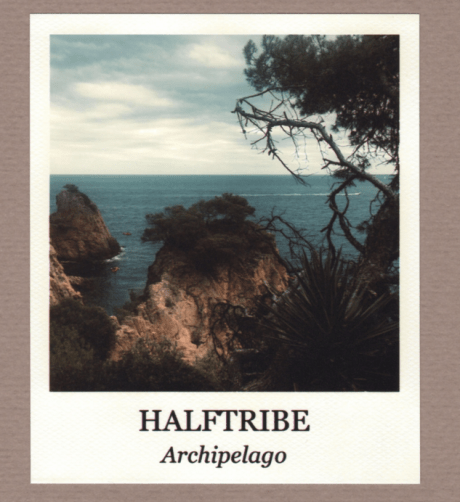
Another understated ambient suite from the purveyors of unobtrusive experimental soundscapes, Sound In Silence, the latest deep cut on the label’s roster is a lightly touched pulsation of geographical and mysterious soundtracks by the Manchester-based producer/DJ Ryan Bissett.
Under the Halftribe title, Bissett’s fifth long-player Archipelago subtly layers resonated hums, drones, throbs, glimmers and metallic tubular sounds with refracted suggestions of light and various imagined atmospheres. Though most of the titles allude to descriptive actions and contemplative thoughts of the enormity of it all, there’s always a sense of movement and environment to be found. The opening long fade ‘Exposed’, with its gleams and submerged washes, evokes a tropical location, and the angelic and monastery-like ghostly choral drifting title-track goes beyond the earthly towards the celestial.
Whilst transportive, what sounds like swells of new age gamelan can be heard on both the veiled wafting ‘Fader’ and lost transmission from the tropics ‘Drops’. Avant-classical elements, such as a low bowed cello sound and floated piano, quiver and plonk amongst Kosmische entrancing improvised instruments and pond-like ripples and hollowed-out bass-y wooden reverb on an ambiguous album of the haunting and serene; the masked and spacious.
Bissett reminds us that we’re all ‘Just Dust’. Which may be, yet what a contemplative musical conjuring we humans can produce in light of that lamentable certainty. This Archipelago is a small testament to that.
Sad Man ‘Indigenous Mix 3’
1st April 2020
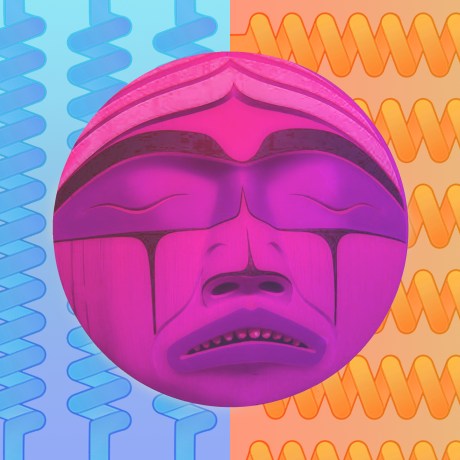
I think it’s pretty safe to say that Coventry’s avant-garde garden shed boffin Andrew Spackman has produced his best electronic music indulgences under the resigned Sad Man moniker. His most prolific incarnation, the former Duchamp favoured Nimzo Indian defense chess move sonic explorer has balanced an ennui for chaos with a passion for Techno rhythms and beats: even if all semblances of anything musically consistent are bombarded with constantly warped manipulations and curveballs.
Following in the wake of this year’s fully realized The King Of Beasts album is the third in the Sad Man series of radical reworks, Indigenous Mix 3. Essentially a transmogrified remix of that same LP; the original Beast tracks shimmer, burble, twist, shift and flex to a new ever-changing treatment.
Often these new mixes prove more flowing, even grooving: some could even be described as spasmodic dance music. ‘Teleprompter’ gets the party off to a twisted start; Tibetan reverberations meet woody mechanics, acid licks, Aphex girders of polygon light and dreamy iterations. The following tetchy beat generator ‘Trespass’ has some nice touches, and even reminded me of Wagon Christ at his most fucked-up. As the title suggests, and keeping at least a lingering trace of that city’s exotic atmosphere, ‘Marrakesh’ channels Orbital and LFO into a industrial spindled mooning otherworldly enigma. It’s the late and much-missed Andrew Weatherall that pops up on the mirror-y dub, Mogadon time-lapse ‘Carbonated’.
Elsewhere Chicago House rubs up against air-y wonked weirdness on ‘Kalafornia’, and A Guy Called Gerald goes into meltdown on the broken-up ‘The Physician’.
An unconscious stream of ideas and tinkering’s; remodeling hints of Warp, Ninja Tunes, Leaf, acid and breakbeat, Spackman let’s loose once more with another cracking volume of mixes. This series is proving to be amongst some of his best work yet.
iyatraQuartet ‘Break The Dawn’
24th April 2020
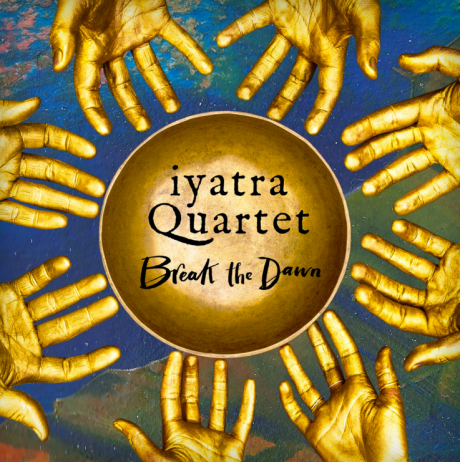
A veritable escapist odyssey that connects past with the contemporary, the latest timeless concerto from the multifaceted instrumental UK quartet transports the listener to both poetically stirring histories and landscapes.
Imbibed by individually strong and impressive classical CVs and a shared experience of study at the Royal Academy Of Music, the iyatraQuartet merge a penchant for India and Arabia with closer-to-home influences. The latest album’s opening bowed, sustained tremulous theater sea-shanty, ‘Black Sea’, for example is inspired by the former poet laureate (1930-1967) John Masefield’s tumultuous Sea Fever poem. Encouraging many classical homages before them, iyatraQuartet’s take on this classic travels on the mud banks of a hardy landscape with an attentive score of earthy sawing violin and cello, and skimmed and pattered frame drum; yet as with many of the tracks on this LP, they somehow manage to also evoke Eastern European folk music too. ‘Dompe’ goes much further back historically, to the Tudor epoch of Henry VIII, taking one of the earliest surviving “renaissance” keyboard manuscripts – the author composer of which remains unknown – ‘My Lady Carey’s Dompe’ as a foundation, they at first spindly and daintily walk through a dewy pastoral tapestry of float-y clarinet, glistened cobwebbed percussion and quill-etched mournful violin before evoking a hint of the Balkans. This is also the first suite to include a leitmotif of mantra like chants; a unison of choral voices emerging from the veils. ‘Alpine Flowers’ meanwhile, takes its inspiration from memorial plaques displayed at Oxford’s Somerville College Chapel, commemorating ‘significant’ women from the turn of the 19th/20th centuries. Almost jazzy and smoky in feel, there’s a hint of a mysterious geography that errs towards the Native Indian.
Gravitating towards India, both musically and religiously, the rebirth celebratory rejoice themed title-track weaves countless personal connections into a number of tunes. The group’s name, pronounced “ey-at-ra”, is even taken from the Hindu expression for travel, “yatra”. Mostly obvious the morning Raga transformation ‘Bhairav’, refers to the many contrasting aspects of Bhairava (a manifestation of Shiva), who created and then dissolved the three stages of life. That trio of universality is mirrored by a quiet incipient moody bowed, droning and strummed section, followed by quivered wails, clarinet honks and scrapes and busy tablas. It helps that the quartet’s co-founder and violinist maestro (to name just one instrument among her repertoire) Alice Barron studied South Indian violin techniques with the country’s star turn duo, the Mysore Brothers.
Continuing that thread, the joyful classical meets Swami ‘Chandra’ was originally written for the Indian sire of the title, Chandra Chakraborty, in 2017. The swayed, swan-like melody is based on, of all things, a medieval plainchant, woven into a Raga Yaman. It’s a dusky beauty of a fusion, with ascendant violin and airy clarinet: gracious in fact.
Sweeping across musical panoramas, the quartet reach out towards the Middle East with the sand dune contoured ‘Lama Bada’. Born out of a fruitful meeting with Basel and Mohammed ‘Taim’ Saleh of the Orchestra Of Syrian Musicians that turned into the 2018 touring The Songs Of Syria project, this atmospheric romantic piece utilizes Arabian love stories for a reverent camel ride.
Impressive in scope with instruments from folksy Ireland, rootsy Africa, mystical Tibet and of course pan-Europe, Break The Dawn is an ambitious reading of experimental classical music that doesn’t easily take to defining. Reminding me of the escapist Balkan trio Širom, but with chamber strings, the iyatraQuartet conjure up an imaginative time-spanning sound; performed with assured skill and an open mind.
Antti Lötjönen ‘Quintet East’
(We Jazz) 17th April 2020
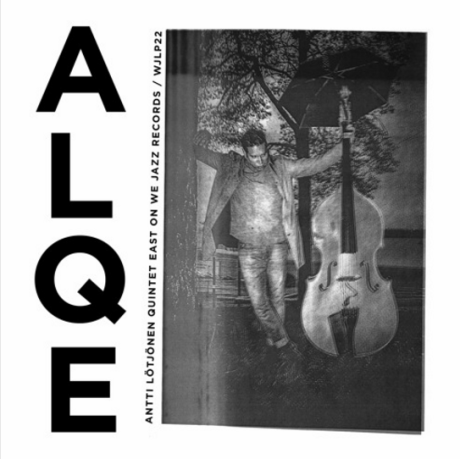
Highly active as a bassist on the flourishing Finnish jazz scene with such notable groups as The Five Corners Quintet, 3TM and the Aki Rissanen Trio, Antti Lötjönen now steps out as bandleader on his debut longplayer, Quintet East. Bringing with him a whole host of “hard hitters” Antti leads 3TM band mate and saxophonist Jussi Kannaste, trumpeter Verneri Pohjola, drummer Joonas Rippa and Koma Saxo supergroup saxophonist Mikko Innanen on a free-jazz, hard bop and serenaded jazz exploration.
Released just a day before his 40th birthday milestone, this debut offering is a culmination of all that experience and learning. And so you’re just as likely to hear echoes of Sonny Clark and Wayne Shorter as you are the Arild Andersen Quartet and the avant-garde.
The bassist’s signature instrument however, though always present, is never overbearing, and seldom brought to the front. Whilst highly articulate, sometimes physical, the double bass in this instance offers a constant bowed rhythm and sense of depth. Occasional elasticated noodling and skips are always great to hear when the rhythm picks up, but soloist style showcases are kept to a couple of ‘Monograph’ series vignettes: The introductory ‘Monograph I’ features a quietly plucked and flexing bass, spring and meandering; ‘Monograph II’, a sort of tuning exercise in which the bass takes on the characteristics of a cello.
There’s plenty of nicely untethered, if never too loose, performances from Antti’s ensemble. ‘Erzeben Strasse’ has a European title but finds the quintet traversing Bernstein, Be Bop and Lalo Schifrin on a journey that sets out with a breezy rhythm, swaddling sax, spiraling Miles Davis style trumpet and a laid back bounce but ends on a much busier dampened drumming off-kilter skip. Alluding to the mid to late 70s satirical soap opera of the same name, ‘Mary Hartman, Mary Hartman’ is another evolving instrumental piece; starting out with snuggled romantic sax, fluting trumpet and a flitting meander, the track then gets going with some big band theme tune vigor. ‘Pocket Yoga’ (is that a euphuism?) has some nice runs and nozzled horns and drums that just keep on moving, and the spiritual jazz leaning, increasingly erratic honked ‘Oblique’ evokes Electric Byrd. ‘La Petit Lactaire’, as the title may suggest, is a wholly Euro-jazz serenade; the mood set to a snuggly scene on the Left Bank.
Swaddled between the experimental and familiar warmth of American jazz in the late 50s and 60s, Antti has bridged the decades to produce a musical showcase as meandrous as it is intense and busy; as traditional as it is modern. A great start as a bandleader, but Quintet East also extolls the talents of an extraordinary proficient and prolific Finnish jazz scene.
Damily ‘Early Years: Madagascar Cassette Archives’
(Bongo Joe) 24th April 2020
As worldly as I am, I have to level with you. Until this attest discovery from the crate-digging folks at Bongo Joe arrived, the frenzied, ceremonial and ritual rooted sound of Madagascan ‘Tsapiky’ had completely passed me by. This handy little collection however proves an inviting introduction to not only this unusual busy music but also one of its most celebrated proponents, Damily.
Hailing from the southwestern region of the Island, where tsapiky is prevalent, Damily has molded the foundations laid down in the 1970s to create a idiosyncratic fusion of blistering bluesy rock guitar, innocent sounding high-pitched vocals, lo fi tech and galloping, on the move, percussive rhythms. This compilation hones in on the early years, picking through the tape archives to highlight Damily’s burgeoning beginnings: This is the Madagascar star unfiltered if you like.
Originally, as so many of his peers and forbearers did, learning to play as a poor kid on the most rudimentary of knocked-together, nylon-stringed guitars, and despite lacking the length in his small fingers to reach the low strings, Damily flourished. Giving the music a unique characteristic initially, he developed a technique of releasing the two bass strings as his other fingers were hitting the higher strings – other guitarist with similar disadvantages, or because they just preferred it, just moved the lowest string completely. The results gave a more aggressive attacking sound that was soon adopted by a host of artists; so many in fact that it has become a signature of this electrified genre ever since.
Sung in the Island’s Malagasy dialect, the racing fusion of lilted sweetened gospel soul, spindly and flicked electric guitar, jostling and skiffle like percussion has echoes of South Africa township polyrhythm rock and Afropop. Almost childlike vocals joyfully skit across patted, skipping padded drums – the sticks made from the pelts of the humped Zebu cattle – and what sounds like a pan-pipped melody on the opener ‘Zaho Va’; and you can hear, what sounds like, Casio presets and splashes of cymbal on the delightfully scrappy ‘Mangebakbake’.
Threatening to collapse or trip over itself throughout, the diy produced trotting rhythms somehow keep going. And Damily’s reedy guitar runs, phrases and trills nearly overload the system at one point, staying just the right side of discord, and staying just about in tune.
Back to the foundations, with a smattering of tracks from ’95 to 2020, the Early Years is a refreshing collection of an artist in development: finding his style. You don’t need all the baggage or investigation to appreciate it, better still enjoy the distinctive sound. Just open your ears, sit back and be taken to new thrilling musical escapes: Yeah, that’s the sound of a recommendation.
You can now support the Monolith Cocktail via the micro-funding platform Ko-Fi:
Hi, my name is Dominic Valvona and I’m the Founder of the music/culture blog monolithcocktail.com For the last ten years I’ve featured and supported music, musicians and labels we love across genres from around the world that we think you’ll want to know about. No content on the site is paid for or sponsored and we only feature artists we have genuine respect for /love. If you enjoy our reviews (and we often write long, thoughtful ones), found a new artist you admire or if we have featured you or artists you represent and would like to buy us a coffee at https://ko-fi.com/monolithcocktail to say cheers for spreading the word, then that would be much appreciated.
ODB 374: Roedelius ‘Selbstporträt Wahre Liebe’
April 2, 2020
ALBUM REVIEW
Words: Dominic Valvona
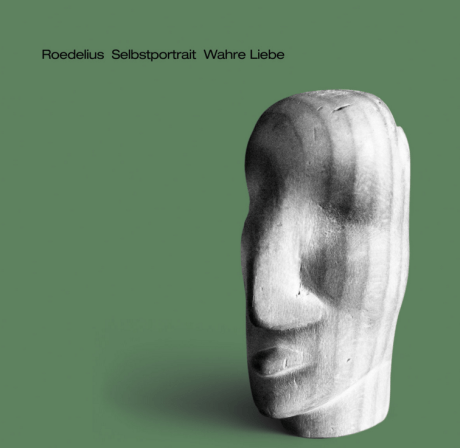
Roedelius ‘Selbstporträt Wahre Liebe’
(Bureau B) LP/10th April 2020
Losing none of that zest for creating and wonderment, the eight-five year old progenitor of ambient, new age and neo-classical music Hans-Joachim Roedelius is still exploring and still producing experimental compositions at a prolific rate. There is, four decades on from his richest period of self-discovery and defining the perimeters of what electronic music could be, no let up in the Roedelius schedule. As famous for his collaborative partnership with the late Dieter Moebius in the Kluster/Cluster/Qluster arc, the Berlin born masseur and physiotherapist turned self-taught composer, has also laid down a breadcrumb trail of impressive and highly influential solo releases, numbering somewhere in the 100s.
Just one part of that extensive catalogue of solo work, the introspective Selbstporträt series is being revisited by the aging doyen for the Bureau B label. Originally made during various sessions for Cluster, between 1973 to 1979, these intimate contemplative and ruminating self-portraits were released in the late 70s and early 80s – later volumes appear sporadically in the 90s and 2000s too. Though always going forward, Roedelius has been nudged into a challenge as Bureau B founder Gunther Buskies proposes the octogenarian return to the processes and methodology of that period to create another ‘Selbstporträt’. Cheekily as the PR spill has it, seeing if he, ‘was capable of “beaming back” to his youthful years, reaching into the sonic past of the Self-Portrait series to deliver similarly persuasive results.’ The short answer to that is: Yes. But before we divine the results of Selbstporträt Wahre Liebe, a little background colour first.

A founding pillar of the Kosmische sound in the late 1960s and early 70s, originally taking shape from experimental performances at the legendary Berlin club they helped found, the Zodiak Free Arts Lab, the first incarnation of this amorphous partnership that made Roedelius’ name, Cluster, featured Joseph Beuys disciple and electronic music progenitor Conrad Schnitzler; the music, almost dark, Lutheran and hymn like, an early modulation of piano, organ and guitar, fed through an array of homemade effects, that made its debut on a label sonorous for its stoic church organ music. This was the first incarnation, Kluster.
Many ‘head music’ fans will be enamored or at least familiar with the second phase, as Kluster interchanged its capital letter to a ‘C’ and Schnitzler left (for the first time). Releasing some of the most sublime peregrinations and odd candy coated pop electronica under the Cluster banner, their most formative period during the early to mid 70s remains their most famous and influential. This brought plenty of admirers and fellow sonic travelers to the Forst located woodland glade studio retreat. Most famously Brian Eno and Michael Rothar of Neu! Both of whom would join Roedelius and Moebius to form the (a)side project supergroup Harmonia.
Apart from a dormant period during the 80s, as Roedelius and Moebius pursued both solo and collaborative careers (many of which would overlap), Cluster survived well into the next century. Finally calling it a day in 2010: For this version of the partnership anyway. Dropping the C for a ‘Q’ this time around, Roedelius found a new collaborative partner in the sound installation artist and like-minded sonic explorer keyboardist Onnen Bock. After a number of albums together the duo expanded to a trio when bass player virtuoso and (another) keyboardist Armin Metz joined the ranks. In the last few years the Qluster trio have been drawn to Roedelius’ neo-classical piano compositional improvisations and sketches; the previous suite Tasten was built around a trio of them, and the more electronic offering Echtzeit, though far less so, also seemed informed by it.
In many ways following on from the last album together, making a return to the warmth and traversing heavenly space sounds we have come to associate with all things Kosmische, the golden epoch of that genre filled our ears once more on Qluster’s seventh (and so far last) album, Elemente; a feat that is repeated on this solo portrait.
Leaving Qluster aside for the moment, Onnen Bock, together with Wolf Bock, shadows Roedelius on this vintage warm-up. Intimately (re)acquainted with himself, the fascinations and interests that originally sparked the previous series of visceral sketches may have changed but the soundboard tools remain the same, with Roedelius once more making use of the Farfisa organ, Fender Rhodes, drum machine and tape-delay to fashion a new empirical suite of Kosmische neo-classical moods and dreamgazing.
Though it’s been over four decades since those iconic peaceable recordings, the old apparatus from that period is just as warm and receptive to the ambient progenitor’s touch and imagination. If you’re familiar with those composition then you’ll bound to recognize the recurring Baroque fairground piped merry-go-rounds and serene glide motifs that appear on this wonderful erudite album. Especially the playful but calmed trans-alpine gliding ‘Geruhsam’, which – in my imagination anyway – conjured up an image of either a bossa signature steamboat sailing across a Swiss lake, or, a enervated chuffing steam engine travelling across a tranquil mindscape.
Elsewhere the bright diaphanous notes of the Rhodes lightly hang in the air as they did before; lingering with an echo of glassy Kosmische reverent soul on compositions such as the romantic resonate ‘Wahre Liebe’ – that’s ‘true love’ – and dreamily fanned on the comforting cloud breathing ‘Nahwärme’ – which translates as, depending on your fancy, either ‘local heating’ or ‘convenient heat’; an aloof soundtrack for a German boiler installation company perhaps? Sometimes that organ glistens and at other times almost drifts into the ecclesiastical. The complimentary Farfisa is equally as gorgeous; deftly played and perfectly attuned. A real warmth is created (there’s that word again), but also an overlapping cascade of bulb-like notation and subtle refractions of light play.
Reverent, beautiful, encapsulating, with even a touch of giddy uncertainty – I’m referring to the ‘roundabout’ motion of ‘Im Kreisel’ – Roedelius has lost none of his sparkle, or for that matter his romanticism and hope. A fine balance between past triumphs and the new, Selbstporträt Wahre Liebe is unhurried and playfully understated; a timeless album simultaneously made with a sagacious touch and young curiosity. At the stately age of 85, Roedelius proves to still be on form as he looks back once more before easing forward.
Related posts from the Archives:
Hans-Joachim Roedelius Interview
Qluster ‘Elemente’ Review
Hans-Joachim Roedelius ‘Kollektion 2: Roedelius – Electronic Music Compiled By Lloyd Cole’ & ‘Tape Archive 1973-1978’ Review
Cluster ‘1971 – 1981’ Boxset Review
And Now, A Word From Our Founder
Hi, my name is Dominic Valvona and I’m the Founder of the music/culture blog monolithcocktail.com For the last ten years I’ve featured and supported music, musicians and labels we love across genres from around the world that we think you’ll want to know about. No content on the site is paid for or sponsored and we only feature artists we have genuine respect for /love. If you enjoy our reviews (and we often write long, thoughtful ones), found a new artist you admire or if we have featured you or artists you represent and would like to buy us a coffee at https://ko-fi.com/monolithcocktail to say cheers for spreading the word, then that would be much appreciated.
Perusal #006: Singles, Previews & Oddities Roundup: A Journey Of Giraffes , Northwest, Ranil and Violet Nox…
February 26, 2020

A quick shifty, glance, a perusal of the mounting pile of singles, EPs, mini-LPs, tracks, videos and oddities that threaten to overload our inboxes this month by me, Dominic Valvona.
This week’s roll call of honours includes A Journey Of Giraffes, Northwest, Ranil and Violet Nox.
Ranil y su Conjunto Tropical ‘Cumbia Sin Nombre’
(Analog Africa) Teaser from the upcoming LP ‘Iquitos – Amazonía – Perú’, released 20th March 2020
Drifting back towards the Amazon, Analog Africa – via their congruous Limited Dance Editions imprint – once more float upstream towards the outposts of the South American continent to discover the sauntering sumptuous delights of ‘cumbia’ music. Venturing past the city of Manaus and past the Brazilian/Peruvian border, to the city of Iquitos. It might be fatalistic or encouraging depending on your feelings about the film, but the remote Iquitos, completely cut off from the Peruvian coast, accessible only by air and water, and surrounded by impenetrable forests, was where Werner Herzog filmed the maddening visionary Fitzcarraldo: the epic story of one man’s struggle to bring opera to the Amazon; the travails of which entailed dragging a great big paddle ship over a mountain. Cut off then from the outside world, this lush if hardy place to eke out a living, incubated a novel version of the famous, polygenesis folkloric music.
Though everyone on the continent has had a go at adopting and tinkering with the original form, the melodious Cumbia hails from Colombia. Informed by a trio of cultural influences it can be broken down as thus: the rhythmic foundations derive from Africa, the indigenous offer up the flute-y sound, and the Europeans the costume and choreography. In recent times it has been electrified, adopted by untold contemporary bands.
Iquitos’ favourite son of cumbia Raúl Llerena Vásquez – known to the world as Ranil – was a Peruvian singer, bandleader, record-label entrepreneur and larger-than-life personality who moved to the heady lights of the capital, Lima where he swirled the teeming buzz of the Amazonian jungle, the unstoppable rhythms of Colombian and Brazilian dance music, and the psychedelic electricity of guitar-driven rock-and-roll into a knock-out, party-starting concoction.
When Ranil returned to Iquitos after several years teaching in small towns, he assembled a group of musicians and prepared to take the city’s nightlife by storm. His unique blend of galloping rhythms and trebly, reverberant guitar was so successful that he was soon able to take his new band to Lima to record their first record at MAG studios, where many of Peru’s most successful psych, rock and salsa bands began their recording careers.
Yet Ranil had no intention of entering into the indentured servitude that comes with signing one’s life away to a record company. Instead he established Produccions Llerena – possibly the first record label founded in the Peruvian Amazon – which allowed him to maintain complete control over the release and distribution of his music. His fearsome negotiation skills and his insistence on organising his own tours turned him into one of the central figures of the Amazonian music scene.
Although his records were popular throughout the region, Ranil never sought his fortune in the capital, preferring to remain in his hometown of Iquitos where, in recent decades, he has concentrated his considerable energies on his radio and television stations, and become involved with local civic politics. Yet his legacy has continued to grow among those fortunate enough to track down copies of his legendary – and legendarily difficult to find – LPs.
Ranil’s extraordinary output has remained one of the best-kept secrets among collectors of the genre and psychedelic Latin sounds.
Ahead of the Ranil y su Conjunto Tropical album we’re sharing just one of the three teaser tracks currently doing the rounds; the sauntering lilted and scrappy ‘Cumbia Sin Nombre’. This will go some way to keeping you warm during these miserable rain-lashed and freezing winter months.
Of interest from the Archives:
Analog Africa Tenth Anniversary Special
Mestre Cupijó e Seu Ritmo ‘Siriá’ Compilation Review
Bitori ‘Legend of Funaná ‘The Forbidden Music Of The Cape Verde Islands’ LP Review
Dur-Dur Band ‘Dur Dur Of Somalia: Volume 1, Volume 2 And Previously Unreleased Tracks’ Review
Northwest ‘All Of A Sudden’
(Temple Arts) Video
On occasion, due to time constraints and the sheer volume of requests/submissions thrust upon the Monolith Cocktail each day (let alone week or month) the odd sublime band slips through our hands. The adroit cerebral and artfully beautiful Northwest duo is one such example of this: though we managed to at least feature the slow-released beatific ‘The Day’ lull in our last ever Quarterly Revue Playlist, at the end of 2019. Taken from the duos most recent (and second) album of subtle yearning pop and neo-classical lent mini-opuses II, the achingly ethereal voiced and purposeful heart-breaking ‘All Of A Sudden’ has been furnished with a new video. A favourite not only of ours but the duo themselves, who consider it one of the best songs they’ve ever written (they might just be right on that), Northwest’s heavenly voiced Mariuca García-Lomas explains that the message behind this tender feely classically brushed and gauze-y trembled strings evocation has been difficult to express before in words. Hopefully these metaphorically blinded and bandaged visuals – recorded on an emotionally charged cold morning in an English garden – will enlighten us further.
Taking the plunge a few years back, quitting their jobs in the bargain and relocating to the UK, Mariuca and her foil Ignacio Simón have released two albums so far under the Northwest moniker, though they also appear under various other guises – this particular incarnation of the duo expands to accommodate a small chamber orchestra. They’ve also recently launched their own label hub, Temple Arts, for all theses projects; a one-stop platform you could say. Not confined to just breathtaking music, they’ve also released a series of little films and performances, two manifestos, organized an arts festival in a church in London and collaborated with a wealth of other artists, such as dancers and costume designers.
Romantically plaintive with a political dimension, their last video-track ‘Pyramid’ (taken from the first LP) was directed by the artist Álvaro Gómez-Pidal on 16mm film and used a drawn-on-film animation technique. This latest visual accompaniment is no less sublime.
Of interest from the Archives
Quarterly Revue Playlist Part 4
Violet Nox ‘Future Fast’
(Sleep FUSE) EP/Out Now
A slightly disorientating and ominous vision of futurism waits on the new unearthly cybernetic EP from the Boston, Massachusetts synth-heavy troupe Violet Nox. Gazing into the mainframe this quartet of light-bending minimal techno and ambient explorers fashion a strange cosmology from their tech setup. The subtly engineered wispy and whispery vapour trail opening ‘Cosmic Bits’ features an ever-intense soundscape of lightbeams, downplayed acid burbles, resonating satellite signals and air-y sine waves. It also reminded me a bit of the organic subterranean trance of the Future Sound of London and various records put out by the R&S and Hart House labels in the early to mid 90s. The moist atmospheric ‘Moonshine’ merges post-punk with bity techno, with its use of what sounds like flange-y guitar – though this could be the sound of a guest ‘ukulele’ – reverberations, bendy effects and cybernetic voices on an increasingly mind-altering journey. More metallic robotic like voices can be found on the fizzle lashed echo-y ‘Superfan’ – a track that just keeps getting weirder and nosier as it progresses – whilst ‘Bell Song’ sends those broadcasts and masked annunciations into a vacuum of trance-y tubular ambience and vague percussive industrial washes.
More intriguing and mysterious than dystopian augur, Violet Nox’s warped explorations prove intriguing and adroit in navigating brave new (alien) worlds.
A Journey Of Giraffes ‘Armenia’
LP/Out Now
Seeming to get better with every release, the unassuming maverick ambient and soundscape explorer behind this most picturesque of animalistic monikers, John Lane, has in recent years been prolific in churning out the most subtle but deeply effective under-the-radar soundtracks. The safari has moved, in more recent years, away from Lane’s Beach Boys imbued driftwood suites to more ambient and traversing experimental influences. Previous excursions from the Baltimore composer include an aimless supernatural field-recorded walk through the forest, F² – a mixture of Arthur Russell meets Panda Bear and Alejandro Jodorowsky in John’s Maryland backyard -, and the love letter to the late Japanese electronic composer Susumu Yokota, Kona – a ceremonial, Zen like soundtrack that evokes the Fourth World Possible Musics of Jon Hassell, Popol Vuh and the higher plain communal glistened zither transcendence of Laraaji.
The latest album looks to the edges of Eastern Europe, where the Caucasus meets the Middle East, and the mysterious of Armenia. A land much disputed, fought over and most tragically, its population during WWI herded from their lands towards one of the 20th century’s most heinous genocides (still contested by the perpetrates to this day). Atavistic psychogeography, myths, ancient readings and poetry form the inspiration on this generous 44-track album of differing stirring soundscapes, traverses, contemplations and ruminations. From the air-y and sublime to the more ominous, primal and fraught, minimal evocations sit alongside more churned oblique scrapped moody horrors. Voices from the old religions swirl and echo amongst the hewn stone monuments to Armenia’s ghosts on an outstanding mesmerizing soundtrack. I’m not sure how many more great records John has to make before he gets the recognition he deserves, but it better be soon.
Of interest from the Archives
A Journey Of Giraffes ‘Kona’
A Journey Of Giraffes ‘F²’
Expo ‘She Sells Seashells’
The Monolith Cocktail is now on Ko-fi
Hi, my name is Dominic Valvona and I’m the Founder of the music/culture blog monolithcocktail.com For the last ten years I’ve featured and supported music, musicians and labels we love across genres from around the world that we think you’ll want to know about. No content on the site is paid for or sponsored and we only feature artists we have genuine respect for /love. If you enjoy our reviews (and we often write long, thoughtful ones), found a new artist you admire or if we have featured you or artists you represent and would like to buy us a coffee at https://ko-fi.com/monolithcocktail to say cheers for spreading the word, then that would be much appreciated.
Our Daily Bread 364: INTENTA: Experimental & Electronic Music From Switzerland 1981 – 1993
February 21, 2020
ALBUM REVIEW
Dominic Valvona
Various ‘INTENTA: Experimental & Electronic Music From Switzerland 1981 – 1993’ (Les Disques Bongo Joe/Décalé Records) LP/28th February 2020
Overshadowed by its neighbours, the landlocked trans-alpine polyglot nation of Switzerland has a mixed history, both politically and culturally. The neutralized haven for at least the last century, the 26 canton state has proved a fertile climate for the arts especially; a key incubator for the birth of Dadaism and in turn, from its ashes, Surrealism (dreamed up in part by the Zurich Cabaret Voltaire of such luminaries Hugo Ball, Emmy Hennings, Tristan Tzara, Richard Huelsenbeck and Hans Arp, to name just a few), to the role of modern conceptual stars such as Urs Fischer, Thomas Hirschhorn and Sylvie Fleury.
Musically though, I draw a bit of a blank.
Bongo Joe along with their partners on this electrified Swiss odyssey, Décalé Records, are here to help, filling in those blanks with at least one important transitional period in the country’s music history; a twelve-year window in which the synthesized ‘hedonism’ of club and burgeoning Techno scenes emerged from a more politicized radical youth-led movement.
From 1981 onwards the great and good and more obscure mavericks of Switzerland embraced the technology and production; experimenting to varying degrees of success, from louche Euro-pop to the avant-garde; Kosmische style peregrinations to lo fi futurism. Plucked from the crates by Matthias Orsett and Maxi Fischer, a mixed bag of the ‘under-appreciated’, ‘sought-after’ and plain odd are brought together under the INTENTA title.
An intergenerational compilation, old hands like the multi-tasker artist/actor/poet/ski instructor and Jacques Brel adapt Jean-Pierre Huser feature alongside a rabble of Swiss post-punk-turn-synth-pioneers such as the ex-Grauzone saxophonist Claudine Chirac. The former, Huser, high on the Gauloises nicotine of Gainsbourg wraps a seedy Yello-esque gauze-y electro production around the 1984 down and out cocaine languor in ‘Chinatown’; the latter, sees Chirac reimagine what it might sound like if Wendy Carlos had been signed to the early Mute label, composing a Baroque-futurist elegy on the 1982 ‘Etudes’ exercise: part neoclassical, part videogame.
Quality and access, from the privately pressed to bigger full-on slick productions, this collection – which is neither linear nor thematic – dots Eurovision starlets amongst the most rudimentary of early synth tinkerings. At the more polished end, Swiss pop-chanteuse Carol Rich makes the cut with the vaporous hushed air-y ‘Computered Love’; the congruous flip side to Rich’s 1984 Eurovision entry ‘Tokyo Boy’. At the more lofi level, Dressed Up Animals 1983 serialism and ritualistic sound experiment ‘Mondtanz’, morphs Faust and Cabaret Voltaire.
The influences are just as wide-ranging; smoky, sexy Grace Jones vibes and Trevor Horn on Peter Philippe Weiss’ soulfully sultry underground transport diorama ‘Subway’ – a private pressing with high production values, remastered especially for this compilation – and D-Sire’s French-esque bluesy drumpad splash crescendo ‘Wintertime’.
Other notable attractions on this selection include the opening ‘Untitled’ Krautrock traverse, attributed to the 19th century Swiss folk hero Andreas Hofer – the Tyrolean innkeeper/drover turn rebel leader in the fight against Bonaparte; captured and later executed -; the Ryuichi Sakamoto with touches of the Yellow Magic Orchestra, dance across the Alpine glacial, ‘Swiss Air’, by Bells Of Kyoto; and mechanical water-treading ‘Django’, labeled as the Unknownmix.
As varied as Juan Atkins is to the 39 Clocks or Niles Rodger’s 80s Bowie production is to The Normal, the differences in synthesizer production and style is numerous. You can hear more or less every development in electronic music, from soundscaping to city lights NYC electro funk on this eager compilation that traces a less cherished passage in the evolution of European electronica. A collection of artists that absorbed but lent a certain Swiss bent to the genre. INTENTA is well worth seeking out, if not only to own some very rare and expensive sounds.
The Monolith Cocktail is now on Ko-Fi
Hi, my name is Dominic Valvona and I’m the Founder of the music/culture blog monolithcocktail.com For the last ten years I’ve featured and supported music, musicians and labels we love across genres from around the world that we think you’ll want to know about. No content on the site is paid for or sponsored and we only feature artists we have genuine respect for /love. If you enjoy our reviews (and we often write long, thoughtful ones), found a new artist you admire or if we have featured you or artists you represent and would like to buy us a coffee at https://ko-fi.com/monolithcocktail to say cheers for spreading the word, then that would be much appreciated.
 Monolith Cocktail Blog