Tickling Our Fancy 075: 75 Dollar Bill, Meursault, Simon McCorry, Camino Willow, Manu Louis, Dhoad Gypsies Of Rajasthan…
June 20, 2019
REVIEWS ROUNDUP
Words: Dominic Valvona

Another eclectic roundup of recommendations from Dominic Valvona, with recent and upcoming albums and EPs from the polygenesis amorphous traversing NYC band 75 Dollar Bill, cellist sound-sculptor of ambiguous environments Simon McCorry, oddball Belgian Manu Louis, the Dhoad Gypsies Of Rajasthan, Dictaphone welder Joe Posset and improvise experimental cellist, Charlie Ulyatt, and Balearic expletory House and Techno artist Kota Motomura.
Building their own ambitious universes Camino Willow releases his debut electronic vision Monotopia and Edinburgh artist Neil Scott Pennycook, under his Meursault alter ego, launches a move into fiction with his latest masterpiece Crow Hill. I also take a look at two special cult favourite reissues, the first from the Venezuelan legend Chelique Sarabia – his transformed psych vision of the country’s traditional music, ‘Revolución “Electrónica” en Música Venezolana’ – the second, from the Anglo-French troubadour Nick Garrie – the late 60s debut psychedelic and folksy opus The Nightmare Of J.B. Stanislas.

75 Dollar Bill ‘I Was Real’
(tak:til/Glitterbeat/Thin Wrist Recordings) 28th June 2019
Via Glitterbeat’s burgeoning specialist imprint tak:til and Thin Wrist Recordings, a second album of uncharted transient instrumental performances, passages and traverses from the polygenesis sophisticated NYC troupe, 75 Dollar Bill. Headed, though by no means controlled or dictated, by multi-instrumentalists Rick Brown and Che Chen, the amorphous group expands its ranks accordingly to feature a highly talented lineup of musicians and fellow experimentalists.
Previously making a subtle impact with their long-winded staccato entitled Wood/Metal/Plastic/Pattern/Rhythm/Rock album a few years back, Chen and Brown travelled a listless pan-global terrain; a fourth world Hassell imbued sonic geography of possibility.
Extending the perimeters and cast – expanding to a double album release this time around –, I Was Real features a variety of instrumental and sound manipulated combinations on a mix of performances, jams and studio created “fragment” sound collages. One of which, the opening sextet performed ‘Every Last Coffee Or Tea’, is a rearrangement of the same entitled song that originally appeared on the debut album, Cassette, whilst the “ghost inverted” follow-on of that opener, ‘C or T (Verso)’, references their cassette tape release of the same name. The former of these atmospheric peregrinations features a haze of wafting baritone sax and suffused viola and guitar lines, set to a “classic 3 against 2 rhythm”; a effortless but technical transportative soundtrack that evokes both the shrouded mystery of a Tibetan shrine and waking up to the sound of cattle herders in Mali. The reversal mirage of the latter of these two tracks sucks that opening suite backwards through a transmogrified Captain Beefheart prism.
The title-track, on what is an album that often uses past material to build anew, is itself a regular 75 Dollar Bill live set closer. Often building up a momentum that could run to thirty minutes, ‘I Was Real’ is more like a springboard; never quite repeating itself, always performed in different settings and taking in not only more recognizable instruments but also the surrounding environment. By contrast this seventeen-minute studio version is considered relatively “short”, though no less extemporized, as it takes in similar concrete reverberations, hums and drones.
The “impromptu” unruly avant-garde blues jam ‘There’s No Such Thing As A King Bee’ is one of my favourites. A “rebuke” to the titan of the form, Slim Harpo, and his famous raw blues-standard, this scuzzy, flange-effect overload boogie hoedown (with furious hi-hat bashing from Carey Balch) is wild: even primal.
Cleverly bending, no matter how free and improvised they might be, complicated timings and adroit microtonal notes to their will, 75 Dollar Bill turn elliptic and compound rhythms, undefined adventurous playing and collaged fragments into either 21st century desert musing blues or futuristic swamp music. As re-inventive as ever, I Was Real transforms the familiar to roam the borderless.

Simon McCorry ‘Border Land’
14th June 2019
Strange escapist environments and spaces materialize from the gauzy wanes and gestures of Simon McCorry’s cello on the ambiguous atmosphere-building Border Land. The third such ambient album of field recording manipulations from the classically trained cellist, this latest highly evocative work of the otherworldly transforms the recognizable into something mysterious, even on occasion, the supernatural.
Cloaked in echo and various effects, even the wind whistling through the rustic metal gate to an Orkney lighthouse can suddenly become a strange spooked siren song of countless memories; the sound of lost souls from beyond the ether perhaps: suggestible much?! One of a duo of similar recordings made on a road trip to the Island of Westray – the other windy projection being the Ambient Works era Aphex Twin influenced ‘Sacred Geometrics’ – the fog enveloped ‘Not One Thing’ channels the psychogeography of the environment in which it was recorded to create an entirely new imaginative soundscape.
Remnants and traces of McCorry’s principle instrument can be heard mournfully and achingly guiding the listener towards the skylight: Towards a warm glimmer on the haunted chilled rising ‘Awake A Moment’, and towards the aura of an orbiting astral object of serene desire, on the Tangerine Dream like ‘Spheric’.
Traversing detuned descending aerial arcs, dusty particles, gaseous clouds and corridors to constellations without actually remaining locked to any particular sound or atmospheric mood, the sonic possibilities seem endless: the ambiguity too. And although much of this album is mysterious and uncertain, so untethered, as it is to anything concrete and tenable, McCorry is really exploring the ideas of “stillness”; finding something approaching it anyway, a purposeful pause and break from the chaotic overload of our intensive and intrusive technologically-connected modern world.
Border Land reframes its sources, masks its frayed and bowed cello articulations to produce an often vivid transient amorphous series of intelligently improvised environments and horizons: both inward and outward.

Meursault ‘Crow Hill’
(Common Grounds) 21st June 2019
An ambitious literary-enriched album with a loose story and range of perspectives that will unfold further in comic book form and through live performance, Neil Scott Pennycook’s Crow Hill diorama delivers a whirlwind of dark emotions; many of which feel like a punch to the heart.
Announced as a new chapter for Pennycook’s alter ego Meursault, released as the launch album for the new independent Common Grounds label (set-up and run by the Edinburgh Chamber Studios owner and engineer Graeme Young; the location for the recording of this album) Crow Hill marks a move into fiction for the Edinburgh artist. An “urban horror” of vignettes, each song on this album represents twelve chapters of plaintive and lamentable grief and broken promises from the imagined town’s inhabitants, set to a constantly beautifully aching soundtrack that either builds and builds towards anthemic crescendo or despairingly gallops towards the flames: in the case of the brutal punishing ‘Jennifer’, a discordant scream of anguish, on what could be a crime of domestic abuse.
Gazing into the dark souls of his cast with tales of inner demons and the like, Pennycook can be as ominous as he can be achingly vulnerable. Especially on the heartbreaking psychiatric episode title-track, “She sees me with kindness in my eyes/And tells me she still loves me” being just one of many poignant lines.
Though constantly impressive in the past, his characteristic Lothian burr quivery warble and tumult-pained vocals have never been delivered with such depth and profound elegiac maturity. Still channeling Clap Your Hands Say Yeah with a penchant for country, an Indie-Americana feel and banjo rhythm permeates throughout most of the album. There’s even a campfire version of Audrey Williams gospel-country teary ‘I Heard My Mother Weeping For Me’, a venerable hymn made famous by Audrey’s tragic cowboy husband Hank no less. With the pinning hurt and travails of such an icon ringing in his ear, Pennycock’s own lonesome trail is unmistakably honed in austerity Britain.
Apart from the country influences – as filtered through the Scottish East Coast –you may also pick up echoes of Adrian Moffett, Talk Talk, Radiohead era The Bends, and even Bowie on the increasingly hostile, whipped and thrashed ‘Art School’ fuck-off.
An outstanding album full of both heartache and brilliance, Crow Hill is a vivid, richly and descriptively revealing minor-opus; the first chapter or part of a much grander multimedia universe that crosses songwriting with veiled fiction, illustration and performance. As first stabs go, Pennycook has shown an encouraging erudite skill for writing, which translates well when put to music. This will be an album in many end-of-year lists.

Dhoad Gypsies Of Rajasthan ‘Times Of Maharaja’
(ARC Music) 28th June 2019
Proud custodians of the courtly music of the Maharajas, Rahis Bharti and his brothers Amrat Hussain, Teepu and Sanjay Khan continue a family tradition that can be traced back over seven generations. Handed-down through their gifted great grandfather Ustad Rasool Buxkhan and his equally talented grandson Ustad Rasool, the sibling troupe practice the travelling Khan Saheb style that originated amongst the Romani population who left India over a thousand years ago. It is a special musical caste and title bestowed upon these followers by the bejeweled rulers, in an era when opulence was king in Rajasthan.
The court house band so to speak, these most exhilarating musicians provided both the ceremonial, celebratory and entertaining accompaniment to religious and public events; marking everything from births to marriages and even the arrival of the rain season. Times Of Maharaja is a brilliant showcase to that grand tradition; a tradition that comes alive through dynamic virtuoso playing and the just as complex, remarkable vocals.
Already a well-established and acclaimed group, playing notably for a host of world leaders, the Queen and even at Mick Jagger’s birthday, the Gypsies gallop and giddily swirl through an effortless songbook of paeans and majestic longings as they wind back the clock to the palace epoch.
The jubilance of a new born prince is buoyantly celebrated on the brassy-resonant sumptuous ‘Sona Ra Button Banna’, whilst the “dream wedding” is given a yearned, pondered – later hurriedly – accompaniment on the processional ‘Dhanraj Sahebji’. An album of solid showmanship throughout at every turn, with the flickering, fluttering tablas almost catching fire at times, such is the blurry rapidness of the playing, Times of Maharaja is a rich regal tableau of romantic exultations, elephant lolloping sways, suffused drones and bobbing rhythms. No longer in the service of those legendary kings and queens of India, this travelling band spread their music internationally as both an educational tool and of course as entertainment. They prove that the legacy is, without doubt, in good hands.

Camino Willow ‘Monotopia’
(Willow Music) 28th June 2019
Exploring the post-millennial epoch burgeoning Bedford-based producer and songwriter Maximillian Newell explores both the anguish and potentials of an ever intrusive and dominant Internet. Sharing and connecting more than ever yet simultaneously feeling more lonely and vulnerable, the benefits outweighed by a Pandora’s Box of unfiltered anger, validation causing anxiety and discord, Newell represents generation smartphone; a generation working out individual expression in a “collective consciousness”.
Further tied conceptually to “an adventure in a cult-like city in the sky where the main characters embark on an epic journey into the desert”, Newell’s ambitious debut album has a wide scope thematically and sonically. Creating his own universe of both the plaintive and euphoric, the inward and expansive, under the Camino Willow moniker – a world that will be extended to the medium of graphic novel in the future – he circumnavigates modern-day suburban Britain; escaping boredom and constriction of uncertainty and depression for moments of languid hypnotics and blasts of neo-pop ascendant electro anthems.
Throughout, Monotopia is full of light and shade, despondency and hope, with passages and more full realized tracks (some featuring soulful vocals, some purely instrumental) flowing into each other almost uninterrupted. And with a nuanced balance that is musically imbued by Dean Blunt one minute, Django Django the next, even Fuck Buttons and Liars, Newell sounds like Everything Everything signed to Ninja Tunes as centrifugal drums meet breakbeat, the ambient meets dreamy blissful psych-pop and R&B, the romantic meets sophisticated cynicism.
There’s a lot to be excited about as Newell’s visions take shape. Though cast as a project of despondency and uncertainty, reflecting the state of the author and his subject’s mental health, there’s plenty of emergent dreamy efference and diaphanous light to be found on this escape from the suburbs. Monotopia is a glittering start to an ambitious career.
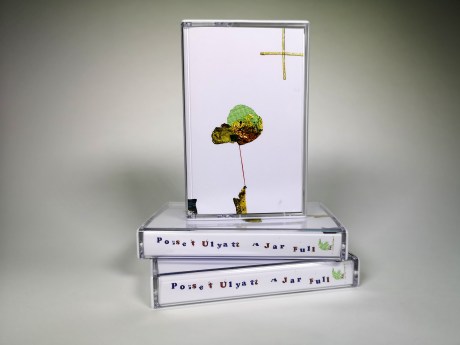
Posset/Ulyatt ‘A Jar Full’
(Crow Versus Crow) 7th June 2019
It won’t come as any surprise to find that the most unlikely of experimental pairings, between a sporadic and garbled Dictaphone operator and frayed, friction-stretched cellist, offers up the strangest of results.
The first set of recordings from this peculiar avant-garde union, released digitally and on (very) limited cassette tape, features both uninterrupted serialism pieces, knocked back and forth between Dictaphone welder Joe Posset and cellist Charlie Ulyatt, and extemporized live performance.
Side A of this revived physical format version posts the results of a remote exchange; both artists’ providing first-take experiments for their counterparts to further improvise over. With no advance preparations and neither artist interfering, not even peremptorily listening to the results, the final versions of ‘At This Lost Hour’ and ‘A Reasonable Remedy’ are as surprising to them as they are to us. Squiggly, warping, real-time and rewound slurred and more fidgety recognizable voices emanate from Posset’s overworked Dictaphone as the strung-out quivers and free-roaming plucks and prods of Ulyatt’s creaking cello amorphously wanes away. The first of these odd couplings (think Faust Tapes meets Fluxus and The Books in Tony Conrad’s Dream Factory) features almost demonical voices and obscured snatches of dialogue as the cello meanders, yet also offers at least a small string of plucked notes. The second of these tracks has a harsher edge, with the violent tape spool cutting and horsehair bow carving away at its prey.
Previous to these exchanges, both artists performed an impromptu set together at a venue in Posset’s hometown of Nottingham. Inhabiting a shared space of mention in a magazine, Posset invited Ulyatt to play a one-off collaboration. Only meeting for the first time a few hours before the show, with no rehearsal or preparation the pairing performed, as the second side of this tape bears out, a haunting environmental invocation. Using the whole cello, especially its wooden body to evoke the uneasy sound of unsettling movement (like spirits making their presence known by knocking, kicking a box down some steps and scraping large objects across the floor), Ulyatt conjures up sounds you wouldn’t believe possible as Posset, attuned to the same esoteric mood, triggers just as ominous sounding supernatural elements from the ether.
Mysteriously tangled, surreptitious voices and creaking atmospherics abound on both these live tracks, ‘High Head’ and ‘At The Angel’, and on the mini-album as a whole. Perfectly in keeping with the Crow Versus Crow house style of such sonic and tape-collage experiments, A Jar Full is a strange avant-garde proposition worth your attention: It sounds both mad and fucked-up, but also paranormal.
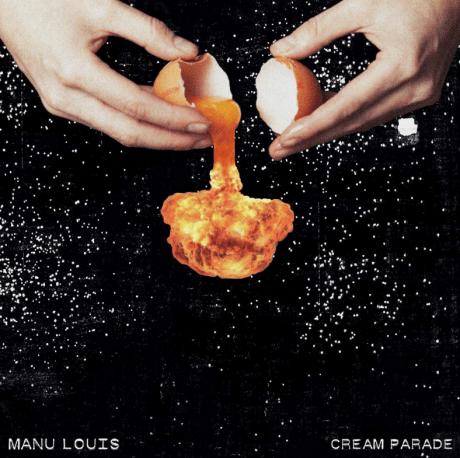
Manu Louis ‘Cream Parade’
(Igloo Records) July 2019
At the heart of the Belgian artists Manu Louis’s second album lays a disenchantment with society’s dependence on technology; the Internet of these visions rightly examined through the medium of, often, odd-ball unrequited serenades and cybernetic jazz elegy. Kooky throughout, Louis and his guests – which include the versatile London-based singer Heidi Heidelberg shadowing Louis or channeling an automated staccato vessel on a series of quasi-duets, and fellow Belgian and virtuoso saxophonist Greg Tirtiaux adding strung-out blues-y and romantically pining horns – roam freely across a number of musical genres in their quest to articulate that unease.
After the initial opening introductory futuristic smoky cocktail lounge horn suffused waft of ‘Saxophone’, Louis traverses Yello, Kreidler and Jack Dutronic on ‘Internet’, and on the clack-y percussive (down to another guest, Brazilian percussionist Nylo Canella) skip and pulse ‘Efface’, Stereo Total meets Einstürzende Neubauten. Technology’s electronic presence comes up against more traditional, if masked, instrumentation on what is, despite the anxious themes, a mostly bouncy, goofy and cool affair: A cynical Louis perhaps, even lampooning his own idiosyncratic European heritage, laying-it-on-thick vocally on the album’s part-homage, part despondent finale ‘Tardigrade’; increasingly losing the plot with a loopy aria as he yearns about the peculiar, near-immortal, microscopic ‘water bear’ of the title; an animal whose resilience to environmental extremities is second to none: Perhaps the only other living thing kicking about with cockroaches in a nuclear aftermath.
Vogue chanson crosses paths with Station 17, Sparks with Dean Blunt and Stereolab on an album that fuses the Belle Epoch with Tresor, Euro-kitsch pop with St. Vincent. However odd, colorful and unique these aloof visionary tales and yearnings might sound they are meant to be dystopian and serious in nature – partly inspired by Samuel Beckett’s own literary depictions of a “postmodern world of obsession and social and existential disorientation” outlined in his Unnameable and Molly novels. A pilotless journey in fact, into the all-consuming matrix, an augur alarm before it’s all too late and the Internet’s strangulating tentacles cut off our air of free will forever. It just so happens to be fun.

Chelique Sarabia ‘Revolución “Electrónica” en Música Venezolana’
(Pharaway Sounds) 29th May 2019
A welcome distraction from the current political tumult in Venezuela, the whacked-out flange and reverb-drenched visions of the country’s legendary polymath José Enrique “Chelique” Sarabia arrive just in time as a reminder of that South America’s cultural legacy; from a period when the country enjoyed a renaissance in arts and music, partly fueled (as we will see) by the oil boom of the 1960s and 70s.
Going through a number of incarnations, originally released exclusively as part of a Christmas gift package for employees and customers of Shell in 1973, under the title of 4 Fases del Cuatro-Música Venezulana desarrollada Electrónicamente por Chelique sarabia (translating as 4 Phases of four – Venezuelan Music Electronically Developed By Chelique Sarabia), the retitled and repackaged 1971 Revolución “Electrónica” en Música Venezolana has been dusted off once more and given a new lease of life.
An example of when an established composer/arranger takes a sudden leap into the unknown, the “electronic revolución” that Chelique created was one that transformed the traditional folkloric music of the country into an exotica space-age trip. Already established and renowned, notably for penning the famous ‘Ansiedad’ and for a substantial back catalogue of standards, Chelique took a gamble, plugging himself into the psychedelic mainframe and going wild with a troupe of adroit musicians in an effect-mad studio. Using we’re told, “especially developed equipment (M.R.A.A.), based off of the principles of the Moog”, the now very experimental minded maverick filtered more traditional instruments – such as the local variant of the four-string Spanish folk guitar, the “cuatro”, and pear-shaped chordophone “bandola Llanera” – through cavernous echo, tape delay and synthesized frequencies to create a resonating mirage.
The source material of signature cantina and mountainside folk, via flourishing Flamingo and Spanish Catholic liturgy, is consumed and removed so that only veiled watery and ghostly traces remain: vapours even.
Hardly created in a vacuum, this musical quartet themed album often saunters up to the chic open-top driving music of Italian and French soundtrack composers, to the breakbeat psychedelics of David Axelrod, kitsch-jazz and pop. It could also fall into the cult Library Music missive; an oddball South American fusion of hallucinatory reimagined traditions.
You don’t necessarily need this LP in your life, but it’s plenty of fun and worth a punt out of curiosity if nothing else. Viva la electronic revolution.
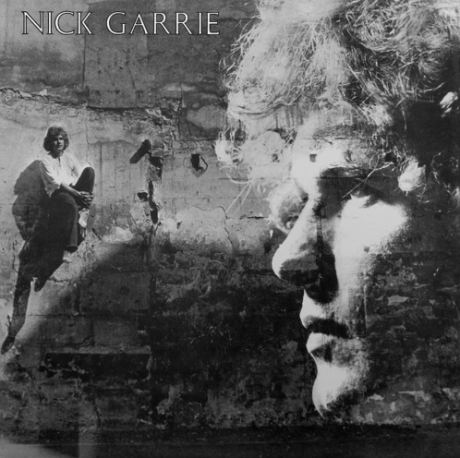
Nick Garrie ‘The Nightmare Of J.B. Stanislas’
(Tapete Records) 29th June 2019
Worthy of a proper release, resurfacing for the first time in 2005, but finally receiving a full revival by Tapete Records, the poet-troubadour Nick Garrie’s lost debut album of 1969 is remarkable for a number of reasons. Provenance alone being one, recorded as it was at the studios of the Parisian label Disc AZ with Eddie Vartan and his full orchestra on swelling gravitas duties (even if Garrie wasn’t exactly happy with the results; much preferring, as the demos bear out, a more stripped acoustic intimacy). Remarkable still, despite being the weary and worldly restless traveller that he was, Garrie was only nineteen at the time.
The son of a fiery turbulent union between a Russian father and Scottish mother, living for a time in England (long enough for Nick to be dragged through the boarding school system; his peers evidentially, because of his Russian ancestry and original Miansarow family name, assumed he was Jewish and so meted out plenty of bullying punishment) before being forced to take up French citizenship with a move across the channel, Garrie was always too British for the French, and too French for the British. However, whilst making roots in France, Garrie studied European literature – the inspiration and foundations of his music starting out as an exercise in Surrealist automatic writing. Dodging the compulsory French requirement for national service (two-years service from the age of eighteen), he went on the run; taking his guitar and gift for considered poetic evocation with him. He would soon turn up in Brussels, where he soon renounced that French citizenship, auditioning for the fated Disc AZ label boss Lucien Morisse: “I got my guitar out and played ‘Deeper Tune Of Blue’. He pulled out a contract and said ‘signez, monsieur, signez!’”
Given a great opportunity, especially so young, to record an album, what would be the Anglo-French artist’s debut was lavished with sumptuous orchestration; a pomp that gave Garrie’s more stripped originals an air of the string-grandeur of Nirvana, The Herd, Love Sculpture and pre-progressive Aphrodite’s Child. Fate unfortunately struck on the eve of its release, with the suicide of Morisse, which sent everything into chaos for the label and Garrie. His debut suite would end up in limbo, with only a few copies making it out of the factory before deletion. Gaining an instant cult status, this lost treasure has only officially seen the light of day on a couple of occasions since.
The ‘nightmare’ of both this album title’ and the all-too-real one of seeing a burgeoning career curtailed, is the backstory and theme of this properly sanctioned re-release. The collection and original ‘nightmare’ entitled standout, is also a rousing minor-opus to finding identity and belonging. Weaving that Russian heritage into a George Harrison-esque guitar motif, swirling strings rich globetrotting fantasy, inspired by that literary learning and penchant for automatic writing, Garrie laments about his own self as an alter ego, finding out and unveiling his true ancestry: much to his dismay. ‘The Nightmare Of J.B. Stanislas’ is an anthem to wrap the rest of this songbook around, with few tracks matching its gravitas and scale as a Psychedelic and folk pop opus.
Featuring the full running order original, both sides of Garrie’s ‘Queen Of Spades’ single and a septet of demos, this showcase captures the torn troubadour in youthful escapism. It also shows an artist finding his niche, a checkered songbook of Bacharach-like pastoral romance (‘Can I Stay With You’), the spiritual and filmic (‘David’s Prayer’), Mike Nesmith Monkees (‘The Wanderer’, ‘Little Bird’) and The Moody Blues adrift a Turkish flying carpet (the 1968 demo ‘Stone And Silk’). Scattered amongst these redolent love-serenades and brooding pathos is the more curious coach trip ‘Bungle’s Tours’ (an air of sniffy snobbishness and Magical Mystery Tour showhall scorn about mass-tourism – then in its infancy of course – and package tours that sounds like the Bonzos and Simon & Garfunkel are at the wheel) and lampooning country-gal hoedown ‘Queen Of Queens’.
The most elegiac bit of inevitable pathos is saved for the original album’s swansong, ‘Evening’. A highly descriptive nocturnal diorama unfolds as it reflects a metaphorical end to all our days, this plaintive spell is as sad as it is poignantly beautiful.
As a debut from a fairly young aspiring artist poet, The Nightmare Of J.B. Stanislas’ is quite impressive and ambitious, if not quite original or unique enough to stand-out from his peers that did make it, on either side of the Channel. Yet, there’s some interesting experimentation and lyricism at play to make this a worthwhile purchase; a curiosity of a lost album from an unparalleled epoch.
Kota Motomura ‘New Experience’
(Hobbes Music) Vinyl/Stream: 14th June 2019, DL: 13th September 2019
Free floating on a moistened tropical air that blows between the rainforests and the Balearics, Tokyo artist Kota Motomura makes an impressive debut on the Hobbes Music imprint with his new exotic EP suite. Motomura moves fluidly but deeply through a myriad of House, Techno and electronic sub-styles to produce an often sauntering, bobbing cornucopia of lush entranced dance music.
Via proper study, learning the aural/pitch/sight-reading method of Solfege under the tutelage of Master Masahiko Muraoka, and a penchant for the music of Japanese Techno legend Ken Ishii, Motomura has been steadily, if without much fanfare, building a reputation for his unique experiments.
But this release nearly never happened. Originally sending demos to Hobbes as far back as 2017, and agreeing on a release, the line went dead for more than six months. It eventually transpired that Motomura had been taken ill, and so dropped off the radar. Better late than never, and back in contact, New Experiences- is now finally seeing the light of day.
The four-track, expanding to six on the ‘download’ version, EP first touches down in a sonic paradise on the lapping tidal, glistening tranquil opener ‘Aboy’, and then dreamily travels inland to a greenery of bird calls, frogs and insect choruses on the bopping 808 beats chiming electro-pop progression ‘Yes’. Melting swaddled and wafting jazzy-lilt saxophone (courtesy of Mutsumi Takeuchi) and veiled diaphanous vocals (Sawako Yanagida) with deep beats and Chicago House style piano motifs, Motomura plays around merging Bossa Nova with orgasmic slow-fucking samples on the shaking ‘Status’, and weaves echoes of early Moby, Carl Craig and Felix da Housecat into an increasingly warping Morse code slice of classy dance music on ‘Cry Baby’. Of the bonus tracks, ‘Satellites’ (as you’d expect from its title) features a Sputnik circumnavigating orbit of transduced lunar broadcasts and submarine sonar bleeps, which gets more piercing and mad as it goes on, whilst ‘Return’ has an otherworldly X Files vibe to it.
In all a great showcase of the exotic, lush and more mysterious that propels the origins of House and Techno into curious, mostly subtropical directions.
Words: Dominic Valvona
Our Daily Bread 332: Solo Collective Part Two
June 12, 2019
ALBUM REVIEW
Words: Dominic Valvona
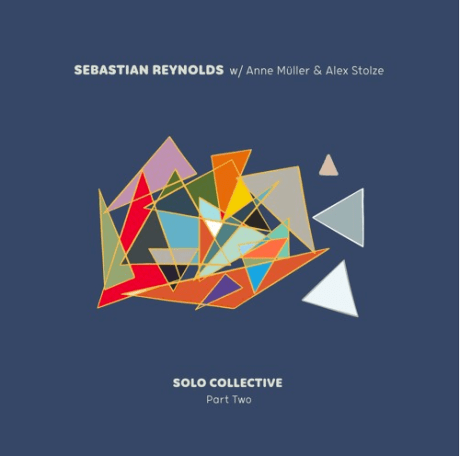
Sebastian Reynolds with Anne Müller and Alex Stolze ‘Solo Collective Part Two’
(Nonostar Records) 7th June 2019
Gathered together once more in union under the Solo Collective title, the Anglo-German musical partnership of virtuoso performers and composers Sebastian Reynolds, Anne Müller and Alex Stolze is back with a second volume of evocative neo-classical stirrings and soundscapes.
Part One of this interconnecting project shared the material evenly between the trio, with each artist represented by two of their own original tracks, rearranged and fashioned to accommodate their new foils. This time around the compositions on Part Two are all attributed to Reynolds. Re-performed the Oxford polymath’s selection of both back catalogue and, until now, yet to be fully realized tracks are transformed with the most delicate and tactile of touches. Well, mostly that is until you reach the centerpiece (as it were), the live recorded performance of ‘Ripeness Is All’; a disorientating vision of harrowing confusion that feeds a narration of the sobering death of Snowden passage from Joseph Heller’s iconic tragic-comedy Catch-22, through a JG Ballard meets Philip K. Dick dystopia. Literary gold, Heller’s WWII bomber crew are uprooted and transported to a haunting polygon warning signal blazed soundtrack that borders on Cabaret Voltaire and Throbbing Gristle. As dark and jarring as it is – and it is the most discordant, violent composition on this and the previous volume by a mile – ‘Ripeness Is All’ sits well with the more serene and beautifully classical lamenting explorations and mood pieces. It’s also the most glaring example of digital effects manipulation on an album that is intentionally built around Reynolds concept of blurring the boundaries between instrumental, more natural, performance and digital processing: Part Two being an album that explores Reynolds various working methods, each track demonstrating this theme, whether that’s a performance or series of performances later transformed and re-edited in the studio, or fragments of sound stitched together to form a coherent soundscape collage.
Talking of a certain calculated ambiguity, the homemade concrete recordings that make up the ghostly sounding ‘Midenhall’ obscure the source material well, with only the piano and clock-like chimes acting the part of a recognizable guide in a vapour of oscillations, speed shift effects and supernatural atmospherics.
The deft quivery resonance of Reynolds two foils can be heard more distinctly on the remainder of this album. The waning and pizzicato plucks of Müller’s cello and Stolze’s violin, for instance, can be heard on the achingly beautiful Oriental-evocative opening suite ‘One Year On’, and even on the amorphous-sounding plaintive ‘For Hazel’ – a track that molds a number of performances and recordings from various locations and time to produce an ethereal lament. Tender throughout, both add refined sighing articulation and emotion to Reynolds mostly piano-centric arrangements: subtle but integral, especially on the elegantly filmic and moving ‘Holy Island’; a song that has become a sort of standard for the trio, this being the second version of the original scenic classical wash to appear on the project’s moiety of albums.
A change in scope with the emphasis shifted towards Reynolds music and techniques, Part Two is still a group effort (an even greater extended cast of enablers are credited in the album’s liner notes) even if those contributions are intentionally more blurred this time around. Released on Stolze’s brilliant burgeoning Nonostar label, this latest volume can be seen as a showcase for three of the most interesting and talented artist-composer performers of the contemporary classical and experimental electronic music scenes in Europe – though arguably all three straddle an eclectic field of styles both traditional (the Eastern Jewish music of Klezmer for one, the influence of which permeates the songs ‘By The Tower’ and ‘At Nightfall’) and new.
Superb in every way, the triumvirate of Reynolds, Müller and Stolze in any form can’t be recommended enough by me (the previous volume even made this blog’s albums of the year features). And Part Two is another essential considered and aspiring work from the trio.
ALBUM REVIEW
Words: Dominic Valvona
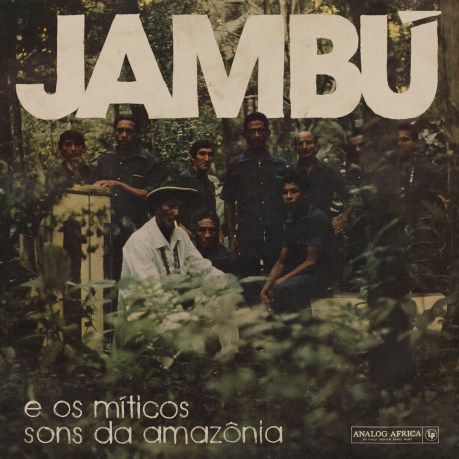
Various ‘Jambú e Os Míticos Sons Da Amazônia’
(Analog Africa) 21st June 2019
As varied and fertile as the numerous diverse waterways that pour into its Amazonian basin geography, and cultures that arrive (either forcibly via the Atlantic slave trade corridor or through mutual trade) by the boatload on its tide, the Brazilian port city of Belém proves an abundant spring of polygenesis discoveries. Returning to the South American continent to showcase the music and story of this important trading post, the northern state of Pará hub, “enveloped by the mystical wonders of the Amazonian forest”, bridged a myriad of communities and musical genres, developing, but often, creating wholly unique styles.
Cross-fertilizing multiple languages, traditions, embracing both imported African and indigenous religions and ritual, and straddling the delta, port and forest environments the Belém pulse can, however, be whittled down to a quartet of distinctive rhythms: Carimbó, Siriá, Lambada and the witchcraft fusion offshoot of the Afro-Brazilian practiced Macumba, “mironga”. There’s of course plenty more (Lundon, Banguê) but this latest compilation from the Analog Africa label concentrates on those particular movements – an accompanying 44-page booklet outlines and details the full provenance…where it can be established that is.
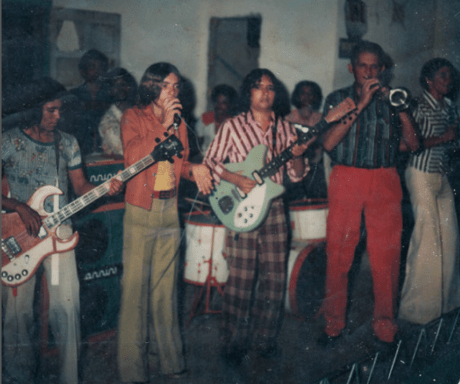
Like an old trusted returning friend, the star of the label’s 2014 Siriá album, Mestre Cupijóe is included once more on the Jambú e Os Míticos Sons Da Amazônia collection. With a sound incubated on the shores of the Tocantini River, in the legendary Quilombos settlement originally founded by escaped slaves, Cupijó’s modernized version of the local rambunctious music he made famous was funneled through the Belém clubs and studios to produce (what I called at the time) a sound that can only be described as a Sicilian funeral procession band gatecrashing a Mexican wedding party. A 1973 recorded performance from the Favela nightspot in Cametá of the song ‘Despedida’ (“Farewell”) is no different in that respect: slightly more woozy but just as brilliantly shambling and loose. It’s also the very first modern Siriá recording of its kind.
Legends of the electrified Carimbó style are numerous. A style with folkloric roots, though there is much debate as to its origins, Carimbó is split between those who adhere to its heritage and those who amp it up and give it some oomph! One such energetic fella, singer/composer/bandleader Aurino Quirino Gonçalves, otherwise known as Pinduca – a nickname that refers to the signature assortment of ornaments that hung from his massive straw hat –, took the style to an international audience with his energetic, quickened take on the highly popular music. Represented by a trio of signature scuffled shufflers, Pinduca’s tropical itchy, humming bassline, goer ‘Vamos Farrear’, wobbly Afro-Brazilian quivery supernatural cult ‘Pai Xangô’, and slicker turn ‘Coco Da Bahia’ are all suffused with effortless balmy energy and constantly infectious moving percussion. What a find!
A real family affair, Pinduca’s brother Pim can be heard as the vocalist on the reckless careering down the train-tracks motioned ‘Von Andorinha’. Part of the Grupo da Pesada rock band, who were more used to turning out Bolero and Mambo before being encouraged to reinvent themselves as a Carimbó band, Pim would leave to pursue a successful solo career.
Another icon that plays such a prominent role on this compilation is the “King of Carimbó” (no less) Augusto Gomes Rodrigues, otherwise known by his stage name of “Verequete” – a reference to the Vodun divinity that featured in the ceremonial song ‘Choma Verequete’. Through many travails the renowned composer and influencer spent years carving out a living – with jobs as diverse and hard-laboured as a butcher, chef and lumberjack – in the wilderness until releasing his family-band debut in 1970. Two of the troupe’s signature “stick and chord” driven rattlers are included on this collection; the rustic, tumbling lively ‘Mambo Assanhado’ and jungle march ‘Da Garrafa Uma Pinga’.

Meanwhile, representing if not inventing the Lambada is another legend in the Belém story, Vieira. This virtuoso multi-instrumentalist who swapped the banjo and mandolin for an electric guitar, fused bits of Mambo, Choro, Samba and Merengue together to create a unique, sweet-toned dance sensation. The larger-than-life actor of the fabled Bye Bye Brazil movie, Janjâo offers a one-track glimpse into the bewitching “Mironga” sound on the harp-like spellbinding Western ‘Meu Barquinho’. Mironga of course has its origins in the mystique of the slave imported Macumba religion; the deities of which, the strong figure of aggression and resistance, Xangô, and mother of oceans (and safe passage), Yemanjá, are invoked not only in the songs of this towering presence but across Belém and South America.
Brought to the attention of Analog Africa’s boss, Samy Ben Redjeb, by this collection’s instigator, the Australian crate-digger and producer with Brazilian roots, Carlo Xavier, the magical fusions of Belém prove scintillating, sexy and at times rambunctious fun; a transportive carnival of rhythms and sounds that capture a lesser known part of South American music history; just as alive and dynamic today as it was back in the 1970s.


Words: Dominic Valvona
Images all taken from the compilation accompanying booklet.
Tickling Our Fancy 074: Society Of The Silver Cross, John Johanna, Mike Gale, Brickwork Lizards, GOATS…
May 28, 2019
Reviews Column: Dominic Valvona
Back after a short hiatus, my eclectic spread of recommendations and reviews features, as ever, a bumper edition of recent releases. There’s a suitably seasonal solo album from a Beach Boys imbued Mike Gale that wallows in the scorching rays, called Summer Deluxe; some live action from the Ottoman/Edwardian imbued period fusion of Arab and English music hall Brickwork Lizards, who’s new EP features a quartet of live recorded tracks from the St. Giles sessions; there’s a trippy psych peregrination hard sell from the Submarine Broadcasting Company in the form of a GOATS (not that one, this is another group entirely) cassette tape called Far Out; the latest beautifully, if despondently, articulated songbook from Oliver Cherer, I Feel Nothing Most Days; the musical suite in all its glory from Bethany Stenning’s multimedia conceptual art film The Human Project, released via the artist’s Stanlaey alter-ego. I review the fruits of a congruous union between Glitterbeat Records instrumental imprint tak:til and the ‘21st century guitar’ American label VDSQ Records, a new nocturnal hour suite from Chris Brokaw called End Of The Night; and there’s new album from the Benelux specialists Jezus Factory, the cathartic Wilderwolves rocker Inhale, Increase The Dose.
I also take a look at the latest album from the elasticated electro-pop and neo-Kraut Cologne-based Von Spar and friends, Under Pressure, plus singles from two afflatus acts, the Indian-imbued Society Of The Silver Cross (‘Kali Om’ and ‘The Mighty Factory of Death’) and Book Of Enoch, Judaic inspired John Johanna (‘Children Of Zion’).
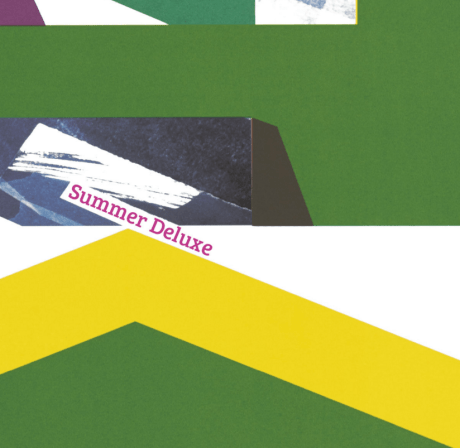
Mike Gale ‘Summer Deluxe’
May 2019
Once more escaping the short days and dreary dampness of an English winter, the Hampshire-based polymath Mike Gale (notable for his work with the Americana imbued Co-Pilgrim) suns himself again in the dappled rays of lilted surf pop on his new solo album, Summer Deluxe.
Liberally splashing about in the efflux surf of The Beach Boys the much-prolific Gale (this is his fifth album alone in just five years) hides a certain sorrow, longing and yearn under the most colorful and dreamy of melodious harmonies. Sometimes it’s just the one Beach Boy who springs to mind when listening to this seasonal paean: Dennis Wilson, who flits about with McCartney and The Animal Collective on the breezy but deeply felt ‘Barecaraa’, and a filtered version of Pet Sounds era Brian – via Sparklehorse and the little known She Sells Seashells Expo homage project by the lo fi American artist John Lane. There’s even a hint of Surf’s Up noir Brian Johnston echoing around the tranquil summer abandon of ‘You Have A Way’. But you get the picture: that Beach Boys influence is prominent; something that is impossible to pull-off unless you have the talent, which Gale obviously has and proves here, no matter how unassumingly he does it.
A beautifully articulated songbook throughout, the best is saved until (almost) last with the hymnal-turn-diaphanous upbeat chorus of bubbly-synth and wafting saxophone anthem ‘Every Cloud Has A Cloud’. A comfort blanket wrapped around the repeating plaint of “You feel like nothing’s really working out”, this final vocal track sounds like the weight of the shoreline is burdening a wistful Gale as he plunges into the ocean depths to escape.
Dazed and hazy, a hushed mirage of summer, the leaf-turning breeze of autumn is never far away, its arrival denoting all the connotations and metaphors you’d expect, that fleeting optimism of the summer masks and makes all our woes seem far less burdening. Summer Deluxe is swimmingly brilliant in its indie slacker charm; a scion indeed of the Beach Boys spirit.

Von Spar ‘Under Pressure’
(Bureau B) 10th May 2019
Finding it all a bit much, in a society the Von Spar have coined as “surveillance capitalism”, the Cologne-based “modular system” (their description not mine) convey delusion and anxiety on their first LP in five years, Under Pressure.
Far from dour, defiant and angry the Von Spar and guests lift the miasma and mood with a most classy soulful electro-pop and neo-Kraut dance album; a sophisticated affair that even opens with a two-part dream sequence, the first part, featuring the float-y hushed coos of the Japanese singer/songwriter Eiko Ishibashi drifting to a House music rewired vision of Tony Allen drumming and bouncing refracted polygons, the second part, brings in the familiar enervated falsetto soul of Canadian polymath Chris A. Cummings with a more gliding Italo House beat; the plaint sentiment of both being “all is well until it is not”. Cummings sweet malaise and wistful tones as principle vocalist can be heard on a quartet of equally chic dance tracks; the Yellow Magic Orchestra synth Orientalism drifty ‘Happiness’, winding spiraled prog-suspense mirage ‘Better Life’, and Duran Duran meets bubbly cosmic synth ray ‘Not To Forget’.
Adding an effortless lifetime of sassy dub and reggae scholarship to the Slits-in-chrome and Grace Jones stalking ‘Boyfriends (Dead Or Alive)’, the grand dame of music writing and post-punk Vivien Goldmine characteristically turns vulnerability into a strength, dismissing a string of exes in the process towards self-realization. Other notable doyens and cult figures include Stereolab’s iconic Kosmische siren Laetitia Sadier, who liltingly adds her signature float-y tones to the motorik electro-pop ‘Extend The Song’, and prolific idiosyncratic lo fi genius R. Stevie Moore, who turns in an anguished Laurie Anderson as A.I. psychiatrist performance (an inquisitive “should I worry”, becomes ever more agitated) on the Jah Wobble goes arpeggiator, feeding the consumer machine, ‘Falsetto Giuseppe’.
On an album that spans and twists so many genres, it is the closing shifting-shards panoramic turn rhythm tumbling instrumental, ‘Mont Ventoux’ that travels the furthest, moving from progressive West Coast psych folk to shades of Popol Vuh, Cluster, Vangelis and video-nastie synth soundtrack: A epic, reflective way to finish.
Under pressure maybe, but it doesn’t show as the Von Spar and friends produce a constantly evolving sophisticated dance album of soulful yearning.

Chris Brokaw ‘End Of The Night’
(tak:til) 24th May 2019
Representing a union between Glitterbeat Records experimental international instrumental imprint tak:til and the equally expletory American VDSQ, two tactile delights from the “21st century guitar’ label’s catalogue have been given a European-wide release for the very first time. Both released at the end of May, Chuck Johnson’s 2017 Balsams album will be available for the first time on CD, whilst the nocturnal inspired Chris Brokaw suite End Of The Night is an entirely new album of attentive and placable musings.
Review wise, I’ve only had time to peruse the latter, a swoozy, atmospheric accompaniment to the Codeine and Come band members various moods, reflections and observation, framed within the pitched idea by VDSQ label boss Steve Lowenthal as the “existential” pondered ideal “last record of the night” – the results of Brokaw and Lowenthal’s late night record listening sessions. Taking up the offer, to record that perfect twilight hour album, Brokaw collected ideas for years until the opportunity arose to finally put thoughts to tape.
Joining him on these various traverses and nuanced concentrations is an ensemble of congruous musicians, some recommended by Lowenthal. Appearing in a myriad of combinations, from duo to trio and quartet, is the “Chet Baker” redolent trumpet-player Greg Kelly (Chet being a big influence on Brokaw), violinist Samara Lubelski (who’s briefly played with, like Brokaw, Thurston Moore), viola player David Michael Curry, cellists Lori Goldston and Jonah Sacks, bass-player Timo Shanko and on drums, Luther Gray.
Channeling many of the artists he’s worked with, Thurston Moore, Evan Dando and Stephen O’Malley, as he deftly picks out descriptive notes and builds up a swell of resonance, Brokaw both dreamily and moodily drifts through gestures of jazz, post-rock, grunge, tremolo-echo-y country and on the reverb-heavy vapour drift, ‘Blue Out’, a cosmic kind of blues music. Suspense, even mystery and narrative are handled with descriptive poise, with the guitar-playing evoking traces of Jeff Buckley, Jonny Greenwood and on the hushed brushed drums, dipping motion ‘His Walking’, the results of melding Chris Isaak with J Mascis.
Meditative and lingering for the most part, End Of The Night counters somnolent reflection with cerebral ponder to create the desired nocturnal atmosphere; at least a great record to finish any session on, if not quite the “perfect” one.

Oliver Cherer ‘I Feel Nothing Most Days’
(Second Language Music) 26th April 2019
An artist most lyrically out of time, full of removed observations, set to the most relaxed and wafting of stripped accompaniments, a wistful Oliver Cherer exchanges the part fact/part fiction Victorian Forest of Dean folkloric diorama of The Myth Of Violet Meek for the vague resonating traces of the 1980s on his recent despondent entitled I Feel Nothing Most Days album.
The third such impressive songbook from the prolific Hastings-based earnest troubadour to be released under his own name (previous alter-egos have included DollBoy, Gilroy Mere, Rhododendron, The Assistant) in as few years, this often dreamy affair, originally conceived decades ago – a very young Cherer putting his burgeoning ideas on to a Yamaha 4-track cassette recorder in 1983 -, is imbued by the lingering articulated drip-fed and amorphous cycles of The Durutti Column, but also a wealth of similar ethereal artists, borders on shoegaze from the late 80s epoch of 4AD.
Attuned to the Durutti first time around no doubt, Cherer, by some cosmic-aligned luck, found that he owned Vini Reilly’s Fender guitar (the one used on Morrissey’s first solo LP, Viva Hate as well). Put to good use then, as Cherer reprises his early 80s (what was left of them; when salvaged from the attic and played on a modern cassette-player that two of the original quartet of tracks came out at half-speed, the remainder, in reverse) recordings, the mood of this album is gauzy memory; music pulled from another time, an ether even – some of this down to the harmonies, choral and often atmosphere-setting guest vocals of an apparition cooing Claudia Barton and Riz Maslen.
Despite the drifting, mirror-y visage of washed troubadour, Talk Talk, C86, shoegaze and even Yacht-rock, a barely concealed rage at the divisionist-driven tensions that have sown so much caustic discord in recent years; throwing a proverbial, sacrificial “baby” out with the bath water to the wolves on the veiled Robert Wyatt-esque ‘Weight Of The Water’, in what could be a denouncement on Brexit, and the sophisticated rock with hints of The Pale Fountains ‘Sinners Of The World’ is no less gently scathing.
Elsewhere Cherer moons on the wistfully enchanted French fantasy, ‘Seberg’, a lamentable swaddled delight r-imagination of a scene, played out to a reference heavy lyricism about the aloof, Gauloise smoke cool New Wave cinema icon Jean Seberg (Cherer playing an unlikely role of Jean-Paul Belmondo), and pens a magically sad, Laurel Canyon, swoon to dementia, fading memory and age on ‘An Unfamiliar Kitchen’.
Beautifully articulated throughout, the shifting memories of time assembling just long enough to provide a vaporous soundtrack, I Feel Nothing Most Days is despite the malaise, anguish and sense of injustice a lovely, soulful songbook; another essential Oliver Cherer release.
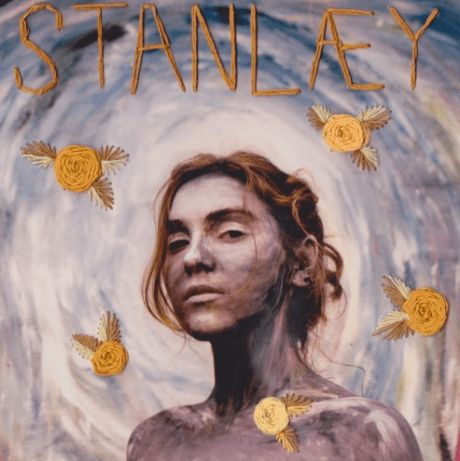
Stanlaey ‘The Human Project’
(Stanlaey Art) May 2019
Two years after the premiere of Bethany Stenning’s ambitious multi-media The Human Project, the full-on immersive audio soundtrack from that film arrives in the form of a debut album; the first under Stenning’s amalgamated pseudonym of Stanlaey through her own imprint label. Featuring a cast of over seventy artists, actors/actresses, videographers and of course musicians, Stenning’s plaudit-attracting opus is heavy on the themes of both duality and juxtaposition; the myriad of twists and turns as the polymath artist studies our chaotic modern relationship with nature, symbolized visually and musically over a number of concept-driven performances.
Creating an alternative pastoral fairytale world, Stenning brings us a highly experimental beguiling soundscape that is often as bewildering as it is diaphanous and melodious. Untethered throughout, weaving amorphously between Earth Mother folk, jazz, R&B, Tricky-like trip-hop and the avant-garde The Human Project is in a constant state of movement as it attempts to articulate and phrase the seven elements that underpin it. Stenning’s distinct voice is itself difficult to pin down, fluctuating, soaring, meandering as it does in giddy childlike innocent wonder one minute, a ghost the next: Joanna Newsom, Bjork and Janelle Monae wrapped into one woodland sprite.
A quartet of conceptual video tracks from the album have already been drip-fed in the run-up to its release as an audio only experience – which works equally without its visual moiety as a whole new immersive experience -; the earthy winding Ghostpoet-esque ‘The Mountain Collector’, the bowl-pouring nod to antiquity’s poetic titan and striving yearn to escape an “Iron Age of destruction” for one of gold, ‘Ode To Ovid’, the breathy ethereal with Tibetan wind chimes metaphorical encapsulation of fluidity (elegantly portrayed by the harmonious display of acro-yoga in the video) ‘Properties Of Ice’, and the gauzy anguished forest spirit turns wild and intense lament to a brought-to-life mannequin wanting to escape their constraints, ‘Wooden Womb’, have already been doing the rounds.
This leaves the silvery moon pool serenade love song between a werewolf and ‘The Moon’, the Lamplighter meets Erased Tapes, dub-y ponderous flood of consciousness ‘Eldor’ (which features the rapping of Pedro DG Correia), and sonic splashed, undulated interpretation of water (its healing properties as much as a backdrop to Stenning’s emotions) ‘Aquarium’. There’s also, as a sort of extra unveiling, the angelic wafting through a void spell of ‘Orbs’, which originally was used to play out the end credits of The Human Project film.
Neither art, performance nor purely a soundtrack, this album is captivating and distinct, working on all levels: sound and music so often fails when brought into the conceptual field of creative arts, but Stenning has pulled it off wonderfully.
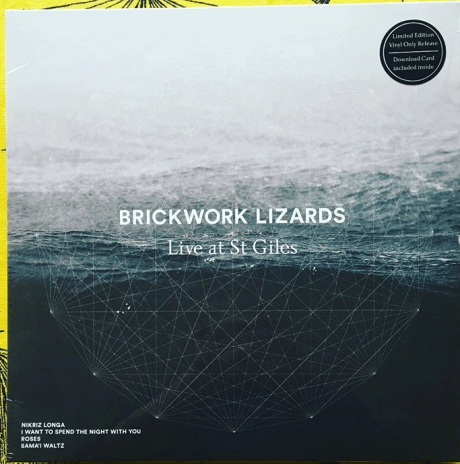
Brickwork Lizards ‘Live At St. Giles’
(Vyvyfyr Records) 17th May 2019
Plucked from the era of top hat and tails tea dances and the more rouge-ish double entendre romantically swooned crooning gin joints, the Ink Spots via Sublime Porte imbued Brickwork Lizards seem to have been lifted from an old His Master’s Voice label shellac record. A meeting of musical mind, the Oxford based troupe merge co-founder Tom O’Hawk’s penchant for clipped vocal harmony and the swing of the roaring 20s and early 30s with his musical foil Tarik Beshir’s romanticized and longing sounds of Turkey and the Orient to create a unique fusion.
Enjoying the spotlight that shines on this Arabic jazz ensemble, off the back of two albums (the second of which, 2018’s Haneen, was given the thumb’s up by myself on this blog) and joint-jumping live performances, the group’s vocalist, oud player and instigator Beshir was invited to work as a musical consultant on the new Disney Aladdin reboot; members of the Lizards even formed part of the Sultan’s palace house band.
It is the live performance quality of the band that is celebrated for posterity on their latest release, a four-track EP recorded in front of an audience at the Oxford Jazz at St. Giles showcase. All new, even if they sound nostalgic, the St. Giles quartet of vocal and instrumental maladies, swoons and bounding dances features both original-penned compositions and re-imaginings of Ottoman bohemia, and an even older Arabic love poem They begin with one of these homage transformations, the Anatolian Tango suspense turn Balkan-rush treatment of the legendary Ottoman composer Tanburi Cemil Bey’s turn-of-the-20th century sweep of the bay ‘Nikriz Longa’ instrumental. On the final performance, Beshir yearningly improvises with an Arabic love paean to a weepy and complicated, but effortlessly played, 10/8 beat accompaniment on the Mowashah tradition inspired ‘Sama’I Waltz’.
With one foot in the Bonzo Dog Doo Dah Band camp, the Lizards pay respect to the racy sincerity of the doo-wop harmony group the Ink Spots on the jazzy crooned ‘I Want To Spend The Night With You’. And on their ‘Dream A Little Dream Of Me’ evoking serenaded idyllic punt down the river ‘Roses’, you can easily imagine the Lizards lounging on the Sultan’s palace rug, wistfully sighing sweet nothings to their muse.
With certain élan and flair, not forgetting a real commitment to their form, the Brickwork Lizards refine and reinterpret their nostalgic inspirations to produce a re-electrified fusion that transcends both its Ottoman and quaint Edwardian music hall legacies. Going by these St. Giles recordings they prove a great band to catch live in the flesh.
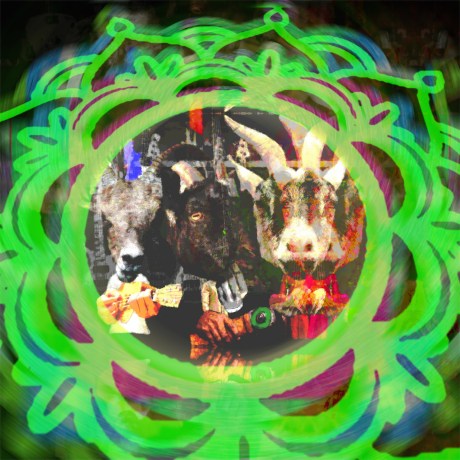
GOATS ‘Far Out’
(Submarine Broadcasting Co.) 16th May 2019
As if there weren’t enough Goat orientated bands already to contend with, here’s another. This collective rabble (not to be confused with that equally tripping, but African-imbued, lot from Sweden) of moonlight acid and experimental pseudo daemonic cult mind-bending is led by the brilliantly-named maverick Alan Morse Davis, with Jorge Mario Zuleta, Dec Owen and a list of pseudonyms to back him up.
Astral planning the nonsensical, channeling a wealth of acid-rock, hippie folk, Kosmische, Krautrock and avant-garde inspirations, these Holy Mountain(side) goats chew on the most lethal of intoxicating hallucinatory strength grass. Following up on their previous self-titled LP – which I’m told did some impressive sales – the GOATS latest wheeze, appropriately entitled Far Out, is one continuous forty-minute exploratory track of spliced sections, released on that most revived and limited of formats, the cassette tape.
Setting off through a reversal-heavy drug-y drone daze our navigators on this trip meander through an ever-changing soundscape of Incredible String Band commune ditsy childish folk, indigestion-hampered throat singing, early period Amon Duul II Gothic chorus of angels and Germanic myth, caustic confusion noodling, Spacemen 3 go baggy go Velvets psych-garage lo fi, and harmonium bellowed Indian fantasy mirage. That’s without mentioning the vortex sucking sample of The Creation’s ‘How Does It Feel To Feel’, the doodling melting evocations of the Acid Mothers Temple and the blown-out wafts of Kraut-jazz trumpet that get thrown in to what is a most experimental soundtrack; equally in search of hippie nirvana and free love aboard the Hawkwind mothership as amorphous fuckery.
Far Out is an often-ridiculous collage built around a few more thrashed-out, almost conventional, song ideas and meanderings. As ‘head music’ goes the GOATS have sown together a mind-melting rich peregrination of sketches, passing fancies, the afflatus and out-right weird to create their very own disturbed vision; a release that is more ennui, hard come-down Gong communing with Popol Vuh than Faust Tapes.

Wilderwolves ‘Inhale, Increase The Dose’
(Jezus Factory) 29th May 2019
From the Benelux alternative and experimental rock specialists Jezus Factory, and featuring a heavy-guitar rotation of guests and collaborators from the Angels Die Hard, Broken Circle Breakdown and Eriksson/Delcroix triangle of bands from that region, arrives the second LP of sincere anxiety and travail from the Wilderwolves. A vehicle for the songwriting of Alain Rylant, who also sings and plays guitar, the Wilderwolves lean towards introspective rage on the finely produced Inhale, Increase The Dose; though there’s a certain ambiguity in the lyrics, waiting to be decoded, and a lot of violence (metaphorical or not) meted-out and suffered in a number of moody love tussles.
Pitched then as an album about love, though with a side caveat that “it’s about everything” and “it’s about nothing”, all seen and experienced through the self-medicated haze of lethargy; Rylant attempts to rattle the listener (and himself) from a resigned stupor.
Full of the wrangling, sinewy, angulated and sometimes caustic guitar shapes we’ve come to expect from the label’s roster, the various cast of musicians on this album work their way through grunge, stoner, post-rock, Britpop and Americana. On the desperate sinking ‘Smoked’ and bloodied sinister ‘Tooth And Claw’ they brush-up against Placebo at their more refined, and on the post relationship fall-out of ‘Your Scars’ it’s a combination of Alice In Chains and Grant Lee Buffalo. The more relaxed, ambling ‘Underwater’ however, reminds me of an Arcade Fire song I’ve long since forgotten the title of.
A personal, candid offering that taps into the current need to share the sort of woes, stresses and anxieties usually left on the psychiatrist’s couch, in hope that it will somehow help, Inhale, Increase The Dose is a great cathartic indulgence that rocks.
Singles

John Johanna ‘Children Of Zion’
(Faith & Industry) Out Now
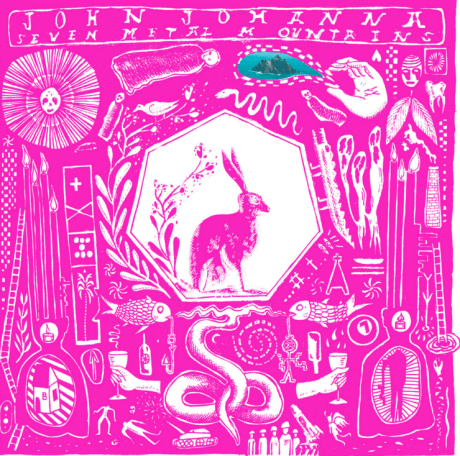
Ahead of a new biblical-inspired album in July, the first holy revelation from John Johanna’s upcoming Judaic apocalyptic Seven Metal Mountains opus is the lilting, cymbal resonating heavy, but deep, ‘Children Of Zion’.
Slightly lighter of touch, though just as steeped in religious liturgy, the latest single from the Norfolk artist once more traverses the Holy Land with a call-to-service melt of desert-blues, post-rock and psychedelic folk. Conceptually built around the ancient apocalyptic work laid down in the Book Of Enoch (the protagonist of that cannon being Noah’s grandfather, who’s visits to heavenly realms and augurs of doom are presented through visions, dreams and revelations), Johanna’s Seven Metal Mountains symbolize “the world empires that have successfully oppressed and controlled mankind”.
‘Children Of Zion’ has Johanna adopting a faux-reggae Arabian gait to deliver a message of worshipful defiance; throwing the moneylenders out of the temple, bringing down the towers of Babylon so to speak: “No politician gonna heal me/Only love and self control.” A return to Zion it is, the most venerated of sites; a return to the garden, Johanna has found his calling once more.
For those wowed and won-over (I previously included Johanna’s previous Afro-blues, gospel and rustic Americana rich mini LP, I’ll Be Ready When The Great Day Comes in last year’s ‘choice albums’ features), prepare yourself for another divine communion.
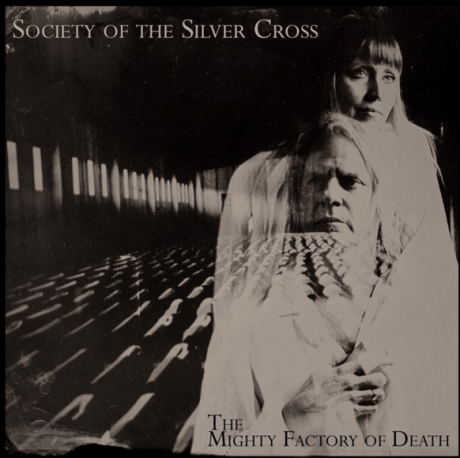
Society Of The Silver Cross ‘Kali Om’ and ‘Mighty Factory Of Death’
Both out now
Nothing less than a clarion call for an “awakening to the universality of all people and things”, the second single of enlightened cosmic pathos from the matrimonial Seattle band once more merges a spiritual penchant for India with grunge and the Gothic. The afflatus Joe Reinke and Karyn Gold-Reinke couple behind the dramatic sounding Society Of The Silver Cross have shifted their musical tastes and inspirations in recent years after travelling; taking a hiatus to the Indian subcontinent after the break-up of Joe’s Alien Crime Syndicate. Fully imbued, bringing not only the message but also the stirring sounds of holy innovation with them back to Seattle, the couple have embraced the use of the Indian autoharp (known as the “shahi baaja”), bellowed harmonium and a droning inducing bowed instrument called the “dilruba”.
Far more Gothic, darker even, than anything you’d hear in the divine rituals of those Indian inspirations, this conversion is often full of daemonic stirrings and gauze-y mists of shoegaze and grunge. ‘Kali Om’ being the second such mix of these influences is a song that once more features an effective if succinct message and musical leitmotif in it’s opening chimes that signals a continuation of their debut single, ‘When You’re Gone’. ‘Kali”, the great redeemer, “Om”, the universal sound of consciousness, is a suitably atmospheric evocation; rich with dreamy mantra, spindled and lush tones, hints of Moorish Spain and of course, the ethereal lingering voice of Karyn.
Following in its ebb and flow, the group’s third single offers a more stark, morbid outlook through its ‘The Mighty Factory Of Death’ title, yet is no less lush and ethereal, when it does break from its gong-sounding harrowed majesty and doom. From the pages of The Book Of The Dead, this Egyptology-ringing acceptance of the fates levitation-towards-the-light breaks from its heavy veil to find heavenly relief. Indian veneration communes with Cobain’s Nirvana and The Velvet Underground, the Society Of The Silver Cross magic up an evocative enough message with both their recent singles.
The debut album, 1 Verse, is due out at the end of June.
Words: Dominic Valvona
Playlist:::Dominic Valvona
The Monolith Cocktail Social playlist is the blog’s imaginary eclectic radioshow, or DJ set, selection of throwbacks, missives, golden oldies and just cool shit; from across genres, timelines and borders. Expect to hear anything and everything.
Tracks:
Lalo Schifrin ‘Magnum Force Theme’
The Inmates ‘Bread & Water’
MC Duke ‘Miracles’
Tha Alkaholiks ‘Turn The Party Out’
Leaders Of The New School ‘Understanding The Inner Mind’s Eye’
Barbara Howard ‘Light My Fire’
The Move ‘Piece Of My Heart (Live At The Marquee)’
Chayns ‘Night Time’
Lotti Golden ‘Annabelle With Bells (Home Made Girl)’
Spike & Debbie ‘Seaport Town’
Alessandra Leao ‘Ai, Dende’
The Chefs ‘You Get Everywhere’
The Rakes ‘1989’
The Risin Sun ‘Pagan Bird’
Majid Soula ‘Yekker Oumenghi’
Loudon Wainwright III ‘A.M. World’
Why? ‘Into The Shadows Of My Embrace’
Chris Spedding ‘Video Life’
Esteban Copete y su Kinteto Pacifico ‘Abozaito’
Raf And O ‘Win’
Doris Day ‘Disney Girls’
Jon Tye & Ulrich Schnauss ‘Orange Cascade’
Radiohead ‘All I Need’
Daniela Casa ‘Third World Tango’
Mark Hollis ‘The Gift’
K-X-P ’18 Hours (Of Love)’
Bodkin ‘Three Days After Death (Part 1)’
Ancient Grease ‘Feedomn Train’
Parish Hall ‘Ain’t Feelin’ Too Bad’
Mayo Thompson ‘Venus In The Morning’
Pride ‘Proud Sorrow’
Rodrigo Gonzalez ‘Diva Francesa’
Fela Kuti And His Koola Lobitos ‘Ajo’
Clement Djimonge ‘Africa’
Armando Trovajoli ‘Bada Caterina’
John Compton ‘Lookout’
Album Review: Dominic Valvona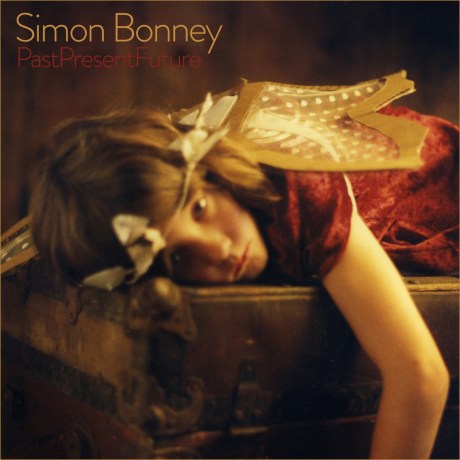
Simon Bonney ‘Past, Present, Future’
(Mute) 3rd May 2019
Arguably one of the great voices of Australian music over the last four decades, Simon Bonney is nothing if not proficient in taking hiatuses. Emerging from just the most recent one, five years after the release of the last Crime And The City Solution opus American Twilight – itself, the first album by the iconic alienated nihilists turn beatific augurs of country-doom in twenty years -, and twenty-odd years since the shelving of his third solo LP Eyes Of Blue, Bonney makes a welcome return to the fold.
Prompted by the decision of Mute Records to facilitate the release of that fabled last solo songbook, the Past, Present, Future collection is both a reminder, featuring as it does tracks from both the 1992 Forever and 1994 Everyman albums, and showcase for six previously unreleased tracks from Eyes Of Blue.
Caught in the industry merger machinations of the late 90s, the Detroit imbued-recorded Eyes Of Blue fell victim to the fallout of A&M Records, “dissolved” into the behemoth of the Universal Music Corp just as Bonney was agreeing a deal with them to release it. As a consequence, what would have been his third solo outing and the perfect bookend to a brilliant run of country blues inspired songbooks, instead sat in the vaults, waiting patiently to get released.
Not new material but a catalyst for projects going forward, this solo collection proves as prescient today as it did back then. Especially the beguiling cover turns homage (in light of the recent passing of Scott Walker) of the brooding maestro’s stately majestic lament to fading beauty and decadence, ‘Duchess’. Brought to Bonney’s attention during recording suggestions for Eyes Of Blue by his producer on those sessions, Dave Feeny, Walker’s sullen lyrical masterpiece proves a congruous fit for the Australian’s rich lap steel and Dobro resonator thumbed and waning country malady signature style.
The effects of time and the changing landscape are running themes in all of Bonney’s solo work. Echoing loudly with the ongoing divisive debate of the present, many of these beautifully articulated sad declarations feature a protagonist searching for their place in the world, set often to a kind of American West favoured by The Band, but also the Outback. Alienation is a given: Bonney’s own past travails richly mined; the teenage runaway leaving behind the vast rustic expanses of Tasmania for the city life of Sydney, via the Australian metropolis’s Red Light district and squats. It was of course where the fourteen-year-old outsider formed the first incarnation of Crime And The City Solution, one of four such phases, the next taking shape with a move to London in 1984 and including both Mick Harvey and Rowland S. Howard (alongside the equally notable Harry Howard and Swell Maps’ Epic Soundtracks), the third such version taking shape in Berlin (embracing musicians from the city’s post-punk and post-Krautrock scenes, such as Einstürzende Neubauten’s Alexander Hacke), and fourth, in Detroit.
The greatest panoramic opus, an unedited version of the Everyman LP’s leitmotif, is in three parts a grand sweep with military snap snares. Bonney in resigned fatalism almost, swoons “I’m looking for a life I can’t explain” as a full-on assault from all directions bombards him. ‘Ravenswood’, taken from the Forever LP, is in a similar Western mythos mode a hard worn thunder and rain-beaten plaints with the age-old “rain on, rain on, rain on me” yearn that sets our high plains drifter on a course for redemptive change. Following in its wake is a ran of highlights from both Forever and Everyman, including the Orbison plays twanged angel to the Lone Justice declaration ‘Don’t Walk Away From Love’, the Lynchian motel spell (complete with a bongo anguish) ‘There Can Only Be One’, and bowing Greyhound bust tour through Texas Rose country runaway ‘Where Trouble Is Easier To Find’.
Much of the Bonney songbook, delivered with earnest, deep timeless country-imbued veneration, aches, even worships, for a string of muses; an undying, unwavering love to both the unattainable and lost. One such elegiac object of such pathos-inspired yearning is Edgar Allan Poe’s famous Annabelle Lee –the metaphorical lamentable figure of the Gothic polymath’s last poem -, who appears on both the eponymous and title tracks from Eyes OF Blue. Lovingly conveyed, even if it marks the death of that lady, it proves symmetry to the album’s profound poetic loss of influence, desire and alluring surface beauty of Duchess. Eyes Of Blue, which makes up half of this collection, follows on from the previous solo works perfectly. A touch deeper, even reverent perhaps, but every bit as bathed in country suffrage. Salvaged at long last, that lost album offers a closure of a kind. Proving however, to chime with the present, far from dated, the Eyes Of Blue part of this collection is a perfect finish to a great run of epic, though highly intimate, solo opuses; the songwriting as encapsulating and grandiose, earthy as you would expect.
Bonney remerges just when we need him; back after many setbacks, but enjoying music again (he says). Past, Present, Future can also be seen as perfect compilation of that solo catalogue for both hardy fans of the artist and as an introduction to one of Australia’s outstanding talents.
Words: Dominic Valvona
Album Feature: Dominic Valvona
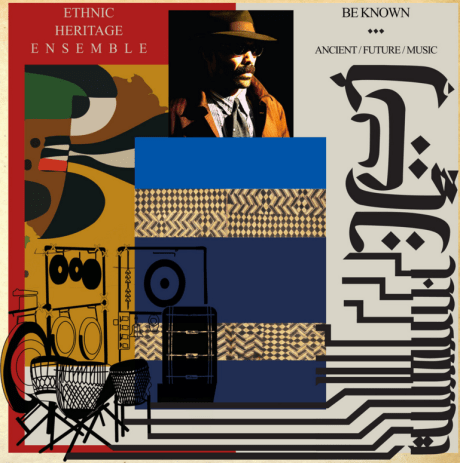
Ethnic Heritage Ensemble ‘Be Known Ancient/Future/Music’
(Spiritmuse Records) 21st June 2019
I’d readily admit I still find it a daunting task reviewing jazz, in all its different forms. Further along in my education of course, beyond the rudiments, but in no way an aficionado. I’m constantly discovering and exploring pieces in the jazz story. And yet, it seems almost unforgivable that such a doyen of the Chicago scene and alumni of that city’s famous hothouse of talent, the School of the Association for the Advancement of Creative Musicians, drummer/percussionist and bandleader Kahil El’Zabar has until now escaped me. Such is his vital contribution to Spiritual and African imbued jazz that he really shouldn’t have.
Renowned most notably for the ensemble he formed after graduating and still plays with, Kahil’s impressive CV also includes various roles playing with such luminaries as the great Pharaoh Sanders, Kalaparusha Maurice McIntyre and “Light” Henry Huff, and tour spots with titans, Dizzy Gillespie, Archie Shepp, Nina Simone, Stevie Wonder and Lester Bowie.
Leading a myriad of different lineups of the Ethnic Heritage Ensemble since their inception in the early 1970s, Kahil and the current troupe of Corey Wilkes (trumpet), Alex Harding (baritone saxophone) and Ian Maksin (cello) together celebrate a prestigious 45-year career whilst also, and always, looking forward on the latest collection Be Known Ancient/Future/Music.
Spanning live performances, recordings and even a track from the 2015 documentary that forms part of the title of this LP, Dwayne Johnson-Cochran’s exploration Be Known, Kahil’s ensemble once more explore the ever-developing Chicago rhythm that has marked this city out for its unique, often raw, take on R&B, Soul, Dance Music and of course jazz.
Atavistic with a modern pulse, improvising and riffing off repetition, the “ancient” in the title stands for the EHE’s African roots and inspiration; heard through the rustic waterhole evoked bottle pouring and wooden percussion, tribal drum patterns and Egyptology invocations. In theory, it runs throughout Western music, but is felt keenly in the ensemble’s floorless integrations here, which flow and adopt a wealth of genres: a Louisiana feel, be bop skip and dance hall swing on ‘Freedom Jazz Dance’, hints of prime Savoy label jazz, Cab Calloway and Dizzy himself on the homage tumbling drums take on Freddie Hubburd’s ‘Little Sunflower’ standard, and Hugh Masekela in his Hedzoleh Soundz phase, on the Serengeti shuffler ‘Wish I Knew’.
Looking back not only to the “ancients”, this album mourns the loss and pays homage to a catalogue of notaries and progenitors, including a host of jazz stars lost in 2018; a trio of which, Randy Weston, Jerry Gonzalez and Cecil Taylor, are given a nod on the opening peregrination ‘N2Deep’, a primitive House music meets gospel and deep serenaded saxophone bounce of a performance that imagines the Modern Jazz Quartet hooking up with a time-travelling Marshall Jefferson.
From Leon Thomas like pronouncements, shamanistic magic, arcane fiddles, elephant heralded honked baritone and spiritual yearnings, all the African bases are confidently covered.
The ‘future” that is shared in this album’s title, attached to Afro-Futurist, is represented by both the amorphous blending of sounds, from Swing to Hard Bop to Avant-garde, and in the freeform ease of improvised playing; built around repeating but constantly evolving rhythms and motifs. At times Kahil and his troupe soulfully pine over a stripped acoustic dance beat bordering on gospel-House music and at other times, cleverly merge two different distinct rhythms, one more elliptical the other off-kilter, together simultaneously until final syncopation.
Less cosmic than Sun Ra, and less out-of-the-park than the Art Ensemble Of Chicago, Kahil and the EHE tread a different path towards enlightenment; spreading the gospel of positive Afrocentric jazz to ever more dizzying and entrancing heights. Spiritual music with a message doesn’t come much better than this, the EHE showing no signs of waning after 45 years in the business. I’m off to hunt down and digest that lengthy cannon now and suggest you do too.
Album Review: Dominic Valvona

Raf And O ‘The Space Between Nothing And Desire’
(Telephone Records) 31st May 2019
Imbued by both the musicality and spirit of David Bowie, Scott Walker, David Sylvian (both as a solo artist and with the fey romantics Japan), Kate Bush and in their most avant-garde mode, Bjork, the South London based duo of Raf (Raf Montelli) and O (Richard Smith) occupy the perimeters of alternative art-rock and experimental electronica as the true inheritors of those cerebral inspirations.
Previous albums by the unique duo have featured the most spellbinding, frayed accentuate of Bowie covers, with even Aladdin Sane’s oft pianist Mike Garson extolling their strung out exploration of ‘Lady Grinning Soul’, and a version of the Philly Soul period ‘Win’, quite exceptional in its purring beauty, that ranks amongst the best covers I’ve ever heard. Paying further tribune to, easily, the duo’s most revered musical deity, they lay a diaphanous ethereal accompanied wreath at the metaphorical graveside on the latest, and fourth, album opener ‘A Bow To Bowie’. With all the duo’s hymnal and venerable qualities in full bloom, Raf’s dream-realism coos and fluctuating accented velvety tones ripple through the Bowie cosmos; sending thanks across a strange space-y soundscape of satellite bleeps, mirror reversals and twilight vortex. If he is indeed somewhere up there in the void or ether, pricking our consciousness, I’m sure he’ll appreciate such sentiments and idol worship.
To add to the covers tally, Raf And O also weave a sophisticated dreamy elegy of the early but burgeoning Bowie plaint ‘The London Boys’; a wistful malady, already ghostly when it first emerged, resurrected by Bowie himself and slipped into later setlists, now elegantly clothed in a spell bounding, draped gauze by our duo.
Almost held in as high esteem, sharing the pantheon of idols, Kate Bush can be heard channeled through Raf’s extraordinary vocals: on the surface vulnerable and stark yet beneath lies a steely intensity that often whips, lashes and jolts. It’s unsurprising considering that Raf’s most recent side-project, the Kick Inside, is an acoustic tribute to Kate Bush that almost spookily capture’s the doyen’s phrasings and deft piano skills perfectly.
On their spiritual and philosophical quest to articulate the space between nothing and desire, Raf embodies that influence once more; crystallizing and reshaping to just an essence; part of a diverse vocal range that always manages to sound delicate but otherworldly, like an alien pirouette doll full of colourful giddy exuberance, yet a darker distress and tragedy lurks in the shadows.
Swept up in the Lutheran romantic maladies of a third idol, Scott Walker, Raf And O strip down and reconstruct the late lonesome maverick’s Jack Nitzsche-string conducted gravitas ‘Such A Small Love’. That stirring, solemn almost, ballad of existential yearning was originally part of the inaugural solo-launched songbook Scott. In this version those strings are replaced by, at first, a minimal revolving acoustic guitar and wash of sonorous bass. And instead of the reverential cooed baritone Raf’s hushed beatific voice is shadowed instead by a second slurred, slowed and deep, almost artificial, one: think a dying HAL.
Beautifully spinning a fine web of both delicate vulnerability and strength, at times even ominous, Raf And O seek out enchanting pleasures beneath the sea on ‘Underwater Blues’, crank up the gramophone and let the tanks trundle across a churning lamentable wasteland re-imagination of Bertolt Brecht’s famous unfinished WWI Downfall Of The Egoist Johann Fatzer on ‘With Fatzer’, and coo with a strange clipped vocal gate over a mellotron-like supernatural ballad soundtrack on ‘The Windmill’.
Sublime in execution, subtle but with a real depth and levity, TSBNAD is an astonishing piece of new romantic, avant-theater pop and electronica that dares to unlock the mind and fathom emotion. I’m not sure if they’ve found or articulated that space they seek, between nothing and desire, but the duo have certainly created a masterclass of pulchritude magnificence. Lurking leviathans, strange cosmic spells and trips into the unknown beckon on this, perhaps their most accomplished and best album yet; an example of tactile machinations and a most pure voice in synergy.
The influences might be old and well used, but Raf And O, as quasi-torchbearers, show the way forward. They deserve far more exposure and acclaim, and so here’s hoping that TSBNAD finally gains this brilliant duo their true worth.
Our Daily Bread 322: Altin Gün ‘Gece’
April 16, 2019
Review: Dominic Valvona
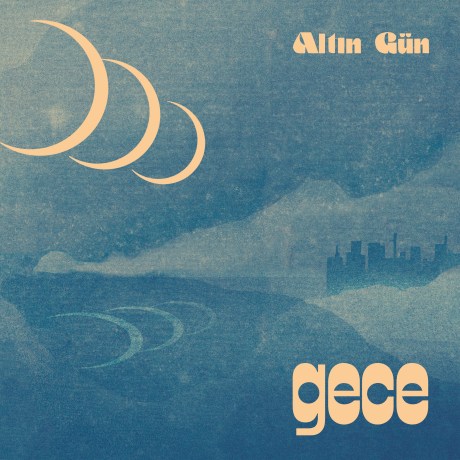
Altin Gün ‘Gece’
(Glitterbeat Records) 26th April 2019
Injecting an enthusiastic energy and desire into the music of their forbearers, the Dutch sextet with Turkish roots revitalize the Anatolian songbook once again, on the follow-up LP to last year’s debut.
As the band name eludes, Altin Gün, or “golden days”, celebrate a halcyon age in Turkish music, with the germ being the country’s folk legacy, but emphasis on the developments and reinvention of the 1960s and 1970s.
Pitched somewhere between the cult, often kitsch, nuggets you find in abundance on various collections compiled by the Finders Keepers troupe (Özdemir Erdoğan ‘Karaoğlan Almanya’da’ in particular, and anything from Sevil & Ayla), and the failed Eurovision missives of bubbly zappy disco, this limbering dexterous group take the listener on a sonic flight of fantasy: both romantic and cosmic.
Some of the chosen songs on this album are associated with the late national icon, Neset Ertaś, others less so familiar. Whatever the source the halcyon tingle, shimmer and psychedelic funk licks that pump throughout each one are given a contemporary livener, but undoubtedly sound retro – though there is at least one original composition, the Lalo Schifrin meets Anatolian rap funked-up psych number, ‘Şofor Bey’.
Currently very much in vogue – though the already mentioned Finders Keepers team and many crate diggers were already on this wave decades ago -, both the old and present Turkish music scenes are enjoying their moment of exposure. Glitterbeat Records, the fine provider of this group’s latest album, have already had success with the burgeoning psychedelic-Turkish siren Gaye Su Akyol and released a collection from the legendary Istanbul doyens of acid-saz and dub, Baba Zulu. All of which, alongside Altin Gün can’t help but feed into the prescient politics of Turkey itself – all of which is far too convoluted and numerous to go into detail here, but in short, a country under the rule of Recep Tayyip Erdoğan, moving away from the more secular foundations of its celebrated moderniser Atatürk towards authoritarianism under a leadership that – after a staged (allegedly) coup – has crushed countless dissenters, critics and oppositional voices. In this heightened tension, artists, both in the country and overseas, remain cautious; the very act of playing certain kinds of music almost rebellious, especially anything with traces or a heritage that can be traced to the Kurds.
The group’s second LP, Gece, looks out wider than its own borders however, absorbing an eclectic collage of Egyptian, Moroder like arpeggiator, Bossa, fuzzed-up psych and funk; a sound that often simultaneously evokes Africa, Arabia and the Mediterranean.
Though tracing an ancestry back to Turkey, the sextet only born-and-raised band member from the homeland is Merve Daşdemir, who as one of the lead vocalists lends a lingering dreamy romanticism to the music, shifting between nostalgic B-movie soundtrack swoon and gauzy disco diva. Sharing those duties with her is the oozing, yearning and resigned suffering Erdinç Ecevit.
Rifling through the crates of an Istanbul record mart bazar, Altin Gün revitalizes a golden period in Turkish music; a grand age reconfigured and introduced to a global audience, saved from certain obscurity. Many listeners won’t be concerned with any of that, and will nevertheless enjoy the cosmic-fuzzed internationalism of a troupe on the rise. The Turkish legacy is in good hands.
Album Review: Dominic Valvona
Larry “Ratso” Sloman ‘Stubborn Heart’
(Lucky Number) 5th April 2019
Schmoozing with the very best of them over the decades, both as a receptacle and fountain of inspiration in his own right, author-lyricist Larry “Ratso” Sloman’s knockabout career trajectory has taken as many blows as successes. Lifted straight from Rock’s Back Pages, Sloman, who resembles Leonard Cohen and Bob Dylan as rumpled gumshoes with a penchant for filing pathos in the style of gonzo pulp, vividly documented the counter-cultural heroes of the 1960s and 70s for a litany of titles, including, when it mattered, Rolling Stone.
Most notably encapsulating the whirlwind adulation and reverence of Dylan-on-tour, Sloman’s self-explanatory entitled On The Road With Bob Dylan account of the troubadour’s 1975 Rolling Thunder tour remains both a template and benchmark in music writing. In that same sphere of influence, rubbing shoulders with luminaries such as the already mentioned Cohen but also Lou Reed and Joan Baez (who anointed the scruffy-attired writer with that Midnight Cowboy “Ratso” nickname), Sloman collaborated with a number of doyens, writing lyrics for John Cale and Rick Derringer.
A biography specialist-investigator though, he’s also both principally and co-written books on the baby-boomer generation antagonist and revolutionary figure Abbie Hoffman (Steel The Dream), the Red Hot Chili Peppers’ frontman Anthony Kiedis (Scar Tissue), and with magic historian William Kalush, a controversial propound account of the life-and-death of Houdini (The Secret Life Of Houdini). With his star in ascendance this year – that co-authored escapologist investigation is heading to the big screen alongside a Martin Scorsese directed documentary of the fabled Days Of Thunder – Sloman has decided, in his seventies, to finally take the plunge and release his debut long player, Stubborn Heart.
Imbued by those past and present relationships and attachments he sagacious grizzled narrator borrows Dylan and Cohen’s (well at least one of them won’t be using it anymore) signature burr and half-spoken wisdom; using it well to unburden himself; opening up that old, stubborn heart of his to the overriding power of love…or something along those lines. Though the tropes are well worn, Sloman’s patter still rings true, the disheveled bon vivant parading his wisdom in a semi-confessional, semi-elder statesman style of liberation.
Every song on this album has a story, a certain providence, with the first third of this songbook featuring a cast of more contemporary soul mates. The relaxed smoky lounge smooching opener ‘I Want Everything’, which features the ariel alluring ache of the Lebanese polymath and leading progenitor of Middle Eastern electronica (as a founder of the Soapkills duo) Yasmine Hamdan, indolently journeys from youthful “world domination” exuberance and hubris to the self-realization in maturity “that love IS the drug”, and that “sacrifices must be made.” The elegantly romantic, venerable-tinged, “star-crossed” ‘Our Lady Of Light’ features Nick Cave, in The Boatman’s Call era fine fettle, dueting with Sloman on a yearning song of hypnotic worship, chained empirically to the power of their muse, whilst the sun-dappled E Street Band lilted ‘Caribbean Sunset’ features the wafting smoky-jazz blues saxophone of Paul Shapiro and dueted soul of the singer/songwriter and violinist Imani Coppola. Though my copy didn’t credit anyone on the album’s country Stones waning finale to a false deity, ‘Sad Eyed Lady Of The Lowlands’, this Western mythological Gram Parson’s like gospel-country hymn features (more or less) a revolving chorus of guest vocalists.
Talking of myth and its making, the often somber remorseful and venerable ‘Dying On The Vine’ was originally conceived in a hotel room off Sunset Boulevard; the result of trading lines with Tom Waits and Chuck E. Weiss we’re told. The angelic swoon of Cohen co-writer, producer and back-up singer Sharon Robinson can be heard on this sanctified plaint; that swoon going a long way in creating the right mood of grizzled exoneration at that last chance saloon, Robinson’s support came in exchange for Sloman writing the preface to On Tour With Leonard Cohen.
Night creeper Dr. John like allusions with the “children of the night” recording from a phooey Dracula movies, Muscle Shoals Stones and bowing saxophone elegy follow as Sloman offers a myriad of sage-y metaphors and analogy: Some offer consolation, others, redemption.
Wearing it well, Sloman embodies the sagacious storytelling and voice of his Boomer generation peers with relish. Like a character from his own back pages, the bon vivant of cocktail and yacht lounge blues and candid romantic troubadour rock proves it’s never too late to add another proverbial string to, an already stretched, bow. This Stubborn Heart is one classy affair.
Words: Dominic Valvona
 Monolith Cocktail Blog