The monthly Digest includes a clutch of accumulated short new music reviews, the social inter-generational/eclectic and anniversary albums celebrating playlist and a piece from the Archives.
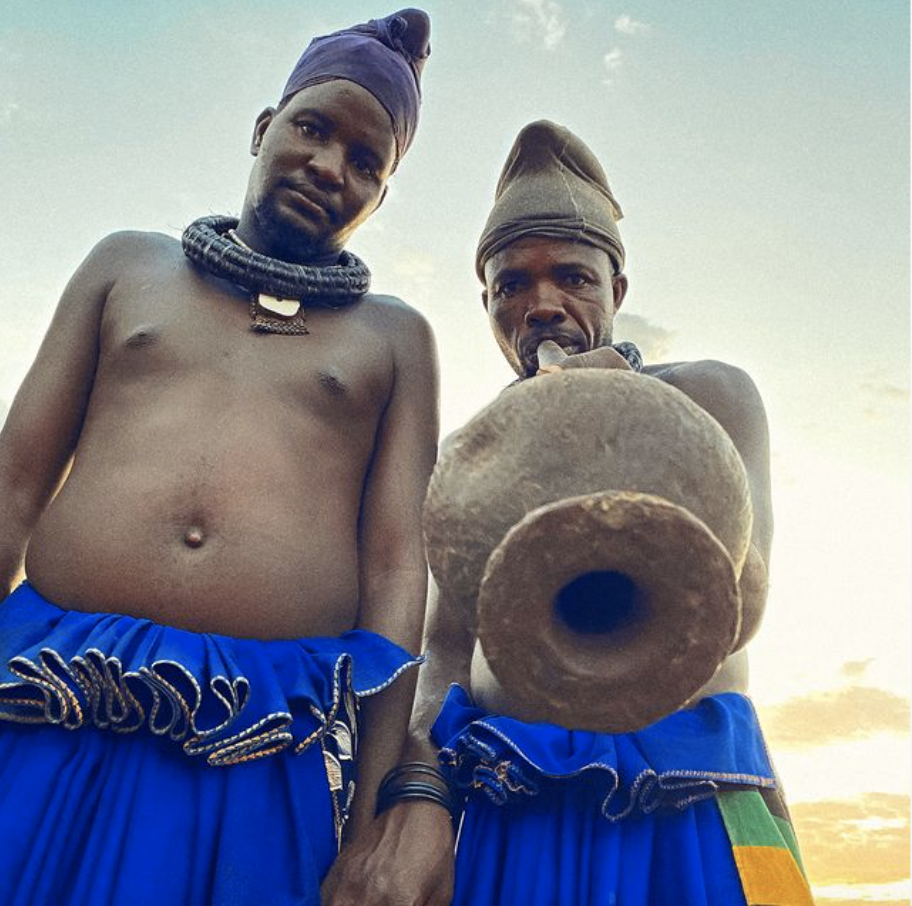
Photo Credit: Marilena Umuhoza Delli
___/NEW MUSIC REVIEWS SELECTION___
al niente ‘al niente’
(Discreet Archive) Released 10th July 2026
Drawing upon a diverse range of experiences, experiments and study, the Italian quartet of notable players known as al niente form a bond and untethered atonal, mostly non-musical and avant-garde language together to produce this atmospheric performance of the improvised and text-based compositions. The latter of which includes an interpretation of the composer and cellist Stefan Thut’s ‘Some, 1 – 4’, which finds a suitable spot amongst the near-quiet of nothingness and stirrings of resonated, shaved and hinging brass, the dry rasps and the steam-like released whistles of the flute. A double-bass thumbs or plucks a one note prompt (or reaction) as the silence acts not so much as a pause but a repeated use of space and abstract tone in itself: an important, integral part of the whole response to the initial sounds that set each performance in motion.
You can find it on the Bandcamp description yourself, but Thut describes this rendering and process of his template thus:
“What remains here of traditional notation is the succession of two elements and the vertical arrangement as in a four-voice setting. At first glance the columnar image receives a liquefaction as it expands through the action of making sound. But the repeated actions of the four performers also bring it back to the static of the image yielding an impression.”
The reference to voices is interesting, and easy to imagine replacing the instruments and resonation on not just this track but the others: a removed form of vocals I’d admit, more, and chiming with the quartet’s signature, atonal in execution.
Comprising of Beatrice Miniaci on both flute and bass flute, Cosimo Fiaschi on soprano saxophone, Gabriele Pagliano on double-bass and Luca Venitucci on the accordion and what’s termed “objects”, the quartet work in a kind of avant-garde, non-musical mode that evokes the most minimalist fields of jazz and the avant-garde; sieving, shifting and stretching the possibilities of the elements of breath and instrumental textured experiment.
Within that expanse of light and shaded microtonal and held suffused progressions and dialogues there’s light refractions and various pitches interacting with the industrial sounds of the workbench, of mechanics and tools, or with near esoteric leanings and released steam. Mysterious and almost esoteric in places, recorded somewhere in the city of Rome where the quartet are based, they conjure up as much atmosphere as they evoke a certain skill of untethered musicianship and reaction. Windows are opened – literally sounding at times like the hinges being activated – on this abstract horizon swell and permeation of Anthony Braxton and his peers, the tradition of innovative atonal experimentation and the avant-garde in Europe, and Ariel Kalma.
The Breedling ‘A Straunge And Terrible Wunder’
(Wrong Speed Records) 4th August 2026
Sticking close to home with a horror show score of electronic dark arts and Satanic conjuring, Chris Spalton (under The Breedling guise) soundtracks the supernatural and folkloric psychogeography of his county by reviving the hell hound legend of the bedevilled Black Shuck.
To borrow from Rev. Abraham Fleming’s August of 1577 dated account of the infamous beast – as repeated orally and with just a sensational touch of exaggeration for publishing purposes -, the most dramatic legendary description, passed down through the generations, and obviously unsubstantiated, of the East Anglian miscreant is as follows:
“This black dog, or the divel in such a likenesse (God hee knoweth al who worketh all,) running all along down the body of the church with great swiftnesse, and incredible haste, among the people, in a visible fourm and shape, passed between two persons, as they were kneeling uppon their knees, and occupied in prayer as it seemed, wrung the necks of them bothe at one instant clene backward, in somuch that even at a momet where they kneeled, they stragely dyed.”
Or better still and heading the title of this latest album from the Norfolk-based artist, Fleming summarised this beast and its most notorious episode as a “Strange and terrible wunder”.
Sightings and accounts continue, and just like UFO sightings, each period in history is reflective of its own hangups, fears and cultural obsessions. But in this mode and time, recalling the late Tudor era’s own distresses and religious fervours and religious wars, the bestial hound is no dressed-up Baskerville masquerade but a symbol of the daemonic sent to rip out the throats of the metaphorical flock of Christianity, or at the very least to frighten the congregation into towing the right pathway. Then again, there’s not much defence when such sharp-clawed and blood thirsty imaginings are about to pounce on the unsuspecting.
Inhabiting a world not unlike that of Robert Eggers nightmares, with a dash of quintessential English rural occultism and weirdlore, a chill of spine-tingling Gallo Italian horror and an apparatus best described as industrial foreboding and sinister. And yet there’s a darkly rooted use of ambience too, and incipient quietened passages in which the wind, the atmosphere is held off just long enough to escape the doom-laden electronica, the NIN-esque squalls, steely guitar resonance and hammered, nail-gunned (like a brutal version of modern diy workshop crucifixion) and beaten drumbeats.
Entwinned with the bracken density and shadows of the English woodlands, oscillations and prowls are exchanged for the creaking floors of an old mill struck out in isolation in the wilds or the sound of tormented individuals being tortured and ripped limb from limb. And yet, you can detect a suffusion or perhaps just a passing influence of Haxan Cloak, Umberto, Ital Tek and Lucrecia Dalt amongst the hell’s gateway of snared, growling, almost gaggled and howling, biting hounds and dark bewitched invocations. There is however some gleam of relief in the dying embers of the finale, a sudden navigation of the rotated and circled esoteric environment turns up in the clearing to the sound of bird song and a reminder that none of this has been real: or has it?
Spalton delivers an immersive, ominous soundtrack of real quality; a dungeon doom and folkloric rural electrified reading of a timely legend that demands attention. |It would be good to see some director pick this up for a movie, but until then, let the sonic distress and mystery invoke its own images and story.
Himba Hymn Collective ‘Ghosts Of Namibia’s Skeleton Coast’
(Sublime Frequencies) Released 8th May 2026
Possibly the most featured producer and in-situ instigator of inspiring, exceptional and jaw-dropping recordings on the Monolith Cocktail since its inception, Ian Brennan’s highly prolific output (not just musically, he’s also an incredibly expressive and candid writer too, as demonstrated by his accompanying descriptive linear notes) most recent release completely slipped my notice: an unheralded release it seems by Sublime Frequencies.
Joined on each of his global expeditions, as always, by his partner and foil the Italian-Rwandan photographer, author and filmmaker Marilena Umuhoza Delli, Ghosts Of Namibia’s Skeleton Coast finds the acclaimed producer, musician, writer and violence prevention advocate practising what he preaches in recording the unheard voices and performances of some of the world’s most isolated, ignored, disadvantaged, and marginalized.
Described by Ian as the ‘Most disproportionate travel to recording time ratio we’d ever risked.’ With ‘Four days flight, four days driving (two entirely off-road) to record for a few hours’ Ian and Marilena travelled to the world’s driest and oldest desert (not atavistic but even older, back to prehistoric times) in Namibia, on the southwestern coastline of Africa to capture the unique voices of the age-old Himba people; perhaps one of the most objectified and photographed tribes in the world, yet until now rarely given the space or platform to perform vocally and musically. The muse of National Geographic and untold covers for their famous red-hued moisturised and decorated skin – a second skin and mix of animal fat and ochre powder, it is both used as a sort of sunscreen that protects them from the harsh and unforgiving sun and cosmetically – and eroticized state of undress – the women usually going about their daily lives and routines topless -, the females, but men too, celebrate beauty.
With their near unbroken ancestral traditions, the Himba live a still largely pastoral existence, eking out a living through their most prized possession: cattle. Sharing much with their fellow Namibian’s, the Herero (both originally migrating from elsewhere in Africa to settle in the most sparsely populated large country on the continent, the two groups also share a Bantu ancestry), every hamlet features a central ‘Kraal’ where the cattle and goats are herded for safety each night.
The Himba are smattered in and around the Namibia desert, which despite its arid and dry reputation lies along the cool coastal exterior of the country, with the ocean to its side. Stretching for 1200 miles and reaching up to 100 miles inland, this vast challenging landscape is famous for its trade routes and important movement of both minerals and fish. Relatively stable these days – in fact, one of the safest places in Africa – that same desert and the country as a whole has suffered from some very dark, tumultuous and violent periods; including what has been called the first genocide of the 20th century, when the Colonialist rulers of what was then German South West Africa carried out a heinous and ruthless execution of the Herero and the Namaqua peoples after a rebellion by Chief Samuel Maharero – started after decades of slavery, persecution, the confiscation of cattle and starvation. The Germans originally colonised the region in 1884; an act of occupation, a stemming or barrier to the British Empire who were expanding westwards. Anywhere from 50,000 to 65,000 people were killed during the bloody years between 1904 and 1907, but the Dutch originated settlers the Boars were also known to have had their conflicts and subjugations of the same people too. War has followed, both civil and from across the borders, but Namibia is a much changed and settled country, a favourite to backpackers and tourists alike.
But with a near unbroken tradition, the Himba continue to draw attention to their idiosyncratic way of life and exotic (if I’m allowed to dare use that word) look. But the focus here is on their songs and performances, with a requested amassed cluster of both women and men captured for posterity on tape by Ian and shared to an international audience. With a rudimental or striped down travel kit of apparatus, recordings are usually raw, caught in the very moment when something is about to happen; a spontaneity; a one-off for the conditions and environment in which it has been sealed.
Ian’s own descriptions make my job easier, and I could literally just copy and paste his insights, his descriptions and directness. He really manages to evoke the scene, the ardent journey to the middle of a most unforgiving desert location, conjuring up the smells, the atmosphere, the cast of various performers brilliantly. My personal favourite is when Ian manages to reference the reduced life expectancy figure for the region as sixty with a request that he’d made earlier for the Himba villagers to specifically put forward their elders for the recordings. When Ian and Marilena finally make it, they are met with a group of men who aren’t so much as elderly as near the same age as Ian himself (hardly queuing up just yet to get his pension), and so proving just how reduced that life expectancy really is in these harsh conditions.
Ian just as brilliantly describes what you are about to hear: a psychedelic vocal tapestry, esoteric even in parts. The use of what’s called the Cattle Gun (a rarefied found these days we’re told, expensive and coveted, this lengthy horn, taken from the Oryx antelope, is coated in mud, and can be described as kind of strange jazz horn come breathed rattle) and the way in which the Himba cup their hands to cover their mouths in order to create the effect of chorusing and flanging is extremely helpful in understanding what you are about to experience.
Let’s take the psychedelic description first. You can hear it permeating nearly every track as a strange effect of hallucination and mirage. But when you get to the stringy strummed ‘Friend’s Who’ve Passed’ its entwinned with a rootsy vision of Beefheart and the blues. The vocal (I believe attributed to lead vocalist Tjamburu) is near garbled and active in its elegiac act of remembrance.
Esoterically there’s the opening introduction to the tribe’s reenactment of lion attack upon its prized cattle. Summoning up the heaving chest exhales and sweat, the growling threat and devouring jaws and clawed menace of a predator, the group effort of interactions and overlayered voices is near supernatural and bestial in invoking such a carnage.
As with so many of Ian’s previous truly international recordings there’s so much to pick up, so many crossovers or reverberations with traditions and music from other regions. You could be mistaken for thinking the pleaded ‘Please Help Me’ was an ancient recall from the Mississippi voice of spiritual gospel to the motherland – there’s an odd, near unmusical, languid if indolent enervated accompaniment (if you can call it that) of metal or tin being occasionally scrapped and shaved in the background, which only makes the whole thing more happenstance and surreal. ‘Don’t Cry (Your Father & Grandfather Are Good)’ reminded me a little of the harmonious unions of voices heard across the border in South Africa, albeit in the hallucinogenic mode, and the trilling, rolled tongue echoes – accompanied by what sounds like a klaxon going off – and laughing gas inhaled-like octave change of voice into the realms of the childish and silly ‘Be Brave In The Face Of Death’ reminded me of a far-off recollection of dub crossed with King Ayisoba.
Vocally otherworldly and yet also drawing on physicality, justifiable grievances, the confrontational, there’s a balance of the soulful, the earthy and the impassioned; using breathing and various mouth pulled and loose lipped trills to express both the painful and the ritualistic; indignation and communication.
Not so much worthy as essential listening to everyone who really wishes to get clued up and experience the sounds, the joy, the spontaneity and passions of music and performance from outside the mediocre TikTok trending dominated scope of the West and its global markets. Uncluttered and truthful, catalogued not as a Lomax-esque curiosity, and uncoupled from that whole World Music cloying presumption of posterity and study – even though these recordings will reserve and keep account of the Himba and their performances -, these expressions are very much still alive and just as important as the songs sung by the ancestors.
Nicola Miller’s Living Things ‘SPIT!’
(Watch The Ends The Night) 7th August 2026
Bouncing through a lively Latin and French Quarters whilst throwing up reminiscent city jazz skylines of the 50s and 60s and chasing the dramas of Noir and feeding off the spirit of the Big Easy, renowned Canadian saxophonist and composer (also, as you will hear, a deft hand on the flute too) Nicola Miller and her quartet troupe send out lively and excitable free form vibes on their latest album together, SPIT!
Spit in its various forms, from the driest reedy evocations to the most spittle and flappy lipped experiments of actionist jazz and its avant-garde cousin, this extraordinary display of loose and dynamic performances swings on the jungle vine whilst promenading and heralding down the New Orleans streets, thumping along the San Fran pavements of Lalo Schifrin and scoring the chaos and bustle of the boardwalks.
And then again, such as through the three-part ‘Telecommunications’ suite, you get the brass resonating, woodpecker woody block percussive and rasped reedy sucked valve work, the bristling and brushed abstracts of such icons as Anthony Braxton and Rosco Mitchell, Mats Gustafason and Ivo Perelman. Throw in the blues, and the puddle duck, pastoral chamber classical familiars of Prokofiev and the whole deal gets even more interesting, expanded and ambitious.
Imbued by her Nova Scotia base (subtle hints on the smog bound shipping horns of Doug Tielli’s trombone, and a general feel of the maritime can be heard suffused throughout the album), and already collecting an enviable haul of plaudits for her craft following the release of the Living Things’ 2024 debut (released on fellow Canadian label Cacophonous Revival), Miller now amps up the “extrovert” in her and “fires” up the band to produce a both experimental and untethered album of first class jazz performance and musicianship.
With reference points to a whole history of such jazz explorations and freedoms, Satchmo meets Sam Rivers, Eric Dolphy and Peter Brotzmann on the opening city lights, blasted and blared, brassy and swung opener; Miller’s alto sax going through various phases of the winding, the strangled and vibrated whilst Tielli’s sliding and elephant trunk raising trombone recalls a mix of Phil Ranelin and Theon Cross.
The already mentioned ‘Telecommunications’ triptych passes through just as many phases, from the flapped and dried-up breaths and cuckoo-like knocks and steamed resonance of Part I to the 50s jazz sonnet, greenery and wounded cornet-like strange harks of Part II and the busier film score excitements and confusions of Part III.
‘Where’ The Line’ settles into a strange duck-clarinet (that will be clarinettist and second saxophone player Frank Gratkowski, a former mentor to Miller whilst she was studying for her Masters) described bluesy and dreamy lost world of the misty and mysterious; obscure renderings of foggy ship horns again, with a walking stealthy bass line courtesy of Nicolas D’Amato, plunge us subtly into a primal swamp or an old coastline, with obscure recalls of Gershwin and Bix Beiderbecke.
Though not wholly dedicated to the troupe’s versatile drummer Nick Fraser, the finale, as its ‘Drummers Are Bad’ title may indicate, neither scolds nor lets the sticks man hog the entire track. Fraser does get to scuttle, skittle and feel his way in the avant-garde vogue around his kit in the name of unrestrained quickened and fired up improvisation; his foils equally building towards the wild, and a duck-billed excitement of brass and cartoonish chases along a pastoral pathway left overgrown and blanketed by the mists.
An incredible album from a burgeoning project of gifted, experienced and still inventive players surrounding the main instigations and prompts of their leader Miller. One of the best jazz albums so far in 2026, and that’s about as good a recommendation as you can get from me.
Tristan da Cunha ‘Maris Stella’
(Boring Machines) Released 10th July 2026
Touched by the afflatus the Italian trio of Francesco Vara (using the guitar to imitate the strings), Luca Scotti (on drums), and Nicolò Vara (on viola) make neo-classical and ambient oblations to the titular “star of the sea”, the ancient allegorical and metaphorical Latin name given to the Virgin Mary.
A reification of faith and guidance perhaps, or the act of being saved from the troupe’s overriding theme and concept of “isolation”, Maris Stella is deep adagio, often elegiac and mystical, suffusion of subtle atonal and more melodic and dramatic suites and vignettes – the latter labelled “interludio” like moments of reflection and pause; the first being an ambient corridor of rough textual tension on the bow, and the second, more like a verset of hallowed evensong and pipped liturgy.
Pitched somewhere between Reich and Alison Cotton with the imbued influences of Arvo Pärt,Godspeed You! Black Emperor and Stars of the Lid in tow, the score, the minor opus and longer form suites encompass post-rock, chamber music, soundtracks/scores, and obviously the religious – hear the gentle genuflections of the viola and its companions, or the sanctified choral voices that appear from a Mediterranean chapel on the mysterious ‘The Veil’.
Sometimes burnished, often shimmery cymbals and the deadened hit of the drum conjure up images of stirred-up waves splashing against the hull of the trio’s boat; an invitation to navigate both slowly and supernaturally amongst the recondite tides of the serious and classy, the careful and subtly monumental. Searching woes follow melodious escapes, venerability and the venerated but make, apart from the title, no obvious references other than musically to the church, but Mary stands as the abstract lighthouse, a sanctuary and point of lifting transcendence in the silence of loneliness and detachment of the modern era.
Whatever the intentions, the island borrowed Tristan da Cunha named trio combine reverence, the blessed age old iconography of the Christian church, and the matriarchy with an experimentally skilful use of ambience and various classical ideas; changing the traditional setup of a chamber ensemble by replacing the strings (except the viola, which is used almost like a lead instrument here) with the guitar and drums to evoke a number of expansive musical concepts and ideas that lead into other disciplines.
A complete work of art and a beacon with which to draw upon in this moment of crisis and isolation.
___/THE MONOLITH COCKTAIL SOCIAL PLAYLIST VOL. 108____
Despite Spotify’s many attempts to piss me off and burry my numerus playlists, I’m still persevering. You may or may not have noticed holes and a smattering of said playlists suddenly disappearing. I’m pruning. And to be honest, after compiling over 300 of them since 2012 I’ve slowed down and fucked up my account to the point in which it has become tiresome to use. So, I’ve trimmed out those less popular playlists, and the ones with holes in them – various copyrights being either removed or now out of date, labels and those responsible for said artists and tracks either leaving the site or for some other reason taking down individual tracks from their catalogue without any explanation; luckily I’ve never, and I hope way too good at what I do to have ever included anything AI in my playlists over the years or recently, so that doesn’t hold as a reason.
In case you were wondering, or haven’t seen it on Reddit, social media posts or on notice boards, Spotify has at least decided to act by clamping down on AI created music, with some hilarious results as arbitrator of what constitutes the artificial and what doesn’t. There’s a methodology I’m told, which has unfortunately caught some true boba fide artists in the net. However, it was Spotify in the first place that was inventing and predominantly lifting up AI artists in their own playlists and on the platform as a whole.
By the way, if you are having trouble finding me on Spotify, I’m there under my name: Dominic Valvona.
I’m going to try and keep everything from the covid years onwards, but you may now see gaps in the back catalogue as I move forward. And so, we come to this month’s Social, and the same old template of new and old tunes, cult and anniversary celebrating album tunes alongside some more recent ones that didn’t make the site’s Monthly playlist.
Sadly, and inevitably, I also mark the passing of those we’ve lost. In this case, and just a week or so ago, the British jazz-rock-prog-fusion community lost keyboardist and composer Dave Greenslade. An incredible CV, wealth of experiences, Dave’s journey took him from the burgeoning bluesy/R&B scene of London to Casablanca, a stint with the Ram Jam R&B/soul revue troupe motivated and led by Geno Washington and the virtuoso boasting Colosseum, before forming the just as legendary doubled-up keys instigated Greenslade – as every obituary almost in disbelief repeats, a group that dared to dispose of the role of lead guitar: the audacity!
On the Anniversary LPs front, there’s one big Sixtieth birthday to The Byrd’s Fifth Dimension and a fiftieth nod to The Beach Boys’ 15 Big Ones. Another decade closer and its fortieth salutations to Doug E. Fresh’s Oh My God, 2 Live Crew’s The 2 Live Crew Is What We Are, R.E.M.’s Life’s Rich Pageant and the Spacemen 3’s Sound Of Confusion. Leaping through the decades, I’m also marking the twentieth anniversaries of TV on the Radio’s Return To Cookie Mountain and Thom Yorke’s Eraser. And as featured in this month’s archives below, a tenth nudge to Ed Scissor & Lamplighter’s Tell Them It’s Winter.
The rest of this list is made up of intergenerational reaching tracks from Alcatraz, Lapera, Bal Pare, Sophie Nzayisenga, Double Happys, Evil Weiner, plus more recentish tunes from Clementine March and J Sciende. Lots more of course, to make up the thirty tracks in the July social revue.
Track list in full:::
The Beach Boys ‘Susie Cincinnati’
TV On The Radio ‘A Method’
Clementine March ‘Upheaval (First Version)’
The Byrds ‘Captain Soul’
Colosseum ‘Three Score And Ten, Amen’
Okay Temiz & Johnny Dyani ‘I’m A Green Lamp – Yesil Fener’
Angry Angels ‘Apparent-Transparent’
Greenslade ‘Time To Dream’
Hopkins-Bradley ‘Funny, But The Way I Feel’
Evil Wiener ‘Koo Koo’
R.E.M. ‘Fall On Me’
Double Happys ‘Some Fantasy’
Colosseum ‘The Machine Demands A Sacrifice’
J Sciende & Opio ‘Krush Groove Kangol’
Doug E. Fresh ‘The Show – Oh My God! Remix’
2 Live Crew ‘2 Live Is what We Are…(Word)’
Himba Hymn ‘Who Is going to Welcome The White People?’
Sophie Nzayisenga ‘Story of Nyangezi’
heka & GG Skips ‘High Tide’
Spacemen 3 ‘Rollercoaster (Live)’
Bal Pare ‘Die Idioten’
Naomie Klaus ‘Can You Tell Me What Is Micronet?’
Thom Yorke ‘The Clock’
Thick Pigeon ‘Sudan’
Human Greed ‘Freeview’
Ed Scissor & Lamplighter ‘TTIW’
Lapera ‘Catarsi’
Alcatraz ‘Where The Wild Things Are’
Walter Daniels/Oblivians/Monsieur Jeffery Evans ‘It Don’t Take Too Much’
Greenslade ‘Siam Seesaw’.
___/ARCHIVES___
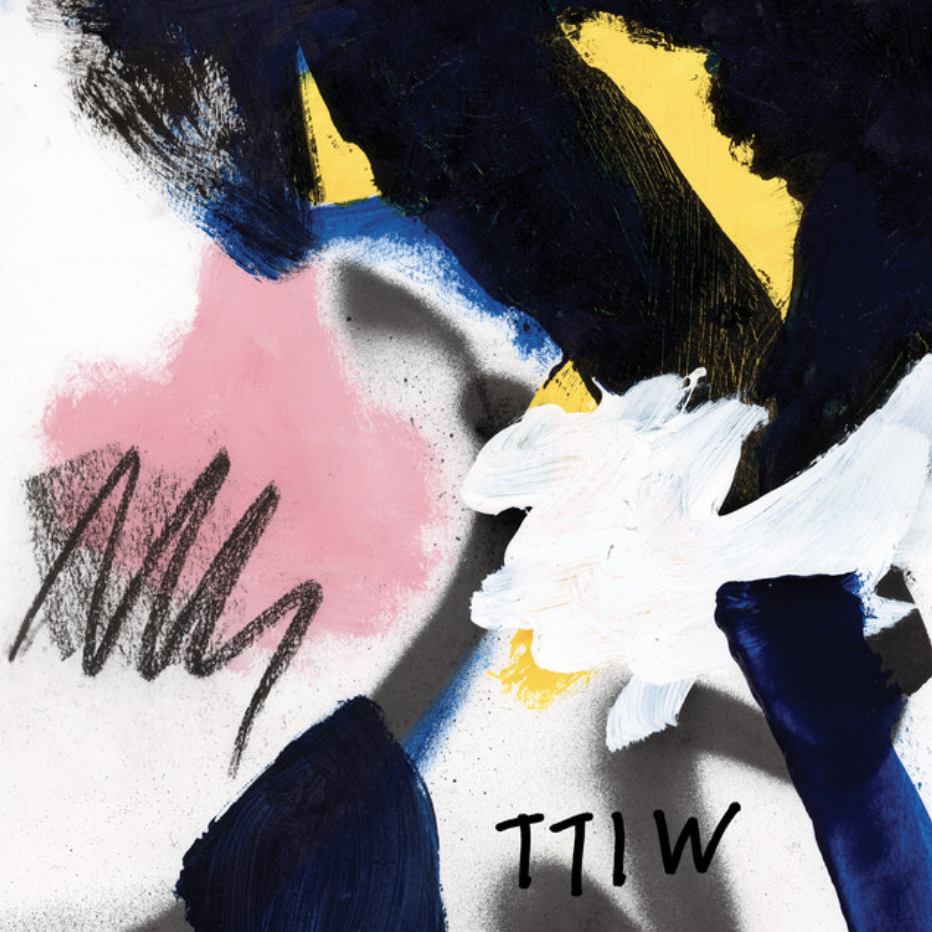
Ed Scissor & Lamplighter ‘Tell Them It’s Winter’
Released by High Focus Records, July 15th 2016
Emerging damaged and deeply troubled from the miasma underbelly of modern life, the congruous leftfield hip-hop partnership of wordsmith Ed Scissor and Glasgow-based producer Lamplighter convey a sad poetic beauty in their dystopian visions.
Much has been made of the duo’s caustic, and at times nihilistic, articulations and augurs. And their latest remote collaboration – the duo rarely share the same room as each other during the writing/recording process – Tell Them It’s Winter does explore familiar morbid curiosities, both musically and lyrically.
Yet, despite the travails, despite the gloom and all too real drudgery of an algorithm-driven society, Ed and his Lamplighter foil offer glimmers of light. Reminding us constantly of the universal infinite, Ed describes forces beyond the mundane. References to astrology, metaphysics and science flow like relentless streams of consciousness from Ed’s lips in a delivery style that shifts between rap, spoken word and, even, grime. Abstract elements of hip-hop and trip-hop mix seamlessly with the Shakespearean and biblical to produce the poetry, whilst tetchy minimal electronica and slow methodical beats layered over cLOUDDEAD expansive atmospheres and traces of neo-classical strings and looped recordings of old scratchy records create the backdrop to Ed’s winter of discontent.
Each track is free of demarcation and often floats off on different pathways before returning to focus once again on the central mood. There’s no room for prowess and flexing, Ed’s verses constructing a framework of unflinching honesty. Cormac McCarthy and Winterfell metaphors aside (the critics consensus analogies and reference points it seems for this album), the impending Machiavellian horsemen of doom bolted a long time ago. Tell Them It’s Winter is, if anything, a reminder that nothing has changed and that the central tenets of human suffrage carry on unabated in the 21st century.
Here’s the message bit we hate, but crucially need if we are to continue:
If you’ve enjoyed this selection, the writing, or been led down a rabbit hole into new musical terrains of aural pleasure, and if you able, then you can now show your appreciation by keeping the Monolith Cocktail afloat through the Ko-Fi donation site.
The monthly Digest includes a clutch of accumulated short new music reviews and the social inter-generational/eclectic and anniversary albums celebrating playlist.
Kaloja ‘A Body Of Water’
(Artetetra) Released 19th April 2026
A new team-up on the kooky and experimental label of repute, Artetetra, with Paul Wilson aka F. Ampism collaborating with Jan Anderzén of Tomutonttu, Kemialliset Ystävät and Tarzana note to create an aquatic and liquid plopped and plonked world of molecule dances and the birthing of odd giddy, tweeting and high pitched lifeforms.
Wilson under his sonic disguise has form in this sphere having released the speaking, communicating, singing, gargling and mewling atoms and floated microscopic forms soundtrack The Vertical Luminous on Hive Minds last December. Now with a new foil, those explorations once more spring into action across a lush blossoming and air-bubbled immersion of a maverick biomorphic world populated by alien creatures, more familiar hints of nature and the shapeshifting.
A bubbly lava. A computerised floppy disc cut and shutter. An oriental dulcimer like glisten and slide of spindled microbiology. All this and the whistled high pitches and the uncurling of life on an adventurous roving and shifting sonic world of blips, the courtly, the dubby, the rhythmic, the lunar and most importantly, watery. A short review, but I’ve more or less summed up this blooming oasis of quirks and quarks, nature and the aquatic. Another recommendation if you are looking for something different in the electronic field of biospheric inventiveness.
Carol Maia & Jeremy Gustin ‘It’s Nice To See A Lake In Your Eyes’
(Hive Mind Records) Released 27th March 2026
Last heard on these pages adding her soothed vocal evocations to Wolfgang Pérez’s Só Ouço album last year (another quality release on the Hive Mind label), the Rio guitarist and singer-songwriter Carol Maia now brings that ethereal to woozily dreamy voice to the collaborative imaginings of the Brooklyn homed drummer, percussionist, songwriter and producer Jeremy Gustin.
Created long distance, between each artist’s respected studio bases in North and South America and pulling in a number of equally visionary players from those two scenes, this partnership effortlessly merges ideas and inspirations to create a dreamy realism. For It’s Nice To See A Lake In Your Eyes transports the listener to peaceable if sometimes haunted descriptive realms that amorphously dip into the new wave, the vaporous, pop, the psychedelic, the Fairlight era of the 80s, the drifting and most importantly untethered. And amongst those perimeters there’s mirages aplenty, the hallucinatory and poetic: at least in part, the album is influenced by Maia’s readings of Marcelo Ariel’s poetry collection, A água veio do sol, disse o breu. It offers up something both magical and cosmically fatalistic; here’s a sample, included both in the PR notes and on the bandcamp page:
The light of being is like water
it also came from the Sun
where all the planets want to enter
Within the Sun
Being is immobile
like the gratuitousness of an ecstasy
similar to breathing
Outside the Sun
Being is mobile
Time eternal
and chronological time
If still unfamiliar with both the orchestraters of this blissed and equally saddened affair, Gustin’s notable contributions include tours and recordings with such luminaries as Joan As A Policewoman, David Byrne, Marc Ribot, Norah Jones and fellow Hive Mind artist Ricardo Dias Gomes (who incidentally offers up a certain saddened Franco-esque vocal on the mid 90s Radiohead-like ‘Vou Ficar’), whilst Maia has been building up a reputation for herself on the contemporary experimental Rio scene. It’s from this same scene that Maia has enlisted the notable players and artists Frederico Heliodoro, Paulo Emmery and already mentioned Dias Gomes. From Gustin’s neck of the woods you’ll hear both the contributions of Will Graefe and Ryan Dugre. Altogether it makes for a promising if subtle partnership of dreams and visions; one minute almost in the Chanteuse mode, the other, evoking Flora Purim and Tom Ze or lost in an 80s pop haze and more chaotic jazz: Strangely, ‘Lake Of Meaning’ reminded me in places of 70s balladry Beach Boys checking into a miraged version of 70s Brazil.
From hollowed tubular trips into nature, to soft synth soundtracks conjuring up various horizons and scenes of personal and heartfelt escapism, love and loss, the acoustic and synthesized merge to complete a poetically mesmerising and soulful work of art. Ramon Farran & Robert Graves Olive Treemeets Arto Lindsey in a supple, chimed, tubular and tinkled spellbound experiment. A fantastic album in short, worthy of your support and better still, money!
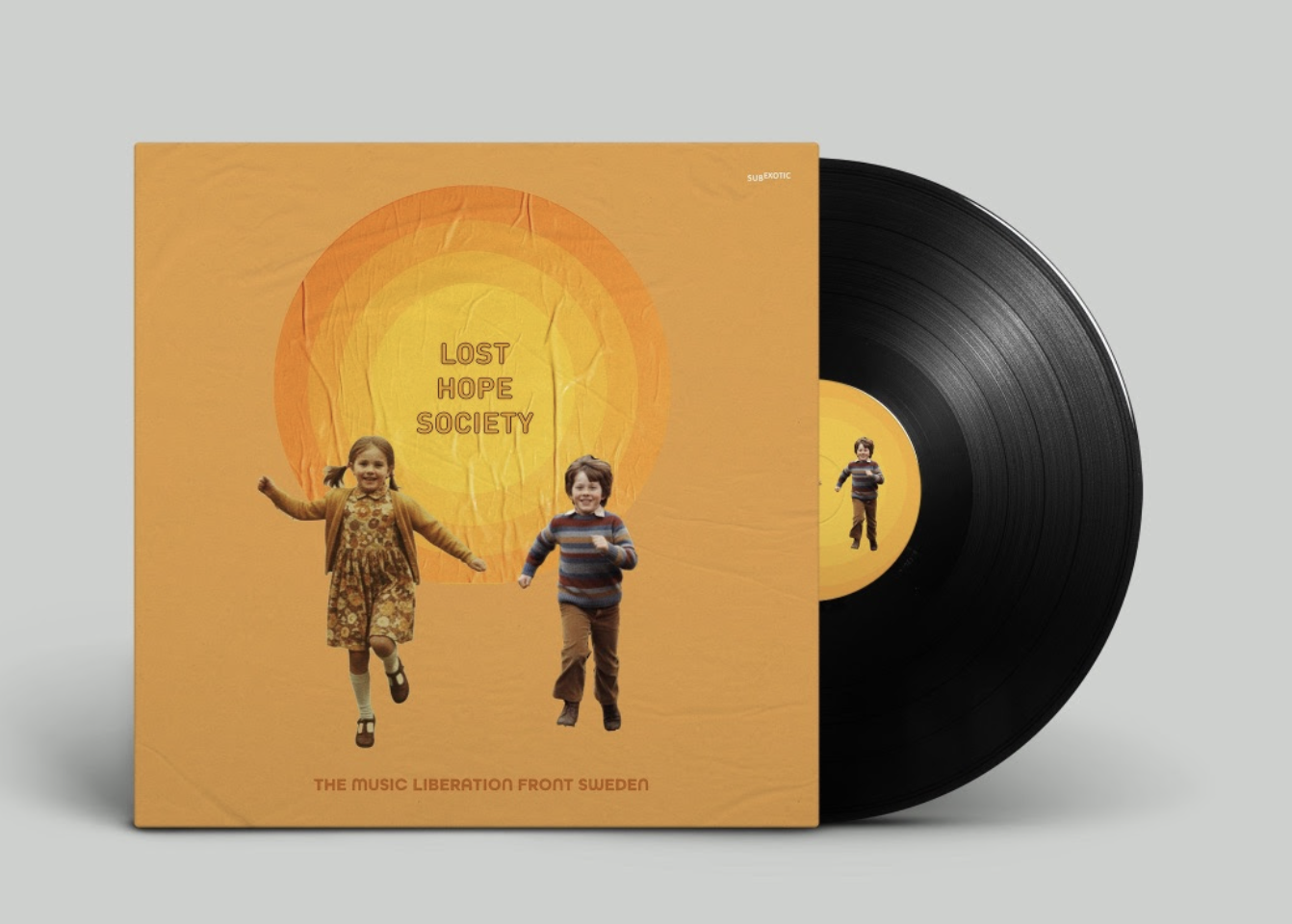
The Music Liberation Front Sweden ‘Lost Hope Society’
(Subexotic) 24th April 2026
Emerging this month from out of the Subexotic portal, a refreshing call for compassion; a shout out for all the “nice people” missing from the high anxiety era of individualism, community and social detachment. Content at their lot, with no fear of missing out on the next TikTok generated bullshit, or envious of their neighbour’s lifestyle, the Portsmouth artist Michael Evill cranks up the generators, oscillators and apparatus and plugs in various instruments under The Music Liberation Front Sweden guise to venture forth into an occult musical world of vaguely familiar evoked inspirations and influence from the 70s, 80s, 90s and the now.
The Lost Hope Society isn’t quite as resigned as it sounds, lingering amongst a soundtrack of library music, Kosmische, electrio-pop, the Gothic and sci-fi, and finding as it does composed passages of thought and resilience in the face of social media and technological-driven fear, discourse and selfishness. As vocalised throughout, both through female and male voices (sometimes the borrowed and collaged), there’s a constrained contempt and anger held against the forces of such division and upset whilst extending a near despondent hand to those that could make it all so much better.
In this sphere the quintessential queer, supernatural and esoteric sounds of Sapphire & Steel meet Mike Oldfield, Electrelane, Stereolab, Tomat, Belbury Poly and New Order. A cosmic toybox is opened up of the accelerated, motorised, dialled, crystalised, glassy and fizzing. Machines, synthetic operators and kit sit alongside guitar fx, interferences, spacy rays and the wilderness on an album that makes offers up both wishful thinking and daydreams of a more aspiring society of common decency and well, niceness.
Rave At Your Fictional Borders ‘Analogue Nomadism’
(Meakusma Records) Released 3rd April 2026
Despite the liberal ideals of a borderless world, the realities can be far messier and pressured, a strain even, when put into practice. But though politically a much more difficult promise to make, this multicultural paradise, it’s already been put into practice musically: for ages in fact.
Step forward in-demand drummer and bassist Dave De Rose and fellow trick noise maker and guitarist Marius Mathiszik of Rave At Your Fictional Borders, a troupe of sonic and musical nomads; a newly instigated and rearranged trio that now includes the drummer and vocalist Salim Akki. It’s a sort of new formation, brought together for the group’s debut album proper. In keeping with the concept, ideas of leadership and instigation are amorphous, with no one in charge and ideas freely shared between whoever happens to be in the room at the time of the recording.
For the debut album, Rose and Mathiszik in pursuit of that same nomadic freewheeling spirit of musical adventure, were invited by Akki to take up a short residency at Essouri Jamal‘s newly built L’Bridge recording studio in the famous Moroccan city of Kenitra (for geographical fans of the site, that’s 40km north of Rabat). Tapping into that rich city’s atmosphere, its amalgamation of Roman, Phoenician, Portuguese and Spanish colonialism and its eventual Moulay Ismail liberated 17th century architecture, history and culture, the trio embarked on a spontaneous experiment of porous and mystical rhythm making. As with previous broadcasts from the troupe, the signature of these rhythms is varied; once more like a drum kit engine slipping and spluttering in a ricochet, stilted, skipped and wobbled staccato fashion, taking time to find traction and a groove amongst the alien, mysterious sounds and beds of the fx, loops and manipulations.
Provenance-wise we are dealing with a shadowy mirage bleed of Moroccan mysticism, various African rituals and alchemy, post-rock, post-punk, dub and darkened progressive-jazz. A hybrid world in which Idris Ackamoor and Sly & Robbie share room with Battles, Jah Wobble, BLK JKS and Tortoise. Or one in which you can hear a transformed vision of a chinking and glass raising Afro-party following on after a subterranean hallucination of Gnawa music and Ifriqiya Electrique. Akki’s voice is just as amorphous and bound to fluctuate between references to his own Arabian culture as to hoot and shout expressively in a language all of his own making over the beats, the deep vaporising and throbbed basslines.
With an avian menagerie of titles as the only guide (from long billed and long-limbed wading birds to warblers, ducks and hummingbirds), reflecting the diverse range of references, or cultures in the blend, but also their migratory nature, the listener is transported to vaguely familiar and yet often exotic shadowy worlds. Curiosity and improvisation culminate in a very modern sounding fusion of mystique and global inspirations; a fourth world of possibilities.
Morita Vargas ‘III’
(Hidden Harmony) Released 17th April 2026
Aligned with Hidden Harmony from the very start, the Argentinian producer and singer Morita Vargas now unfurls a generous offering of recordings created between 2014 and 2025 for that same label. A concept of futurizing almost familiar Latin sounds, rhythms, the sound of a signature Spanish guitar and ancestry with Argentina’s minimalistic club scene, electronic “avant-pop” and a transformative vision of aria opera is extended further to cover multiple experiences, soundscapes, suites of contemplation in the stillness of a South American desert range and ideas of sensory hallucination.
Both on a vaporous near lost in the ether and cinematic scale, Vargas uses allurement and the beckoning in synchronicity with the haunting. Simultaneously as diaphanous and cloaked in the vaporous, subtle industrial and metallic electronic drum padded sounds of the alien, the listener must beware that these tracks are as esoteric as they are dreamily birthed in touching and melodic synthesized beauty.
Permeating with often the most succinct of lyrics, Vargas’s voice is transformed, filtered, modified, taken down pitches and doubled-up to sound like either an apparition or a cosmic aria. Though there’s also passage in which Vargas near raps in a feverish modern pop manner or like a both kooky and disturbing child. That voice, constantly in a flux between effects and performance, is married to shuttered and shunting beats, subtle concertinaed dub, the manufactured sound of steaming valves, an anvil being struck, electro tremolo guitar reverberations, the dance of a puppeteer, coldwave and various percussive elements that recall ancient and very much alive pre-Hispanic colonised South America.
Zola Jesus, Grimes, Celestial North are the names that came into my head when listening and reviewing this minimalistic work of vocal, sound and rhythmic work. But with the Latin influences, the call and immersion of the Argentine scene, it becomes something far more unique and distinct.
Van Pool ‘Special Purpose Vehicle’
Released 15th April 2026
Everybody who follows the Monolith Cocktail should by now be familiar with the expletory, freely untethered and often squeezed until the pips fall out saxophone playing and accompanying electronic manipulations of the prolific Andy Haas: an artist whose career began as a Muffin in Martha’s new wave outfit of the late 70s to his work with Meg Remy’s ever expanding U.S. Girls troupe and his myriad of solo and collaborative offerings born out of the New York scene. Appearing this month as part of just one of those many projects, the Van Pool troupe are back with another “unburdened” near freeform and untethered improvised album that stretches the boundaries of live music further.
Whilst the lineup seems reasonably fixed, joining Andy on the quartet’s latest album Special Purpose Vehicle (a reference or poke at the legal term created by a parent company or individual for a specific, restricted business purpose, such as holding property assets, project financing, or risk isolation) are the guitarists Omer Leibovitz and Kirk Schoenherr, and the drummer Layton Weedeman. As a fifth wheel, and so far, featured on at least the last two releases, is bassist Ari Folman-Cohen.
Together, they conjure up a kind of live-feel fusion of post-rock, rock-jazz, grooves, the playfulness, prog, freeform and almost psychedelic across five performances of varying moods, speeds, and feels. Not so much workouts, but the rhythms are there as the band strike up passages of climatic breaks, splashes and the funky. Haas varies his input from the melodic to the vibrato, and from the squeaking to the near mizmar-like, recalling everyone great and cool from Ivo Perelman to Evan Parker and Anthony Braxton. Both Leibovitz and Schoenherr combine elements of Zappa with Fred Firth and Bill Frisell, whilst Weedman sends out shimmered waves of cymbal, bounces seamlessly around the kit and provides the grooves in partnership with Folman-Cohen’s placed and flexing bass lines and noodles.
There’s a mix of action and the more hallucinatory: the sunny disposition of ‘Sunset Clause’ seesthem play around on the sunspots cast on the boardwalk; a dream imaginary release on ECM by tortoise perhaps. ‘Off Balance’ almost starts like a Floydian meets Pat Metheny mirage, whilst the opener ‘Limited Exposure’ has a real kick of late 60s West Coast rock meets jazz-fusion.
Both bent out and in shape, the band strike up a grooving and soulful exploration of ideas and spontaneous interactions. Van Pool will be well worth catching live in the flesh, which apparently is happening in June after a delayed set of circumstances prompted by Covid. Anyway, the album is available via their Bandcamp page, which I recommend you seek out.
___/The Monolith Cocktail Social Playlist Vol. 105___
The Social Playlist is an accumulation of music I love and want to share, with tracks from my various DJ sets and residencies over the years and both selected cuts from those artists and luminaries we’ve lost on the way and from those albums celebrating anniversaries each month.
In the latter camp we have the following anniversaries to mark:
Stax R&B super power duo Sam & Dave’s Hold On, I’m Comin’ LP is 60 this month.
Garage progenitors, the Nuggets kings of mid-sixties scuzz sike, The Seeds self-titled LP is also 60 this month and still sounding every bit as fucking powerful, freaked and fuzzed-up.
SPOTLIGHT: The Rolling Stones’ Aftermath is another 60th special this month, whilst Black And Blue is 50.
As a light-hearted chide at their rivals, The Rolling Stones, who’d just released Aftermath, when the Beatles were themselves stumped for an album title Ringo Starr chimed in with “After Geography”.
On a roll, literally, the Stones fourth studio album was a major artistic breakthrough. Wholly consisting of original material, the 14-song suite convinced the world of the band’s talent.
What’s not to like! Strutting punk number rock hits, Under My Thumb, sit side-by-side with the enchanting Elizabethan lamented, Lady Jane, whilst the epic rousing Out Of Time (covered brilliantly by Chris Farlowe) and ode to Nembutal-popping housewives, Mothers Little Helper, are two of the best songs the Stones ever put on wax. This is the Stones really breaking the mould and upping the ante as they strive to compete and go head-to-head with their Mersey rivals.
Rather than head back out onto the open road to promote It’s Only Rock ‘n Roll, our effete troubadours continued to record whilst the going was good; much, as it turned out, to the exasperation of Mick Taylor who decided to call it a day.
The leading single from their back-to-back Musicland studios recorded album, Black And Blue – an LP remembered more for its initial S&M bruised and battered female model fronted campaign, than for the music -, ‘Fool To Cry’ has all the traits of a Philly soul balled, as reworked by Bowie on Young Americans.
Both this oozing sentimental number and the album had a gestation period before being released in 1976; tour commitments and the release of a compilation prolonged the wait.
During recording sessions, the band auditioned a wealth of guitar talent that included Harvey Mandel (Canned Heat for a while, and John Mayall) and Wayne Perkins (Alabama session man from the Muscle Shoals stable), as Taylor finally quit. Both made it onto various songs with Mandel playing on the final cut of Fool To Cry. Ronnie Wood, the former Faces lead guitarist and occasional stand-in for the Stones, eventually slipped into the permanent role; his baptism of fire being on the super group’s 1975 “Americas” tour (one that was fuelled “purely” by Merck’s pharmaceutical “grade A” cocaine, or so Richards claims).
Rumours run wild of course, but Steve Marriott and Peter Frampton were, at least, muted as possible replacements for Taylor, though a lack of collaborating evidence and scant details can only consider these choices as wishful thinking.
Easily the best track from the, largely berated LP (or as Lester Bangs surmised, “This is the first meaningless Stones album, and thank God!”), Fool To Cry is a more confident and mature record, which seemed ill at odds with their quasi-funky and lumbering black-rhythmic postulations and posing.
The Penguin Café Orchestra’s highly influential LP Music From…. is 50 this month.
And finally this month, Tokyo Police Club’s rambunctious millennial indie LP A Lesson In Crime is 20.
Obituaries wise this month, the multi-instrumentalist, Traffic co-founder, session man extraordinaire David Mason passed away in the last week. The CV is impressive to put it lightly: George Harrison, the Rolling Stones, Jimi Hendrix, Eric Clapton, Paul McCartney and Wings, Michael Jackson, David Crosby, Graham Nash, Steve Winwood, Fleetwood Mac, Delaney & Bonnie, Leon Russell, and Cass Elliot. Read it and weep! He also fitted in a solo career, backed on his debut single’s B-side no less than by the visionary Family – Mason produced (yes, another string to the widest bow in music history) the much-forgotten band’s Music In A Doll’s House. Just the credits could fill this month’s post. But I’ve chosen a popular Traffic tune and one from his 1973 solo LP It’s Like You Never Left.
As the old trope and saying goes, you can’t libel the dead. I’m not willing to test that theory, but Afrika Bambaataa’s legacy is obviously and quite rightly now overshadowed by the numerous allegations of sexually molestation during his career as one of the leading or most famous icons and progenitors of Hip-Hop culture. Whether it was really one of hip-hop’s dirty secrets, numerous rappers and victims came forward a decade or more ago, and in recent times, with at least one case making it to the civil courts (a case Bambaata lost after failing to appear).
The former street gang tough turn Zulu Nation syndicated pioneer’s mark on the scene is undeniable; firstly, by convincing former gang members and adversaries to exchange aggression and territorial wars with the burgeoning loose culture of breakdancing, graffiti, rapping and DJing during the first golden age of the 70s; and secondly, by marrying the German precision of Kraftwerk futurism with that of Afro-futurism and New York’s emerging street trends to create Electro – although many on the West Coast would disagree, claiming they invented it years earlier. His presence and influence spread through a united message, leading to collaborations with as unlikely bedfellows as John Lydon and James Brown. Planet Rocking, his stamp on the generation X culture is undeniable; even with such dark heinous shadows cast.
Len Deighton died a while back, and this is the first opportunity I’ve had to mark his passing. In my estimates a far better writer than many of his spy, clandestine enterprise rich peers, and prolific with it. Read not only his Harry Palmer series but all his singular wartime riches too: Bomber, XPD, Goodbye, Micky Mouse and MAMista. Phenomenal loss to the world of publishing. But I leave you with John Barry‘s cerebral, spindled score to one of Deighton’s most influential and successful books and films, the Ipcress File.
The rest of this’s month’s playlist is handed over to an ever-eclectic, inter-generational number of tunes from the Flavour Crystals, Maitreya Kali and Craig Smith, Krumbsnatcha, If, Mike Hurst, The Frost, Pharoah Sanders, Eye Q, Bibi Ahmed and more….
That track list in full::::
The Seeds ‘Mr. Farmer’
Tokyo Police Club ‘Cut Cut Paste’
The Golden Palominos ‘Clean Plate’
Baby Cool ‘Everything’
Eye Q ‘Making Life Out Of Music’
Sam & Dave ‘Ease Me’
Krumsnatcha ‘Remarkable’
Afrika Bambaata & The Soulsonic Force ‘Renegades Of Funk (The Latin Rascals Remix)’
If ‘What Can A Friend Say’
The Rolling Stones ‘I Am Waiting’
Maitreya Kali & Craig Smith ‘Color Fantasy’
Traffic ‘Hole In My Shoe’
The Rolling Stones ‘Fool To Cry’
Penguin Café Orchestra ‘Zopf: From The Colonies’
Flavour Crystals ‘He Screamed as He Fell to the Soil’
Bibi Ahmed ‘Sef-Afrikia’
Steve Gunn ‘Shape of a Wave’
John Barry ‘The Ipcress File’
Pharoah Sanders ‘Little Rock Blues (Live Montreal ’84)’
Mike Hurst ‘Place In The Country’
The Beach Boys ‘Holy Man (with Carl Wilson Vocals)’
Floating Action ‘Diamond Store’
Dave Mason ‘Misty Morning Stranger’
The Frost ‘Black As Night’
Terreno Baldio ‘Despertar’
Peter Michael Hamel & Alexander String Quarter ‘String Quartet No. 3: II. Mu-ak’
Neon Kittens ‘Cocaine Lawyer’
Novelistme ‘Huh Huh Huh’
King Kashmere & BVA ‘I Smoke’
Time Zone (Bambaata and John Lydon) ‘World Destruction’
Monolith Cocktail Monthly Playlist: August 2021
August 27, 2021
PLAYLIST SPECIAL/Dominic Valvona/Matt Oliver/Brian ‘Bordello’ Shea
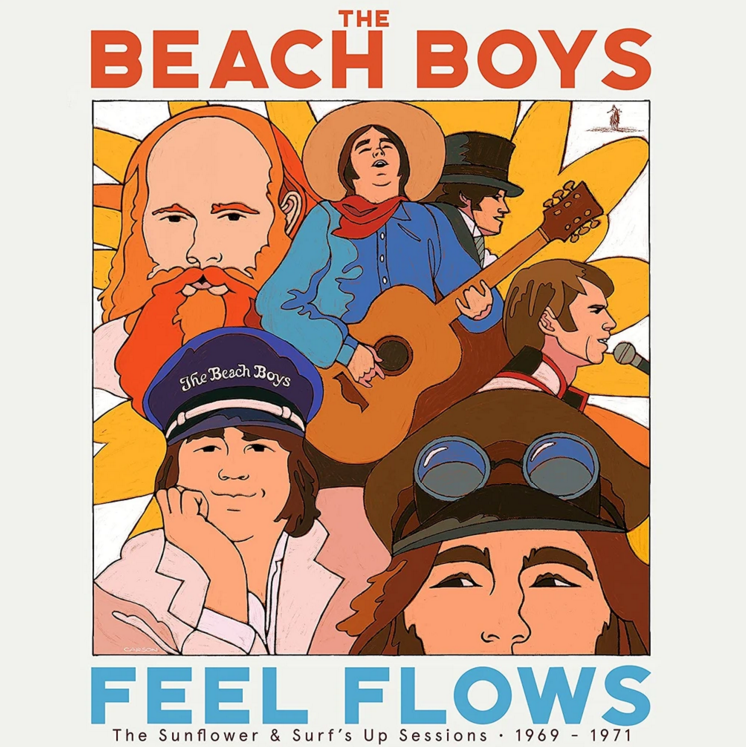
Unapologetic fans of California’s favourite sons, The Beach Boys, this month’s imaginary Monolith Cocktail radio show playlist features a hell of a lot of tracks from the Feel Flows box set, which came out today. Some of which, are choice tracks that have lain dormant for decades.
Joining them is a fine selection of new music from the MC team (that’s me Dominic Valvona, our remote contributor and hip-hop selector Matt Oliver, and the maverick troubadour lo fi rock god turn critic Brian ‘Bordello’ Shea) that includes bloomed pop loveliness from Bloom De Wilde, respectful nods to prog rock icons from Uncommon Nasa, Homeboy Sandman slurping on the dairy, the brand new Fiery Furnaces mellotron bellowed plaint, and some mad dashing mayhem from Girl No. III. Plus plenty of greatness from Pons, SonnyJim, Ryuichi Sakamoto, Brandee Younger, Ephat Mujuru and Liz Cooper. 46 tracks to soundtrack your weekend.
Tracks Listing:.
The Beach Boys ‘It’s A New Day’
Gabrielle Ornate ‘Waiting To Be Found’
Bloom De Wilde ‘Garden Of The Sun (Jstar Remix)’
Ester Poly ‘Pressés’
Flowertown ‘The Door The Thief The Light’
SLONK ‘Erstwhile’
Julia Meijer ‘Borta Från Allt’
Seaside Witch Coven ‘A.E.O.’
Liz Cooper ‘Slice Of Life’
The Beach Boys ‘It’s About Time – Live 1971’
Brian Jackson, Adrian Younge & Ali Shaheed Muhammad ‘Duality’
Uncommon Nasa ‘Vincent Crane’
Tanya Morgan ft. Rob Cave ‘Tanya In The Sky With Diamonds’
Homeboy Sandman ‘Cow’s Milk’
Creatures Of Habit ‘The Devil’s Hands’
Bronx Slang ‘Clock’s Ticking’
Lore City ‘Once-Returner’
Your Gaze ‘Black Afternoon’
Sølyst ‘Flex’
Ephat Mujuru & The Spirit Of The People ‘Mudande’
Ballaké Sissoko ‘Simbo Salaba’
The Beach Boys ‘4th Of July (2019 Mix)’
Sorrows ‘Rita’
Lisa Mychols & Super 8 ‘Pet Sounds (Story)’
Makoto Kubota & The Sunset Gang ‘Bye Bye Baby’
Brandee Younger ‘Somewhere Different’
Ryuichi Sakamoto ‘Mountains’
The Beach Boys ‘Forever (2019 A Cappella Mix)’
The Fiery Furnaces ‘The Fortune Teller’s Revenge’
Graham Domain ‘Limbs Of Loneliness’
Corduroy Institute ‘An Interpretation Of Our Own Story’
YOUNGMAN ‘GALACTIC LUV’
Celling Demons Ft. Zarahruth ‘Silver Birch’
Kid Acne Ft. Jaz Kahina and Vandel Savage ‘Transistors’
The Mouse Outfit & ayiTe ‘Don’t Stop’
Girl No. III ‘Wales’Whales’Wails At Weyl’
Pons ‘JOHNNY PERSUASION (HABITAT 67)’
Sebastian Reynolds ‘Crows (L’Étranger Remix)’
CMPND ‘WEAINTPLAYIN’
Lee Scott/Hyroglifics Ft. Black Josh ‘Sacrificial Goat’
Sonnyjim ‘Mr Singh’
Sweaty Palms ‘The Dance’
Weak Signal ‘Barely A Trace’
Xqui X SEODAH ‘Timete’
Giacomelli ‘Phaze II, Pt. 2 (Bonus Track)’
Shreddies ‘(no body)’
PLAYLIST SPECIAL/Dominic Valvona/Matt Oliver/Brian ‘Bordello’ Shea
Already plowing through the summer of Covid Year Two era, the Monolith Cocktail has chosen another eclectic jamboree of choice tracks from the last month: mostly from albums/singles we’ve reviewed, but a few we never got around to featuring on the blog. There’s a heavy Beach Boys presence, what with California’s greatest sons releasing the eagerly anticipated Sunflower and Surf’s Up sessions and goodies box set, Feel Flows, next month. We also have the return of Los Lobos, who cover their fellow Californian neighbours’ ‘Sail On Sailor’ for their new album Native Sons.
We also have Matt Oliver on the rap control, sorting through July’s tsunami of new hip-hop releases. Matt also pays homage to the late idiosyncratic golden age innovator Biz Markie, who died only a few days ago at the age of 57.
Expect the usual unusual, with tracks from the Regressive Left, Xhosa Cole, Pozi, Luaran Hibberd, Project Hilts, The Doppelgangaz, Joe Blow, Ed Scissor & Lamplighter, CIX, Faust, Jason Nazary and more.
Tracks:.
Regressive Left ‘Cream Militia’
Jean-Pierre Djeukam ‘Africa Iyo’
Xhosa Cole ft. Soweto Kinch & Reuben James ‘Untitled Boogaloo’
Biz Markie ‘Pickin’ Boogers’
Native Soul ‘Dead Sangoma’
N’Famady Kouyaté ft. Lisa Jên Brown ‘Aros I fi Yna’
Contento ‘Al Lao del Río’
Pozi ‘Sea Song’
Werewolf Hair ‘Throw Me A Bone’
Lauran Hibberd ‘Bleugh’
Yammerer ‘Tell Me What The Ancient Astronaut Theorists Believe’
Jack Name & Aoife Nessa Frances ‘Watching The Willows Burn’
Los Lobos ‘Sail On, Sailor’
The Beach Boys ‘This Whole World (Alternate Ending)’
The Poppermost ‘Yes It’s True’
Platonica Erotica ‘I Can’t Be Your Everyting’
Project Hilts ‘Dark Side’
Nick Roberts ft. Ash The Author & DJ JabbaTheKut ‘Codebreaker’
The Doppelgangaz ‘Triple D’
Joe Blow & Mr. Substance ft. DJ Jaffe ‘Hypertension’
Roughneck Jihad ‘Handbook’
Swindle ft. Loyle Carner, Kojey Radical & JNR Williams ‘LOST’
Ed Scissor & Lamplighter ‘R U Alone?’
Kety Fusco ‘Ma Gnossienne’
Anton Barbeau ‘I Love It When She Does The Dishes’
Heyme ‘Without A Paddle’
The Telephone Numbers ‘Pictures Of Lee’
Reuban Vaun Smith ‘Flee The Coop’
Devin Gray ft. Ralph Alessi & Angelica Sanchez ‘Melt All The Guns’
Juga-Naut & Giallo Point ‘Smoke Filled Room’
Web Web (Max Herre & Yusef Lateef) ‘Akinuba/The Heart’
CIX ‘Whirl’d In The Pool’
Tekilla ‘Se Eu…’
Saba Alizadeh ft. Andreas Specthl ‘Phasing Shadows’
Belcirque ‘Sumac y Cúrcuma’
Karen Zanes ‘Carnival Mirror’
Wyndow ‘Pulling On A String’
Jason Nazary ft. Grey McMurray ‘Days & Nights, for Em’
Girl No. III ‘An Impressed Imp Rests’
Liliane Chela ‘Charr’
PTČ ft. Vazz ‘PAPAGAJ’
Sandy Chamoun ‘Siret El Ro3eb’
Passepartout Duo ‘Plainness’
Occult Character ‘Cool Kid Mummy’
Faust ‘Fernlicht’
The Beach Boys ‘Surf’s Up (A Cappella)’
Tickling Our Fancy 074: Society Of The Silver Cross, John Johanna, Mike Gale, Brickwork Lizards, GOATS…
May 28, 2019
Reviews Column: Dominic Valvona

Back after a short hiatus, my eclectic spread of recommendations and reviews features, as ever, a bumper edition of recent releases. There’s a suitably seasonal solo album from a Beach Boys imbued Mike Gale that wallows in the scorching rays, called Summer Deluxe; some live action from the Ottoman/Edwardian imbued period fusion of Arab and English music hall Brickwork Lizards, who’s new EP features a quartet of live recorded tracks from the St. Giles sessions; there’s a trippy psych peregrination hard sell from the Submarine Broadcasting Company in the form of a GOATS (not that one, this is another group entirely) cassette tape called Far Out; the latest beautifully, if despondently, articulated songbook from Oliver Cherer, I Feel Nothing Most Days; the musical suite in all its glory from Bethany Stenning’s multimedia conceptual art film The Human Project, released via the artist’s Stanlaey alter-ego. I review the fruits of a congruous union between Glitterbeat Records instrumental imprint tak:til and the ‘21st century guitar’ American label VDSQ Records, a new nocturnal hour suite from Chris Brokaw called End Of The Night; and there’s new album from the Benelux specialists Jezus Factory, the cathartic Wilderwolves rocker Inhale, Increase The Dose.
I also take a look at the latest album from the elasticated electro-pop and neo-Kraut Cologne-based Von Spar and friends, Under Pressure, plus singles from two afflatus acts, the Indian-imbued Society Of The Silver Cross (‘Kali Om’ and ‘The Mighty Factory of Death’) and Book Of Enoch, Judaic inspired John Johanna (‘Children Of Zion’).
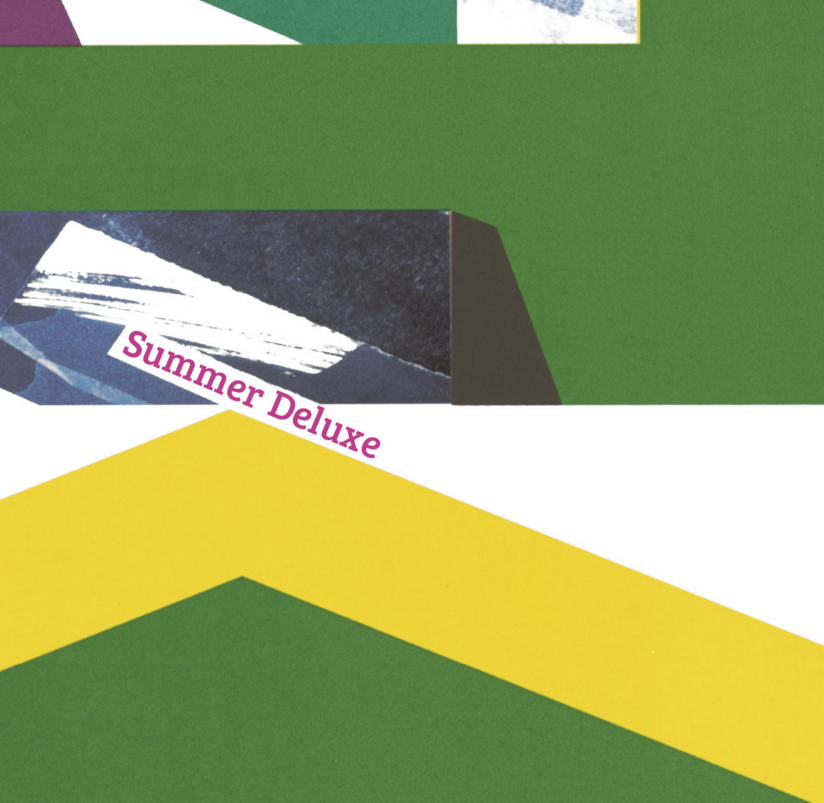
Mike Gale ‘Summer Deluxe’
May 2019
Once more escaping the short days and dreary dampness of an English winter, the Hampshire-based polymath Mike Gale (notable for his work with the Americana imbued Co-Pilgrim) suns himself again in the dappled rays of lilted surf pop on his new solo album, Summer Deluxe.
Liberally splashing about in the efflux surf of The Beach Boys the much-prolific Gale (this is his fifth album alone in just five years) hides a certain sorrow, longing and yearn under the most colorful and dreamy of melodious harmonies. Sometimes it’s just the one Beach Boy who springs to mind when listening to this seasonal paean: Dennis Wilson, who flits about with McCartney and The Animal Collective on the breezy but deeply felt ‘Barecaraa’, and a filtered version of Pet Sounds era Brian – via Sparklehorse and the little known She Sells Seashells Expo homage project by the lo fi American artist John Lane. There’s even a hint of Surf’s Up noir Brian Johnston echoing around the tranquil summer abandon of ‘You Have A Way’. But you get the picture: that Beach Boys influence is prominent; something that is impossible to pull-off unless you have the talent, which Gale obviously has and proves here, no matter how unassumingly he does it.
A beautifully articulated songbook throughout, the best is saved until (almost) last with the hymnal-turn-diaphanous upbeat chorus of bubbly-synth and wafting saxophone anthem ‘Every Cloud Has A Cloud’. A comfort blanket wrapped around the repeating plaint of “You feel like nothing’s really working out”, this final vocal track sounds like the weight of the shoreline is burdening a wistful Gale as he plunges into the ocean depths to escape.
Dazed and hazy, a hushed mirage of summer, the leaf-turning breeze of autumn is never far away, its arrival denoting all the connotations and metaphors you’d expect, that fleeting optimism of the summer masks and makes all our woes seem far less burdening. Summer Deluxe is swimmingly brilliant in its indie slacker charm; a scion indeed of the Beach Boys spirit.

Von Spar ‘Under Pressure’
(Bureau B) 10th May 2019
Finding it all a bit much, in a society the Von Spar have coined as “surveillance capitalism”, the Cologne-based “modular system” (their description not mine) convey delusion and anxiety on their first LP in five years, Under Pressure.
Far from dour, defiant and angry the Von Spar and guests lift the miasma and mood with a most classy soulful electro-pop and neo-Kraut dance album; a sophisticated affair that even opens with a two-part dream sequence, the first part, featuring the float-y hushed coos of the Japanese singer/songwriter Eiko Ishibashi drifting to a House music rewired vision of Tony Allen drumming and bouncing refracted polygons, the second part, brings in the familiar enervated falsetto soul of Canadian polymath Chris A. Cummings with a more gliding Italo House beat; the plaint sentiment of both being “all is well until it is not”. Cummings sweet malaise and wistful tones as principle vocalist can be heard on a quartet of equally chic dance tracks; the Yellow Magic Orchestra synth Orientalism drifty ‘Happiness’, winding spiraled prog-suspense mirage ‘Better Life’, and Duran Duran meets bubbly cosmic synth ray ‘Not To Forget’.
Adding an effortless lifetime of sassy dub and reggae scholarship to the Slits-in-chrome and Grace Jones stalking ‘Boyfriends (Dead Or Alive)’, the grand dame of music writing and post-punk Vivien Goldmine characteristically turns vulnerability into a strength, dismissing a string of exes in the process towards self-realization. Other notable doyens and cult figures include Stereolab’s iconic Kosmische siren Laetitia Sadier, who liltingly adds her signature float-y tones to the motorik electro-pop ‘Extend The Song’, and prolific idiosyncratic lo fi genius R. Stevie Moore, who turns in an anguished Laurie Anderson as A.I. psychiatrist performance (an inquisitive “should I worry”, becomes ever more agitated) on the Jah Wobble goes arpeggiator, feeding the consumer machine, ‘Falsetto Giuseppe’.
On an album that spans and twists so many genres, it is the closing shifting-shards panoramic turn rhythm tumbling instrumental, ‘Mont Ventoux’ that travels the furthest, moving from progressive West Coast psych folk to shades of Popol Vuh, Cluster, Vangelis and video-nastie synth soundtrack: A epic, reflective way to finish.
Under pressure maybe, but it doesn’t show as the Von Spar and friends produce a constantly evolving sophisticated dance album of soulful yearning.

Chris Brokaw ‘End Of The Night’
(tak:til) 24th May 2019
Representing a union between Glitterbeat Records experimental international instrumental imprint tak:til and the equally expletory American VDSQ, two tactile delights from the “21st century guitar’ label’s catalogue have been given a European-wide release for the very first time. Both released at the end of May, Chuck Johnson’s 2017 Balsams album will be available for the first time on CD, whilst the nocturnal inspired Chris Brokaw suite End Of The Night is an entirely new album of attentive and placable musings.
Review wise, I’ve only had time to peruse the latter, a swoozy, atmospheric accompaniment to the Codeine and Come band members various moods, reflections and observation, framed within the pitched idea by VDSQ label boss Steve Lowenthal as the “existential” pondered ideal “last record of the night” – the results of Brokaw and Lowenthal’s late night record listening sessions. Taking up the offer, to record that perfect twilight hour album, Brokaw collected ideas for years until the opportunity arose to finally put thoughts to tape.
Joining him on these various traverses and nuanced concentrations is an ensemble of congruous musicians, some recommended by Lowenthal. Appearing in a myriad of combinations, from duo to trio and quartet, is the “Chet Baker” redolent trumpet-player Greg Kelly (Chet being a big influence on Brokaw), violinist Samara Lubelski (who’s briefly played with, like Brokaw, Thurston Moore), viola player David Michael Curry, cellists Lori Goldston and Jonah Sacks, bass-player Timo Shanko and on drums, Luther Gray.
Channeling many of the artists he’s worked with, Thurston Moore, Evan Dando and Stephen O’Malley, as he deftly picks out descriptive notes and builds up a swell of resonance, Brokaw both dreamily and moodily drifts through gestures of jazz, post-rock, grunge, tremolo-echo-y country and on the reverb-heavy vapour drift, ‘Blue Out’, a cosmic kind of blues music. Suspense, even mystery and narrative are handled with descriptive poise, with the guitar-playing evoking traces of Jeff Buckley, Jonny Greenwood and on the hushed brushed drums, dipping motion ‘His Walking’, the results of melding Chris Isaak with J Mascis.
Meditative and lingering for the most part, End Of The Night counters somnolent reflection with cerebral ponder to create the desired nocturnal atmosphere; at least a great record to finish any session on, if not quite the “perfect” one.

Oliver Cherer ‘I Feel Nothing Most Days’
(Second Language Music) 26th April 2019
An artist most lyrically out of time, full of removed observations, set to the most relaxed and wafting of stripped accompaniments, a wistful Oliver Cherer exchanges the part fact/part fiction Victorian Forest of Dean folkloric diorama of The Myth Of Violet Meek for the vague resonating traces of the 1980s on his recent despondent entitled I Feel Nothing Most Days album.
The third such impressive songbook from the prolific Hastings-based earnest troubadour to be released under his own name (previous alter-egos have included DollBoy, Gilroy Mere, Rhododendron, The Assistant) in as few years, this often dreamy affair, originally conceived decades ago – a very young Cherer putting his burgeoning ideas on to a Yamaha 4-track cassette recorder in 1983 -, is imbued by the lingering articulated drip-fed and amorphous cycles of The Durutti Column, but also a wealth of similar ethereal artists, borders on shoegaze from the late 80s epoch of 4AD.
Attuned to the Durutti first time around no doubt, Cherer, by some cosmic-aligned luck, found that he owned Vini Reilly’s Fender guitar (the one used on Morrissey’s first solo LP, Viva Hate as well). Put to good use then, as Cherer reprises his early 80s (what was left of them; when salvaged from the attic and played on a modern cassette-player that two of the original quartet of tracks came out at half-speed, the remainder, in reverse) recordings, the mood of this album is gauzy memory; music pulled from another time, an ether even – some of this down to the harmonies, choral and often atmosphere-setting guest vocals of an apparition cooing Claudia Barton and Riz Maslen.
Despite the drifting, mirror-y visage of washed troubadour, Talk Talk, C86, shoegaze and even Yacht-rock, a barely concealed rage at the divisionist-driven tensions that have sown so much caustic discord in recent years; throwing a proverbial, sacrificial “baby” out with the bath water to the wolves on the veiled Robert Wyatt-esque ‘Weight Of The Water’, in what could be a denouncement on Brexit, and the sophisticated rock with hints of The Pale Fountains ‘Sinners Of The World’ is no less gently scathing.
Elsewhere Cherer moons on the wistfully enchanted French fantasy, ‘Seberg’, a lamentable swaddled delight r-imagination of a scene, played out to a reference heavy lyricism about the aloof, Gauloise smoke cool New Wave cinema icon Jean Seberg (Cherer playing an unlikely role of Jean-Paul Belmondo), and pens a magically sad, Laurel Canyon, swoon to dementia, fading memory and age on ‘An Unfamiliar Kitchen’.
Beautifully articulated throughout, the shifting memories of time assembling just long enough to provide a vaporous soundtrack, I Feel Nothing Most Days is despite the malaise, anguish and sense of injustice a lovely, soulful songbook; another essential Oliver Cherer release.
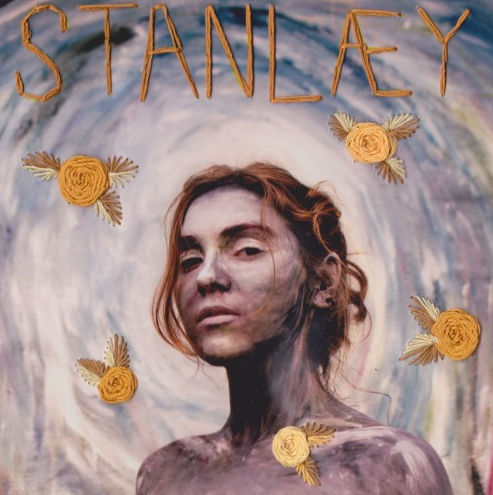
Stanlaey ‘The Human Project’
(Stanlaey Art) May 2019
Two years after the premiere of Bethany Stenning’s ambitious multi-media The Human Project, the full-on immersive audio soundtrack from that film arrives in the form of a debut album; the first under Stenning’s amalgamated pseudonym of Stanlaey through her own imprint label. Featuring a cast of over seventy artists, actors/actresses, videographers and of course musicians, Stenning’s plaudit-attracting opus is heavy on the themes of both duality and juxtaposition; the myriad of twists and turns as the polymath artist studies our chaotic modern relationship with nature, symbolized visually and musically over a number of concept-driven performances.
Creating an alternative pastoral fairytale world, Stenning brings us a highly experimental beguiling soundscape that is often as bewildering as it is diaphanous and melodious. Untethered throughout, weaving amorphously between Earth Mother folk, jazz, R&B, Tricky-like trip-hop and the avant-garde The Human Project is in a constant state of movement as it attempts to articulate and phrase the seven elements that underpin it. Stenning’s distinct voice is itself difficult to pin down, fluctuating, soaring, meandering as it does in giddy childlike innocent wonder one minute, a ghost the next: Joanna Newsom, Bjork and Janelle Monae wrapped into one woodland sprite.
A quartet of conceptual video tracks from the album have already been drip-fed in the run-up to its release as an audio only experience – which works equally without its visual moiety as a whole new immersive experience -; the earthy winding Ghostpoet-esque ‘The Mountain Collector’, the bowl-pouring nod to antiquity’s poetic titan and striving yearn to escape an “Iron Age of destruction” for one of gold, ‘Ode To Ovid’, the breathy ethereal with Tibetan wind chimes metaphorical encapsulation of fluidity (elegantly portrayed by the harmonious display of acro-yoga in the video) ‘Properties Of Ice’, and the gauzy anguished forest spirit turns wild and intense lament to a brought-to-life mannequin wanting to escape their constraints, ‘Wooden Womb’, have already been doing the rounds.
This leaves the silvery moon pool serenade love song between a werewolf and ‘The Moon’, the Lamplighter meets Erased Tapes, dub-y ponderous flood of consciousness ‘Eldor’ (which features the rapping of Pedro DG Correia), and sonic splashed, undulated interpretation of water (its healing properties as much as a backdrop to Stenning’s emotions) ‘Aquarium’. There’s also, as a sort of extra unveiling, the angelic wafting through a void spell of ‘Orbs’, which originally was used to play out the end credits of The Human Project film.
Neither art, performance nor purely a soundtrack, this album is captivating and distinct, working on all levels: sound and music so often fails when brought into the conceptual field of creative arts, but Stenning has pulled it off wonderfully.

Brickwork Lizards ‘Live At St. Giles’
(Vyvyfyr Records) 17th May 2019
Plucked from the era of top hat and tails tea dances and the more rouge-ish double entendre romantically swooned crooning gin joints, the Ink Spots via Sublime Porte imbued Brickwork Lizards seem to have been lifted from an old His Master’s Voice label shellac record. A meeting of musical mind, the Oxford based troupe merge co-founder Tom O’Hawk’s penchant for clipped vocal harmony and the swing of the roaring 20s and early 30s with his musical foil Tarik Beshir’s romanticized and longing sounds of Turkey and the Orient to create a unique fusion.
Enjoying the spotlight that shines on this Arabic jazz ensemble, off the back of two albums (the second of which, 2018’s Haneen, was given the thumb’s up by myself on this blog) and joint-jumping live performances, the group’s vocalist, oud player and instigator Beshir was invited to work as a musical consultant on the new Disney Aladdin reboot; members of the Lizards even formed part of the Sultan’s palace house band.
It is the live performance quality of the band that is celebrated for posterity on their latest release, a four-track EP recorded in front of an audience at the Oxford Jazz at St. Giles showcase. All new, even if they sound nostalgic, the St. Giles quartet of vocal and instrumental maladies, swoons and bounding dances features both original-penned compositions and re-imaginings of Ottoman bohemia, and an even older Arabic love poem They begin with one of these homage transformations, the Anatolian Tango suspense turn Balkan-rush treatment of the legendary Ottoman composer Tanburi Cemil Bey’s turn-of-the-20th century sweep of the bay ‘Nikriz Longa’ instrumental. On the final performance, Beshir yearningly improvises with an Arabic love paean to a weepy and complicated, but effortlessly played, 10/8 beat accompaniment on the Mowashah tradition inspired ‘Sama’I Waltz’.
With one foot in the Bonzo Dog Doo Dah Band camp, the Lizards pay respect to the racy sincerity of the doo-wop harmony group the Ink Spots on the jazzy crooned ‘I Want To Spend The Night With You’. And on their ‘Dream A Little Dream Of Me’ evoking serenaded idyllic punt down the river ‘Roses’, you can easily imagine the Lizards lounging on the Sultan’s palace rug, wistfully sighing sweet nothings to their muse.
With certain élan and flair, not forgetting a real commitment to their form, the Brickwork Lizards refine and reinterpret their nostalgic inspirations to produce a re-electrified fusion that transcends both its Ottoman and quaint Edwardian music hall legacies. Going by these St. Giles recordings they prove a great band to catch live in the flesh.

GOATS ‘Far Out’
(Submarine Broadcasting Co.) 16th May 2019
As if there weren’t enough Goat orientated bands already to contend with, here’s another. This collective rabble (not to be confused with that equally tripping, but African-imbued, lot from Sweden) of moonlight acid and experimental pseudo daemonic cult mind-bending is led by the brilliantly-named maverick Alan Morse Davis, with Jorge Mario Zuleta, Dec Owen and a list of pseudonyms to back him up.
Astral planning the nonsensical, channeling a wealth of acid-rock, hippie folk, Kosmische, Krautrock and avant-garde inspirations, these Holy Mountain(side) goats chew on the most lethal of intoxicating hallucinatory strength grass. Following up on their previous self-titled LP – which I’m told did some impressive sales – the GOATS latest wheeze, appropriately entitled Far Out, is one continuous forty-minute exploratory track of spliced sections, released on that most revived and limited of formats, the cassette tape.
Setting off through a reversal-heavy drug-y drone daze our navigators on this trip meander through an ever-changing soundscape of Incredible String Band commune ditsy childish folk, indigestion-hampered throat singing, early period Amon Duul II Gothic chorus of angels and Germanic myth, caustic confusion noodling, Spacemen 3 go baggy go Velvets psych-garage lo fi, and harmonium bellowed Indian fantasy mirage. That’s without mentioning the vortex sucking sample of The Creation’s ‘How Does It Feel To Feel’, the doodling melting evocations of the Acid Mothers Temple and the blown-out wafts of Kraut-jazz trumpet that get thrown in to what is a most experimental soundtrack; equally in search of hippie nirvana and free love aboard the Hawkwind mothership as amorphous fuckery.
Far Out is an often-ridiculous collage built around a few more thrashed-out, almost conventional, song ideas and meanderings. As ‘head music’ goes the GOATS have sown together a mind-melting rich peregrination of sketches, passing fancies, the afflatus and out-right weird to create their very own disturbed vision; a release that is more ennui, hard come-down Gong communing with Popol Vuh than Faust Tapes.

Wilderwolves ‘Inhale, Increase The Dose’
(Jezus Factory) 29th May 2019
From the Benelux alternative and experimental rock specialists Jezus Factory, and featuring a heavy-guitar rotation of guests and collaborators from the Angels Die Hard, Broken Circle Breakdown and Eriksson/Delcroix triangle of bands from that region, arrives the second LP of sincere anxiety and travail from the Wilderwolves. A vehicle for the songwriting of Alain Rylant, who also sings and plays guitar, the Wilderwolves lean towards introspective rage on the finely produced Inhale, Increase The Dose; though there’s a certain ambiguity in the lyrics, waiting to be decoded, and a lot of violence (metaphorical or not) meted-out and suffered in a number of moody love tussles.
Pitched then as an album about love, though with a side caveat that “it’s about everything” and “it’s about nothing”, all seen and experienced through the self-medicated haze of lethargy; Rylant attempts to rattle the listener (and himself) from a resigned stupor.
Full of the wrangling, sinewy, angulated and sometimes caustic guitar shapes we’ve come to expect from the label’s roster, the various cast of musicians on this album work their way through grunge, stoner, post-rock, Britpop and Americana. On the desperate sinking ‘Smoked’ and bloodied sinister ‘Tooth And Claw’ they brush-up against Placebo at their more refined, and on the post relationship fall-out of ‘Your Scars’ it’s a combination of Alice In Chains and Grant Lee Buffalo. The more relaxed, ambling ‘Underwater’ however, reminds me of an Arcade Fire song I’ve long since forgotten the title of.
A personal, candid offering that taps into the current need to share the sort of woes, stresses and anxieties usually left on the psychiatrist’s couch, in hope that it will somehow help, Inhale, Increase The Dose is a great cathartic indulgence that rocks.
Singles
John Johanna ‘Children Of Zion’
(Faith & Industry) Out Now
Ahead of a new biblical-inspired album in July, the first holy revelation from John Johanna’s upcoming Judaic apocalyptic Seven Metal Mountains opus is the lilting, cymbal resonating heavy, but deep, ‘Children Of Zion’.
Slightly lighter of touch, though just as steeped in religious liturgy, the latest single from the Norfolk artist once more traverses the Holy Land with a call-to-service melt of desert-blues, post-rock and psychedelic folk. Conceptually built around the ancient apocalyptic work laid down in the Book Of Enoch (the protagonist of that cannon being Noah’s grandfather, who’s visits to heavenly realms and augurs of doom are presented through visions, dreams and revelations), Johanna’s Seven Metal Mountains symbolize “the world empires that have successfully oppressed and controlled mankind”.
‘Children Of Zion’ has Johanna adopting a faux-reggae Arabian gait to deliver a message of worshipful defiance; throwing the moneylenders out of the temple, bringing down the towers of Babylon so to speak: “No politician gonna heal me/Only love and self control.” A return to Zion it is, the most venerated of sites; a return to the garden, Johanna has found his calling once more.
For those wowed and won-over (I previously included Johanna’s previous Afro-blues, gospel and rustic Americana rich mini LP, I’ll Be Ready When The Great Day Comes in last year’s ‘choice albums’ features), prepare yourself for another divine communion.
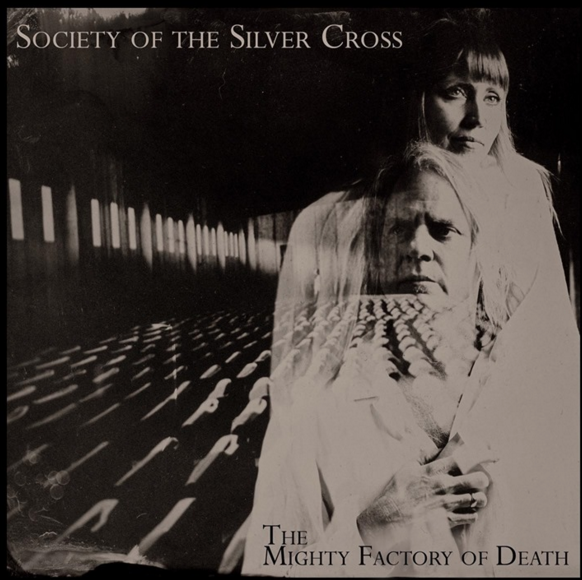
Society Of The Silver Cross ‘Kali Om’ and ‘Mighty Factory Of Death’
Both out now
Nothing less than a clarion call for an “awakening to the universality of all people and things”, the second single of enlightened cosmic pathos from the matrimonial Seattle band once more merges a spiritual penchant for India with grunge and the Gothic. The afflatus Joe Reinke and Karyn Gold-Reinke couple behind the dramatic sounding Society Of The Silver Cross have shifted their musical tastes and inspirations in recent years after travelling; taking a hiatus to the Indian subcontinent after the break-up of Joe’s Alien Crime Syndicate. Fully imbued, bringing not only the message but also the stirring sounds of holy innovation with them back to Seattle, the couple have embraced the use of the Indian autoharp (known as the “shahi baaja”), bellowed harmonium and a droning inducing bowed instrument called the “dilruba”.
Far more Gothic, darker even, than anything you’d hear in the divine rituals of those Indian inspirations, this conversion is often full of daemonic stirrings and gauze-y mists of shoegaze and grunge. ‘Kali Om’ being the second such mix of these influences is a song that once more features an effective if succinct message and musical leitmotif in it’s opening chimes that signals a continuation of their debut single, ‘When You’re Gone’. ‘Kali”, the great redeemer, “Om”, the universal sound of consciousness, is a suitably atmospheric evocation; rich with dreamy mantra, spindled and lush tones, hints of Moorish Spain and of course, the ethereal lingering voice of Karyn.
Following in its ebb and flow, the group’s third single offers a more stark, morbid outlook through its ‘The Mighty Factory Of Death’ title, yet is no less lush and ethereal, when it does break from its gong-sounding harrowed majesty and doom. From the pages of The Book Of The Dead, this Egyptology-ringing acceptance of the fates levitation-towards-the-light breaks from its heavy veil to find heavenly relief. Indian veneration communes with Cobain’s Nirvana and The Velvet Underground, the Society Of The Silver Cross magic up an evocative enough message with both their recent singles.
The debut album, 1 Verse, is due out at the end of June.
Words: Dominic Valvona

