The Perusal #50: Lea Bertucci, Universal Harmonies & Frequencies, June McDoom, Kenneth Jimenez, George Demure…
December 6, 2023
A WORLD OF DISCOVERIES REVIEWED BY DOMINIC VALVONA
(Unless stated otherwise, all releases are available now)
Universal Harmonies & Frequencies ‘Tune IN’
(Yeyeh)

Recorded in a five day window before their collaborative performance at the electronic music Dekmantel Festival (held in the Amsterdamse Bos, in the Netherlands), Jamel “Hieroglyphic Being” Moss and foil Jerzy Maczyński’s improvised sessions cover a lot of eclectic ground.
Marshall Jefferson meets Marshal Allen; jazz transduced through an electronic wave of electronic body movement, house, techno, trance and ambience, the project reconfigures, transforms and resets the perimeters with a spontaneous search for answers, realms, spaces and spiritual inquiry.
From an original soundboard of twenty-six long form peregrinations, whittled down and either left in their improvised form or reworked and reproduced under the guidance of recording engineer Rein De Sauvage Nolting (known on the scene as RDS), twelve finalized tracks emerged, selected by label facilitator Pieter Jansen. Each track finds a more exotic, mysterious and sometimes chaotic way to follow the rhythm and groove. For this is a strange and refreshing vision of dance music; an acid shooting laser beam and Artificial Intelligence album series imbued trip of whirly birds, alchemist mysticism, sci-fi and Pynchon metaphysics.
There’s fun to be had too, but a considered, sophisticated freedom of experience and influences that puts a diverse range of saxophone contours, breathing lungs-like expulsions of ruminated air, rasps, quacks and spirals with synthwaves, counter flows, various synthetic apparatus and a whole electronic ecology. Just the opening titular-track (running to twelve minutes) alone progresses through a shimmy-shimmer polygon analogue score of Sky Records kosmische, Lukid, psy-trance, house, Basic Channel, Beaumont Hannant and warbled synth-funk. Changing course, ‘Can U Hear The Hum’, which follows, marries Amazonian foliage and a squirreling Harmonia with the Inre Kretsen Grupp. And when we get to hear Moss and his motivational speeches on ‘Multidimensional Transformations’, it’s like Ramuntcho Matta go-going to early Chicago house music.
The fantasy mystery, ‘The Book Of Forbidden Knowledge’, reminded me of Bowie and his last ever foil, Donny McCaslin, and the tubular reed strained and piped ‘The Fifth Science’, has a touch of Matthew “Doc” Dunn’s Cosmic Range and his work with the saxophonist Andy Haas.
Within that stretch of the imagination, there’s moments of controlled tumult, the faraway sounds of a removed North Africa, crystallised visionary vistas, beautifully constructed mists, and waterside meditations. To put it another way, this partnership is like Floating points meets The Black Dog, Klaus Schulze, Benjamin Lew and Rebecca Vasmant in the most unique, transported of dance clubs: And that’s a very inviting proposition indeed.
June McDoom ‘With Strings EP’
(Temporary Residence Ltd.) Out Now Digitally/Vinyl Arrive February 24th 2024
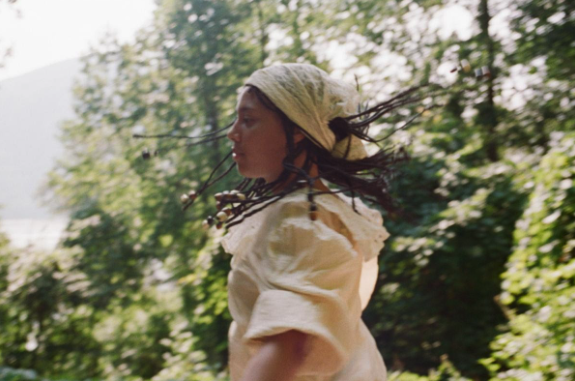
Credit: Bella Newman
Despite the diaphanous, wispy and hushed delivery, June McDoom’s voice is anything but evanescent or forgettable. Because just like one of her most cherished heroines, Judee Sill, every word and expression is believable as a lived experience of heartbreak, yearning and a close relationship with the elementals of an ethereal, but deeply felt, nature.
On the follow-up to her debut EP, the burgeoning McDoom leads with a watery replenished and droplet-mimicking rendition of Sill’s environmental devotional, ‘Emerald River Dance’. The tragic, resurrected to cult status in recent years, troubadour’s fatalistic life was like something out of the gospels: updated in the bohemia of the Laurel Canyon. Forced into prostitution and petty crime to feed her drug addiction, and with a string of coerced and unhealthy marriages/relationships, Sill first came into contact with the afflatus sound that would become her trademark when in reform school during the 1960s; spending time learning the liturgy and gospel music whilst picking up the church organ. In a similar vein to the no less unfortunate Karen Dalton – a peer with an equally ill-fated car crash of failed marriages and addiction, and who’s stripped-back, unpretentious folk style is echoed on this EP -, Sill, despite her obvious talent and the circles she moved in (signed to Geffen’s Asylum Records, with a song bought and made famous by The Turtles no less, and her debut single, ‘Jesus Was A Cross Maker’, produced by Graham Nash), remained an obscure cult figure on the peripherals of the folk music scene. Possibly garnering more attention forty odd years later than she did in her own time. Every song, recording, newly discovered demo is heavily loaded, and yet transcendent.
McDoom has her work cutout, and yet breathes a new life into this near Southern spiritual hymn of softened beatific poetry. The original words remain intact, but with the added “I will hear what it is” line; McDoom placing herself within the sentiment of this aquatic and pastoral embrace. A favourite song for years, part of McDoom’s live repertoire, it proves the perfect congruous opener.
A second cover, and age-old standard of the Celtic set that translates across cultures and time, the traditional ballad, ‘Black Is The Colour Of My True Love’s Hair’, has roots (it’s believed) in Scotland. Nina Simone performed an impressionable version, and the American-in-Paris Tia Blake recorded an incredible minimalistic rendition. Both inspired McDoom to record a version; channeling in particular Blake, who is another interesting, fleeting artist from the folk cannon that disappeared off the radar, recording only one album of traditional songs at the age of nineteen in the French capital. Traversing, rather effortlessly I’d say, the Baroque, Appalachians and old Iberia, McDoom conjures up an apparitional-style mist of lament and dreaminess on her near-filmic and airy heaven-bound transformation.
As that EP title makes clear, With Strings doesn’t so much embellish as sympathetically accentuates and carefully brings home the emotional, touching and longed sentiment of McDoom’s stripped-down style with the small, intimate introduction f chamber strings and harp. Reimagining both ‘On My Way’ and ‘The City’ with this magnificent accompaniment that’s one part semi Baroque classical, and one part Alice Coltrane and cosmic, the vocals are further enhanced with the otherworldly three-part harmonies of Cécile McLorin Salvant and Kate Davis: Between them, their CVs and voices are imbued by jazz, French choral music, Creole, pop and the classics. Together it all reaches a near ethereal magic of the untethered and gauzy, with a semblance of the blues, country, and folk and spiritual. And yet, it’s all so modern sounding. ‘The City’ especially, has a breathless air and the space to progress: to confess too. Like a long list Lomax recording born anew, mixed with the beauty of Mercury Rev and The music Tapes, McDoom’s lacey arts and crafts vulnerability is soothed through a gauzy yesteryear. This city plaint is nothing short of sublime.
McDoom’s inspirations are worn on the sleeves, and yet I keep racking my brain to fathom who she reminds me of. An American Maria Monti? A softer Natalie Ribbons? Maybe a passing resemblance to Connie Converse perhaps? McDoom settles somewhere in-between them all as a refreshing, heavenly talent as she disarms the hurt and depth of emotional turmoil, inquiry and wonder with the most beautiful and impressive of deliveries. Certainly, one to watch.
Kenneth Jimenez ‘Sonnet To Silence’
(We Jazz)

Taking a leap into the untethered realms of Kenneth Jimenez’s dreams, the jump off point for his newest album literally takes flight. The Brooklyn-based bassist, composer and quartet bandleader runs for the mountains and sprouts wings; flying over the valley and the versant contours of free jazz and hard-bop: ala New York style.
This bird-like weightless journey often takes in the bustle, chaos of the city, and the excitable energy of his southern neighborhood (or “barrio” in this case) and ports. As the titles suggest, there’s a reference to Jimenez’s Costa Rican roots, and more than a spirit of that Central American’s oasis diverse landscape and bird life. But off the beaten track, Sonnet To Silence truly roams free between mirages and the strains of concentrated expression.
With Angelica Sanchez on piano, Gerald Cleaver on drums and Hery Paz on saxophone, the action is in a constant, almost restless state of movement: of the flighty, swanned, rolling, sprung, stretched, chuffed, pulled and heightened. Between them the quartet invoke Liberty era Jeremy Steig and Prince Lasha & Sonny Simmons on the whistled and wiry drawn-out and busy ‘Dia Laboral’ (“working day”), and Roscoe Mitchell and the Art Ensemble Of Chicago on the frayed taut double-bass stretched (Jimenez is an obvious talent in this department), turn bluesy and tumultuous, ‘El Patio’ (“the backyard”).
The dockyard 50s and 60s New York evoked ‘Mr. Shipping’ has a slight swing, plus a touch of both Marion Brown and Cecil Taylor – Sanchez in full flow, switching effortlessly between the melodious and experimental with almost jarred prods and block chords; reminding me at times, of Alice Coltrane accompanying Pharoah Sanders, but a little resonance of Oscar Patterson too.
So much is happening on this incredible, engaging and sometimes challenging (in the best possible way) album, which draws you in and then ups or changes the tempo, mood and direction. This is free jazz at its most promising; certainly encouraging and with dreamy quality that lifts you up into an imaginative vision of soaring and more complicated expression. Kenneth Jimenez and his quartet have produced one of the leading jazz albums of 2023.
Unwavering ‘Songs From A Tomb EP’
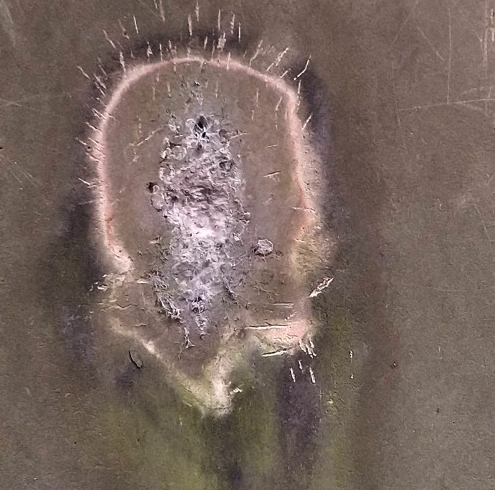
The solo moniker of one Matt Bennett, Unwavering has made an impact with now three of the blog’s writers. Before me, both Graham Domain and Brian ‘Bordello’ Shea pretty much nailed this atmospheric project of indie-folk: as difficult as it is to describe.
Following on from the debut album, Freeze/Thaw/Chorus, and last year’s Ley Lines In The Forth (great title by the way) EP, the Lothian winter’s mists and ‘dreich’ dampness seep into the new EP of acoustic evocations, blessings and stirrings. From the crypt, mausoleum to the nave, Bennett sends out both resonating roused rhythm guitar strikes and quieter, almost ambient in parts, passages of mediation and near despondency.
A hauntology of the downbeat – Brian ‘Bordello’ Shea described it as akin to a downcast Stone Roses, without Mani and Reni – and capture of the abstract environments – catching floating dust particles in a weakened beam of light, shining in through the cellar’s iron gridded window – from which it seems he is performing, there’s a real strange, cultish and sometimes hallowed beauty to the music. His guitar fills the cavern, the church and basement; resounding and loud but always melodious and effecting.
And through it all, he channels centuries of psychgeography; the marks left upon the landscape’s he’s trawled; the erosions and evaporated essences of what were. All of this is merged with personal inner feelings, remembrance and wounded modern travails, written, so it sounds, with a quill by candlelight.
At times it sounds like fellow Scot, Ali Murray, and at other times like the Cocteau Twins pairing with Steve Mason and Parachute era Pretty Things (that’s especially so on the hallucinatory, ambient textural and foggy ‘Slow Digression’), but also a hint of stripped 80s acoustic Goth and even Joan Of Arc. Bennett himself name-checks Kurt Vile, Harold Budd and Low, all of which ring true. But this EP is really quite idiosyncratic, between realms, time and spaces; a unique folk-indie inspired songbook that works outside the usual perimeters, length and borders of song writing. A really interesting discovery waits.
George Demure ‘Ear Candy Dandy + Bonus Album Dandy In Dub’
(Hobbes Music)
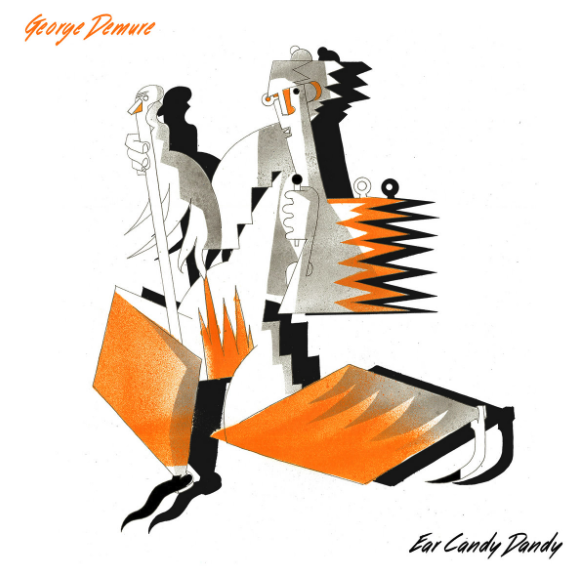
On a bobbled and float-y, light sunbeam dappled vapor of deep house, garage, electro, kosmische, leftfield pop electronica, dub and new wave (both the German and UK’s), the Edinburgh DJ/producer and singer-songwriter George Thomson continues the good work he laid down on the last EP: 2021’s well-received The Record Store.
With the same self-imposed limitations that he set back then, his latest George Demure alias album (expanding to a eighteen-track package with the addition of the Dandy In Dub bonus) makes a sophisticated use of a drum machine, two analogue synths (a mono and poly version) and a computer (to record upon). And yet, as sparse as that sounds, Thomson manages to fully expand his subtle sonic, musical, rhythmic and effects universe even further; channeling four decades of experience in both the Scottish and English capitals.
The CV is impressive and varied, starting out (roughly at the same time as myself, but geographically 500 miles away) in the burgeoning techno and house scenes of the early 90s in Edinburgh. After building up a reputation for producing his own music under the George T moniker, he made a move to London in the 2000s. The ‘T’ was put on hiatus however, and George Demure was born. This still gave Thomson ample time to collaborate with others, namely in recent years as one half of the Jeanga And George partnership. Facilitators and labels for those multiple projects and appellations include NRK, Stickman, 2020 Vision, Crosstown Rebels, Tirk, Greco-Roman, Optimo, Output Recordings and, now, Hobbes Music.
It shouldn’t come as any surprise to find Thomson well versed and full of ideas; using this album, in a fashion, to rediscover and connect with his formative years. A culmination if you like, of his years in the scene. But this is a very fresh projection of that, with both vocal tracks and instrumentals that bob about with the lightest of touches and skill. That’s not to say there isn’t depth, as no matter how soft they are, the bass does thump and the machinery and generators add something concrete and textural to the music.
Of one production, there’s still a wide variety of ideas and genres across the original album’s ten tracks and the bonus moiety’s further eight variants of sung, instrumental and ‘beat’ tracks. The opening, ‘Hello Mr. George’, offers an awakening rural scene, complete with bird song. Bouncing drum pads patter out a gentle bip-bop beat enveloped by light chords on a dappled electronic piano-like synth across a morning idyllic scene. By the time we reach the chimmy new wave-esque ‘Dub In Your Bubble’, and the opening crooned vocal of “Johanna”, we’re almost in the yearning schmooze territory of the crooner. Though as the song progresses, it becomes apparent that it’s more Robin Scott than Scott Walker; mixed I might add with a touch of the Sabres Of Paradise. Another vocal track, ‘Circles’, sounds more like a soulful leftfield downcast Matthew Dear.
An after hours downtime serenade, ‘Late Again’, that features Stevie ‘Chicago’ Christie whizzing Felix Da Housecat vibes past satellites, is a particular highlight – imagine Eno and Scott’s M persona making pop music together. By contrast, the therapy session, ‘Blah De Blah’, sounds like Polygon Windows lost in a haze of Bowie and Level 42! All the vocals have a real drift to them; almost languorous and untethered; a kind of free association soul-house-pop vibe that gives.
Elsewhere, the impeccable production mixes rotor-bladed Moroder with EDM; Kriedler with the melodica dub cloud operations of The Orb and FSOL; and the outdoor environments of epic45 with Roedelius and Thomas Dinger. Within that scope kinetic sounds are matched with the cosmic, vaporous and far out ‘jack-your-body’ moves. It’s a most lovely, swimmingly blend of motivations, feels and deep grooves that effortlessly comes together in a generous offering of electronic music: the very epitome of the Hobbes label’s remit in delivering leftfield unique visions of now techno, house and club sounds.
Lea Bertucci ‘Of Shadows And Substance’
(Cibrachrome Editions)
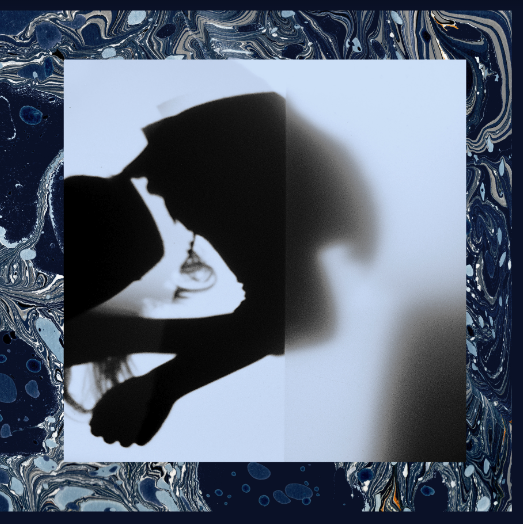
From the chthonian bowels of the geological to the vaporous airs of archaic pseudo-scientific sexism, the New York-based composer, producer, performer, saxophonist and label founder (of the Cibrachrome Editions imprint, under which this album is being released) Lea Bertucci continues to capture the intangible and abstract on her latest work, Of Shadows And Substance – a title borrowed from an episode of the Twilight Zone.
Two scored performances; two separate commission; each atonal experiment is an avant-garde and prompted reaction to a theme that simultaneously hides its sources, instrumentation, sense of place and time, yet evokes a certain recognisable mood.
Covering what used to be two sides of the traditional vinyl LP, these congruous long form pieces tap into Bertucci’s research methodology and serialism of composition and interpretation; stimulating the actions and atmospherics, but granting a form of autonomy to the musicians taking part. This includes an “intonation” tuning structure, the textural and semi-improvisational, and the use of the cello, double bass, harp, percussion and electronic apparatus.
As the album title might suggest, Side One’s ‘Vapours’ piece is, in part, informed by the literal description of the word: that is, a molecule existing on the verge of a liquid, gaseous or solid state. But it’s also a reference to the, far from sympathetic and almost dismissive, term to diagnose types of hysteria in women from a bygone age. Commissioned and played by the Italian Quartetto Maurice, these two interpretations mask the familiar with a highly experimental treatment, strain, stretching whining and searing atonal performance that conjures up shades of Walter Smetek, John Cale, Simon McCorry, Cale, Riech and Fluxus. At one point, when the intensity builds towards an otherworldly, unnerving drama of sawing and heightened tensions, there’s more than a trace of György Ligeti.
Maintaining a constant resonance of metallic sheens, rubs and refraction – in some manner, almost melodic, in the most removed sense of the word -, there’s a permeating connection that carries on throughout the various stages of drones, drawn-out bows, frictions, chaffs and didgeridoo-like blows. Neither vapourous nor hysterical, but somewhere in between, the Quartetto summon some unique visions of distress and abstracted classicism.
In a similar vein, the title-track sonically conveys the arse-end, final days of the anthropogenic epoch. Commissioned this time by the Philadelphia creative foundation, the ARS Nova Workshop, and performed by Henry Fraser, Lester St. Louis, Lucia Stravros and Matt Evans, this twenty-minute plus movement digs deep into the Earth. Like Scott Walker mining an atavistic psychogeography, layers of crust are removed to reach the present state of geological trauma: Or as Bertucci puts it, ‘a meditation on time-travel’ and ‘measure of accumulated events over glacial periods of time’; ‘a metaphor for social and environmental shifts’. This translates into shimmery vibrated cymbals, barely recognized saxophone rasps, the thump of primordial creatures chained to the bedrock, and spooked piano. By the close, the hovered instrumentation is in the airy realms of a calmer, more settled gauze.
Challenging in the best possible way, this couplet of performances is so textural that you could grasp it in your hands. A gateway, window into an experimental atonal world, Of Shadows And Substance is an inventive and intriguing proposition from a unique and adventures artist.
Xqui ‘Melting With Ice’

In the time it takes me to cast my critical mind and ear over this release from Xqui, there will most certainly have been at least another, if not more, projects cast out from the experimental creator’s hothouse studio: such is the abundant output from this highly prolific artist. Across an array of labels and facilitators, and in both a solo and collaborative capacity, Xqui occupies a liminal space between ambient music, sound art, musique concrete, transformed field recordings, hidden source material and voice exploration/transmogrification. Anything recognisable is made anew, strange and alien within this amorphous blending of the synthesised and technological – which isn’t to say these ideas aren’t organic, or that they lose that connection with their environmental, atmospherics settings. It’s safe to say that you never quite know what to expect with each release, such is the diversity and range.
Leaning more towards synthwaves and a chemical, scientific, numerical calculus of sum-parts and references, Melting With Ice draws us into an alternative futuristic and space-searching world of veiled machinery hums, generators, percolators and soft pulses; a sci-fi odyssey of Ligeti, Richard H. Kirk and the Theremin-like arias and apparitional sirens of Star Trek. But this is balanced out with a more naturalistic alchemy of watery elements, an exotic aviary of birds, and subtle hints of the pastoral.
Playing with voices, speech, annunciation and phonetics, Xqui uses a range of effects to convey just the mysterious, curious essence of conversations, whispers, breaths, expulsions of air, the choral and informed. ‘Cherry Red, Neon Blues’ is different in that regard. Here we find a Simon Armitage type poetically inhabiting a Gary Numan-like Blade Runner cybernetic set of neon-buzzed, hummed and lit removed romanticisms and forebode.
There’s a ghost in the matrix, aboard the cosmic flights of deep space probing, and under the Earth, as the ice caps melt and everything from the molecular to most expansive chasms changes: for the better or worse.
The minimalistic, with shades of Twin Peaks and Vangelis, ‘Pygmalion Effect’ references the famous psychological phenomenon in which high expectations lead to improved performances/outcomes in any given area, whilst low expectations lead to the opposite. Its name of course comes from the sculptor in Greek mythology who fell so in love with his ‘perfectly beautiful’ sculpture that it came to life. Make what you will of that. But as usual, based on the quality labyrinth of past creations, expectations are usually high for an Xqui album. And this is no exception; another highly evolved sound world that somehow makes even the innocuous more sci-fi or otherworldly, and attaches a deeper meaning, an experience to it: for example, the passing traffic driving through puddles as the rain hits the pavements to cause its own splash-back tide on ‘Sunrise Waves’; a recording enveloped in the thoughtful and searching. I recommend you check this one out, and the entire catalogue for that matter.
Alessandro Alessandroni ‘Alessandroni Proibito Vol. 2 (Music From Red Light Films 1976-1980)
(Four flies Records)
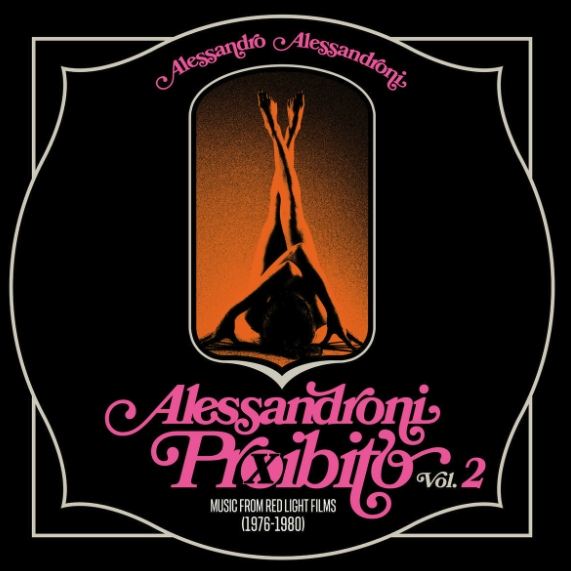
The stellar talent of over forty film scores, part of the great Italian composers epoch of the 1960s and 70s, and owner of one of the most iconic whistles and guitar riffs in cinematic history, really deserved so much more; putting his name to the forgettable skin-flick exploitation movies that don’t even get named on this second volume of obscurities from the Alessandro Alessandroni vault.
The dire schlock smut quintet of movie scores that inform this latest Italo-soundtrack maverick limited edition run from the Italian Four Flies label, have disappeared off a cliff. However, Alessandroni’s modest home studio scores remain, with a smattering of tracks from each now spread over a quintet of 7” vinyl singles, collected together in an alluring box set.
A peer, foil, mentor and friend to such luminaries as Morricone and Piero Umiliani, the Rome born composer, multi-instrumentalist maestro and artist must have hit the skids by the time these red light movies were released. For despite making a name for himself with that Spaghetti Western twang-y Duane Eddy signature and his highly influential work for Sergio Leone, by the the late 70s he was scoring more and more mondo trash, erotica and garish S&M horror – see Lady Frankenstein and Killer Nun. And yet, the quality of his work is never in doubt; often elevating such tawdry, amateurish affairs to cultish status by the music alone.
Although far from serious, it seems Alessandroni’s craft is likened to playing with an amusement park of ideas, sounds and instruments: entertaining but also captivating in equal measures. With an ear attuned to the contemporary fashions, but the classical and traditional too, a lot of musical ground is covered in his compositions: from Italian folkloric standards to disco, library music and the salacious. The second Proibito volume is no exception, with soft-pop-lit dalliances with the blues and Turkish-sounding guitar (the desire prowled sleazy, deep heat floor show, ‘Luci Rosa’: translating as “pink lights”), 10cc soft rock erotic body contouring (the lulled, wandering fingers caress down the spine ‘Tahiti Joint’), and Gallo humping orgasms (the weird spooked, moist-dripped cave (oh-ah!) and piano wire malarkey shivered ‘Climax’). Some of those tracks feature erotic wordless allurements and enticements, with Alessandroni’s wife, the fellow Roman and singer-actress Giulia De Mutiis, providing the sexy coquettish trapeze artist vibe expressions of dizziness on the Broadway stage circus act, ‘Ticket’. I think she also provides the Betty Davis-like oozed erotica on the smoky and funky ‘Miss X’.
In case you’re interested, Mutiis has credits for roles in 15 Scaffolds For A Murderer, The Laughing Woman and Any Gun Can play, but also joined her husband’s octet vocal group, The Modern Choristers (in 1961), which specialized in those choral wordless calls and atmospheres: appearing on many a film score. Apparently other family members were also corralled into Alessandroni’s experiments, although no one else is specially mentioned in the notes, and there are plenty of those siren voices to be heard throughout this compilation. The main man appears himself, delivering the “do-doing” and “bah-bahs” on the new wave discotheque and art-rock ‘Racing’.
As a member of the Italian set of pioneers and new wave, it’s unsurprising to hear echoes of the already mentioned Umiliani (both partners in the supposed anonymous rock group Braen’s Machine in the 70s), Giuliano Sorgini, Roberto Pregadio and Paolo Casa (especially his clavichord and electric piano, Stevie Wonder-esque moments). But with the use of the mandolin, accordion and melodica too, plus that famous guitar twang, you could be mistaken for thinking you’ve been transported to any port on the Med, South America and further East – especially when that spindled guitar starts to ape the resonating rings of a sitar. There’s a craft. There’s fun. There’s a swerve of soul-funk and frolicking titillation in these previously unreleased on vinyl recordings that make it worth the admission price. For those fans of Trunk Records and Finders Keepers, but also anyone with a penchant for the cult and Italian cinema, you’ll love this collection of smut recordings with élan.
Don Fiorino & Andy Haas ‘Accidentals’
(Resonantmusic)

After two decades of intermittent collaboration, Don Fiorino and Andy Haas have found a common language of challenging, free-expressive experimentalism and exploration together. Speaking that sonically, atonal and often non-musical dialect fluently across the previous albums of Death Don’t Have No Mercy and (the monolith cocktail profiled) American Nocturne, these two highly impressive musicians/artists have pushed thresholds and boundaries to emit a tumult of squeezed, pulled, squealed, entangled, gabbling, whistled and indescribable sounds from a host of stringed instruments and the saxophone. The duo’s third album is no exception, with eighteen descriptive, indicated and playful titles of the pressurized, near-distorted, flutter, fizzed, bandy and bended.
But before we go any further, a little CV check. Former Muffin, saxophonist maestro and transformer Andy Haas first blazed and scorched Martha’s ‘Echo Beach’ hit in ’78, before relocating from Canada to New York City in the early 80s; making a name for himself in the post-punk, no-wave and avant-garde scenes, and collaborating with such luminaries as John Zorn, Ikue More, Marc Ribot, Ken Aldcroft (which comes the closet to Haas’ improvisations with Fiorino)…the list goes on. Nearly two decades later and Haas relocated back to Toronto, just in time to prove an in-demand foil to a new generation of artists and producers; firstly joining the orbit of collaborators around Matthew ‘Doc’ Dunn’s head music super group, The Cosmic Range, and then Meg Remy’s U.S. Girls led vehicle, performing on 2018’s In A Poem Unlimited and on the subsequent tour – I personally witnessed Haas blowing up a storm on the tiniest sax I’d ever laid eyes on! A multitude of projects, solo albums fill the gaps in-between; many of which were released on this album’s label, Resonantmusic.
Likewise, Fiorino’s backstory spans the decades with a diverse range of improvisational projects as an incredible guitarist and painter – the latter informing the former. This expands to the glissentar, lap steel, bass, banjo, lotar and mandolin, and covers a host of influences from across the globe. You can find him filed under the Radio I-Ching trio and The Hanuman Sextet, but he also appears on the late drummer Dee Pop’s various projects, and with Daniel Carter, John Sinclair and Adventures In Bluesland.
It all amounts to a lifetime of experimentation for both partners in this venture.
Accidentals isn’t the easiest of listens; rooted by the sounds of it, and by that title, to the accidental results of close quarter improvised wrangling and inquisitiveness; the captured, freeform and untethered results recorded in-between longer performances perhaps? An intimate reaction to downplay perhaps?
By chuffing, rasping, stretching out and releasing tensions on the saxophone, and with Fiorino switching between his racks of stringed instruments, there’s some wild and crazy far-out flexed, physical contortions. Valves let out the steam slowly, as unrecognizable sources trill, flutter, suck, ripple and resonate. When on the fretless bass, it sounds like Bunny Bruen or Percy Jones or Mohini Dey thwacking, patting, tabbing and slapping full-trebled thickened strings. Haas meanwhile channels everyone from Antony Braxton and Roscoe Mitchell to Marshall Allen and Jeremy Steig. Within that sphere of inspiration, his sax finds moments of melody, serenade and the heralded.
Whilst there are evocations of jazz-fusion, La Monte Young, Walter Semtek, Federico Balducci, Zappa, the Middle and Far East, the personal ‘Eulogy 4 Dee’ (that’s Fiorino’s foil and band mate, the drummer Dee Pop) crosses Mali with Louisiana Delta Blues and Mardi Gras for a purposeful goodbye. And the flit, flighty and reed-squeezing ‘Curled Time’ merges Stooges Fun House with the sort of uncoying, stripped of artifice stringed recordings found on Ian Brennan’s recordings from forgotten parts of the world. But for the majority of the time, Accidentals is an album of abstraction, extraction and free-play, performed by two musicians at the height of their perceptive and explorative skills; the language now almost telepathic, with no prompts needed for expressing the chaos, tumult and stresses of the environment and greater geopolitical climate.
Cándido ‘La Muerte de Occidente’
(Natural Sciences)

On the face of it, nothing could be more incongruous than a practicing, bona fide Hare Krishna making gothic-punk house music. And yet, Cándido has done just that. Gone are the mantra chants, yoga and tambourines for an embrace of 80s underground electro Streetsounds, 303s and 808s, post-punk industrial S&M, the German new wave, EBM and jack-your-body early house music. For despite the opening Laraaji-like spiritual chimes and trinkets, this is an occultist club scene rave-up back dropped by the spiraling ‘death of the western world’.
A lively sound clash from the Buenos Aires underground, this album (Cándido’s debut for the Manchester imprint Natural Sciences) is less Zen and more dungeon; a dance music vision permeated by radio waves and samples of the reaper’s prophecy, film clips, cults, political epitaphs and a salacious Latin vamp (courtesy of the featured Contacto). In practice that all sounds like Mantronix, Cabaret Voltaire and Steve ‘Silk’ Hurley bruising it with Meat Beat Manifesto, or, an ashram soundtracked meeting between Nitzer Ebb, the Revolting Cocks, Rockit era Herbie Hancock, Farley Jackmaster Funk, Executive Slacks and Rammellzee.
It’s a unique take that has more in common with the Spiral Tribe, Chicago house scene, and Catholic guilt kinks than spreading the word of karma. In fact, it can all sound more gothic and illicit then blessed and spiritually enlightening. The only reincarnation going on here is in the beats. Cándido’s electro funeral pyre proves an infectious beat-driven 80s collider of underground dance music and industrial cut-and-shunt: An alternative route to transcendence.
Hi, my name is Dominic Valvona and I’m the Founder of the music/culture blog monolithcocktail.com For the last ten years I’ve featured and supported music, musicians and labels we love across genres from around the world that we think you’ll want to know about. No content on the site is paid for or sponsored and we only feature artists we have genuine respect for /love. If you enjoy our reviews (and we often write long, thoughtful ones), found a new artist you admire or if we have featured you or artists you represent and would like to buy us a coffee at https://ko-fi.com/monolithcocktail to say cheers for spreading the word, then that would be much appreciated.
Tickling Our Fancy 069: Minyeshu, Dr. Chan, Brace! Brace!, Grand Blue Heron, Don Fiorino and Andy Haas…
October 9, 2018
Dominic Valvona’s new music reviews roundup

Another fine assortment of eclectic album reviews from me this month, with new releases from Papernut Cambridge, Sad Man, Grand Blue Heron, Don Fiorino and Andy Haas, Junkboy, Dr. Chan, Minyeshu, Earthling Society and Brace! Brace!
In brief there’s the saga of belonging epic new LP from the Ethiopian songstress Minyeshu, Daa Dee, a second volume of Mellotron-inspired library music from Papernut Cambridge, the latest Benelux skulking Gothic rock album from Grand Blue Heron, another maverick electronic album of challenging experimentation from Andrew Spackman, under his most recent incarnation as the Sad Man, a primal avant-garde jazz cry from the heart of Trump’s America from Don Fiorino and Andy Haas, the rage and maelstrom transduced through their latest improvised project together, American Nocturne; and a bucolic taster, and Music Mind compilation fundraiser track, from the upcoming new LP from the beachcomber psychedelic folk duo Junkboy.
I’ve also lined up the final album from the Krautrock, psychedelic space rocking Earthling Society, who sign off with an imaginary soundtrack to the cult Shaw Brothers Studio schlockier The Boxer’s Omen, plus two most brilliant albums from the French music scene, the first a shambling skater slacker punk meets garage petulant teenage angst treat from Dr. Chan, The Squier, and the second, the debut fuzzy colourful indie-pop album from the Parisian outfit Brace! Brace!
Minyeshu ‘Daa Dee’ (ARC Music) 26th October 2018
From the tentative first steps of childhood to the sagacious reflections of middle age, the sublime Ethiopian songstress Minyeshu Kifle Tedla soothingly, yearningly and diaphanously articulates the intergenerational longings and needs of belonging on her latest epic LP, Daa Dee. The sound of reassurance that Ethiopian parents coo to accompany their child’s baby steps, the title of Minyeshu’s album reflects her own, more uncertain, childhood. The celebrated singer was herself adopted; though far from held back or treated with prejudice, moving to the central hub of Addis Ababa at the age of seventeen, Minyeshu found fame and recognition after joining the distinguished National Theatre.
In a country that has borne the scars of both famine and war, Ethiopia has remained a fractious state. No wonder many of its people have joined a modern era diaspora. Though glimmers of hope remain, and in spite of these geopolitical problems and the fighting, the music and art scenes have continued to blossom. Minyeshu left in 1996, but not before discovering such acolytes as the doyen of the country’s famous Ethio-Jazz scene, Mulatu Astatke, the choreographer Tadesse Worku and singers Mahmoud Ahmed, Tilahun Gessesse and Bizunesh Bekele; all of whom she learnt from. First moving to Belgium and then later to the Netherlands, the burgeoning star of the Ethiopian People To People music and dance production has after decades of coming to terms with her departure finally found a home: a self-realization that home wasn’t a geographical location after all but wherever she felt most comfortable and belonged: “Home is me!”
The beautifully stirring ‘Yetal (Where Is It?)’ for example is both a winding saga, with the lifted gravitas of swelling and sharply accented strings, and acceptance of settling into that new European home.
Evoking that sense of belonging and the theme of roots, but also paying a tribute and lament to the sisterhood, Minyeshu conveys with a sauntering but sorrowful jazzy blues vibe the overladen daily trudge of collecting wood on ‘Enchet Lekema’; a hardship borne by the women of many outlier Ethiopian communities. Though it can be read as a much wider metaphor. The blues, in this case, the Ethiopian version of it (perhaps one of its original sources) that you find on ‘Tizita’ (which translates as ‘longing’ or ‘nostalgia’), has never sounded so lilting and divine; Minyeshu’s cantabile, charismatic soul harmonies, trills and near contralto accenting the lamentable themes.
There is celebration and joy too; new found views on life and a revived tribute to her birthplace feature on the opulently French-Arabian romance ‘Hailo Gaja (Let’s Dance)’, and musically meditating, the panoramic dreamy ‘Yachi Elet (That Moment)’ is a blissed and blessed encapsulation of memories and place – the album’s most traversing communion, with its sweet harmonies, bird-like flighty flutes and waning saxophone.
Not only merging geography but musical styles too, the Daa Dee LP effortlessly weaves jazz (both Western and Ethiopian) R&B, pop, dub, the theatrical, and on the cantering to lolloping skippy ‘Anteneh (It Is You?)’, reggae. Piano, strings and brass mix with the Ethiopian wooden washint flute and masenqo bowed lute to create an exotic but familiar pan-global sound. Minyeshu produces a heartwarming, sometimes giddy swirling, testament that is exciting, diverse and above all else, dynamic. Her voice is flawless, channeling our various journeys and travails but always placing a special connection to those Ethiopian roots.
Don Fiorino and Andy Haas ‘American Nocturne’ (Resonantmusic) 16th September 2018
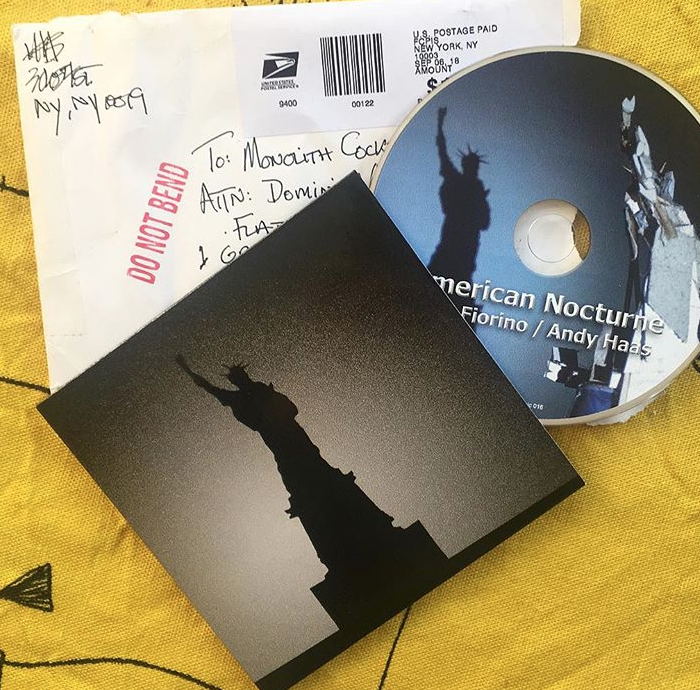
Amorphous unsettling augers and outright nightmares permeate the evocations of the American Nocturne visionaries Don Fiorino and Andy Haas on their latest album together. Alluded, as the title suggests, by the nocturne definition ‘a musical composition inspired by the night’, the darkest hour(s) in this case can’t help but build a plaintive warning about the political divisive administration of Trump’s America: Nicola Plana’s sepia adumbrated depiction of Liberty on the album’s cover pretty much reinforces the grimness and casting shadows of fear.
Musically strung-out, feeding off each other’s worries, protestations and confusion, Fiorino and Haas construct a lamentable cry and tumult of anger from their improvised synthesis of multi-layered abstractions.
Providence wise, Haas, who actually sent me this album after seeing my review of a U.S. Girls gig from earlier in the year (he was kind enough to note my brief mention of his Plastic Ono Band meets exile-in-America period Bowie saxophone playing on the tour; Haas being a member of Meg Remy’s touring band after playing on her recent LP, In A Poem Unlimited), once more stirs up a suitably pining, troubled saxophone led atmosphere; cast somewhere between Jon Hassell and Eno’s Possible Musics traverses, serialism jazz and the avant-garde. The Toronto native, originally during the 70s and early 80s a band member of the successful Canadian New wave export Martha And The Muffins, is an experimental journeyman. Having moved to New York for a period in the mid 80s to collaborate with a string of diverse underground artists (John Zorn, Marc Ribot, Thurston Moore and God Is My Co-Pilot) he’s made excursions back across the border; in recent times joining up with the Toronto supergroup, which features a lion’s share of the city’s most interesting artists and of course much of the backing group that now supports Meg Remy’s U.S. Girls, the Cosmic Range (who’s debut LP New Latitudes made our albums of the year feature in 2016). He’s also been working with that collective’s founder, Matt ‘Doc’ Dunn, on a new duo project named KIM (the fruits of which will be released later this year). But not only a collaborator, Haas has also recorded a stack of albums for the Resonantmusic imprint over the years (15 in total), the first of which, from 2005, included his American Nocturne foil, Fiorino. An artist with a penchant for stringed instruments (guitar, glissenter, lap steel, banjo, lotar, mandolin), Fiorino is equally as experimental; the painter musician imbued by blues, rock, psychedelic, country, jazz, Indian and Middle Eastern music has also played in and with a myriad of suitably eclectic musicians and projects (Radio I Ching, Hanuman Sextet, Adventures In Bluesland and Ronnie Wheeler’s Blues).
Recorded live with no overdubs, the adroit duo is brought together in a union of discordant opprobrious and visceral suffrage. Haas’ signature pained hoots, snozzled snuffles and more suffused saxophone lines drift at their most lamentable and blow hard at their most venerable and despondent over and around the spindly bended, quivery warbled and weird guitar phrases of Fiorino. Setting both esoteric and mysterious atmospheres, Haas is also in charge of the manic, often reversed or inverted, and usually erratic drum machine and bit-crushing warped electronic effects. Any hint of rhythm or a lull in proceedings, and it’s snuffed out by an often primal and distressed breakdown of some kind.
Skulking through some interesting soundscapes and fusions, tracks such as the opening ‘Waning Empire Blues’ conjures up a Southern American States gloom (where the Mason-Dixon line meets the dark ambient interior of New York) via a submerged vision of India. It also sounds, in part, like an imaginary partnership between Hassell and Ry Cooder. ‘Days Of The Jackals’ has a sort of Spanish Texas merges with Byzantium illusion and ‘New Orphans’ transduces the Aphex Twin into a shapeless, spiraling cacophony of pain.
With hints of the industrial, tubular metallic, blues, country, electro and Far East to be found, American Nocturne is essentially a deconstructive jazz album. Further out than most, even for a genre used to such heavy abstract experimentation, this cry from the bleeding heart of Trumpism opposition is as musically traumatic as it is complex and creatively descriptive. Fiorino and Haas envision a harrowing soundtrack fit for the looming miasma of our times.
Papernut Cambridge ‘Mellotron Phase: Volume 2’ (Ravenwood Music/Gare du Nord) 5th October 2018

A one-man cottage industry (a impressively prolific one at that) Ian Button’s Eurostar connection inspired label seems to pop up in every other roundup of mine. The unofficial houseband/supergroup and Button pet project Papernut Cambridge, the ranks of which often swell or contract to accommodate an ever-growing label roster of artists, is once again widening its nostalgic pop and psychedelic tastes.
Following on from Button’s debut leap into halcyon cult and kitsch library music, Mellotron Phase: Volume 1 is another suite of similar soft melodic compositions, built around the hazy and dreamy polyphonic loops of the iconic keyboard: An instrument used to radiant, often woozy, affect on countless psych and progressive records. That first volume was a blissful, float-y visage of quasi-David Axelrod psychedelic litany, pop-sike, quaint 60s romances and a mellotron moods version of Claude Denjean cult lounge Moog covers.
This time around the basis for each instrumental vision is the rhythm accompaniments from Mattel’s disc-based Ontigan home-entertainment instrument. These early examples of instrumental loops and musical breaks were set out across the instrument’s keys so that chord sequences and variations can be used to construct an arrangement. Mellowed and toned-down in comparison to the first volume, though still featuring drum breaks, percussion, bass and on the Bacharach-composes-a-screwball-tribute-to-French-Western-pulp-fiction (Paris, Texas to Paris, France) ‘A Cowboy In Montmartre’, an accordion. If the French Wild West grabs you then there’s plenty of other weird and wonderful mélanges to be found on this whimsically romantic, sometimes comically vaudeville, and often-yearning fondly nostalgic album. The swirling cascade of soft focus tremolo vibrations of the stuttered ‘Cha-Cha-Charlie’ sounds like Blue Gene Tyranny catching a flight on George Harrison’s Magical Mystery Tour. The Sputnik space harp pastiche of ‘Cygnus Probe’ is equally as Gerry Anderson as it is Philippe Guerre, and ‘Boss Club’ reimagines Trojan Records transduced through lounge music. Kooky Bavarian Oompah Bands at an acid-tripping Technicolor circus add to the mirage-like mellotron kaleidoscope on ‘Sergeant Major Mushrooms’, Len Deighton’s quintessentially English clandestine spy everyman, as scored by John Barry, cameos on the clavinet spindly and The Kramford Look-esque ‘Parker’s Last Case’, and Amen Corner wear their soft soul shufflers on the Tamala backbeat ‘Soul Brogues’.
A curious love letter to the forgotten (though a host of champions, from individuals to labels, have revalued and showcased their work) composers and mavericks behind some of the best and most odd library music, Mellotron Phase will in time become a cult album itself. As quirky as it is serenading, alternative recalled obscure soundtracks that vaguely recall Jean-Pierre Decerf, Jimmy Harris, Stereolab, Jean-Claude Vannier and even Roy Budd are given a fond awakening by Button and his dusted-off mellotron muse.
Sad Man ‘ROM-COM’ October 2018
Haphazardly prolific, Andrew Spackman, under his most recent of alter egos, the Sad Man, has released an album/collection of giddy, erratic, in a state of conceptual agitation electronica every few months since the beginning of 2017. Many of which have featured in one form or another in this column.
The latest and possibly most restive of all his (if you can call it that) albums is the spasmodic computer love transmogrification ROM-COM. An almost seamless record, each track bleeding into, or mind melding with the next, the constantly changing if less ennui jumpy compositions are smoother and mindful this time around. This doesn’t mean it’s any less kooky, leaping from one effect to the next, or, suddenly scrabbling off in different directions following various nodes and interplays, leaving the original source and prompts behind. But I detect a more even, and daresay, sophisticated method to the usual skittish hyperactivity.
Showing that penchant for exploration tracks such as the tribal cosmic synwave ‘Play In The Sky’ fluctuate between the Twilight Zone and tetchy, tentacle slithery techno; whilst the shifting bit-crush cybernetic ‘Hat’ sounds like a transplanted to late 80s Detroit Art Of Noise one minute, the next, like a isotope chilled thriller soundtrack. Reverberating piano rays, staggered against abrasive drumbeats await the listener on the sadly melodic ‘King Of ‘. That is until a drilling drum break barrels in and gets jammed, turning the track into a jarring cylindrical headbanger. ‘Coat’ whip-cracks to a primitive homemade drum machine snare as it, lo fi style, dances along to a three-way of Harmonia, The Normal and Populare Mechanik, and the brilliantly entitled ‘Wasp Meat’ places Kraftwerk in Iain Banks Factory.
Almost uniquely in his own little orbit of maverick bastardize electronic experimentation, Spackman, who builds many of his own bizarre contraptions and instruments, strangulates, pushes and deconstructs techno, the Kosmische, Trip-Hop and various other branches of the genre to build back up a conceptually strange and bewildering new sonic shake-up of the electronic music landscape.
Grand Blue Heron ‘Come Again’ (Jezus Factory) October 19th 2018

Grand Blue Heron, or GBH as it were, do some serious grievous harm to the post-punk and alt-rock genres on their latest abrasive heavy-hitter, Come Again. Partial to the Gothic, the Benelux quartet prowl in the miasma; skulking under a repressed gauze and creeping fog of doom as they trudge across a esoteric landscape of STDs, metaphorical crimes of the heart and rejection.
Born out of the embers of the band Hitch, band mates Paul Lamont (who also served time with the experimental Belgium group and Jezus Factory label mates, A Clean Kitchen Is A Happy Kitchen) and Oliver Wyckhuyse formed GBH in 2015 as a vehicle for songs written by Lamont. Straight out of the blocks on their thrashing debut Hatch, they’ve hewn a signature sound that has proven difficult to pin down.
Both boldly loud with smashing drums and gritty distorted guitars, yet melodic and nuanced, they sound like The Black Angels and Bauhaus working over noir rock on the vortex that is ‘Wwyds’, a grunge-y Belgium version of John Lyndon backed by The Pixies on the controlled maelstrom title-track, and Metallica on the country-twanging, pendulous skull-banger ‘Head’. They also sail close to The Killing Joke, Sisters Of Mercy (especially on the decadent wastrel Gothic ‘The Cult’), Archers Of Loaf and, even, The Foo Fighters. They rollick in fits of rage and despondency, beating into shape all these various inspirations, yet they come out on top with their own sound in the end.
Playing live alongside some pretty decent bands of late (White Denim, Elefant, The Cult Of Dom Keller) the GBH continue to grow with confidence; producing a solid heavy rock and punk album that reinforces the justified, low-level as it might be, hype of the Belgium, and by extension, Flanders scene.
Dr. Chan ‘Squier’ (Stolen Body Records) October 12th 2018

Keeping up the petulant garage-punk-skate-slacker discourse of their obstinate debut, the French group with just a little more control and panache once more hang loose and play fast with their spikey influences on the second LP Squier.
Hanging out with a disgruntled shrug in a 1980s visage of L.A. central back lots, skating autumn time drained pools in a nocturnal motel setting, Dr. Chan crow about the transition from adolescence to infantile adulthood. Hardly more than teenagers themselves, the band seem obsessed with their own informative years of slackerdom; despondently ripping into the status of outsiders the lead singer sulkingly declares himself as “Just a young messy loser” on the opening boom bap garage turn space punk spiraling ‘Wicked & Wasted’, and a “Teenage motherfucker” on the funhouse skater-punk meets Thee Headcoats ‘Empty Pockets’.
The pains but also thrills of that time are channeled through a rolling backbeat of Black Lips, Detroit Cobras, Brian Jonestown Massacre, The Hunches, Nirvana and new wave influences. The most surprising being glimmers of The Strokes, albeit a distressed version, on the thrashed but polished, even melodic, ‘Girls!’ And, perhaps one of the album’s best tracks (certainly most tuneful), the bedeviled ride on the 666 Metro line ‘The Sinner’, could be an erratic early Arctic Monkeys missive meets Blink 182 outtake.
The Squier is an unpretentious strop, fueled as much by jacking-up besides over spilling dumpsters, zombified states of emptiness and despair as it is by carefree cathartic releases of bird-finger rebellious fun. Reminiscing for an adolescence that isn’t even theirs, Dr. Chan’s directed noise is every bit informed by the pin-ups of golden era 80s Thrasher magazine as by Nuggets, grunge and Jon Savage’s Black Hole: Californian Punk compilation. The fact they’re not even of the generation X fraternity that lived it, or even from L.A. for that matter, means there is an interesting disconnection that offers a rousing, new energetic take. In short: Ain’t a damn thing changed; the growing pains of teenage angst still firing most of the best and most dynamic shambling music.
Brace! Brace! ‘S/T’ (Howlin Banana) 12th October 2018

Looking for your next favourite French indie-pop group? Well look no further, the colourful Parisian outfit Brace! Brace! are here. Producing gorgeous hues of softened psychedelia, new wave, Britpop and slacker indie rock, this young but sophisticated band effortlessly melt the woozy and dreamy with more punchier dynamic urgency on their brilliant debut album.
Squirreled away in self-imposed seclusion, recording in the Jura Mountains, the isolation and concentration has proved more than fruitful. Offering a Sebastian Teller fronts Simian like twist on a cornucopia of North American and British influences, Brace! Brace! glorious debut features pastel shades of Blur, Gene, Dinosaur Jnr., Siouxsie And The Banshees (check the “I wrecked your childhood” refrain post-punk throb and phaser effect symmetry guitar of ‘Club Dorothée’ for proof) and the C86 generation. More contemporary wafts of Metronomy, Mew, Jacco Gardner, the Unknown Mortal Orchestra and Deerhunter (especially) permeate the band’s hazy filtered melodies and thoughtful prose too.
At the heart of it all lies the subtly crafted melodies and choruses. Never overworked, the lead-up and bridges gently meet their rendezvous with sweet élan and pace. Vocals are shared and range from the lilted to the wistful and more resigned; the themes of chaste and compromised love lushly and wantonly represented.
This is an album of two halves, the first erring towards quirky new wave, shoegaze-y hearty French pop – arguably featuring some of the band’s best melodies -, the second, a more drowsy echo-y affair. Together it makes for a near-perfect debut album, an introduction to one of the most exciting new fuzzy indie-pop bands of the moment.
Junkboy ‘Old Camera, New Film’ – Taken from Fretsore Record’s upcoming Music Minds fundraiser compilation; released on the 12th October 2018

Quiet of late, or so we thought, the unassuming South Coast brothers Hanscomb have been signing love letters, hazy sonnets and languorous troubadour requests from the allegorical driftwood strewn yesteryear for a number of years now. The Brighton & Hove located siblings have garnered a fair amount of favorable press for their beautifully etched Baroque-pastoral idyllic psychedelic folk and delicately softly spoken harmonies.
To celebrate the release of their previous album, Sovereign Sky, the Monolith Cocktail invited the duo to compile a congruous Youtube playlist. Proper Blue Sky Thinking didn’t disappoint; the brothers’ Laurel Canyon, Freshman harmony scions and softened psychedelic inspirations acting like signposts and reference points for their signature nostalgic sound: The Beach Boys, Thorinshield, Mark Eric, The Lettermen, The Left Bank all more an appearance.
A precursor to, we hope, Junkboy’s next highly agreeable melodious LP, Trains, Trees, Topophilia (no release date has been set yet), the tenderly ruminating new instrumental (and a perfect encapsulation of their gauzy feel) ‘Old Camera, New Film’ offers a small preview of what’s to come. It’s also just one of the generous number of tracks donated to the worthy Music Minds (‘supporting healthy minds’) cause by a highly diverse and intergenerational cast of artists. Featuring such luminaries as Tom Robinson, Glen Tilbrook and Graham Goldman across three discs, the Fretsore Records release coincides with World Mental Health Day on the 12th October.
Sitting comfortably on the second disc with (two past Monolith Cocktail recommendations) My Autumn Empire, Field Harmonics and Yellow Six, Junkboy’s mindful delicate swelling strings with a hazy brassy, more harshly twanged guitar leitmotif beachcomber meditations prove a most perfect fit.
Earthling Society ‘MO – The Demon’ (Riot Season) 28th September 2018

Bowing out after fifteen years the Earthling Society’s swansong, MO – The Demon, transduces all the group’s various influences into a madcap Kool-aid bathed imaginary soundtrack. Inspired by the deranged Shaw Brothers film studio’s bad-taste-running-rampart straight-to-video martial arts horror schlock The Boxer’s Omen, the band scores the most appropriate of accompaniments.
The movie’s synopsis (though I’m not sure anyone ever actually wrote this story out; making it up in their head as they went along more likely) involves a revenge plot turn titanic spiritual struggle between the dark arts, as the mobster brother of a Hong Kong kickboxer, paralyzed by a cheating Thai rival, sets out on a path of vengeance only to find himself sidetracked by the enlightened allure of a Buddhist monastery and the quest to save the soul of a deceased monk (who by incarnated fate happens to be our protagonist’s brother from a previous life) killed by black magic. A convoluted plot within a story of vengeance, The Boxer’s Omen is a late night guilty pleasure; mixing as it does, truly terrible special effects with demon-bashing Kung Fu and Kickboxing.
Recorded at Leeds College of Music between November 2017 and February of 2018, MO – The Demon is an esoteric Jodorowsky cosmology of Muay Thai psychedelics, space rock, shoegaze, Krautrock and Far East fantasy. Accenting the mystical and introducing us to the soundtrack’s leitmotif, the opening theme song shimmers and cascades to faint glimmers of Embryo and Gila; and the craning, waning guitar that permeates throughout often resembles Manuel Göttsching later lines for Ash Ra Tempel. By the time we reach the bell-tolled spiritual vortex of the ‘Inauguration Of The Buddha Temple’ we’re in Acid Mothers territory, and the album’s most venerable sky-bound ascendant ‘Spring Snow’ has more than a touch of the Popol Vuh about it: The first section of this two-part vision features Korean vocalist Bomi Seo (courtesy of Tirikiliatops) casting incantation spells over a heavenly ambient paean, as the miasma and ominous haze dissipates to reveal a path to nirvana, before escalating into a laser whizzing Amon Duul II talks to Yogi style jam. The grand finale, ‘Jetavana Grove’, even reimagines George Harrison in a meeting of minds with Spiritualized and the Stone Roses; once more setting out on the Buddhist path of enlightenment.
Sucked into warped battle scenes on the spiritual planes, Hawkwind (circa Warriors On The Edge Of Time) panorama jams and various maelstroms, the Earthling Society capture the hallucinogenic, tripping indulgences of their source material well whilst offering the action and prompts for another set of heavy psych and Krautrock imbued performances. The Boxer’s Omen probably gets a much better soundtrack than it deserves, as the band sign off on a high.
 Monolith Cocktail Blog