THE MONTHLY DIGEST INCLUDES A CLUTCH OF ACCUMULATED NEW MUSIC REVIEWS; THE SOCIAL INTER-GENERATIONAL/ECLECTIC AND ANNIVERSARY ALBUMS CELEBRATING PLAYLIST; AND CHOICE PIECES FROM THE ARCHIVES.

____/THE NEW
Annarella and Django ‘Jouer’
ALBUM (We Are Busy Bodies/Sing A Song Fighter)
Born from the Senegalese imbued and inspired hub built around Sweden’s Wau Wau Collectif, another cross-cultural project that embraces that West African nation’s (and its neighbours) rich musical heritage. Fusing the roots, landscape and themes of Senegal with those of Europe, the partnership of Swedish flutist Annarella and the Malian born ngoni master Django absorbs the very atmosphere of that westernmost African republic, transposing and transforming age old traditions with a hybrid of contemporary musical effects and influences and guest list of diverse musicians and voices.
But before we go any further, delve deeper into this partnership’s debut album, a little background information/ context is needed. A key member of Karl Jonas Winqvist’s Wau Wau Collectif gathering since 2016, making the motivational trip to Senegal that more or less inspired that group’s sound, network of collaborators and friends – a trip that also planted the seed for Winqvist’s Sing A Song Fighter label, a partner in the release of the this album alongside We Are Busy Bodies -, the Örebro born flutist Annarella, believe it or not, trained as a psychologist. Honed on woodwind, but able to play a variety of instruments, Annarella has chosen a more playful approach to her craft: an eclectic one at that.
Annarella’s musical foil, meanwhile, was born in Mali and brought up in the ancient griot tradition of storytelling. The family tree of which is impressive. His cousin was the late and great kora (a 21-string long-necked harp-like instrument crafted out of a gourd, covered in cow skin) virtuoso Toumani Diabaté, who famously partnered with another legend, Ali Farka Touré, for a duo of Grammy Award winning albums. And his uncle was the master balafon (one of Mali and Western Africa’s most recognised sounds, the balafon is a gourd-resonated xylophone) player Kélétigui Diabaté. It’s no surprise then that Django picked up the ngoni, a (normally) animal skinned wrapped canoe-shaped lute instrument synonymous for accompanying the griot storyteller: A tradition that, some say, dates back to the Malian Empire of the 12th century. Django however upped sticks and made the move to Senegal and the capital of Dakar many years ago. It’s a city that is abstractedly threaded into the very fabric of this album: immortalised alongside Annarella’s hometown on the album’s first single and this debut album’s third track.
Whilst on tour together as part of the Wau Wau, they found themselves wiling away the downtime hours by jamming. A spark was ignited. A project formed. But for a time, both musicians had to return to their respective homes, where it seems they set to work on composing and laying down tracks for each other, ideas and prompts to riff on.
The sphere of influence grew further, as both participants in this international peregrination invited in several musicians and artists to carry the music into articulate and more atmospheric new spaces. Joining the duo were of course Winqvist, as co-producer and a member of the filled-out rhythmal section that also includes Lars Fredrik Swahn and Pet Lager, the renowned Swedish folk musician and multiple instrumentalist Ale Möller, who provides not only trumpet but the Jew’s harp, accordion, melodica and the double-reed shawm, and Django’s wife, Marietou Kouyaté, on harmonical vocals.
Altogether, this circle of impressive talent conjures up an atmosphere of the willowy, mystifying, hazy, rhythmically shuttering, dreamy, ached and yearning. Because whilst uniting two cultures together in a most congruous sounding, melodious and beautiful union, there are both musically felt and more obvious appearances of social and economic protestation to be found.
After the fluted leafy pastoral airs and light nimble twine of the intro, the gentle hi-hat claps, Arabian-like shawm, whistles, chuffs and fluty blows of the Francis Bebey motion ‘Aduna Ak Asaman’, and the near Malian Turag camel drive with bird-like woodwind and Chet Baker mirage trumpeted ‘Dakar-Örebro’, there’s a short tunning-like, freely and spiritual jug carrying backed snippet of the American economist Richard David Wolff besmirching the virtues of capitalism on ‘No More’. A noted Marxist economist, part of the Rethinking Marxism movement, Wolff’s words chime with the rampart, unforgiving nature of what I would call a twisted form of capitalism; the ill effects felt no more so than on the scarred, mined lands of Africa and its people. Picking up the ‘Megaphone’, the style is more African with a soft Dirt Music backbeat, the voices more reminiscent of Amadou & Mariam. That vocal partnership can be heard again on the longed and languid sand dune contoured, flighty and reedy trill fluted ‘Sarajalela’.
Django’s home environment and the outlier around it seeps into and materializes like a dreamy haze across all the album’s tracks, as evocations of the classical, of jazz and the blues mixes with the local stew of diverse languages. Tracks like ‘Degrees of Freedom’ are more mystical sounding, near cosmic, as the band saunter like gauze under the moon and across the desert’s sandy tides. There’s the Arabian, the African, the otherworldly and fantastical all rolled into a seamless hover and spindle of enchantment and mystery. ‘Hommage á Dallas Dialy Mory Diabate’ however, is just a pretty, sentimental passage of loving tribute – the tune is very familiar, but I’m kicking myself to place it.
Jouer, which translates from the French into “play”, is just that, a lovely stirring union of the playful that seamlessly entwines the two musician’s respective practices with sympathy, respect and the earthly concerns of our endangered societies and world. Hopefully this collaboration will continue and grow over the years; there’s not been a better one since Catrin Finch teamed up with Seckou Keita.
Peter Evans ‘Extra’
ALBUM (We Jazz) 25th October 2024
A meeting of avant-garde minds to savour, the union of Peter Evans with Koma Saxo and Post Koma instigator and bassist Petter Eldh and New York downtown experimental rock and jazz drummer pioneer Jim Black is every bit as dynamic, explosive, torqued, moody, challenging and exciting as you’d imagine.
Heading this trio and making his debut on Helsinki’s We Jazz label-festival-magazine platform (one of the best contemporary jazz labels in the universe, certainly quality wise and highly prolific with it), the New York-based musician and noted improviser synchronizes and leads a constant movement of breakbeat drums and wood stretched, thumbing and busy bass on his small, higher octave pitched, piccolo trumpet.
A crossroads of separate entangled influences and backgrounds, legacies, with all three practitioners in this Evans-fronted project and their CVs stretching back a few decades, the avant-garde rubs up against the blues, hard bop, atmospheric set scores, hip-hop style breaks, the electronic and classical. By using both the piccolo and flugelhorn on this album, some passages sound like Wynton Marsalis playing over Mozart, or Alison Balsom lending classical airs to an Alfa Mist production.
The classical brass is however adopted and adapted to stir up a wind and tumult of uncertainty as to what’s coming next. For the action, the rhythm and direction is as tightly wound as it is loose and slowed down: the ‘Nova’ passage, this album’s shortest track, seems to lurk in a strange otherworldly atmosphere of mysterious thriller piano prompts and vibrated percussive and cymbal shivered resonance. The following track, ‘Movement 56’, starts off with the brass sounding like it’s being played through a cone, before buzzing and expanding, contouring a cosmic calculus performance of the alien, unsure, spatial and lunar. It finishes with a bended generator motored ripple and signal that wouldn’t sound out of place on a Bernard Szajner record.
Elsewhere the action blows and gallops between moods and intensity. The opening ‘Freaks’ has a busy rhythm section, yet tampered, the nearly skims along (imagine Ben Riley circa ‘The Bridge’, a recognisable sprouting of Art Blakey, and touch of Mingus) that evokes 60s NYC skylines (but no swing) and the downtown happenings of the 80s with something quite bluesy but very of the moment. Meanwhile, Evan’s short and longer cyclonic trumpet breaths recall Ralph Alessi, Tomasz Stańko and Miles Davis. On the staccato fashion prowl of ‘Boom’, it’s Chet sharing room with Kirk Knuffke over a slightly less erratic and menacing Last Exit.
There’s so much to love about Extra. A combo that has worked together before I believe, shows how to find a perfect challenging balance of the dashed, of action and the more tactile and explorative without losing that essential breakbeat and woody stretched body resonating and pulled spring bass rhythm and movement: that movement always being ever forward. Never dwelled on, nor really repeated, this feels like an improvised session without the need for analysis or instruction from its leader Evans. Possibly one of the best jazz albums you’ll hear all year, with a spot saved for the choice albums of the year lists, Extras is a thoroughly inventive and exciting dynamism of contemporary luminaries at the height of their skills and knowledge.
Yaryu ‘For Damage’
ALBUM (Ramble Records – AUS/ Centripetal Force – US/ Cardinal Fuzz – UK)
25th October 2024
Eclectic Japanese collective Yaryu, birthed just a couple of years ago, invite a host of peers and influential teachers from the country’s acid, psych, cosmic and astral scenes to sprinkle some magic on the new album, For Damage.
Led by bulb-note and caressing soulful electric pianist, wafted and concertinaed melodica player, atmospheric stirring autoharpist, synthesist and percussionist Hyzo, the group play host to members of Sundays & Cybele, Dhidalah and the freak out titans of the form, the Acid Mothers Temple. In all, at least seventeen participants, playing everything from the instruments of a conventional band set-up to woodwind, traditional Japanese and brass. Some of which also lend various forms of vocalisation, from the mewling to folky, strange and supernatural.
Fanning out and expanding the range of spiritual and emotional influences, the album starts out with a seamless continuation of elemental waters (trickles, pours, running streams to more settled, light refracting twinkles), the leafy and blossoming, diaphanous and glittery. The gentle opening introduction of ‘Up The Creek’ is a beautiful guide to this magical, enchanted, but simultaneously mystical and mystery balance of tranquilly and the otherworldly; sounding at times like Mythos connecting with Hiroshi Yushimura and Meitei, and existing in the same realms of Kankyō Ongaku, or “environmental music”. ‘Asobe’ (which I think means “not working”, but spelt slightly different, could be a reference to the Shinto priestesses that performed rituals that appeased the souls of the dead during the Heian period) drifts towards dry bone rattled, ceremonial caravan of Alice Coltrane, Bernie Maupin and Pharoah Saunders vibes.
But though keeping in that relatively subtle direction, ‘Nagare’ seems a little jazzier and more soulful as it follows the currents of running water. It features a cornet-like trumpet, some soft whistles, a near wafted Hawaiian guitar – think Makoto Kubota – and hand drums in the mode of Curtis Mayfield as it sets out some idyllic castaway plane. ‘Utena’ floats close to the Far East Family Band, but with a Fleetwood Mac bassline, constant metronome like ticking away and shimmering cymbals. But by the time we reach the atavistic sounding ‘Gandhara’ (the ancient Indo-Aryan civilization centred in what it is today present northwestern Pakistan and northeastern Afghanistan), the mood is far more mystical and shrouded; a Japanese Gothic-psych visitation from the psychogeography of the wailed and ghostly. ‘Sacrifice’ is noirish in comparison but begins with a sort of Cluster-like synth-pop rhythm, before shimmering and soulfully gliding into Greg Foat territory. It evokes sun-lounging attendees at the shrine on one of Japan’s most exotic, paradise island borders.
The album finishes on what in old money vinyl terms would be the whole side of an album, and the near twenty-minute “melody” suite ‘Shirabe’. A wilderness of trees and roots and creaking, croaking bird life is converged with tranquil jazzy evocations, woodpecker knocks, soft and low inviting sax blows and subtle funky guitar. As the peregrination continues, that sax goes into Donny McCaslin mode, and connects to the weird and cosmic.
Another name to add to the rich legacy of cult, psychedelia, folk, esoteric and cult sounds emanating from Japan, Yaryuand their distinguished guests connect with the elements, the spirits and sprites, and the roots of their magical astral plane on several levels to create a both earthly, supernatural and spiritual daydream. Tending the garden whilst offering up mysticism and languid stirrings of the elements.
The Tearless Life ‘Conversations With Angels’
ALBUM (Other Voices Records) 27th October 2024
Both a transference of souls from the now cremated – or laid to rest, depending on your choice of metaphorical ritual death – Vukovar plus a host of orbiting “other voices”, the make-up of The Tearless Life remains relatively, and intentionally, shrouded, obscured.
What we do know is that this new entity is a meeting of minds that have spent the last decade ploughing their own unique vision of hermetic, esoteric alchemy of synth-pop, industrial, post-punk, darkwave and a form of neo-new-romantism influences. And whilst they remained criminally overlooked – sometimes due to their own self-sabotage – they attracted such acolytes and luminaries of the genre as Rose McDowall, Michael Cashmore and the late Simon Morris, all of whom proved worthy foils on various Vukovar-headed collaborative releases.
Taking a while to materialize, The Tearless Life’s debut opus is both the announcement of new age, but also a bridge between this latest incarnation and the former Vukovar invocation – they are in essence, a band that continues to haunt itself. Old bonds remain, sound wise and lyrically, but with a new impetus of murky, vapoured, gossamer, mono and ether effected solace, tragic romanticism, pleaded and afflatus love, spiritual inspired yearning and allegorical hunger.
The void needs to be fed in a Godless world as they say, as addictions, troubled relationships, the longing for a special someone who remains aloof, untouchable and beyond reach, and the metaphysical coalesce with an all-consuming passion.
Talking to angels, conversing with both the seraph and the fallen, the daemons and spirits of the alchemist’s alternative dimensions, the group transduce the writings of that most visionary seer John Dee, the opium eater Thomas De Quincey, William Blake, and the far more obscure Samuel Hubbard Scudder, who’s 19th century, fairy-like, Frail Children of the Air: Excursions Into The World Of Butterflies publication of philosophical essays lends its title to a song of tubular airy manifestations, distortion, wisped spiralling piques and beautified touching emotional anguish.
Atmospheric at every turn, swilling around in the shrouds, a Victorian music box and toll of peeling bells can evoke the creeping, the mysterious and tormented. Psychological trauma, and physical pains roam the wards of a mental hospital; stained-glass rays anoint lovers; death’s touch is never far away; the talking of tongues and language of the shriven invokes fantasies; and the spectre of morose dines on the unfortunates to create an esoteric banquet.
Some of these songs will sound familiar to those missing Vukovar, but The Tearless Life seem to have integrated a duality of harmonies and vocals much better. The music is itself at least attempting to find the light at the end of the tunnel, touching upon snatches, vague influences of Nature And Organisation, Death in June, Jarboe, Brian Reitzell, the Pale Fountains, Scorpion Wind, Les Chasseurs De La Niot, Alan Vega, and on the pump organ-like remembrance of darkened soul mates, ‘The Mistress’, a combination of Purple Rain era Prince and Ultravox!
My only disappointment is in the production, which could be so much more dynamic and clearer, instead of being so murky. I think it loses some of its impact. But this is minor in comparison to the depth, quality and atmospherics of such an ambitious undertaking. For this album transfers poetry, the writings and fiction of the hermetic and the dreamers wonderfully, if plaintively. If the world was indeed not so bereft of celestial beings’ wisdom and advice as it is, it would rightly receive the critical acclaim it deserves. Conversations With Angels is epic; the first step in, what I hope, will be a fruitful conversation to divine enlightenment, curiosity, psychological and philosophical intelligent synth-pop.
i4M2 ‘Shut Up’
ALBUM (Drone Alone Records)
Whilst eliciting feelings of grand, sometimes overbearing, landscapes and a sense of movement from granular gradients, frazzled fissures, currents under the he didnt appellation back in the summer, the shrouded Oxford-based producer, guitarist and musician now ventures out under the new guise of i4M2.
Although similarly charged with electricity, white noise, static and magnetic filings Shut Up is a very different record indeed. Gone are, for the most part, the blocks of drones for a tubular metallic coursing of melodic music, found sounds and field recordings of captured voices from a city environment, and the mysterious near supernatural at times: or perhaps more unknown, hard to figure out, and maybe alien. Whilst recognisable glimpses of overheard and taped conversations, of a company of choral singers, and wobbled broadcasts of a kind suggest humanity, there’s much machine coded, synthesised and cybernetic surface noise and unnerving drama to be found.
Inspired in part by the “…pirate-radio noise the kids play on their mobile phones at the back of the bus in London.” And by the energy of all those “…cool beats and ideas”, this debut album channels those sparks of inspiration into a sophisticated construction of techno, electronica, the metallic, buzzing and fizzled. Beats arrive in the form of the rotor-bladed, the wing flapped, corrosive, spun, padded and sizzled. Together with those passages and undulations of melody and tune, it sounds like a mix of Nik Colk Void, early Tresor, The Pyrolater, Aphex Twin, Carter and Tutti, Oberman Knocks and Boards of Canada.
Both forms of the London scenester dropped in rural Oxford are great, but for me, I think this latest alter ego just about edges it. Seek it out.
Suumhow ‘5ilth’
ALBUM (n5MD)
You could consider the fifth album from the Belgian experimental duo of Suumhow as a sonic companion piece to i4M2’s ‘Shut Up’ (see above); fizzing as it is with electrical charges, frazzles and sculpted, purposed distorted crunches and metal filings, but balanced by a certain sensitivity and pull towards hazy, gauzy light forces. For there is melody, a tune to be found amongst the bristled blizzard effects and slabs of static buzzing, the corrosive and outright “filthy”. That last one being especially prominent in both the language and text used to promote this album, and in the distorted joy of sonic bombardment and bracketed vibrated grimy, glitchy drilling.
5ilth is by nature a counterpoint of distressed post-industrial techno, the leftfield, the pneumatic and ricocheting, which then opens out into calmer, more reflective ambient passages and square waves; sometimes floating or maybe drifting above the clouds, and other times, ascending towards the light. Far from brutal, despite the rasping scrunched beats, and chain clinked synthesized percussion, the mood is mostly mysterious and dreamy, with some parts akin to gliding in the stratosphere – see the obliquely, not giving anything away, entitled ‘F’. Like rips and tears in the fabric, yet somehow harmonically compatible, the duo’s work craftily spins a harsh, ratcheted and crackled abrasion of sounds and effects with ambient stirring evocations of thought, quite wanderings and reflection.
I hate to repeat myself, but as with the last review, I’m hearing Aphex Twin, but this time in the company of Petrolio, Room of Wires, Emptyset and Forest Swords. Which I think is a very inviting proposition.
Rich God ‘Unmade’
ALBUM (Somewherecold Records) 31st October 2024
The third such album of static-charged dissonance and fizzles, sculpted to and rendered to provide the sound, score and expression of the concrete this month, the pairing of Blake Edward Conley, who regular readers will recognise as the droneroom, and Jason T. Lamoreaux, who goes under The Corrupting Sea appellation, will appeal to those who like to read the abstract messages and gauge a sense of place, time and mood from industrial noise and corrosive electricity.
Mainstay and founding artist of the experimental label, Somewherecold Records, Jason teams up with one of his most prolific label singings to sculpt meaning from the frazzled generated noise, crunched barrages of drums and the sifting, fizzled and warped rhythms. Conway’s usual signature of minimal alt-country and drone cowboy electric guitar tracings, brushes, hovered notes and sun-cooked melting vistas is absorbed and sometimes crushed almost by Jason’s industrial effects and mettalic needling.
With nothing to go on, theme wise or explanation wise to the album’s seven titles, it is left to us the listener to make what we will of this union. But my reading is a transmogrified vision of post-industrial rust belt horror and trauma. There’s certainly prompts in the use of samples taken from broadcasts, perhaps the TV – which often sounds like a flickering portal set to the paranormal and Fortean -, with some guy’s diatribe against the banks or stock exchange/Wall Street (“If money is evil, then that building is hell!”) and a radio phone-in exchange about some horrific psychosomatic condition (the words murder scene and suicide both pop up).
In what sounds like a psychogeography of old machinery, the apparatus of production and a troubled society, Unmade whips up a blizzard of crickets on a sweltering day on the road towards a run-down and foreboding field of decay; conjures up the empty silos, rusted conveyer belts of a desolate wrecked farming community; and uses the needle scratches of a polygraph test and the resonance of steel mill saws to channel a recognisable fear.
Whipped and industrialised, yet also showing less harsh and abrasive fragments, pauses in the rippled tears of the bestial, spooky, alien and caustic, Unmade is like a distortion of Bleaeck, Raime, Atsushi Izumi, Cabaret Voltaire and IDM influences. Not the easiest of listens, and certainly challenging, but worth the effort, as two experimental artists combine their signature qualities into a heavy loaded sonic statement for the times we find ourselves in.
Andy Haas ‘For The Time, Being’
ALBUM (Resonantmusic)
Time has never sounded so warped and amorphous, bereft of reference in a space that morphs into serialism, the surreal, the painful, the otherworldly, paranormal, conceptual and indescribable. Yes, once more the experimental saxophonist Andy Haas ventures into sonic territories seldom explored with his latest (I believe either 19th or 20th release for the Resonantmusic label) album of abstract trauma, avant-gardism, playfulness, and physicality. For this album is indeed a physical experience, focussed as it is on the Andy’s unique method of strapping a small tremolo box to his leg so that he can control the depth and the rate of extreme panning whilst playing the sax, and manipulating slowly spun vinyl records.
The discombobulating, shrieking, sonorous diffusions and effects hit hard at times, leaving a real sense that the soundwaves have penetrated the listener’s body and senses: To get the full effect, Andy stresses that For The Time, Being is experienced best on a system with better low end response: laptop speakers just won’t cut it.
Out on the fringes for at least five decades (and counting), with a brief period of commercial success as a founding member of the Canadian new wave band Martha And The Muffins (leaving the group after three albums to pursue more adventurous pathways in the New York underground scene of the early-to-mid 80s) , Andy’s original sparks of inspiration and catalysts for picking up the saxophone (his first instrument being one he rented for $5 a month in the 70s) were jazz avant-garde supremos Anthony Braxton and Evan Parker, who he witnessed playing together in concert at an early age back in the 70s. Both icons of the form permeate much of Andy’s work, including this newest experiment. But you can add a channelling of such diverse company as John Zorn, Marc Ribot, Zeena Parkins, Ikue Mori, Thurston Moore, Keiji Haino and Fred Firth, all artist’s Andy has worked with since the 80s, to that sound palette.
In more recent times, during the late nineties and the noughties, he’s collaborated with stringed-instrumentalist Don Fiorino on three extraordinary albums (American Nocturne, Don’t Have Mercy and Accidentals), toured and recorded with the Plastic Ono Band-esque reinvention of Meg Remy’s U.S. Girls, and been a member of Matt ‘Doc’ Dunn’s The Cosmic Range. Again, feeding into an already expansive field of influences.
But here, in solo mode, the perimeters, experiences are all reset and transmogrified into an intense, frightening and sometimes near cartoonish world of spatial manipulation and hallucination. This is jazz at its furthest boundaries, the avant-gardism of Fluxus, of Monty Young, Alan Sondheim (specifically T’ Other Little Tune LP), Richard Maxfield, David Tudor and Takehisa Kosugi combining with the dry, bristled and trilled raspy reedy blows, plastic tube-like sucks, flapped air and wind, the hinging and the movement of valves and atonal resonance, and the more melodic flutters and mizmar-like drones of Braxton, Parker, Roscoe Mitchell, Ornette Coleman, Marshall Allen and Oliver Lake.
Each track varies between unseen sources of accelerating motors, hovering drones overhead, the disorientating, the wounded, the near sci-fi and triggered, with signals and codes manipulated like slowing and speeding reel-to-reel tapes. Reality is questionable and the sense of time (although there is a parenthesis “nocturne” reference on one track) akin to a fever dream. Andy produces a unique physically effective sound experiment that is impossible to define; his saxophone simultaneously recognisable and yet parping, droning and in a cycle that pushes that instrument towards the tactile and spatial.
___/PLAYLIST: THE MONOLITH COCKTAIL SOCIAL VOLUME 91
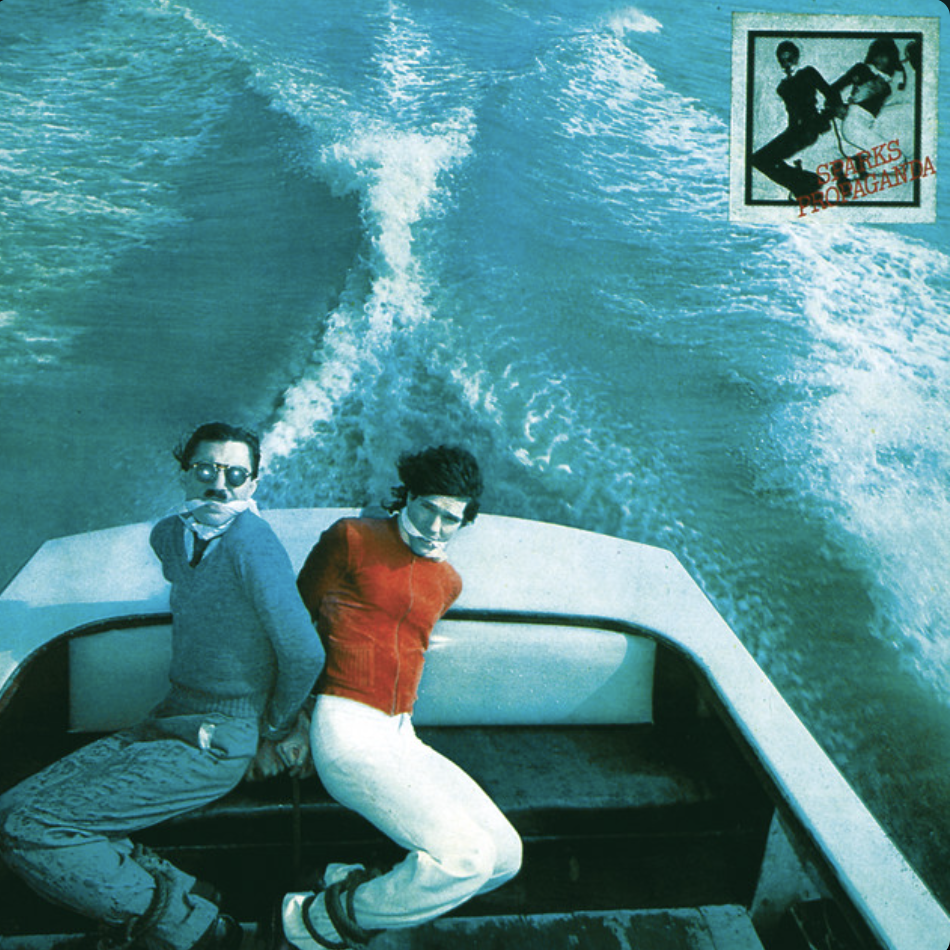
The Social Playlist is an accumulation of music I love and want to share, tracks from my various DJ sets and residencies over the years, and both selected cuts from those artists, luminaries we’ve lost and those albums celebrating anniversaries each month.
Running for over a decade or more, Volume 91 is as eclectic and generational spanning as ever. Look upon it as the perfect radio show, devoid of chatter, interruptions and inane self-promotion.
First up the LP anniversaries, starting with 50th nods to Sparks Propaganda (in my estimates, the double-acts’ best 70s album), Redbone’s Beaded Dreams Through Turquoise Eyes, Yumi Arai’s Misslim, and The Rolling Stones It’s Only Rock ‘n Roll – see below in the archives section for my little summary, if dismissive, piece on the album.
Released this month forty years ago, there’s tracks from The Fall’s The Wonderful And Frightening and Cabaret Voltaire’s Micro-Phonies. Jumping forward another decade, and I’ve also included a track from the Digable Planets’ 94’ released Blowout Comb. Another leap forward and I’ve chosen to also mark the tenth anniversary of Scott Walker’s collaboration with Sunn O))), Soused – you can read my original piece on the album in the archive below; one of my finest hours I reckon.
Whilst the Monolith Cocktail’s Monthly Playlist is all about the newest music, I miss things or just don’t have room to feature everything. And so, the Social offers room to some of those newish, recent releases that missed out. This month there’s choice tracks from Heyme, Waaju and Majid Bekkas, The Bordellos, Reverand Baron and Calvin Love, and Paten Locke.
You’ll also find, from across the decades, borders and genres, a smattering of musical choices from Heltah Skeltah, Lowlife, Samuel Prody, Gilli Smyth, The Sun Also Rises, Michel Magne, Debile Menthol, Lita Bembo, Art Zoyd, Tudor Lodge, Tommy Keene, The Silver Dollar, Vince Martin & Fred Neil, Yoch’ko Seffer, Male and Mahjun.
TrAcKlIsT iN fUlL
Michel Magne ‘Cine qua pop’
Debile Menthol ‘Tante Agathe’
Samuel Prody ‘She’s Mine’
Tudor Lodge ‘The Lady’s Changing Home’
Tommy Keene ‘My Mother Looked Like Marilyn Monroe’
The Rolling Stones ‘Dance Little Sister’
Cabaret Voltaire ‘James Brown’
The Bordellos ‘King Of The Bedroom’
The Fall ‘2 X 4’
Male ‘Bilk 80’
The Jazz June ‘Silver Dollar’
Mahjun ‘L’un dans I’autre’
Art Zoyd ‘Alleluia’
Yochk’o Seffer ‘GONDOLAT’
Waaju and Majid Bekkas ‘Fangara (Live Edit)’
Yumi Arai ‘On the Street of My Home Town’
Lita Bembo ‘Muambe’
Digable Planets Ft. Guru ‘Borough Check’
Paten Locke ‘Widdit’
Heltah Skeltah ‘Clan’s, Posse’s, Crew’s & Clik’s’
Redbone ‘Cookin’ with D’Redbone’
Heyme ‘Downtown Train’
Reverend Baron & Calvin Love ‘Famous Feelin’’
Scott Walker & Sunn O))) ‘Brando’
Lowlife ‘Again And Again’
Citymouth & People’s Palms ‘Singlecycles’
Gilli Smyth ‘Shakti Yoni’
The Sun Also Rises ‘Wizard Shep’
Vince Martin & Fred Neil ‘Morning Dew’
Sparks ‘Bon Voyage’
/ARCHIVES_____
This month, I’m reviving my archived pieces on The Rolling Stones It’s Only Rock ‘n Roll, which is fifty years old this month, and the late Scott Walker’s unholy alliance with Sunn O))), Soused, which reaches its tenth anniversary in October.
Relax, It’s Only Rock ‘n Roll. The Stones ’74 LP is 50 this month. (Appearing originally in my four part potted history of the group).
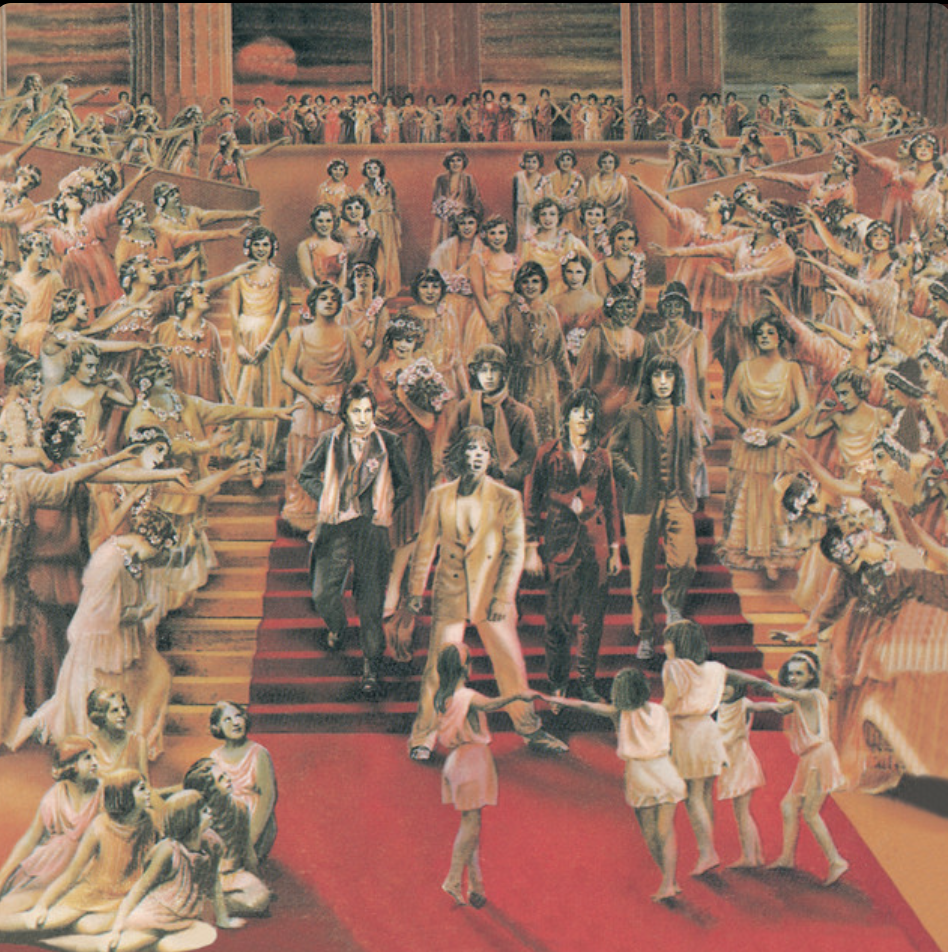
The basic premise of the Stones 12th album was to give their critics, especially the punctilious music writer Lester Bangs, the bird-finger.
Bangs’ condemnation at the paucity and profligate decline of the group was particularly scathing – quite justified in some respects – and only increased with each new release.
Incredulous at the growing derision and, as they viewed it, over-the-top analyses of their music, this album makes no bones about its regression back into the rock ‘n roll womb: albeit a version of that initial scene performed by a languid miscreant bunch of lolloping posers reprising oldies from the blues-R&B-r’n’r cannon.
The self-titled track and single from It’s Only Rock ‘n Roll (And I Like It) was strangely – so it’s claimed by Richards – conceived by a testy Jagger and recorded with his new “soul mate” Bowie as a rough demo. Such was the internal drift between the Stones creative partnership that Jagger often composed and thrashed out ideas away from his Glimmer Twins foil. During this break in communications, Richards was hanging out with The Faces lead guitarist and crow-haired sporting Ronnie Wood at his London studio. Wood had begun recording a solo LP and had asked along both Richards and Mick Taylor to add a touch of sleazy blues. Whilst at one of these relaxed sessions, Jagger dropped in and cut a version with Woods and, Small Faces/Faces drummer, Kenny Jones, but also produced another version with his comrades at a later date (Woods again played on this, contributing the rhythm guitar part on the 12-string). Regardless of who had their paws on it, It’s Only Rock ‘n Roll (And I Like It), is a stereotypical Stones pruning swaggered anthem, one that leans very heavily upon the strutting glam-rock pout of T-Rex.
Geographically separated, and as usual, sabre-rattling with the establishment, the band pushed-on, even though by now Richards’s increasing drug-fuelled skirmishes looked certain to scupper any attempts to successfully record.
To top it all, Taylor’s growing resentment at the lack of credit and acknowledgement for his contributions set the ball in motion for his resignation from the band a year later. Yet despite his disgruntlement, Taylor hung-on in there, playing on a majority of the albums ten-songs but not the title-track single; even though he appears in the video.
Without their due-diligent and overseeing producer, Jimmy Miller, the production fell to the aggrandising pairing of Jagger & Richards. Miller, a stalwart member of their inner circle and sometimes sobering force for good, had finally succumbed to his drug habit (picked-up whilst working with the band) and left, leaving the pair to take control for the first time since Their Satanic Majesties Request. And we all know how that turned out!
Scott Walker + Sunn O))) ‘Soused’ – Harrowed by thy name.

The usual rolled-out cliché of criticism that always greets every Scott Walker release, charts the enigmatic artist’s pop light to experimental morose career arc; from the teen swoon idol heady days of the Walker Brothers, via monastic alienation and Jacques Brel inspired crooner of esoteric idiosyncrasies, to existential avant-garde isolation.
Inhabiting the darkest recesses of humanity and history for at least half of that time, we should be used to this morbid curiosity, worn with earnest pride by Walker, who peers into the abyss on our behalf. Confronting with a meta-textural style the barbarity and failings of humanity for at least thirty odd years then, any developments in the Walker peregrination, shouldn’t really surprise anyone: at least the critic.
In what was met with certain trepidation or surprise by many, his unholy union with the habit adorned disciples of hardcore drone Sunn O))) is actually a very shrewd and congruous partnership; a 50/50 immersive experience, with both parties seemingly egging each other on. Walker for his part lyrically less cryptic, the Sunn chaps pushed to produce one of their most poetic and nuanced beds of sustained drones yet, and on this occasion, even cracking out various wild shortened, punctuating and unyielding riffs – verging on full metal and heavy rock riffage. Letting rip with a resonant field of sustained one-chord statements and caustic stings that bend or longingly fade out into a miasma, trying to find a meaning in these drones is akin to an Auger interpreting symbols and signs from the entrails of a wretched, just slain sacrificial beats. Yet it does work, and the bare minimal, fuzzy and wrenching bed of murmuring, primal guitars perfectly set up the intended atmosphere.
Once again, Daemonic forces have conspired. The result, a five act guttural opus, entitled Soused – in this instance the title is to be taken as a plunging or submersion into liquid or water, rather than a slang for hard liquor intoxication (though if it were, the brew on offer would be hemlock!).
What starts out and continues as a sort of proxy chorus (the nearest you’ll ever get to one on a Walker outing), the introductory crystallised, even dreamy, sense of melodic relief that introduces the album’s first musical tome, ‘Brando’, is soon corrosively despoiled by the menacing first strikes of a signature Sunn O))) chord and bullwhip.
A rather odd theme for Walker to build a threatening tower of misery from, the song alludes to the obligatory sacrificial martyrdom of the title’s Marlon Brando. Whether as self-flagellation, Brando had a penchant for taking on or even bringing (off his own back, so to speak) the act of taking a brutalised beating to his roles: from vigilante beatings in The Wild One to feeling the sharp end of a Elizabeth Taylor horse whipping in Reflections In A Golden Eye. Brando’s fatalistic characters were either the naïve well-intentioned disaffected (Terry Malloy in On The Waterfront) or assassinated disenchanted mavericks (Colonel Kutz in Apocalypse Now). The repeated lashings of a bull whip in this instance, however, refer to his role as the conniving bank robber Rio in the western One Eyed Jacks; one of the movie’s most memorable scenes being when Rio is administered the whipping of his life by a disgruntled and wronged former criminal partner, Dad Longworth (played by Karl Malden), in front of the towns people.
Perhaps this series of observations, first set off by watching One Eyed Jacks, from Walker is over-played, but it is remarkable as you play back through the actor’s movie catalogue and find a connective theme of taking the blows and even death on the chin. Probably reading too much into now and Walker does have a history of wry and acerbic wit, but Brando could be said to be offering his body up to the mortal sins as a punch bag (taking method acting literally) or was just masochistic (Last Tango In Paris M’lud). You decide, it makes for one reason or another a most apocalyptic soundtrack, mixing as it does, doom with Walker’s almost uplifting, visionary vocals to a flaying cycle of whip happy bullies.
Biblical in more ways than one, the standout mega-bestial centrepiece must be the harrowing ‘Herod 2014’; an atavistic disturbing chapter from the Roman occupied Middle East, it alludes to, what many historians say, is a wholly fictional tale of King Herod’s decreed infanticide of his kingdom (allowed by the Roman occupiers to reign over Judea and surrounding areas). Bathed in a sonorous reverberation of fearful discordance and a distressed unworldly cry of danger, this twelve-minute opus is stalked by the harangued forces of malcontent and revved-up torturous drones. The conceptual allusions, which can’t help but echo through time to the present, are far bigger than this baby cull, the region has, after all, always been awash with both the fabled and all too real episodes of death and misery for thousands of years. Yet despite this, the song is itself one of Walker’s best and even most melodically poetic, sitting happily with the material on his last two albums, The Drift and Bish Bosch.
Lyrically traumatic, but almost beautifully hewn from the English language, the opening lines bellow a nuanced scene-setting intellect, more novelistic pyschogeography than song: ‘She’s hidden her babies away. Their soft gummy smiles won’t be gilding the memory.’ In setting up the horrid event and psychological primal emotions that resonate with his audience, Walker goes on to mention two of the most famous painters to depict this crime, Nicolas Poussin and Rubens, who both fashioned their own (setting it in their own time) Massacre of The Innocents.
Herod 2014 straddles the LP like a monolithic titan. A real horror show, both wrenching yet also surprisingly compelling.
You would perhaps be fond of some relief after sitting through all that, but Walker won’t let you off that easily; summing another Sunn 0))) crackled, anvil- beating, industrial chorus of esoteric dread. ‘Bull’ is fraught with tension, languidly striking with stabbing guitars and post-industrial riffs one minute, sinking into the mire of silence and emerging like a troubled crooner monk the next. Heavy and brooding with mechanical timepieces, crowing shadows and subterranean spirits moving amongst the low buzzing presence of a pant-messing sustained drone, the Bull is unsettling to say the least, like a game of tag in the Labyrinth of the Minotaur. And the song with the longest outré of all; Walker finishing off his cryptic lines halfway through, leaving the last four minutes to his comrades to play out.
‘Fetish’ as it may already suggest is a sadomasochistic affair. A soundtrack set to some cannibalistic or serial killer shocker, where the action is carried out entirely on a Mona Hatoum barbed wire bed in a meatpacking factory. Thrashing around and violently piqued by a harassed beak like attack, the backing is a maelstrom of dentist drills, panting shakers and eerie hanging silence, until it breaks out with the album’s first drum break and rhythmic holy chorus. Throughout, Walker swoons in resignation, dropping lines like, “acne on a leaper”, and “glim away little brute”, in a disjointed narrated sombre tone that gets more dangerous as the song churns to its climax. A ritualistic metaphor, the song’s central tool of terror, the blade or scalpel, is held as an abstract reference point to gleam some meaning, whether it pertains to the cosmetic, life-threatening surgery, torture, the sexual or even tattooing, Walker and Sunn O))) build a nuanced layer upon layer of industrial buzzing queasiness to a trope.
Be under no illusion with the finale to this Dante inferno, the ‘Lullaby’ tones on offer here in no way promise a good night’s sleep. This is after all Walker’s crooned eulogy to assisted lullaby suicide, and the sound of death’s hallucinatory vibrations, gradually taking hold.
Interpreting the song in her own enigmatic way, Ute Lemper bravely grappled with the song for her 1999 album, Punishing Kiss, but Walker now takes back what he at first giveth, converting it into an even gloomier anthem with his monastic brethren.
You can almost hear the percussive ticking of a Newton’s cradle: the mortal clock running out as the drugs take effect; comfort is not an option. The whole thing sounds like a seething hotbed of psychological thrillers and horror, played out remorsefully until the final bleep of the life support signals the end. Walker never nails home his own social or political solutions, and so this, very much a topic debated in recent years and ongoing, is more a diorama set piece, which neither condones nor condemns assisted suicide.
Disturbing throughout, this unnerving suite is obviously not to be recommended to those already on the knife-edge or for those who stay clear of the news or anything that may remind them of human suffrage. You also need stamina and plenty of nerve to sit through this uncomfortable 49-minutes of music at its most challenging. Not so much hostile as shredded by a repeating rotor blade cutting action that piques and prods, even the quietest passages are threatened by an unseen presence of danger. Hell knows (literally) how this album would go down live, the option tentatively hanging in the air, depending on its reception; a possibility that could see the maverick auteur and theatrical seven-day avant-gardist performing for one of the first times in eons.
Both parties in this experiment prove their mettle, reinforcing their reputations but producing an album that is not only accessible to the devotees and followers but also those who’ve previously skirted around taking a walk through the catacombs of the bleakest recesses of a conflicted mind.
The Perusal #57: Hannah Mohan, Black Diamond, Society Of The Silver Cross, Passepartout Duo & Inoyama Land…
July 3, 2024
A WORLD OF SONIC/MUSICAL DISCOVERIES REVIEWED BY DOMINIC VALVONA
(Unless stated otherwise, all releases are available now)

Photo credit: George Rae Teensma
Hannah Mohan ‘Time Is A Walnut’
(Egghunt Records) 12th July 2024
Geographically settling long enough to pen this solo songbook offering, but anything but settled emotionally, the former And The Kids vocalist-songwriter Hannah Mohan attempts to process the break-up of all break-ups.
After leaving home at the age of sixteen, restless and curious, Mohan spent her formative years on the road, crisscrossing North America, busking and honing a creative craft. On returning home, after five years of travel and travail, Mohan formed And The Kids with a school friend. After a trio of albums between 2014 and 2019, and with the global pandemic’s nefarious effects on the music industry and wellbeing, the band unfortunately came to an end. Throw in the heartache, the confusing cross-signals of a fateful relationship, and you’ve suddenly accumulated a whole sorry mess of emotional pain and a lot of questions that need addressing or analyses.
Luckily Mohan is a highly talented musician and songwriter, able to turn sorrow and reflection into gold. For Time Is A Walnut is a rich album full of familiarity and yet melodically and lyrically idiosyncratic, shaped as it is to Mohan’s particular cadence, timbre and way-with-words.
Less moping and more a full gamut of hurt, weariness, despondency, incriminations and plaint, Mohan travels full circle on her break-up journey: from shock to vented indignation, from losing one self in the moment to escaping from reality. All the feelings of resentment, the pulling apart of a fragile soul, and decoupling sound surprisingly melodious and disarmingly anthemic throughout: even during the bitterest exchanges and grievances.
Hand-in-hand with producer and musician Alex Toth (of Rubblebucket and Tōth fame), working away with little sleep in Mohan’s basement, the resulting thematic songbook is filled with great alt-pop songs; some with a country lent, others suddenly mystified and misty with an air of atmospheric Celtic vibes, or, channeling 80s new wave German synth music – Toth, I assume, almost in DAF mode on the darker-lit, hurting ‘Peace Be The Day’.
Almost breezy in parts, there’s tunes galore as Mohan evokes the Cowboy Junkies, Angel Olsen, Tanya Donelly, Madder Rose, Sophie Janna (especially on the vapour-piped Ireland illusion ‘Runaway’) and Feist. But you can also throw in a touch of dry-ice 80s synth-pop and a touch of Bacharach on the whistle-y saddened beauty that is ‘Upside Down’.
In sympathy and often softly lifting, there’s a fair use of trumpet on the album. Less jazzy – although saying that, there’s vague suggestions of Chet Baker – and more Southern, nee Mexican serenade and atmosphere, that instrument’s suffused and occasional enervated brassy blazes is a perfect fit with Mohan’s candid, sanguine delivery.
A congruous choice of guest, working in a similar mode, songwriter-musician Lady Lamb features on the 60s troubadour echoed, vibrato-trilled sing-a-long anthem ‘Hell’. The details and the unforeseen circumstances, the ‘messy eroticism’ and loss, disconnection from someone else’s life are all lay bare in a melodious beauty.
Hannah Mohan rides the roller coaster of a drawn-out break-up with quirkiness and vulnerability, turning tortuous heartache into one of the best and most rewarding songbooks of the year. Mohan may have let her soul sing out, as she comes to accept an emotional turbulent period of stresses and anxieties and pain. But whether she’s finally pulled through the other side or not is up to you the listener.
Black Diamond ‘Furniture Of The Mind Rearranging’
(We Jazz)
Transported back in time, and then propelled forward into the now via Chicago’s musical legacy, its rich heritage of innovators and scope in the world of jazz, Artie Black and Hunter Diamond’s dual saxophone and woodwind focused vehicle can trace a line from the Windy City’s smokestack bluesy outlines of the 50s through the icons Sun Ra, Roscoe Mitchell, Eddie Johnson, Lester Bowie, Art Ensemble Of Chicago, Anthony Braxton and the hothouse of undeniable influence and talent, the Association For The Advancement Of Creative Musicians.
Across an ambitious double-album spread of both quartet and duo mode formations, those Black Diamonds don’t so much shine as smolder and fizzle to a smoky and simmering resonance and metropolis backdrop encroached by wild jungles and fertile growth.
The majority of this moiety evolution is handed over to the quartet ensemble, with Artie and Hunter joined by the softened taut but flexing and always on the move double-bassist Matt Ulery and the constant cymbal splashing and rolling, fills and tight woody rattling drum breaking drummer Neil Hemphill. That set both swells and finds pause to a certain lowness and more weighted pull of the freeform and melodic, the rhythmic.
Saxophones sound willowy as they either entwine, take turns on the climb, exhale drawn-out mizzles or drizzles; all the while the action recalls every formative era from the 1920s onwards, from the blues to the African, the spiritual, bop and the serenaded. All those cats mentioned in the opening paragraph pop up alongside the Pharoah, Ornette, Evan Parker (I’m thinking of the woodwind elements, which both Hunter and Artie switch between throughout), Mingus and on the opener, ‘Carrying The Stick’, Lalo Schfrin of all people.
From concrete to near pastoral dustings, a menagerie of bird-like brass and woodwind sings and stretches, often letting the steam out of those valves with a bristle and rasp. The drum and bass combo keep it all moving forward, developing, with Ulery’s slackened bass even opening a couple of tracks.
In a more stripped-down and even more experimental mode, Side D (in old money vinyl terms) of the album is given over to the duo format of sax and woodwind.
Leaning towards Braxton, John Zorn and Andy Haas in near-non-musical freedom of expression, they probe new, amorphous spaces without clear signage or reference to environments or moods. The saxophone often sounds reedier, more rasping, and is enveloped with the very sound of its brassy metallic resonance and surface makeup. Every exhaled breath is used to conjure up the mysterious, the onset of some unease, but also a pauses for certain moments of reflection.
Perhaps a mizmar played at dusk, an ominous peace or a meditative haze, these experiments, forms of tonal, timberical evocation are difficult to describe or catalogue. Only that they fit in with the freedoms, the expressions and language of the Chicago school of freeform inventiveness and exploration, deconstruction of an instrument.
Black Diamond run with the ‘stick’ or baton passed on by the Chicago hothouse of jazz notables and luminaries, proving themselves to be a quality, dynamic act ready to push forward. Rearranging the cerebral and musicality furniture as never sounded both so classy and explorative.
Damian Dalla Torre ‘I Can Feel My Dreams’
(Squama Recordings) 12th July 2024
Subtle in approach and process, the cross-fertilization of South American and European cultures, prompts and environments on Damian Dalla Torre’s second album, I Can Feel My Dreams, is a tangible synthesis of abstract feels, moods and an exchange of musical ideas.
Nodes, points in a larger dream-realism canvas reference the Leipzig-based multi-instrumentalist, composer and producer’s footprints across both continents.
Sparked by a residency to teach, write and practice his craft in the Chilean capital of Santiago, Torre absorbed all that city and its surroundings had to offer: the vistas, colours and art. With a certain amorphous guaze that magical landscape of rainforest canopy enveloped menageries, flowing waters, Andean fluted heights and valleys, and exotic lushness is merged effortlessly with complimentary vocal harmonies and assonant arias, dewy and caressed extended dainty picked harp, quivers of guitar, trembles of piano and spells of electronica. The realms of jazz, sparse techno, ambience, voice experiment, nature, futurism, sound art and the new age seamlessly yield and relent.
The haul of notable guests invited to play on the album is staggering, and in no way distracts from the main leitmotifs and direction of drifted, wispy travel. Instead, each guest enhances with a certain gracefulness and calm each musical expedition and piece of mood music. Unsurprisingly given Leipzig’s musical history and legacy (home to an enviable catalogue of classical music giants over the centuries; perhaps one of the biggest most impressive concentrations in that genre’s history of iconic composers and musicians), but also its more modern burgeoning jazz and electronic music scenes, there is a host of musicians and artists from or based in the German city taking part on the album; cue the blossoming ‘genre traversal’ Jan Soutschek, ensemble singer and soprano soloist Viola Blanche, guitarist and composer Bertram Burkert and jazz improviser, pianist and composer Jonas Timm. Add to that the Austrian-Ethiopian harpist Miriam Adefris, the Danish composer and arranger Christian Balvig, pianist Felix Römer and the range and influences probe even further and deeper. Altogether, from the replenishing waters of renewal to the generator and manipulated electronics of modernity, all these contributions prove beneficially harmonious and complete.
This is a biomorphic world in which echoes of Eno, Alice Coltrane, Talk Talk, Oh No Noh, and Lara Alarcon all coalesce and dream. The architect, Torre, manages to keep everything constantly green and lush; showcasing a flair for pulling together a myriad of sources to create something almost familiar by new.
Society Of The Silver Cross ‘Festival Of Invocations’
(8668 Records)
Stepping from the shadows after abstaining from the material world for the last five years, the matrimonial partnership of Joe Reinke and Karyn Gold-Reinke return with a second rebirth, regeneration of Indian, Byzantium, Egyptian and Gothic imbued pathos and bathos.
Harnessing the themes of fate, the eventual and unavoidable specter of death and its harbingers, its demons, and even its angels, the Seattle couple walks the path of hermetic cults, atavistic Indian spiritualism and magik to induce cosmic awakenings and transformations. With all of mortality’s connotations and meanings, death is also seen as a renewable force on this couple’s second album under the occultist Society Of The Silver Cross heading.
But there’s no escaping the atmospheric dread and the curiosity of deathly rituals invoked by the Indian-style drones, harmonium-pumped sustains and concertinaed bellows – part ‘Venus In Furs’ Velvets, part Alan Edgar Poe shipwreck hauntology shanty, and part courtly mysticism. And yet Karyn’s siren-esque duets with boa Joe can lift towards the light at times, escaping the Fortean broadcasting waves, the splashed crashed tumultuous sea-like cymbals and gongs, Book of the Dead mantras and distressed Andy Haas-like geese pecked sax (if it is indeed even a saxophone) hauntings.
But for a majority of the time the couple’s counterbalancing act of apparitional, bewitching and more baritone, from the bowels of the deep and human soul, vocals muster spiritualist visitations, a theatre of sorrow, past incarnations and an unbreakable multi-levelled circle of added magic both heavy and foreboding.
I was picking up spells of Death In June, Nick Cave’s duet with Kyle, Mick Harvey’s time with P.J. and Amanda Acevedo, Backworld, David Lynch, Dead Can Dance, Current 93 and Angels of Light. The folksy Gothic-art-music-shanty-motioned ‘When You Know’ (with my imagination) sees Serge Gainsbourg laying flowers on Jim Morrison’s alter in the Cimeti ére du Père-Lachaise. The mystical finale, ‘Rajasthan’, not only features those synonymous Indian tones but also has an air of the Spanish-Baroque guitar and a touch of The Limiñanas about it. Shrouded in rousing tribal dramatics and ether visions, the couple’s lasting nod to the land in which they spent much time absorbing the cultural-musical spiritualist vibes before making their debut singles and album (Verse 1), is steeped in the mists of time; invoking India’s largest state before eventual unification, and its history of early Vedic and Indus civilizations. “Rajasthan” is a portmanteau of words, but can be translated as the “Land of the kings”; its courtly, royal verbose and stately reputation echoes as the final word on this album of rebirth and the coming to terms with death. Making true on their previous chapter, Joe and Karyn once more follow the call of the silver cross-societal allure. Atmospheres, processions and possession that are more than just songs, you don’t so much liberally catch, or, casually listen to each propound and chant-like forewarning as enter a fully constructed world of elementals and alchemist mystique. These are drones, dirges and more opened-up astral projections that will stay with you days after first hearing them. A Festival Of Invocations is a chthonian play of supernatural, spiritualist and funeral parlor riches; a successful follow-up after a five year hiatus.
Droneroom ‘As Long As The Sun’
(Somewherecold Records) 19th July 2024
Amorphous Western sun-cooked melting mirage panoramas are stoked and drawn from the Droneroom’s long form guitar peregrinations. The sixth (I believe) alt-country drone-cowboy album from Blake Edward Conley’s singular experiment for the Somewherecold label, As Long As The Sun is a filmic soundtrack-like conjuncture of Paris, Texas, Blood Meridian and a myriad of supernatural and alien visions of the ‘big country’.
The Western sounds of the twang, rattle and bends is unmistakable, and the sounds we’ve taken for granted, like the freight train convey that hurtles down the tracks and with it’s velocity and size shakes the passing dinging and ringing rail barrier junction, but Conley’s familiar markers, references make them near hallucinogenic under the sun’s powerful debilitating rays. I can imagine Ry Coder fronting Ash Ra Tempel, or early Popol Vuh relocated to the arid planes of outlier Texas, or a mule-riding Don Quixote tilting at the shadows of cacti.
A contemplation of all life’s spiritual quandaries and fate no less, all elicited from the magnified and amplified reverberations, quivers, strokes, gestures, brushes and more driven rhythmic passages of the guitar. Fuzzed-up with flange and sustain, these descriptive lines, resonated waves and vibrations are like drawn-out echoes of Michael Rother, Gunn-Truscinski, Jason Pierce (in his Spaceman 3 days) and Yonatan Gat. On the searing, razored and heated coil moody ‘Last Train To Soda Spring’ (the small Idaho city which gets its name from the 100s of carbonated water springs that dot the landscape) there’s a build-up of layering and rhythms that breaches the hazy space rock barriers – Hawkwind crosses fully into Motorhead. Whilst the shamanic marooned, railroad vision, ‘East Facing Window’ has a kind of krautrock generator field around it that hums and pulsates, invoking both alien and paranormal activity – I’m thinking a little of Roedelius’s experimentation on Sky Records.
As Long As The Sun beats down upon Conley’s cowboy hatted noodle, its gravitas, life force and heat inspiring serious abstract empirical vistas, atmospheres and the soundtrack to a movie yet to be made.
Luke Elliott ‘Every Somewhere’
(AKP Recordings) 12th July 2024
Composing a more inclusive biosphere and exchange of cultures, influences and sounds, the Amsterdam-based, Leeds born, sound artist Luke Elliott transforms his source material of field recordings (from what could be acts of making in a workshop to tramples through the undergrowth of Moat Farm in Somerset and the windy tubular sea organ of Zadar in Croatia) into a fully working lunar off-world vision.
A new world no less, Every Somewhere’s vague, recognizable, or by happenstance, playful tastes of gamelan and Southeast Asia, early analogue modulations and patterns, tape music experiments and sonic land art (that already mentioned Zadar organ, which was built as a large scale land art instrument to bring some sort of random melodious colour to the Dalmatian coastal town’s monotonous concrete wall scape, rebuilt with haste after the devastations of WWII) are sampled then re-sampled, fed through effects and an apparatus to build a more sympathetic, attentive environment.
At least influenced in part by a fascination with Alfred W. Crosby’s ‘Colombian Exchange’ theory, as outlined in his 1972 propound book, which gave a now fashionable name to the legacy of colonialism and the destructive and loaded exchanges between the Western hemisphere and the then ‘New World’, Elliott’s imaginative world is more nurtured towards a beneficial exchange of cultures.
In a liminal zone between the earthly, otherworldly, near cosmic, dreamy and liquid, the kinetic, algorithmic, arpeggiator and magnetic atoms and transparent notes bobble and squiggle about over atmospheric ambience and to the rounded rhythms of paddled tubular obscured instruments. And then, once the guitar is introduced to tracks like the glassy delicate ‘Objects Of Virtue’, the mood changes towards a bluesy post-rock vibe.
Magical escapes, stargazing from the observatory, solar winds, near operatic cloudscaping and various gleams, glints and globules recall Goo Ages’s Open Zone album, Tomat, Raymond Scott, Edgar Froese and Zemertz.
Elliott’s debut for the astute AKP Recordings label maps tactile environments both intriguing and melodically mindful. It paves the way for new visions of a more equal future.
Passepartout Duo & Inoyama Land ‘Radio Yugawara’
(Tonal Union) 26th July 2024
The freely geographical traversing Passepartout Duo find congruous partners with collaborative foils Inoyama Land – those fine purveyors of Japanese Kankyō Ongaku, or environmental ambient new age music – on their latest balance of the tactile, organic and synthesized.
A free association of cultures and musical processes, despite laying down loose perimeters, the Italian/US duo of Nicoletta Favari and Christopher Salvito combine explorative forces with the Japanese musical partnership of Yasushi Yamashita and Makoto Inoue for a remarkable interaction with their surroundings, a mix of children’s instruments and percussive and wind apparatus.
Favari and Salvito have already appeared on the Monolith Cocktail, with reviews of both the Chinese art platform-backed Vis-à-Vis and Daylighting albums. Those experiments in the timbrical, rhythmic and melodic, imbued by the Meili Mountains, Lijiang and fabled imaging’s of Shangri-La, were created during and in-between the restrictions of the Covid pandemic. A year before news broke of that global crisis the duo travelled to Japan. Connecting with the Inoyama Band, a duo that had transformed the abstract feelings, magnetism, sublime transcendence and peace of the landscape since the 1980s, they were invited in to their host’s shared space sanctum – an auditorium inside Inoue’s family-run kindergarten in Yugawasa that doubles-up on Sundays as a studio.
Set out on tables for all participants, a myriad of playful and more studied instruments and a set of “game rules”. The quartet could only use the mix of electronic and acoustic instruments separately or altogether for ‘revolving duets’, with each taking turns to play through a cycle of ‘four duos’. But then ‘anything’ was permitted in that session, which lasted three hours. In this complete state, that long improvisation and set of prompts has been distilled into eleven more digestible parts. Within the sonic, contextual and languid peaceable realms of the Kankyō Ongaku genre and greater scope of Japanese acoustic-electronic music, there’s an air of Satoshi Ashikawa, Yasuaki Shimizu, Yoshio Ojima and Tomo-Nakaguchi about this album. You could add hints of Slow Attack Ensemble, Eno, the Hidden Notes label and Bagaski to a subtle layering environment that takes in all points of the compass, with chimed bulb-like notes and the ringing, searing and chimed bamboo music of Java, Tibet, Vietnam and the dreamy.
The recognizable sound of soft-mallet patterned and paddled glockenspiel and xylophone merge fluidly with hand bells, higher-pitch whistled recorders, concertinaed wafted melodica and harmonicas, and racks of wind chimes. Whilst atmospheric elements and the use of electronic devices create mysterious vapours, oscillated wisps, knocked rhythms and floppy disc sampled voices.
Gazing at diaphanous beamed and lit cloud formations from a comfortable snug in the landscape, or, submerged below Mexican waters inhabited by the strange aquatic Axolotl salamander, each part of this performance is somehow similar and yet variably different. Between the illusionary, dreamy, sonorous, see-through and swimmingly, two sets of adroit partnerships create organic meta and a sublime near-nothingness of slow musical peacefulness and environmental absorbed transience.
Myles Cochran ‘You Are Here’
(9Ball Records) 26th July 2024
Unhurried and once more placable, the all-round embracing American composer, songwriter, multi-instrumentalist and producer Myles Cochran follows up his 2021 debut album (Unsung) with another carefully spun canvas of subtle emotive pulls, TV and filmic-like soundtrack scores, ruminations and mirages.
Traversing an amorphous palette of Americana, the blues, classical, folk, experimental, Baroque and traditional, Cochran integrates his Kentucky roots with spells in New York City and the UK (where he’s lived for some time) whilst letting his unprompted imagination travel to more exotic climes and cerebral dreamscapes.
Although an adroit player of many instruments, Cochran’s work is mostly led, directed, informed and suffused by both the acoustic and electric guitar. Understated but keen and expressive, his choice of guitar is once again left to stir up visions of a celluloid panoramic and more mystifying melting Western America, the Appalachians, Ozarks and home. Only this time around he’s also invited in the accomplished cellist Michelle Packman and bassist Reggie Jones to add a transported subtle semblance of chamber music, period drama and jazz. Jones, playing a stand-up (or upright) bass throughout, emphasizes rhythm, a pace and sense of travel – especially so on the shaky rhythmic travelogue ‘Making Something Out Of Nothing’, which, by its title, indicates a conjuring of a composition, performance out of just playing or fiddling around, but evokes (for me) the imagined title sequences of some wintery Northern American drama, out on the road with the harsh, snowy landscape passing by the window of our protagonist’s truck. Meanwhile, the following countrified-meets-the-pastoral-and-renaissance crafted ‘Signs And Symbols’ has an air of Fran & Flora about it with the sounds of a breathy and fiddle-like cello.
Widening the vistas, the quiet inner battles of turmoil and conflict, sympathetic bowing and pining cello enhances the mood and subtle expressions of Cochran’s compositional style, which both ebbs and flows between the echoes of Chuck Johnson, Ry Cooder, Bill Frisell, John Fahey, Martin Renbourn and Jeff Bird.
There’s a pick up in the pace with dusty brushed drums, but for the most part it’s a quivery horizon gaze of sophisticated slow to mid-tempo observations and introspection. None more so then on the mature vocalized jazzy-bluesy and dusty ‘The Deepest Sea’, which sounds like Hugo Race or Chris Eckman in questioning Leonard Cohen mode backed by Chris Rea.
A culmination of travels, thoughts, hopes and fears, You Are Here further expands Cochran’s musicianship and influence. Those Americana roots are being pushed further into new pastures, helped by his cellist and bassist foils and freshly attuned ear. Eroded, waned, giving and dreamily melting in the heat, his guitar parts overlap and transmute into piano, strings and the ambient. Each track is like a short score, the qualities of which offer sensibilities and a way of following or telling a story, a moment in time or scene. In all: a very sensitive work of maturity and unrushed reflection.
___/+ THESE RECOMMENDATIONS IN BRIEF
Any regular readers will know that I pride myself in writing more in depth purview-style reviews with a wider context. This means I naturally take more time and effort. Unfortunately this also means that I can only ever scratch the surface of the 4000+ releases both the blog and I get sent each month. As a compromise of sorts, I’ve chosen to now include a really briefly written roundup of releases, all of which really do deserve far more space and context. But these are recommendations, a little extra to check out of you are in the mood or inclined to discover more.
Pocket Dimension ‘S-T’
(Cruel Nature Records)
Exploratory voyages into the kosmische and sci-fi, straight from the illustrated pages of Stewart Cowley’s Spacecraft 2000 – 2100 AD, the Lanarkshire-based artist Charlie Butler doesn’t so much launch as fire the languid thrusters into the mesmerizing, enticing and dream like voids of a soundtracked cosmos. On many levels, through four continuous stages, the drifted and wonder of space is balanced with fizzled raspy electronica and eventual IDM, siren wailing bends, shoots, and a rotating centrifugal force that seems to envelope the whole trip in both mystery and the presence of unknown forces hovering in the galactic ether.
Various ‘TRÁNSITOS SÓNICOS – Música electrónica y para cinta de compositores peruanos (1964-1984)’ (Buh Records)
Filling in the blanks in the story of South America’s experimental and avant-garde scenes, Buh Records throws the spotlight on Peru and a host of experimental boffins working to cross indigenous sounds with the new and yet to be discovered.
Off-world, futuristic, UFOs, tape manipulation, the shrills of something magnetic, steely industrial tools, reel to reel melting, mind bending and rattling old atavistic bones, assonant female voices, and shamen augers, this compilation includes examples from the likes of Arturo Ruiz del Pozo, Luis David Aguilar, and Corina Bartra; a wealth of cult composers struggling to explore new sonic boundaries in a country devoid of the apparatus, foresight and laboratory conditions. And so most of the atmospheric – sometimes heading towards chilling alien – and transmogrified Peruvian environmental peregrinations were recorded in private studios. The story and scope needs way more room than this piffy, glib little piece. Suffice to say, I highly recommend it.
Rehman Memmedli ‘Azerbaijan Guitara Vol. 2’
(Bongo Joe)
The history and travails of the fecund oil rich country of Azerbaijan are atavistic. This is a nation that has striven to gain independence from a string of empires: both Tsarist and Soviet Russia, Iran, Albania, and much further back, the great Mongol Khan Timur. Desired not only for its abundance in fossil fuels but for its geographical corridor to its fellow Transcaucasia neighbours of Georgia and Armenia in the west, to the south, Iran, in the north, Russia, and to the west, the vast inland lake, the Caspian Sea. And although at various times at war with its direct neighbour Armenia (recent flare ups have led to a startup in violence, and accusations of ethnic removal), the country’s close proximity to a mix of cross-cultural and geographical influences has led to an absorption of all kinds of musical styles.
Bongo Joe‘s second volume of ‘guitara’ music showcases is fronted by another Azerbaijan legend, Rehman Memmedli (the first volume was handed over to the equally iconic Rüstəm Quliyev), who first learnt the accordion and harmonica before picking up a relative’s guitar – but also the region’s synonymous traditional tar instrument too (an ornate curvy looking waisted long-necked lute). Suitably eclectic in styles, from belly dancing Turkey and Arabia to shimmy Bessarabia and local wedding music, Memmedli scores and scorches up and down the fretboard at speed. Spindling, bending, skirting and wobbling, and even sounding at times like an erratic stylophone, vistas and ruminating sonnets are conjured up from a nibble-fingered maverick: Persia, the Caucasus, and beyond are summoned forth from electrified scuzz and fuzz and drama.
Cumsleg Borenail ‘Fragile And Adaptive’
Video – Taken from the new album Time Is A pˈætɚn Of Shifting d͡ʒiˈɑːmətɹiz
Proving incredibly impossible to pin down, whilst impossible to fully keep a track of, such is the prolific output, the artist formerly known as Cumsleg Borenail has released a host of albums, EPs over just the last few months alone.
The latest, and discombobulating entitled, Time Is A pˈætɚn Of Shifting d͡ʒiˈɑːmətɹiz,will officially go live a week or so after this column. As a teaser, Borenail has fucked around with AI to produce this strange, biomorphic, tumorous metamorphous of metallic clay dancers, bound together in some super fucked up hallucinatory creepy body assimilation style video. I will admit that I fucking hate AI – ‘artificially inflated’ as someone has already quipped – so it is lost on me – for those who want the tech, ‘all models’ were ‘created in blender, then whapped into ADOBE to AI generate backgrounds and randomly alter model edges.’ But musically we are talking about whippy body music that channels Detroit mechanic funk techno and the sound of grooving over broken glass. Derrick May, Suburban Knight, Ron Trent in the mechanics of the surreal and industrial. As artificial as it all is, there’s a certain soul in this machine. I look forward to hearing the rest of the album later in the month.
Neon Kittens ‘In The Year Of The Dragon (You Were A Snake)’
(Metal Postcard Records)
System of downer sinewy post-punk, like the Pop Group falling on top of PiL, the latest video output from the ridiculously prolific Neon Kittens is another semi-metal-guitar-string buzz and grind of gnashing venom and risk. The vocals sound like a toss off and up of honey trap glossed fake AI and taking no crap no wave female provocateur in the mode of Michi Hirota, unimpressed by the snake-like actions of a former lover; the action, like a lost grated down stroke of Fripp(ery) from the Scary Monsters And Super Creeps LP.
Keep an eye out next week for Brian ‘Bordello’ Shea’s review of the band’s EP.
Dyr Faser ‘Crime Fever’
(Self-release)
Boston, Massachusetts duo of Eric Boomhower and Amelia May previously skirted the krautrock dreaminess of Amon Duul II on their hermetic, drowsy Karmic Revenge. They seem to change their sound, if only subtly, on each new album, and Crime Fever’s haunted, scuzzed playfulness leans more towards Lou Reed this time around – but only if he’d jammed with Dinosaur Jnr. Jefferson Airplane and Ty Segall.
Still, they maintain a buzzy, fuzzy, and even Byrds-like loose dusting of the psychedelic and a backbeat throughout, with those ether-giddy vocals tones of May invoking Blonde Redhead, Beach House, and of course a little of a slacker rock, shoegaze vision of Renate Knaup-Krötenschwanz.
Needs far more attention than I have the capacity to manage but have a read of my piece on their KR album from a while back to get enthused.
Hi, my name is Dominic Valvona and I’m the Founder of the music/culture blog monolithcocktail.com For the last ten years I’ve featured and supported music, musicians and labels we love across genres from around the world that we think you’ll want to know about. No content on the site is paid for or sponsored and we only feature artists we have genuine respect for /love. If you enjoy our reviews (and we often write long, thoughtful ones), found a new artist you admire or if we have featured you or artists you represent and would like to buy us a coffee at https://ko-fi.com/monolithcocktail to say cheers for spreading the word, then that would be much appreciated.
Our Daily Bread 590: Violet Nox’Vortex And Voices’/Droneroom ‘The Best Of My Love’
September 1, 2023
A SOMEWHERECOLD RECORDS DOUBLE BILL/DOMINIC VALVONA
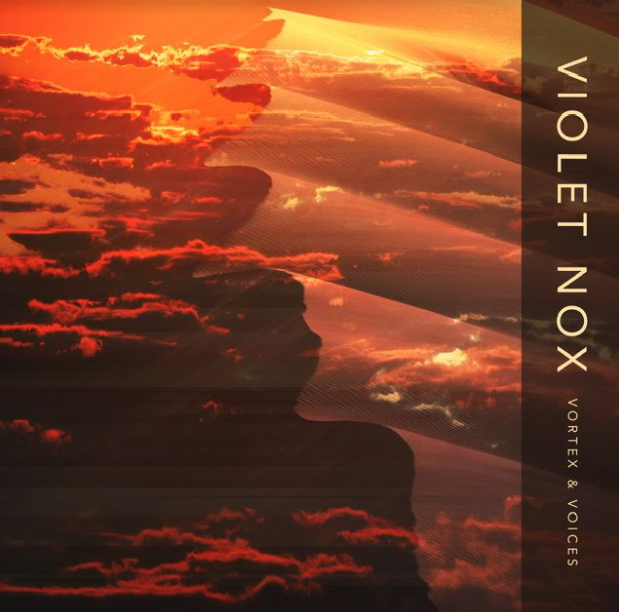
Violet Nox ‘Vortex And Voices’
(Somewherecold Records) 15th September 2023
A sci-fi chemistry of vapours the Boston, Massachusetts electronic outfit Violet Nox once more entrance with a futuristic new age album of psy-trance, cerebral techno and acid ethereal-voiced self-realization/self-discovery. Wired into the “now” however, messages of self-love and inclusiveness waft and drift to a rhythmic, wavy vision of EDM, crossover rave music and soulful electronica.
For this newest venture – their first for the highly prolific and quality North American label Somewherecold Records – features, more than ever, the experimental, often effected, vocals of group member Noell Dorsey: a mix of hippie cooed yearn, Tracey Thorn, Claudia Brücken and Esbe if you will.
A siren-in-the-machine, Dorsey expresses dreaminess, sadness and on the near mystical, wispy and lightly dub-y ‘Loki’, a past life as some Egyptian wraith – yes, I get that the title would favour something more Nordic in atmosphere and theme, but this regression into an old incarnation sounds more like a oboe trippy hallucination of Egyptology.
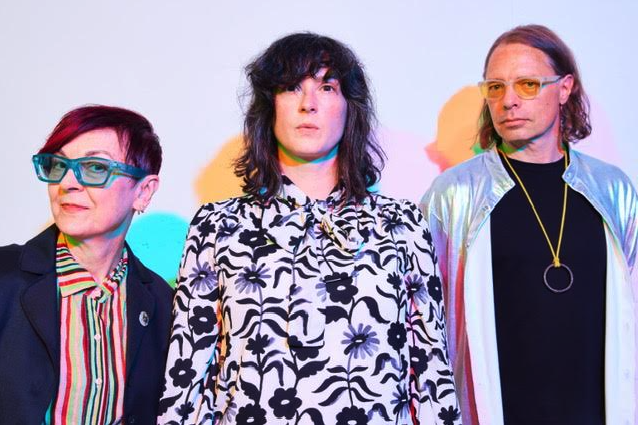
Often expanding the set-up, apparatus and lineup, this time around the Gaia attuned ensemble consists of core members Dez DeCarlo (on synth/effects pedals), foil Andrew Abrahamson (“synthesis”, sampler and clocked machines) and the already mentioned Dorsey. Musically, sonically they keep up the trance and minimal techno, melodic and kinetic rhythmic signatures, whilst erring towards club-like sung vocals and electronic pop. But it’s a real mix of synthesized influences, cybernetics and cosmic voyages into the internal and external mind.
The opening magnesium cooking vapoured and ached ‘Ascent’ evokes elements of Musicology, The Higher Intelligence Agency and Jarré; a lost trance-y peregrination from the early Warp label files. The more ominous, leviathan shadowed drama in granular cyberspace, ‘Chaos’, reminded me more of Harthouse, even Kraftwerk (those mesh-sizzled compressed drum pads especially), and the light note arpeggiator cascading and floated gauzy ‘Senzor’ sounds like a mix of Sven Vath and Vangelis’ Blade runner score.
Whether it’s journeying into the subconscious or leaving for celestial rendezvous’, Violet Nox turn the vaporous into an electronic art form that’s simultaneously yearning and mysterious. Fizzing with techy sophistication and escapism, the American electronic group continue to map out a fresh sonic universe.
Droneroom ‘The Best Of My Love’
(Somewherecold Records) 22nd September 2023
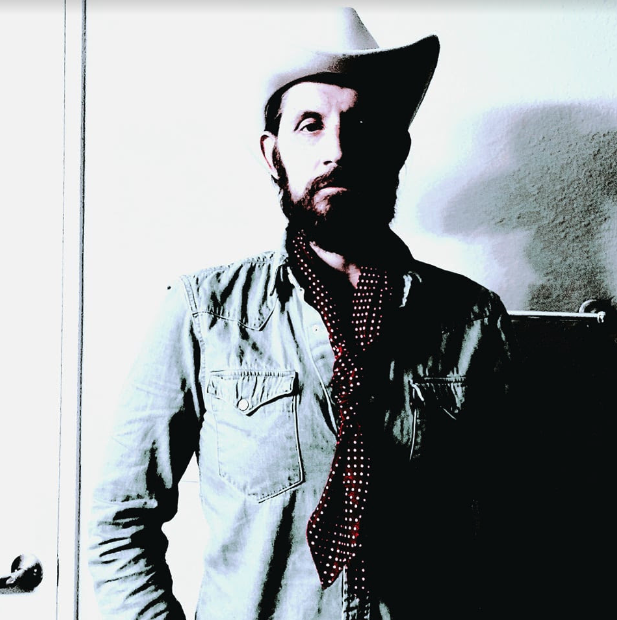
The barest hovering of a held note and most minimal of traced finger work, brushes and brassy resonance is enough to conjure up arid vistas, rumination and “sullen” emotions on Blake Edward Conley’s fifth album for the North American label Somewherecold.
The Louisville-based guitarist-composer can convey or draw out deep-held feels, sentiments and remembrance from scarcely rhythmic loops and drones – hence the Droneroom moniker. And whilst recording stations include the arrival/departure lounges of the Soulsville, Memphis TN and Denver International airports – Las Vegas too –, this latest vaporous and resonated transformation pictures mirages on mysterious desert horizons and both McCarthy and Lynch’s supernatural, occult ghosts of the old American West; think Ry Coder as an alternative choice for The Blood Meridian, or, the Gunn-Truscinski duo collaboration scoring Paris, Texas. ‘You Can’t Piss In The Same River Twice’ (sound advice) goes even further in evoking something both alien but recognisable. A filtered, muffled spherical vortex spins around like some off-world portal as Conley picks at and sort of strums a very removed vision of bluegrass on a brassy-resonating banjo.

‘Other Desert Cities’ sounds more like an enervated Sunn O))) with Brian Rietzel in a haze of blurred and more trilled echoes of nothingness. And yet a landscape image of something other and paranormal emerges from razor buzzes, scaly nickel strings and soft harmonies. It’s as if there’s a prevailing presence of someone, a thing, even time itself. ‘Cole Morse Was A Friend Of Mine’ whilst not so much elegiac, does paint a personalized desolate empty world of dust and reflection. It’s followed by another tribute/homage/thank you allusion to remembrance. ‘Nothing Of Value Is Ever Truly Lost (For Jess)’ is filled with warm feelings, a fondness, that’s weaved into an intimate gentle cascade of melodic country-folk-Americana guitar stirrings (reminding me a little of Raul Refree) that sound almost sitar like.
Abandonment, oaths, mourning and love hang like tangible descriptions in rippled, palpitating and softly juddered panoramas. Loops, vibrato, fanning effects are both wispy and sonorous; the guitar and banjo both recognisable and oblique on an album that applies an ambient and drone mystery to what you could call an abstract expansion of Americana.
Reviews
Dominic Valvona

In this amorphous crisscross of genres and borders I take a look at the latest in the label Night Dreamers ‘direct-to-disc’ series, a dynamic live album of fresh performances from Istanbul’s legendary souk reggae/dub and Krautrock psych legends BaBa ZuLa; Analog Africa delve through the stranger corners of the “B-movie” Colombian label Disco Machuca on their upcoming La Locura de Machuca compilation; and Daniel O’Sullivan explores library music for his latest transformation, a series of instrumental albums in collaboration with KPM.
Two front vocalists step away from their bands to go solo, with Ghent stoner/alt-rock band Wallace Vanborn frontman Ian Clement returning to the fold after many travails with a personal songbook collection, See Me In Synchronicity, and Diamond Thug’s Chantel Van T going out on her own with a debut country blues imbued songbook, entitled Nicalochan.
There’s also a label special, with three recent and upcoming ambient and experimental imbued records from the North American hub Somewherecold Records: an ambitious cosmic suite of Kosmische analogue synth odysseys from Giacomelli, snapshots, threads and lingering traces of esoteric and ether materialised country and bluegrass guitar sketches from Droneroom, and an emotive suite of love-lost movements from Vision Eternel.
BaBa ZuLa ‘Hayvan Gibi’
(Night Dreamers) Album/2nd October 2020
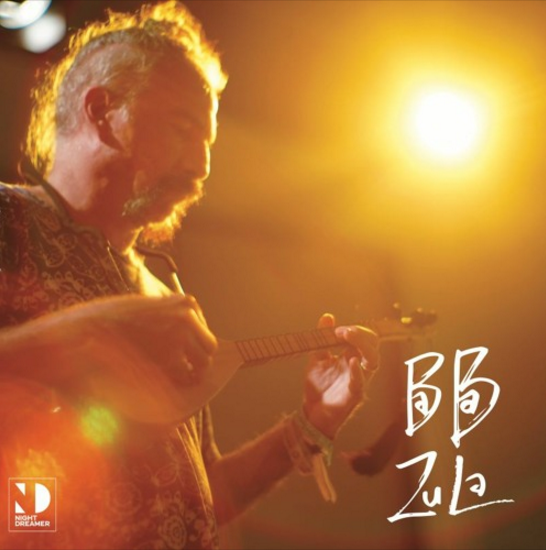
The latest release in Night Dreamer’s “direct-to-disc” series stars the rebellious stalwarts of Anatolian cosmic dub and psych, BaBa ZuLa: a three decade spanning Istanbul group originally birthed from the embers of the band ZeN.
Fusing the folkloric with solar flares of Krautrock, souk reggae, 60s and 70s Turkish psych and cosmic-blues the rambunctious group come on like a Sublime Porte vision of Can’s Ege Bamyasi and Soundtracks albums, only replacing much of the Teutonic legends setup with more traditional instruments like the “oud” and “saz”: albeit electrified and fuzzed up to the gills. That Can reference isn’t so surprising, as the BaBa have worked with the band’s late human metronome Jaki Liebezeit on numerous occasions: his two-way influence felt and inspiration noted on BaBa’s 2019 album Derin Derin. That same 2019 album, like so much of their output, was originally produced for a soundtrack, a documentary about falcons. And this latest “live” and direct special showcase includes a number of such tracks scored for film and stage; it also, like that falcon inspired work captures the materializations, mood, feelings of a menagerie of symbolic animal subjects.
Recorded before lockdown in the pre-pandemic nightmare, Hayvan Gibi (which means ‘to act with the natural grace of an animal’) includes six almost untethered, unleashed vivid performances from the Istanbul mavericks. It’s an album that seeks to fulfil the “live” feel and energy that some fans have commented has been lacking on previous studio albums. Invited to the Artune Studio setting in Haarlem by the label, they were encouraged to freely take-off on a flight of Eastern fantasy; encouraged to also riff on and extend past glories too. “A musician’s dream” as the band’s electric, scuzzy defacto leader and founding member Osman Murat Ertel puts it, this, also challenging, method of recording and cutting a disc from start to finish on one session gives them that energetic impetus. It also showcases each of the band’s talents. On the elliptical rhythmic Can-like dervish ‘Sipa Dub’ (also known as “The Foal”), the group’s braying oud soloist and keyboardist Periklis Tsoukalas gets to shine and sing a kind of spiritual Sufi-imbued emotive intensity on a song about an Aegean coast donkey and its foal. Percussionist virtuoso Ümit Adakale is unleashed unaided on the drilling, rattling and hotfooted breakbeat ‘Nal’ (or “Horseshoes”).
Old favourites like the ‘Çöl Aslanlari’ (“desert lion”) composition, originally made for Antonie de Saint-Exupéry’s stage production of The Little Prince, go off on a long improvised peregrination of clopping psych-rock and shimmering cymbal washes, whilst the group’s earliest groove, ‘Tavus Havasi’ (which furnished the soundtrack to the Tabutta Rövasata film) assails close to the mooning of Guru Guru and a Turkish Bar dance.
A let loose BaBa ZuLa is a most incredible experience; a scuzzed, scuffed, trinket shimmery, rippling and blazing rhythmic energy and dynamism both intense and yet also a mirage of reggae and dub imbued Anatolia mountain gazing. It’s also a reminder of what we’ve been missing in these dragging pandemic restrictive times.
Further Reading…
BaBa ZuLa ‘Derin Derin’ here….
BaBa ZuLa ‘XX’ here…
Various ‘La Locura de Machuca: 1975 – 1980’
(Analog Africa) Album/16th October 2020
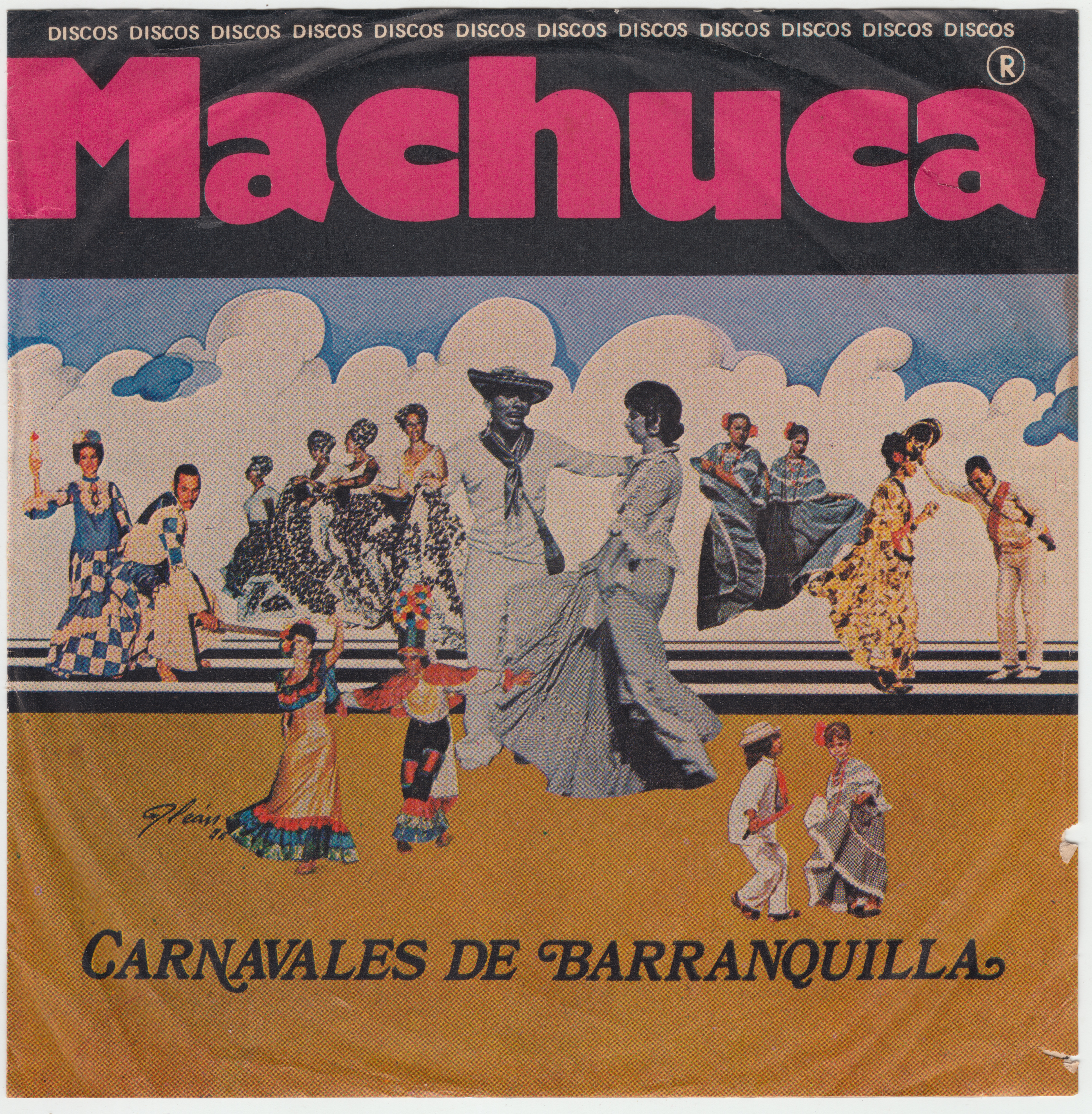
Quite possibly the kookiest oddity so far in the Analog Africa catalogue, this distant outlandish relative to the label’s Diablos Del Ritmo: The Colombian Melting Pot 1960 – 1985 compilation from 2012 is the sort of “B-movie” discovery you’d expect Finders Keepers to release. From the same international Colombian gateway of Barranquilla as that collection’s purview, La Locura de Machuca: 1975 – 1980 features a similar spread of Afro-Colombian saunters, scuttles and scratchy percussive funk as that record, yet finds a twist: a kink.
For all the familiar traces of that folkloric electrified Cumbia, the Caribbean-African-Colombian hybrid Champeta Criolle, and Congolese rumba (to name just a few styles), the music that flourished from the Colombian underground is…well, different. Much of this is down to the genius and bizarre mind of the former tax-lawyer turn record company executive Rafael Machuca, who wowed and seduced by the Barranquilla music scene jacked in the day job to set-up and sit behind the control desk as the producer of his own label enterprise, Disco Machuca. This was the heady mid 70s, an age in which Colombia’s music scene was thriving with the sounds of imported nuggets and blasts from the African continent. Though native dance styles such as Bolero and Vallento still rocketed up the charts, the fervor was for a spread of Afro prefixed sounds that proved popular at the neighbourhood sound-system joints, known as “the picos”. The locals would in time add more traditional flavours, including the already mentioned versatile Cumbia, but also more modern influences such as psychedelic music and disco.
Machuca channeled that exciting dance mix with his unique label of specially put-together one-offs and more established mavericks; the often experimental and kitsch productions of which is described as the “B-movies of Colombian music” by the label’s stalwart recording engineer Eduardo Dávila. Some of that self-depreciative description is warranted for the label’s roster of artists and acts, but also for Machuca’s habit of just creating from scratch a studio band to front one-off singles and albums when he couldn’t find the right band to realize whatever vision he had leaping about in his head. Two of which, the mono skiffley itching and squiggly, Stylophone like buzz and gargled organ Samba Negra and the bongo rattling, carnival lolloping space age garage band El Grupo Folelórico, lasted only the time it took to enter the studio and press stop on the recording desk. Both of these outlets feature heavily on the compilation. Though the El Grupo Folelórico’s binary data zapping Afro bustle ‘Tamba’ qualifies as the closet of these tracks towards that B-movie status.
The label could accommodate such fancies with the money they made from more established and popular stars; such as Alejandro Durán (left off this more unconventional comp) and Aníbal Velásquez (who does feature with his slightly unhinged belly laughing and hurried Cumbia track ‘La Mazamorra del Diablo’). “Fringe artists” like La Bande Africana, King Somalie, Conjunto Barbaco and Aberladro Carbono were able to cut loose off the back of those hit-makers. The first of those names lends the collection a salacious boy/girl hush and sigh of Gainsbourg meets Bollywood in a Colombian coastal town, with their coquettish and playful ‘Te Clavola…Mano’. King Somalie meanwhile riffs on the “funky monkey” with a talky Afro-boogie and turns in a sexy fun conversational on ‘La Mongui’.
Personal favourite of mine is The Grupo Bela Roja, or to be more exact their both swooning and jaunty lead singer who channels a young Miriam Makeba on the beachside ‘Caracol’.
There’s much to discover from this sometimes-unhinged label, yet nothing so avant-garde or “loco” as to neglect an essential rhythm or hypnotic good groove. Samy Ben Redjeb’s decade-long-in-the-making project unearths some mesmerising rarities from the stretched-descriptive scenes of Afro-Caribbean and Afro-Colombian music, throwing in some curveballs and raw 45s.
For those looking for a fresh perspective and for something strange, the La Locura de Machura compilation will fill that need. Ad for everyone else, this is just a great vibrant mad world of South American sounds that deserves space inside your noggin.
Further Reading…
Analog Africa Tenth Anniversary Special here…
Various ‘Jambú e Os Míticos Sons Da Amazônia’ here…
Chantel Van T ‘Nicalochan’
Album/23rd October 2020

Stepping out on her own from the South African dreamy space-indie Diamond Thug, the country blues and folksy lilted voiced Chantel Van T makes a boldly intimate and vulnerable statement on the debut solo songbook Nicalochan. Via a Danish solstice and summers spent contemplating at the shoreline’s edge, the hushed and swooned songwriter/singer opens up in a considered, soothed and sometimes creeping fragile manner over gently sweeping Dylan-esque Western soundtracks, mountain songs, the knowing enchantment of Lee Hazelwood, and lush morning dew yearn of Catherine Howe.
With a maturity and depth beyond her years, the often sadly but constantly dreamy Cape Town artist seems to channel a country twang that evokes shades of Emmylou Harris, Bonnie Dobson, and on the prohibition era Appalachian Lomax ‘Bittersweet Absolute’ a touch of Josephine Foster. Chantel has a voice deep, diaphanous, ached, resigned, and drifting, yet at times almost fatalistic.
An introduction to Chantel as much a candid therapy and chance to let all those thoughts and philosophically poetic questions on what reciprocated love really means (and how far it can be taken), the growing pains of womanhood and childhood.
A suffused accompaniment (all recorded with the Danish producer Anders Christopherson and a small intimate ensemble of musicians) of wallowed brass, softened string caresses, gauzy tremolo twanged and acoustic rhythm guitar, and patted toms and splashes of cymbal provide a subtle stripped backing track. One that sometimes can’t help but meander into Dylan’s ‘Knocking On Heavens Door’ on the leading, waning beauty travail single ‘Rumble And Crawl’, and a 50s yuletide mix of Rosemary Clooney and bobby-sox Spector on the album’s early punt at a seasonal number, ‘Christmas’.
Full of pining, searching affairs of the heart Nicalochan is a most hazy and beautifully executed testament of timeless country blues imbued vulnerability from an artist going it alone: A great debut of understated wisdom and inquisitive questioning songwriting, which I can see making many of the end-of-year lists, including my own.
A Somewherecold Records Special:
Vision Eternel ‘For Farwell Of Nostalgia’ Out Now
Giacomelli ‘Cosmic Order’ 9th October 2020
Droneroom ‘Blood On Blood’ 16th October 2020
All three released via Somewherecold Records.
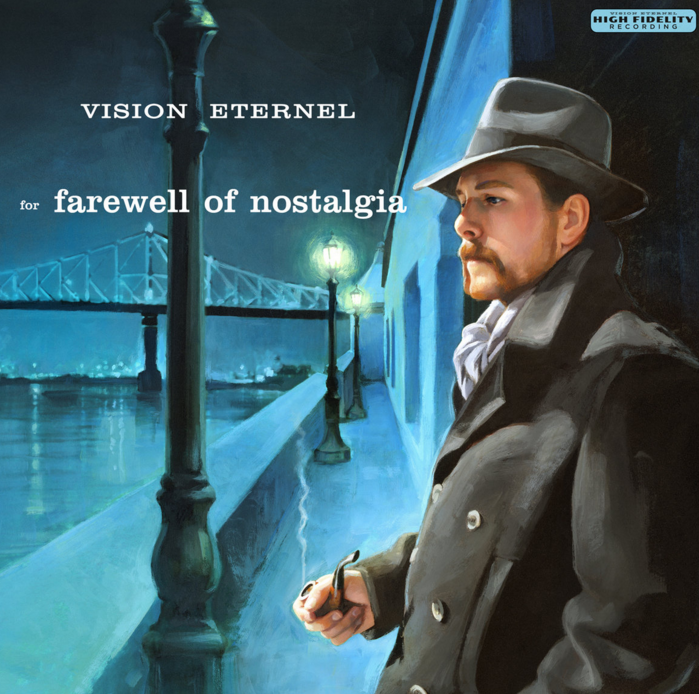
From the highly prolific online magazine/shop-front and facilitator of various underground electronic and experimental artists, a trio of recent refined and concept-bound releases has drifted onto the Monolith Cocktail’s radar: Just three from an exhaustive roster that’s updated weekly. Extensively a soundboard and platform for composers and mavericks alike from both sides of the North American border, Somewherecold Records offer up the intimate and ambitious, depth and the translucent, peregrinations and wanderings with their most recent spread of albums.
The first of these is the grand Kosmische analogue spanning opus from Silicon Valley composer Steve Giacomelli; a triple CD expansive series of cosmic ordered suites that traverse the astral plane, new age transcendence, various thermos, gases and topographic ebbs and flows. Giacomelli’s fourth such album of cosmic ambient minimalism for the label, this celestial and evolutionary mined impressive ARP Odyssey (portable) synth birthed work of thirty-six scales into deep space, refractions of light play, pulse and gravitas uses a number of techniques to accomplish an overall sound of forgotten Sky Record maestros, Tangerine Dream, early Cluster, Tomat and Vangelis. This synthesised vision – that can sometimes err towards the ominous forebode and mystery of Kubrick – synthesis of the abstract, deep space, the inner mind, nature and the heavenly is accomplished with an apparently limited pallet and the use of counterpoint sequences, the generative and a method, favoured by Frank Zappa, called “xenochrony” – that is the extracting of a solo or other part from its original context and placing it into a completely different song/composition.
A three-hour journey through the imaginings of Giacomelli’s inner and outer star-guided mind, compositions vary between the beautiful cathedral-in-the-sky heralded ‘Cosmic Fanfare’ and the Klaus Schulze-rescores-Zardoz forebode and deep space hum of ‘The Best Laid Plans’; from the 8-bit orchestral manoeuvres of ‘SMPTE Of The Universe’ to the heavenly choral-blowing space fantasy ‘Diplodicus Green’, and the tubular generator, dash communicating ‘Remembrance Petition’.
No matter where he guides us, Giacomelli fashions a most diaphanous and mysterious epic. The Cosmic Order is a grand project, nothing short of immersive and starry.
The second of this trio of albums and EPs from the label takes us into the Kosmische-cowboy experimental soundscaping world of the Louisville-based artist Blake Edward Conley. Trading, moseying and meandering under the Droneroom alter ego, Conley pulls together a number of tracks and ideas from compilations for this transformative and transduced album of layered resonating guitar soundtracks and pauses.
A “two-lane blacktop” drive across the imagined travails of an alternative strung-out country and bluegrass accompanied America of gas station stops, mechanical breakdowns, and side road excursions, Blood On Blood gathers those “stray tracks”, threads and “snapshots” to meander through an evocative if distant landscape. Whether inspired by or in their finished state sailing close to, a number of these drowsed post-country instrumentals are dedicated to Conley’s fellow compatriots, and both explorative and old testament liturgy guitar imbued artists: The Tennessee psalm fanning Joseph Allred and folk artist Cole Morse to name just two.
Some of these sonic-thoughts-out-loud ruminations and traverses are more country than others. A certain cowboy swoon can be plucked from the lingering traces of ghostly country blues and bowing vibrato of ‘Truckstop Déjà vu’, and there’s an air of a Lynchian vision of Ry Coder on the galvanized steel gate stick rattled and didgeridoo like drone mysterious ‘And On The Last Day The Land Did Sing Me’. A removed form of Americana, with the tremolo wanes and quivers and spirit all there but veiled by the Baroque, Latin, cosmic and supernatural, ‘Let The Bluegrass Hold My Head’ is anything but. However, the dreamily acid ‘The Coyote Adrift In The Unfamiliar’ evokes a more Kosmische and Krautrock influence; sounding like an esoteric ripple in the fabric by Ash Ra Temple. In fact there’s a lot of spacey spectral leanings, an otherness, even alien, from beyond the ether: There’s even a supernatural enough transmission from that void in the shape of ‘Ghosts For Sale’.
Another impressive if unassuming album for the label that does something different, out there with its source, Droneroom’s Blood On Blood is an incredibly strange album of guitar experimentation that warrants discovery: A cult album in the making.
Back towards the ambient spectrum, the final release in the special is a most emotively drawn and purposeful EP of intimate mood music by the Montréal-based Vision Eternel. Coining the phrase “melogaze” to describe his lush “emo” brand of majestic and caressed swirling feelings, heartbreaks and loves, the band’s founder Alexander Julien soundtracks a love lost affair with a most swaddled suite of ambient music, shoegazing, and semi-classical longings.
Over a quartet of channeled “movements” (rain, absence, intimacy and nostalgia), Julien charts this affair-of-the-heart with a both cinematic and melodious touch. The EP though is a greater conceptual work that even arrives accompanied by a short story and plenty of poetic, stirring baggage. Lingering reminisces pour from this composer’s light yet deep vaporuos yearnings.
On the cover itself, Julien is painted as some kind of Left Banke thinker meets Graham Greene Third Man and shoe-string Marlowe; a riff on 50s and older covers of that vogue. And so nostalgia is certainly evoked on this almost timeless EP of abstracted emotionally pulled memories made tangible. It’s actually a most lovely, touching trembled and graceful encapsulation of the themes; beautifully put together. It’s also entirely different and like all three of these releases pushes experimental, ambient music in different directions, yet never loses sight of taking the listener on those same sonic journeys into the cosmic, imaginary, and intimate.
Somewherecold Records is proving a catalyst and platform for some of the most interesting and ambitious of under-the-radar artists. Expect to see plenty more or their releases on the Monolith Cocktail in the future.
Ian Clement ‘See Me In Synchronicity’
(Cobraside Records) Album/October 2nd 2020

All the better for it, full of sagacious yearning, frontman of the Ghent stoner/alt-rock band Wallace Vanborn, Ian Clement makes a welcoming return to the musical fold with his second solo album See Me In Synchronicity. After many travails and a series of breakdowns, Clement opens up with a songbook collection of musings on troubled romances, escaping, intimacy and more mystical, metaphysical queries on the altered states of consciousness: a subject that stems from the earnest singer/songwriters interest in mysticism and the spiritual, and its place in an increasingly secularized, atheistic Western culture.
Further, as Clement himself illuminates, “mysticism and madness touch each other, even in ordinary life. The daydreamers whose hope lies in love and fantasy or in loneliness or madness, is something that everyone can relate to.” And there is, at least, some of that title’s “synchronicity”; as also reflected on the album cover’s dream state alpine juxtaposed with cityscape and beret fitted beachcomber meandering below a seductive muse collage artwork.
Though far from mystical sounding or esoteric, this is a solid songbook with just enough edge to set it apart from the well-worn tropes and sounds found in most alt-rock of a similar persuasion. For Clement traverses not only hard rock but also country (verging on Americana), indie, post-Britpop and, even, new wave (chugging away tot the dashboard emotional pulling pop motor pop of The Cars on the “consciousness” imbued ‘Turtle & Crow’). And so you can expect to hear a subtle pallet of influences and sounds prompting this brooding but often mature and wise album.
Vocally Clement evokes a touch of Jeff Buckley (via Blackbud’s Joe Taylor) and Mark Lanegan, whilst the mix of blazing rock guitar shadings and hooks leans towards Bends period Radiohead, post-punk and early noughties Bowie. However, the most surprising humbling and yet bittersweet romantic song, ‘Bliss’, strays into the Floydian. There’s also a dappled gospel-tinged organ that keeps popping up throughout the album; a kind of low-key Muscle Shoals vibe.
Making sure this all gels, and offering some of that edge, is the luminary German producer Renė Tinner, who knows a thing or two about pushing the envelope and finding that important synchronicity between the commercial and experimental having worked with such polar opposites as Can and George Harrison. This culminates in a production and sound with depth, soul and a few surprises. Clement unloads his pains and intimate resolutions on a most sophisticated, hard-fought and lyrical work: A brave work at that.
Daniel O’Sullivan ‘Electric Māyā: Dream Flotsam And Astral Hinterlands’
(VHF Records/KPM) Album/23rd October 2020
The latest in a long run of explorative transformations for Daniel O’Sullivan, of both Grumbling Fur and This Is Not This Heat fame, sees the London-based musical polyglot traversing the “library music” oeuvre.
Although often the preserve for lovers of cult mavericks and the kitsch, library music is infinite in scope and varies considerably in quality. Often, because of its very nature dismissed as either a pale imitator of the sound and music it’s trying to ape, or void of true artistry and depth: produced in many cases as a background soundtrack and cheap off-the-shelf filler. Of course this is all bullshit, the label itself now so diverse and overused as to include some truly gifted composers alongside one-offs and obscure unknown peddlers of lo fi and unassuming skits. Essentially though, it is seen as music that fits specific criteria or commission, as O’Sullivan puts it, music made “more for functionality than sonic self-portraiture”.
It also includes, in more recent years, an increasing number of artists-in-the-know appropriating library music’s guilty pleasures and forgotten acolytes: Not so much as pastiche but rather in the mode of homage and mining ever more obscure sounds. And so a very much “knowing” O’Sullivan in collaboration with those purveyors of such rediscovered treasures, KPM, invests a lot of time and effort in producing an 18-track suite of sophisticated redolent library music gestures, sweeps, memories and fleeting incipient soundtracks on the first of a trio of such albums. The challenge however is in creating a fully-realised composition with a start, middle and sort of conclusion in short form: every track on the album being more or less under the 3-minute mark.
Delving into the cosmology of the elaborately psychedelic entitled Electric Māyā: Dream Flotsam And Astral Hinterlands you’ll find a full body of atmospheres, inner spaces, emotions, sciences and supernatural elements articulated by a diverse pallet of sounds and instrumentation. O’Sullivan caters for every occasion, from beatific meditation Eastern transcendence (‘Adoring Solitude’) to emerging from a mysterious mist-clearing landscape (‘Butterscotch Broth’) and Tomat evoked celestial cathedrals-in-the-sky (‘Eagle Ears’). And that’s all within the first five tracks: the mystical, the ambient unveiling of inspired scenery and the cosmos. Elsewhere there’s deft evocations of the sort of tender Italian pianist-driven soundtracks of the 70s favoured by Greg Foat (‘Flashbulb Memory’), a bird’s eye view from above wispy, translucent clouds (‘Feathered Earth’), a kooky burbled and steam-post-punk merger of Kraftwerk, Bernard Estardy and Jon Hassell (‘Gray’s March’) and haunted monastic dream muses (‘Sybil’).
From the sublime to the strange, ethereal to the earthy, most bases are covered on this expansive album of the vapourous and gazing. Most of which is beautifully produced and entrancing. Mixing semi-classical with ambient music, avant-garde and electronica, O’Sullivan has created an inspiring sonic journey through library music’s most lunar and traversing, stirring highlights without reverting to that pastiche and lazy homage. It is nothing short of a great piece of instrumental work, the soundtrack to a most wondrous ambitious movie.
Hi, my name is Dominic Valvona and I’m the Founder of the music/culture blog monolithcocktail.com For the last ten years I’ve featured and supported music, musicians and labels we love across genres from around the world that we think you’ll want to know about. No content on the site is paid for or sponsored and we only feature artists we have genuine respect for /love. If you enjoy our reviews (and we often write long, thoughtful ones), found a new artist you admire or if we have featured you or artists you represent and would like to buy us a coffee at https://ko-fi.com/monolithcocktail to say cheers for spreading the word, then that would be much appreciated.
 Monolith Cocktail Blog