Tickling Our Fancy 055: AUDIAC, Matt Finucane, Andrew Heath, In Time, Poly Ester, Psycho & Plastic and TootArd.
October 10, 2017
NEW MUSIC REVIEWS
WORDS: DOMINIC VALVONA

Welcome as always to the latest edition of my reviews roundup. Meeting with my approval this month, there’s the (both literally and musically metaphorical) ‘laissez passer’ wandering TootArd from the Golan Heights making an international debut on Glitterbeat Records; the return, in a manner, of the enigmatic Brighton-based artist Matt Finucane; a stunning theatrical avant-garde meets Chanson and morose romantic pop opus from AUDIAC, waltzing onto the stage after years of inactivity; the pique soundclash of Swiss drum and electric bass combo Ester Poly; and the fourth album of ‘lower-case’ minimalism and ambient music from Andrew Heath.
I also take a look at the fanboy style resurrection of the obscure 80s Pennsylvania garage, punk, post-rock and psych outfit In Time, by thrift store digger Steve Krakow, who celebrates the fleeting and undiscovered group’s only album (found unloved by Krakow on cassette tape) and a number of unreleased attic recordings for the Guerssen label. Last but in no means the least of today’s selections, I take a look at the debut album from the Berlin duo of kooky and fun electronica and techno, Psycho & Plastic, Kosmopop. Championed from the very start on this very blog, it seems to have taken the duo – who to be fair are busy with a multitude of projects including the running of their label GiveUsYourGOLD – an age to finally release it.
Read on…
TootArd ‘Laissez Passer’
Glitterbeat Records, 10th November 2017

Photo credit: Mercedes Ortego González.
Caught in, what might seem to them, a perpetual limbo, devoid of a recognized identity, the collective band members of the omnivorous Levant group TootArd are officially stateless: citizens in effect of nowhere. Growing up in the contested, bloodily fought over, Golan Heights the group’s mouthpiece, guitarist Hasan Nakhleh, articulates the predicament of a population stuck between two, once, warring factions – feeling detached with no legal representation; no sense of belonging – throughout the press notes that accompanied this, their latest album, Laissez Passer.
Carved up in two by the former warring states of Syria and Israel after the divisive Yom Kippur War of 1973 and the eventual ceasefire that followed – with the greater share by some distance given to the latter -, the Golan Heights has been uneasily observed by both parties for decades. Under an accord the following year, an international buffer zone – known as the UNDOF ‘purple line’ – was put in place to help keep a fragile peace. Before the apocalyptic civil – and proxy – war in Syria begun, both nations seemed to be approaching some agreement over the region. Israel however, following a policy of non-intervention, is in no hurry to secede ground to Syria.
Under the authority of Israel but without official citizenship, the native inhabitants of the western Golan Heights region are forced to carry the special situation, ‘laissez passer,’ papers of TootArd’s album title to cross borders and travel. Despite this the group have found a certain musical freedom; amorphously drifting across those imposed demarcation lines to adopt styles from across the entire Levant; from Africa and even Jamaica. Originally covering the Caribbean island’s most famous musical export, the group started out playing reggae covers before relishing a change in direction.
However, before settling on their recent traverse fusion of desert blues – finding a commonality and affinity with the Beaudion and, equally stateless, Tuareg -, Arabic modalities, rock and funk influences, the founding members of the group all left for Europe; all going their separate ways: Hasen Nakhleh moving to Berlin and then Bern, recalls that this sojourn period would split the collective up internationally, yet when visiting home they would all regroup for impromptu performances in their native villages, as if they’d never been apart. After a two-year hiatus Hasen and his brother, multi-instrumentalist Rami Nakhleh – missing their fellow compatriots – organized a reunion of a sort, preparing the way forward for a reincarnation of their band.
With a new enthusiasm, new material and new sound, TootArd’s second album – though billed as their ‘international’ debut showcase – Laissez Passer has much to contemplate and pine over; framed as it is in the ‘blues’ tradition. Themes of identity and the chaos that continues to engulf their homeland dominate the album. Yet far from lamentable and sad this latest effort is surprisingly relaxed, with controlled swells of more funky and soulful driven upbeat rhythms throughout, and even the odd saunter of swaying joy. The languid reggae candor, transmogrified into a Levant groove, helps to create a sort of Baba Zula souk gait, whilst hints of Tamikrest and Tinariwen’s camel gangly, handclapping, desert blues funk gives the music a drive on both the title-track and, almost galloping and spinning into Dervish territory, Bayati Blues.
But those bluesy ruminating and gazing ponderously inducing themes do often sound haunting; especially with the addition of Ams Mdah’s snake charming and romantically dusky jazz saxophone evocations, and Hasen’s modified oud sounding electric guitar – extra frets added to ape the synonymous dulcet tones of the short-necked lute-like string instrument.
Bringing people together under darkening skies or gazing out across the Golan Heights prism back towards Syria with a Rast scale composed travailing moody accompaniment, TootArd flow and spiral subtly across the region soaking up ancestral musical customs as they go. Though imposed upon them, the Laissez Passer status hasn’t held the group back creatively: forcing them in fact by circumstance to find a new musical freedom. They are, even if it sounds a tad clichéd, only limited by their own restless imaginations, and this album indeed dreams big.
AUDIAC ‘So Waltz’
Klangbad Records, 20th October 2017

In the age in which the majority of recording artists and bands are struggling to survive on the mediocre, almost vaporous, earnings from their craft and graft, it could be argued that without a monetary reward (no matter how modest) and without security you may as well take risks; push the boundaries; never compromise, and in the case of the Tübingen and Hamburg straddling duo AUDIAC, concentrate your efforts on producing a ‘work of art’. And make no mistake So Waltz is an ambitious album’ bordering at times on the theatrical, but definitely art-y.
Knowing admittedly nothing about this duo, I can only assume they were lucky enough to have at least the time to pursue these artistic ambitions. Though as the press release is not entirely clear, I assume this latest album is the follow up to Alexander Wiemer von Veen and Niklas David’s 2003 debut, Thank You For Not Discussing The Outside World; marking quite an absence between releases, but nevertheless indicating that they certainly had enough time to create an epic suite. They also had one of the (infamous) original co-founders of Germany’s most uncompromising iconic groups, the mighty Faust, Hans Joachim Irmler on board to produce; his impressive skillset, shaped in a baptism of fire during the Krautrock epoch, and explorations pushing his chagrins further into sonic experimentation.
Remaining true to that debut album however, AUDIAC still sound inspired by Chanson, trip-hop, chamber pop, psychedelic music and Kurt Weill. Only they drop some of those more psychedelic pretensions this time in favour of melodrama and spectacle; dancing in malcontent and lament to a semi-classical avant-garde soundtrack, both melodically beautiful and elegiacally forlorn.
With all the limitations and pressures lifted, the duo is able to put forward their grandiose schemes undaunted by commercial success: or so they say. And so moving quasi-classical soul merges with Popol Vuh like divine choral atmospheres, and harsher, stark declarations of pained expression. Not quite in the realms of Scott Walker but sailing pretty close, the vocals and backing fluctuate the malady intensity and constantly restless plunging piano playing and voice combo of Diamanda Galas at its most harrowing – especially on the tumultuous, in a state of despair and rage, Doberman -, and the aching blue-eyed soul of George Michael and cerebral crooning accentuation of David Sylvian at its most romantic. Yet this concatenate pan-European songbook, mostly travailing the moody northern realms of Germany, France and the Lowlands, evokes a penchant for the UK too. Hints of Massive Attack, Thom Yorke, an enervated Underworld, early Queen and the Welsh maverick John Cale appear amongst the waltzing, gushing and graceful allusions of a spurned brooding European protagonist – probably sucking on a Gitanes; carrying all the weight of the world’s problems on his shoulders.
Returning with an impressive minor opus, So Waltz sounds like it took a lot of time and effort to create. Highly dramatic, occasionally indulgent, yet always quite moving they make quite the statement with this bleak but diaphanous and expressive tragedy.
Psycho & Plastic ‘Kosmopop’
GiveUsYourGOLD, 20th October 2017
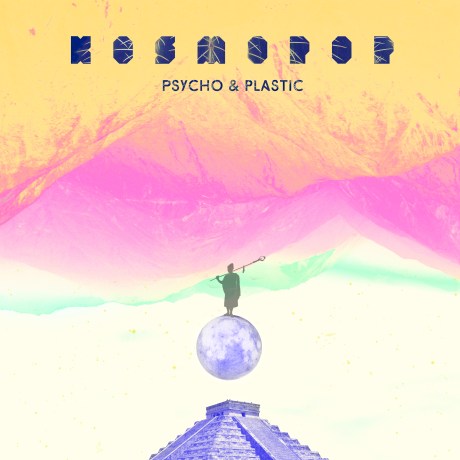
Guiding lights into the expanses of an imaginary galaxy, the Psycho & Plastic duo of Berlin dance music stalwarts, Thomas Tichai and Alexandre Decoupigny, search both inner and outer space with a suave funky and cosmic techno soundtrack on their new album, Kosmopop.
Previously releasing a string of EPs and videos, with the emphasis on fun and quirky electronic dance music experimentation – bordering at times on the goofy and cartoonish -, the duo have finally found time to produce a more complex, daresay conceptual, album; with aloof wondrous inspirations abound. Self-released through their burgeoning label GiveUsYourGOLD (Armour, AXLOTL, Irk Yste), their debut album proper dials down the more loony, bubbly and tropical kooky influences in favour of smoother, groovier rhythms. This isn’t to suggest they’ve suddenly become serious; the larks and optimism remain, with fond homages to the first and second summers of love, and a particular penchant for the unconscious organic flowering of the 90s rave scene.
Alluding to certain science-fiction ascetics in the artwork, the music is itself alien and mysterious at times, erring towards Kosmische influences like Tangerine Dream on the more enigmatic searching voyages – check the brocaded synth fanning, solar winds blowing and whistling satellite signally Superflare and Banco de Gaia does Mayan temple dub Entropy.
For the major part however, the music sounds like a Mir Space Station house band of Der Plan, Niles Rodgers, International Pony and Felix da Housecat beaming down a love-in direct to the berlin dancefloors. Expect to hear astral funk lightly entwining with early echoes of the electro hip hop compilations; echoes and specs of an alien presence reverberating and floating over Chicago House; sitar like brass-y meditations chiming along to pocket calculator algorithms; stoic Germanic tuned narration encouraging philosophical self-discoveries across the universe whilst also urging the listener “to get down” to tribal beats and 808 preset percussion – the four-to-the-floor disco punk Divine Loser even reimagines Depeche mode being born in Düsseldorf rather than Basildon.
Psycho & Plastic’s interstellar travels flow in a cyber boogie motion, gazing as they do into the wonders of a funky techno and as pop disco vision of space. Kosmopop is a cracking debut album and marks a small but significant sophisticated change in the duo’s style; more ambitious, smoother and sleeker.
Andrew Heath ‘Soundings’
Disco Gecko, 3rd November 2017
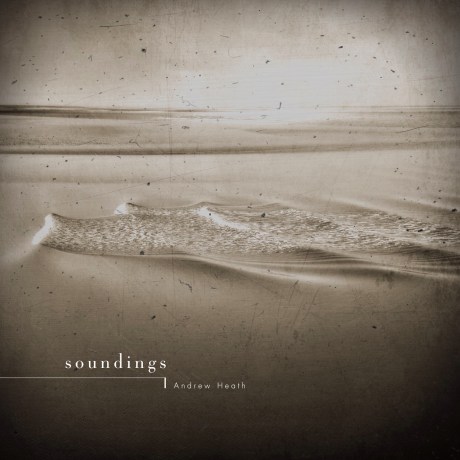
Praised as a sort of progressive sound and ambient music torchbearer of a genre renowned for such luminaries as Brian Eno and Hans-Joachim Roedelius, Andrew Heath’s own experiments in the field lean towards the reification of the fleeting, disturbed and ephemeral quiet traces of ‘people within spaces’. The self-styled composer of ‘lower-case’ minimalism evokes enigmatic, mysterious and occasionally mournful passages of evolving, passing time through the use of found and created sound manipulation and in-situ (a concatenate theme that connects to Heath’s site specific video art) field recordings.
His fourth solo album for Disco Gecko follows on from previous work, building up both synthetic and natural textural layers, drones, obscured broadcast voices and sonorous piano phrases. However, the main difference with Soundings is the atmosphere it creates; the echoing leitmotif of creaking footsteps pacing up and down a room and the almost heavy methodical concentration of memories pouring from the typewriter notation for me conjure up a writer’s garret: the author’s struggle, turmoil and thoughts represented by Heath’s serialism soundtrack.
Used subtly the neo-classical instrumentation that swirls and floats around the concrete sounds is used to bring melody, intrigue and sometimes, sadness. As well as Heath’s lingering, pondering classical piano notes and scales, there’s a touching twinkling and warmer Fender Rhodes offering lighter jazzy tinged, comfort and balance; a counterpoint interaction between the two instruments that began in the 90s when Heath collaborated with Felix Joy under the experimental Aqueous banner. It also resonates with similar piano explorations by Roedelius, who as it happens has worked with both Heath and Joy previously, most famously on the Meeting The Magus album, and more recently with Heath and fellow avant-garde composer/artist Christopher Chaplin on the live improvised recording Triptych In Blue. Roedelius could be said to have an open-ended collaboration with Heath, who it must be said can’t help but be enthused by the Kluster/Cluster/(and in more recent times) Qluster trinity steward of Kosmische and neo-classical exploration.
Another (on-going) collaboration with the Dutch ambient musician Anne Chris Bakkes continues on both the album’s winter moody traipse through the Dutch province of Noorderhaven, and the serene Happenstance articulation. Bakkes on her part performs a masked and fluttering guitar peregrination and plays with more unusual, mostly unidentifiable background sounds on the two tracks: described in the press release as ‘ephemeral’.
Breaking the veiled, swirling clouds hovering atmospherics, Stéphane Marlet and Bill Howgego are on hand to offer both arching serious, lamentable, and swooned jazz inspiration; the former enriches the cyclonic pondering Days In-Between with saddening cello, the latter tenderly sailing above the Tibetan imaginations of A Break In The Clouds with a striking clarinet flourish.
Pivoting between levitating above the heavens and space and counting the days in a haunted soundscape of captured movements and memories on Earth, Soundings hints at scenes and scenery alike; the traces of which make up this gently unfolding series of ambient descriptive passages in time.
Matt Finucane ‘Threaten Me With Your Love’
Light Crude, 25th October 2017

Returning after what seems an age away from crafting some of the most understated moodily resigned and mentally fatigued indie, Brighton-based all-rounder Matt Finucane is back with an instrumentally pared down, but just as sophisticated, duo of EPs this Autumn.
Not that we wish to pry, and only knowing Finucane from a distance, it seems his travails and dysfunctional personal life has got the better of him recently and in the past: hence the absence; part of which was spent in rehab. Threaten Me With Your Love is the idiosyncratic troubadour’s first proper release since then.
Back doing what he does so well, with eight new songs split between two staggered EPs, Finucane has employed the talents of fellow Brighton musician Mik Hanscomb – one half of the city’s (via Southend) pastoral Laurel Canyon imbued folk siblings Junkboy – to accompany him both live and on this recording.
Once again channeling vague notions of Lou Reed, David Slyvian, Ian Hunter, Bowie and Bolan, Finucane’s more relaxed, even languid, acoustic heavy material has an unintentional but accepted ‘druggy malaise’ feel to it. Crooning with a certain drowsy but meandrous confidence, our swooning maverick also often channels the quivering moodiness and slick sneer of a 50s rock’n’roll performer – similar in style to Bradford Cox’s very own donning of the vestiges of a crooning 50s rock’n’roll balladeer on the Atlas Sound LP Parallax. Updated of course with slivers of glam rock and post punk, and with the concerns and sentiments closer in principle to the loss of innocence and the emotional wreckage of ‘dead man’s curve’ than the harmless High School melodramas of the genre.
Experimenting with delivery throughout, the vocals often trail off, swooning into the crevices of Finucane’s darkened room, or loosely hovering between both the high and low registers; tripping along in what sounds like an exercise in catharsis; releasing thoughts in a melodically enriching counsel session. The music echoes that mood, both rallying and accentuating the sentiment and evocations on the acoustic rhythm and electric guitar – Moon Madness for some reason reminded me of Mick Harvey. However, the final song of this four track collection, Self Possession Version Two, moves through a number of musical ideas; reverberating brassy guitar strings jangle through Gothic cowboy boot spurs rattling back beat, new romanticism and the Velvet Underground before pushing into a bent-out-of-shape Sonic Youth and ending on a haunting final waning dissipation.
Still finding his range with one of his most stripped-down recordings yet, Finucane thankfully makes a welcome return to the music scene, and once again defies categorization with a unique, if despondent lovelorn, style of delivery.
In Time ‘Inside Your Mind’
Mental Experience via Guerssen, 13th October 2017

The, what seemed almost limitless at the time, pool of lost and obscure garage band treasures was drained a long time ago. Well, at least the halcyon days of the original primal punk, pop-sike, blue-eyed soul and psychedelic R&B back beat era in the 60s; the architects of the Nuggets-Rubbles-Pebbles-Teenage Shutdown compilations feast truly now exhausted. Drying up the reserves of every band and tenuous collection of misfits that ever recorded a single or had a whiff of a named – no matter how minor and obscure – record label or, managed to wow the locals in the provincial state scene for even the most briefest of moments, many crate-diggers and dewy-eyed salivating acid and garage freaks started dredging up the most amateur of home recordings and wannabe demos.
This process has been repeated for most genres, moving on to different more fertile ground in the following decades, and as with this obscurity from Pennsylvania outfit In Time, honing in on the 80s revival; though equally at the apex of both the raw indie and grunge fusions that were to come.
Skeptical about these finds ever since a musician I used to knock about with in the 90s – Spacemen 3 and Sun Ra enthusiast I recall – told me the story of when he and his band mates used to mischievously pass off mock garage band recordings of themselves as authentic lost ‘nuggets’ from the 60s USA hinterland; leaving these constructed recordings on cassette tapes in secondhand stores, or as the American’s would say “thrift stores”. Whether anyone was ever taken in or not, discovering such curiosities has always made me cautious and nervous. In the photocopied ‘ultra rare’ D.I.Y. mode, what might be a cunning ruse or by luck a damn good find, the only ever release by the In Time quartet, Inside Your Mind, was discovered in such circumstances in a Chicago ‘thrift store’. How it got there is anyone’s guess, but this discovery enthused the guy who found it, the Plastic Crimwave’s Steve Krakow, enough to set in motion a fanboy like zeal to track down the culprits responsible; leading to an official reissue style celebratory vinyl release of the boys only proper showcase: boosted by a number of unreleased raw and experimental detritus from the attic.
Krakow pinned down for long enough one of the original members of the shallow angst and knockabout youth punk-garage-psych for a terse interview; chronicling the little information he did obtain in the Ugly Things/Greg Shaw typewritten fanzine style accompanying liner notes. Surprised that anyone gave a shit, two decades on, Stephen Turk, Stephen Daly, Ed Keer and Anthony (AJ) Fischer nonetheless are now immortalized, in a fashion, by their champion Krakow.
‘Homespun’ indeed, In Time sound rough and sloppy, powering through a dizzy carnage of the TV Personalities, Subway Sect, 13th Floor Elevators, Swell Maps, The Dils, a thoroughly unclean version of The Clean, and The Gruesomes for starters. Growling and looning throughout, the often hard-to-fathom vocals change from a surly Yank version of John Lydon to a disheveled Dan Treacy; the music from primal rough’n ready Apache beat garage rock to indulgent shimmery meandering. Theme wise the band takes adolescent swipes at the elderly (Old Ladies) and those who meet the ire, or moon about isolation and detachment from the Outside world whilst reserving a special kind of malcontent and rage at a love spurned.
Whether its aping The Residents strangulating Paint It Black on the astonishing and lolloping Antonetta Perplexes Me, or sinking in the hallucinatory toxins of a vat of Kool Aid on the phaser messy experiment Many Are The Tears, the musical reference points are numerous and thickly applied. Despite sounding erratic, on the edge of distortion – the volume and cacophony constantly threatening to overload the sound – and about to fall apart, In Times spirited recordings and unfinished, rehearsal style ideas betray a melodious sophistication and decent performance dynamic. Too late for the original garage band phenomenon and for punk obviously, the band made sure they’d make, no matter how fleeting, some kind of mark on the 80s revival. And yet they are an augur for what was to follow, with hints of post-rock and grunge, and at times sounding like the forefathers of bands such as The Hunches.
Well there time has finally come, or at least a fanboy nod of approval in the right direction, a mark of respect. This collection is every bit as much about the obsession of Krakow as much as it is about the injustice that such a group could fail to catch on, disappearing instead into the ether…well, at least Pennsylvania’s attics and Chicago’s thrift stores.
Ester Poly ‘Pique Dame’
Ikarus Records, October 6th 2017

Experimentally rocking the cantons of their Swiss home for a while in their respective separate outfits, Béatrice Graf and Martina Bérther unite as an unholy drum and electric bass alliance under the Ester Poly (a scramble of ‘polyester’ of course) banner.
Pitching generation X(er) Bérther with Y(er) Graf, this rambunctious vehicle for the duo’s feminist protestations and irony began as a casual improvised meeting of minds a few years back, before blossoming and gaining traction with more structured, paced material. The spirit of volatility and avant-garde probing experimentation is no less diminished now that they’ve channeled that energy and ennui into nine, more controlled, songs: granted many fall outside the perimeters of the formulaic; amorphously clashing and flaying, dissipating and fading out between the loosest of vocal and instrumental performances and narratives.
Framed as a clash of styles and inspirations, with even the record label unsure of how exactly to position the duo’s new album, Pique Dame, Ester Poly perform with great dexterity and articulation as they thrash through brash Stilts bravado (Slutwalk); catch themselves in an overlap, churlishly antagonizing the 72 virgins myth to a Giallo paperback thriller soundtrack (72 Vierges); sultrily but with ominous overtones, apply trebly gangly Pylon throbbing basslines and a Raincoats reggae gait to a sinister Chanson cover (La Vie En Rose); and smash along to a bestial doom soundscapes (The Rise Of The Witches).
Not hampered in anyway by the limitations of their chosen drum and bass instrumentation, and hardly comparable to any of the many such similar combinations plying their trade, Ester Poly use a stack of effects and distortion tools to widen the sound spectrum; evoking hints and obvious homages to post-punk, art school, Jazz, doom rock, heavy metal, no wave and Krautrock in the process. The latter influence of which pops up a lot actually. Whether it’s the transmogrified inaction of a limping Mother Sky by Can on Dienstag, or the redolent constant rolling motion syncopation of the same group’s late rhythm provider, Jaki Liebezeit, or the prowling, growling bended bass playing of Faust’s Jean-Hervé Péron, that Teutonic influence be heard loud and clear: they even sound like a riot grrrl Neu! on the track Big Bang.
Recorded in more or less one-takes, both combatants facing off against each other in the studio with no headphones or click track, Pique Dame captures not only the lively, hostile and enraged but also the humour (even if it is dark and resigned) of this energetic union. Despite the raging tumults, dynamism and soundclash of ideas, this album is a steady and even showcase of festering ideas and moods. It’s also quite brilliant and encapsulates the ‘pique’ perfectly; arousing, curious and irritated!
Our Daily Bread 259: Jon Hassell ‘Dream Theory In Malaya: Fourth World Volume Two’
September 8, 2017
REVIEW
WORDS: DOMINIC VALVONA
PHOTO CREDIT: JIMMY DE SANA
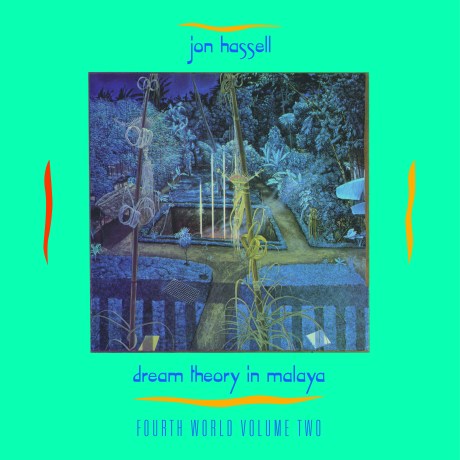
Jon Hassell ‘Dream Theory In Malaya: Fourth World Volume Two’
tak:til/Glitterbeat Records, 29th September 2017
Proving a fruitful enterprise in the exploratory music department and a welcome extension of the ambient and minimalist genres, the, what should seem on the surface, harmonious partnership between Brian Eno and Jon Hassell proved anything but; leading eventually towards acrimony. These now iconic Fourth World Music albums, the first volume being Possible Musics, were borne entirely from Hassell’s solo traverses in global music experimentation, though Eno’s minor but significant, if not entirely obvious, involvement grabs the attention and headlines: The second volume, Dream Theory In Malaya made no such distinctions, and would be credited wholly to Hassell.
Already artistically riding high on a crust of acclaimed production projects and numerous semi-successful collaborations and solo albums, when the famous Eno touched down in New York City in 1978, the ambient pioneer would nonetheless unintentionally help direct another important development in the fields of ambient and world music. Absorbed in what the city had to offer him musically, Eno would fatefully during his investigations come across the stripped and atmospherically rich experiments of the gifted trumpeter/composer Hassell, whose own pathway from adroit pupil of Stockhausen to seminal work on Terry Riley’s harangued piano guided In C, encompassed a polygenesis of influences: a lineage that draws inspiration from avant-garde progenitors like La Monte Young, and travels far and wide, absorbing sounds from Java to Burundi.
So impressive is Hassell’s CV and study credentials – studying with an array of diverse bastions of indigenous music styles, including Hindustani classical singer and mystic, Pran Nath – that many other such luminaries, both before and since, attempted to court his attention for possible collaborations (Peter Gabriel, David Sylvain included). Though a minor figure in the sense of worldwide recognition, and never one to brush with any sort of commercial popular success, Hassell irked out his own personal philosophy. With a handy masters degree in composition, he attempted a reification of what he would term the “fourth world”; a style that reimagined an amorphous hybrid of cultures; a merger between the traditions and spiritualism of the third world (conceived during the “cold war” to denote any country that fell outside the industrious wealthier west, and not under the control of the Soviet Empire) and the technology of the first. The record that initially charmed and impressed Eno, Hassell’s eclectic Vernal Equinox, blended a mystical suffused atmosphere of the Middle East with vaporous trials of South America and the Orient to the West to create minimalistic transmissions from a timeless geography. A meeting at the performance artist space The Kitchen cemented the deal that would see Eno produce Hassell’s, now iconic, visionary Fourth World Vol.1: Possible Musics peregrination – also, though a while ago now, reissued by Glitterbeat Records.
Annoyed and aggrieved, Hassell had seen as a result of Eno’s contributions his work categorized under the English ambient progenitors own name in record stores; demoted to support or a bit-part player role on his own compositions. He’d also been more than a bit frustrated and peeved that Eno was heavily borrowing and appropriating Hassell’s Fourth World concepts for his subsequent famous collaborations with David Byrne on the My Life in The Bush Of Ghosts and Remain In Light albums.
Eno was however forgiven long enough to be welcomed back into the fold on Dream Theory; even going as a far as to grant him a trumpet solo on the out-of-body projected traverse of a wet Malaysian jungle peregrination These Times. And because he was always generous with the introductions, and more importantly, they offered ‘exceptional rates’, Eno put Hassell in touch with the ‘enterprising and talented’ Lanois brothers (Daniel and Bob) who at that time, on the cusp of the 80s, were building a steady reputation for themselves out of their ‘chez’ home studio in Hamilton, close by to Toronto.
Adding to this musical exploration dream team was sessions coordinator Michael Brooks (known for his work with the celebrated Nusrat Fateh Ali Khan), who’s home in Toronto Hassell commuted from to the studio each day, and in the most removed way, former Velvet Underground drummer (the first in fact to sit in for the band) and renowned conceptual artist/land art sculptor Walter De Maria, who popped in just for ‘fun’ and may or may not have left a presence of distant drums on the misty fuzz veiled Polynesian fantasy, Courage.
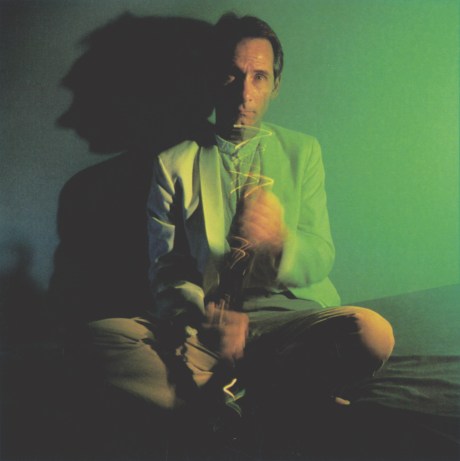
In the borderless compositions of Hassell, evocative traces, hazy semblances and the reification of dreams manifest through transformed instrumentation to create an amorphous reimagined soundscape. As the leading quote from Hassell’s linear notes make clear, this is a new form of classicism – a re-classification if you like -; eroding the dominance of central Europe’s great composers for that of cultures from Southeast Asia, Africa and Australasia.
The concept of Dream Theory In Malaysia is no different, the central theme and interest piqued both by the anthologist study of the same name by Kilton Stewart, and the ‘water splash rhythm with giggling children and birds from a [the Semelai] tribe’ sound recording that accompanied the Queen’s tour of the Commonwealth sanctioned book, Primitive Peoples. Adventurer Stewart famously chronicled the ‘dream tribe’ Senoi people of the central Malaysian peninsular, whose ancestors had made the voyage across from Southern Thailand 4,500 years ago. The Senoi are practitioners of ‘lucid dreaming’ of course, a phenomenon that Hassell lapped up in a romantic affair with the region and its people (as an aside, Hassell’s notes throw in a love tryst with an ‘exotically-tuned’ woman from Kuala Lumpur for good measure).
Leaving his mind to wander, Hassell’s transmogrified nuzzling trumpet was set loose on the dreamy visages of Malaya. Invented scales transcribed over mysterious celluloid picturesque panoramas and more humid, almost stifling and abundant muffled fauna and vegetation wild spaces permeate this ambient escapism, as subtle echoes of the indigenous instrumentation ring out in a ghostly fashion; especially the Malay tambourine known as a ‘rebana’, and the local variant of a gong, as used by the Semelai people – like the Senoi dreamers, another branch of the Orang Asli collective of ethnic peoples that inhabit Malaysia’s peninsular, brought into the sphere of this semi-fictional, semi-factual suite.
Paddle beaten percussion, wooden fluty drones, a languid bass guitar, and what sounds like the kind of car horn you’d find on a Model T Ford, merge in this vaporous swirl of a soundscape. But it’s Hassell’s serialism and transduced tones and layers that guide the listener; from sucked-in heralded fanfares to snuffling and zigzagging ripples of descriptive scene setting and landscaping.
Re-released, for the first time since its original release in 1981, Dream Theory In Malaya is the fourth album in Glitterbeat Records new tak:til series. It fits congruously of course within this imprints framework and vision of a borderless reimagined musical landscape unbeholden to convention and structure. And once again celebrates the mavericks and pioneers striving to reinvent what ‘global music’ can be: in this case an undiscovered expanse of imagination and possibilities.
Tickling Our Fancy 053: Chicago Afrobeat Project, Deben Bhattacharya, Odd Nosdam, Širom, Nosaj Thing
August 21, 2017
NEW MUSIC REVIEWS
WORDS: DOMINIC VALVONA
This latest roundup of the imaginative, exploratory, venerable and refined musical discoveries includes a second collection of film and field recordings from the late legend ethnomusicologist Deben Bhattacharya; the third peregrination from Glitterbeat Records’ new imprint tak:tile, Širom’s Slovenian soundscape odyssey I Can Be A Clay Snapper; a rebooted soul-in-the-machine electronica collection from Nosaj Thing; and the latest ambient soundtrack from Odd Nosdam.
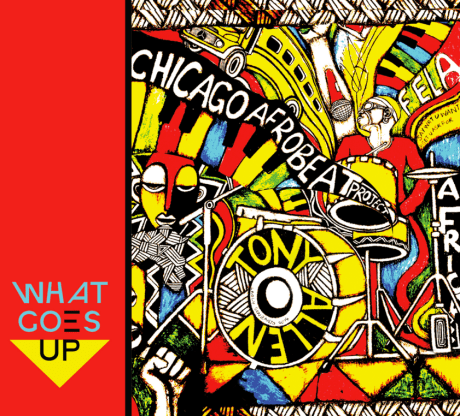
But first of all we have a reenergized Afrobeat collaboration between the genre’s doyen rhythm guru, Tony Allen, and the eclectic, protest driven, Chicago Afrobeat Project, called What Goes Up.
Read on…
Chicago Afrobeat Project Feat. Tony Allen ‘What Goes Up’
September 15th, 2017

Starting life as a shifting collective of musicians jamming in a artist’s loft, channeling the fervor of Afrobeat’s progenitor Fela Kuti, the Chicago Afrobeat Project initially covered the Nigerian icon’s back catalogue before developing their own variant style. Transducing the sound of downtown Lagos and the Afro-Spot nightclub via the rich musical heritage of their own native metropolis, the group, now settling with a regular lineup, open the studio doors to embrace the city’s famous blues, soul, R&B, jazz, gospel, house and hip-hop culture.
Expanding on and playing with the Afrobeat foundations but staying true to the roots of the African fusion that first merged the popular Ghanaian Highlife hybrid with funk and soul, the project members invite a number of vocalists and rappers from the area to enthuse, lead and prompt the music towards the political; reinforcing the main message and activism behind much of Kuti’s own, often dangerous, protestations and rebellious denouncements.
As if it wasn’t already enough, the Afrobeat ante is upped with the appearance of Kuti’s wingman and rhythm guru, Tony Allen. Showing those youngsters a thing or two, Allen brings certain levity, a craft and connection to the source, to this ten-track album. Flown in especially from his home in Paris, Allen, who’s also recently recorded a tribute album to Art Blakey (which he says fits in well with the Chicago Afrobeat Projects What Goes Up), doesn’t just turn up to add a roll and drum flair here and there, he plays on all the tracks, laying down the foundations, leading the way and rattles off his trademark polyrhythm shuffles, jazz timed syncopations and, most important of all, infectious grooves: the fight against injustice has never rarely so funky.
The elder statesman of Afrobeat, sounding almost effortless with his limbering and relaxed drumming, brings a sagacious quality to What Goes Up, though his comrades bring the bright and heralding horns, laser zappy synths, church organ and sunny Hammond sustained rays to the get-down.
Guests, of which there are many, on this sweltering and sauntering conscious album include a new jack swinging, bordering on gospel house style hook, protesting JC Brooks (Race Hustle and Sunday Song); an Igbo lullaby and Afro-futurist meets atavistic soul of Western Africa Oranmiyan (Cut The Infection, Must Come Down and Afro Party); the soulfully sassy, tumbling R&B songstress Kiara Lanier (No Bad News); and a metaphorical conversationalist style Rico Sisney and Maggie Vagle (as sparring partner) of Sidewalk Chalk (Marker 48).
As Rico Sisney puts it on the skit for environmental justice, Marker 48: “Something’s gotta change!” And over the course of the album the collective tackle every kind of current injustice filling up the newsfeed: from the alarming murder rate in the inner cities, including Chicago’s own widely publicized tragic rates and by extension the Black Lives Matter campaign; racial profiling and harassment; tensions between communities; and of course, Trump.
Speaking Kuti fluently, channeling the Afrobeat totems and the most hustling, hot footing rhythms, the Chicago collective offer a unique take on the genre under the watchful eye of Tony Allen. Bridging two generations, adding some fresh licks and eclectic sounds from their own backyard, they do more than most in reenergizing the Afrobeat blueprint.
Nosaj Thing ‘Parallels’
Innovative Leisure, 8th September

An urgent rewire; a forced reboot; the fourth album from the Los Angeles-based electronic producer/composer/performer Jason Chung, under his Nosaj Thing alter ego, focused the mind like no other project before. As a warning to us all that backing up your hard drive is not only vital and reassuring but also a security precaution, Chung lost three years worth of demos, sketches and compositions, many of which were destined for this LP, in a robbery whilst out on tour with Warp Record’s signing Clark.
Losing all his equipment and a number of precise hard drives, all of which were never backed-up or saved anywhere else, meant that Chung would have to start from scratch, and as it has proven, reexamine not only his methods of storage and quality control but also his process of creativity.
Parallels is in fact billed as some kind of “epiphany” for Chung; a journey into “uncharted territories” for an artist renowned for his collaborative fusions with Kendrick Lamar, Kid Cudi and Chance The Rapper. Changing direction and playing to it to his advantage, Chung uses this as an opportunity to explore deeper expanses. Far from wild and edgy however, Parallels is a quite vaporous but controlled soulful listening experience. Counterpointing various succinct philosophical questions (‘Dystopia or Paradise’, “Love or Regret?’) and themes (‘Emotions vs. Technology’, ‘Soul vs. Machines’) Chung’s electronic suffusions linger in a woozy sometimes haunting fashion between his many juxtapositions, yet always remains connected with a touch of humanity: from the resonating visages of a taped conversation with a security guard watching over the Picasso & Rivera: Conversations Across Time exhibition, to the trio of varying degrees of ethereal and soulful vocal contributions from guests Kazu Makino, Steven Spacek and Zuri Marley.
Emerging from the ether, Chung opens the album with a veiled drone rumble, piano arpeggiator and ring of articulate beats before hooking up with London producer/singer Spacek on the haunted broody lament, set to a Polygon Windows meets minimalist R&B pop, All Point Back To You. A precursor, a taster, of what you can expect to hear on the future Makino/Chung collaborative EP (released we’re told at some point later on in 2017), the breathlessly whispered cooed and chilled suffrage How We Do, adds a ticking drum beat and Japan style ice-y synth to the gauzy shoegazing Blonde Redhead signature. Nocturnal dreamy downtempo house, ambient meditations and finely-tuned kinetic soul-in-the-machine meanders follow, before reaching Marley’s rich soaring to lilting contour hovering past love affair ruminations on Way We Were.
Finely chilled, articulated electronica, amorphously floating between escapism and dystopia, Parallels never quite settles on either. And despite a number of equations that pitch technology and the machine against humans, Chung’s music has a real soul and yearning.
Odd Nosdam ‘LIF’
Sound In Silence
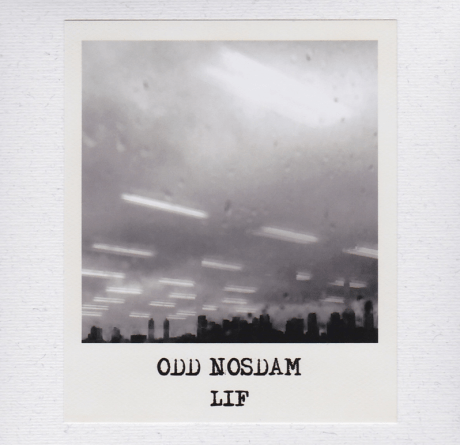
Few have changed the direction of hip-hop and modern ambient soundscapes like David P. Madson, the co-founder of both one of rap music’s most experimental outfits, cLOUDDEAD, and the seminal Anticon label. Forging a post millennium course with a number of collaborators, including Dose One, Yoni Wolf and Jel, Madson deconstructed, eviscerated and then rebuilt a more avant-garde, strung-out and expansive vision for hip-hop.
Under the Odd Nosdam title, inspired by the minimalist composers, and on this latest soundscape immersion, the degrading in quality traces and language of sound/video artist and composer William Basinski’s The Disintegration Loops IV, he delves ever deeper into the ambient sphere.
Informed by a prolonged spell of “nonstop rain” in his native Bay Area home, the LIF album transduces the West Coast of America’s winds and rains weather patterns into an analogue controlled, filtered and manipulated field of ebbing and flowing pulsing electricity. The capital three lettered titles (codes? Abbreviations?) fade in and out; like passing through a cloudy overcast or static resonating wave, which eventually dies out. Subtly alluded to, drizzling downpours are simulated, falling on glass, on the slight Japanese sounding RAI, and detuned TV set feedback accentuated moiety KEI I and KEI II. Whilst far gentler droplets fall like notes on the enervated rasping vignette AIN.
Prompts and themes of loneliness – and when listening to the varied ambient passages, you’ll find plenty of space to ruminate in isolation -, love and fear are key to unlocking, or at least perhaps deciphering, these ten mood compositions: articulated at times through subtle plucked out notation, bellowed harmonium, dreamy ascents above the clouds and floating lingers of melody. Refining emotion from a pylon hum, showers of rain or generators, Madson’s minimalist soundscapes traverse the Kosmische and ambient genres with a contemporary feel and movement.
Deben Bhattacharya ‘Musical Explorers: Krishna In Spring’
ARC Music, 25th August 2017
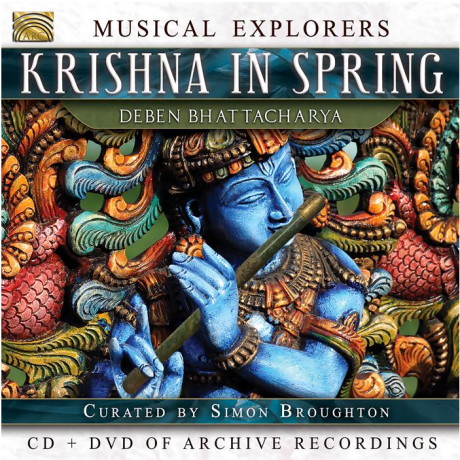
In praise of the field recordists, leading world music label ARC continues to champion the music and film recordings of the late ethnomusicologist Deben Bhattacharya in its latest series venture, Musical Explorers.
The project was launched back in June with Bhattacharya’s 1950s and late 1960s spanning Colours Of Raga, which included an introduction and illuminating set of notes from Songlines editor-in-chief, author of the “rough guides” to world music, Simon Broughton, who once again offers context and insight on this, the second volume in the series.
A self-taught producer, recording not only the sounds of his native India but also the Middle East, Asia and Europe, Bhattacharya travelled extensively cataloguing rare performances, bringing his exotic wonders to a his adopted British home and audience via various BBC commissioned documentaries and radio programs.
As the title suggests, Krishna In Spring is a paean of instrumentals, dances and venerable verses dedicated to, perhaps, the most venerated and famous deities in Hindu mythology. Demon vanquisher, protector of the common people, the mischievous incandescent blue portrayed god represents the “spirit for life” and for his tumultuous love affair with Radha. Said to have the common touch; never happier than when cavorting and leaping and springing about with milkmaids in his role as humble cow herder, Krishna is often depicted flute in hand, amongst the earnest folk. Almost every love song in the Hindu songbook is in his honour or at least references him. The diaphanous articulated Indian bamboo flute, the Bansuri, is even used as a colloquial signature and evocation of his presence.
Taking the full extended performances, seen and heard briefly on the soundtrack, from the title’s twenty-five minute documentary come public information film (first aired in 1969), Bhattacharya captures a panoply vision of the famous Holi Festival: the “festival of colours” that ushers in the Spring, dedicated to the deeds and spirit of Krishna, or as Bhattacharya himself puts it, “…to surrender oneself to the spirit of life. That is the message of Krishna in Spring.”
Humongous sized drums; bicycle-pump tie-dye abandonment; women browbeating their menfolk with broom handles, enacting Radha’s stormy love affair with Krishna; silky clothed flag carriers and joyful communion, the Holi Festival footage, even in its scratchy washed-out by time and quaintly narrated form, encapsulates a vivid, chaotic worship. It is a festival steeped in tradition and seems out of time with modernity, but as we are told in the album’s accompanying notes, continues to be practiced in the exact same way today.
Glimpses, as I said, of the evocative drones, syllabic ‘bols’ speak and poet exultations are played-out in their entirety on this collection’s eight sweet and beautiful audio recordings. Half of which feature the backing of R.K. Bharati laying down elegant melodies and drones on the short-necked Indian fiddle, the ‘sarangi’, Hidayat Khan taping out various coda and frenzied sophisticated patterns on the tabla, and Chiranjilal planting atmospheric brassy drones foundations.
Touched with the afflatus, there are fine examples of dusky hour pentatonic scale flightiness and serenaded flute pulchritude to Krishna throughout, including Suraj Narayan Purohit and Indermall Mathur’s Raga Bhupali, the adulating voiced incantation to the many names and trials of the beloved deity Devotional Song Of The Ballabh Sect In Praise Of Krishna performed by Amarlal, and the lengthy lyrical prose turn conversational drama, based on the late 14th century poet Chandidas’ original and the subsequent additional litany of poet contributions throughout the ages, Mathur, performed by singers from the Mitra-Thakur family.
Every bit as revelatory, especially to those unfamiliar with India’s multifaceted belief systems and extraordinary musical heritage, as the first of Bhattacharya’s collections in the Musical Explorers series, Krishna In Spring does however offer an even deeper and varied window on classical Indian music: A celebration of sounds that traverse Rajasthan, West Bengal but above all the holy.
Širom ‘I Can Be A Clay Snapper’
tak:til, 8th September 2017
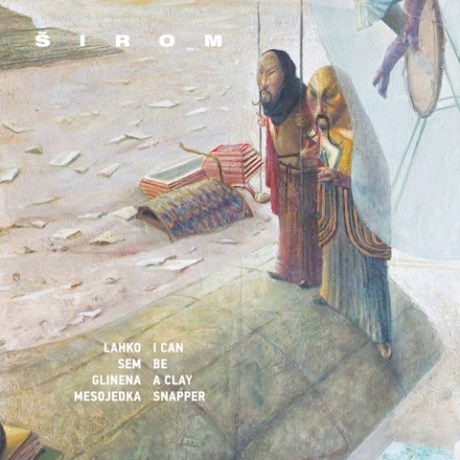
With an unspecified, but as the name suggests, emphasis on the “tactile”, Glitterbeat Records new imprint label gives a welcome platform to entrancing experimental tonal performances (launched earlier this year with 75 Dollar Bill’s Wood/Metal/Plastic/Pattern/Rhythm/Rock and Joshua Abrams & Natural Information Society’s Simultonality albums) and sonic polygenesis traverses alike. In the latter camp is this Slovenian peregrination suite from the landlocked, Alps nestling country’s visceral sonic conjurors, Širom.
Evoking memories and feelings, both real and imagined, with a soundtrack thick with atavistic connections, the trio of punk and post-rockers turn experimental folk and acoustic instrumental cartographers convey a personal relationship to their homeland, on their second album together under the Širom banner.
Though part of a litany of Empires, including the Habsburgs, Italian and either through their own forced amorphous cultural, ancestral ties with neighboring regions and peoples, became part of the Croat-Slovenian and Yugoslavian annexations at one time, Slovenia has despite its size and battle for independence, maintained a distinct identity. In less glowing terms but pretty accurate, the writer Simon Winder in his Habsburg travel saga Danubia, described what we know as the modern Slovenia as being, “[…] stuck together from the rubble of the [Habsburg] Empire’s end, with its core made up from the Duchy of Carniola with bits of Styria, Gorizia, Istria and a small piece of the old Hungarian county of Vas.”
One of the central themes of I Can Be A Clay Snapper, and amongst the country’s most richly abundant resources, is water; the leitmotif of which appears throughout the album’s five odysseys, evoking mountain streams, lazy lowland meandering rivers and the mysterious vanishing water of Karst through a sonic transcription.
Revisiting a number of locations held dear, including some that proved very difficult to reach, Samo Kutin, Iztok Koren and Ana Kravanja travelled to locations as diverse as the bright yellow turnip rape fields of Prekmurje to the snowy mountain top of Kal above the village of Čadry to channel their inspirations and compose from improvisations this, often, meditative peaceable experience. As if the music didn’t quite signal the intentions and psychogeography well enough already, the trio have also made a film, Memoryscapes, to document this landscape surveying experiment: each, the album and the film, influencing and informing the other.
Though all three of Širom have different varied experiences to share, with both Kutin and Kravanja citing punk rock as a starting point, both playing apart in various bands in the Slovenian capital before eventually crossing paths at an improvisational music workshop and forming the kalimba-based Najoua duo, and Koren meanwhile, feeling a peculiar shame at listening to music during his childhood, but making it up for it ever since, serving in a succession of metal and post-rock bands, they manage to accommodate each other’s particular strengths, personalities and depth. Which can’t be easy especially when you glance at the scope of instrumentation used; each band member a deft practitioner of instruments as cosmopolitan and eclectic as the balafon, banjo, mizmar, lyre, ribab and as humdrum – but when put to good use and made into a impromptu device for making a rhythm or unusual sound – as common everyday objects such as a pair of drawers and household junk.
Yet whatever the backgrounds, traces of North Africa, Adriatic and the middle East, and individual influences, the performances sail scenically through a dreamy otherworldly representation of Slovenia: Oriental, alien and Balkan visions permeate the plucked, malleted, chimed and purposefully played compositions, which subtly and rather cleverly build up complicated layers and various overlapping time signatures during the course of their journey.
Theremin like siren voices drift in and out, enacting the myth and seraph, whilst on the watermill turning Everything I Sow Is Fatal Sun Ra travels with John Cale and Pharaoh Sanders on a pilgrimage to Samarkand. The most recurring sounds however pay testament to the Balkans ghosts. The folkloric stirrings, lulls and yearning of Slovenia’s past bordering both a pan-Europa of migration and grief – stretching back a millennia – are transduced into often haunted vistas and metaphysical passages.
Changing tact so to speak, following the first two and ahead of a fourth re-issue (a second volume of Jon Hassell’s pioneering Fourth World ambient evocations is to be released just a few weeks after Širom’s LP), I Can Be A Clay Snapper is the first tak:til imprint to meander into south central Europe. And what an impressive and expansive inaugural Balkans travail it is too; different from the previous two releases, yet keeping to the tactile, accentuate and imaginative remit; whilst conjuring up mystical new soundscapes.
ALBUM REVIEW
Words: Dominic Valvona

Ifriqiyya Electrique ‘Rûwâhîne’
Glitterbeat Records, 26th May 2017
I’m going to stick to my initial reaction, I first exclaimed on hearing the first two tracks from this extraordinary sound clash, Rûwâhîne, and once more reiterate that it sounds like the Funboy Three meets Einstürzende Neubauten in the southern desert regions of Tunisia. But for the purposes of a more insightful review I will expand on that one liner.
Capturing something quite unique, the collaborative industrial post-punk and avant-garde rock scenes of Europe clash head-on with the descendants of the Hausa slaves atavistic rituals styled group, Ifriqiyya Electrique, create an often unworldly chthonian conjuncture of Sufi trance, spirit possession performance and technology.
A film project and now immersive sonic experience, inspired by the important Banga music traditions and the accommodating, rather than exorcising, of spirits ceremonial wild dances and call and response chanted exaltations of the black communities – originally transported to the region from sub-Saharan Africa – in the oasis towns of southern Tunisia, this astounding meeting of cultures and history is anything but scenic. And don’t for one-minute use that, rightly maligned (insulting you could say), catchall term “world music”. This is far beyond ideal, misjudged categorization. After all, to paraphrase the words of Grammy-award winning music producer Ian Brennan, “all music is world music”.
Formed in the Djerid Desert, the idea forged by field-recordist and veteran guitarist of the politically-charged Mediterranean punk and “avant-rock” scenes, François Cambuzat, and bassist Gianna Greco – both of which occasionally join forces with that livewire icon of the N.Y. underground, Lydia Lunch, to form the Putan Club -, the Ifriqiyya Electrique spans both continents and time. The band name itself is a reference to the Medieval “entity” that contained present-day Tunisia and parts of Algeria and Libya; much along the African province boundaries inherited from the Roman Empire. On their part, Cambuzat and Greco provide the grind, industrial soundscape texturing, sonorous drones and flayed guitars, but mostly, the “electrique”. Offering a dialogue with the spirits and the tradition, Banga musician Ali Chouchen – joined in the live theatre by an expanded cast of fellow voices, krabebs and Tunisian tabla players from the community, which includes Tarek Sultan, Yahia Chouchen and Youssef Ghazala – provides peripheral sounding evocative echoed and esoteric vocals and equally haunting nagharat.
From the very start of this album we’re immersed in the strange cavernous atmosphere of the Banga’s Sidi Marzûq ritual, with summoned forth voices and drums emerging from oscillating winds on laa la ila allah; followed up with the first of many triple cycle entitled tracks qaadrii-salaam alaik-massarh, which travails a dusky, dusty landscape of industrial-strength clanging and anvil hammering and wild guitar lines that fluctuate between reggae, noise, dance music and Faust – incidentally, Cologne rivals, Can are mentioned in the press release as an influence, and you can hear echoes of their E.F.S. experiments on the track mawwel.
We find ourselves taking on the role of voyeur, interloper even, on the less intense and more stripped field recordings that dot this album. Personal, intimate conversations and channeling sound like they were caught on the wind or by passing by the humble abodes of those in communion. When the intensity returns, these voices get lost in the rhythmic cycles and turmoil and sound even more ancient, even ghostly and otherworldly: the “electrique” throwing the trance like union between the old and present into a spiraling chaos.
Spiritual conversations transformed and realigned with the machine age turmoil of industrial noise, Arthur Baker style rock and hip-hop production, post-punk and even Teutonic techno, Rûwâhîne is a rambunctious unique force.
Alongside the recent Bargou 08 release from the same label, Glitterbeat Records, both albums shed light on the often overlooked, if not unknown, music of Tunisia; focusing on an understanding and dynamic showcase for a country that often attracts attention for all the wrong reasons.
NEW MUSIC REVIEWS ROUNDUP
Words: Dominic Valvona
Roll Call: The Black Angels, Anna Coogan, Cotton Wolf, Happyness, King Ayisoba, Lake, Alex Stolze, Swamp Sounds/Uncle Pop & The Dumbloods, Vassals, Andrew Wasylyk.

A mega edition of the regular tickling our fancy reviews roundup this month, before the Easter Break and the Monolith Cocktail’s week long sabbatical to Palermo, we take you on a whirlwind trip through some of the “choice” most recent and upcoming releases. Pleasantries aside. Let’s crack on…
King Ayisoba ‘1000 Can Die’
Glitterbeat Records, 31st March 2017

Credit: Jacob Crawfurd
Sounding the klaxon call in defense of his native Ghana, and Africa at large, on his inaugural LP for Glitterbeat Records, the striking King Ayisoba, from the roots up, uses his guttural earthy howl and atavistic kologo lute to great effect in demonstrating not only a raw anger but also a deep love for a much misunderstood continent.
From the very outset Ayisoba and his contributors Wanlov da Kubolar & Big Gad – just two of the many guest appearances on this album – rap, sing and stamp a slogan sentiment on the opening Africa Needs Africa of, “Let’s fight for Africa/Africa needs us.” Covering the North African diaspora, the boat people’s sorry saga, the colonial past and umpteen other issues that more or less shape the image that those observers from outside the continent believe is the only side to Africa – between a misplaced sentimentality and outright ignorance. There is protestation and indictment, but also a lively focus on the positives too; finding solutions through the medium of music and culture.
Though Ayisoba advocates the “power of tradition” and the primal thrust of instrumentation is one passed down from generation to generation, 1000 Can Die features an eclectic and electric fusion of musical styles. The homegrown Ghanaian “hiplife” – a mix of rap, electronic beats and traditional rhythms – rubs up against ragga, dancehall and dub; a grandee doyen of which, the inimitable Lee ‘Scratch’ Perry, appears postulating a herb-hazed wisdom on the album’s rustically plucked and enraged title track.
In-between the fiery, bordering on punk, clatter of guluku, dundun and Djembe drums and rambunctious electronic phasing beats there are more plaintive, yearning stripped-back moments: Grandfather Song, a toiled from the soil of tragedy lament, offers a more intimate knee-jerk from the full-on band sound, and Dapagara is sent off into a sweeping, wafting vista by the Nigerian legend Orlando Julius’ traversing, reedy accentuated saxophone.
Raw from the heart, highly evocative and rebellious, King Ayisoba’s songs of rage and vitality actually offer a kind of hope in the face of adversity. The future of Ghana’s music scene is in good hands at least.
The Black Angels ‘Death Song’
Partisan Records, 21st April 2017

If you were looking for a creative musical reaction to Trump and the anxious times we live in then The Black Angels beautiful apocalyptic melodrama, Death Song, must be one of the most anguished and daemonic of responses. The Austin psych-rocking overlords first album in four years was written and recorded during the miasma of the US elections after all: and doesn’t it show!
An emotionally charged despair and anger with moments of catharsis, carried out to a Byzantine flavored soundtrack of esoteric Amon Duul II and Far East Family Band psych, a vortex of 80s Goth inspirations – including The cult and Siouxsie and the Banshees – and the tolling chimes of doom and drone, Death Song is, as the title suggests, a heavy, but most excellent trip. It begins with one of the Angels heaviest productions yet; a dark arts pulsing bestial diatribe on the controlling influence of money, entitled Currency. From there we’re guided across choppy seas between brighter less cymbal crashing hypnotics and swaying macabre, through the metaphorical “killing fields” of the huntress (I’d Kill For Her); the enslaved intoxicant spell casting of enchantresses (Half Believing); and the upside down: the final Floyd and Amon Duul II-esque Orpheus-is-comfortably-numb-in-the-underworld opus, Life Song.
Brooding romantically in Gothic tragedy as the world continues to turn, undaunted by the prospects of universal uncertainty, The Black Angels spread their wings magnificently on what is, perhaps, one of their best albums yet. The leviathans of the psych-rock scene have learnt much and after a recording hiatus return with something sharper, refined but just as mystical and hallucinatory.
Anna Coogan ‘The Lonely Cry Of Space & Time’
28th April 2017
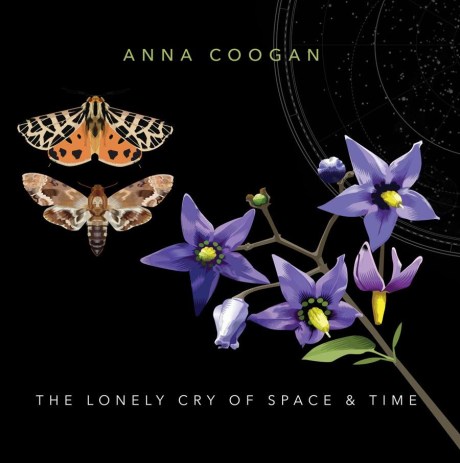
Not the easiest of bedfellows, difficult to love and often (rightly) condemned as indulgent and overblown, but the worlds of rock and opera do occasionally overlap in a congruous union. The unquestionably talented Anna Coogan for instance, mixes the two majestically, using her finely trained 3-octave soprano and classical background to offer fluttering siren-like arias that seem to surreptitiously manifest from, what is, an ever-changing metamorphosis of musical styles, on her latest album, The Lonely Cry Of Space & Time.
Spanning country, Ry Cooder desert meditations, Anna Calvi like trembled sensual emulations, PJ Harvey and even bubbly synth pop, Coogan together with musical collaborator Willie B – offering atmospheric Moog bass line undertones and drums – produce a wave (whether the gravitational kind, as serenaded and alluded to on the brilliant opening title track or, the metaphorical high seas kind, as referenced throughout) fixated lamenting and balletic travail.
Inspired by scientific discoveries, a “childhood listening to Puccini’s La Boheme”, the fateful poet Sylvia Plath, the tumultuous grave mistakes of intervention in the Middle East and, no surprises, the 2016 US elections Coogan’s ambitious suite of songs and instrumental evocations is far from lofty and classical. The operatic, learnt at the prestigious Mozarteum University of Salzburg, elements are transduced through a background of rifling through her father’s record collection of protest troubadours, and busking on the streets of Seattle, to leave only traces that appear naturally.
Occasionally rocking, most of the music has a cinematic more expansive touch, with three of the songs on this album originally composed to accompany the Soviet filmmaker Jakov Protazanov 1929 camp alien invasion/Russian revolution analogy Aelita, Queen Of Mars (the title track) and the French director Jean Epstein’s 1928 interruption of Poe’s classic, The Fall Of The House Of Usher (If You Were The Sun, A Wedding Vow).
Almost uninterrupted with each track flowing or bleeding over into the next, the album moves seamlessly between its musical and thematic influences. I could probably do without the romantic twinkled space helmet vocal synth pop Meteor, but overall this is an impressive performance, Coogan’s quivering wah wah and tremolo articulations matched equally by that heavenly, soaring voice.
Lake ‘Forever Or Never’
Tapete Records, April 7th 2017

Meant as anything but disingenuous, it’s surprising what the experimental pop group Lake get away with on their latest and eighth album, Forever Or Never. Remodeling an array of 70s/80s influences with a 21st century spin, they can turn some of the stalest MOR vaporous blue-eyed soul synth ballads and soft rock melodramas into something melodically enchanting but very poignant; analogies channeling the political and social maelstroms of our times, as most of the music coming out of the USA does in 2017.
Celebrating a recent tenth anniversary with perhaps the most exhaustive of performances, playing every song from their ninety-track back catalogue in an Herculean ten-hour set, Lake continue to submerge themselves in the Pacific Ocean Blue waters of nostalgia.
Finely attuned, lean and devoid of the superfluous, Forever Or Never is a mostly gentle, wistful breeze through yacht rock, Belle & Sebastian daydreaming romanticism, shoegaze and pop. Shared male/female vocals duties offer a constant variety that bears traces of Blonde Redhead, Harry Nilsson and The Pastels. And joining the betrothed founders Ashley Eriksson and Elijah Moore, and long-term band members Andrew Dorsett and Mark “Markly” Morrison before she passed away, the artist/musician Geneviève Castrée (for whom this album is dedicated) lent lush coos and backing vocals to the tumultuous Gone Against The Wind and bright, easy-going finale, Magazine.
Sometimes it’s like hearing Fleetwood Mac if they’d formed during the C86 phenomenon, and at other times, a strange transmutation of Captain & Tennille, and a vague stab at a post Sunflower Beach Boys jamming with Hall & Oates. Disarming and emotionally sophisticated throughout, with subtle, warm but diligent songwriting, Forever Or Never is a melody rich harmonious meditation on inner turmoil, forgiveness and mourning, that can’t help but also comment on the recent political landscape.
Alex Stolze ‘Mankind Animal’
Nonostar Records, 31st March 2017
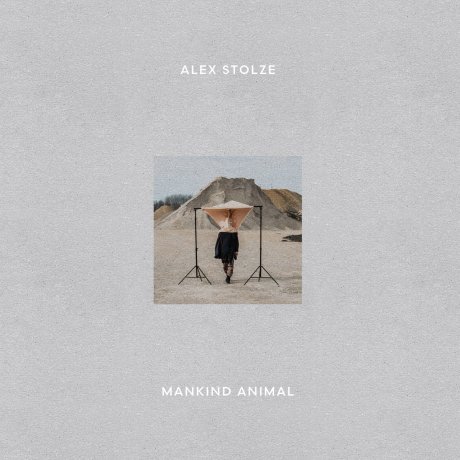
Transforming the traditionally entrenched sound and indeed reputation of the violin, German composer/producer Alex Stolze attempts to reanimate the instrument, “preserving” it, as he states, “for future generations, without being a conservative classicist.”
No stranger to reinvention, recently performing radical deconstructions of Bach’s Kunst der Fuge with the Armida Quartet, at Berlin’s Radial System venue, Stolze has gained a certain exploratory reputation for his work with the electronica acts Bodi Bull and Unmap (amongst others).
Concentrating the mind, finding a certain solace, the Berlin urbane stalwart has relocated to the German/Polish borders for a more pastoral life of contemplation; spending time on rebuilding an old ruin in the countryside but focusing on the vision for his solo work. Nothing short of guiding humanity towards a less destructive, more empathetic spirituality, Stolze attempts to bridge classicism and contemporary amorphous electronic music on his debut solo record, Mankind Animal.
Less Roedelius neo-classical, or for that matter Tony Conrad Dream Syndicate, and more John Cale inspired viola distortions and that titan of the German avant-garde Stockhausen and his electronic processing of orchestral instrumentation, the five-track Mankind Animal suite is surprisingly fluid and melodic. Conceptual and avant-garde in influence certainly, but far from a grueling or challenging experience.
A chamber ensemble mix of electro-acoustics, ambient traverses and, at times, kinetic beat undulating soul, this pan-Europa soundtrack often evokes transmogrified traces of traditional scores and folkloric music from central and eastern Europe: The articulate plucks, quivers, wanes and yearnings that emanate from Stolze’s five-string custom-made violin often sounding a link back towards the past, and ghosts of an old continent. Tradition is very prominent, but an intricate bed of low synth, contained sophisticated beats and mechanics bring it into the present.
Over the top of this score, Stolze’s succinct campfire lyrics of profound prose make allusive references to the here and now though again these concerns are often age-old: from, “where to start if you want to change the system”, on the lyrical resigned meander through the universal condition The Crown, to the more personable inner sage advice of “don’t try to be someone else/otherwise who would be you”, on the opening Don’t Try To Be.
From the cinematic Eraser to the softened timpani minor-overture Stringent, Stolze and his ensemble produce a considered postmodernist suite, both experimental in merging the classical with the contemporary, and yet a pleasurable, even soulful and thoughtfully poised listening experience.
Joji Hirota & The London Taiko Drummers ‘Japanese Taiko’
ARC Music, 28th April 2017

One of Taiko drumming form’s most prestigious of stars of the last forty years, Joji Hirota cements his sizable reputation with this latest collection, simply named Japanese Taiko. Literally, as is the case with most of these direct from Japanese translations, the ancient style of Taiko itself means “big, fat drums”, (which you can’t really argue with) and on this album features a number of these drum shapes and sizes, from the smallest, a “uchiwa tom”, to the behemoth sized “oh daiko” (again, literally a “big drum” that measures 140cms in diameter).
Inspired by the volcano piqued hot springs landscape of his native Hokkaido – Japan’s most northerly of main islands – Hirota, who started training at the age of eleven, merges majestic traditions with a unique modern approach: He was after all among the first of the Taiko practitioners to bring the style to the West, and has more recently lent his music to the soundtrack of Martin Scorsese’s latest martyrdom, Silence. Together with his four male and eight female strong London ensemble the maestro thunderously rolls through Taiko’s folkloric, Noh theatre, Kabuki, Buddhist and Shinto religious ceremony origins with agility and at times entrancing aplomb.
Building up pattering rumble evocations of the Spring Breeze or, stroking the drum skins to an atavistic Japanese flute accompaniment in ritual to a Harvest god (Kokiriko), this dynamic, though often monotonous, chorus of drummers is surprisingly melodic. A barrage yes, but the drumming wall of sound is often elevated by poetic vocals – usually in chorus, though there is a strange mix of call and response staccato rapping on Akita – and subtle mood and tonal changes; from wood clapping to finger bells and cymbal swells.
To experience live is something else: a synchronized art form of music and theater. But this showcase of tradition and experimentation, with half the compositions written by the man himself, is a great introduction to the form.
Cotton Wolf ‘Life In Analogue’
Bubblewrap Collective, 28th April 2017

As technology’s ever-domineering progress takes over and algorithms creep into the creative process it’s a relief to see and hear that the Kraftwerkian dream of complete immersion between humans and machines, with all music created by a computerized brainiac, is still a long way off. And though by its very democratized nature and access electronic music is obviously wholly reliant on tech, which is getting ever cheaper and easier to use, there are many artists who wish to (and excuse my trite cliché) put the soul back into the machine. The Cotton Wolf Welsh duo of “super producer” Llion Robertson and classically trained composer Seb Goldfinch are among those, “living in the analogue”, who leave an indelible human mark on electronic music.
Their debut album is an often sophisticated, downtempo, merger of small, organic Leaf Label like synthetic drums and tight percussion and subtle atmospheric waves and suffused strings – part of the symphonic quality and melody the duo wish to emphasis. With guest vocals from the attentive soulful Alys Williams, on the gauzy veiled Lliwiau, and calm fluttering siren Lois Rogers, on the softened Massive Attack-esque Future Never, Cotton Wolf omit for a sense of performance and humility.
“Unapologetically” Welsh, Williams for example sings in the dialect, the duo is rightly proud of their heritage. And they are in some ways in the middle of a golden resurgence, with countless fellow Welsh electronic artists, from The Conformist to R. Seiliog and Gwenno Saunders to name just three, gaining critical attention and flying the flag. But, apart from the language, there isn’t a common identity in the music itself. There is no such thing as a “Wales sound” in the genre. Life In Analogue is if anything a global soundtrack, with traces as diverse as Kosmische, EDM, Bonobo and even mellowed South American electronica all under one roof.
More than a little classy, electronica with a human touch, Cotton Wolf weave the symphonic articulately into an album with depth but also commercial appeal.
Swamp Sounds/Uncle Pop & The Dumbloods ‘ST’
Bearsuit Records, 24th March 2017

A split offering from the Edinburgh label of idiosyncratic experimental sonics and more lo fi indie pop fare, Bearsuit Records bring us an incongruous curious pairing of, mainly, electronic music mavericks.
From further up the Scottish east coast, Dundee artist/musician Douglas Wallace, under the strange Uncle Pop & The Dumbloods appellation, has fashioned an imaginary Hondo City futuristic soundscape that bares little relation to the track titles. With a backing of trebly crisp electronic percussion, tetchy cymbals, clean crystalized synths and trans mutated guitar wails, Wallace’s science fiction travails make ephemeral references to Murcof, Bowie’s Heroes peregrinations, Ryuichi Sakamoto and the sort of 80s vapour ice-misty synth soundtrack fare you’d find on the video-nasty, Shogun Assassin. Reverent at times, primordial at others (check the lost world of Song For Broken Singers), ole Uncle Pop’s contribution is a subtle, meditative counterpoint to his album companion’s ennui flitting Casio car-crash bombardment.
Hailing from Nagoya, Japan, experimental electronic music artist and founder of Sleep Jam Records, Yuuya Kuno flirts with a number of aliases including House of Tapes but for this label and in this capacity goes under the Swamp Sounds moniker. Chopped-up into a loopy soundclash of Casio pre-set schlock and drama, Kuno’s 80s meltdown collage is both ridiculous and yet full of interesting surprises. Tracks such as Skull Disco feed Daft Punk through a dial-up connection and grinder, and Houndstooth sends Atari Teenage Riot to a laser quest showdown.
Run of the mill for Bearsuit, who constantly release such curiosities, but for us the listener these experiments prove intriguing; bringing to our attention some unique artists, working on the peripherals of sonic reinvention and cut-up mania.
Andrew Wasylyk ‘Themes From Buildings And Spaces’
Tape Club Records, 28th April 2017

The second artist in my roundup to hail from the fair city port of Dundee, musician/composer Andrew Mitchell (nee Wasylyk) pays a moving sort of homage to his home on Themes From Buildings And Spaces. With the onus on the psychogeography of the architecture in Scotland’s fourth-largest city, its history as the capital of Jute production features heavily as a recurring theme; the ghosts and lingering traces of Tayside mills and the people who worked the oppressive Industrial Revolution machinery within them making their presence known on the reflective Lower Dens Work.
Memories both haunting and meditative are made concrete, prompted by the iconic images of the late, “father of Scottish modern photography”, Joseph MacKenzie and a mix of architectural markers – only ever seen in Scotland – from across time: stoic granite beauty to hard-to-love Brutalism. The very evolution of Dundee, over eight instrumental evocations, is lent both a melancholic and romantic soundtrack of lapping piano tides, gentle swooning colliery jazz brass, synthesized choral voices and peaceable textures. Sounding unique, even pastoral at times, these suites conjure up a Caledonian Air, yet at other times errs towards the ether, conjuring up those old ghosts and spirits.
Andrew sheds a new light in many ways on Dundee with the most reflective of timeless scores.
Happyness ‘Write In’
Moshi Moshi, 7th April 2017
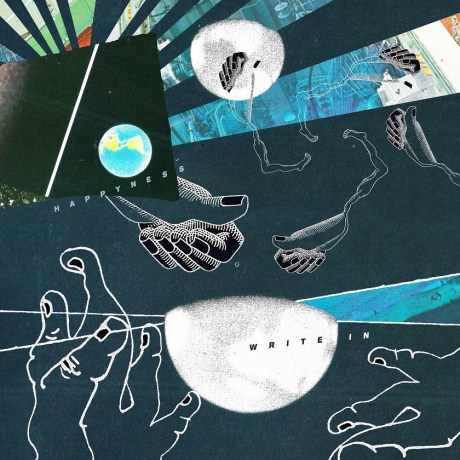
Ah…the sound of a band embracing the heartfelt warmth, accentuated dazed melodies and special feel of such 70s fare as Randy Newman, Harry Nilsson and Big Star, Happyness evoke the hazy fond memories and subtle sophistication of these and other complimentary artists on their new album, Write In.
Having previously covered and absorbed tootsie roll Beach Boys idyllics and the Athens, Georgia college radio rock of the obscure Club Gaga on last year’s Tunnel Vision On Your Part EP – the title-track of which appears alongside the drowsy-sighed pop spankler Anna, Lisa Calls on this, the group’s second LP –, and often drawn favorable comparisons to Wilco and Pavement, Happyness find themselves liltingly tuning into a more eclectic array of influences for their most melodious, engaging songbook collection yet.
The opening Falling Down gambit, with its radiant phaser guitar, conjures up the Scottish indie supremos (and fellow Big Star acolytes) Teenage Fanclub, whilst the pastel-shaded saddened tone of The Reel Starts Again (Man As Ostrich) sounds like a lost, ghostly remnant of a George Harrison and Jeff Lynne malady. A touch of the Brighten The Corners era Pavement permeates the band’s weary slacker muffled Uptrend/Style Raids, but by the time we reach the halfway stage of the album the lads are back to thrashing out a languorous grunge-y grind on Bigger Glass Less Full.
Subtle and confident, Write In is a halcyon, beautifully executed album with real depth and personality. Happyness have found their flow with loose but perceptively well-crafted gentle pop songs of a timeless quality: to be played as the “credits roll forever”.
Vassals ‘Halogen Days EP’
Post Fun, 7th April 2017

You have Audio Antihero’s indefatigable Jamie Halliday to thank for dropping this EP from Brooklyn misfits Vassals onto my radar. The backing band of Audio Antihero signing Magana, the trio’s latest release bandies between, as the press release puts it, a sort of “bleak beauty” and “chaotic minimalism” that strays into “slacker-rock ambivalence” and “post-punk cynicism”. I can confirm all of that, but would like to add the following if I may.
There’s more than a touch of the new wave on Halogen Days quartet of power-pop and grungy-romanticism. The slacker and grunge elements made brighter and indolently tuneful for it.
A run through of the EP then: We have the pendulous drum and echoed vocals of the opener Sea Spells, which sounds like a young Glenn Tilbrook fronting The Yeah Yeah Yeahs; the Moonless (“night”) build up swell of crescendos that evokes the Tokyo Police Club and Wampire; and the return to the source of inspiration with traces of The Pixies and Dinosaur Jnr on the stumbling SoHo. The finale meanwhile, Ghostwood, traverses Pavement and The Strokes (when they were something), on a peaks and lulls, heavy and accentuate crafted N.Y.C. indie resigned anthem, that literally spirals and pounds away until lifting off.
Bright hopes indeed and nowhere near as petulant as you’d expect. There is amongst that cynicism and effortless sounding despondency some real thought and musicianship, the lyrics actually far more aching and heartfelt than they might admit.
REVIEW
Words: Dominic Valvona
Released in quick succession the upcoming congruous 75 Dollar Bill and Joshua Abrams & Natural Information Society albums double-bill of entrancing experimental peregrinations not only represents the sonic intentions of Glitterbeat Records new imprint scion tak:til but also represents a mutual enterprise of partnership between networks and labels, both in Europe and in the States. The first of these albums, the 75 Dollar Bill duo of NYC-based musicians Rick Brown and Che Chen’s long-winded staccato Wood/Metal/Plastic/Pattern/Rhythm/Rock – abbreviated forthwith as W/M/P/P/R/R – was originally released back in the summer of 2016 via Thin Wrist Recordings, to much fanfare and critical acclaim from the music press. Meanwhile, Joshua Abrams’ Simultonality, the fourth album in the Natural Information Society’s nine-year history, is a new release in conjunction with eremite records – a partnership that’s hoped will spread Abrams’ vision to a wider audience in Europe.
Sharing some familiar themes with, indeed inspired by, Glitterbeat’s mini series of ambient releases, spearheaded by the re-release of Jon Hassell’s innovative “fourth world musics” classic with Brian Eno, Vol 1: Possible Musics, both albums reflect the raison d’etre of the new tak:til off-shoot. Adhering to Hassell’s blurring of the divide between futurism and tradition, 75 Dollar Bill traverse the psychedelic desert rock and trance of the Maghreb, avant-garde, jazz and even swamp boogie delta blues in a most indolent but listless transient manner on W/M/P/P/R/R. Motivated by an interest in “compound meters” – meter involves the way multiple pulse layers work together to organize music in time; a compound essentially dividing the beat into three equal parts -, but playing in a fashion that feels natural and organic, the follow-up to 2015’s more “forward momentum, stomping and shaking” style Wooden Bag is a nuanced clever exploration of interconnected tonality and tactile responses to a wealth of harmonics and melodies from a pan-global array of influences: from modal jazz to Arabic modes and eastern scales.

Expanding from a core duo of plywood crate percussion and electric guitar to a full-on accompaniment of brass, contrabass and floor tom live, Che and Brown are joined on stage by a number of friends and musicians. A loose unit, the line-up can change, though many appear on this four track suite, including Cheryl Kingan (The Scene Is Now), Andrew Lafkas (Todd Gapp’s Mystery Train), Karen Waltuch (Zeke & Karen), Rolyn Hu (True Primes) and Carey Balch (Knoxville’s Give Thanks). What they produce is an often adumbrate, repetitive experience that builds gradually, slowly releasing various tangents of interplay.
The opener, Earth Saw, for instance (a compound meter trip) meanders, or rather limps “aksak” style along to a slow 9 beat phase; one minute recalling Tinariwen, the next, something far more atavistic and ceremonial. On the following untethered to any demarcated timing Beni Said the outfit twin the delta blues origins of West Africa with the Mississippi; carousing to a box full of bottle caps apparatus percussion over sand dunes and Cajun swamp porches simultaneously. Almost as a break in transmission, the shorter (almost a vignette in comparison) Cummins Falls is powered by a Bo Diddley floor tom and maracas primal shakedown to produce a strange ritualistic link back to the rock’n’roll soup. Returning to longer expanses, the longest sonic experiment on the whole album, I’m not Trying To Wake Up, has an even looser gait and languidly moves through a wafting saxophone punctuated jazz, Afro-rock and psychedelic soundscape: a sound and music ideology best described by the augurs of doom themselves in the album’s inlay card as “tent music for tent people.”
Probing a similar soundtrack, albeit in an unconventional sense of the rhythmic and groovy meaning, Joshua Abrams’ ensemble – the first in the group’s history to be created by a regularly gigging group of players rather than associated friends – fluctuate amorphously between freeform jazz, Afro-psych, Kosmische and the ceremonial: a place where the traditional meets the contemporary avant-garde.
An album of “pure motion”, the most “structured and thru-composed” yet we’re told, Simultonality has a dense, sophisticated, more cyclical than forward shuffling movement and energy to its five track panorama. Driven on, though not in the most obvious of directions, by a trio of drummers (Hamid Drake, Mikel Avery and Frank Rosaly) each track locks in to a hypnotic and often traversing loop. Numerous junctions grow and form from this trio of beat-makers to create subtle peaks of interesting rhythms. Dividing the drums, with Avery in the left channel and Rosaly on the right in some cases, and with each playing a specific part of the beat, as they do on the transmogrified Jaki Liebezeit famous Vitamin C drum break experiment Sideways Fall (each taking a deconstructed section of that original break), you can hear something that sounds both familiar yet abstract and slightly off-kilter: The title of that track captures the never-ending free-fall of this stumbling cosmic performance perfectly.
The album’s finale uses another famous track as a prompt for a flight of fantasy to take shape from; Alice Coltrane’s mystical spiritual jazz survey, Journey In Satchidananda, inspires the group’s improvised 21281/2 South Indiana peregrination. A reference to the days when Abrams was the house bassist for the weekly sessions at Fred Anderson’s Velvet Lounge (the address of which is used for the track title) At the end of the night as the band packed away their instruments and Anderson re-stocked the bar, the transcendental allure of Coltrane’s classic would be played in the background: the ideal comedown. In what sounds to all intents and purposes like a tune-up, as the musicians play around, the initial stirrings of this Velvet Lounge reincarnation slowly meanders and winds together to shape a meditative jazz odyssey, resplendent with a wandering, peaceable tenor sax performance from guest artist Ari Brown.
Elsewhere there’s the African flavor joint Maroon Dune that features a sustained lingering harmonium and sounds like Embryo’s Africa mixed with Brian Eno and Karl Hyde’s DBF collaboration; the Wurlitzer blaze of rotating intensity and heavy free-jazz orbital Ophiuchus; and the transcendental harp tinkled glide through a Nepalese water garden St. Cloud.
Abrams and his ensemble effectively combine old worlds and new: imaginary ones too. Borders crumble and influences merge, though the philosophical idea behind this album is to “help listeners achieve a meditative centre and to consciously use music as a gateway to living.” It certainly, even with the different dizzying drum patterns and density, entrances after a period; each track, as I’ve already mentioned, cyclonic in orientation, a cycle or in the case of Sideways Fall, a continuing drop that never quite ends.
Simultonality is a syncopation of ideas both sonorous and fleeting yet totally immersing. And perfectly, alongside 75 Dollar Bill’s harmonious offerings, suits the mood and themes of Glitterbeat’s congruous new imprint tak:til.
Our Daily Bread 237: Tamikrest ‘Kidal’
February 21, 2017
ALBUM REVIEW
Words: Dominic Valvona

Tamikrest ‘Kidal’
Released by Glitterbeat Records, 1 7th March 2017
It’s been five years since Mali was last thrust into the world’s media spotlight; the Nomadic Tuareg’s age-old cause to gain control of an autonomous region in the country’s northwest border was abruptly hijacked by a less than sympathetic, franchise of Al-Qaeda. Declaring an independent state, known as the Azawad, in 2012, the Tuaregs were soon compromised by their miscreant partners; their ambitions reaching far further with an insurgency that threatened to destabilize the entire country. In their wake these extremists reduced many historical and revered sites to dust, and imposed the harshest forms of Islamist rule wherever they went: much to the distress of the Tuaregs.
Though it was more or less all-over within a year, the Mali government was forced to seek military assistance from the former colonial overlords, France, who rapidly quashed the insurgency and uprising, restoring, a sort of, peace to the region. An uneasy calm continues, albeit with a haphazard terrorist campaign (more recently in 2015, with an attack on a hotel in the Mali capital, Bamako) replacing the Islamists previous emboldened charge across the country, and a spiritually restless Tuareg population, trapped between a hostile government and the encroaching threat posed by global corporations eager to commodify their desert home.
Still without a homeland, though liberated from their draconian partners, the Tuareg are once again left, as wanderers in their own lands, the unofficial guardians and custodians of the Saharan wilderness. For now only a dream, best realized and protested through music, the rock’n’roll Bedouins Tamikrest emerge once more from the barren landscape with a message of “power and resistance”, on their fourth, equally entrancing, album Kidal. Paying homage to the strategically and spiritually important cultural trading town of the title, the highly-acclaimed (and rightly so) Tamikrest exude both the sadness and suffering of the dispossessed people who cling to the southwestern Saharan hub that is Kidal: a town which has seen its fair share of fighting, fought over, conquered and reconquered over time, it remains a symbolic home to the Tuareg. This is after all the town that nurtured them and where it all began.

Preserving an increasingly endangered ancestral culture and language, Tamikrest’s cause cannot be separated from their music. Yet, rather than protest with bombast or angry rhetoric, they articulate their woes with a poetic, lyrically sauntering cadence. Oasmane Ag Mosa’s earthy lead vocals resonate deeply, even if his timbre maintains a stoic dignified pitch. Backed by Aghaly Ag Mohamedine and Cheick Ag Tiglia on backing and duets, a lulling sweetness transcends, which on occasions adds a certain romanticism to the impassioned struggle. Swaying effortlessly between the meandering and up-tempo, the accentuated dynamics of Mosa and Paul Salvagnac’s entwined, untethered and contoured guitar work, Mohamedine’s “gatherer” Djembe rope-tuned goblet drumming, Nicolas Grupp’s askew backbeats and Tiglia’s smooth, free-roaming bass lines transport the listener to the mystical topography of the desert. Tamikrest’s mirage-style emerges into focus on the opening shimmering camel-procession Mawarnih Tartit, before traversing the vast plains with a drifting echo of Afro funk on Wainan Adobat. But perhaps one of the group’s most off-kilter, dizzying, entranced spells yet is the twilight hour twanged, giddy War Toyed, which has an almost dislocated rhythm. And definitely among their most reflective explorations, Atwitas features Salvagnac’s sublime, mournful and pining slide-guitar work; redolent of Ry Cooder’s own parallel American desert blues evocations.
Written in the desert but recorded in the urban capital of Bamako, Kidal was produced by Mark Mulholland (his last production, the Tony Allen and Haiti ensemble collaboration, AHEO, made our top albums of 2016 features), and mixed by Grammy award winner David Odlum. As a result, the album subtly embraces a wider musical palette, with hints of country and folk on the haunting Tanaka, and, what sounds at times like a strange Malian XTC on the plaintive cry for freedom War Tila Eridaran. And so it has already been noted that western artists, such as Hendrix and even Pink Floyd have had an influence on many African bands. A mutual exchange of course, the home of blues taking a little something back from the West. There’s still no mistaking that inherent African desert sound and passion, even if Kidal reaches out beyond the barren reaches of Mali’s borders for an ever expansive and diversified sound.
Assiduous, confident and articulate, the musicianship shows not so much a progression as a balance between the meditative and rock’n’roll spirit of the Tuareg musical resistance. Tamikrest are as brilliant as ever musically, and Kidal is, despite its plaintive and lamentable subject woes, a beacon of hope in an ever-darkening world of uncertainty.
Tickling Our Fancy 045: Bargou 08, Dr Chan, Delicate Steve…
January 26, 2017
NEW MUSIC REVIEW ROUNDUP
Words: Dominic Valvona
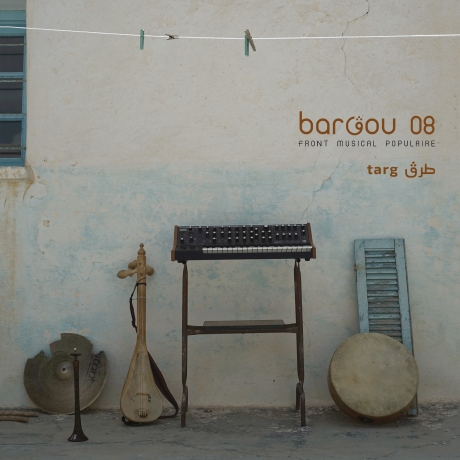
Tickling Our Fancy 045: A Journey Of Giraffes, Bargou 08, Delicate Steve, Dr Chan, Emptyset, The Food Of Love Project, Le Petit Diable and Julian & Roman Wasserfuhr.
In this edition of Tickling Our Fancy, the great and good of experimental and atavistic folk interpret sonnets and songs referenced in the works of Shakespeare, on The Food Of Love Project; John Lane produces his most experimental, esoteric, collection of field recordings yet, under his A Journey Of Giraffes alter ego; Delicate Steve marks his return with his first solo LP in four years, a collection of personable “songs without words”, entitled This Is Steve; Dr. Chan make their most “mature” howling skate punk meets primal garage row yet, $outh$ide $uicide; there’s mesmerizing Tunisian desert funk and atavistic vibes from Glitterbeat’s latest signing, the Bargou 08 project; the latest reification sonic suite from Emptyset; the accomplished jazz siblings, Julian & Roman Wasserfuhr’s recruit David Bowie’s Blackstar line-up for their Landed In Brooklyn suite; and finally, a welcome new solo direction from Jinko Vilova’s Ander López.
Bargou 08 ‘Targ’
Released by Glitterbeat Records, 17th February 2017
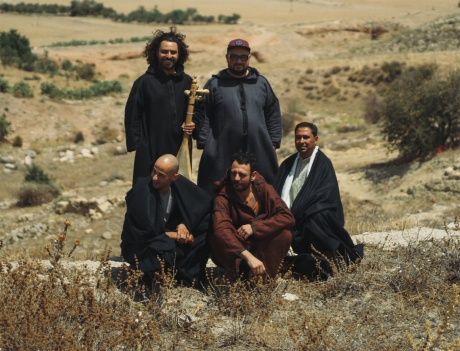
Ahh…the sounds of a dusky reedy gasba flute; the tactile patted and burnished bendir drum; the rustic, earthy strung loutar, and the flowing, scaling vocals of the Bargou 08 project’s chief instigator, Nidhal Yahyaoui, set an impressive atmosphere in the first couple of minutes of the album’s opening, Chechel Khater.
The source of this sound derives from a relatively uncharted region that lies obscured between the mountains of northwest Tunisia and the Algerian border, called the Bargou Valley, which despite its barren isolation, has cultured a unique musical fusion, stretching back hundreds of years. Captivating and magical enough in its ancestral unchanged form, the songs of the valley, sung in the local Targ dialect (a language that is one part Berber, the other Arabic), are given a contemporary jolt that transforms the atavistic paeans, odes and poetry of yore into an intoxicating swirling rapture of electronic North African funk.
In the same way that Noura Mint Seymali’s griot traditions of Mauritania were boosted by an infusion of psych and a polyrhythmic, bordering on breakbeat jazz, drums the Bargou valley’s heritage is given a fattened keyboard bassline, warping Moog oscillations and a modern production. The results are exciting and often lively. The dynamics, especially Yahyaoui’s emotionally powerful vocals, are an especially imaginative giddy thumping mix of desert rock, Arabian dance music and snake-charming mysticism. Suffused with this cocktail of sounds, each passionate evocation, learned and passed on by the village elders, begins with a signature introduction of searching, plaintive or mysterious flute before a pulsing backbeat kicks in; suddenly jump-starting and placing those songs in a modern context. Modulating between the nocturnal desert soundclash of Dek Biya and the Barbary coastal tidal motion candor of Le Min Ijina, different eras are magnificently bridged.
Honed on the road, the Bargou 08 project, conceived by Yahyaoui and steered by his musical partner and friend, keyboard player and producer Sofyann Ben Youssef, was recorded in an ad hoc manner: Youssef juggling both the recording equipment whilst playing the Moog. Yet despite its often loose and hypnotic nature, devoid of tension, this album is a highly sophisticated, joyful, groovy and tight; the musicianship first rate.
Filled with a legacy of turmoil and tension that goes back an aeon the song’s many themes, from describing a lover’s vital attributes on Mamchout to laments of alienation, resonate strongly with the growing unease of events, initiated six years ago by the Arab Spring. Tunisia itself is facing a struggle and teetering on the edge, with no guarantee that certain cultures won’t just disappear or be fragmented in the ensuing melee. Originally setting out to document his Bargou Valley home’s musical heritage before it disappeared, Yahyaoui has successfully and thankfully, with Youssef, captured this rich mesmeric culture for posterity. And in doing so, produced a masterpiece that will endure. 2017 will have to be an exceptional year if Targ doesn’t make this year’s “best of lists”; it’s certainly earmarked for ours.
Various Artists ‘The Food Of Love’
Released by Autolycus Records, via PinDrop and TMD Media, 20th February 2017

Despite being one the most laid back people I know, though judging by the multiple projects, schemes, events and albums he’s working on at any one time he may just be tired out, Oxford polymath Sebastian Reynolds is in a constant state of ennui. He made the TOF column four times in a row last year with various remixes and productions including the multimedia Thai meets West production Mahajanaka – a collaboration fusion of both traditional Thai forms and Western contemporary dance and music, which reinterprets the ancient stories of Buddha on his multiple incarnations journey of perfection towards becoming fully enlightened. In between his roles as a promoter and head honcho at PinDrop, Seb’s set to release a pair of solo albums, Remembrance and Epiphany, later in the year. It is once again in his role as both a performer and instigator that sees him, alongside Tom McDonnell of TMD Media, commission and curate a celebration of the great bard Shakespeare.
Originally part of the wider Oxford Shakespeare Jubilee festival programme in 2016, the adroitly conceived compilation has had some trouble with its official release date, being put back and now hovering over January ready to drop at anytime. But the wait has been worthwhile. The twelve-strong track list features an inspired choice of both Oxford locals and carefully plucked international artists interpreting, transmogrifying and playing around with both the most fleeting and integral songs performed or merely referenced in Shakespeare great cannon of work. In what is now an obligatory requisite, Seb performs with both the electronic-indie outfit he’s been a member for years, Flights Of Helios, and as one half of a unique collaboration with Food Of Love project partner McDonnell, under The Children Of The Midnight Chimes appellation. The first of these is a constantly evolving alternative indie and trip-hop dance peregrination of I Loathe That I Did Love from Hamlet, the latter, is a heavy, thick supernatural vortex drone representation of O Death, Rock Me Asleep from Henry IV Part 2. Considering its source is “allegedly” from a poem written by the tragic fateful Anne Boleyn on the eve of her execution, this abstract soundscape, which features shrouded in the ether vocals from McDonnell, is like a haunting: the unrested spectre of Ann caught in perpetual anguish.
Equally good at removing the original material from any sort of familiarity, taking it over the threshold into alien realms, steam-punk maverick and musical contraption inventor Thomas Truax transforms the Tudor court stalwart Greensleeves into a ethereal cosmic trip abroad Gene Roddenberry’s Starship Enterprise; landing on The Tempest inspired Forbidden Planet. David Thomas Broughton meanwhile closes the album with a ten-minute experimental finale, reinterpreting Lawn As White As Driven Snow from A Winter’s Tale. Sounding like multiple takes of the same song, set into motion at different times and played all at once, Broughton impressively weaves all the discord, overlaps and amorphous bleeds together to create a drifting, sometimes anemic panoply.
In a more congruous manner, closer to the times they were written in, the Scottish troubadour Alasdair Roberts, with only the minimal though attentively atmospheric “historically accurate” lute of Gordon Ferries to back him up, steps straight off a Tudor tapestry to coo in an atavistic lulling timbre the “oblique” referenced Caleno Custure Me from Henry IV Part 2. Elsewhere the tone is of a folksy twee yet often stark and ominous droning beauty. A Highland imbued version of Strength In A Whisper, from Much Ado About Nothing, by, another Scott, the folk songstress Kirsty Law, and a stirring quivered Celtic orchestral treatment of Bonnie Sweet Robin Is To The Greenwood Gone, from Hamlet, by the Dead Rat Orchestra both share hints of Jed Kurzel’s mesmerizing score for the 2015 movie version of Macbeth.
Missing unfortunately from the line-up, the classical folk legend John Renbourn sadly passed away before recording his contribution. The Food Of Love is as a result dedicated to his memory. And it is a touching tribute but most importantly a successful exercise in bringing vitality to Shakespeare’s yellowed parchment; lifting what were in many ways just fleetingly touched upon songs to life.
Delicate Steve ‘This Is Steve’
Released by ANTI-, 27th January 2017
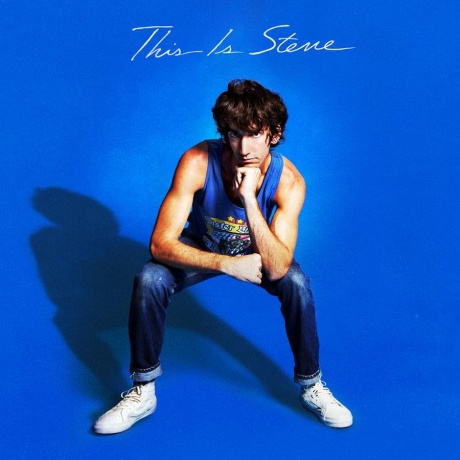
I must confess. Delicate Steve (as he’s known) has until now escaped my detection. The accompanying bio however offers an impressive resume, listing David Byrne, The Dirty Projectors, Lee Ranaldo and tUnE-yArDs as admirers and collaborators. As a testament to Steve’s range, the erudite guitarist and songwriter has “cut records” with both Sondre Lerche and Death Grip’s Zach Hill; and recently appeared playing guitar on the new Paul Simon record.
His first solo album in four years, and the first for the Anti- label, This Is Steve is billed as an “introduction” from the artist to you, the audience. A one-man band, producing and playing everything himself, Steve’s peaceable, often acid-country and surf twanged jaunty and ruminative, guitar themes run through an eclectic array of genres without settling on any specific. The signature cosmic swirling phaser guitar effect and intricate but relaxed perusal technique apes a number of other instruments, including the sitar on the opening glam-psych wilderness of Animals, the zither on the George Harrison exotic bluegrass walk along a California boardwalk Winners, and a Theremin on the nocturnal slouchy candor Nightlife.
Untethered as such; meandering mostly, but at times more forcefully careering through expressions and moods, Steve is scuzzing down ZZ Top’s highway towards a Todd Rundgren drive-through one minute (Cartoon Rock) and yearningly picking out a poignant personal Woodstock gospel anthem the next (This Is Steve).
Despite it being an entirely instrumental affair, you may find yourself singing along. And that’s due to each song’s uncanny familiarity, but also down to Steve’s personable touch, unguarded, channeling a lifetime of both conscious and unconscious melodies and articulating them in his own unique manner.
Emptyset ‘Borders’
Released by Thrill Jockey, January 27th 2017
Transmogrifying, compressing and distorting their chosen “tactile” instruments (which include a six-stringed zither-like contraption and a drum) through vintage analogue equipment, the Emptyset duo perform a live contortion of fuzzy and frazzling trepidation on this latest conceptual offering, Borders.
Commissioned in the past to articulate musically and sonically the abstract; Emptyset have produced successful reification suits, with a number of self-imposed rules, from a number of architectural spaces, including the decommissioned Trawsfynydd nuclear power station and the neo-gothic Woodchester Mansion. This time around, sat in a Faraday cage as towering metal leviathans communicate with each other overhead, James Ginzburg and Paul Purgas set themselves another series of prompting parameters to work within. On this particular score the duo focus on subtly adjusting the timbral qualities of their performance, for an often ominous concatenate series of sonorous and abrasive evocations.
Though Borders doesn’t seem to offer a specific architectural environment; it evokes instead an electrified industrial-scarred force field of dread. Sounding not too dissimilar to Sunn O))) making a cerebral techno album on Basic Channel, the eleven-track soundtrack is suffused with long drawn-out pylon throbbing rhythms, seething and flexing with various fluctuated menace. Descent for instance opens the furnace door of a machine-age fire-breathing Moloch, whilst Speak brays with a monstrous didgeridoo-like rasp.
The album is a heavy dose of bestial sizzled magnetic crackling and giant rumblings; an electrified fence of static doom, both highly atmospheric but also teasing with anticipation.
A Journey Of Giraffes ‘F²’
Self-released, January 11th 2017
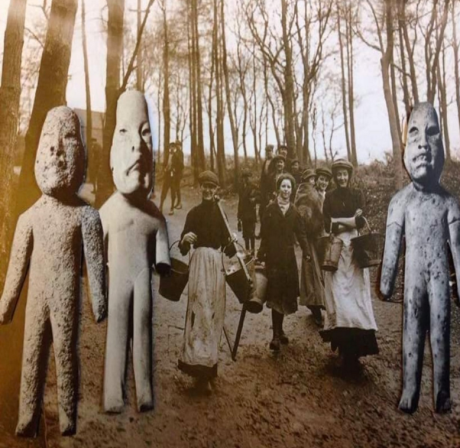
A Journey Of Giraffes’ John Lane has come a long way since his chirpier and languorous lo fi Beach Boys (circa Pet Sounds and SMiLE) inspired renderings and washes. Now almost fully immersed in the esoteric; exploring strange new soundscapes, Lane takes “a long walk into the deep forest” of his Maryland, USA home for something approaching the supernatural. Those California vapours of old do still linger, though removed even further, lost on a swell of reverb, Foley sounds and a heavy miasma of abstracted experimentation. A leitmotif of field recordings from the Hampton’s Cromwell Valley Park underpin this latest journey: the trampling underfoot of the valley floor and, threatening to blow us off-course, gusts of wind create an environment that sounds like an ominous meander into the Blair Witch Project.
Best described as Coil picking apart Panda Bear on the way to Alejandro Jodorowsky’s Holy Mountain, F² (an element which you won’t find on the periodic table; a symbol instead that Lane uses to represent a sentiment of “family first”) features venerable monk-like chants and wordplay, subterranean echoes, Tibetan chimes and paranormal doo-wop. Hermitages, caves, atavistic idols to old gods the ghosts of previous generations that once hewed a living from the landscape and the sainted Father Damien De Veuster of the 19th century leprosy colony of Hawaii’s Molokai Island, all haunt Lane’s imagination.
Self-released via Bandcamp, almost happenstance style, this avant-garde soundtrack opus benefits from the kind of freedom that the internet can offer. However, with no restrictions and a methodology of total exploration, the album is perhaps overly long in places and can stretch the listener’s patience. Still, Lane works out his ideas and expands his sound further on every release; taking that original Beach Boys influence into seldom charted waters.
Dr Chan ‘Southside Suicide’
Released by Stolen Body Records, 24th February 2017

Like some obscure French exchange garage band of students – the kind you’d find, if it existed, on a European version of the Teenage Shutdown! compilations – hanging out in the 80s L.A. of plaid shirt and paisley bandana fatigue wearing skater-punks, Dr Chan are an abrasive and coarse mix of renegade petulant inspirations.
Essentially powered by garage rock and all its various manifestations, the group from the south of France hurtle through an up tempo and raging backbeat of The Chocolate Watch Band, Standells, Rationals, Black Lips and Detroit Cobras. The difference here is that they also throw in a miscreant Molotov of thrash punk, courtesy of Fidlar, and “death rap”, cue Florida’s $uicideboy$, into the riot. It gives the Chan’s brand of garage band mania a different intensity and drive: more screaming in a ball of flames spikiness than tripping psych.
The opening title track is a lively introduction to this controlled chaos; the distorted scrawling spunk-rockers rumbling and attacking surf, bluegrass and rock n roll in adolescent fury. It isn’t always this fast and noisy. I Can’t Change for example takes a, dare I say, poignant respite; sounding like a yearning Roky Erikson dodging the whistling drop of bombs from above.
Despite the increasingly distressed cartoon screamed resigned sentiment of the swansong, Life Is Not Fun – Southside Suicide is a blast. Riled and obviously pissed about the current state of affairs both at home and overseas, Dr Chan’s protests are in keeping with the primal spirit of rock’n’roll: fun, fun, fun! It’s a blast.
Julian & Roman Wasserfuhr ‘Landed In Brooklyn’
Released by ACT, 24th February 2017
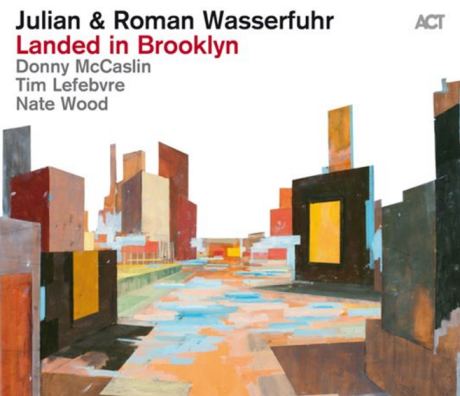
It can hardly be denied that New York always has and always will be an epicenter of musical innovation and fusion. Sure, there’s a growing unease at not just New York but mega beacons of creativity everywhere in the West. That the artists are pushed out and forced into the outlier regions because of gentrification, high rents and a general enervation of culture. Manhattan still has the jazz legacy and sports the venues (from the Lincoln Centre to The Village), but we’re increasingly told the “action” is happening elsewhere: in the borough of Brooklyn to be exact. A sprawling region of the New York panoply, Brooklyn has become a cheaper, more viable alternative; though in the last decade this hotspot has seen a massive influx of millennials, students and creatives flood the area, and so changed the very nature of the neighborhoods and inevitably made it more expensive.
Lured to this hotspot, the exceptionally talented trumpet (though on the latest album also partial to the flugelhorn) and piano sibling partnership of Julian and Roman Wasserfuhr “land” in Brooklyn for their 5th LP together. Prompted by the German jazz label ACT, and producer Siggi Loch (one of the first to foster the brothers talent, Loch produced their debut 2006 album Remember Chet, as part of that label’s “Young German Jazz” series) the duo initially hadn’t given much thought to the project. Spurred on however by the mounting reputation of New York’s largest borough, the brothers relocated. Imbuing themselves with Brooklyn’s history and present “where the action is” status, they recruited members of David Bowie’s Blackstar backline; man-of-the-moment tenor saxophonist and bandleader Donny McCaslin and the equally in-demand, former New York native, electric and double-bass player, Tim Lefebvre. Both have, in great part due to the attention Bowie inevitably drew, helped shape the city’s persona and rep for pushing the boundaries of jazz. And here they do what they do best; lifting and taking ideas and melodies into ever more inventive directions. Consummate enough to boost the foundations, yet also erudite enough to know when to blow or noodle away ten-to-the-dozen, they prove a congruous fit. Finishing the lineup, another link to McCaslin, is supremo drummer Nate Wood, who gets the chance to showboat with a salvo of never-ending rolls and crescendos on the cover of Tokio Hotel’s power-rock ballad, Durch den Monsun – a vast improvement upon the original.
Making a final connection to the city’s wider jazz legacy; the brothers chose to record at Joe & Nancy Marciano’s legendary System Two Recording Studio; using the venerated studio’s classic ribbon mic, once owned by John Coltrane no less, and a piano previously used for concerts at Carnegie Hall. Utilizing the environment, which has seen its fair share of legendary names from the jazz lexicon record there, the quintet produced an extemporized performance. Far from rehearsed and contrived – other than the choice of covers and the odd bit of sheet music – there’s little prompting on Landed In Brooklyn. Instead we get a flowing, loose semi-improvised interplay between all involved. This method is demonstrated on the opening “ensemble sound”, Bernie’s Tune. Relaxed, springy even, Julian Wasserfuhr and McCaslin’s interweaving horn section flews impressively over a quickened backbeat to create an update on the New York siren wailed TV detective theme tune. Roman Wasserfuhr, who leads on most of the album, is deft and supple on the ivories; caressing warming with a rippling effect even though you can tell he’s working hard on some complex countermelodies.
Whether it’s been planned, or unintentionally just floated into the quintet’s melting pot sound, there are traces and nods to a number of key jazz doyens throughout. There’s purposeful, and noted in the album’s accompanying booklet, hints of the horn geniuses Freddie Hubbard and Stanley Turrentine for instance on a couple of tracks, most notably however on the nestled trumpet and swaddling saxophone – Gershwin on Blue Note – Tinderly.
Elsewhere there’s Marimba-lilted waltzes; a 5/4 timing transformation of a moribund Sting song; and a cluttering railway-track travail style meditation on America’s past segregation woes to take in. And marvelous they all sound too. There can be no denying that this is a quality line-up; musically speaking, even if the covers are hardly inspiring, this is an accomplished recording. The Wasserfuhr brothers do creative things with the scenery and mood of a hub currently in the spotlight; producing an album that arguably bridges the old with the new guard.
Le Petit Diable ‘Seeds’
Self-released through Bandcamp, available now
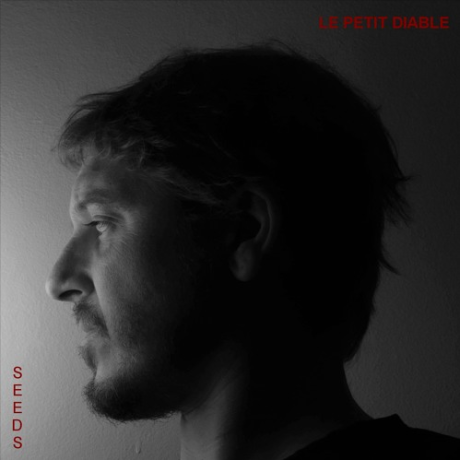
An important force for good on the underground Spanish music scene, predominantly in the last five years with the Krautrock and “Motor City” inspired Jinko Vilova, songwriter/musician and full-on space-rocker Ander López has taken on a new role as a troubadour for his solo album.
As demonstrated on his new collection, under the Le Petit Diable guise, López removes all but a brassy-stringed resonating acoustic guitar from the Jinko Vilova blueprint sound. Taken from the group’s previous LP, Líquid, the opening gambit, You’re Standing, is reduced from its original cosmic thickset Detroit bombast to a far more intimate acoustic affair, which sounds at times like a missing track from Can’s Unlimited Edition. It serves as a transitional introduction to ease the listener into the new raw, stripped direction. The album, Seeds (a metaphor for the ideas he’s evidently planting), has a real live quality about it, recorded in an atmospherically favourable space that lends itself to the echoing chimes and rings of his “lived-in” guitar playing.
Countering a gentler picking and plucking articulation with a mixture of attacking and ringing reverberation style rhythm guitar, López works up a fair old pace at times; filling the space when he needs to: The rebellious folk gallop, Purple Sphere, could be considered even spiky!
Vocally he channels a litany of hard-worn melancholic wayfarers; including Blixa Bargeld (Who Cast The First Stone), Nico (Snake’s Dance, Follow The Leader) and Roy Harper (My Eyes). There’s even a hint of the languid Damo Suzuki about López on the opener.
Le Petit Diable is a welcome move towards a parallel solo career; a surprise exploration and change from the music he’s become synonymous with. There is a lot of promise on this album, and the future looks bright.
Tickling our Fancy 044: Baba Zula, Piano Magic, Dearly Beloved…
January 12, 2017
New Music Reviews Roundup
Words: Dominic Valvona
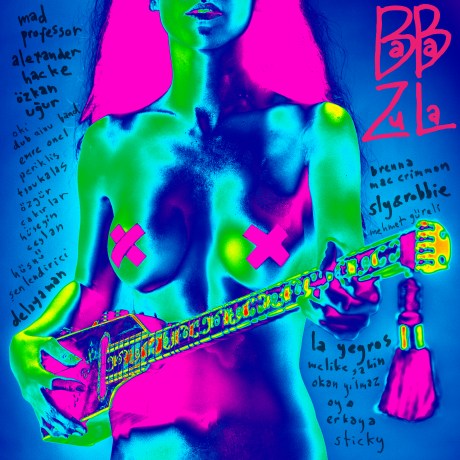
Welcome back to the first review roundup of 2017, which gets off to a grand start with this dazzling cornucopia of new releases from Baba Zula, Dearly Beloved, Hanitra, Mikko Joensuu, Piano Magic, James McArthur and Pawlowski, Trouvé & Ward.
In this edition of my regular review roundup we have the grand sweeping gestures of Mikko Joensuu’s second album in the Amen cycle; the second idiosyncratic folk and country idyllic songbook from James McArthur; some tender sounds “from the heart of Madagascar” in the shape of the Island’s talented songstress Hanitra; plus a bit of hardcore from the Dearly Beloved. There’s also a trio of special anniversary releases, the first, a triumvirate of solo work from Pawlowski, Trouvé & Ward, celebrating the tenth birthday of Jezus Factory Records, the second and third mark the twentieth anniversaries of both the chamber pop dreamers Piano Magic, who have chosen to have one last fling before disbanding this year, and the polygenesis dub Istanbul outfit Baba Zula.
Baba Zula ‘XX’
Released by Glitterbeat Records, 27th January 2017

BABA ZULA. (FOTOGRAF: CAN EROK – 20.09.2016)
Bastions of a psychedelic Istanbul scene, they’ve arguably made their very own, the omnivorous Anatolian Acid Mother Temple of dub-styled Baba Zula have been melding all their many musical inspirations together for twenty years now. Co-founded by Osman Muret Ertel and Levent Akman in 1996, the kaleidoscopic group originally sprung from Ertel’s previous ZeN Outfit as a one-off soundtrack project for a film director friend. Two decades later and we can surely assume that Baba Zula won out.
Inspired by the first wave of Turkish bands, that grew out of a previous generations atavistic folk scene, in the 1960s, notably the psych pioneers Moğollar, Ertel and Akman helped revitalize an age of experimentation, lost during the tumultuous upheavals of Turkey’s coups in the 70s and 80s. Politically acute, challenging the authorities with trance-like joyous expression, Baba Zula are once again finding themselves overshadowed by developments in their own backyard. And so just when we and their comrades need them that discerning label of new musical discoveries from the African continent and beyond, Glitterbeat Records, have decided to celebrate the band’s legacy with a generous double helping of reimagined material and a whole host of transmogrified dub treatments from congruous bedfellows and admirers alike – including the Mad Professor, Dr. Das and Glitterbeat’s quasi in-house band Dirtmusic.
Choosing a unique method of documenting that twenty-year career (and counting), Ertel explains: “None of the pieces here are in their original forms. Instead, we picked remixes, re-recordings, collaborations, live tracks, all the possibilities, but none of these have been released before.”
Transformed but not enough to completely obscure the source, the first of these two CDs (or albums) travels back and forth across the decades, with the earliest example being the feverish female protagonist orgasm over a DJ Shadow backbeat Erotika Hop from 1997, and one of the latest, a nine-minute Tamikrest-on-an-exchange-trip-to Byzantine Aşiklarin Sözu Kalir (otherwise known as “External Is The Word Of Poets”). Elsewhere you’ll find the group’s biggest hit to date, Bir Sana Bir De Bana (“One For You And One For Me”) playfully re-styled as a Gainsbourg-on-the-Bosphorus duet between a French woman and an Armenian man.
Opening this meandering journey, Ozgür Ruh showcases the group’s signature languid dub sound; a free-spirited melting of ascending, whirling electric saz (a long-necked lute-like instrument), accentuated brushed bendir hand drums, longing male and female vocals and a cosmic Jamaica blown off course towards the Adriatic, vibe. However, there’s no mistaking the band’s roots on Biz Size Asik Olduk; a curious dervish romance with the candor and atmosphere of a desert blues serenaded camel caravan trail. The final two tracks are live. There’s, what sounds at first like a tuning-up session, kosmische freestyle Çöl Aslanlari performance from the Bada Bing in Berlin (handed over to Einstürzende Neubauten’s Alexander Hacke to mix) and a nineteen-minute experimental reverb-heavy dub odyssey version of Abdülcanbaz from the Piraeus Resistance Festival In Greece to lose oneself in. Both are great examples of their untethered abandon and float-y transcendental mesmerism.
The accompanying (mis)adventures in dub companion is a veritable feast of the most somnolent drifting mixes. It helps that Baba Zulu’s exotic vapours lend themselves so well to dub, imbued as they are by it. But with no limits set and with a litany of dub explorers allowed a free-reign to remodel, the band’s material is swathed in so much echo that it almost disappears into the ether.
The first few tracks are by the group themselves and someone known as “arastaman”. Reshaping their own catalogue and sound they use the lingering traces of a song and submerge beneath a smog of warbled theremin and phaser effects on Alem and cut up the vocals on a mind-bending Ufak. Guest mixes include the radical Asian Dub Foundations’ Dr Das and his Uncle style heavy shake-up of Iki Alem; Dirtmusic’s mysterious lunar sandscaped ‘Hopche’; and The Mad Professor’s quartet of polygenesis traverses: merging a South American tropical groove to the Istanbul guitar cycles of ‘Baso’ and playing with the convulsing vocals and howling calls of ‘Erotik Adab’.
To a backdrop of continued violence (at the time of going to press there’s been both the shootings at Istanbul’s Reina nightclub and the car bomb/gun attack on the courthouse in Izmir, in just the last two weeks alone) and heightened turmoil, caught in the midst of suppressive regime currently removing dissenting and alternative voices from the street with the most tenuous of reasons it’s hardly surprising that many wish to escape the realities of daily life. Baba Zula know more than most how dire the situation is; Ertel’s own late uncle, a journalist, was tortured and imprisoned for his troubles. Though highly entrancing and mostly destined for psychedelic shindigs this eclectic voyage is every bit the rallying call of protestation; just existing amounts to a form of dissention in the face of increasing nationalism. Here’s to another twenty years of stirring the omnivorous musical stew.
Dearly Beloved ‘Admission’
Released by Aporia Records, January 27th 2017
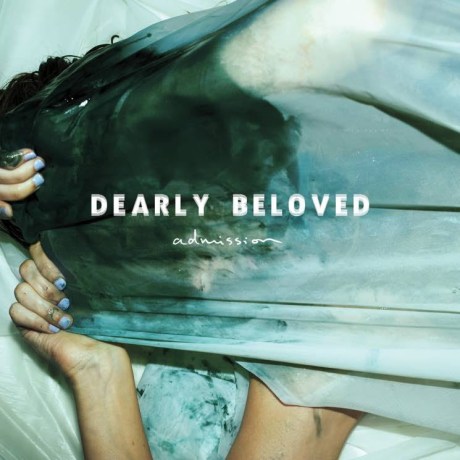
Recorded through Dave Grohl’s acquired custom-built 70s Neve 8028 analogue console, at his famous Studio 606, the desk that that facilitated Nirvana’s Nevermind has imbued the latest steely hardcore row from the Dearly Beloved duo. Still thundering along at a furious velocity, thrash-powering their way through a scowling mix of Black Flag, Black Sabbath and The Pixies, the dynamic Niva Chow/Rob Higgins gut-thumping and bewailing partnership have acquired an extra, controlled, ingredient of grunge.
More suffused, the light and shade of Admission rages in a thoughtful depth between dystopian drones and full-on esoteric rock’n’roll, ala a Mogadon induced Royal Trux in a switchblade scuffle with The Black Keys – the opening RIP track showing a flair even for southern boogie blues, albeit a very noisy one. For a band that fluidly absorbs a litany of hardcore, punk and doom influences, Admission is surprisingly melodic and nuanced. And so you’re are just as likely to hear echoes of Placebo and the Moon Duo as you are Death From Above 1979, and run through not just broody miasma moods but also fun-thrilled frolics.
Whipped into shape (not literally of course!) by Ramones and Misfits producer Daniel Rey who laid out a relentless schedule that had the duo rehearse in a East L.A. sweatbox for eight hours a day for a week, the Dearly Beloved for the first time entrusted an outsider to sit behind the controls. As it turns out, the road-tested and solid work out sessions have captured the duo’s live energy perfectly, delivering a lean, sinewy, heavy-as-fuck rage with all the indulgences and chaff taken out. That tumultuous, controlled but far from caged performance matches the turbulence of the times we’re living in.
Pawlowski, Trouvé & Ward ‘Volume 2’
Released via Jezus Factory Records, January 20th 2017
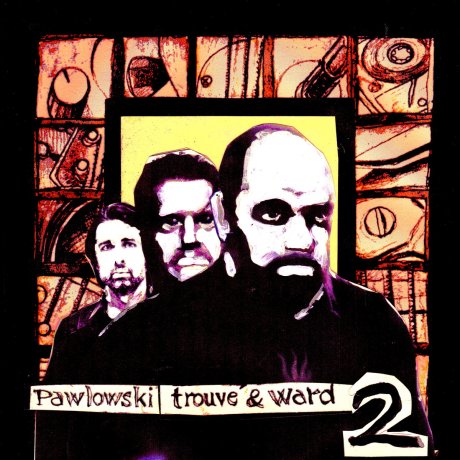
A decade on from the last Mauro Pawlowski, Rudy Trouvé and Craig Ward triumvirate compilation of solo work and to celebrate the tenure of the label vassal of so many Belgium borne alternative rock projects, Jezus Factory Records have now released a long-awaited follow up; named simply Volume 2. All at one point or another members of Belgium’s, arguably, most famous export dEUS, all three musicians have also shared a highly complex interlocking relationship; each serving together in a rambunctious myriad of side projects, team-ups and explorations, most notably The Love Substitutes, iH8 Camera and Kiss My Jazz: if anyone could ever be bothered, it would make a convoluted but interesting rock family tree diagram. Crossing over and extending beyond the dEUS hub it feels like the common bond of releasing their material on Jezus Factory could see the trio join forces at any moment.
Showcasing their individual flights of fantasy, this second volume of solo work is sometimes bizarre, often curious and occasionally silly; traversing the more serious glacial suffused drones of Ward’s four-track travail; the guitar and post-punk synth of Trouvé; and the killer-ziller-driller lunacy of Pawlowski’s imaginary 80s movie soundtrack, complete with commercial breaks!
A familiar face on the Monolith Cocktail, the erudite Scottish guitarist/composer Craig Ward was originally invited many moons ago to holiday in the Belgium city of Antwerp by dEUS and Zita Swoon stalwart Stef Kamil Carlens. Somehow instead of returning home, he stayed and signed-up for in a stint in a local band, Kiss My Jazz, before inevitably joining the dEUS fraternity; playing guitar and delivering vocals on the In A Bar Under The Sea and The Ideal Crash albums. Ward subsequently left to form both The Love Substitutes and A Clean Kitchen Is A Happy Kitchen. More recently he’s carved out a solo niche for himself with the suitably evocative ambient suite New Third Lanark whilst also running a guesthouse in his native Scotland. Earlier in 2016 he was awarded a Scottish Arts Council grant to complete his ambitious solo opus Leave Everything Move Out, which was actually recorded in France with the Grammy Award winner David Odlum. Sticking to the same tone of moody strangeness and drawn-out drones, his environmentally descriptive quartet of soundscapes cover the territory of Ash Ra Tempel and Tangerine Dream. Ward circumnavigates with a touch of subtle gravitas the mysterious veiled landmarks, circling the behemoth omnipresence of Mount Betsy; hovering In The Wet Maze; dreamily rowing the topographic ocean from Island To Any Islands; and lurking in the claustrophobic atmosphere of a Sunless compression of resonating guitar notes and heavy-leaden synth modulations. It’s classic Ward at his deepest.
Still holding down the day job as a member of dEUS, Pawlowski has really gone for broke on this compilation with his 80s pastiche soundtrack. A quick run-through of the CV is needed first before we go into the details. Pawlowski originally rose to fame in the Evil Superstars, until they called it quits at the peak of their career. He went on however to release the Dave Sardy produced album Songs From A Bad Hat and launch a string of experimental groups and collaborations, including a Dutch language folk LP under the Maurits Pauwels appellation, and the Hitsville Drunks and Gruppo Di Pawlowski (recorded incidentally by Steve Albini) projects.
Throwing a tongue-in-cheek (I assume) curveball at 80s cinema, his eleven-track mix of Casio demo display crescendos, yapping seal noises, and Carpenter meets John Hughes is pure bonkers. There’s bad acid telly binges and garbled industrial menace aplenty, but the best is saved until last with the finale firework exploding retro tribute to AM college radio rock, Starught: a mix-up of Strangers When We Meet era Bowie, The Cars, Queen and Boston, it is an unashamed punch-in-the-air love song anthem. Pawlowski’s contribution is certainly the most varied and odd, detached from the more serious and dour tones of his album mates.
The final leg, the baton handed over to Trouvé, fluctuates between the stripped guitar sounds of The Durutti Column and a 80s homage of despondent Visage and Soft Cell synth maladies. Originally a founder member of dEUS but tiring of the group’s major label success and all the bullshit that comes with it (the band’s debut was released on Island Records), Trouvé left to form the Heavenhotel Presents label and play in the Ornette Coleman inspired experimental project Tape Cuts Tape, the The Mechanics (with Pawlowski) and the “all star” improvising iH8 Camera.
With a wealth of experience and enough of an eclectic swag of influences behind him, from post-punk to avant-garde jazz, ready to surface at anytime, his twelve-strong contribution of meditative and considered explorations reflects an omnivorous craving. And so one minute you’ll hear a hint of Spiritualized or DAF, the next minute, John Cale, yet the underlying sound remains signature Trouvé.
A decade in, weary and beleaguered with the current Brexit woes (just wait until it’s actually been triggered and unraveled), Andrew Bennett’s showcase label for music from the nation that unfortunately symbolizes both the best and worst excesses of the EU, has a challenging future ahead of it. There’s no signs however of fatigue nor a dip in quality or originality; Pawlowski, Trouvé & Ward still producing the goods no matter what the augurs foretell.
James McArthur and the Head Gardeners ‘Burnt Moth’
Released via Moorland Records, 20th January 2017

Conjuring up an idyllic image of sipping Cider with Rosie on the back of Constable’s Hay Wain, Welsh-born troubadour James McArthur and his Head Gardeners troupe return with another lilting album of bucolic folk and country songs on Burnt Moth.
Following up on the Strange Readings From The Weather Station debut, which announced McArthur’s move from backing Paul Weller on drums to fronting his very own songbook, this second peaceable collection continues to wander a perpetual end of summer into early autumn seasonal landscape. Picking away and plucking attentively in the style of Bert Jansch or Mike Cooper, the serenade-style poetic musicianship on display is effortlessly timeless, yet the often meandering lyrics chime with the contemporary themes of an ever-changing society moving unabated towards a digital, even virtual, immersion: encroaching on the tranquility and earnest pastoral ideals of a slower-paced more personal interactive world, which to all intents and purposes is proving a sanctuary from the fully-connected hum of the internet.
Mostly acoustic, McArthur is also accompanied throughout by an accentuated backing of burnished and dampened drums, slowly released from its quivered tension strings (all co-written and arranged with Jim Willis, who also plays mandolin on the album), rustic pining pedal steel guitar and on the classically leaning yearned To Do the lulling coos of guest vocalist Samantha Whates. Not only assisting McArthur in the making of this album but also chipping in with backing vocals and bass on the roulette wheel of lovelorn fortune, Evens On Green, is Joel Magill of the psychedelic Canterbury band Syd Arthur.
Burnt Moth is a charming sun-dappled tapestry of McCartney-esque, and on the title track finale, Harry Nilsson (fronting a dreamy Morricone romance) idiosyncratic storytelling and musings. McArthur is in no hurry to reveal and unfurl the album’s many nuances and beauty; toiling away gently to create a most enjoyable and thoughtful songbook.
Mikko Joensuu ‘Amen 2’
Released by Svart Records, end of 2016.

The middle of an ambitious all-expansive soul-searching trilogy, the second Amen chapter finds a vulnerable Mikko Joensuu rising from the porch of his cabin retreat to step forth into the radiant majesty of the Finnish landscape. Finding an obvious awe-inspiring beauty in the stunning vistas yet equally overwhelmed, Joensuu attempts to cope with his troubled past. An epiphany if you like, the Finnish troubadour “lost his religion” a while back and has since been attempting to draw back from a mental abyss. Imbued with the candid soul and gospel of Jason Pierce’s Spiritualized and the melodious drone of My Bloody Valentine, Joensuu’s second album in this triumvirate cycle balances the ethereal with a tumultuous chorus of peaks and lows; the opening Drop Me Down opus for example gently builds from the diaphanous to a nosier cacophony of horns. Even when the fuzz, distortion and tribal backbeat dynamics are let loose the dappled light pours in.
An alternative questioning and sincere hymn supported by the North Finnish veranda, Amen 2 is a grandiose stunning visceral work of art.
Hanitra ‘Lasa’
Released by ARC Music, 6th January 2017

An unofficial cultural ambassador for her homeland of Madagascar, the sagacious and much-celebrated talented songstress Hanitra sheds light on both the personal and environmental plights of the unique Indian Ocean Island and the universal suffrage of women in the wider world on her latest album Lasa.
For many, Madagascar continues to be an enigma: Famous unfortunately as the title of a DreamWorks animation franchise, but apart from its reputation as a colourful menagerie for all kinds of exotic wildlife and fauna, it remains a mystery to many. Musically speaking it has attracted a host of composers and musicians, including the recently revived French ethno jazz maestro Jef Gilson with his Et Malagasy masterpiece.
Almost as an anthropological experiment and survey Madagascar’s isolation and history has fascinated many. Lying off the southeastern coast of Africa, it’s strategic position has made it a popular port-of-call for traders and explorers, though many literally bumped into it unaware it existed. Despite a litany of famed travellers, from the Arabs to Marco Polo, recording its discovery over the centuries, it would be France that colonized it. However, whether warranted or not, conquerors and traders alike left traces, resulting in a cross-pollination of influences including music. On Lasa you can hear this legacy well with elements of jazz, the Balearics, Arabia and even the reverberations of an old Afghanistan – resonating from the evocative sound of that country’s lute-like rubab instrument; used to plaintive dreamy effect throughout on this album – entwined with a distinct foundation of Madagascar folk and gentle African rhythms. But it’s the award-winning siren’s vocals, flexing with élan, which encompass this imbued richness. Inherently timeless, fluidly moving between cooing, almost lullaby, and effortless soaring tension, Hanitra’s voice subtly matches the themes of her album without showboating. The double-meaning title song for instance, translated from the Malagasy dialect as to “go past”, is an elegy of a sort to the French-Canadian singer Lhasa de Sela, who passed away in 2010 from breast cancer. Yet this touching tribute to a singer is far from sentimental; its Middle Eastern permutations and tenderness sweet and reflective rather than downcast and lamentable.
Soothingly in an array of colourful hues and tones, Hanitra addresses the themes of maltreatment, meted out both physically and psychologically towards women, on Eka and Avia, deforestation, in particular the devastating environmental costs of cutting down and selling Madagascar’s rosewood, on Mivalo, and another of those tributes, this time to the Vezo fishermens wives on the Island’s southeastern coastlines, eking out a hard living, on the oceanic motion Ampela. There’s celebration, paeans even, with the relaxed, lilting defense of same-sex marriage on Myriam and an invitation to dance in joyful abandon on Lalao. Whatever the emotion, Hanitra articulates her concerns and protestations with a soulful sincerity.
Lasa’s extended title is “from the heart of Madagascar”, and this is very true, yet the Island’s melting pot of musical influences and Hanitra’s own global travels mean this album is in fact universal.
Piano Magic ‘Closure’
Released by Second Language Music, 20th January 2017

Calling time on a twenty-year career with one last swansong, the Anglo-French Baroque indie dreamers Piano Magic echo the sentiments and themes of their 2000 song No Closure on their final majestic and profound album, Closure.
The self-proclaimed purveyors of “ghost rock”, formed at the height of the Britpop, have traversed and mapped out a moody romantic pathway for themselves over the years. Originally starting out as a lo-fi electronica trio in 1996, soon finding favour with John Peel, Piano Magic gradually grew into a full-on tour de force alternative rock band as the millennium drew near; recording amongst their notable cannon both a soundtrack for the Spanish director Bigas Luna’s Son De Mar and the Writers Without Homes album, which famously featured the folk legend Vashti Bunyan – who emerged from a 30-year musical silence to dust off the quelled vocal chords for the band. Still far off his critical-applauded born again renaissance as a “torch singer”, that same album also featured the dour talents of John Grant; just one of many collaborations over the years, the band also working at one time or another with Alan Sparhawk of Low, Brendan Perry of Dead Can Dance, Cornershop and Tarwater. Closure is no different in featuring a suitably congruous number of guest spots, with Peter Milton Walsh, singer of the fellow chamber pop, Australian band, The Apartments channeling Mick Harvey, and Oliver Cheer (aka Dollboy) providing a south of the Rio Grande style swooning brass accompaniment on the Choir Boys-travail-a-literary-rich-Outback Attention To Life. Offering harmonic and atmospheric support on backing vocals, Josh Hight of Irons can be heard wafting about on the album’s opening grandiose and subtle opus title track and the stripped-down electro pop, in a quasi New Order style, Exile.
Drawn to a despondent melancholy, a most diaphanous one at that, the sagacious founder member and songwriter Glen Johnson is aided in this enterprise by Franck Alba (guitars), Jerome Tcherneyan (drums, percussion), Alasdair Steer (bass) and the band’s original drummer from their debut gig at the infamous Wag Club, Paul Tornbohm, now providing keyboards. Wounded and troubled as ever by the lingering traces and ghosts of past relationships and liaisons, Johnson’s resigned poetics attempt to meet head-on those feelings he just can’t seem to lay to rest: as Johnson calls it, the “mythical formal conclusion”, the need to “move on” from broken relationships is not so easy. And so he croons, “Let’s get this thing sewn up” on the Morricone meets Ry Cooder cinematic title track, knowing full well that “…you never get closure.” The supernatural echoes of a lost love, channeled through a dusty answering machine message séance, on Landline leave the singer’s voice paled and weakened; lamenting loss form the far side of the ether. Marooned as a passive onlooker to the goings-on in the backstreets of his southeast London neighbourhood, a voyeuristic, removed Johnson (in Talk Talk mode) vanishes almost completely before our very ears. The song’s sad lyrics it must be said are a most beautiful kind of misery.
Magnificent in their despair, the musicianship poised, purposeful and subtly stirring, Piano Magic’s last ever fling is one of the band’s most accomplished, and definitely one to savour. As near perfect as any Piano Magic suite can be, Closure proves that you can perhaps after all find a satisfactory ending.
Choice Albums of 2016 (Part One): A – L
December 1, 2016
Aesop Rock to Bob Lind.

Continuing to shy away from fatuous rating systems and ‘best of lists’, the Monolith Cocktail endeavours to offer a more eclectic spread of worthy ‘choice’ picks, with no album dominating or holding any particular numbered position – unlike most of our contemporaries lists; stuck with the ridiculous task, for example, of explaining why one album doesn’t deserve the number 32 spot and has been placed at number 33 instead.
Lined up in alphabetical order then, our favourite new and reissued albums from 2016 are of course considered to be the most interesting, vibrant and dynamic of the year’s releases. But the best? Granted, to make this list you have to make some sort of impact, but we’d never suggest these entries were categorically the best albums of 2016, even if that might be true. Instead our list is an indicator of our amorphous tastes, rounding up a year in the life of the Monolith Cocktail, and we hope, introducing you to titles and artists/bands that may have dropped below the radar.
Split into two parts, the first installment begins with Aesop Rock’s‘s hip-hop masterpiece The Impossible Kid and ends with the latest adroit songbook from the legendary troubadour Bob Lind. In between those two sagacious bookends are albums from David Bowie, David Broughton, Danny Brown, Cluster, Eleanor Friedberger and John Howard (plus many others).
Aesop Rock ‘The Impossible Kid’ (Rhymesayers)
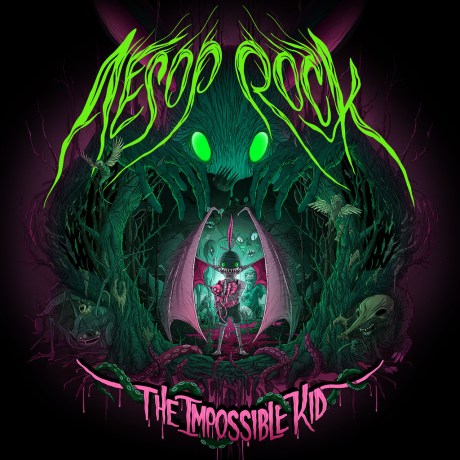
“The waterfall of words, snide quips and intricate stories recalled from both close to home and far away worlds, are as good as he’s ever done”. Matt Oliver
Seeming to get better rather than older (and don’t you dare mention the ageing process as per ‘Lotta Years’), the original ‘Bazooka Tooth’ is still ablaze out of somewhere to the left, but now giving lesser mortals more of a chance of accessing him than ever before. Entirely self-produced and applying funkiness to the bulkiness of alien-scanned beats he’s always rocked his way, AR’s extra superpower as the self-deprecating hero of syllaballistics (“the impossible kid , everything that he touch turns probably to shit”), is to humanise the fantastical and still make the everyday sound like a comic book lead, even when soul is bared for all to analyse. Rock also added more great cover art, and the visuals for ‘Rings’ and ‘Kirby’ are bound to feature in hip-hop video of the year lists.
Read original review here…
Afro-Haitian Experimental Orchestra ‘A.H.E.O’ (Glitterbeat Records)
‘Elevating beyond the borders it was created behind, the Afro-Haitian Experimental Orchestra’s root foundations shuffle and shake free of their stereotypes to move freely in an increasingly amorphous musical landscape. You’re just as likely to hear vibrations and traces of Dub, native Indian plaintive ghostly echoes, Sun Ra’s otherworldly jazz and funk as to hear the indigenous Haiti sounds and Afrobeat pulse. Tony Allen is once more at the heart of another bustling, dynamic explosion in rhythm.’ Dominic Valvona
Progenitor and embodiment of the Afrobeat drum sound, still in high demand four decades after his explosive partnership with Fela Kuti, the much-venerated Tony Allen once more extends his infectious percussion style beyond the African homeland. Sharing an obvious entwined history with Africa, the shared Hispaniola Island of Haiti proves both an esoterically mysterious and congruous collaborative foil to Allen’s distinct drumming patois.
Invited to perform in 2014 by the French Institute Of Haiti’s director Corinne Micaelli, Allen’s visit would end with a public broadcasted concert in the main square of the capital, Port-au-Prince. Collaborating with Allen would be a cross-section of local percussionists and singers recruited by vocalist, dancer, ‘voodoo priest’ and director of the Haitian National Bureau Of Ethnology, Erol Josué; Josué would himself lend his sweet yearning and reflective tones to two of the tracks on this album.
The call went out and the great and good of the Haitian music scene came. Racine Mapou de Azor, the Yizra’El Band, Lakou Mizik and, featured on the Monolith Cocktail at the start of the year and one of the choice albums of 2016 with their highly-rated Manman M Se Ginen LP, RAM. Another Monolith regular and one-time Port-au-Prince resident, Mark Mulholland was drafted in as the experimental orchestra’s guitarist, and as it would turn out, eventual legacy overseer. Swelling the ranks still further were Olaf Hund, recruited on keyboards and ‘electronics’, and an old friend of Allen’s, the bassist Philippe Dary, who became the de facto musical director. With only five days of studio rehearsal time to gel and work out their performance, the sessions proved both, as Mulholland observed, ‘chaotic’ and overwhelming’. Based upon various sparks of inspiration and rhythmic workouts the eventual structured compositions took shape from organically flowing jams. At the heart of each, Allen’s signature Afrobeat drums and Dary’s liquid, and often funky sumptuous basslines.
Read the full review here…
Bitori ‘Legend of Funaná – The Forbidden Music Of The Cape Verde Islands’
(Analog Africa)

‘Following the summertime thrills aplenty Space Echo – The Mystery Behind The Cosmic Sound Of Cabo Verde Finally Revealed compilation, with the emphasis on the Funaná; Analog Africa continues to pay homage to the previously suppressed music genre with a reissue of, what many consider, the best Funaná album ever recorded, Bitori Nha Bibinha.’ DV
Helping to ignite a full-on Funaná revival, the quintessential and legendary anthem of Cape Verde’s once banned – considered too salacious and unruly by the Portuguese authorities who ran this archipelago of islands until the mid 1970s – infectious music style was given a reprise by Analog Africa this year. A master class from the inter-generational duo of singer Chando Graciosa and renowned gaïta maestro Victor Tavares (better known as Bitori), who’d both grown up with the blazing and often raucous Funaná, Bitori Nha Bibinha captures the passion and spirit of the people and the times it survived.
Read the full review here…
The Bordellos ‘How To Lose Friends And Influence No-One’
(Small Bear Records)

‘Despite the caustic bravado and world-weary bitterness channeled into the antagonistic song titles on this new album, The Bordellos lo fi edicts are always surprisingly melodic. Think of them as a tuneful The Fall; resigned and swiping at society but hopeful enough to challenge it despite banging their collective heads on the doors of the music industry for years.’
Gaining this coveted spot (sic) in our ‘choice albums’ feature for perseverance in the face of despair, the St. Helens trio once more man the barricades with another despondent protest. Feeling, like many of us (I know we do), out of synch with the digital epoch, they rally against the Internet’s most depressing byproducts, and the loss of real ‘motherfuckers’ from the music world – who they duly list on a song of the same name; a cry for a new leader or at least more individuals and rebels. Wearily antagonistic, righting slights and a lifetime of rejection, The Bordellos go for broke on How To Lose Friends And Influence No-One with titles such as ‘Did The Bastards At The BBC Kill John Peel?’, ‘Gary Glitter’ and ‘Piss On Spotify’. Uneasy truths to a lo fi backing of The Velvet Underground, Julian Cope and The Fall abound, yet this could be the group’s best and most complete songbook to date.
Read the full review here…
David Bowie ‘Blackstar’ (ISO/RCA)

‘…this could be the most pure, at least concerned, version of Bowie yet. Resurrected free of his characterisations, the gilded “Blackstar” is just as uneasy and scared at the anxieties, stresses and daunting prospects of the future as the rest of us. Fame, celebratory is mere smoke after all and offers little in the way of comfort and safety in the face of the impending end times. Yet despite being easily his best album since Earthling, Blackstar is still underwhelming and falls short of being a classic.’ DV
The swansong of an irreplaceable polymath proved to be one of the year’s most sad moments, as the man who fell to Earth, Aladdin Sane, the Young American, the thin white duke, the absolute beginner, whichever version you fell in love with, departed for the ether. We lost a great many unique and inimitable artists in 2016 but though ever death is tragic none left quite the pit of despair that David Bowie‘s did. Don’t even try to crown a successor; he was a force unto himself, the “Blackstar”, the supernova of pop. Reams have been written – a great many by myself – yet no one will ever truly reflect his importance and legacy.
Though released just before his death the augur that is ★ was a curtain call. Just as oblivious to Bowie’s fatal cancer as everyone else, I did remark at the time that this album seemed to be a poignant goodbye, an elegy even. Returning to a first love, jazz, Bowie who proved an eager saxophonist in the burgeoning years of his career worked with a N.Y. West Village jazz troupe to produce one of his best albums in decades. Old faces, including a decomposing Major Tom, themes and sounds returned, with traces of Diamond Dogs, Scary Monsters, Black Tie White Noise and Outside. Despite the often cryptic and veiled words, this was an anxious, weary and reflective Bowie; looking back before a rebirth. A pity time ran out for him.
Read the full review here…
David Thomas Broughton ‘Crippling Lack Vol. 1 – 3’ (Song, By Toad Records)
‘An ambitious undertaking, David Thomas Broughton’s sprawling opus Crippling Lack is both musically and geographically expansive. Recorded trans-continental style with a host of collaborators over the last few years, Broughton, who’s based himself more recently in the capitals of, unbelievably, North and South Korea, has laid down various parts and vocals in France, the UK and the US. Logistically impressive, Crippling Lack is a testament to the DIY ethic and remote collaborative experimentation.’ DV
A magnificent and masterful undertaking by Broughton, the Crippling Lack trio of recordings is demarcated into three parts, the entire song collection, if you decide to experience in one sitting, stretching to 1 hour 40 minutes. It features twelve songs in all of varying meticulously and slowly unfurled beauty, with some, epics in their own right. The press release separates the album out into a musical journey, beginning with what it calls ‘deceptively approachable pop songs’, moving through a more testing ‘unraveling and disintegrating and barely-stretched fragments’ segment, before ending with a final section that ‘slowly weaves’ all the loose and previous sections together.
It is nothing short of a magnum opus; cohesive and flowing along to a sophisticated backing, sonorous with the artist’s venerable travailed voice, and his acerbic foils wit. The album’s scope is immense even though it meanders to a, mostly, folk signature and gentle accompaniment. It is outstanding even by Broughton’s standards.
Read the full review here…
Danny Brown ‘Atrocity Exhibition’ (Warp)

“Juggling the mic like a grenade missing a pin…one of 2016’s most individual threats.” MO
‘Atrocity Exhibition’ throws up so many positive talking points. #1 – the transatlantic odd couple of Danny Brown and Paul White, a relationship rooted in 2011’s ‘Rapping With Paul White’ album, fears nothing and no-one. #2 – Brown continues to show he has one of the maniacal mic grips in the game that you can’t ignore, here with added malleability. #3 – White’s reputation has really hit its stride on an upward curve; though other producers contribute (Black Milk, Alchemist and Evian Christ are not to be sniffed at), it’s essentially the Englishman’s show on the boards. #4 – a show stopping hook from Kendrick Lamar on ‘Really Doe’ doesn’t hurt one bit. #5 – despite Brown’s mile-a-minute persona shearing safety bars off rollercoasters, and White and co by default becoming the straight man sidekick, you really have no idea what’s around the next corner, from soaring superhero soundtracks to proper hip-hop dope to something suspiciously shuffling through the undergrowth. “This is not regular rap”, Brown offers. Amen.
Read the original review here…
Cappo ‘Dramatic Change of Fortune’ (YNR)
“When autumn becomes winter, here’s your listening.” MO
You should always bet on the flow of Nottingham’s finest that has evolved into a complex work of art. On past albums and years gone by Cappo would’ve destroyed opposition with crosshairs locked and ammo loaded; here his own brand of introspection, still packing uniquely orbital rhyme schemes but now more than ever full of coded messages and open ended verses awaiting interpretation, kills the noise and heighten the mysteries surrounding the emcee’s inner thoughts and circles. It packs two absolutely heaters of singles as well – ‘OOB’ and ‘Ether’ are both unassuming phantoms of the opera, but white hot in a pretty slimline session – another contributing factor to the building of the suspenseful and mournful, chilling on a razor’s edge. YNR took the weight off their plates in 2016, but this was easily the jewel in their calendar year crown.
Read original review here…
CHUCK ‘My Band Is A Computer’ (Old Money Records)

‘CHUCK’s kooky collage-rock and lo fi wonky electronic pop, which congruously flows between The Magnetic Fields, Mercury Rev, Weezer, Apples In Stereo and even The Pixies, absorbs its influences to create a gorgeous, quietly optimistic, kind of melancholy and pathos.’ DV
From the inimitable label of hopeless optimism and resigned despair another lo fi songbook of obscure modern idiosyncratic pathos. Released via Audio Antihero’s new imprint Old Money Records this marvelous kooky collection from Massachusetts’s songwriter and multi- instrumentalist CHUCK is a congruous bedfellow of the label’s previous releases from Benjamin Shaw, Frog and Cloud.
Bringing an upstate, more pastoral, lilt to the New York metropolis where he now resides, CHUCK’s quasi-Tropicana Casio preset bed of quirky wounded observations are both funny and profoundly sad; lo fi but ambitious. An outsider in some sense; an observer of the foibles and peculiarities of the Brooklyn boroughs, the maverick artist paints a reflective, wry and often ironic picture of our modern times.
Far too good to be hidden away his collection of songs, penned over the last decade, have thankfully been given the platform to reach a wider audience.
Read the full review here…
Clipping ‘Splendor & Misery’ (Sub Pop)

“Provocative electronics and sermons from the LA leftfielders will clamp you to the edge of your seat.” MO
For the record, ‘Splendor & Misery’ is a 20/80 split in favour of the latter. Comprehensively proving that the end of the days is still compelling material when done as well as this, particularly in this year of all years, Clipping were another to give themselves a veneer of accessibility with their zero gravity screams. Futility set adrift to a perfectly captured fear found frozen behind the visor, had rhymes dealing with the pending shitstorm with West Coast fearlessness usually reserved for low-rider rollin’. Interspersed with choral episodes praying for the album’s lead, the intelligent stage management demands your full attention; that’s to say, it’s a struggle to dip in and out or pick a favourite track by itself – do so and you’ll risk detracting from the whole performance pushing hip-hop’s outersphere. What odysseys are made of and reputations are built on.
Read the original review here…
Cluster ‘1971 – 1981’ (Bureau B)
‘Patriarchs of the German music scene, Cluster, are quite rightly celebrated for their contribution to the last forty-odd years of experimental electronic and ambient music with this latest grandiose gesture of adulation. Though attempts have been sporadic, past collections have gathered together, more or less, all the standard Cluster recordings, leaving out live and more obscure albums, until now. German label Bureau B, concentrating on the group’s output from 1971 to 1981, chronologically compile a full discography from that decade, which for the first time ever includes the previously unreleased Konzerte 1972/1977 album.’ DV
All attentively remastered, rather impressively I might add, by Willem Makkee, the nine-album box set offers the die-hards another excuse to own the back catalogue, with the added bonus of requiring that former live LP that got away, Konzerte, and for those not familiar or with a passing fancy, the best complete picture and evolution yet of the much revered group. 1971- 1981 will serve as a worthy testament and reawakening of the Cluster back catalogue and legacy: now sounding better than ever, the remastering for once very much welcomed.
Read the full review here…
Ian William Craig ‘Centres’
Passing us by on release Ian William Craig‘s unassuming but nevertheless epic sweeping ambient opus Centres arrived without much fanfare on its release. However, these cerebral peregrinations, songs of hope, soulful expansive hymns and sonic journeys into space were given rave reviews by those who did pay attention. And so initially missing coverage on the Monolith Cocktail, we’ve made up for it since by featuring tracks from the album in our ‘quarterly playlists’ and now, in our ‘choice albums of 2016’ feature. It is one of the year’s most beautiful, inspiring and often just meditative concatenate suites; offering glimmers of awe. DV
Dillon & Paton Locke ‘Food Chain’ (Full Plate)

“Gourmet underground platters rooted in the South but giving you seven courses of funk and back.” MO
It might only be found as small print on some menus, but who are we to ignore prime indie cuts encouraging you to “pour a bucket of gravy over yourself and just feel that”. When they’re not rewriting the rules of the Ice Bucket Challenge, Dillon & Paton Locke are always gnawing on something, rhyming as they chew it. Funky, crate-rifling beats are laced with an overzealous streak, cogently able to stop the album dead from 60 to 0 and then re-energise it the other way, and a press-record-and-just-go appetite never misses a trick on the mic, with a hint of political soap-boxing and getting down to some grown man, take a look around biz. Their guest chef specials aren’t too salty either – R&V favourites Homeboy Sandman and J-Live, Dres from Black Sheep and people’s president Lobsterdamus, help flavour a certified belly-buster for 2016.
Read the original review here…
Ed Scissor & Lamplighter ‘Tell Them It’s Winter’ (High Focus)
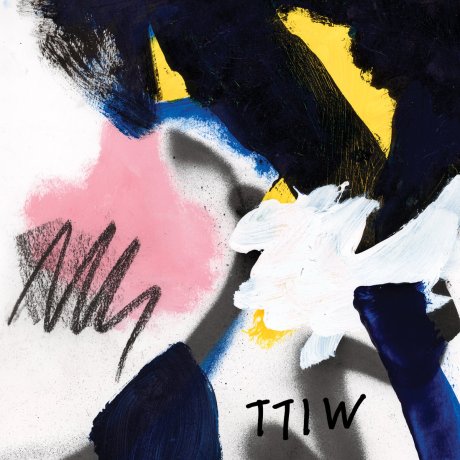
“An intriguingly created world of wisdom, paranoia, numbness and finding peace in its own mind”. MO
High Focus have had the mother of all years, the consistency of everything they’ve dropped dominating the last 12 months of homegrown hip-hop. Ocean Wisdom (‘Chaos 93’) boasted youthfully infinite ammunition. Dabbla (‘Year of the Monkey’) got up to a whole load of japery reaching across the bar. Fliptrix (‘Patterns of Escapism’) executed label ideals to the fullest. Yet in the spirit of thinking differently, Ed Scissor and Lamplighter, the absolute antithesis of those mentioned, take the honours by a short head. Blair Witch hip-hop with its nose to the wall, barely keeping its head above water while barely raising an eyebrow, pulls off the Houdini-like stunt of subverting hip-hop norms while sticking close to them like a second skin. A slow and deliberate bittersweet bloom of triumph, creating the ultimate flip script of offering easy solace and comfort when all looks lost.
Read the original review here…
Elzhi ‘Lead Poison’ (Glow365)
“Ear-catching narratives covering the everyday grind…not far off being a complete LP”. MO
Coming out the other side of mental health issues has Elzhi using ‘Lead Poison’ as catharsis, resulting in some of the year’s most vividly delivered rhymes and storytelling in the process. Done so in near enough bite sized chapters, proves that if the story’s interesting enough, it’s long enough. Never buckling under pressure, even when the likes of ‘Cloud’ feel like everything is conspiring against him (not to mention the potential of his health showing overall weakness), heart is worn on sleeve and self-examinations are set to a forceful soul soundtrack pushing its protagonist. With softer neo-soul going back to Elzhi’s Slum Village heritage, there’s also room for a little light heartedness, with ‘She Sucks’ doing forbidden love by garlic and wooden stakes, and ‘MisRight’ bending the thesaurus. An album that goes from strength to strength, listen on listen.
Read the full review here…
Eleanor Friedberger ‘New Views’ (Frenchkiss Records)
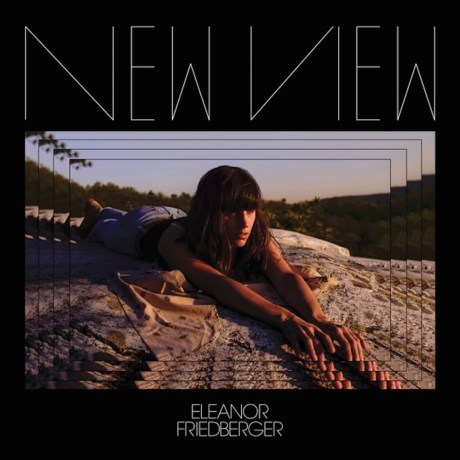
Another album we missed on its release, Eleanor Friedberger‘s third solo spot New View is another impressive songbook of idiosyncratic pop. Streamlining the signature intelligent reference-heavy prose of her sibling act The Fiery Furnaces, Eleanor continues the clever turns of phrase but in a more attentive, breezier and lightened but less cluttered manner. With elan she sets out on a dry-witted but emotionally philosophical picnic through the East Village with Patti Smith and Harry Nilsson in tow.
Paul Hawkins and the Awkward Silences ‘Outsider Pop’ (Blang Records)

‘Lethargically executed and quintessentially an antifolk statement of protest, Outsider Pop is a highly infectious album of pop parodies that penetrate the bland veneer of the contemporary irksome vacuum known as the mainstream. Shambling discontent at its finest.’ DV
The disgruntled savant of disco funk pop and antifolk Paul Hawkins completely in the dark, oblivious to the dreadful proclamation of David Bowie’s impending death paid an augur homage to his white-suited and booted pop incarnation of the 1980s by transmogrifying ‘China Girl’ into an Outsider Pop anthem. Produced by that nutflake nostalgist, and one of the busiest men in the industry right now Ian Button (of the mighty Papernut Cambridge, Gare du Nord label and umpteen other projects), Hawkins’ third album also finds foibles of inspiration from REM, The Fall, Toto and The Art Of Noise; reflecting a much broader sound than before. The no wave, white funk, pop melodies act as a Trojan Horse, the themes far from advocating a hedonistic lust for life or suggesting the listener suppress the doldrums of modern life, are filled with malcontent at the state of the world.
Read the full review here…
John Howard ‘Across The Door Sill’ (Occultation Recordings)
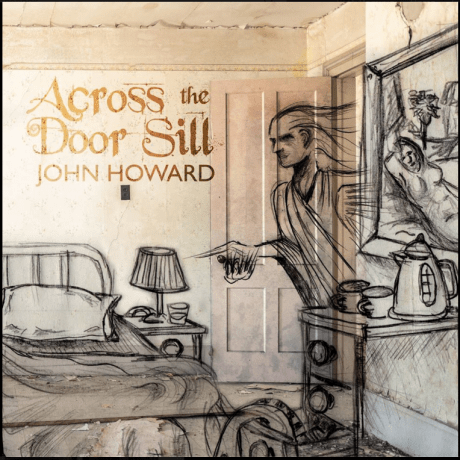
‘Not so adrift and experimental as to have cut all ties to his signature profound sincerity and sad romanticism, John Howard’s Across The Door Sill dares to go further with an even more immersive experience. Expanding his poetic lyricism and piano performances, stark and stripped-back, his vocals multiplied to fill the space and build the atmosphere; Howard has room and time to create some stirring music. It is a most sagacious reflection from the artist, still finding the inspiration to develop and take risks. In doing so he’s reached what could be one of the creative pinnacles of his career.’ DV
Imbued with the 13th century poet Rumis ‘Quatrains’ poem, which encourages us to broaden our horizons and to not just accept what we’ve done in the past, the adroit songwriter and pianist John Howard experiments with a stripped back sound of multilayered vocals and the melodious gravitas on his latest songbook Across The Door Sill. Attentive and epic the album’s sagacious stream of consciousness is a deeply reflective observance on where we are now. In no hurry to get to a hook or chorus, his source material, a collection of unhindered, unhurried and floating poems, was developed overtime, set to music in an organic fashion. Hence why three of the five songs on this LP are nine-minutes long. On a successful run of collaborations and solo projects Howard is enjoying his most productive period yet in a career that’s spanned five decades.
Read the full review here…
Illogic ‘A Man Who Thinks With His Own Mind’ (Weightless)

“Streams of quotable IQ create a fever dream. Snooze, you lose.” MO
Ohio rhyme scientist Illogic provided his own version of a hip-hop out of body experience, a canon of verbosity when bedding down for the night and setting free streams of consciousness while looking through a telescope. This in itself created its own contradiction of being an album expressly trained to set you afloat (The Sound Cultivator’s star-shaped soul powered by plasma rays > strictly no cloud rap), which still kept you wide awake with naturally intricate rhymes, both book and street smart, about life, the universe and everything else. Anyone who starts an album with the observation that “the tofu was not as firm as I’m used to” deserves nothing but praise and respect. The modern equivalent of becoming engrossed in a good book that tells your imagination to run.
Read the original review here…
J-Zone ‘Fish n Grits’ (Old Maid Entertainment)
“Dripping in home truths from his funk soapbox, disillusionment with hip-hop and its cultural hangers-on has never been more entertaining”. MO
Better placed than most to justify a love-hate relationship with hip-hop, J-Zone proclaimed “there’s only two types of music – good and bad. Make good music, or shut the fuck up.” Paired with helium alter-ego/juvenile imaginary friend Chief Chinchilla as hilarious equal opportunity offender, and showing the strain of ‘Peter Pan Syndrome’ remains strong, ‘Fish n Grits’ goes in with scathingly relatable accuracy about the state of the game, misty-eyed nostalgia replaced by a nose-bloodying team of goons busting a whole load of myths. Additionally, whereas Zone’s production used to pop off all over the place in a skilfully spring-loaded criss-cross, he’s honed his own funk skills into a true mastery to compliment his industry disses. Hallelujah that he can’t leave the game alone.
Read the full review here…
Fela Ransome-Kuti And His Koola Lobitos ‘Highlife-Jazz And Afro-Soul 1963-1969’ (Knitting Factory Records)

‘Hot stepping and sure footing through Savoy label like jazz and Stax/Volt revue soul, Fela and his first ever professional band Koola Lobitos were the missing link on the eventual road to the Afrobeat phenomenon. An evolving Fela, only a few shuffles short of cultivating his signature, already shows a raw energy on this compilation’s studio and live recordings.’ DV
In the midst of another celebration and anniversary appraisal the Afrobeat pioneer and political protagonist Fela Kuti has seen the back catalogue legacy re-released and repackaged countless times. There’s been a stage production of his life, and a documentary film in the last couple of years alone. But one of the most revealing and raw tributes is this burgeoning showman showcase; a labour of love that collates together a number of previously scattered, thought lost, rare early recordings – both in the studio and on stage – from the stax/funk/soul years. A “labour of love”, stemming from Toshiya Endo’s African Music Home Page website, launched in the late 90s, the Fela Kuti and His Koola Lobitos material were collected from around the world, from the collections of various fans. By day a professor of Chemistry at Ngoya University, Endo’s passion and hobby of cataloguing West African music attracted the author of the Fela: The Life & Times Of An African Musical Icon bio Michael E. Veal. Lucky for us the dynamic duo produced this lavish and arduous compilation of explosive early Fela beauties; one of the best and revelatory introductions to the great polymaths work yet.
Read the full review here…
Bob Lind ‘Magellan Was Wrong’ (Ace Records)
Another masterclass from the sagacious Bob Lind, his latest album is a majestical and often jazzy lilting lesson in songwriting. With decades of elan and adroit performance behind him Lind isn’t ready just yet to rest on past melodic triumphs and spoils, showing himself ready to adopt and try out new ideas on Magellan Was Wrong – a reference to the Portuguese explorer who first circumnavigated the world, proving it was of course a globe and not flat, though Lind’s song of the same name and homage metaphor questions that wisdom in the face of despondency and disappointment. The characteristic voice and style is of course signature Lind, the songs and themes timeless. With a host of producers, including progressive jazz pianist and composer Greg Foat, on board this strongly nautical feel and reference strong songbook, both the entertainer and troubadour are lent a new lease of life.
 Monolith Cocktail Blog