The Digest for January 2026: New Music/The Social Playlist
January 16, 2026
The monthly Digest includes a clutch of accumulated short new music reviews and the social inter-generational/eclectic and anniversary albums celebrating playlist.
___THE NEW (All those latest & upcoming releases in brief) ___
The Bordellos ‘Who Do you think You Are? Paul McCartney?’
Single – (Metal Postcard Records) 7th January 2025
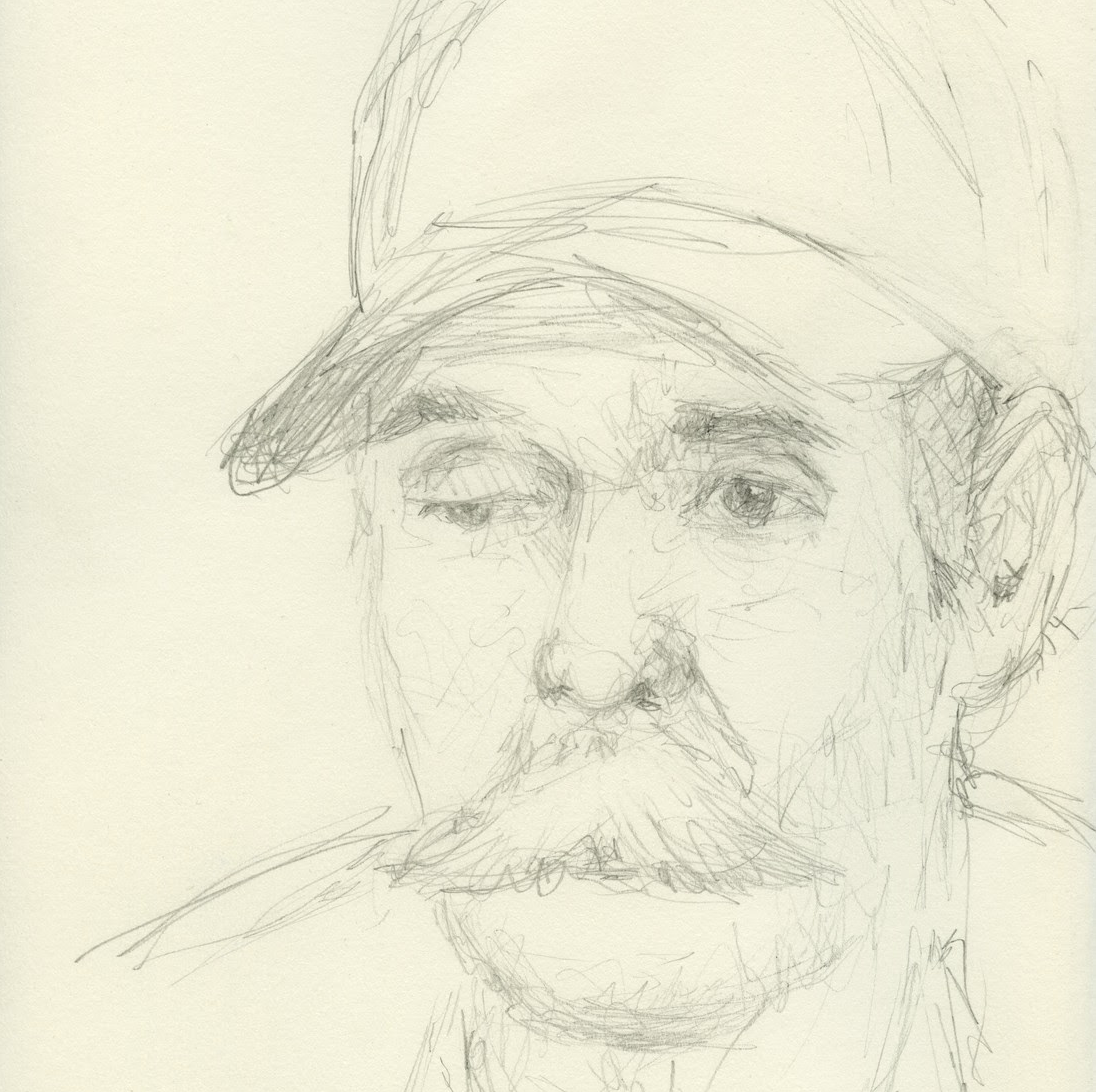
More The Rutles’ Stig than The Beatles’ McCartney, the latest self-depreciated, no-fi buzzing guitar string strummed piece of “silliness” from The Bordellos family (that’s Brian Shea and his brother Ant, and Brian’s son Dan) pays a handsome tomfoolery homage to good ol’ Paul.
The Bordellos were behind Half Man Half Biscuit and the Cleaners From Venus in the dole queue of the 1980s; powered by aphorism, a ridicule of the current industry, and a litany of muthafuckers from across the golden age of rock ‘n’ roll, punk and post-punk, psych and garage. Brian will be no stranger to followers of the Monolith Cocktail, having regaled us with his reviews over the years, and of course gracing these pages as a solo performer: think John Shuttleworth meets Sparklehorse.
This latest single to be released by the Metal Postcard Records hub was influenced (I quote) “by [Brian’s] love of Paul McCartney and memories of walking up to Dead Fly Rehearsal rooms in the 80’s with my guitar and every time an old man in his garden would shout “Who Do You Think You Are? Paul McCartney”. As I walked past…it never got old for both him and me…I was tempted occasionally to buy a gun and shoot him and shout who do you think you are? John Lennon!”
If skiffle-indie-punk was a thing, then here it is in all its rudimental, near distorted jangled and sprung glory. It actually sounds less Paul and more like a sarky Lennon…that and a touch of Frank Sidebottom. No one quite manages to summarise a feeling, an era, a memory like The Bordellos, nor sound so brilliantly shambolic and devoid of even the rubber bands to replace the long loosened/slackened and fucked bands in their Tascam 4-track recorder. Off to a fine rambling start in 2026.
Greg Stasiw ‘Guesswork’
Album – (Hidden Harmony Recordings) 2nd February 2026
Greg Stasiw could quite rightly be called a polymath with a worldly scope of influences, having travelled and spent time in New York, Tokyo, Toronto, Paris, Boston, and Bratislava. Home, I believe, is New England on America’s Northeastern edge. The CV includes the occupations of experimental musician, visual artist and writer, but also include the study of anthropology, animation and illustration. Channelling all that into a musical sonic practice and the results are less happenstance than that title might suggest.
Guesswork was actually intended as a collaboration, a response to a visual stimulus created by the artist Phillipe Shewchenk. For one reason or another it was shelved, but Stasiw decided to continue experimenting and formulating a ponderous biomorphic set of ideas relating to a range of subjects, from plumbing systems for plants, to real locations and adjective prompts; many of which seem to point to nature, geography and the weather.
Ending up as Stasiw’s debut album, this amorphous blending of vignettes, studies, semi-improvised experiments sounds like a field trip conducted by Walter Smetek, Nicolas Gaunin and Hiroshi Yoshimura. It’s both recognisably trudging through the lush, the humid and exotic environments of Earth, yet simultaneously otherworldly and near sci-fi. To label it ambient would be a mistake, but minimalist all the same with its airs and the skying sound-scaping, the synth effects of kosmische and the new age combined with Harold Budd and his like.
Real sounds, like the bird life under a rich canopy, mix with percussive tools like a pestle and mortar, the knocks of heavy objects, the drawing of chains and desert sonar-like signals. A shuddery and often lovely reflective piano can be heard alongside a church-like organ producing the most melodic of paused moments. Thrusting gleams of light on the horizon; tunnelled chutes to new worlds; windy tundra’s; playful landscapes of bulb-like shaped notes; Stasiw magics up a stimulating, often pretty and with a sonorous depth, soundscape of possibilities and artistic mystery.
Tachube ‘Mincminc’ (Inverted Spectrum Records/PMGJazz)
Album – Released 4th January 2026
An international combination of band members and album facilitators/labels makes for a truly ambiguous and amorphous experiment with the latest moody and wild post-jazz exploration from the improvisational trio of Tachube. Based in the Serbian city of Novi Sad, a culmination of various musical strands and influences brings together Saint Petersburg electroacoustic/noise musician and founder of the Intonema label Ilia Belorukov (who performs on both the alto sax and rudimental, playful fluteophone), plus two active members of the Novi Sad free and ambient jazz and psychedelic dub scenes, Marko Čurčić on effects pedals and electric bass, and Nemanja Tasić on a minimised drum kit.
Their third collaborative release, platformed in conjunction with the independent boutique label and booking agency that spans in Hungary, Serbia and Turkey, Inverted Spectrum Records and the Macedonian label PMGJazz, Mincminc sounds like Anthony Braxton, Andy Haas and Sam Rivers creeping, prowling and consumed on a mysterious plain with Krononaut. It’s a combination of the improvised Polish and American freeform jazz schools, but also an emotional fit and squeeze of mythology, the darkness and the arid; enveloped as it all is by meta and the depth of the trio’s expanded spheres of influence and skills.
Incipient stirrings and jangles create the right mystique, with blows and the driest of alto expressions, quivered and shivered and shaved cymbals, busy undulated and descending bass runs and the knocks and mulch sounds of hidden sources building a serial and abstract atmosphere that vaguely invokes the Balkans and its geographical history, psychogeography and mystery. Something different in the jazz field; an expansion of ideas and moods and the extemporised.
Roudi Vagou & Läuten der Seele ‘Taghelle Nacht’
Album – (Quindi) 6th February 2026
Once more stepping out behind their aliases, the collaborative union of German artists Matthias Kremsreiter and Christian Schoppik (respectfully reimagined as Roudi Vagou and Läuten der Seele) transduce and manipulate ripples in time to invoke both blissfully dreamy and more mysteriously haunting sonic and musical ideas of nostalgia, German nationalism and geography.
Drawing upon their personal connections, their relationship to the lands and the city that moulded and influenced them both, this latest union could be filed under the hauntology label – a very good label as it happens, one that perfectly, if overused and misdirected on occasions, fits this interdimensional album of filmic score passages, vignettes and looped hallucinations. For Taghelle Nacht captures the “day-bright night” character of a simultaneously pastoral Heimatfilm era vision of German cinema, of the surreal, of fairytale and mirages whilst providing a suitably ghostly and occultist atmosphere.
It’s as if Roedelius and Moebius, or even Popol Vuh, fed the movie scores of Hans J. Salter, Philip Martell, Harry Robinson and Ronald Stein into a German time machine. Old matinee and classical suites, songs of the romanticised, the near ethereal coos of apparition sirens and angels, a fairground Bavarian Wurlitzer, the call of an esoteric nature (the field recordings of trampled walks across the land, the birds in the trees), and the sound of woodwind and brass are looped or obfuscated by the sounds of hidden whirly, unoiled sound sources, of Fortean machines and valves, folksy horror soundtracks, the concertinaed and bellowed and surface noise of old wax cylinders. Melodies and the wistful embrace of that old age are embraced and then somehow made more unreal and otherworldly as if transmitted through a séance or played on a possessed record player from an earlier age. And then again, you can pick out hints of Belbury Poly and their ilk, Martin Denny and Drew Mulholland across a haunting backdrop stepped in historical values, horrors and the mystical.
Charles ‘Poppy Bob’ Walker ‘Double-Wide’
Album – (Castle Dome Records) 10th February 2026
Outsider art from the 1980s, the left behind recordings of the fabled Charles ‘Poppy Bob’ Walker have already filled one such album of haunted imaginings, of mirages and dusty Western peregrinations. Released back in 2024, the Dirt Bike Vacation collection platformed a near secret archive of desert renderings, of loosened and ambient-esque country sketches. It reads however like one of those concocted projects, the alias of a very much still-breathing silent partner hiding behind anonymity. But reassuringly, this “normal guy”, who worked hard, kept some friends, though never married or had kids, liked nothing more than to drive off on various recording adventures in his old, yellow Datsun pickup.
The remembrance of an unassuming outsider, articulating or washing or crafting or letting his inner thoughts and observations and meditations of places in and around his Yuma, Arizona home ghostly emit through the lo fi amplified strings of his Martin D-28 guitar, onto his trusty and rudimental Tascam 4-track recorder. And as such an unassuming amateur working in the field, Walker’s music has, refreshingly, no one to please, no one to serve other than its creator’s own vision and perhaps improvised musings and contouring’s of the landscape, the thoughts and reification of mood and place.
At one turn taking on the mantle of a hidden Ry Coder soundtrack, or indeed invoking certain passages and refrains from Dylan’s Pat Garrett and Billy the Kid soundtrack, this latest collection’s controlled, mediated and shortened cinematic qualities build towards an alternative country-waned and mirage-like score. From incorporating a rustic banjo to the electrified vapours and more concrete panning and splayed strums and strikes of his guitar and the chorus of hidden sounds (from the railroad barrier’s bell-rung-like signal to the occasional use of reverberated lo fi synthetic drums, the esoteric rattle snake shaken ceremonies of the second cut, the windbreakers and even the sound of the tape’s hiss and surface sounds) Double-Wide feels like we’re watching a dreamy, hallucinating film of the surreal American West.
If you dig the art and experiments of such alt-country company as Myles Cochran, The Droneroom, the Gunn-Truscinski duo, Daniel Vickers and Chuck Johnson, then Walker should be as much a revelation as a familiar companion on the transformed leftfield road of such maverick artists.
___/The Monolith Cocktail Social Playlist Vol. 104___
The Social Playlist is an accumulation of music I love and want to share, with tracks from my various DJ sets and residencies over the years and both selected cuts from those artists and luminaries we’ve lost on the way and from those albums celebrating anniversaries each month.
In the latter camp we have the following anniversaries to mark:
The oldest celebration this month falls to Them’s mighty garage R&B raver I Can Only Give You Everything, taken from their 1966 LP Them Again. Van the man Morrison in full on maximum R&B glory; turn it up you muthafuckers! Still the best, guaranteed to get every dancefloor riotously jumping. The whole LP is peerless.
David Bowie’s Station To Station is 50 this month, and I’ve picked the Word On A Wing version used in Brett Morgen’s Moonage Daydream spectacular. Bowie’s epitaph Blackstar is 10 in January. I’ve decided on Sue (Or In A Season Of Crime).
Bob Dylan’s Desire is also 50 this month. Not the most sympathetic of subjects to mythologise, what with equal opportunities pain-in-the-neck Mafia types like Joey Gallo, but there’s merit with Oh Sister and its sublime backing vocals by Emmylou Harris (apparently, and very rare, overdubbed a day later). The musical attempt to clear the former middleweight boxer Rubin “Hurricane” Carter on Hurricane is overlong and sanctimonious in comparison.
Another 50th anniversary special, Cheyenne Fowler’s Cheyenne’s Comin’ boards the funky Stevie Wonder goes indigenous funk train. I was nice enough to give this original LP to my old pal James Bull a number of years; it probably now sits in his collection, getting an occasional airing on his turntable making in California.
Lou Reed’s country bar room bell-ringers Coney Island Baby is another LP celebrating the half century mark this month. I’ve gone for the opener, Crazy Feeling, not the best track, but still a favourite.
Only just making our albums of the year list last month with their first album in a decade (Touch), Tortoise’s Millions Now Living Will Never Die is unbelievably 30 this month. An album that defined a post-everything scene and year. And so, what to pick. How about the various gears-changing Glass Museum.
Very different, but from the same era. Britpop’s The Bluetones‘ Expecting To Fly is an unmistakable example of that era’s sound. Slight Return was the single, and track that made them, and still their best moment on wax.
Beth Ditto’s Gossip fired up the noughties, arriving with the vanguard of attitude post-no-wave, funk punk and such titans as the Yeah Yeah Yeahs. Some incredible fiery matriarchs stamped all over the sensibilities of the male dominated indie and rock scenes. The trio’s debut Standing In The Way Of Control is twenty this month, and I could have picked anything from an album that is almost a perfect encapsulation of the times it was made. But here’s Jealous Girls.
I never really need an excuse to feature Serge Gainsbourg, but to honour the memory of that French muse, chanteuse of new age French cinema and 60s starlet Brigitte Bardot here’s Initials B.B and the outlaw duet Bonnie & Clyde. Remarkably still such an icon, despite her best and most of her work being in the 1960s: retiring more or less early to concentrate on animal welfare for the next sixty years of her life.
From the newer section, or those recentish tracks that missed out on a place on the site’s Monthly Playlists, a smattering of tracks released in the last few months (occasionally a little further back). From the Live In Mestre Venezia series of outstanding performances, Get Happy by the ’84 union of sax and jazz pianist icons Sam Rivers and Mal Waldron; made available near the end of 2025. Also, and I’d bet a very popular choice amongst my peers, The House That Doesn’t Exist from Melody’s Echo Chamber’s Unclouded album, released last month; Leave by NEDA, released back in September; Volcano by Penza Penza, released last month; Pete Evans and Mike Pride’s exploratory alchemy of Substance X, also put out last month; Deanna Petcoff’s Not Too Proud, another December release; and Papernut Cambridge’s I’m A Photograph Of You, released just in the last couple of weeks.
From across time, across genres, across geography, a number now of tracks I either played in my various DJ sets over the years, wished I’d owned, or just came across in my research. This includes the mellotron imbued prog-rockers Gracious and Introduction; another prog obscurity, Kingdom Come and Spirit of Joy; American jazz trumpeter Kamal Abdul Alim and Al Nafs; German electronic and kosmische luminary and progenitor Conrad Schnitzler and Convex 4; the Memphis snot rocking garage thumping R&B outfit Compulsive Gambler’s and The Way I Feel About You; the Chicago post-rock-avant-garde Shrimp Boat and Pumpkin Love; the Cleveland garage-prog troupe Damnation ( their name whittled down for some reason by their label from The Damnation of Adam Blessing) and their funky-psych-Hammond cover of The Monkees’ Last Train To Clarksville; hip-hop royalty from the golden age, Showbiz & A.G. with Silence Of The Lambs; strange sampled fruit from Ether Bunny with the Bunny Jump; and because I was recently reminded of this song through Apple TV’s Palm Royale series, Moonshot by the dodgy, or found out, Buffy Saint Marie – not so indigenous American as she had us all believe, and yet, the music is just as sublime, the lyrics incredible.
As a special this time around, and to show at least some support for those bravely taking to the streets of many of Iran’s cities to protest against its authoritarian theocracy, and the crippling cost of living crisis (burdened by Western sanctions), I’ve chosen to include some choice music from the country’s inspiring female underground. Written – and just to show how these protests have continued since the pandemic, flaring up after brutal crackdowns, executions and state murder – back in 2023 my review of AIDA and Nesa Azadikhah’s co-founded Apranik Records compilation platform of Iranian artists is receiving another airing today (read below, with some modifications in light of recent events).
I’m also adding a number of tracks to this month’s social – the least I can do. The left’s moral compass seems stuck at outright condemnation. In fact, it has fallen completely silent on the matter, as thousands of body bags mount up on the Iranian streets. Whilst American influence, and Trump’s threats to strike at the regime if it doesn’t stop murdering its citizen protesters all feed into the conspiracy theories of Western interventionism, it must be pointed out that all previous protests – and we are talking a sizable percentage of the population that are fed up with the hardline authoritarianism; a whole younger generation wishing to have the same freedoms enjoyed in the West, the same opportunities – have failed under heavy handed suppression and sanctioned violence.
Let’s hope the Iranian people can make that change for a much better future.
Various ‘Intended Consequences’
(Apranik Records)
With a hellish multitude of flashpoints and distractions across the globe keeping the continuing fight for women’s liberation in Iran off the news rolls, it has become apparent that the Iranians themselves have been left to carry on the struggle with little support; that is until late last year and early 2026, with Trump weighing in with threatening strikes upon the regime and those that keep them there. In an ongoing war between the forces of the authoritarian religious state and a younger generation demanding an end to the erosions of their civil liberties and freedoms, heavily impeded by sanctions that began as a consequence of the country’s nuclear programme, the crisis in the country entered a dark bloody chapter in 2022 with the murder, in custody, of Masha Zhina Amini by the “morality police”.
After a rightful campaign of protest and action at such a heinous crime, a brutal crackdown by the state led to mass arrests and even executions (mostly of male supporters and activists, usually on trumped up charges). Further restrictions were invoked. And just as horrifying, in 2023 there was a nationwide spate of deliberate poisonings of schoolgirls (one of the groups who mobilised against the authorities in the wake of Amini’s cruel death). Defiant still, even in the face of such oppression, the brave women of Iran have strengthened their resolve only further.
In the face of such attacks, clampdowns, the music scene has responded with a strong message of resistance and solidarity. Despite everything, cities like the capital of Tehran have a strong music scene of contemporary artists, composers, DJs and performers working across all mediums, including art (which is probably why so much of the music is also so visceral, descriptive and evocative of imagery). One such collaborative force of advocates, AIDA and Nesa Azadikhah, co-founded the Apranik Records label, a platform for female empowerment.
Following 2022’s earlier Women Life Freedom compilation, a second spotlight volume delves further into not only the Tehran scene but picks out choice tracks from those female Iranians working outside the country in such epicenters as London (AZADI.mp3) and Berlin (Ava Irandoost).
Sonic wise it covers everything from d’n’b, trance, deep house and techno to sound art experimentation. The range of moods is just as diverse in that respect, from restlessness to the reflective and chaotic.
Contributions from both Azadikhah (the hand drum rattled d’n’b breaks and spacy, airy trance ‘Perpetual’) and AIDA (the submerged melodious and dreamy techno ‘Ode To Expectations’, which features the final love-predicament film sample, “You know that I love you, I really do. But I have to look after myself too.”) can be found alongside a burgeoning talent pool. The already mentioned London-based producer and singer AZADI.mp3 opens this collection with a filtered female chorus of collective mantra protest, set to a sort of R&B, 2-step and bass throbbed production, on ‘Empty Platform’– just one of many tracks that uses the sounds of a more traditional Iran, especially the daf drum, alongside modern and futuristic warped effects. The sound artist and composer Rojin Sharafi likewise features the rattled rhythms of hand drums and some hidden spindled instrument – like running a stick across railings – on her entrancing kinetic techno ritual of “trauma”, ‘dbkk’.
Abji_hypersun allows the sounds of the environment to seep into her slow-building track of field recordings, collage and breaks (two-stroke scooters buzz by as distant female conversations reverberate on the street). Part jungle breaks pirate radio, part Matthew David, Jon The Dentist and LTJ Bukem, ‘Resist The God Trick’ evokes a tunneled vision of haunted reminisces and resistance in the shadows.
Emsho’s ‘Down Time’ is a rotor-bladed electro mix of Basic Channel and The Chemical Brothers, and Aida Shirazi’s mysterious wind of dark meta ‘R.E.V.O.L.U.T.I.O.N’ spells out the rage with a shadowy, near daemonic scripture of wrath and revenge – a gothic synth sinister avenging angel promises that the women of Iran will neither “forget” nor “forgive” their oppressors, torturers and murderers. Farzané seems to evoke the alien, the sci-fi on her experimental, sometimes disturbing dial twisting and crackled ‘Quori’ transmission, and the Berlin-based DJ, video artist and music producer Ava Irandoost draws on Laraaji-like dulcimer tones for her dream mirrored kosmische evocation ‘CINEREOUS’. The Tehran composer, pianist and bassist Ava Rasti draws a close to the compilation with a classical-tinged, harmonic ringed, saddened piano-lingering performance, entitled ‘Eight Night’ – an atmospheric troubled trauma is encapsulated with the deftest of touches.
It might be my own nostalgic penchant for 90s electronic music (my formative years of course), but this series (if we can call it that) could be an Iranian version of the Trance Europe Express compilations brought out during that decade; a treasure trove of discoveries and whole scenes that opened up a world of previously unknown music to many of us not living in the epicenters of North America, the UK and Europe and beyond. Hopefully this latest platform of innovative artists from across the arts will draw the attention it deserves; the message hardly virtuous, in your face, but sophisticated: the very act of female Iranians making a name for themselves despite censorship and bans a sign of empowerment and resistance in itself. Few groups deserve our support (which in the West has been sadly absent) more, but don’t just purchase for the cause but for the musical strives being awakened and produced under tyrannical oppression, and because this is a solid collection of great electronic music.
If you’ve enjoyed this selection, the writing, or been led down a rabbit hole into new musical terrains of aural pleasure, and if you can, then you can now show your appreciation by keeping the Monolith Cocktail afloat by donating via Ko-Fi.
For the last 15 years both me and the MC team have featured and supported music, musicians and labels we love across genres from around the world: ones that we think you’ll want to know about. No content on the site is paid for or sponsored, and we only feature artists we have genuine respect for /love or interest in. If you enjoy our reviews (and we often write long, thoughtful ones), found a new artist you admire or if we have featured you or artists you represent and would like to say thanks or show support, than you can now buy us a coffee or donate via https://ko-fi.com/monolithcocktail
The Perusal #55: Liraz, Ibelisse Guardia Ferragutti & Frank Rosaly, Ghana Special 2, Bab L’ Bluz…
May 7, 2024
A WORLD OF SONIC/MUSICAL DISCOVERIES REVIEWED BY DOMINIC VALVONA
(Unless stated otherwise, all releases are available now)

Various ‘Ghana Special 2: Electronic Highlife & Afro Sounds In The Diaspora 1980-93’ (Soundway Records) 10th May 2024
The first decade of the new millennium proved a fruitful period for (re) discovering Africa’s rich dynamic and explosive music heritage, with both (through their various Afro-funk and Afro-psych compilations) Soundway Records and Analog Africa (in particular their influential African Scream Contests) spoiling connoisseurs and those with just a curiosity alike to sounds rarely heard outside the continent. The former’s original five album Ghana Special spread was one such indispensable collection from that time; a perfectly encased box set survey of one of Africa’s most important musical junctions.
Now, unbelievably, a full twenty years later Soundway have followed up that “highlife” triumph with a second volume; moving the action on into a new decade. Crossing over, just, from the inaugural edition’s 1968 to 1981 span, Ghana Special 2: Electronic Highlife & Afro Sounds In The Diaspora picks up in the 80s as Ghana’s signature highlife phenomenon went through yet another evolution, incorporating the tech of the time: from drum machines to synths. From marching big bands and tea dances in colonial times to the explosive embrace of wailing R&B and funk, highlife kept on moving through the decades. And as that helpful title makes clear, this eighteen-track survey hones in on the electronic enhanced, augmented phase of that genre’s development during a period in which many of Ghana’s most promising music stars had been forced to leave for Europe and further afield.
The diaspora in this case a result of a particular authoritarian period in Ghana’s post-colonial history. Following Ghana’s promising independence from Britain in the late 50s the political landscape tossed around between the rule of military coups and civil governments: the only constant, Ghana’s impressive musical pedigree and its influence across the continent. In light of particularly damaging and disastrous economic policies in the late 70s, and with the quelling and censorship of musicians – previously so popular that their support or protestations could prove vital in a political leader’s survival – there was a mass exodus of talent.
As the new decade beckoned Ghana became a hostile environment for its artists, many of whom would join the migratory caravan of workers leaving to find jobs in an increasingly welcoming West Germany (a booming economy and desperate need for workers resulted in a relaxation of the immigration laws and work permits). The cities of Berlin, Hamburg and Dusseldorf were havens for this influx of Ghanaians; proving a fruitful network for a new musical fusion between the locals and their new arrivals called “Bürger life”, named after the German word for “citizen”. A hybrid of German new wave, post krautrock loosened dance sounds and modern tech, Bürger life transformed the original Afro-musical trends through such progenitors of the scene as George Darko and Charles Amoah. Both artists feature here, Darko with his sun-hazed fusion of Masekela, Sunny Adé, the Phantom Band and Lounge Lizards ‘Kaakyrie Nva’, and Amoah with the 80s modern R&B pop steal and whistled and tingled starry ‘Fre Me (Call Me)’. Of a similar ilk, Starlife’s cosmic suffused ‘Amoma Koro’ sounds like a tropical soca infused Flow Motion (and Out Of Reach) era CAN at times.
Speaking of soca (the “soul of calypso” shorthand), that Afro-Caribbean style can be found on the funky disco sauntering, “wahoo”, opener ‘Ebe Ye Yie Ni’ by The Godfathers, and on Pat Thomas’s swayed plea ‘Gye Wani’ – the highlife horns all still in attendance, blazed but subdued and more relaxed. The Gold Coast vocalist and songwriter (Ebo Taylor foil to boot) Thomas had previously worked with the iconic Marijata trio back in Ghana, but emigrated to Berlin in 1979, like so many artists on this compilation.
A standout tune (of many) and extensive workout (like many tracks on this compilation, more like a 12” dance mix in duration), the Pepper, Onion, Ginger & Salt ingredients named obscurities turn out a smooth crossover of downtown NYC (think Don Cherry produced by Ramuntcho Matta), Osibisa and the Lijado Sisters – there’s even a sort of quasi-loose rap vocal at one point. Another standout name (as it were), the revitalized in recent years Ghanian icon Gyedu Blay Ambolley is famous for his breakout hit ‘Simigwa-Do’ and early adoption of hip-hop – fusing it with highlife to form the highly influential and inventive “hiplife” genre. Ambolley appeared on the original Ghana Special by the way. But on this occasion, in a new decade and phase, he picks up hints of Grace Jones and Herbie Hancock on the Island life funky ‘Apple’.
At this point I can’t not mention Dadadi’s fun ‘Jigi Jigi’ track, a soca-light flight from Accra to Havana in the mode of a carnival celebrating Kid Creole.
Synthesized and programmed, the old highlife rhythms/percussion is just about audible as the smother 80s technology rounds out much of the rougher signatures, replacing some traditional instruments and sounds with keys and keytar, slap bass and wobbly effects. But the sleekness can’t hide those vibrant roots, even when embracing reggae, boogie and the new wave. Ghana Special part two is a refreshing map of the diaspora fusions and hybrids that spread across Europe during a time of movement and turmoil from Ghana’s hotbed of influential stars and musicians. In highlighting the stories and journeys of Ghana’s émigrés, and in introducing us to those sounds, movements that remain either forgotten or just not as celebrated, Volume 2 will become as indispensable as the first. If you were fortunate enough (and without rubbing it in, I was lucky enough to purchase the original on its release) in acquiring that first box set then this latest compilation will sit beside it very nicely. And that is my way of saying that you should buy a copy.
Bab L’ Bluz ‘Swaken’
(Real World)
An embodiment of the Moroccan “Nayda” (“up”) youth movement for change in the Arab World, the fuzz-toned electrified Bab L’ Bluz launched their debut album in a tumultuous political climate; just as COVID gripped the global newsfeeds and moved the focus away from the fallout from the Arab Spring.
Fronted and built around the playing energy and voice of Yousra Mansour, this female-led troupe embraces the influences of rock-blues gods Led Zeppelin and Morocco’s very own version of The Rolling Stones, Nass El Ghiwane, matching it with a myriad of Arabian sounds and traditions from North and Western Africa; all of which are transformed from their conservative and male dominating roots into a feminist-strong message of empowerment.
Mansour’s protestations for equality – in everything from inheritance laws to the gender wage gap and roles in society – rung out in the wake of civil unrest, governmental crackdowns and censorship to the buzz and clattering/rustled rhythms of acid-garage-blues-psych-rock and Morocco’s age-old Gnawa tradition of spiritualist invocation and trance. Previously the sole (more or less) preserve of the patriarch, and against the odds, Mansour learnt to play many native Moroccan styles: standing out especially for studying the “guembri”, a three-stringed bass-like lute that is then electrified.
That debut album set a blaze, evoking Arabia’s own experiments in the 1970s with rock music fusions, the psychedelic and prog-rock whilst, like a tornado or whirling dervish, spinning through the region and absorbing everything on offer, from Mauritania Griot and Hassani to Chabbi and the Islamic dances, poetry and exalted music of Morocco itself. This same hybrid of sounds continues on the group’s newest album, Swaken, a title that when translated from the region’s Darija dialect (the main language of the Nayda movement) encompasses the transcendent rituals of Morocco’s spiritual possession ceremonies.
Invoking visitations and a dialogue with the past, Bab L’ Bluz (made up of Mansour and band mates Brice Bottin, Ibrahim Terkemani and Jérôme Bartolome) open up their signature edge and buzz to even more influences than usual. After honing their performances on an extensive tour schedule, they’ve taken on a far rockier, even heavier sound. Led Zeppelin at both their loudest and also most acoustic permeate this album’s eleven tracks spread – that and early 70s The Who, especially on the closing roused and riled ‘Mouja’. And with the whistled and airy peul flute making an appearance, there’s even a hint of progressive folk too.
The scope then is wide, taking in echoes of Liraz-style pop, the Sahara and North African desert song of Aziz Brahim, the blowing piped Sufi music of Bargou 08, the evolved Gnawa music of Houssam Gania, trills of Griot, Modern R&B and evocations of Nahawa Doumbia, Dimi Mint Abba, Baba Zulu and Noura Mint Seymali. The lyrical messages sung across the Berber trails, in the cities and in the shadow of the sand dunes are just as varied: anger at inaction and lament for the growing number of suicides and cases of depression in Morocco being just two such subjects.
Bab L’ Bluz scale new heights whilst also reflecting with passages of more acoustic downtime as they once again amplify and kick into touch conformity and restraint. New vices twist and transport Arab traditions and the spiritual communions for a both rock-heavy and electrifying new wave album of polemic, the mystical, cosmic and the blues. Nothing less than an essential album from an essential band built for our times.
Liraz ‘Enerjy’
(Batov Records) 17th May 2024
It’s hardly surprising that with the ongoing conflict between the nefarious Iranian regime and its neighbours, and with the continued oppression of its own population, that attempting to show the Middle Eastern titan in a good light is frustratingly difficult (an understatement in itself). Especially when you’re Jewish and part of that atavistic empire’s age-old Jewish community that stretches right back to Persia’s Biblical entry in the Old Testament: A community originally bound in chains, the spoils of conquest marched into slavery in 727BC, but eventually granted citizenship and even given the right of return to build a new temple in Jerusalem by the more enlightened Cyrus in the 6th century BC. Or that one of your most famous roles on screen is playing a clandestine Mossad agent on a mission to infiltrate the Iranian air defenses so that Israel can disable a nuclear reactor (the Apple+ series Tehran). But the actress, dancer, and electronic pop siren Liraz Charhi was willing to give it a good go, covertly recording several cinematic lensed Middle Eastern fantasies with a myriad of Iranian musicians under the radar of the ayatollah hardliners, over the internet.
In a climate in-which tolerance is scarce, and with most creative forms and freedoms of expression attracting, at the very least, suspicion, and at the worse, imprisonment, even death, trying to make a record with a strong feminine message seems an almost impossibly dangerous task: Liraz’s collaborators on the album’s Zan and Roya remain anonymous indefinitely for their own safety.
Liraz’s family were forced to escape during the tumultuous upheavals of Iran’s revolution in the 70s; setting up home in Israel’s capital, Tel Aviv, a safe haven for those escaping an ever-authoritarian Islamic regime. That city has grown to become an artistic community of foreigners, living cheek-in-jowl with both an older Israeli population and diaspora of Jews from around the globe. Liraz however, still feels bound to that Iranian heritage. And it seems when listening to her evocative soothed and lush bright vocals, she is the latest in a long line of strong outspoken women from that community. A baton has been handed down you could say.
Feeling adrift, Liraz upped sticks to become an actress in L.A. Little did she know that the city would open her eyes to another concentration of Iranian émigrés, including many from the Iranian-Jewish community. Whilst starring in major productions such as Fair Game and A Late Quartet, Liraz would find comfort and a sense of belonging in that diaspora. She’d learn much absorbing both the ancient musical traditions and the pop and disco that filled the clubs in a pre-revolutionary, pro-miniskirt Tehran, including such famed Iranian acts as Googoosh and Mahasty.
It was much in part down to the courage of the women in this astoundingly large community (so large that L.A. is nicknamed “Tehrangeles”) that emboldened Liraz to take up singing. She would record her debut Persian imbued album Naz in 2018, inspired by those whose only outlet and determination of self-identity and freedom was through music. Two years later and once more ingrained in that atavistic land’s richly woven musical history, she enacted a clandestine connectivity between cultures on the “second chapter”, Zan.
Prompted by the death of Mahsa Jina Amini in the custody of the authorities in 2022, an ensuing battle of ideals and freedoms from the women and a new generation in Iran threatened to topple the tyranny. However, the regime has pushed back harder than ever and with an almost unprecedented violence started executing (mainly men so far, with the rapper Toomaj Salehi only just in the last week or so sentenced to death for criticising the regime) supporters and activists on trumped up, tortured confessional charges of treason. Women are routinely taken off the streets by the so-called morality police and raped, whilst only in the last year school age girls from all over the country were poisoned. But even in the face of this bloody repression history is on the side of Iran’s younger more liberal generations. However, with the barbaric, evil attack on Israel by Hamas on October 7th 2023, Iran has weighed in with various proxy attacks. In the last month – after Israel attacked their consulate in Syria – Iran has escalated its campaign, launching, in one night, a 300-plus missile/drone attack on Israel itself. In a less dramatic tit-for-tat, Israel launched a retaliatory missile at the Isfahan region inside Iran.
The unfolding horror in the wake of Hamas’s emboldened sickening attack last year, has seen the IDF level Gaza to near rubble and dust; the casualty and deaths, whether you believe Hamas’s figures or not, are impossible to justify. Battle lines have been drawn across the world; protest marches have now become part of the daily routine.
One of the most scary and depressing consequences of this conflict has been with the record-breaking growth of anti-Semitism across Europe and North America. Division has been sown down political lines of grievance: you either stand with Palestine or Israel it seems, with no room for nuance, the complexities let alone balance. The sheer mindlessness and oblivious lack of decency by many is staggering; with opinions cast, placards held, and slogans shouted by people without the faintest clue or knowledge of what they pontificate. You can quite rightly rile against or denounce both parties in this escalating conflict, but to only take one side is disingenuous at best, at worst, deplorable. Yes, the catalyst argument is trotted out every time, but if we want history lessons and context, we should go back not just 70-odd years but a thousand, two thousand.
It’s with this in mind that Liraz has become just one of the voices behind the #MeTooUnlessYouAreAJew campaign that grew in the face of complete silence and inaction from the world community when Hamas murdered and eviscerated and raped its Israeli victims on that fateful day – they continue to use sexual violence as a weapon against the female hostages that were taken on that same day, a number of which remain in and around Gaza, yet to be handed back. Those hostages that have been freed, made it out alive and been rescued by the IDF, testify to such heinous crimes. Feeling betrayed and abandoned at the lack of any outcry or even a recognition of these events at the UN, in international circles, and on International Women’s Day, a movement was born. Liraz was recently invited to represent that movement at the UK’s House Of Lords, where she read out a poignant, personal (as with so many citizens of Israel, Liraz lost members of her own extended family and friends that day) statement.
“I suffer terribly from all the human pain in this war on both sides. I wish for the abducted to return to their families in Israel. I want the suffering of the innocent Palestinian people to end. I am praying for peace and justice for all.”
And so, her latest EP of dazzling Middle Eastern and Arabian disco and fuzz toned psychedelia arrives with a message of hope, reconciliation. The message: “Now is the time to change the energy (or “Enerjy”) frequency”.
After releasing a couple of albums for Glitterbeat Records, the Persian-Israeli star takes up residence at the Middle Eastern grooves promoting Batov label – perhaps Liraz’s natural home. Working with the highly prolific Israeli singer-songwriter, guitarist & musical producer, Uri Brauner Kinrot, who’s groups include Ouzo Bazooka and Boom Pam – both of which can be picked up across all four tracks on this fantastical dynamic empowered EP – Liraz probably reaches her zenith as a feminist siren of The Levant, balancing pure Egyptian-Moroccan-Lebanese-Israeli glitterball zappy nostalgic exotic disco and pop with Anatolian psych and feminine strength.
Once more in the Farsi language, she sings equally from a position of power and yearning; like an Iranian chanteuse swooning and swirling, mystical and soulful. Liraz bangs the tambourine to Arabian-futuristic grooves, cosmic rays, vapour swirls, wisps of mirages and some of the most danceable music to have left the region in years. Within that framework I’m hearing shades of Altın Gün, Elektro Hafiz, and a host of equally charismatic singers from the Arab world.
You really can’t fault the quality and production, the songs and delivery. The emotional charge, the anguish and lament are unmistakable, even at its most lush and upbeat. Liraz disarms a powerful statement with elan and skill to produce an incredible lively and danceable record of pop excellence.
Ibelisse Guardia Ferragutti & Frank Rosaly ‘MESTIZX’
(International Anthem X Nonesuch)
Transformed and remoulded for a more progressive age the “MESTIZX” title of this partnership’s debut album takes the Spanish term for “mixed person” (namely, a union between those indigenous people in the Latin conquered territories of South America and the Spanish) away from its colonial roots and repurposes it on an album of dream realism duality.
With the multimedia performer and singer Ibelisse Guardia Ferragutti’s Bolivian and the jazz drummer Frank Rosaly’s Puerto Rican heritages, the pre-colonial history of South America is woven into a contemporary revision of magic, organic forms and ritual rhythms mixed with elements and a suffusion of Chicago post-rock, post-jazz and alternative Latin leftfield pop.
Without repeating the storytelling liner notes and various quotes, the duo explore their “outsider”, “other”, status as the ancestors of that mixed ethnicity: neither wholly a part of the atavistic nor Spanish (and to a point, as they crossover into Brazil, Portuguese) lineages they both feel detached, and to some degrees, uprooted from their legacy, and yet take advantage of it to weave such worldly creative perspectives. In a state of certain flux, between worlds, the music and song on this imaginative and explorative album balances the mystical with invocations and the calls of nature. They do this, enabled by an extended cast of friends from both within and outside the International Anthem label community; merging congruously the skills and voices of Matt Lux, Ben LaMar Guy and Bitchin Bajas’ Rob Frye (to name just a few of the many contributors) to expand the remit beyond the Amazon, the Bolivian tin-mined mountains and landscapes to take in mirage evocations of the alien, the sci-fi and naturalistic.
This is music that draws you in; unfurls its depths over time. The vocals are simultaneously beautiful yet split on occasions into a spirit shadow form; a near apparitional invocation that’s separated from its sister, a guide that takes us back to the old phantasmagoria of pre-colonial conquest, when Bolivia was yet to be demarcated, owned and named after its European conquistador’s ancestor and was still separated between the Incas and various independent tribes in the country’s northern and southern lowlands. That voice carries and yet seems at times almost lulled and translucent beside the water carrier percussion, the attentive and descriptive drums (only occasionally breaking out into, well…a sort of jazz breakbeat of a kind) and rainforest canopy of either mimicked or real bird life and exotica. This is a world in which the Afro-rhythms of Höröya, the psychedelic nature of Caetano Veloso and Paebiru find room next to the Sao Paulo Underground, Ale Hop, Cucina Povera, Jaimie Branch, Art Ensemble Of Chicago, Don Cherry’s Organic Music Society and Tortoise. And from that reference pool, you can tell that the lineage goes back far: all the way to the original rituals and folk music of the people that first trod on those sacred grounds.
There’s much to admire in this world of the untamed and wild, with new perspectives, mixed histories and the largely melodious reverberations of the lost exercising a new language of ownership. Ibelisse Guardia Ferragutti and Frank Rosaly perfect and expand their organic explorations, bewitching messages and oracles on an intriguing, moving and dreamily trippy debut album.
Goran Kajfeš Tropiques ‘Tell Us’
(We Jazz)
Through various developments drawn together over the last decade and more, the Croatian heritage Swede trumpeter, composer, producer and bandleader Goran Kajfeš once more sets in motion another “hypno-jazz” opus under his Tropiques exotic moniker.
Those who know, who might recall, the name will have perhaps already heard this branch of his expanded guided ensemble: going since 2011. But there’s also his equally praiseworthy absorption of jazz ideas troupe, the Subtropic Arkestra, and a myriad of other set-ups, including both the Fire! Orchestra and Angles 9.
Goran has an impressive CV as a session player to boot, playing with such luminaries of the form as Lester Bowie, who’s influence rings out on the latest Tropiques’ odyssey.
The first of those groups (and indeed the second) acts as a crossover, a recruiting ground for the Swedish-based make up of Goran’s ensemble; his pianist and keys foil Alexander Zethson, acoustic bassist Johan Berthling and violinist Josefin Runsten all served in the Fire! Orchestra. Runsten was brought in with fellow adroit strings maestro and cellist Leo Svensson Sander to expand the sound and bring a feel of uplift to the dynamics, in so doing, expanding the ranks from a core quartet to a sextet. Each band mate brings with them a convoluted family tree of intersected and separate gigs in other groups, from Trondheim Jazz to Dungen, Oddjob and Sven Wunder. And between them, this sextet covers everything from award-winning jazz recordings to composing for film and the stage.
With a sense of movement and openness that seems to organically unfold, and to unfurl and grow like winter buds opening in the first weeks of spring, the Tropiques’ latest album together is a thing of synthesis and nature balanced with the messages, hopes and celebration of conscious spiritual jazz from another age.
It all begins with the incipient classical feels of Riley and Nyman and an air of sympathetic bowed and “possible musics” Širom-esque Galicia and the Balkans before flowering into those spiritual Alice Coltrane vibes. Goran’s almost drowsy trumpet awakens on this deep dived scene of Afro-spiritualism; it’s sound evoking hints of the already mentioned Lester but early Don Cherry and Jaimie Branch. Meanwhile, Zethson’s tinkled sensations, runs and liquid scales flow reminded me of Nduduzo Makhathini and the keys found on Bobby Jackson recordings. Runsteen and Sander’s violin/cello partnership slowly grows and blloms into a lush light orchestral spell.
But it’s the influence, as stated in the accompanying PR notes, of John Coltrane’s Crescent LP – the incredible luminary’s quartet on that iconic recording including such notable icons as McCoy Tyner, Jimmy Garrison and Elvin Jones – that stands out; a spot-on absorption of that mid 60s record vital, the building blocks of which can be heard being riffed on and off of.
The middle movement, ‘Magmatique’, seems to perhaps take its inspiration from the kosmische instead, starting as it does with the piano ambience of Popol Vuh’s Florian Fricke. The trumpet sounds almost cupped as the bass quietly stretches and mumbles away. That is until the drums take on a more breakbeat style that stirs up the influence of hip-hop. The strings, however, go from muted Skies Of America Ornette to the more drawn and flighty influence of Michael Ubriank. There’s also a certain progressive or sort of post-rock feel; like Radiohead making a jazz album under the tutorage of Ill Considered and the Chicago Underground duo.
On a slow boat to China, or perhaps sailing across the east China seas to land somewhere on blossom canopy Japanese shores, ‘Prije I Posle’ (translated from the Croatian, “before and after”) dreamily embraces Far Eastern signatures; at times, on the wind, replicating near zither-like strokes and brushes, and the bulb-shaped notes of some kind of Oriental glockenspiel. The drums though take on an almost d’n’b rhythm, whilst the kabuki theatre unfolds, and Goran’s trumpet exhales Chat’s woes and sad romantic illusions of yielding yearns. As summer takes hold, this odyssey fades out with the vague caresses of Alice Coltrane and Dorothy Ashby; and a cycle is completed.
Amorphously travelling on an eclectic pathway that includes all kinds of jazz styles, the transcendental, kosmische, lush, classical and the ensemble’s own Swedish homeland’s adoption of prog and pysch, the Goran-led Tropiques prove their mettle with a deep “slow music” rich journey in three movements. Environment counterbalanced by open-ended developments and the inner cerebral make for an impressive opus that proves so easy to take in and enjoy.
Jake Long ‘City Swamp’
(New Soil) 17th May 2024
Stepping out on his own but once more backed by the same who’s who of contemporary UK jazz musicians that formed the eclectic lineup on previous recordings under the Maisha title, the drummer, composer and producer Jake Long conjures up a Bitches Brew of funk, soul, spiritual, Afro and fusion jazz on his debut as a solo artist.
From a pool of talent that includes Nubya Garcia, Binker Golding, Tamar Osborn, Shirley Tetteh, Artie Zaite, Amané Suganami, Al Macsween, Twm Dylan and Tim Doyle – many of whom have crossed paths with each other on projects outside the sphere of the Long led Maisha ensemble – a both cosmic and despairing suffused odyssey of the intuitive and electrifying is formed. In the ruins of societal decay and riled-up division, looking out across an increasingly soulless gentrified London (where all these artists and musicians reside) lost to corporate greed and a breakdown in community relations, Long and his troupe tread the uncertain pathways of the primal city swamp and sift through the “ideological rubble” of dystopian collapse – a term absorbed and borrowed from the political theorist and lecturer in digital media and society Alex Williams, echoed in Mark Fisher’s Capitalist Realism: Is There No Alternative.
Reassembled at a later date from a series of extended recordings at the Lightship 95 studios in the capital, made during 2019, that landscape and decay has only got worse with the further loss of public spaces and supportive networks, arts spaces and music venues. And yet this album is not so much a raging polemic nor untamed and unruly cry from the soul – well, it has its moments of course but nothing so abstract and tortured as to sound angry. In fact, for most of the time golden percussive threads, floated bulb-like organ notes, a mantra trickle and shimmer of Alice Coltrane and spiritual jazz vibrations indicate escapism for the lunar and astral: the spiritual balance much needed in such dire times of avarice, social media validation and the pursuit of fame. But then, as the action picks up, we’re into the territory of Maggot Brain phase Funkadelic, Owen Marshall, Herbie Hancock, Bernie Worrell and Miles Davis’ Lost Septet. An extra thread, or layer, arrives in the form of King Tubby, African Head Charge and the On-U Sound label reverberated and echoed dub; often taking the jazz elements into the hallucinatory and dreamy.
Within those spheres of influence you can also pick up hints of Byard Lancaster, Joe Henderson, Marion Brown, Last Exit, (very specific) Slow Foot era Norman Conners, the Pharoah, and Bobby Hutcherson and Harold Land’s simmered down partnership as the music moves between the strange JuJu vodun Orleans spell of ‘Swamp’ to the more melodious, almost romantically, played horns evoked soul-jazz-on-the-streets-of-70s-NYC vibes ‘Silhouette’ – I’m also hearing signs of The John Betsch Society on this one. With time on their side, movements, passages and direction of travel is performed and assembled without distraction and limits; with some tracks breaking the ten-minute barrier to move through various fluctuations of light and shade, squalling and smashing crescendo and more near ambient vapours and mists of mysticism and reflective soul-bearing.
It’s impossible to pick out any one contribution, any one performer, as the entire ensemble interweave and act as parts in a much greater expansive world of metaphorical expressions, descriptions and atmospheres; all feeding into a haunted magical entwined statement on the symptoms of urban decay and the nightmare of a post-capitalist society with little to offer, little to give and little in the way of answers to all our ills. A Bitches Brew for our end times.
Morgan Garrett ‘Purity’
(Orange Milk Records) 17th May 2024
Daemonic wrenches, caustic slabs of derangement and Fortean paranormal invocations grind against chemically poisoned alternative grunge-country indolence and the unraveling clusterfuck morose mind of Morgan Garrett on his latest collection of both menacing and playfully disturbing experiments.
A “culmination of over a decade’s worth of collaborative and relentless” discombobulations and harrowed heavy-set-to-lo-fi-and-no-fi resignations, torn dispersions and traumatic-drawn cries for help, the Purity album is a troubled trip across a morbidly hallucinated inner and outer landscape, with the age of anxiety, COVID, war, record level cancers, environmental catastrophe, cost of living crisis, societal and generational division, governmental incompetence, lawlessness, drug dependency and technological/AI capitulation being just some of the topics, grievances and stresses to unpick.
Garrett’s status in the American experimental scene is in no doubt as he mines a lifetime of pain and transmogrifies both his own work and that of Scott Walker’s, the Sun City Girls, Swans, Daevid Allen, the Boredoms, Dean Blunt, Fugazi, the Putan Club and others. Within that scope of references expect to hear Garrett speaking in slithery tongues, transmitting from Mina Crandon’s spiritualist parlour whilst twanging away like some scarred deeply troubled and vicious figure from Blood Meridian on LSD, and somehow twinning a fucked-up Pavement with a paranormal screamed Skip Spence. Hell’s fires lap away as nu-metal, the industrial and heavy mental/heavy meta crush all resistance and resolve and those country/American leanings. There’s sure enough a soul in that there slumbered and more beaten-up hallucination; a pained maverick clawing their way out of a opioid languish, stripped of dignity and resilience, across a battlefield they once called home. Then again, I could be reading too much into it all.
Malini Sridharan ‘Tombuex’
(Birdwatcher Records) 10th May 2024
Death is a fairytale, a fantasy, a mythological poetry that’s navigated with almost diaphanous and playful devotional curiosity by the Brooklyn-based composer and multi-instrumentalist Malini Sridharan on her new album Tombeux.
With a title that derives from the French plural for “tomb” or “tombstone” but also refers to a musical commemoration style of composition that was all the vogue back in the 16th century – originally in poet form but later musically transposed with the accompaniment of lute and plucked instruments -, Sridharan assails Ursula K Le Guin’s Earthsea cycle of fantasy novels, the Greek-Roman ideas of Hades, the venerated devotions of the celebrated Indian Hindu mystic poet Mirabai, and the loss of those nearer to home. For this chamber/classical set of vocalized suites deals with that unavoidable fate: death. But with such a lucidity and magic, and candidness that it never seem too elegiac of morbid. Only skirting the chthonian, the suites and song on this album turn more towards yearns of the pastoral, bucolic and courtly: Closer to the fairy-like tapestry weaved folk of Joanna Newsome and the brass-y more sweetened trunk-like low bass-y tones of the euphonium and woodland and bird-like flutiness of Prokofiev, of Elgier and Vaughn Williams.
The mini stories that make up Tombuex are almost shorn of melancholy and mournful dirge. This is both down to Sridharan’s shared entwined influences of both India and Michigan roots, and her diverse range of literary, historical sources – the Indian classical strains that you hear are in some part from her father, and the curiosity for history, archeology and Medieval music that permeates this album, from her mother. And so the brassy resonance of the sitar, twinkles of vibraphone, duck-billed sound of the bassoon and shake of bells (all played by Sridharan) merge perfectly with a full Western-sounding classical woodwind and brass ensemble to elicit the tearful and dramatic, the fantastical and regal, whilst weaving a tale of bereavement in its many forms.
The lasting resting places of both Greek-Roman myth (Hades) and the speculative-fiction writer Le Guin’s Earthsea afterworld (The Dry Land) are invoked by a filmic-like score and Sridharan’s modern day Bhajans and Medieval-style rounds. And through it all, she creates a soft wellspring of personal connections, longings and a sense of loss: A remembrance that exudes lovely dreaminess and certain majesty in the face of pain.
Tombeux is an ambitious work of the classical that bridges both time and worlds to address in its literary, literal and poetic forms the spectre and history of death and how to face it without spiralling into the void. Nothing less than a very impressive work that expands Sridharan’s ambitions further.
Hi, my name is Dominic Valvona and I’m the Founder of the music/culture blog monolithcocktail.com For the last ten years I’ve featured and supported music, musicians and labels we love across genres from around the world that we think you’ll want to know about. No content on the site is paid for or sponsored and we only feature artists we have genuine respect for or love. If you enjoy our reviews (and we often write long, researched and thoughtful ones), found a new artist you admire or if we have featured you or artists you represent and would like to buy us a coffee at https://ko-fi.com/monolithcocktail to say cheers for spreading the word, then that would be much appreciated.
DOMINIC VALVONA’S MONTHLY RECCOMEDNATIONS AND DISCOVERIES
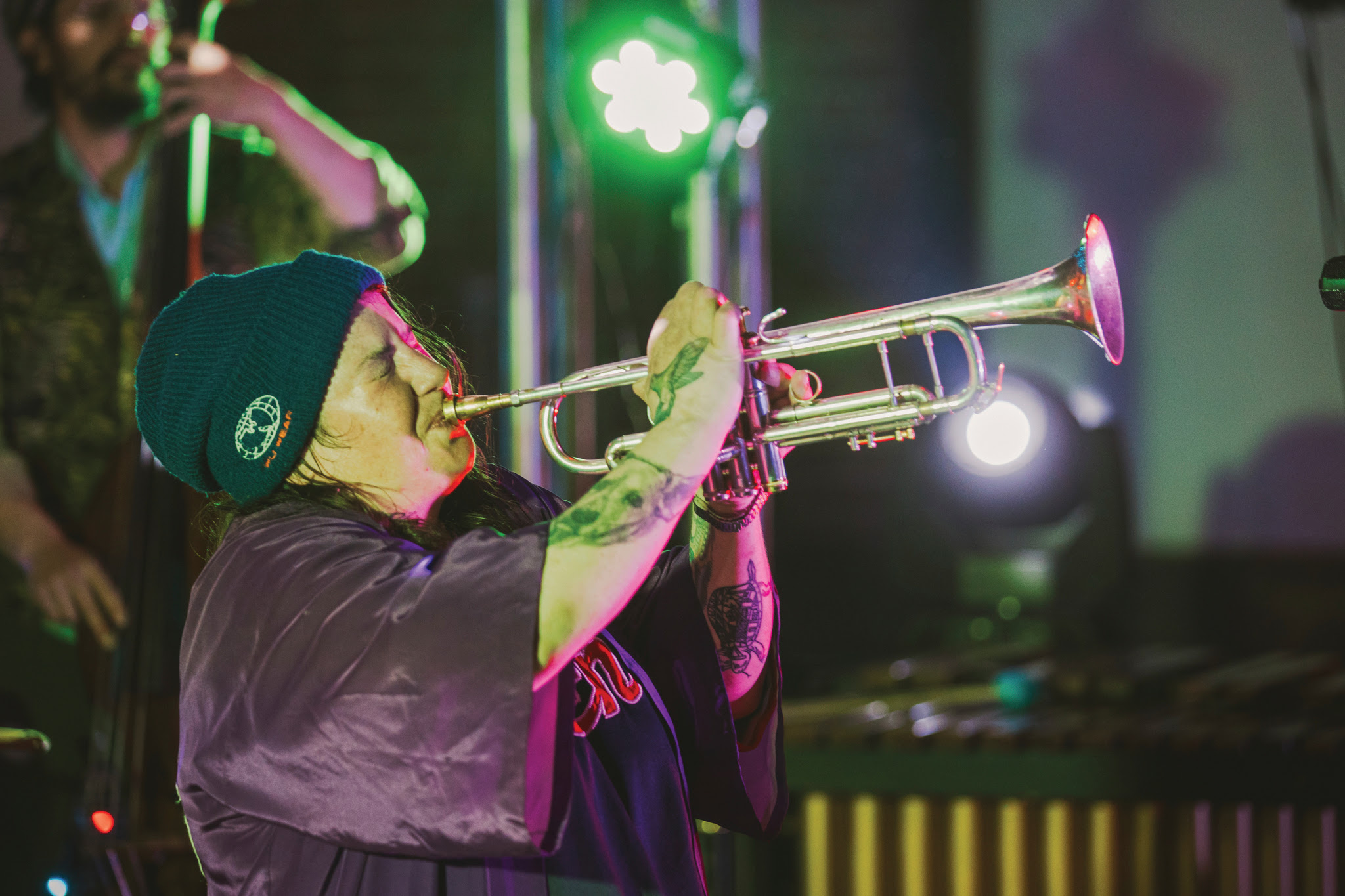
(Photo credit: Ben Semisch, courtesy of Bemis Center for Contemporary Arts)
Jaimie Branch ‘Fly Or Die Fly Or Die Fly Or Die ((word war))’
(International Anthem) 25th August 2023

As an unwittingly last will and testament, the late experimental trumpeter Jaimie Branch’s final led album with her Fly Or Die ensemble is a beautiful collision of ideas and worldly fusions that pushes and pulls but never comes unstuck. In fact, despite the “world war” suffix backdrop this album of both hollered and more disarming protestation colourfully embraces the melodic, the groove and even the playful.
Whilst the “avant-garde” label sticks, this rambunctious, more ambitious, more demanding minor opus flows and swings to a polygenesis mix of spiritual, conscious, Afro, Latin and Ethio-jazz, the great American songbook, no wave, noise and the psychedelic. And yet, on the other hand, is almost punk in attitude; a sort of anything goes in the pursuit of the message: an embodiment of challenging the boundaries.
In light of her untimely death at the age of just thirty-nine last year (the release of this album tying in with the first anniversary of her passing), this incredible statement can be read as a sonic monument; a legacy project left behind as a blueprint for a whole movement. The lyrics to the actionist rumpus ‘Burning Grey’, delivered more like Ariel Up or Polystyrene, to a swinging protest march of Phil Cohran, the Pan Afrikan Peoples Arkestra and Cab Calloway, seem almost prophetic: “Wish I had the time” and the lasting sign-off, “Don’t forget to fight”.
The final album is one Branch would recognize; more or less musically complete, recorded as it was back in April of 2022 during an artist residency at the Bemis Center For Contemporary Art in Omaha, Nebraska. However, Branch’s sister Kate and a cast of collaborators rallied round to finish the artwork and production; the final article a proud achievement encouraged on by well-wishers and friends alike.
Alongside “Breezy” Branch, who not only masters the trumpet but pushes her voice like never before and picks up on the percussion and some keys, is her stalwart troupe of Lester St. Louis (cello, flute, keys, marimba and voice), Jason Ajemian (double bass, electric bass, marimba and voice), and Chad Taylor (bells, drums, mbira, timpani and, you guessed it, marimba). That quartet is expanded further by an array of guests, including a trio of notable Chicago-hailed innovators (the city, one of Branch’s biggest influences and home for a period), the arranger/composer/engineer/trombonist Nick Broste, musician/vocalist Akenya Seymour and fellow International Anthem label mate, the drummer Daniel Villarreal (he released his debut, Panama ’77 on the imprint last year). Rounding that worthy impressive list off is the American multi-instrumentalist, Cave/Exo Planet/Circuit des Yeux (the list goes on) instigator Rob Frye.
Not so much a surprise, the album opens with a sort of stained glass bathed organ overture: part the afflatus, part pastoral hallowed ELP, part new age kosmische. A roll of bounded controlled thunder and gravitas is added to a crystal bellow and squeeze of radiant notes and the thinly pressured valves of Branch’s trumpet, which makes a brief appearance after the Ariel Kalma-like transcendence. ‘Aurora Rising’ lays down a short ceremonial communion with nature’s light before changing gear and spheres of influence. ‘Borealis Dancing’ now adds Mulatu Astake Ethio-jazz, a touch of Fela Kuti, Don Cherry and Yazz Ahmed to the ephemeral Northern Lights show as Branch toots long and softly at first before changing to higher pitch shrills. The rhythm, timing changes at the halfway mark towards a slinking groove of funk and Afro-jazz, the trumpet now cupped and echoing.
By the fourth track, ‘The Mountain’, there’s a complete sea change in mood, direction as Branch and her foils transform The Meat Puppets quickened country yin ‘Comin’ Down’. A dueting Branch and Ajemian bring it back home (so to speak) to the Ozarks and Appalachians via Paul Simon, Dylan, 60s West Coast troubadour traditions and a reimagined Sun Records. A brassy-sounded trumpet repeats the tone and springy country vocals as a gurgle of drawn-out cello plays a more somber rumination of hardy travail. To be honest, I was unaware of The Meat Puppets original, but this is a welcome meander in a different direction.
A full lineup joins in on the marimba heavy carnival turn mysterious swamp ether ‘Baba Louie’. Francis Bebey swerves to Satchmo New Orleans, whilst taking a dance around Masekela’s Soweto on a bustled bounce of joy and triumph, before succumbing to the voodoo psychedelic vapours; enticed by a cooing R&B flavoured misty Seymour. This bleeds into the bluegrass fiddled stirrings of ‘Bolinko Bass’, another Orleans evoked, almost regimental drummed bayou Mardi Gras of David Byrne, Funk Ark and Phil Ranelin. Almost mournful, ‘And Kuma Walks’ is more bluesy sounding, yet estranged at the same time; skulking amongst the spirits as someone saws through a fiddle as the trumpet aches in elegiac plaint.
Single, ‘Take Over The World’ is a hyped-up rattle and untethered excitement of no wave, punk jazz. Branch repeats a wild mantra and plays a burning bright thrill of trumpeted blasts whilst a controlled chaos spins all around her. Protest and partying converge for an electrifying, and later on, psychedelic bending stretched act of defiance.
The album ends by simmering down to a period of Afro-spiritual lament and reflection, on the sloganist berating ‘World War (Repirse)’. There’s serious bowed strings, trilled and forewarned trumpet, a sustained organ and windy, desolate enacted atmosphere on this weary actionist swan song: Branch urging caution at “false flags” and encouraging the fight.
For me Branch’s main instrument burns bright, and yet never seems to dominate, lead or overstay its welcome at any point on the album. Not for nothing is her own quote of “…meaning every note”, with not one rasp, trill, toot and cycle out of place; nothing is pushed but just felt and right at that moment. It feels to me, despite such a rich and diverse back catalogue, that Branch had so much more to give, her best still to come. And her gift was not just in crossing and mixing styles, influences, but also in pushing others to reach their own full potential as musicians. Fly Or Die Fly Or Die Fly Or Die ((word war)) is an accomplished album that channels the legacies of Chicago, New Orleans and New York to create an eclectic modern adventure in protest jazz.
Knoel Scott Ft. Marshall Allen ‘Celestial’
(Night Dreamers)

A leading light in the Sun Ra cosmology since auditioning for the Saturn jazz ambassador’s famous Arkestra ensemble in 1979, the baritone saxophonist, composer, vocalist and, when the occasion arises, dancer Knoel Scott amasses a lifetime of experience and musicianship on his debut solo-headed album. I say debut and solo, and without the extension of his previous KS Quintet named release, but the reeds specialist shares his Celestial project title with the Arkestra’s freeform progenitor, Marshall Allen.
Allen’s relationship with Sun Ra, on an album positively radiant and lunar with his guardianship and influence, goes back much further than Knoels; a stalwart since the ensemble’s formation in the 1950s, leading the troupe, the baton passed down as it were, after the cosmic Afrofuturist titan’s death in 1993. Unbelievably still in fine fettle, despite almost celebrating his centenary (that’s next May by the way), the avant-garde, inter-dimensional alto saxophonist, flutist, oboe, piccolo and EWI (that’s Electronic Wood Instrument) synthesist can be heard lending the latter’s strange sci-fi arcs, bends and space dust to the album’s title-track. It’s unsurprising to find that ‘Celestial’ has all the hallmarks of Ra too, written as it was originally with strings for the Arkestra, but never recorded.
The Arkestra family is extensive with celestial poetry taken from the late Arnold “Arto” Jenkins, recited on this universal lullaby. Art stuck with the Arkestra for thirty-six years, right up until his death in 2012. You can hear him and his “space megaphone” delivered offerings to the galaxy on Secrets Of The Sun, way back in 1962. As a homage to that universal-spiritualist’s wanton guidance, Knoel trips the radiant light fantastic, giving praise to the wisdom of the ancients and star people on a seeker’s performance of UFO oscillations, serenaded sentiments and dreamy translucence. It sounds like Cab Calloway and 50s wings being beamed up into Sun Ra’s off-world paradise.
The influence continues with the presence of the Paris scene stalwart and multifaceted (from Dancehall to Makossa, and of course jazz) drummer Chris Henderson, who’s experiences lend a both studied and more untethered freeform feel that moves between swing, big band, Latin, bop and the experimental.
This however is an inter-generational album, with fresher faces of the London scene, the very much in-demand UK keyboardist and versatile pianist Charlie Stacey and Verona-bred electric bassist and oft Arkestra and Knoel Quartet foil, Mikele Montolli. Hailed, quite rightly, as an advanced player, able to adapt to a wealth of styles, Stacey’s touch can evoke the best of those sublime 50s Blue Note recordings, touches of Oscar Peterson and Allen collaborator Terry Adams. The piano both flows with a tinkled busy lightness or strikes the heightened and jarring near-dissonance of freeform jazz; a descending off-tune part here, Cuban show time and bluesy or smoky lounge parts elsewhere: Unstated, yet moving along the action, or taking a soft stroll down the scales.
It’s another musician, part of the luminary brethren, that inspires the Afro-Cuban via Saturn’s rings ‘Makanda’. Paying tribute to a late mentor, Dr. Ken “Makanda” McIntyre, Knoel cooks up a Latin flavoured cool breeze of Havana, Harold Land vibes and R&B grooves: all undulated by sci-fi warbles and flits. A pivotal figure and influence for Knoel, “Makanda” (a name bestowed upon the reeds maestro and composer when playing in Africa, it translates from the Ndekele language as “many skins”, and in the Shona as “many heads”) founded the first ever African American music program in the States in 1971, and had worked with such notable talent as Eric Dolphy, Cecil Taylor and Nat Adderlay. Knoel and friends up the funk and balmy rhythms on this soulful homage to the late great man.
On his part, Knoel’s saxophone squawks, strains, honks and squeaks, and yet also serenades: even soothes. Wilder higher registered beak pecks turn into a near chaos, a cacophony, on the improvisation piece ‘Conversation With The Cosmos’. Coltrane, Sam Rivers and Anthony Braxton wail in zero gravity, whilst those wild rasps feel almost smoldering and lounge-like on the final mid paced twelve-bar slinky ‘Blu Blues’.
What a stellar set from the Arkestra acolyte, the Marshall and inner circle; and well done to the Night Dreamers for coaxing out this cosmic marvel. The process if you’re new to this label project, is to record the performances direct to tape before cutting on a Sally lathe the final vinyl artifact. In mono, recorded in an analogue studio, the sound is alive, inviting and, well, “celestial”. The experience speaks, communicates, and pushes the perimeters on every note, as a culmination of African American jazz styles are attuned to the stars.
Andrew Hung ‘Deliverance’
(Lex Records) 11th August 2023
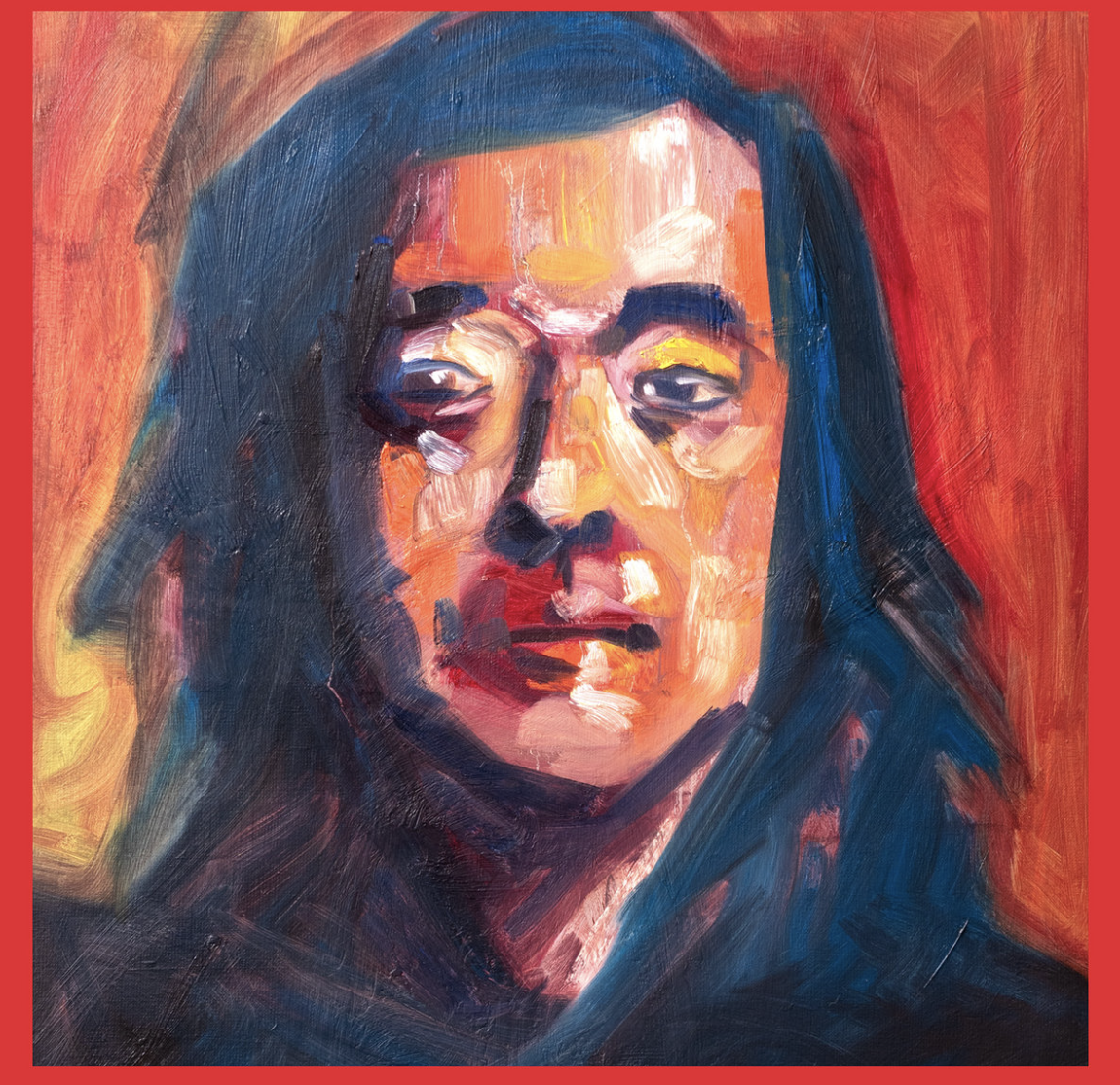
With pain, suffering and anguish former Fuck Buttons trick noise maker Andrew Hung finds a cathartic release on his third solo outing, Deliverance. But as that title suggest, the anxieties and sense of isolation and belonging now seem to have slowly dissipated as Hung feels he’s been delivered from the morose and dark fog of depression; although there’s plenty of broody, moody despair and darkened thoughts to wade through before catching the light of hope.
Hope, being set free, the constantly developing artist and producer does seem to have found his creative peace; likening this album to “the end of the chrysalis stage, like breaking free from a previous life.” Not so much reincarnation as a new incarnation, pushed on during lockdowns to mine the deep well of his soul, to face regrets and failings, but also find what’s missing.
An act of self-realization perhaps, Hung conducts a therapeutic session both unflinching and revealing. If the lyrics of ‘Don’t Believe It Now’ are anything to go by, thoughts and mental anguish at one point were truly dark. However, that filtered vapour counters the resigned with a reviving build up. And on the opening tunneled, Sister Bliss and Underworld like, moody turn freedom spin, ‘Ocean Mouth’, Hung faces a list of disappointing traits head on: Almost like taking a breath as the Robert Smith-like palpitations and rave-y Bloc Party velocity of the production avoids suffocation and gravitates towards the techno cathedral of light. Submerged at every turn with recurring references to water, Hung swims and navigates the torrents and tides to find a number of revelations about himself: conquering fear.
The previous solo album, Devastations (a choice album no less in my end of year lists for 2021) looked to the cosmos with a propulsion of electronic, kosmische, motorik, Madchester and synth pop influences, and featured Hung the self-taught singer evoking a mix of Robert Smith (some very cure-esque touches musically too), Karl Hyde, Mark Hollis and The Cry’s Kim Berly. More distressed, gasping and wrenching Hung takes some of those same influences forward on Deliverance, whilst also seeming to whip up a touch of Minny Pops, New Order, Soft Cell and John Foxx on the struggles of isolation and need to belong themed neo-romantic ‘Find Out’.
In another honest cycle of shedding shame and casting away the pain in favour of finding that alluded love “saturation”, ‘Never Be The Same’ builds from synthesized drum pad elements of the 80s German new wave, Factory Records and industrial synth-pop into another unshackled escape towards the light of revelation. I’d throw in Martin Dupont, Tears For Fears and Yazoo to that both pumped and vapourous mix.
Floundering no more, Hung looks to have found his place, his voice too. Deliverance finds him channeling his lamentable, pained, and unsure emotions into something positive and bright with another candid confessional solo album of rave-y synth-pop indie brilliance.
Various ‘Intended Consequences’
(Apranik Records)
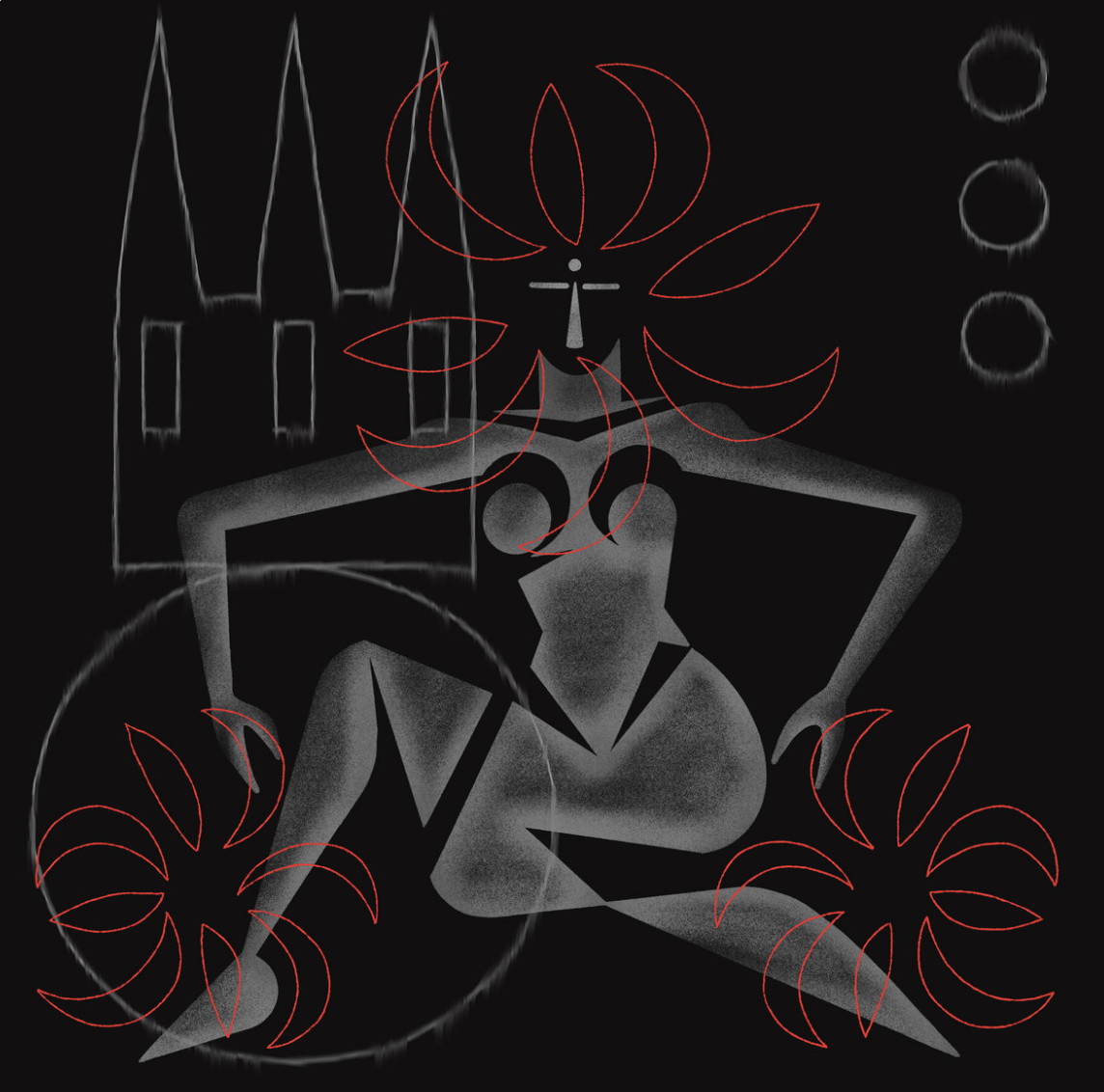
With a hellish multitude of flashpoints and distractions across the globe keeping the continuing fight for women’s liberation in Iran off the news rolls, it has become apparent that the Iranians themselves have been left to carry on the struggle with little support. In an ongoing war between the forces of the authoritarian religious state and a younger generation demanding an end to the erosions of there civil liberties and freedoms, the crisis in the country entered a dark bloody chapter last year with the murder in custody of Masha Zhina Amini by the “morality police”.
After a rightful campaign of protest and action at such a heinous crime, a brutal crackdown by the state led to mass arrests and even executions (mostly of male supporters, activists, and usually on trumped up charges). Further restrictions were invoked. And just as horrifying, in the last year, and right up to the last few months, there has been a nationwide spate of deliberate poisonings of schoolgirls (one of the groups who mobilized against the authorities in the wake of Amini’s cruel death) on mass. Defiant still, even in the face of such oppression, the brave women of Iran have strengthened their resolve only further.
In the face of such attacks, clampdowns, the music scene has responded with a strong message of resistance and solidarity. Despite everything, cities like the capital of Tehran have a strong music scene of contemporary artists, composers, DJs and performers working across all mediums, including art (which is probably why so much of the music is also so visceral, descriptive and evocative of imagery). One such collaborative force of advocates, AIDA and Nesa Azadikhah, co-founded the Apranik Records label, a platform for female empowerment. Following this year’s earlier Women Life Freedom compilation, a second spotlight volume delves further into not only the Tehran scene but picks out choice tracks from those female Iranians working outside the country, in such epicenters as London (AZADI.mp3) and Berlin (Ava Irandoost).
Sonic wise it covers everything from d’n’b, trance, deep house and techno to sound art experimentation. The range of moods is just as diverse in that respect, from restlessness to the reflective and chaotic.
Contributions from both Azadikhah (the hand drum rattled d’n’b breaks and spacy, airy trance ‘Perpetual’) and AIDA (the submerged melodious and dreamy techno ‘Ode To Expectations’, which features the final love-predicament film sample, “You know that I love you, I really do. But I have to look after myself too.”) can be found alongside a burgeoning talent pool. The already mentioned London-based producer and singer AZADI.mp3 opens this collection with a filtered female chorus of collective mantra protest, set to a sort of R&B, 2-step and bass throbbed production, on ‘Empty Platform’– just one of many tracks that uses the sounds of a more traditional Iran, especially the daf drum, alongside modern and futuristic warped effects. The sound artist and composer Rojin Sharafi likewise features the rattled rhythms of hand drums and some hidden spindled instrument – like running a stick across railings – on her entrancing kinetic techno ritual of “trauma”, ‘dbkk’.
Abji_hypersun allows the sounds of the environment to seep into her slow-building track of field recordings, collage and breaks (two-stroke scooters buzz by as distant female conversations reverberate on the street). Part jungle breaks pirate radio, part Matthew David, Jon The Dentist and LTJ Bukem, ‘Resist The God Trick’ evokes a tunneled vision of haunted reminisces and resistance in the shadows.
Emsho’s ‘Down Time’ is a rotor-bladed electro mix of Basic Channel and The Chemical Brothers, and Aida Shirazi’s mysterious wind of dark meta ‘R.E.V.O.L.U.T.I.O.N’ spells out the rage with a shadowy, near daemonic scripture of wrath and revenge – a gothic synth sinister avenging angel promises that the women of Iran will neither “forget” nor “forgive” their oppressors, torturers and murderers. Farzané seems to evoke the alien, the sci-fi on her experimental, sometimes disturbing dial twisting and crackled ‘Quori’ transmission, and the Berlin-based DJ, video artist and music producer Ava Irandoost draws on Laraaji-like dulcimer tones for her dream mirrored kosmische evocation ‘CINEREOUS’. The Tehran composer, pianist and bassist Ava Rasti draws a close to the compilation with a classical-tinged, harmonic ringed, saddened piano-lingering performance, entitled ‘Eight Night’ – an atmospheric troubled trauma is encapsulated with the deftest of touches.
It might be my own nostalgic penchant for 90s electronic music (my formative years of course), but this series (if we can call it that) could be an Iranian version of the Trance Europe Express compilations brought out during that decade; a treasure trove of discoveries and whole scenes that opened up a world of previously unknown music to many of us not living in the epicenters of North America, the UK and Europe and beyond. Hopefully this latest platform of innovative artists from across the arts will draw the attention it deserves; the message hardly virtuous, in your face, but sophisticated: the very act of female Iranians making a name for themselves despite censorship and bans a sign of empowerment and resistance in itself. Few groups deserve our support (which in the West has been sadly absent) more, but don’t just purchase for the cause but for the musical strives being awakened and produced under tyrannical oppression, and because this is a solid collection of great electronic music.
Nagat ‘Eyoun El Alb’
(WEWANTSOUNDS) 25th August 2023
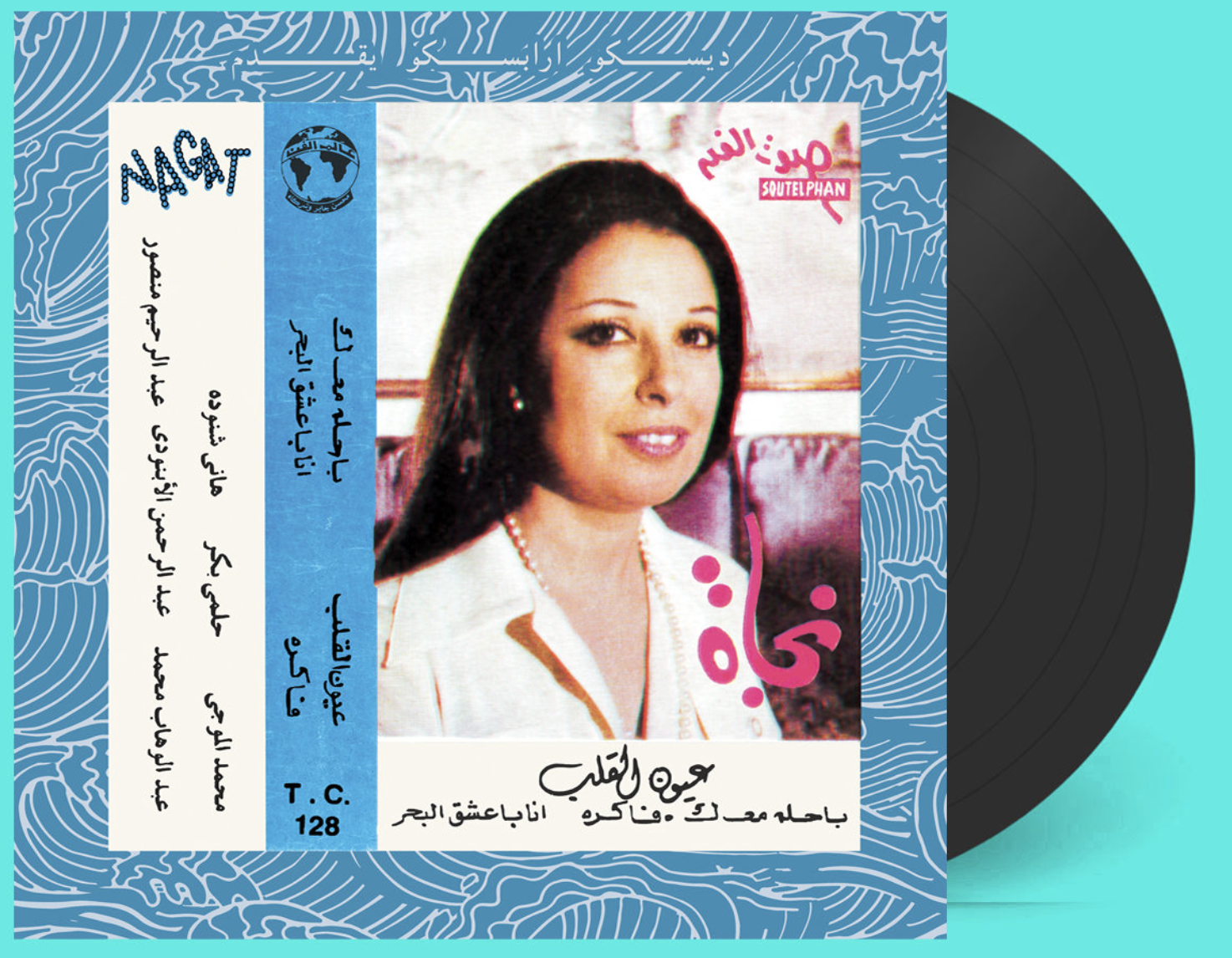
Renowned as one of the greatest, most exceptional voices to have emerged from the golden 40s/50s/60s epoch of Egyptian and the greater Arabian songstresses and divas, Nagat El Seghirah was a rightly revered performer, who’s career spanned more than half a century.
Even in an age rich with accomplished, influential and groundbreaking singers Nagat held her own against such icons as Oum Kalthoum, Fairuz, Warda and perhaps the most celebrated of the lot, the anointed “voice of Egypt” Umm Kulthum. The latter, hailed the “star of the east”, was an influence on the early starter during the burgeoning years of imitation, when Nagat was a child, barely in her teens. Her affectionate appellation, “El Seghirah” or “El Sagheera”, can be translated as “the small”, “the young”, and marks the singer, performer and film star’s young apprenticeship; from entertaining the notable guests that gathered at her father’s (the famed calligrapher Mohamad Hosny) home at the age of five onwards, to her first role in cinema at the age of eight, starring in the 1947 film Hadiya. Hosny was known to push his extensive brood of children from two marriages, sometimes excessively, into various creative careers: Nagat’s half-sister was the famous actress Soad Hosny, her older brother, Ezz Eddin Hosni, a notable composer who helped her own development and natural talent.
During those initial years of development Nagat would interpret songs by such legendary figures as Mohamed Abdel Wahab, Baligh Hamdy and Kamal Al Taweel, but would find both her true and distinctive voice when interpreting the work of the Syrian diplomat-poet Nizar Qabbani. She gained adulation and fans after performing the esteemed poet’s tragic ‘Irja Ilyya’ (“Return To Me”), which is based on his sister who committed suicide rather than enter into an arranged marriage. Plaintive, stark, it rightly struck a chord with the public at the time, with its feminist lyrics and spotlight on forced marriages. It would be become a torchlight for freedom and injustice, with Nagat adding her own improvised original lines during the 1970s.
Born in 1938 but already gaining plaudits by the end of the next decade, into the next, Nagat released her first actual song ‘Why Don’t You Allow Me To Love You’ in 1955; the year she would also be married, for the first time, to a friend of one of her brothers: still only sixteen. It’s no surprise, although in no way a forced marriage, that she could, with a commanding voice, perform Qabbani’s tragedy. That marriage would only last however until the turn of the 1960s; when Nagat went on to marry the Egyptian film director Houssam El-din Mustafa in 1967 (a marriage that lasted an even shorter time). Nagat would remain, in fact seeing as she is still alive, in her eighties, remains unmarried. In recent years, since her singing retirement over twenty years ago, living a semi-reclusive life in Cairo but in poor health, there’s been some contact, even projects floated. Only last year she was featured on the official soundtrack for the streaming service series Moon Knight.
From concert to soundstage with starring roles in the films Black Candles, Beach Of Fun, My Dear Daughter and Dried Tears, Nagat gradually moved from shorter songs to ever more lengthy performances, some of which would last an hour. As time went on the songstress actress would find it harder to find those inspired works to perform. Retiring from film in 1976, Nagat would still persevere with music. And by the time she reached her early forties, in the 1980s, would release this four-track showcase of matured talented performances entitled Eyoun El Alb.
Originally brought out exclusively on cassette (like so much of the Egyptian music market), forty odd years later the reissue vinyl specialists of impeccable tastes (releasing a myriad of jazz titles and nuggets from across the Arabian world and Japan), WEWANTSOUNDS in conjunction with the Arabia and North African crate-digger Disco Abrabesquo (the moniker of the Egyptian, Amsterdam-residing DJ, Moataz Rageb), have pressed it onto vinyl for the first time. If you are a regular reader, or in fact a regular WWS’s follower and buyer, then you will be aware of that label’s previous collaboration with DA, last year’s (although they’ve also released a smattering of Egyptian focused records too over the years) Sharayet El Disco compilation. One notable inclusion on that eye-opening compilation (reviewed by me in May’s Perusal column) was from the legendary Al Massrieen. A much sought after recording outfit, the group’s Hany Shenouda produced the scenic, romantic ‘Ana Bashaa El Bahr’ (or “I Adore The Sea”) finale on this Nagat album. Adoration and yearned dreaminess for a place and time are evoked to Shenouda’s trebly near-psych tremolo guitar and light hand drum patters. Alongside the more lilting and fluted ‘Bahlam Meeak’ (“I Dream With You”), this is one of those examples of Nagat’s shortened form of storytelling romance and heartache. ‘Bahlam Meeak’ is also an example of Nagat’s more lightened, honeyed approach to what is a tinkled serenaded, wafted vision of blossom scented sand dune balladry. It evokes the music of Bacharach and the cool soundtracks of early 60s French and Italian new wave cinema.
Taking up the entirety of Side One, there’s the long form titular performance of heightened drama and searing swirled strings oboe and scuffled trinkets. Over eighteen-minutes of longed romantic gestures, the action pauses repeatedly between undefined sections; allowing the auditorium audience to show its appreciation, encouragement, which they do constantly, even when the music starts back up again. On a Matinee scale, this mini-story, unveiling of lovelorn exultations, but vulnerability and occasional lament, moves like a desert caravan across an Egyptian set, or, sumptuously glides into a Persian court. A fantastic display of sagacious craft, Nagat’s voice never has to rise or push to convey a class piece of theatre and effective yearn of love.
Only half that duration, but still a long track, ‘Fakru’ (“Do You Remember”) is a rumination; the vibrating pools of memoary reflected in the dreamy wobbled effects that permeate this fluctuating lead vocal delivery and prompting chorus of female voices. Classical Cairo, there’s a chink and tinkle of percussion and shimmy-shaking, belly dancing rhythm that luxuriantly accompanies a yearning poetic and sometimes coquettish Nagat on her reminisces. As I said already, this album represents various sides of the enchanting, soulful and also distinctive icon’s vocal presence and range. The long and short: the unmistakable sound of Egypt, but also those influences from abroad too, are melded together on a classy piece of cinematic and poetic mastery. Make room again on those creaking shelving units for another vinyl addition to the collection.
CHELA ‘Diagonal Drift’
(Echodelick – USA, We Here & Now – CA, Ramble Records – Aus, Worst Bassist Records – EU)
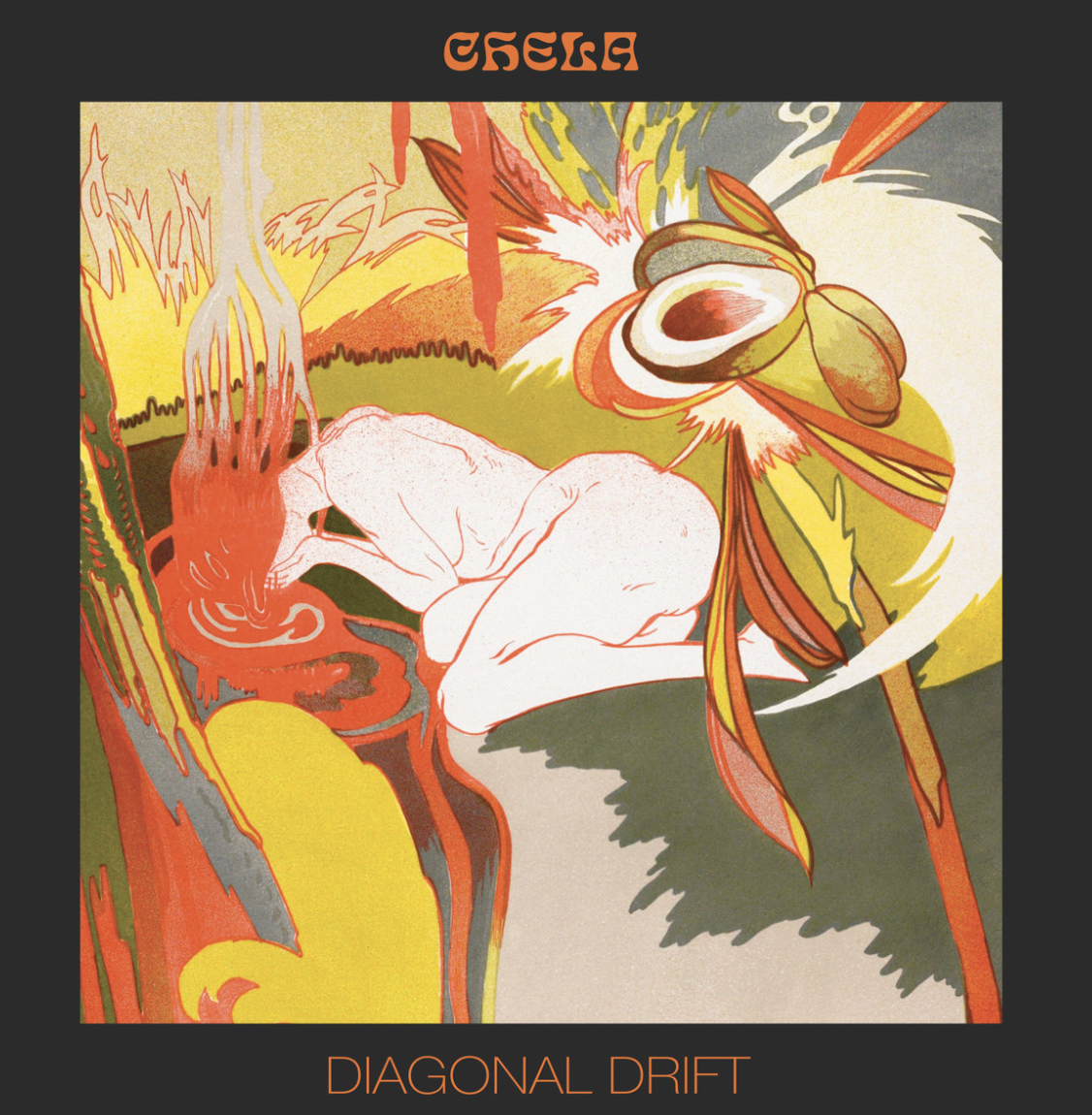
In communion with his long-time friend and collaborative foil in the University Challenged trio (alongside Oli Heffernan) Kohhei Matsuda, Ajay Saggar extends his blessed travels along the astral highways and byways with a new venture, CHELA.
Absorbed, imbued and inspired by Indian spiritualism, history and travails, its psychogeography and trauma, both partners in the new direction come together under the Sanskrit word for “disciple”; taken from the verb and root “to serve”, the “Chela” is similar in concept to a student, but implies a more loyal closeness with their teacher. In Hinduism this bond is considered sacred: An apt moniker for such inter-dimensional, afflatus dreamers and acolytes of raga, the new age, psychedlia and kosmische music.
Divine styler Saggar (who is also a member of King Champion Sounds, solos under the Bhajan Bhoy alias, and collaborates with Merinde Verbeck in the Deutsche Ashram duo) and Japanese noisenik Matsuda (most notably a member of the Bo Ningen quartet) spent much of 2022 putting this inaugural baptism together. And so with dedication to their art, the duo have sonically and melodically taken time, given depth to their new mysterious broadcast; that is, broadcasts from the ether, supernatural, uncertain, Fortean and cosmic. Different yet not entirely detached from previous incarnations, fans of both artists will pick up on past signatures, sounds and conceptions. However, they’ve managed to realign those same signatures, tuning into the mystical but often with trepidation and a sense that the noisier elements could consume all in their path.
Think Julius Eastman meets Fennesz we’re told; a good succinct summary. But I’d add a hell of a lot more, including Taylor Deupree and a cosmology of cosmic couriers. The opening ripple in the fabric of time, ‘Flyspray’, is an expanded peregrination of Beautifully tinkled Florian Fricke-like piano hauntings, Ariel Kalma and Syrinx new ageism and various Sky Records pioneers (Asmus Tietchens and Riechman spring to mind), all caught up in analogue wispy wind cacophony of divine rays, the esoteric and Eastern drones. Trippy warped reversals and folds, generator and processors nearly overwhelm the vague evocations of Tony Conrad, Schultz and a springy, but also spoke splayed banjo (which in itself seems to vaguely evoke the Balkans, Greece and strangely, India) on the reverberating ‘Appalachjo’.
In what could be a suggestion of “peace” and “harmony”, or reference to the Japanese town, ‘Heiwa’ is a hummed raga-like hymnal. A stand-up barrel-type piano plonks away from the ether, whilst ambient waves and traces of Dyzan invite heavenly reflection. ‘Ticker’ is a very different proposition. An intense chemistry of signals, beeps, quickened arrpegiator, moody signs of Faust and the sound of the Heart Of Darness are melted with Günter Schickert guitar, heavy acid Gong and various calculations.
‘Tanker’ feels like the most obvious attempt to score the sound of the title’s overbearing object; sounding like a alien freighter, both foreboding and mysterious. A scrawl and flapped ripple of radar and sonar bites into a resonating field of drones and sound waves, fog and guitar.
The final, spiritual and otherworldly track, ‘Worship’, features ghostly Indian voices and visitations from an event, service or chapter in time and history. A melodious piano chimes away in wisps of fanned cosmic mystique and cyclonic radio effects, whilst shades of FSOL, King Creosote (From Scotland With Love period) and Boards Of Canada linger. The video is more illuminating, a sepia film of bedside “worship”, healing for a leader, martyr, and a travelling funeral cortege that takes in rows of witnesses moved to touch, or just be in the essence of a distinguished teacher.
Once again with the cosmic and afflatus, Saggar and Matsuda expand their sound further. Diagonal Drift’s transcendental projection is just that, despite the building intensity and uncertainty, the broadcast noise of krautrock and kosmische styled aerial bends and radio tunings. CHELA is another welcome addition to the two artists oeuvre: one more step on the astral journey of mind-expanding experimentation.
 Monolith Cocktail Blog